
Choosing from 35 playroom wall colors is easier when you picture the entire room rather than judging paint chips alone. The best palette should support active play, quiet reading, creative projects, and practical storage while still fitting the rest of your home. A washable eggshell or satin finish is especially useful because playroom walls often collect fingerprints, scuffs, and art-supply marks. () You can keep every wall soft and simple, introduce one strong accent wall, or combine related colors through wainscoting and color blocking. A subdued base with a brighter focal wall also offers flexibility as children grow. () Consider the room’s daylight, flooring, furniture, and toy colors before committing. The complete looks below make it practical to compare 35 playroom wall colors.
1. Soft White Playroom Wall Color
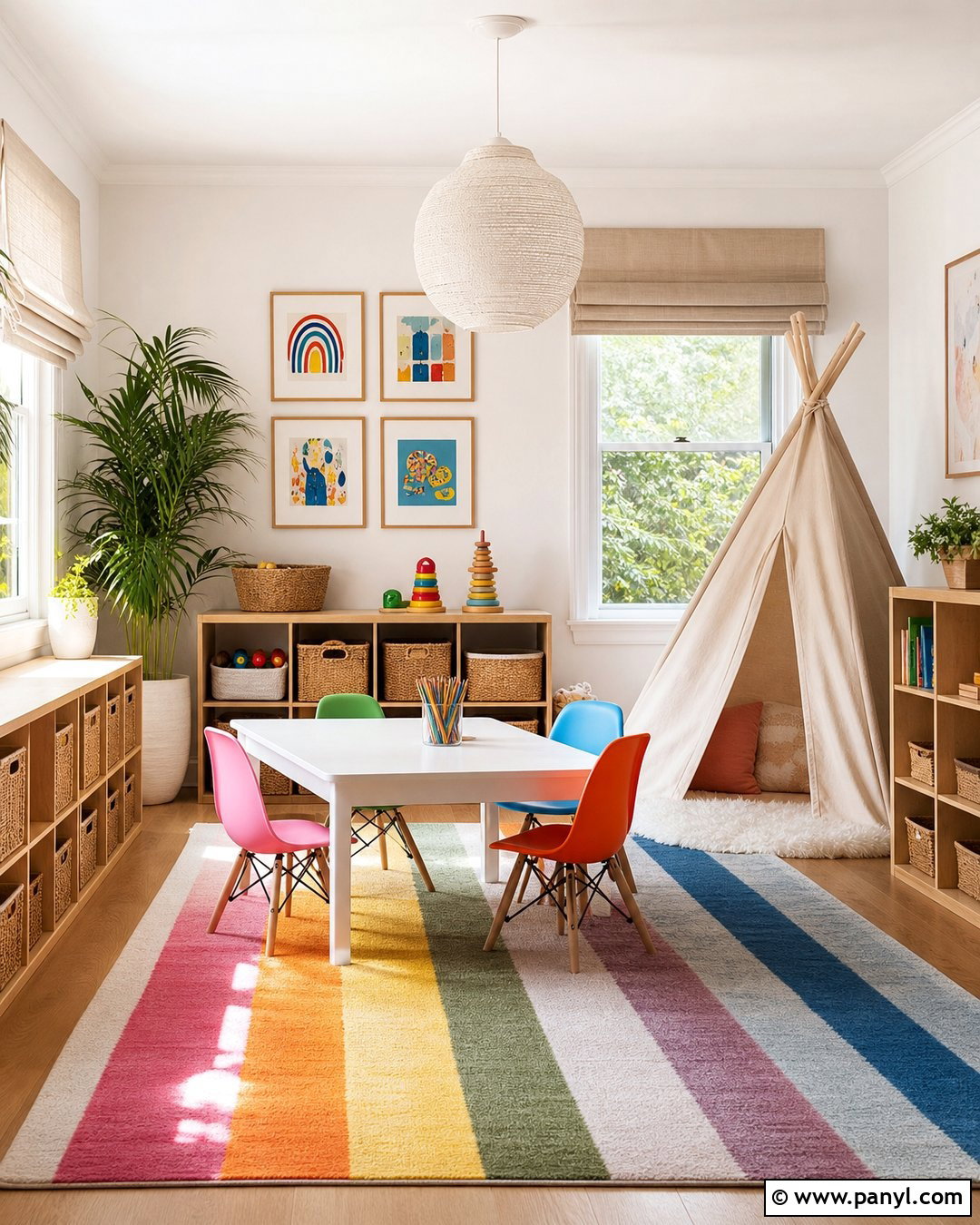
Soft white walls create a bright, flexible playroom that works especially well when toys, books, and artwork already bring plenty of color. Choose a warm white rather than a sharp, blue-toned white so the room feels welcoming. Pair it with natural oak storage cubes, a washable rainbow rug, and a low white craft table surrounded by colorful chairs. Woven baskets soften the storage wall and make cleanup easier. Add linen Roman shades, simple framed artwork, and a small reading tent in warm beige canvas. Crisp white trim keeps the overall look clean without making it formal. This complete palette is ideal for small playrooms, shared family spaces, or rooms that may become a homework area later.
2. Warm Cream Playroom Wall Color
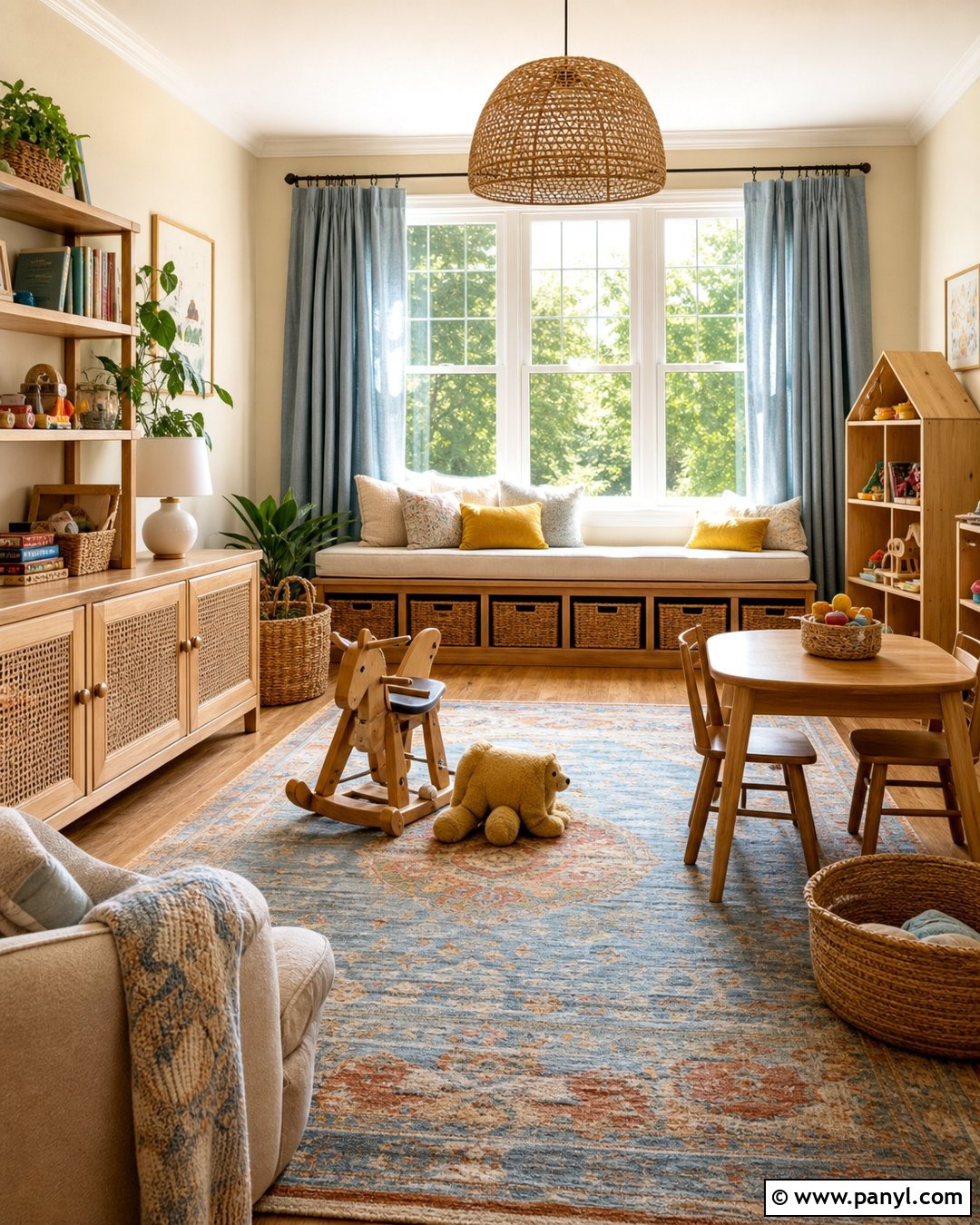
Warm cream brings gentle color to a playroom without competing with busy shelves and bright toys. It looks particularly inviting beside honey-toned wood floors, cane-front cabinets, and oatmeal-colored upholstery. Create a comfortable central play zone with a patterned rug in muted blue, rust, and golden yellow. Along one wall, install low cream bookcases with labeled woven bins and a cushioned window bench. Pale blue curtains and soft green accessories introduce contrast while preserving the relaxed feeling. Use bright white on the ceiling and trim to keep the cream from appearing heavy. This welcoming scheme suits traditional, cottage, and transitional homes, and it can easily mature with new artwork, streamlined furniture, and less child-focused decor.
3. Light Greige Playroom Wall Color
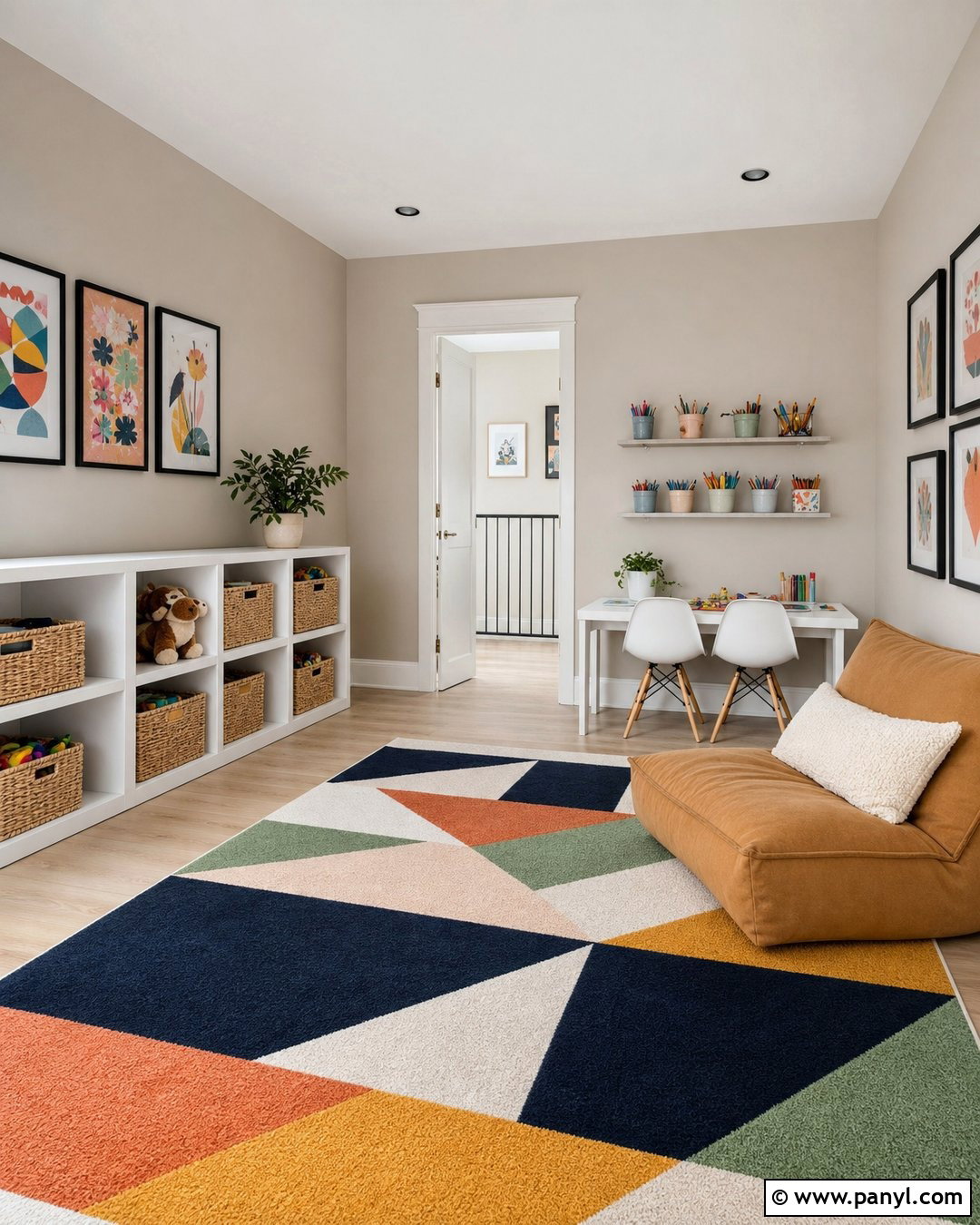
Light greige offers the softness of beige with the balanced appearance of gray, making it a practical background for a colorful playroom. Use it across all four walls and pair it with warm white trim, light oak flooring, and modular storage in matte white. A large geometric rug can introduce navy blue, coral, mustard, and sage without overwhelming the room. Add a camel-colored floor cushion, washable fabric bins, and a compact craft station beneath the window. Black picture frames and cabinet pulls give the space a polished edge that connects naturally with nearby adult rooms. To keep the palette cheerful, display children’s artwork in a tidy grid and add one oversized paper pendant light in a bright, playful color.
4. Pale Gray Playroom Wall Color
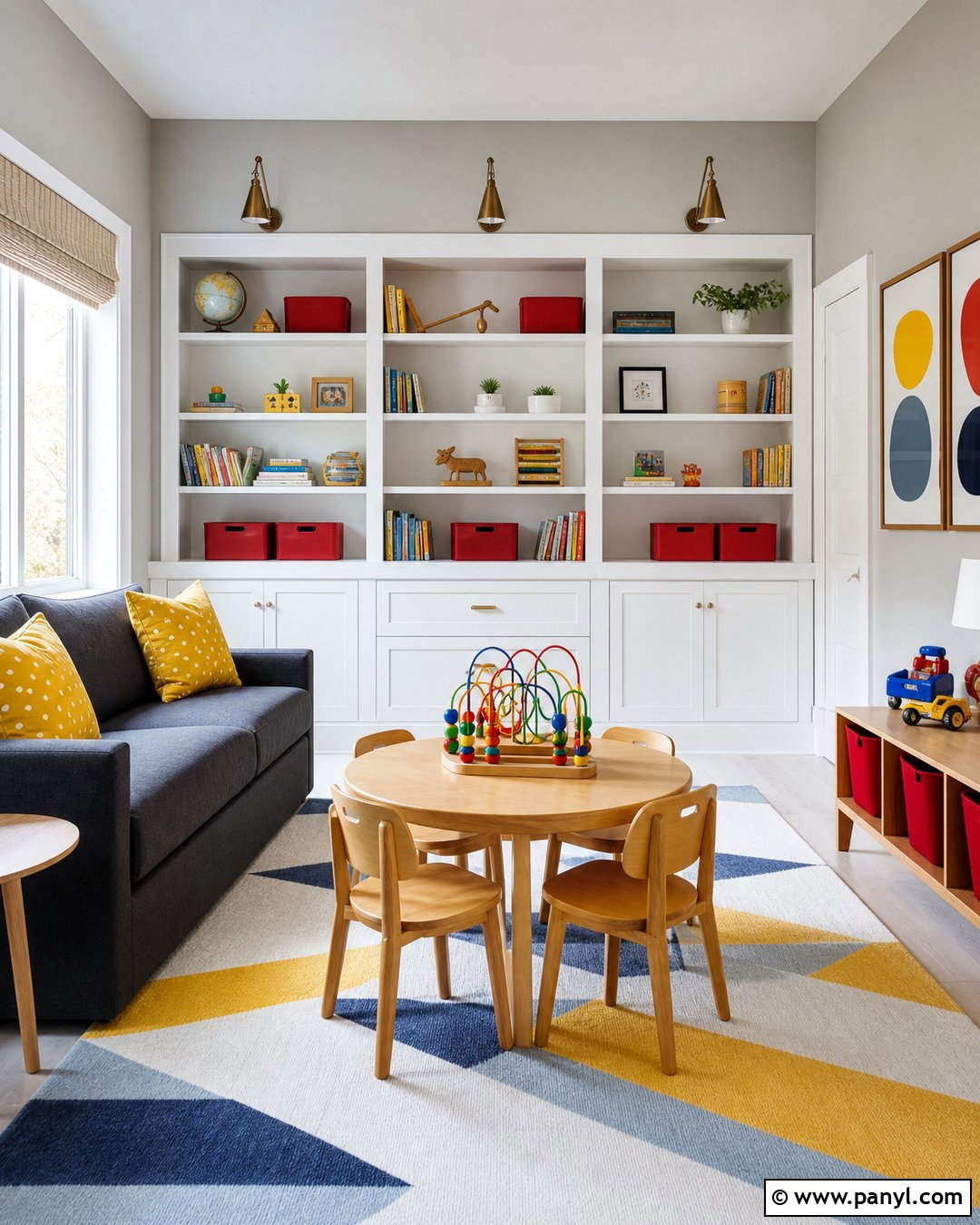
A pale gray playroom can feel crisp and lively when it is balanced with warm materials and energetic accents. Select a light gray with a subtle warm undertone, then combine it with white built-in shelves, maple furniture, and a soft blue-and-yellow area rug. Use open shelves for attractive books and closed cabinets for visually busy toys. A low charcoal sofa provides durable family seating, while sunny yellow pillows and red storage bins prevent the room from looking too restrained. Hang large graphic art in simple oak frames and place a round activity table near the center. This palette works well in contemporary homes and basement playrooms where an organized design helps limited natural light feel cleaner and brighter.
5. Warm Beige Playroom Wall Color
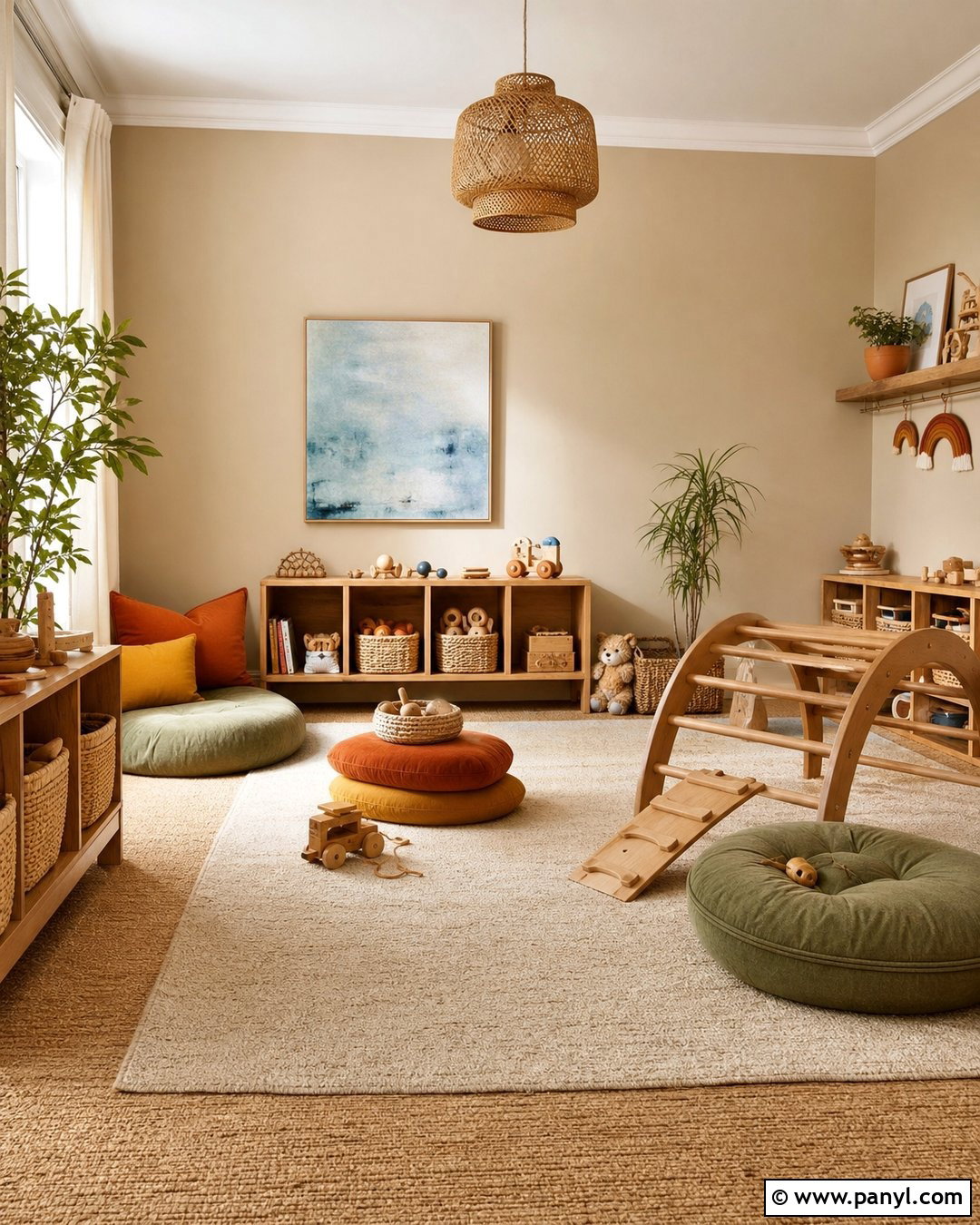
Warm beige walls create a grounded playroom inspired by natural textures and calm, earthy colors. Combine the paint with medium oak shelving, jute baskets, a washable ivory rug, and olive green floor cushions. A wooden climbing arch or compact indoor play structure can become the room’s central feature without disrupting the neutral scheme. Introduce rust, ochre, and dusty blue through toys, pillows, and framed prints. Cream curtains filter strong daylight, while a simple ceiling fixture keeps the room evenly illuminated. Use a slightly deeper beige on the lower half of the walls if you want to disguise everyday marks. This complete look feels cozy enough for reading yet open and uncluttered enough for active play.
6. Soft Taupe Playroom Wall Color
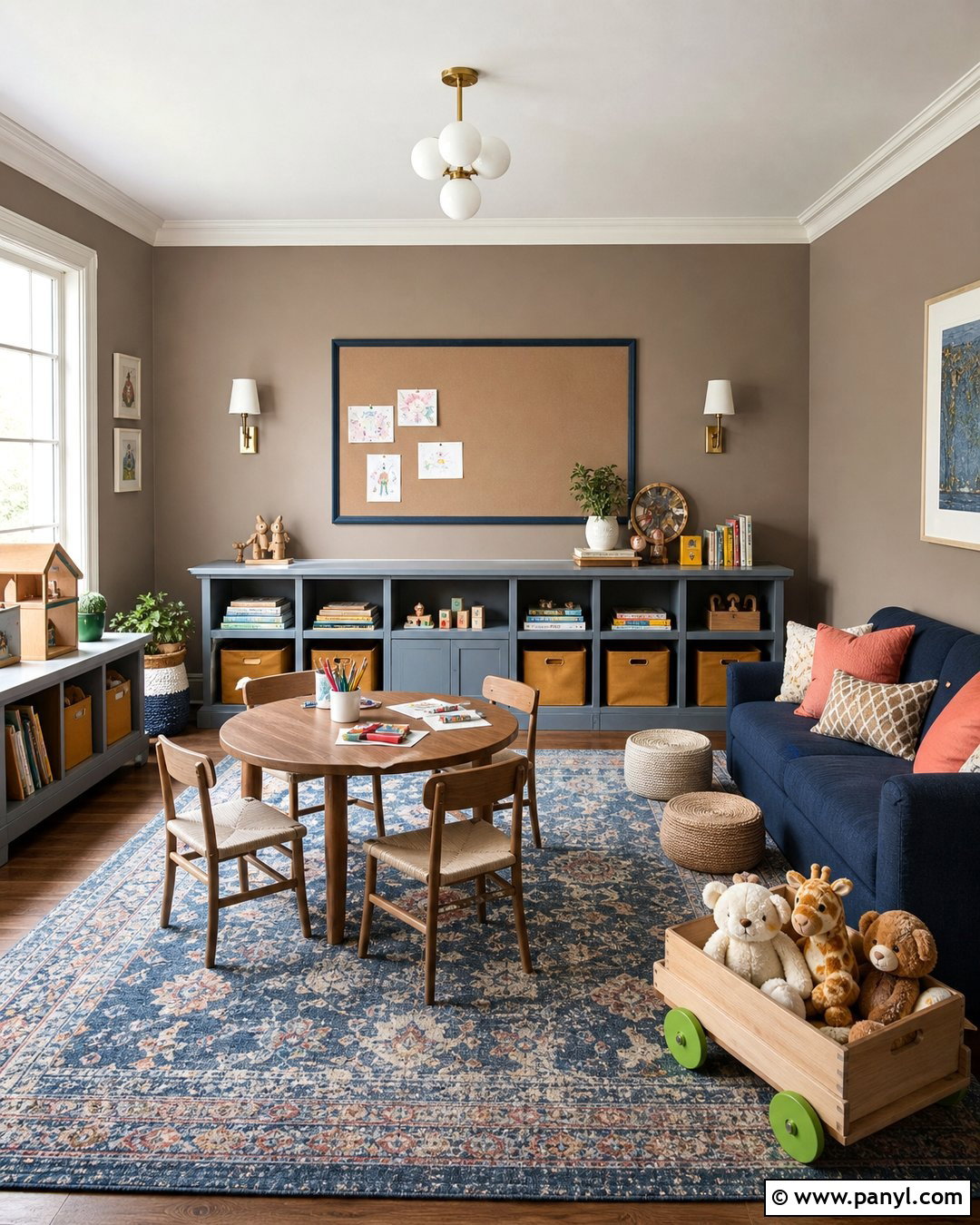
Soft taupe gives a playroom a sophisticated foundation while still allowing playful furniture and artwork to stand out. Paint the walls in a warm mushroom taupe and keep the ceiling, doors, and baseboards creamy white. Add a wall-length storage unit in muted blue-gray, then repeat that color in a patterned rug and reading chair. Natural walnut accents provide depth, while mustard yellow bins and coral pillows keep the room child-friendly. Arrange a round craft table near the storage wall and leave the middle of the floor open for building sets and games. A large pinboard above the table offers an organized place for rotating artwork. This scheme is especially effective in a playroom visible from the main living area.
7. Butter Yellow Playroom Wall Color
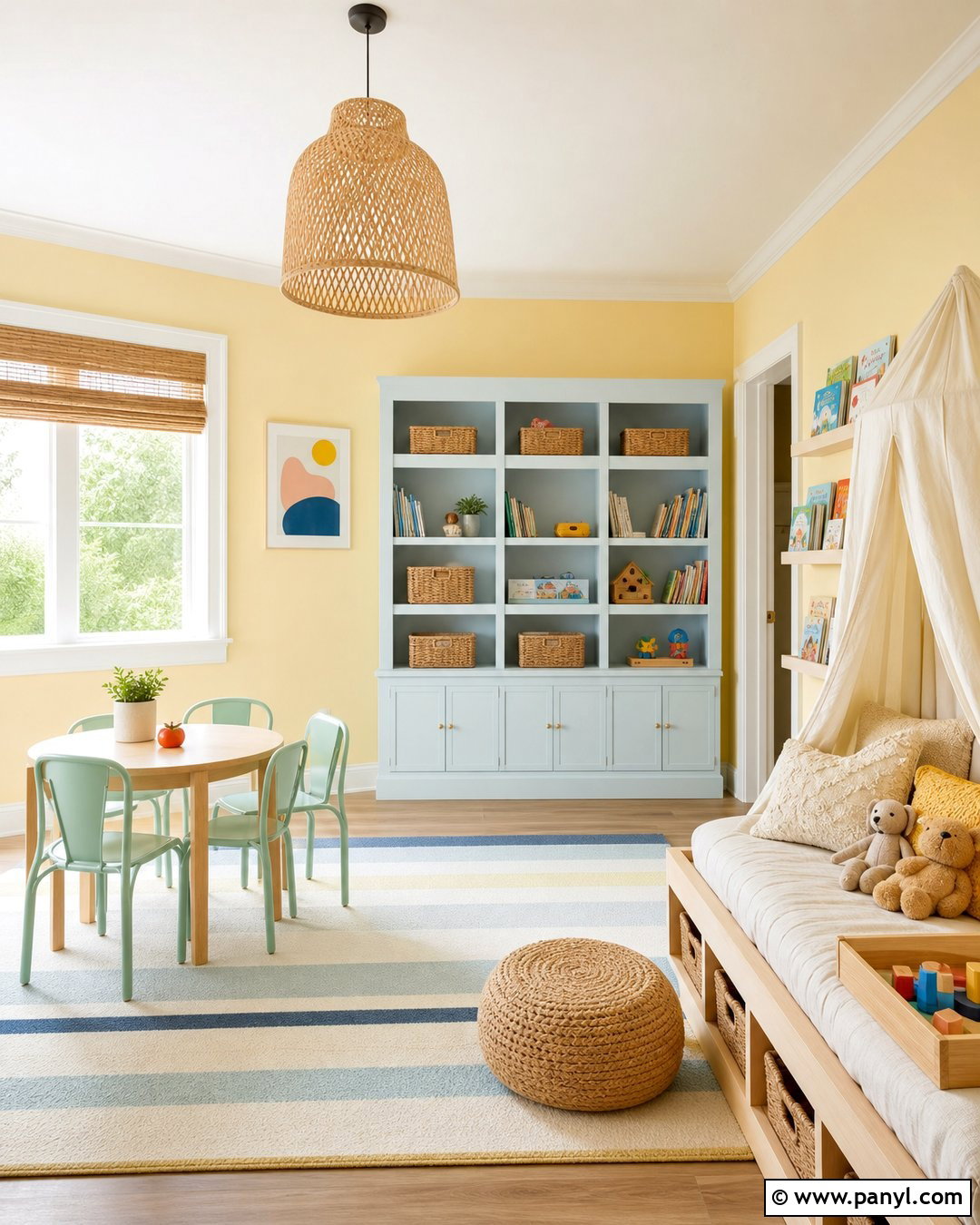
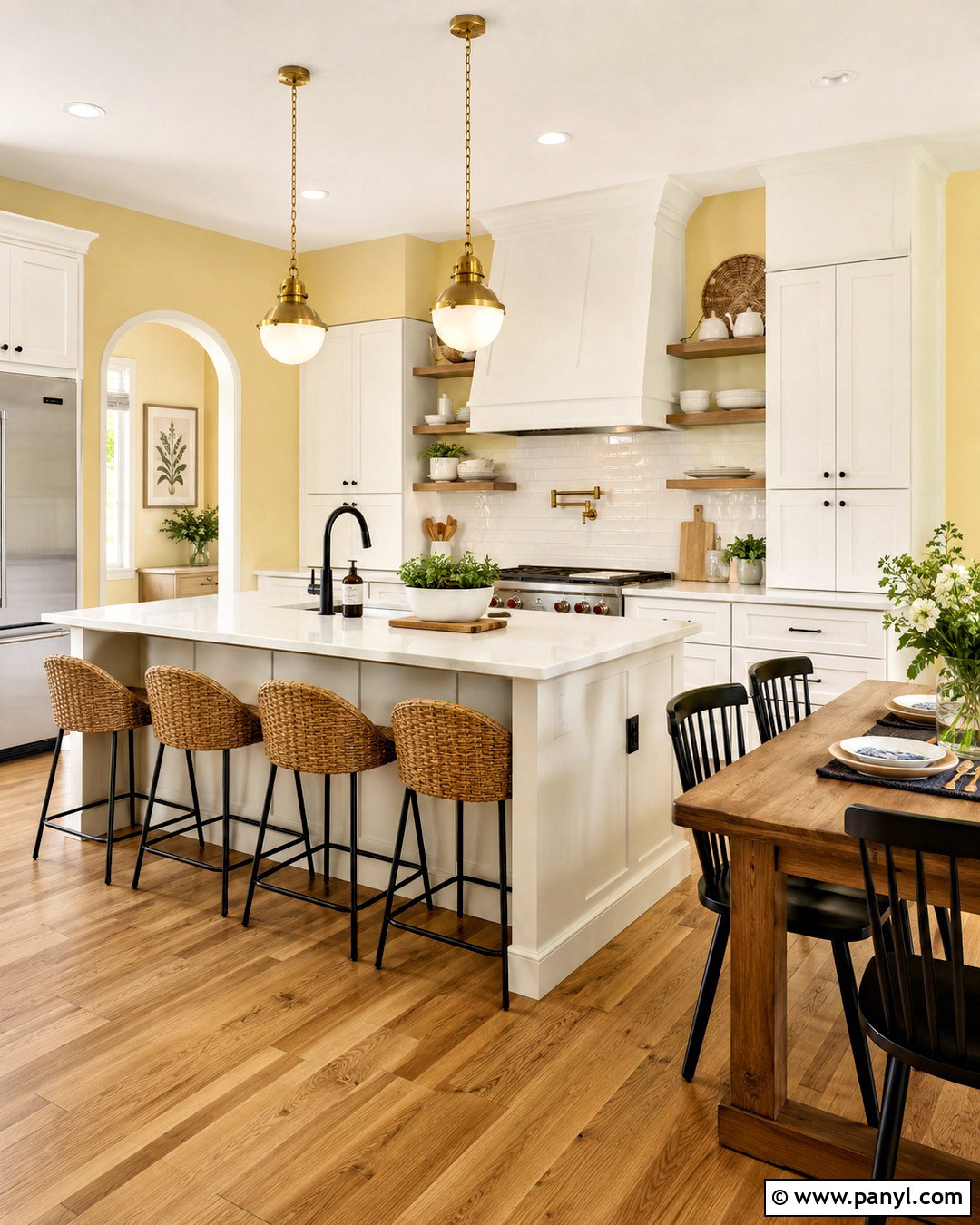
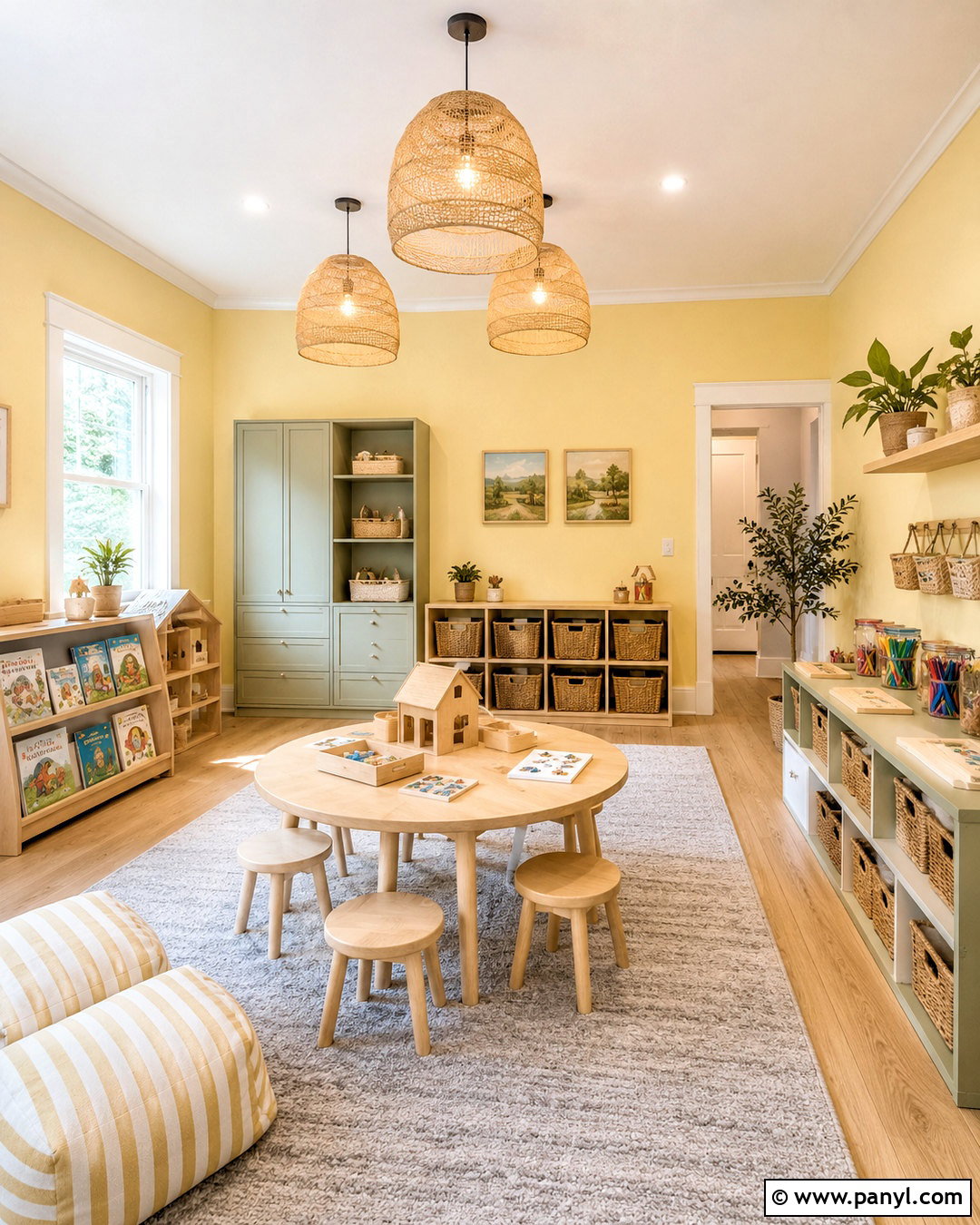
Butter yellow makes a playroom feel sunny without the intensity of a bright primary color. Cover all four walls in a soft, creamy yellow and add clean white trim to sharpen the edges. Pale blue storage cabinets, a light wood table, and mint green chairs create a cheerful but balanced palette. Choose a washable rug with small-scale stripes rather than another bold pattern, allowing the wall color to remain the main feature. A built-in reading nook with ivory cushions adds a peaceful retreat, while open shelves display colorful picture books. Use woven pendant lighting and natural baskets for warmth. Butter yellow is particularly effective in north-facing rooms that need a brighter, more welcoming visual character throughout the day.
8. Sunshine Yellow Playroom Wall Color
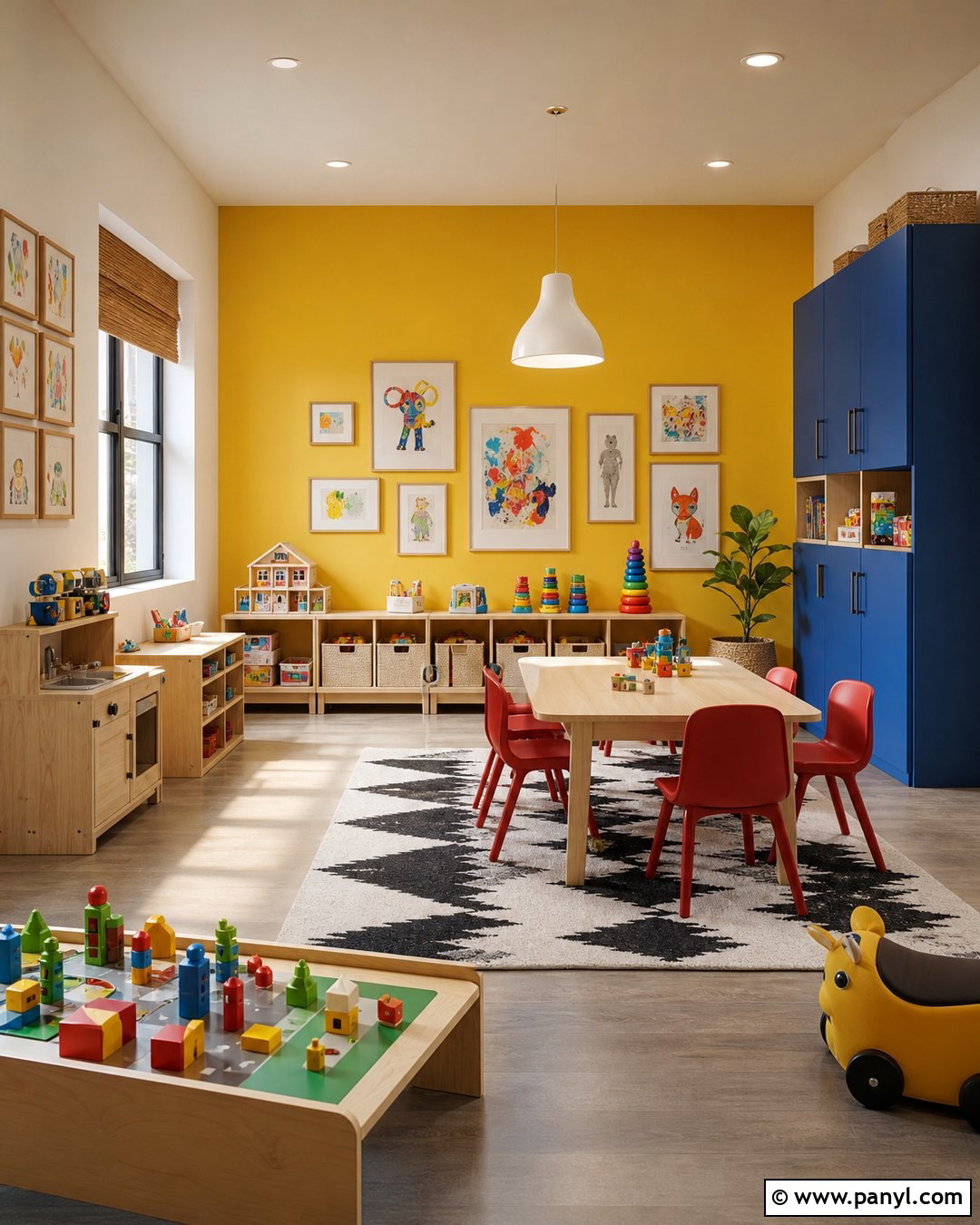
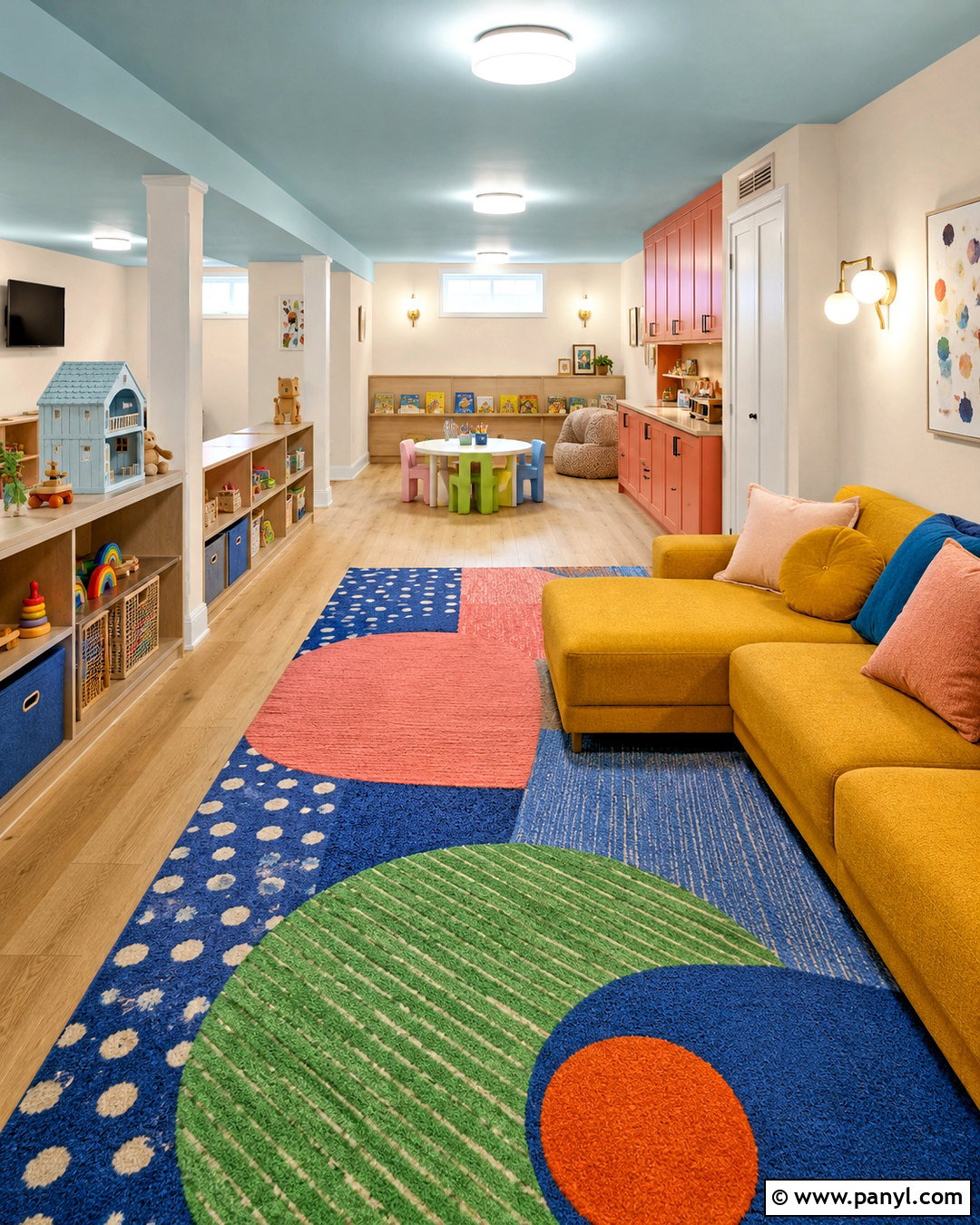
For a high-energy playroom, use sunshine yellow on one feature wall and balance it with warm white on the remaining walls. Position the bold color behind a low craft station or toy storage system so it creates a clear activity zone. Add cobalt blue cabinets, red chairs, and a graphic black-and-white rug for a playful primary-color scheme. Natural birch furniture keeps the brighter shades from feeling too synthetic. Use matching white frames for children’s artwork and repeat small touches of yellow across cushions and storage labels. Keep the floor plan open and the shelves orderly so the strong wall does not produce visual clutter. This lively design works best in a room with generous daylight and simple architectural details.
9. Mustard Yellow Playroom Wall Color
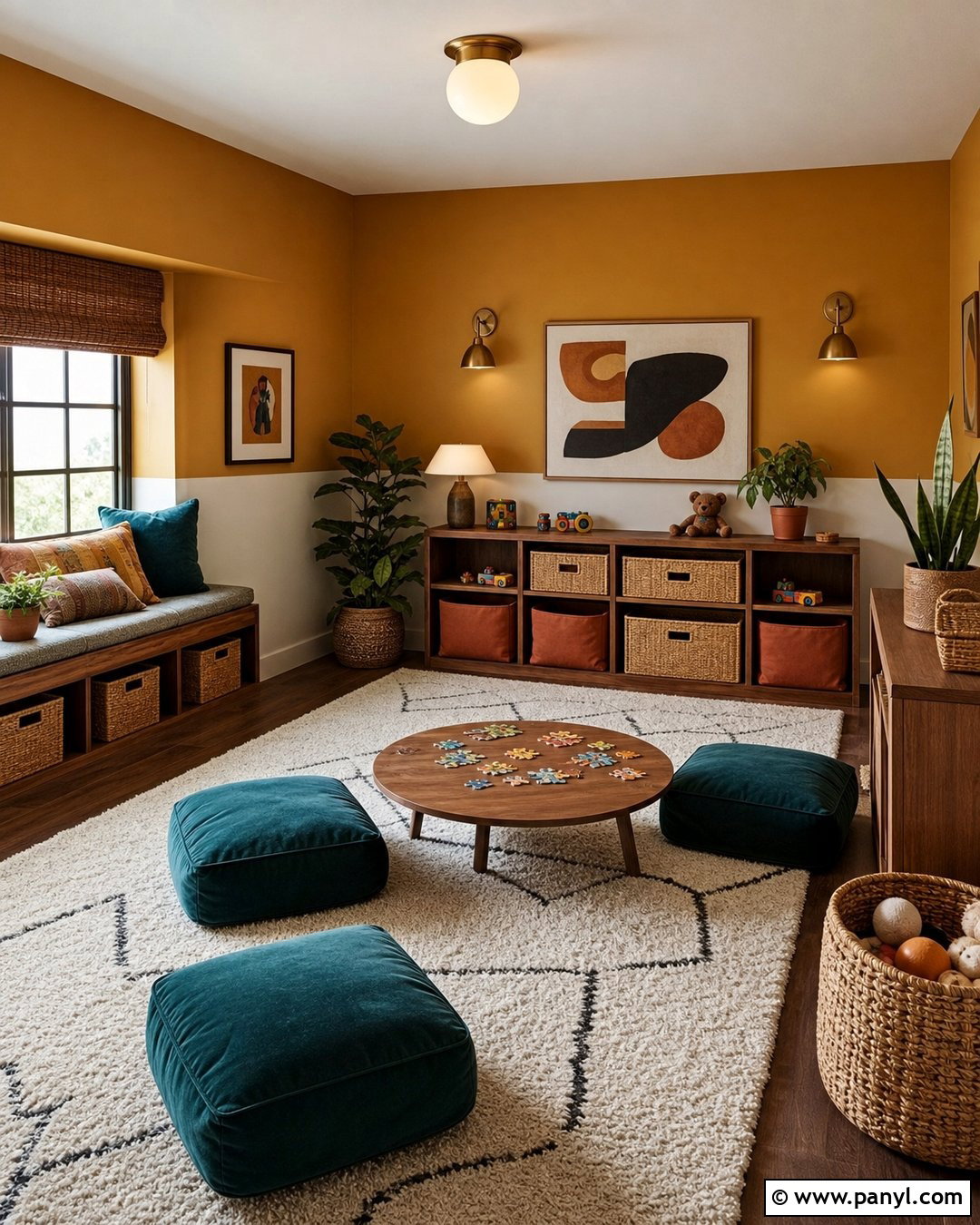
Mustard yellow provides warmth and personality while feeling more grounded than a clear, bright yellow. Use it on the lower two-thirds of the walls, topped with warm white paint and a slim painted dividing line. Pair the walls with walnut-toned storage, deep teal floor cushions, and a cream rug featuring a subtle geometric pattern. Rust-colored bins and natural cane baskets reinforce the cozy palette. Add a small wooden table for puzzles and art, plus a deep window seat for reading. Brass-toned sconces can illuminate bookshelves while contributing a polished detail. The resulting playroom feels creative and welcoming without looking overly young, making mustard a strong choice for children of different ages sharing one multifunctional space.
10. Pale Peach Playroom Wall Color
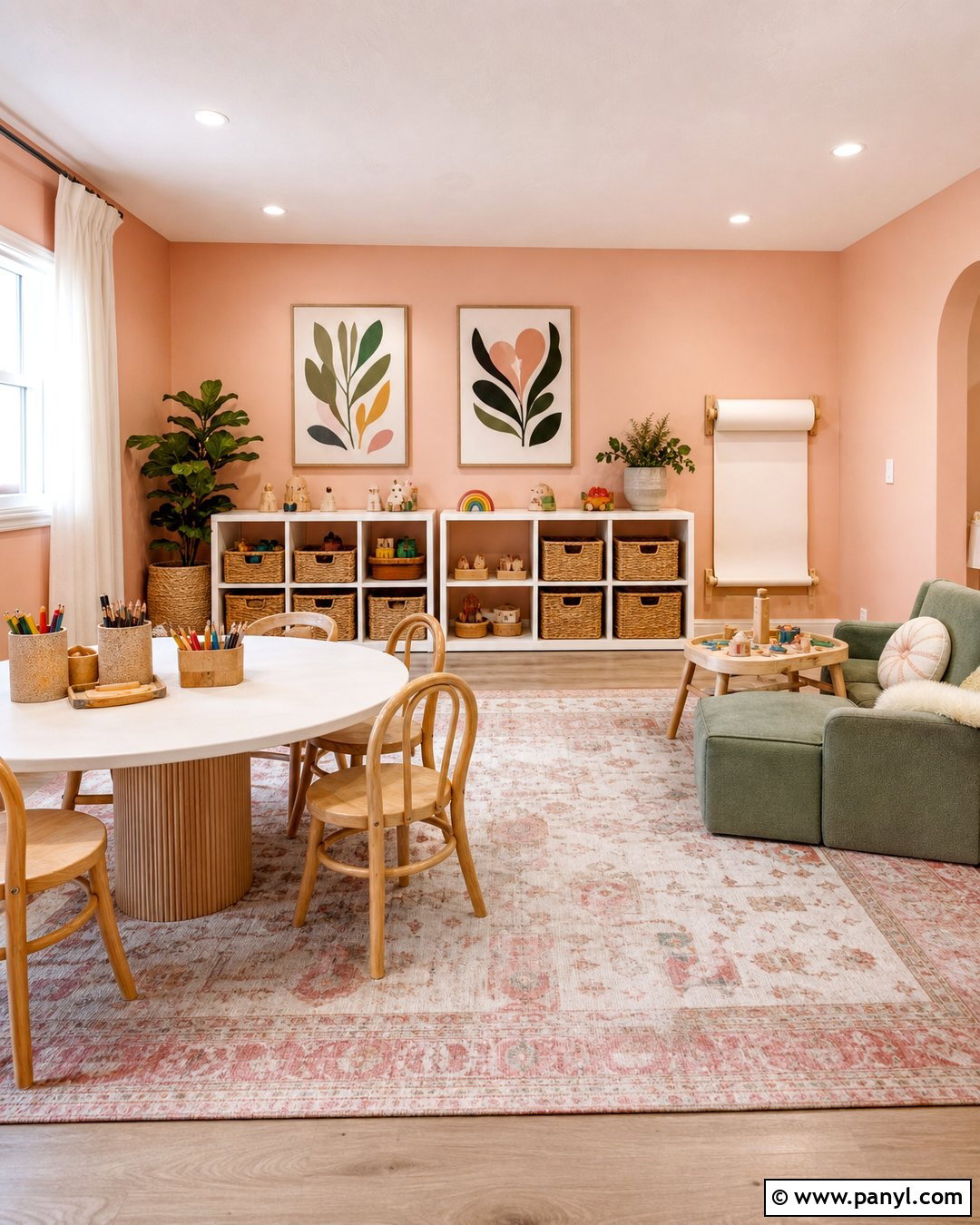
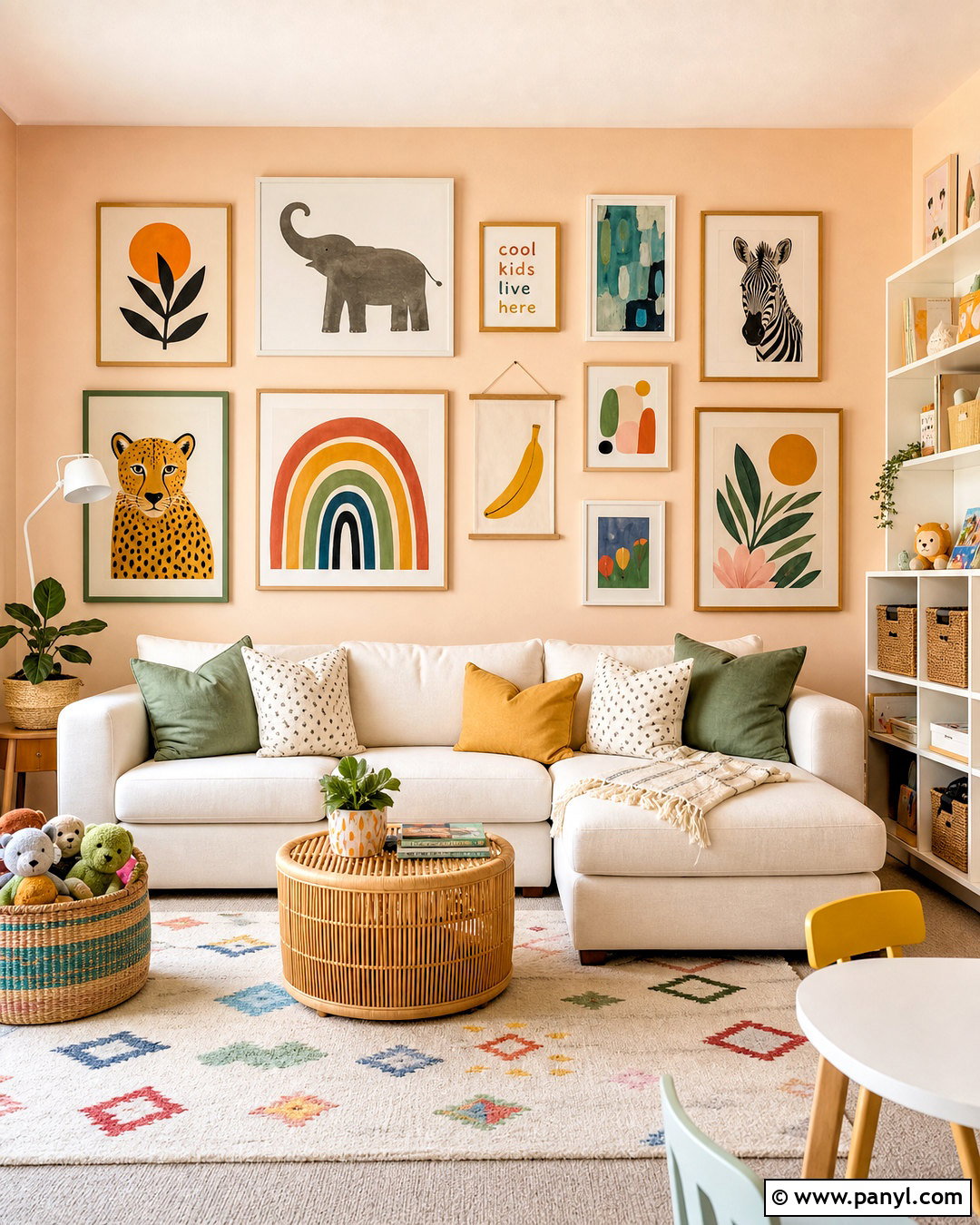
Pale peach gives a playroom a warm glow and pairs beautifully with light woods, creamy textiles, and muted green accents. Paint every wall in a gentle peach that reads soft rather than orange. Use white shelving with natural rattan bins, then add a sage green loveseat or oversized floor cushions for contrast. A washable rug containing ivory, blush, and terracotta connects the palette across the room. Include a rounded craft table, simple bentwood chairs, and a wall-mounted paper roll for drawing. White curtains and trim maintain brightness, while small brass or wood details add warmth. This complete look feels cheerful and modern, and it can transition smoothly from a toddler play space into an older child’s creative studio.
11. Soft Coral Playroom Wall Color
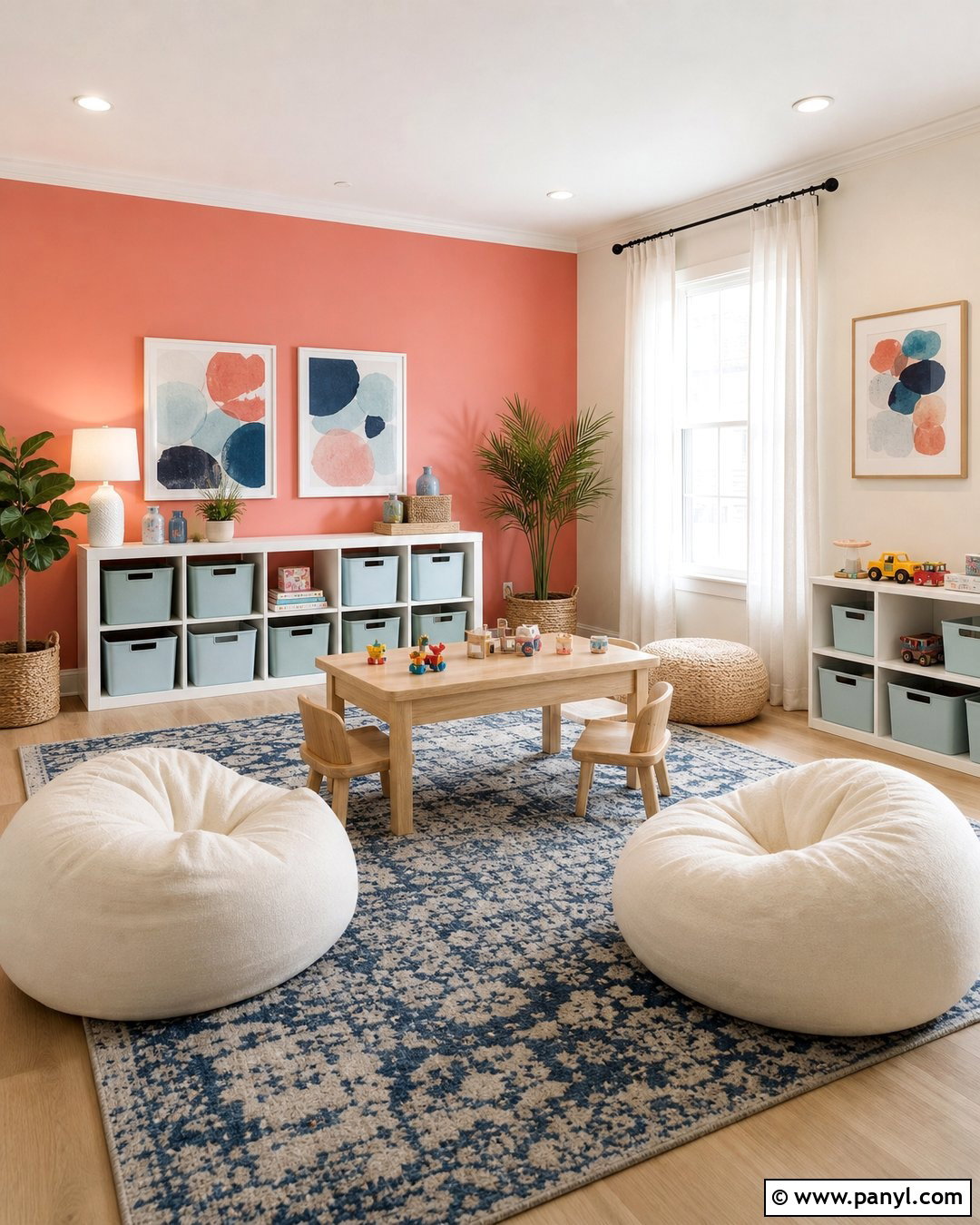
Soft coral creates an upbeat playroom when it is used with restraint and surrounded by calm neutrals. Paint one main wall coral and keep the adjoining walls a warm off-white. Place a low white storage system against the colored wall, using natural baskets and pale blue bins to break up the saturated backdrop. A light oak activity table, cream beanbags, and a navy-and-ivory rug give the room structure. Add framed botanical or abstract prints that repeat coral in small amounts. Sheer white curtains prevent the room from feeling visually heavy. This palette is bright enough to feel playful but polished enough for an open-plan family area. It also works well with both modern and coastal-inspired furnishings.
12. Terracotta Playroom Wall Color
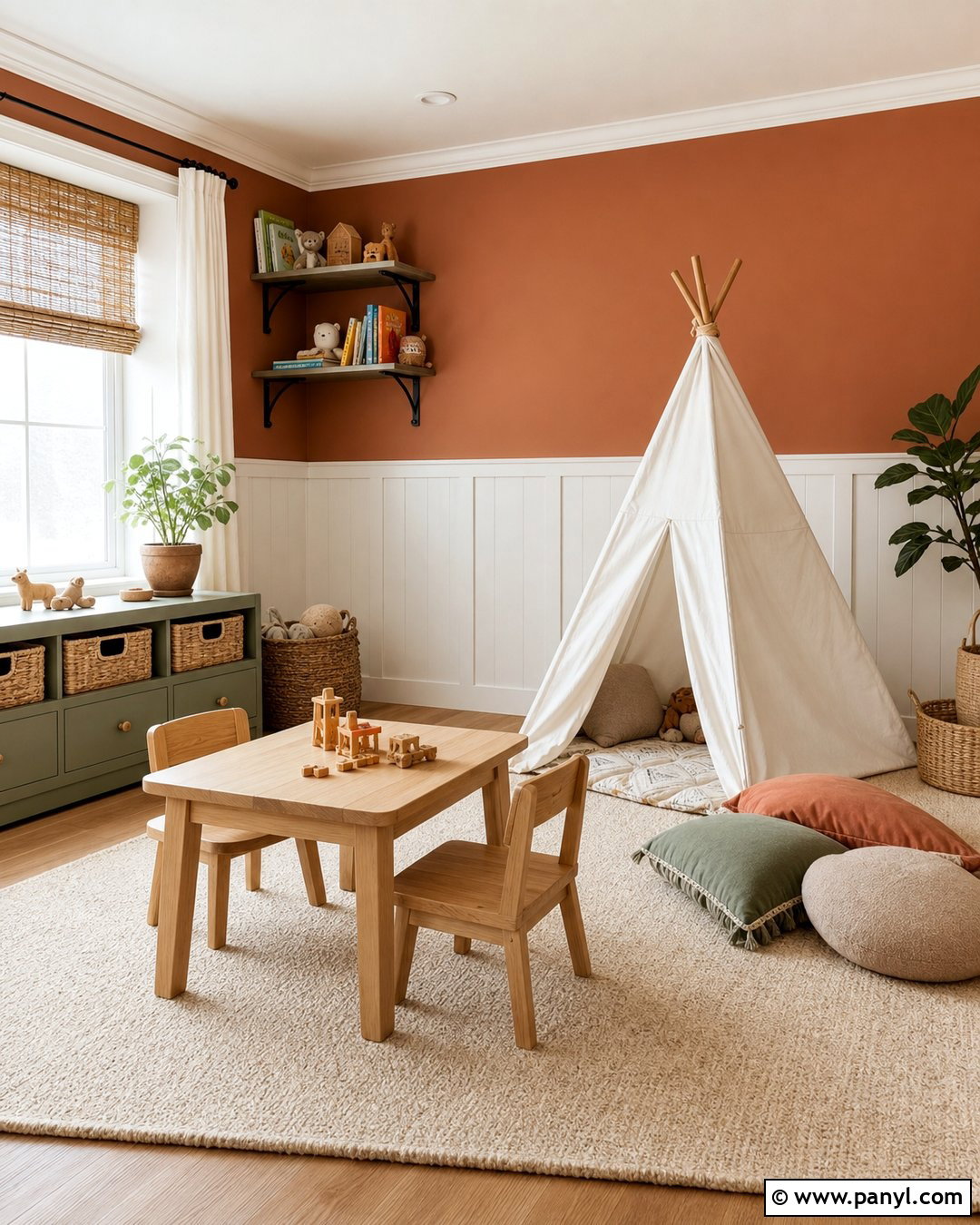
Earthy terracotta walls can turn a playroom into a warm, cozy retreat filled with natural materials. Choose a softened clay shade and use it on one wall or below simple white wainscoting. Pair it with sage green cabinets, pale oak furniture, and an ivory wool-look washable rug. Add woven storage baskets, linen floor pillows, and a canvas play tent to create comfortable areas for imaginative play. Black metal shelf brackets provide a small amount of contrast without cooling the palette. Display books with green, cream, rust, and blue covers to create visual continuity. Terracotta works especially well in rooms with strong daylight, where the warm color can appear rich and dimensional rather than dark or overly intense.
13. Blush Pink Playroom Wall Color
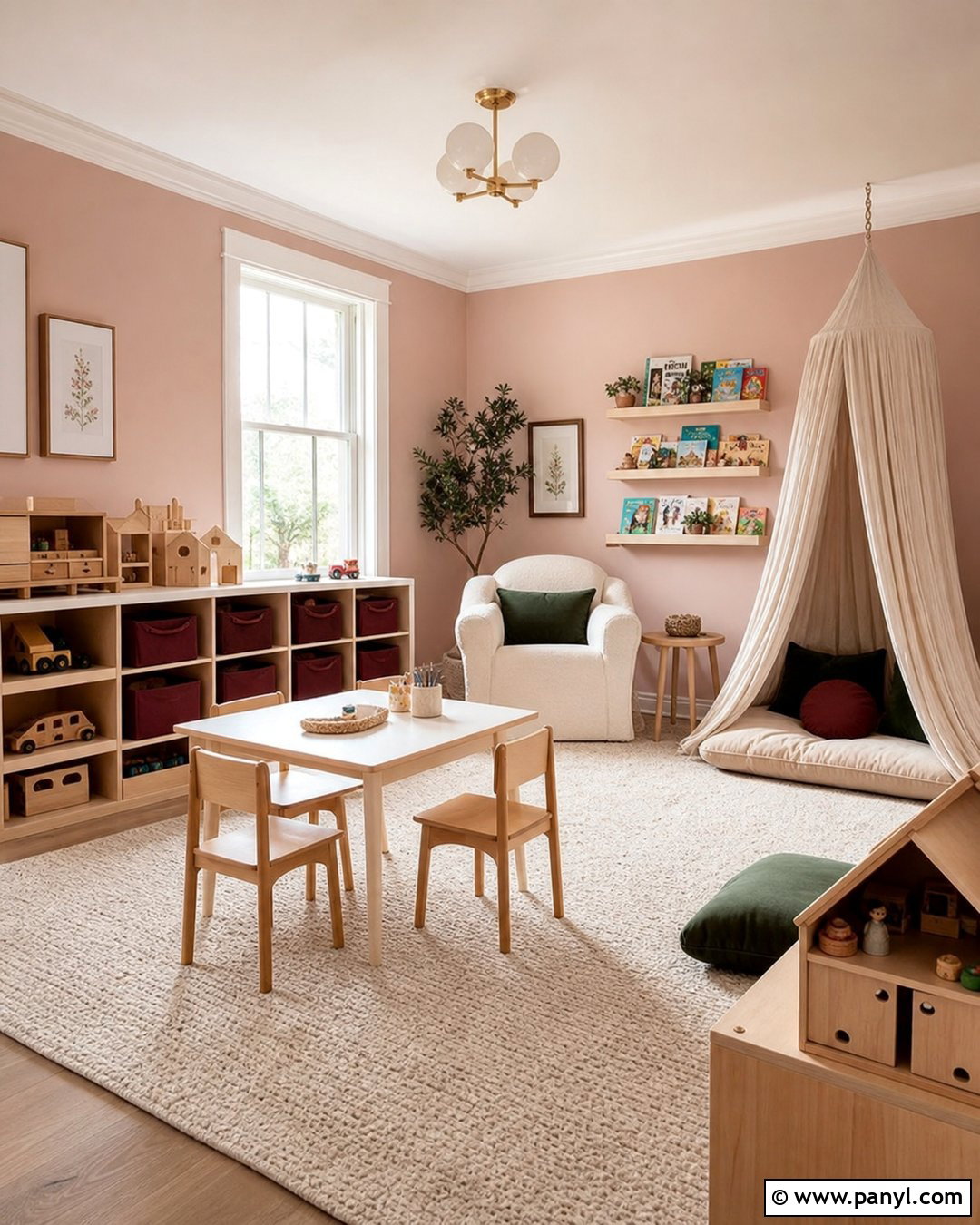
Blush pink creates a gentle playroom that feels colorful without depending on a strong theme. Use a dusty, muted blush across the walls and pair it with warm white trim, pale oak storage, and a cream rug. Introduce contrast through forest green cushions, burgundy storage bins, and small touches of muted gold. A white craft table with simple wood chairs keeps the center of the room light and practical. Add a reading corner with a curved ivory chair, floating bookshelves, and a soft canopy in natural linen. Avoid filling the space with matching pink accessories; instead, use varied earthy tones to create depth. The finished room feels playful, balanced, and adaptable as children’s interests change.
14. Dusty Rose Playroom Wall Color
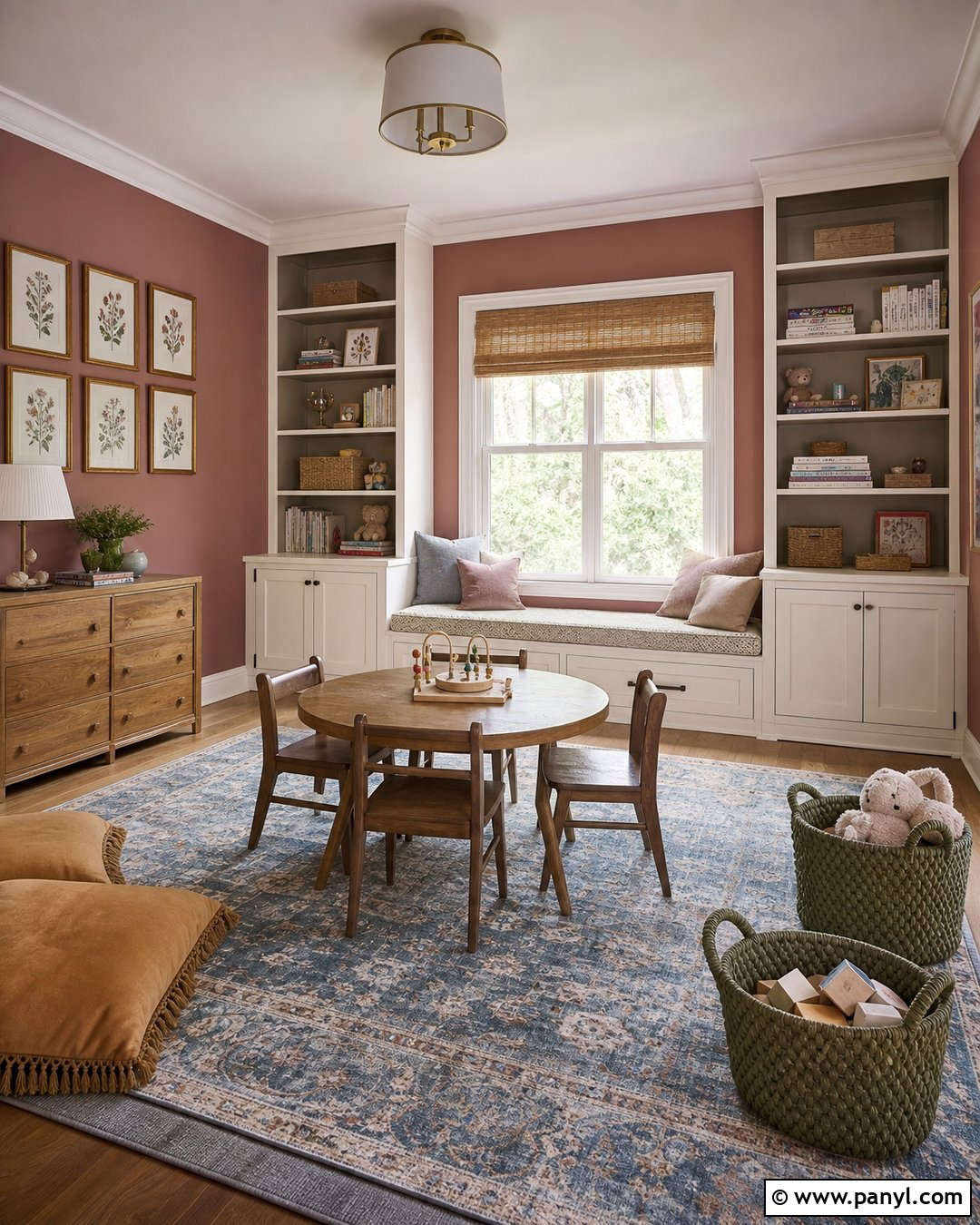
Dusty rose offers more depth than pale pink and creates a warm backdrop for a comfortable, slightly vintage playroom. Paint the walls in a muted rose shade, then introduce creamy white bookcases, medium-toned wood furniture, and a faded blue patterned rug. Add olive green storage baskets and caramel-colored floor cushions to make the palette feel layered. A central round table can support crafts, puzzles, and homework, while a cushioned bench provides seating for adults. Use simple floral or animal artwork in antique brass-colored frames, but keep the display uncluttered. Dusty rose works beautifully with existing wood floors and traditional molding. It creates a complete room that feels imaginative for children yet visually connected to a classic home.
15. Soft Lavender Playroom Wall Color
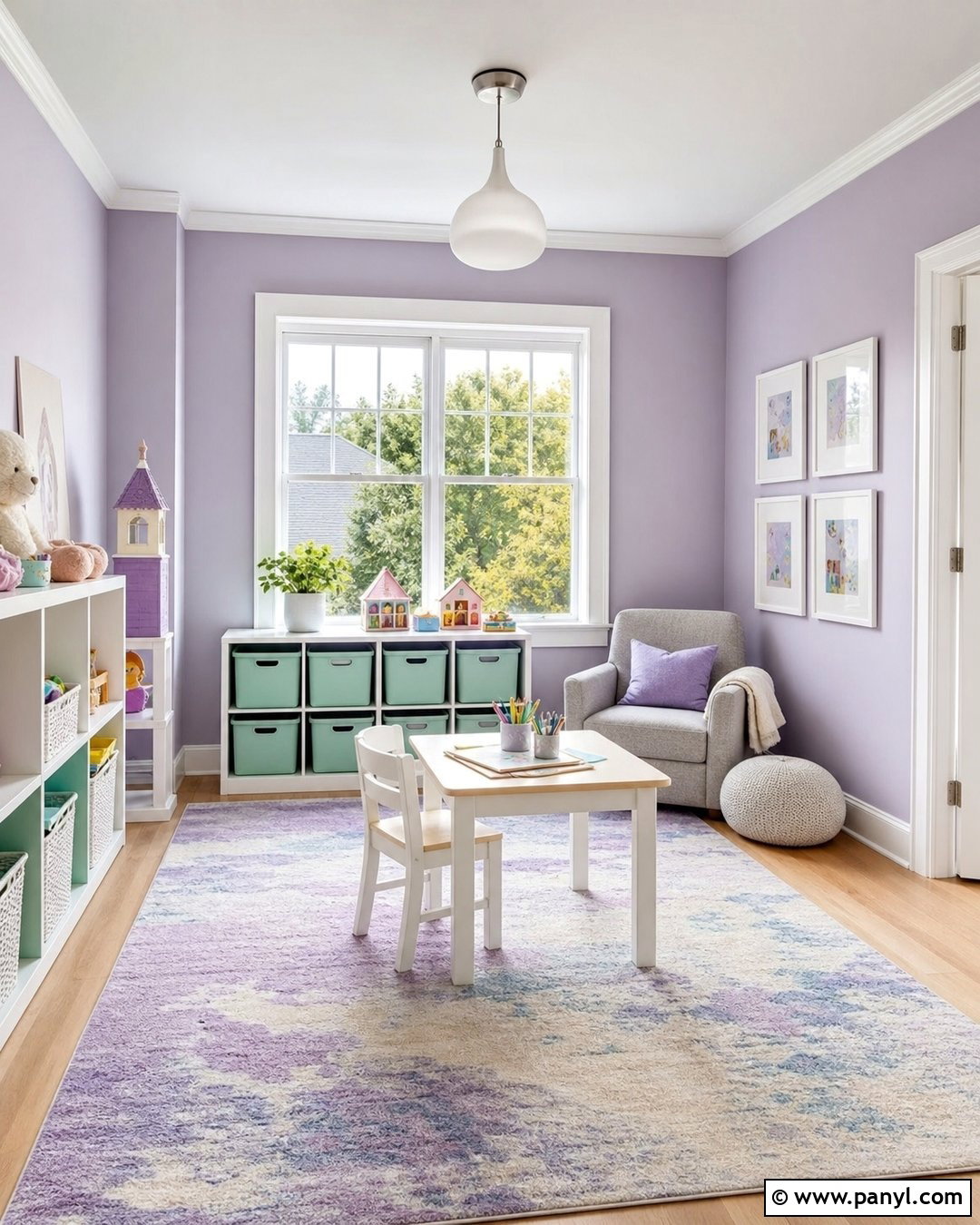
Soft lavender walls give a playroom a dreamy quality while remaining light enough for everyday activities. Select a gray-toned lavender rather than a highly saturated purple, and combine it with crisp white trim and pale maple flooring. Add a mint green storage cabinet, natural baskets, and a rug that mixes lavender, blue, and cream. Position a small white art table near the window and create a reading corner with a light gray chair and lilac floor pillow. Brushed silver hardware and a simple white pendant light keep the palette fresh. This soothing design works particularly well in playrooms that also support reading, sensory activities, or quiet time. Brighter purple toys can add energy without dominating the finished space.
16. Lilac Playroom Wall Color
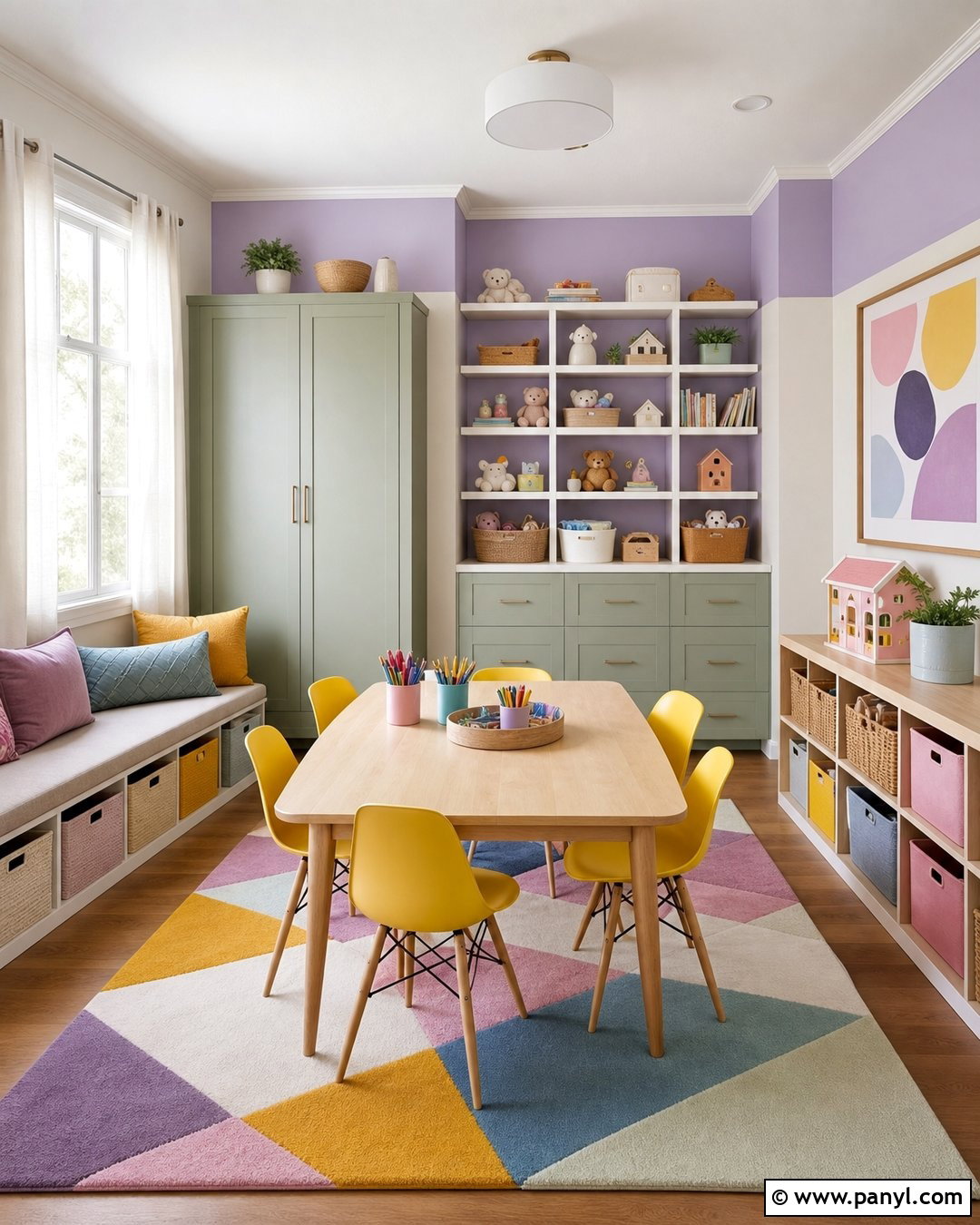
Lilac can create a cheerful, imaginative playroom when it is partnered with fresh greens and warm natural wood. Use a clear but light lilac on the upper walls and paint the lower section creamy white for visual balance. Place sage green cabinets along one side, topped with open shelves for books and craft supplies. Add a blond wood table, yellow chairs, and a washable rug featuring soft purple, green, and coral shapes. White window treatments maintain a bright feeling, while a small upholstered bench provides comfortable adult seating. Keep toys grouped in matching bins so the lively palette remains organized. This complete room feels colorful and youthful, yet the cabinetry and two-tone walls give it a thoughtful, finished appearance.
17. Plum Playroom Accent Wall
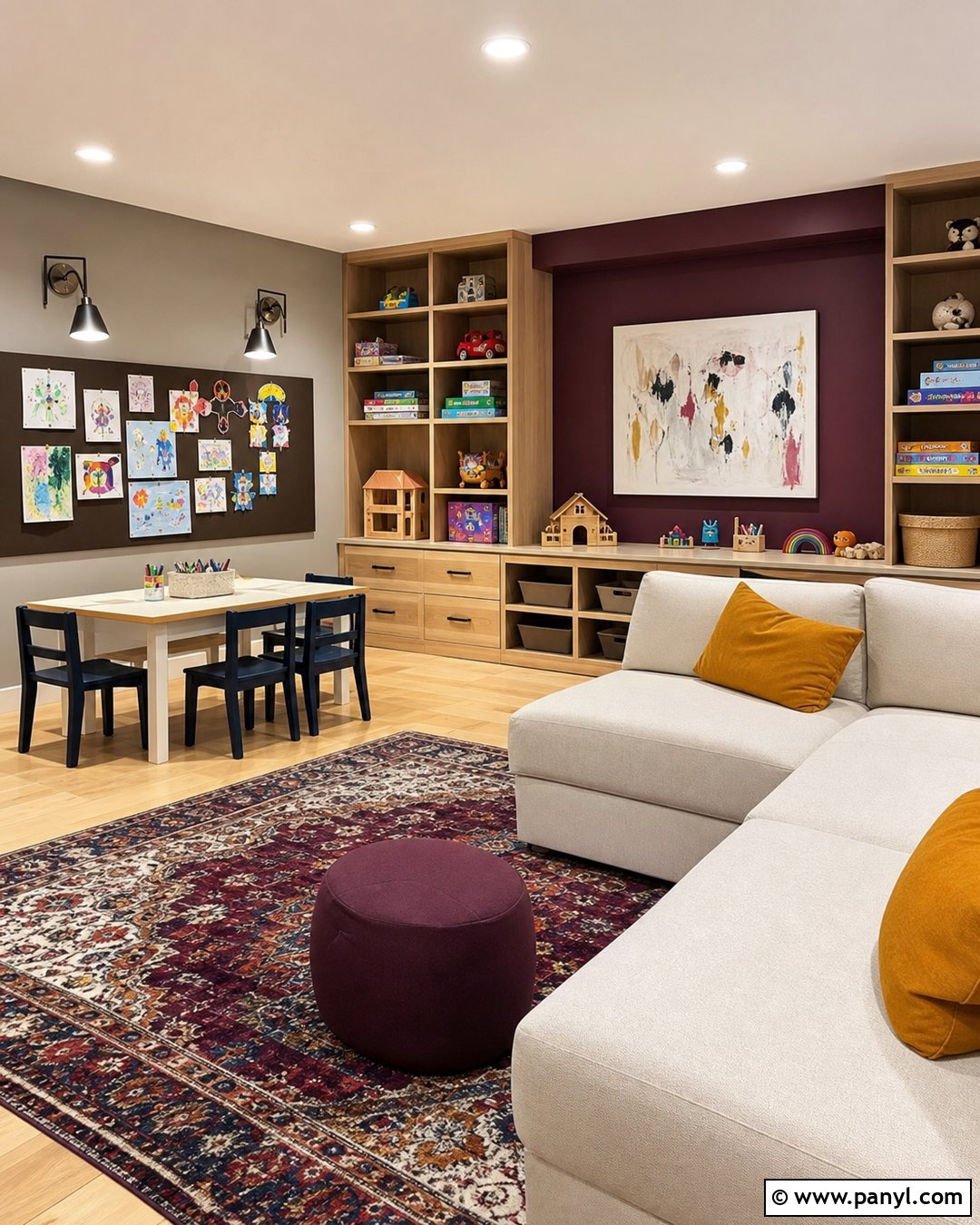
A deep plum accent wall brings dramatic color to a playroom designed for older children or mixed age groups. Use plum behind a built-in media, game, or reading area, then paint the other walls a soft warm gray. Light oak cabinets and shelving prevent the dark feature wall from feeling heavy. Add a cream modular sofa, mustard pillows, and a rug with plum, rust, and pale blue details. A large pinboard or magnetic display area gives children room to personalize the space without covering every wall. Include focused task lighting around the craft table and bookshelves. This sophisticated scheme can support board games, art projects, reading, and casual lounging while transitioning easily into a teen hangout room later.
18. Powder Blue Playroom Wall Color
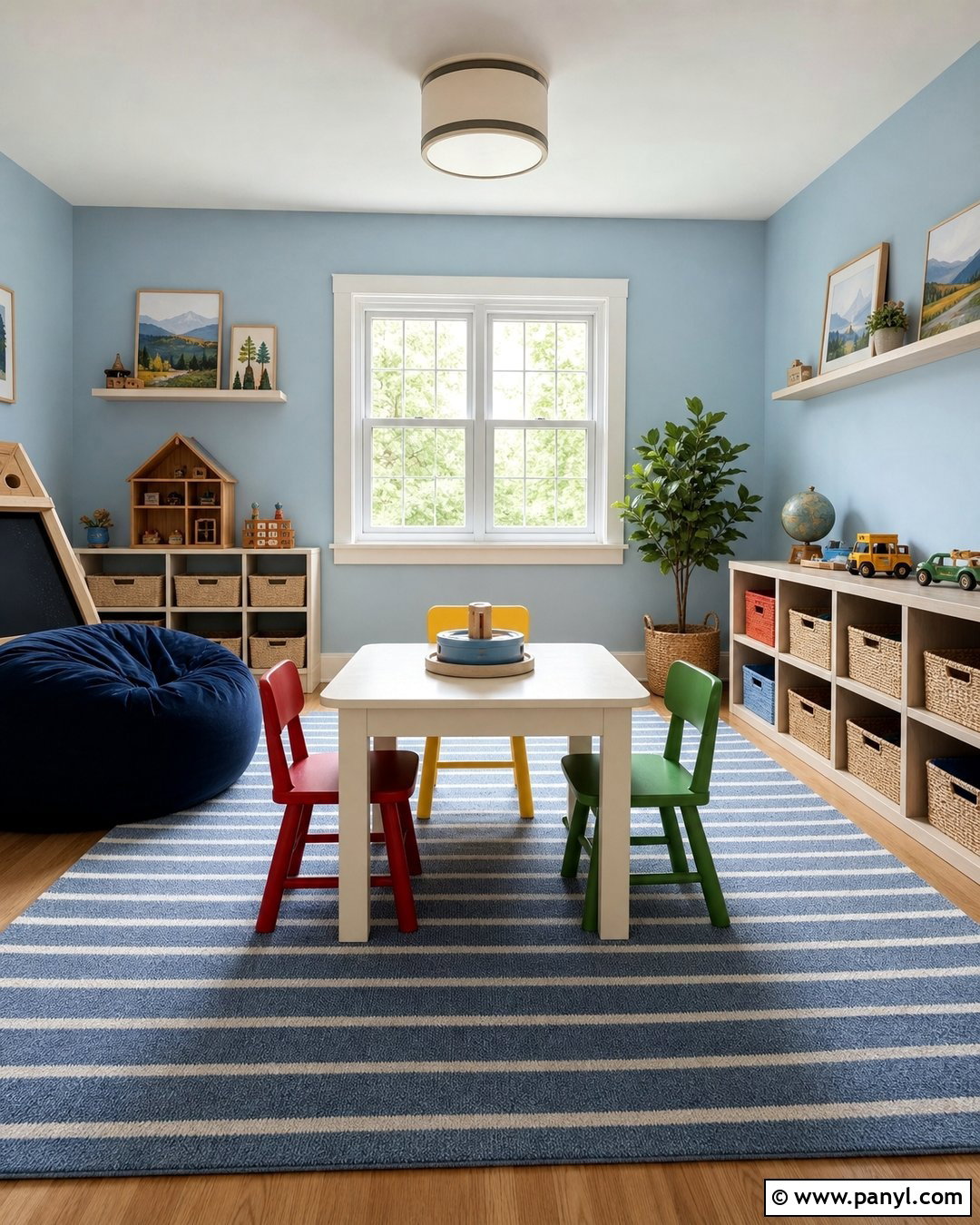
Powder blue walls produce a fresh, airy playroom that pairs easily with both vivid toys and quiet neutral furnishings. Paint all four walls in a soft blue with a slightly warm undertone, then use clean white for the ceiling and trim. Add a natural oak storage wall, a cream activity table, and colorful chairs in red, yellow, and green. A striped rug in blue and ivory reinforces the wall color without overwhelming the design. Create a reading zone with a navy beanbag and low picture ledges. Woven baskets introduce useful texture, while simple cloud or landscape artwork supports the relaxed palette. Powder blue works particularly well in sunny rooms because daylight helps the color remain bright and clear.
19. Sky Blue Playroom Wall Color
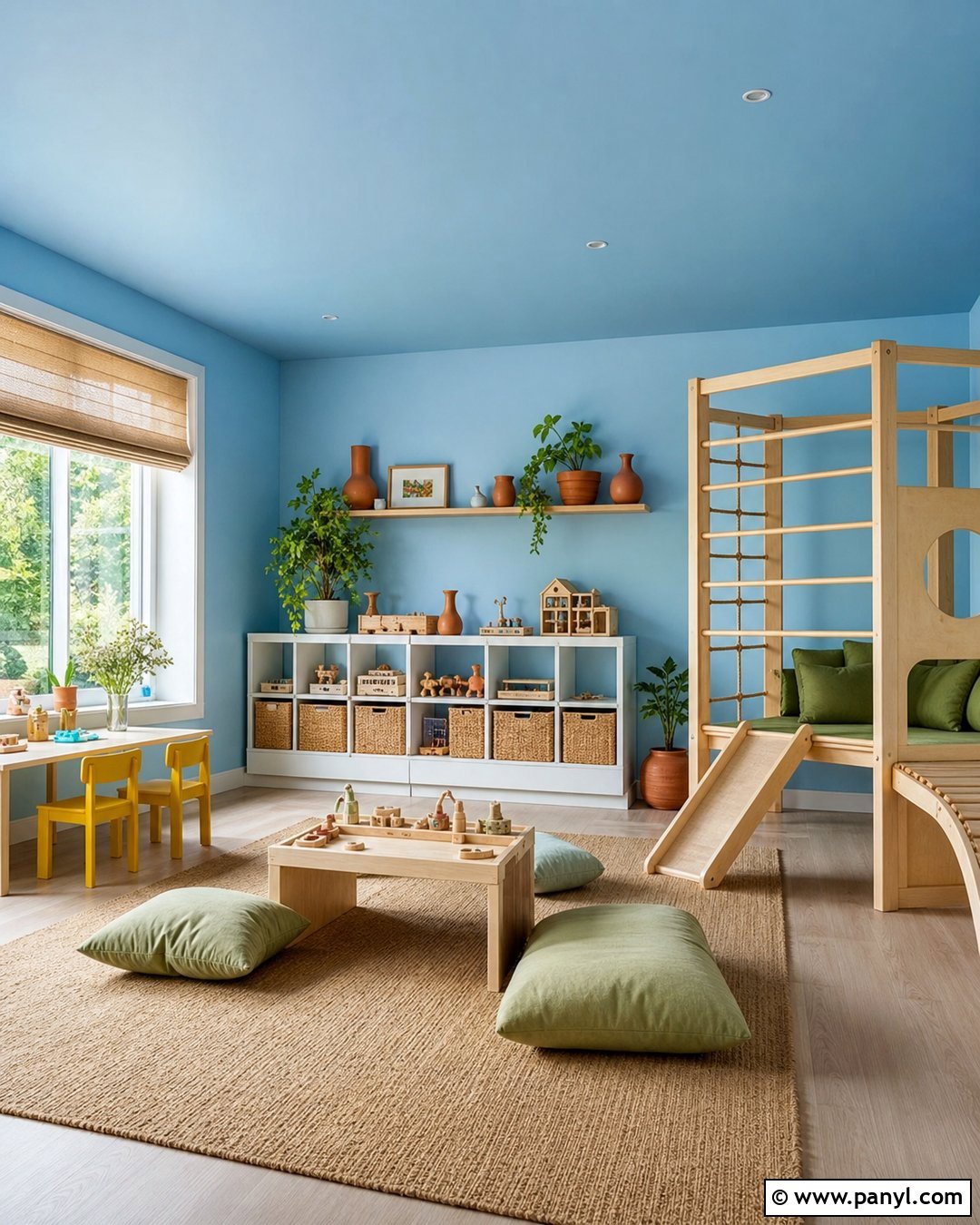
Sky blue creates an uplifting playroom with a natural, open feeling. Carry the blue across the walls and ceiling for a soft enveloping effect, but use a slightly lighter shade overhead. Balance the color with white storage cabinets, blond wood furniture, and a sandy beige rug. Add grass green cushions, sunny yellow chairs, and a few terracotta accessories to create a landscape-inspired palette. A low climbing structure can occupy one side of the room, while a window-side table supports art and building activities. Keep shelving horizontal and easy to reach so children can manage their own toys. This complete design feels energetic without becoming visually noisy, especially when the accent colors appear in controlled, repeated amounts.
20. Cornflower Blue Playroom Wall Color
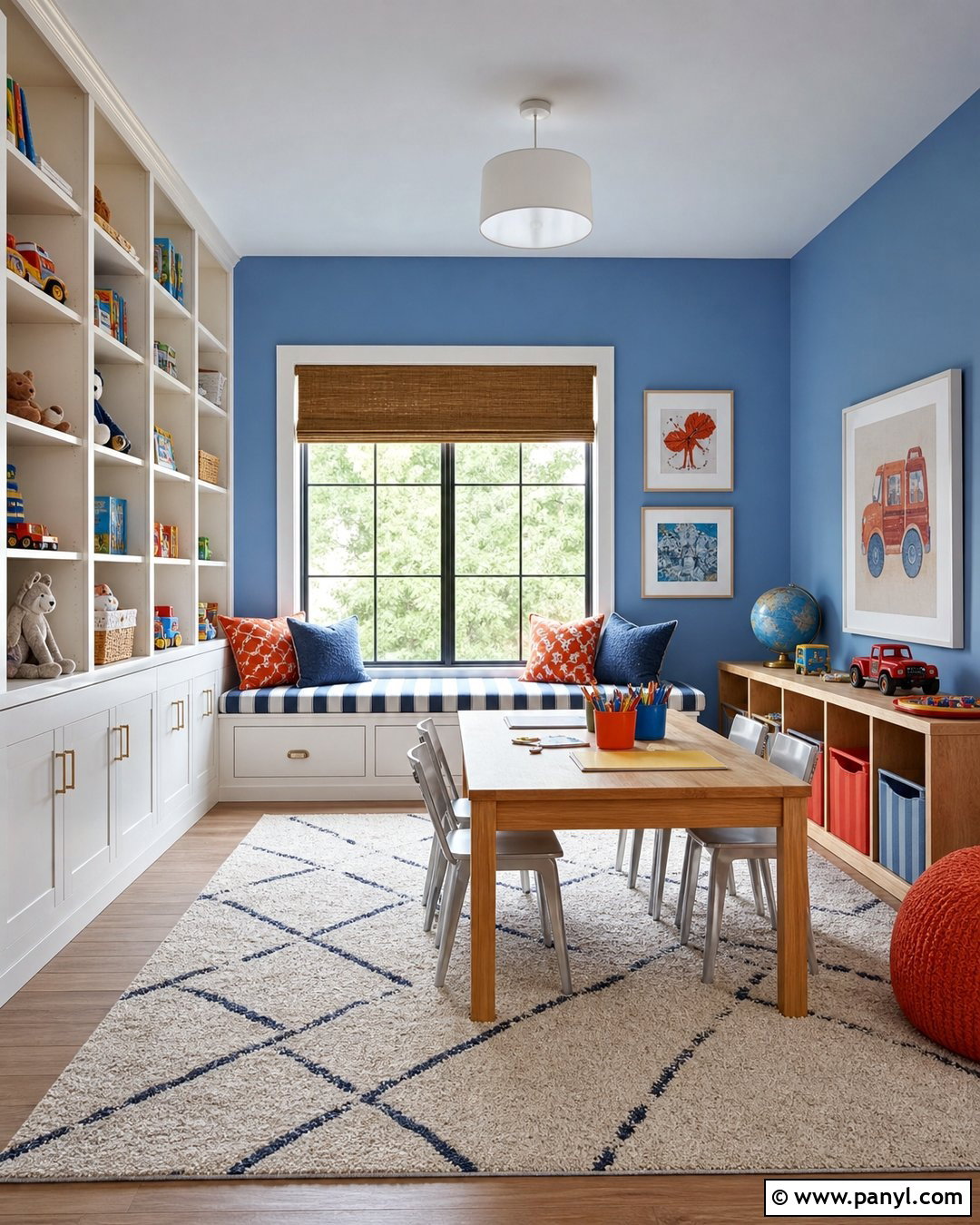
Cornflower blue brings more presence than powder blue while still feeling friendly and relaxed. Use it on three walls and reserve warm white for the wall containing the largest storage unit. Pair the blue with red-orange accents, natural oak furniture, and a cream rug patterned with simple navy lines. A built-in bench with striped cushions can create a comfortable reading area beneath the window. Add a sturdy rectangular table for shared crafts and homework, along with stackable chairs in pale gray. Framed artwork in white and maple frames keeps the walls orderly. Cornflower blue suits traditional and modern playrooms alike, and it provides enough color to make the space distinctive without requiring elaborate murals or heavily themed decor.
21. Denim Blue Playroom Wall Color
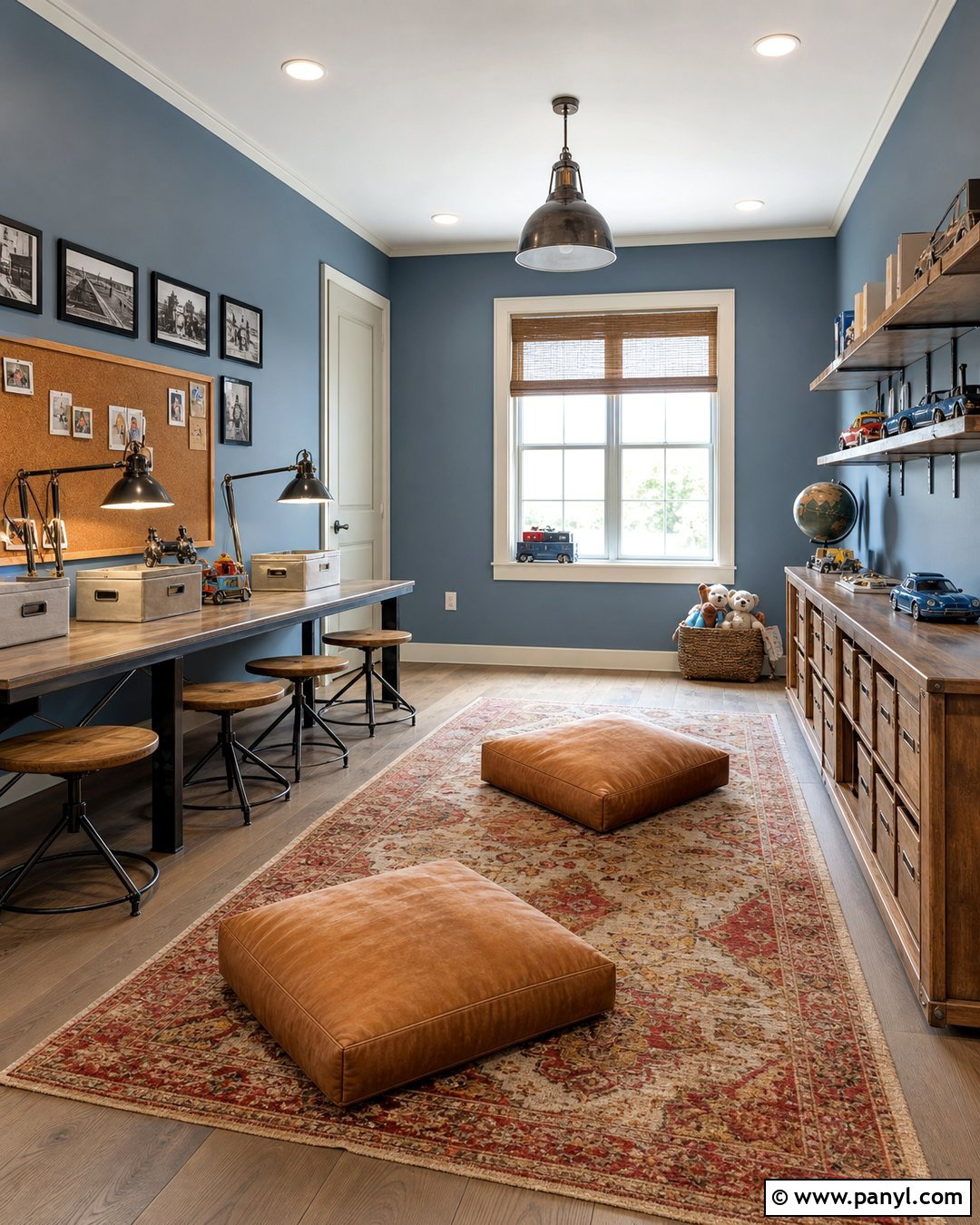
Denim blue gives a playroom a comfortable, familiar character that works well for children from preschool through the teen years. Paint the walls in a medium muted blue and combine them with creamy trim, cognac-colored leather-look floor cushions, and warm oak cabinets. Introduce a vintage-inspired rug containing faded red, gold, and ivory. A long worktable with metal legs can accommodate crafts, building projects, and homework. Use canvas storage bins, black picture frames, and a large corkboard for practical organization. Keep the ceiling light and add several focused task lamps so the deeper wall color does not reduce brightness. The finished space feels playful yet mature, making it ideal for a family room that must serve several purposes.
22. Navy Blue Playroom Accent Wall
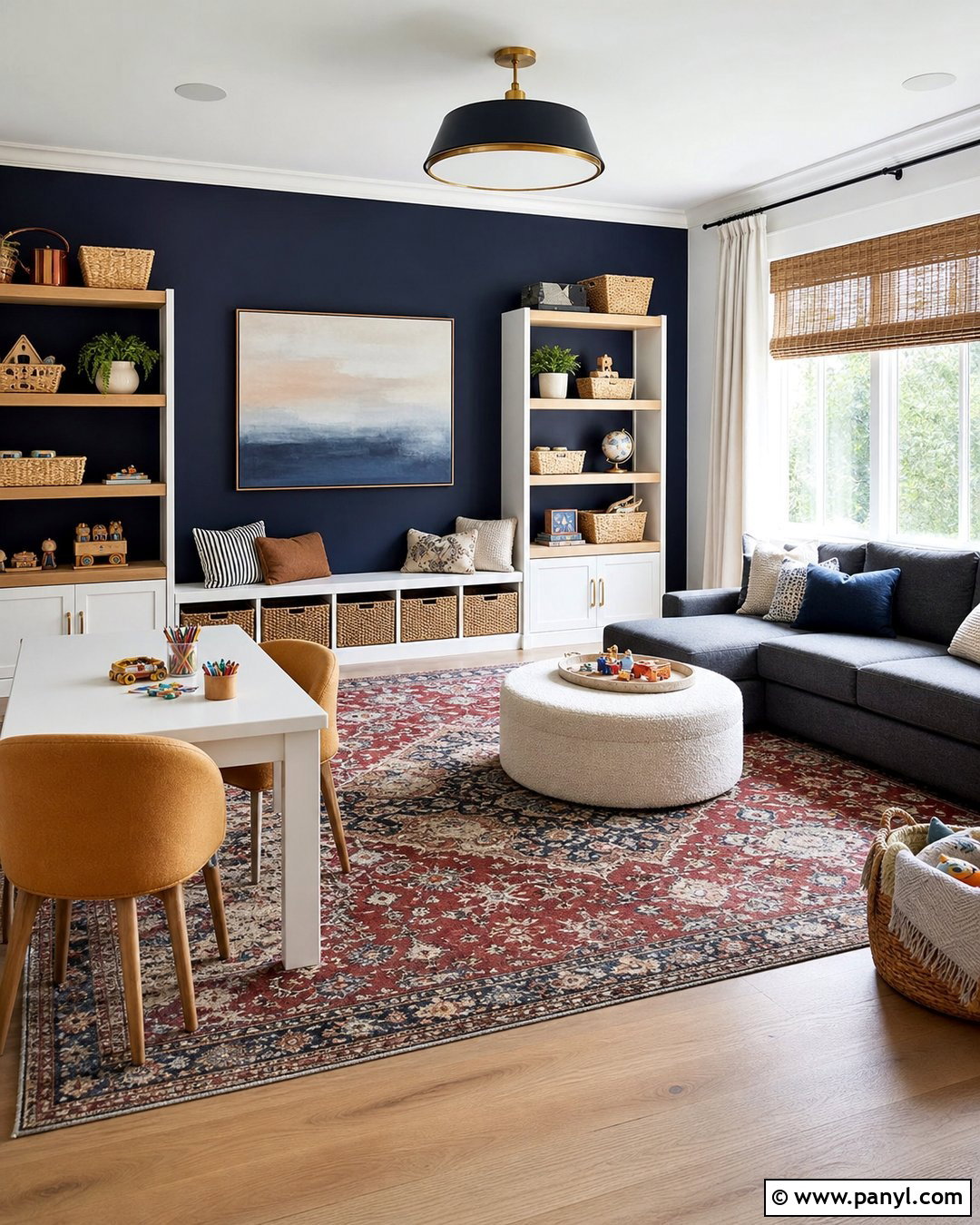
Navy blue creates a strong focal point while helping colorful toys and artwork appear more intentional. Paint one wall deep navy and use warm white on the other three walls. Install white or light oak shelving against the dark background, filling the lower cabinets with matching baskets. A red, pale blue, and cream rug introduces classic color, while mustard yellow chairs add a livelier note. Place a white craft table near the center and use a gray sectional or oversized floor cushions along the opposite wall. Keep window treatments simple and bright to preserve natural light. This complete scheme is especially effective in shared playrooms, where the navy foundation can accommodate sports equipment, dolls, books, art supplies, and changing interests.
23. Pale Aqua Playroom Wall Color
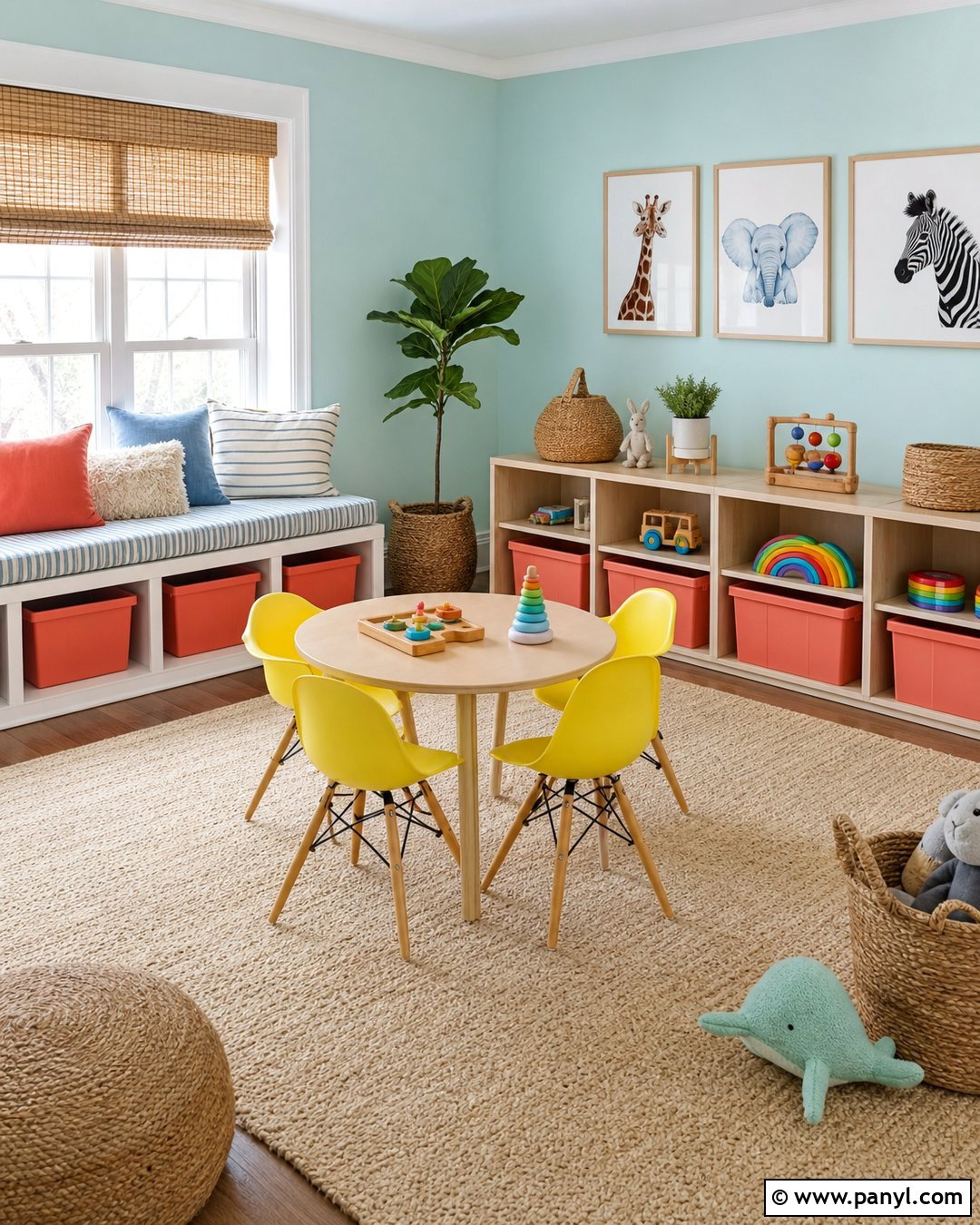
Pale aqua walls combine the freshness of blue with a hint of green, creating a cheerful background for active and quiet play. Use aqua throughout the room, then add white trim, pale birch furniture, and a light sand-colored rug. Coral storage bins and sunny yellow chairs provide warm contrast without making the room feel crowded. Include a low white bookshelf, a round activity table, and a built-in bench with striped blue-and-cream cushions. Natural woven baskets help soften the cooler wall color. Display simple ocean, animal, or abstract artwork rather than building an overly specific theme. The resulting playroom feels bright, relaxed, and versatile, making pale aqua a useful choice for small spaces and rooms with limited architectural detail.
24. Turquoise Playroom Wall Color
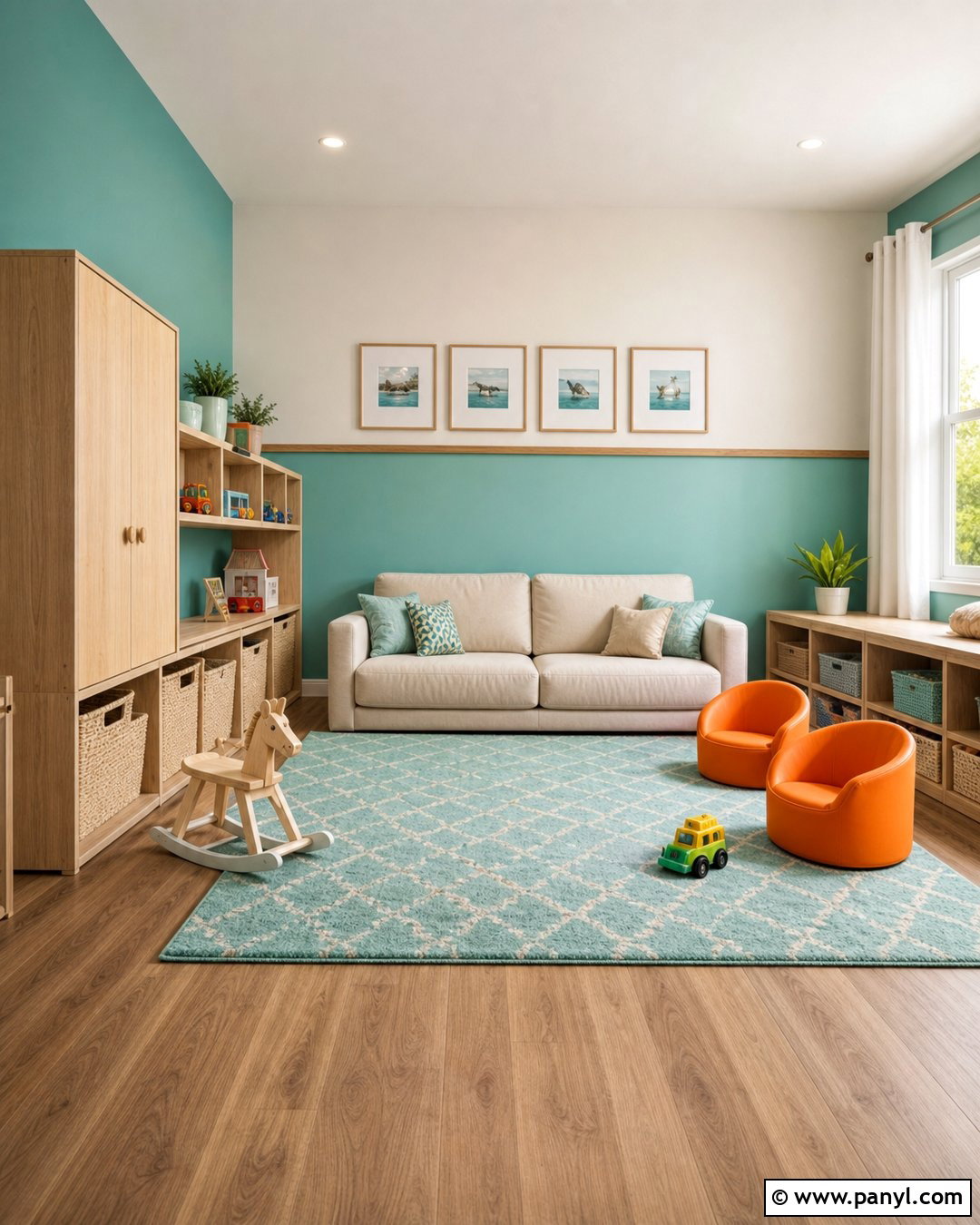
Turquoise can energize a playroom instantly, so balance it with generous areas of white and natural wood. Use the color on the lower half of the walls and paint the upper half warm white. A slim wood ledge can divide the two shades while providing a place for small framed pictures. Add light oak storage cabinets, orange chairs, a cream sofa, and a patterned rug that repeats turquoise in smaller amounts. Keep larger furniture visually simple and leave enough open floor space for active play. White curtains and a bright ceiling prevent the saturated color from closing in the room. This lively design is especially successful in contemporary playrooms where clean shapes and organized storage keep bold color feeling controlled.
25. Deep Teal Playroom Wall Color
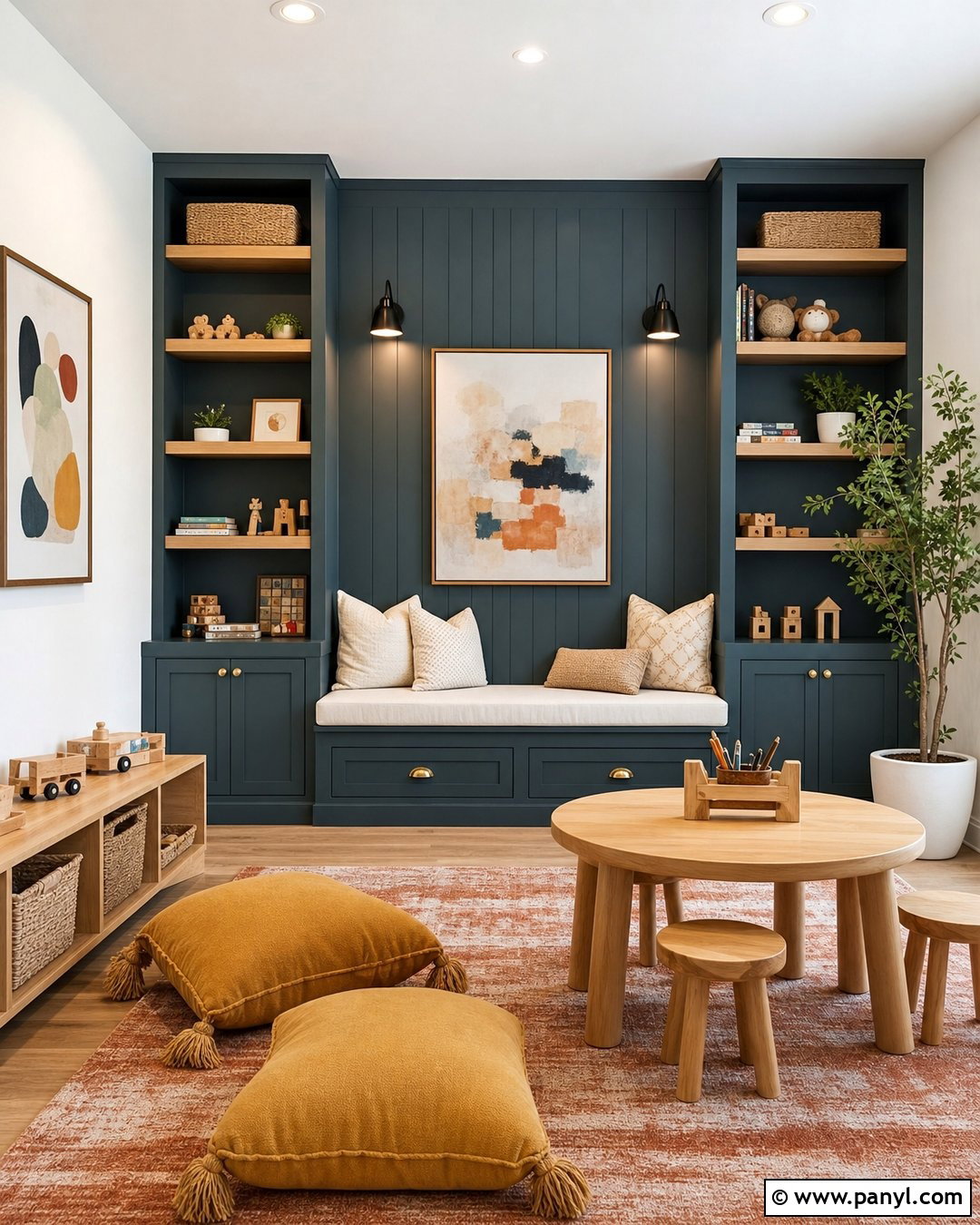
Deep teal makes a playroom feel rich and imaginative, especially when used on a single wall or within a well-lit room. Place the teal behind a reading nook with built-in oak shelves and a cushioned cream bench. Paint the remaining walls soft white and add a rust-colored rug, mustard floor pillows, and matte black lighting. A large natural wood table gives the center of the room a durable surface for crafts and games. Store toys inside closed cabinets with simple brass-toned pulls to limit visual clutter. Repeat teal in only one or two small accessories. This balanced palette creates a cozy space for storytelling and creative activities while retaining enough brightness for everyday play and practical family use.
26. Mint Green Playroom Wall Color
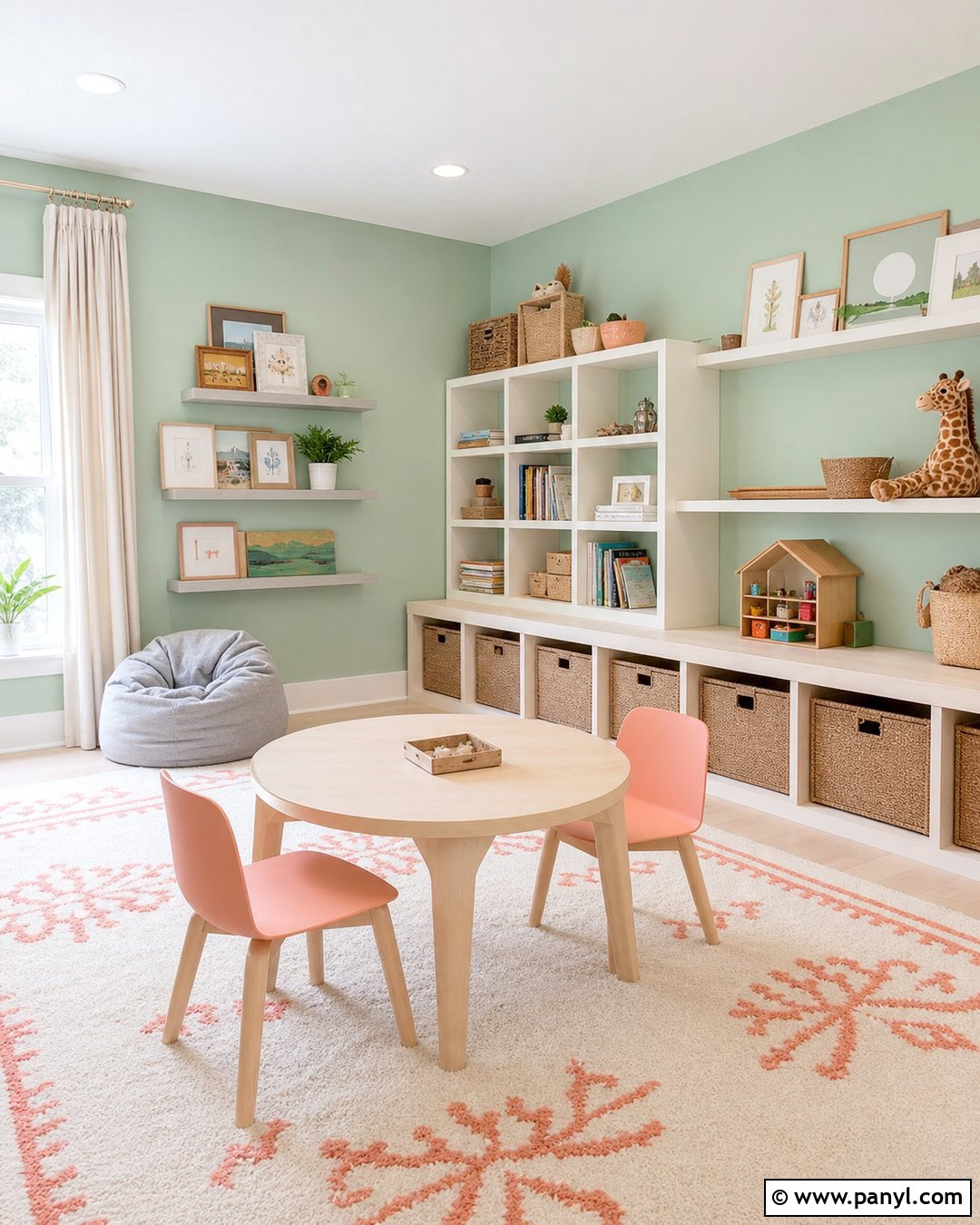
Mint green walls give a playroom a clean, fresh quality that looks particularly attractive with white, peach, and pale wood. Choose a softened mint rather than an icy pastel, then paint all four walls for a cohesive result. Add white modular storage, a blond wood craft table, and peach-colored chairs. A cream rug with mint and coral details helps connect the furniture to the walls. Set up a reading corner with a light gray beanbag, picture ledges, and a small floor lamp. Woven baskets and natural linen curtains bring warmth to the palette. Mint works well in compact playrooms because it introduces recognizable color while preserving an open feeling, especially when shelves and furniture remain low and streamlined.
27. Sage Green Playroom Wall Color
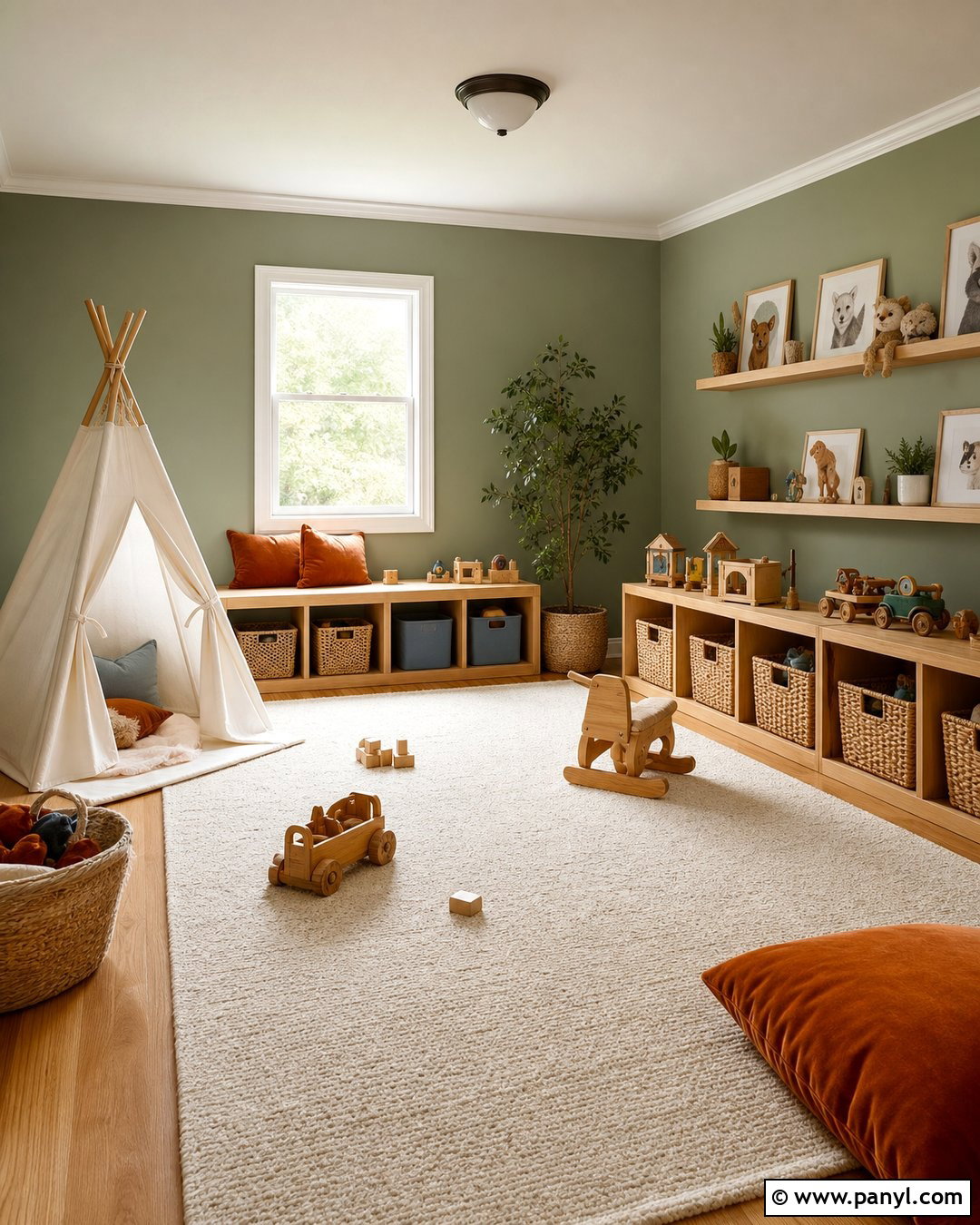
Sage green creates a calm, nature-inspired playroom that can blend smoothly with the rest of a thoughtfully decorated home. Use a medium-light sage on the walls, warm white on the trim, and natural oak for storage and tables. Add an ivory rug, rust-colored cushions, and muted blue bins to create gentle contrast. A canvas play tent, wooden toys, and woven baskets support the organic palette without requiring a literal woodland theme. Install picture ledges for rotating books and artwork, then leave the center floor open for construction sets and imaginative games. Sage is especially useful in multipurpose rooms because it feels playful when surrounded by colorful accessories but mature when paired with simple furniture and quieter decor.
28. Olive Green Playroom Wall Color
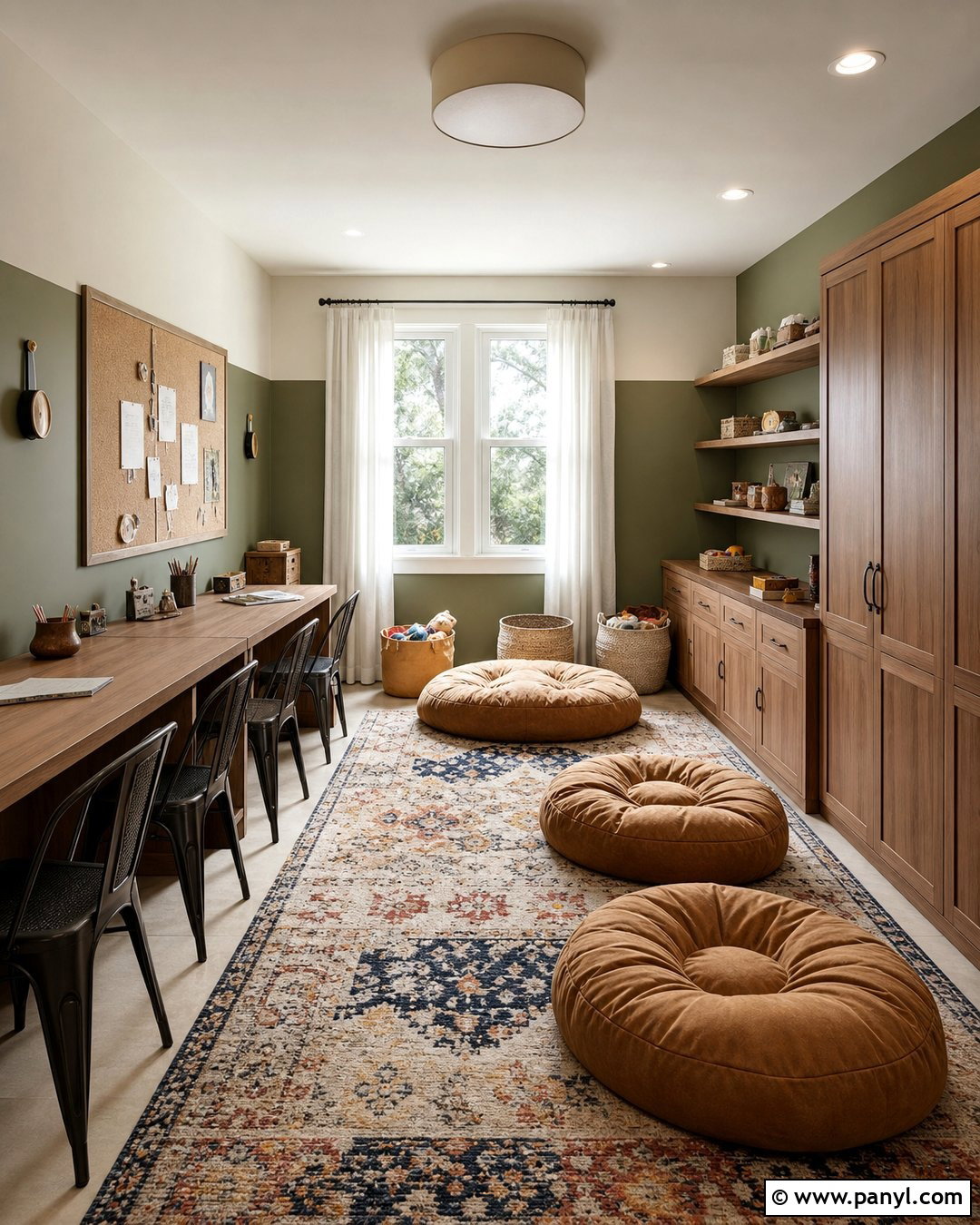
Olive green gives a playroom warmth and depth while creating a grounded setting for natural materials. Use it on the lower half of the walls with creamy white above, or cover one well-lit feature wall. Combine the color with walnut storage, caramel floor cushions, and a rug containing cream, rust, navy, and olive. Add a long wood worktable, black metal chairs, and a large cork display board for artwork. Closed lower cabinets help the darker palette feel orderly rather than crowded. Use white curtains and a pale ceiling to reflect available daylight. This complete look suits older children especially well, but colorful books, building toys, and soft seating ensure the room still feels welcoming to younger family members.
29. Forest Green Playroom Accent Wall
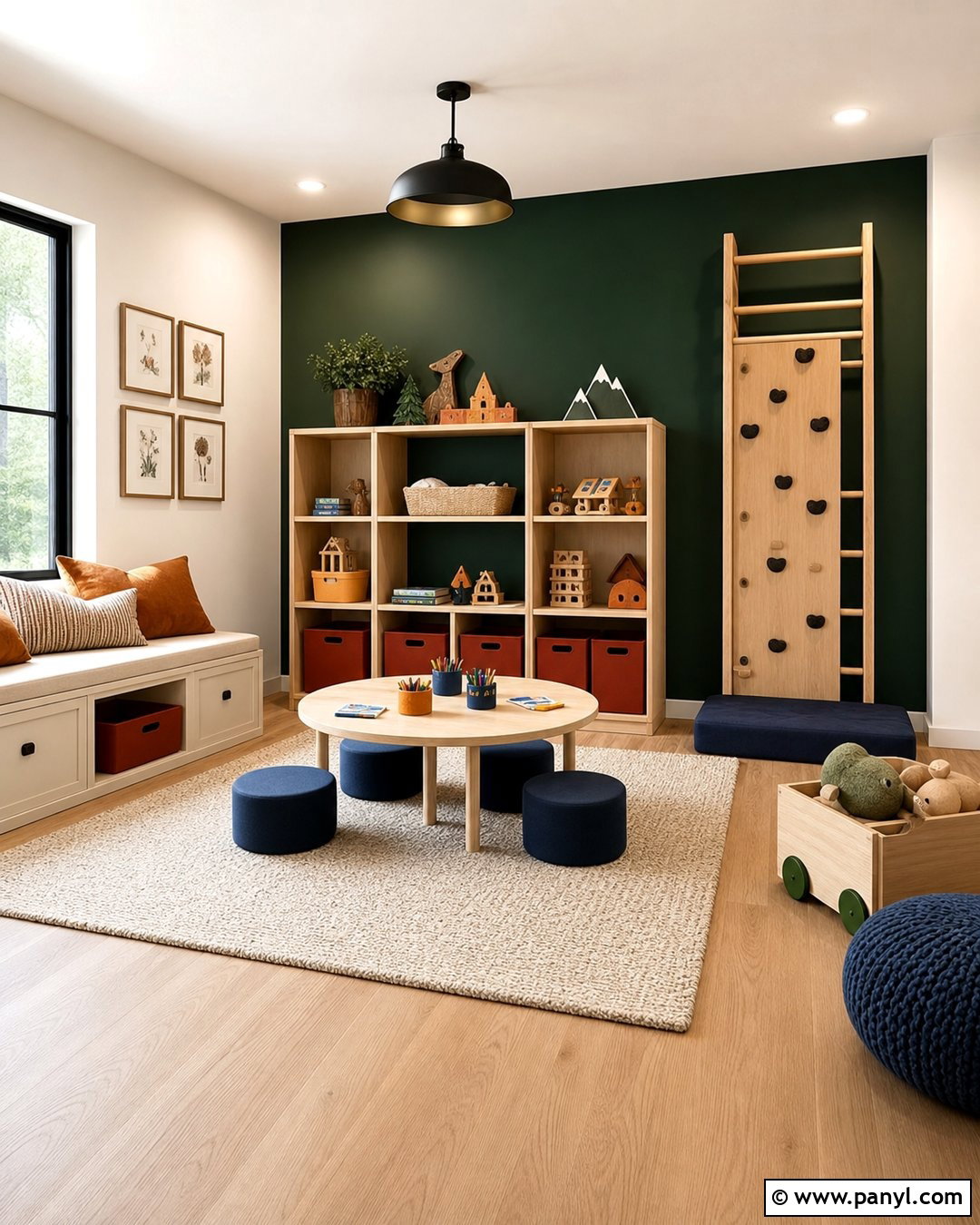
Forest green creates a memorable playroom focal wall with a cozy, adventurous character. Use the green behind pale wood shelving or a built-in reading bench, allowing the lighter furniture to stand out clearly. Keep the remaining walls warm white and choose an oatmeal-colored rug for balance. Mustard cushions, brick-red bins, and navy accents create a layered palette inspired by classic outdoor colors. Add a sturdy round table for crafts, a compact climbing feature, and simple black wall lights. Display illustrated maps, animals, or nature prints in matching wood frames. With controlled accent colors and plenty of light surfaces, forest green feels rich rather than dark, giving the room a distinctive appearance that can grow with children.
30. Burnt Orange Playroom Wall Color
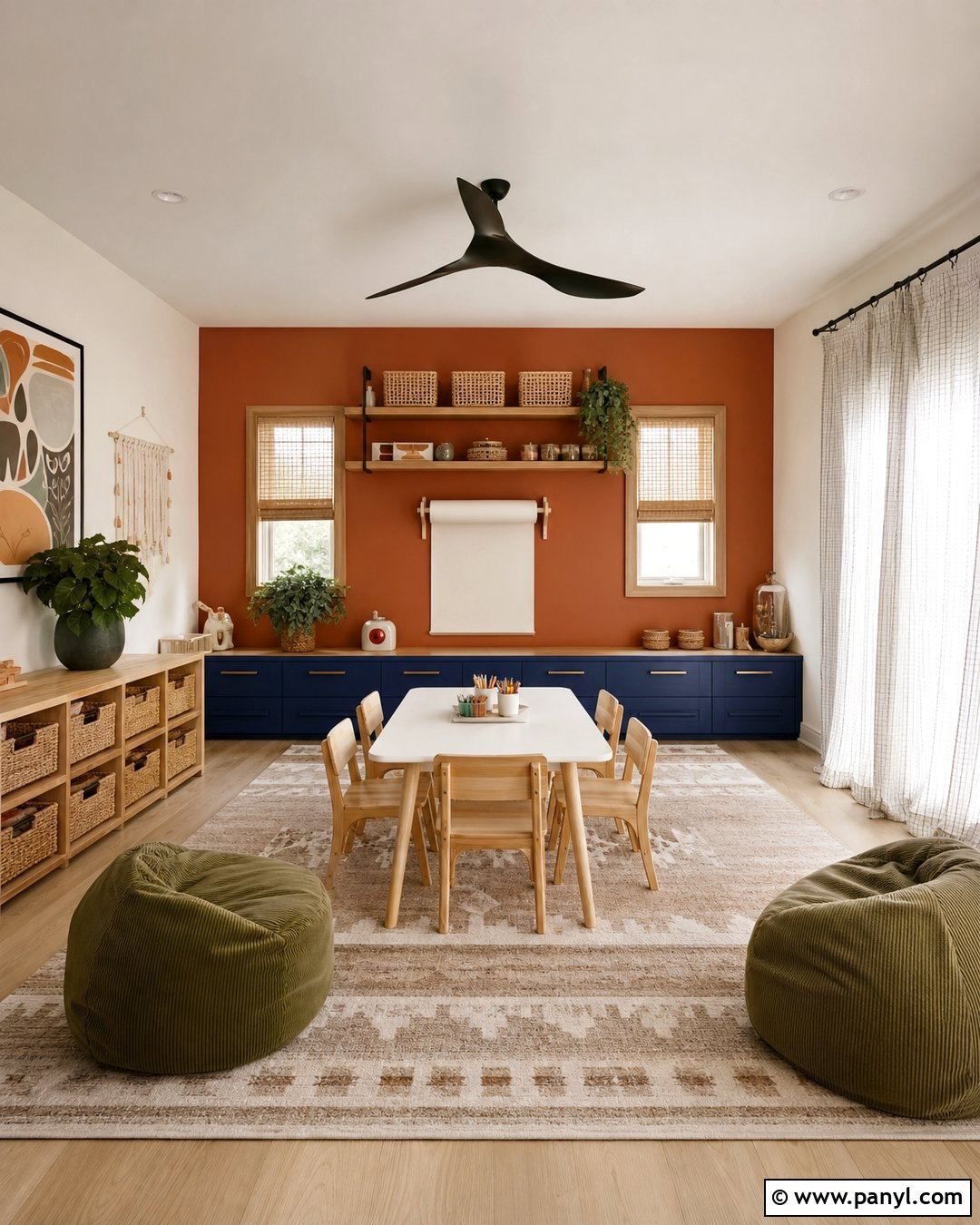
Burnt orange brings warmth and enthusiasm to a playroom without the sharpness of a brighter orange. Use it on one broad wall and paint the remaining surfaces a creamy off-white. Pair the feature wall with dark blue storage cabinets, pale oak furniture, and a beige rug with small orange details. Add olive green beanbags and natural woven baskets for an earthy, balanced palette. A large whiteboard or paper roll mounted above the craft table creates an interactive activity station. Keep shelves organized and use simple white curtains so the orange remains the clear focal point. This room feels energetic and cozy at the same time, making it suitable for crafts, games, building projects, and lively imaginative play.
31. Brick Red Playroom Accent Wall
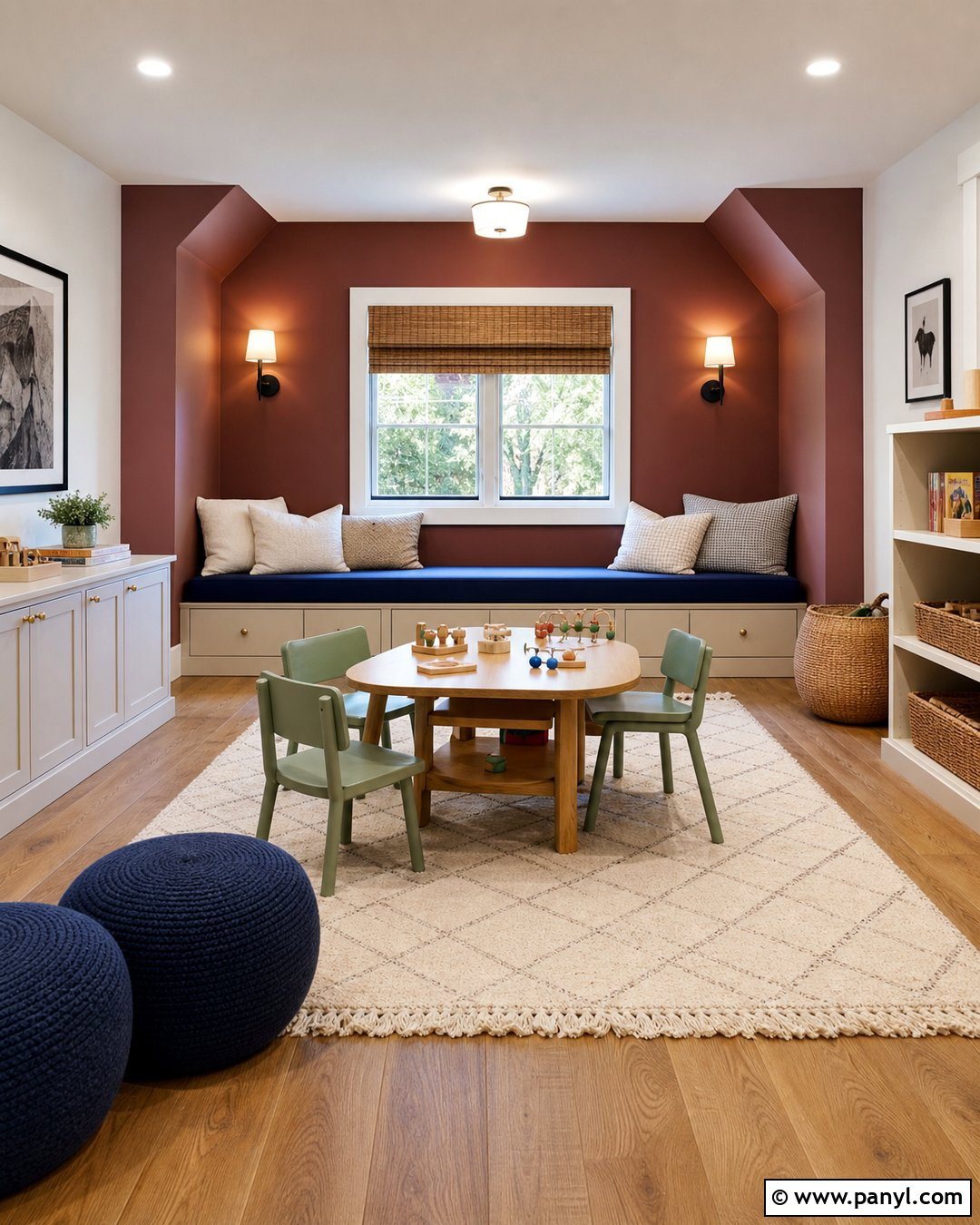
A muted brick red accent wall can make a playroom feel warm, confident, and surprisingly versatile. Choose a softened red with brown or clay undertones rather than a vivid primary red. Place cream storage cabinets against the colored wall and pair them with medium oak flooring, navy cushions, and an ivory geometric rug. Add a natural wood activity table and sage green chairs to balance the warmth. Black frames, shelf brackets, and lighting provide definition. Keep the other walls soft beige or warm white to prevent the palette from feeling too intense. This complete design works well in traditional homes and shared family rooms, where brick red can connect children’s furnishings with existing wood tones and classic architecture.
32. Pastel Rainbow Playroom Wall Color
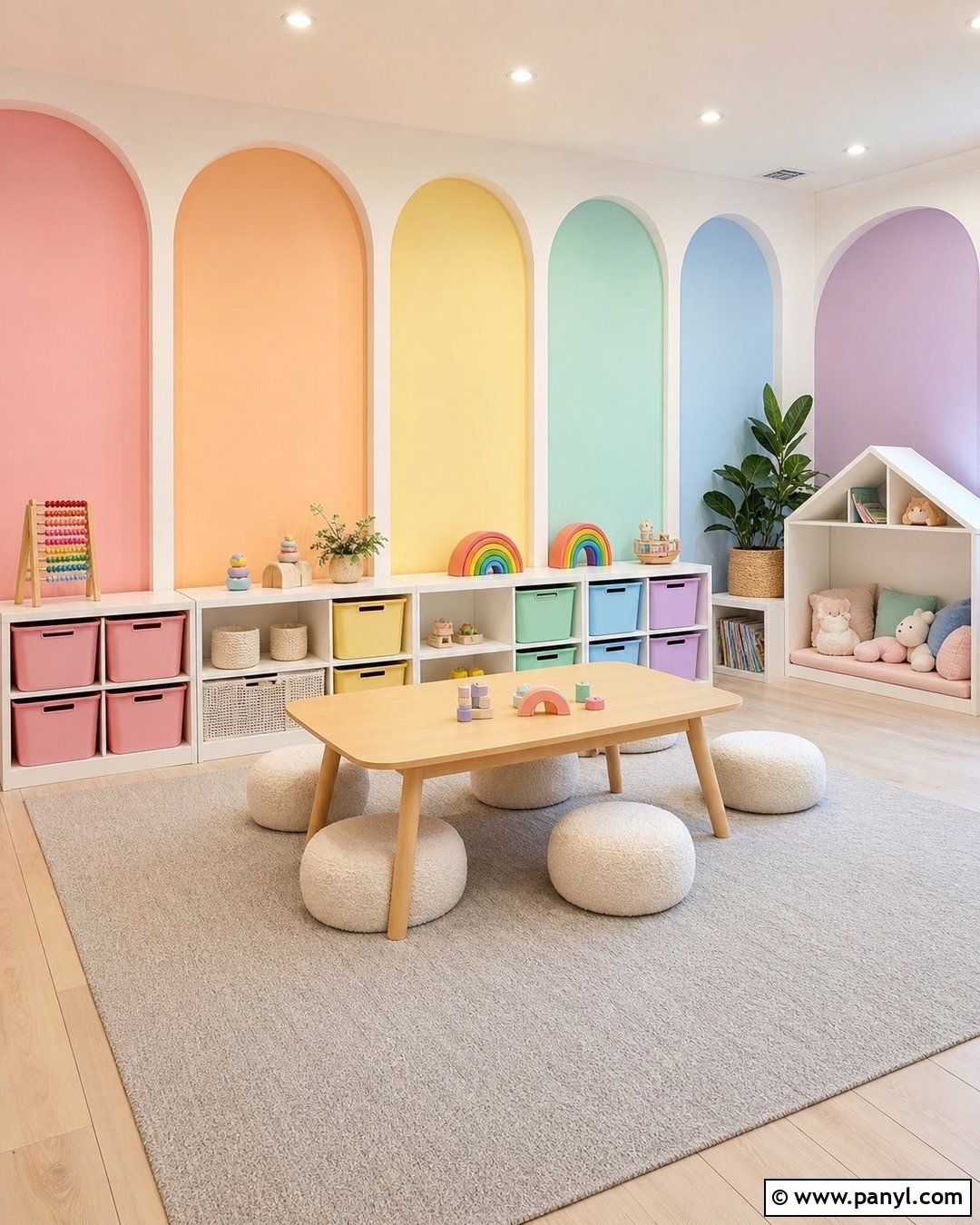
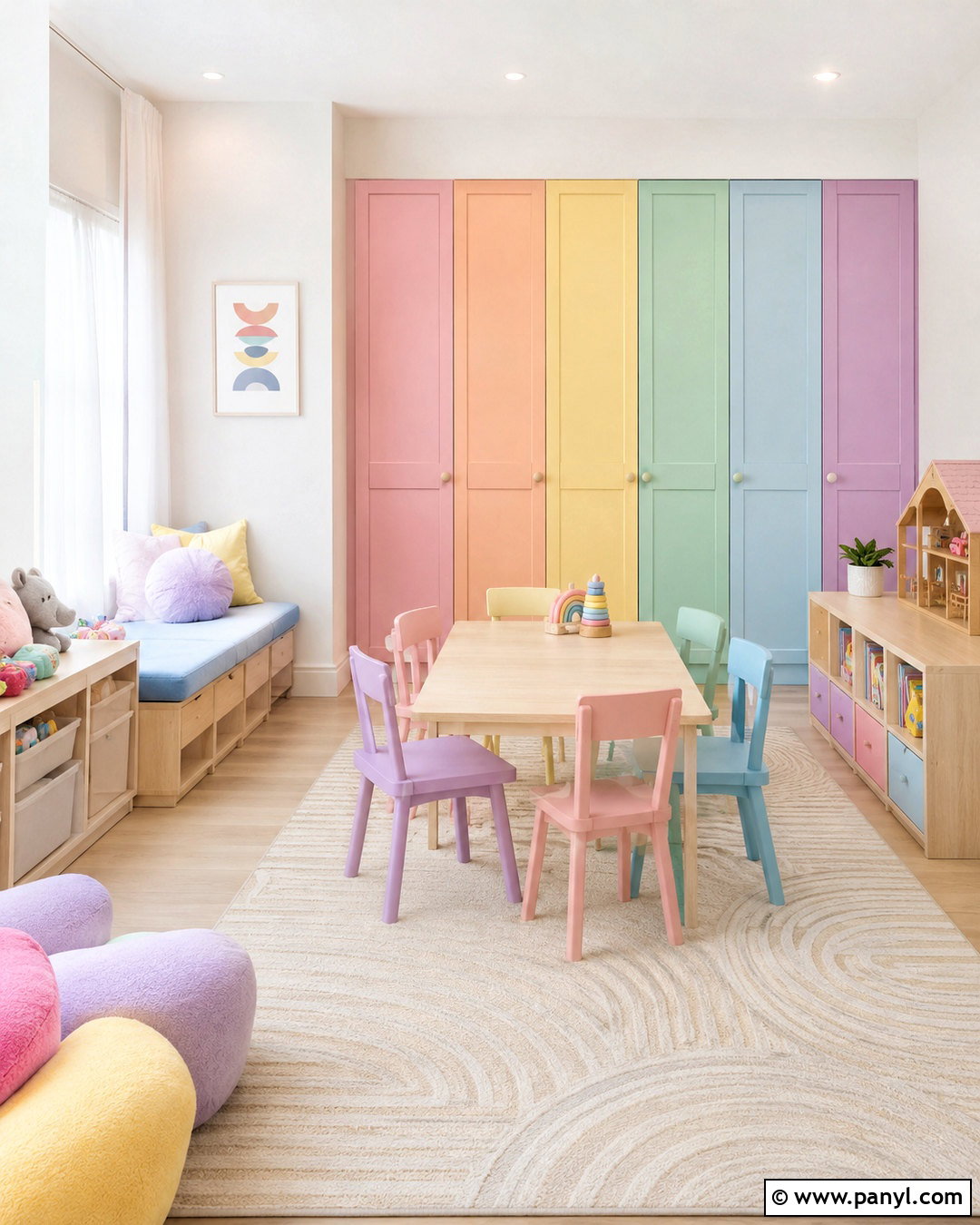
A pastel rainbow palette can feel calm and coordinated when every shade has a similar softness. Start with warm white walls, then paint one broad arch or a series of wide vertical sections in blush pink, peach, butter yellow, mint green, pale blue, and lavender. Position a simple white storage unit along the painted wall so the colors remain visible above it. Add a pale wood table, cream floor cushions, and a light gray rug to provide breathing room. Use matching pastel bins sparingly rather than repeating every color across every object. The finished playroom feels imaginative and joyful without becoming chaotic. This approach also creates a striking focal point without requiring all four walls to carry strong color.
33. Modern Color Block Playroom Wall
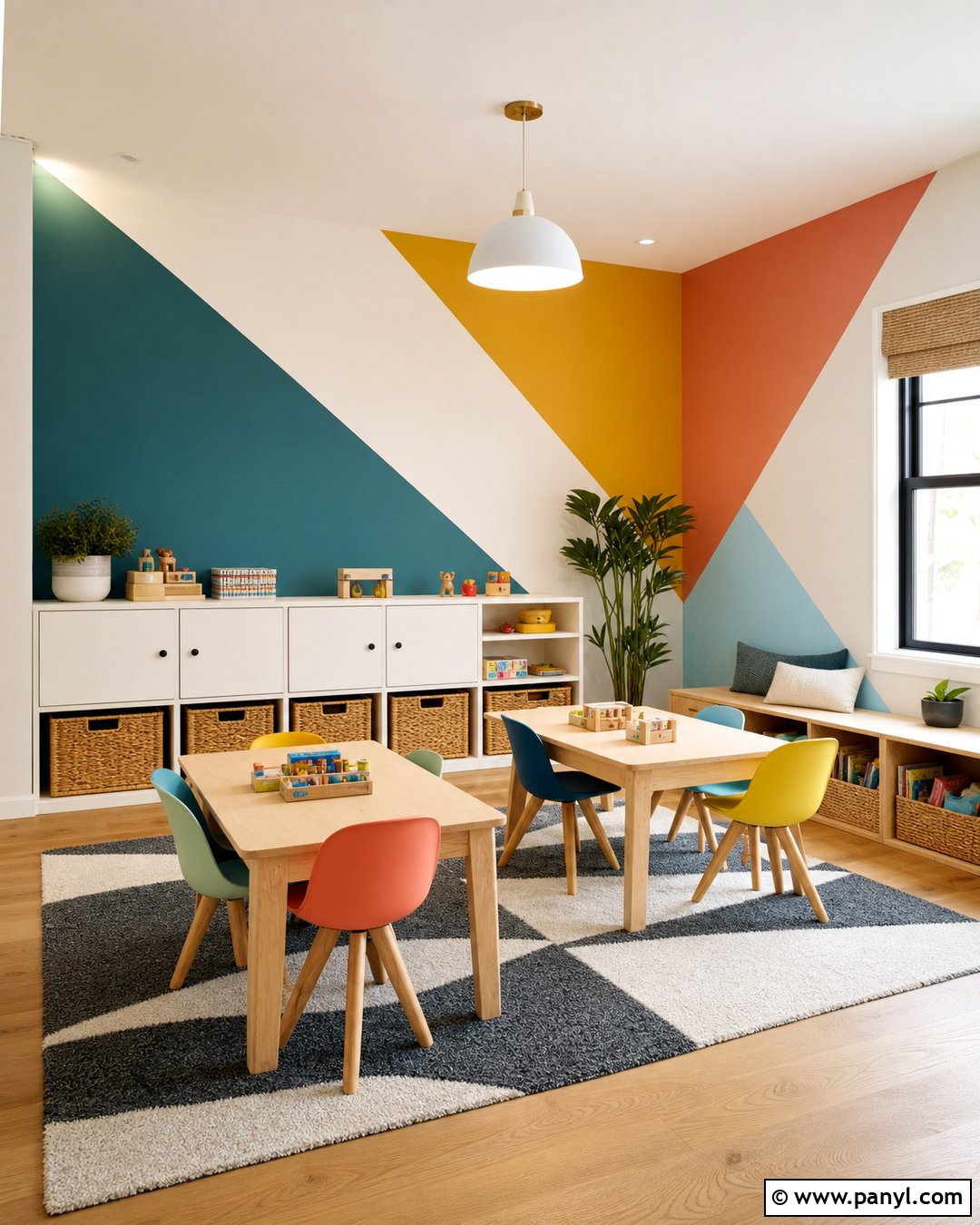
Color blocking allows several playroom wall colors to work together in a clean, architectural way. Begin with a warm white base, then add large geometric sections in muted teal, mustard yellow, dusty coral, and pale blue. Keep the shapes broad and simple, aligning some edges with shelves, windows, or furniture. Add white storage cabinets, natural oak tables, and a charcoal-and-cream rug to ground the colorful backdrop. Chairs can repeat one or two wall shades, while woven bins bring in softer texture. Leave other walls mostly neutral so the feature wall remains organized. This complete modern playroom looks bold in photographs, supports a wide range of toy colors, and can be repainted in sections as preferences change.
34. Charcoal Chalkboard Playroom Wall
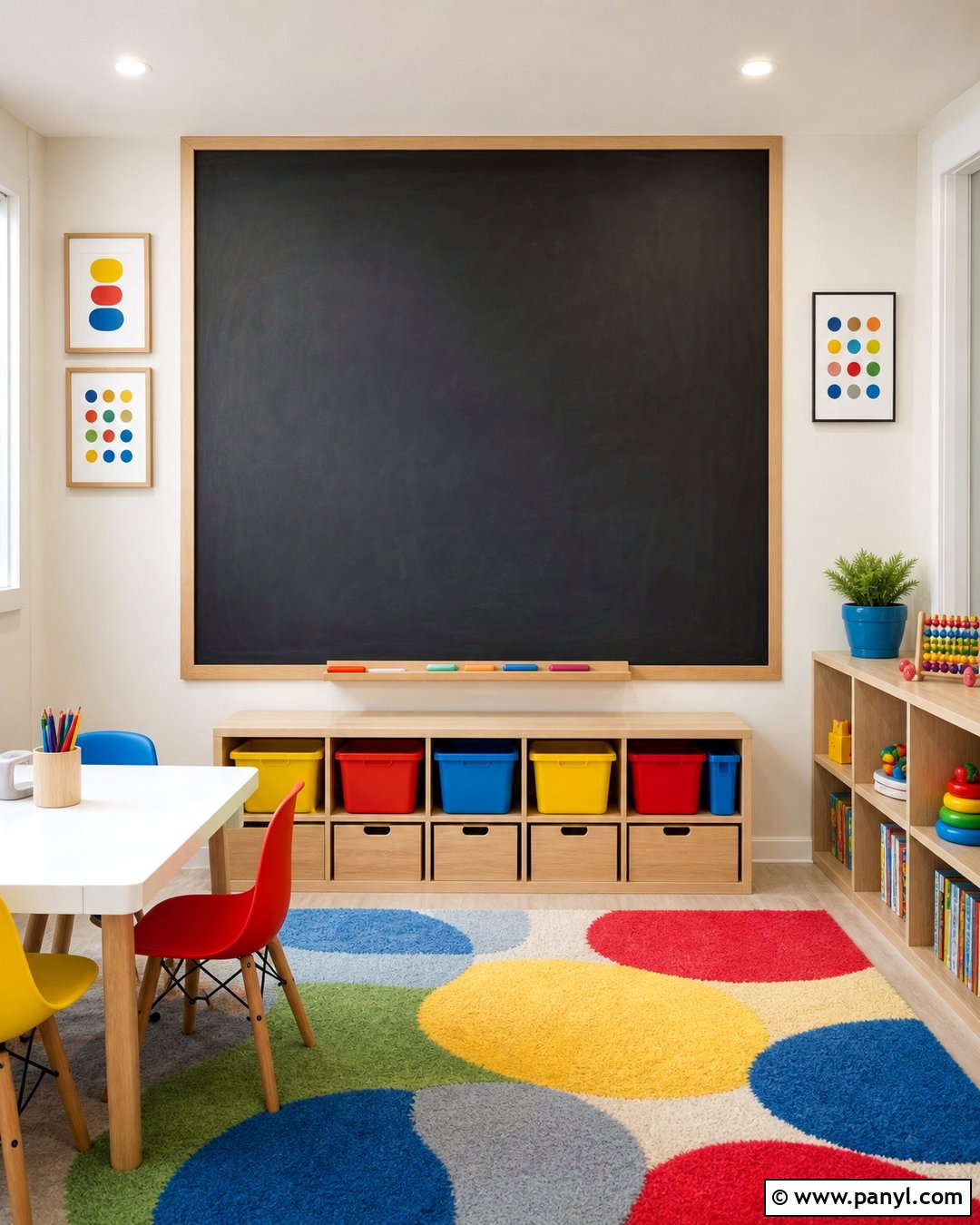
A charcoal chalkboard wall provides both a strong design feature and an accessible surface for drawing, writing, and games. Cover one wall or a large framed rectangle with charcoal chalkboard paint, then use soft white on the remaining walls. Install a low wooden ledge beneath the drawing area to hold chalk and erasers. Pair the dark surface with pale oak storage, a colorful washable rug, and chairs in yellow, red, and blue. A white craft table keeps the central workspace bright. Add closed bins for art supplies and display a few framed prints on the lighter walls. The charcoal feature feels intentional when its edges are clean and surrounding furniture is simple, bright, and carefully arranged.
35. Deep Charcoal Playroom Wall Color
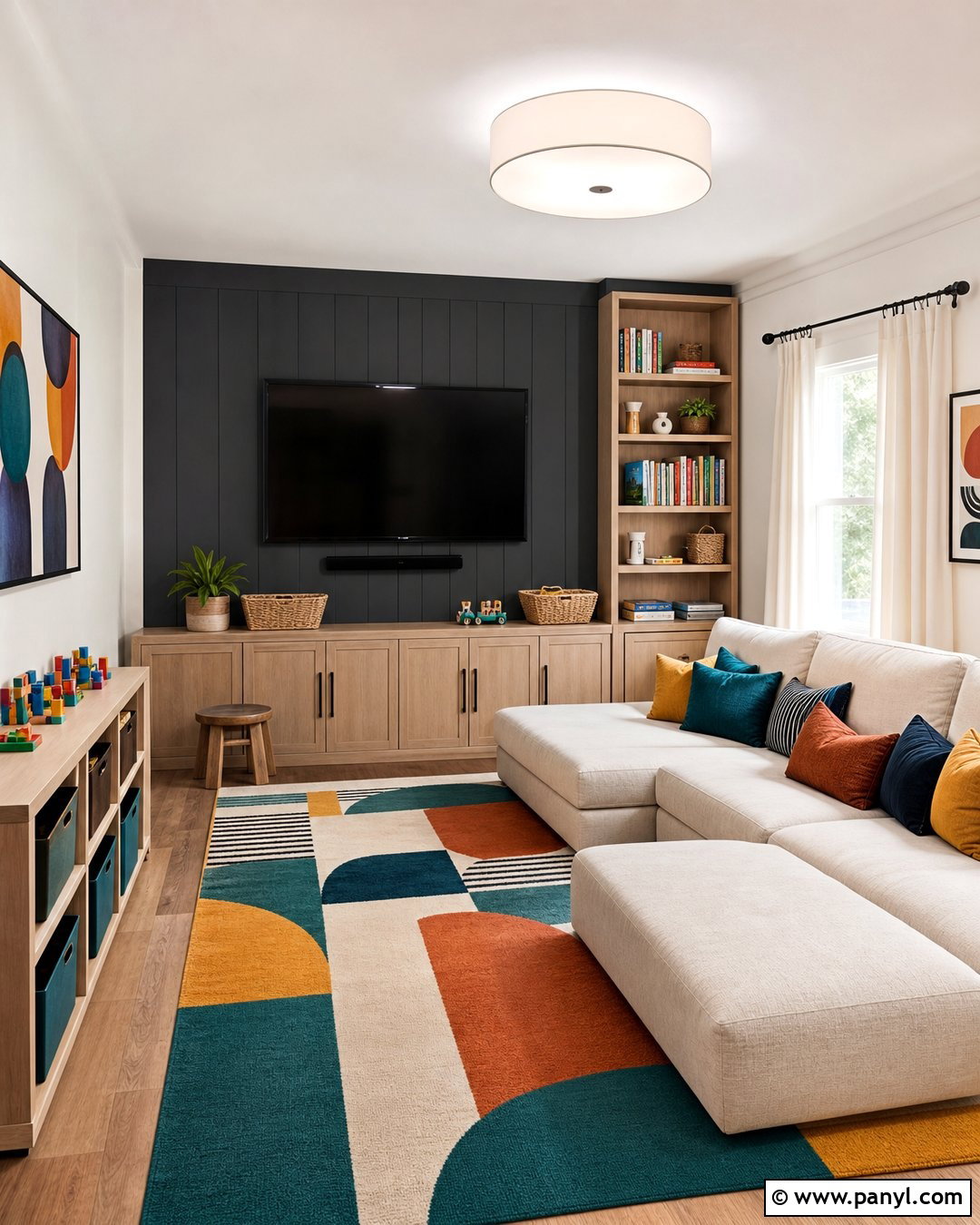
Deep charcoal walls can create a cozy, modern playroom when balanced with bright furnishings, strong lighting, and warm wood. Use charcoal on the wall behind a media console, game table, or reading zone, while keeping the other walls creamy white. Add light oak cabinets, an ivory modular sofa, and a graphic rug featuring teal, rust, yellow, and cream. Colorful books and artwork will stand out clearly against the darker background. Include white window treatments and a large ceiling fixture to maintain an open appearance. Matte black hardware blends quietly with the wall, while natural baskets soften the room. This flexible design is especially suitable for older children and can later transition into a study, hobby room, or casual den.
Conclusion:
The best playroom palette combines personality, practicality, and enough flexibility to handle changing interests. Light neutrals create adaptable backgrounds, pastels add gentle color, and deeper shades can define reading, craft, or game zones. Before painting, view large samples beside the flooring, furniture, and storage during different parts of the day. Consider using washable eggshell or satin paint in busy areas, and keep stronger colors balanced with white, cream, or natural wood. Most importantly, design the complete room rather than selecting a color in isolation. Coordinated rugs, cabinets, seating, lighting, and artwork will make the walls feel intentional. These 35 playroom wall colors provide distinctive options for rooms of every size, age range, and decorating style.

Related Ideas and Inspiration:
Leave a Reply