
Soft green brings color into a home without overwhelming the room. Its gentle mix of natural warmth and muted freshness can make living rooms feel welcoming, bedrooms more restful, and hardworking spaces brighter. Current interiors are expanding beyond familiar sage to include celadon, pale olive, mint, eucalyptus, and layered tonal treatments. () The best Soft Green Wall Color Ideas also consider lighting, flooring, trim, furniture, and accent colors as one complete scheme. Warm woods and cream create an earthy look, while black, navy, or brass add crisp definition. Always sample your chosen shade on multiple walls before painting because daylight and artificial light can shift its undertone. The following complete room looks offer practical ways to explore 20 Soft Green Wall Color Ideas.

1. Soft Sage Green Living Room
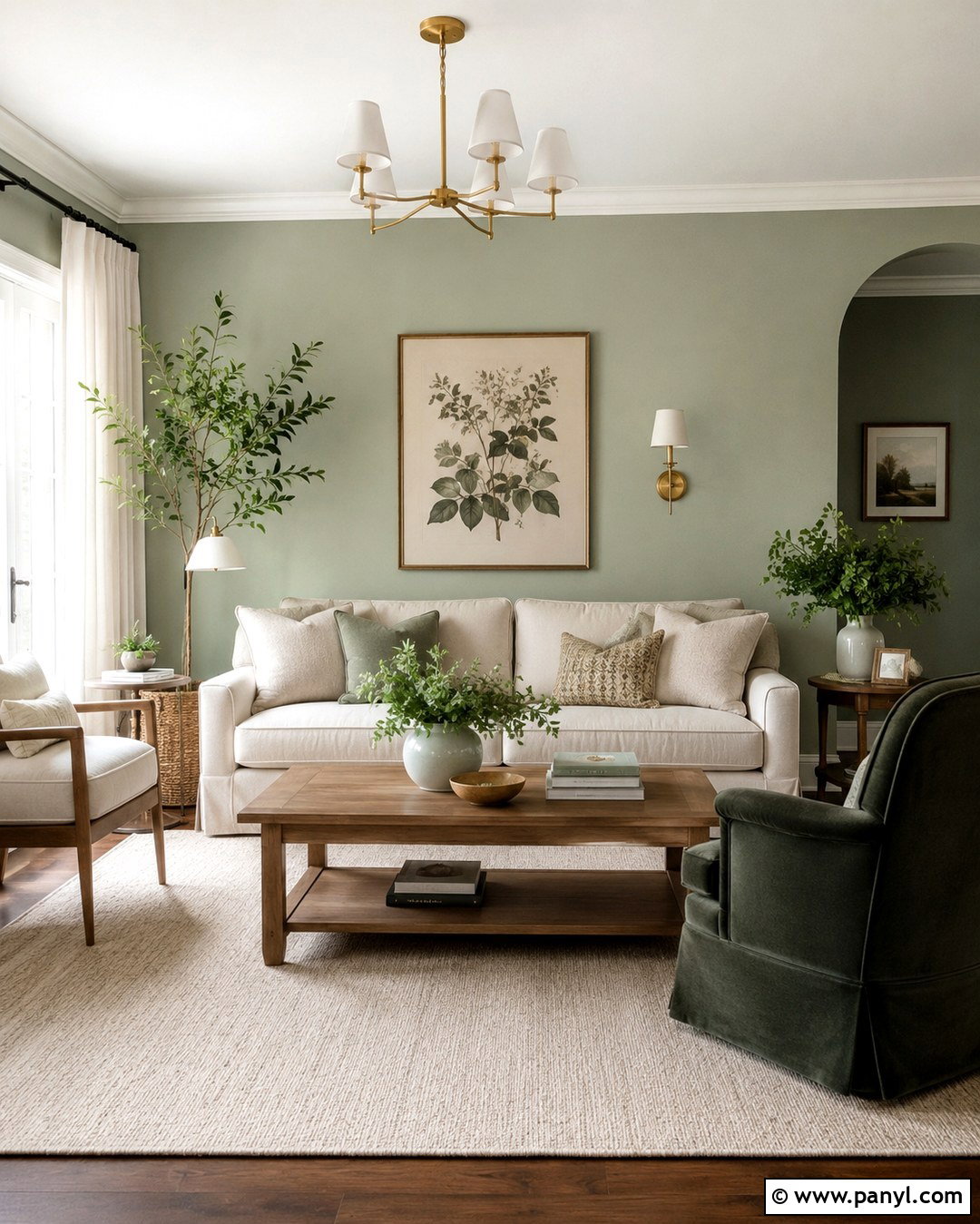
Soft sage walls create an easy foundation for a living room that feels relaxed but still polished. Choose a muted sage with balanced gray undertones, then add a warm ivory sofa, an oatmeal wool rug, and medium-tone oak furniture. Linen curtains in soft white keep the windows bright without creating a harsh contrast. Bring in deeper green through one velvet chair or patterned cushions, but leave plenty of neutral space around those accents. A simple brass floor lamp and aged brass frames add warmth without making the room flashy. Finish the layout with a round wood coffee table, ceramic table lamps, and a few leafy plants. This balanced combination suits traditional, modern farmhouse, and casual transitional homes.
2. Pale Mint Green Kitchen
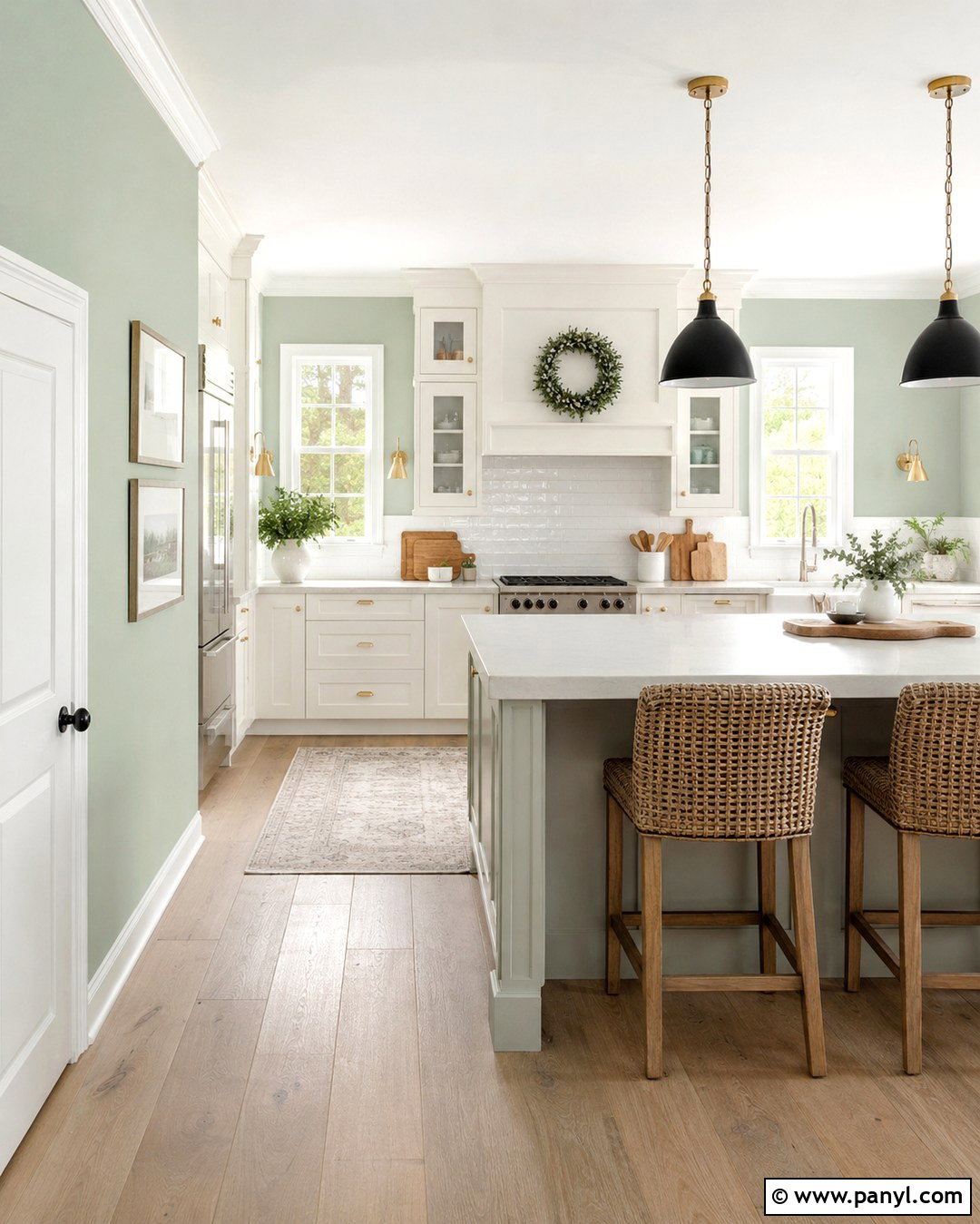
A pale mint wall color can freshen a kitchen while keeping the overall design light and approachable. Use a subdued mint rather than a sugary pastel, especially when the room receives strong natural light. Pair it with warm white shaker cabinets, light oak flooring, and creamy quartz countertops with subtle veining. A glossy white subway tile backsplash reflects light and prevents the green from feeling too cool. Add brushed nickel hardware for a clean look or unlacquered brass for extra warmth. Natural woven counter stools, small wood cutting boards, and simple white ceramics soften the harder surfaces. Black pendant lights above the island provide definition, creating a complete kitchen that feels bright, practical, and gently colorful.
3. Celadon Green Dining Room
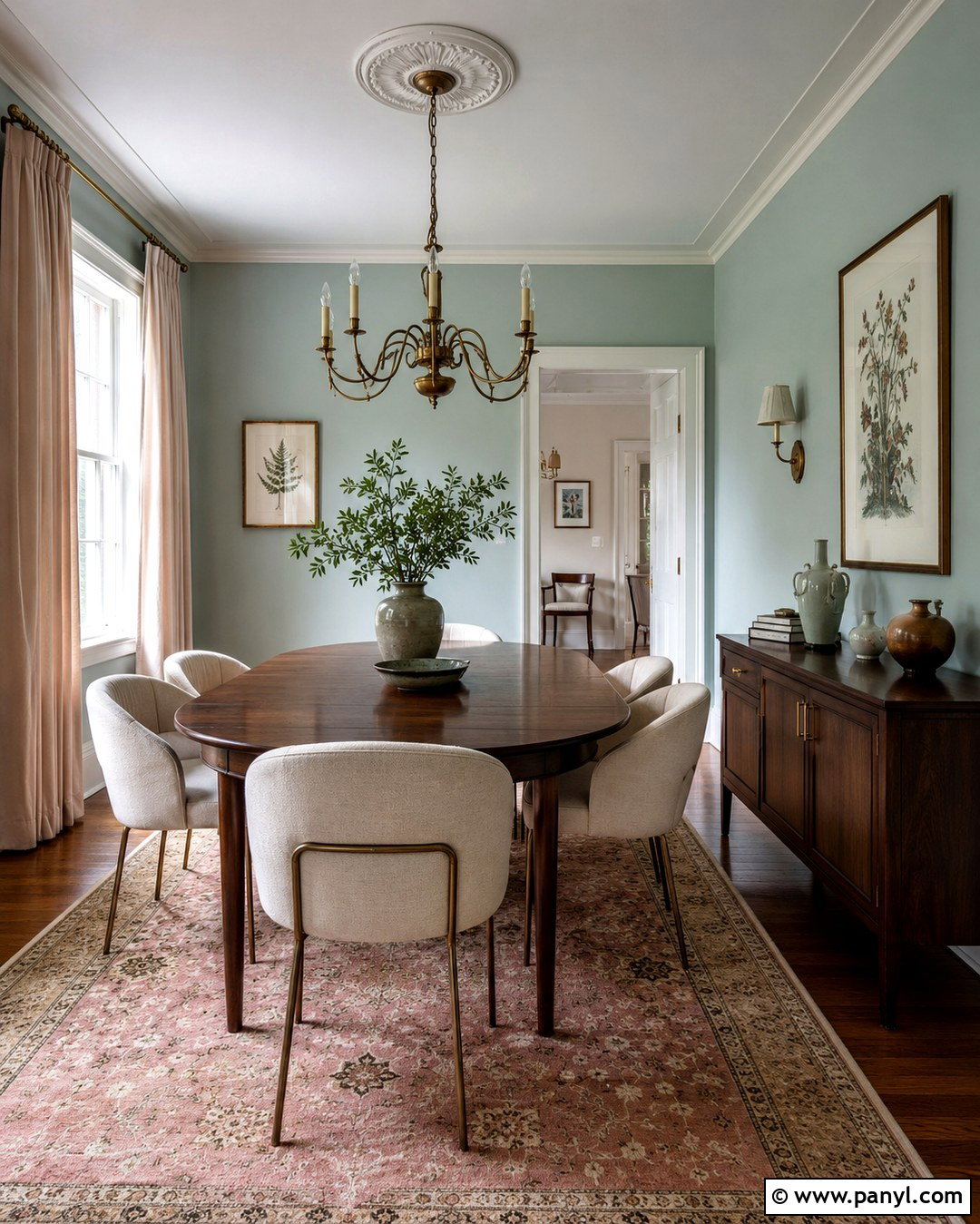
Celadon walls give a dining room a soft green-blue quality that changes beautifully as daylight moves across the space. Build the room around a medium walnut dining table and curved upholstered chairs in warm cream. A vintage-inspired rug containing faded rose, green, and beige adds pattern while connecting the furniture to the wall color. Instead of bright white, paint the trim a gentle ivory to preserve the room’s softness. Use a sculptural chandelier in aged brass above the table and repeat that finish on curtain hardware. Pale blush drapes introduce a subtle complementary color without becoming overly sweet. Finish with framed botanical artwork, a dark wood sideboard, and handmade ceramic vessels for an inviting, collected dining space.
4. Gray Green Bedroom
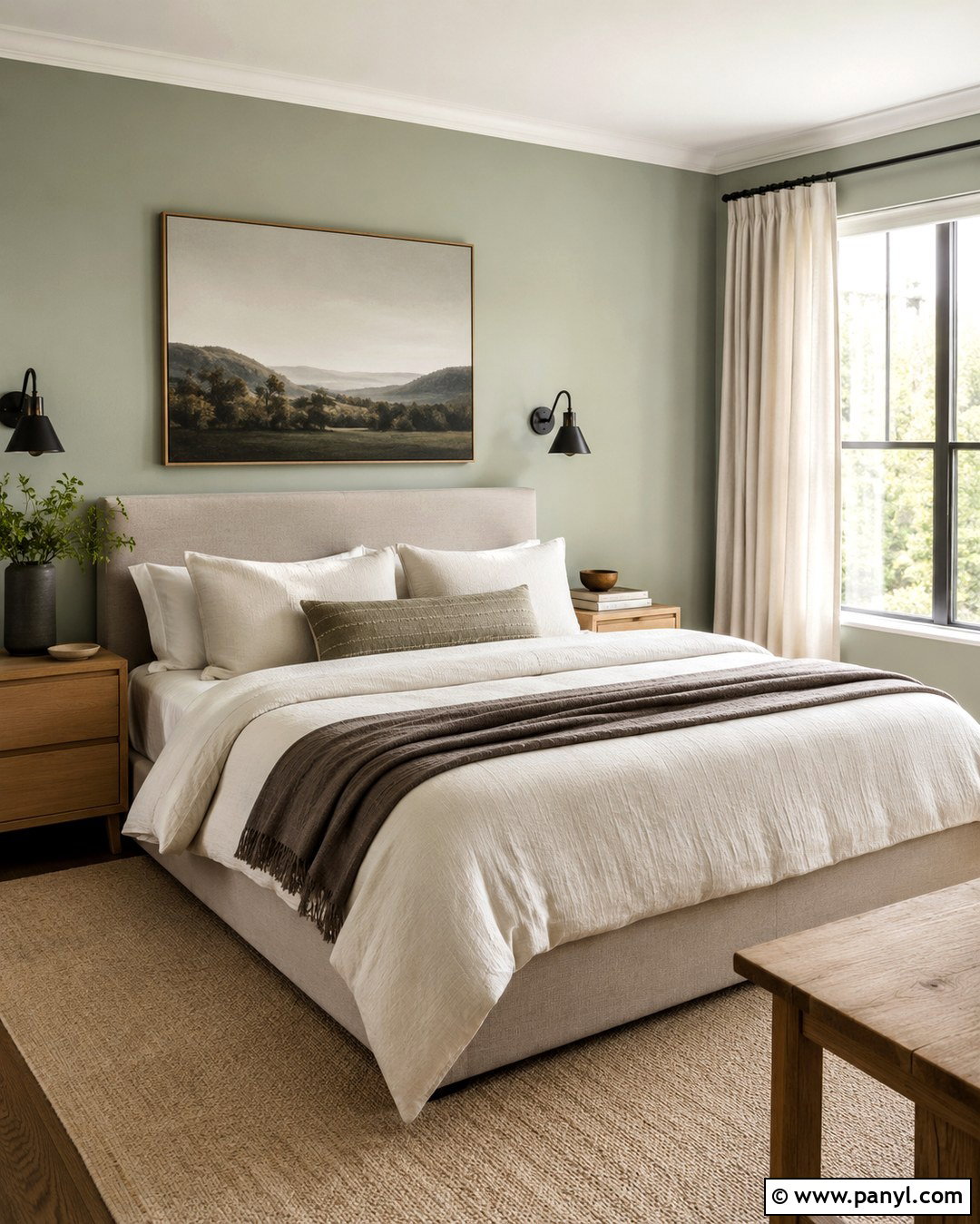
When pure green feels too colorful, gray-green walls offer a quieter bedroom alternative. Select a light, dusty shade with enough green to remain visible beside white bedding. An upholstered bed in oatmeal linen, pale oak nightstands, and a warm beige rug keep the palette natural and comfortable. Layer the bed with ivory sheets, a textured taupe blanket, and two muted green pillows rather than matching every textile to the walls. Matte black reading sconces add contrast and free space on the nightstands. Use off-white curtains from ceiling to floor to visually soften the windows. One oversized landscape print above the bed completes the scheme. The result feels restful, tailored, and suitable for both small and spacious bedrooms.
5. Soft Olive Green Home Office
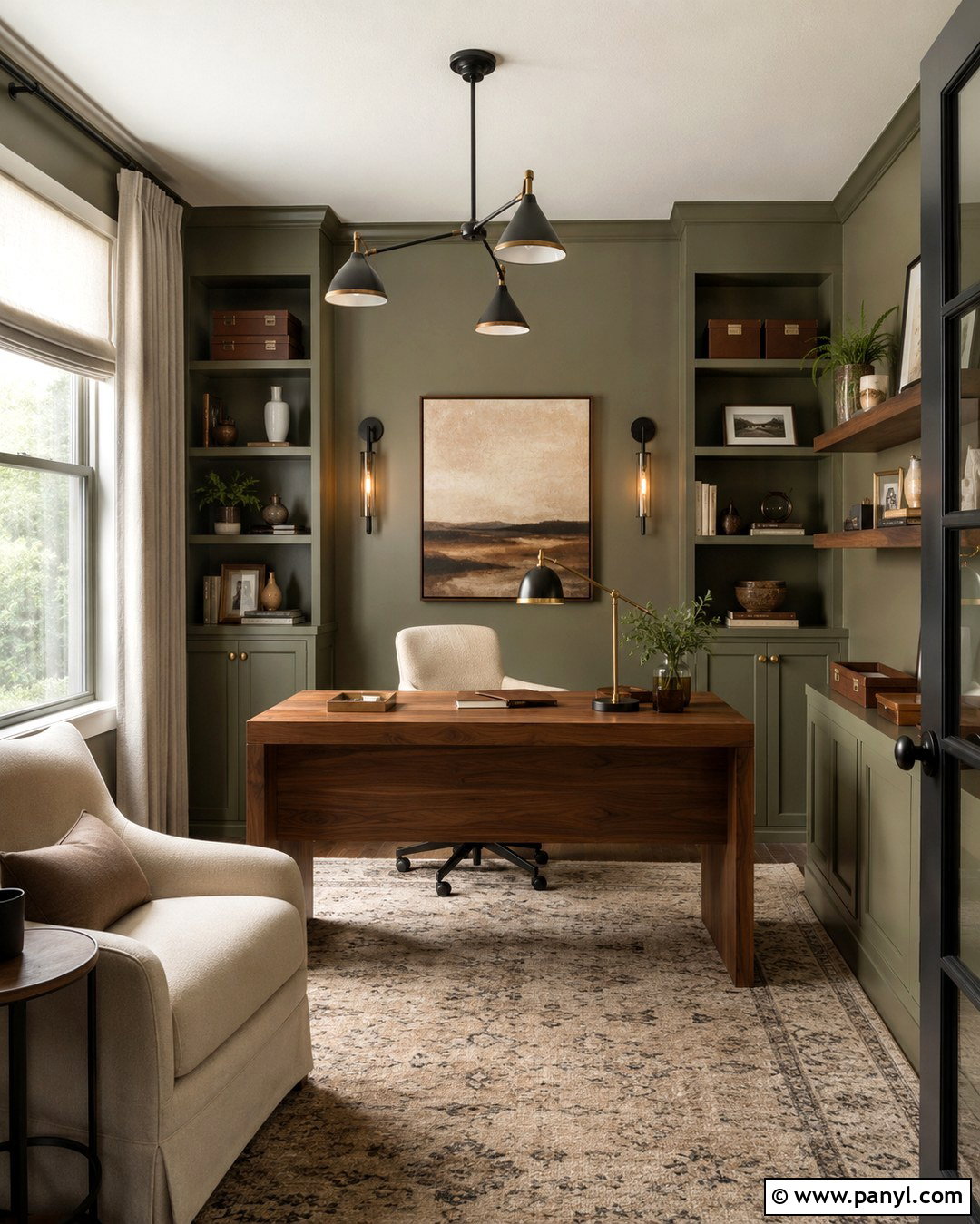
A softly muted olive can make a home office feel grounded without creating the heaviness of dark green. Use the color on every wall, then balance it with a streamlined walnut desk and a cream boucle desk chair. A low bookcase painted the same olive creates a built-in effect and reduces visual clutter. Choose a flat-weave rug in beige and charcoal to define the work zone. Black metal lighting, simple floating shelves, and leather storage boxes add structure. Keep window treatments light with natural linen Roman shades that filter daylight. A large abstract print featuring cream, clay, and faded blue prevents the room from looking too earthy. This complete setup supports focus while still feeling warm enough for everyday use.
6. Seafoam Green Bathroom
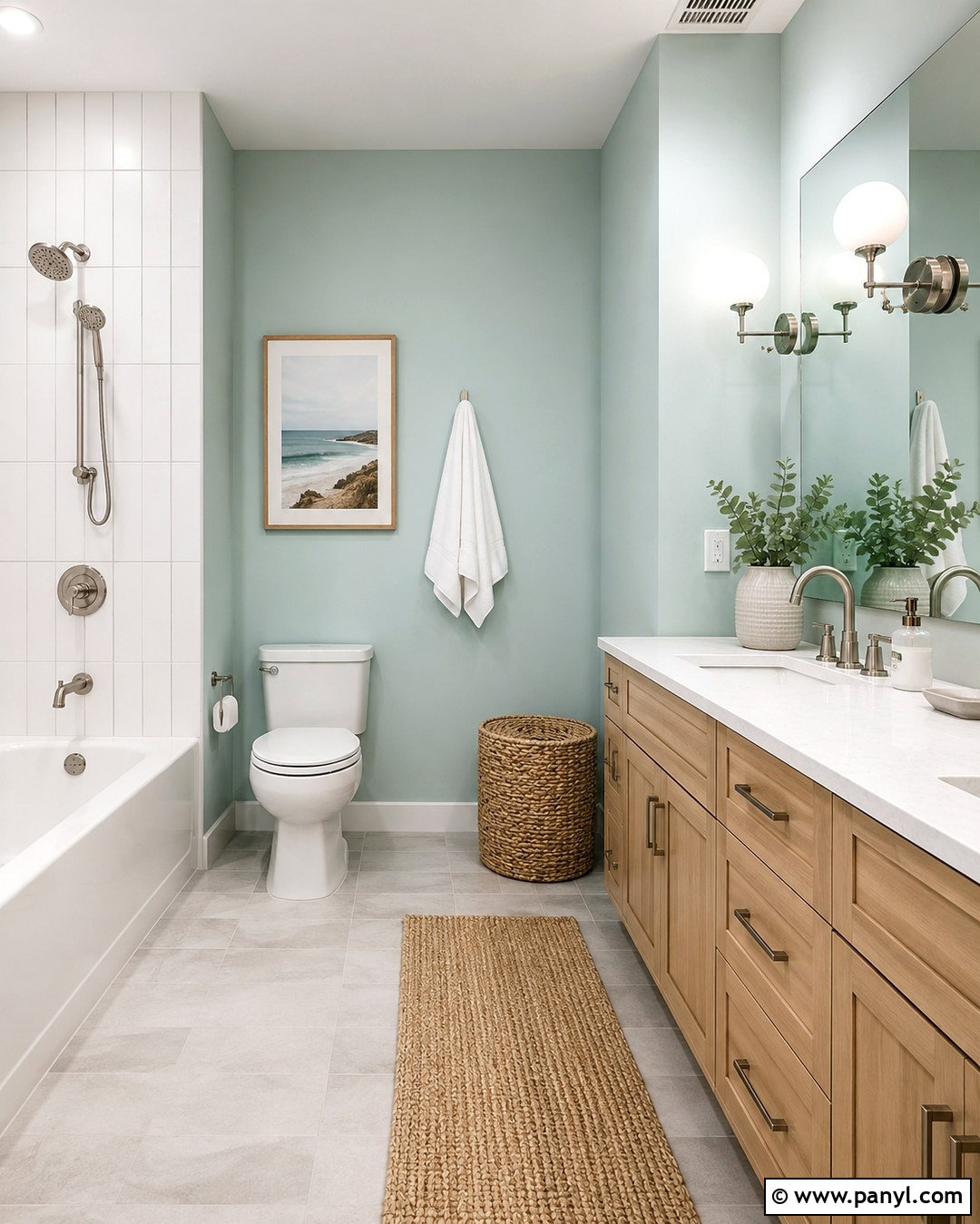
Seafoam green walls can turn an ordinary bathroom into a light, clean space with a subtle coastal influence. Choose a pale shade that blends green with a small amount of blue, then pair it with a white oak vanity and honed white quartz countertop. White vertical tiles around the tub add texture without competing with the wall color. Use brushed nickel faucets, a frameless mirror, and simple globe sconces for a crisp finish. A light gray stone-look floor grounds the room and handles daily wear well. Avoid obvious beach-themed decorations. Instead, add white towels, a woven hamper, and one small plant in a ceramic pot. The finished bathroom feels fresh, modern, and calm rather than overly themed.
7. Eucalyptus Green Entryway
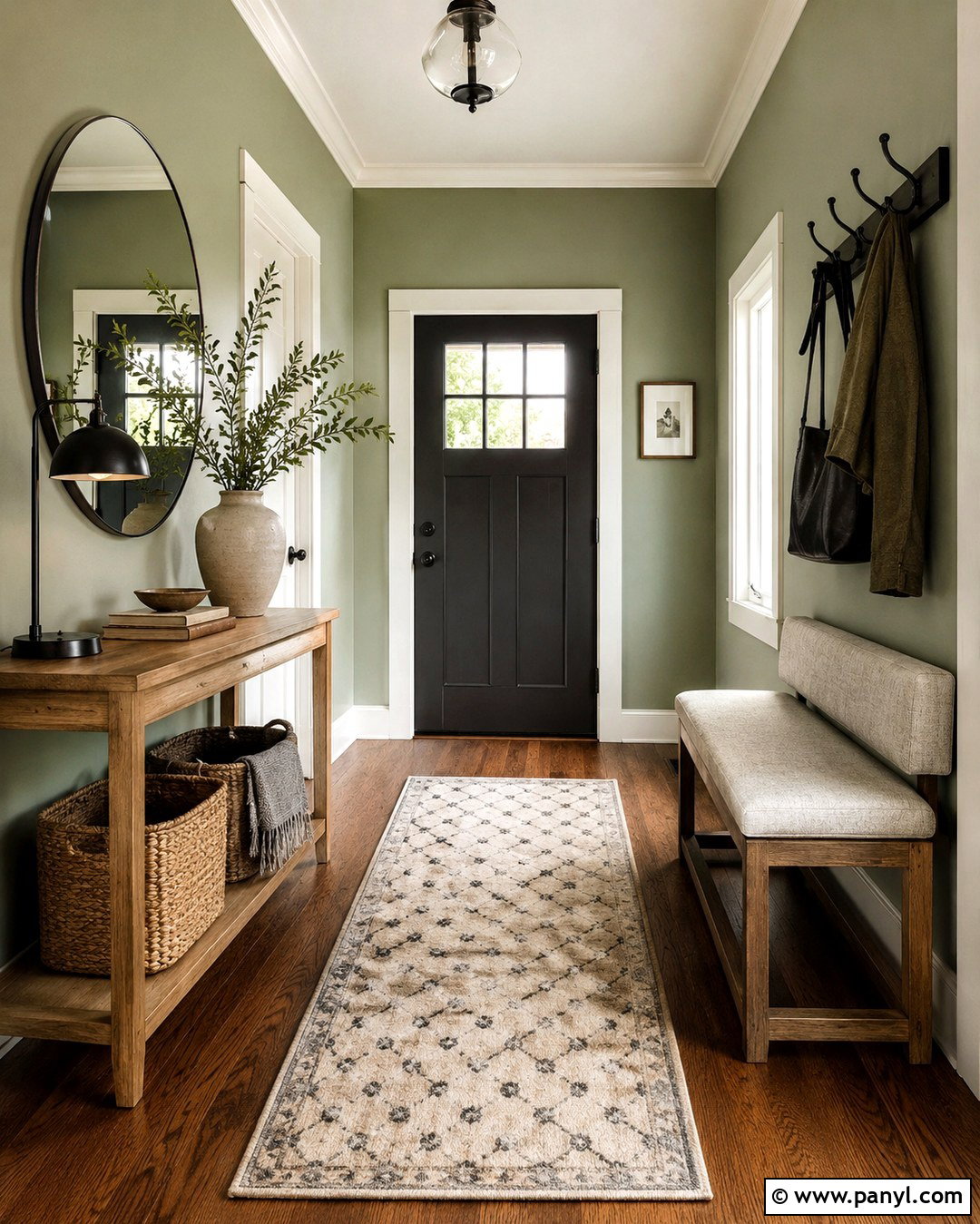
A muted eucalyptus wall color gives an entryway a welcoming identity while connecting naturally with nearby neutral rooms. Pair the green walls with a slim oak console, a large round mirror, and a washable runner in cream, charcoal, and faded rust. Paint the trim warm white so the doorway details remain clear without feeling stark. A black metal table lamp and matching coat hooks create a useful visual rhythm. Under the console, place two woven baskets for shoes, bags, or seasonal accessories. Add a small upholstered bench if space allows, keeping the fabric neutral and durable. One ceramic vase with simple branches provides height. This organized design makes the entrance attractive, functional, and easy to maintain during busy everyday routines.
8. Pistachio Green Nursery
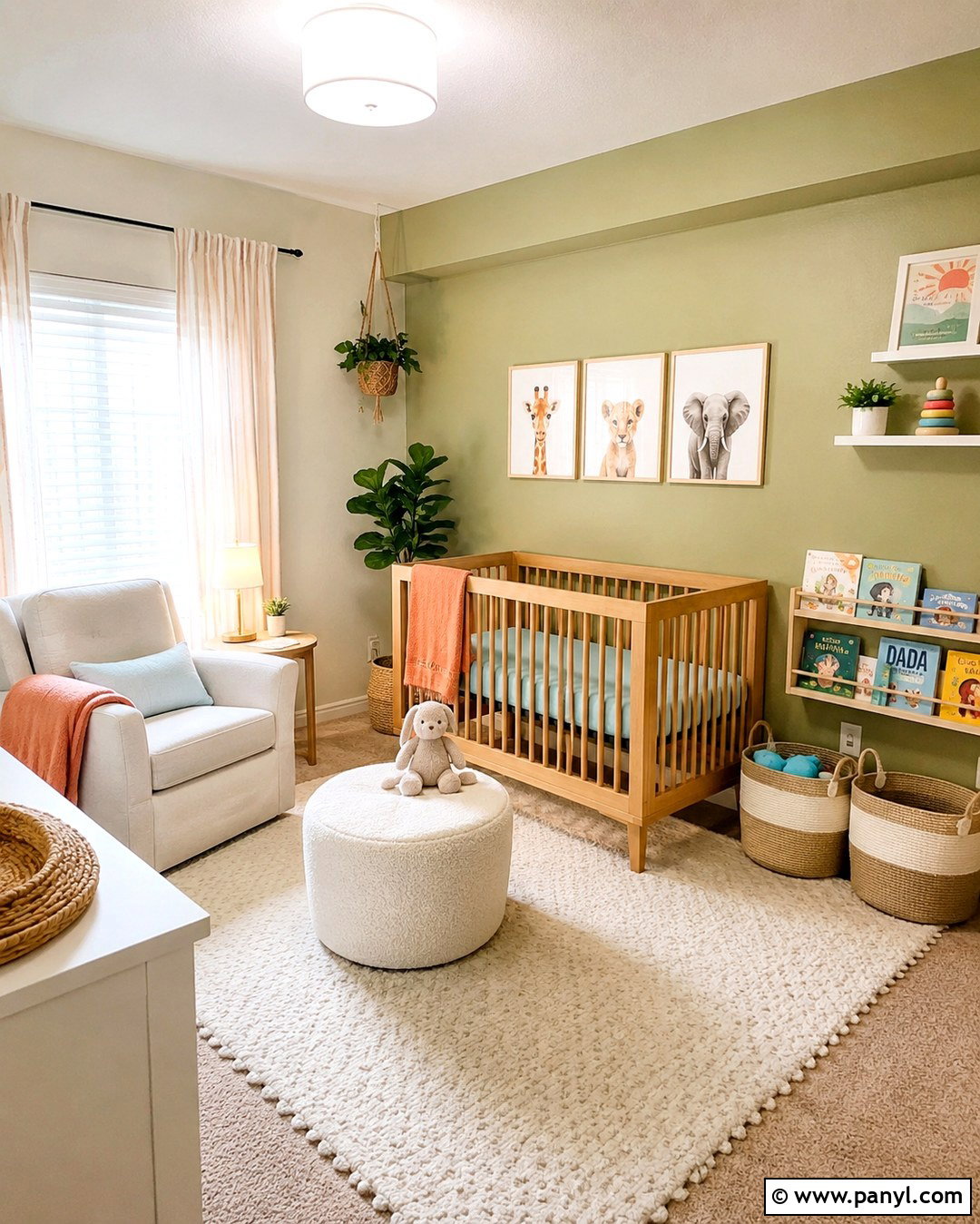
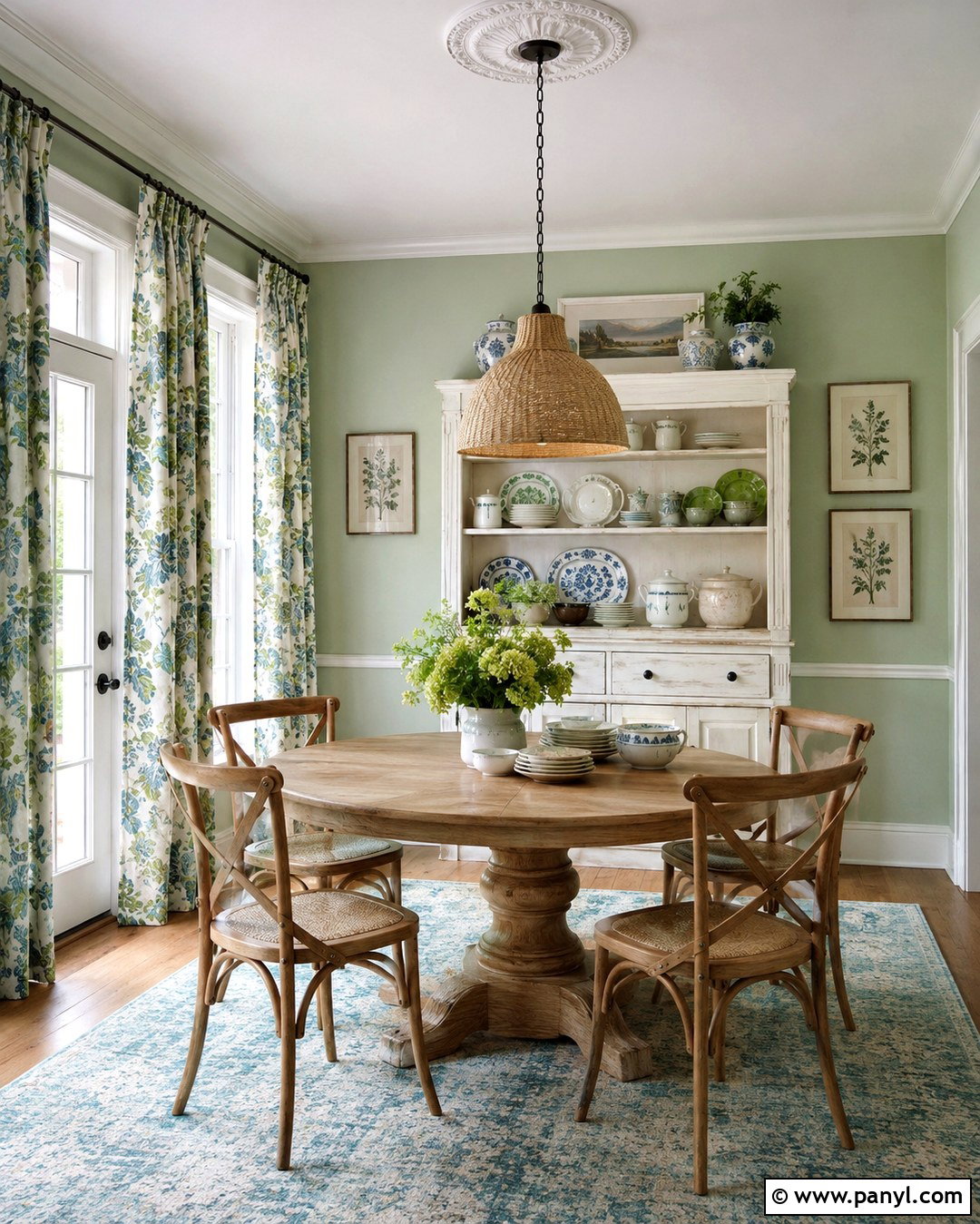
Pale pistachio walls create a cheerful nursery that can adapt as a child grows. Choose a softened yellow-green rather than a bright candy shade, and combine it with natural maple furniture and warm white trim. Position a simple wood crib against the main wall with a washable ivory rug beneath it. A comfortable oatmeal glider, small round side table, and dimmable wall sconce form a practical feeding corner. Use curtains with a subtle cream stripe and add storage baskets in woven natural fibers. Gentle accents in apricot, sky blue, and warm beige bring variety without crowding the palette. Finish with simple animal prints and a low book ledge. The complete room feels playful, sunny, and comfortably calm.
9. Dusty Green Reading Nook
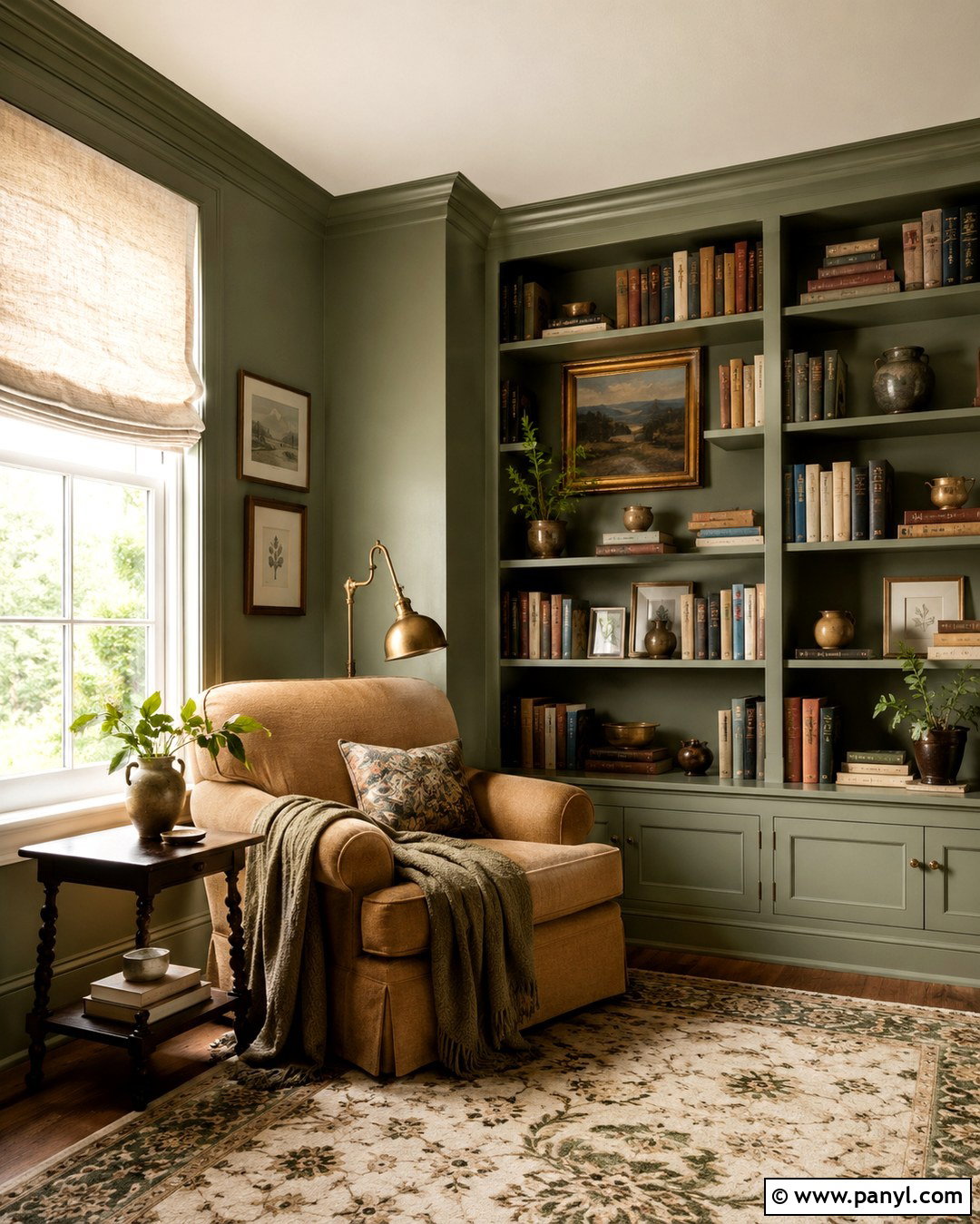
A dusty soft green can turn an unused corner into a reading nook that feels intentionally designed. Paint the walls and surrounding bookcases the same muted shade to create a seamless backdrop. Add a generously sized armchair in camel-colored fabric, then place a small dark wood table and adjustable brass reading lamp beside it. A patterned wool rug in cream, moss, and faded red makes the corner feel connected to the rest of the room. Style the shelves with books, pottery, framed art, and a few open spaces rather than filling every inch. Hang an oatmeal linen shade at the nearby window for softened daylight. A textured throw and lumbar pillow complete this cozy, practical place for reading or relaxing.
10. Pale Green Laundry Room
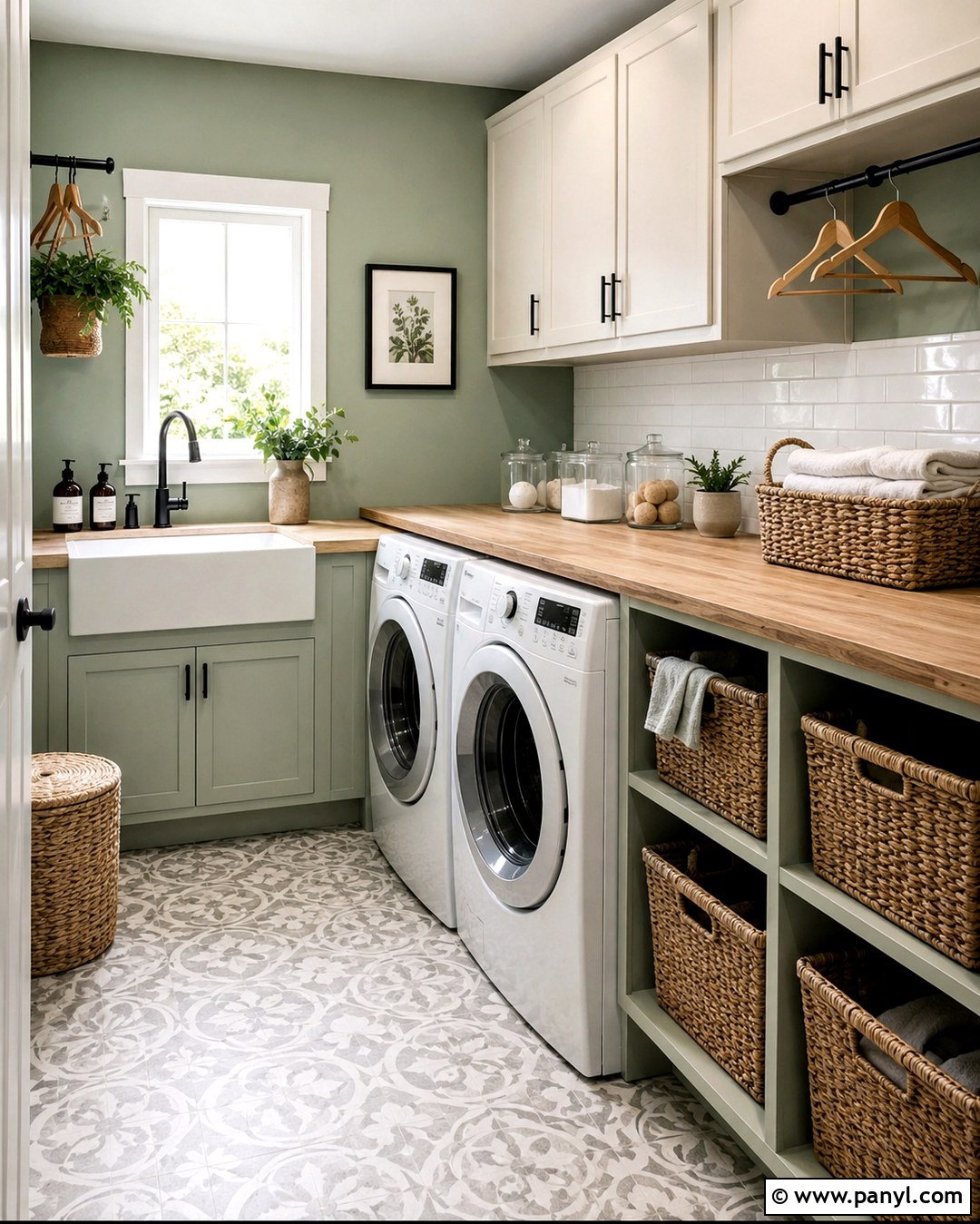
Even a small laundry room can feel thoughtfully finished with pale green walls and practical storage. Select a clean, slightly warm green that stays visible beside white appliances. Install simple cream cabinets above the washer and dryer, then add a light butcher-block counter for folding clothes. A narrow white tile backsplash protects the wall while reflecting light around the room. Use black cabinet pulls and a matching hanging rod to give the pastel color more definition. Patterned porcelain floor tile in soft gray and white introduces movement without making the area busy. Complete the space with labeled woven baskets, glass containers for supplies, and one framed print. The result is organized, durable, and pleasant enough to make daily chores feel easier.
11. Soft Green Color Drenched Bedroom
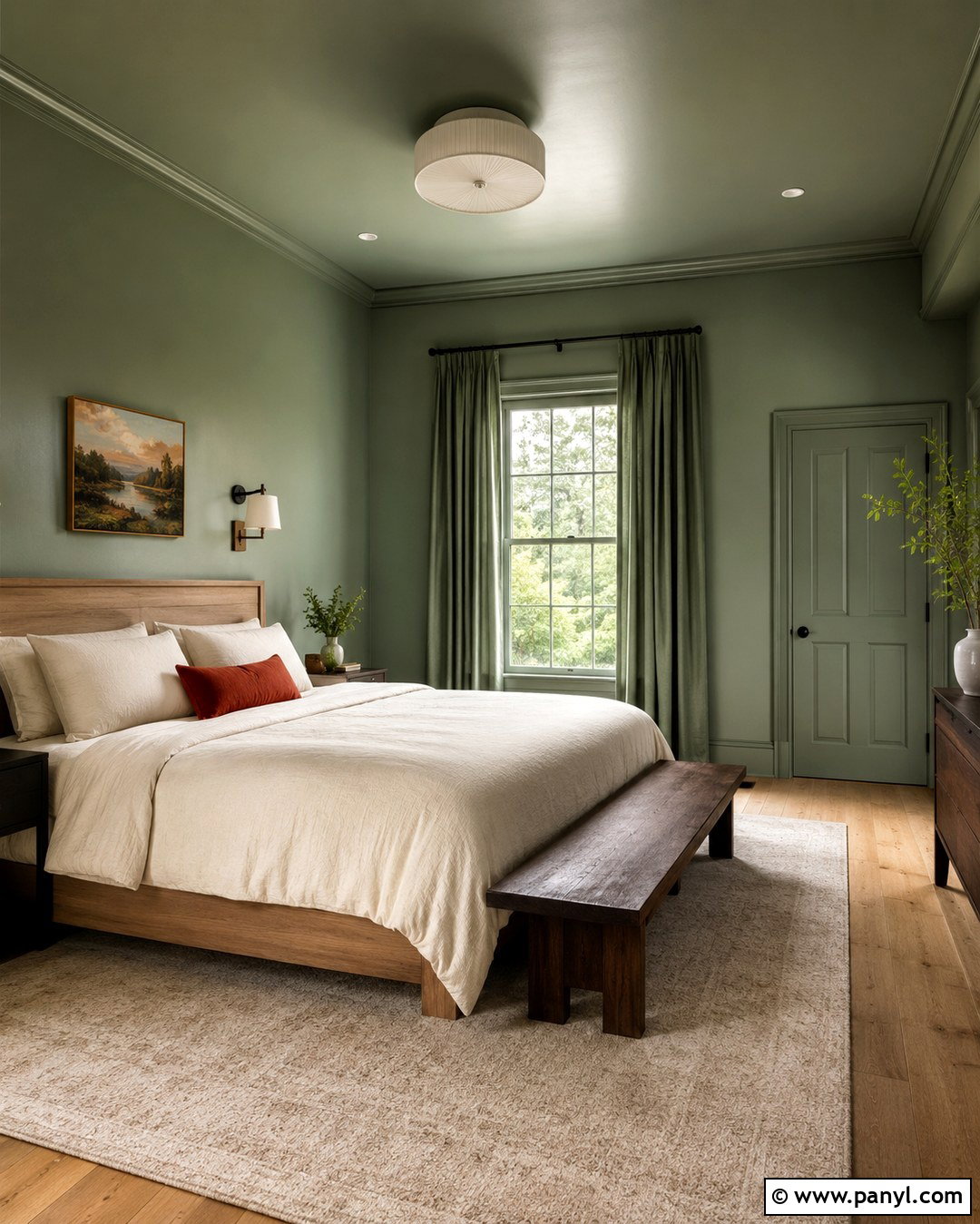
Color drenching allows soft green to wrap a bedroom in a gentle, uninterrupted atmosphere. Paint the walls, ceiling, trim, and interior doors in closely matched shades of muted sage. Use a flat finish on the ceiling, an eggshell finish on the walls, and satin on the trim for subtle depth. Break up the green with a natural oak bed, crisp ivory bedding, and a chunky cream rug. Dark bronze sconces and a walnut bench provide enough contrast to define the furniture. Choose curtains only slightly lighter than the walls so the room remains cohesive. A rust-colored lumbar pillow and small landscape painting introduce restrained warmth. This layered approach feels more intentional and immersive than a single green accent wall.
12. Soft Green Walls With White Trim
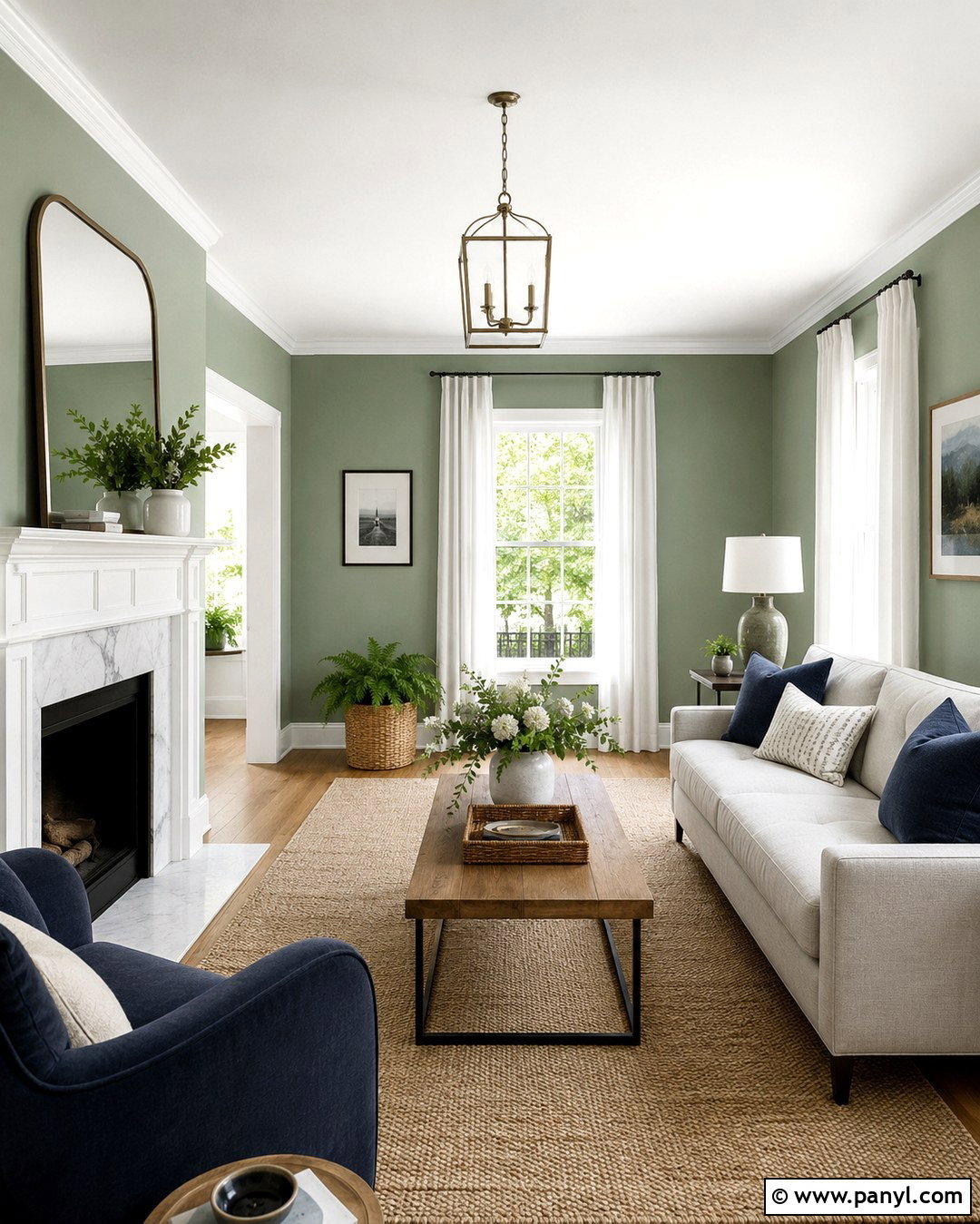
Crisp white trim can give soft green walls a fresh, architectural appearance, especially in rooms with detailed molding. Choose a balanced sage or celadon for the walls and use a clean white on baseboards, window casings, doors, and crown molding. Continue the bright contrast with a white fireplace surround and simple white curtains. Furnish the room with a light gray sofa, oak coffee table, and woven beige rug to keep the palette comfortable. Navy pillows and a dark blue armchair introduce depth without distracting from the trim. Add nickel or polished chrome lighting for a clean finish. This complete scheme works particularly well in traditional living rooms where windows, built-ins, and decorative woodwork deserve clear definition.
13. Soft Green Walls With Natural Wood
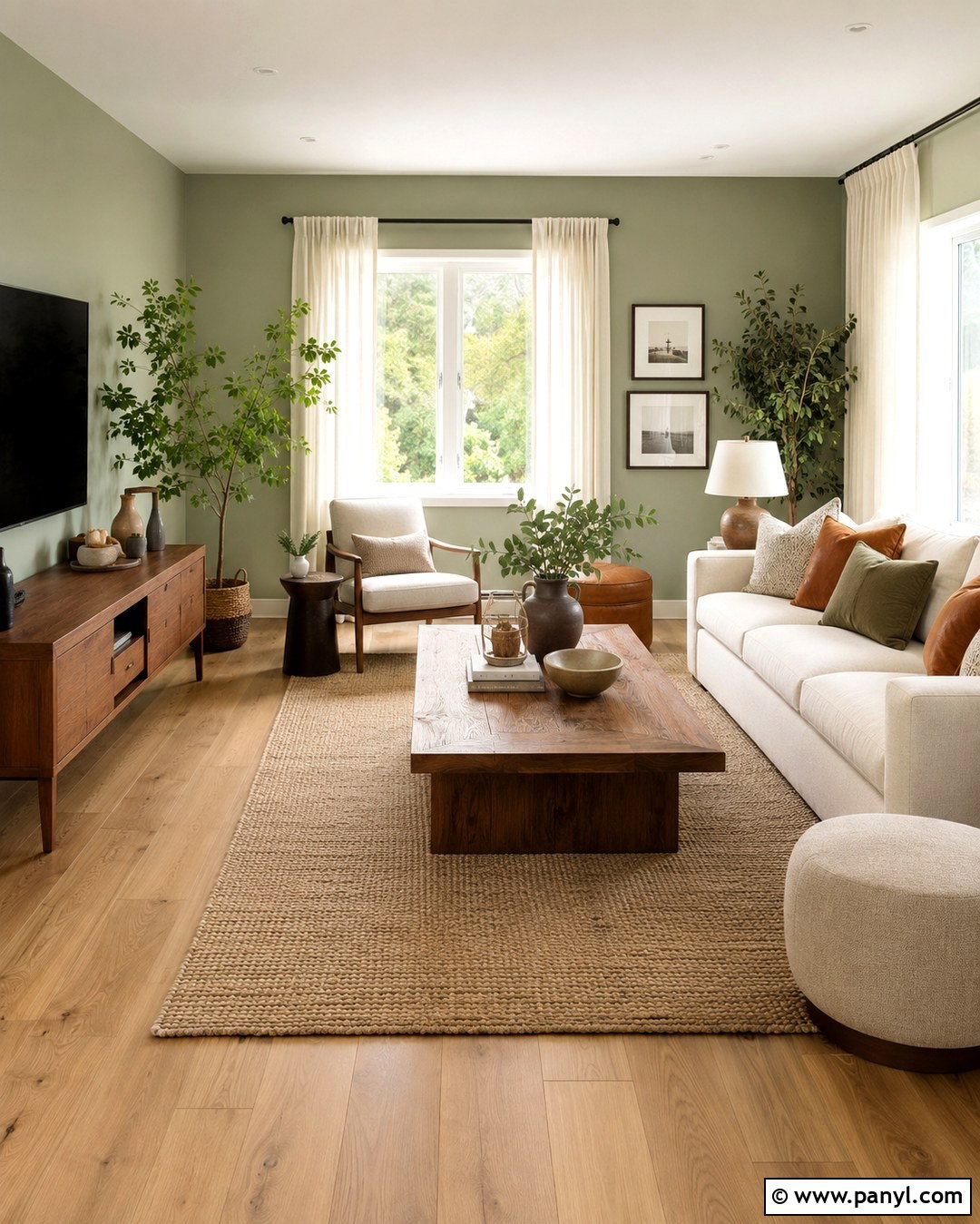
Soft green and natural wood create a warm, nature-inspired room without requiring large amounts of decoration. Start with pale sage walls and wide-plank oak flooring in a matte finish. Choose a low-profile walnut media console, an oak coffee table, and open shelving that displays the wood grain. A cream sofa and natural jute-wool rug prevent the room from becoming too brown or green. Add linen curtains in warm white and cushions in clay, tan, and muted olive. Black accents should be limited to slim picture frames and one floor lamp. Handmade pottery and leafy plants reinforce the organic palette. The finished living room feels grounded and layered, with enough contrast to keep every material visible and distinct.
14. Soft Green Walls With Blush Pink
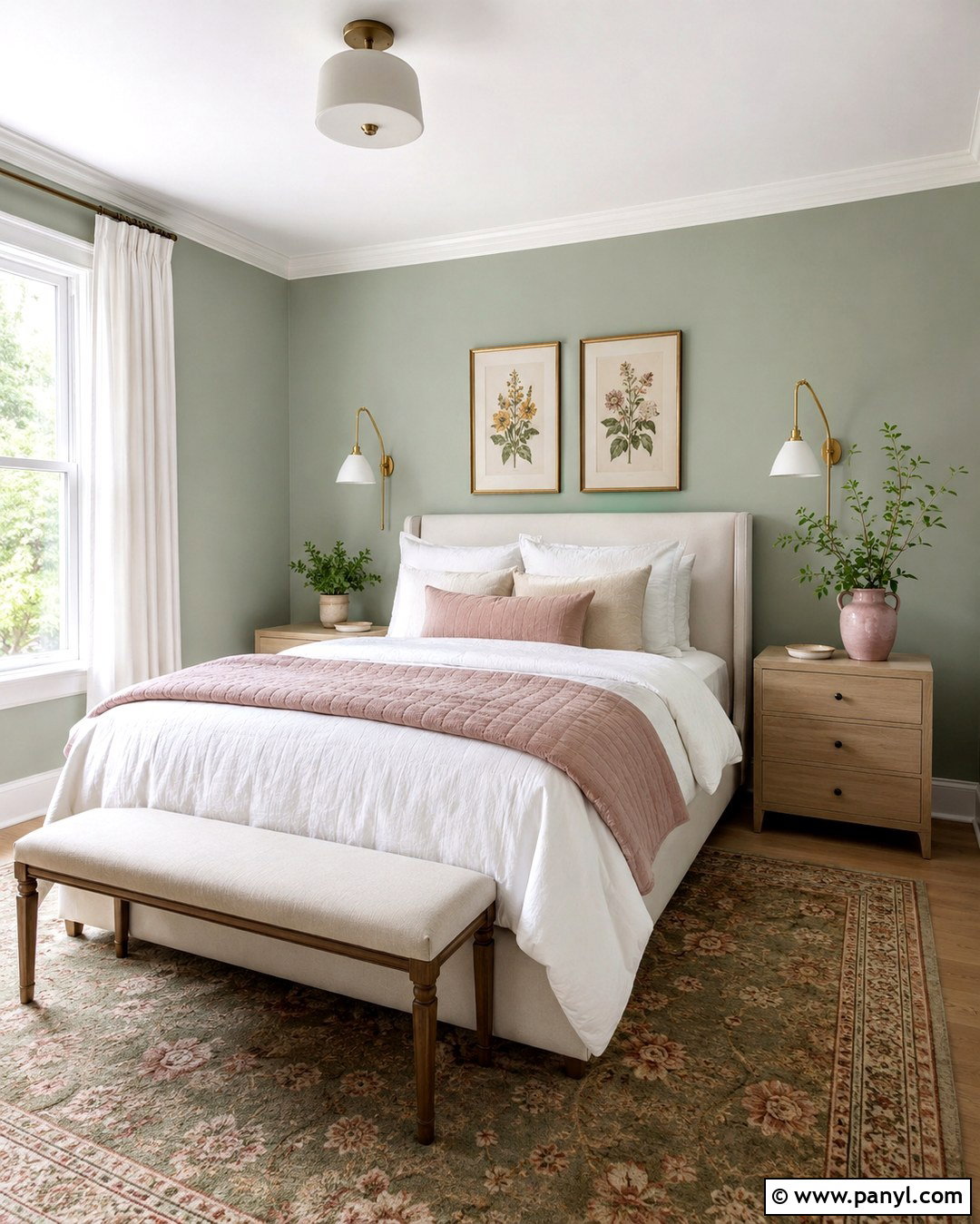
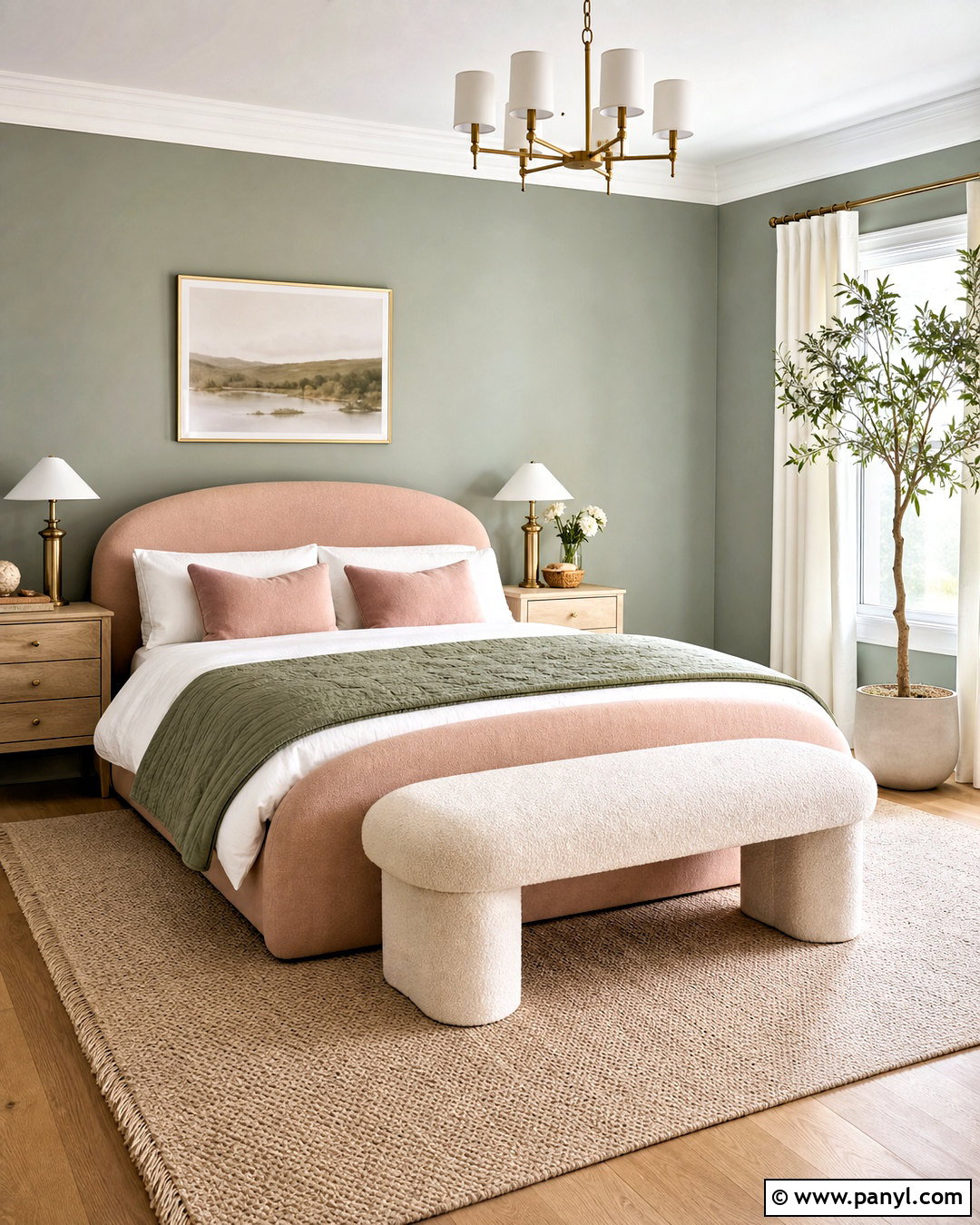
Blush pink brings gentle warmth to soft green walls and works especially well in a comfortable guest bedroom. Use a muted celadon or sage on the walls, then anchor the room with an ivory upholstered bed and pale wood nightstands. Layer white bedding with a dusty blush quilt, green-gray pillows, and one small floral cushion that connects both colors. Choose a vintage-style rug containing rose, cream, and faded olive to make the pairing feel established rather than trendy. Brass sconces and warm white curtains add a soft glow during the day. Keep larger furniture neutral so the color combination stays refined. A botanical print and ceramic pink vase complete the room without turning it into a heavily coordinated theme.
15. Soft Green Walls With Navy Blue
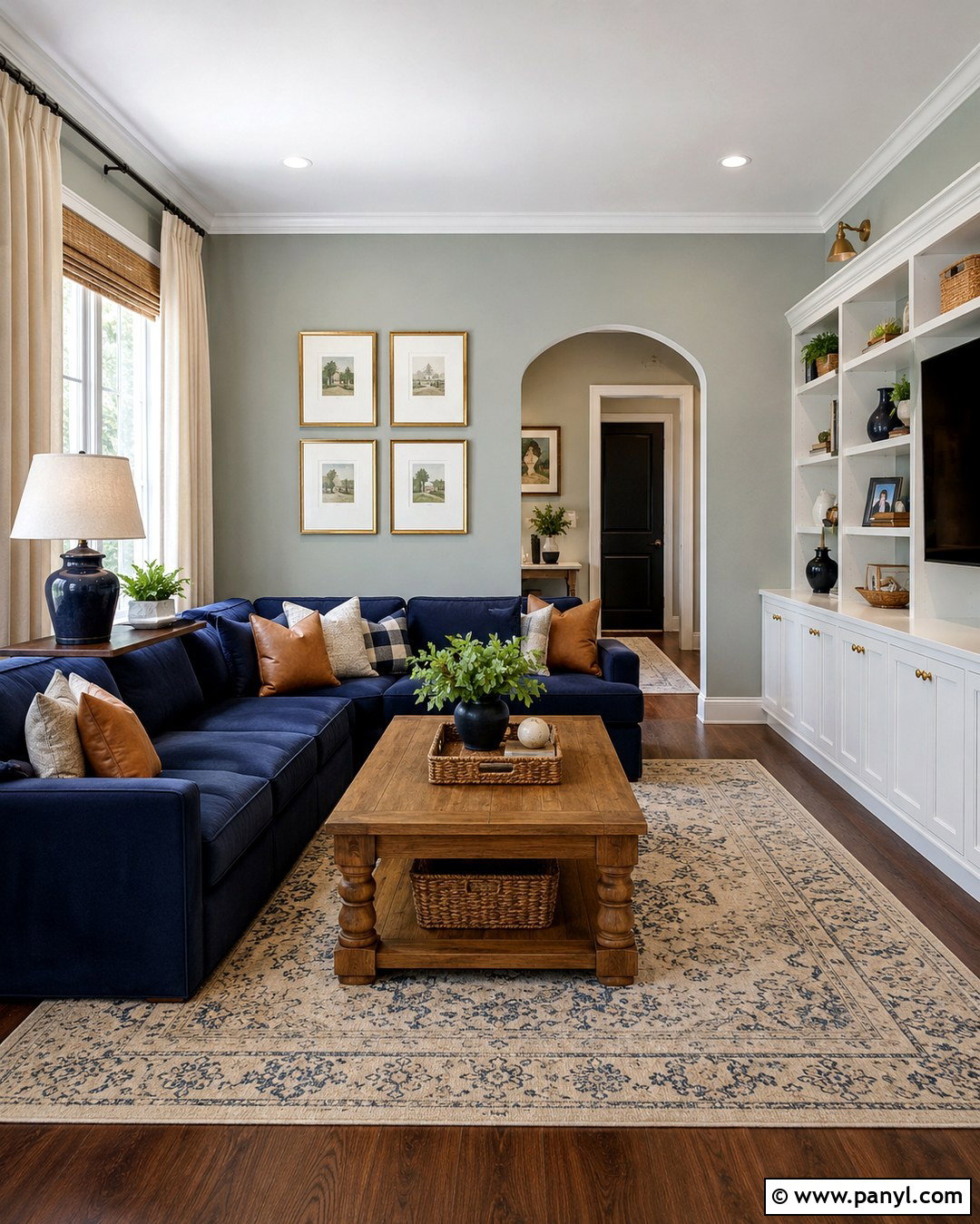
Navy blue adds depth and structure to soft green walls, making the combination useful in a family room or den. Paint the room a pale gray-green, then place a deep navy sectional along the longest wall. Add a warm oak coffee table, cream-and-blue patterned rug, and off-white curtains to prevent the dark upholstery from dominating. Cognac leather pillows introduce warmth, while navy ceramic lamps repeat the sofa color on the opposite side of the room. Use matte brass hardware or picture frames for a subtle polished accent. Built-in cabinets can remain warm white for contrast and storage. This full design feels comfortable, durable, and balanced, offering color without sacrificing the relaxed character needed in a frequently used room.
16. Soft Green Walls With Terracotta
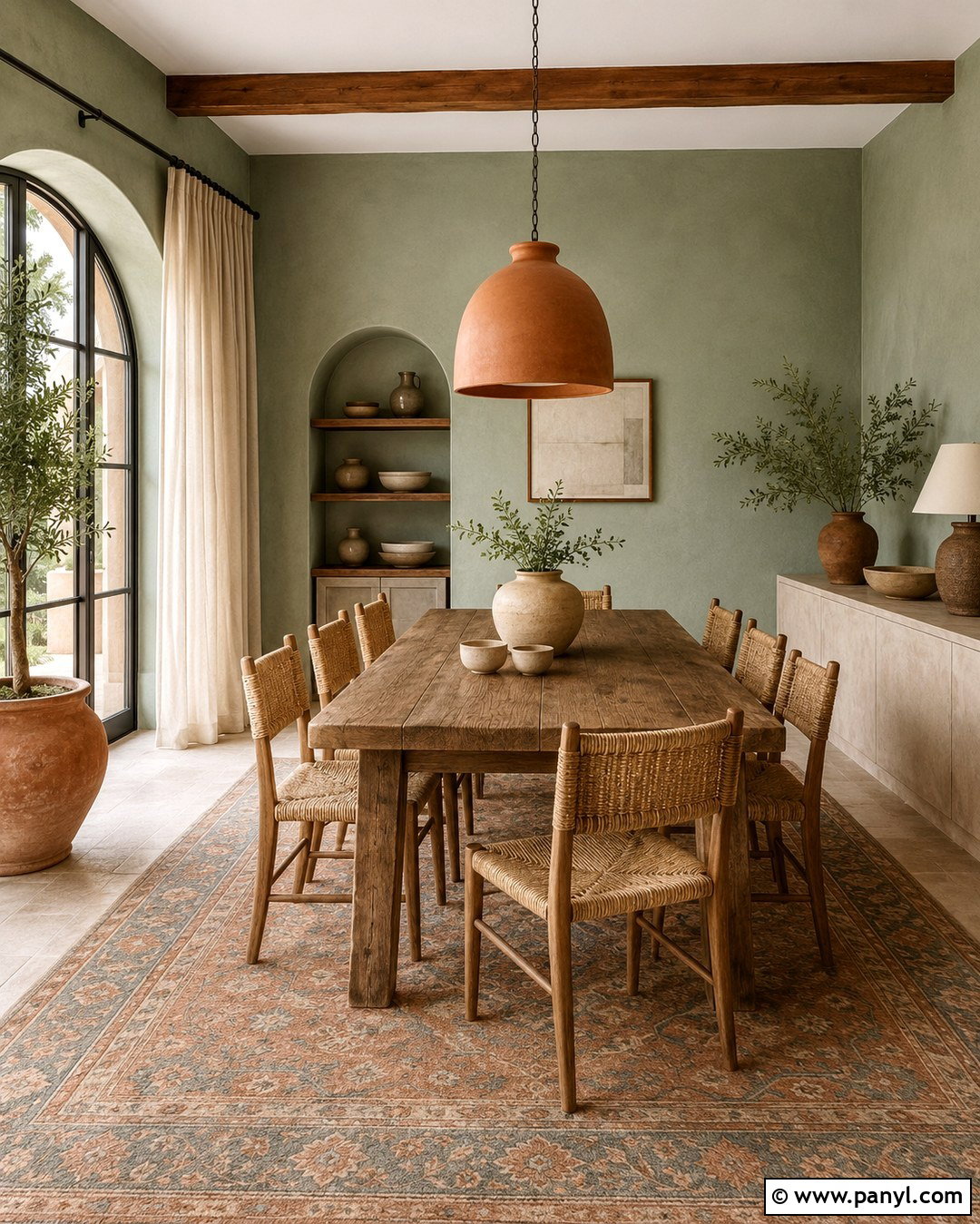
Terracotta accents bring out the earthy side of soft green walls and create a welcoming Mediterranean-inspired dining space. Choose a muted eucalyptus green for the walls and pair it with a rustic oak table and woven dining chairs. Use terracotta through a ceramic pendant light, a few serving pieces, and a patterned rug rather than covering every surface with orange. Cream linen curtains and warm white trim keep the room airy. Add a low plaster-finish sideboard in soft beige for closed storage and display a small collection of handmade pottery above it. An olive tree in a simple clay planter reinforces the natural palette. The completed room feels sunny and relaxed while remaining practical for regular meals and gatherings.
17. Soft Green Walls With Black Accents
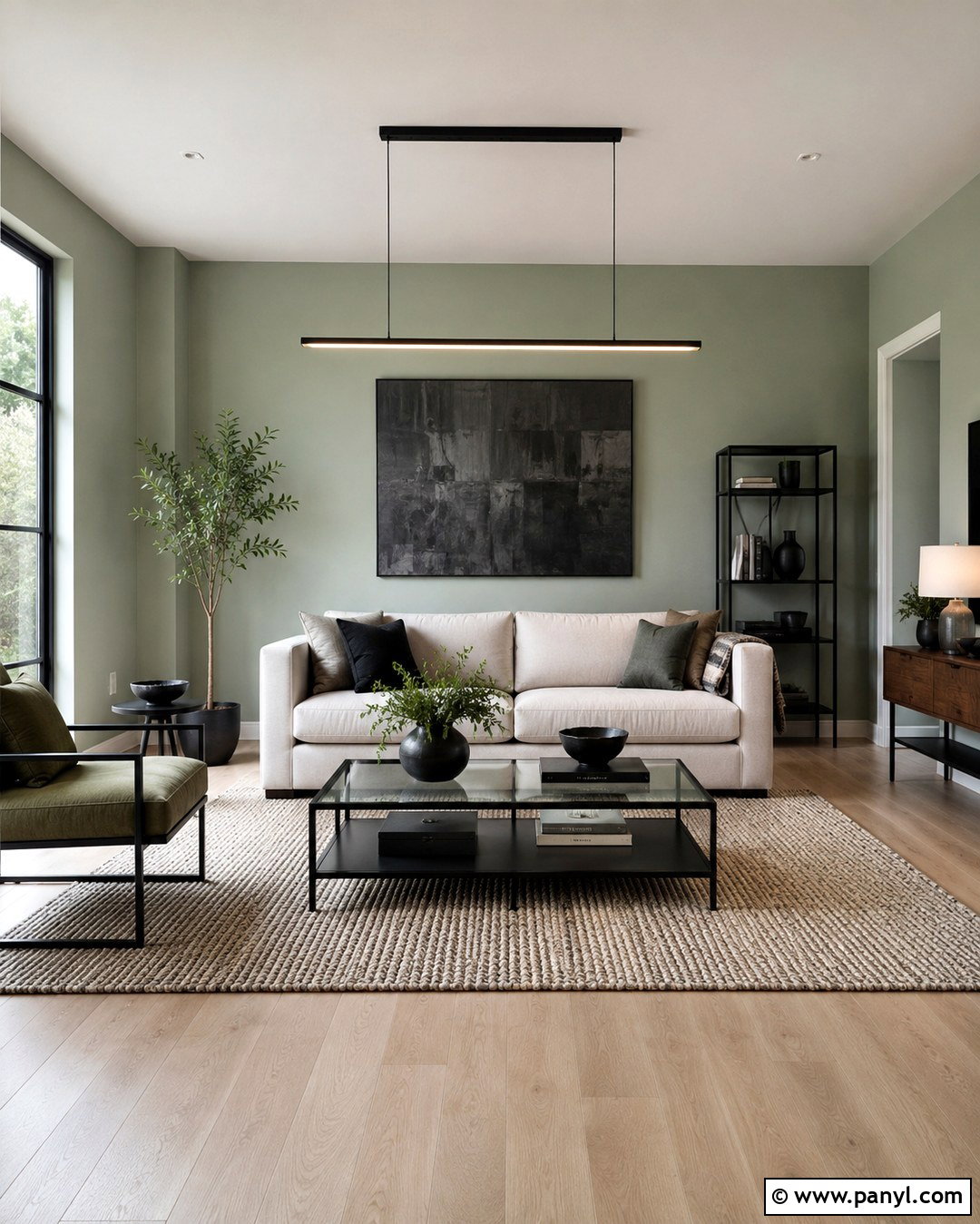
Black accents give soft green walls a sharper contemporary edge without removing their gentle character. Use a pale mint-gray or cool celadon on the walls, then introduce black through slim window frames, a linear chandelier, and metal furniture legs. A cream sofa, pale oak flooring, and an ivory textured rug preserve brightness across the living room. Choose a black-framed glass coffee table so the center of the room remains visually open. Repeat the wall color in one patterned cushion, while charcoal and white artwork connects the lighter and darker elements. Keep accessories minimal and sculptural. The overall room feels modern and defined, yet the soft green background stops the black details from becoming cold or severe.
18. Soft Green Wainscoting Dining Room
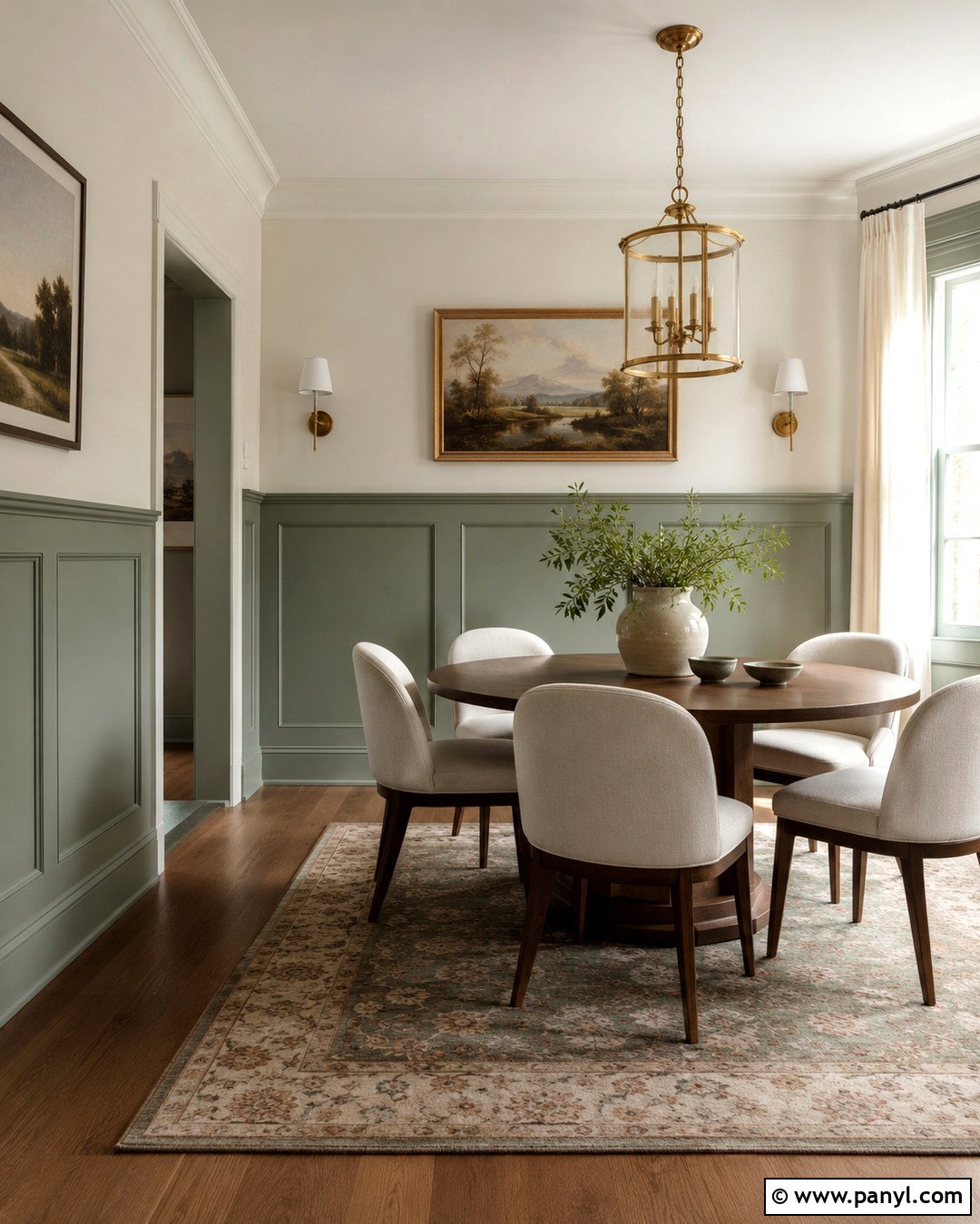
Soft green wainscoting adds color and architectural interest while allowing the upper walls to remain light. Paint paneled wainscoting and baseboards in a muted sage with a durable satin finish, then use warm ivory above the chair rail. Center a round walnut table in the room and surround it with upholstered cream chairs for a balanced layout. A brass lantern pendant provides a simple focal point without blocking sightlines. Add a faded floral rug containing green, gold, and dusty blue beneath the table. Natural linen curtains soften the windows, while traditional landscape artwork gives the upper walls a finished appearance. This two-part treatment suits modest dining rooms because it introduces detail without making the walls feel overly busy.
19. Soft Green Limewash Living Room
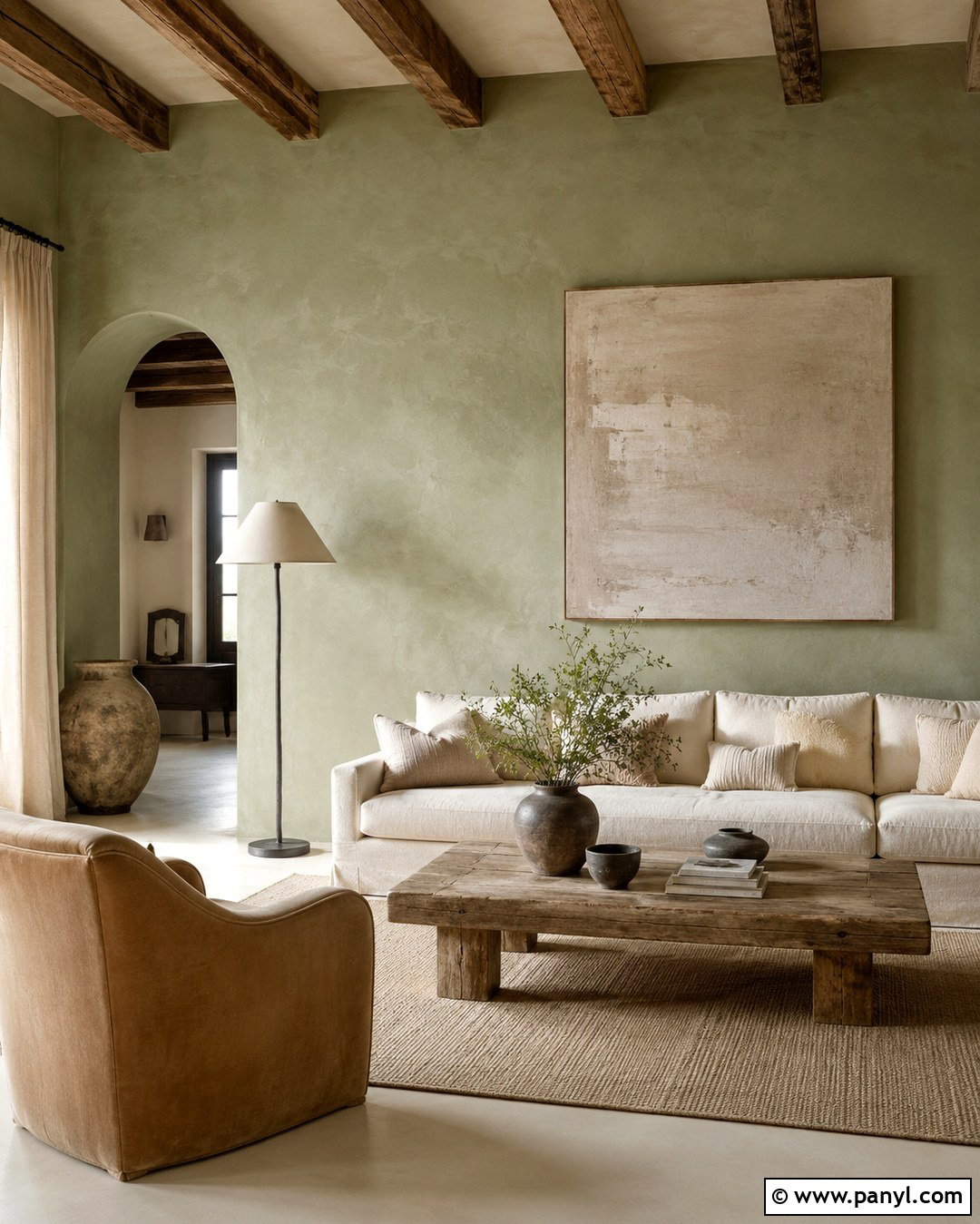
Soft green limewash brings gentle movement and an imperfect, handcrafted finish to a relaxed living room. Choose a pale olive-sage limewash with visible tonal variation, then keep the remaining materials understated. A slipcovered cream sofa, weathered oak coffee table, and flat-weave beige rug complement the textured walls without competing with them. Add a plaster floor lamp, linen curtains, and one curved lounge chair in warm tan. Avoid glossy finishes; matte pottery, unfinished wood, and softly woven textiles support the natural surface. A large abstract canvas in cream and muted brown creates a quiet focal point. The full room feels layered and character-rich, yet the limited palette ensures the limewashed green walls remain the main design feature.
20. Two Tone Soft Green Hallway
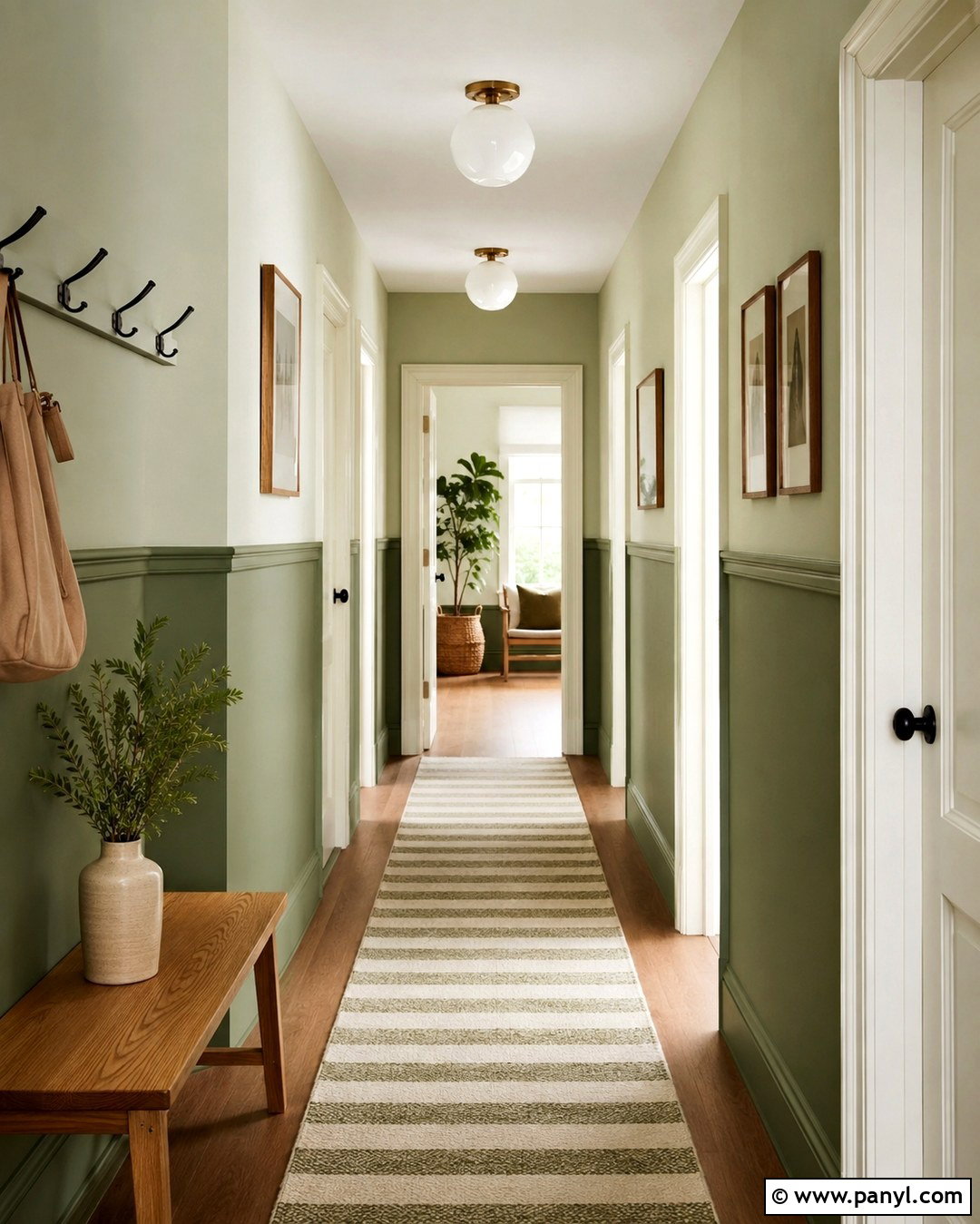
A two-tone paint treatment gives a narrow hallway more personality while protecting the lower walls from everyday marks. Use a medium soft olive-green below a simple horizontal dividing line and a much paler green above it. Paint the baseboards in the lower shade for a continuous look, while doors and frames can remain warm white. Add a slim oak bench, black wall hooks, and a durable striped runner in cream and moss. A row of matching framed prints creates order along the longest wall. Use simple ceiling lights with white glass shades to keep the passage bright. The finished hallway feels wider, more organized, and visually connected, with both green tones working together rather than dividing the space harshly.
Conclusion:
The most successful Soft Green Wall Color Ideas combine the right shade with furniture, finishes, textiles, and lighting that support its undertone. Sage and olive feel warmer beside wood, cream, and terracotta, while mint, seafoam, and celadon work naturally with white, gray, navy, and polished metal. Consider the room’s daylight before committing, then test large painted samples beside the permanent flooring and main furniture. A green that looks balanced in the morning may appear cooler or more yellow later in the day. Whether you choose a complete color-drenched bedroom, a two-tone hallway, or a softly painted living room, thoughtful layering will make the finished space feel cohesive, comfortable, and personal.

Related Ideas and Inspiration:
Leave a Reply