
Green walls can make nearly any room feel fresher, warmer, and more connected to nature. The key is choosing a green with the right undertone, then building a complete palette around it. Soft sage works beautifully with light oak and cream, while olive complements aged metals and earthy textiles. Forest, hunter, and emerald green create greater depth when balanced with pale upholstery, reflective finishes, and layered lighting. Green can also brighten hardworking spaces such as kitchens, bathrooms, offices, and laundry rooms. The following rooms cover practical layouts, coordinated furniture, flooring, lighting, textiles, and decor for many home sizes and budgets. Use these complete, easy-to-recreate **green wall room ideas** to find a look that fits your space.

1. Sage Green Living Room
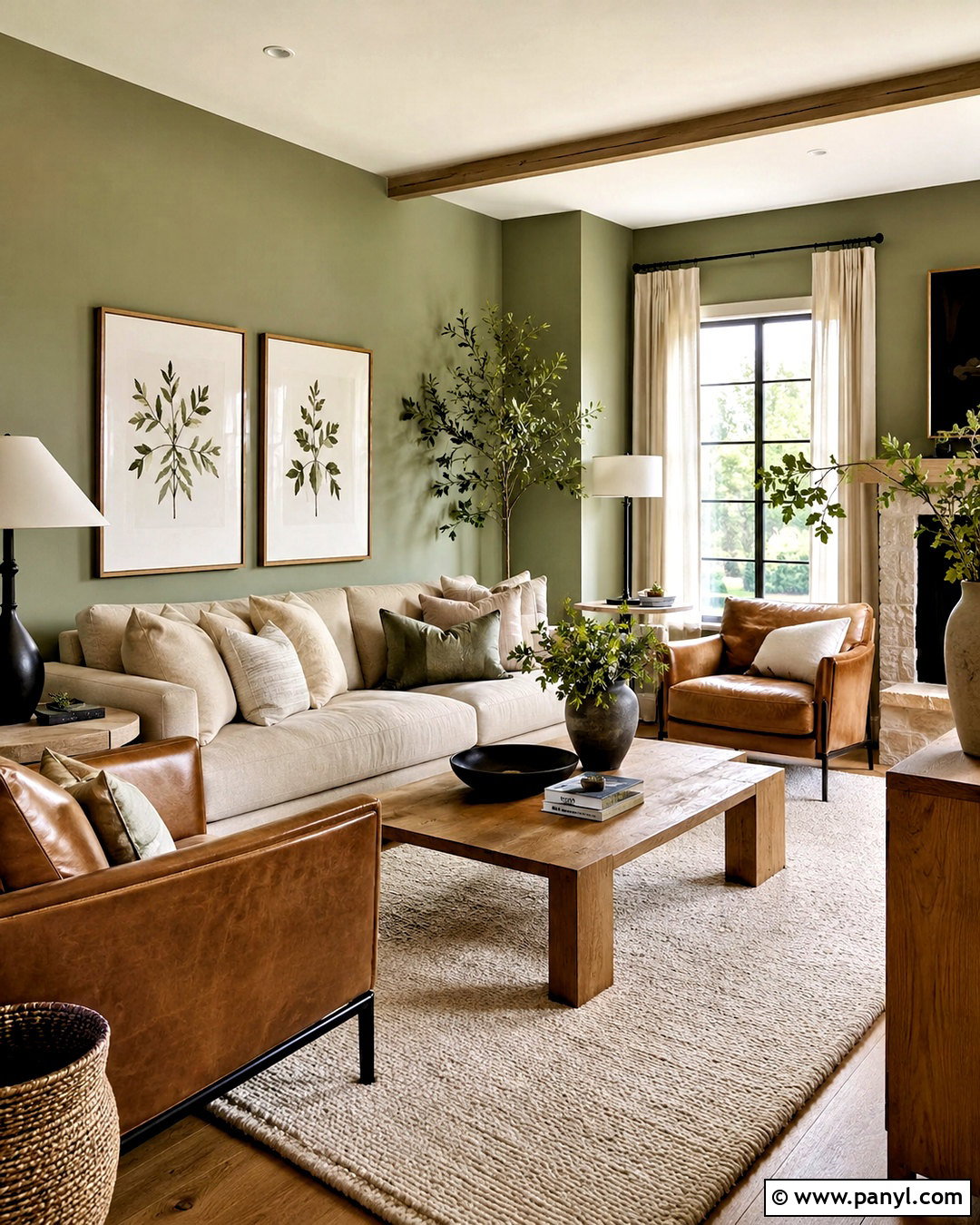
A soft sage green living room feels relaxed without becoming plain. Paint every wall a muted sage, then add an oatmeal-colored sofa positioned across from a simple oak media console. A cream wool rug keeps the floor bright, while two cognac leather chairs add warmth and practical seating. Choose linen curtains in a slightly lighter neutral so natural light remains soft and open. Black metal lamps and curtain rods provide clean contrast without overpowering the palette. Finish the room with framed botanical prints, textured pillows, a low wooden coffee table, and a few leafy plants in stoneware pots. Repeating warm wood, cream, and black throughout the space creates a balanced room where the green walls feel intentional rather than isolated.
2. Forest Green Living Room
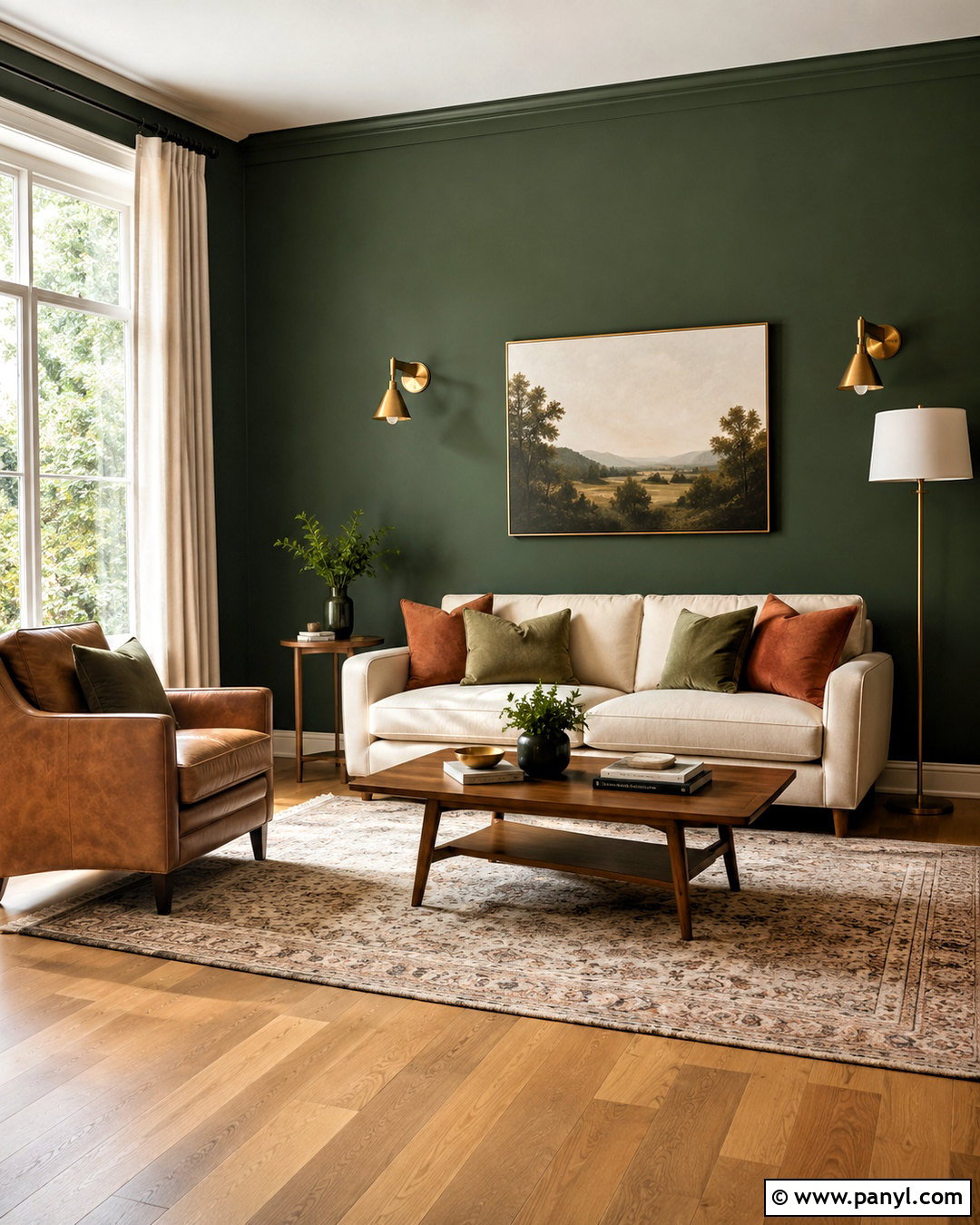
Forest green walls can turn an ordinary living room into a cozy, grounded retreat. Use the deep color on all four walls and balance it with a large ivory sofa, pale curtains, and a warm neutral area rug. Arrange the sofa around a walnut coffee table, then place a caramel leather armchair beside a brass floor lamp. Natural oak flooring prevents the dark walls from making the space feel overly formal. Add rust, tan, and cream pillows to connect the green with warmer colors. Simple landscape art in thin brass frames brings subtle detail to the walls. Several table lamps, wall sconces, and a central ceiling fixture will distribute light evenly, making the complete room feel comfortable during both daytime and evening use.
3. Olive Green Living Room
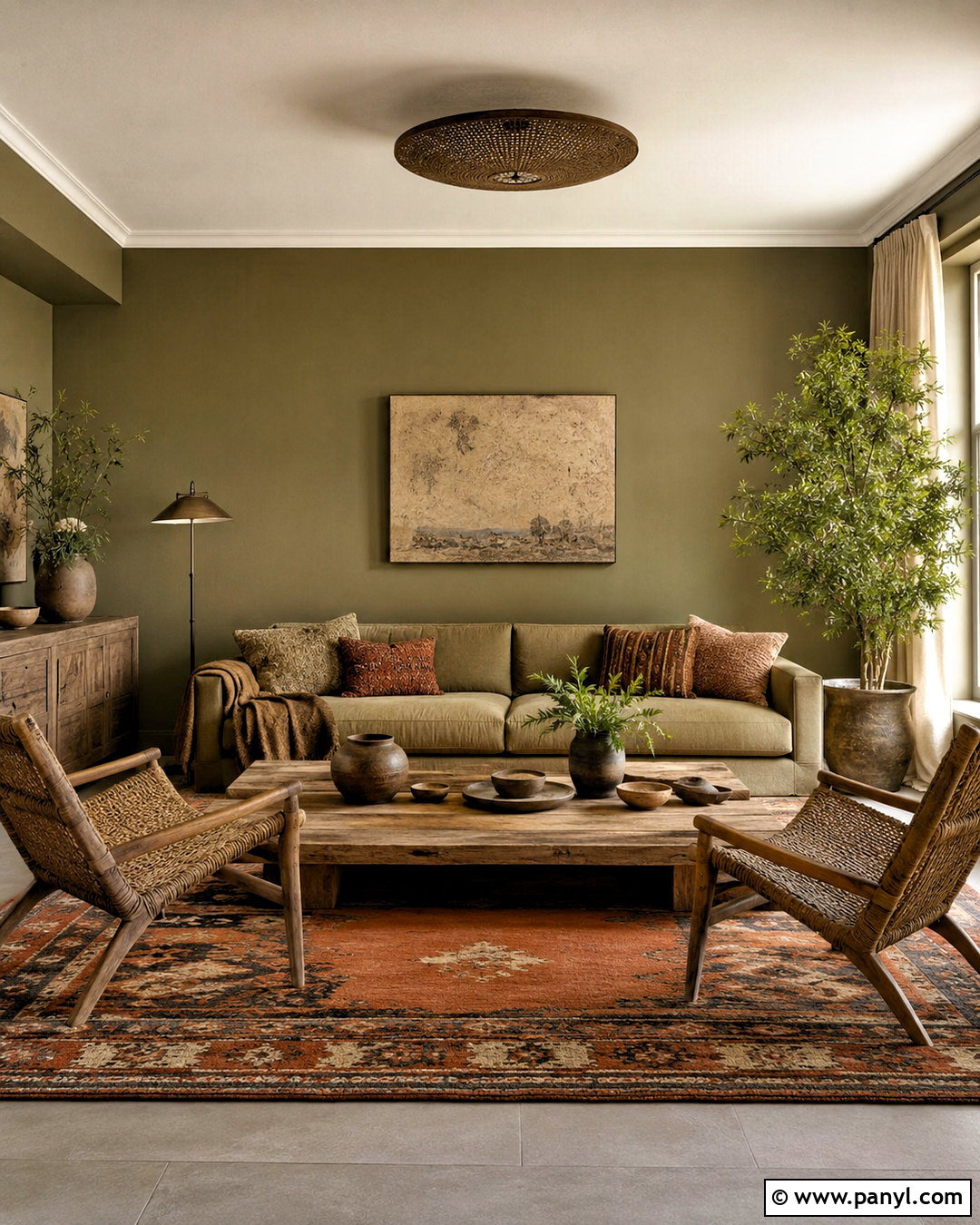
Warm olive green walls pair naturally with earthy materials and relaxed furniture. Start with a low-profile beige sofa and two woven lounge chairs arranged around a chunky reclaimed-wood coffee table. Layer a faded terracotta and cream rug over medium-tone hardwood flooring to introduce color without competing with the walls. Linen curtains, clay pottery, and aged brass lighting reinforce the organic palette. Instead of filling every wall, hang one oversized abstract artwork featuring cream, brown, and muted orange. A narrow console with baskets provides useful storage behind the sofa. Finish with olive velvet cushions, a rust throw, and plants with different leaf shapes. The result is a comfortable, collected living room that feels warm, practical, and visually connected from floor to ceiling.
4. Emerald Green Living Room
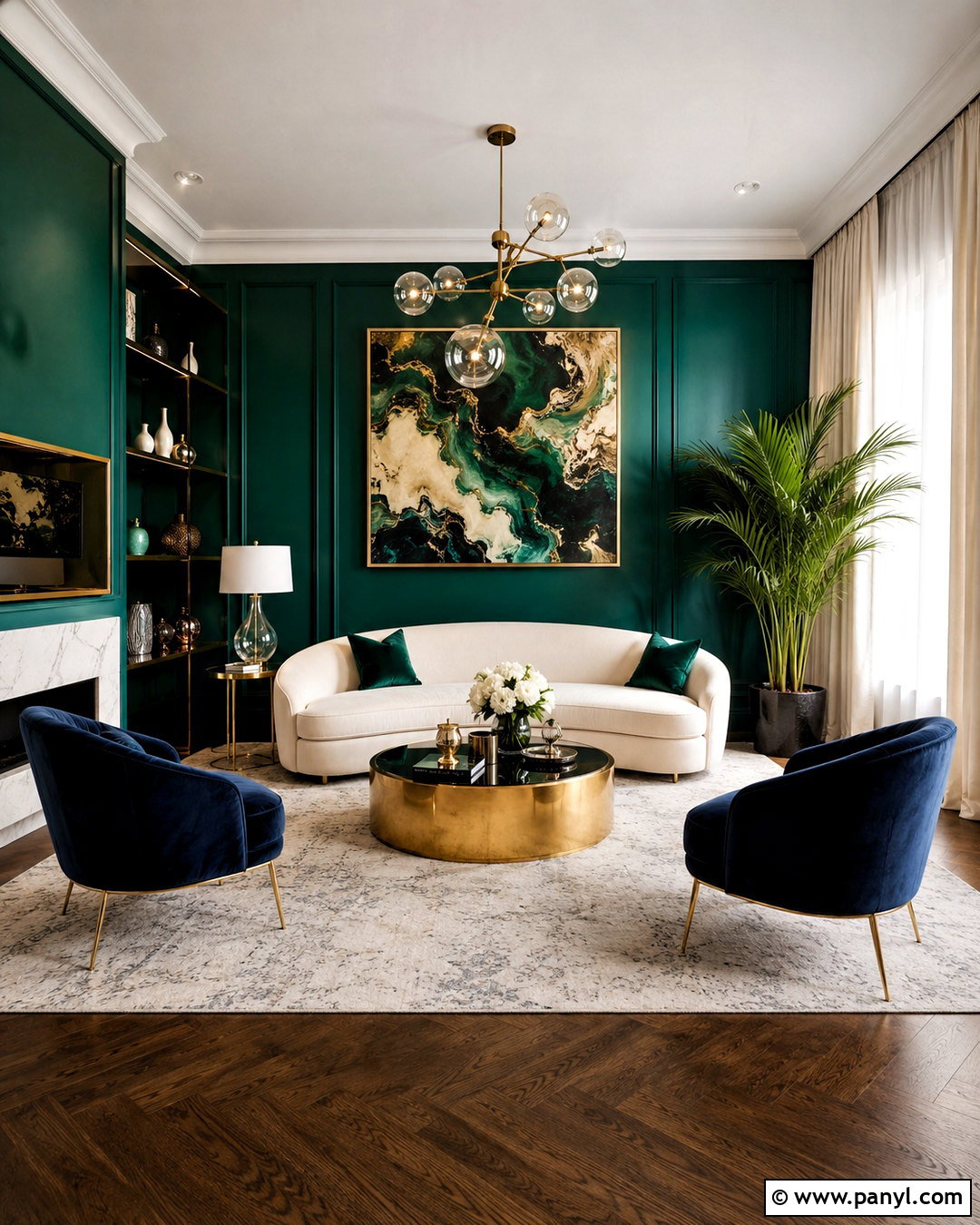
Emerald green walls create an elegant living room when paired with crisp, restrained furnishings. Place a cream curved sofa against the richest green wall and face it toward two navy velvet chairs. A polished brass coffee table adds reflection, while a pale patterned rug lightens the center of the room. Use warm white curtains hung close to the ceiling to make the windows appear taller. Decorative details should feel refined but limited: a marble side table, glass lamps, sculptural ceramics, and one large contemporary painting are enough. Medium walnut flooring keeps the jewel tones from feeling cold. Repeat emerald through only a few accessories so the walls remain the main feature. This complete arrangement feels dramatic, sophisticated, and suitable for both conversation and everyday relaxation.
5. Green Accent Wall Living Room
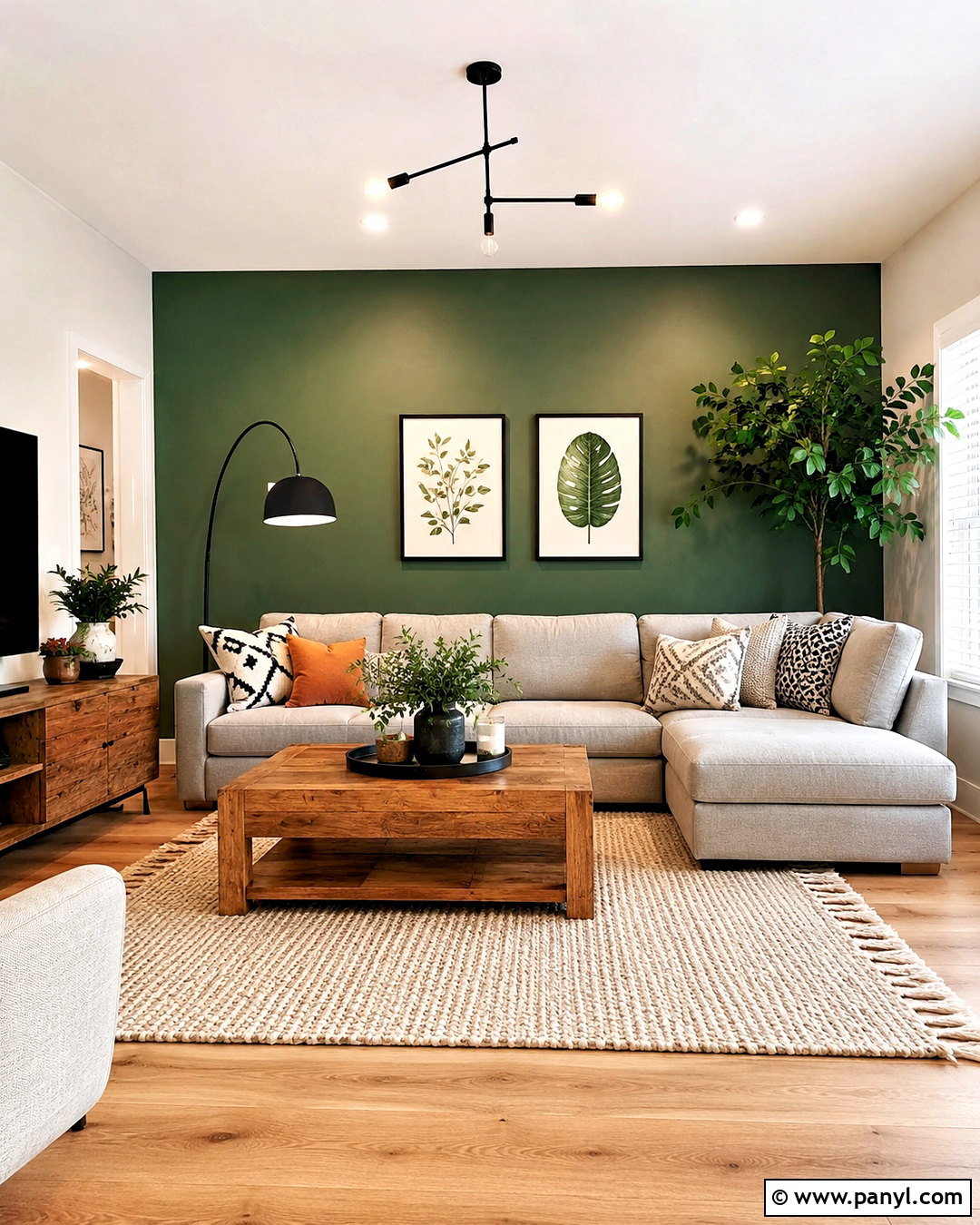
One green accent wall can define a living room without requiring a complete repaint. Choose the wall behind the sofa and cover it in a medium leafy green with a matte finish. Keep the remaining walls warm white, then use a light gray sectional, natural oak tables, and a cream woven rug to create an airy base. Add two chairs angled toward the sectional so the layout encourages conversation. Black picture frames and a black metal ceiling light give the room structure. Bring the accent color across the space with patterned pillows, a ceramic lamp, and one large plant near the opposite wall. This repetition prevents the green from looking disconnected. The finished room feels colorful yet flexible, making it especially useful for renters and first-time decorators.
6. Green Color Drenched Living Room
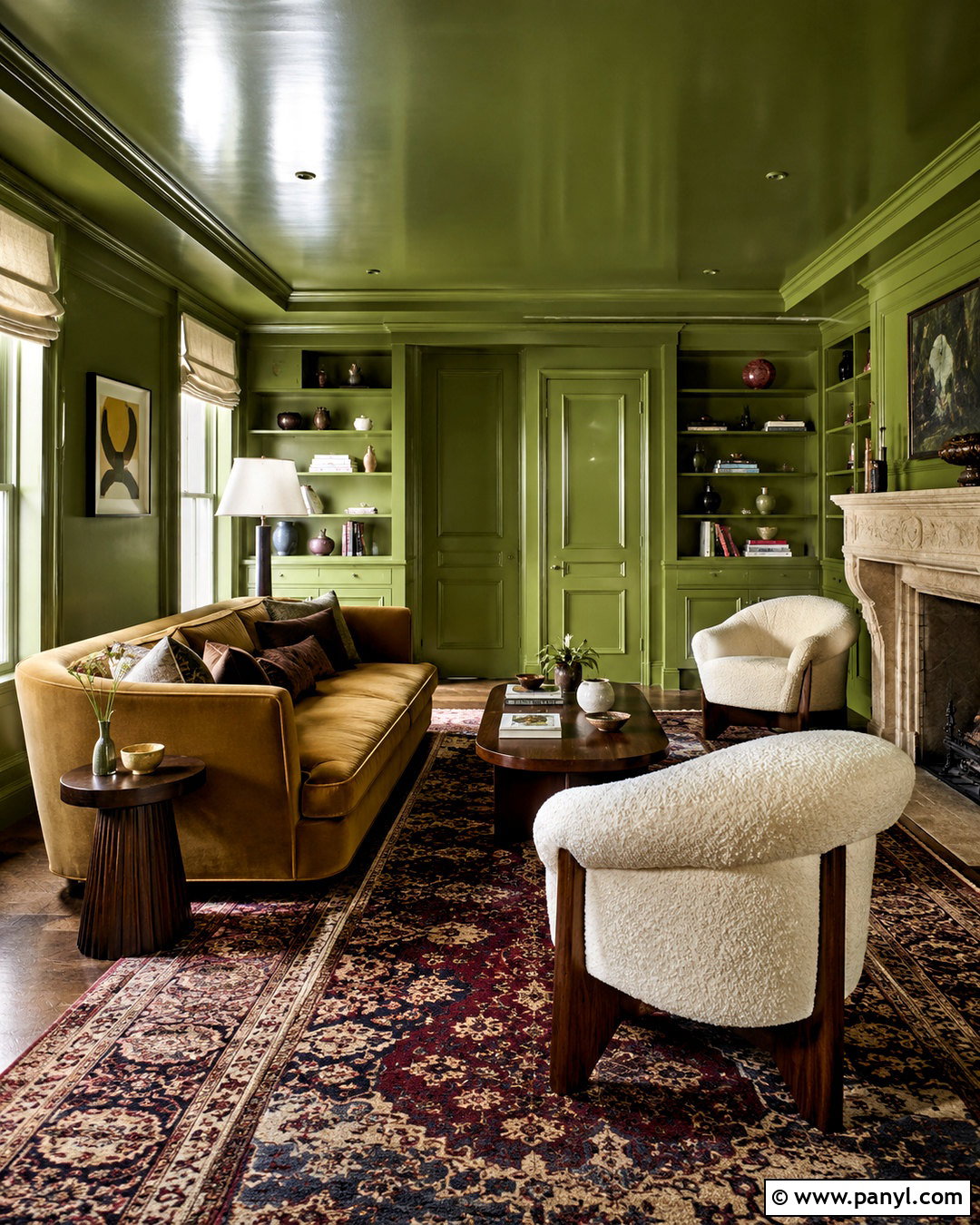
For an immersive look, carry a warm moss green across the walls, trim, doors, built-in shelving, and ceiling. Vary the finish rather than the color: use matte paint on broad surfaces and satin paint on woodwork. A camel sofa and cream bouclé chairs introduce lighter shapes against the continuous green background. Ground the seating area with a vintage-style burgundy and beige rug, then add walnut tables and antique brass lamps. Shelves should hold books, pottery, framed art, and a few empty spaces so they remain visually calm. Long natural linen curtains soften the rich paint treatment. Because every architectural surface shares one color, the room feels cohesive and enveloping. Multiple lamps and pale upholstery keep the complete design welcoming rather than heavy.
7. Sage Green Bedroom
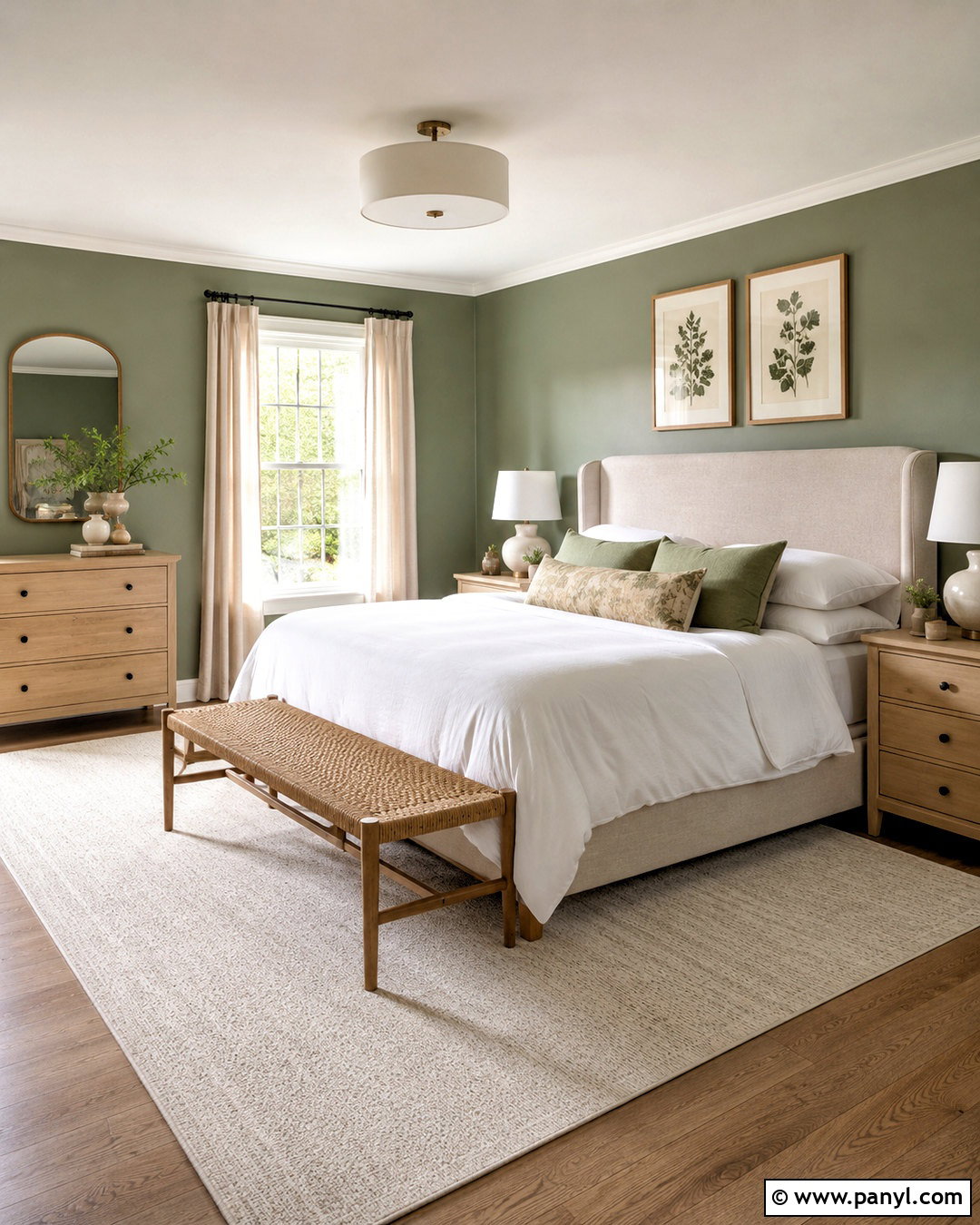
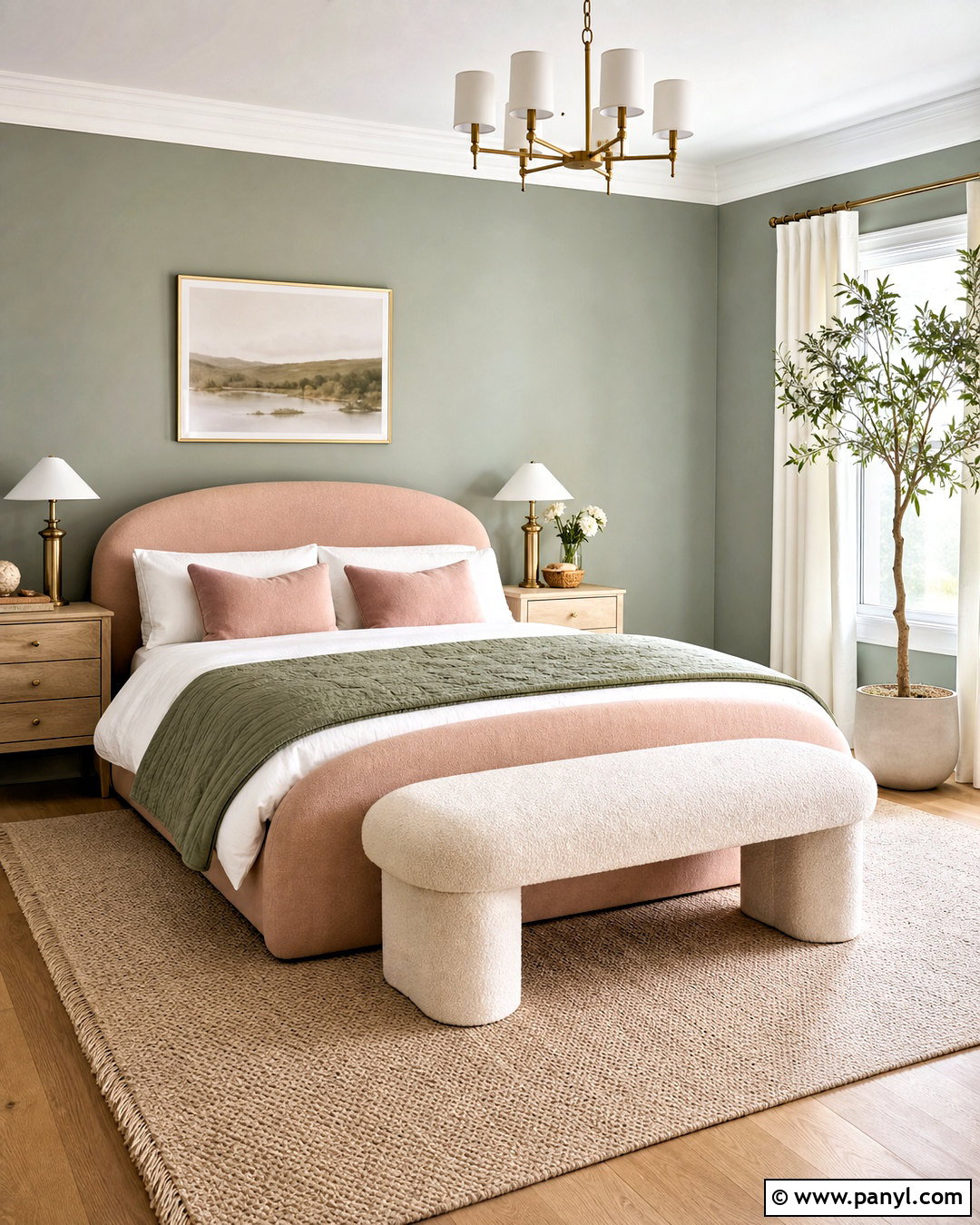
Soft sage walls help create a restful bedroom with enough color to feel finished. Center an upholstered oatmeal headboard on the main wall and dress the bed with white sheets, a quilted beige coverlet, and dusty green pillows. Matching light oak nightstands provide symmetry, while ceramic lamps add soft curves. Keep the flooring warm and natural, then place a cream rug beneath the bed so it extends comfortably on both sides. Full-length ivory curtains frame the window without competing with the wall color. A slim oak dresser, rounded mirror, and woven bench complete the furniture plan. Limit artwork to two simple botanical prints above the headboard. The restrained mix of sage, cream, oak, and woven texture produces a calm bedroom that still feels warm and personal.
8. Dark Green Bedroom
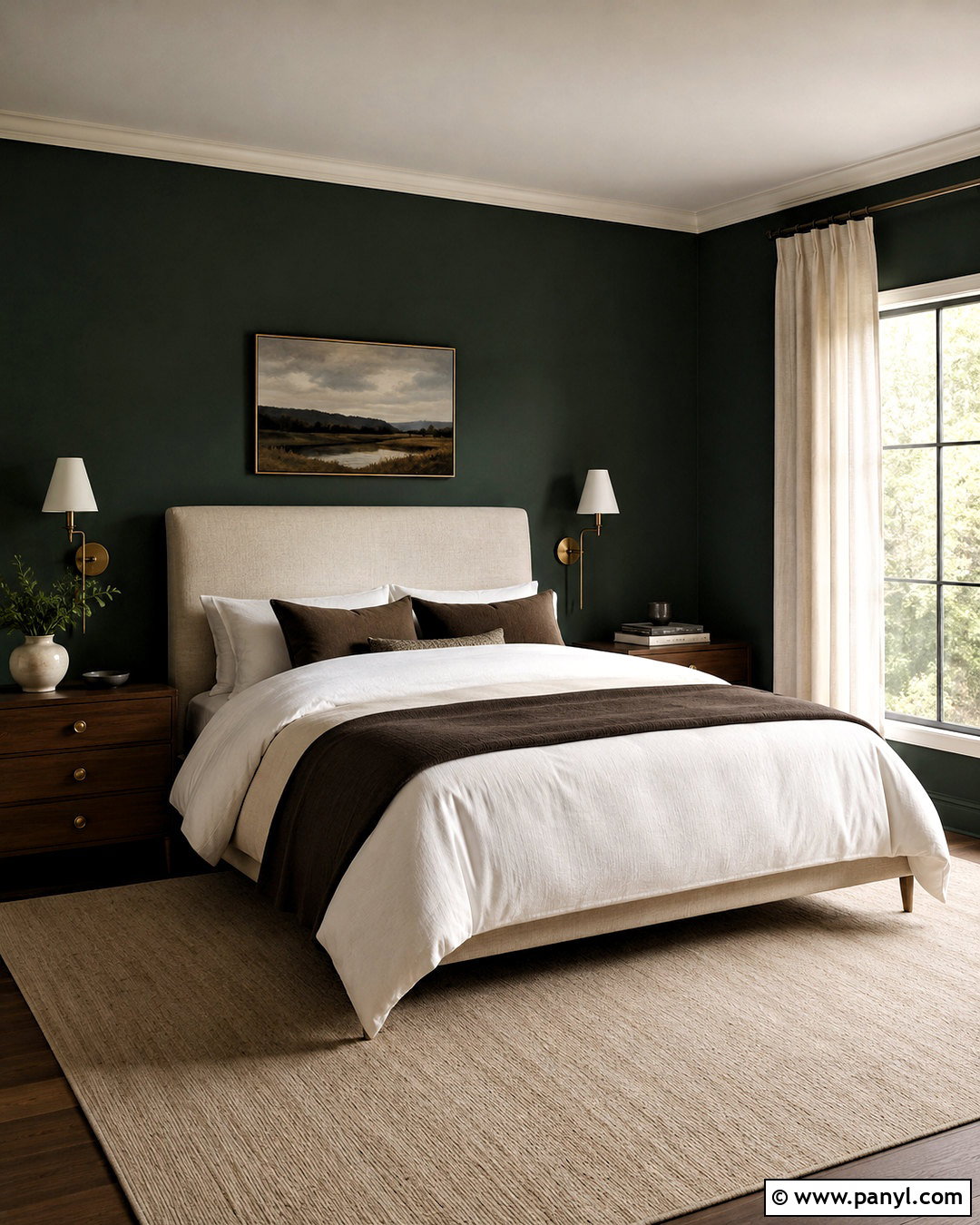
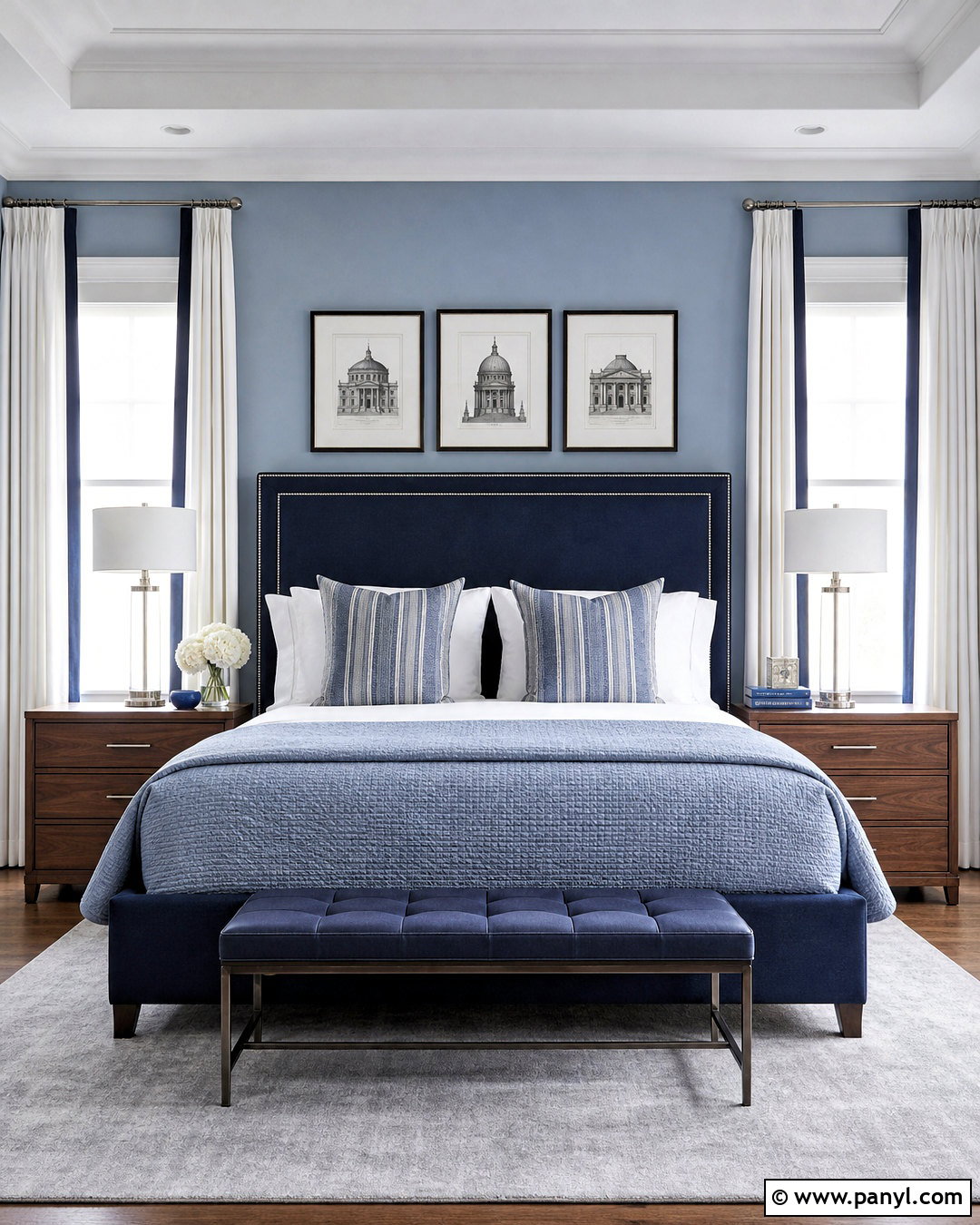
Dark green bedroom walls feel especially inviting when the bedding and flooring provide clear contrast. Paint all four walls a deep pine green, but keep the ceiling warm white to preserve visual height. Add a tall cream linen headboard, layered white bedding, and a chocolate brown throw across the foot of the bed. Walnut nightstands and aged brass sconces bring warmth to the darker palette. Use a large beige rug over hardwood flooring, allowing plenty of the pale surface to remain visible around the bed. Floor-length oatmeal curtains soften the windows and reflect daylight. Above the headboard, hang one horizontal landscape painting with earthy tones. A small upholstered bench and simple dresser complete the room without crowding it, resulting in a cozy but polished sleeping space.
9. Emerald Green Bedroom
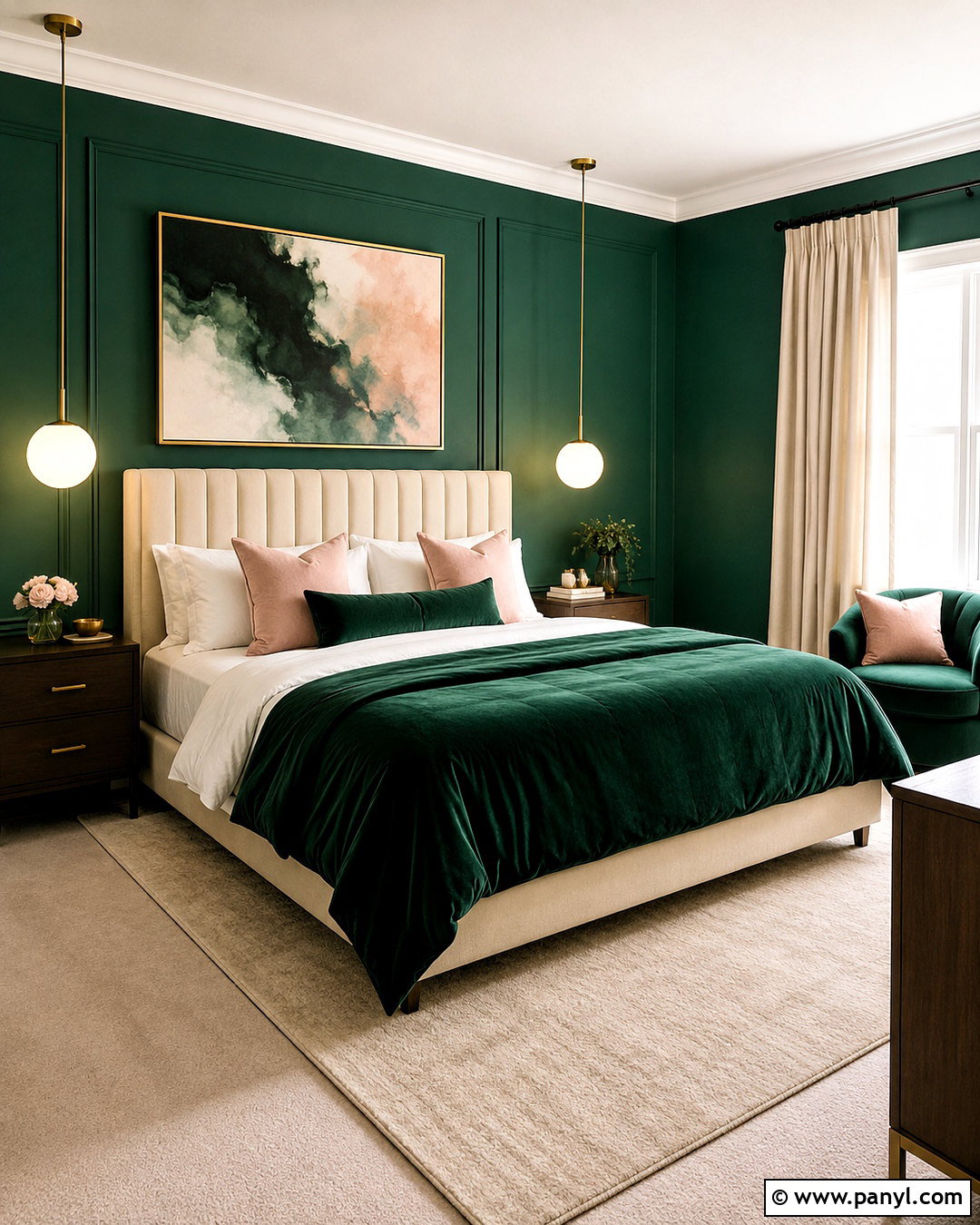
An emerald green bedroom can feel luxurious without relying on oversized furniture or expensive finishes. Use the saturated green behind a channel-tufted cream headboard, then repeat it on the remaining walls for a unified appearance. Layer the bed with crisp white linens, an emerald velvet coverlet, and muted blush pillows. Dark walnut nightstands provide contrast, while brushed brass pendant lights free up bedside space. A light beige rug brightens the floor and visually frames the bed. Hang ivory curtains from slim brass rods and place a modest velvet bench at the foot of the mattress. Abstract artwork containing green, cream, and soft pink ties the palette together. The completed room feels rich and intentional while remaining comfortable enough for regular, everyday living.
10. Olive Green Bedroom
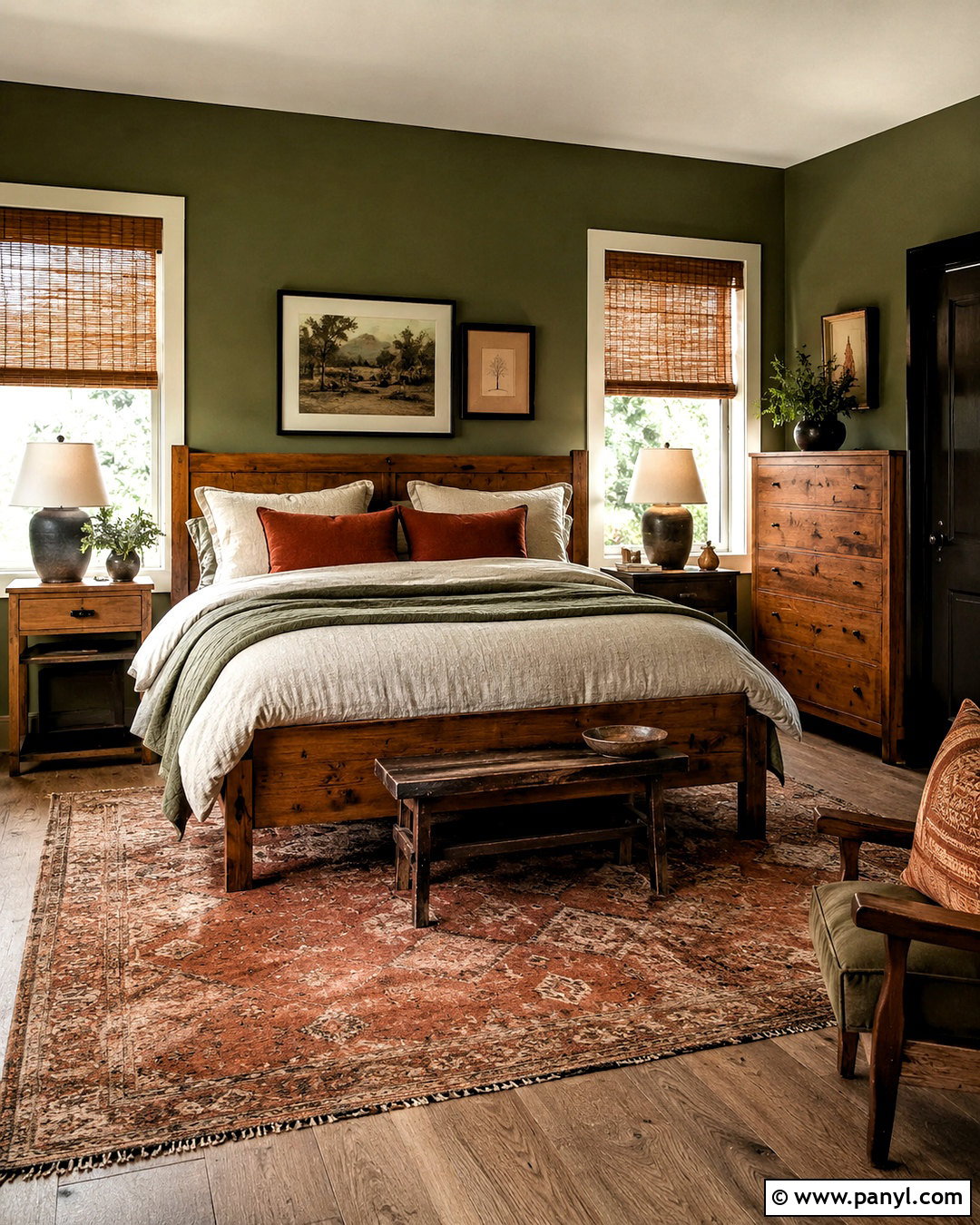
Olive green walls bring an earthy, lived-in character to a bedroom. Pair them with a solid oak bed, relaxed linen bedding, and a faded patterned rug containing tan, cream, and brick red. Place mismatched wooden nightstands on either side of the bed for a collected appearance, but use matching ceramic lamps to preserve balance. Natural linen curtains and woven shades control light while adding texture. A low vintage-style dresser can hold a rounded mirror, small pottery, and a leafy branch in a simple vase. Introduce black through slim curtain rods and picture frames rather than large furniture. Finish the bed with rust-colored pillows and a textured cream throw. Every element supports the warm green walls, creating a grounded room that feels welcoming instead of overly coordinated.
11. Green Guest Bedroom
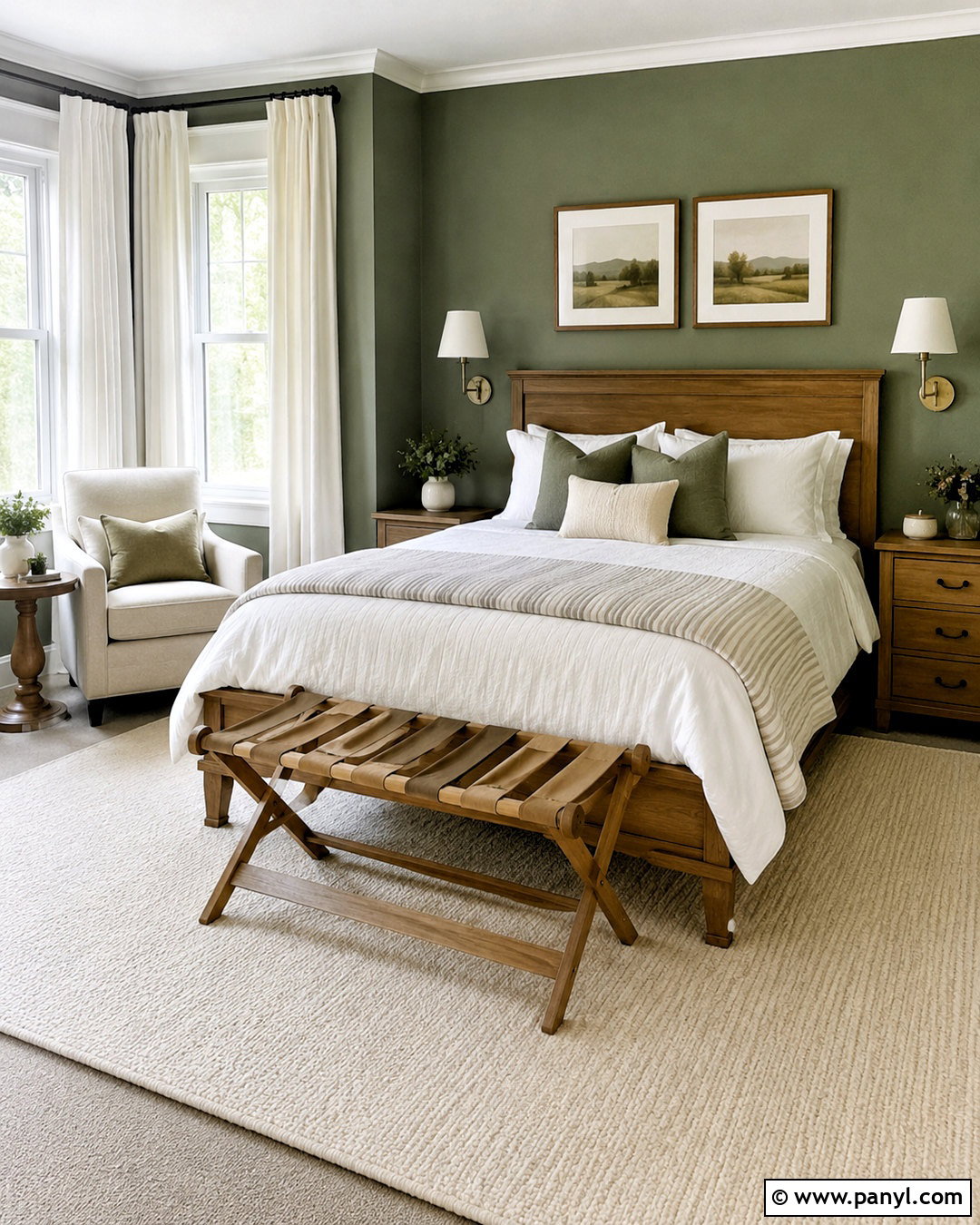
A guest bedroom with green walls should feel thoughtful, comfortable, and easy for different visitors to enjoy. Choose a muted eucalyptus green and pair it with a simple natural wood bed. Layer white cotton sheets with a lightweight striped quilt and two supportive neutral pillows. Small wall-mounted sconces leave room on the nightstands for personal belongings. Add a luggage bench at the foot of the bed and a dresser with an uncluttered top. A washable cream rug softens the floor, while white curtains keep the room bright. Include practical details such as a mirror, reading chair, blanket basket, and accessible charging station. Finish with small landscape prints and one potted plant. The complete design feels welcoming without being so personalized that guests hesitate to settle in.
12. Green Kids Bedroom
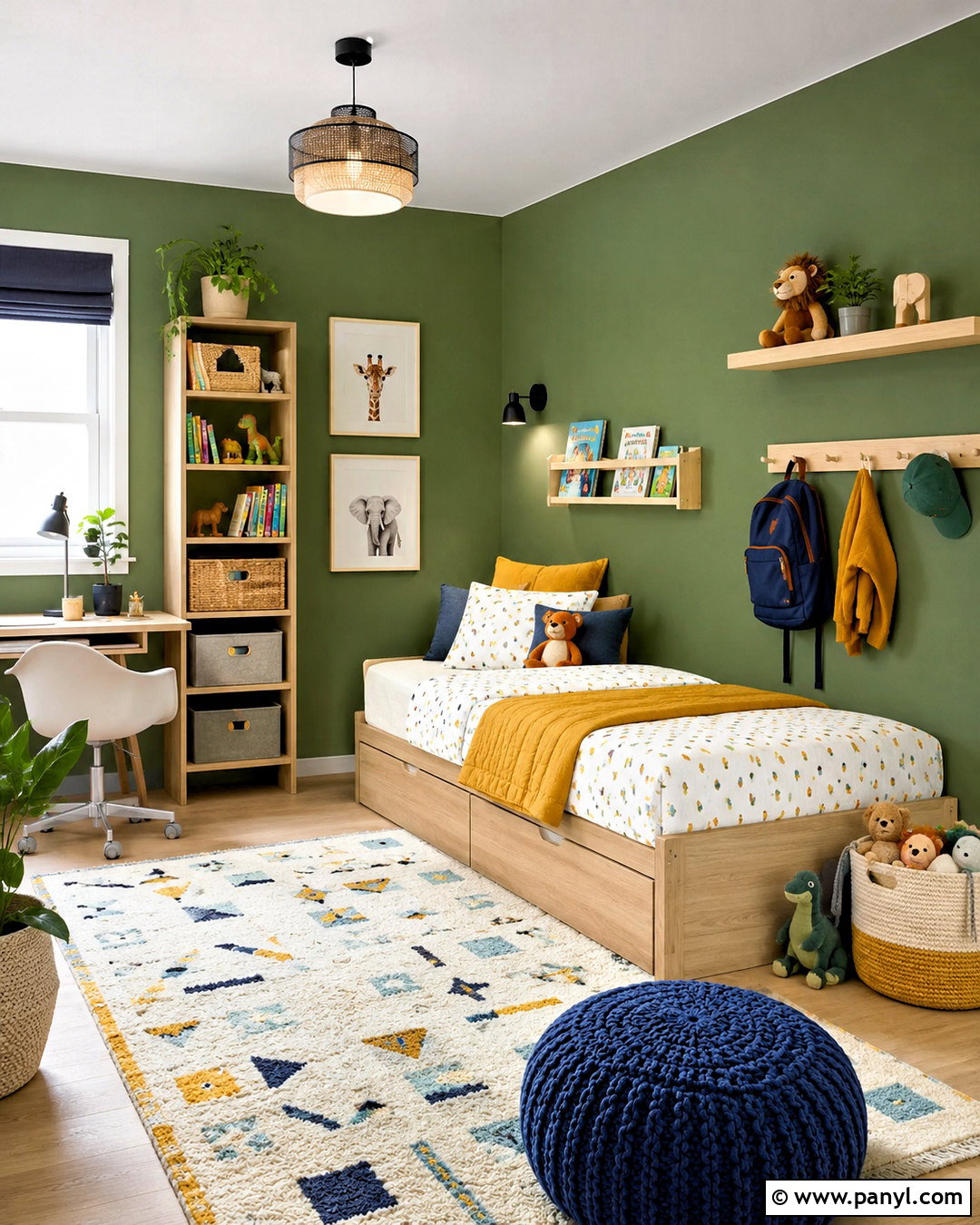
A medium fern green creates a cheerful kids bedroom that can adapt as the child grows. Paint the walls green, then use a white or pale oak bed with built-in drawers for efficient storage. A washable cream and green patterned rug defines the sleeping area and adds softness underfoot. Choose bedding in white, mustard, light blue, and green rather than relying on a single theme. A compact desk near the window provides a bright homework or craft zone. Low book ledges, labeled baskets, and wall hooks keep everyday belongings accessible. Add a simple ceiling light, adjustable desk lamp, and bedside sconce for flexible illumination. Framed animal illustrations and colorful artwork bring personality, while durable wood furniture ensures the complete room remains practical beyond the early childhood years.
13. Green Nursery
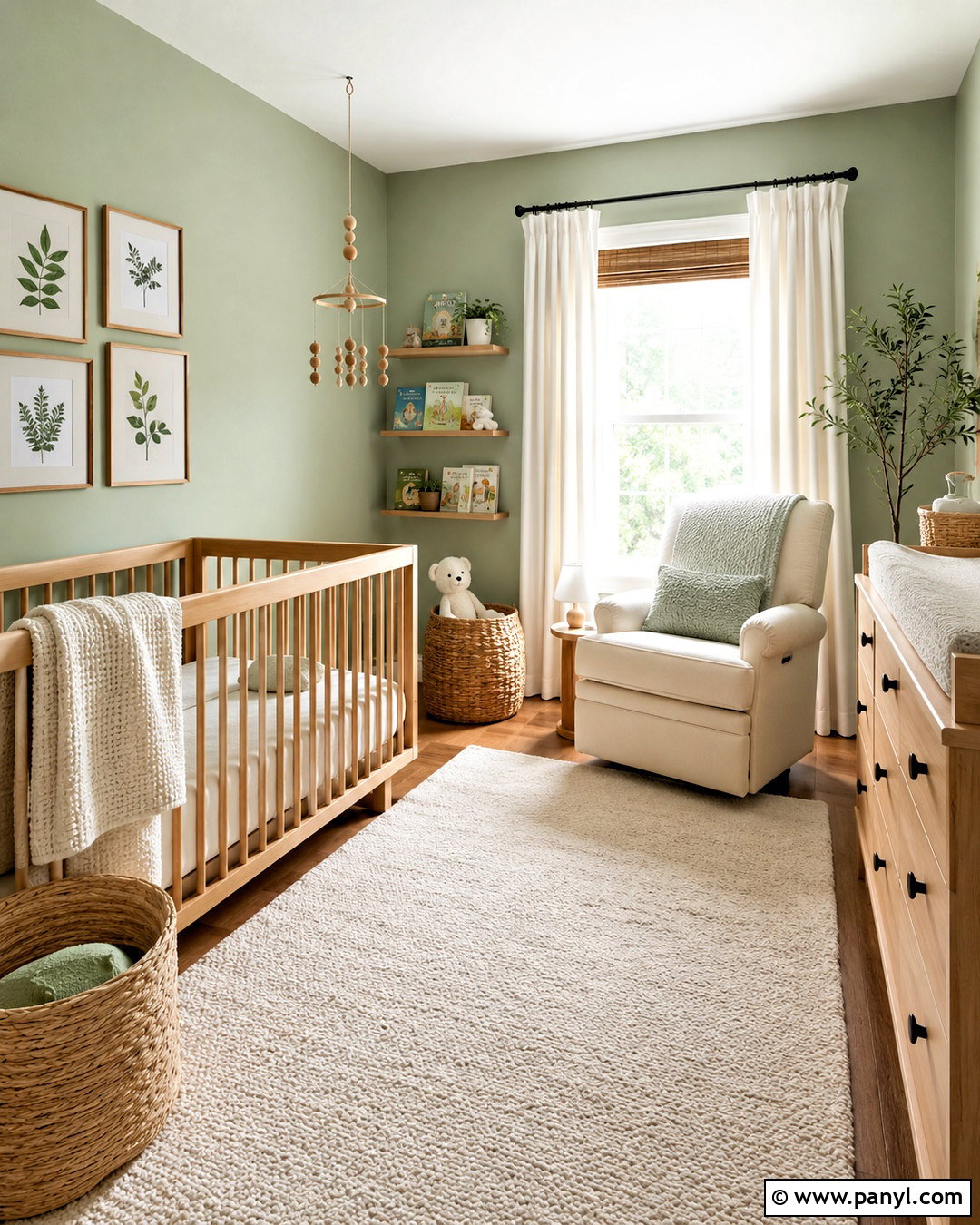
Muted mint green walls provide a gentle backdrop for a nursery without making it feel overly themed. Position a natural wood crib on the longest uninterrupted wall, away from curtains and cords. Add a cream upholstered glider beside a small round table and floor lamp to create a comfortable feeding corner. A wide oak dresser can double as closed storage and a changing station. Use a washable ivory rug, white blackout curtains, and simple cotton crib linens to keep the space light. Woven baskets organize blankets and toys, while low picture ledges display board books. Add soft botanical art and a wooden mobile for restrained decoration. The full room combines safe placement, practical storage, comfortable seating, and a soothing green palette that can transition easily into a toddler bedroom.
14. Green Bunk Room
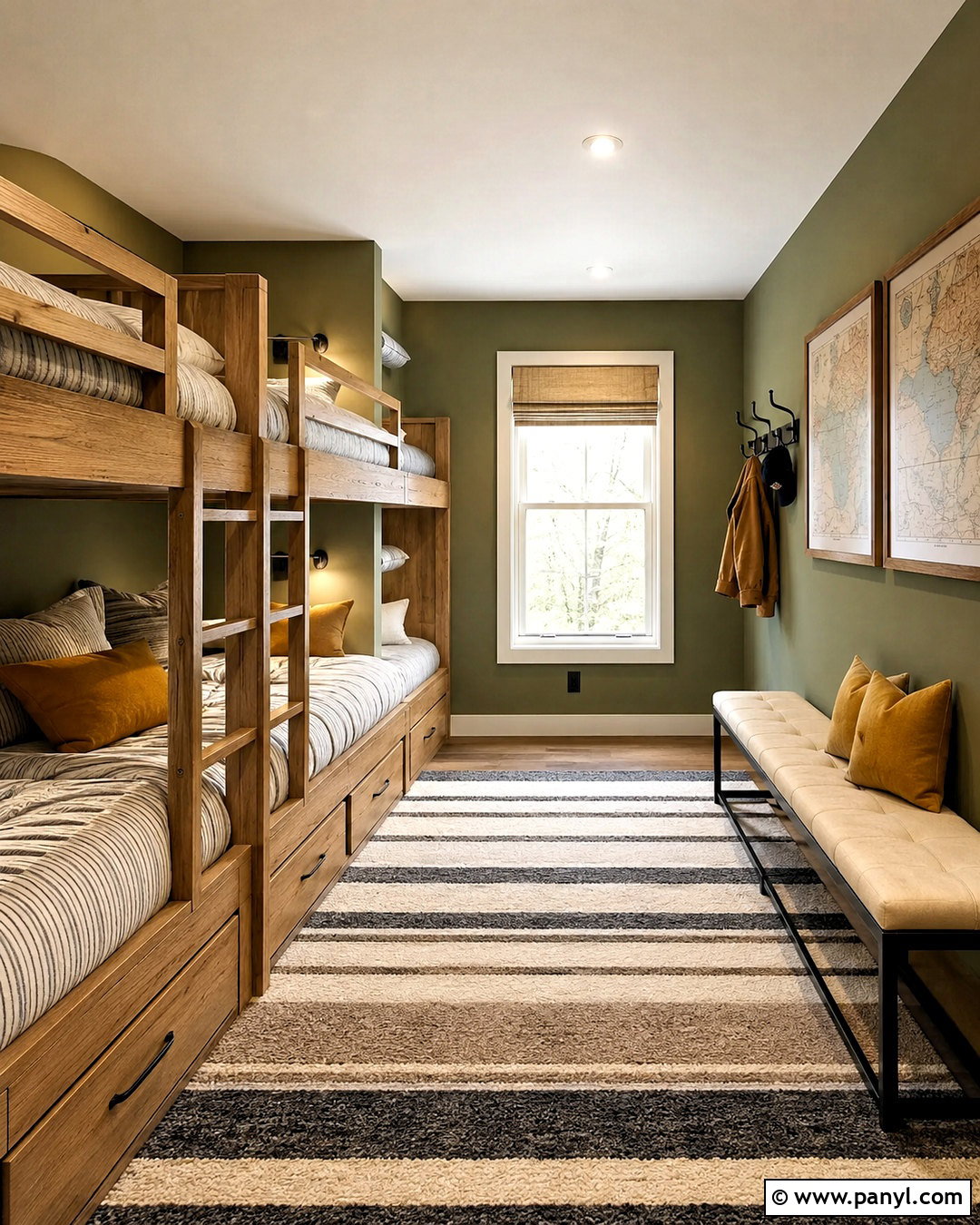
A green bunk room works best when every bed feels comfortable and storage is planned from the beginning. Paint the walls a medium moss green, then install natural oak bunk beds along one side of the room. Give each sleeping space an individual reading light, small shelf, and neutral striped bedding. Under-bed drawers hold extra linens, while wall hooks provide a convenient place for bags and jackets. Use a large flat-weave rug in cream and charcoal to soften the central floor without creating a tripping hazard. A compact dresser and narrow bench can serve several guests without crowding the layout. Add framed maps, simple landscape art, and mustard accent pillows. The complete room feels playful and organized while remaining attractive enough for children, teenagers, or visiting adults.
15. Green Kitchen Walls
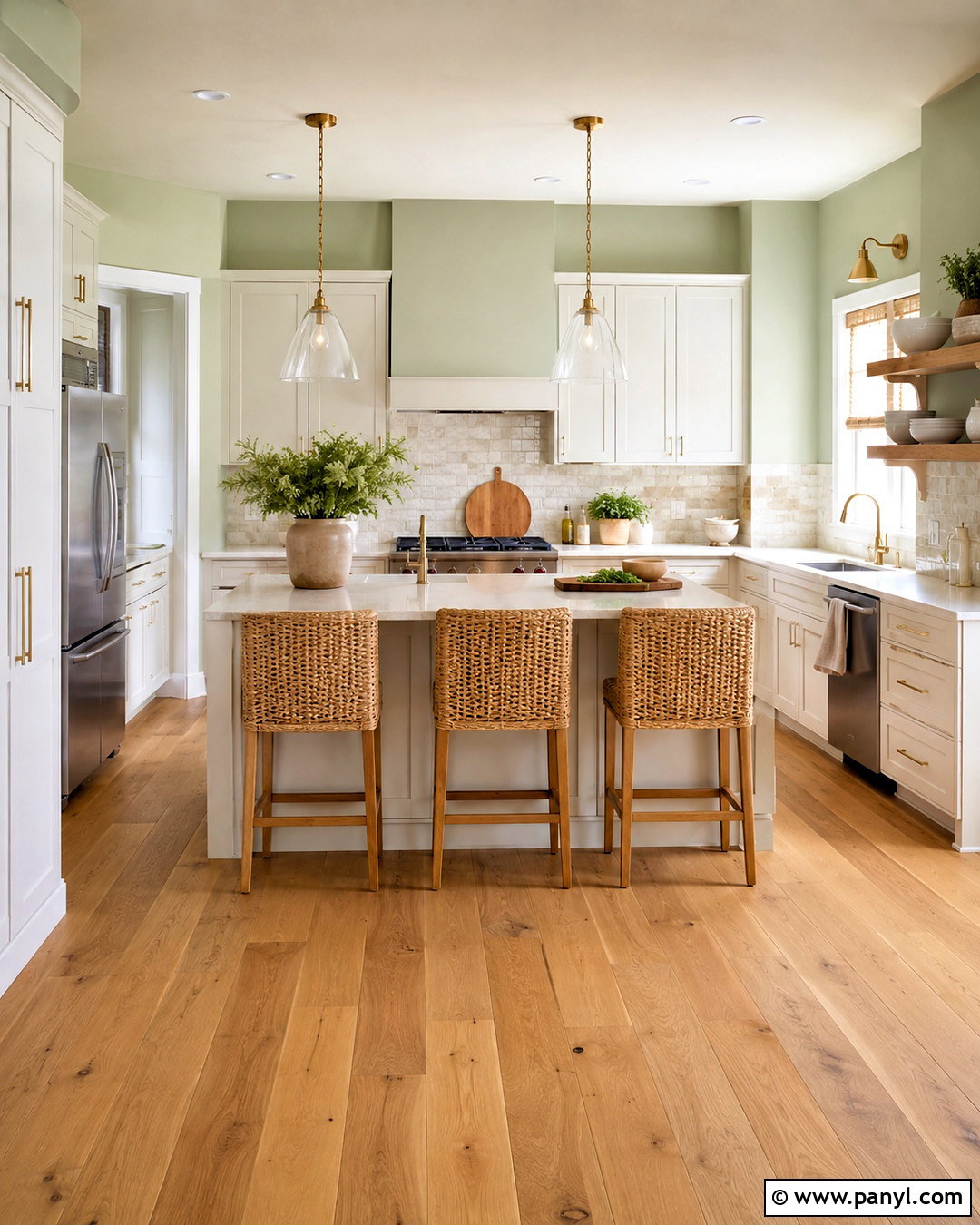
Soft green kitchen walls can warm up a space filled with white cabinetry. Choose a muted celery or sage shade, then pair it with Shaker cabinets, warm white quartz counters, and a handmade cream tile backsplash. Natural oak flooring and woven counter stools introduce texture, while brushed brass hardware gives the room a finished appearance. Keep appliances stainless steel for an easy, practical balance. Over the island, hang clear glass pendants that do not block sightlines. Use green only on the painted wall areas, allowing the lighter cabinets and countertops to reflect plenty of light. Display wooden boards, white ceramics, and a few herbs on open surfaces. This complete palette feels fresh and timeless, with enough contrast to highlight the architecture without making the kitchen appear busy.
16. Dark Green Kitchen Walls
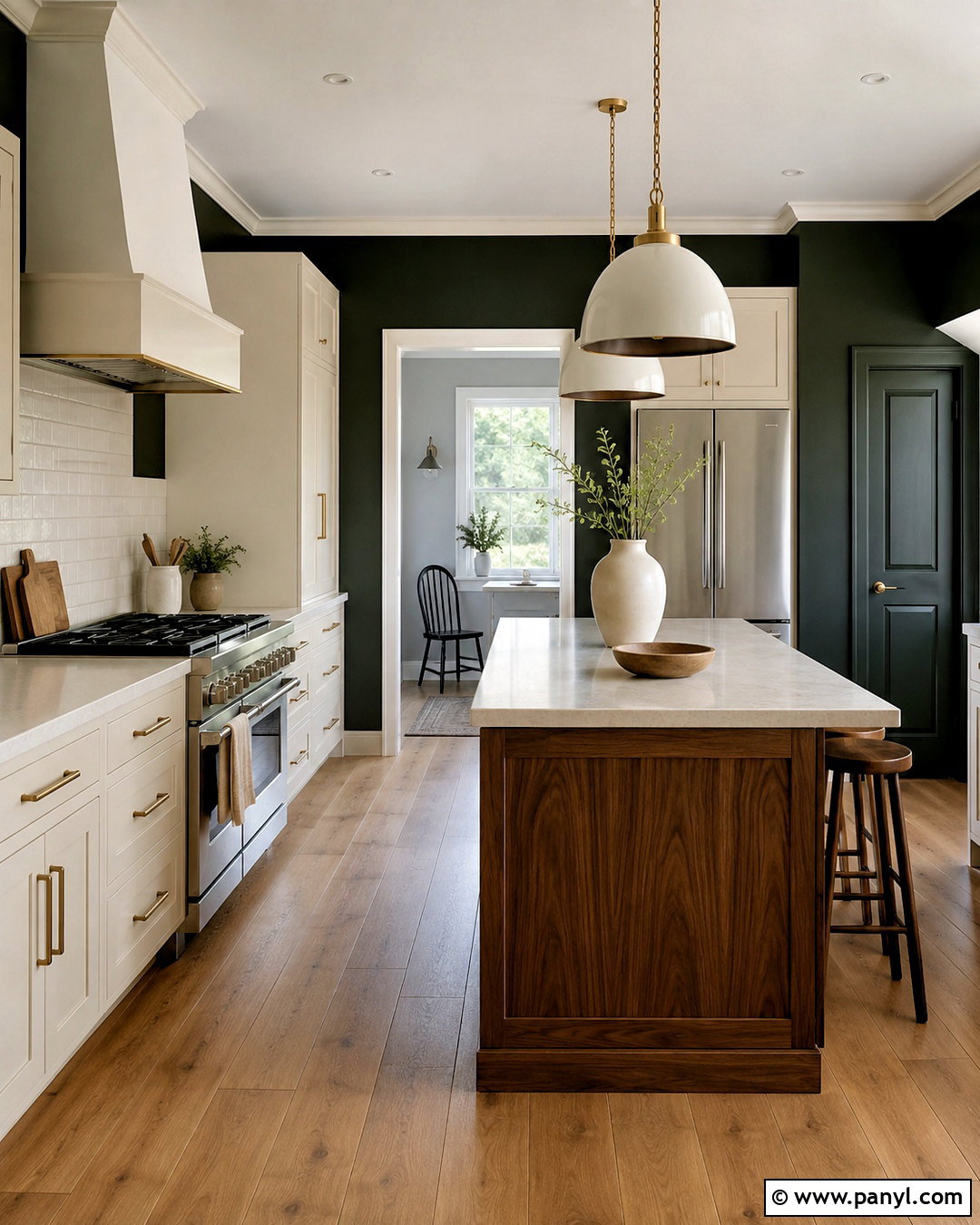
Deep green walls bring character to a kitchen when the cabinets and work surfaces stay light. Use a blackened forest green on the open wall areas, then install warm white cabinets and pale quartz counters. A glossy white backsplash reflects light and prevents the upper half of the room from feeling enclosed. Ground the design with medium oak flooring and a walnut island topped with durable stone. Brass cabinet pulls and dome pendants complement the warmth of both woods. Keep window treatments minimal, such as an unlined natural Roman shade. Wooden stools, framed food illustrations, and cream ceramics soften the strong wall color. Under-cabinet lighting, pendants, and recessed fixtures create useful layers of illumination, ensuring the finished kitchen remains functional, bright, and comfortable throughout the day.
17. Green Dining Room
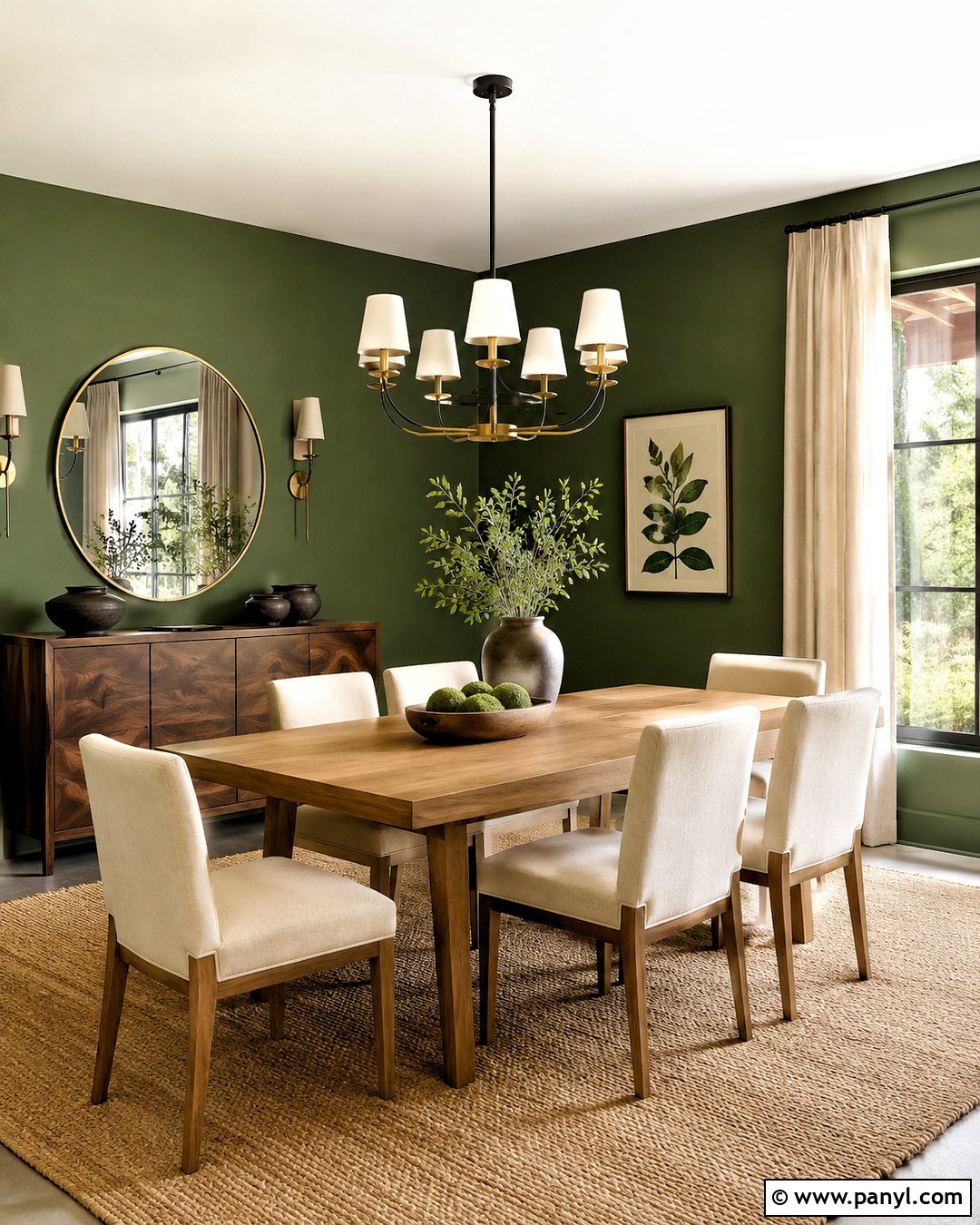
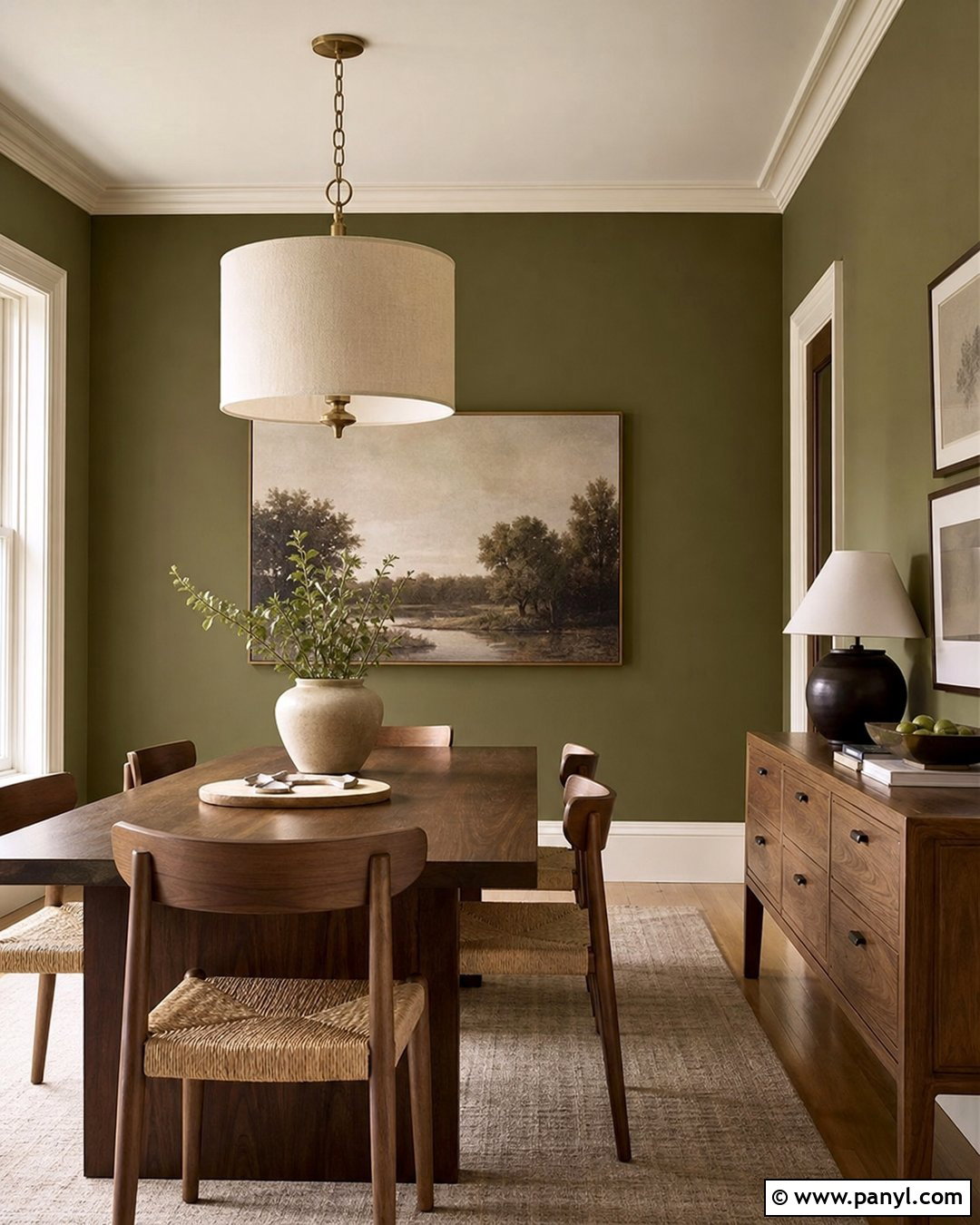
A leafy green dining room can feel polished while still supporting relaxed family meals. Paint all four walls a balanced mid-tone green and center a rectangular oak table in the room. Surround it with woven-seat chairs or upholstered cream chairs that provide visual contrast. Hang a black and brass chandelier low enough to anchor the table without obstructing views. A natural jute rug defines the dining area and protects the floor. Along one wall, place a walnut sideboard for dishes, linens, and serving pieces. Above it, use a large round mirror to reflect light and break up the green surface. Linen curtains, ceramic bowls, and simple botanical artwork finish the space. The resulting room feels coordinated, comfortable, and ready for both everyday dining and larger gatherings.
18. Dark Green Dining Room
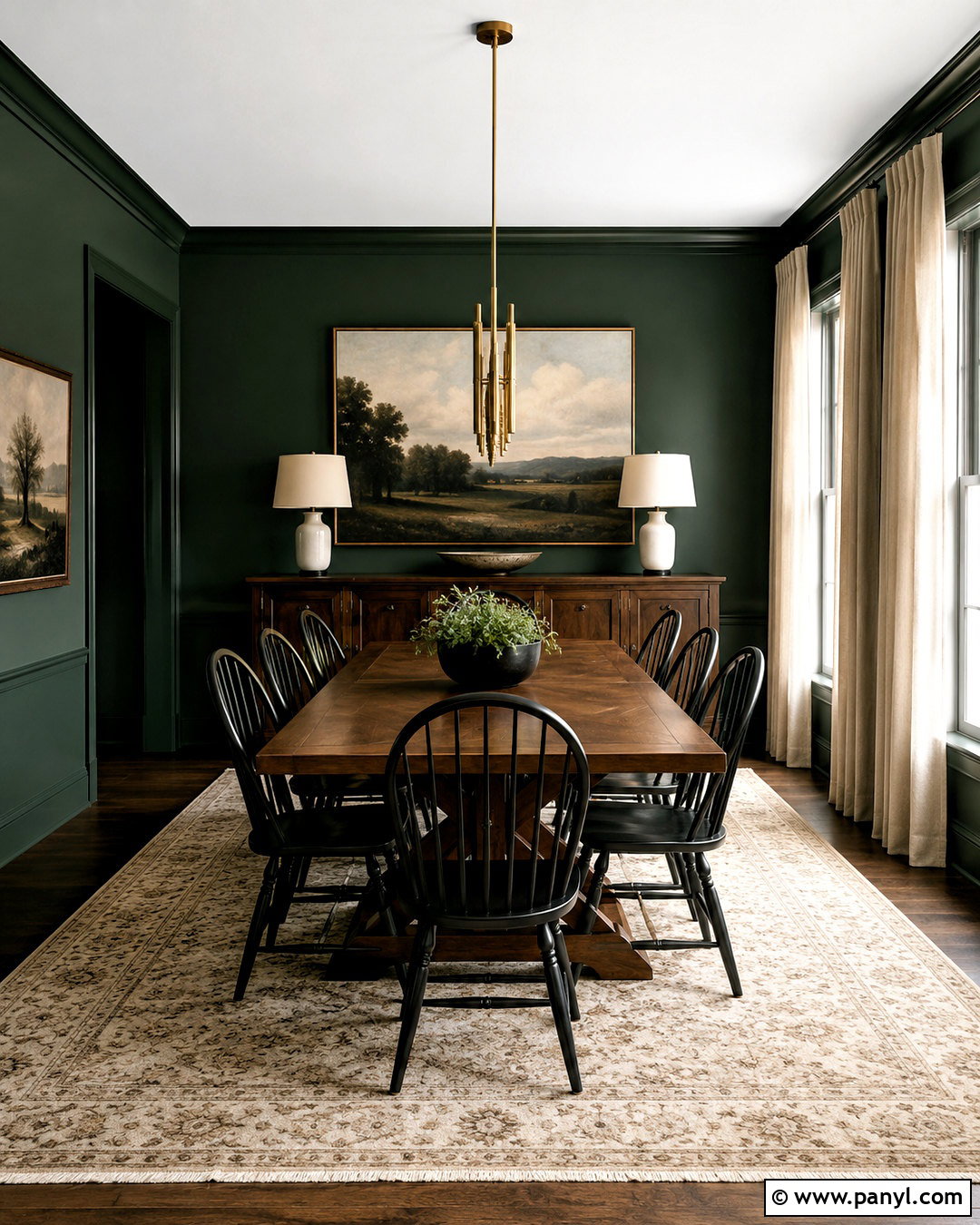
Dark bottle green walls give a dining room intimacy and architectural depth. Pair the walls with a long walnut table, spindle-back black chairs, and a vintage-inspired cream rug. Install a linear brass chandelier over the table to create a warm focal point. If the room has molding, paint it the same green in a slightly shinier finish for a seamless effect. A dark wood sideboard can hold tableware while supporting two pale ceramic lamps that brighten the wall behind it. Choose full-length linen curtains in a warm beige to soften the windows. Add one oversized landscape painting rather than several small pieces. Cream seat cushions, reflective glassware, and layered lighting balance the saturated color, creating a complete dining space that feels dramatic but never gloomy.
19. Green Breakfast Nook
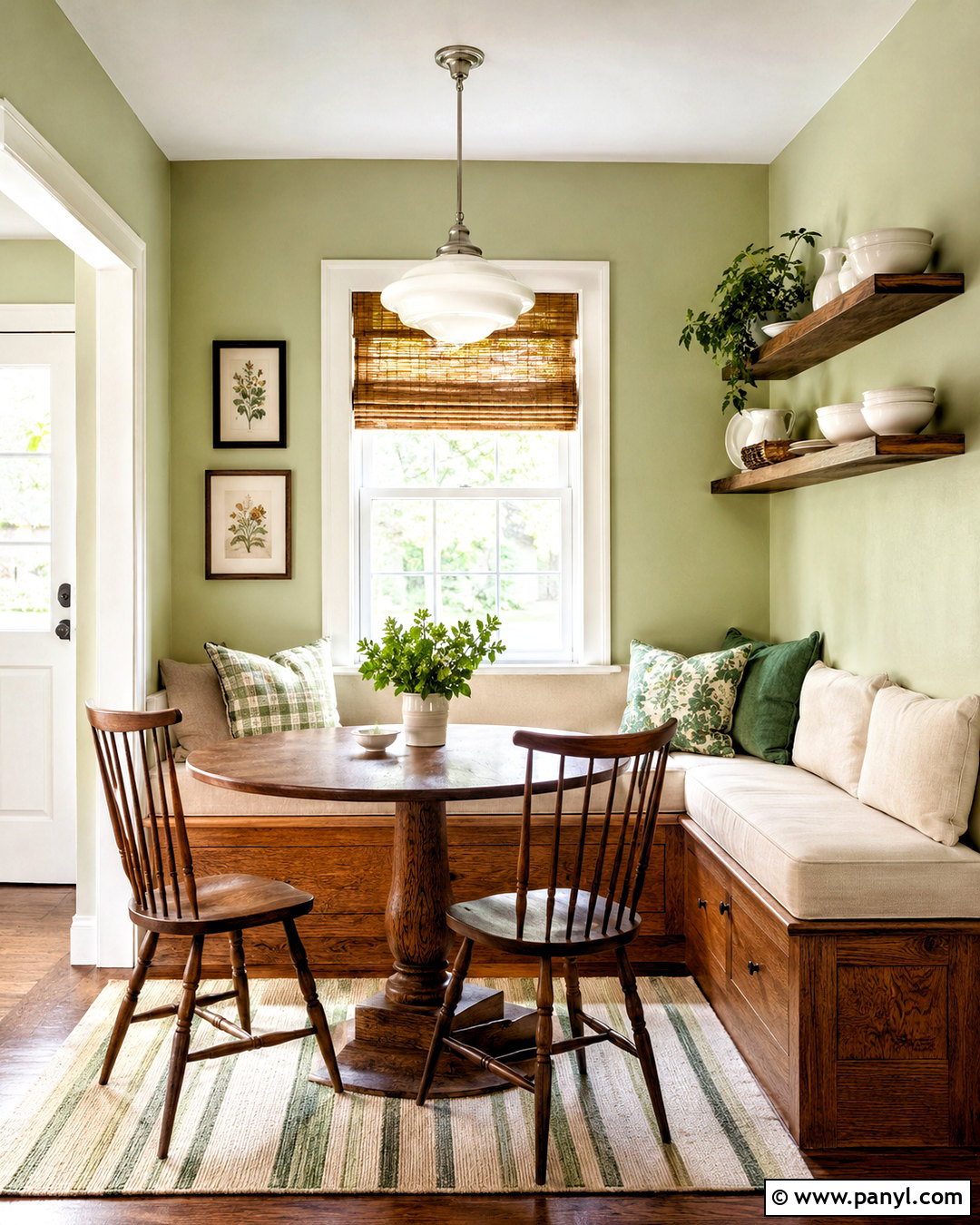
A pale avocado green makes a small breakfast nook feel sunny and welcoming. Build an L-shaped oak bench into one corner and top it with comfortable cream seat cushions. Add a round pedestal table that allows easy movement and pair it with two lightweight spindle chairs. A small striped rug introduces mustard and rust accents while helping the nook feel separate from the kitchen. Mount a simple milk-glass pendant above the table and use a woven shade at the window for texture. Open shelves can display everyday mugs, small plants, and white dishes without overwhelming the green walls. Finish the bench with washable patterned pillows and add one framed food print. This compact arrangement combines seating, hidden storage, color, and practical surfaces in one cohesive design.
20. Green Bathroom Walls
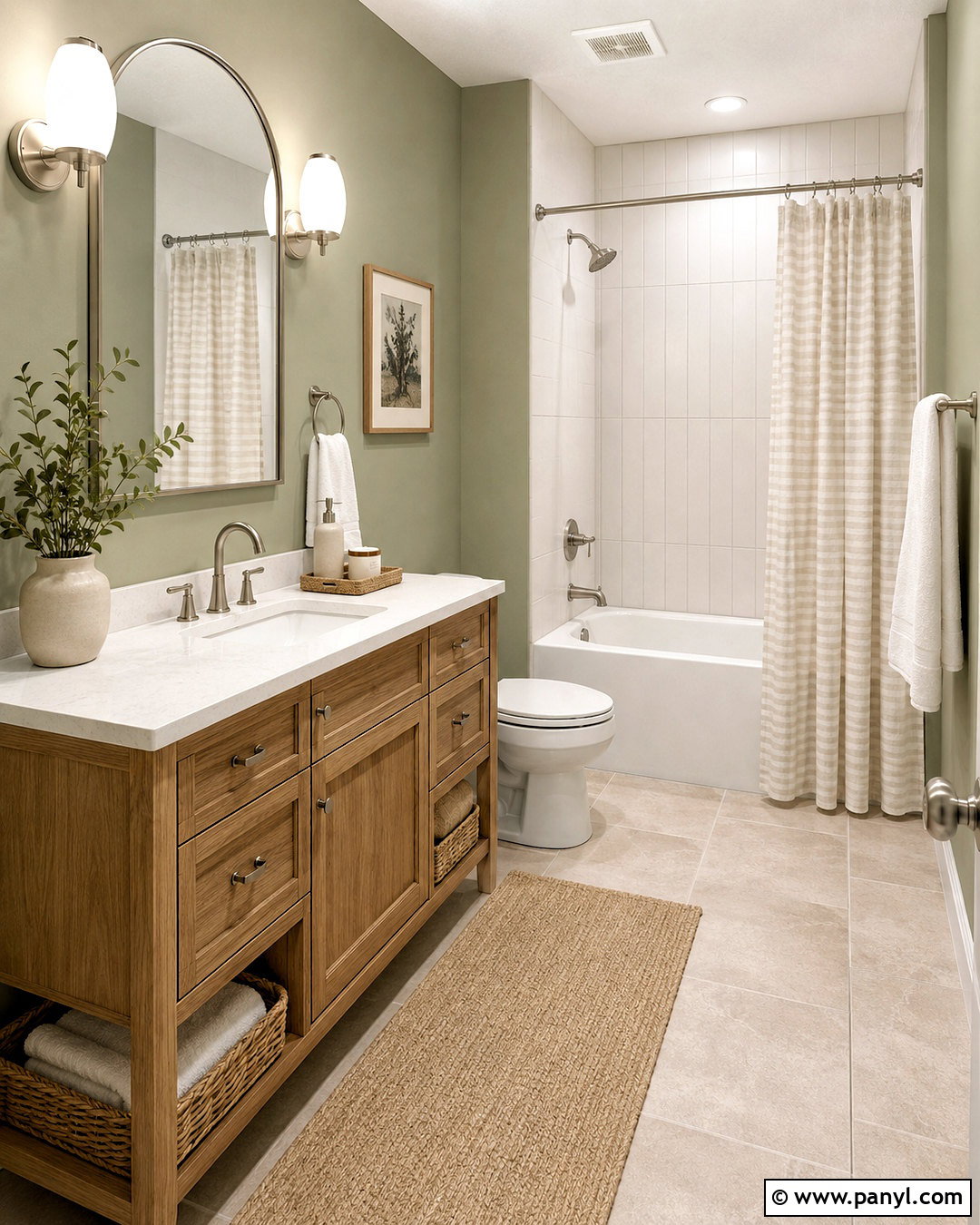
Sage green bathroom walls complement simple white fixtures and natural materials. Paint the upper walls green, then use white vertical tile around the bathtub and in splash-prone areas. Choose a light oak vanity with a white stone top and brushed nickel faucets for a clean, understated look. A rounded mirror and two milk-glass sconces soften the straight lines of the cabinetry. Install pale stone-look floor tile to brighten the room and provide a durable foundation. White towels, woven baskets, and a small wooden stool create useful storage without cluttering the surfaces. Add a simple fabric shower curtain with a thin green stripe to repeat the wall color. The finished bathroom feels fresh, practical, and coordinated, with each finish supporting the calm green-and-white palette.
21. Dark Green Powder Room
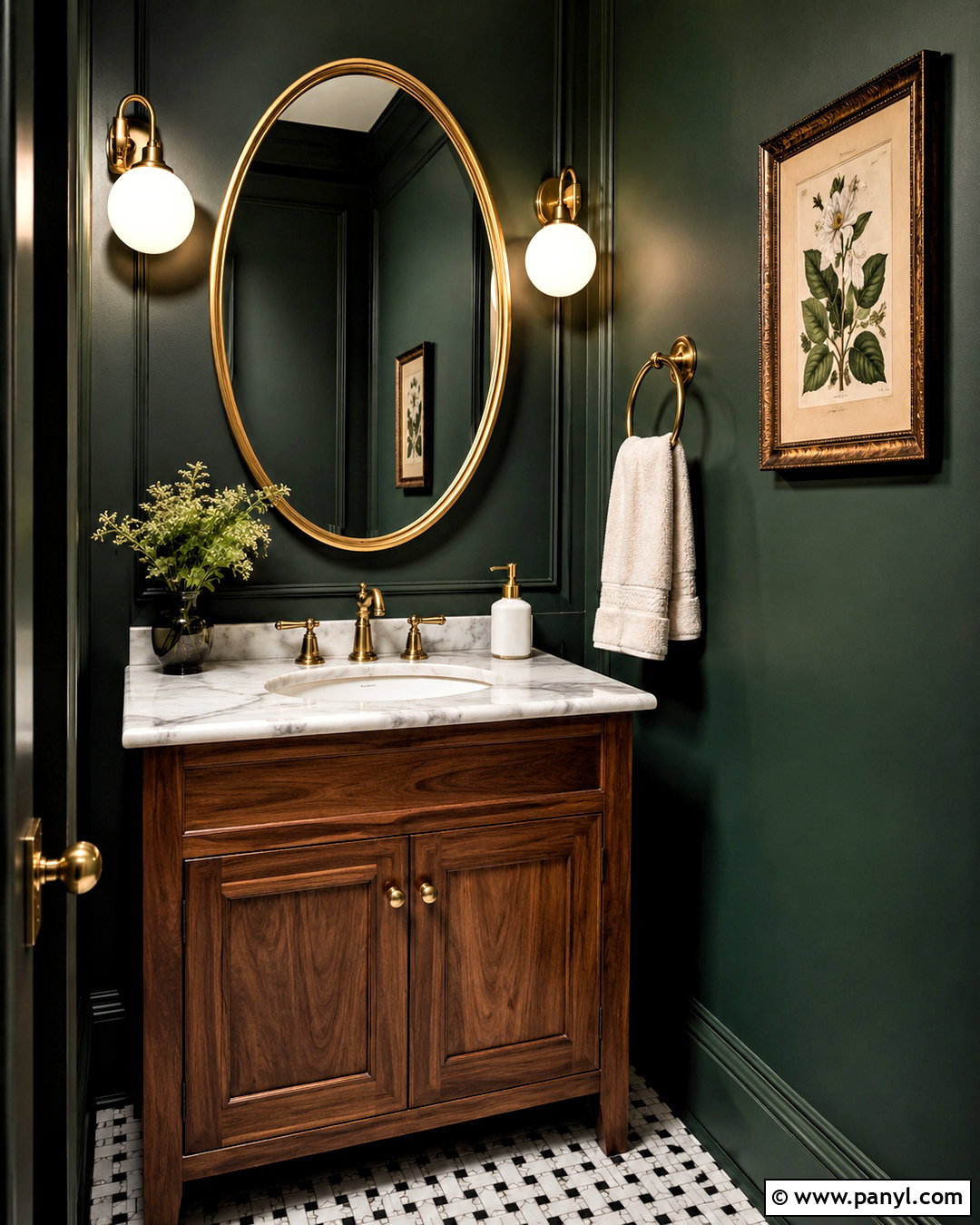
A powder room offers the perfect setting for rich green walls because its smaller scale supports a more concentrated design. Cover the walls in deep emerald paint and pair them with a compact walnut vanity. Choose a white marble top, polished brass faucet, and oval brass-framed mirror to add brightness and reflection. Two globe sconces provide even light on either side of the mirror. Use black-and-white mosaic floor tile for a graphic foundation that remains easy to coordinate. A framed vintage botanical print and a small cream hand towel soften the strong palette. Keep countertop accessories minimal so the room feels polished rather than crowded. With carefully layered lighting and reflective finishes, the complete powder room looks bold, welcoming, and intentionally different from surrounding spaces.
22. Green Home Office
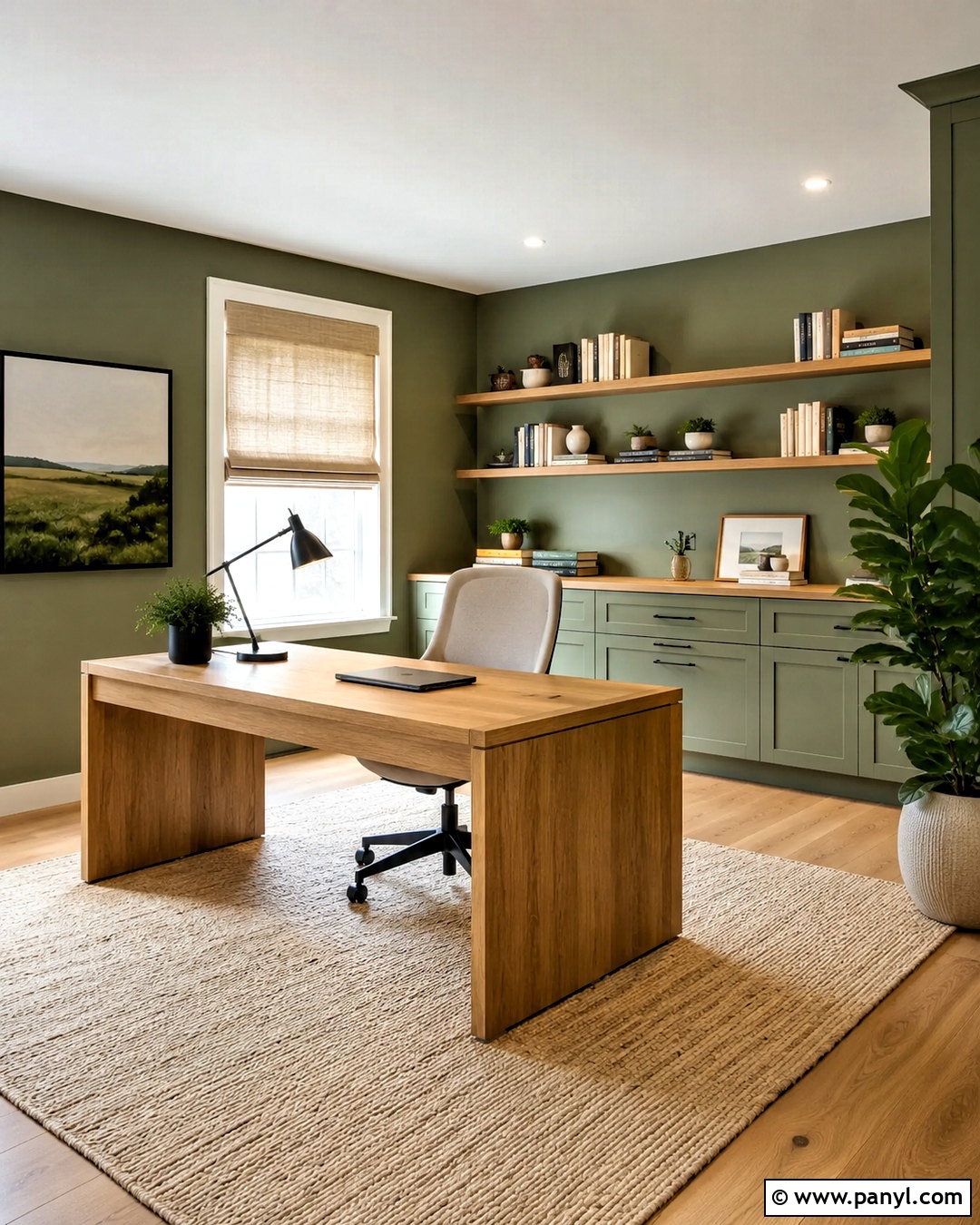
Medium sage green walls can reduce visual distraction while giving a home office more personality than standard white. Place a sturdy oak desk near the window so daylight reaches the work surface from the side. Add an ergonomic chair in cream or tan and install closed storage cabinets behind the desk. Floating oak shelves above a low credenza provide space for books, boxes, and a limited amount of decor. Use a flat-weave beige rug to soften sound and define the work zone. A black task lamp, matching cabinet hardware, and slim picture frames add crisp contrast. Finish with a linen Roman shade, framed landscape art, and one substantial plant. The full room supports focused work, video calls, storage, and reading without appearing corporate or overly decorative.
23. Dark Green Home Office
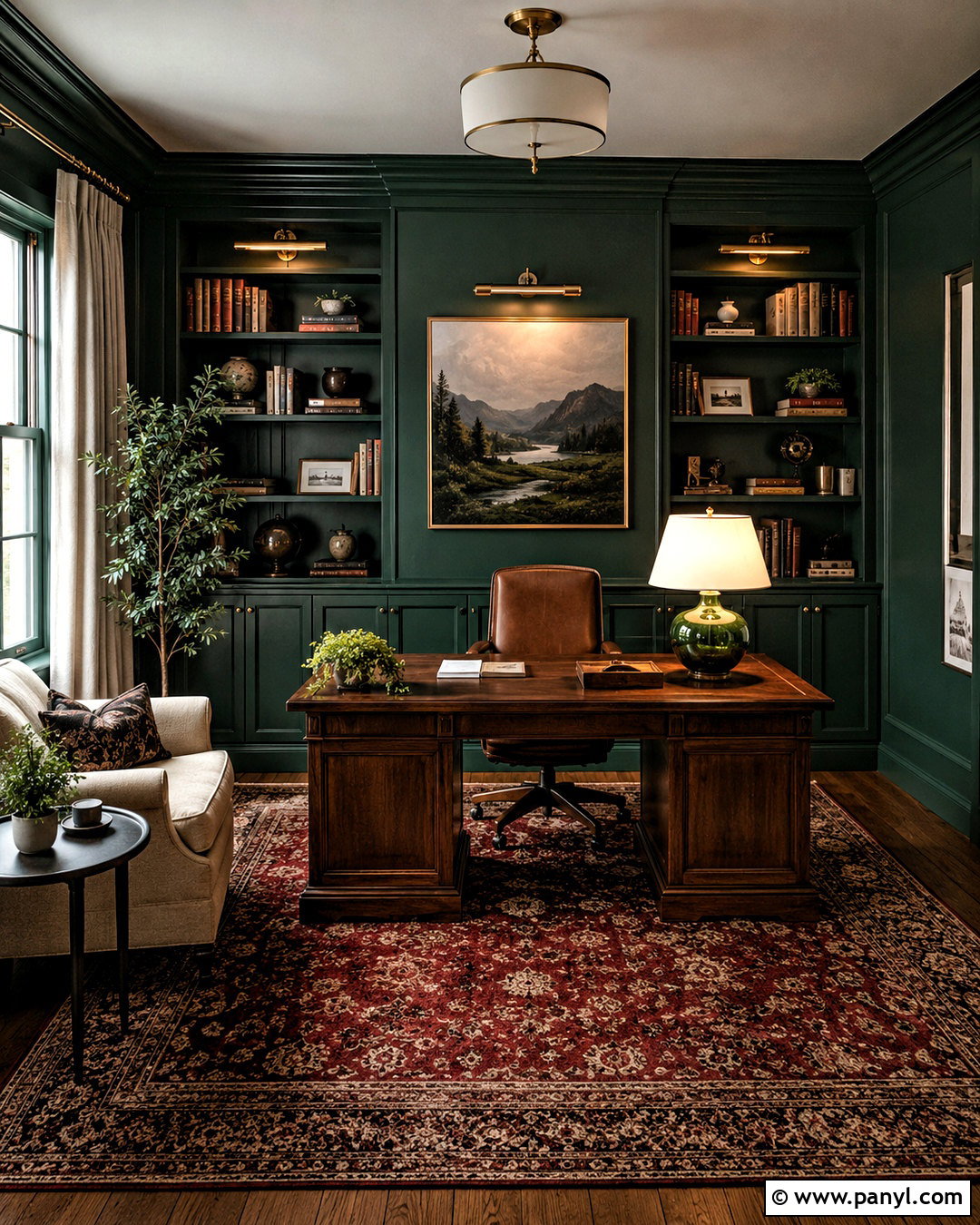
Deep forest green walls create a focused home office with a traditional library-like atmosphere. Anchor the room with a dark walnut desk and position a cognac leather chair behind it. Add built-in bookshelves painted to match the walls, creating a unified background for books, boxes, and collected objects. A faded burgundy rug introduces warmth, while brass picture lights and a green glass desk lamp provide targeted illumination. Use oatmeal curtains to frame the window and lighten the darker surfaces. A comfortable reading chair in cream bouclé can occupy an unused corner beside a floor lamp. Hang one large landscape painting where it will appear behind the desk during calls. This layered room balances storage, comfort, and professional function while allowing the green walls to remain its defining feature.
24. Green Entryway
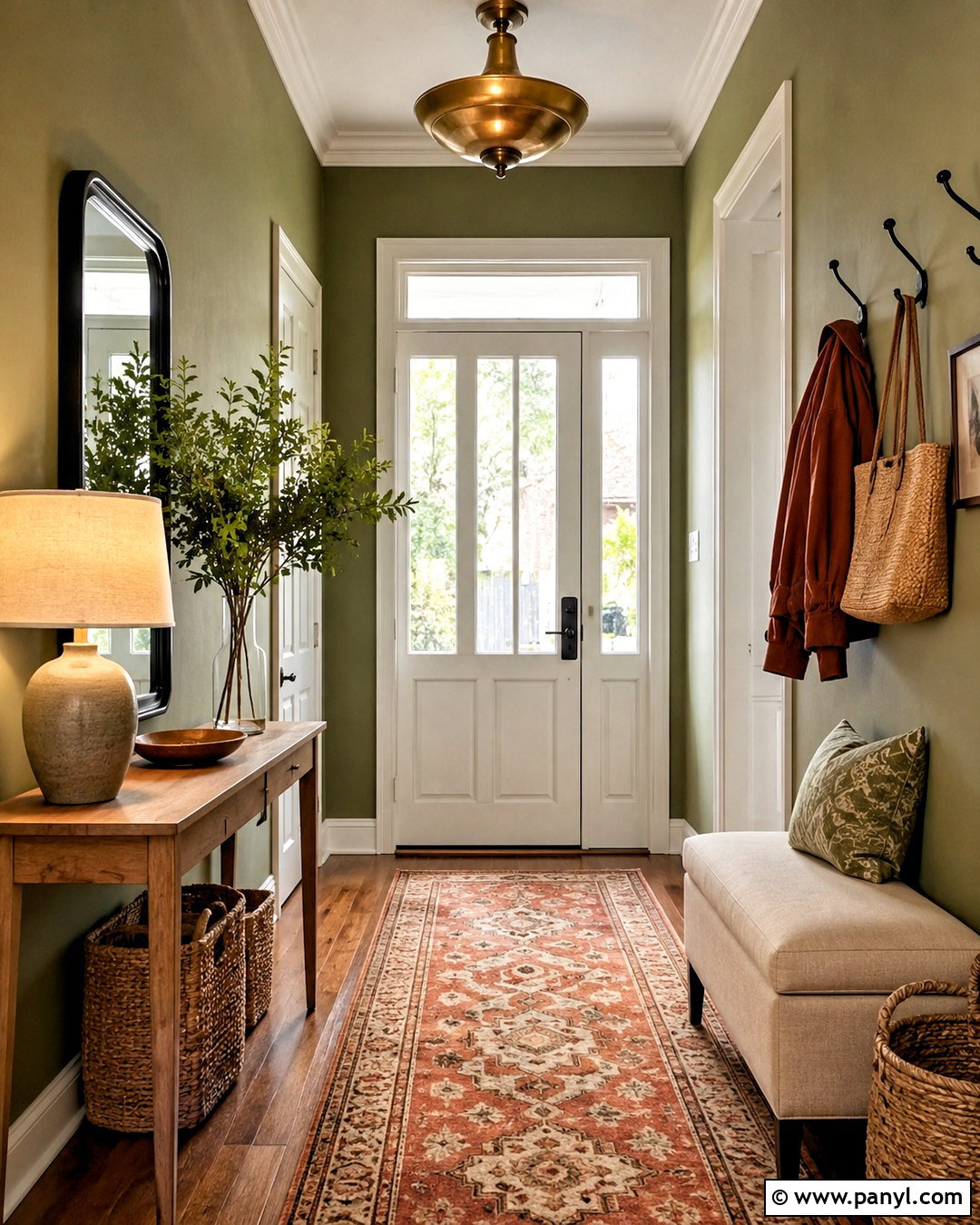
An entryway painted in warm olive green creates an immediate sense of character. Place a narrow oak console against one wall and hang a large black-framed mirror above it to check appearances and reflect light. A washable patterned runner in rust, cream, and green guides movement through the space. Add a small upholstered bench with shoe storage underneath, plus black wall hooks for coats and bags. If room allows, include a slim umbrella stand and woven basket for seasonal accessories. Choose a semi-flush brass ceiling fixture so the walkway remains open. Keep styling simple with a ceramic lamp, shallow catchall tray, and leafy branch. Repeating wood, black, brass, and cream against the green walls creates a coordinated entrance that is both attractive and useful.
25. Green Hallway
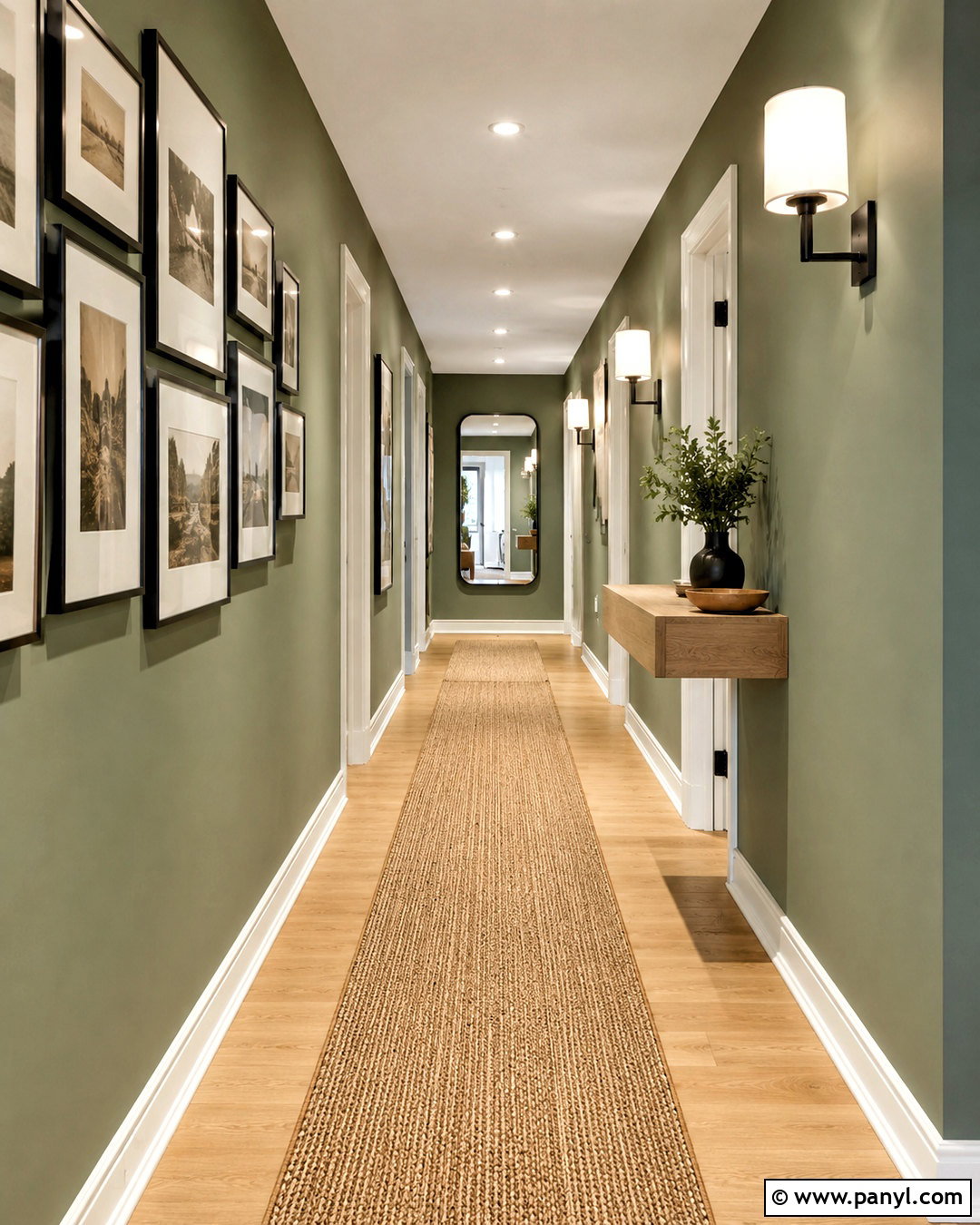
A narrow hallway can handle green walls when the lighting, flooring, and decoration remain streamlined. Choose a medium eucalyptus green and continue it along the full length of the space for visual consistency. Keep doors and baseboards warm white to outline the architecture and prevent the corridor from feeling enclosed. A light oak floor or natural runner brightens the lower half. Install evenly spaced ceiling lights or compact wall sconces so dark pockets do not develop. Create one orderly gallery wall using matching black frames and generous space between images. At the widest point, add a shallow console or floating shelf for keys and small decor. A mirror at the end reflects light and makes the view feel more open, completing a practical and polished transition between rooms.
26. Green Staircase Wall
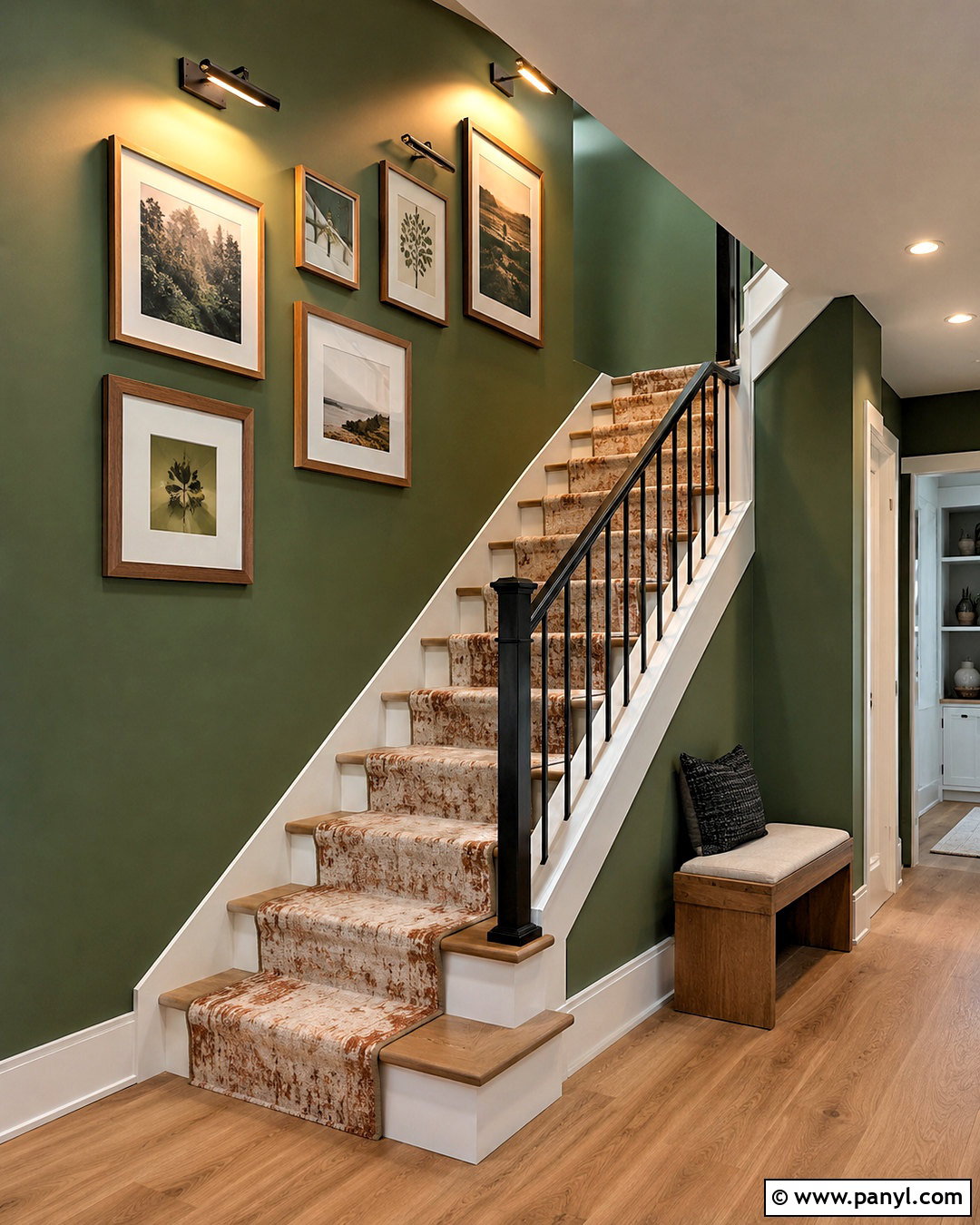
A green staircase wall turns a transitional area into a deliberate part of the home. Paint the tall wall beside the stairs a rich moss green while keeping the ceiling, risers, and trim soft white. Natural oak treads and a matte black handrail create a clean material combination. Follow the rise of the staircase with a gallery of family photographs or landscape prints in consistent wood frames. Use small wall washers or a statement pendant to illuminate both the artwork and walkway. A patterned runner with cream, green, and rust tones makes the stairs quieter and more comfortable. At the landing, place a narrow bench or pedestal table if space permits. The complete design connects color, lighting, artwork, and practical finishes without interfering with safe movement.
27. Green Laundry Room
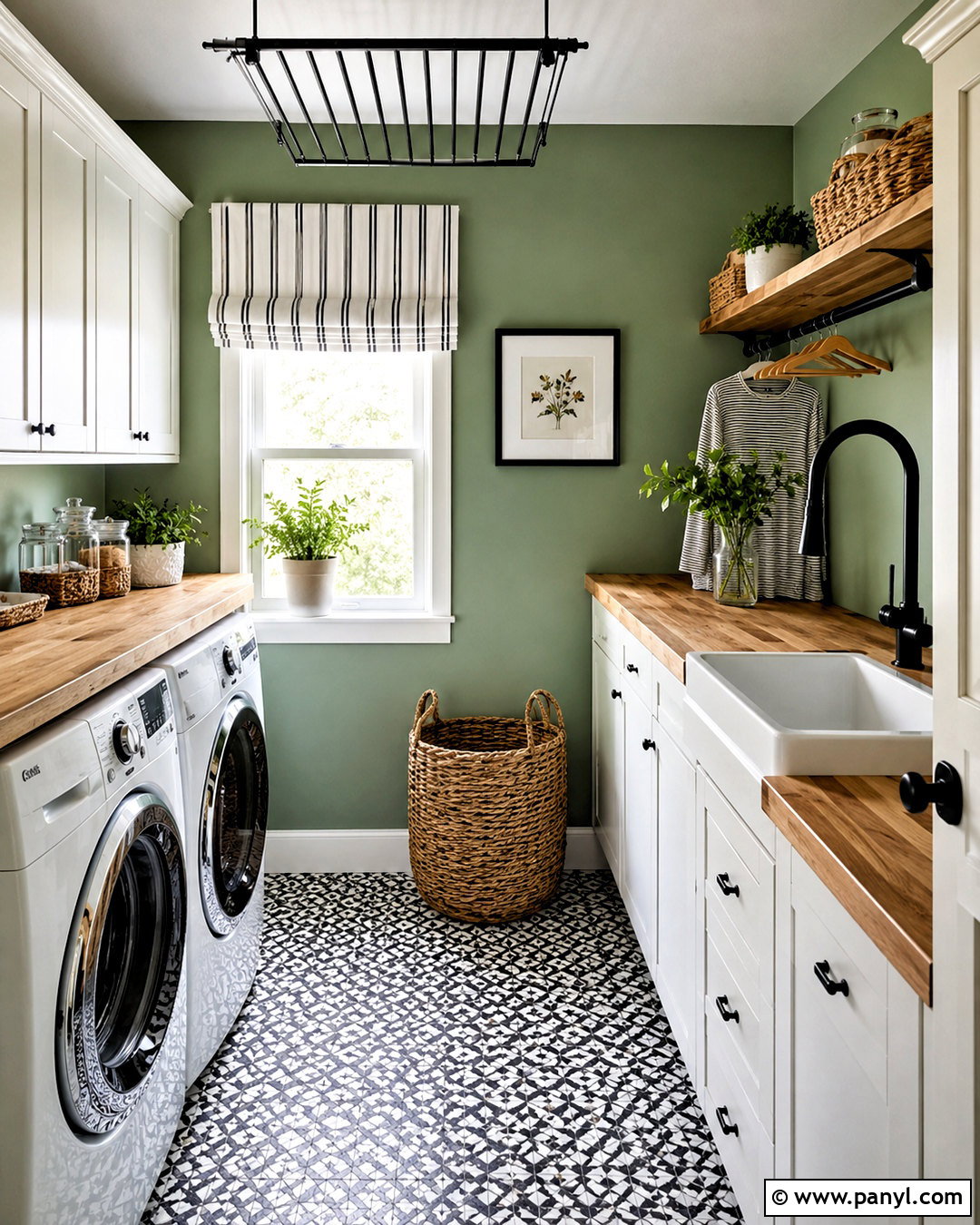
Fresh sage green walls can make a laundry room feel more like a finished interior than a utility closet. Install white front-loading machines beneath a continuous butcher-block counter for folding. Above them, use closed white cabinets mixed with one oak shelf for detergent jars and baskets. A small utility sink with a matte black faucet adds function where space permits. Choose durable black-and-white patterned floor tile to hide everyday marks and create visual interest. Wall hooks and a ceiling-mounted drying rack maximize vertical space without blocking circulation. Add a washable striped Roman shade and bright overhead lighting. Woven baskets, clear containers, and labeled bins keep supplies controlled. Every part of the room works together, giving the green walls a clean, organized, and practical setting.
28. Green Mudroom
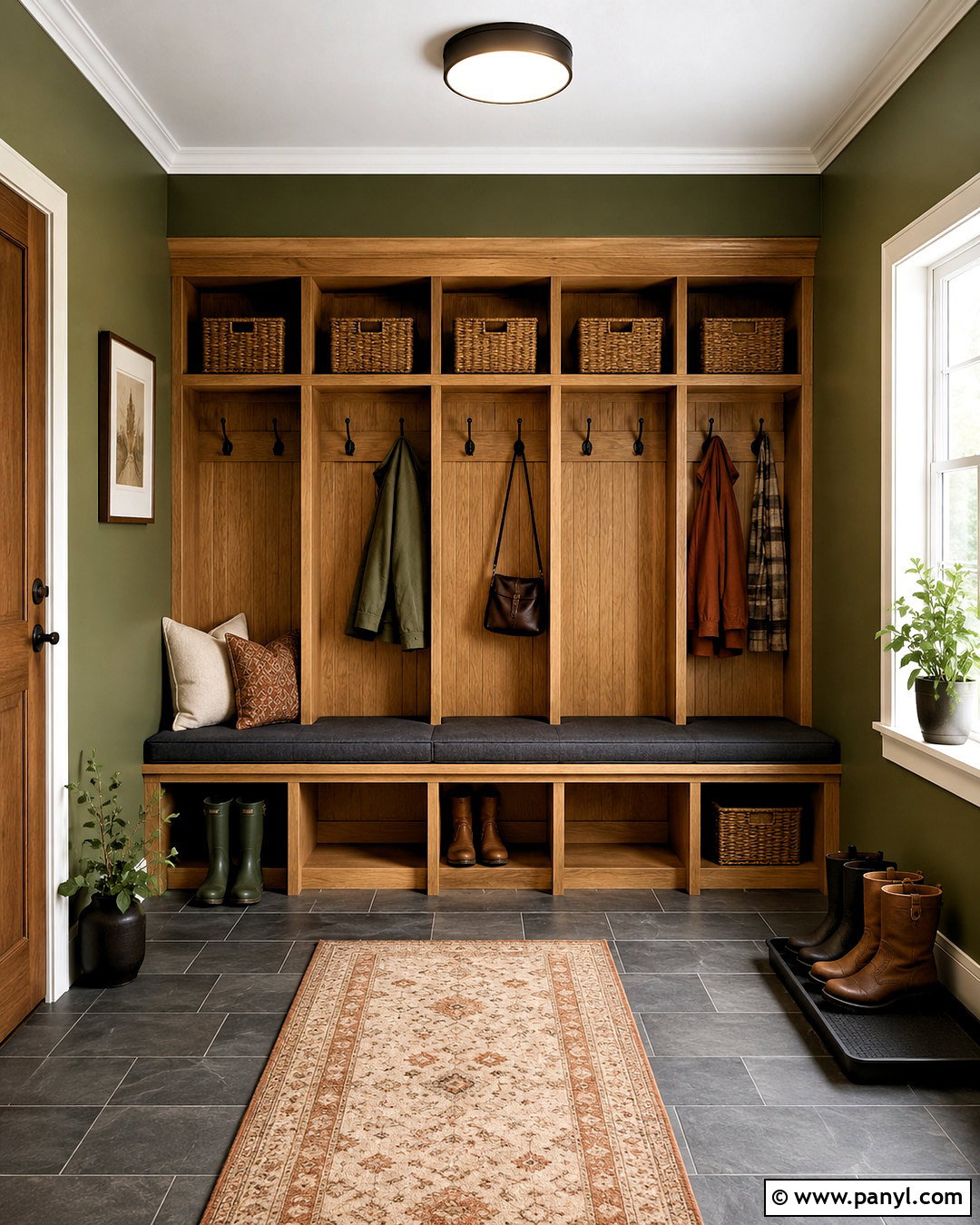
Olive green walls provide a durable-looking backdrop for a hardworking mudroom. Line one side with natural oak lockers or cubbies, giving each household member a hook, basket, and shoe compartment. Add a long bench with a washable charcoal cushion for comfortable seating. Slate-look porcelain floor tile withstands wet shoes while supporting the earthy color palette. Across from the storage wall, place a shallow console or wall-mounted shelf for keys and mail. Black hardware, a simple flush-mount light, and a boot tray reinforce the practical design. Include a washable runner with cream and rust details to warm the floor. The completed mudroom feels tidy even during busy seasons because storage is built into the layout, and the green walls connect every utilitarian element visually.
29. Green Sunroom
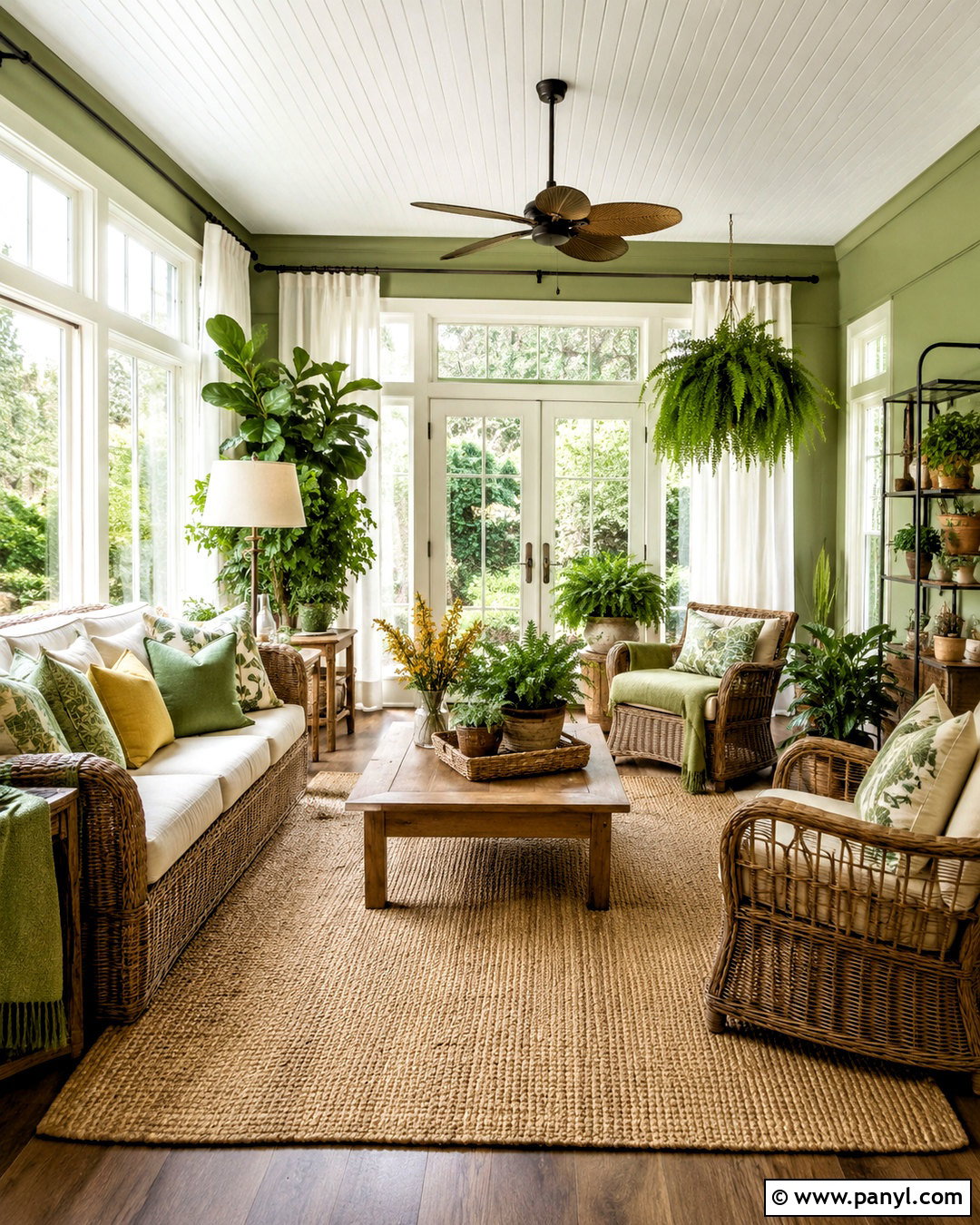
Light fern green walls help a sunroom blend naturally with views of the yard. Arrange a woven sofa and two rattan chairs around a low oak coffee table, leaving clear paths to windows and doors. Use cream cushions with washable green and yellow covers for a bright, casual palette. A natural fiber rug defines the seating area without hiding too much of the wood or tile floor. Hang simple white curtains that filter glare while preserving daylight. Add plants at several heights, including a floor-standing tree, tabletop pots, and one hanging plant. A ceiling fan and floor lamp make the room comfortable beyond sunny afternoons. The complete design feels relaxed and garden-connected, but the controlled furniture plan prevents it from becoming crowded with greenery or decor.
30. Green Reading Room
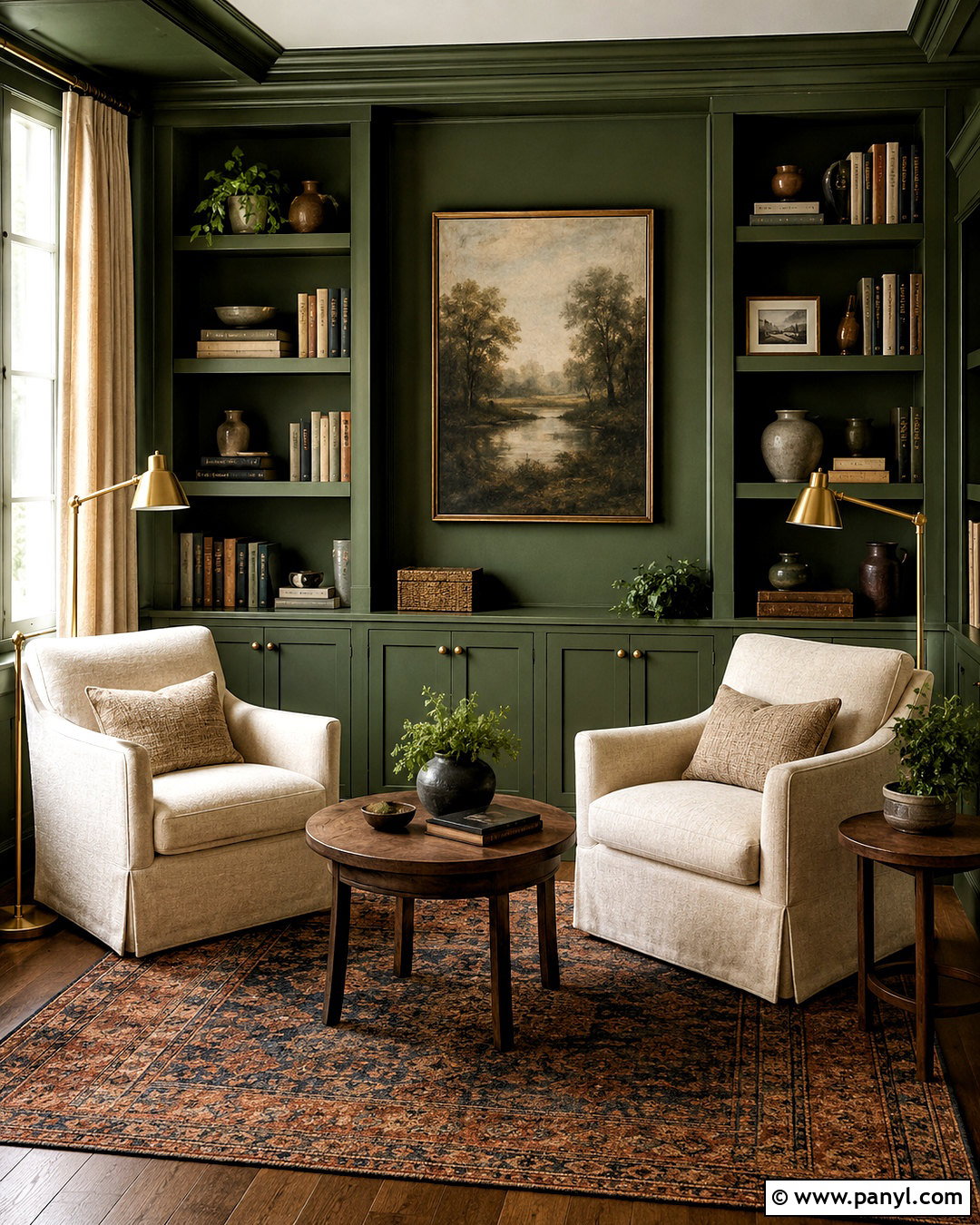
A muted pine green reading room should feel quiet, comfortable, and easy to use. Place two generously sized cream armchairs near a window with a shared walnut side table between them. Line one wall with built-in shelves painted the same green as the room, then organize books by size rather than decorative color. A brass floor lamp beside each chair provides direct reading light. Add a faded Persian-style rug in rust, navy, and beige to warm the floor. Linen curtains soften daylight, while a small ottoman supports relaxed seating. Include closed lower cabinets for games, devices, and extra blankets. Framed landscapes and a few ceramic objects finish the shelves. This complete setup prioritizes reading and conversation while maintaining a rich but uncluttered appearance.
31. Green Home Library
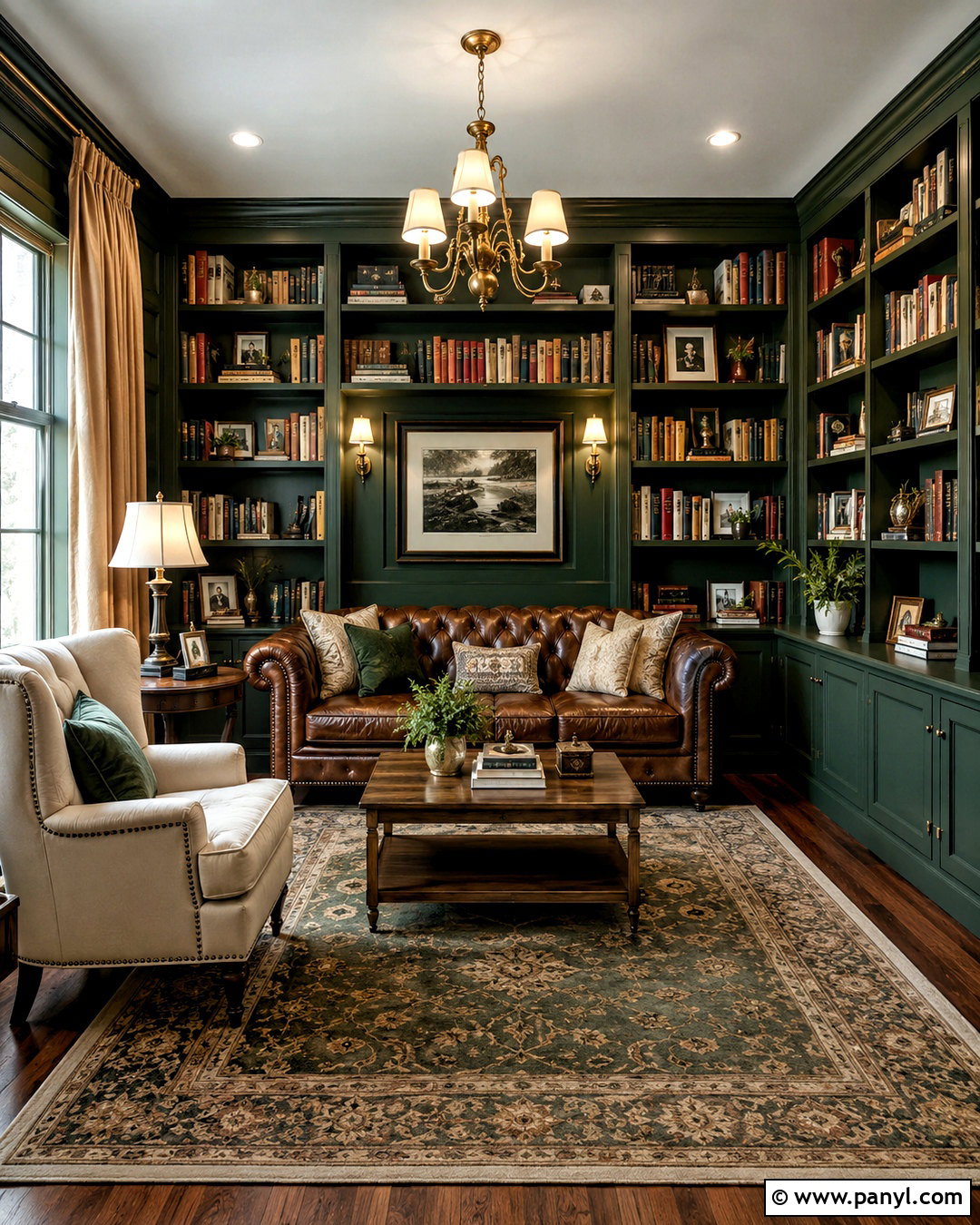
Hunter green walls and matching bookshelves can create a home library with impressive depth, even in a modest room. Install shelving from floor to ceiling on the longest wall and include lower cabinets for hidden storage. Position a tufted brown leather sofa opposite the books, then add a patterned wool rug and compact walnut coffee table. A cream reading chair in the corner prevents the palette from becoming too dark. Use an antique brass ceiling fixture, adjustable picture lights, and a shaded floor lamp to illuminate different areas. Long tan curtains add softness and warmth around the windows. Keep shelf displays limited to books, framed photographs, and a few sculptural pieces. The resulting library feels established, comfortable, and practical rather than staged or overly formal.
32. Green Small Apartment Living Room
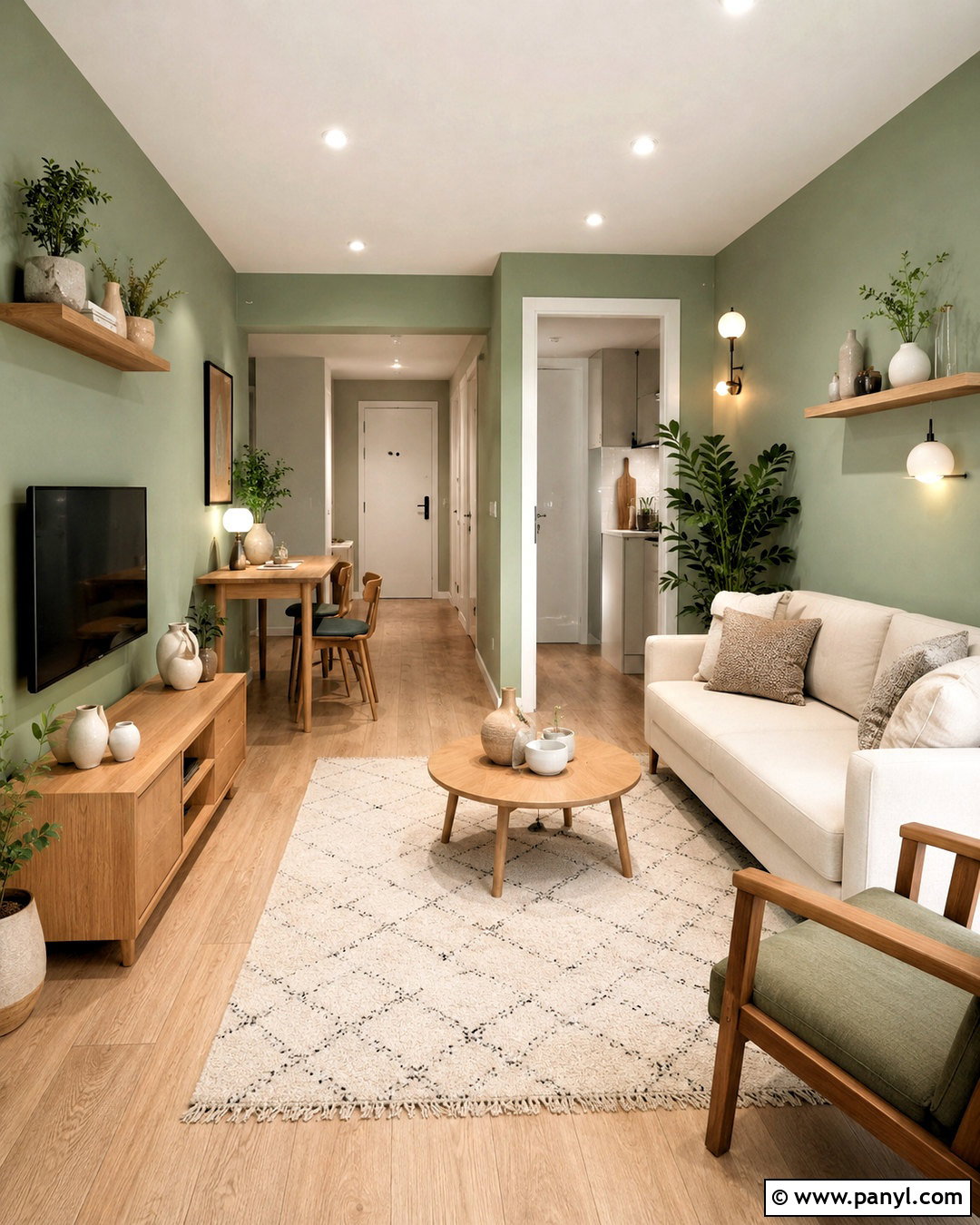
Soft mint green walls can make a small apartment living room feel colorful without appearing crowded. Choose a compact cream sofa with exposed legs and place it against the longest wall. Across from it, use a low oak media cabinet that provides closed storage while preserving open wall space. A round coffee table allows easier movement than a rectangular one. Define the seating area with a light patterned rug and add one slim armchair near the window. Wall-mounted sconces free up floor space, while full-length white curtains visually extend the room. Use floating shelves sparingly for books and pottery. A narrow dining table near the kitchen can double as a desk. The coordinated layout gives every zone a purpose while keeping the green walls light and consistent.
33. Green Open Plan Room
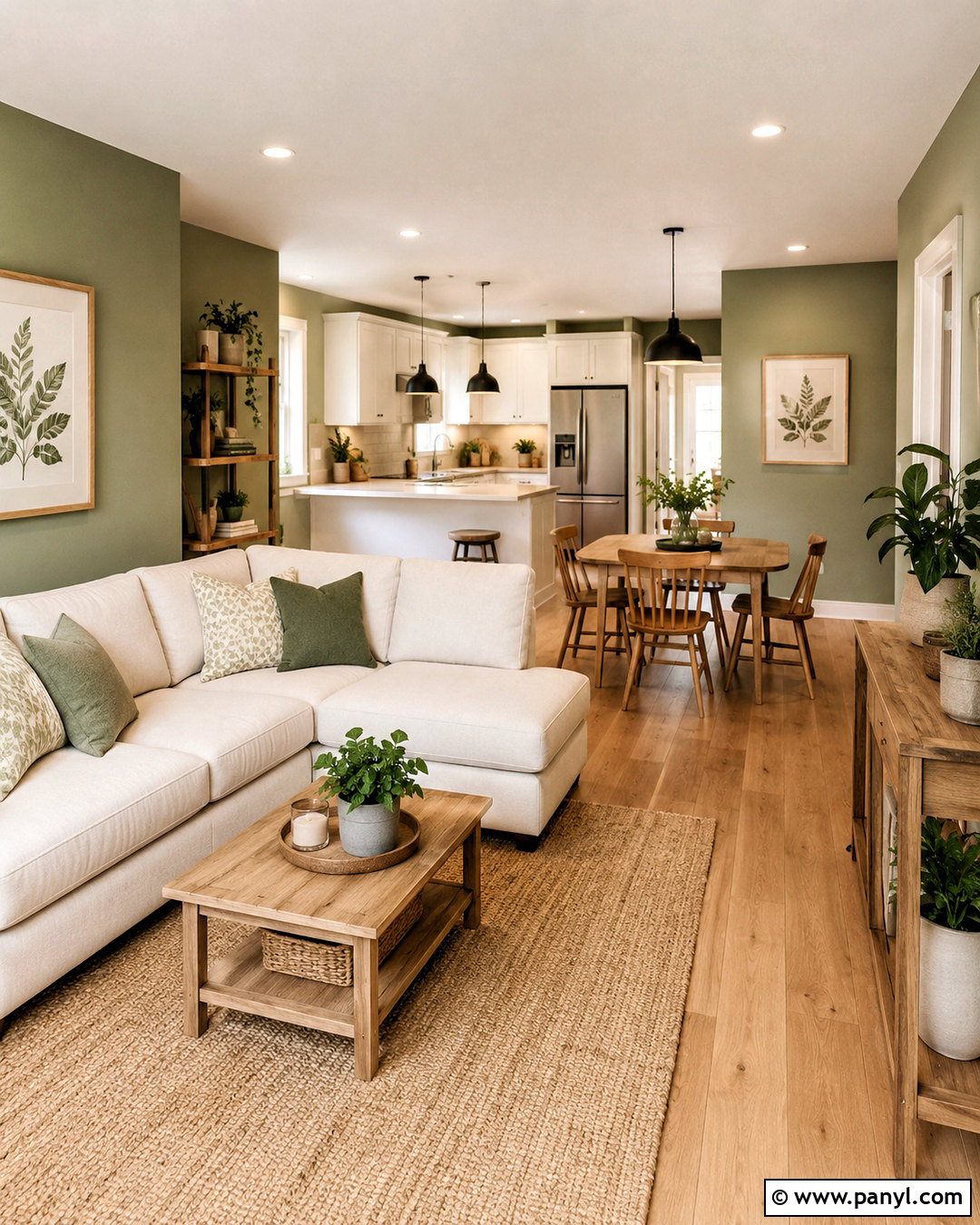
In an open-plan room, green walls can connect living, dining, and kitchen zones without making them identical. Use a muted warm sage throughout the shared walls, then define each area through furniture and lighting. Place a cream sectional on a large neutral rug, with its back helping separate the living room from the dining table. Choose an oak dining set and hang a black pendant directly above it. In the kitchen, combine white cabinets, pale counters, and brass hardware with the same green wall color. Repeat oak, black, and cream in every zone to create continuity. Plants and restrained botanical art reinforce the palette without becoming a theme. The finished space feels coordinated from every viewpoint, while rugs, furniture placement, and lighting preserve clear individual functions.
34. Green Basement Family Room
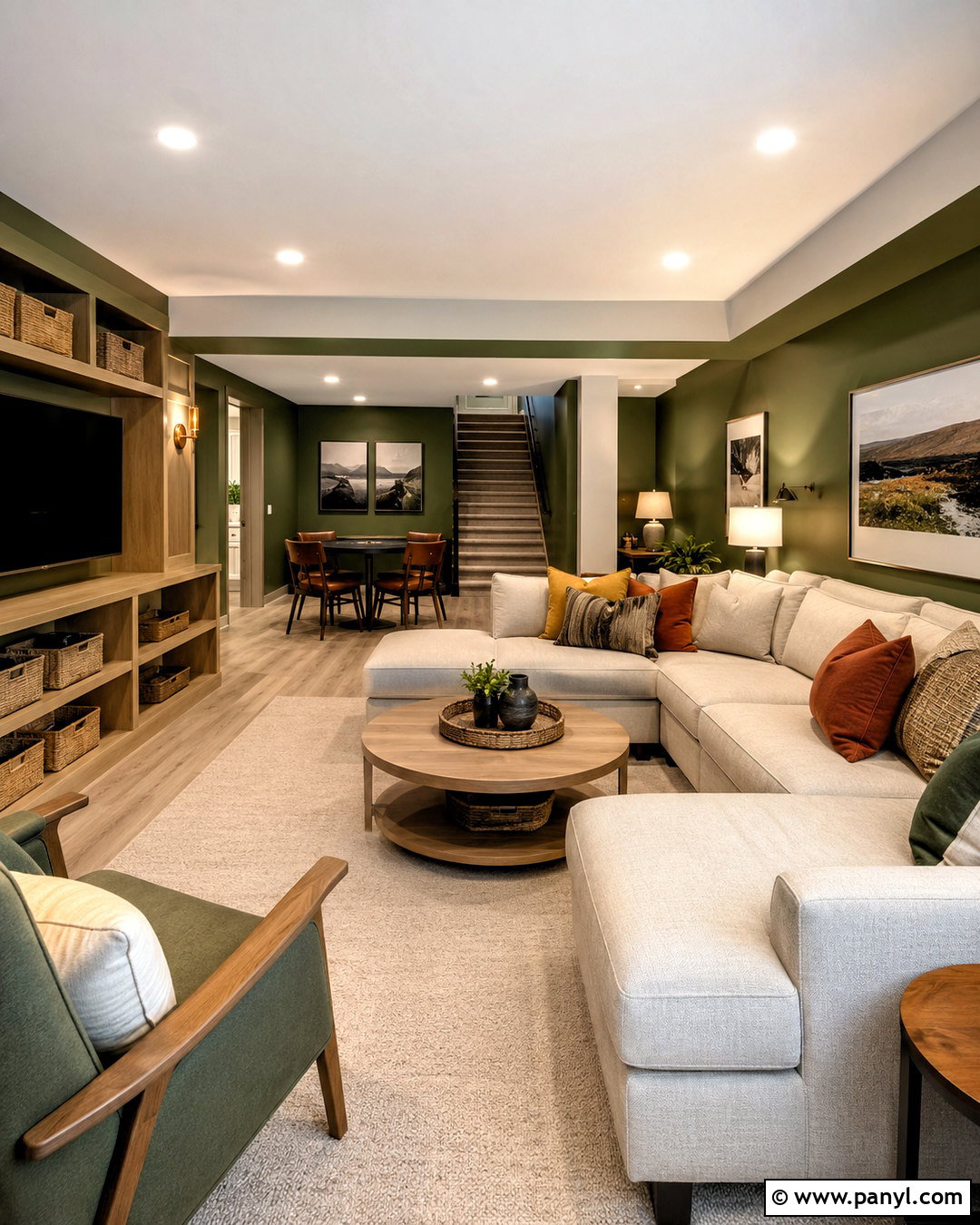
A basement family room benefits from a green that feels warm rather than gray in limited daylight. Choose a mid-tone moss green and pair it with a large oatmeal sectional arranged toward the television and fireplace. Use pale oak built-ins for games, media equipment, and blankets. A light cream rug brightens the floor, while rust and mustard pillows add warmth. Install recessed ceiling lights throughout the room, then add table and floor lamps to reduce harsh shadows. A round coffee table improves movement around the sectional. Include a small game table in an open corner and use framed vintage landscape prints for wall decoration. With layered lighting, light upholstery, practical storage, and flexible seating, the complete basement feels welcoming rather than dark or unfinished.
35. Green Fireplace Living Room
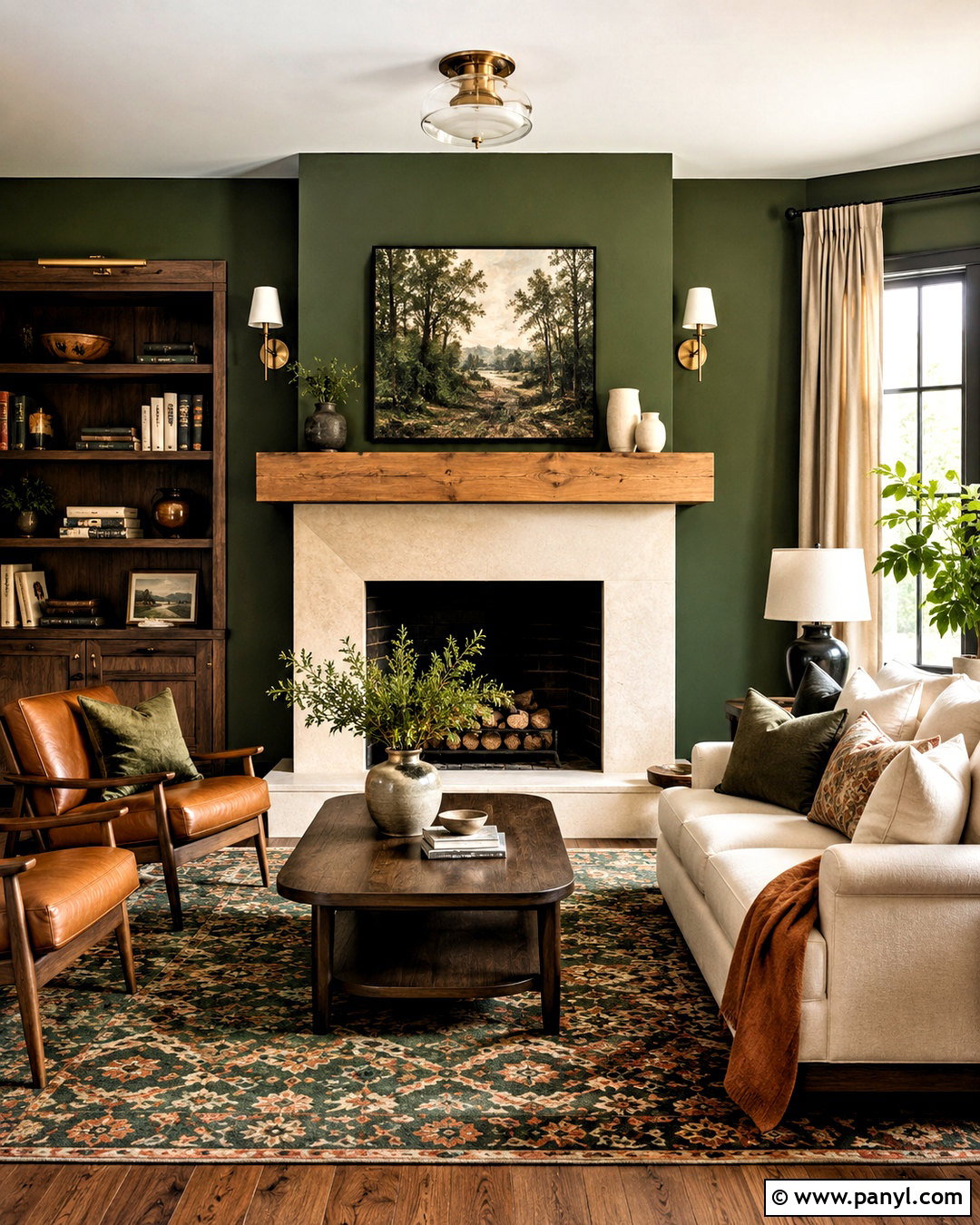
A green fireplace wall creates a strong focal point when the mantel, seating, and materials are carefully coordinated. Paint the entire chimney breast a deep woodland green and surround the firebox with simple cream stone. Use a natural oak mantel to bridge the cool stone and warm room furnishings. Arrange a beige sofa and two tan leather chairs toward the fireplace, keeping pathways open around the seating group. A patterned rug containing green, rust, and cream ties the colors together. Place matching brass sconces above the mantel and hang one substantial artwork between them. Add a walnut coffee table, linen curtains, and a few ceramic accessories. The finished living room feels balanced because the bold wall anchors a complete furniture arrangement rather than functioning as isolated decoration.
36. Green Wall Paneling Room
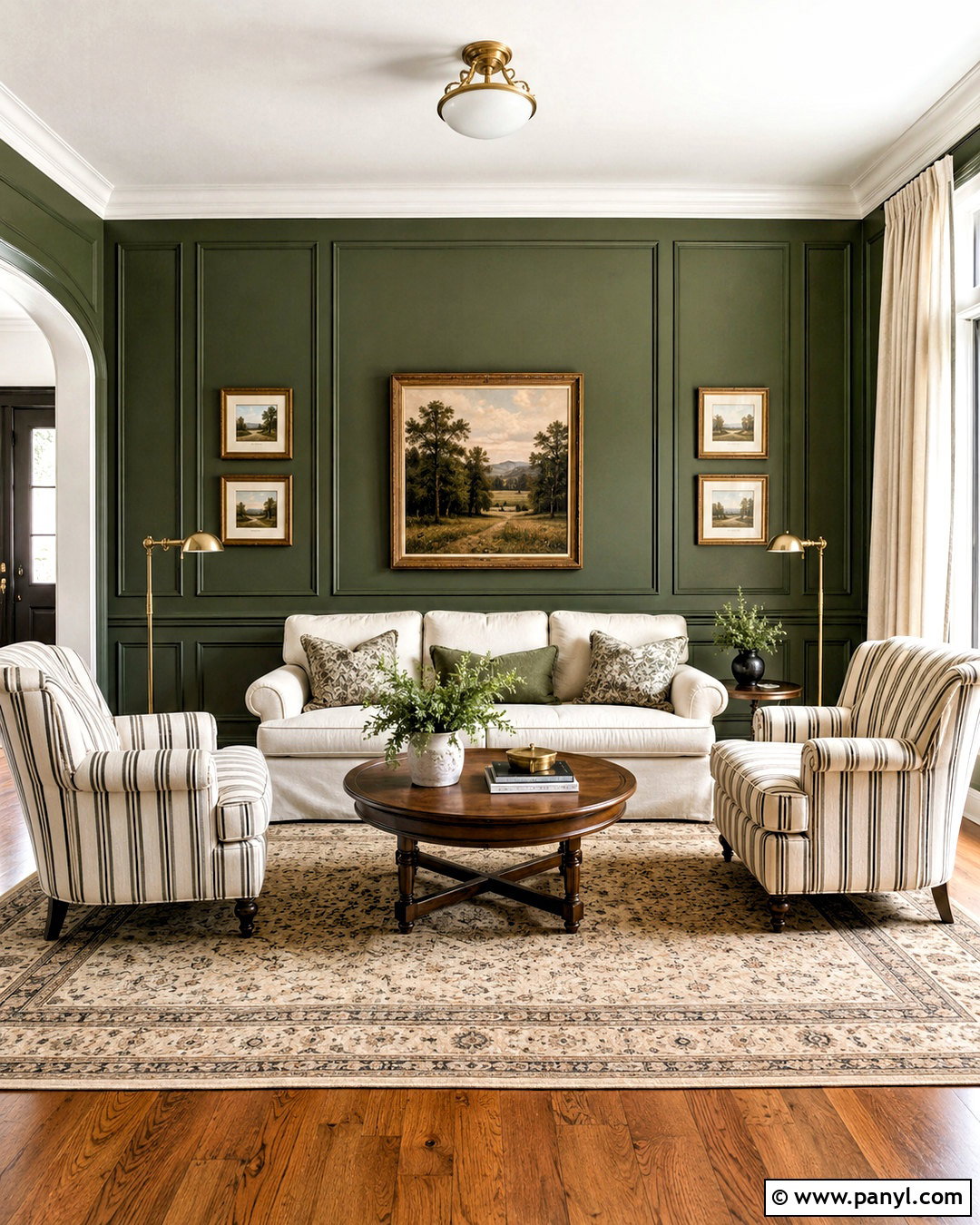
Green wall paneling adds texture and architectural detail to a simple sitting room. Install square or rectangular molding across the walls, then paint both the paneling and surrounding surfaces a warm juniper green. Keep the ceiling white for contrast and use medium oak flooring for natural warmth. Furnish the room with a cream loveseat, two striped armchairs, and a round walnut table. A traditional beige rug softens the floor and reinforces the classic proportions. Add pleated-shade brass lamps, linen curtains, and a modest collection of framed landscapes. Avoid covering every panel with artwork so the molding remains visible. The complete room combines traditional structure with relaxed, contemporary furniture, creating a design that feels detailed and established without requiring major architectural changes.
37. Green Wallpaper Room
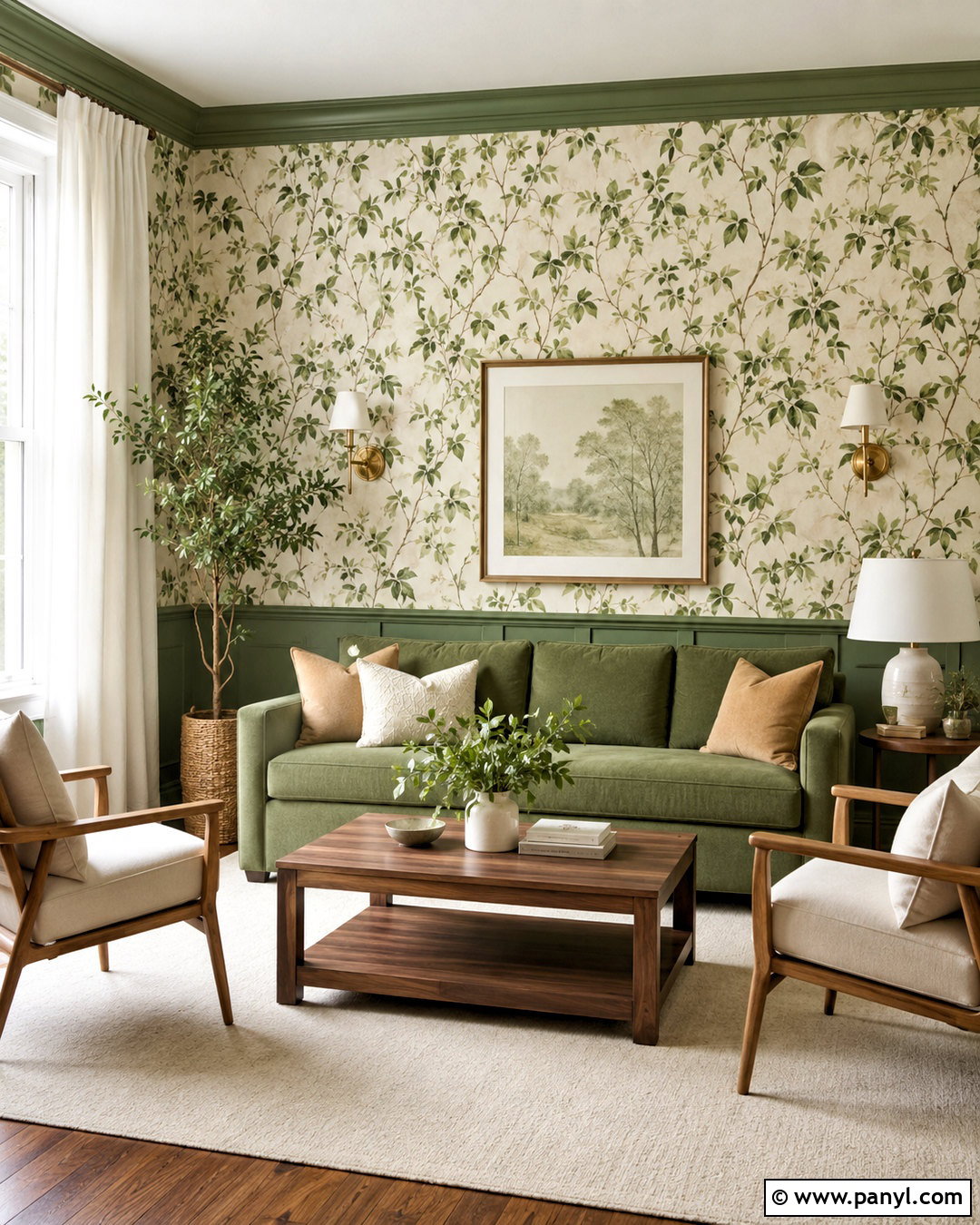
Green botanical wallpaper can create a complete room when its pattern is balanced with simpler furniture. Cover all four walls of a guest sitting room in a cream paper featuring medium green leaves and fine brown branches. Choose a solid moss green sofa and two light wood chairs with natural linen cushions. A plain cream rug gives the eye a quiet place to rest, while a walnut coffee table repeats the branches in the wallpaper. Use white curtains, brass lamps, and a simple ceiling fixture rather than introducing additional patterns. Add only a few solid-colored pillows in tan and dark green. With consistent materials and controlled decoration, the finished room feels layered and lively without allowing the wallpaper to overwhelm the seating, artwork, or architectural details.
38. Green and Pink Room
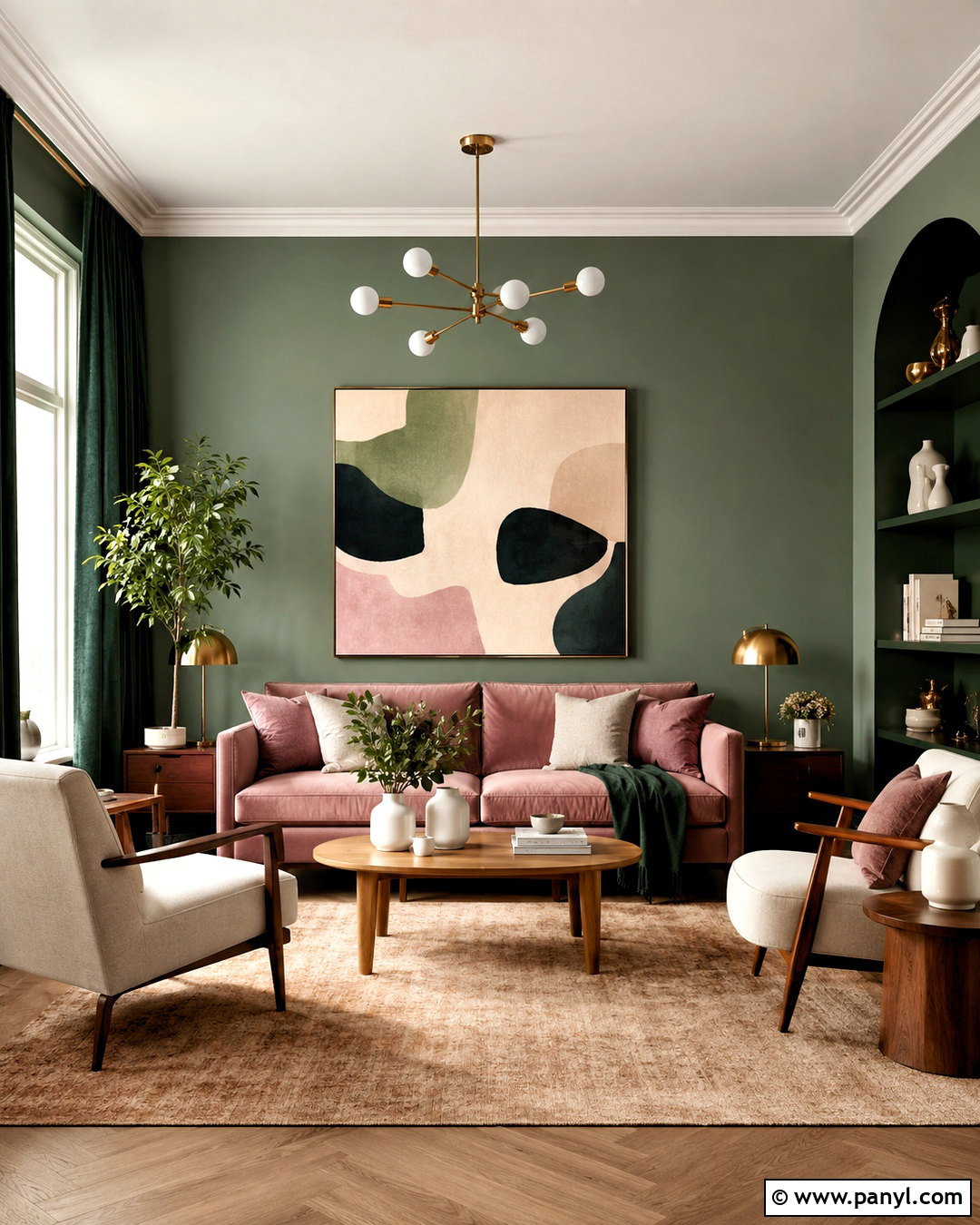
Green and pink can form a sophisticated living room palette when both colors are slightly muted. Paint the walls a medium sage green and choose a dusty rose sofa as the main contrasting piece. Balance it with two cream armchairs, a light oak coffee table, and a warm beige rug. Repeat pink through only a few cushions and one abstract artwork rather than numerous small accessories. Brass lighting and picture frames add warmth, while deep green velvet curtains create tonal depth around the windows. Walnut side tables prevent the pastel colors from feeling overly sweet. Include simple white ceramics and one sculptural plant for a natural finishing layer. The full arrangement feels colorful and grown-up because neutral furniture and warm wood control the stronger pink-and-green pairing.
39. Green and Blue Room
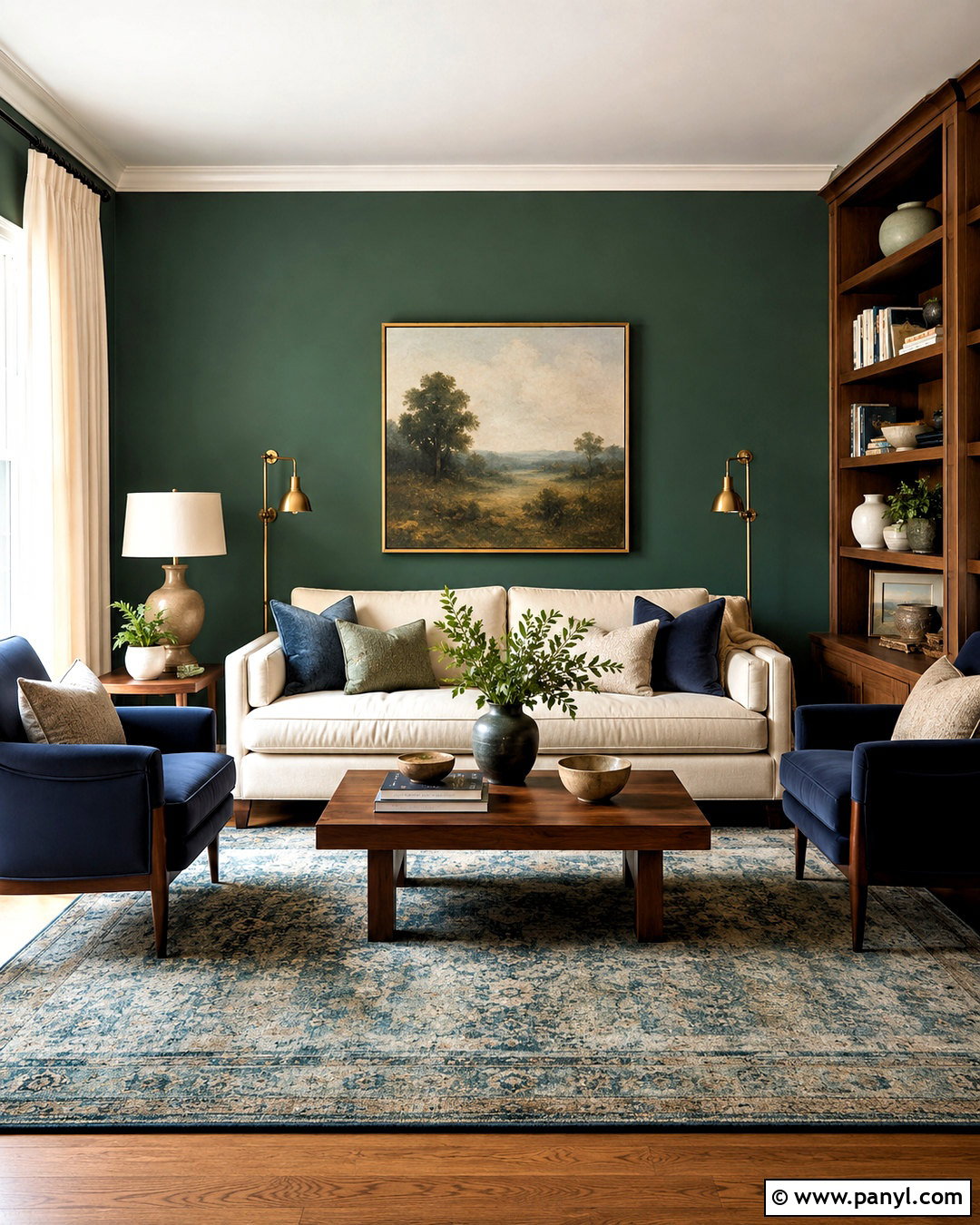
Deep teal-green walls create a natural bridge between green and blue furnishings. Place a warm ivory sofa against the wall and add two navy armchairs facing it across a walnut coffee table. Use a large patterned rug containing faded blue, green, cream, and rust to unite the seating group. Light linen curtains keep the windows bright, while brass floor and table lamps bring warmth to the cooler colors. Add oak shelving with books and pale ceramics, leaving enough open space for the green wall to remain visible. Artwork featuring soft coastal or landscape tones can repeat both dominant colors without appearing themed. The complete room feels layered and calm, with cream, wood, and brass balancing the depth of the blue-green combination.
40. Green and Brown Room
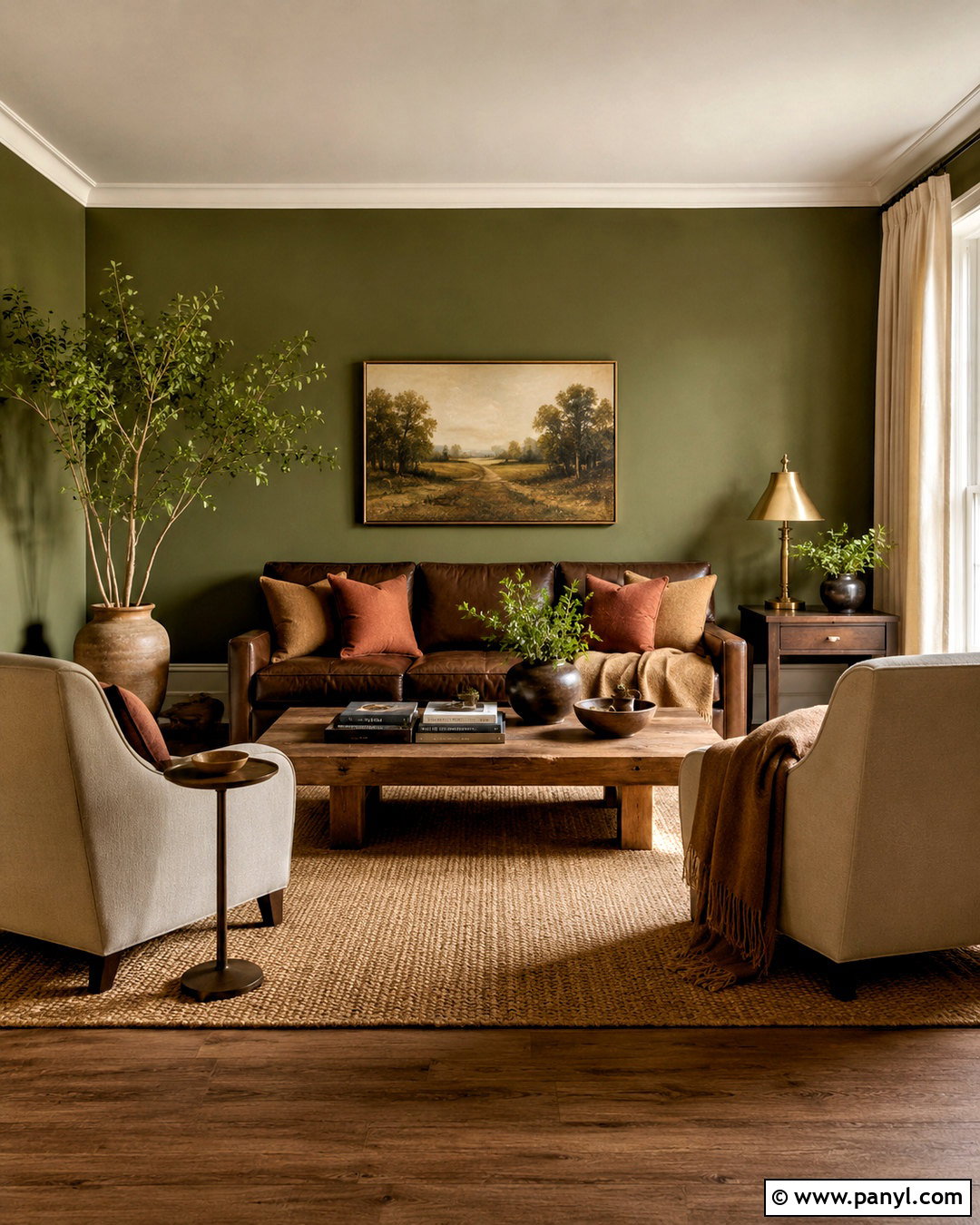
A green and brown room feels grounded when the palette includes several lighter textures. Paint the walls an earthy moss green, then anchor the space with a chocolate brown leather sofa. Add two cream upholstered chairs and a large natural wool rug to keep the seating area from becoming visually heavy. Choose a reclaimed oak coffee table, walnut side tables, and antique brass lamps for varied warmth. Rust-colored pillows and a camel throw connect the darkest and lightest pieces. Hang one oversized landscape painting above the sofa and use oatmeal linen curtains at the windows. Plants in aged ceramic pots add natural shape without disappearing into the walls. The finished living room feels comfortable, durable, and collected, with every brown element balanced by cream surfaces and soft textiles.
Conclusion:
Green walls offer far more flexibility than one familiar sage accent wall. Pale mint can open a compact apartment, olive can warm a hardworking mudroom, and forest green can transform a bedroom, library, or dining room into a cozy retreat. For the strongest result, consider the entire space before selecting paint. Coordinate the walls with flooring, furniture, window treatments, lighting, and useful storage. Test several green shades in different parts of the room, and view them as the light changes. Most importantly, repeat the wall color subtly through textiles, artwork, or decor. These **green wall room ideas** provide complete starting points that can be adjusted for your home, personal taste, existing furniture, and decorating budget.

Related Ideas and Inspiration:
Leave a Reply