
Brown has become one of the most versatile neutrals for creating warm, grounded, and inviting interiors. These 40 brown wall paint ideas explore everything from pale mushroom and soft taupe to earthy clay, rich mocha, and deep chocolate. Brown is also enjoying renewed attention in current interiors because it can feel both comforting and sophisticated when paired with thoughtful contrast. () The key is designing the entire room around the undertone. Cream textiles soften darker browns, natural wood builds an organic palette, and blue or green accents add refreshing balance. Lighting, paint finish, flooring, furniture, and trim also influence the finished result. Whether you are updating a bedroom, living room, kitchen, or small hallway, the complete looks below offer practical 40 brown wall paint ideas.

1. Chocolate Brown Living Room Walls
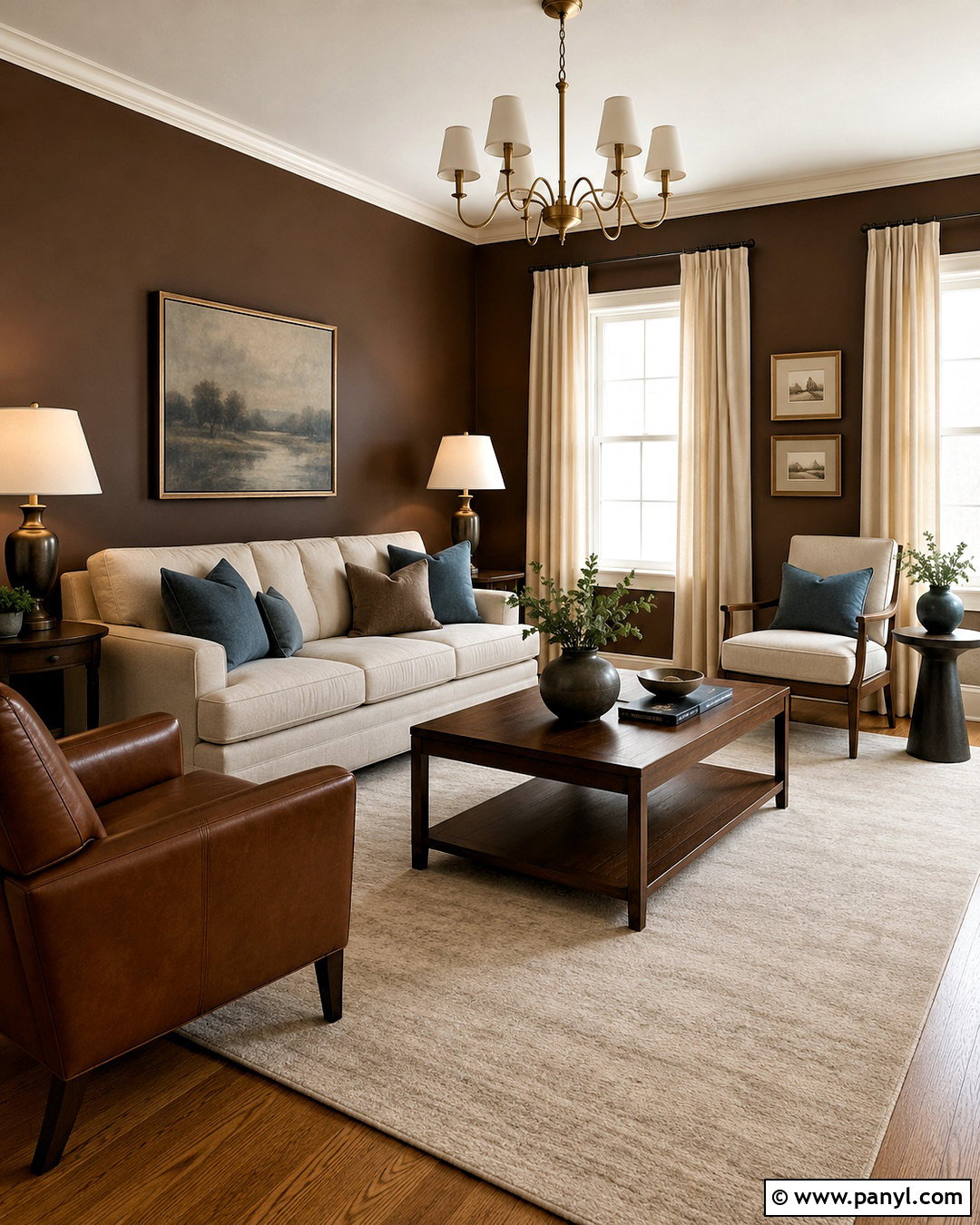
Chocolate brown walls can turn an ordinary living room into a warm, polished retreat. Paint every wall in a deep cocoa shade rather than limiting the color to one narrow accent wall. Add a cream linen sofa, oatmeal curtains, and a pale wool rug to keep the room balanced. A walnut coffee table and cognac leather chair reinforce the earthy palette without appearing overly matched. Use antique brass lamps for subtle shine, then introduce dusty blue pillows and large abstract artwork for contrast. Medium oak flooring works especially well beneath this scheme. Choose an eggshell finish that gently reflects light, and paint the trim a warm ivory instead of bright white. The complete look feels comfortable, grounded, and refined.
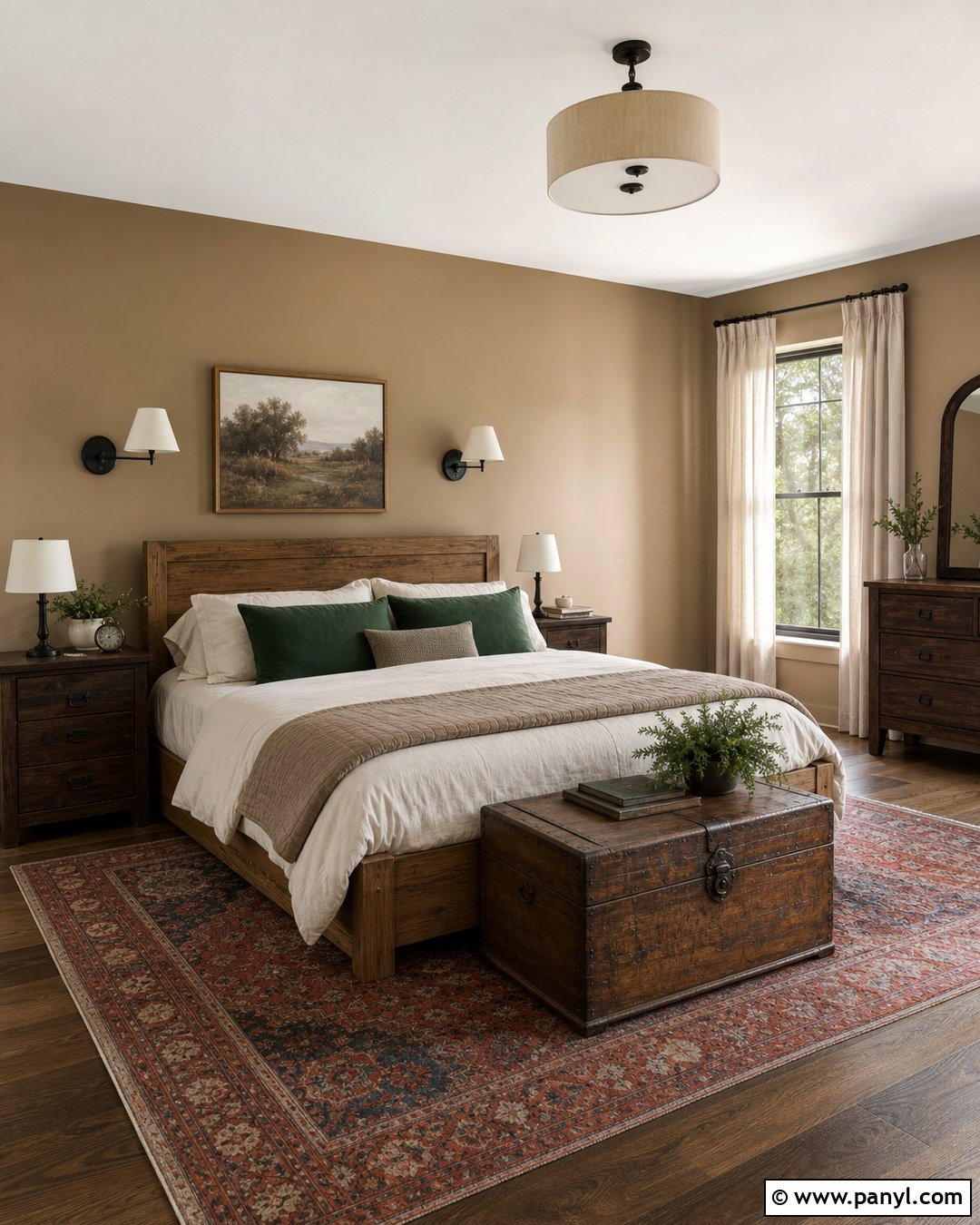
2. Light Brown Bedroom Walls
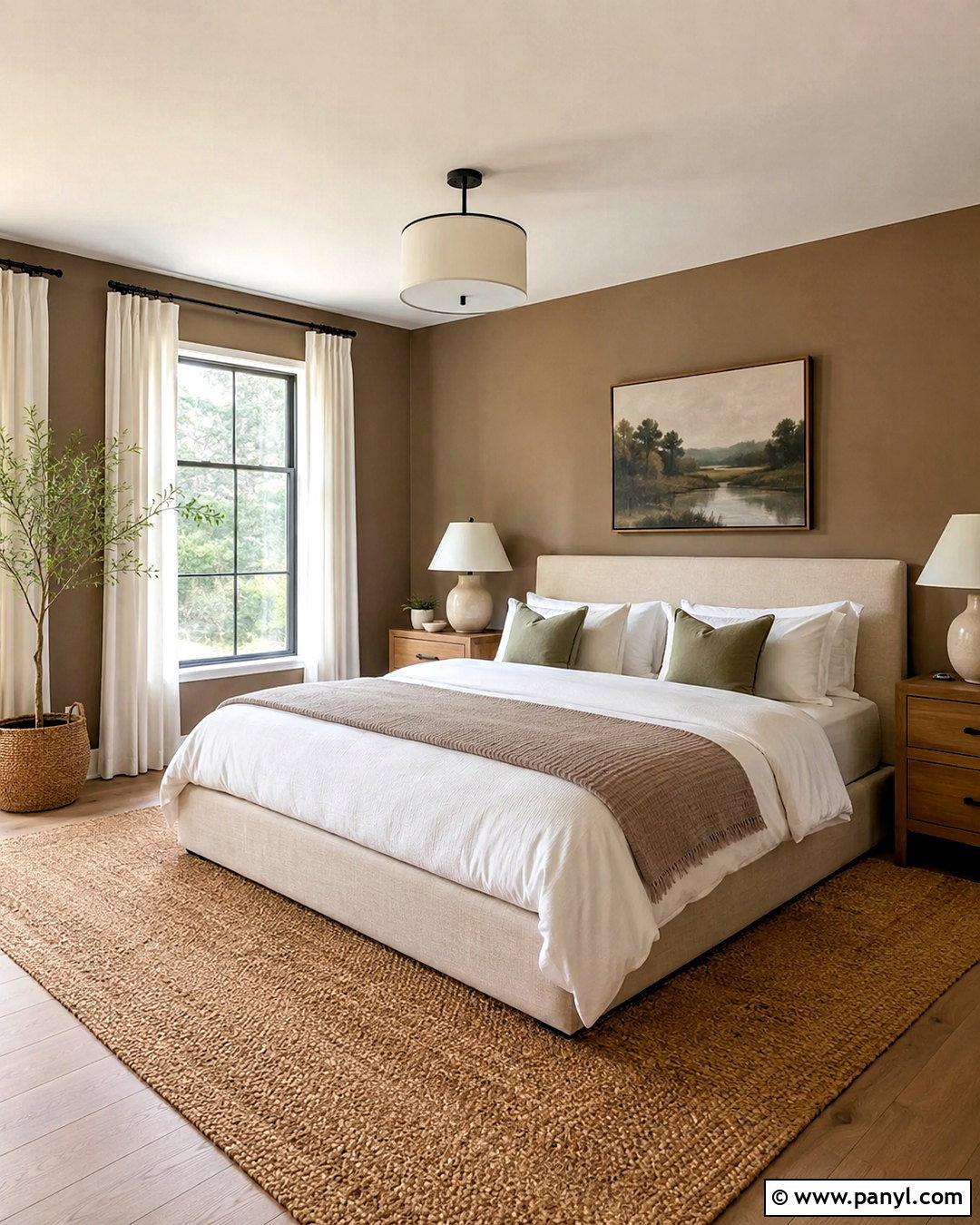
A light brown bedroom can feel soft and restful when the shade has gentle beige or mushroom undertones. Cover all four walls with the color, then use warm white on the ceiling and simple baseboards. Center an upholstered oatmeal bed against the main wall and layer it with white sheets, a taupe quilt, and muted sage pillows. Light oak nightstands prevent the room from becoming heavy, while ceramic lamps add handmade texture. Hang full-length ivory curtains slightly above the window to make the ceiling seem taller. A natural jute and wool rug completes the relaxed foundation. Keep accessories minimal, using one landscape print, a small bench, and a leafy plant for an airy, organic bedroom.
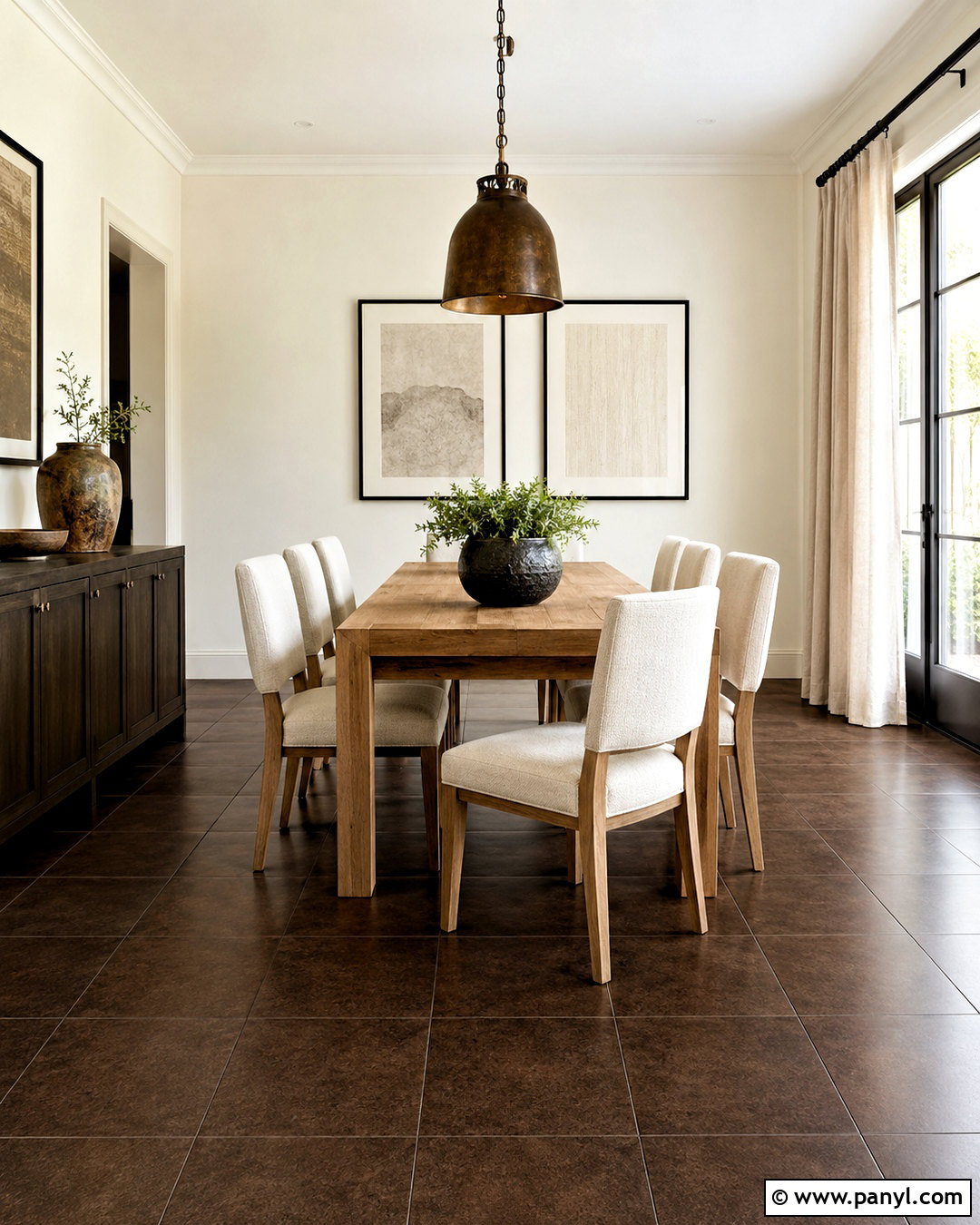
3. Mocha Brown Dining Room Walls
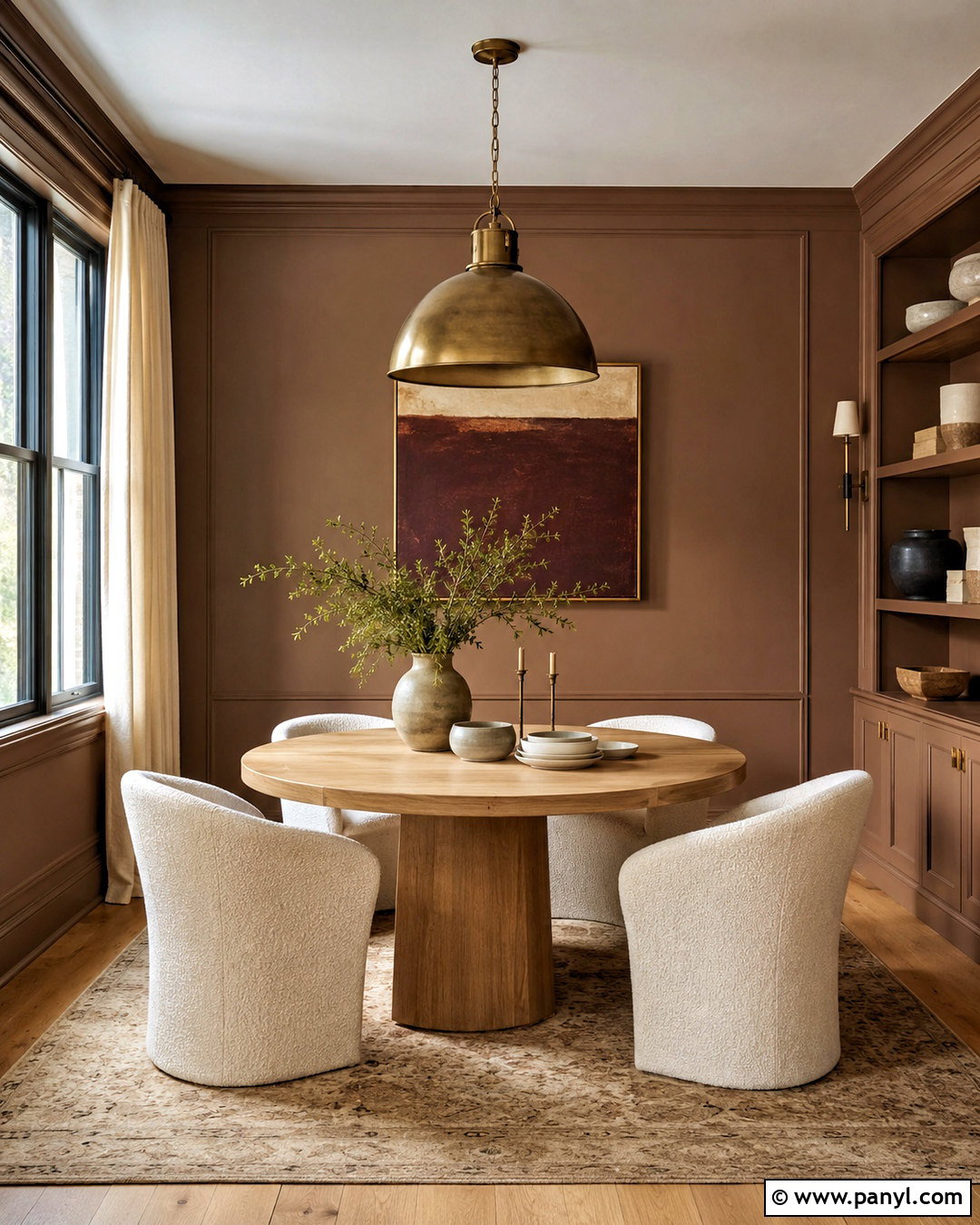
Mocha brown walls create an intimate dining room that still feels welcoming during the day. Select a medium brown with warm coffee undertones and continue it across the walls, molding, and built-in cabinetry for a connected appearance. Place a round oak dining table in the center with curved cream bouclé chairs to break up the straight architectural lines. Above it, install a large aged-brass pendant with a white glass shade. Natural linen curtains, a patterned beige rug, and simple ceramic tableware keep the setting approachable. Introduce muted burgundy through artwork or seat cushions for restrained color. This scheme works best with layered lighting, including wall sconces and a dimmable pendant, so the brown remains rich rather than flat.
4. Taupe Brown Living Room Walls
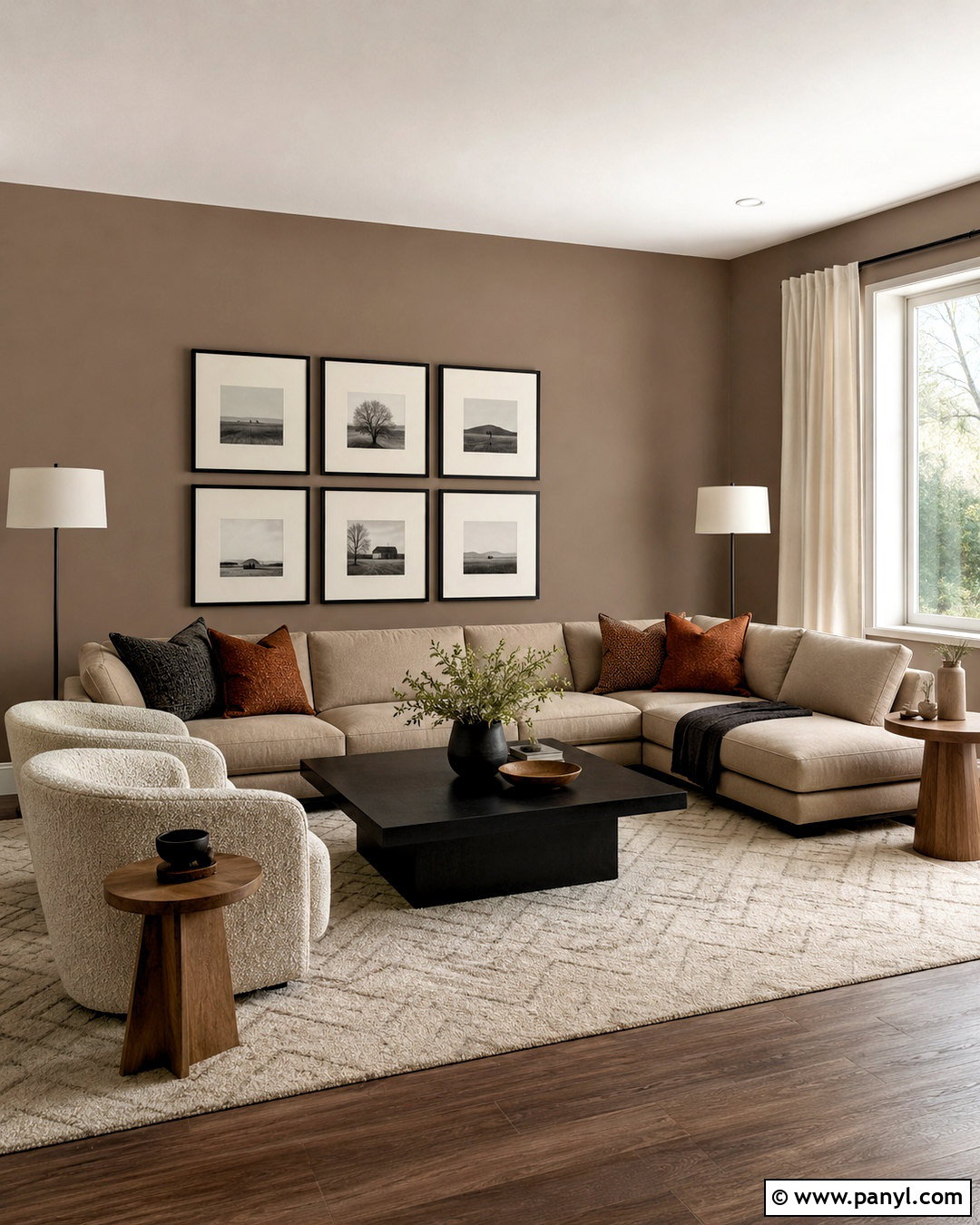
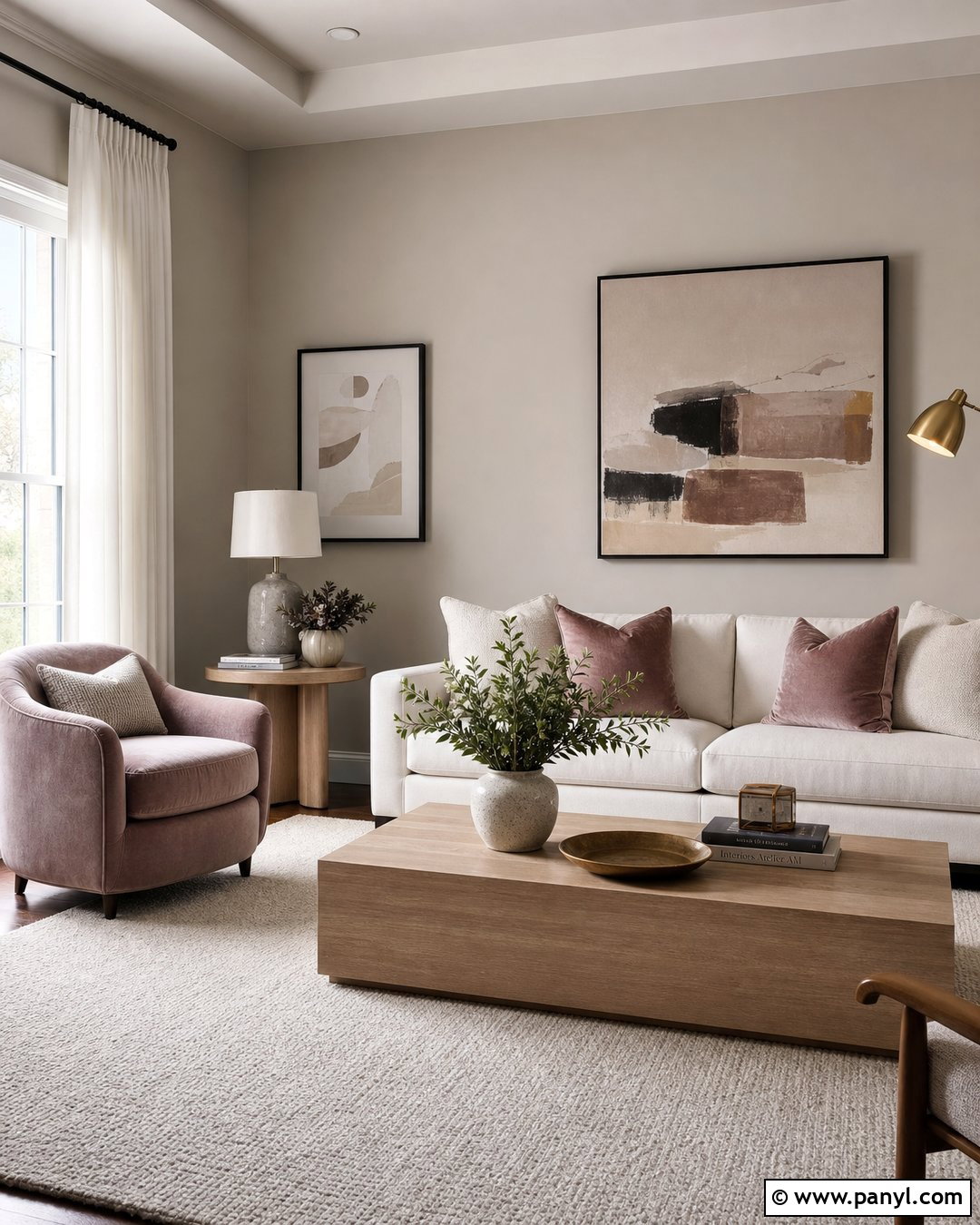
Do you want brown walls without committing to a dark room? Taupe brown offers a lighter, more adaptable alternative. Choose a balanced shade that sits between warm gray and earthy brown, then pair it with a streamlined beige sectional and textured ivory chairs. A low black coffee table supplies clean contrast, while oak side tables bring warmth back into the arrangement. Add pillows in rust, charcoal, and soft cream, repeating those colors in a large geometric rug. Black-framed artwork and slender floor lamps give the room a modern edge. Keep window coverings light and simple so daylight reaches the painted surfaces. The finished living room feels calm and contemporary, with enough warmth to avoid the coldness associated with standard gray.
5. Dark Brown Bedroom Walls
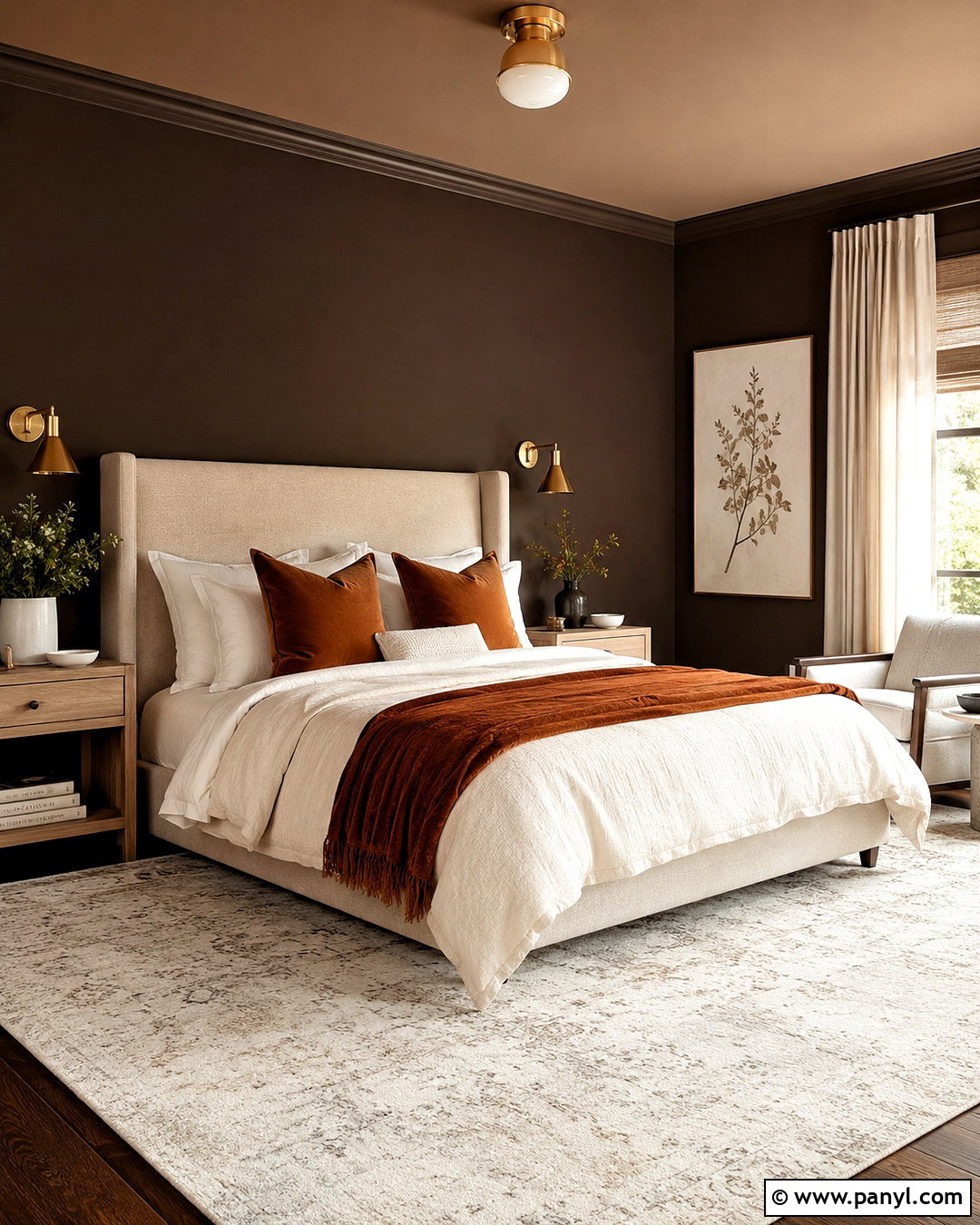
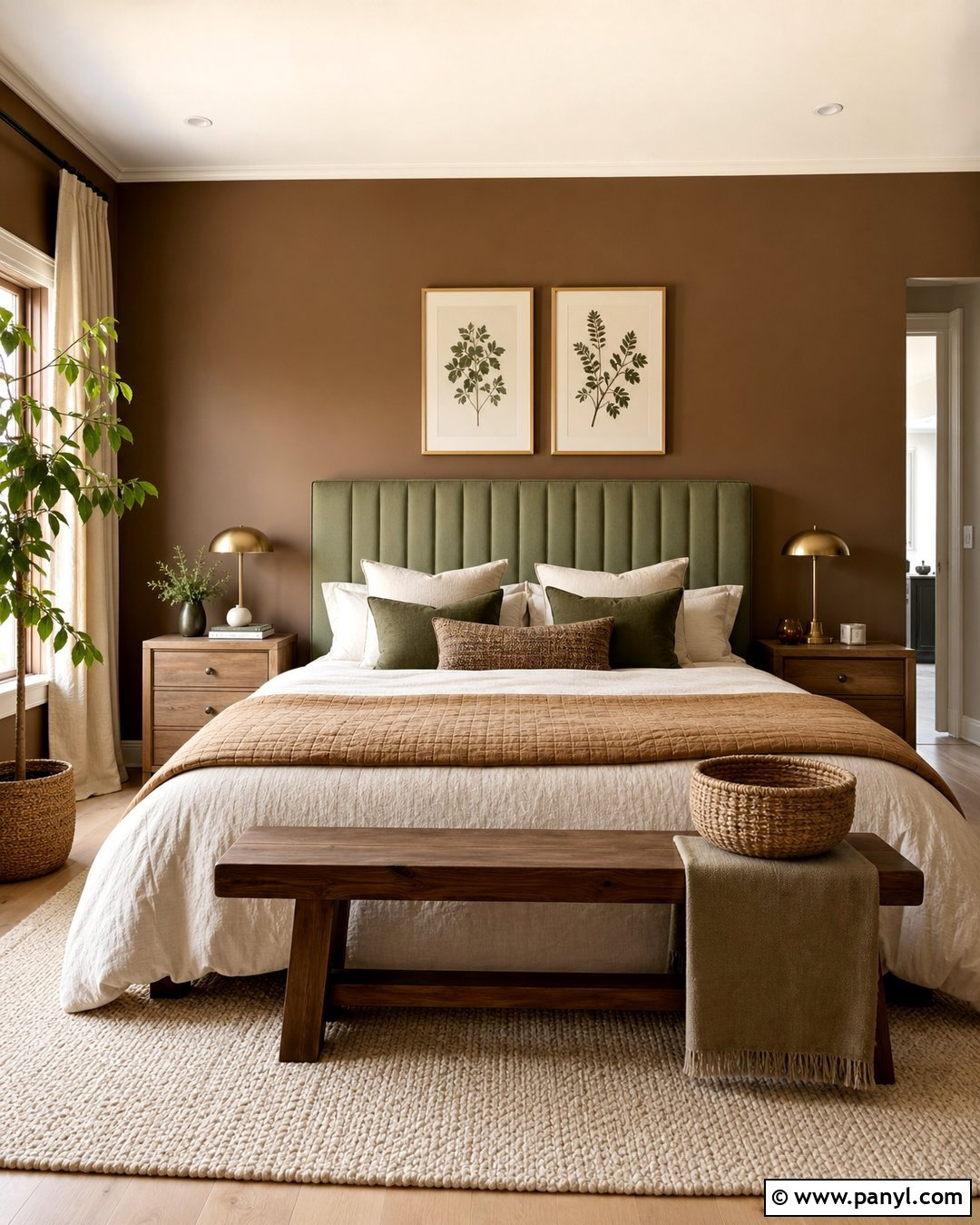
Deep brown walls create a cocooning bedroom when the furniture and bedding provide enough visual relief. Use a rich espresso shade on the walls and paint the ceiling a softer coordinating brown instead of stark white. Position a tall natural linen headboard against the longest wall, then dress the bed with crisp cream bedding, caramel velvet pillows, and a rust-colored throw. Pale oak nightstands lighten the lower half of the room. Add aged-brass sconces on both sides of the bed to free the tabletops and reflect gentle light. An oversized ivory rug is essential if the flooring is also dark. Finish the room with one large botanical print, simple curtains, and restrained accessories for an enveloping but uncluttered result.
6. Warm Brown Kitchen Walls
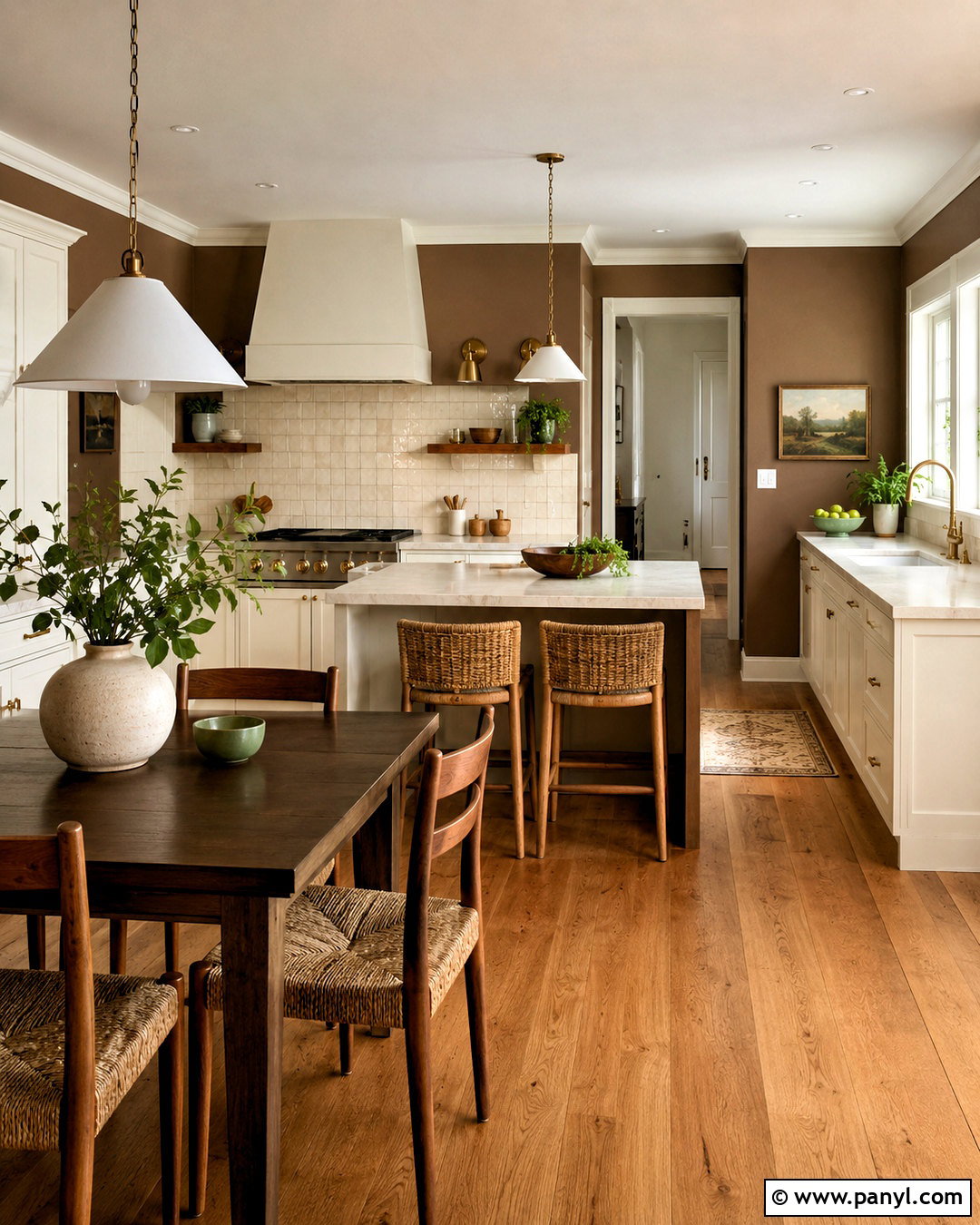
Warm brown kitchen walls can make white cabinetry feel less clinical while highlighting natural wood and metal finishes. Choose a medium cinnamon-brown paint with a muted quality rather than a bright orange undertone. Use it around warm white Shaker cabinets, leaving the cabinetry and ceiling noticeably lighter. Install cream quartz countertops, a handmade off-white tile backsplash, and brushed-brass hardware. Medium oak floors connect naturally with the wall color. At the breakfast area, include a small walnut table with woven chairs and an ivory pendant light. A few sage green accessories or potted herbs introduce cool balance. This complete kitchen palette feels cozy and established while remaining clean, functional, and bright enough for everyday cooking.
7. Brown Accent Wall Living Room
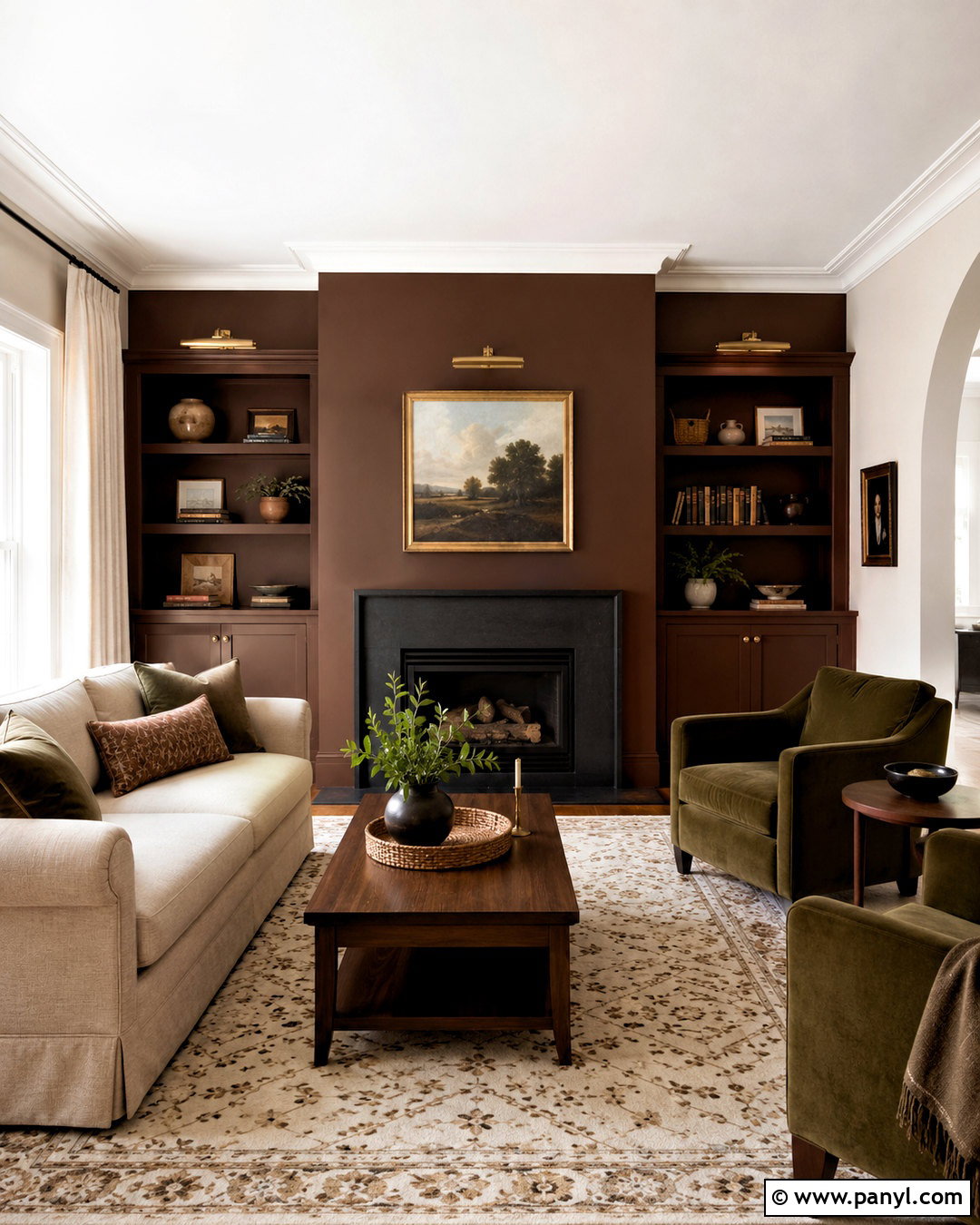
A brown accent wall looks intentional when it anchors the room’s most important feature. Paint the fireplace wall in deep chestnut, including surrounding shelves or shallow architectural trim for a seamless focal point. Keep the remaining walls warm white, and arrange a soft beige sofa directly opposite the fireplace. Add two olive green armchairs, a walnut coffee table, and a cream rug with a subtle brown pattern. Matte black fireplace details sharpen the scheme, while brass picture lights add warmth above framed artwork. Repeat the chestnut color in small doses through pillows and ceramics. Avoid placing unrelated furniture against the painted wall. A focused layout ensures the brown surface supports the entire living room instead of resembling a random block of color.
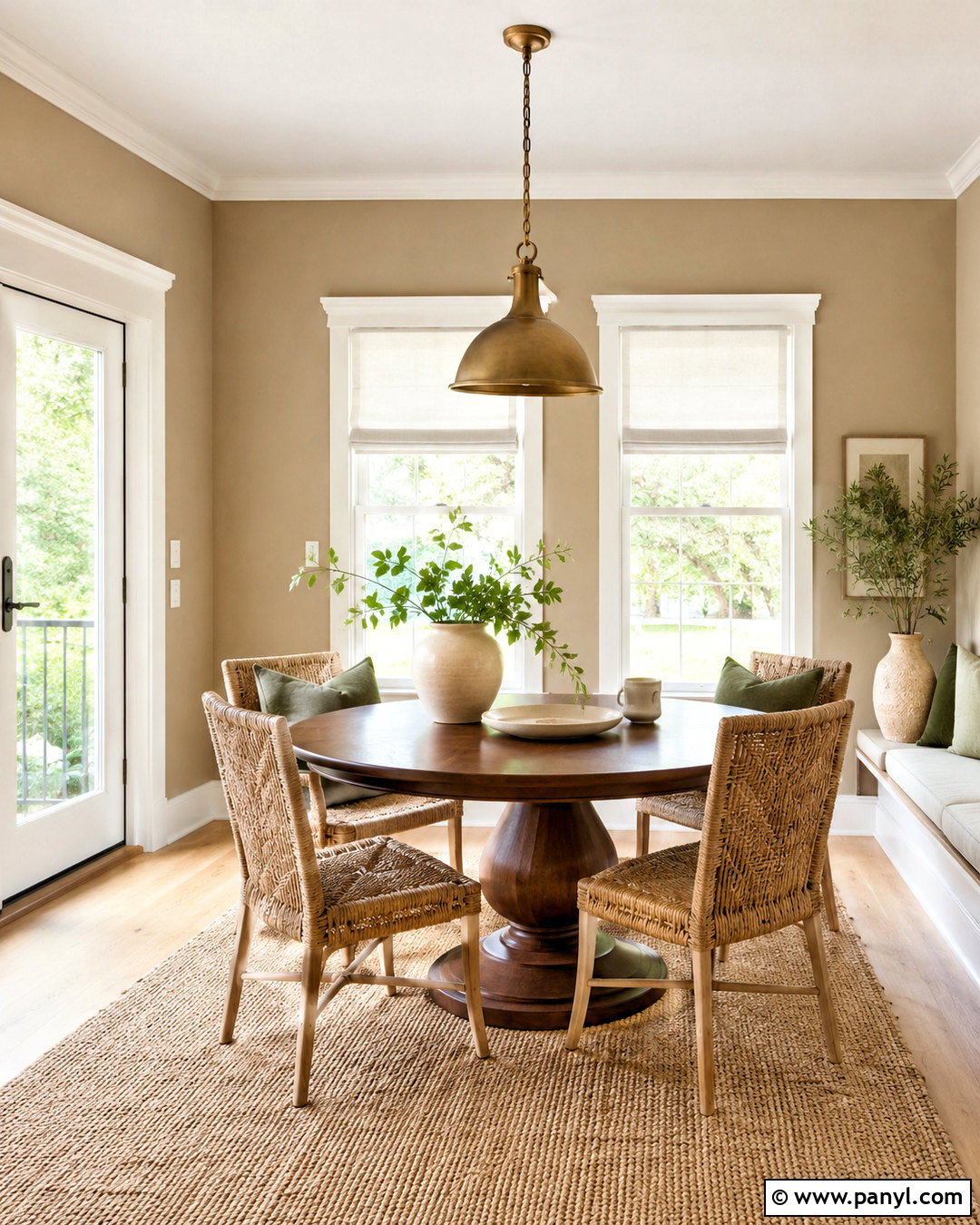
8. Brown And Cream Living Room Walls
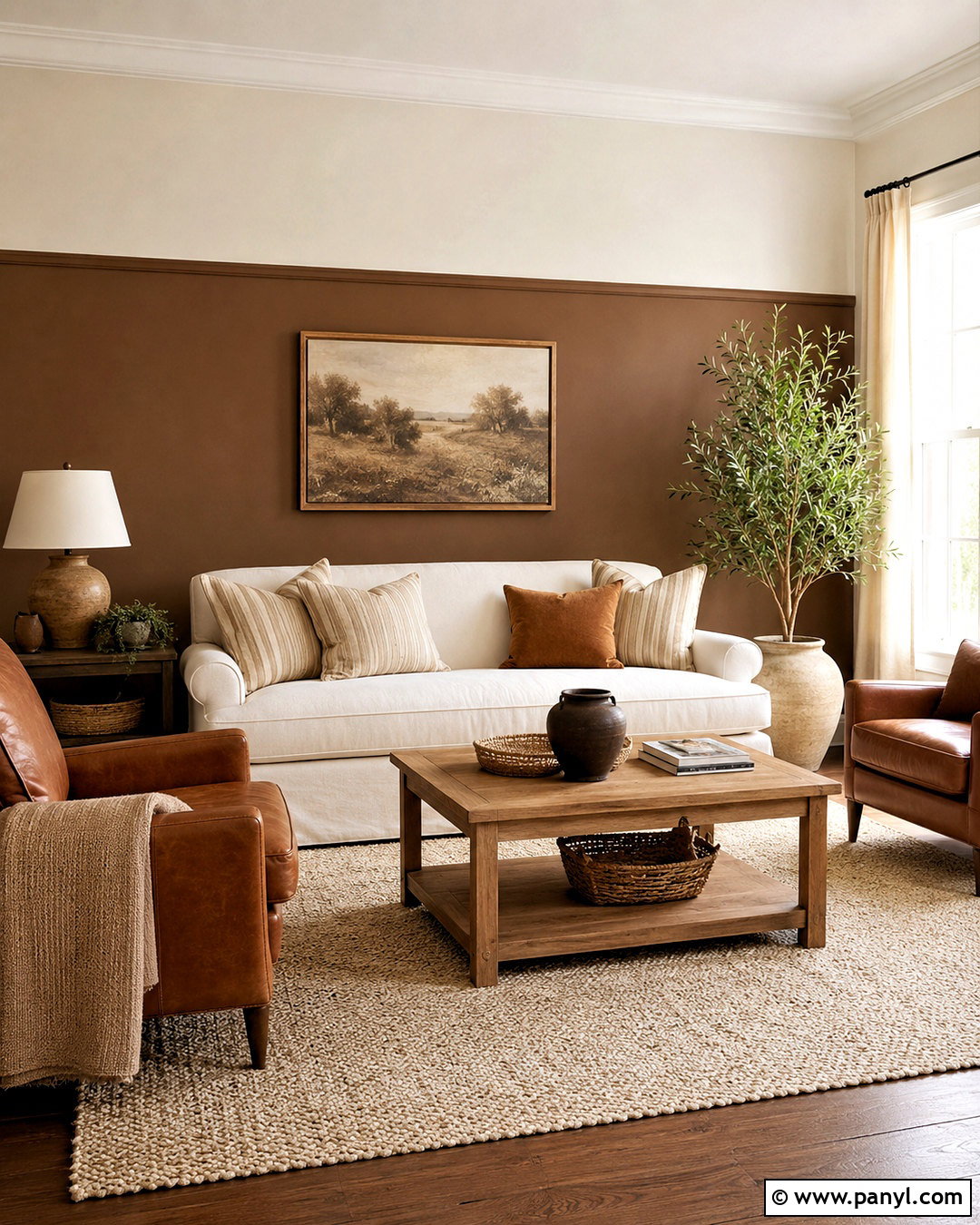
Brown and cream create a timeless living room palette with plenty of natural warmth. Paint the lower two-thirds of the walls a medium roasted brown and use creamy white above a slim picture rail. This division gives the darker shade substance without overwhelming the room. Add a cream slipcovered sofa, two camel leather chairs, and a broad oak coffee table. Layer an ivory rug over medium wood flooring, then introduce brown-striped pillows and nubby beige throws. Linen curtains should closely match the upper walls to maintain an open feeling. Use ceramic lamps, woven baskets, and understated landscape art as finishing details. The full design feels relaxed and coordinated, making it suitable for traditional, transitional, or casual family interiors.
9. Brown And Blue Bedroom Walls
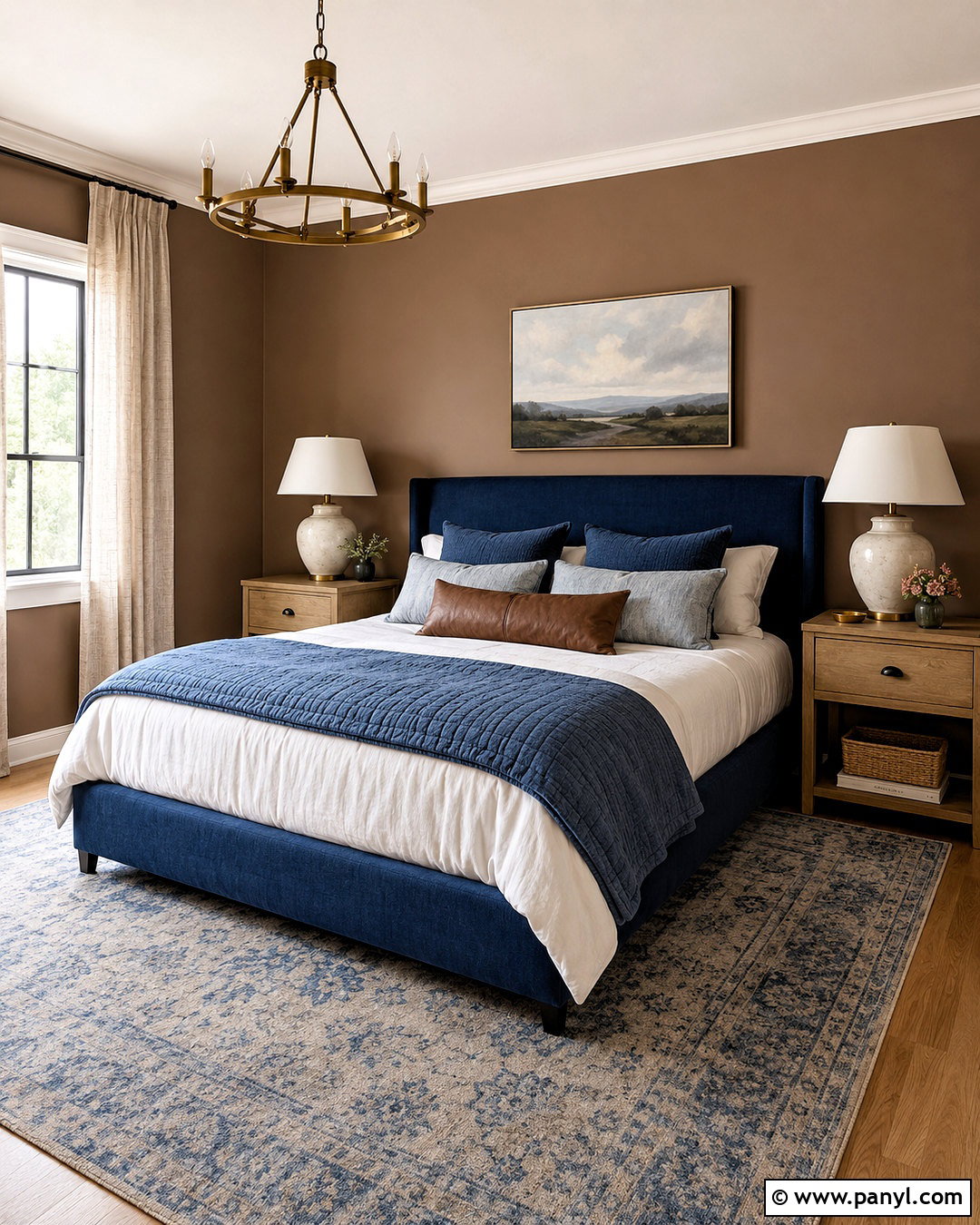
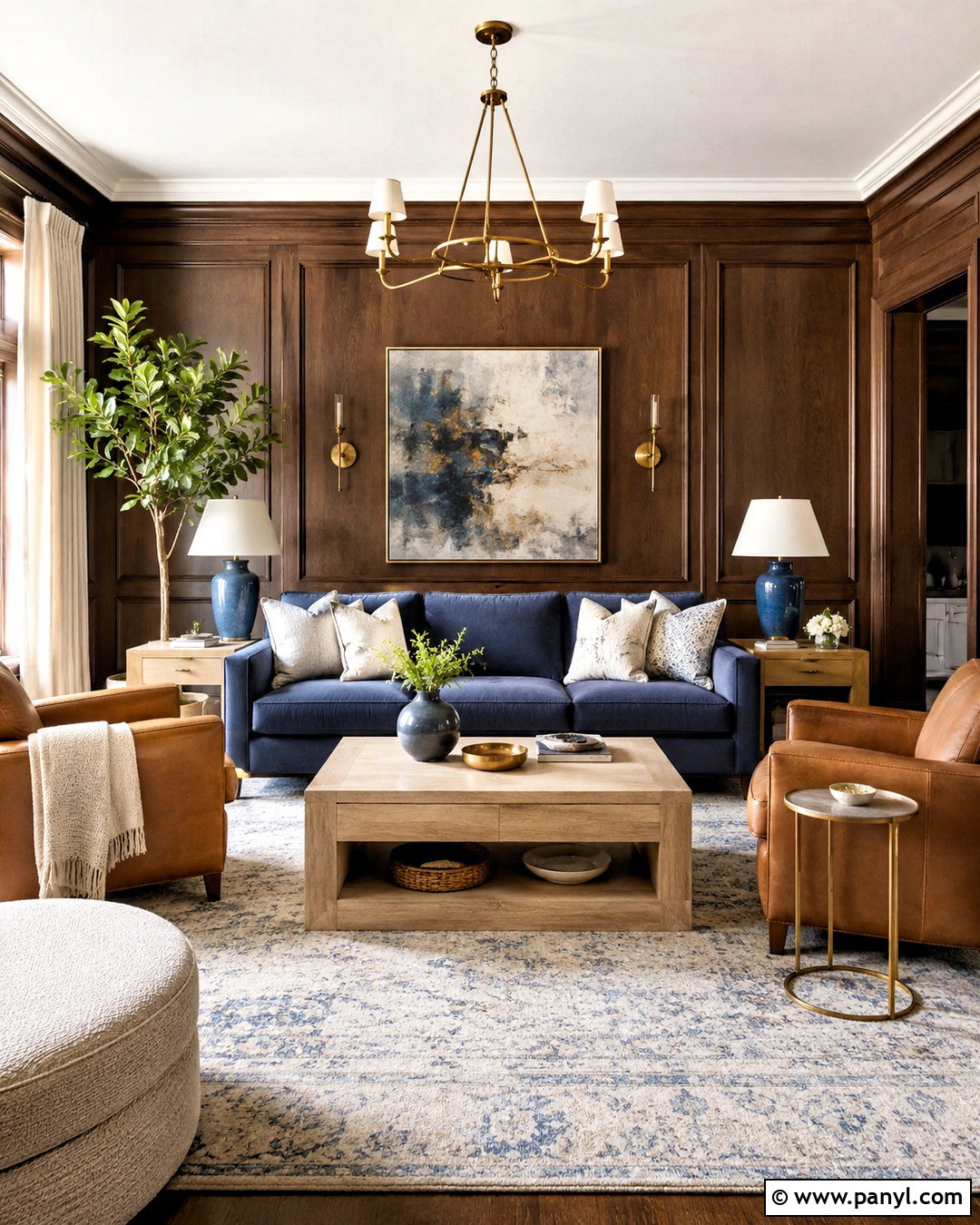
Brown walls provide a grounded backdrop for cool blue bedroom accents. Start with a muted milk-chocolate paint that has neutral rather than reddish undertones. Cover the walls evenly, then add a navy upholstered bed with white bedding and a quilt in faded denim blue. Light oak nightstands keep the darker colors from dominating, while cream ceramic lamps add symmetry. Choose an ivory rug with a subtle blue pattern and hang natural linen curtains at the windows. Artwork featuring cloudy blue, tan, and white tones can connect the entire palette. Keep metal finishes consistent in aged brass or brushed nickel. The brown and blue combination produces a calm, balanced bedroom that feels layered and distinctive without relying on busy patterns or excessive decoration.
10. Brown And Green Living Room Walls
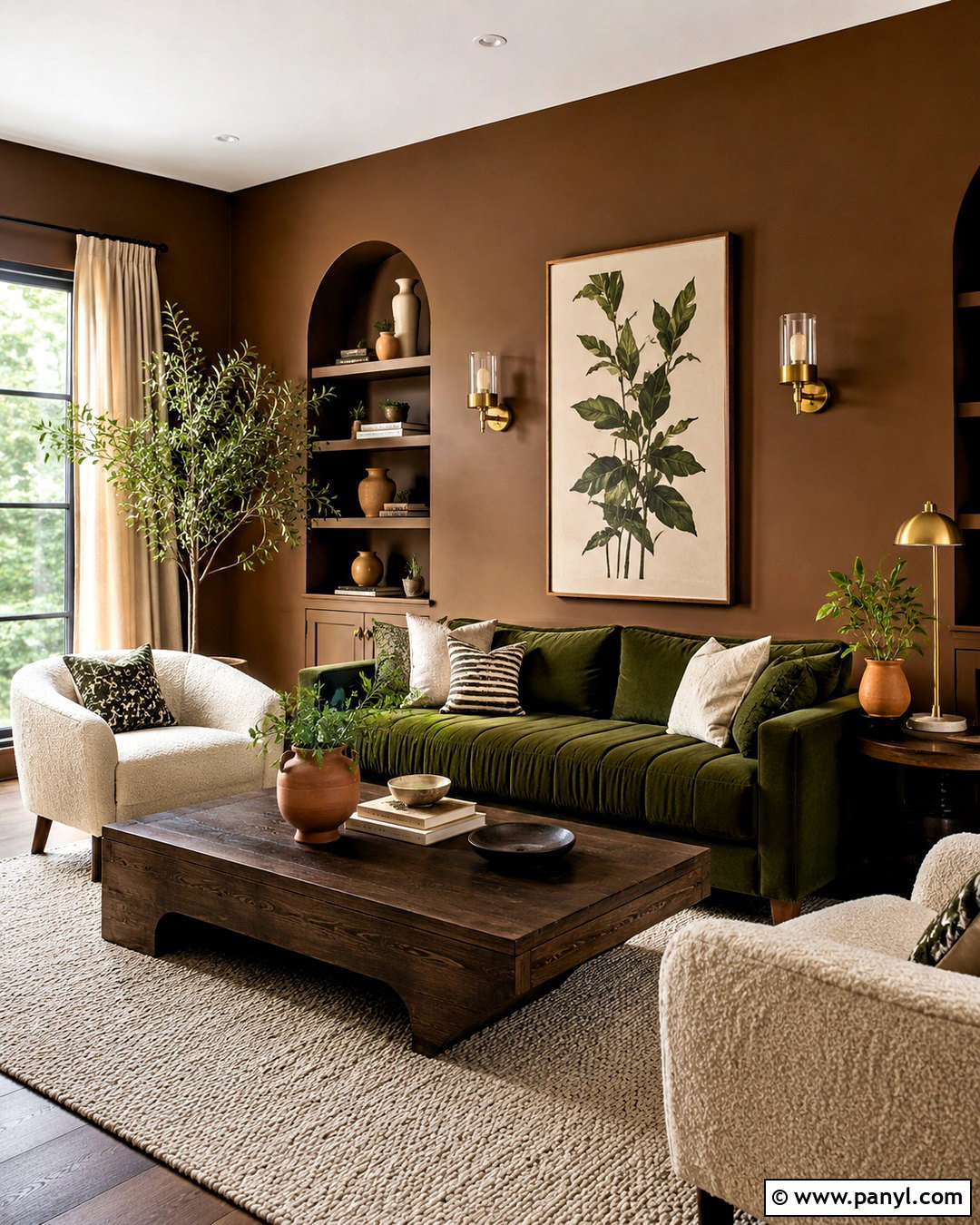
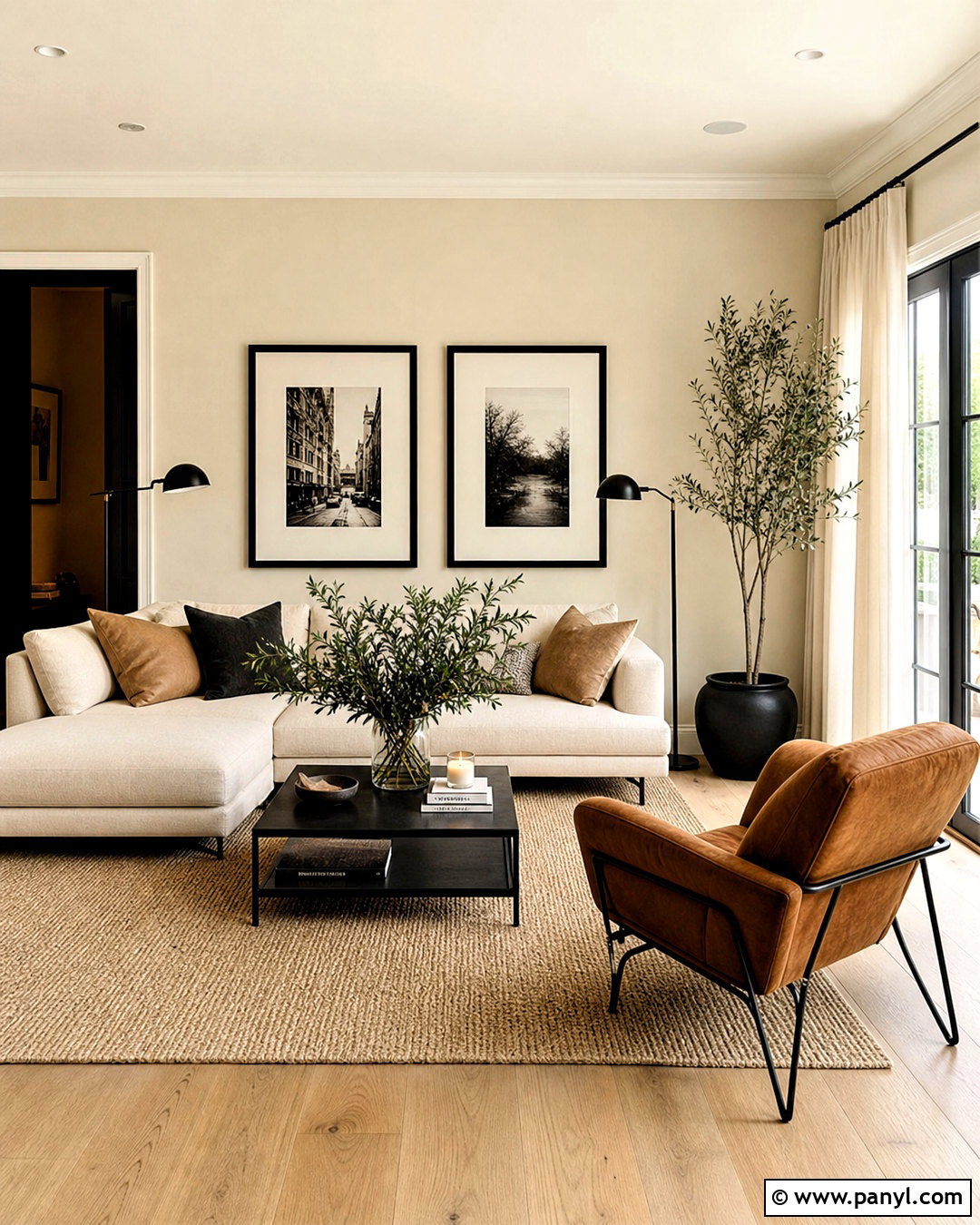
Earthy brown walls and green furnishings naturally create a restful living room. Use a medium bark-brown paint across every wall and repeat it on built-in shelving for a unified background. Place a moss green velvet sofa at the center of the seating area, accompanied by cream boucle chairs and a dark oak coffee table. Botanical artwork, terracotta planters, and several leafy plants strengthen the nature-inspired palette. Add an ivory rug to separate the furniture from medium wood flooring. Brass lamps introduce a refined glow without disturbing the organic mood. Keep the curtains light beige and full length. With balanced amounts of brown, green, cream, and natural wood, the room feels rich and restorative rather than themed or overly rustic.
11. Brown Bathroom Walls
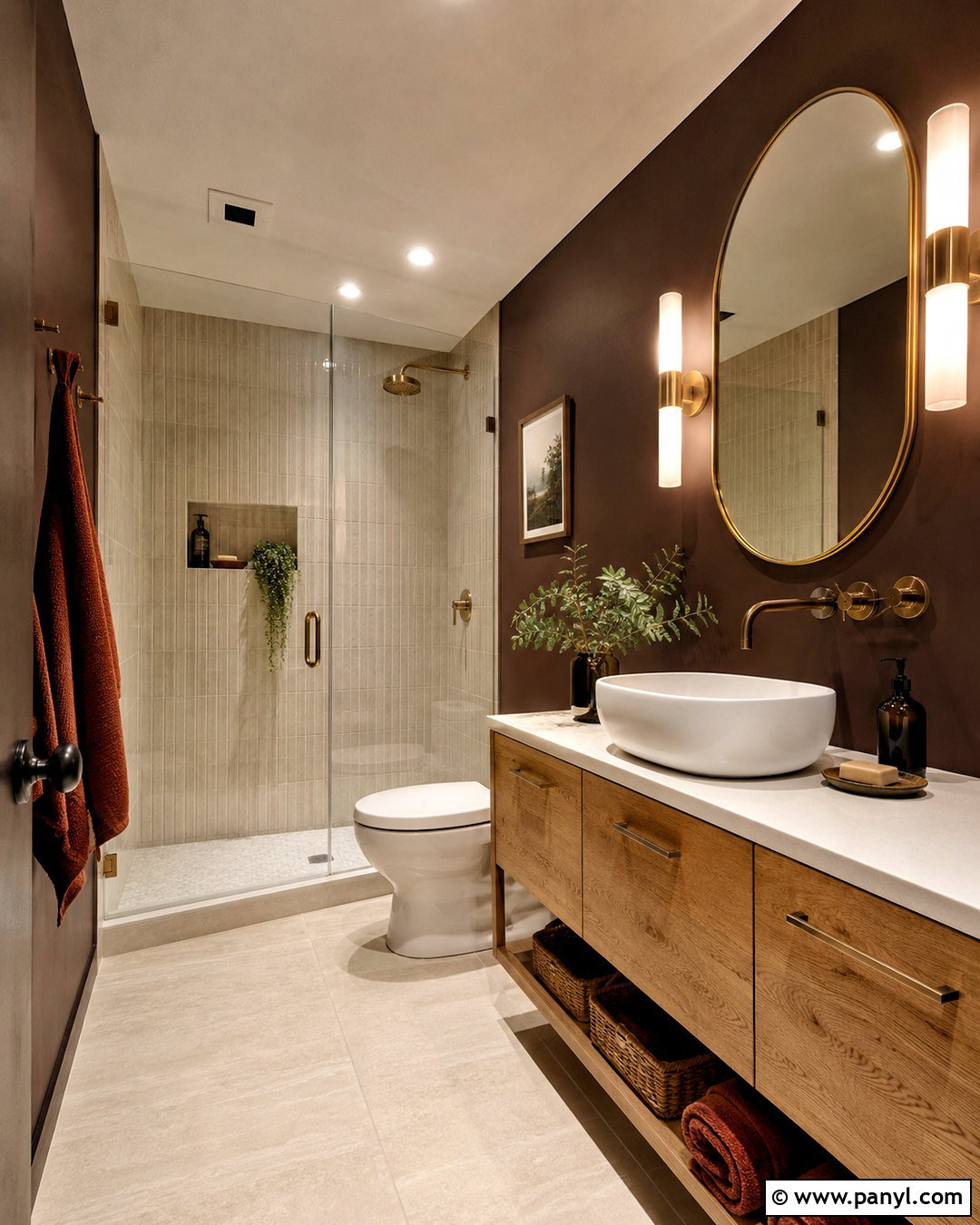
A compact bathroom is an ideal place to use rich brown paint with confidence. Cover the upper walls in a dark walnut shade and install ivory vertical tile around the shower and lower wall areas. A floating oak vanity keeps the floor visible, while a white quartz top supplies practical contrast. Select a rounded brass mirror, matching wall sconces, and a simple white vessel sink. Small-format cream floor tile prevents the room from becoming visually heavy. Add one rust hand towel, a woven basket, and a ceramic planter for warmth and texture. Use moisture-resistant satin paint so the brown surface is easy to maintain. The completed bathroom feels tailored and dramatic, yet the pale tile and reflective finishes preserve brightness.
12. Brown Home Office Walls
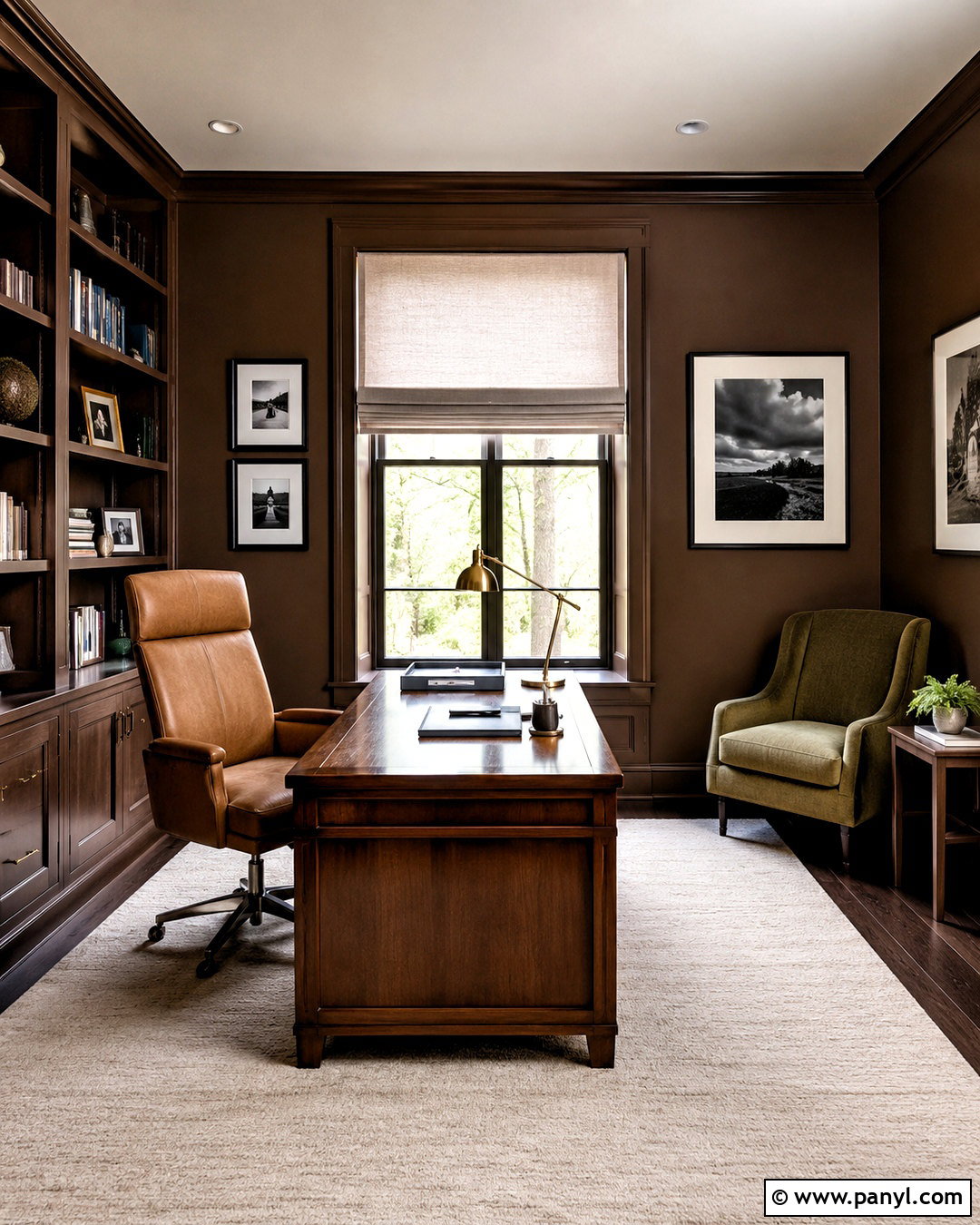
A focused home office benefits from the visual depth of warm brown walls. Paint the entire room in a muted tobacco brown, including the trim for a continuous, tailored effect. Place a substantial walnut desk near the window and use an ergonomic chair upholstered in camel-colored leather. Along one wall, install matching brown bookcases with closed storage below and open shelves above. A cream wool rug and oatmeal Roman shade provide lighter contrast. Add a brass desk lamp, framed black-and-white photography, and a small olive green reading chair in the corner. Keep cords and supplies concealed so the saturated color remains sophisticated. The resulting office feels quiet, organized, and professional enough for both concentrated work and video meetings.
13. Caramel Brown Living Room Walls
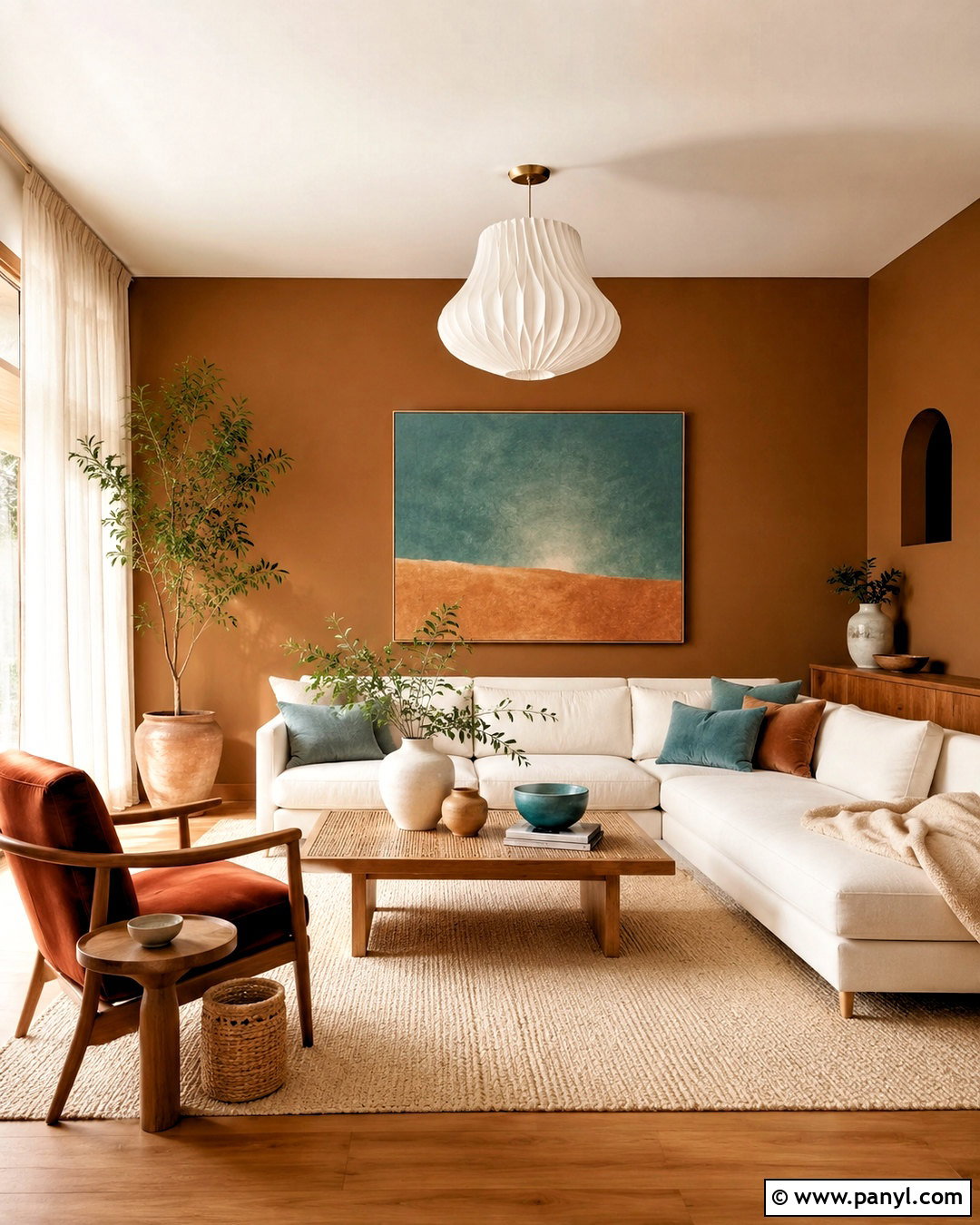
Caramel brown walls bring a sunny warmth to a living room without looking yellow or orange. Select a softly muted shade and pair it with an ivory sofa, pale oak furniture, and a generously sized cream rug. A rust velvet chair can deepen the palette, while faded teal pillows add a cool counterpoint. Use sheer linen curtains to filter daylight and highlight the wall color’s warm character. A sculptural white pendant prevents the ceiling area from appearing forgotten. Decorate with handmade pottery, woven baskets, and one large contemporary painting containing cream, teal, and terracotta. Keep the furniture shapes clean and uncomplicated. This combination creates a welcoming everyday space that feels brighter and more casual than a traditional dark brown room.
14. Mushroom Brown Bedroom Walls
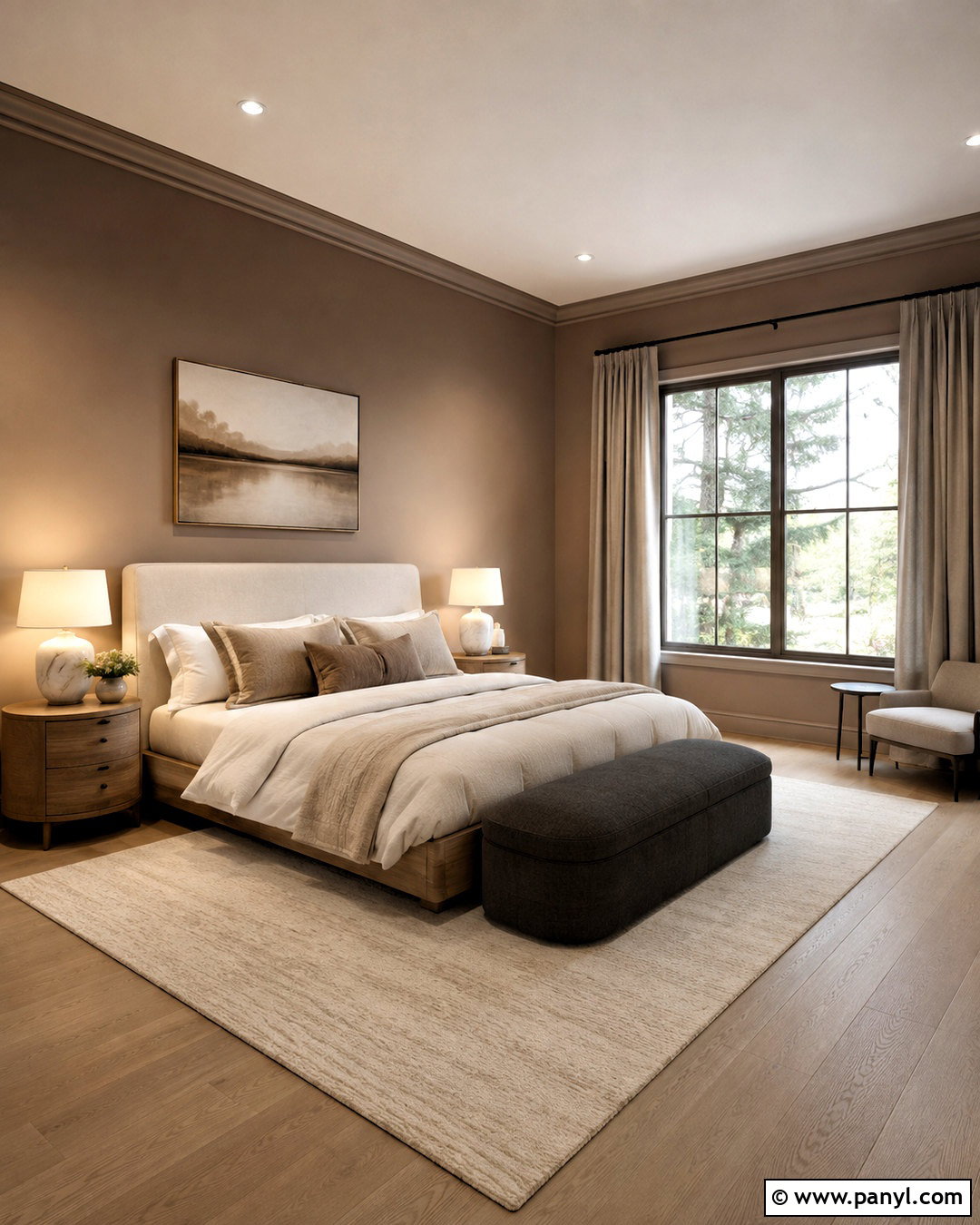
Mushroom brown offers an understated bedroom backdrop that changes gently with natural light. Choose a soft shade combining taupe, beige, and faint brown undertones, then continue it onto the trim for a smooth finish. Bring in a low oak bed with an oatmeal upholstered headboard and layer the bedding in warm white, flax, and pale cocoa. Place rounded wooden nightstands on both sides and add small alabaster lamps. A textured cream rug softens the floor, while full-length greige curtains support the tonal palette. Introduce contrast through one charcoal bench or dark bronze curtain rod. The limited range of warm neutrals makes the room feel quiet and spacious, but varied fabrics and curved furniture prevent it from looking plain.
15. Brown Entryway Walls
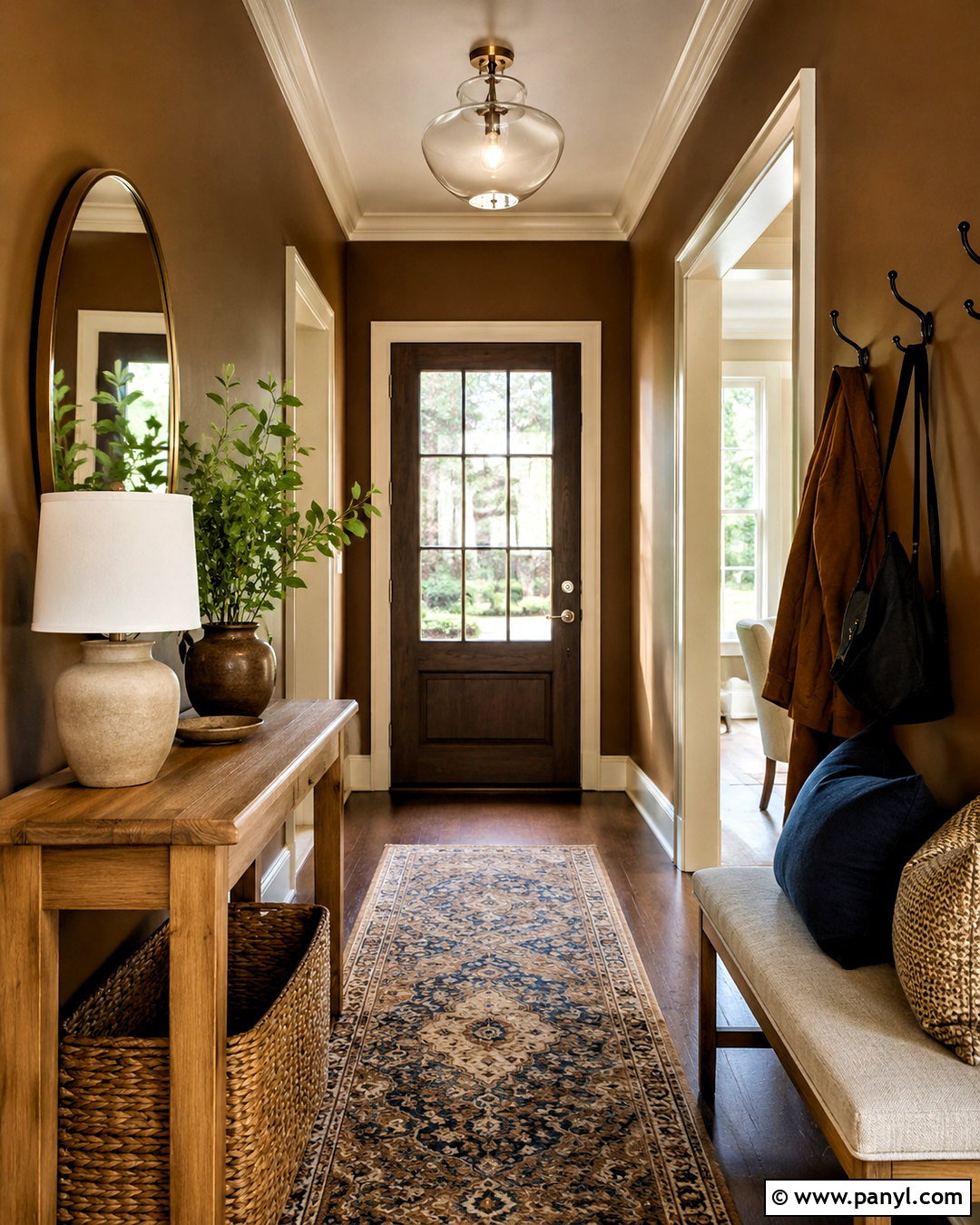
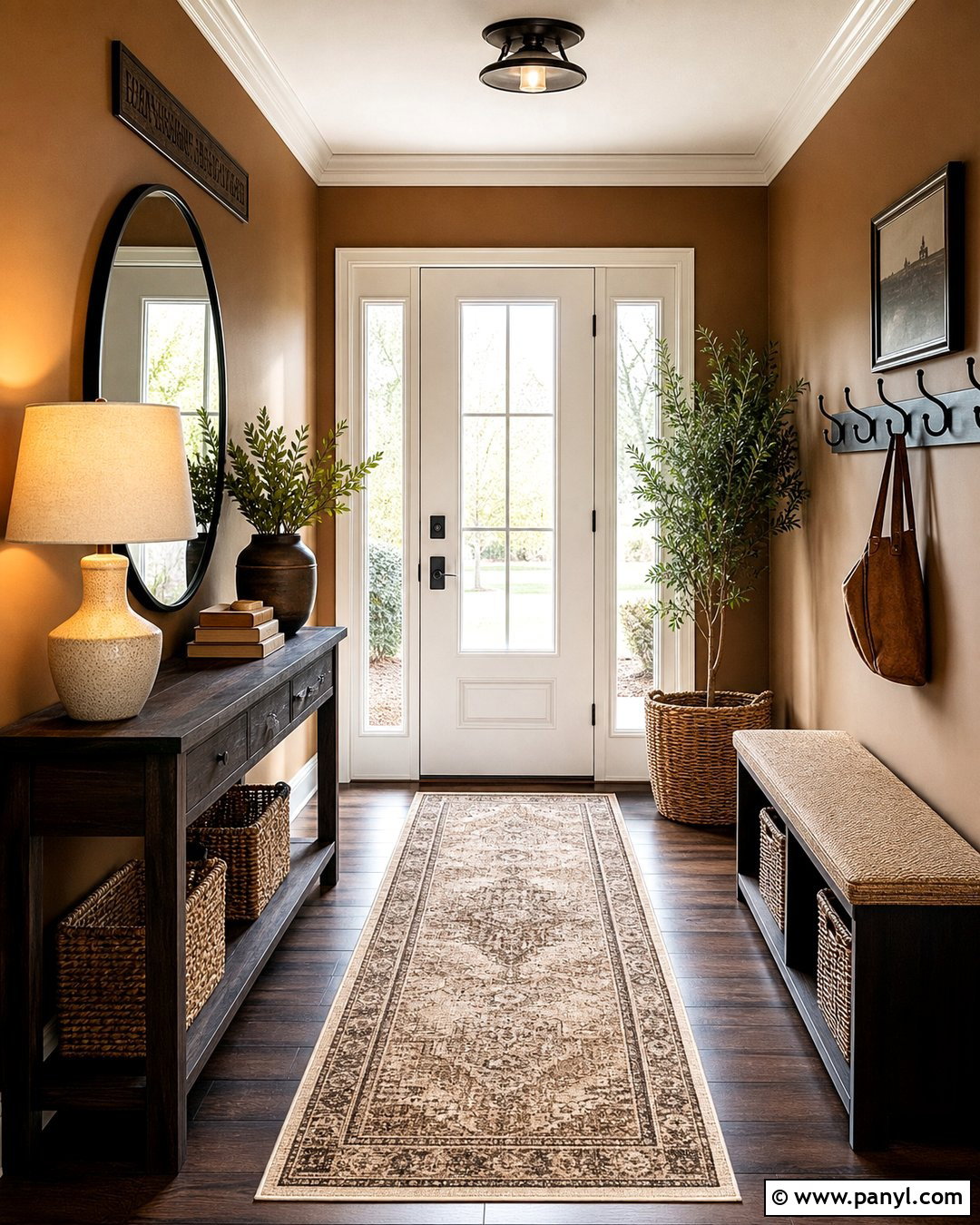
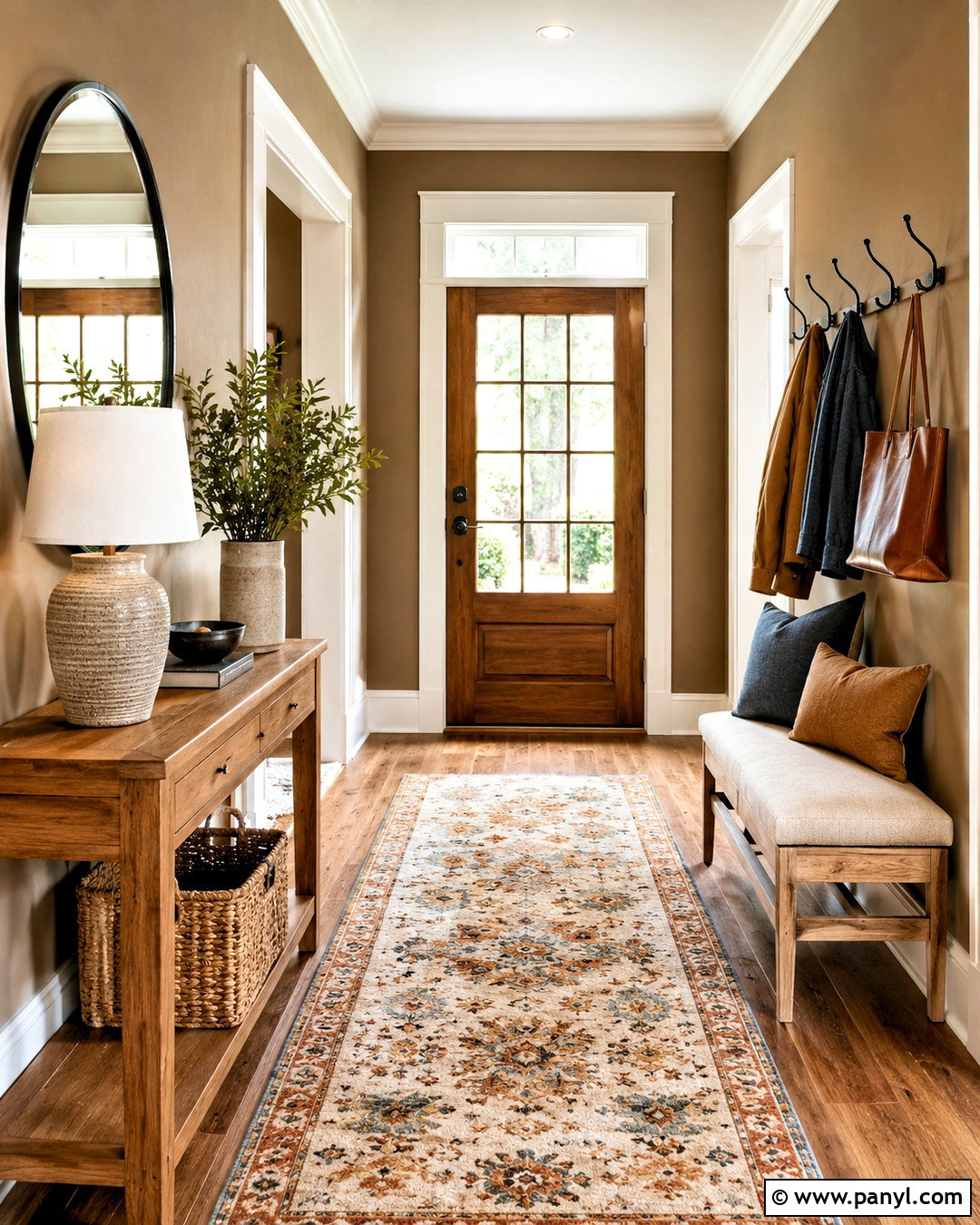
Brown walls can make an entryway feel welcoming the moment the door opens. Use a medium chestnut shade with enough depth to disguise everyday scuffs, and pair it with creamy white trim for definition. Position a narrow oak console against the longest wall with a large round brass mirror above it. A patterned runner in brown, blue, and ivory guides movement through the space while adding washable color. Include a small upholstered bench, wall hooks, and a woven basket for practical storage. If the entry has limited daylight, use a clear-glass ceiling fixture and a shaded table lamp. A vase of leafy branches completes the arrangement. The finished entrance combines warmth, function, and a polished first impression without requiring excessive furniture.
16. Brown Color Drenched Bedroom
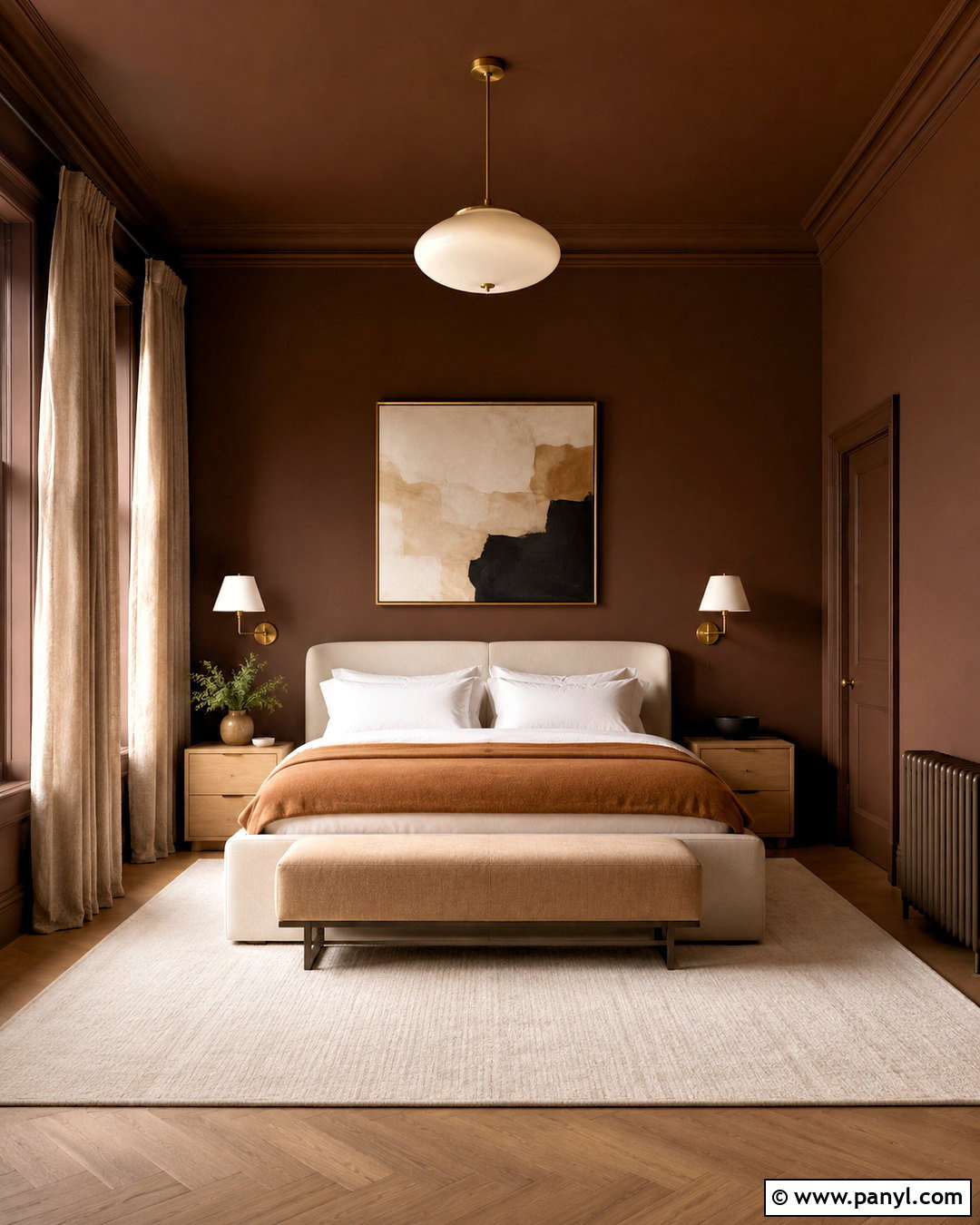
Color drenching gives brown paint a modern, enveloping presence in a bedroom. Apply a medium cocoa shade to the walls, ceiling, trim, doors, and radiator so architectural interruptions visually disappear. Use an eggshell finish on the walls and a more durable satin finish on woodwork. Against this unified background, place a cream upholstered bed with crisp white linens and a caramel wool blanket. Pale oak nightstands and a broad ivory rug provide necessary brightness. Add sculptural brass sconces, one oversized abstract painting, and linen curtains in a slightly lighter brown. Keep smaller accessories to a minimum. The uninterrupted paint treatment makes the room feel carefully designed, while the pale furnishings ensure the completed space remains comfortable rather than overwhelmingly dark.
17. Brown Wall Paneling Living Room
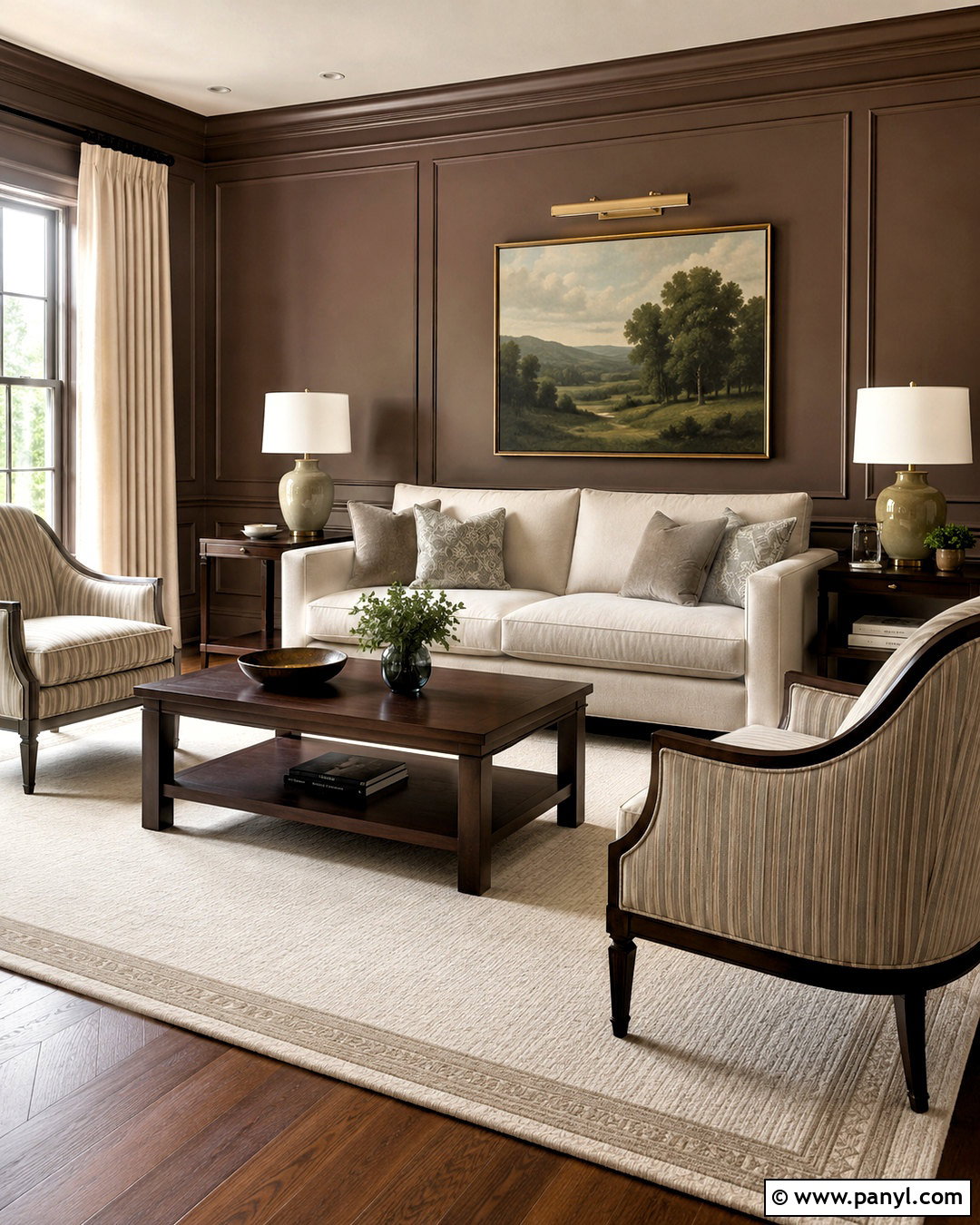
Painted wall paneling gives brown a sense of depth that flat drywall cannot always achieve. Install simple rectangular molding across the living room walls, then coat the panels and trim in a rich truffle brown. Add a tailored cream sofa, two striped linen chairs, and a dark walnut coffee table to create a transitional seating arrangement. An ivory rug with a thin brown border reinforces the architecture without competing with it. Hang a large landscape painting in muted greens and golds above the sofa, illuminated by a brass picture light. Full-length cream curtains soften the structured walls. Finish with ceramic lamps and a few antique-style objects. The room appears established and architectural while still functioning as an inviting everyday gathering place.
18. Rustic Brown Living Room Walls
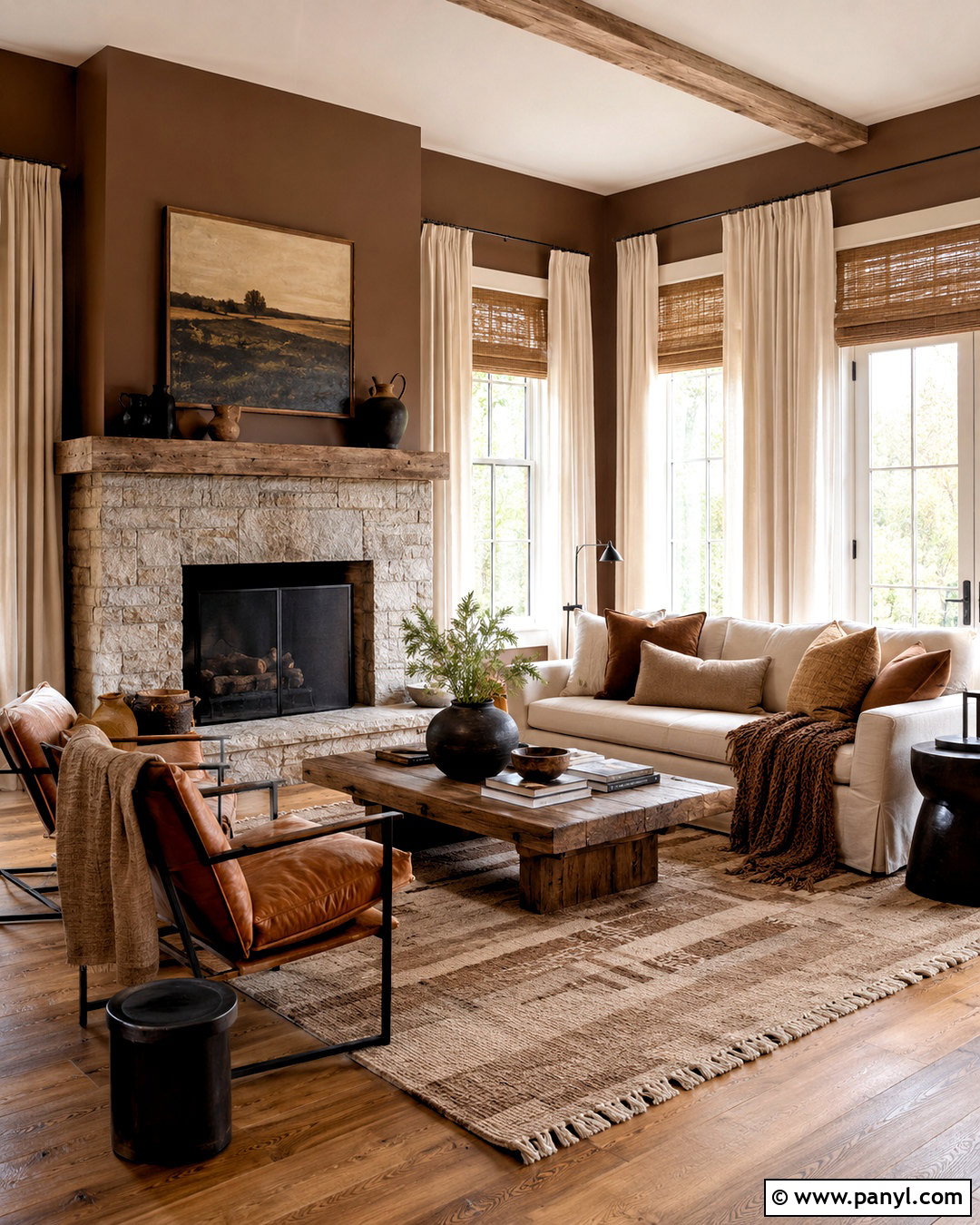
Rustic interiors look more cohesive when brown wall paint connects natural wood, stone, and woven materials. Select a warm soil-brown shade with a matte finish and apply it throughout the room. Build the seating area around a simple stone fireplace, using a linen sofa, cognac leather chairs, and a reclaimed oak coffee table. Choose a large cream-and-brown wool rug to soften wide-plank flooring. Woven shades and ivory curtains control light without hiding the windows. Add black iron lamps, handmade pottery, textured blankets, and muted landscape artwork. Avoid filling every surface with themed accessories. The brown walls should serve as the quiet background for honest materials, creating a complete rustic room that feels relaxed, functional, and naturally collected.
19. Modern Brown Living Room Walls
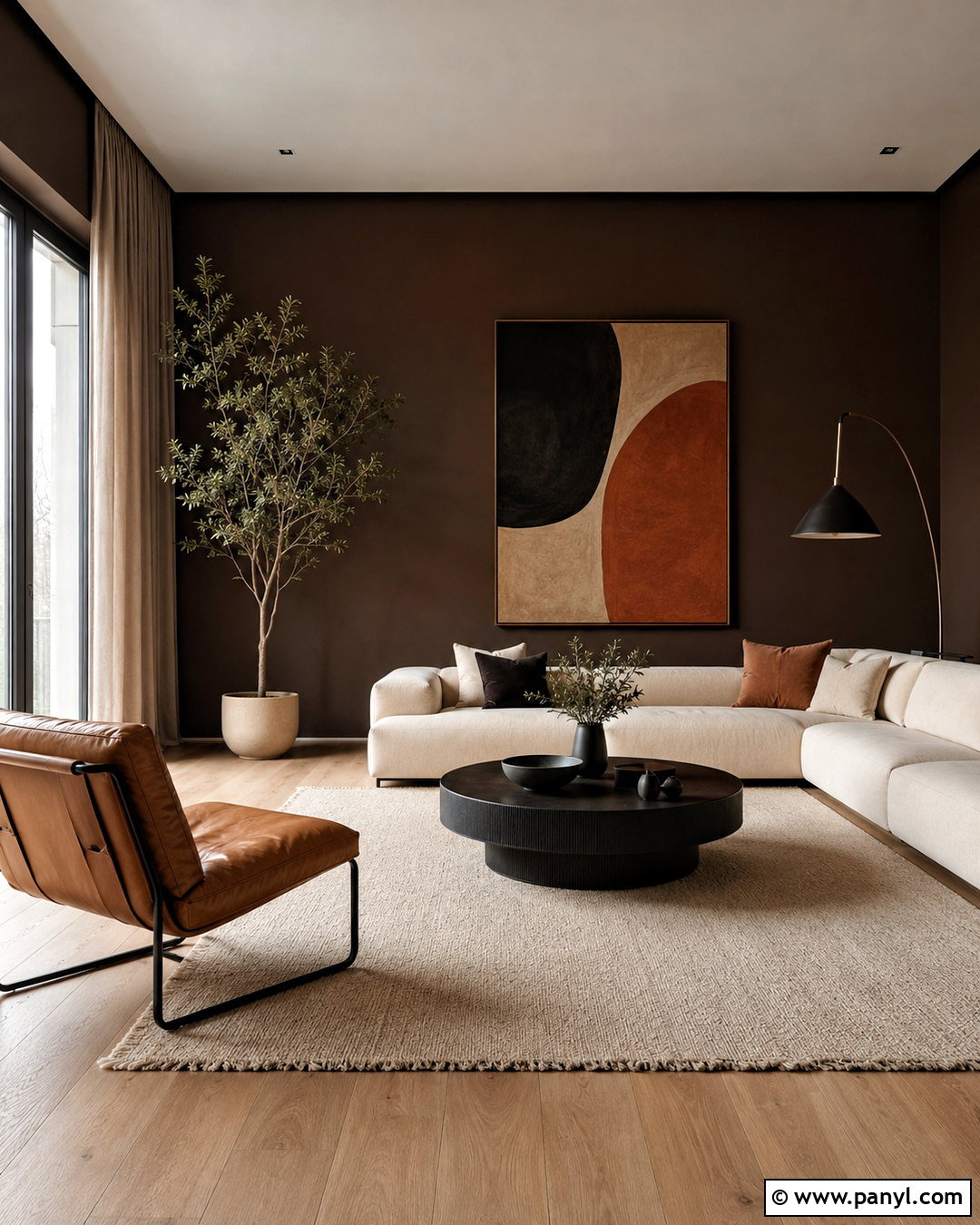
For a streamlined interior, combine brown walls with sculptural furniture and strong negative space. Paint the room in a neutral dark mocha with minimal red or orange undertones. Place a low cream sectional against one wall and pair it with a rounded black coffee table and a single tan leather lounge chair. Use a large off-white rug to define the arrangement over pale oak flooring. Abstract artwork in black, rust, and ivory gives the walls energy without creating clutter. Add a slim metal floor lamp and one oversized planter with architectural greenery. Keep curtains close in color to the walls for a continuous effect. The overall living room feels contemporary and warm, proving that minimalist rooms do not need to rely on white or cool gray.
20. Brown Nursery Walls
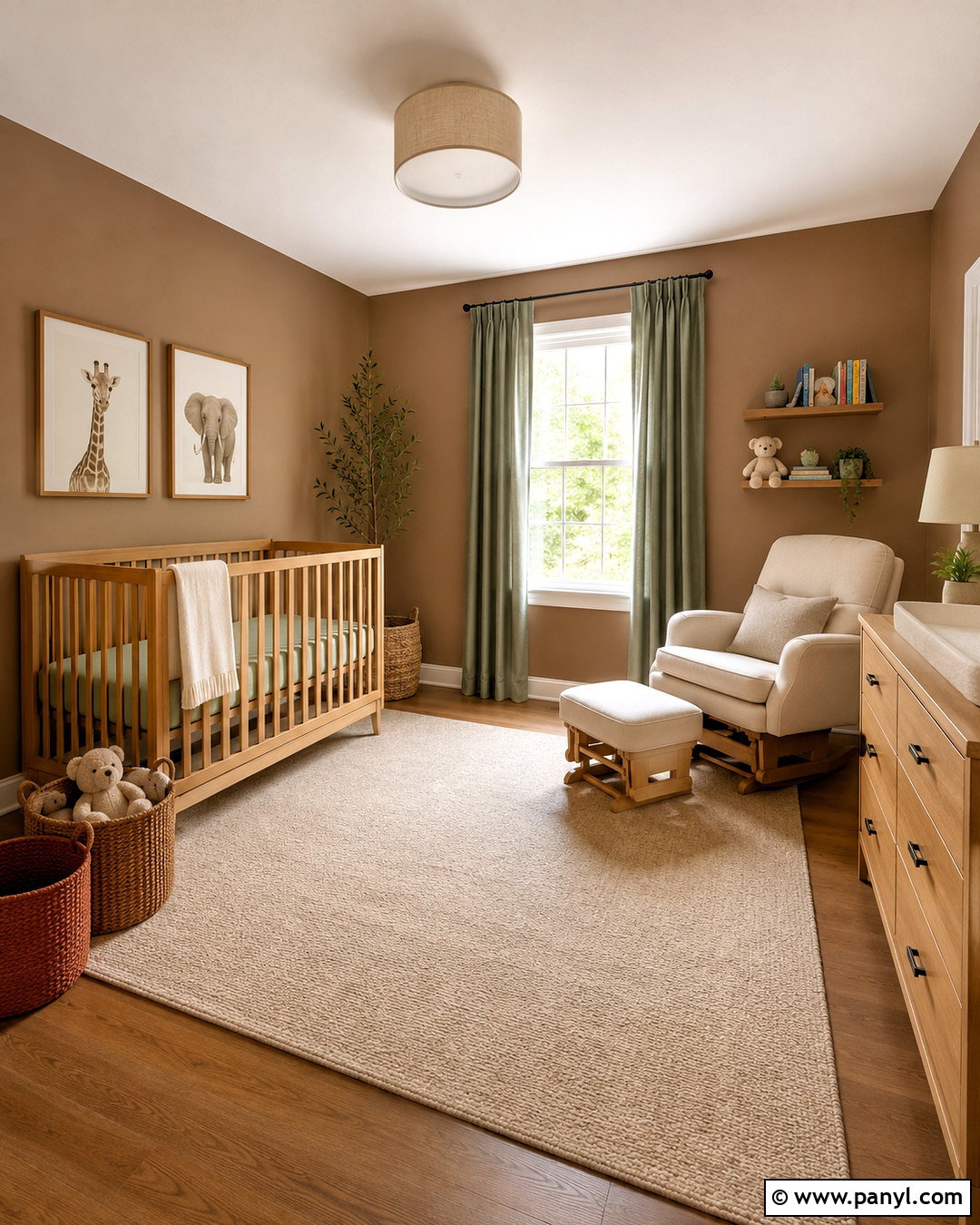
Soft brown walls can give a nursery a gentle, gender-neutral foundation that grows with the child. Choose a light café-au-lait shade and use warm white for the ceiling and simple trim. Position a natural oak crib against a clear wall away from windows, cords, and hanging objects. Add a cream upholstered glider, a washable beige rug, and a low oak dresser with secure wall anchoring. Muted sage curtains, animal artwork, and rust-colored storage baskets introduce playful color without overwhelming the room. Use a shaded ceiling fixture and a small wall-mounted reading light for layered illumination. The complete nursery feels warm and organized, with practical storage, comfortable seating, and an adaptable palette that can easily support changing bedding and artwork later.
21. Brown Kitchen And Dining Room Walls
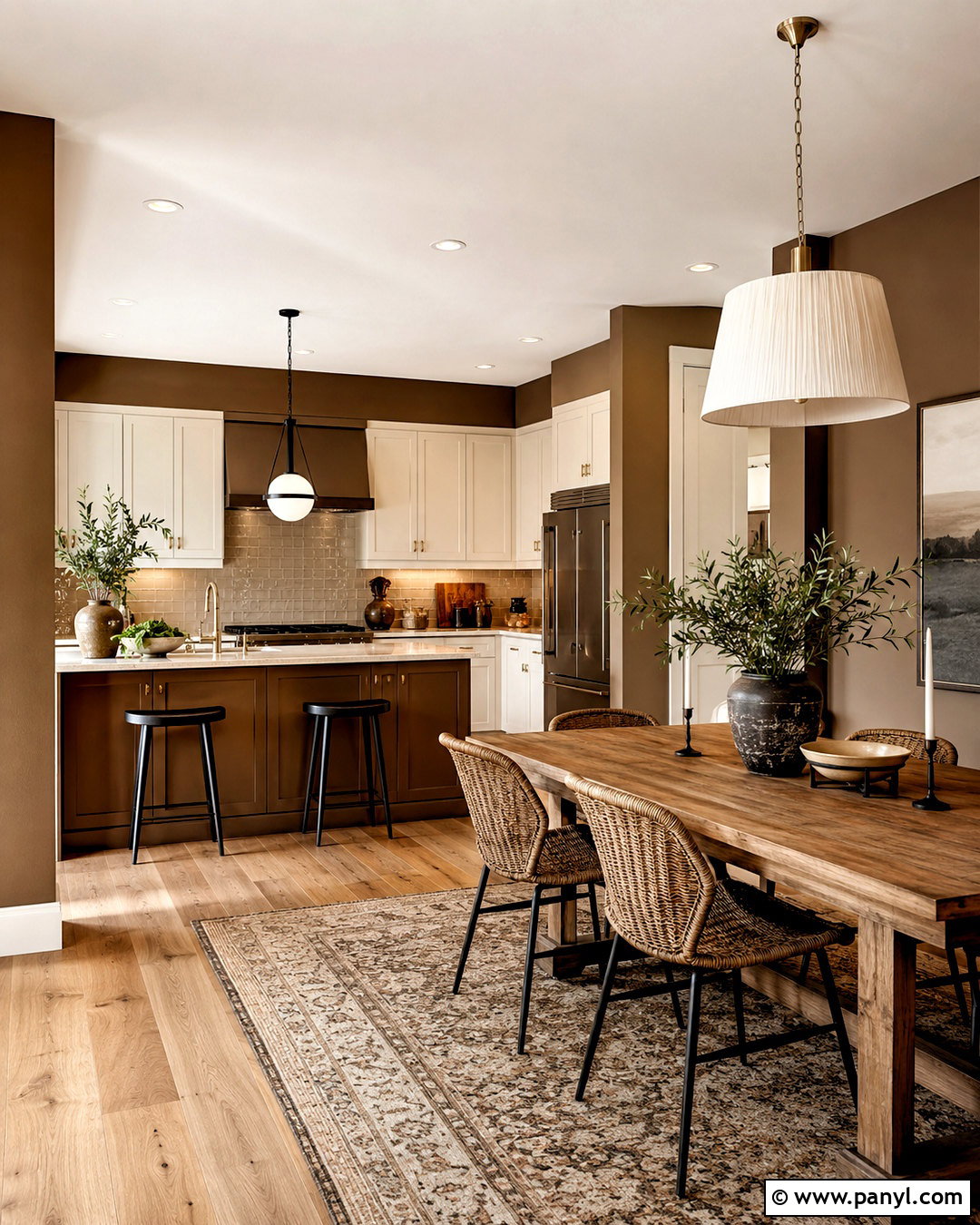
An open kitchen and dining area needs a brown paint color that connects both spaces without making them feel closed in. Use a medium mushroom brown on the walls, then repeat it on the kitchen island for continuity. Choose warm white perimeter cabinets, cream quartz counters, and lightly glazed tile for brightness. In the dining zone, place a medium oak table with woven chairs and a large ivory pendant. A washable rug with olive, brown, and cream details helps define the eating area. Use brushed brass hardware throughout both zones, and add black accents sparingly through window frames or chair legs. This coordinated material palette gives the open room a consistent identity while preserving clear functional areas for cooking, dining, and casual conversation.
22. Brown Fireplace Wall
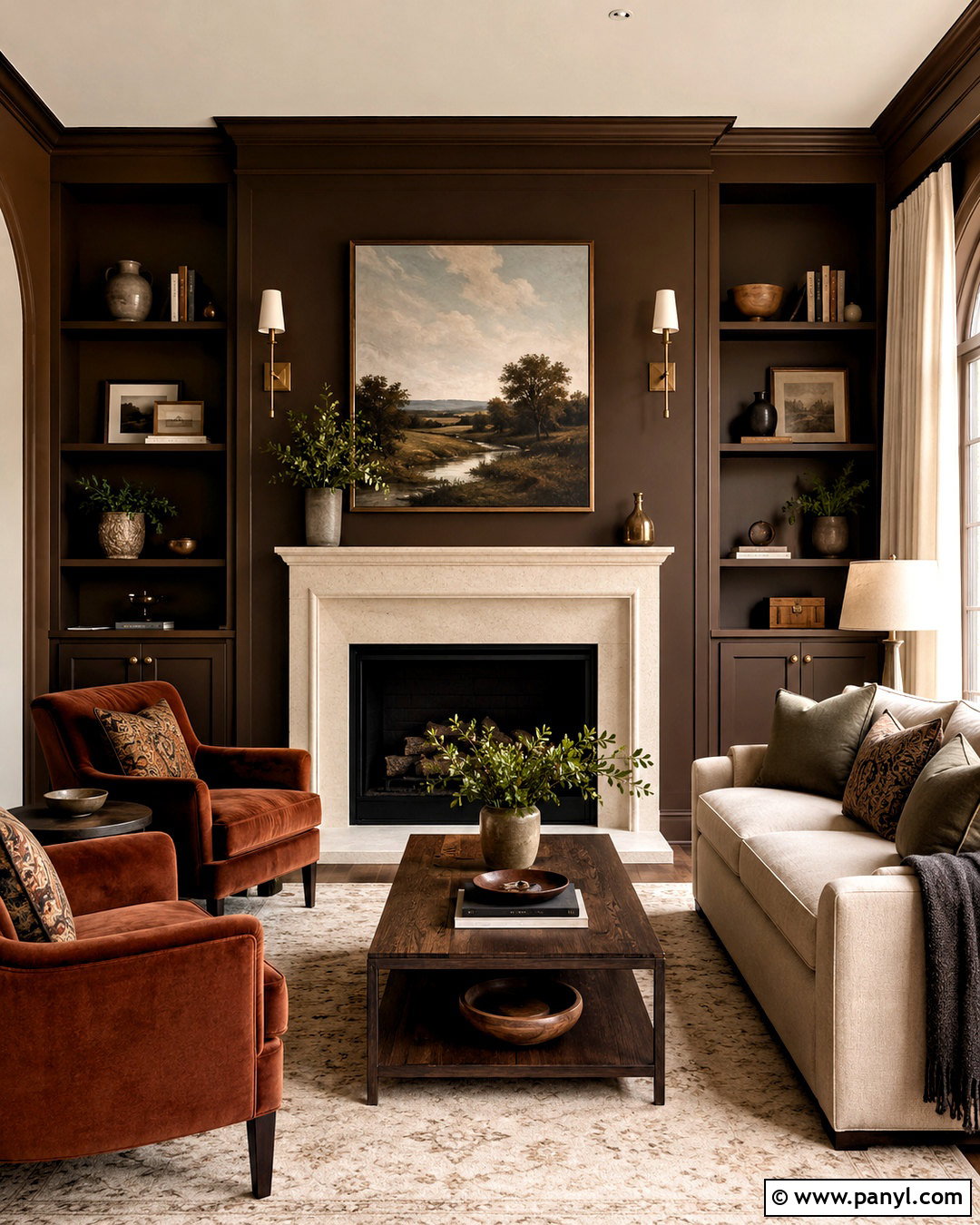
A brown fireplace wall can become a strong architectural center without requiring elaborate materials. Paint the full chimney breast and shallow built-ins in a deep coffee brown, using a durable eggshell finish. Surround the firebox with pale limestone or warm ivory tile so the opening remains clearly defined. Position a beige sofa and two rust armchairs around a broad walnut coffee table. Add a cream rug beneath the seating group and hang one substantial artwork above the mantel rather than several small pieces. Brass sconces on either side bring symmetry and gentle reflection. Repeat the brown through patterned pillows and wooden accessories. The complete setup makes the fireplace feel grounded and purposeful while keeping the living room comfortable and visually balanced.
23. Brown Walls With White Trim
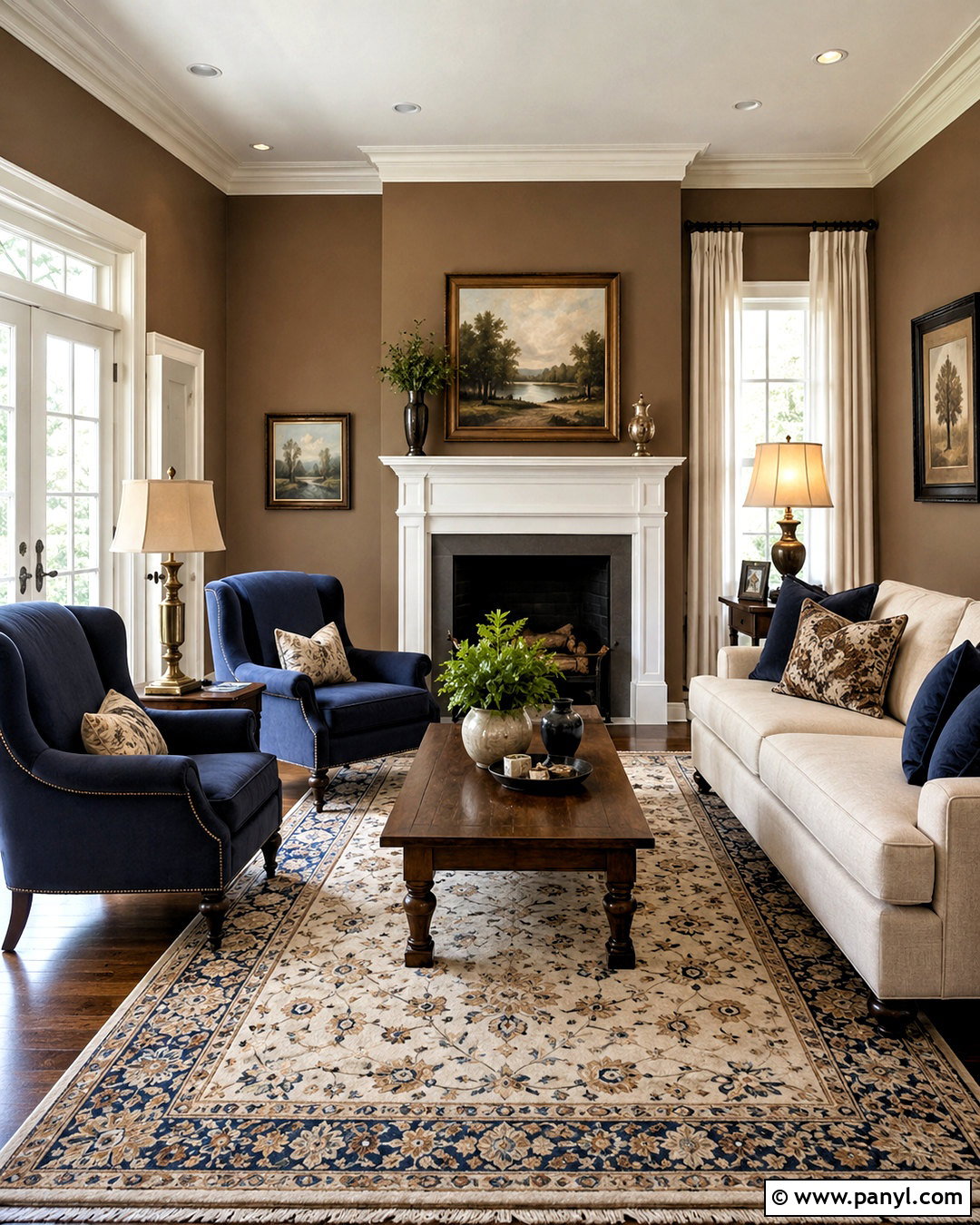
Crisp trim can give medium brown walls a clean, classic appearance. Select a neutral pecan-brown paint for the walls and use a warm white, not a blue-toned white, on baseboards, window casings, doors, and crown molding. Furnish the living room with a cream sofa, navy blue armchairs, and an oak coffee table. A patterned rug combining ivory, muted blue, and brown helps unite the contrasting colors. Hang tailored off-white curtains inside the window trim so the architectural outline remains visible. Add polished nickel or aged-brass lamps depending on the existing hardware. Traditional artwork in simple wood frames completes the room. The result feels fresh and structured because the pale trim clearly defines the brown surfaces and architectural details.
24. Brown Walls With Black Furniture
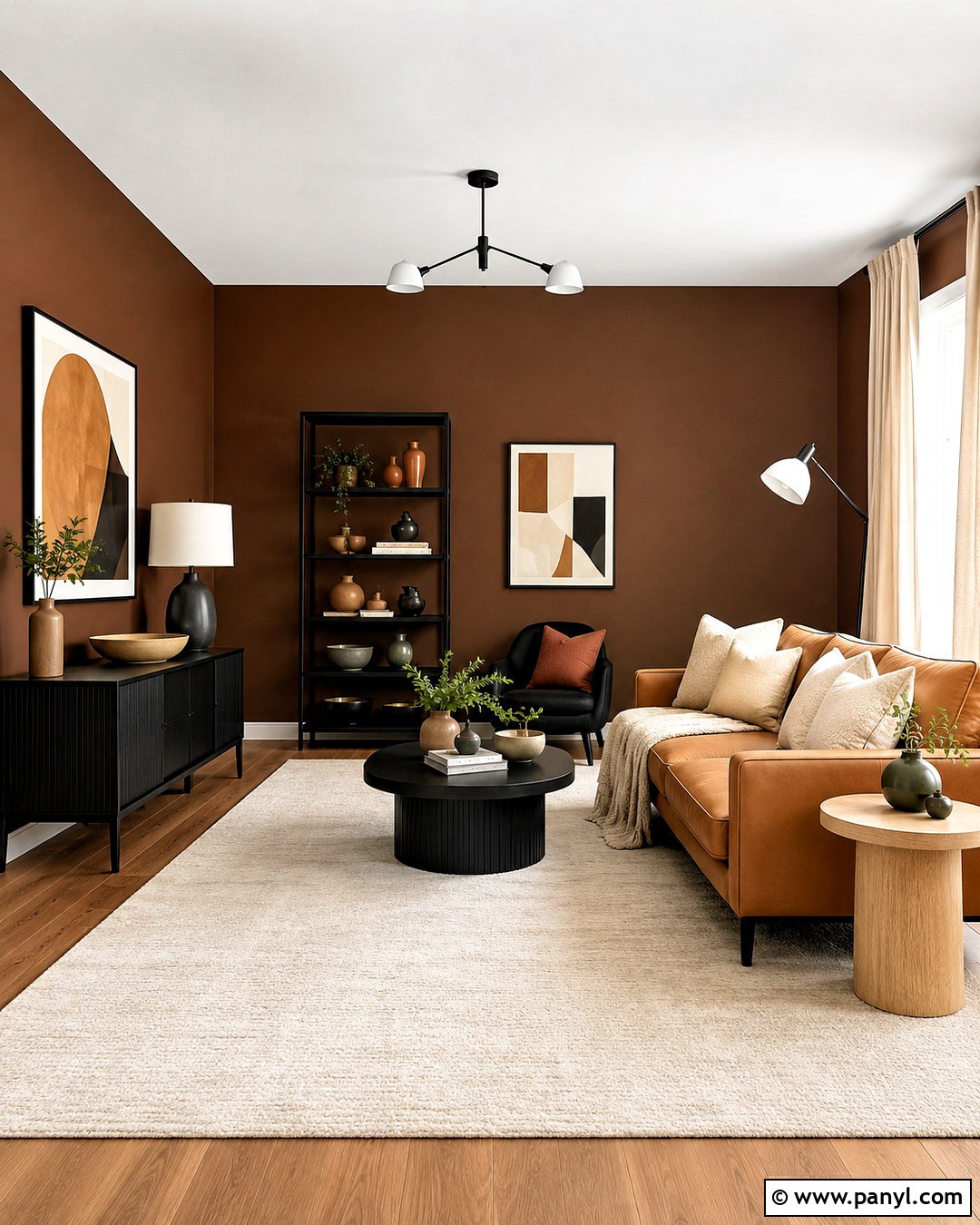
Black furniture gains warmth and softness when placed against earthy brown walls. Use a medium clay-brown paint that is noticeably lighter than the furniture, ensuring each silhouette remains visible. Arrange a black media console, slim black bookcase, and rounded black coffee table around a camel-colored sofa. Bring in a cream rug, oatmeal curtains, and ivory pillows to prevent the combination from becoming too dark. Pale oak side tables add another natural tone, while rust and olive accents create subtle variation. Choose matte black lighting with white shades to repeat the furniture finish without reducing brightness. A few large decorative pieces will look cleaner than many small objects. The completed room feels graphic, modern, and grounded, with a controlled balance of dark and light elements.
25. Brown Walls With Natural Wood
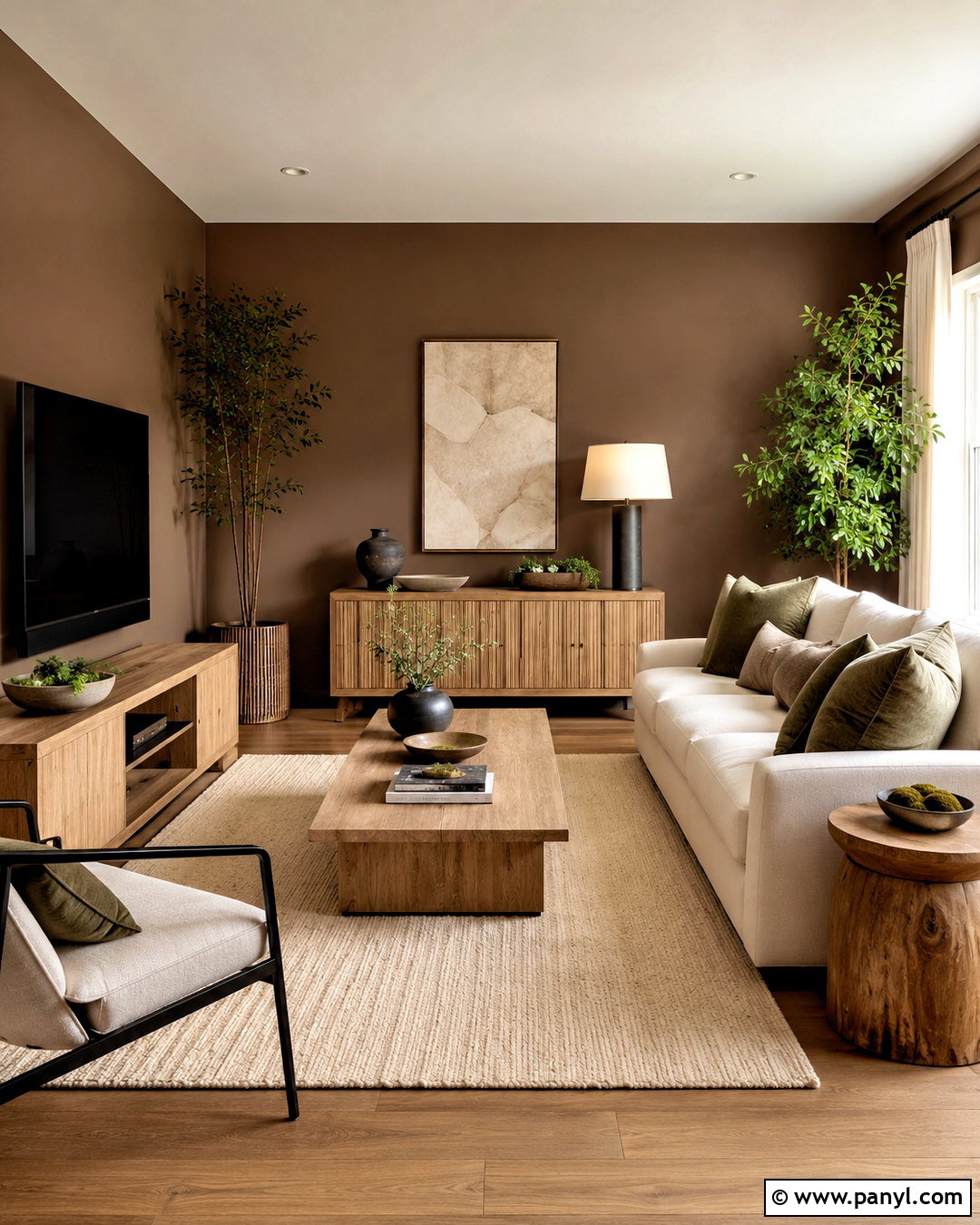
Layering brown paint with natural wood works best when the tones are related but not identical. Paint the walls a muted medium cocoa, then choose oak furniture that is several shades lighter. In a living room, combine a pale oak media cabinet, slatted sideboard, and simple coffee table with a warm white sofa. Add a textured cream rug and oatmeal curtains to separate the brown surfaces. Black metal chair frames and lighting provide a crisp outline, while green pillows and plants introduce freshness. Avoid using five unrelated wood stains in the same room. Repeating one main wood species creates consistency. With thoughtful contrast, the brown walls frame the grain beautifully, producing an organic interior that feels layered rather than uniformly brown.
26. Brown Walls With Pink Accents
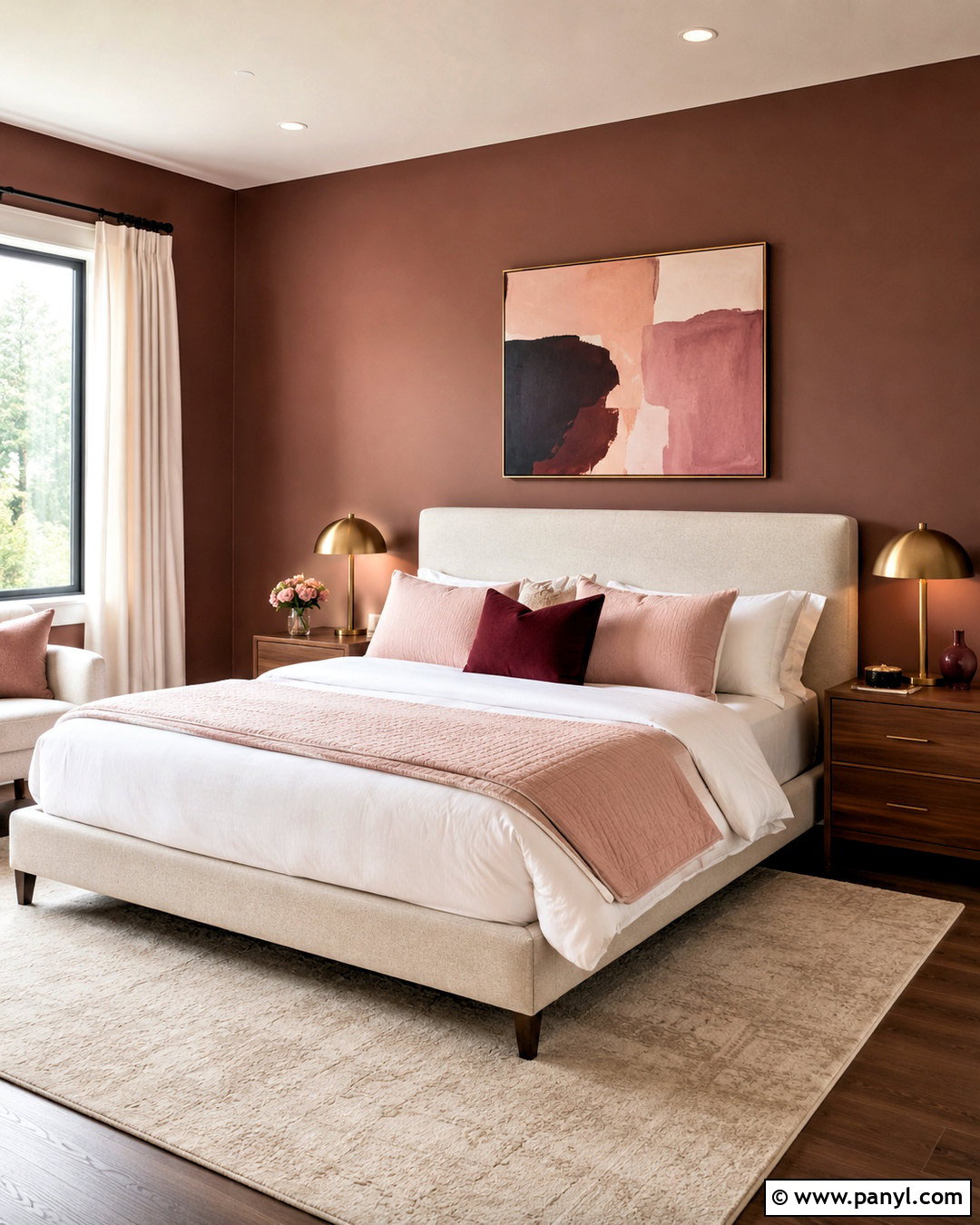
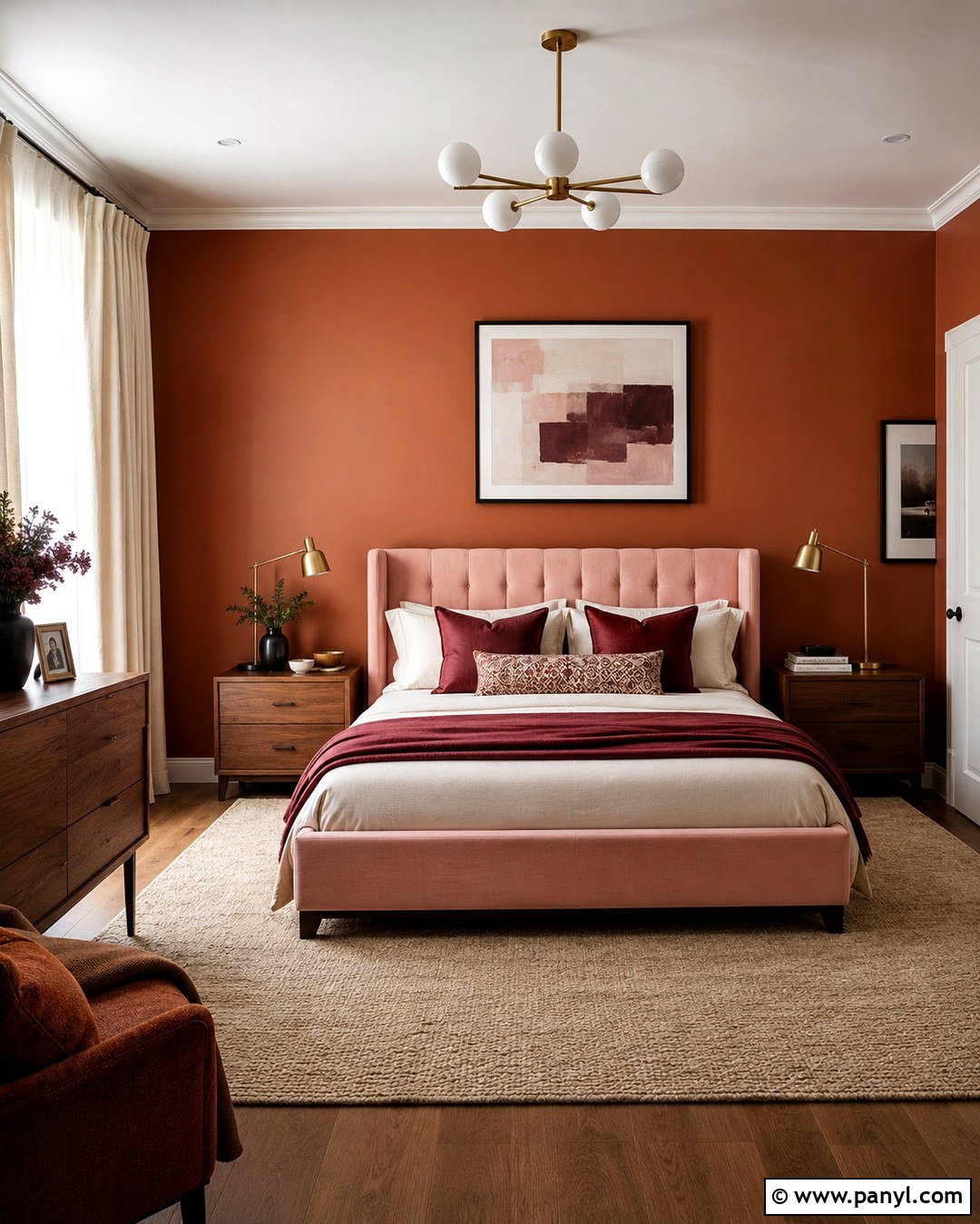
Dusty pink brings a soft, unexpected lift to brown walls. Choose a rich mocha paint with a slightly rosy undertone, then build the bedroom around a cream upholstered bed. Layer white bedding with blush linen pillows, a muted rose quilt, and one deep burgundy cushion for dimension. Walnut nightstands support the brown background, while brass lamps add a gentle golden detail. Use an ivory rug and warm white curtains to maintain brightness. Above the bed, hang abstract artwork combining cocoa, pink, and cream. Keep the pink muted rather than sugary, and limit it to textiles and art. This complete palette feels mature, comfortable, and distinctive, making it suitable for a primary bedroom, guest room, or sophisticated sitting room.
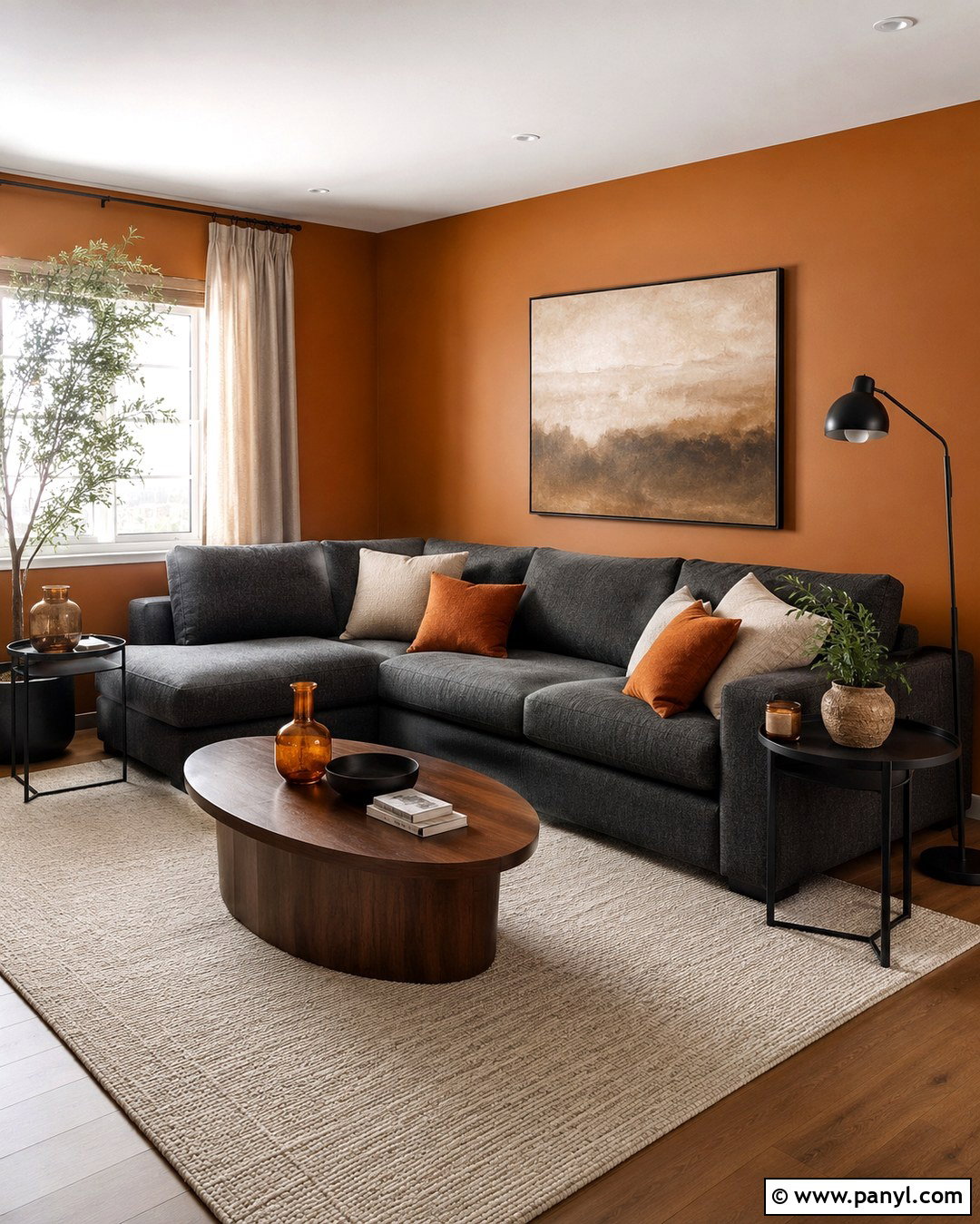
27. Brown Walls With Orange Accents
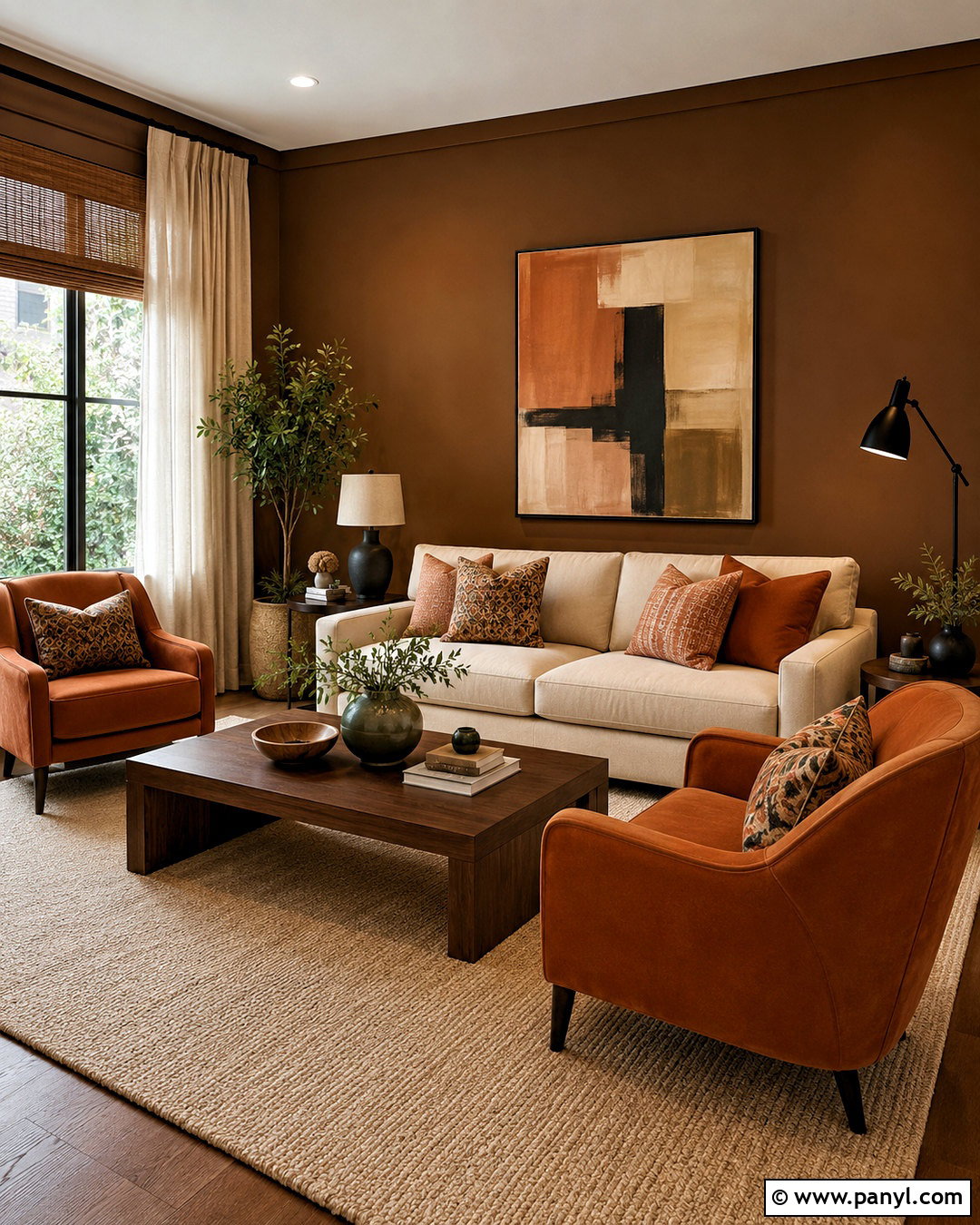
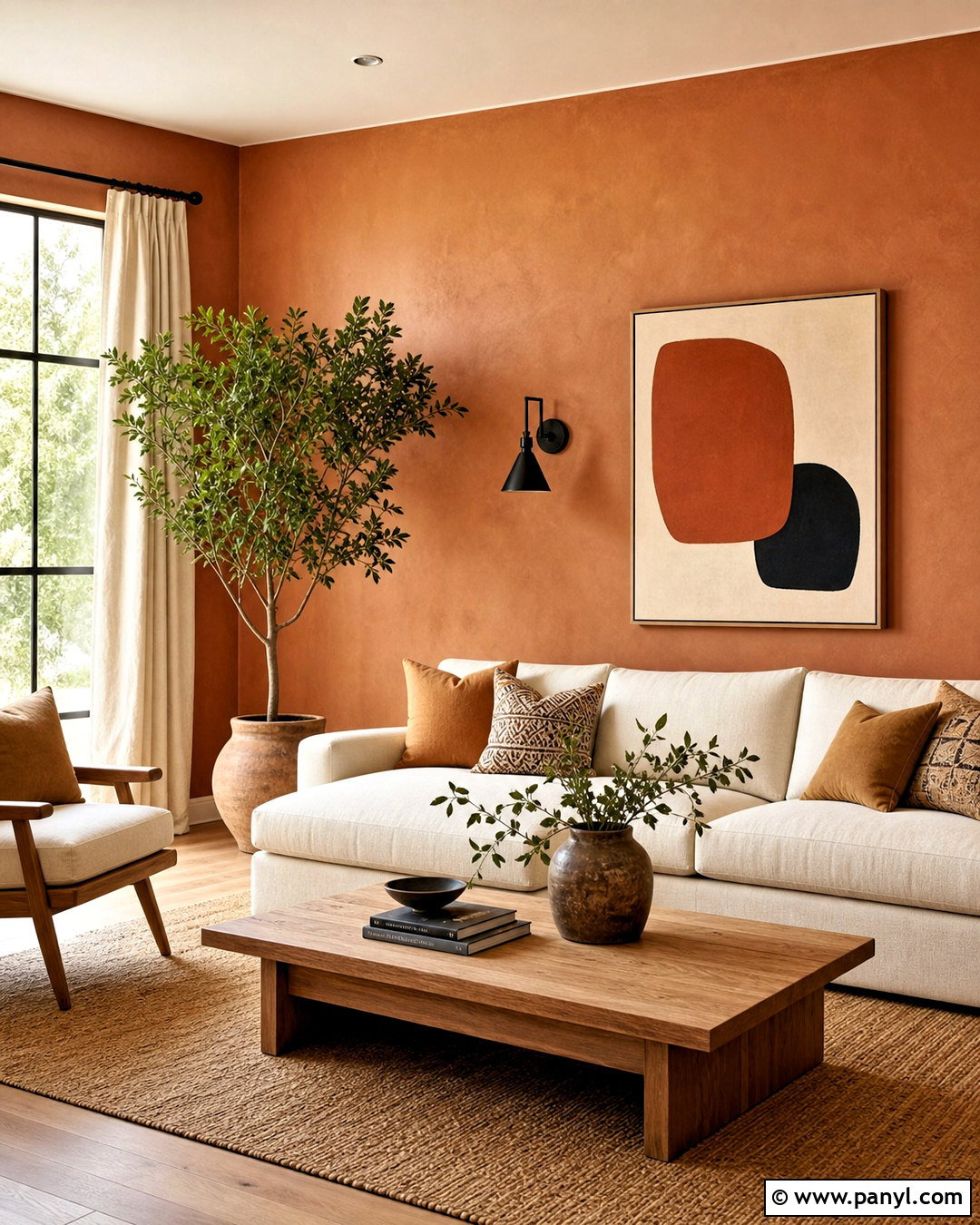
Burnt orange adds energy to brown walls because both colors share earthy warmth. Start with a neutral walnut-brown living room and introduce orange through two upholstered chairs, patterned cushions, and a small section of artwork. Balance the stronger accents with a cream sofa and a large ivory rug. A dark oak coffee table and black floor lamp keep the composition grounded. Use natural linen curtains and woven shades to filter bright daylight. Add olive green in one or two accessories for a quieter contrasting note. The orange should appear in several connected areas rather than one isolated object. When carefully distributed, the palette feels lively and cohesive, with enough cream and black to stop the similar warm colors from blending together.
28. Brown Walls With Purple Accents
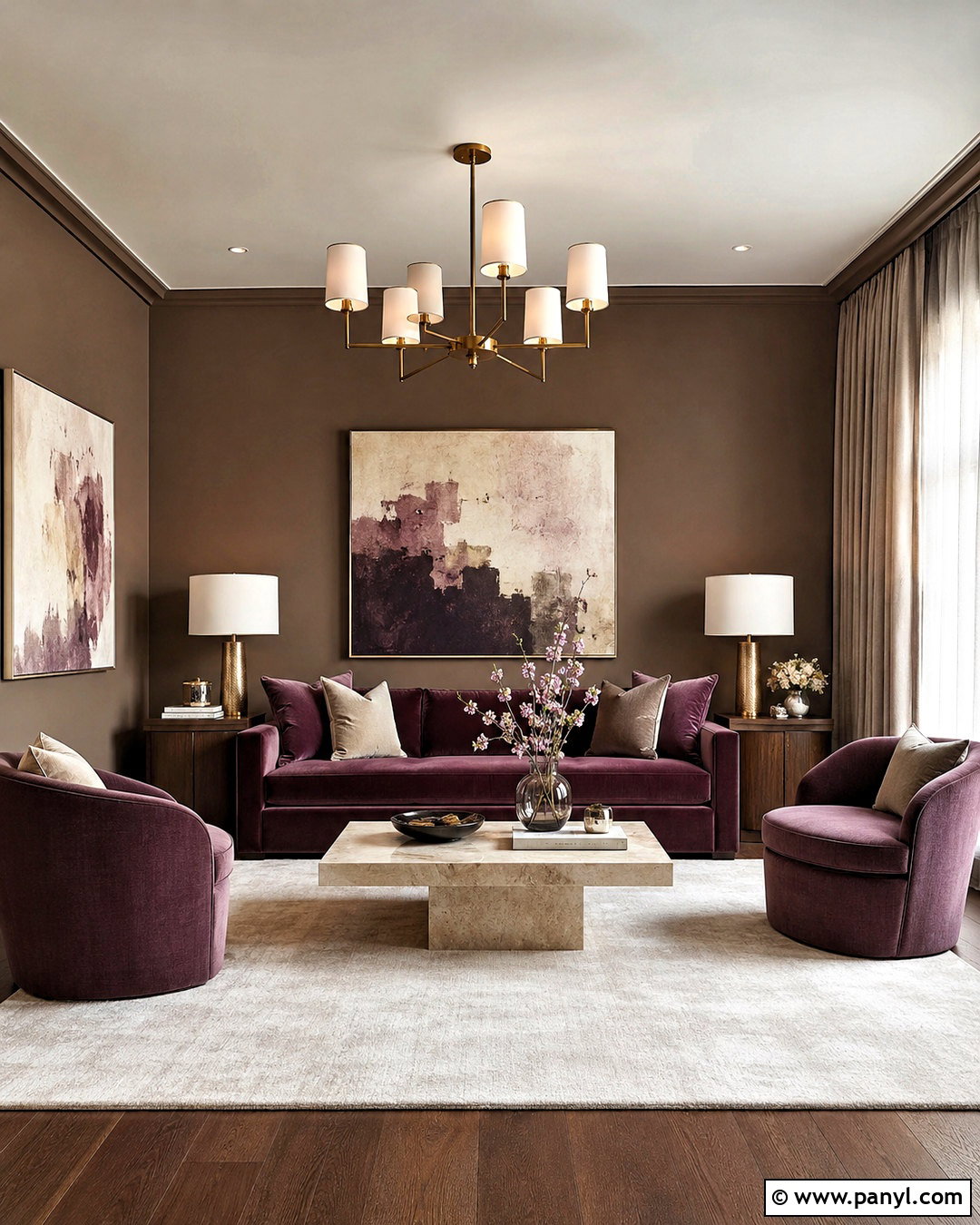
Brown and purple can create a luxurious room when both shades are muted and supported by pale neutrals. Paint the walls a deep truffle brown, then place a plum velvet sofa or two aubergine chairs at the center of the seating arrangement. Add an ivory rug, warm gray curtains, and a pale stone coffee table to lighten the composition. Walnut side tables echo the walls, while brushed-brass lamps provide restrained shine. Choose artwork with touches of mauve, cream, and brown to bridge the palette. Avoid bright violet, which can feel disconnected from the natural depth of brown. The finished living room looks rich and layered, yet the simplified furniture arrangement and light textiles keep the darker color combination comfortable and approachable.
29. Brown Hallway Walls
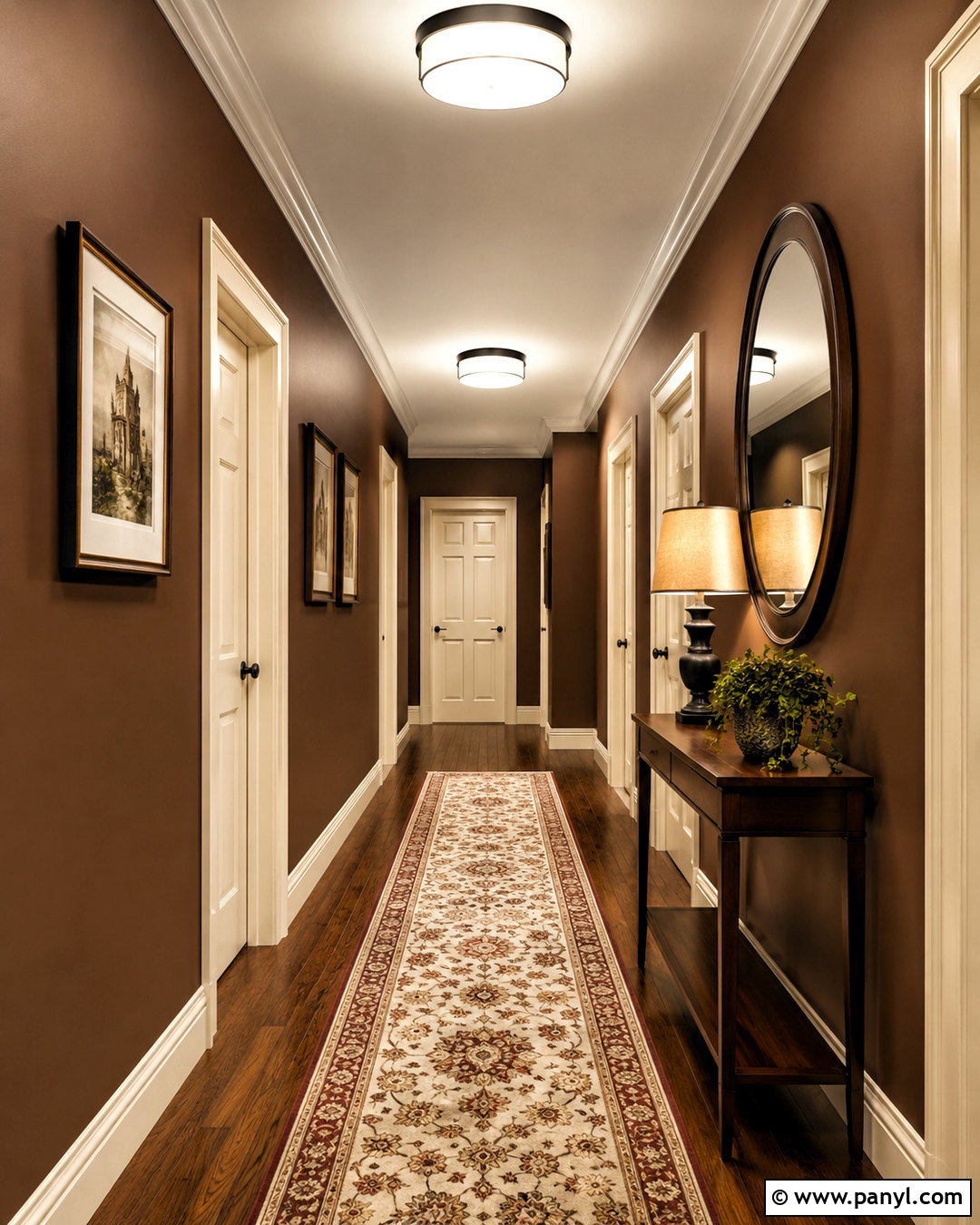
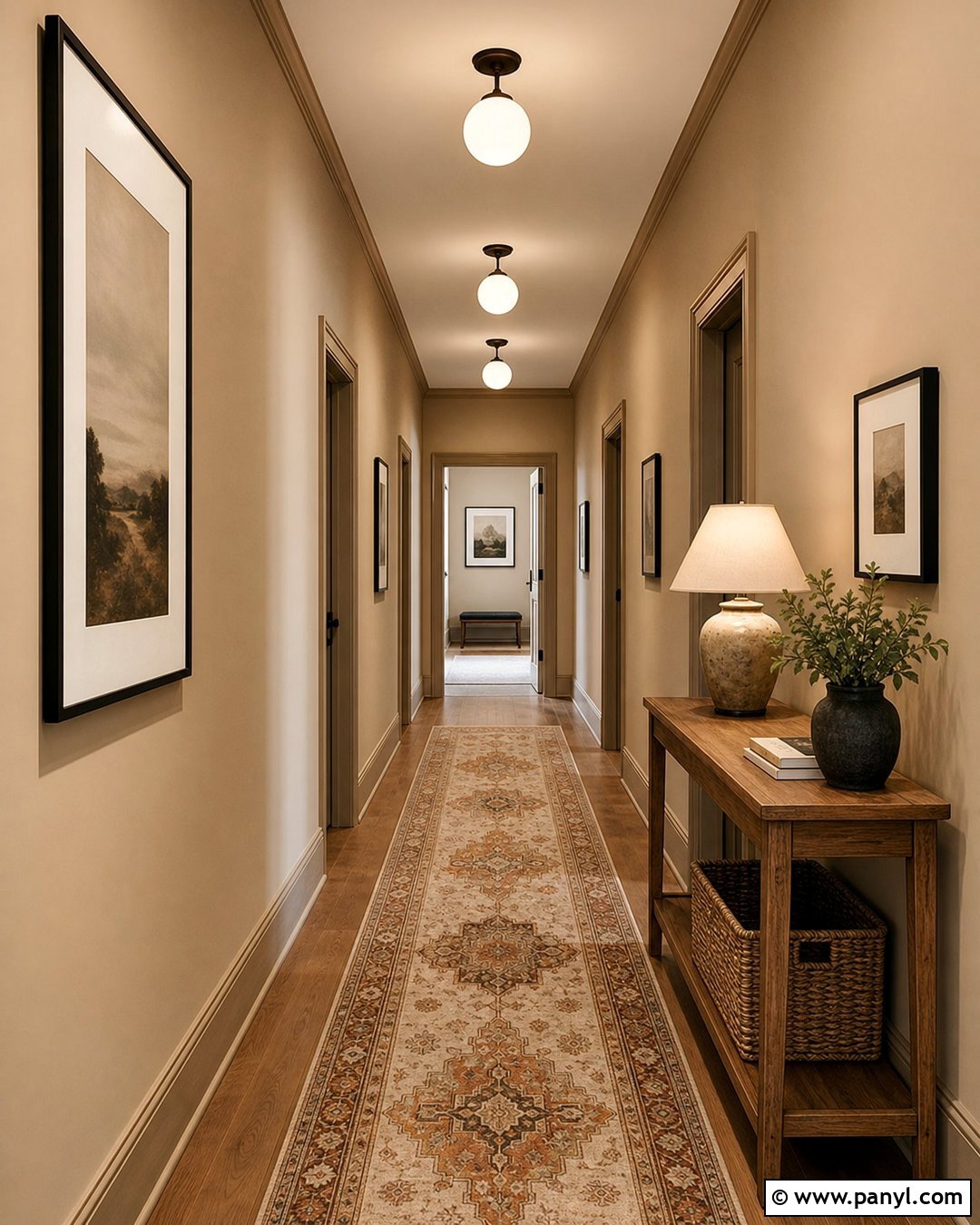
A hallway can handle stronger brown paint when lighting and trim are planned carefully. Use a medium roasted-coffee shade on the walls and continue it across multiple doorways for visual consistency. Paint doors and trim in warm ivory to sharpen the passage and improve visibility. Lay a long patterned runner featuring cream, muted red, and brown over wood flooring. Add a narrow console only where circulation allows, with a mirror and small lamp above it. A row of evenly spaced framed prints creates rhythm along the longest wall. Replace a single dim ceiling bulb with several bright flush-mount fixtures or recessed lights. This complete treatment transforms a transitional area into a purposeful part of the home while keeping the walking path clear and practical.
30. Brown Powder Room Walls
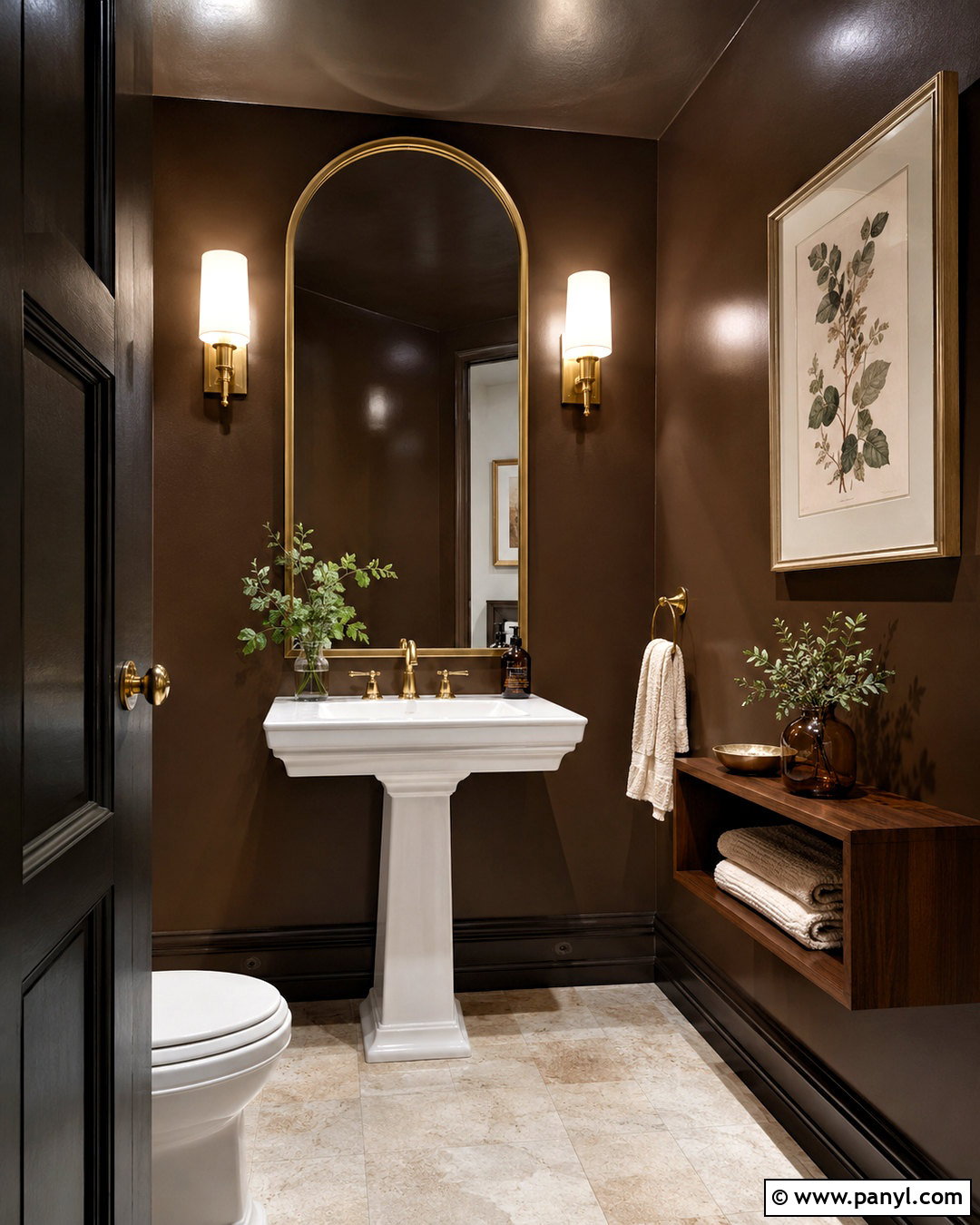
A powder room offers the opportunity to use an intense brown shade in a contained, memorable way. Paint the walls and ceiling in glossy espresso brown for a jewel-box effect, then balance the depth with a white pedestal sink and pale stone floor tile. Install a large arched brass mirror that reflects as much light as possible. Matching wall sconces with white glass shades provide clear facial lighting and decorative warmth. Add a compact walnut shelf, cream hand towels, and one small framed botanical print. Keep plumbing and accessories visually simple because the reflective wall color already makes a statement. The result is dramatic but controlled, turning a small functional room into a polished design moment that feels intentionally different from nearby spaces.
31. Brown Laundry Room Walls
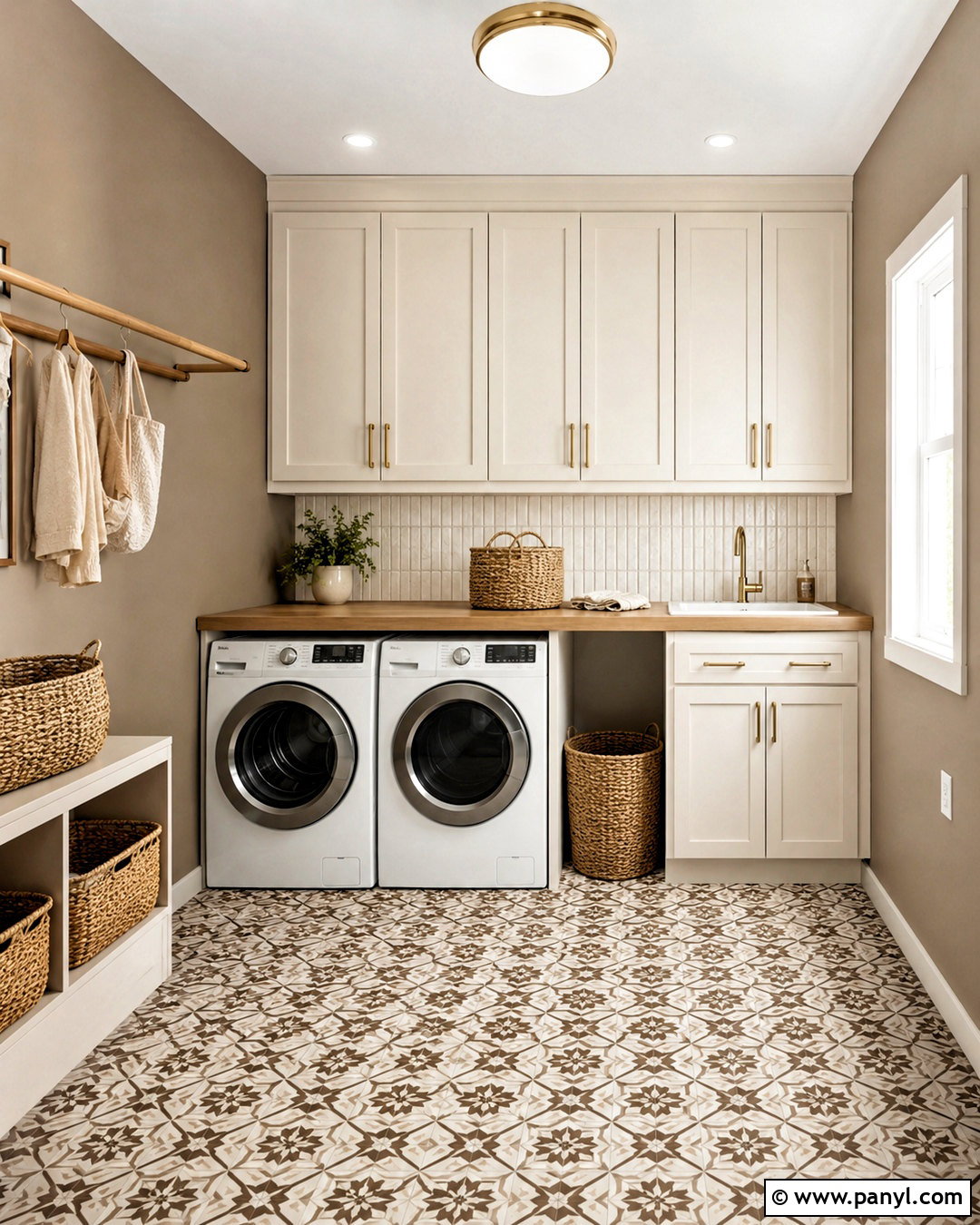
Brown paint can make a practical laundry room feel more connected to the rest of the home. Choose a light mushroom brown for the walls and pair it with warm white cabinets above the washer and dryer. Add a medium oak countertop for folding, a creamy vertical tile backsplash, and brushed-brass cabinet pulls. Patterned floor tile in brown, black, and ivory can disguise everyday dust while adding character. Include woven baskets, labeled interior bins, and a hanging rail beneath the upper cabinetry. A small shaded ceiling fixture keeps the room bright without feeling harsh. If space allows, add a narrow utility sink with a brass faucet. The coordinated palette turns storage, cleaning, and folding zones into one attractive and highly usable workspace.
32. Brown Mudroom Walls
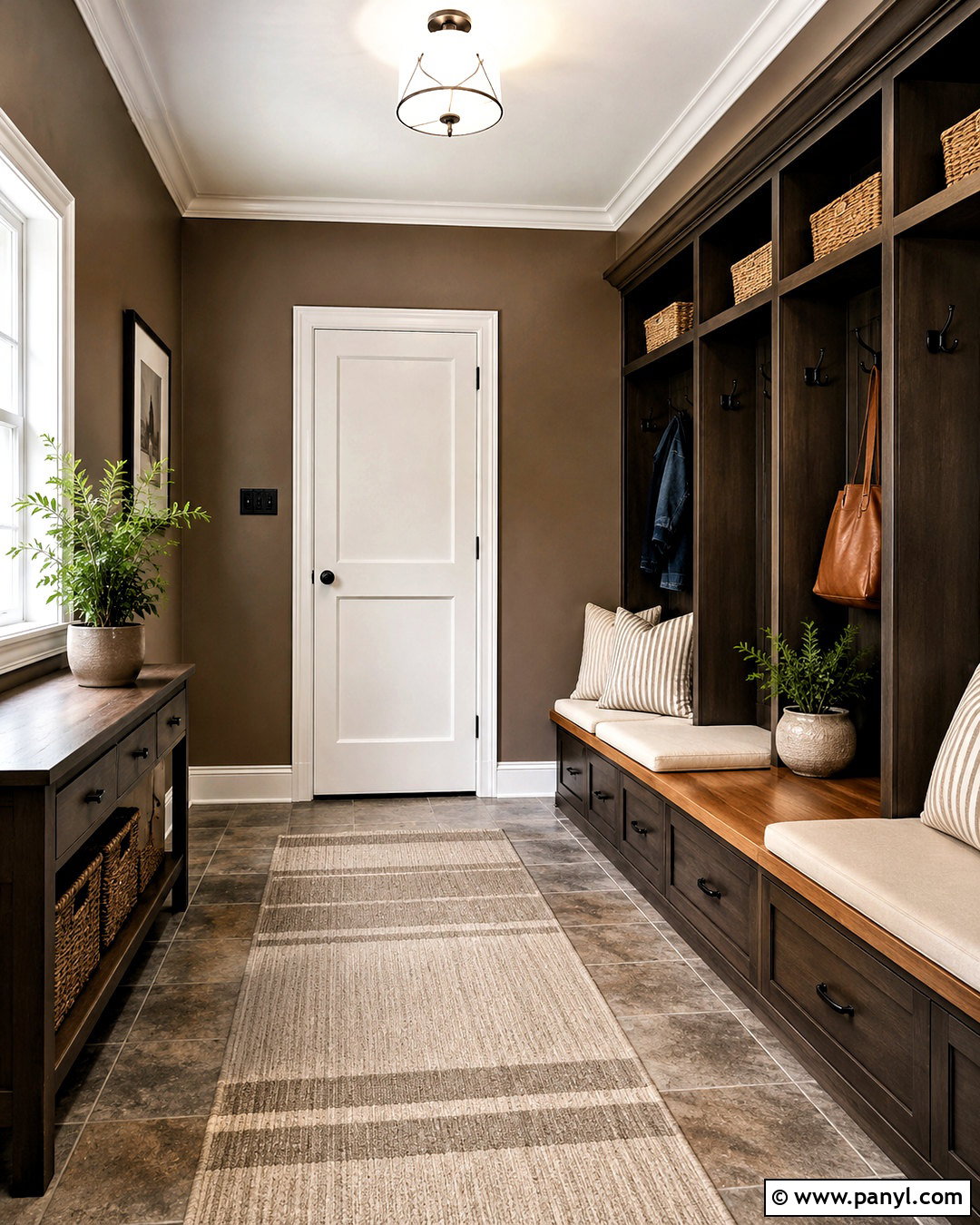
Muddy brown walls are particularly practical in an entry used for shoes, coats, and outdoor equipment. Select a medium gray-brown that coordinates with dirt-resistant stone flooring. Paint the walls and built-in lockers in related shades, making the lockers slightly darker for subtle depth. Use an oak bench top, black hooks, and woven baskets for durable everyday storage. Cream seat cushions and striped pillows soften the functional cabinetry. Install a washable runner down the center and use a bright semi-flush ceiling light overhead. Closed lower drawers can hold shoes, while open upper cubbies keep frequently used items accessible. The finished mudroom feels organized and welcoming, and its earthy palette handles active family life without sacrificing a clean, considered appearance.
33. Brown Basement Living Room Walls
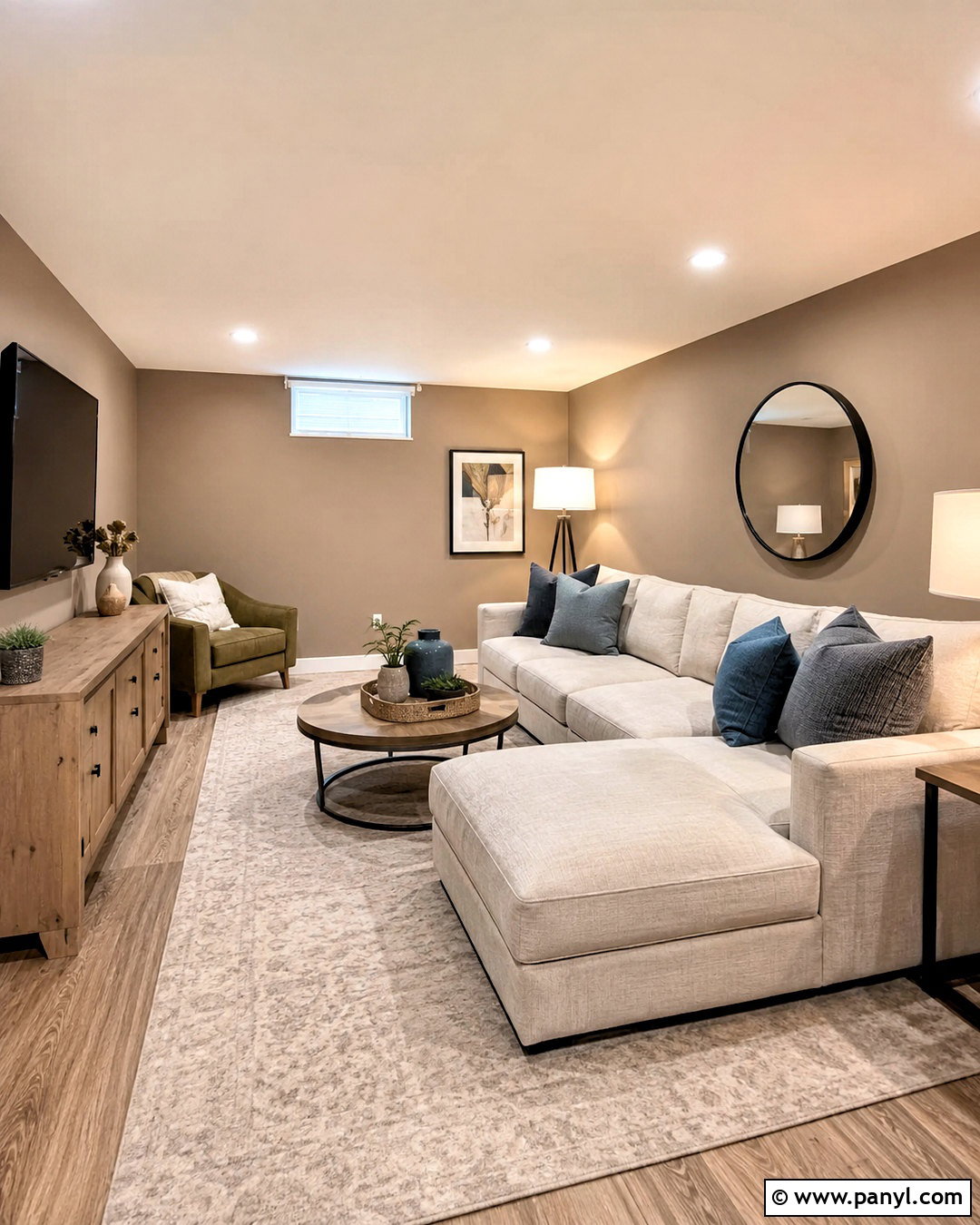
A basement living room needs a carefully chosen brown that does not absorb all available light. Use a light taupe-brown with a high light-reflecting quality, then paint the ceiling and trim warm white. Arrange a pale beige sectional around a light oak media console and round coffee table. Add a large cream rug to cover darker flooring and improve the room’s comfort. Blue-gray pillows and an olive chair introduce cooler notes that balance the warm walls. Since natural light may be limited, combine recessed ceiling fixtures with table lamps and a floor lamp. Hang one oversized mirror opposite the brightest area to expand the effect. The finished basement feels inviting and finished, with enough contrast and layered illumination to avoid a dull or enclosed atmosphere.
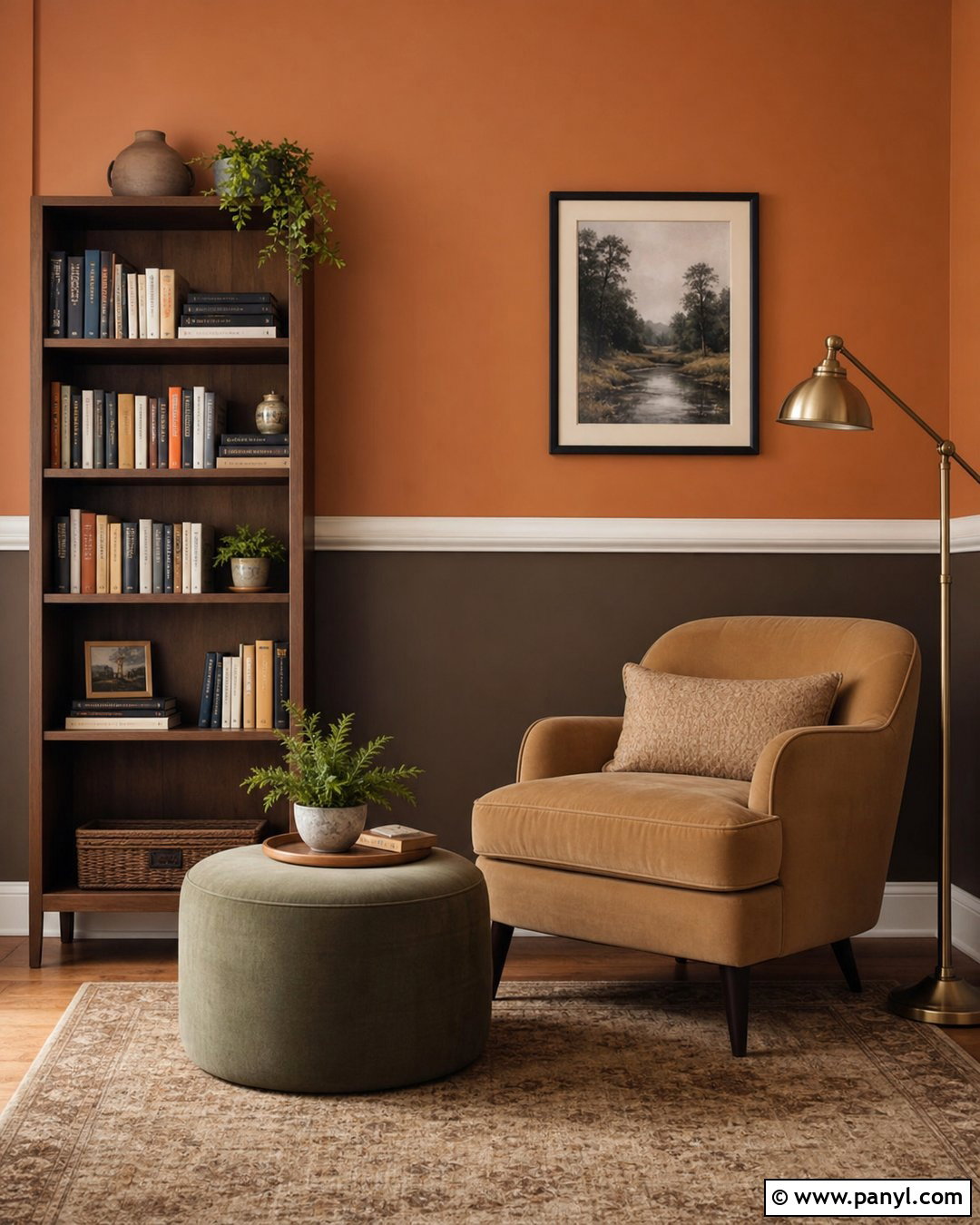
34. Brown Reading Room Walls
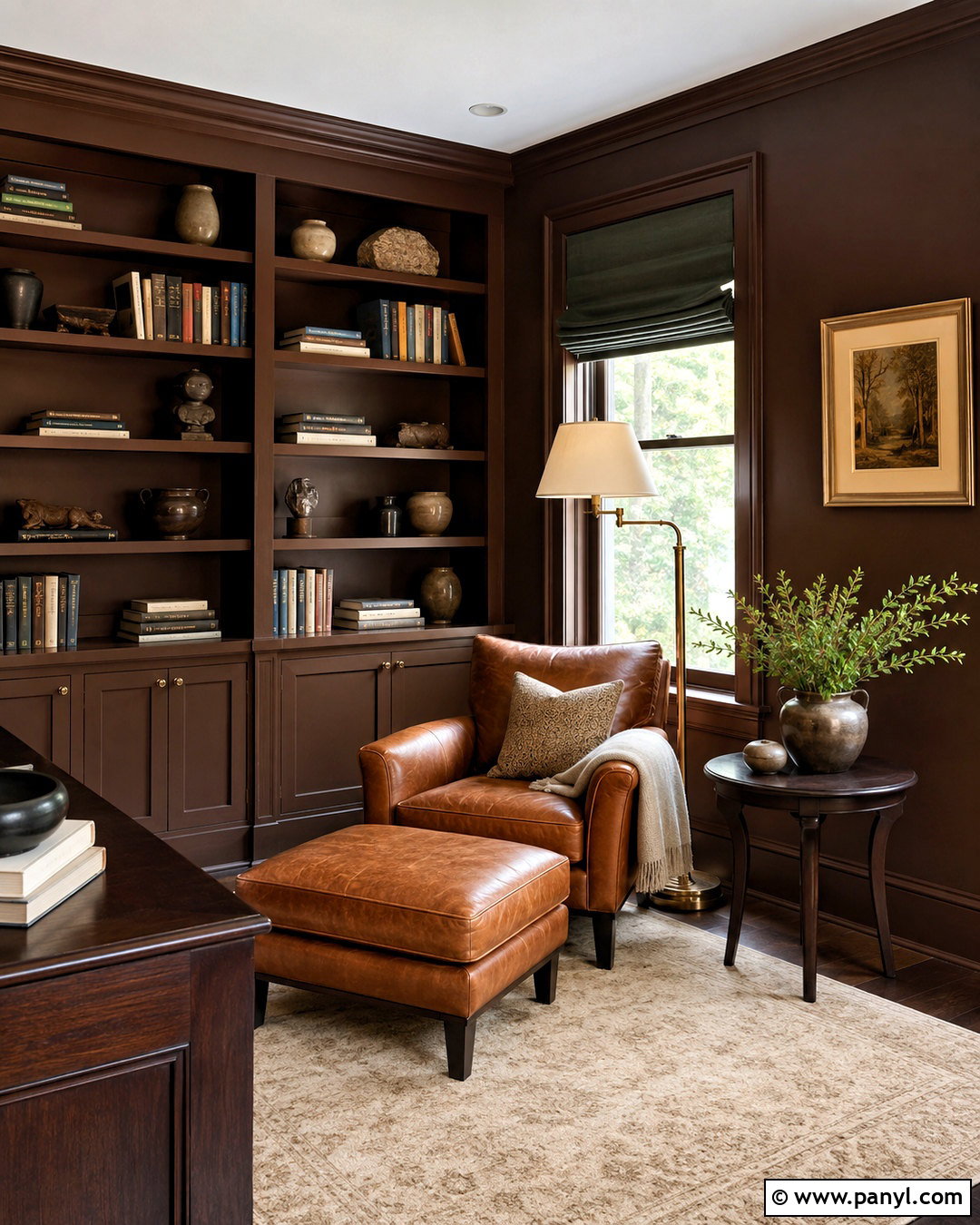
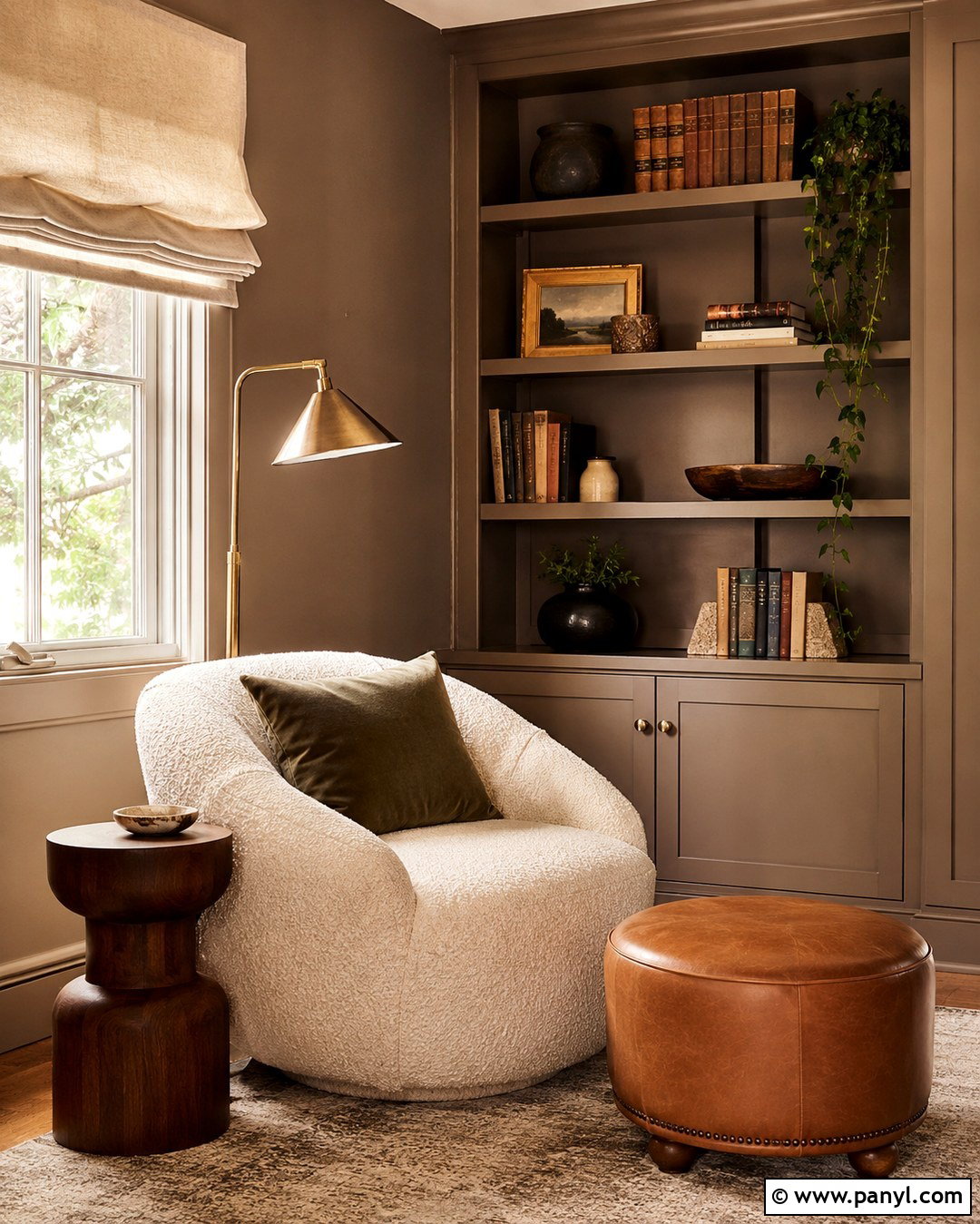
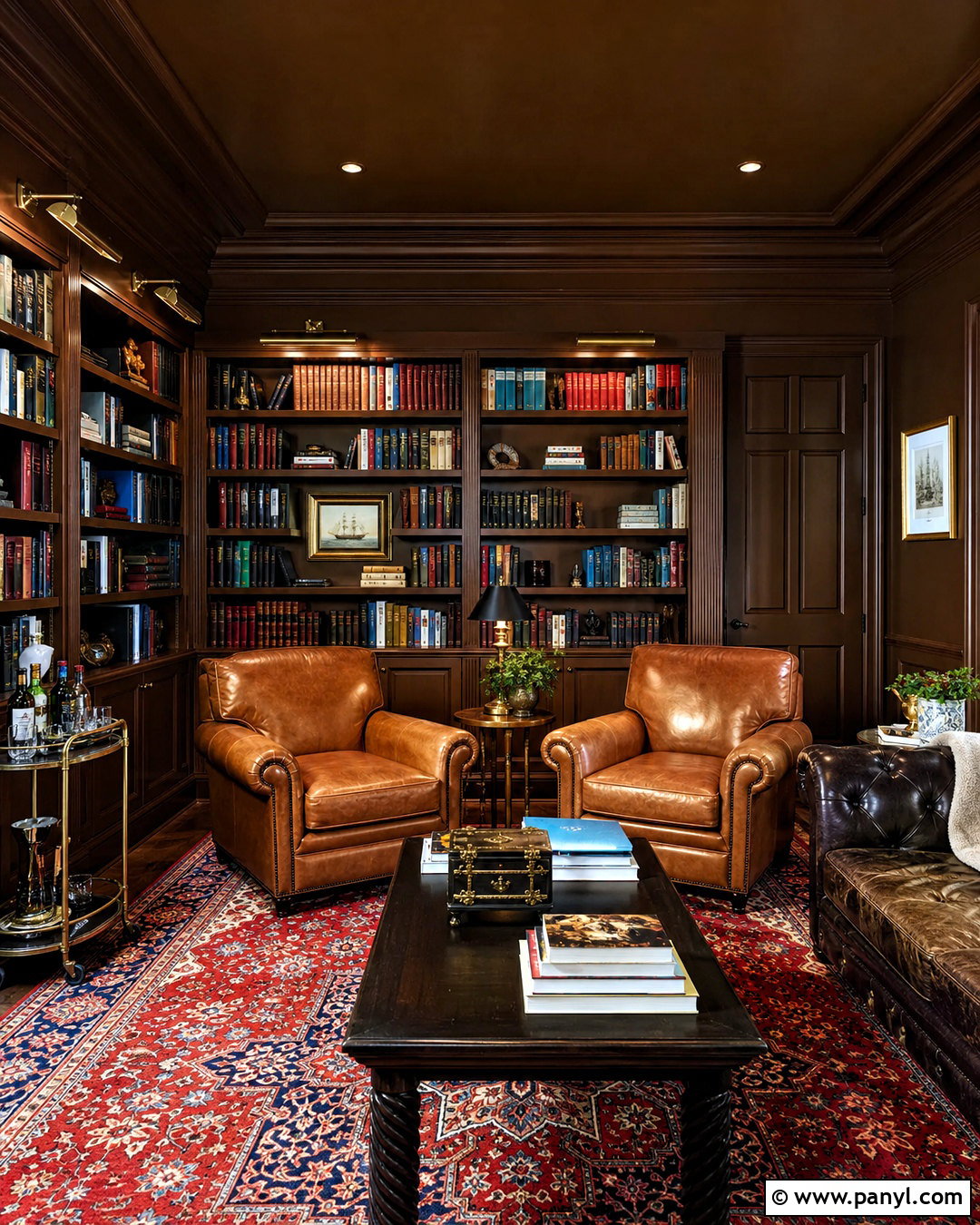
A dedicated reading room becomes especially inviting with enveloping brown walls and comfortable, focused furnishings. Paint the walls and built-in bookcases in a deep tobacco brown, then position a caramel leather lounge chair beside a matching ottoman. Add a cream floor lamp, a small dark oak table, and a soft ivory rug underfoot. Fill the shelves thoughtfully, leaving some open space for ceramics and framed artwork rather than packing every inch. A muted green window shade brings a natural counterpoint to the warm palette. If the room has a window, place the chair nearby but out of direct glare. The complete space feels quiet and personal, with storage, task lighting, and supportive seating working together for long, comfortable reading sessions.
35. Brown Guest Bedroom Walls
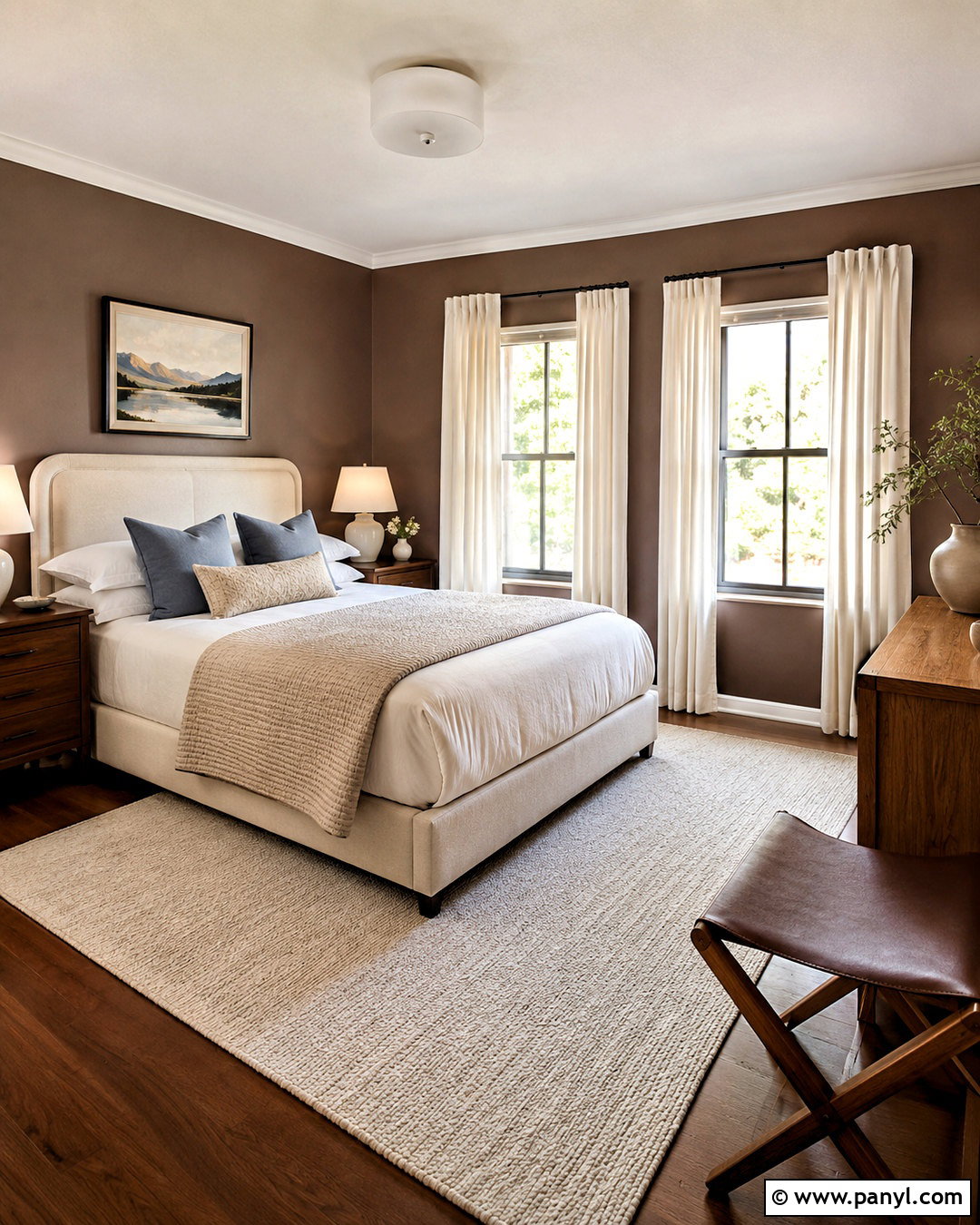
Give visitors a warm welcome with medium brown walls and hotel-inspired layers. Choose a neutral cocoa shade that works in both daylight and lamplight. Center a cream upholstered bed on the main wall, using white sheets, a beige coverlet, and blue-gray accent pillows. Add matching walnut nightstands with easy-to-use ceramic lamps and accessible outlets. A bench at the foot of the bed offers space for luggage, while a small oak dresser provides practical storage. Hang full-length ivory curtains and place a soft cream rug around the bed. Keep artwork calm and familiar, such as a large landscape in muted tones. The finished guest room feels intentional and restful without becoming overly personal, dark, or difficult for visitors to use.
36. Brown Dining Room With Wainscoting
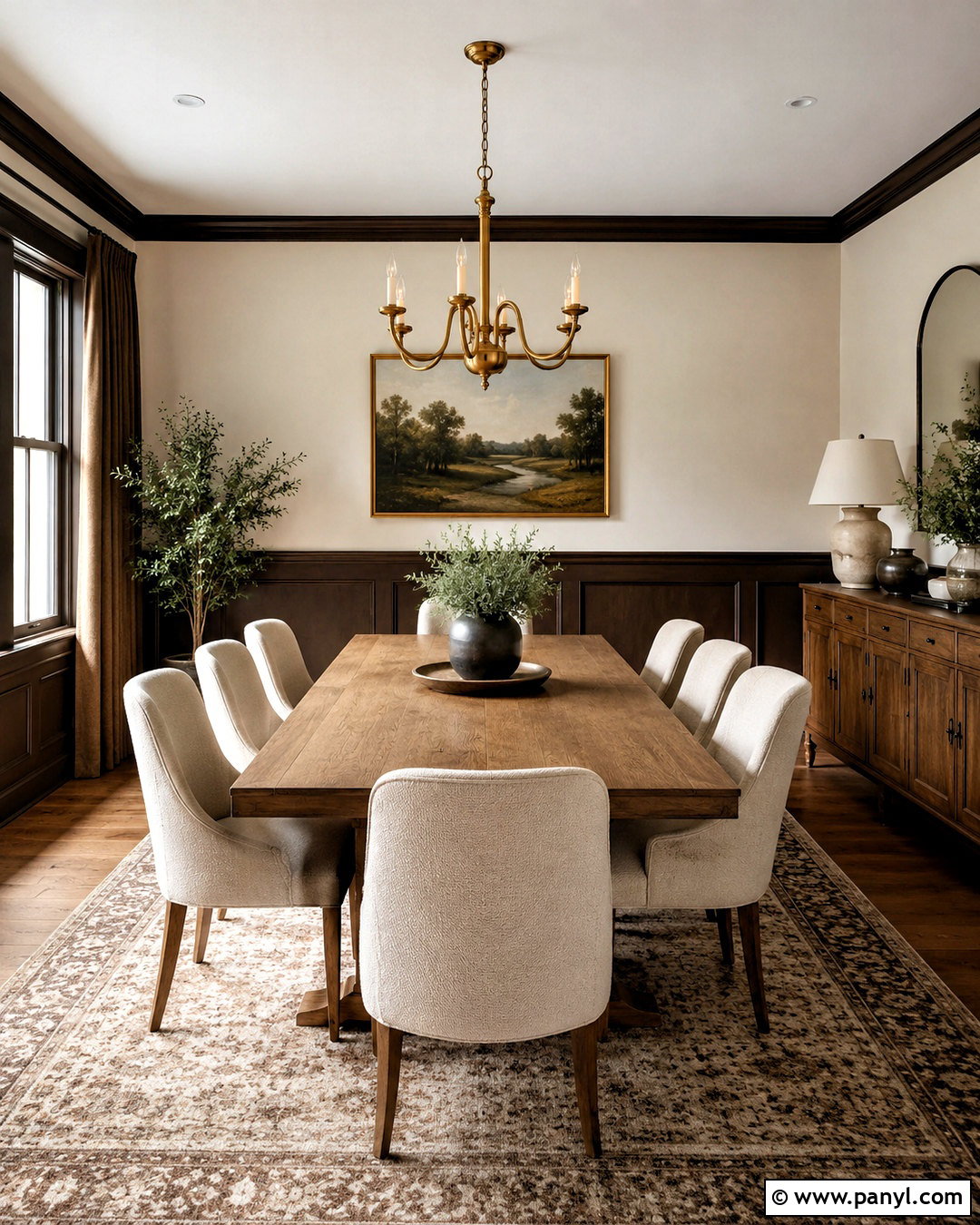
Wainscoting allows brown paint to add depth while preserving a lighter upper wall. Paint the lower paneling a dark chestnut and use a warm creamy white above it. Place a long medium-oak dining table in the center, surrounded by upholstered chairs in oatmeal linen. A large aged-brass chandelier creates a clear focal point, while an ivory and brown rug defines the dining zone. Hang a wide landscape painting on the pale upper wall and use brown linen curtains to connect the two wall colors. Add a simple sideboard with ceramic lamps for evening light. This balanced treatment gives the room architectural character and formality, but the natural wood, comfortable seating, and limited decoration keep it welcoming for everyday meals.
37. Brown Walls In A Small Living Room
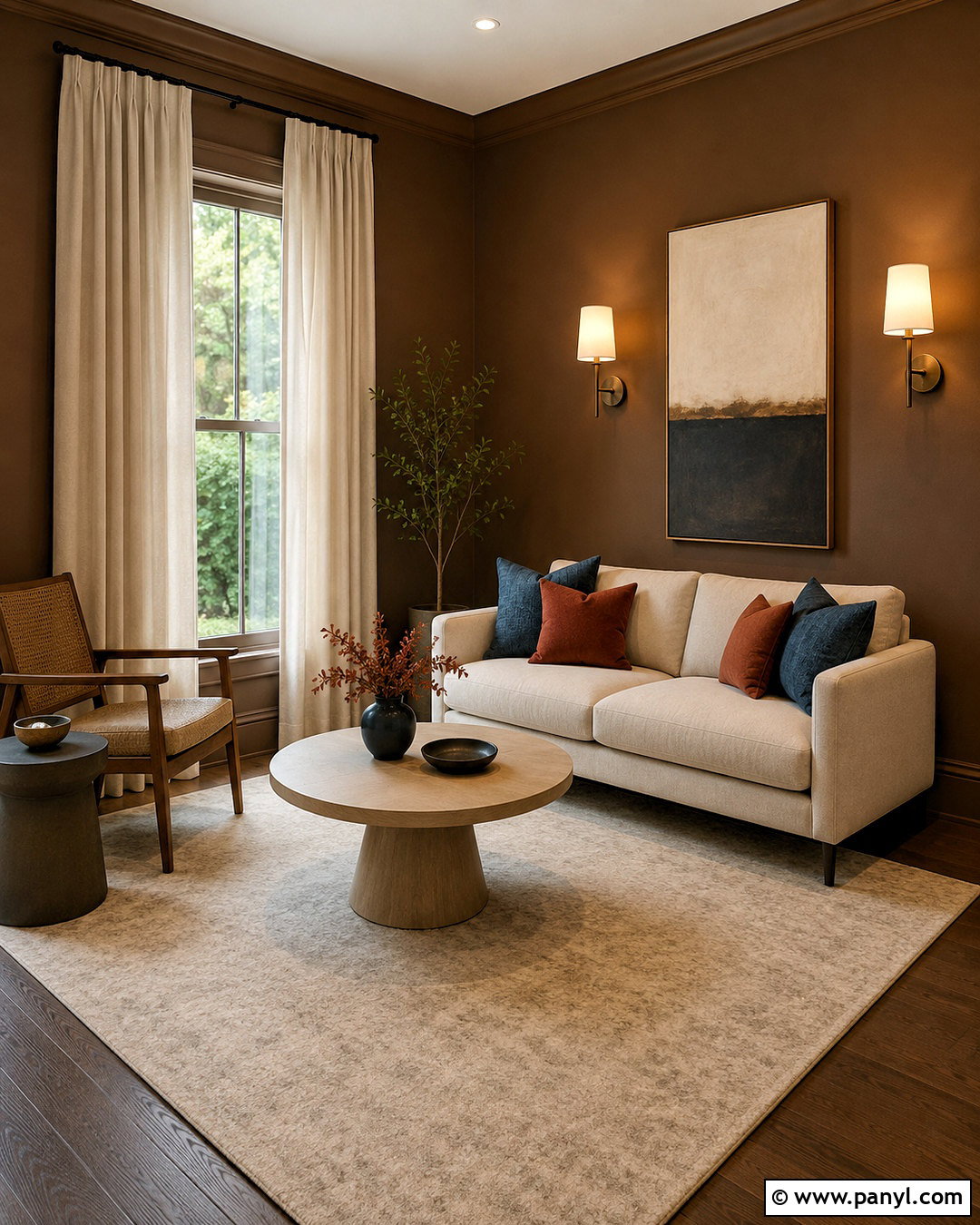
Small rooms can support brown walls when the furnishings remain light and properly scaled. Choose a medium mushroom brown rather than the darkest espresso shade, and paint the trim to match for fewer visual interruptions. Use a compact cream loveseat, one open-frame oak chair, and a round pedestal coffee table that allows easy movement. A large pale rug makes the floor look more continuous, while full-length ivory curtains draw attention upward. Install wall sconces instead of bulky floor lamps and select one tall artwork rather than a crowded gallery arrangement. Add muted blue and rust through a few cushions. The finished living room feels cozy, efficient, and complete because every piece supports circulation while balancing the warmth and depth of the painted walls.
38. Brown Walls In An Open Floor Plan
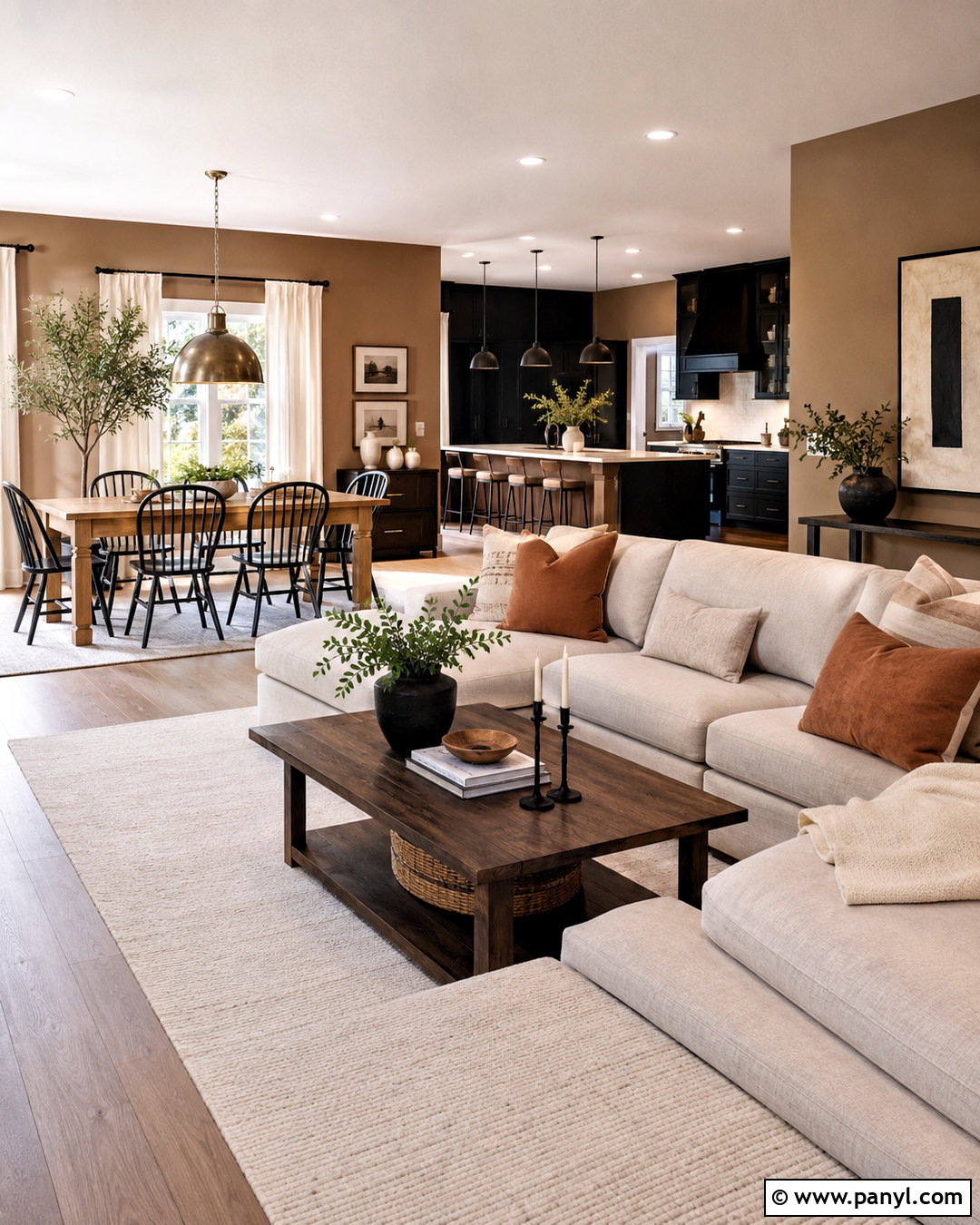
Brown walls can define an open floor plan when one coordinated shade flows across the connected areas. Select a light camel-brown with a subdued undertone and use it throughout the living and dining zones. Anchor the living area with a cream sectional, a walnut coffee table, and a large ivory rug. Define the dining section with an oak table, black chairs, and a simple brass pendant. Repeat black, cream, and walnut in both spaces so they relate without appearing identical. Use long off-white curtains across nearby windows to maintain continuity. Add green plants and muted terracotta accessories in measured amounts. The completed layout feels connected and organized, with furniture placement and repeated materials creating clear zones against one consistent wall color.
39. Brown Walls With Gallery Art
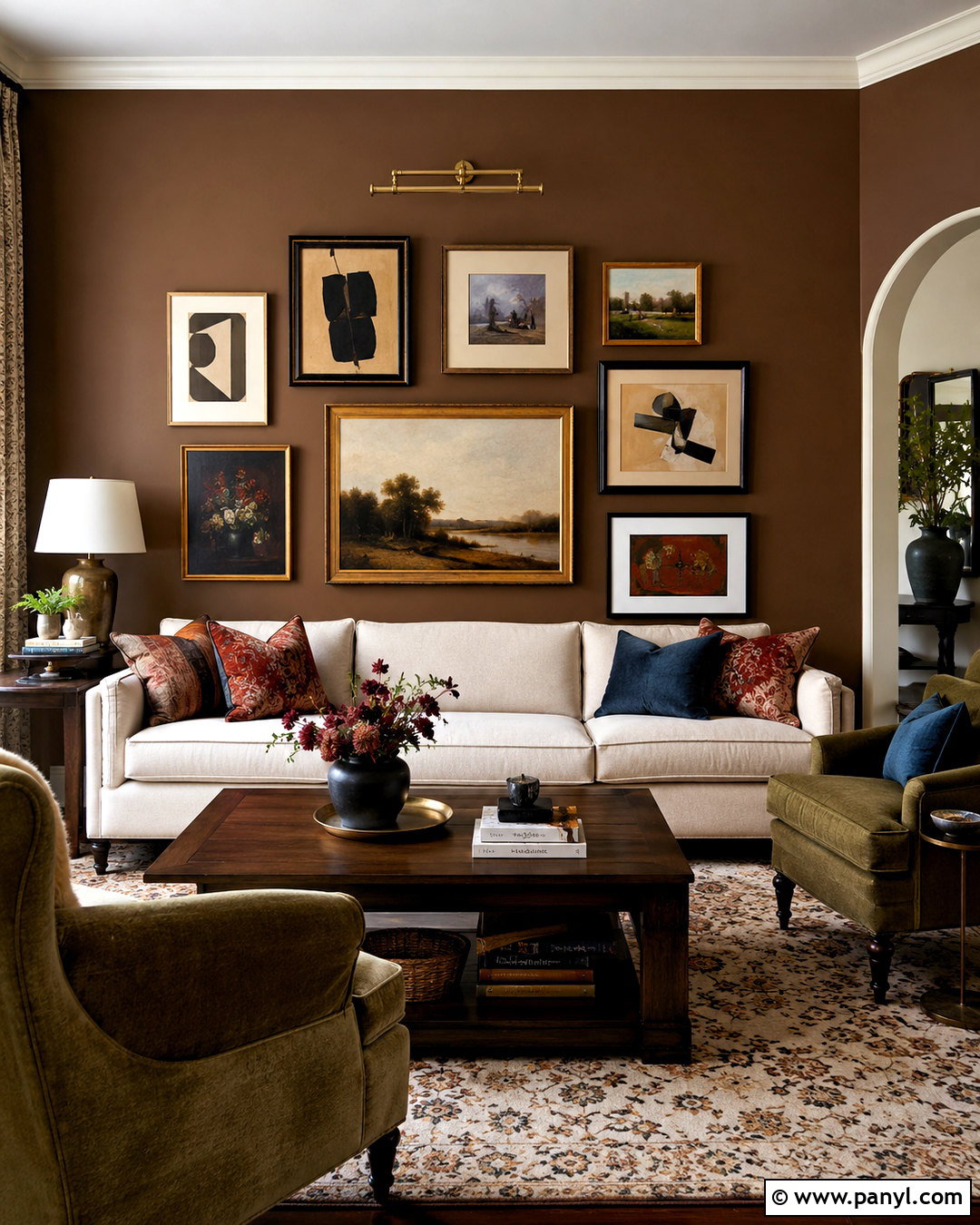
Artwork can bring movement and personality to brown walls when the frames and colors are deliberately coordinated. Paint a living room in medium coffee brown, then create a gallery arrangement above a long cream sofa. Combine landscapes, abstract prints, and simple drawings featuring ivory, green, rust, and faded blue. Use mostly walnut and antique-brass frames, with only a few black frames for contrast. Place a narrow picture light above the arrangement to illuminate it evenly. Complete the seating area with olive chairs, a dark wood coffee table, and an ivory patterned rug. Keep adjacent walls quieter so the gallery remains the main focus. This full design turns brown into a rich background that strengthens the artwork rather than competing with it.
40. Brown Walls With Matching Trim
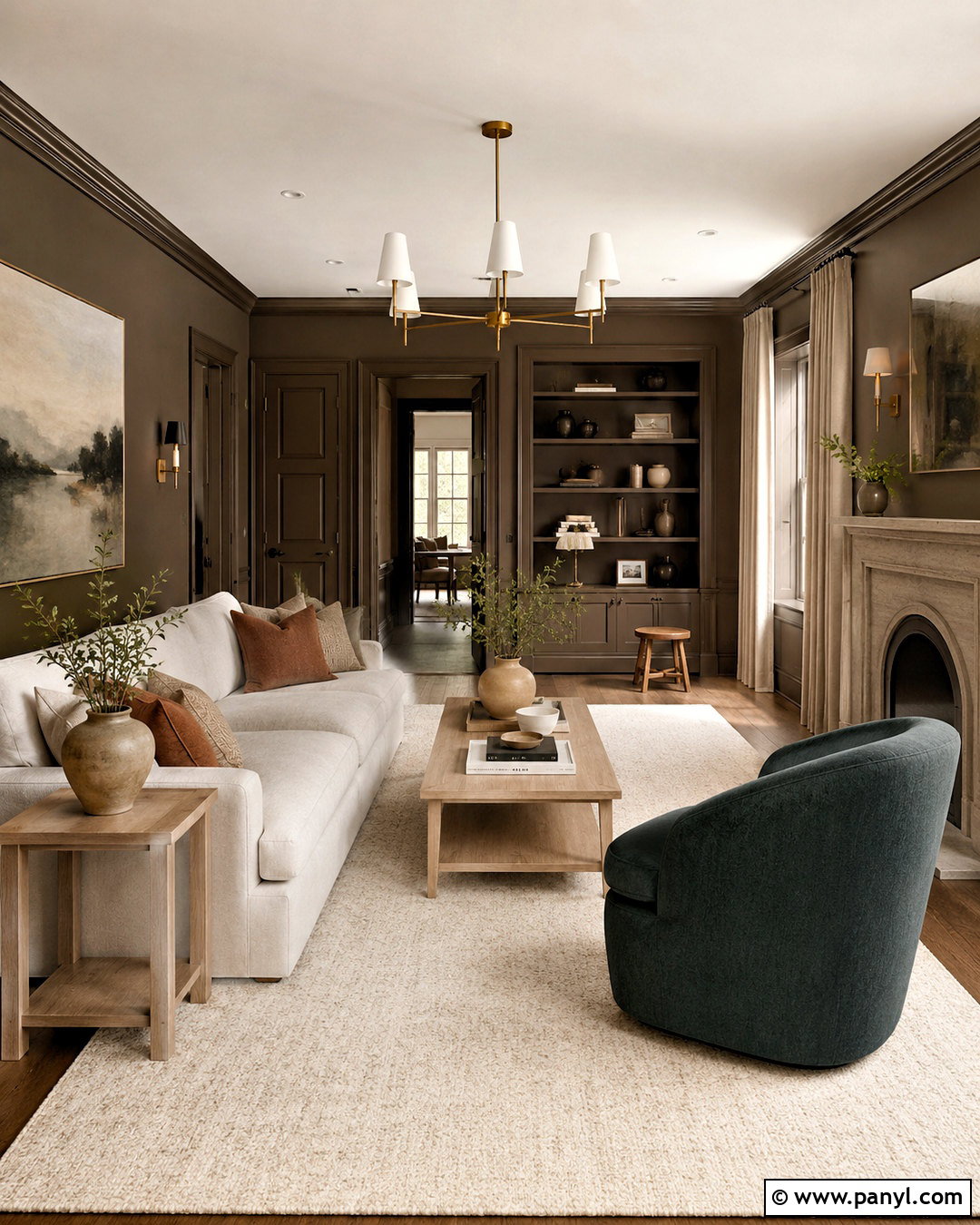
Painting the trim and walls the same brown creates a smooth, modern envelope with fewer visible boundaries. Choose a warm medium truffle shade and apply it to walls, baseboards, door casings, built-in shelves, and interior doors. Vary the finish by using matte or eggshell on the walls and satin on the woodwork. Furnish the room with a soft ivory sofa, pale oak tables, and an oversized cream rug. Add a muted teal chair and rust pillows for controlled color. Linen curtains in a lighter taupe prevent the windows from disappearing completely. Brass lighting supplies a small amount of reflection. The finished living room feels calm and intentional because the unified background allows furniture, artwork, and natural materials to stand out clearly.
Conclusion:
The best brown walls feel intentional because the paint color, furniture, lighting, flooring, and textiles all support one complete design. Pale mushroom and taupe work well in rooms that need brightness, while mocha, walnut, and chocolate create greater depth and intimacy. Before painting, test large samples beside existing floors, cabinets, and upholstery, checking them during both daylight and evening hours. Pay close attention to undertones, since red, yellow, gray, and green influences can change how brown appears. Warm white, cream, blue, green, rust, and muted pink offer dependable contrast. With thoughtful layering and practical lighting, these 40 brown wall paint ideas can create rooms that feel warm, polished, comfortable, and distinctly personal.

Related Ideas and Inspiration:
Leave a Reply