
Choosing the right wall color with brown tiles can make an existing floor, backsplash, or shower surround feel completely refreshed. Brown tile carries warm, earthy character, but its undertone matters. Some tiles lean golden, orange, red, taupe, or gray. The best wall color should either echo that warmth or create a clean, balanced contrast. Lighting also changes the result, so compare large paint samples beside the tile during the day and at night. The complete room matters too. Cabinetry, trim, fixtures, textiles, and natural materials should connect the walls and tile rather than compete with them. This guide to **20 Wall Color With Brown Tiles** combinations offers complete, practical looks for creating a cohesive space.

1. Warm White Wall Color With Brown Tiles
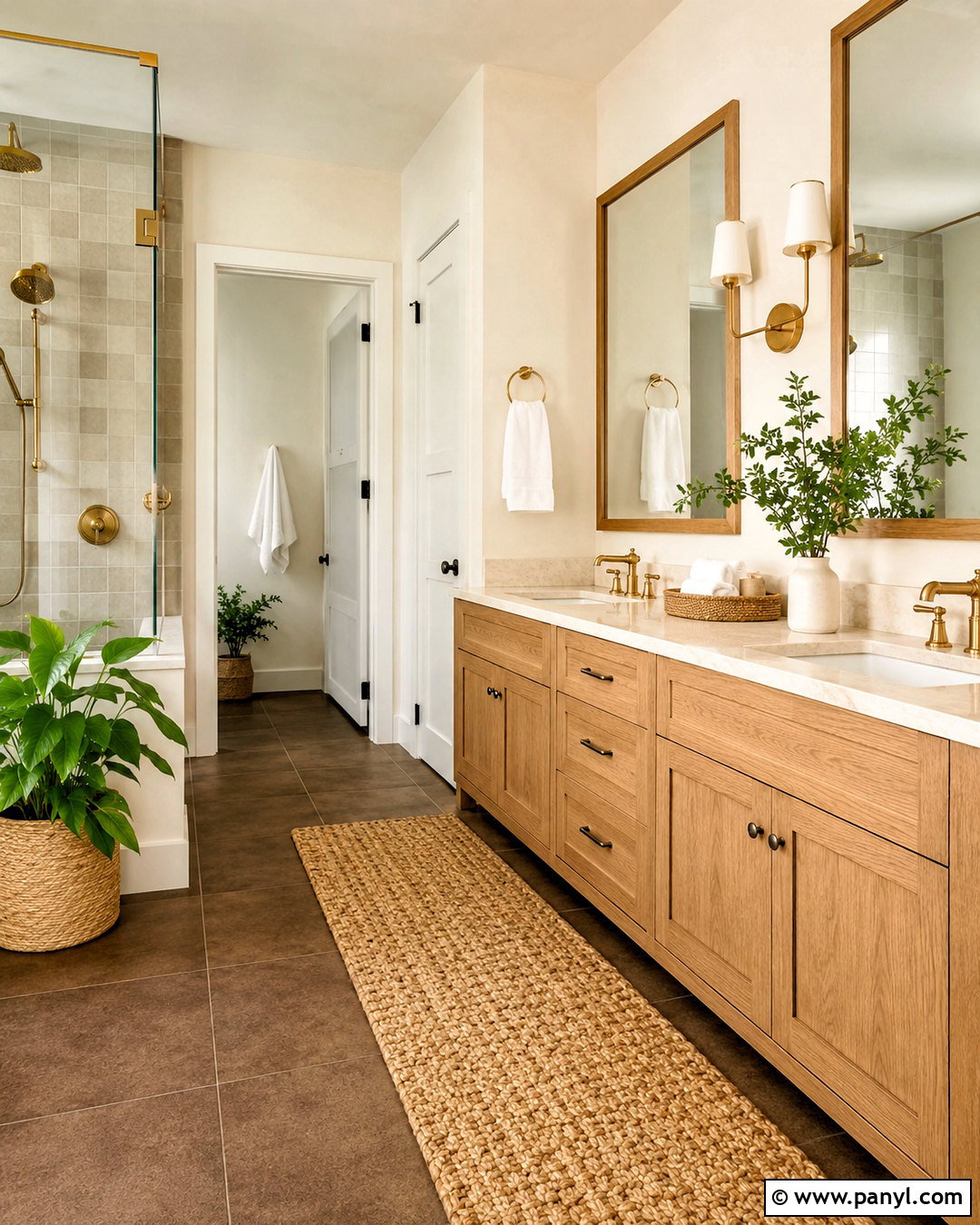
Warm white walls give brown tile a cleaner, lighter appearance without creating the harsh contrast of brilliant white. Choose a creamy white with subtle yellow or beige undertones, especially when the tile contains caramel, tan, or rust variations. Complete the room with natural oak cabinetry, off-white linen curtains, and brushed brass hardware. A pale woven rug can soften a large tiled floor while preserving the warm palette. Use simple ceramic accessories and a few green plants for freshness. Keep trim and ceilings in the same warm white, perhaps in a different sheen, to make the space feel continuous. This combination works especially well in bathrooms, kitchens, and entryways that need more brightness but still benefit from an inviting, grounded character.
2. Soft Cream Wall Color With Brown Tiles
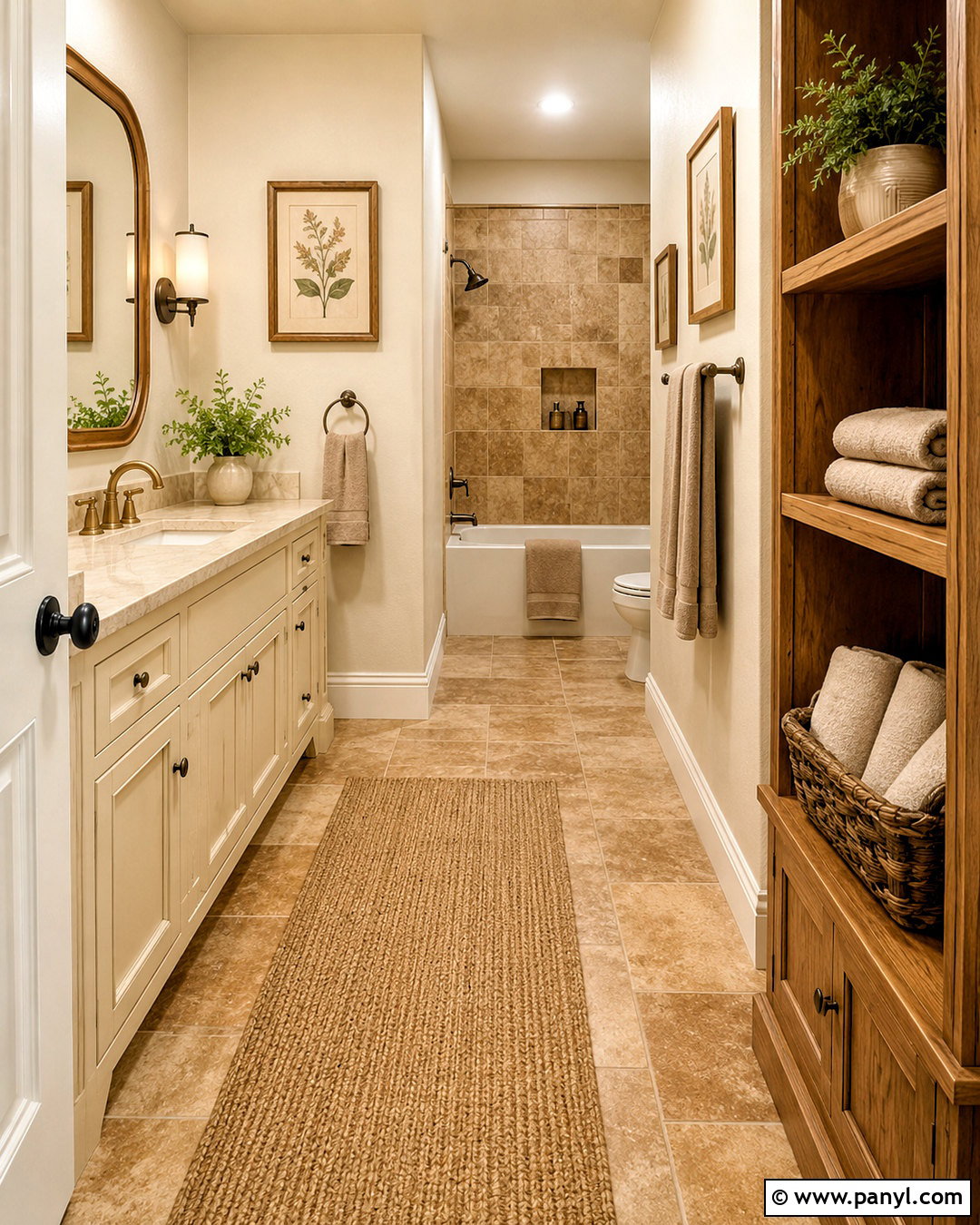
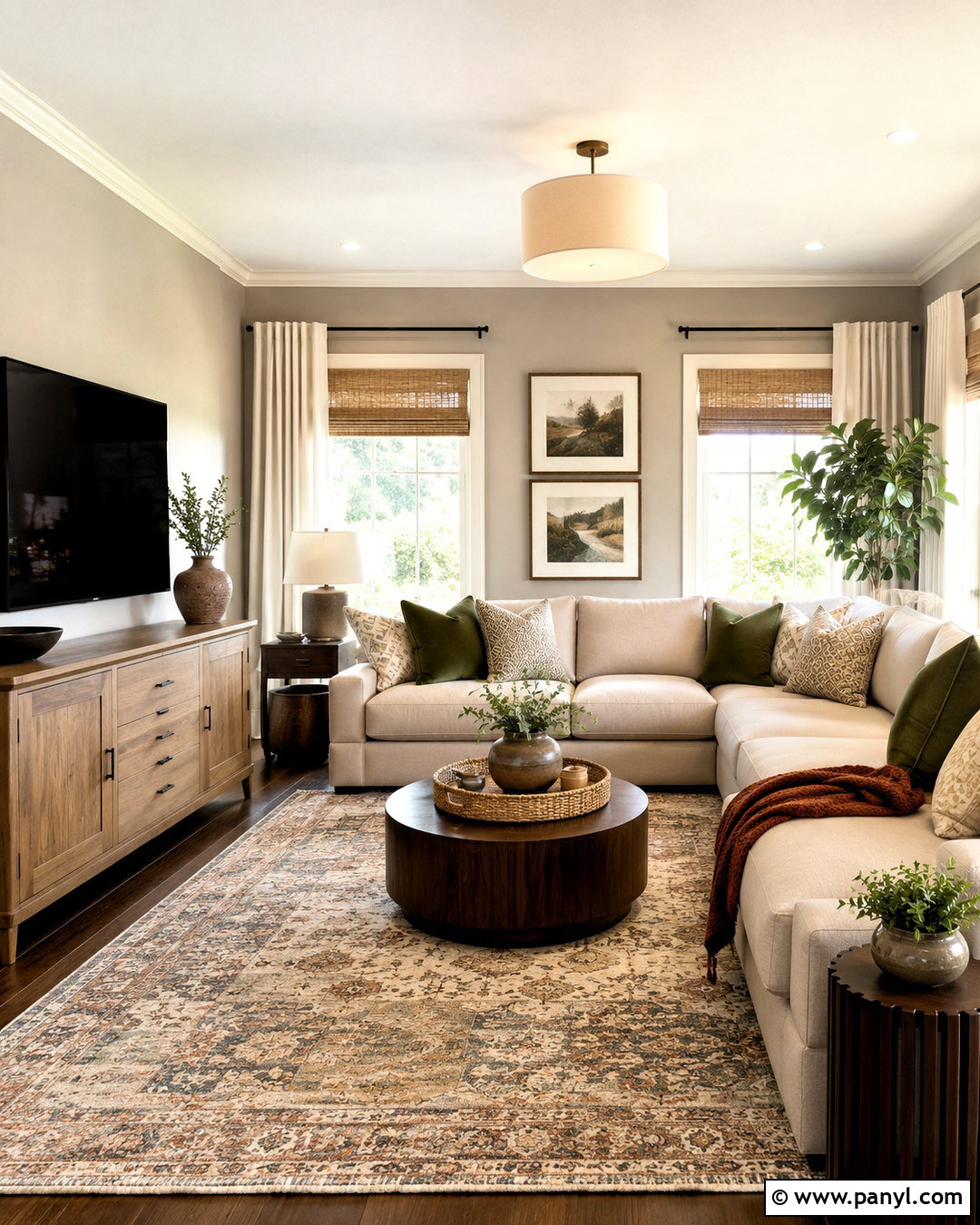
Soft cream creates a mellow transition between brown tiles and lighter furnishings. It is particularly flattering beside golden-brown travertine, mottled ceramic tile, or wood-look porcelain. Build a complete traditional look with cream walls, an ivory vanity or cabinet, antique brass fixtures, and warm wood shelving. Add oatmeal towels, a natural jute runner, and understated botanical artwork. The room should contain several light surfaces so the brown does not dominate. Cream paint also looks richer when paired with warm bulbs and plenty of daylight. Avoid overly yellow cream if the tile already has strong orange tones. Instead, select a restrained neutral cream that shares the tile’s warmth while making the overall space appear softer, brighter, and intentionally coordinated.
3. Ivory Wall Color With Brown Tiles
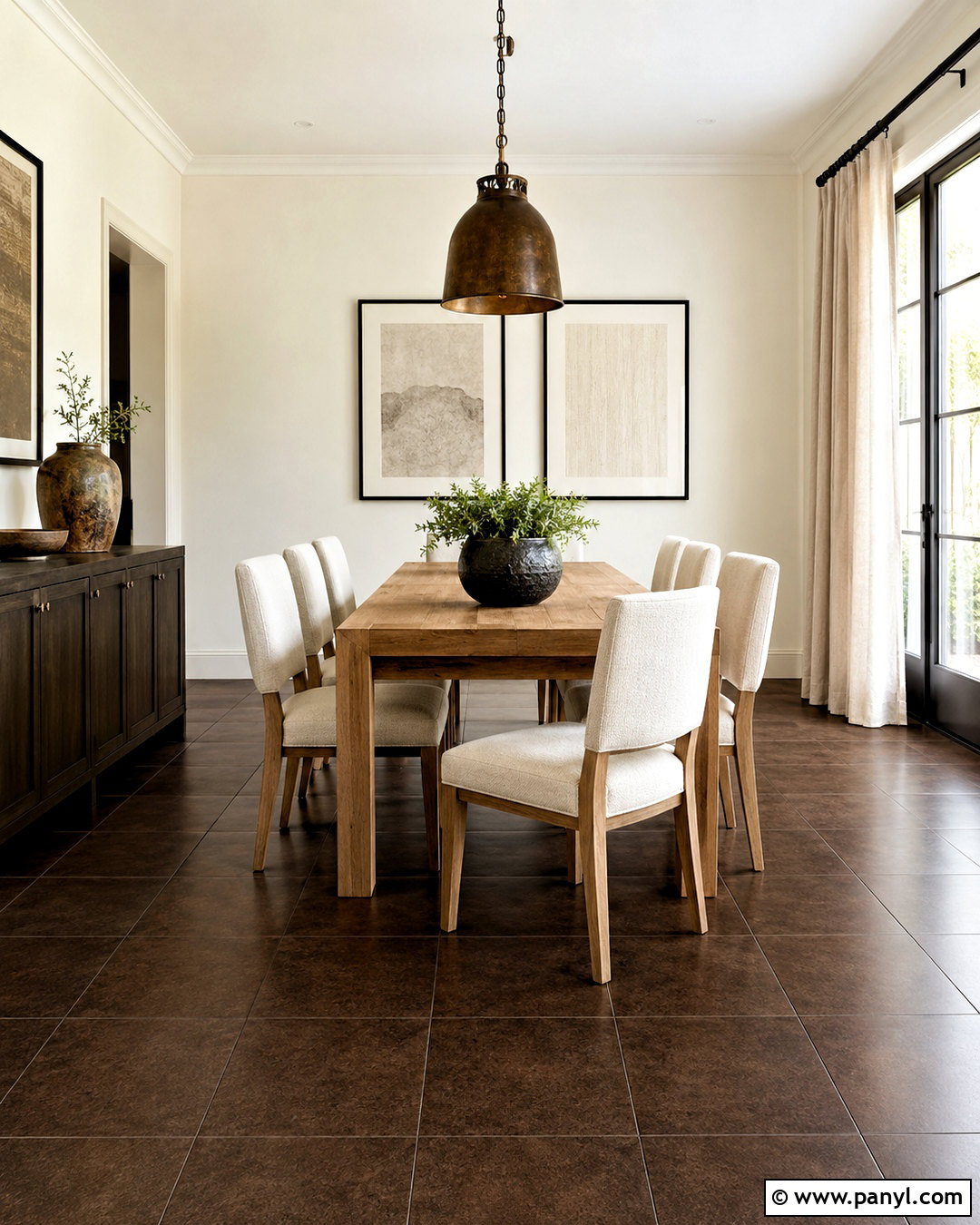
Could your brown tile use a polished but comfortable update? Ivory walls provide gentle contrast while maintaining a more refined effect than plain white. Pair ivory paint with medium or dark chocolate tile, white oak furniture, and aged bronze accents. In a bathroom, use an ivory vanity top, a frameless glass shower enclosure, and textured cotton towels. In a dining area, introduce light upholstered chairs and a simple wood table. Black accents can be added sparingly through frames or lighting to give the pale palette definition. Because ivory can vary from creamy to nearly neutral, compare it directly with the tile. The finished room should feel layered rather than monochromatic, with natural fibers and pale materials balancing the visual weight of the brown surface.
4. Light Beige Wall Color With Brown Tiles
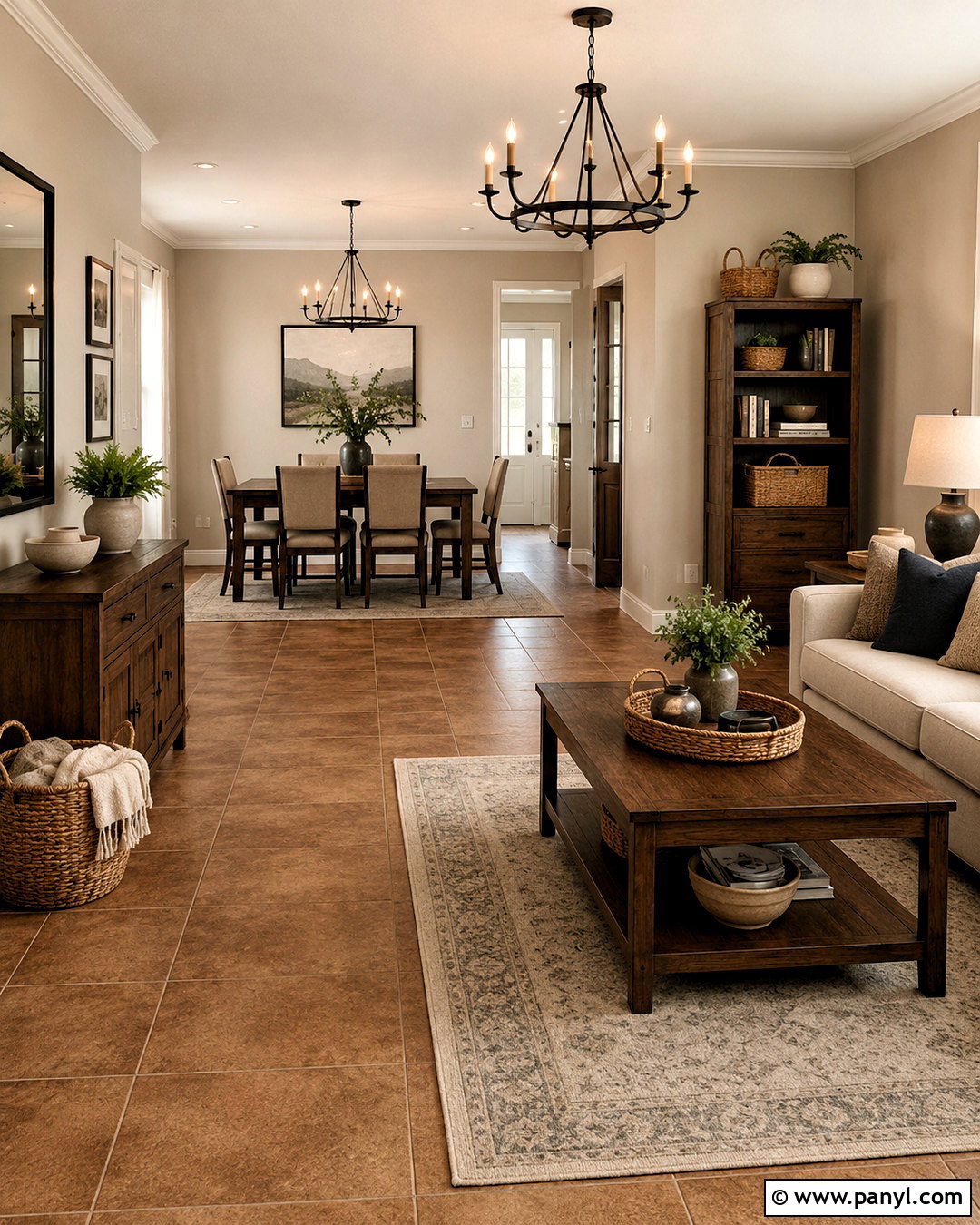
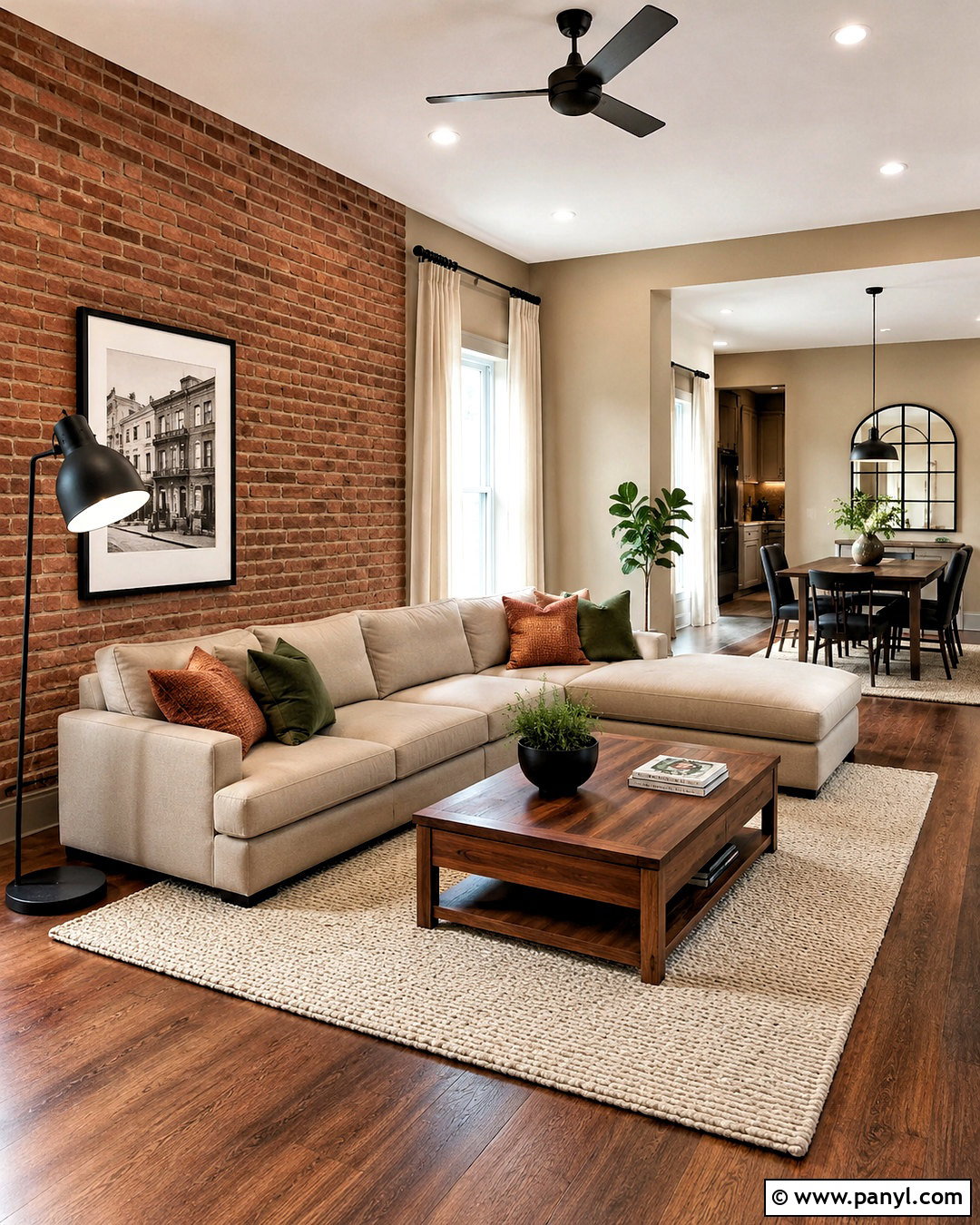
Light beige walls create an easy tonal scheme that works with many shades of brown tile. The key is choosing a beige that is lighter than the flooring and closely related to its undertone. Pair golden-brown tile with warm sand beige, or use a quieter mushroom beige beside cooler taupe-brown tile. Complete the look with walnut furniture, beige upholstery, creamy trim, and woven baskets. Add contrast through matte black lighting, dark picture frames, or a charcoal runner. These deeper details prevent the room from looking flat. In open-plan spaces, repeat the wall color through the kitchen, dining area, and hallway for continuity. Layering beige and brown works best when the materials vary, so include linen, wood, stone, ceramics, and subtle patterns.
5. Greige Wall Color With Brown Tiles
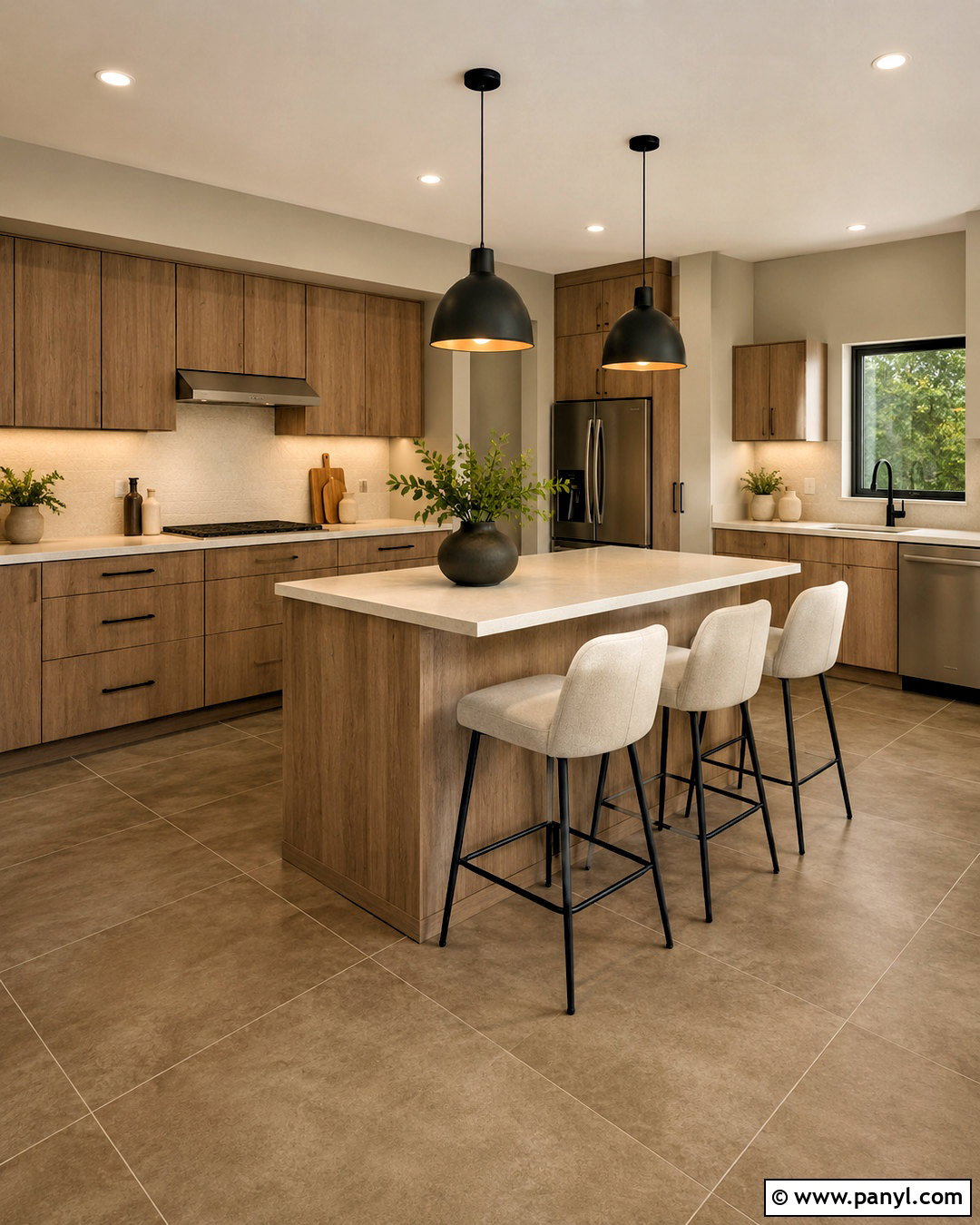
Greige walls can modernize brown tiles that contain gray, taupe, or weathered stone variations. This balanced mixture of gray and beige softens the tile’s warmth without making the room appear cold. Create a complete contemporary space with light greige walls, flat-front oak cabinets, a creamy quartz countertop, and matte black hardware. Add off-white textiles and small charcoal accents for structure. If the tile leans strongly orange, use a warmer greige rather than a blue-gray version. Natural daylight will reveal whether the paint and tile share compatible undertones. Keep the ceiling and trim in a soft white to sharpen the architecture. The combination is practical for kitchens, bathrooms, and connecting hallways because it feels neutral while still offering more depth than basic white.
6. Pale Taupe Wall Color With Brown Tiles
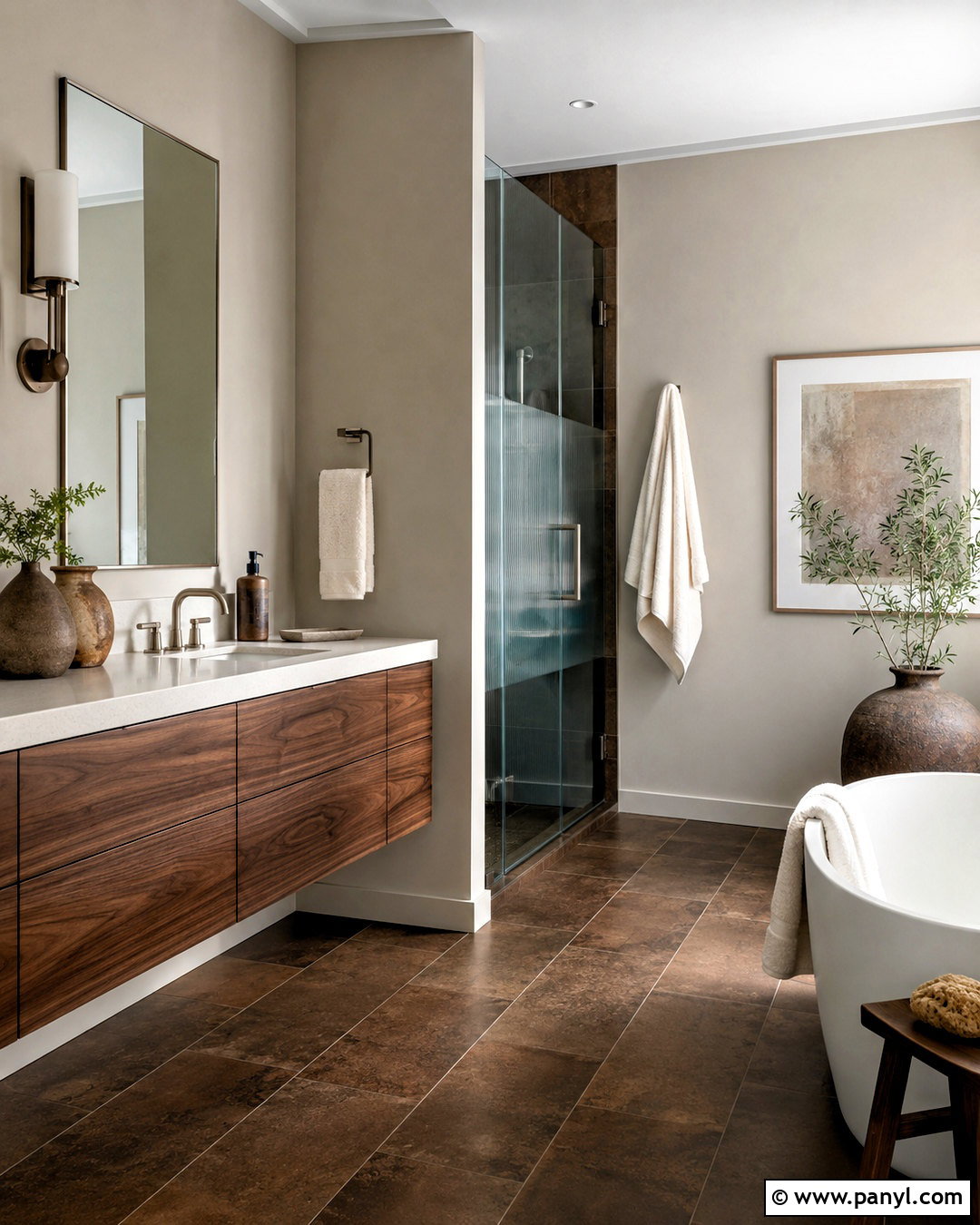
Pale taupe produces a calm, layered backdrop for brown tile, particularly when the tile includes subtle purple-gray or mushroom undertones. Use taupe walls with espresso flooring, warm white trim, and medium-toned wood furniture. In a bathroom, add a floating walnut vanity, brushed nickel fixtures, a frameless mirror, and white towels. In a living area, choose an ivory sofa, dark wood tables, and cushions in taupe, cream, and muted plum. The lightest elements should remain near eye level to keep the room open. Taupe can look dull when every surface has the same finish, so introduce tactile materials such as boucle, linen, ribbed glass, and hand-thrown pottery. The final room will feel subtle and sophisticated without hiding the natural richness of the brown tiles.
7. Sage Green Wall Color With Brown Tiles
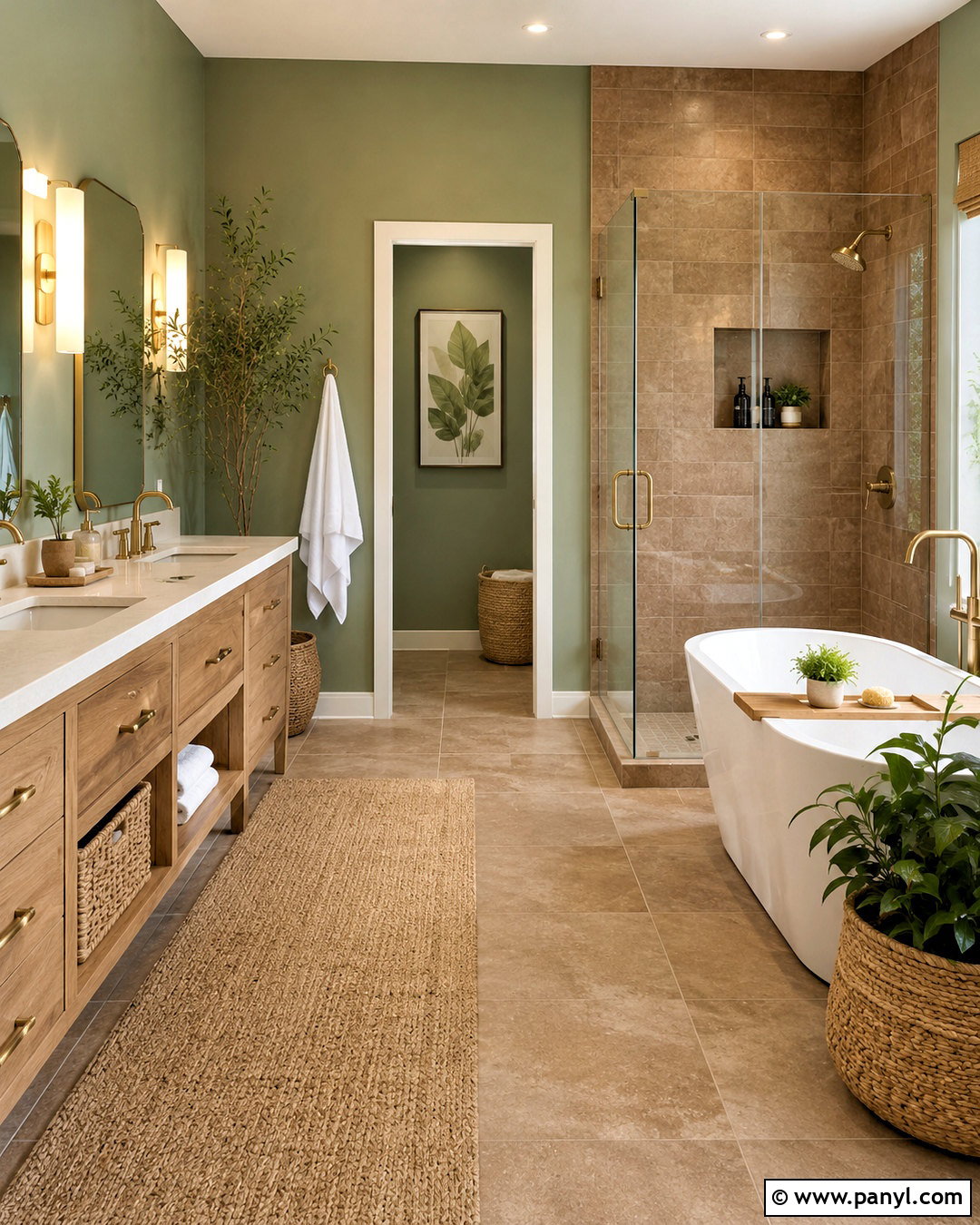
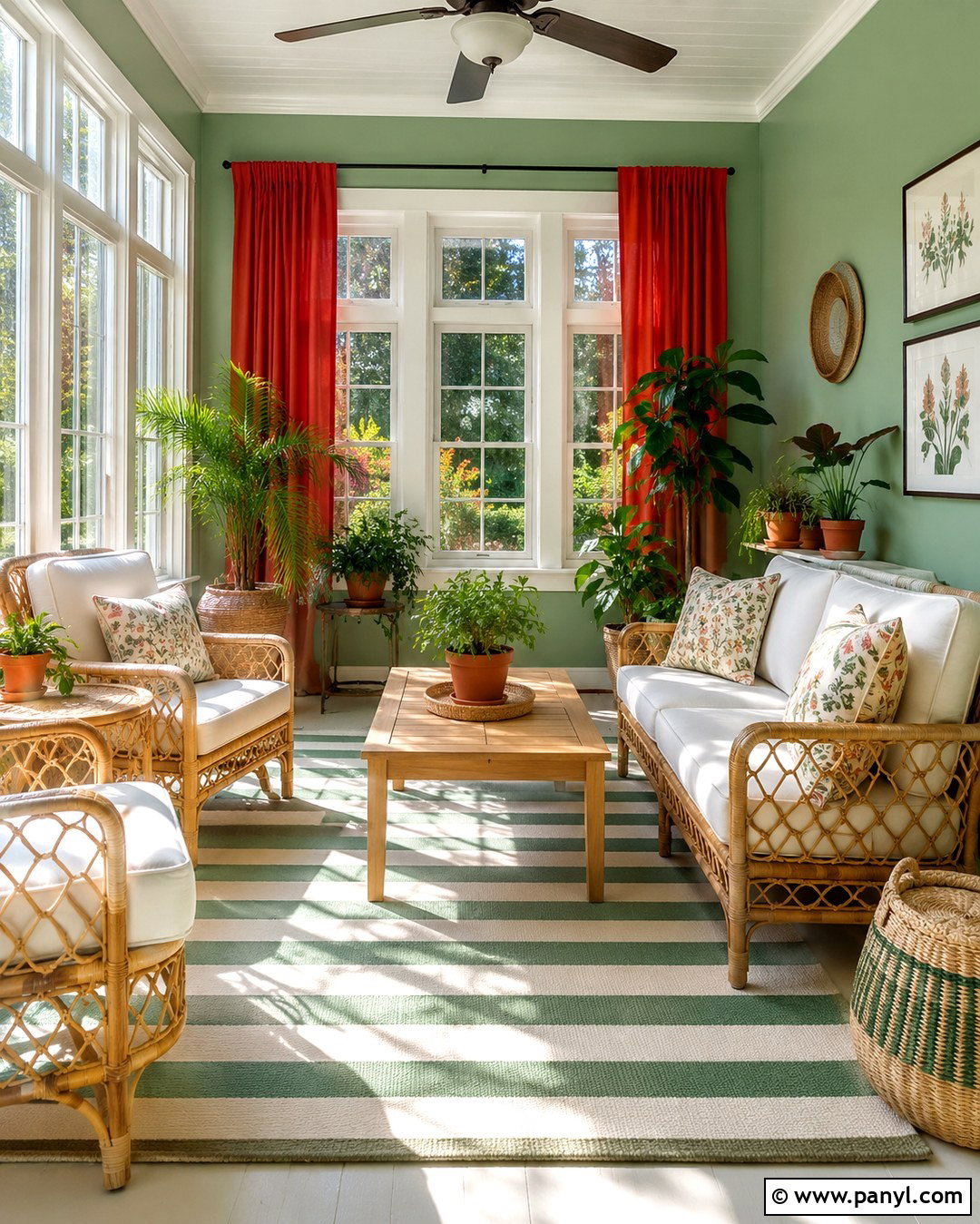
Sage green brings a natural, refreshing quality to brown tile and works beautifully with both tan and deep chocolate shades. Select a muted sage with gray undertones rather than a bright, minty green. Complete the room with light oak cabinetry, creamy countertops, woven storage, and brushed brass or bronze fixtures. White towels, curtains, or seating will add the brightness needed to keep the earthy palette fresh. A few darker green plants can reinforce the connection without overwhelming the room. For bathrooms, consider sage walls above brown floor tile and a simple white shower surround. In kitchens, pair the same palette with open wood shelves and cream cabinets. The result feels organic, relaxed, and updated while allowing existing tile to become a purposeful foundation.
8. Olive Green Wall Color With Brown Tiles
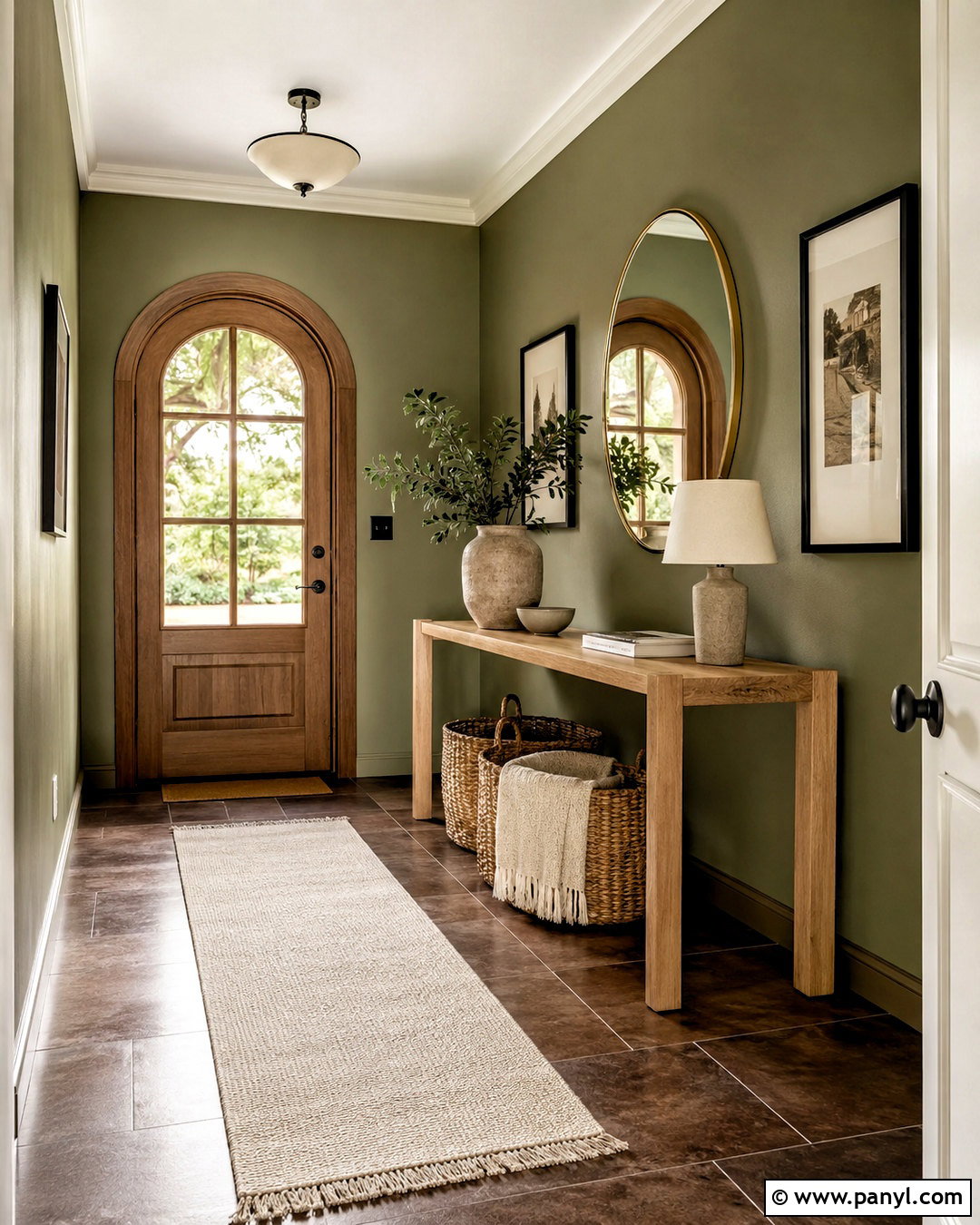
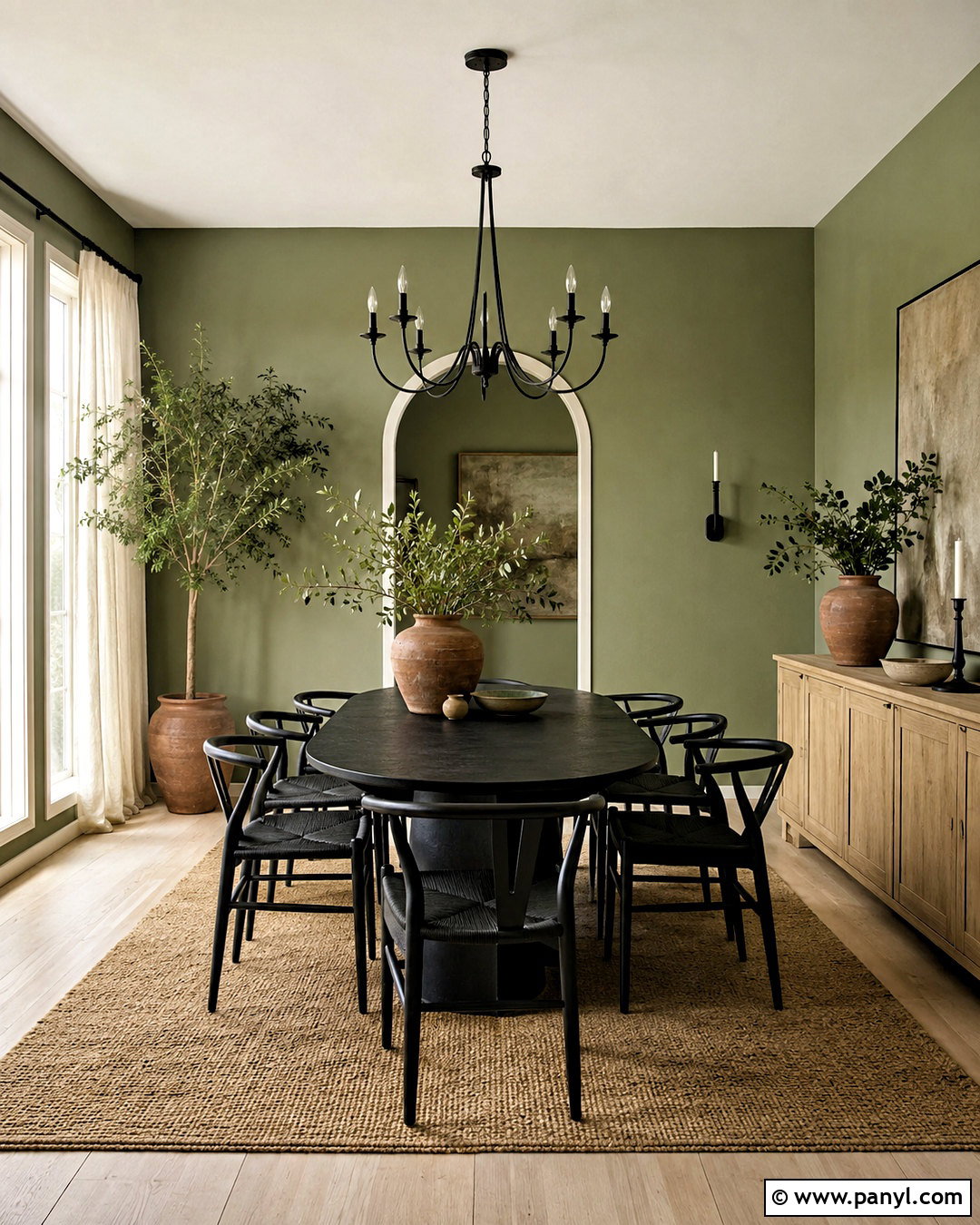
Olive green and brown tiles create a richer earth-toned room with plenty of warmth and depth. This pairing suits spaces with strong daylight, since olive can feel heavy in dim conditions. Use a muted mid-tone olive on the walls, creamy white on the ceiling, and dark brown tile underfoot. Complete the setting with walnut furniture, cognac upholstery, aged brass lighting, and natural linen. Pale stone countertops or an off-white rug will provide necessary relief. In a bathroom, keep the vanity light and choose a large mirror to reflect more light. In an entryway, add a narrow oak console and simple black-framed artwork. Repeating olive through small textiles helps the walls feel connected, while restrained cream accents keep the complete room balanced and welcoming.
9. Eucalyptus Green Wall Color With Brown Tiles
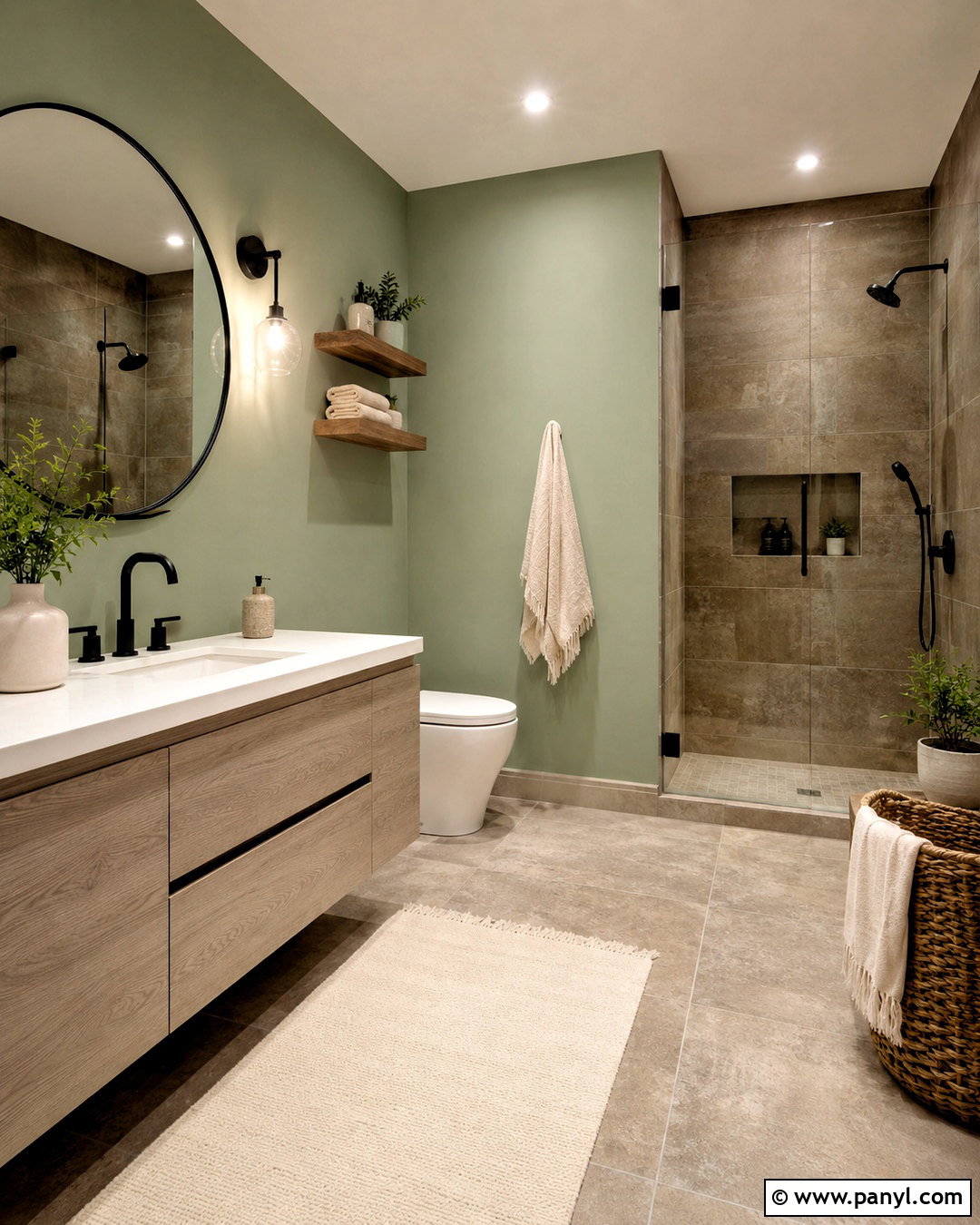
A soft eucalyptus wall color offers a cooler, airier alternative to traditional sage. It pairs especially well with brown tiles that have taupe, gray, or weathered undertones. Design the space with eucalyptus walls, light wood cabinetry, white countertops, and brushed nickel or matte black fixtures. Add cream towels, a pale textured rug, and clear glass lighting to preserve the open feeling. Natural greenery should be used sparingly because the wall already supplies an organic color. For a modern bathroom, combine brown floor tile with a floating ash-wood vanity and simple round mirror. In a kitchen, use white cabinetry and a few eucalyptus-painted walls around the dining area. The resulting palette feels clean and nature-inspired without turning cold or overly rustic.
10. Sky Blue Wall Color With Brown Tiles
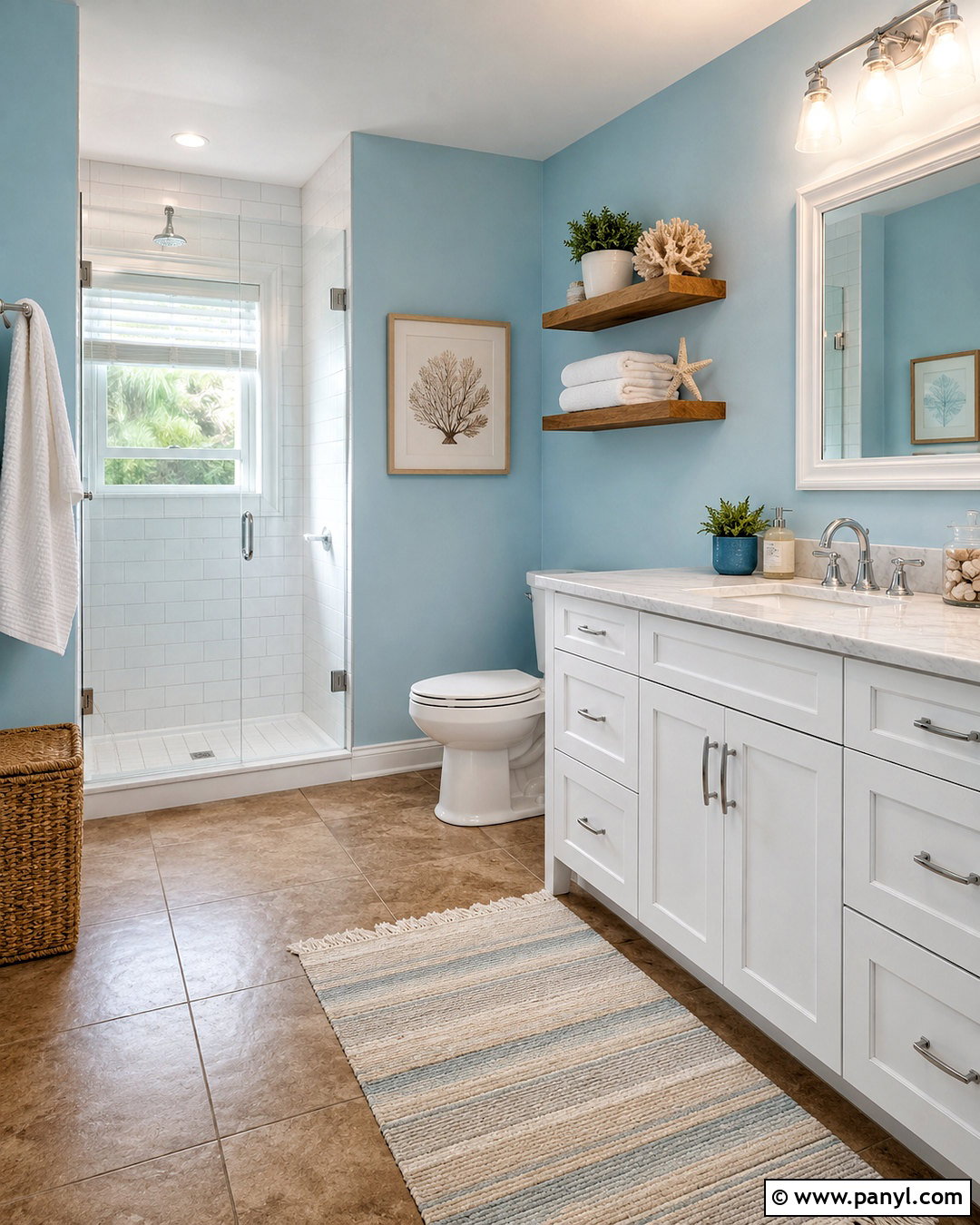
Sky blue walls create a cheerful contrast that can make warm brown tile appear brighter and more defined. Choose a softened blue with a slight warm or gray undertone instead of an icy pastel. Complete a bathroom with sky blue walls, medium-brown floor tile, a crisp white vanity, chrome fixtures, and white waffle-textured towels. Natural wood shelves will repeat the floor color and connect the palette. In a sunroom or kitchen, combine the same walls with cream cabinets, rattan seating, and a simple striped textile. Limit additional colors so the blue and brown remain the focus. Soft white trim provides a clean outline around doors and windows. This pairing works best when the room receives natural light and includes enough white to maintain an easy, spacious appearance.
11. Dusty Blue Wall Color With Brown Tiles
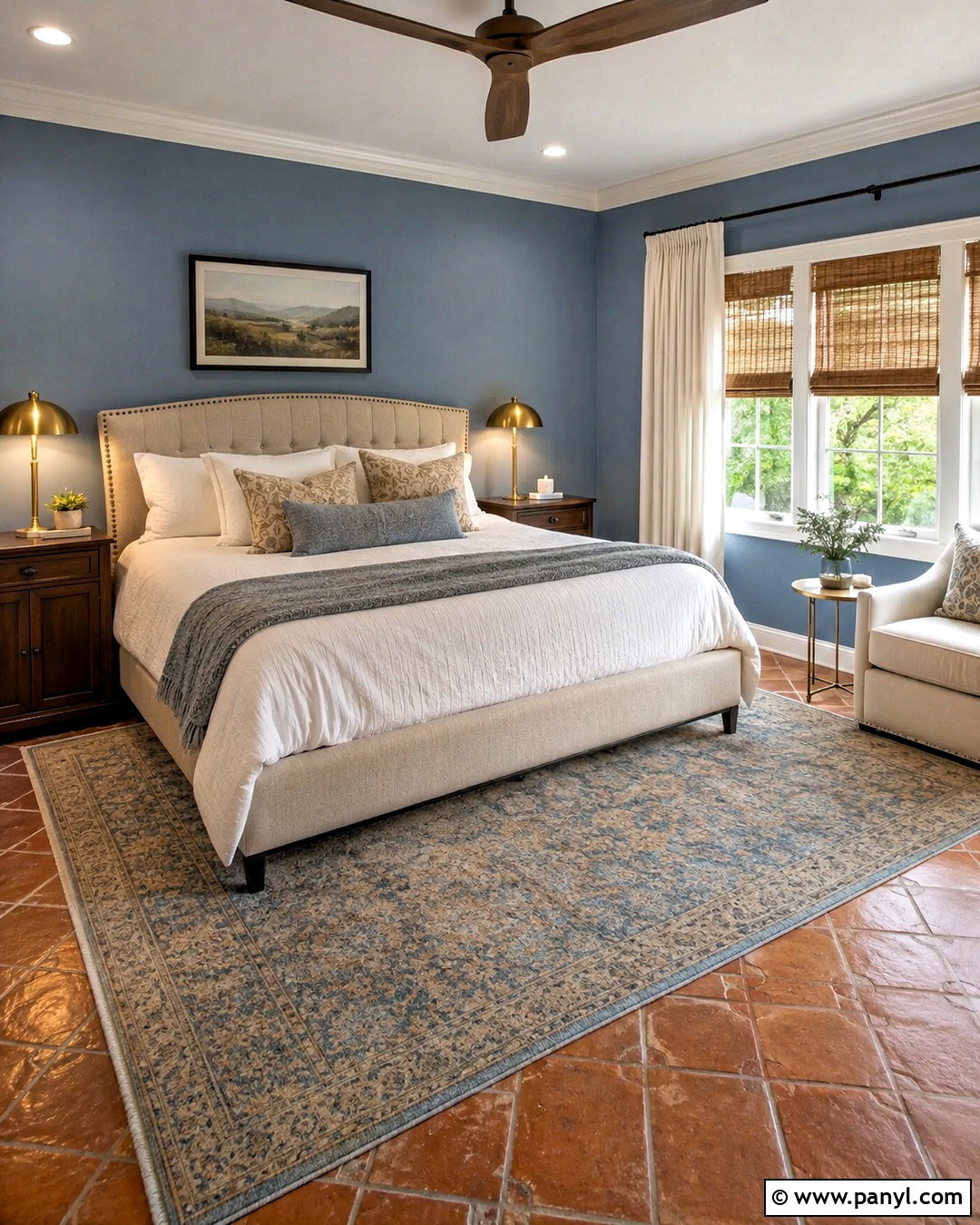
Dusty blue gives brown tile a subdued contrast that feels comfortable rather than sharp. Its muted gray quality is useful when brown tile has aged, rustic, or uneven coloring. Pair dusty blue walls with dark walnut furniture, creamy trim, and brushed brass details for a balanced transitional look. In a bathroom, use a white vanity, warm wood mirror, light stone countertop, and blue-gray towels. In a bedroom with brown tiled flooring, add an upholstered oatmeal bed, ivory bedding, and a faded blue-and-brown rug. Avoid filling the room with additional cool gray finishes, which may disconnect the walls from the floor. Warm lighting, natural wood, and cream fabrics bridge the temperature difference. The finished design feels peaceful, layered, and intentionally suited to the existing tile.
12. Navy Blue Wall Color With Brown Tiles
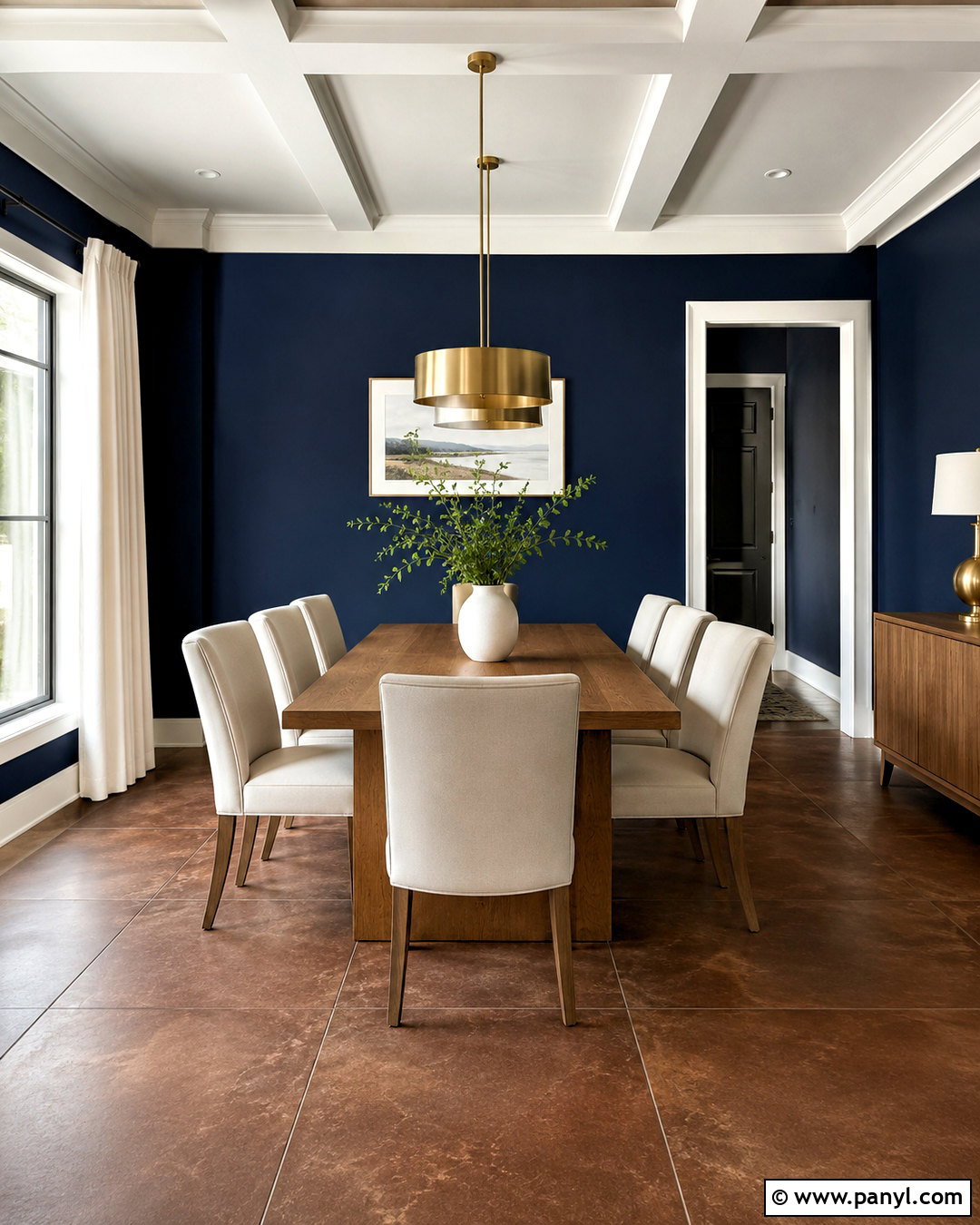
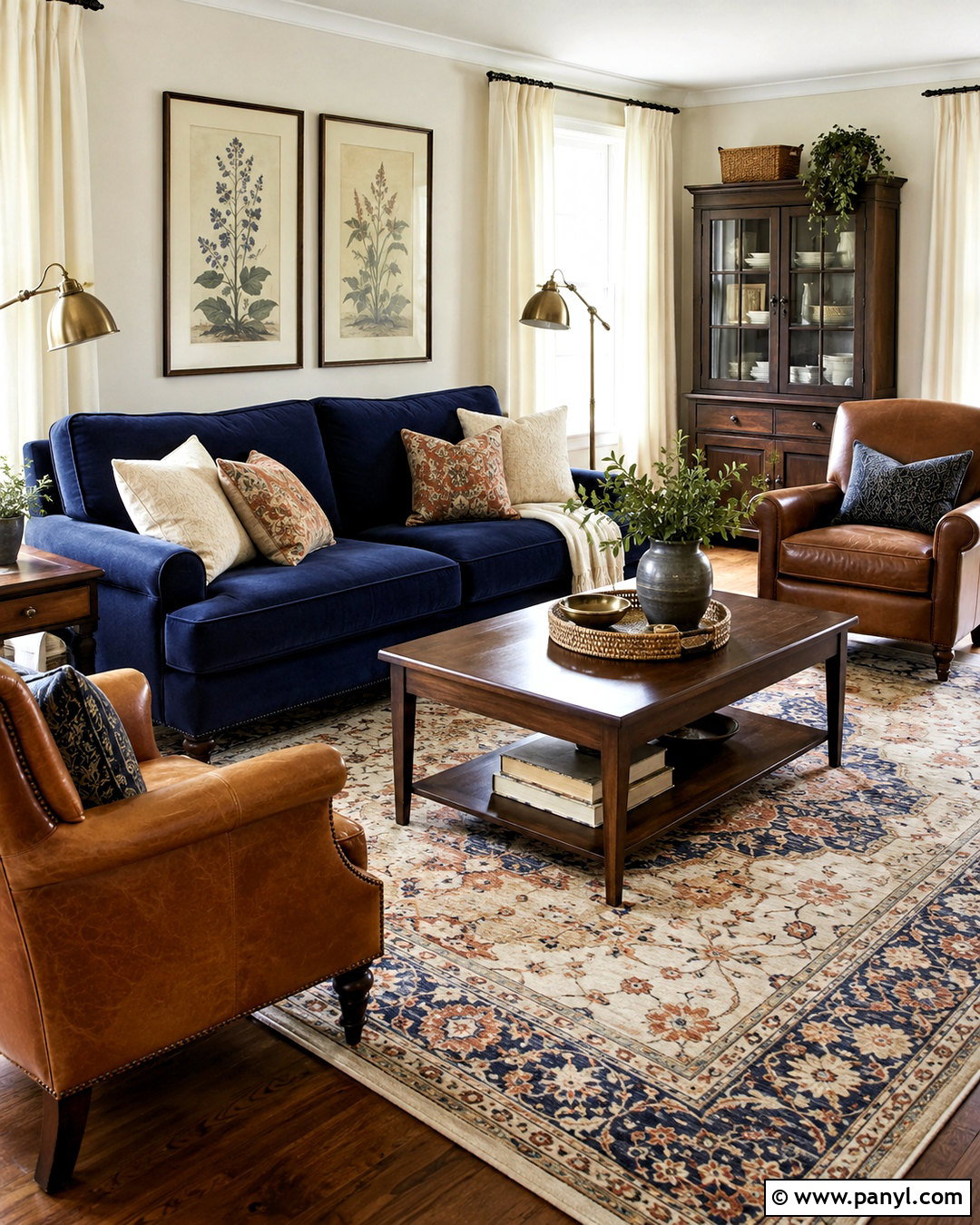
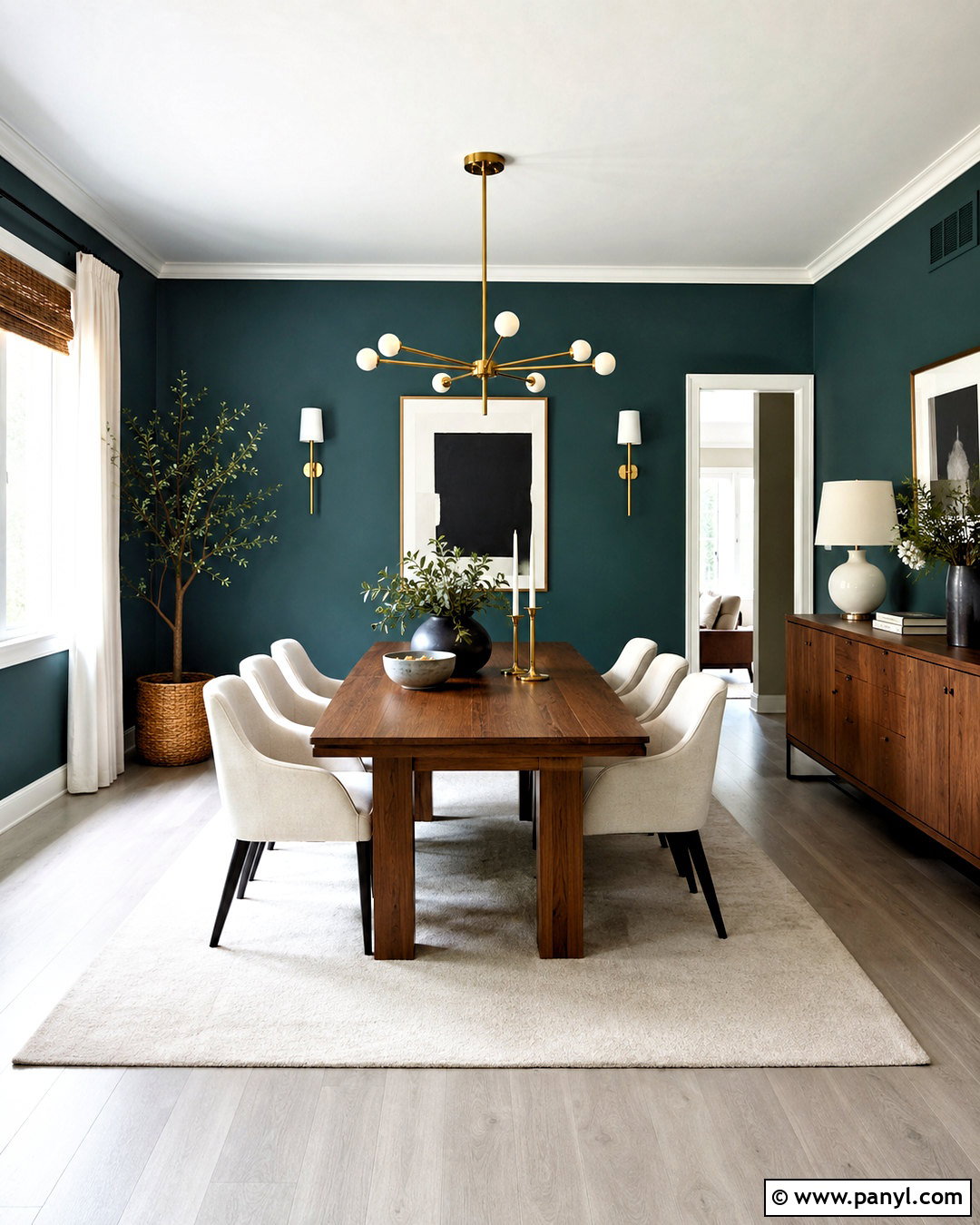
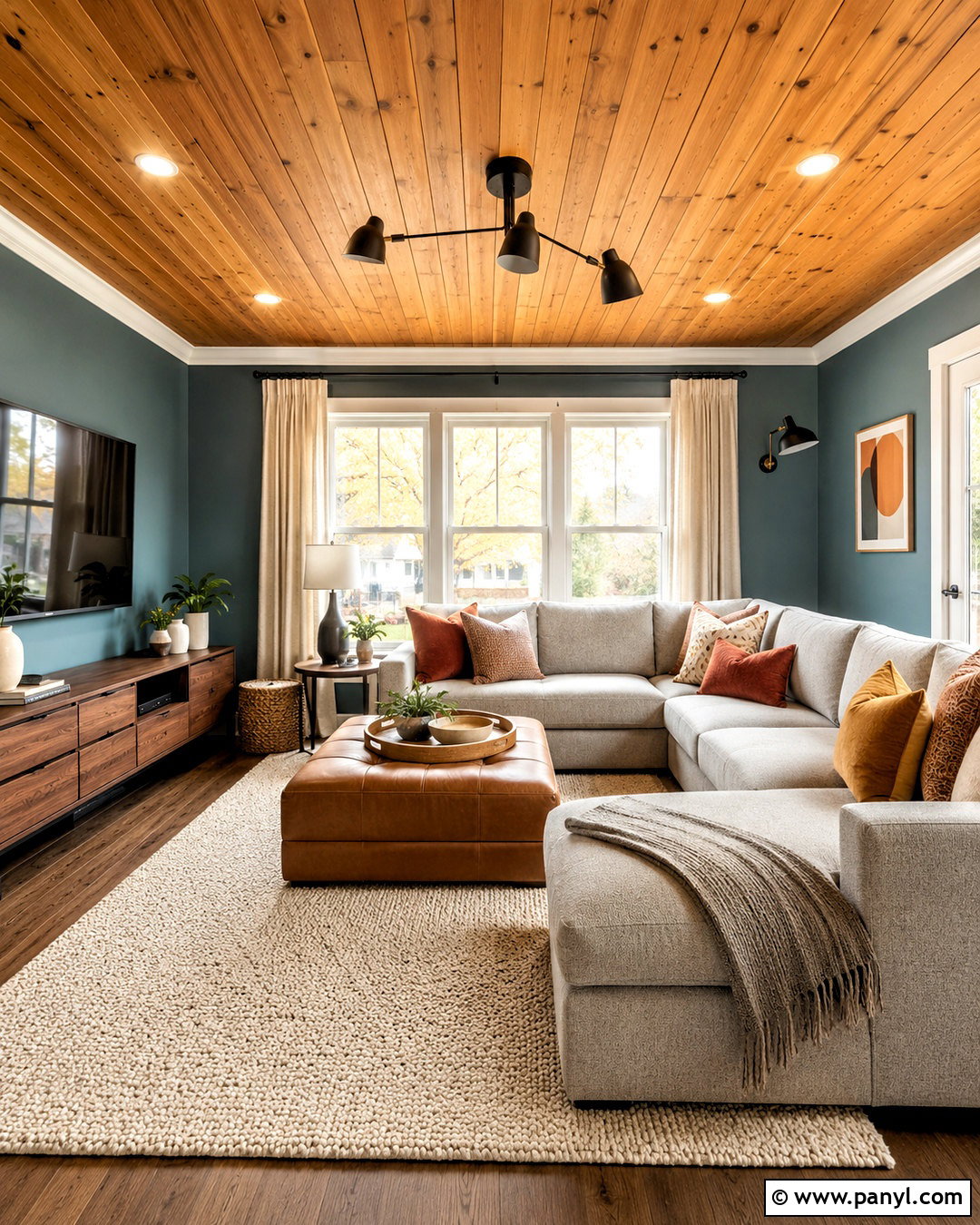
Deep navy walls can turn brown tile into a dramatic, polished feature rather than something that needs to be hidden. This combination works best in rooms with generous daylight or strong layered lighting. Pair navy walls with medium-brown tile, bright white trim, a pale wood vanity or cabinet, and brushed brass fixtures. Add a large mirror, light countertop, and cream textiles to prevent the palette from becoming too dark. In a dining room, use a natural oak table and ivory upholstered chairs beneath a brass pendant. Keep accessories simple and repeat navy only once or twice through patterned fabric or artwork. The contrast between rich blue and earthy brown gives the complete space definition, while light furnishings and reflective surfaces maintain an approachable residential feel.
13. Muted Teal Wall Color With Brown Tiles
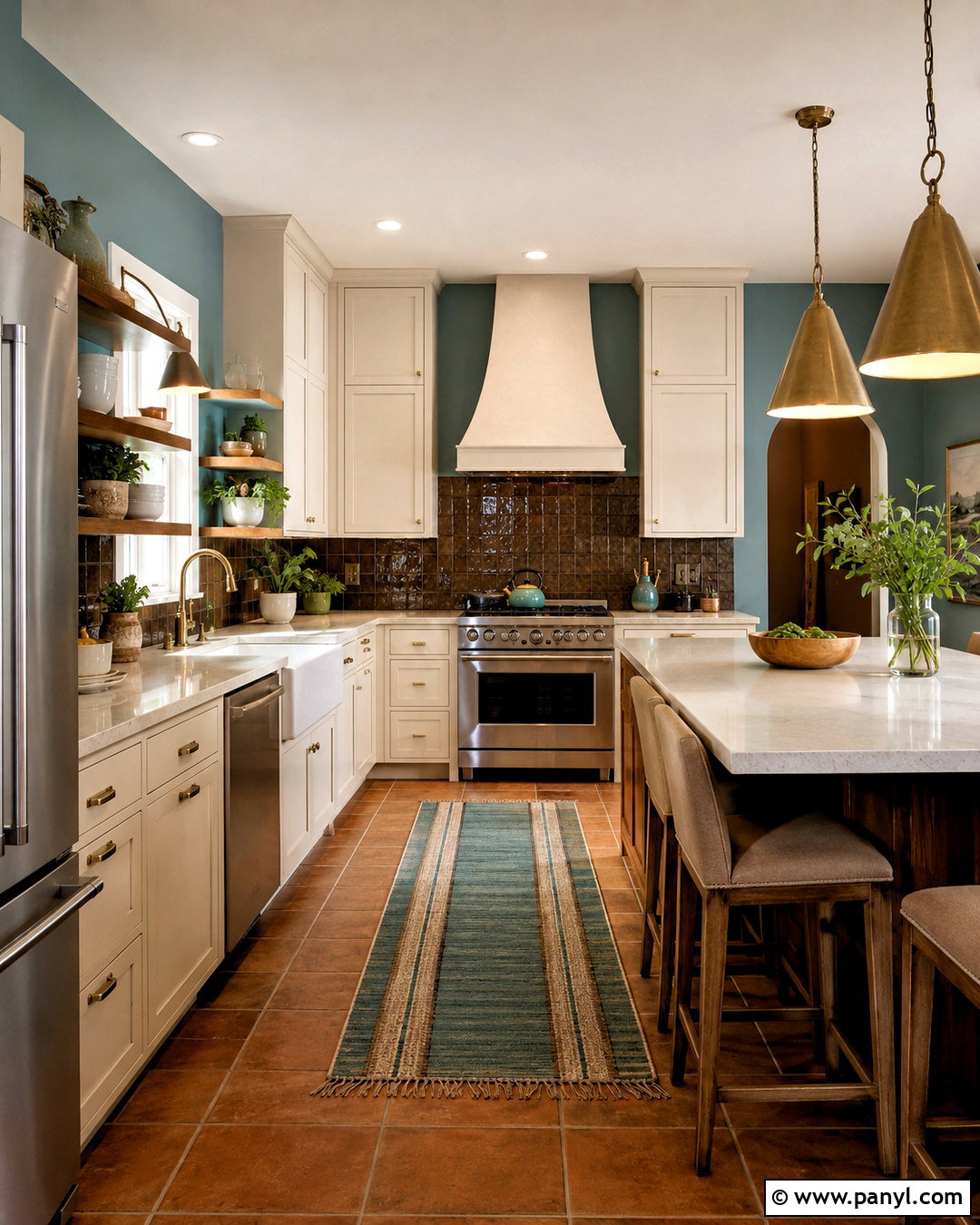
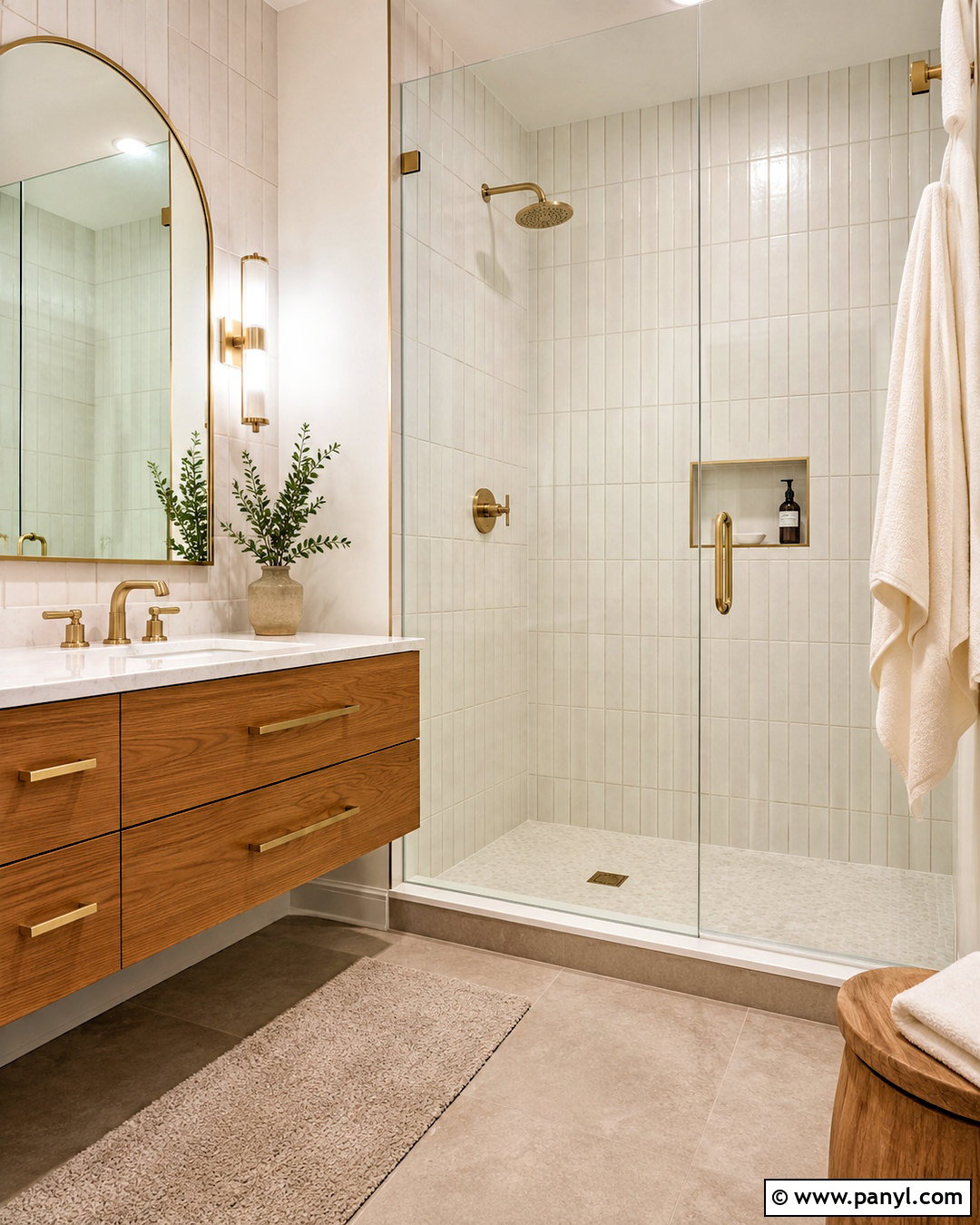
Muted teal introduces color while complementing the natural warmth of brown tile. Look for a blue-green shade softened with gray so it feels sophisticated rather than tropical. Build the room around teal walls, walnut cabinetry, cream counters, and antique brass hardware. Add white or flax-colored textiles to brighten the composition. A kitchen can feature brown floor tile, cream perimeter cabinets, a teal dining nook, and open wood shelving. In a bathroom, combine teal walls with a floating wood vanity, round brass mirror, and clear glass shower panel. Because teal is visually strong, keep decorative patterns small and restrained. A striped rug containing cream, teal, and brown can connect the main surfaces. The final look feels colorful, grounded, and thoughtfully coordinated from floor to ceiling.
14. Soft Gray Wall Color With Brown Tiles
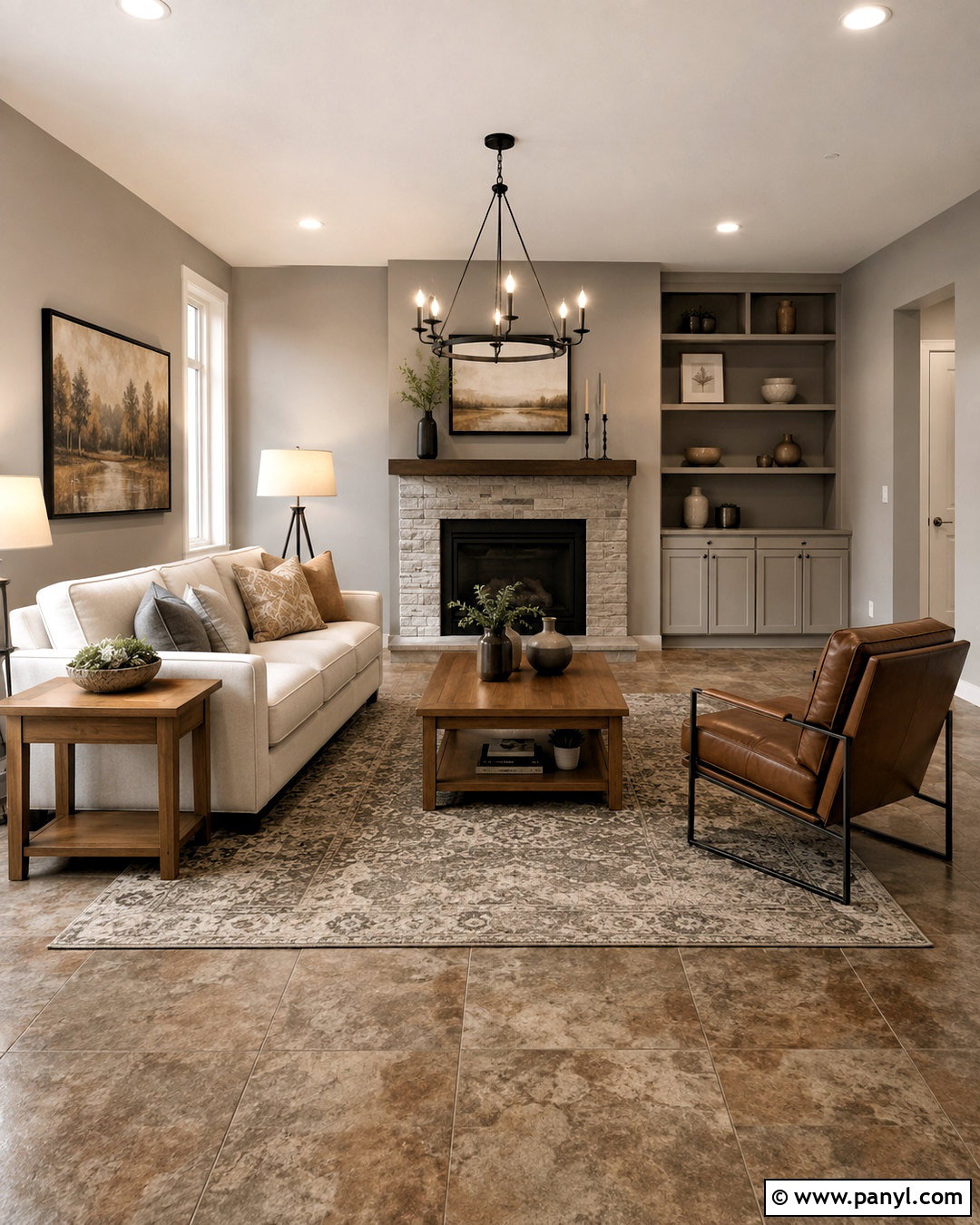
Soft gray can work with brown tile when both surfaces share a quiet, neutral undertone. Choose a warm gray containing beige or taupe rather than a cool blue-gray. Use the paint with brown stone-look tile, warm white cabinetry, medium oak furniture, and black metal accents. In a bathroom, complete the design with a white quartz vanity top, nickel fixtures, and plush ivory towels. In an open living space, add a cream sofa, brown leather chair, and a rug combining gray, tan, and off-white. Repeating both warm and cool neutrals prevents the walls and floor from looking unrelated. Test the gray in several locations because shadows can make it appear blue. When chosen carefully, this palette gives older brown tile a cleaner, more streamlined contemporary setting.
15. Charcoal Wall Color With Brown Tiles
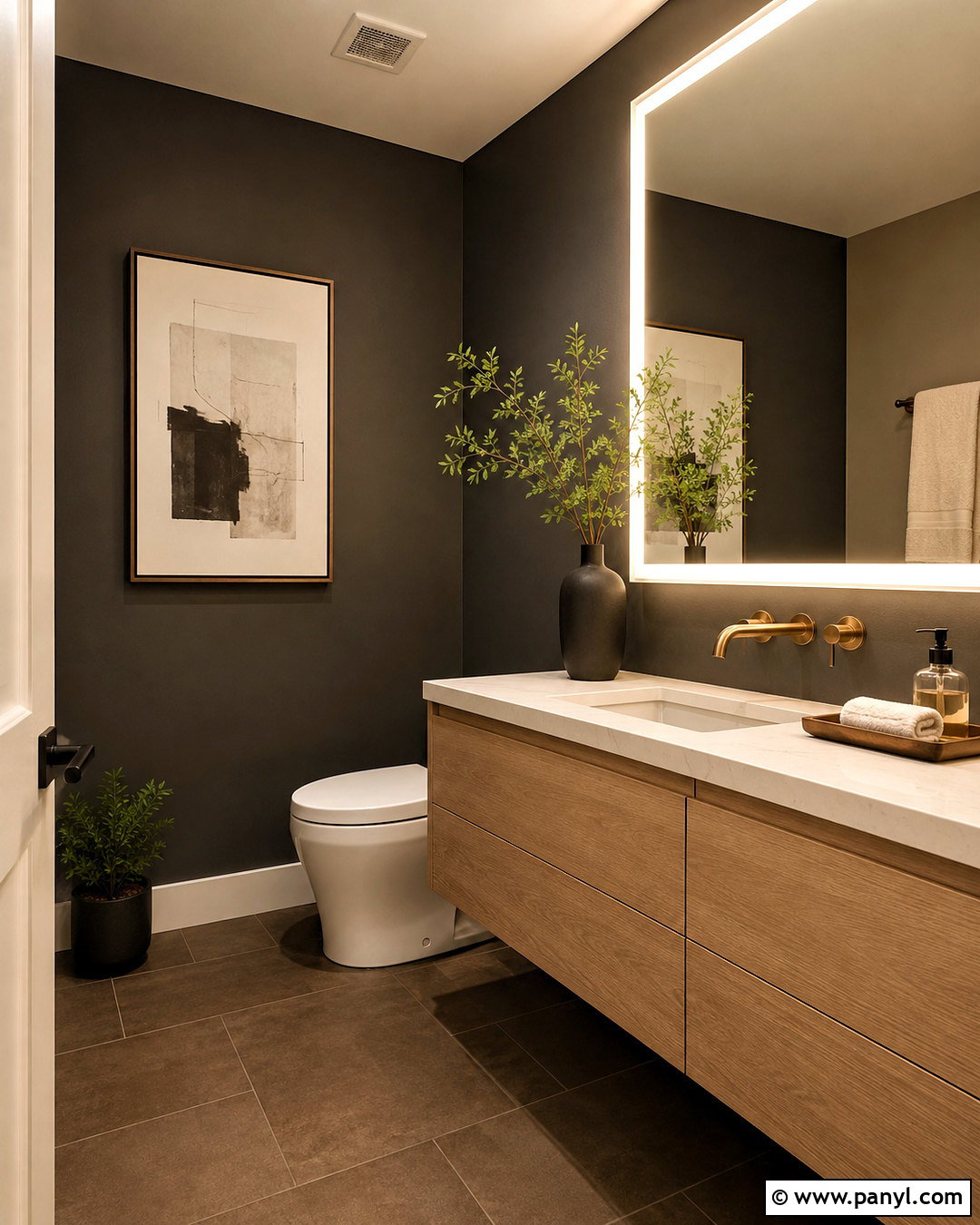
For a bold, modern room, charcoal walls can create an appealing contrast with warm brown tile. Select a deep charcoal with a slightly warm undertone, then balance it with abundant pale finishes. Use light oak cabinetry, creamy quartz, white ceilings, and clear glass around the darker walls. Brushed brass fixtures add warmth, while matte black details create a sleek connection to the charcoal. In a powder room, brown floor tile, charcoal walls, a floating wood vanity, and a large illuminated mirror make a complete statement. In larger rooms, include ivory upholstery and light window treatments. Good lighting is essential, so combine ceiling fixtures, sconces, and natural light. The overall design should feel intentional and dramatic, not dim, with brown providing an earthy counterpoint.
16. Blush Pink Wall Color With Brown Tiles
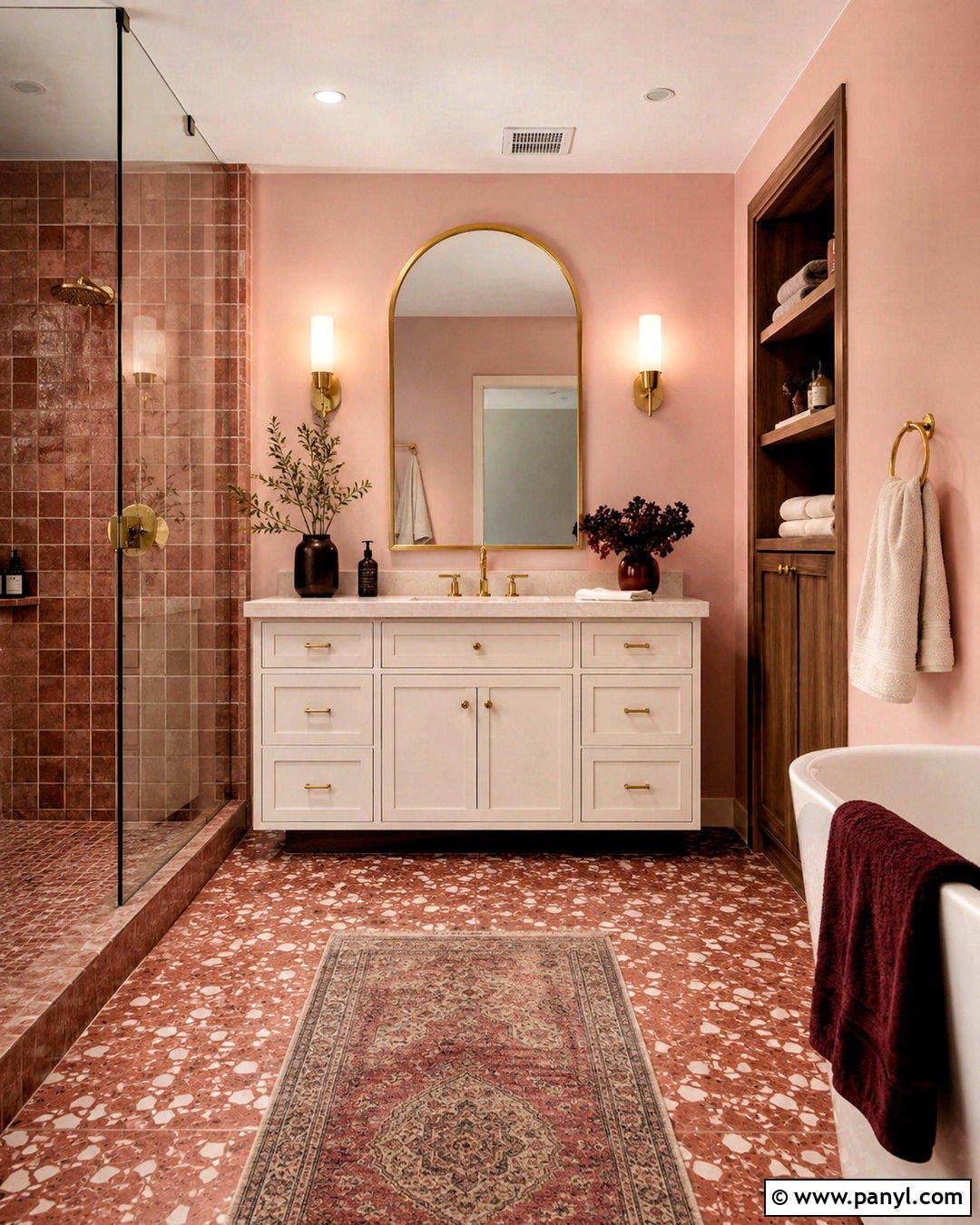
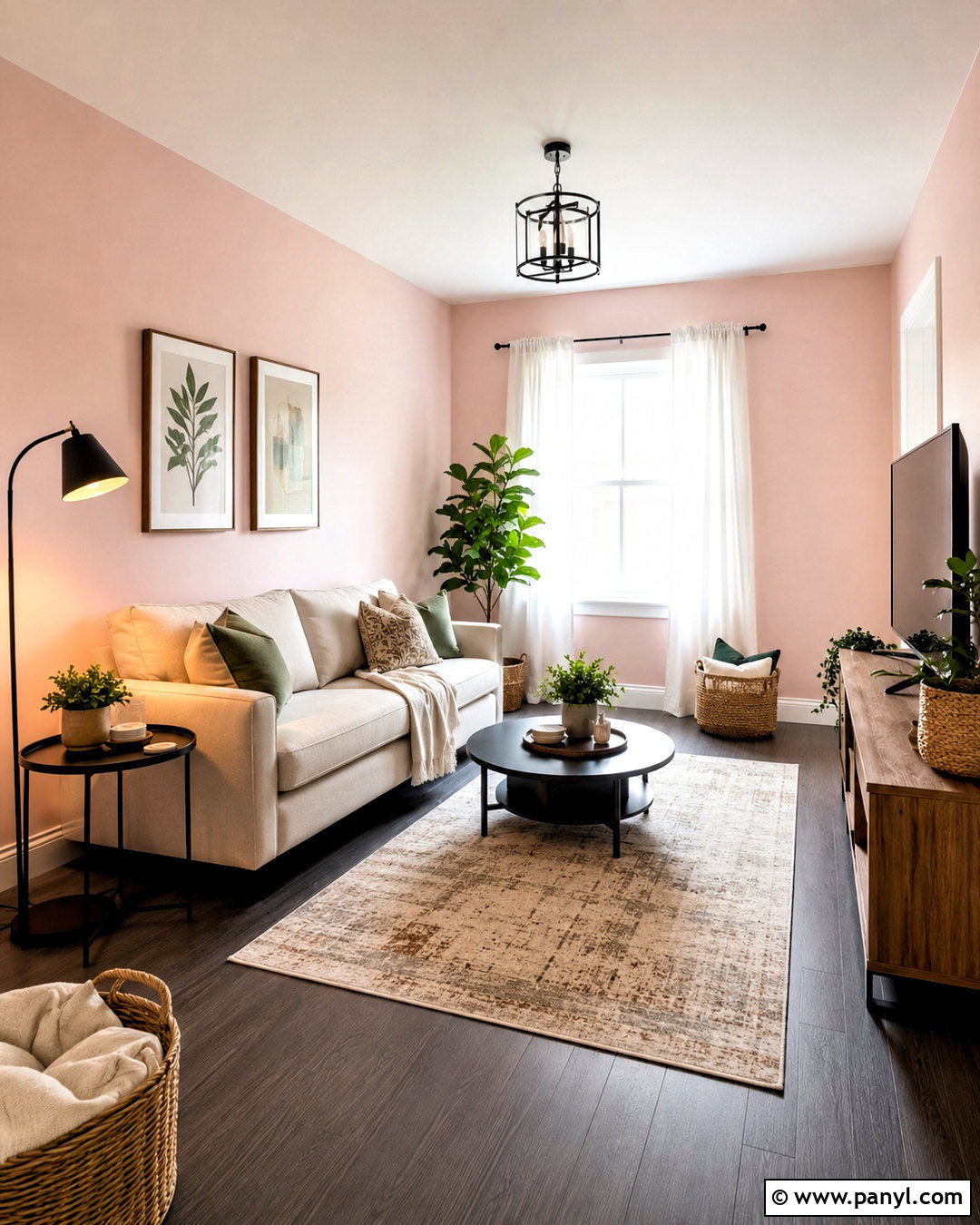
Blush pink brings softness to brown tile, particularly when the tile contains red, clay, or rosy undertones. Choose a dusty, muted blush rather than a sugary pastel. Pair it with walnut furniture, warm white trim, cream textiles, and aged brass details. A bathroom can feature blush walls, brown terrazzo-style flooring, an ivory vanity, and a rounded brass mirror. In a bedroom, add a natural linen headboard, off-white bedding, and a patterned rug that repeats brown and muted pink. Keep the furniture shapes simple so the color combination feels current. Small touches of deep burgundy or chocolate can add definition, while pale surfaces protect the room’s brightness. The finished palette feels warm and inviting, with enough contrast to make both the walls and tile appear intentional.
17. Terracotta Wall Color With Brown Tiles
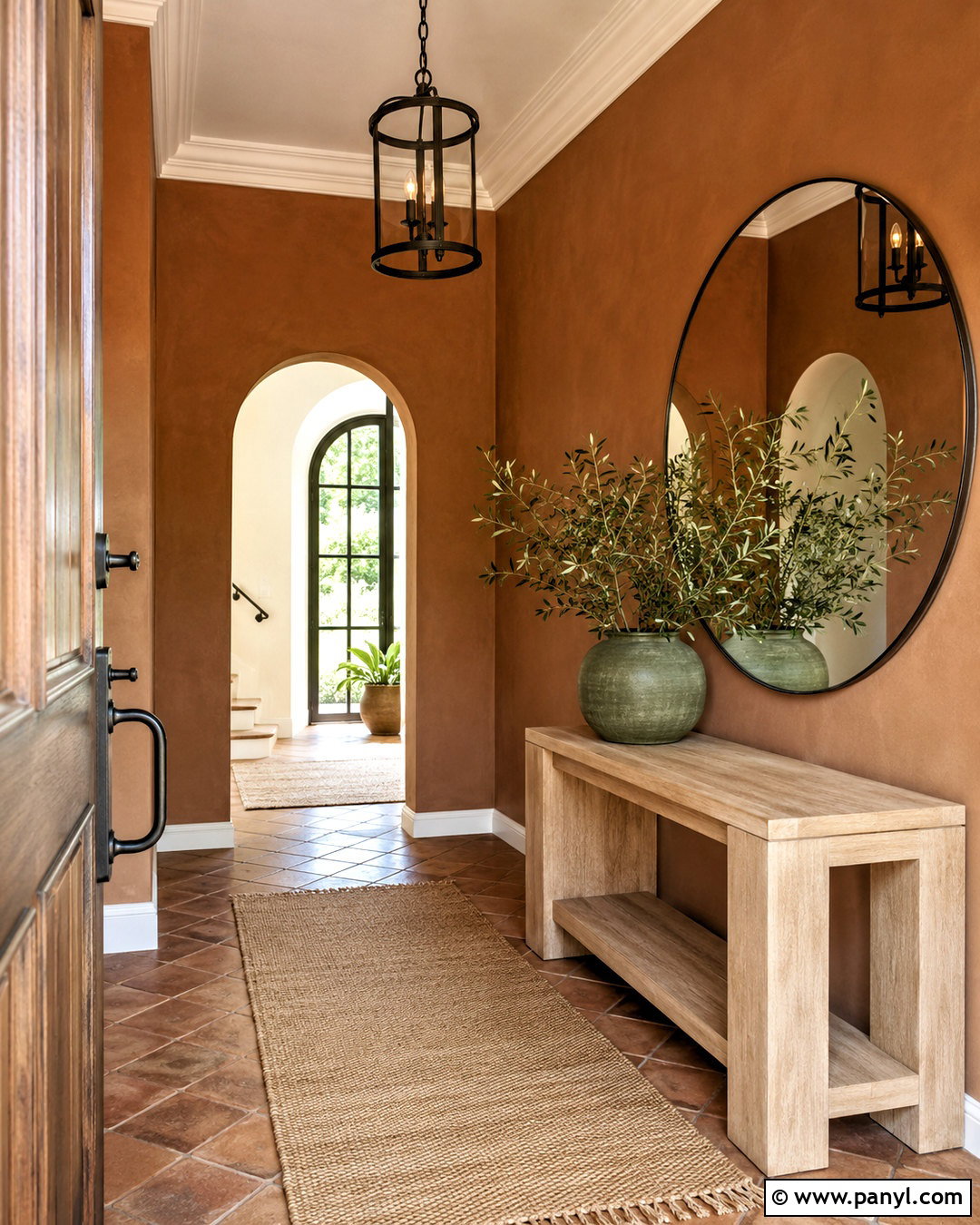
Terracotta walls create a warm, enveloping room by emphasizing the red and orange tones commonly found in brown tile. For balance, select a muted clay shade that is clearly lighter or darker than the tile. Complete the design with cream trim, pale oak furniture, linen upholstery, and dark bronze accents. In an entryway, use terracotta walls above rustic brown flooring, then add a narrow wood console, woven runner, and oversized round mirror. A bathroom can combine clay-colored walls with a white vanity and simple brass fixtures. Avoid adding several other warm colors, since the room may become visually heavy. Instead, introduce off-white, sand, and small amounts of olive green. This tonal approach makes dated reddish-brown tile feel connected to a deliberate earthy palette.
18. Muted Yellow Wall Color With Brown Tiles
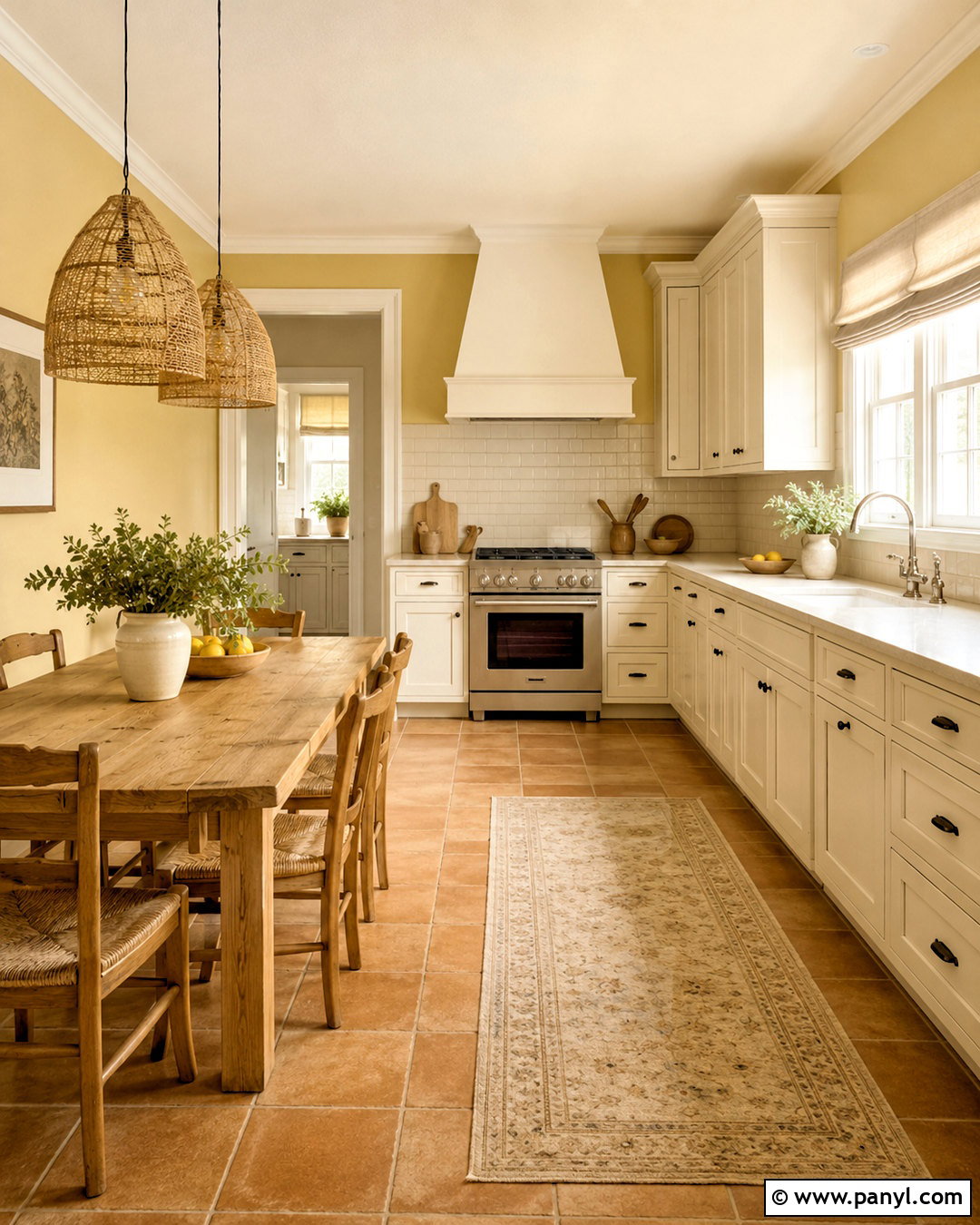
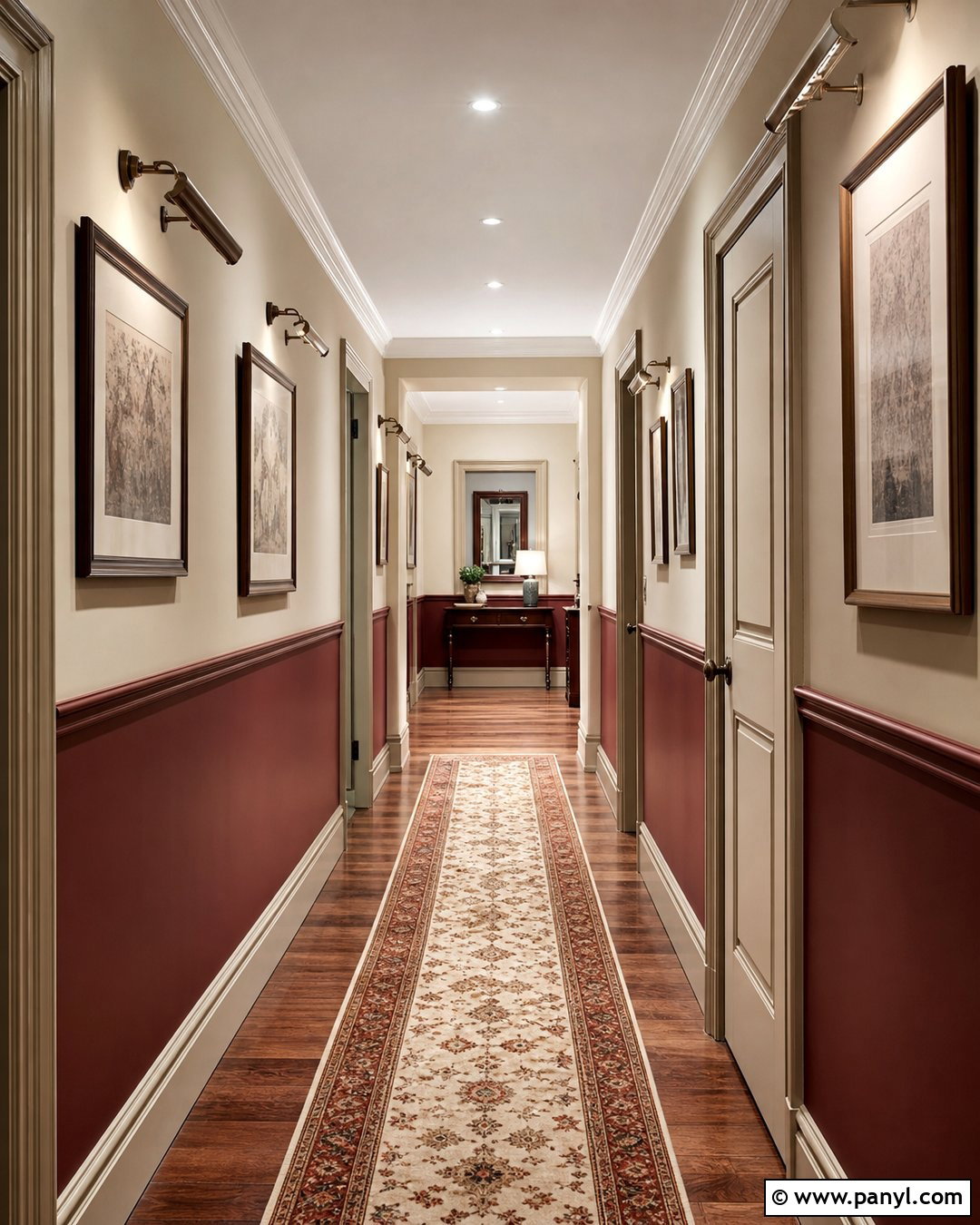
Muted yellow can brighten brown tile while preserving its comfortable, traditional warmth. Look for ochre, straw, or buttery yellow softened with beige rather than a bright primary shade. Pair the walls with dark brown flooring, creamy white cabinetry, natural oak, and aged bronze or black hardware. In a kitchen, use muted yellow around off-white cabinets, a wood dining table, and simple woven pendant lights. Add linen shades and a light patterned runner to soften the hard tile surface. In a hallway, white trim and several black-framed prints will give the warm walls definition. Yellow works especially well with golden or caramel-brown tiles, but samples should be checked carefully. The complete room should feel sunlit and welcoming, not overly saturated or themed.
19. Matte Black Wall Color With Brown Tiles
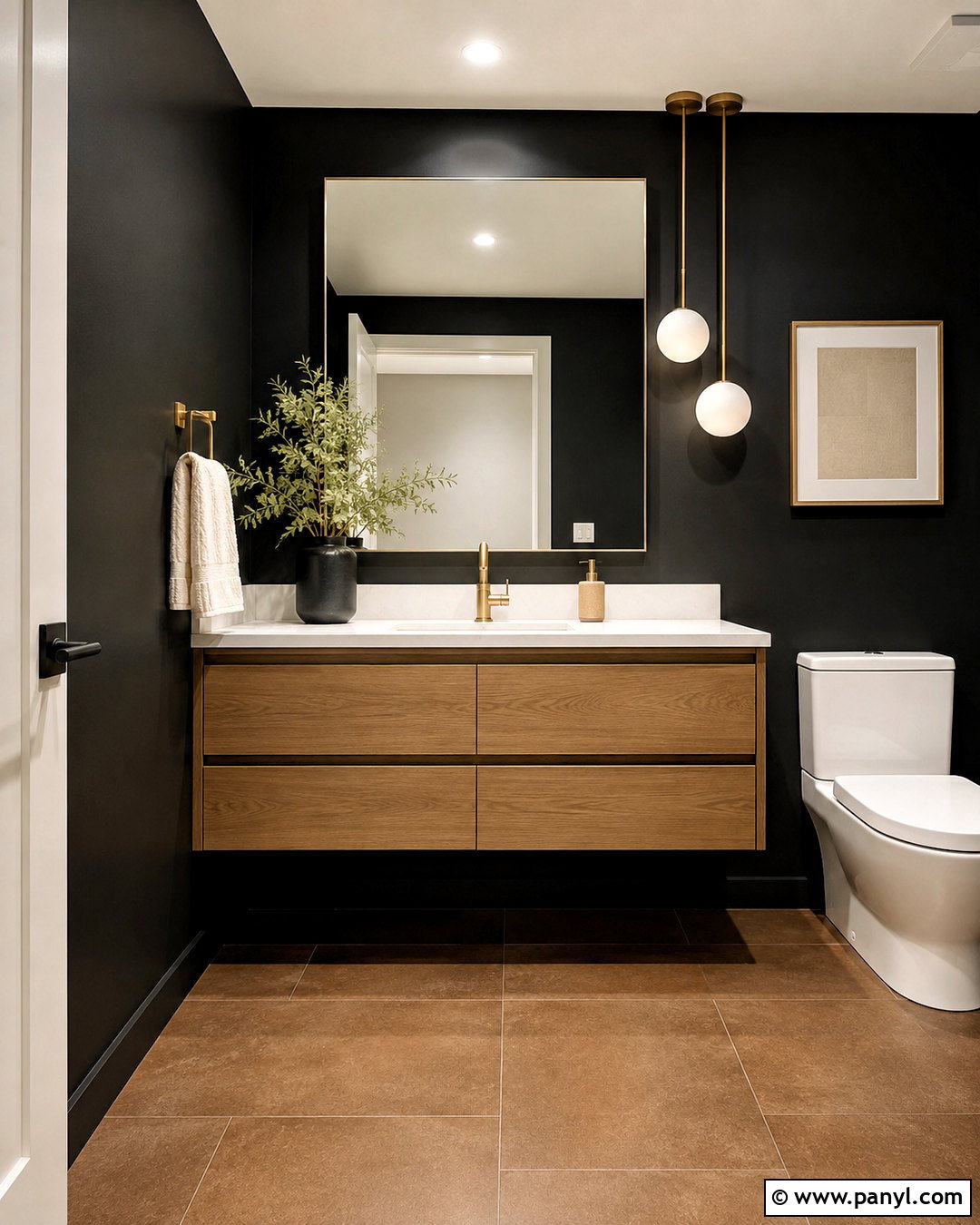
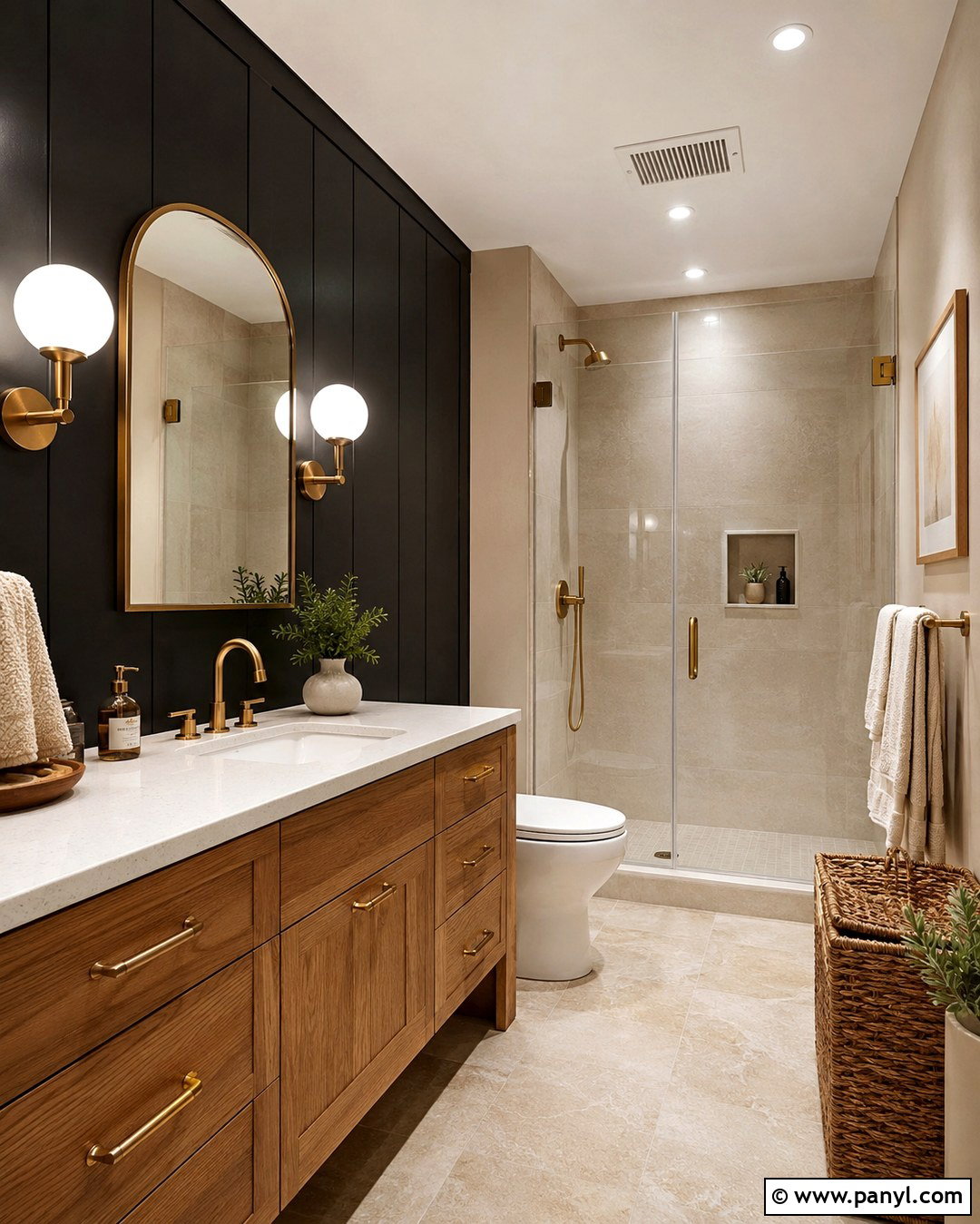
Matte black walls offer the strongest contrast in this collection and can make brown tile look surprisingly luxurious. Reserve this treatment for a powder room, feature wall, or bright space where lighter materials can provide balance. Combine black walls with medium-brown tile, a natural oak vanity, white stone countertop, and brushed brass fixtures. A large mirror and white ceiling will reflect light and prevent the room from feeling enclosed. Keep textiles cream or light beige, and use minimal decorative objects so the dramatic surfaces remain clear. In a dining area, pair one black wall with brown flooring, a pale wood table, woven chairs, and a sculptural white pendant. The contrast feels modern, while wood and brown tile keep the complete design warm and approachable.
20. Chocolate Brown Wall Color With Brown Tiles
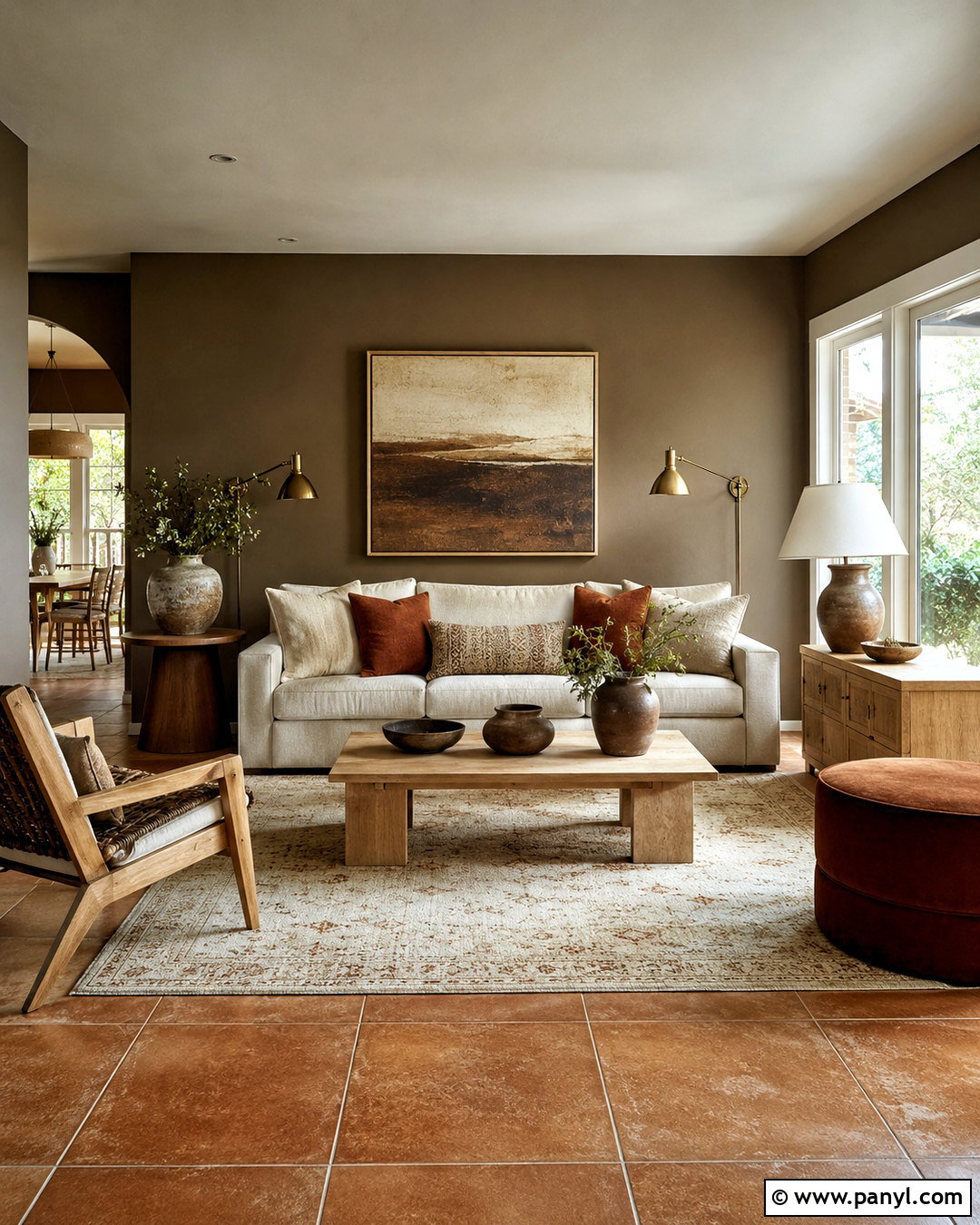
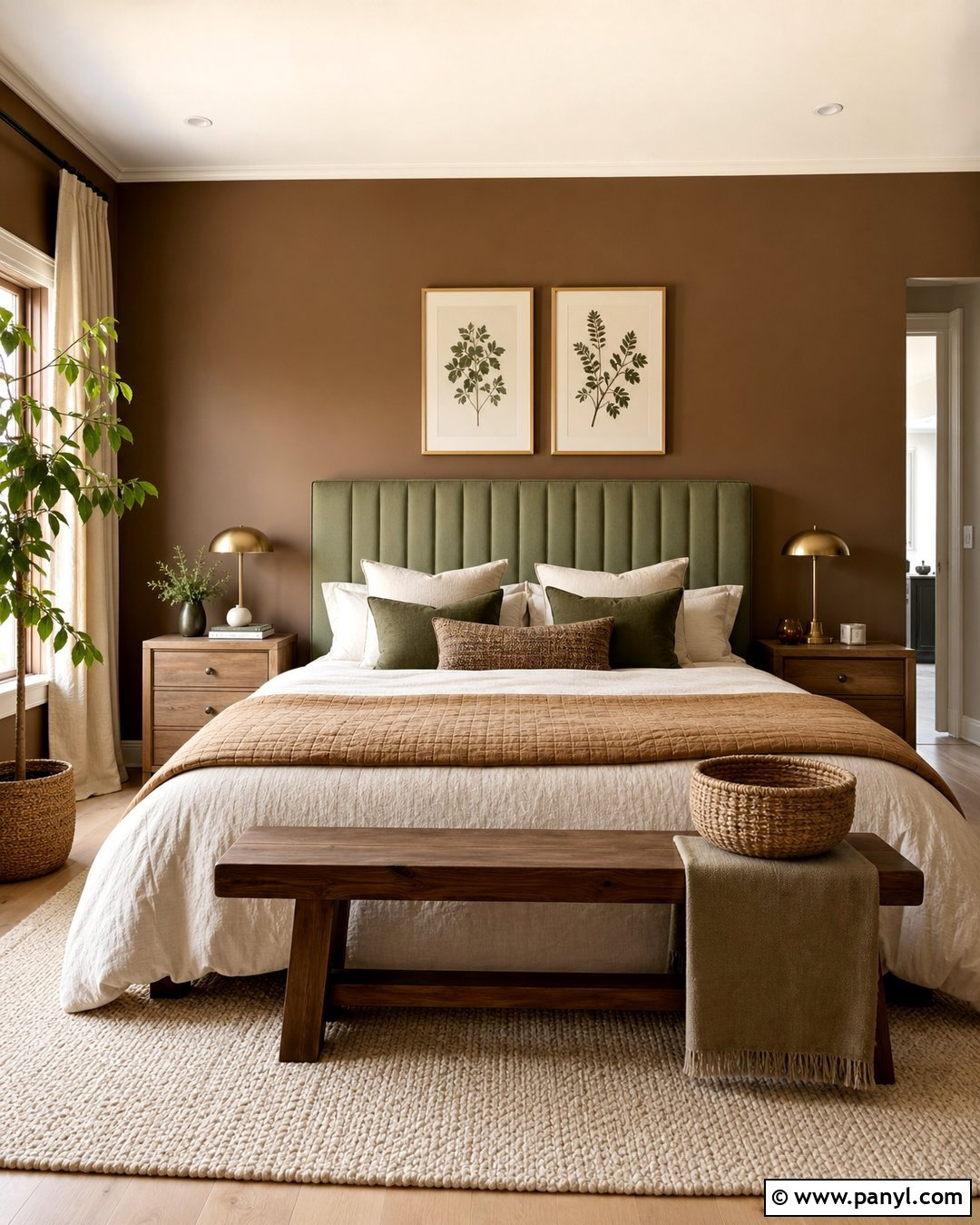
A layered brown-on-brown palette can make existing tile feel purposeful, especially in a well-lit room. Choose a chocolate wall color that differs clearly from the tile in depth or undertone. Pair dark walls with lighter caramel-brown flooring, warm white ceilings, cream upholstery, and natural oak furniture. In a bathroom, use chocolate walls above medium-brown tile, then add an ivory vanity, pale stone countertop, brass fixtures, and a large mirror. A living area can include a linen sofa, rust-colored cushions, and a light patterned rug to break up the darker surfaces. Texture is important in a tonal room, so mix matte paint, glazed ceramics, woven fabrics, and smooth wood. The finished space feels cozy and cohesive rather than flat or overwhelmingly brown.
Conclusion:
The best wall color should respond to the undertone, depth, and amount of brown tile in the room. Warm whites and creams create brightness, while beige, greige, and taupe produce a seamless neutral look. Greens and blues provide natural contrast, and deeper shades such as navy, charcoal, or chocolate add drama. Whatever palette you choose, build a complete design with coordinated trim, cabinetry, fixtures, textiles, and lighting. Always place large paint samples beside the tile and view them throughout the day before committing. With thoughtful contrast and repeated materials, these **20 Wall Color With Brown Tiles** combinations can help existing flooring or wall tile feel attractive, updated, and intentionally integrated into your home.

Related Ideas and Inspiration:


Leave a Reply