
Orange kitchen walls can feel cheerful, warm, and surprisingly sophisticated when the entire room is planned around them. The key is choosing an orange undertone that works with your cabinets, counters, flooring, and natural light. Burnt orange and terracotta create an earthy atmosphere, while peach, apricot, and coral keep smaller kitchens light. Brighter tangerine tones can energize a modern space when balanced with crisp white, charcoal, or natural wood. Each look below treats orange as part of a complete kitchen palette rather than an isolated accent. You will find practical combinations for farmhouse, contemporary, retro, rustic, and compact layouts. Explore these 20 Orange Wall Paint Ideas Kitchen Ideas to create a welcoming kitchen that feels colorful, balanced, and easy to personalize.

1. Burnt Orange Kitchen Walls With White Cabinets
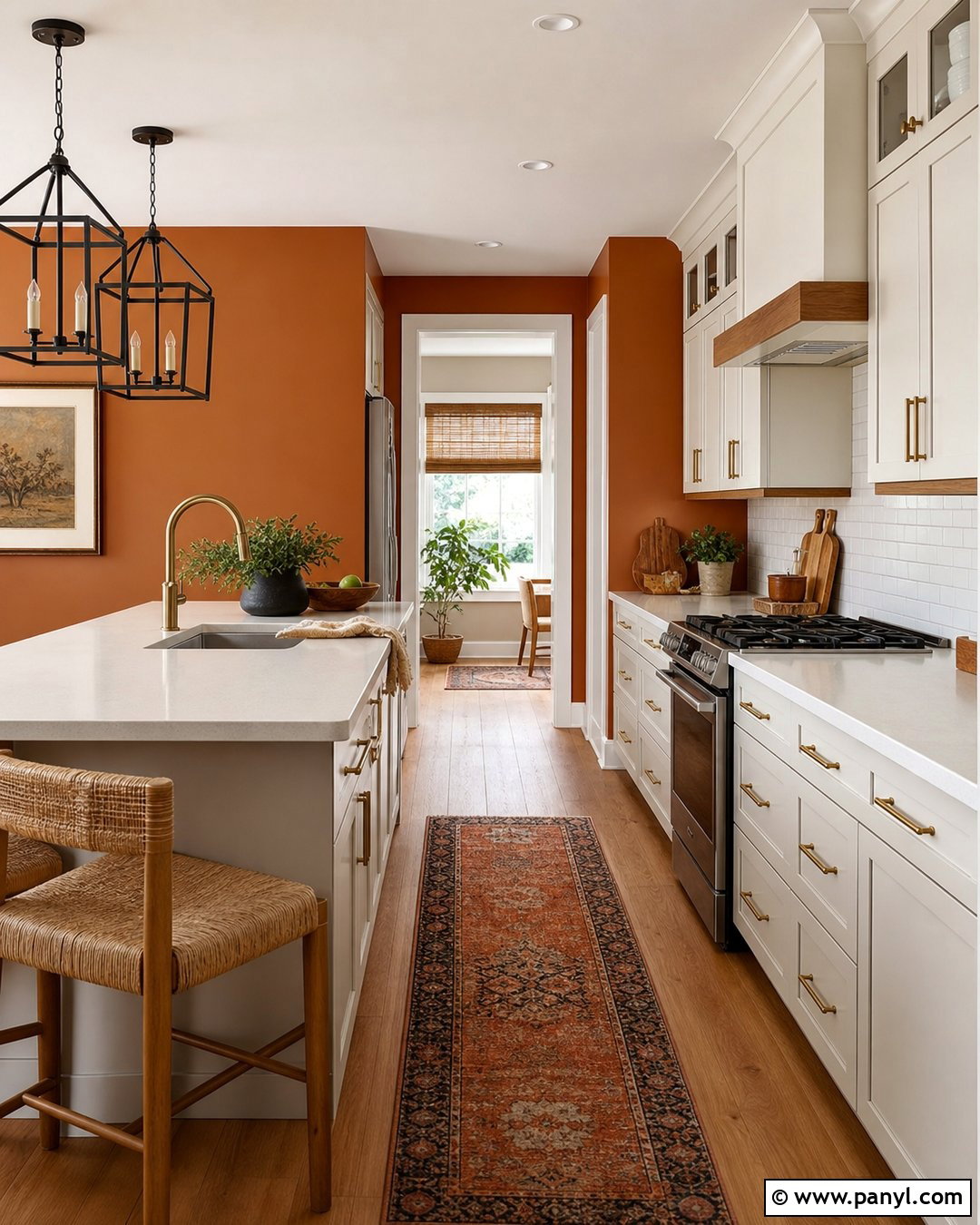
Burnt orange walls give a white kitchen a warmer, more inviting personality without overpowering its clean appearance. Choose an orange with muted brown or clay undertones rather than a bright citrus shade. Shaker cabinets in soft white provide contrast, while brushed brass hardware brings out the golden warmth in the paint. Add pale quartz counters and a simple white subway tile backsplash to keep the cooking area bright. Medium oak flooring and woven counter stools prevent the room from feeling too stark. Finish the design with cream linen shades, black-framed lighting, and a patterned runner containing rust, beige, and faded blue. This complete palette works especially well in kitchens receiving steady natural light throughout the day.
2. Terracotta Orange Kitchen Walls With Oak Cabinets
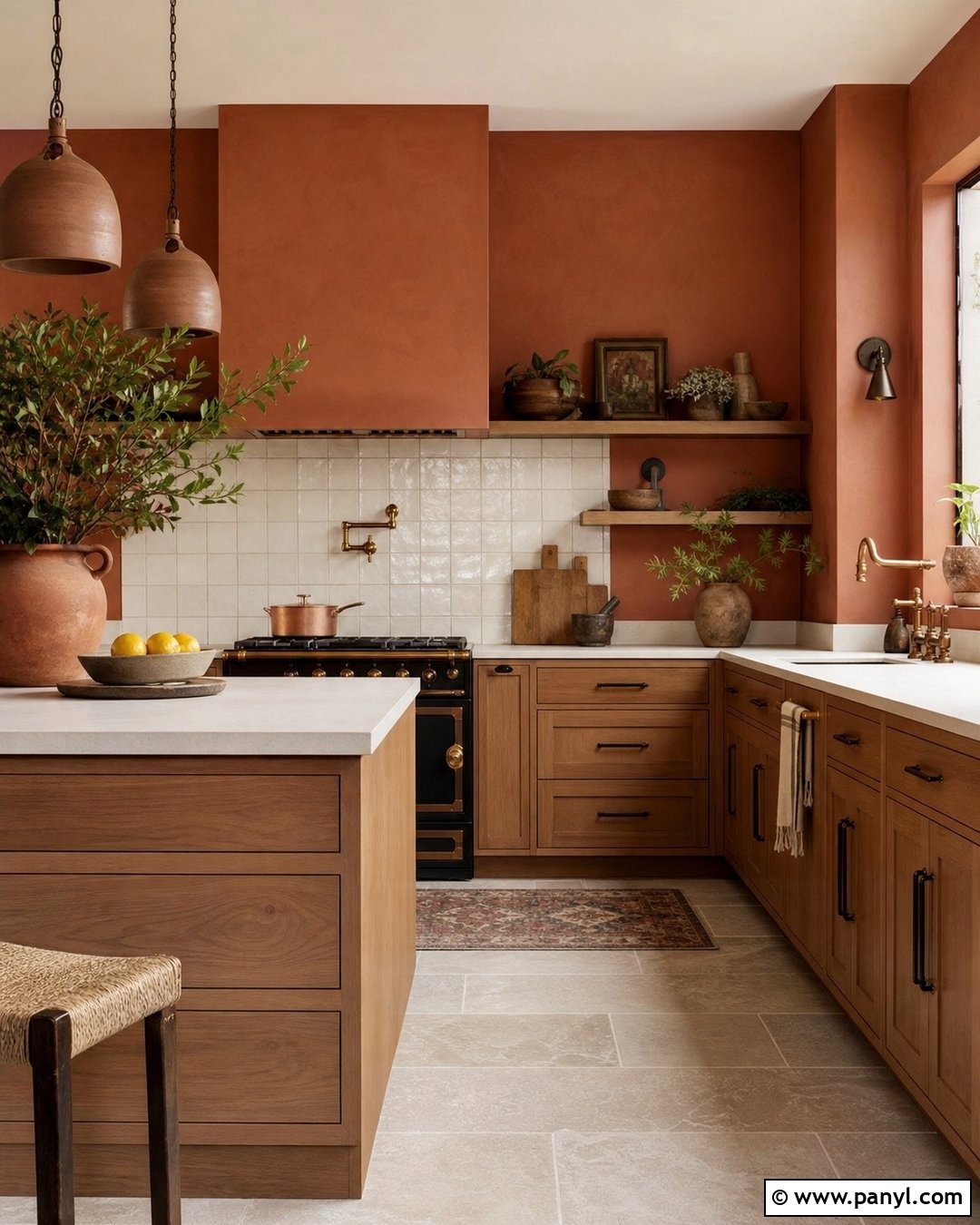
Terracotta orange walls and natural oak cabinets create an earthy kitchen that feels connected to warm, organic materials. Select a dusty terracotta paint with a matte finish, then pair it with flat-panel oak cabinetry that shows visible grain. Cream quartz counters soften the combination, while handmade ivory backsplash tiles add gentle texture. Use aged bronze hardware and simple ceramic pendant lights instead of polished metal finishes. A limestone-look floor keeps the palette relaxed and helps balance the deeper wall color. Open shelves can display cream dishes, wooden bowls, and a few leafy herbs in clay pots. Keep window treatments simple with off-white linen. The finished kitchen feels rustic yet current, with every material supporting the natural warmth of the orange walls.
3. Peach Orange Kitchen Walls With Cream Cabinets
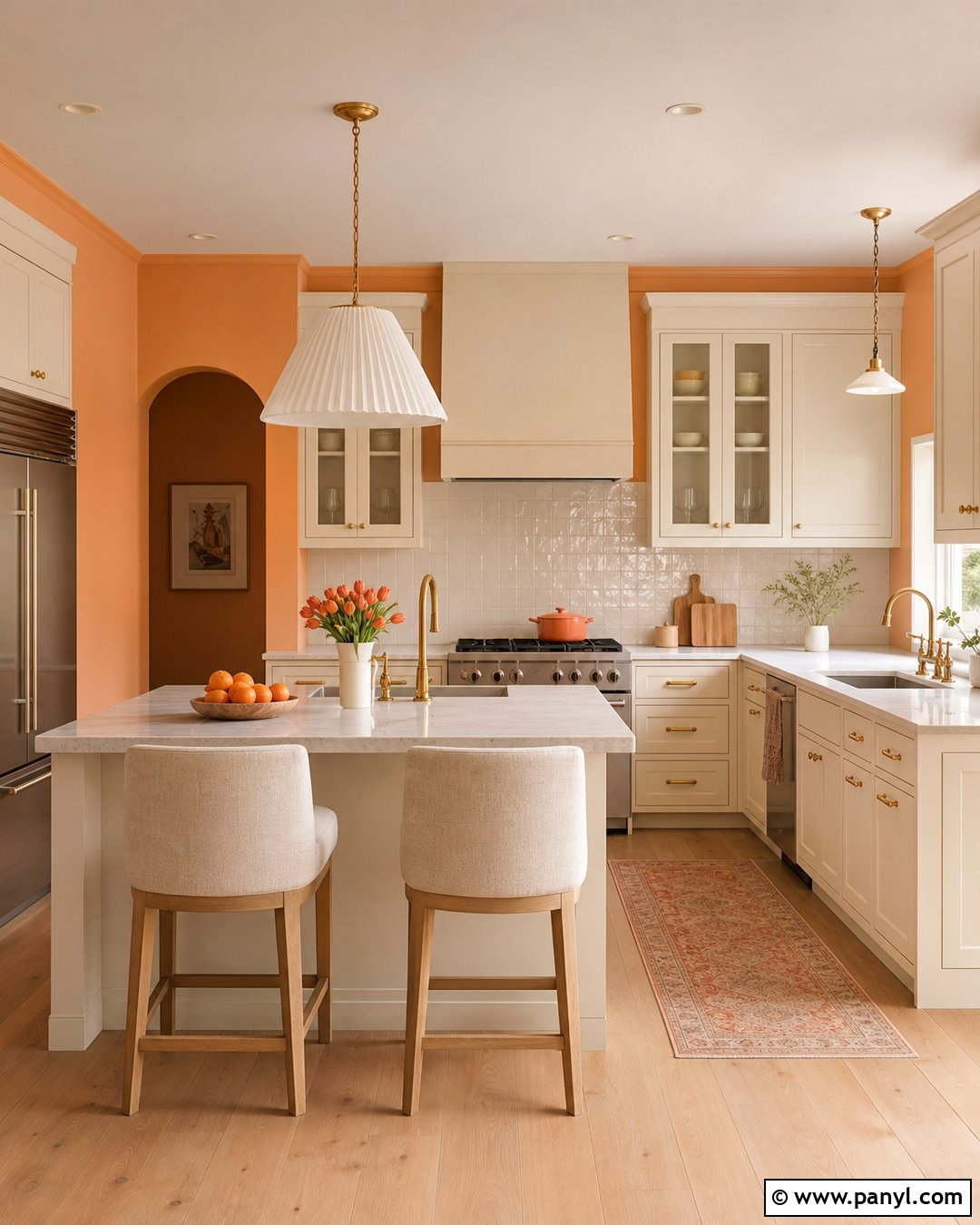
Soft peach-orange paint can make a kitchen feel bright and welcoming without reading as intensely colorful. Surround the walls with warm cream cabinets, light beige quartz counters, and a backsplash made from glossy ivory tiles. The subtle reflective surfaces help distribute daylight around the room. Champagne bronze knobs and a matching faucet add definition without introducing a harsh contrast. Choose pale oak flooring and upholstered breakfast stools in oatmeal fabric for a quiet, layered look. A small pendant with a pleated white shade keeps the design casual and comfortable. Add restrained accents in muted coral, tan, and soft green through cookware and textiles. This palette is particularly useful for a small kitchen where deeper orange shades might make the walls feel visually closer.
4. Tangerine Orange Kitchen Accent Wall
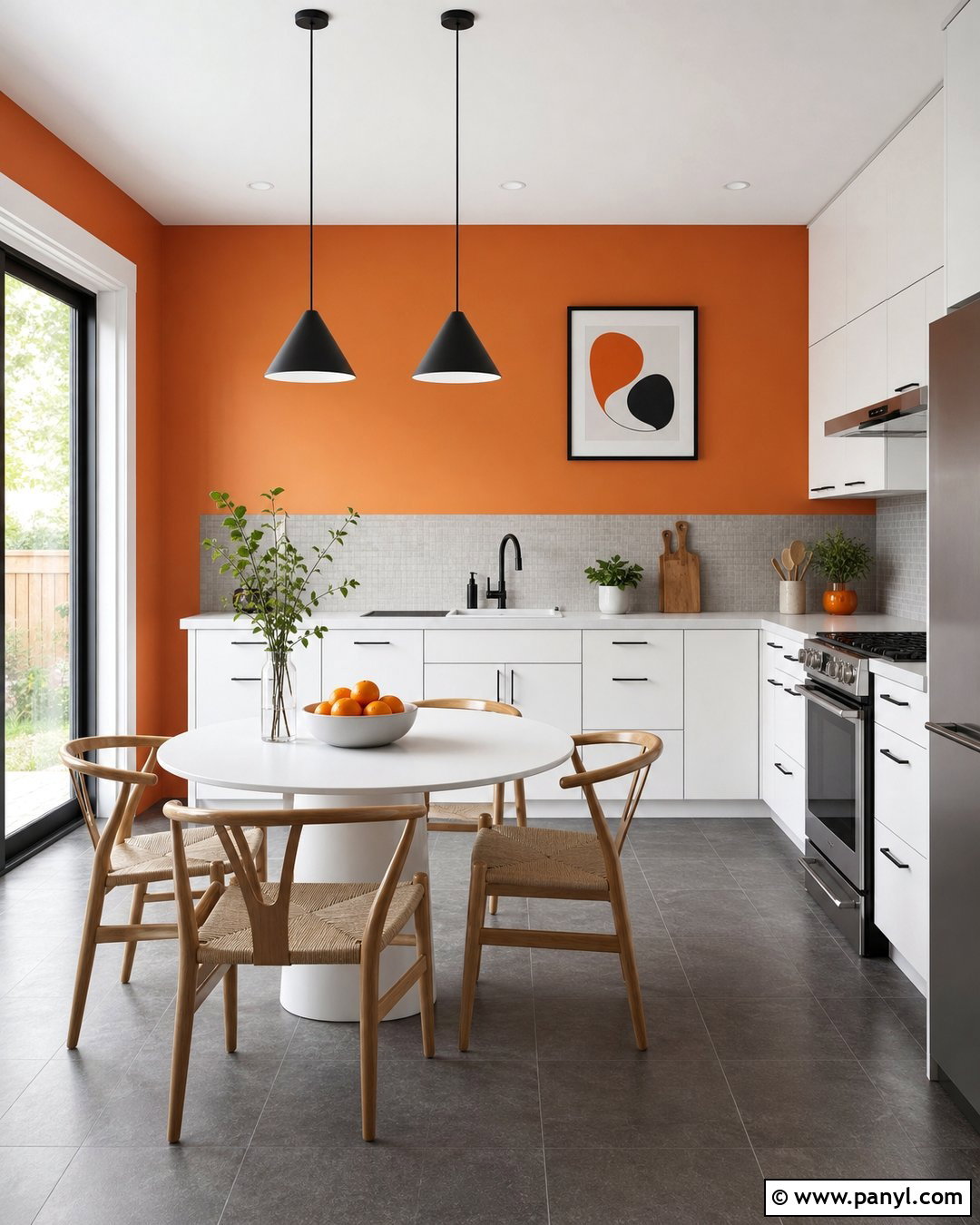
A tangerine accent wall can become the energetic focal point of a modern kitchen when the surrounding finishes remain streamlined. Place the orange behind a compact dining area, open shelving, or a simple bank of cabinets where it can be seen clearly. Use matte white cabinetry, solid white counters, and a light gray backsplash throughout the rest of the room. Black cabinet pulls, slim pendant lights, and window frames sharpen the fresh palette. Keep the floor neutral with pale gray porcelain tile or lightly finished wood. A round white table with natural wood chairs makes the eating area feel balanced and intentional. Repeat tangerine only once or twice in small accessories so the wall remains the strongest visual statement rather than becoming part of a busy theme.
5. Apricot Orange Kitchen Walls With Sage Cabinets
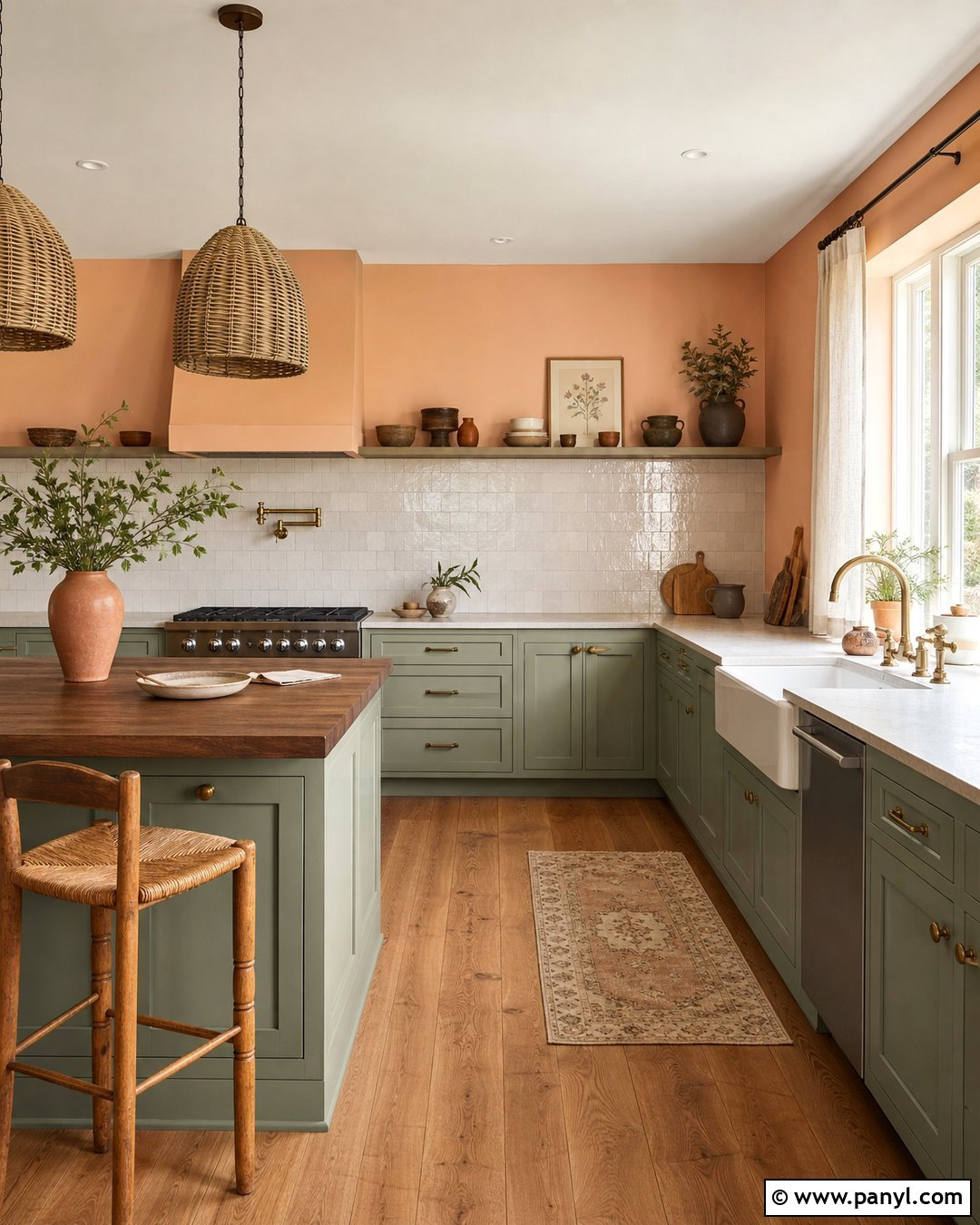
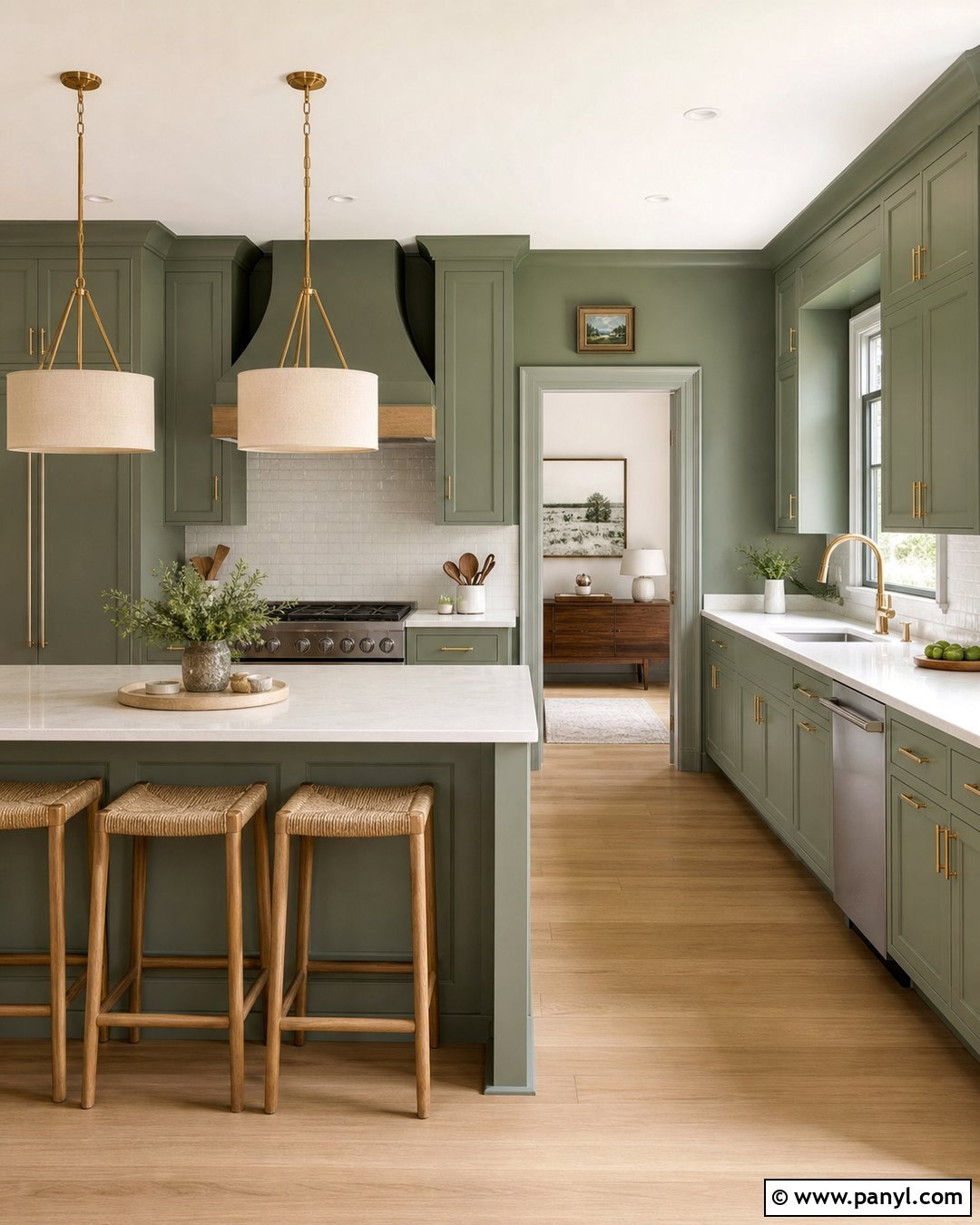
Muted apricot walls look gentle and grounded when paired with soft sage green cabinetry. This combination brings warmth and freshness into the kitchen while avoiding overly bright color. Choose an apricot with beige undertones, then use sage on simple Shaker cabinets with antique brass knobs. Cream stone counters and an ivory zellige-style backsplash bridge the two colors naturally. Add warm oak flooring and a wooden island top to reinforce the organic quality of the palette. Woven pendant lights, linen café curtains, and handmade pottery complete the relaxed design. Keep decorative pieces in cream, olive, and natural brown so the kitchen remains cohesive. The finished room works beautifully for cottage, transitional, and casual farmhouse interiors that need color without losing their calm atmosphere.
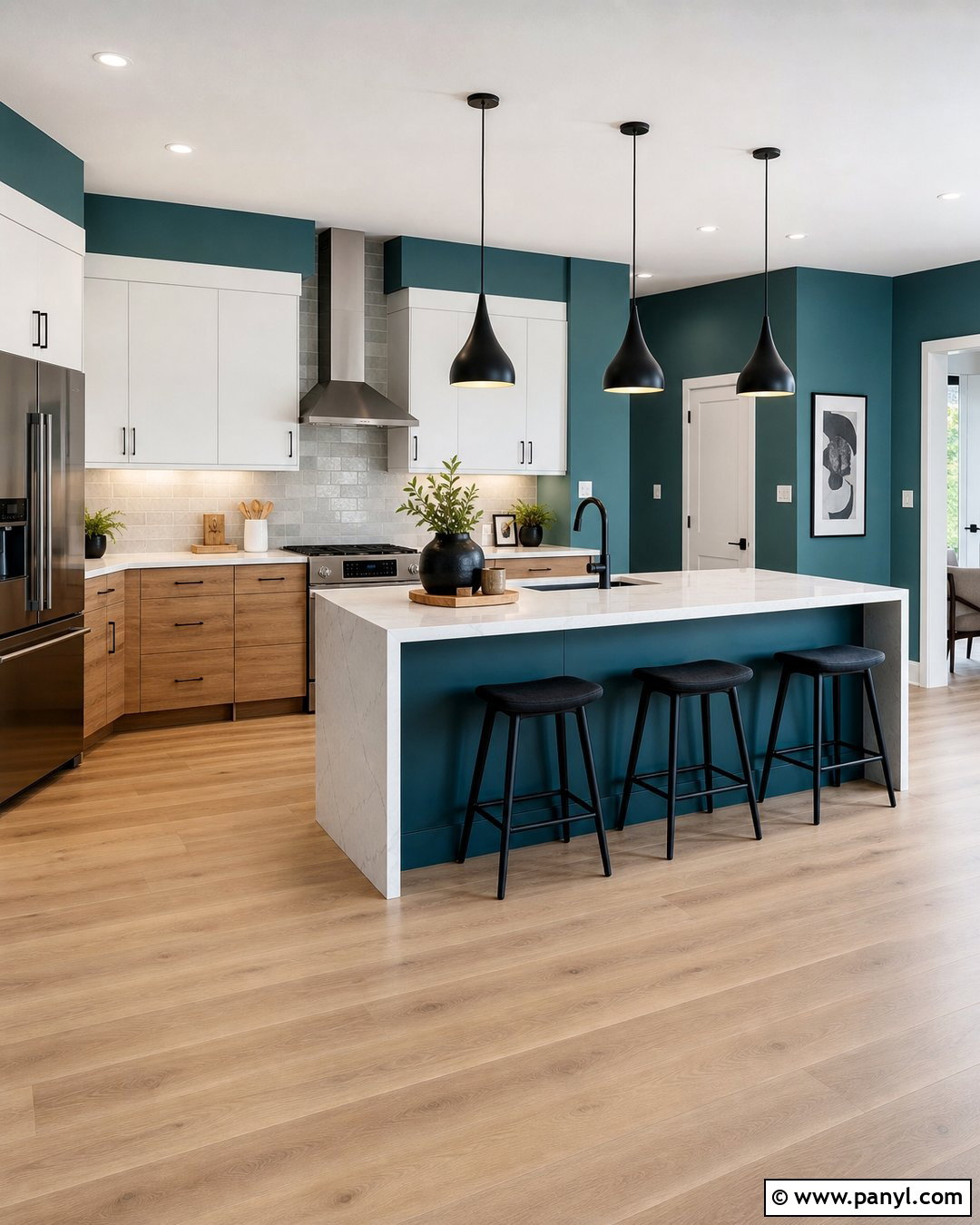
6. Rust Orange Kitchen Walls With Navy Cabinets
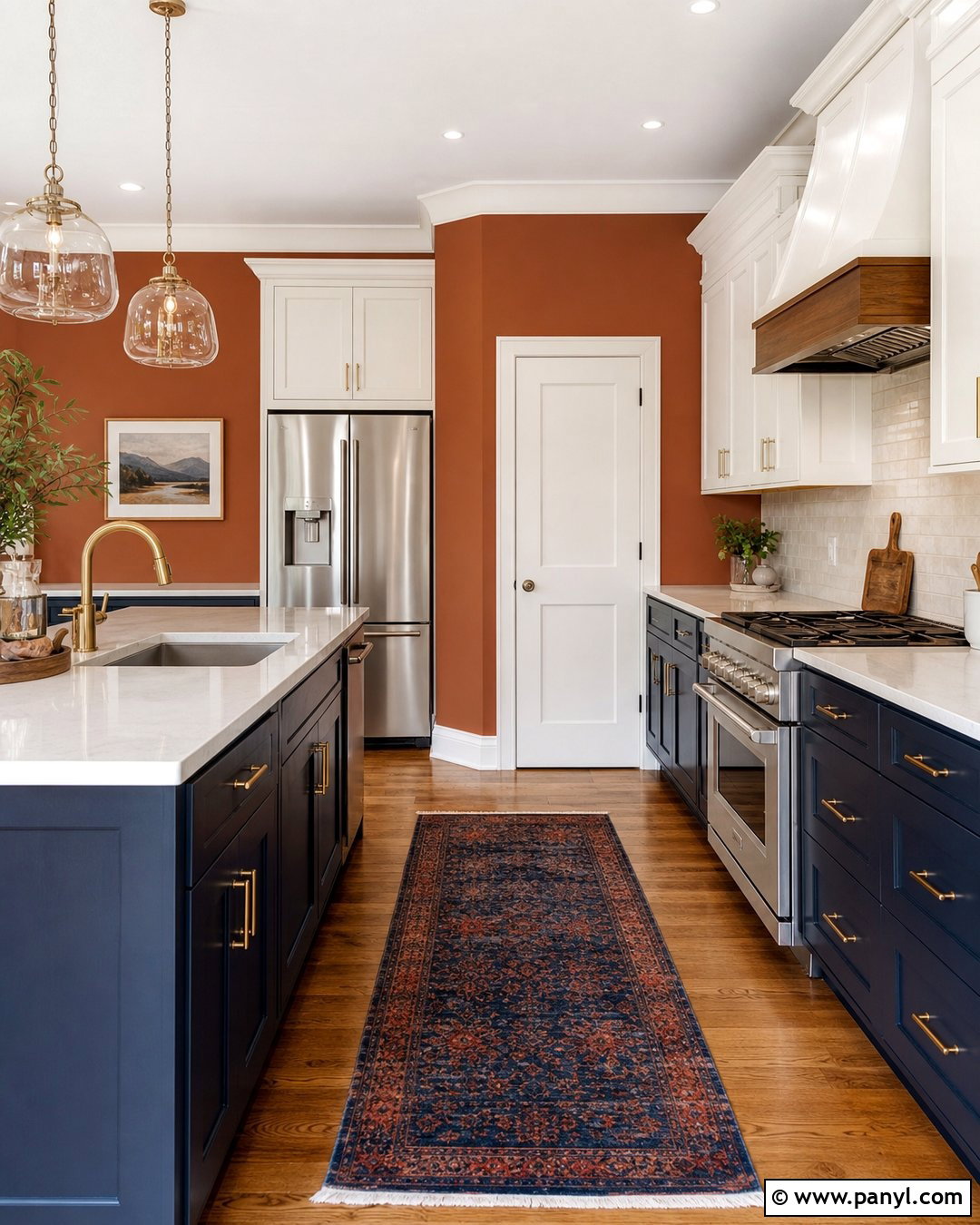
Deep rust-orange walls create a rich background for navy blue cabinets, producing a bold kitchen with balanced warm and cool tones. Keep the orange slightly muted so it feels refined rather than overly saturated. Navy lower cabinets and an island provide visual weight, while warm white upper cabinets prevent the room from becoming dark. Select white quartz counters with subtle gray veining and a simple cream backsplash. Brushed brass hardware connects naturally with the golden side of the orange paint. Medium-tone wood flooring keeps the scheme approachable, and clear glass pendants maintain open sightlines. Add a washable runner featuring navy, rust, and ivory. Adequate under-cabinet lighting is important in this deeper palette because it keeps preparation areas bright and the wall color clear.
7. Pumpkin Orange Farmhouse Kitchen Walls
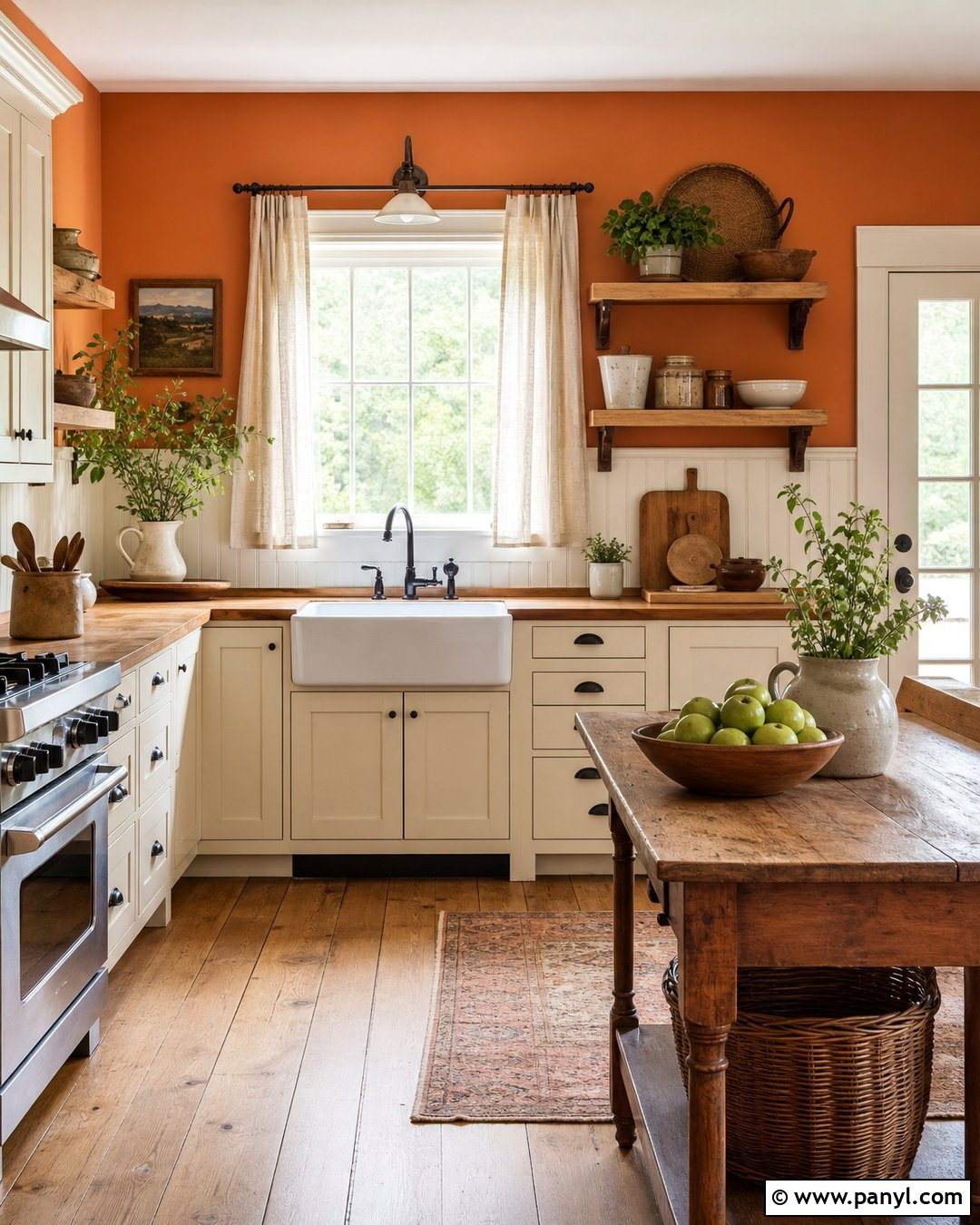
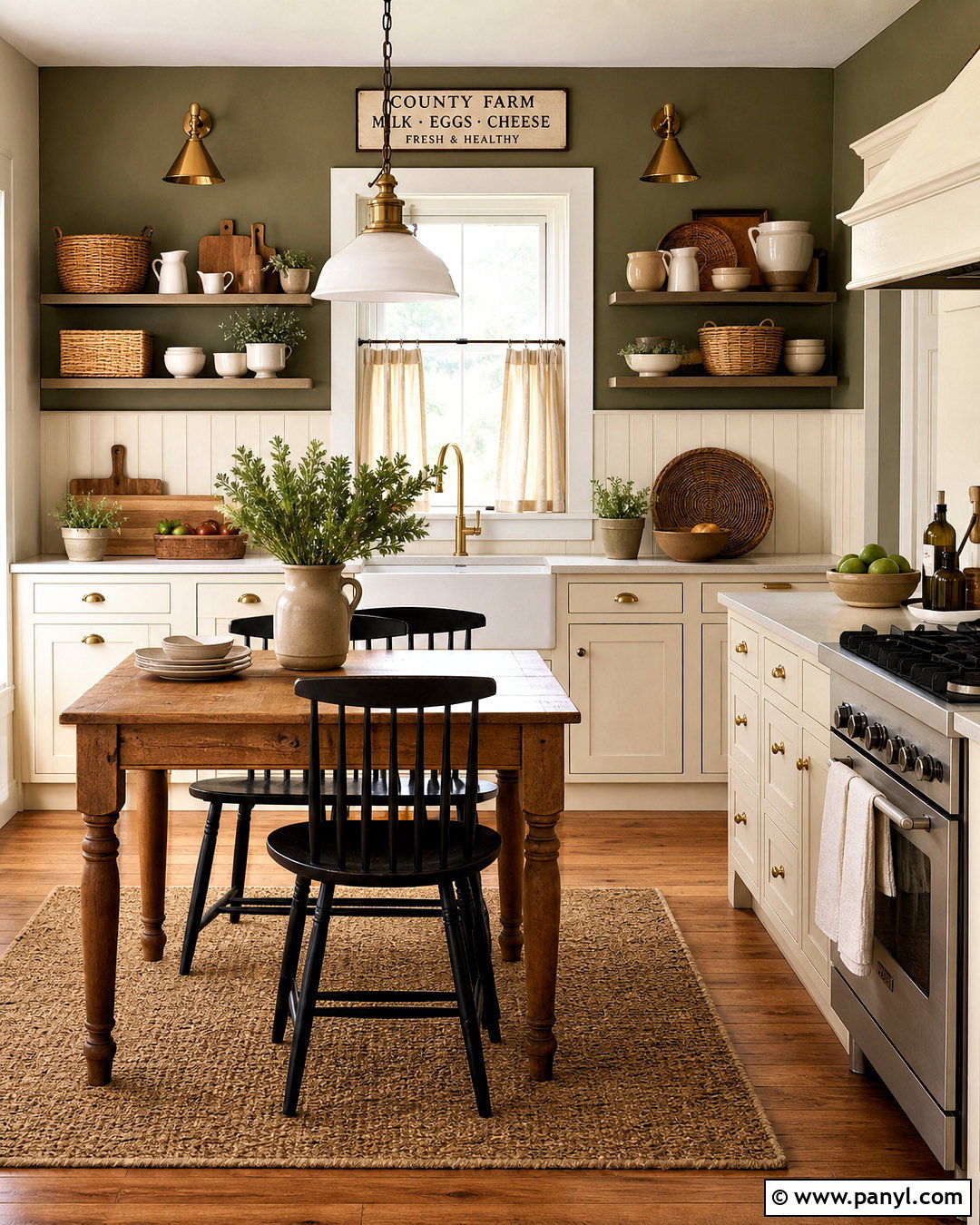
Pumpkin orange walls can bring cheerful warmth to a farmhouse kitchen when surrounded by simple, timeworn finishes. Choose a softened pumpkin shade with earthy undertones and apply it above white beadboard or a tiled backsplash. Cream Shaker cabinets, butcher-block counters, and a white apron-front sink create a familiar foundation. Use dark bronze cup pulls and lantern-style pendants for contrast. Wide-plank oak flooring and a freestanding wooden worktable make the room feel relaxed rather than perfectly matched. Display white stoneware, wooden cutting boards, and small herb pots on open shelves. Natural linen curtains soften the windows without hiding daylight. The final kitchen feels colorful and comfortable, with the orange walls enhancing the rustic materials instead of competing with them for attention.
8. Clay Orange Limewash Kitchen Walls
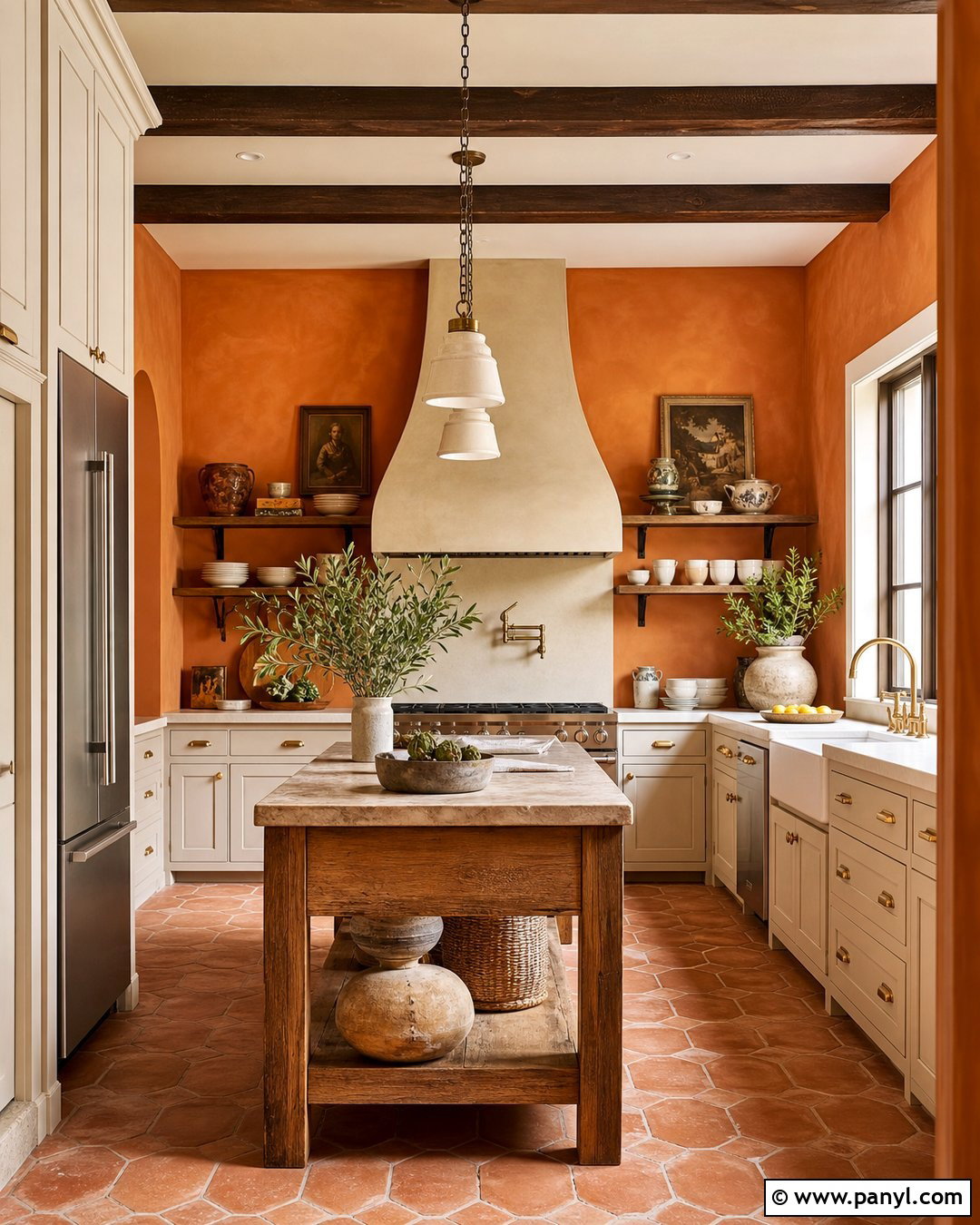
Clay-orange limewash gives kitchen walls soft movement and a handcrafted finish that suits rustic and Mediterranean-inspired interiors. The naturally varied appearance allows the color to feel gentler than a solid coat of bright orange. Pair it with warm white cabinets, pale stone counters, and an off-white plaster range hood. Terracotta floor tiles reinforce the earthy character, while dark wood ceiling beams add structure overhead. Select aged brass fixtures and simple ceramic pendant lights to continue the lived-in effect. Keep open shelves minimally arranged with cream dishes, glass jars, and olive-toned pottery. A wooden table or island with visible grain creates a practical centerpiece. This complete look feels warm and textured, yet the limited palette prevents the distinctive wall finish from becoming visually overwhelming.
9. Coral Orange Walls In A Small Kitchen
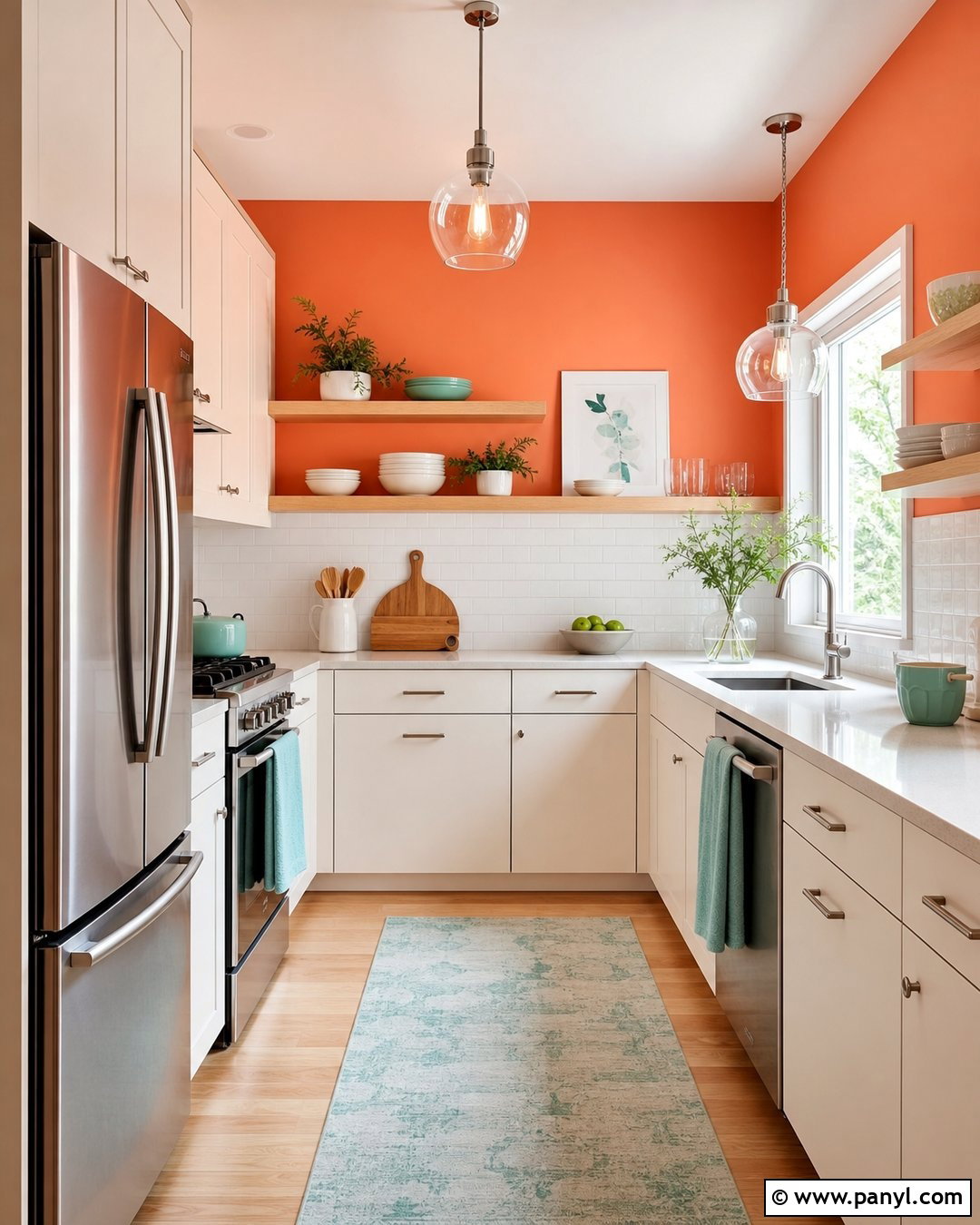
Coral-orange walls can brighten a small kitchen when the shade contains enough pink and cream to remain light. Use the color on the open wall areas while keeping cabinets, trim, and the ceiling a clean warm white. Flat-panel cabinets make the compact layout feel less crowded, and pale quartz counters reflect available daylight. Install a glossy white backsplash with minimal grout lines to create another light-catching surface. Natural maple shelves and stools add warmth without closely matching the walls. Small accents in soft aqua provide a refreshing contrast. Choose compact lighting with clear glass shades and keep counters mostly open. The result is a lively but practical kitchen where the coral walls add personality while the pale finishes preserve a comfortable sense of space.
10. Orange Kitchen Walls With Gray Cabinets
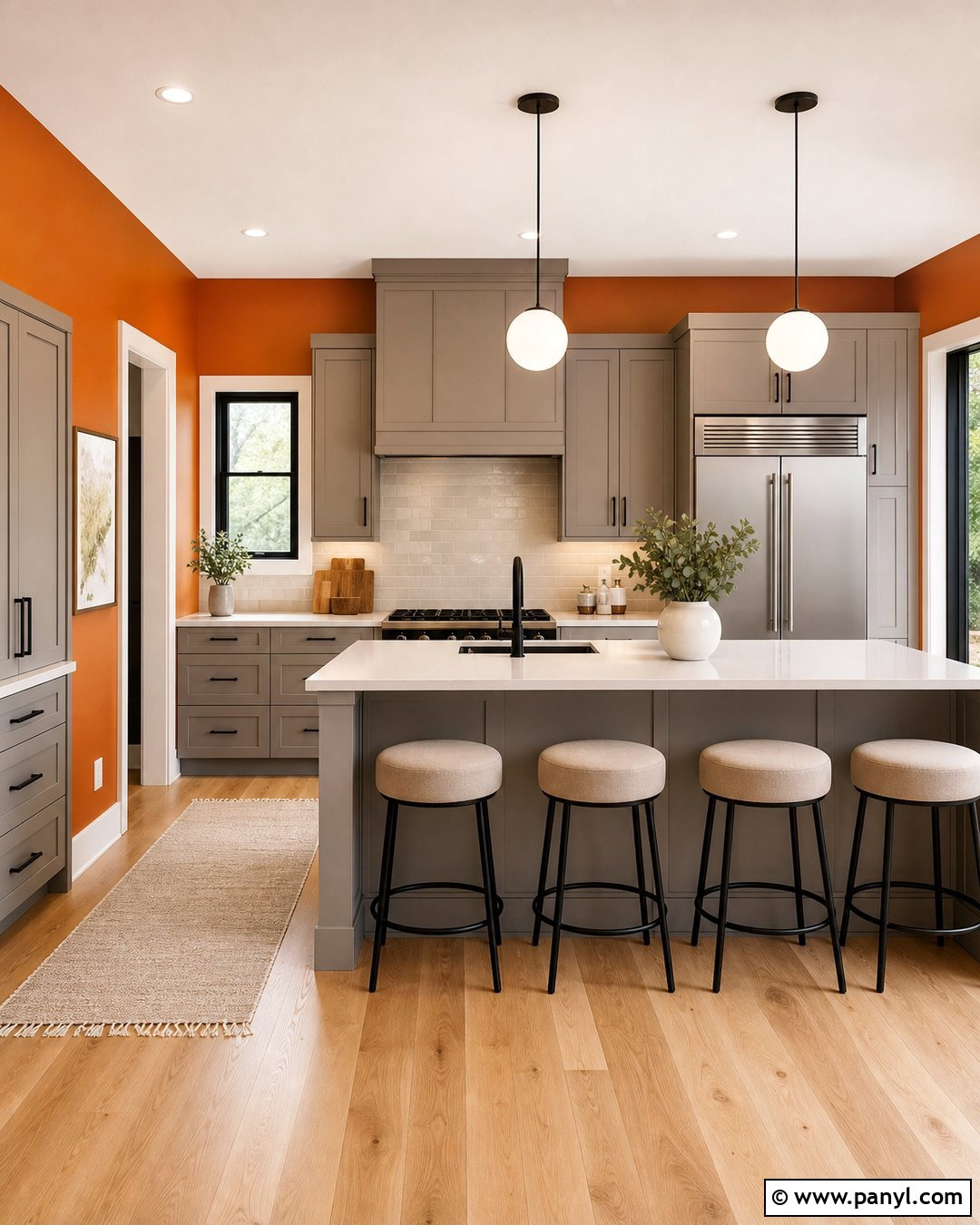
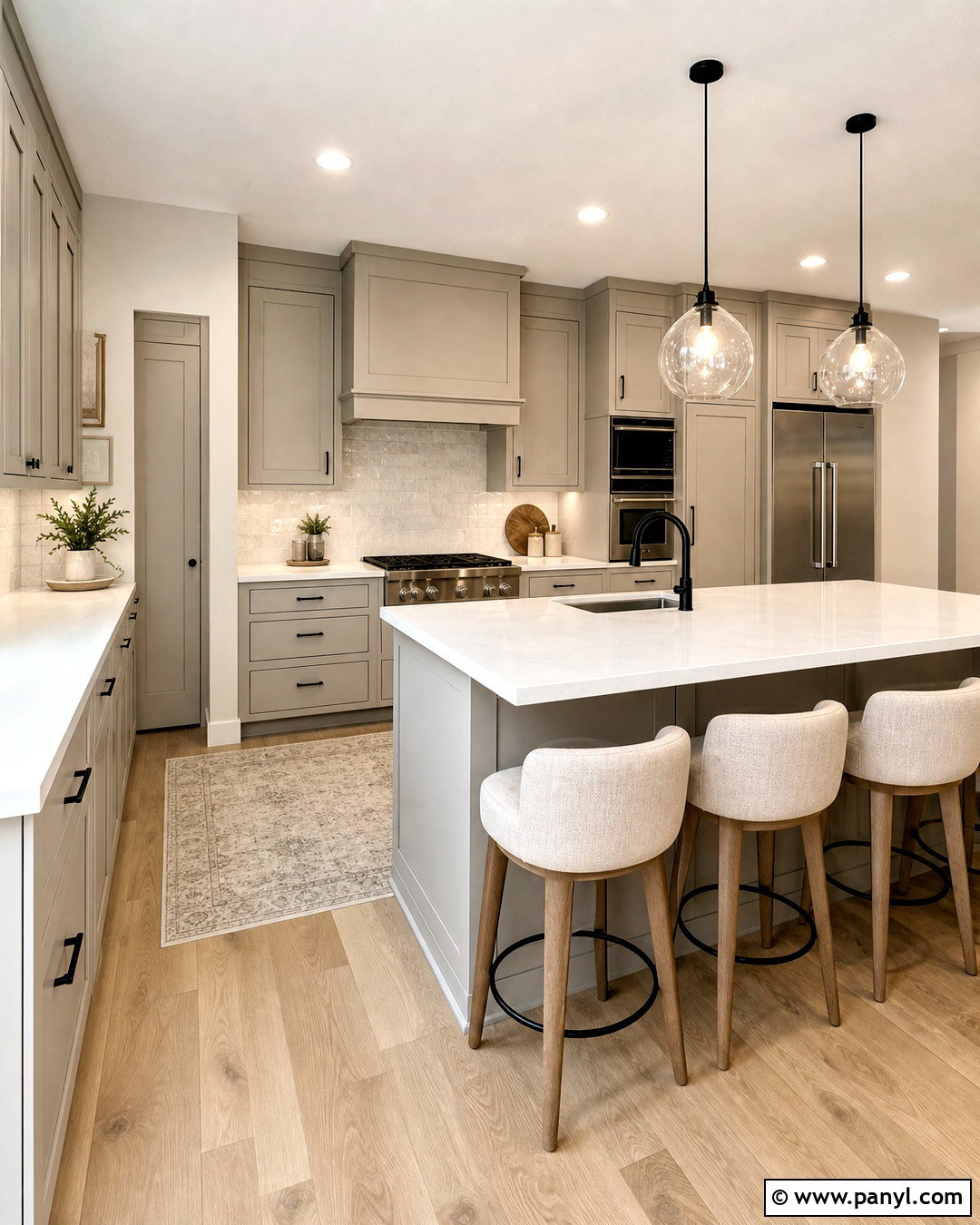
Orange walls and gray cabinets can create a balanced contemporary kitchen when both colors have warm undertones. Select a medium orange softened with brown, then pair it with mushroom-gray or warm charcoal cabinetry. Avoid icy gray, which may feel disconnected from the inviting wall color. White quartz counters and a pale greige backsplash create visual breathing room between the stronger shades. Add brushed nickel or matte black hardware, depending on how much contrast you prefer. Light oak flooring prevents the gray cabinets from making the room feel heavy. A streamlined island with simple stools keeps the layout modern and functional. Finish with white globe pendants and a neutral runner. This combination offers substantial color while maintaining the clean lines expected in a contemporary kitchen.
11. Bright Orange Kitchen Walls With Dark Wood Cabinets
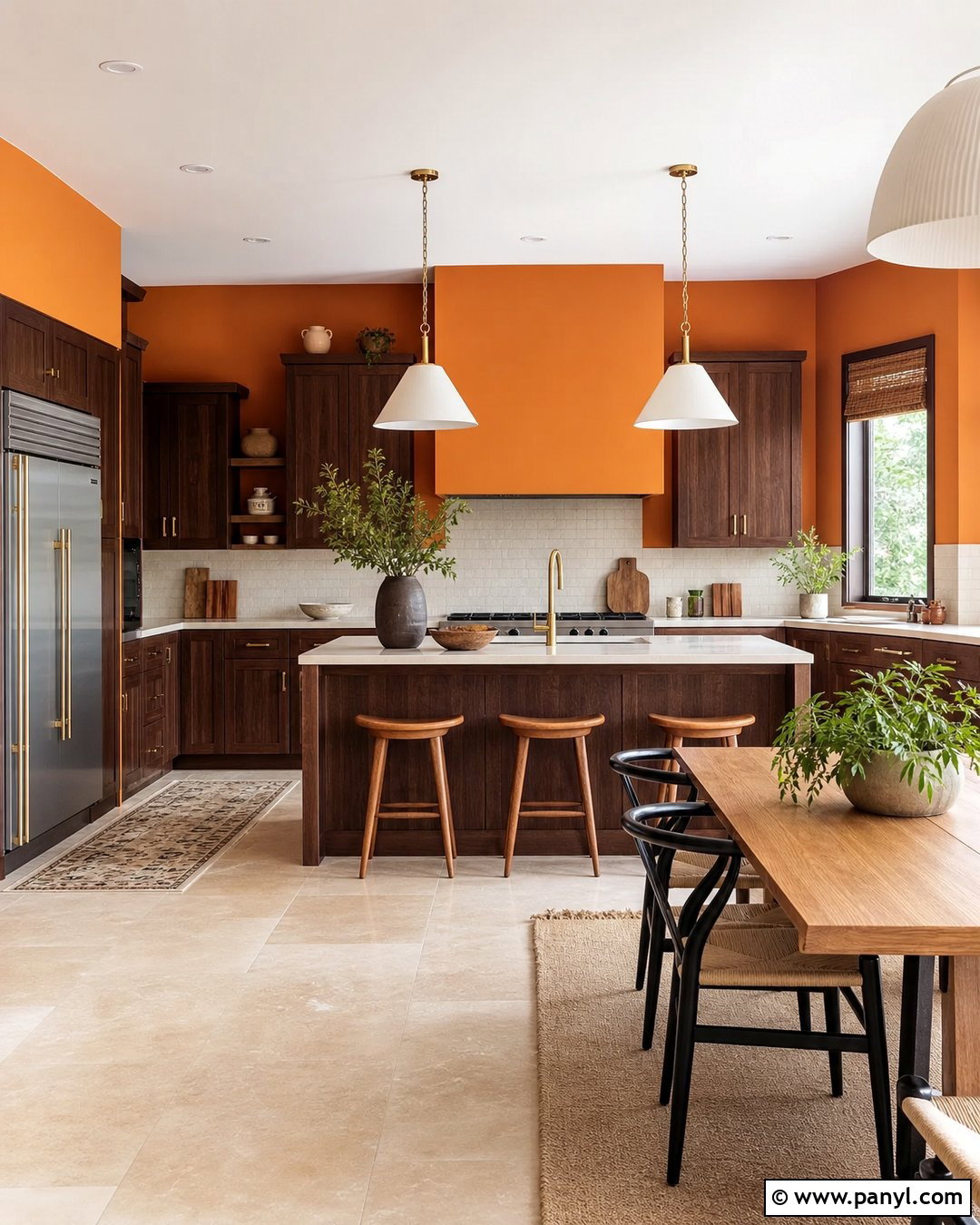
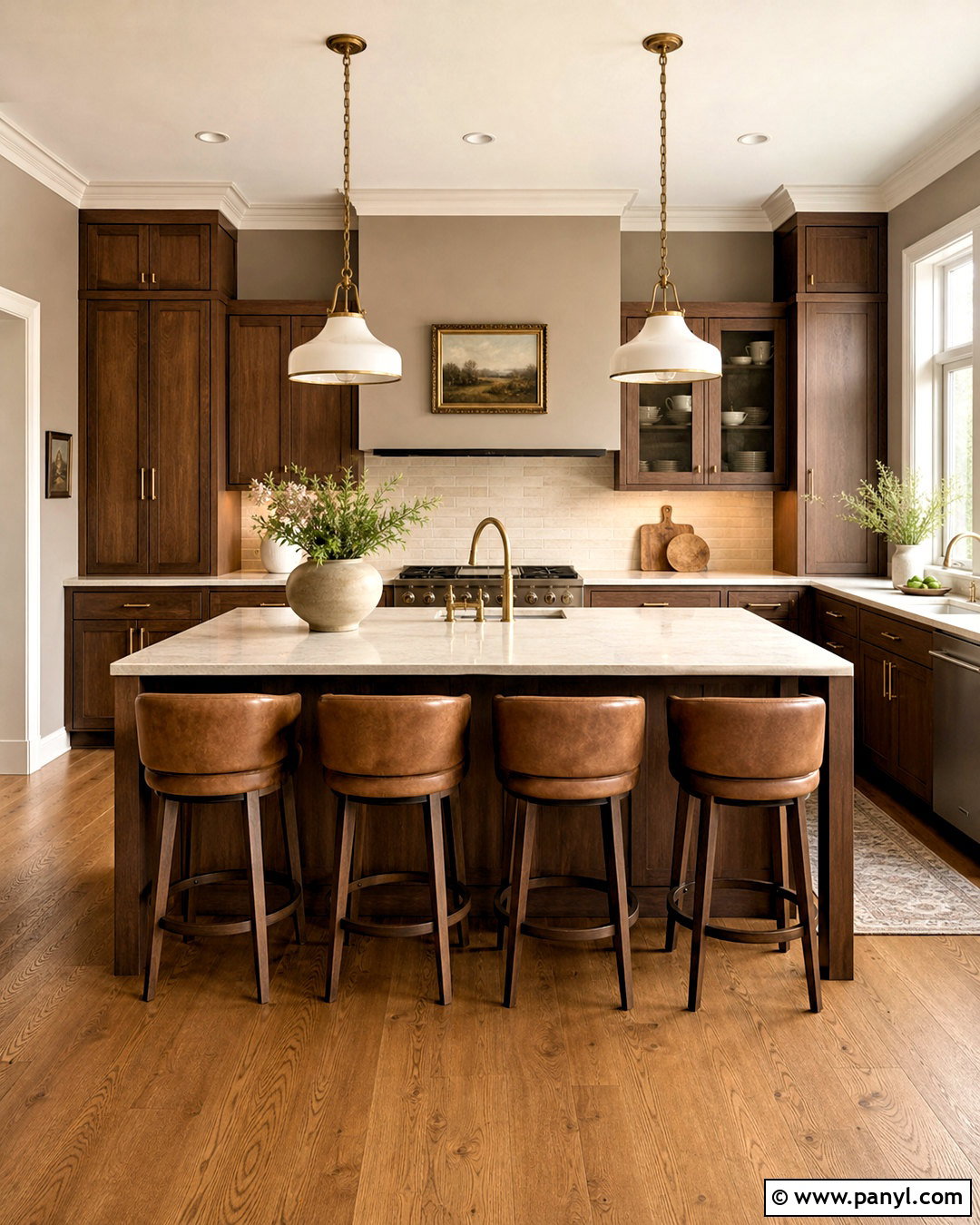
Bright orange paint can refresh dark wood cabinets by creating a lively contrast around their deep brown tones. Use the orange strategically on walls with plenty of natural or artificial light, and keep the ceiling and trim crisp white. Dark walnut cabinets should have simple doors and minimal hardware so the overall room does not feel visually heavy. Choose pale cream counters and a light backsplash to separate the cabinetry from the walls. Brushed brass pulls complement both finishes, while a warm beige floor creates a softer transition. Add white pendant lights, woven shades, and a neutral dining table. Limit additional colors to cream and leafy green. The finished design feels warm and energetic while allowing the rich wood cabinetry to remain an intentional feature.
12. Orange And Teal Retro Kitchen Walls
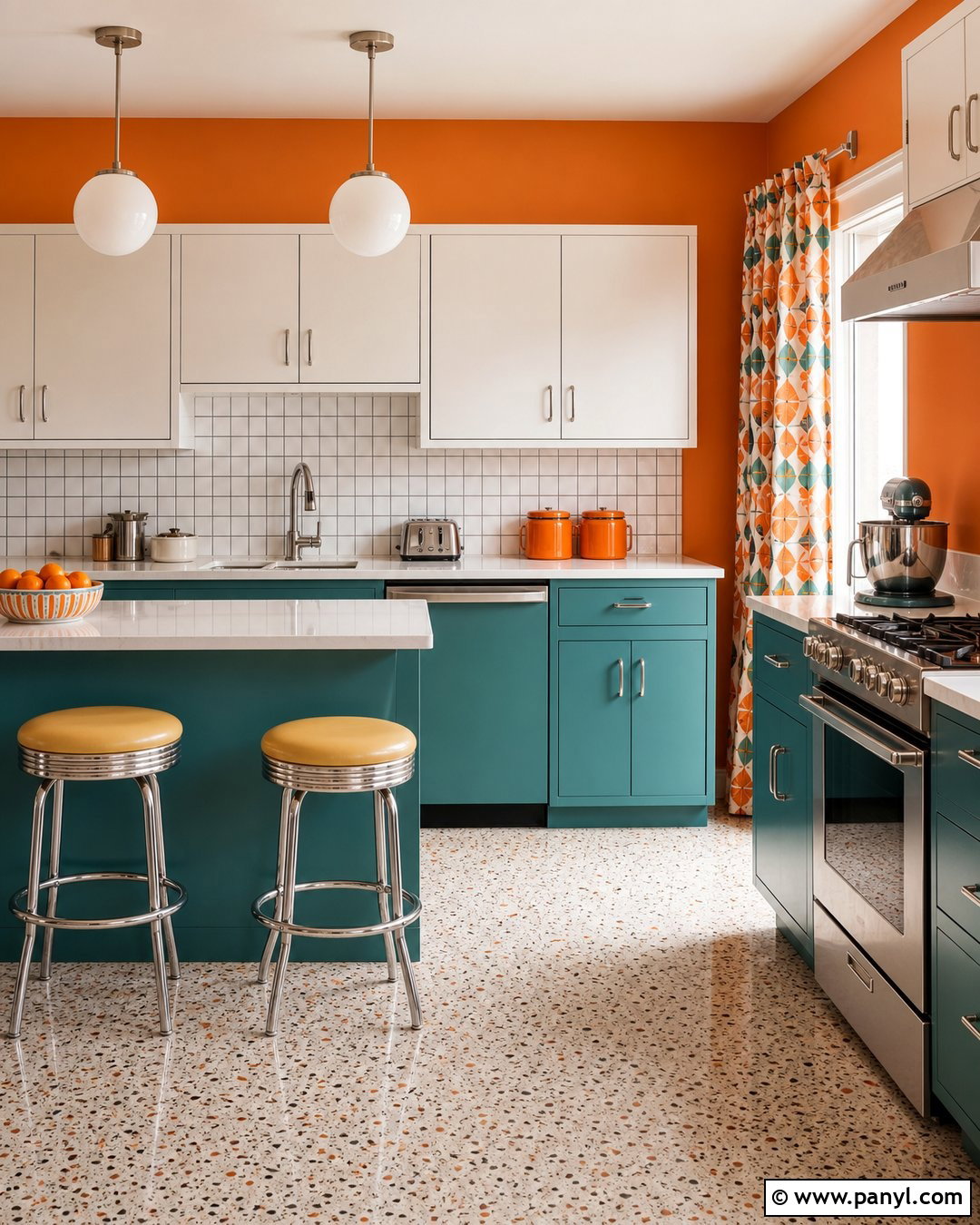
Orange and teal create a playful retro kitchen when clean white surfaces are used to control the stronger colors. Paint the main dining or breakfast wall a confident mid-tone orange, then introduce teal through lower cabinets or a compact island. White upper cabinets, counters, and square backsplash tiles keep the room fresh. Choose chrome hardware, globe pendants, and simple curved stools to reinforce the vintage influence without turning the space into a theme. A light terrazzo floor can connect the orange, teal, and white through subtle colored flecks. Add one patterned curtain or runner featuring both main shades. Keep appliances neutral in white or stainless steel. This complete kitchen feels nostalgic and cheerful while still providing the uncluttered organization required for everyday cooking.
13. Pale Orange Walls In A Galley Kitchen
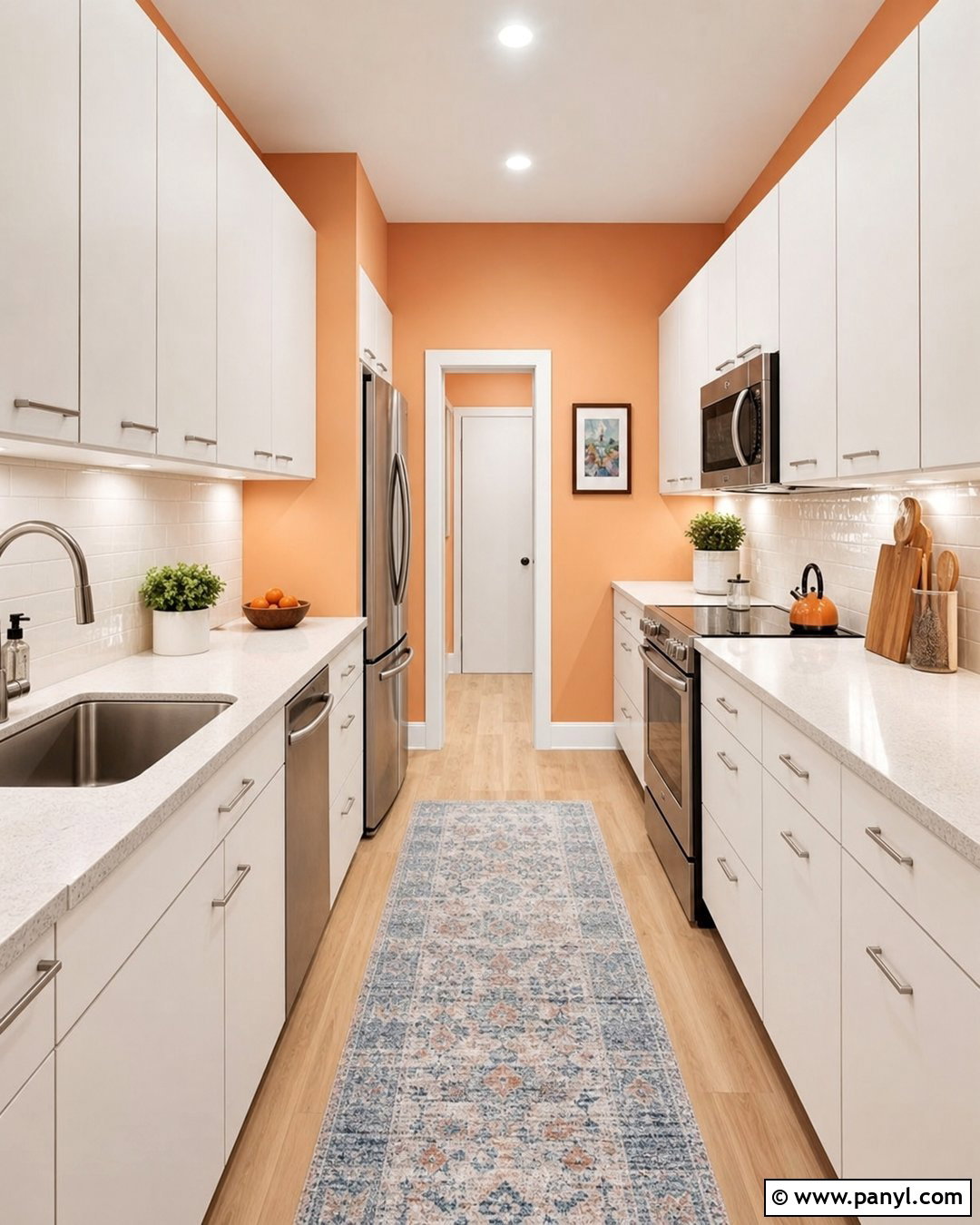
Pale orange walls can help a narrow galley kitchen feel warmer without visually closing in the walkway. Look for a creamy orange that resembles light apricot, then pair it with white cabinets on both sides of the room. Use slab-style doors and discreet hardware to reduce visual interruption. Pale quartz counters and a glossy ivory backsplash reflect light toward the center aisle. A light oak or beige porcelain floor laid lengthwise encourages the eye to travel toward the window. Keep upper storage consistent and avoid overcrowded open shelves. Slim ceiling fixtures and continuous under-cabinet lighting eliminate shadowy corners. Add soft green or muted blue through a runner and a few countertop pieces. The finished galley feels colorful, orderly, and noticeably more welcoming.
14. Spiced Orange Kitchen Walls With Brass Accents
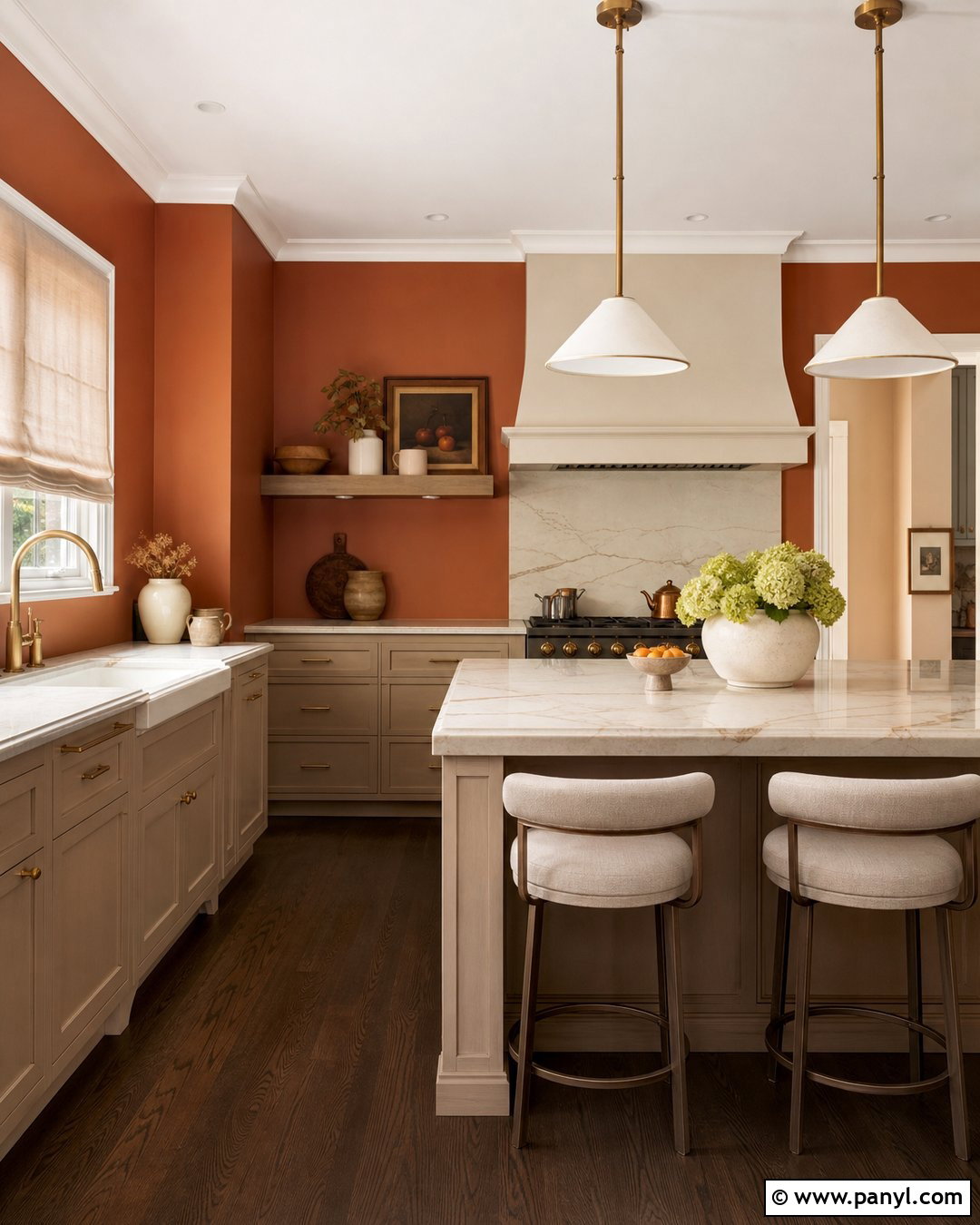
Spiced orange walls form an elegant setting for warm brass fixtures and tailored neutral cabinetry. Choose an orange influenced by cinnamon or paprika, which gives the room depth without appearing neon. Pair it with creamy beige cabinets and light stone counters containing subtle golden veining. An ivory backsplash keeps the working area quiet, allowing unlacquered brass pulls, faucets, and pendant lights to stand out. Dark oak flooring grounds the warm palette and provides enough contrast beneath the light cabinets. Add upholstered counter stools in oatmeal or tan and simple linen window shades. Decorative pieces should be minimal, with a few ceramic vessels in cream and brown. This layered design feels polished and inviting, making it suitable for both traditional and transitional kitchen architecture.
15. Orange Color-Drenched Kitchen Walls And Ceiling
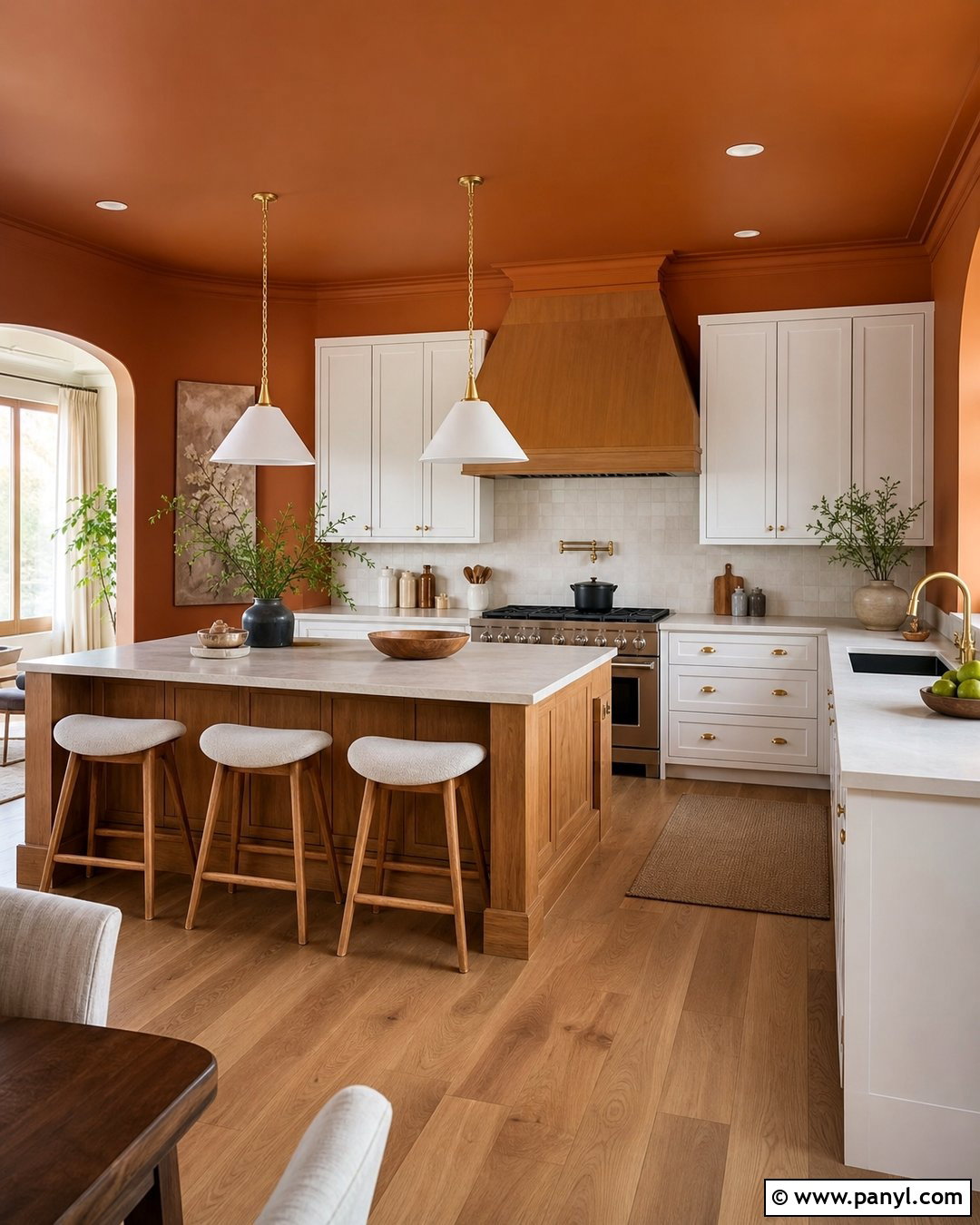
Color drenching the walls and ceiling in muted orange can make a kitchen feel immersive, cohesive, and surprisingly spacious. Choose a dusty orange with soft clay undertones rather than a highly saturated shade. Continue the same paint across trim, doors, and window frames for an uninterrupted envelope of color. Balance the treatment with warm white cabinets, pale countertops, and a lightly textured cream backsplash. Natural oak flooring and a matching island introduce visual relief without weakening the effect. Use simple brass fixtures and white pendant shades to brighten key areas. Keep accessories restrained and practical, focusing on wood, ceramic, and clear glass. This approach works best with excellent task lighting and uncluttered surfaces, ensuring the dramatic paint treatment still feels comfortable for everyday use.
16. Orange Breakfast Nook Kitchen Wall
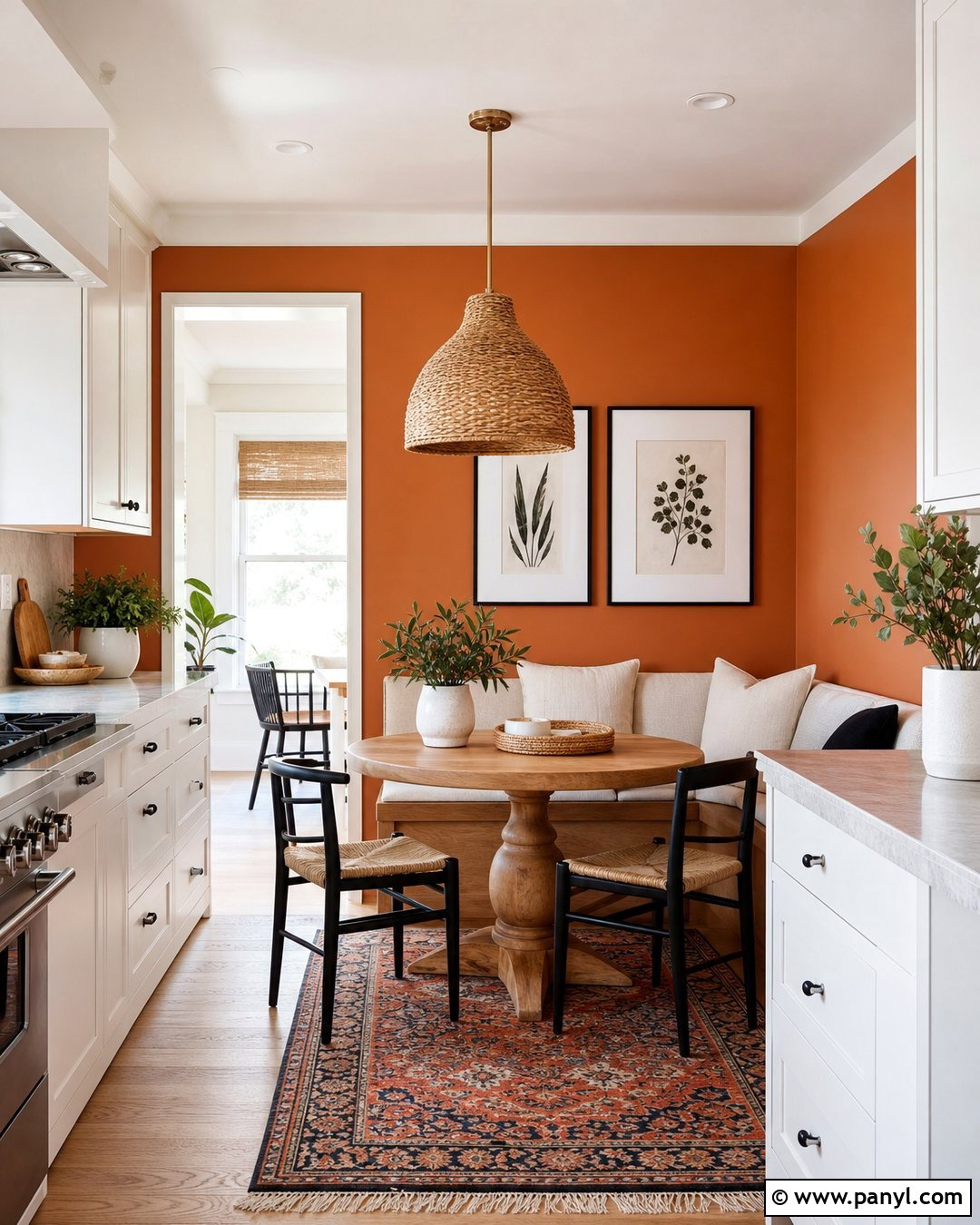
An orange wall behind a breakfast nook can visually define the dining zone within an open kitchen. Choose a warm persimmon or medium terracotta shade that feels distinct from the surrounding neutral walls. Build the nook around a light oak bench with cream cushions, a round pedestal table, and two compact chairs. Continue white cabinets and pale stone counters through the cooking area so the orange remains focused. A woven pendant above the table creates a softer transition between the nook and kitchen. Add framed botanical artwork, a washable patterned rug, and linen pillows in rust, beige, and muted green. The complete arrangement turns an unused corner into a practical eating area while connecting the orange wall naturally to the materials used throughout the rest of the room.
17. Orange Industrial Kitchen Walls
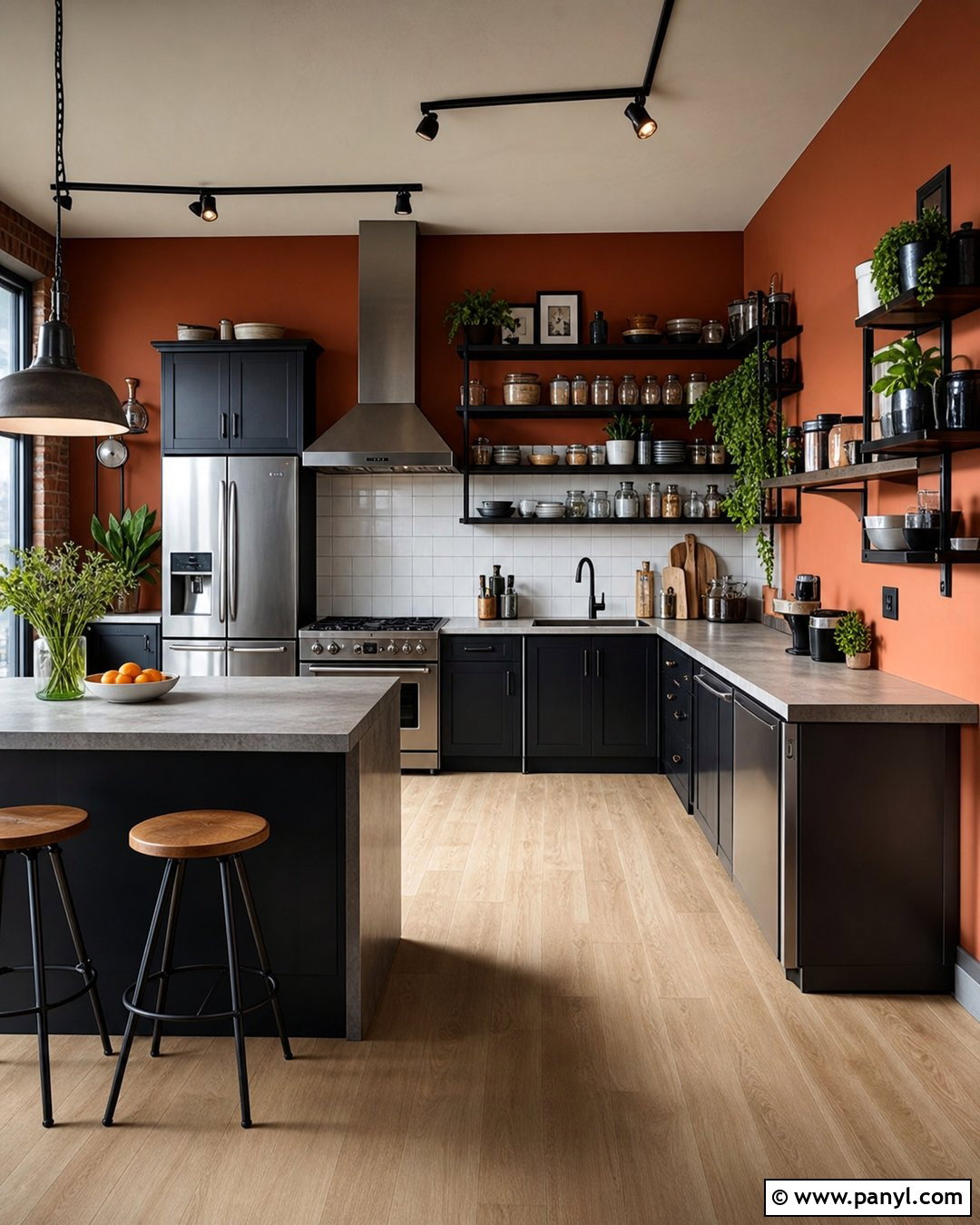
A weathered orange wall can soften the hard surfaces commonly found in an industrial kitchen. Choose a matte rust or oxidized orange shade and combine it with charcoal cabinets, stainless steel appliances, and open black metal shelving. Concrete-look counters and a simple white tile backsplash keep the preparation areas durable and visually clean. Use medium oak flooring to introduce natural warmth beneath the darker cabinetry. Black track lighting and metal pendants support the industrial character, while wooden stools prevent the room from feeling cold. Arrange shelves with white dishes, glass containers, and a few green plants rather than excessive accessories. The finished kitchen feels urban and practical, with the orange walls providing warmth and personality against the structured mix of metal, concrete, and dark finishes.
18. Adobe Orange Southwestern Kitchen Walls
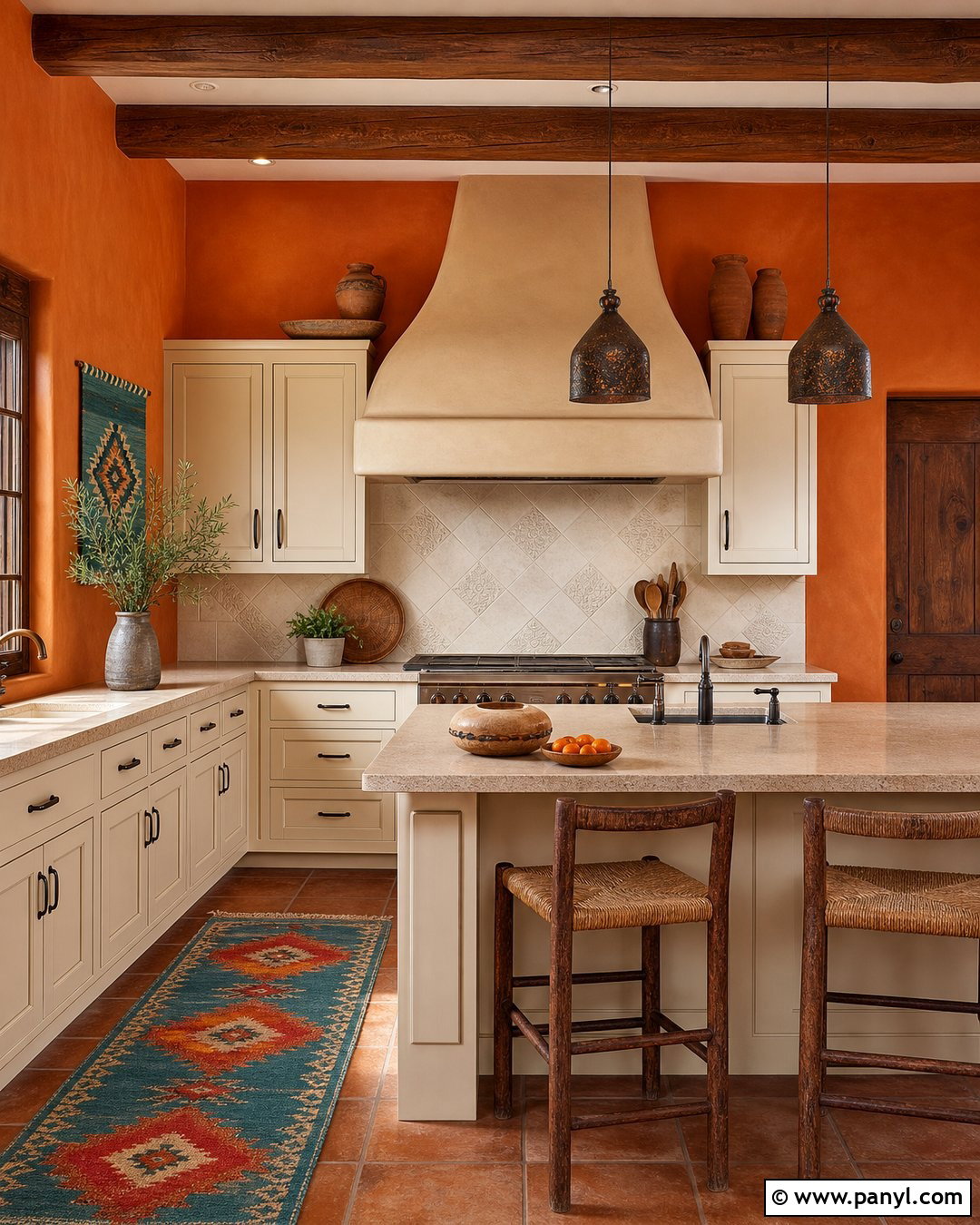
Adobe orange walls give a Southwestern kitchen a sun-warmed, earthy character. Select a muted red-orange resembling natural clay and pair it with cream cabinets or lightly stained wood cabinetry. Use sand-colored quartz counters and handmade ivory backsplash tiles to keep the room bright. A terracotta tile floor reinforces the regional palette, while dark wood beams and a simple plaster range hood add architectural depth. Choose aged copper or bronze hardware instead of shiny finishes. Woven counter stools, patterned textiles in turquoise and beige, and pottery in natural earth tones complete the design. Keep the styling edited so the strong wall color and textured materials remain clear. This complete kitchen feels grounded, casual, and welcoming rather than overly themed or decorative.
19. Orange Kitchen Walls With Two-Tone Cabinets
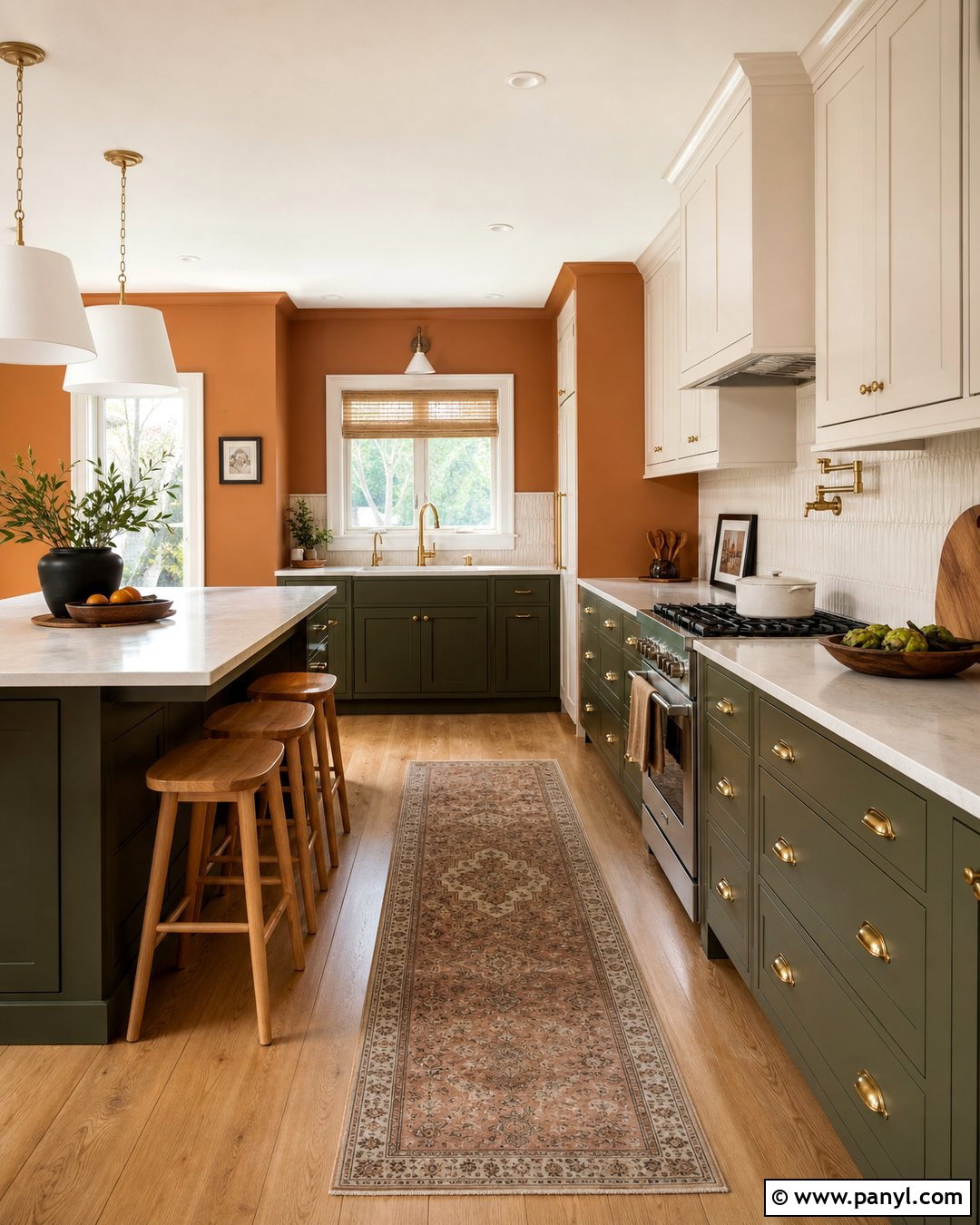
Two-tone cabinets make it easier to balance orange kitchen walls across a larger room. Paint the walls a muted clementine shade, then use warm white on upper cabinets and deep olive green on lower cabinets and the island. The white visually opens the upper portion, while olive grounds the energetic orange. Choose creamy quartz counters and an ivory backsplash with subtle texture. Antique brass pulls create a consistent connection among all three colors. Medium oak flooring and natural wood stools keep the finished room warm. Install simple white pendants over the island and add a runner containing olive, orange, and beige. This layered palette offers plenty of personality, but each color has a clear role, preventing the kitchen from appearing crowded or randomly coordinated.
20. Orange Kitchen Walls With Green Cabinets
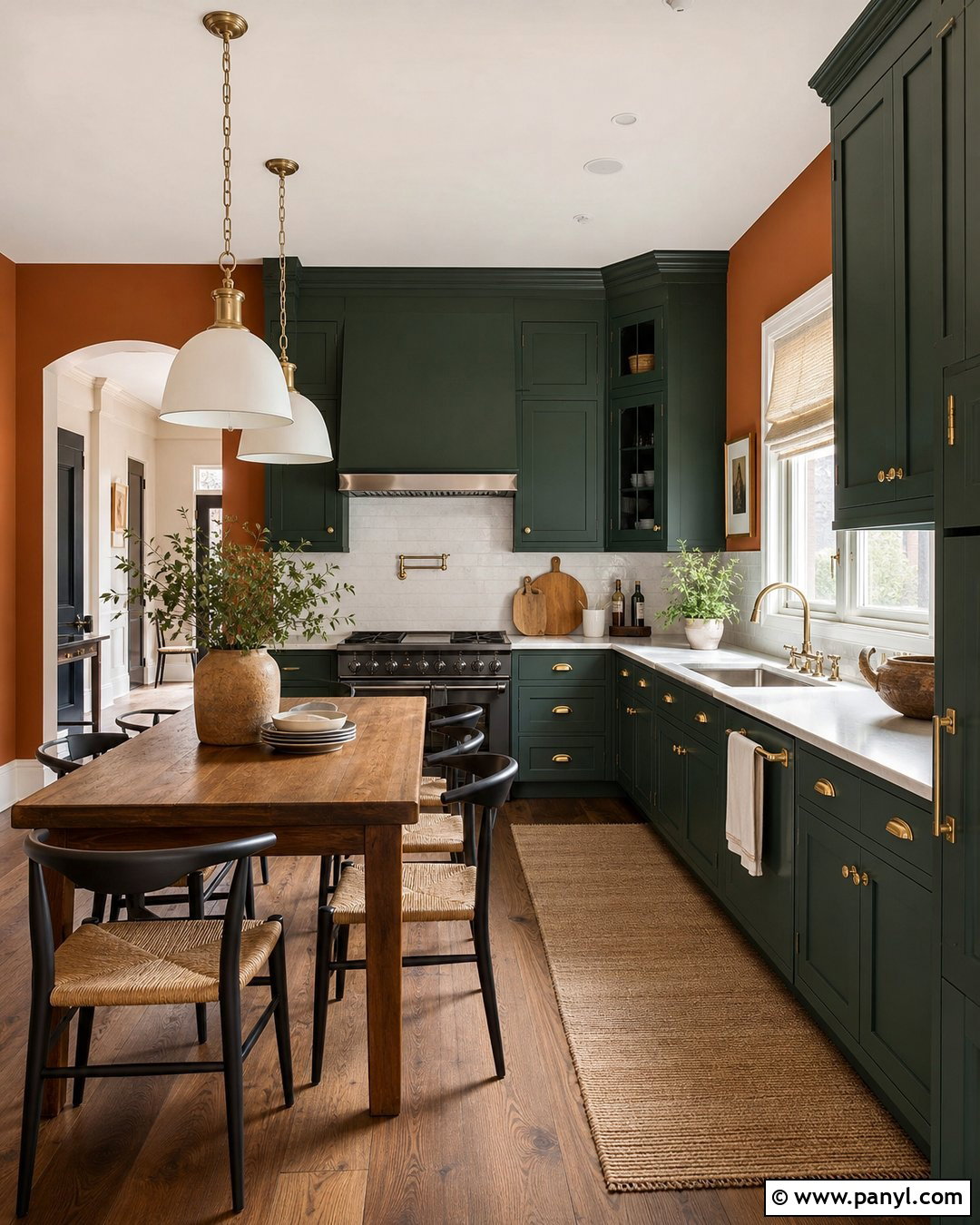
Warm orange walls and deep green cabinets can create a rich, nature-inspired kitchen with memorable contrast. Choose a restrained ochre-orange for the walls and a forest or olive green for Shaker cabinetry. Keep counters light with creamy quartz or honed limestone, then install a simple off-white backsplash to separate the two saturated colors. Natural wood flooring reinforces their earthy undertones. Use aged brass hardware, white ceramic pendants, and a wooden dining table to soften the bold palette. Cream linen shades and neutral upholstered stools provide quieter surfaces around the room. Add only a few practical accessories in clay, brown, and ivory. The completed kitchen feels colorful and grounded, with enough light neutral material to keep the orange-and-green combination comfortable rather than overwhelming.
Conclusion:
Orange kitchen walls can support many different moods, from soft and sunny to earthy, dramatic, or playful. The most successful rooms balance orange with cabinets, counters, flooring, and lighting that share compatible undertones. Warm whites and pale stone create breathing room, while navy, green, gray, and dark wood provide stronger contrast. Before painting the entire kitchen, test several large samples on different walls and observe them throughout the day. Natural and artificial light can noticeably change how orange appears. Whether you prefer pale apricot, rustic terracotta, spicy rust, or vivid tangerine, these 20 Orange Wall Paint Ideas Kitchen Ideas offer complete palettes you can adapt to your layout, personal taste, and available budget.

Related Ideas and Inspiration:
Leave a Reply