
Oyster wall paint brings soft warmth to a room without the heaviness of traditional beige or the sharpness of bright white. Depending on the brand, lighting, and surrounding finishes, oyster can appear creamy, greige, subtly gray, or faintly green. This flexibility makes it useful for cozy bedrooms, polished kitchens, modern living rooms, and hardworking utility spaces. It looks especially inviting beside natural wood, textured fabrics, stone, muted greens, deep blues, and warm metals. Oyster is widely described as a light, warm neutral that complements layered, warmer palettes while maintaining an airy appearance. () Before painting, sample your chosen shade on several walls and study it throughout the day. The complete room schemes below offer practical ways to use **20 Oyster Wall Paint Ideas** throughout your home.

1. Oyster Living Room With Natural Oak
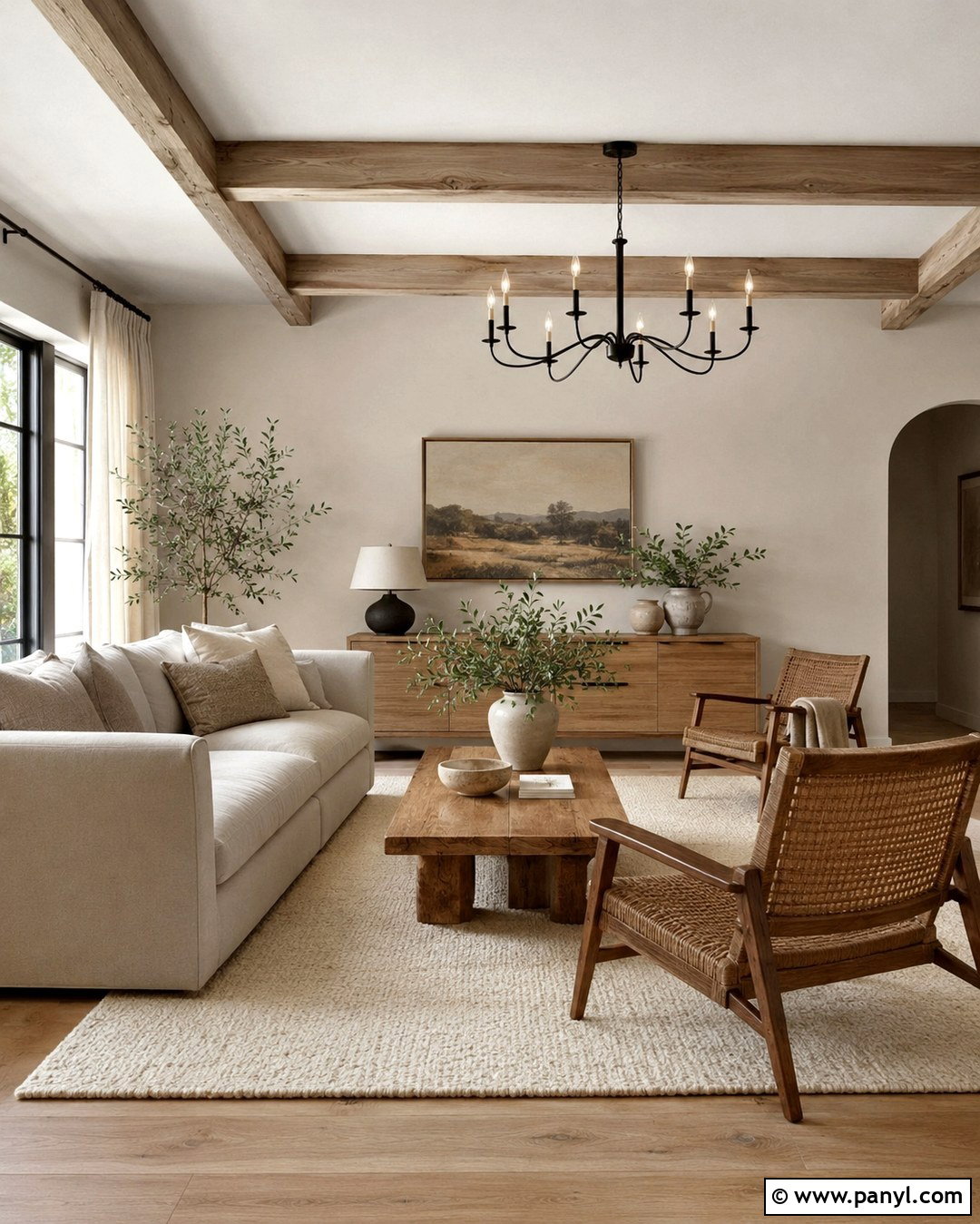
Create a relaxed living room by pairing oyster walls with natural white oak furniture and creamy upholstery. Start with a streamlined oatmeal sofa facing a low oak media console or plaster fireplace. Add two woven accent chairs to form an open conversation area. A large ivory rug will soften the floor while connecting every piece. Choose linen curtains in a slightly lighter cream so the walls remain visible rather than blending away. Black iron lighting and a few charcoal accents provide definition without making the room feel severe. Finish the space with olive branches, handmade pottery, and landscape artwork in muted green and brown. This complete palette emphasizes oyster’s warm side and works especially well in rooms with generous daylight and medium-toned hardwood floors.
2. Oyster Living Room With Black Accents
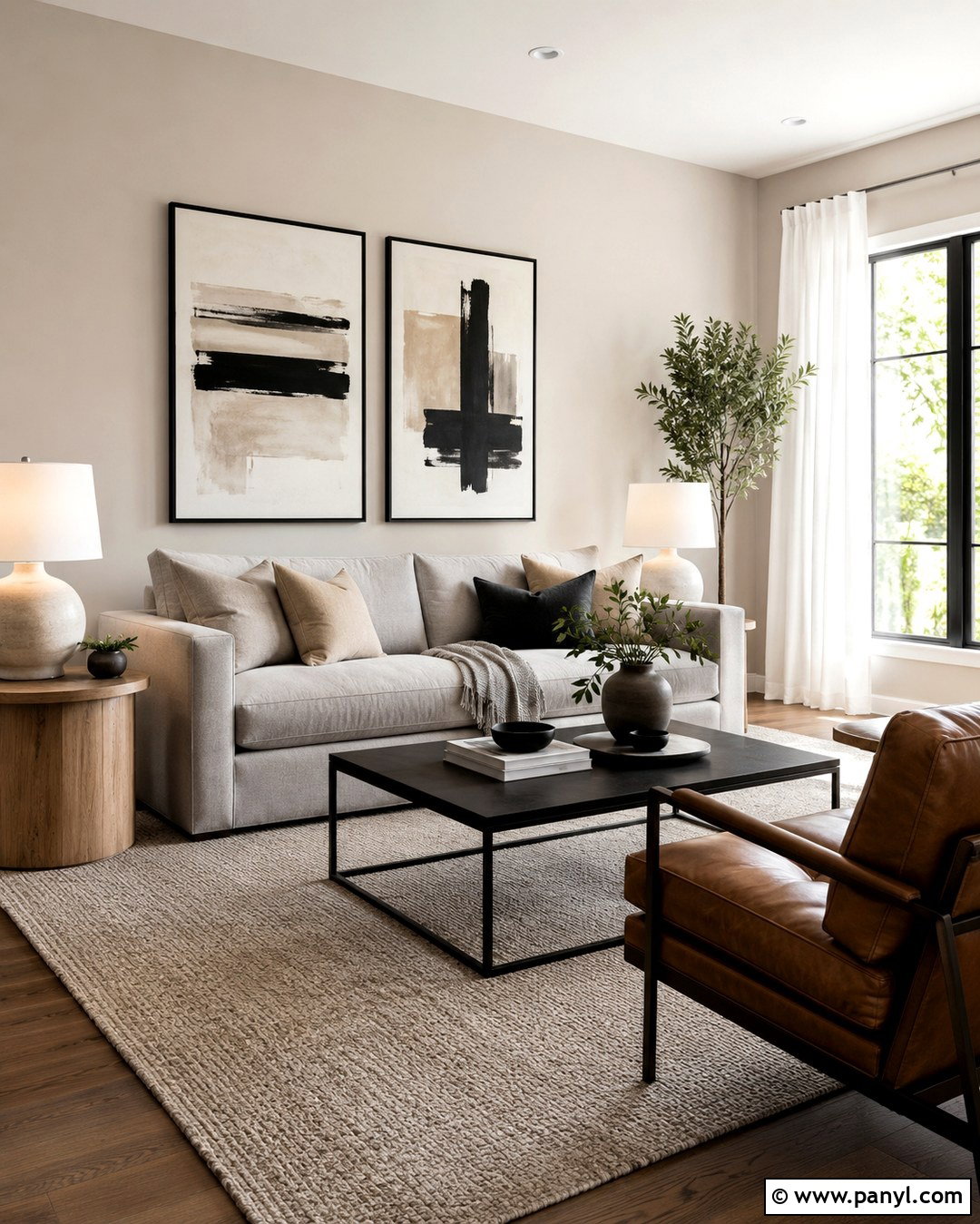
What if you want oyster walls to feel crisp rather than traditionally creamy? Build the living room around strong matte black accents. Use a tailored light-gray sofa, a black metal coffee table, and slim black curtain rods to create a clear visual framework. White oak side tables prevent the contrast from becoming too stark. Hang large abstract artwork featuring black, tan, and off-white above the sofa. Keep the window treatments simple with white linen panels that allow plenty of natural light inside. A textured taupe rug and caramel leather chair add necessary warmth. Complete the look with sculptural ceramic lamps and restrained greenery. The result feels modern and polished, yet the soft oyster background keeps the furniture, artwork, and architectural details from looking cold or disconnected.
3. Oyster Bedroom With Linen Bedding
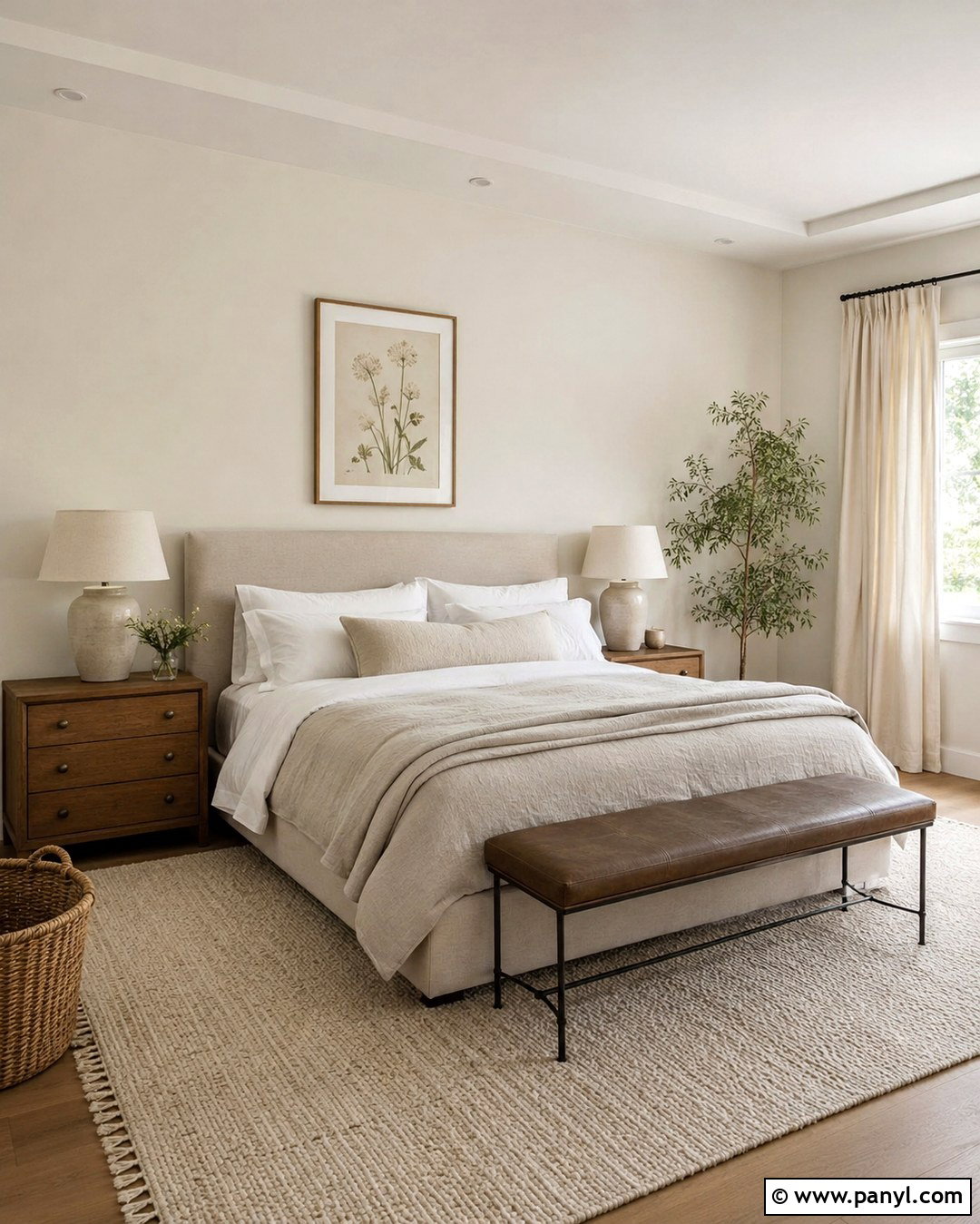
Soft layers make oyster walls feel especially restful in a bedroom. Place an upholstered oatmeal bed against the main wall and dress it with white cotton sheets, flax-colored linen, and a quilted taupe coverlet. Use matching oak nightstands with rounded edges to maintain a calm, natural flow. Ceramic table lamps with warm white shades provide gentle symmetry. Underfoot, choose a large wool rug in ivory and beige rather than a bold pattern. Full-length linen curtains can closely match the walls, creating a quiet, enveloping effect. Add one dark element, such as a bronze bench or espresso picture frames, to ground the pale palette. Minimal botanical artwork, a woven basket, and one leafy plant finish this comfortable bedroom without introducing unnecessary clutter or overly decorative details.
4. Oyster Bedroom With Dusty Blue
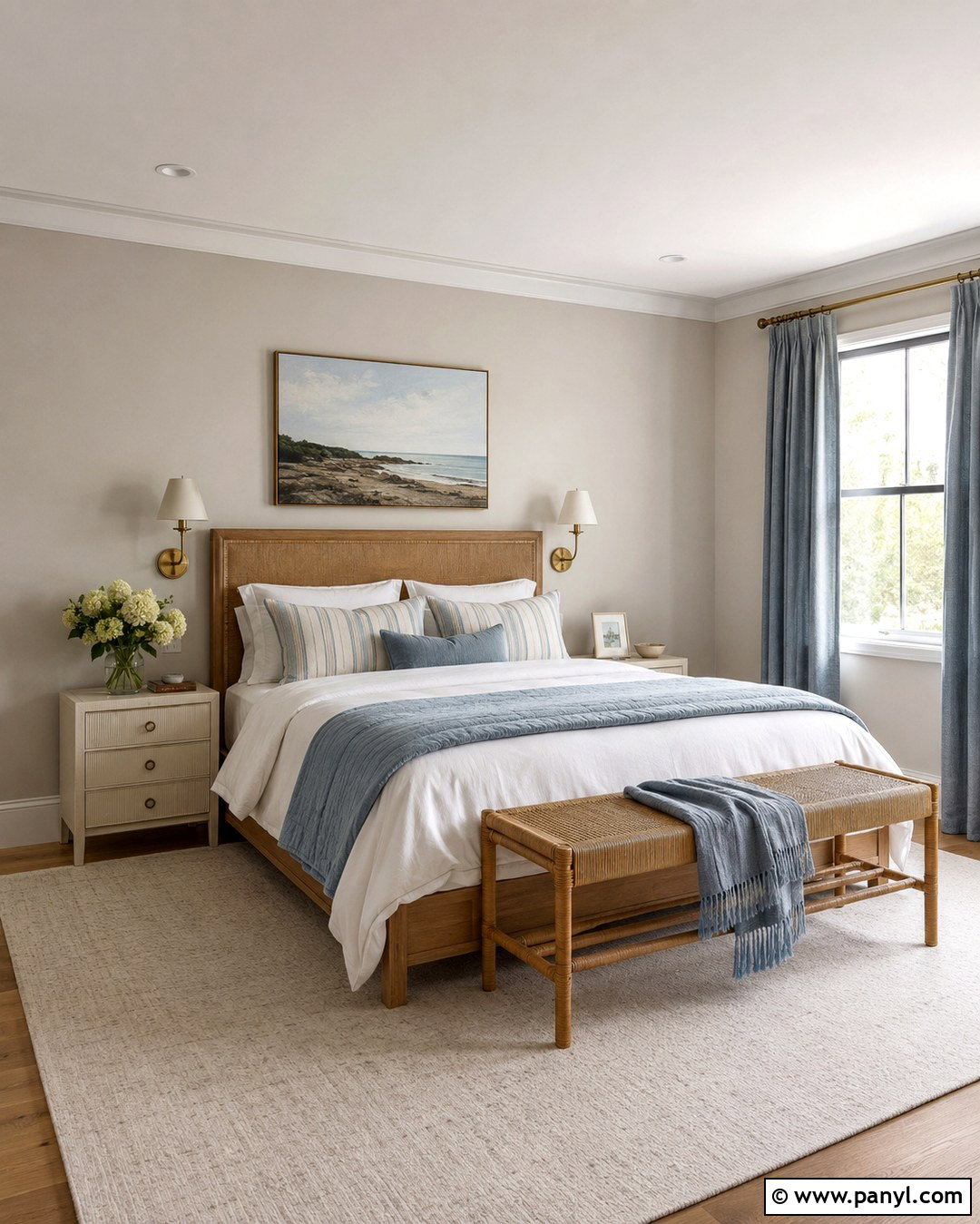
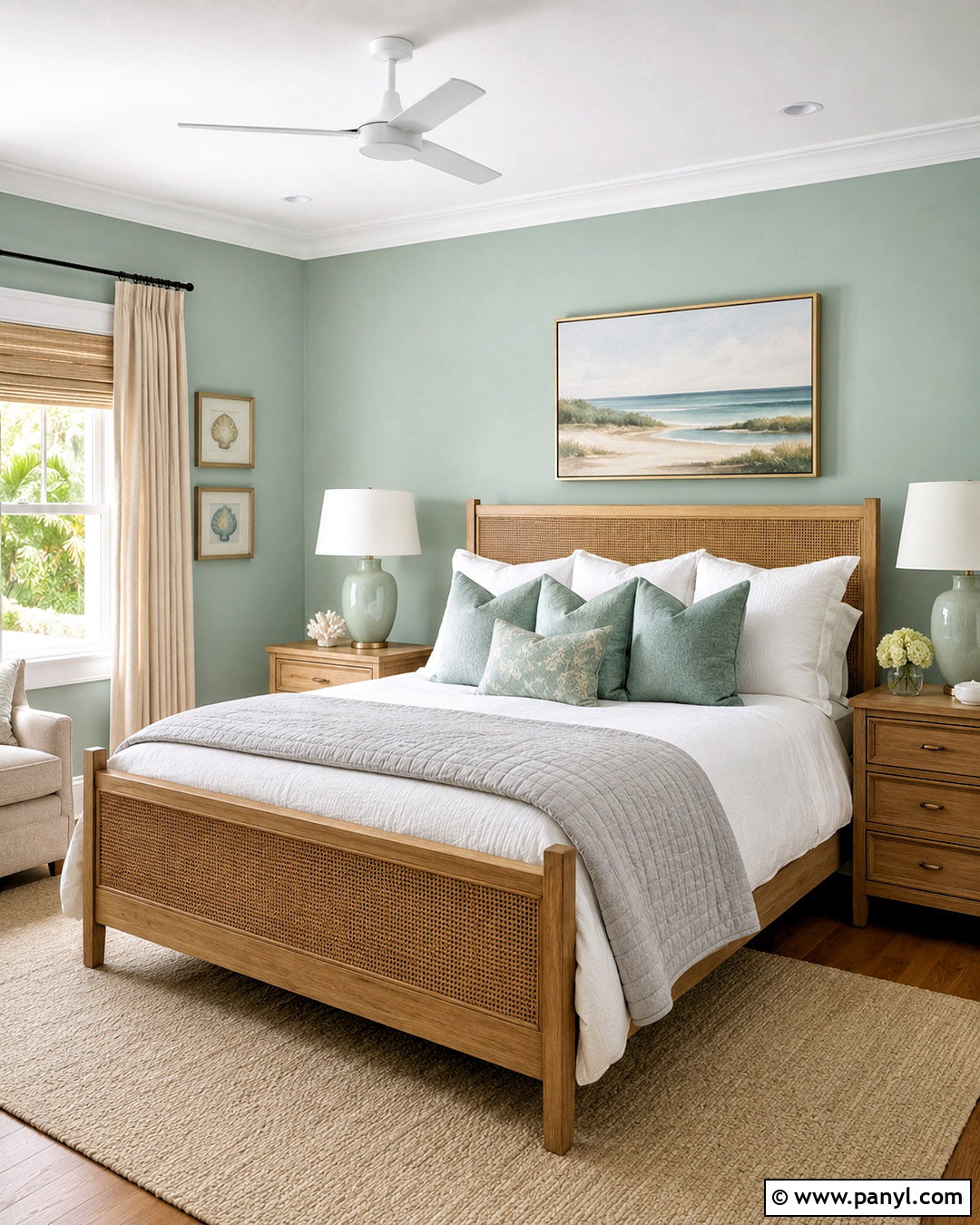
Oyster walls and dusty blue furnishings create a bedroom that feels fresh, balanced, and quietly colorful. Center a medium oak bed on the longest wall and layer it with white bedding, a faded blue quilt, and striped lumbar pillows. Repeat the blue through floor-length curtains or a comfortable reading chair near the window. Warm brass sconces bring out the creamier qualities of the wall color, while an ivory rug keeps the floor light. Choose nightstands with simple wood fronts and antique brass pulls for a collected look. A framed coastal landscape or abstract blue artwork can connect the entire palette without turning the room into a literal theme. Finish with natural textures, including a cane bench, linen shade, and woven basket, for an easygoing yet complete retreat.
5. Oyster Kitchen With Sage Cabinets
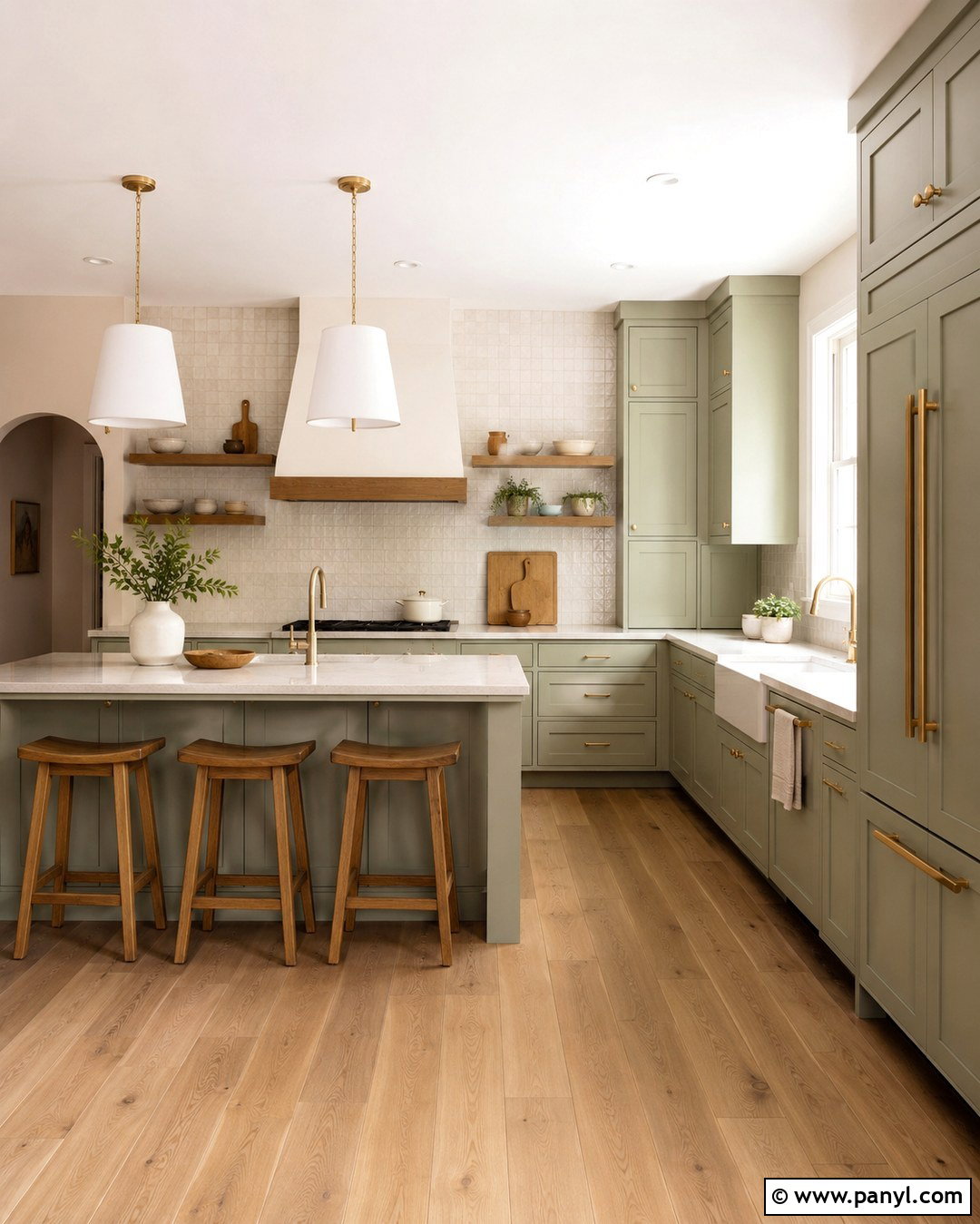
Bring understated color into the kitchen by combining oyster walls with muted sage green cabinets. Use the sage on lower and upper cabinetry, then introduce creamy quartz countertops and a simple off-white tile backsplash. Oyster walls will soften the transition between the cabinets, backsplash, and adjoining rooms. Warm oak flooring or counter stools keep the green from appearing too cool. Choose brushed brass hardware and pendants for subtle warmth, but maintain clean silhouettes to avoid an overly formal result. Open shelves can display white stoneware, wooden boards, and a few small plants. If the kitchen includes an island, paint it the same sage for continuity. The finished space feels natural and welcoming, with enough contrast to define each surface while preserving an airy, cohesive appearance.
6. Oyster Kitchen With Walnut Cabinets
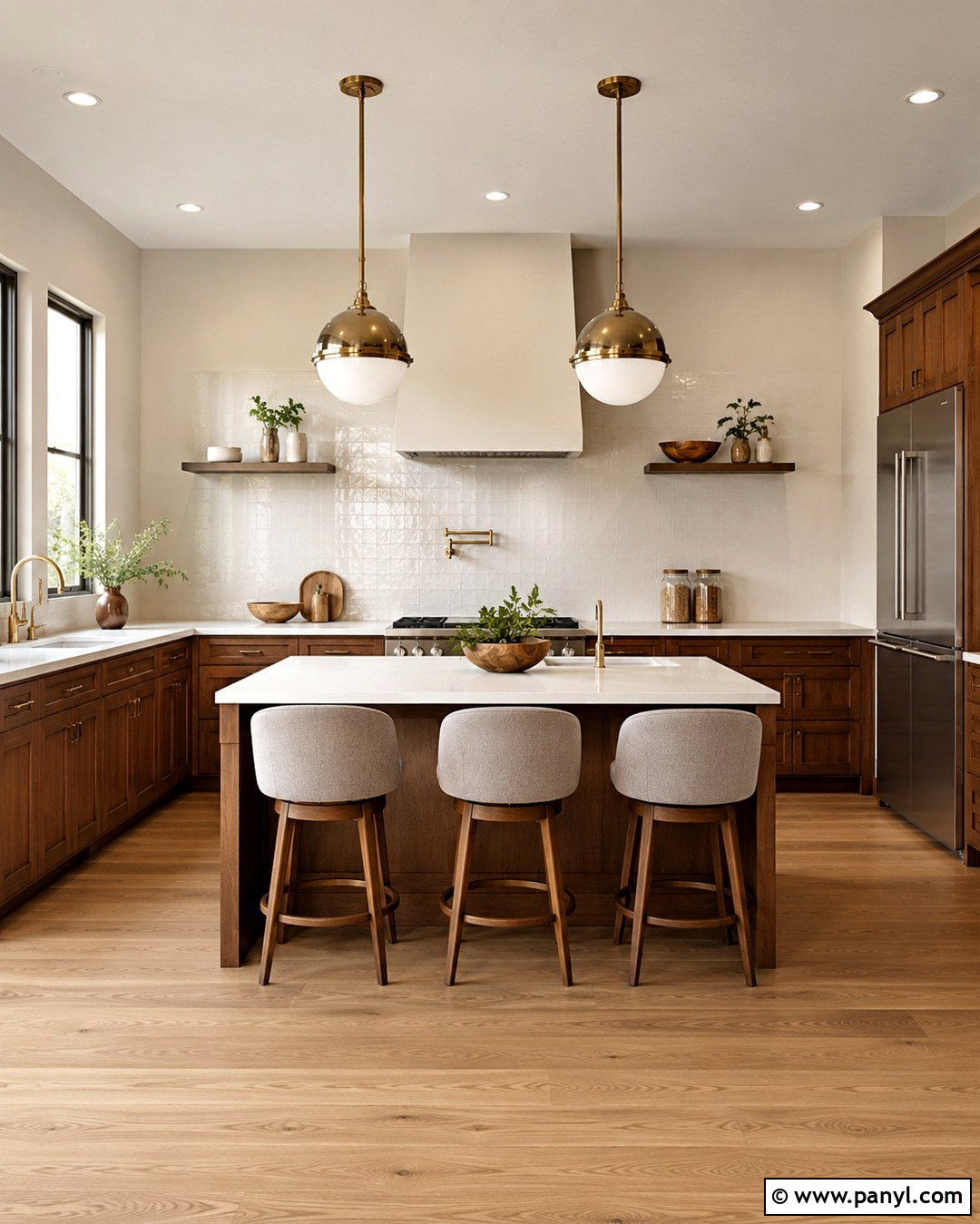
Rich walnut cabinetry gives oyster walls a sophisticated, grounded character. Let the dark wood occupy the lower cabinets and a full-height pantry wall, while keeping selected upper cabinets oyster or softly white. Install pale quartz countertops with delicate beige veining and a backsplash made from handmade ivory tile. Brushed nickel or aged brass hardware can both work, but choose one metal and repeat it across faucets and lighting. Add counter stools upholstered in warm gray fabric to bridge the light walls and deep cabinetry. Medium oak flooring provides a subtle transition between the finishes. Keep countertop decor minimal, using a wooden bowl, ceramic canisters, and practical cooking tools. This balanced kitchen feels upscale without becoming imposing because the oyster walls reflect light around the walnut surfaces.
7. Oyster Dining Room With Navy Accents
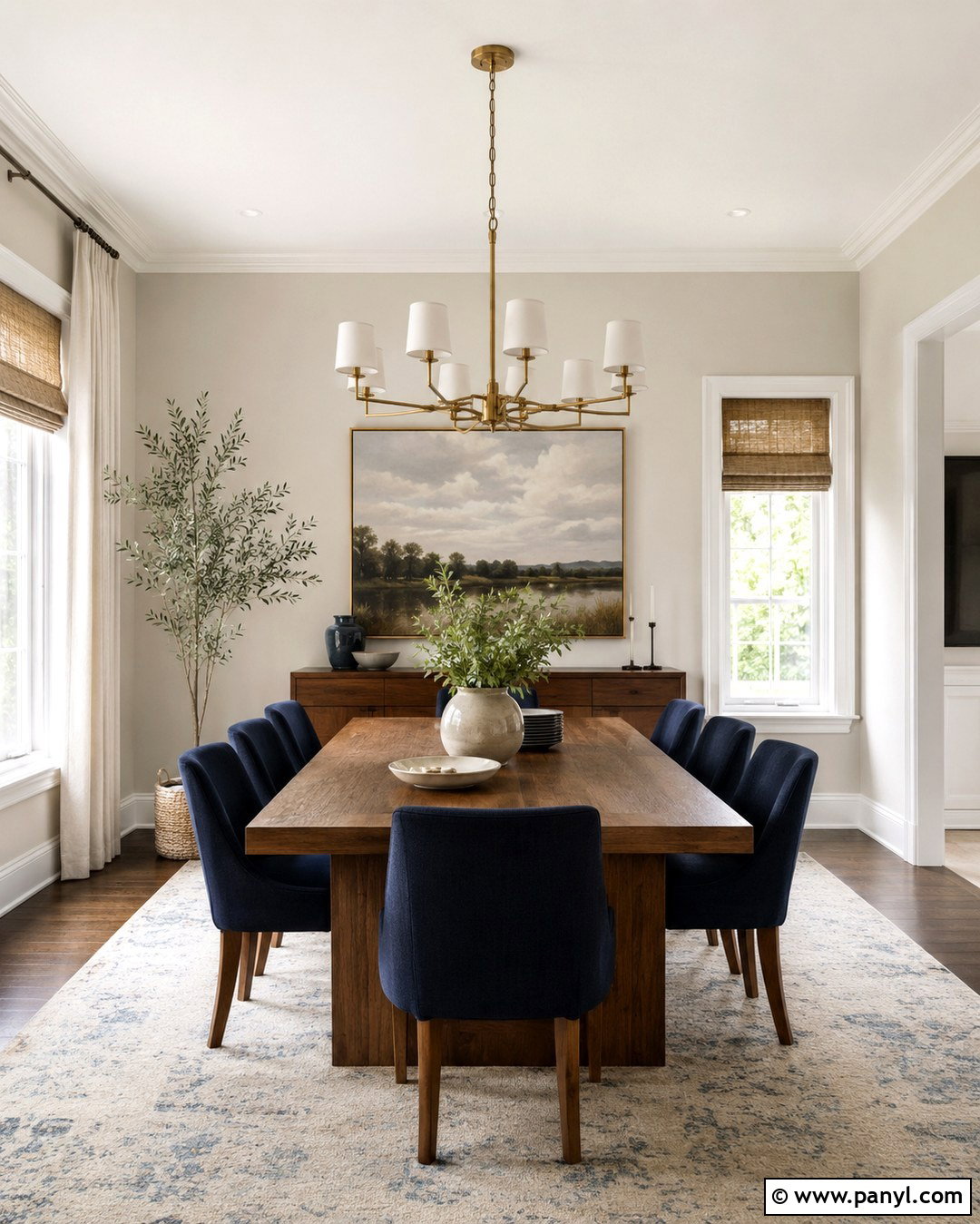
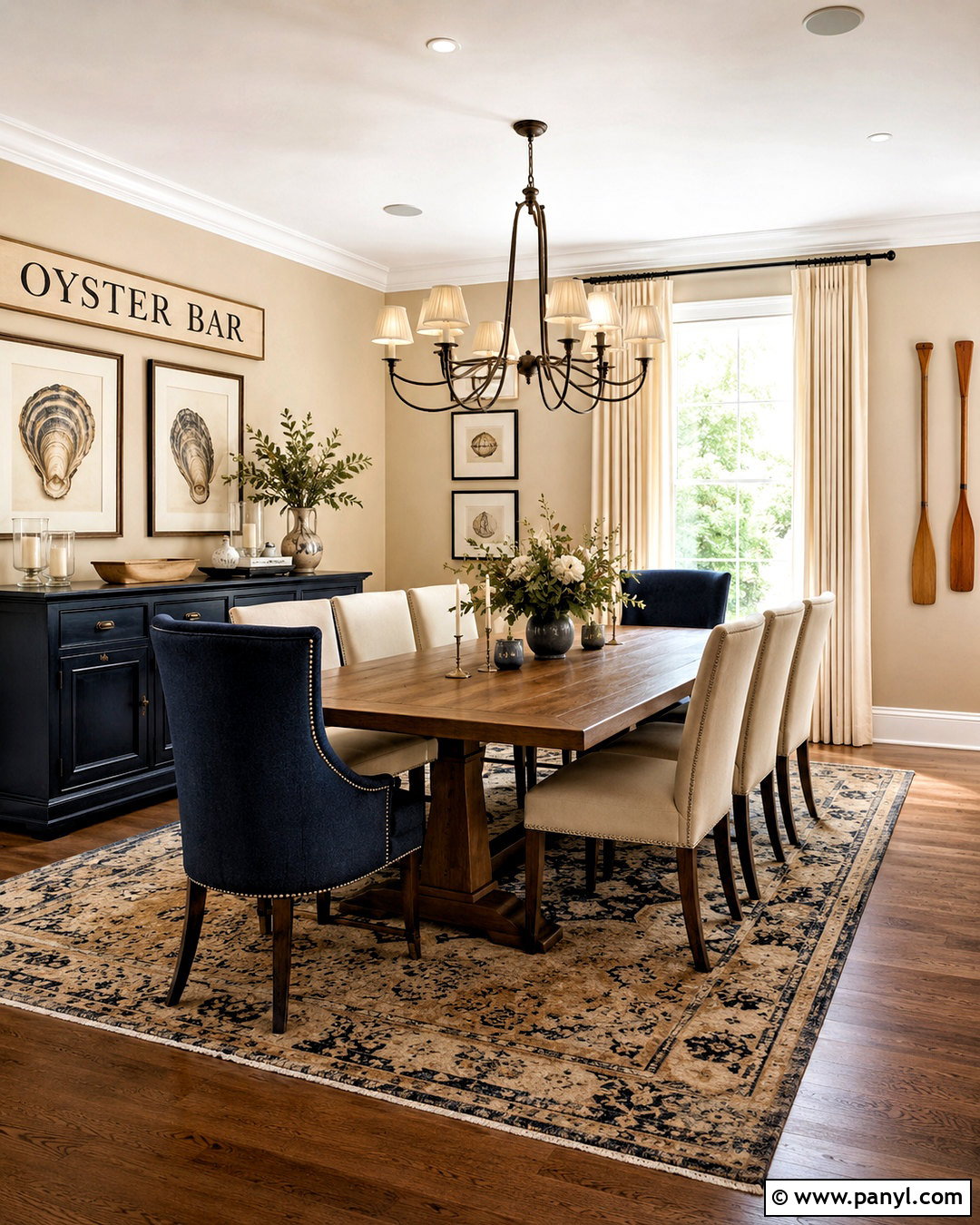
A deep navy dining room scheme becomes more approachable when oyster covers the surrounding walls. Choose a substantial oak dining table and navy upholstered chairs with simple, tailored backs. Above the table, hang a wide brass chandelier that spreads light evenly across the room. A patterned rug containing cream, faded blue, and touches of brown will visually anchor the arrangement. Use bright white or soft cream on the trim, depending on how much contrast you prefer. Navy curtains can frame the windows, although natural woven shades will keep a smaller room feeling more open. Complete the look with a large landscape painting, ceramic tableware, and a narrow walnut sideboard. Oyster provides enough warmth to connect the navy, brass, and natural wood into one refined dining space.
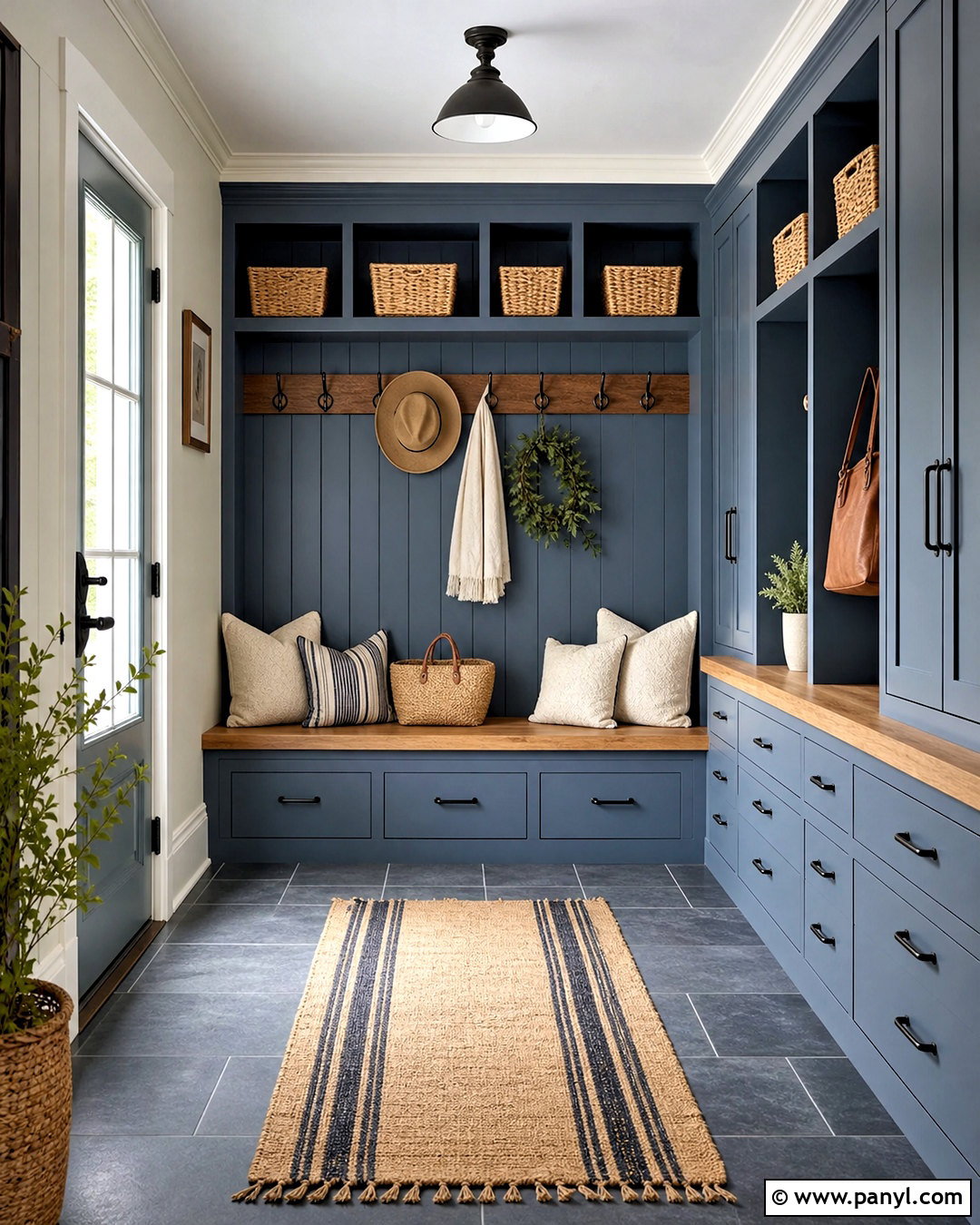
8. Oyster Dining Room With Terracotta Decor
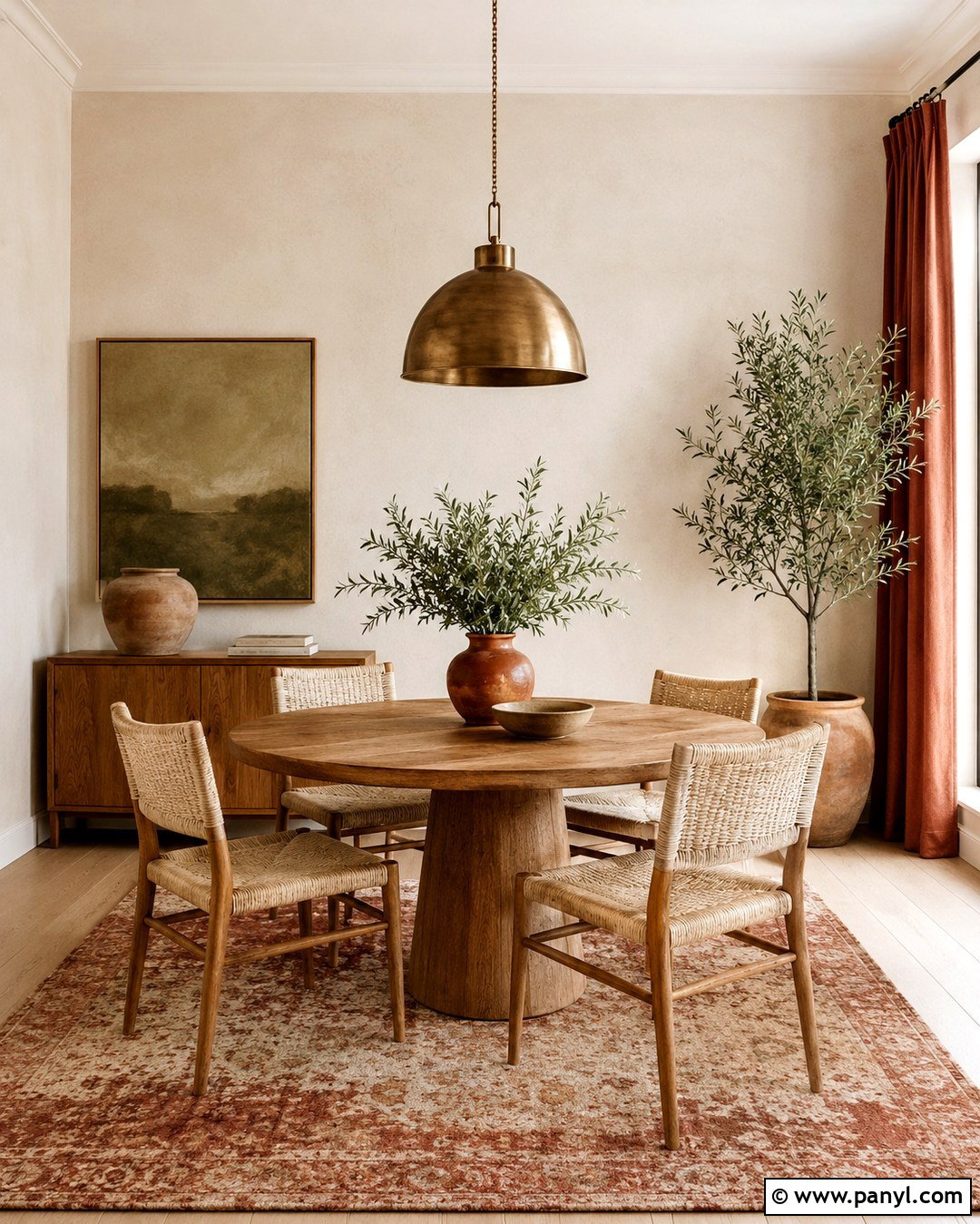
Warm terracotta turns an oyster dining room into an inviting place for everyday meals and casual gatherings. Begin with a round pedestal table in medium-toned wood and surround it with woven or upholstered cream chairs. Place a rust-and-ivory rug underneath to define the dining zone. Terracotta curtains, pottery, and patterned seat cushions can carry the accent color around the room without overwhelming the walls. Select an aged brass pendant with a simple dome or globe shape for comfortable overhead lighting. A low oak cabinet offers storage while supporting artwork in clay, beige, and muted olive tones. Add one substantial plant for natural contrast. Because oyster sits between white and beige, it gently supports these earthy colors while keeping the complete room bright, open, and pleasantly relaxed.
9. Oyster Bathroom With Marble And Brass
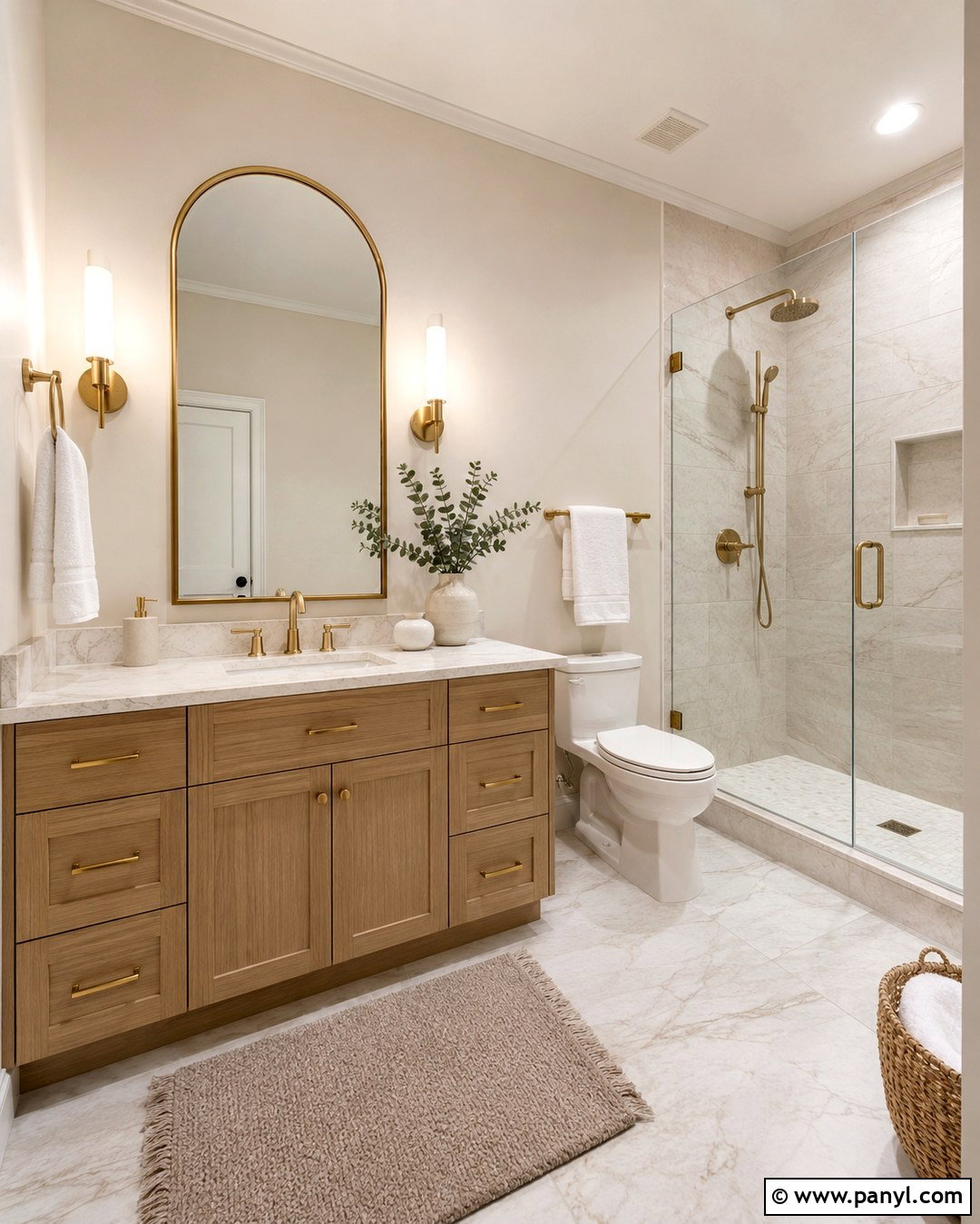
Turn a standard bathroom into a polished retreat with oyster walls, pale marble, and brushed brass fixtures. Use the wall color above a marble-topped vanity or outside the tiled shower to warm the harder surfaces. A white oak vanity with flat-panel doors introduces natural texture and practical storage. Choose ivory marble-look floor tile with subtle gray-beige veining, then repeat the material around the shower or backsplash. Brass faucets, sconces, and cabinet pulls add a soft glow. Keep the mirror simple with a thin rounded frame. White towels maintain freshness, while a muted taupe bath mat visually connects the floor and walls. A small arrangement of eucalyptus and a ceramic tray complete the setting. The resulting bathroom feels bright and refined rather than cold or overly white.
10. Oyster Bathroom With Matte Black Fixtures
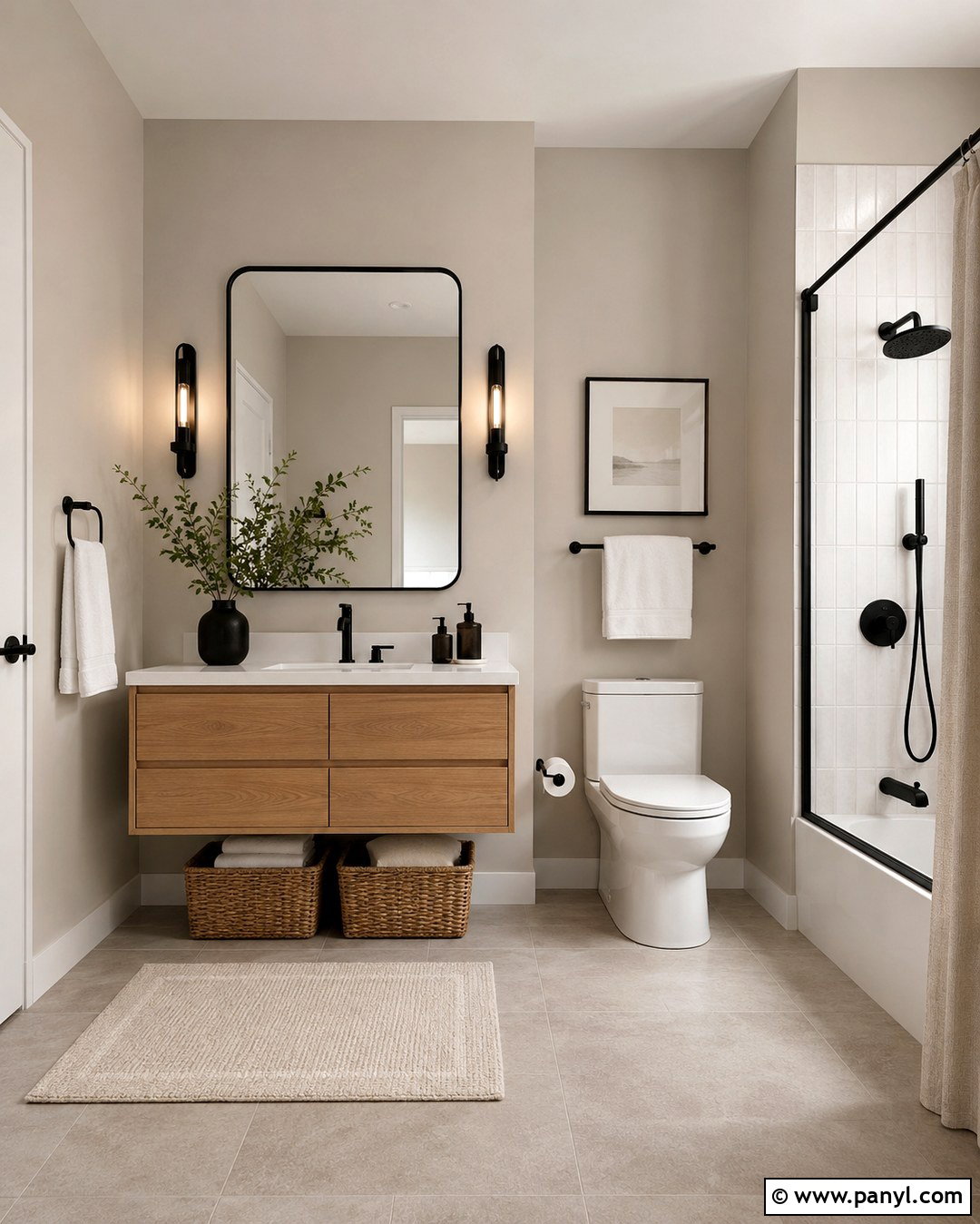
For a sharper bathroom design, contrast oyster walls with matte black plumbing fixtures and accessories. Install a floating oak vanity topped with a clean white counter, then place a large black-framed mirror above it. Black sconces, a matching faucet, and a slim shower frame establish a consistent finish throughout the space. Use vertically stacked white tiles in the shower to add gentle texture without competing with the wall color. The floor can feature warm gray porcelain tile or a restrained black-and-ivory pattern. Introduce softness through white towels, a woven laundry basket, and a natural linen shower curtain if glass is not practical. Oyster prevents the high-contrast elements from feeling harsh, while light wood and woven details make the complete bathroom feel comfortable, functional, and current.
11. Oyster Entryway With Warm Wood
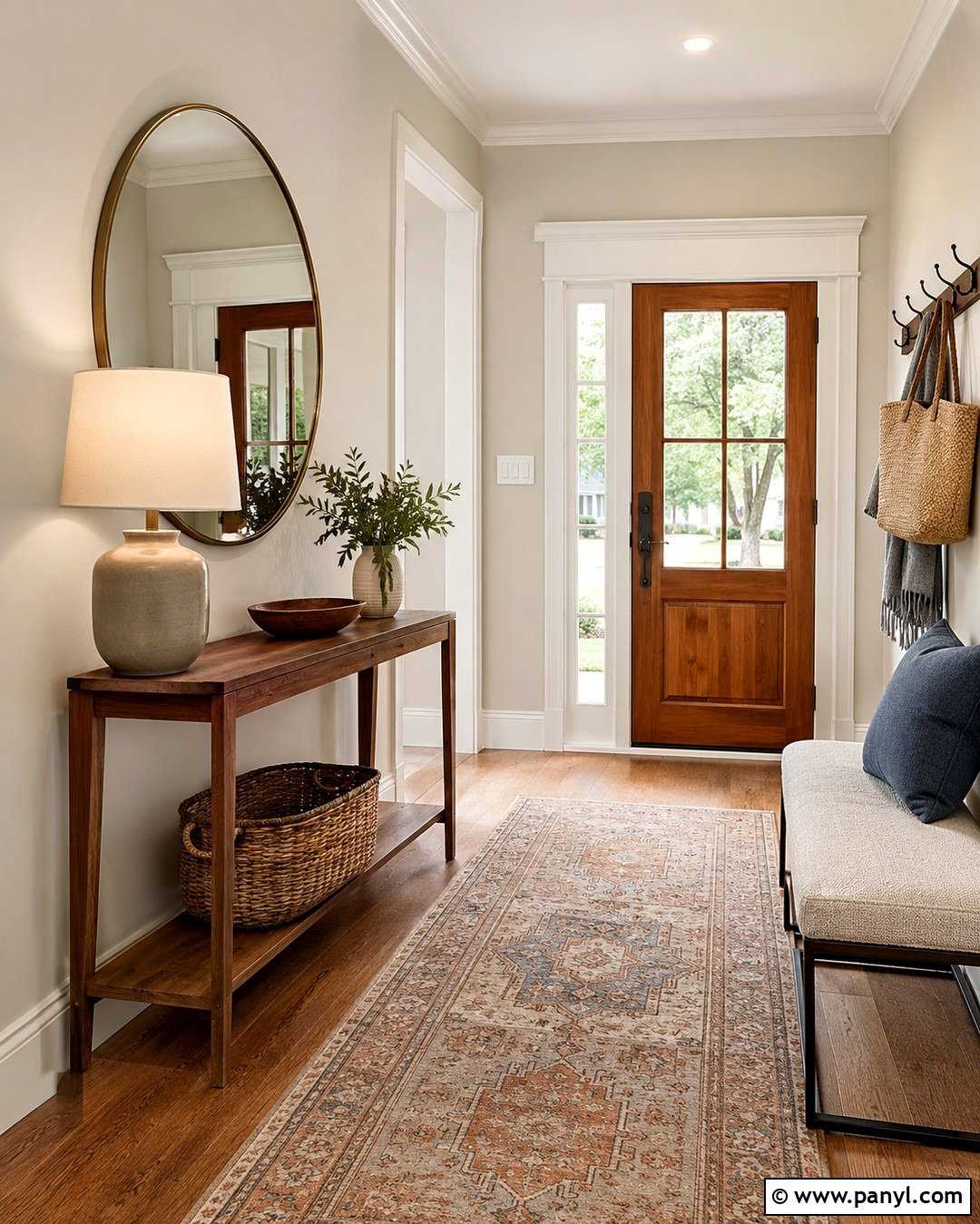
The first view of a home should feel welcoming and easy to navigate. Paint the entryway walls oyster, then add a slim walnut console beneath a round bronze mirror. A narrow vintage-style runner in beige, rust, and faded blue will protect the floor while introducing subtle pattern. Place a ceramic lamp on the console for evening light and use a large bowl to hold everyday essentials. An upholstered bench or small wooden stool offers a practical place to remove shoes. If storage is needed, install wall hooks or a closed cabinet painted in a deeper mushroom tone. Keep the front door natural wood or muted charcoal for definition. Oyster walls provide a calm transition into nearby rooms and create a flexible background for layered, collected entryway furnishings.
12. Oyster Hallway Color Drenching
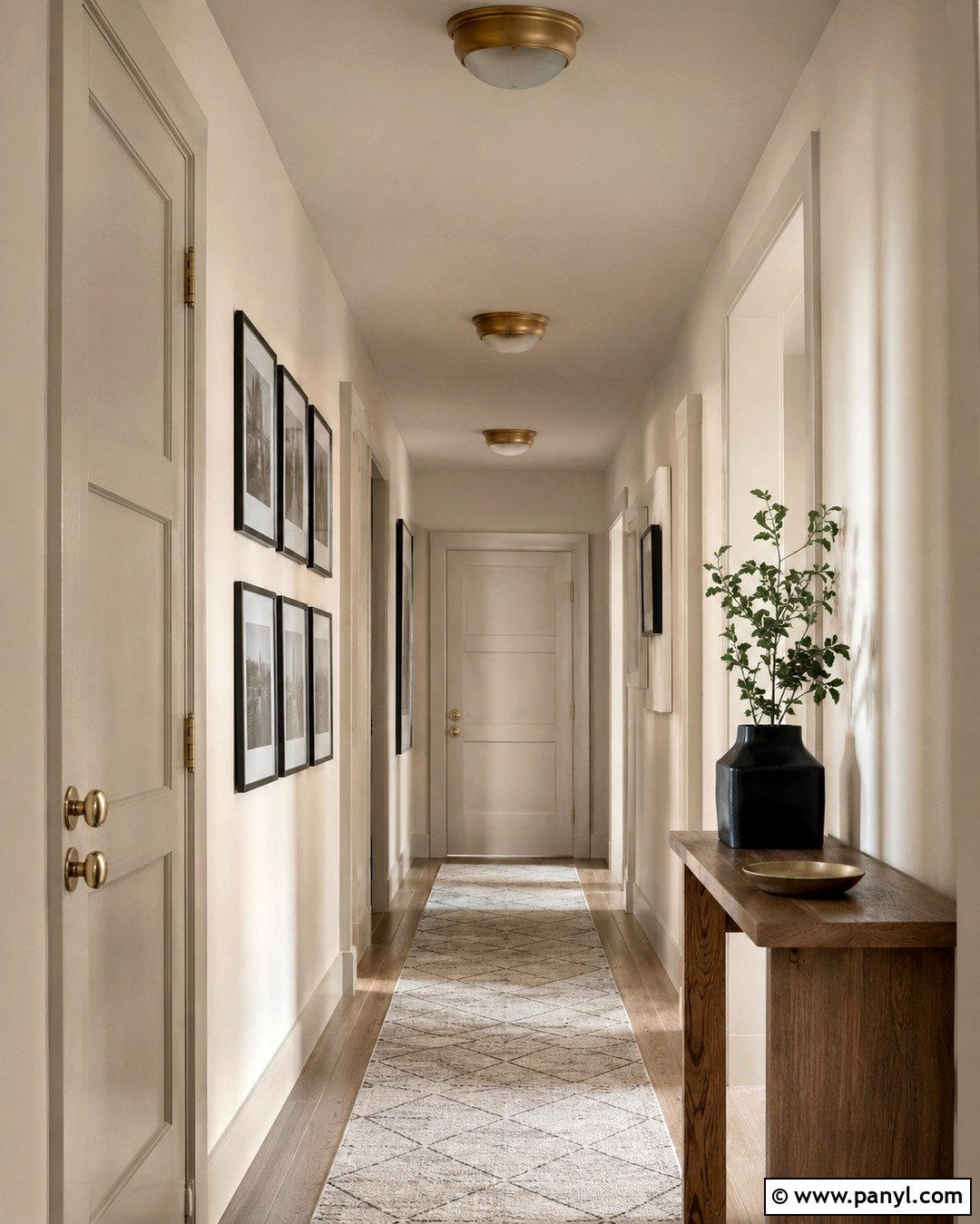
A narrow hallway can feel more intentional when oyster paint covers the walls, trim, doors, and ceiling. This color-drenched treatment reduces visual breaks and allows architectural lines to flow smoothly through the space. Use different sheens rather than different colors: washable eggshell on walls, satin on trim and doors, and flat paint overhead. Add a long neutral runner with a subtle geometric pattern to bring movement underfoot. A row of black-framed photographs or small landscape prints creates an organized gallery without overcrowding the passage. Choose flush-mount ceiling lights in aged brass or warm white glass. If space permits, place a shallow console at the hallway’s end. The unified oyster envelope makes the area feel finished, while darker artwork and hardware provide enough contrast for depth.
13. Oyster Home Office With Walnut Furniture
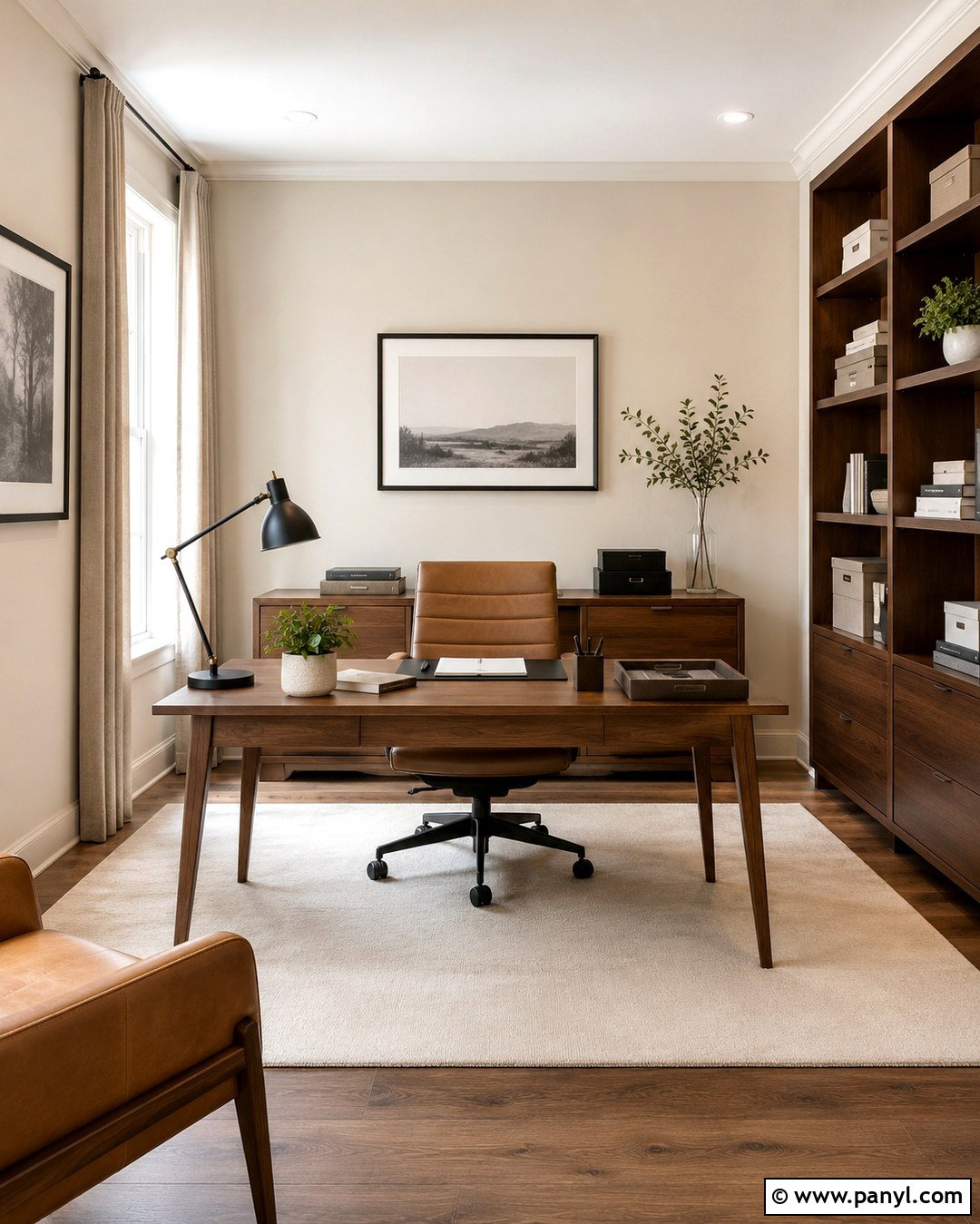
An oyster home office can feel focused and professional without becoming plain. Position a walnut desk near the window so daylight reaches the work surface from the side. Add a comfortable desk chair upholstered in camel leather or warm gray fabric. Behind the desk, use a walnut bookcase or built-in storage with closed lower cabinets to control visual clutter. An ivory wool rug softens sound and defines the working area. Incorporate matte black task lighting, picture frames, and small hardware for a structured finish. Curtains in taupe linen will filter glare while complementing the wall color. Keep accessories functional, including storage boxes, trays, and a small plant. The mix of oyster, walnut, camel, and black creates a complete workspace that looks composed on video calls and remains comfortable daily.
14. Oyster Nursery With Muted Pastels
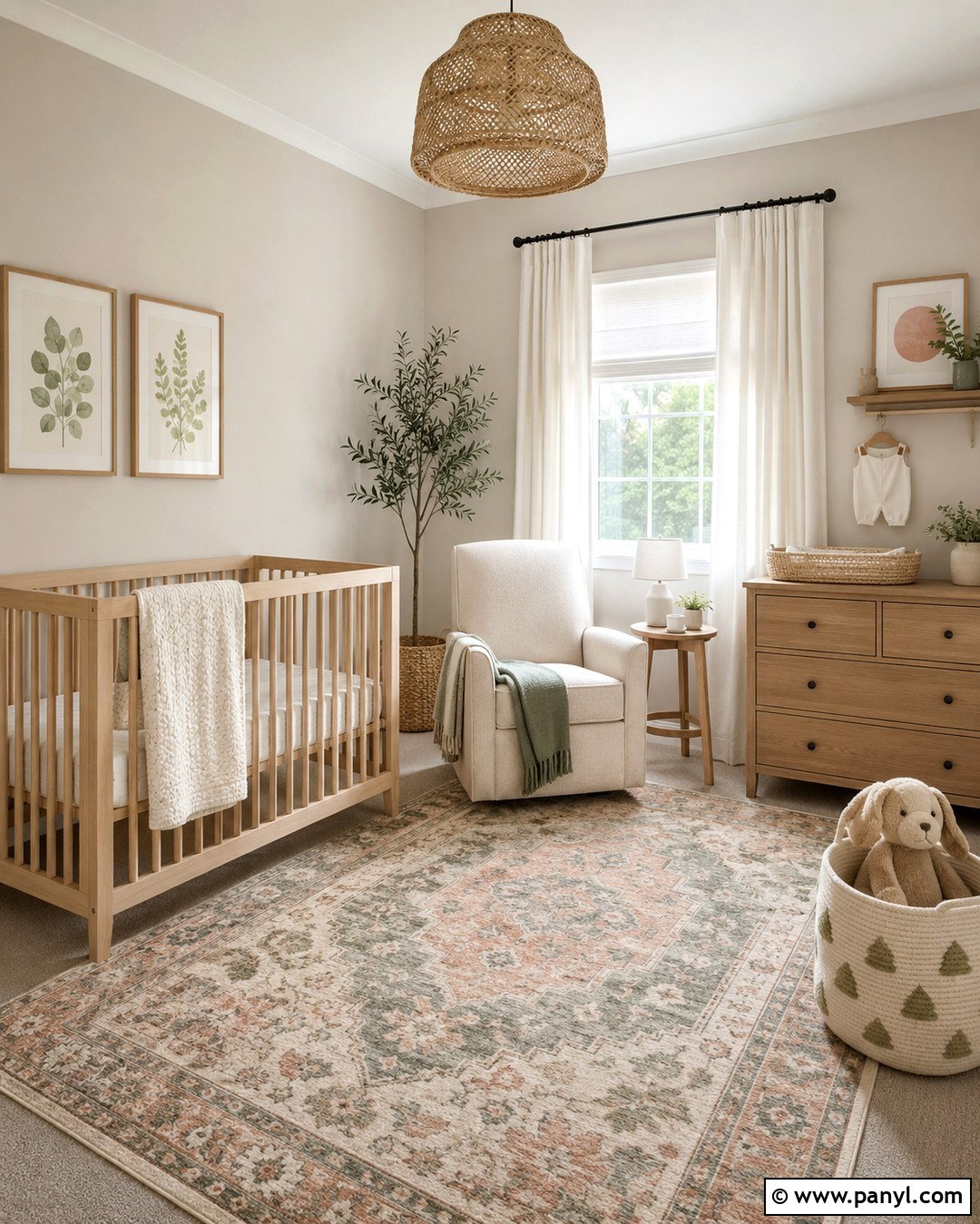
Oyster walls offer a flexible foundation for a nursery that can adapt as a child grows. Place a natural maple crib against a clear wall and add a comfortable cream glider nearby. Layer muted pastel accents through a dusty pink, pale blue, soft sage, or peach rug, changing table accessories, and simple artwork. Avoid using every pastel equally; choose one main color and one supporting shade for a calmer result. Install an oak dresser that can later function as regular bedroom storage. Blackout curtains in warm ivory help maintain the room’s restful appearance. A woven pendant, cotton storage baskets, and washable textiles add practical texture. Oyster ties the soft colors and light woods together, creating a cheerful nursery that feels warm and personal without relying on a short-lived decorative theme.
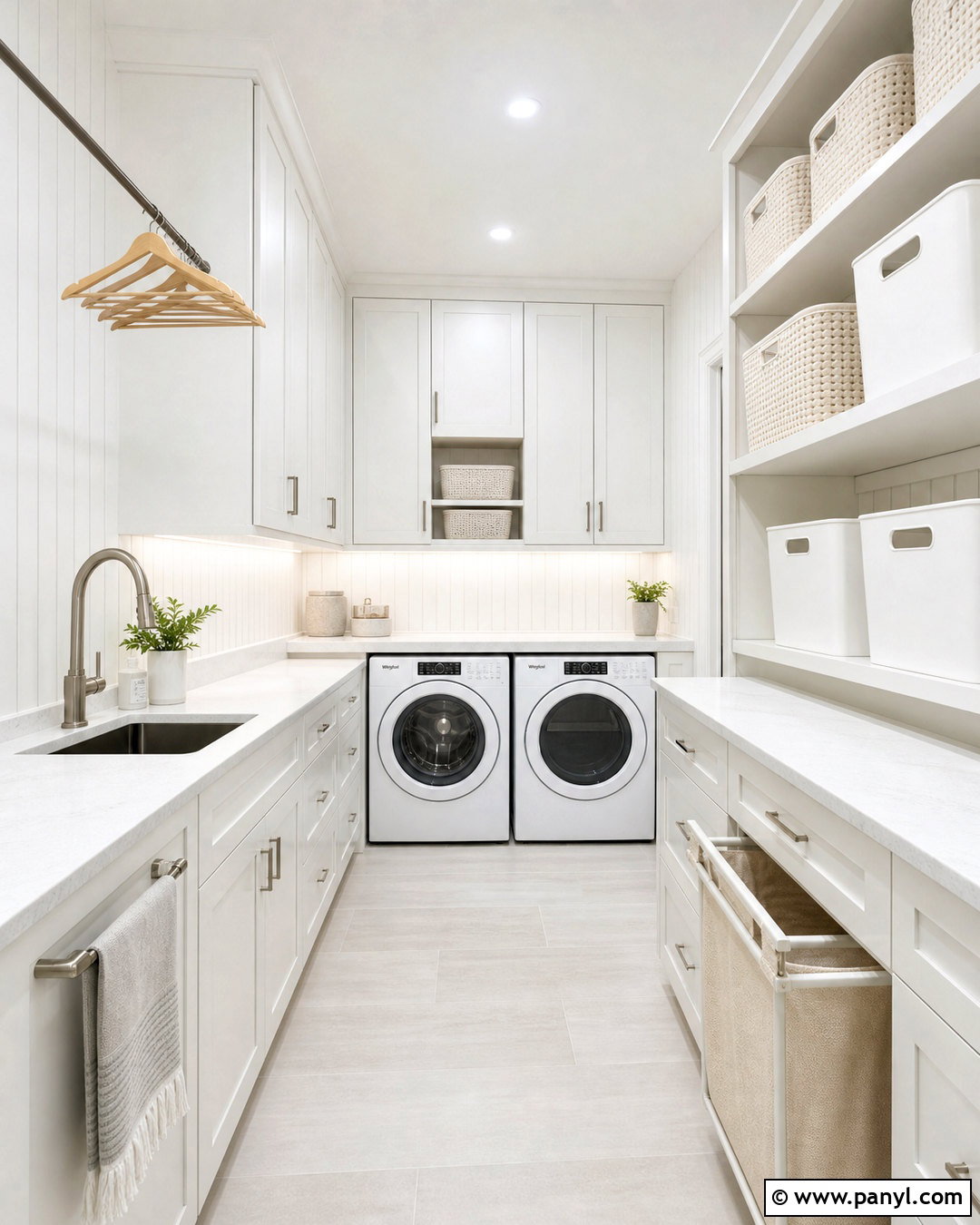
15. Oyster Laundry Room With Sage Storage
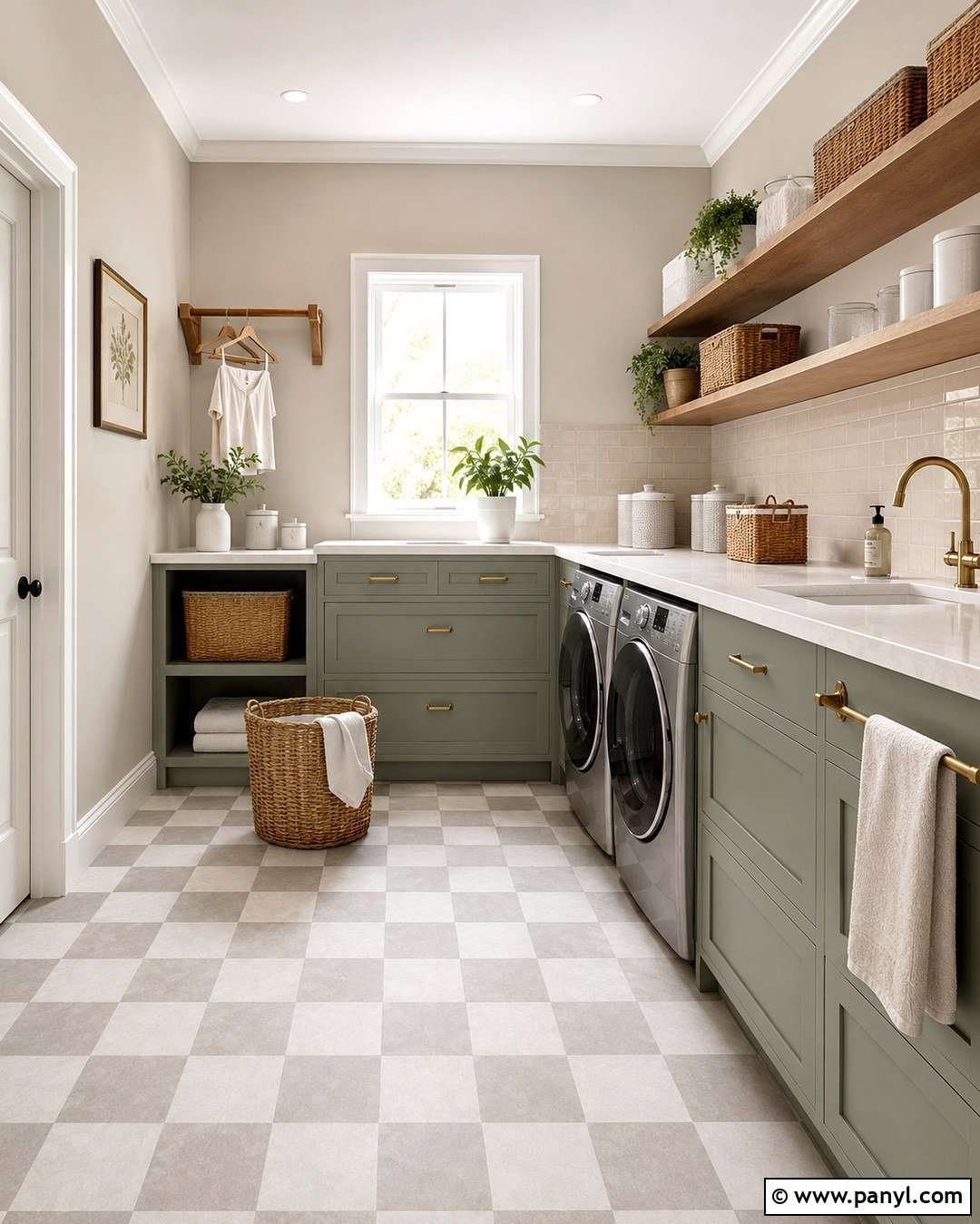
Even a hardworking laundry room can feel thoughtfully designed. Cover the walls in oyster and install muted sage cabinets above the washer and dryer. Use a warm white quartz counter for folding clothes, with oak shelves positioned nearby for baskets and daily supplies. A backsplash of glossy cream subway tile will reflect light and protect the work area. Choose durable gray-beige floor tile in a simple checkerboard or stone pattern. Brass cabinet pulls and a compact ceiling fixture add warmth without taking up valuable space. Keep detergents inside matching containers or closed cabinets to reduce visual clutter. A hanging rail, woven hamper, and wall-mounted drying rack improve function. Together, oyster, sage, cream, and oak create an organized laundry room that feels connected to the rest of the home.
16. Oyster Family Room With Soft Blue
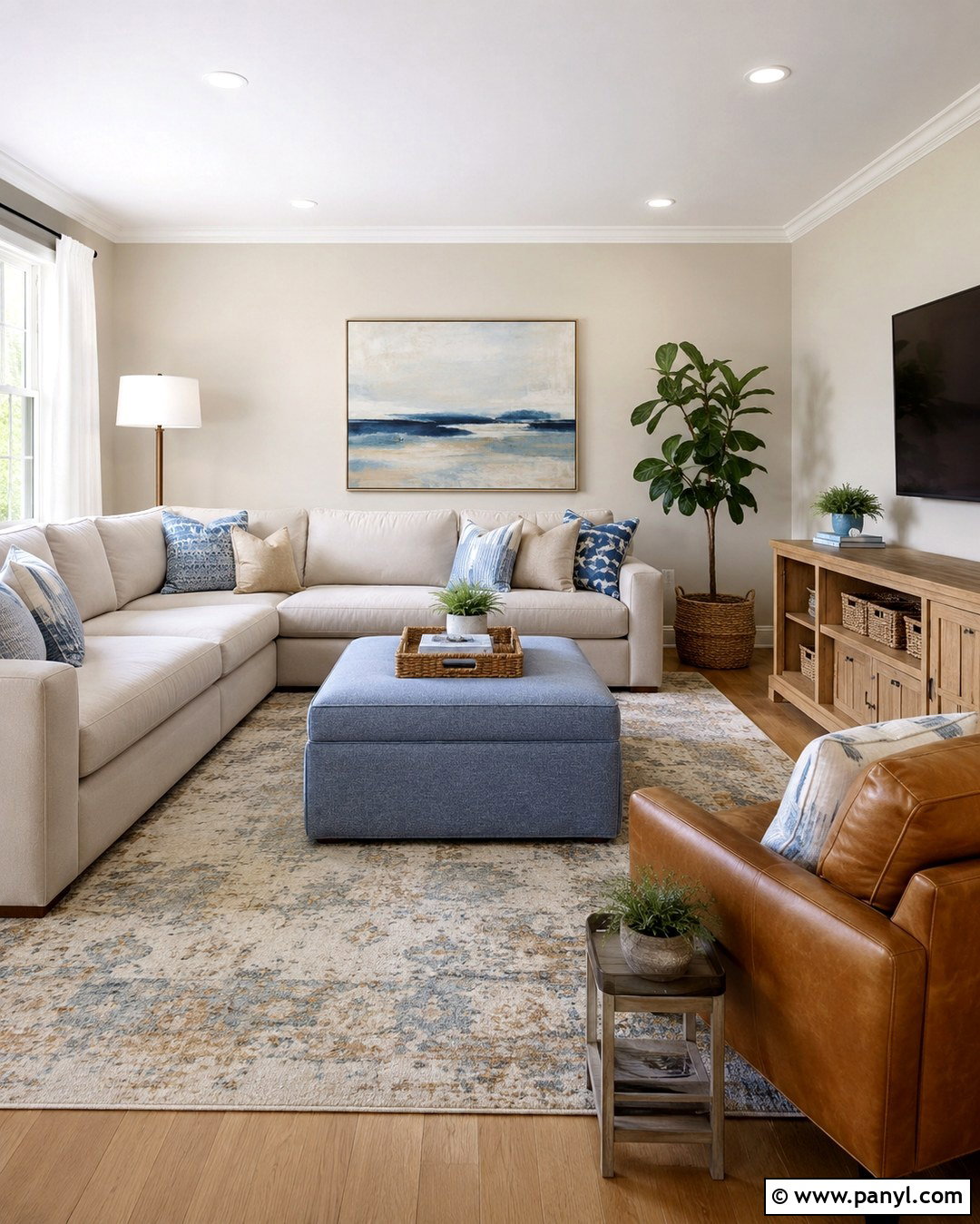
A family room needs durable pieces, flexible seating, and a color scheme that remains relaxing. Use oyster walls behind a deep, washable sectional in warm gray or oatmeal. Bring in soft blue through patterned pillows, a large ottoman, and relaxed window treatments. A sturdy oak media cabinet can conceal electronics and games, while built-in baskets handle blankets and toys. Choose a low-pile rug with cream, blue, and taupe details to disguise everyday wear. Add a leather accent chair for warmth and an adjustable floor lamp for reading. Framed coastal or abstract artwork can repeat the blue without making the room feel themed. The full palette is comfortable and forgiving, while the oyster background helps the practical furnishings look coordinated rather than assembled purely for function.
17. Oyster Farmhouse Living Room
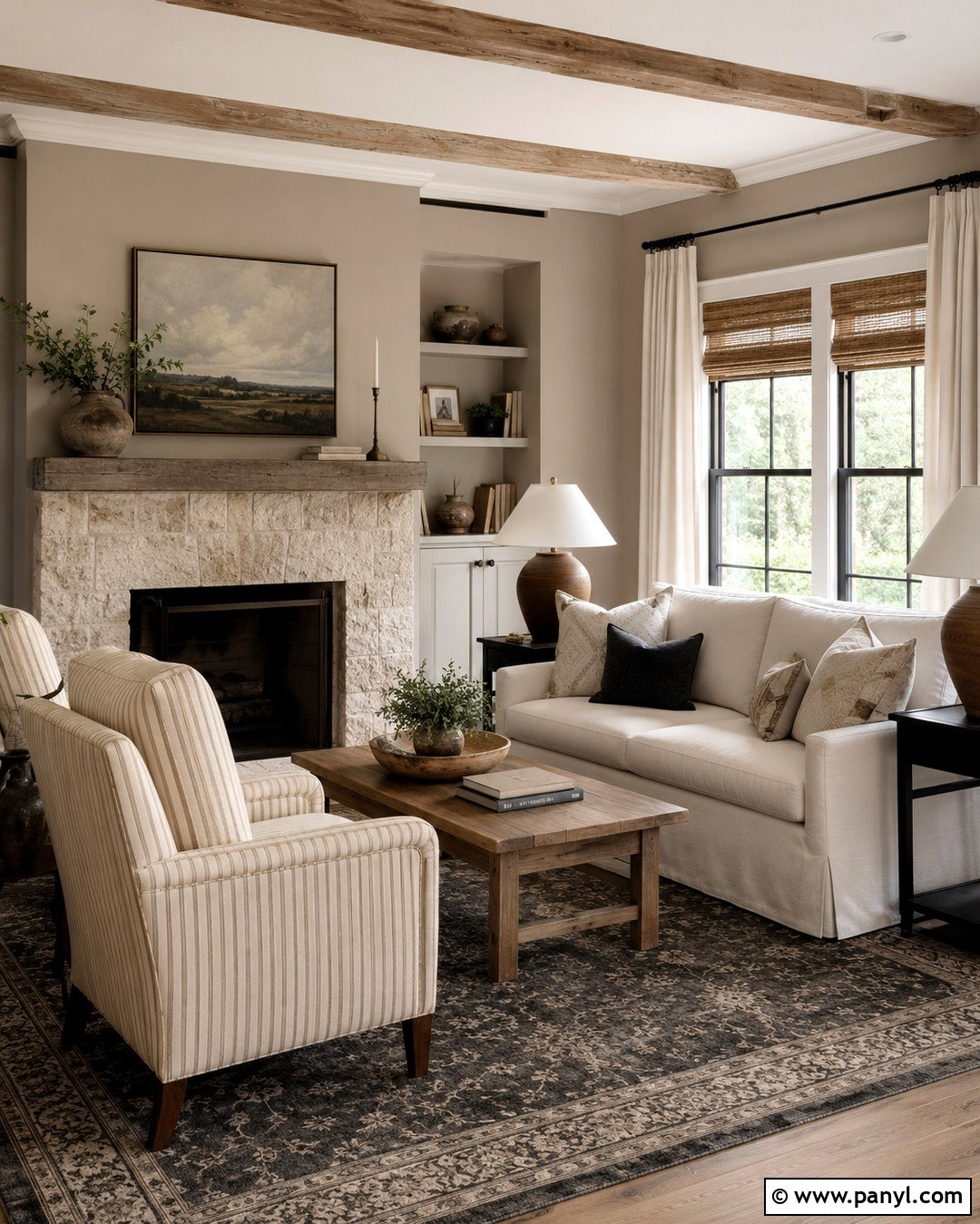
Oyster walls can support farmhouse character without making the room feel overly rustic. Begin with a slipcovered cream sofa and two structured chairs in a subtle tan stripe. Arrange them around a reclaimed oak coffee table with a simple, substantial shape. Use a natural stone or painted brick fireplace as the focal point, keeping the mantel styling restrained. A wool rug in faded charcoal and beige adds pattern underfoot. Choose black iron curtain rods, aged brass lamps, and woven shades to layer traditional materials. Medium-toned hardwood flooring will reinforce the warmth of the paint. Instead of numerous small accessories, display a few larger pieces, such as an earthenware vase, landscape painting, and covered basket. This produces a clean, livable farmhouse room with balanced modern simplicity.
18. Oyster Small Apartment Living Room
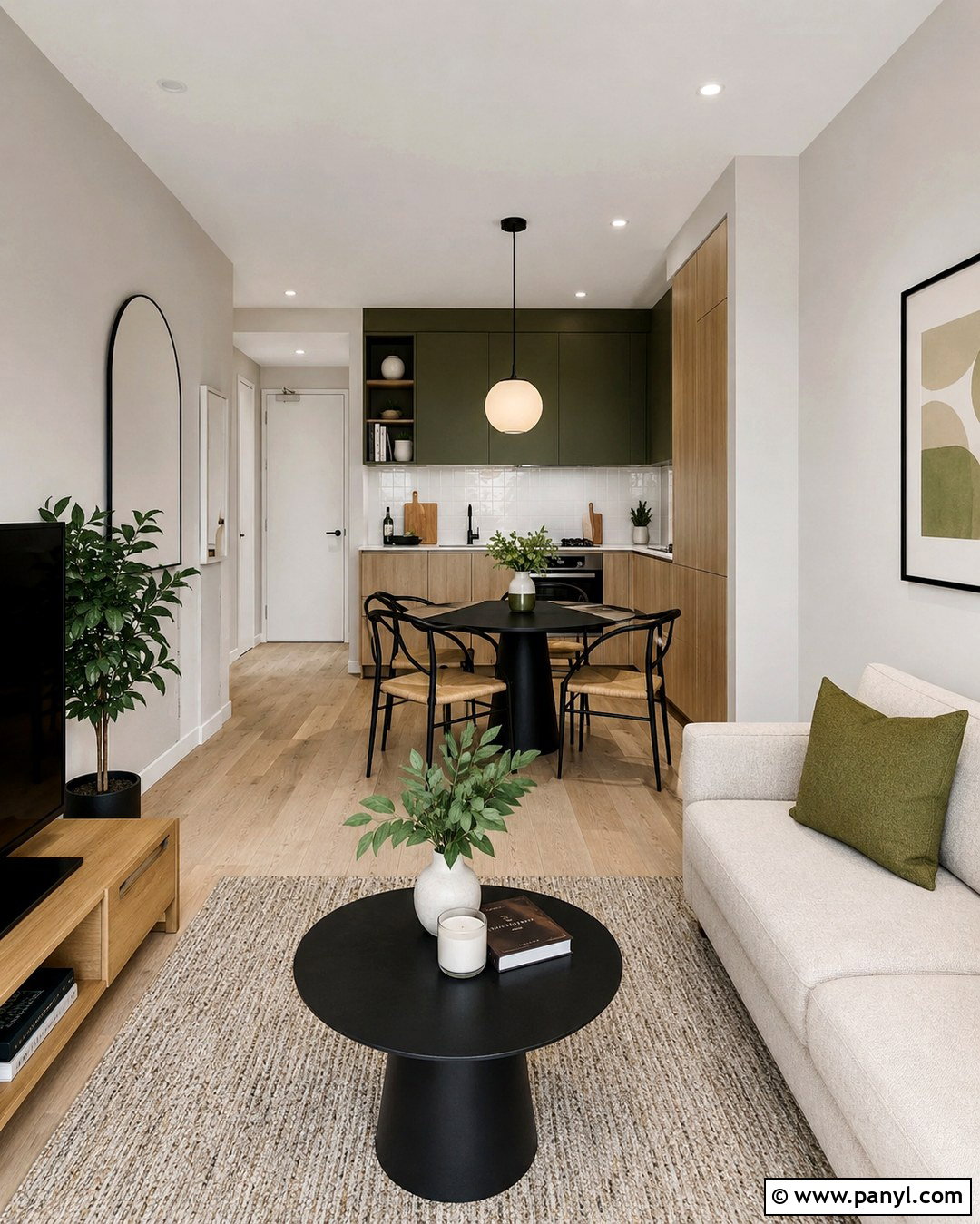
In a small apartment, oyster walls can connect several functions without making the interior look busy. Choose a compact oatmeal sofa with raised legs and place it opposite a low oak media unit. Define the sitting area with an ivory-and-taupe rug, then position a round pedestal dining table near the kitchen. Slim black dining chairs create contrast while preserving visual openness. Use one large mirror to reflect daylight and hang curtains close to the ceiling to emphasize height. Storage should combine open and closed sections, allowing favorite objects to show while hiding daily clutter. Repeat oak, black, cream, and muted green across both zones. This coordinated approach makes the apartment feel larger and more organized, with oyster providing a continuous background instead of visually dividing the limited space.
19. Oyster Living Room With Stone Fireplace
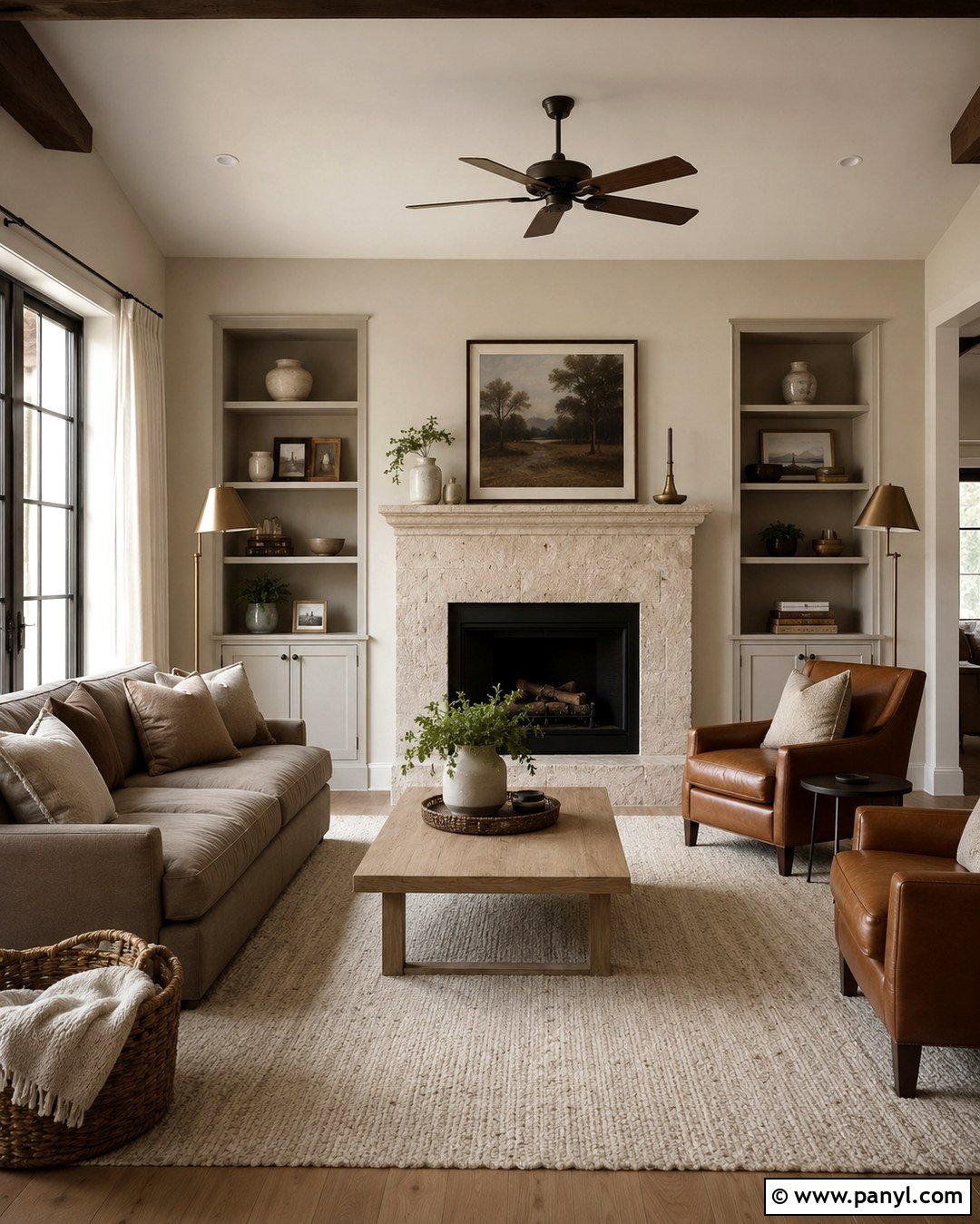
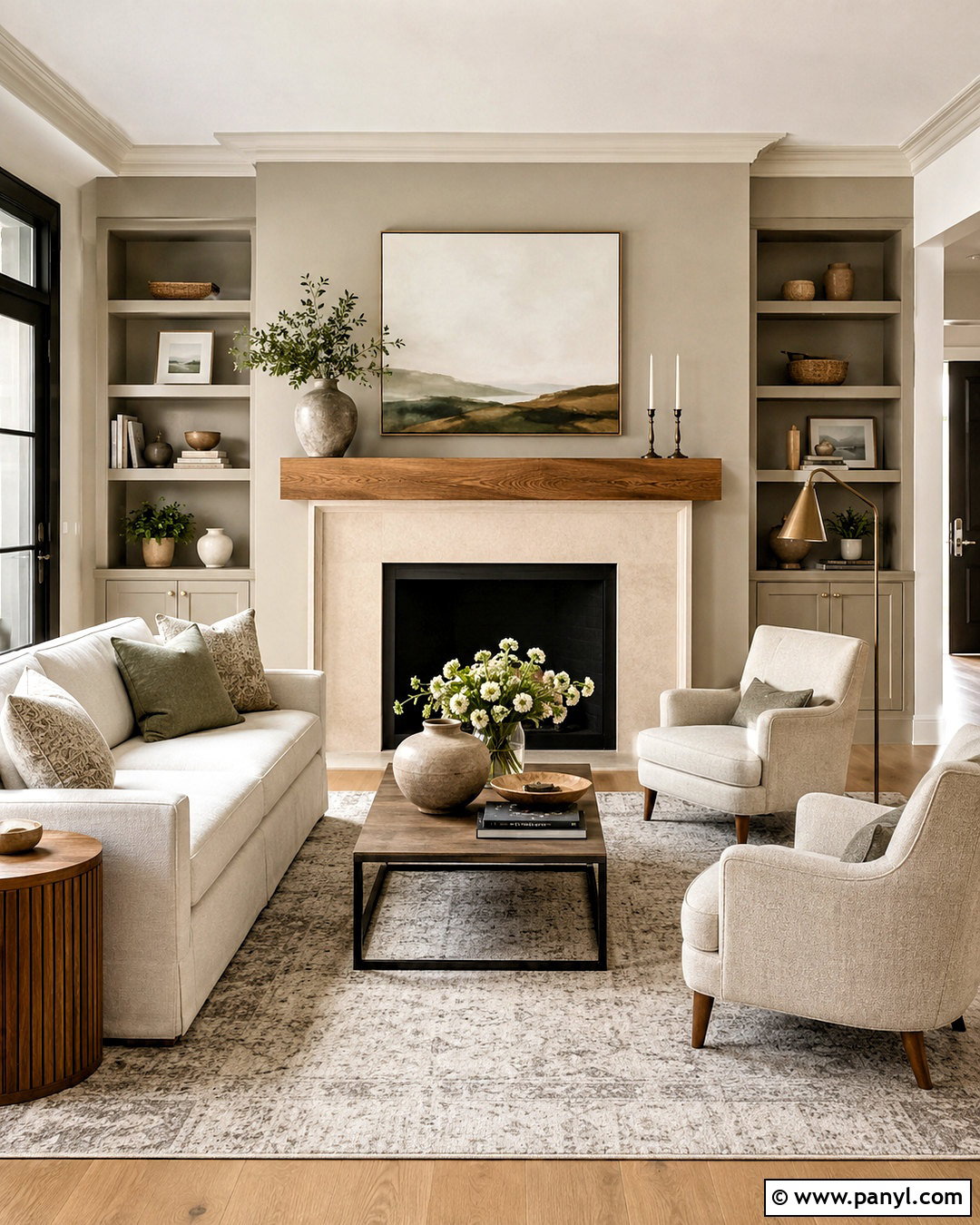
A textured stone fireplace becomes an inviting focal point when surrounded by oyster walls. Select limestone, pale fieldstone, or warm gray manufactured stone containing beige undertones that relate naturally to the paint. Arrange a soft taupe sofa and two cognac leather chairs around a substantial oak coffee table. A large cream rug will brighten the floor and balance the weight of the fireplace. Use linen curtains, bronze floor lamps, and simple wood-framed artwork to continue the natural palette. Keep the mantel uncluttered with one oversized piece of art and a pair of restrained ceramic objects. If built-ins flank the fireplace, paint them oyster for continuity or medium taupe for gentle contrast. The complete room feels grounded and cozy while remaining light enough for everyday living.
20. Oyster Open Concept Interior
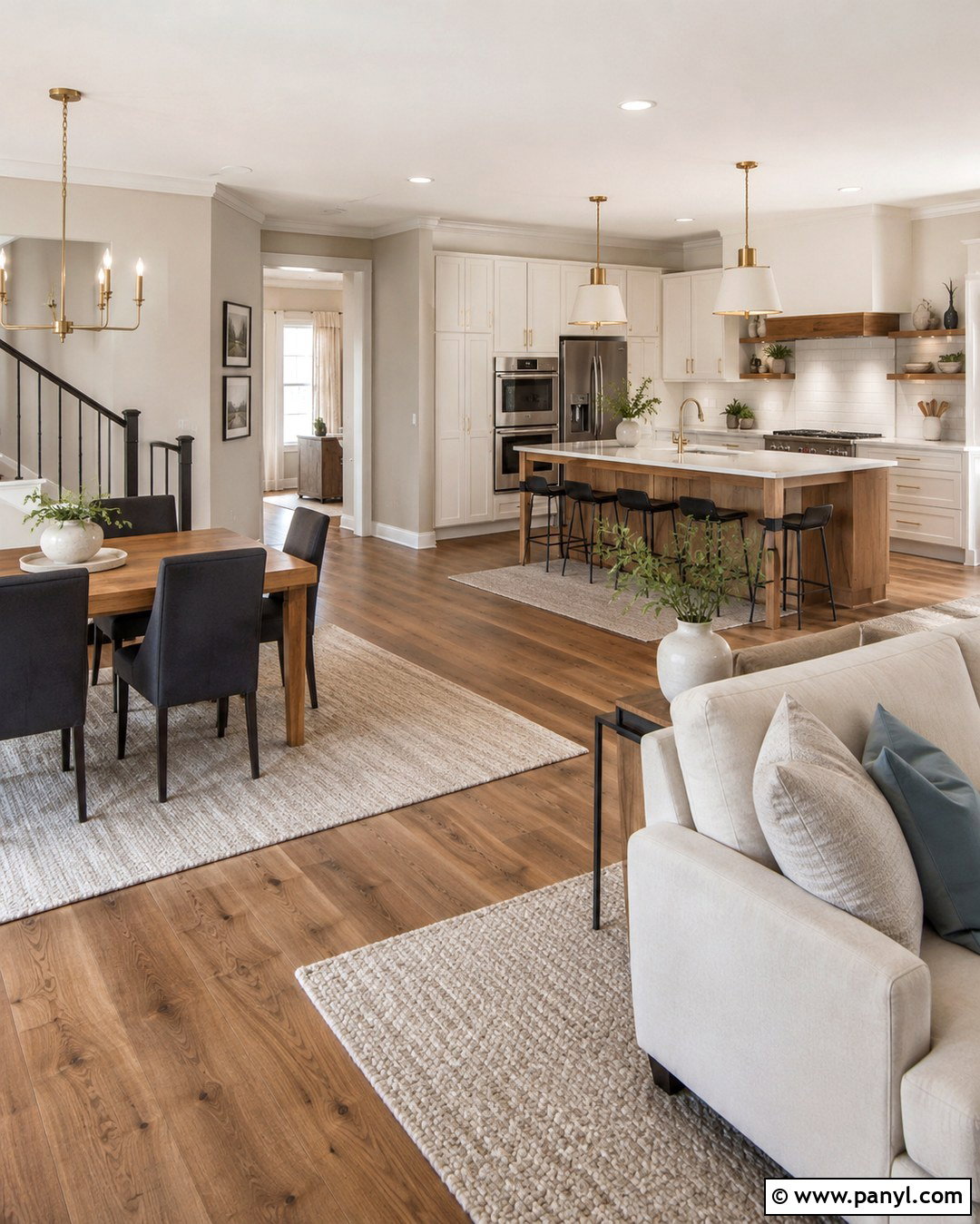
Oyster is especially useful for visually connecting an open kitchen, dining area, and living room. Carry the same wall color through every zone, then create distinction with furniture, rugs, and cabinetry. Use warm white kitchen cabinets, an oak island, and brushed brass lighting in the cooking area. Place a medium oak table with upholstered chairs between the kitchen and living room. Anchor the seating zone with an oatmeal sofa, textured ivory rug, and charcoal accent chairs. Repeat key materials across the plan, such as black metal, oak, linen, and ceramic. Keep trim consistent in a soft white or matching oyster satin. This controlled repetition creates a natural visual rhythm. Each area maintains its purpose, but the complete floor plan feels larger, calmer, and professionally coordinated.
Conclusion:
These 20 Oyster Wall Paint Ideas show how one adaptable neutral can support many complete interiors, from warm farmhouse rooms to streamlined kitchens and restful bedrooms. The best results come from considering the full palette rather than choosing wall color alone. Natural wood, stone, linen, muted green, dusty blue, black, and warm metals can each change how oyster appears. Always test a large sample beside flooring, cabinets, furniture, and trim before making your final choice. View it during bright daylight, cloudy conditions, and evening hours. Once the undertones feel balanced, repeat a few core materials throughout the space. This approach helps oyster walls look intentional, dimensional, and connected to everything around them.

Related Ideas and Inspiration:

Leave a Reply