
Choosing cabinet and wall colors together can completely change how a kitchen looks, feels, and functions. The best **Kitchen Cabinet And Wall Paint Ideas** balance contrast, undertones, natural light, countertops, flooring, and hardware instead of treating each surface separately. Light cabinets can open a compact kitchen, while deeper colors create structure and make large rooms feel inviting. Warm neutrals complement wood and brass, while cool blues and greens work beautifully with marble, quartz, and stainless steel. Before painting, test large samples beside every fixed finish and view them throughout the day. Whether you prefer a timeless neutral kitchen or a bolder color combination, the complete schemes below offer practical, coordinated inspiration. Explore these **Kitchen Cabinet And Wall Paint Ideas** to find a look that suits your home.

1. Warm White Cabinets With Greige Walls
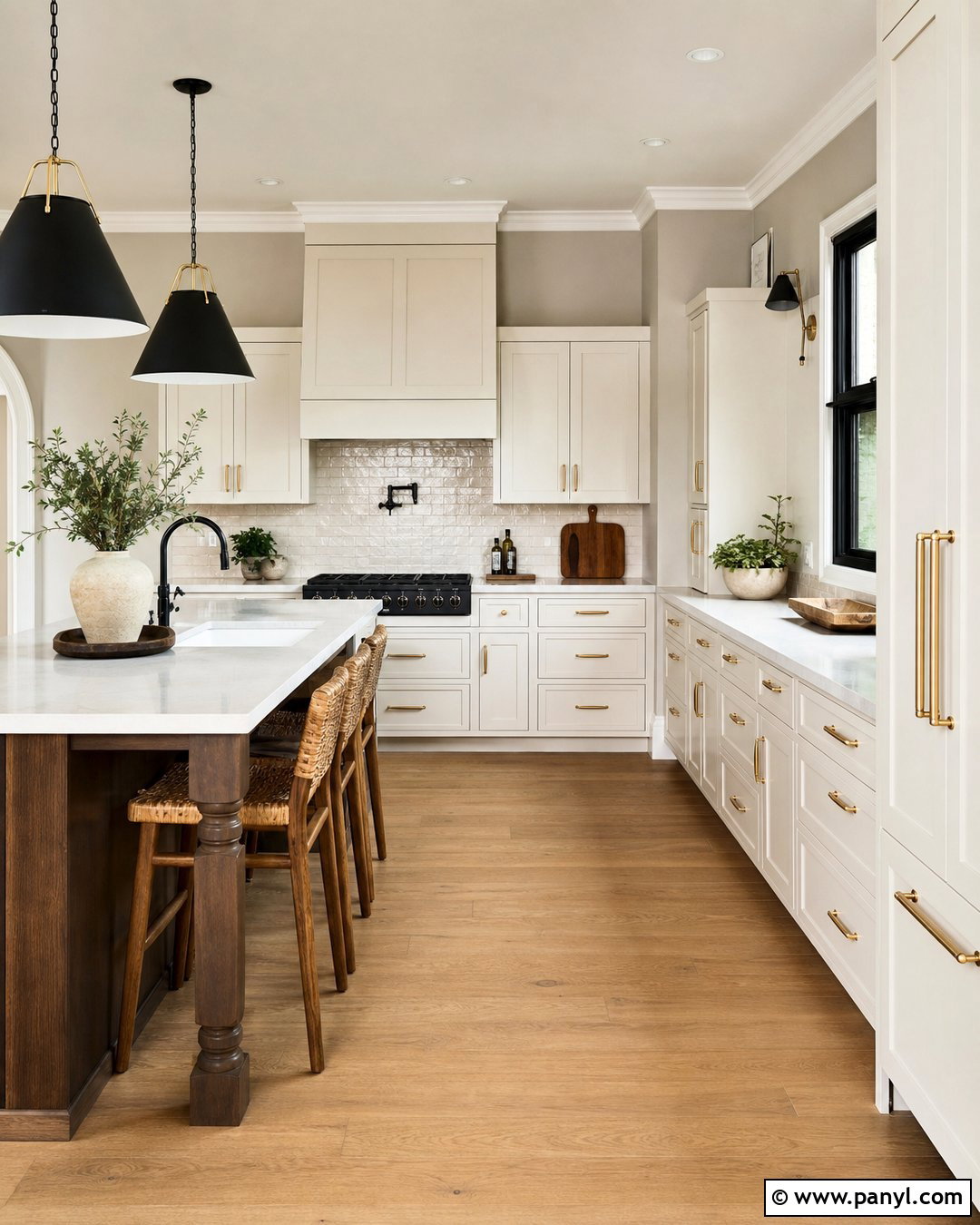
Warm white cabinets and soft greige walls create a flexible kitchen that feels bright without looking cold. Choose cabinet paint with a creamy or slightly beige undertone, then pair it with a light greige that provides visible but gentle contrast. White quartz countertops with subtle taupe veining connect the two colors. Add a handmade ivory tile backsplash for texture rather than introducing another strong hue. Medium oak flooring, woven counter stools, and brushed brass hardware bring warmth throughout the room. Simple Shaker doors keep the kitchen relaxed and timeless. For balance, use matte black only in small amounts, such as pendant cords or window frames. This complete palette works especially well in open kitchens connected to beige, cream, or natural wood living spaces.
2. Sage Green Cabinets With Warm White Walls
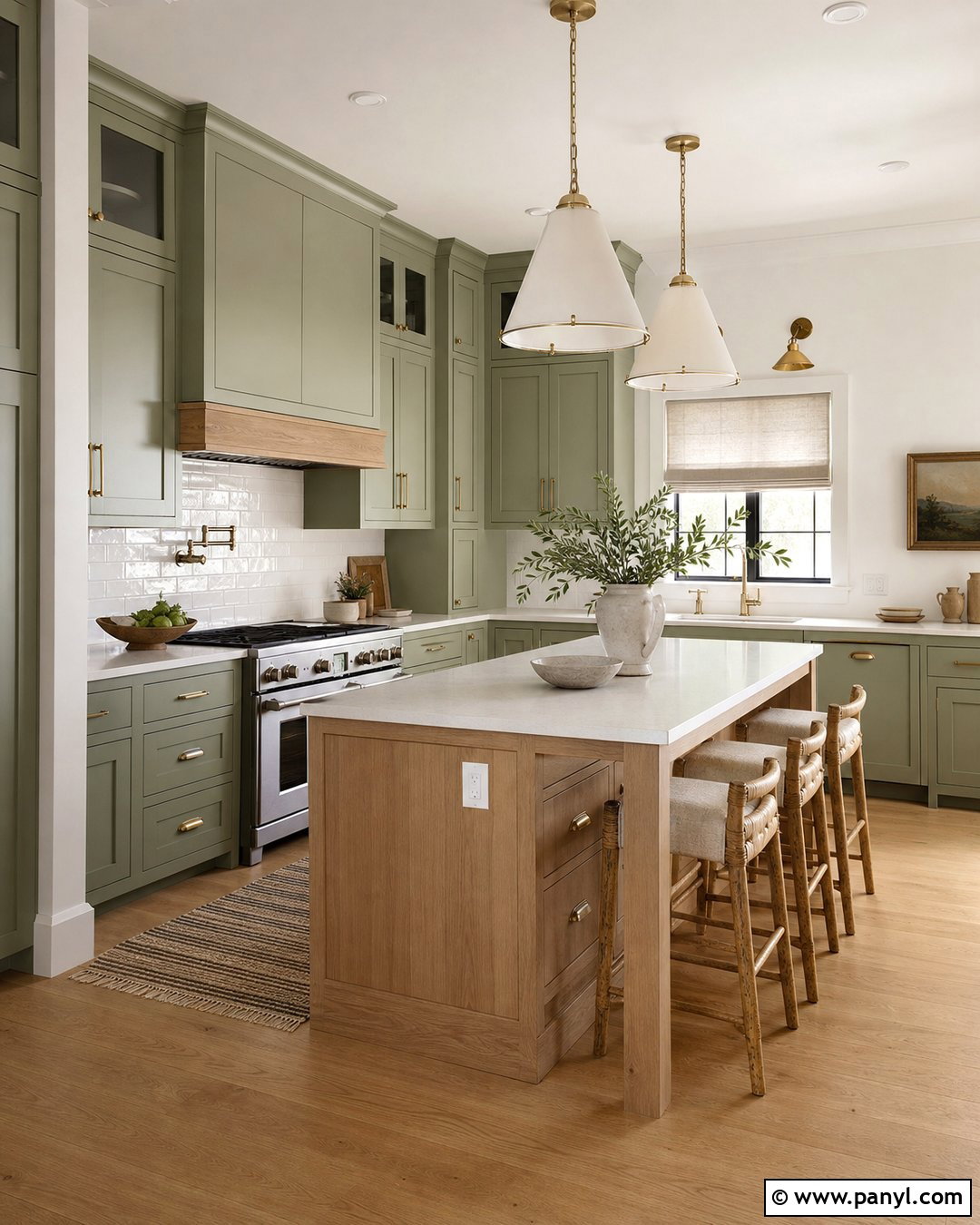
Soft sage green cabinets bring calm color into the kitchen while remaining easy to coordinate with natural materials. Keep the walls warm white so the green cabinetry becomes the main feature without making the room feel enclosed. Pale quartz countertops, an off-white subway tile backsplash, and lightly stained oak floors support the fresh palette. Choose aged brass knobs, a matching faucet, and cream pendant lights to emphasize the cabinet color’s warm undertones. A white oak island can break up a large run of painted cabinetry and introduce organic texture. Finish the room with linen Roman shades, ceramic bowls, and a few potted herbs. This complete scheme suits farmhouse, cottage, transitional, and casual modern kitchens, particularly those receiving soft morning or filtered natural light.
3. Navy Blue Cabinets With Soft White Walls
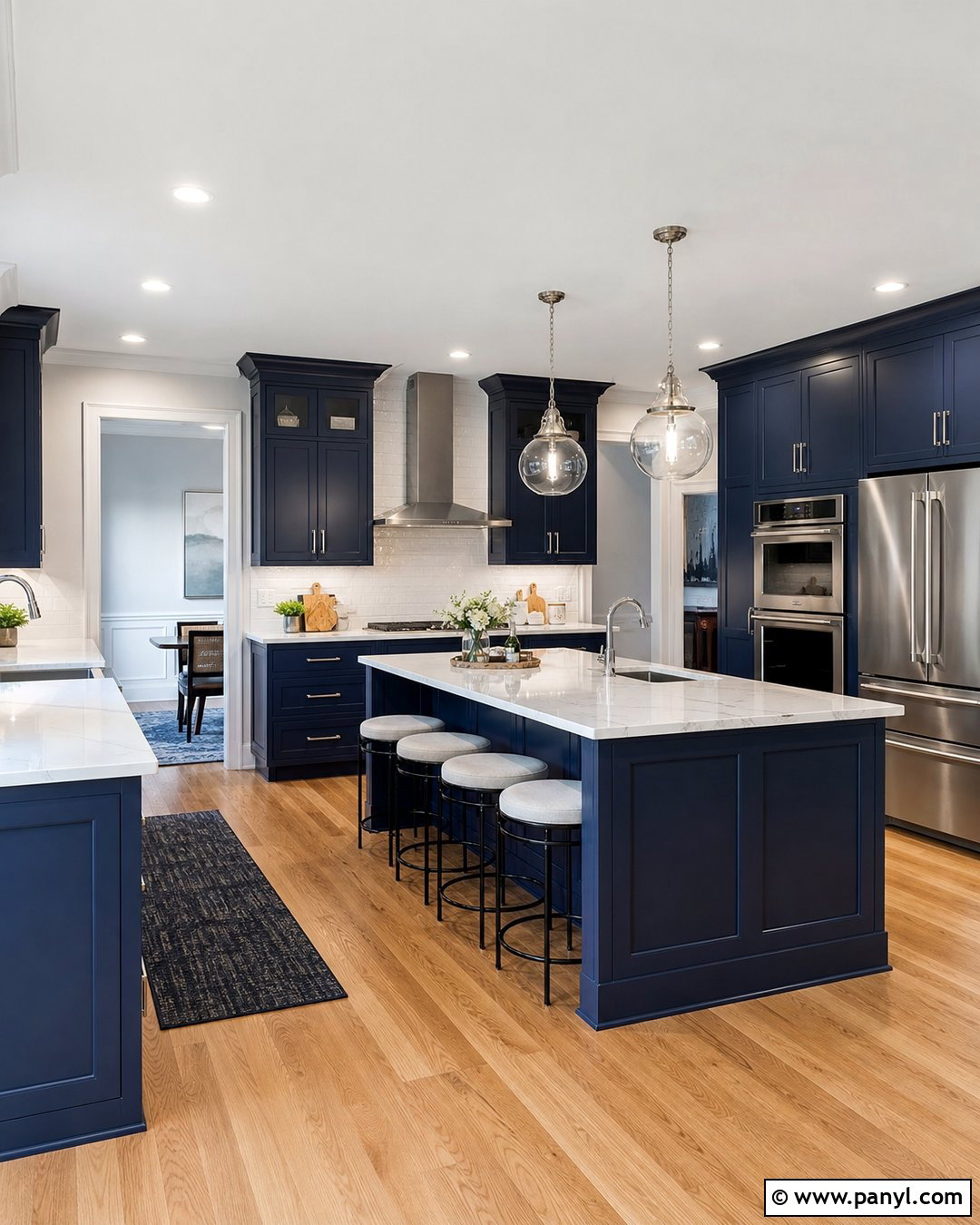
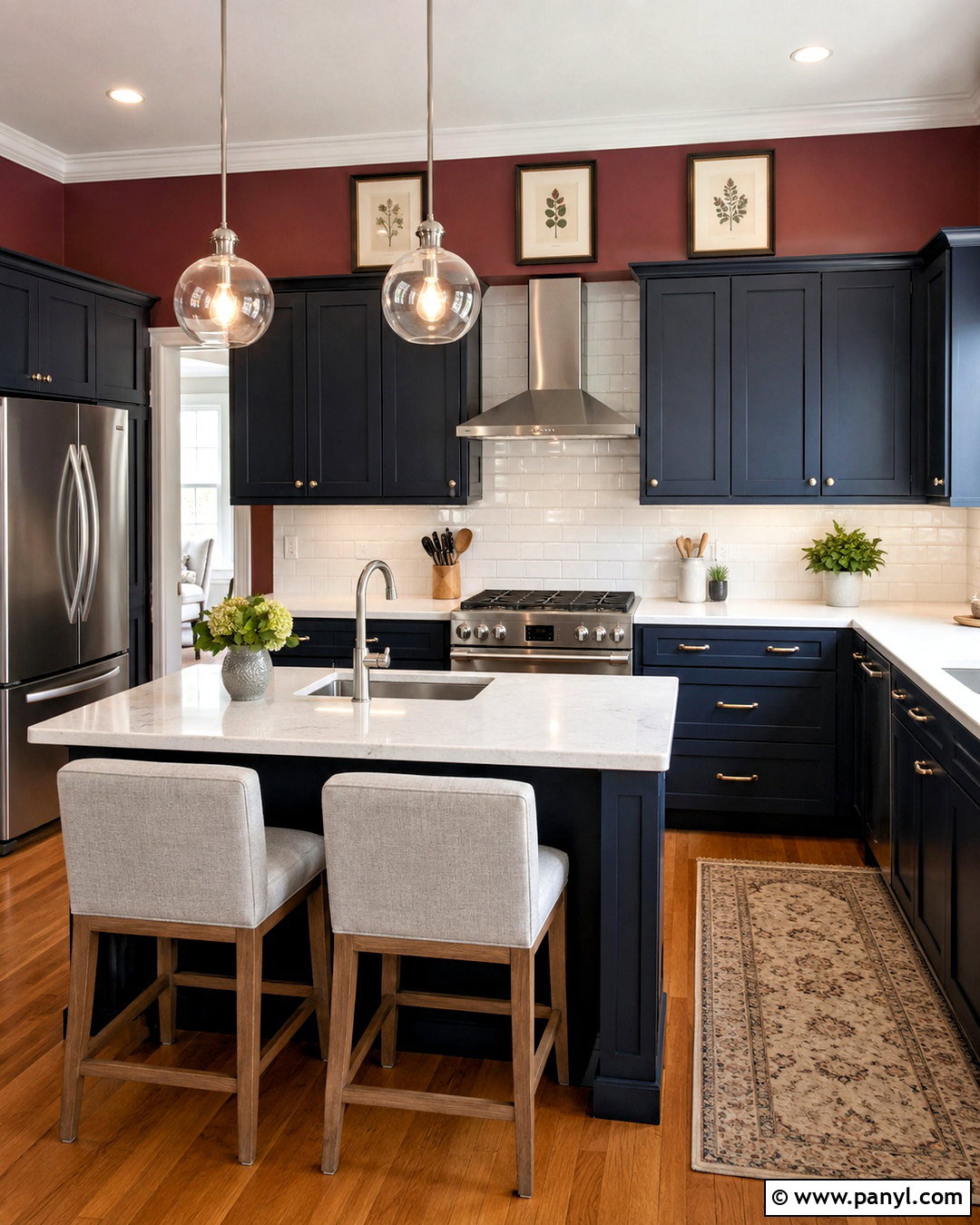
Deep navy cabinets create a strong foundation when surrounded by soft white walls and reflective finishes. Use navy on both upper and lower cabinets in a spacious kitchen, or reserve it for base cabinets and the island in a smaller room. Warm white walls prevent the blue from appearing overly cool. Select white marble-look quartz countertops and a simple white backsplash to brighten the work areas. Polished nickel hardware adds crisp contrast, while natural oak flooring keeps the room comfortable rather than formal. Clear glass pendants allow the cabinet color to remain visible across the kitchen. Complete the design with white ceiling trim, stainless steel appliances, and a few pale wood accessories. The result feels polished, practical, and suitable for traditional or contemporary homes.
4. Charcoal Cabinets With Pale Gray Walls
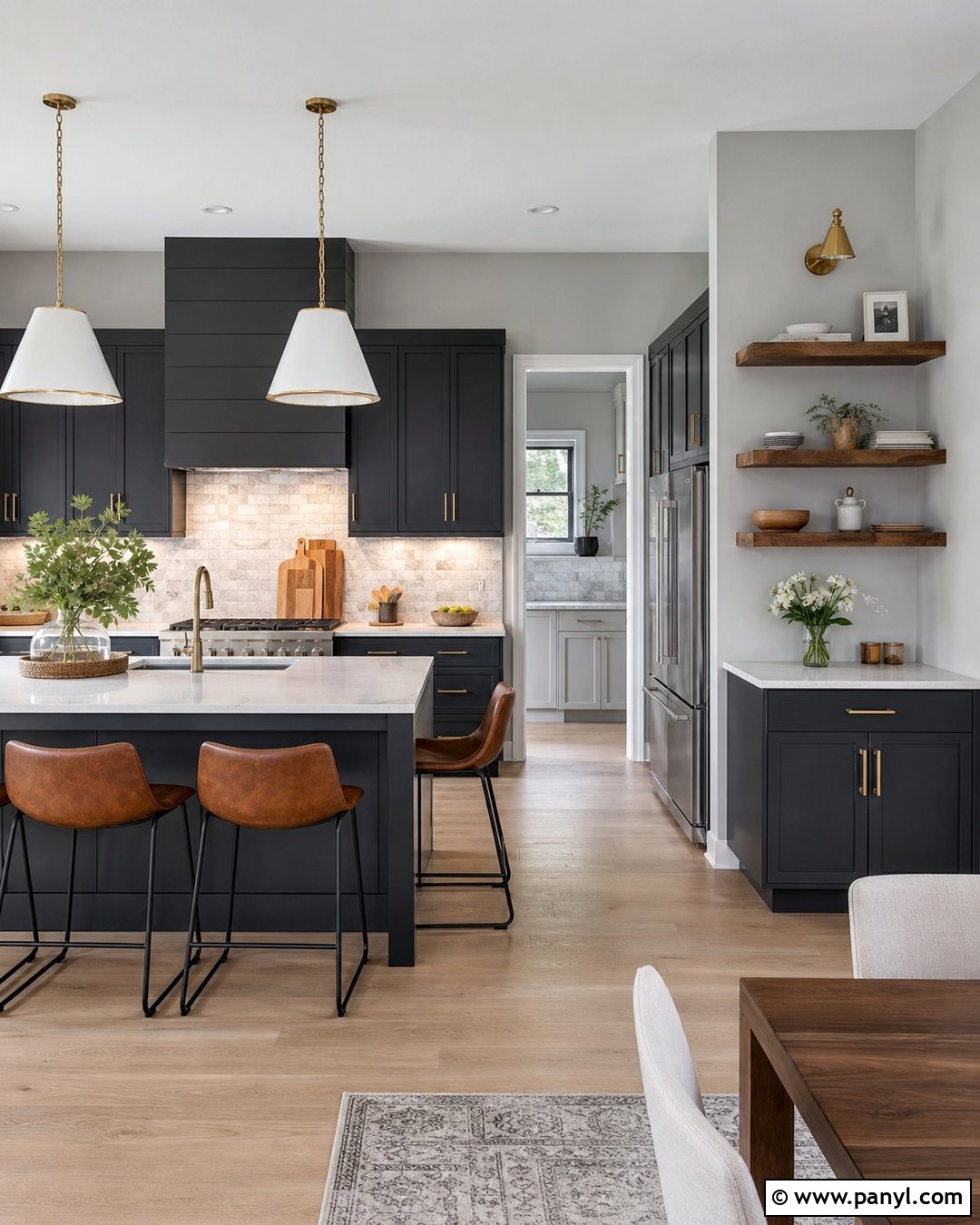
Charcoal cabinets can feel sophisticated and welcoming when paired with pale gray walls that share the same undertone. Select a softened charcoal rather than a severe blue-black, especially if the kitchen has limited daylight. Light gray walls, white quartz counters, and a marble mosaic backsplash prevent the dark cabinetry from overpowering the space. Warm up the combination with walnut shelves, cognac leather stools, and brushed brass cabinet pulls. A pale oak or light stone floor will also help reflect light around the room. Use under-cabinet lighting to define work surfaces and highlight the backsplash after sunset. This coordinated look works best with streamlined cabinet fronts, uncluttered counters, and simple fixtures. It creates drama without sacrificing the clean, functional feeling a kitchen needs.
5. Cream Cabinets With Muted Blue Walls
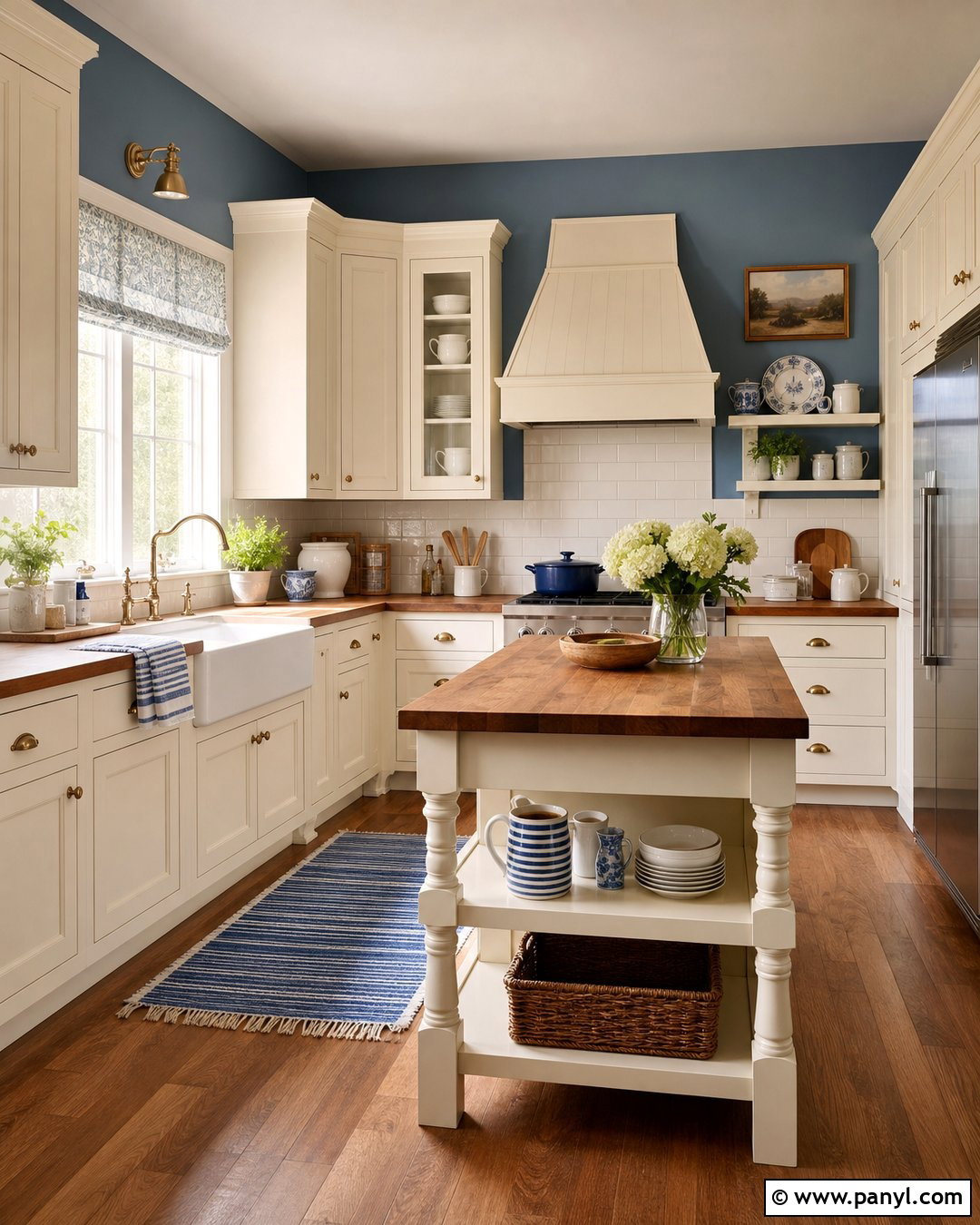
Imagine a cheerful kitchen where creamy cabinets sit against gentle, muted blue walls. The warm and cool contrast makes the room feel fresh while preserving a comfortable, lived-in character. Choose a dusty blue with gray undertones rather than a bright primary shade. Cream Shaker cabinets, butcher-block accents, and an ivory backsplash create a soft foundation. Add unlacquered brass hardware and a classic bridge faucet for subtle vintage detail. Medium-toned wood floors ground the lighter colors, while blue-striped textiles repeat the wall shade without overwhelming the room. Consider a compact cream island with a natural wood top to improve storage and workspace. This palette is particularly attractive in cottage, coastal, and traditional kitchens with windows overlooking a yard or garden.
6. Light Gray Cabinets With Crisp White Walls
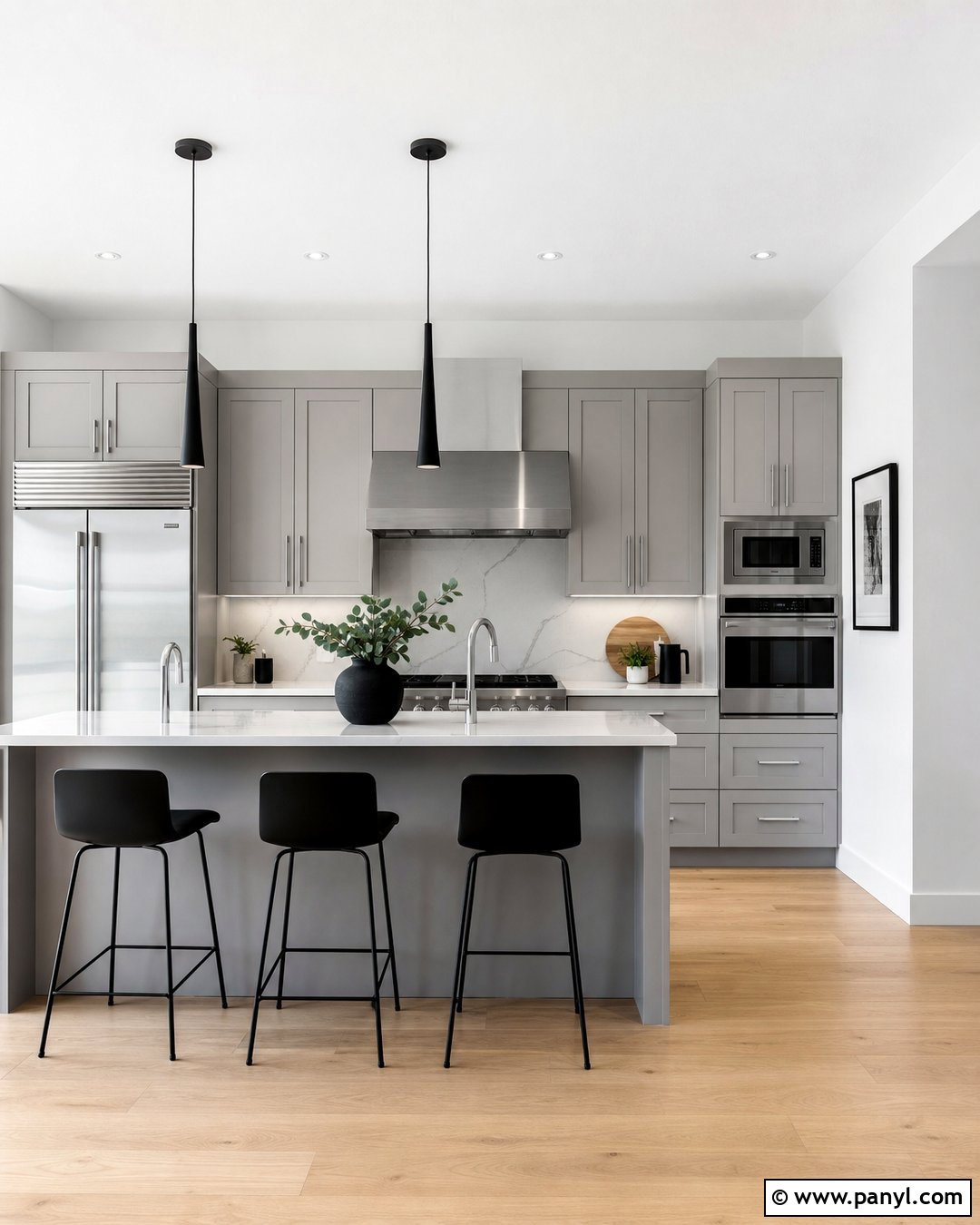
Light gray cabinets and crisp white walls offer a clean alternative to an entirely white kitchen. Look for a balanced gray that does not turn noticeably blue, purple, or green beside the countertop. Bright white walls and ceiling trim create a clear outline around the cabinetry, making architectural details easier to see. Use white quartz counters, a lightly veined stone backsplash, and polished chrome hardware to maintain the airy effect. Pale maple flooring or light oak adds enough warmth to keep the kitchen from feeling sterile. Black counter stools and slim black pendant lights can provide controlled contrast. Keep window treatments minimal and choose stainless steel appliances for continuity. This complete scheme is dependable for small kitchens, contemporary layouts, and homes with cooler natural light.
7. Black Cabinets With Warm Beige Walls
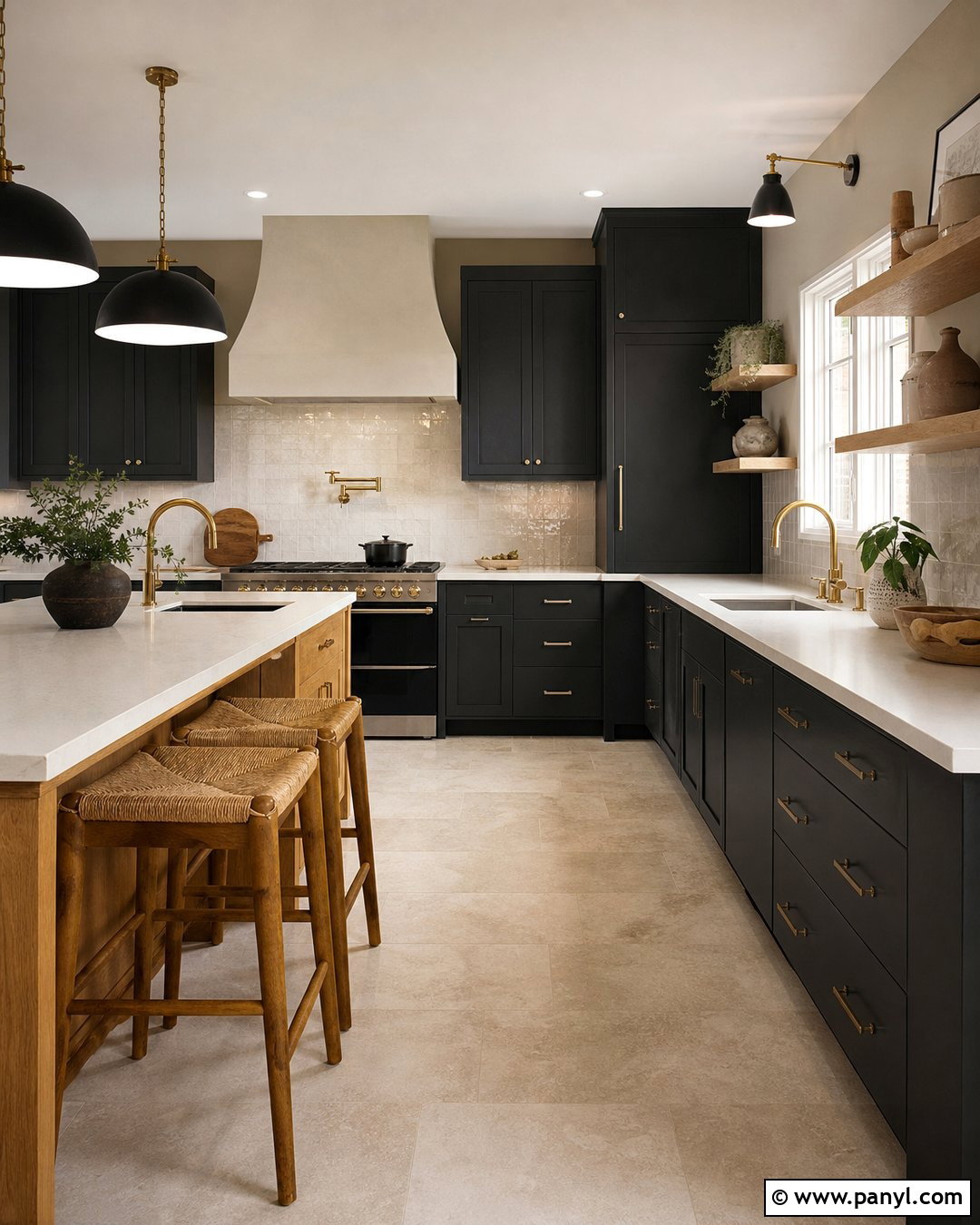
Would black cabinets make your kitchen feel too dark? Not when they are balanced with warm beige walls, pale counters, and generous task lighting. Choose a softened matte black for the cabinetry rather than a glossy finish that shows every fingerprint. Creamy beige walls reduce the sharpness of the contrast and coordinate with limestone-look flooring. Use warm white quartz counters and an ivory zellige tile backsplash to bounce light around the room. Natural oak shelves, woven stools, and antique brass hardware introduce warmth and texture. In a compact kitchen, paint only the base cabinets black and keep upper storage lighter. Large kitchens can carry full-height black cabinetry successfully when glass-front doors or open shelving provide visual breaks. The finished room feels grounded, modern, and inviting.
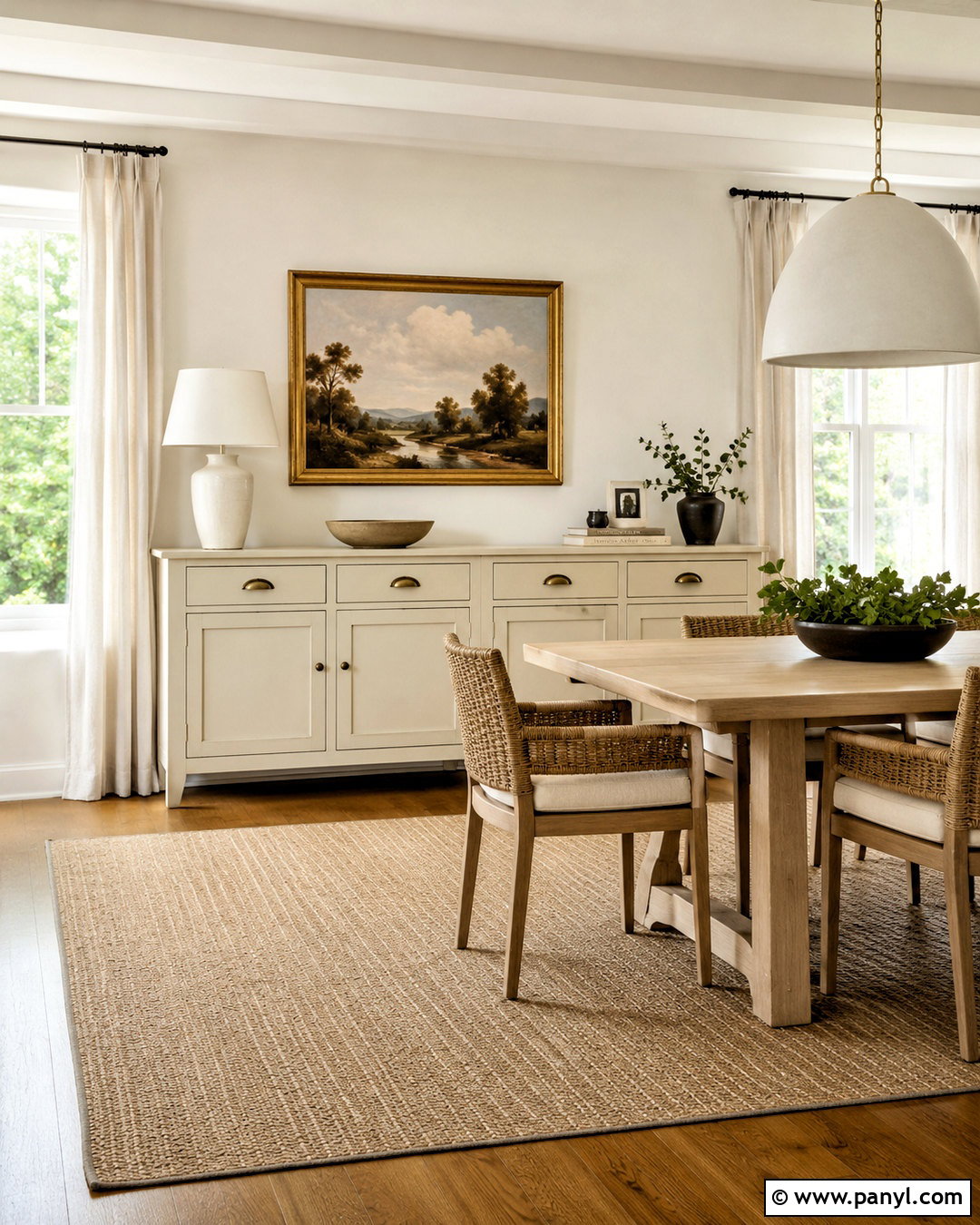
8. Dusty Blue Cabinets With Creamy White Walls
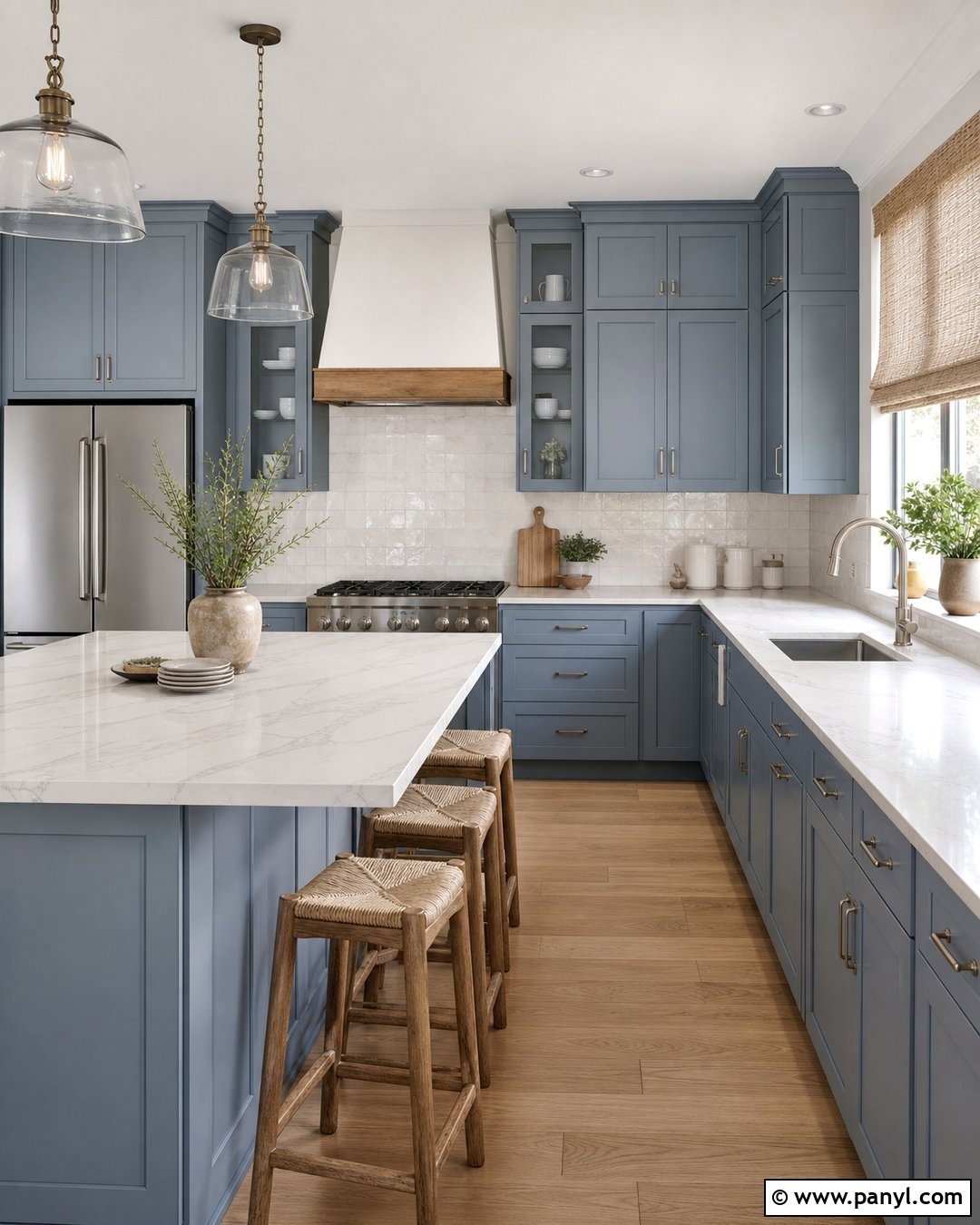
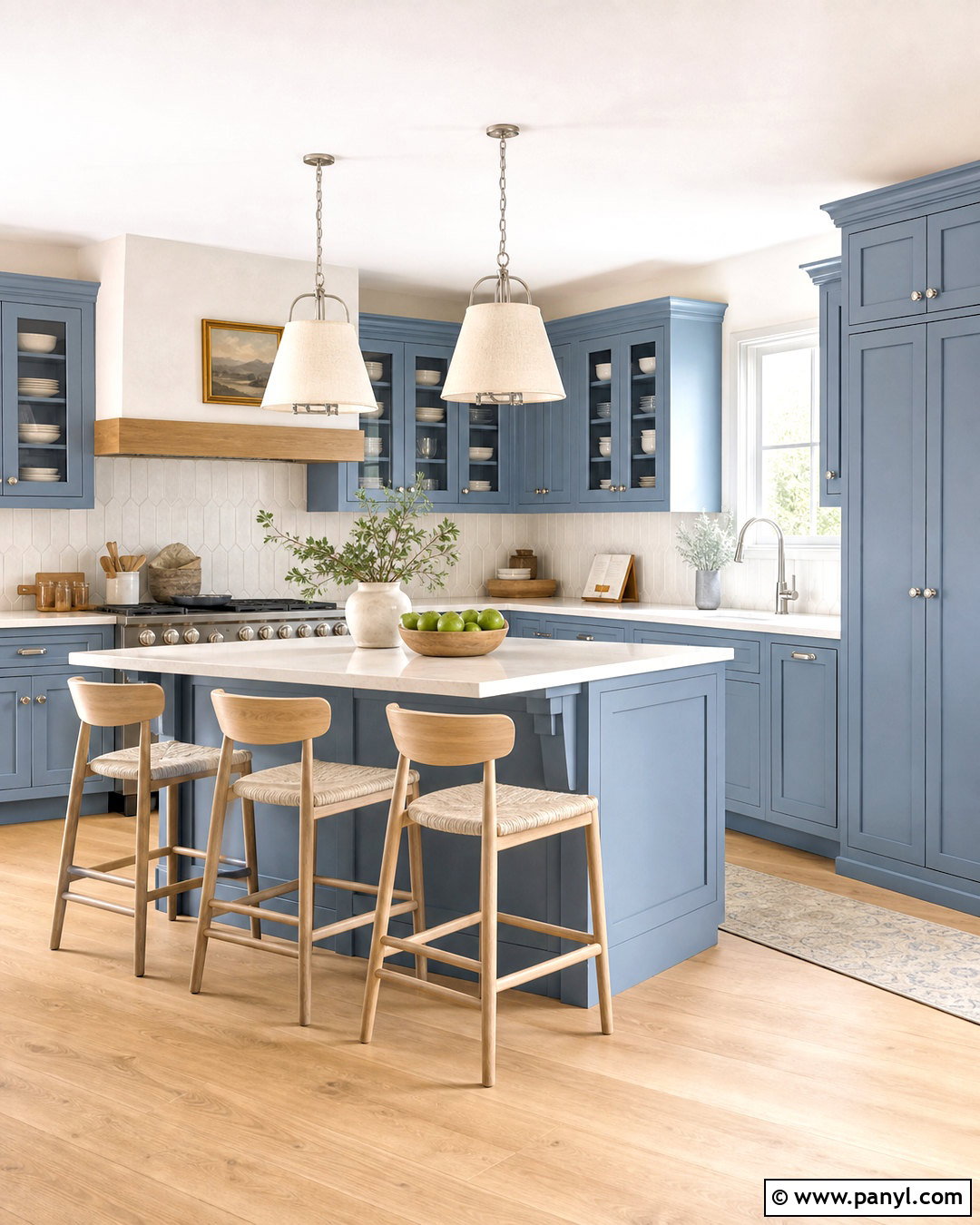
Dusty blue cabinets give a kitchen quiet personality without the intensity of navy. Pair them with creamy white walls to emphasize their soft gray undertones and create a comfortable background. Carrara-style quartz countertops and slightly irregular white backsplash tiles maintain a light, layered appearance. Add satin nickel handles for a cool, understated finish, or choose brushed brass when the room needs extra warmth. White oak floors and a matching wood range hood detail prevent the blue-and-white palette from feeling too coastal. A painted island in the same dusty blue creates continuity across an open layout. Complete the room with linen shades, simple glass pendants, and neutral counter stools. This balanced combination works for transitional, cottage, Scandinavian, and relaxed contemporary kitchens.
9. Taupe Cabinets With Off-White Walls
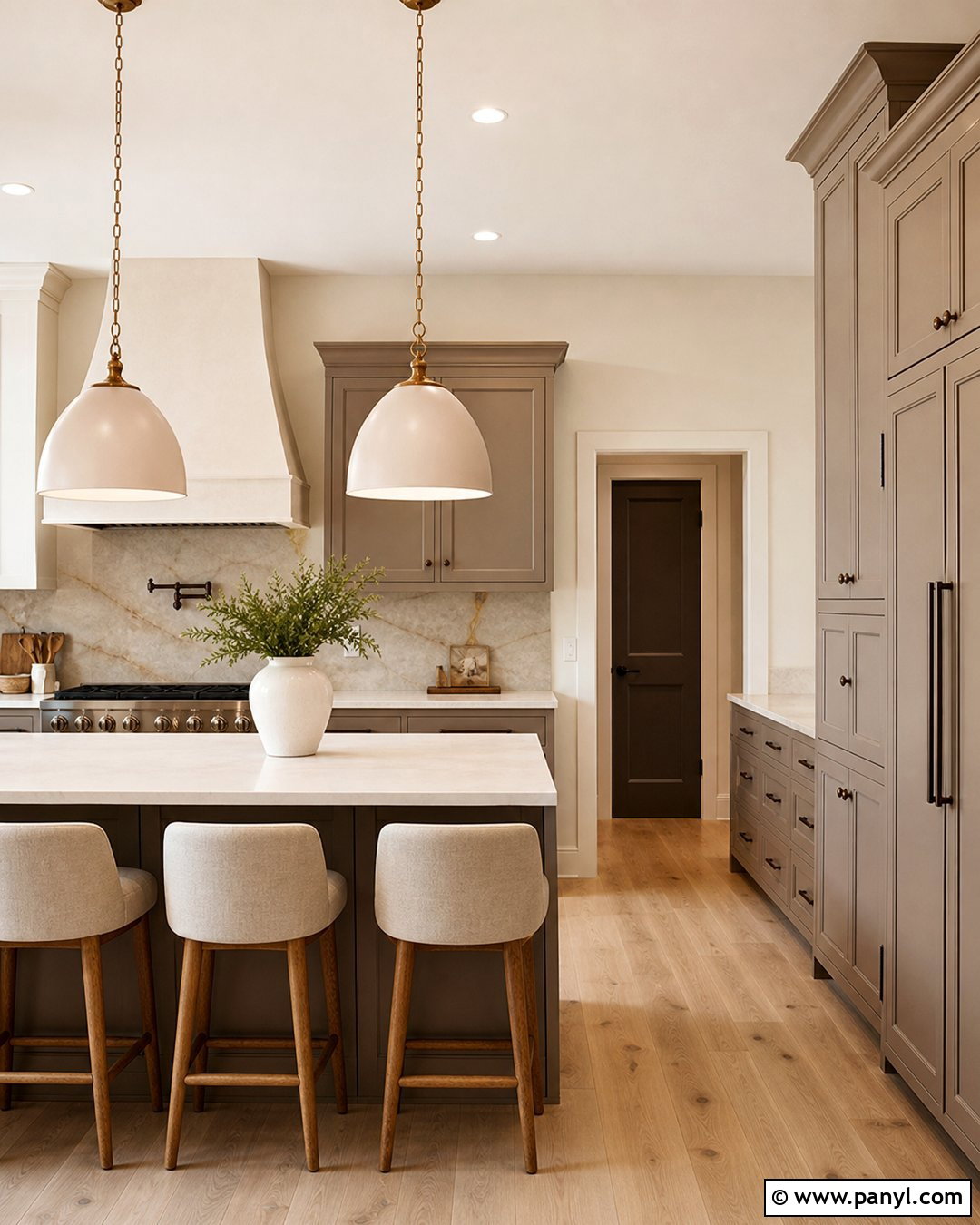
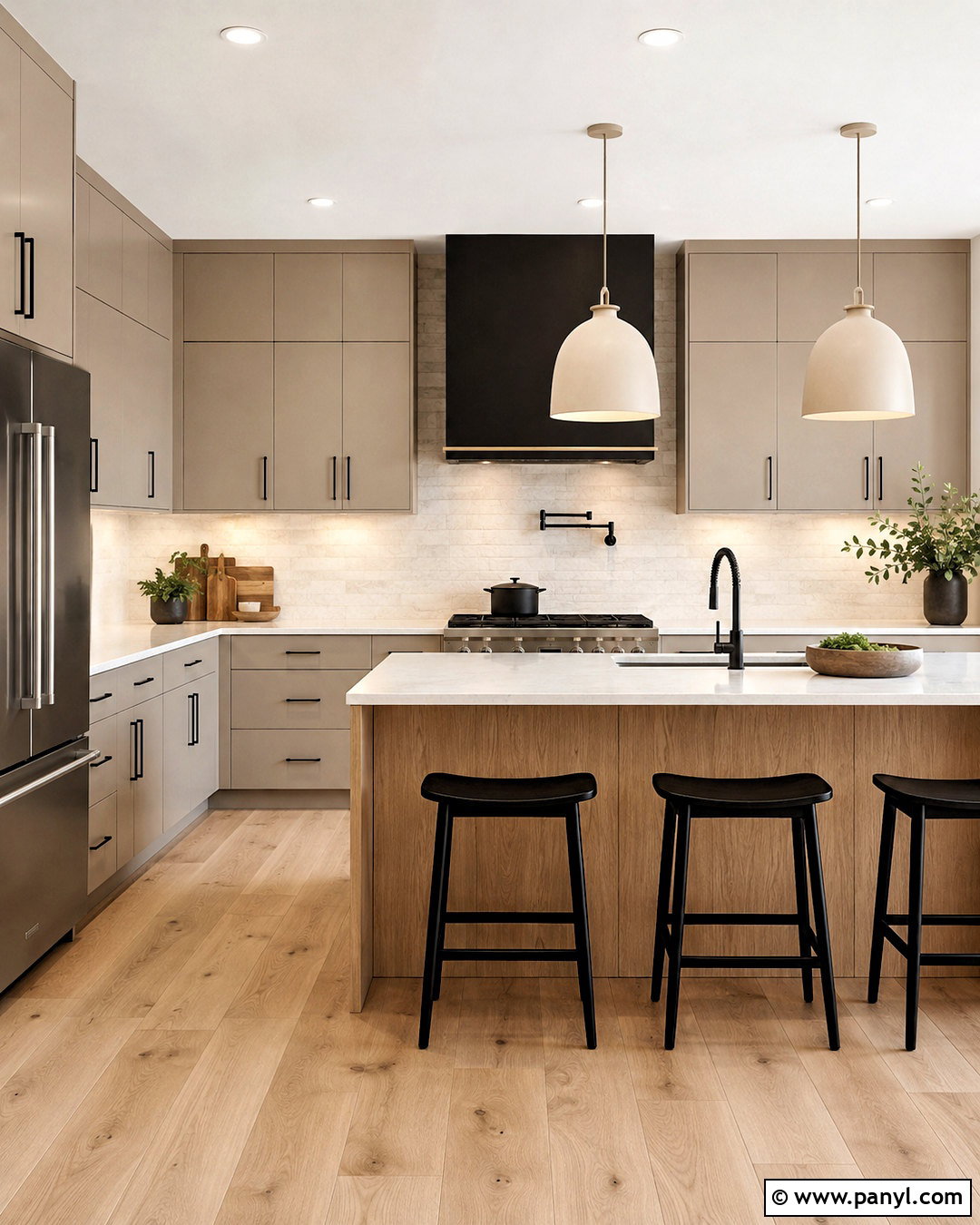
Taupe cabinets offer more depth than cream while remaining softer than medium brown or gray. Pair them with off-white walls that have a similar warm undertone, creating gentle contrast instead of an obvious color divide. Use creamy quartz counters and a backsplash with subtle beige veining to connect both painted surfaces. Dark bronze hardware adds definition, while light oak floors keep the overall kitchen from becoming too brown. For a custom appearance, extend the taupe cabinetry around the refrigerator and pantry, then leave the wall above the sink open and bright. A plaster-style range hood painted off-white can become a simple focal point. Add natural linen stools, ceramic lighting, and a few black accents. The finished design feels warm, calm, and thoughtfully layered.
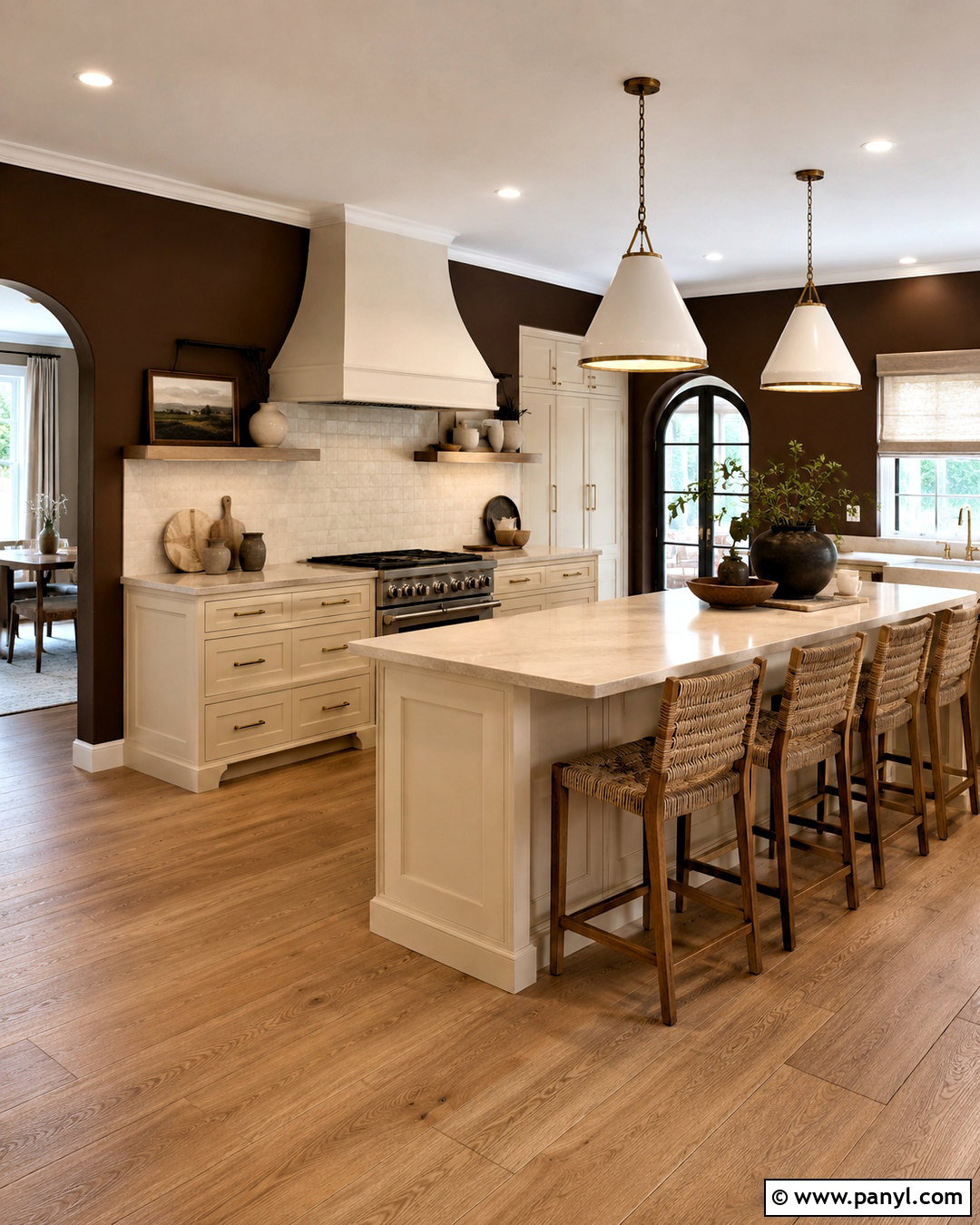
10. Forest Green Cabinets With Soft Beige Walls
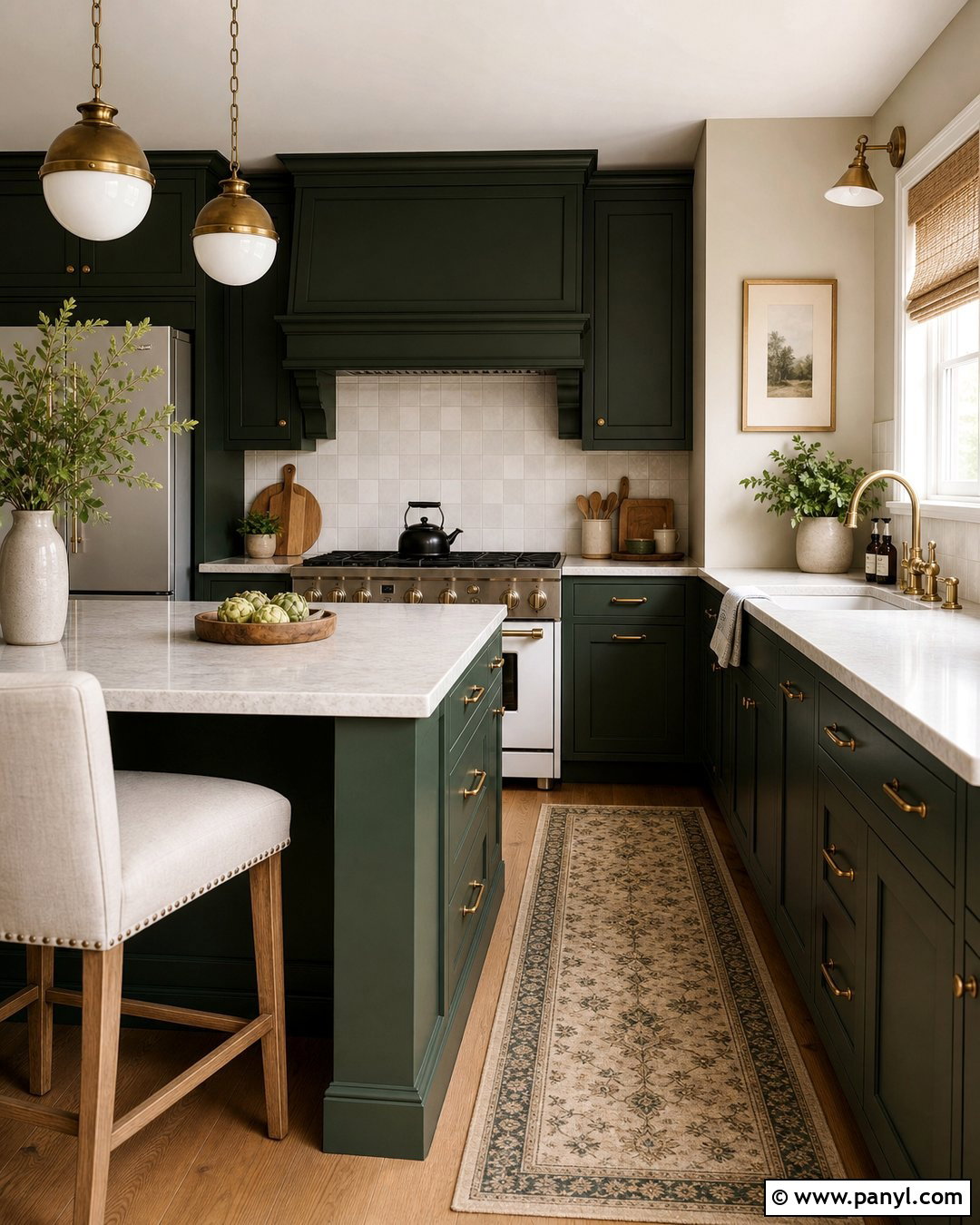
Forest green cabinets create an elegant kitchen when the surrounding palette includes enough light and warmth. Soft beige walls are more forgiving than stark white and bring out the earthy character of the green. Choose pale stone countertops, a warm white backsplash, and medium oak flooring to balance the rich cabinet color. Antique brass hardware and opal glass pendants add brightness without creating harsh contrast. In a narrow kitchen, use forest green on the lower cabinets and pantry wall while keeping upper cabinets beige or replacing some with oak shelves. A large room can support green cabinetry from floor to ceiling. Finish with woven shades, cream stools, and restrained botanical accents. This complete scheme works beautifully in traditional, English-inspired, and modern organic kitchens.
11. White Cabinets With Pale Blue Walls
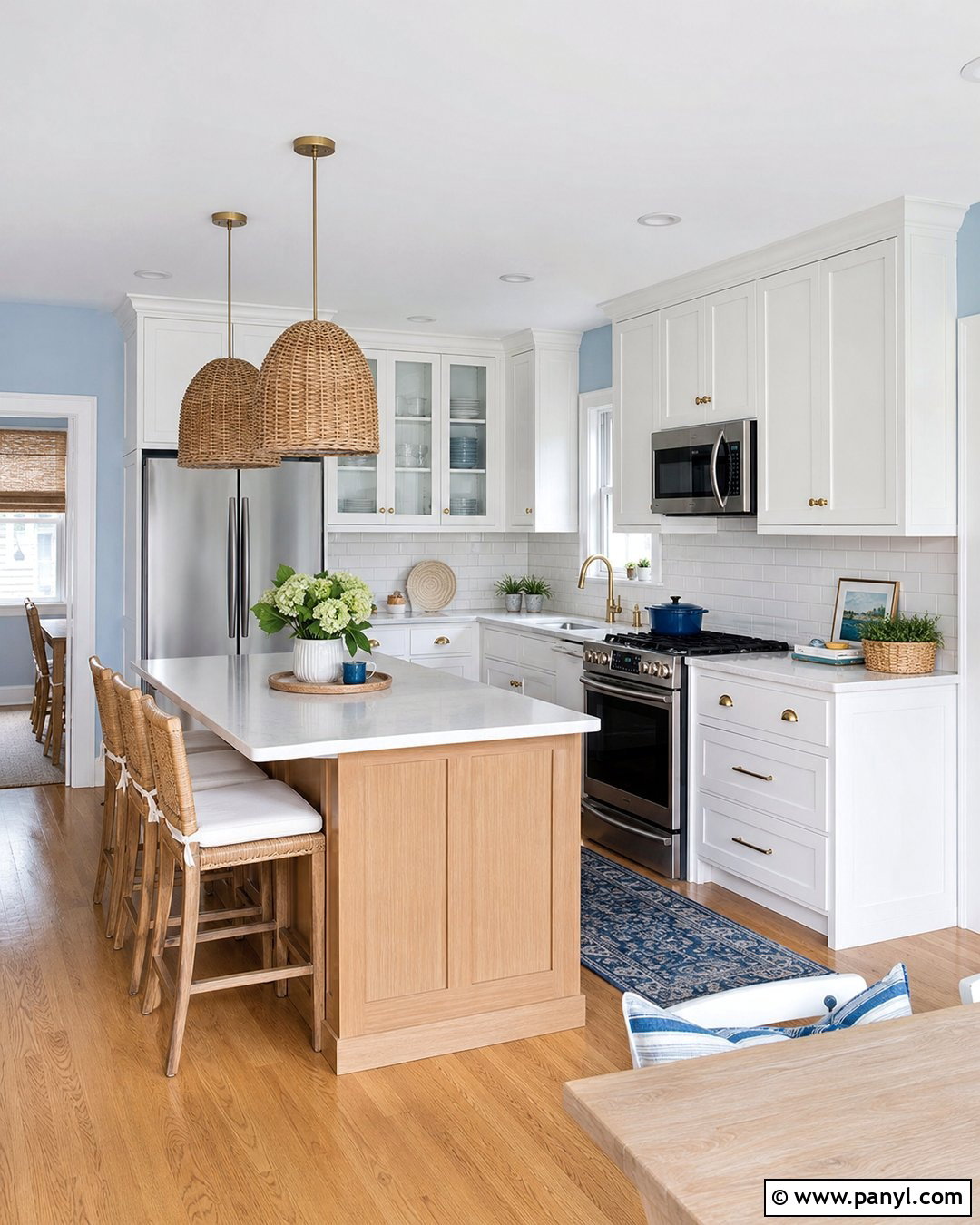
White cabinets become more distinctive when placed against pale blue walls instead of another neutral. Choose a softened blue with a touch of gray so it remains calm under both natural and artificial light. Clean white Shaker cabinets, white quartz counters, and a glazed white tile backsplash establish a bright foundation. Warm the room with honey-toned oak flooring, brass knobs, and woven pendant shades. A light wood island can introduce another practical work surface without adding a competing paint color. Repeat the wall blue through subtle textiles, such as a washable runner or breakfast nook cushions. Keep appliances and plumbing fixtures in stainless steel or polished nickel. This combination makes compact kitchens feel open and gives family kitchens a fresh, cheerful atmosphere without becoming overly themed.
12. Terracotta Cabinets With Warm Ivory Walls
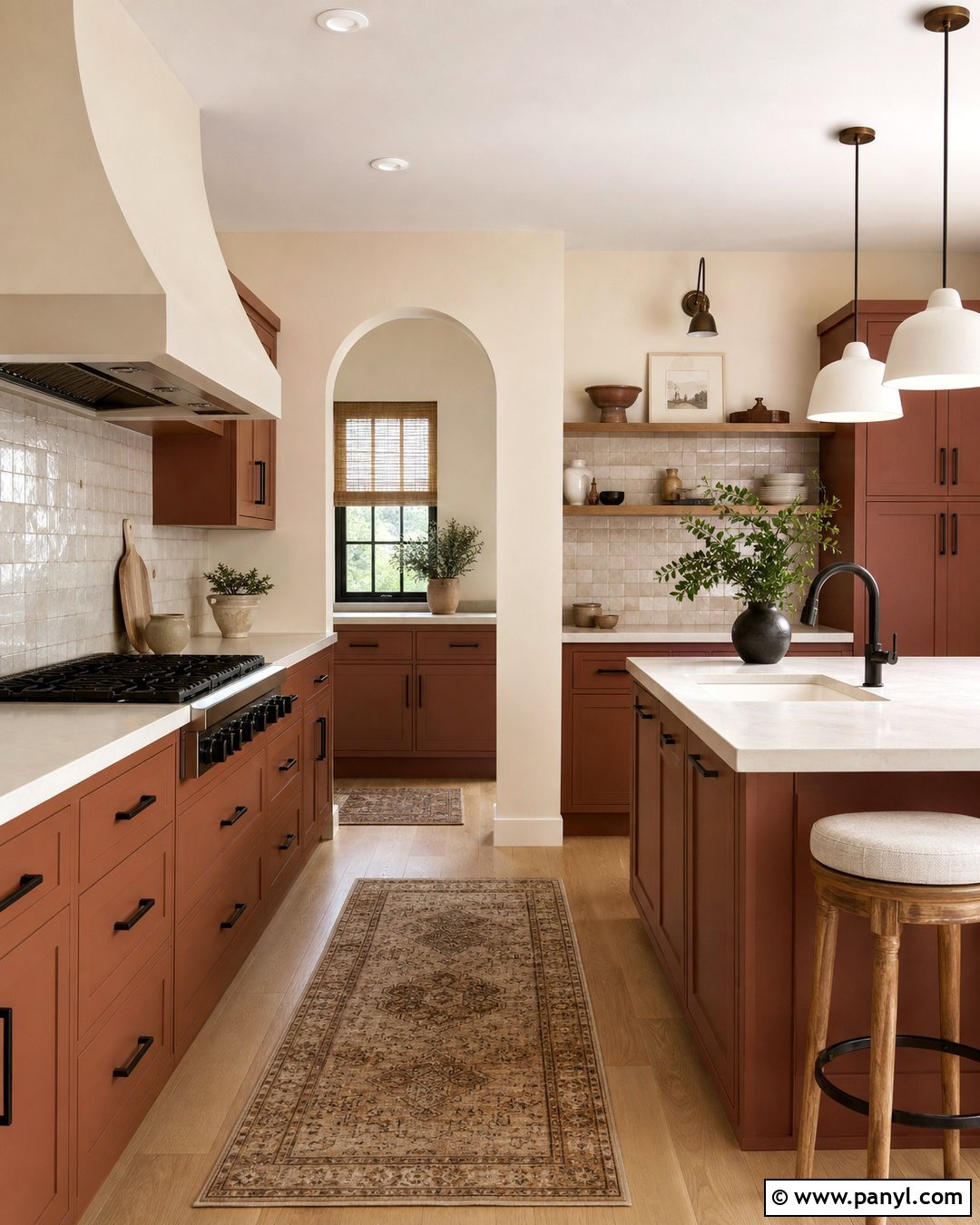
Terracotta cabinets bring sunbaked warmth into the kitchen and pair naturally with warm ivory walls. Select a muted clay shade with brown or rosy undertones rather than a vivid orange. Ivory walls soften the color and help it blend with adjoining neutral rooms. Cream quartz countertops, handmade beige backsplash tiles, and light oak floors create a cohesive material palette. Use dark bronze or aged brass hardware to define the cabinet doors. A wood island or open shelving can provide visual relief if terracotta covers a long cabinet run. Complete the design with natural linen shades, off-white ceramic pendants, and simple greenery. This full-room combination suits Mediterranean, Southwestern, modern rustic, and eclectic kitchens while still feeling approachable in an average home.
13. Mushroom Cabinets With Dusty Pink Walls
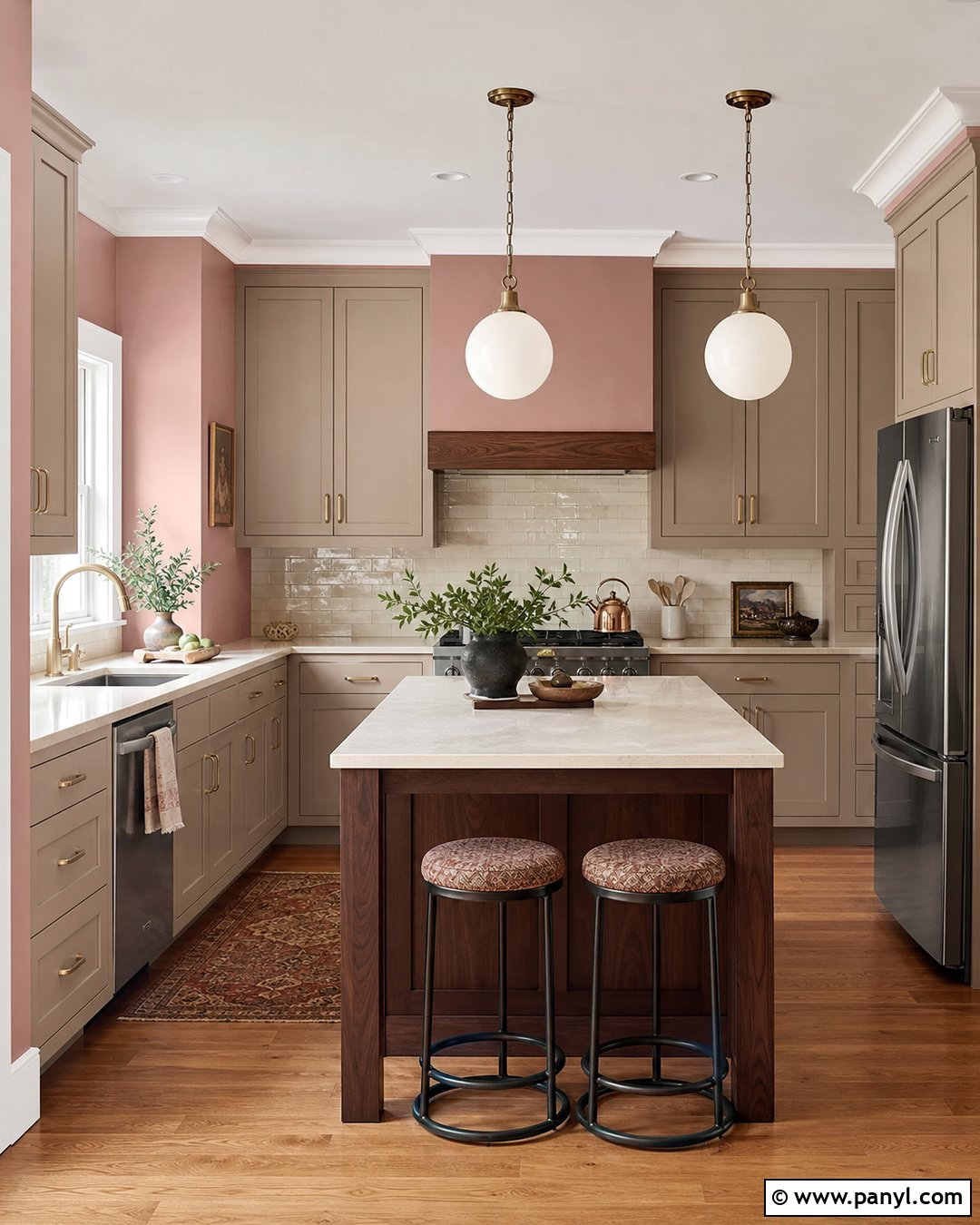
Mushroom-colored cabinets and dusty pink walls form a warm, understated palette with more character than standard beige. Choose a mushroom paint that blends taupe, gray, and soft brown, then use a pale clay-pink wall color that appears muted rather than sugary. Cream stone counters and an ivory backsplash keep the room balanced. Add brushed brass hardware, warm oak flooring, and globe pendant lights for a polished finish. A darker walnut island can anchor the delicate colors in a larger kitchen. Keep appliances integrated or select stainless steel so the palette does not become overly coordinated. Off-white curtains and earthy ceramic accessories complete the room. This combination works especially well in vintage-inspired, transitional, and contemporary kitchens with warm natural light.
14. Butter Yellow Cabinets With Soft White Walls
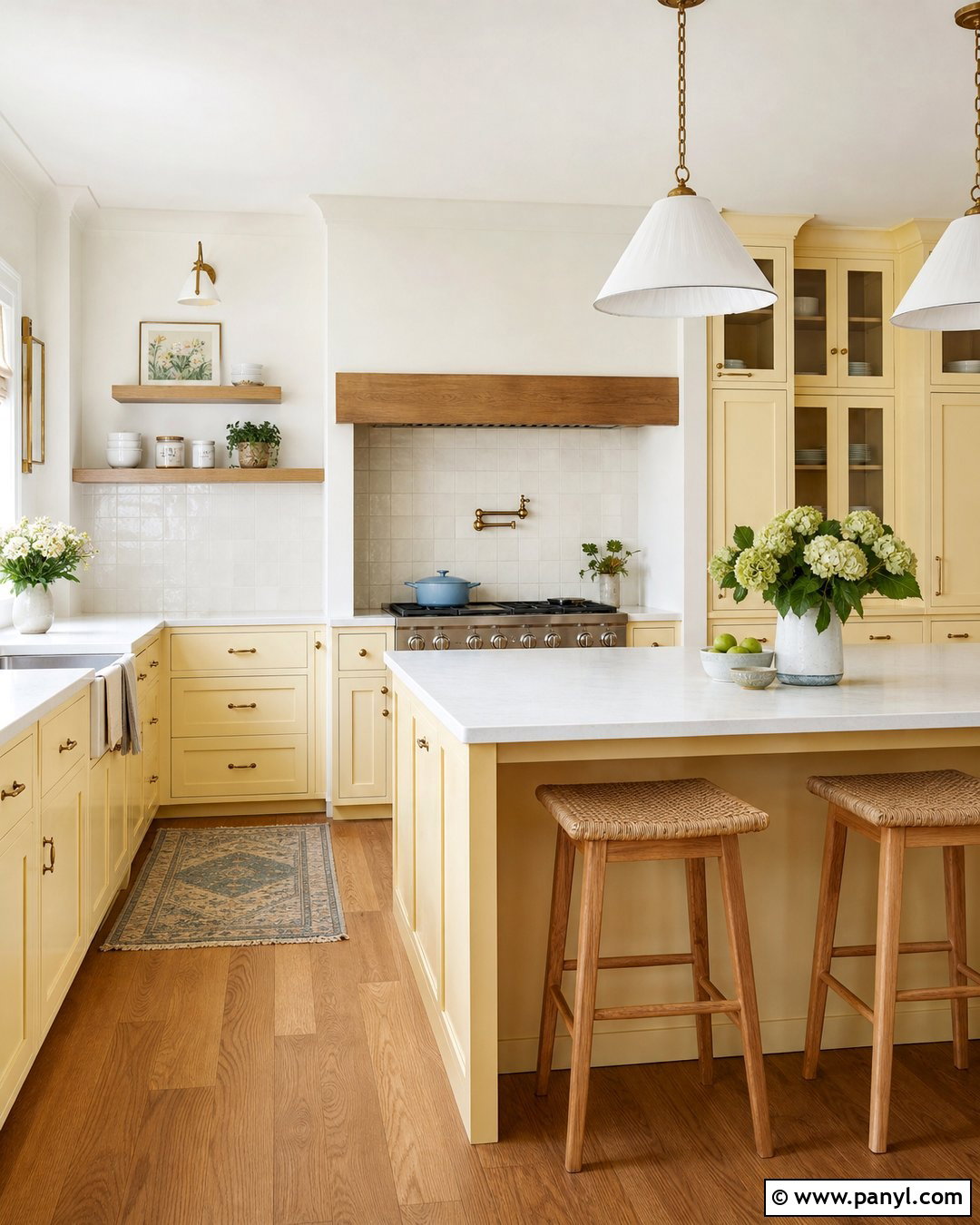
A soft butter yellow kitchen feels sunny even on an overcast day. Keep the cabinet color pale and slightly creamy, then pair it with soft white walls for a clean, low-contrast background. White quartz counters and warm white square tiles maintain brightness around the cooking areas. Add medium oak floors, natural wood stools, and brushed nickel or aged brass hardware to make the yellow feel grounded. A small island painted butter yellow can carry the color into the center of the room. Use simple cabinet doors and restrained accessories so the cheerful shade remains sophisticated. Pale blue pottery or a muted blue runner can provide a small complementary accent. This complete palette is ideal for cottage kitchens, breakfast-focused spaces, and rooms with limited direct sunlight.
15. Deep Teal Cabinets With Pale Greige Walls
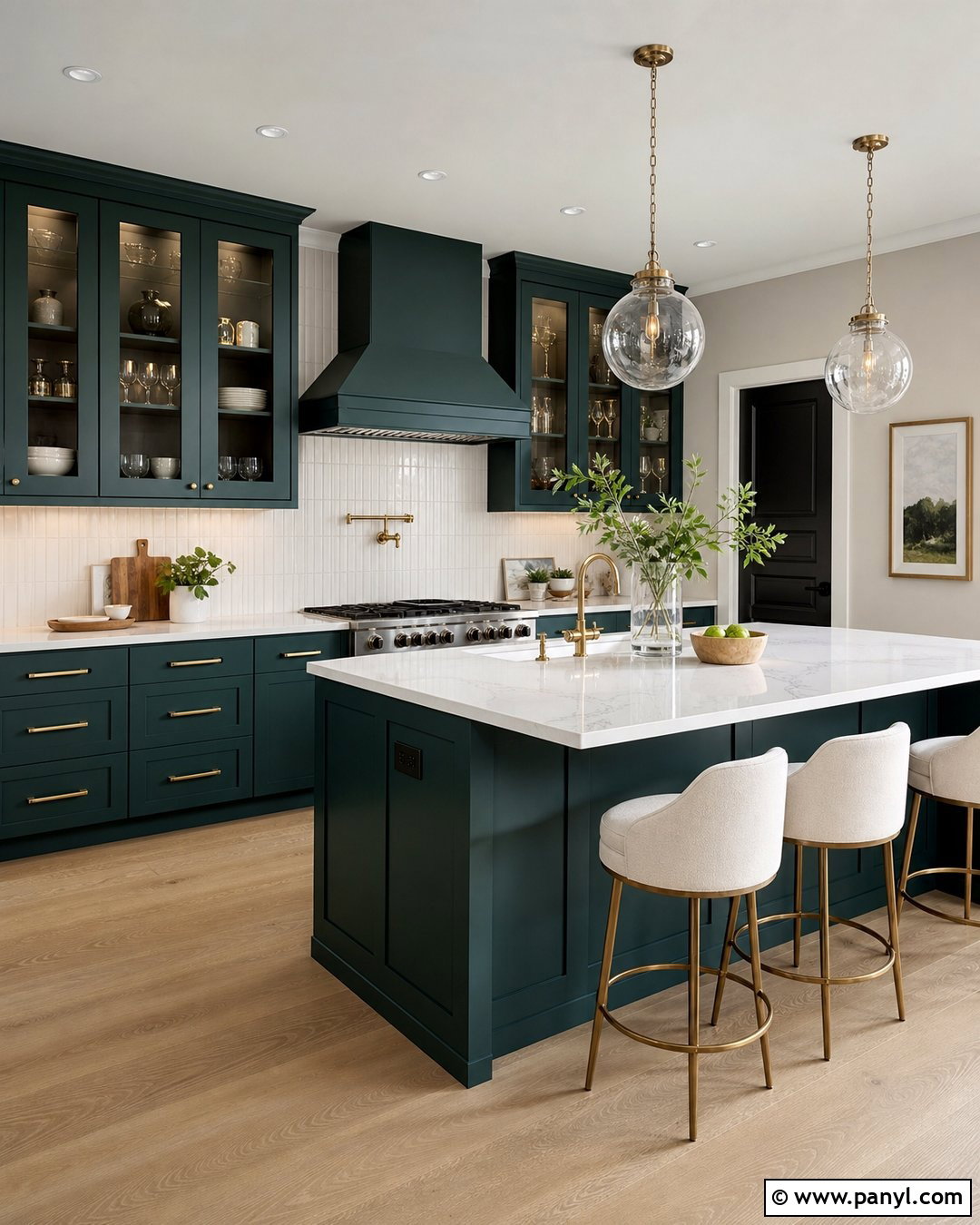
Deep teal cabinets combine the calming quality of blue with the natural richness of green. Pale greige walls give the saturated cabinetry breathing room and connect it with stone, wood, and neutral adjoining spaces. Choose white quartz counters with soft gray veining and an off-white vertical tile backsplash to increase the sense of height. Brushed brass pulls bring warmth to the teal, while light oak floors prevent the room from looking heavy. Use matching teal on an island and lower cabinets, but consider greige or glass-front upper cabinets in a smaller kitchen. Cream stools, clear glass pendants, and minimal countertop decor complete the design. The finished palette feels bold yet balanced, making it suitable for modern, transitional, and updated traditional kitchens.
16. Burgundy Cabinets With Blush Beige Walls
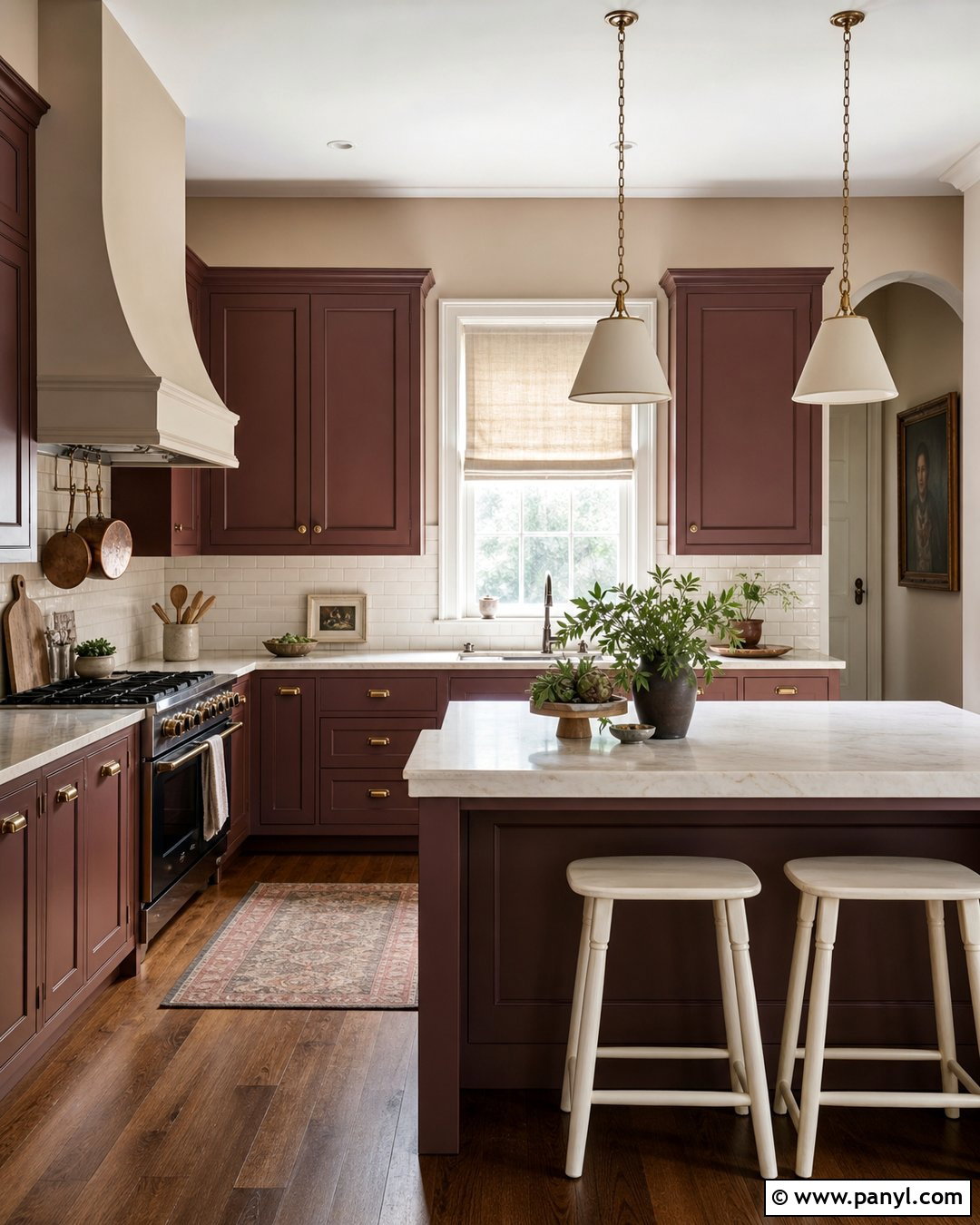
Rich burgundy cabinetry can look refined rather than overpowering when surrounded by quiet blush beige walls. Select a wine-free red-brown shade with earthy undertones, then use a pale beige wall paint carrying the slightest hint of pink. Warm white stone counters and a creamy backsplash provide essential brightness. Walnut flooring or medium oak adds depth, while aged brass hardware complements the red undertones. Reserve burgundy for lower cabinets, the island, and a tall pantry if the kitchen is small. In a larger space, full cabinetry can work when balanced by large windows and strong task lighting. Add ivory stools, linen shades, and simple ceramic pendants. This coordinated kitchen feels distinctive, warm, and especially appropriate for historic, traditional, or eclectic interiors.
17. Olive Green Cabinets With Linen White Walls
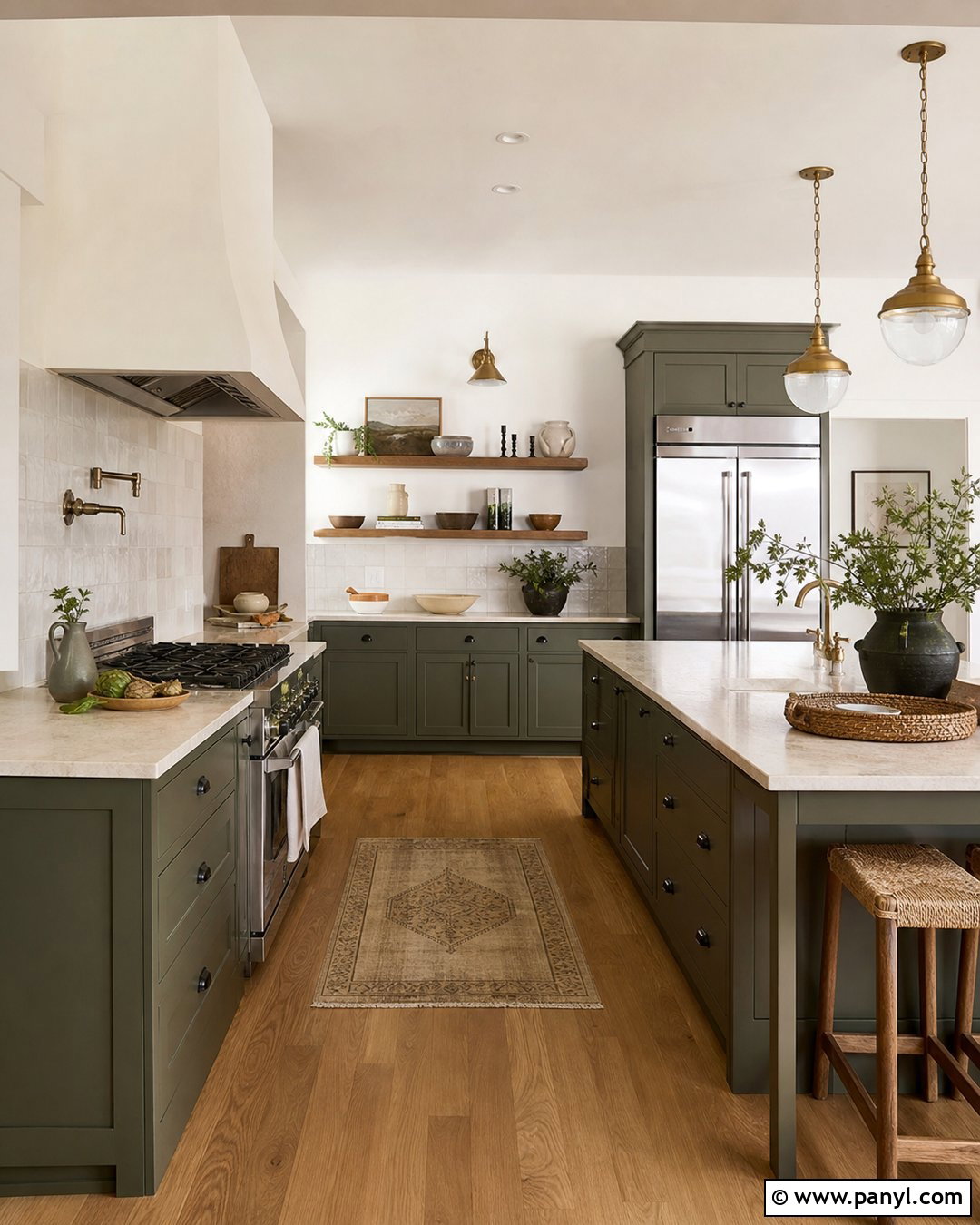
Olive green cabinets create a grounded, natural kitchen that pairs easily with wood and stone. Linen white walls provide a soft backdrop with enough warmth to prevent the green from appearing muddy. Choose creamy limestone-look counters, an ivory tile backsplash, and medium oak flooring for an earthy foundation. Matte black hardware adds clean definition, while brass lighting can introduce a warmer decorative layer. Use olive on the perimeter cabinets and island for a cohesive room, or combine olive lower cabinets with linen white uppers to visually lift a low ceiling. Open oak shelves can display neutral dishes without adding clutter. Finish the room with woven stools, cotton shades, and a textured runner. The completed look suits farmhouse, organic modern, and relaxed transitional kitchens.
18. White And Oak Cabinets With Warm Beige Walls
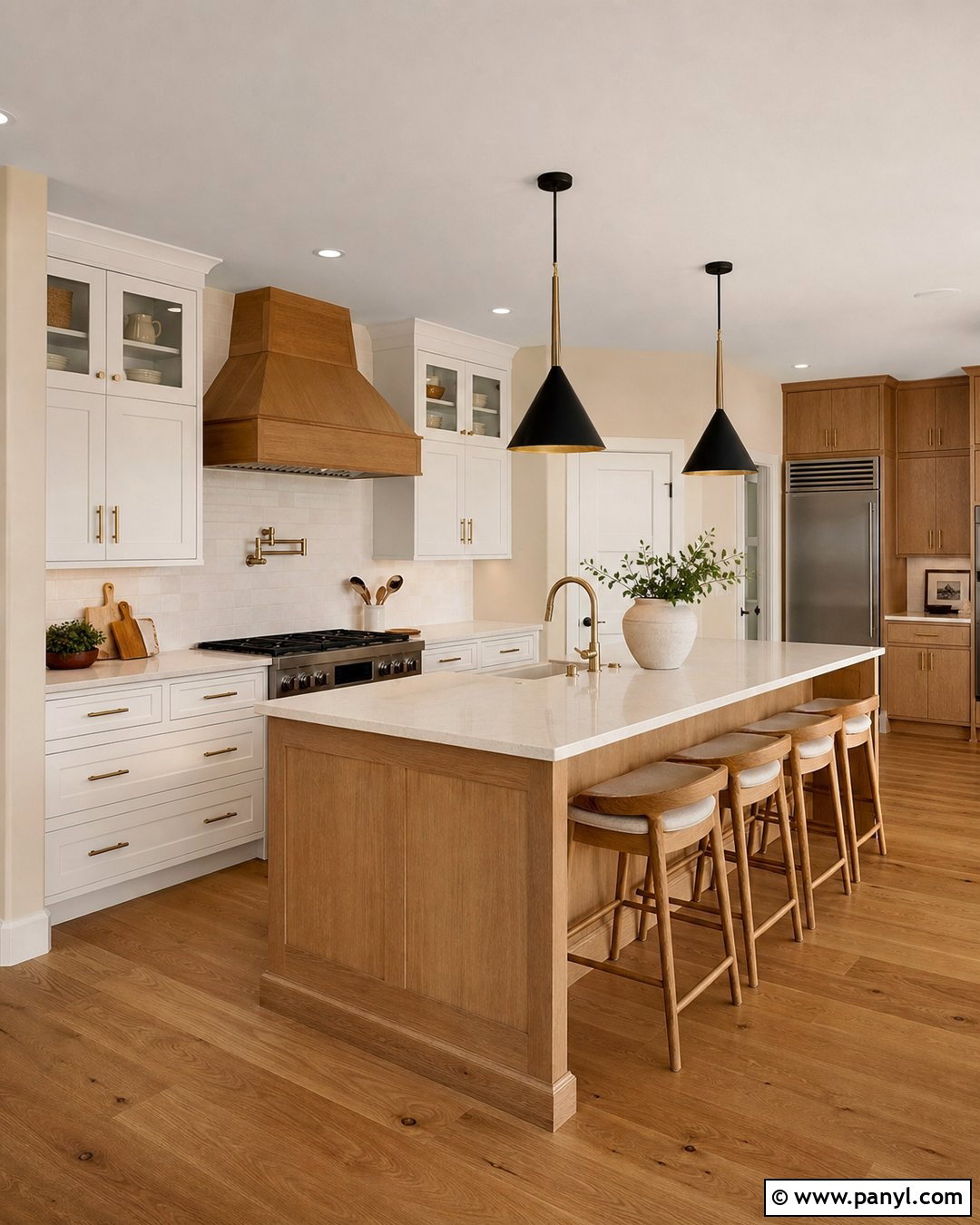
Painted white cabinets and natural oak cabinetry create a layered kitchen without relying on two strong paint colors. Use warm white paint on the upper and perimeter cabinets, then feature rift-cut or lightly stained oak on the island and pantry units. Warm beige walls bridge the painted and wood finishes. Choose creamy quartz countertops and a simple off-white backsplash to keep the palette cohesive. Brushed brass hardware complements the oak, while black pendant lights provide a small amount of graphic contrast. Carry the wood tone into stools, open shelving, or flooring, but vary the grain direction to avoid a matching showroom effect. This complete combination works well in open-plan homes because it connects naturally with neutral upholstery, wood furniture, and relaxed modern decor.
19. Soft Green Cabinets And Matching Walls
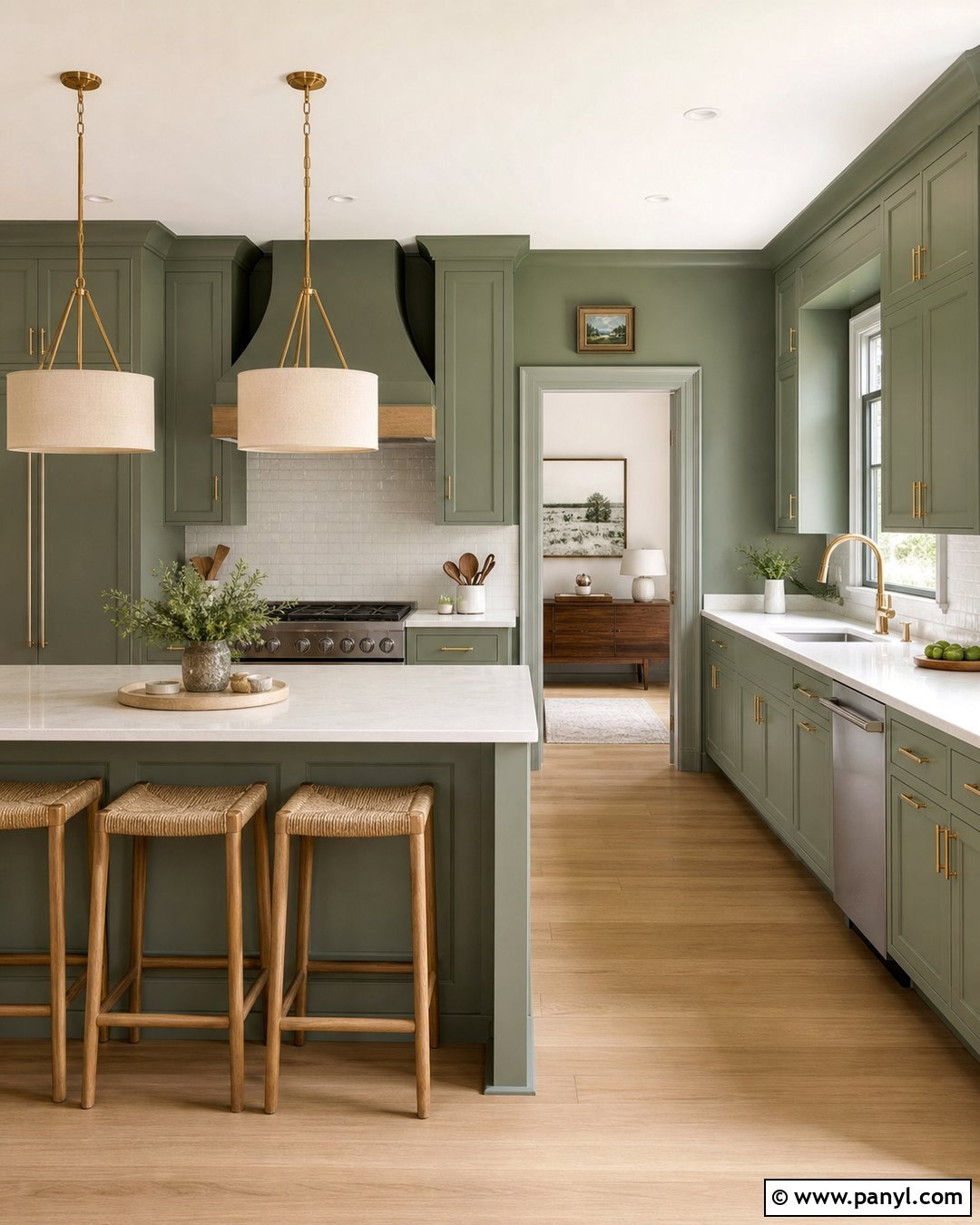
Painting cabinets and walls the same soft green creates a seamless, color-drenched kitchen with a calm, enveloping character. Select a muted gray-green light enough to reflect daylight, then vary the finish for practical contrast. Use durable satin paint on cabinets and washable matte paint on walls. Cream quartz counters and a warm white backsplash interrupt the green while preserving the gentle mood. Light oak flooring, brushed brass hardware, and linen pendant shades add warmth and natural texture. Paint the trim and range hood in the same green for full continuity, but keep the ceiling soft white to avoid making the room feel compressed. This complete treatment is particularly effective in small kitchens, where reducing strong visual boundaries can make cabinetry feel more integrated.
20. White Upper Cabinets With Clay Lower Cabinets
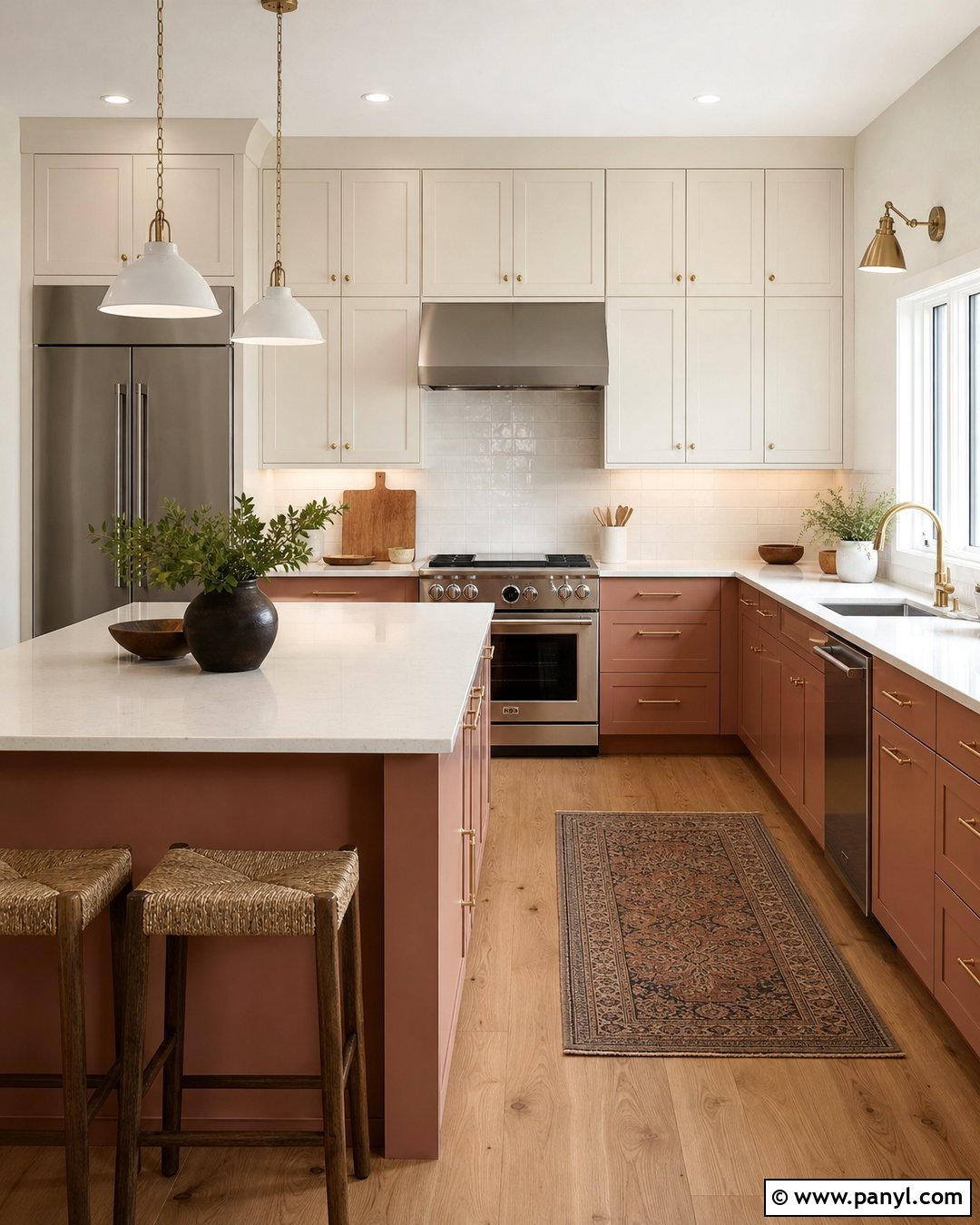
White upper cabinets and muted clay lower cabinets provide color while keeping the kitchen visually open. Choose a warm white for the uppers and walls, then use an earthy reddish-brown or soft terracotta paint below the countertops. The darker base color grounds the room and is practical in busy family kitchens. Connect both cabinet finishes with creamy quartz counters and an ivory rectangular tile backsplash. Natural oak flooring, aged brass pulls, and woven stools reinforce the warm palette. Paint the island clay for continuity, or use oak if the kitchen needs more material variation. Keep appliances stainless steel and lighting simple. This balanced two-tone design works in compact galley kitchens, open family spaces, and casual modern homes without requiring every cabinet to make a bold statement.
Conclusion:
The most successful **Kitchen Cabinet And Wall Paint Ideas** consider the entire room rather than choosing two attractive colors in isolation. Countertops, backsplashes, flooring, hardware, appliances, lighting, and nearby rooms all influence how paint appears. Warm whites and greiges provide flexibility, while sage, navy, terracotta, teal, and burgundy introduce stronger personality. Dark cabinetry usually benefits from lighter walls and counters, while pale cabinets can support more colorful walls. Always place large paint samples vertically beside permanent finishes and examine them in morning, afternoon, and evening light. Once the undertones work together, complete the kitchen with a limited selection of coordinating materials. A thoughtful whole-room palette will feel balanced, practical, and personal for years.

Related Ideas and Inspiration:
Leave a Reply