
Two-color walls can make an ordinary room feel more layered, balanced, and thoughtfully designed without requiring expensive architectural changes. This collection of **20 2 color wall paint ideas** explores practical combinations for living rooms, bedrooms, dining spaces, kitchens, offices, entryways, and more. Some looks use a clean horizontal divide, while others feature arches, vertical blocks, painted paneling, or contrasting ceilings. Each complete room scheme also considers furniture, flooring, textiles, lighting, and decor, making it easier to picture the finished result. Before painting, test both colors together in several areas and view them during morning, afternoon, and evening light. Whether your style is calm, colorful, traditional, or modern, use these **20 2 color wall paint ideas** to find a look that works beautifully in your home.

1. Sage Green And Warm White Living Room Walls
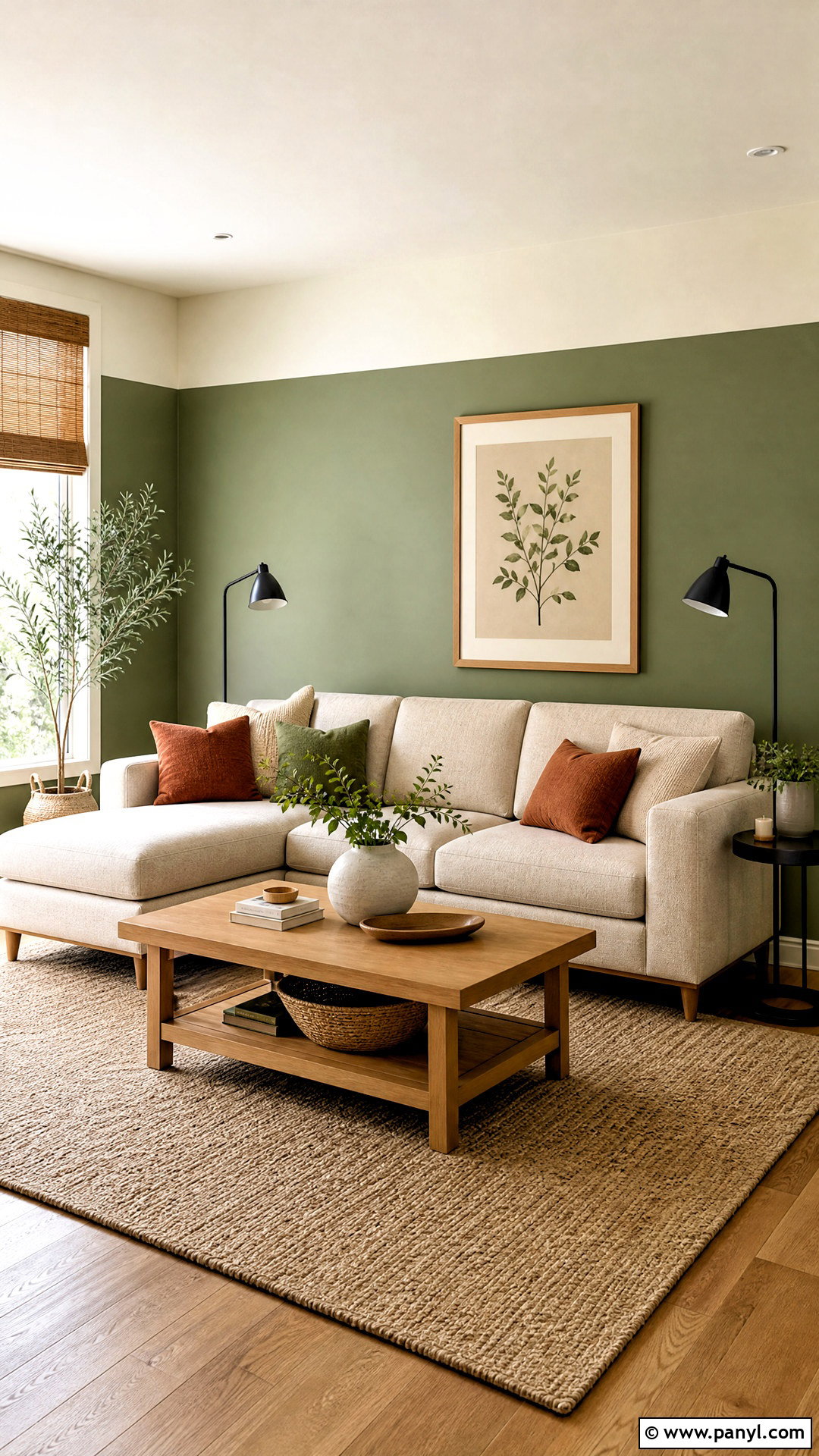
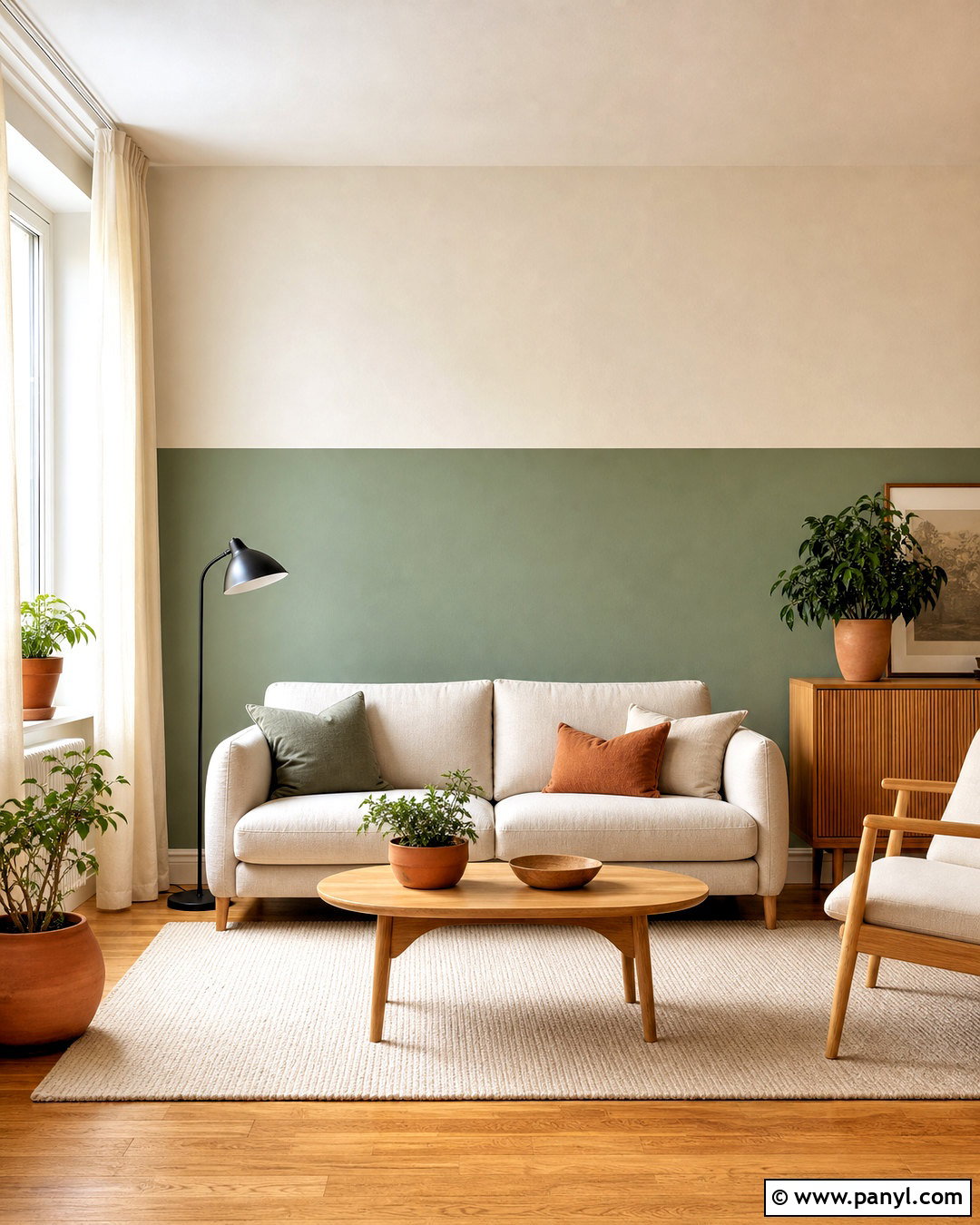
Create a relaxed living room by painting the lower two-thirds of the walls warm sage green and keeping the upper portion soft white. Place the dividing line slightly above the sofa back so the green forms a grounded backdrop without making the ceiling feel low. A cream linen sofa, light oak coffee table, and oatmeal area rug keep the room airy. Add olive, rust, and ivory pillows to connect the furniture with the walls. Black floor lamps and slim picture frames provide clean contrast. Natural woven shades soften incoming light, while a large botanical print brings the palette together. Continue the green around corners instead of limiting it to one wall, creating a complete and intentional two-color room.
2. Navy Blue And Crisp White Bedroom Walls
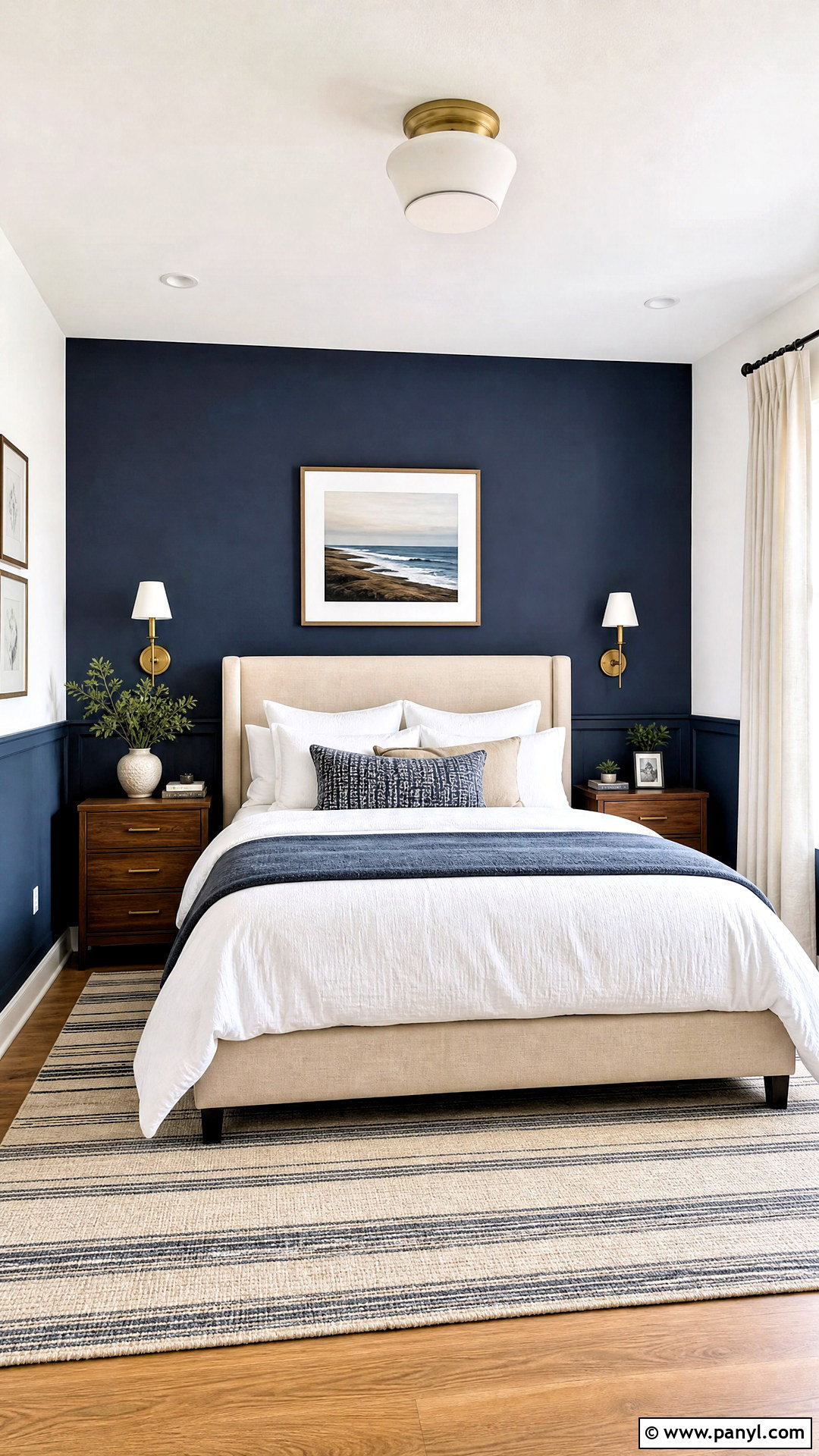
Deep navy blue and crisp white create a polished bedroom that feels dramatic without becoming too dark. Paint the wall behind the bed navy, continuing the color onto the lower half of the remaining walls. Use white above the horizontal line, across the ceiling, and on the trim. Center an upholstered oatmeal bed against the navy section, then add white bedding, a navy quilt, and muted blue pillows. Medium-toned walnut nightstands warm the cool palette, while brushed brass sconces introduce a subtle shine. Choose natural oak or beige carpet flooring to prevent the room from feeling heavy. Simple coastal artwork, linen curtains, and a striped rug complete this balanced two-color wall paint scheme.
3. Terracotta And Cream Dining Room Walls
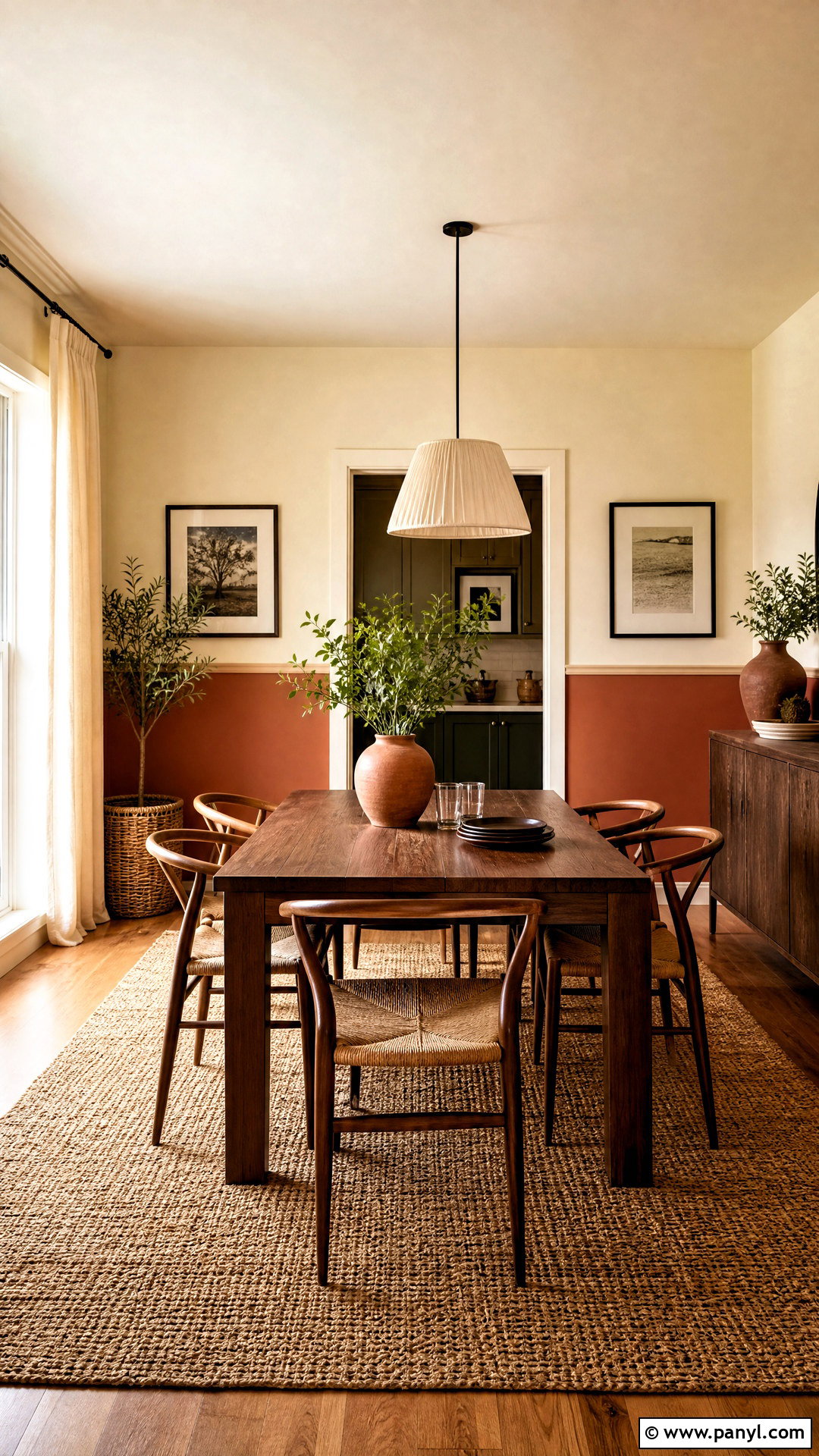
Warm terracotta on the lower half of dining room walls creates an inviting base for a soft cream upper section. Raise the dividing line to approximately chair-rail height and add a narrow painted cream molding for a tailored finish. A rectangular walnut dining table and woven-seat chairs complement the earthy wall color. Hang a large linen pendant above the table and use an understated jute rug below. Cream curtains help the upper walls feel connected and bright, while ceramic vases in rust, tan, and muted green add depth. Keep artwork simple with pale backgrounds and dark wood frames. This complete palette works especially well in a dining room with natural light, warm wood flooring, and plenty of organic texture.
4. Dusty Blue And Soft Gray Home Office Walls
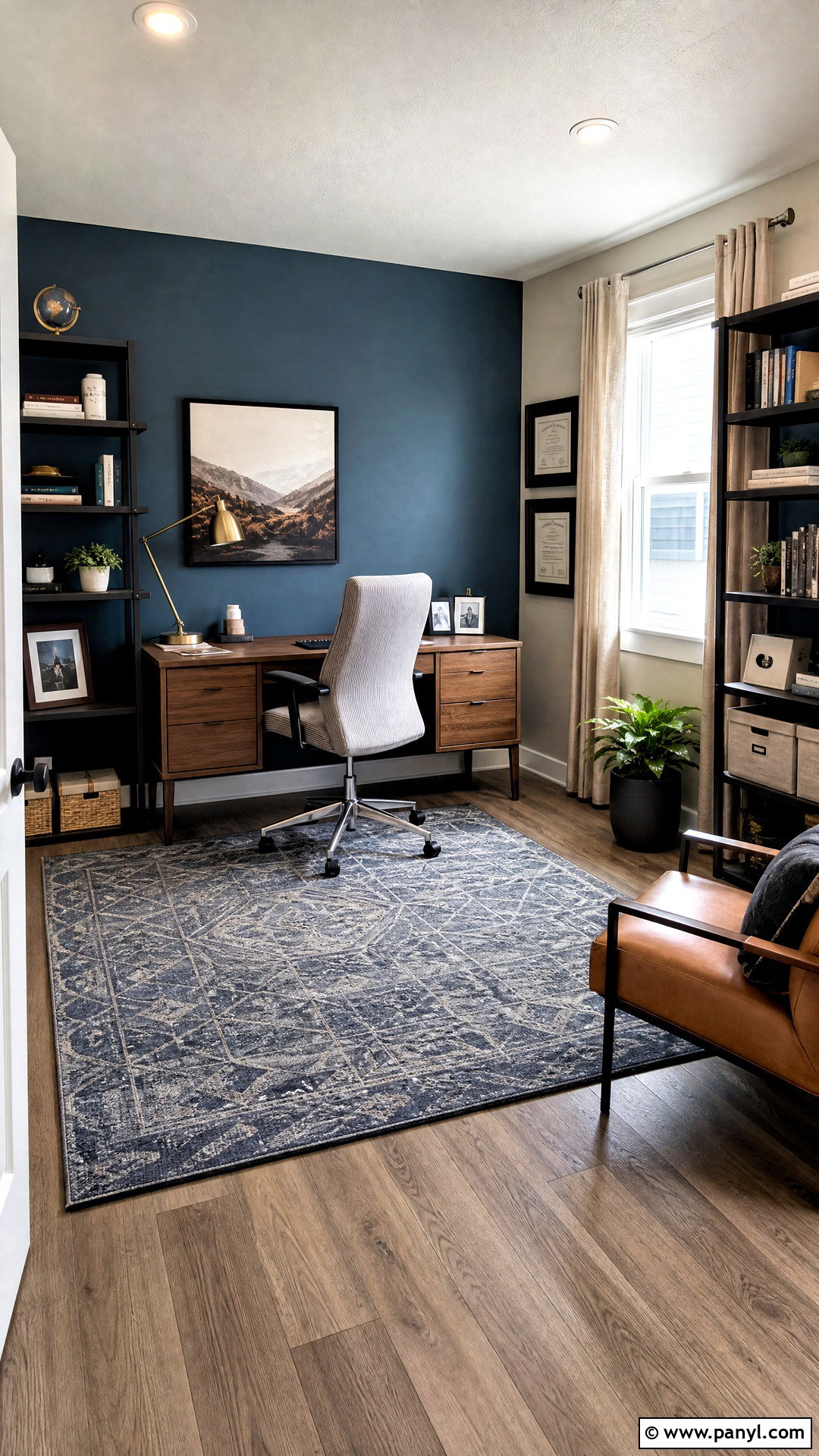
For a calm home office, pair dusty blue with a pale, warm gray rather than bright white. Paint the desk wall dusty blue from floor to ceiling, then use the gray across the remaining walls and inside nearby shelving. Position a streamlined walnut desk against the blue background with a comfortable light gray chair. A low-pile geometric rug can repeat both wall colors without making the workspace busy. Add matte black shelves, a simple task lamp, and closed storage for a clean layout. Linen curtains and a small leather accent chair introduce softness and warmth. The muted contrast keeps video-call backgrounds attractive while allowing art, books, and plants to remain visible without competing with overly bold paint.
5. Forest Green And Beige Entryway Walls
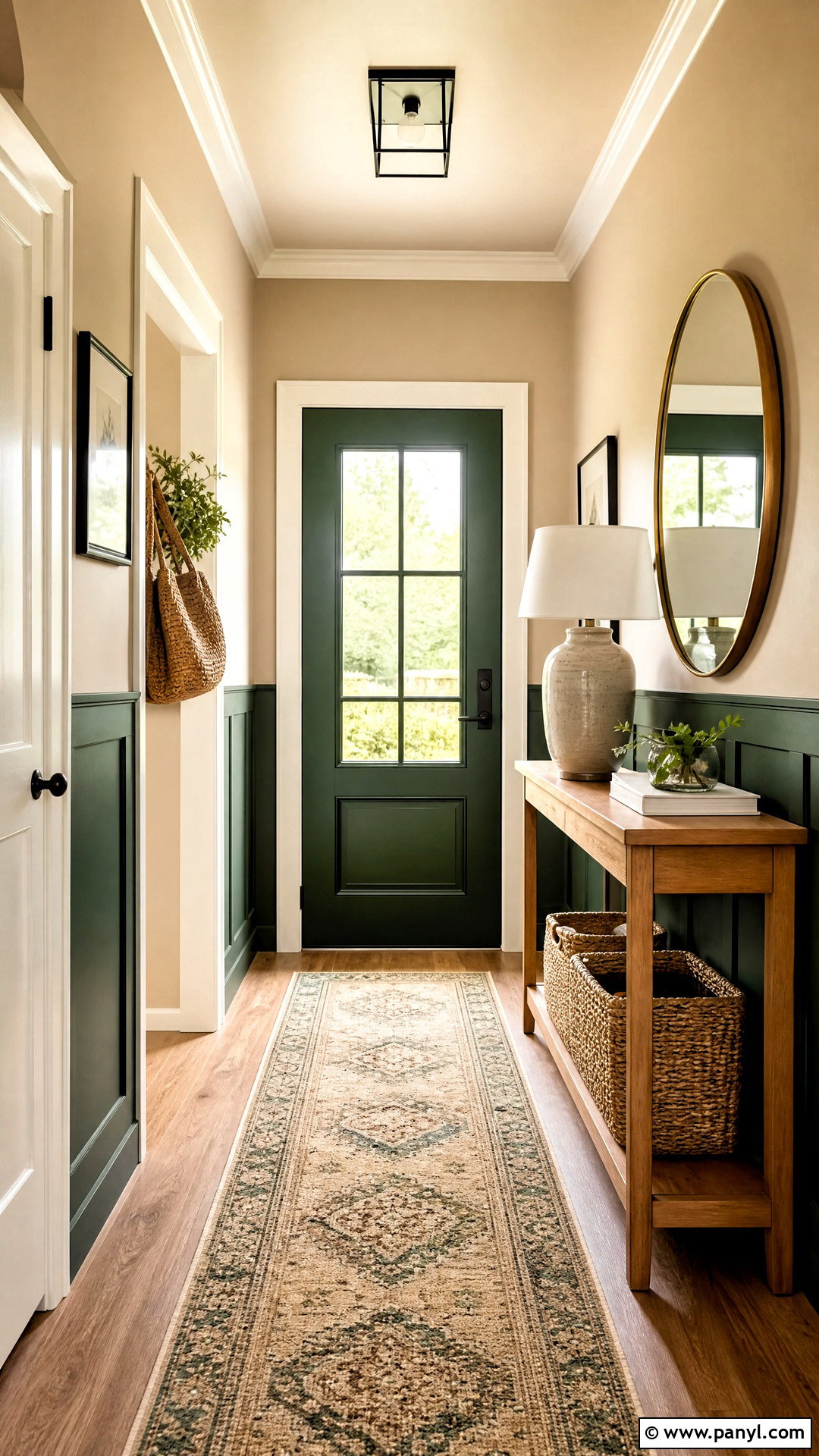
A narrow entryway gains character when rich forest green is balanced with a light sandy beige. Paint the lower portion green, including baseboards and any existing wall paneling, while using beige above and across the ceiling. The darker foundation gives the passage definition, and the lighter upper color keeps it open. Add a slim natural oak console, a round brass-framed mirror, and a neutral runner with green detailing. Woven baskets beneath the console provide practical storage without cluttering the walkway. Finish the space with a small ceramic lamp and minimal framed art. Carry the green onto the inside of the front door for continuity, creating a complete entrance that feels welcoming, organized, and intentionally connected.
6. Blush Pink And Burgundy Bedroom Walls
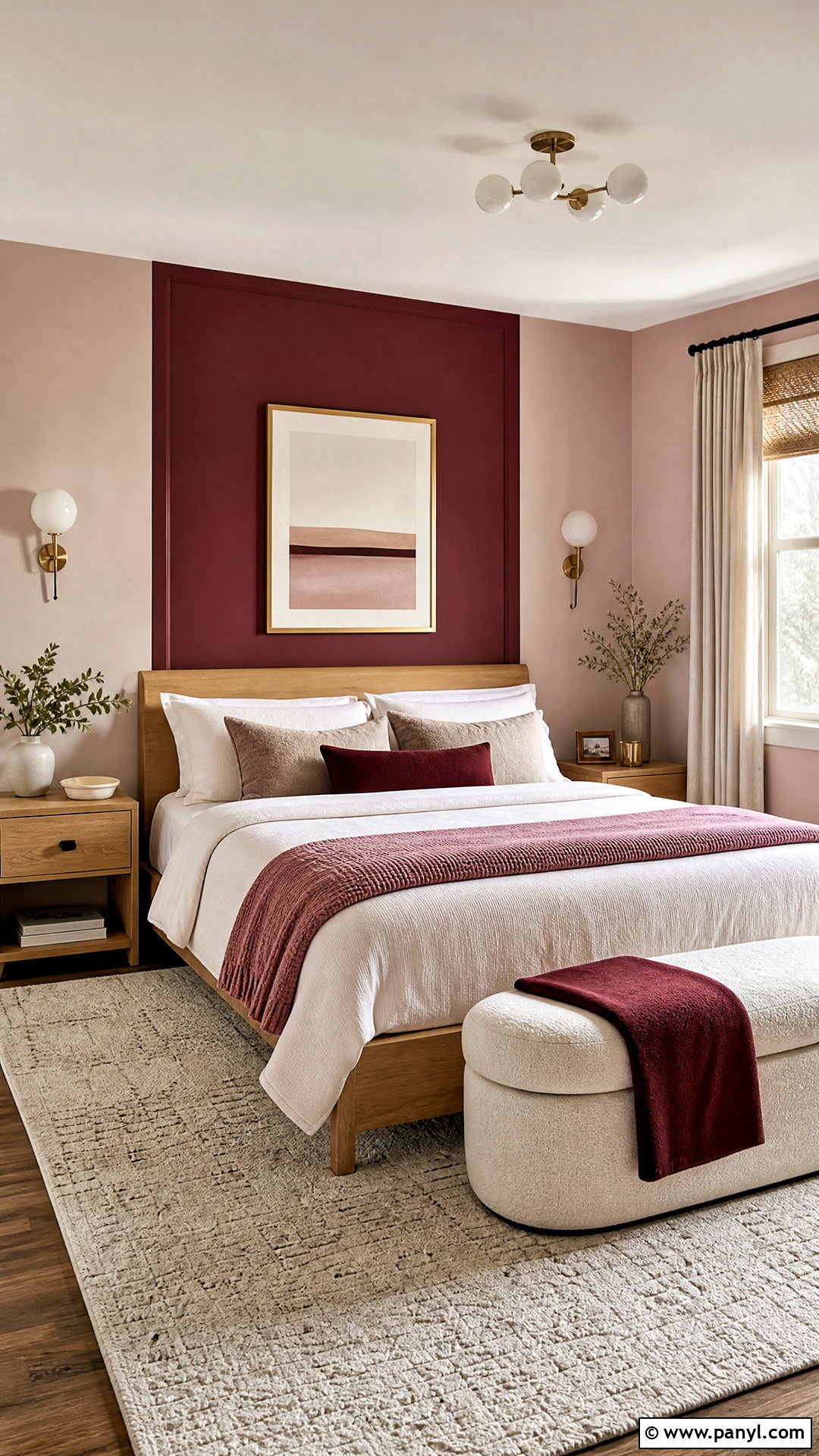
Soft blush pink and deep burgundy can produce a sophisticated bedroom when their proportions remain balanced. Cover most walls in muted blush, then paint a wide burgundy block behind the bed that extends slightly beyond both nightstands. Take the darker shape from the baseboard to the ceiling for a strong architectural effect. Choose a light oak bed with ivory bedding, a dusty rose throw, and small burgundy accents. Cream curtains, a pale textured rug, and simple globe sconces prevent the rich feature from overwhelming the room. Repeat burgundy only once or twice in artwork or cushions. This focused approach creates depth and warmth while keeping the overall bedroom restful, mature, and easy to decorate.
7. Charcoal Gray And White Kitchen Walls
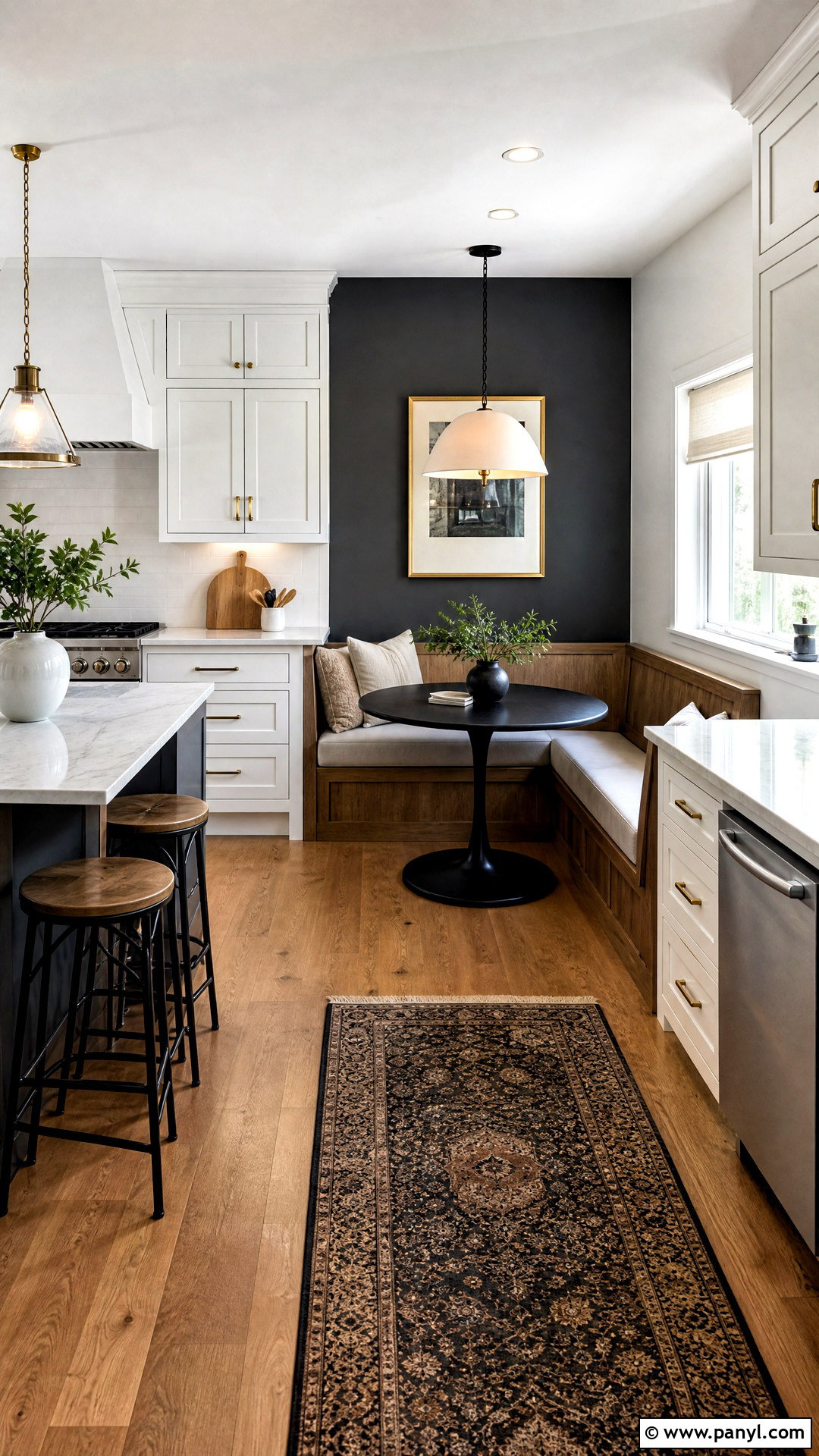
Give a bright kitchen greater definition by pairing charcoal gray with clean white walls. Use charcoal on the wall around the breakfast nook or dining banquette, then continue it across the lower third of adjacent walls. Keep upper walls, trim, and the ceiling white to preserve an open appearance. White cabinets, pale quartz countertops, and medium oak flooring balance the darker paint. Add a built-in oak bench with cream cushions and a round black pedestal table. Simple pendant lighting and warm metal hardware soften the monochrome contrast. A washable eggshell or satin wall finish suits this active area. The completed space feels contemporary and cohesive, with the charcoal section visually anchoring the eating zone.
8. Mustard Yellow And Pale Gray Playroom Walls
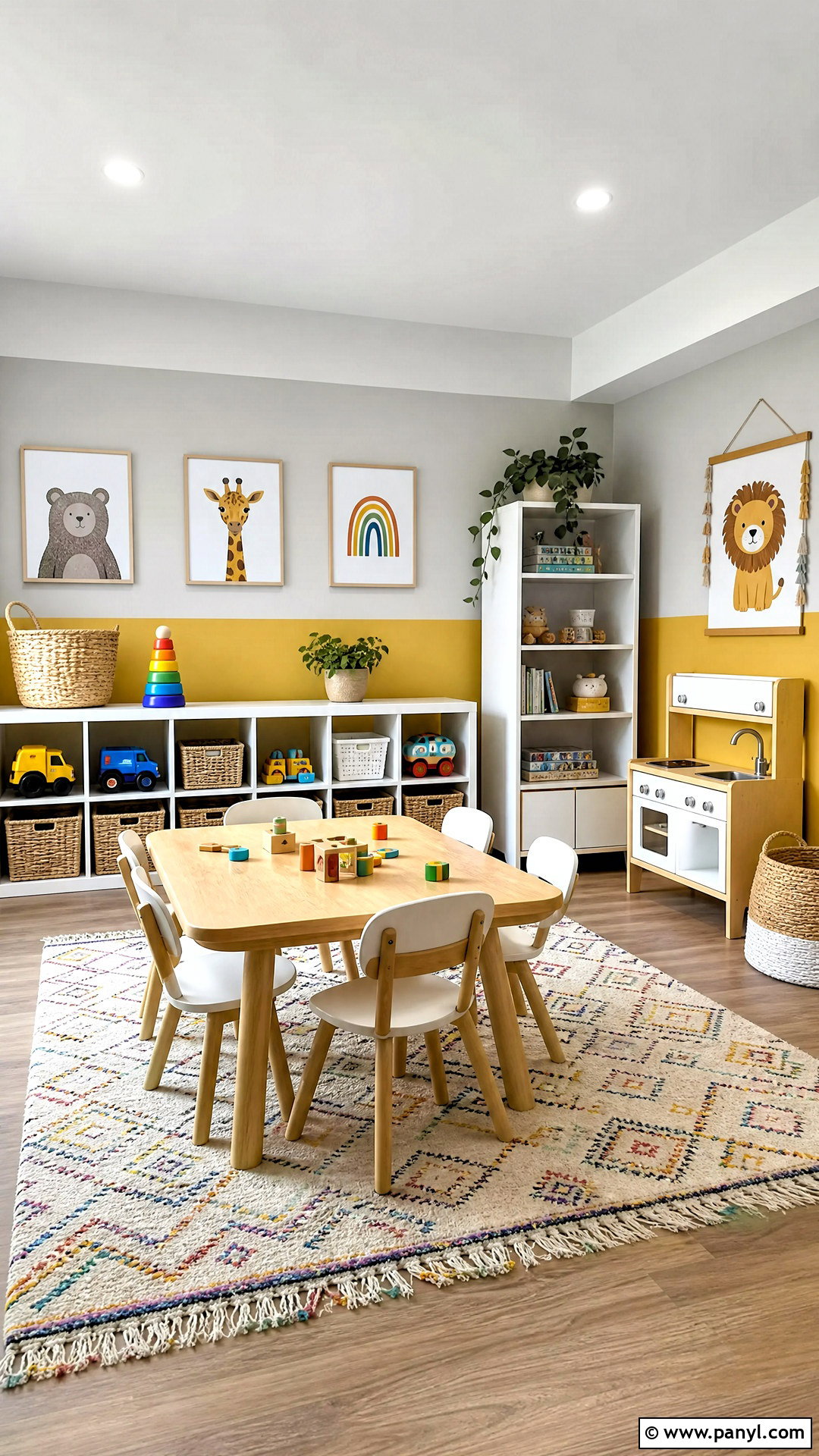
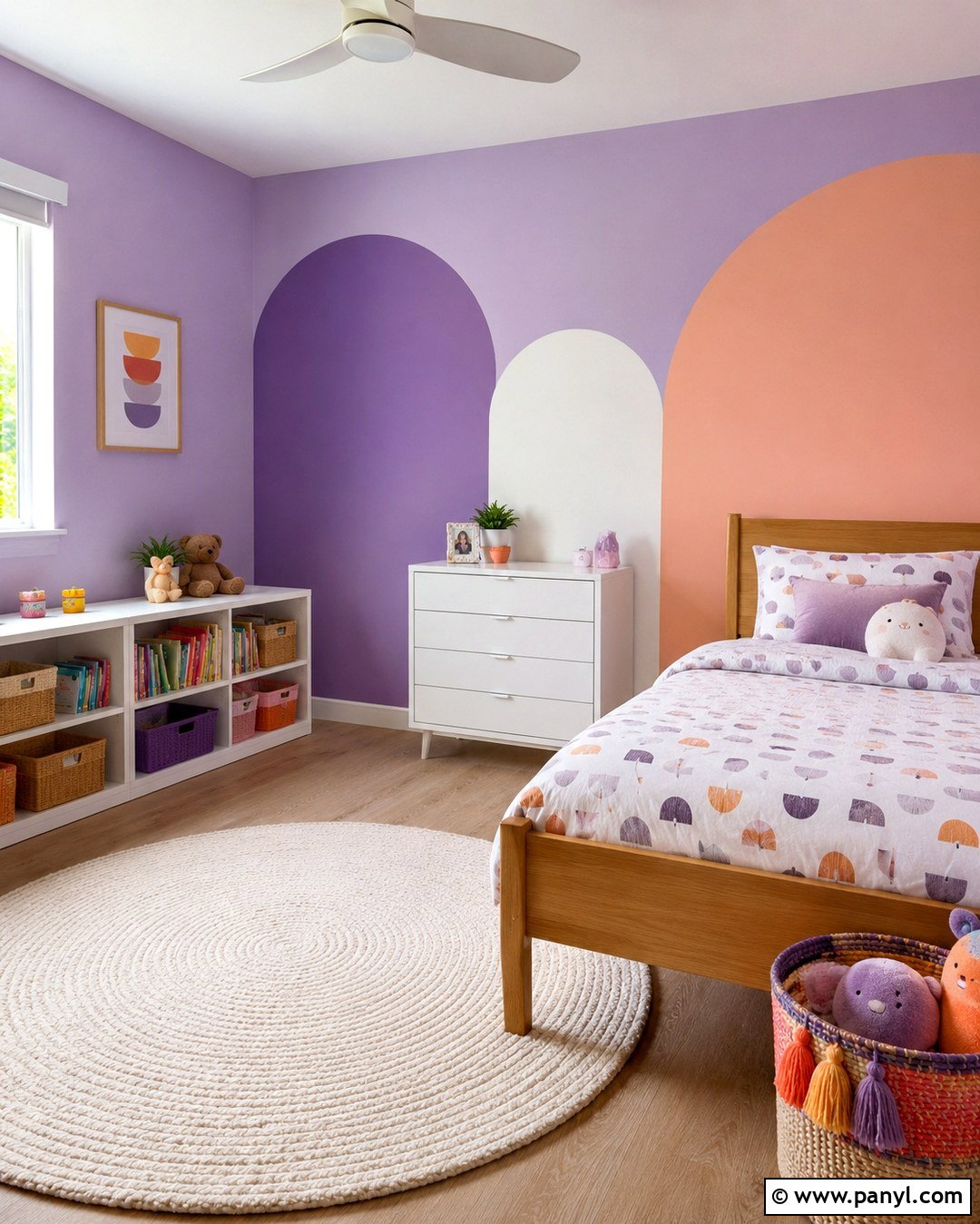
A cheerful playroom can feel colorful and orderly with mustard yellow and pale gray walls. Paint the lower half mustard to create a lively band around the room, then use light gray above to calm the brighter shade. Set the divide slightly higher than child-height storage so shelving appears integrated with the lower color. Choose white modular cabinets, a natural wood activity table, and soft storage baskets. A washable rug featuring yellow, gray, blue, and cream ties the room together. Add simple animal prints and a few colorful toys instead of filling every wall. The gray upper area maintains visual breathing room, while the mustard base gives the playroom personality and helps the complete design feel warm rather than overly primary.
9. Teal And Off-White Bathroom Walls
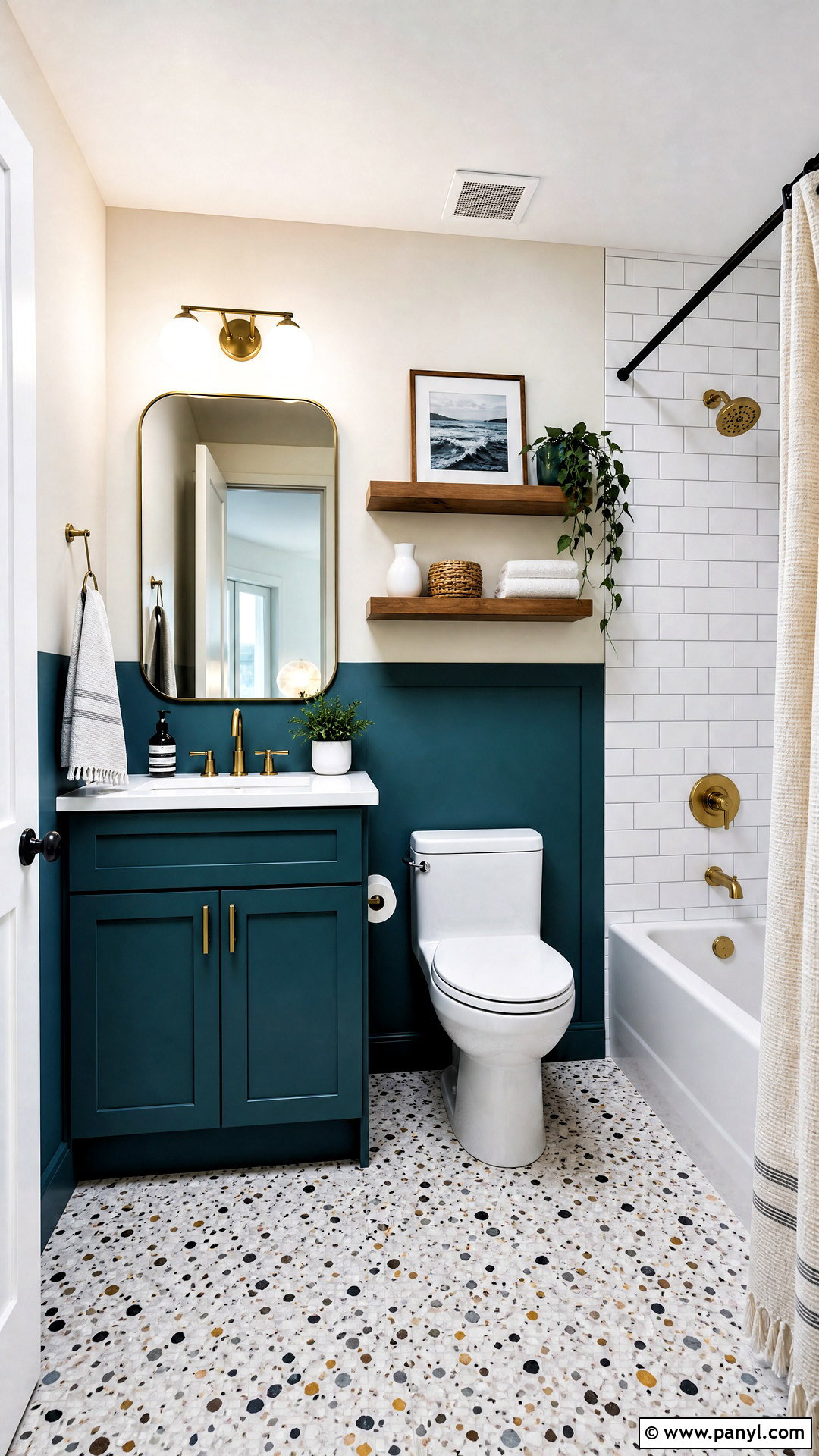
Transform a small bathroom with saturated teal below and warm off-white above. Paint the lower wall, baseboards, and vanity in the same teal tone to produce a seamless foundation. Use off-white on the upper walls and ceiling to reflect light around the room. White subway tile inside the shower keeps the scheme fresh, while a terrazzo or small hexagonal floor introduces subtle pattern. Select a white countertop, brushed brass faucet, and rounded mirror for a clean but welcoming finish. Natural wood shelves add warmth and provide space for folded towels and simple containers. This two-color arrangement gives the bathroom strong character while retaining enough brightness for grooming, cleaning, and everyday use.
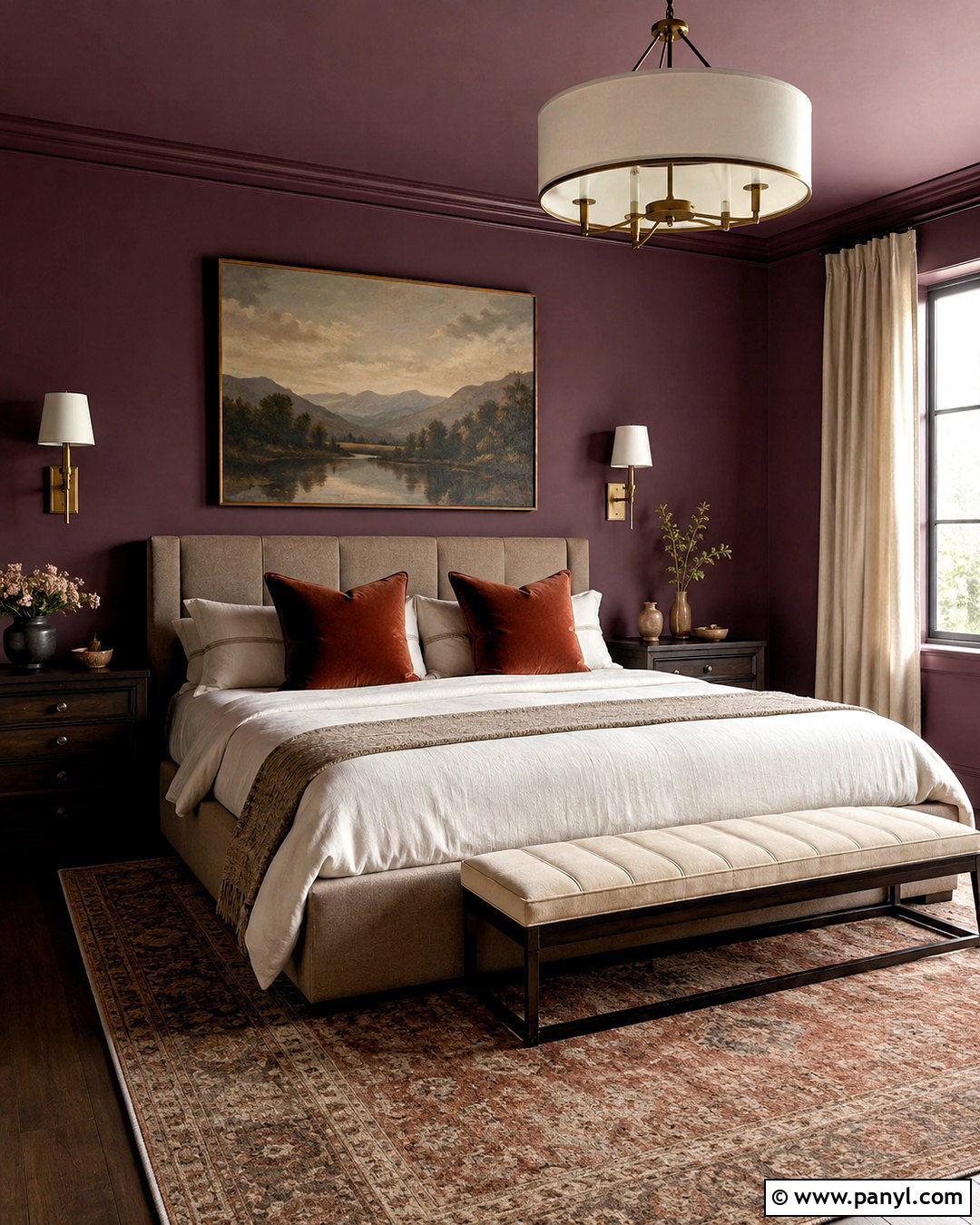
10. Olive Green And Tan Living Room Walls
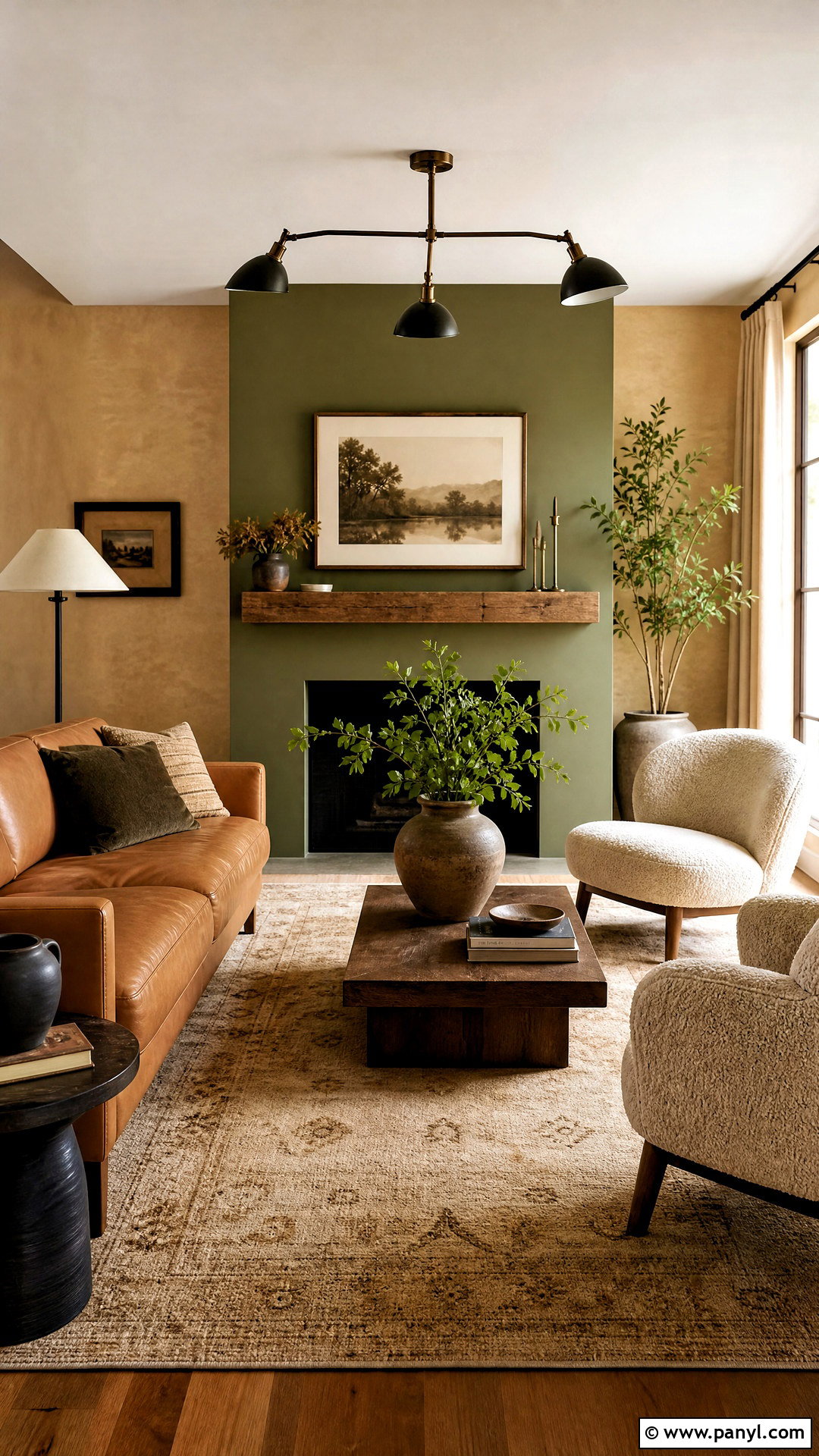
Olive green and warm tan create a comfortable living room inspired by natural landscapes. Paint the fireplace wall olive green, including built-in shelves or shallow alcoves, and use a soft tan across the remaining walls. Arrange a camel leather sofa opposite the fireplace with two cream boucle chairs angled toward the center. A walnut coffee table, patterned beige rug, and dark bronze lighting deepen the warm palette. Display books, pottery, and framed artwork sparingly within the olive shelving. Choose linen curtains close to the tan wall color so the windows blend quietly into the room. The finished design feels cohesive because both paint shades share earthy undertones, allowing the furniture and decor to transition smoothly between them.
11. Black And White Geometric Wall Paint
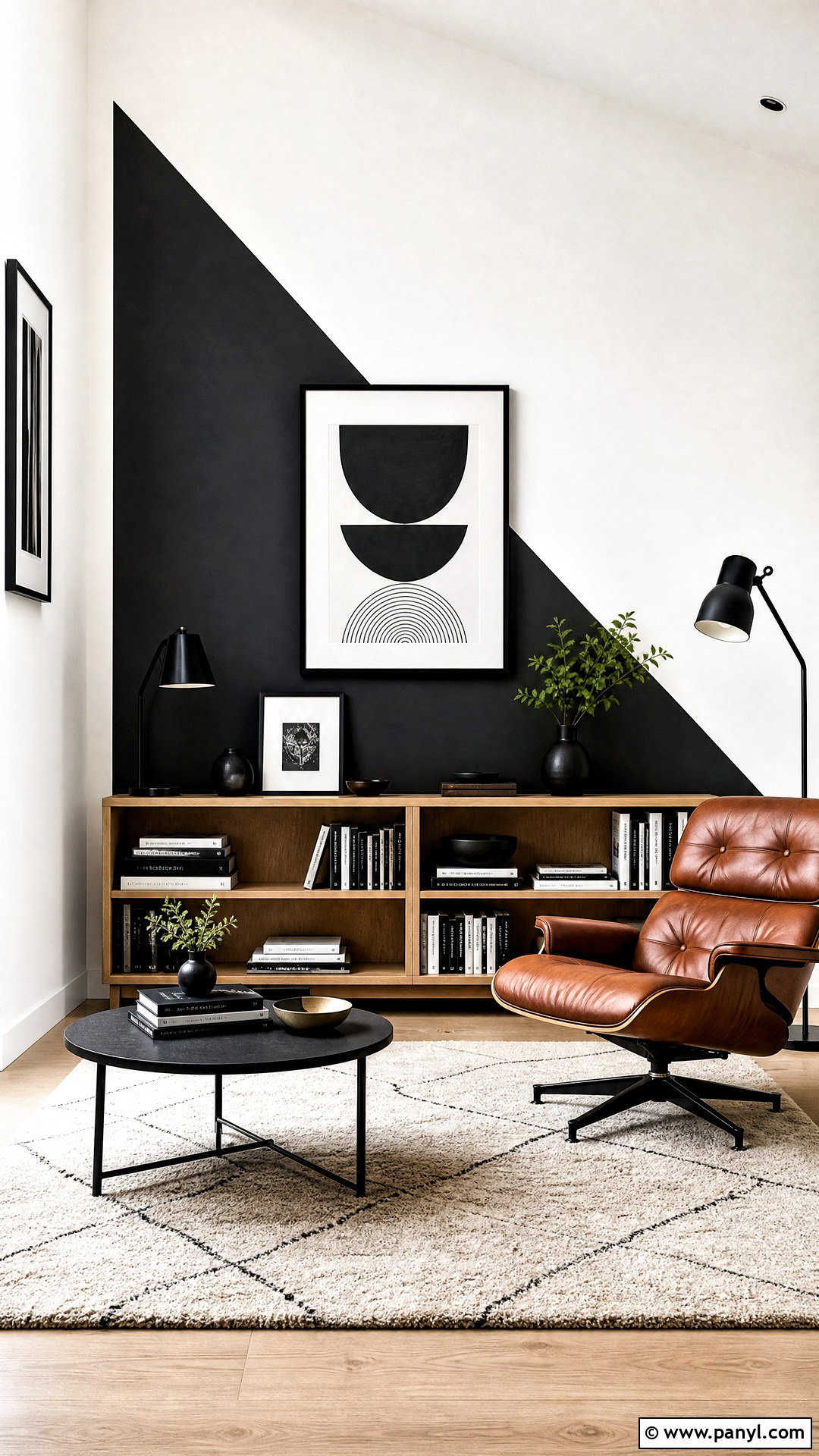
A black and white geometric wall works best when the pattern supports the furniture layout. In a modern reading room, paint the walls warm white and add a large matte black diagonal block behind a low bookcase and lounge chair. Let the shape begin at one lower corner and rise toward the opposite side, creating movement without covering the entire room. Use pale oak shelving, a cognac leather chair, and a cream rug to soften the sharp contrast. A black floor lamp and monochrome artwork connect with the painted feature. Keep the remaining furniture simple and avoid extra patterns. The resulting room feels graphic and energetic while still functioning as a comfortable, uncluttered place to read or relax.
12. Lavender And Warm White Guest Room Walls
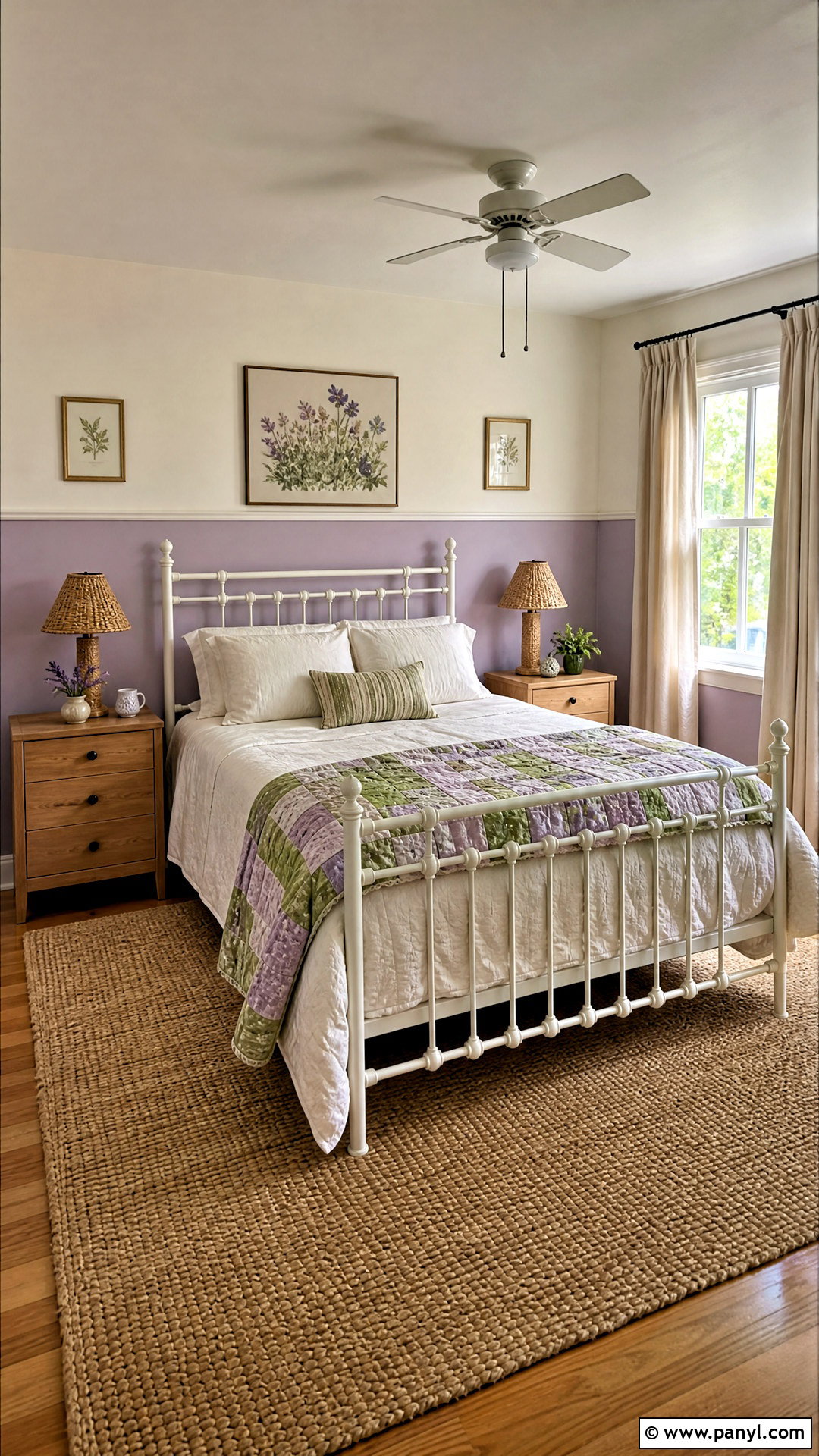
Muted lavender and warm white can make a guest room feel gentle, fresh, and welcoming. Paint the lower two-thirds of every wall lavender, leaving the top section and ceiling creamy white. Instead of placing the line at standard chair-rail height, align it with the top of the headboard for a more customized look. Add a white-painted metal bed, ivory bedding, and a quilt featuring soft green, lavender, and beige. Light wood nightstands and woven lamps prevent the pastel walls from feeling overly delicate. Hang simple floral prints across the white section to draw attention upward. Finish with natural linen curtains and a beige rug, creating a complete bedroom that feels comfortable for guests of different ages and tastes.
13. Chocolate Brown And Pale Blue Dining Room Walls
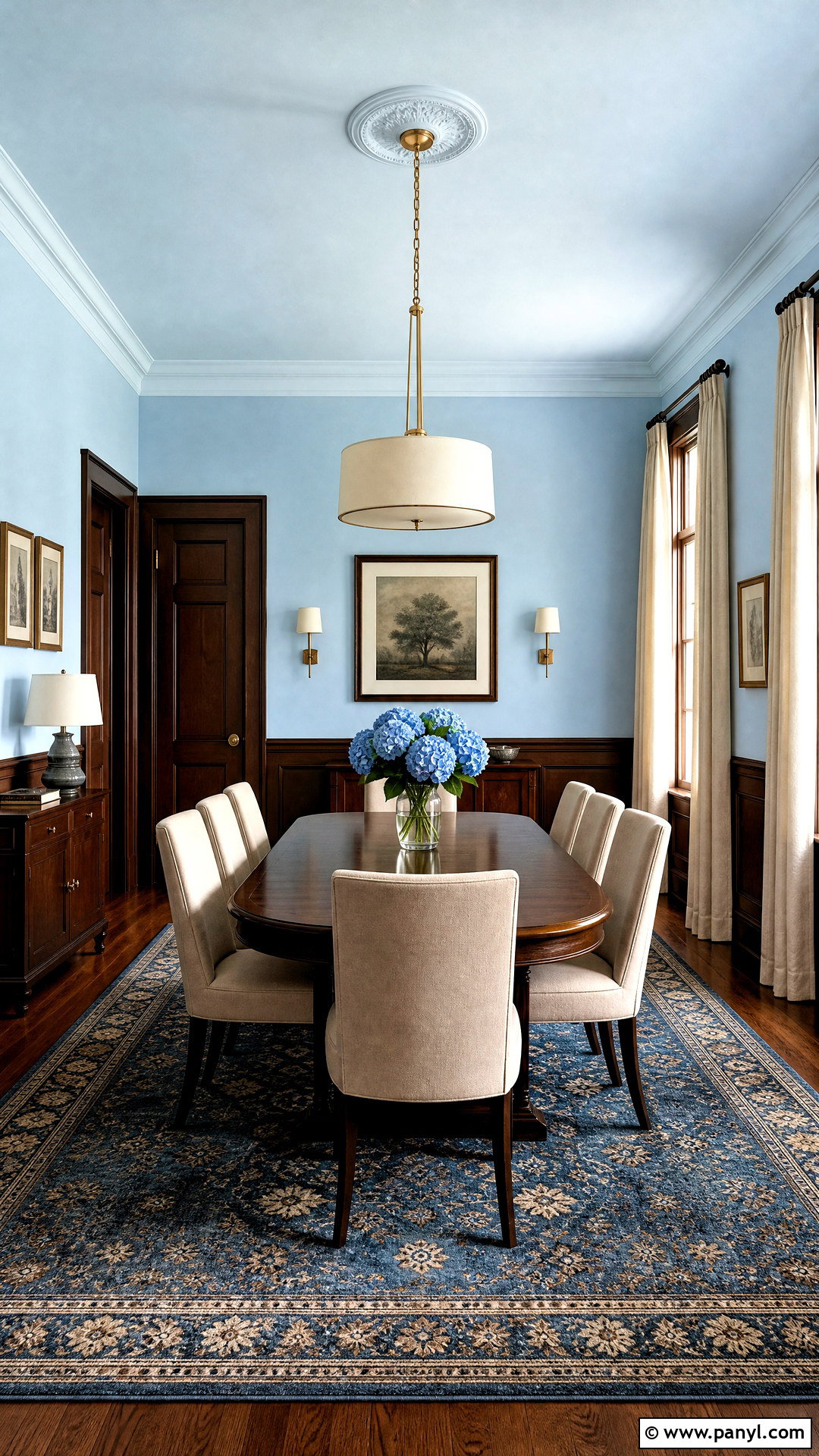
Chocolate brown and pale blue offer an unexpected dining room combination that feels grounded and fresh. Paint paneled lower walls in a rich cocoa brown, including the baseboards and chair rail. Apply powder blue above the paneling and continue it onto the ceiling for a softly enveloping effect. A dark oak dining table supports the brown foundation, while cream upholstered chairs keep the center of the room light. Use a large ivory pendant, pale curtains, and a softly patterned blue rug to connect the upper color with the furnishings. Artwork with brown frames adds structure without breaking the palette. The result is a complete dining space where a deep neutral and an airy pastel balance each other naturally.
14. Peach And Green Kitchen Walls
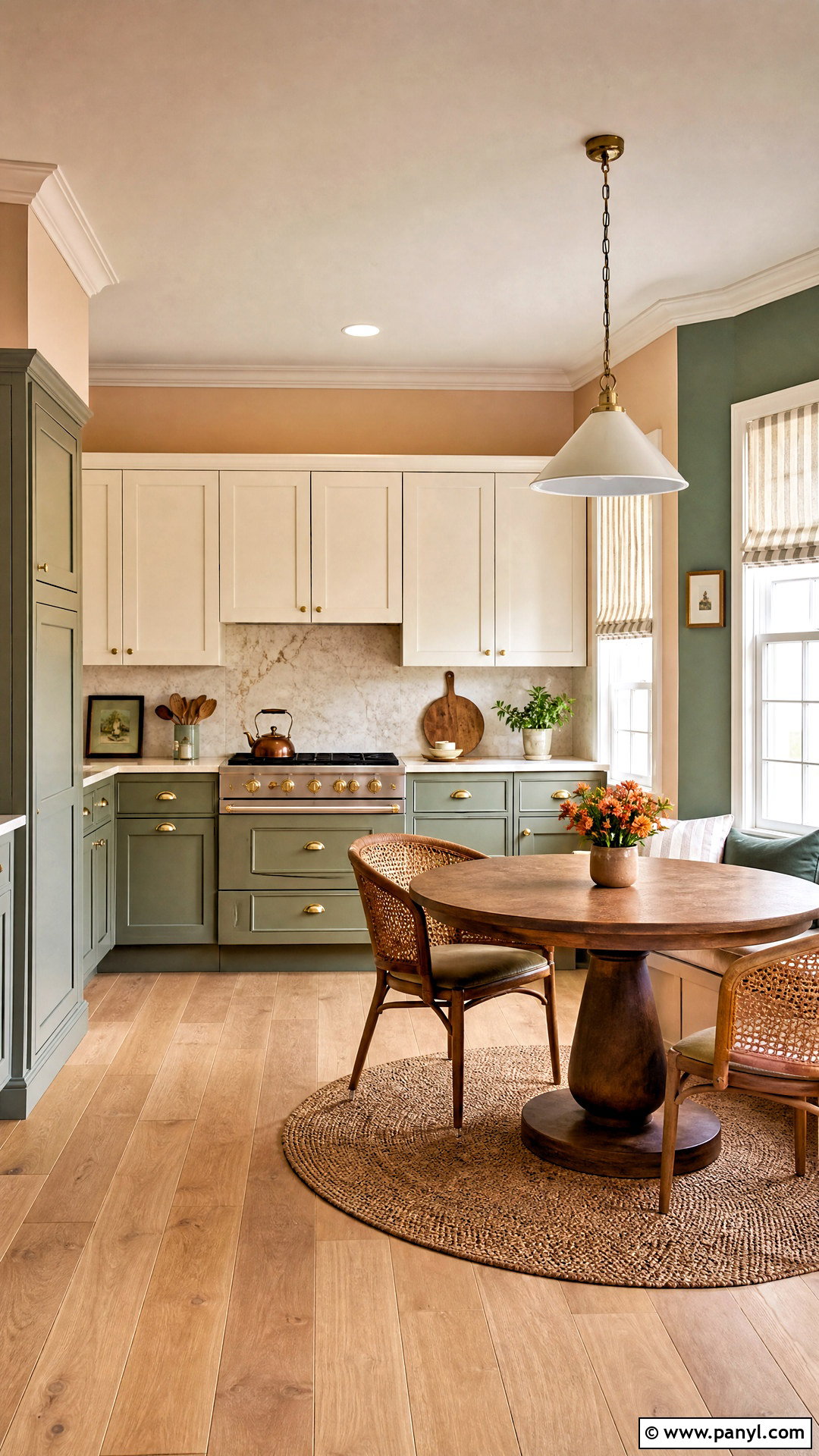
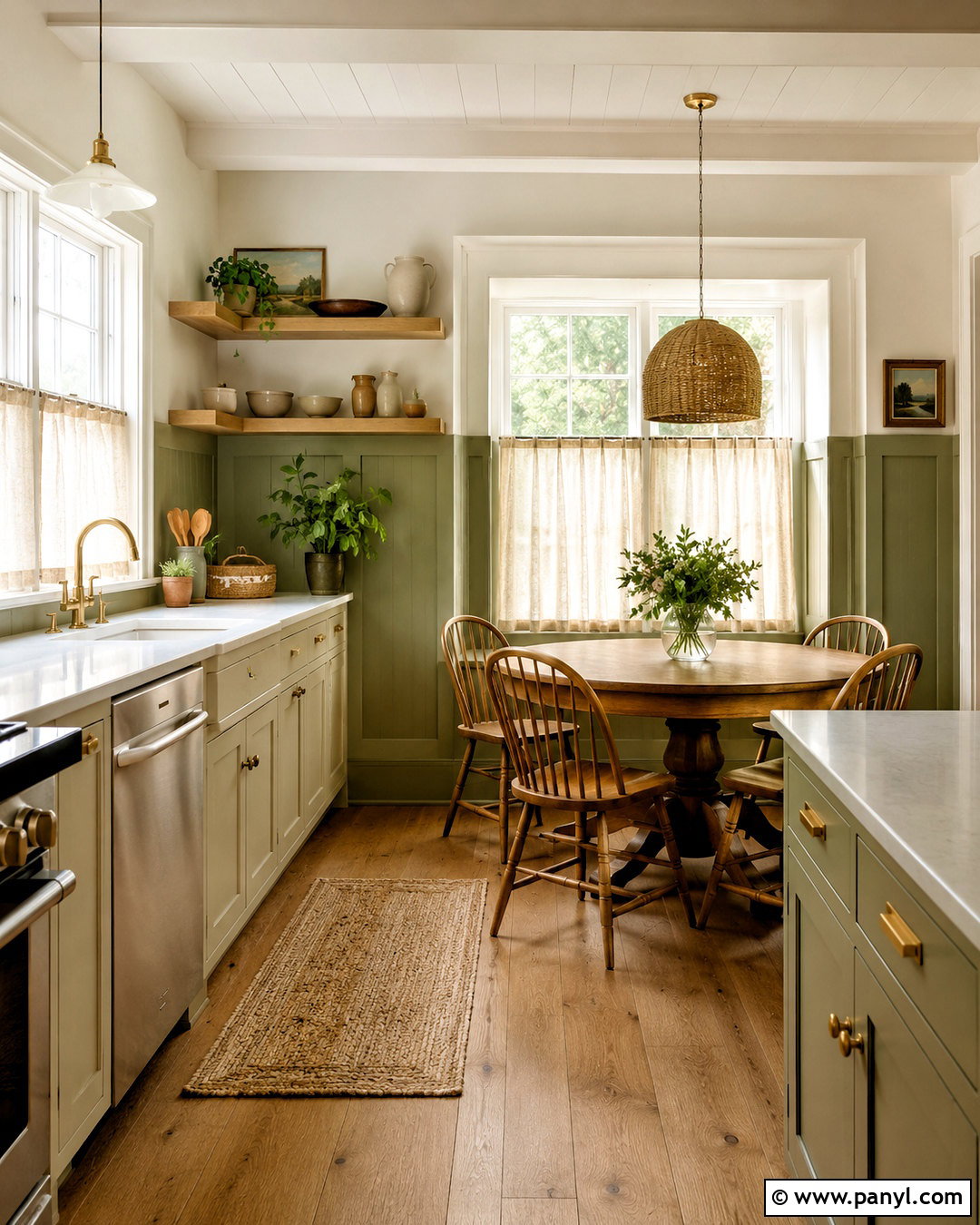
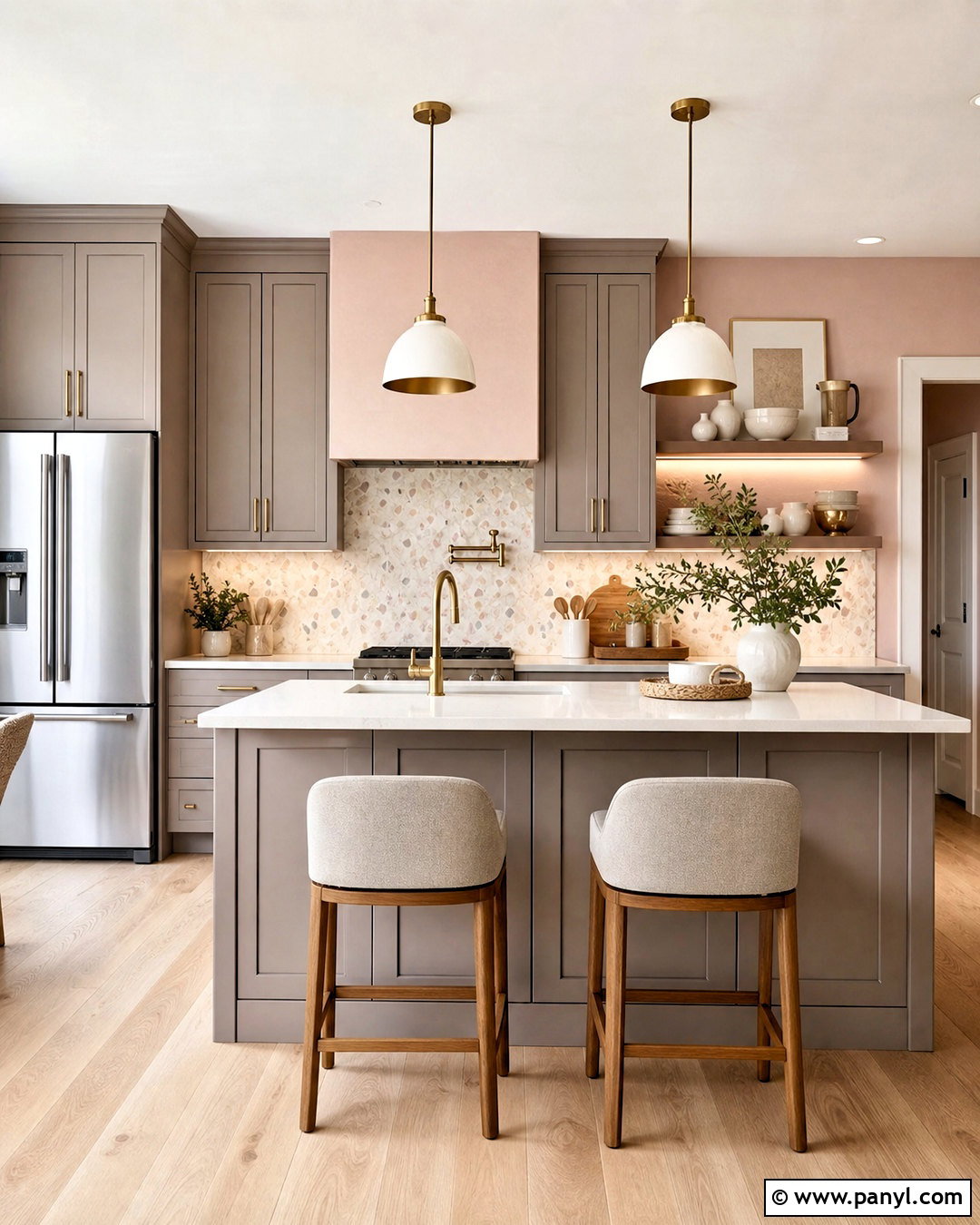
Bring warmth and freshness into a kitchen by combining soft peach with muted green. Paint the main walls pale peach, then use a dusty green around the breakfast area and on the wall surrounding open shelves. Repeat the green on lower cabinets if the layout allows, creating a deliberate connection between cabinetry and walls. Choose warm white upper cabinets, a creamy stone backsplash, and light oak flooring. A small round wood table with woven chairs creates a casual eating zone. Add aged brass hardware, simple ceramic dishes, and striped linen shades. The peach prevents the green from feeling cool, while the green balances the sweetness of the peach. Together, the colors create a bright, approachable kitchen with vintage-inspired warmth.
15. Deep Red And Putty Hallway Walls
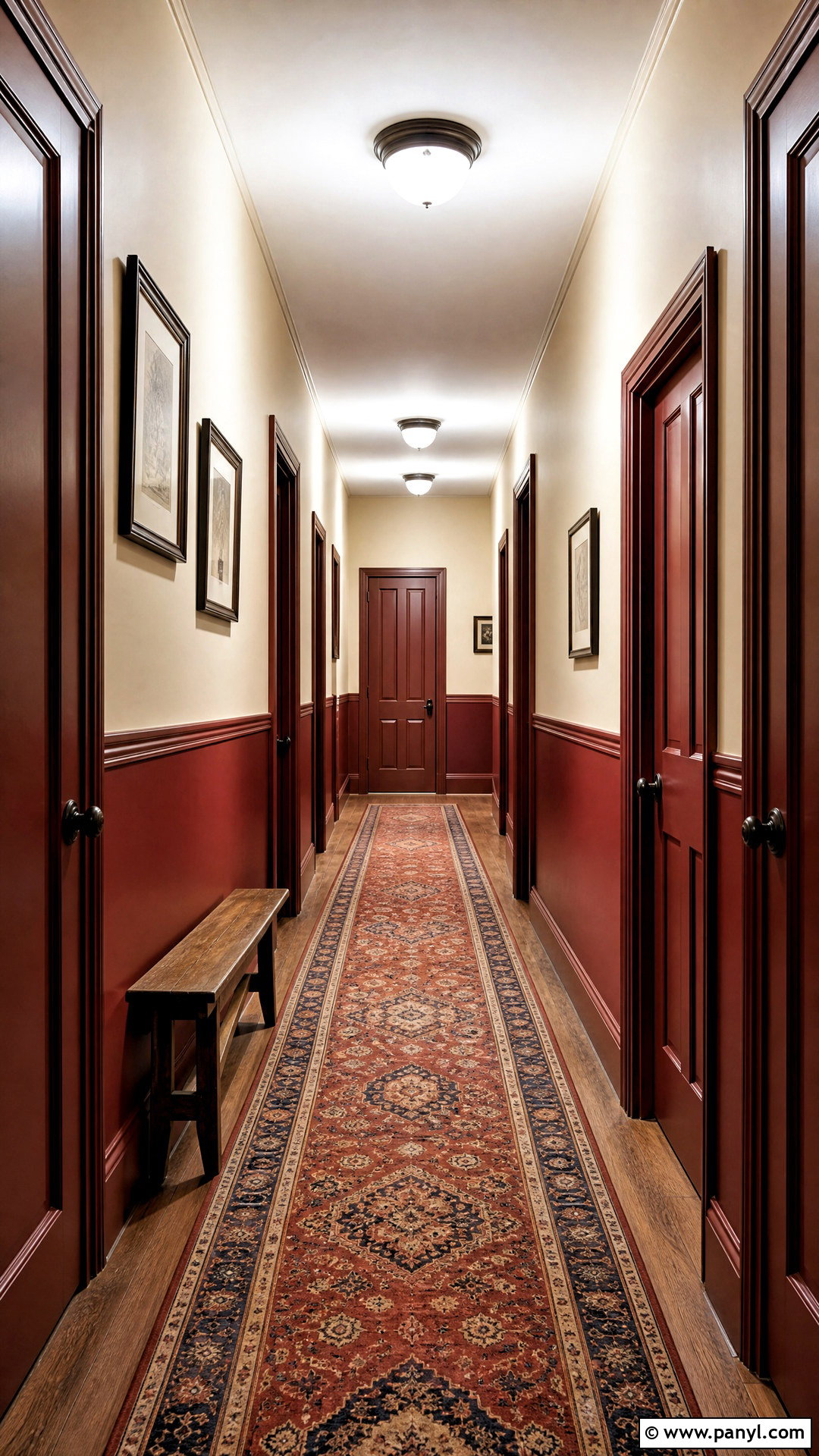
A long hallway can handle stronger color when paired with a quiet neutral. Paint the lower two-thirds in a muted deep red and use soft putty beige above. Extend the red across doors and baseboards within the hallway so the lower area reads as one continuous architectural band. Lay a patterned runner featuring rust, navy, and cream down the center. Hang small framed prints in an even row along the lighter upper walls, using dark wood frames for definition. A simple flush-mount light and a narrow bench keep the passage functional. The putty color softens the red and prevents it from appearing harsh. This complete treatment gives a transitional area purpose while connecting nearby rooms through warm, versatile tones.
16. Cobalt Blue And Cream Living Room Walls
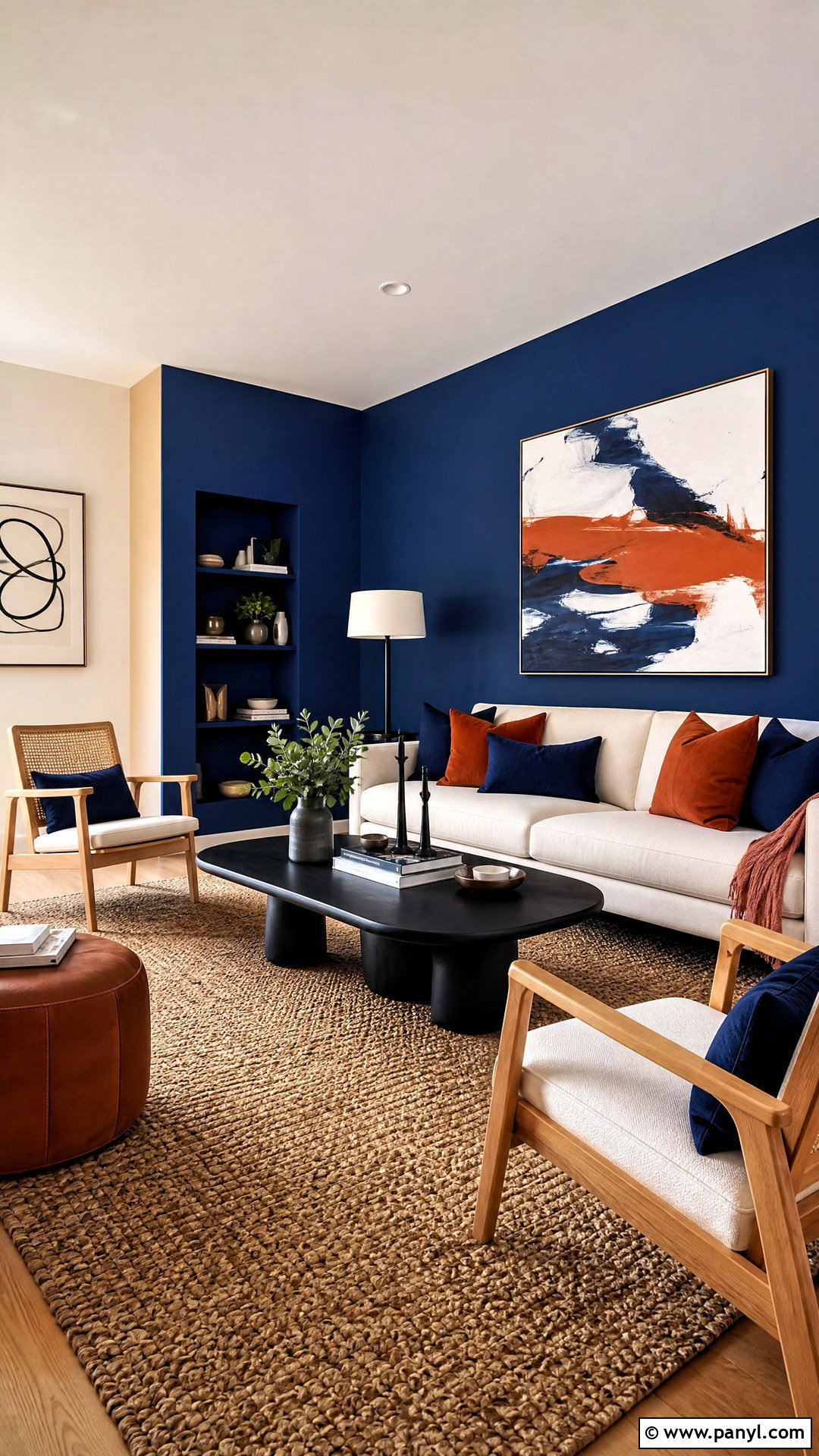
For a bold living room, combine cobalt blue with a warm cream rather than stark white. Paint one full wall cobalt, then extend the blue approximately three feet onto each adjoining wall. This wrapped color-block effect creates a defined seating area and looks more intentional than a standard isolated accent wall. Position a cream sofa against the blue backdrop with rust, blue, and patterned cushions. Add two light wood chairs, a woven rug, and a sculptural black coffee table. Cream paint on the remaining walls and ceiling balances the strong color. Large abstract artwork with white space prevents the blue wall from feeling empty. The finished room feels colorful, modern, and carefully arranged rather than visually overwhelming.
17. Greige And White Bedroom Walls
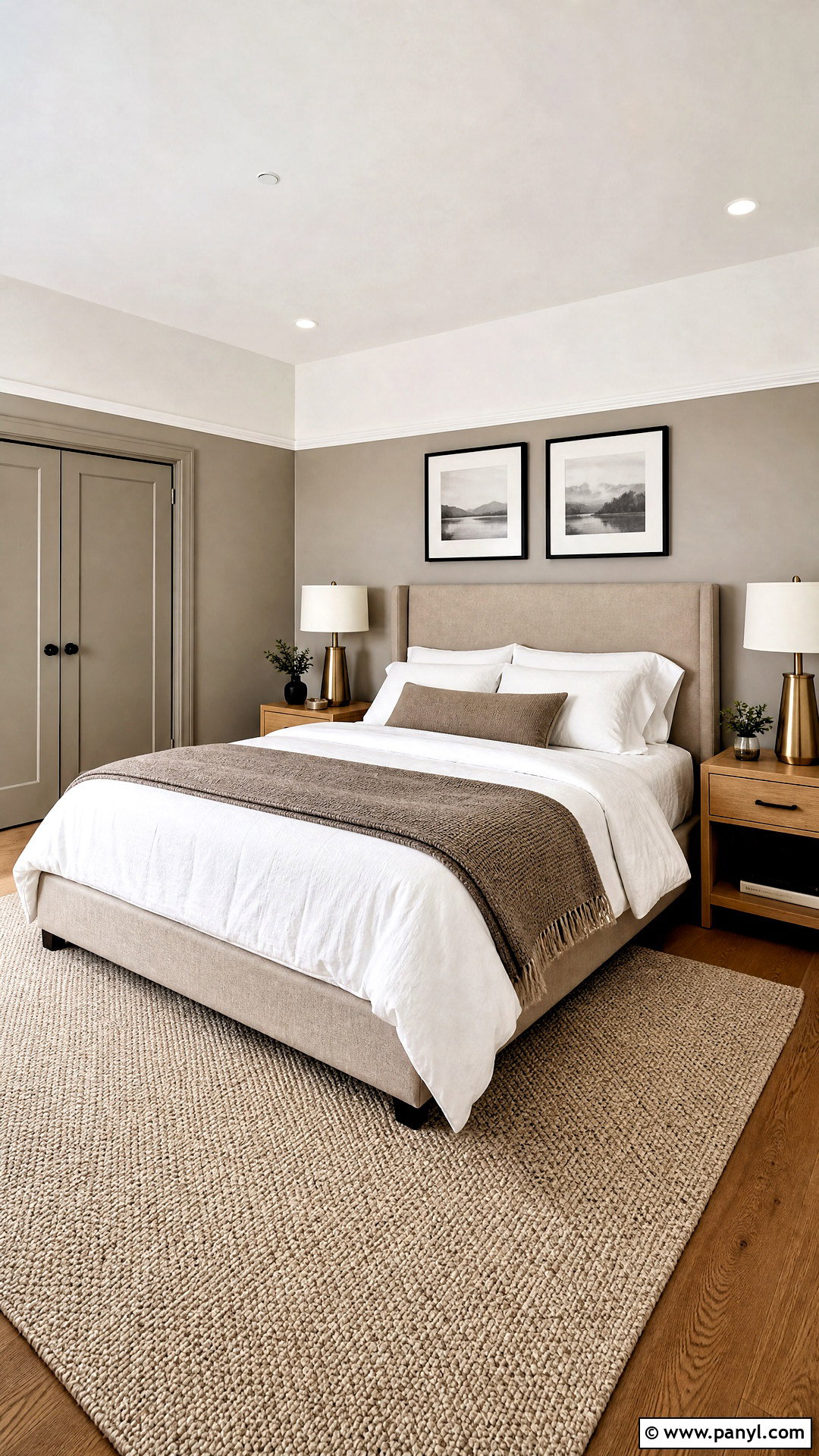
A greige and white bedroom offers subtle contrast for anyone who prefers a quiet neutral palette. Paint the lower half of the walls medium greige and use soft white above, adding a slim white molding over the dividing line. Continue the greige across the closet doors for a built-in appearance. Choose an upholstered beige bed, white bedding, and a textured taupe throw. Light oak nightstands and warm brass lamps introduce gentle variation without disrupting the calm color scheme. Add full-length ivory curtains and a tonal wool rug to soften the room. Black accents should remain minimal, perhaps appearing only on picture frames. This complete design relies on texture, shape, and layered neutrals to feel interesting instead of plain.
18. Burnt Orange And Soft Blue Office Walls
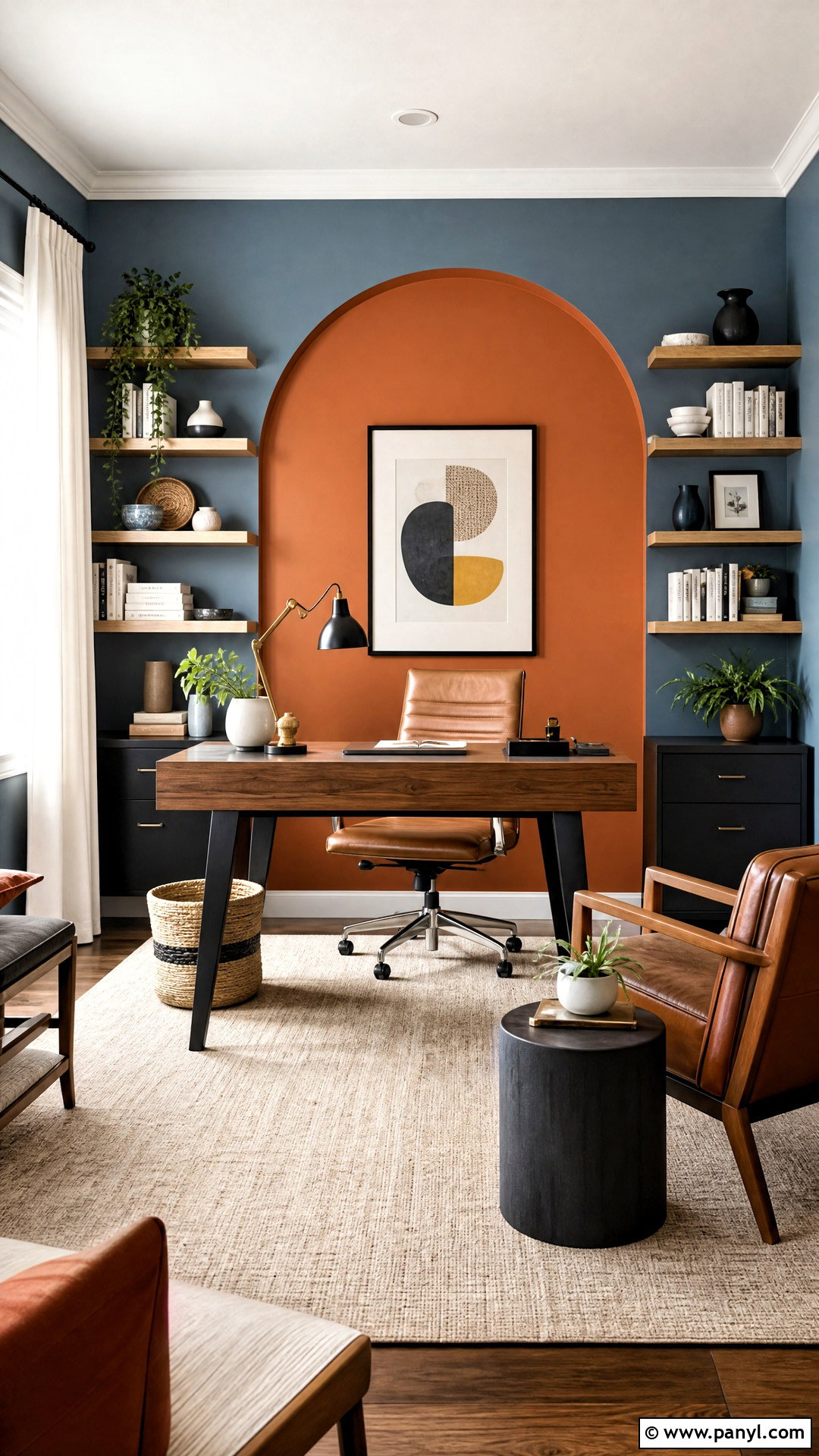
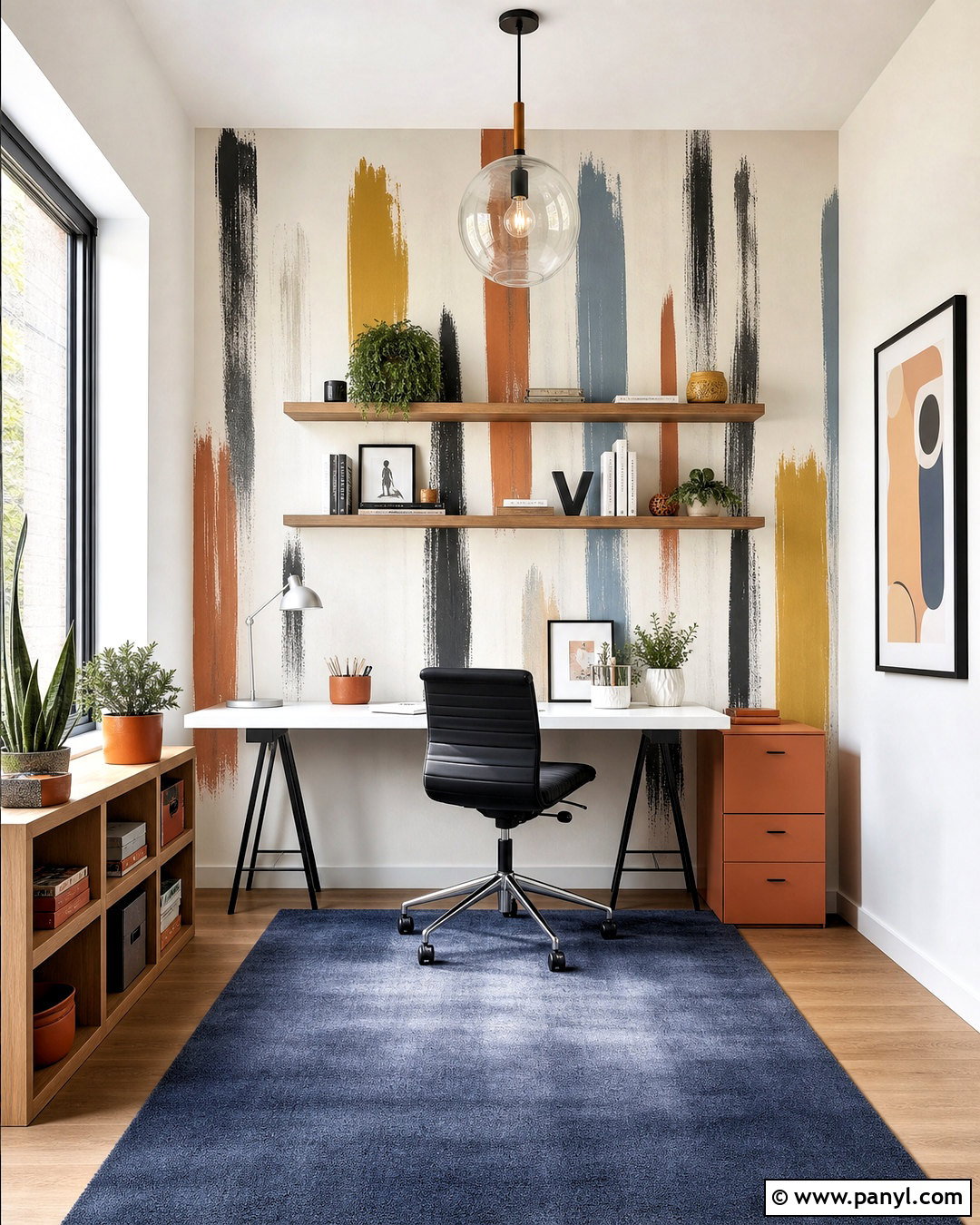
Burnt orange and soft blue create an energizing home office without relying on harsh primary colors. Use dusty blue across most walls, then paint a wide burnt orange arch behind the desk. Make the arch large enough to frame the desk, chair, and two floating shelves as one organized work zone. A walnut desktop and matte black legs add structure, while a tan leather chair supports the warm accent color. Install pale wood shelves inside the arch and display only a few books, ceramics, and plants. Choose a beige rug and white curtains to balance the stronger hues. The completed office feels creative and focused, with the painted shape establishing a clear centerpiece for the room.
19. Aqua And Coral Laundry Room Walls
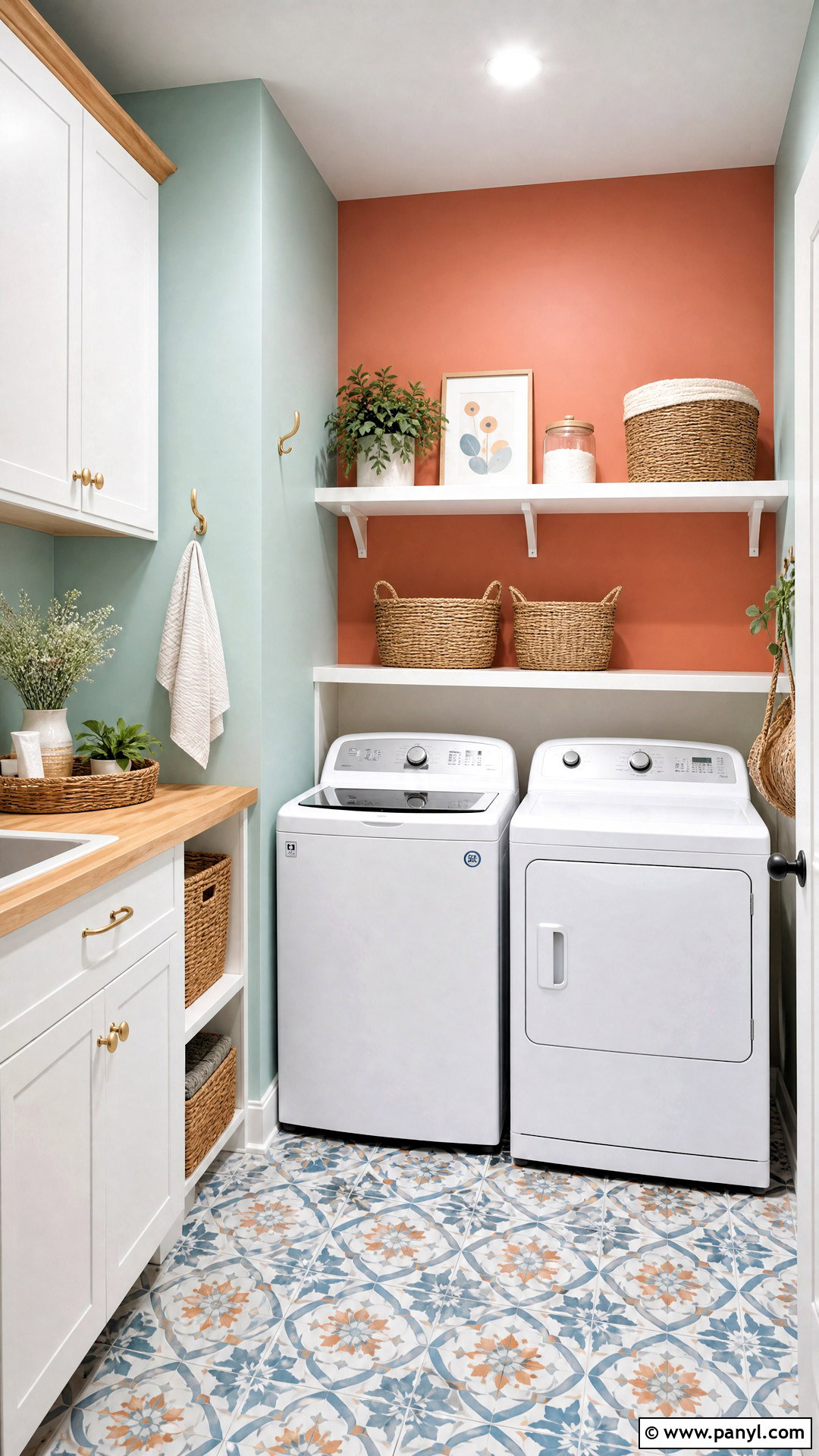
Turn a practical laundry room into a bright, cohesive space with fresh aqua and muted coral. Paint the main walls pale aqua, then apply coral to the wall behind the washer, dryer, and countertop. White appliances and cabinetry keep the compact room crisp, while a light butcher-block counter adds natural warmth. Install white open shelves against the coral background and use matching woven baskets for supplies. A small patterned floor tile can include touches of blue, terracotta, and cream to connect the two wall colors. Complete the design with simple brass hooks and a white ceiling light. The colors bring personality to the room, but their softened tones keep the laundry area clean-looking and easy to organize.
20. Dark Green And Pink Reading Nook Walls
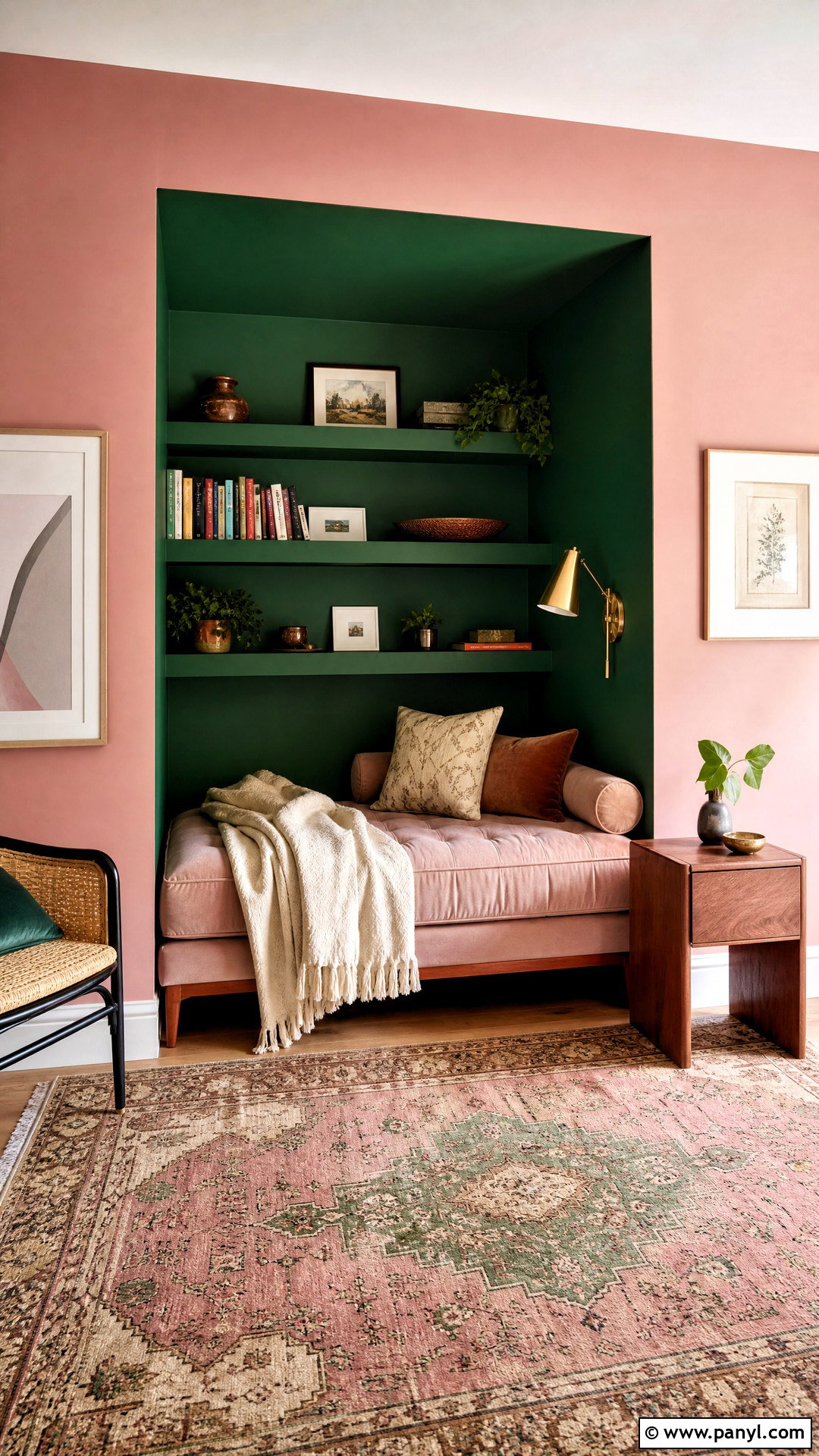
A dedicated reading nook becomes more immersive with dark green and dusty pink walls. Paint the nook’s back wall and side returns deep green, creating a wrapped alcove, while using muted pink across the surrounding room. Place a wide blush upholstered chair or compact daybed inside the green zone. Add a small walnut side table, an adjustable brass reading lamp, and a cream throw for comfort. Built-in shelves painted green can make the nook feel even more integrated. Choose a patterned rug containing pink, green, tan, and ivory to unite both areas. Keep nearby curtains pale and artwork minimal. This complete scheme uses contrasting colors to define a cozy destination without constructing new walls or permanent partitions.
Conclusion:
The most successful two-color rooms feel connected rather than divided. Begin with shades that share similar warm or cool undertones, then decide whether the contrast should be gentle or bold. Use furniture placement, architectural details, or a room’s natural zones to determine where each color begins and ends. Clean lines suit polished spaces, while arches and geometric blocks create a more playful effect. Always sample both paints beside flooring, trim, and major furnishings before committing. These **20 2 color wall paint ideas** can work in large or small homes because each scheme considers the complete room. With careful proportions and coordinated decor, two wall colors can add depth, personality, and structure without making the space feel busy.

Related Ideas and Inspiration:
Leave a Reply