
Accent walls can define a room, highlight its best feature, and introduce color without requiring a complete makeover. These 20 accent wall paint designs explore solid colors, arches, stripes, curves, murals, and geometric patterns that work across bedrooms, living rooms, dining spaces, offices, and children’s rooms. Current painted-wall treatments range from simple two-color blocking to layered ombré effects and carefully planned geometric compositions. () Each look below includes a coordinated palette, furniture direction, and decorative details, so the finished room feels intentional rather than pieced together. Whether your home is modern, traditional, coastal, or eclectic, you can adapt the colors and scale to suit it. Explore these practical accent wall paint designs to find a complete look you can confidently recreate.

1. Navy Blue Accent Wall Paint
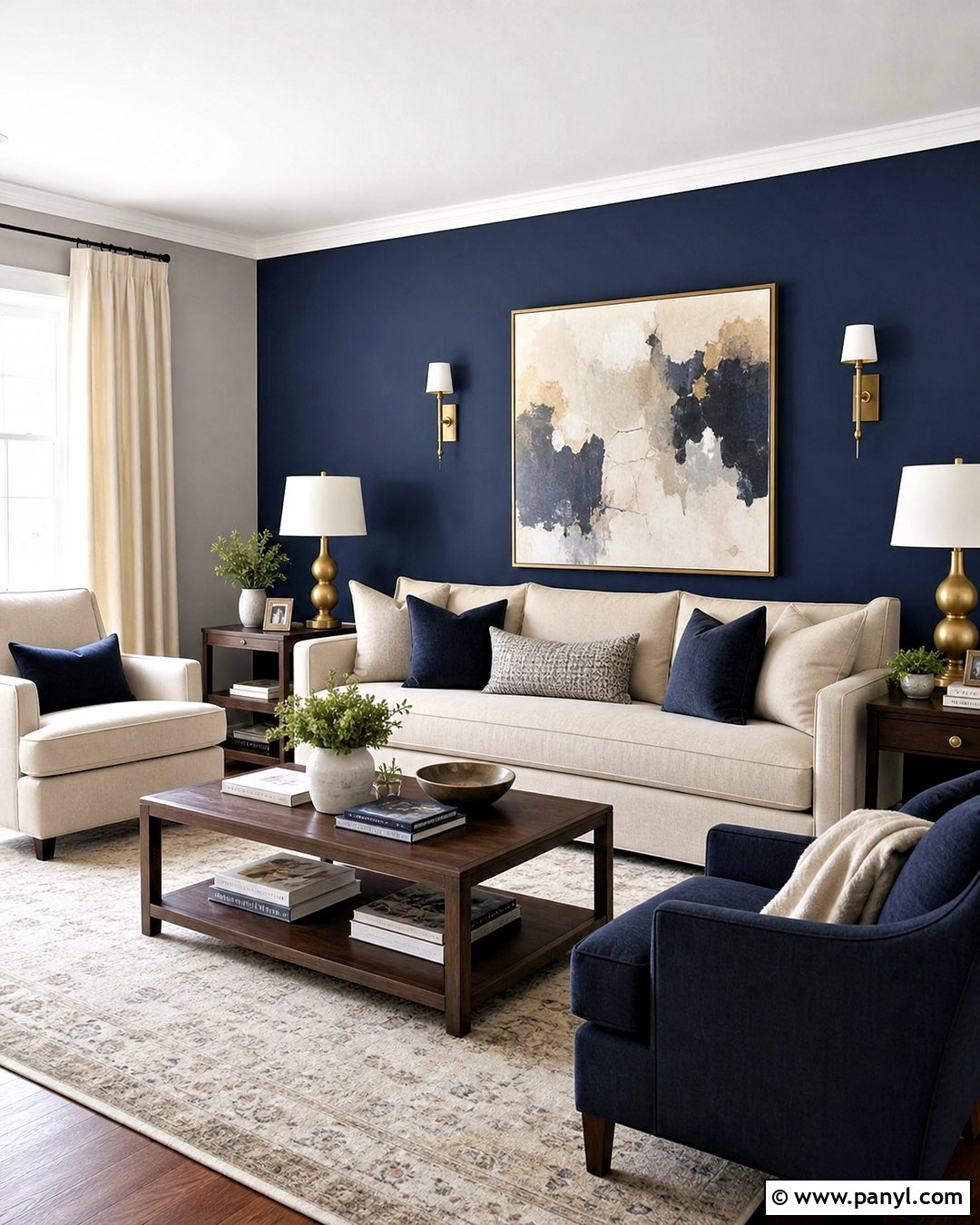
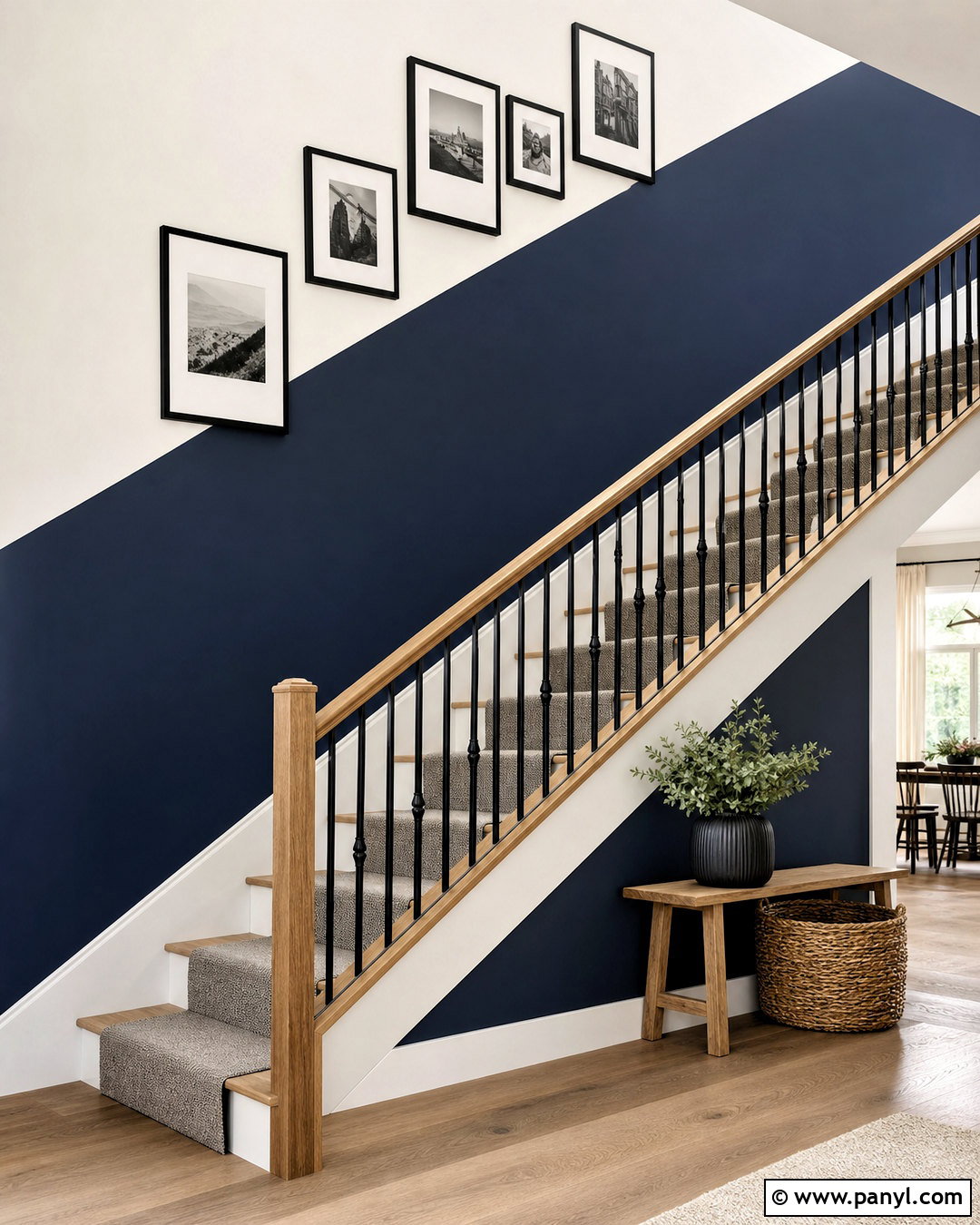
A deep navy wall creates a grounded focal point without making a living room feel overly dark. Paint the wall behind the main sofa, then keep the surrounding walls warm white to maintain brightness. Choose a cream or oatmeal sofa with clean lines and add medium-tone walnut tables for warmth. Camel leather, soft blue, and ivory pillows connect the furniture to the dramatic wall. A large abstract canvas with white and muted rust details prevents the navy surface from looking empty. Finish the room with brushed brass lamps, linen curtains, and a lightly patterned neutral rug. This complete palette works especially well in rooms with generous natural light and creates a polished look that can shift easily between modern, coastal, and transitional decor.
2. Sage Green Accent Wall Paint
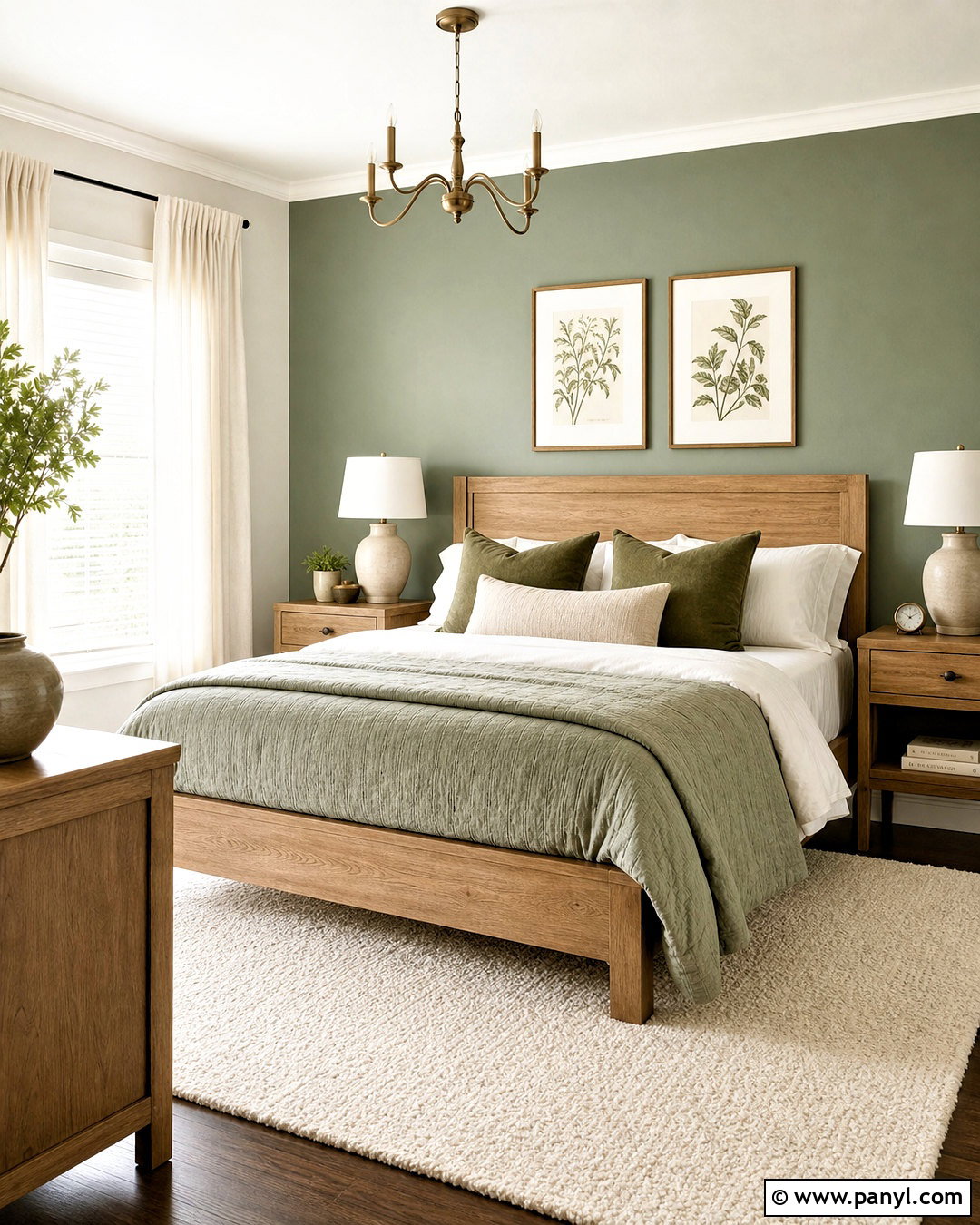
Soft sage green brings a restful, organic character to a bedroom while remaining more distinctive than beige. Use it across the entire wall behind a natural oak bed, including any small returns or alcoves, for a continuous backdrop. Dress the bed in white cotton, muted olive, and warm taupe layers. Simple oak nightstands and ceramic lamps keep the arrangement calm and balanced. On the accent wall, hang one wide landscape print or a pair of understated botanical pieces rather than several small frames. Warm white side walls, light wood flooring, and an ivory wool rug will keep the color fresh. Add linen curtains and a few dark bronze accents to provide definition without disturbing the room’s soft, nature-inspired atmosphere.
3. Terracotta Arch Accent Wall Paint
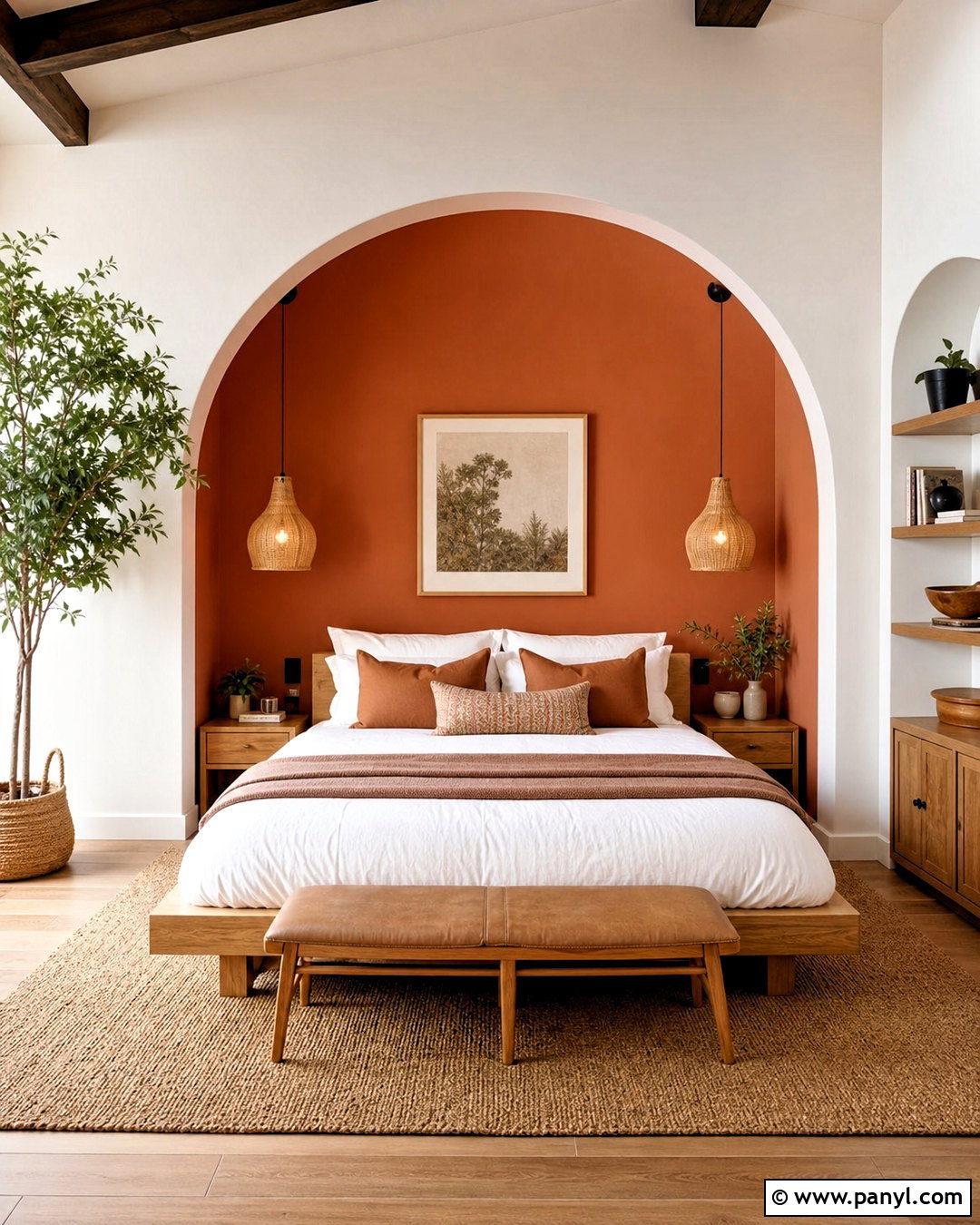
A painted terracotta arch can frame a bed and create the impression of built-in architecture. Start the arch slightly wider than the headboard and extend it from the baseboard to roughly two-thirds of the wall height. Keep the remaining wall creamy white so the curved shape stays crisp. Pair it with a low oak platform bed, white bedding, clay-colored pillows, and woven pendant lights. Matching nightstands placed inside the edges of the arch make the whole composition feel centered. Continue the earthy palette through a jute rug, tan bench, and small green plants. This treatment works best with a matte finish, which gives the warm orange-brown color a soft, plaster-like quality and reduces distracting reflections around the painted edge.
4. Black Accent Wall Paint
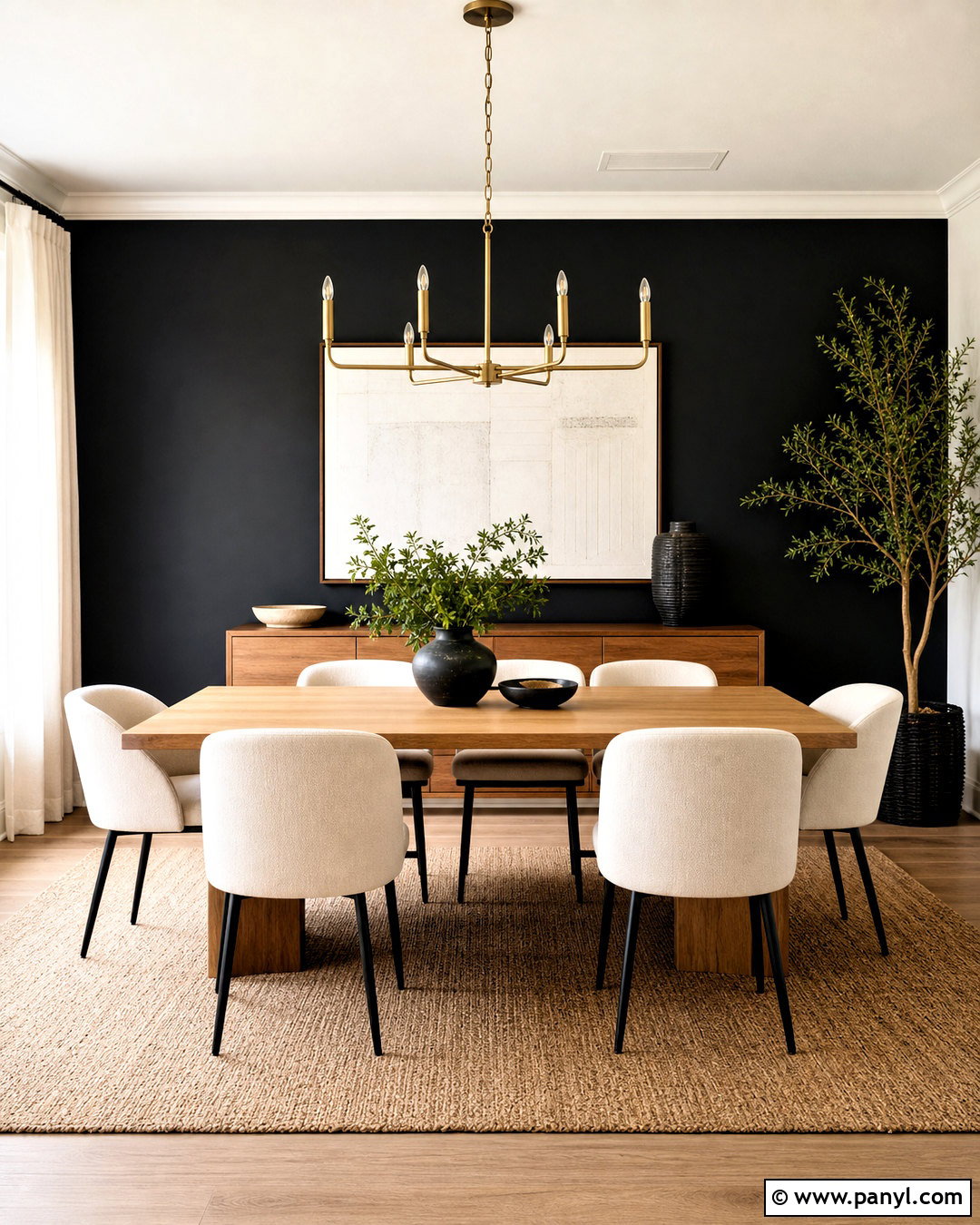
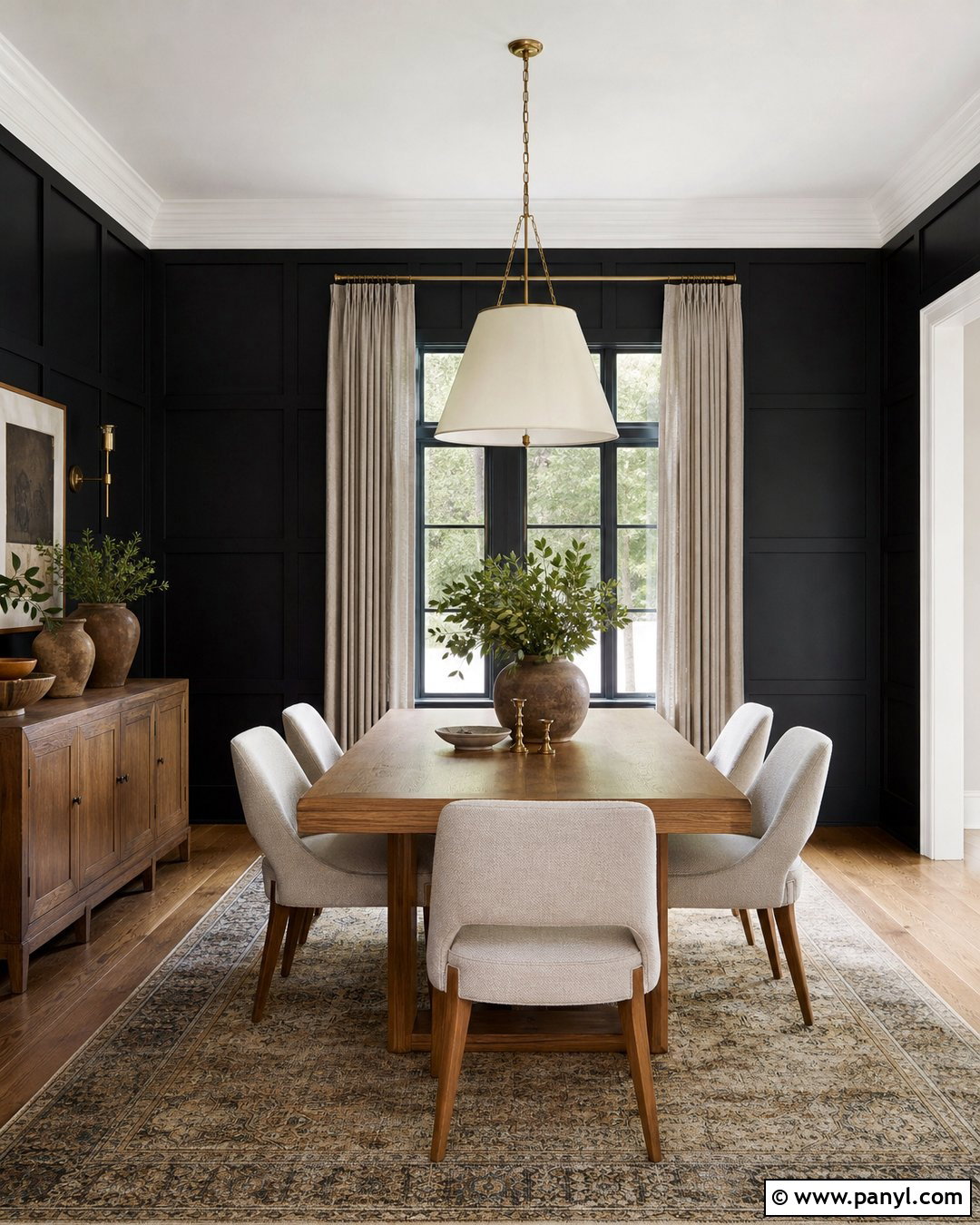
Black paint can feel sophisticated rather than severe when the room includes enough warmth and texture. Use it on a dining room wall with simple architectural features, such as a doorway, shallow niche, or centered console. A matte or eggshell finish creates depth while keeping glare under control. Place a light oak dining table nearby with woven or cream upholstered chairs to establish strong contrast. Add an oversized pale artwork, a warm brass chandelier, and a slim wood sideboard against the black wall. Off-white paint on the remaining walls and ceiling will maintain an open feeling. Natural linen curtains, greenery, and a beige rug soften the sharp palette. The result is an elegant dining space that feels dramatic, balanced, and comfortable enough for everyday use.
5. Color Block Accent Wall Paint
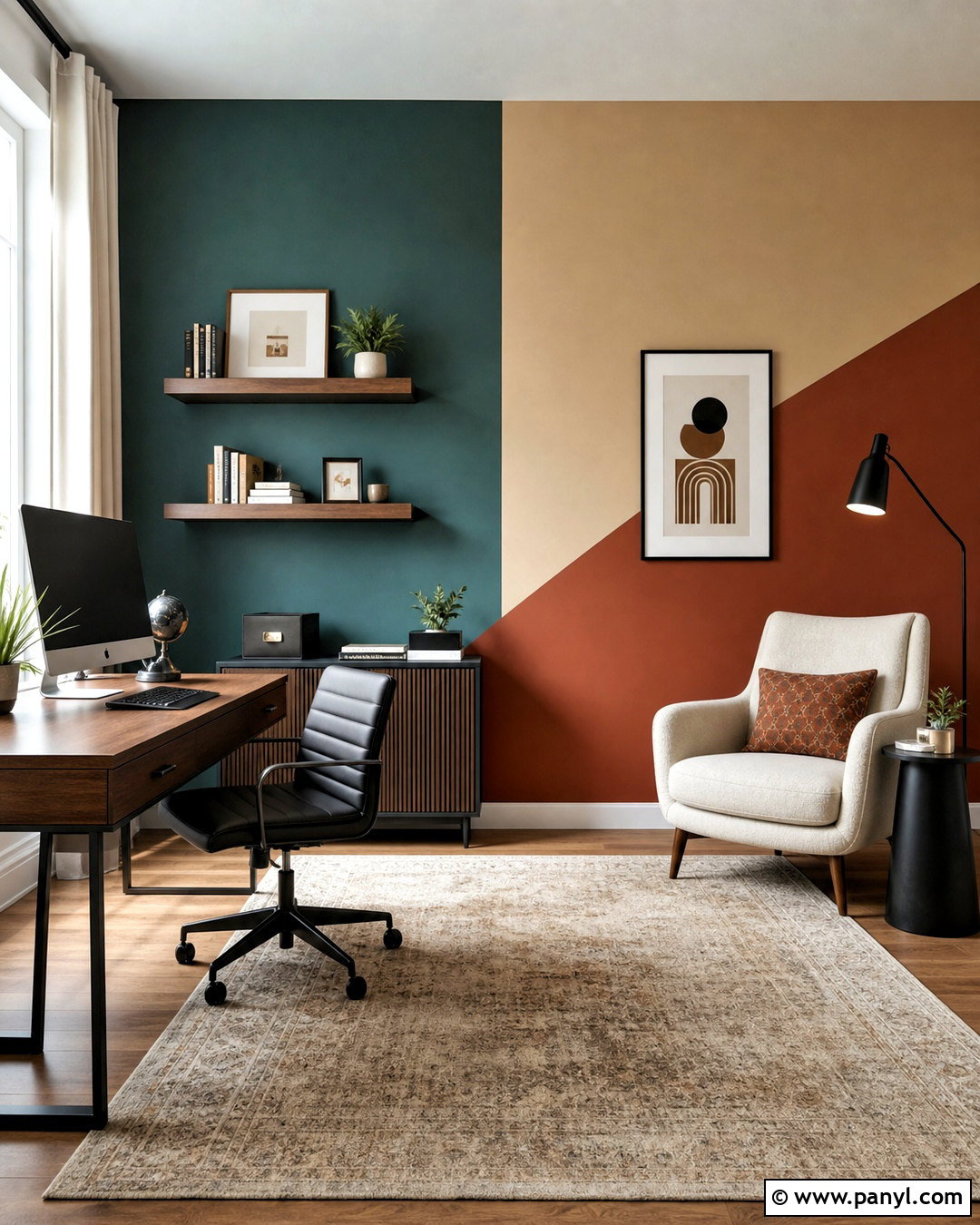
Color blocking turns one wall into a bold composition while helping define separate functions in an open room. Divide a home office wall into two large asymmetrical sections rather than many small shapes. Use muted teal behind the desk and warm sand across the adjoining reading area. A narrow rust-colored rectangle can bridge both zones and add controlled contrast. Choose a walnut desk, black task chair, and floating shelves for the work section. Complete the reading corner with a cream chair, small side table, and floor lamp. Keep the other walls warm white and repeat the painted colors through a few cushions and desk accessories. Large, simple blocks are easier to tape and paint, and they create a cleaner, more adaptable result than a crowded geometric pattern.
6. Geometric Accent Wall Paint
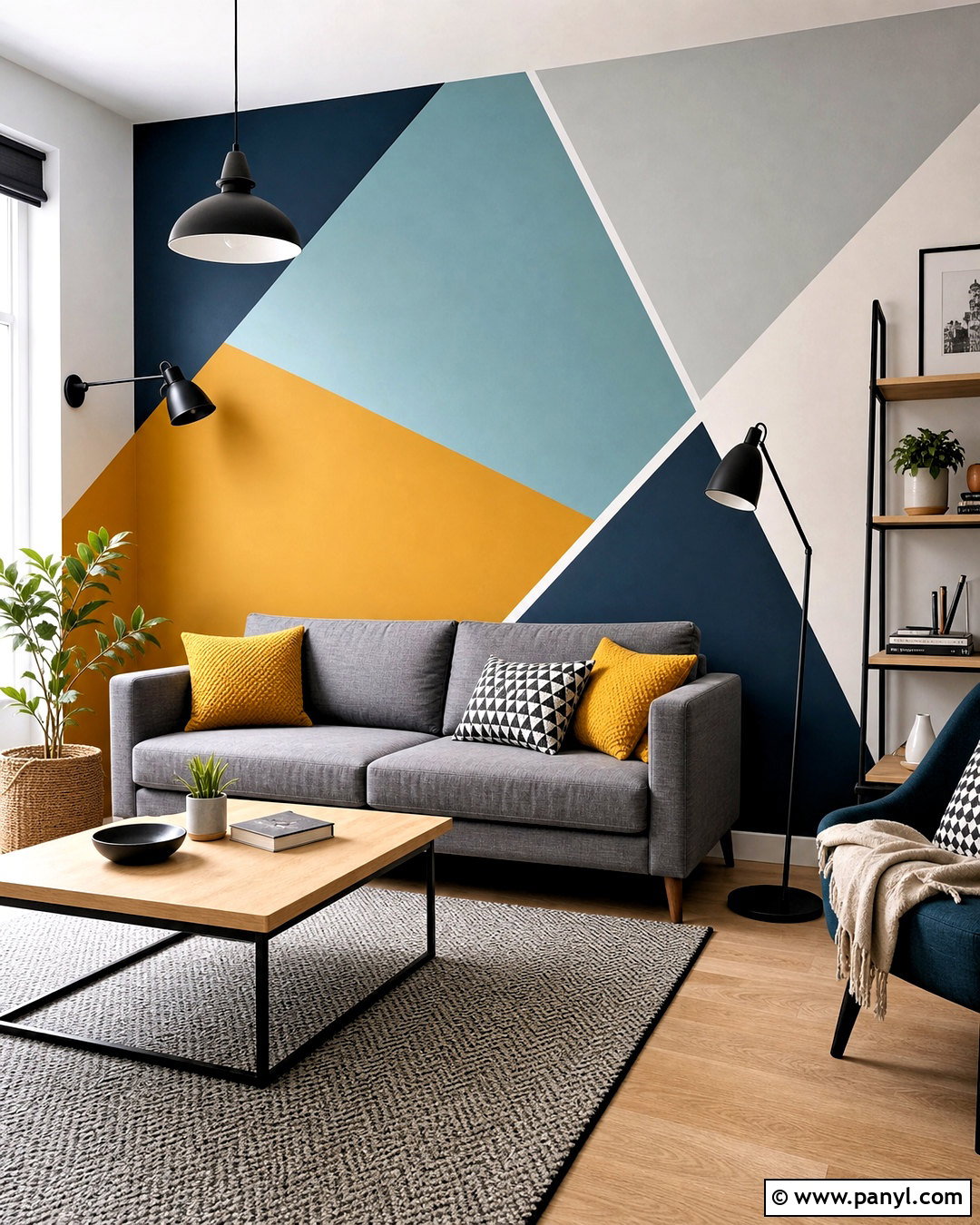
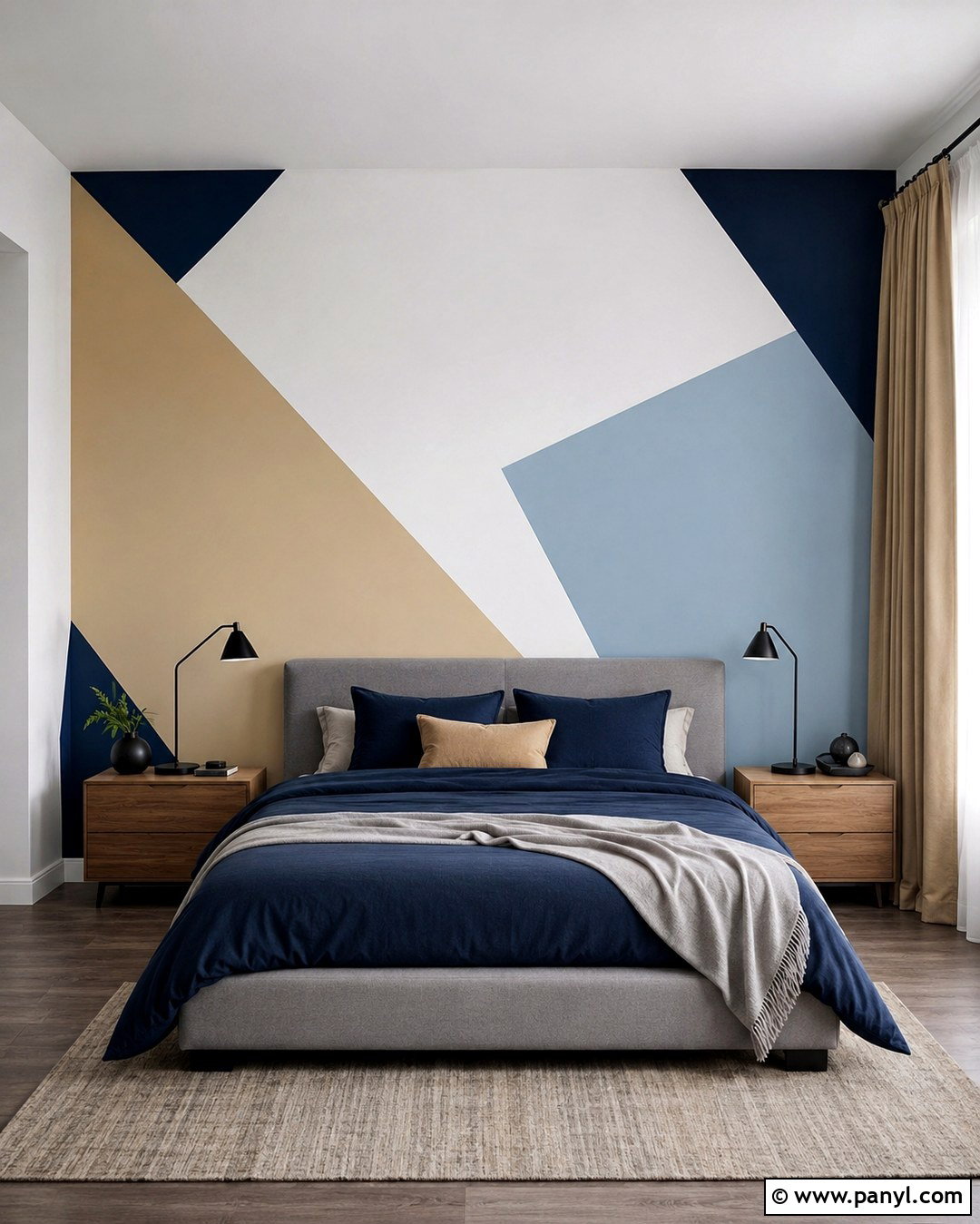
A geometric accent wall can energize a game room, teen bedroom, or creative workspace when its colors stay coordinated. Begin with a pale gray base and layer several oversized angular forms in deep blue, dusty teal, warm mustard, and white. Limit the design to four colors and vary the shape sizes so the pattern feels dynamic without becoming chaotic. Position the largest dark section behind a sofa or bed to visually anchor the furniture. Add streamlined pieces in gray upholstery and light wood, then repeat only two wall colors in the textiles. Black metal lighting and simple framed art will sharpen the modern look. Carefully measured painter’s tape and thoroughly dried base paint are essential for producing clean edges and a professional-looking finished wall.
7. Two Tone Accent Wall Paint
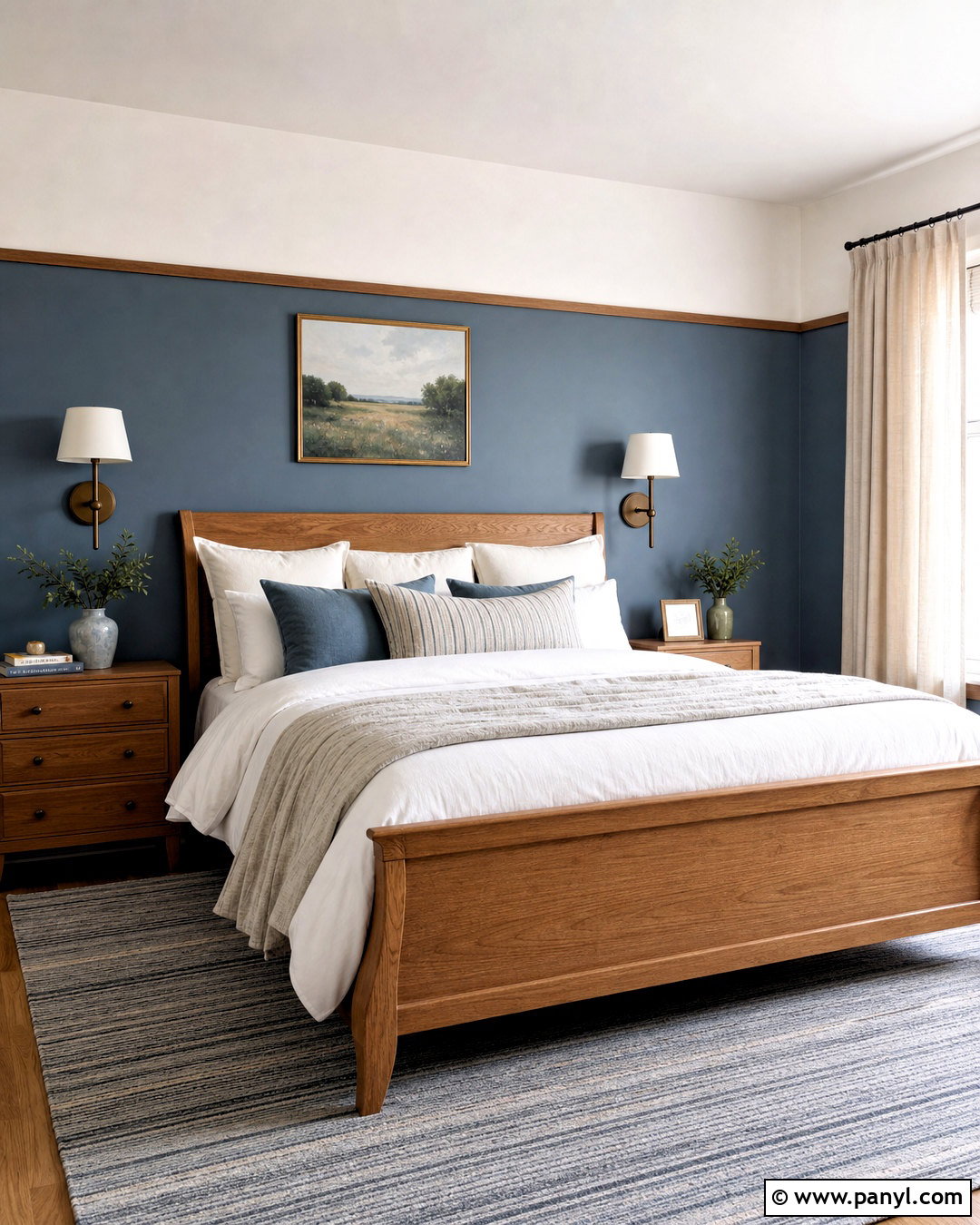
A horizontal two-tone wall adds visual structure and can make a room feel wider. Paint the lower two-thirds in dusty blue and the upper section in warm white, placing the dividing line slightly above the headboard or major furniture. This proportion feels more intentional than splitting the wall exactly in half. Use a medium oak bed, crisp white bedding, and blue-gray cushions to connect the furniture with the lower color. A slim painted or wood molding strip can cover the transition and create a tailored finish. Add matching wall sconces, a striped rug, and light linen curtains. Continue the warm white onto the ceiling for an airy effect. This simple design provides enough detail to feel special while remaining suitable for a calm primary bedroom or guest room.
8. Ombre Accent Wall Paint
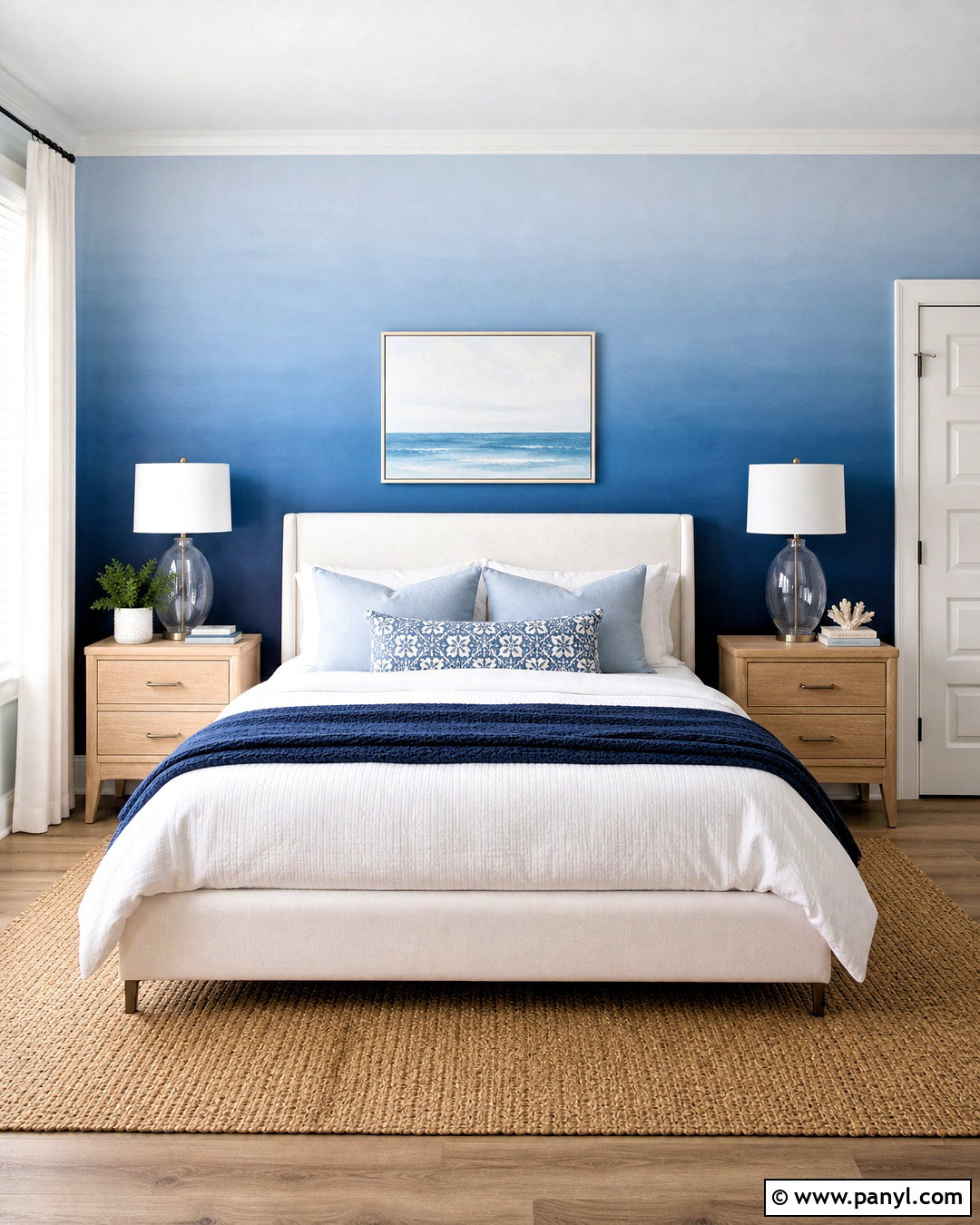
An ombré wall introduces movement through color without using a sharp pattern. Create a blue bedroom design that begins with deep ocean blue near the floor, transitions through medium denim, and fades into pale sky blue at the ceiling. Using related shades from the same color family helps the blended effect feel cohesive. () Keep the furniture straightforward with a white upholstered bed, pale oak nightstands, and softly textured white bedding. A navy throw and powder-blue pillows will echo both ends of the gradient. Avoid hanging numerous pictures because the painted transition should remain the main feature. Finish with a natural woven rug, clear glass lamps, and white curtains. The lighter upper wall visually lifts the ceiling, while the darker base gives the bed a stable, grounded backdrop.
9. Half Painted Accent Wall
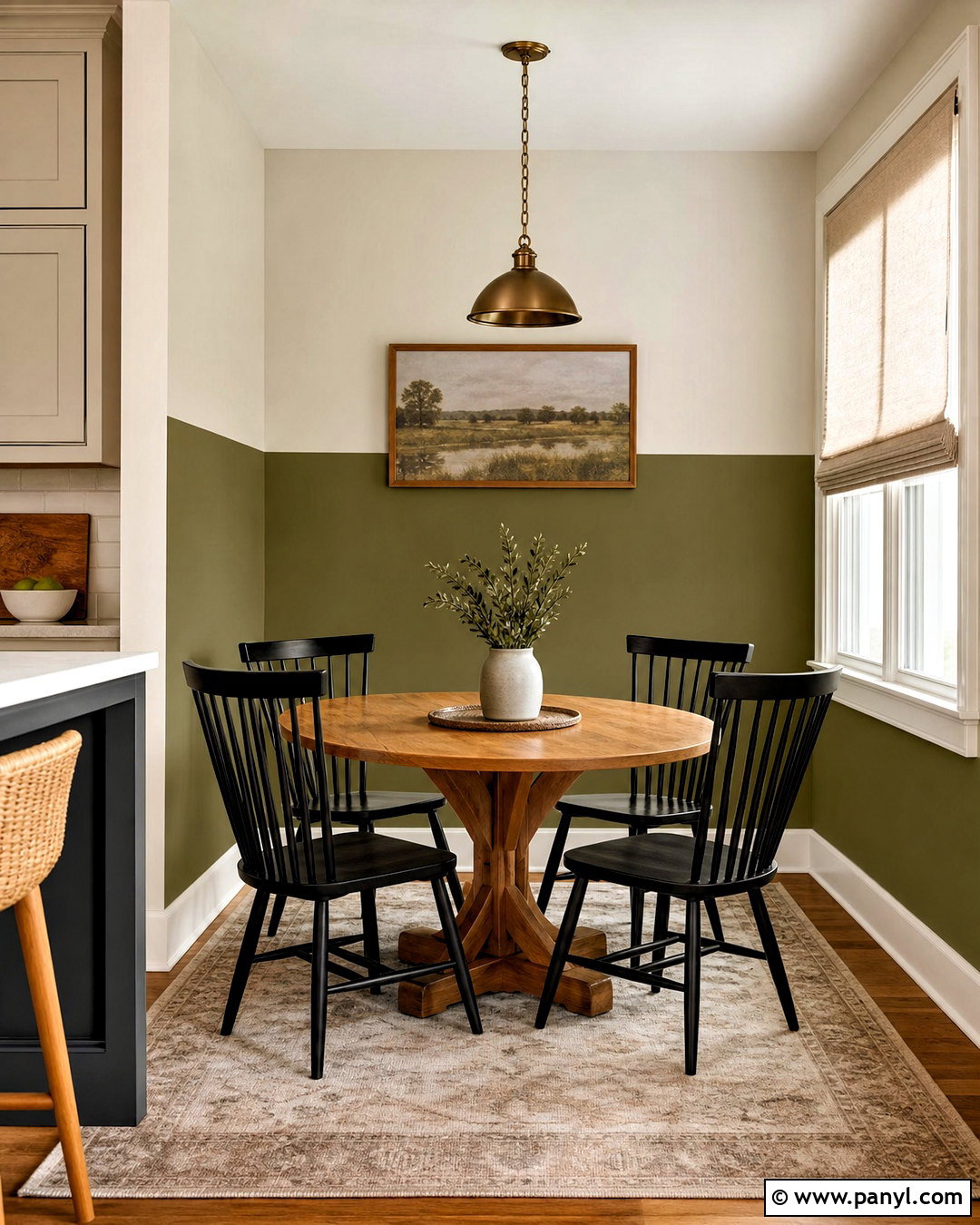
Half-painted walls offer an approachable way to add color while preserving a bright, uncluttered room. In a small dining nook, apply warm olive green from the baseboard to just above chair-rail height. Leave the upper wall soft white and carry that shade across the ceiling. Place a round oak table in front of the painted section with four black spindle chairs for contrast. A compact brass pendant, cream Roman shade, and framed food-inspired prints complete the nook without overwhelming it. Keep artwork mostly within the white area so each piece remains visible. The lower green band should continue around corners or end at a clear architectural break. Repeating the olive tone in a table centerpiece or seat cushions will make the paint feel connected to the entire dining arrangement.
10. Vertical Stripe Accent Wall Paint
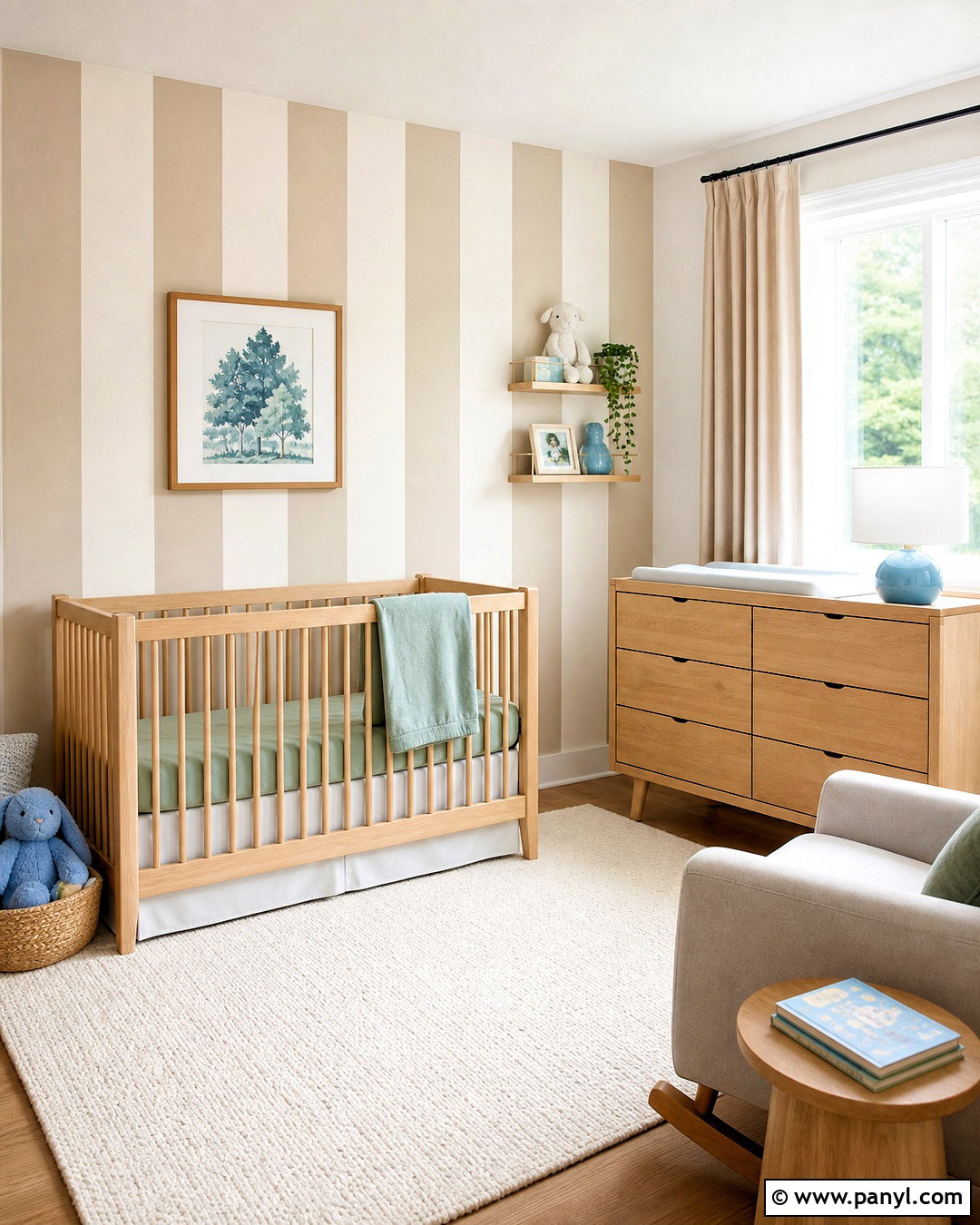
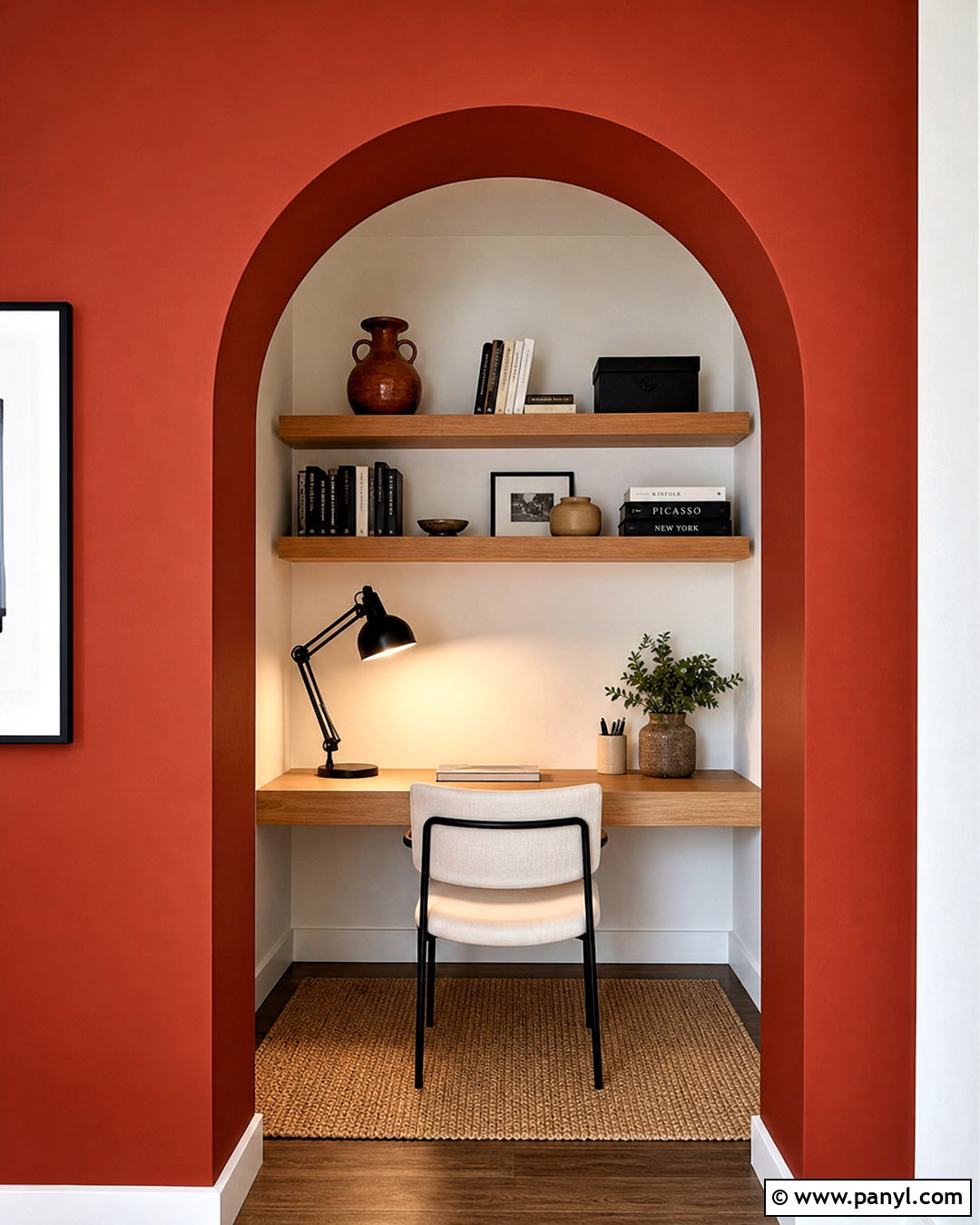
Wide vertical stripes can give a low-ceiling room a taller, more ordered appearance. Create alternating bands of soft beige and warm white on the wall behind a nursery crib or child’s bed. Make the stripes broad and evenly spaced for a calm result that can mature with the room. Pair the wall with natural maple furniture, an ivory rug, and curtains in a slightly deeper beige. Muted green bedding and small touches of pale blue add color without competing with the pattern. Hang one simple wood-framed print at the center of the wall, keeping the decor symmetrical. Use low-sheen paint in both shades so the stripes reflect light consistently. This complete look feels playful enough for a young room but restrained enough to remain useful through several decorating updates.
11. Horizontal Stripe Accent Wall Paint
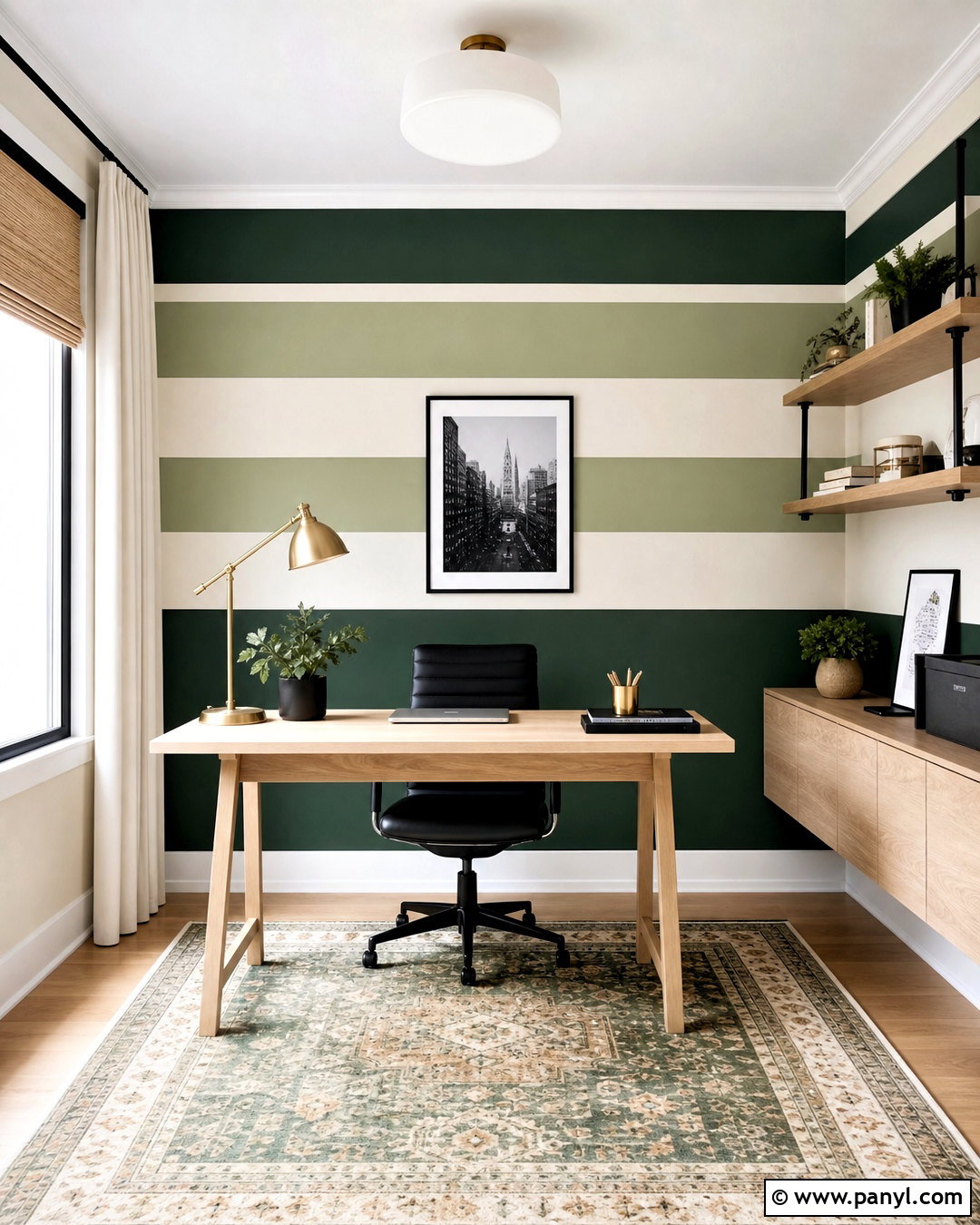
Horizontal stripes create a broad, graphic background that works especially well in a narrow office or hallway. Paint three wide bands across the focal wall using deep forest green at the bottom, muted sage in the center, and creamy white above. Align the color transitions with important furniture lines, such as the desktop and upper shelves. A light oak desk, black metal chair, and slim floating storage keep the wall visible and functional. Add a small patterned rug containing green and tan, plus a brass task lamp for warmth. Keep the neighboring walls creamy white so the bands do not visually close in the space. The limited palette and oversized proportions make this striped treatment feel architectural, giving a compact work area a clear sense of width and purpose.
12. Scalloped Accent Wall Paint
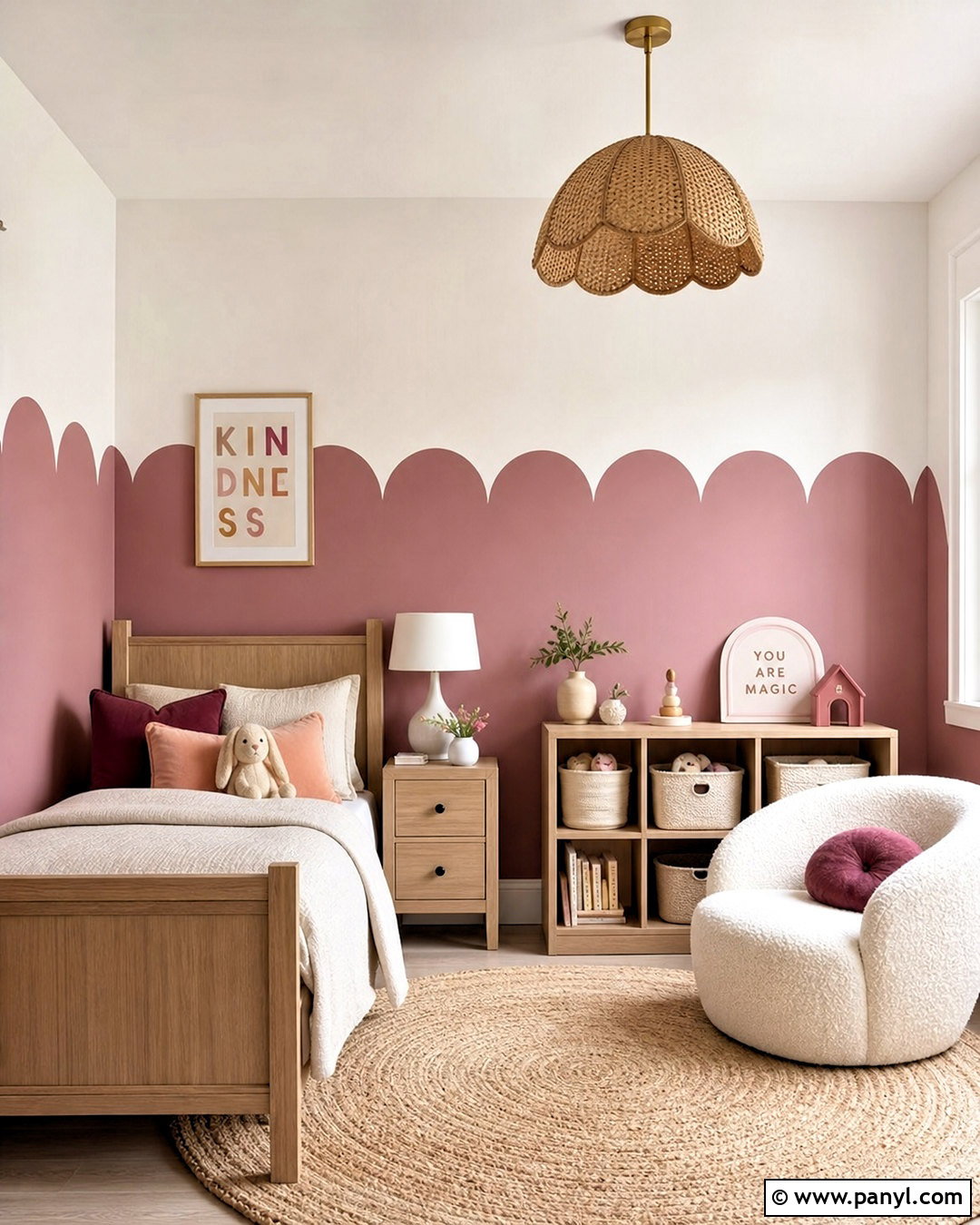
A scalloped wall brings a soft, playful rhythm to a child’s bedroom without relying on themed decor. Paint the lower half dusty rose, then form a row of large, evenly measured scallops along the upper edge. Leave the wall above warm white to emphasize the curved outline. Choose a white or pale oak bed, oatmeal bedding, and pillows in rose, peach, and muted burgundy. A rounded boucle chair and circular rug will repeat the wall’s gentle shapes. Keep storage baskets and window treatments neutral so the room does not become overly sweet. The scallops should be large enough to read clearly behind the furniture, with only a few curves spanning the wall. This creates a polished focal point that can transition from a child’s room to an older, more refined space.
13. Mountain Accent Wall Paint
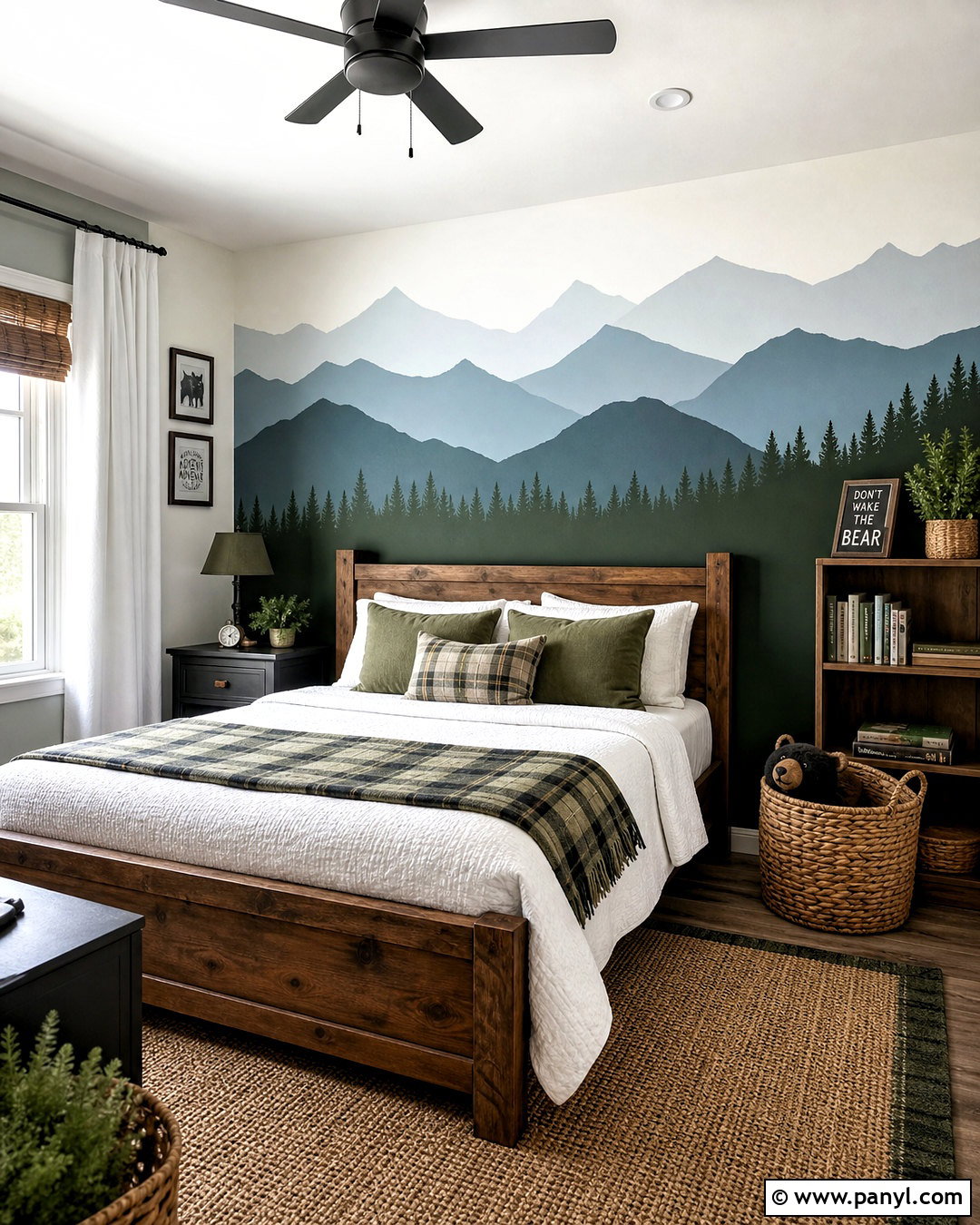
A painted mountain mural can turn a child’s bedroom into an imaginative retreat while maintaining a sophisticated color palette. Layer three simplified mountain ranges across the wall behind the bed. Use misty blue-gray for the distant peaks, muted slate blue in the middle, and deep forest green along the base. Keep the shapes broad and slightly irregular rather than adding small, distracting details. Furnish the room with a natural wood bed, white bedding, a plaid throw, and olive cushions. Warm white side walls, a tan rug, and woven baskets balance the cooler mural colors. Add one simple wood pendant and minimal wall decor so the landscape remains visible. Extending the darkest mountain layer behind the headboard helps the bed feel integrated into the complete painted scene.
14. Sunburst Accent Wall Paint
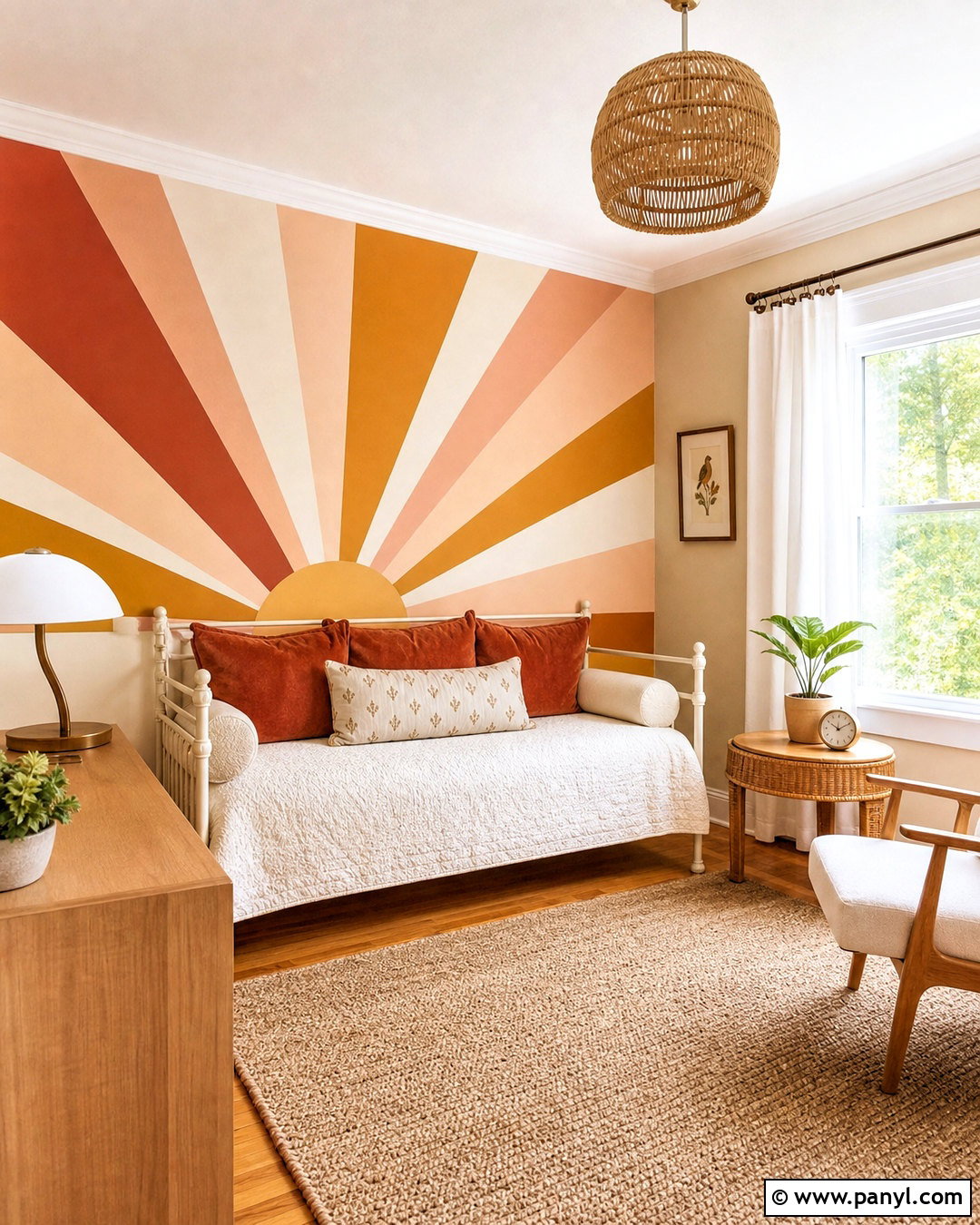
A sunburst mural creates an upbeat focal point for a reading room, playroom, or cheerful guest bedroom. Place the center of the design low on the wall, behind a compact sofa or daybed, and radiate wide beams toward the ceiling and corners. Use warm mustard, pale peach, cream, and muted coral instead of overly bright primary colors. Pair the wall with a simple cream daybed, rust-colored pillows, and a light oak side table. A woven floor lamp, natural fiber rug, and white curtains will reinforce the relaxed palette. Keep surrounding walls creamy white and avoid adding artwork over the mural. The large rays should remain slightly uneven for an approachable hand-painted effect while still following a measured layout that keeps the finished composition balanced.
15. Abstract Curve Accent Wall Paint
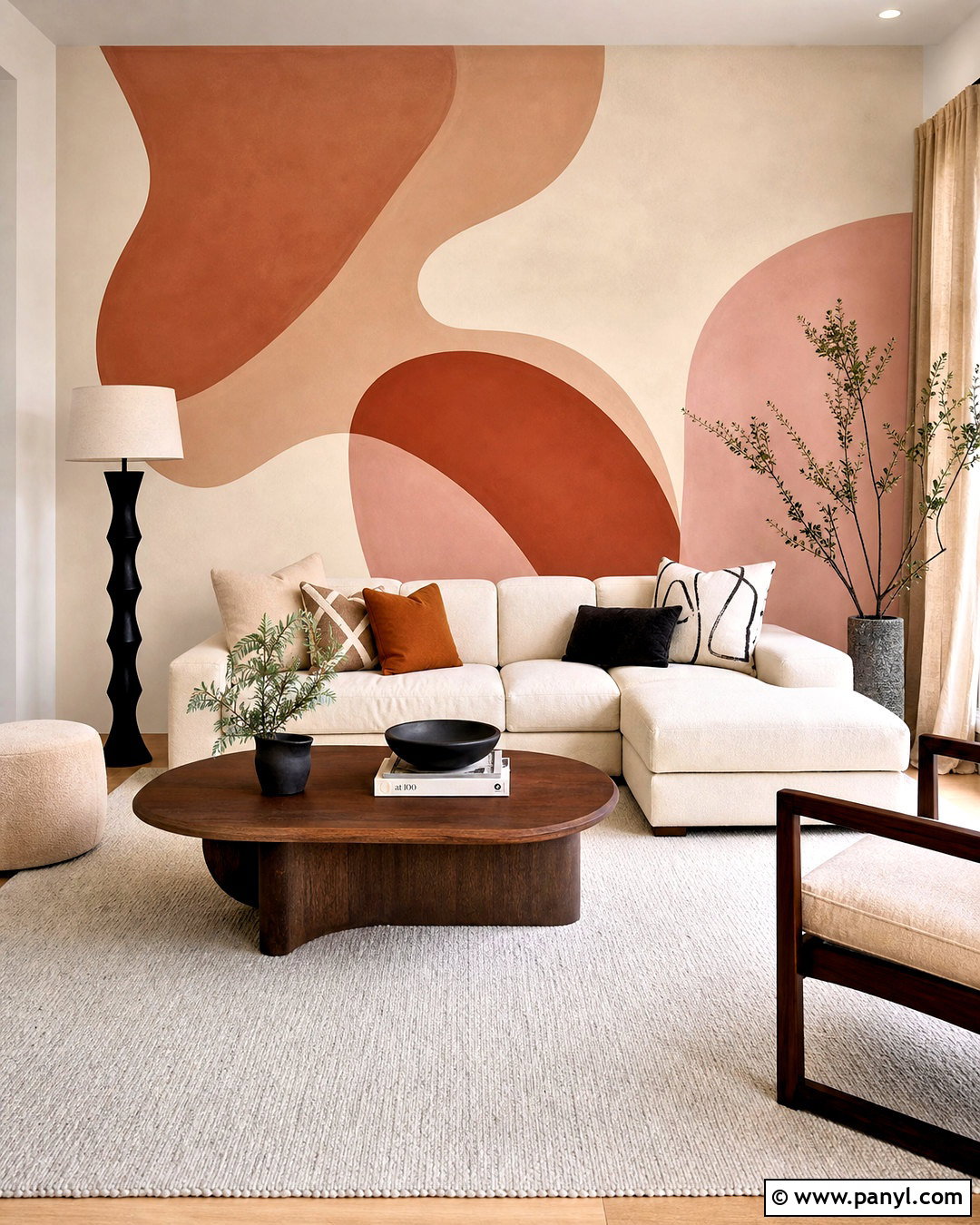
Flowing painted curves create a softer alternative to sharply angled geometric walls. Build a living room composition with three overlapping forms: a large warm beige sweep, a muted rust curve, and a smaller dusty blush shape over a creamy white background. Position the strongest color behind one end of the sofa to establish an asymmetrical focal point. Furnish the room with a low-profile cream sofa, walnut coffee table, and sculptural black floor lamp. Repeat rust and blush in only a few pillows to prevent the palette from becoming too coordinated. A textured ivory rug and linen curtains will soften the entire space. Make the curves broad and smooth, leaving some open background visible around them, so the wall feels artistic and spacious rather than busy or cartoonish.
16. Checkerboard Accent Wall Paint
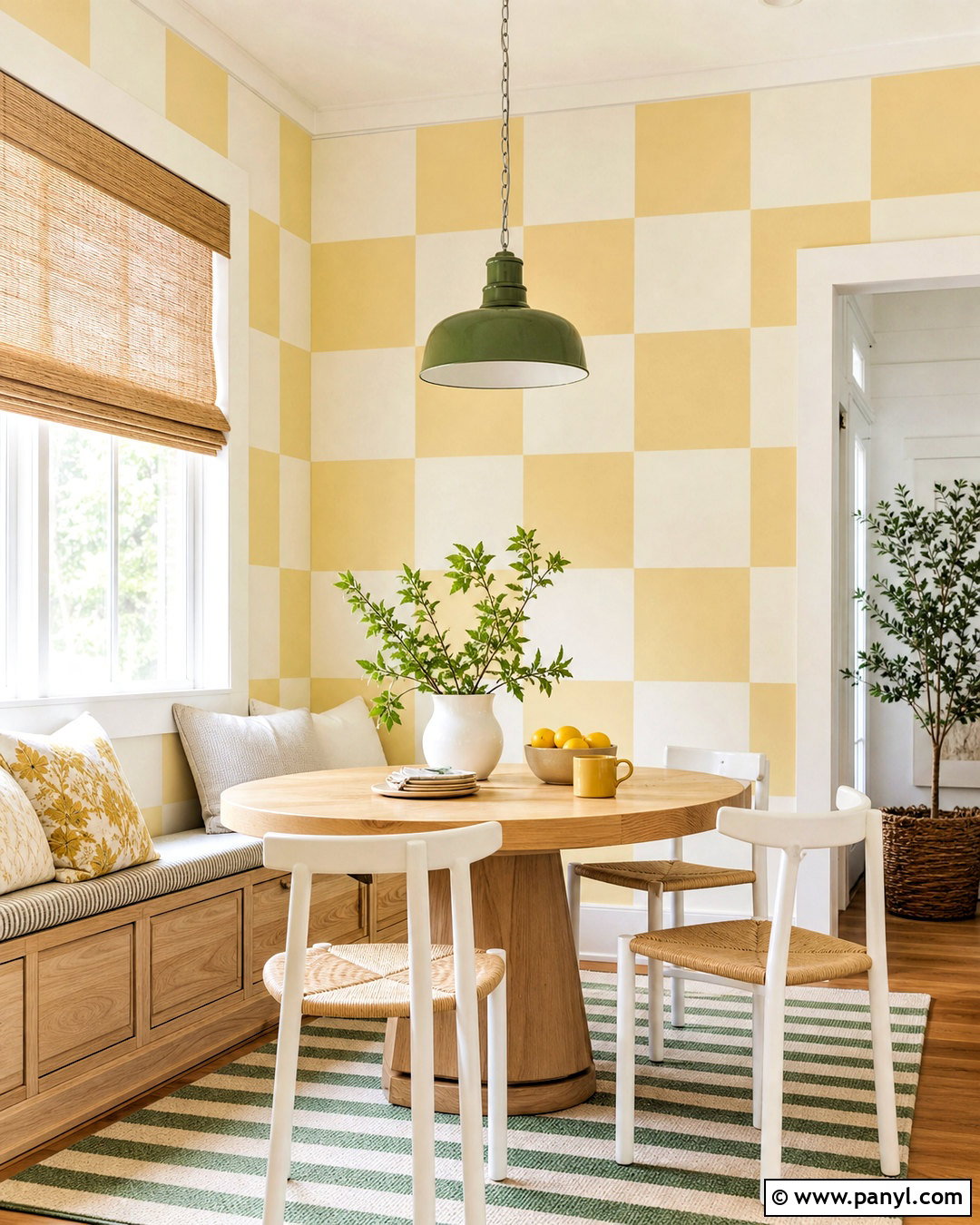
A large painted checkerboard pattern gives a breakfast nook or craft room a nostalgic but updated character. Use oversized squares in butter yellow and creamy white, keeping the contrast gentle enough for everyday spaces. Center the grid carefully on the wall so partial squares at each edge appear balanced. Place a pale wood table in front of it with simple white chairs and a small green pendant light. Add natural woven shades, a washable striped rug, and a few ceramic pieces in green and yellow. Keep the remaining walls white and limit extra patterns throughout the room. An eggshell finish makes the design easier to maintain while providing a subtle, even sheen. The generous scale ensures the checkerboard reads as a deliberate architectural backdrop instead of a tiny, visually restless print.
17. Painted Headboard Accent Wall
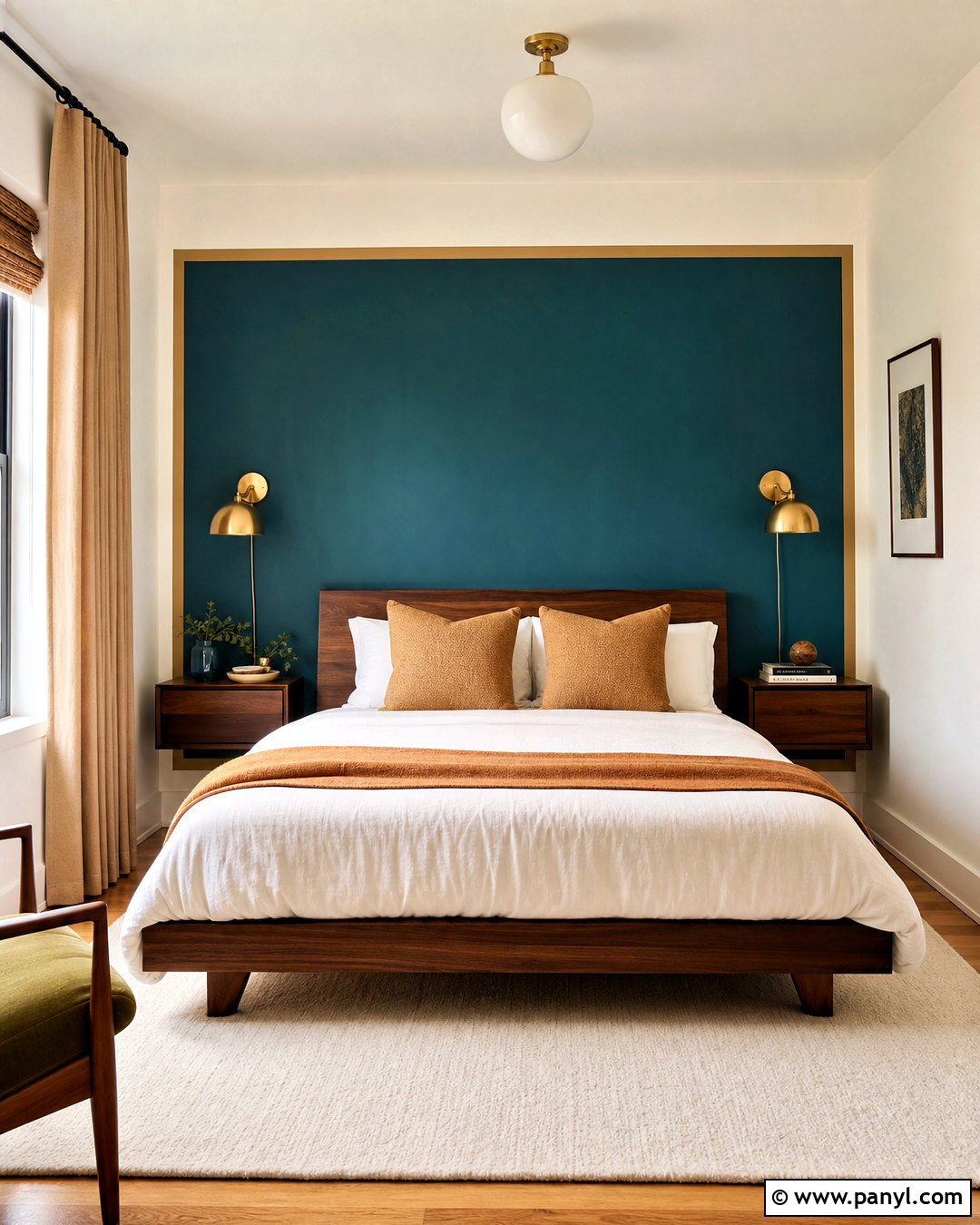
A painted headboard delivers color and structure in a bedroom without taking up floor space. Outline a wide rectangle behind the bed, extending several inches beyond each nightstand and rising about halfway up the wall. Use deep muted teal for the rectangle against a warm off-white wall. A thin border in soft tan can add another layer while keeping the treatment simple. Pair it with a low walnut bed, white linen bedding, tan pillows, and matching brass wall sconces positioned inside the painted area. Choose small floating nightstands to maintain the clean outline. Add an ivory rug and light beige curtains for softness. This design is particularly useful in compact rooms because it visually organizes the sleeping zone while eliminating the need for a large, heavy headboard.
18. Ceiling Wrap Accent Wall Paint
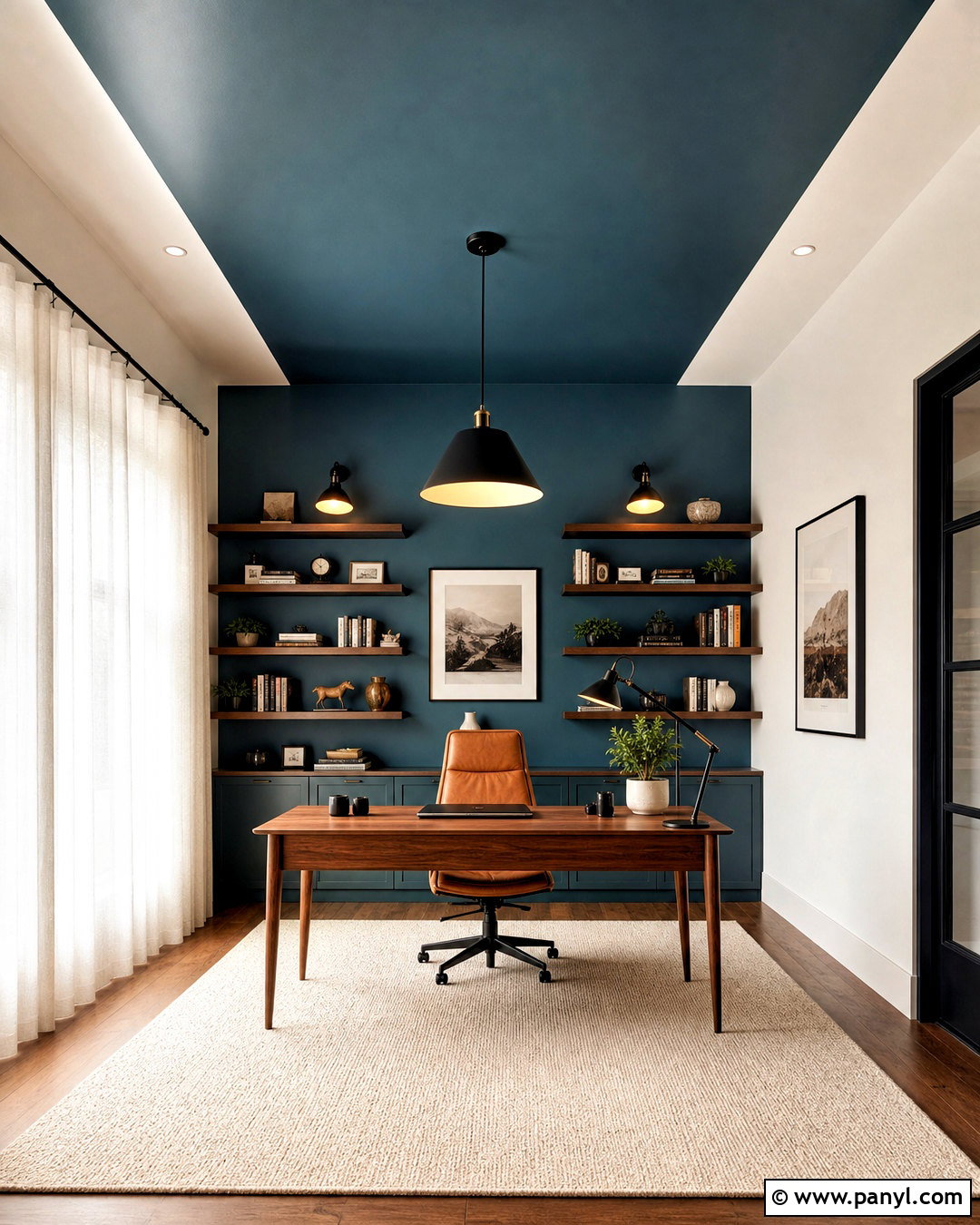
Wrapping an accent color onto the ceiling creates a more immersive look than stopping at the top of the wall. In a small home office, paint the desk wall deep blue-green and continue the color approximately three feet across the ceiling. Keep the remaining walls and ceiling soft white, using a crisp taped line where the colors meet. Place a walnut desk and matching shelves against the painted wall, then add a camel leather chair and matte black lighting. A cream rug, white curtains, and a few muted green accessories will brighten the deeper color. The ceiling section helps define the work zone within a multipurpose room. Keep furniture centered beneath the painted canopy so the design feels architectural and connected rather than like an unfinished patch of color.
19. Painted Frame Accent Wall
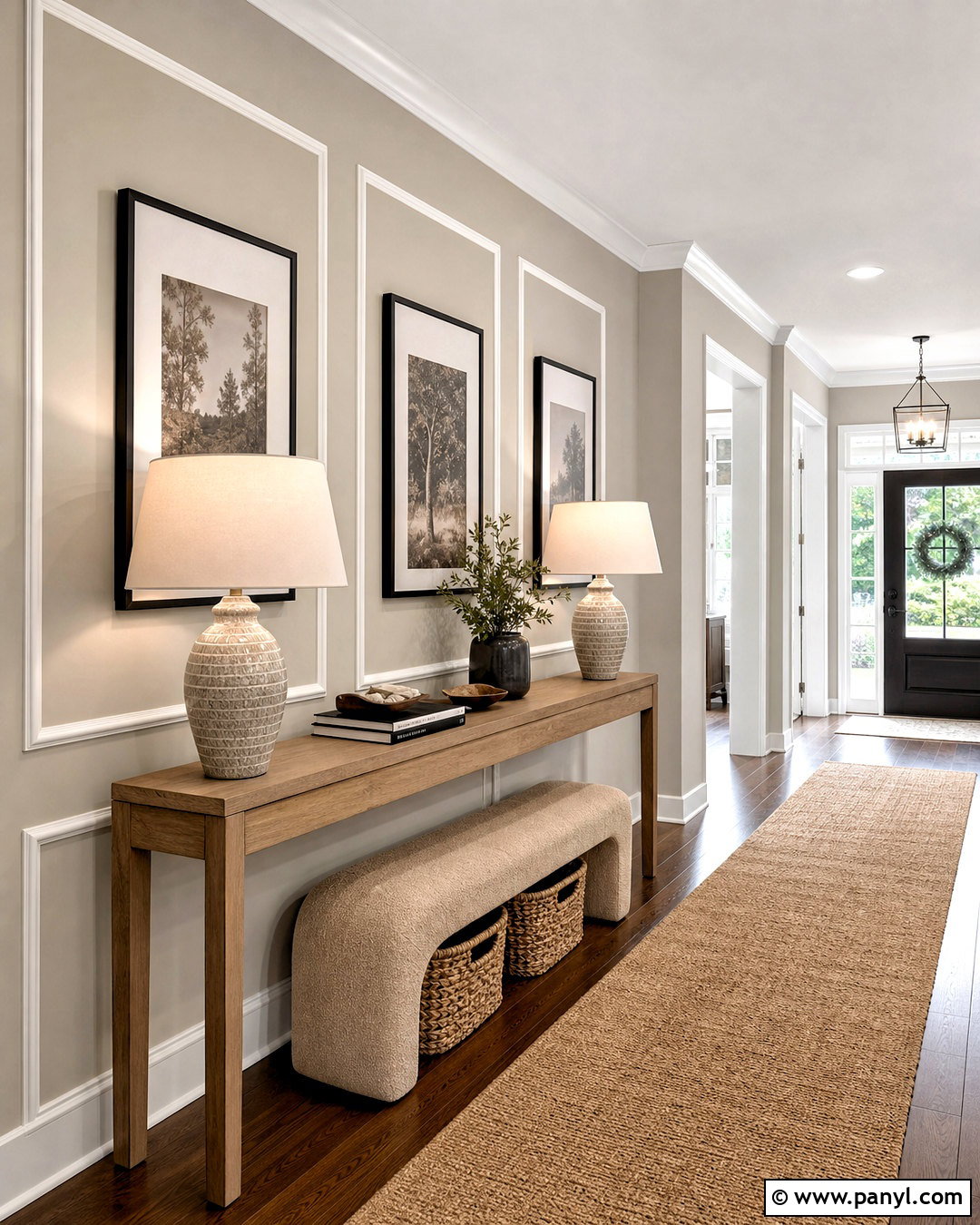
Painted frames can organize a gallery wall without requiring decorative molding. Start with a soft greige background, then paint three large rectangular outlines in warm white. Make the center frame wider and align all three at the same height. Inside each outline, hang one black-framed print with generous space around it. Position a slim oak console below the arrangement and add matching ceramic lamps at both ends. A curved beige bench, woven baskets, and a neutral runner will complete the entryway. Keep the frame lines thick enough to remain visible from across the space, but avoid adding several nested borders. This approach combines paint and artwork into one coordinated focal point, bringing structure to a plain hallway or foyer while preserving an open, quiet color palette.
20. Freehand Brushstroke Accent Wall Paint
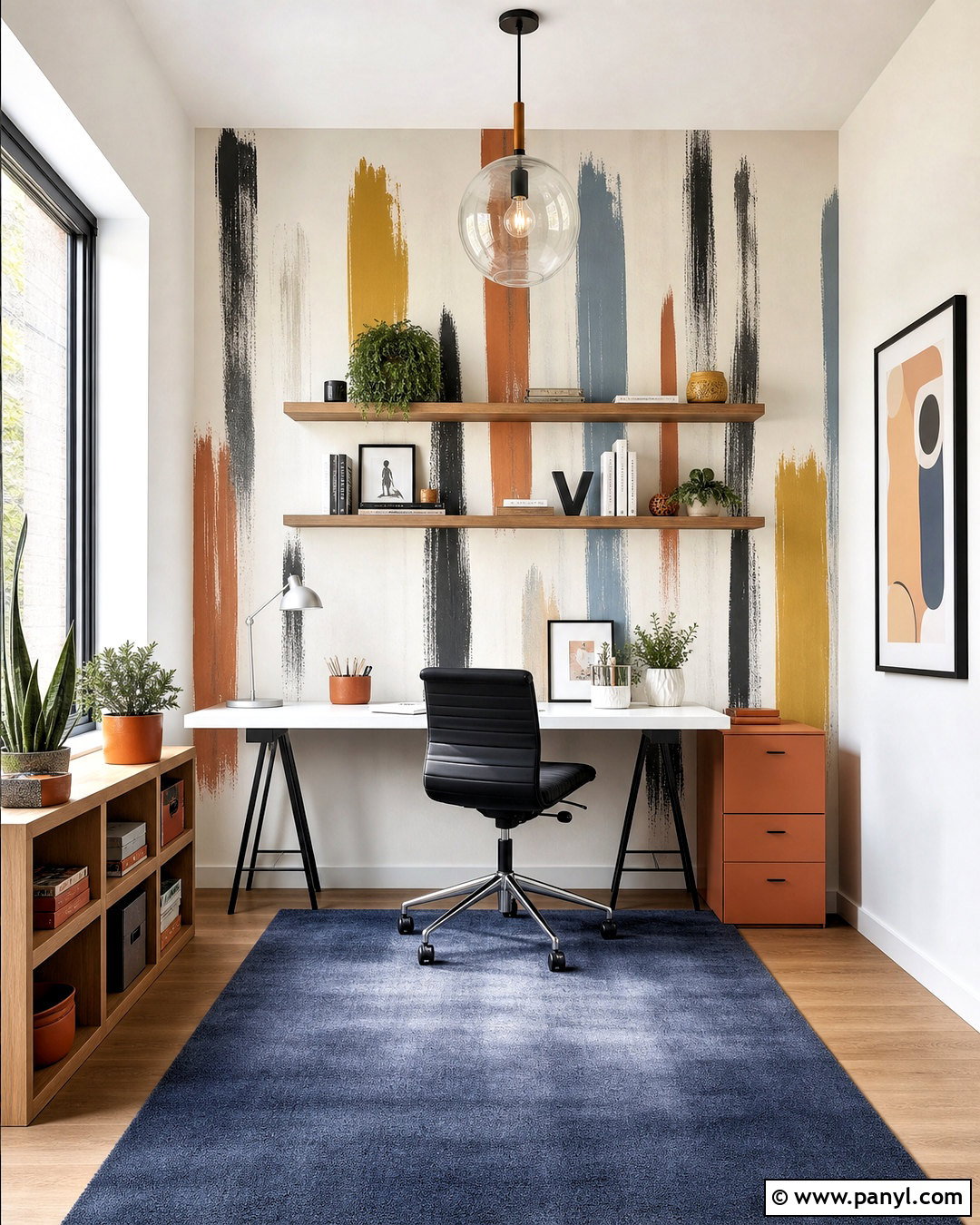
Loose brushstrokes offer an artistic finish that feels more relaxed than taped patterns. Cover a creative workspace wall with scattered, elongated marks in charcoal, muted blue, terracotta, and ocher over a warm white base. Vary their length and direction, but leave enough blank space to prevent visual clutter. Place a simple white desk and natural wood shelving against the design. Add a black task chair, terracotta storage boxes, and a muted blue rug to connect the furniture with the wall. Keep lighting modern and minimal, using a white globe pendant or slim black fixture. Before painting, plan the broad distribution of each color rather than copying every mark exactly. The finished wall should resemble a large abstract textile and provide energy without overpowering the workspace.
Conclusion:
The best accent wall paint designs do more than introduce a fashionable color. They establish a focal point, support the room’s layout, and connect furniture, textiles, lighting, and decor into one complete setting. Solid navy or sage walls offer lasting versatility, while arches, stripes, murals, and curves provide more expressive options. Before painting, consider the wall’s proportions, natural light, and relationship to the largest furniture piece. Test every color in the actual room and view it throughout the day. Careful measuring, clean preparation, and a controlled palette will also improve the final result. Use these 20 accent wall paint designs as flexible starting points, adjusting their colors and scale to complement your home.

Related Ideas and Inspiration:
Leave a Reply