
A fresh wall treatment can completely change a bedroom without requiring expensive furniture or a major renovation. These 20 Simple Paint Designs On Wall Bedroom Ideas use approachable techniques such as arches, stripes, color blocking, scallops, and tonal shapes. Many can be completed with painter’s tape, basic tools, and a small amount of paint. The key is coordinating the finished wall with the bed, flooring, lighting, textiles, and accessories so the room feels intentional rather than unfinished. Accent walls, geometric patterns, soft pastels, and painted headboards remain practical ways to personalize a sleeping space. () Whether you prefer quiet neutrals or cheerful color, the complete looks below make it easier to recreate 20 Simple Paint Designs On Wall Bedroom Ideas.

1. Painted Arch Bedroom Wall
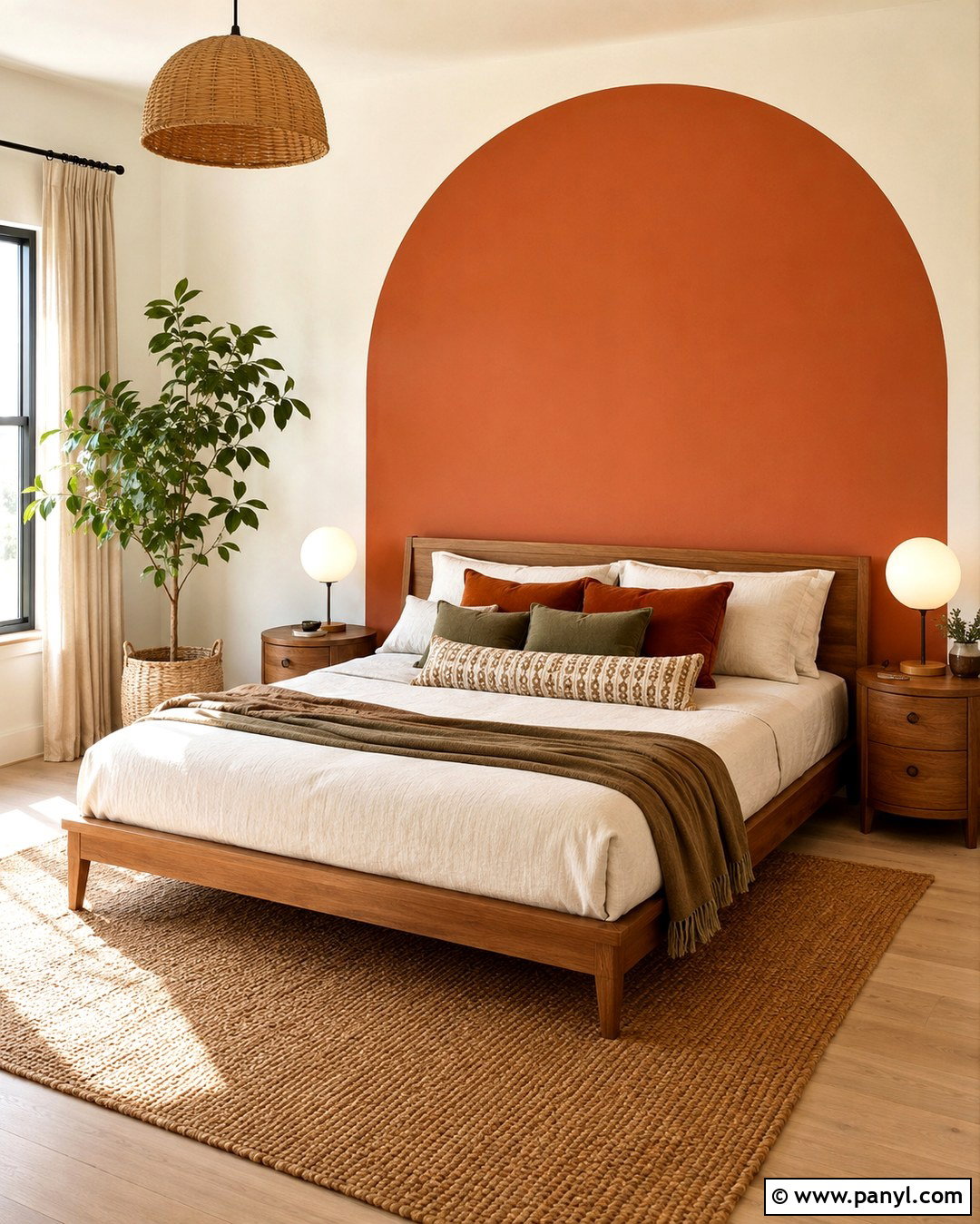
A large painted arch creates a clear focal point without covering the entire wall. Center a warm terracotta arch behind a simple oak bed, making it slightly wider than the headboard and tall enough to frame the pillows. Keep the remaining walls soft cream to maintain an open, restful feeling. Layer the bed with ivory linen, a rust-colored throw, and muted olive pillows that connect with the earthy paint. Rounded bedside tables and globe-shaped lamps reinforce the arch’s curves. Use a pencil, string, and painter’s tape to establish the outline before filling it with two smooth coats. A natural jute rug and one leafy plant complete this warm modern bedroom without crowding the painted feature.
2. Half Painted Bedroom Wall
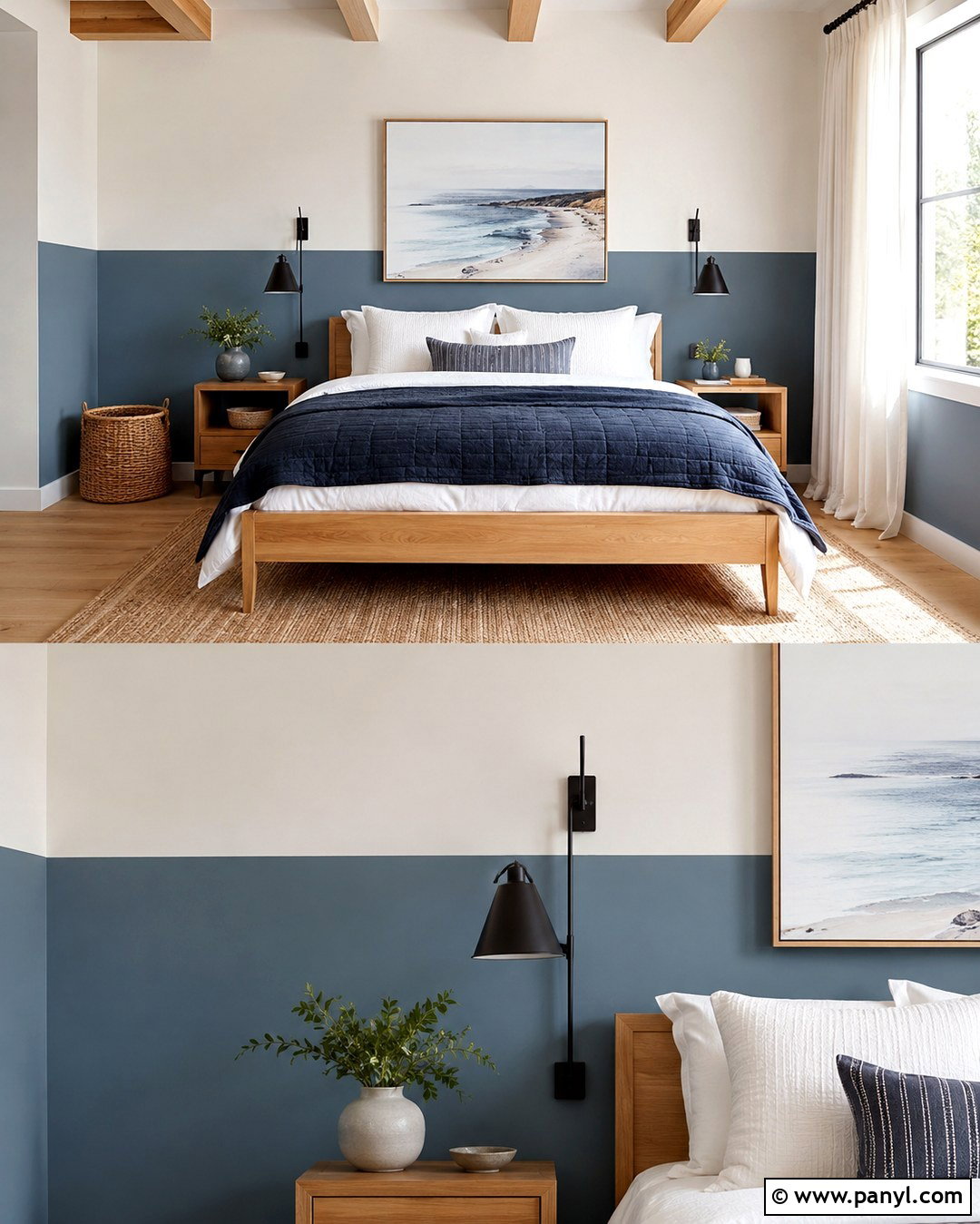
A two-tone wall can give a bedroom structure while keeping the painting process straightforward. Cover the lower half in dusty blue and leave the upper half warm white, placing the dividing line slightly above the headboard. This proportion anchors the furniture while allowing the ceiling to feel taller. Choose a light wood bed, white bedding, and a navy quilt for gentle contrast. Slim black sconces add definition without interrupting the clean color division. Continue the blue around the room for a cohesive, wrapped effect rather than treating one wall in isolation. Use a laser level and quality painter’s tape to keep the line crisp. Pale oak flooring, woven baskets, and simple coastal artwork finish the calm, practical bedroom.
3. Vertical Stripe Bedroom Wall
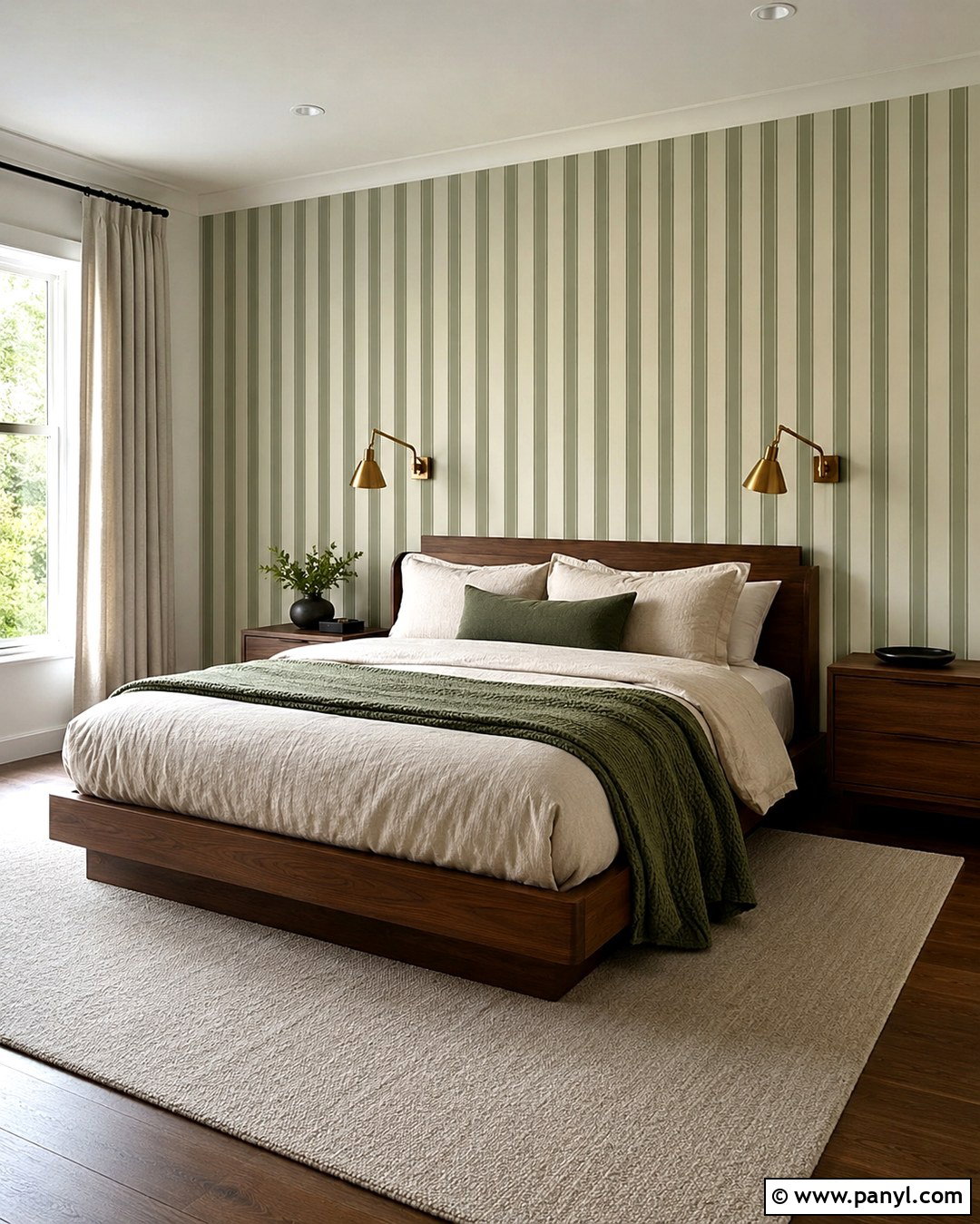
Slim vertical stripes visually lift a low ceiling and bring an orderly rhythm to the bedroom. Start with a soft beige base, then add evenly spaced sage green stripes behind the bed. Keep the stripes narrow and consistent so the wall looks refined rather than overly busy. A walnut platform bed gives the pale palette enough depth, while oatmeal bedding and a moss green blanket repeat the wall colors. Select unpatterned curtains and a simple wool rug to prevent competing lines. Matching brass reading lights can sit between the stripes for a polished arrangement. Measure from one corner, mark each stripe carefully, and seal tape edges before painting. The complete room feels taller, balanced, and comfortably connected to nature.
4. Horizontal Stripe Bedroom Wall
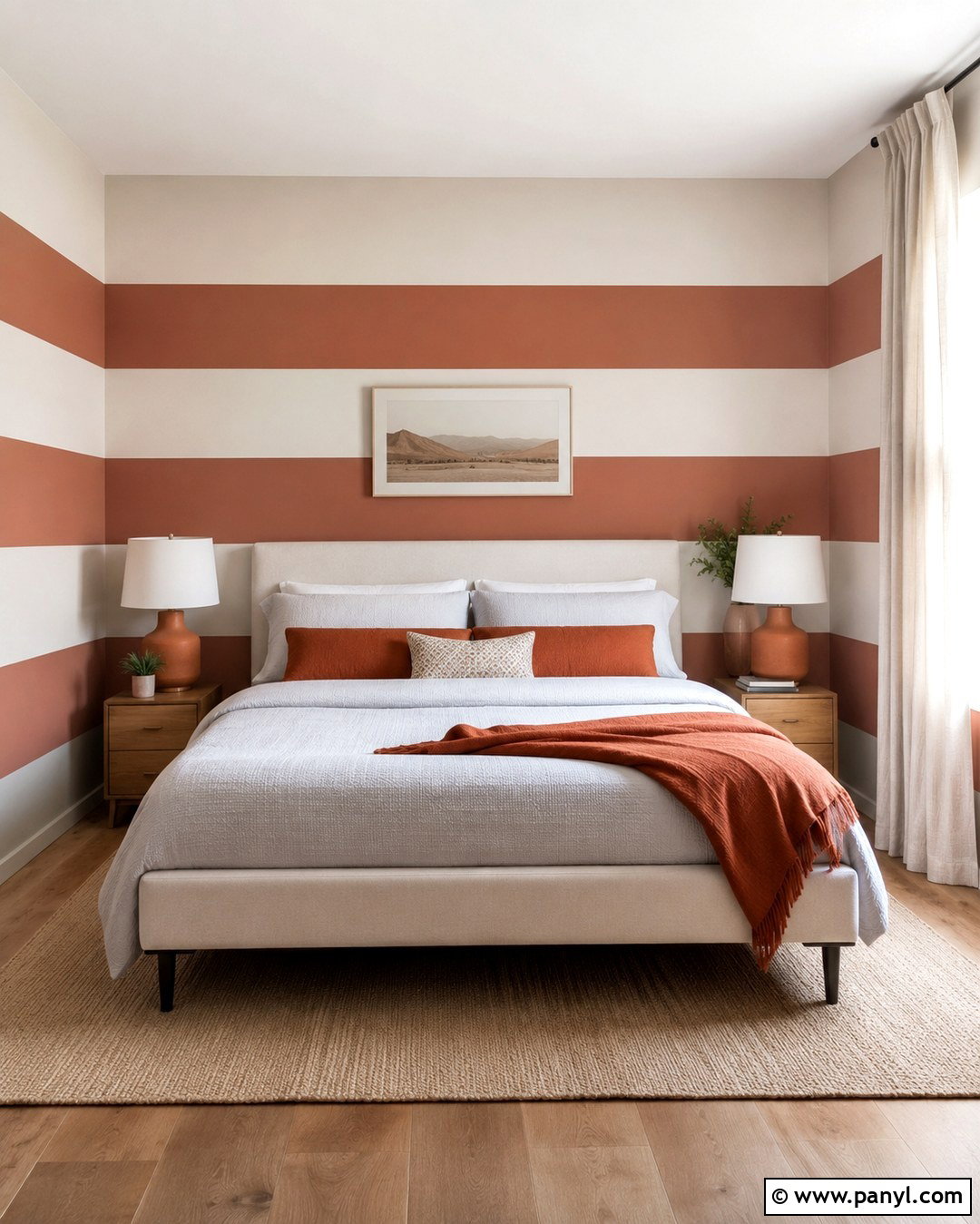
Wide horizontal bands can make a narrow bedroom appear broader. Paint the headboard wall with alternating soft white and muted clay stripes, using only three or four large bands from floor to ceiling. The broad scale keeps the design calm and contemporary. Position a low cream upholstered bed against the wall so the stripes remain clearly visible above it. Add light gray bedding, terracotta cushions, and pale wood nightstands to distribute the colors throughout the room. A simple ceramic lamp and linen curtains support the relaxed look. Extend the lightest stripe color onto the remaining walls for continuity. Careful leveling is important because even a small slope becomes noticeable across a wide wall, especially behind straight furniture.
5. Geometric Bedroom Wall
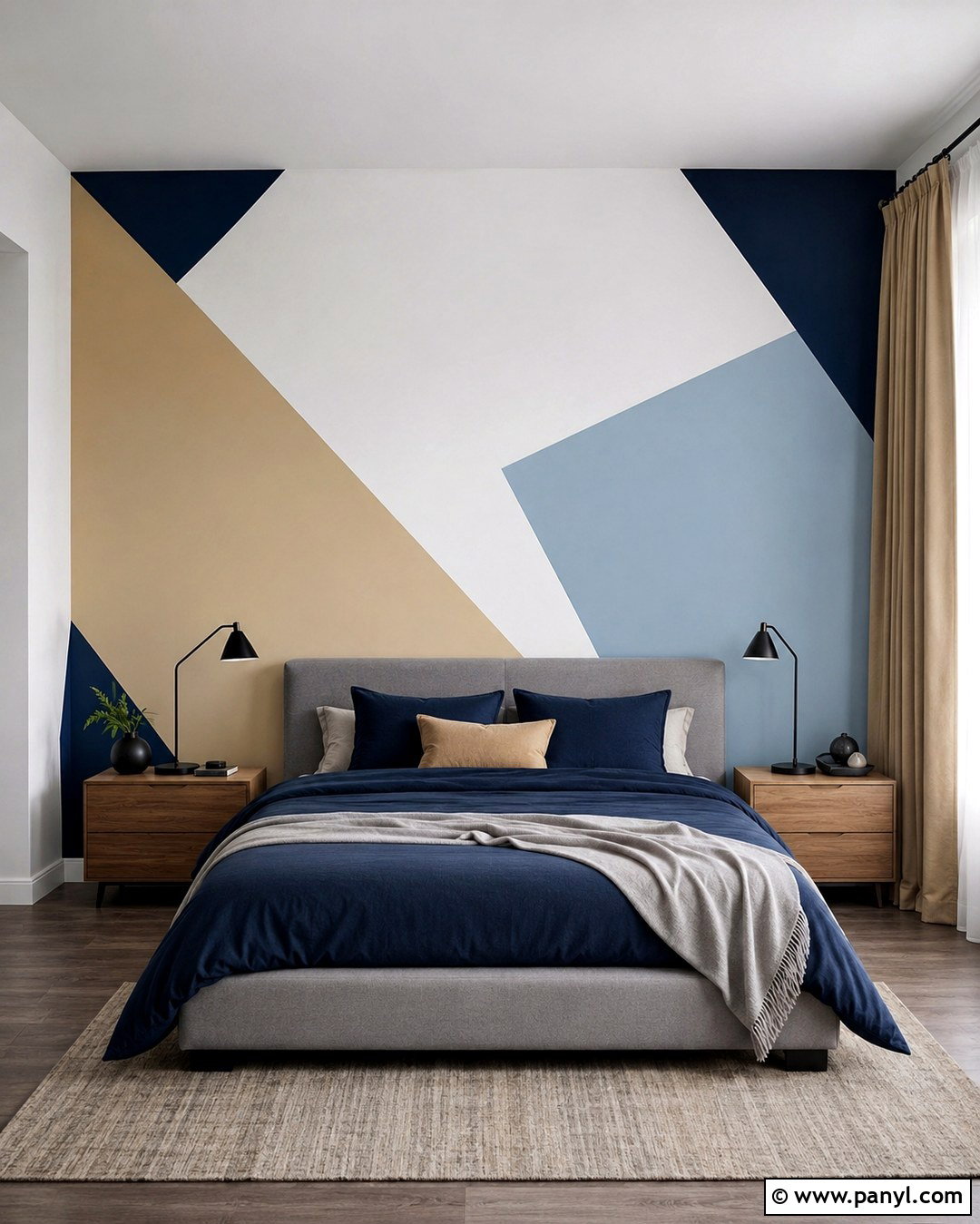
Painter’s tape can turn one bedroom wall into a clean geometric feature using only a few coordinated colors. Create large overlapping shapes in muted navy, warm beige, and pale blue behind a gray upholstered bed. Keep the sections broad and asymmetrical, leaving some of the original white background visible between shapes. This negative space prevents the pattern from overwhelming the room. Bring navy into the bedding through a folded quilt, then use beige curtains and light oak nightstands to soften the contrast. Matte black lamps give the modern arrangement a defined edge. Sketch the full pattern before taping, and paint the lightest sections first. The finished bedroom feels graphic and energetic but remains suitable for rest.
6. Ombre Bedroom Wall

A soft ombre wall creates gentle movement without hard lines or complicated shapes. Begin with deep ocean blue near the floor, blend it into medium blue behind the headboard, and finish with pale sky blue toward the ceiling. Keeping the darkest shade low helps ground the bed while the lighter top opens the room visually. Pair the wall with a white oak bed, crisp white sheets, and a textured blue-gray coverlet. Sheer curtains, frosted glass lamps, and a light neutral rug maintain the airy effect. Work in manageable horizontal sections while the paint remains wet, using a broad dry brush to blend transitions. Slight irregularities are welcome because they give the wall a natural, atmospheric finish rather than a mechanically perfect appearance.
7. Mountain Bedroom Wall
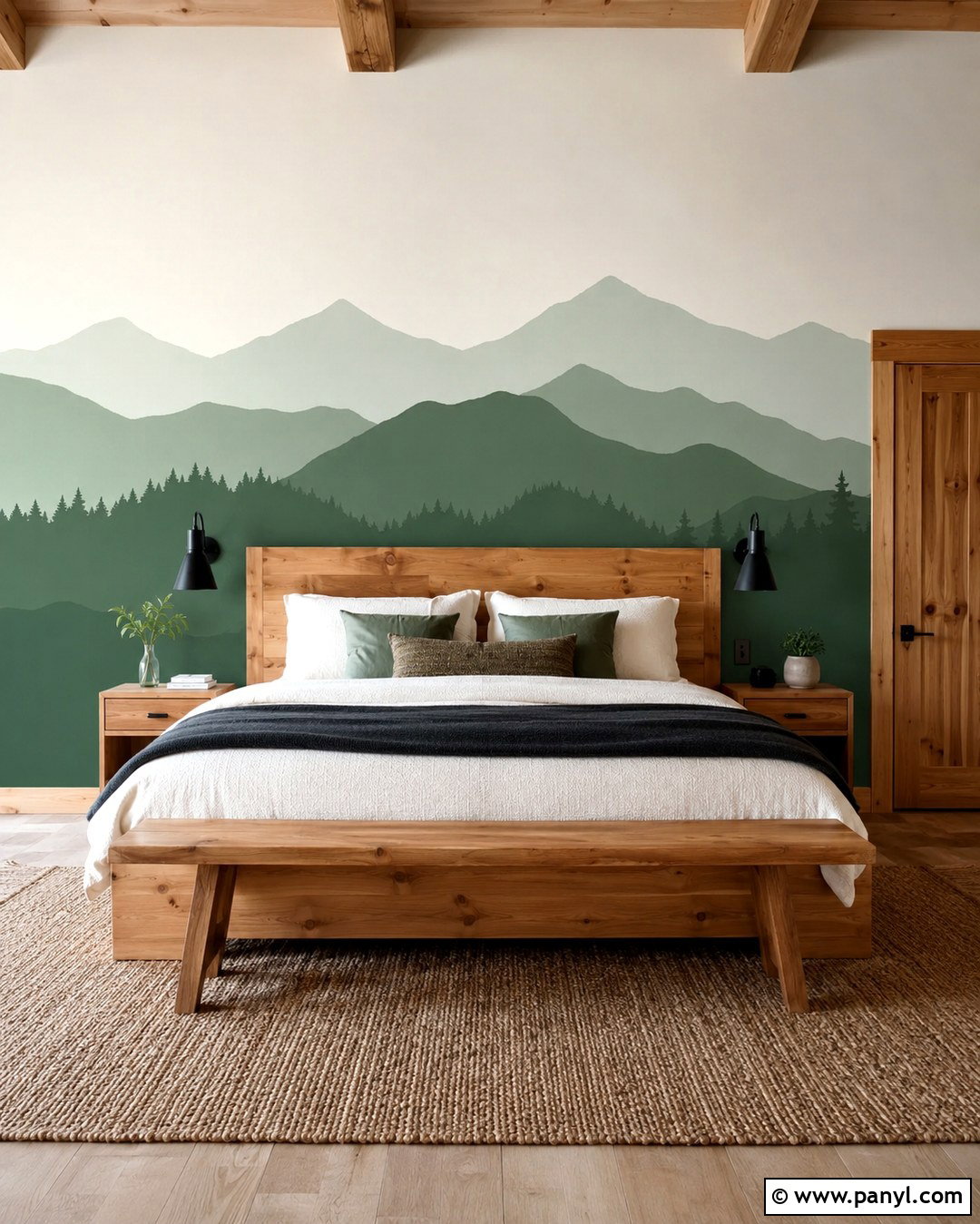
A simple mountain mural brings outdoor character into a bedroom without requiring detailed artistic skills. Paint overlapping triangular peaks across the lower two-thirds of the bed wall, using forest green in front, muted sage in the middle, and pale gray-green behind. Leave the upper wall warm white to suggest an open sky. A natural pine bed, cream bedding, and a charcoal blanket create a cozy cabin-inspired foundation. Add black wall sconces and a woven wool rug for warmth and definition. Use painter’s tape for sharp peaks or freehand the edges for a softer landscape. Keep accessories minimal, choosing one wooden bench and a few ceramic pieces. The layered colors create depth while preserving a peaceful, uncluttered sleeping environment.
8. Scalloped Bedroom Wall
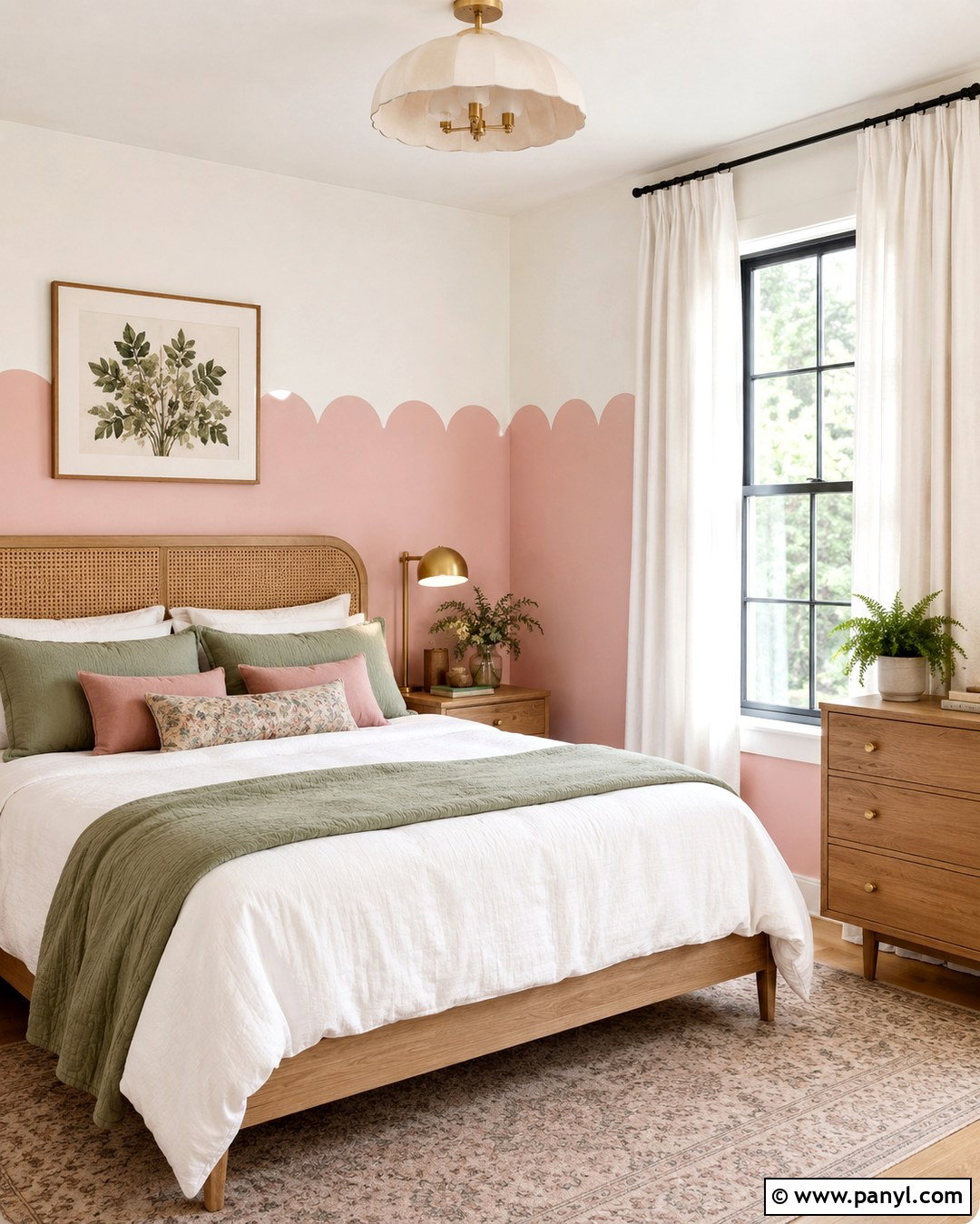
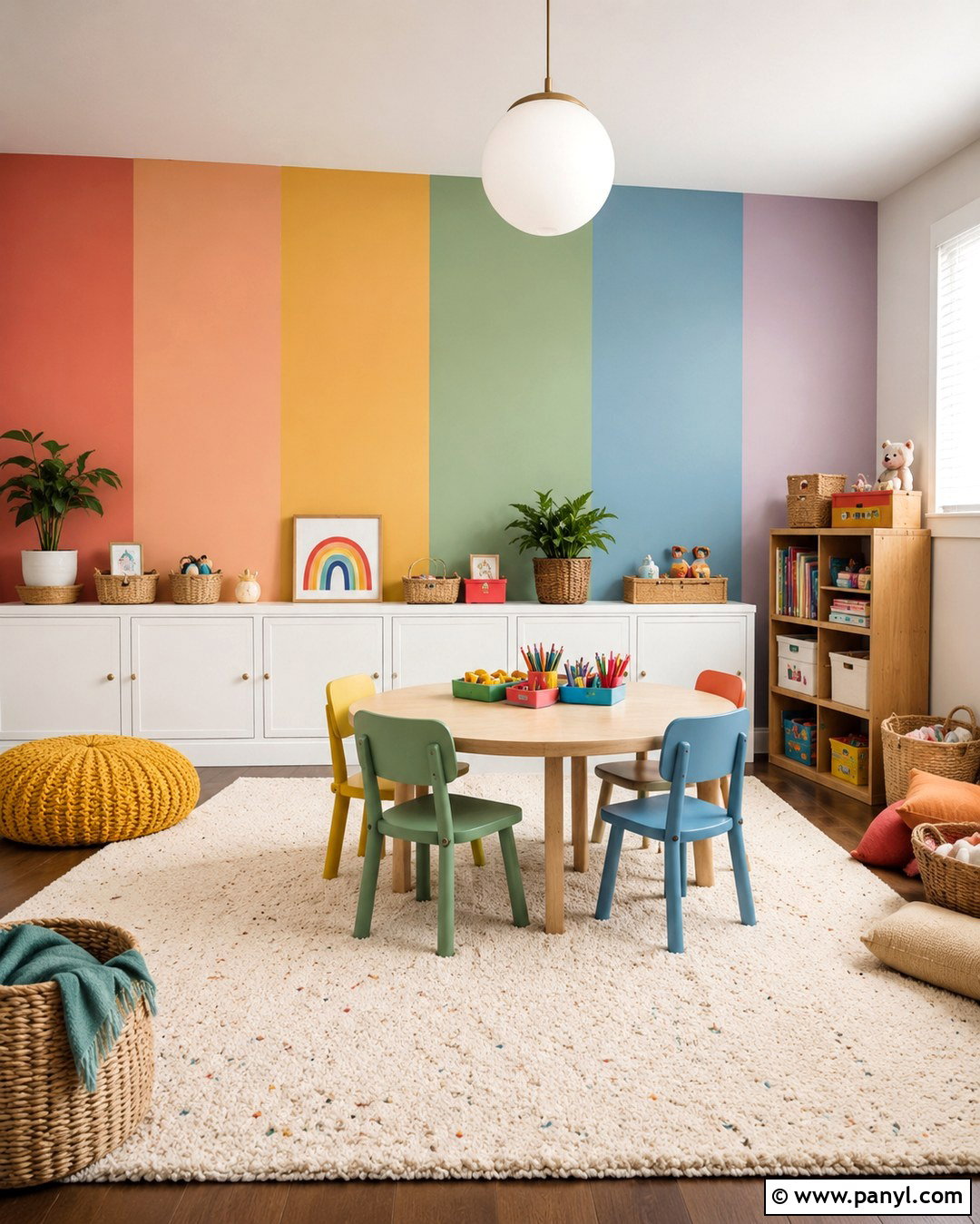
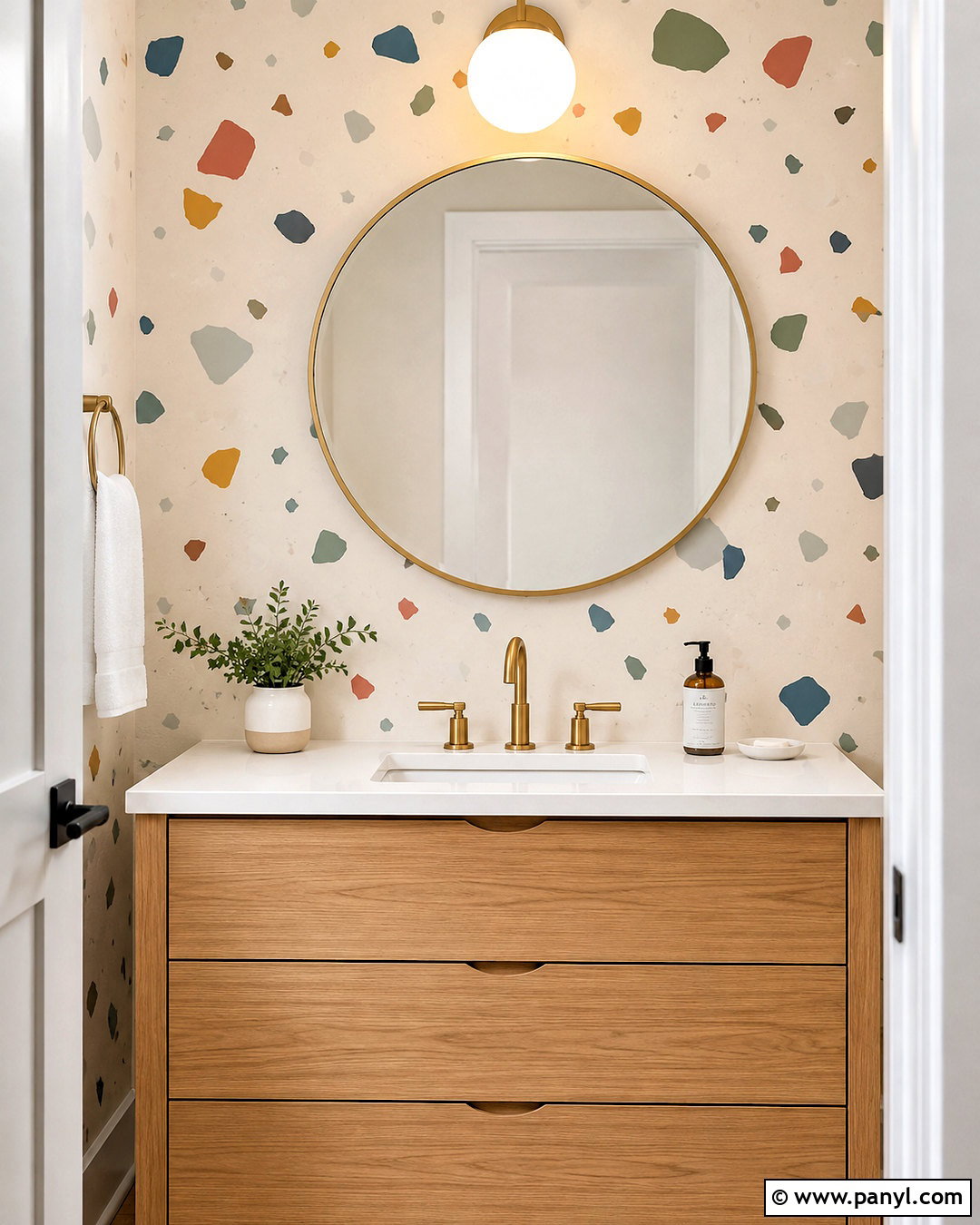
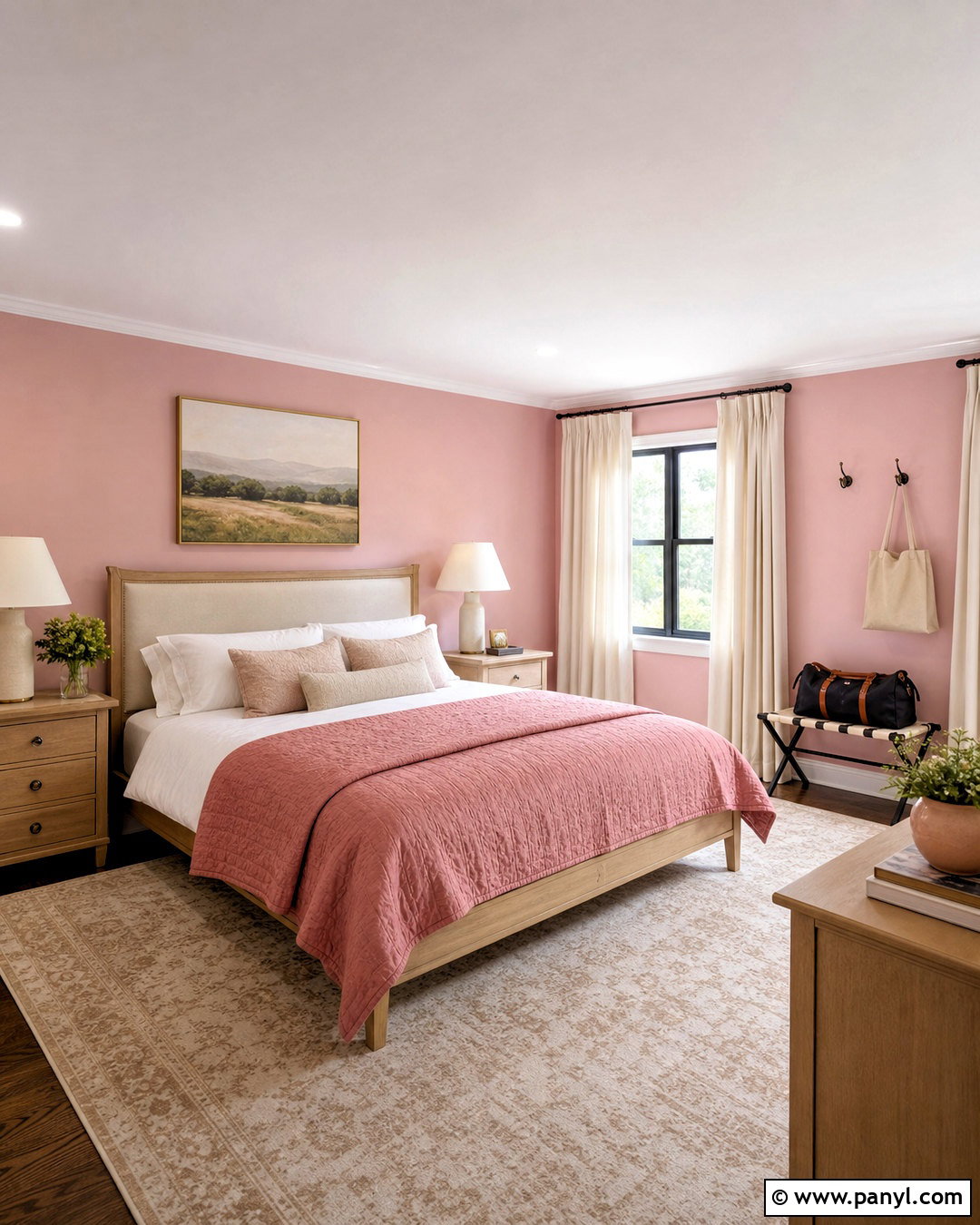
A scalloped paint border adds playful curves while still looking polished enough for a guest room or adult bedroom. Paint the lower portion in soft blush pink, ending it with a row of large, evenly sized scallops about two-thirds up the wall. Keep the upper area creamy white for brightness. Place a cane headboard against the pink section and dress the bed with white linen, muted rose pillows, and a sage throw. A light oak dresser and simple brass lamps balance the sweetness with clean materials. Trace each curve using a round template before painting, checking that the highest points remain level. Natural curtains and a small botanical print complete a cheerful room that feels coordinated rather than overly themed.
9. Painted Circle Bedroom Wall
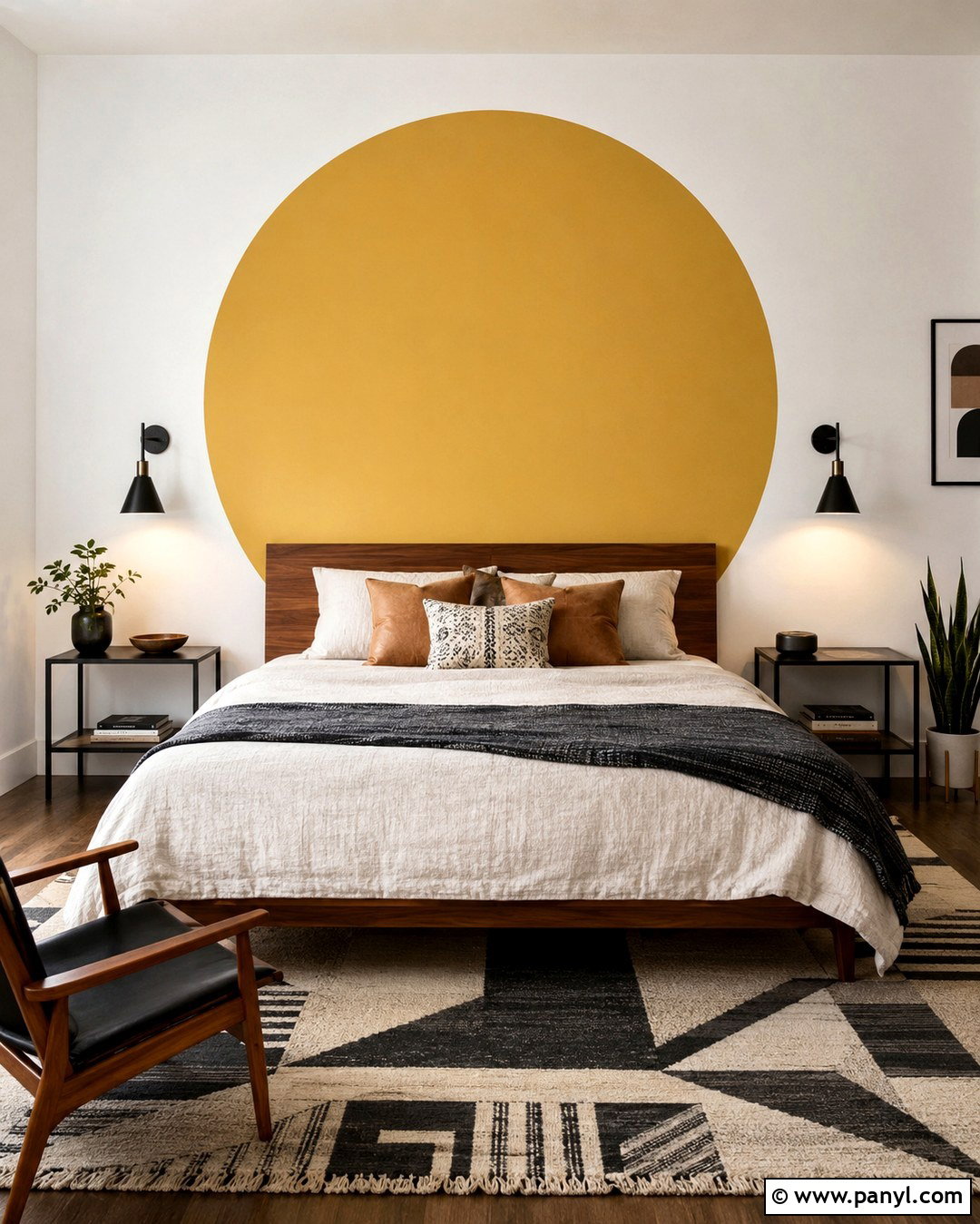
One oversized circle can function like artwork and frame the bed at the same time. Paint a muted mustard circle behind a compact walnut headboard, allowing the lower portion to disappear naturally behind the furniture. Surround it with warm white walls so the shape remains the clear focal point. Choose cream bedding, caramel cushions, and a charcoal throw to build a grounded palette around the yellow. Black metal nightstands and matching sconces sharpen the arrangement. Use a pencil attached to string to draw an accurate circle, then outline it with a small angled brush before rolling the center. A geometric rug and one simple plant finish the room. The result is bold, affordable, and easy to update later.
10. Color Block Bedroom Wall
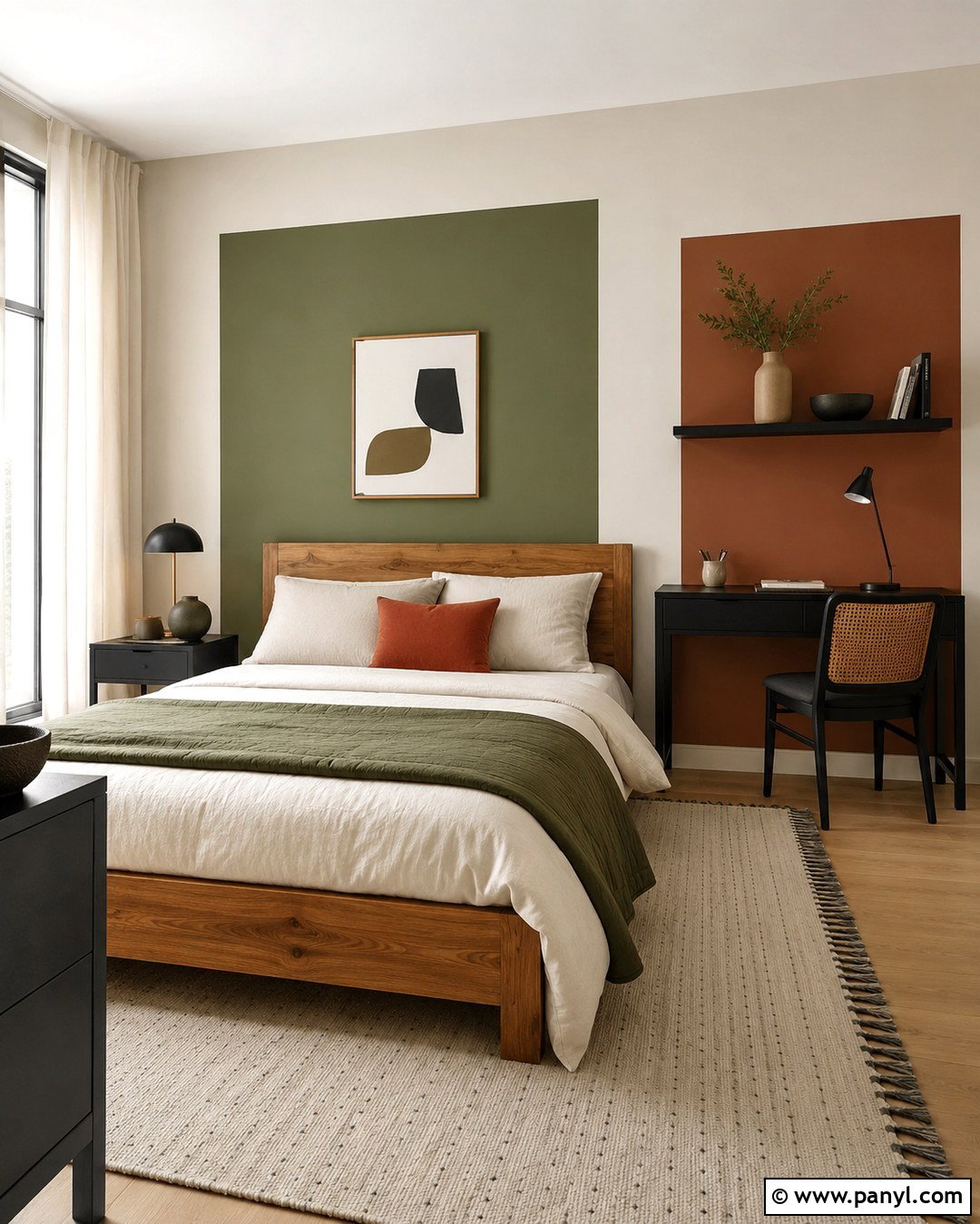
Color blocking works especially well when a bedroom needs visual zones. Paint a broad muted green rectangle behind the bed, then add a smaller clay-colored block that extends toward a nearby desk. Keep the background light greige so both colors stand out without making the room feel enclosed. Select a low oak bed with ivory bedding, a green coverlet, and one rust-colored pillow. A compact wood desk and black chair visually connect the second block to a practical work area. Repeat the wall colors through pottery and a simple rug rather than adding patterned artwork. Straight tape lines make the design manageable for beginners. The completed room feels organized because every painted section relates directly to furniture placement and function.
11. Diagonal Bedroom Wall
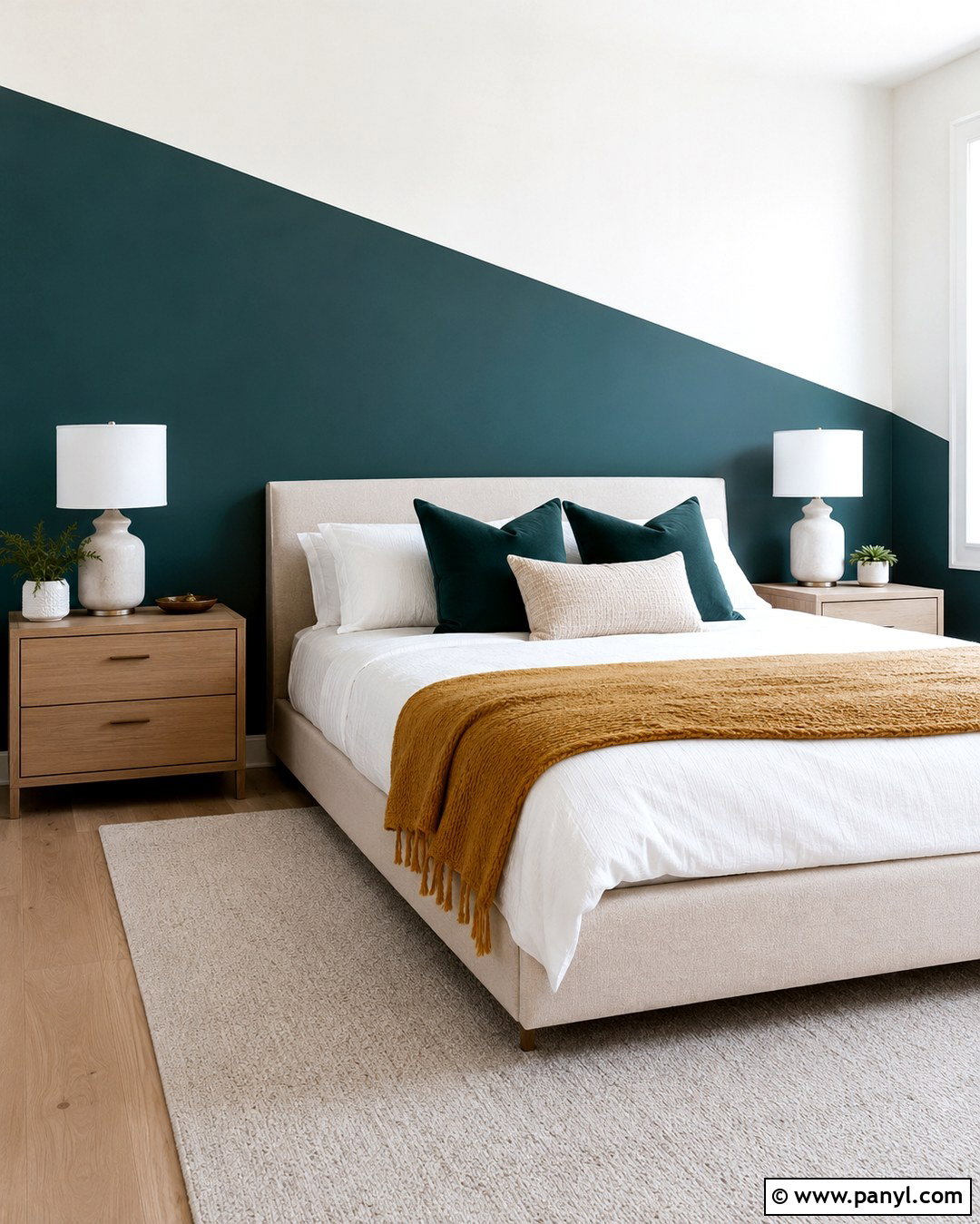
A diagonal color split introduces energy while using only two paint colors. Run the dividing line from a lower corner behind one nightstand to the opposite upper corner, painting the bottom portion deep teal and the top soft white. Position a light beige upholstered bed in the center so it crosses both areas and visually connects them. White bedding, teal pillows, and a mustard throw add measured color without competing with the wall. Use pale wood nightstands and simple white lamps to brighten the darker section. A solid neutral rug keeps attention on the diagonal. Mark the line with a laser level or taut chalk string, then press the tape firmly. This complete look feels lively, modern, and surprisingly easy to achieve.
12. Painted Headboard Bedroom Wall
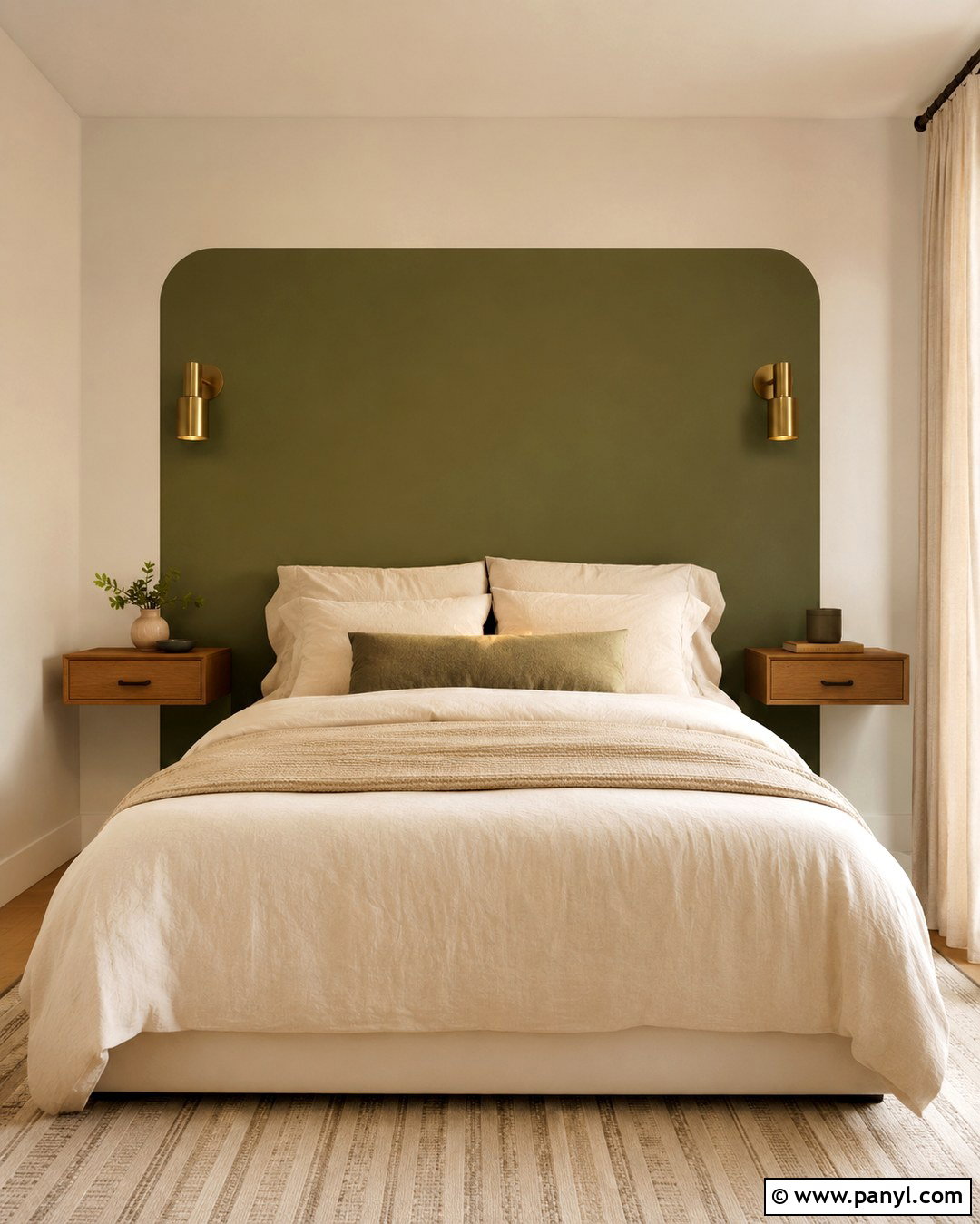
A painted headboard is an affordable solution for a bedroom without a traditional bed frame. Create a wide, rounded rectangle in warm olive green, starting just below mattress height and extending approximately three feet above the pillows. Place a simple bed base in front and use layered cream bedding to make the color feel soft and inviting. Add two floating oak shelves as bedside tables, along with compact brass sconces positioned inside the painted area. A striped beige rug and linen curtains provide quiet texture. Make the painted shape wider than the mattress so it visually supports the entire bed. The finished arrangement creates the presence of a substantial headboard while saving floor space and keeping the bedroom clean and comfortable.
13. Sunburst Bedroom Wall
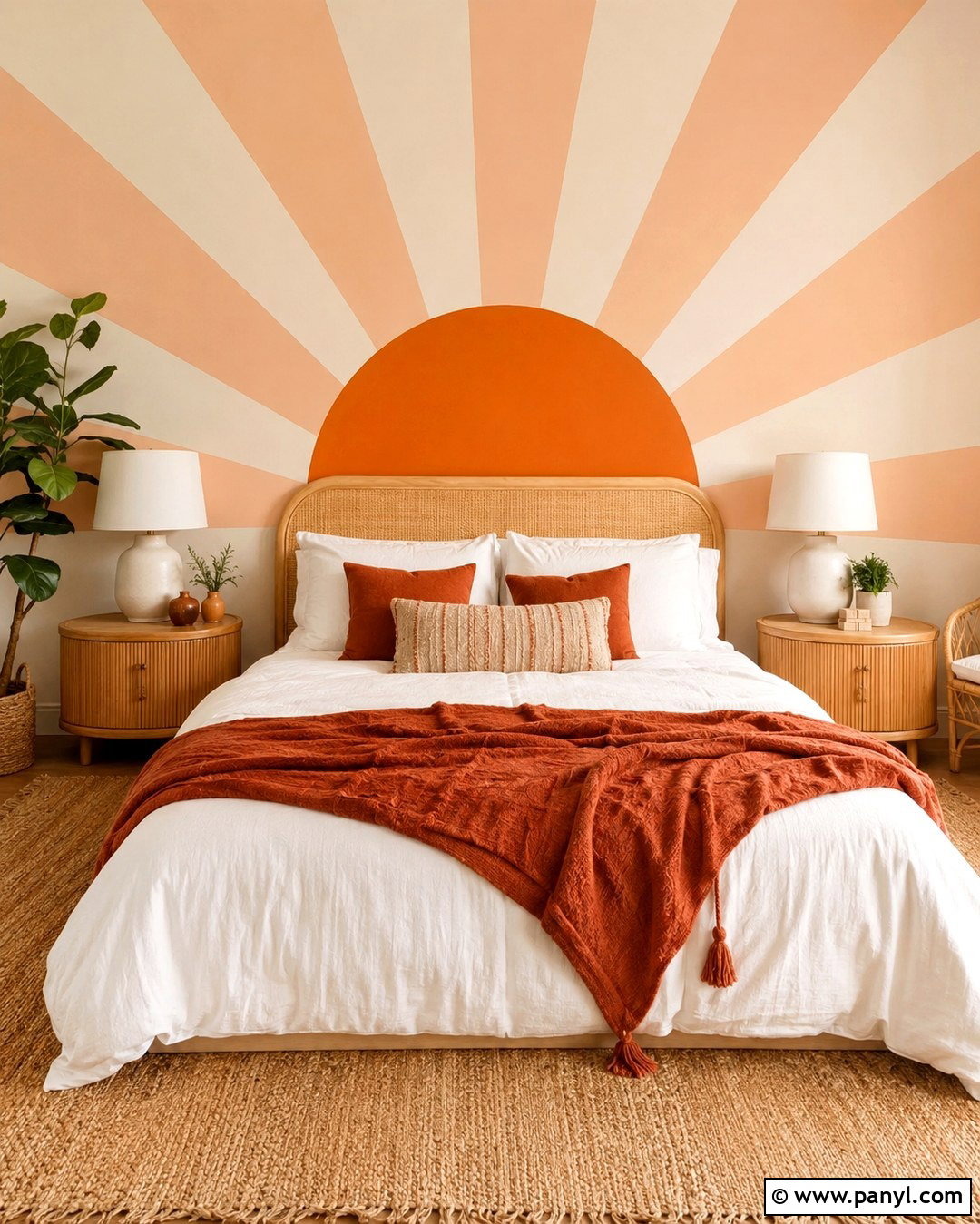
A simplified sunburst can energize a bedroom while remaining clean and controlled. Paint a half-circle in burnt orange directly behind the center of the bed, then extend broad tapered rays toward the ceiling in a lighter peach tone. Keep the background soft beige to reduce contrast. A low rattan headboard allows the painted sun to remain visible, while white bedding and a rust blanket repeat the warm palette. Add curved wood nightstands, cream ceramic lamps, and a natural fiber rug. Limit additional wall decor because the painted design already serves as the main artwork. Create the rays with long strips of painter’s tape, checking their spacing from several viewpoints. The room feels sunny and welcoming without becoming childish or excessively decorative.
14. Grid Pattern Bedroom Wall
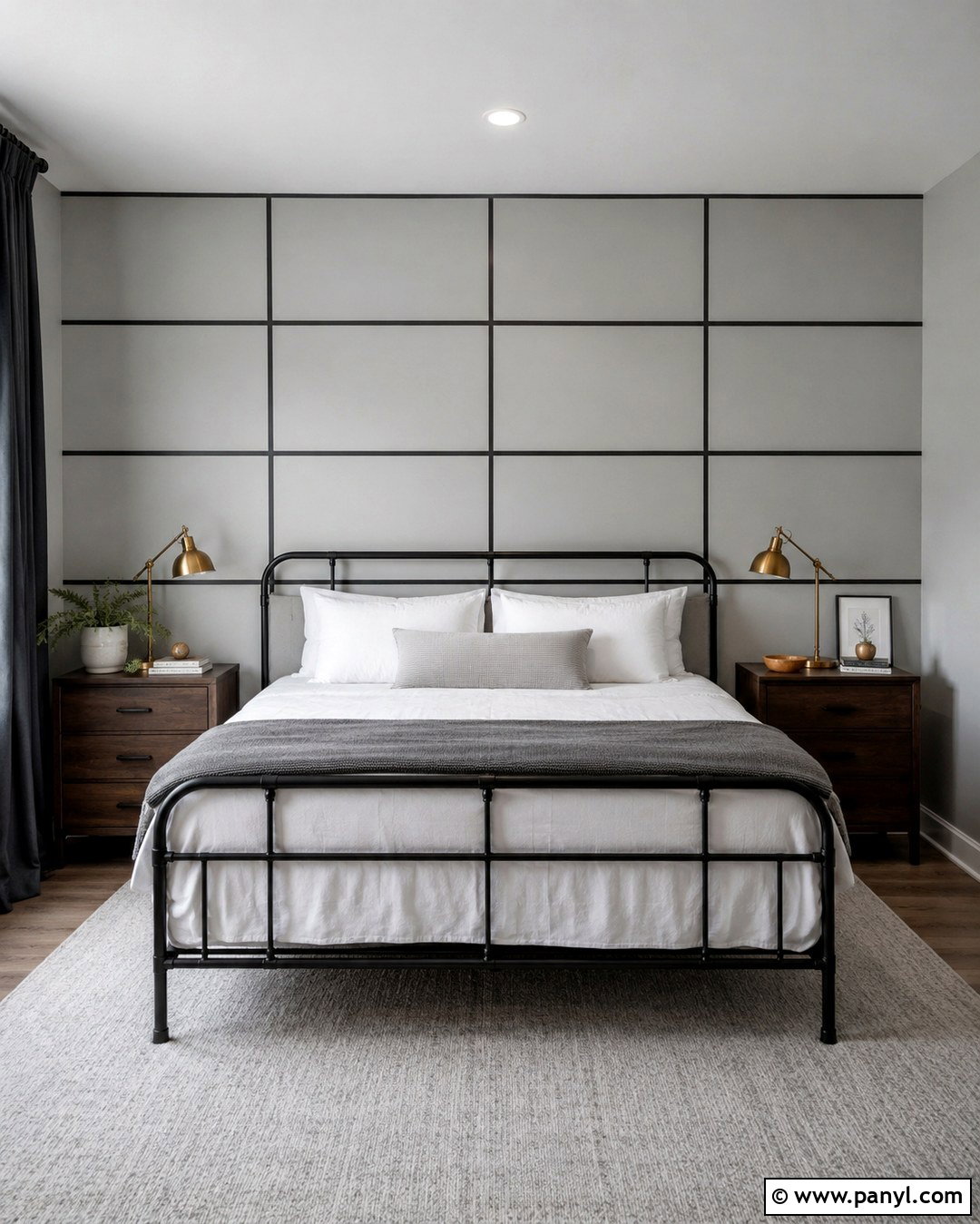
A thin painted grid gives a bedroom architectural order without the cost of applied wall molding. Begin with a pale gray base and add narrow charcoal lines to form large rectangles across the wall behind the bed. Keep every section equal for a crisp, balanced result. A black metal bed echoes the grid, while white bedding and a soft gray blanket prevent the room from feeling harsh. Warm walnut nightstands and brass lamps introduce needed warmth. Use solid curtains and an understated rug because additional patterns could make the room look crowded. Measure the wall carefully and use a level for every line. The finished space has a modern industrial character, yet the restrained palette keeps it restful, practical, and easy to furnish.
15. Wavy Line Bedroom Wall
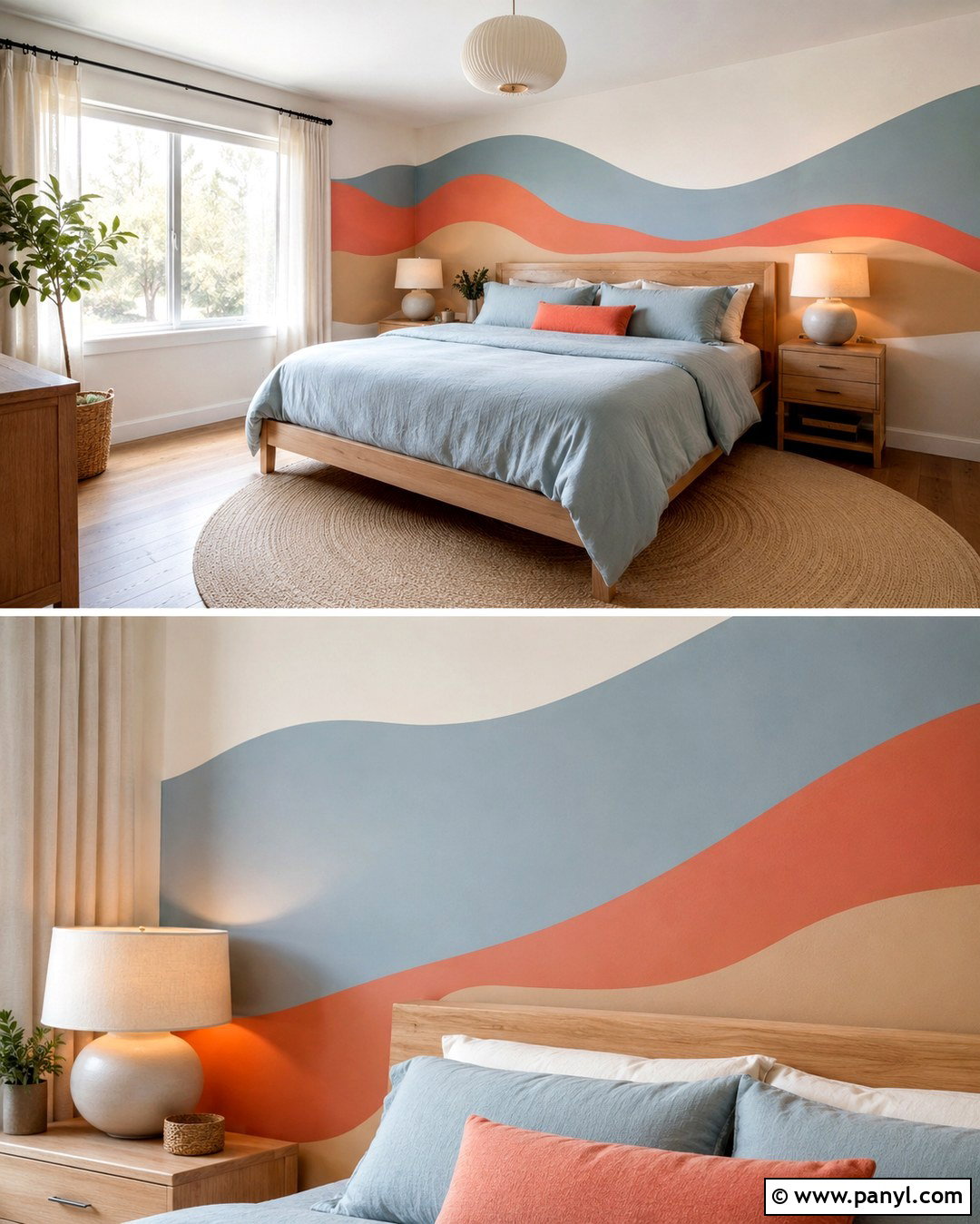
Soft painted waves can bring movement to a bedroom without relying on sharp geometric angles. Cover the wall in warm ivory, then paint three flowing horizontal bands in dusty blue, muted coral, and sandy beige. Let the curves rise gently behind the bed rather than forming identical waves. Choose a simple white oak frame, pale blue bedding, and a coral lumbar pillow to connect the furniture to the mural. Rounded lamps and an oval rug continue the relaxed shapes. Draw the lines lightly in pencil and step back often to check their overall flow before painting. Keep the other walls and curtains plain. This full bedroom look feels creative and friendly, but the low-saturation colors prevent the hand-painted feature from appearing loud or distracting.
16. Polka Dot Bedroom Wall
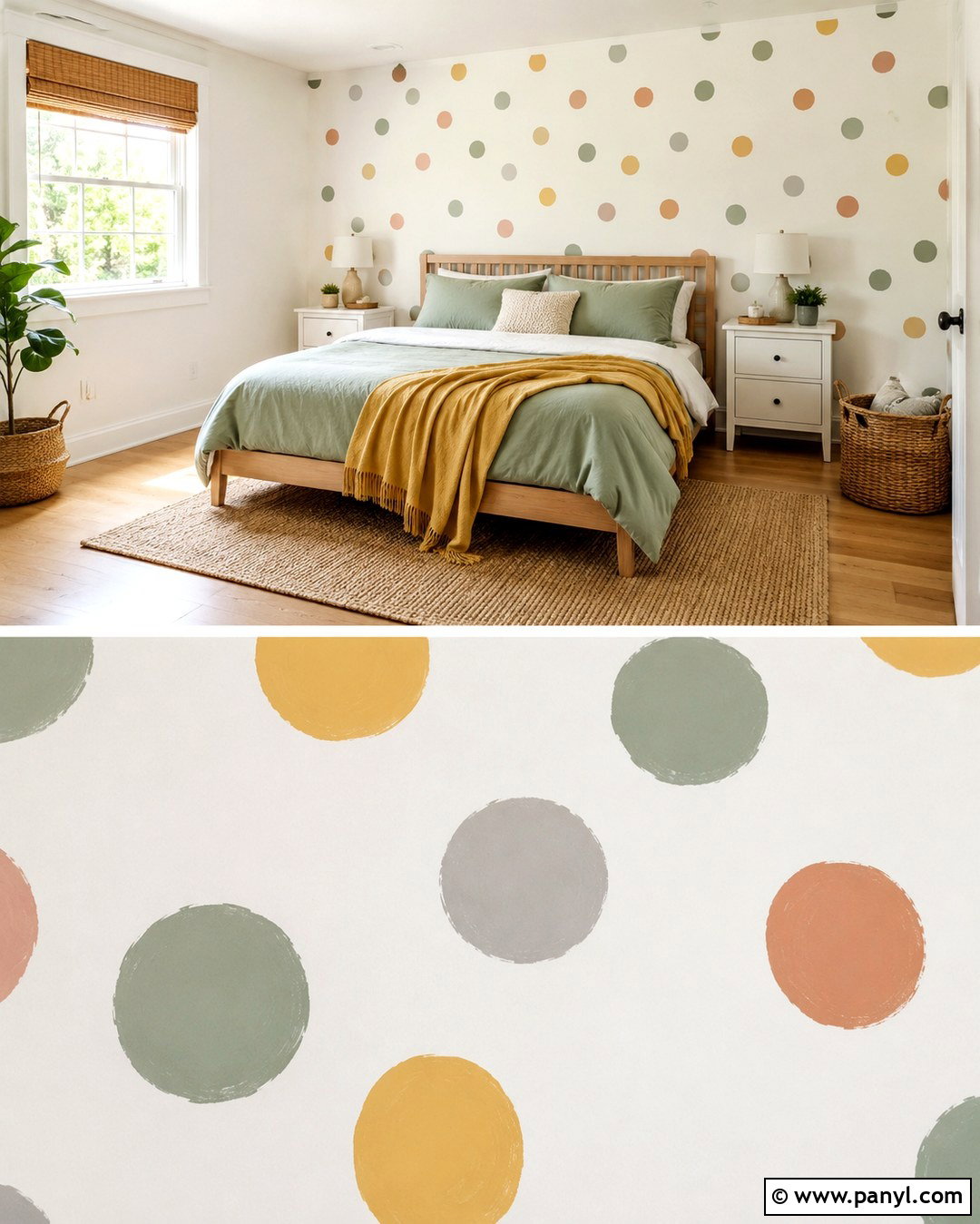
Scattered painted dots offer a simple way to add pattern while maintaining plenty of open wall space. Start with a warm white background, then apply medium-size dots in muted sage, dusty yellow, pale terracotta, and soft gray. Space them loosely across the headboard wall rather than creating rigid rows. A light wood bed with white and sage bedding supports the cheerful palette. Add a pale yellow throw, woven storage baskets, and a compact cream nightstand for a practical finish. Use a round sponge or reusable stencil to keep the dots consistent. Avoid filling every empty area, since generous spacing makes the pattern easier on the eyes. The resulting bedroom is playful enough for children but sophisticated enough for a colorful guest space.
17. Corner Wrap Bedroom Wall
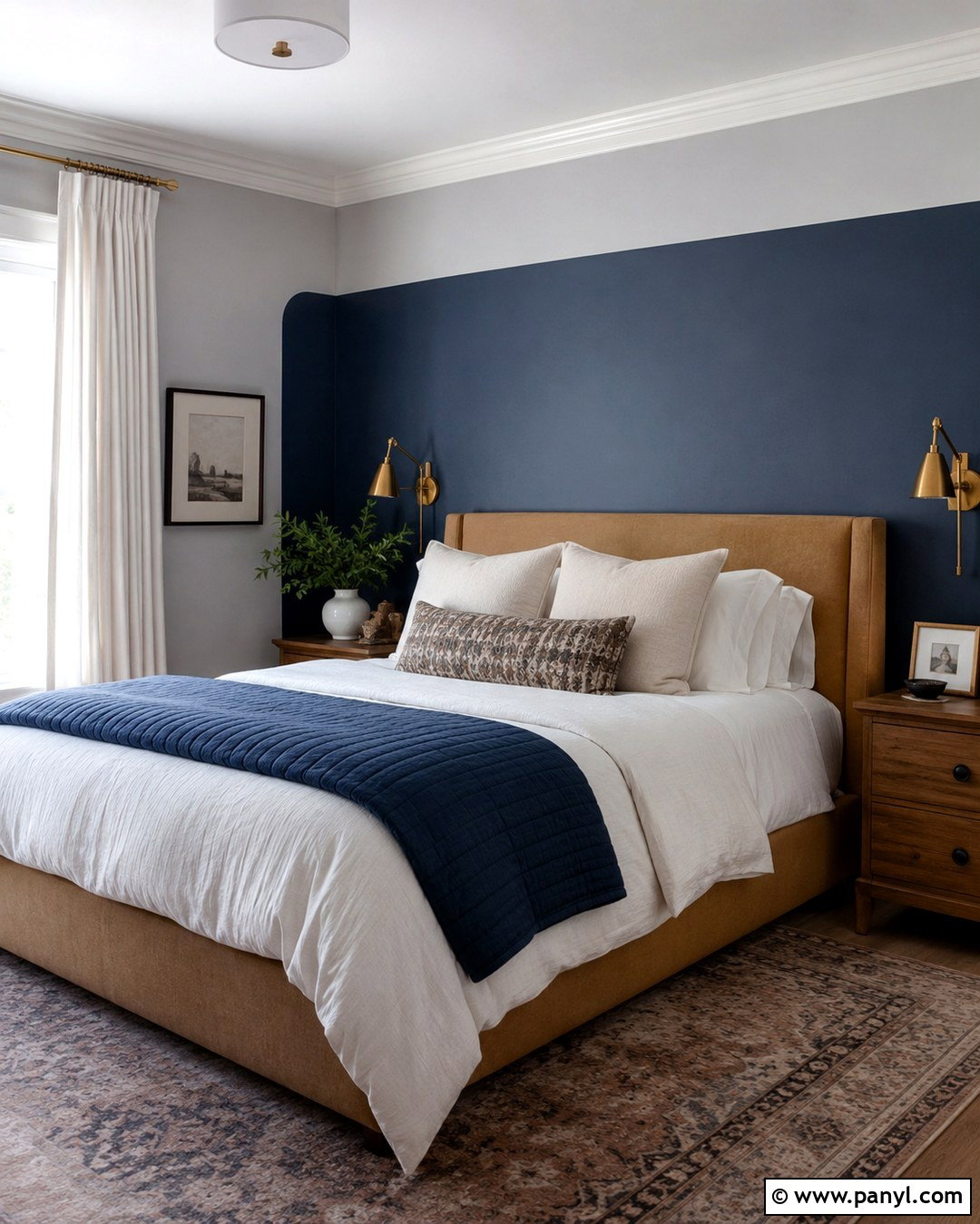
Painting across a corner creates an immersive accent and can help define the sleeping zone in a larger room. Use deep navy on the bed wall and continue it approximately three feet onto the adjoining wall. Leave the rest of the bedroom soft gray for a clean transition. Position a camel-colored upholstered bed within the navy area, then add white sheets, a blue quilt, and tan pillows. A narrow oak nightstand can sit against the painted side section with a brass wall light above it. On the other side, keep the furniture lighter and simpler. Crisp vertical edges make the partial wrap look intentional. This layout gives the bed a cozy visual enclosure without darkening the entire room or requiring a full color-drenched treatment.
18. Brushstroke Bedroom Wall
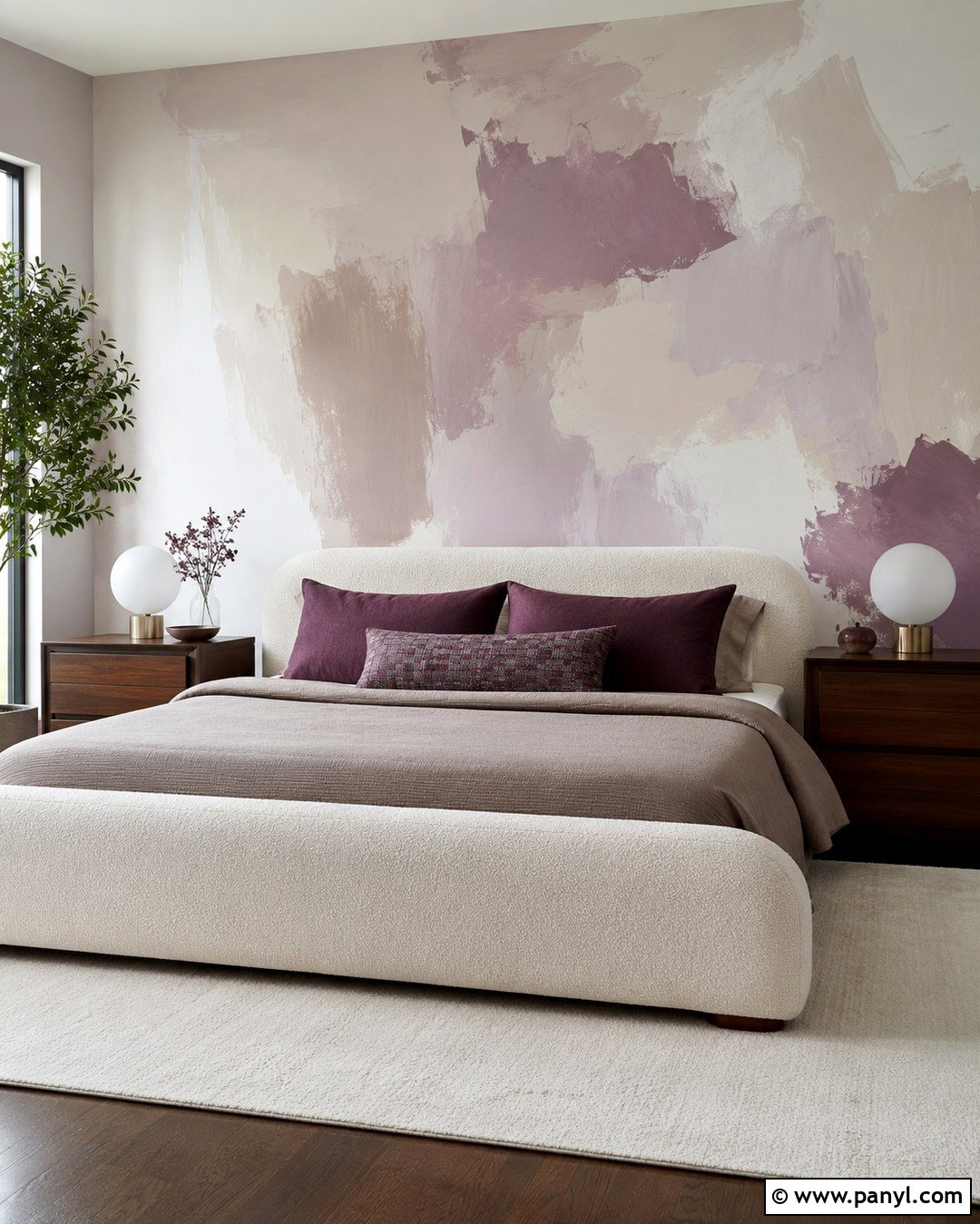
An irregular brushstroke design gives the bedroom an artistic finish that does not need precise measuring. Paint the wall warm white, then create broad overlapping strokes in pale taupe, dusty lavender, and muted mauve behind the bed. Keep the marks concentrated around the headboard and allow them to fade toward the outer edges. A cream boucle bed softens the painted texture, while plum cushions and a taupe quilt repeat the colors. Pair the look with walnut nightstands, frosted glass lamps, and a simple ivory rug. Use a wide brush with limited paint for visible, feathered edges. Test the stroke size on cardboard first. The complete room feels expressive and personal, yet its gentle palette remains calming enough for everyday sleep.
19. Faux Panel Bedroom Wall
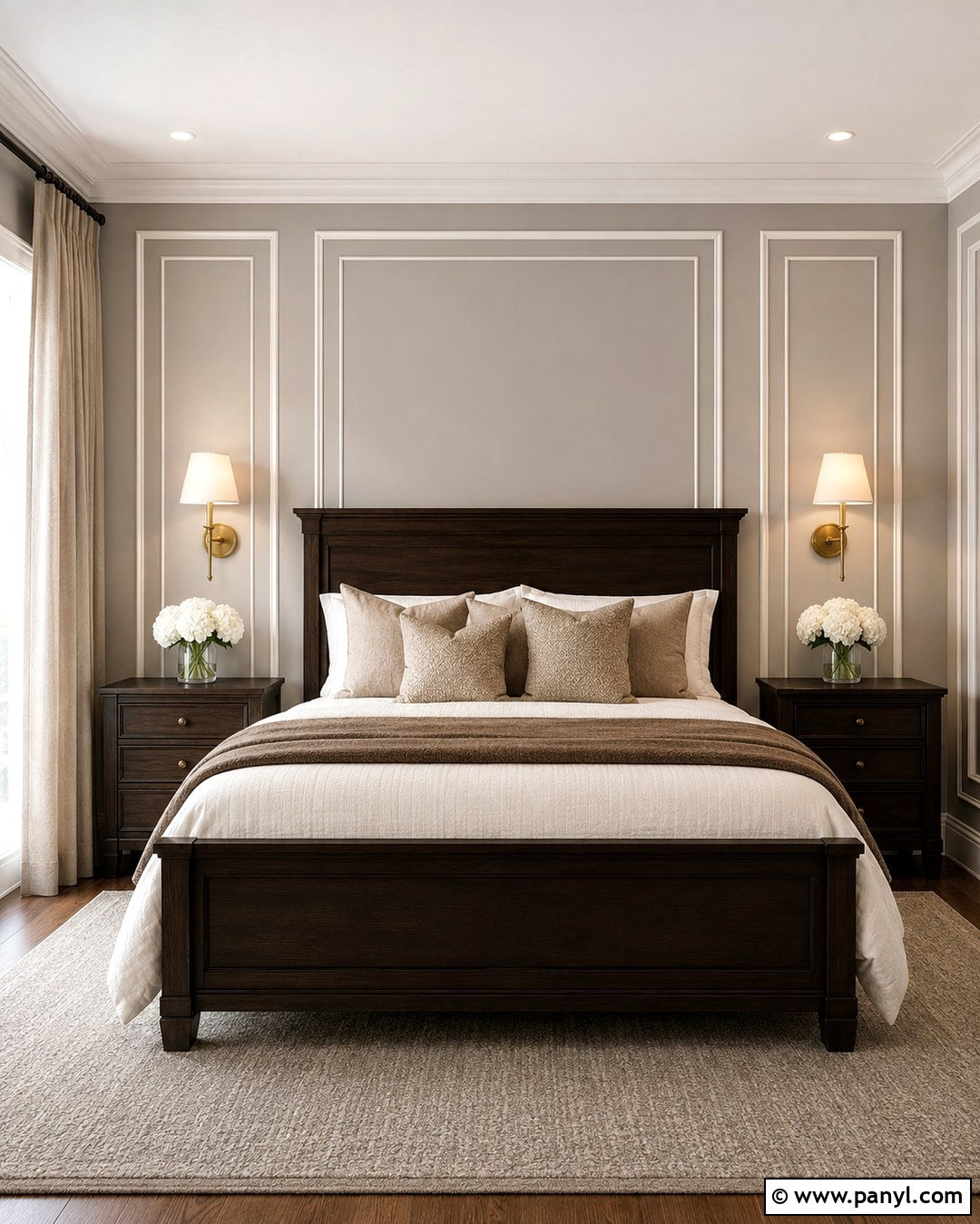
Paint can create the look of classic wall panels without installing wood trim. Cover the headboard wall in soft greige, then use narrow cream lines to outline three tall rectangular panels. Center the largest painted panel behind the bed and place smaller matching panels on each side. A dark oak bed introduces contrast, while ivory bedding, beige pillows, and a tailored brown throw support the refined palette. Position brass sconces inside the side panels to strengthen the architectural effect. Add linen curtains and a low-pile neutral rug for understated texture. Use a level and thin painter’s tape to form clean borders. From a distance, the flat painted lines suggest dimensional molding, giving the bedroom a finished traditional appearance on a modest budget.
20. Painted Wall Border Bedroom
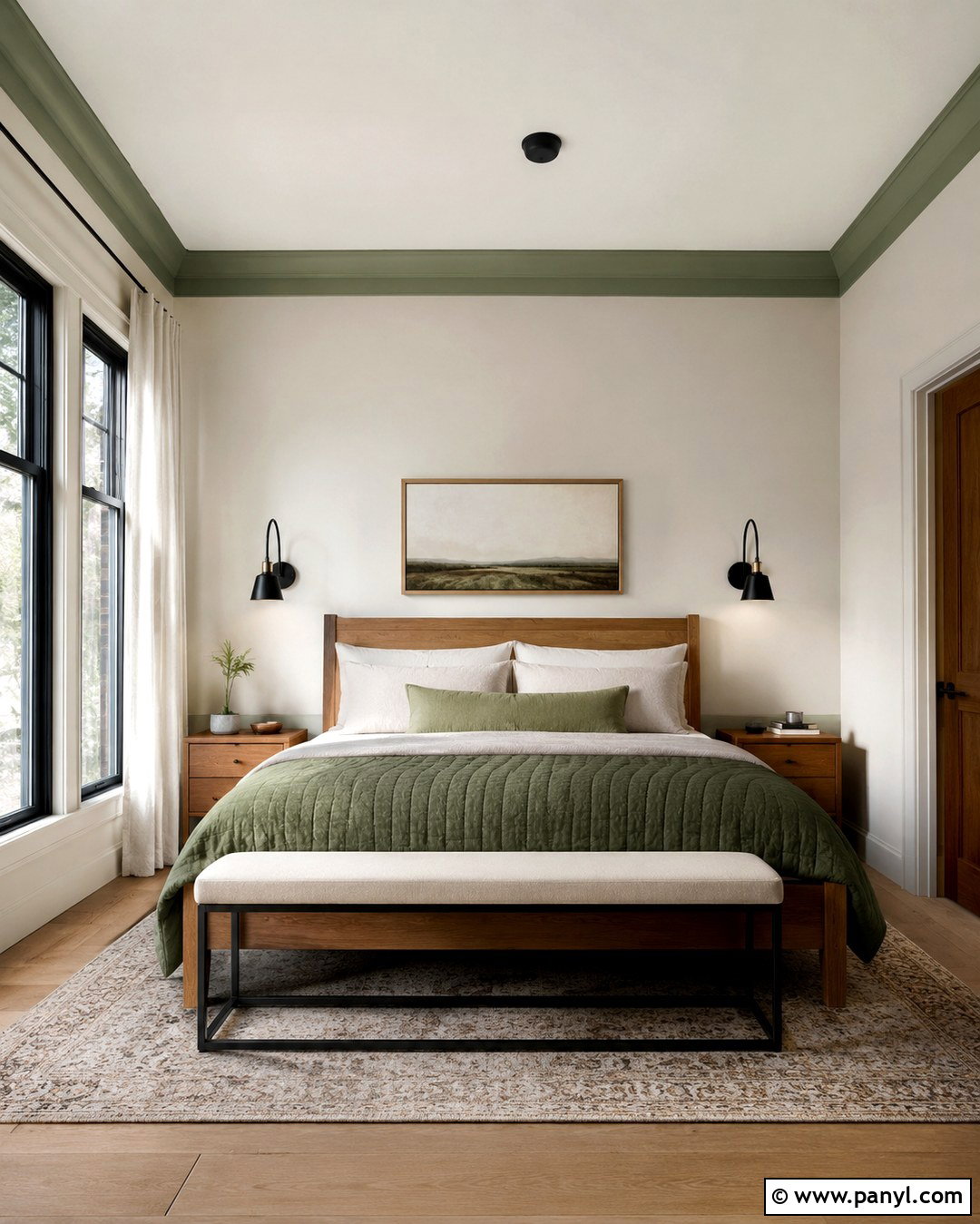
A painted border brings color into a bedroom while leaving the central wall area quiet. Cover the room in pale cream, then add a six-inch sage green border around the top of the walls and down both sides of the headboard wall. This framed treatment draws attention to the room’s shape without filling every surface. Choose a natural oak bed, off-white bedding, and a green quilt to connect with the border. Black reading sconces and a slim bench provide definition. Keep artwork minimal and centered within the painted frame so the composition remains balanced. Measure from the ceiling and corners rather than the floor, which may not be perfectly level. The finished bedroom feels tailored, airy, and subtly more architectural.
Conclusion:
These 20 Simple Paint Designs On Wall Bedroom Ideas show how thoughtful color placement can transform an ordinary sleeping space. A single arch can frame the bed, while stripes, grids, waves, and tonal blocks can change the room’s visual proportions. Choose a treatment that suits your skill level, furniture placement, and preferred atmosphere. Before starting, test colors on the actual wall and observe them throughout the day. Measure carefully, prepare the surface, and use good painter’s tape where clean edges matter. Most importantly, repeat wall colors through bedding, rugs, lamps, and small accents. That final coordination turns a simple paint project into a complete bedroom design that feels comfortable, balanced, and personal.

Related Ideas and Inspiration:



Leave a Reply