
A well-planned accent wall can give an ordinary room a stronger focal point without requiring a full renovation. The best treatments connect with the furniture, color palette, lighting, and purpose of the space instead of looking like an isolated decorating decision. Paint remains the easiest option, but wallpaper, wood trim, paneling, brick, and simple hand-painted patterns can add even more character. Start with a wall that naturally attracts attention, such as the area behind a bed, sofa, dining table, desk, or fireplace. Then repeat its color or material in a few smaller details around the room. The complete looks below offer practical, stylish, and budget-friendly inspiration through 20 simple accent wall ideas.

1. Sage Green Bedroom Accent Wall
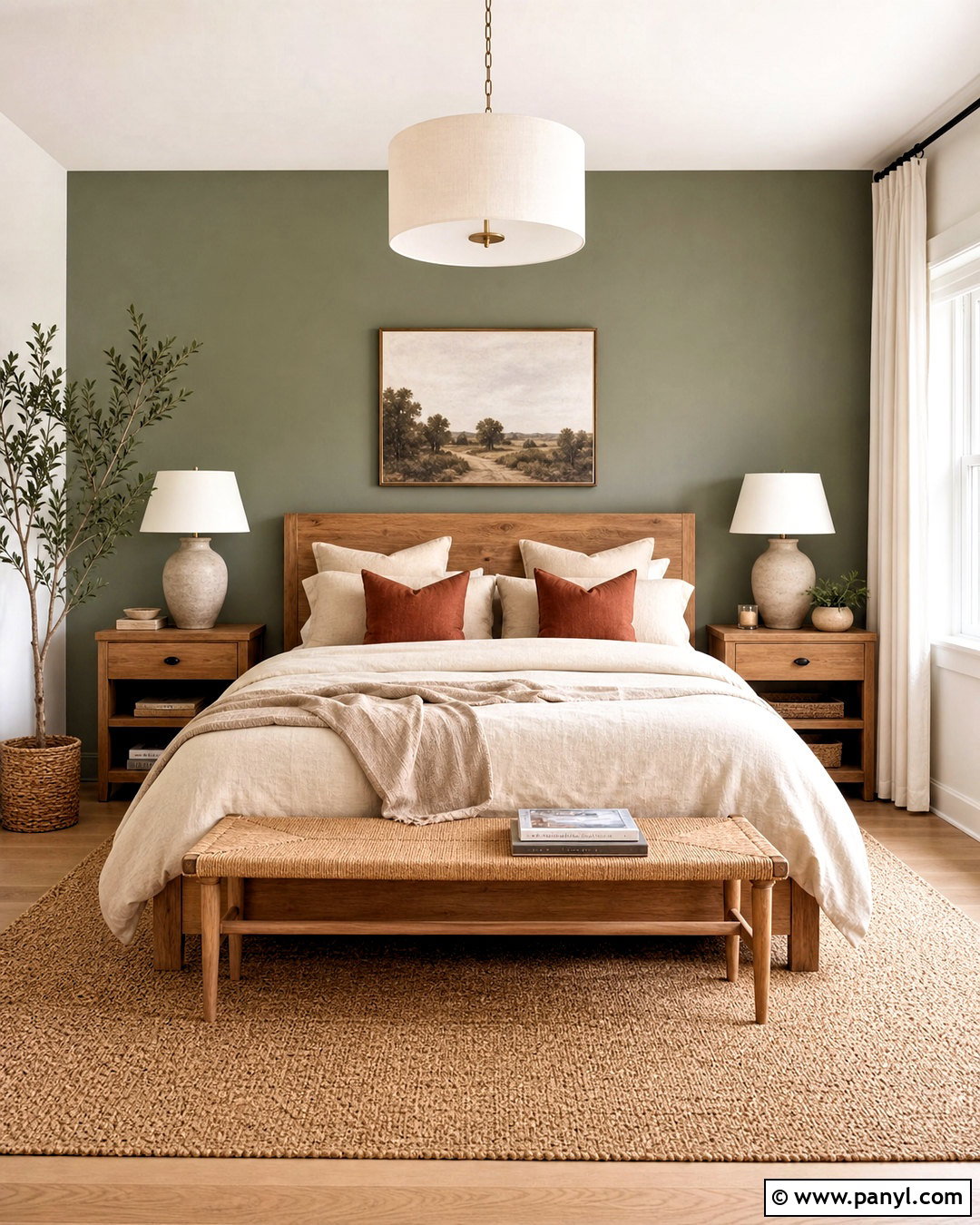
Soft sage green creates a calm bedroom focal point without making the space feel dark or overly colorful. Paint the uninterrupted wall behind the headboard, then keep the remaining walls warm white for a fresh contrast. A natural oak bed, cream linen bedding, and a textured beige rug reinforce the relaxed palette. Add two small wooden nightstands with simple ceramic lamps to frame the bed evenly. Black curtain rods and picture frames provide definition, while muted rust or clay-colored pillows add gentle warmth. Choose a dusty, gray-based sage rather than a bright green for a more restful result. A single landscape print above the bed completes this simple accent wall while allowing the soothing paint color to remain the main feature.
2. Navy Blue Living Room Accent Wall
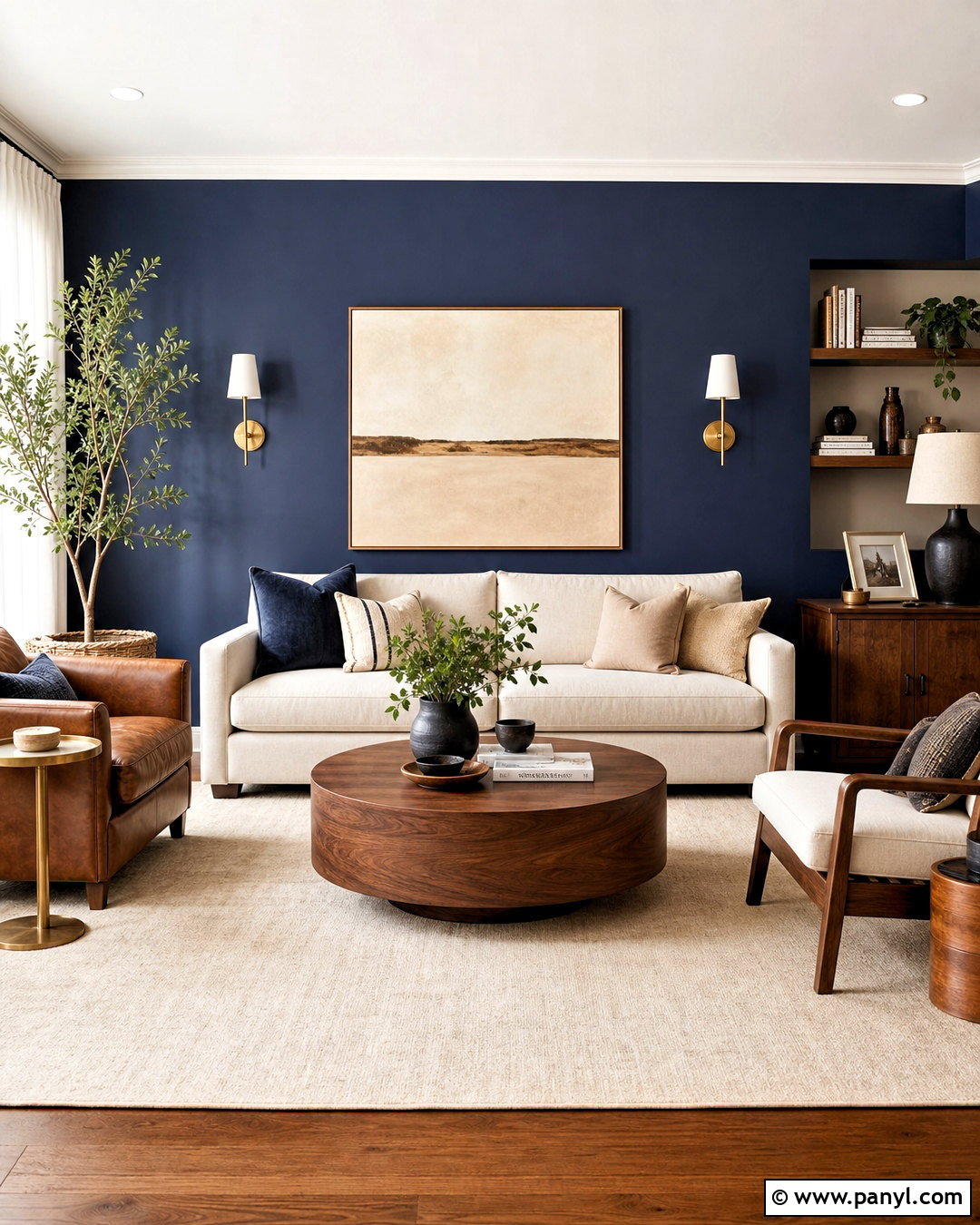
Deep navy paint can visually anchor a living room, especially when used behind a light-colored sofa. Select the largest solid wall and paint it in a rich navy blue with a soft eggshell finish. Arrange a cream or pale gray sofa against it, leaving enough space for a narrow console if the room allows. Warm the strong blue with a medium-tone wood coffee table, tan leather chair, and natural woven rug. White curtains keep the windows bright, while brushed brass lamps introduce a subtle reflective finish. Repeat navy in one or two patterned pillows rather than throughout the entire room. Large neutral artwork with a slim wood frame gives the wall scale and ensures the finished space feels intentional, balanced, and welcoming.
3. Black Dining Room Accent Wall
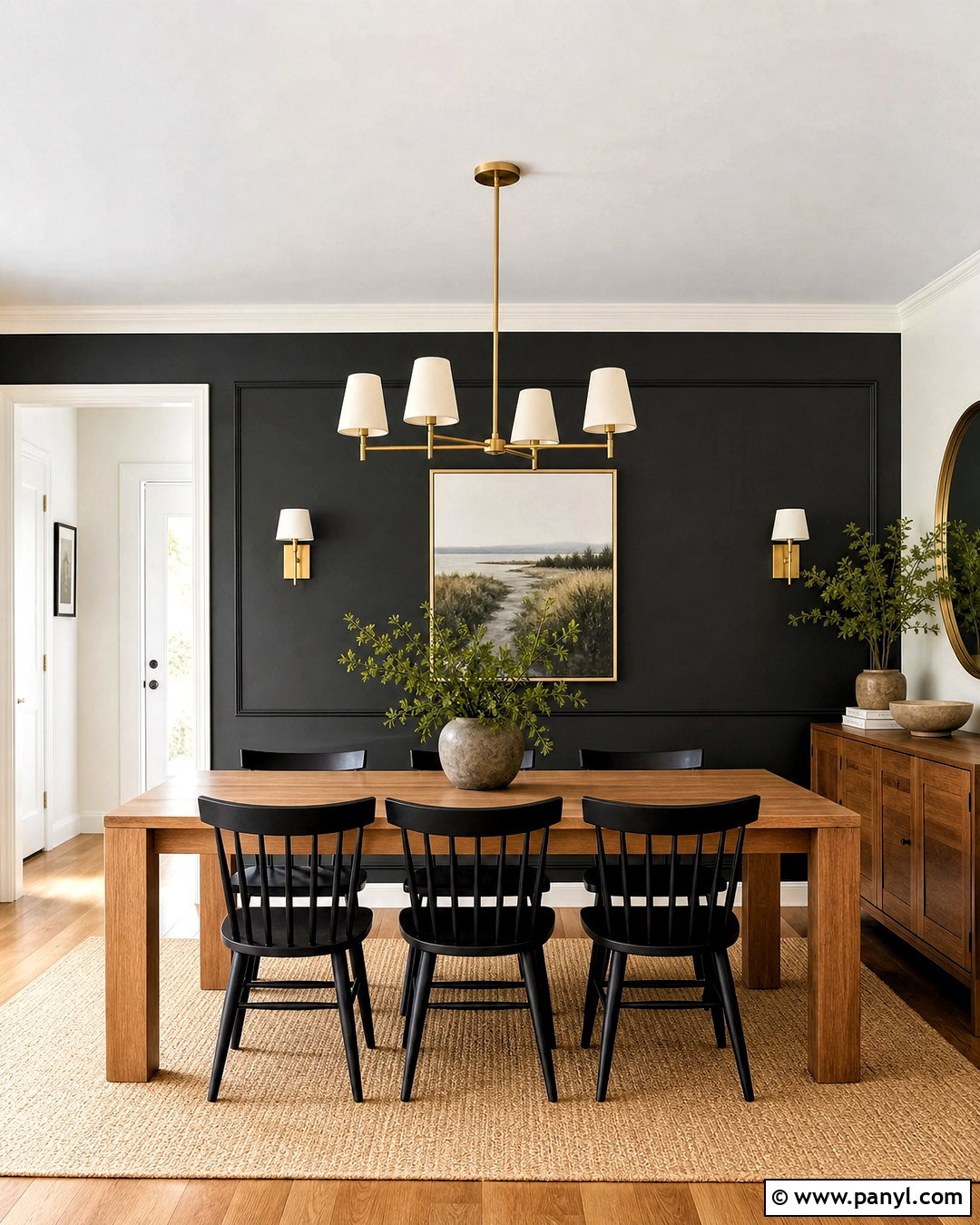
A black accent wall can make a dining area feel more defined and sophisticated without requiring expensive materials. Use a soft black or charcoal shade on the wall behind a sideboard or dining table. Pair it with warm white surrounding walls, medium oak flooring, and a rectangular wood table to prevent the room from appearing cold. Black spindle-back chairs create continuity, while a light jute rug softens the overall contrast. Hang a large round mirror or an oversized cream-toned artwork above the sideboard. A modern brass pendant adds warmth and helps the dark wall reflect small highlights. Finish the table with a low ceramic bowl and greenery. Keeping the accessories simple allows this dramatic yet uncomplicated accent wall to look polished rather than crowded.
4. Terracotta Home Office Accent Wall
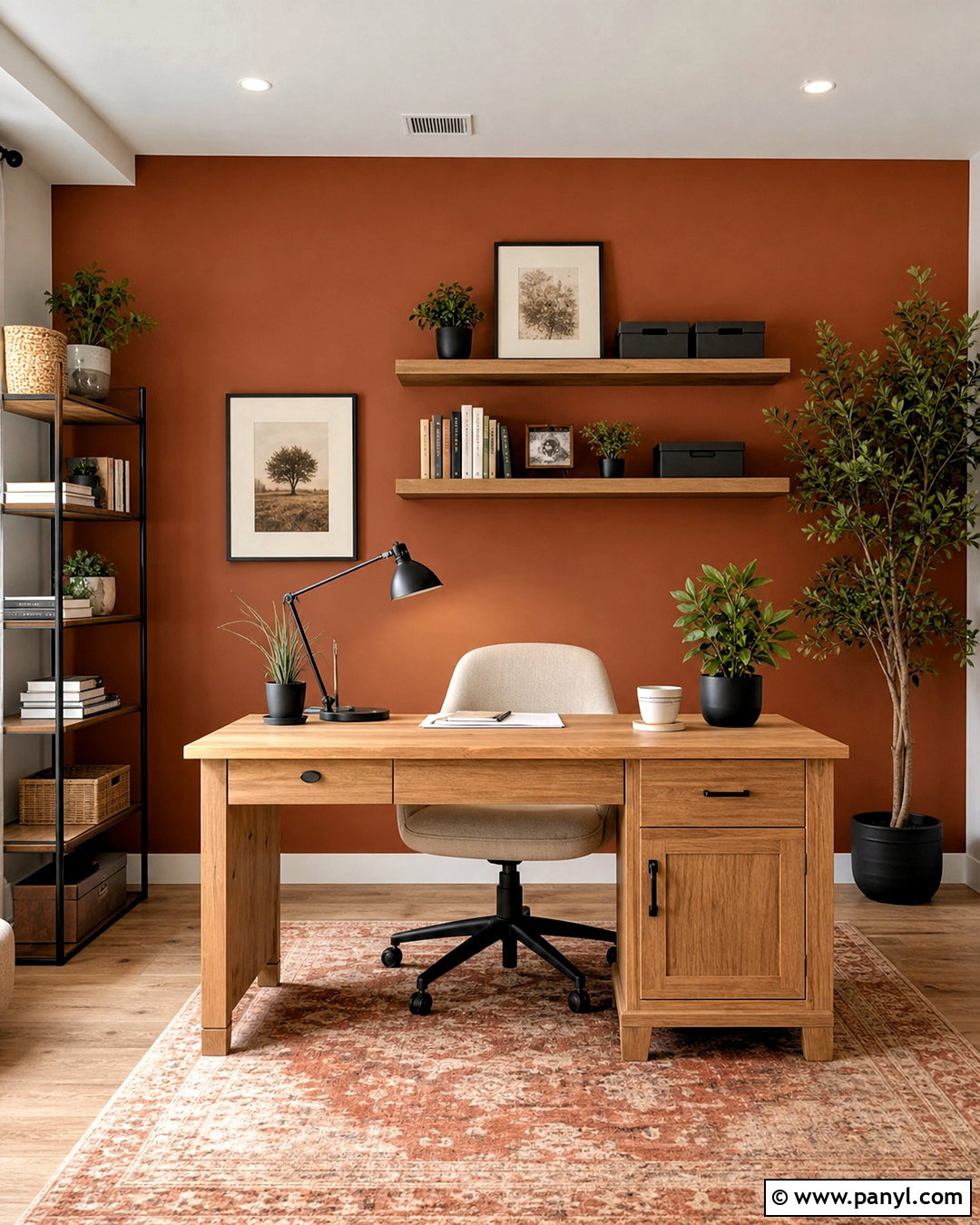
Warm terracotta gives a home office energy and character while remaining earthy enough for daily use. Paint the wall behind the desk in a muted clay shade, then balance it with soft beige walls and light wood flooring. Position a streamlined oak desk against the colored wall and add a comfortable cream upholstered chair or an ergonomic chair in warm tan. Install two simple floating shelves above the desk for books, storage boxes, and a few small plants. Matte black brackets, a black task lamp, and dark picture frames sharpen the softer palette. A flat-woven rug with cream, rust, and brown details connects the wall to the rest of the room. This complete setup creates a practical focal point that feels warm, organized, and motivating.
5. Color Block Accent Wall
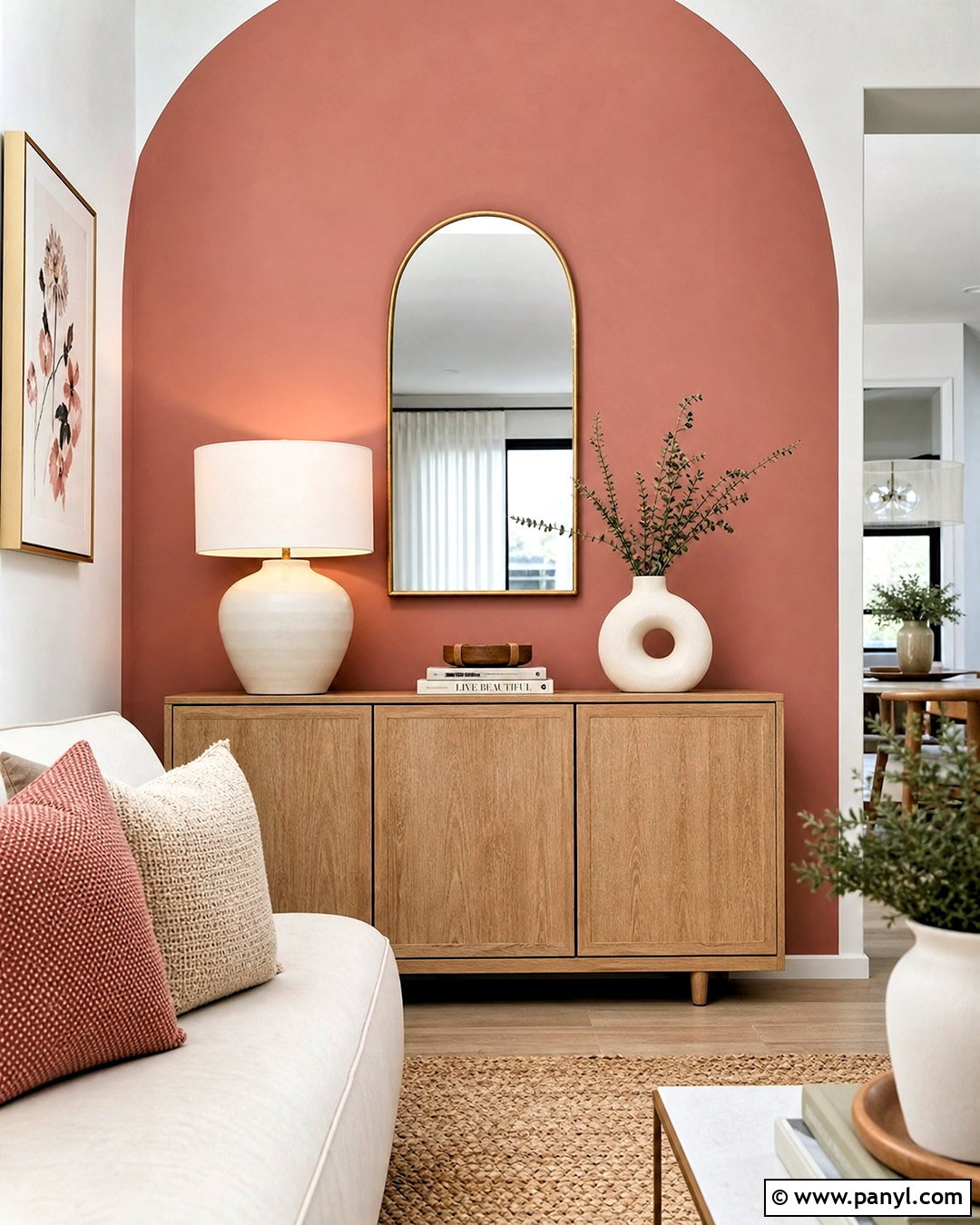
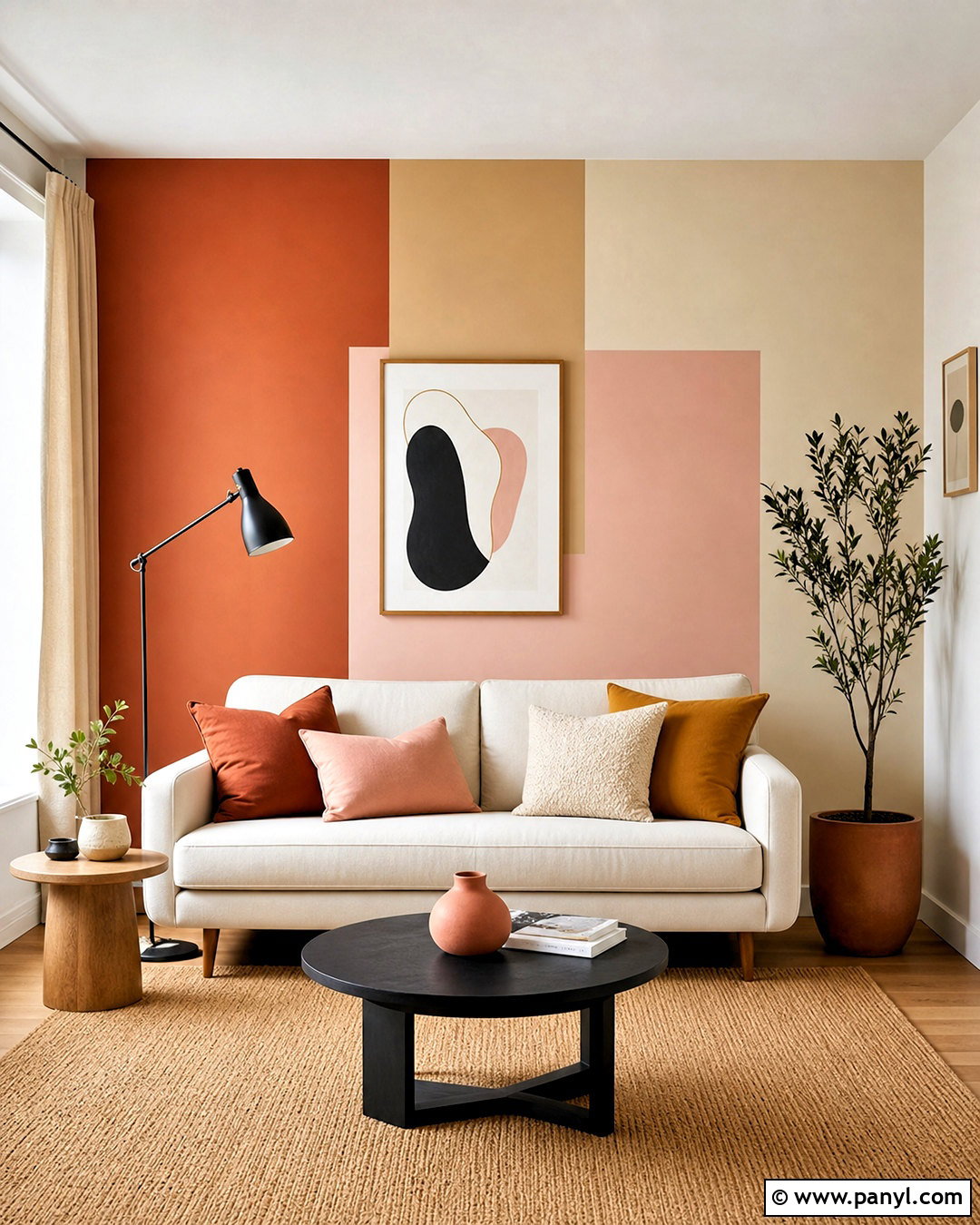
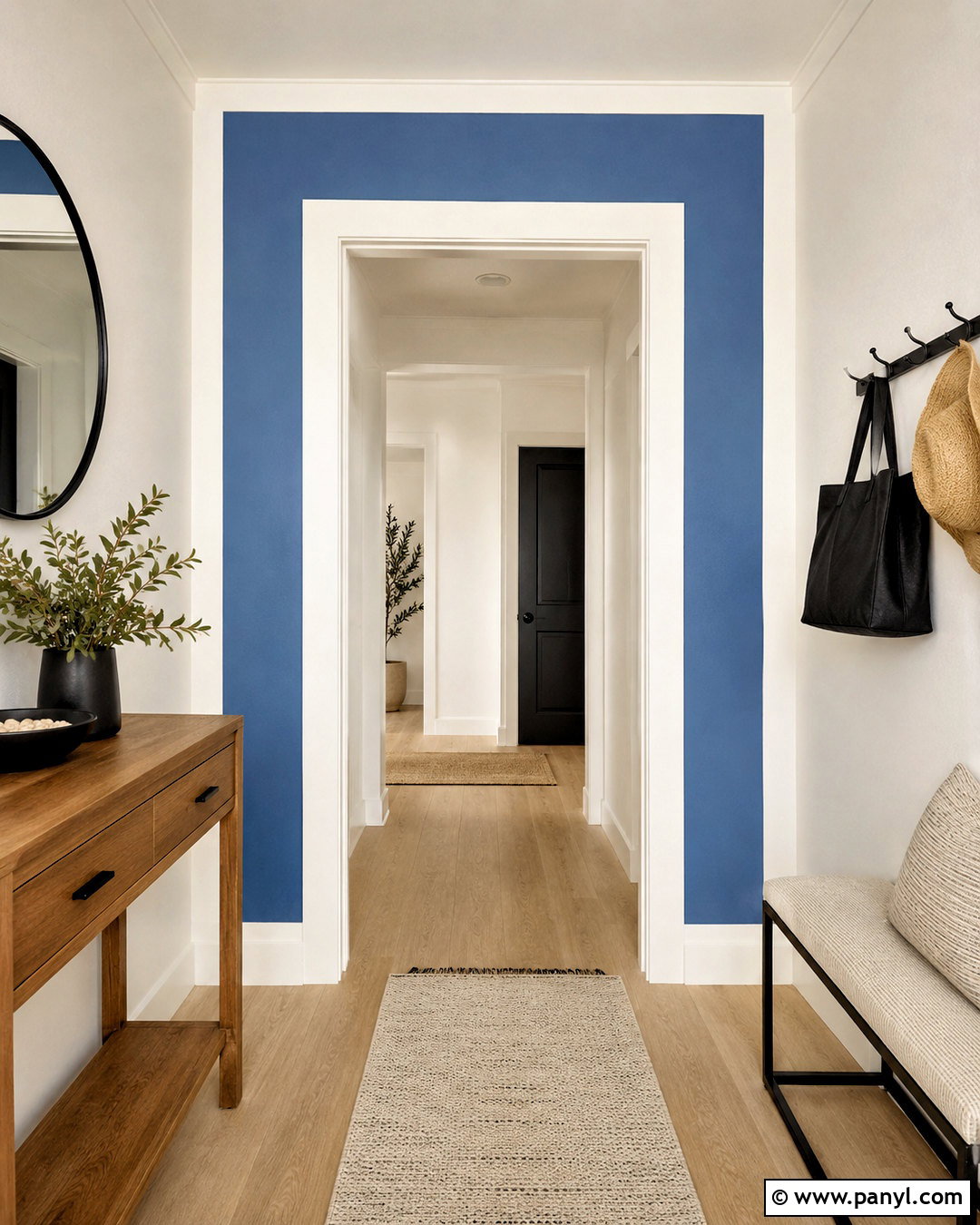
A painted color block offers an easy way to highlight furniture without covering an entire wall. Create a large arch, circle, or rounded rectangle behind a console, desk, or bed using muted blue, warm ochre, or dusty rose paint. Keep the shape noticeably wider than the furniture so the composition looks properly scaled. The rest of the wall can remain warm white, allowing the painted form to stand out clearly. Pair the feature with clean-lined furniture, a simple lamp, and two or three carefully placed accessories. Use a level, pencil, string, and painter’s tape to establish crisp edges before painting. Repeating the feature color in a pillow, vase, or nearby artwork ties the room together while preserving the color block’s playful simplicity.
6. Vertical Wood Slat Accent Wall
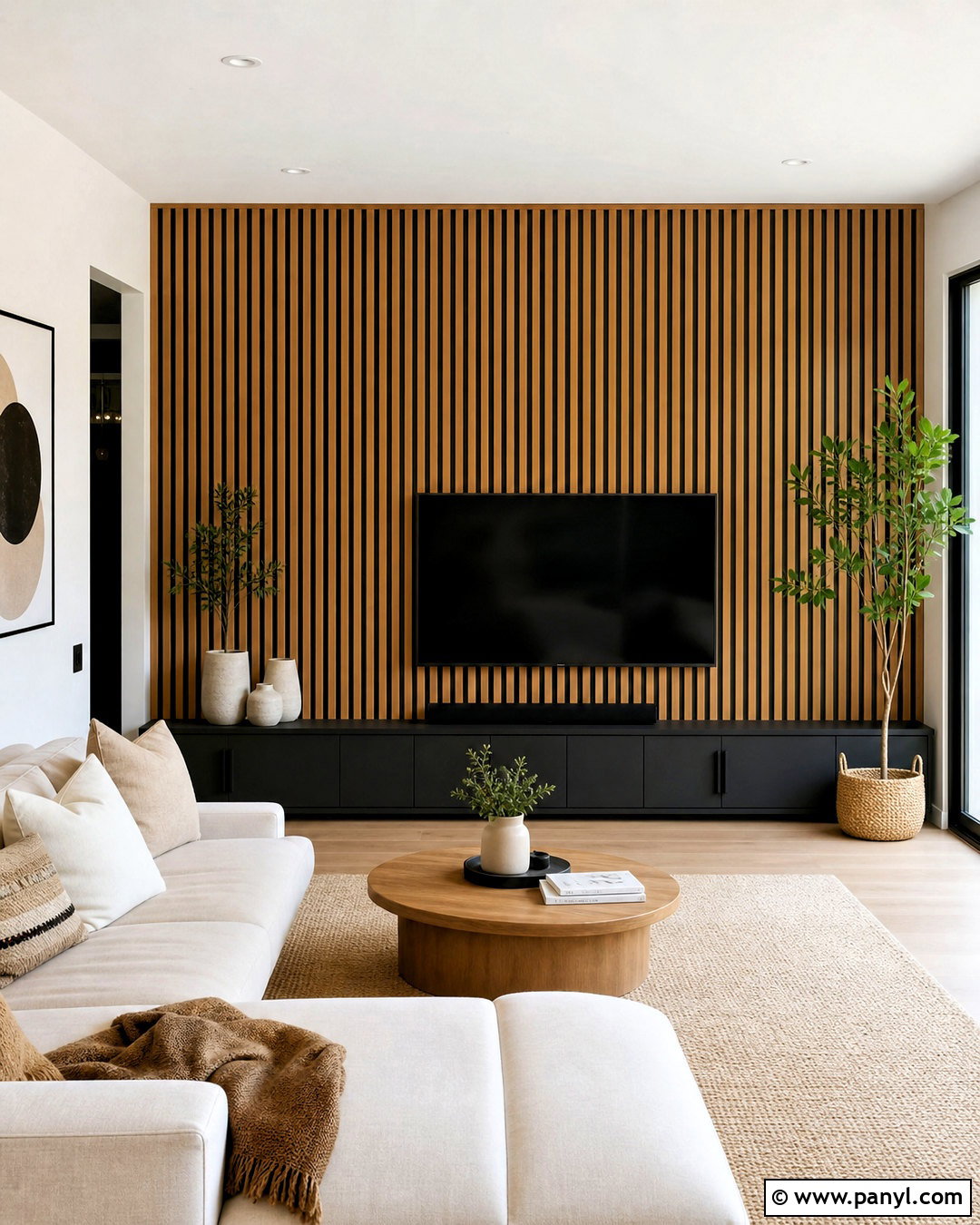
Vertical wood slats bring natural texture to a living room while making a standard ceiling appear slightly taller. Cover the focal wall behind a low media console with evenly spaced oak or pine slats. A dark charcoal backing between the boards creates extra depth, while a matching wood backing produces a softer, more seamless result. Keep the television and console centered so the vertical lines frame the arrangement. Choose a simple cream sofa, light neutral rug, and rounded wood coffee table to balance the structured wall. Matte black lighting and a few green plants add contrast without distracting from the timber. Use slim battens and consistent spacing for a clean finish. This accent wall works particularly well in modern, Scandinavian, and warm minimalist interiors.
7. Board And Batten Bedroom Accent Wall
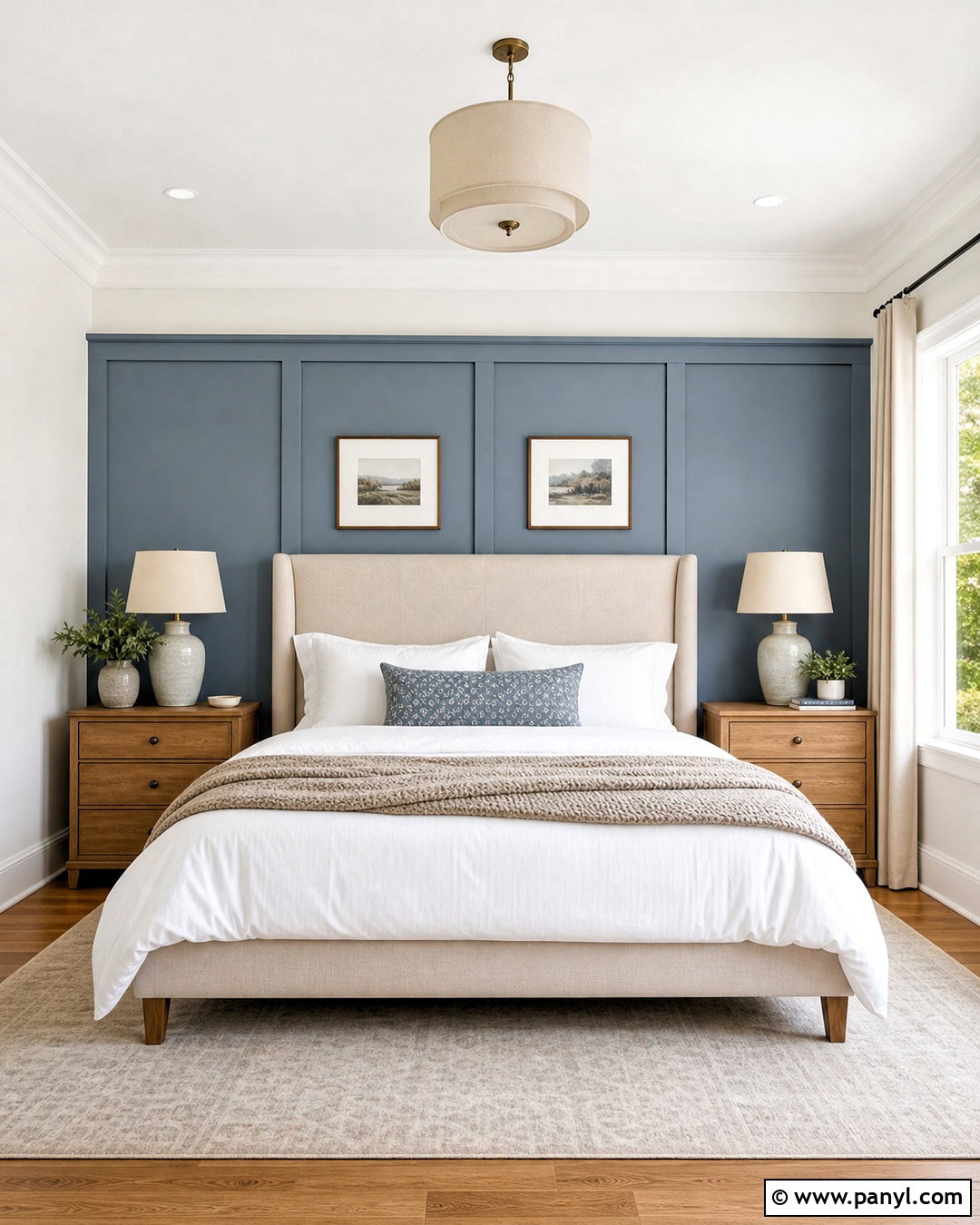
Board and batten can give a plain bedroom architectural detail with basic wood trim and one paint color. Install evenly spaced vertical battens across the wall behind the bed, finishing them with a horizontal top rail about two-thirds of the way up. Paint the trim and lower wall together in dusty blue, warm taupe, or muted olive. Leave the upper portion soft white to maintain an open feeling. Center an upholstered bed against the paneling and use matching nightstands for visual balance. Crisp white bedding, a textured throw, and simple shaded lamps keep the design relaxed. One small framed print above each nightstand is enough decoration. The finished wall feels built-in and substantial, yet its straight cuts and repeated spacing make it approachable for a careful weekend project.
8. Picture Frame Molding Accent Wall
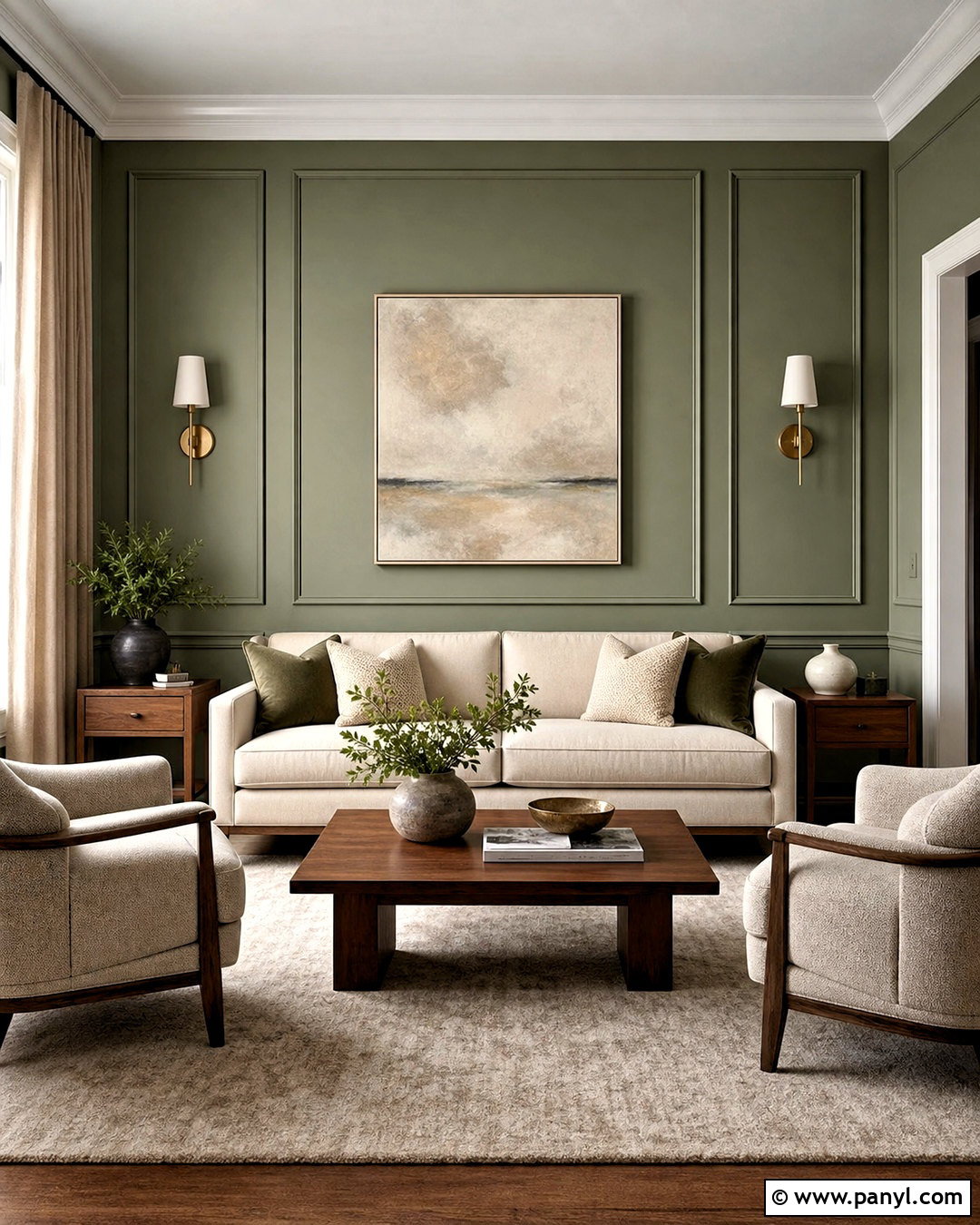
Picture frame molding delivers a traditional accent wall that still works with streamlined furniture. Apply thin molding in large, evenly spaced rectangles across a living room or dining room wall. Paint the molding and wall in the same muted greige, deep green, or smoky blue for a unified finish. Center the rectangles around the main furniture arrangement instead of beginning measurements from a random corner. A tailored cream sofa, walnut side tables, and brass wall sconces create a balanced living room look. In a dining room, use an oval wood table and simple upholstered chairs. Keep artwork limited because the molding already provides visual detail. Carefully planned proportions are essential, so mark the complete layout with painter’s tape before cutting trim. The result feels polished without becoming too formal.
9. Peel And Stick Wallpaper Accent Wall
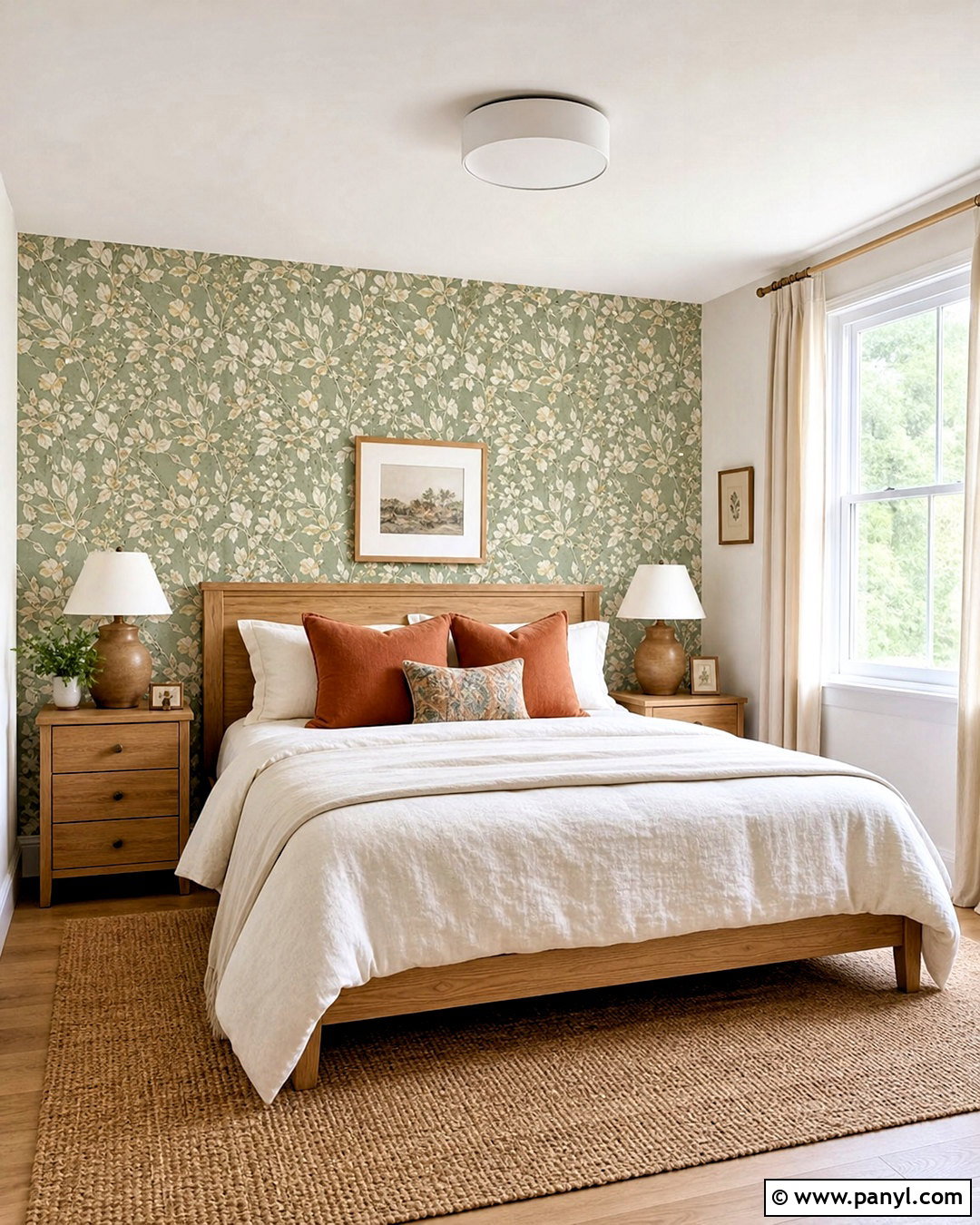
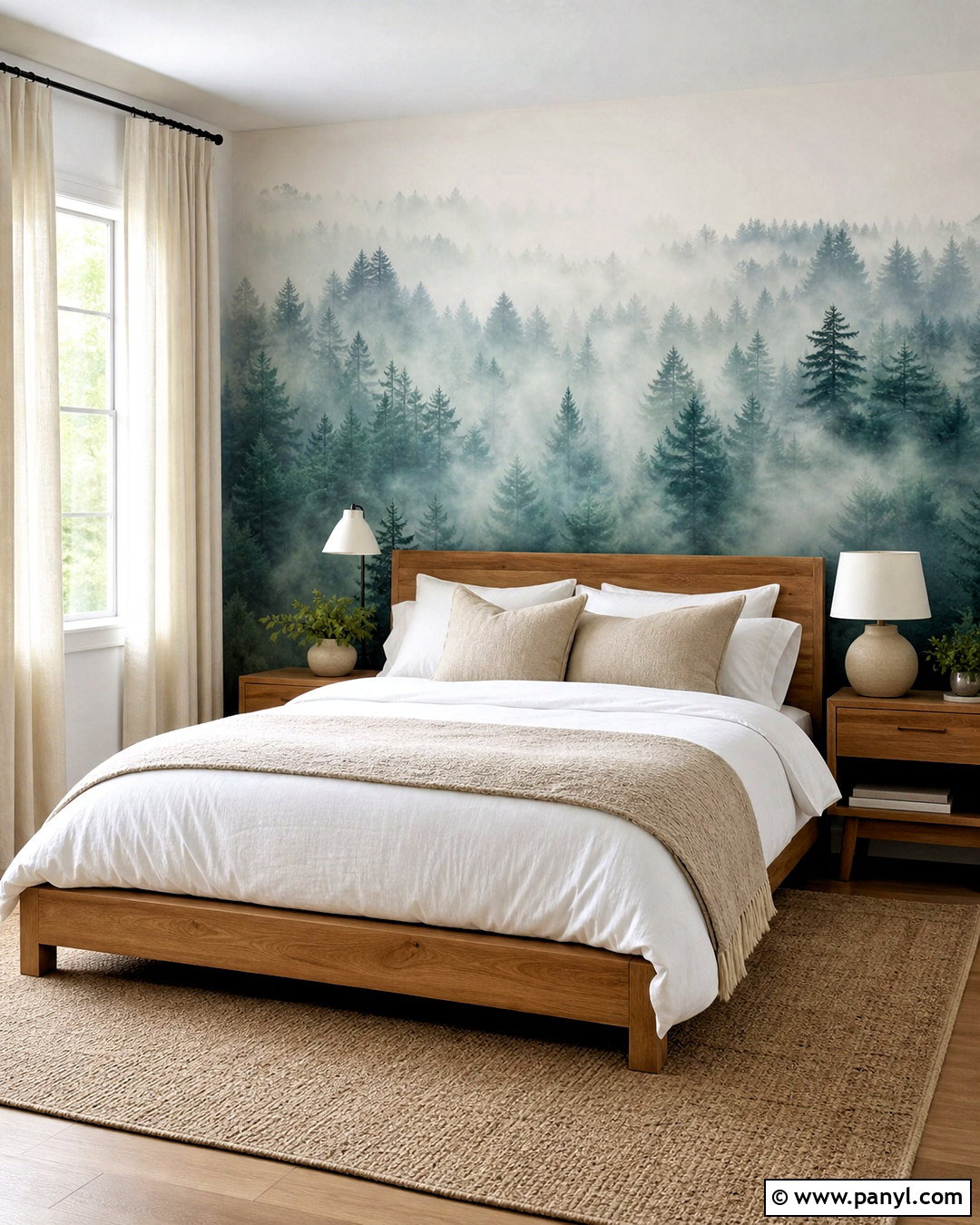
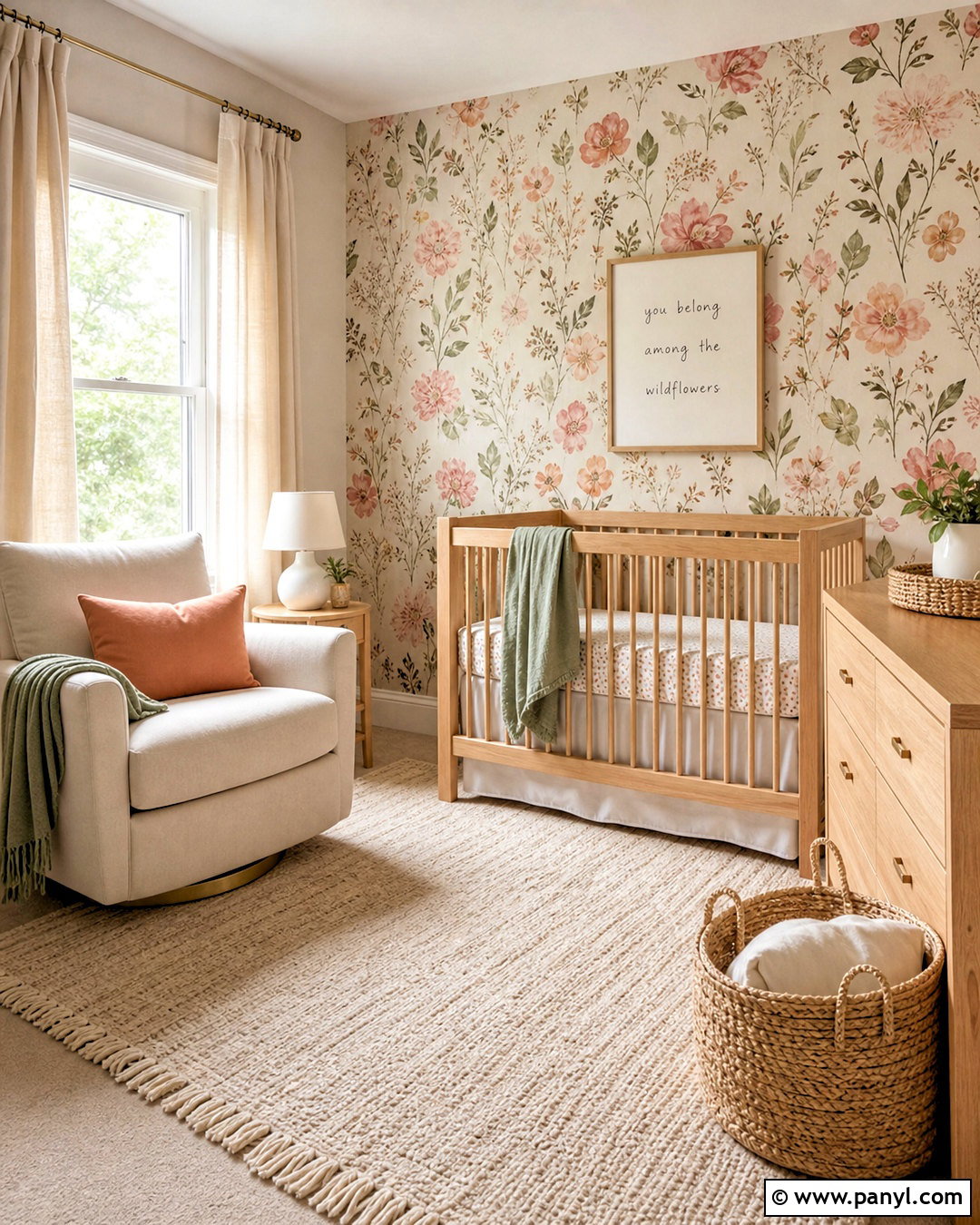
Peel-and-stick wallpaper is a practical choice for renters, guest rooms, and anyone who wants a removable update. Select a medium-scale botanical, geometric, or block-print pattern with two or three coordinated colors. Apply it to the wall behind a bed or desk where the pattern can create a clear focal point. Keep the surrounding walls light and choose simple furniture that does not compete with the print. For a sage and cream botanical paper, pair an oak bed with ivory bedding and rust-colored pillows. Add plain curtains and solid lampshades rather than introducing more patterns. Measure the wall carefully, order extra material for matching repeats, and smooth each panel from the center outward. The complete space will feel layered and personal while remaining easy to change later.
10. Painted Stripe Accent Wall
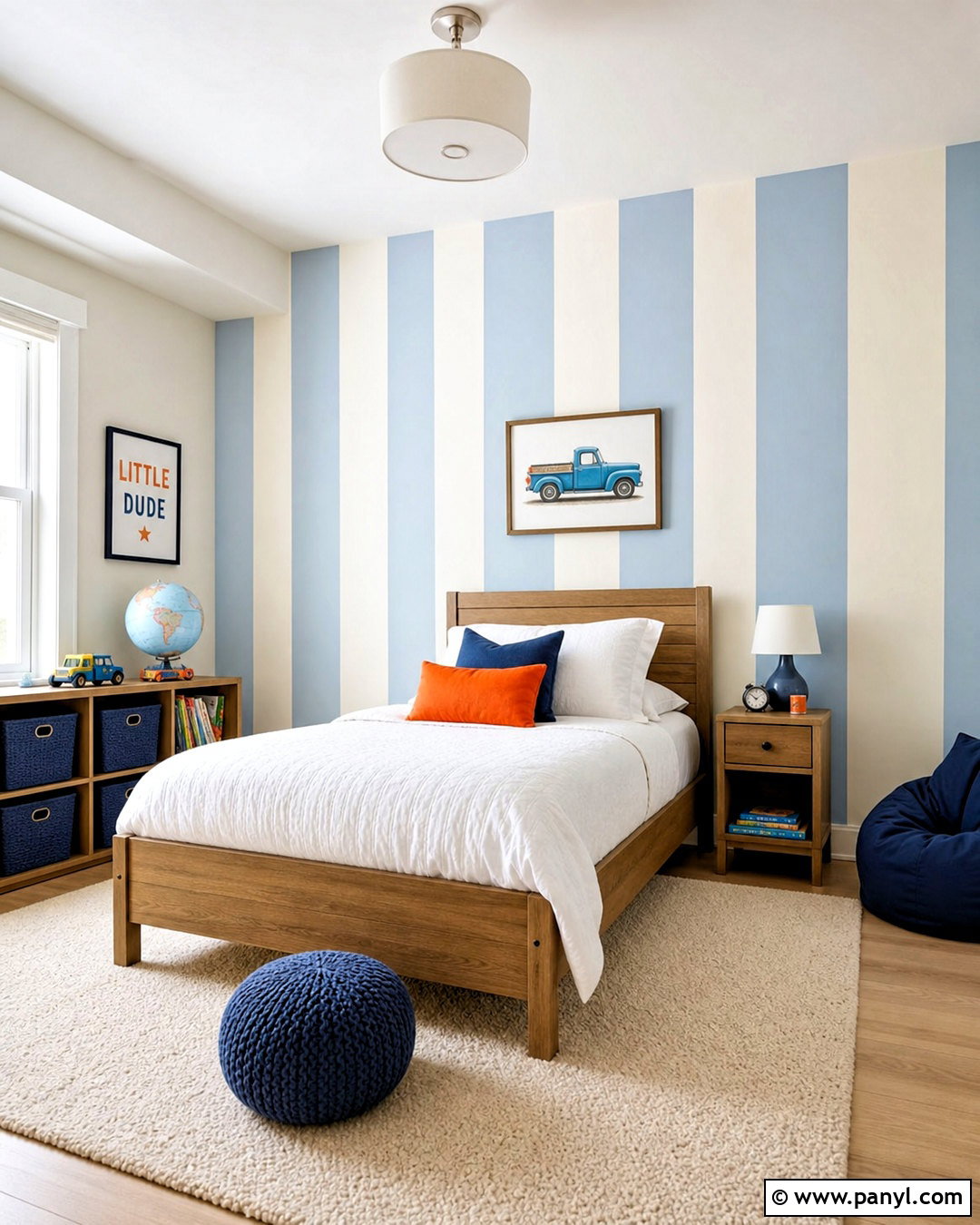
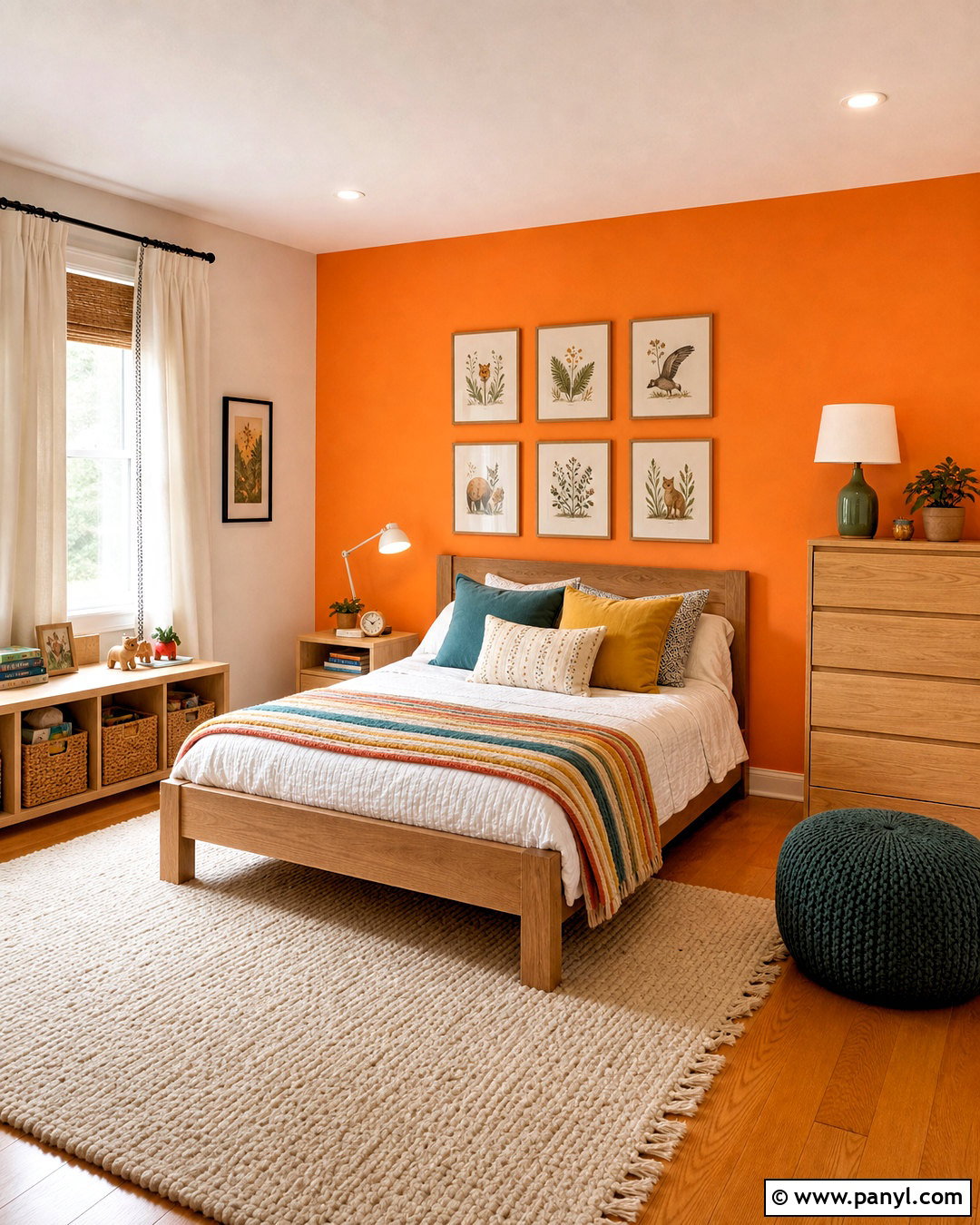
Wide painted stripes add rhythm to a room without the cost or commitment of wallpaper. Use vertical stripes to emphasize height or horizontal bands to make a narrow wall appear wider. Choose two closely related colors, such as warm white and beige, pale blue and off-white, or terracotta and soft peach. Stripes between eight and sixteen inches wide usually feel cleaner than very narrow bands. In a child’s bedroom, position the striped wall behind a simple white or wood bed and repeat one color in the rug and bedding. For a home office, combine muted stripes with a compact desk and solid storage cabinets. Measure carefully and seal painter’s-tape edges with the base color before adding the second shade. This extra step helps produce sharper, more professional lines.
11. Limewash Living Room Accent Wall
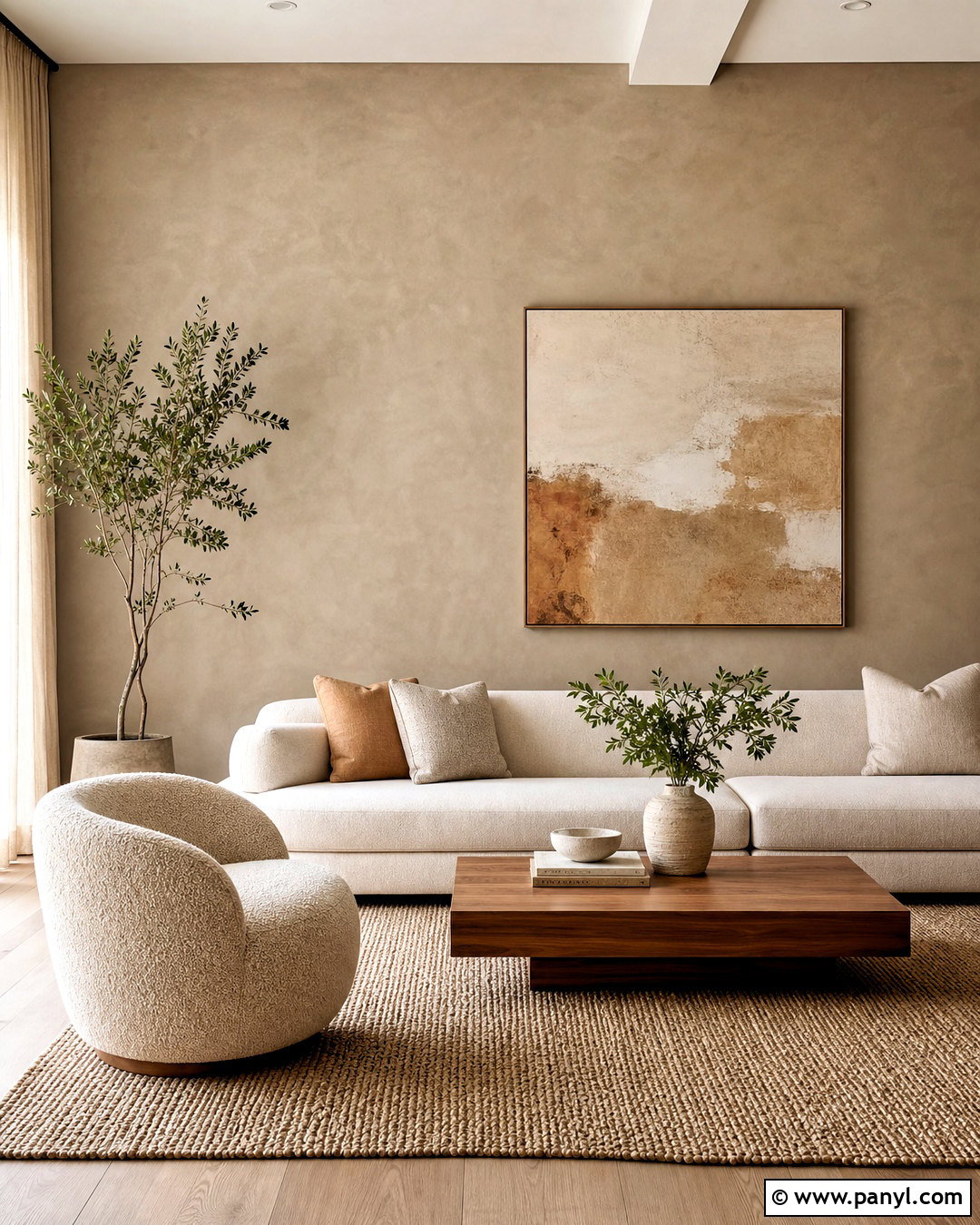
A limewash-style accent wall brings soft movement and depth to a living room without using a strong pattern. Choose a warm beige, mushroom, dusty clay, or pale gray finish and apply it with a broad brush in overlapping strokes. The subtle tonal variation looks especially effective behind a simple sofa or fireplace. Pair a beige limewashed wall with a low cream sofa, walnut coffee table, boucle chair, and textured wool rug. Linen curtains and handmade ceramic accessories support the organic appearance. Keep artwork minimal, perhaps using one large abstract piece in quiet earth tones. Because the finish already has visible movement, avoid busy textiles nearby. Test the product and application method on a sample board first, since the wall’s base color and brush technique can influence the final appearance.
12. Geometric Painted Accent Wall
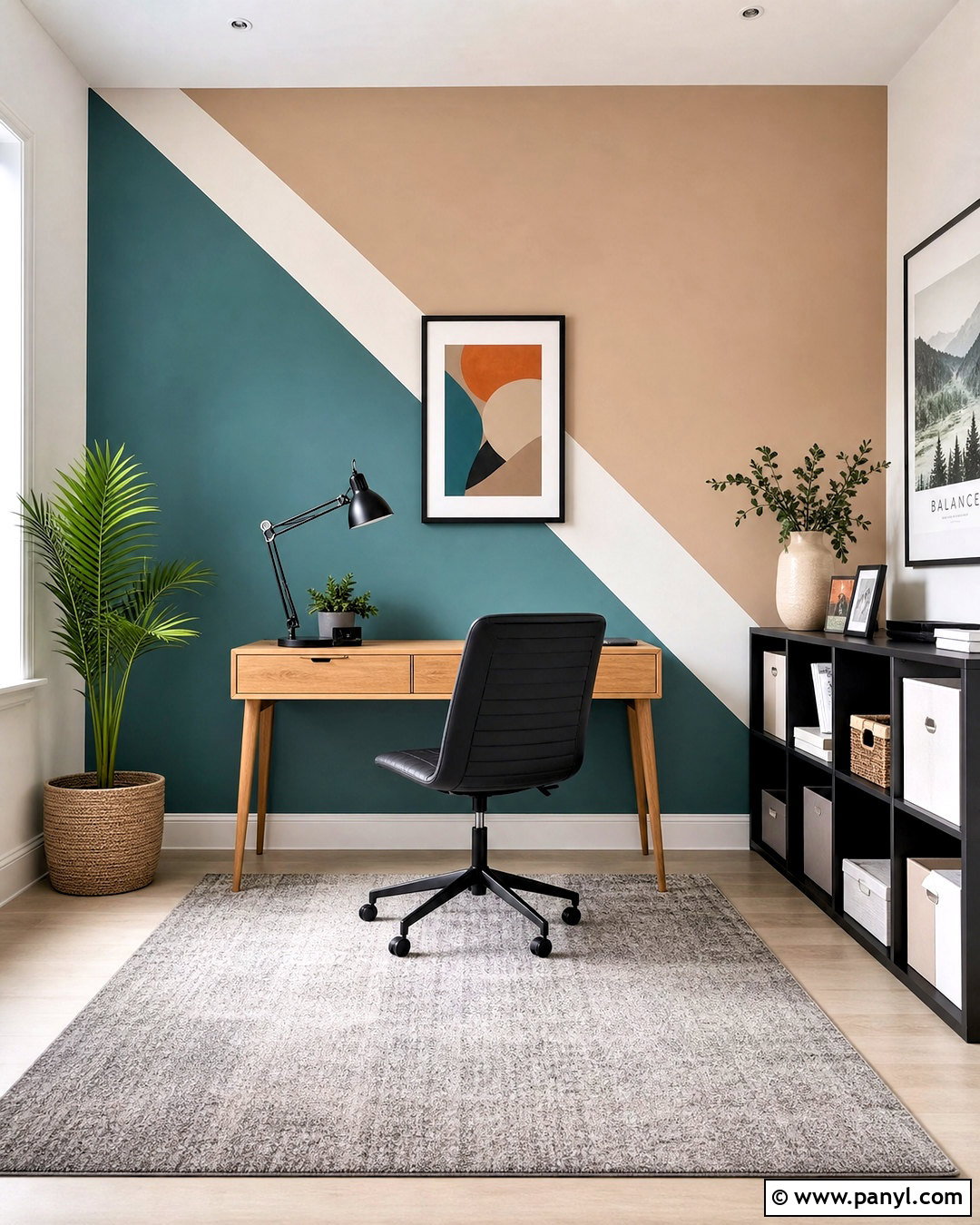
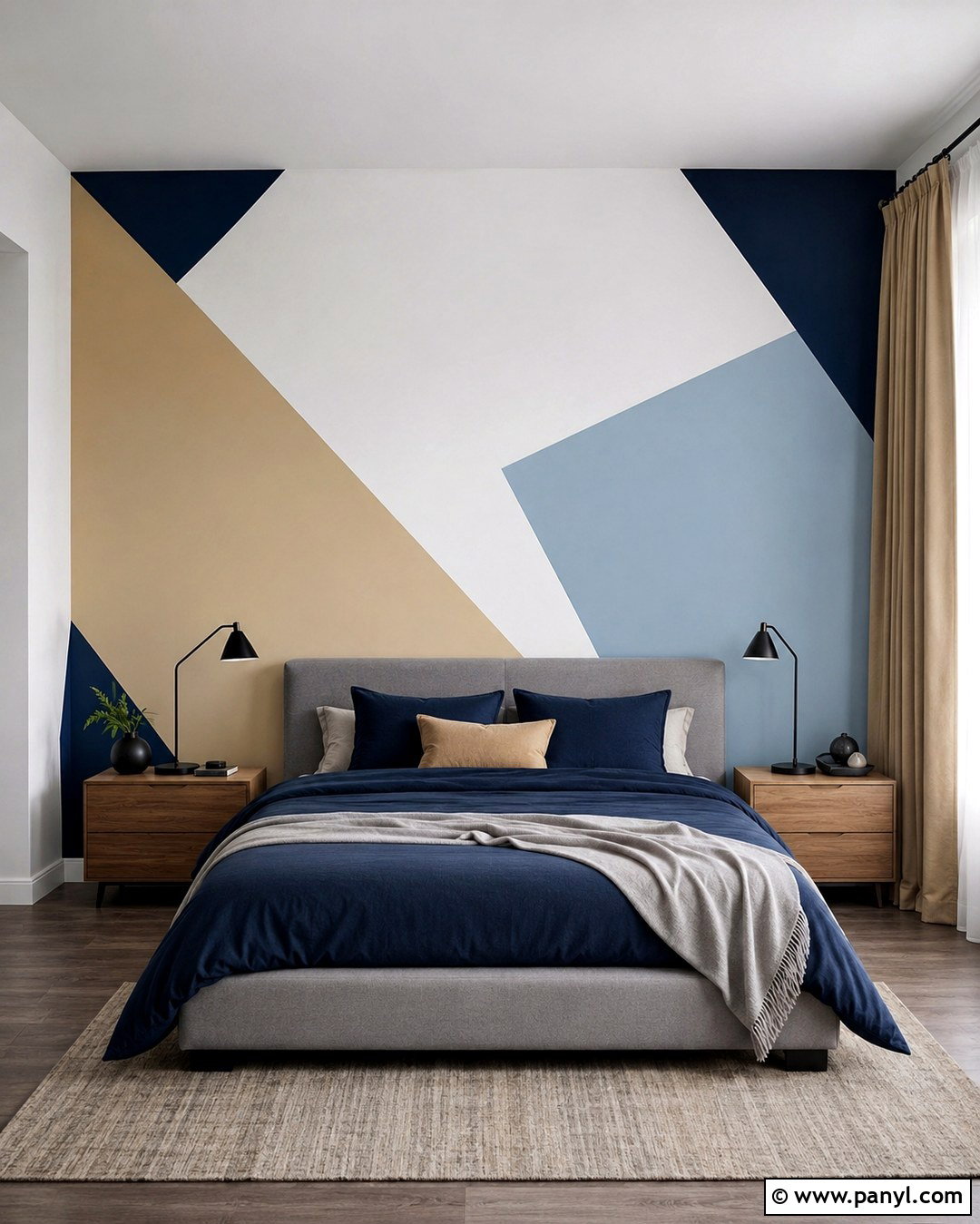
A geometric painted wall can bring structure to a playroom, office, or modern bedroom using only a few coordinated colors. Plan a pattern of large diagonal sections, arches, or overlapping blocks rather than many small shapes. A combination of muted teal, warm beige, and soft white feels colorful without becoming overwhelming. Place the design behind a desk, reading chair, or low bed so the furniture relates directly to the composition. Keep flooring, curtains, and larger furniture neutral. Repeat each wall color once through a cushion, storage bin, or desk accessory. Draw the complete arrangement on paper first, then transfer it with a level, pencil, and painter’s tape. Painting the lightest shade first reduces extra work and helps the final shapes remain clear, crisp, and visually balanced.
13. Brick Accent Wall
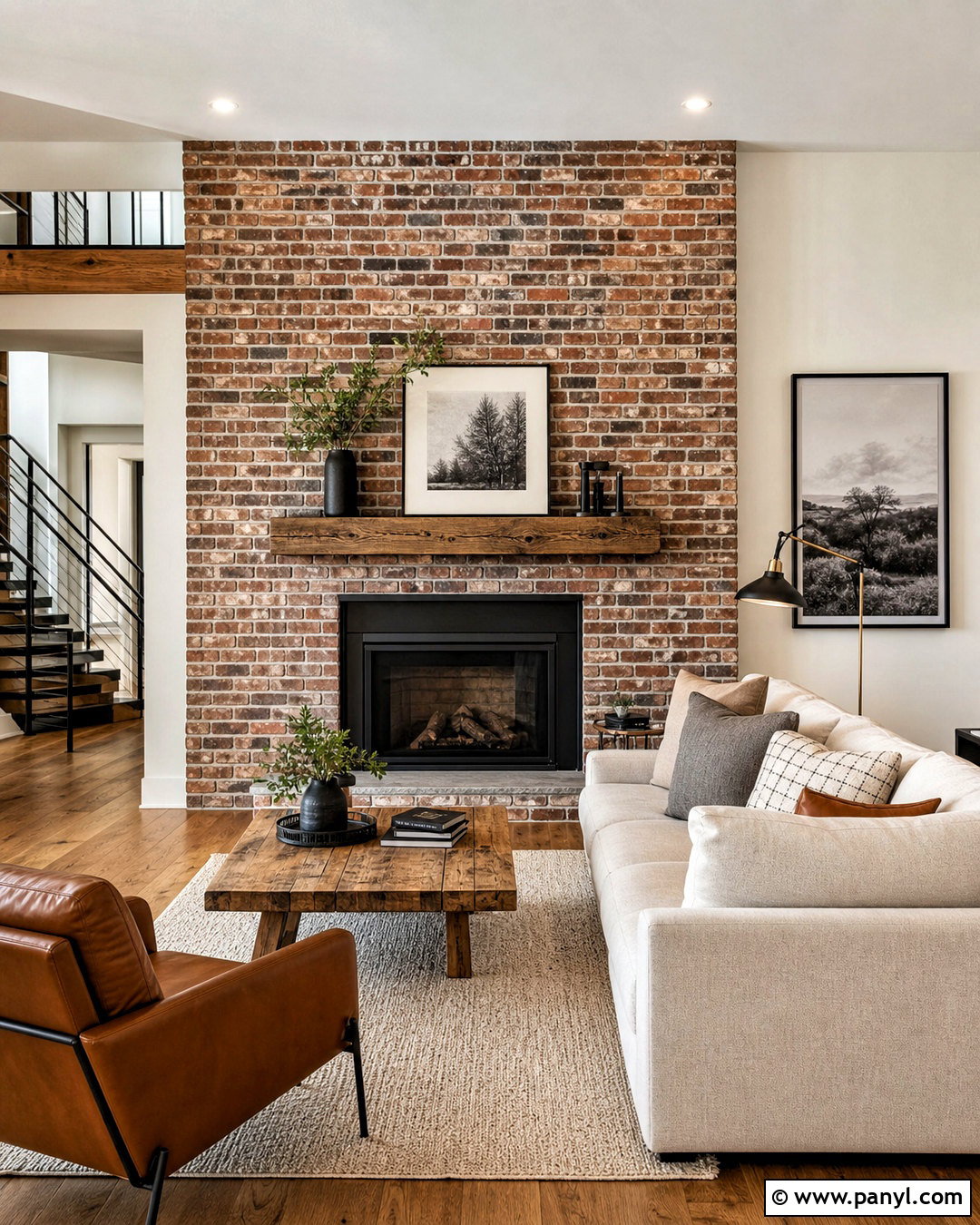
A brick accent wall gives a living room or dining area warmth, texture, and an established architectural feeling. If original brick is unavailable, use thin brick veneer in varied red, brown, and muted gray tones for a realistic result. Install it on the fireplace wall or behind a wood dining table, then use a warm gray mortar that softens the contrast. Cream walls, oak flooring, and black metal details complement the brick without creating an overly industrial look. Furnish a living room with a neutral sofa, cognac leather chair, and simple wood tables. In a dining room, add black chairs and a linen pendant. Limit wall decor to one substantial mirror or artwork. Gentle uplighting or wall sconces will highlight the surface and make its natural variation more visible.
14. Shiplap Fireplace Accent Wall
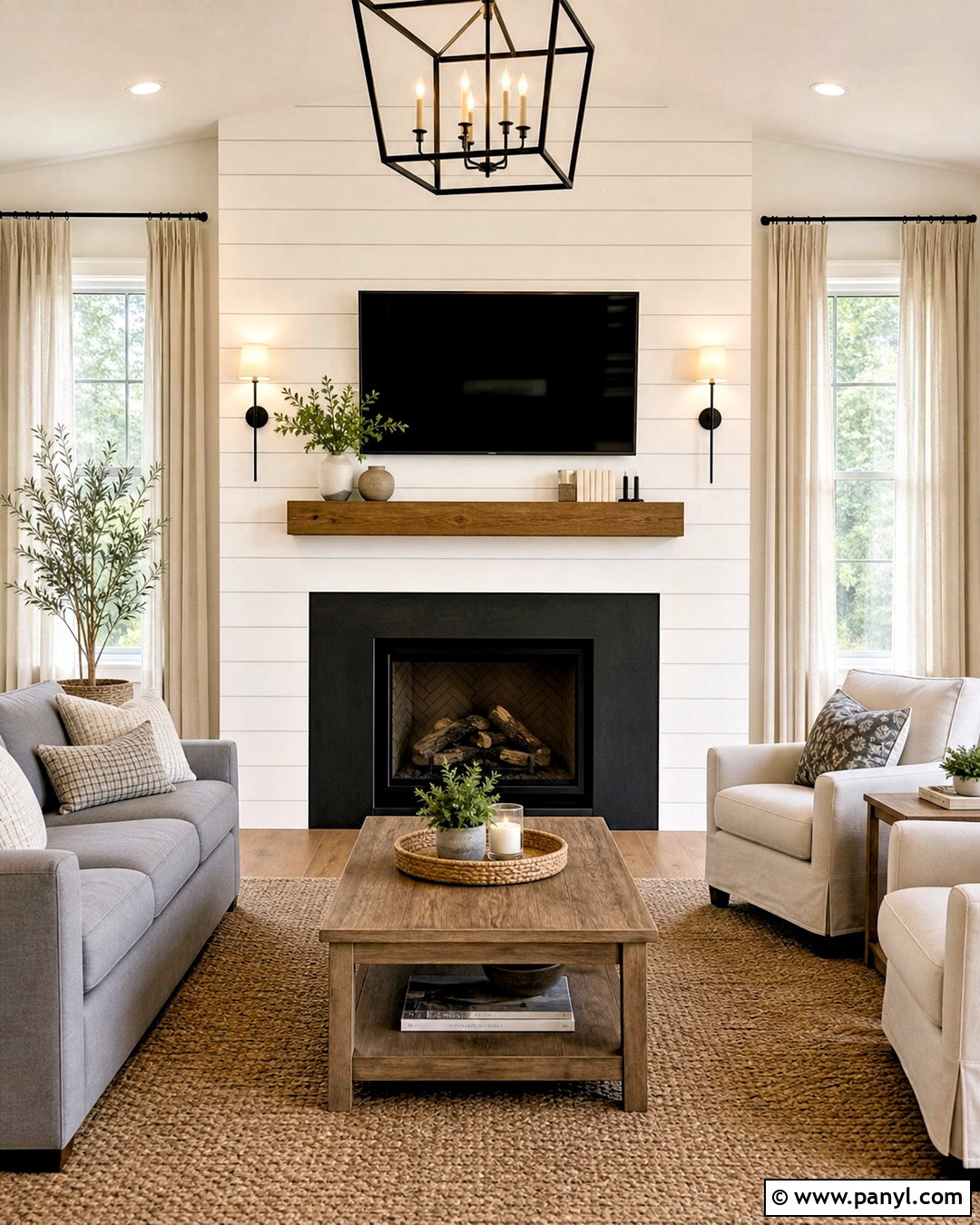
Shiplap can turn a basic fireplace wall into a complete living room focal point. Install horizontal boards from floor to ceiling and paint them warm white, pale greige, or a muted coastal blue. Center the fireplace and television or artwork carefully so the board lines appear balanced around them. A simple oak mantel adds warmth and creates a clear place for restrained decor. Arrange a light gray sofa and two compact armchairs toward the fireplace, using a neutral rug to define the conversation area. Black fireplace trim, curtain rods, and sconces provide clean contrast. Avoid filling the mantel with many small objects; one vase, a low stack of books, and a framed piece are enough. The result feels comfortable, organized, and appropriate for an average family home.
15. Half Painted Accent Wall
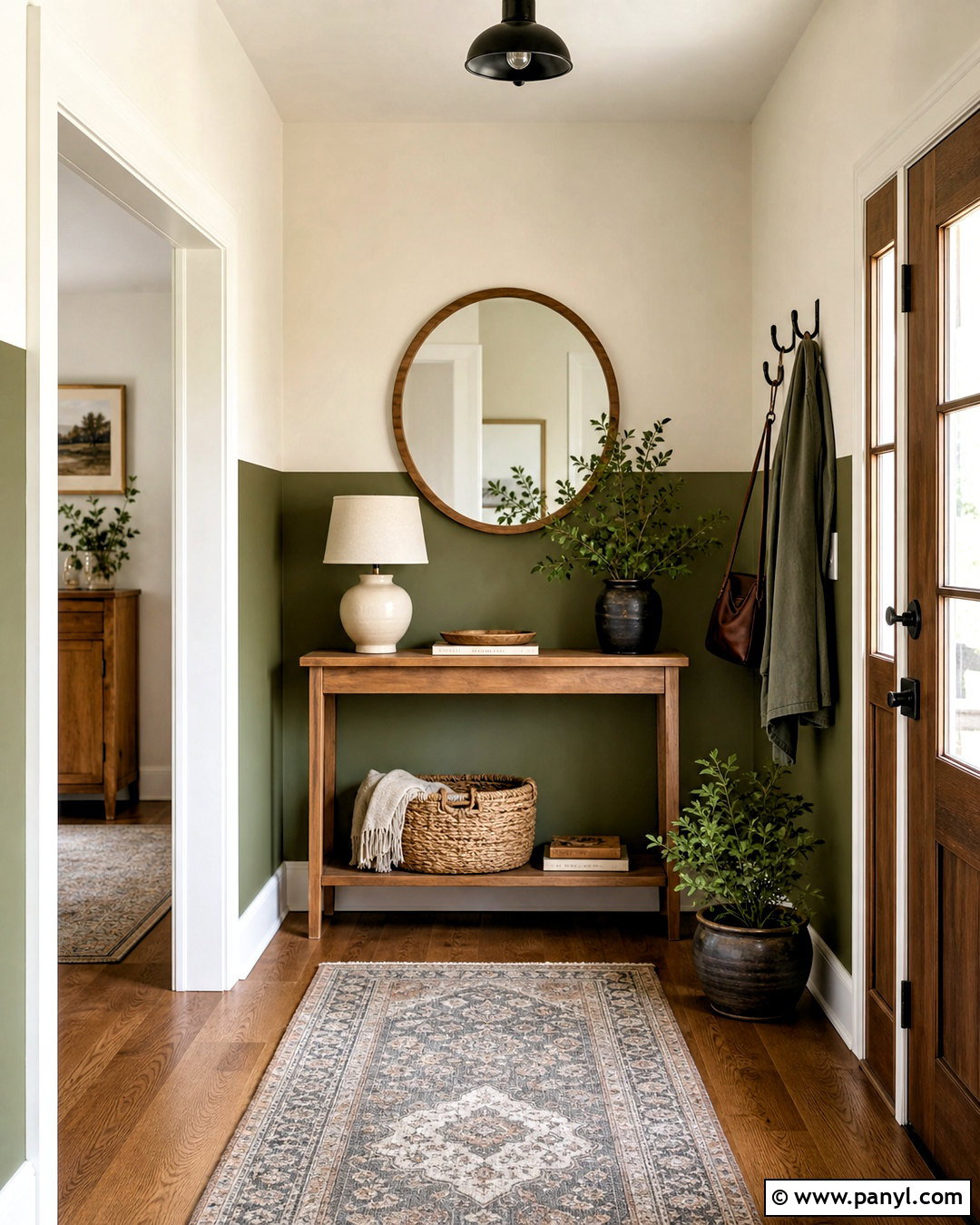
Painting only the lower half of a wall creates color and definition while keeping the room bright. This approach works well in hallways, bedrooms, breakfast areas, and compact home offices. Mark a level line between one-third and two-thirds of the wall height, depending on nearby furniture. Use olive green below warm white in an entryway, then add a narrow wood console, round mirror, woven basket, and black hooks. In a bedroom, try dusty blue below cream walls and coordinate it with a wood bed and striped bedding. A painted dividing line gives a cleaner, simpler appearance, while a slim chair rail adds traditional detail. Continue the lower color around corners only when it supports the room layout. Otherwise, keep it on one purposeful focal wall.
16. Cork Home Office Accent Wall
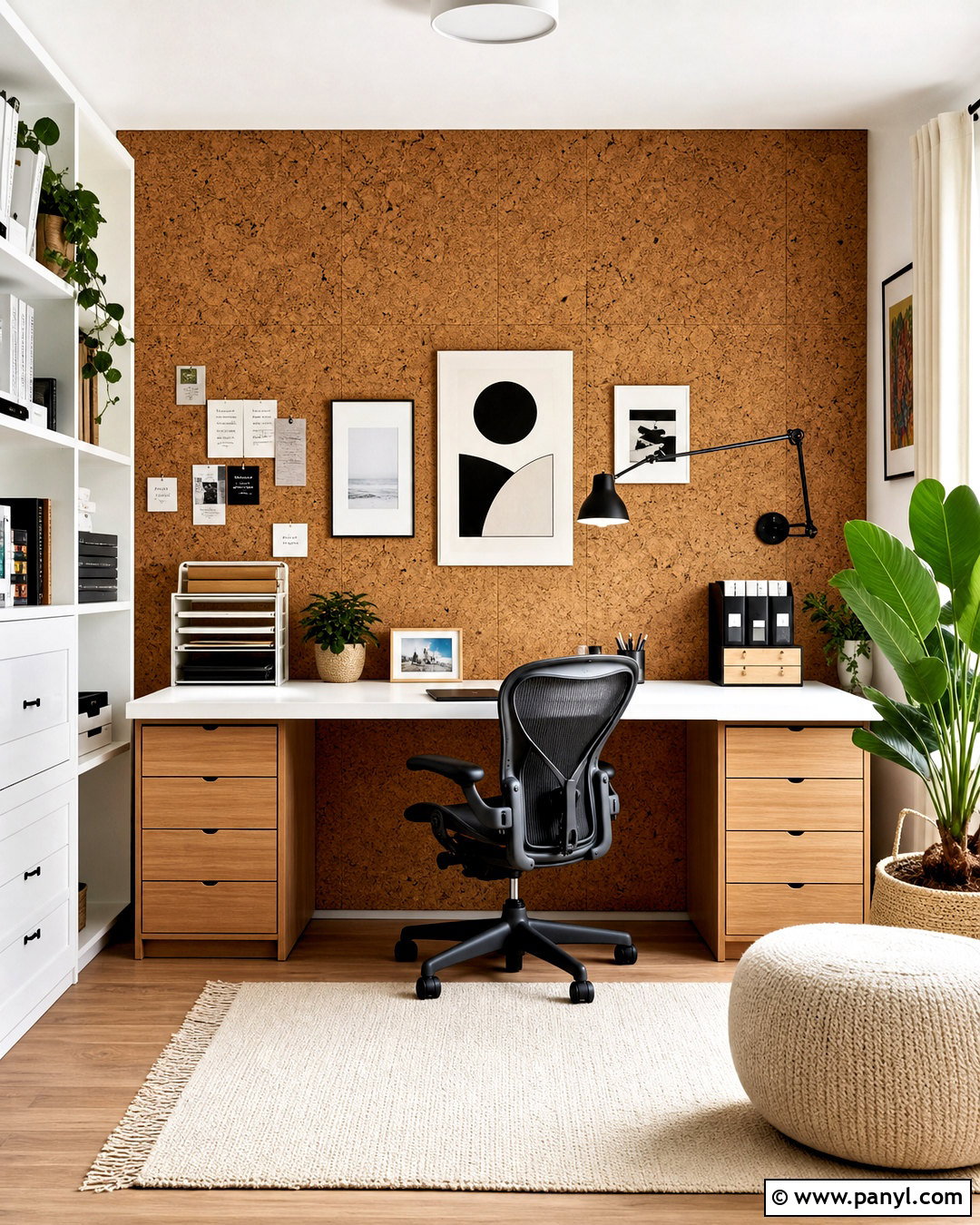
A cork accent wall combines natural texture with useful display space, making it especially effective in a home office or creative room. Cover the wall behind a desk with medium-tone cork tiles or a large cork roll, keeping seams straight and closely fitted. Pair the warm brown surface with a white desk, black task chair, and light oak storage cabinets. Pin up a limited arrangement of calendars, small art prints, notes, and fabric samples, leaving open areas so the wall does not feel cluttered. A cream rug, woven shades, and one leafy plant soften the workspace. Add an adjustable black wall lamp to preserve desk space. Repeating cork in a small tray or desk accessory helps the practical wall feel like a deliberate part of the complete room design.
17. Fabric Panel Bedroom Accent Wall
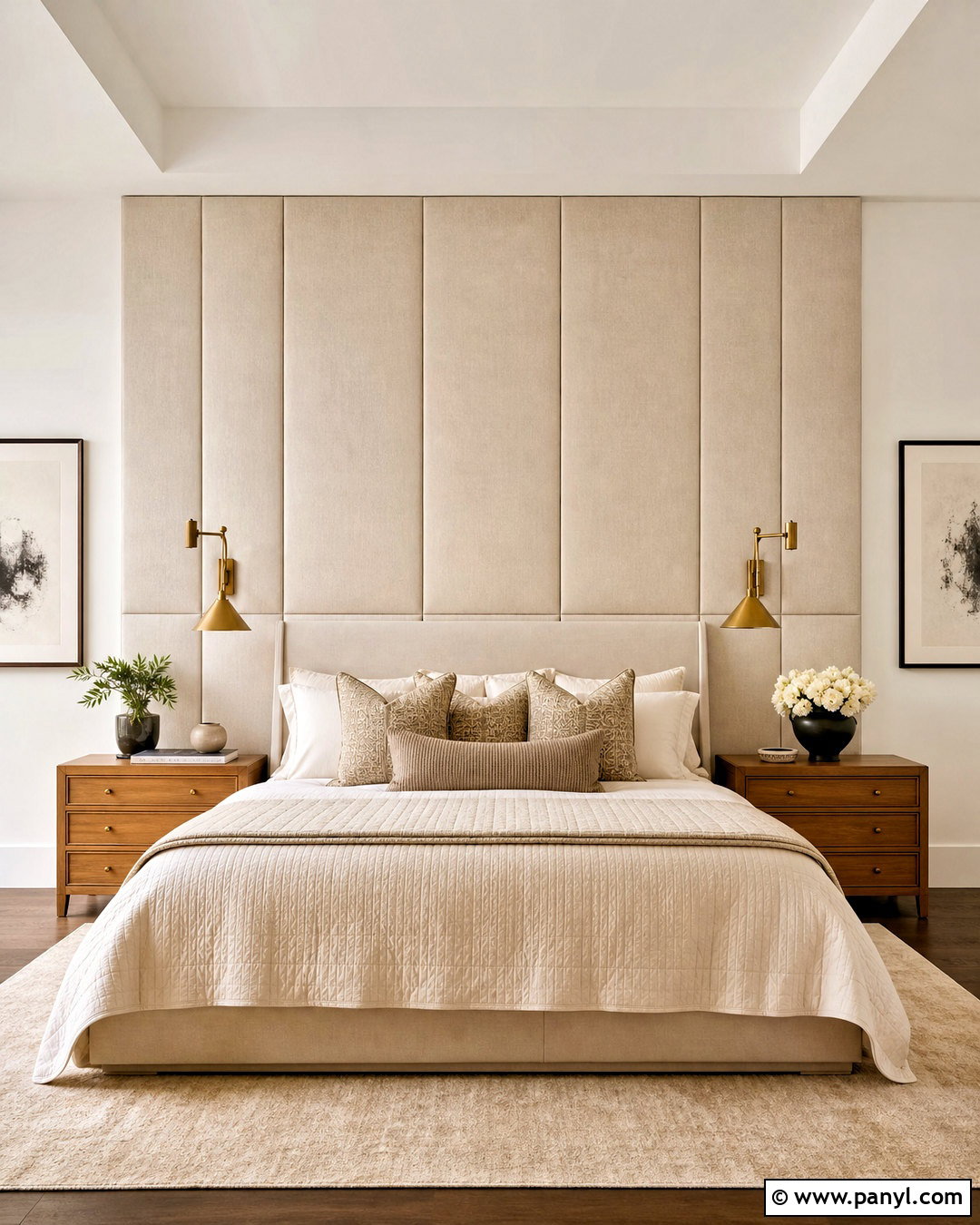
Upholstered fabric panels can create a soft bedroom focal point while making the bed area feel more comfortable and finished. Build several equal plywood panels, wrap them with thin batting, and cover them in oatmeal linen, warm gray fabric, or muted blue velvet. Install the panels closely together behind the bed, either to headboard height or from floor to ceiling. Keep the bed frame simple so it does not compete with the upholstered surface. Layer crisp cotton sheets, a quilted coverlet, and two textured pillows in related neutral tones. Slim wood nightstands and brass wall-mounted lights complete the arrangement without taking up much visual space. Choose durable, tightly woven fabric that can be vacuumed gently. The finished wall adds texture, softness, and subtle sound absorption.
18. Gallery Wall Accent Wall
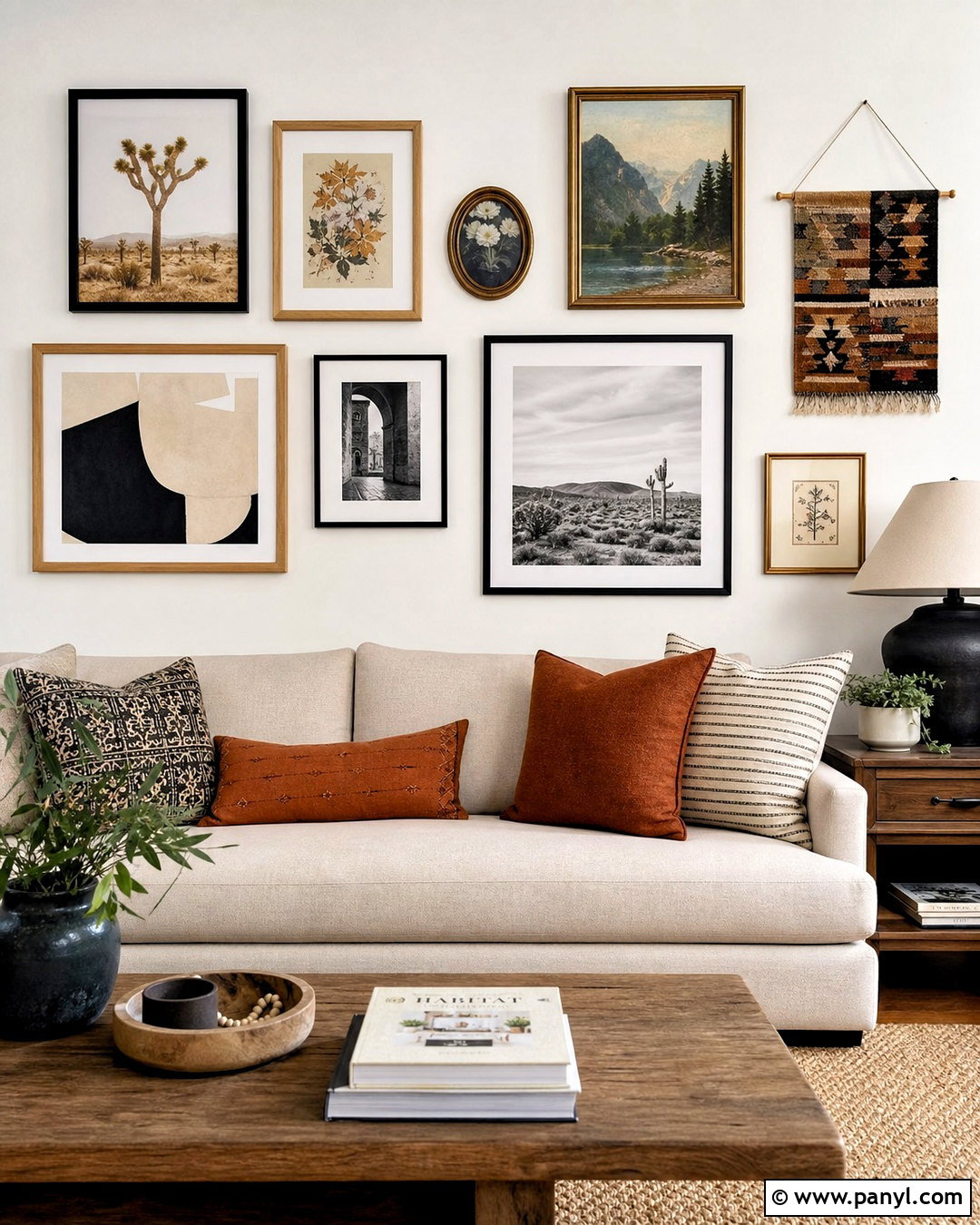
A gallery wall can function as an accent feature when the arrangement, furniture, and surrounding colors are planned together. Start with a warm white, soft beige, or pale gray background that allows the artwork to stand out. Place a low console or sofa beneath the display to anchor it. Mix medium and large frames rather than using many tiny pieces, and keep spacing consistent throughout the composition. Black, oak, and brass frames can work together when the artwork shares a coordinated palette. Include photographs, abstract prints, landscapes, and one small textile piece for variety. Lay the arrangement on the floor before hanging anything. Repeat colors from the artwork in a lamp, pillow, or vase nearby. This helps the feature feel connected to the whole room instead of appearing randomly assembled.
19. Built In Shelf Accent Wall
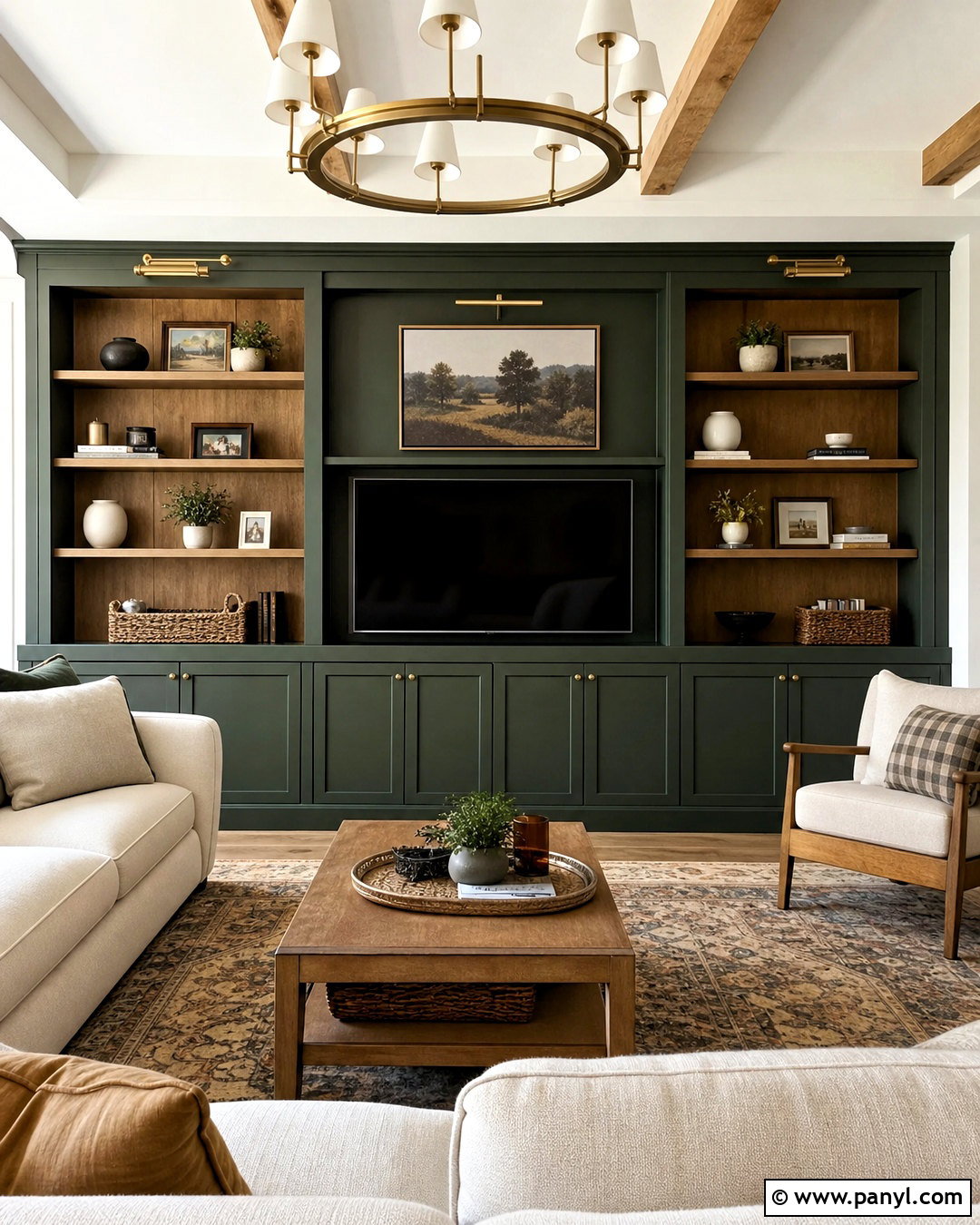
A wall of simple built-in shelving creates storage and a strong focal point at the same time. Frame a central television, desk, or window with affordable base cabinets and open shelves. Paint the entire installation deep green, navy blue, warm taupe, or the same white as the surrounding room. A darker finish creates drama, while one continuous light color makes a smaller room feel calmer. Use closed cabinets for electronics and everyday clutter, then style the open shelves with books, ceramics, baskets, and framed art. Leave some shelves partially empty to maintain breathing room. Add small picture lights or integrated shelf lighting for extra depth. Coordinate the nearby sofa, rug, and tables with the shelving color. The finished feature should feel functional, architectural, and balanced rather than overloaded with decoration.
20. Painted Arch Entryway Accent Wall
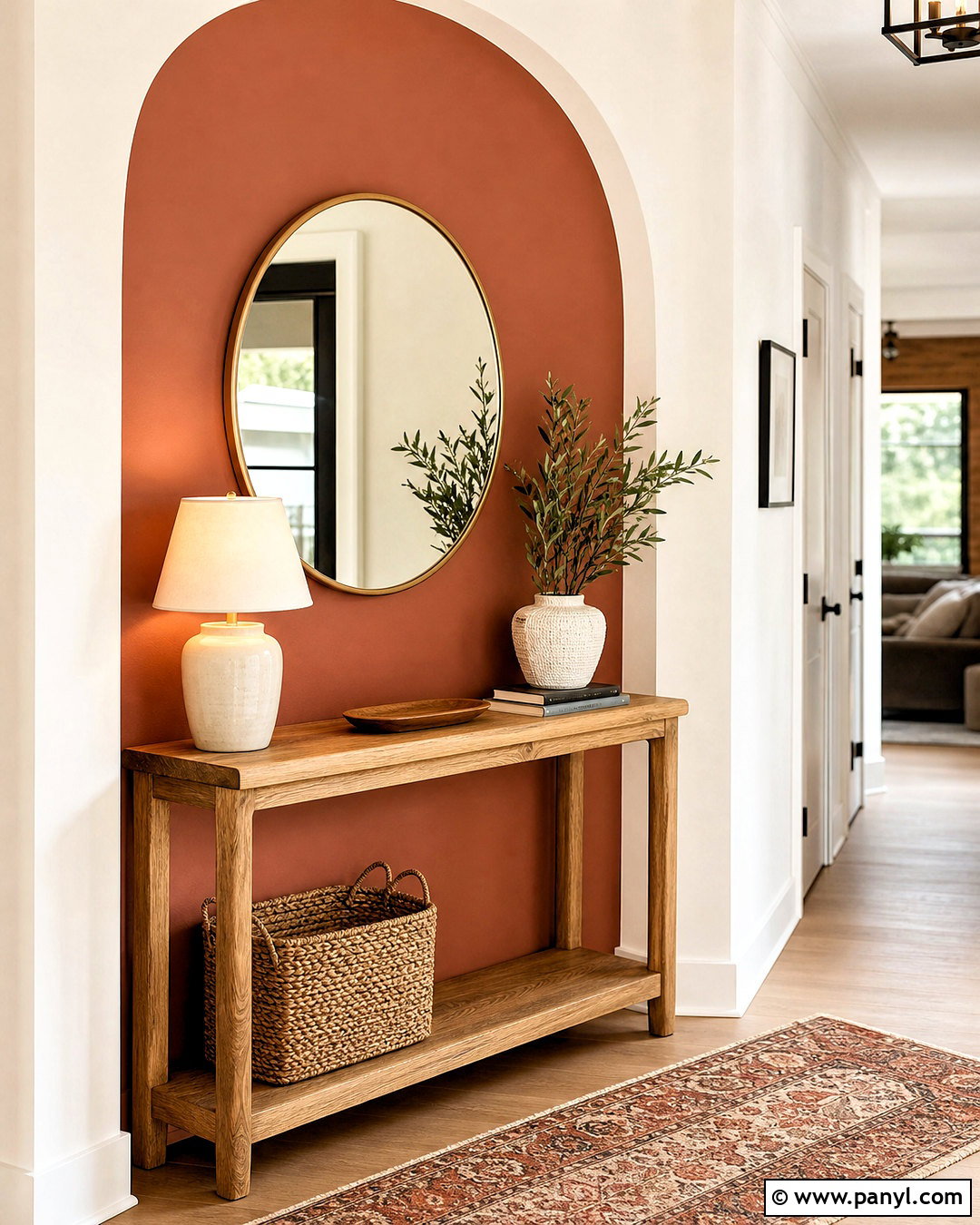
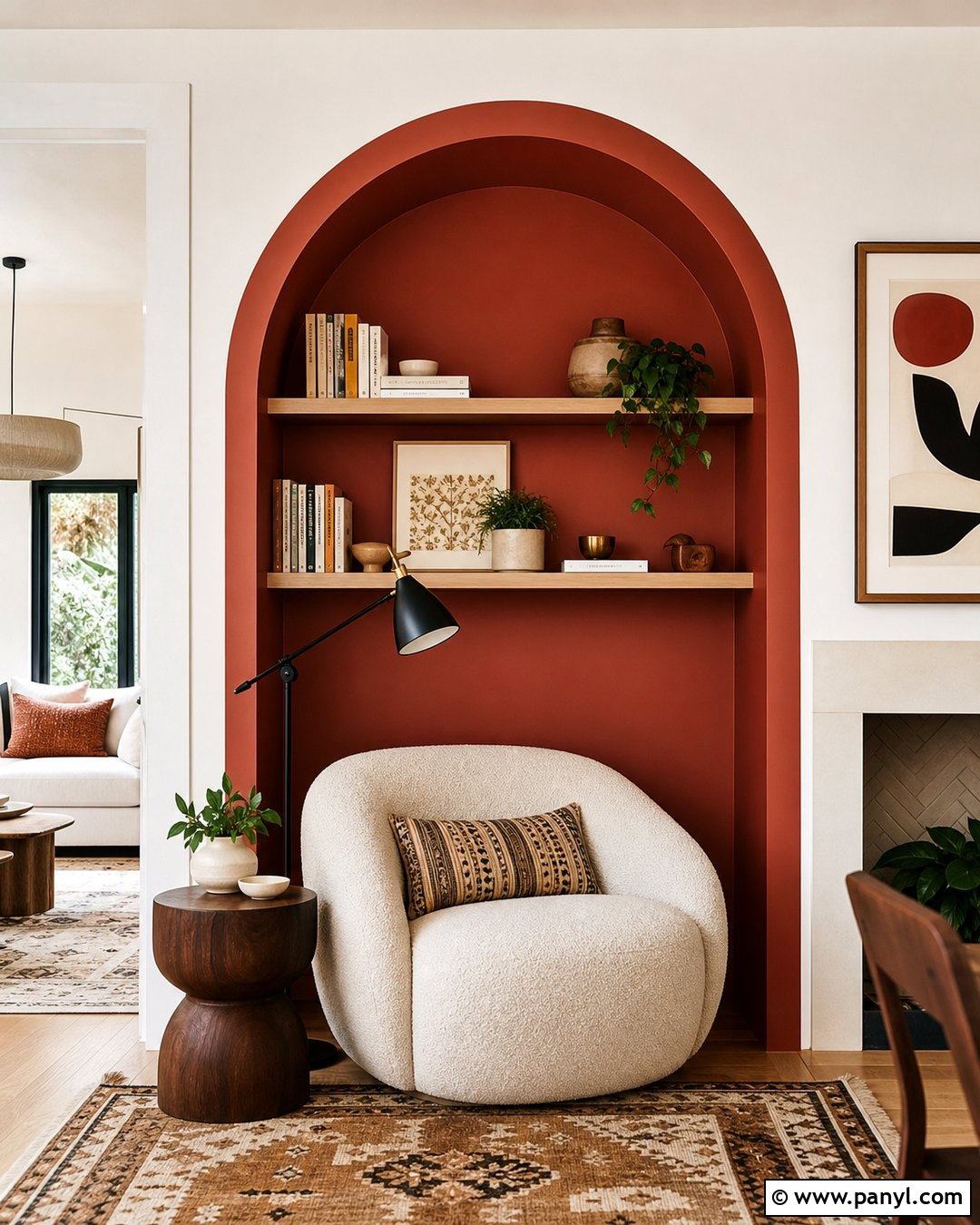
A painted arch can define an entryway, reading corner, or small console area without adding physical construction. Draw a tall arch that begins behind the furniture and extends several inches beyond it on both sides. Muted terracotta, olive green, dusty blue, or warm mustard can create a welcoming contrast against creamy white walls. Place a narrow wood console inside the painted shape and add a round mirror, compact lamp, and shallow tray. A woven basket below the console provides practical storage, while a patterned runner leads the eye toward the feature. Keep the arch’s edges smooth by using a pencil tied to string for the curved top and painter’s tape for the straight sides. Repeating the arch color in one nearby accessory makes this affordable treatment look purposeful and complete.
Conclusion:
These simple accent wall ideas show how one carefully designed surface can improve the layout, atmosphere, and personality of an entire room. Paint offers the quickest transformation, while molding, wood, wallpaper, brick, cork, and fabric introduce texture or architectural depth. Whichever treatment you choose, connect it to the room through coordinated furniture, lighting, artwork, and textiles. Select a wall that already has a clear purpose and avoid adding too many competing features. Test paint colors and removable materials before committing, especially when natural light changes throughout the day. With thoughtful measurements and a balanced palette, 20 simple accent wall ideas can inspire a finished look that feels personal, practical, and easy to maintain.

Related Ideas and Inspiration:

Leave a Reply