
A thoughtfully painted TV wall can turn a basic entertainment setup into the strongest feature in your living room. Color blocking works especially well because it visually frames the screen, defines the media zone, and adds personality without requiring expensive paneling. The right composition should connect the television, console, seating, rug, lighting, and surrounding decor. It should also complement the room’s proportions rather than making the wall feel crowded. From simple rectangles and vertical bands to oversized arches and geometric murals, these complete looks cover bold, neutral, modern, retro, and relaxed palettes. Each design can be adjusted to suit a rental, apartment, family room, or open-concept home. Explore these 20 Color Block Wall Behind Tv Ideas for a practical look you can confidently recreate.
1. Navy Rectangle TV Wall
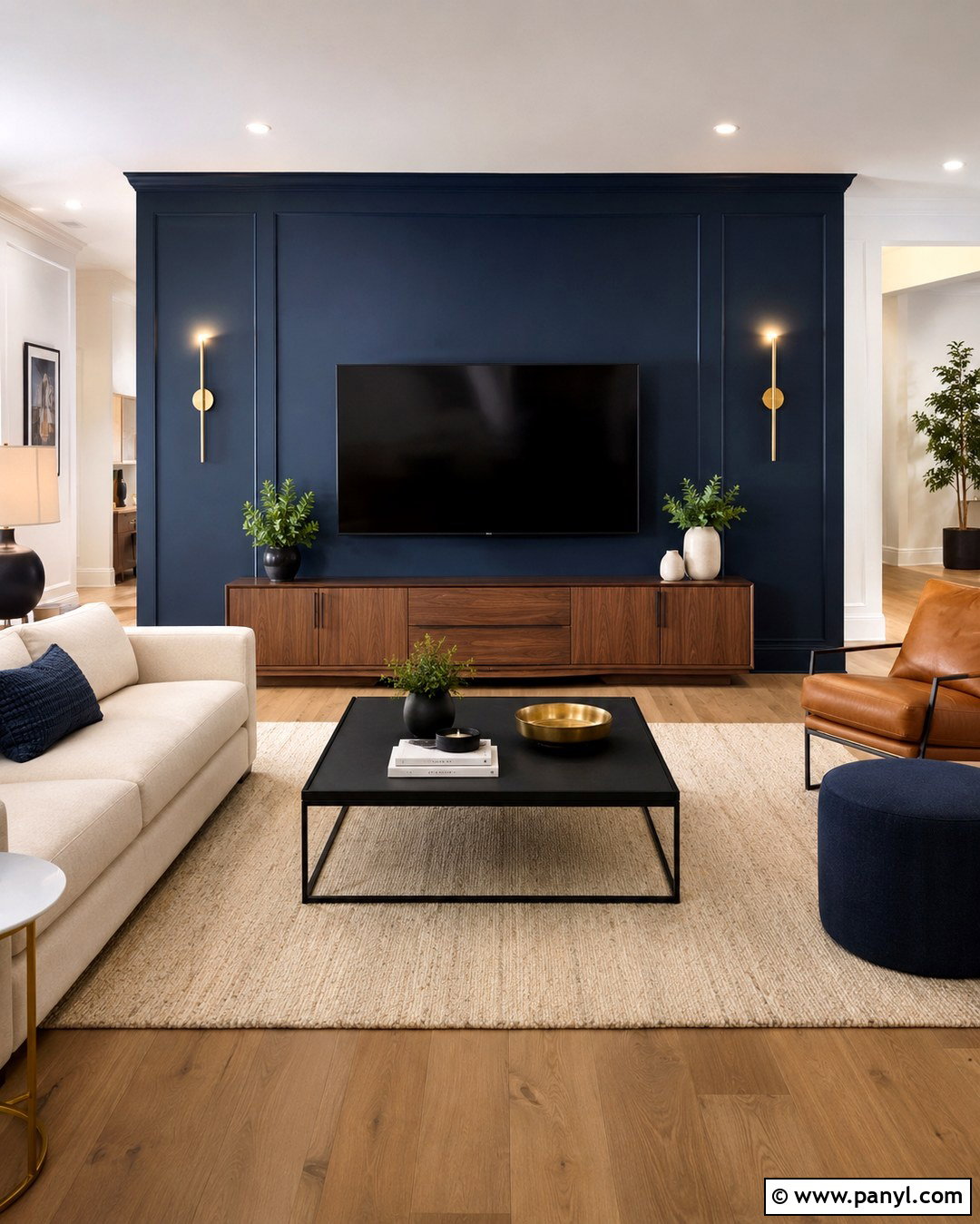
A large navy rectangle creates a clean visual frame around a wall-mounted television. Extend the painted block about 18 to 24 inches beyond the screen on every side so the arrangement feels balanced. Place a low walnut console below it to warm the deep blue backdrop. Keep the surrounding wall soft white or pale greige for crisp contrast. A light beige sofa, textured cream rug, and cognac leather chair complete the room without competing with the media wall. Add two slim brass sconces near the outer edges of the navy section. Conceal cords inside the wall or a paint-matched cable cover. Minimal ceramics and one leafy plant keep this polished color block TV wall calm and functional.
2. Terracotta Arch TV Wall
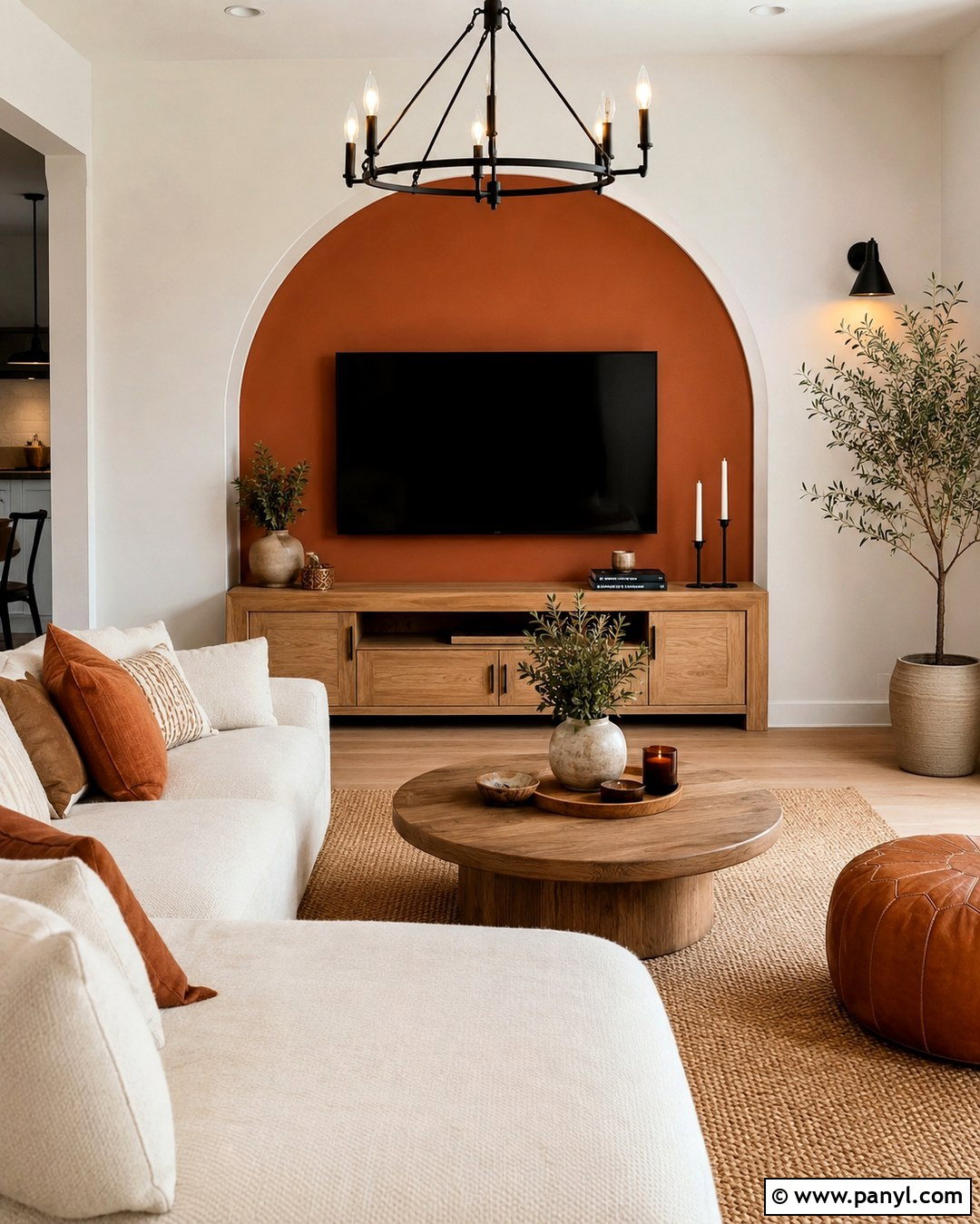
Warm terracotta gives an oversized painted arch an earthy, welcoming character. Begin the curve above the television and continue the straight sides down behind a natural oak media console. The arch should be wider than both the screen and cabinet, creating one connected focal point. Surround it with warm white walls and light oak flooring. A cream boucle sofa, woven jute rug, and rust-colored pillows reinforce the relaxed palette. Choose matte black hardware and a slim black TV mount to echo the screen. A tall olive tree placed just outside the arch softens the strong painted shape. This complete setup suits bohemian, Southwestern, and modern organic rooms while remaining simple enough for a weekend painting project.
3. Sage Green Vertical TV Wall
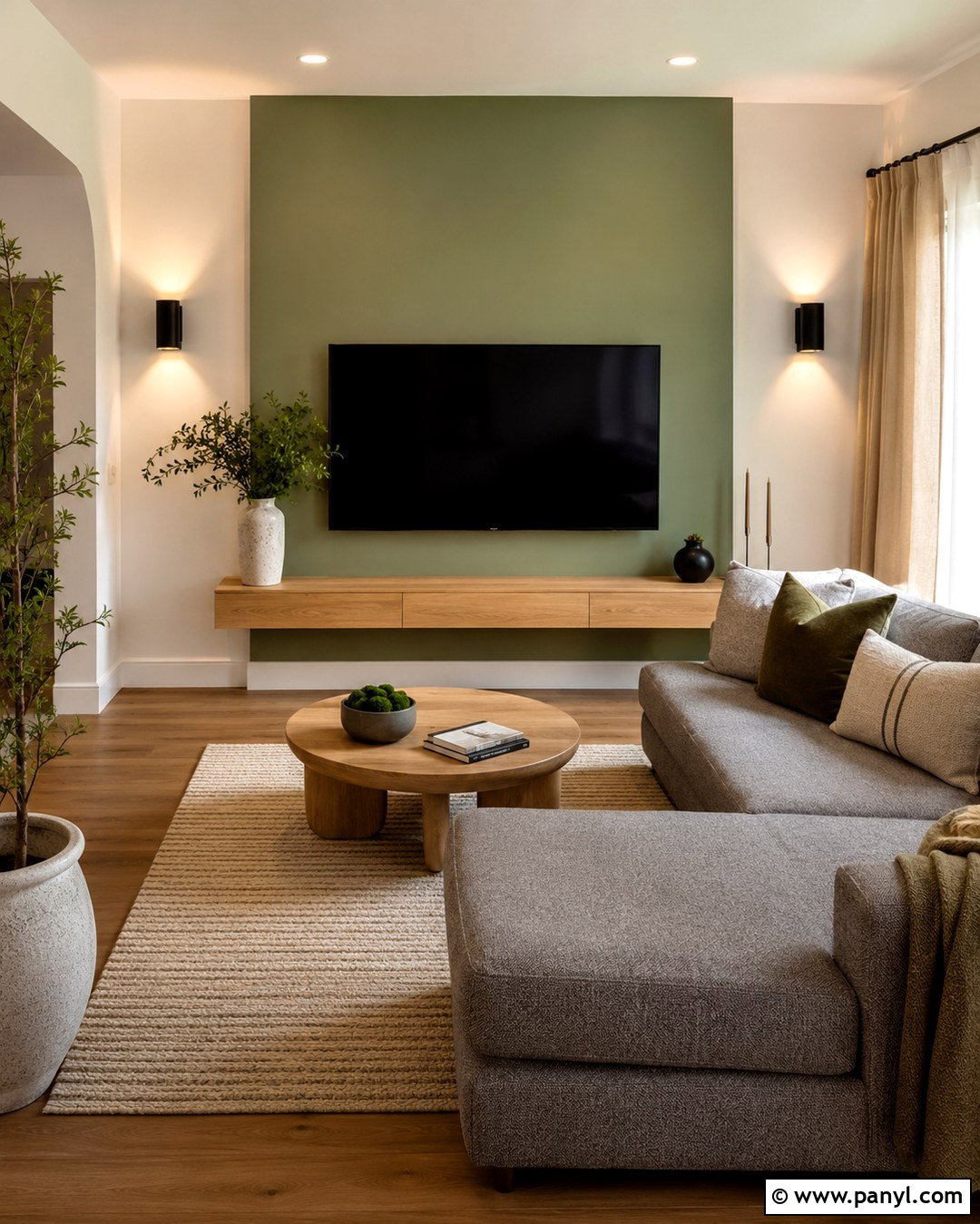
When the room has a low ceiling, a floor-to-ceiling sage green block can create a stronger sense of height. Paint a vertical panel that is slightly wider than the television and center it behind a floating white oak console. Leave the rest of the wall warm cream to keep the composition open and bright. Build out the room with a soft gray sectional, oatmeal curtains, and a neutral rug featuring thin green lines. Black picture lights or narrow sconces can frame the panel without taking up much space. Repeat sage in two sofa pillows and a ceramic planter. This color block TV wall feels fresh and organized, making it especially useful in apartments or compact living rooms with limited decorating space.
4. Black And Greige Split TV Wall
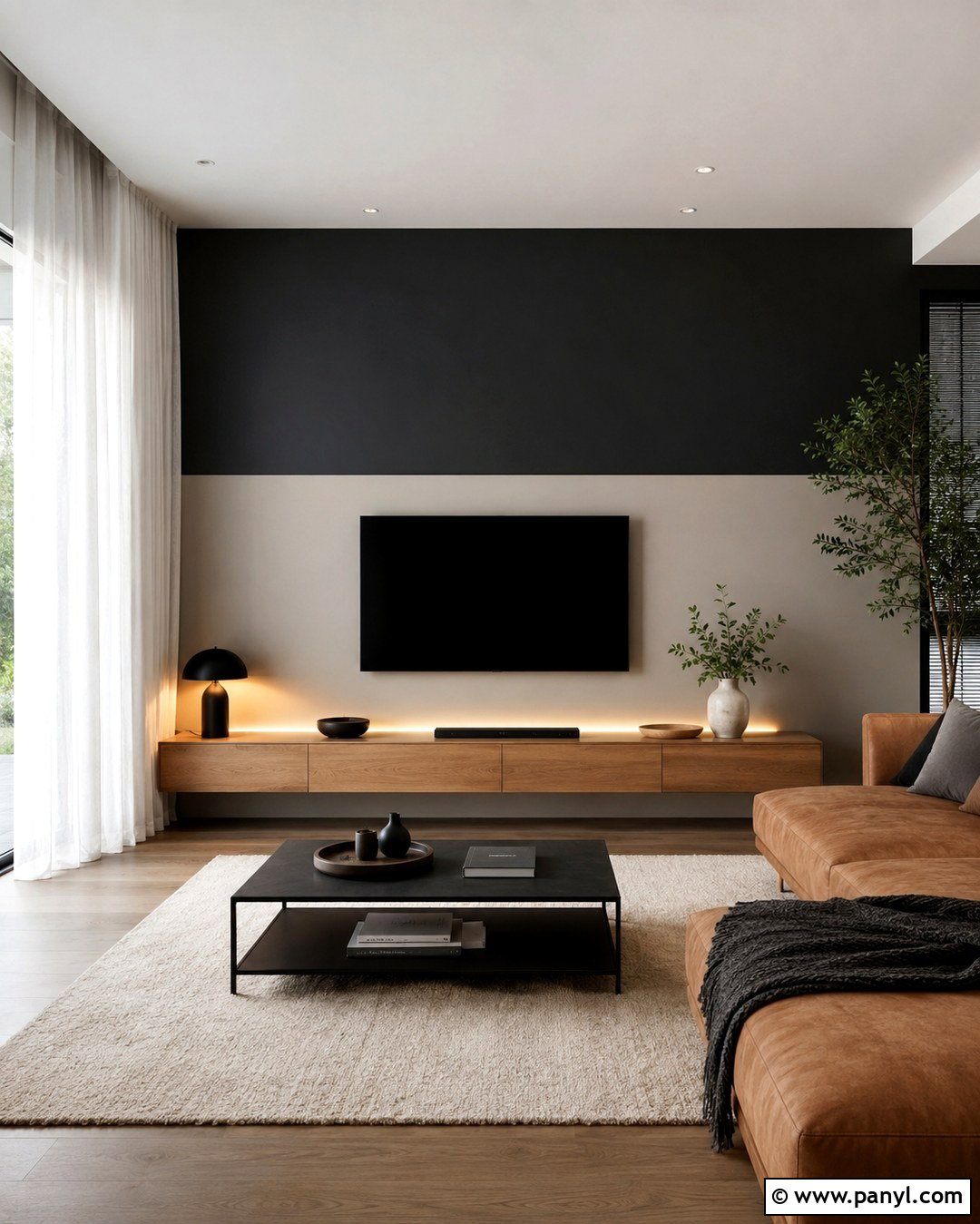
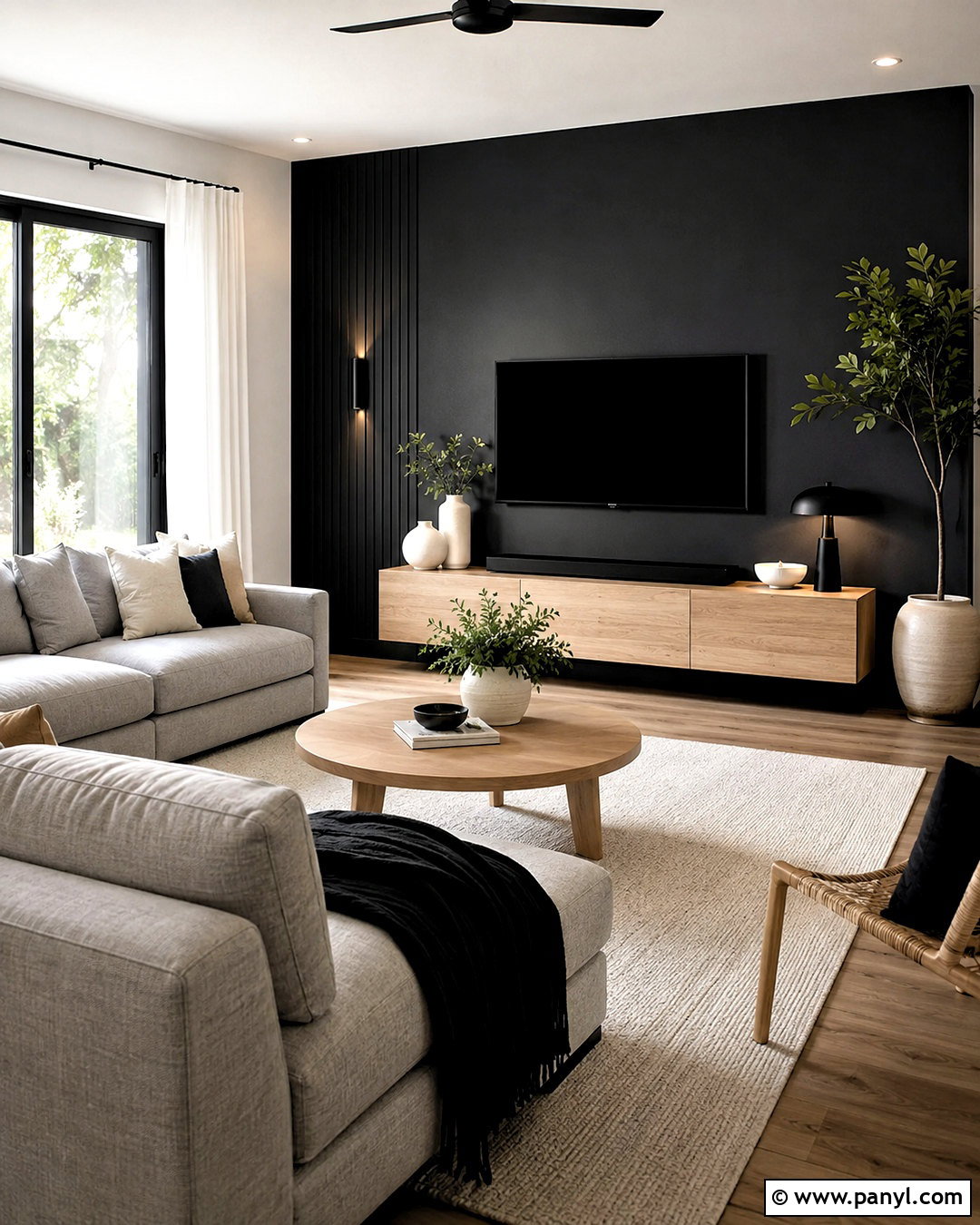
A black and greige horizontal split can make the television appear more integrated with the wall. Paint the upper two-thirds matte black and keep the lower third warm greige. Align the color change just behind the floating media console, allowing the furniture to bridge both tones. Choose a long oak cabinet with handle-free doors to introduce warmth and concealed storage. Furnish the room with a camel sofa, black metal coffee table, and cream area rug. White curtains and pale flooring prevent the darker wall from overwhelming the space. Add indirect lighting beneath the console for soft evening illumination. This balanced scheme offers a modern, cinematic appearance without relying on complicated geometric shapes or costly construction.
5. Blue Gray Geometric TV Wall
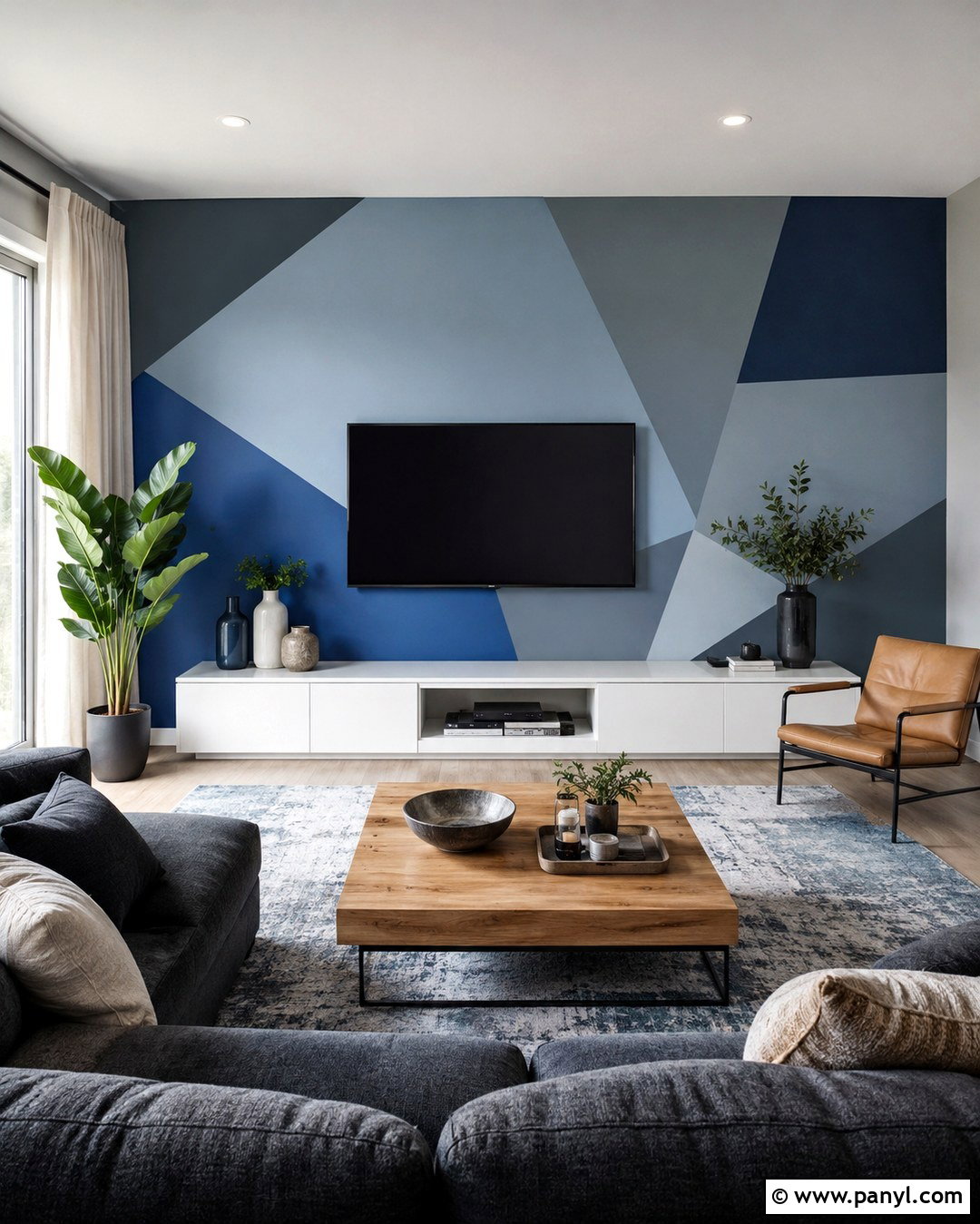
Overlapping blue-gray shapes create movement while maintaining a restful palette. Use a light gray base, then add one muted navy triangle, a medium blue rectangle, and a soft slate diagonal section. Position the television over the calmest part of the composition so important screen details remain easy to see. A simple white media console keeps the mural from becoming visually heavy. Continue the cool palette with a charcoal sofa, faded blue rug, and pale gray curtains. Warm the arrangement with an oak coffee table and tan leather ottoman. Limit accessories to a few white ceramics and one sculptural lamp. This complete geometric TV wall works best when the furniture has simple lines and the surrounding decor remains intentionally restrained.
6. Olive Green Circle TV Wall
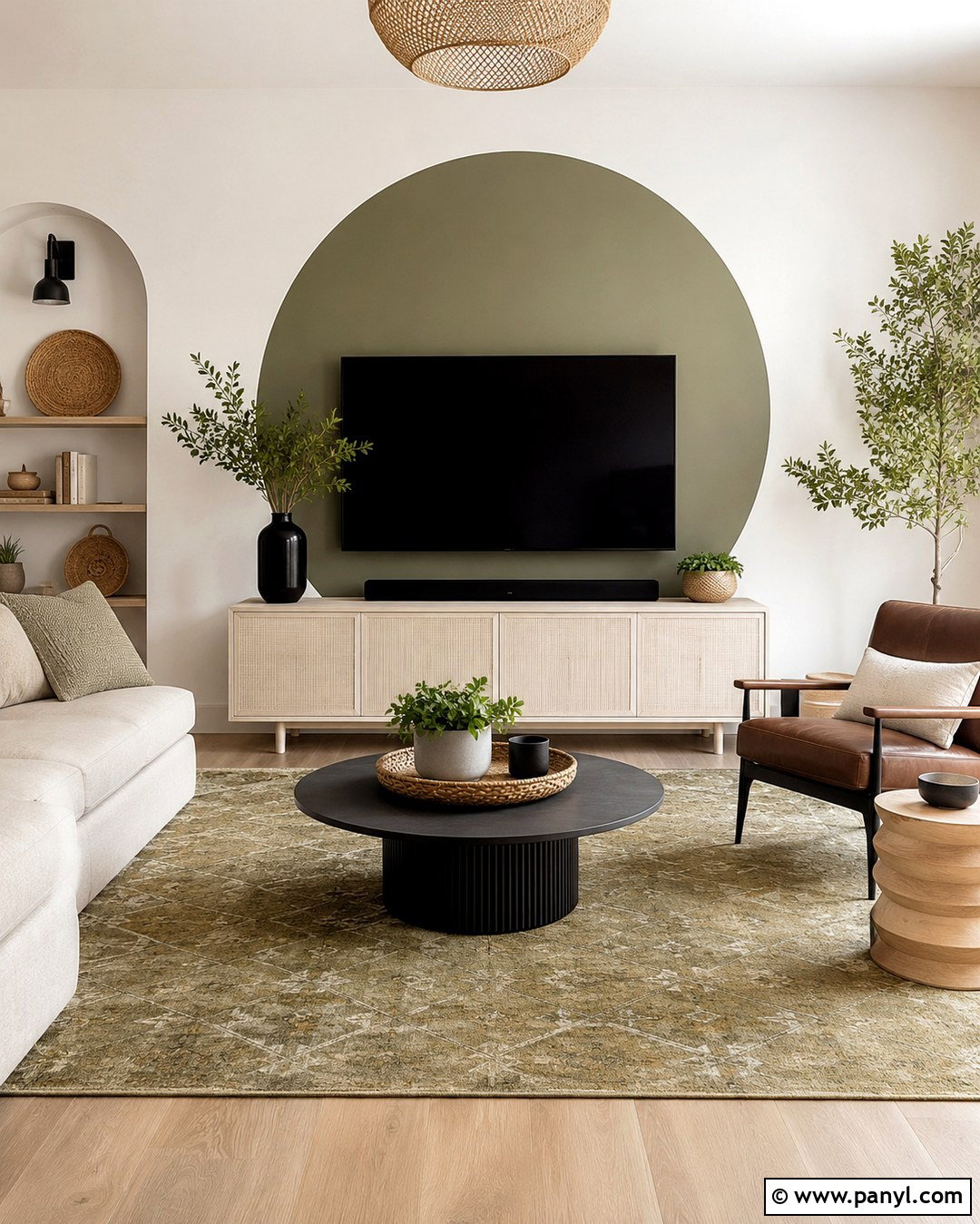
An oversized olive green circle provides a softer alternative to rectangular color blocking. Center the painted circle behind the television, allowing its edges to remain clearly visible around the screen. A low cream console placed across the lower portion grounds the rounded form. Use warm beige on the surrounding walls and medium oak flooring throughout the room. Pair the wall with a linen sofa, brown leather accent chair, and patterned rug containing olive, tan, and black. A black floor lamp repeats the television’s dark finish, while baskets and wood accessories add natural texture. Keep artwork away from the circle so its silhouette remains uncluttered. The finished space feels relaxed, balanced, and suitable for modern organic interiors.
7. Mustard Yellow Corner TV Wall
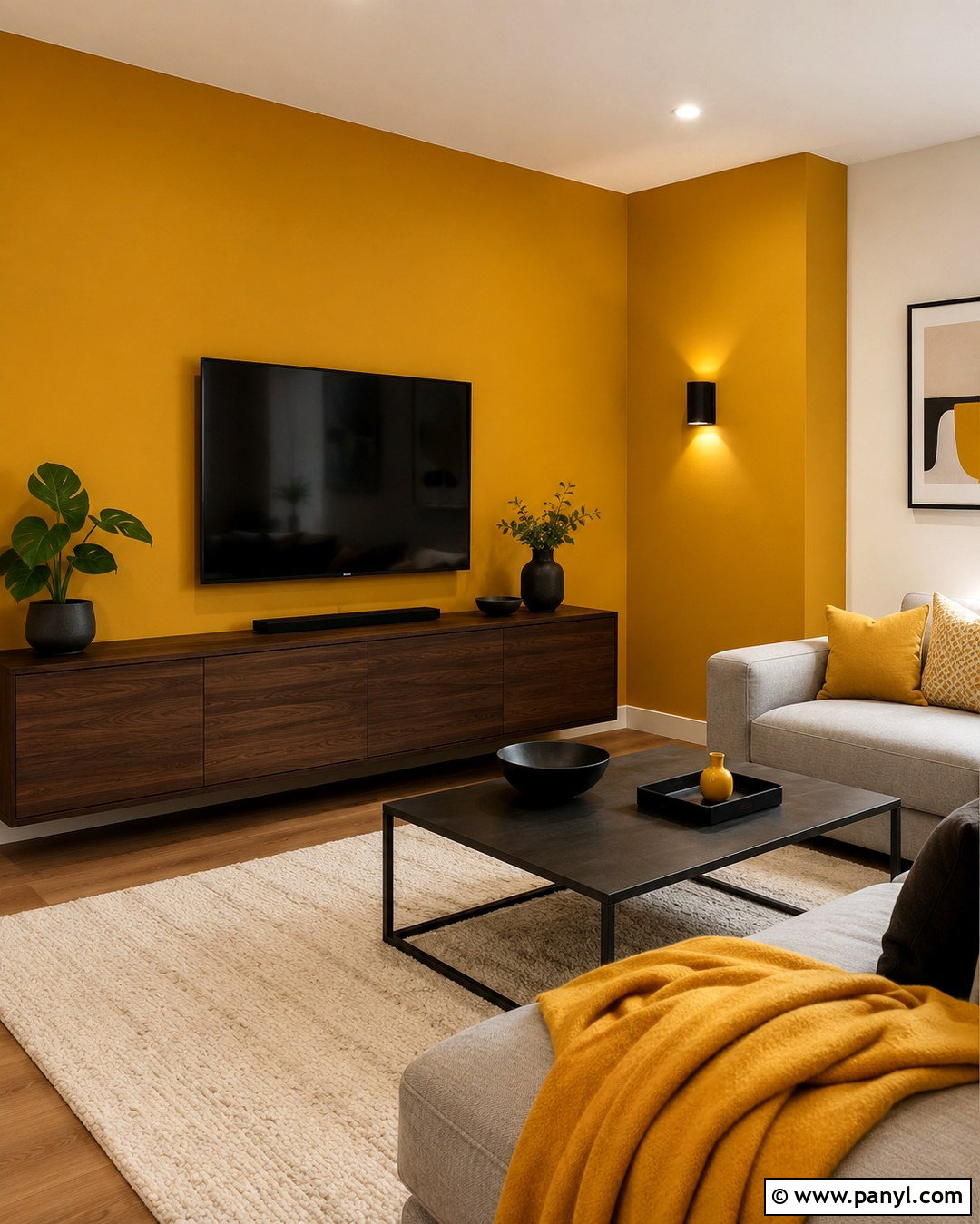
A mustard yellow block can help define a television area positioned near a living room corner. Paint a wide vertical section behind the TV and continue the color onto the short adjoining wall. This wraparound treatment makes an awkward placement look planned. Choose a dark walnut console to balance the warm yellow and add closed storage. A light gray sofa, ivory rug, and black coffee table keep the remaining room neutral. Bring in smaller mustard accents through one pillow, a throw, and a ceramic vase rather than repeating the color everywhere. Hang a simple black sconce on the adjoining painted wall. The finished layout feels cheerful and contemporary while visually separating the entertainment zone from a nearby dining or entry area.
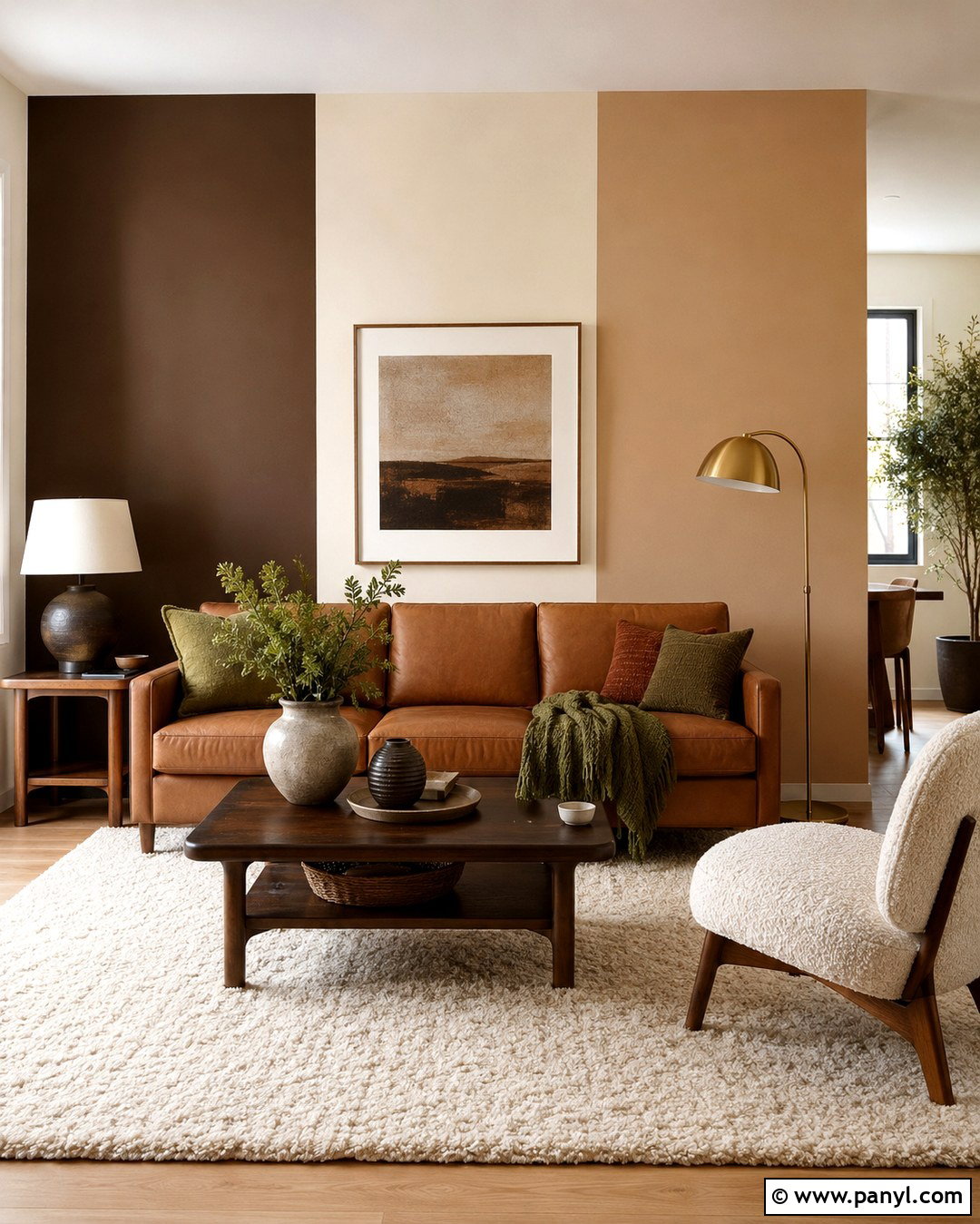
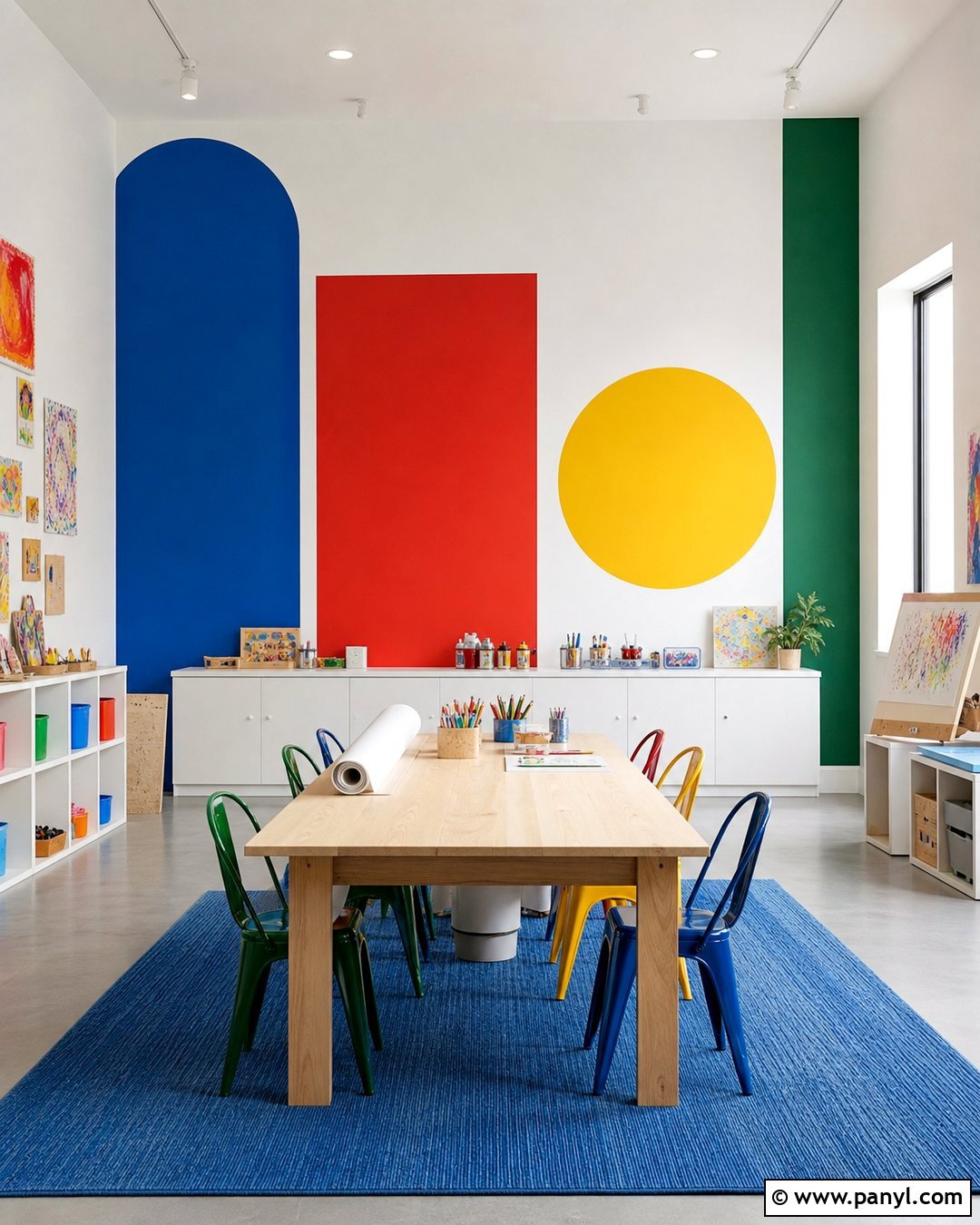
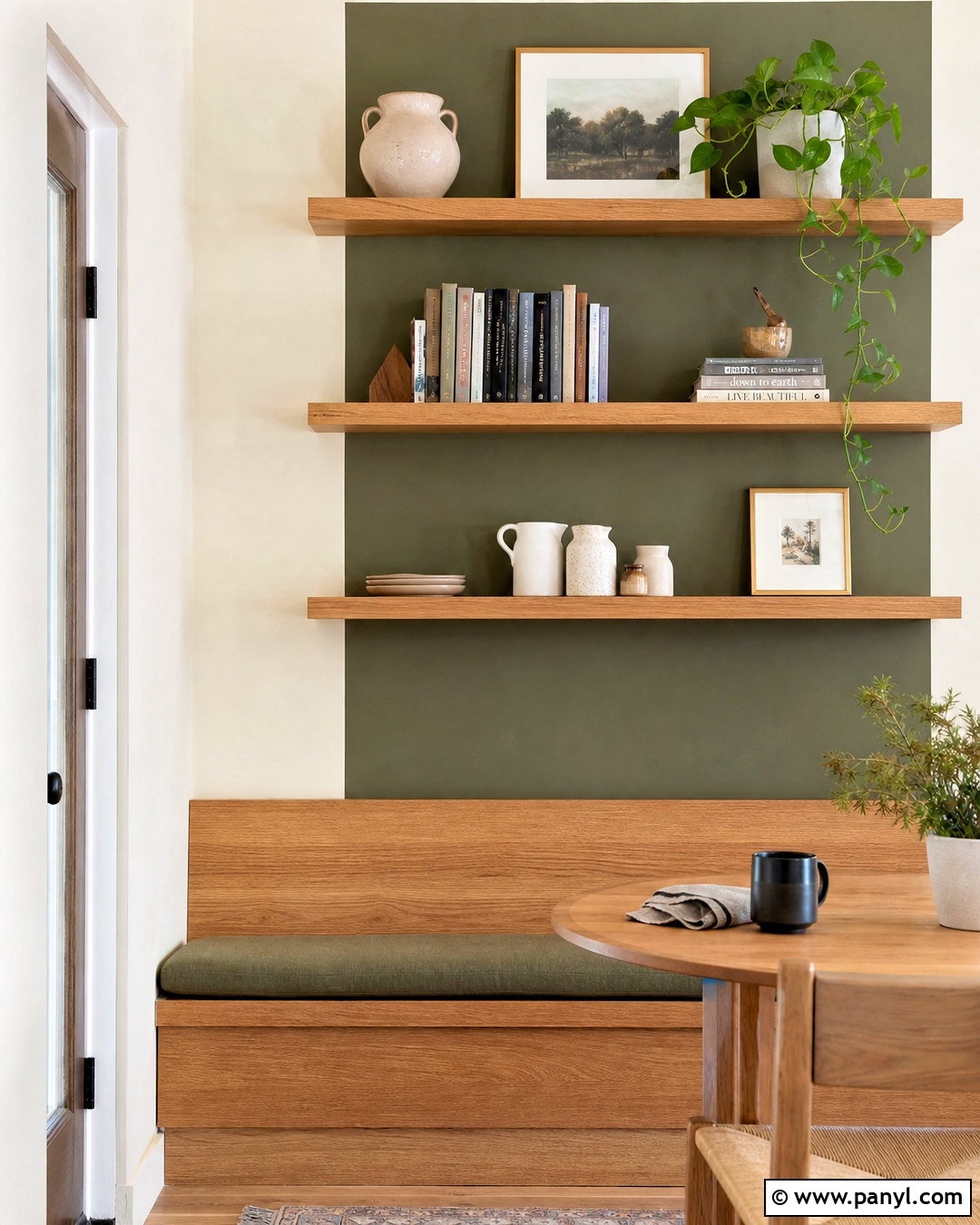
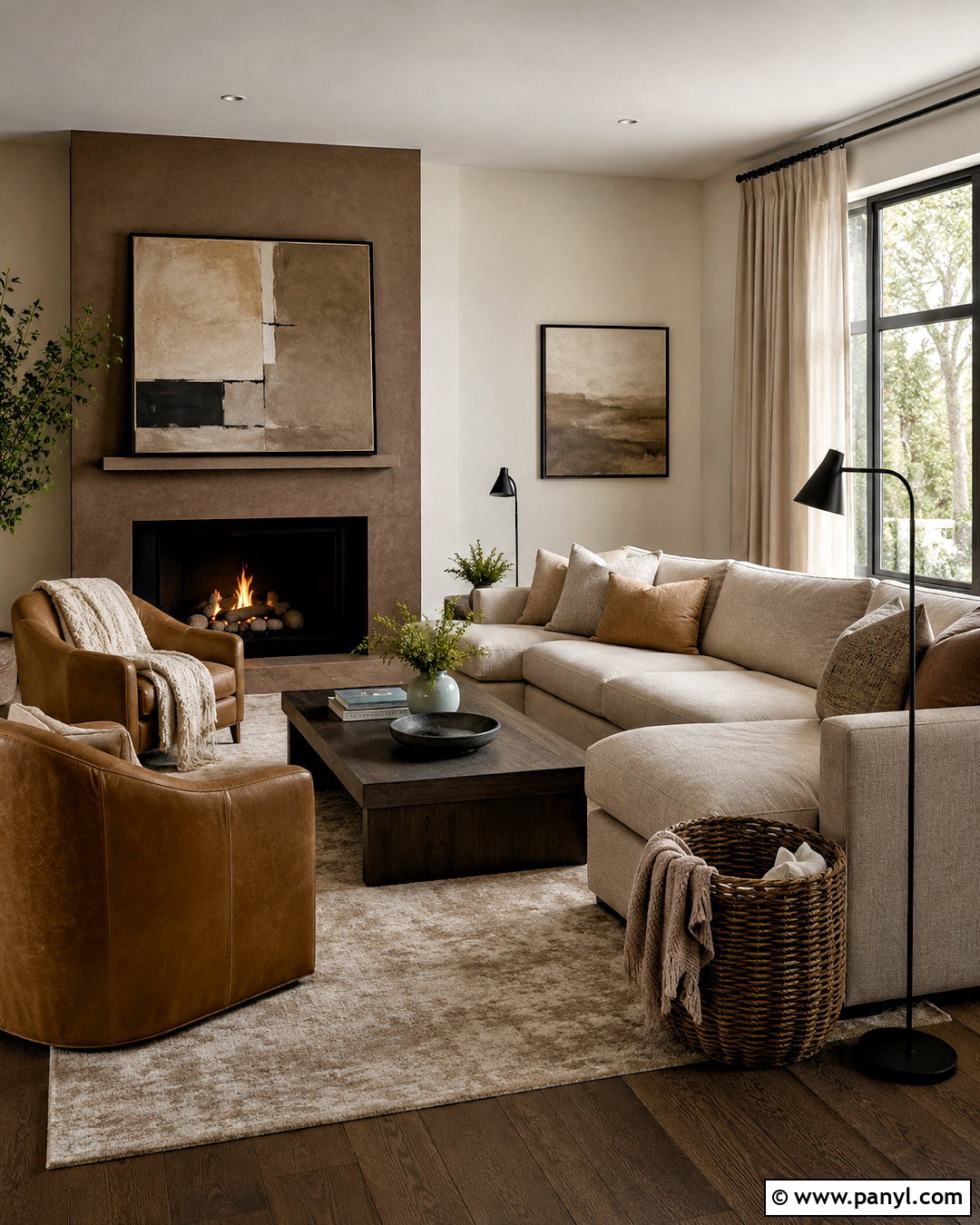
8. Dusty Rose Panel TV Wall
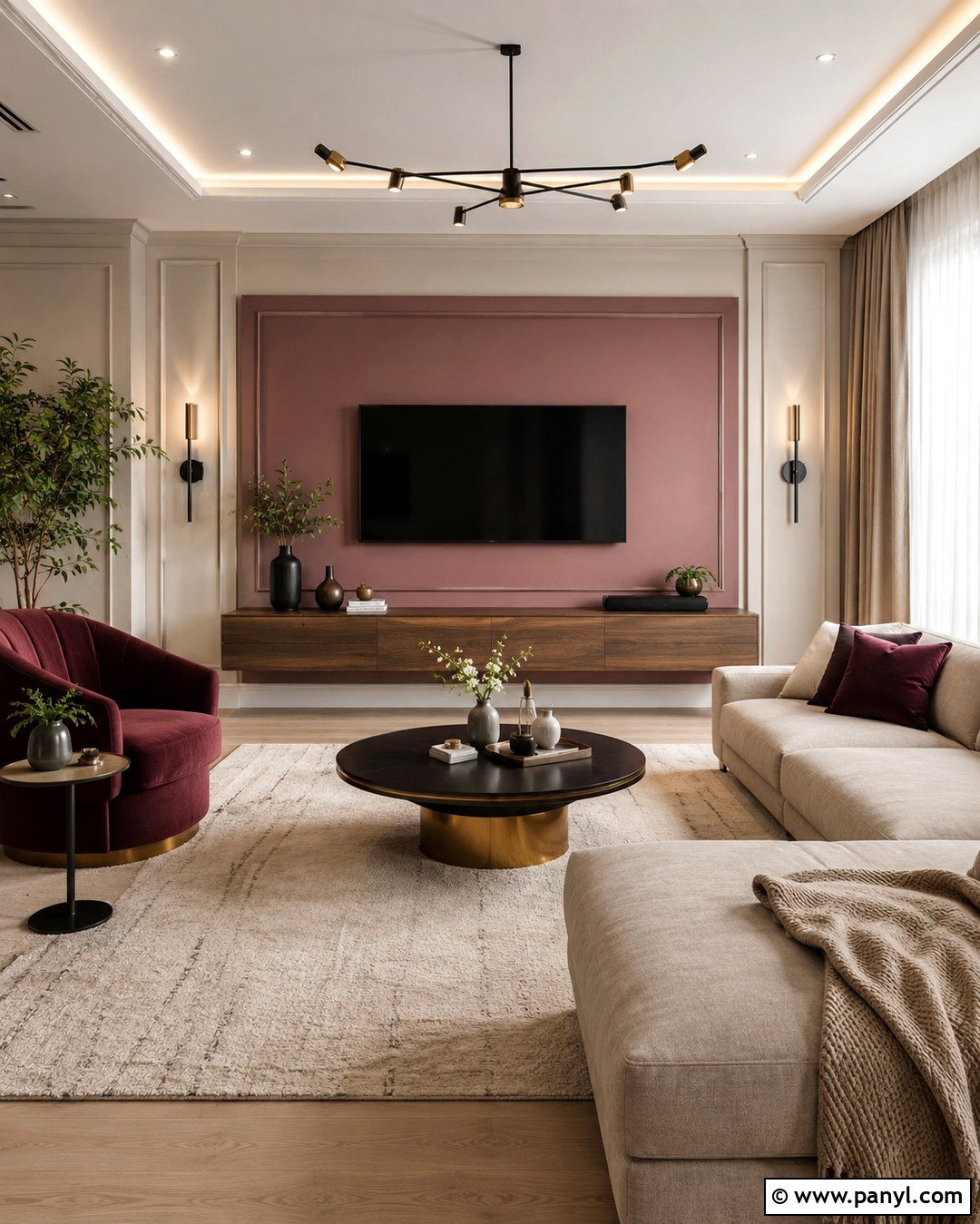
Dusty rose can look sophisticated when it is paired with streamlined furniture and grounded neutrals. Paint a wide rectangular panel from the baseboard to about a foot below the ceiling, leaving a cream border around it. Center the television and a floating walnut console within the panel. Add a beige sofa with straight arms, a burgundy accent chair, and an ivory rug with subtle brown lines. Matte black lighting and table legs prevent the room from appearing overly sweet. Use linen curtains and brass accessories for a soft, finished effect. A few deep green plants introduce natural contrast. This color block TV wall is particularly effective in small living rooms where artwork beside the screen might otherwise create unnecessary visual clutter.
9. Teal Diagonal TV Wall
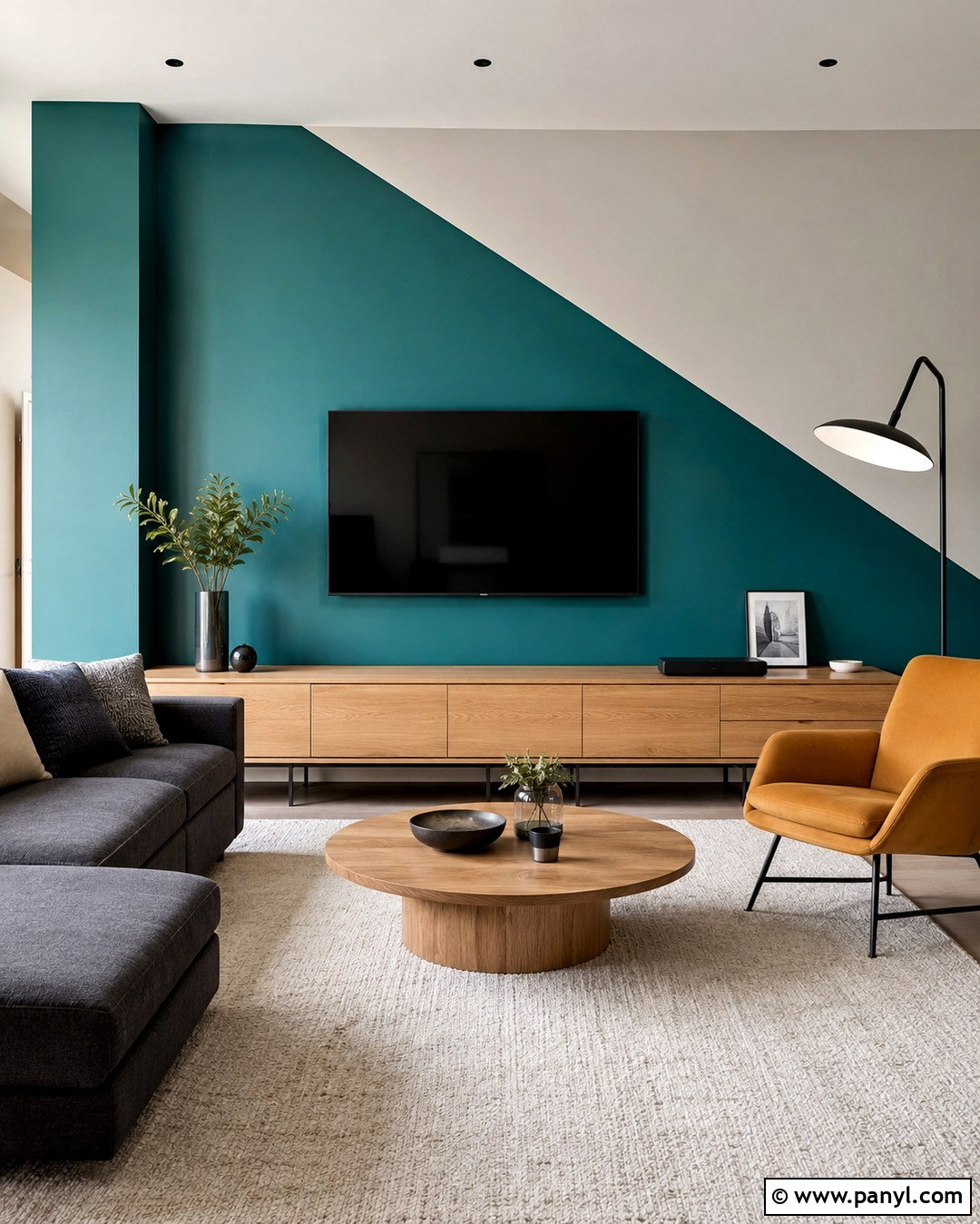
A broad teal diagonal adds energy to a plain wall while helping direct attention toward the television. Start the teal section near one lower corner and angle it upward across the wall, leaving the remaining area pale gray. Mount the screen where both colors meet to make the composition feel intentional. A long light oak console anchors the strong diagonal line. Complete the living room with a charcoal sectional, cream rug, and round wood coffee table. Add teal pillows sparingly and introduce ochre through a single chair or throw. A tall floor lamp balances the higher side of the painted shape. This bold layout works particularly well in modern family rooms with simple furniture and plenty of natural daylight.
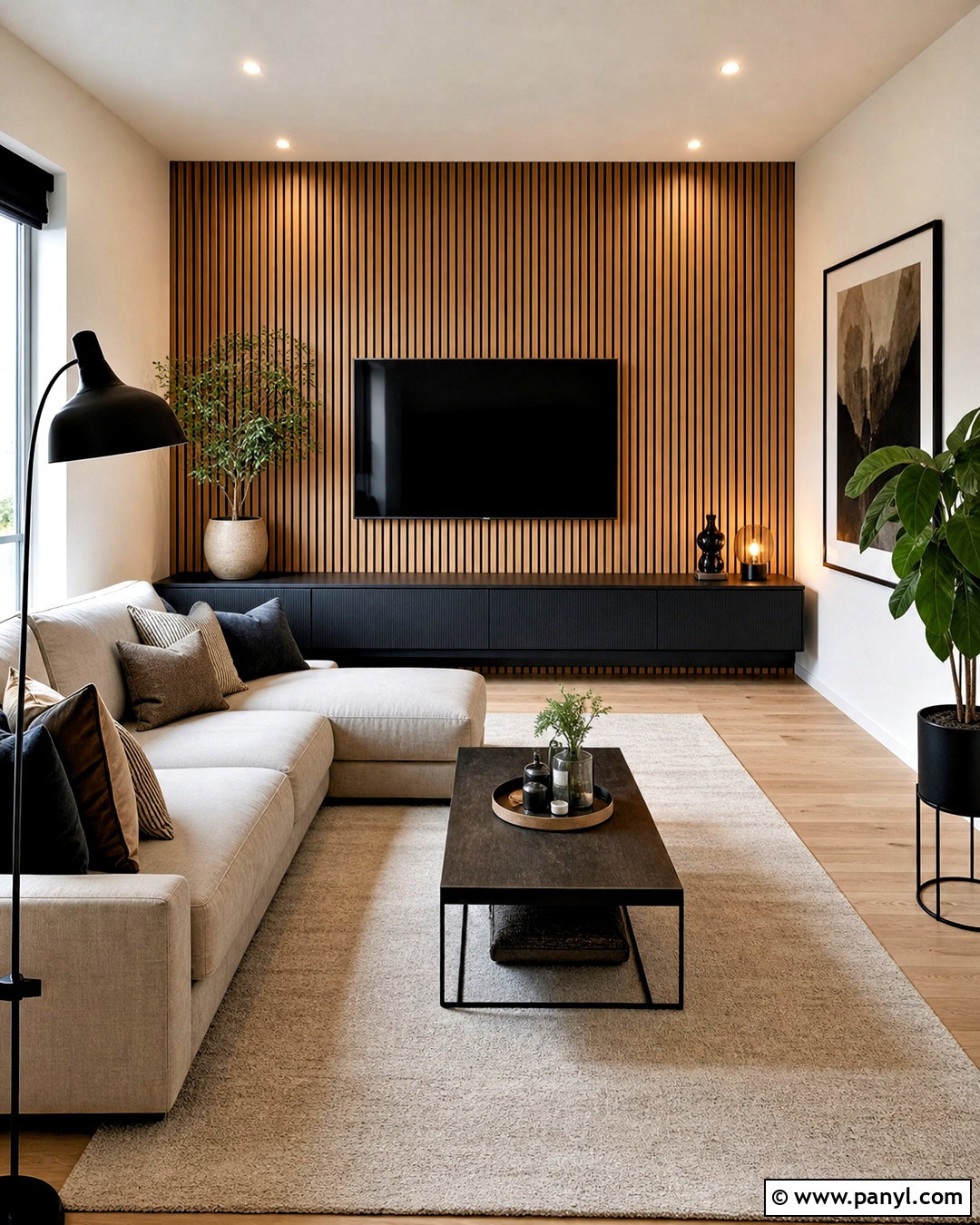
10. Charcoal Frame TV Wall
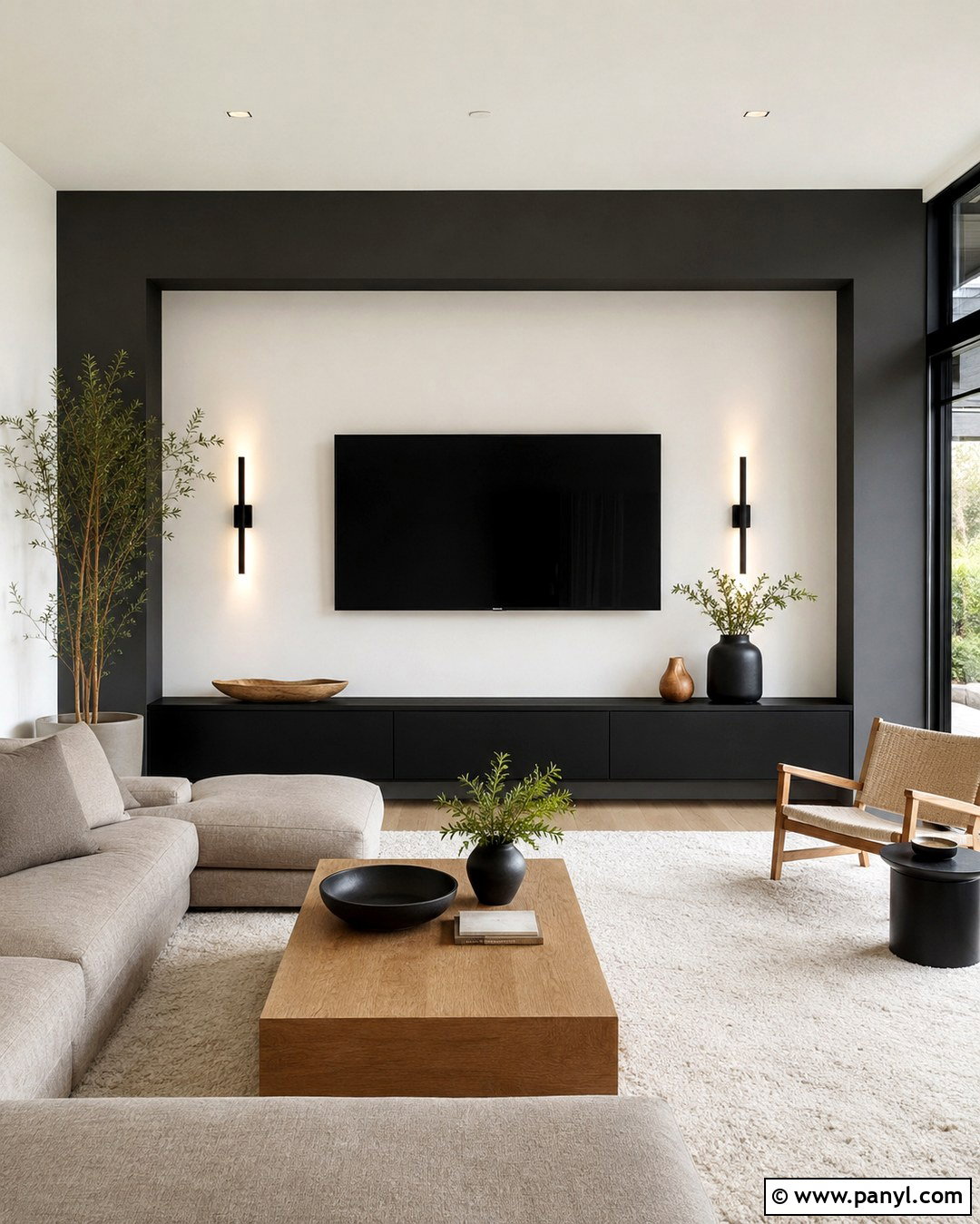
Instead of filling the entire backdrop, use charcoal paint to create a thick rectangular frame around the television and console. Leave the center warm white so the screen does not disappear completely. The painted border should have equal widths on the top and sides, producing a built-in appearance without carpentry. Place a matte black console against the lower section and soften it with light oak accessories. A greige sofa, ivory rug, and black-framed windows continue the neutral palette. Add two compact wall lights inside the frame, positioned safely away from the TV. This structured design makes a standard media setup feel architectural. It also offers an easy way to introduce dark paint without committing to a full charcoal wall.
11. Beige Tone On Tone TV Wall
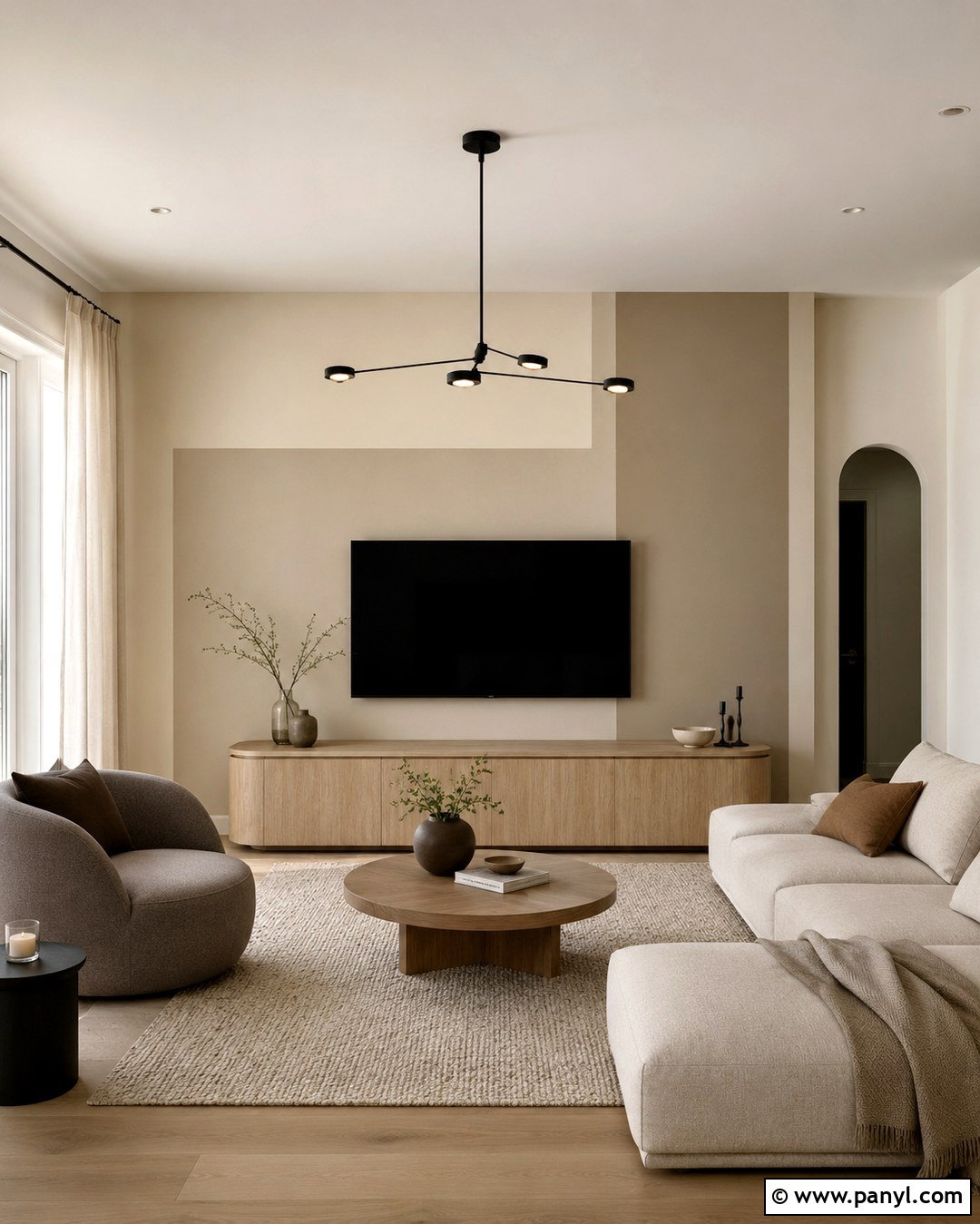
Subtle color blocking can be just as effective as a high-contrast mural. Begin with a warm ivory wall and paint a large soft beige rectangle behind the television and media console. Add a narrower taupe band along one side to create gentle asymmetry. Select a bleached oak console with rounded corners and closed doors. Build the room around a cream sectional, mushroom-colored chair, and textured wool rug. Black accents should be limited to the television, a slim floor lamp, and small table details. Layer linen curtains, boucle pillows, and pale wood to give the neutral palette dimension. This quiet color block TV wall is ideal for minimalist spaces where texture, proportion, and careful furniture placement provide more interest than bright color.
12. Rust And Blush TV Wall
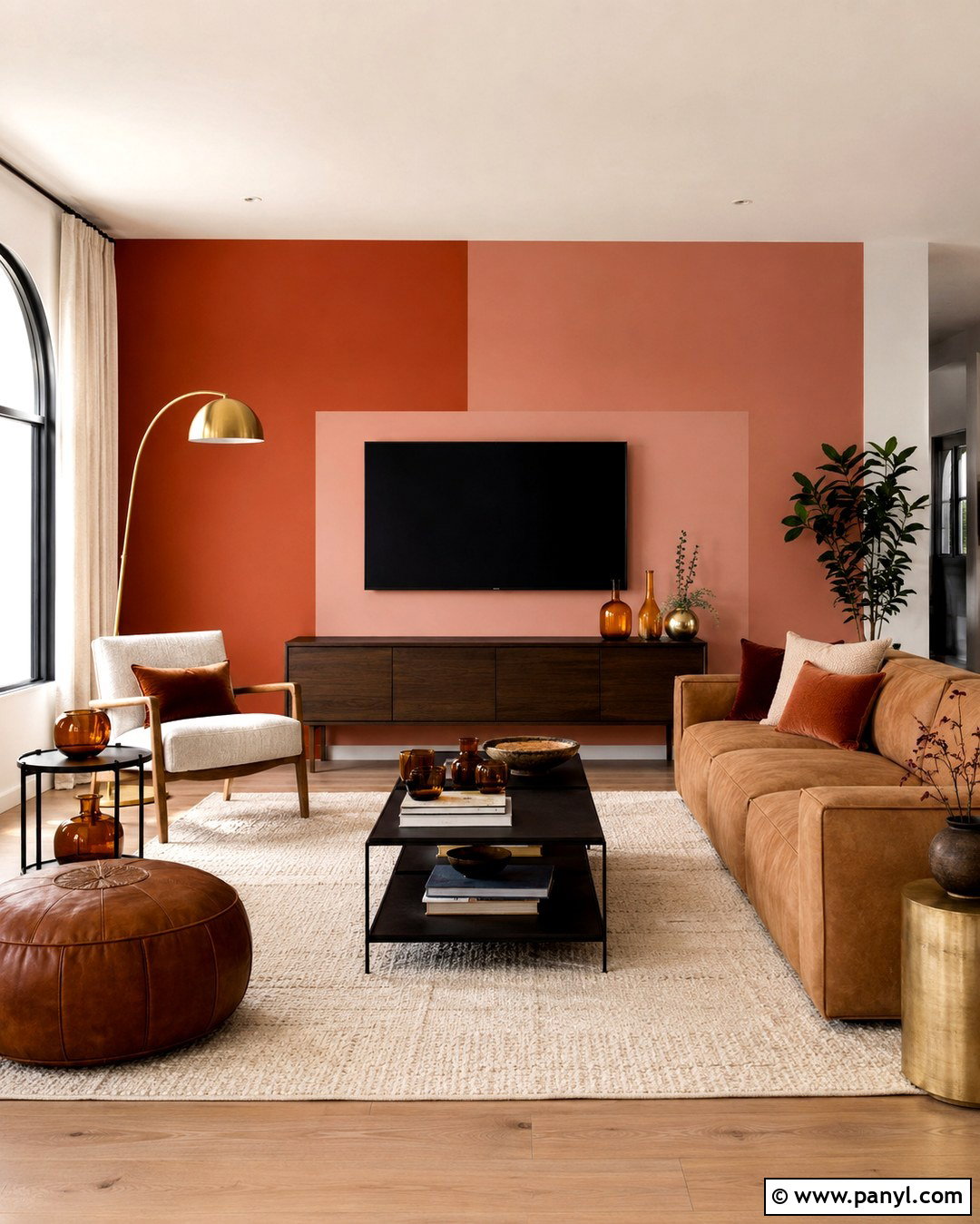
Rust and blush create a warm layered backdrop that feels artistic without becoming overly busy. Paint a wide rust rectangle behind the lower half of the television, then overlap it with a tall blush block extending toward the ceiling. Keep the rest of the wall creamy white. A dark wood console grounds the lighter pink tone and complements the earthy rust color. Choose a tan sofa, ivory rug, and black metal coffee table for a balanced room. Repeat blush and rust through two or three cushions, but use solid fabrics rather than loud patterns. A brass floor lamp and amber glass vase add subtle shine. This complete design works beautifully in eclectic and midcentury-inspired living spaces with warm wood flooring.
13. Midcentury Color Block TV Wall
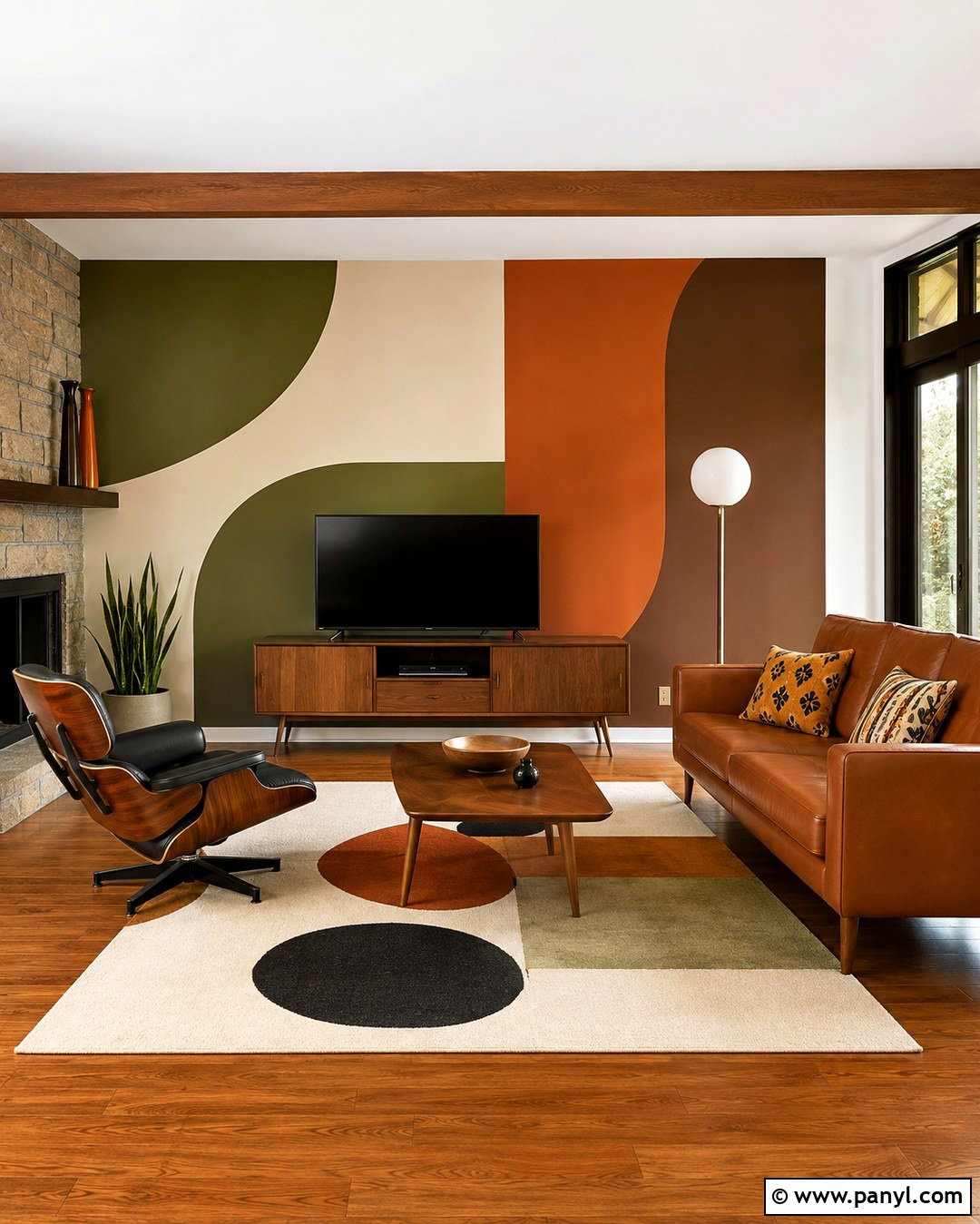
A midcentury-inspired composition can combine avocado green, burnt orange, cream, and muted brown in broad geometric sections. Keep the shapes large so they do not distract from the television. A vertical green band, low orange rectangle, and cream semicircle create enough movement without covering every inch of the wall. Mount the TV over the central neutral area and add a tapered-leg walnut console beneath it. Finish the room with a caramel leather sofa, low lounge chair, graphic cream rug, and globe floor lamp. Repeat each wall color only once in the textiles or accessories. The cohesive palette, low furniture, and simple silhouettes create a recognizable retro look while keeping the entertainment area practical for everyday use.
14. Coastal Blue Stripe TV Wall
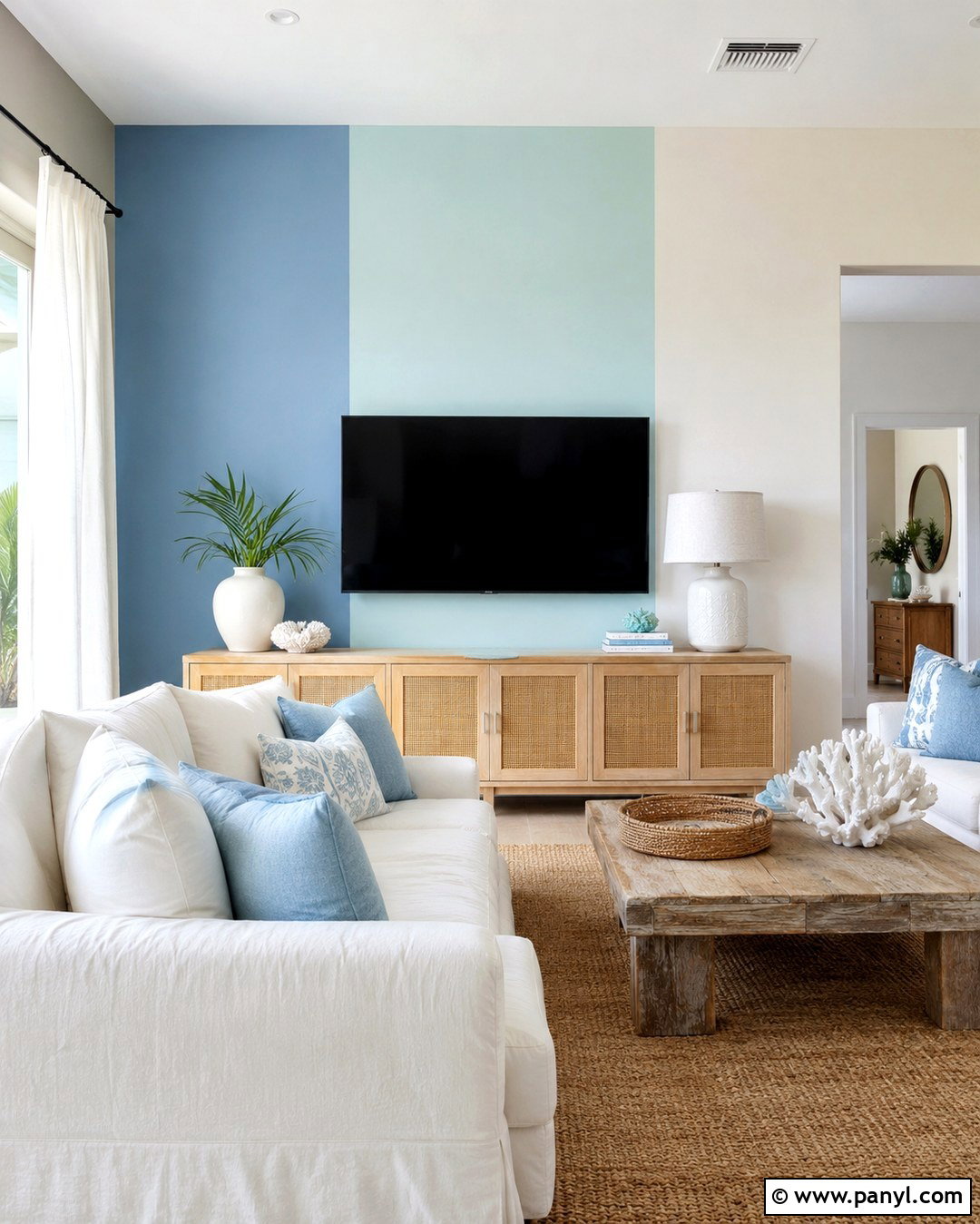
Wide blue and white vertical blocks can give a television wall a relaxed coastal appearance without using obvious themed decor. Paint one dusty blue band behind the TV, then add narrower pale aqua and warm white sections beside it. A white oak media cabinet with woven cane doors reinforces the light, natural feeling. Complete the space with a slipcovered cream sofa, pale blue pillows, a jute rug, and a weathered wood coffee table. Use white linen curtains to maintain an airy atmosphere. A pair of ceramic lamps or wall sconces can introduce subtle symmetry. Keep decorative objects simple and organic, such as driftwood-toned bowls and clear glass vases. The finished design feels fresh, casual, and comfortably modern.
15. Green Painted Stripe TV Wall
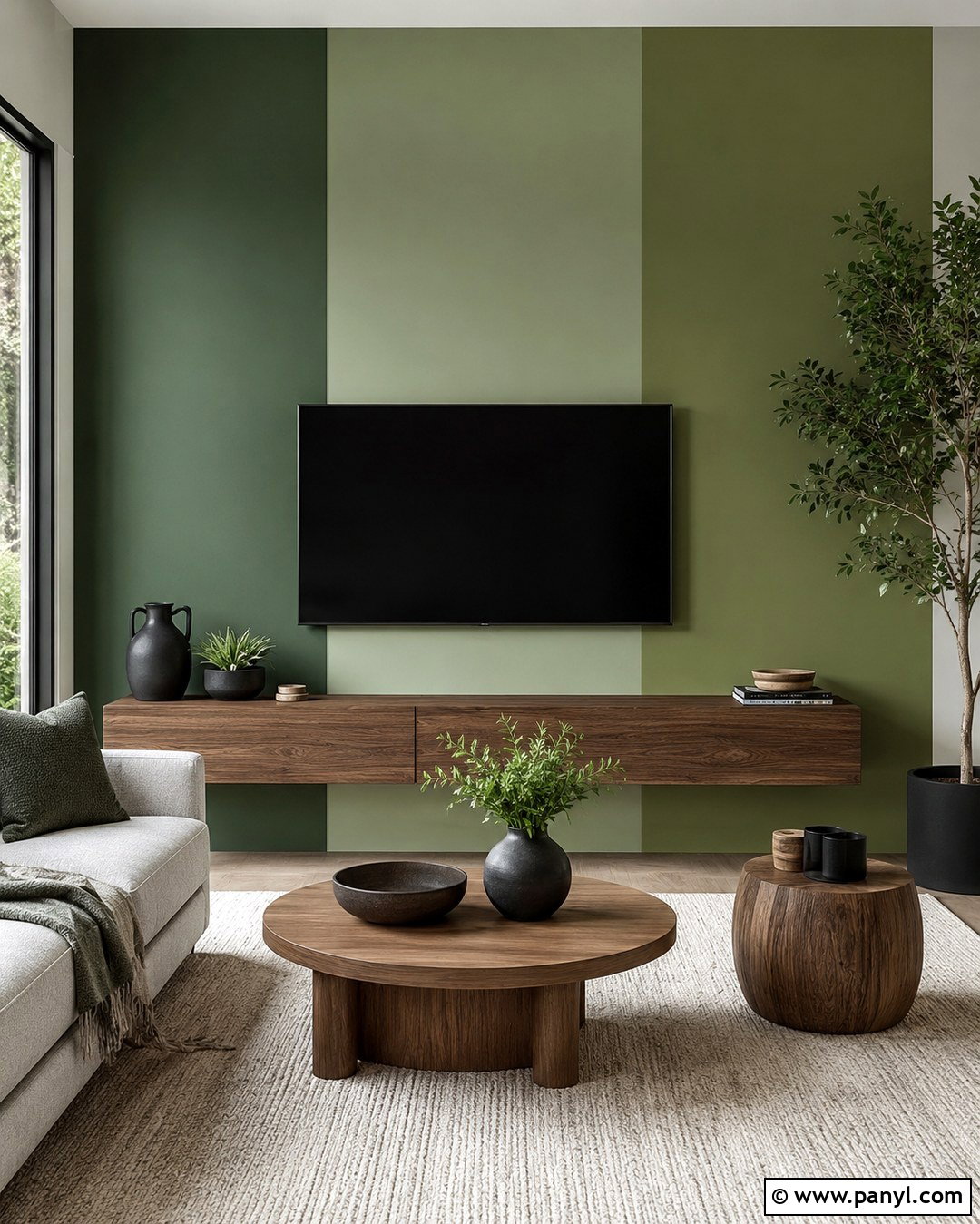
Painted stripes can suggest the rhythm of slatted wall panels without the cost or installation work. Start with a deep forest green rectangular block behind the television. Add narrow vertical stripes in lighter sage and muted olive across one side of the block. Keep the area directly behind the screen mostly solid to avoid excessive visual movement. Use a floating walnut console and black hardware for a tailored finish. A light gray sofa, cream rug, and oak side tables brighten the darker green backdrop. Position a tall plant on the side opposite the painted stripes to balance the composition. The coordinated colors, clean storage, and restrained accessories create a layered TV wall that works in modern, transitional, or nature-inspired rooms.
16. Burgundy Asymmetric TV Wall
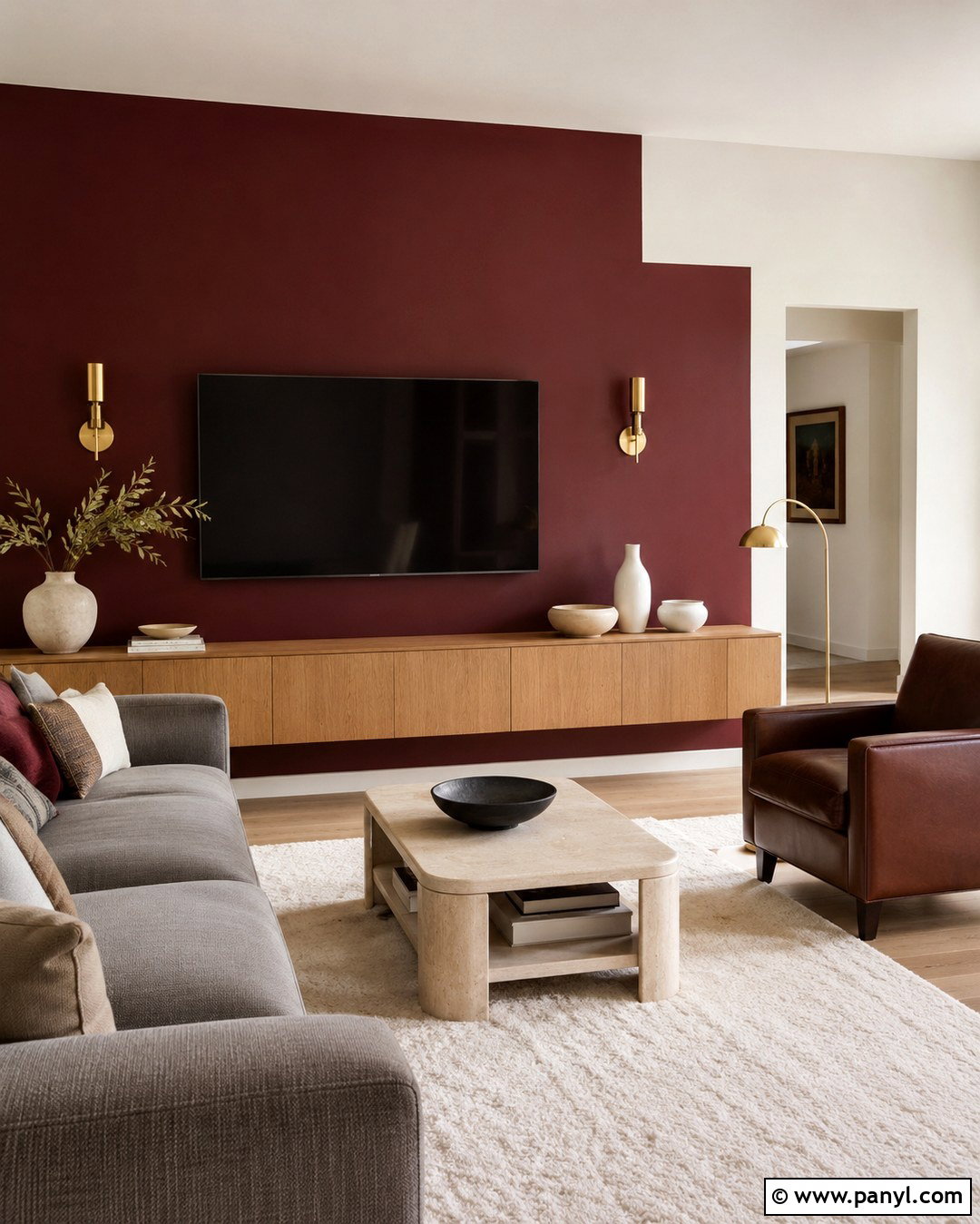
Deep burgundy brings warmth and drama to an asymmetric painted panel. Begin the color at the floor and extend it past the television on one side while stopping close to the screen on the other. This offset placement works well when a doorway, window, or fireplace prevents perfect symmetry. Add a long oak console that crosses beyond the painted edge, visually connecting both parts of the wall. Furnish the room with a warm gray sofa, ivory rug, and dark brown leather chair. Brass lighting and cream ceramics brighten the rich backdrop. Use one burgundy pillow to tie the seating area to the wall. The completed arrangement feels deliberate, comfortable, and more flexible than a traditionally centered accent wall.
17. Burnt Orange Half Circle TV Wall
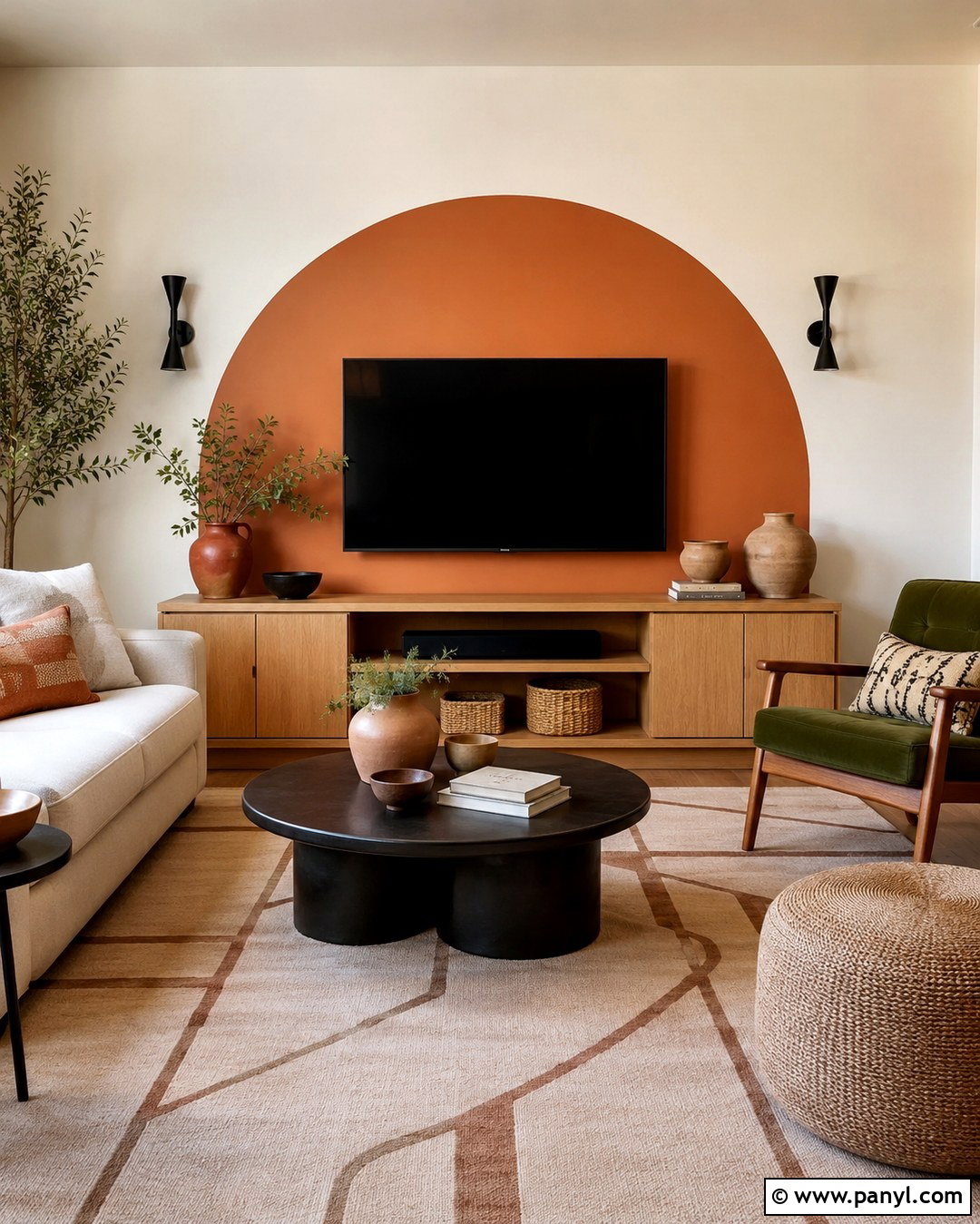
A burnt orange half circle rising from behind the media console gives the TV wall a playful but controlled focal point. Paint the flat edge along the console top and let the curved section extend above and around the screen. Choose a pale oak cabinet so the warm orange remains the strongest element. Keep surrounding walls soft beige and use medium-tone wood flooring. A cream sofa, olive green chair, and geometric neutral rug create a balanced earth-tone palette. Add black sconces just outside the painted curve to frame the arrangement. Small clay accessories and a woven basket reinforce the natural colors. This look offers midcentury character while remaining clean enough for a modern apartment or compact family room.
18. Pastel Geometric TV Wall
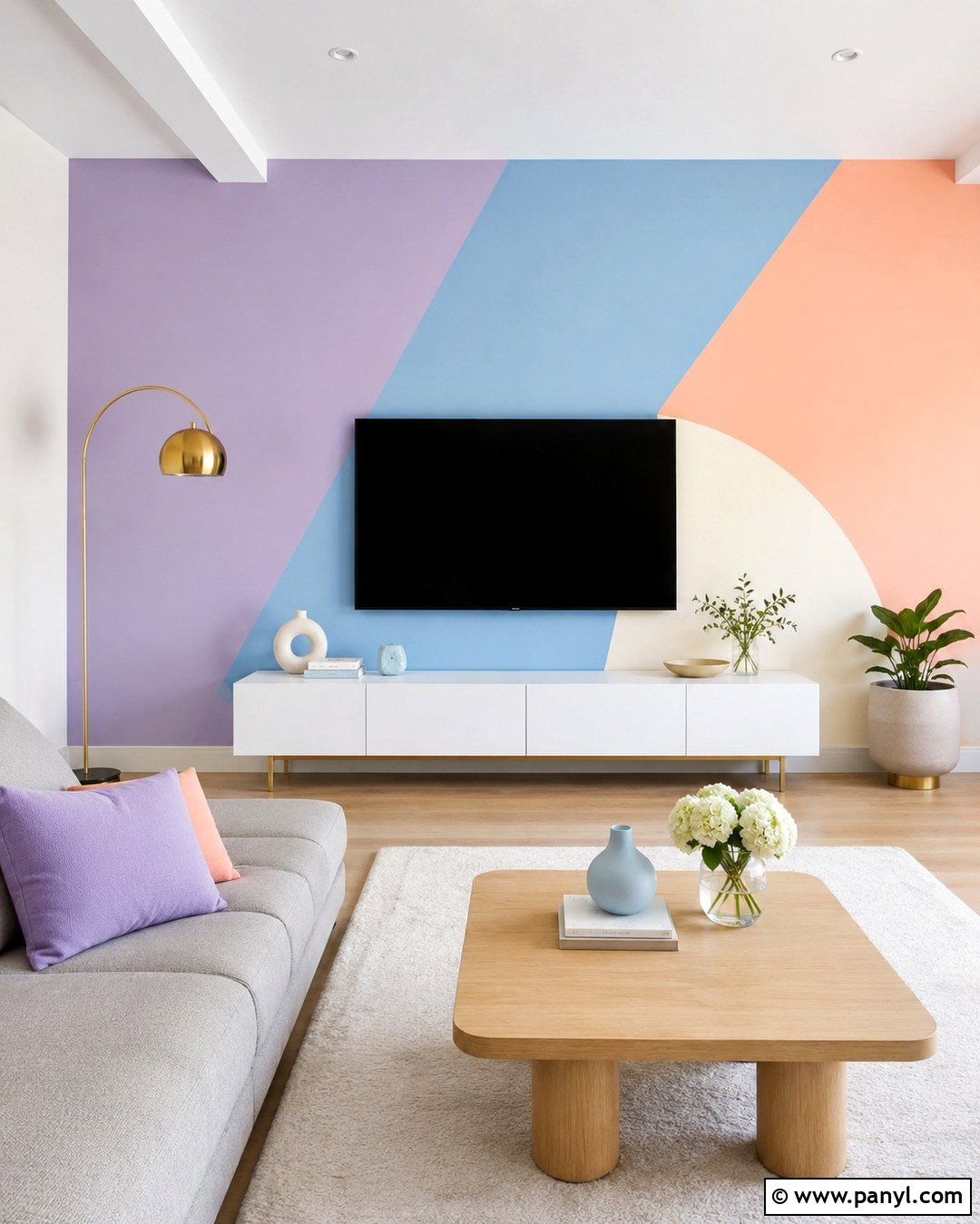
Soft pastel blocks can create a colorful television wall without making the room feel loud. Combine muted lavender, powder blue, pale peach, and warm cream in large rectangles with one gentle diagonal. Place the television over the cream and blue sections, keeping the strongest color away from the screen’s center. A simple white console maintains the light appearance. Finish the room with a pale gray sofa, light wood coffee table, and cream rug. Use solid lavender and peach cushions to connect the seating with the wall. White curtains and a slim brass floor lamp add brightness. This balanced arrangement feels cheerful and polished, making it suitable for small apartments, creative studios, or relaxed contemporary living rooms.
19. Black And White Geometric TV Wall
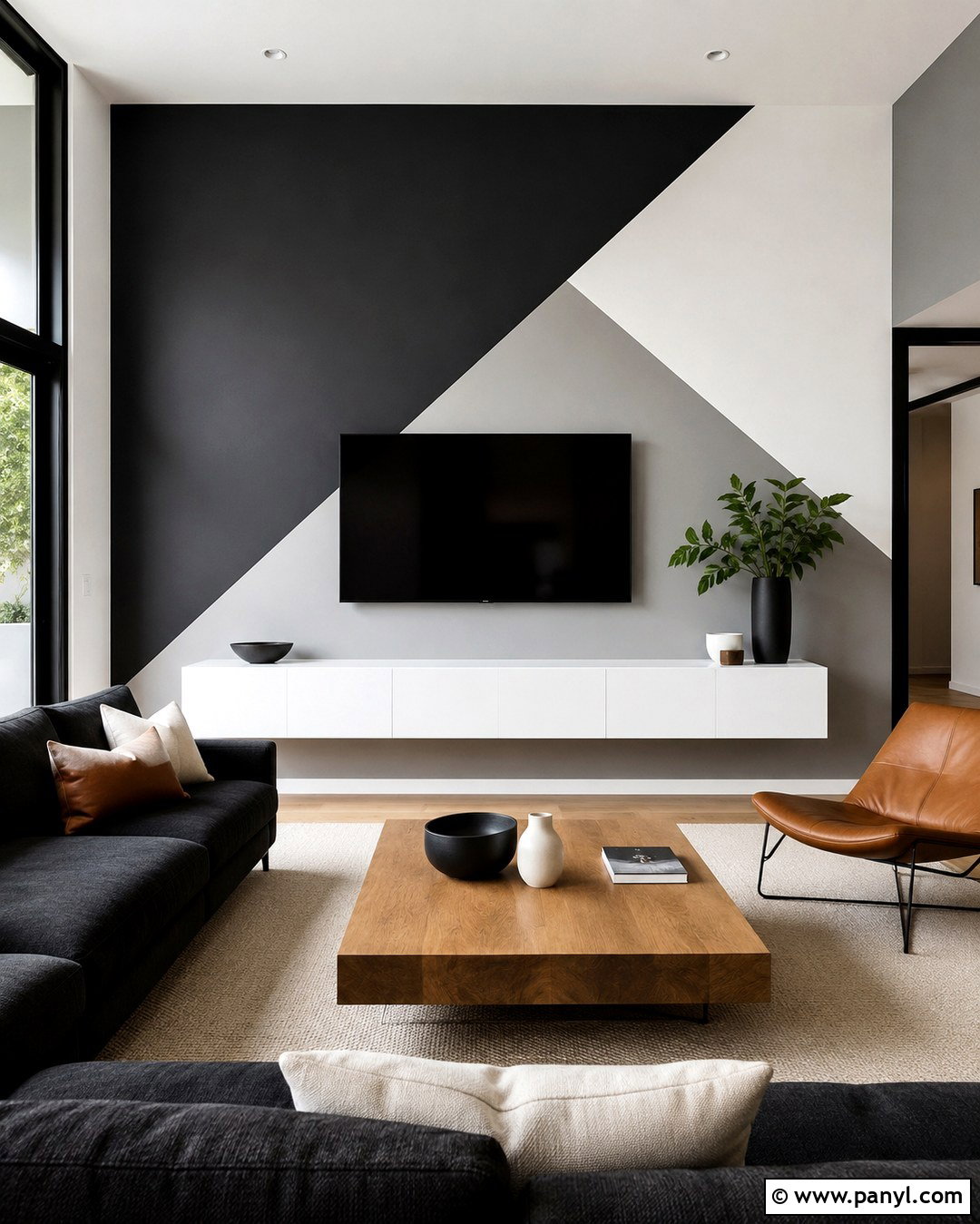
A black and white TV wall delivers strong contrast with a limited, easy-to-coordinate palette. Paint a matte black rectangle behind the television, then extend white and light gray diagonal sections outward across the wall. Avoid placing thin stripes directly behind the screen, since broader shapes create a cleaner result. Add a long white floating console with black hardware to connect both colors. Use a charcoal sofa, ivory rug, and natural oak coffee table to soften the graphic backdrop. One cognac leather chair brings warmth into the monochrome room. Keep accessories minimal, using black ceramics, white books, and a single green plant. The complete design feels crisp, modern, and visually organized rather than stark.
20. Earth Tone Mural TV Wall
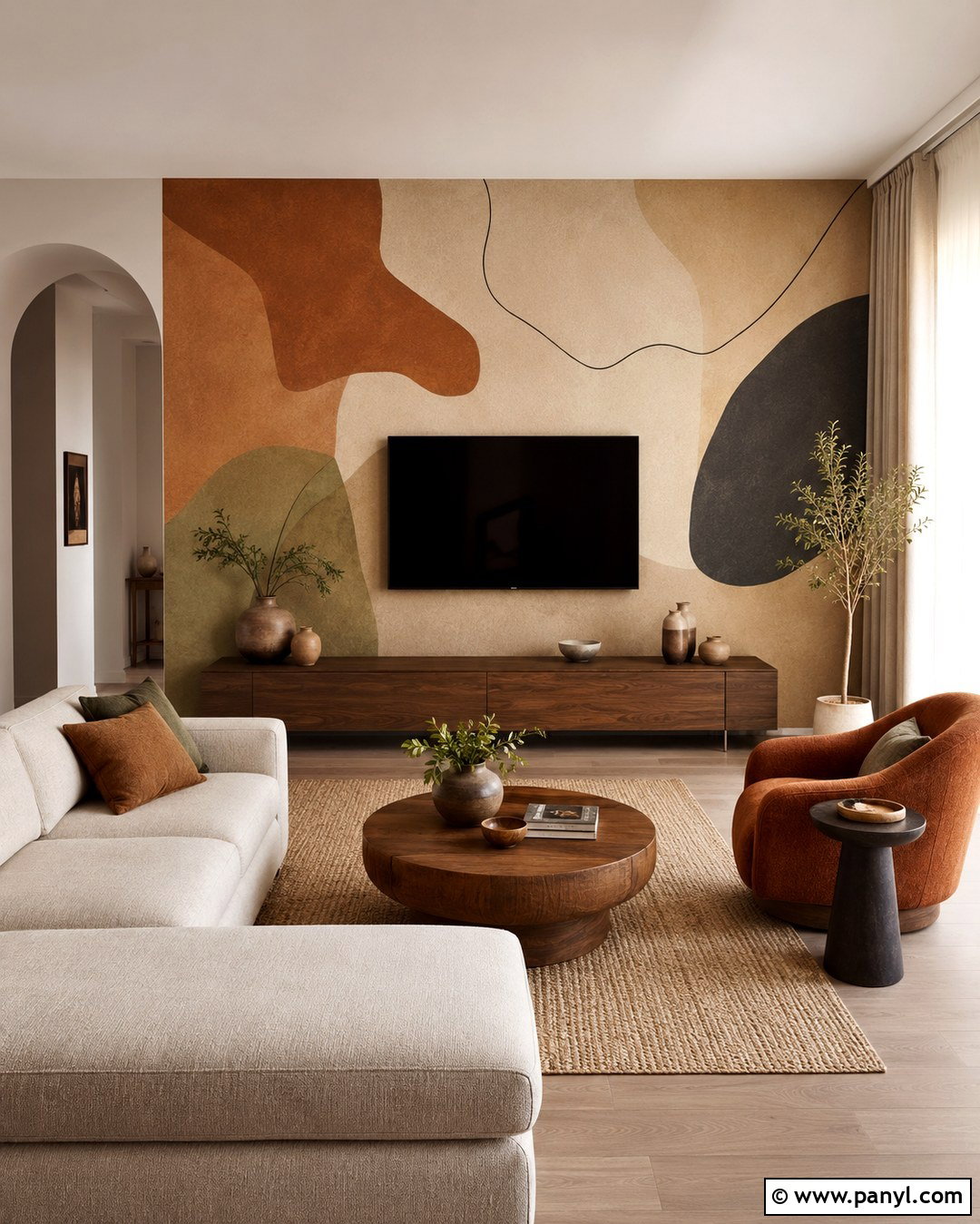
An earth-tone mural can transform a wide TV wall into a cohesive piece of functional art. Use broad overlapping shapes in clay brown, warm beige, muted olive, sand, and soft charcoal. Arrange the darker blocks around the television while keeping a lighter area beneath it for visual balance. A low walnut media unit works naturally with the organic palette. Complete the room with an oatmeal sectional, rust-colored lounge chair, woven rug, and rounded wood coffee table. Add linen curtains and handmade ceramic accessories to support the relaxed character. Keep the shapes simple and generously sized so the wall does not resemble a busy pattern. The finished living room feels layered, personal, and comfortably connected to nature.
Conclusion:
These 20 Color Block Wall Behind Tv Ideas show how paint can define an entertainment zone without major remodeling or expensive materials. The strongest designs consider the entire room, including the screen size, console width, seating, flooring, lighting, and surrounding colors. A simple rectangle offers timeless structure, while arches, circles, diagonals, and layered shapes create a more expressive focal point. Before painting, test the composition with painter’s tape and view it from the main seating position. Choose a matte or low-sheen finish and keep cables hidden for a clean result. Most importantly, repeat the wall colors selectively through textiles and decor. That final coordination makes the TV wall feel connected, balanced, and intentionally designed.

Related Ideas and Inspiration:
Leave a Reply