
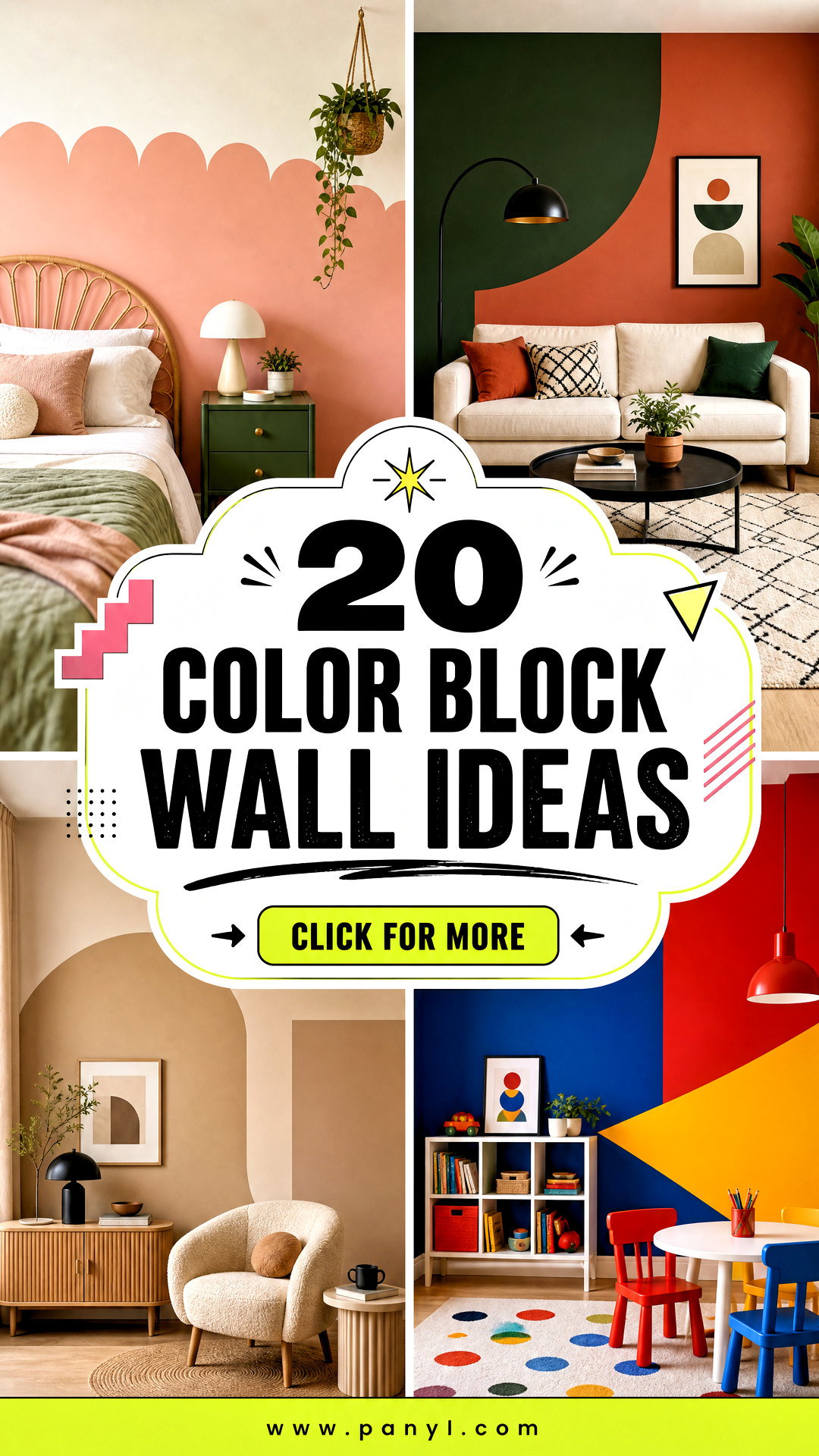
Color blocking turns an ordinary painted wall into a custom focal point without requiring wallpaper, paneling, or expensive artwork. These 20 color block wall ideas explore complete room looks using arches, circles, stripes, curves, and crisp geometric shapes. The right layout can frame furniture, define a functional zone, emphasize architecture, or visually adjust a room’s proportions. Some designs use calm neutral shades for a subtle effect, while others combine saturated colors for more energy. Before painting, test large color samples in the room and study them throughout the day. Measure every shape carefully, seal painter’s tape firmly, and connect the design to nearby furniture or architectural lines. Find a practical look for every room in these 20 color block wall ideas.
1. Half Painted Color Block Wall
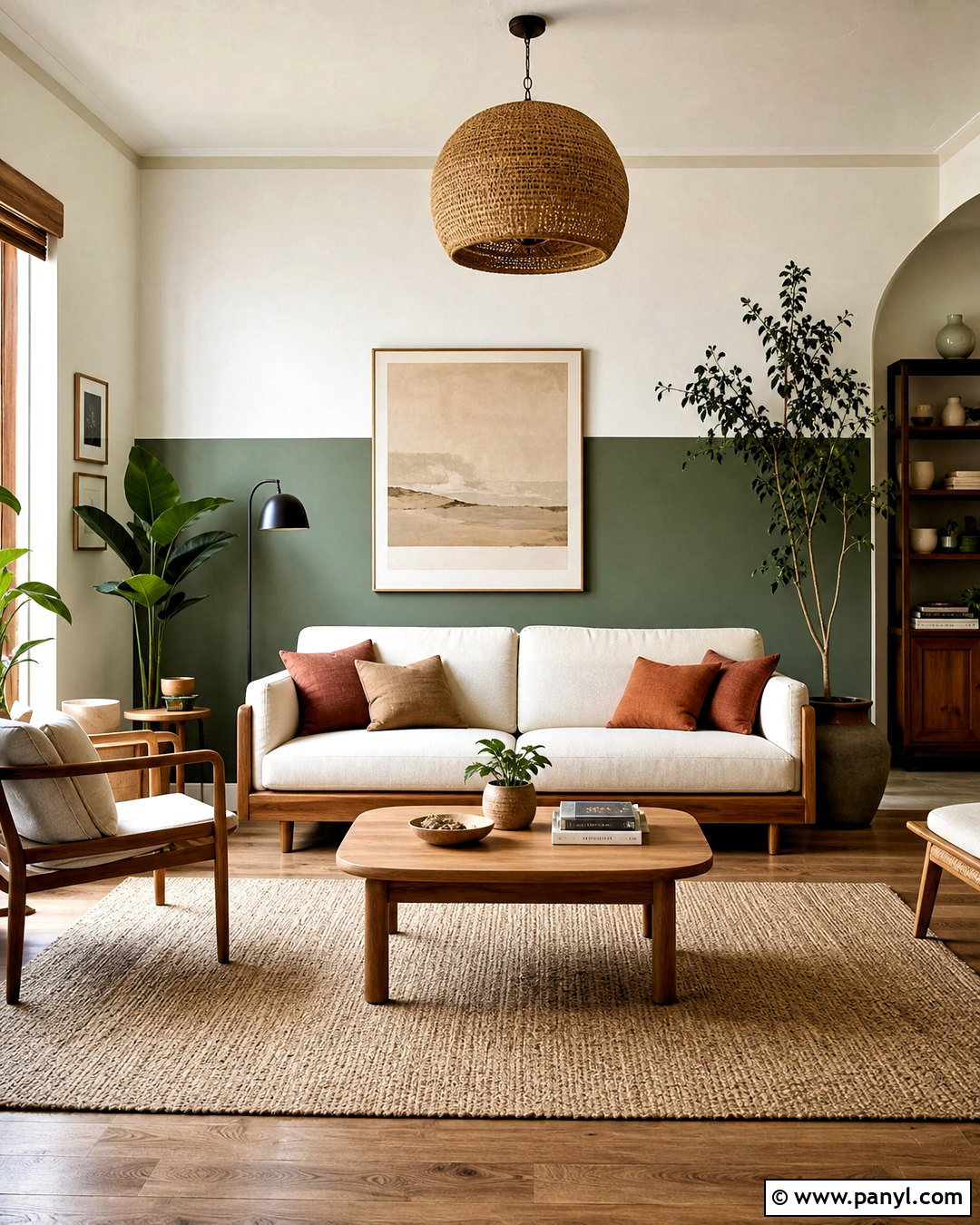
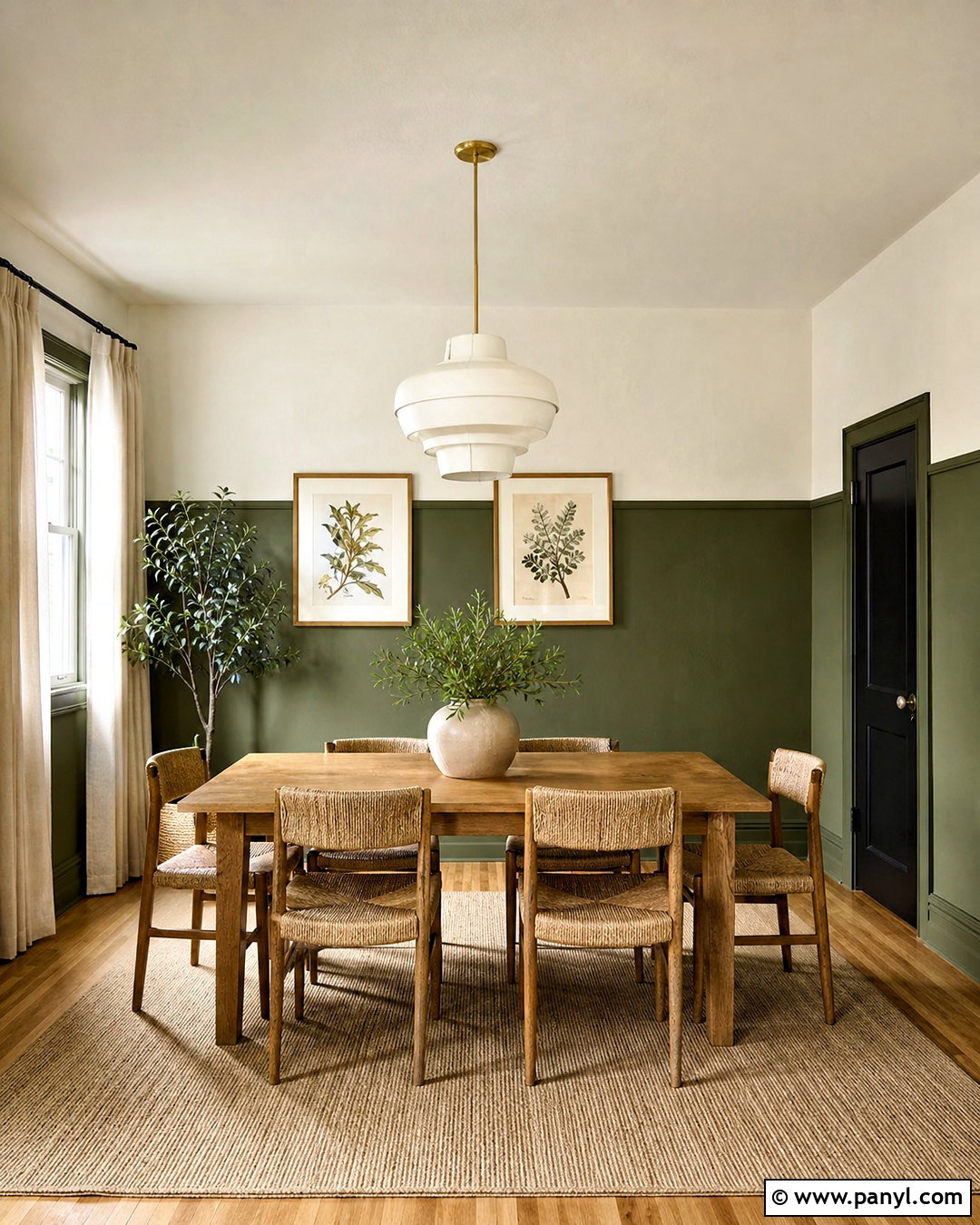
A half-painted wall offers a simple starting point for a living room, bedroom, or dining area. Paint the lower portion deep sage green and keep the upper wall warm white for a relaxed, grounded look. Position the dividing line slightly above the furniture backs so it feels intentional rather than arbitrary. A natural oak sofa frame, cream upholstery, rust-colored pillows, and a woven wool rug complete the living room. Repeat the green through ceramics or leafy plants without matching everything exactly. The darker lower wall hides minor marks in busy spaces, while the lighter upper section keeps the room feeling open. For a polished edge, measure from the floor at several points and use a level before applying painter’s tape.
2. Painted Arch Color Block Wall
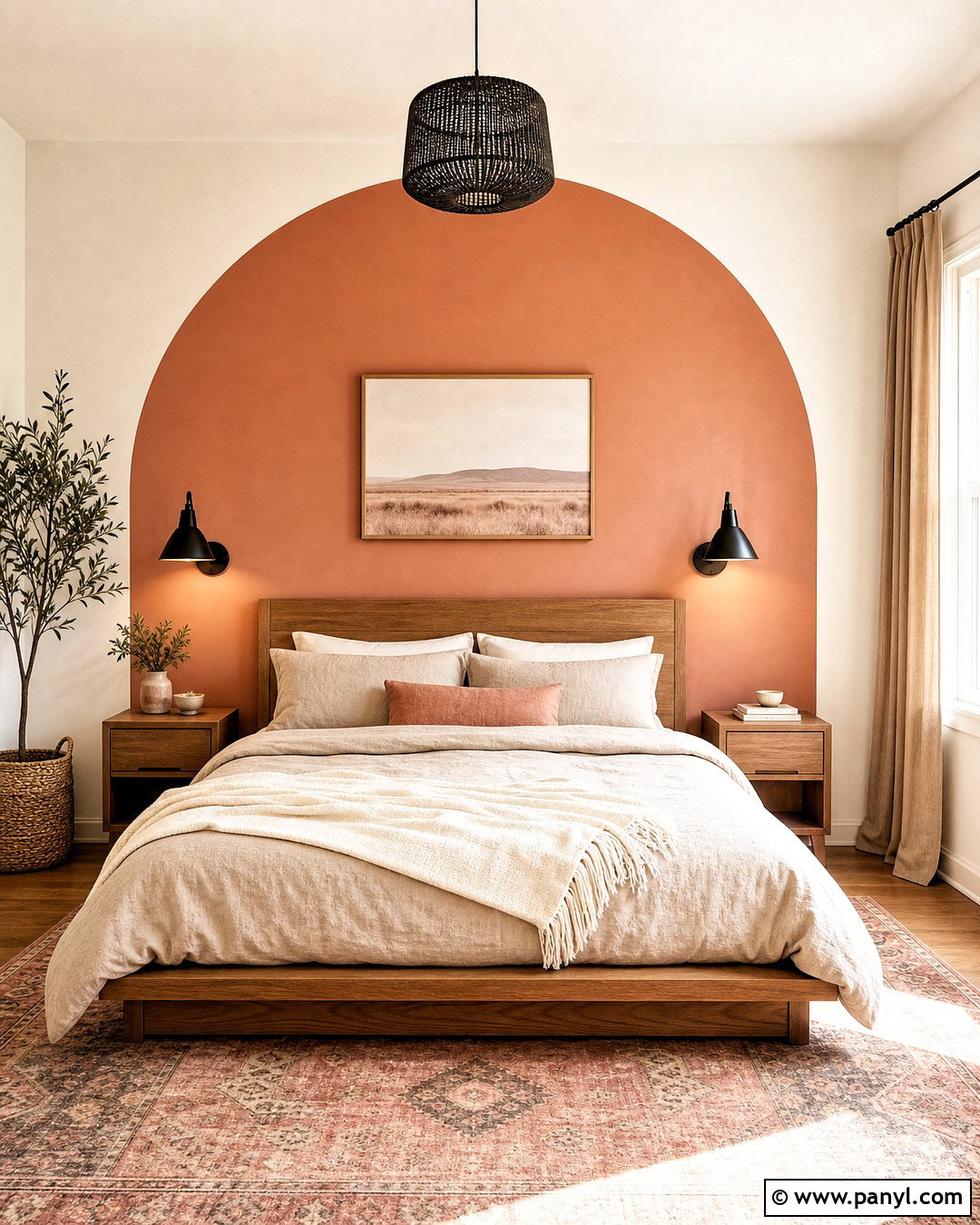
Imagine a soft terracotta arch rising behind a simple bed against an otherwise creamy white wall. This color block wall creates the appearance of a headboard while visually anchoring the entire sleeping area. Make the arch slightly wider than the bed and extend its straight sides below the mattress line. Add an oak platform bed, oatmeal linen bedding, warm beige curtains, and small black wall sconces for contrast. A faded patterned rug can introduce muted rose and brown without competing with the painted shape. Keep nearby artwork minimal because the arch already serves as the main feature. To draw the rounded top, secure a pencil to a string anchored at the arch’s center point, then trace a smooth semicircle before carefully painting the edges.
3. Geometric Color Block Wall
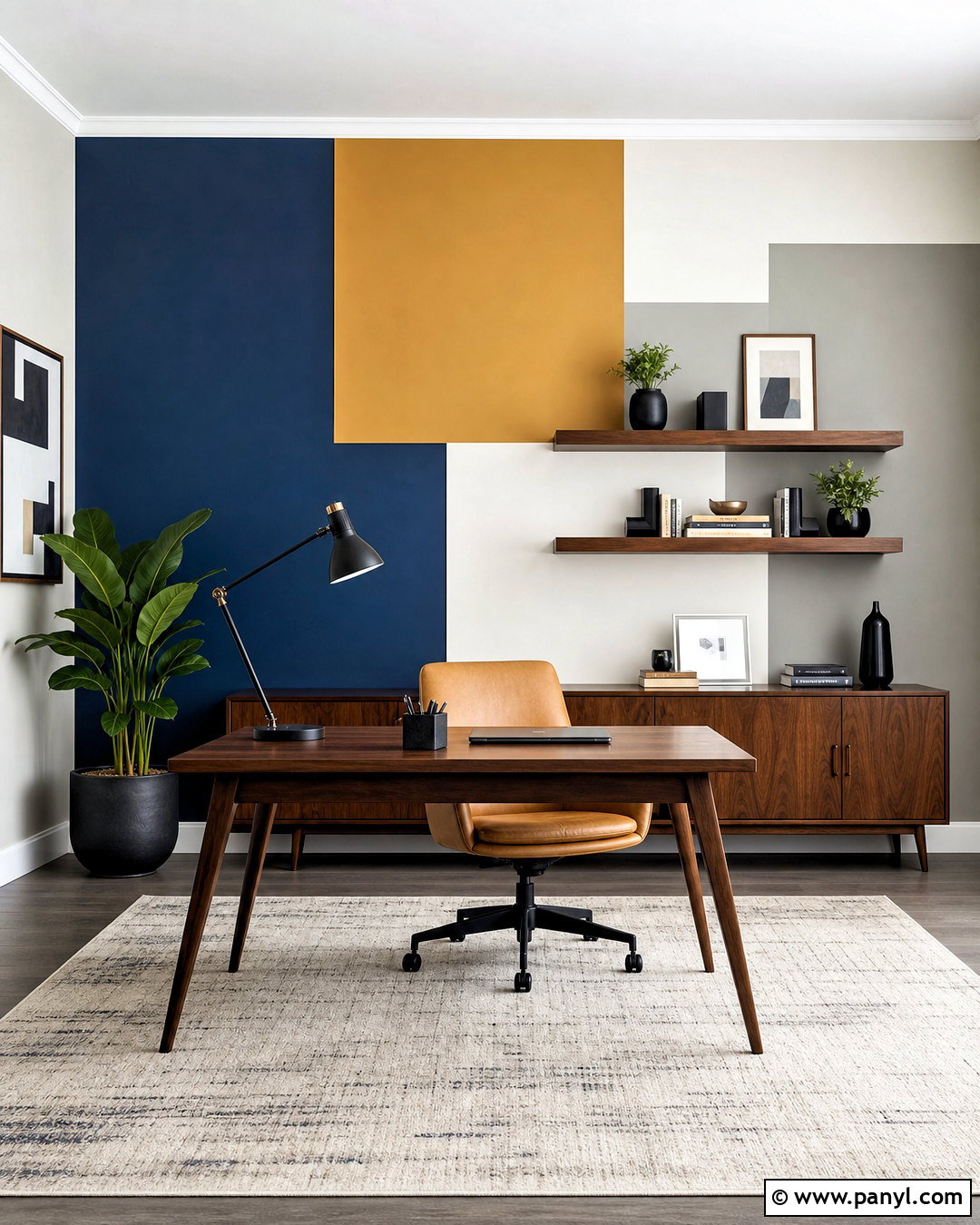
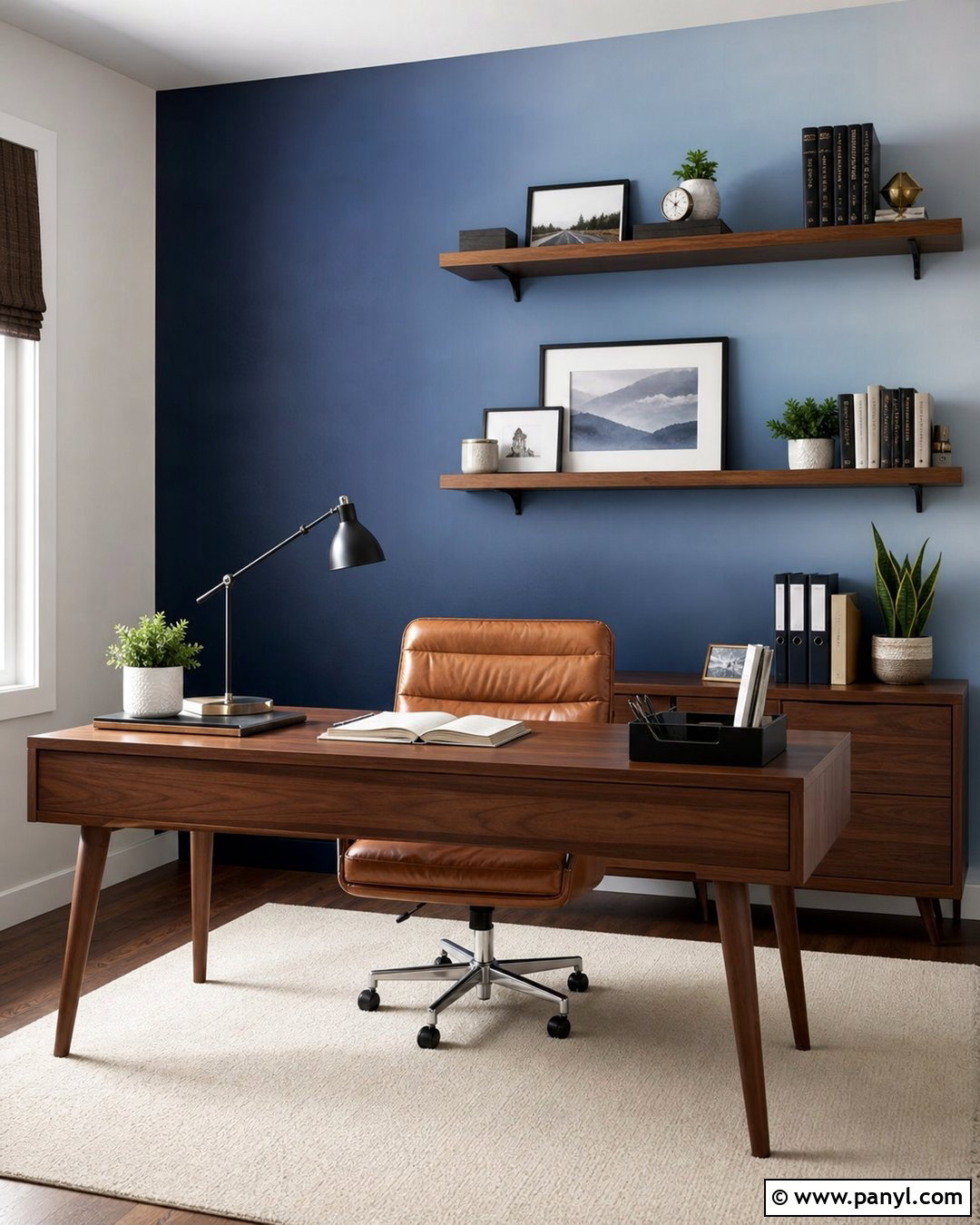
Sharp geometric blocks can give a home office structure and energy without filling the room with accessories. Start with a warm white background, then overlap large rectangles in muted navy blue, dusty mustard, and soft gray. Place the strongest block behind the desk so the work zone becomes the clear focal point. Choose a walnut desk, an upholstered camel chair, black task lighting, and streamlined floating shelves. Keep files and supplies inside closed storage to prevent the wall and furnishings from feeling visually busy. Repeat one paint color in a desk organizer or small rug for balance. Limit the design to three main shapes with generous open space between them. Fewer, larger blocks usually create a cleaner result than many small sections.
4. Diagonal Color Block Wall
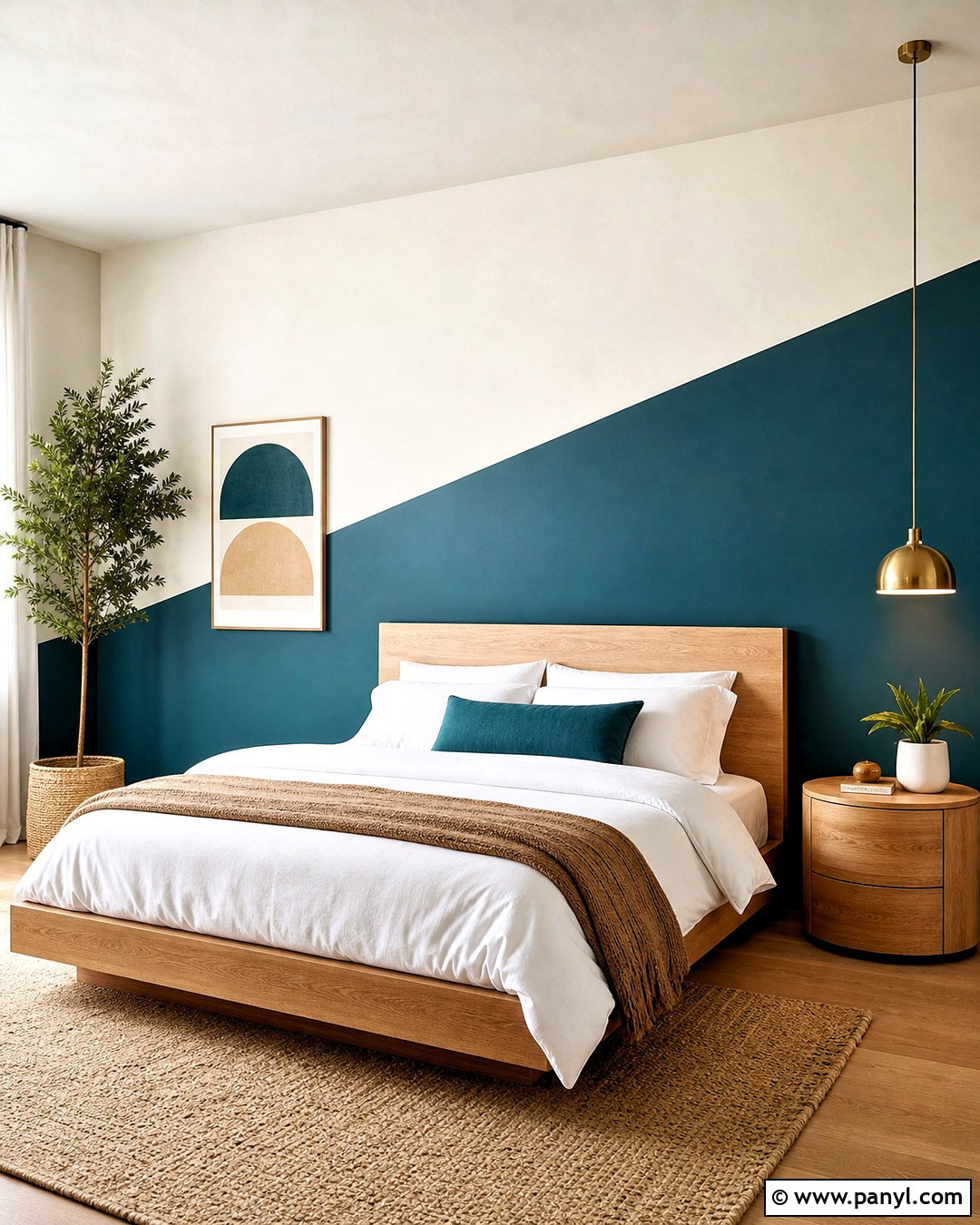
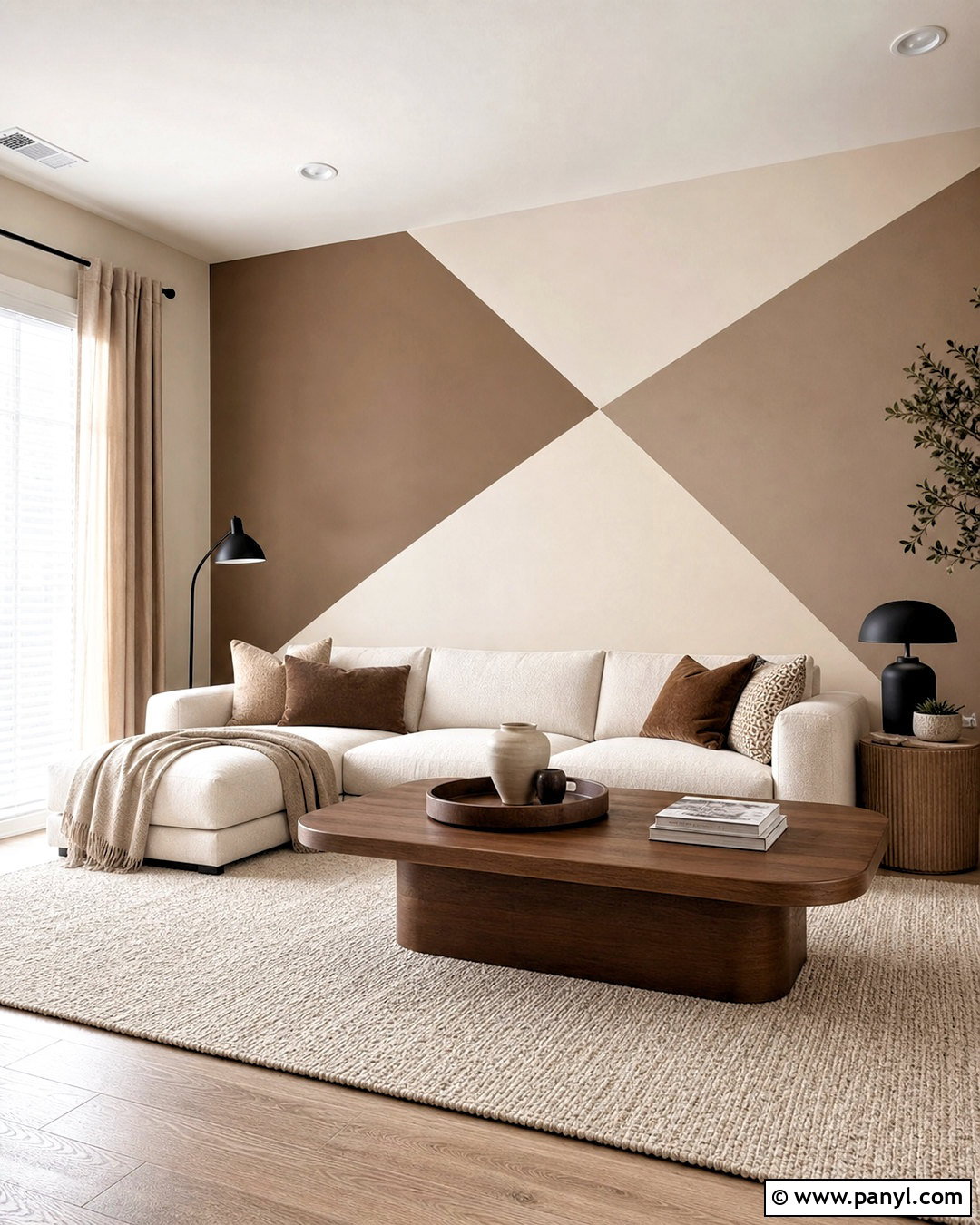
A sweeping diagonal line can make a small bedroom feel more dynamic. Paint the lower diagonal section deep teal and leave the upper portion soft ivory, beginning low near one corner and rising behind the headboard. Use a light wood bed with simple white bedding, a teal lumbar pillow, and warm tan accents to connect the palette. A slim brass pendant and round wood nightstand soften the strong painted angle. Keep the remaining walls neutral so the diagonal feature holds attention without overwhelming the room. Before taping, determine how the line will interact with outlets, artwork, and furniture. A long level or chalk line helps establish a crisp angle. Paint away from the tape edge in light coats to reduce bleeding and create a professional finish.
5. Circle Color Block Wall
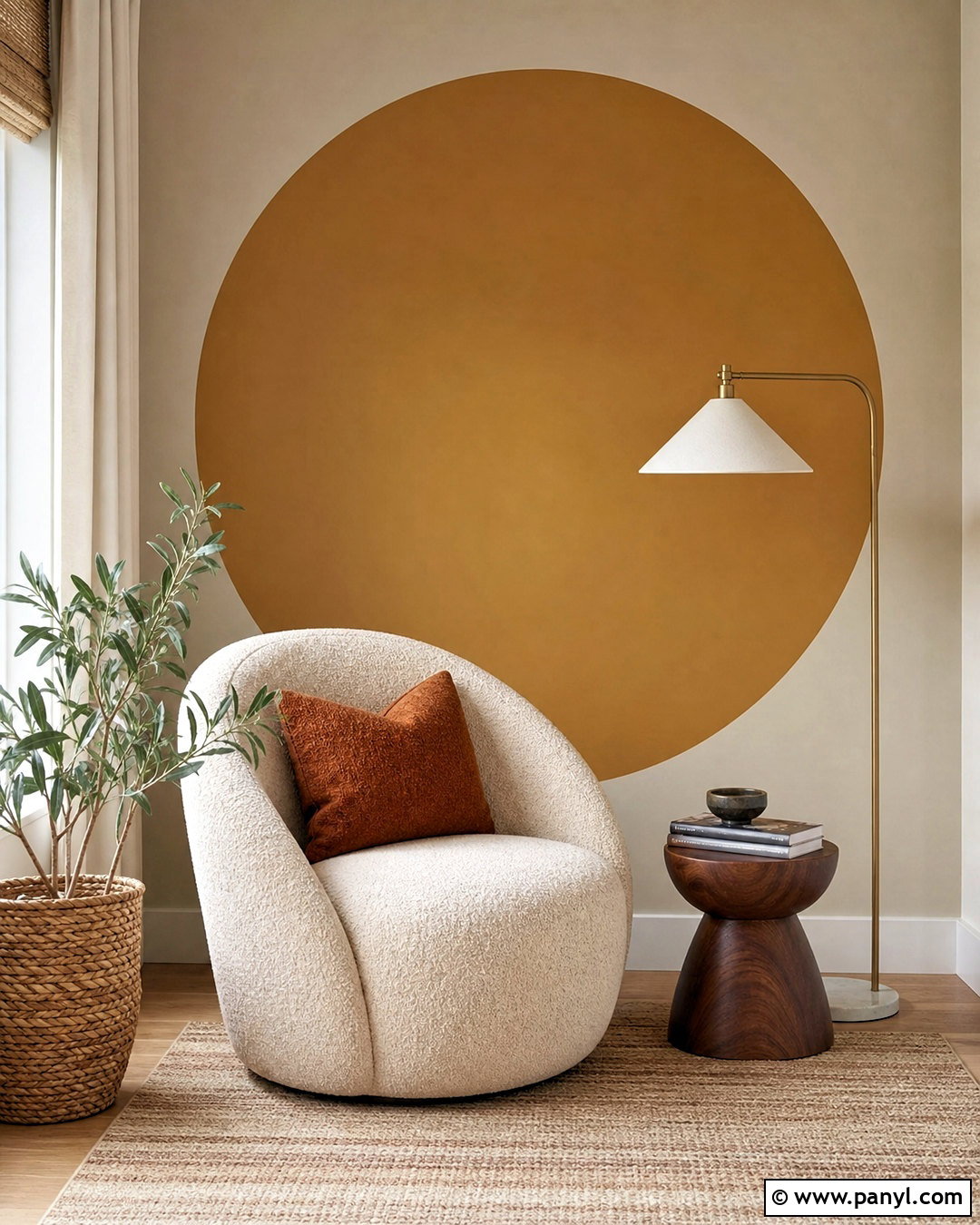
A large painted circle makes an effective backdrop for a reading corner, console table, or nursery chair. Try a muted ochre circle on a pale greige wall, positioned behind a curved boucle chair and compact walnut side table. Add a cream floor lamp, rust-colored cushion, woven basket, and neutral flat-weave rug to create a complete, comfortable nook. Let part of the chair overlap the circle so the furniture and paint feel connected. The circle should be substantial enough to remain visible around the chair but should not crowd nearby trim. Draw it using a pencil attached to string or a homemade cardboard compass. A small angled brush provides better control around the outline, while a roller produces an even finish across the center.
6. Scalloped Color Block Wall
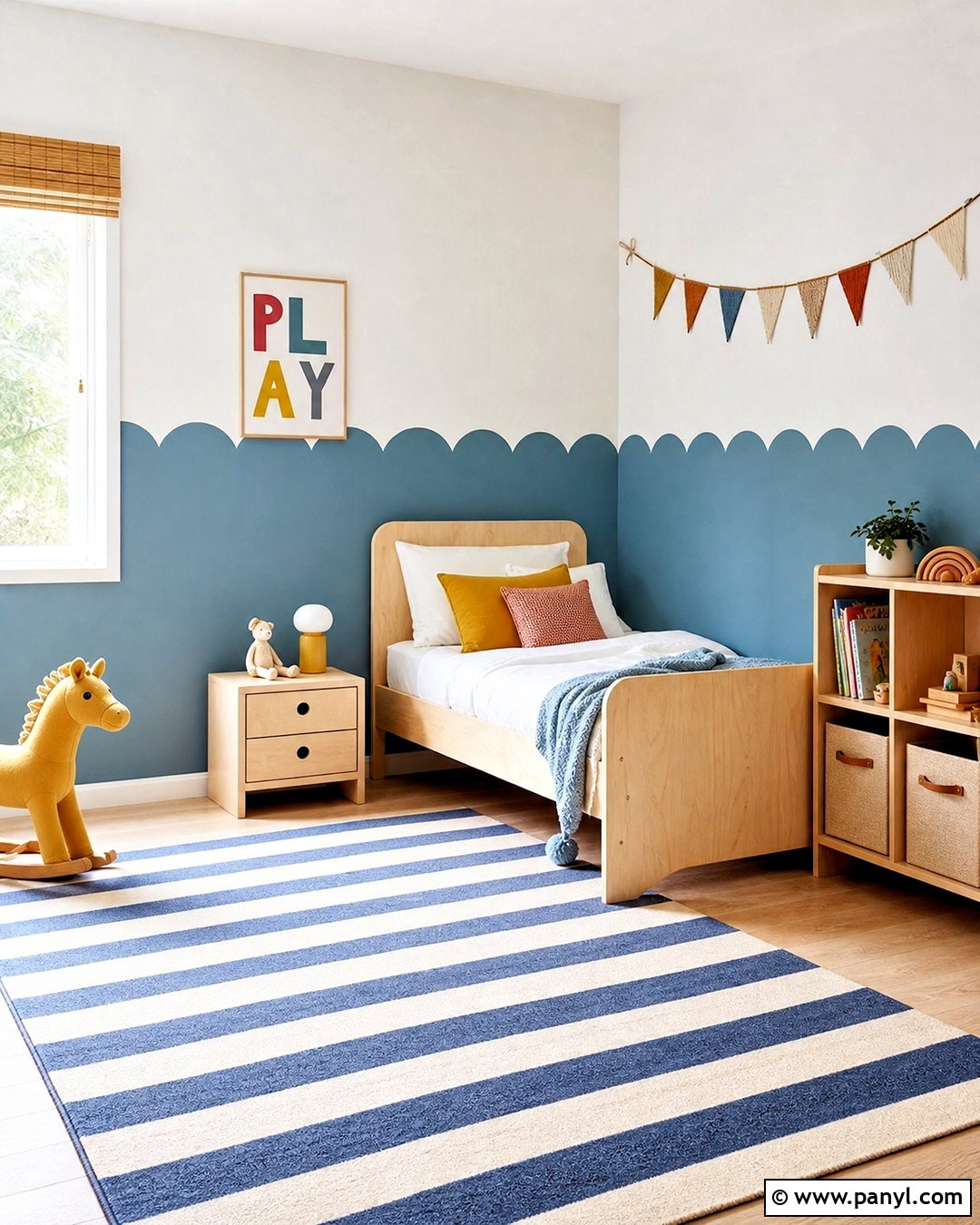
Gentle scallops bring playful character to a child’s bedroom while remaining easy to update as the room changes. Paint the lower wall dusty blue, then finish the top edge with a row of evenly sized rounded scallops against a crisp white background. Furnish the room with a natural maple bed, white cotton bedding, a washable striped rug, and closed toy storage. Small accents in mustard yellow and muted red add warmth without making the palette chaotic. Keep the scallops broad and simple rather than tiny and repetitive. Trace each curve with a plate or cardboard template to maintain consistent proportions. Matching the painted section to the height of the dresser or windowsill helps the design relate naturally to the room’s existing features and furniture.
7. Corner Color Block Wall
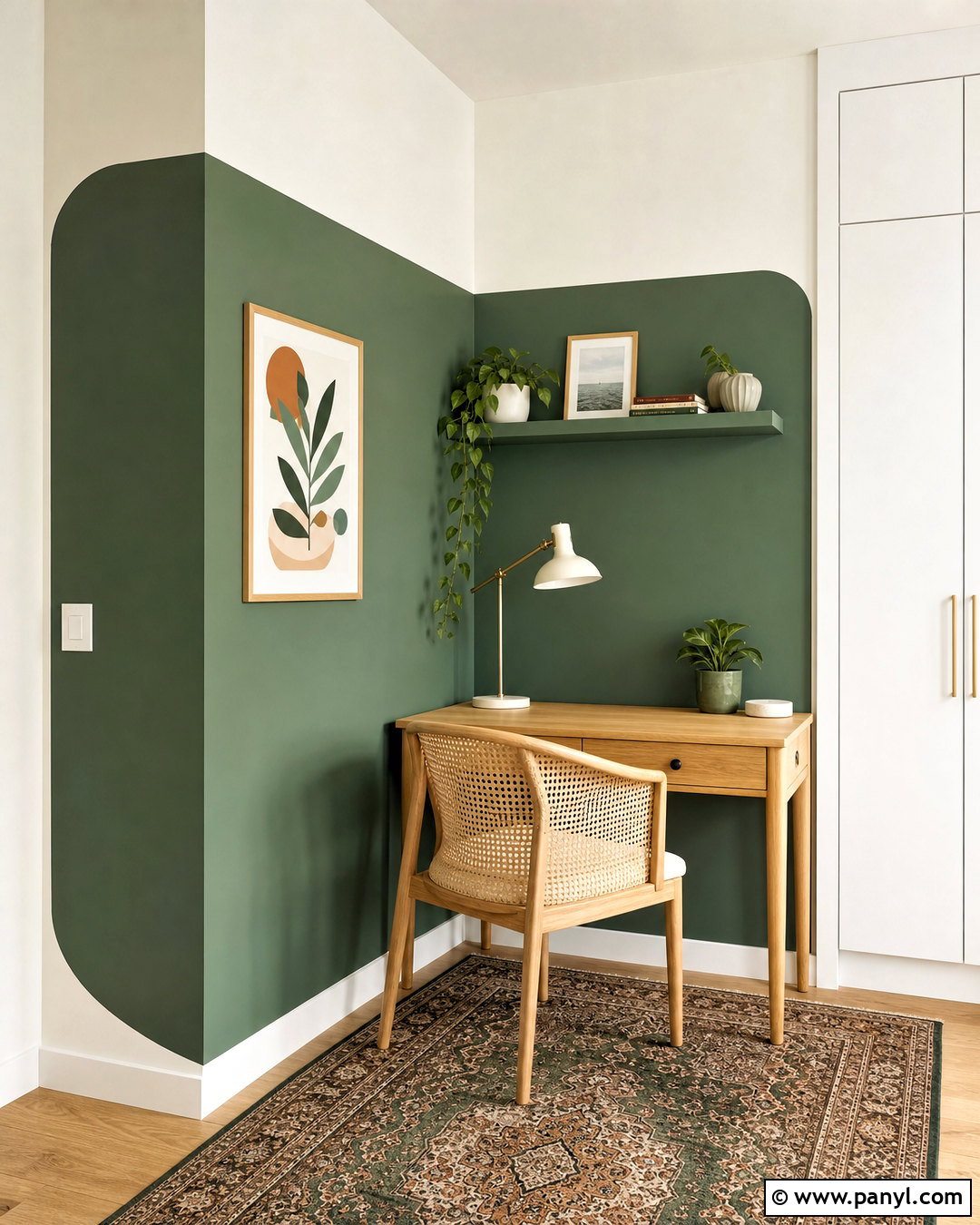
An unused corner can become a defined workspace with paint instead of a physical divider. Wrap a soft forest green color block across two adjoining walls, creating a visual box around a compact desk. Continue the paint slightly wider than the furniture and extend it from the baseboard to about three-quarters of the wall height. Pair it with a light oak desk, cane chair, cream desk lamp, and one narrow shelf painted the same green. The surrounding walls should remain warm white to keep the work area distinct. A small patterned rug beneath the chair completes the zone and protects the floor. Carefully measure both walls so the upper paint line meets at exactly the same height when it reaches the corner.
8. Color Block Wall With Curves
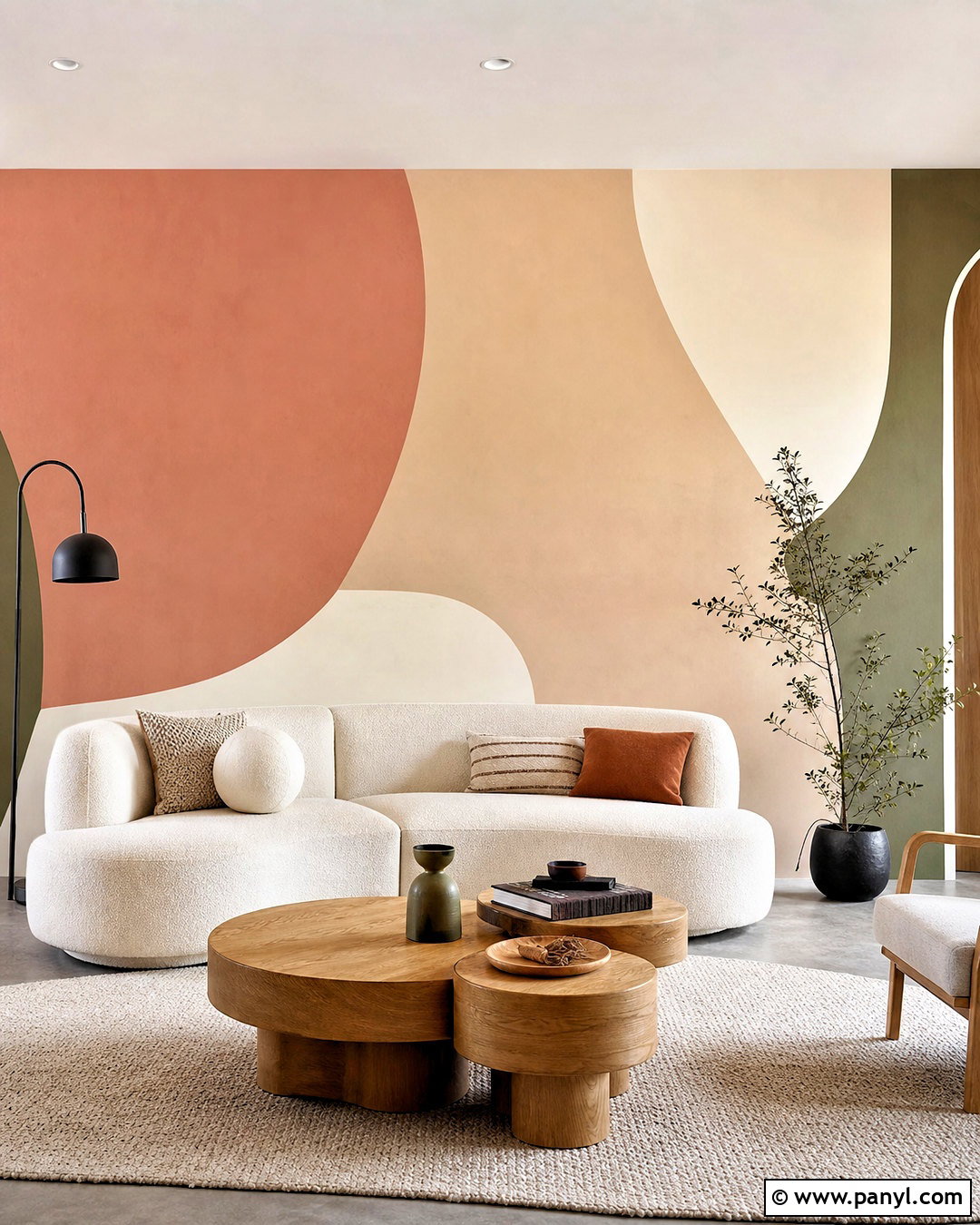
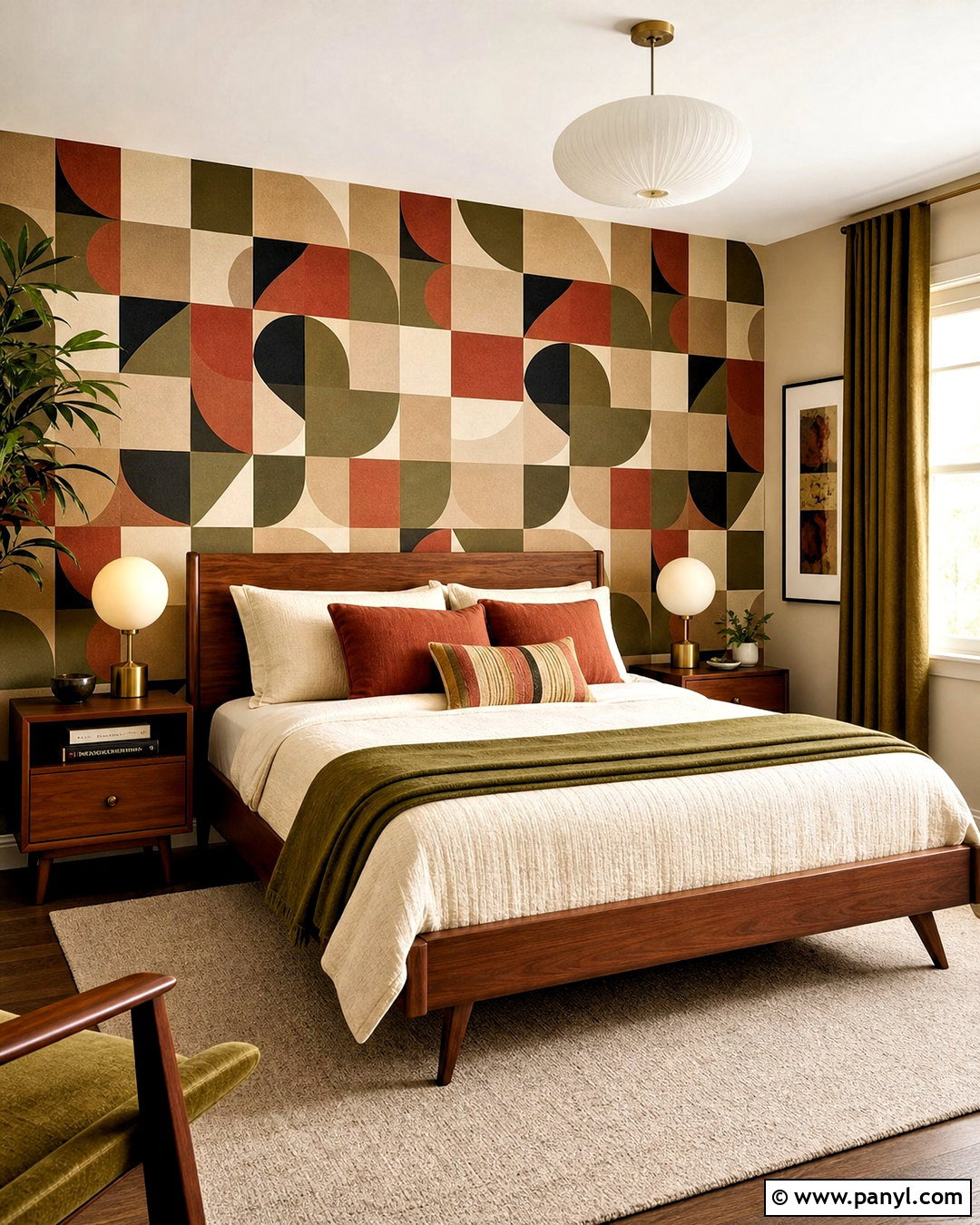
Soft, overlapping curves provide a calmer alternative to angular geometric patterns. Create an abstract living room wall with large shapes in clay pink, warm beige, and muted olive over an off-white base. Position the broadest curve behind a low cream sofa and allow the other shapes to extend toward a nearby floor lamp or side table. Add rounded oak furniture, textured neutral pillows, a light wool rug, and matte black accents. The curved forms should remain large and restrained so the room feels modern rather than overly decorative. Sketch the composition on paper before transferring it to the wall. Flexible painter’s tape works well for gentle curves, but a small artist’s brush may produce smoother results along tighter sections and overlapping edges.
9. Vertical Color Block Wall
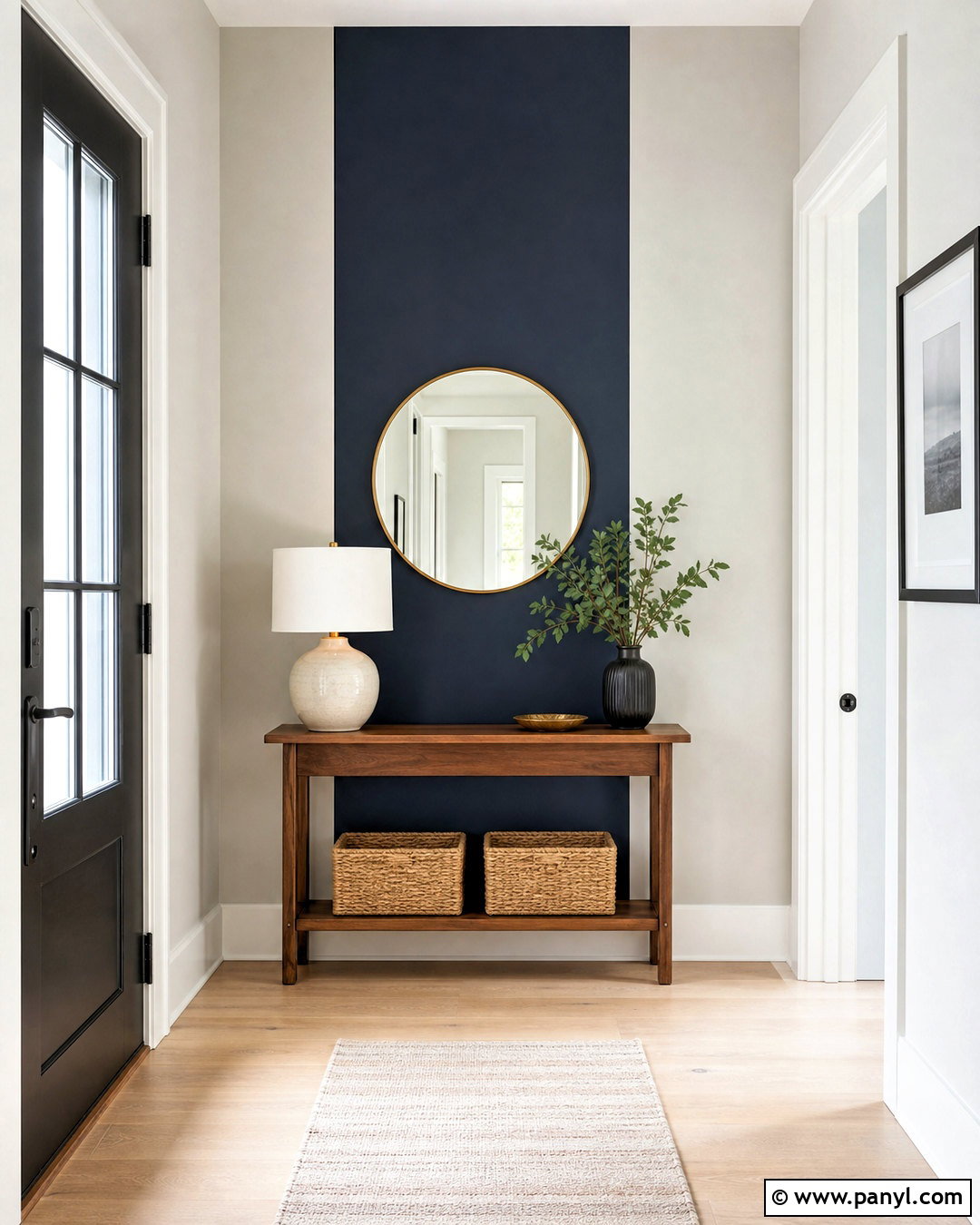
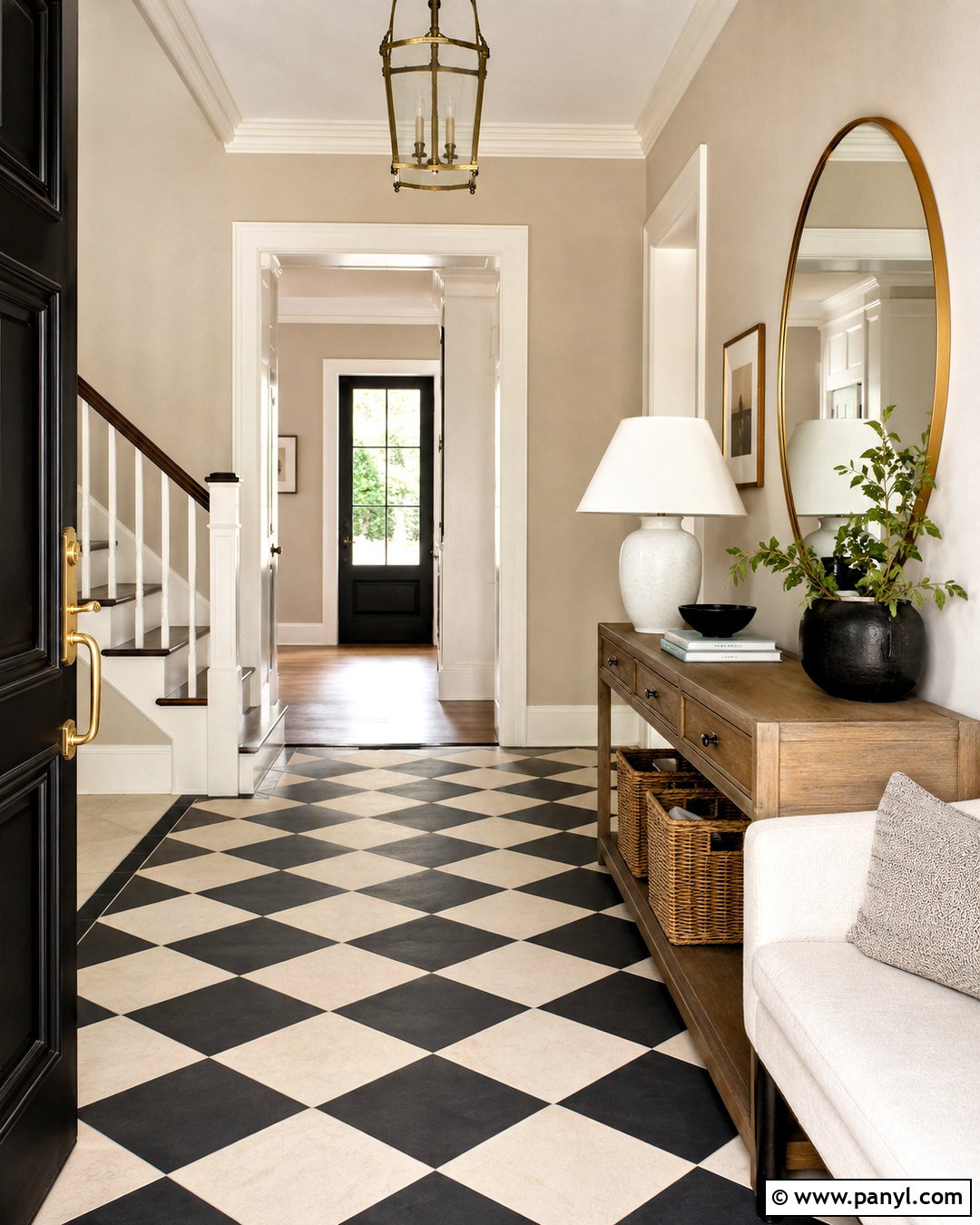
Vertical color blocking can emphasize height and create a strong background for narrow furniture. Paint a wide floor-to-ceiling stripe in deep navy blue behind an entryway console, keeping the surrounding wall soft gray-white. Choose a slim walnut console, round brass mirror, cream table lamp, and woven storage baskets to complete the arrangement. The stripe should be wider than the console but narrow enough to leave visible neutral wall on both sides. Carrying the navy down to the baseboard creates a continuous architectural effect. If the ceiling feels low, avoid adding a horizontal border at the top. Use a laser level or plumb line to keep both stripe edges perfectly straight, especially in older homes where walls and corners may not be square.
10. Horizontal Stripe Color Block Wall
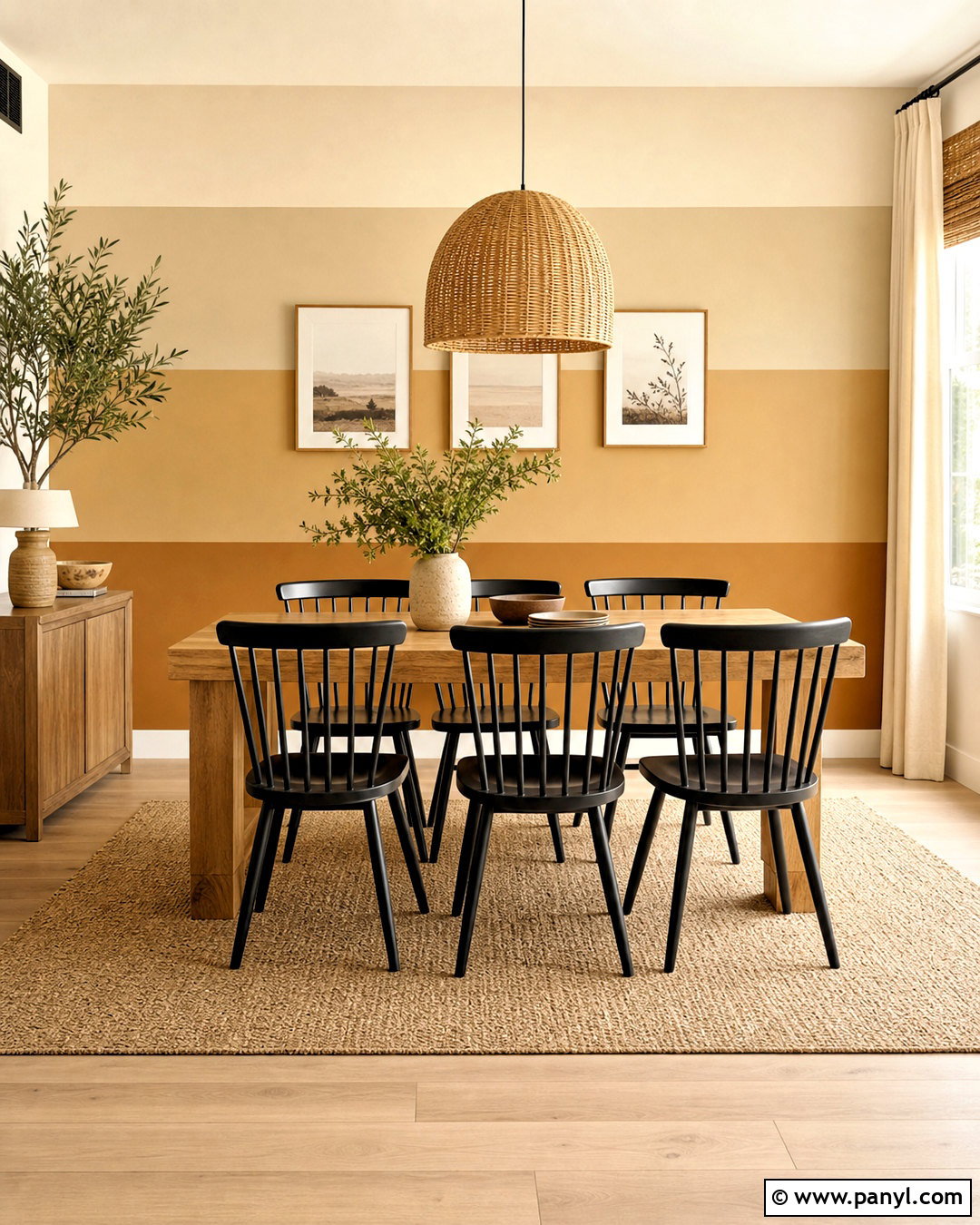
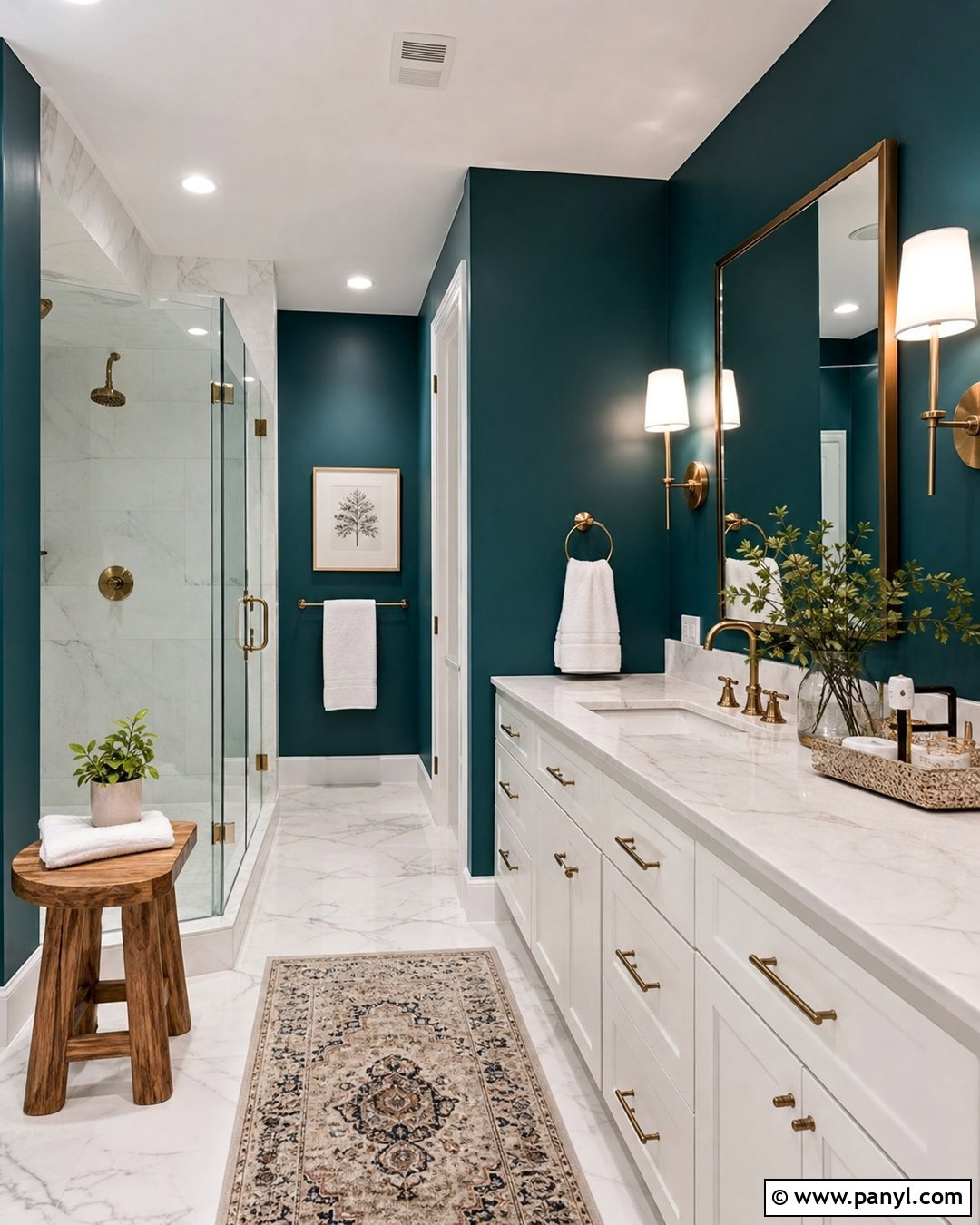
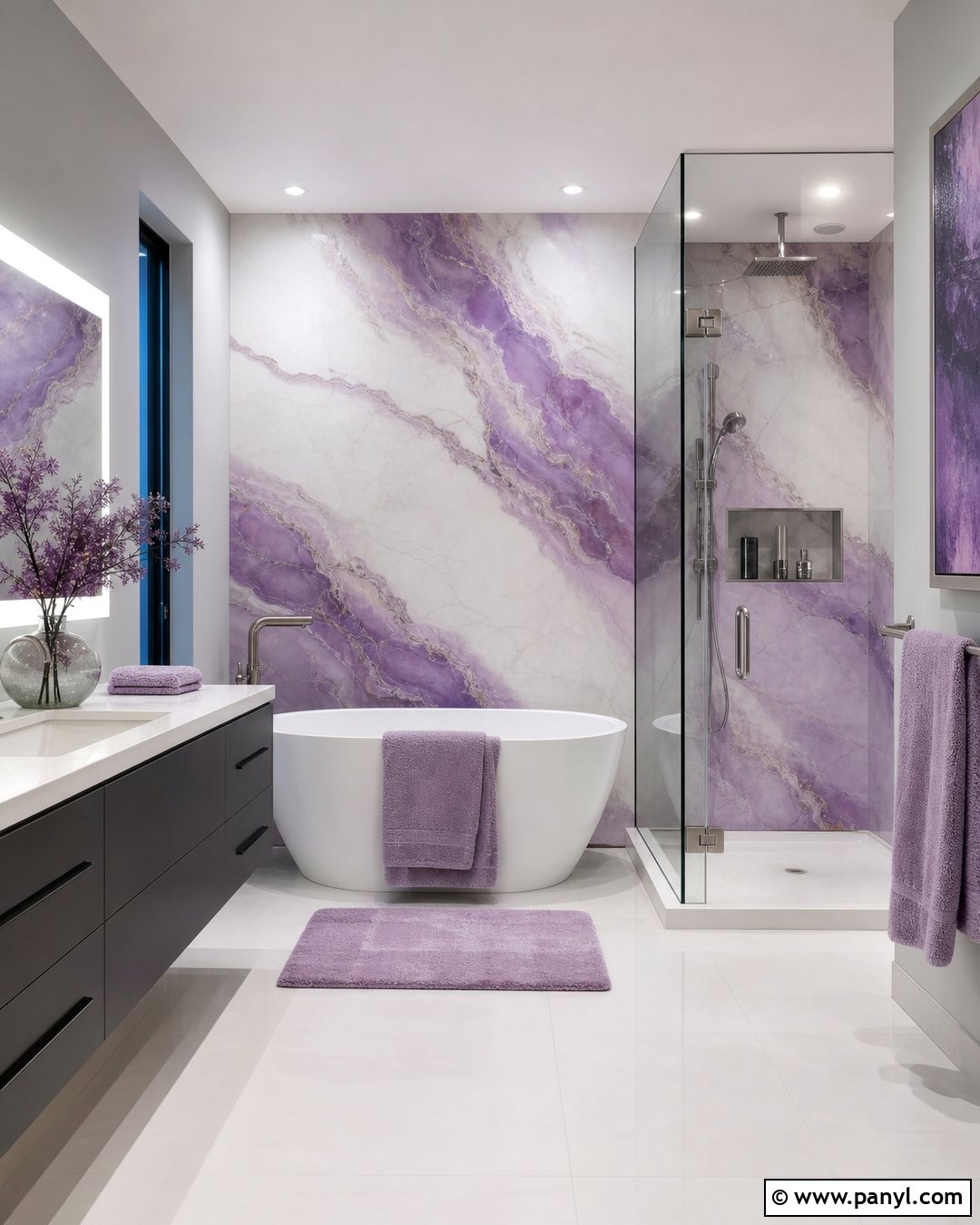
Broad horizontal stripes can bring rhythm to a long hallway or dining room. Use three related shades, such as warm ivory, sandy beige, and muted caramel, to create a layered wall that feels cohesive. Make the bottom band darkest and the upper band lightest, with the middle shade aligning near chair-rail height. In a dining room, add a rectangular oak table, black spindle chairs, a woven pendant, and simple cream curtains. Framed prints with generous white mats prevent the wall from becoming too busy. Extend the stripes across the entire room rather than stopping at random corners. Measure from the floor instead of the ceiling, and verify each guideline with a level to account for slightly uneven architectural surfaces.
11. Color Block Wall Behind TV
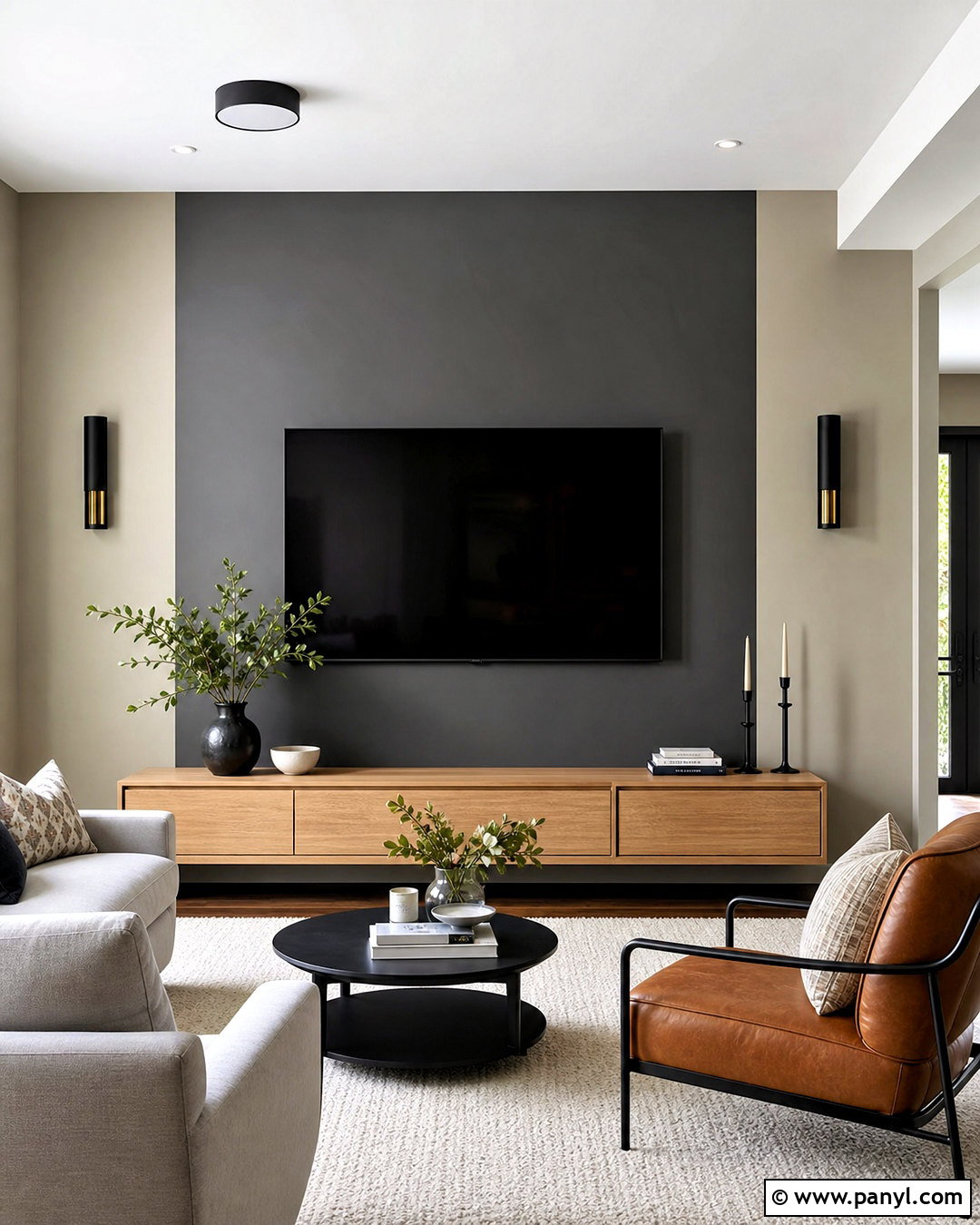
A thoughtfully painted block can help a television blend into a living room instead of floating against a blank wall. Paint a wide charcoal rectangle from the media console to several inches above and beyond the screen. Surround it with warm greige walls and position a low oak console beneath the television. Complete the room with a light gray sofa, cognac leather chair, cream rug, and restrained black lighting. The dark background reduces the contrast between the screen and wall while establishing a clear entertainment zone. Hide cords and keep decorative objects low so they do not interfere with viewing. Use the console and television as measurement guides, ensuring the painted rectangle is centered and generously proportioned around the complete arrangement.
12. Color Block Wall Behind Sofa
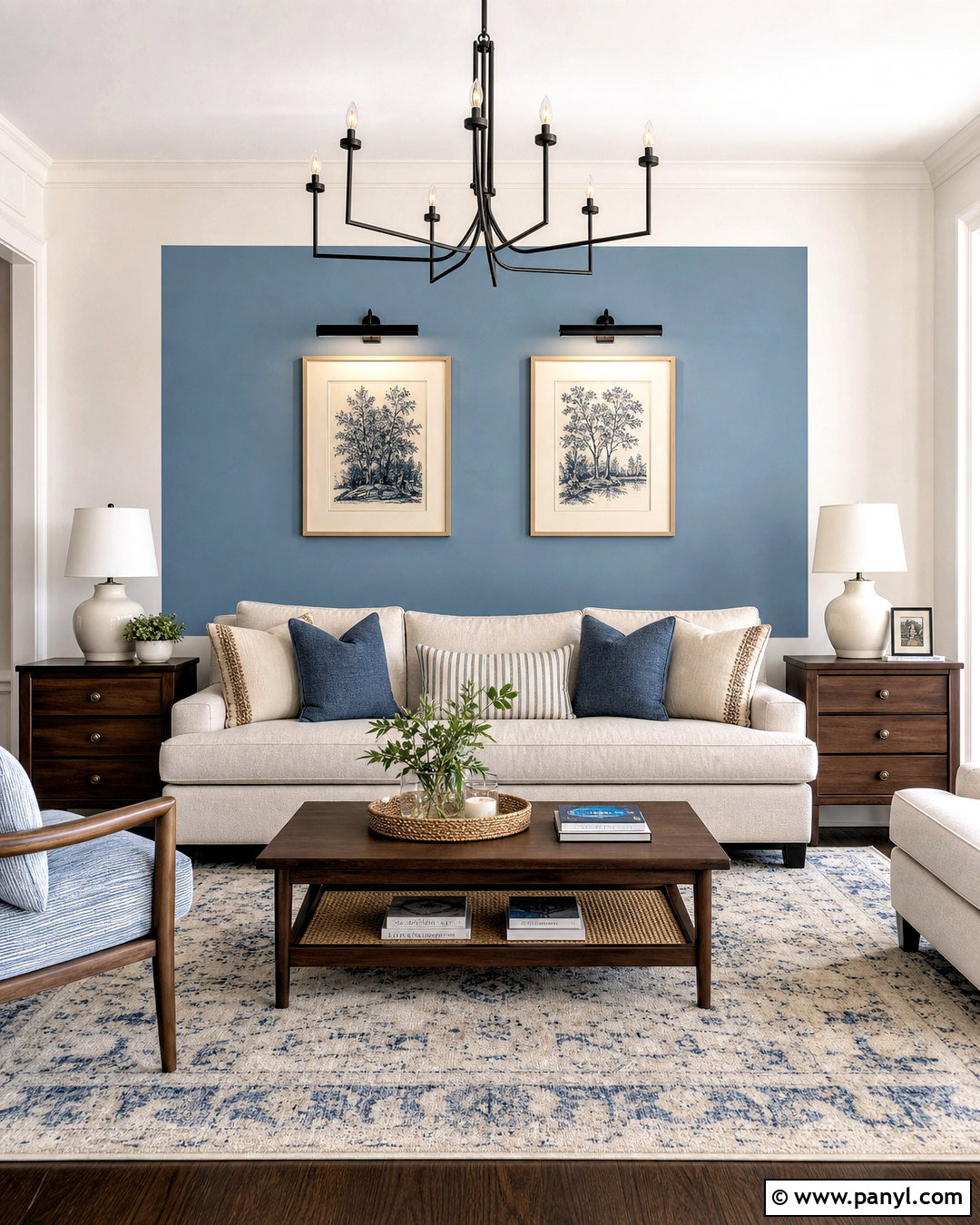
A wide painted rectangle can replace oversized artwork behind a living room sofa. Choose dusty blue for the block and warm white for the remaining wall, then center a beige linen sofa in front of the painted area. Make the block slightly narrower than the sofa so its edges remain clearly visible without dominating the wall. Layer the room with walnut side tables, a cream-and-blue rug, textured pillows, and black picture lights. Hang two small framed prints inside the block for depth, leaving generous space around them. The result should feel like a composed gallery backdrop rather than an accidental patch of color. Tape straight lines carefully, and calculate placement based on the sofa’s final location before moving furniture away for painting.
13. Color Block Wall Behind Dining Table
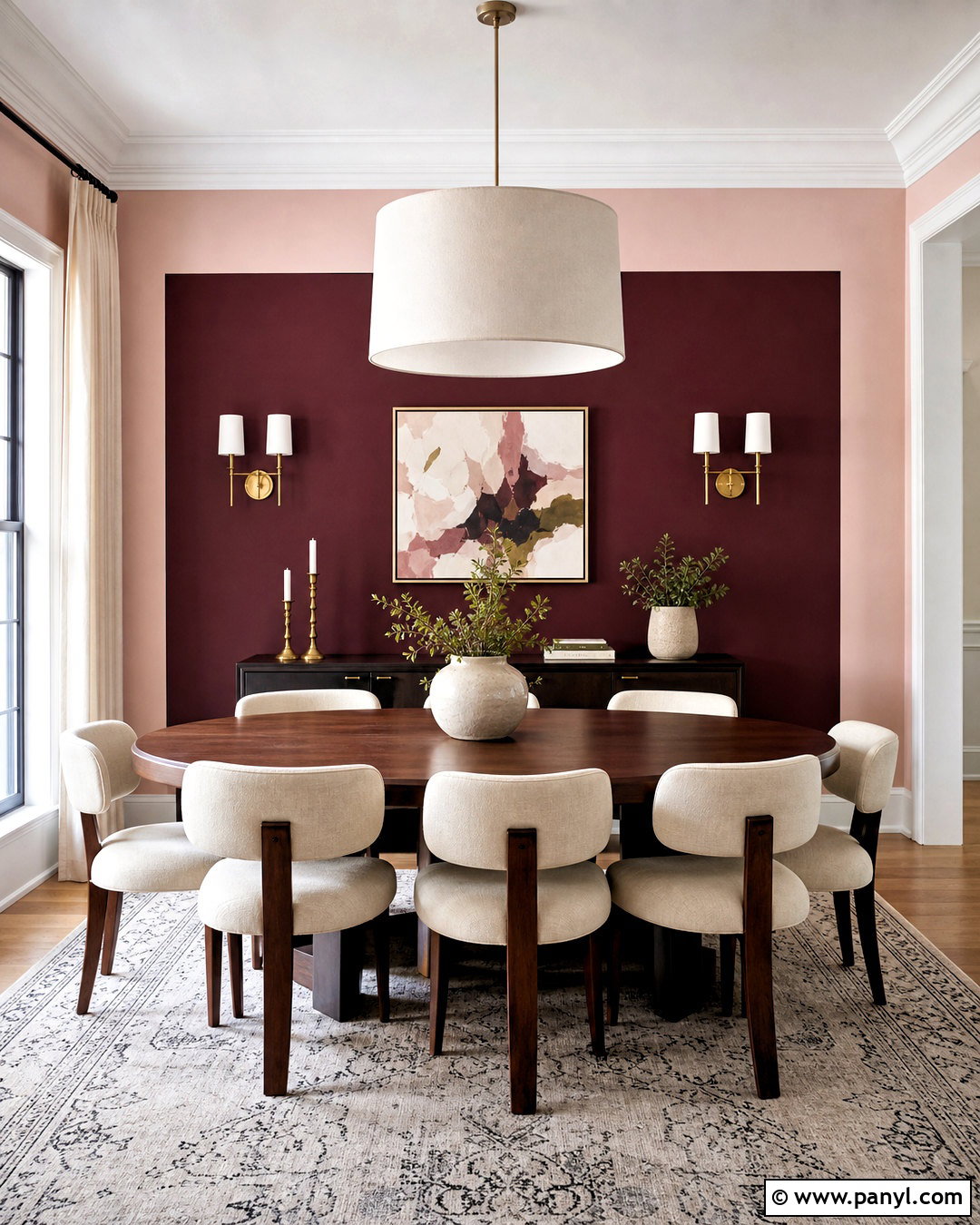
Rich color blocking can turn a basic dining area into a clearly defined gathering space. Paint a burgundy rectangle behind the table, starting at the baseboard and ending just below the ceiling. Leave a border of pale blush or warm white around the block to produce a framed effect. Add an oval walnut table, upholstered cream chairs, a large linen pendant, and a patterned rug containing muted red accents. A pair of brass sconces mounted within the painted section adds symmetry and practical lighting. Keep the tabletop styling simple with a low ceramic bowl and greenery. Center the block on the table rather than the wall if the furniture placement is intentionally offset, since the painted shape should support the dining arrangement.
14. Color Block Wall With Shelves
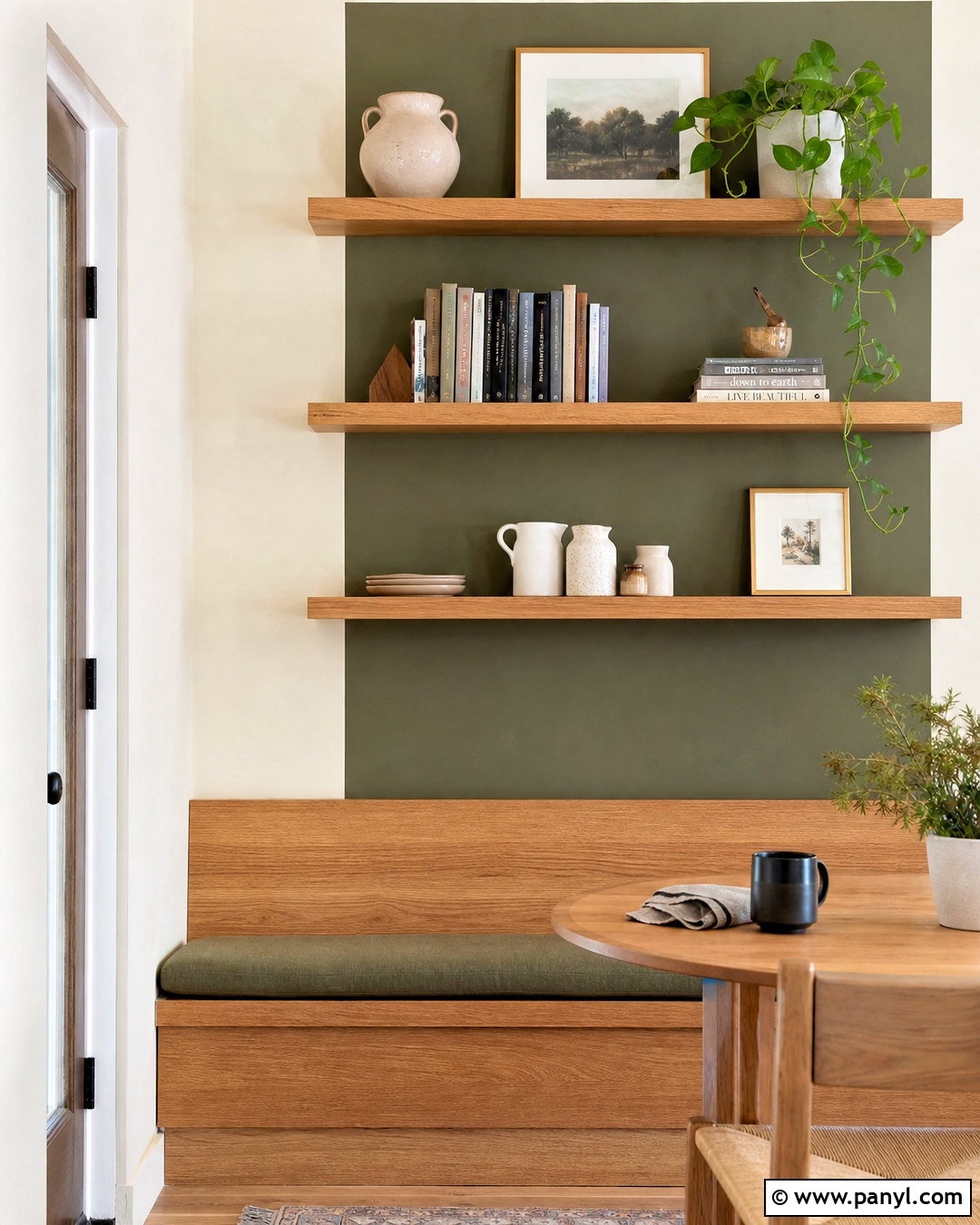
Paint can make basic floating shelves appear more substantial and integrated. Create a tall olive-green rectangle behind three natural oak shelves in a living room or kitchen breakfast nook. Keep the surrounding wall warm cream and align the block’s edges several inches beyond the shelving. Display white pottery, cookbooks, small framed art, and a trailing plant with plenty of open space between objects. Place a compact bench or cabinet below the shelves to complete the vertical composition. Repeating olive green in a seat cushion or nearby artwork helps the area connect with the rest of the room. Install shelves after painting whenever possible. This avoids difficult cutting around brackets and produces cleaner edges behind the complete display.
15. Color Block Wall Around A Door
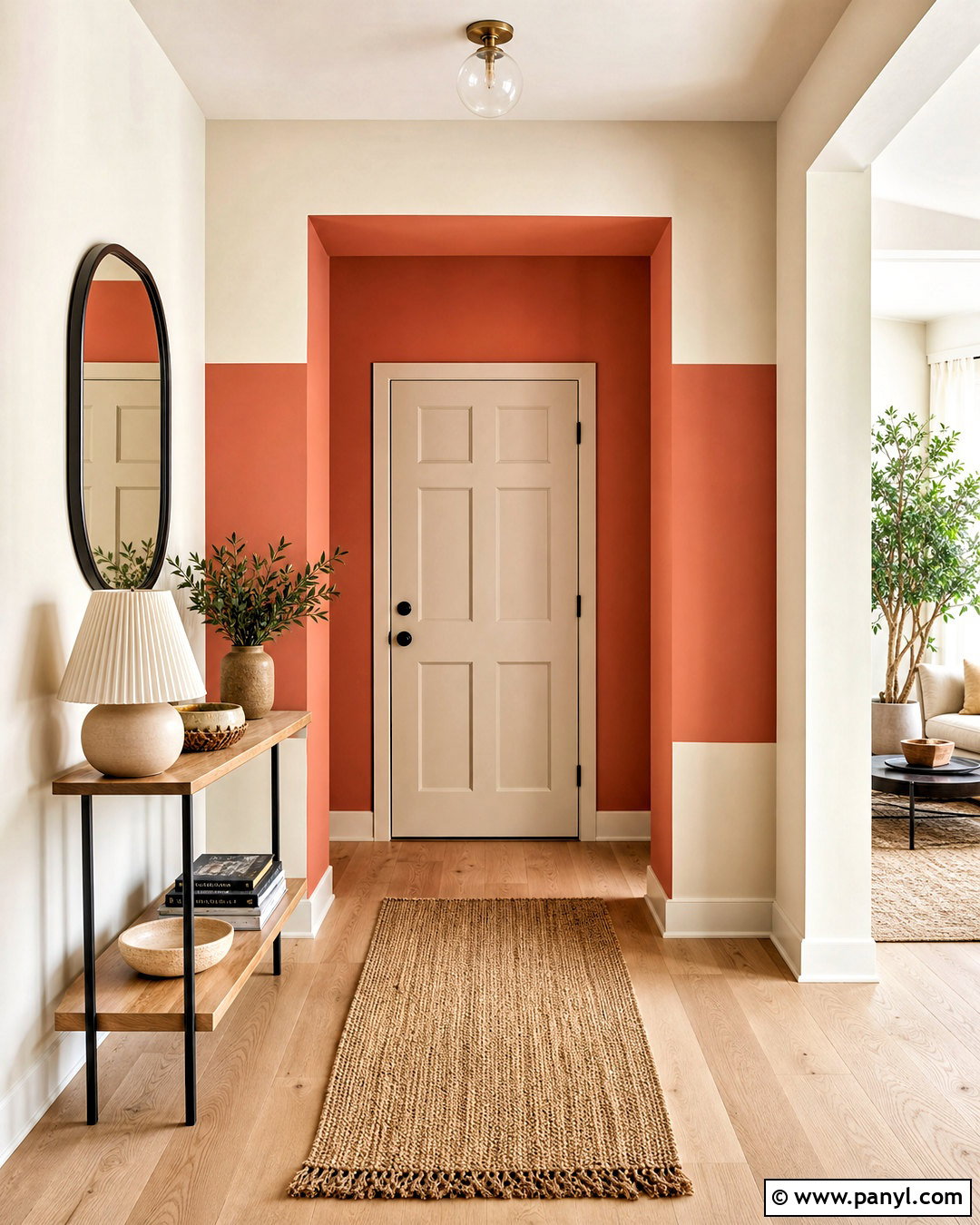
Color blocking around a doorway can transform a plain passage into a deliberate architectural feature. Paint a wide band of muted coral around the frame and continue the same shade through the interior edge of the opening. Use creamy white walls, light oak flooring, and a door painted soft beige for a balanced transition. In the adjacent entry, add a narrow console, rounded mirror, woven runner, and ceramic lamp. Keep the coral band equal in width on both sides and across the top. This approach works especially well for open doorways without elaborate trim. Carefully tape the wall, frame, and adjoining surfaces. A clean, symmetrical outline makes the doorway look larger and more intentional while leading the eye naturally into the next room.
16. Color Block Wall With Ceiling
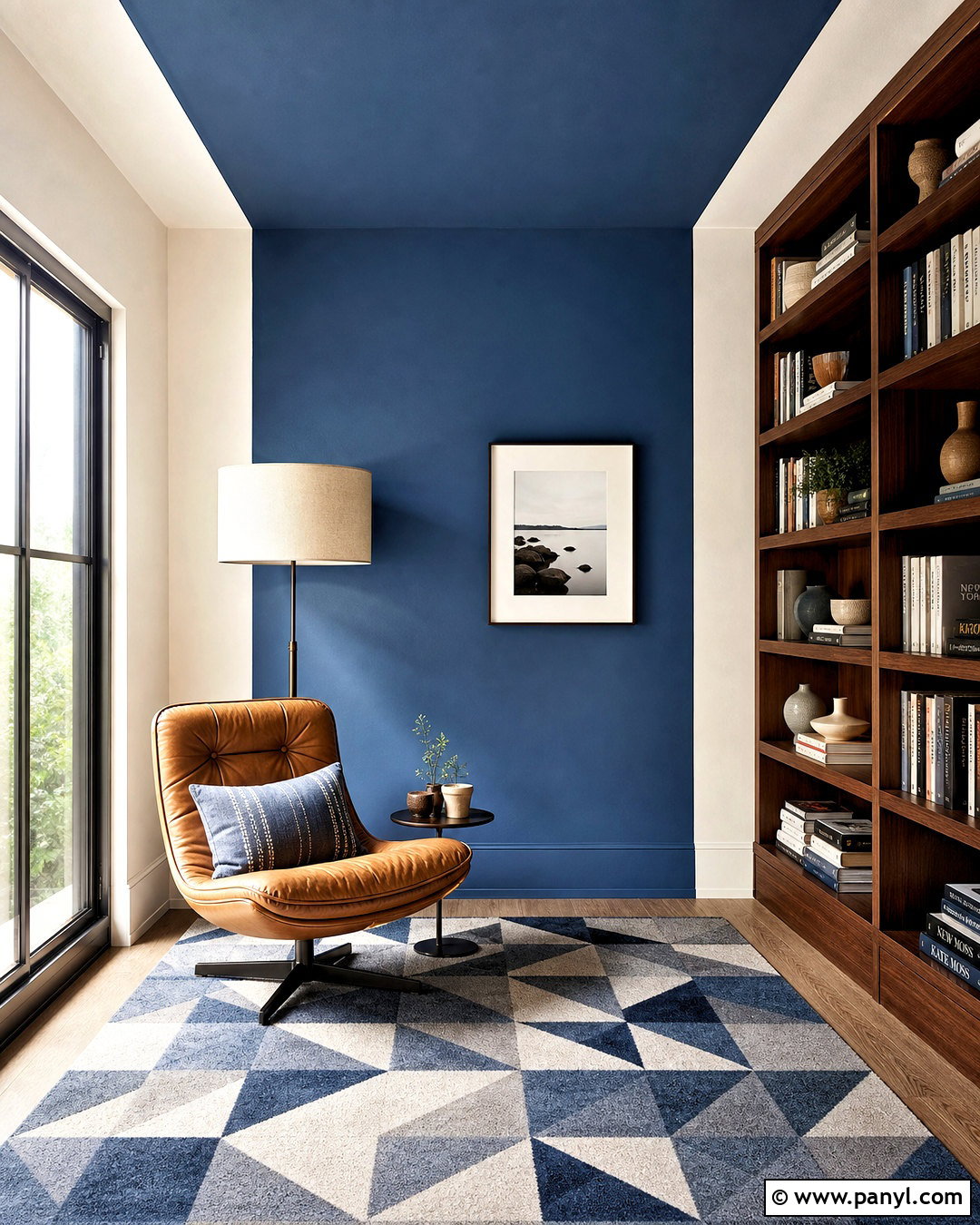
Extending a color block from the wall onto the ceiling can define a reading nook or compact workspace in an open room. Paint a deep denim blue rectangle behind a bookcase and carry it across the ceiling above a lounge chair. Use warm white on the surrounding walls and ceiling to make the painted zone easy to recognize. Add a camel leather chair, walnut shelves, cream floor lamp, and small geometric rug. The ceiling block should match the width of the wall section so the shape reads like a three-dimensional canopy. Check for light fixtures, vents, and awkward ceiling changes before finalizing its position. Keep the furnishings contained within the painted boundary to strengthen the sense of a separate, purposeful destination.
17. Tone On Tone Color Block Wall
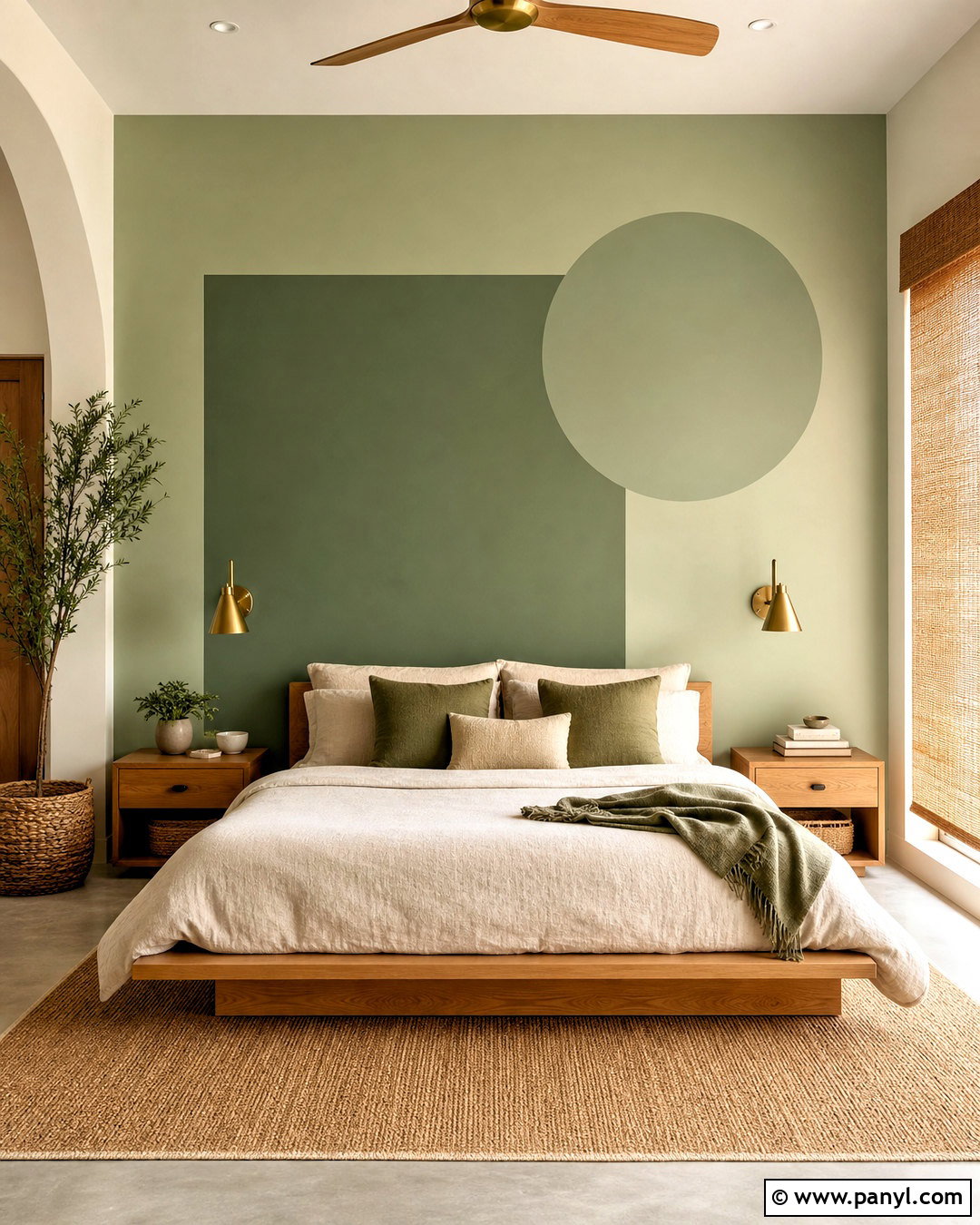
Color blocking does not need strong contrast to feel distinctive. Layer several shades from one color family for a sophisticated bedroom wall. Begin with a pale sage background, add a medium green rectangle behind the headboard, and overlap it with a smaller muted eucalyptus circle. Pair the wall with a low oak bed, ivory linen bedding, moss-colored pillows, and natural woven shades. Brushed brass sconces introduce warmth without breaking the calm palette. Vary the paint values enough for each shape to remain visible in daylight and evening lighting. A matte finish keeps the blocks soft and unified. Limit other patterns in the room, using texture through linen, wool, cane, and wood to make the restrained color scheme feel layered.
18. Bold Primary Color Block Wall
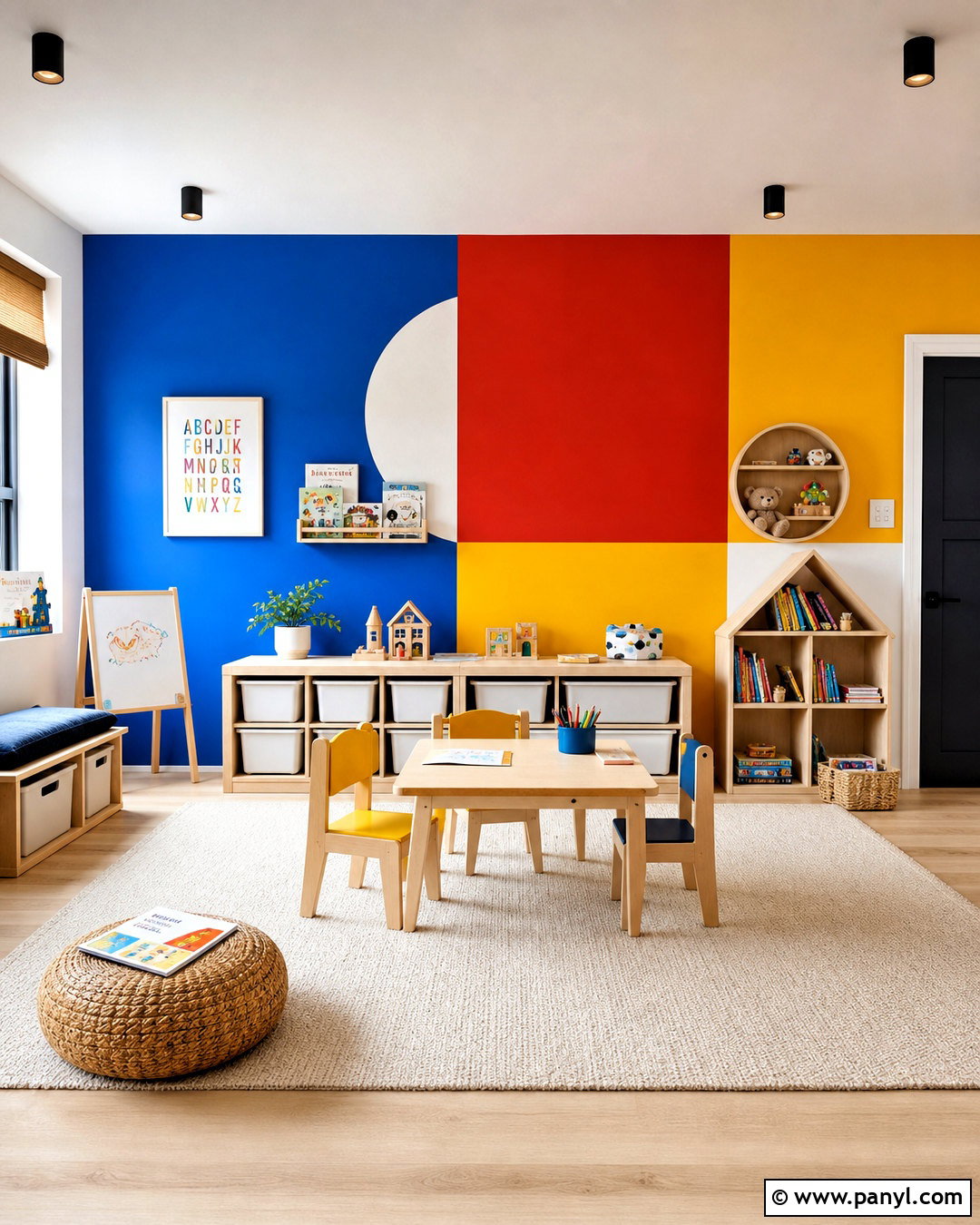
A playroom can support stronger colors when the entire space is planned carefully. Paint large, clean blocks of cobalt blue, tomato red, and golden yellow over a bright white wall. Use one broad blue rectangle behind a low storage cabinet, a red semicircle near the reading area, and a yellow stripe beside the craft table. Choose pale wood furniture, white bins, a washable neutral rug, and simple black lighting to balance the saturated palette. Keep toys organized inside labeled-looking but text-free color-coded containers so the room remains visually manageable. Avoid filling every section of the wall. White space allows each bold shape to stand out. Repeat consistent line widths and align major edges with furniture for an organized composition.
19. Neutral Color Block Wall
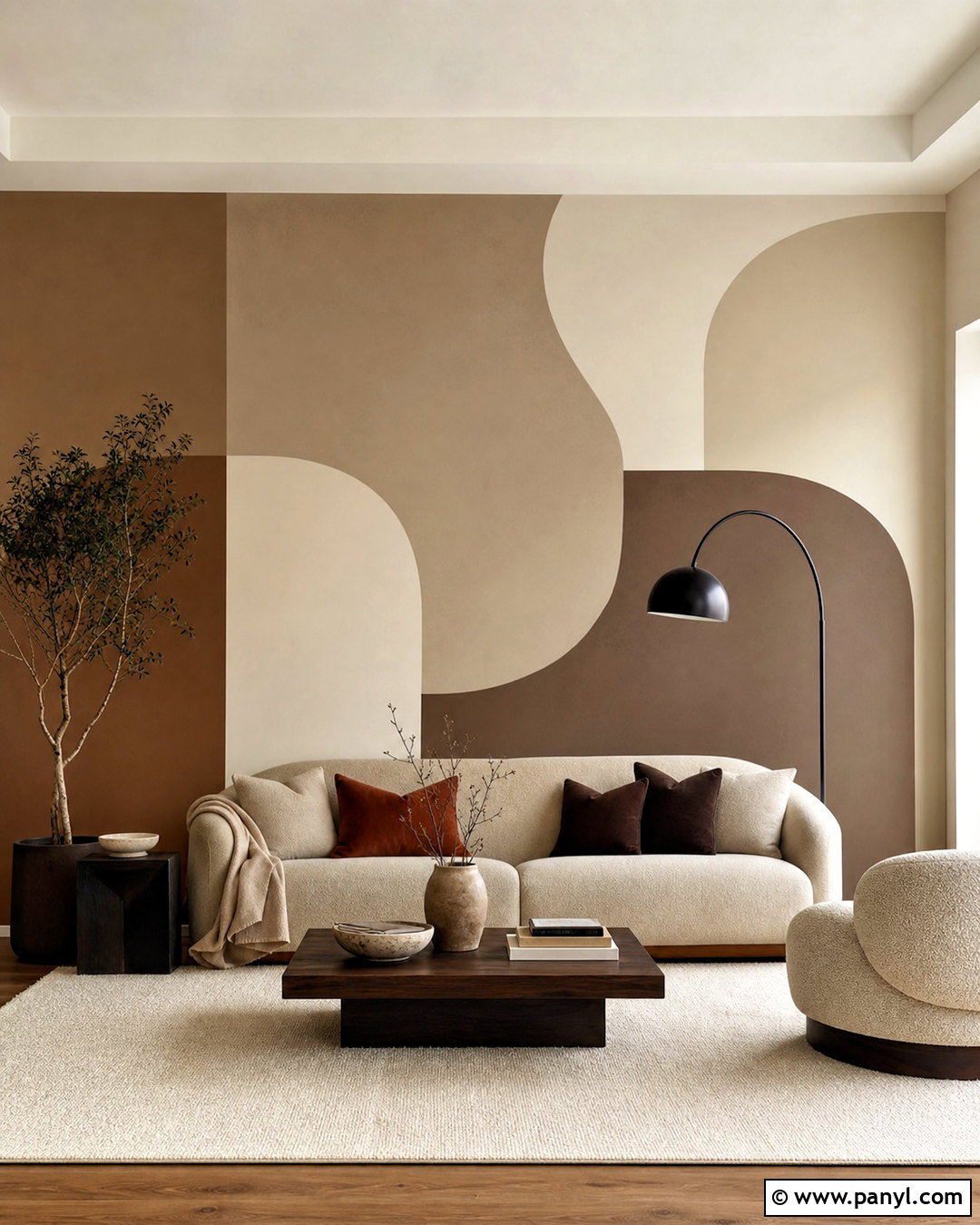
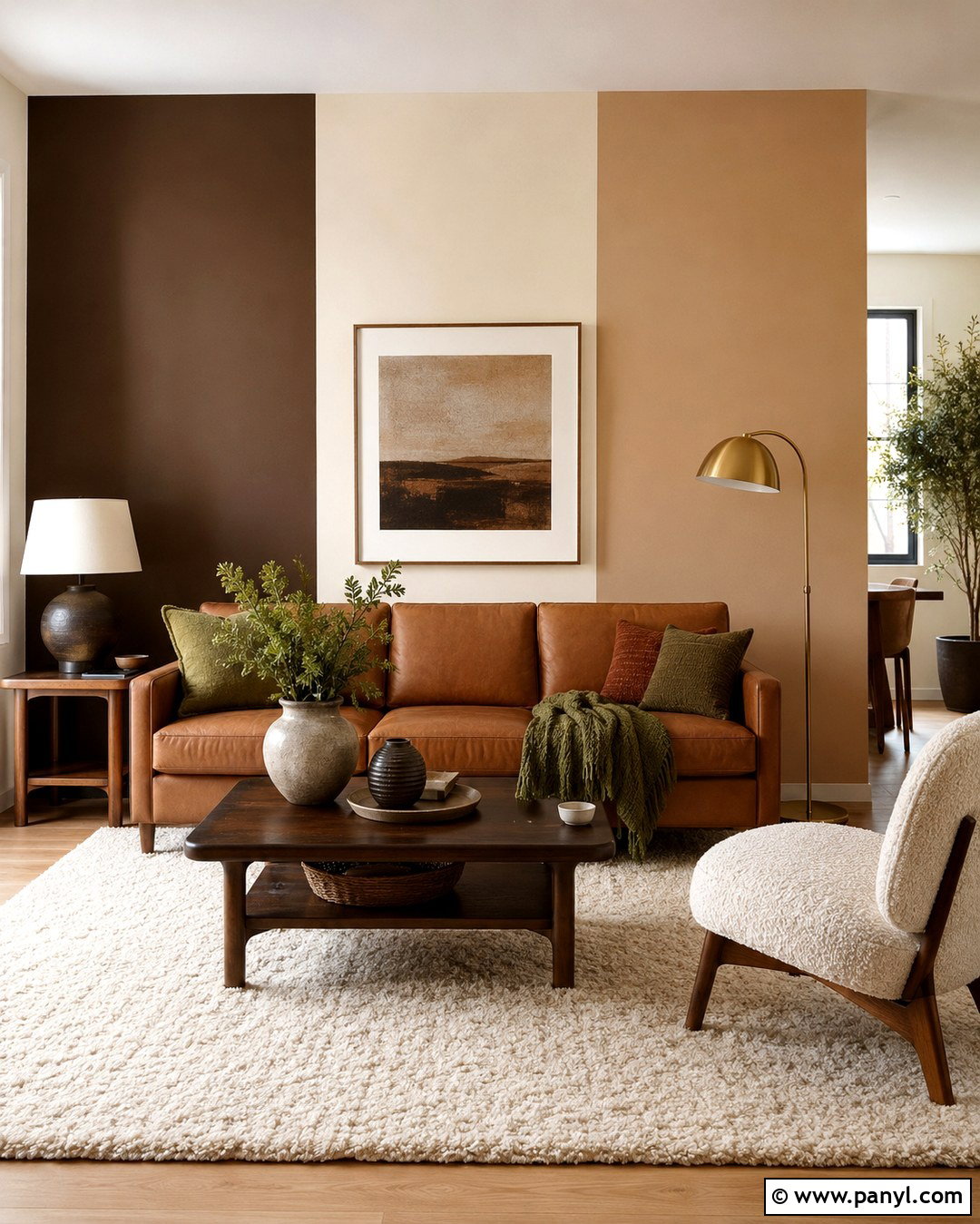
For a subtle feature wall, combine warm neutrals with clear geometric placement. Paint overlapping blocks in soft greige, mushroom brown, and creamy beige behind a light oatmeal sofa. Furnish the living room with a dark walnut coffee table, boucle accent chair, black floor lamp, and textured ivory rug. Add rust and chocolate pillows to introduce depth while staying within the earthy palette. Use one large rectangle as the foundation and overlap it with a narrow vertical block and a curved section. Although the colors are quiet, the shapes should have enough tonal contrast to remain visible. Sample them directly beside one another before painting. Different undertones can appear disconnected, so choose shades that share a similar warm or balanced base.
20. Staircase Color Block Wall
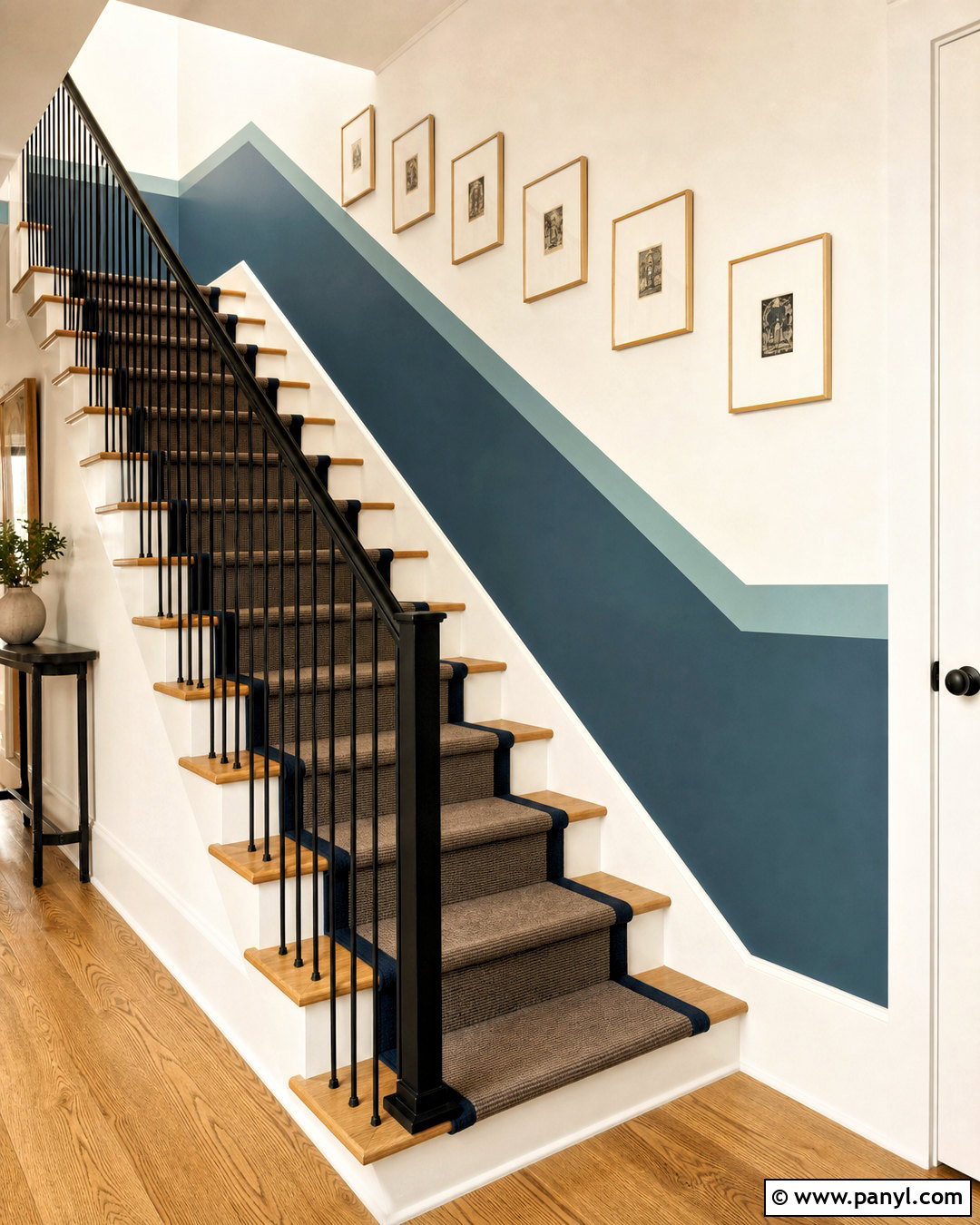
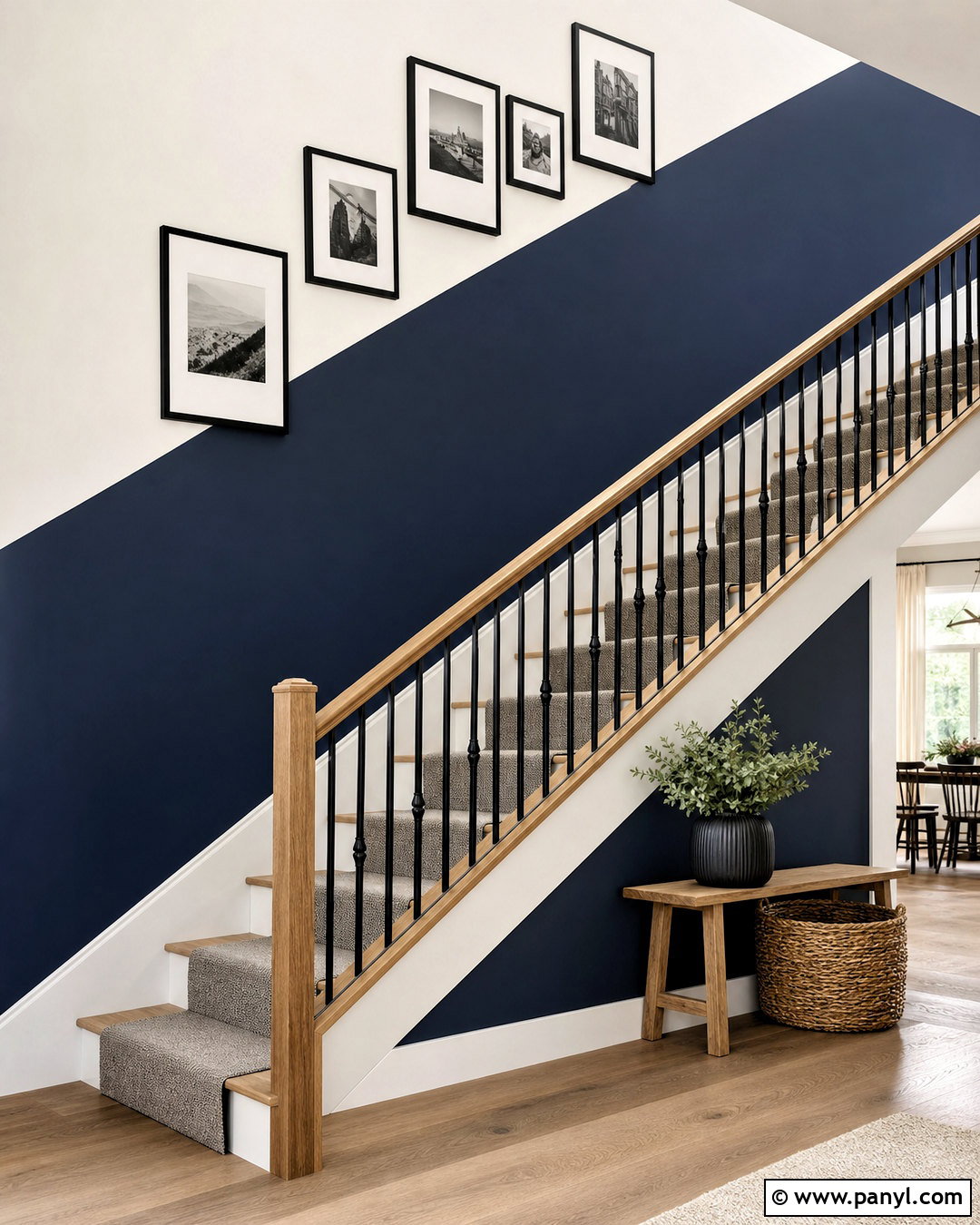
A staircase wall offers enough length for a color block design with movement. Paint a broad muted teal band that follows the angle of the stairs, leaving the upper wall warm white and the lower section a slightly deeper blue-green. Add natural oak stair treads, a simple black railing, and a gallery of small cream-matted artwork aligned with the slope. A woven runner in beige and charcoal provides softness without competing with the wall. Continue the painted band through the landing so the design does not stop abruptly. Mark the upper and lower lines using the stair angle as a guide, but confirm the spacing at several points. Consistent proportions create a purposeful design that connects both levels of the home.
Conclusion:
The best color blocking feels connected to the room instead of appearing like a random painted shape. Use furniture dimensions, doorways, shelving, ceiling lines, and architectural details to determine where each block begins and ends. Limit the palette when the geometry is complex, or use stronger contrast when the shapes are simple. Most importantly, test the design with removable tape or paper templates before committing to paint. This makes it easier to adjust the scale and placement from across the room. Whether you prefer calm tonal sections or energetic geometric patterns, these 20 color block wall ideas offer practical ways to personalize a space while keeping the complete design balanced, functional, and achievable.

Related Ideas and Inspiration:
Leave a Reply