
Painted stripes can transform a plain room with little more than color, measuring tools, and painter’s tape. These DIY striped wall ideas cover complete looks for bedrooms, living rooms, nurseries, offices, hallways, and dining spaces. You will find crisp vertical lines, relaxed hand-painted bands, bold color combinations, and subtle tonal patterns. Before painting, plan the stripe width, prepare the surface, apply a solid base coat, and mark the pattern carefully for cleaner results. () Each design below also includes coordinating furniture, flooring, textiles, and decor, making it easier to picture the finished room rather than one isolated feature. Explore these approachable DIY striped wall ideas to find a look that suits your space, skill level, and decorating style.

1. Vertical Two-Tone Striped Wall
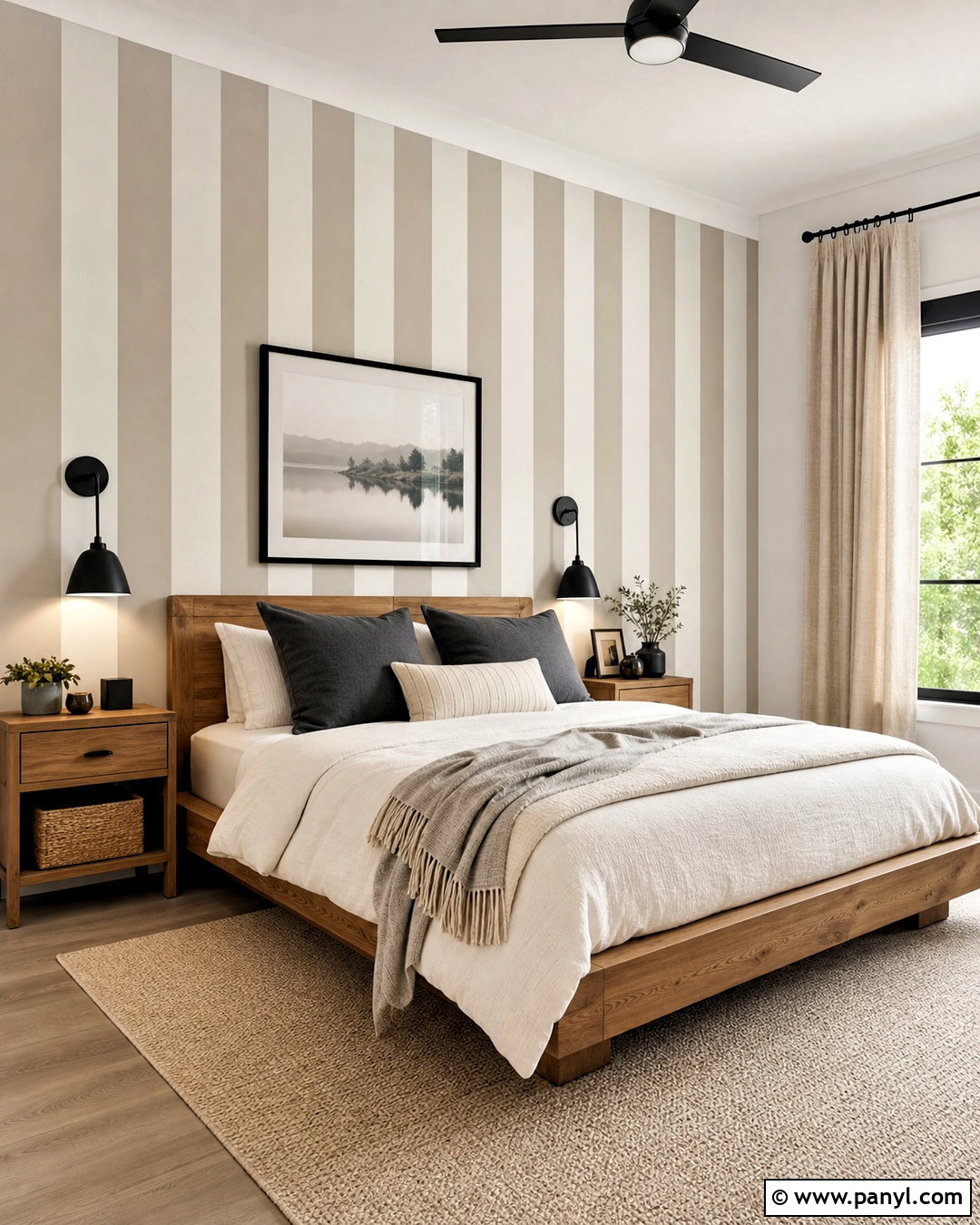
Vertical stripes create a clean, structured backdrop that works especially well in a bedroom with a low or standard-height ceiling. Start with warm white as the base, then add evenly spaced soft greige stripes behind the bed. Measure the entire wall and adjust the stripe width so partial sections do not appear at the corners. Pair the wall with a medium oak platform bed, ivory bedding, and charcoal accent pillows. Simple black sconces reinforce the strong vertical lines without making the room feel busy. Use a light beige rug and linen curtains to soften the geometry. For crisp edges, seal the painter’s tape with a thin coat of the base color before applying the greige paint.
2. Wide Horizontal Striped Wall
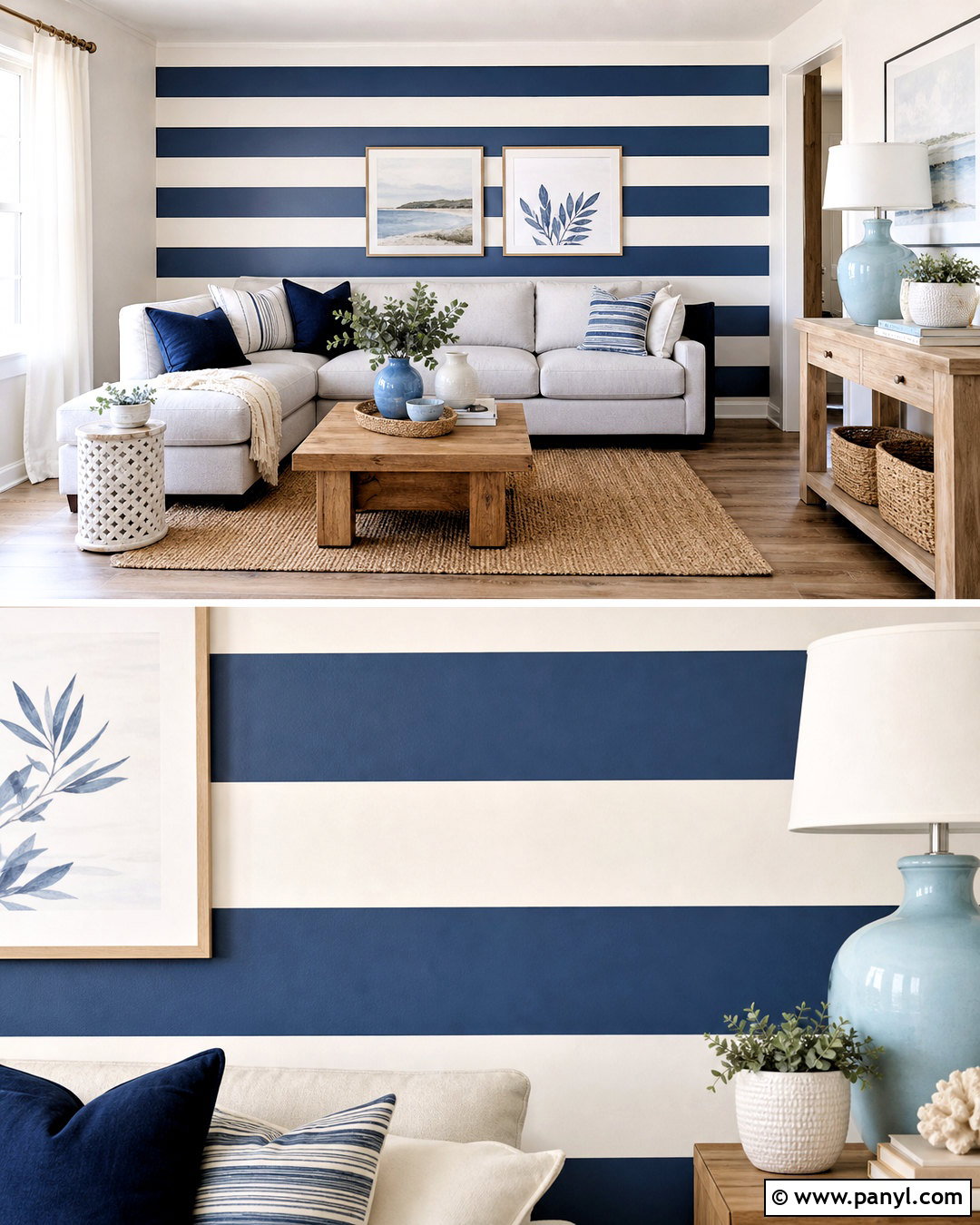
Broad horizontal stripes can give a compact living room a calmer, more expansive appearance. Create alternating bands of muted blue and creamy white across the main sofa wall. Stripes between 12 and 18 inches wide feel more relaxed than narrow lines and require less taping. Continue the pattern behind low furniture so the wall remains visually connected. Complete the room with a light gray sofa, natural wood coffee table, woven rug, and white linen curtains. Add navy pillows and pale blue ceramics to repeat the wall colors in smaller amounts. Keep adjacent walls creamy white and choose simple artwork with generous blank space. This prevents the bold horizontal pattern from competing with too many decorative elements.
3. Thin Pinstripe Accent Wall
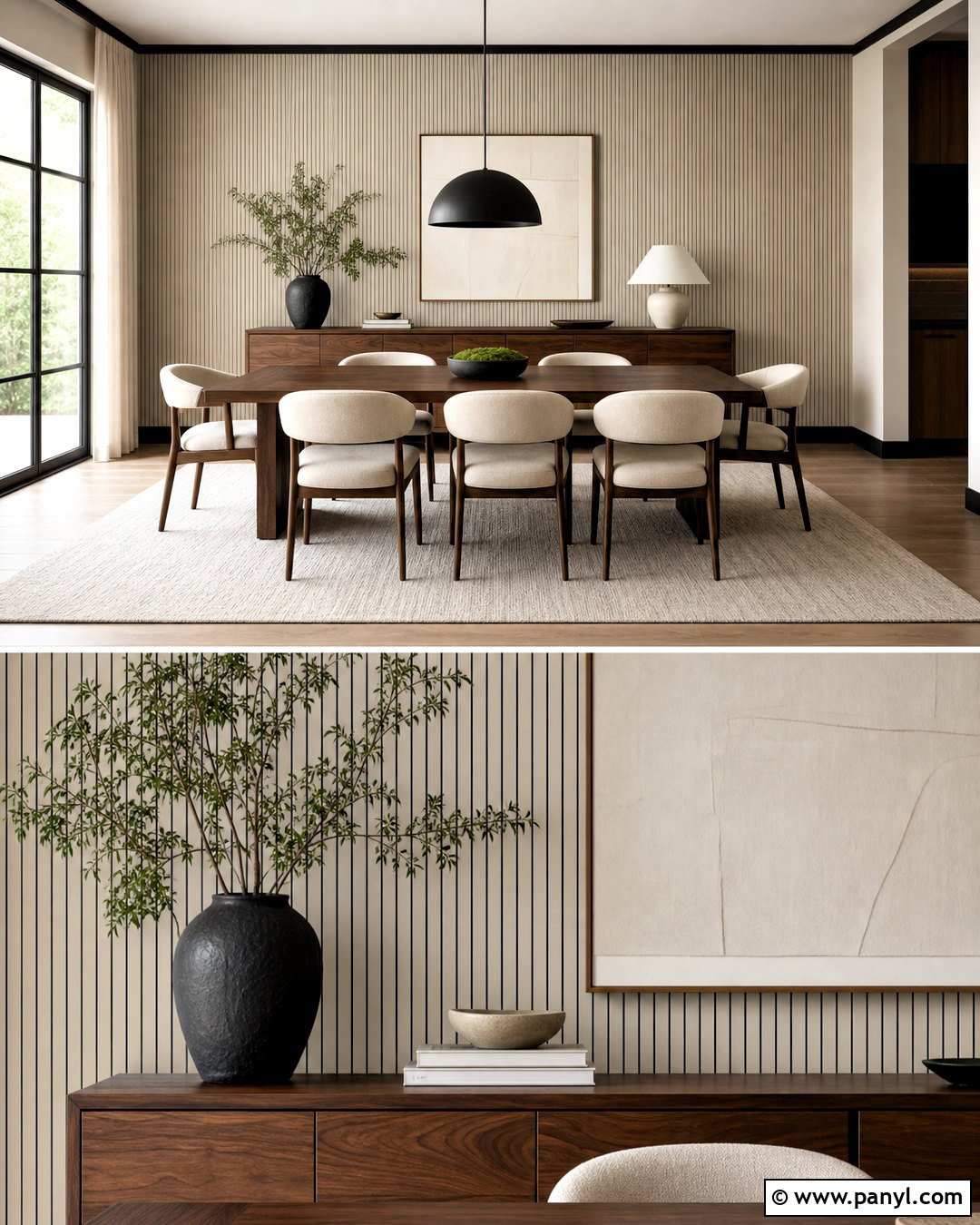
A thin pinstripe pattern delivers detail without covering the room in heavy color. Paint the dining room wall a soft mushroom beige, then add narrow charcoal lines every eight to ten inches. A laser level makes marking faster, but a traditional level and pencil also work. Use narrow painter’s tape and apply paint with a small foam roller to control drips. Complete the sophisticated look with a rectangular walnut table, oatmeal upholstered chairs, and a matte black pendant light. Hang one large cream-colored canvas rather than several small pictures. A low sideboard in warm wood provides storage without hiding the pattern. Finish with simple ceramic bowls, linen napkins, and a flat-woven neutral rug for an approachable modern dining room.
4. Hand-Painted Wavy Striped Wall
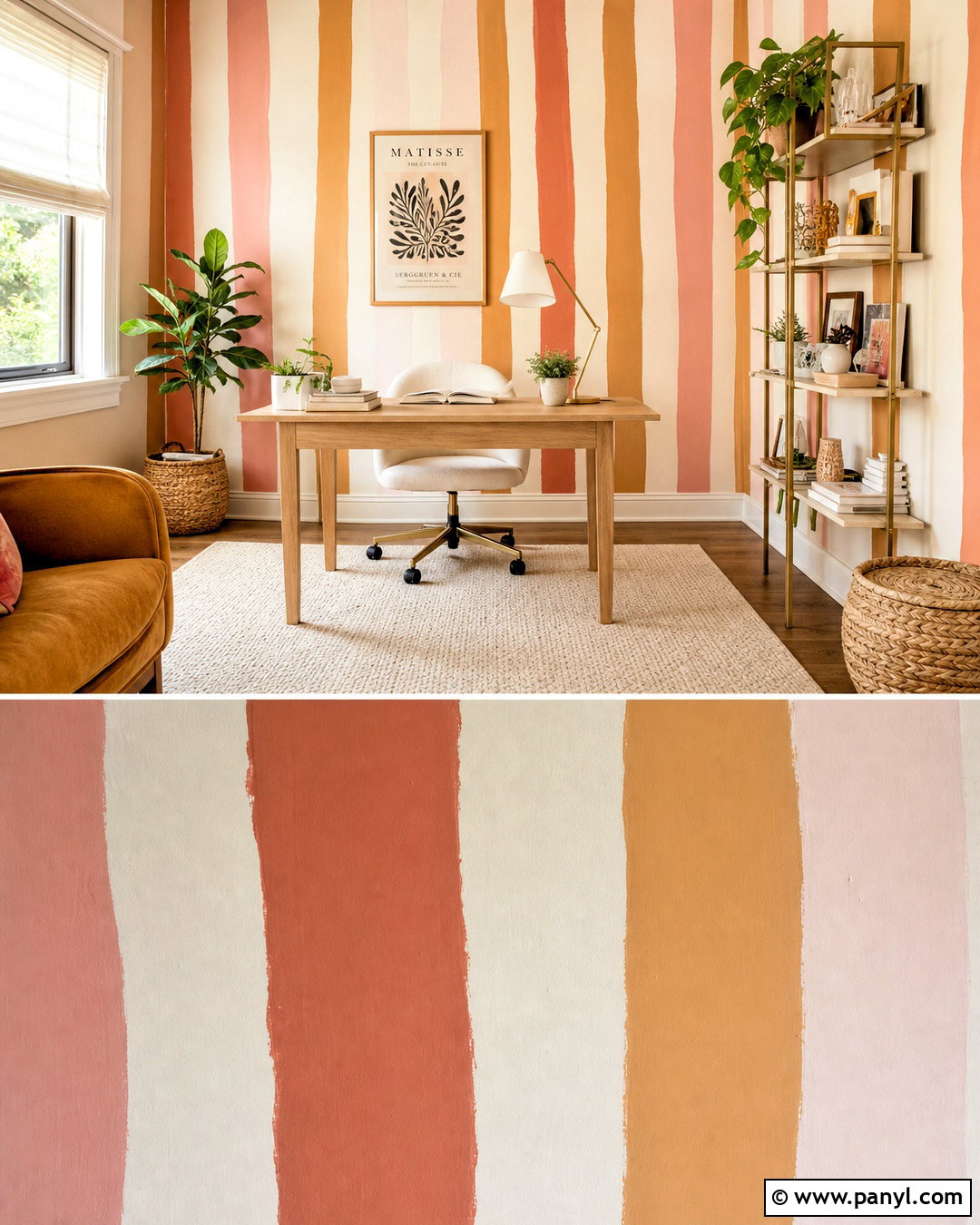
Perfectly straight lines are not required for an attractive striped wall. A hand-painted pattern brings warmth and personality to a casual reading room or creative home office. Begin with a pale peach background, then sketch loose vertical stripes using chalk. Paint the lines in muted coral, dusty rose, and warm ocher, allowing gentle variations in width. Keep the pattern intentional by repeating the colors in a consistent order. Add a cream boucle chair, small oak desk, woven floor basket, and an off-white rug. A few framed prints with simple shapes can complement the playful wall without copying it. This complete look feels artistic rather than unfinished, especially when the remaining walls and larger furnishings stay quiet and neutral.
5. Rainbow Striped Wall
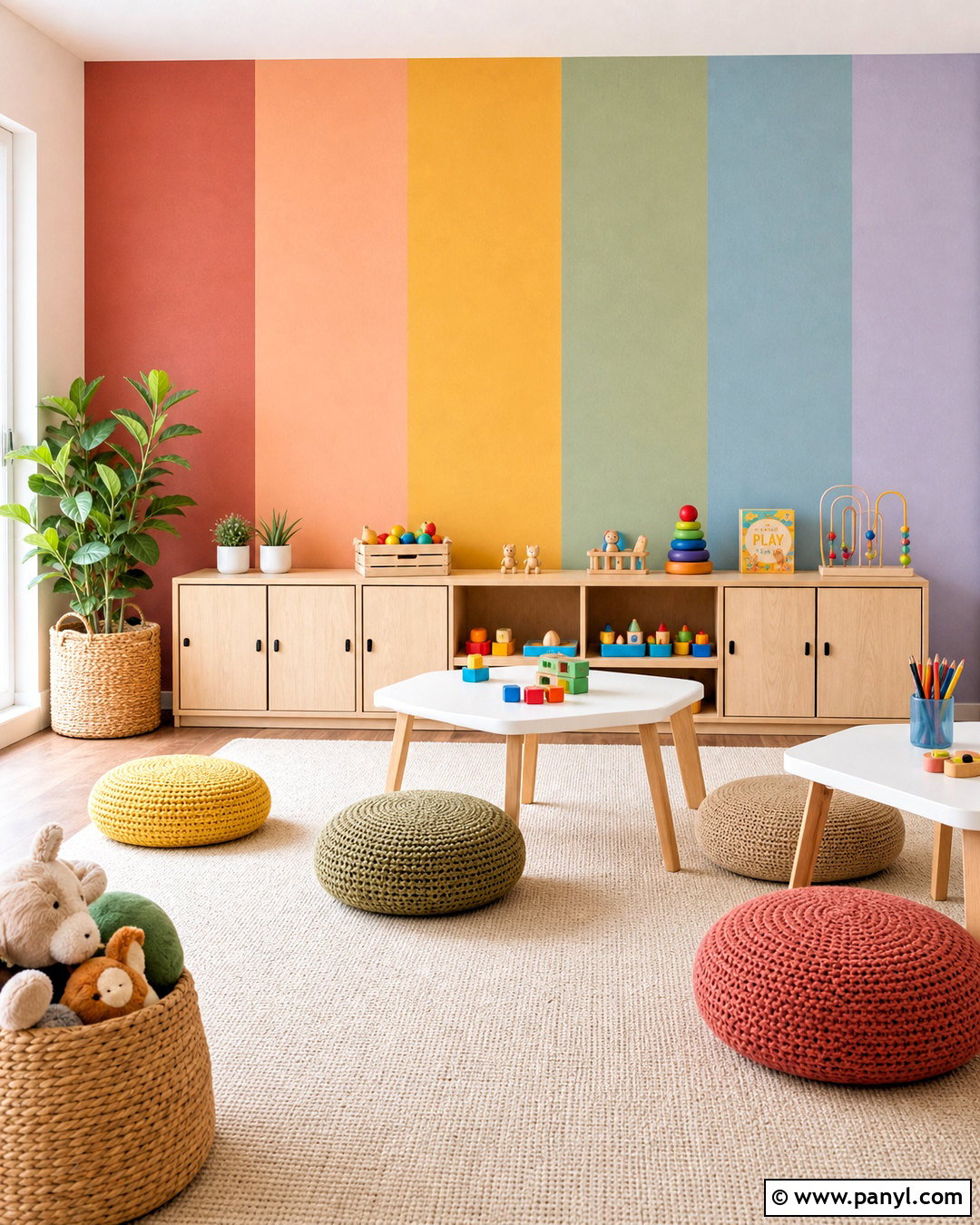
A rainbow wall can feel polished when the colors are muted and carefully arranged. Use a warm white base in a playroom, then paint wide vertical stripes in dusty red, peach, mustard yellow, sage green, powder blue, and soft lavender. Limit the pattern to one wall and repeat each color only once for a cleaner result. Balance the lively backdrop with pale wood storage cabinets, a cream washable rug, and simple white tables. Baskets keep toys organized while preventing the room from appearing cluttered. Add floor cushions in two wall colors rather than matching every stripe. Rounded furniture and soft textiles make the graphic lines feel friendly. Carefully labeled tape sections will help prevent mistakes while switching between several paint colors.
6. Neutral Tonal Striped Wall
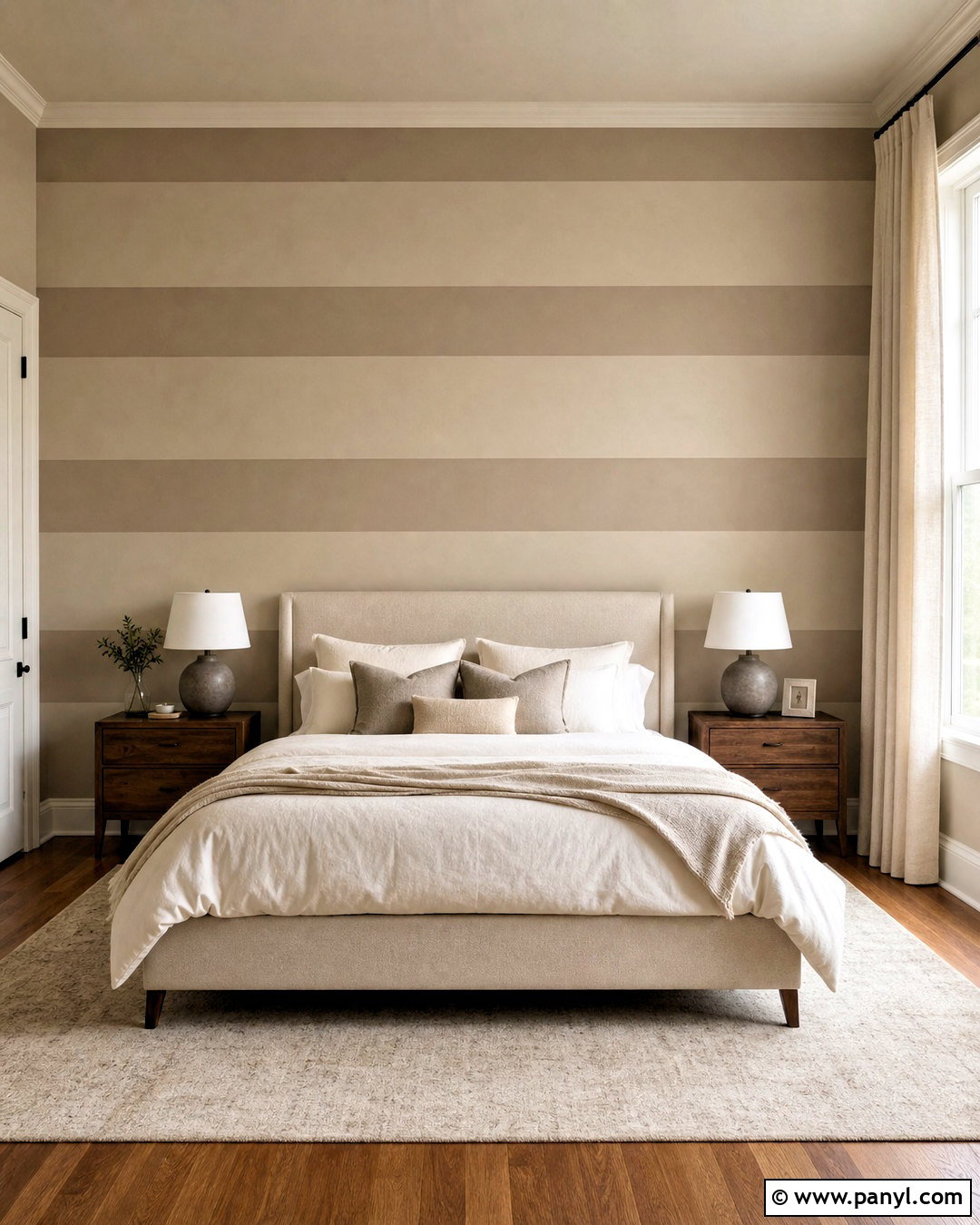
Subtle stripes offer an easy way to introduce pattern while maintaining a peaceful, neutral bedroom. Paint the headboard wall light taupe, then create wide alternating stripes using a second shade only slightly darker. Another option is to use the same color in matte and satin finishes. The finish change creates a soft pattern that becomes more visible as light moves across the wall. Complete the room with an upholstered oatmeal bed, layered ivory bedding, walnut nightstands, and ceramic lamps. Warm wood flooring and a textured wool rug keep the scheme from feeling flat. Choose linen curtains that closely match the base paint. Avoid high-contrast artwork on the striped wall; a simple round mirror or small textile hanging will preserve its quiet character.
7. Navy And White Striped Wall
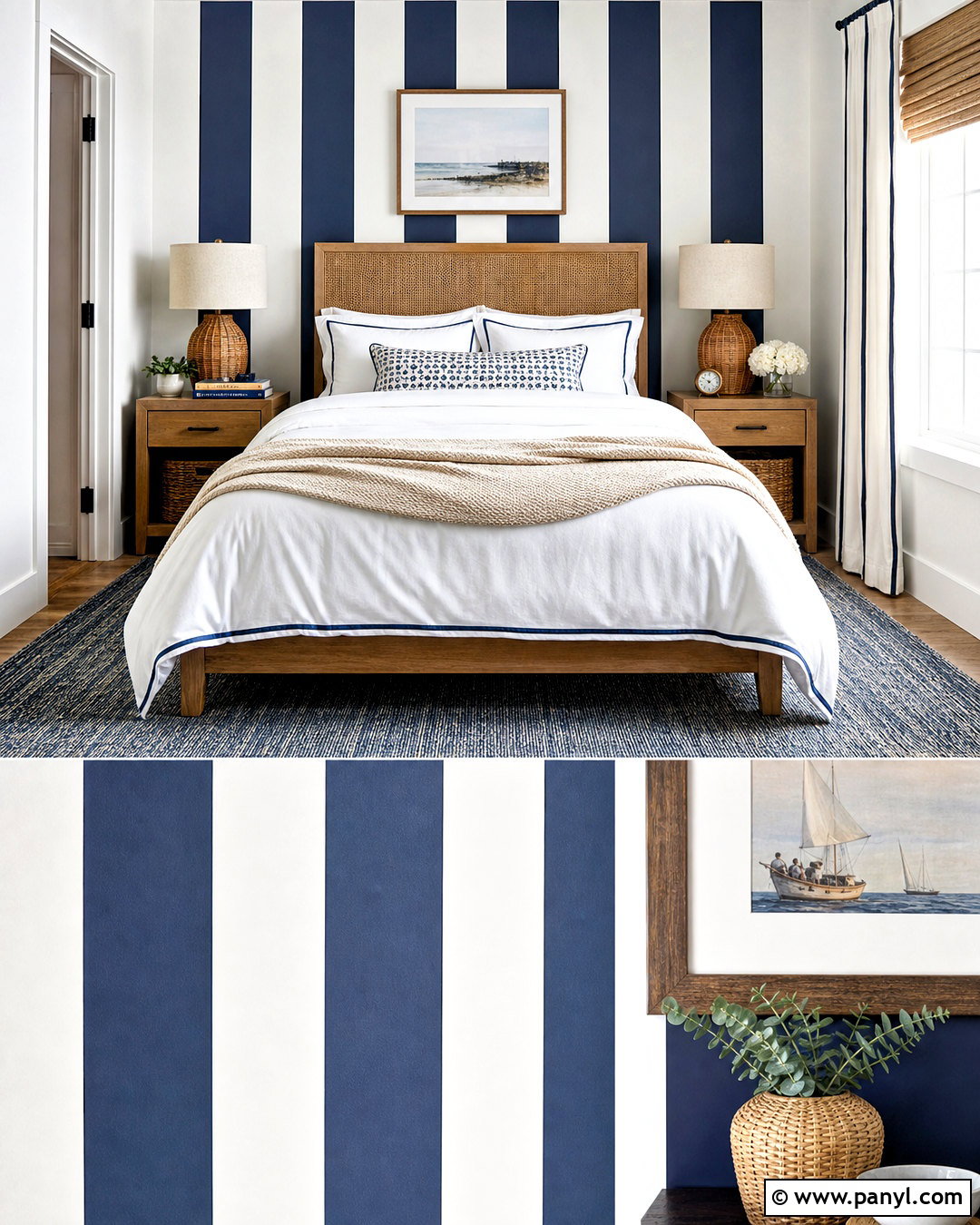
Navy and white stripes create a crisp coastal look without requiring themed decorations. Paint wide vertical bands on the main wall of a guest bedroom, using slightly warm white instead of a stark blue-white. Place a natural cane headboard against the pattern and layer the bed with white cotton bedding, navy piping, and a sandy beige throw. Light oak nightstands and woven lamps introduce relaxed texture. Keep the floor pale and add a blue-gray rug with a quiet pattern. Small framed seascape photographs can support the color palette without turning the room into a novelty space. Because dark navy paint may require extra coverage, apply thin coats and remove the tape while the final coat remains slightly damp to reduce peeling.
8. Sage Green Striped Wall
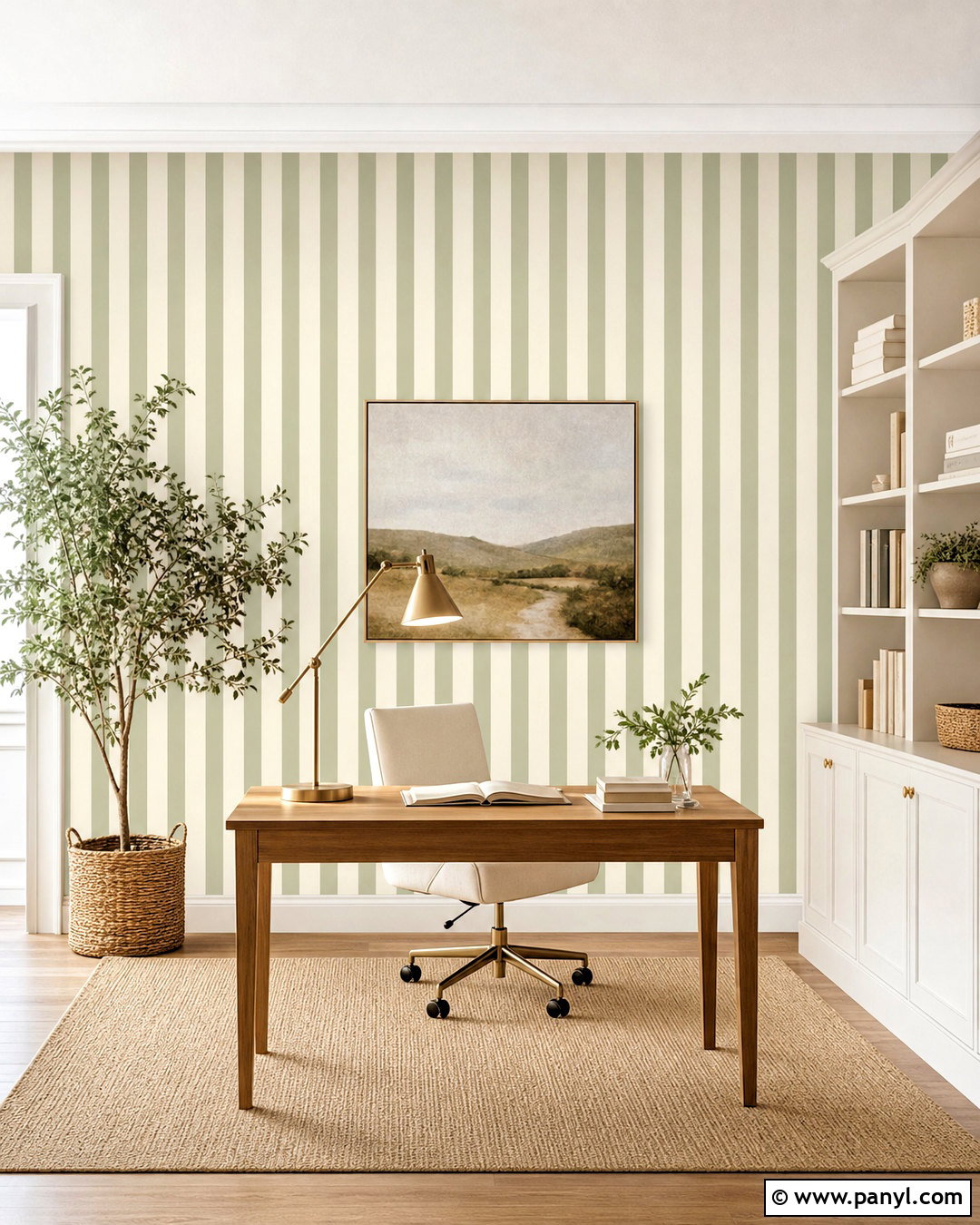
Soft sage stripes bring gentle color to a home office while keeping the space focused and comfortable. Use warm ivory for the base and paint alternating vertical sage bands in medium widths. Position a streamlined oak desk in front of the finished wall, leaving enough visible pattern on both sides to frame the workspace. Add a cream desk chair, brass task lamp, and closed storage cabinet painted the same ivory as the lighter stripes. A small leafy plant and simple landscape print connect naturally with the green. Choose pale wood flooring or a beige woven rug to maintain an airy look. Before taping, mark stripe positions near the ceiling, center, and baseboard so every line stays aligned from top to bottom.
9. Terracotta And Cream Striped Wall
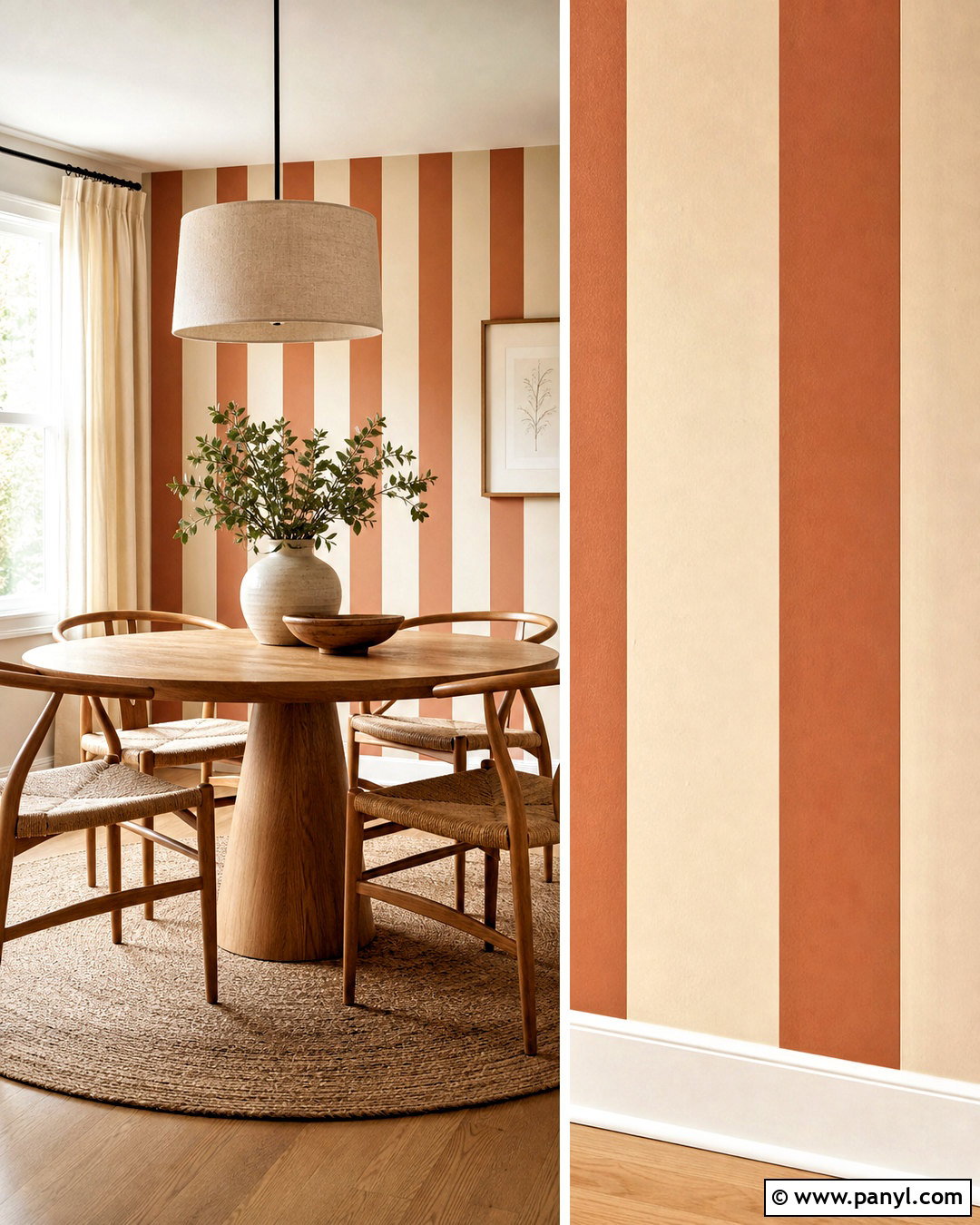
Warm terracotta and cream stripes can turn a plain dining nook into a welcoming focal point. Paint vertical stripes of equal width, using muted clay rather than bright orange for a more livable result. Continue the cream stripe color onto the surrounding walls so the feature feels integrated. Place a round oak pedestal table in front of the pattern and add curved chairs with woven seats. A linen drum pendant, jute rug, and ceramic centerpiece reinforce the earthy palette. Dark bronze curtain hardware provides a small amount of contrast. For visual balance, center either a cream or terracotta stripe behind the table. Test the layout with removable tape first, especially if the wall includes windows, outlets, or uneven corners.
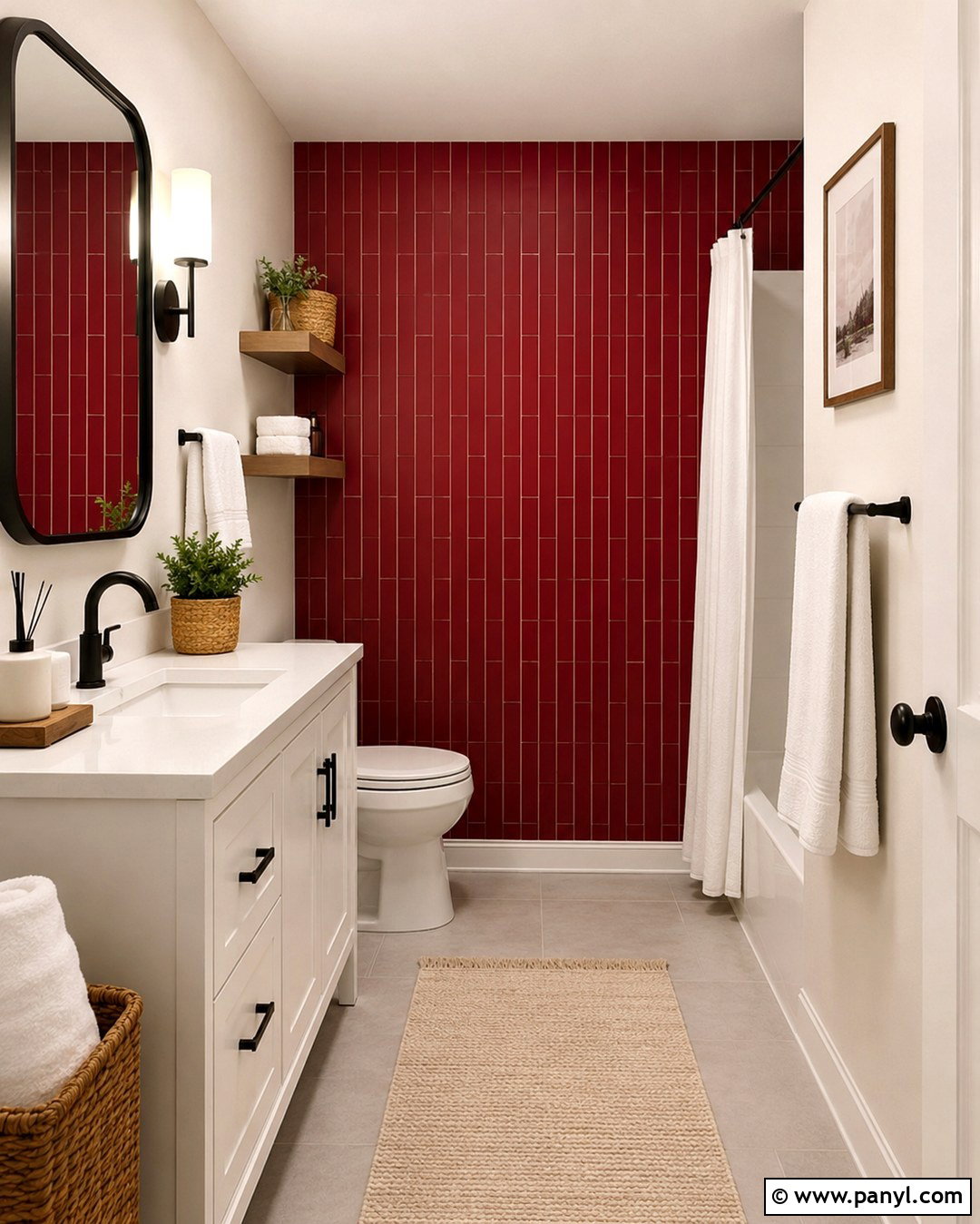
10. Black And White Striped Wall
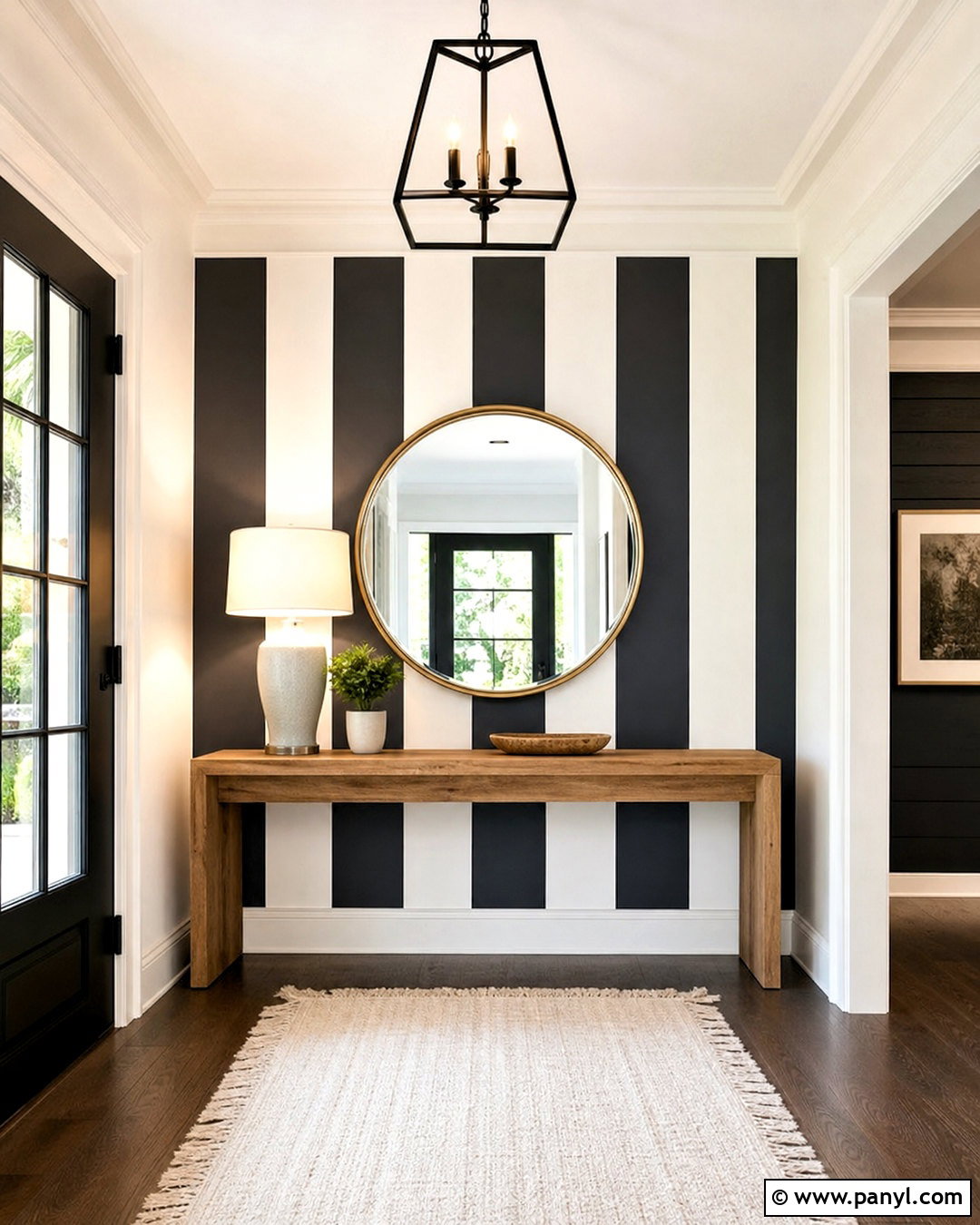
Black and white stripes make a dramatic statement in a modern entryway. Use broad vertical sections rather than narrow lines to keep the wall from looking overly busy. Paint the base a soft white, then add deep charcoal-black stripes for slightly gentler contrast. Complete the entrance with a slim natural oak console, round brass mirror, and textured cream runner. A simple ceramic lamp and shallow wooden bowl provide useful surfaces without blocking the pattern. Paint the remaining walls white and keep the door and trim consistent for a connected finish. Carefully measure around electrical switches so they align neatly within one stripe. If possible, position the console symmetrically against the finished pattern to give the small space an organized appearance.
11. Pastel Nursery Striped Wall
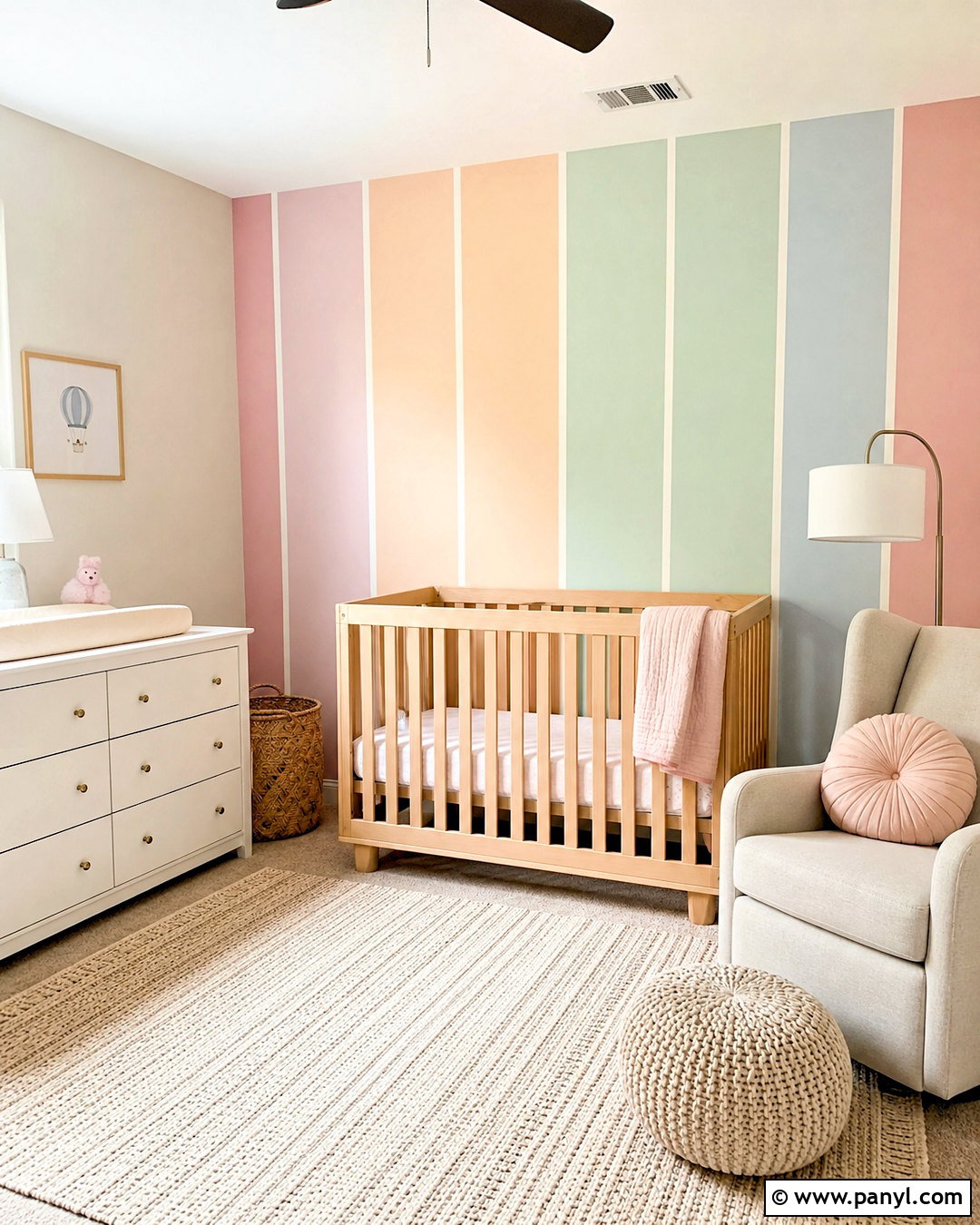
Pastel stripes can create a cheerful nursery that still feels calm enough for rest. Start with creamy white walls and paint the crib wall with wide vertical bands of blush pink, pale apricot, soft mint, and powder blue. Separate the colors with narrow white stripes to give each shade breathing room. Choose a natural maple crib, white dresser, and comfortable oatmeal glider. A cream rug with a subtle woven texture keeps the floor quiet beneath the colorful wall. Add curtains in one pastel shade and use solid bedding to avoid competing patterns. Place only lightweight, securely installed decor near the crib. The finished room will feel coordinated and adaptable, allowing the furniture and accessories to change as the child grows.
12. Half Wall Stripes
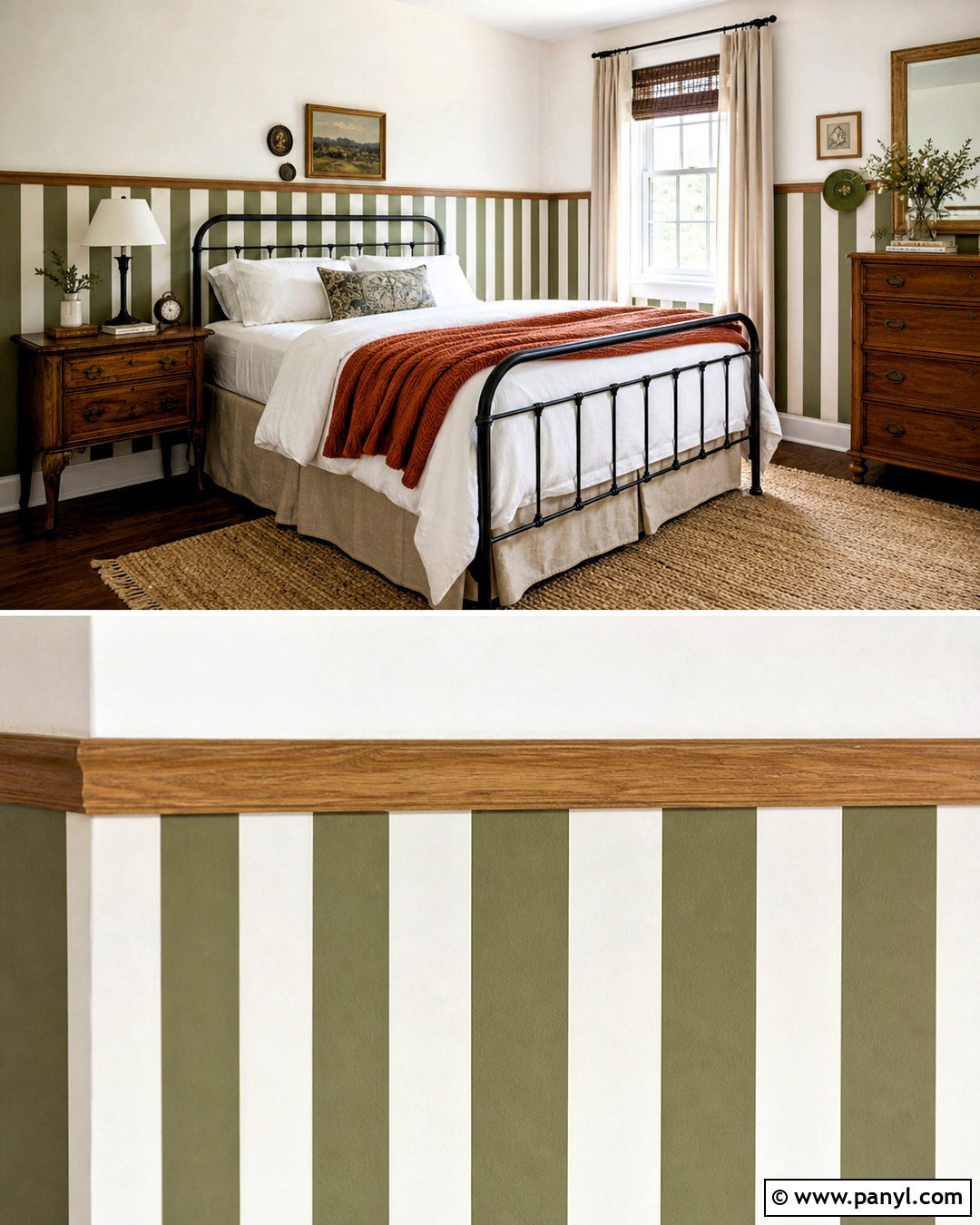
Stripes limited to the lower half of a wall provide color without overwhelming a small bedroom. Paint vertical olive green and warm white stripes from the baseboard to chair-rail height. Finish the upper wall in solid warm white, then add a narrow painted or wooden molding where the two areas meet. Pair this treatment with an iron bed, white bedding, olive pillows, and a rust-colored throw. A vintage-inspired wood nightstand and simple shaded lamp support the relaxed character. Keep framed artwork above the molding so it appears against the solid background. This layout also reduces the amount of measuring and taping required. Plan stripe widths around doors and corners to avoid noticeably thin sections at either end.
13. Ceiling To Wall Stripes
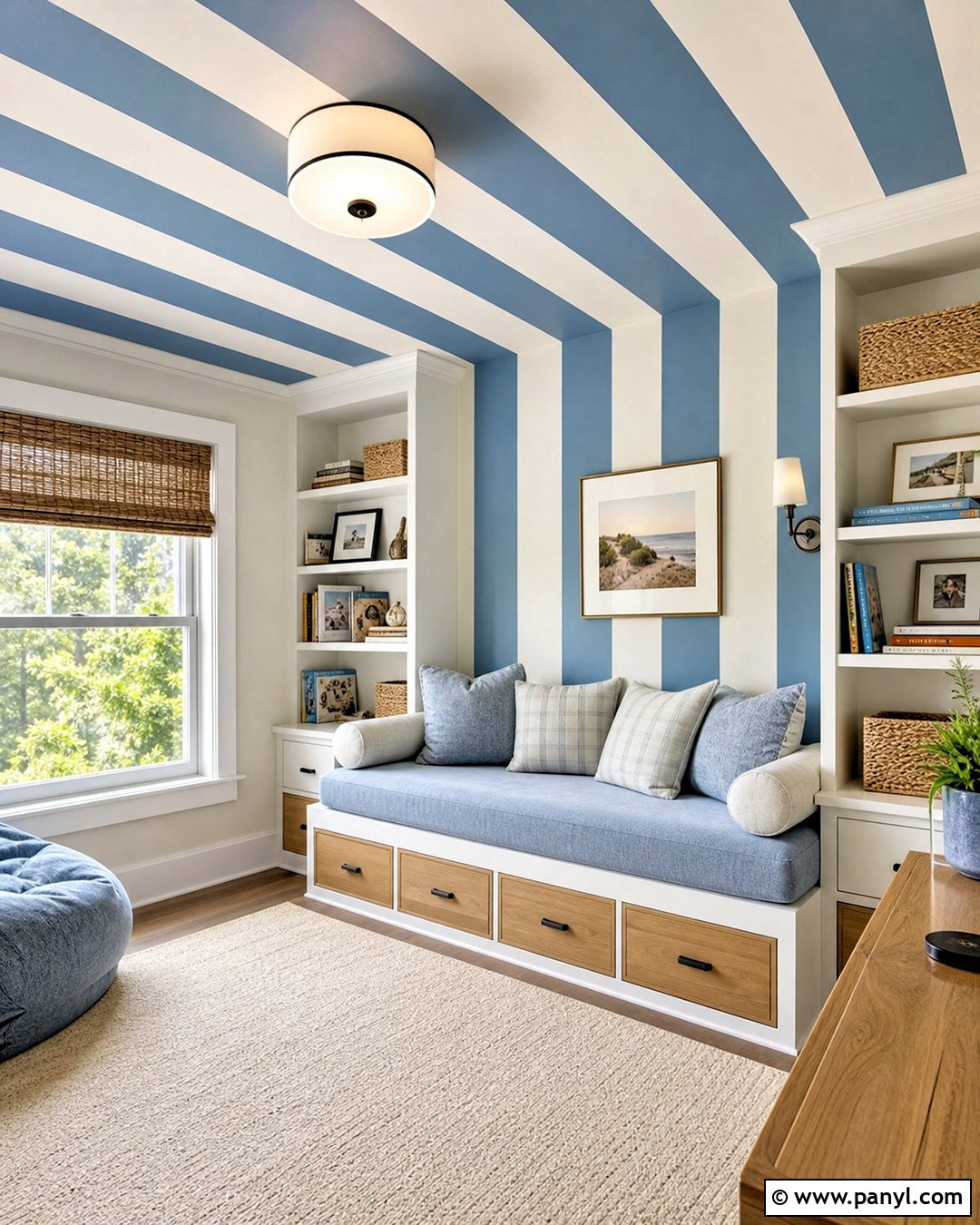
Running stripes from the wall across the ceiling creates an immersive look for a compact reading nook or child’s bedroom. Begin with a soft blue base, then paint evenly spaced white stripes that travel vertically upward and continue across the ceiling. Use a chalk line or laser level to keep each stripe aligned as it changes direction. Limit the treatment to one end of the room so the pattern frames a specific zone. Add a built-in bench or low daybed with pale blue cushions, white shelving, and natural wood storage drawers. Keep the floor light and select a simple cream rug. Flush ceiling lighting works better than a large pendant because it allows the overhead stripes to remain clearly visible.
14. Diagonal Striped Wall
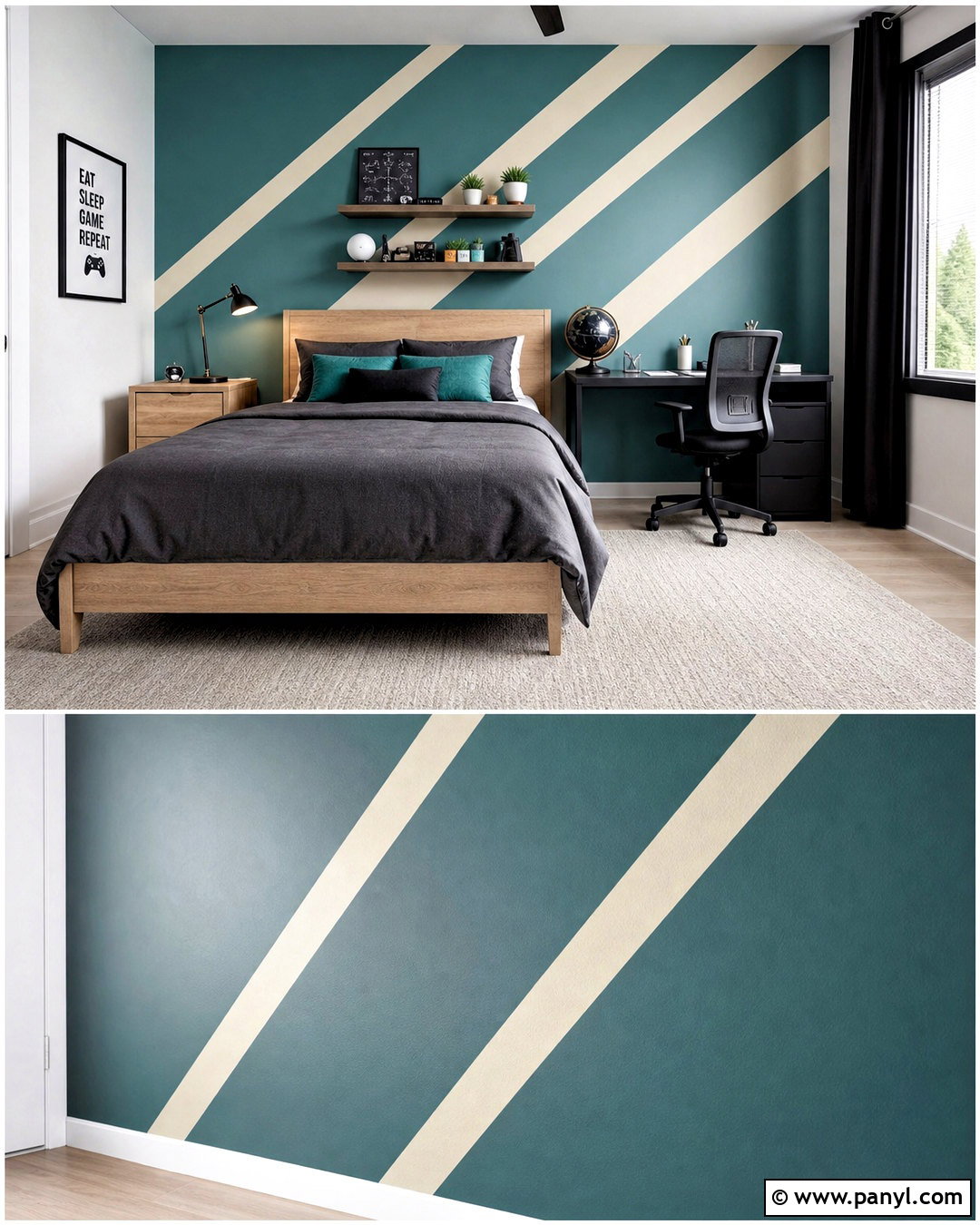
Diagonal stripes introduce movement and work well behind a simple desk or low bed. Paint the wall muted teal, then add wide cream bands that rise at a consistent angle. Mark matching points along the top and bottom edges before connecting them with painter’s tape. This approach helps maintain the same angle across the wall. Complete a teen bedroom with a white oak bed, charcoal bedding, teal pillows, and a compact black desk. Choose solid curtains and a plain area rug so the diagonal wall remains the main pattern. Small floating shelves can follow a horizontal line, providing useful contrast to the sloping stripes. Avoid placing several angled accessories nearby, as too many competing directions can make the complete room feel unsettled.
15. Arched Striped Wall
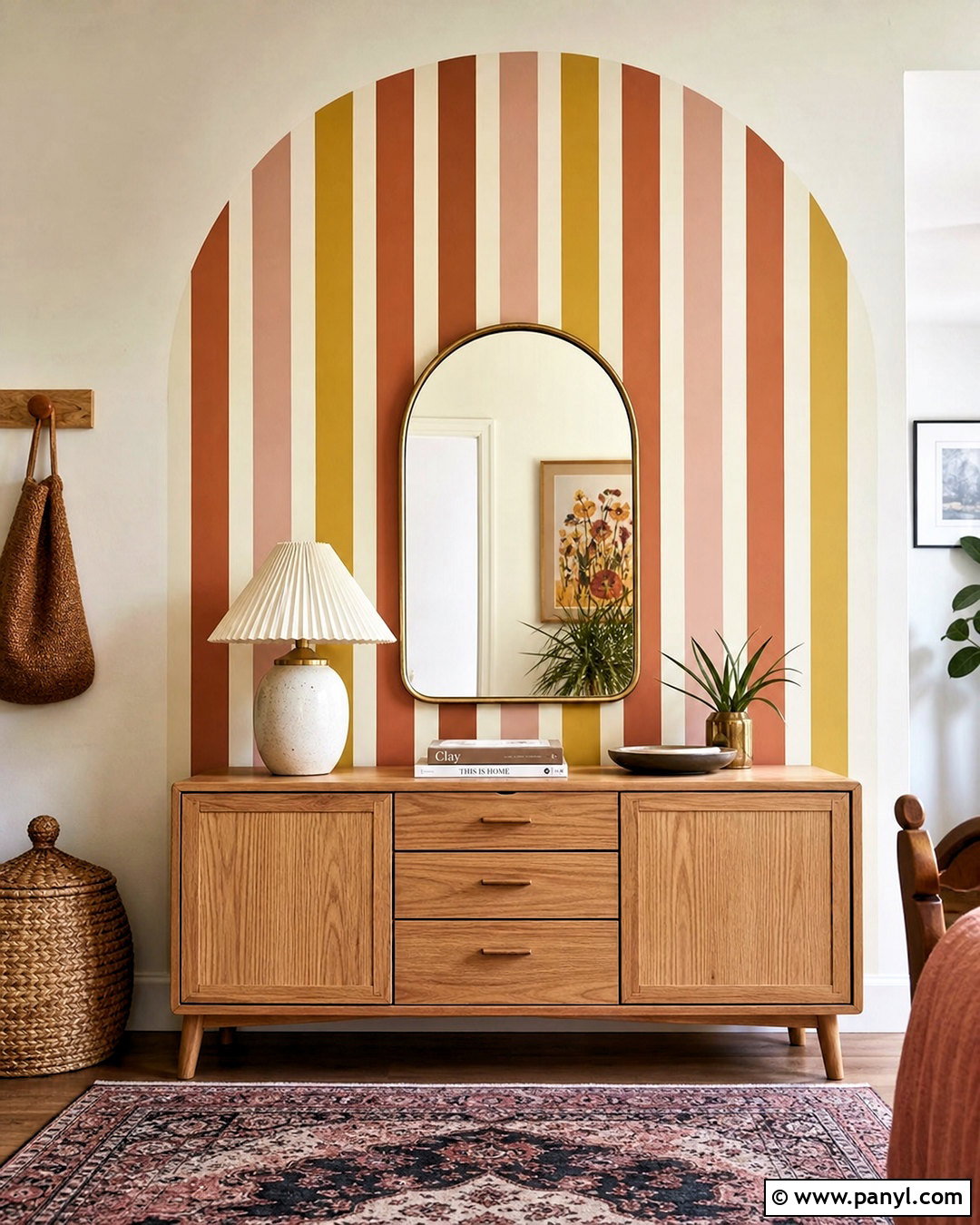
An arched striped feature can create a painted focal point without covering the entire wall. Outline a large arch behind a console or bed, then fill it with narrow vertical stripes in rust, blush, mustard, and cream. Use a pencil tied to string to draw the curved top, and apply flexible painter’s tape in short sections around the edge. Leave the surrounding wall warm white for clear definition. Complete the look with a low oak console, rounded mirror, ceramic lamp, and woven basket. Repeat rust and mustard through small accessories, but keep major furniture neutral. The contained pattern works especially well in an apartment because it delivers the impact of a mural while requiring less paint and fewer permanent changes.
16. Ombre Striped Wall
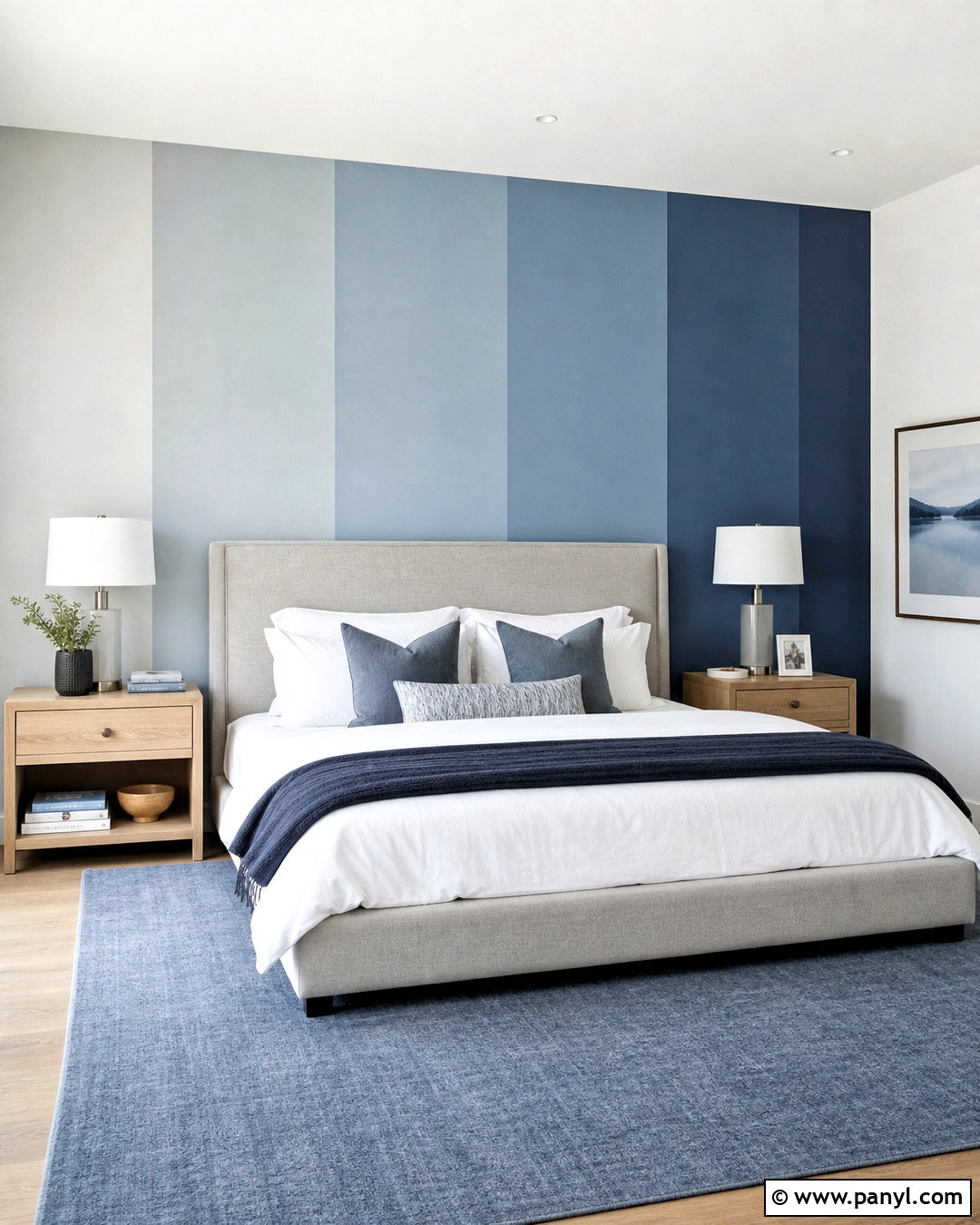
An ombre stripe pattern adds color gradually, making it suitable for a restful bedroom or quiet sitting room. Choose five related blue shades, ranging from misty gray-blue to deep slate. Paint vertical stripes that move from light to dark across the wall, arranging the strongest color away from the main window for balance. Use consistent widths so the changing tones remain the main feature. Add a light gray upholstered bed, white bedding, slate throw, and pale oak nightstands. Brushed nickel lamps and a soft blue rug continue the cool palette. Paint adjacent walls in the lightest stripe color. Label each taped section before painting, since similar shades can be difficult to distinguish once several open cans are nearby.
17. Metallic Accent Striped Wall
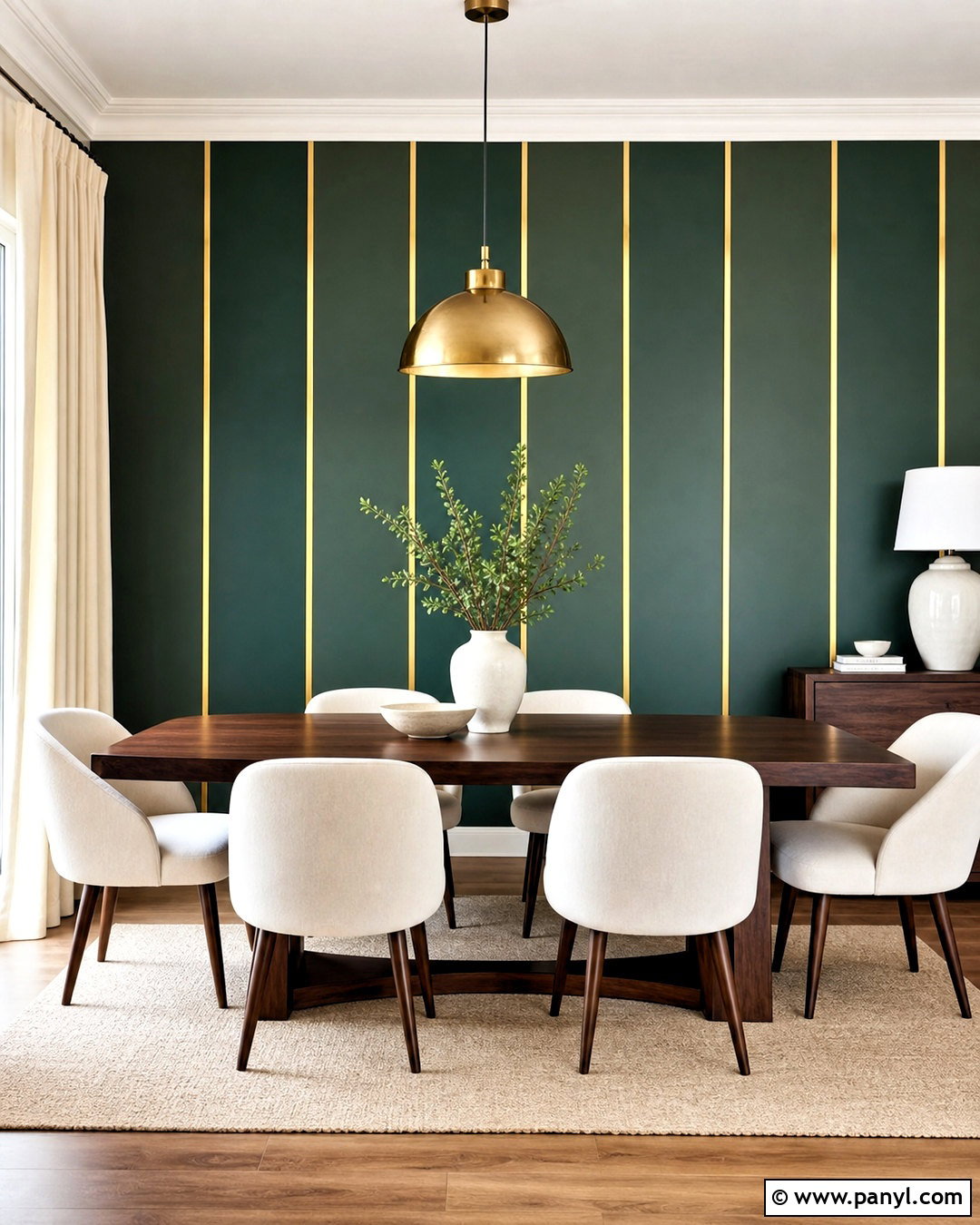
A small amount of metallic paint can elevate a striped wall without making the room appear flashy. Create wide alternating bands of matte deep green and slightly lighter forest green in a dining room. Add one narrow brushed-gold stripe between every two green sections. A stencil brush or small foam roller offers better control than a large roller for the metallic details. Pair the wall with a walnut dining table, cream chairs, brass pendant, and natural linen curtains. Use a beige rug and simple white ceramics to lighten the dark palette. Keep the gold lines thin so they function as accents rather than dominating the room. Test the metallic paint first because its appearance can change under direct and artificial lighting.
18. Wood Trim Striped Wall
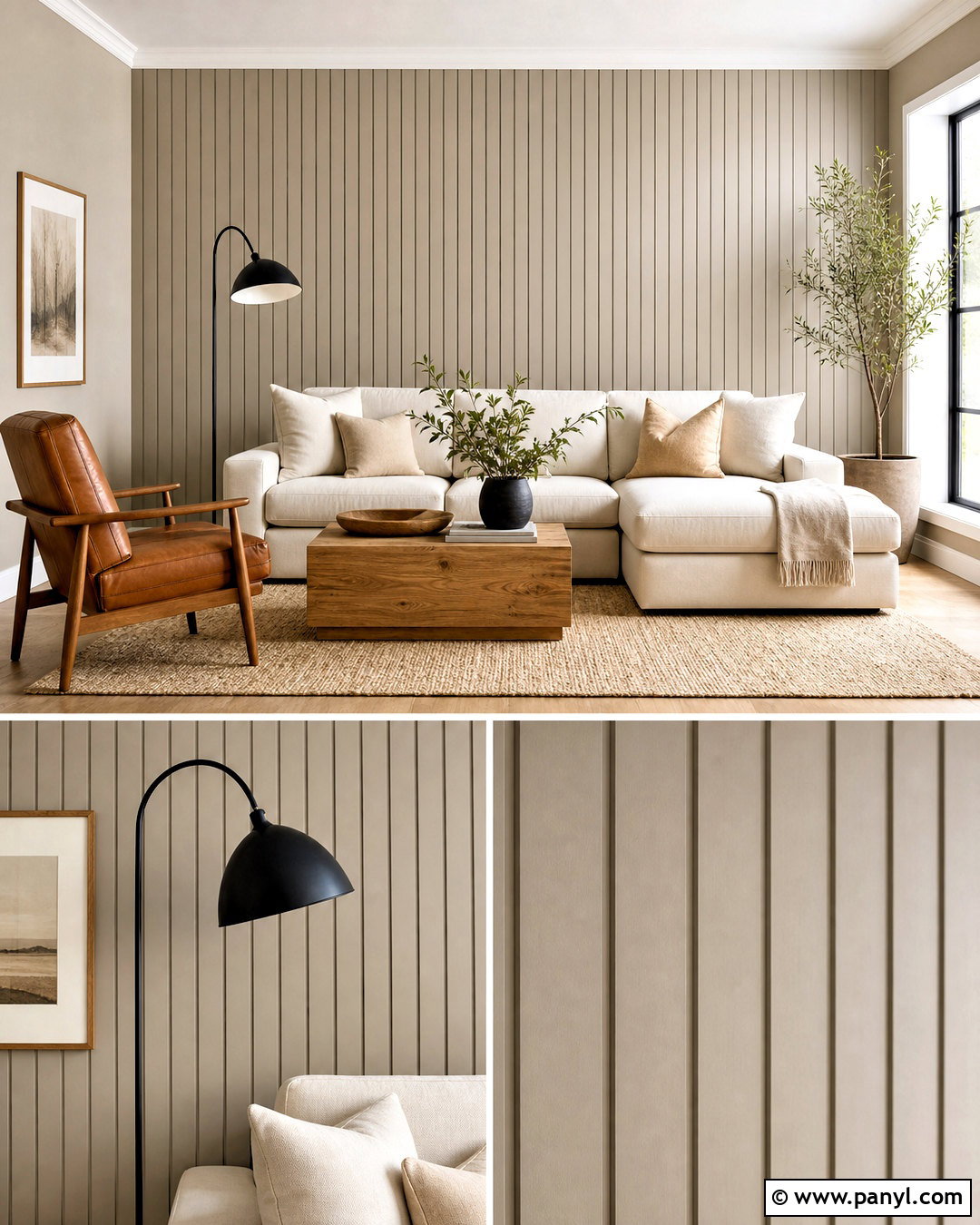
Applied wood strips can give a striped wall extra dimension and architectural character. Paint a living room wall warm greige, then install evenly spaced slim pine battens from baseboard to ceiling. Paint the battens and background the same color for a subtle tone-on-tone effect. Use construction adhesive and finishing nails where appropriate, checking each piece with a level before securing it. Complete the room with a cream sofa, cognac leather chair, oak coffee table, and black floor lamp. A textured beige rug and linen pillows balance the wall’s strong vertical rhythm. Center the furniture arrangement on the batten pattern. Leave enough space between strips for easy dusting and to prevent the dimensional design from feeling visually crowded.
19. Color Block Striped Wall
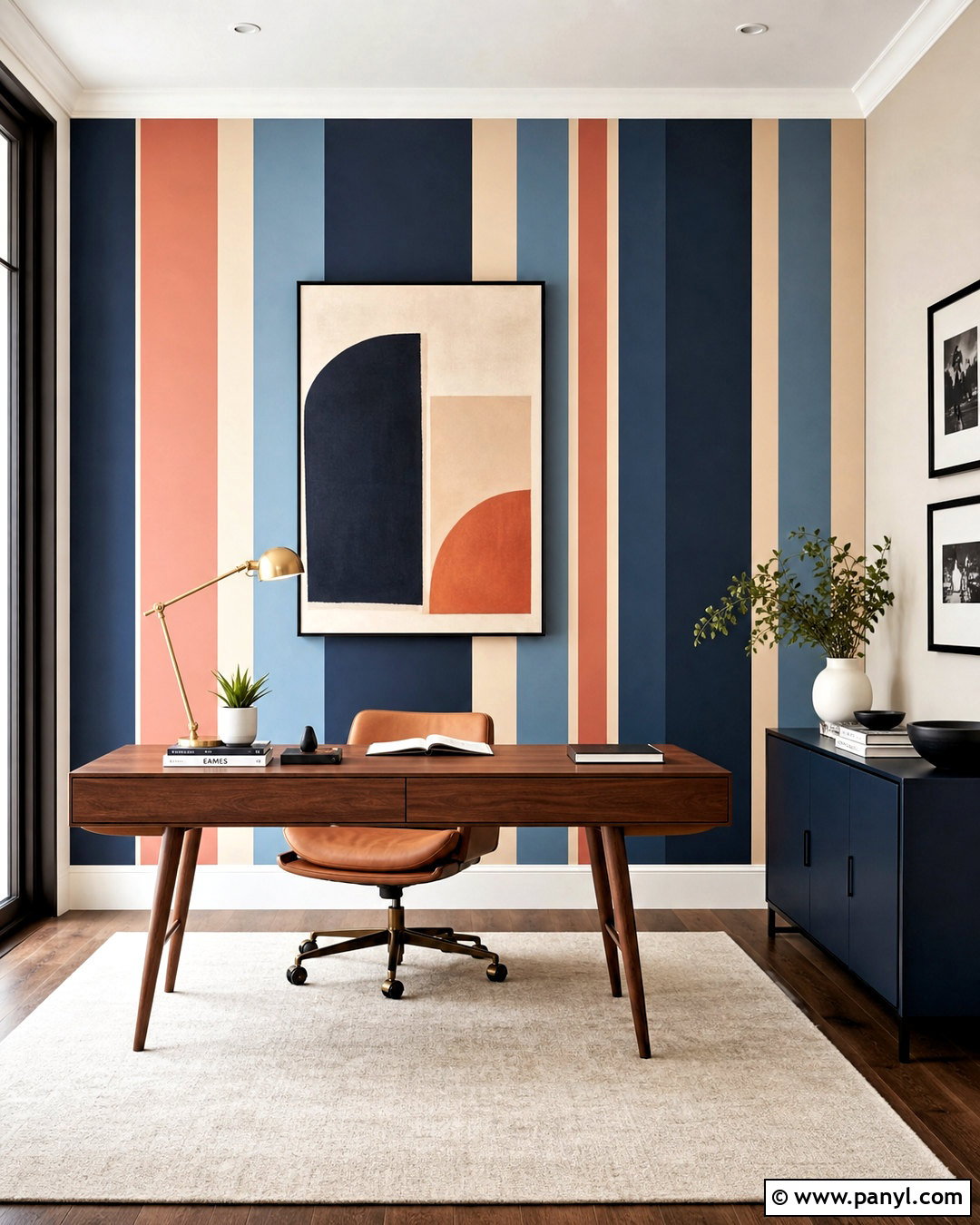
Color-blocked stripes offer a bolder alternative to a traditional repeating pattern. Divide a home office wall into vertical bands of different widths using navy, muted coral, dusty blue, and warm beige. Repeat one color twice to create rhythm, but avoid a perfectly predictable order. Paint the lightest color as the base, then work from lighter sections to darker ones. Add a simple walnut desk, tan leather chair, navy cabinet, and cream rug. Keep desktop accessories minimal and choose one large abstract print that includes two of the wall colors. The finished workspace will feel energetic yet organized. Use a detailed sketch with measurements before taping, since intentionally varied stripes still need thoughtful placement to look balanced.
20. Striped Wall Headboard
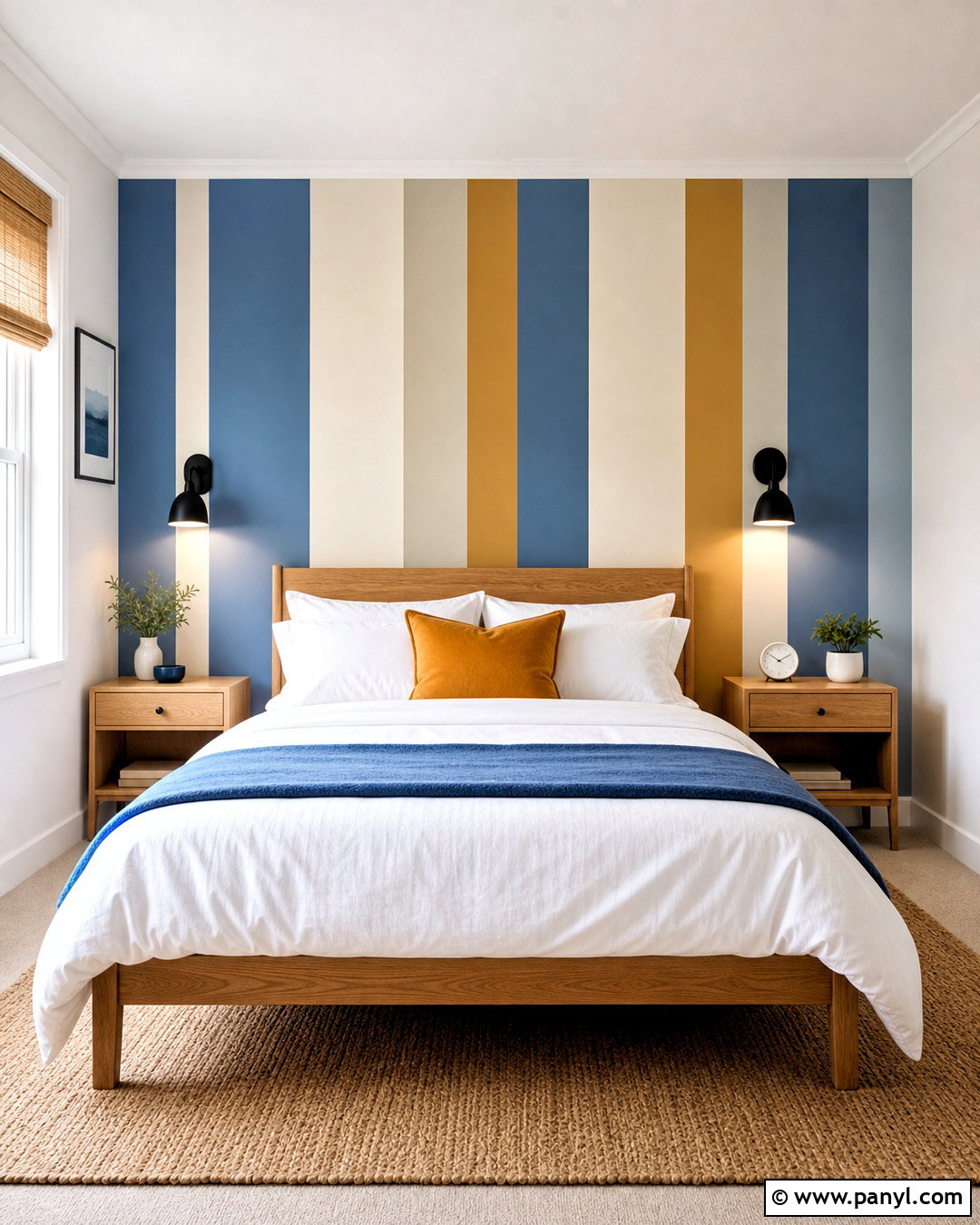
A painted striped headboard is an affordable way to define the bed area without purchasing a large furniture piece. Mark a wide rectangle extending slightly beyond both sides of the mattress, then fill it with vertical stripes in dusty blue, cream, and muted ocher. Carry the painted shape from the baseboard to about three feet above the pillows. Add a narrow oak bed frame, crisp white bedding, blue throw, and ocher accent cushion. Wall-mounted sconces can sit within the outer stripes, making the composition feel intentional. Keep the rest of the room pale cream and use light wood nightstands. Finish the headboard shape with a clean painted border so the pattern reads as one complete feature rather than unfinished wall decoration.
Conclusion:
The best DIY striped wall ideas combine careful planning with a color palette that belongs in the entire room. Wide stripes create a relaxed statement, while narrow lines add refined detail. Tonal combinations suit calm spaces, and multicolor patterns bring energy to playrooms or creative areas. Whichever design you choose, measure the wall, test the stripe layout, and label sections before opening the paint. Use furniture, textiles, lighting, and accessories to repeat key colors without introducing too many competing patterns. A striped feature does not need to be complicated or perfectly traditional. With patient preparation and thoughtful styling, these DIY striped wall ideas can turn an ordinary surface into a finished, personal focal point.

Related Ideas and Inspiration:
Leave a Reply