
Geometric wall paint ideas offer an affordable way to turn a plain room into a polished, personal space. With painter’s tape, coordinated colors, and a balanced layout, you can create anything from calm tonal shapes to a bold mural. The key is designing the entire room around the painted feature. Furniture placement, flooring, lighting, textiles, and decor should support the pattern rather than compete with it. Large shapes usually feel cleaner in small rooms, while detailed patterns can energize playrooms, offices, and spacious living areas. Before painting, test the arrangement with tape so you can adjust the scale and composition without committing to color. () Explore these 20 geometric wall paint ideas to find a complete look that fits your home.
1. Neutral Triangle Geometric Wall
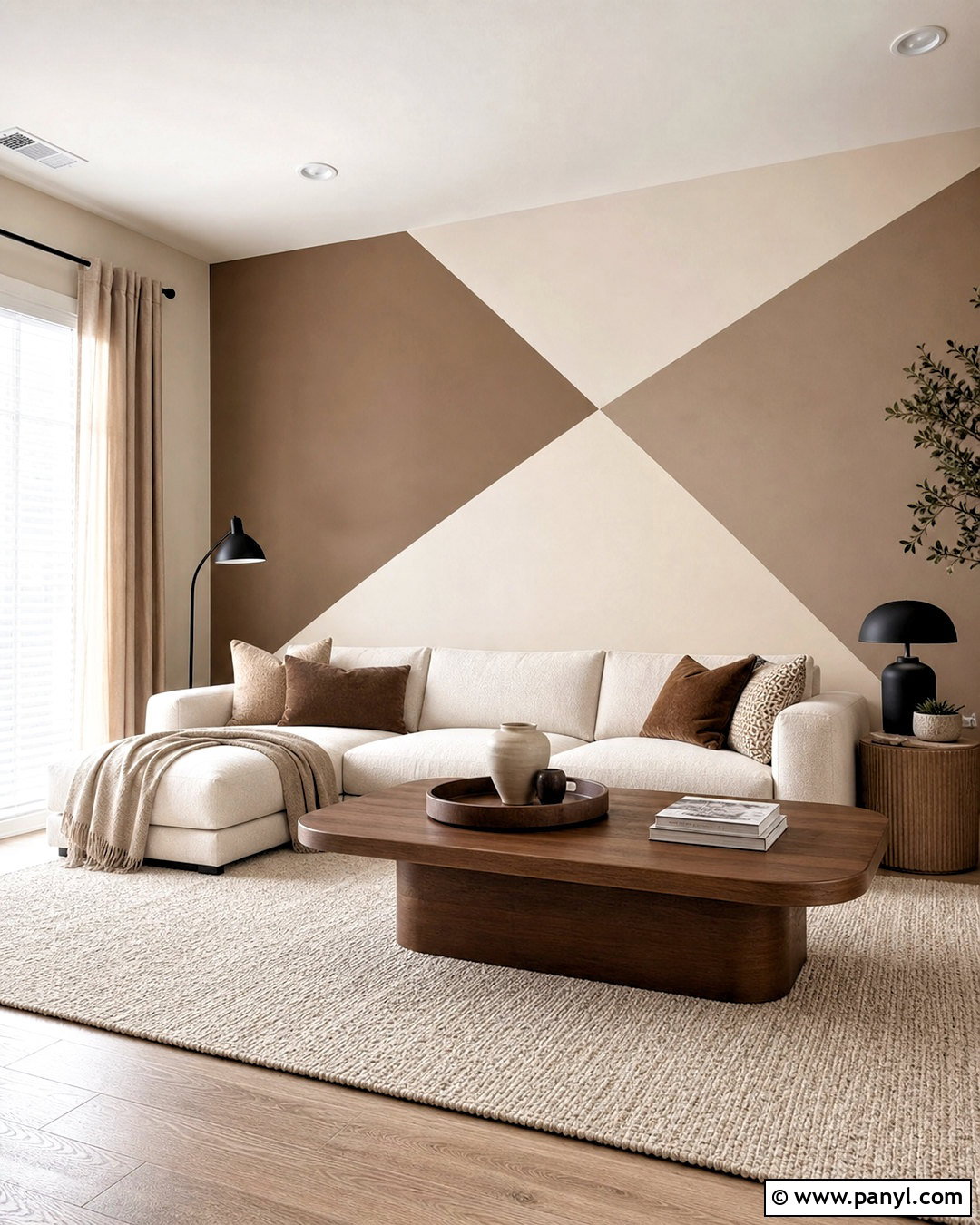
A neutral triangle wall gives a modern living room personality without making it feel busy. Begin with a warm white base, then arrange large asymmetrical triangles in soft greige, mushroom brown, and muted taupe. Keep the lightest color near the ceiling so the room still feels open. Place a streamlined cream sofa in front of the wall, leaving enough visible paint around it to preserve the pattern. Add a walnut coffee table, oatmeal curtains, and a textured ivory rug for warmth. Matte black lamps provide clean contrast without introducing another color. Finish with two solid throw pillows and one small striped cushion. Avoid hanging several artworks over the pattern. One simple framed print or an understated wall sconce is enough.
2. Pastel Geometric Bedroom Wall
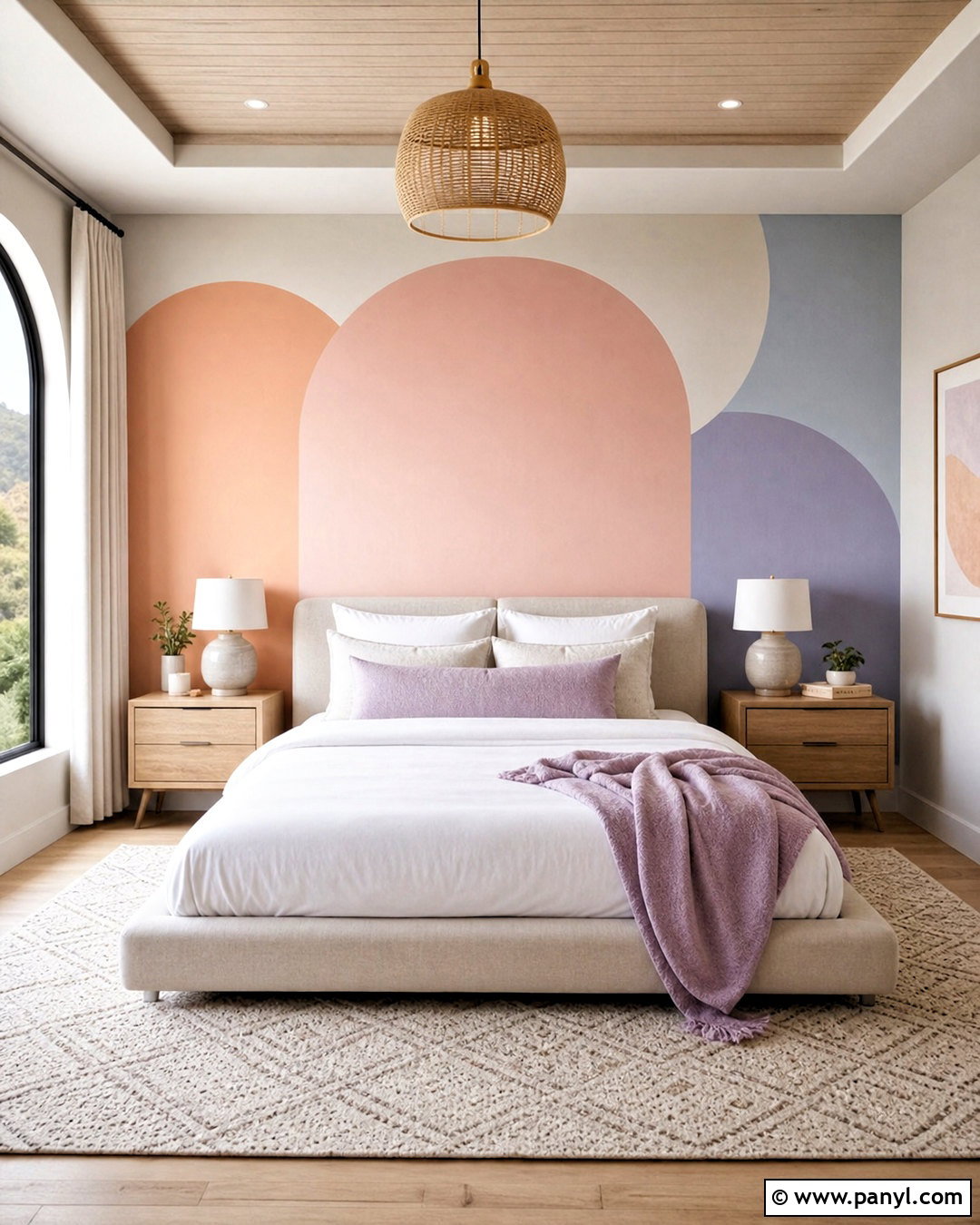
Soft color blocks can make a bedroom feel playful, restful, and thoughtfully finished. Paint the headboard wall warm white, then layer an oversized blush pink arch with smaller peach, dusty lavender, and pale blue semicircles. Center the largest shape behind a low upholstered bed so it creates the appearance of a painted headboard. Choose white oak nightstands, round ceramic lamps, and simple white bedding to keep the pattern prominent. A lavender throw and one peach lumbar pillow can repeat the wall colors in controlled amounts. Pale wood flooring and a cream area rug complete the airy palette. Keep the remaining walls neutral and use minimal artwork. This balanced approach delivers color while maintaining the calm atmosphere needed in a comfortable adult or teenage bedroom.
3. Color Block Geometric Office Wall
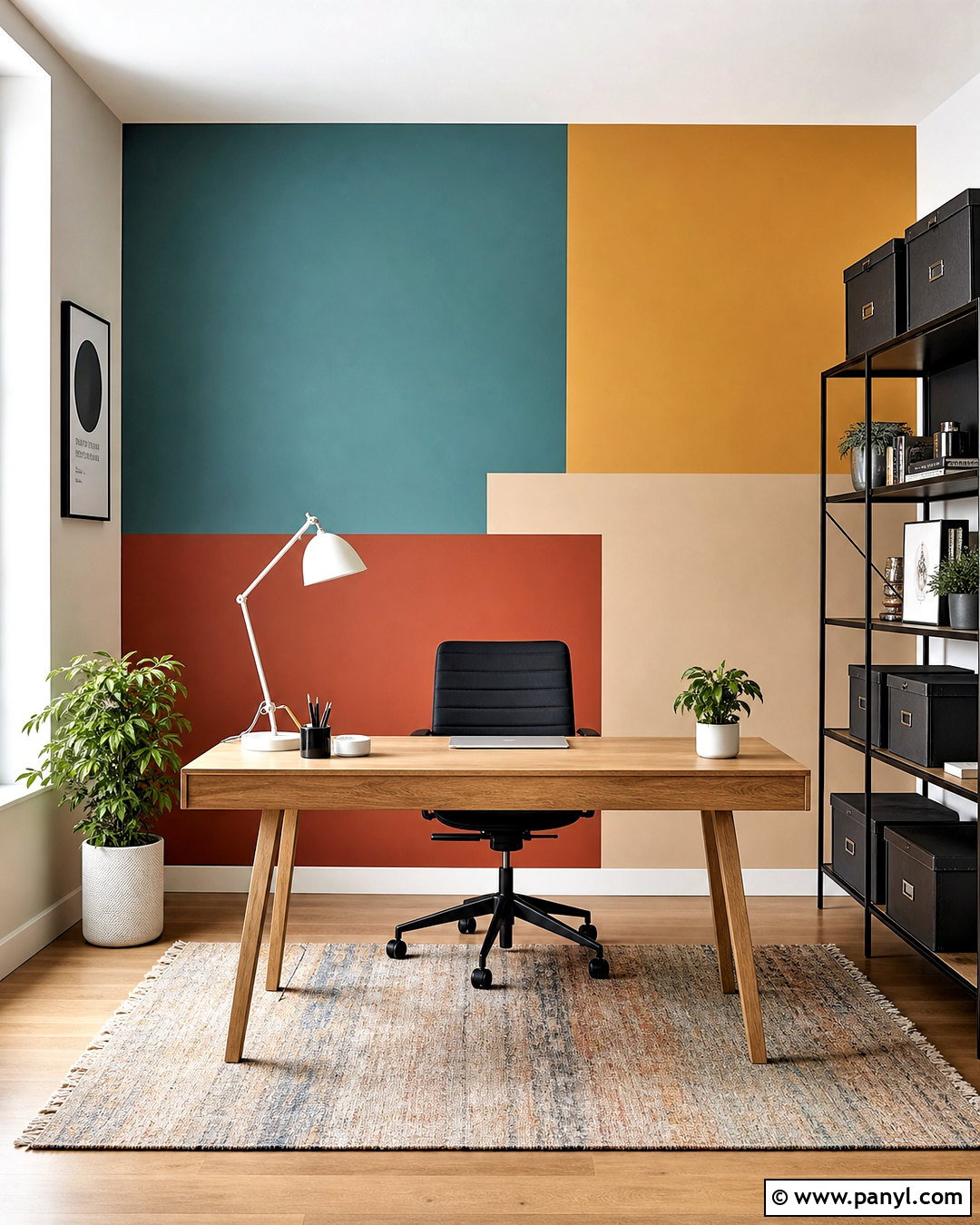
Do you need a home office that feels energetic but still organized? Create a structured background with overlapping rectangles in muted teal, warm mustard, clay red, and light beige. Position the largest rectangle behind the desk, then extend two smaller blocks toward nearby shelves to visually connect the work zone. A natural oak desk, black task chair, and slim metal bookcase will balance the stronger colors. Choose closed storage boxes in beige or charcoal to control clutter. A flat-weave rug with a subtle linear pattern can echo the geometry without copying it exactly. Finish with a white desk lamp, a small plant, and one corkboard placed entirely inside a painted block. The final office feels creative, practical, and suitable for focused daily work.
4. Midcentury Diagonal Geometric Wall
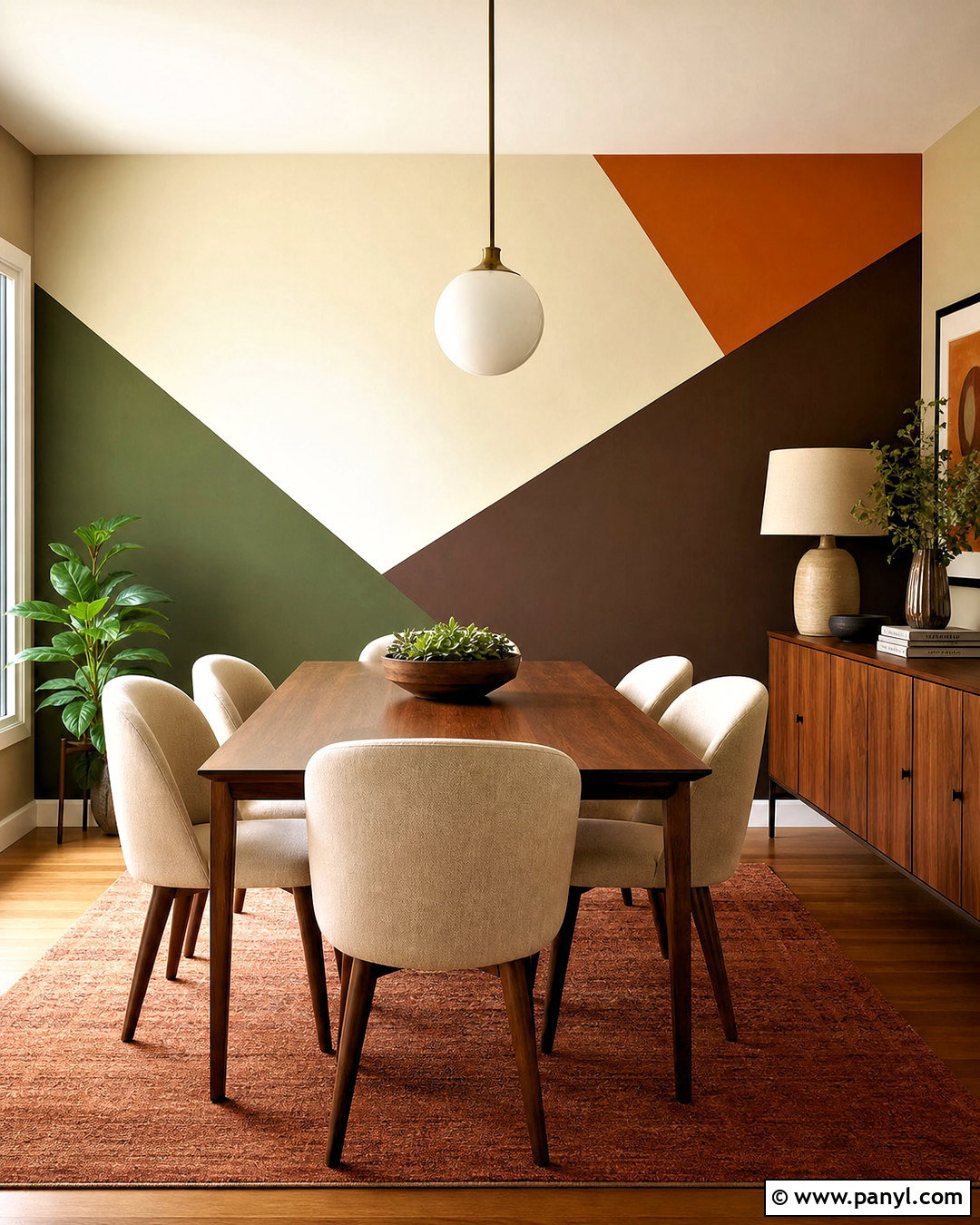
Long diagonal lines bring movement to a dining room and complement the clean shapes of midcentury furniture. Start with a creamy beige base, then paint broad diagonal sections in olive green, burnt orange, and dark walnut brown. Let one line rise from behind the sideboard and another cross behind the dining table to create a balanced, off-center composition. Furnish the room with a rectangular walnut table and curved chairs upholstered in oatmeal fabric. A brass globe pendant adds warmth above the table, while a low-pile rust rug anchors the entire arrangement. Keep table decor simple with a wide ceramic bowl and leafy branches. On the adjacent wall, use a compact wood cabinet rather than another strong focal point. The finished space feels warm, graphic, and authentically midcentury.
5. Navy Geometric Bedroom Wall
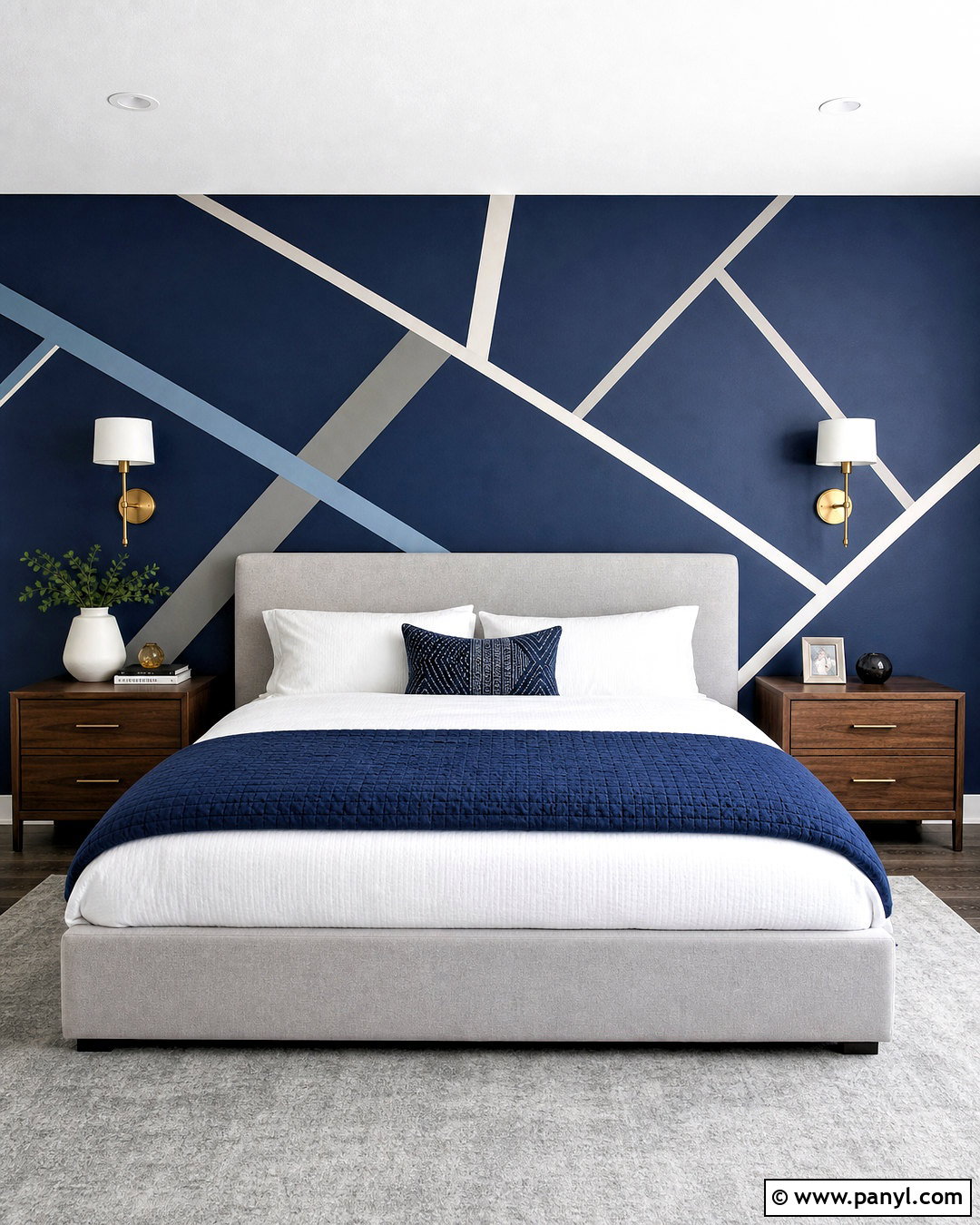
Deep navy paint can create a dramatic bedroom without making the entire room feel dark. Use warm white as the base, then add one wide navy section behind the bed with thin geometric lines in dusty blue and soft gray. Arrange the lines as oversized intersecting triangles rather than a small, complicated pattern. A light gray upholstered bed creates contrast, while walnut nightstands prevent the color scheme from feeling cold. Add brushed brass sconces on both sides of the bed and repeat the finish with small drawer pulls. White bedding, a navy quilt, and muted blue pillows connect the furniture to the wall. Choose light oak flooring and a pale gray rug to reflect brightness. Simple window treatments and limited artwork will allow the painted design to remain the room’s main feature.
6. Terracotta Geometric Nursery Wall
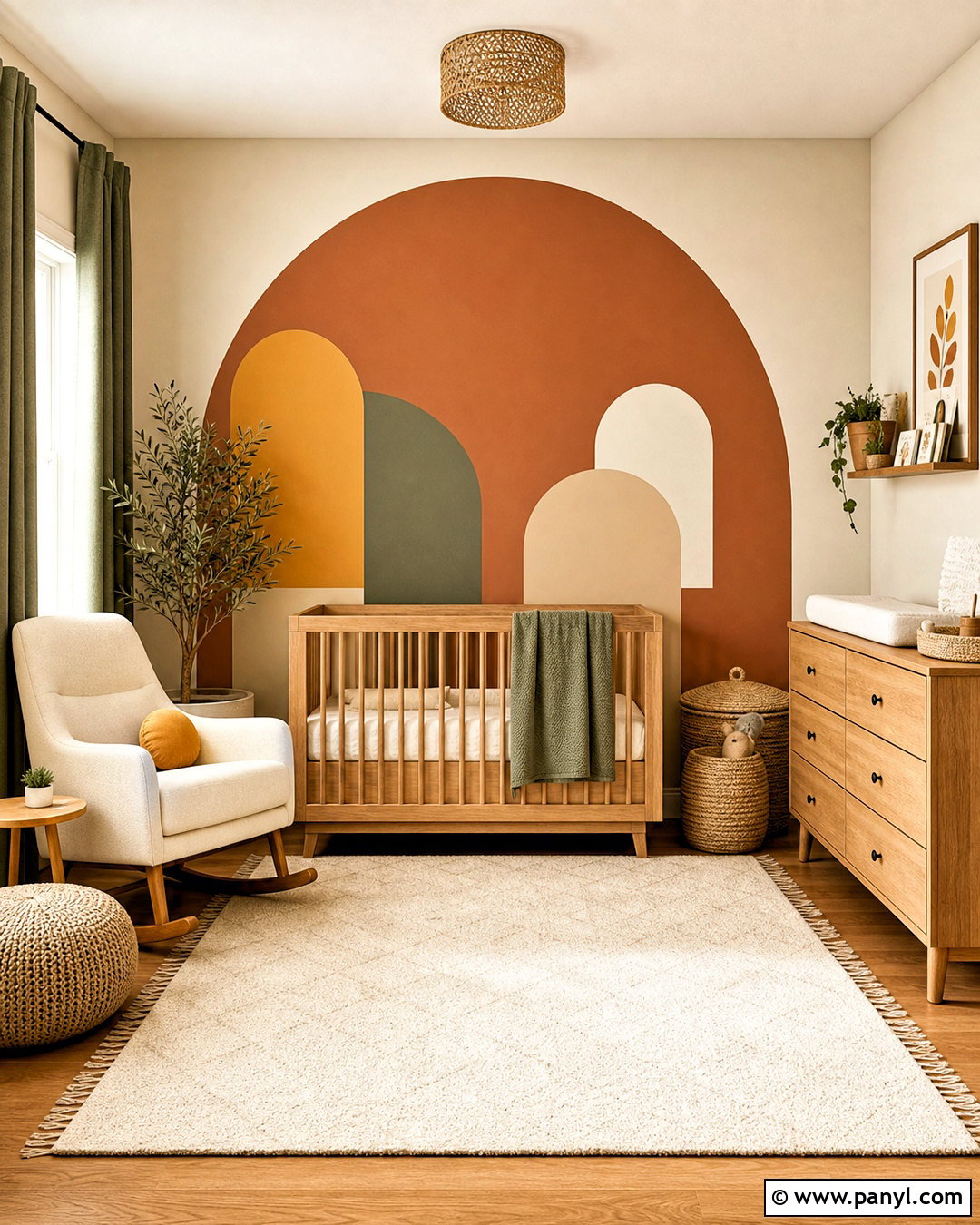
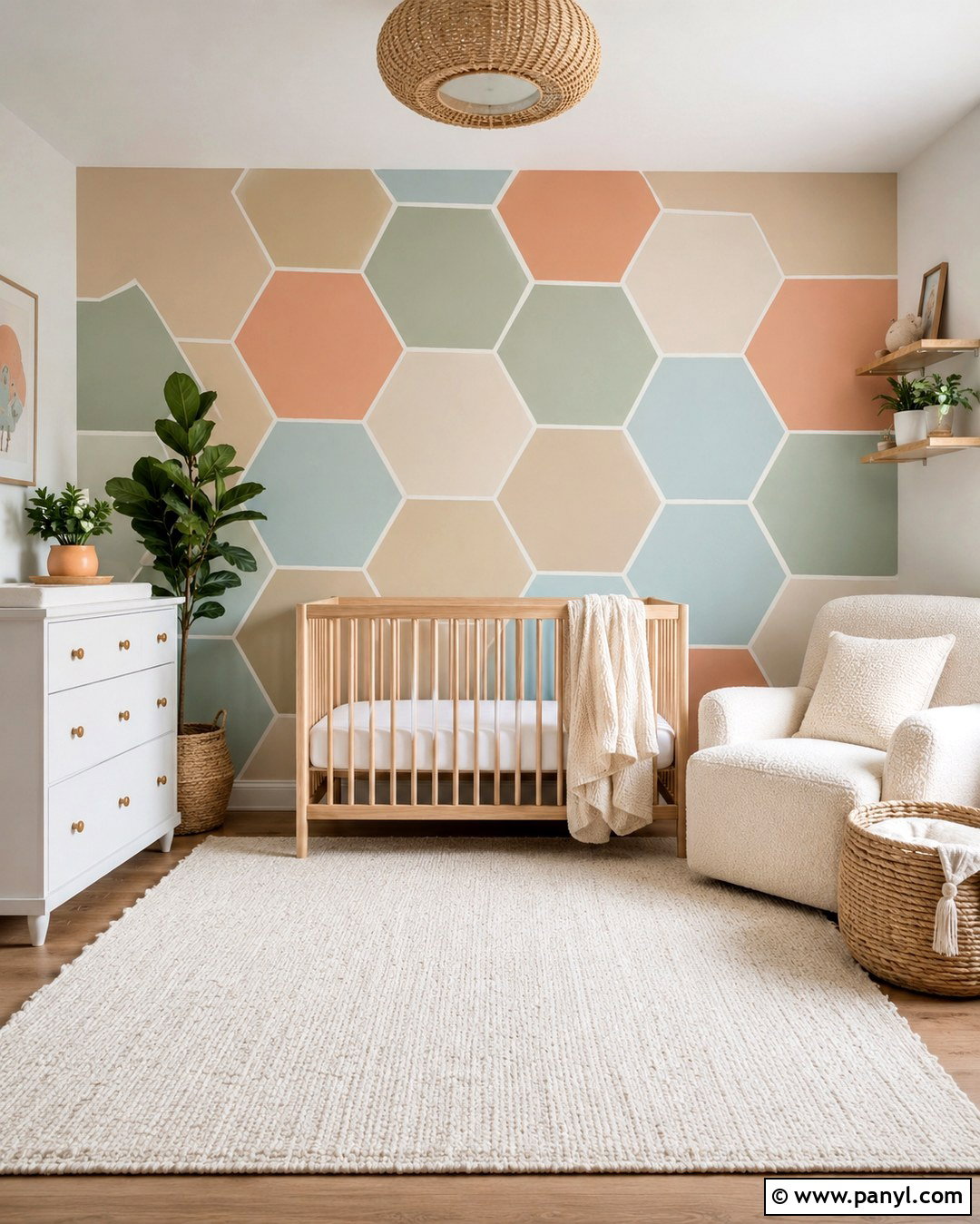
Warm terracotta shapes create a cheerful nursery that can continue working as the child grows. Paint the crib wall a soft ivory, then add a large clay-colored semicircle rising behind the crib. Layer smaller geometric sections in muted mustard, sandy beige, and gentle sage green around it. Keep the design concentrated on the lower two-thirds of the wall so it feels connected to the furniture. Pair the mural with a natural wood crib, cream rocking chair, and woven storage baskets. A washable ivory rug softens the floor, while sage curtains balance the warmer wall colors. Add a light oak dresser with a rounded mirror and simple ceramic lamp. Instead of using character-themed accessories, select solid blankets, wooden toys, and restrained decor that will remain appropriate beyond the baby years.
7. Black And White Grid Geometric Wall
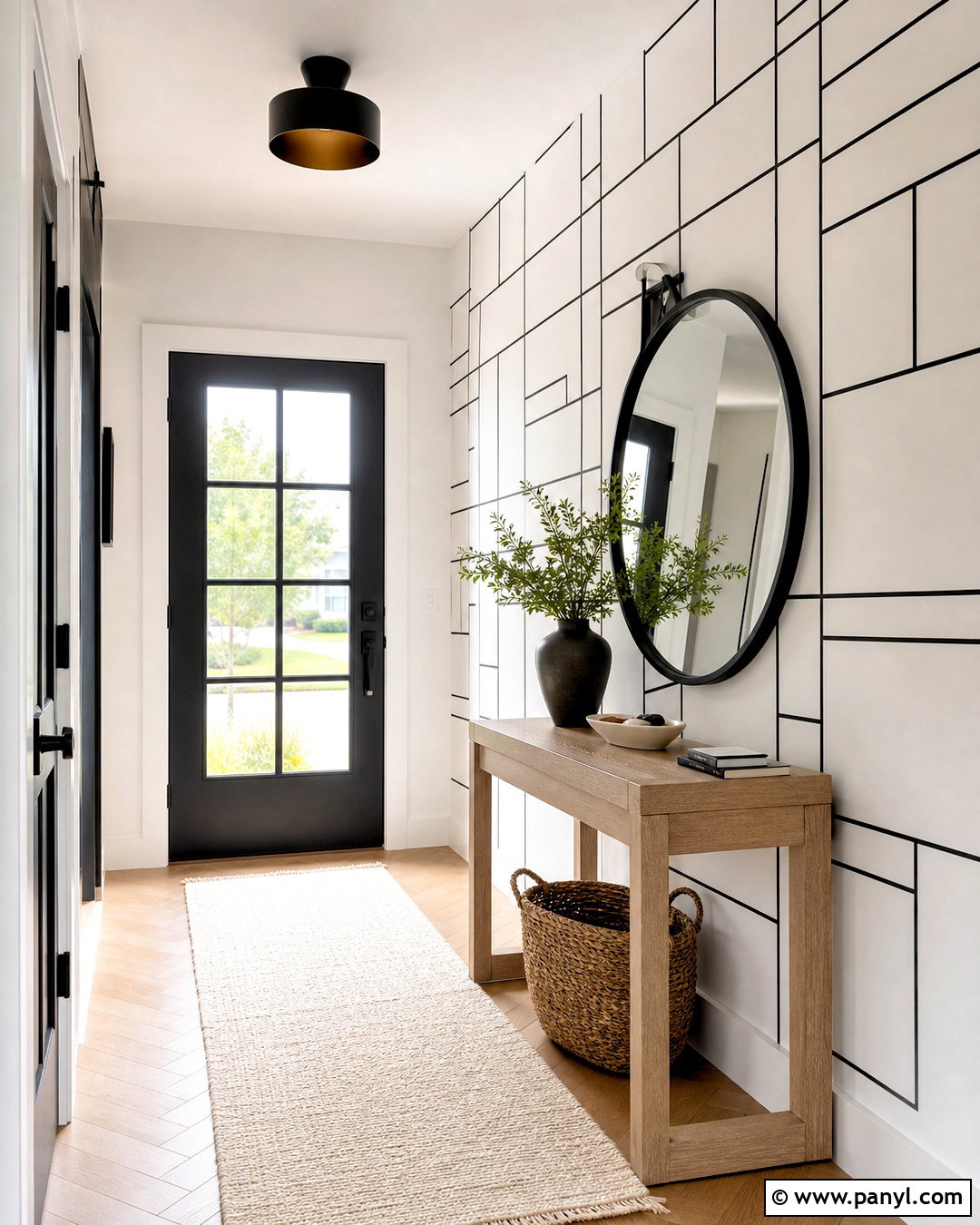
A crisp black and white grid can make a small entryway feel more architectural. Paint the wall clean white and add thin black lines forming large, irregular squares and rectangles. Keep the pattern slightly asymmetrical so it appears modern rather than like standard graph paper. Place a narrow light oak console against the wall, allowing the lines to remain visible above and around it. A round black mirror softens the straight edges, while a woven basket underneath introduces natural texture. Add a small ivory runner with a subtle charcoal border and install a simple matte black ceiling light. Use one ceramic bowl for keys and a compact table lamp rather than filling the console with accessories. This complete arrangement makes the entrance feel polished, functional, and visually larger without relying on strong color.
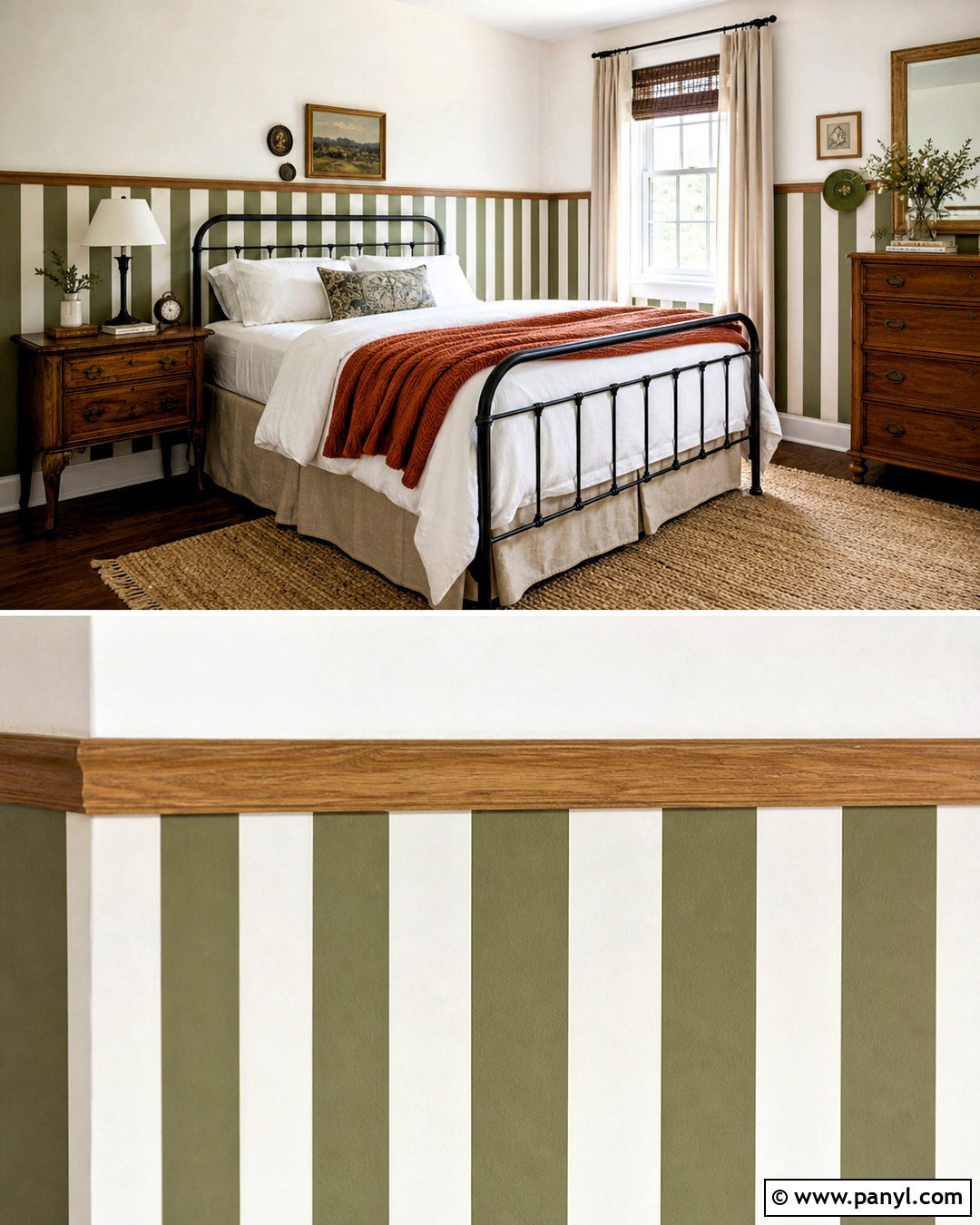
8. Sage Checkerboard Geometric Wall
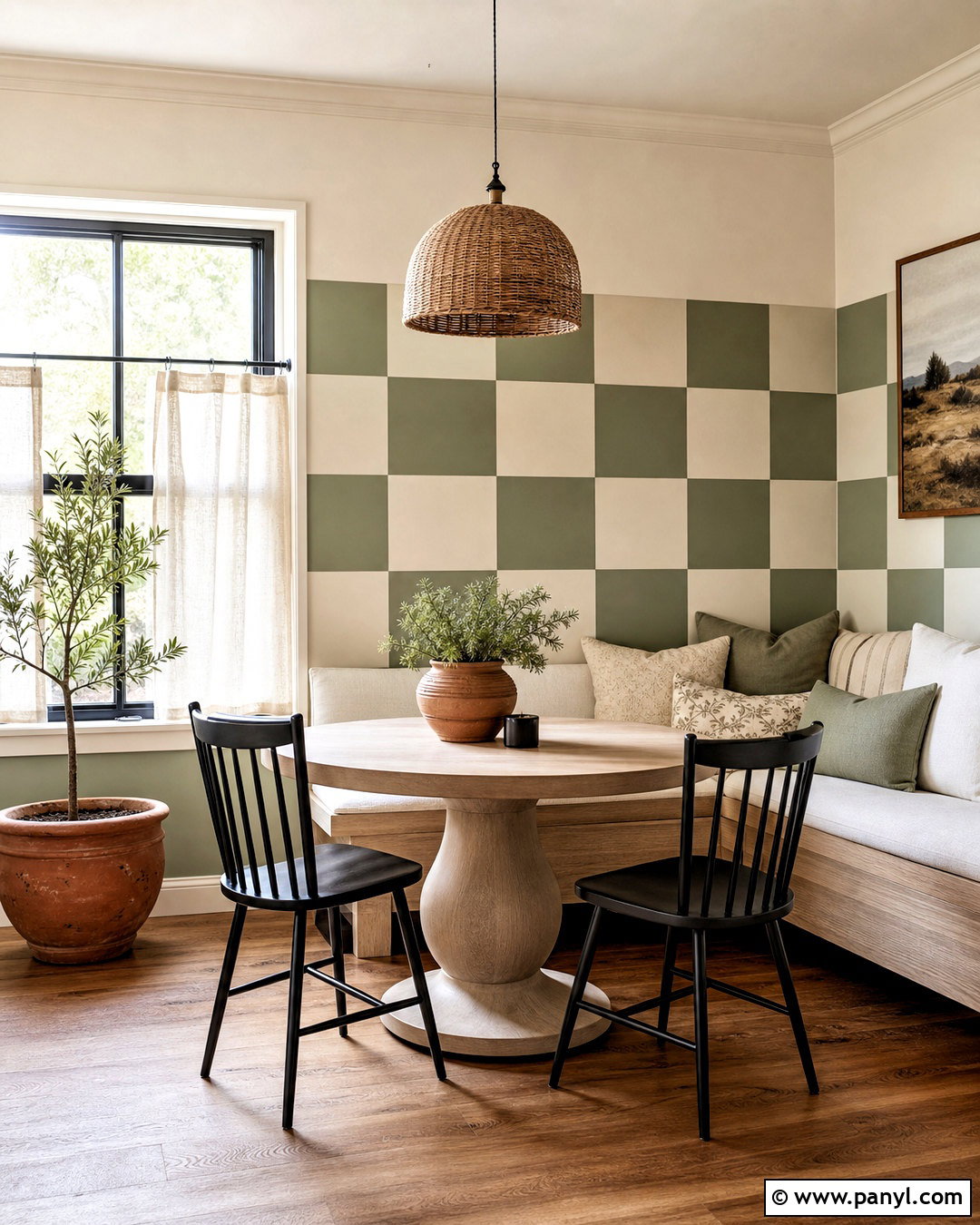
A sage and cream checkerboard pattern brings relaxed charm to a breakfast nook or casual dining corner. Use oversized squares instead of a small checker print, keeping the colors muted for a more grown-up appearance. Paint the lower two-thirds of the wall and leave the upper portion warm white to prevent the room from feeling enclosed. Place a round white oak pedestal table in the center with simple spindle-back chairs. Add a built-in bench or freestanding banquette upholstered in oatmeal fabric for comfortable seating. Linen café curtains, a woven pendant, and terracotta planters provide soft texture. Choose solid seat cushions in cream and sage rather than introducing another pattern. Light wood flooring and a natural jute rug complete this welcoming geometric wall design while maintaining an easy, practical everyday atmosphere.
9. Blue Hexagon Geometric Wall
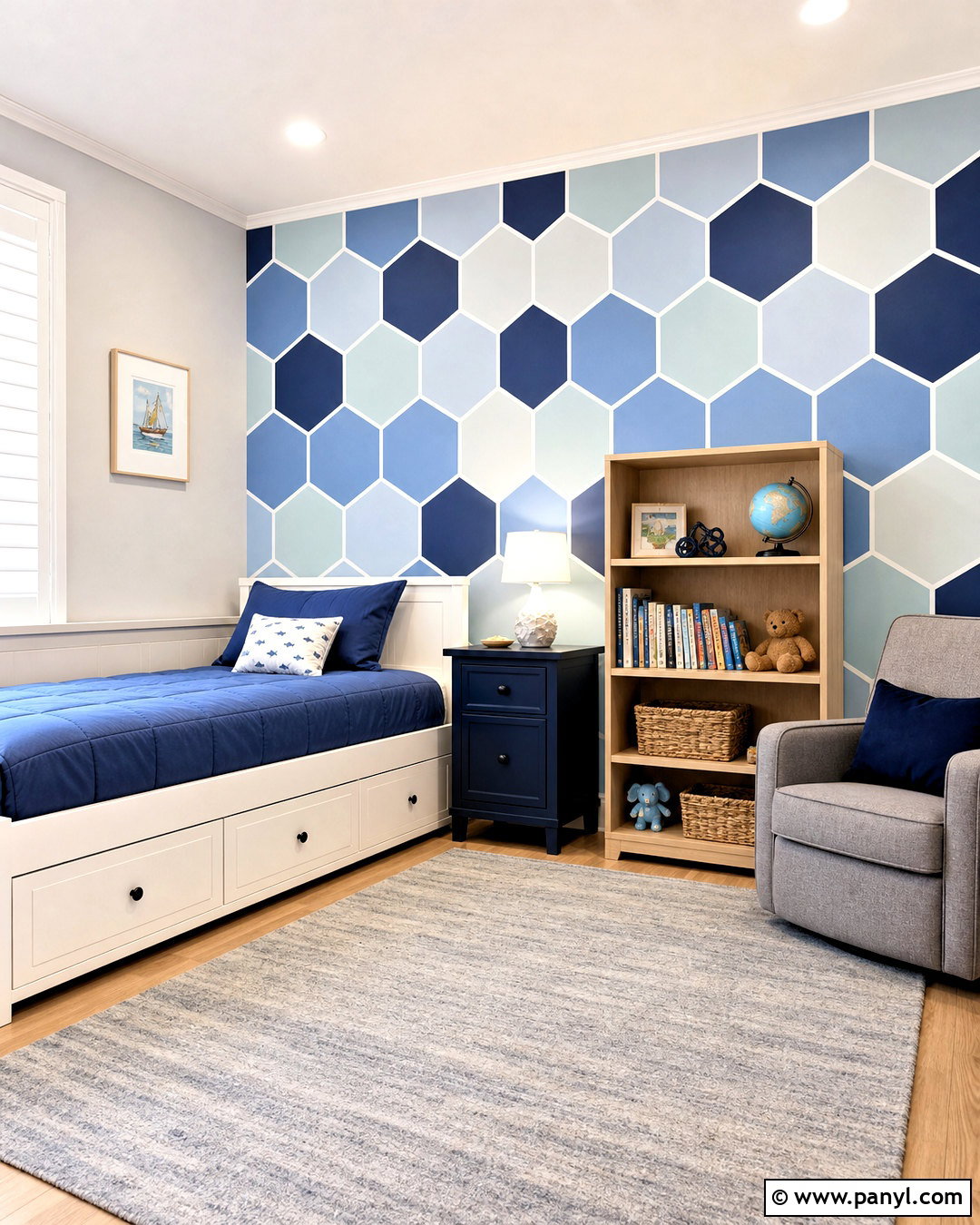
Graduated blue hexagons can turn a child’s bedroom into a colorful space without looking overly themed. Begin with a pale blue-gray base, then paint connected hexagons in navy, medium denim, sky blue, and misty aqua. Concentrate the darkest shades near the floor and gradually transition toward lighter colors higher on the wall. A white bed with simple storage drawers keeps the design bright and useful. Add a navy bedside table, a pale wood bookcase, and a soft gray reading chair. Bedding should combine solid blue layers with one restrained geometric accent pillow. Place a light washable rug in the center of the room and use white roller shades at the window. Keep toys organized in matching baskets so the detailed wall remains exciting rather than contributing to visual clutter.
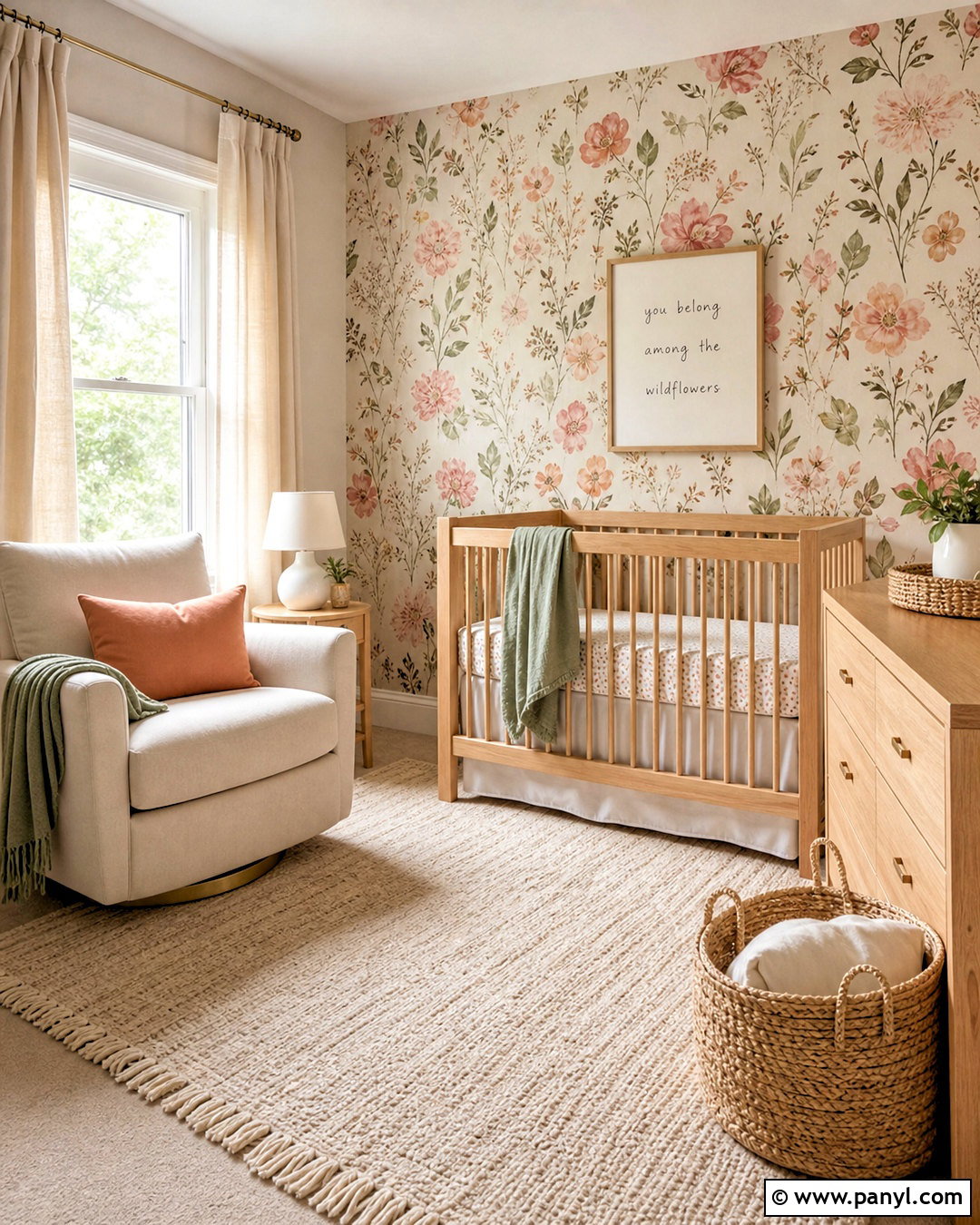
10. Geometric Mountain Playroom Wall
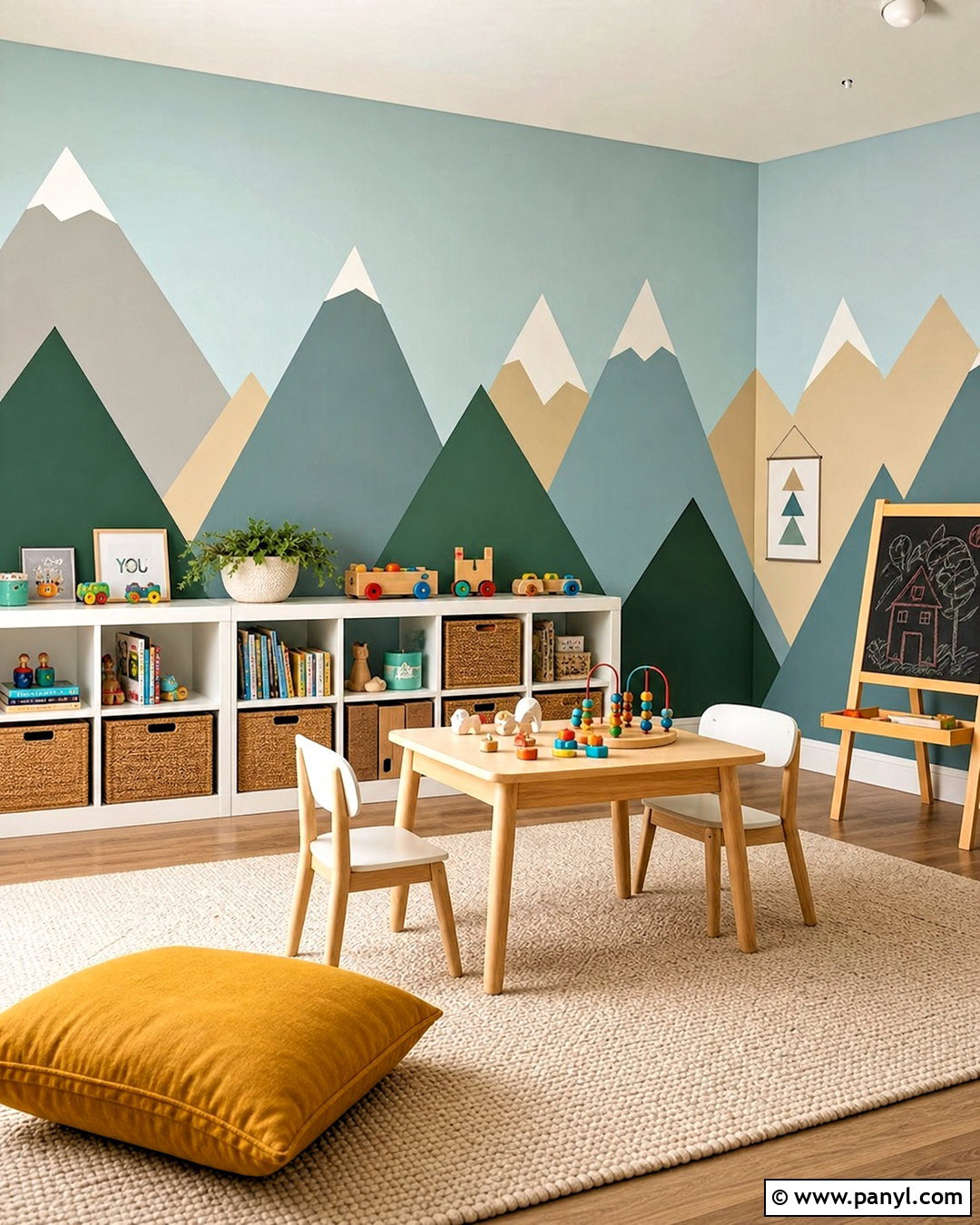
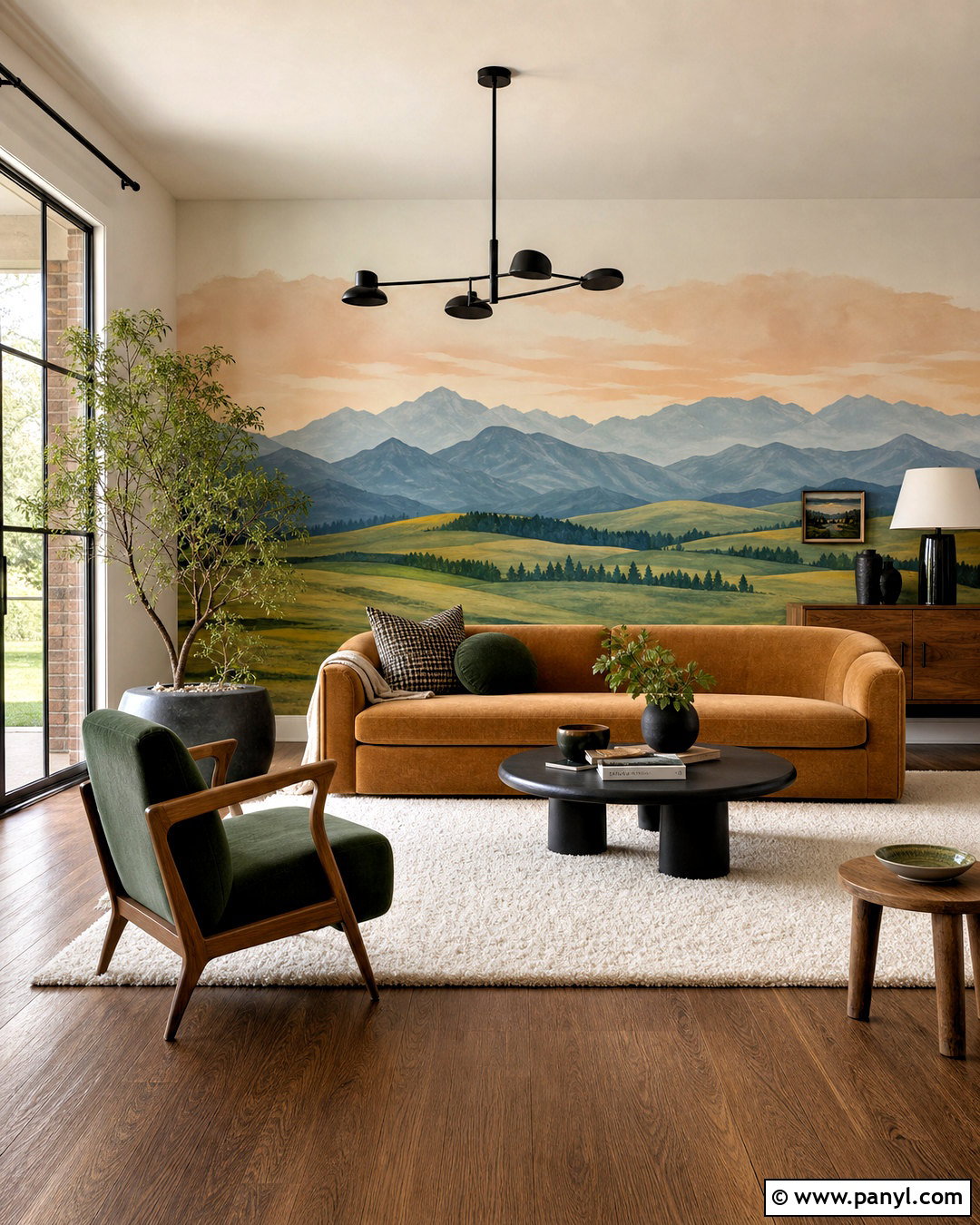
A painted mountain mural creates an imaginative playroom while maintaining a clean geometric look. Use angular peaks in forest green, muted teal, warm gray, and sandy beige against a pale sky-blue background. Vary the height and width of the mountains, but keep their edges straight and clearly defined. Arrange a low white storage unit across the bottom of the mural with labeled-looking, text-free woven bins and open spaces for colorful toys. Add a small natural wood activity table, durable chairs, and a washable cream rug with a simple border. A mustard floor cushion brings warmth without distracting from the landscape. Install bright white ceiling lighting and leave plenty of open floor space for play. The overall room feels adventurous, organized, and flexible enough to change as children get older.
11. Black Zigzag Geometric Wall
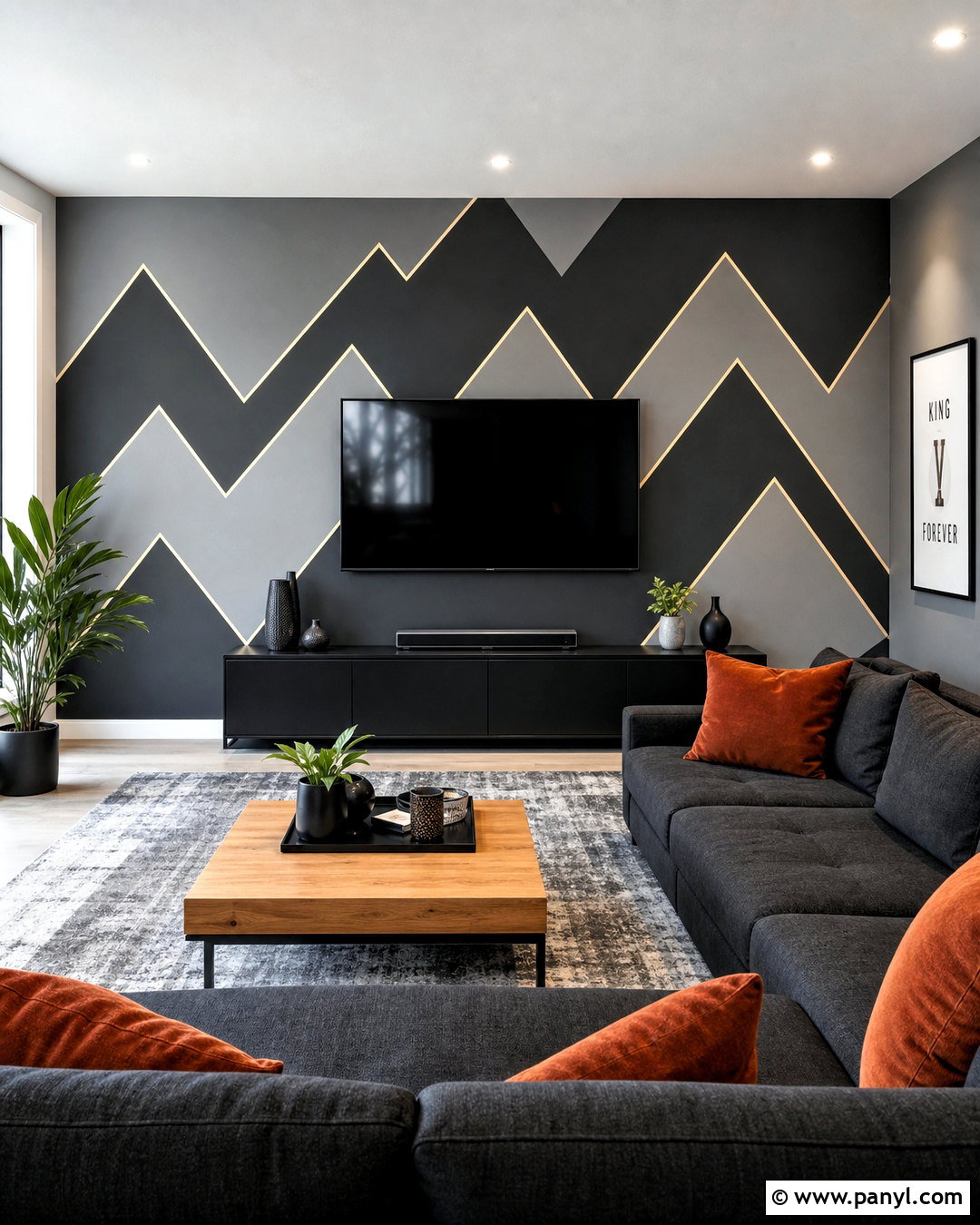
A black zigzag wall gives a media room a bold focal point that suits screens, speakers, and contemporary furniture. Begin with a soft gray background, then paint one oversized charcoal-black zigzag stretching horizontally across the wall. Add a narrow warm white line beside portions of the darker shape to sharpen the design. Position a low black media console against the wall and mount the television within the largest solid gray section, not over a high-contrast line. A deep charcoal sectional, rust-colored pillows, and a medium-toned oak coffee table make the space feel comfortable rather than stark. Choose a large gray rug with minimal pattern and add closed storage for devices and accessories. Adjustable white lighting keeps the room functional while allowing the dramatic geometric wall to remain clearly visible.
12. Blue Rectangle Geometric Bathroom Wall
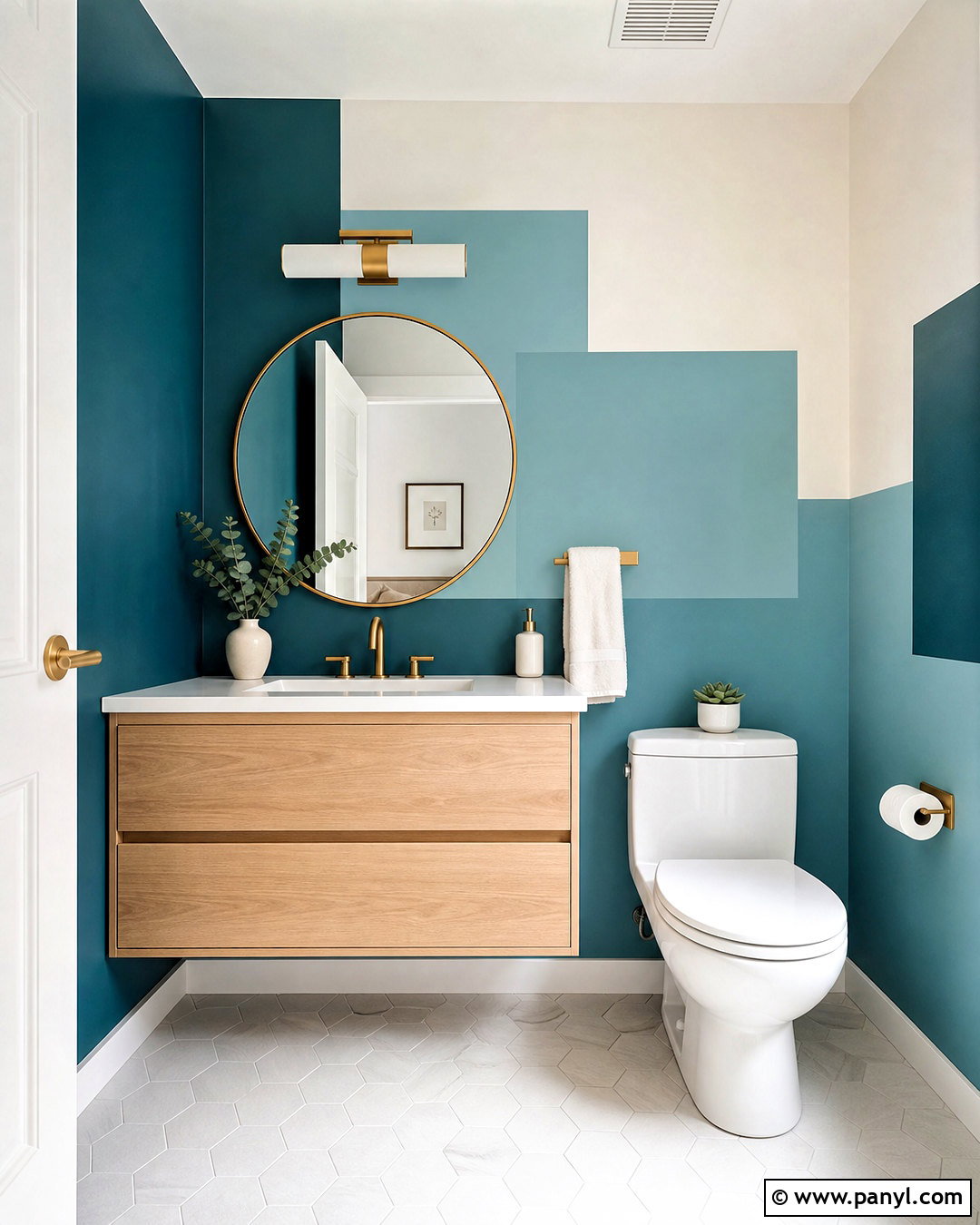
Layered blue rectangles can give a small bathroom structure, color, and a custom-designed appearance. Use moisture-appropriate paint over a warm white base, then arrange wide rectangles in deep teal, muted ocean blue, and pale aqua around the vanity wall. Keep painted areas away from surfaces that receive constant direct water unless the finish is rated for that location. A floating light oak vanity and white quartz counter brighten the palette. Select a round mirror with a slim brass frame to contrast with the angular pattern. Brushed brass faucets, white towels, and a simple globe light complete the coordinated look. Use matte white floor tile or light gray porcelain for a clean foundation. One small plant and a covered storage basket add softness without crowding this compact, colorful, and practical bathroom.
13. Earth Tone Abstract Geometric Wall
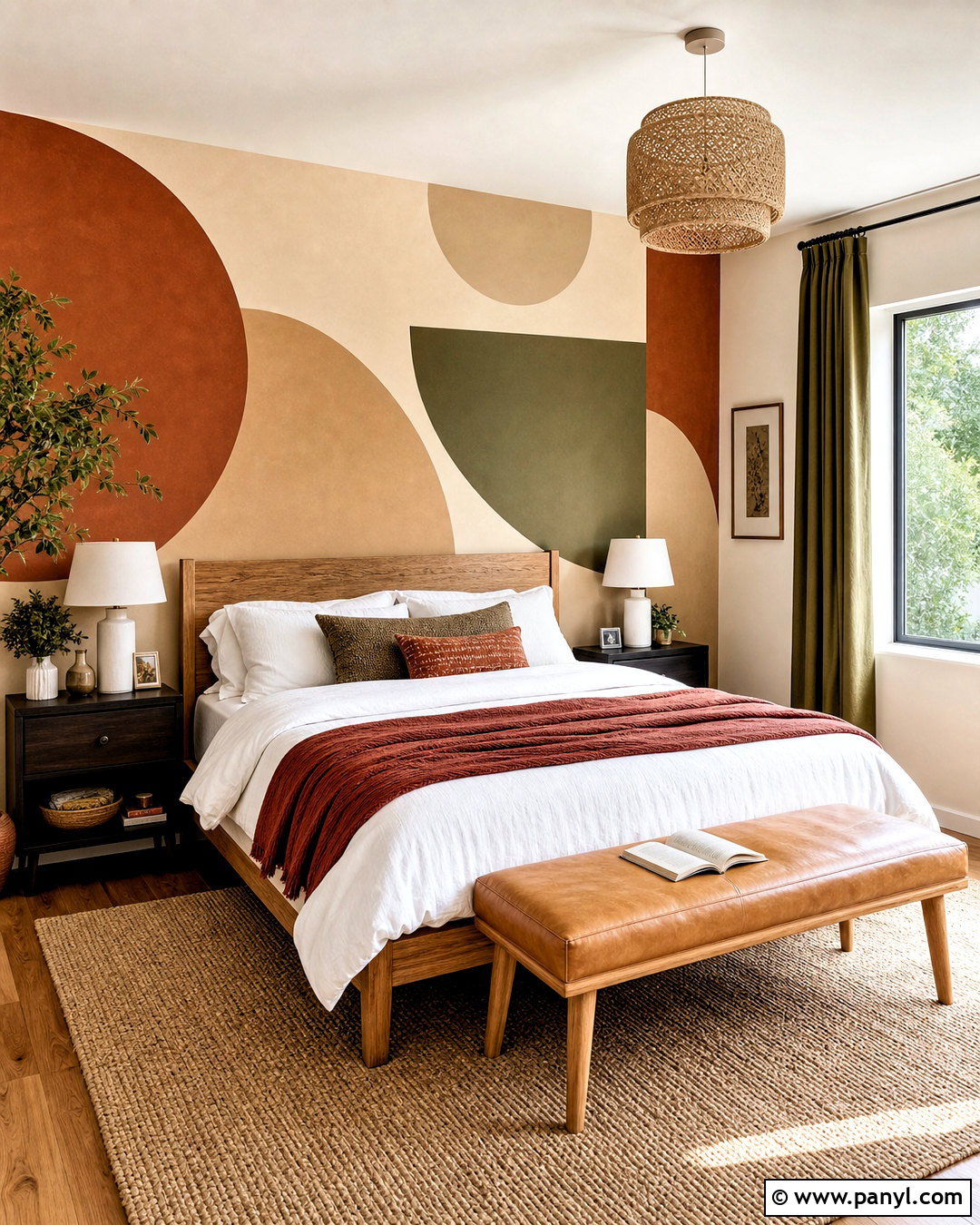
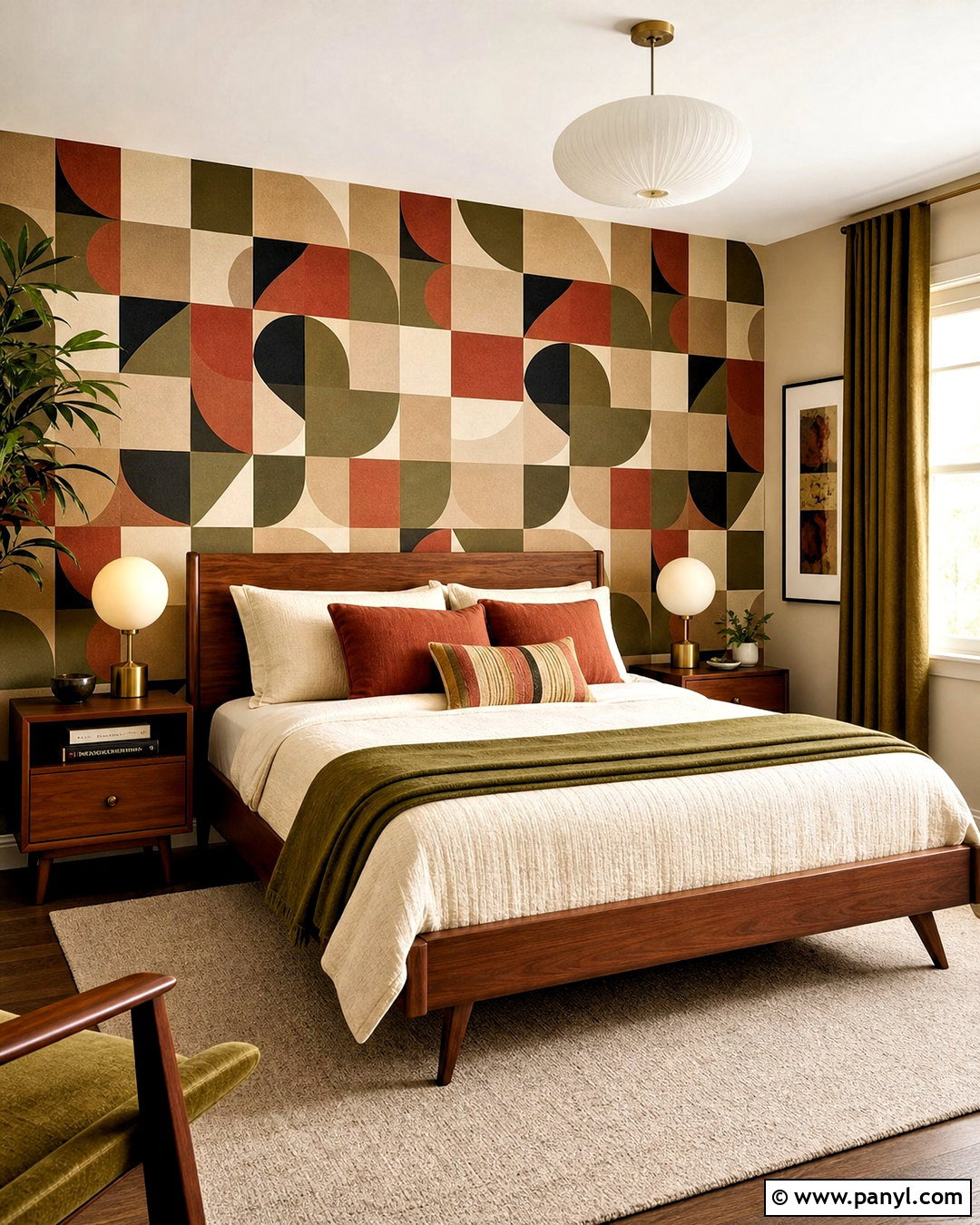
Earthy abstract shapes can transform a guest bedroom into a warm and welcoming retreat. Paint the wall behind the bed creamy beige, then layer large angular forms in muted terracotta, caramel brown, olive green, and dusty tan. Allow some sections to overlap while leaving visible areas of the base color between them. Center a simple oak bed against the mural and use crisp white bedding with a rust blanket folded across the foot. Dark brown nightstands ground the lighter woods, while linen lampshades soften the graphic background. Add olive curtains, a natural fiber rug, and one small upholstered bench in camel fabric. Avoid placing framed artwork over the busier sections. Instead, use a single wall-mounted reading light or a simple decorative object on each nightstand to preserve the mural’s strong composition.
14. Ceiling To Wall Geometric Stripes
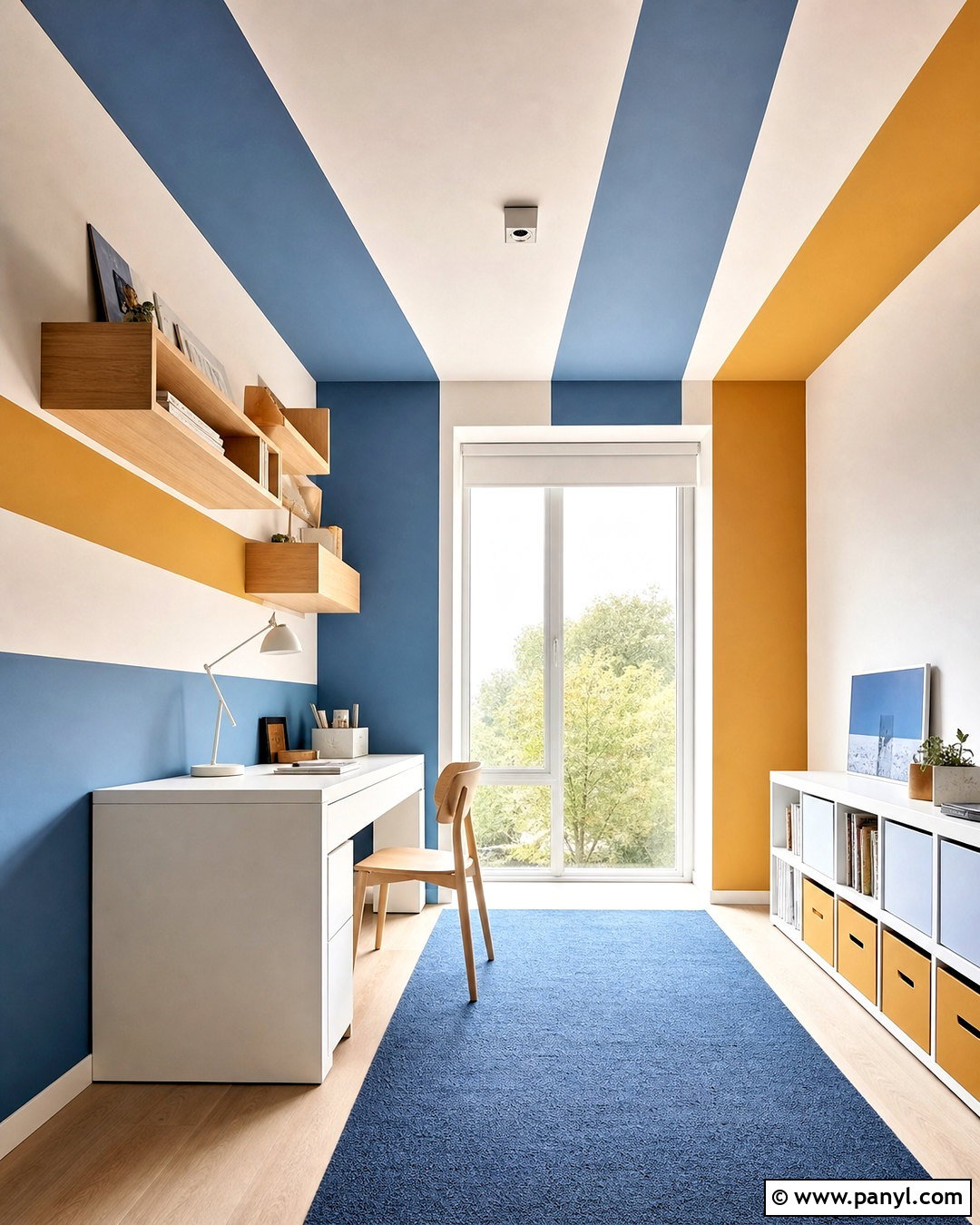
Stripes that continue from a wall onto the ceiling can define a workspace within a multipurpose room. Paint three broad bands in dusty blue, warm white, and muted ochre behind the desk, then carry them approximately halfway across the ceiling. Keep the stripe widths equal for a clean architectural effect. Position a compact white desk inside this painted zone with a pale wood chair and floating oak shelves. The rest of the room can remain soft greige, helping the office area feel separate without physical dividers. Add a small blue rug beneath the desk, a white task lamp, and ochre storage boxes to repeat the painted colors. Use bright ceiling lighting so the overhead paint stays clear. This treatment works especially well in a guest room, studio apartment, or shared family space.
15. Scalloped Geometric Bedroom Wall
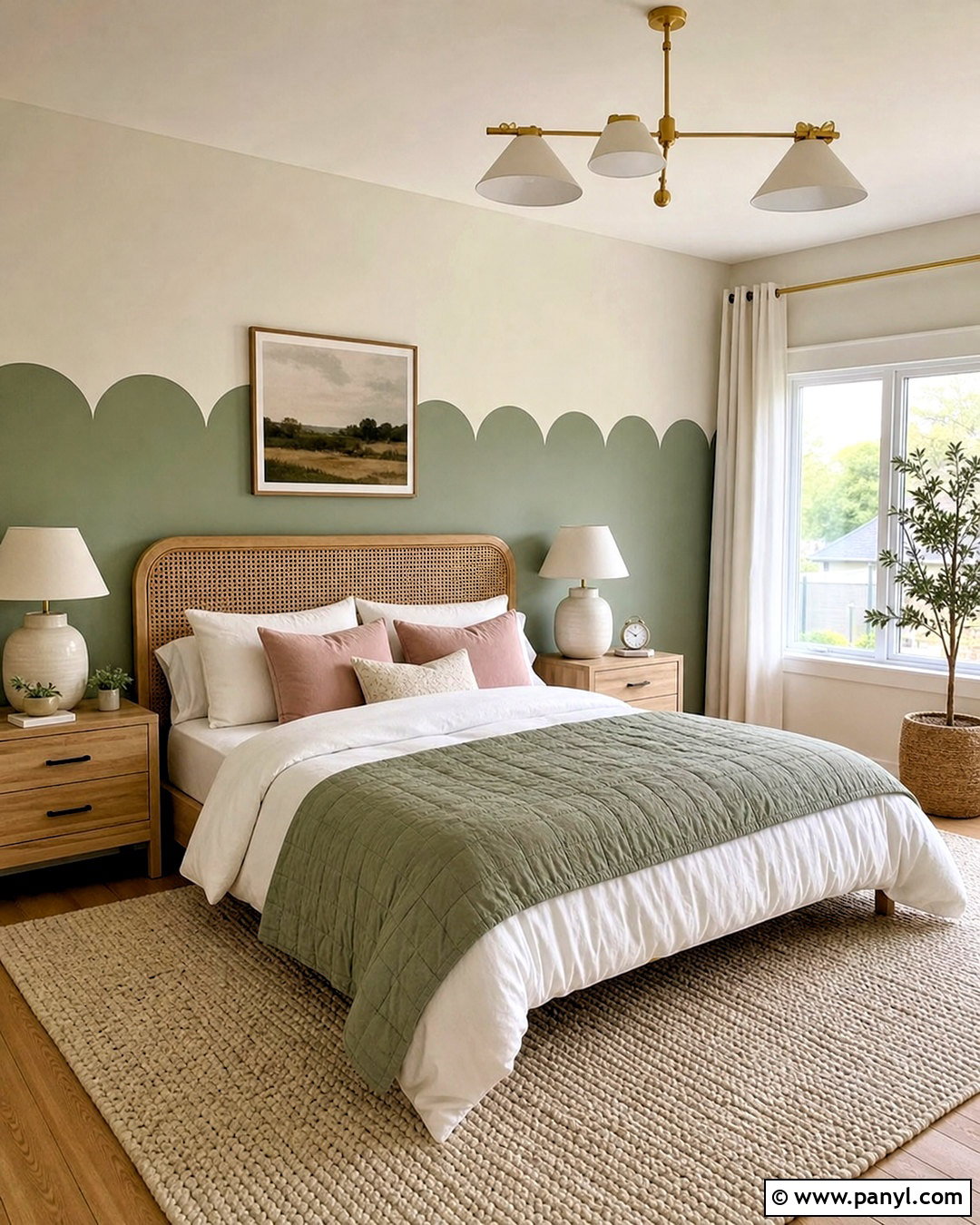
A scalloped paint border offers a softer approach to geometry in a cozy bedroom. Paint the lower half of the wall muted sage green, then finish the upper edge with evenly measured semicircles. Keep the upper wall warm white for brightness and visual breathing room. Place a natural cane headboard in front of the green section, with the scallops clearly visible above it. Layer the bed with white linen, a sage quilt, and small blush accents. Light oak nightstands and rounded ceramic lamps support the curved pattern without making the room overly decorative. Add beige curtains, a cream wool rug, and a simple wood bench at the foot of the bed. The result feels relaxed and approachable, combining graphic structure with gentle lines that suit cottage, transitional, and modern organic interiors.
16. Primary Color Geometric Wall
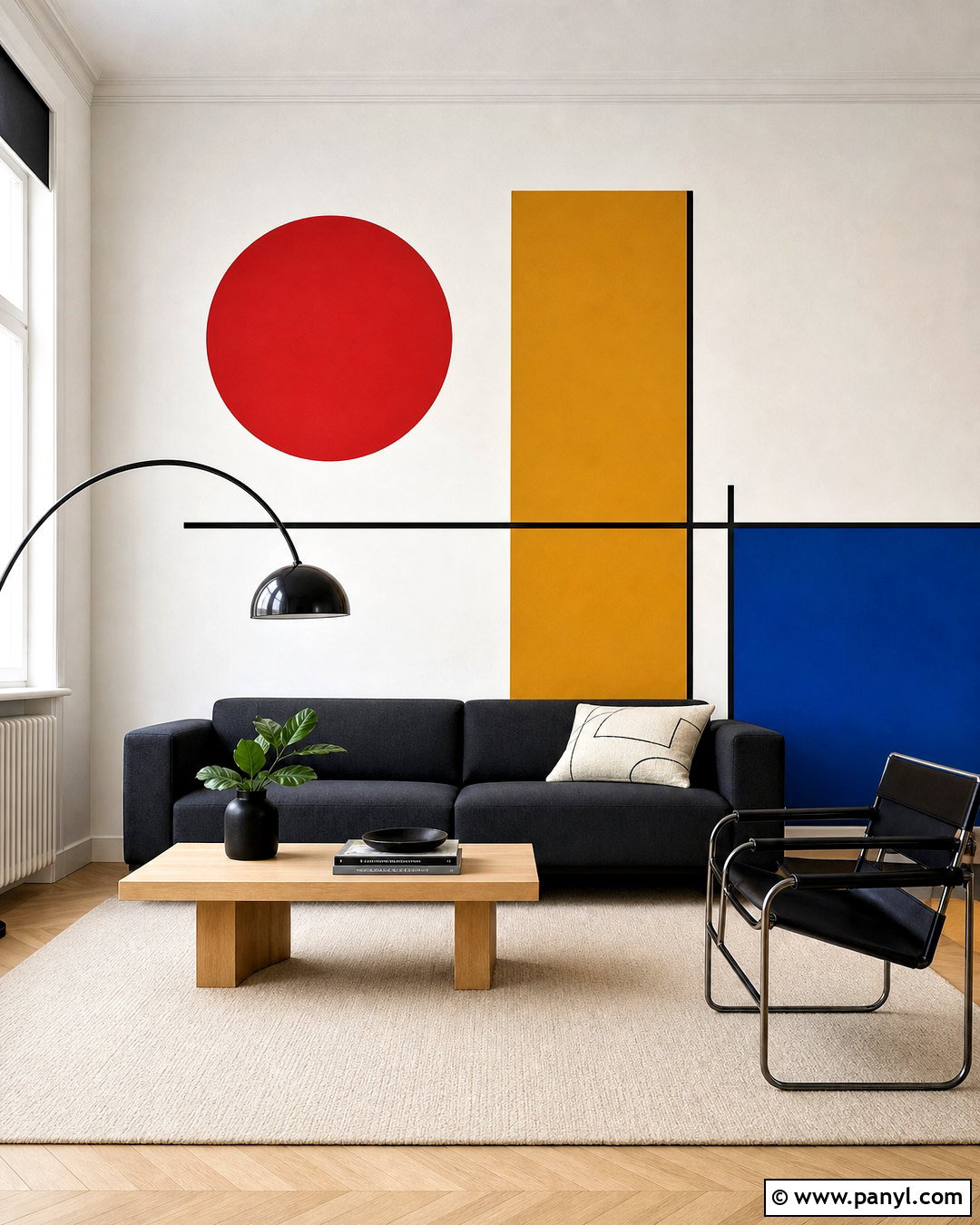
Strong primary colors create a lively Bauhaus-inspired living room when they are used in measured sections. Start with a warm white wall and arrange one red circle, a wide mustard rectangle, a cobalt blue square, and several thin black lines. Leave generous neutral space between the shapes so the wall resembles a balanced mural instead of a crowded pattern. Furnish the room with a low charcoal sofa, a tubular black chair, and a simple pale wood coffee table. Add solid red and blue cushions in small quantities, plus a cream rug that keeps the floor quiet. A black arc floor lamp repeats the curved shape on the wall. Limit decorative objects to a few functional pieces. This bold room works best when every furniture item has a clean outline and a clear purpose.
17. Minimal Line Geometric Hallway Wall
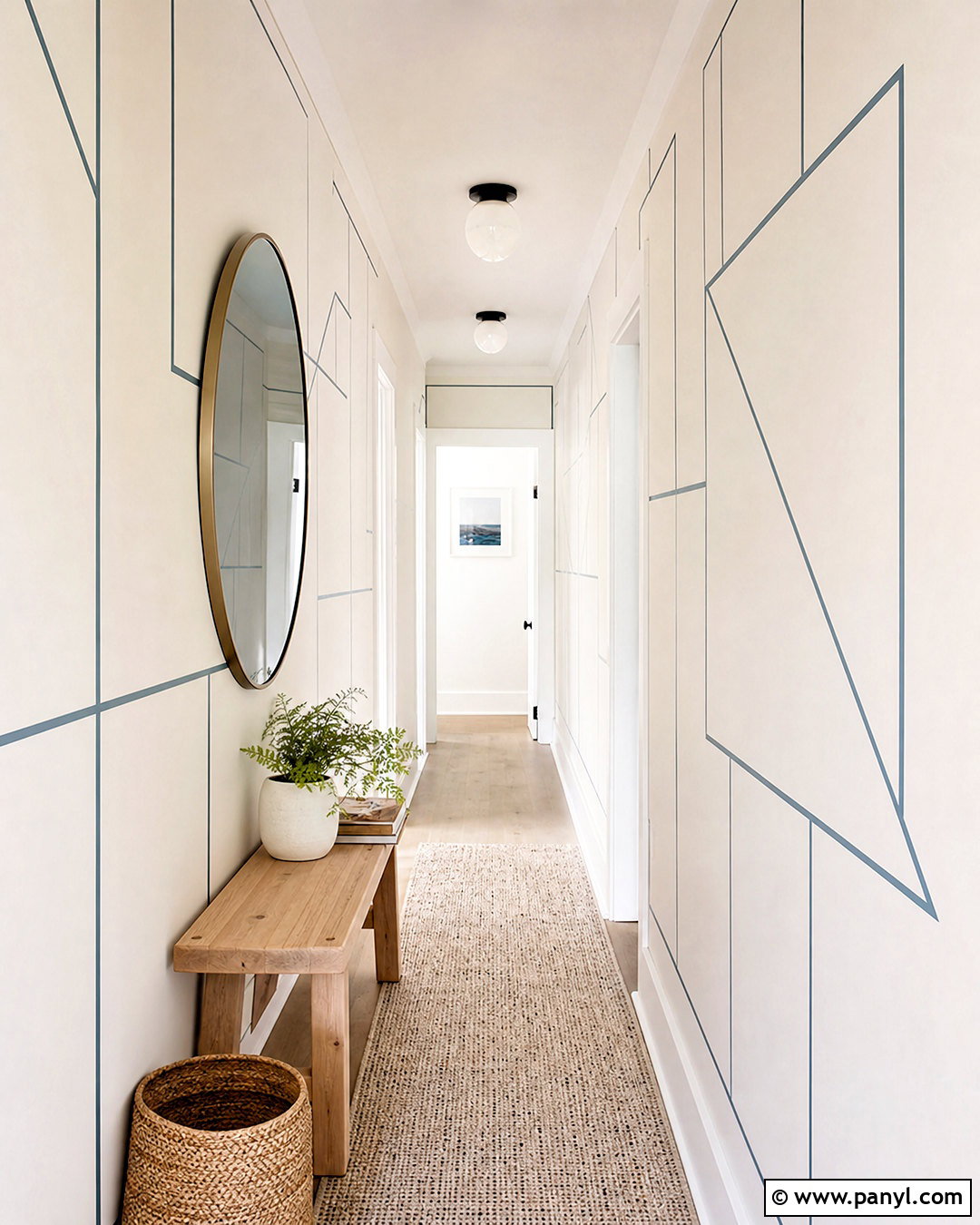
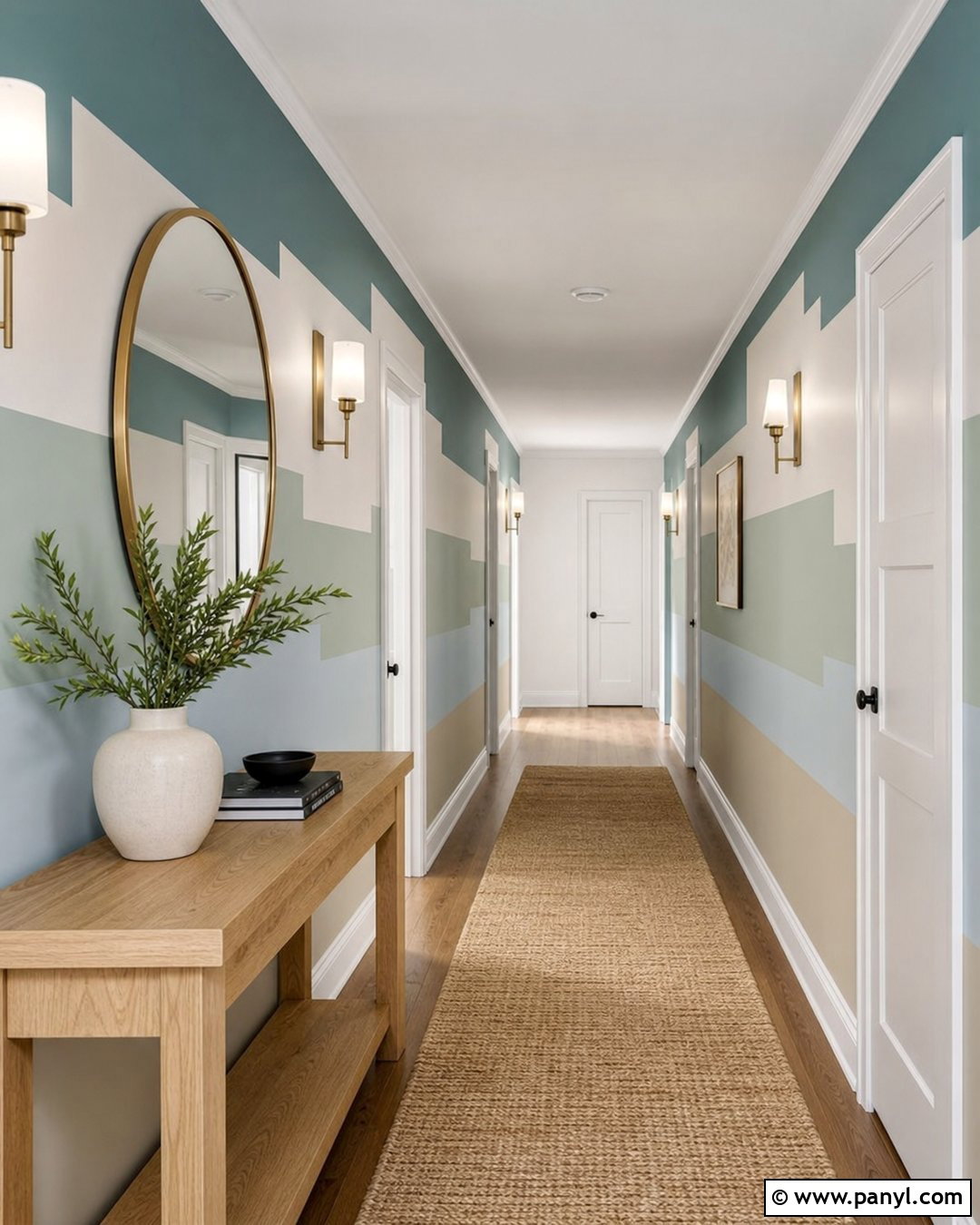
Thin painted lines can give a narrow hallway movement without reducing its sense of space. Use a warm white background and create a large continuous geometric line in soft charcoal, muted taupe, or dusty blue. Let it travel around doorways and change direction at controlled angles, forming open rectangles and partial triangles. Keep most of the wall light and uncluttered. A slim oak bench, a round mirror, and one woven basket provide function without obstructing the design. Choose a neutral runner with a subtle linear border and simple flush-mount lights for even illumination. Doors and trim should remain white or match the base wall color. With fewer shapes and a restrained palette, this geometric wall treatment adds personality while preserving the clean, open quality that a compact passageway needs.
18. Two Tone Diagonal Stair Wall
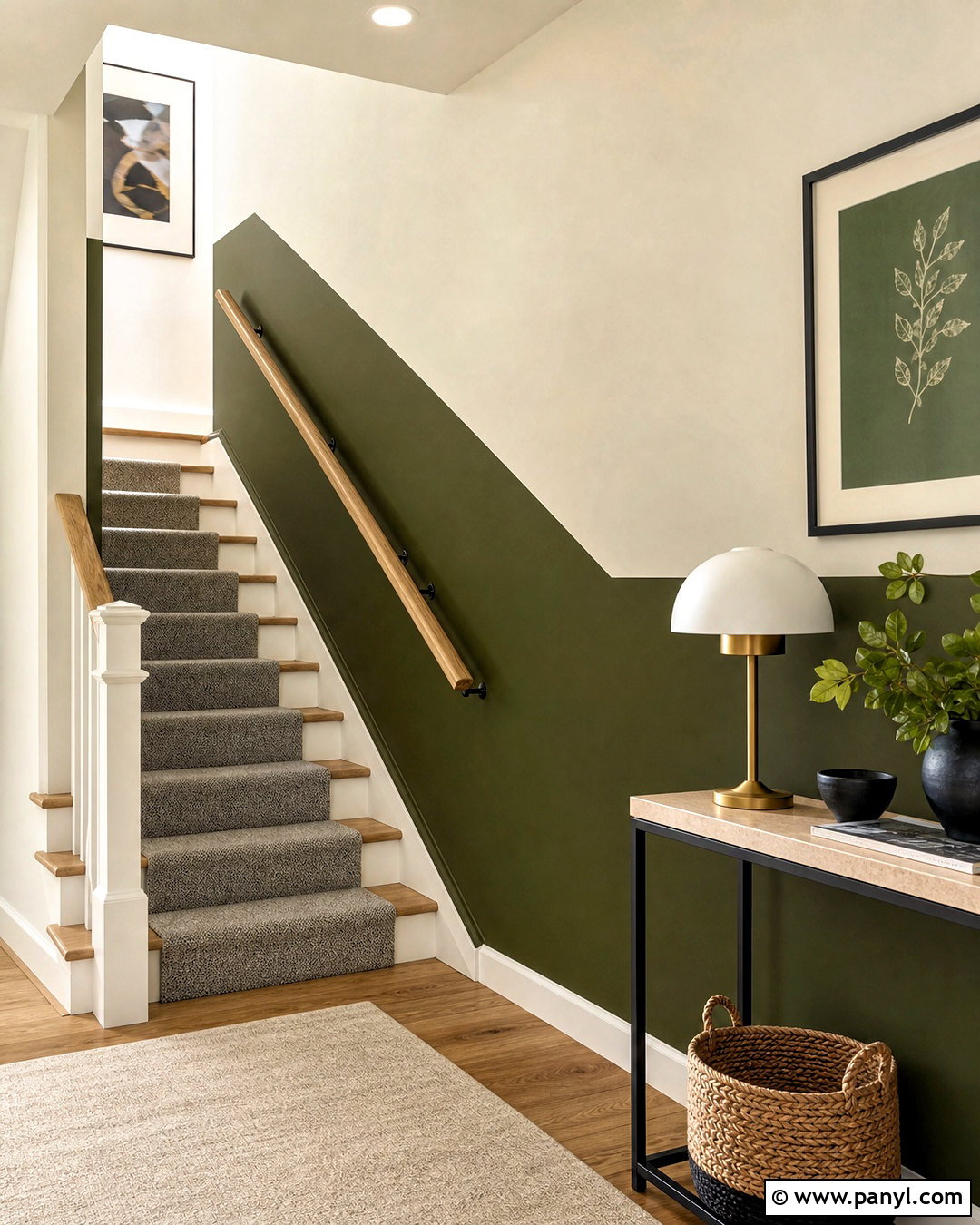
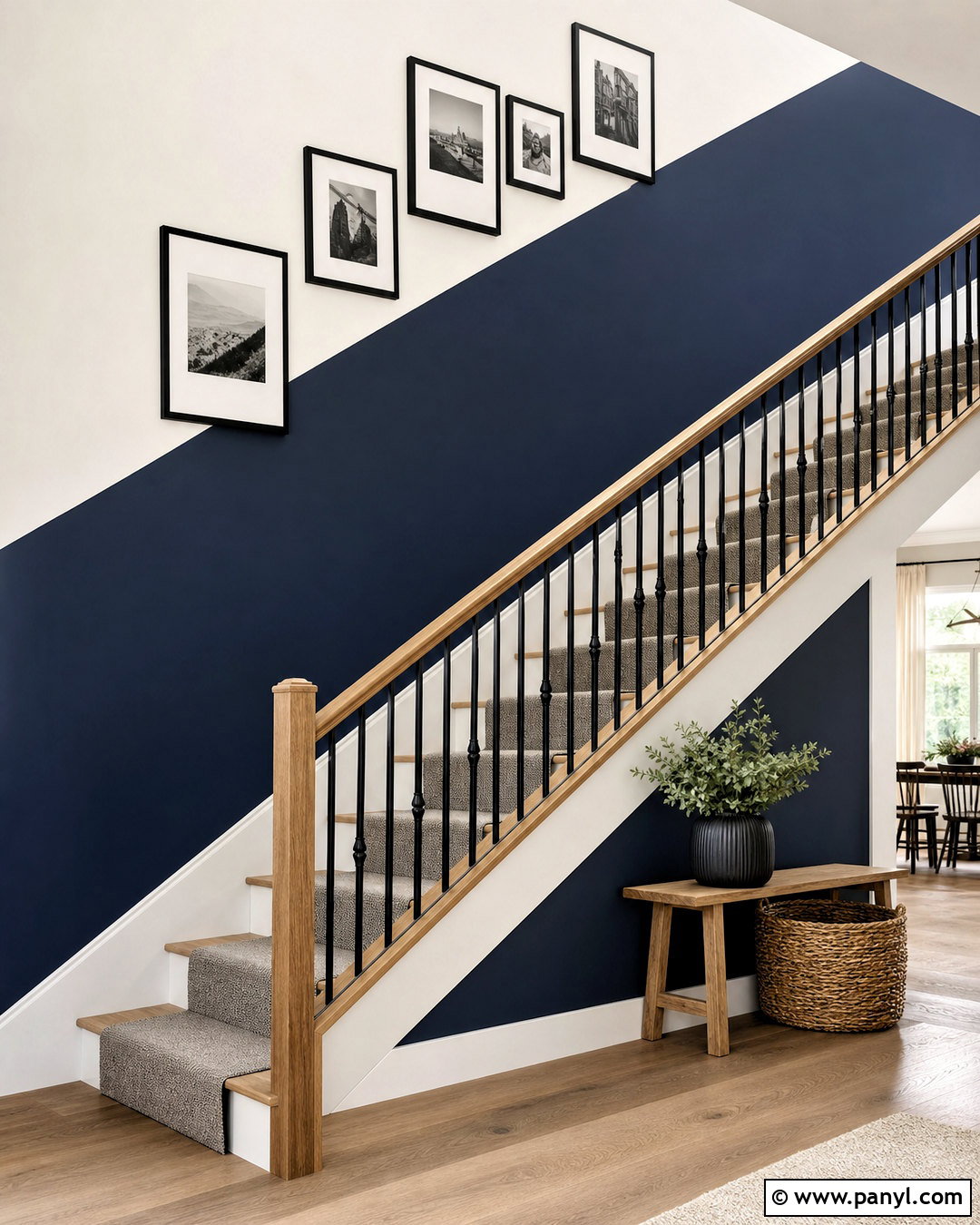
A two-tone diagonal treatment can emphasize the natural movement of a staircase. Paint the lower portion of the wall deep olive green and the upper area warm cream, separating them with a bold diagonal line that follows the rise of the steps. Continue the green slightly above the handrail so the color remains visible rather than disappearing behind it. Use a simple oak railing with matte black brackets and choose a neutral runner for the stairs. At the landing, add a narrow console, a rounded lamp, and one large framed print in cream and green. Bright white ceiling lights keep the darker paint from feeling heavy. This complete stairway scheme looks intentional from both floors and offers geometric impact with only two colors, making it easier to measure, tape, paint, and maintain.
19. Painted Panel Geometric Dining Wall
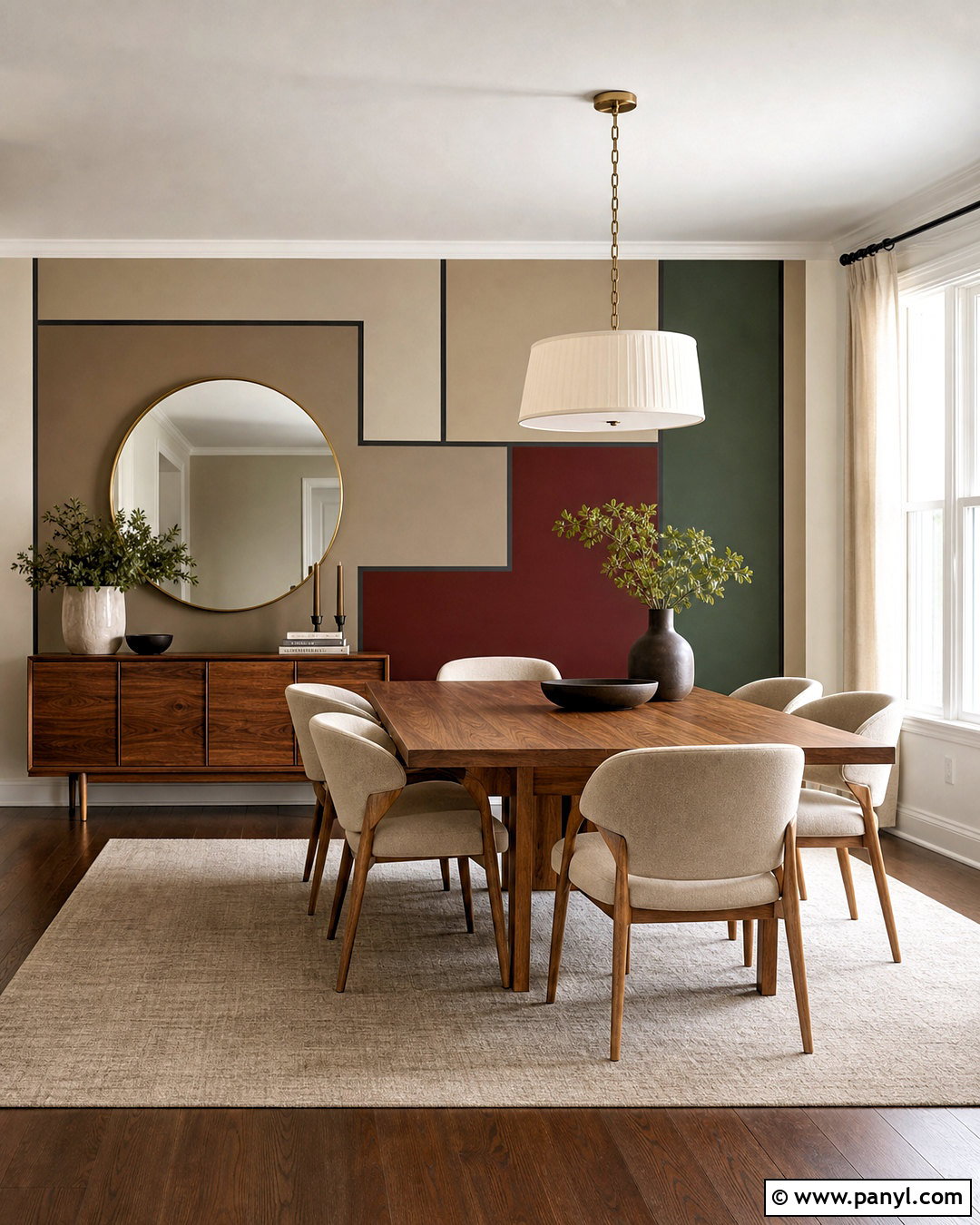
Painted rectangular panels can create the appearance of architectural molding without adding wood trim. Start with a soft greige wall, then form several large outlined rectangles in dark taupe. Fill one or two selected panels with muted burgundy or deep forest green for controlled contrast. Arrange the shapes around a centered walnut sideboard, keeping the panel edges aligned with the furniture. Add a round brass mirror above the cabinet and place a rectangular dining table nearby with upholstered beige chairs. A cream pendant, linen curtains, and a low-pattern rug make the room feel softer. Use only a few ceramic pieces on the sideboard so the wall structure stays visible. The complete design suits dining rooms that need character but cannot accommodate permanent paneling, extensive construction, or highly detailed decorative features.
20. Geometric Fireplace Accent Wall
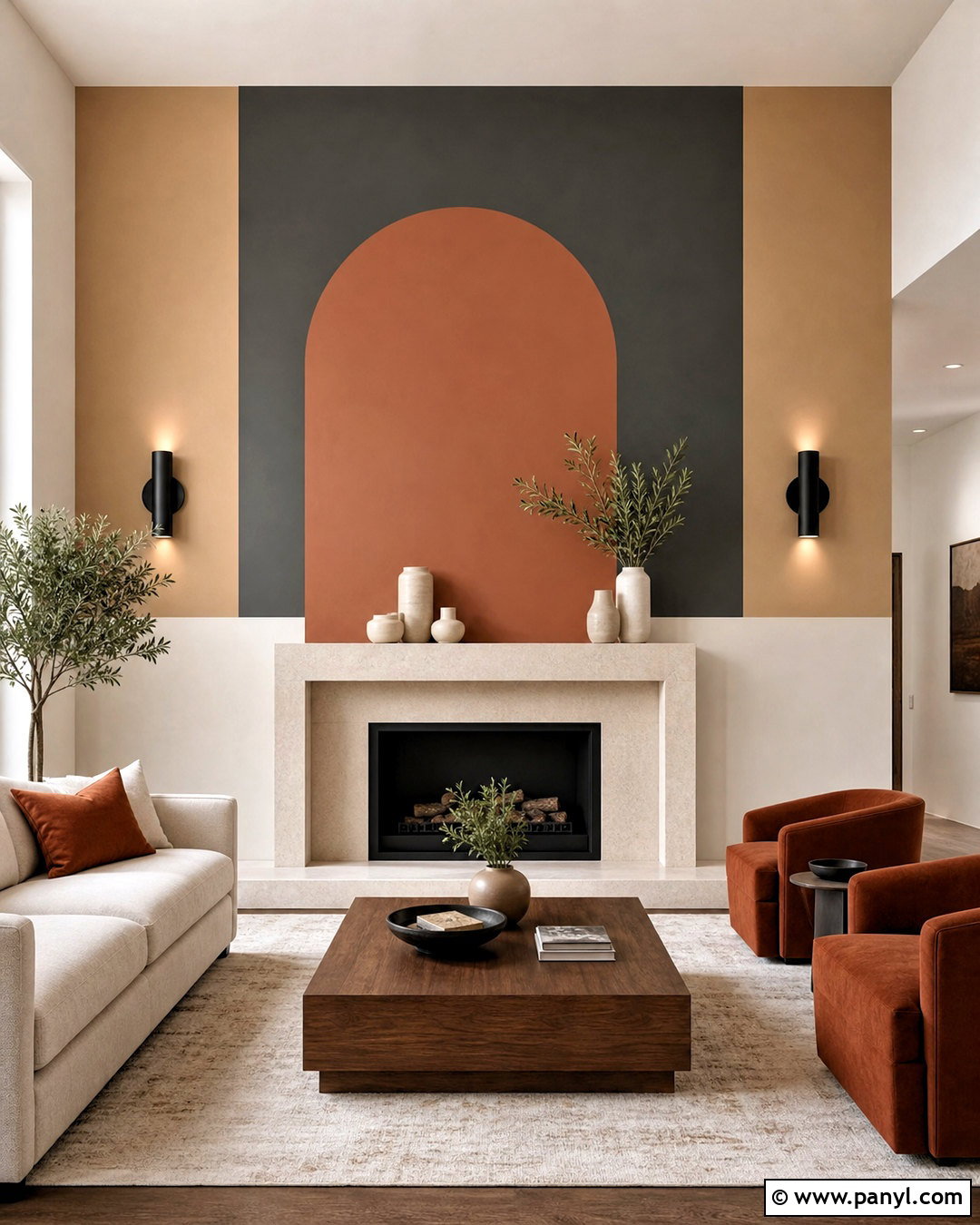
A fireplace wall becomes a stronger focal point when painted shapes connect the firebox, mantel, and surrounding furniture. Begin with a warm white base and add an oversized charcoal rectangle behind the fireplace. Layer a muted rust arch above the mantel and paint two narrow beige blocks along the sides. Keep every shape aligned with an architectural feature to make the composition feel intentional. A simple white or pale limestone mantel will stand out against the darker background. Arrange a cream sofa, two rust accent chairs, and a walnut coffee table around a textured neutral rug. Add matte black sconces on both sides of the fireplace and limit mantel decor to a low ceramic vessel and one sculptural object. The final living room feels balanced, welcoming, and visually connected.
Conclusion:
The best geometric wall paint ideas combine a well-planned pattern with furniture, lighting, and decor that support the same mood. Choose two to four colors that already relate to the room, then adjust the scale of the shapes to suit the available wall space. Oversized forms create cleaner results, while smaller repeating patterns add energy and detail. Use quality painter’s tape, measure several times, and view the taped layout from across the room before opening the paint. Sealing tape edges with the base color can also help create a cleaner finish. () Whether you prefer quiet neutrals or saturated color, a coordinated geometric design can give an ordinary room a memorable, custom appearance.

Related Ideas and Inspiration:
Leave a Reply