
A thoughtful wall color can change how a room feels, how furniture relates to the architecture, and even how natural light moves through the space. These 50 paint ideas for walls include restful neutrals, earthy shades, dramatic colors, graphic treatments, and softly textured finishes. Current interiors are leaning toward warmer neutrals, limewash, color drenching, color blocking, and richer nature-inspired hues rather than relying only on stark white. () Before choosing a look, test large samples during morning, afternoon, and evening light. Compare them with your flooring, upholstery, cabinetry, and permanent finishes. Whether you are refreshing one feature wall or repainting an entire room, this collection offers practical and complete 50 paint ideas for walls.

1. Warm White Living Room Walls
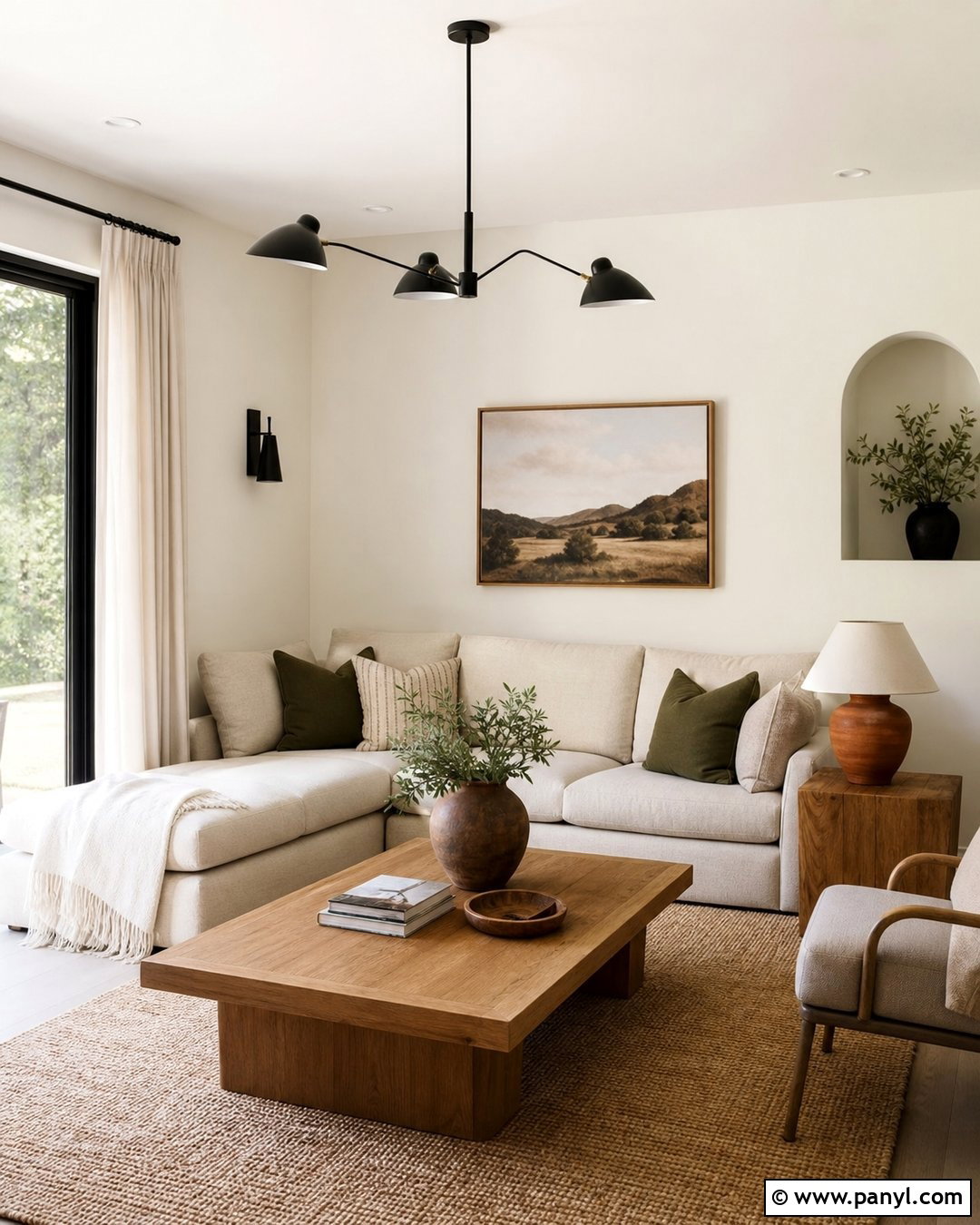
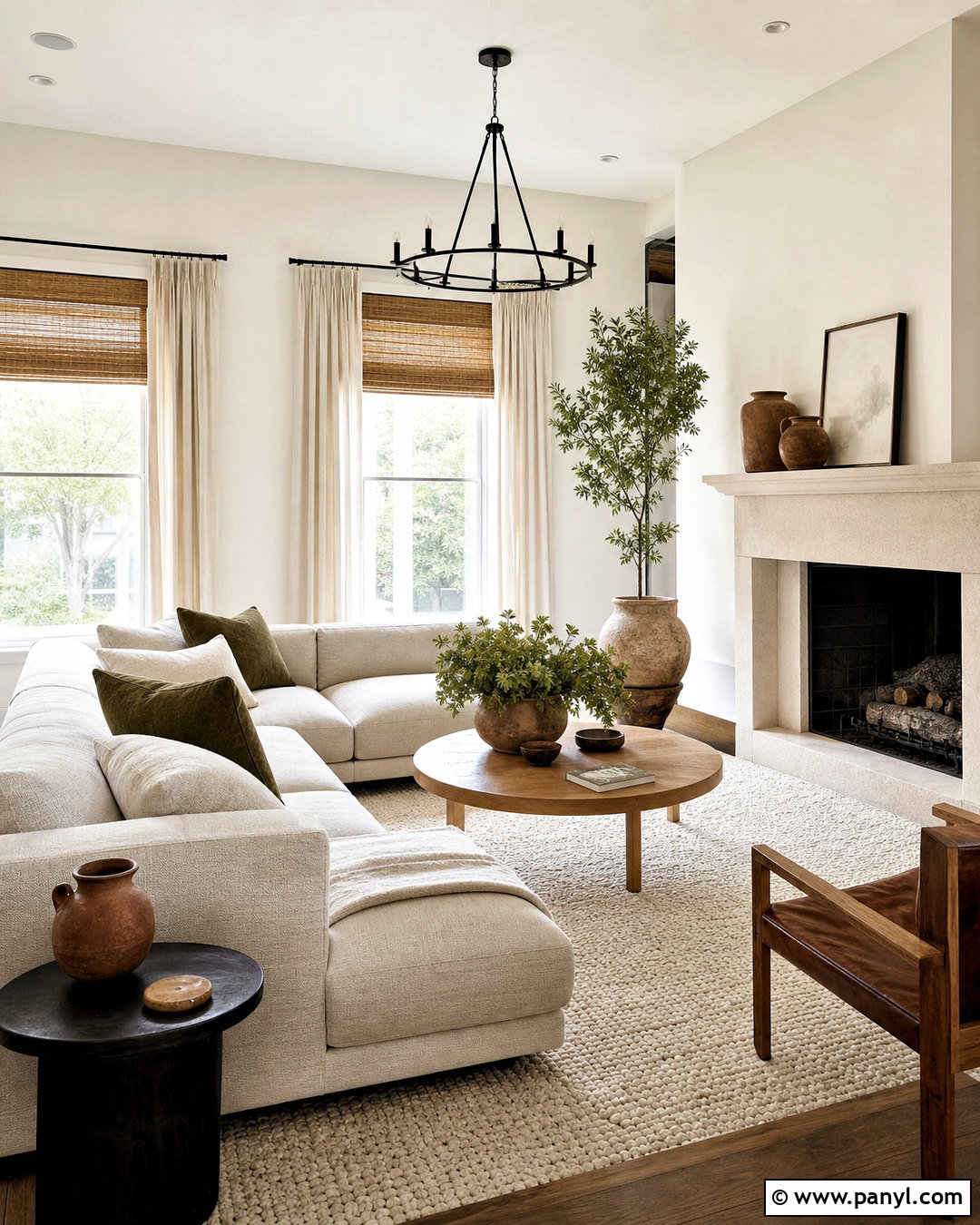
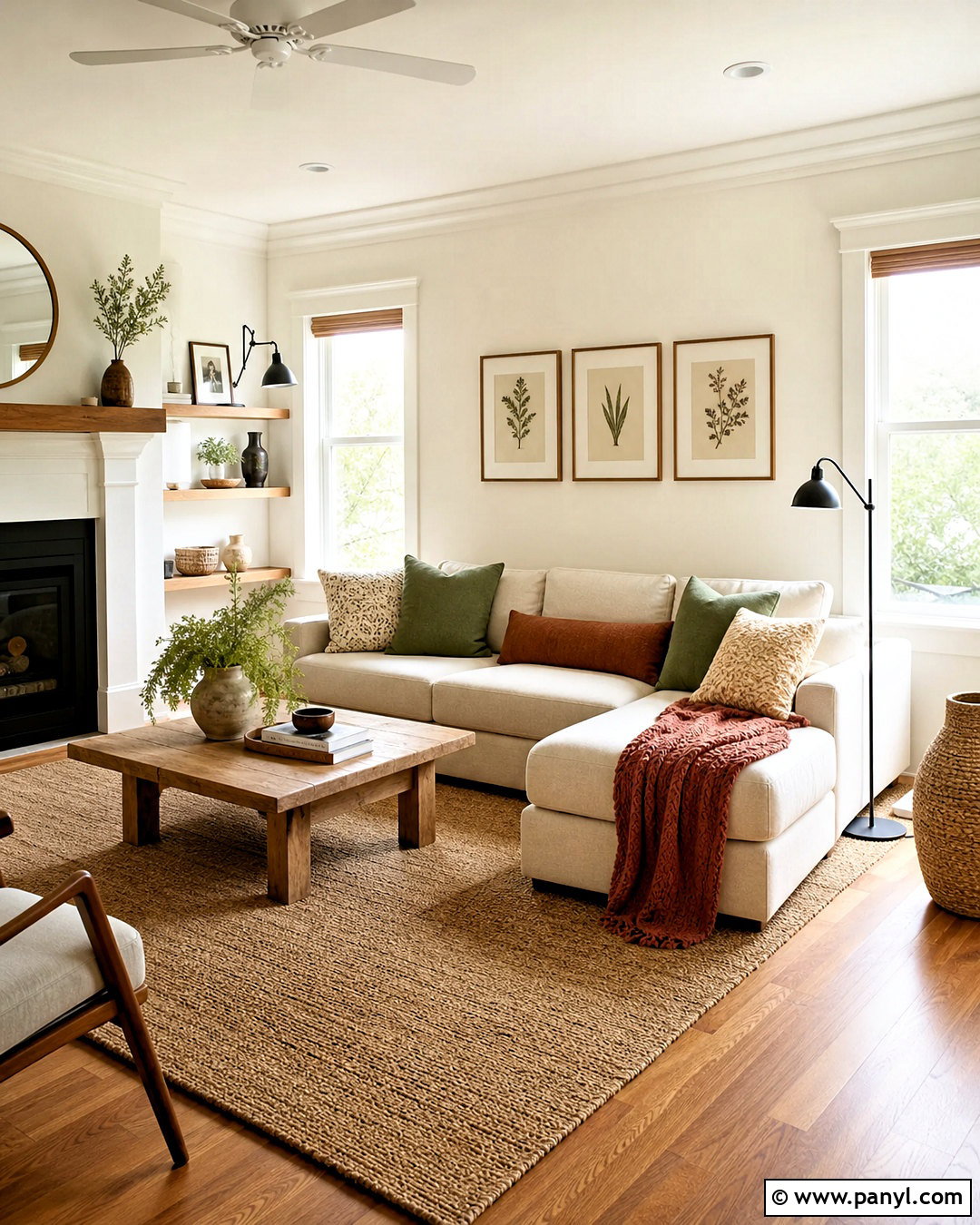
Warm white walls create a bright living room without making it feel cold or unfinished. Choose a creamy white with subtle beige or yellow undertones, then carry it across the main walls and ceiling for a smooth, open look. Add an oatmeal sofa, natural oak coffee table, woven rug, and soft linen curtains to strengthen the warmth. Matte black lighting and picture frames provide definition without overwhelming the quiet palette. Use a washable eggshell finish on the walls and a durable satin finish on the trim. This scheme works especially well in rooms with northern light, which can make cooler whites appear gray. Complete the space with terracotta pottery, olive-green pillows, and simple landscape artwork for natural color.
2. Soft Greige Bedroom Walls
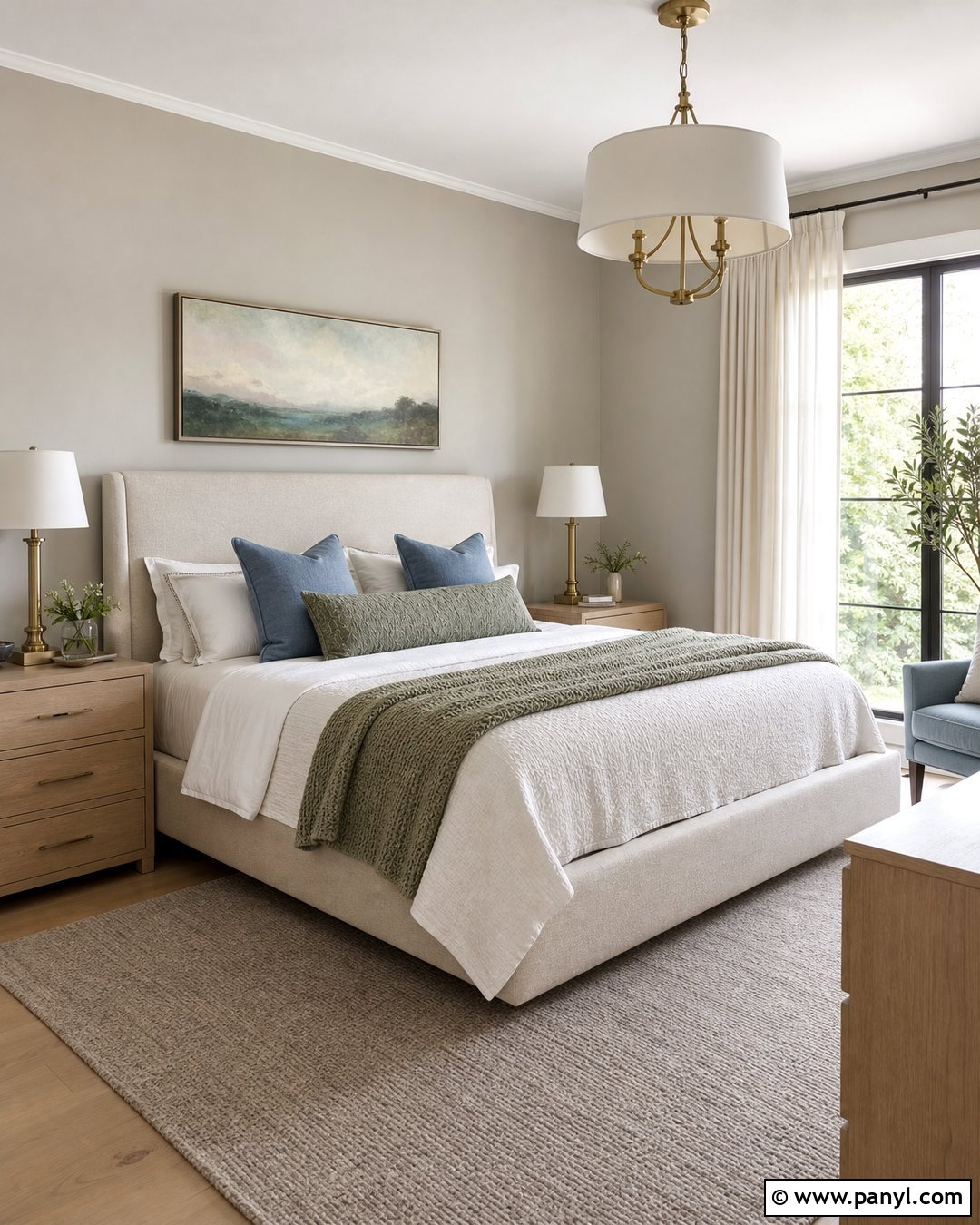
Soft greige walls offer the warmth of beige with the balanced character of gray, making them an easy foundation for a restful bedroom. Paint every wall in a light greige and use a slightly lighter version on the ceiling. Pair the color with an upholstered oatmeal bed, pale oak nightstands, and warm white bedding. Add muted blue or sage accents through pillows and a bench so the room does not become overly neutral. Brushed brass lamps introduce gentle warmth, while full-length ivory curtains soften the windows. Choose a low-sheen matte or eggshell finish to reduce glare and hide minor imperfections. This complete look feels calm and modern while remaining flexible enough for seasonal bedding and changing decor.
3. Sage Green Kitchen Walls
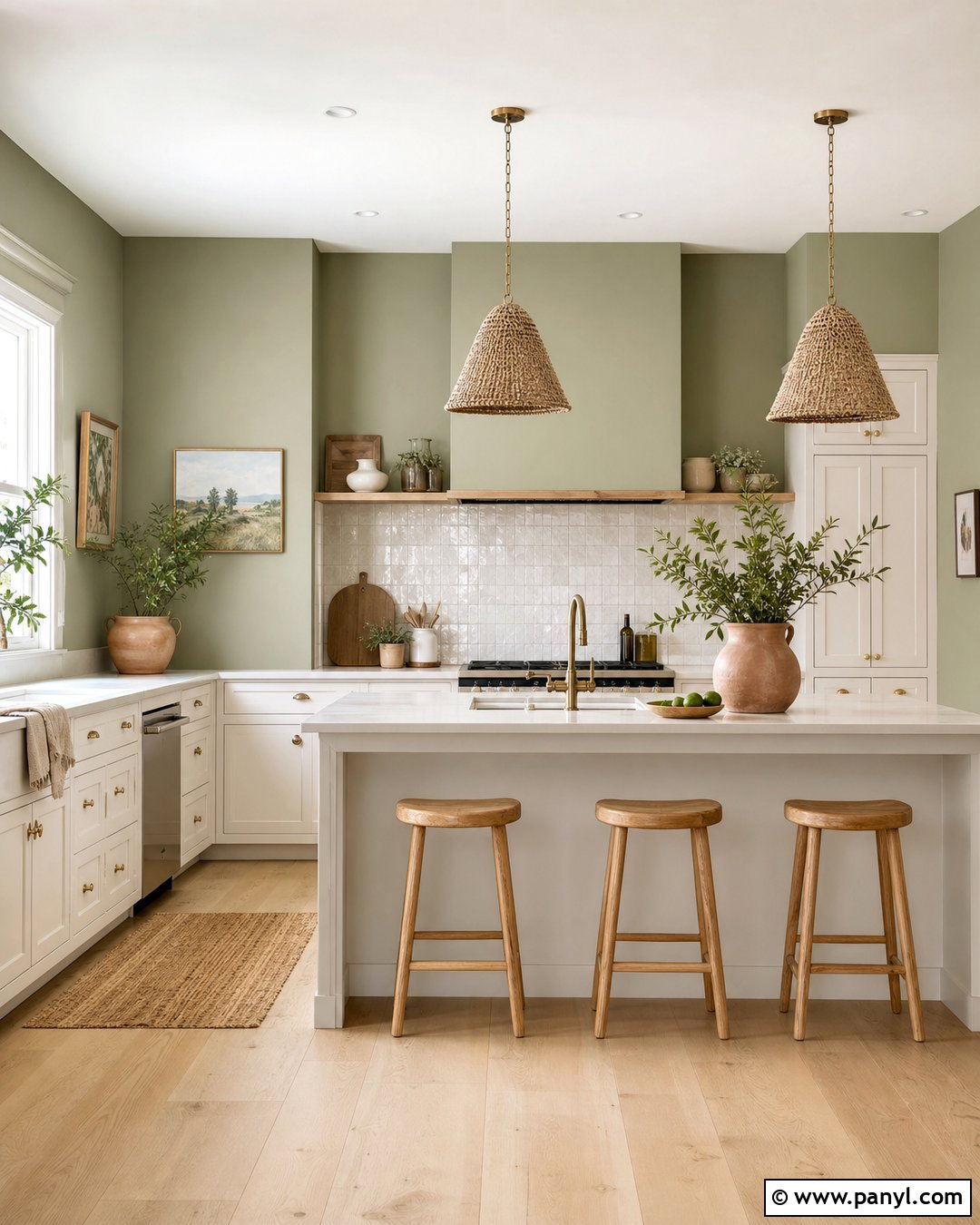
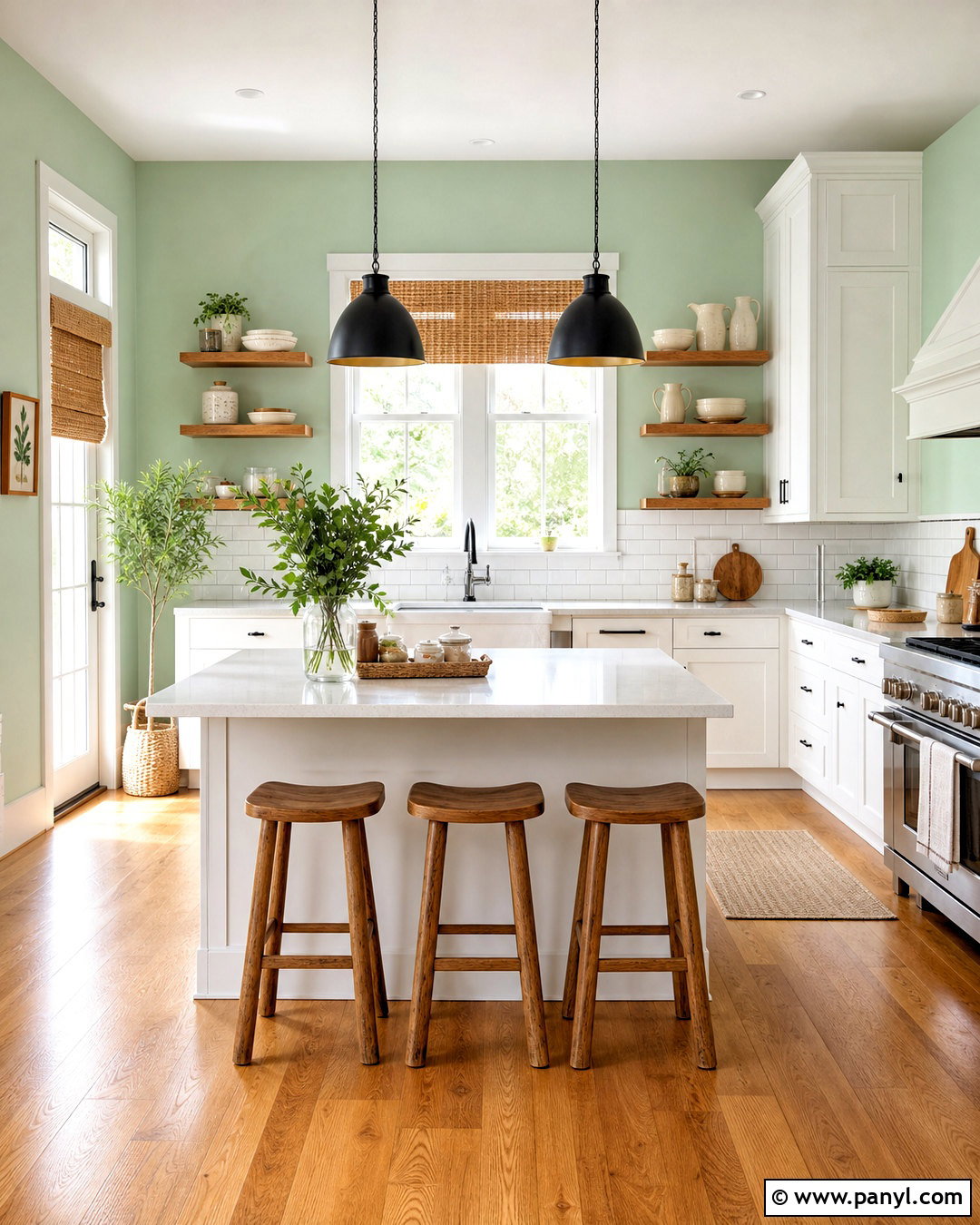
Sage green walls can make a kitchen feel fresh, comfortable, and connected to nature. Use a soft gray-green around warm white cabinets, then repeat the color on a small pantry door for continuity. Natural oak stools, creamy quartz counters, and a handmade off-white tile backsplash keep the palette light. Add aged brass hardware and woven pendant lights for warmth. If the kitchen receives limited daylight, select a sage with enough yellow undertone to prevent a dull appearance. An eggshell or satin wall finish will handle everyday splashes and cleaning better than flat paint. Finish the room with terracotta planters, simple herbs, and striped linen towels. The result is a complete kitchen scheme that feels welcoming rather than overly themed.
4. Navy Blue Dining Room Walls
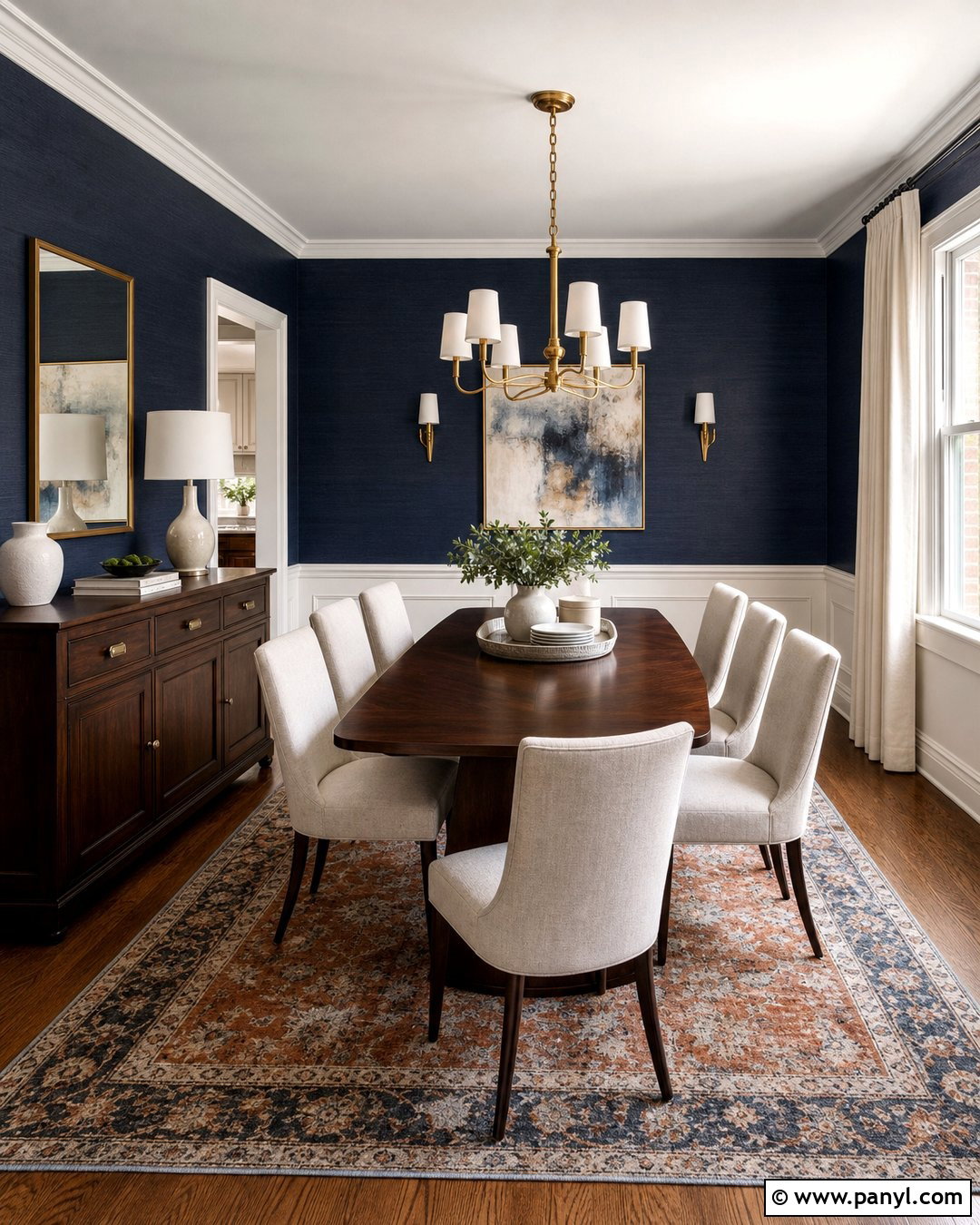
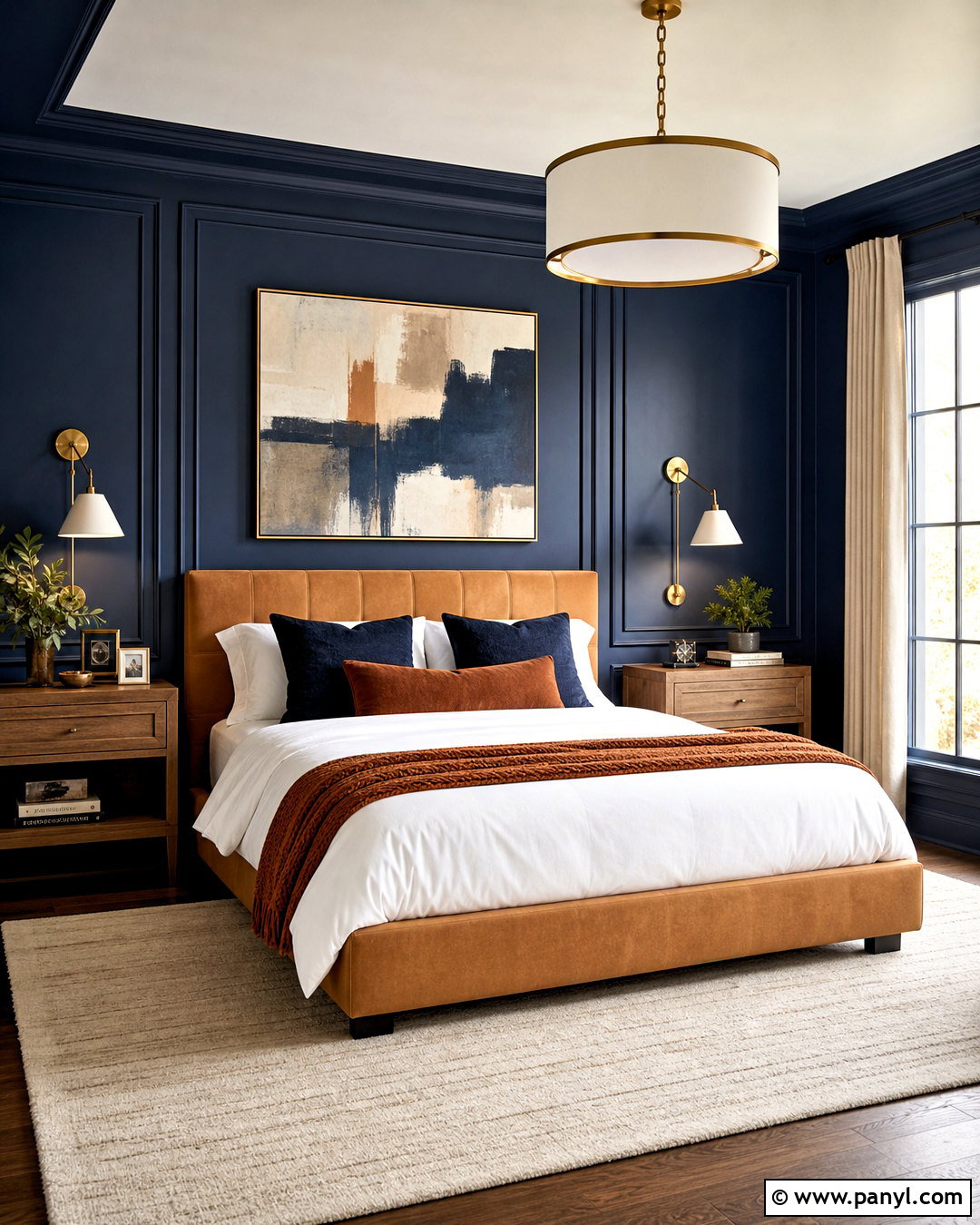
Deep navy walls bring structure and intimacy to a dining room, particularly when balanced with warm wood and generous lighting. Paint the walls navy in a velvety matte finish, then use crisp warm white on the ceiling and substantial trim. Center the room with a medium-toned walnut table and light upholstered chairs to prevent the dark walls from feeling heavy. A large brushed brass chandelier adds brightness and reflects warmly against the blue. Hang one oversized landscape or abstract artwork rather than several small pieces. Cream curtains and a faded rust-and-blue rug soften the contrast. For a more connected design, repeat the navy through table linens or a painted sideboard while keeping accessories simple and carefully edited.
5. Terracotta Home Office Walls
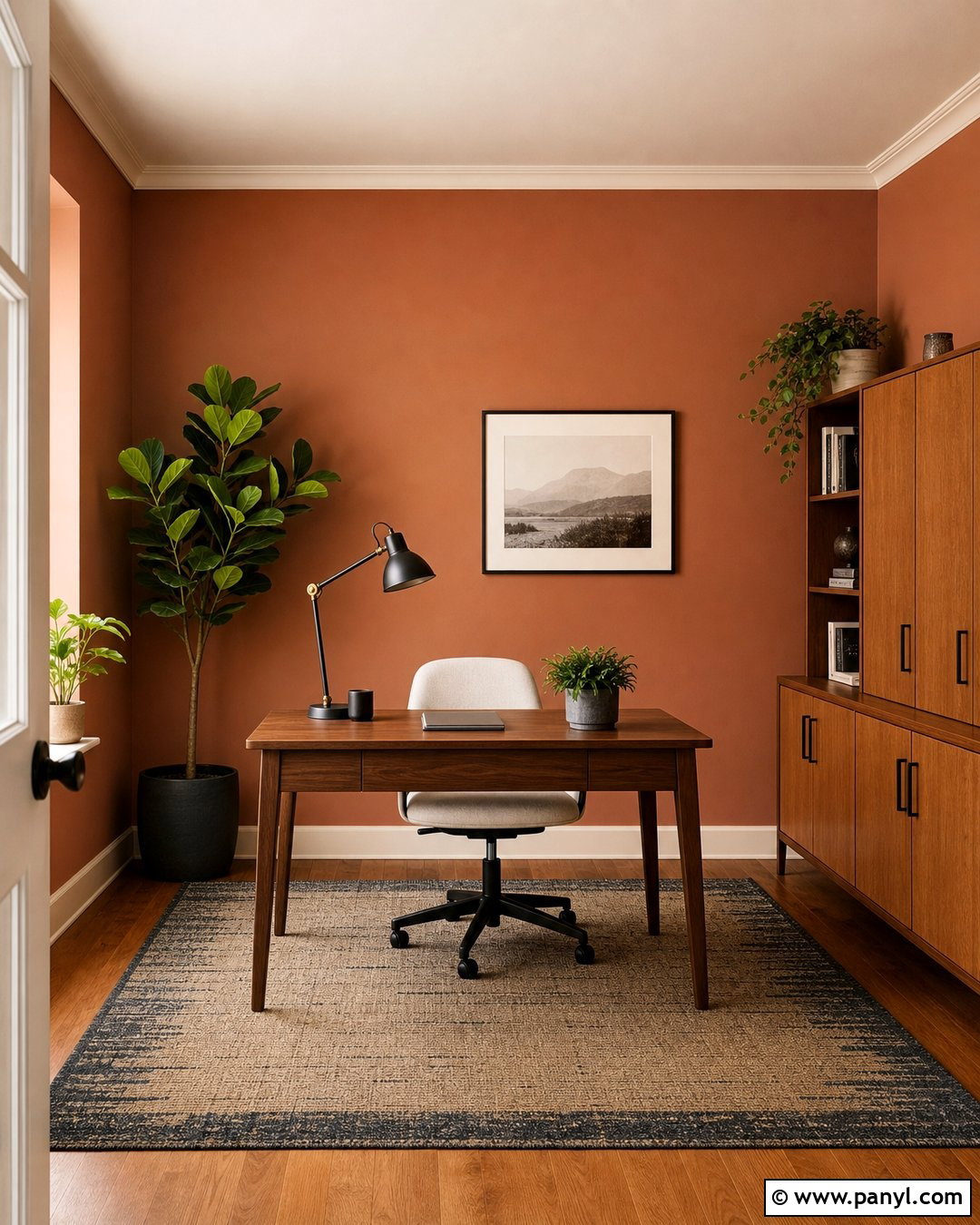
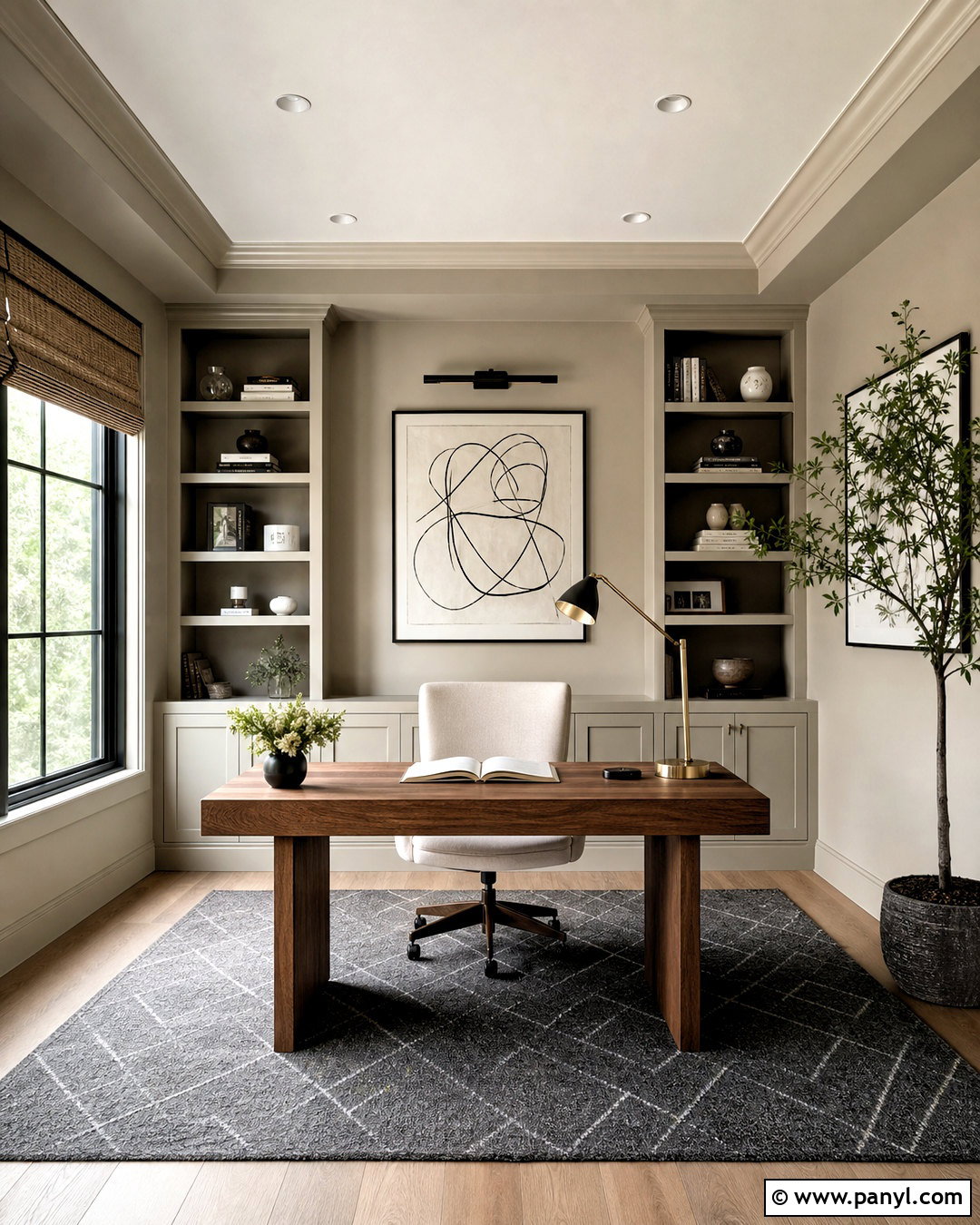
Terracotta walls create an energizing yet grounded home office that feels more personal than a standard white workspace. Choose a muted clay shade with brown undertones rather than a bright orange. Paint all four walls, then leave the ceiling warm white to maintain an airy effect. Place a walnut desk against the best-lit wall and add a cream swivel chair, black task lamp, and closed oak storage. A patterned flat-weave rug can combine clay, tan, and charcoal tones. Green plants offer a lively contrast and help the warm paint feel natural. Keep artwork minimal, using ivory mats and thin black frames. The complete office will feel focused, warm, and visually interesting during both work sessions and video calls.
6. Dusty Blue Bathroom Walls
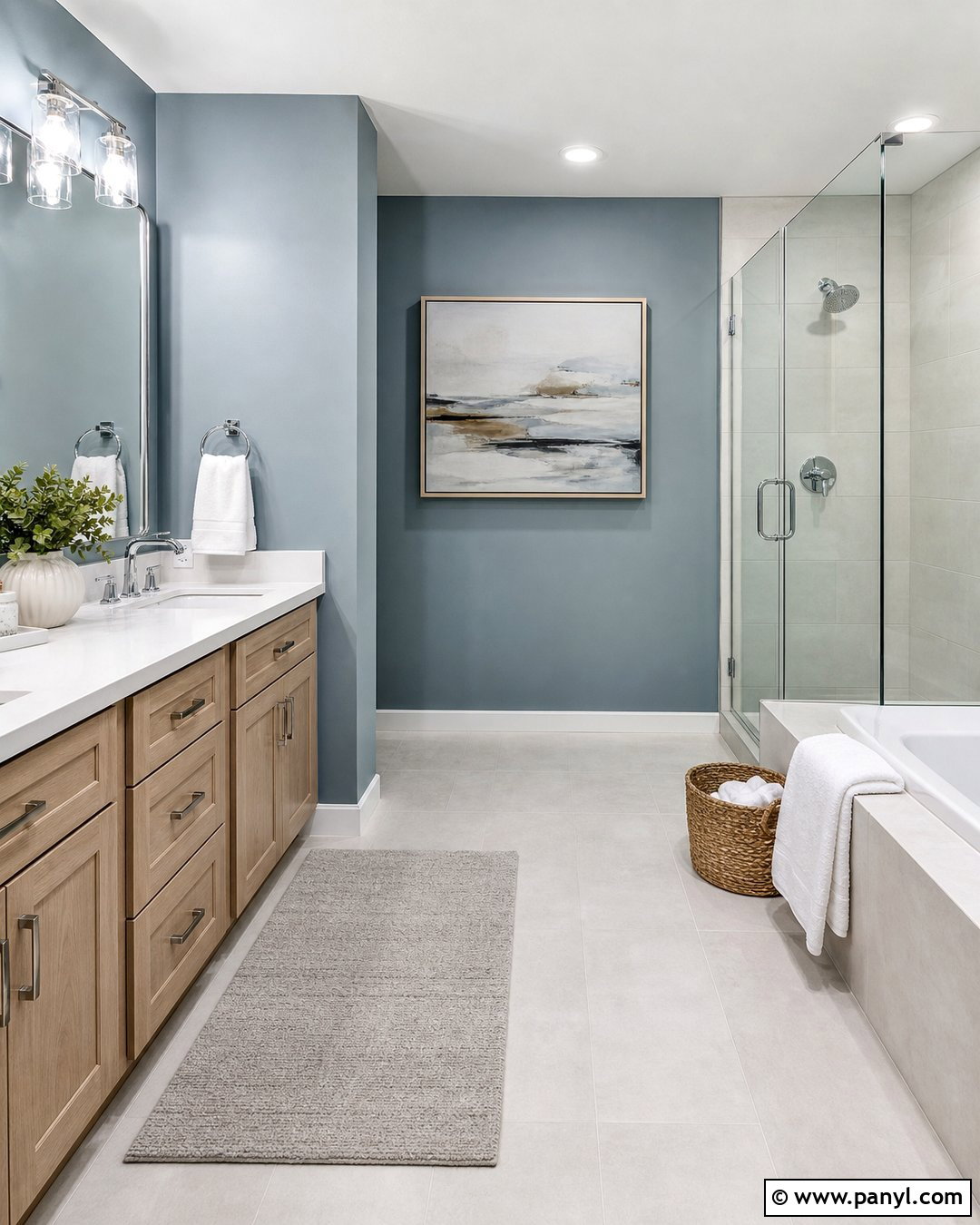
Dusty blue walls give a bathroom quiet color while maintaining the clean atmosphere expected in the space. Select a softened blue with gray undertones and pair it with a white oak vanity, white quartz counter, and simple off-white tile. Brushed nickel or polished chrome fixtures keep the scheme crisp, while a natural woven basket brings warmth. Paint the walls and ceiling in moisture-resistant bathroom paint, using a soft satin finish where condensation is common. White towels and a pale gray bath mat prevent the room from feeling overly colorful. Add one framed coastal sketch or abstract print instead of obvious themed decor. This combination works beautifully in small bathrooms because the gentle color provides character without closing in the room.
7. Olive Green Living Room Walls
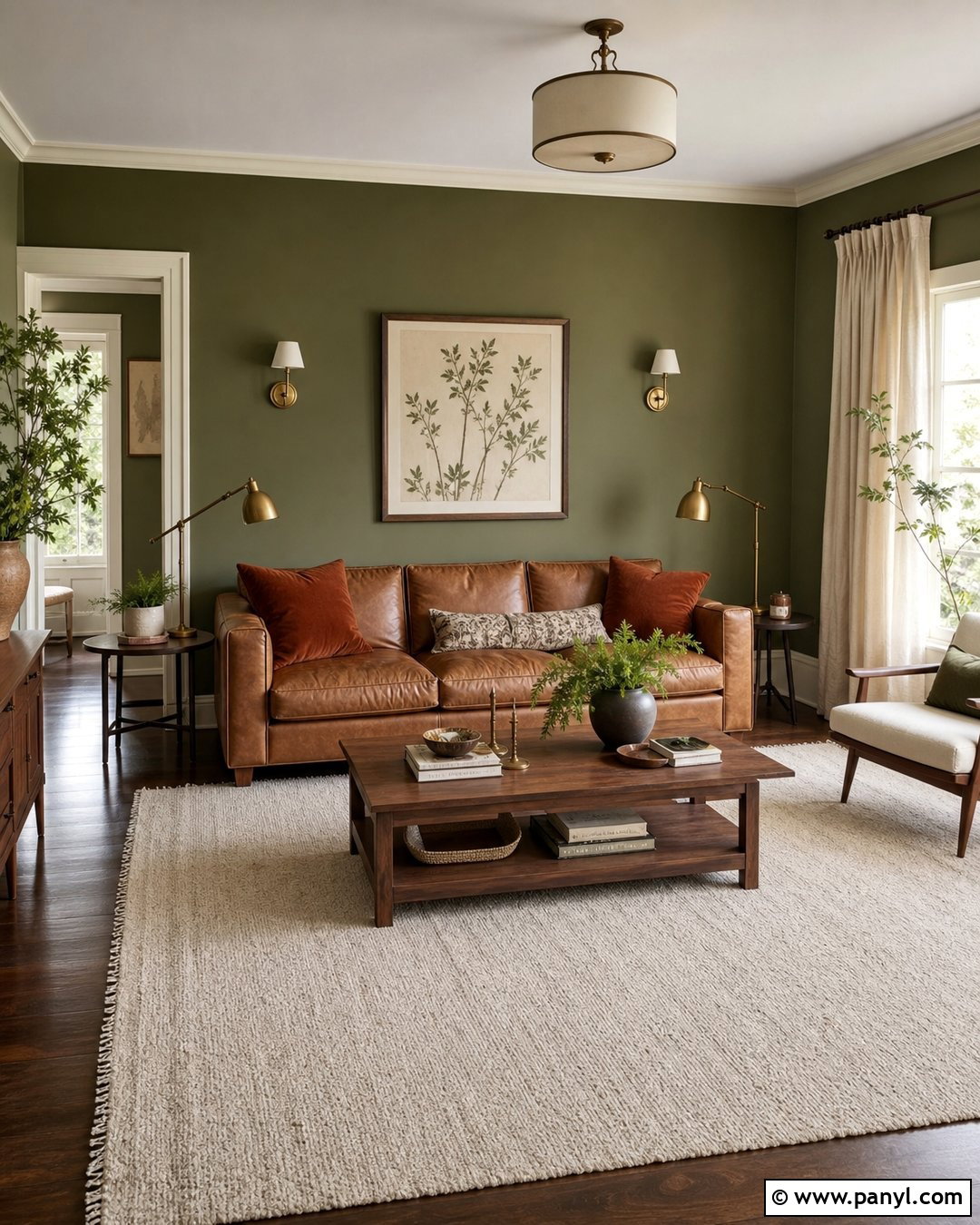
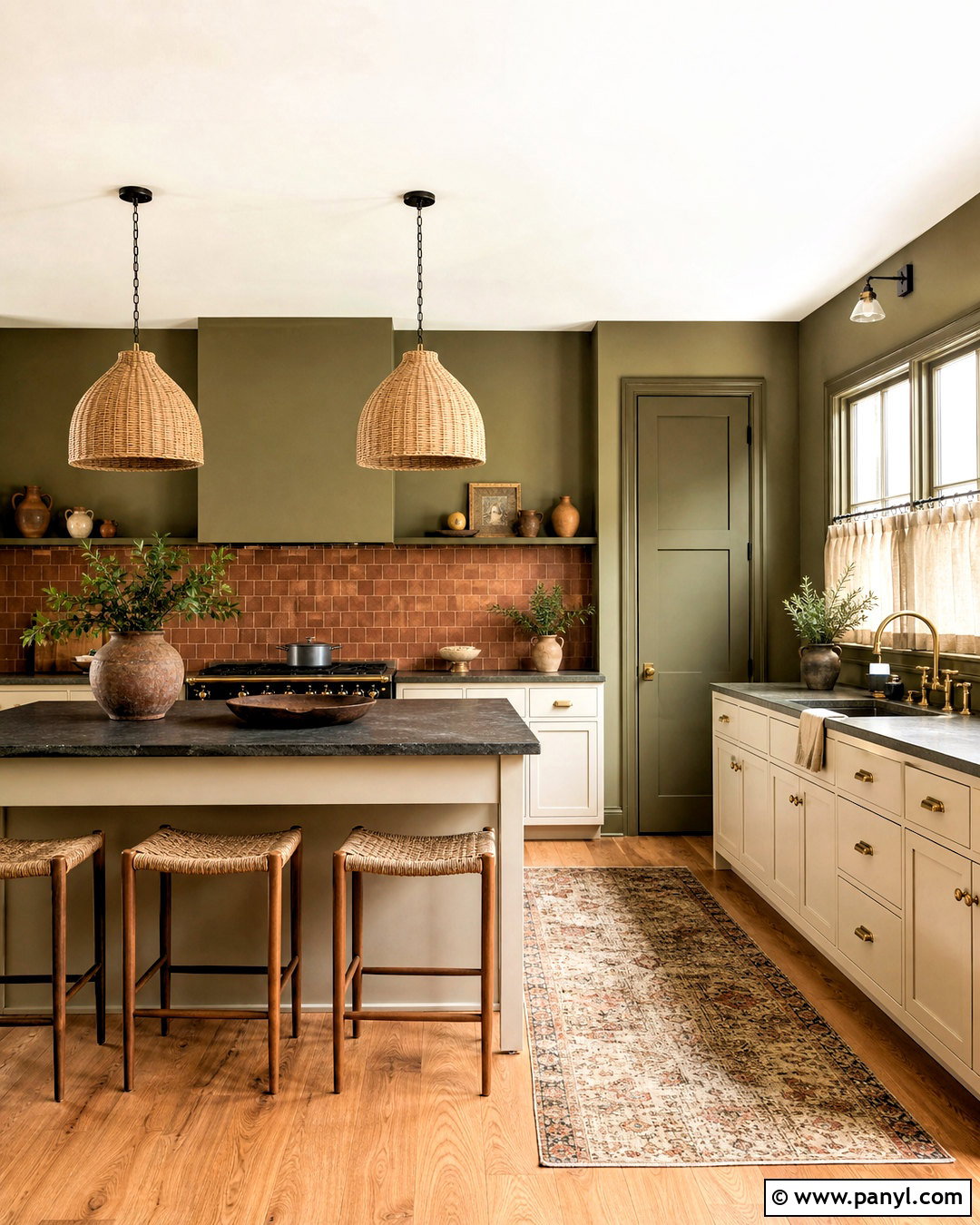
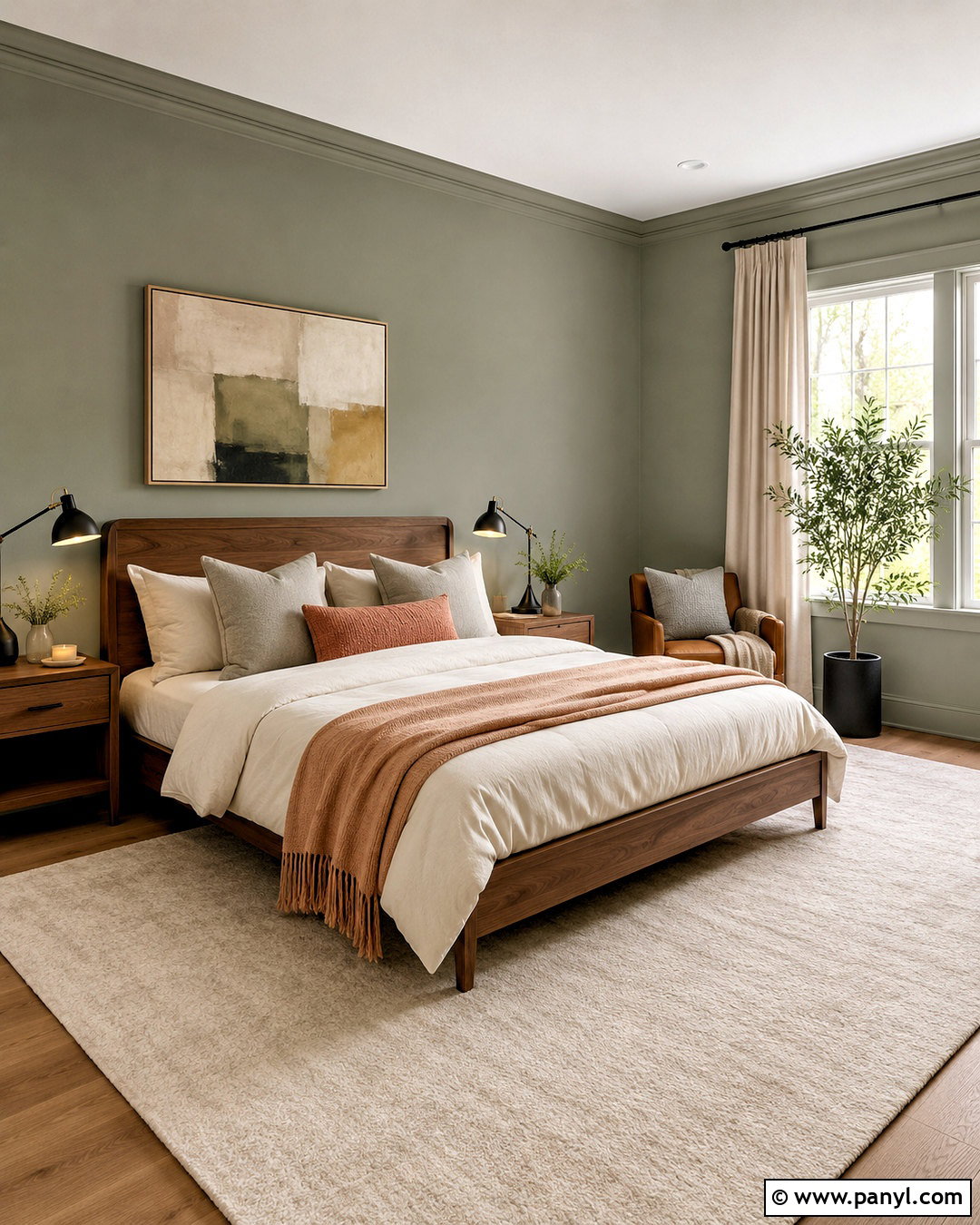
Olive green walls can transform a basic living room into a warm, layered gathering space. Use a medium olive with muted brown undertones across all walls, paired with a soft cream ceiling and trim. A camel leather sofa, walnut coffee table, and textured ivory rug will complement the earthy paint. Add rust-colored pillows, aged brass lamps, and linen curtains for a rich but relaxed palette. Keep large furniture pieces simple so the wall color remains the defining feature. Botanical artwork can work well, but choose modern prints with generous negative space to avoid an overly rustic result. In rooms with modest daylight, include multiple light sources at different heights. The completed scheme feels cozy, natural, and sophisticated throughout the year.
8. Charcoal Gray Media Room Walls
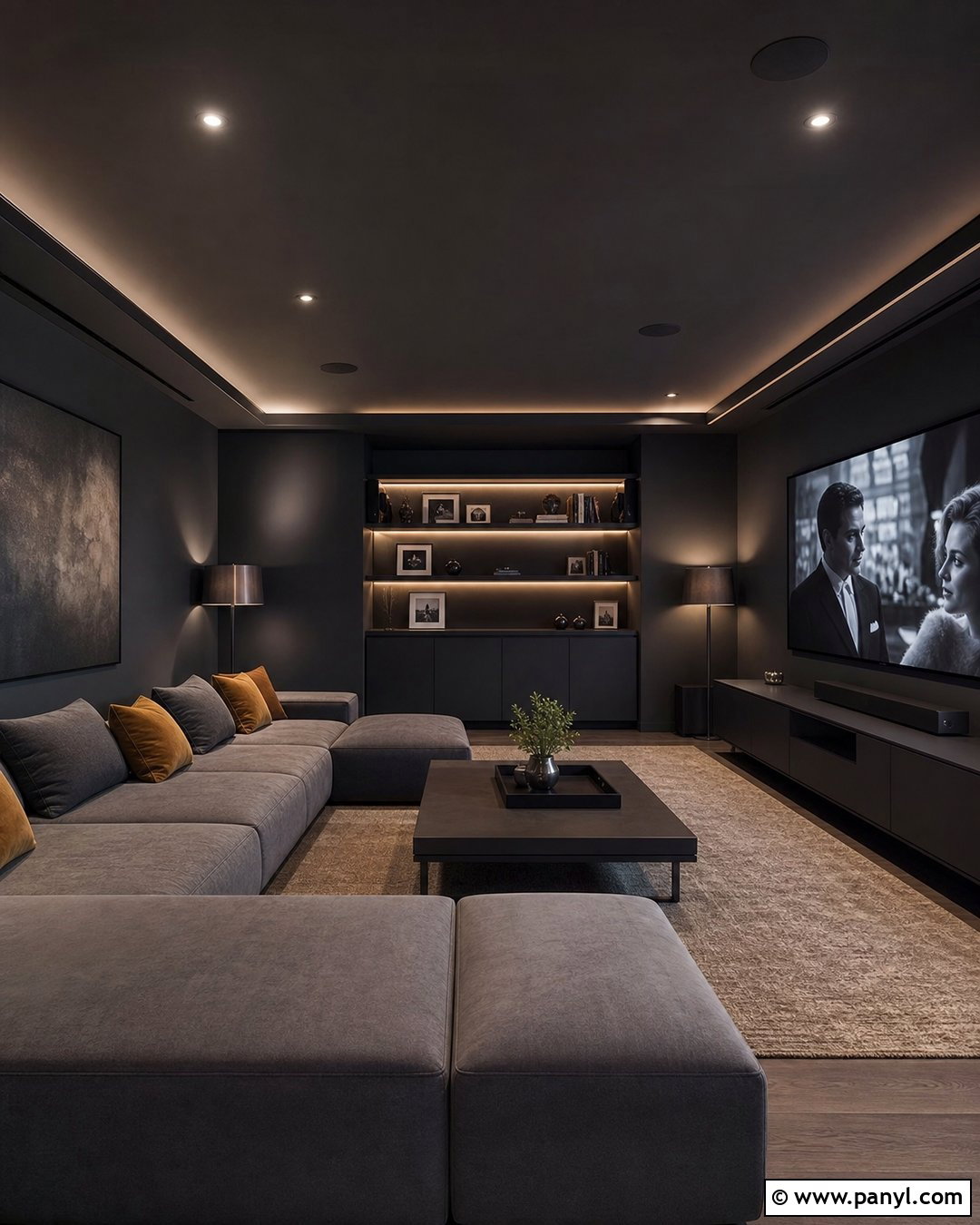
Charcoal gray walls reduce visual distraction and create an immersive media room without requiring pure black paint. Cover the walls and ceiling in the same deep charcoal, using a matte finish to limit reflections from the television or projector. Add a low modular sofa in medium gray, a black media console, and a large textured rug in taupe and charcoal. Warm walnut shelves prevent the room from looking flat, while concealed lighting and shaded floor lamps create comfortable illumination. Use acoustic panels covered in coordinating neutral fabric if sound control is important. A few rust or muted gold pillows can break up the monochrome palette. This complete design makes movie nights feel intentional while keeping electronics visually integrated into the room.
9. Blush Pink Bedroom Walls
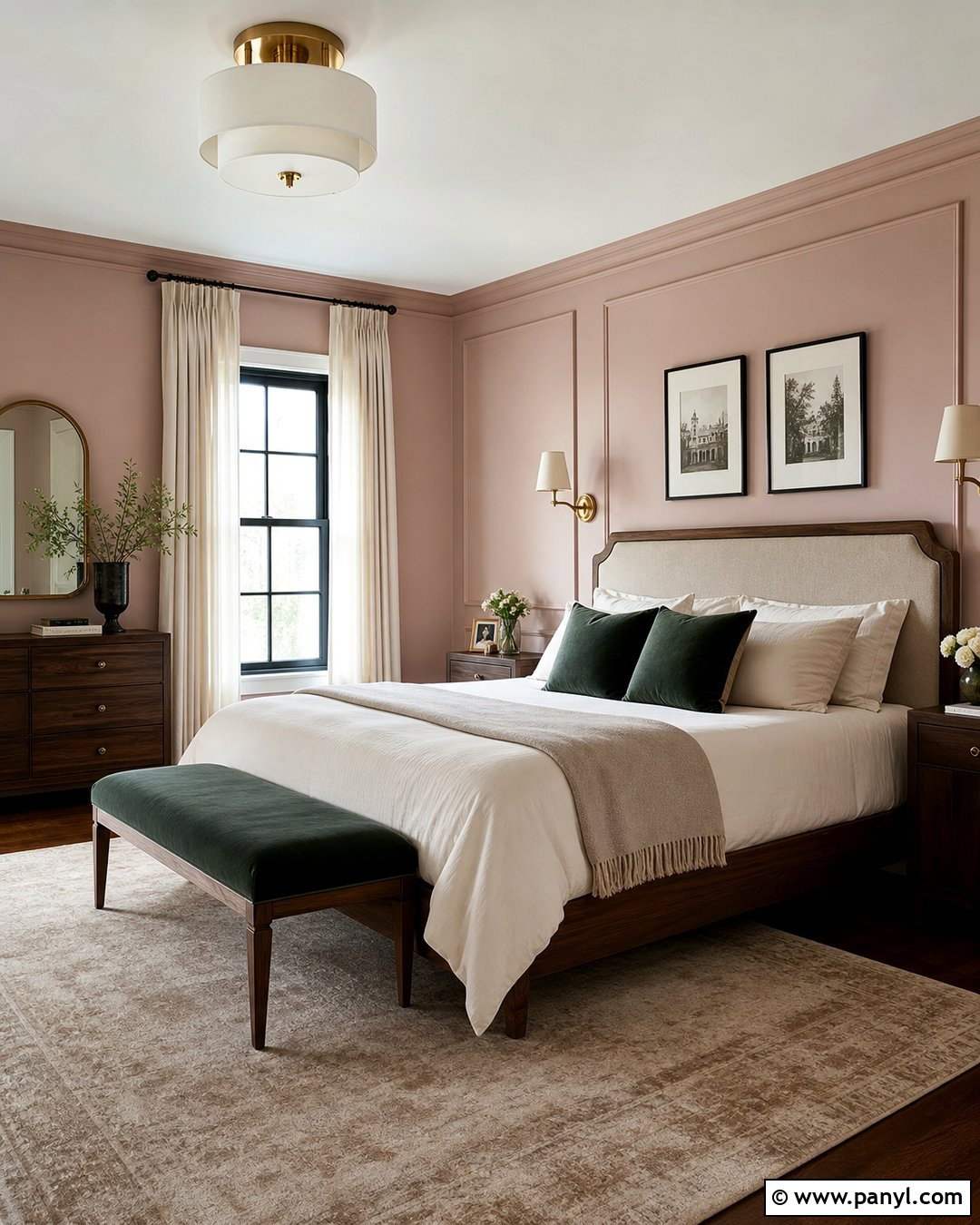
Muted blush walls make a bedroom feel soft and welcoming without appearing childish. Look for a dusty pink with beige or clay undertones, then paint all walls in a smooth matte finish. Ground the color with a natural walnut bed, oatmeal headboard, and ivory bedding. Dark green accent pillows and a matching bench create enough contrast to sharpen the palette. Add antique brass sconces and cream curtains for warmth, while black-framed artwork introduces a clean modern edge. Avoid filling the room with additional pink accessories; instead, repeat the wall shade subtly through a patterned rug. This balanced approach turns blush into a versatile neutral and creates a complete bedroom that feels calm, grown-up, and easy to personalize.
10. Pale Blue Nursery Walls
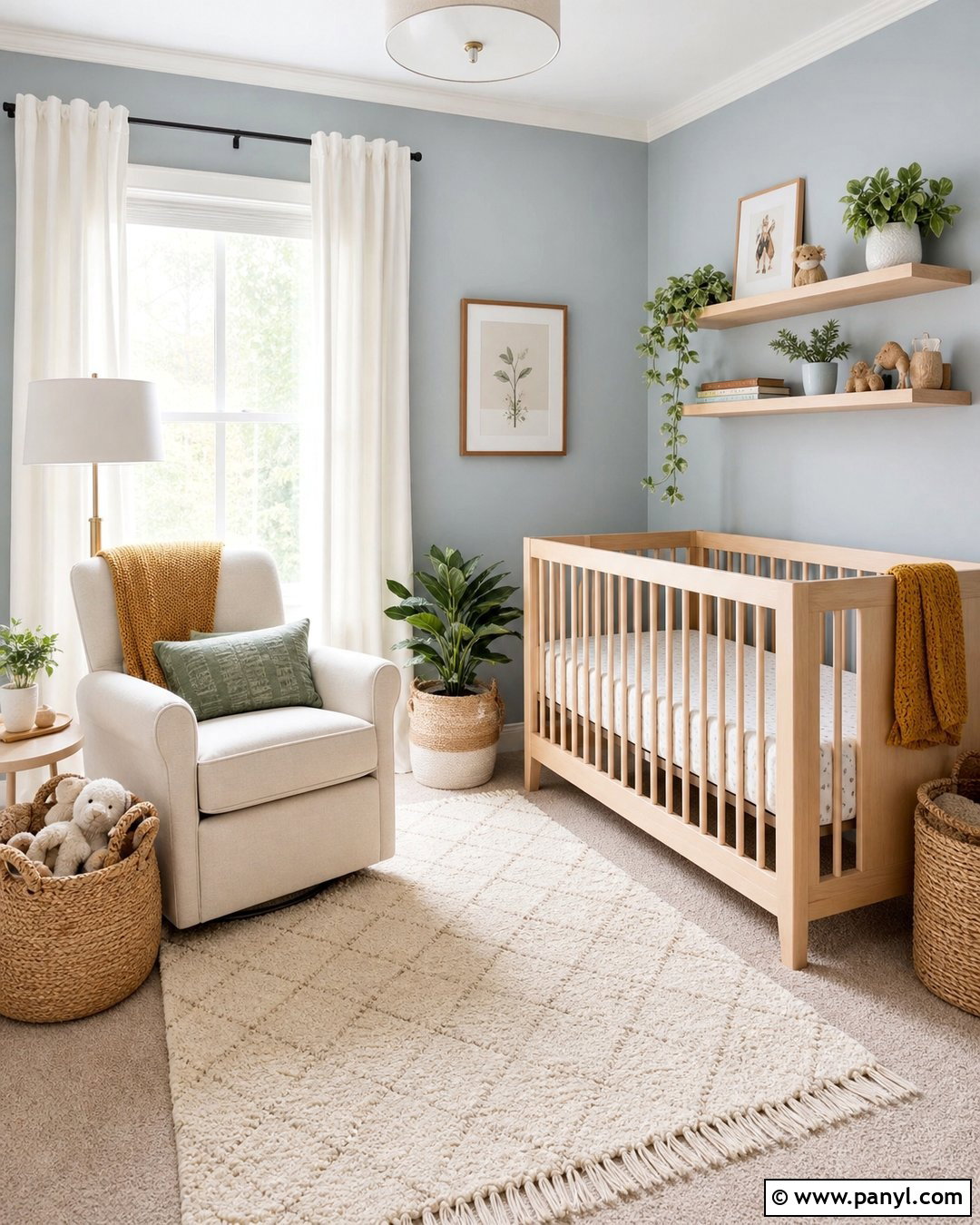
Pale blue walls can create a peaceful nursery that feels light, adaptable, and comfortable. Choose a hazy blue with a slight gray undertone, then pair it with warm white trim and ceiling paint. Place a natural maple crib against the most open wall and add a cream rocker, woven floor basket, and soft beige rug. Curtains in ivory linen will filter sunlight without competing with the color. Introduce muted mustard, rust, or sage through small textiles for gentle contrast. Use washable, low-odor interior paint suitable for frequently used family spaces and allow it to cure properly before arranging the room. Simple animal prints and light wood shelves complete the design while making it easy to update as the child grows.
11. Forest Green Accent Wall
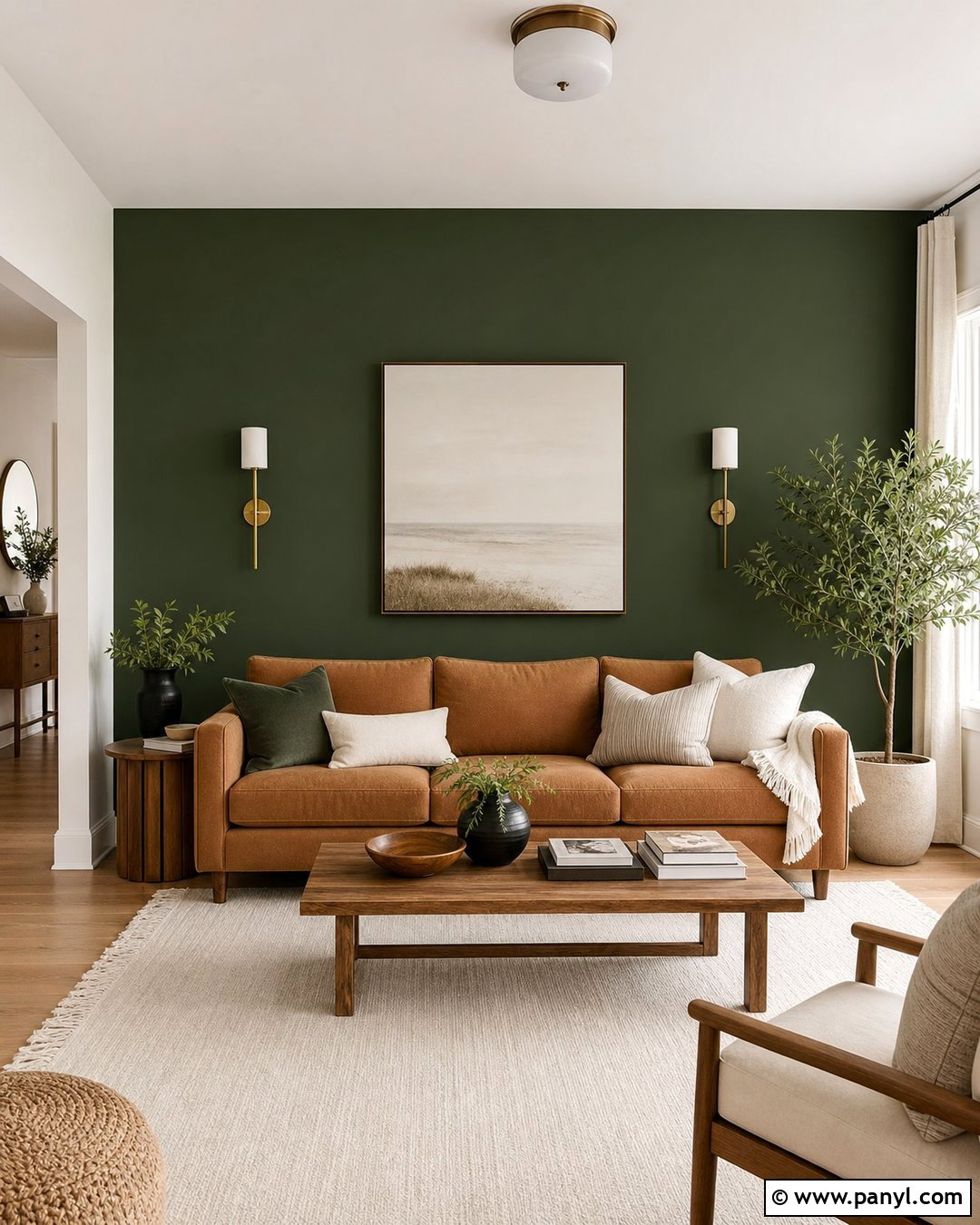
A forest green accent wall creates a strong focal point when it supports the room’s furniture arrangement. Use the deepest wall behind a sofa, bed, or built-in desk rather than choosing a wall at random. Paint the remaining walls a warm off-white that complements the green. In a living room, pair the feature wall with a camel sofa, oak tables, ivory curtains, and a patterned rug containing subtle green notes. Brass lighting will brighten the saturated shade, while black details provide a contemporary outline. Keep artwork light and generously scaled so it remains visible against the dark background. Repeating forest green in two or three small accessories makes the feature wall feel integrated rather than disconnected from the rest of the room.
12. Black Bedroom Accent Wall
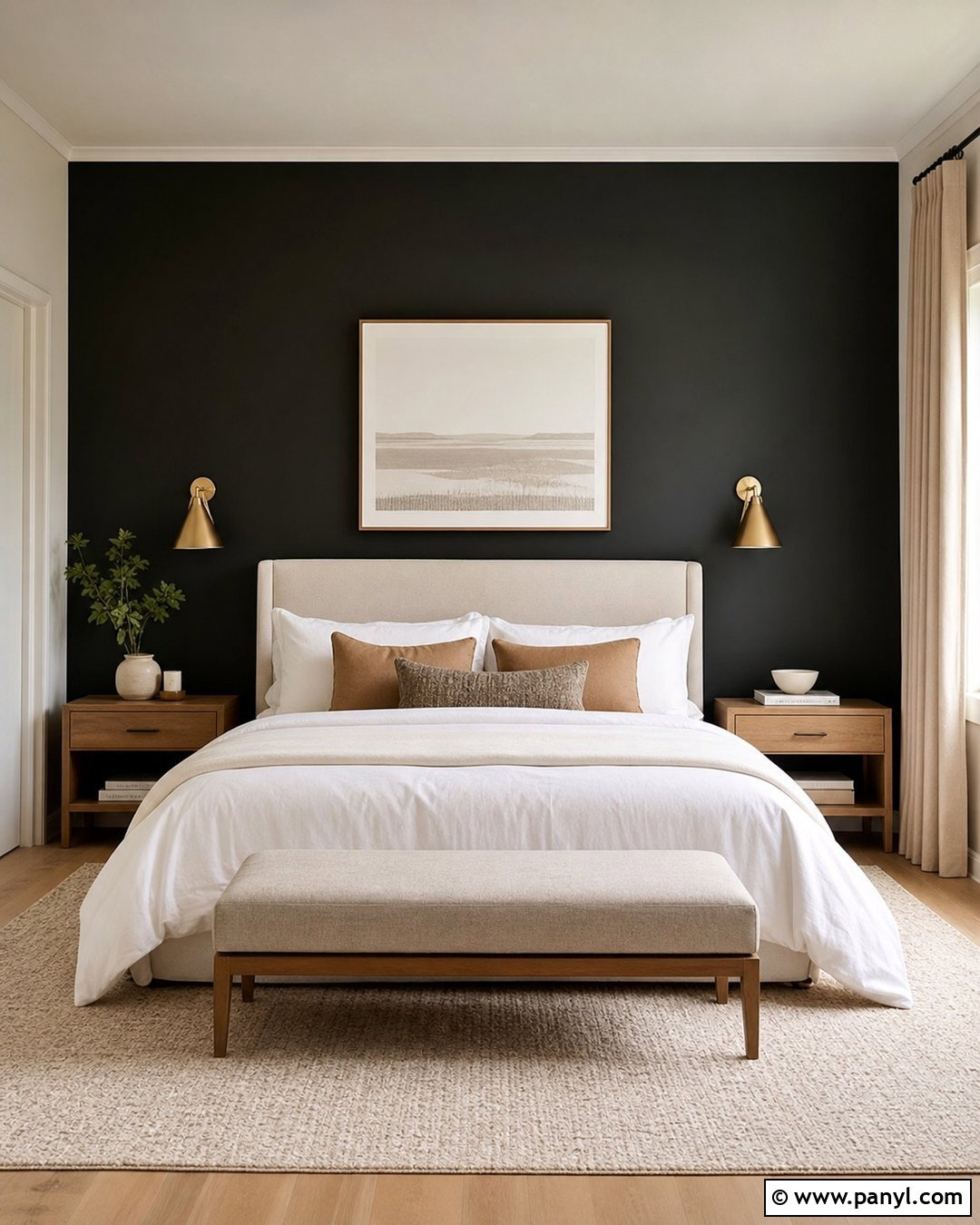
A black accent wall can make a bedroom feel polished and restful when the surrounding elements remain warm and tactile. Position the black behind the headboard and paint the other walls a soft beige or creamy white. Choose an upholstered bed in oatmeal fabric, medium oak nightstands, and layered white bedding. Add camel-colored pillows, a textured wool throw, and warm brass sconces to keep the contrast comfortable. Use a soft matte black rather than a high-gloss finish, which can highlight flaws and create unwanted reflections. A large pale artwork or simple wood wall panel can break up the dark surface. With plenty of natural texture and balanced lighting, the finished room feels sophisticated rather than stark or overly dramatic.
13. Two Tone Living Room Walls
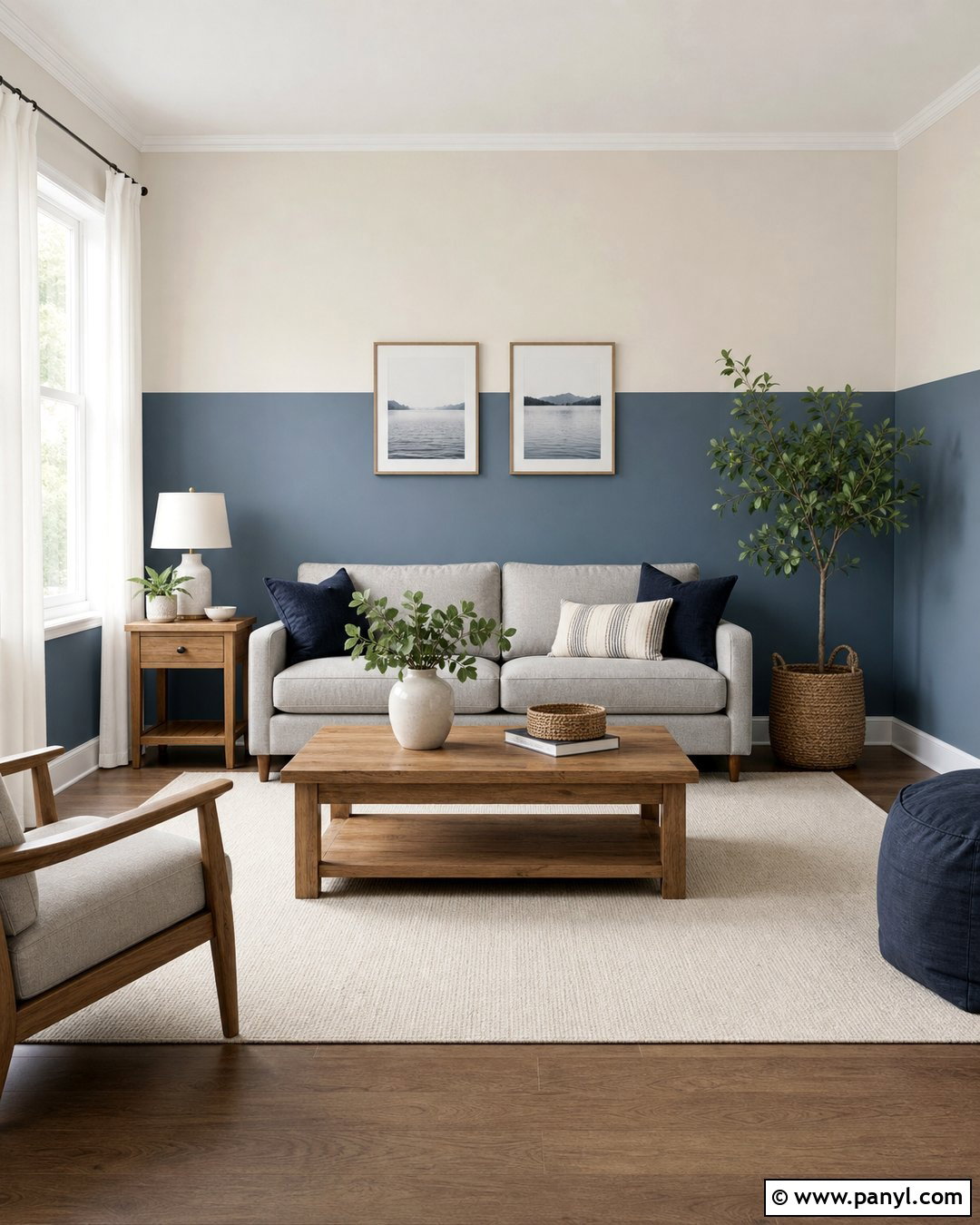
Two-tone walls add architectural interest to a plain living room without requiring molding or expensive materials. Paint the lower third in a muted blue-gray and the upper section in warm white, creating a crisp horizontal line around the room. Align the division with window sills or the top of a low bookcase for a deliberate appearance. Furnish the space with a light gray sofa, oak coffee table, navy pillows, and an ivory rug. White curtains will visually connect the upper walls to the windows. Use painter’s tape designed for clean edges and remove it while the final coat is slightly damp. The finished scheme makes the room feel broader, brings color to eye level, and provides a complete backdrop for relaxed modern decor.
14. Half Painted Bedroom Walls
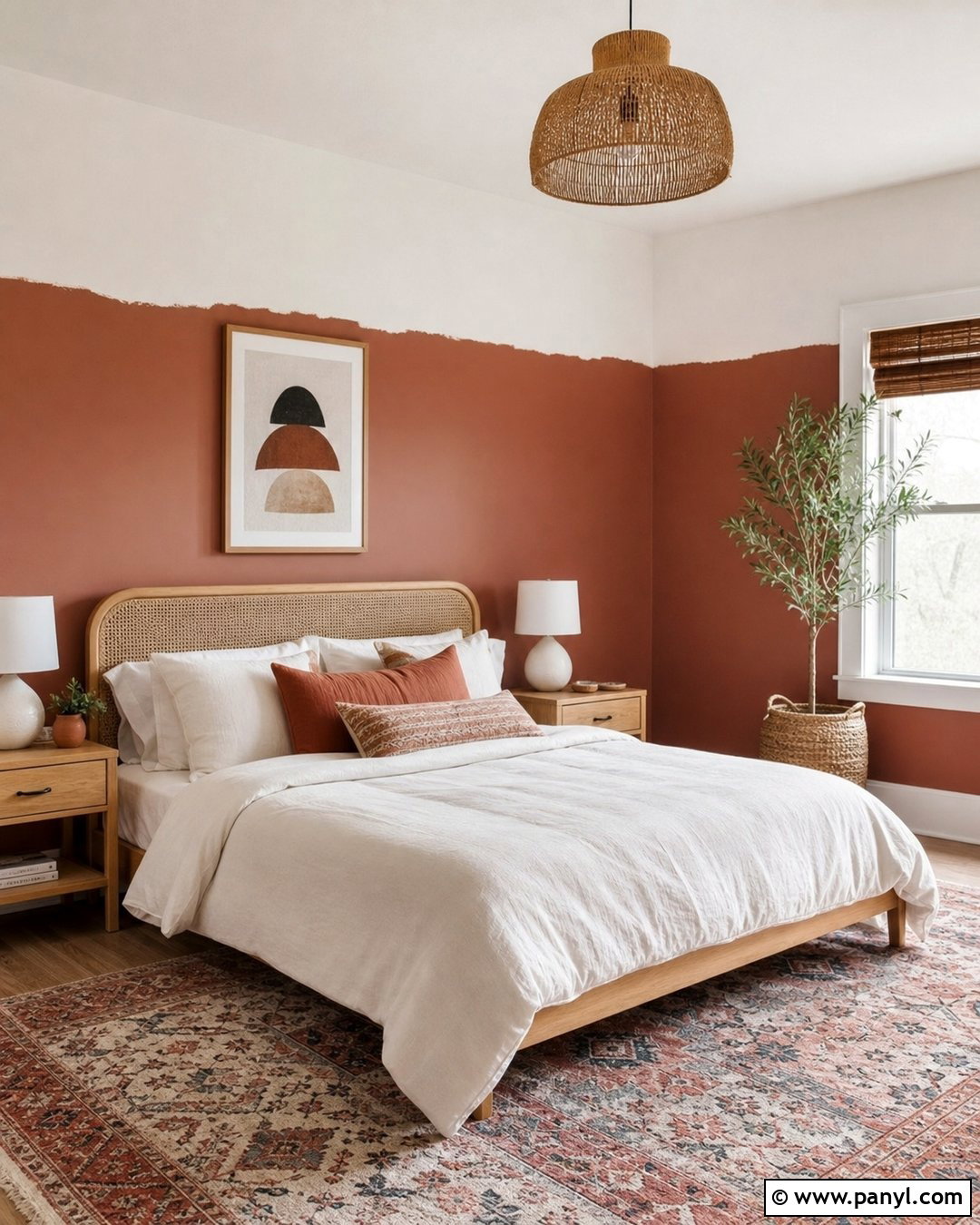
Half-painted bedroom walls offer a practical way to introduce color while keeping the space visually open. Use a warm ocher or muted terracotta on the lower half and creamy white above it. Raise the painted line slightly higher than the headboard to frame the bed and create a strong horizontal feature. Pair the walls with a natural cane bed, white bedding, clay-colored pillows, and simple oak nightstands. A slim picture ledge placed along the color break can hold lightweight art, although the treatment also looks clean without trim. Repeat the lower color in a patterned rug and bedside ceramics. This complete bedroom design feels casual, sunny, and distinctive while requiring less saturated paint than a full-room color application.
15. Beige Color Drenched Bedroom
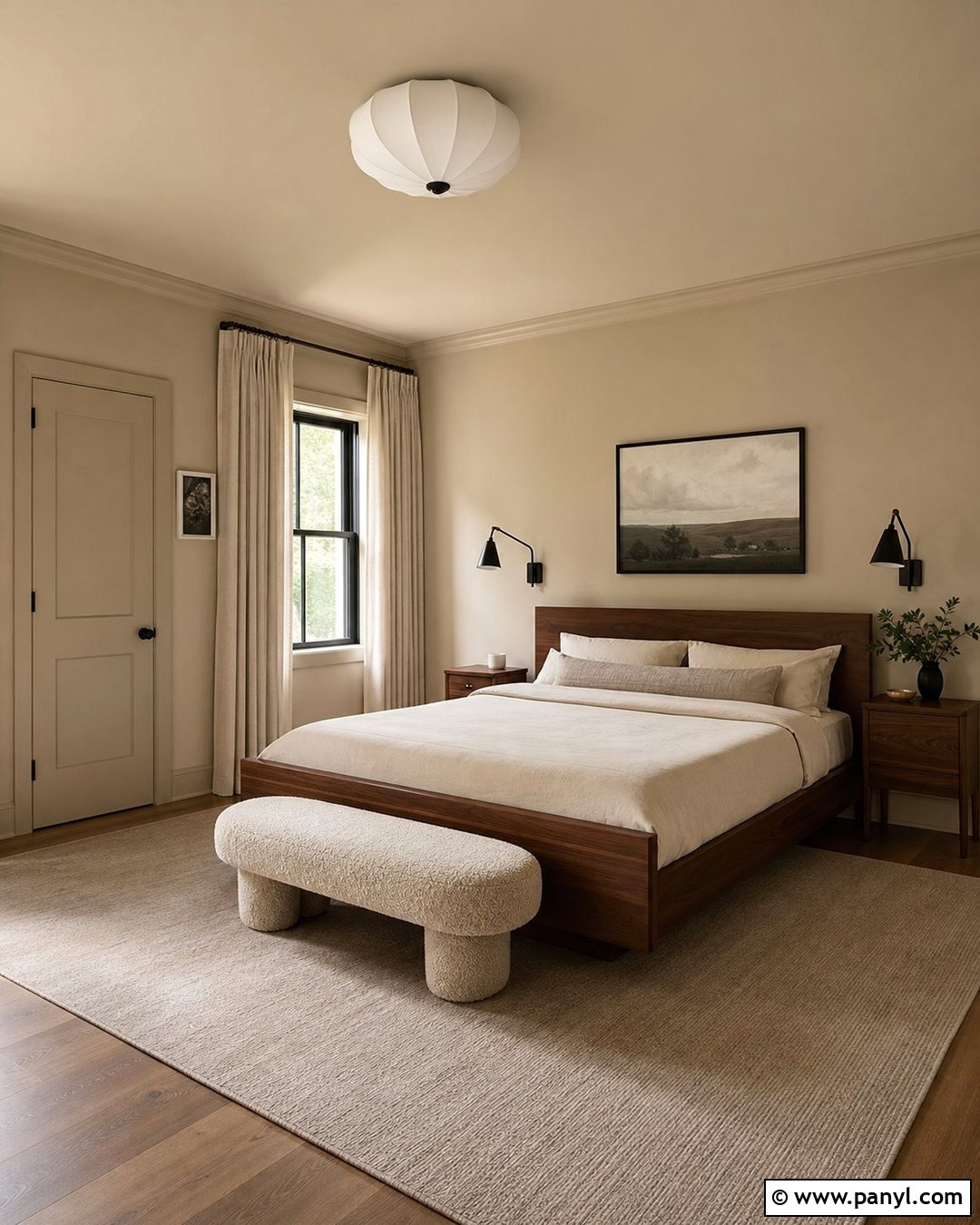
Color drenching a bedroom in beige creates an enveloping effect while preserving a light, peaceful atmosphere. Choose a warm mushroom beige and apply it to the walls, trim, doors, and ceiling. Use different sheens to create subtle definition: matte on the ceiling, eggshell on walls, and satin on woodwork. Furnish the room with a darker walnut bed, ivory bedding, and textured oatmeal curtains. A boucle bench and soft taupe rug will build depth without interrupting the single-color concept. Add black reading lights and one dark-framed artwork for contrast. Because every painted surface shares the same hue, corners visually soften and architectural interruptions become less obvious. The result is a restful, cohesive bedroom that feels thoughtfully designed rather than simply neutral.
16. Blue Color Drenched Office
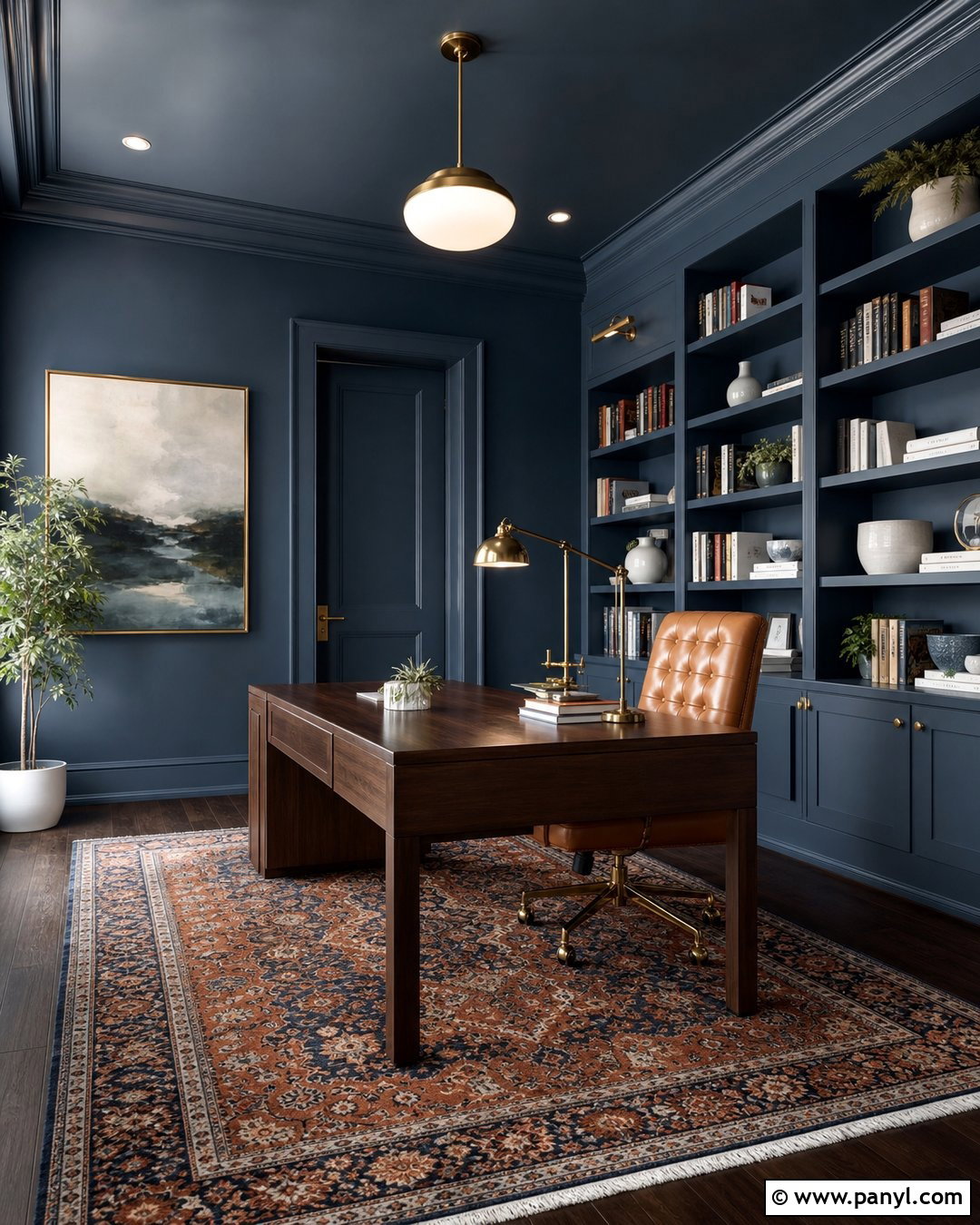
A blue color-drenched office can support focus while making a small workspace feel intentional. Select a medium smoky blue and carry it over the walls, built-in shelving, trim, doors, and ceiling. Use a matte finish overhead, eggshell on walls, and satin on cabinetry for practical durability. Add a dark walnut desk, cognac leather chair, and vintage-style brass task light. Books and white ceramic accessories will stand out clearly against the blue shelves. Ground the space with a faded rust-and-navy rug, then soften the window with natural linen shades. Painting every architectural surface removes distracting color breaks and gives basic shelving a custom appearance. The finished office feels compact, organized, and rich without relying on excessive decorative objects.
17. Burgundy Dining Room Walls
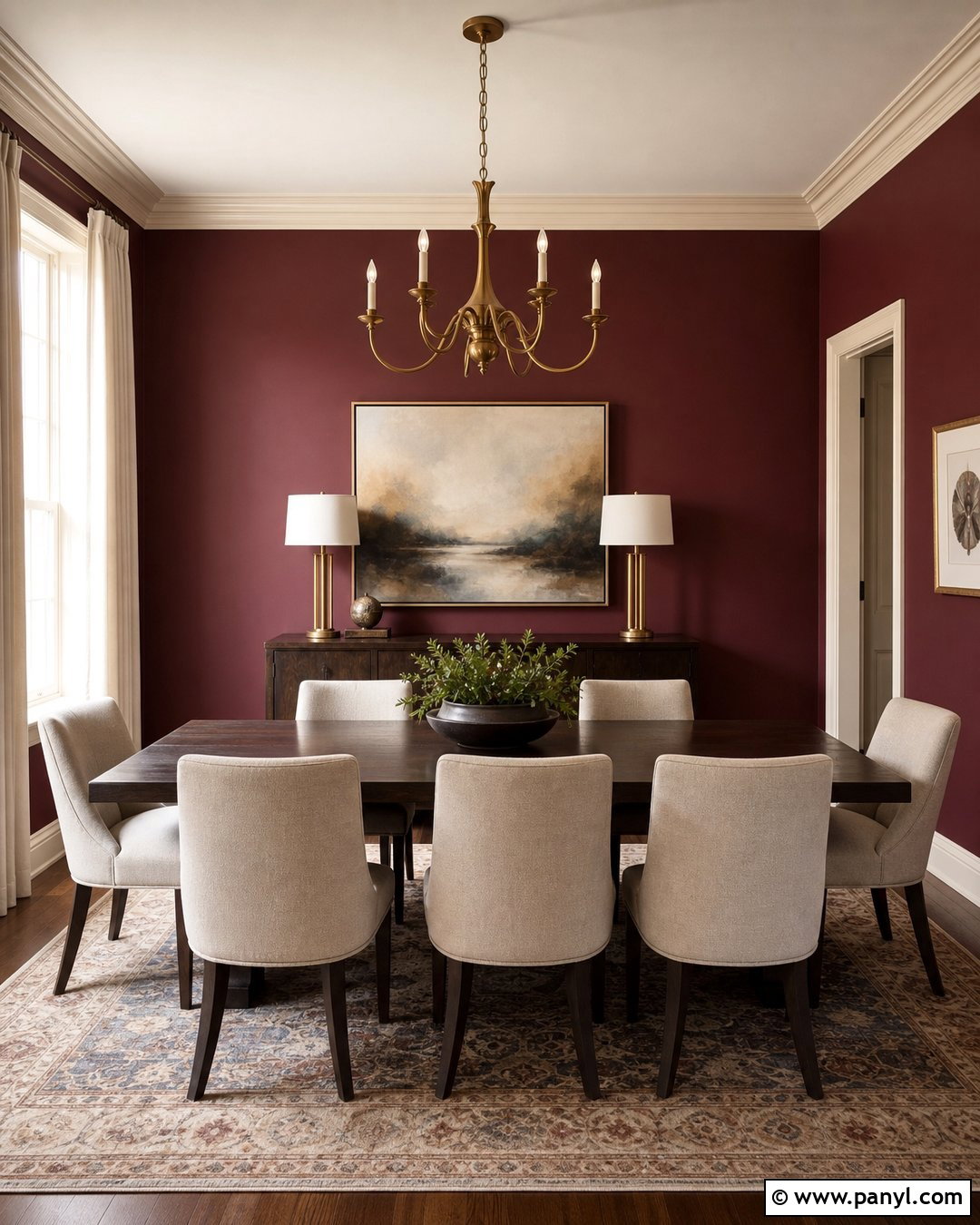
Burgundy walls create a warm dining room with depth, especially when paired with restrained furniture and lighter textiles. Choose an earthy wine-red shade with brown undertones and apply it to all four walls. Keep the ceiling creamy white, and paint the trim in a softer coordinating beige instead of sharp white. A dark oak dining table, oatmeal upholstered chairs, and a muted patterned rug will balance the strong color. Add a sculptural brass chandelier and simple ivory curtains to reflect light. Artwork containing tan, dusty blue, or faded green can introduce contrast without breaking the palette. This complete scheme feels inviting during evening meals, but it can also remain fresh in daylight when the windows and light-colored furnishings are left visually unobstructed.
18. Chocolate Brown Living Room Walls
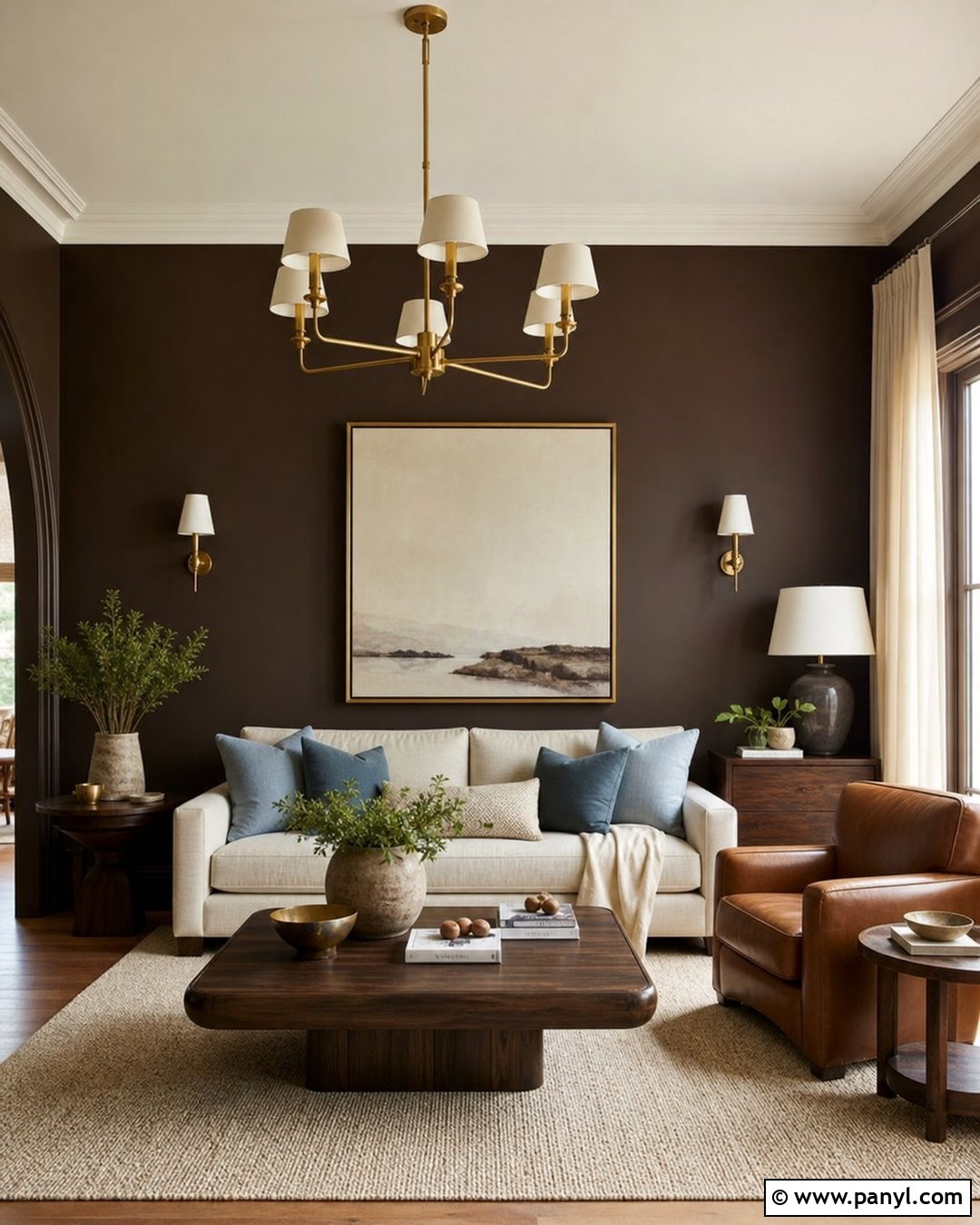
Chocolate brown walls offer a rich alternative to charcoal and can make a living room feel grounded and comfortable. Choose a deep cocoa shade and use it across the walls, leaving the ceiling a warm cream. Pair the paint with an ivory sofa, caramel leather chair, and a large beige wool rug. Walnut tables will blend naturally with the walls, while brushed brass lighting adds gentle shine. Introduce muted blue or dusty rose through pillows and artwork to prevent the scheme from becoming too tonal. Cream curtains should extend from near the ceiling to the floor, creating a brighter vertical break. With layered lamps and a few pale accessories, the final room feels sophisticated, warm, and suitable for both modern and traditional homes.
19. Mustard Yellow Kitchen Walls
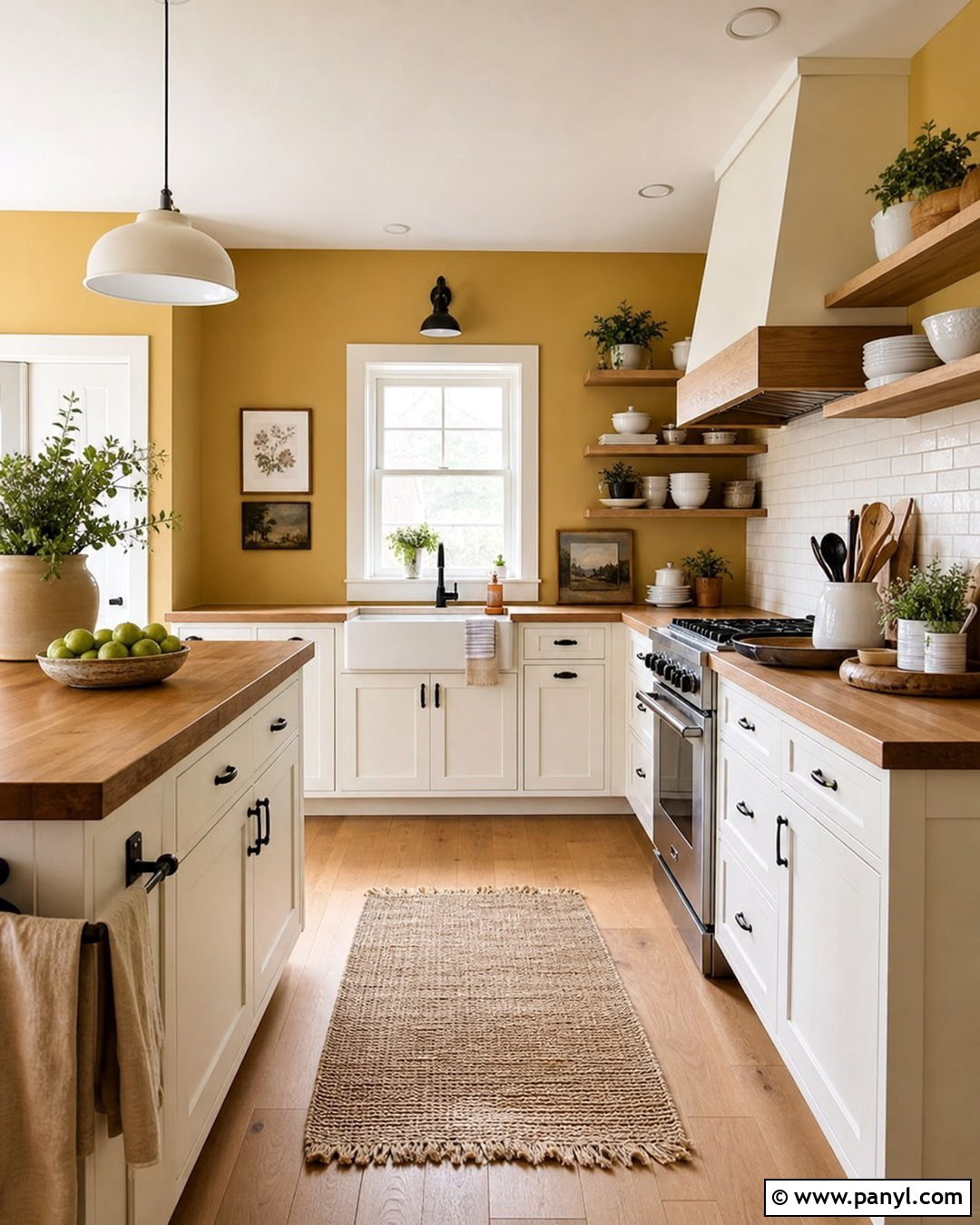
Mustard yellow walls can give a kitchen cheerful warmth without becoming excessively bright. Choose a softened ocher shade and use it around off-white cabinets with warm wood counters or butcher block accents. A cream subway tile backsplash, black hardware, and medium oak flooring will ground the color. Keep window treatments simple so daylight can illuminate the walls. Open shelves can display white dishes, amber glass, and a few green herbs, creating a natural palette. Use durable satin or high-quality washable eggshell paint in cooking areas. If the room is small, restrict the mustard to the primary wall surfaces and keep the ceiling bright warm white. The completed kitchen feels sunny, collected, and welcoming throughout every season.
20. Deep Teal Powder Room Walls
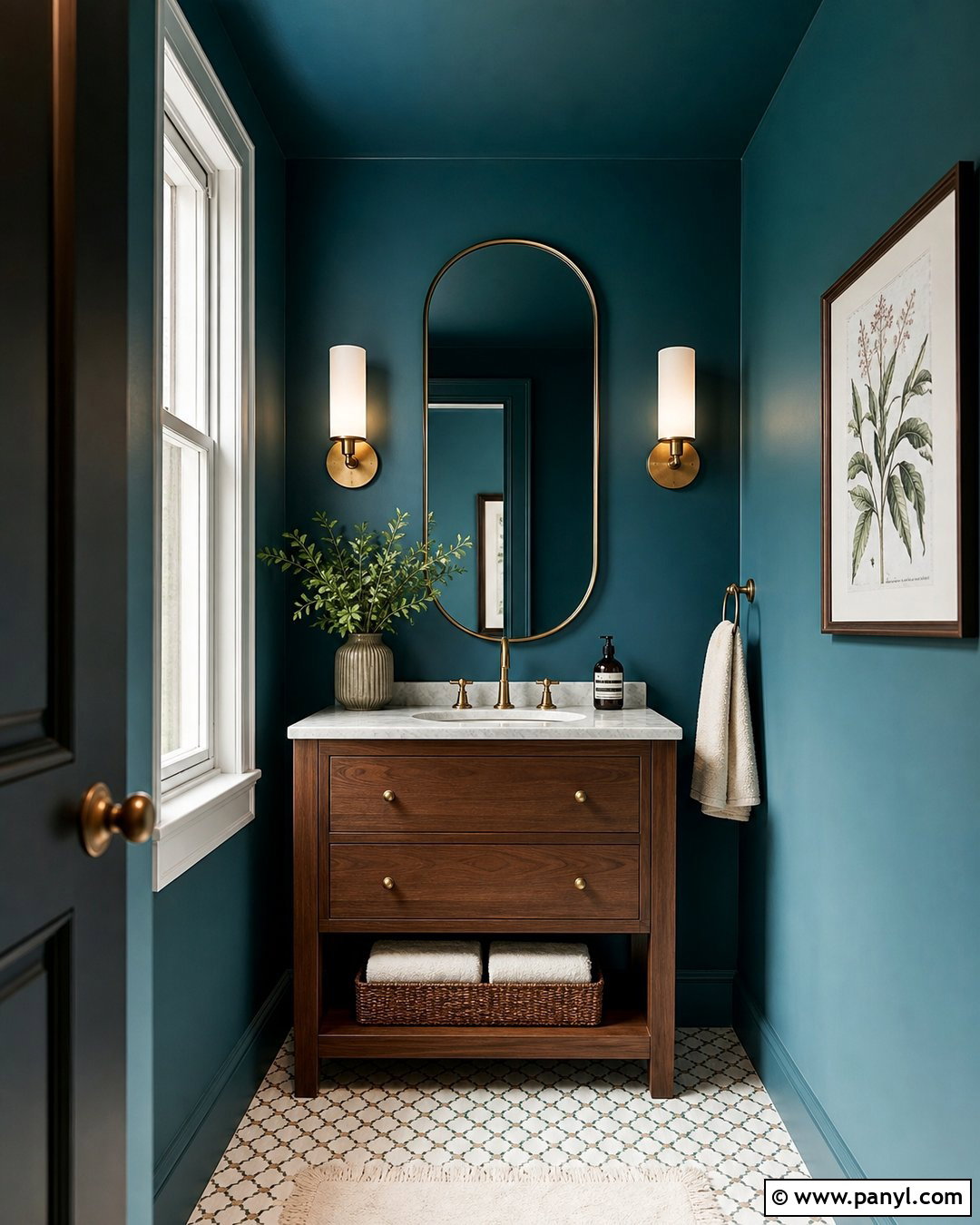
Deep teal walls make a compact powder room feel deliberate and memorable. Paint all walls in a saturated blue-green and consider carrying the color onto the ceiling for an enveloping finish. Install a compact walnut vanity with a pale stone top, then add an aged brass faucet and rounded mirror. Cream hand towels and a small patterned floor tile will keep the dark palette balanced. Use wall sconces on both sides of the mirror to distribute light evenly and reveal the richness of the paint. A moisture-resistant satin finish is practical in this setting, especially around the sink. Keep accessories minimal and choose one small botanical print. This complete design proves that a tiny room can comfortably support strong color and elegant contrast.
21. Lavender Guest Room Walls
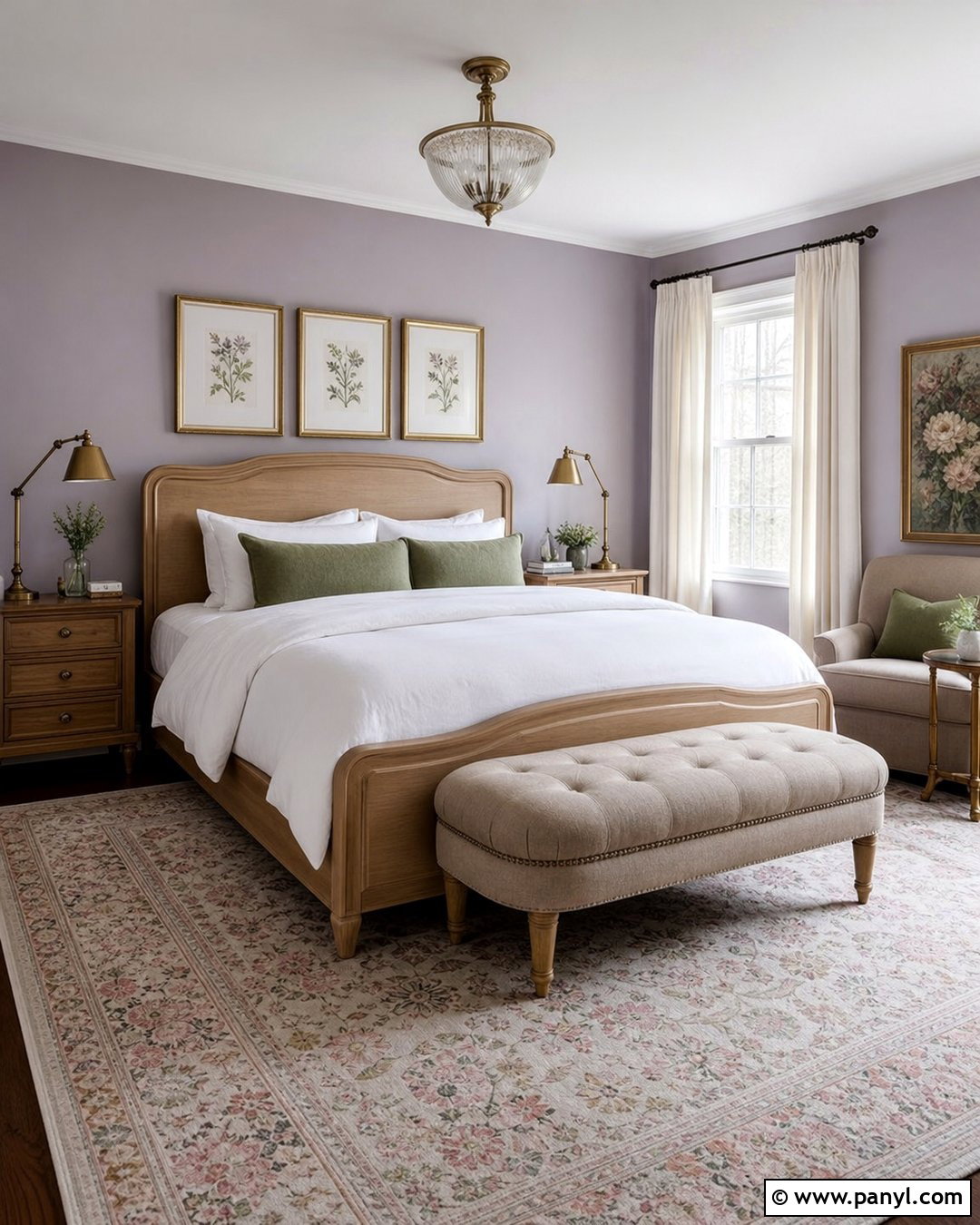
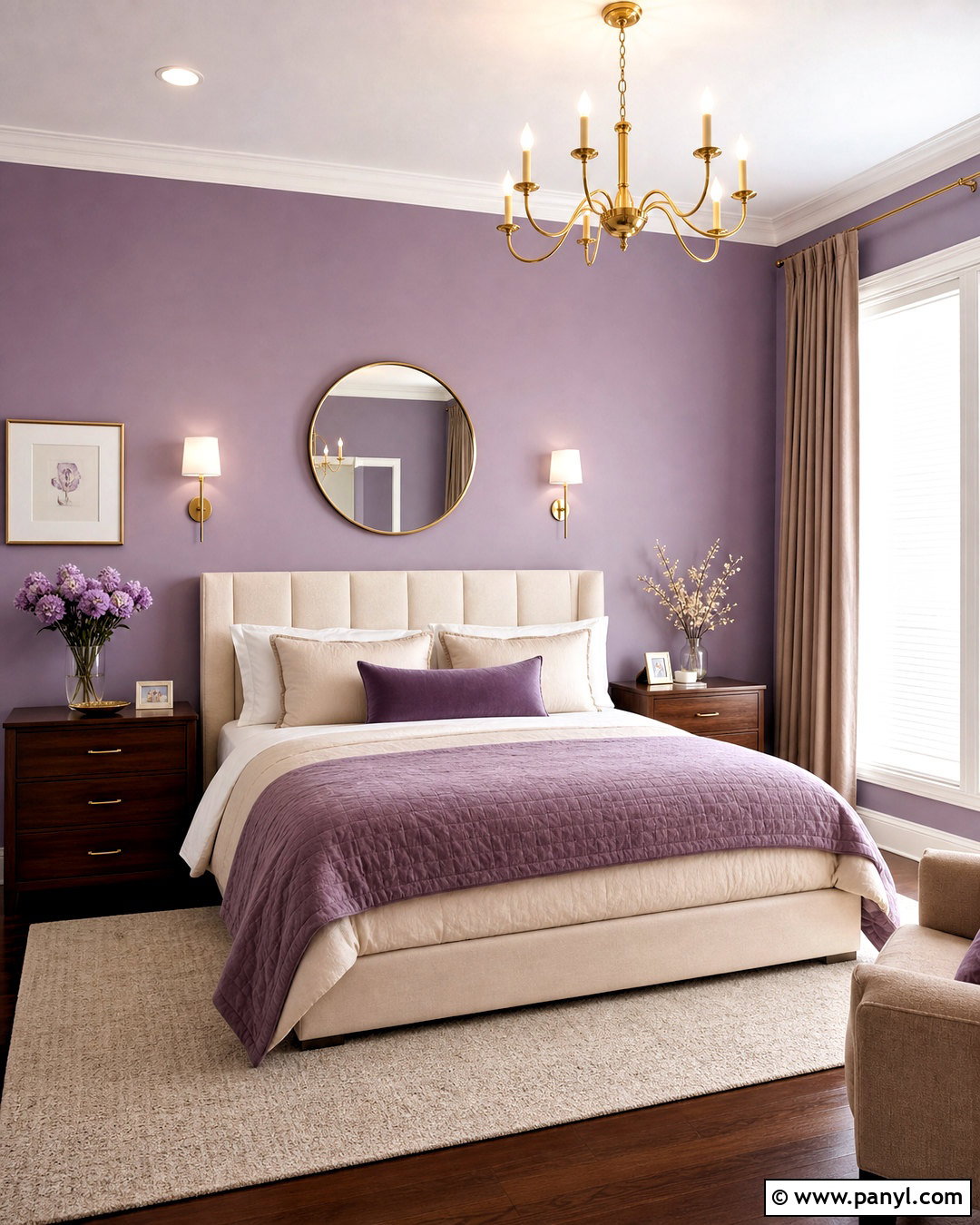
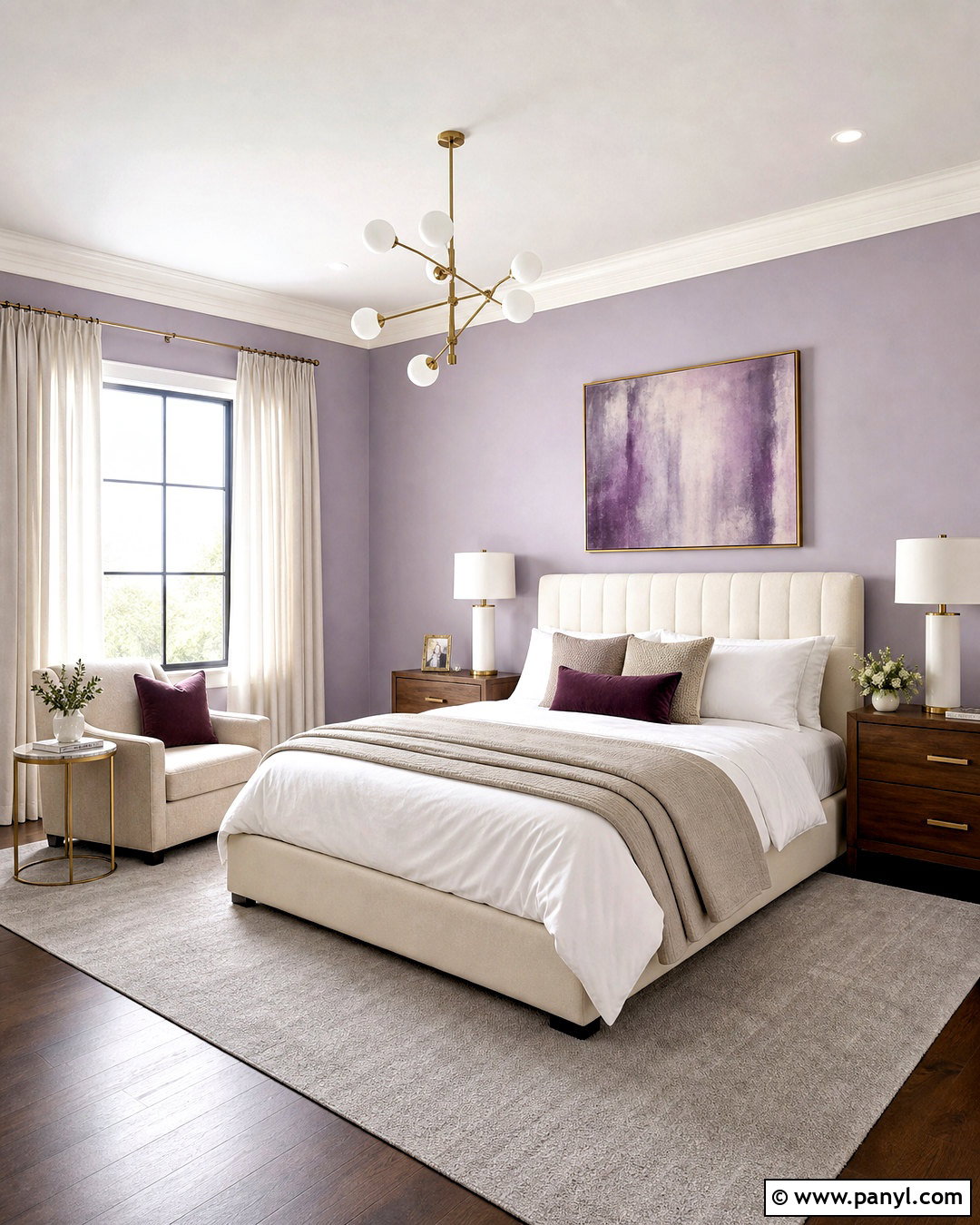
Soft lavender walls give a guest bedroom gentle color while remaining calm and versatile. Choose a muted lavender with gray undertones rather than a bright purple. Pair it with a light oak bed, crisp white bedding, and a warm taupe upholstered bench. Sage-green pillows and a faded floral rug can create a balanced garden-inspired palette without making the room feel overly decorative. Add brushed nickel or antique brass lamps, depending on whether you prefer a cooler or warmer finish. Ivory curtains will soften the windows and reflect daylight around the space. Keep the ceiling and trim warm white for clarity. The resulting guest room feels thoughtful, fresh, and restful, with enough neutral furniture to accommodate future changes in artwork and textiles.
22. Peach Bathroom Walls
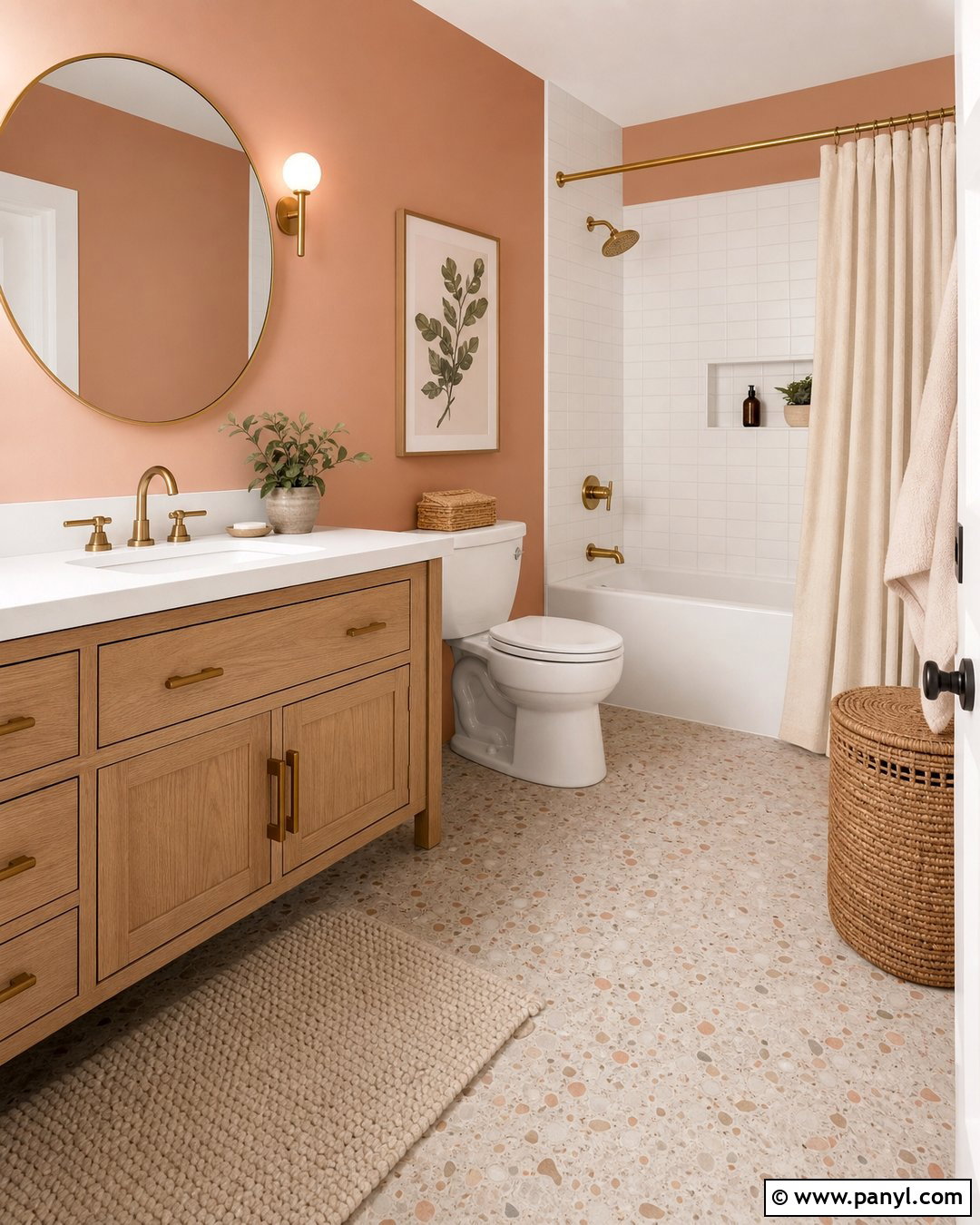
Soft peach walls can warm up a bathroom filled with hard white surfaces. Choose a pale, dusty peach rather than a vivid coral, then pair it with white tile, a light oak vanity, and brushed brass fixtures. Paint the ceiling warm white to preserve brightness and use a moisture-resistant satin finish on the walls. A rounded mirror, cream towels, and a woven storage basket will reinforce the gentle palette. Add one small green plant where conditions allow, or use botanical artwork for natural contrast. Terrazzo or small-format floor tile containing beige and muted peach flecks will connect the surfaces. This complete bathroom look feels sunny and flattering while remaining clean, practical, and easy to coordinate with everyday essentials.
23. Cream Kitchen Walls
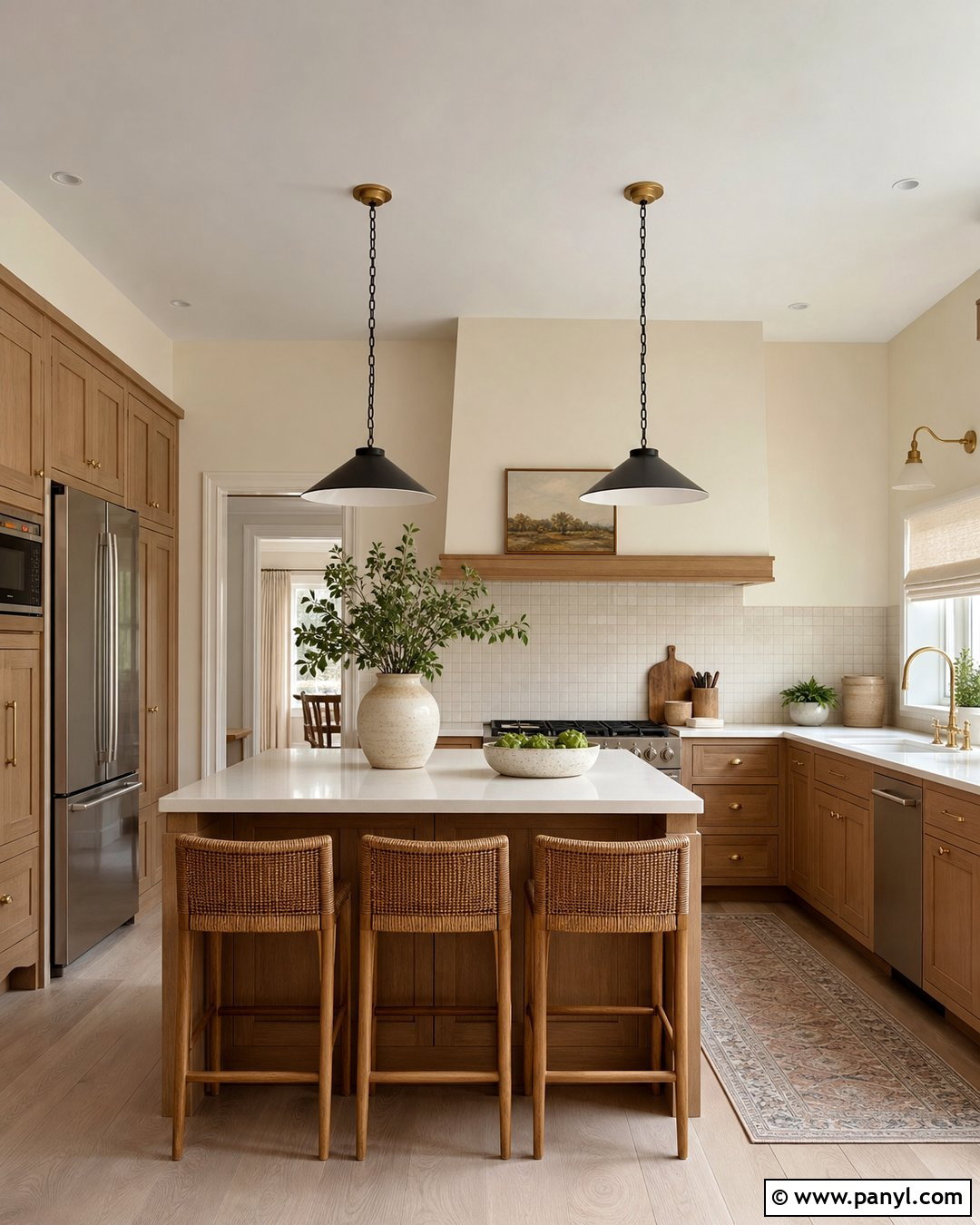
Cream walls bring softness to a kitchen and coordinate especially well with natural stone, warm metals, and wood cabinetry. Select a creamy off-white with enough depth to distinguish it from pure white trim. Pair the walls with medium oak cabinets, honed cream quartz counters, and an off-white backsplash. Aged brass hardware and simple black pendant lights add definition. Continue the cream onto the ceiling if the kitchen has low or uneven ceiling lines, creating a smoother visual envelope. Use a washable eggshell or satin finish to make cooking marks easier to remove. Complete the room with woven counter stools, natural linen shades, and a few handmade ceramic pieces. The overall design feels warm, timeless, and brighter than a standard beige kitchen.
24. Taupe Living Room Walls
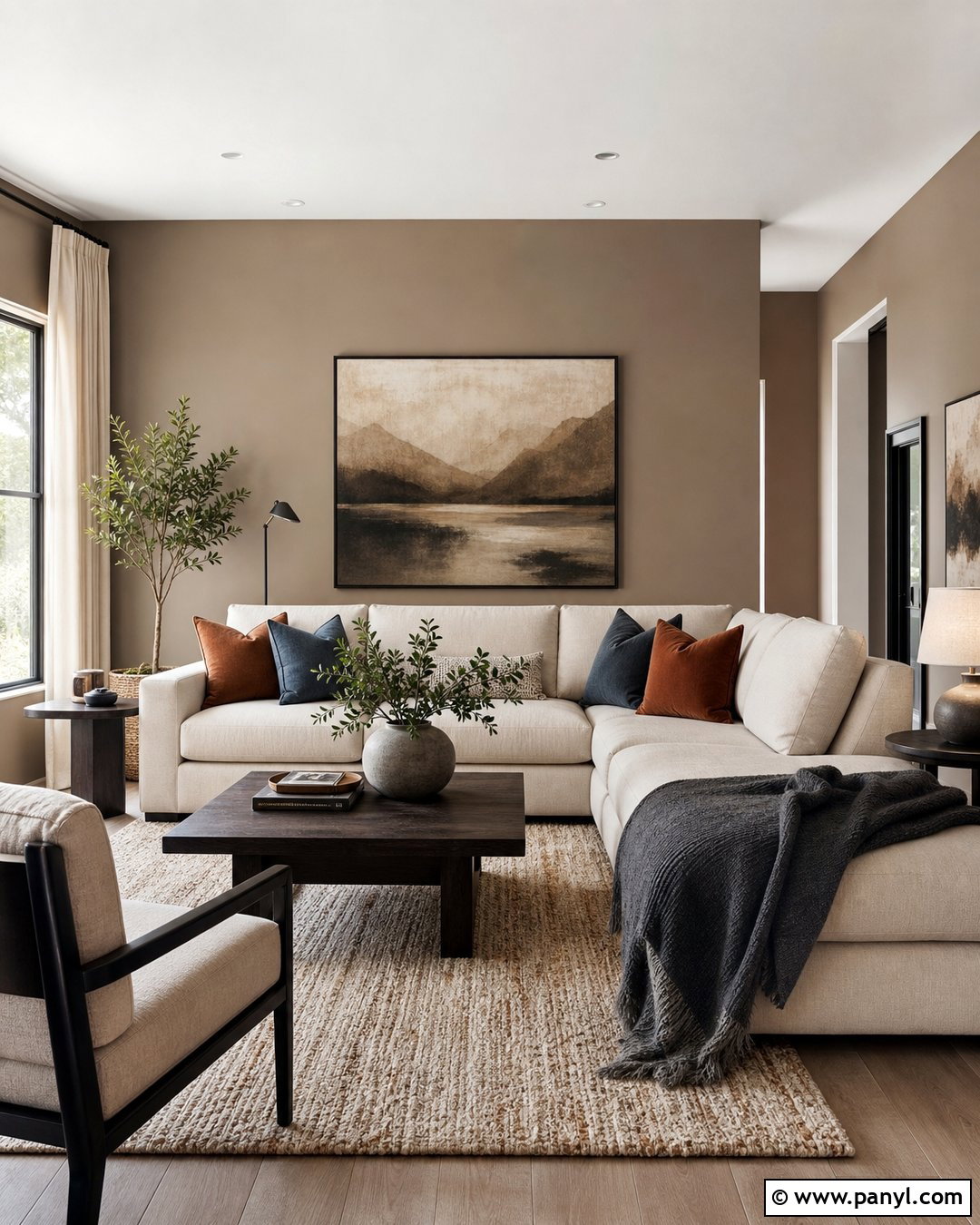
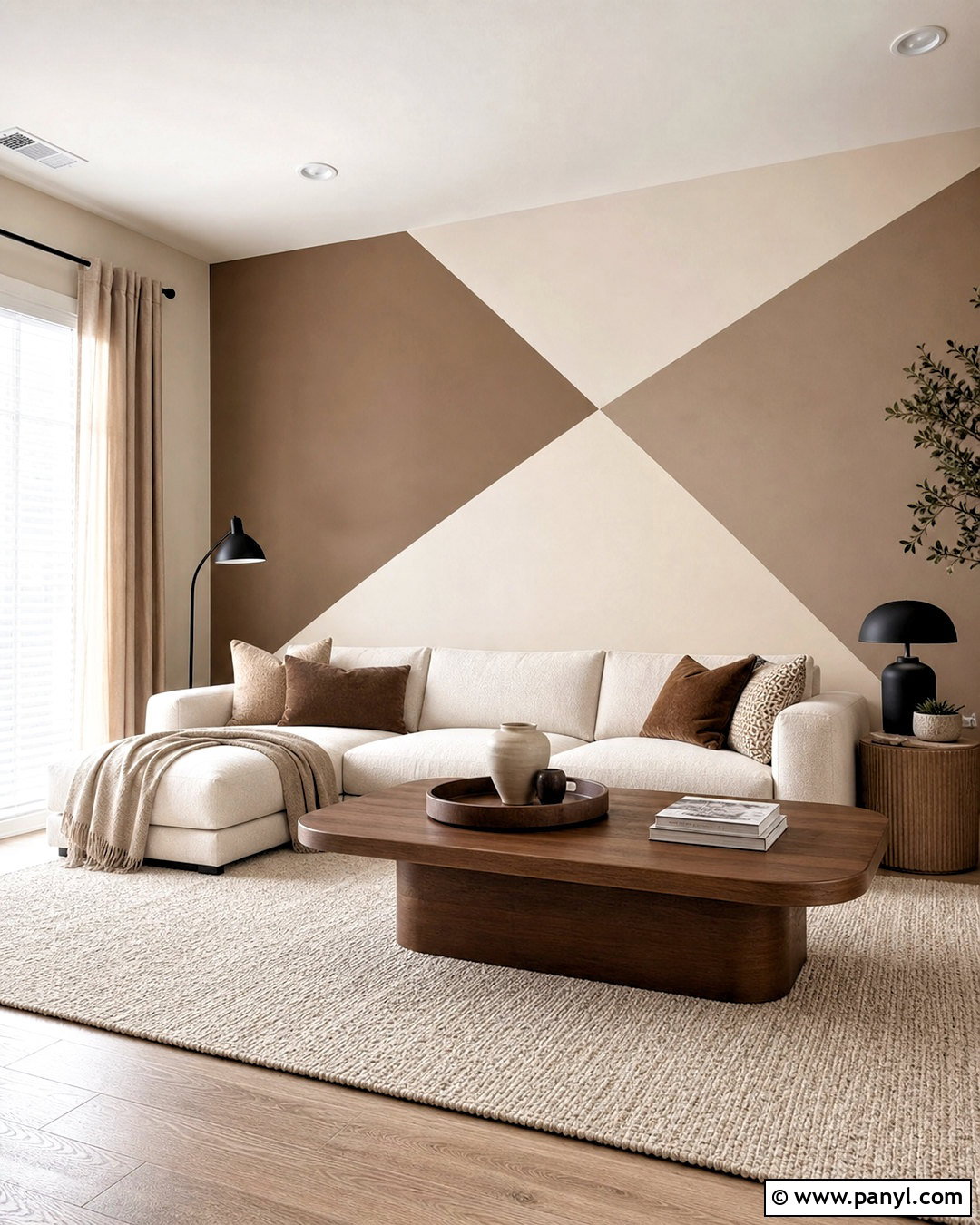
Taupe walls provide an adaptable foundation for a living room with both warm and cool furnishings. Choose a medium taupe with balanced gray and brown undertones, then use warm white for the ceiling and trim. Add a cream sectional, dark wood coffee table, and a textured rug combining tan, gray, and ivory. Black metal lighting provides structure, while rust and muted blue pillows create measured color. Hang oversized artwork with soft earth tones to prevent the walls from looking blank or flat. Natural linen curtains will blend gently into the palette and make the windows appear larger. The complete room feels polished but comfortable, and the neutral wall color can support future changes in furniture, seasonal textiles, or decorative accessories.
25. Clay Limewash Living Room Walls
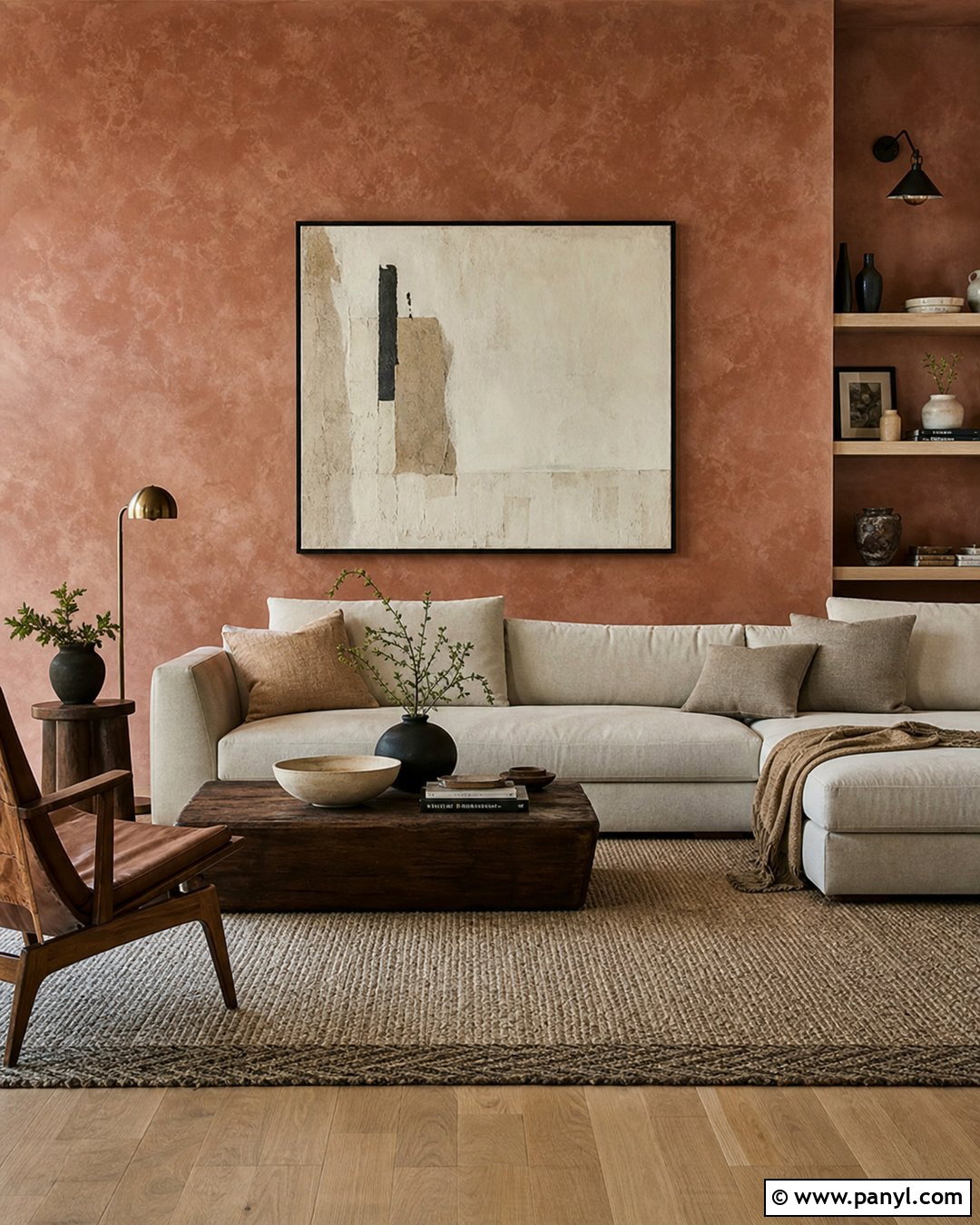
Clay-colored limewash gives living room walls natural movement and a handmade appearance. Apply a muted terracotta mineral finish across every wall, using broad, overlapping strokes to create soft variations instead of a uniform surface. Pair it with a cream linen sofa, low walnut table, woven wool rug, and pale oak shelving. Black accents should be limited to a floor lamp and a few picture frames, while aged brass adds warmer highlights. Choose abstract artwork with large areas of ivory so it remains visible against the textured background. Before starting, confirm the wall preparation and primer recommended for the specific product. The completed room feels earthy and layered, with the wall finish serving as both color and subtle decoration.
26. Sand Limewash Bedroom Walls
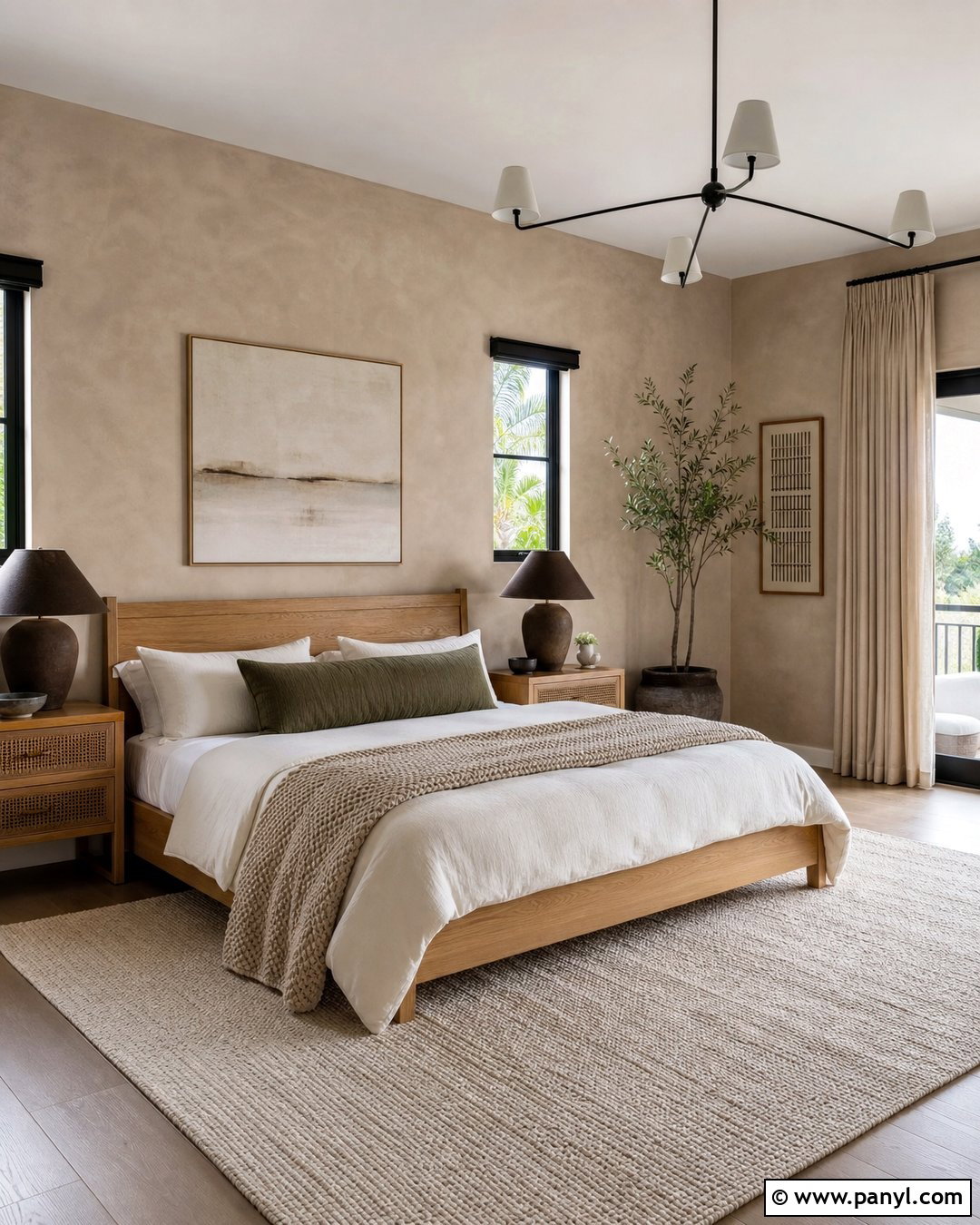
Sand-colored limewash creates a soft bedroom backdrop that changes gently as daylight crosses the walls. Choose a pale beige mineral finish with warm stone undertones and apply it to all four walls. Keep the ceiling a smooth warm white for slight contrast, or continue the limewash overhead for a more enveloping effect. Furnish the room with a white oak bed, ivory bedding, and woven tan nightstands. Add chocolate-brown lamps and muted olive pillows to provide definition. Linen curtains and a thick cream rug reinforce the quiet texture. Avoid covering the walls with too much artwork; one large, simple piece is enough. The finished bedroom feels relaxed, tactile, and warm while remaining brighter than a conventional dark painted room.
27. Dusty Rose Limewash Walls
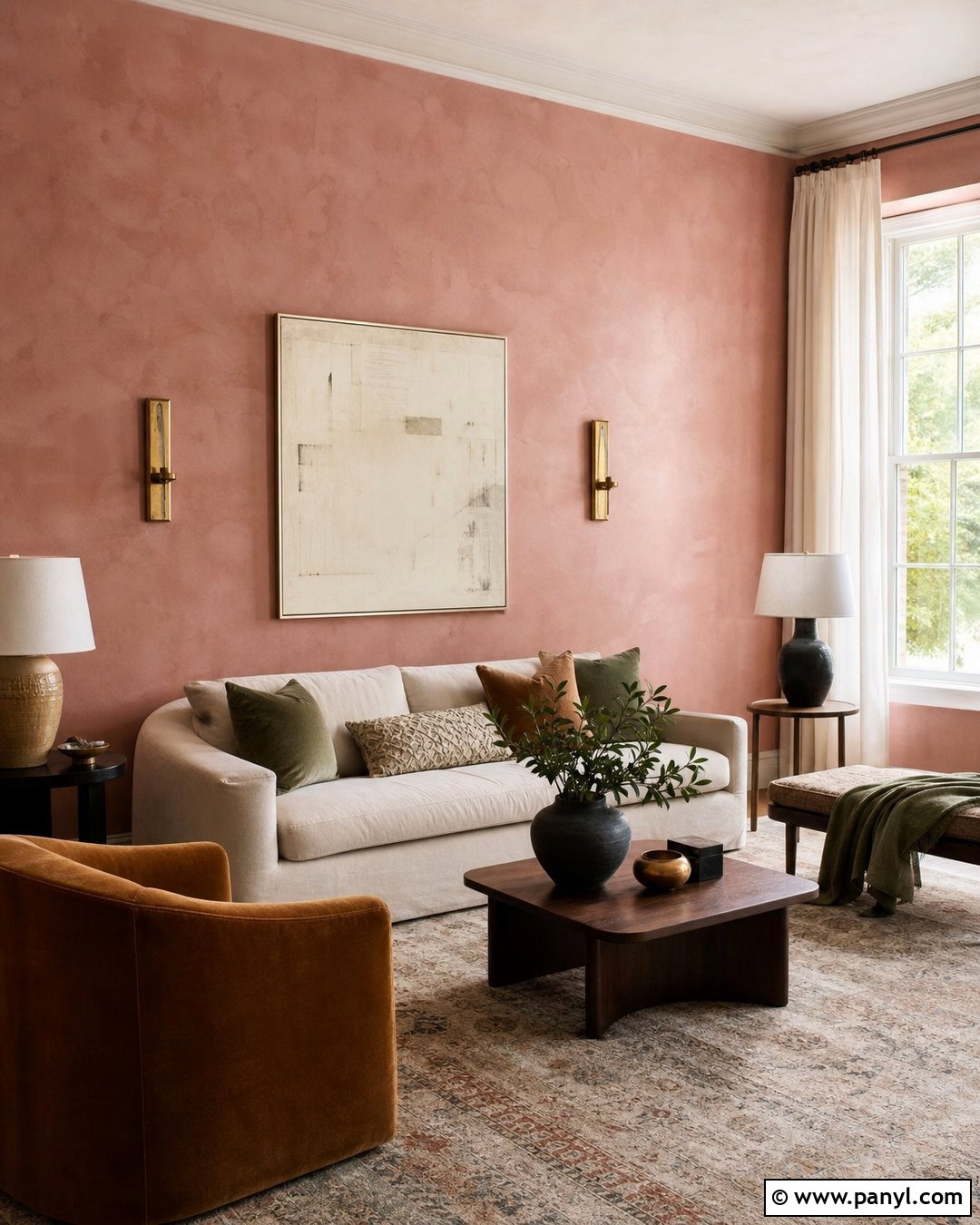
Dusty rose limewash creates a warm, softly aged wall treatment suitable for a bedroom or quiet sitting room. Select a muted pink with clay and beige undertones, then apply it throughout the room for a consistent hand-brushed appearance. Pair the walls with a camel velvet chair, cream sofa or bed, and dark walnut tables. Olive-green textiles provide natural contrast, while aged brass fixtures echo the warmth in the finish. Use off-white curtains and a faded patterned rug to keep the palette light. Because limewash has visible tonal movement, simple furniture and generously scaled artwork work best. The complete space feels expressive without becoming bright, and the mineral texture adds character that ordinary flat pink paint cannot easily reproduce.
28. Graphite Limewash Office Walls
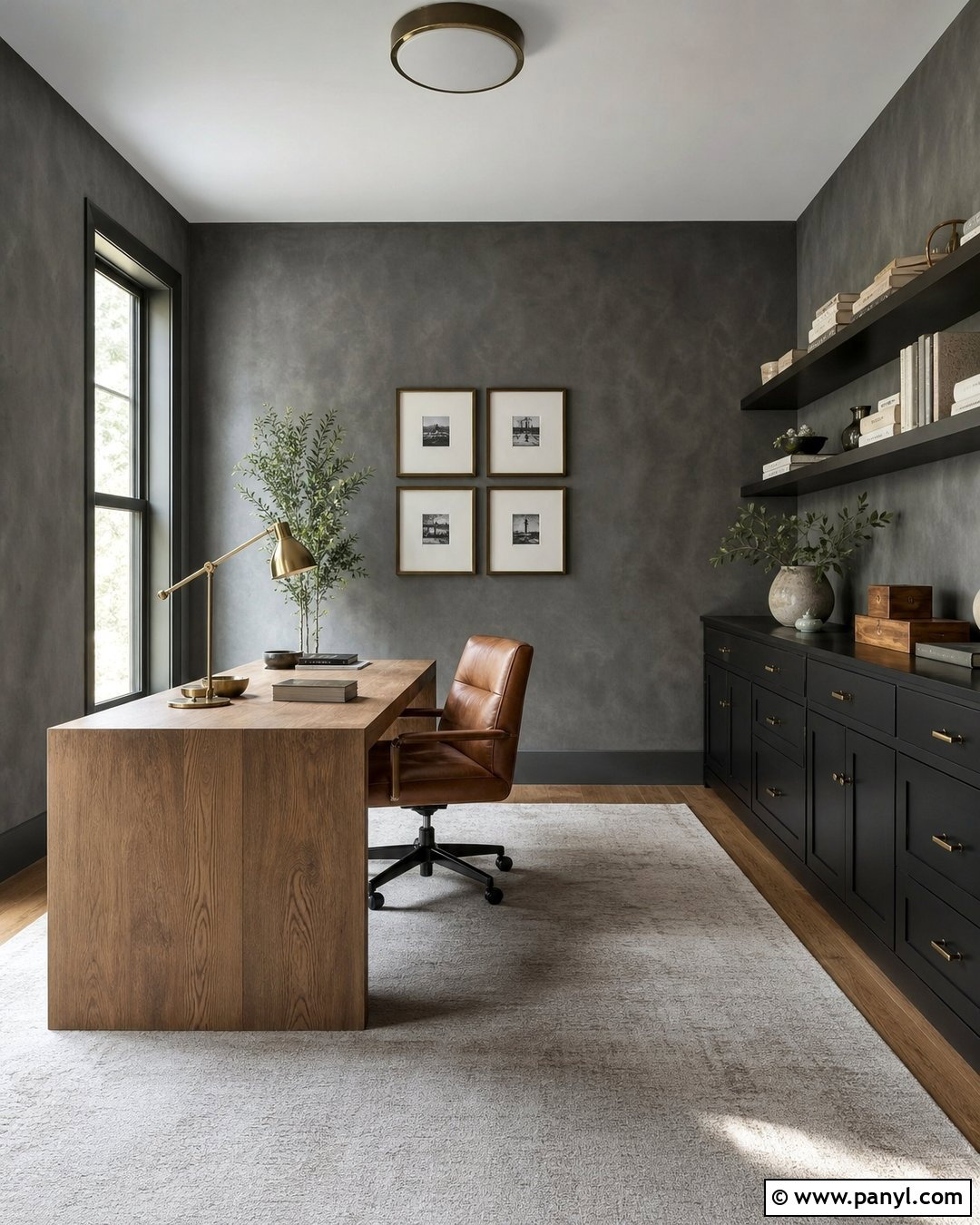
Graphite limewash makes a home office feel architectural while offering more movement than solid charcoal paint. Use the smoky mineral finish across the walls, then balance it with a warm white ceiling if the room has limited daylight. Add a streamlined oak desk, black storage cabinets, and a cognac leather chair. A large ivory rug will brighten the lower half of the room, while brushed brass task lighting adds warmth. Keep shelves organized with pale books, wooden boxes, and ceramic objects that remain visible against the dark walls. Position the desk near a window and add a shaded floor lamp for evening work. The finished office looks grounded and professional, with subtle wall variation preventing the deep gray palette from appearing flat.
29. Painted Wall Arch
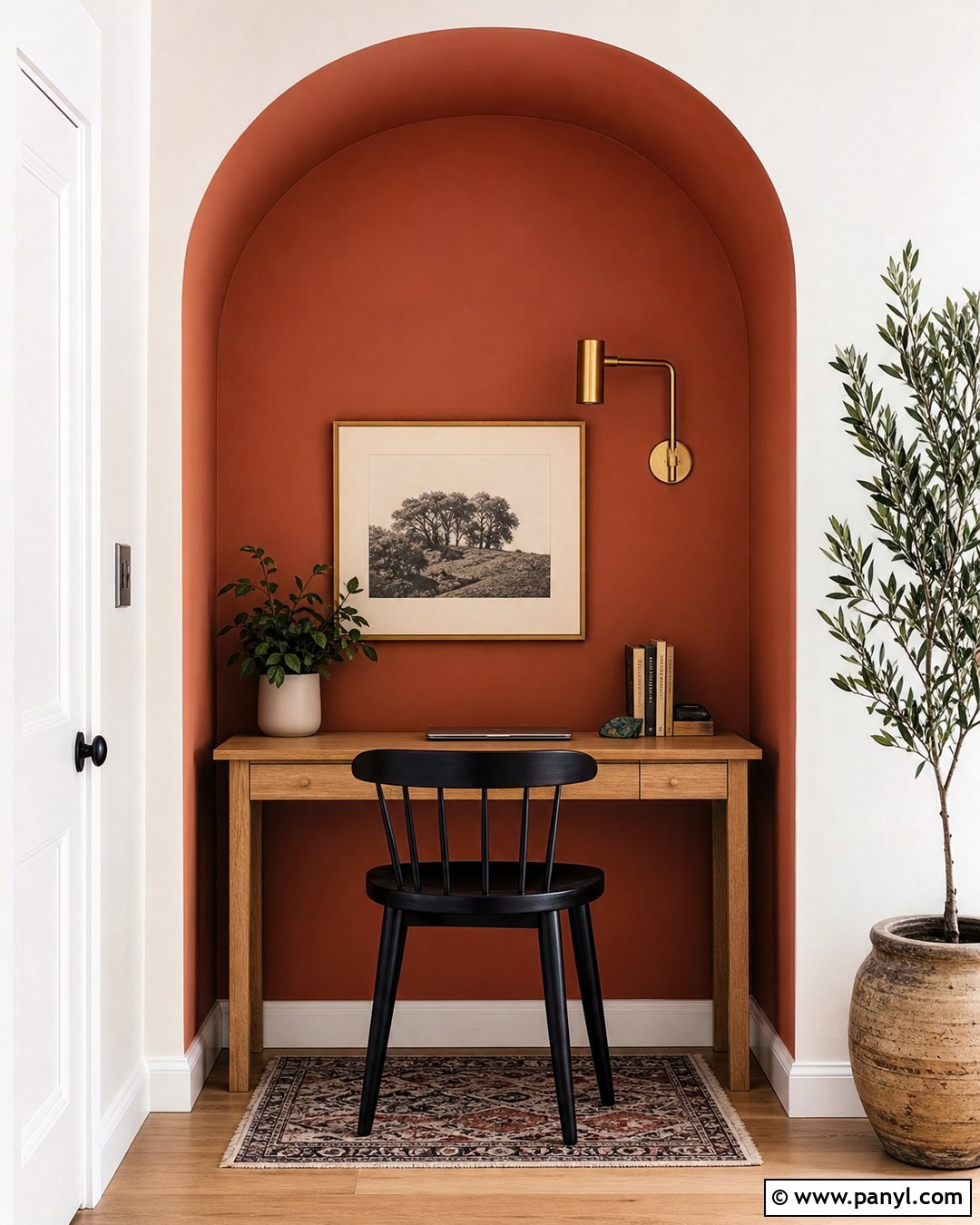
A painted wall arch can define a desk, reading chair, or console without adding permanent construction. Use a muted terracotta arch on a warm white wall, making it wide enough to frame the furniture beneath it. In a home office corner, place a slim oak desk inside the painted shape with a black chair and brass wall light. Repeat the terracotta through a small rug or ceramic planter so the feature belongs to the larger room. Measure carefully, create the vertical sides with painter’s tape, and use a pencil tied to string to mark an even curve. Leave surrounding walls uncluttered. This complete arrangement turns an overlooked corner into a useful focal area while remaining affordable and easy to repaint later.
30. Painted Circle Accent Wall
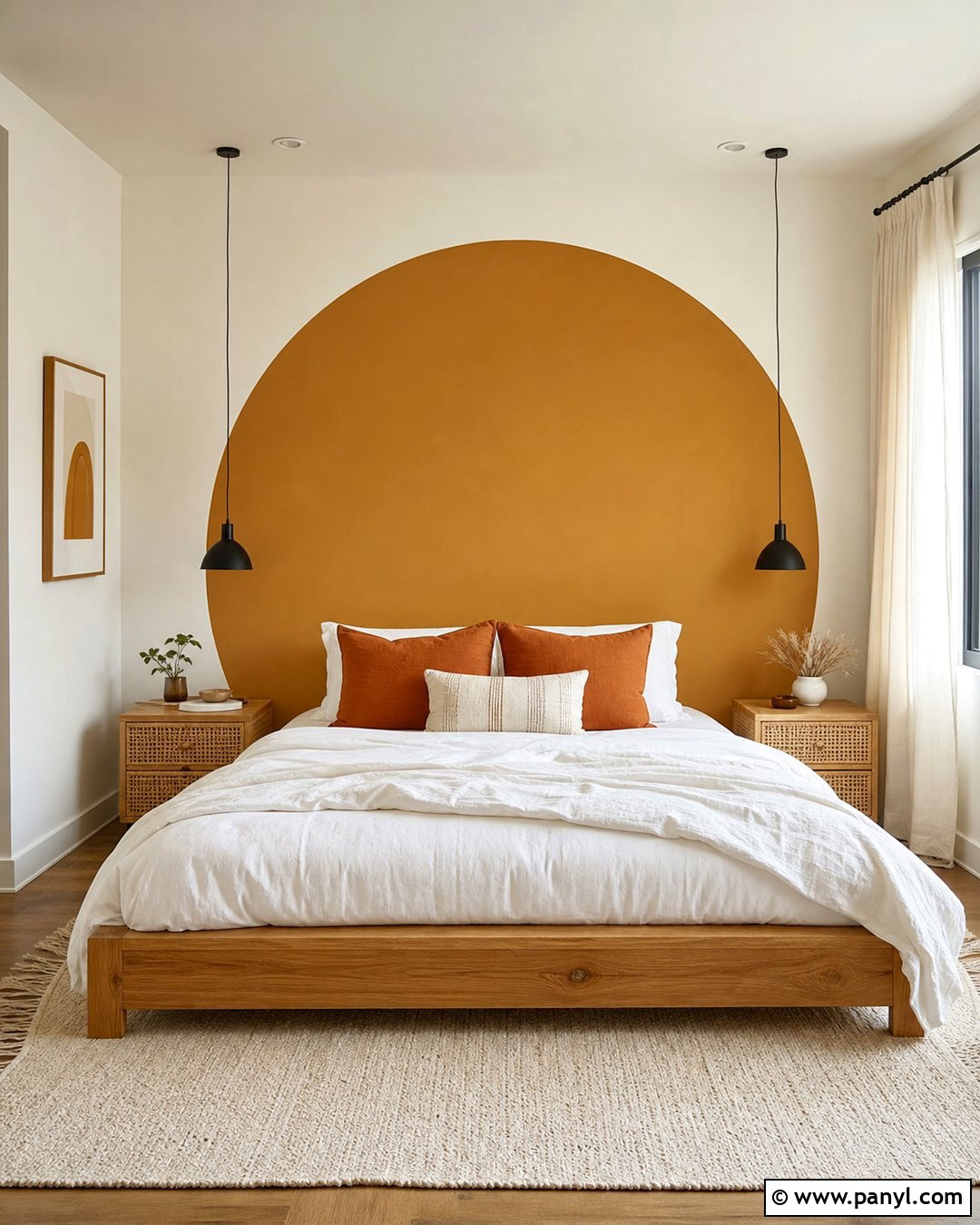
A large painted circle can anchor a simple bedroom and replace the visual weight of a conventional headboard. Paint an oversized muted ocher circle behind a low natural oak bed, leaving the remaining walls a warm off-white. The circle should extend beyond both sides of the bed so the shape feels intentional rather than small and decorative. Add white bedding, rust pillows, woven nightstands, and black pendant lights for balance. Use a pencil-and-string method or a large circular guide to create a smooth outline before painting. Keep nearby artwork minimal because the geometric feature already provides strong visual interest. A cream rug and linen curtains complete the room, producing a modern but approachable bedroom with a clear and coordinated focal point.
31. Geometric Color Block Wall
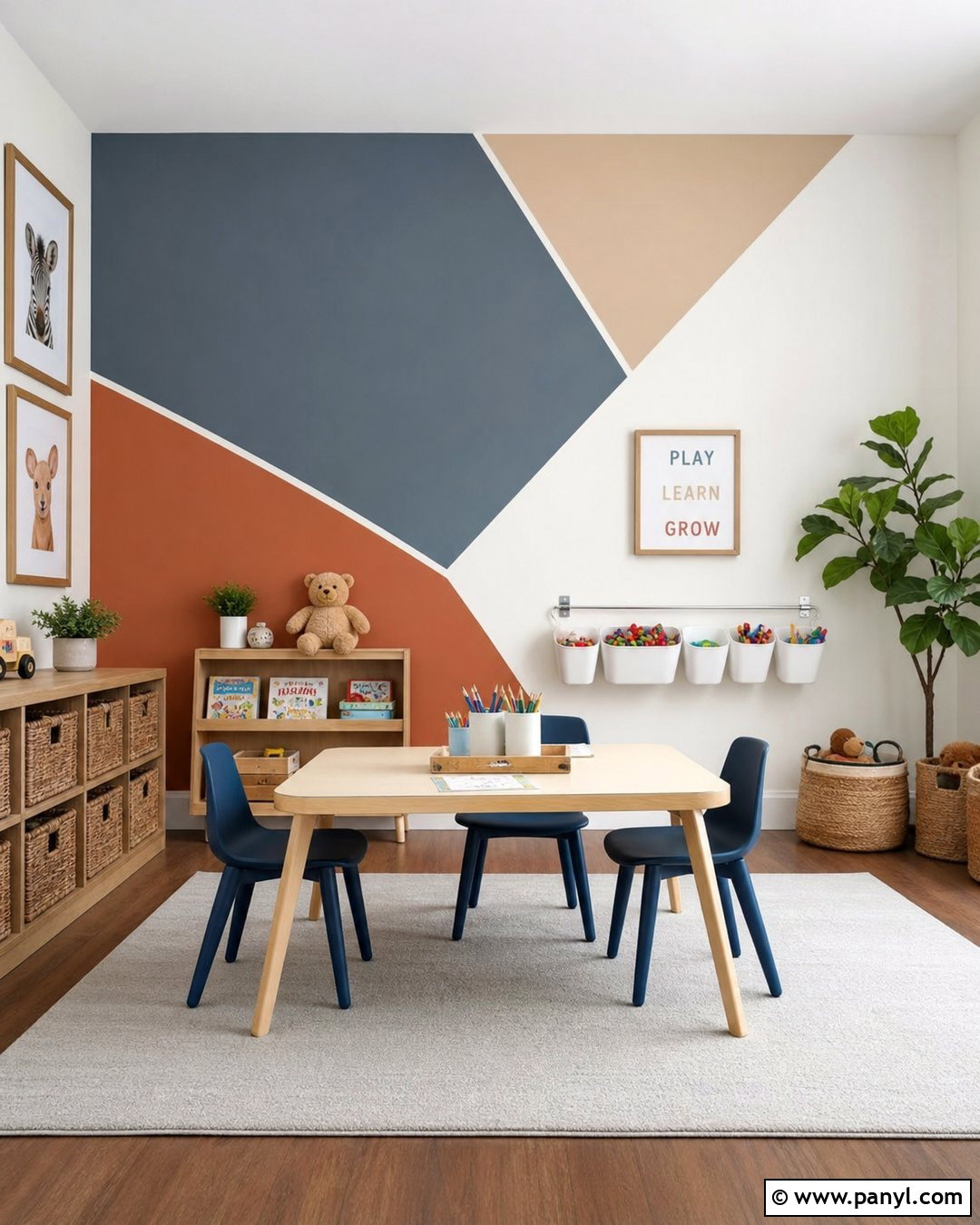
A geometric color-block wall brings energy to a playroom, office, or creative studio. Build the scheme around three coordinated shades, such as dusty blue, muted terracotta, and warm beige. Divide one main wall into large rectangles or angled sections rather than numerous small shapes. Paint the remaining walls warm white to give the pattern breathing room. Add simple oak storage, a neutral desk or activity table, and baskets in natural fibers. Repeat each painted shade sparingly through chairs, cushions, or organizers. Careful measuring and firmly sealed painter’s tape are essential for crisp lines. The completed room feels lively and organized, while the limited palette prevents the graphic treatment from becoming chaotic or difficult to coordinate with practical furniture.
32. Scalloped Painted Wall
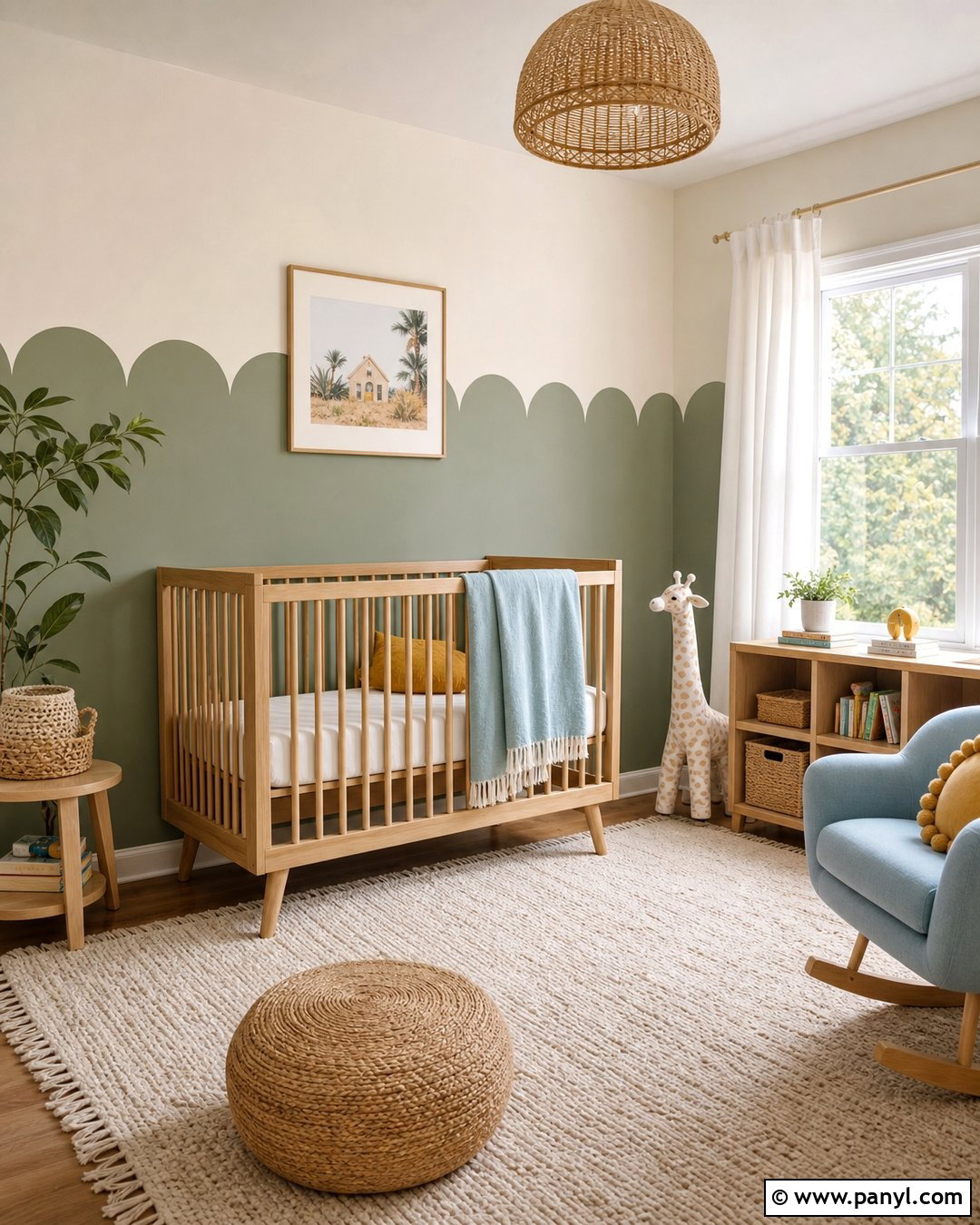
A scalloped painted wall creates a playful border in a nursery or child’s bedroom without covering every surface in bold color. Paint the lower portion muted sage green and form large, even scallops along the upper edge. Leave the wall above warm white for brightness. Pair the treatment with a natural wood crib or bed, cream rug, white curtains, and woven toy storage. Add small accents in dusty yellow and pale blue for a gentle, balanced palette. Use a circular template to keep each curve consistent, and position the border high enough that furniture does not hide it. This complete room feels imaginative but not overly themed, making it easier to adapt the decor as the child grows and preferences change.
33. Painted Wainscoting Wall
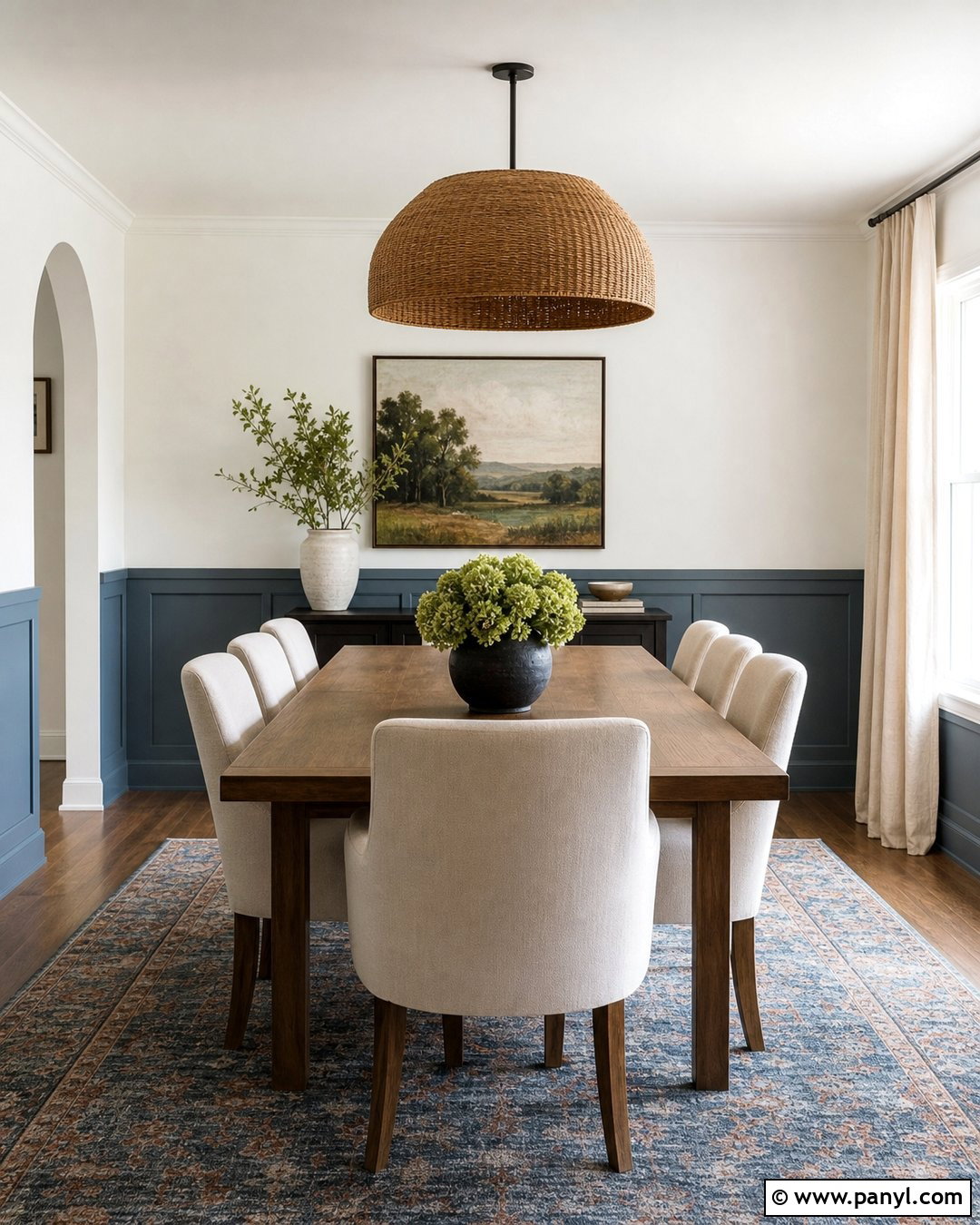
Painted wainscoting adds depth to a dining room while protecting the lower walls from everyday marks. Install simple rectangular molding below chair-rail height, then paint the entire lower section in a medium blue-gray. Use warm white on the upper walls and ceiling for a clean contrast. Pair the treatment with a natural oak dining table, cream upholstered chairs, and a woven pendant light. A patterned rug containing blue, rust, and beige will connect the two wall colors with the furniture. Use a durable satin finish on the molding and an eggshell finish above it. Complete the room with a large landscape print and linen curtains. The overall design feels architectural and finished, even in a newer home with limited original detail.
34. Monochrome Green Living Room Walls
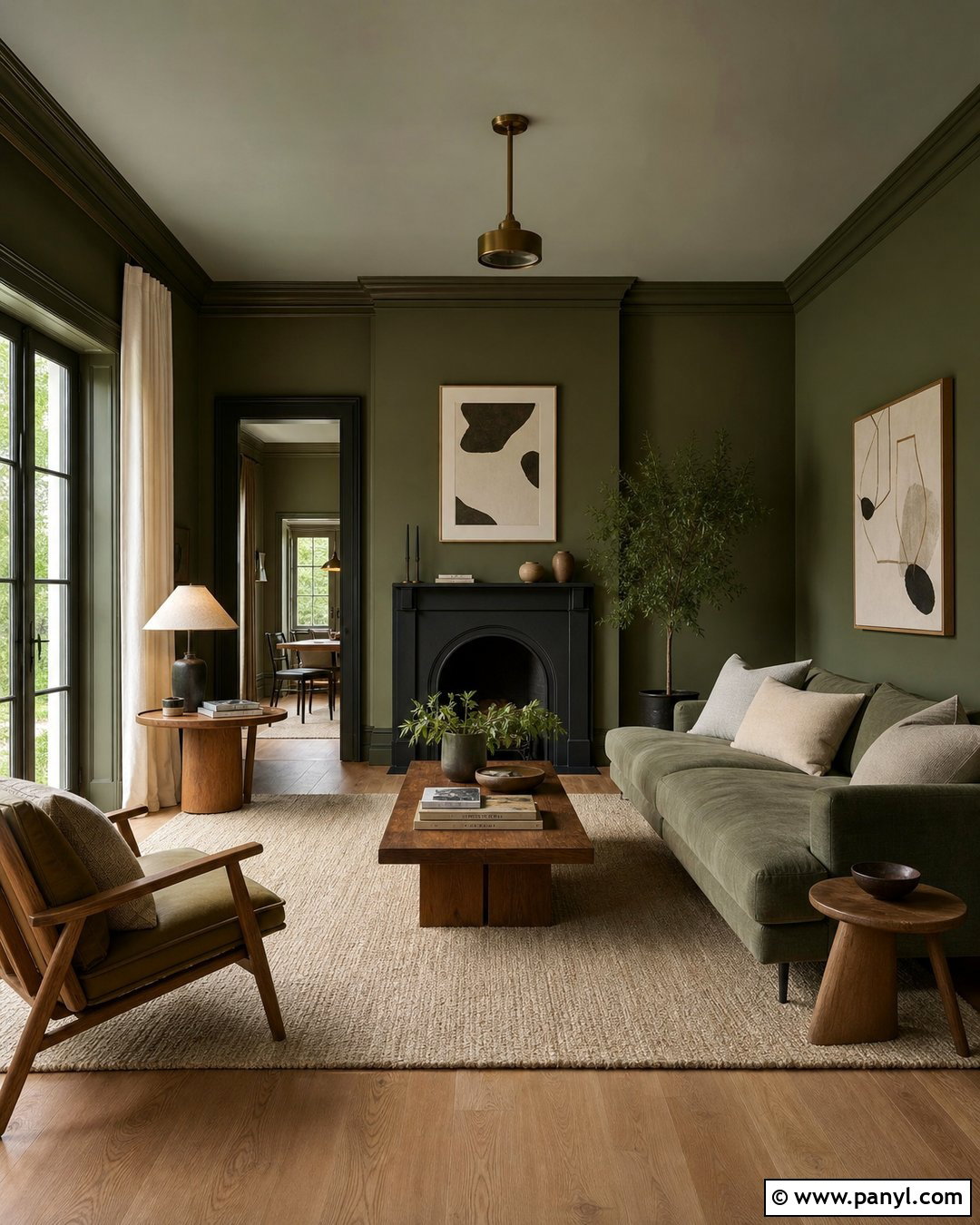
A monochrome green living room uses several tones of one color to create depth without visual clutter. Paint the walls a medium moss green, the trim a slightly darker olive, and the ceiling a pale gray-green. Add a sofa in soft sage fabric, dark green pillows, and a cream rug to keep the space balanced. Natural oak tables and aged brass lighting will warm the palette, while small black accents provide crisp definition. Choose artwork containing ivory, tan, and restrained green rather than introducing unrelated bright colors. Linen curtains in a pale neutral can soften the windows without disrupting the scheme. The complete room feels layered and cohesive because the green shades vary in value while sharing similar warm, earthy undertones.
35. Monochrome Blue Bedroom Walls
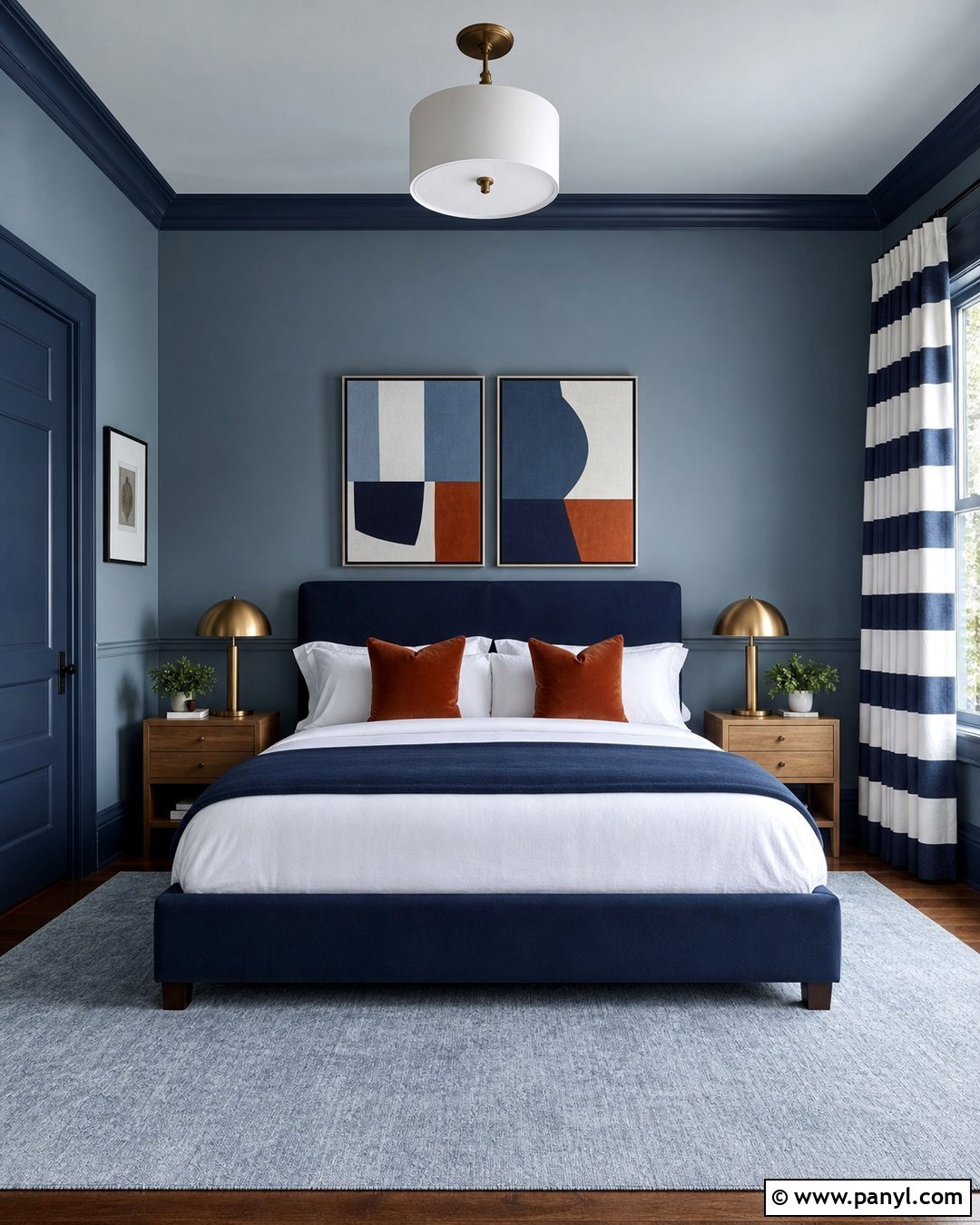
Layering several blue tones can give a bedroom a calm, tailored appearance. Paint the walls a muted medium blue, the trim and doors a deeper blue, and the ceiling a very pale blue-gray. Choose a navy upholstered bed and balance it with crisp white bedding, an ivory rug, and light oak nightstands. Add rust-colored pillows and antique brass lamps for warmth. Curtains in a blue-and-cream stripe can connect the different shades without making the room feel overly matched. Keep artwork simple and use warm-toned frames rather than silver. By varying the blue values across surfaces and furnishings, the finished bedroom gains dimension while remaining visually peaceful, coordinated, and easy to maintain as a complete design.
36. Black And White Painted Walls
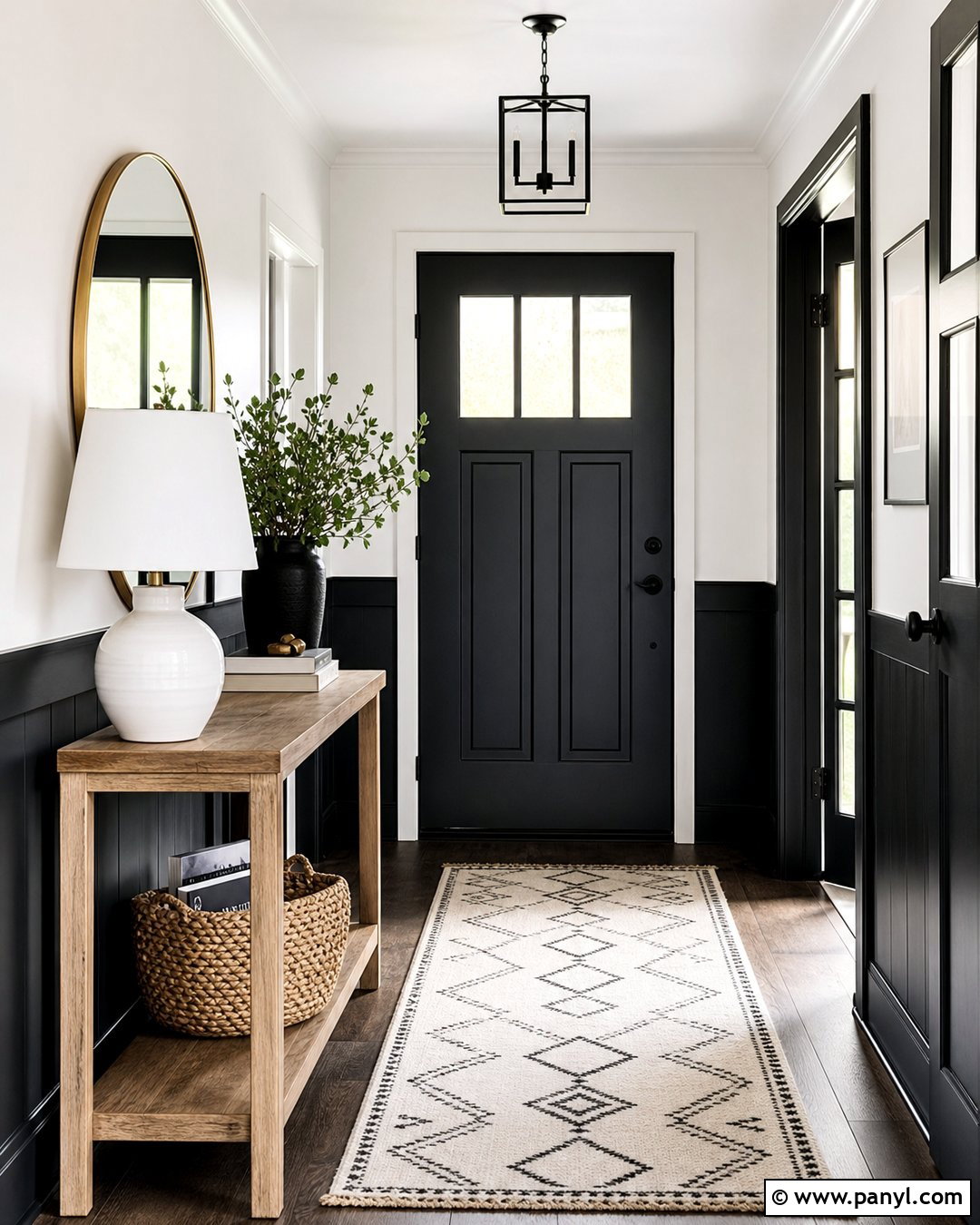
Black and white walls create a graphic room when the colors are used in broad, purposeful sections. In a modern entryway, paint the lower two-thirds soft black and the upper portion warm white. Continue the black across the interior door to strengthen the architectural effect. Add a narrow oak console, round brass mirror, and cream runner with a restrained geometric pattern. A white ceramic lamp and woven basket will soften the contrast. Keep the ceiling white and use warm bulbs so the black does not look harsh. Rather than adding several bright accent colors, introduce greenery and natural wood. The complete entry feels clean and dramatic while remaining practical enough for a typical family home or compact apartment.
37. Blue And Beige Living Room Walls
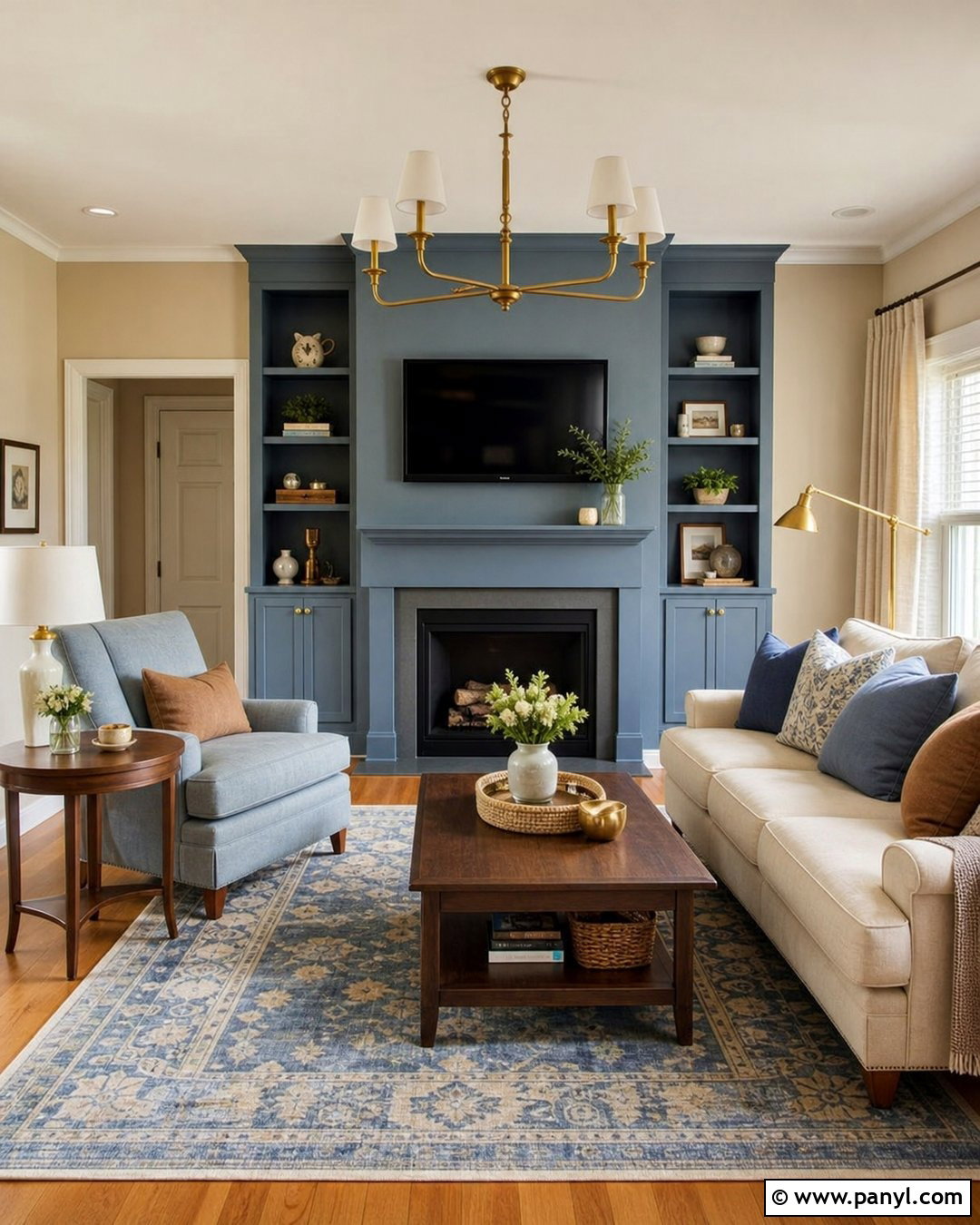
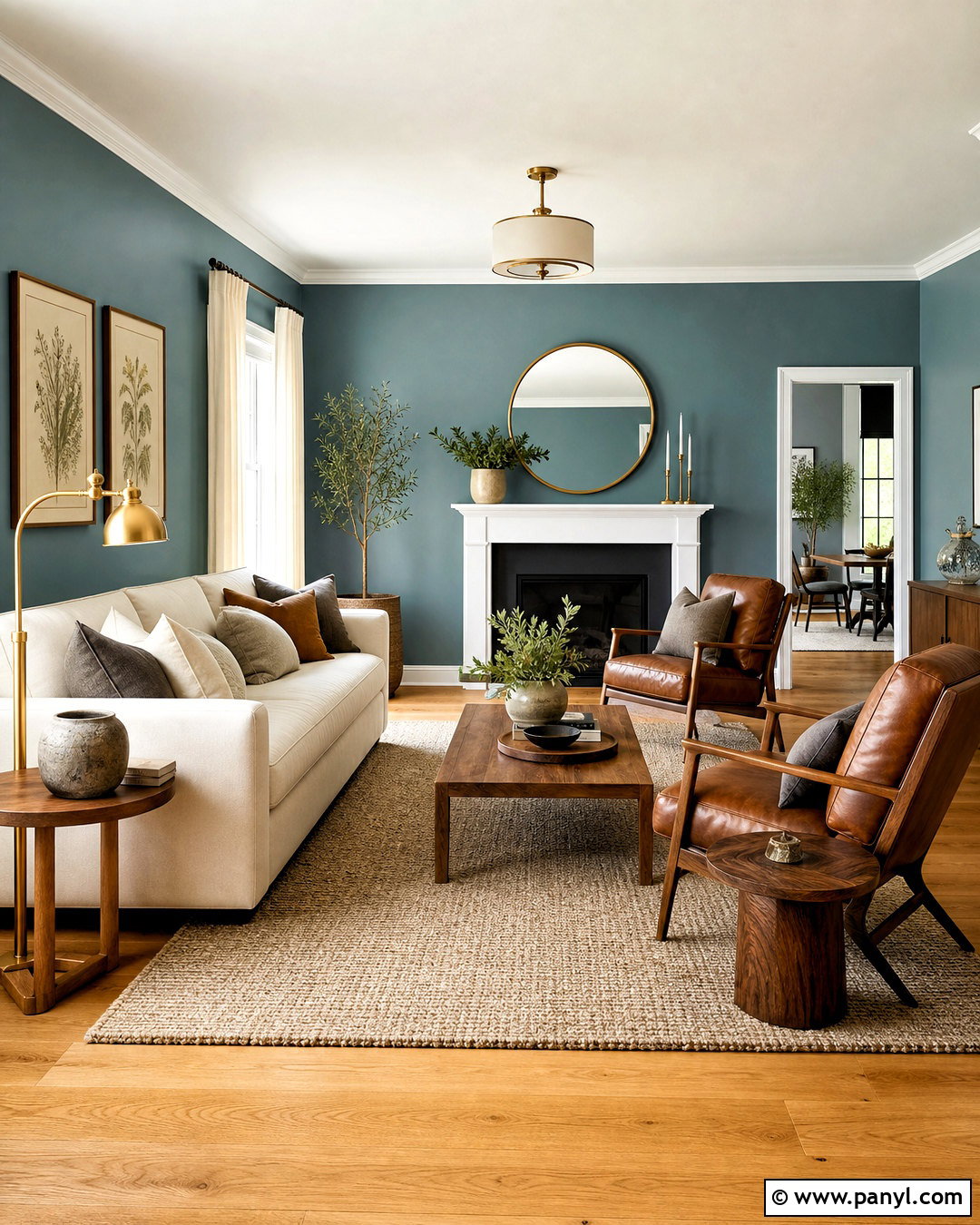
Blue and beige walls create a balanced living room that combines cool freshness with comfortable warmth. Paint the main walls a soft sandy beige and use muted slate blue on the fireplace wall or built-in shelving. Furnish the room with an ivory sofa, walnut tables, and a pale blue armchair. A patterned rug combining both wall colors will tie the space together. Add warm brass lighting, linen curtains, and camel leather accessories to prevent the blue from feeling chilly. Keep the ceiling a creamy off-white rather than a stark white. By distributing both colors across walls, textiles, and furniture, the finished room looks coordinated from every angle and avoids the disconnected appearance sometimes created by a single unrelated accent wall.
38. Green And Pink Bedroom Walls
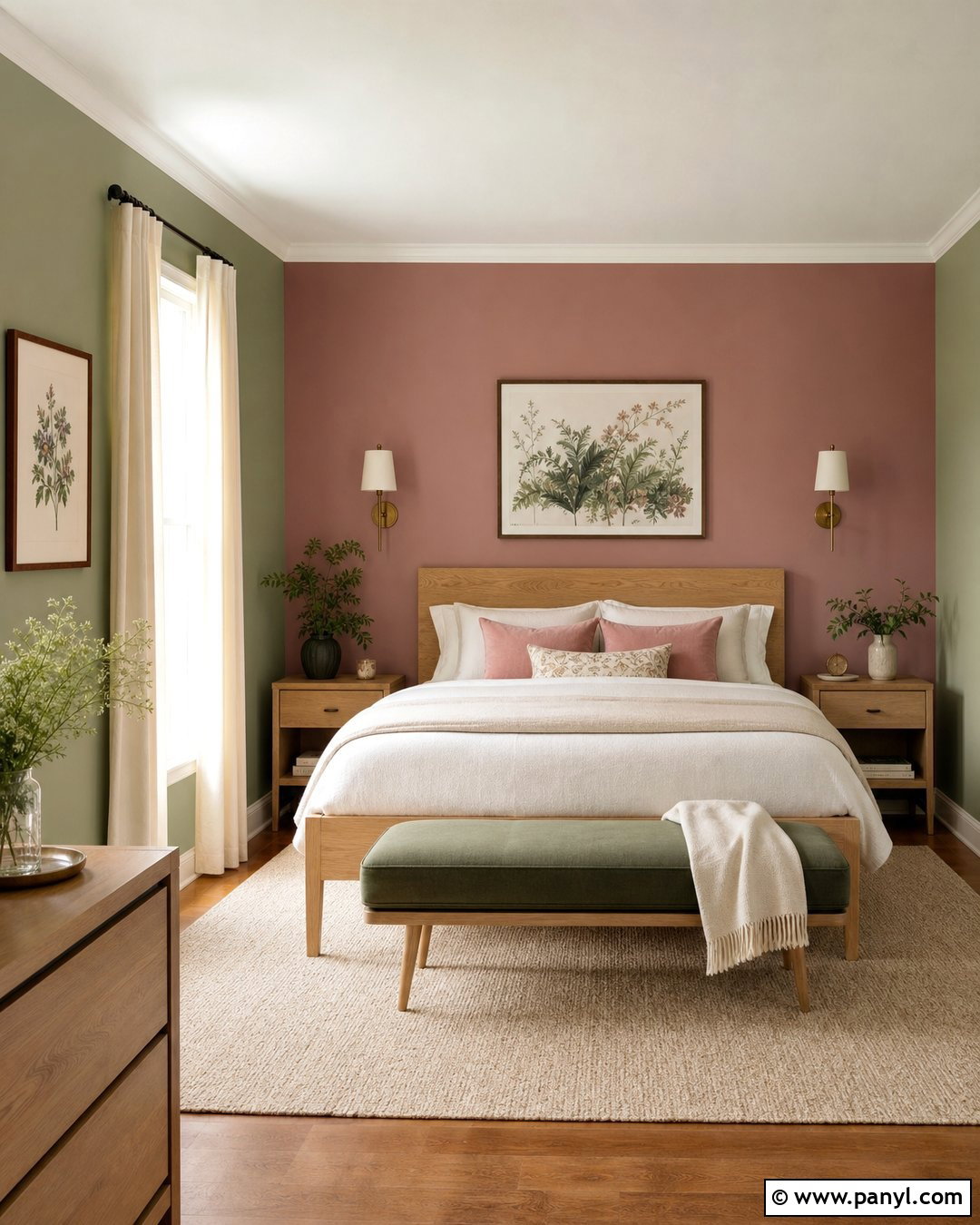
Muted green and pink can form a sophisticated bedroom palette when both colors have soft, earthy undertones. Paint the wall behind the bed dusty rose and use pale sage green on the remaining walls. Choose a natural oak bed, cream bedding, and a moss-green bench to connect the scheme. Add blush and rust pillows in small amounts, along with antique brass sconces. Ivory curtains and a beige wool rug will create neutral breathing room between the two colors. Keep the ceiling warm white and limit artwork to botanical or abstract pieces that repeat the established palette. This complete bedroom feels colorful yet calm, proving that complementary tones can work together without becoming overly sweet, busy, or dependent on decorative patterns.
39. Terracotta And Cream Dining Room Walls
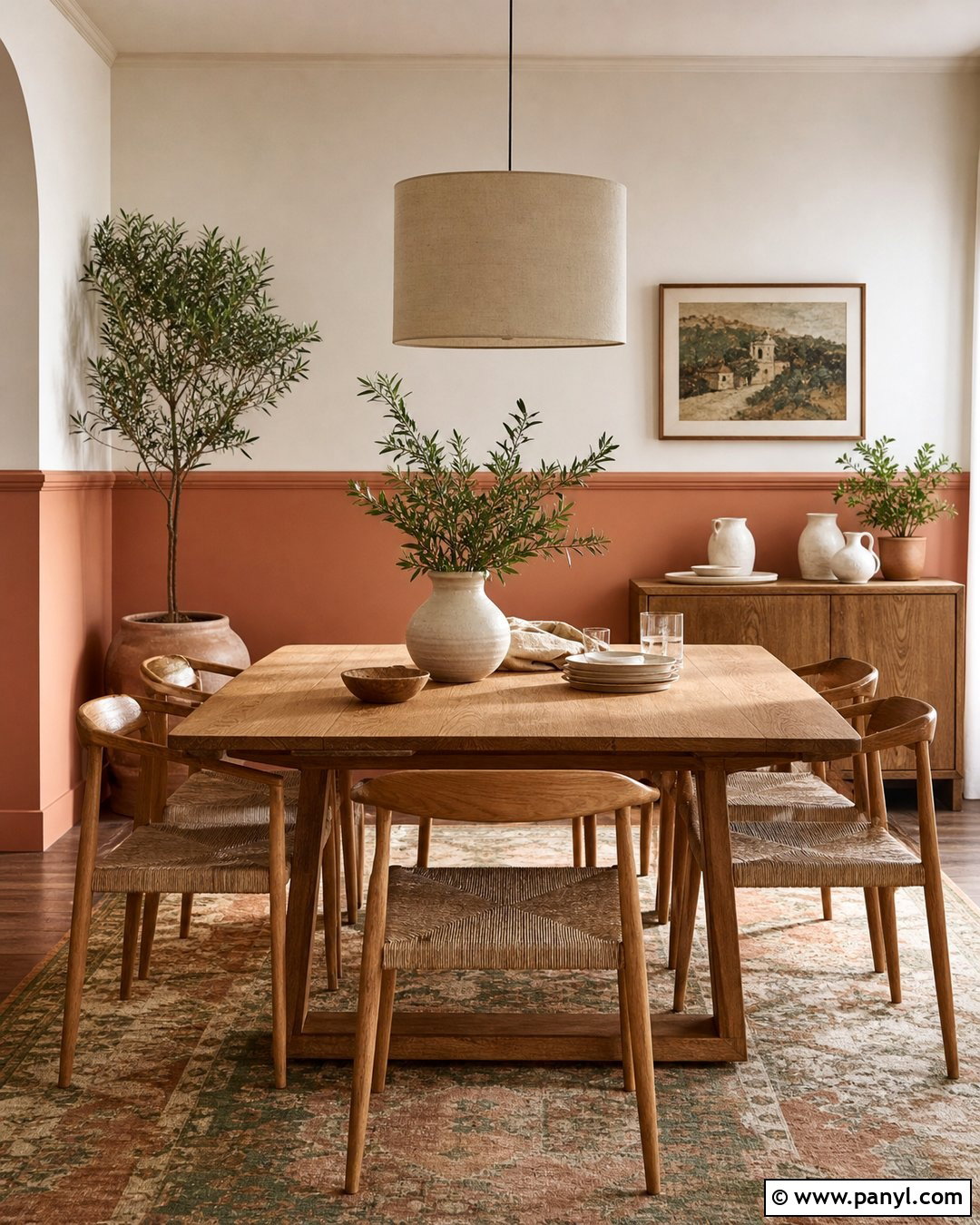
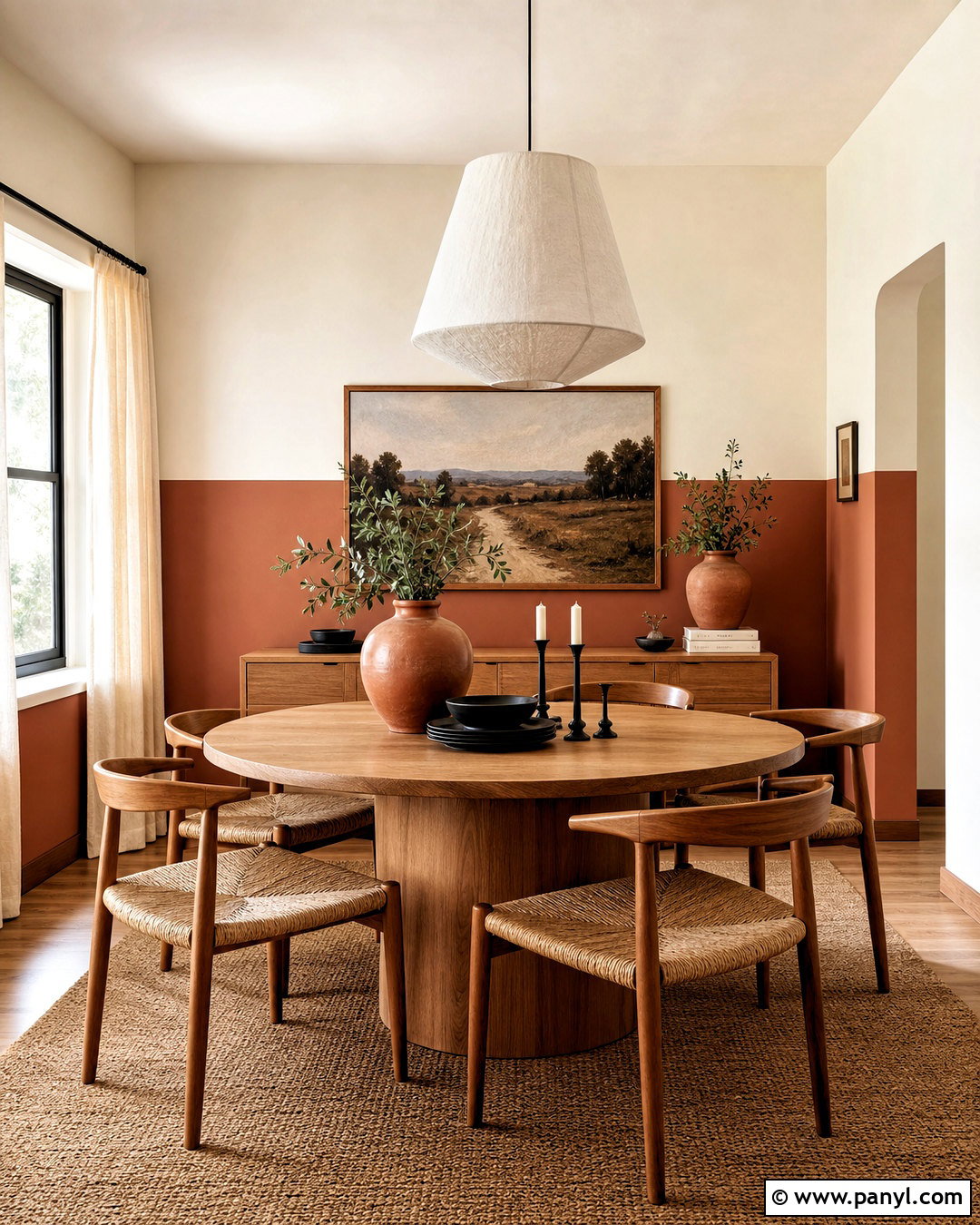
Terracotta and cream create a sun-warmed dining room that looks welcoming during both daytime and evening meals. Paint the lower half of the walls muted terracotta and the upper half creamy white. Separate the colors with a slim painted chair rail for a polished finish. Add a medium oak dining table, woven-seat chairs, and a large linen pendant light. A faded rug in clay, cream, and olive will reinforce the palette, while green plants introduce freshness. Use cream curtains that blend with the upper walls and make the ceiling appear higher. Keep decorative pieces simple, favoring white ceramics and natural wood. The completed room feels earthy, bright, and relaxed without depending on rustic or heavily themed accessories.
40. Yellow And Gray Kitchen Walls
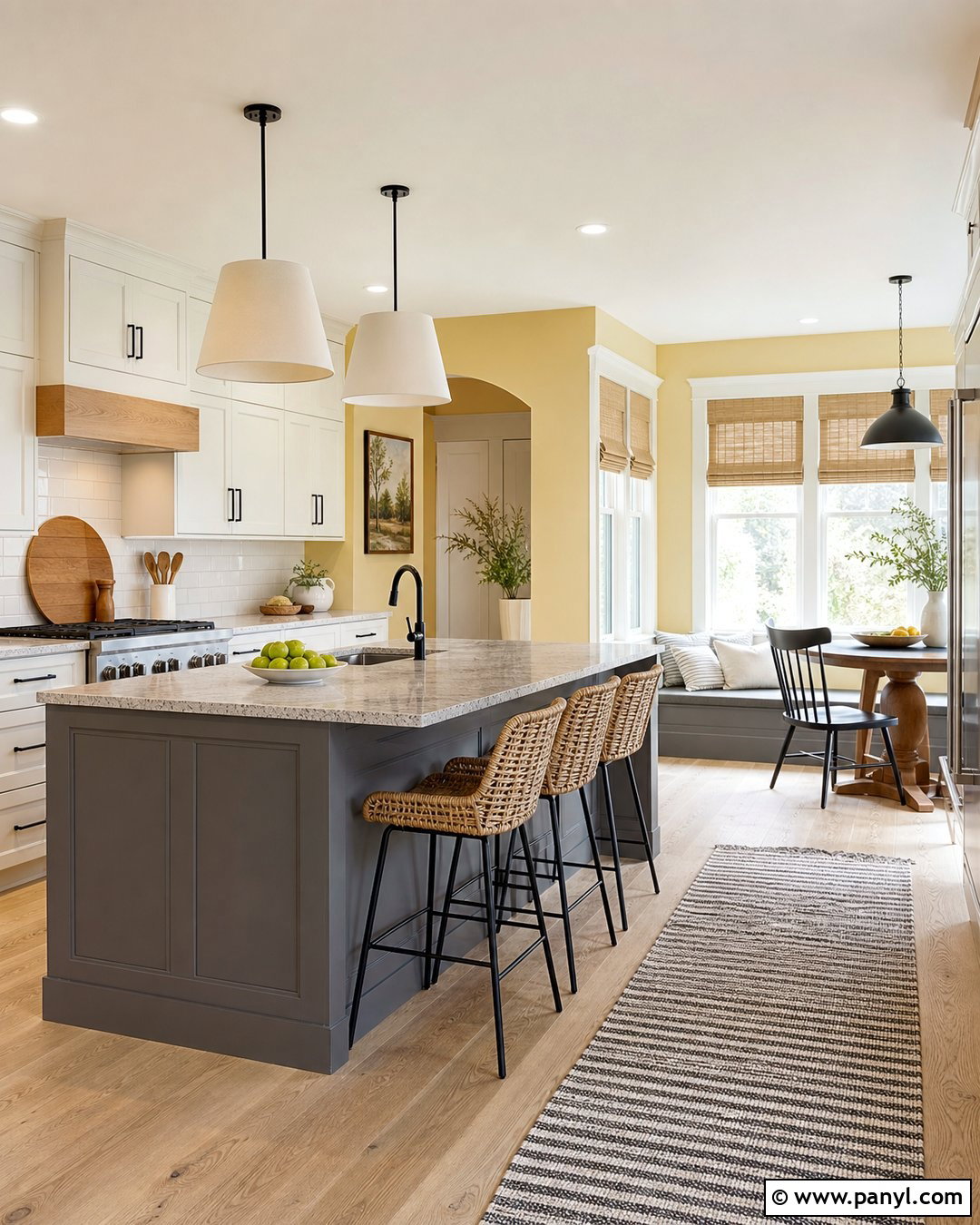
A softened yellow-and-gray palette can make a kitchen feel bright without looking overly energetic. Paint the main walls a pale buttery yellow and use warm gray on an island, pantry wall, or recessed breakfast nook. Pair the scheme with white oak cabinets, light quartz counters, and simple white tile. Matte black hardware provides definition, while woven stools and natural linen shades add warmth. Avoid cold blue-gray paint, which may clash with the yellow; instead, choose a taupe-influenced gray. Repeat both colors in a small washable runner or striped seat cushions. The resulting kitchen feels cheerful, balanced, and practical, with enough neutral material to keep the two-color design comfortable for long-term everyday use.
41. Painted Ceiling And Neutral Walls
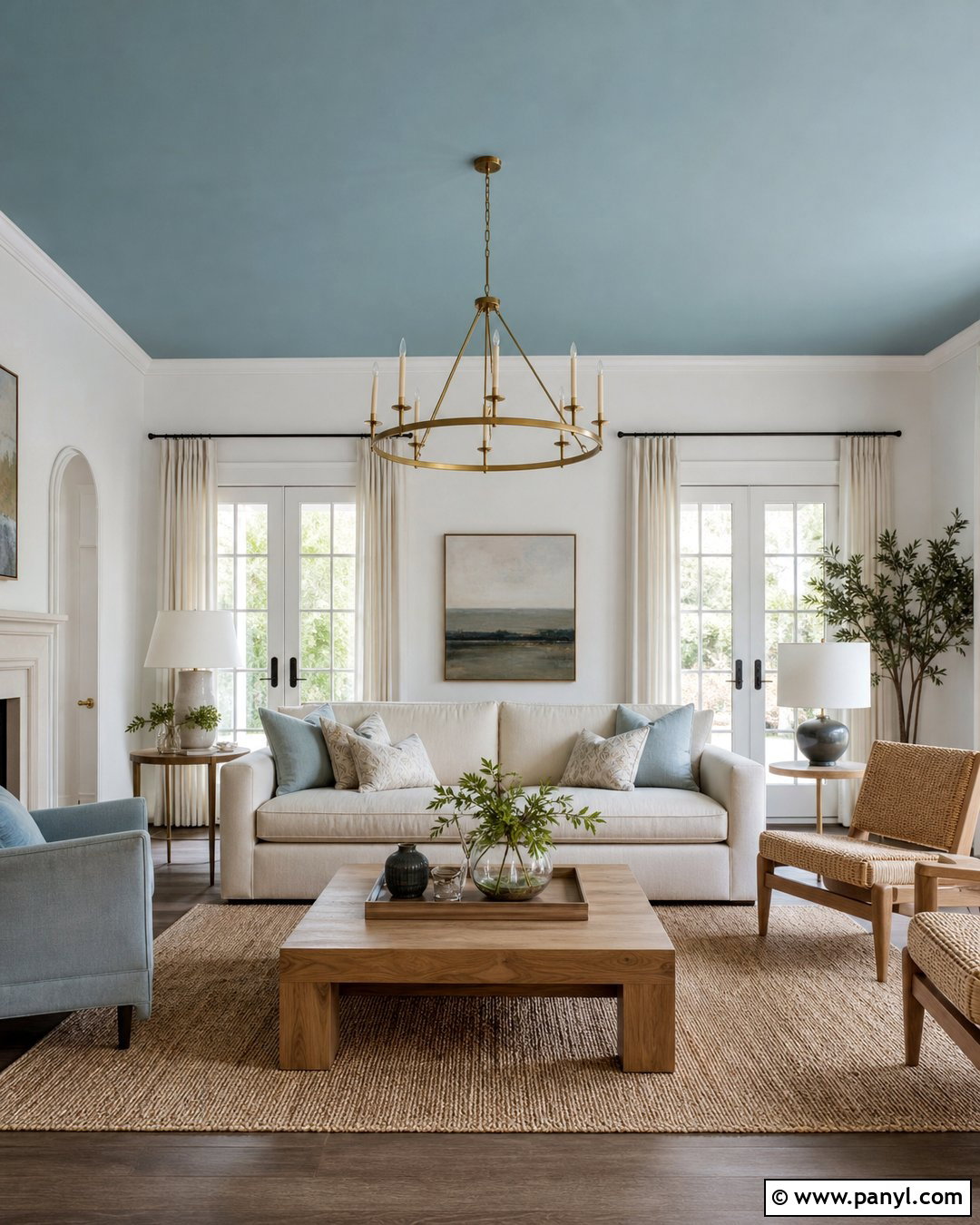
A painted ceiling introduces color without surrounding the room at eye level. In a warm white living room, paint the ceiling a soft dusty blue and continue the shade onto any ceiling molding. Add a cream sofa, light oak tables, pale blue pillows, and a beige textured rug. Full-length ivory curtains draw attention upward and help the ceiling treatment feel connected to the room. Keep wall artwork restrained so the overhead color remains the primary feature. A simple brass chandelier or white pendant will stand out clearly against the blue. This complete scheme works best when the ceiling is smooth and receives enough light. The result is subtle, airy, and more unexpected than a conventional painted feature wall.
42. Striped Bedroom Walls
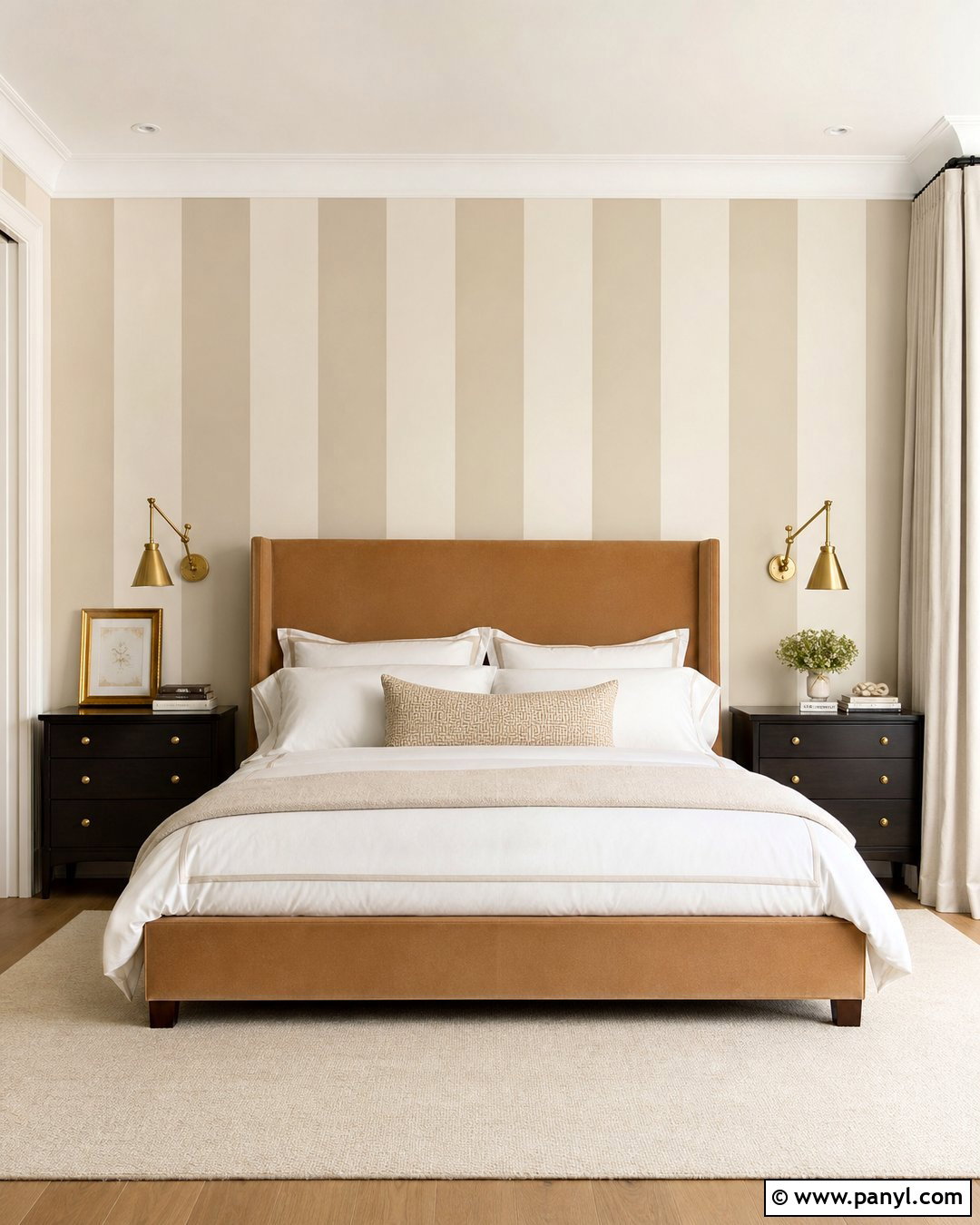
Painted stripes can add pattern to a bedroom while preserving a tailored and uncluttered appearance. Use wide vertical stripes in warm white and soft beige on the wall behind the bed. Paint the remaining walls in the same warm white for continuity. Pair the feature with an upholstered camel headboard, crisp white bedding, dark brown nightstands, and brass reading lights. A simple cream rug and solid linen curtains will prevent competing patterns. Make each stripe generous in width and measure from the center of the wall so both outer edges appear balanced. The completed bedroom feels taller and more structured, while the low-contrast palette keeps the painted pattern relaxing enough for a room designed around rest.
43. Ombre Painted Wall
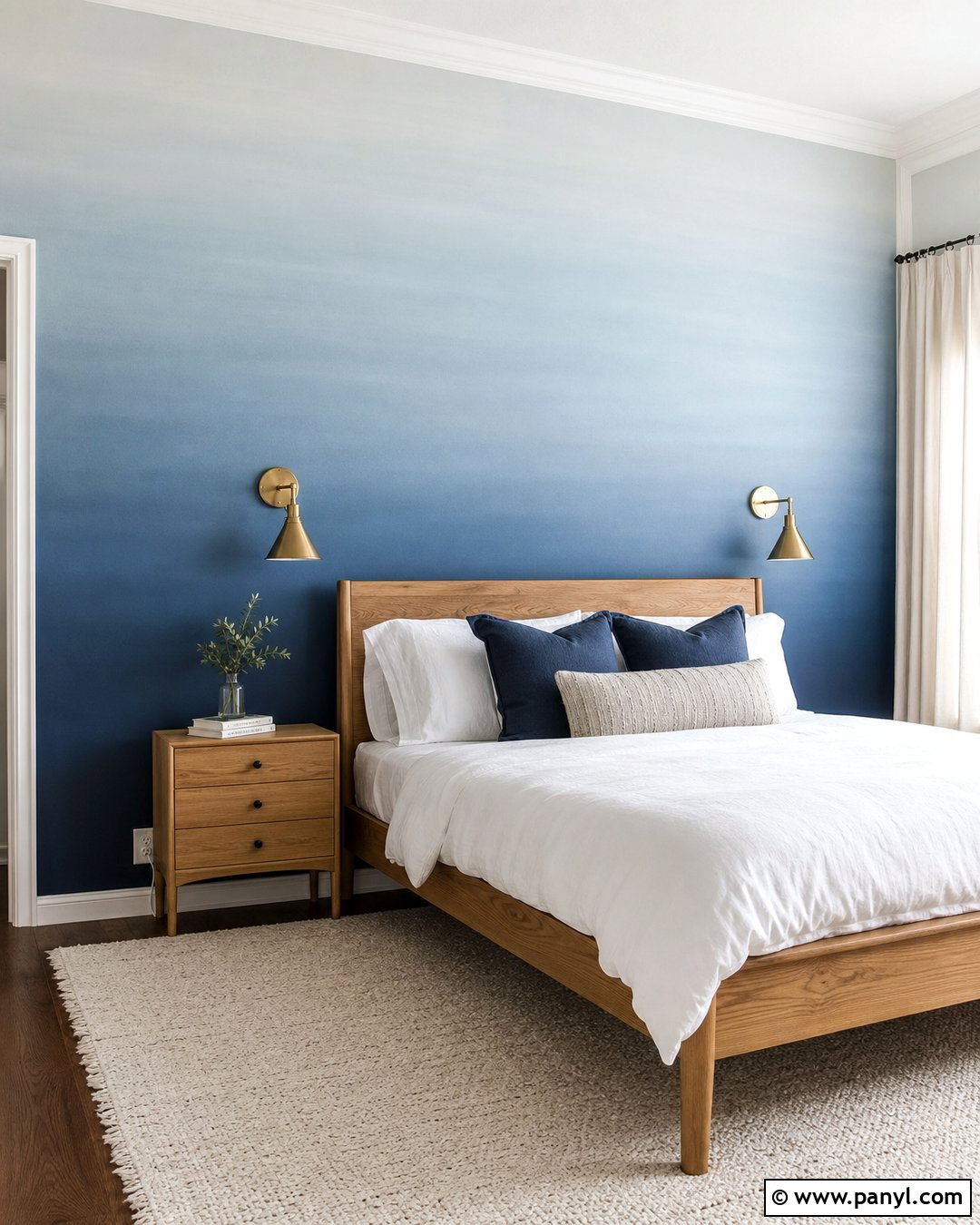
An ombre wall creates gradual movement and can make a bedroom or reading room feel soft and atmospheric. Begin with deep dusty blue near the floor, transition through medium blue, and finish with pale blue at the ceiling. Blend the sections while the paint remains workable to avoid visible hard lines. Use the treatment on the bed wall and paint the remaining surfaces in the palest shade. Add a natural oak bed, white bedding, navy pillows, and warm brass lighting. A cream rug and ivory curtains will brighten the lower and side areas. Keep artwork off the gradient wall so the transition remains clear. The finished room feels immersive and artistic while maintaining a calm, coordinated color palette.
44. Abstract Painted Mural Wall
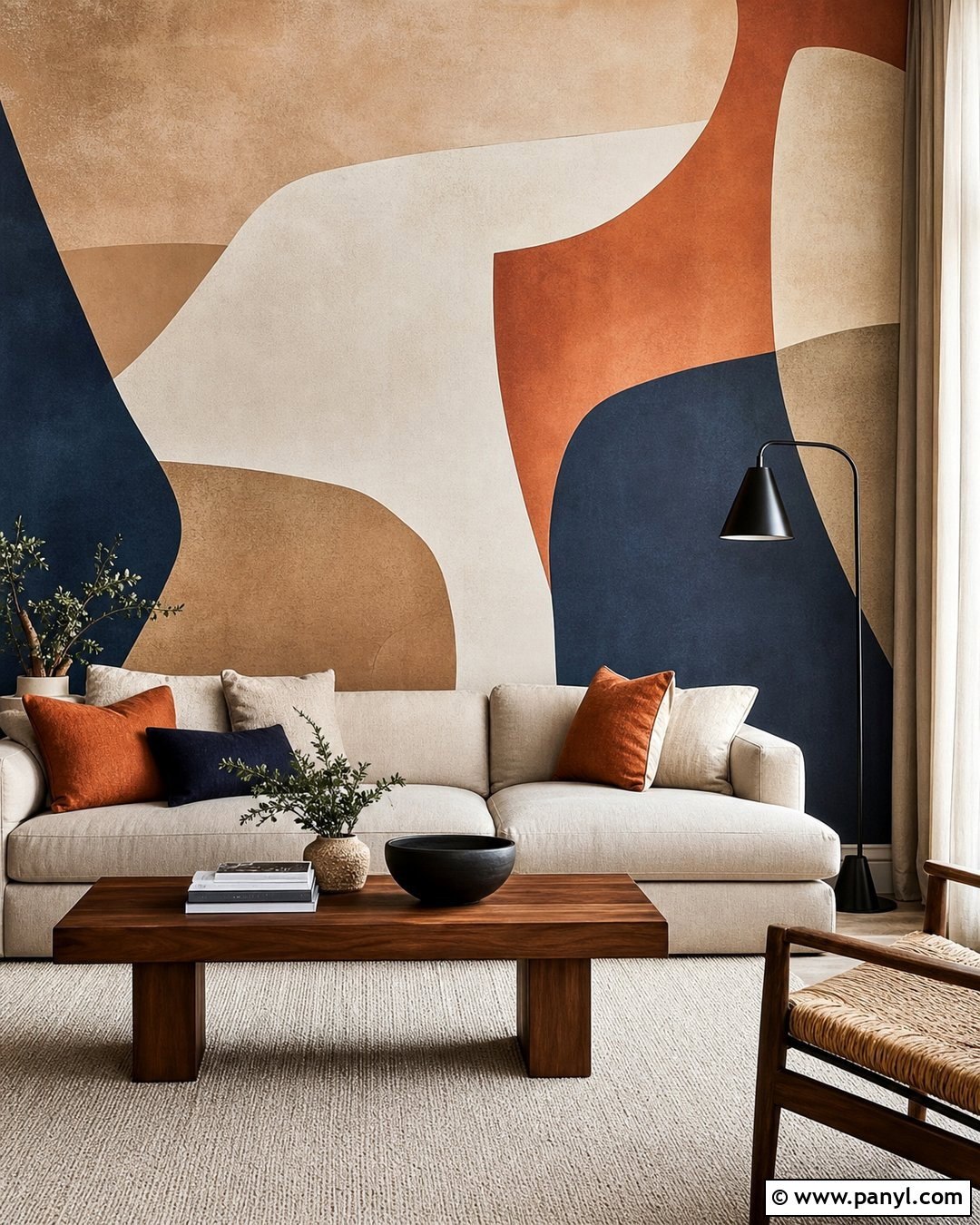
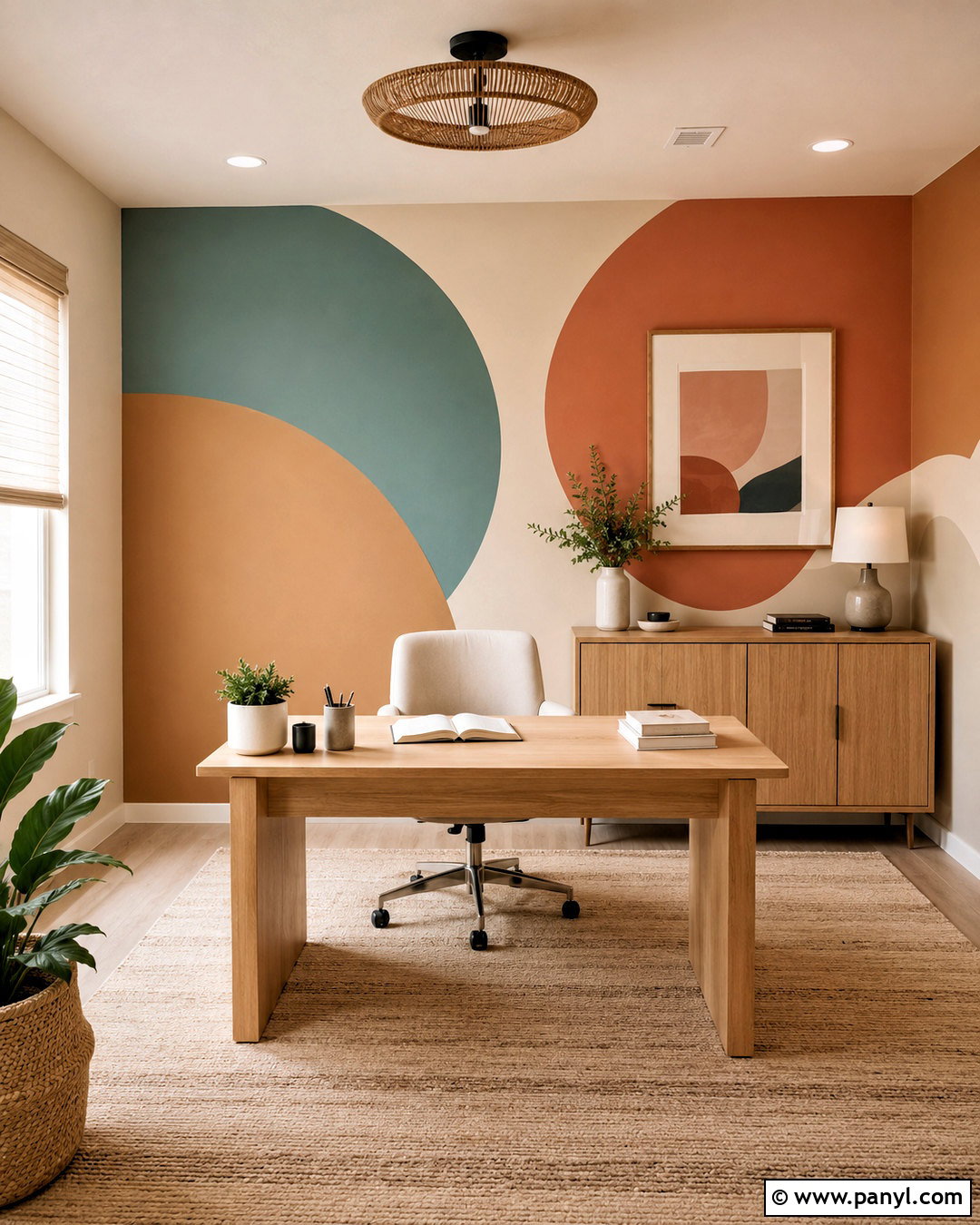
An abstract painted mural can become the main artwork in a living room while keeping the design personal and affordable. Create large overlapping shapes in terracotta, muted navy, warm beige, and soft cream on one broad wall. Keep the remaining walls creamy white and furnish the room with a simple oatmeal sofa, walnut coffee table, and ivory rug. Repeat the mural colors through only a few pillows and ceramic accessories. Use large shapes with clean edges or gently irregular curves rather than many small details. A black floor lamp adds definition, while linen curtains soften the overall effect. The complete room feels creative and contemporary, with the mural, furniture, and accessories working together as one controlled composition.
45. Checkerboard Painted Wall
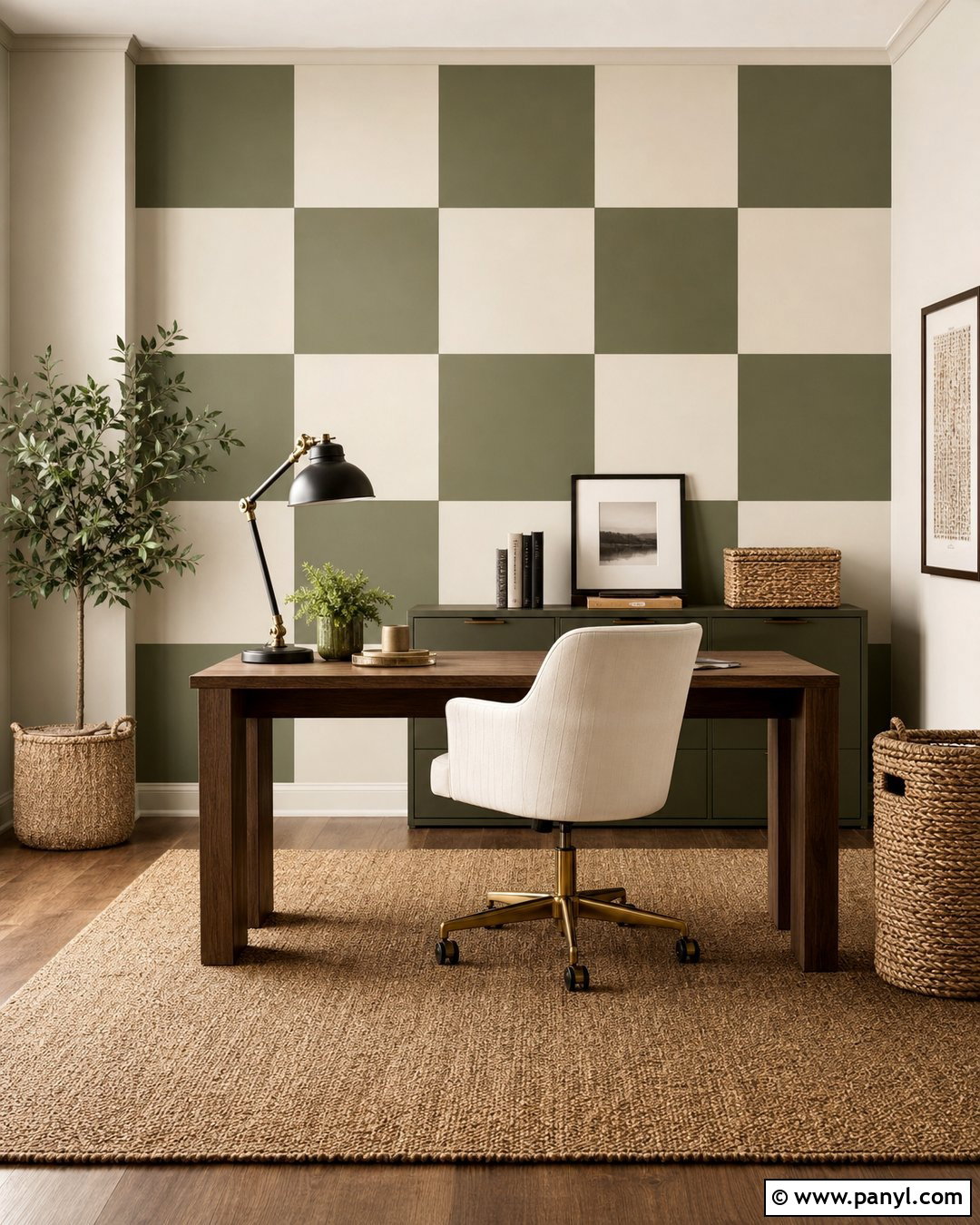
A large-scale checkerboard wall offers playful pattern without the cost or commitment of wallpaper. Use soft beige and muted olive squares on the primary wall of a home office or craft room. Keep the grid large, with fewer squares, so the treatment feels modern rather than visually crowded. Paint the remaining walls warm white. Add a walnut desk, cream chair, black task lamp, and natural fiber storage baskets. Repeat olive in a small cabinet or desk accessory, but let the wall remain the dominant pattern. Careful measuring and quality painter’s tape will keep the grid straight. The finished workspace feels creative, organized, and distinctive while maintaining a practical palette that coordinates easily with everyday furniture and equipment.
46. Painted Door And Matching Wall
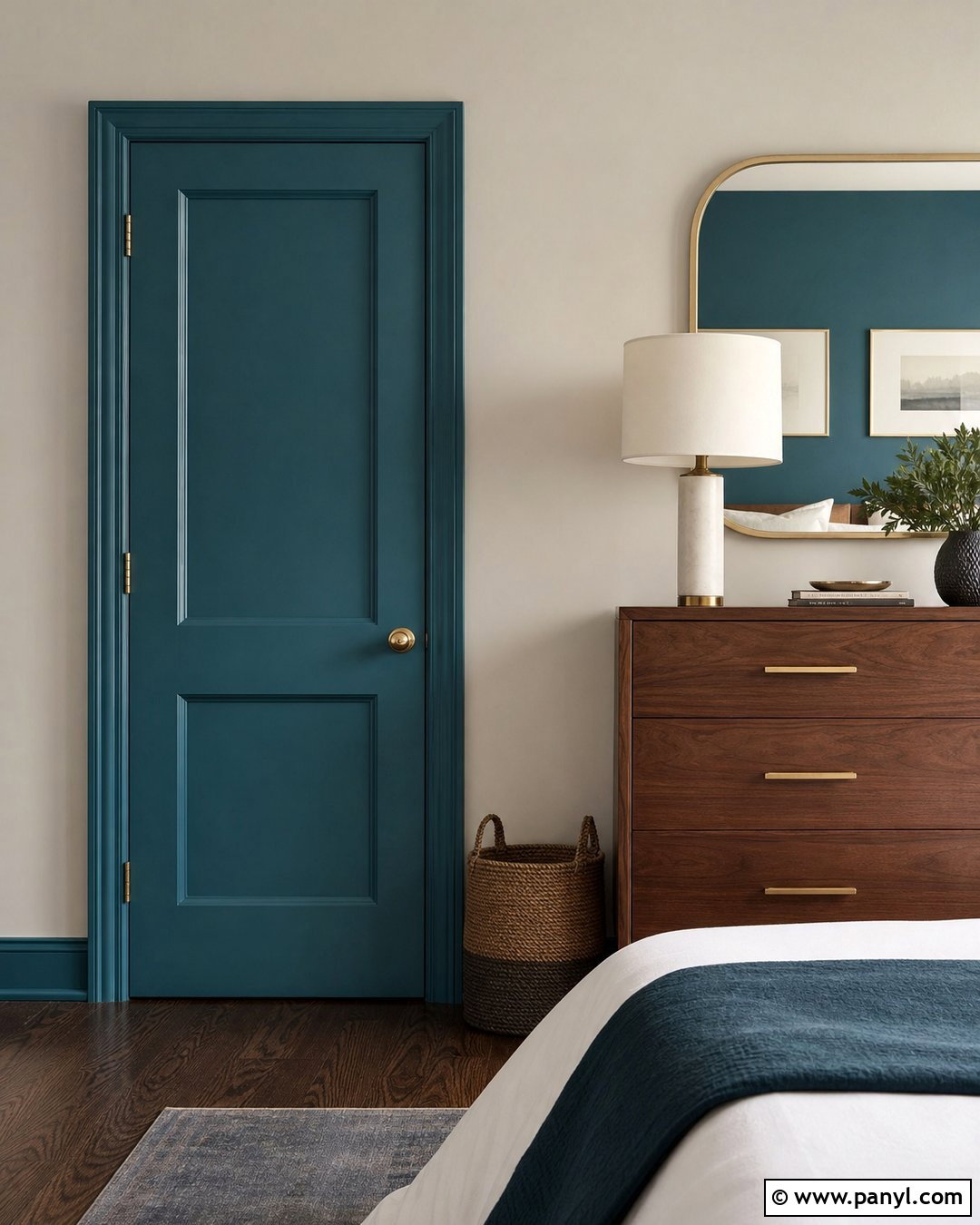
Painting a door and its surrounding wall the same color creates a smooth, custom appearance. Use deep muted teal on a bedroom wall, door, casing, and baseboard, allowing the doorway to blend into the architecture. Paint the remaining walls pale warm gray and keep the ceiling white. Place a walnut dresser against the teal wall and add a rounded brass mirror, cream lamp, and woven basket. In the bedroom, repeat teal through one or two pillows rather than matching every accessory. Use durable satin paint on the door and trim, with eggshell on the wall. This complete treatment reduces visual interruption and gives an ordinary builder-grade door a stronger role within the room’s overall color and furniture plan.
47. Painted Fireplace Wall
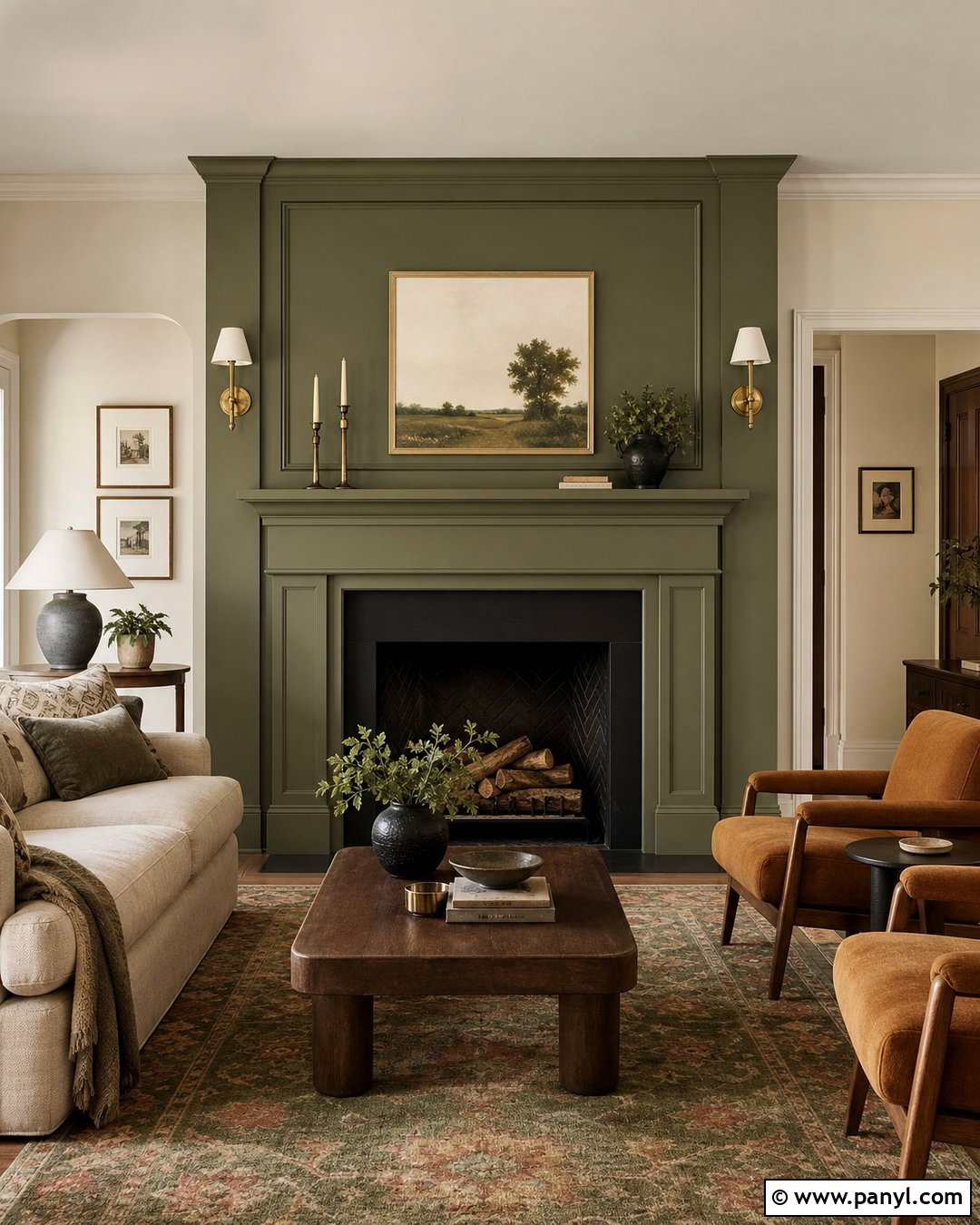
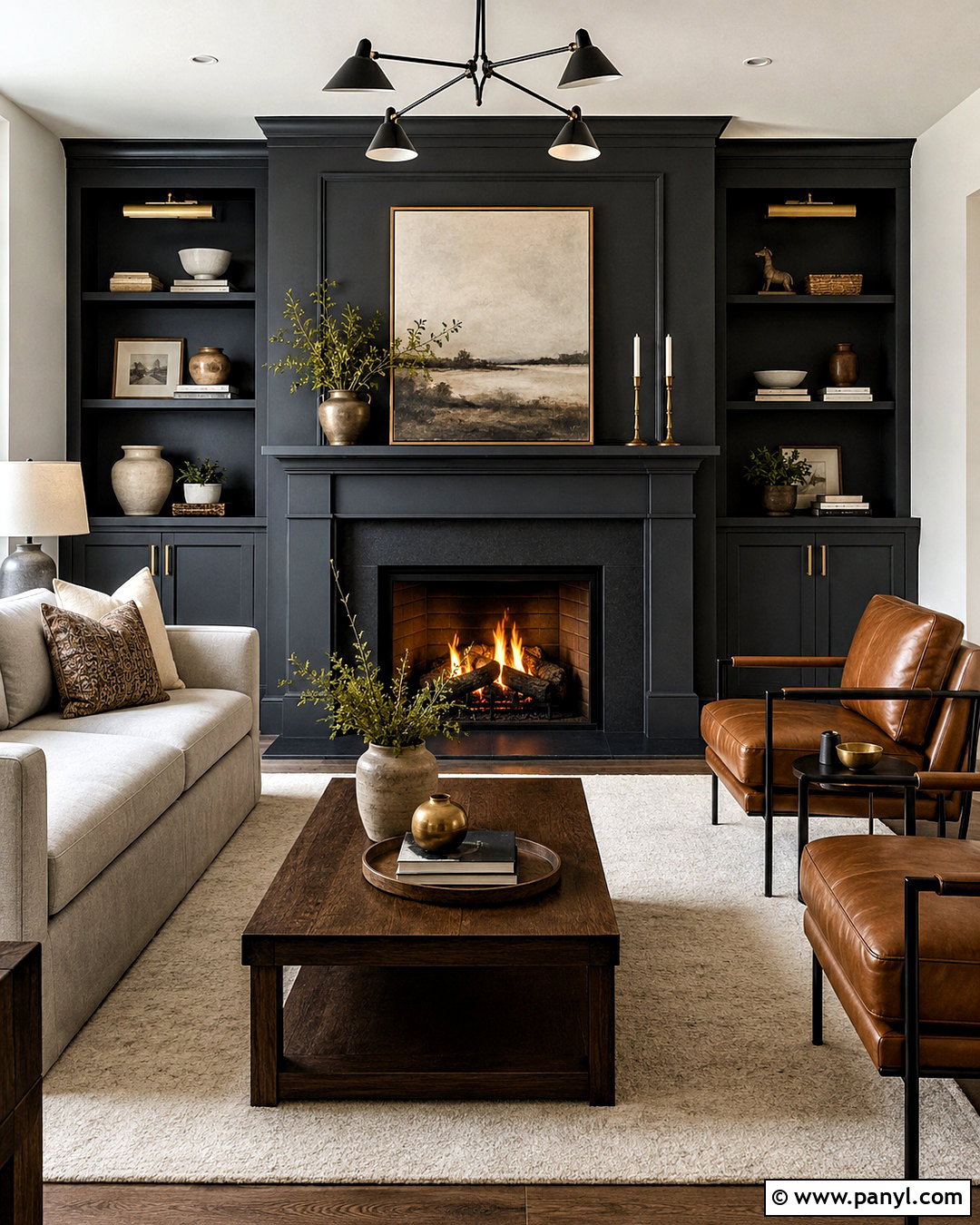
A painted fireplace wall can turn an ordinary living room feature into a clear focal point. Paint the fireplace surround, mantel, and entire wall behind it in deep olive green. Use warm cream on the remaining walls and ceiling. Arrange a light beige sofa and two camel chairs around a walnut coffee table, ensuring the layout faces the fireplace. Add a large cream artwork above the mantel and keep mantel accessories minimal. Brass sconces or a slim picture light will brighten the dark surface. A patterned rug with olive, rust, and ivory will connect the feature to the seating area. The completed room feels balanced because the fireplace color is repeated subtly throughout the furnishings rather than standing alone.
48. Painted Built In Shelves
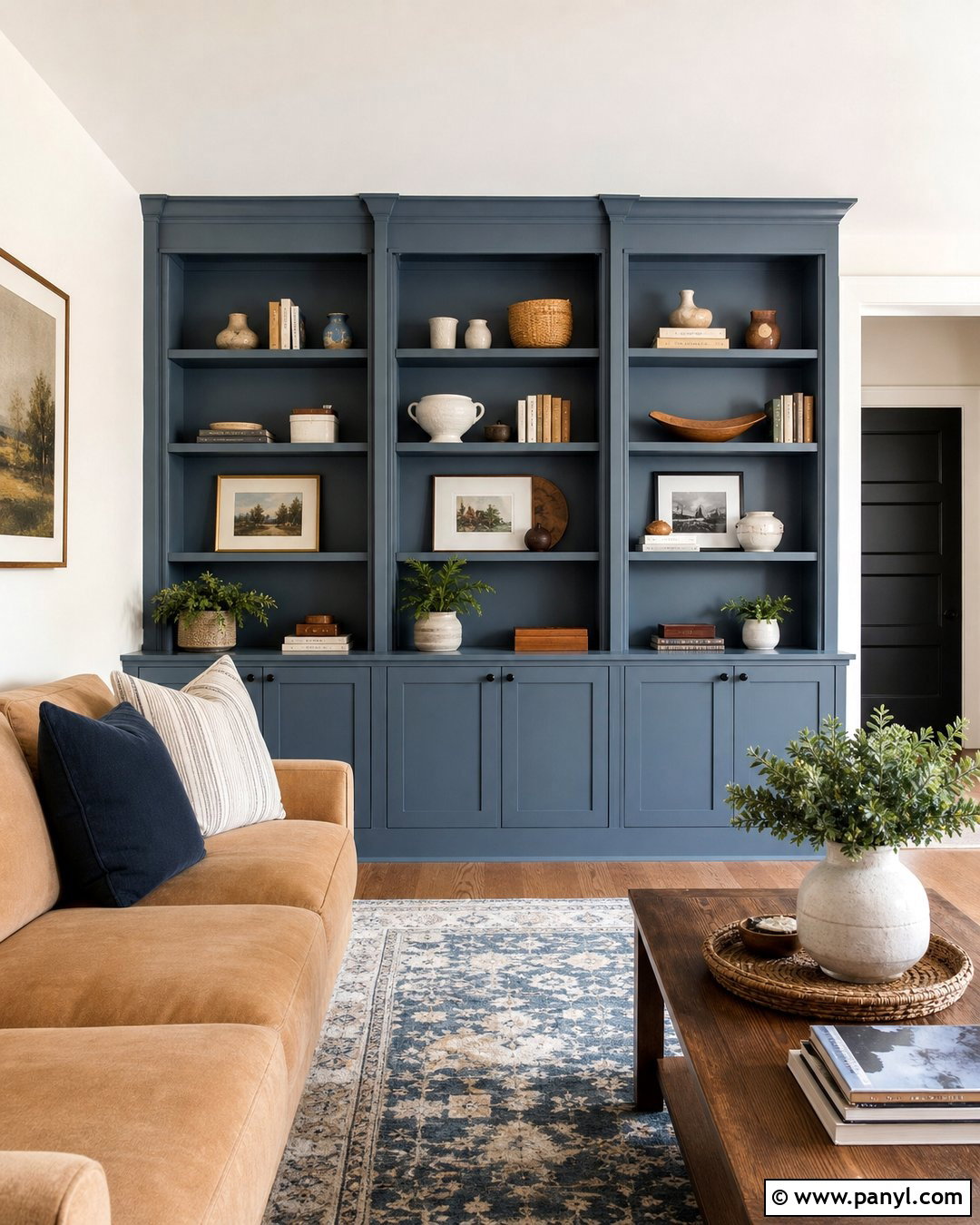
Painted built-in shelves can give a living room, office, or den a more customized and cohesive appearance. Use a medium smoky blue across the shelving, cabinet doors, trim, and the wall visible behind the shelves. Paint surrounding walls soft warm white for contrast. Add a tan sofa, oak coffee table, and blue-and-cream rug to integrate the cabinetry with the room. Style the shelves with books, white ceramics, framed art, and a few wooden objects, leaving open space between groups. Choose satin paint for shelves and cabinet fronts because it is easier to clean and more resistant to scuffs. The completed design turns practical storage into an architectural feature without allowing decorative objects to create visual clutter.
49. Painted Reading Nook Walls
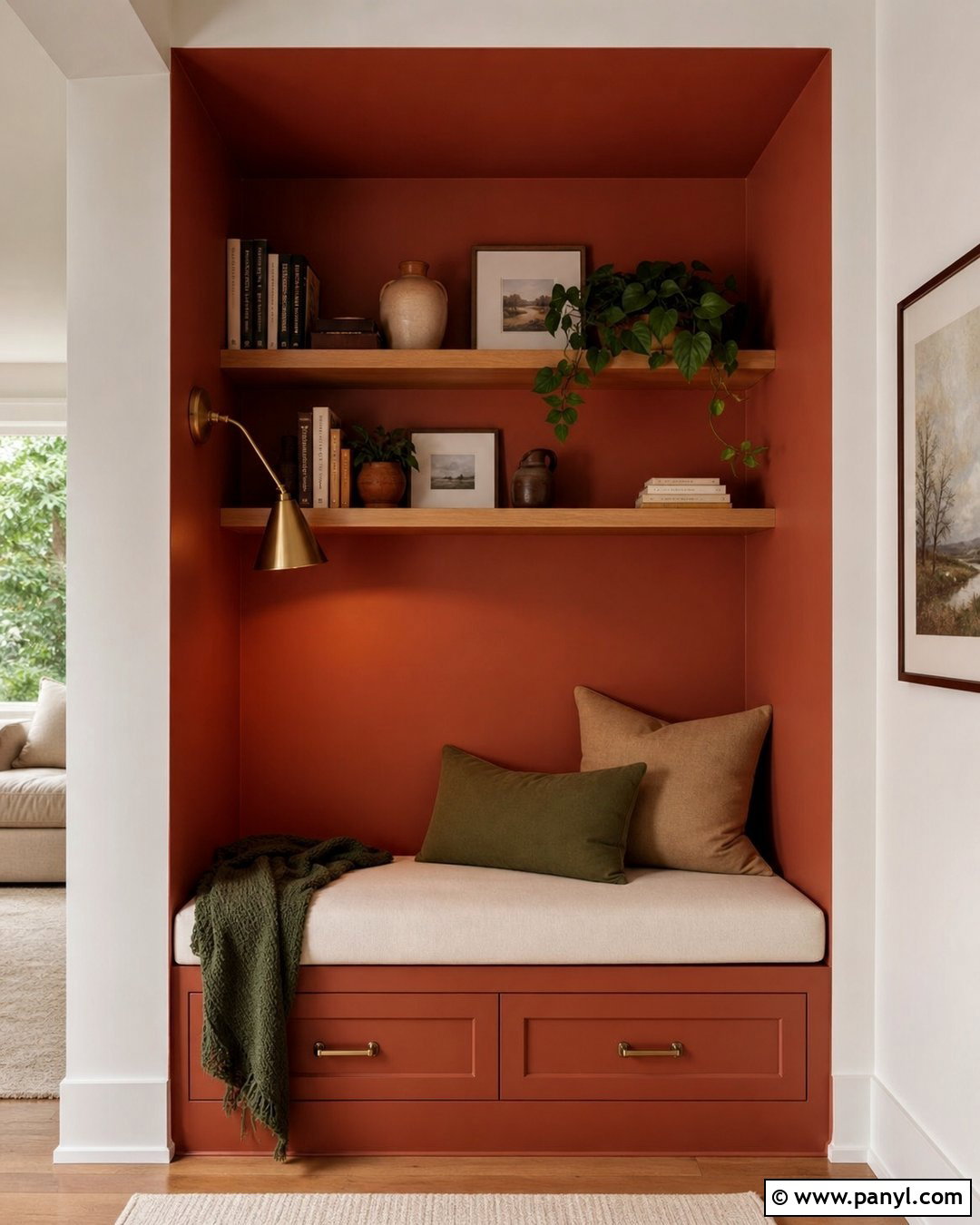
A painted reading nook can make a small recess feel separate from the larger room. Cover the nook’s side walls, back wall, ceiling, and trim in a warm rust shade. Install a built-in bench with cream upholstery and add olive, tan, and patterned pillows. Include oak shelving, a compact brass reading light, and hidden storage beneath the seat. Paint the surrounding room warm white so the nook appears framed by the lighter architecture. A soft beige rug outside the recess will connect it to the rest of the space. By using color on every interior surface of the nook, the finished area feels cozy and complete rather than like an unused corner with a chair placed inside it.
50. Soft White Hallway Walls
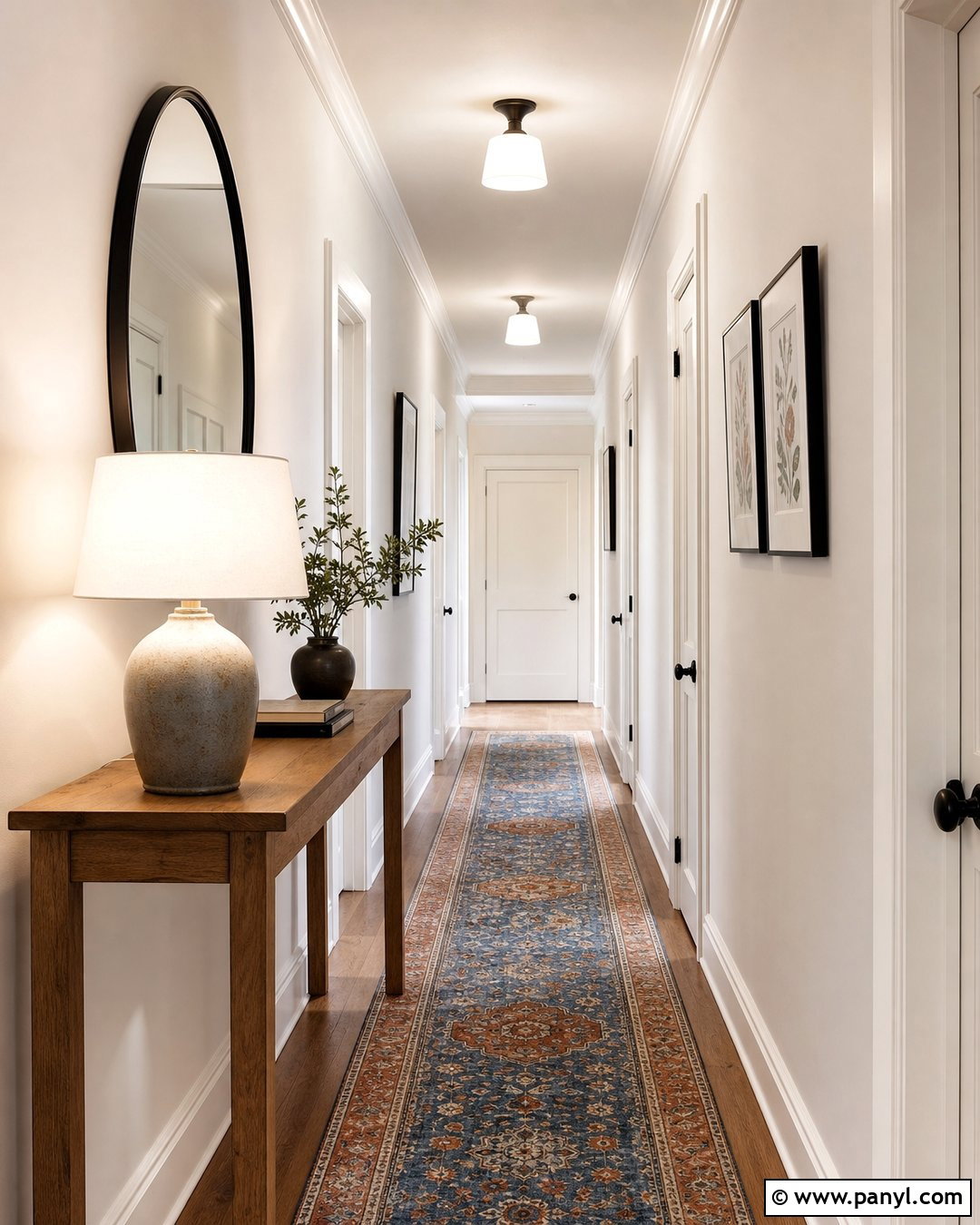
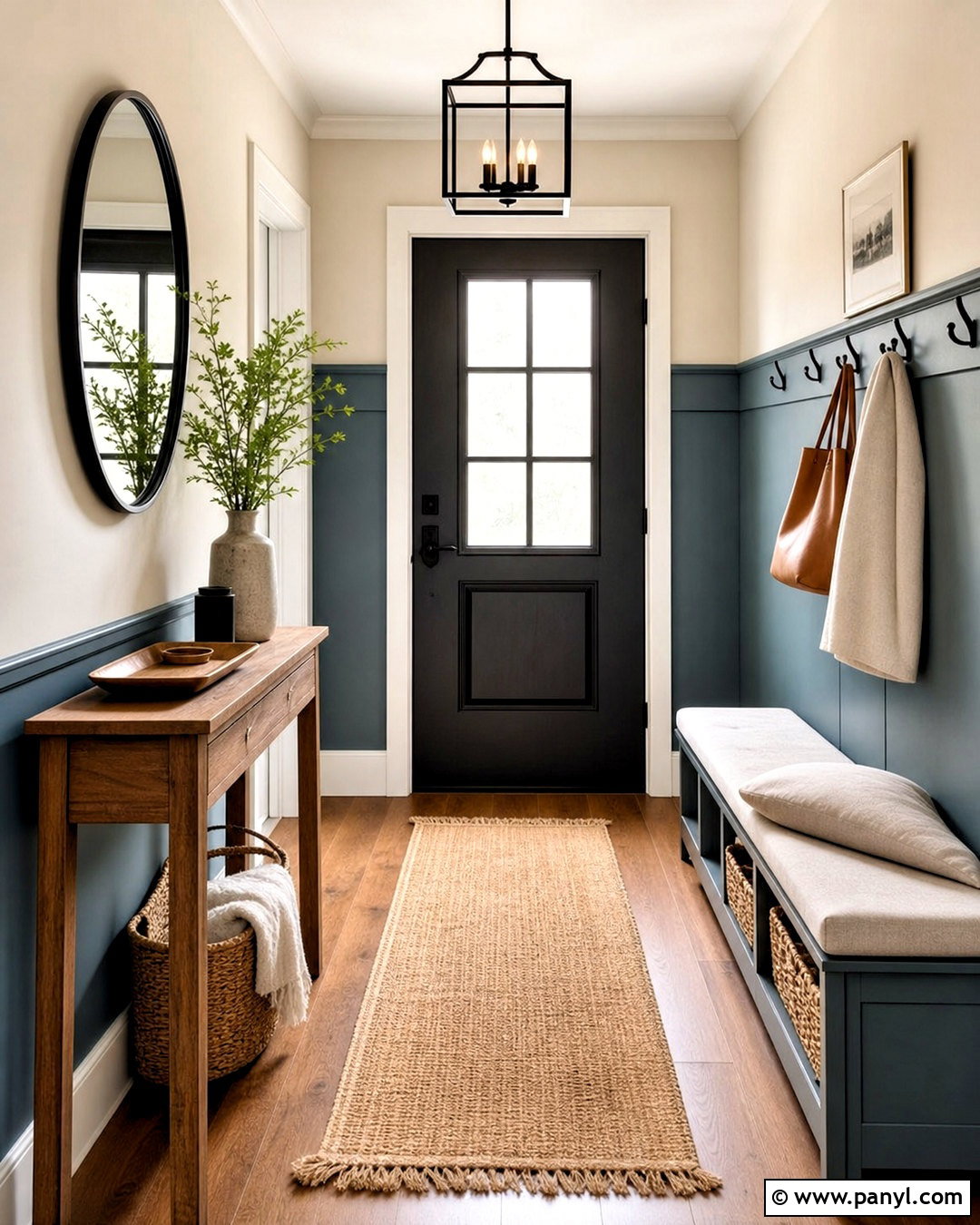
Soft white walls can make a narrow hallway feel brighter while allowing architectural details and artwork to remain visible. Choose an off-white with a mild warm undertone, then paint the walls in washable eggshell and the trim in matching satin. Use the same color on multiple doors to reduce visual interruption. Add a slim oak console where space permits, along with a round black mirror and a small ceramic lamp. A patterned runner in muted blue, rust, and beige will introduce color without narrowing the passage. Install simple ceiling lights at regular intervals and hang a carefully spaced series of framed prints. The complete hallway feels open, connected, and purposeful rather than functioning only as a plain route between rooms.
Conclusion:
The best wall treatment supports the room as a whole rather than functioning as an isolated splash of color. Consider the light, floor tone, furniture, textiles, trim, and ceiling before making a final decision. Warm whites and soft neutrals offer flexibility, while olive, navy, burgundy, and terracotta create stronger atmosphere. Painted arches, murals, stripes, color blocks, and limewash finishes add character without requiring major construction. Always test paint on more than one wall and observe it at different times of day. Select an appropriate sheen for the room’s traffic and moisture level. With thoughtful planning, these 50 paint ideas for walls can help you create a cohesive, comfortable, and personal home.

Related Ideas and Inspiration:
Leave a Reply