
Choosing the right bedroom wall color can completely change how the room looks, feels, and functions. The best paint palette should work with the natural light, flooring, furniture, bedding, and overall mood you want to create. This guide to **35 Wall Color Ideas Bedroom Paint Ideas** includes soft neutrals, nature-inspired greens, restful blues, warm earth tones, and deeper statement colors. Each option is presented as a complete bedroom look rather than a single paint swatch. You will find practical combinations for trim, furniture, textiles, lighting, and decorative accents, making every scheme easier to recreate. Whether your bedroom is small, spacious, traditional, modern, or cozy, explore these **35 Wall Color Ideas Bedroom Paint Ideas** to find a balanced look that feels personal and inviting.

1. Warm White Bedroom Walls
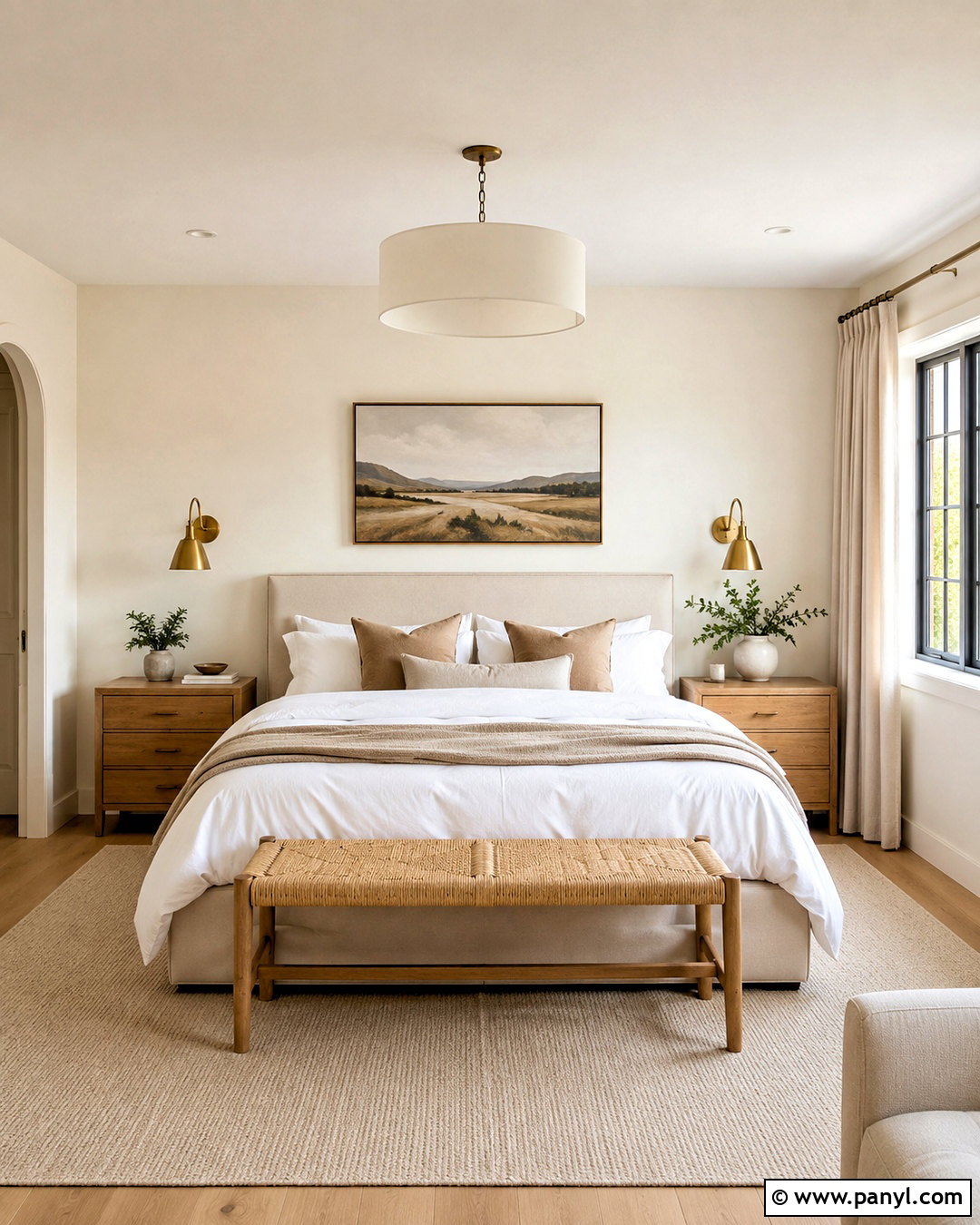
Warm white walls create a fresh bedroom without the sharp feeling that can come from cool, bright white. Choose a creamy white with subtle beige or yellow undertones, then repeat that warmth through natural oak nightstands and a woven bench. An upholstered oatmeal bed keeps the room soft, while white linen bedding provides gentle contrast. Add camel-colored pillows, a chunky beige throw, and a patterned wool rug to prevent the palette from looking flat. Paint the ceiling and trim in the same warm white for a seamless finish. Brushed brass sconces introduce a polished detail without overpowering the room. Complete the look with simple landscape artwork, light-filtering curtains, and one leafy plant for an easy, relaxed bedroom that feels clean but never cold.
2. Soft Greige Bedroom Walls

Soft greige sits comfortably between gray and beige, making it useful when a bedroom contains both cool and warm finishes. Pair the walls with crisp off-white trim and a medium-toned oak floor for a balanced foundation. A charcoal upholstered bed gives the room definition, while ivory bedding and taupe pillows lighten the center of the space. Choose walnut nightstands to add warmth and matte black lamps for a modern edge. A faded rug combining cream, gray, and muted brown will connect every element. Keep window treatments simple with floor-length oatmeal curtains. For decoration, hang one large abstract print above the bed and place ceramic vessels on the dresser. This complete palette feels quiet and versatile, yet it has enough contrast to keep the bedroom visually interesting.
3. Cream Bedroom Walls

Cream walls make a bedroom feel softer than pure white while maintaining a bright, open appearance. Build the design around a wooden bed with a gently curved headboard and matching nightstands. Layer the bed with ivory sheets, a warm beige quilt, and muted rust accent pillows for subtle depth. Natural woven shades filter daylight, while full-length linen curtains make the windows feel finished. Use aged brass lamps, framed botanical prints, and a ceramic table vase to create a collected look. A pale jute or wool rug adds texture beneath the bed without introducing a competing color. Paint the baseboards and ceiling a lighter cream rather than stark white. The resulting bedroom is warm, comfortable, and easy to update as bedding and seasonal accessories change.
4. Mushroom Beige Bedroom Walls
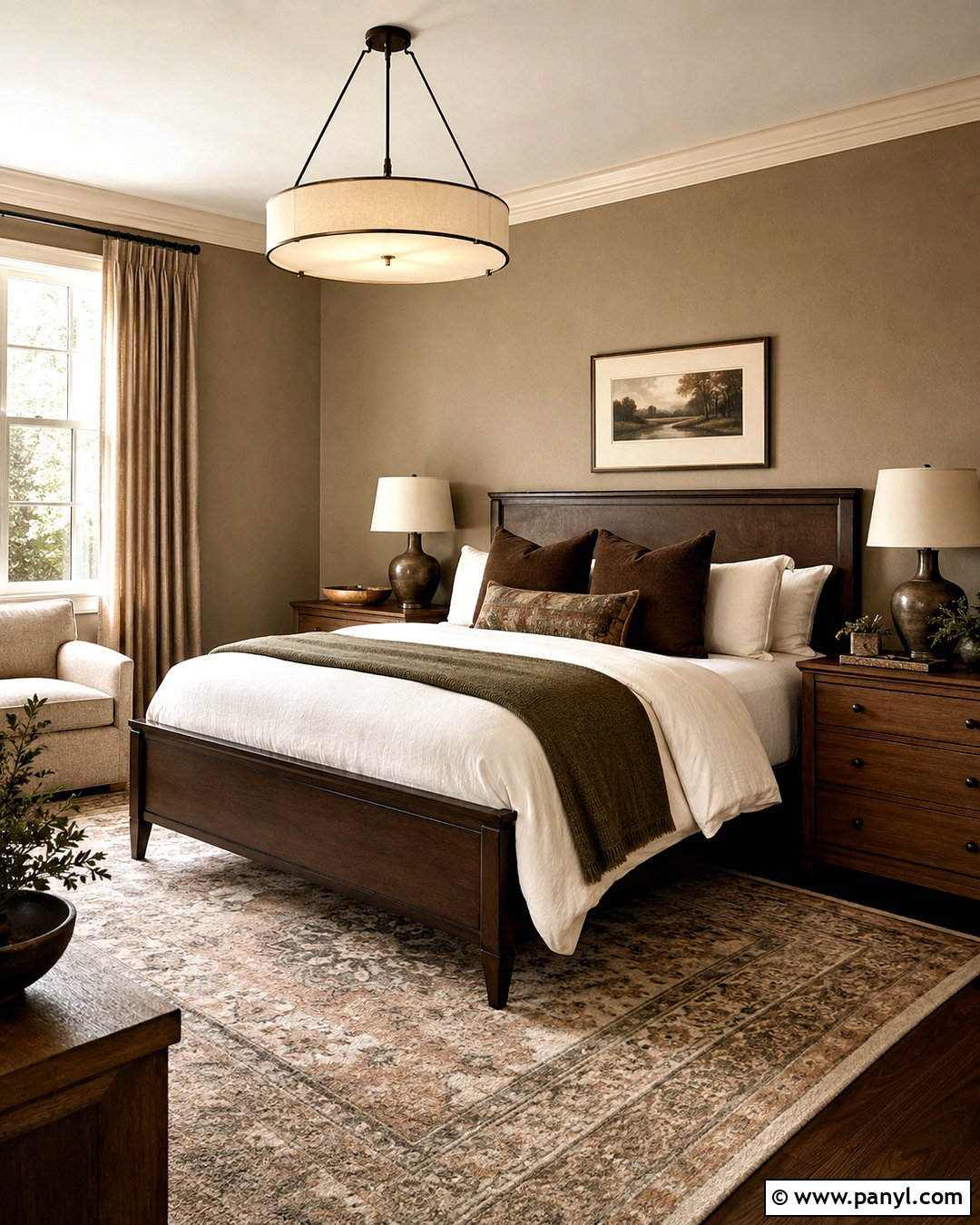
Mushroom beige has gray and brown undertones that give a bedroom more depth than standard tan. Use it across the walls with creamy white trim, then add a dark walnut bed to create a strong focal point. Dress the bed in white linen, chocolate brown pillows, and a muted olive throw. Place substantial wooden nightstands on both sides to maintain visual balance. Soft bronze table lamps and an antique-style mirror bring warmth to the neutral scheme. Underfoot, choose a low-pile rug in beige, brown, and faded charcoal. Textured oatmeal curtains will soften the windows and complement the wall color. Keep artwork restrained, using earthy landscape prints or tonal abstracts. This full arrangement feels grounded and sophisticated without becoming overly dark, formal, or heavily decorated.
5. Sand Beige Bedroom Walls

Imagine the quiet colors of a sandy shoreline translated into a comfortable bedroom. Soft sand beige walls provide the base, while pale oak furniture keeps the design light and natural. Select a low-profile upholstered bed in warm ivory and layer it with white bedding, flax-colored pillows, and a dusty blue throw. Woven pendant lights free the nightstands from visual clutter and add organic texture. A cream bouclé chair can fill an empty corner beside a slim floor lamp. Use a faded blue-and-beige rug to define the sleeping area and echo the bedding. White trim gives the wall color a clean boundary. Finish with simple coastal photography, ceramic accessories, and airy linen curtains. The room feels casual and refreshing without relying on obvious beach-themed decorations.
6. Taupe Bedroom Walls

Taupe walls offer a deeper neutral foundation that works especially well in a cozy primary bedroom. Choose a medium taupe with warm undertones and pair it with matching painted trim for a smooth, enveloping effect. A cream upholstered bed will stand out gently against the walls, while espresso nightstands add structure. Layer the bedding with ivory, mocha, and soft gray textiles, mixing linen, cotton, and velvet for dimension. Hang brass wall sconces above the nightstands to save surface space. A large wool rug in a subtle geometric pattern can brighten darker flooring. Add floor-length cream curtains, black-framed artwork, and a wooden bench at the foot of the bed. The completed room feels polished and peaceful, with enough tonal contrast to avoid a heavy appearance.
7. Pale Gray Bedroom Walls
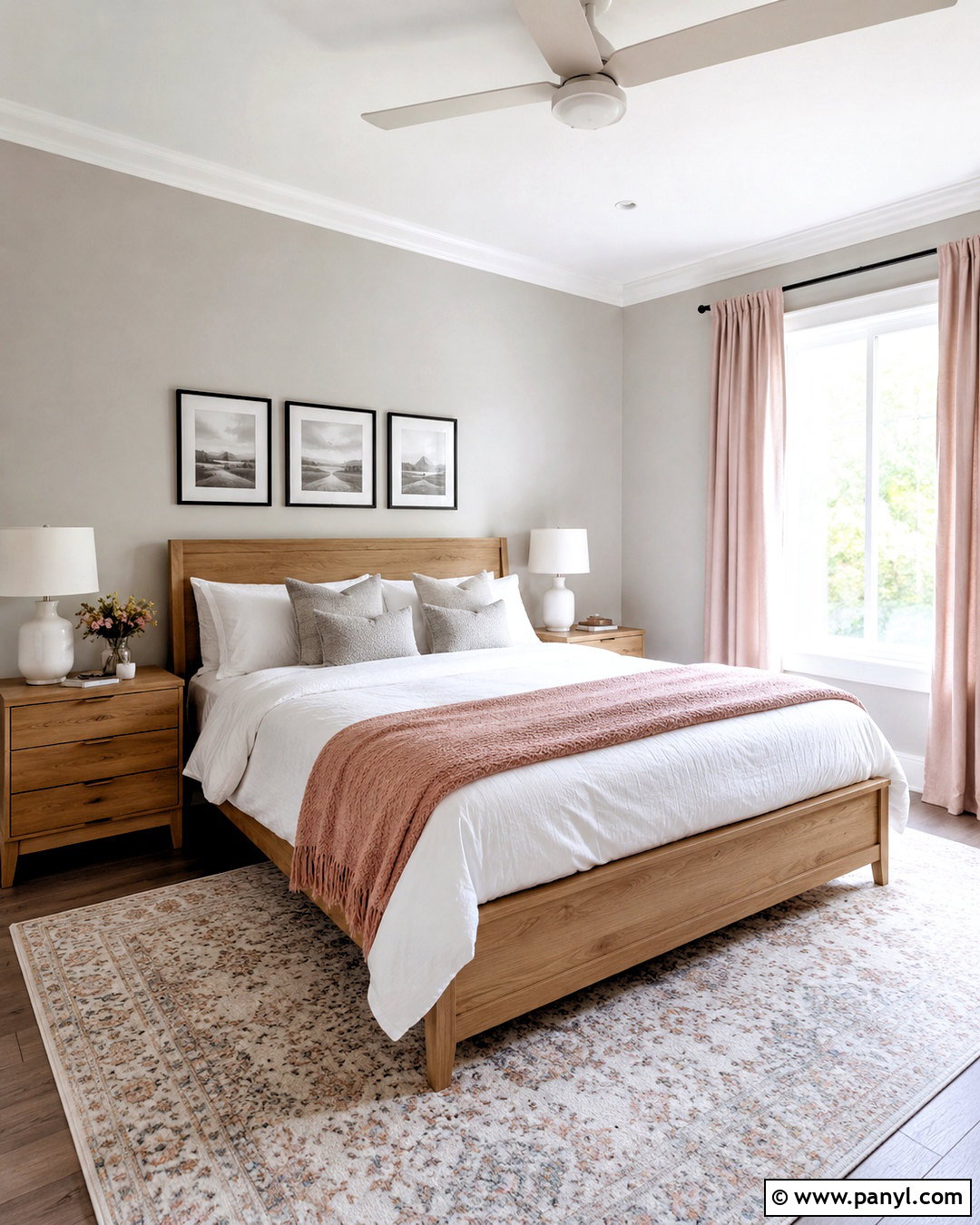
Pale gray can look clean and calming when it is supported by warm materials instead of icy white furnishings. Select a light gray with a slight beige undertone and use soft white on the ceiling and trim. Center a natural oak bed against the main wall, then add white bedding, dove-gray pillows, and a dusty rose blanket. Warm wood nightstands and linen-shaded lamps will soften the cooler wall color. Choose a cream rug with a thin gray pattern to connect the floor and walls. Blush curtains introduce understated color while maintaining the restful palette. Black picture frames and small metal accents give the room definition. With balanced lighting, warm woods, and layered textiles, this bedroom appears airy and modern rather than sterile or unfinished.

8. Blue Gray Bedroom Walls

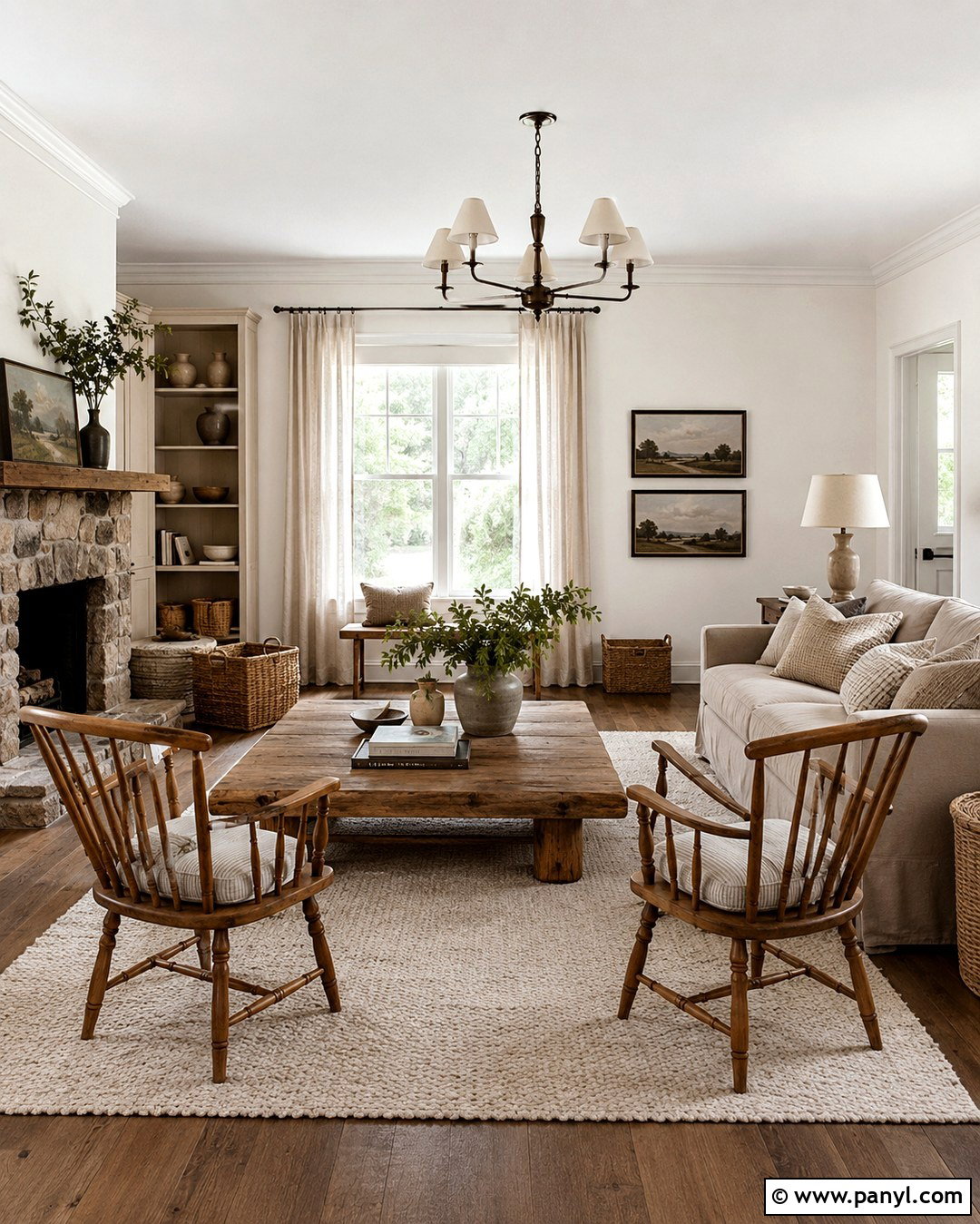
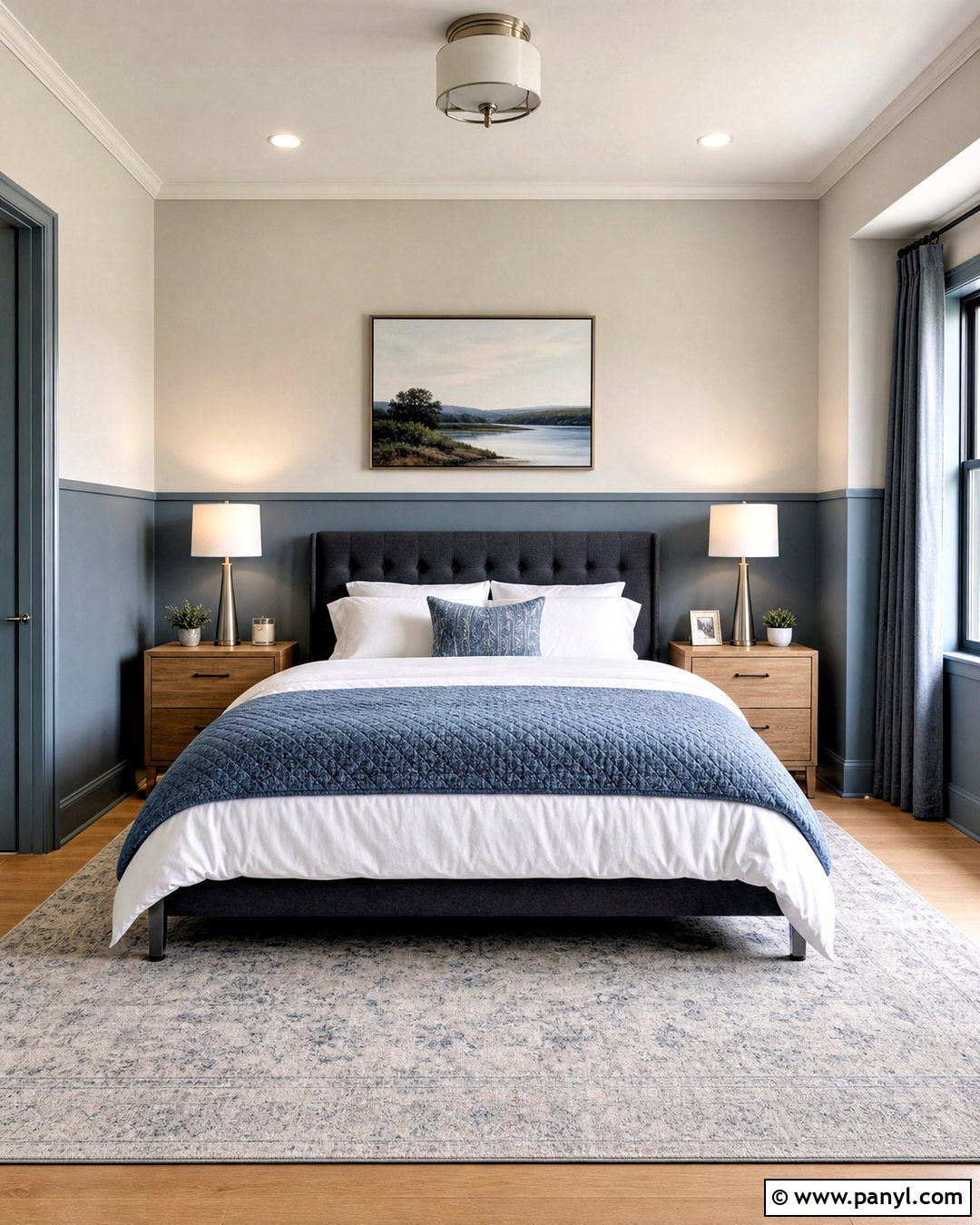
Blue-gray walls create a restful backdrop with more character than a basic neutral. Choose a muted shade that changes gently between blue and gray as the daylight shifts. Pair it with bright white trim and a weathered oak bed for crisp but natural contrast. White bedding keeps the room fresh, while navy pillows and a caramel throw introduce richer tones. Place black metal sconces above simple wooden nightstands and use a striped blue-and-cream rug under the bed. Light flax curtains soften the windows without hiding the wall color. Add framed seascape photography, a leather bench, and a few matte ceramic accessories. The complete scheme feels cool and composed, but warm wood, leather, and woven fabrics ensure that the sleeping space remains comfortable and welcoming.
9. Powder Blue Bedroom Walls
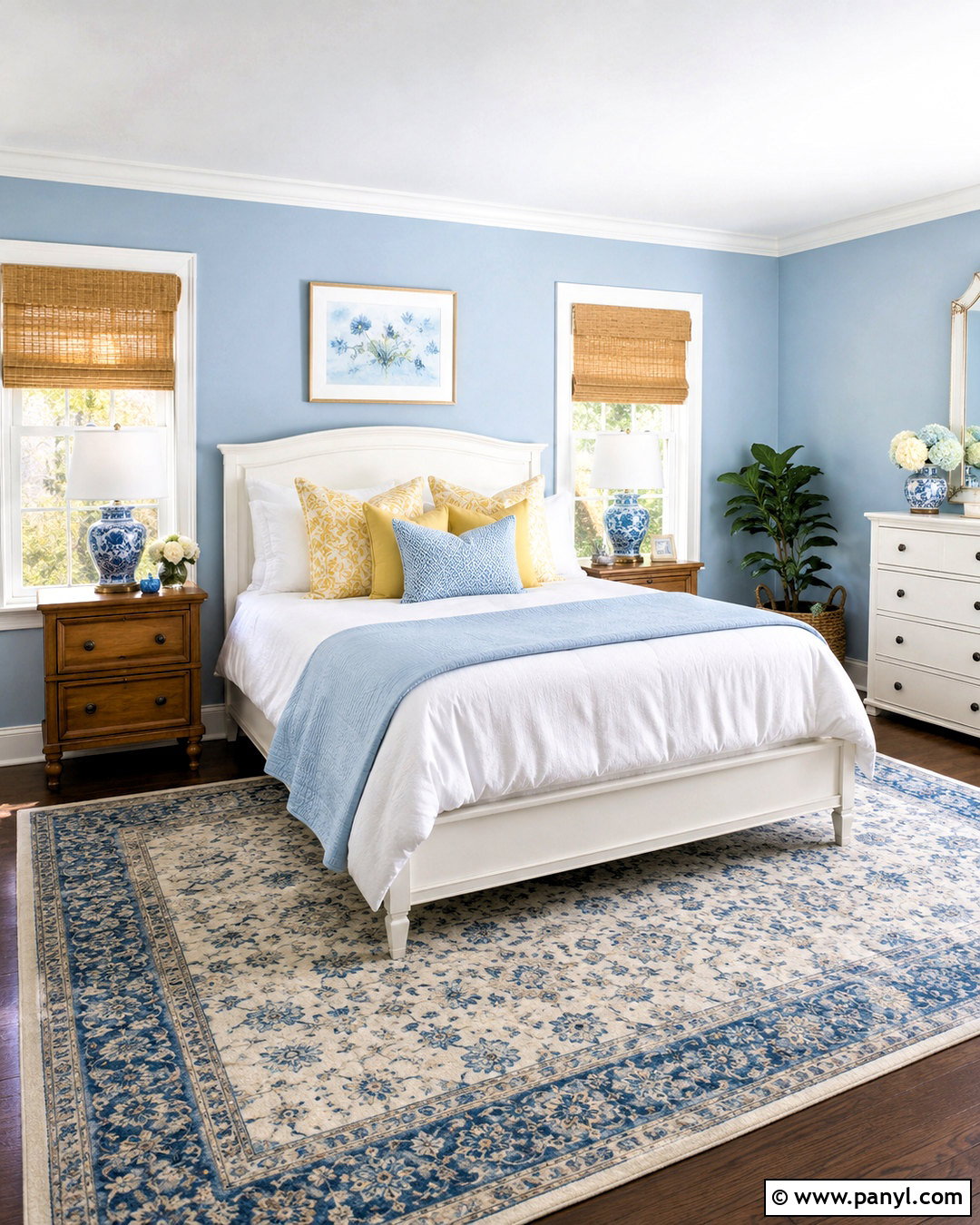
Powder blue walls can make a bedroom feel light, gentle, and pleasantly traditional. Use the color on all four walls, paired with clean white crown molding and baseboards. A white-painted wooden bed maintains the airy character, while medium oak nightstands prevent the palette from appearing overly delicate. Layer crisp white sheets with a pale blue quilt, butter-yellow pillows, and a small floral cushion. Hang white linen curtains and include woven shades for practical light control. A patterned rug with blue, cream, and touches of yellow will anchor the furniture. Polished nickel lamps add a subtle reflective finish. Complete the room with botanical artwork and fresh greenery. The resulting design feels cheerful in daylight and suitably quiet when softened by warm bedside lighting.
10. Sky Blue Bedroom Walls
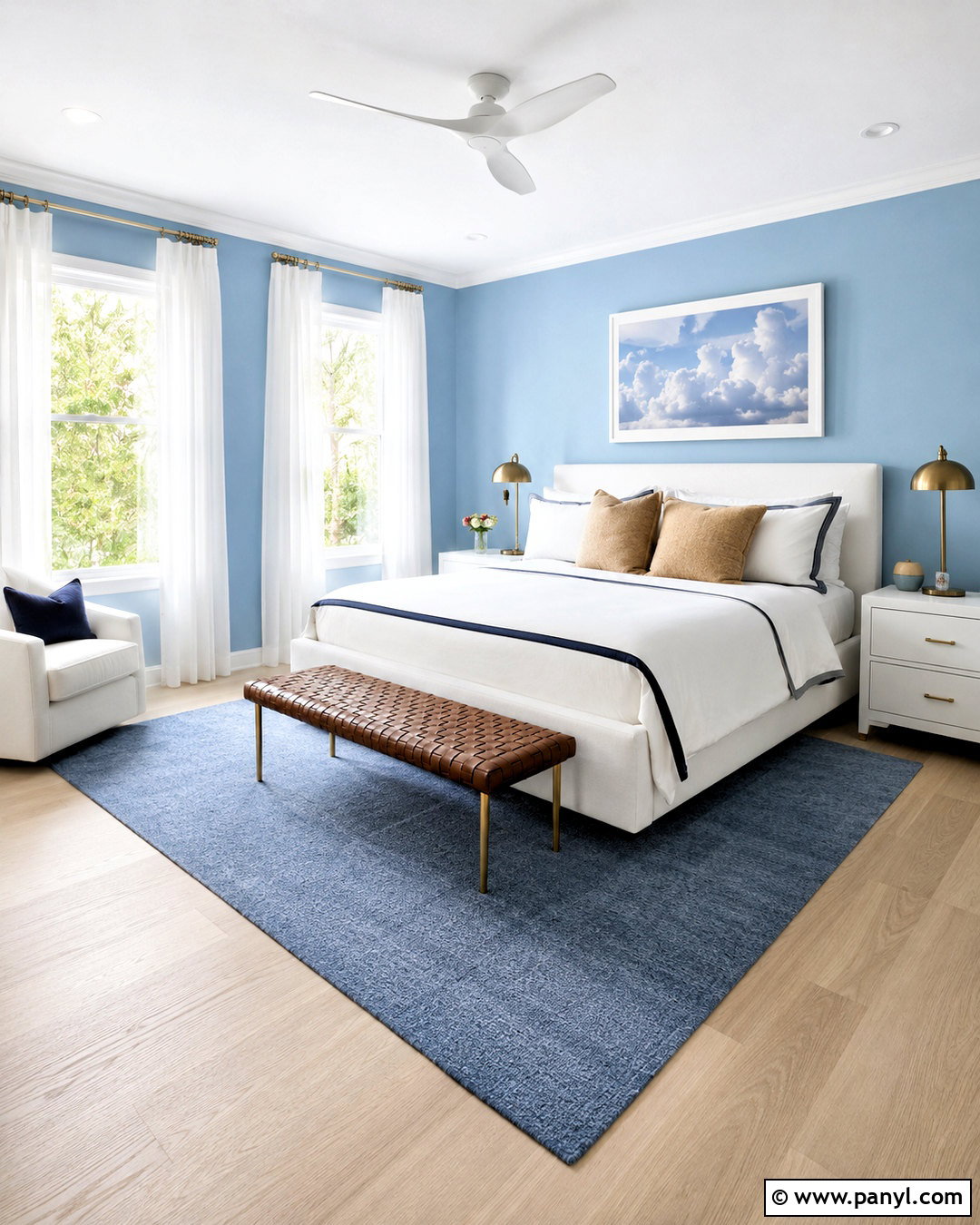
Sky blue walls work beautifully in a bright bedroom where the goal is an open, uplifting atmosphere. Pair the clear blue paint with white trim and a pale wood floor to strengthen the light appearance. Choose a simple white upholstered bed and cover it with crisp bedding, navy piping, and warm tan accent pillows. A woven leather bench at the foot of the bed introduces texture and contrast. Use white nightstands with slender brass lamps for a clean arrangement. Natural fiber shades and gauzy curtains keep the windows soft and uncluttered. A geometric blue-and-cream rug can define the bed area without making the floor busy. Finish with oversized cloud or landscape photography. This scheme feels fresh and modern, while tan, brass, and wood details keep it grounded.
11. Dusty Blue Bedroom Walls
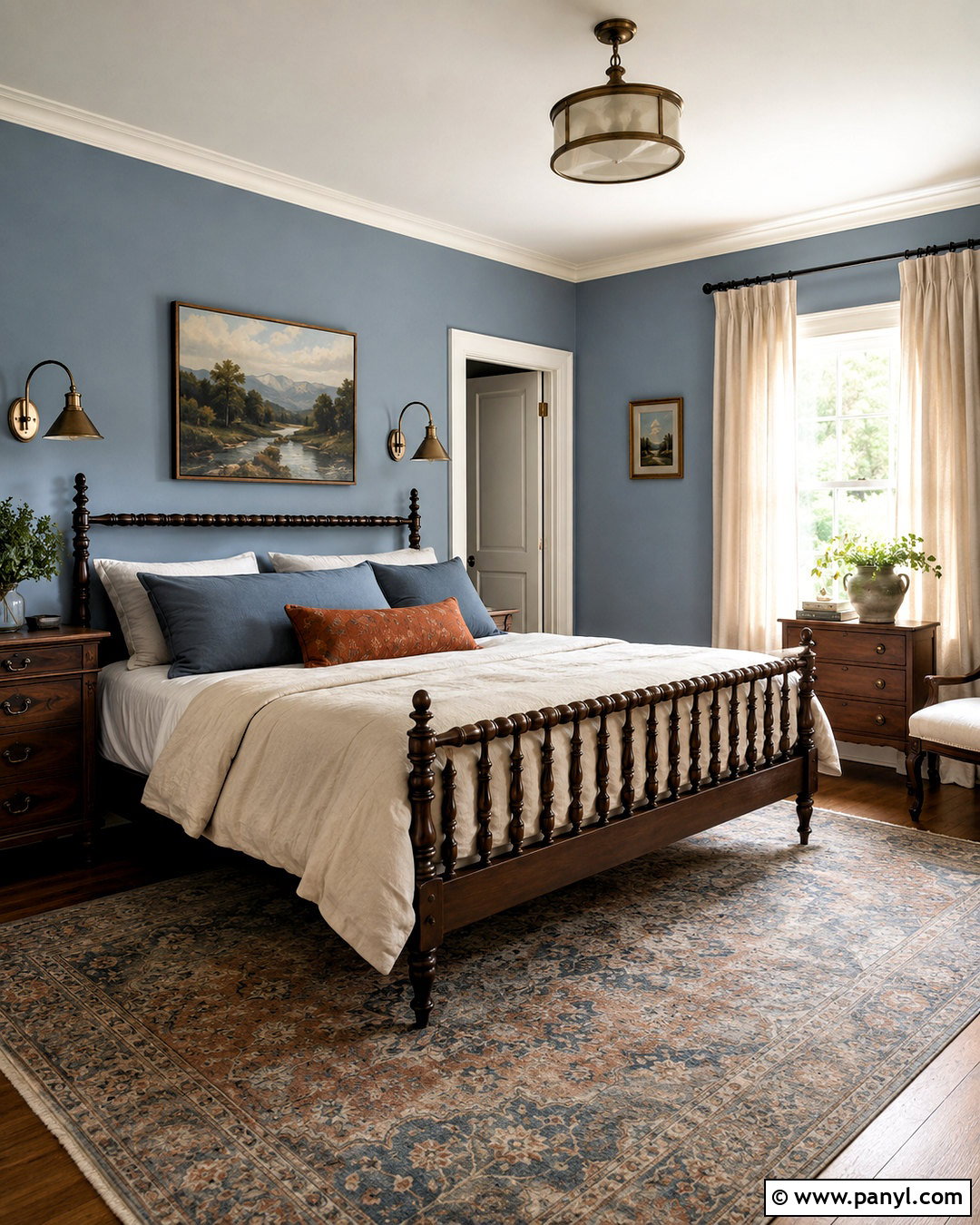
Dusty blue offers a muted, sophisticated alternative to brighter bedroom blues. Paint the walls in a softened medium blue and use warm white for the ceiling, doors, and trim. A dark wood spindle bed creates a handsome contrast and gives the room a grounded focal point. Combine ivory bedding with slate-blue pillows, a rust-colored lumbar cushion, and a beige linen blanket. Flank the bed with compact walnut nightstands and antique brass sconces. A vintage-inspired rug featuring faded blue, rust, and cream will pull the colors together. Hang neutral linen curtains high and wide to visually enlarge the windows. Add one traditional landscape painting above the bed and a simple ceramic lamp on the dresser. The finished room feels collected, comfortable, and quietly colorful.
12. Mineral Blue Bedroom Walls
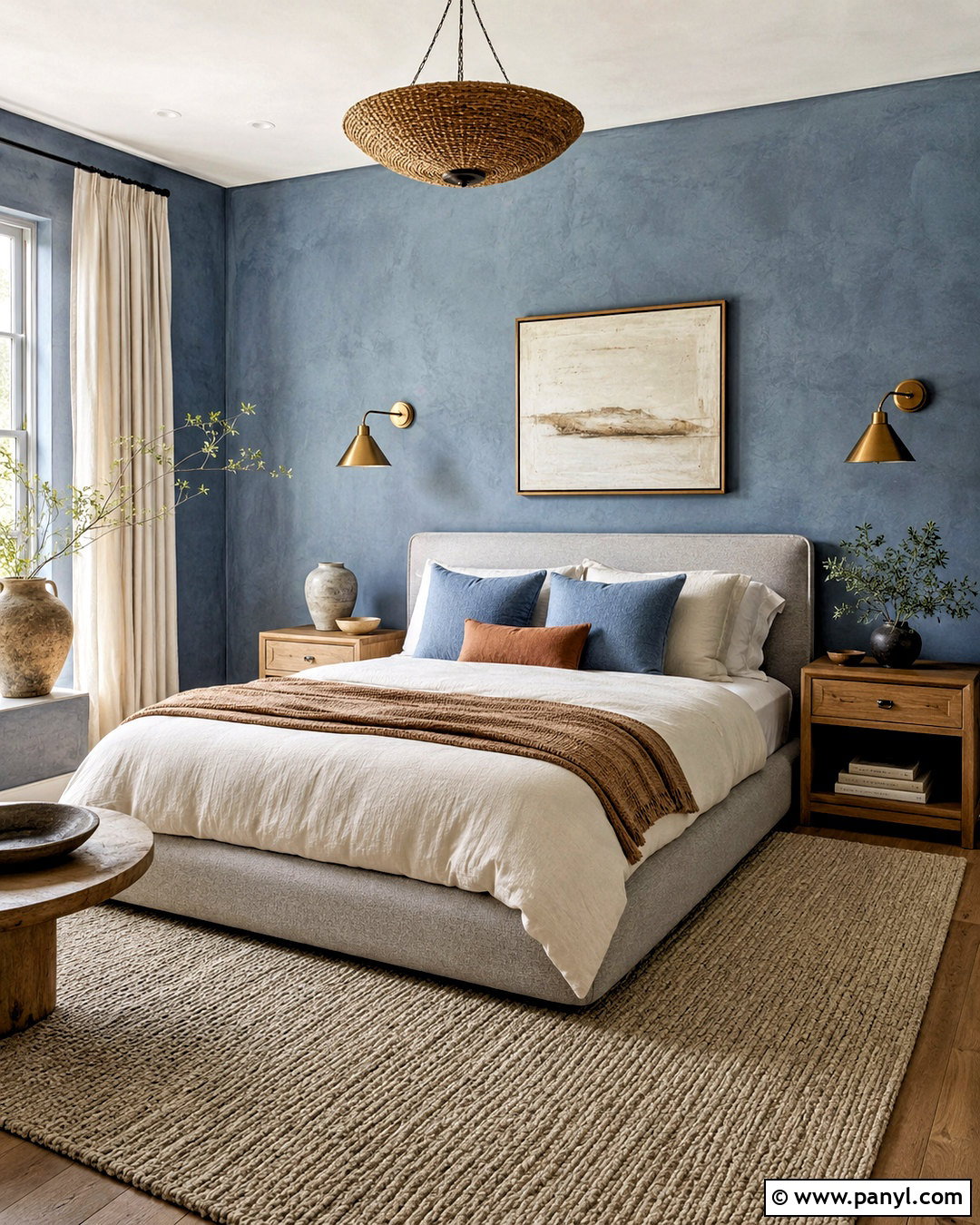
Mineral blue brings a chalky, earthy quality to a bedroom and pairs especially well with tactile finishes. Apply it in a matte or softly brushed finish so the walls have subtle visual movement. Add a low linen bed in pale gray, oak nightstands, and a slatted wooden bench to balance the blue with warmth. Layer the bedding in cream, faded denim, and soft brown. Brushed brass reading lights provide a refined accent, while a textured ivory rug brightens the lower half of the room. Use simple linen curtains in a shade close to the bedding. Handmade pottery, abstract artwork, and a small olive tree support the organic character. This complete bedroom feels modern and restorative, with natural materials preventing the blue walls from looking too cool or overly polished.
13. Deep Navy Bedroom Walls
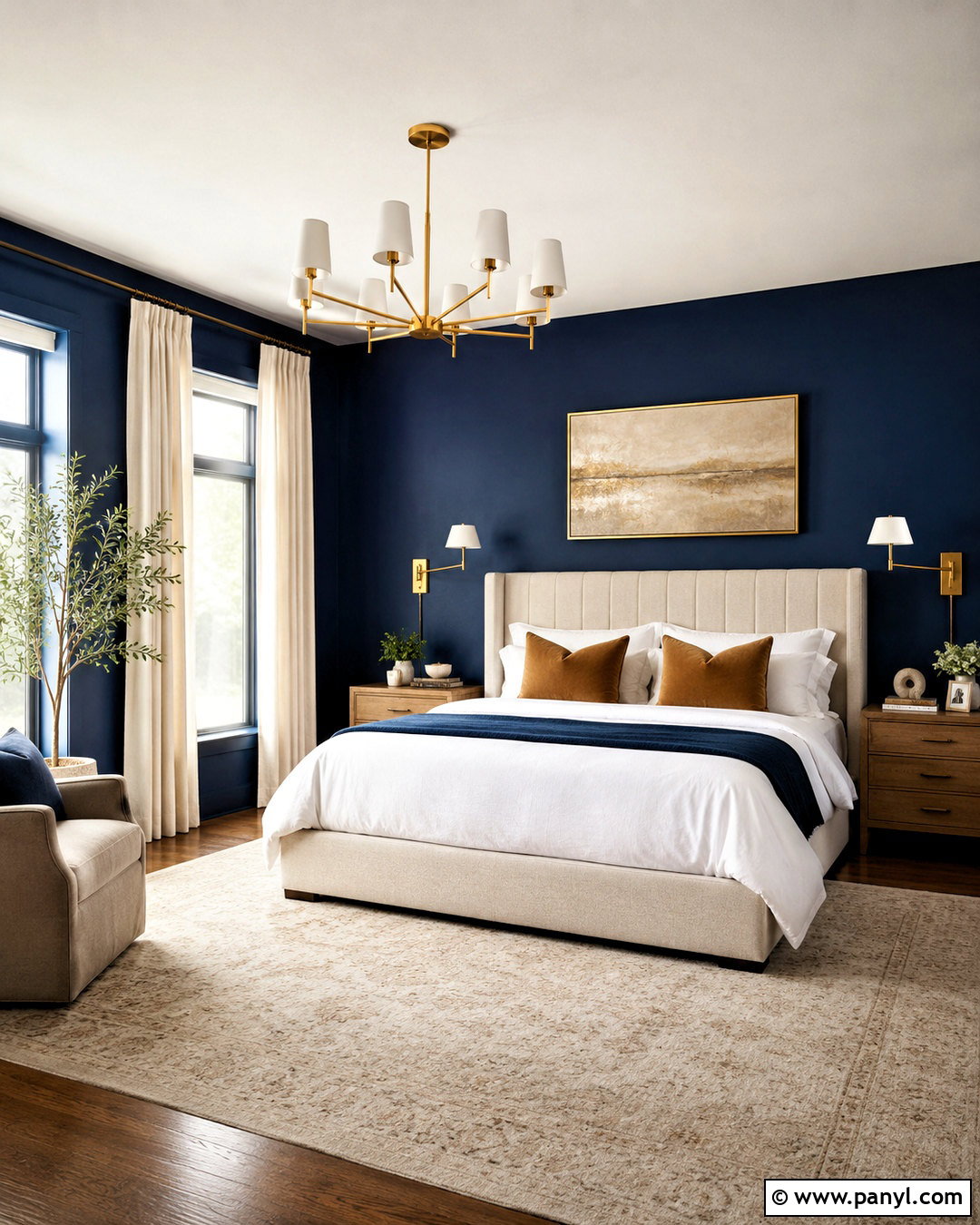
Deep navy walls can turn a bedroom into a cozy retreat when the remaining surfaces and furnishings provide enough relief. Paint all four walls navy, but keep the ceiling warm white to preserve a sense of height. Choose a tall oatmeal upholstered bed that creates clear contrast against the dark background. White bedding, camel velvet pillows, and a patterned blue throw add layered comfort. Use medium oak nightstands and brass sconces to introduce warmth and reflection. A large cream rug will brighten the floor and visually frame the bed. Hang light linen curtains rather than matching navy drapes, especially in a room with limited windows. Finish with oversized artwork in cream and muted gold. The complete look is dramatic yet balanced, suitable for both modern and traditional bedrooms.
14. Smoky Teal Bedroom Walls
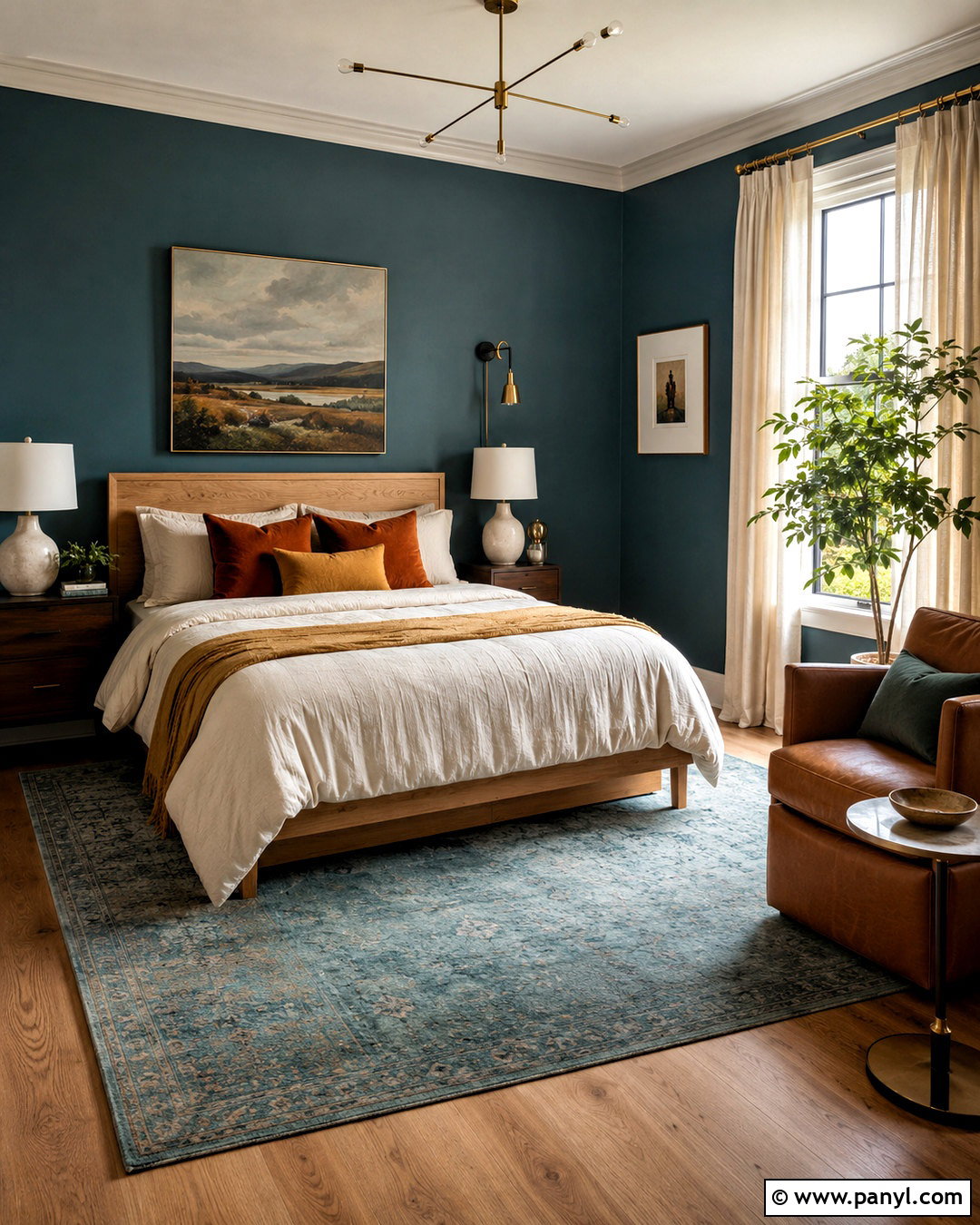
Smoky teal combines blue and green in a deep, softened shade that feels colorful without becoming overly bright. Use it across the walls and built-in details for a cohesive appearance, then place a light oak bed against the main wall. Cream bedding creates immediate contrast, while rust, ochre, and dark teal pillows add warmth and repetition. Choose walnut nightstands with sculptural ceramic lamps in off-white. A vintage-style rug featuring teal, brown, and faded coral will anchor the room. Hang natural linen curtains to lighten the windows and add a caramel leather chair in one corner. Brass frames and hardware offer restrained shine. With its mixture of dark paint, pale textiles, rich wood, and earthy accents, this bedroom feels enveloping, stylish, and comfortable throughout the day.
15. Sage Green Bedroom Walls
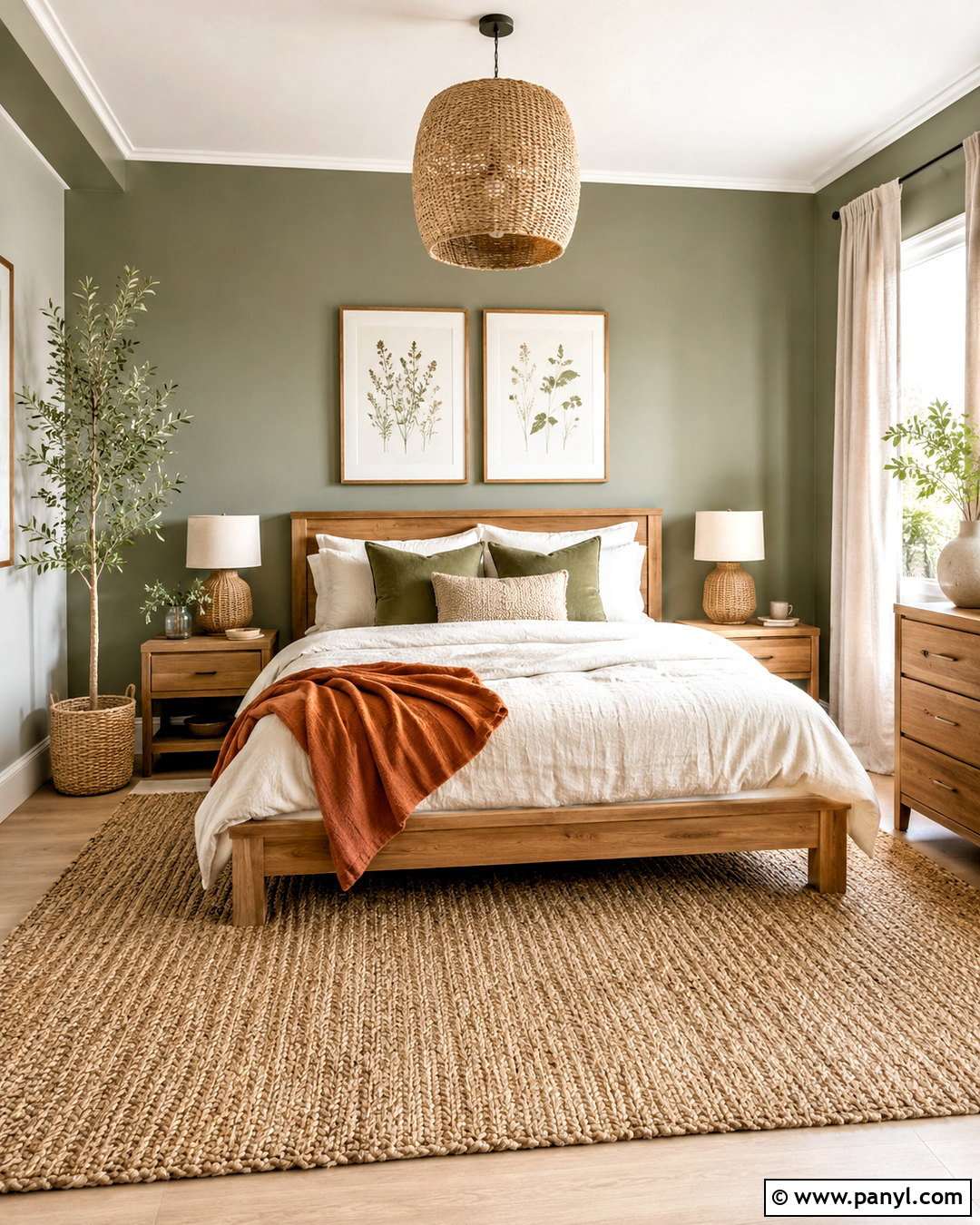
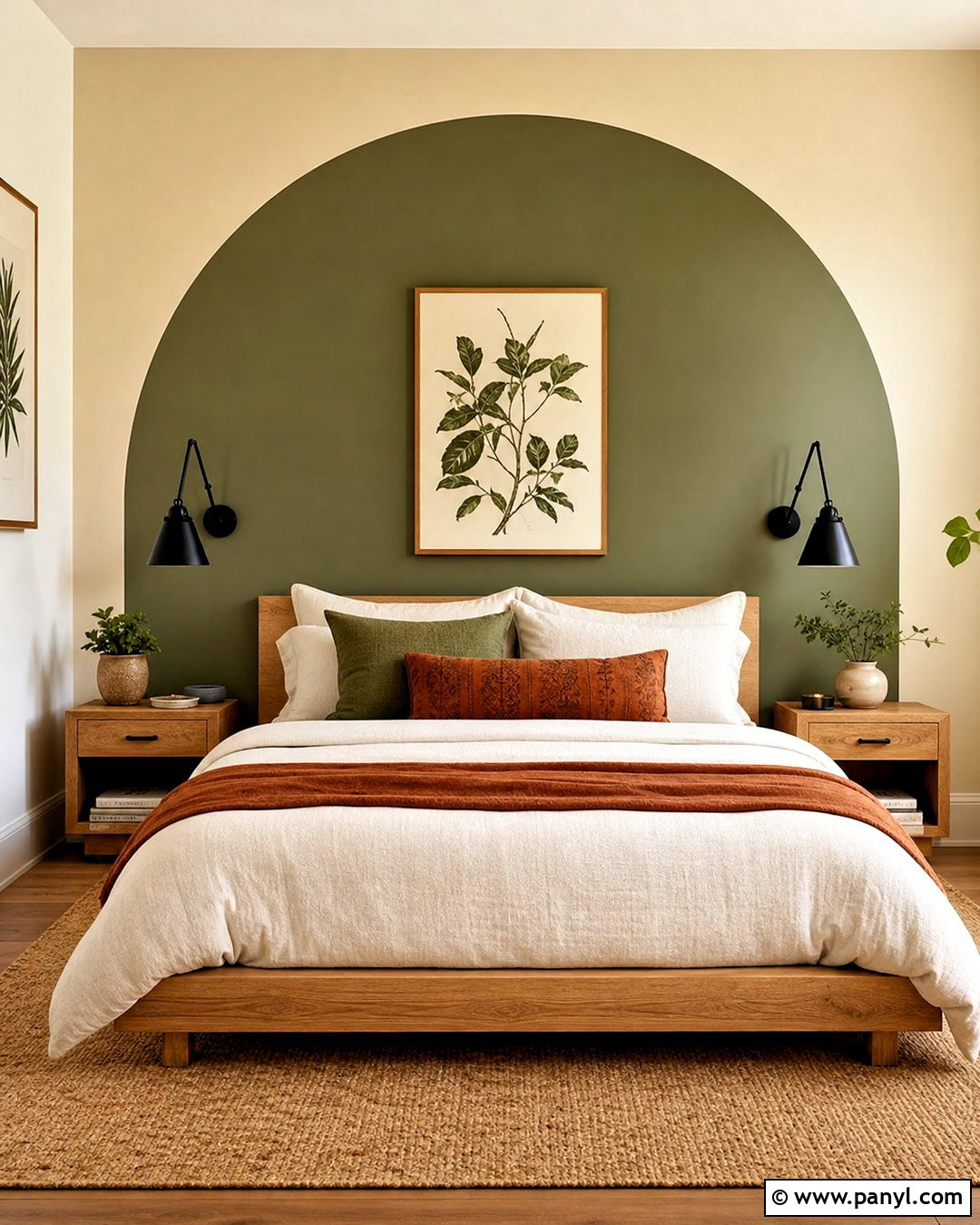
Sage green walls create a gentle nature-inspired foundation that is easy to pair with wood and neutral textiles. Choose a warm, muted sage rather than a minty green, then use creamy white on the trim and ceiling. A natural oak bed and matching nightstands strengthen the organic palette. Dress the bed with ivory linen, olive pillows, and a muted terracotta throw. Woven table lamps, a jute-blend rug, and flax curtains bring additional texture without cluttering the design. Add black accents sparingly through picture frames or curtain rods to sharpen the softer colors. Botanical sketches and a ceramic vase complete the room without making the theme too literal. This balanced combination works well for a primary bedroom, guest room, or small space that needs subtle color.
16. Gray Green Bedroom Walls
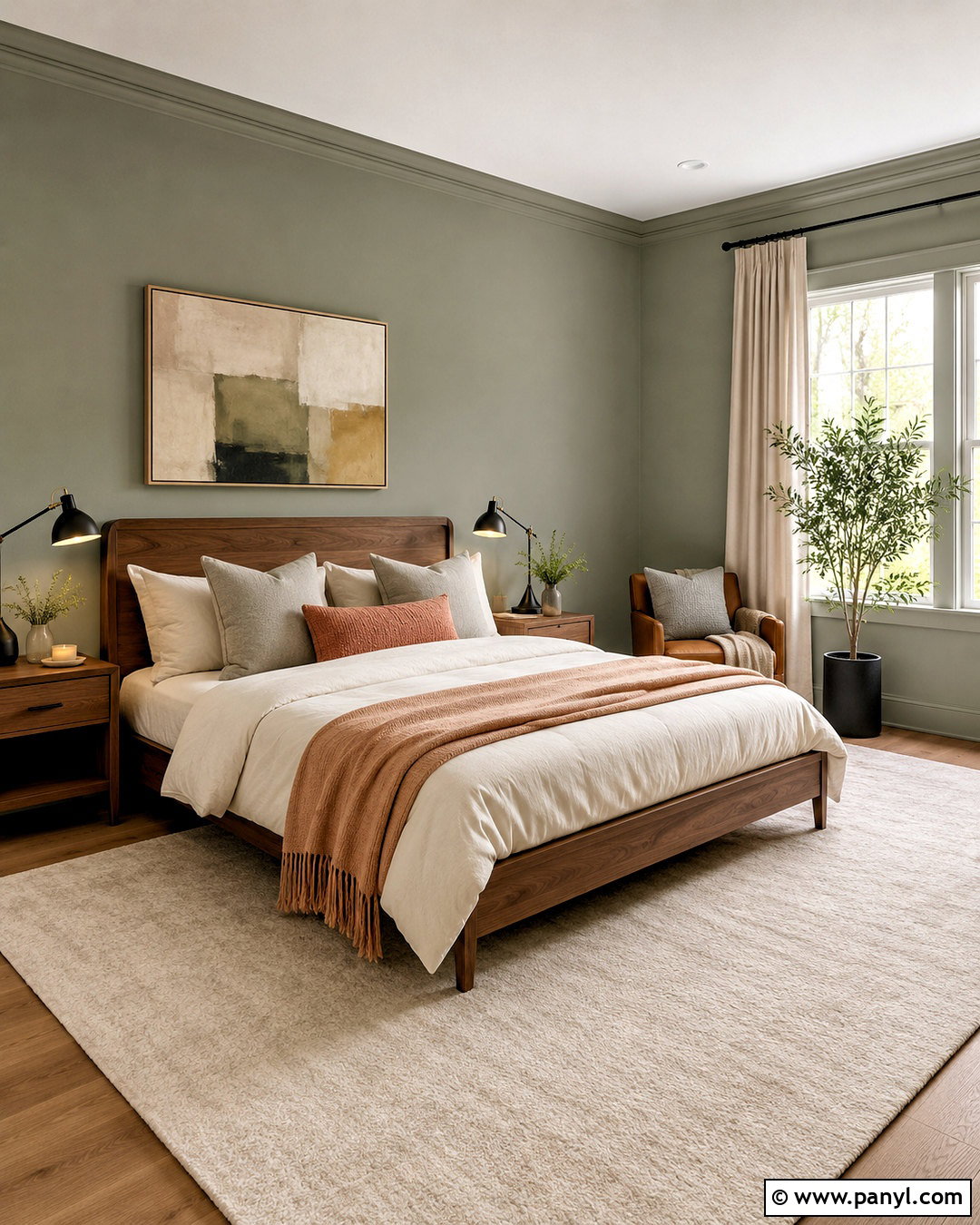
Gray-green is ideal for someone who wants a neutral bedroom with a clear hint of color. Select a medium-light shade with softened green undertones and paint the trim the same color for a modern, uninterrupted finish. A warm walnut bed provides rich contrast, while cream bedding and pale gray pillows keep the arrangement quiet. Introduce muted apricot through a lumbar pillow or throw to enliven the cool walls. Use simple oak nightstands, black reading lights, and a large ivory wool rug. Full linen curtains in warm beige will frame the windows and soften the palette. Add abstract artwork combining green, cream, and rust above the bed. The finished room feels calm but not plain, with natural materials and restrained accent colors creating a complete, thoughtfully layered look.
17. Warm Eucalyptus Bedroom Walls
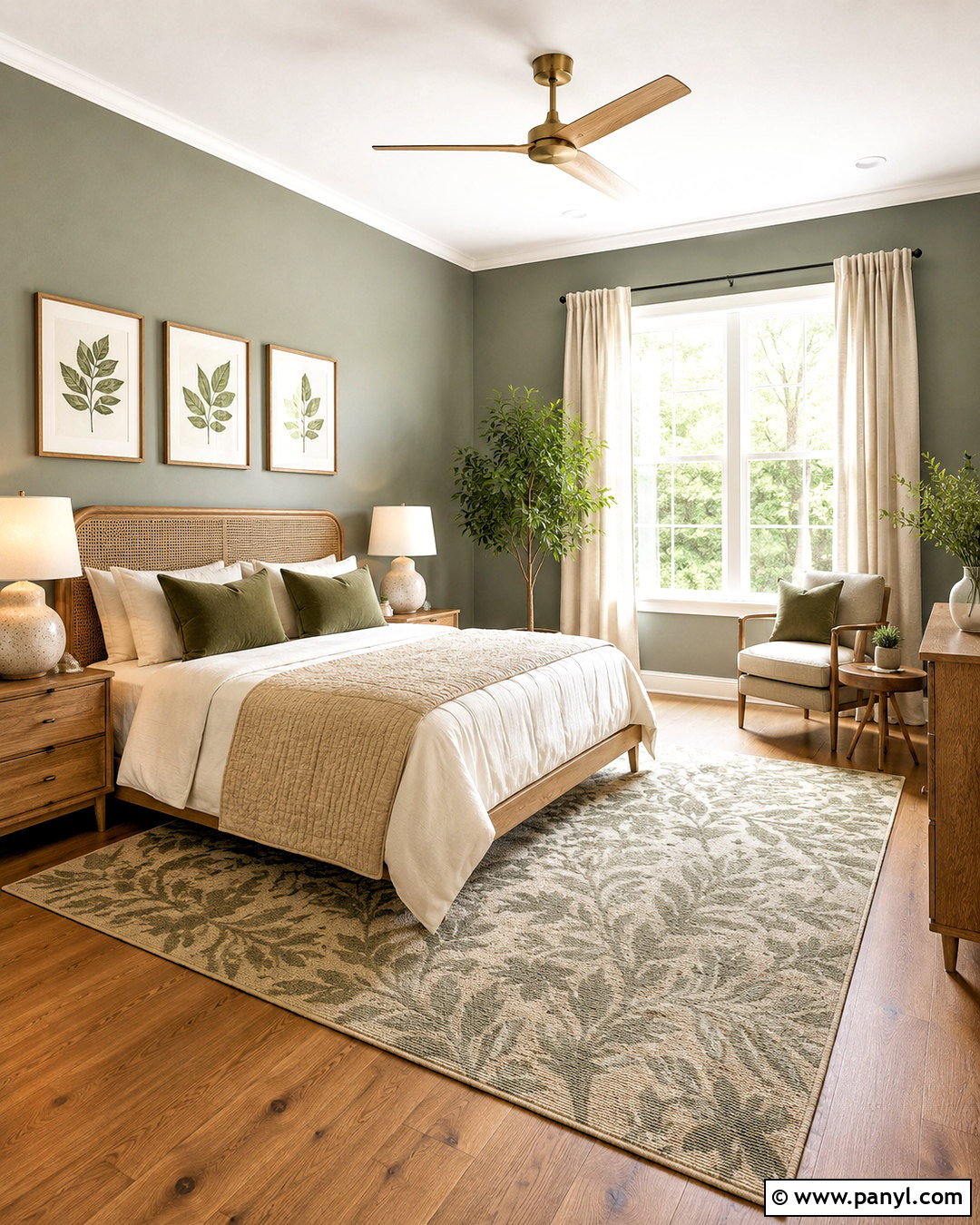
Warm eucalyptus offers the freshness of green with enough gray and brown to remain soft and livable. Cover the walls in this grounded shade, then pair them with off-white trim and honey-toned wood flooring. A woven cane bed introduces texture and complements the natural character of the color. Use ivory bedding with moss-green pillows, a tan quilt, and one muted clay accent. Place round oak nightstands beside the bed and add cream ceramic lamps with linen shades. A subtle botanical rug can bring green, beige, and charcoal together beneath the furniture. Choose light flax curtains and minimal black hardware. Complete the space with pressed-leaf artwork and a wooden bench. This bedroom looks relaxed and current while still feeling familiar enough for long-term use.
18. Olive Green Bedroom Walls
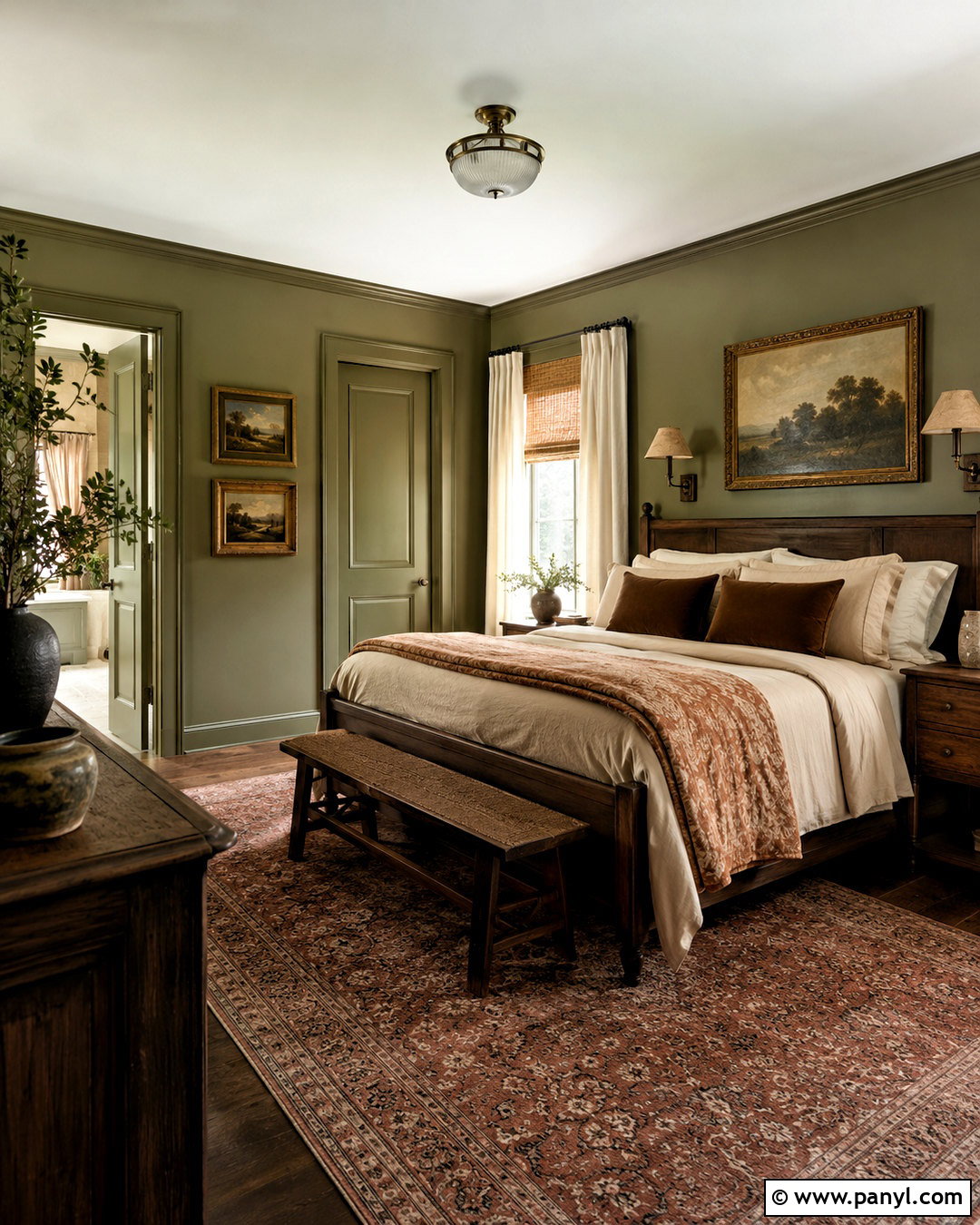
Olive green walls create a rich, grounded bedroom that works well with vintage, traditional, and modern furniture. Choose a softened olive rather than a bright yellow-green, and continue it across the doors and trim for a cocooning finish. Center a dark walnut bed on the longest wall, dressed with cream linen, brown velvet pillows, and a faded rust coverlet. Antique brass sconces add warm highlights beside the bed. Use a patterned rug combining olive, burgundy, and beige to establish a collected appearance. Natural woven shades and cream curtains keep the windows from feeling heavy. Add framed landscape paintings, pottery, and a small wooden dresser. The completed space has depth and personality, yet the light bedding and curtains maintain enough brightness for everyday comfort.
19. Forest Green Bedroom Walls
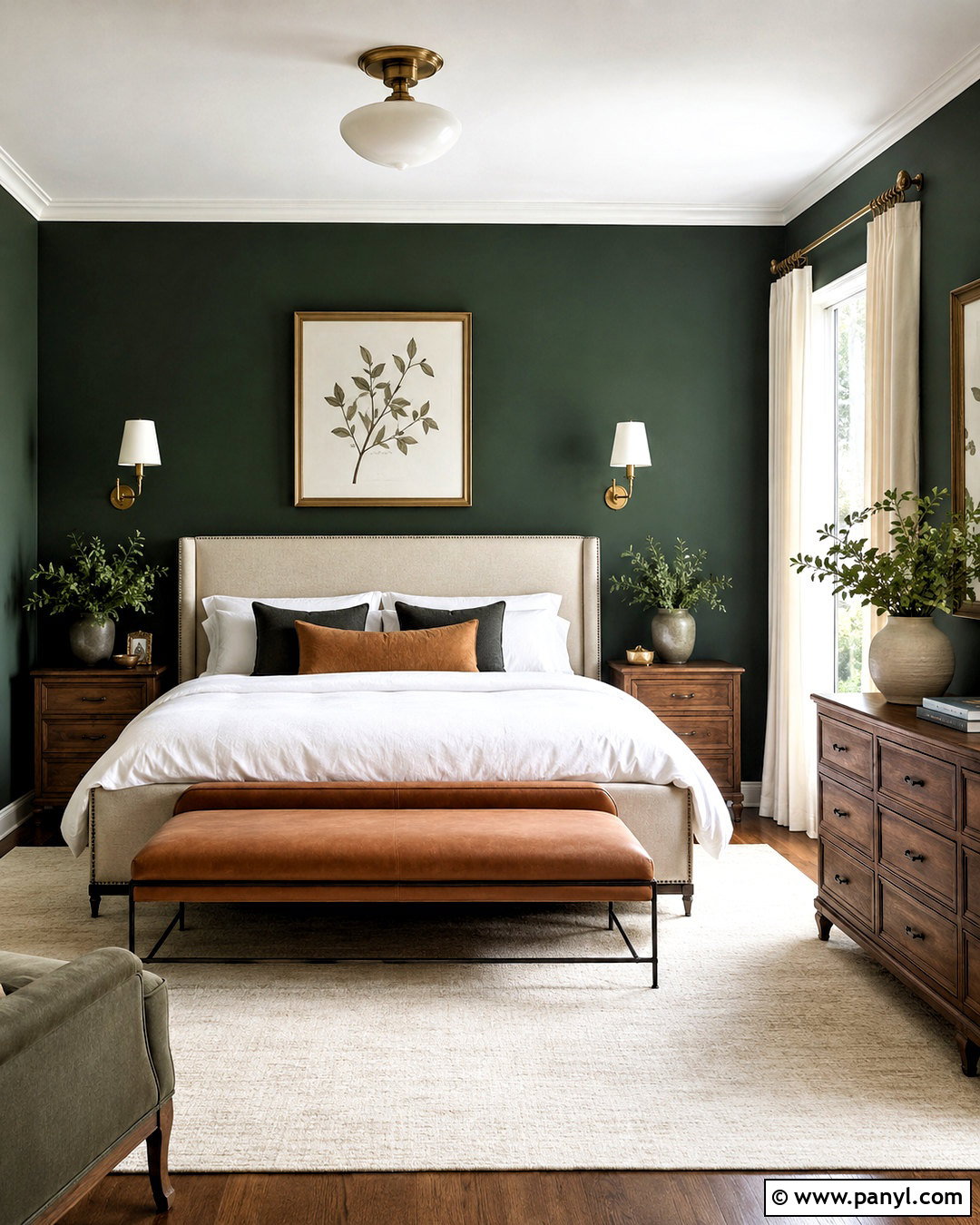
Forest green walls make a bold background for a bedroom with strong architectural details and generous natural light. Balance the saturated paint with white ceiling paint and substantial cream-colored curtains. A light upholstered bed will stand out clearly, while walnut nightstands connect the green walls to warmer natural tones. Use white bedding as the base, then add plaid or patterned pillows in forest green, camel, and charcoal. A cognac leather bench provides a durable accent at the foot of the bed. Select a large cream rug to brighten dark flooring and keep the room from feeling enclosed. Brass sconces and framed botanical artwork reinforce the classic palette. This full scheme feels dramatic and refined, with pale textiles strategically placed to maintain visual balance.
20. Pale Mint Bedroom Walls
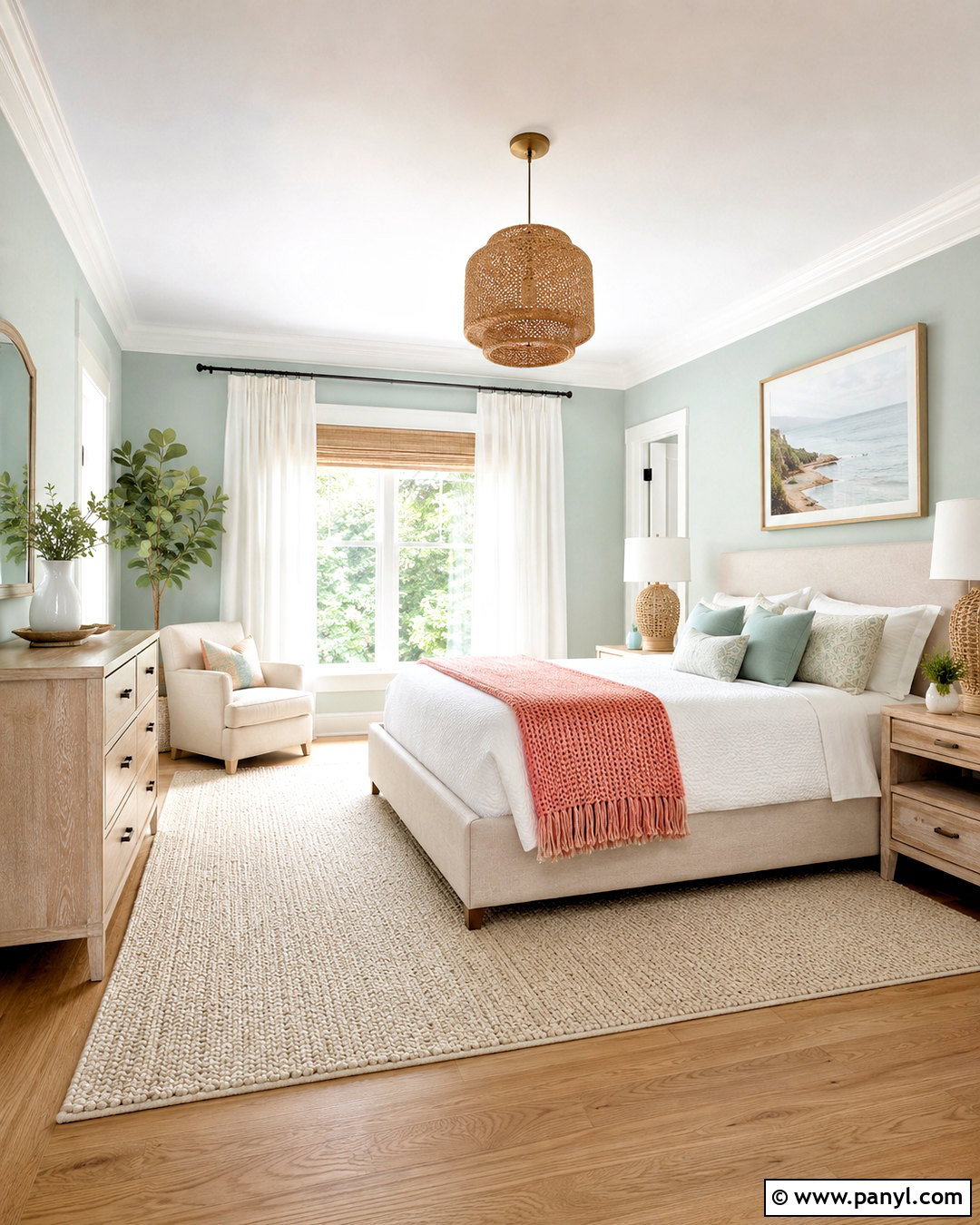
Pale mint walls can feel fresh and restful when the color is gray enough to avoid a sugary appearance. Pair the walls with clean white trim, light oak furniture, and a streamlined upholstered bed. Use white bedding with seafoam pillows, a pale coral throw, and a narrow striped lumbar cushion. White nightstands keep the room bright, while natural woven lamps add warmth. A soft cream rug will reduce visual contrast and make the room feel more spacious. Hang sheer white curtains over simple roller shades for flexible privacy. Artwork featuring subtle green, coral, and beige tones ties the accents together without becoming overly playful. The finished bedroom has a light, cheerful character that works particularly well in a guest room, smaller bedroom, or sunny cottage-inspired interior.
21. Blush Pink Bedroom Walls
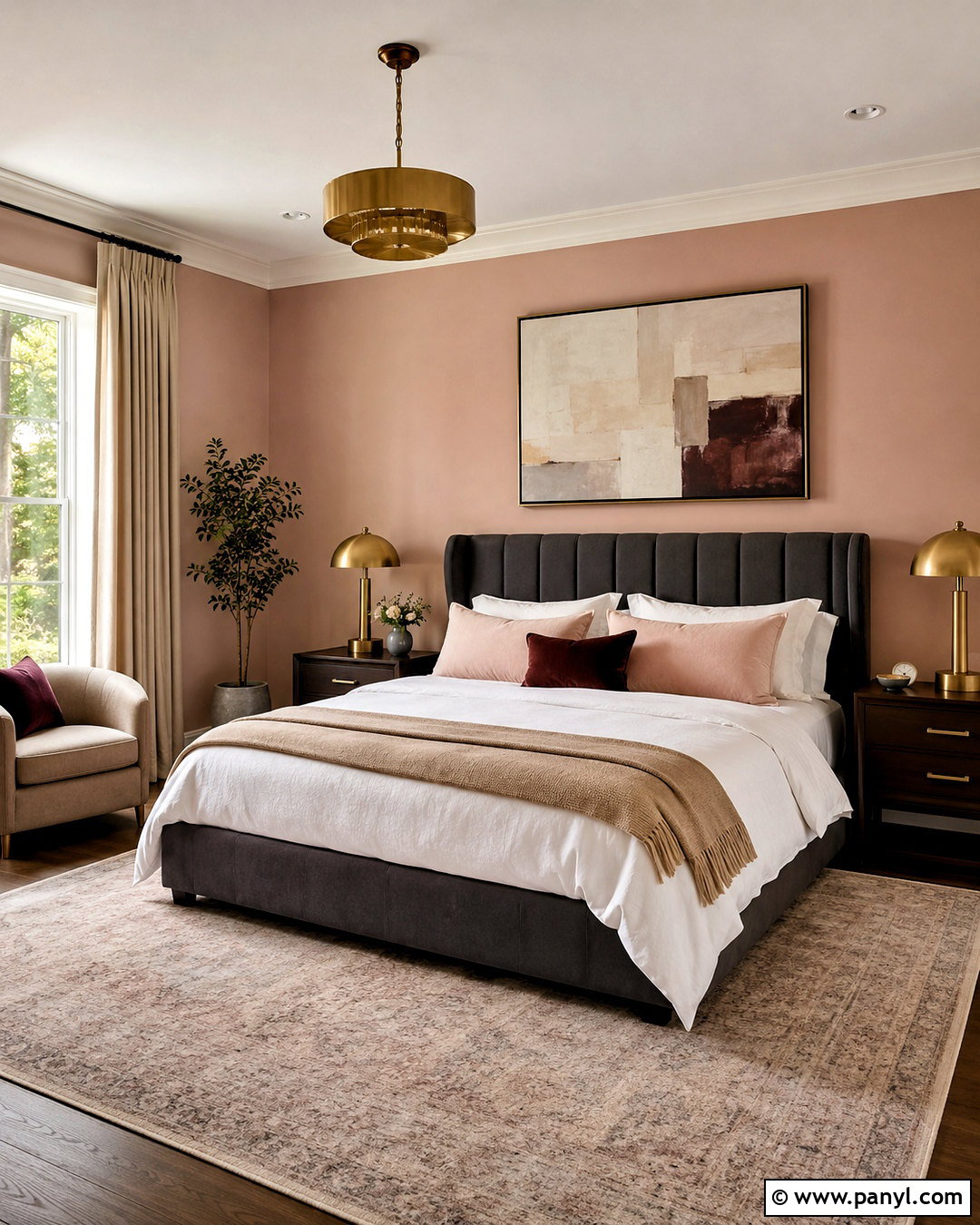
Blush pink walls provide gentle warmth without requiring an overly feminine decorating theme. Choose a dusty, beige-based pink and combine it with warm white trim and medium oak furniture. A charcoal gray upholstered bed creates contrast and gives the palette a modern foundation. Layer white bedding with blush pillows, a burgundy lumbar cushion, and a camel-colored throw. Add dark wood nightstands and aged brass lamps for a mature, collected look. A neutral rug with faded rose and gray details will connect the walls to the furnishings. Use oatmeal linen curtains to soften the windows and reduce sweetness. Finish with abstract artwork, black frames, and simple ceramics. The room feels warm and distinctive while remaining balanced enough to suit a shared primary bedroom.
22. Dusty Rose Bedroom Walls
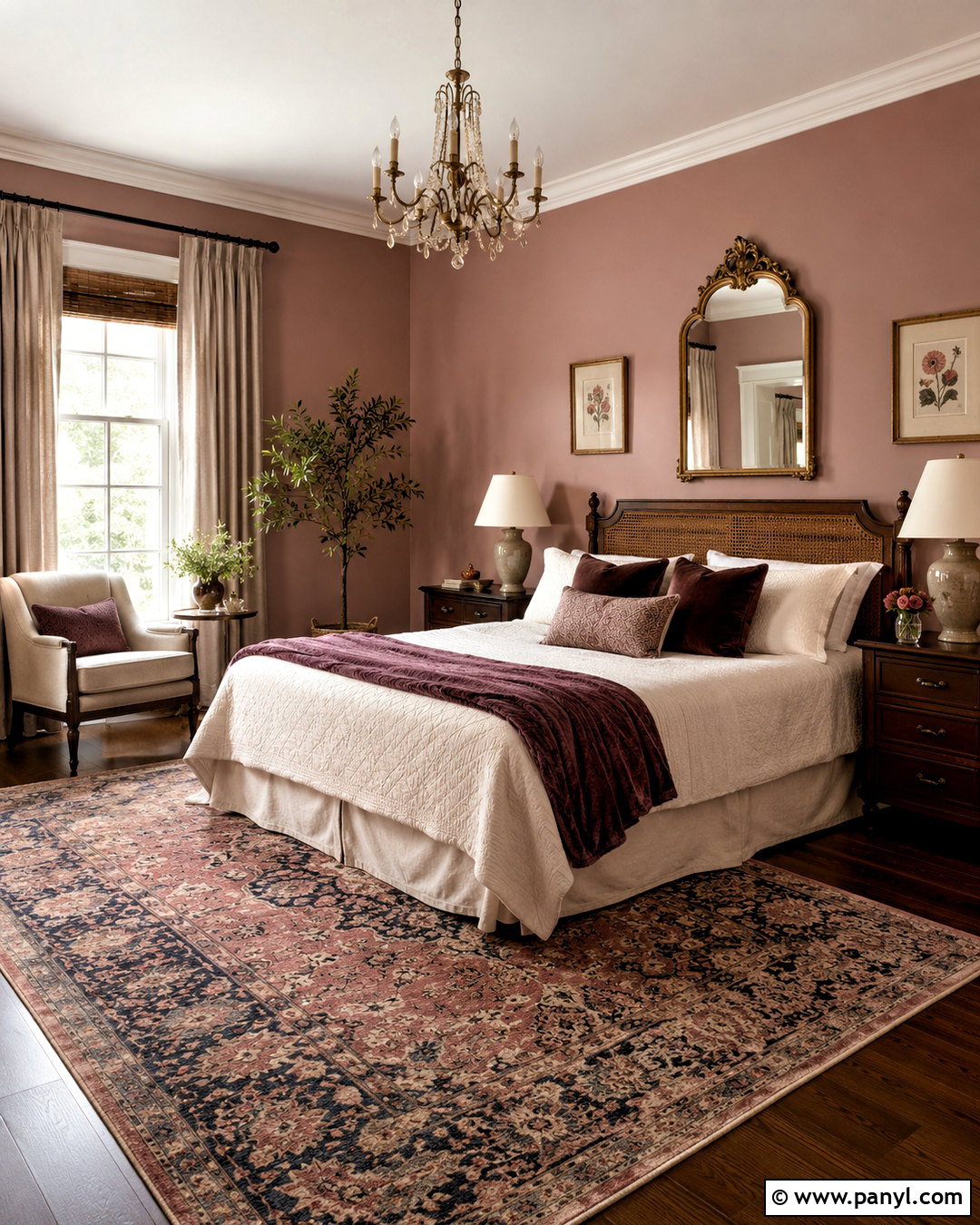
Dusty rose has enough brown and gray in its undertone to create a cozy, sophisticated bedroom. Use it on all walls and pair it with cream trim rather than brilliant white. A walnut bed with a woven headboard adds natural texture and grounds the rosy color. Dress the bed in ivory, cocoa brown, and muted plum, allowing the deeper accents to give the palette dimension. Place ceramic lamps on dark wood nightstands and use an antique brass mirror above a compact dresser. A vintage-inspired rug containing rose, tan, and faded navy will make the room feel thoughtfully collected. Finish the windows with warm beige curtains. This complete design feels romantic without becoming overly delicate, thanks to the dark wood, structured furniture, and restrained use of decorative accessories.
23. Earthy Mauve Bedroom Walls
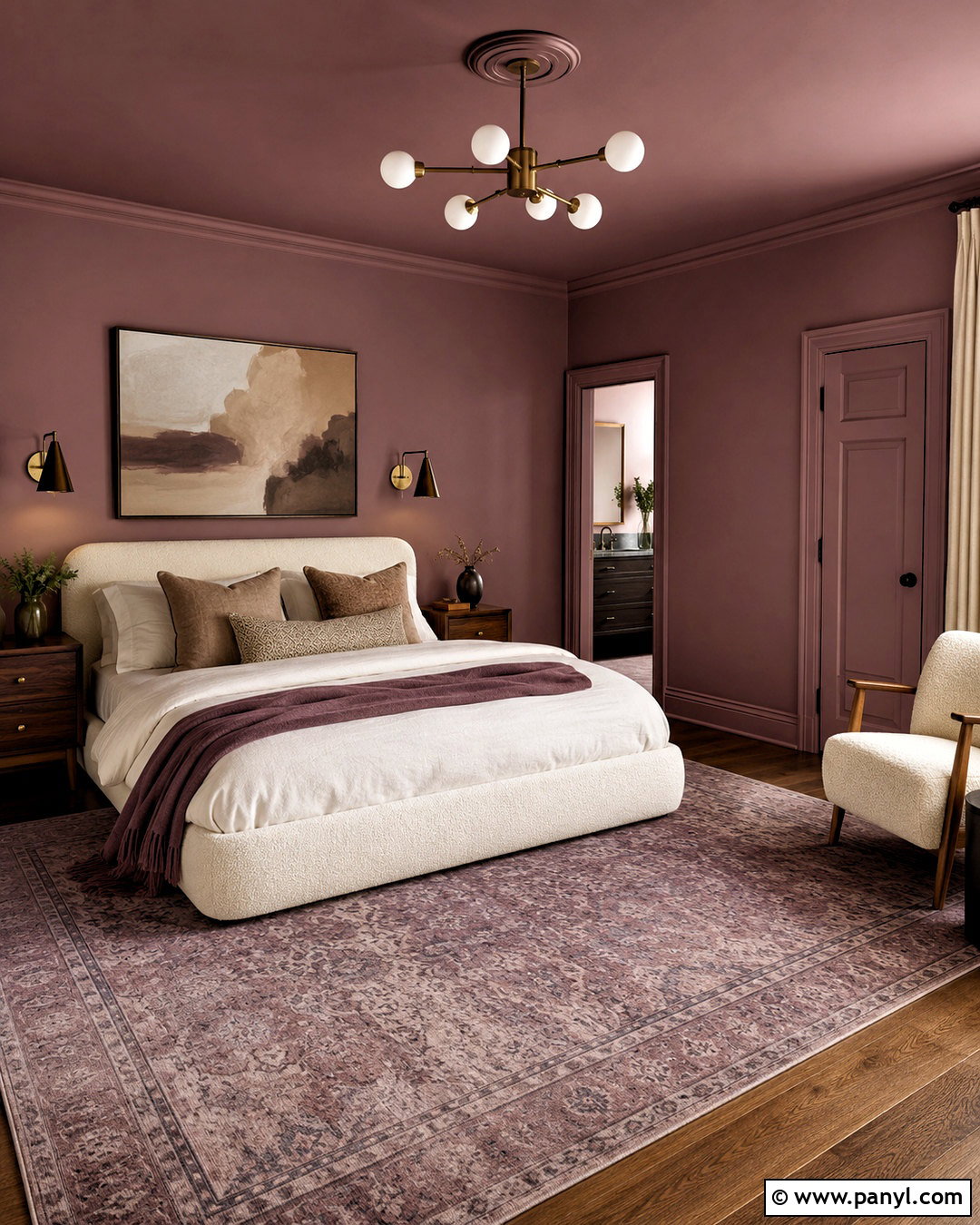
Earthy mauve creates an inviting middle ground between pink, purple, and brown. Select a muted shade and apply it to the walls, trim, and interior doors for a unified effect. Add a cream bouclé bed to create a soft focal point, supported by walnut nightstands and dark bronze wall lights. Layer the bedding with ivory sheets, taupe pillows, and a plum-colored throw. A faded geometric rug in beige and muted violet can connect the wall color to the furniture. Hang floor-length flax curtains and choose artwork with abstract earth tones instead of floral motifs. A wooden bench and textured ceramic pieces keep the design grounded. The resulting bedroom feels warm and enveloping, offering distinctive color while remaining comfortable, balanced, and easy to decorate around.
24. Soft Lavender Bedroom Walls
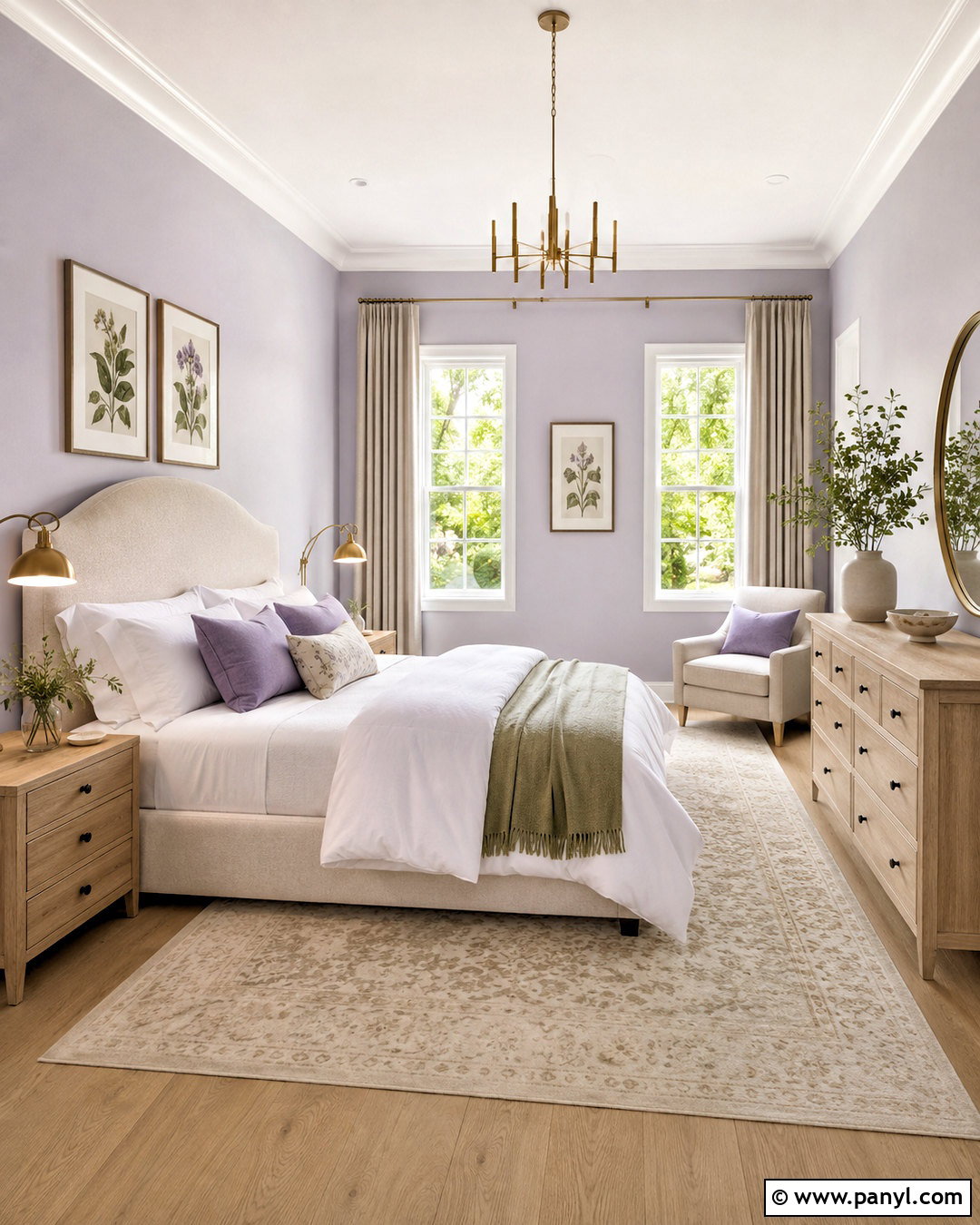
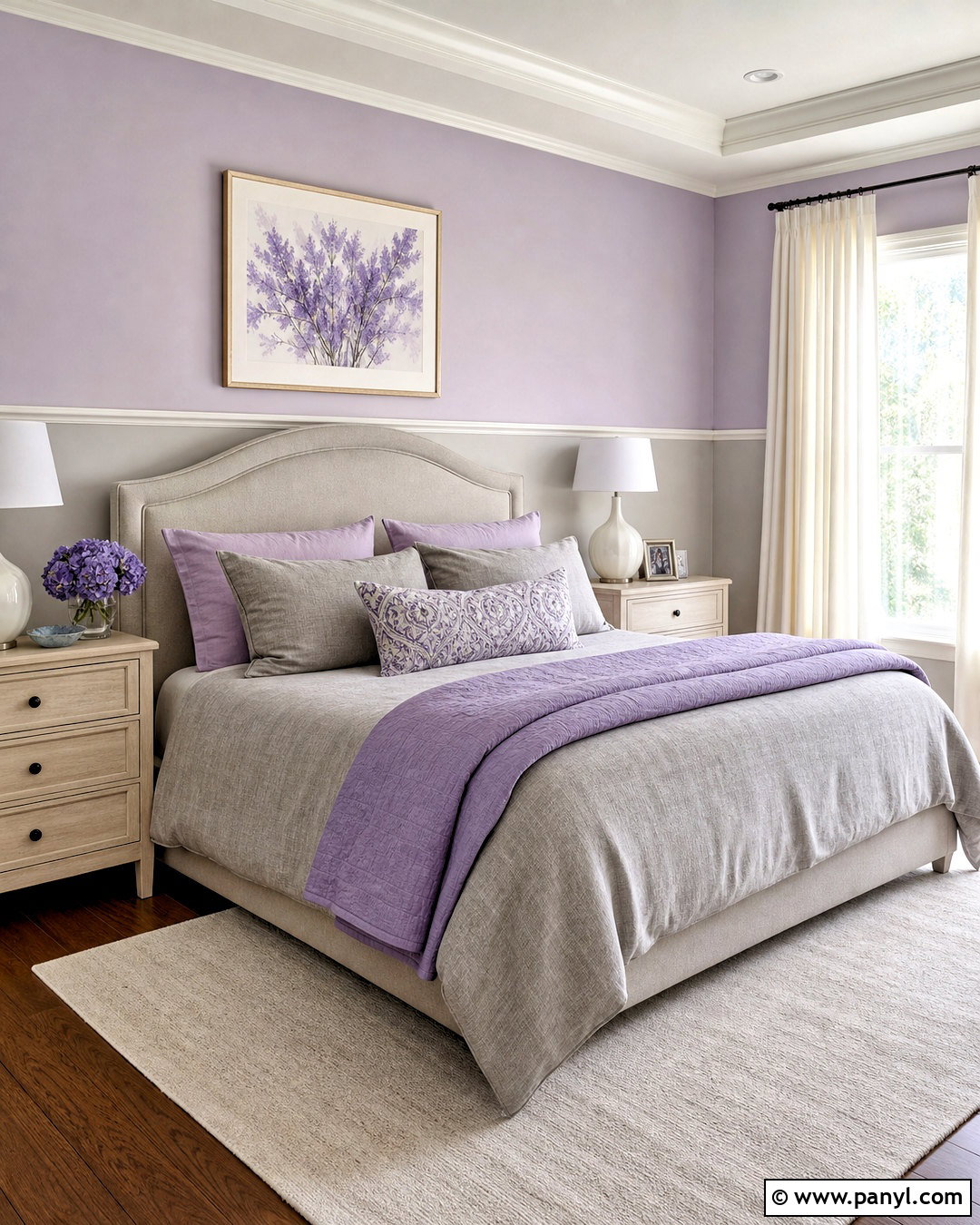
Soft lavender walls bring subtle color to a bedroom while maintaining a light and airy quality. Choose a grayed lavender rather than a bright pastel purple, then pair it with white trim and pale oak flooring. A simple cream upholstered bed keeps the palette relaxed. Use white bedding with lavender pillows, a sage-green throw, and a small patterned cushion that combines both colors. Place light wood nightstands beside the bed and add brushed nickel or soft brass lamps. A cream rug with a delicate gray pattern will anchor the furniture without darkening the room. Hang oatmeal curtains and understated botanical artwork. By combining lavender with green, wood, and warm neutrals, the finished space feels grown-up and restful rather than overly sweet or tied to a specific age group.
25. Burgundy Bedroom Walls
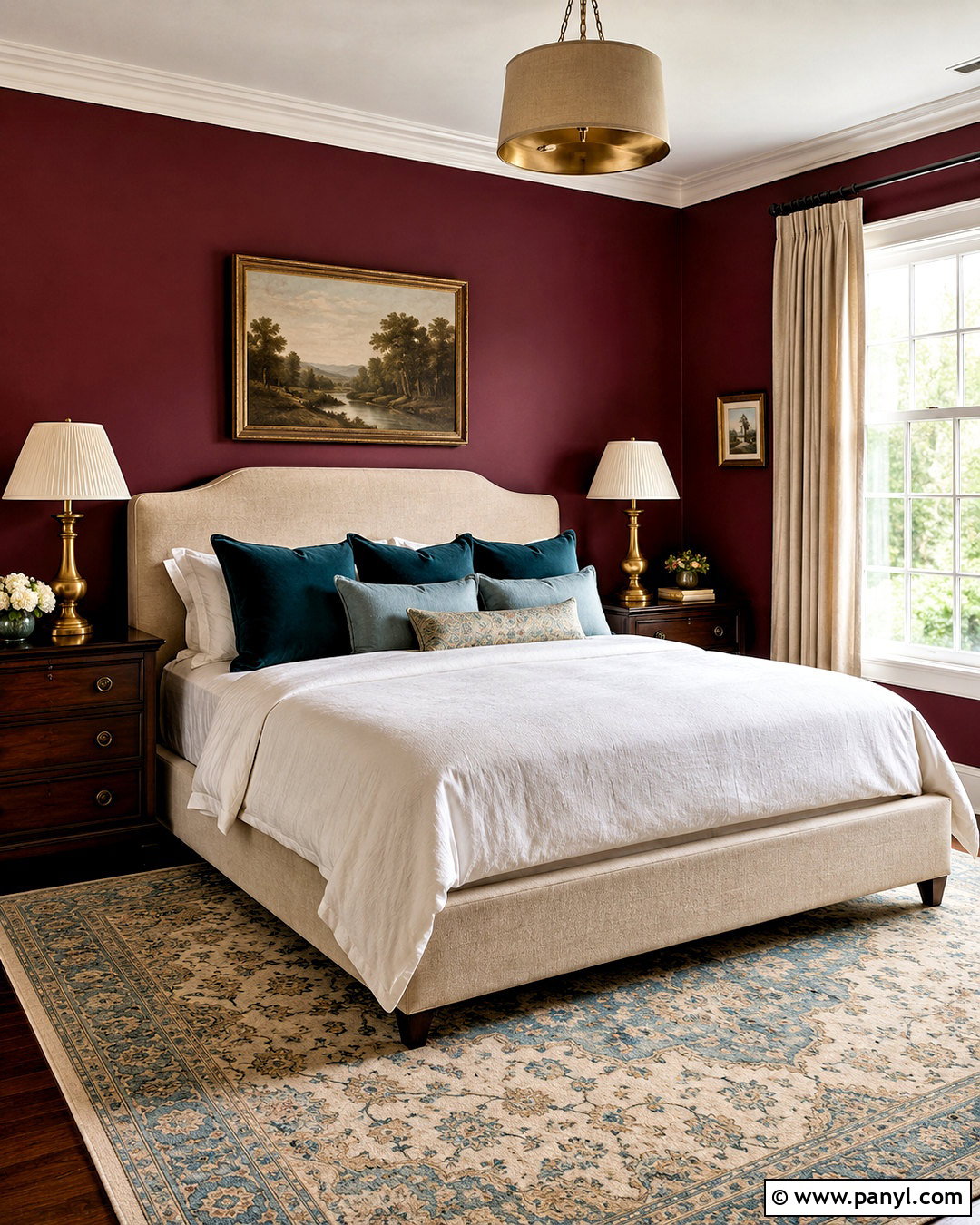
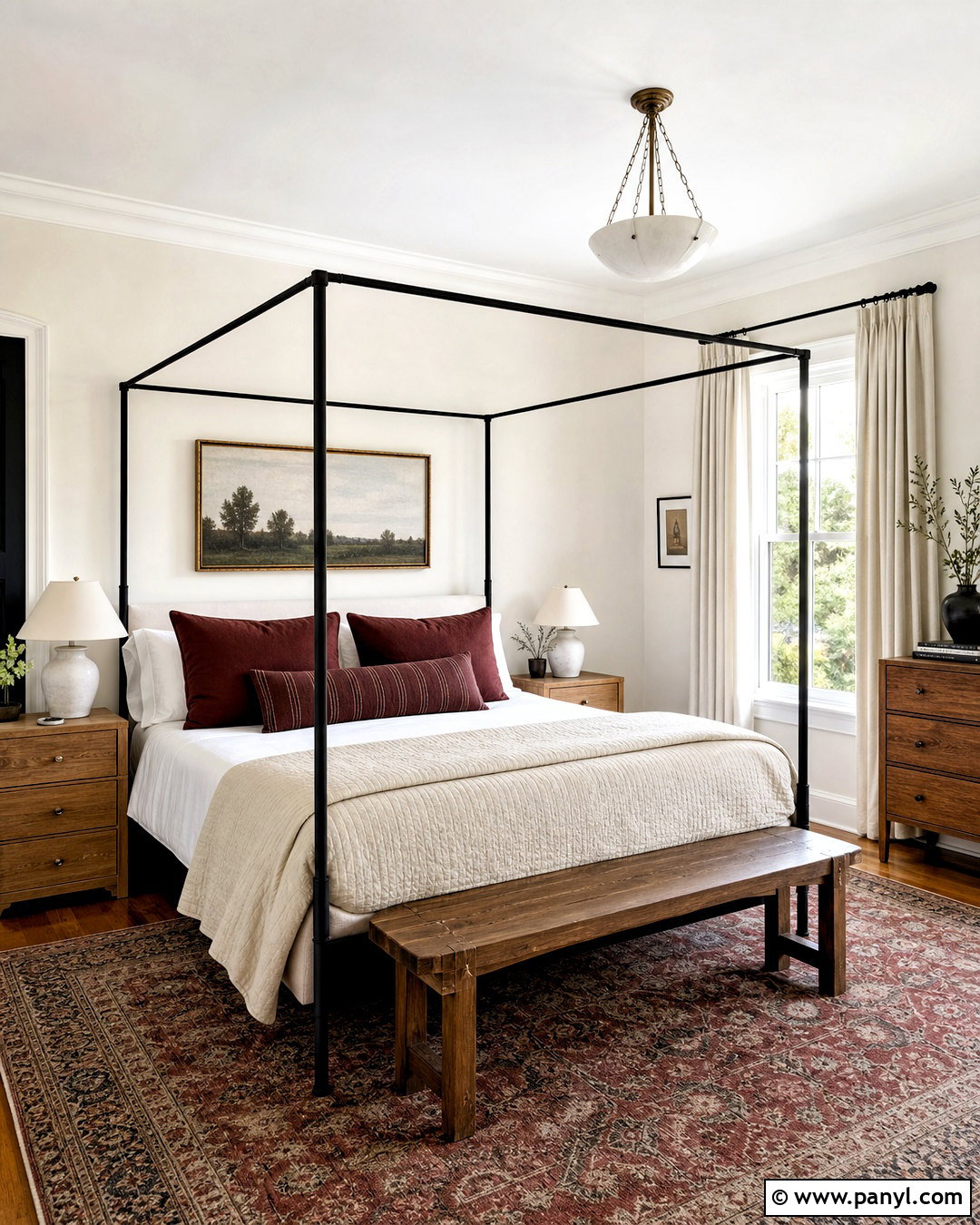
Burgundy walls offer a confident, dramatic choice for a bedroom designed to feel intimate and richly layered. Keep the ceiling and upper trim warm white, then place a beige linen bed against the deepest wall. Ivory bedding brightens the center, while teal, dusty blue, and burgundy pillows create an expressive but coordinated palette. Dark walnut nightstands and antique brass lamps support the traditional richness of the paint. Choose a vintage rug with cream, teal, red, and faded brown details. Full-length oatmeal curtains will lighten the windows and prevent the room from feeling closed in. Add one large landscape painting or a pair of simple framed prints. This complete bedroom looks bold and comfortable, with pale upholstery and textiles carefully balancing the saturated wall color.
26. Terracotta Bedroom Walls

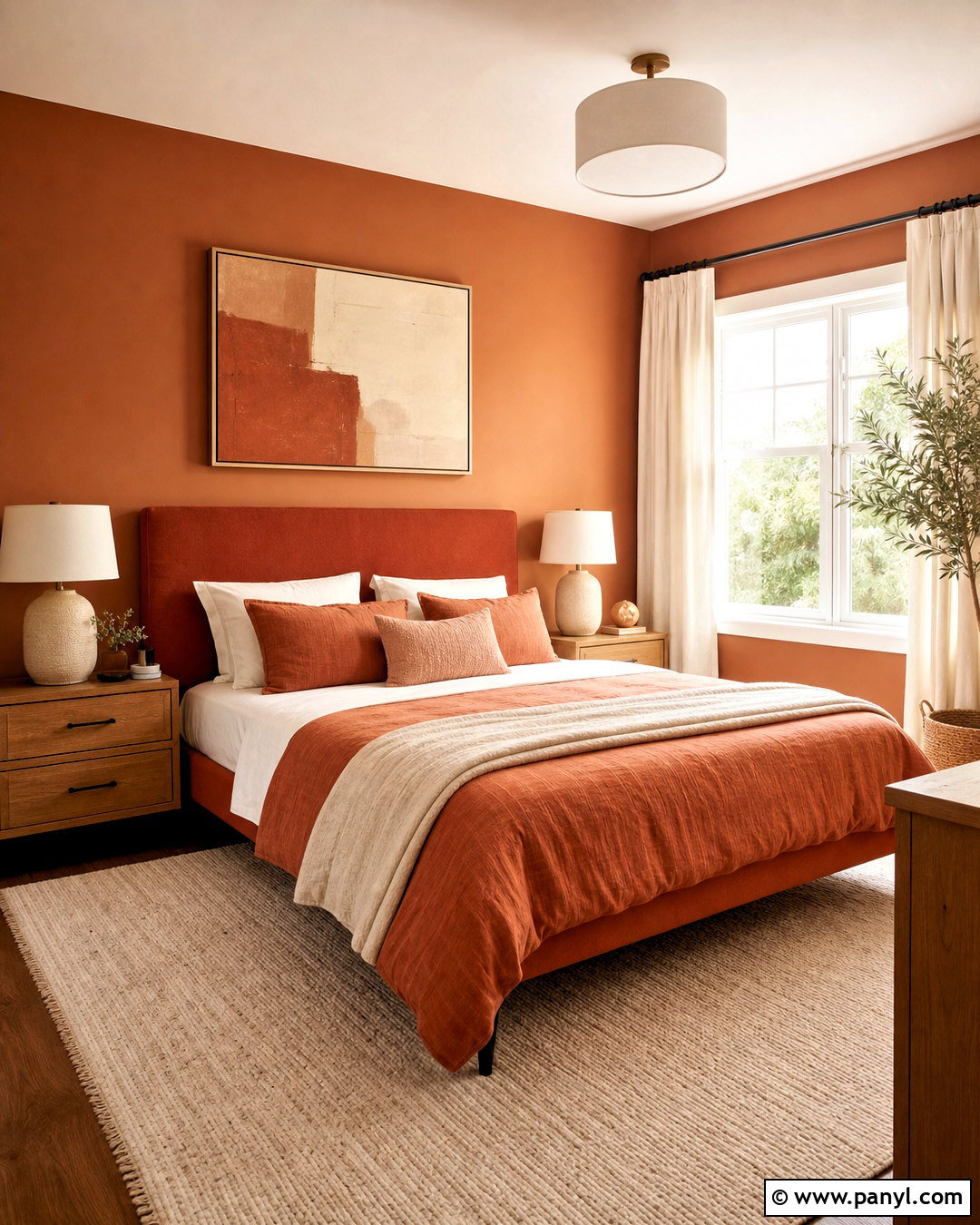
Terracotta walls fill a bedroom with warm, sunbaked character and pair naturally with cream, wood, and woven materials. Use a softened clay shade on all four walls, then retain warm white on the ceiling for contrast. A pale oak or cane bed keeps the arrangement casual and organic. Layer ivory bedding with rust pillows, an olive throw, and a patterned lumbar cushion. Place rounded wood nightstands beside the bed and add sculptural plaster lamps. A cream-and-tan rug will brighten the floor, while flax curtains maintain the earthy palette. Decorate with simple desert photography, handmade pottery, and one healthy plant. The complete room feels cozy and welcoming, but the light furniture and fabrics stop the warm paint from becoming visually heavy or overwhelmingly orange.
27. Muted Coral Bedroom Walls

Muted coral provides cheerful warmth while remaining softer and easier to use than a bright tropical orange. Choose a dusty coral with pink and clay undertones, then balance it with ivory trim and light wood furniture. A white upholstered bed gives the wall color breathing room. Layer the bedding in cream, faded blue, and warm tan, using stripes or small patterns for relaxed character. Natural cane nightstands and woven pendant lights strengthen the casual design. Add a pale blue-and-beige rug to cool the warmer walls and define the bed area. White linen curtains keep the windows bright. Finish with simple coastal artwork, ceramic vessels, and a wooden bench. This bedroom feels sunny and energetic during the day while staying soft enough for a restful sleeping space.
28. Butter Yellow Bedroom Walls
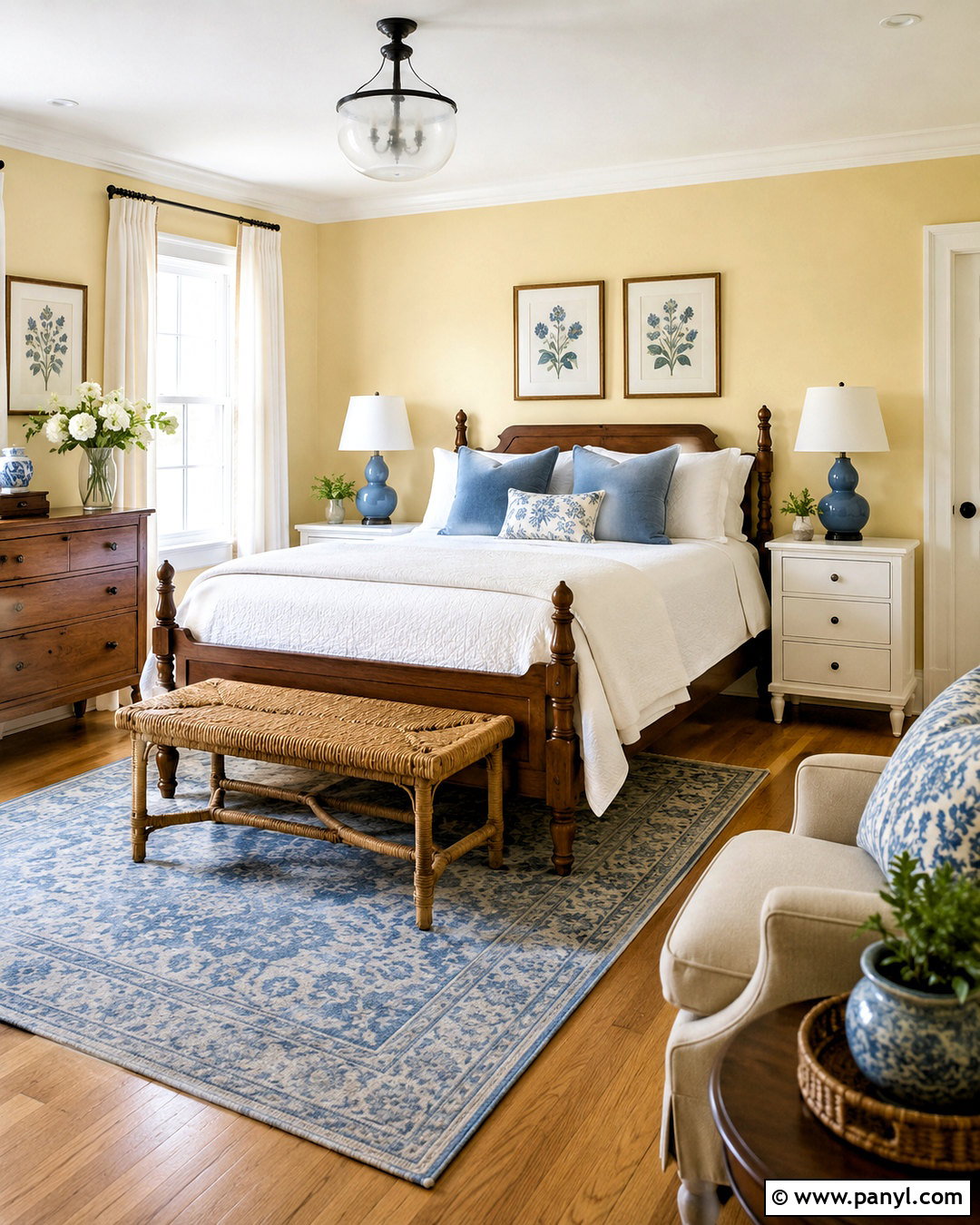
Butter yellow walls can make a bedroom feel welcoming without the intensity of brighter golden shades. Select a creamy, muted yellow and pair it with white trim, warm oak flooring, and a traditional wooden bed. Use crisp white bedding with cornflower-blue pillows and a small gingham or floral accent. Blue ceramic lamps on painted white nightstands create a balanced color relationship. Choose a cream rug with faded blue details and hang light linen curtains to maintain the airy mood. Botanical prints or small landscape paintings can add charm above the bed. A woven bench and natural basket provide useful texture. The completed room feels cheerful, comfortable, and timeless, making this palette especially suitable for a guest bedroom, cottage interior, or naturally shaded space needing warmth.
29. Golden Ochre Bedroom Walls
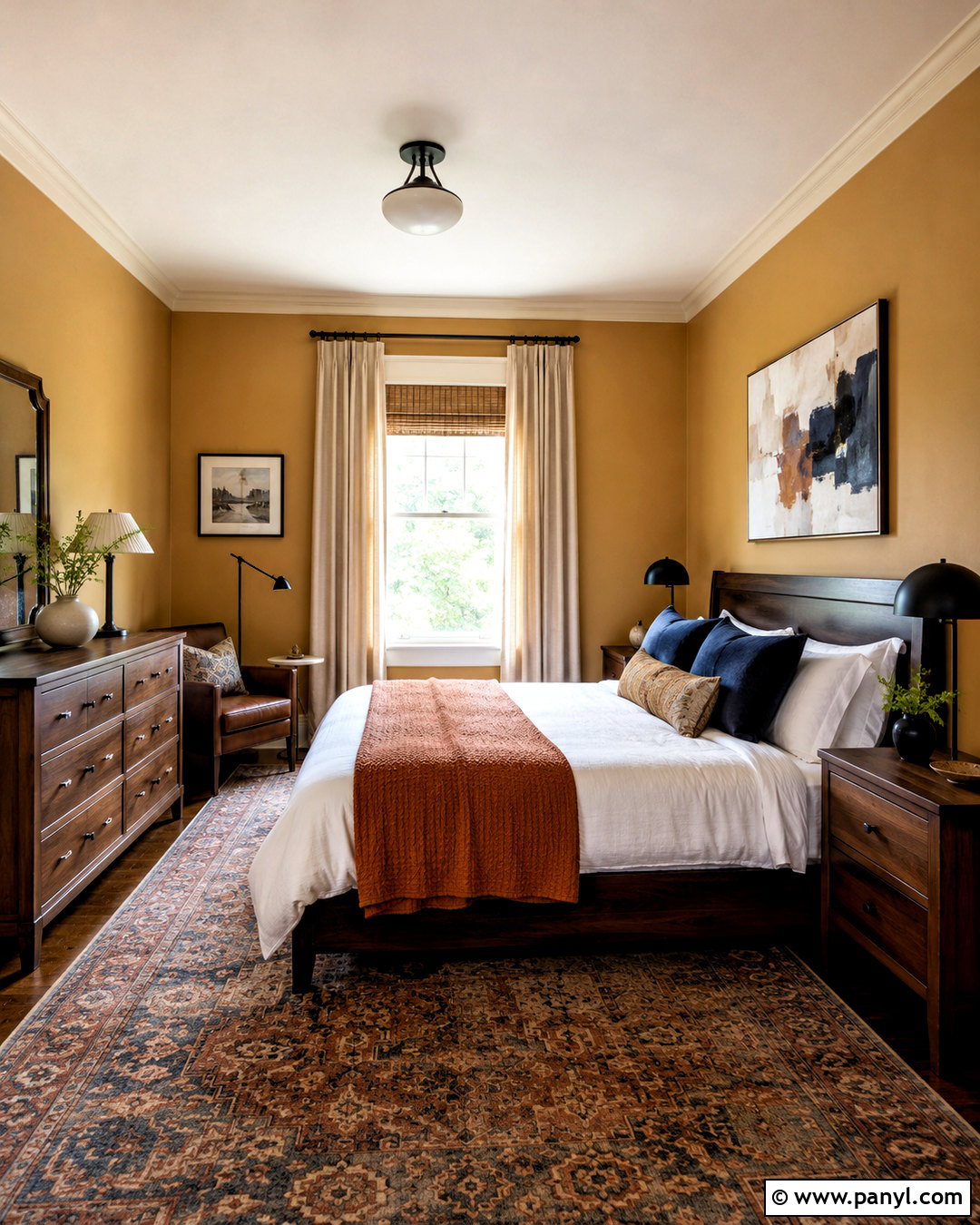
Golden ochre walls produce a warm, confident bedroom with plenty of character. Use a softened ochre rather than a bright yellow, and balance it with cream trim and a pale ceiling. A dark wood bed creates a strong focal point, while white bedding brings essential brightness. Add deep navy pillows, a rust throw, and a patterned cushion combining ochre, blue, and beige. Choose walnut nightstands with matte black lamps for clean contrast. A faded Persian-style rug can repeat the room’s warm and cool accents. Hang oatmeal curtains at ceiling height to visually lengthen the walls. Complete the design with abstract artwork and handmade ceramics. The final bedroom feels energetic but grounded, with deep blue and dark wood preventing the golden paint from becoming too dominant.
30. Caramel Brown Bedroom Walls

Caramel brown walls offer warmth and depth while remaining lighter than chocolate or espresso shades. Pair the paint with creamy trim and a soft ivory upholstered bed to create clear contrast. White and beige bedding forms the base, while dark brown pillows and a muted blue throw provide definition. Use medium oak nightstands and bronze reading lights to maintain the warm palette. A textured cream rug will brighten the floor and soften the room visually. Choose flax-colored curtains and woven shades for layered window coverage. Above the bed, hang oversized artwork with blue, tan, and cream tones. Add a boucle chair or wooden bench if space allows. This full bedroom design feels cozy, natural, and polished without requiring elaborate furniture or excessive decorative objects.
31. Chocolate Brown Bedroom Walls
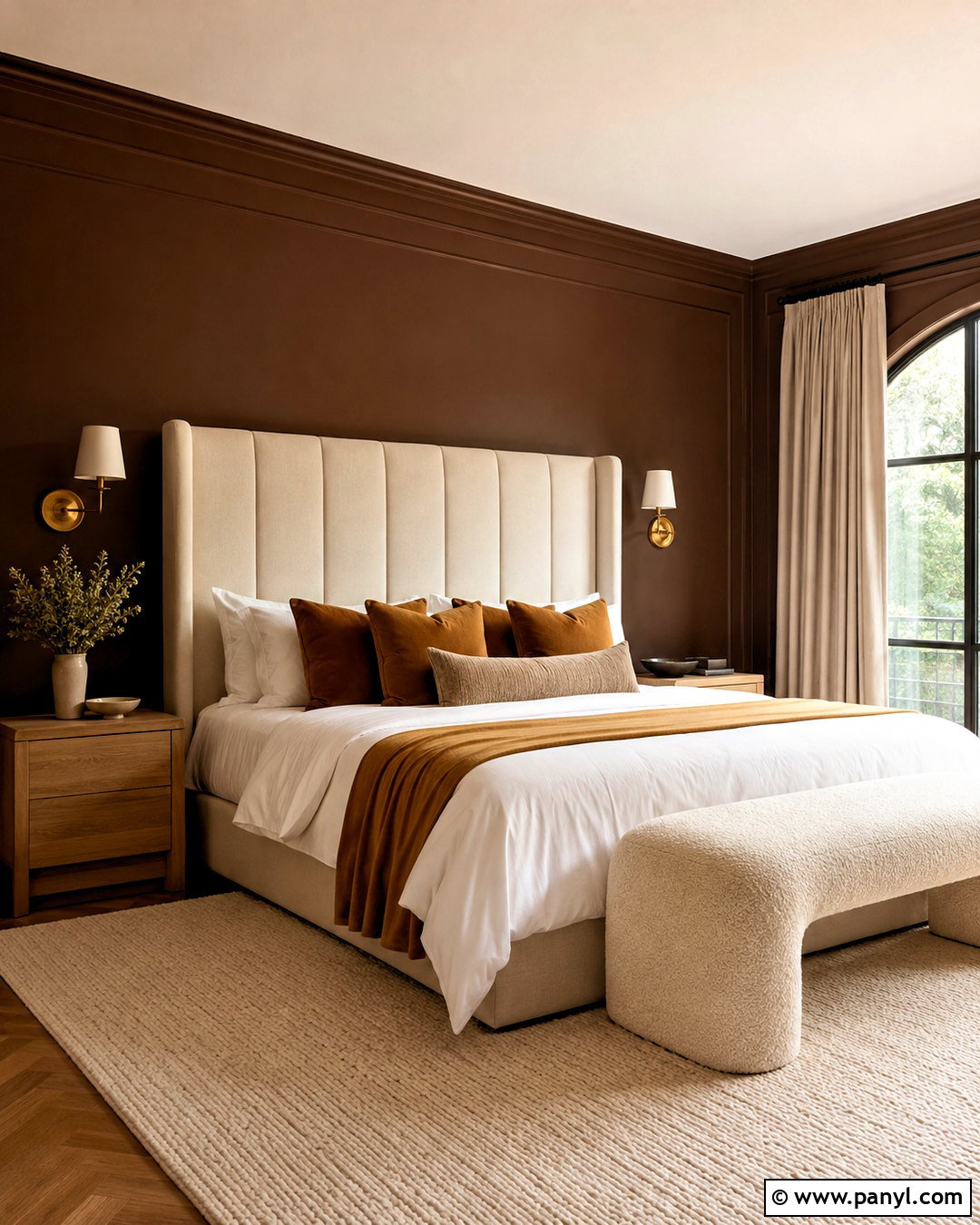
Chocolate brown can create an elegant, cocoon-like bedroom when it is paired with abundant lighter materials. Paint the walls and trim in the same rich brown, but keep the ceiling a soft cream. Place a tall ivory upholstered bed against the main wall, dressed with white linen, caramel velvet pillows, and an ochre throw. Light oak nightstands introduce contrast and prevent the scheme from becoming too formal. Add brass sconces, a large cream rug, and oatmeal curtains that extend from ceiling to floor. Use simple abstract artwork containing brown, ivory, and muted gold. A pale boucle bench can finish the foot of the bed. The completed room feels intimate and luxurious, yet its straightforward furniture layout makes the look practical for a normal primary bedroom.
32. Charcoal Bedroom Walls

Charcoal walls give a bedroom modern depth and allow lighter furniture to stand out with definition. Choose a softened charcoal rather than pure black, and keep the ceiling warm white to preserve balance. A light oak bed introduces natural warmth, while ivory bedding and pale gray pillows brighten the sleeping area. Add a camel leather bench and walnut nightstands for additional earthy contrast. Matte black sconces can blend into the walls, keeping the arrangement streamlined. Place a large cream rug under the bed and hang off-white curtains to soften the darker perimeter. Minimal black-and-white artwork and a few ceramic accessories complete the room. The resulting bedroom feels tailored and cozy, with sufficient light textiles to stop the deep walls from making the space appear smaller or severe.
33. Soft Black Bedroom Walls

Soft black walls create a striking bedroom that feels calm rather than harsh when warm undertones and tactile materials are included. Apply the paint across the walls and trim for a continuous finish, then use a white ceiling to introduce contrast overhead. Center a substantial camel leather or oatmeal linen bed against the main wall. Layer it with white bedding, charcoal pillows, and a rust-colored blanket. Choose medium oak nightstands and aged brass reading lights to warm the dark background. A broad ivory rug and cream curtains are essential for lightening the overall composition. Add one oversized abstract artwork with beige and terracotta details. With its disciplined palette and simple furniture layout, this complete bedroom feels dramatic, modern, and surprisingly comfortable.
34. Two Tone Bedroom Walls
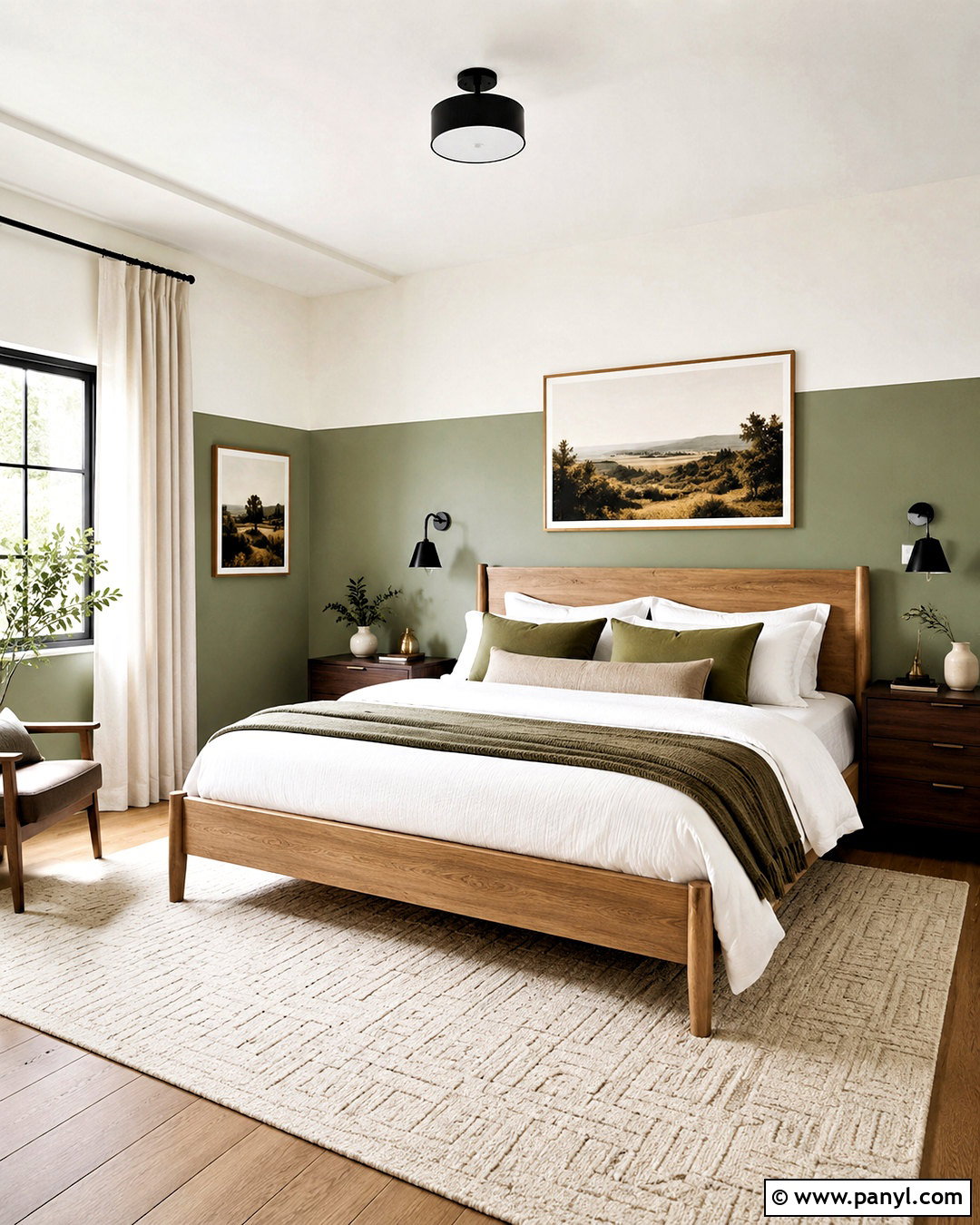
Two-tone bedroom walls introduce architectural interest without requiring molding or wallpaper. Paint the lower two-thirds in muted sage green and the upper portion in warm white, using a crisp horizontal line around the room. Position a natural oak bed against the painted division so the headboard overlaps both colors. Layer white bedding with olive, tan, and charcoal accents. Simple walnut nightstands and black wall lights will add definition. Choose an ivory rug with a green geometric detail and use oatmeal curtains that coordinate with the upper wall color. Minimal landscape prints can hang above the line to visually lift the room. The final design feels structured and spacious, while the darker lower section grounds the furniture and protects the airy appearance overhead.
35. Color Drenched Bedroom Walls
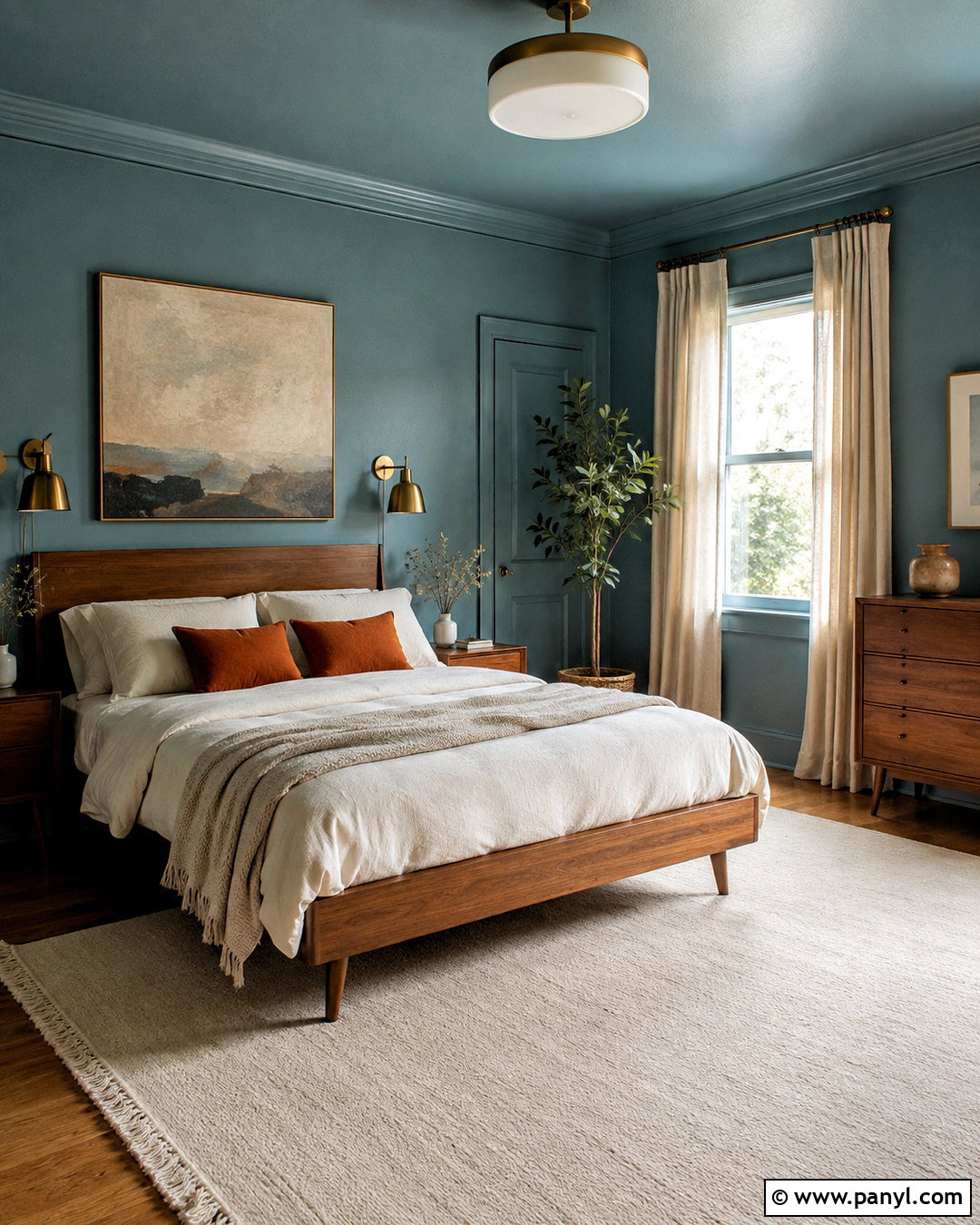
Color drenching uses one closely matched color across the walls, trim, doors, and often the ceiling to create a seamless bedroom envelope. A muted blue-green works particularly well because it has enough depth to define the architecture without feeling overly intense. Choose a slightly lighter version for the ceiling if the room has limited daylight. Add a warm oak bed, cream bedding, rust pillows, and a beige wool throw to contrast with the surrounding paint. Walnut nightstands and brass sconces provide practical warmth. Use a large ivory rug and flax curtains to introduce lighter surfaces. Keep artwork simple and tonal so it does not interrupt the effect. The finished room feels intentional, cozy, and visually unified, with every furniture choice supporting the immersive wall treatment.
Conclusion:
The best bedroom paint palette should reflect your taste while working naturally with the room’s light, size, flooring, and existing furniture. Soft whites and layered neutrals create flexible foundations, while blue, green, pink, and earth-toned walls add more personality. Deeper navy, burgundy, brown, charcoal, and black can also feel restful when balanced with light bedding, warm wood, generous rugs, and soft curtains. Before committing, test large painted samples on different walls and view them during the morning, afternoon, and evening. Use these **35 Wall Color Ideas Bedroom Paint Ideas** as complete decorating plans, adjusting the textiles, furniture finishes, and accent colors to build a bedroom that feels cohesive, comfortable, and distinctly yours.

Related Ideas and Inspiration:



Leave a Reply