
If you are searching for **20 room paint colors bedroom ideas**, the best choice is more than a pretty wall shade. A successful bedroom palette should work with the room’s natural light, flooring, furniture, bedding, and overall mood. Warm neutrals can create a soft, welcoming retreat, while muted greens and blues offer restful color without feeling cold. Earthy reds, browns, and golden tones bring extra warmth and personality. Before committing, test large painted samples on different walls and view them during the morning, afternoon, and evening. This helps you notice undertones that may change as the light shifts. The complete bedroom looks below make it easier to coordinate paint with practical furniture, textiles, finishes, and decorative accents using **20 room paint colors bedroom ideas**.

1. Warm White Bedroom Paint Color

Warm white walls create a clean bedroom that still feels comfortable and lived in. Choose a creamy white with subtle beige or yellow undertones instead of a stark, blue-based white. Continue the wall color across simple trim for a smooth, spacious appearance, but use flat white on the ceiling to keep it bright. Build the room around a natural oak bed, woven nightstands, and an oatmeal upholstered bench. Layer ivory bedding with a camel throw and muted olive pillows for gentle contrast. Linen curtains soften the windows without blocking too much daylight. A pale jute rug, ceramic lamps, and understated botanical artwork complete this relaxed organic bedroom. Matte or eggshell wall paint helps control glare while remaining practical to clean.
2. Cream Bedroom Paint Color

Cream paint gives a bedroom a warmer and richer foundation than ordinary white. It works especially well in a room with limited natural light because its soft undertones prevent the walls from appearing gray. Pair creamy walls with walnut furniture to create clear contrast and a slightly traditional character. An upholstered bed in warm beige keeps the larger pieces visually light. Add crisp white sheets, a caramel quilt, and pillows featuring faded blue patterns. Antique brass lamps and framed landscape prints bring depth without making the room look formal. Use medium-toned wood flooring or a tan wool rug to ground the palette. Keep window treatments close to the wall color so the bedroom maintains a continuous, open, and peaceful appearance.
3. Soft Greige Bedroom Paint Color
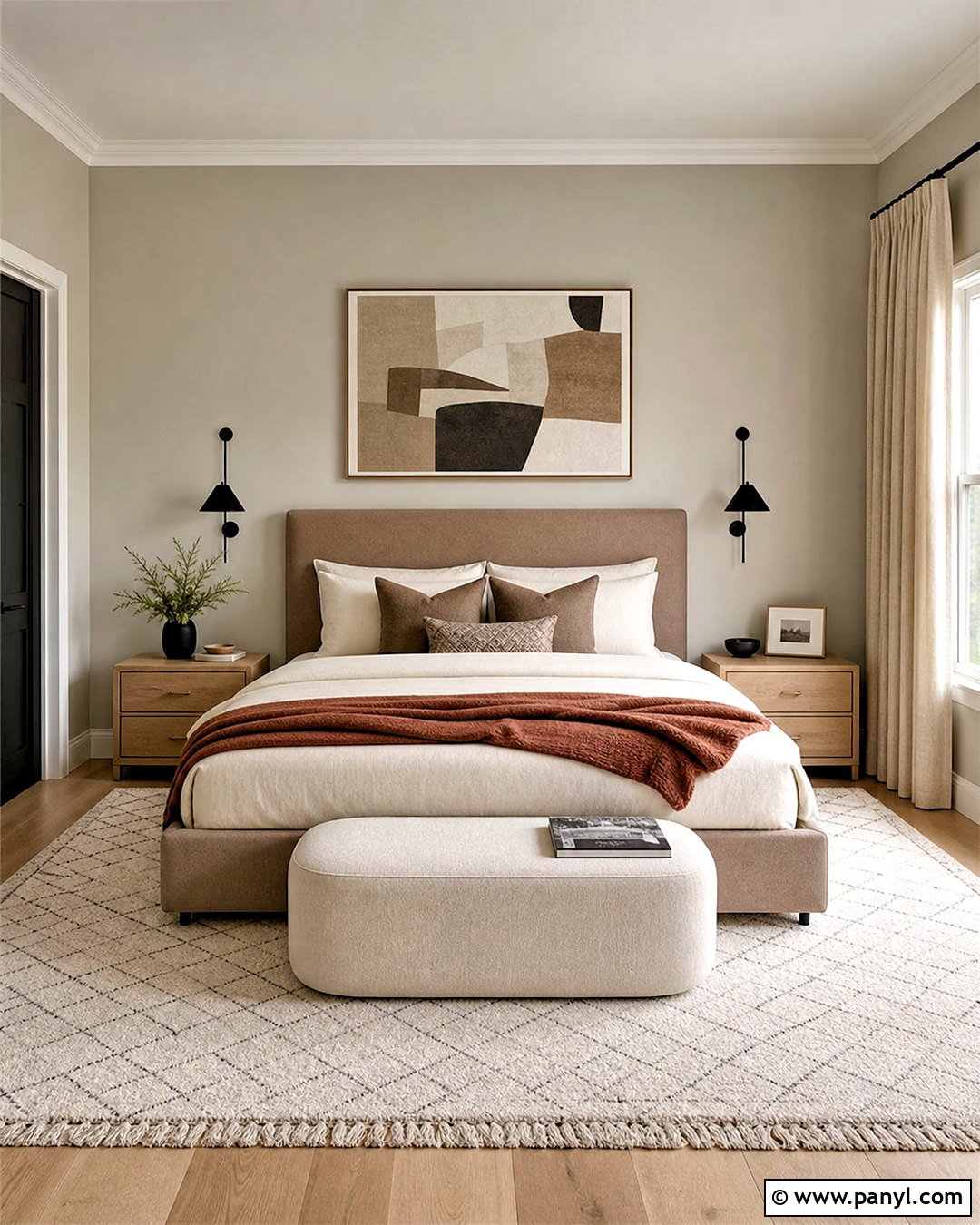
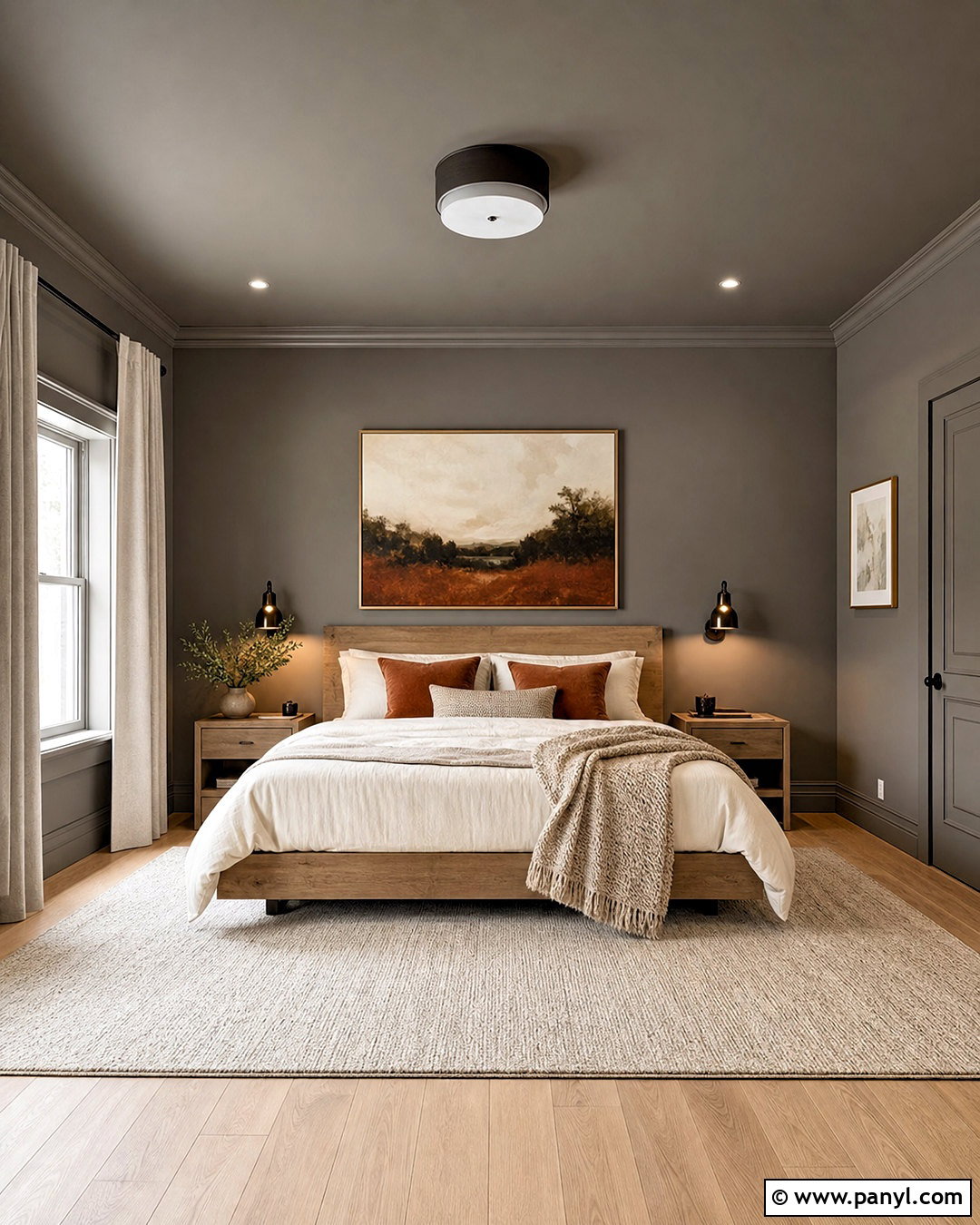
Could your bedroom use a neutral that feels warmer than gray but quieter than beige? Soft greige provides that flexible middle ground. Select a light shade with balanced undertones, then pair it with a taupe upholstered bed and pale oak nightstands. White bedding gives the room freshness, while mushroom-colored pillows and a muted rust throw keep the palette from looking flat. Choose light-filtering flax curtains and a cream rug with a subtle geometric pattern. Matte black reading sconces add definition and prevent the neutral scheme from blending together. Finish the room with oversized abstract artwork that includes charcoal, tan, and off-white. This complete look suits modern, transitional, and minimalist bedrooms while allowing future bedding and decor changes.
4. Mushroom Taupe Bedroom Paint Color

Mushroom taupe creates a grounded bedroom with more depth than standard beige. Its blend of brown and gray looks particularly inviting beside medium and dark wood furniture. Paint every wall in a soft mushroom shade, then use a warm white ceiling and matching trim to keep the room balanced. Center a walnut platform bed against the longest wall and add textured oatmeal bedding. Chocolate brown pillows and a muted green blanket introduce subtle, nature-inspired color. Place rounded wood nightstands on both sides to soften the straight lines of the bed. A vintage-style cream and brown rug adds pattern underfoot. Complete the look with bronze lamps, woven shades, linen curtains, and simple black-and-white photography in dark wood frames.
5. Sage Green Bedroom Paint Color
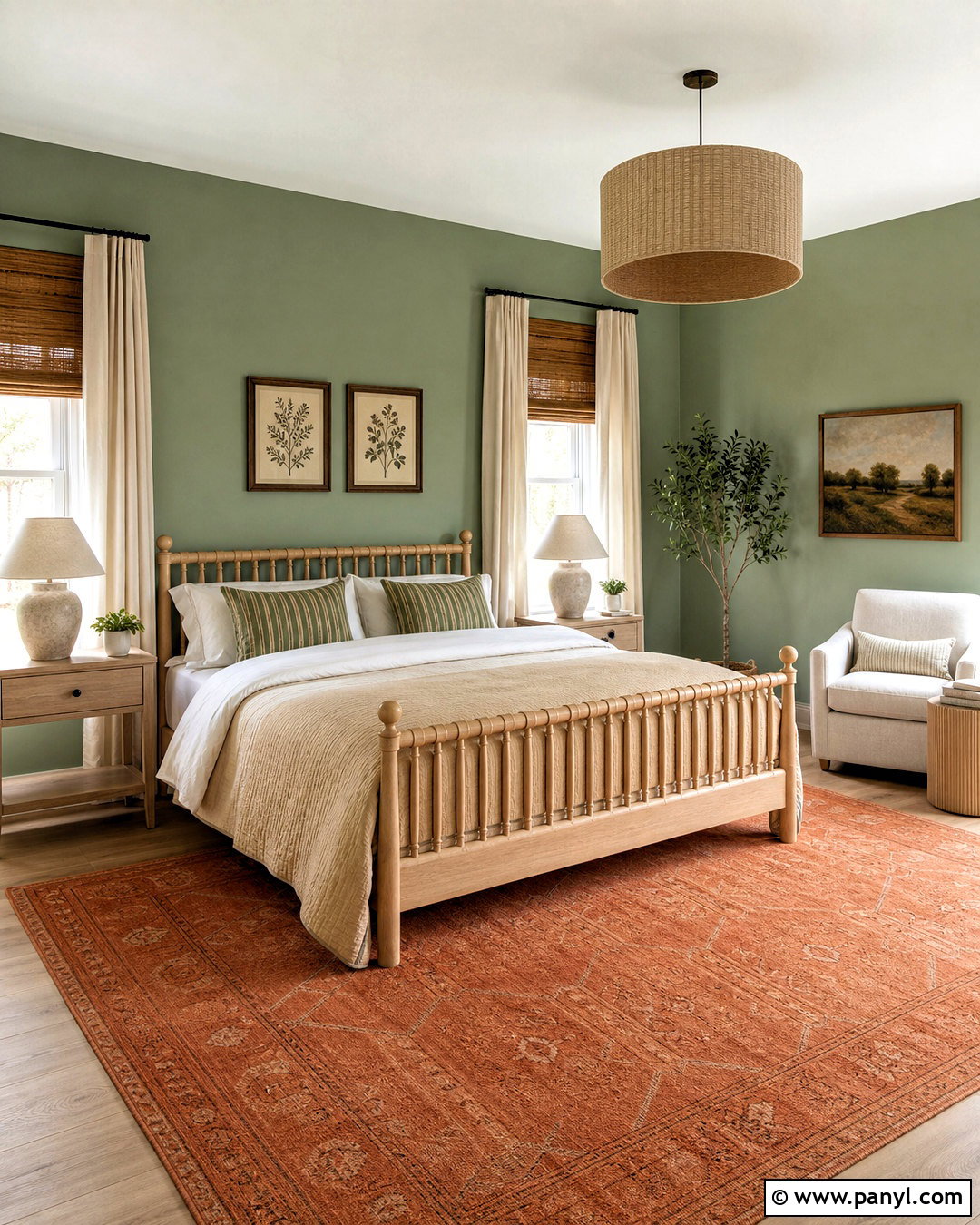
Sage green brings the peaceful character of outdoor landscapes into the bedroom. Choose a soft, slightly warm sage rather than a minty green, then combine it with natural wood and relaxed fabrics. A light oak spindle bed creates an airy focal point against the green walls. Dress it with ivory sheets, a sand-colored duvet, and olive striped pillows. Woven bamboo shades add texture, while full-length off-white curtains make the windows appear taller. Use a faded terracotta and cream rug to warm the lower half of the room. A pair of ceramic table lamps, small botanical prints, and a simple upholstered chair complete the arrangement. The result is calm and colorful without becoming too bold or theme-driven.
6. Gray Green Bedroom Paint Color
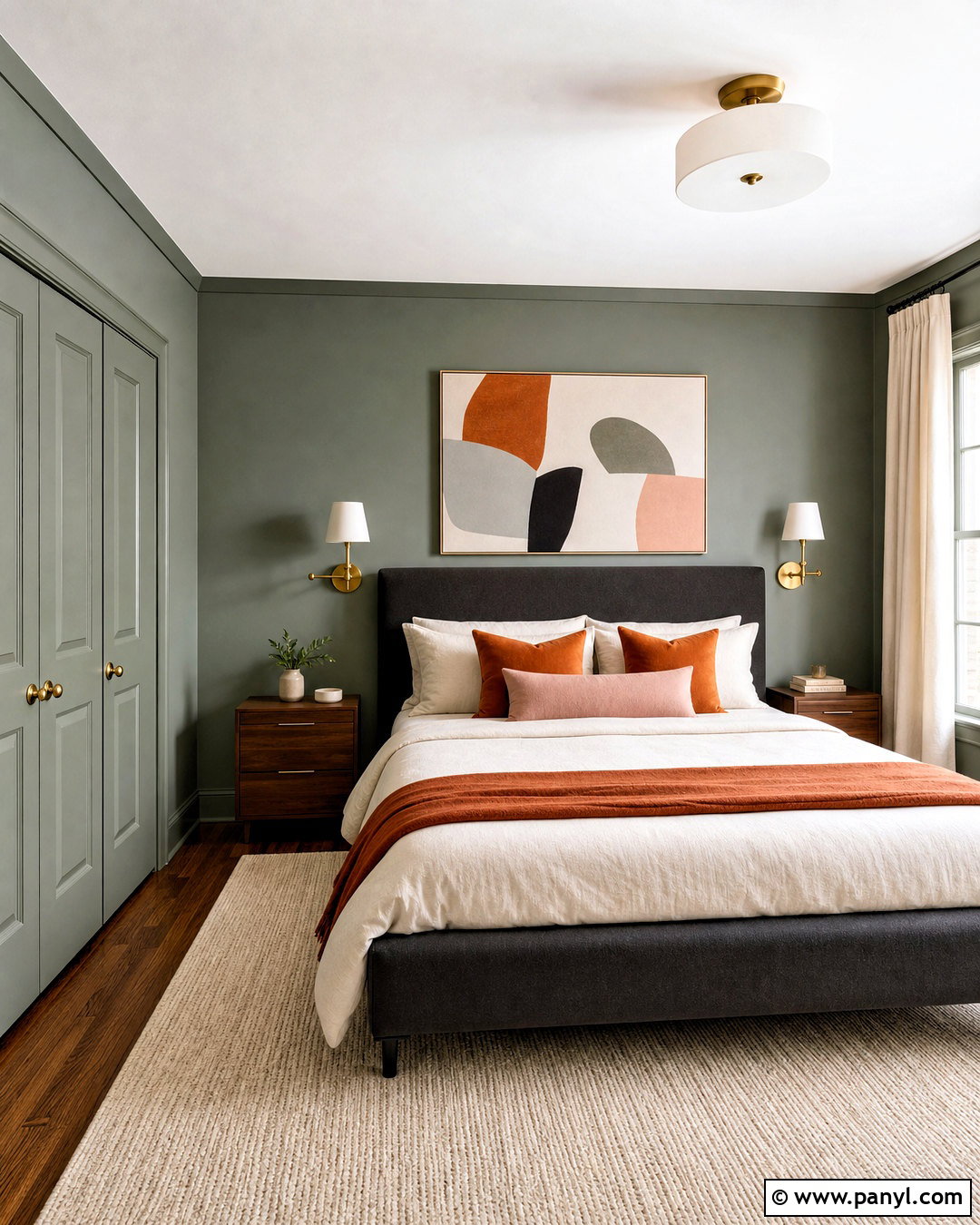
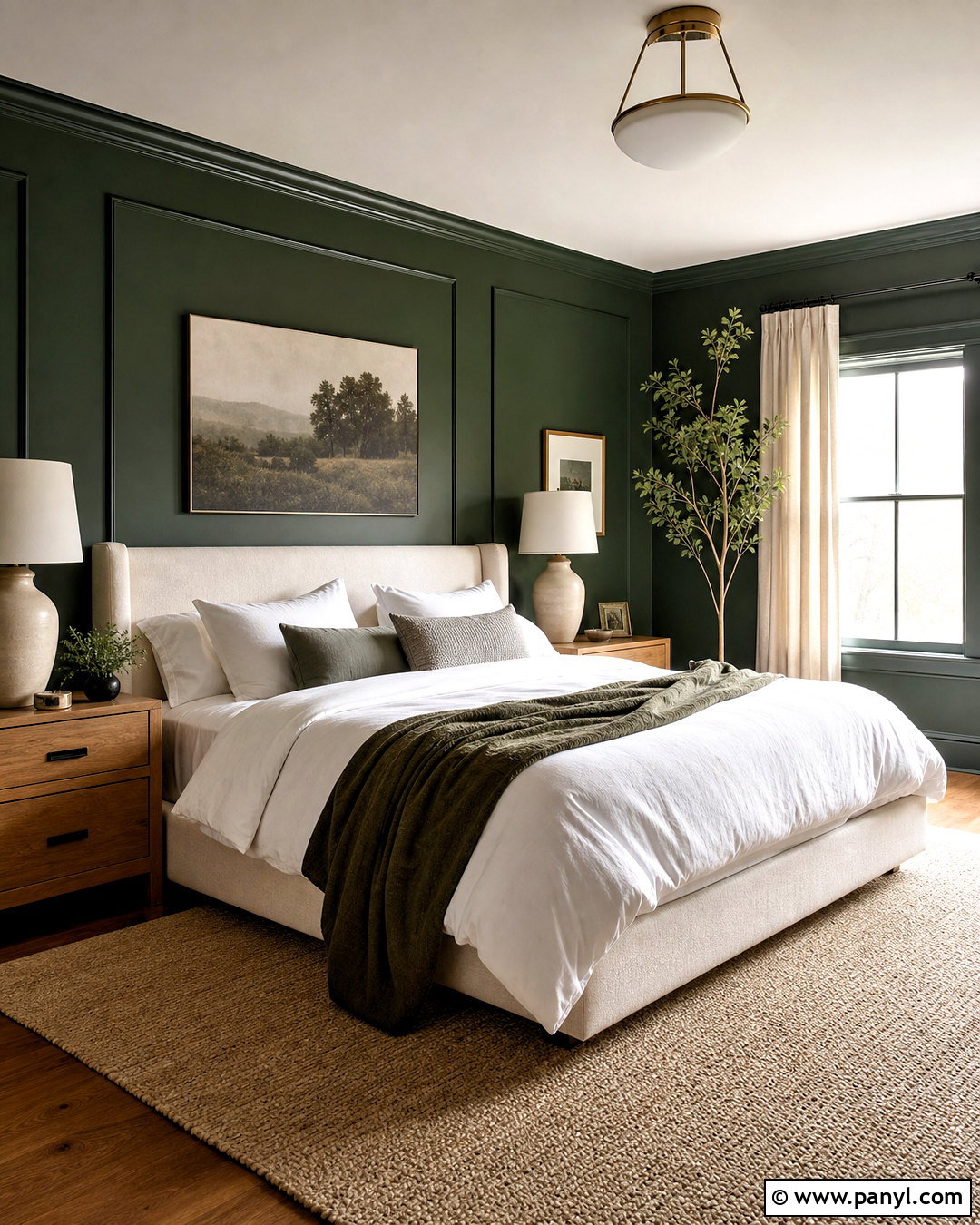
Gray-green walls offer muted color that can adapt to changing daylight. In brighter conditions, the green becomes more visible, while lower light emphasizes its soft neutral quality. For a complete contemporary bedroom, use the same gray-green paint on the walls, trim, and closet doors. Keep the ceiling a lighter version of the color to avoid a heavy effect. Add a charcoal upholstered bed with clean lines and bedding in cream, pale blush, and burnt orange. Dark walnut nightstands provide warmth, while aged brass wall sconces introduce a refined metallic finish. Ground the bed with a large ivory rug containing a subtle gray pattern. Abstract artwork, linen curtains, and one tall leafy plant finish the space without competing with the enveloping paint treatment.
7. Muted Olive Bedroom Paint Color
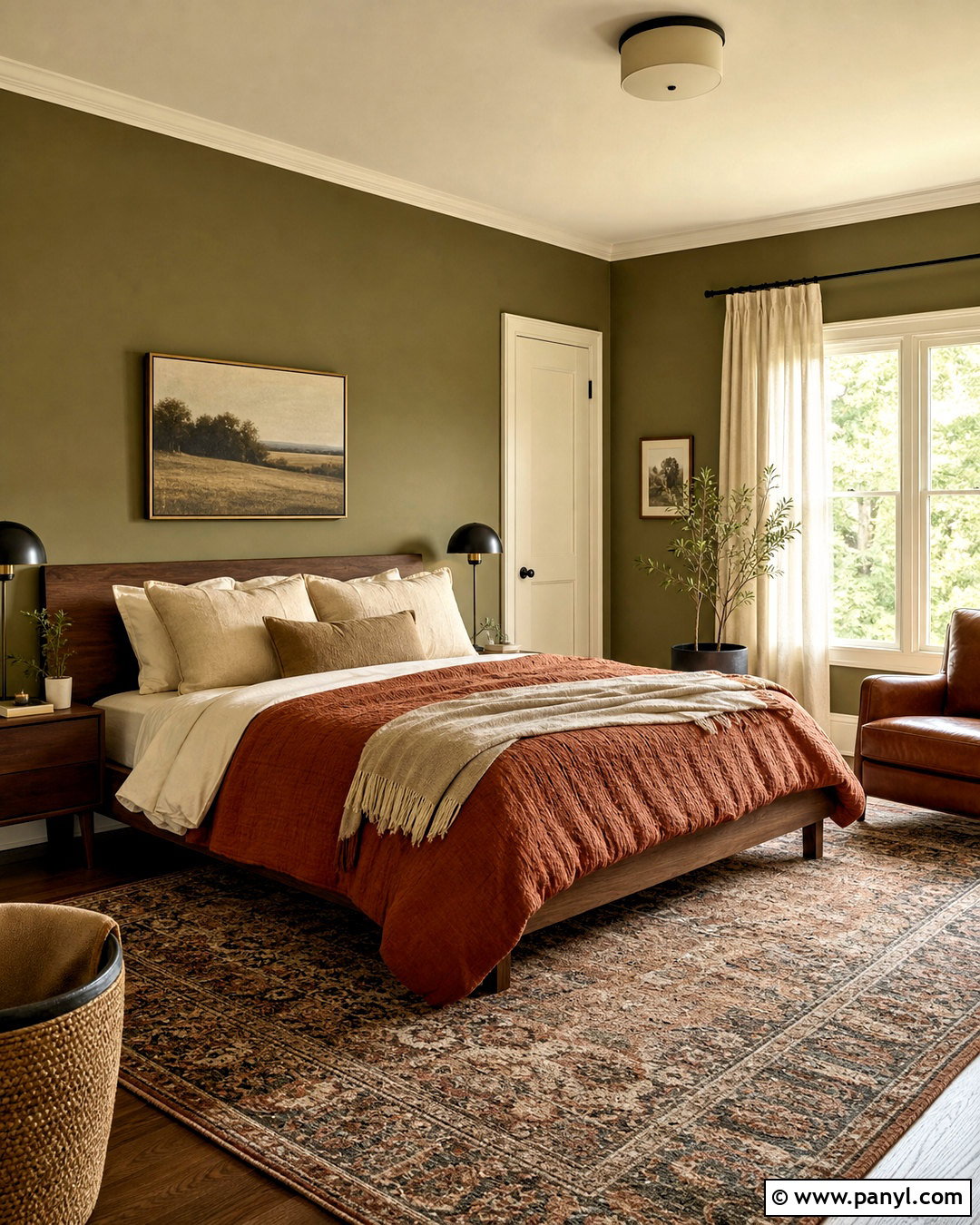
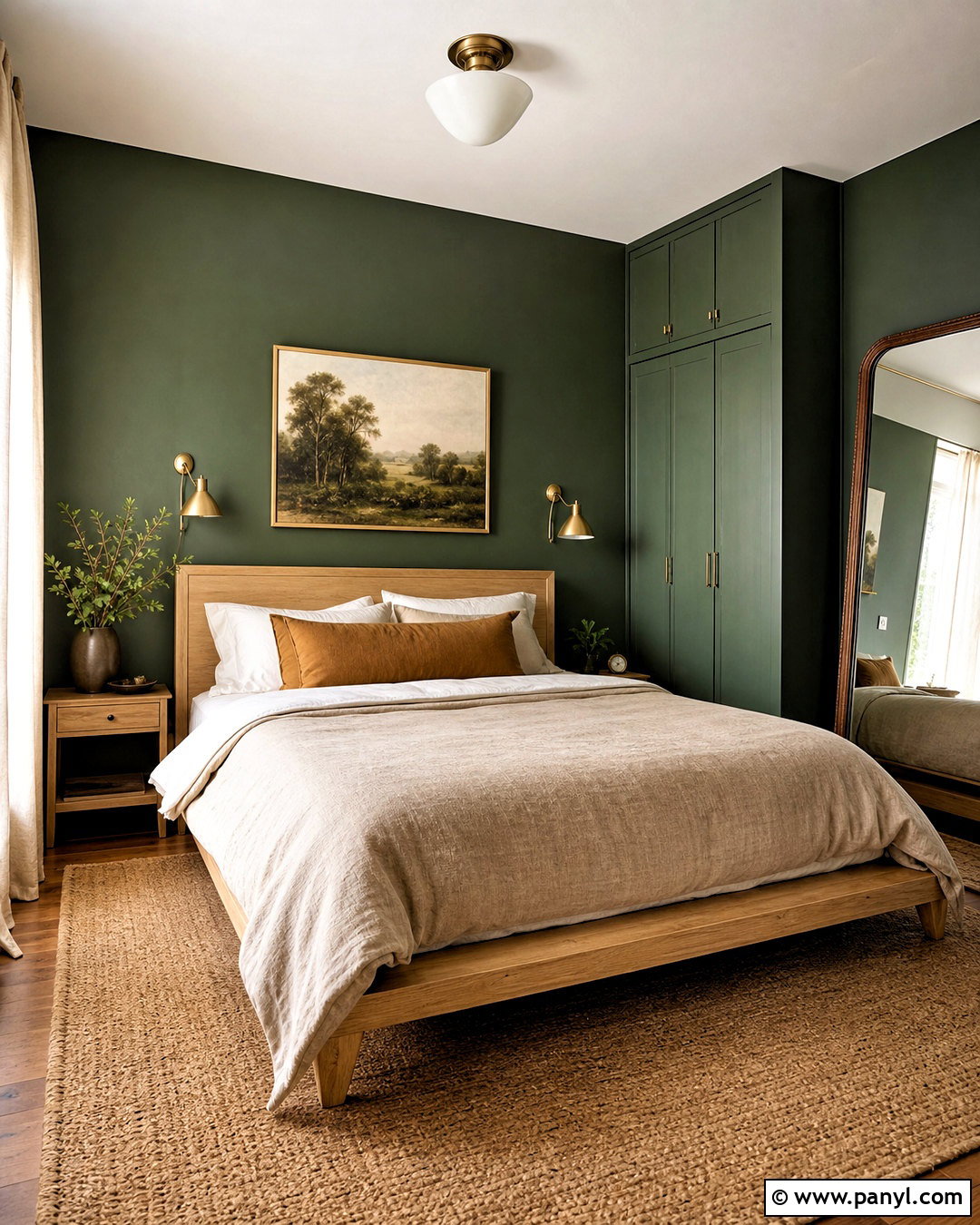
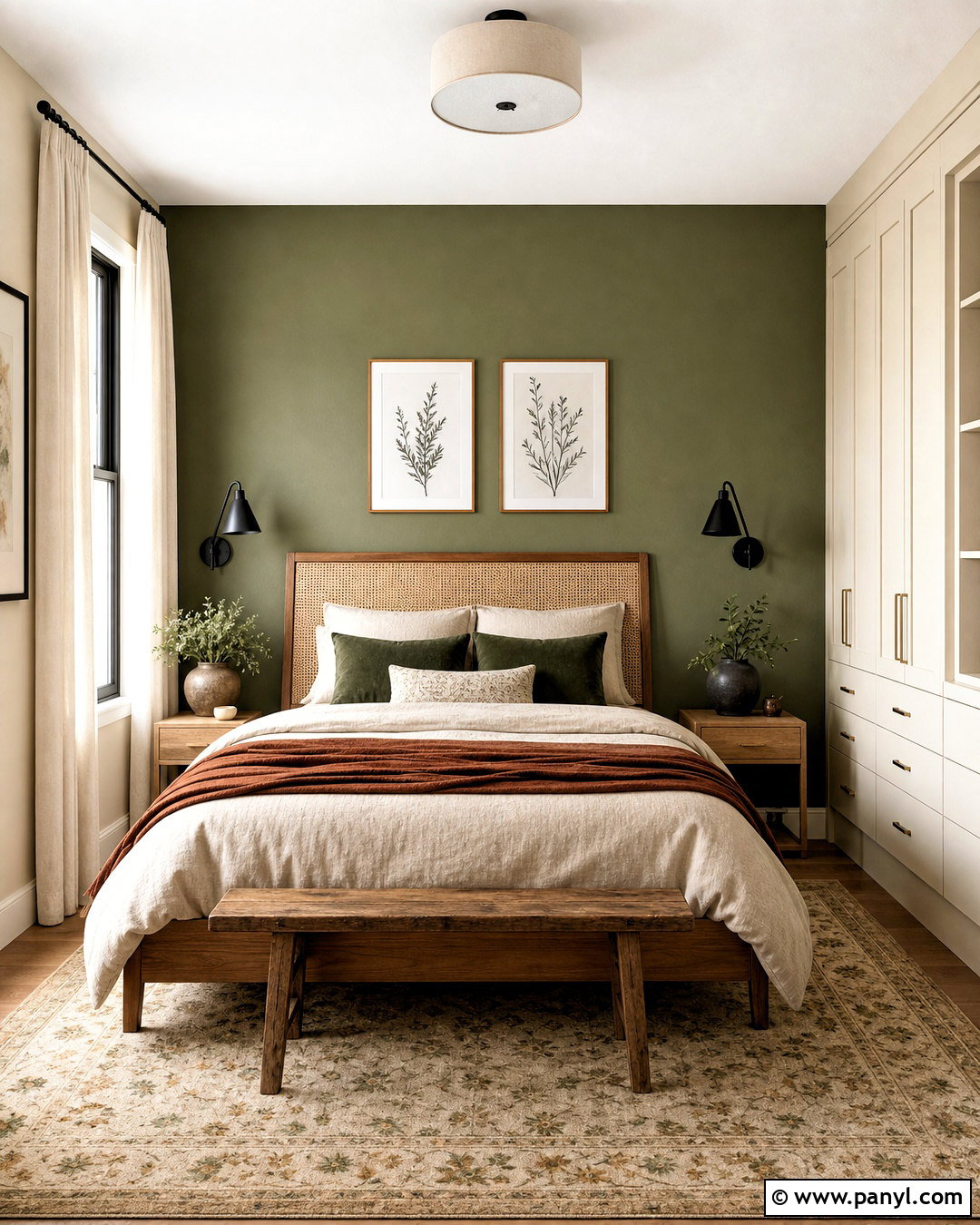
Muted olive makes a bedroom feel cozy, natural, and distinctive. It works best as part of a carefully layered palette rather than beside several other strong colors. Paint the walls olive and keep the ceiling, crown molding, and baseboards a soft warm white. Place a low walnut bed against the main wall and layer it with oatmeal linen, cream pillows, and a rust-colored coverlet. Matching wood nightstands maintain symmetry, while black metal lamps create crisp contrast. Bring in a patterned rug featuring faded olive, tan, and burgundy to connect the room’s colors. Natural linen curtains filter strong sunlight and soften the deeper walls. Complete the look with simple landscapes, a leather accent chair, and a woven basket for extra blankets.

8. Warm Eucalyptus Bedroom Paint Color
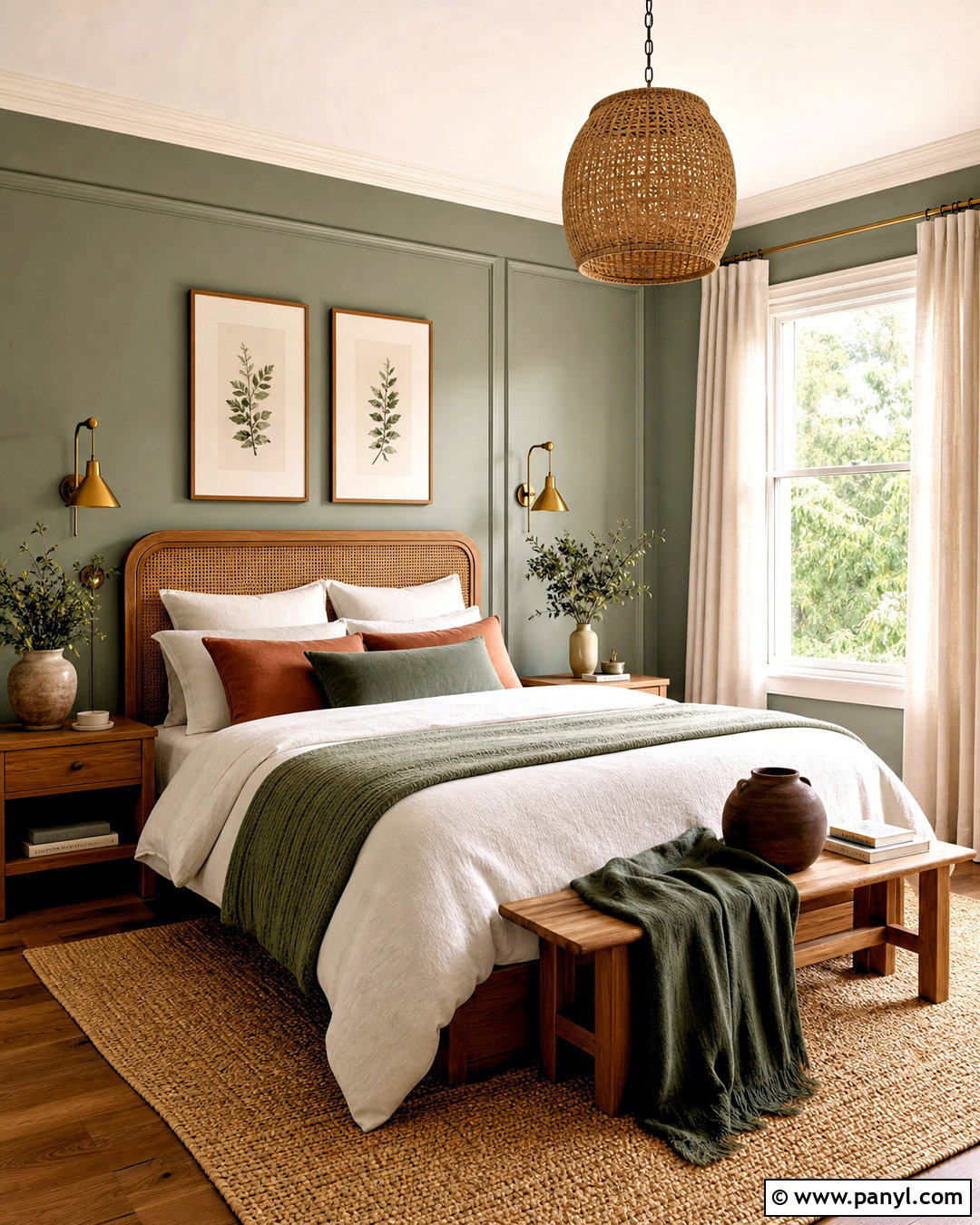
Warm eucalyptus paint combines the restorative quality of green with gentle gray and brown undertones. The shade feels especially appropriate in a bedroom with plenty of natural wood. Use it across all four walls, then highlight the architecture with creamy white trim. Choose a cane headboard framed in light oak and coordinate it with small rounded nightstands. Layer the bed with white cotton sheets, a warm gray duvet, and pillows in soft clay and forest green. A large natural-fiber rug keeps the room casual and comfortable. Add brushed brass sconces to provide a polished accent without overwhelming the organic materials. Gauzy linen curtains, handcrafted ceramics, and a few restrained botanical prints give this bedroom a fresh, relaxed, and cohesive finish.
9. Powder Blue Bedroom Paint Color
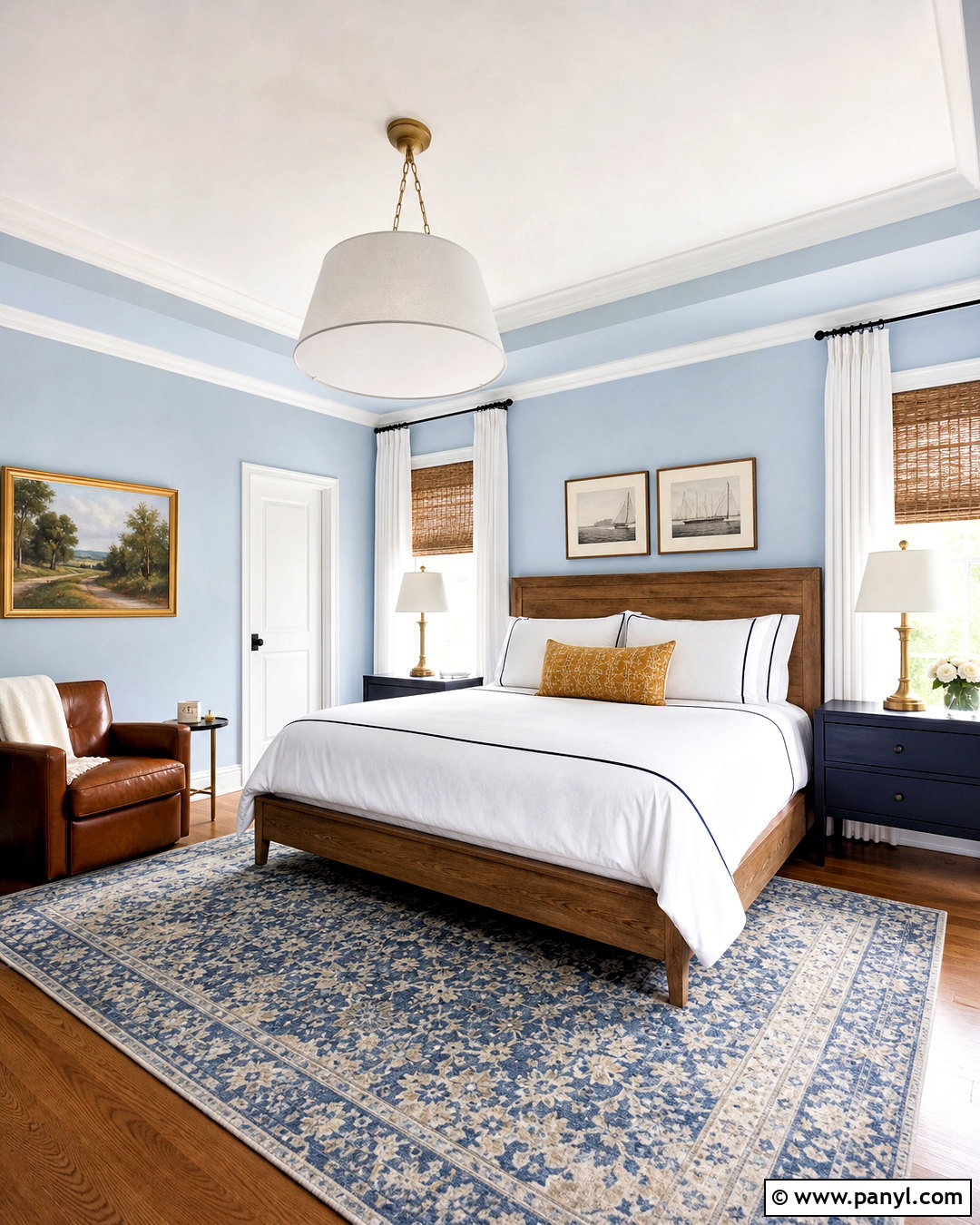
Powder blue walls can make a bedroom feel fresh, open, and pleasantly calm. Look for a chalky blue with a muted finish rather than a bright nursery-like pastel. Pair the walls with white trim and a medium-toned oak bed for a classic foundation. Use crisp white bedding, a navy-edged quilt, and one ochre lumbar pillow to add controlled contrast. A blue and cream patterned rug connects the wall color to the furniture arrangement. Natural woven blinds balance the cooler blue, while white curtains maintain an airy frame around the windows. Finish the room with antique brass lamps, a small caramel leather chair, and framed coastal landscapes. These warmer accents prevent the complete design from appearing cold or overly delicate.
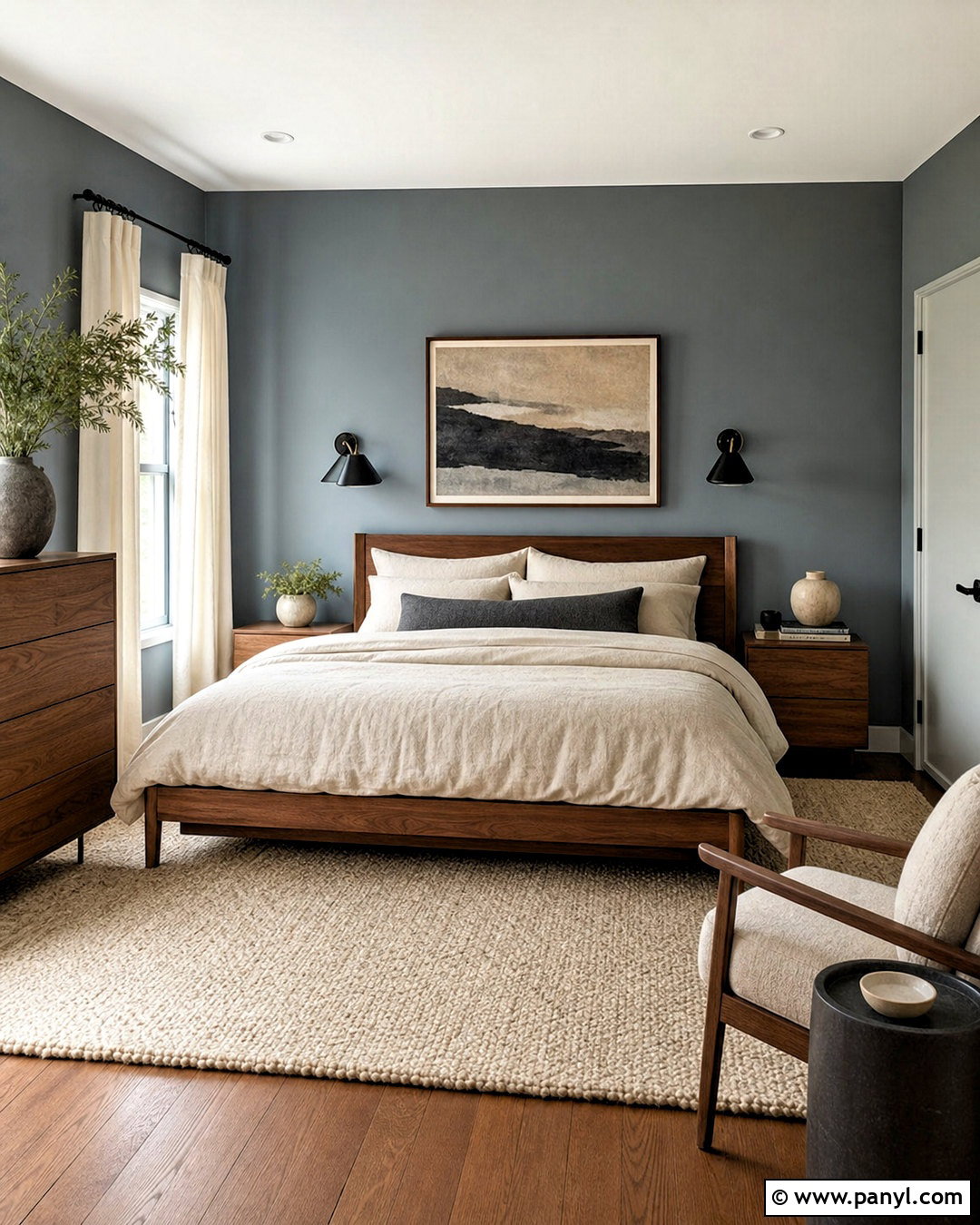
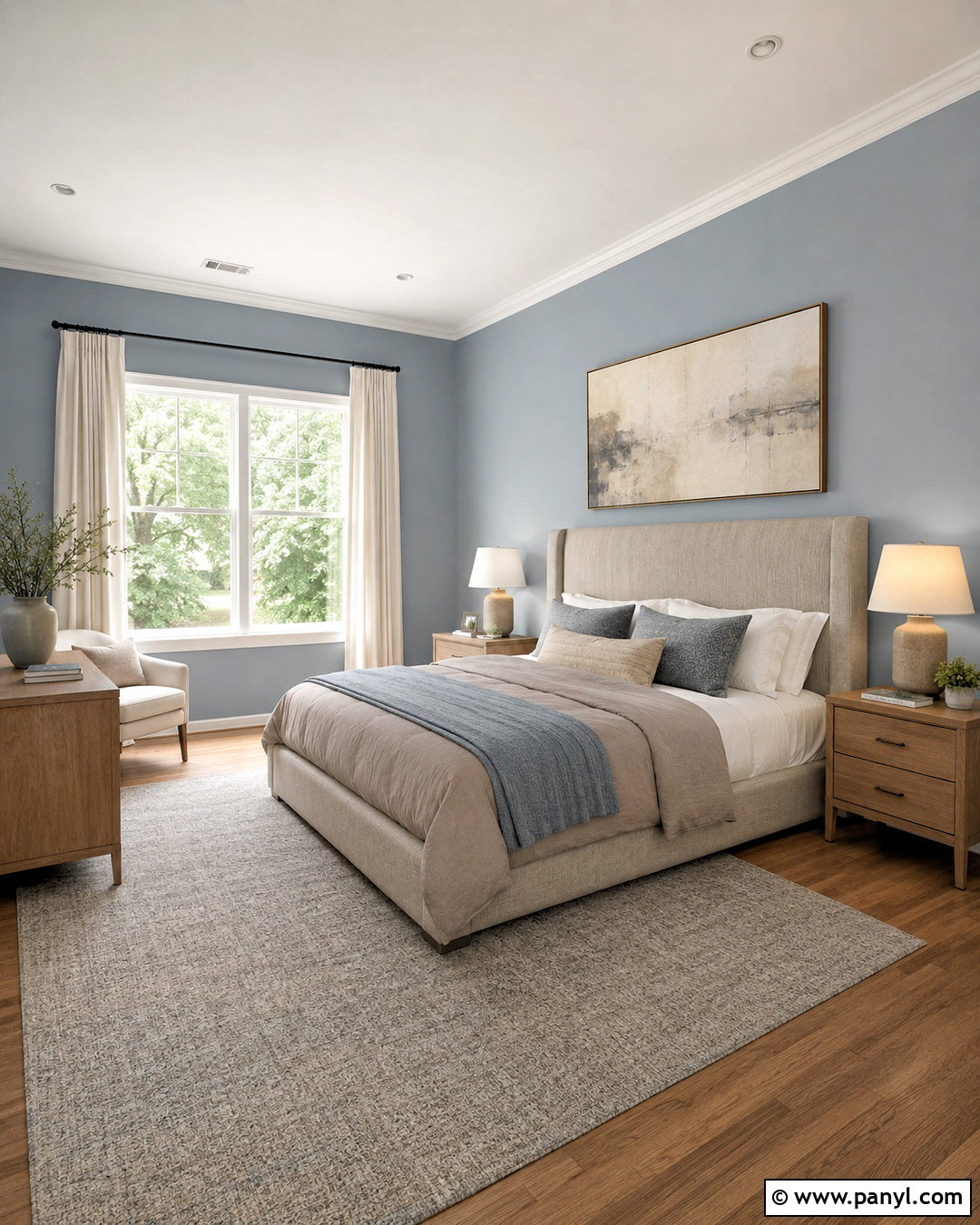
10. Dusty Blue Bedroom Paint Color
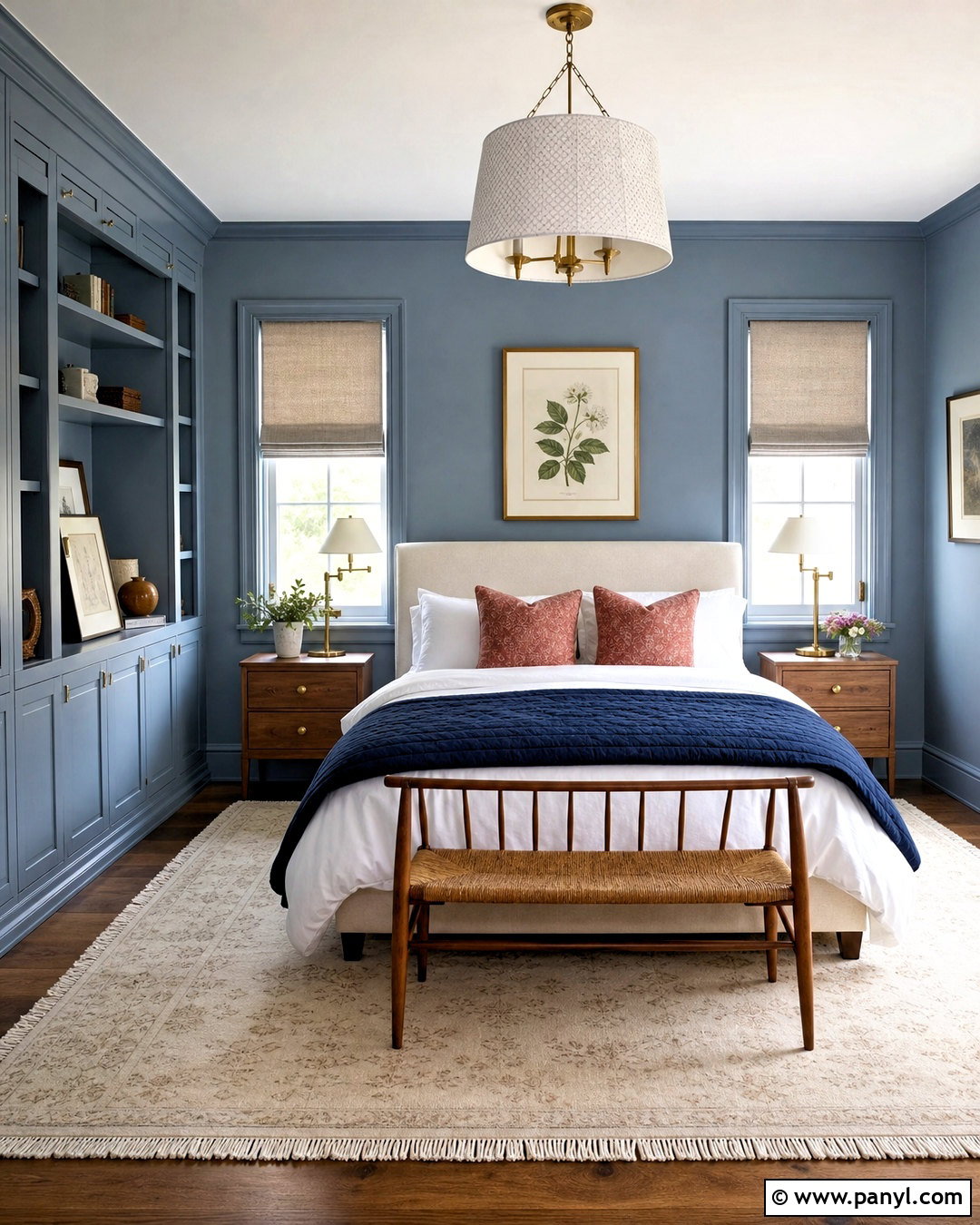
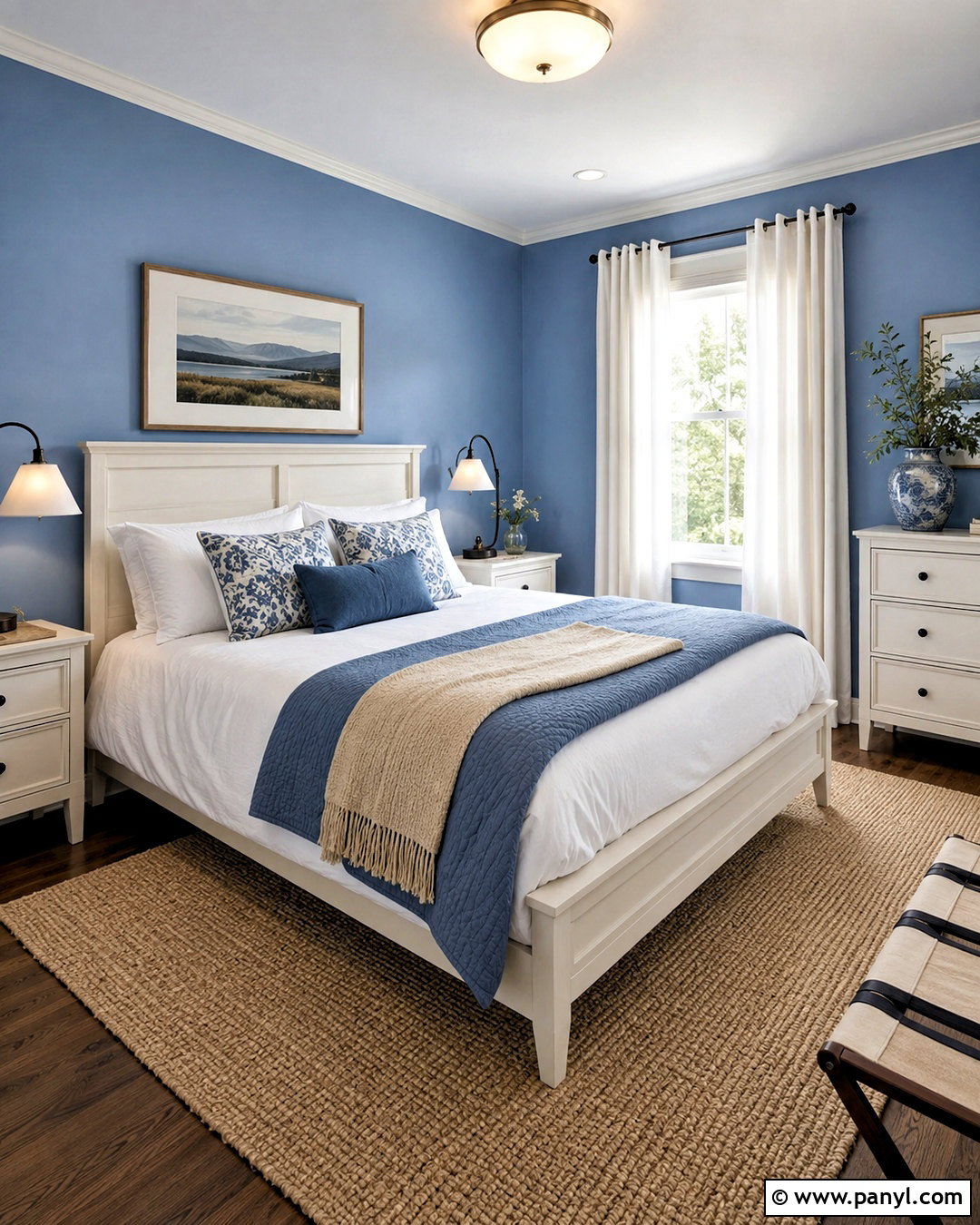
Dusty blue offers more depth than powder blue while remaining easy to live with. Its gray undertones work beautifully with traditional furniture, relaxed cottage decor, and modern upholstered pieces. Paint the walls dusty blue and repeat the color on built-in cabinetry for a tailored result. A warm white ceiling prevents the room from feeling enclosed. Select a cream upholstered bed, walnut nightstands, and white bedding with a quilted navy coverlet. Add muted red and tan accent pillows for a subtle complementary contrast. An ivory wool rug softens dark flooring, while pleated linen shades and aged brass lamps introduce texture. Finish with vintage-style botanical artwork and a wooden bench so the room looks layered, personal, and comfortably established.
11. Smoky Teal Bedroom Paint Color
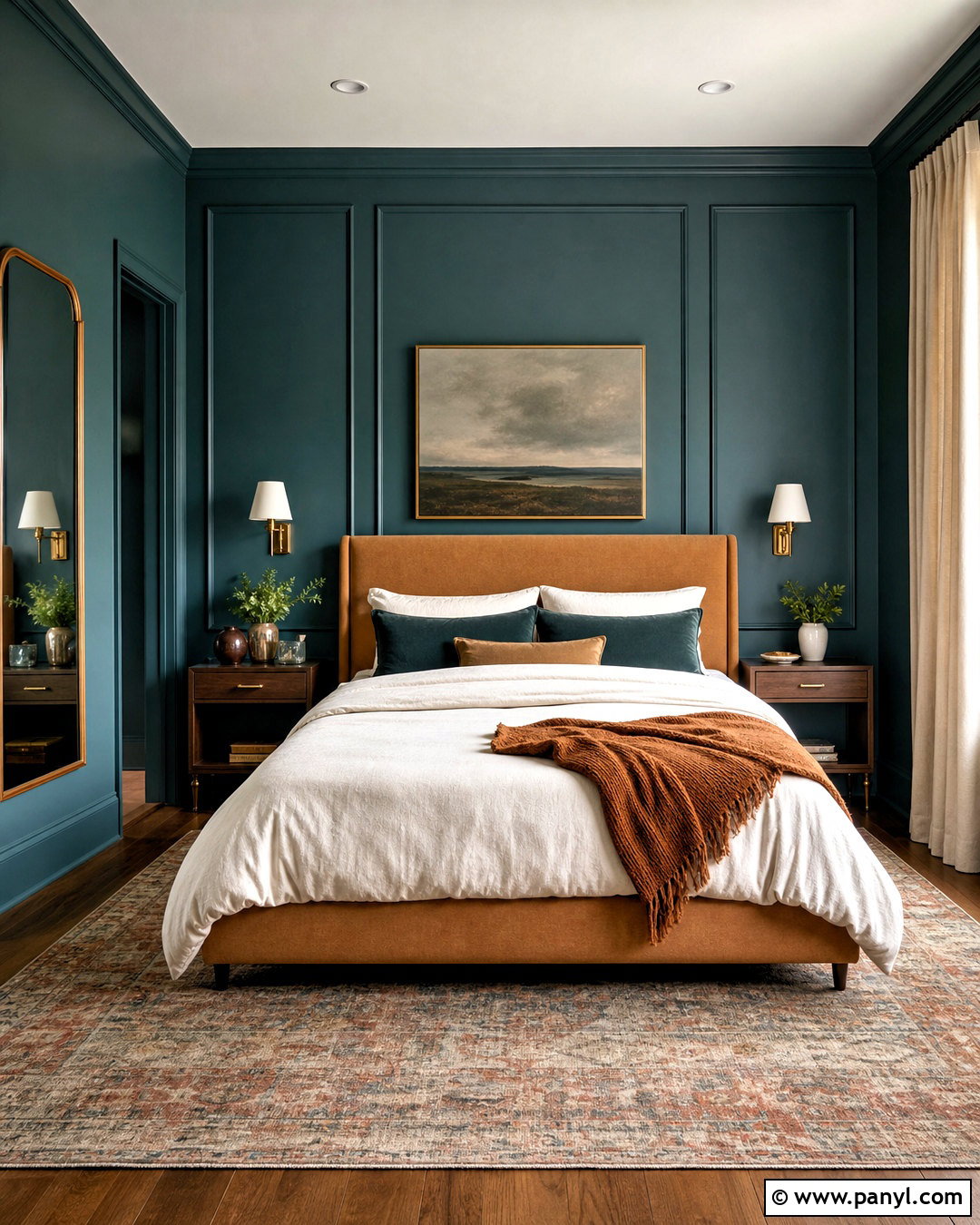
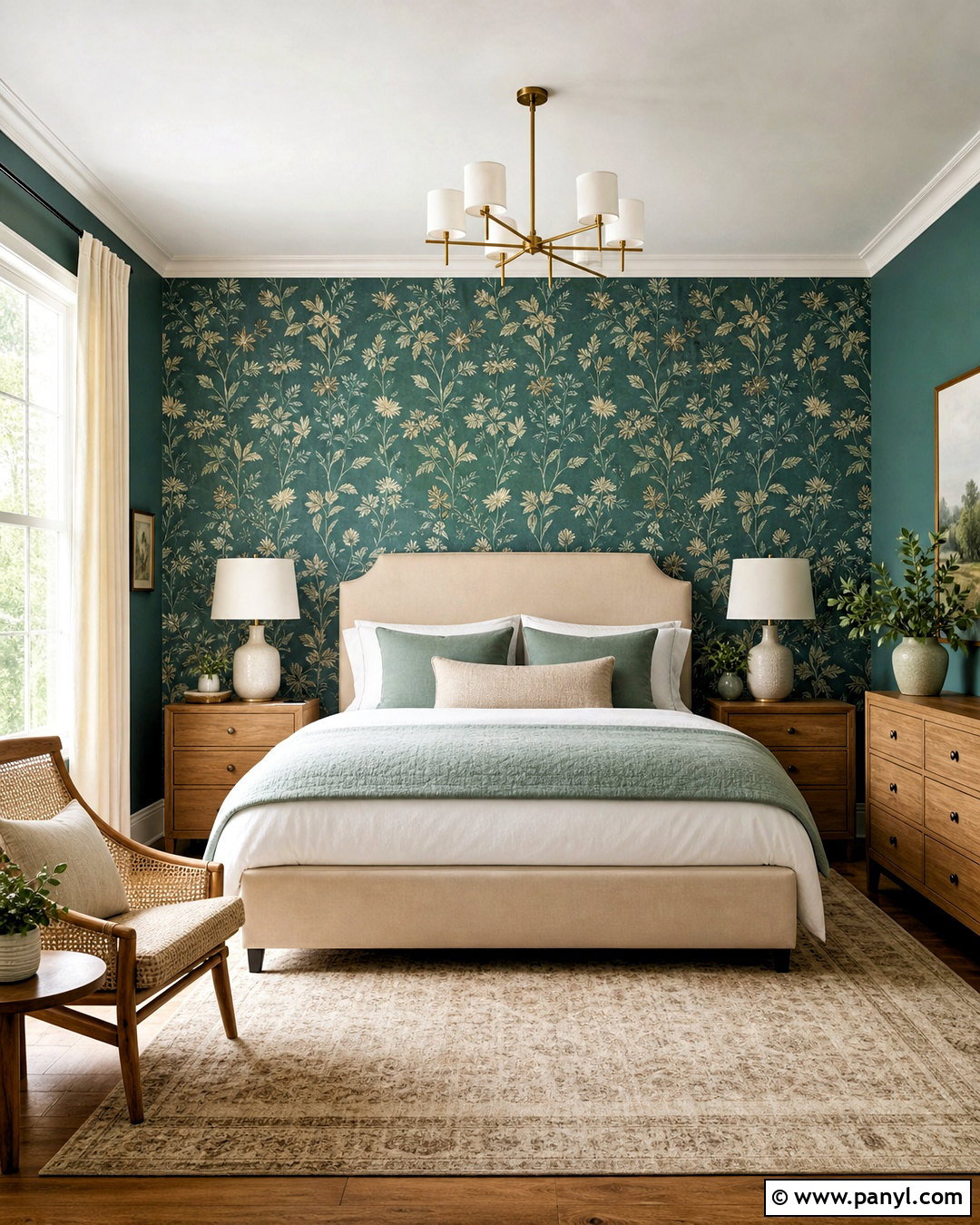
For a bedroom with richer color, smoky teal provides drama without the sharpness of bright turquoise. Use this blue-green shade on every wall and paint the trim in the same color for an immersive effect. Keep the ceiling creamy white to reflect light downward. A camel upholstered bed offers a warm contrast against the teal backdrop. Dress it with ivory bedding, dark teal pillows, and a cinnamon-colored throw. Walnut nightstands and aged brass sconces strengthen the cozy palette. Choose a large vintage-inspired rug containing faded red, blue, and beige. Soft cream curtains prevent the windows from disappearing into the darker walls. Minimal artwork, a wood-framed mirror, and a single bench complete this sophisticated bedroom without creating visual clutter.
12. Deep Navy Bedroom Paint Color
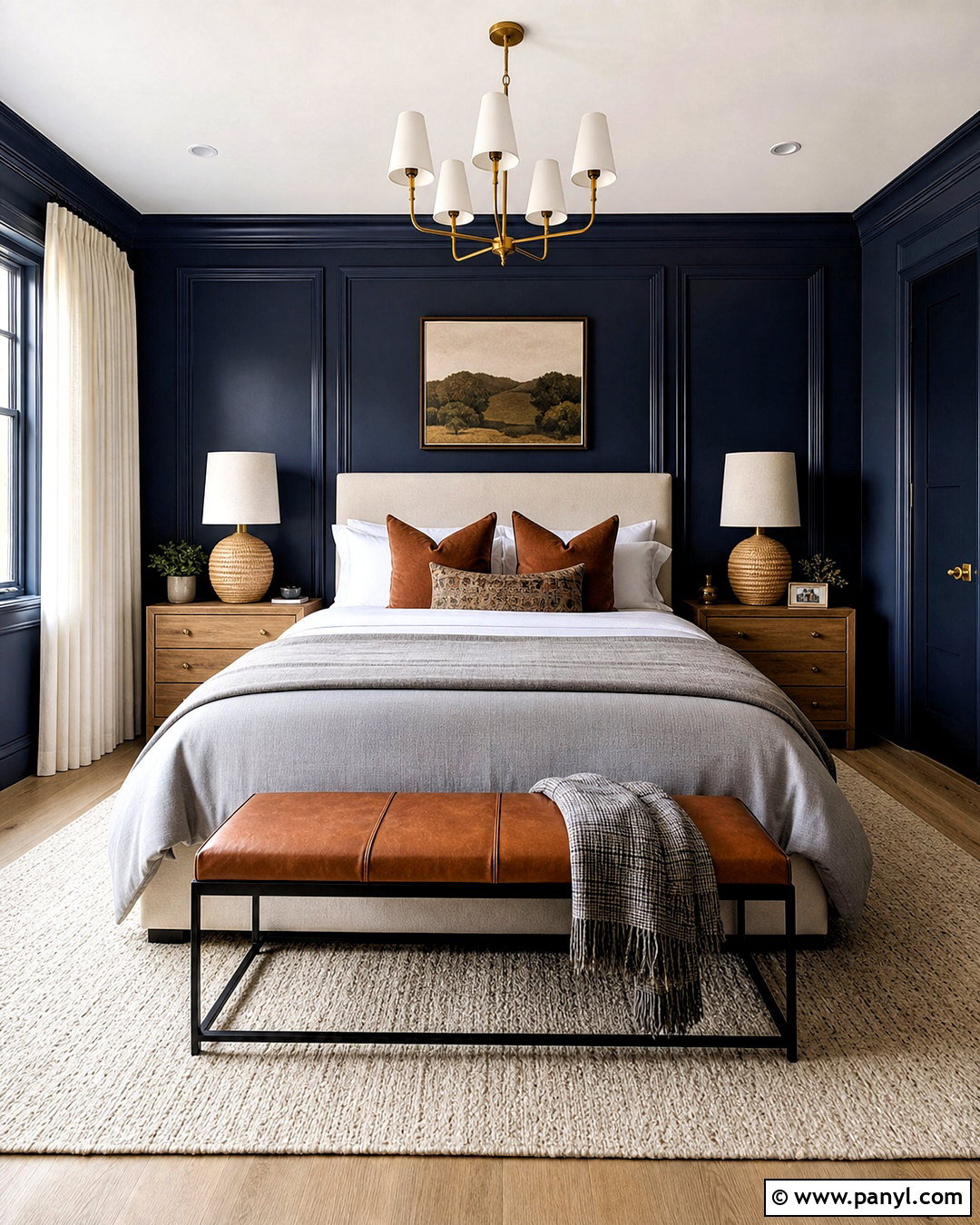
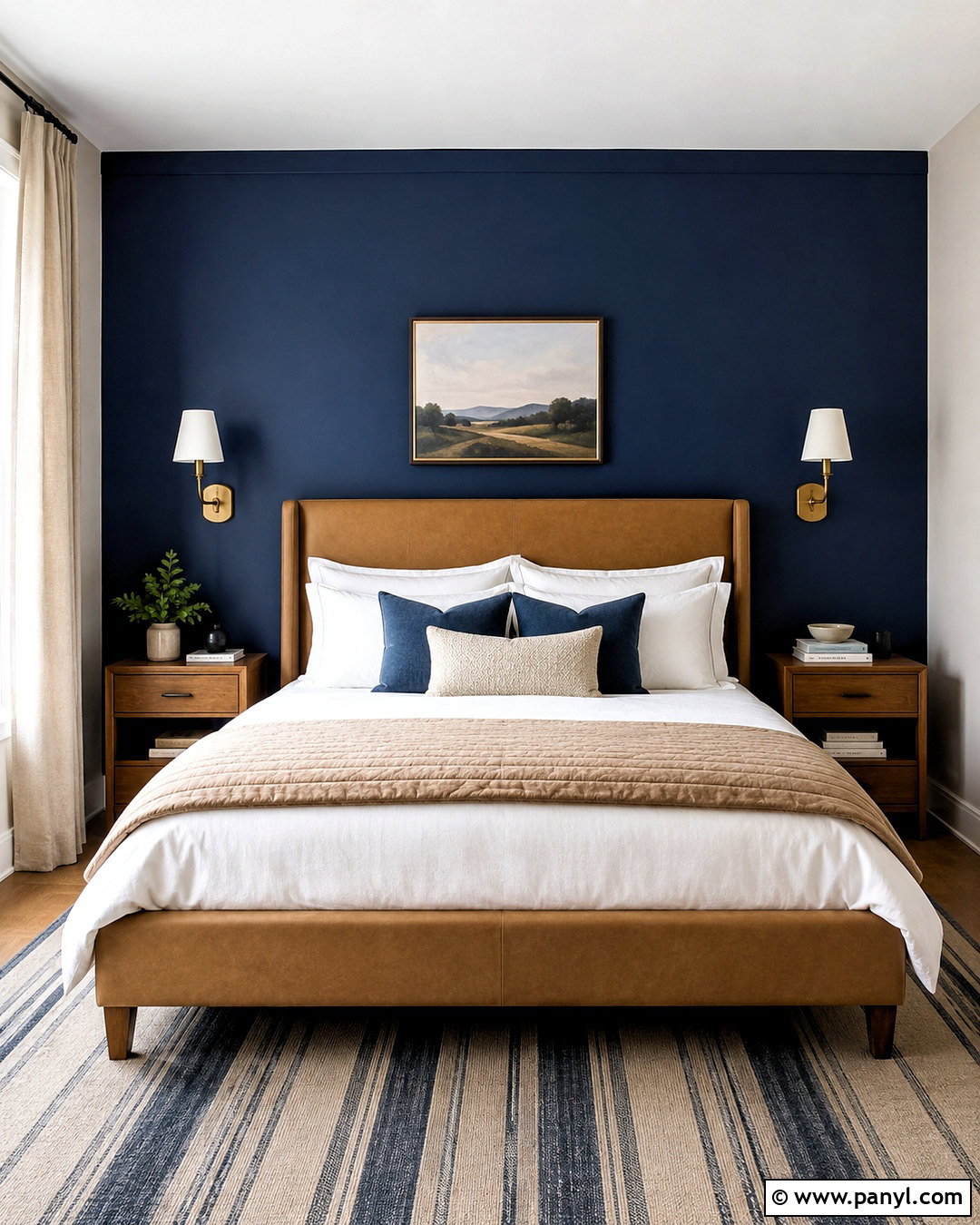
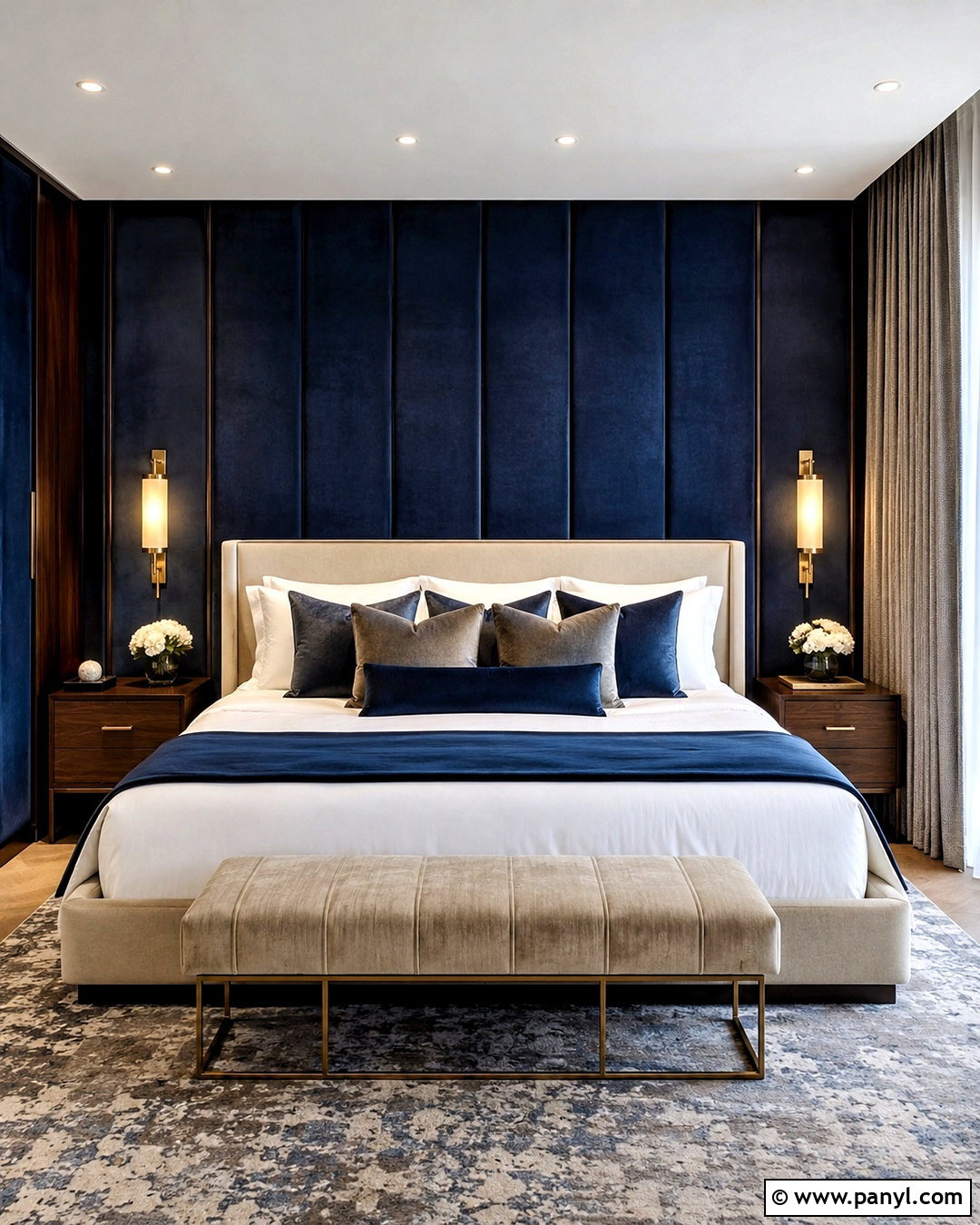
Deep navy can turn a well-lit bedroom into an enveloping retreat. To keep the color from feeling flat, use it on paneled walls or simple picture-frame molding behind the bed. Paint the remaining walls the same navy for a unified room rather than a disconnected feature wall. A light oatmeal headboard creates strong contrast and gives the eye a clear focal point. Add white sheets, a pale gray duvet, and rust-colored pillows for warmth. Medium oak nightstands and woven lampshades lighten the lower areas of the room. Use full ivory curtains and a large cream rug to reflect available daylight. Aged brass hardware, understated artwork, and a cognac bench give the finished bedroom a polished but approachable appearance.
13. Soft Lavender Bedroom Paint Color
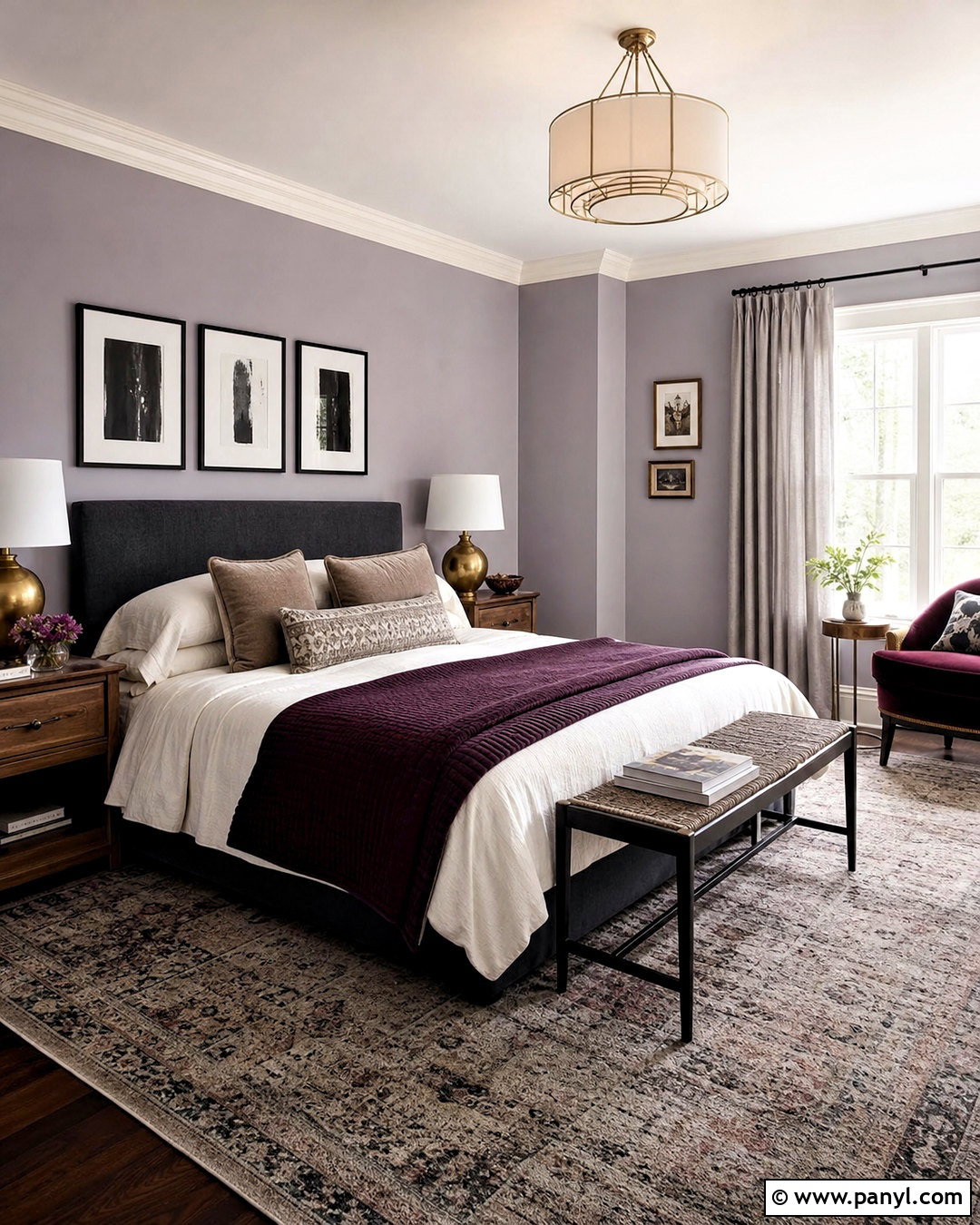
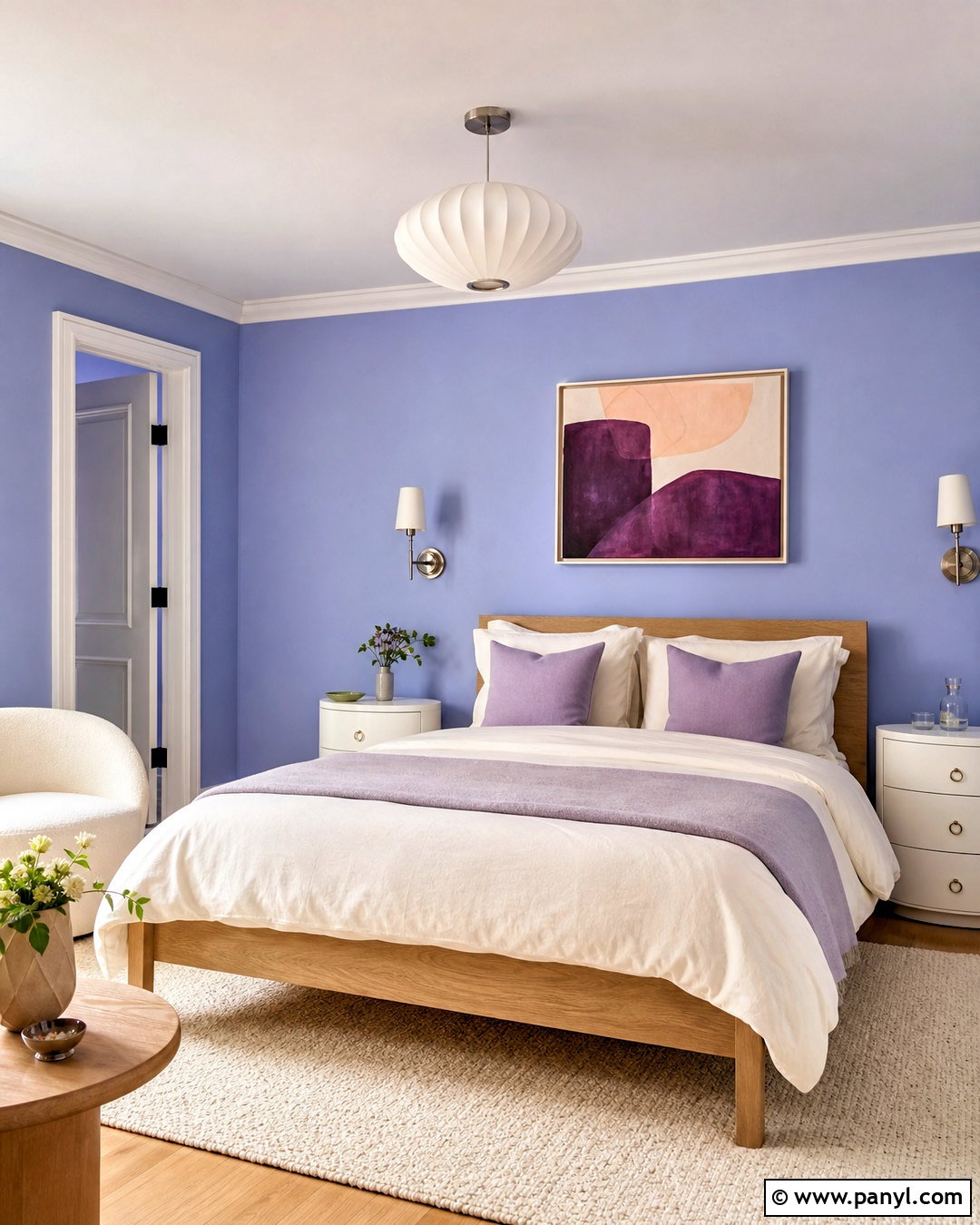
Soft lavender can feel grown-up and restful when it has dusty gray undertones. Avoid pairing it with overly sweet decor. Instead, create a balanced bedroom with a charcoal upholstered bed, dark wood nightstands, and warm white bedding. Layer the bed with a plum quilt and taupe accent pillows to establish tonal depth. Use soft ivory on the trim and ceiling for a gentle transition from the lavender walls. Linen curtains in warm gray filter light and reinforce the sophisticated palette. A faded Persian-style rug introduces muted burgundy, cream, and blue. Add ceramic lamps with antique brass bases and a few abstract prints in slim black frames. The finished space feels colorful and expressive while remaining calm enough for everyday relaxation.
14. Dusty Mauve Bedroom Paint Color
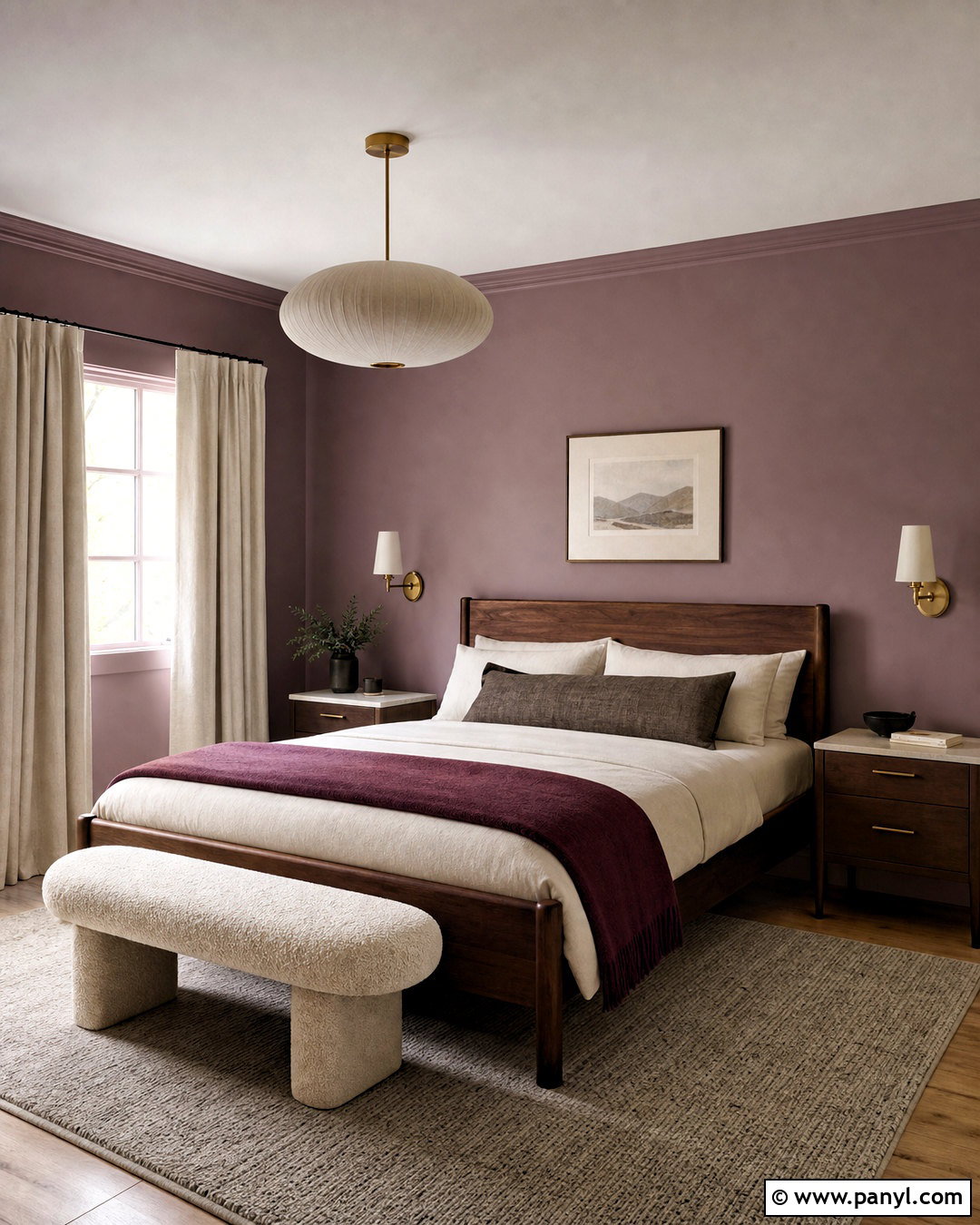
Dusty mauve creates a cozy bedroom that sits comfortably between warm pink, purple, and brown. It is particularly effective when paired with grounded neutrals and natural materials. Cover the walls in muted mauve and use matching paint on the trim for a soft color-drenched finish. Place a walnut bed against the main wall and add ivory linen bedding, mushroom pillows, and a deep plum throw. Choose travertine-topped nightstands to introduce a pale stone surface beside the darker wood. A cream bouclé bench and faded neutral rug keep the room light. Brushed brass sconces provide warmth, while flax curtains frame the windows without adding another dominant color. Simple charcoal sketches complete this mature, comfortable, and thoughtfully coordinated bedroom.
15. Earthy Pink Bedroom Paint Color
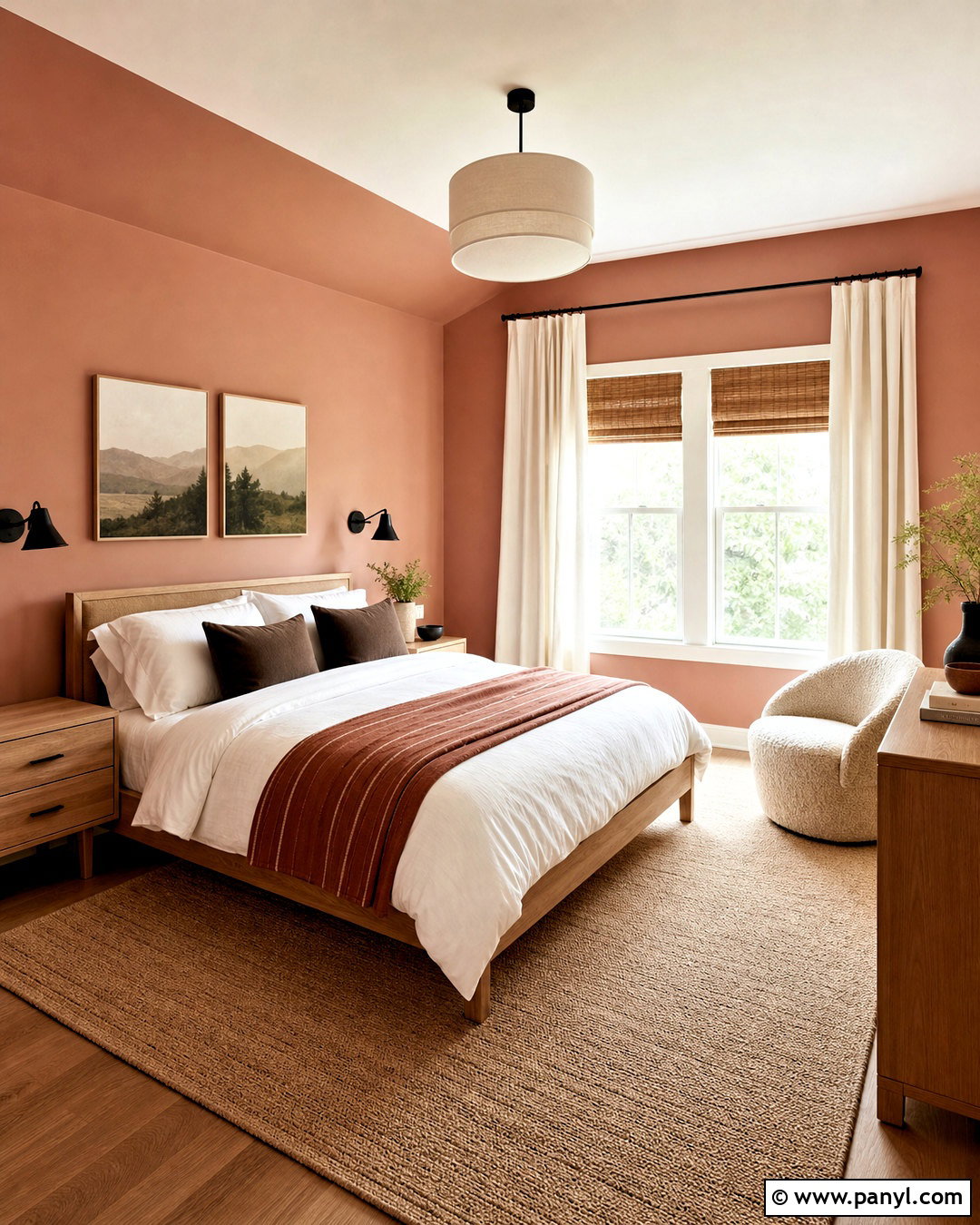
Earthy pink has a clay-like warmth that makes a bedroom feel welcoming rather than sugary. Choose a muted shade with beige or brown undertones and apply it to all four walls. Pair it with a light oak bed and matching nightstands to preserve a natural, relaxed mood. White cotton sheets and a warm cream duvet create a fresh central layer. Add cocoa brown pillows and a striped rust blanket to deepen the palette. A pale tan rug, woven window shades, and off-white curtains introduce texture throughout the room. Use black swing-arm sconces for a clean modern contrast. Finish the design with minimalist landscape prints, a ceramic vase, and one comfortable boucle chair. The complete look feels soft, sunny, and suitable for adults.
16. Terracotta Bedroom Paint Color
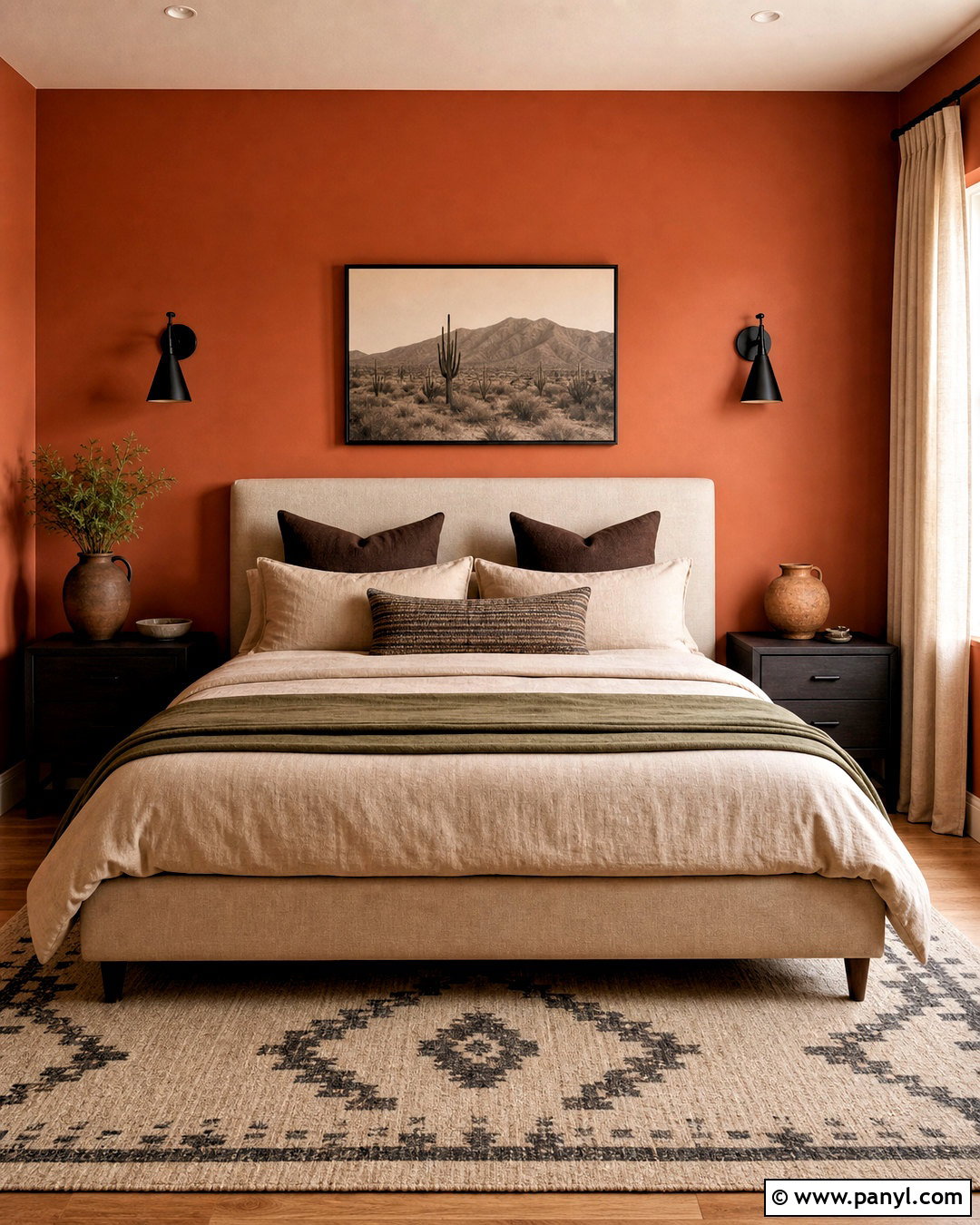
Terracotta walls can transform a bedroom into a warm, sunbaked retreat. Select a muted reddish-orange shade that feels earthy rather than bright. Balance its visual weight with a cream upholstered bed, white ceiling, and light linen curtains. Layer the bed with natural flax bedding, chocolate brown pillows, and an olive green throw. Dark wood nightstands provide enough contrast to hold their own against the saturated walls. Choose a faded geometric rug in beige, charcoal, and rust to unify the space. Black metal sconces add a crisp architectural detail, while handmade pottery and simple desert-inspired artwork reinforce the organic palette. Keep accessories limited and practical so the paint remains the room’s main statement without making the finished design feel busy.
17. Soft Clay Bedroom Paint Color
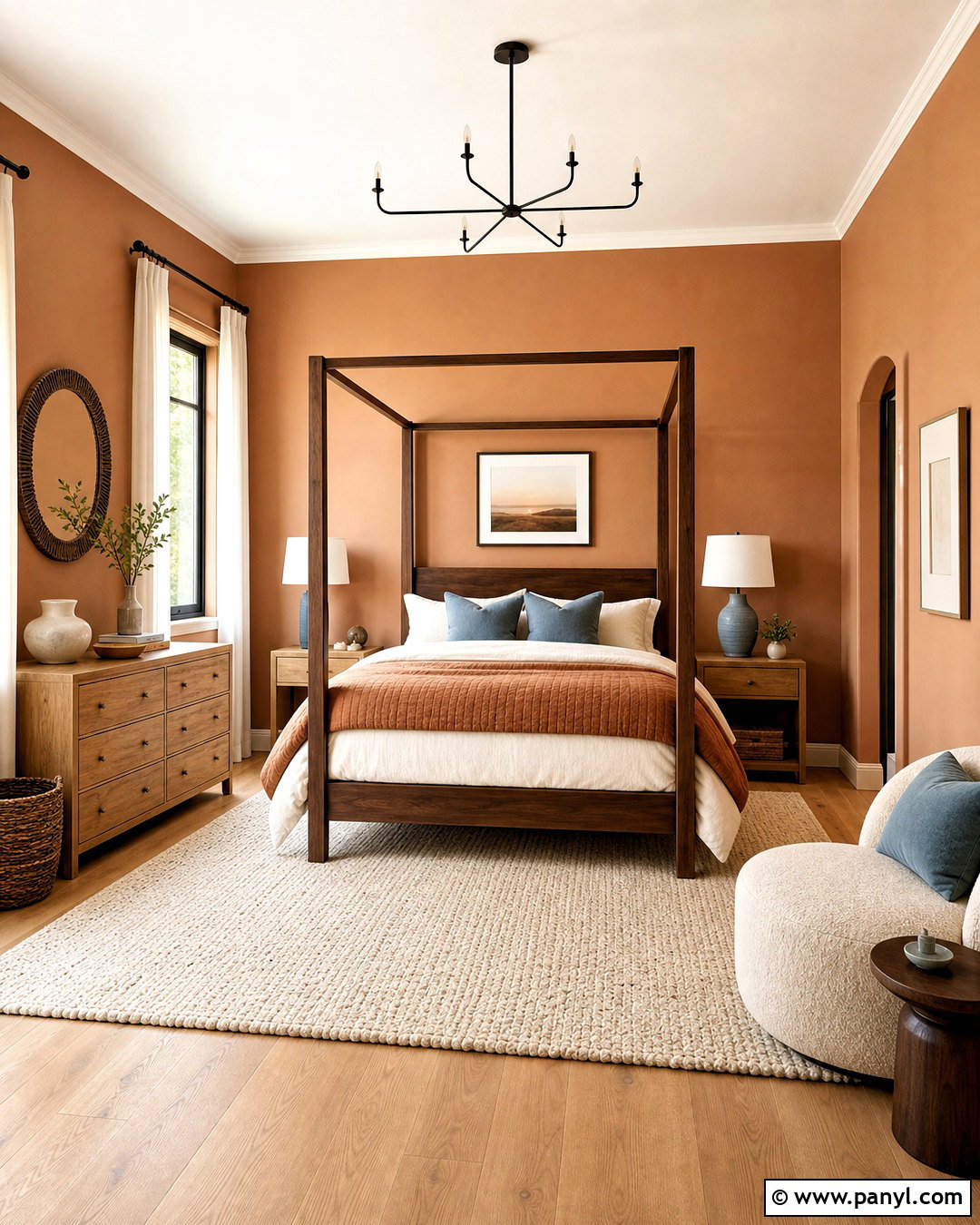
Soft clay paint combines the warmth of terracotta with the understated quality of beige. This makes it a comfortable choice for bedrooms that need color without strong saturation. Use clay on the walls and creamy white on the ceiling, doors, and trim. Add a walnut canopy bed with simple lines, but keep the surrounding furniture visually light. Ivory bedding, a caramel quilt, and muted blue pillows create a balanced mix of warm and cool tones. Place a natural wool rug under the bed and use light-filtering linen curtains at the windows. Ceramic lamps, woven baskets, and framed abstract art add handmade texture. A pale oak dresser and curved upholstered chair complete this soft Southwestern-inspired space while keeping the overall bedroom modern and relatable.
18. Warm Ochre Bedroom Paint Color
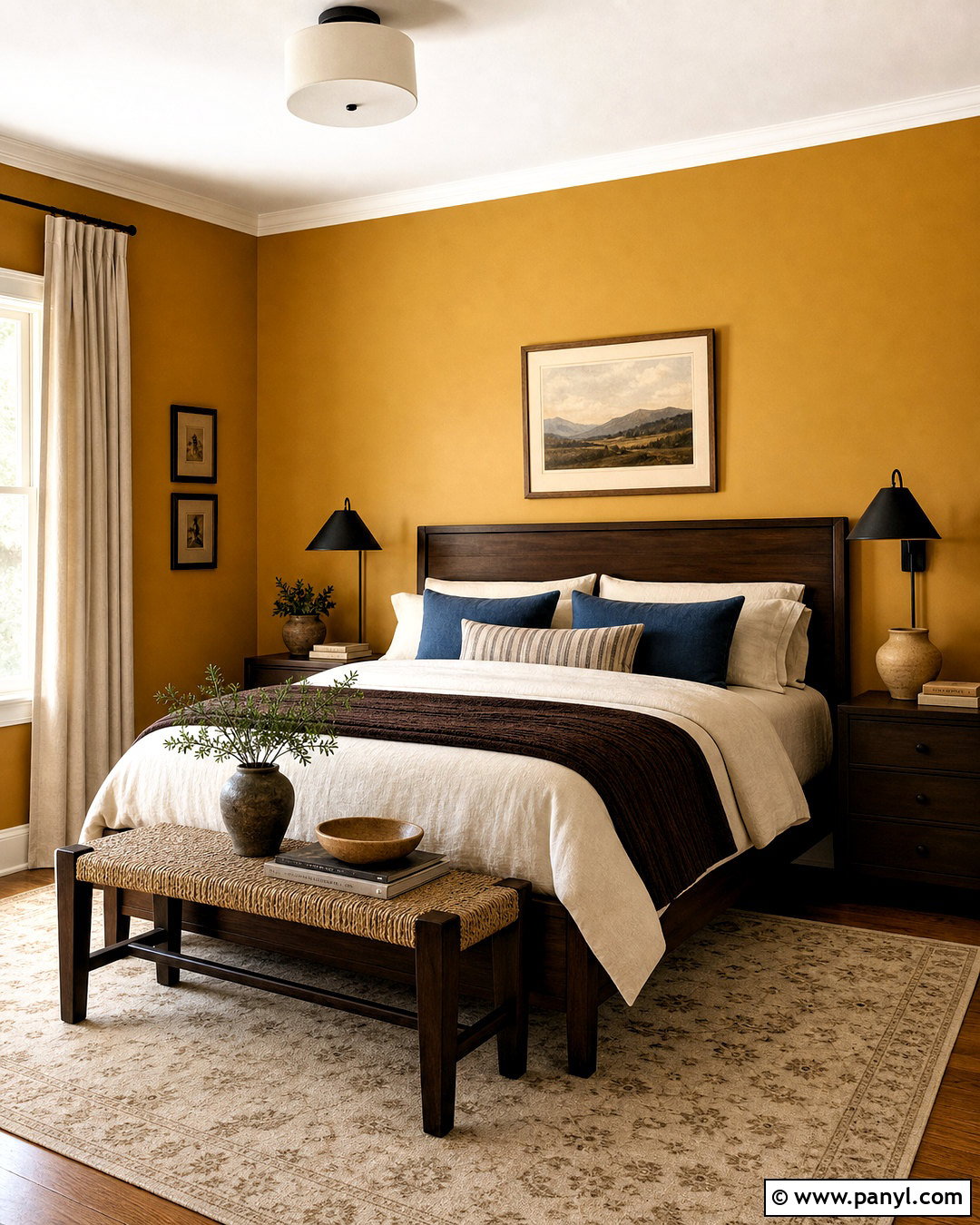
Warm ochre gives a bedroom a sunny, golden character even when natural light is limited. Since the shade carries visual energy, balance it with uncomplicated furniture and restful textiles. Paint the walls ochre but keep the ceiling and trim warm white for contrast. A dark walnut bed creates a strong focal point, while ivory bedding prevents the center of the room from becoming heavy. Add muted blue pillows and a chocolate brown throw to complement the golden walls. Use a cream and tan patterned rug beneath the bed and natural linen curtains around the windows. Matte black lamps and hardware provide definition. Finish with simple wood-framed artwork, a woven bench, and understated ceramics for a warm bedroom that still feels composed and restful.
19. Muted Burgundy Bedroom Paint Color
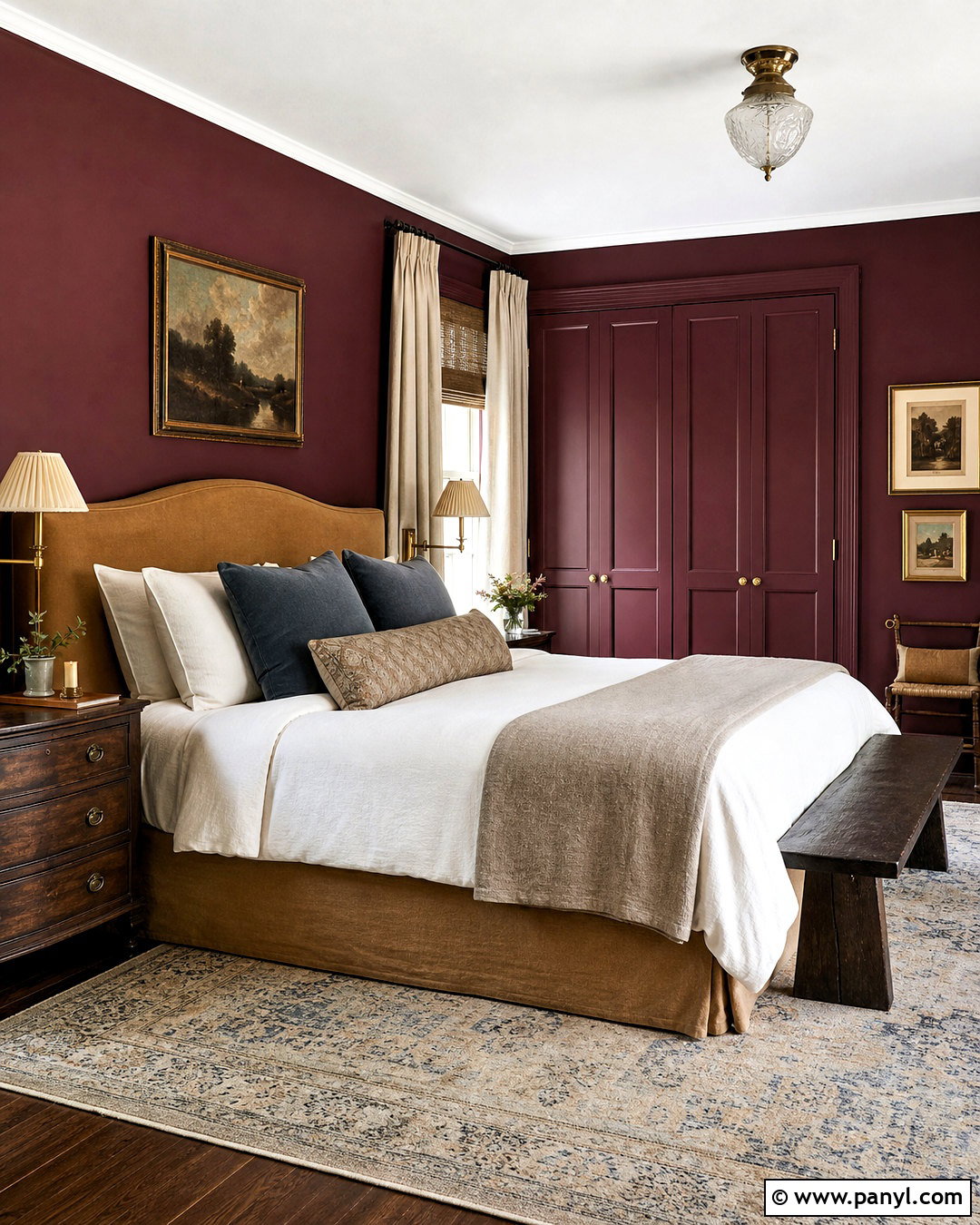
Muted burgundy brings depth and character to a bedroom, especially when it contains brown or plum undertones. Use the color across the walls and built-in wardrobe doors for an intentional, enveloping scheme. A warm white ceiling keeps the upper portion of the room visually open. Choose a camel linen bed and walnut nightstands to complement the red-based paint. Cream sheets, a taupe coverlet, and dusty blue pillows offer relief from the deeper backdrop. Hang full flax curtains and place a large faded rug in beige, burgundy, and slate blue under the bed. Antique brass lamps add a soft glow, while a dark wood bench introduces practical seating. Minimal vintage artwork completes the room without competing with the dramatic wall color.
20. Chocolate Brown Bedroom Paint Color
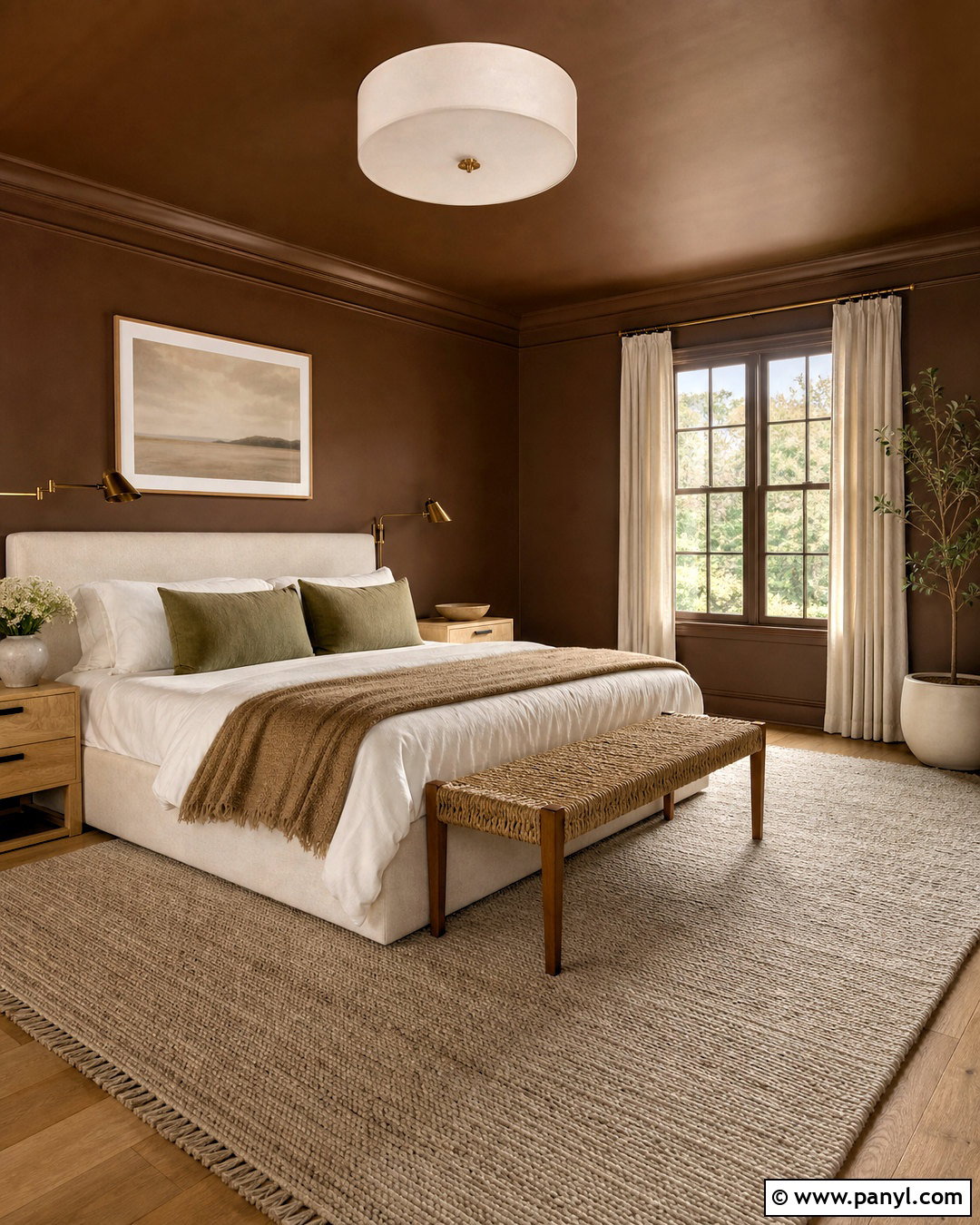
Chocolate brown walls create a deeply comfortable bedroom when they are balanced with lighter materials. Choose a warm, velvety brown and extend it over the trim for a cohesive color-drenched effect. Keep the ceiling soft ivory so the room does not feel compressed. Position an oatmeal upholstered bed against the darkest wall and dress it with crisp white sheets, a camel blanket, and muted green pillows. Pale oak nightstands introduce contrast while maintaining the earthy character. Use a large cream wool rug to brighten the flooring and ivory linen curtains to frame the windows. Brass reading lights, oversized neutral artwork, and a woven bench add useful finishing layers. The result feels cozy and sophisticated rather than dark, dated, or overly formal.
Conclusion:
Choosing bedroom paint becomes easier when you plan the entire room instead of viewing the wall color by itself. Consider the direction of the windows, existing flooring, furniture finishes, and the atmosphere you want to create. Light neutrals and muted blues can produce an open retreat, while sage, clay, burgundy, and chocolate offer richer character. Always test paint on several walls before buying the full amount because daylight and artificial lighting can reveal unexpected undertones. Coordinate each shade with bedding, curtains, rugs, artwork, and practical lighting for a complete result. Whether your taste is airy, earthy, colorful, or dramatic, these **20 room paint colors bedroom ideas** provide a realistic starting point for a cohesive bedroom refresh.

Related Ideas and Inspiration:


Leave a Reply