
The right wall color can turn an ordinary bedroom into a restful, polished retreat without requiring a complete renovation. These 35 Wall Paint Bedroom Ideas cover calming neutrals, nature-inspired greens, dramatic dark shades, creative paint treatments, and colorful combinations for bedrooms of every size. Each look includes coordinated furniture, textiles, lighting, and decor, so you can picture the entire room rather than one isolated paint color. Before choosing, test large samples on several walls and observe them during the morning, afternoon, and evening. Natural light, flooring, and existing furniture can noticeably change how a shade appears. Whether you prefer soft and airy or rich and cozy, use these 35 Wall Paint Bedroom Ideas to create a bedroom that feels personal, balanced, and complete.

1. Warm White Bedroom Walls
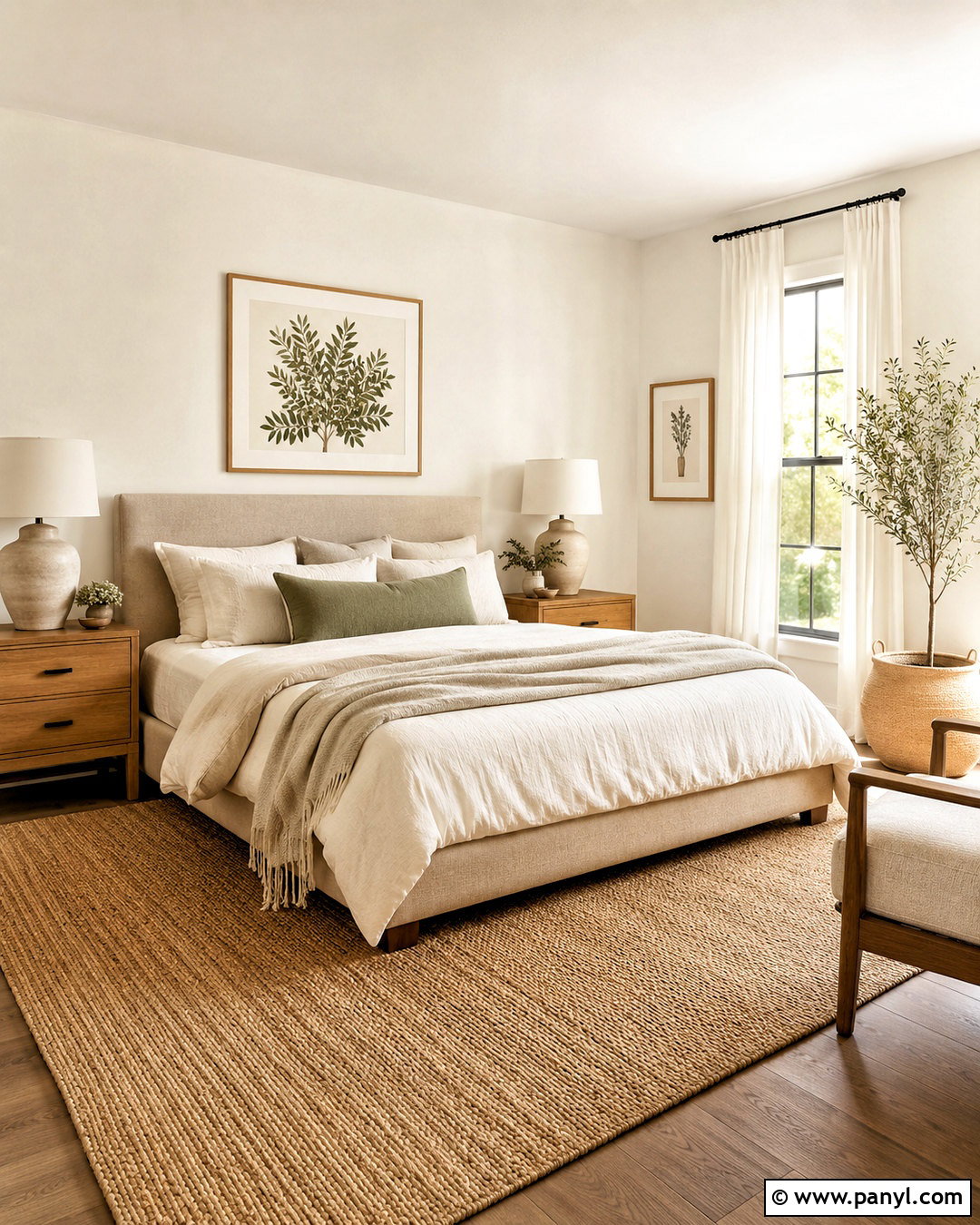
Warm white walls create an airy bedroom without the cold feeling that can come from a bright, blue-based white. Choose a creamy shade with subtle beige or ivory undertones, then repeat that warmth through oatmeal linen bedding, natural oak nightstands, and a woven jute rug. An upholstered headboard in light taupe gives the bed gentle definition against the pale wall. Add ceramic lamps, soft white curtains, and framed botanical prints for quiet detail. Keep the ceiling and trim a slightly cleaner white to create a crisp but subtle outline. This wall color works especially well in bedrooms with limited daylight because it reflects available light. Matte or eggshell paint keeps the finish soft, comfortable, and forgiving.
2. Soft Greige Bedroom Walls
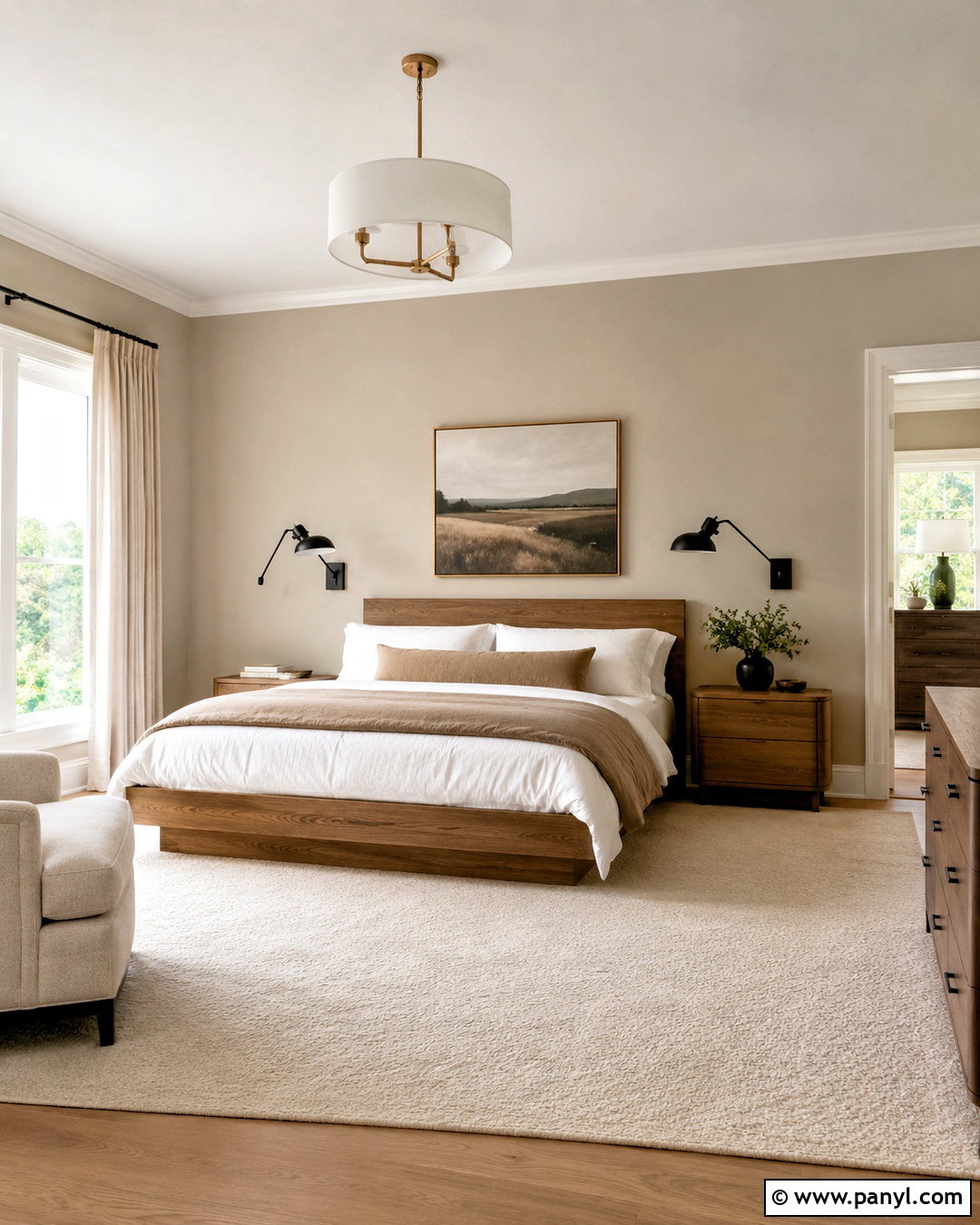
Soft greige offers the warmth of beige and the modern balance of gray, making it easy to coordinate with changing decor. Paint all four walls in a light mushroom greige and use warm white on the ceiling and trim. Build the room around a low oak bed with layered white, camel, and charcoal bedding. Black swing-arm sconces add definition without overpowering the neutral palette. Choose medium-toned wood flooring or a textured cream rug to keep the room grounded. A simple landscape print above the headboard introduces muted green and blue. Avoid combining greige with too many cool silver finishes. Brushed brass, aged bronze, natural wood, and woven fabrics will make the finished bedroom feel warmer and more intentional.
3. Beige Bedroom Walls
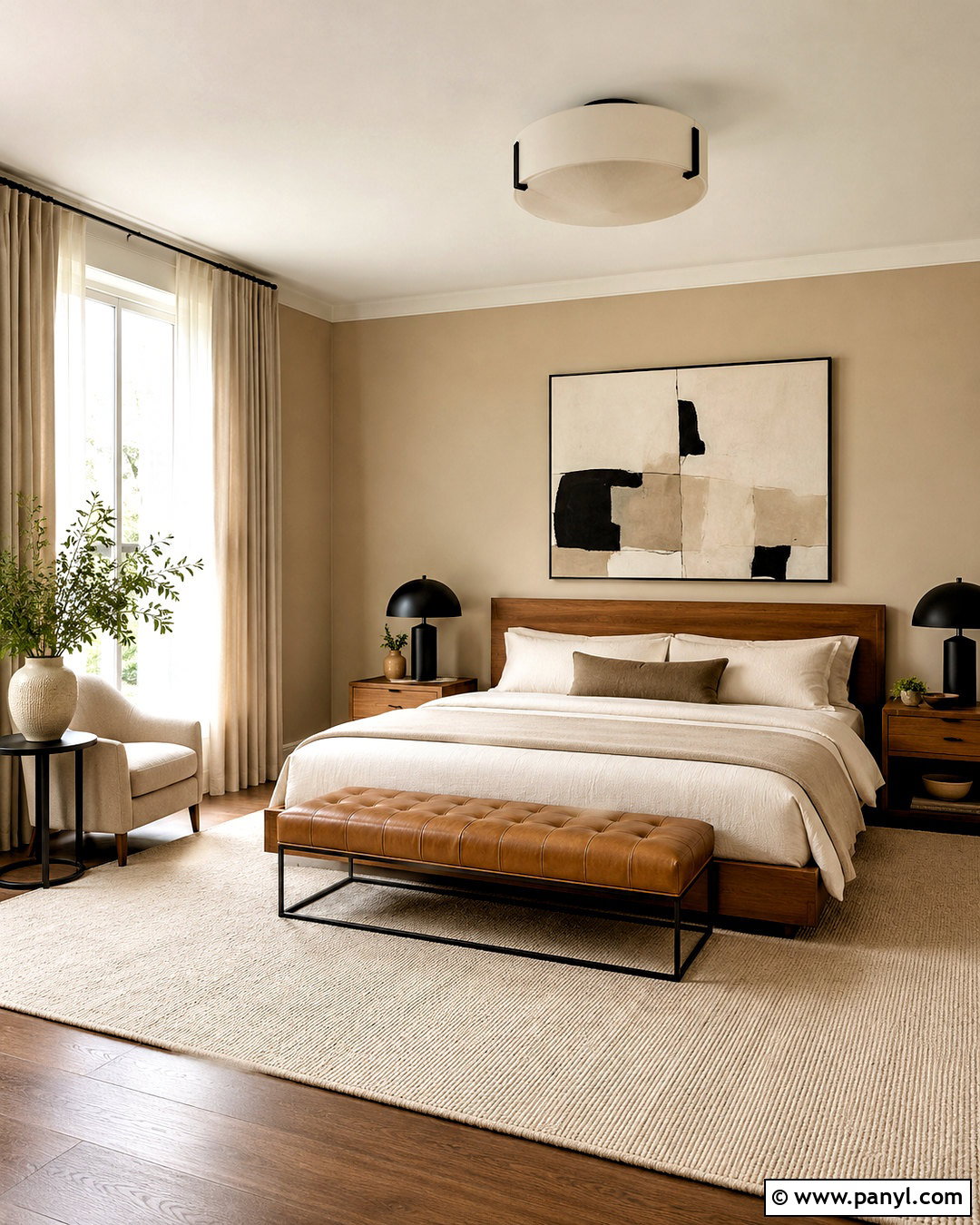
Beige bedroom walls can feel fresh and current when the room includes varied textures and clean-lined furnishings. Select a sandy beige with a soft golden undertone rather than an overly yellow shade. Pair it with a walnut bed, crisp ivory bedding, and a caramel leather bench at the foot. Cream curtains hung close to the ceiling make the walls appear taller, while a large wool rug softens the entire layout. Add black bedside lamps and one oversized abstract artwork for modern contrast. Keep accessories limited to a ceramic vase, a small stack of books, and natural branches. The result is a calm, layered bedroom that looks collected rather than plain. White trim provides enough separation to keep the beige walls bright.
4. Sage Green Bedroom Walls
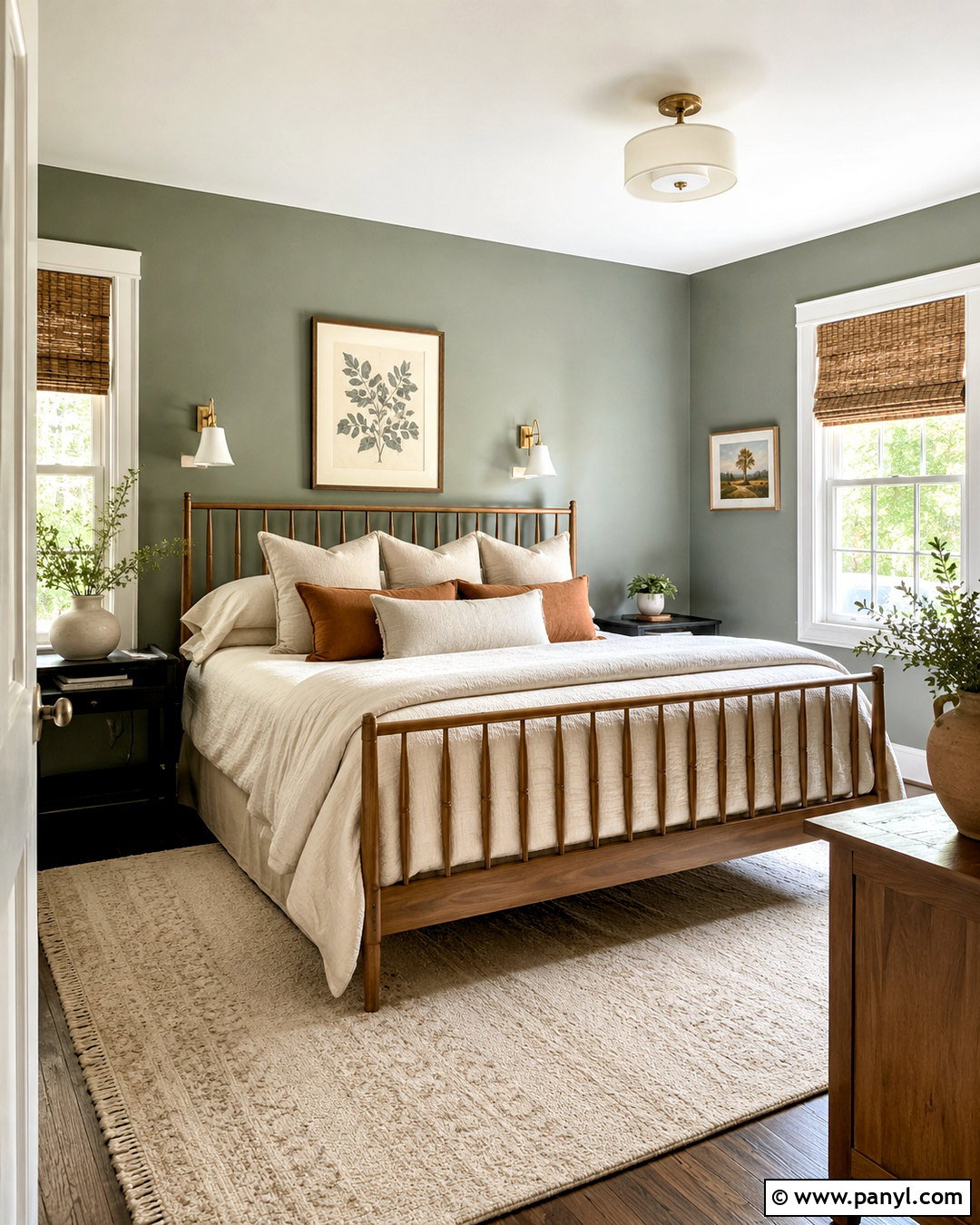
Sage green walls bring a gentle connection to nature and provide a relaxing backdrop for warm wood furniture. Use a muted sage with gray undertones across all four walls, then pair it with an oak spindle bed and off-white linen bedding. Introduce rust, clay, or mustard through two small accent pillows instead of covering the bed in strong color. Woven Roman shades, a cream area rug, and aged brass sconces complete the organic palette. Botanical artwork can reinforce the green walls, but choose simple prints with plenty of neutral space. Paint the trim warm white for a clean transition. This complete look suits modern farmhouse, organic modern, and relaxed traditional bedrooms while remaining easy to update through different seasons.
5. Olive Green Bedroom Walls

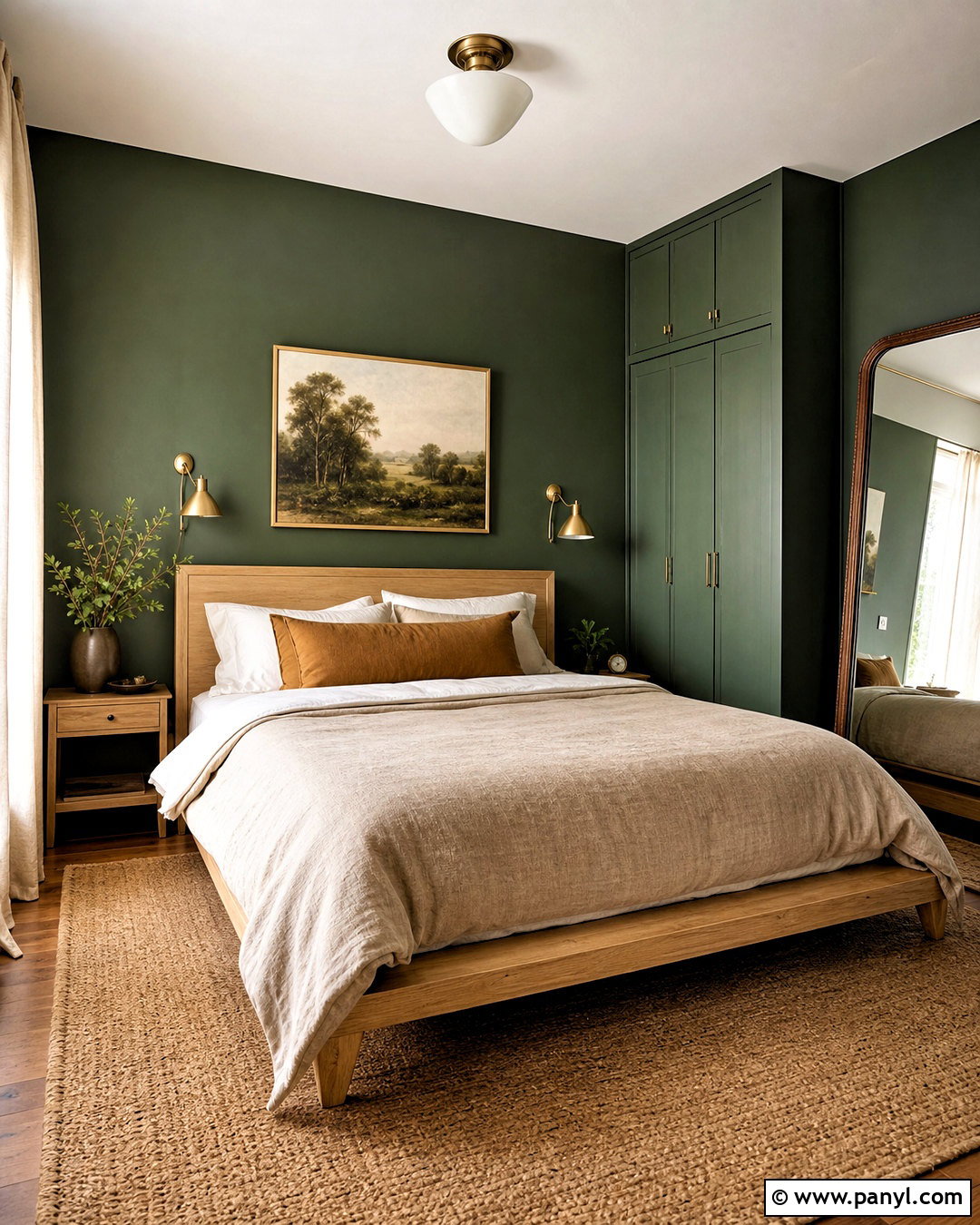
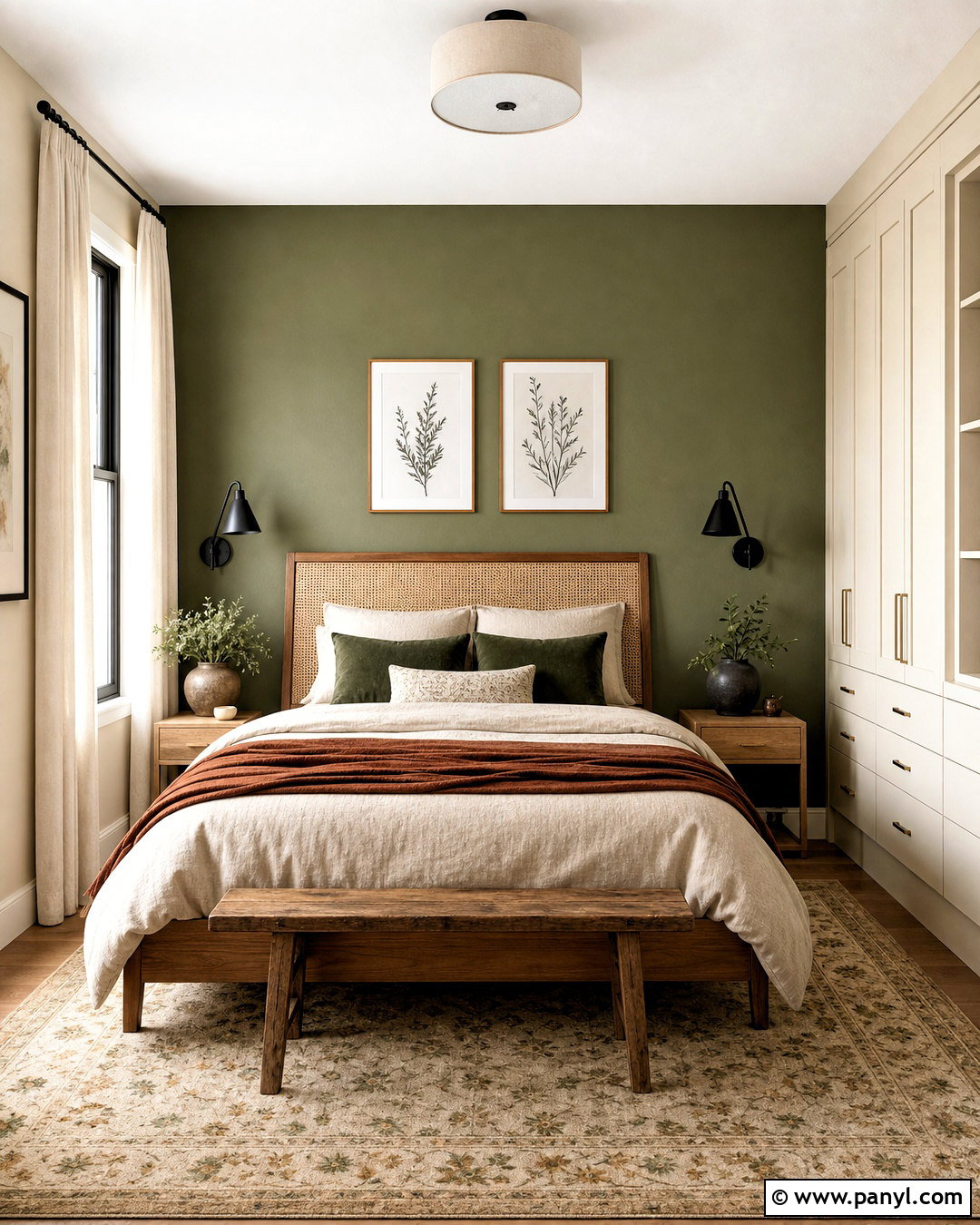
Olive green creates a cozy, grounded bedroom that feels rich without becoming overly formal. Choose a medium olive shade for the walls and balance it with a warm white ceiling, linen curtains, and light neutral bedding. A dark walnut bed provides depth, while antique brass lamps complement the earthy undertones in the paint. Add a vintage-inspired rug containing faded rust, cream, and muted blue to connect the room’s colors. One leather chair or cognac bench introduces another natural material without crowding the design. Keep artwork simple, such as a pair of sepia landscapes in dark wood frames. Olive works best with warm lighting and tactile fabrics, including washed linen, wool, velvet, and woven cotton.
6. Forest Green Bedroom Walls
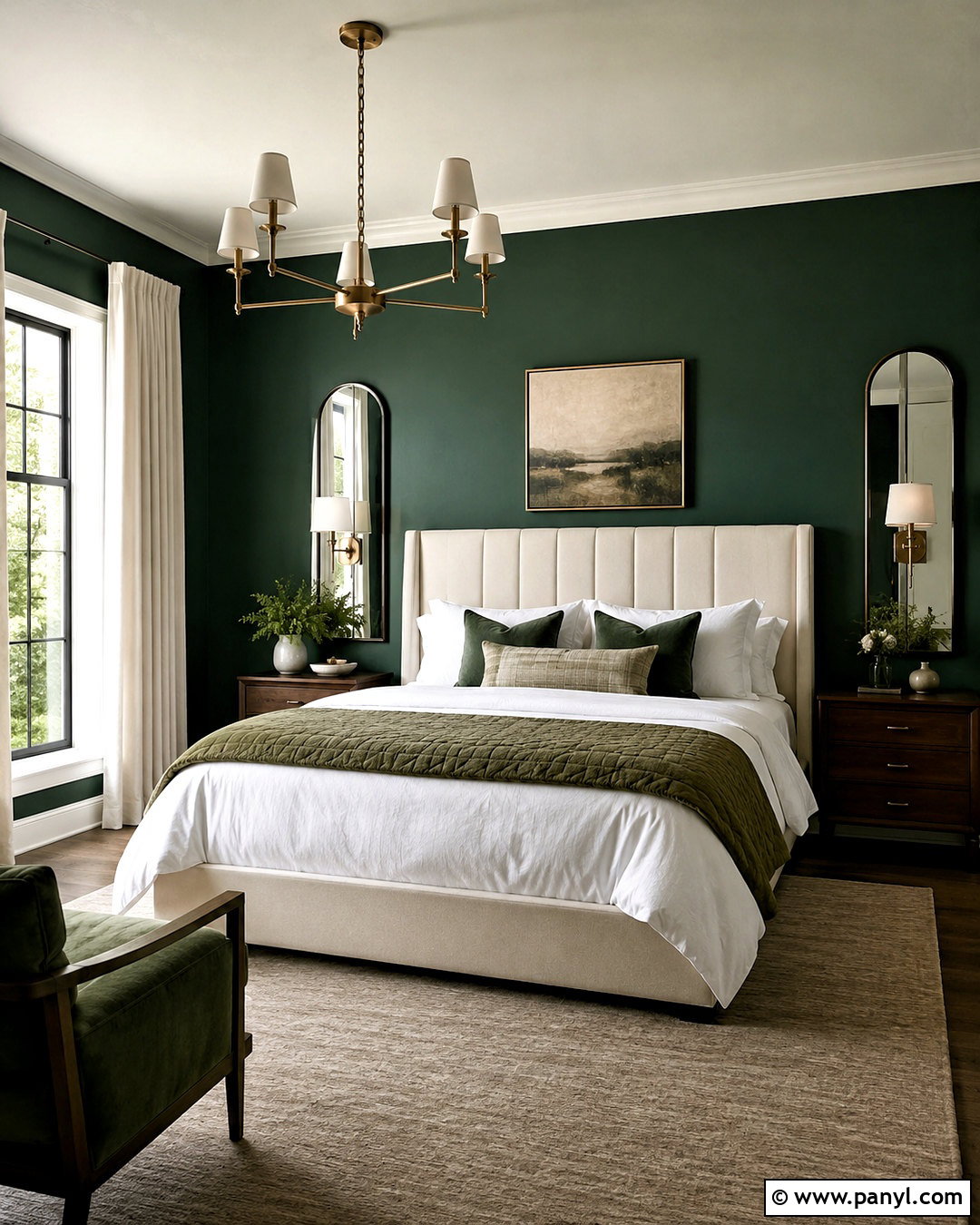
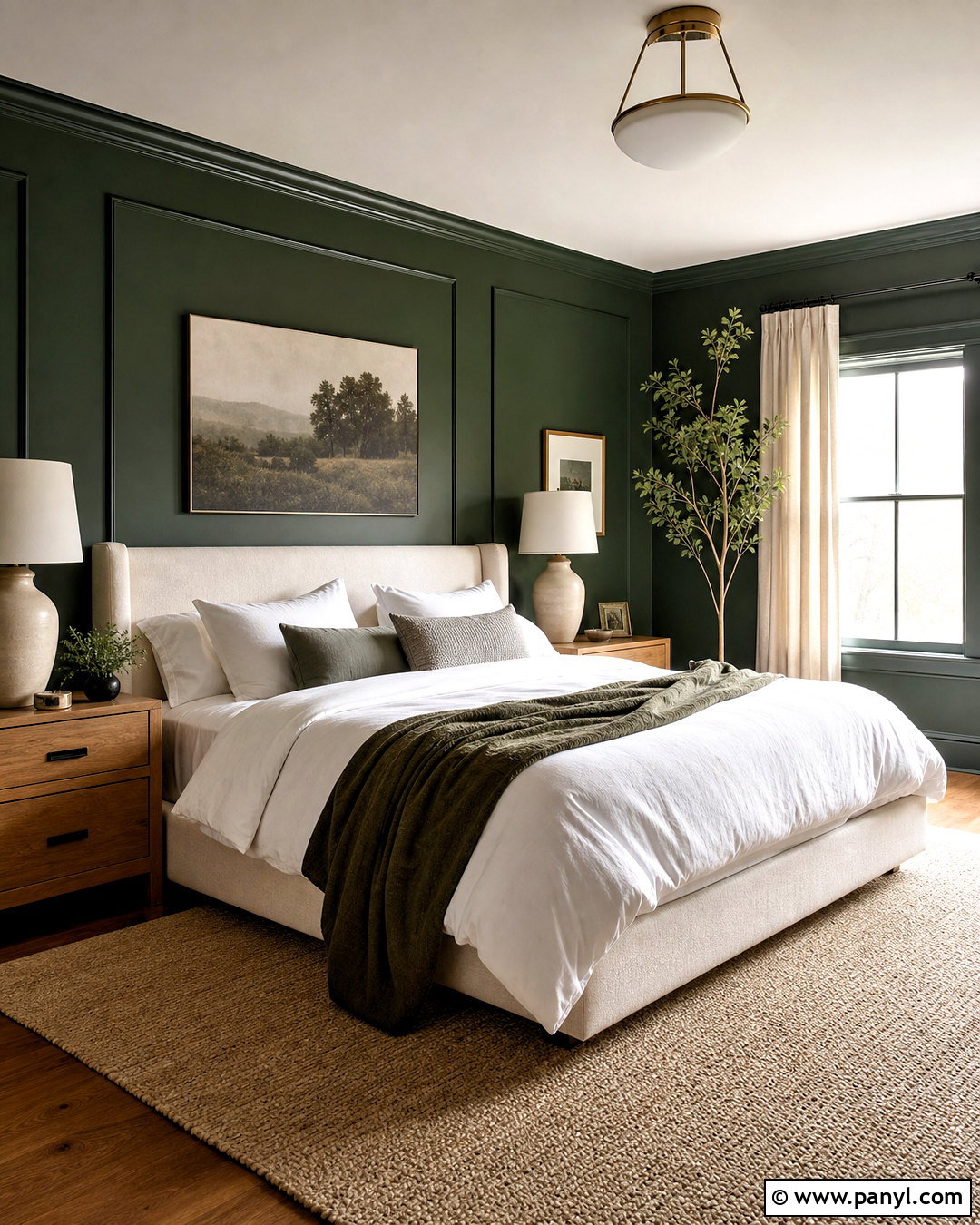
Deep forest green can transform a larger bedroom into a private, enveloping retreat. Paint every wall in a saturated green, but leave the ceiling warm white to preserve some openness. Position a tall cream upholstered bed against the main wall so the headboard stands out clearly. Layer the bed with white sheets, a moss quilt, and a patterned lumbar pillow containing green and tan. Dark wood nightstands, brass sconces, and floor-length ivory curtains bring warmth and contrast. A neutral rug prevents the room from feeling too heavy. Use mirrors opposite or beside the windows to distribute natural light. The finished bedroom feels dramatic yet comfortable because the pale textiles and reflective accents balance the intensity of the dark walls.
7. Dusty Blue Bedroom Walls
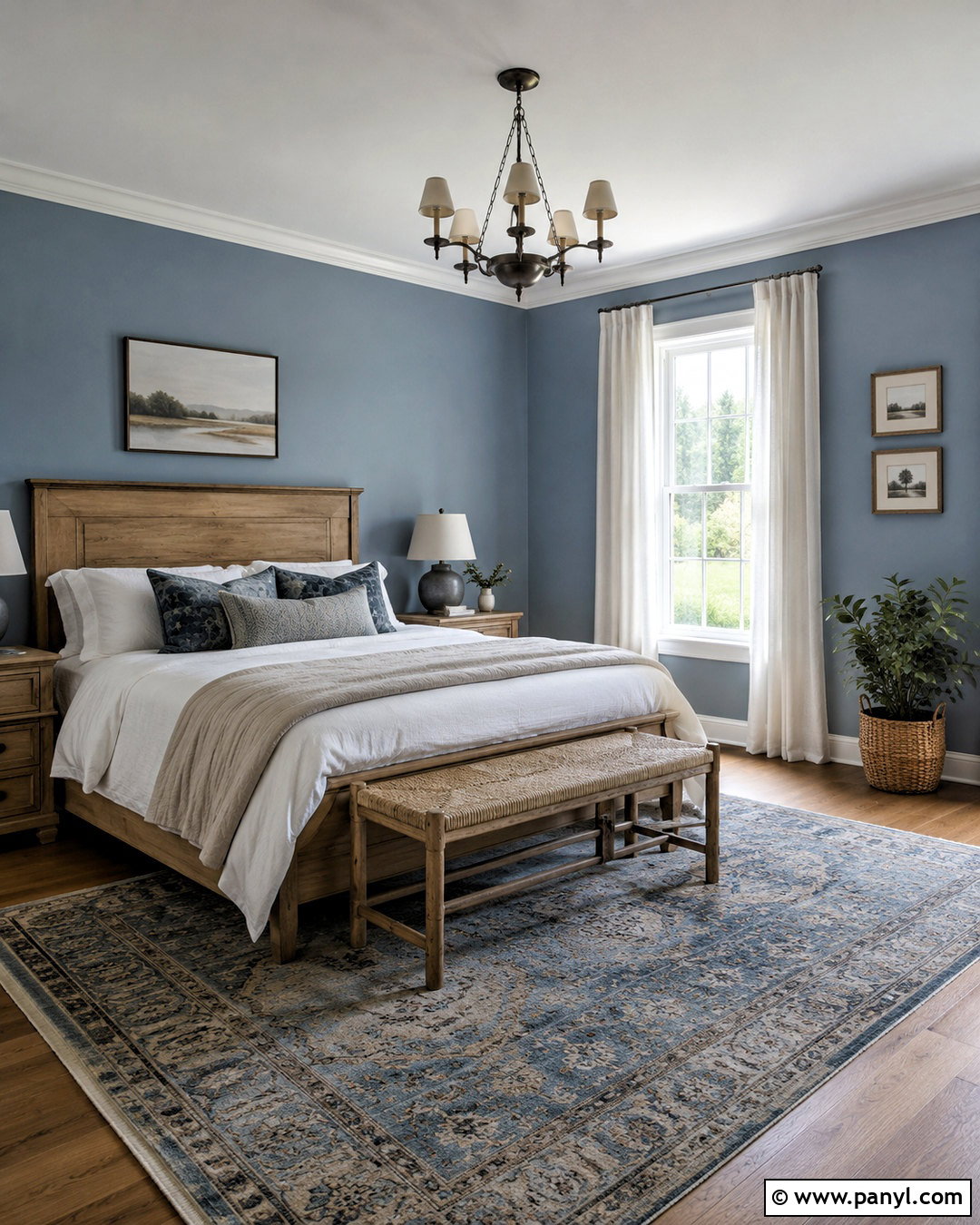
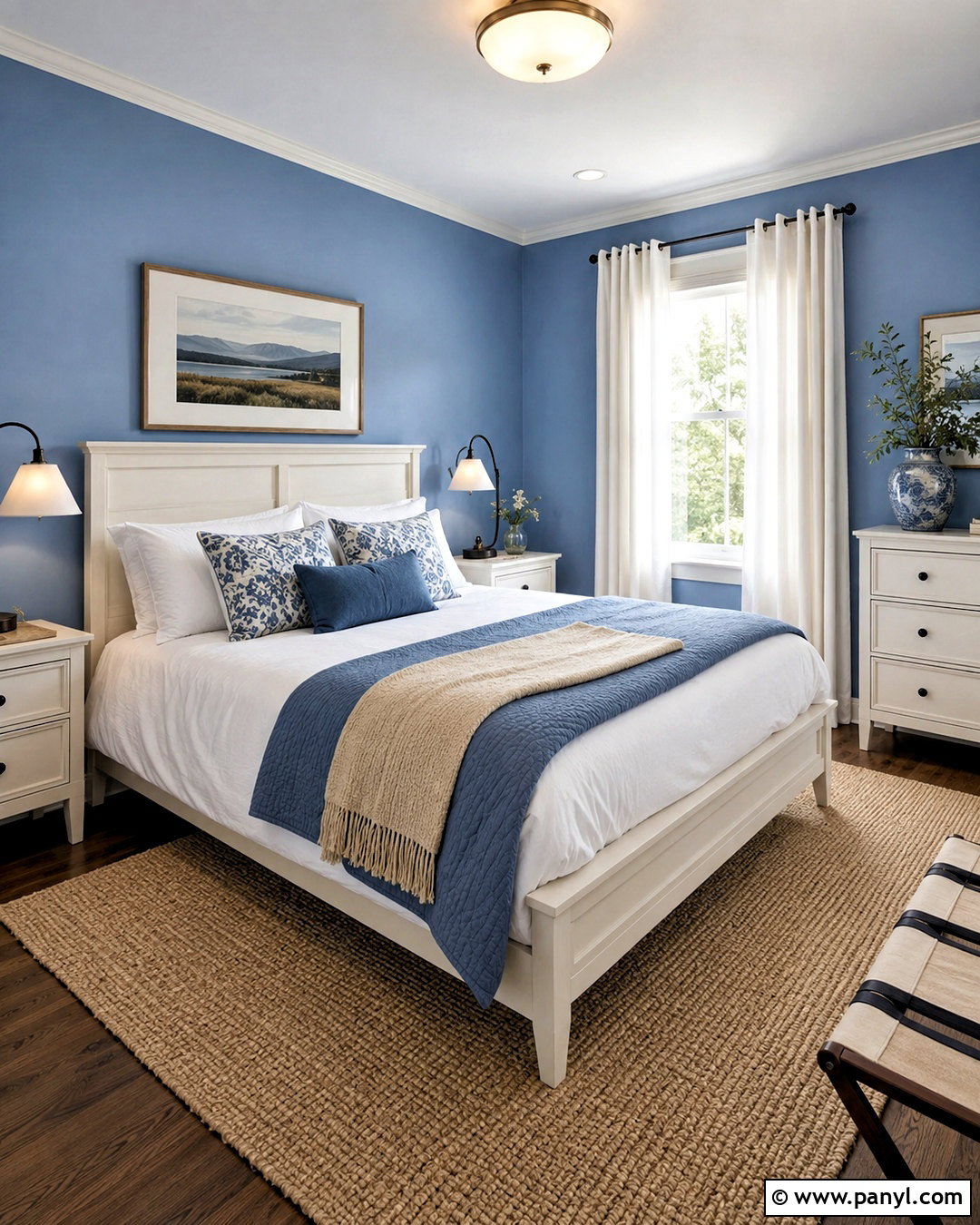
Dusty blue walls create a peaceful bedroom with more character than a standard neutral. Look for a softened blue with gray undertones, which will coordinate easily with white, tan, and medium wood finishes. A natural oak bed and matching nightstands give the room warmth, while white bedding keeps the palette clean. Add a flax-colored throw, blue patterned pillows, and a faded vintage rug for gentle layering. Brushed nickel or pewter lighting works well with the cooler wall color, although aged brass can create a warmer contrast. Use simple white curtains to maximize daylight. For a polished finish, paint the trim in a soft white rather than a stark white, which can make muted blue appear colder than intended.

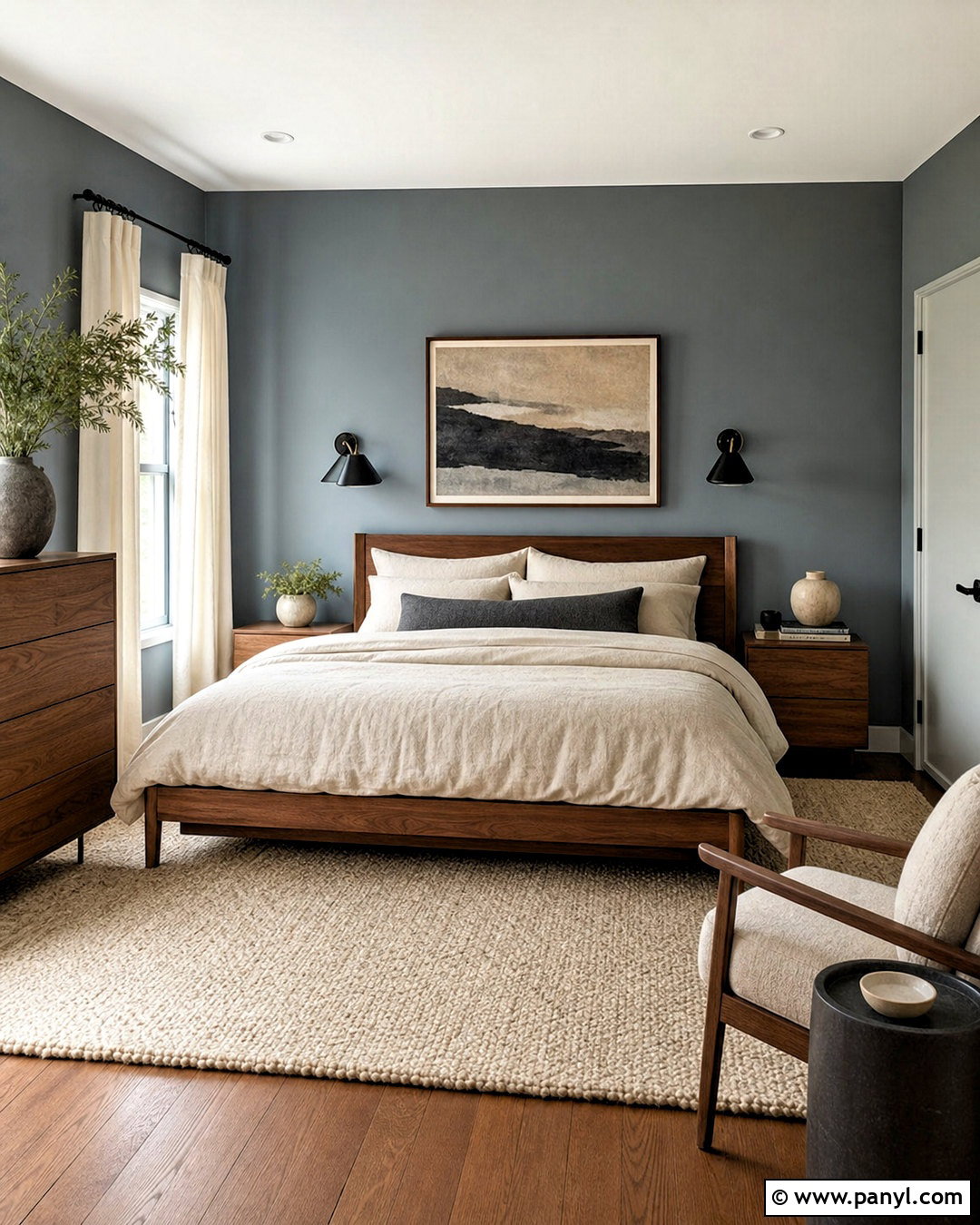
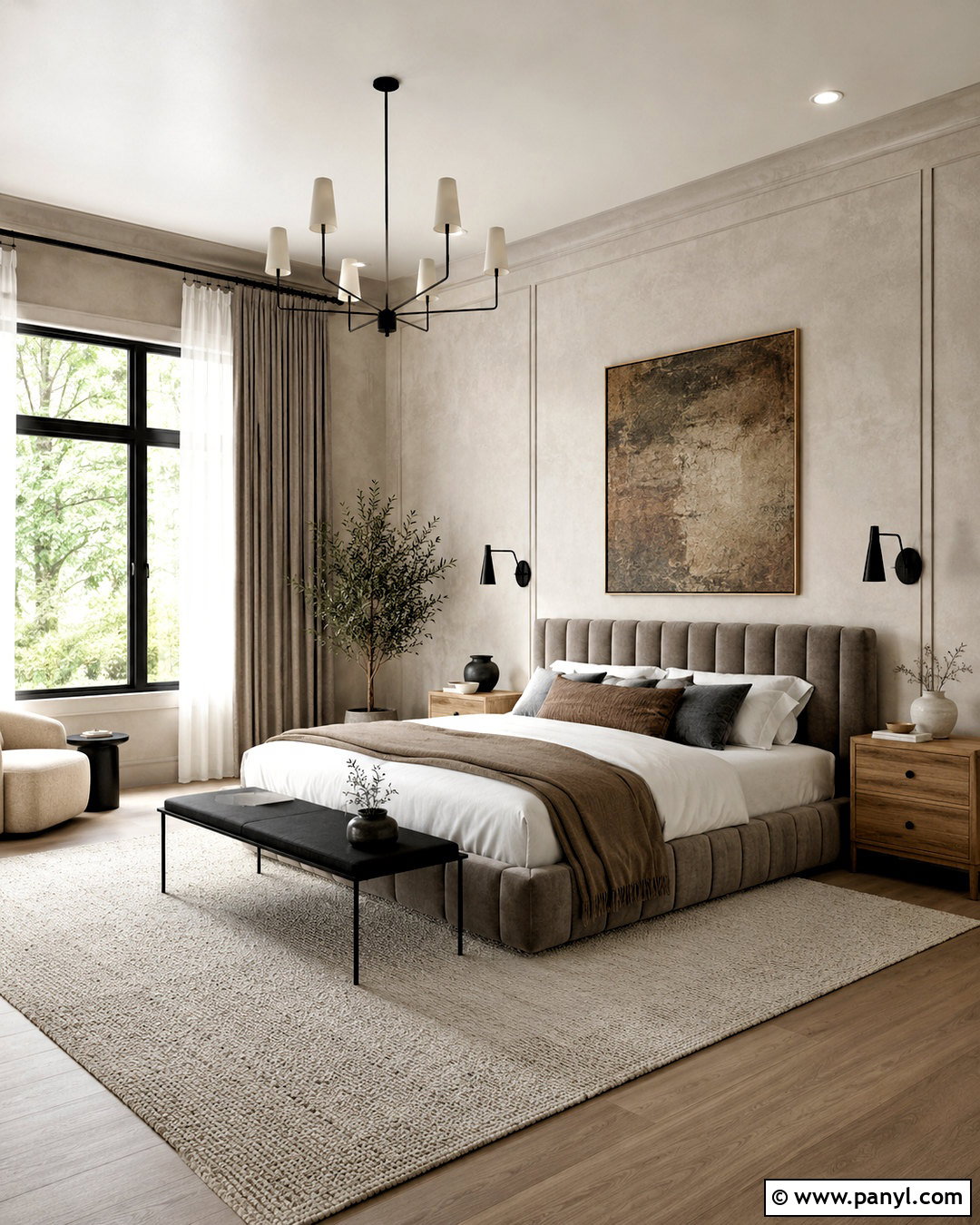
8. Sky Blue Bedroom Walls
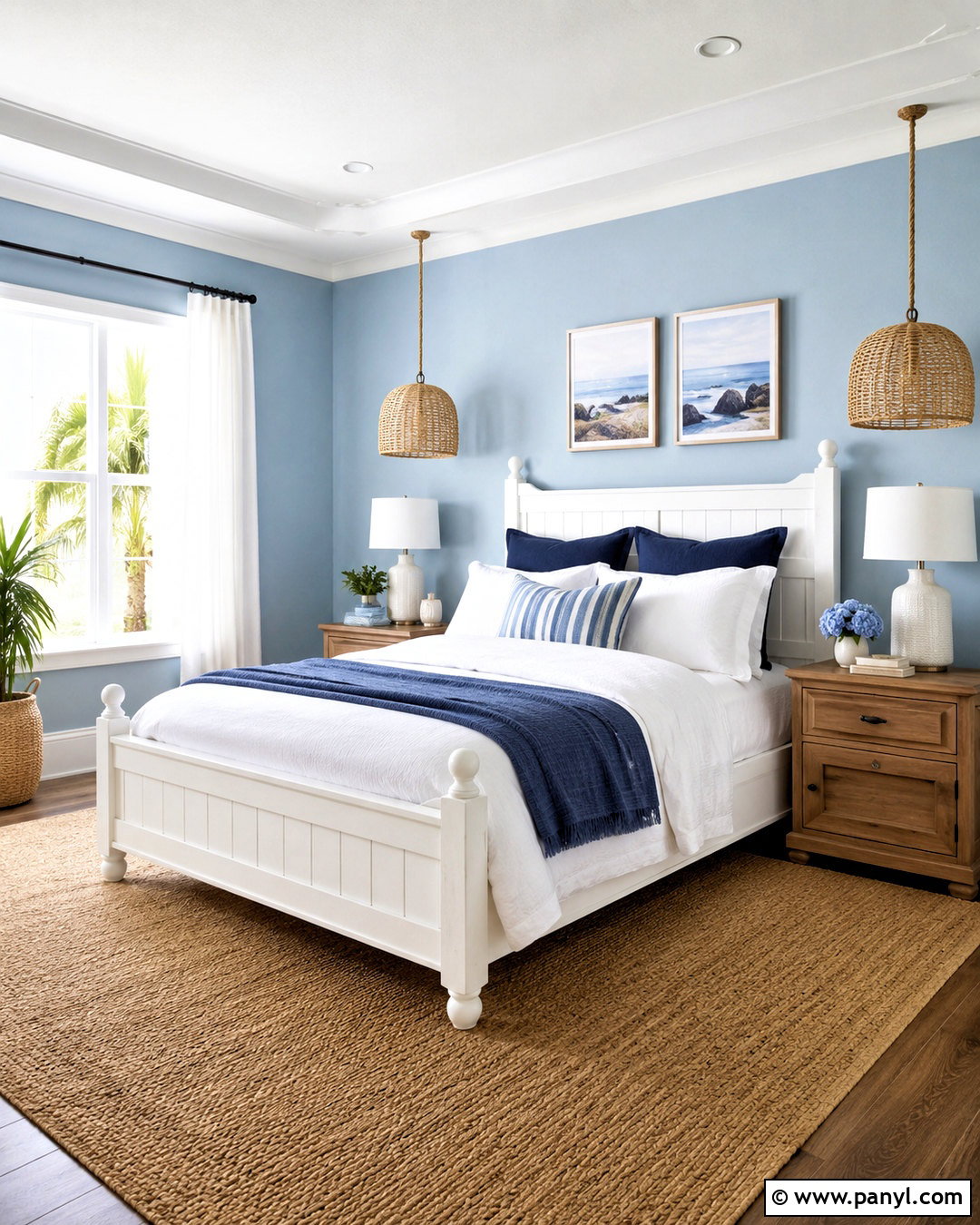
Clear sky blue walls make a bedroom feel cheerful, open, and welcoming. Choose a light blue that remains visible in bright daylight instead of fading into white. Pair it with a white painted bed, light oak nightstands, and crisp cotton bedding featuring small navy or green accents. A natural fiber rug and woven pendant add warmth so the room does not feel overly cool. Hang simple coastal landscapes or abstract cloudlike prints above the bed, but avoid excessive themed decorations. White trim and a matching ceiling create a fresh frame around the blue. This complete scheme is particularly effective in compact bedrooms, children’s rooms, and guest spaces where a light, uncomplicated atmosphere makes the room feel comfortable and easy to use.
9. Navy Blue Bedroom Accent Wall
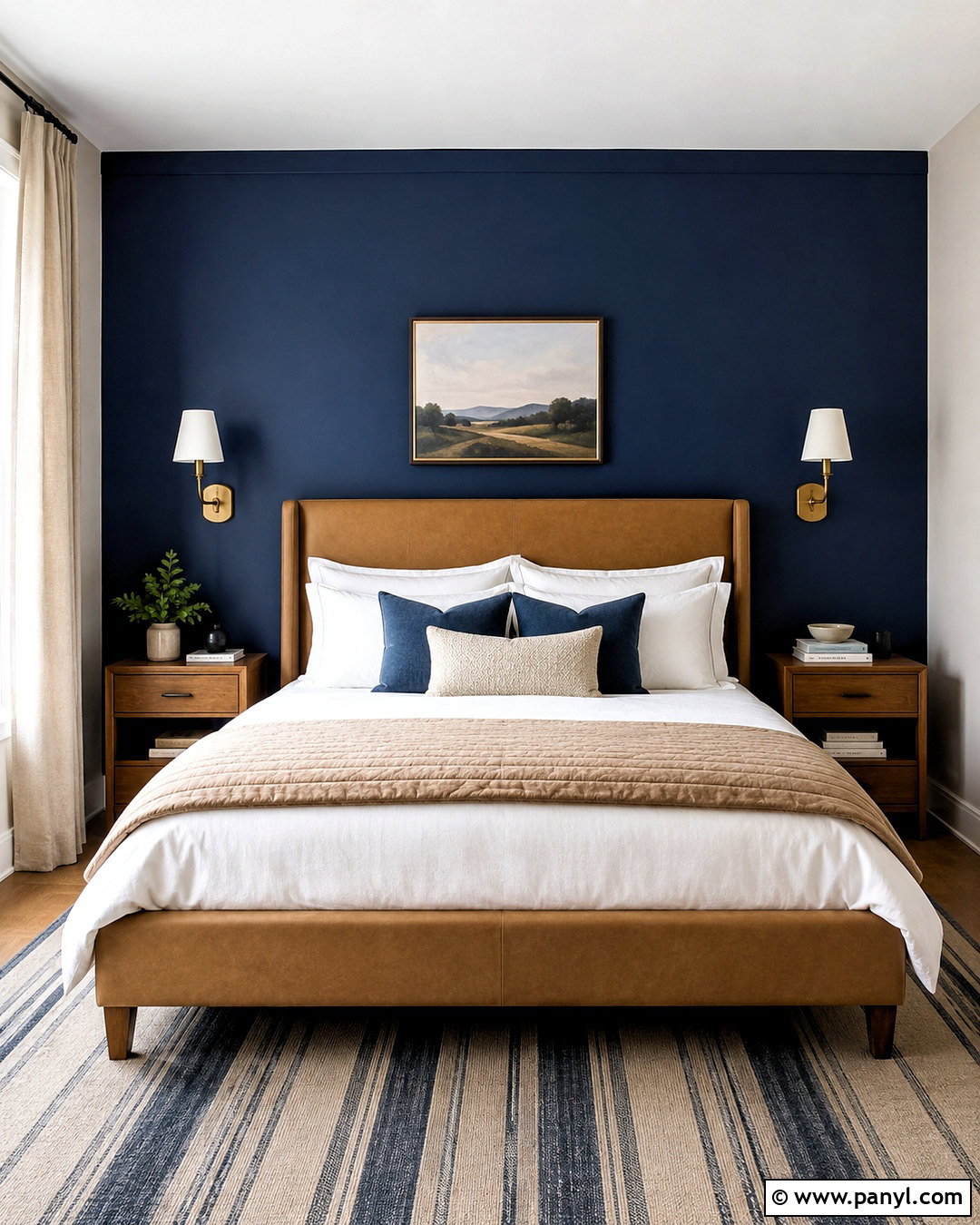
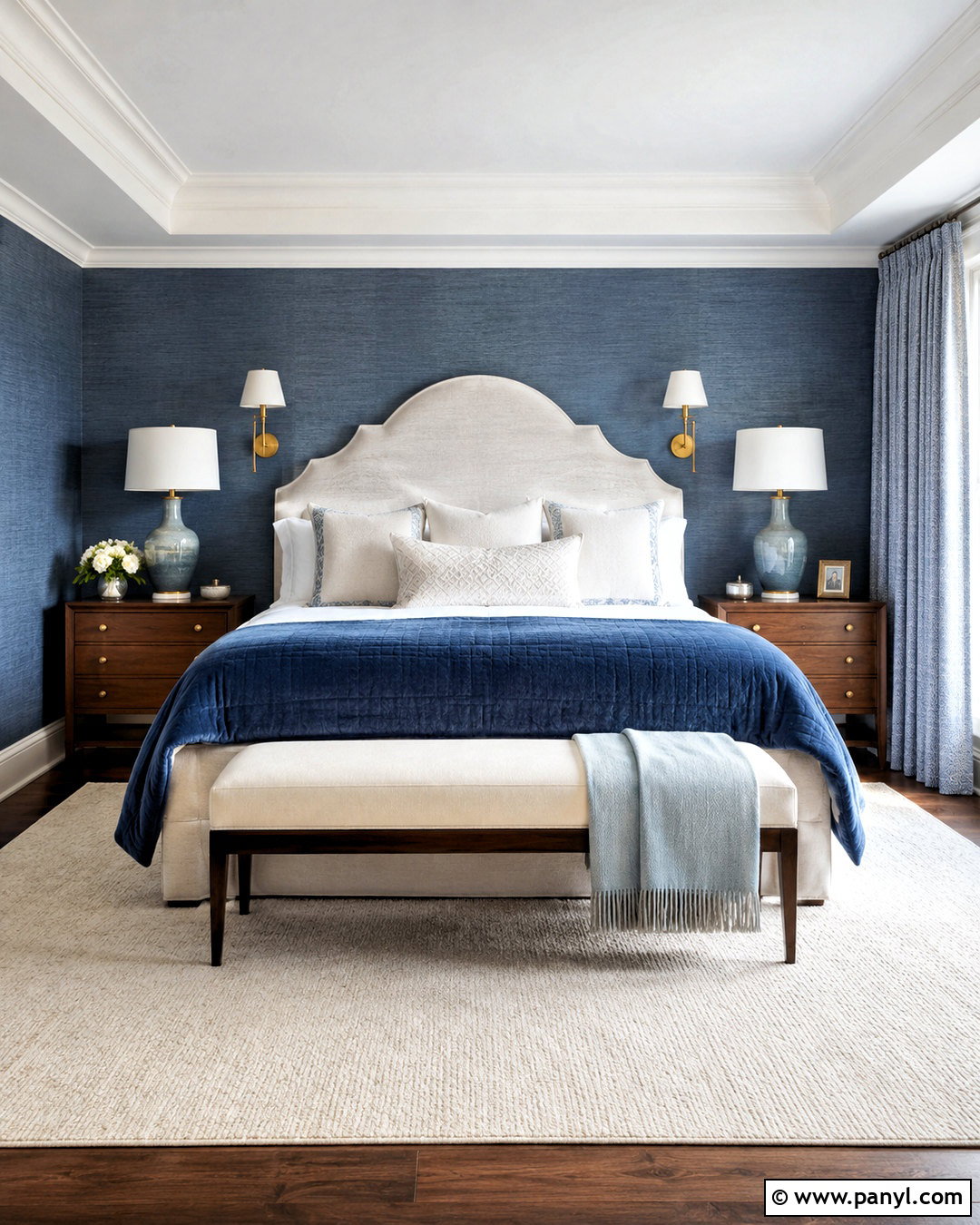
A navy accent wall gives the bed a strong focal point while allowing the remaining bedroom to stay bright. Paint the headboard wall in deep navy and use warm white or pale greige on the other three walls. Choose a camel upholstered bed or light wood frame to create clear contrast against the blue. White bedding, a tan quilt, and small blue patterned pillows connect both sides of the color scheme. Add brass wall sconces and medium wood nightstands for warmth. A striped or vintage-style rug can incorporate navy without making the floor appear dark. Keep window treatments light and simple. This balanced layout delivers drama behind the bed while preserving an open feeling throughout the rest of the room.


10. Teal Bedroom Walls
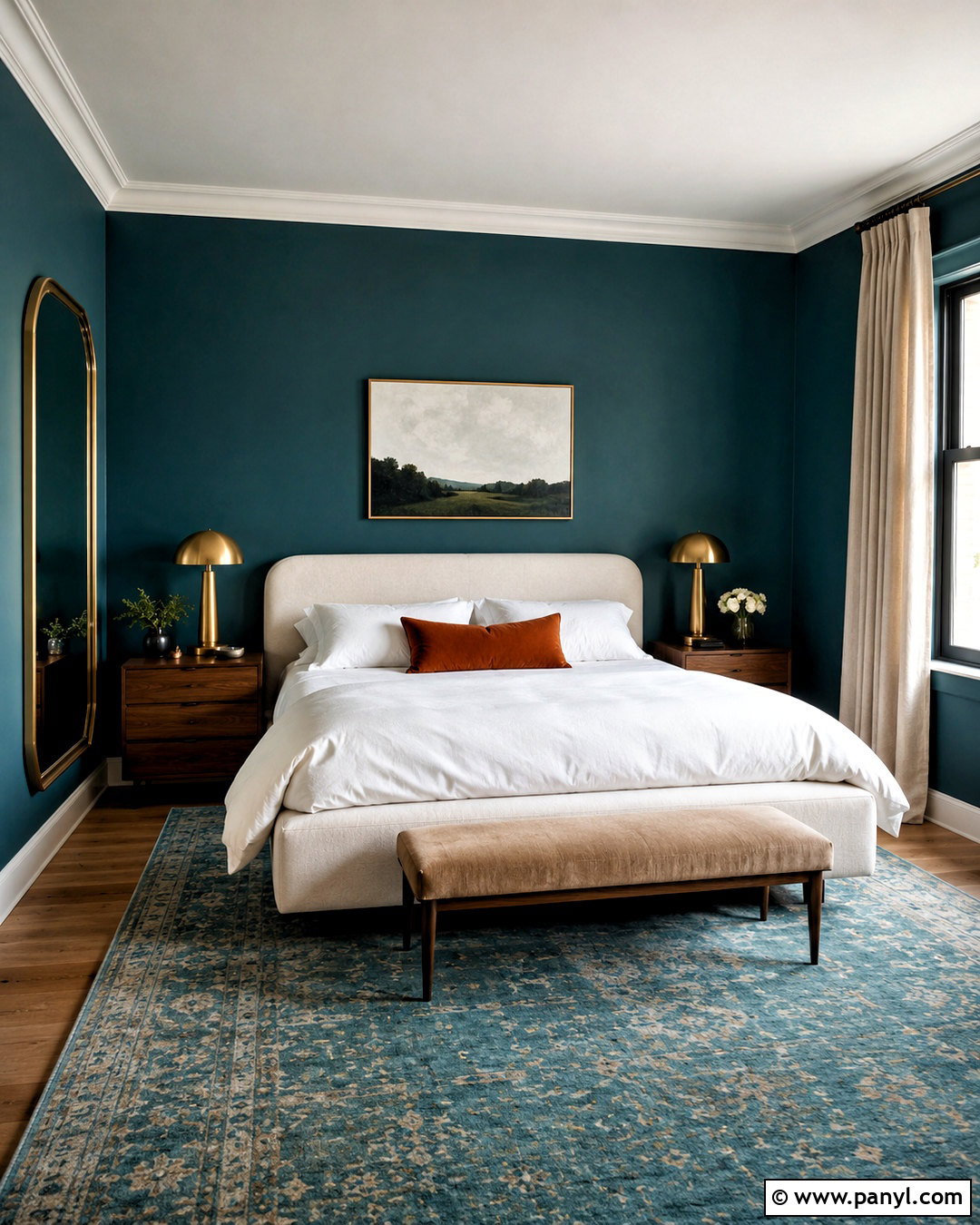
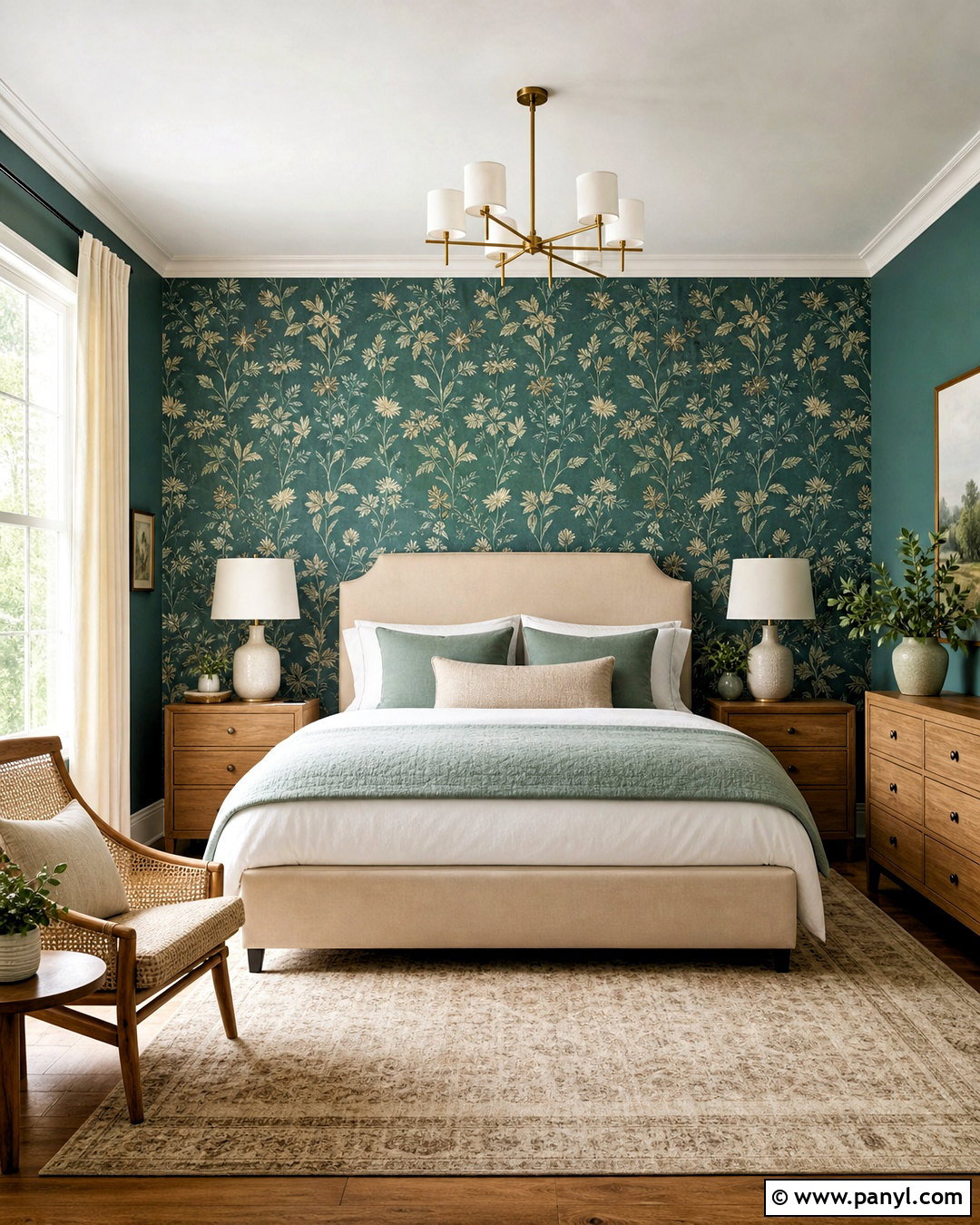
Teal walls can make a bedroom feel colorful, sophisticated, and comfortably enclosed. Select a deep blue-green shade with slightly muted undertones rather than a highly saturated jewel tone. Balance it with a cream upholstered bed, white bedding, and natural linen curtains. Walnut nightstands and brass lamps bring out the warmth hidden within the teal paint. Add one rust velvet pillow and a patterned rug containing teal, ivory, and brown for a coordinated finish. Keep the ceiling bright white to prevent the color from closing in overhead. Minimal artwork works best because the walls already provide plenty of visual impact. A large mirror with a thin brass frame can reflect light and make this bold bedroom palette feel more spacious.
11. Charcoal Bedroom Walls
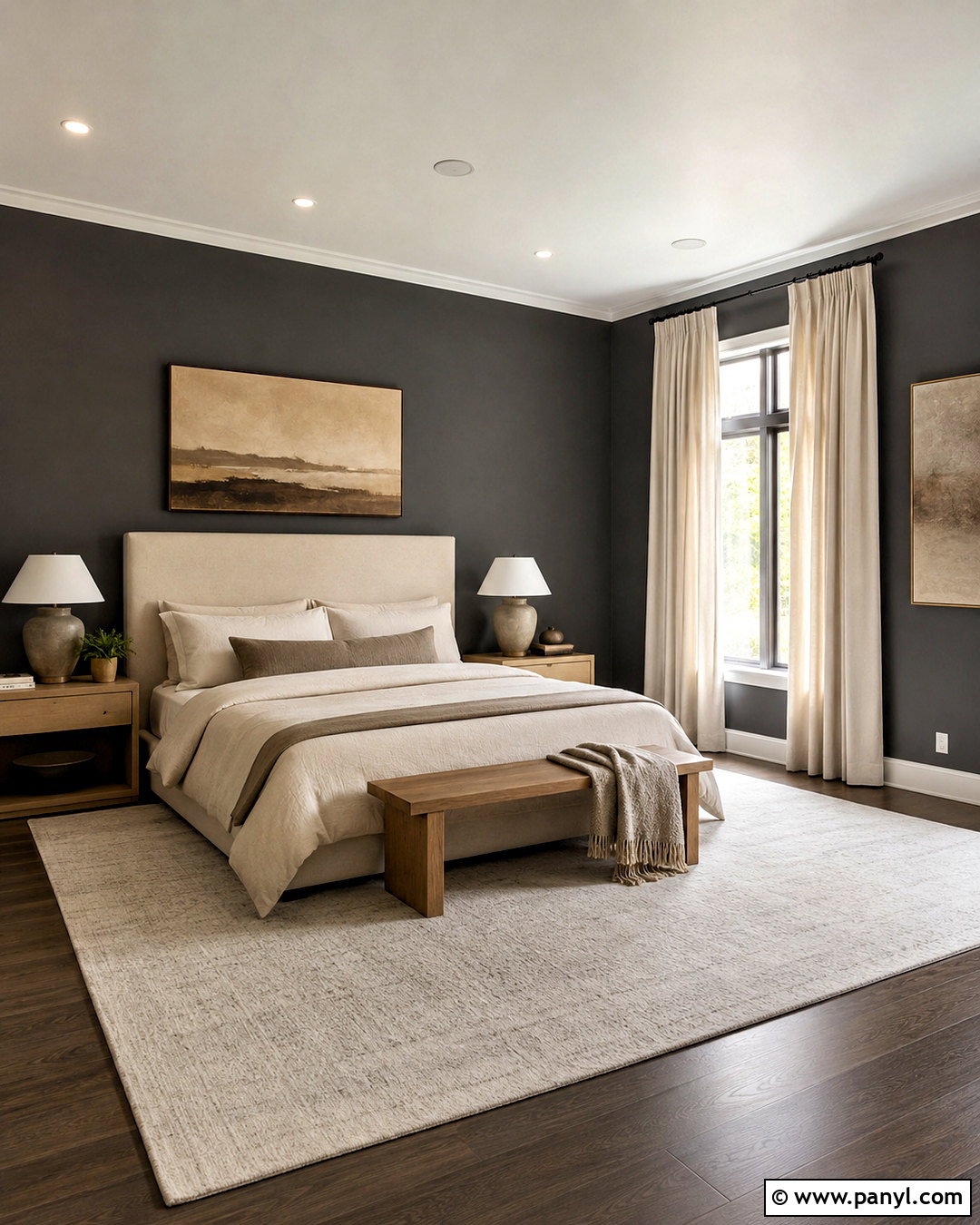
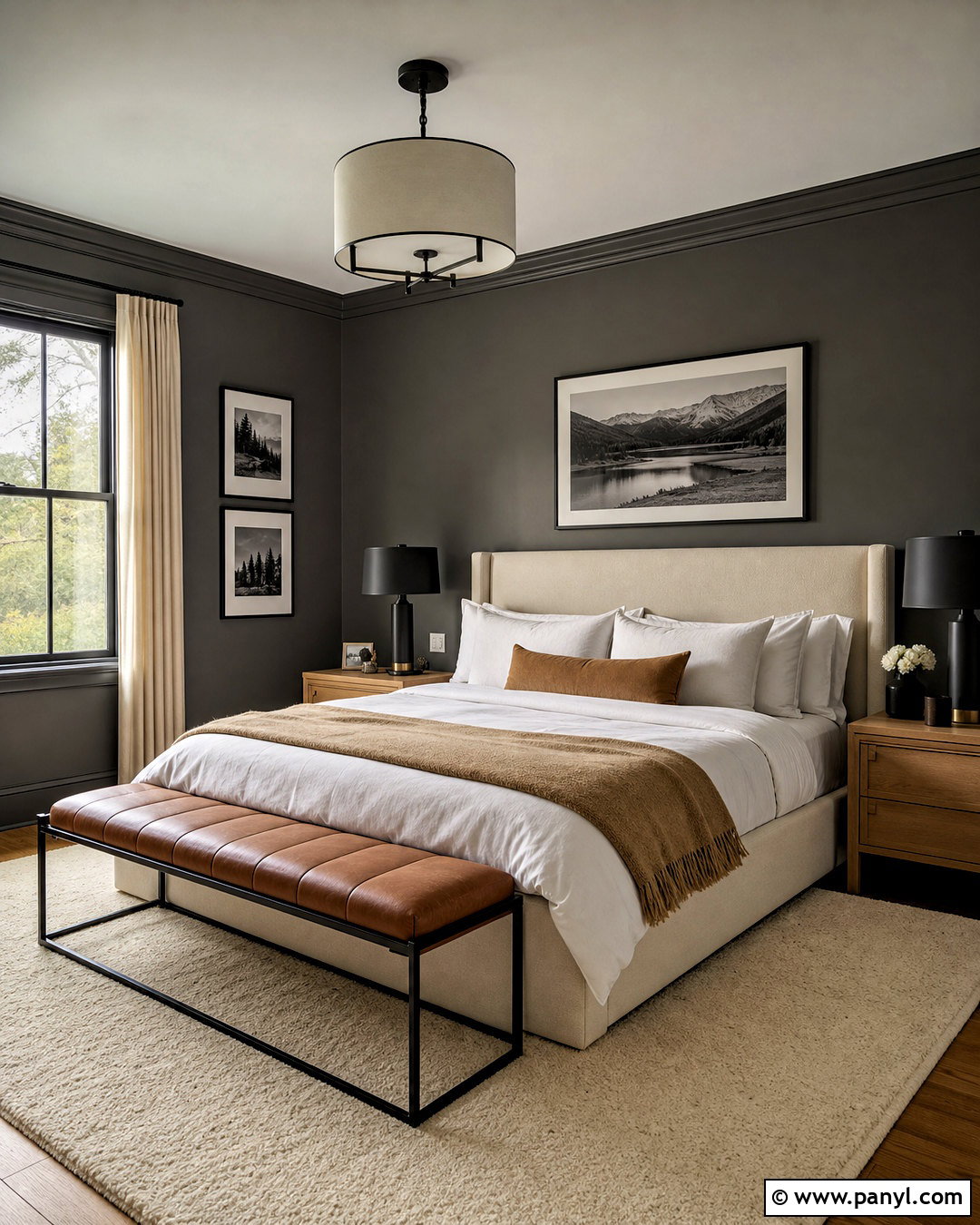
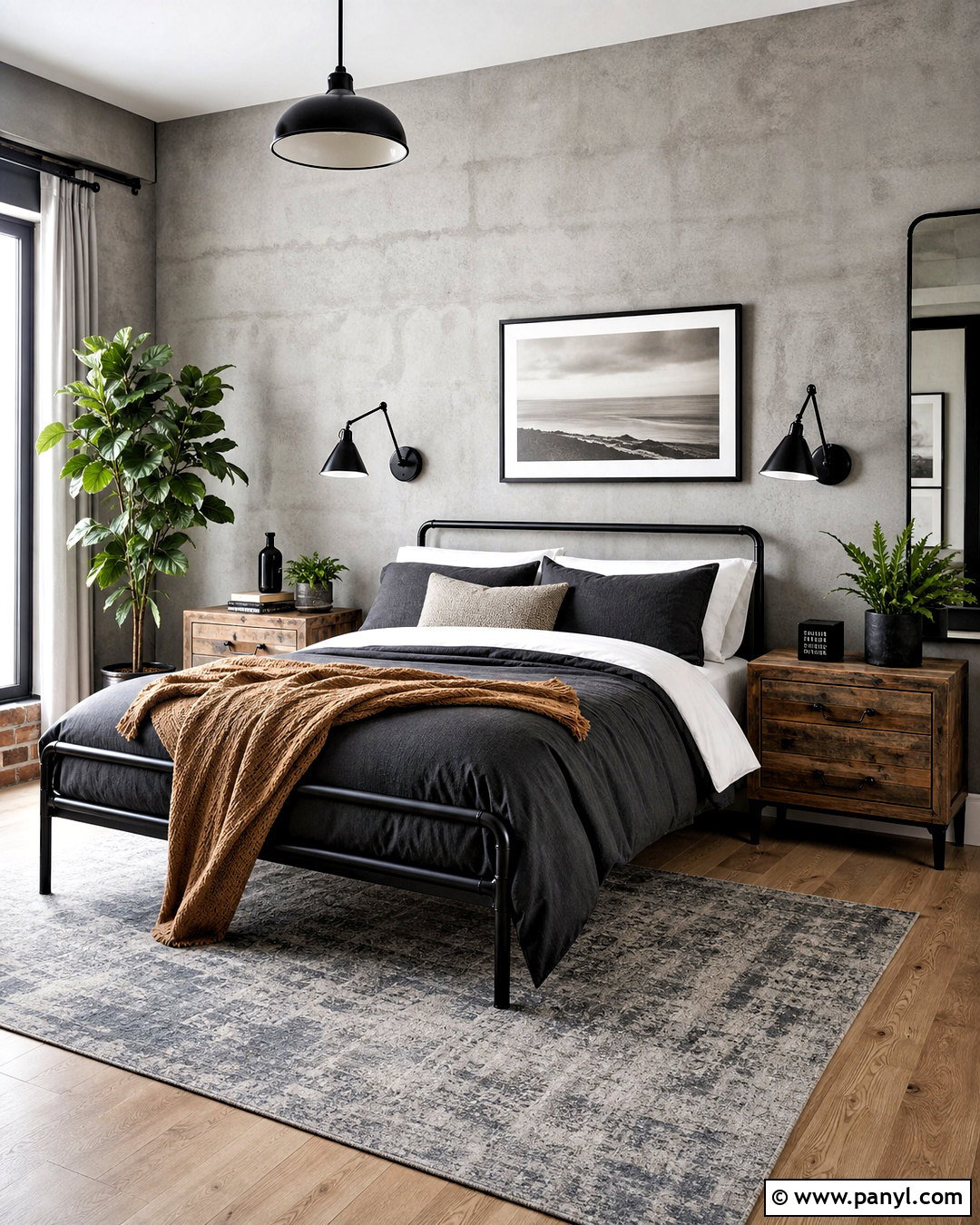
Charcoal walls create a refined bedroom when they are paired with warm textures and thoughtfully placed light colors. Choose charcoal with a soft brown undertone so the walls feel cozy instead of industrial. Use a light oatmeal headboard, white sheets, and a thick beige coverlet to brighten the bed. Pale oak nightstands and ceramic lamps soften the dark background, while black accents maintain a clean modern edge. Hang full-length ivory curtains and place a large cream rug beneath the bed. One abstract artwork with tan, black, and off-white can pull the scheme together. Paint the ceiling and trim warm white for contrast. This look is especially effective in rooms with large windows or layered lighting from sconces, lamps, and ceiling fixtures.
12. Soft Gray Bedroom Walls
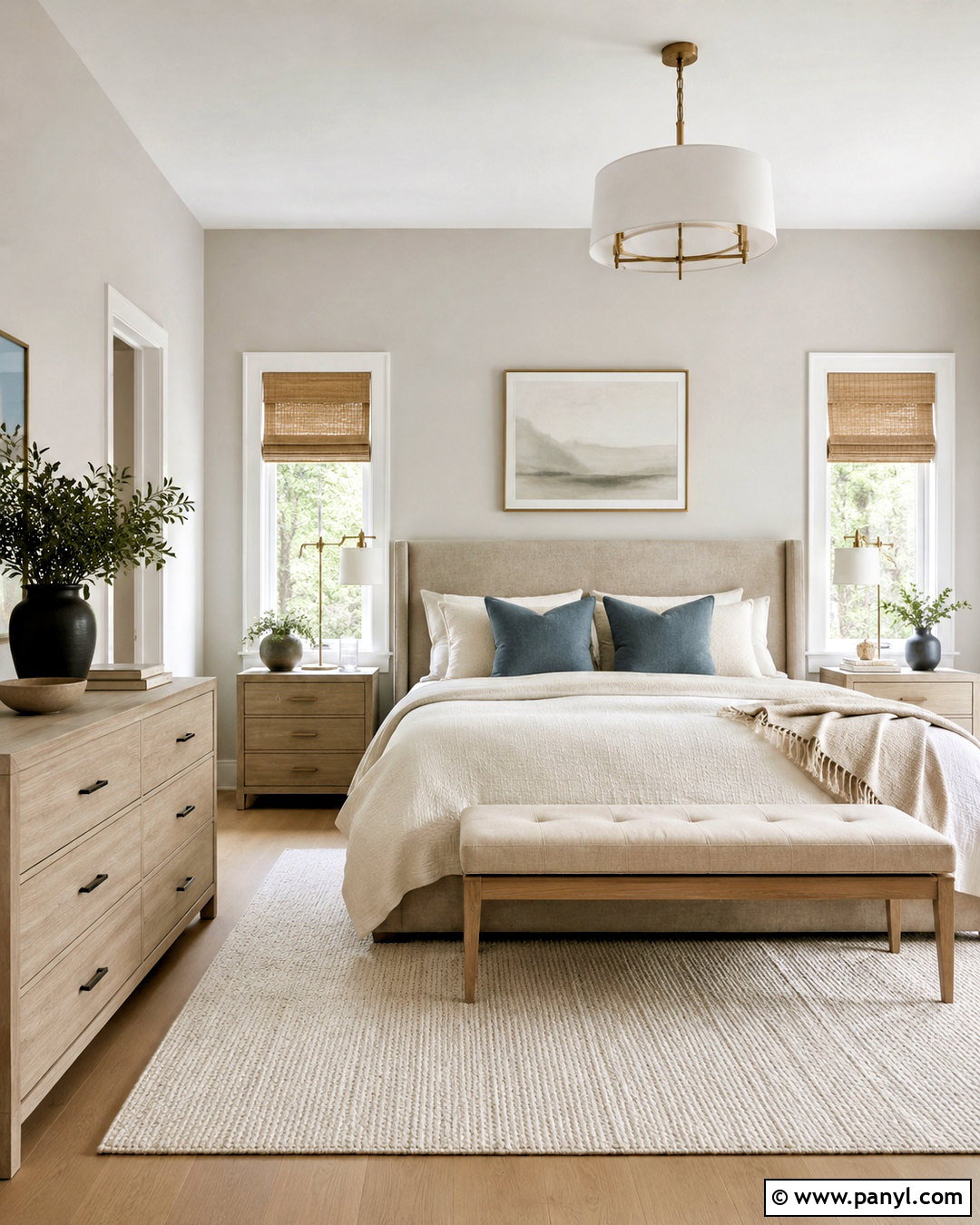
Soft gray walls provide a quiet foundation for a bedroom, but the shade should be selected carefully to avoid a flat or chilly result. Choose a light gray with subtle warm or green undertones, then combine it with white oak furniture and creamy bedding. A taupe upholstered headboard adds gentle contrast, while dusty blue pillows introduce a restrained accent color. Use brushed brass or matte black lighting for definition. A textured ivory rug and woven shades bring necessary warmth to the smooth painted surfaces. Instead of decorating only with gray, layer natural materials such as wood, linen, wool, and ceramics. Soft white trim completes the room without creating a harsh border, resulting in a balanced bedroom that feels calm and adaptable.
13. Black Bedroom Accent Wall
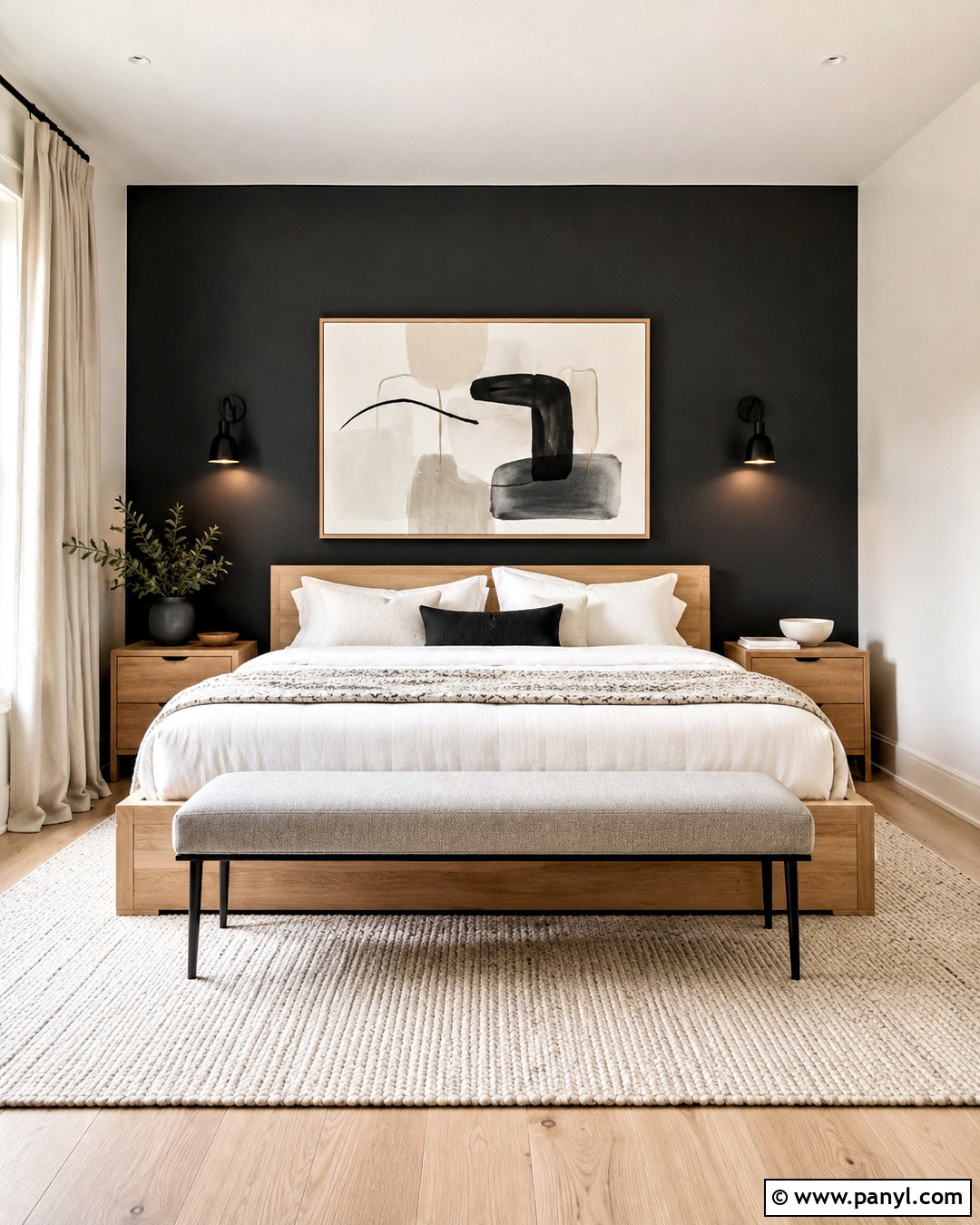
A black accent wall can look clean and architectural when it is limited to the wall behind the bed. Choose a soft matte black rather than a glossy or blue-heavy shade. Pair it with a pale oak platform bed, white bedding, and a light gray upholstered bench. Matching black sconces blend into the wall and keep bedside surfaces clear. Paint the remaining walls warm white, then use natural linen curtains and a large cream rug to maintain brightness. A single oversized artwork with white and earthy brown details prevents the black wall from feeling empty. Repeat black sparingly through curtain rods and picture frames. This complete design creates a bold focal point while retaining a relaxed, livable atmosphere in the rest of the bedroom.
14. Blush Pink Bedroom Walls
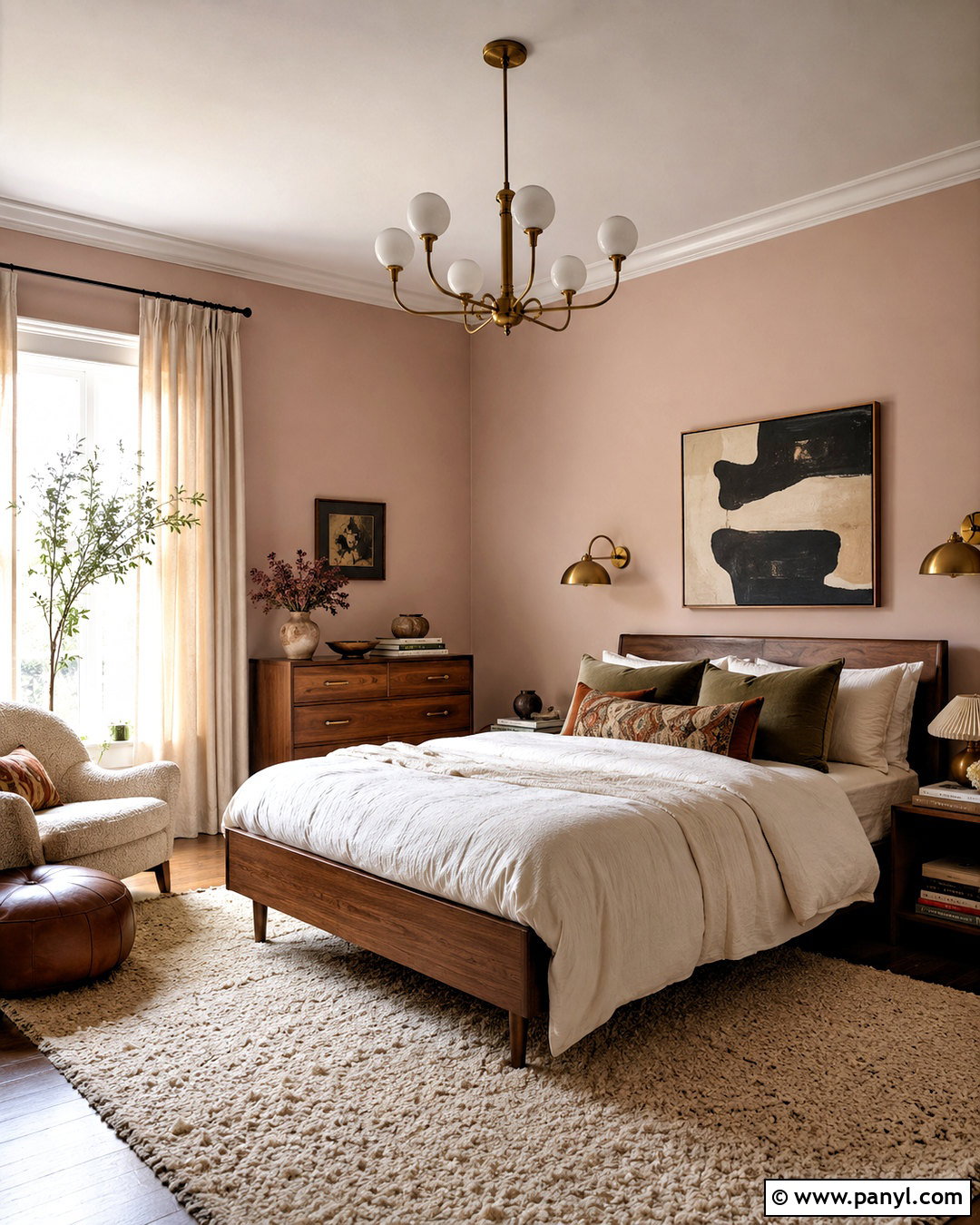
Blush pink walls can feel mature and calming when the paint has dusty beige or gray undertones. Cover all four walls in the muted pink, then ground the room with a walnut bed and dark wood nightstands. Dress the bed in ivory linen with accents of rust, burgundy, or olive for a more sophisticated palette. A cream wool rug and oatmeal curtains soften the floor and windows. Choose aged brass lighting to complement the warmth of the walls. Abstract artwork with black, tan, and blush adds contrast without making the room overly sweet. Keep the ceiling warm white and use simple trim. The finished look works beautifully in primary bedrooms, guest rooms, and smaller spaces that need warmth without heavy color.
15. Dusty Rose Bedroom Walls
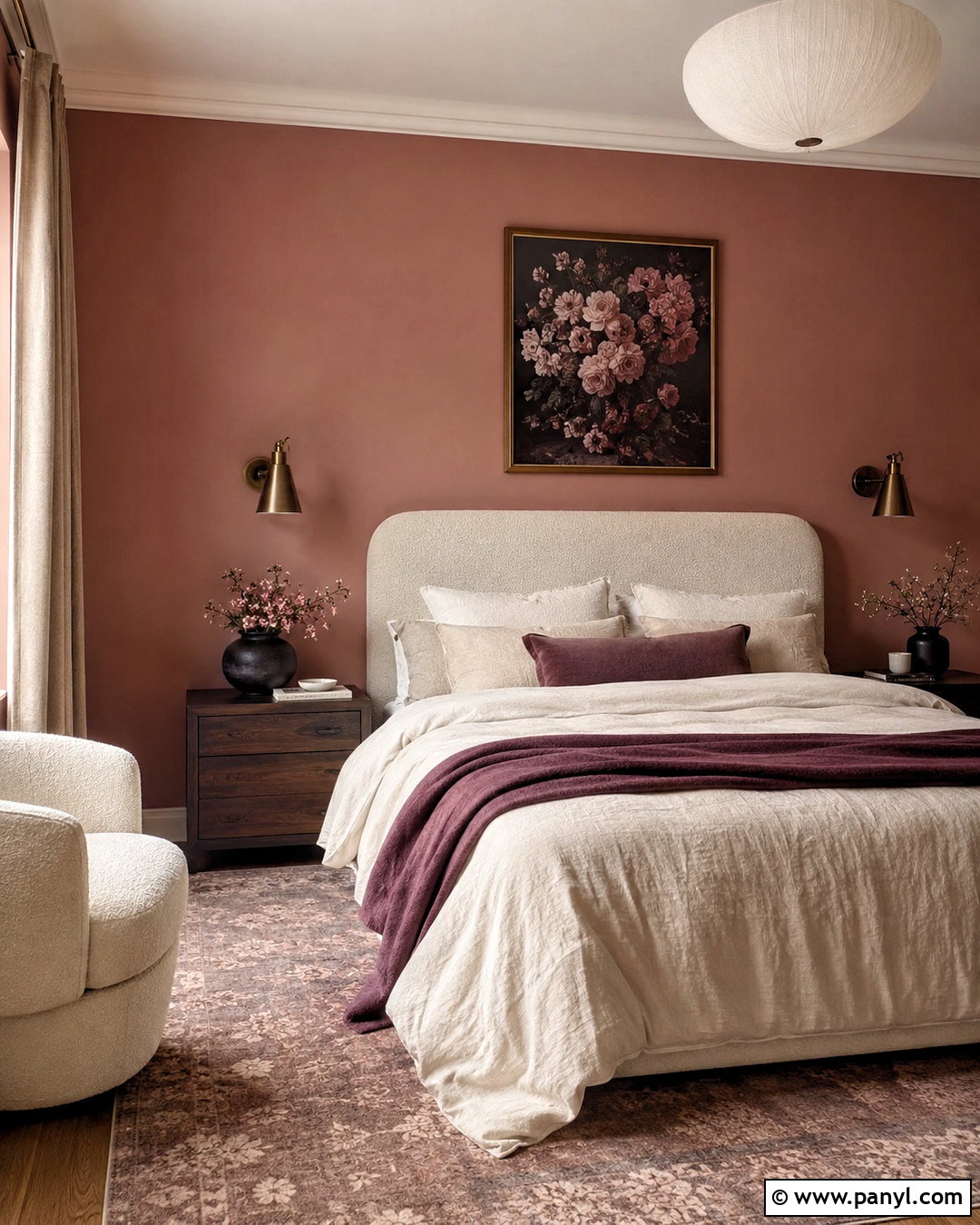
Dusty rose provides more depth than pale blush while maintaining a soft, restful bedroom atmosphere. Select a medium rose shade with muted brown undertones and use it across the walls behind warm white trim. A cream bouclé or linen headboard creates a light focal point, while dark walnut nightstands anchor the sides of the bed. Layer ivory bedding with a plum throw and one patterned pillow containing rose, green, and tan. Add bronze wall sconces and a vintage rug with faded floral details. Keep the curtains neutral so they do not compete with the wall color. A few dark accents, such as framed artwork or a slim bench, give the room structure and prevent the pink palette from feeling overly delicate.
16. Terracotta Bedroom Walls
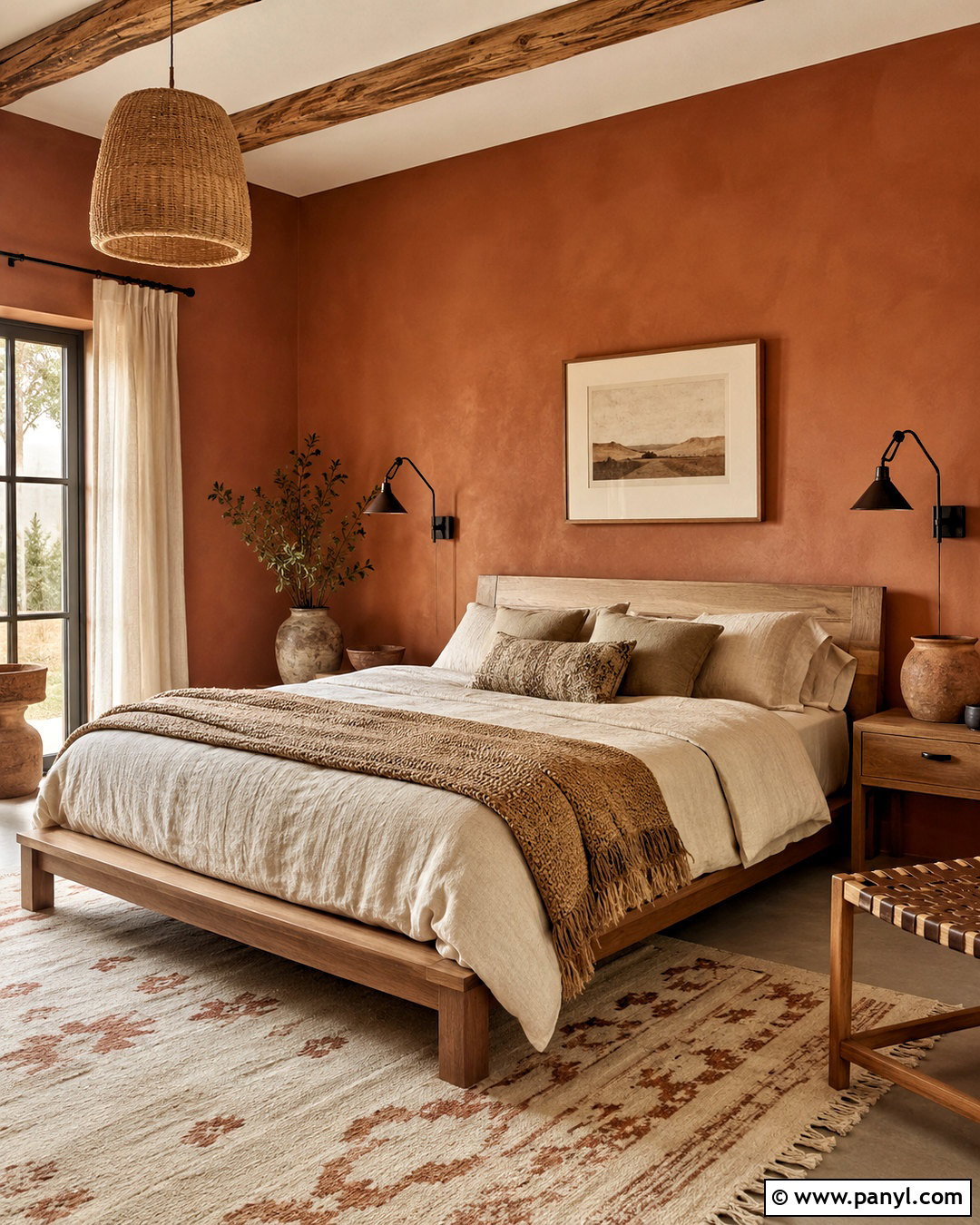
Terracotta walls wrap a bedroom in earthy warmth and look especially inviting with natural materials. Choose a softened burnt orange with clay or brown undertones rather than a bright orange. Pair it with a low oak bed, cream linen bedding, and a woven tan blanket. Add dark bronze lamps, handmade ceramic accessories, and a flat-weave rug with ivory and rust details. Natural linen curtains allow daylight to soften the walls throughout the day. Keep the ceiling and trim creamy white for a gentle contrast. One large desert landscape or abstract earth-toned print can complete the focal wall. The finished room feels warm, grounded, and relaxed, making terracotta a strong choice for bohemian, Southwestern, Mediterranean, or organic modern interiors.
17. Clay Bedroom Walls
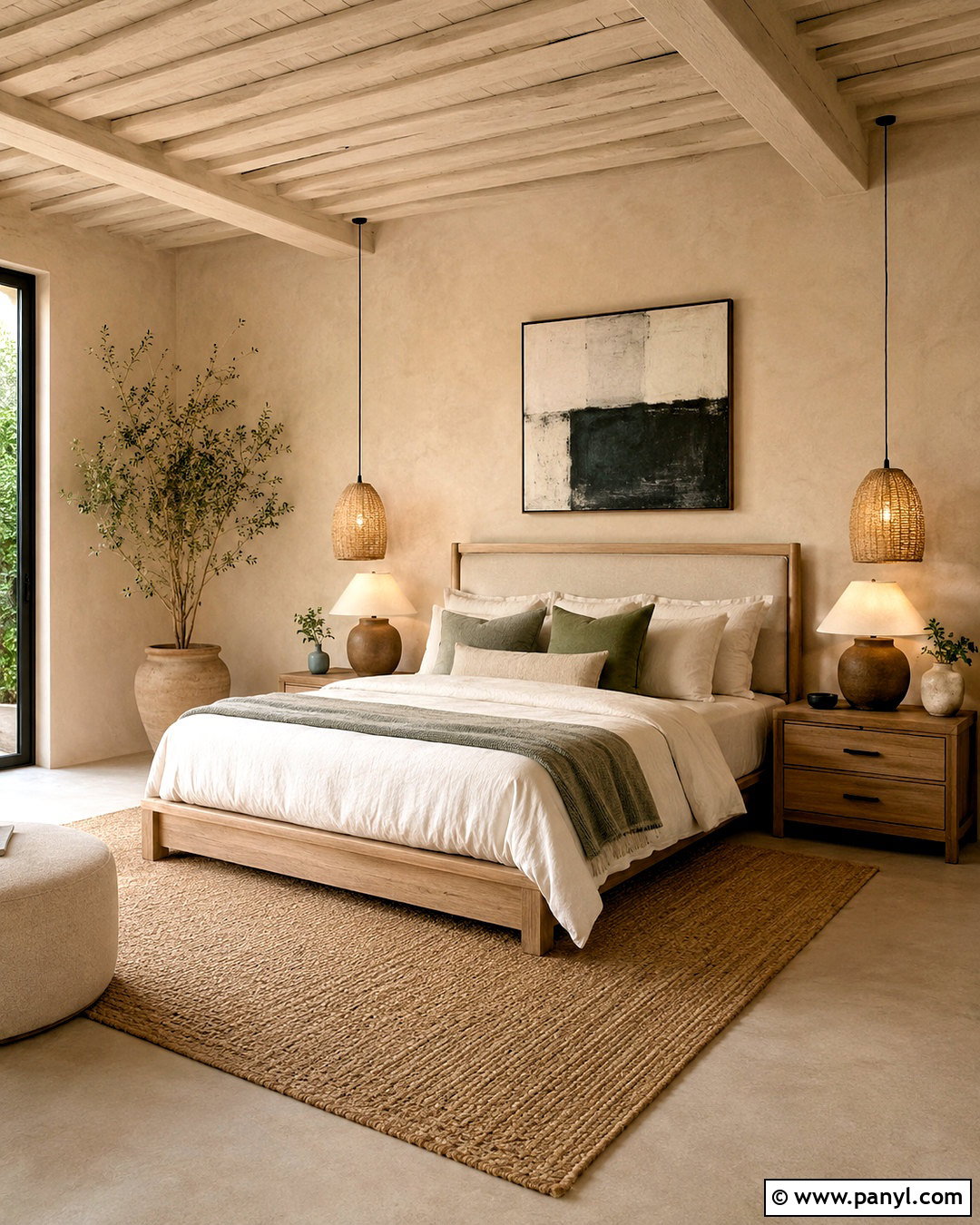
Muted clay paint creates a bedroom that feels warm and natural without the intensity of deeper terracotta. Look for a pinkish brown or pale adobe shade and paint all four walls for an even, comforting backdrop. Use a white oak bed, oatmeal upholstery, and layers of ivory linen to keep the room light. Sage green pillows or a small olive throw introduce earthy contrast. Woven pendant lighting, ceramic bedside lamps, and a jute-blend rug reinforce the handmade character of the color. Choose minimal artwork in cream and charcoal so the walls remain the main feature. Warm white trim gives the scheme a finished edge. This palette works particularly well in sunny rooms, where natural light reveals the subtle variation in the clay tone.
18. Burgundy Bedroom Accent Wall
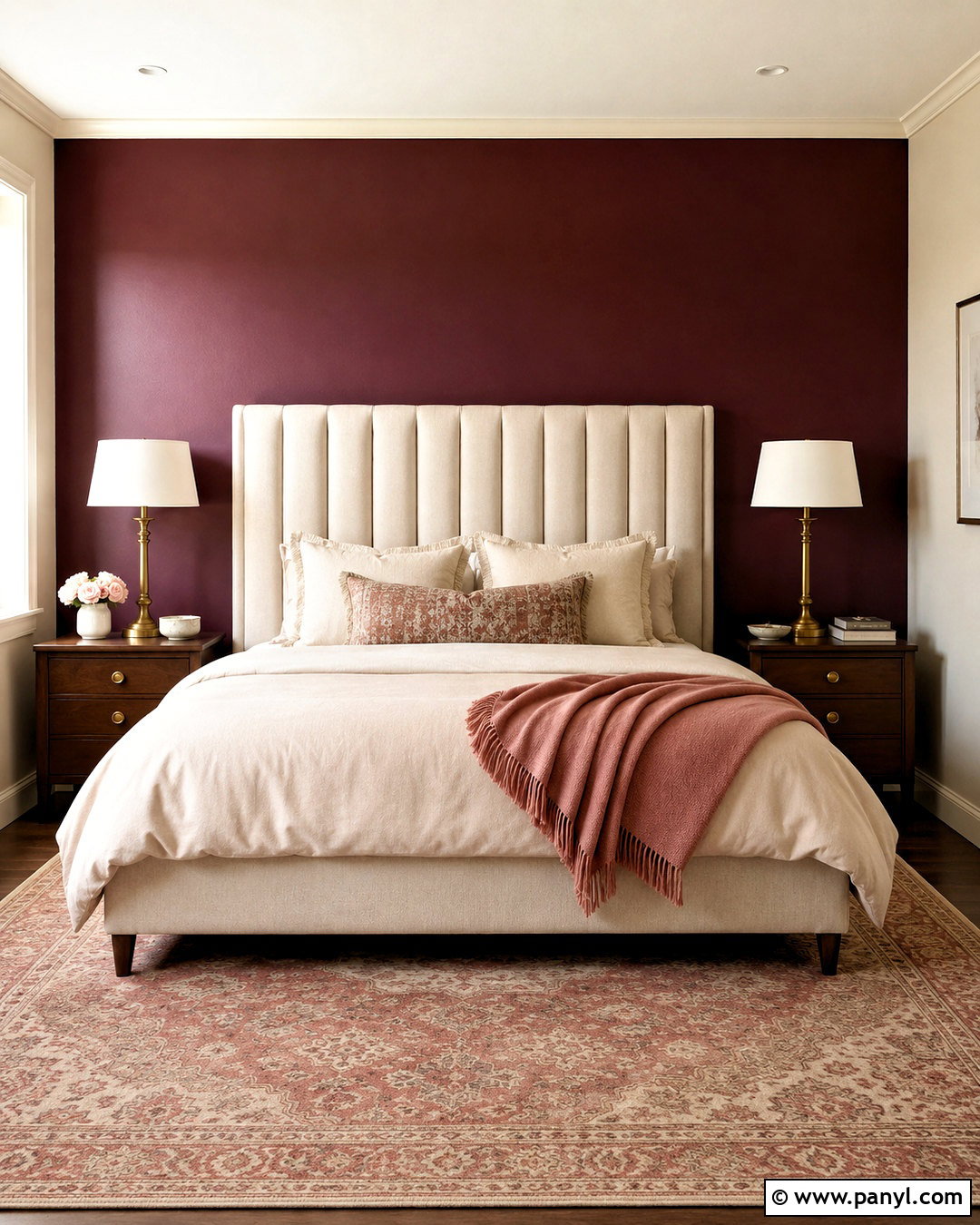
Burgundy can create an elegant bedroom focal point when balanced with pale neutrals and warm wood. Paint the wall behind the headboard in a deep red with brown or plum undertones. Keep the surrounding walls soft beige or warm white to control the color’s intensity. A tall oatmeal upholstered bed stands out beautifully against the burgundy, while walnut nightstands and brass lamps reinforce the richness. Use cream bedding with one burgundy lumbar pillow and a muted rose throw. A traditional rug containing faded red, navy, and beige ties the wall to the floor. Avoid filling the room with matching red accessories. Limiting burgundy to a few deliberate details keeps the complete design refined, restful, and easy to live with.
19. Plum Bedroom Walls
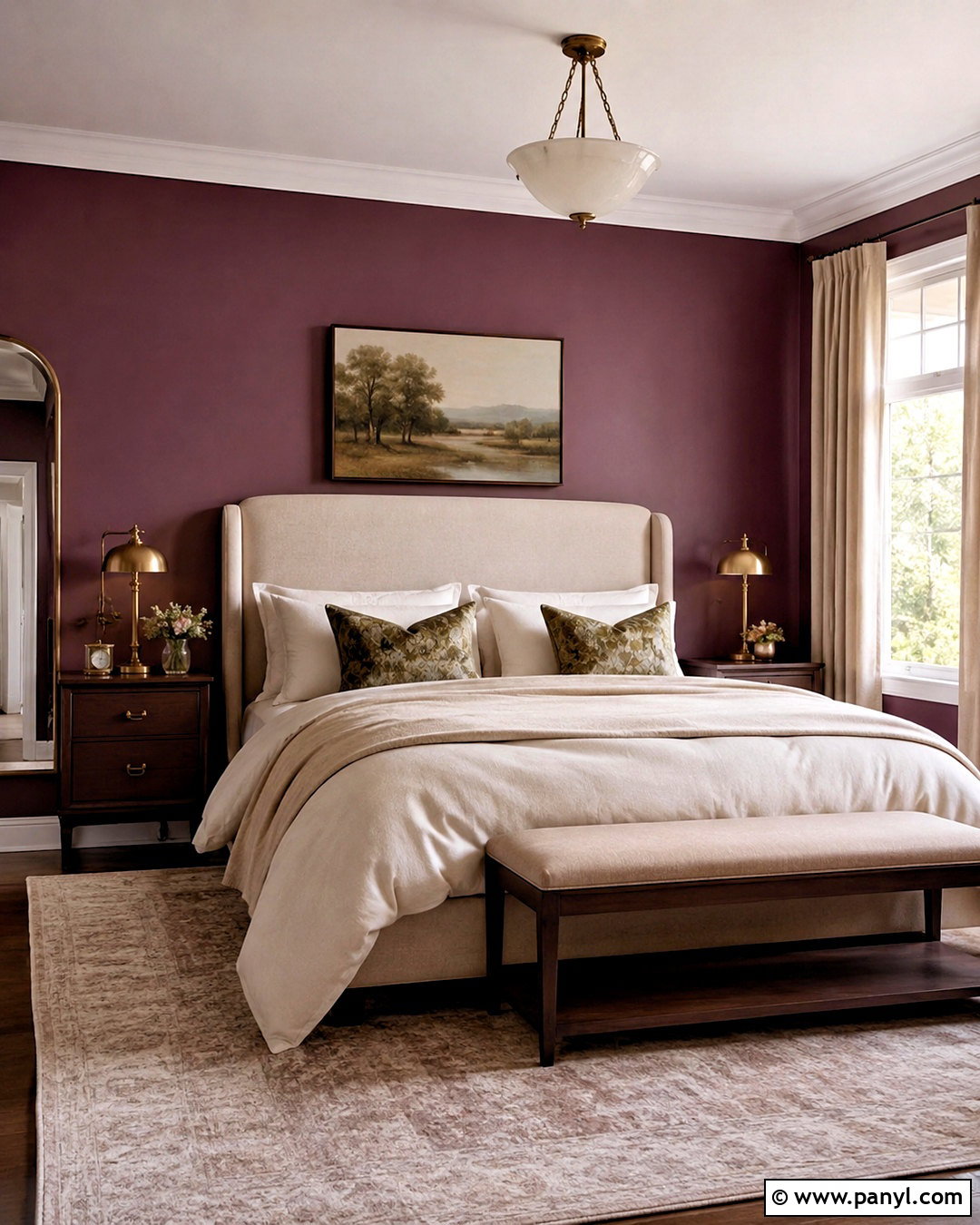
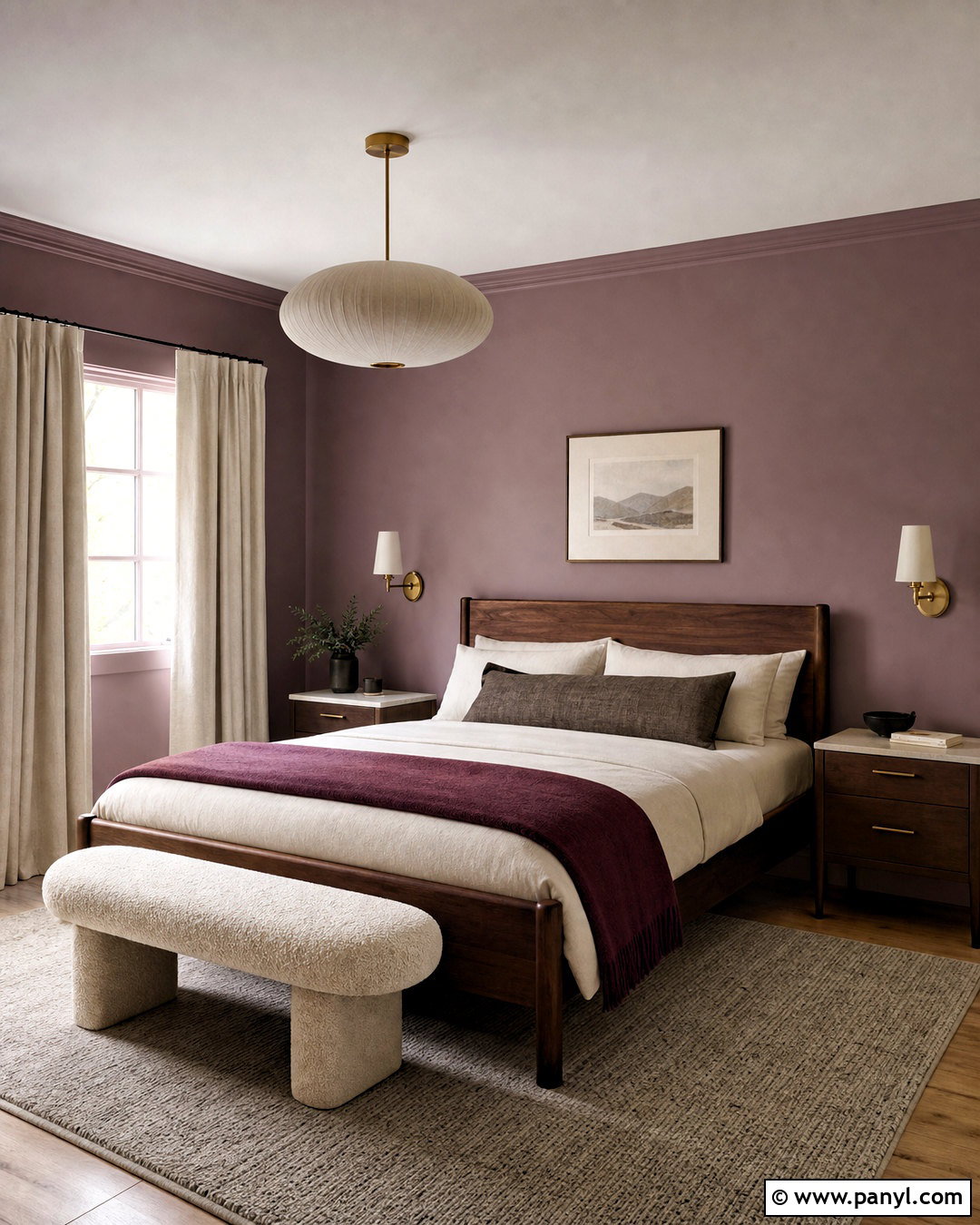
Plum walls can make a bedroom feel intimate and luxurious without relying on black or charcoal. Choose a dusty, brown-based plum that changes subtly as daylight moves through the room. Pair it with an ivory upholstered bed, warm white bedding, and a soft taupe bench. Dark wood nightstands add depth, while antique brass lamps bring a gentle glow to the rich wall color. Use neutral curtains and a pale rug to keep the composition balanced. One striped or floral pillow containing plum, moss, and cream adds pattern in a controlled way. Paint the ceiling a warm white unless the room is large enough for full color drenching. The resulting bedroom feels expressive, cocooning, and carefully layered rather than overly dramatic.
20. Lavender Bedroom Walls
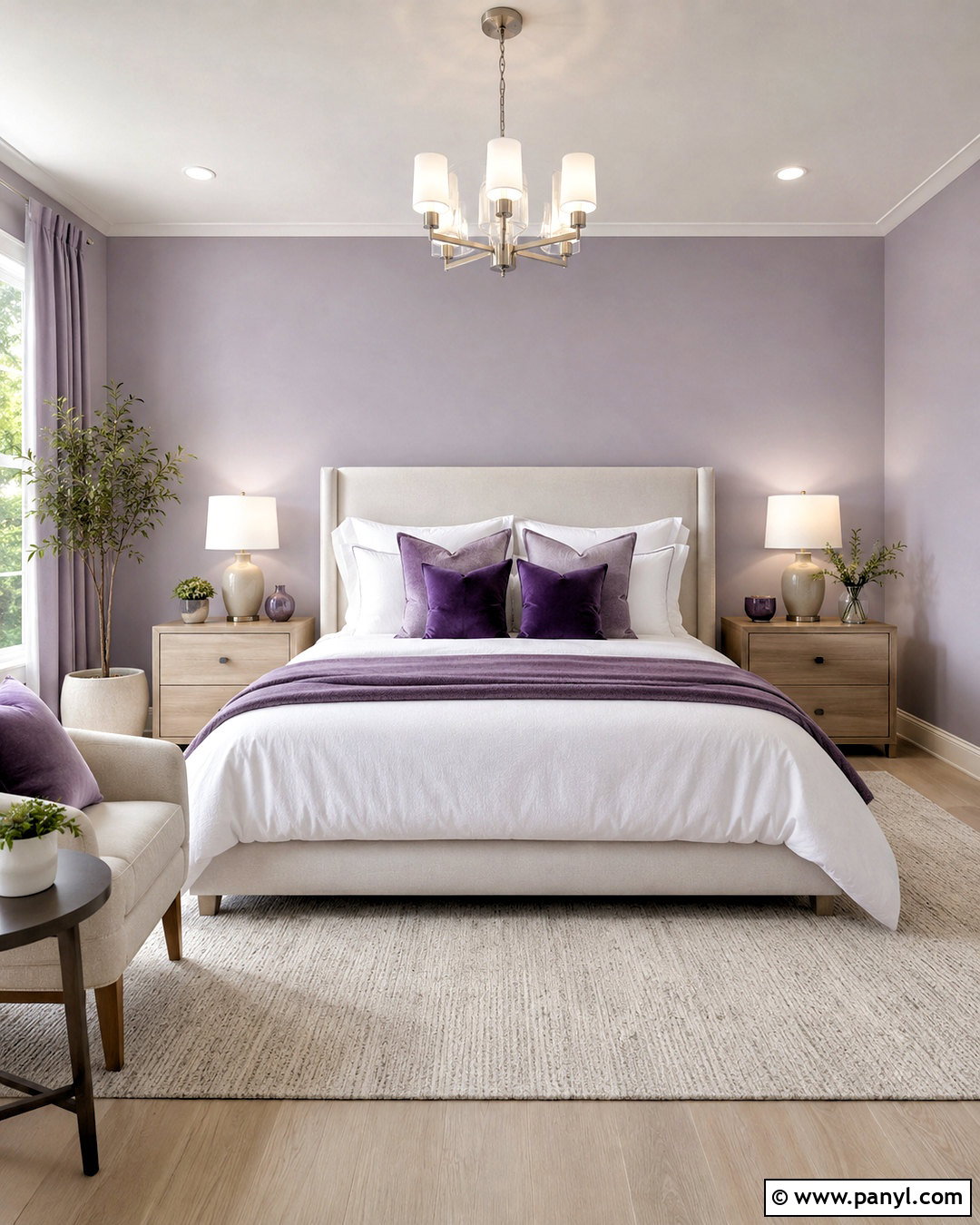
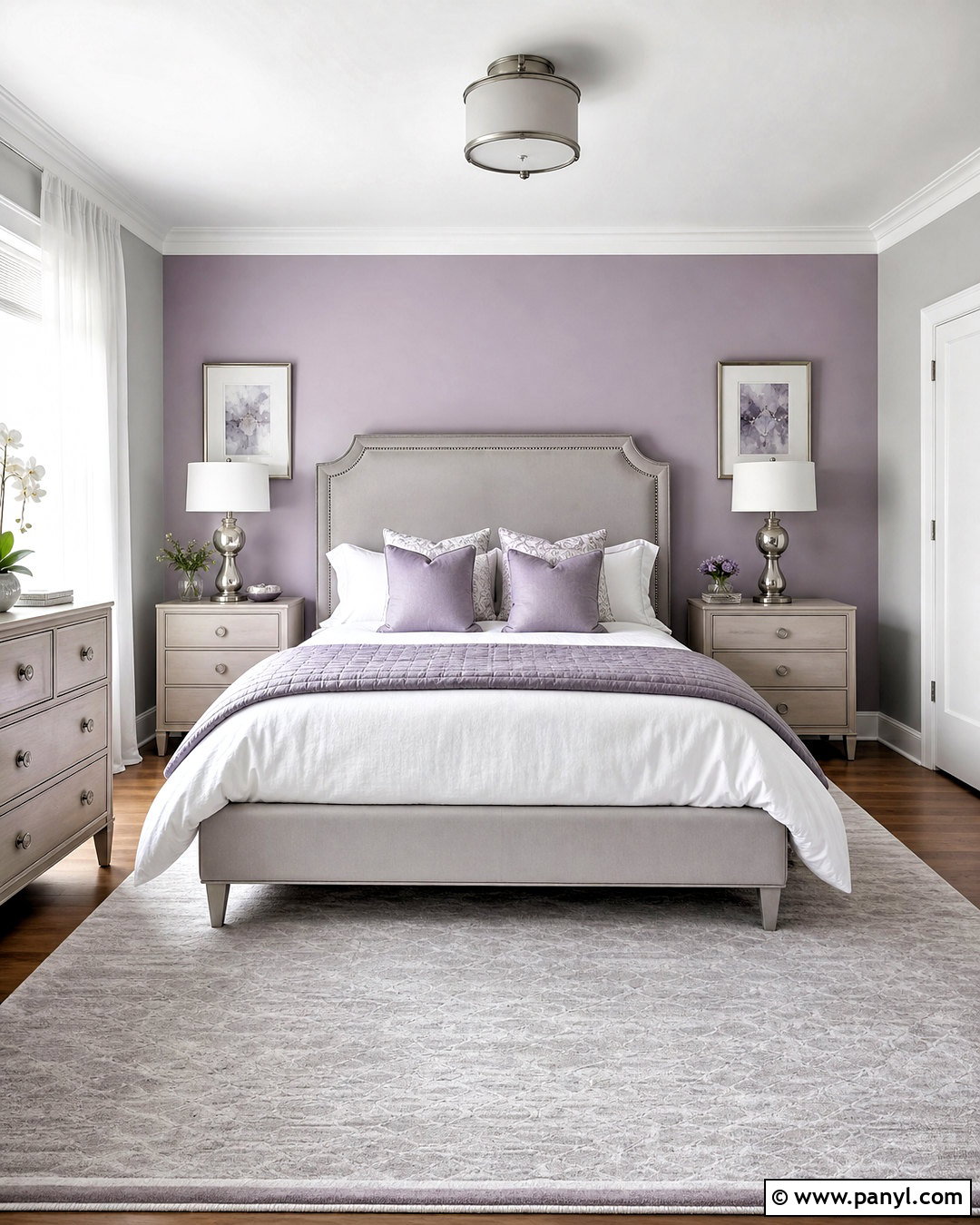
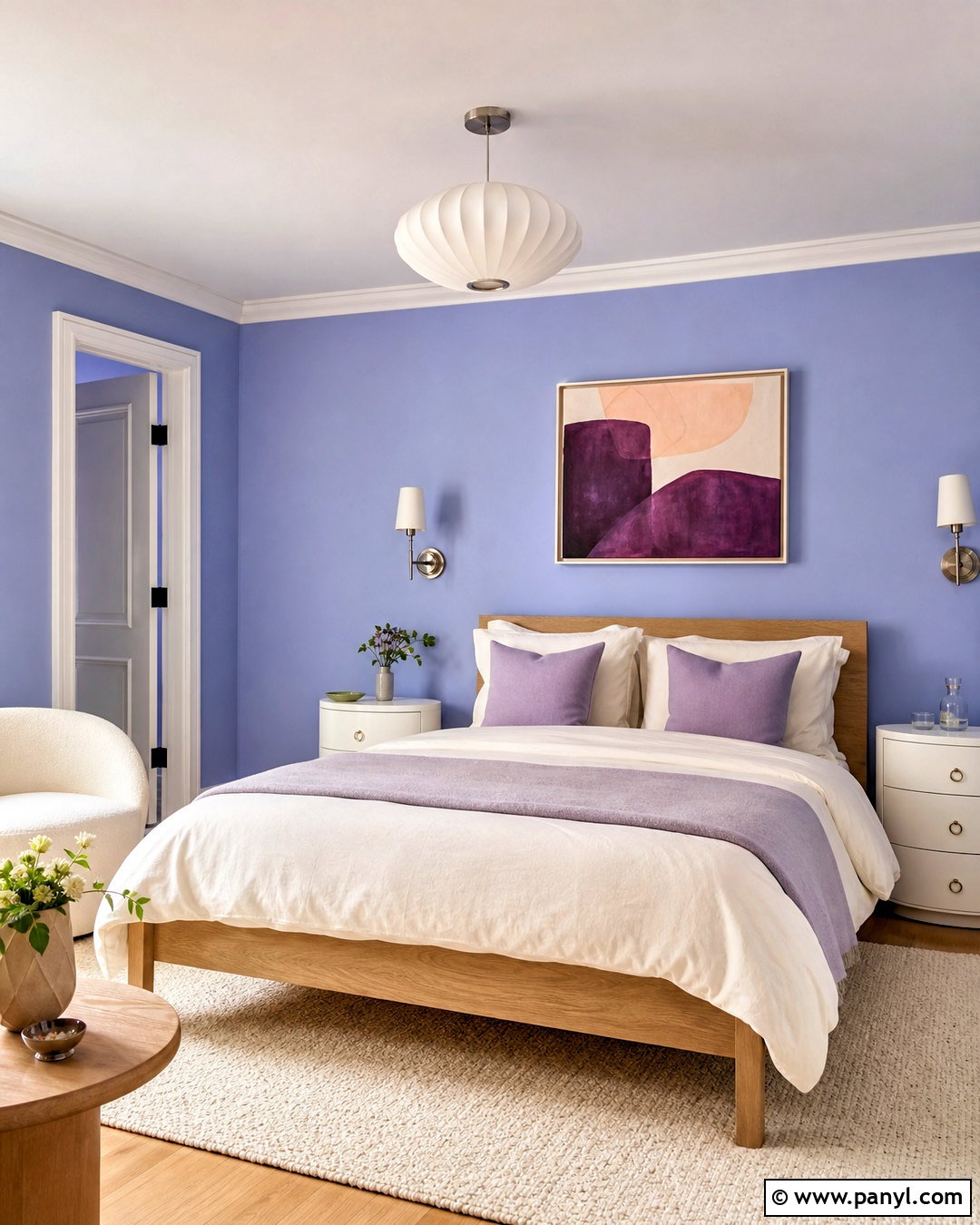
Lavender walls offer a light, restful alternative to pink or blue, especially when the color contains muted gray undertones. Pair pale lavender walls with a cream upholstered bed, white oak nightstands, and crisp white bedding. Introduce deeper purple through one throw or lumbar pillow rather than using it across every surface. Sage green accents, such as a small chair or botanical artwork, create a natural complementary palette. Use brushed nickel lamps for a cooler appearance or aged brass for additional warmth. White curtains and a pale textured rug keep the room bright. Avoid highly saturated purple accessories, which can make the design feel busy. The completed bedroom should appear soft, grown-up, and quietly colorful.
21. Butter Yellow Bedroom Walls
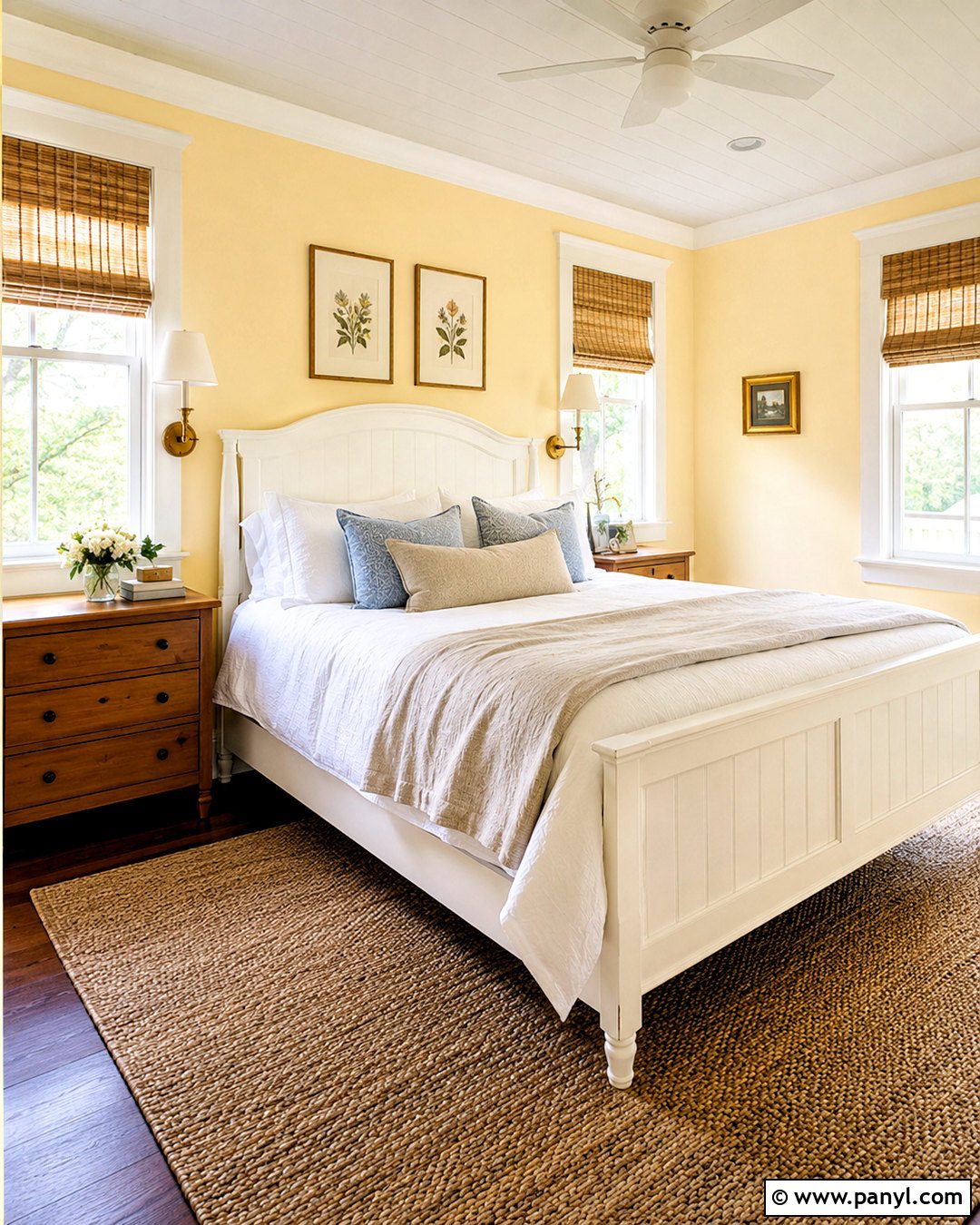
Butter yellow walls fill a bedroom with gentle warmth while remaining lighter and easier to use than strong golden shades. Select a creamy yellow with restrained saturation, then pair it with a white painted bed or light oak frame. Dress the bed in white and flax linen, adding muted blue pillows for balanced contrast. Woven shades, a natural fiber rug, and warm wood nightstands reinforce the sunny atmosphere. Choose simple brass sconces and botanical artwork with green leaves to make the palette feel connected to nature. Keep the trim creamy white instead of brilliant white, which could create an overly sharp transition. This complete wall paint scheme works well in north-facing bedrooms, cheerful guest rooms, and traditional cottage-inspired spaces.
22. Ochre Bedroom Accent Wall

An ochre accent wall brings rich golden color to a bedroom while preserving a calm, earthy mood. Use the shade behind the bed and paint the remaining walls a warm cream or pale beige. A dark walnut headboard creates a strong silhouette against the golden background. Layer the bedding with ivory sheets, a brown quilt, and muted green cushions. Black or bronze bedside lamps provide crisp definition, while woven curtains and a cream rug keep the overall look light. Add artwork featuring abstract shapes in ochre, olive, and charcoal, but leave enough open wall space for visual rest. Repeating ochre in only one or two textiles creates continuity without overwhelming the room. The final scheme feels warm, creative, and grounded.
23. Peach Bedroom Walls
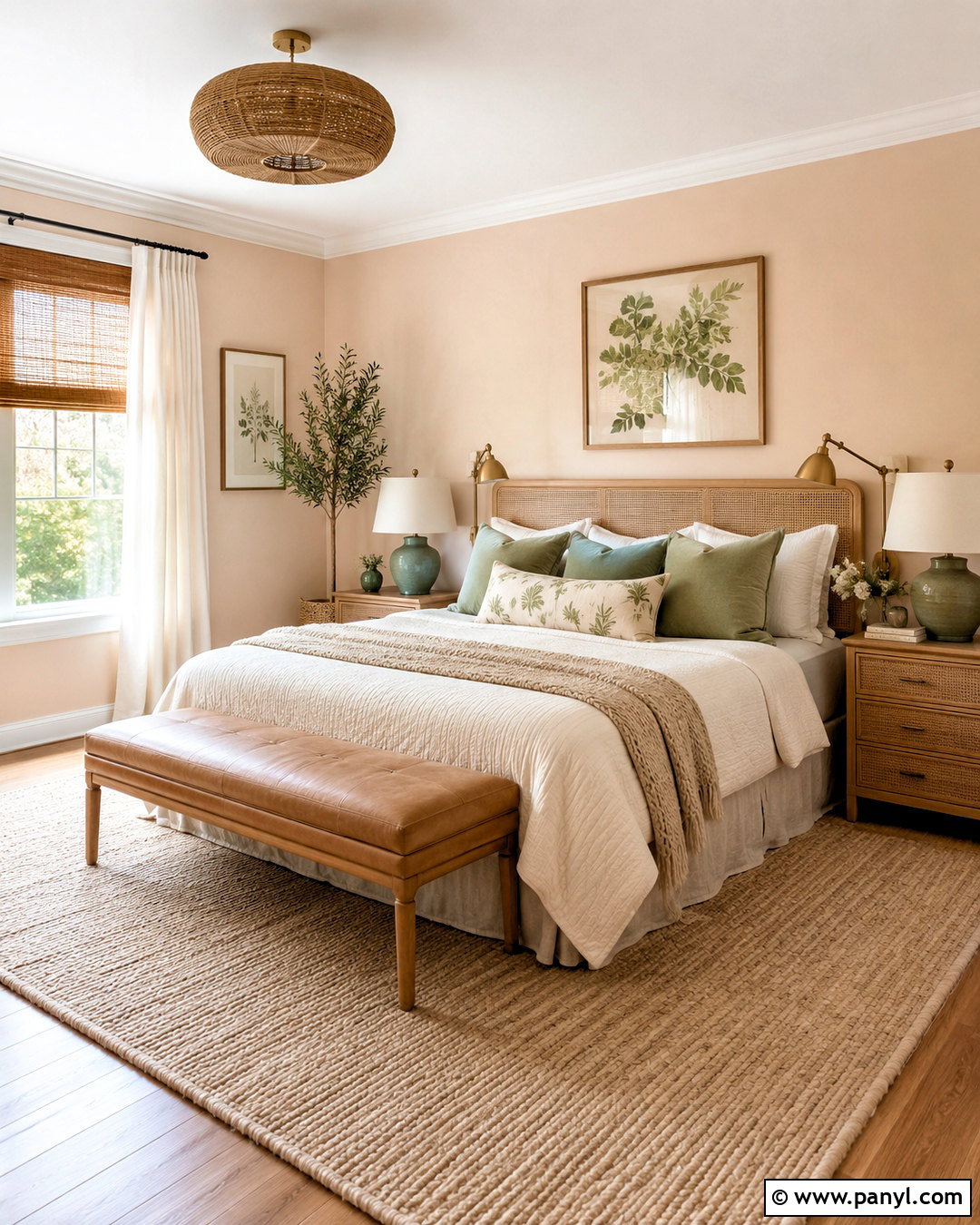
Soft peach walls create a bright, welcoming bedroom with more warmth than plain white. Choose a pale peach with beige undertones so it reads as subtle and natural rather than vivid. Pair it with a cane or light oak headboard, ivory bedding, and a tan upholstered bench. Sage green pillows and a small botanical print balance the warm paint with a cool natural accent. Use woven window shades beneath white curtains for layered texture and practical light control. Brass lamps and handmade pottery complement the peach without matching it exactly. Keep the ceiling warm white and the flooring light or medium toned. This finished palette works particularly well in compact bedrooms, nurseries, and guest rooms that need a gentle lift.
24. Taupe Bedroom Walls
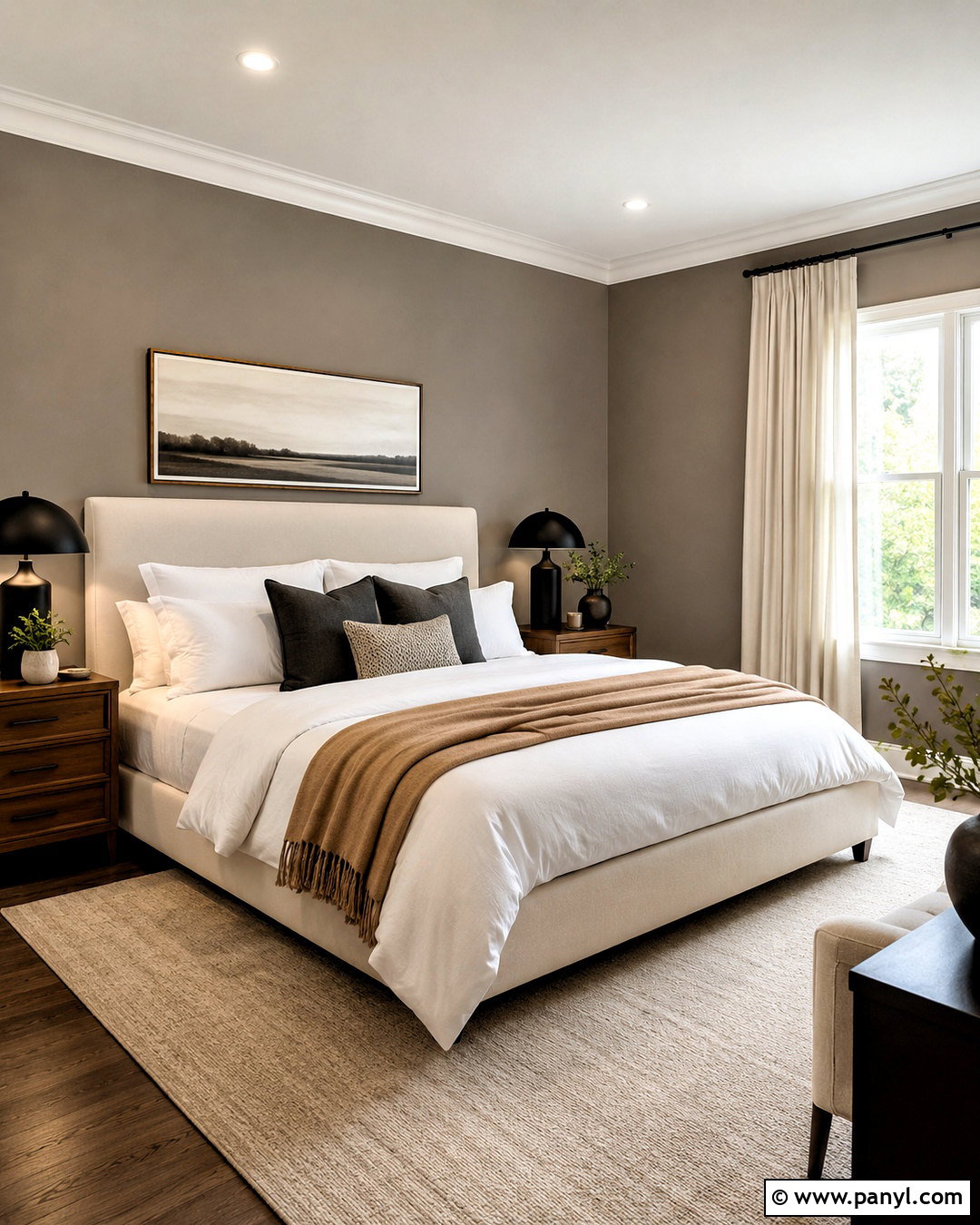
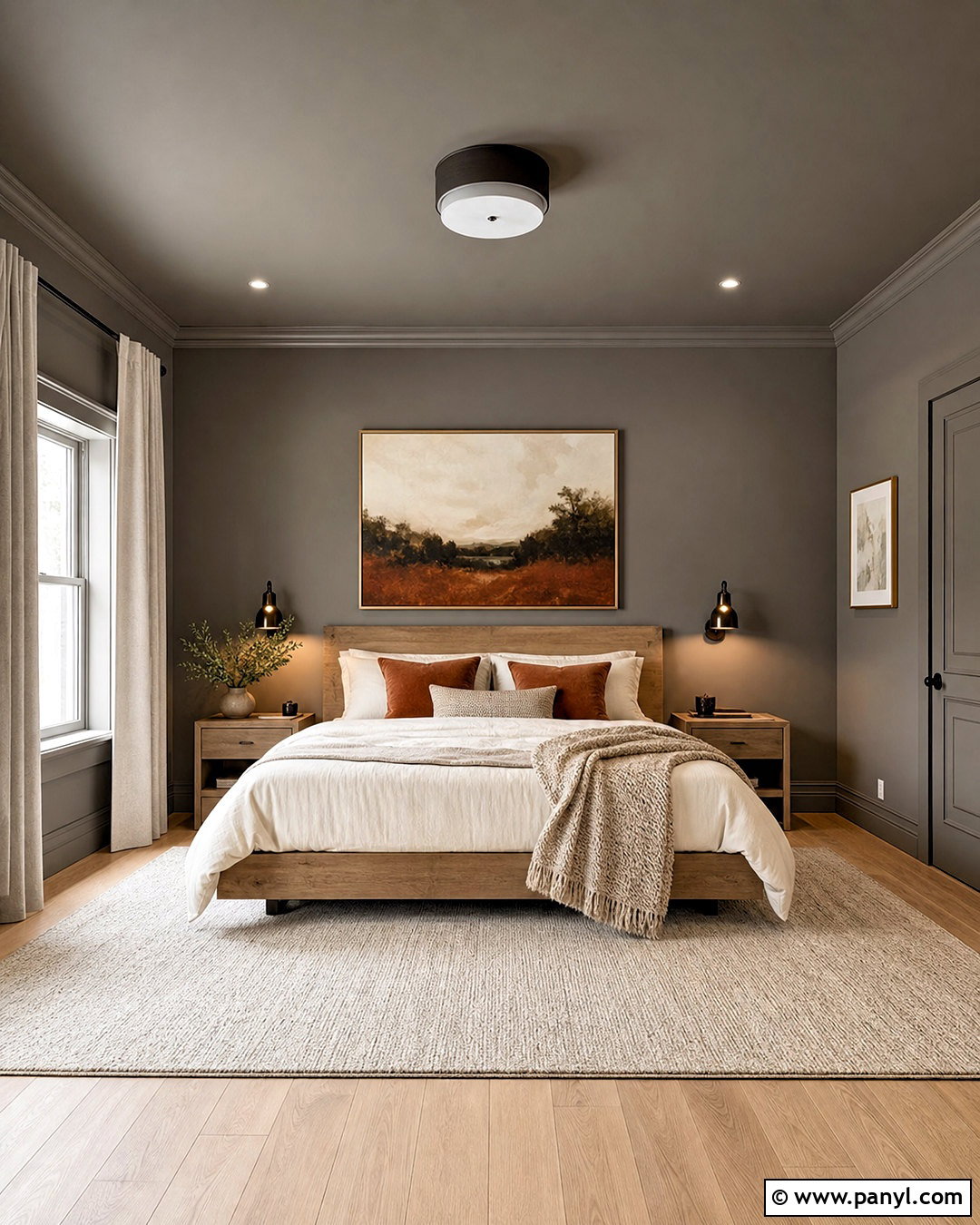
Taupe walls bring understated depth to a bedroom and coordinate beautifully with both warm and cool accent colors. Choose a medium taupe with balanced gray and brown undertones, then pair it with an ivory headboard and walnut nightstands. White bedding provides freshness, while a camel throw and charcoal pillows create contrast. Add black metal lamps for a modern edge or aged brass fixtures for a softer traditional finish. Floor-length cream curtains and a textured beige rug prevent the wall color from making the room feel heavy. Artwork featuring muted landscape tones can connect the entire palette. Keep the trim a soft white. The complete bedroom will feel tailored and comfortable, with enough neutrality to support future changes in bedding and decor.
25. Chocolate Brown Bedroom Walls
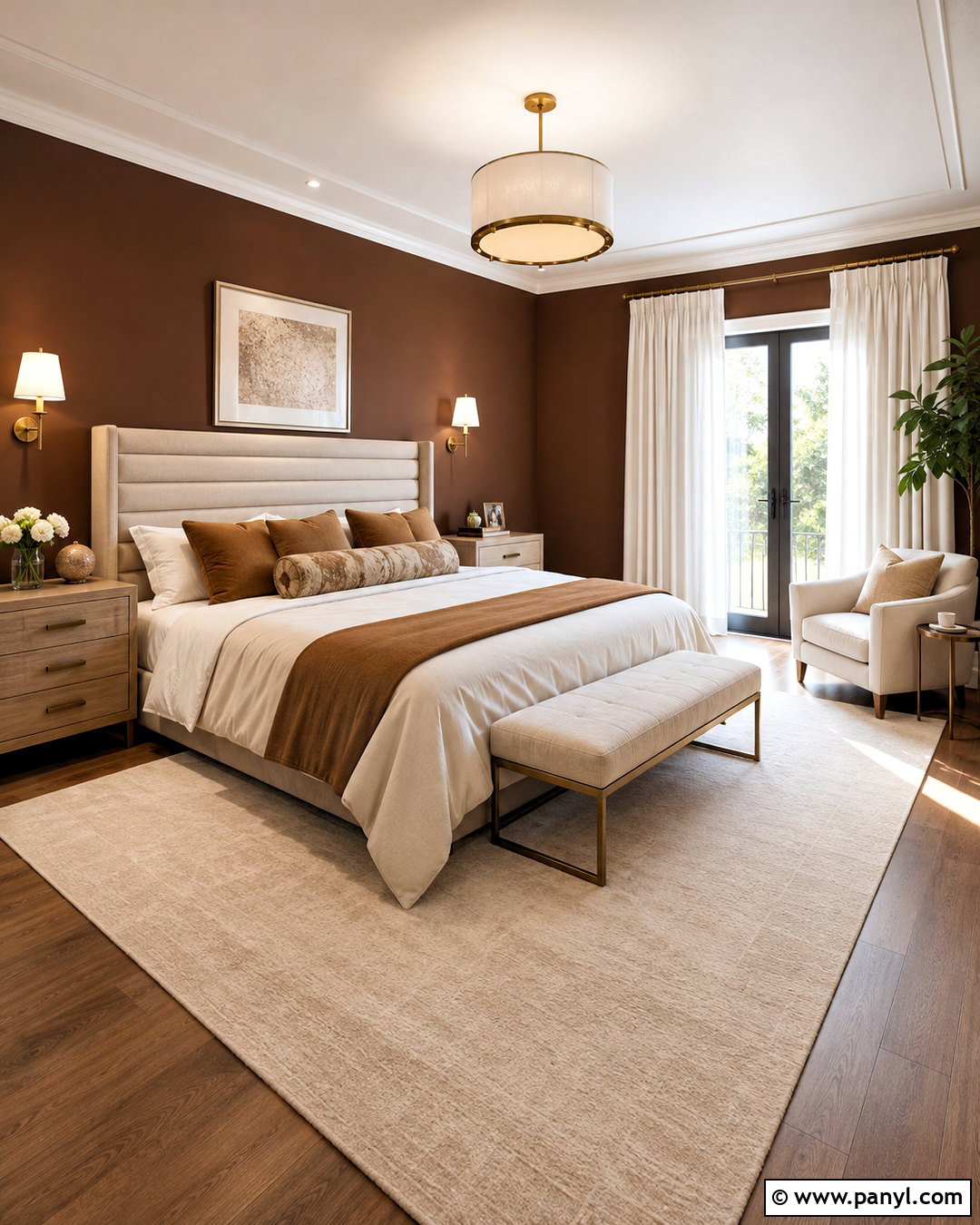
Chocolate brown walls can create a deeply comforting bedroom when surrounded by light textiles and warm reflective accents. Select a rich brown with subtle red undertones and apply it to all four walls in a matte finish. Use an oversized cream upholstered headboard to break up the dark surface behind the bed. Layer white sheets, camel linen, and a patterned brown-and-ivory pillow for a tonal look. Add pale oak nightstands and brass sconces to brighten the room. Full-length ivory curtains and a large cream rug provide essential contrast. Keep the ceiling warm white unless the room receives abundant natural light. The finished scheme feels luxurious yet approachable, combining the depth of a dark bedroom with the familiarity of earthy neutral colors.
26. Blue Color Drenched Bedroom
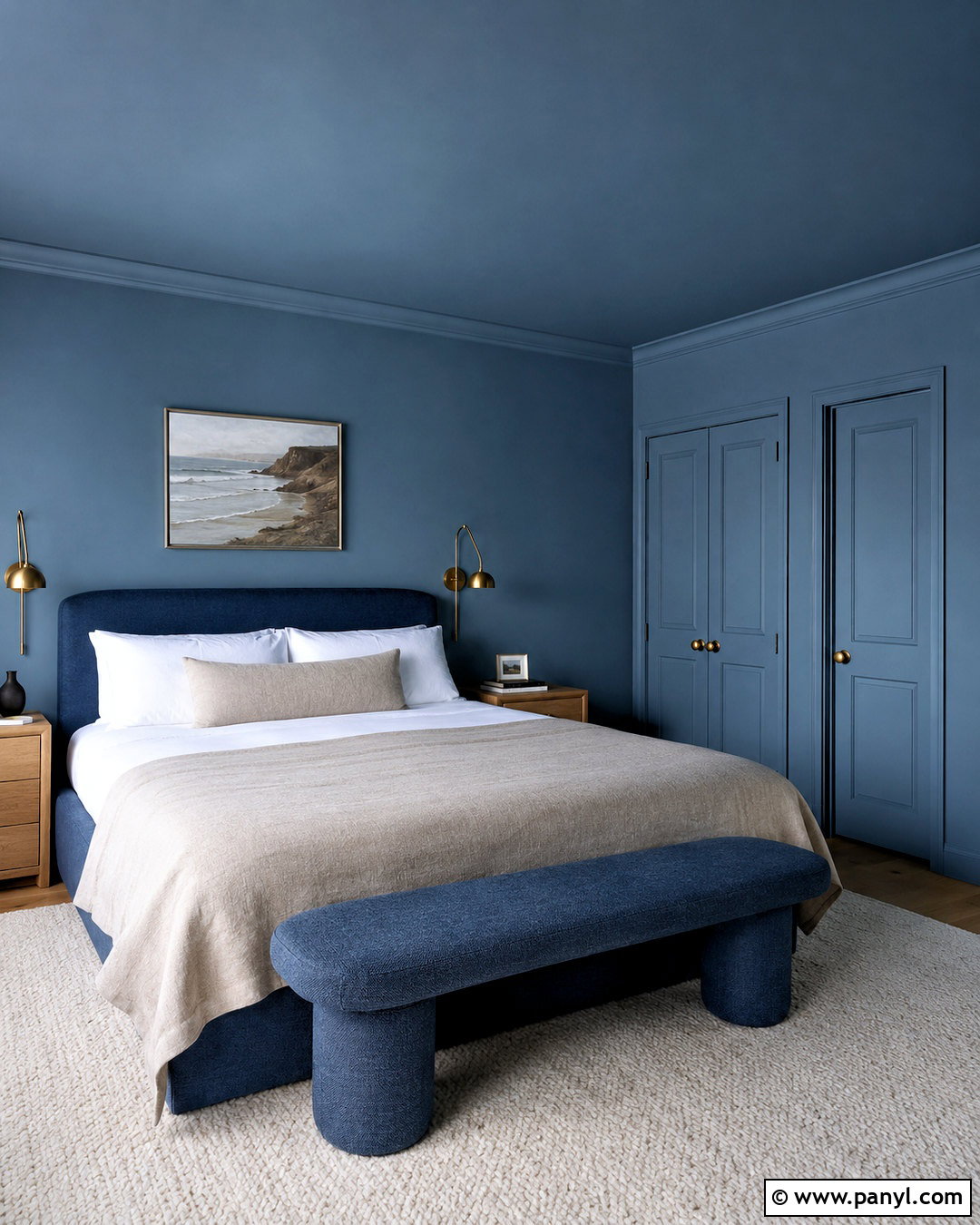
Color drenching a bedroom in muted blue creates a seamless, cocooning atmosphere. Paint the walls, ceiling, trim, doors, and closet fronts in the same dusty blue, using flatter paint overhead and a more durable satin finish on woodwork. Choose a slightly darker blue upholstered bed to build tonal depth without disrupting the unified effect. White sheets, a flax blanket, and warm oak nightstands prevent the palette from feeling cold. Add aged brass sconces and a cream wool rug for contrast. Keep artwork minimal and select frames close to the wall color. Because the architectural boundaries visually blend together, the bedroom feels calm and complete. Test the blue carefully to ensure its undertone remains appealing under both daylight and artificial lighting.
27. Green Color Drenched Bedroom
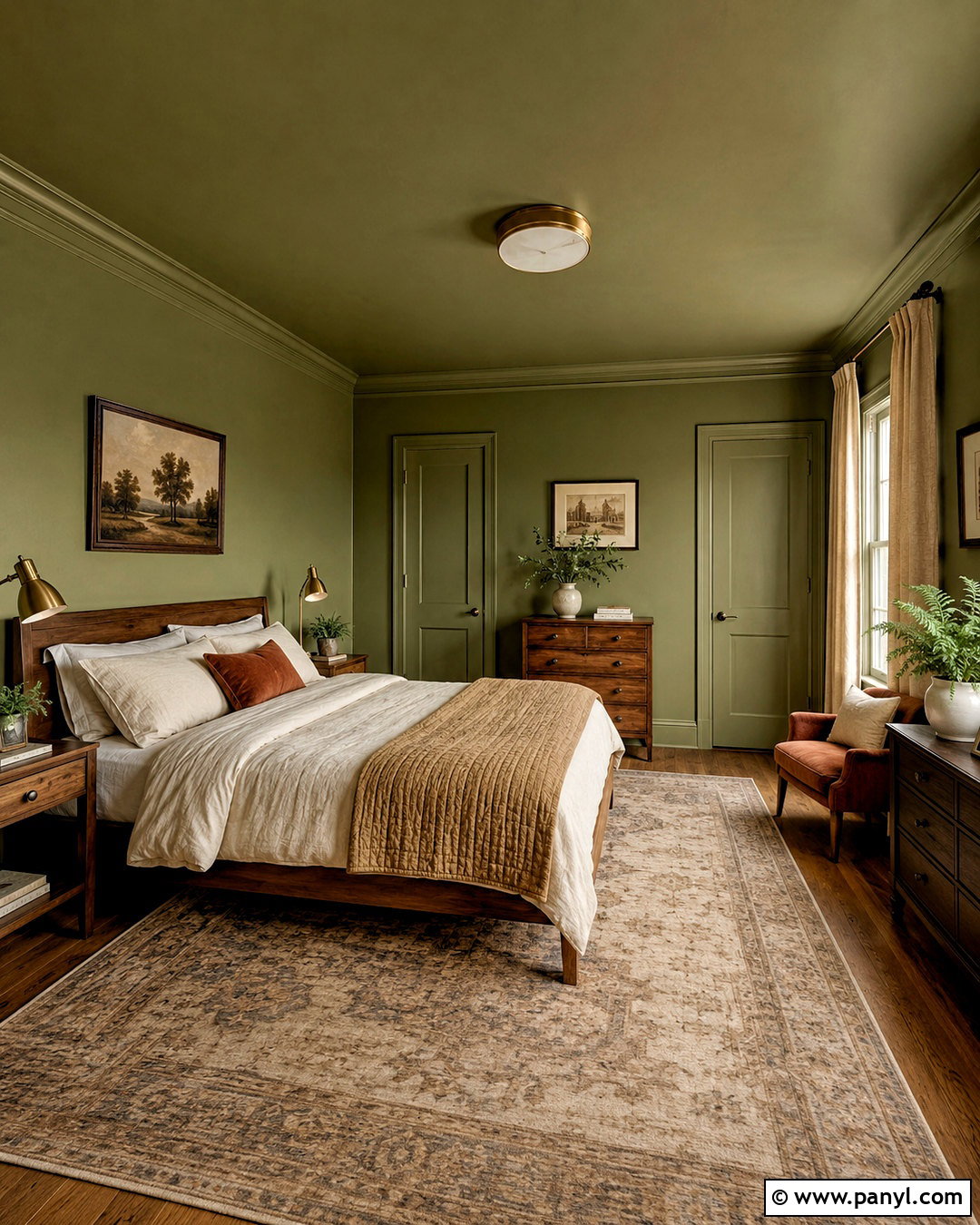
A green color-drenched bedroom feels immersive, natural, and especially restful when the shade is muted. Cover the walls, ceiling, trim, and doors in a medium sage or moss green. Use consistent color but select finishes suited to each surface, such as matte for ceilings, eggshell for walls, and satin for trim. Place a walnut bed against the green backdrop and add cream linen bedding, a tan quilt, and one rust-colored pillow. Brass lamps and a faded neutral rug warm the palette. Curtains can match the wall color for an uninterrupted look or remain natural linen for contrast. Limit small accessories so the room maintains its calm effect. The completed space should feel enveloping rather than crowded or overly themed.
28. Two Tone Bedroom Walls

Two-tone walls add architectural interest to a plain bedroom without requiring molding or paneling. Paint the lower third or half of each wall in muted olive, dusty blue, or taupe, then use warm white above it. Keep the dividing line level throughout the room, using painter’s tape and careful measurements for a clean finish. Position a simple wood bed where both colors remain visible behind the headboard. Choose bedding that repeats the lower wall shade through one throw or patterned pillow. Natural wood nightstands, ceramic lamps, and a neutral rug complete the scheme. Painting the lower section in a slightly more durable finish can also make the wall easier to clean. The result looks structured, balanced, and intentionally designed.
29. Painted Wainscoting Bedroom Walls
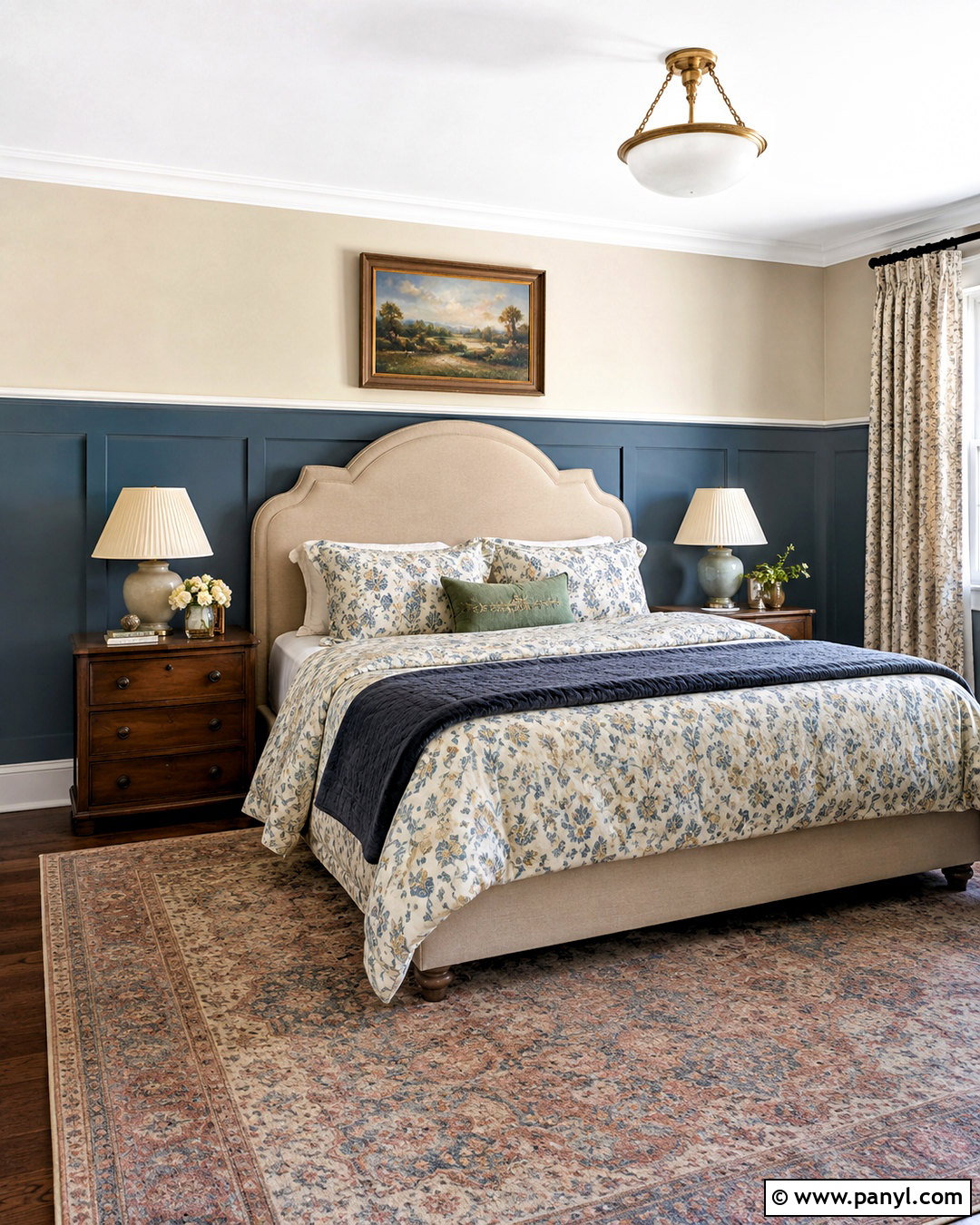
Painted faux wainscoting gives a bedroom classic character using color rather than added millwork. Apply a deep dusty blue, forest green, or warm taupe to the lower portion of the walls, stopping roughly one-third of the way above the headboard. Paint the upper walls and ceiling in soft cream. A thin painted line or simple wood chair rail can sharpen the division. Pair the treatment with an upholstered bed, traditional wood nightstands, and pleated fabric lampshades. Use floral or striped bedding in restrained colors to support the classic mood. Floor-length curtains and a vintage-style rug finish the room. This treatment creates the appearance of architectural detail while remaining practical for rentals, smaller budgets, and straightforward weekend updates.
30. Painted Arch Behind Bed

A painted arch can frame the bed and create a clear focal point without covering the entire bedroom in bold color. Center a wide, softly rounded arch behind the headboard, extending it slightly beyond both nightstands. Choose muted terracotta, sage green, dusty blue, or warm taupe against creamy white walls. A simple oak or upholstered bed allows the painted shape to remain visible. Coordinate the bedding with one small accent that repeats the arch color, then use neutral curtains, a woven rug, and understated lamps. Carefully measure the center and use a pencil, string, and level to establish a balanced curve. The final room feels graphic and modern while remaining calm enough for sleep and easy to repaint later.
31. Geometric Bedroom Accent Wall
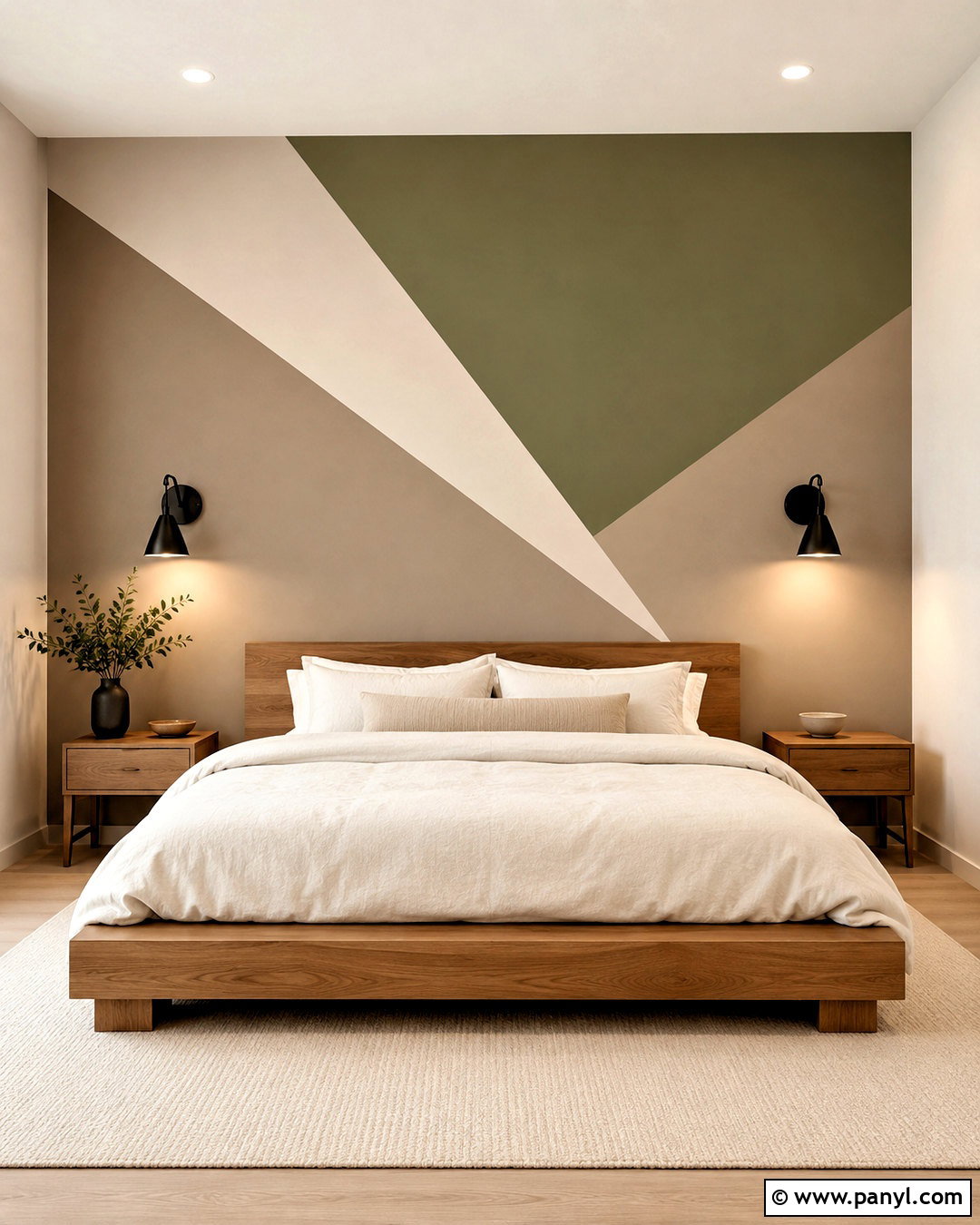
A geometric accent wall can add energy to a bedroom when the shapes and colors remain controlled. Limit the design to the headboard wall and choose three related tones, such as cream, taupe, and muted olive. Create large angled sections rather than many small shapes, which can make the room feel visually restless. Pair the wall with a low-profile wood bed and solid neutral bedding. Black bedside sconces provide crisp outlines, while a simple cream rug softens the floor. Keep the other walls warm white and avoid additional patterned curtains or busy artwork. One textured throw and a few ceramic accessories are enough to complete the room. Accurate measuring and sharply sealed painter’s tape will give the finished design a professional appearance.
32. Ombre Bedroom Walls
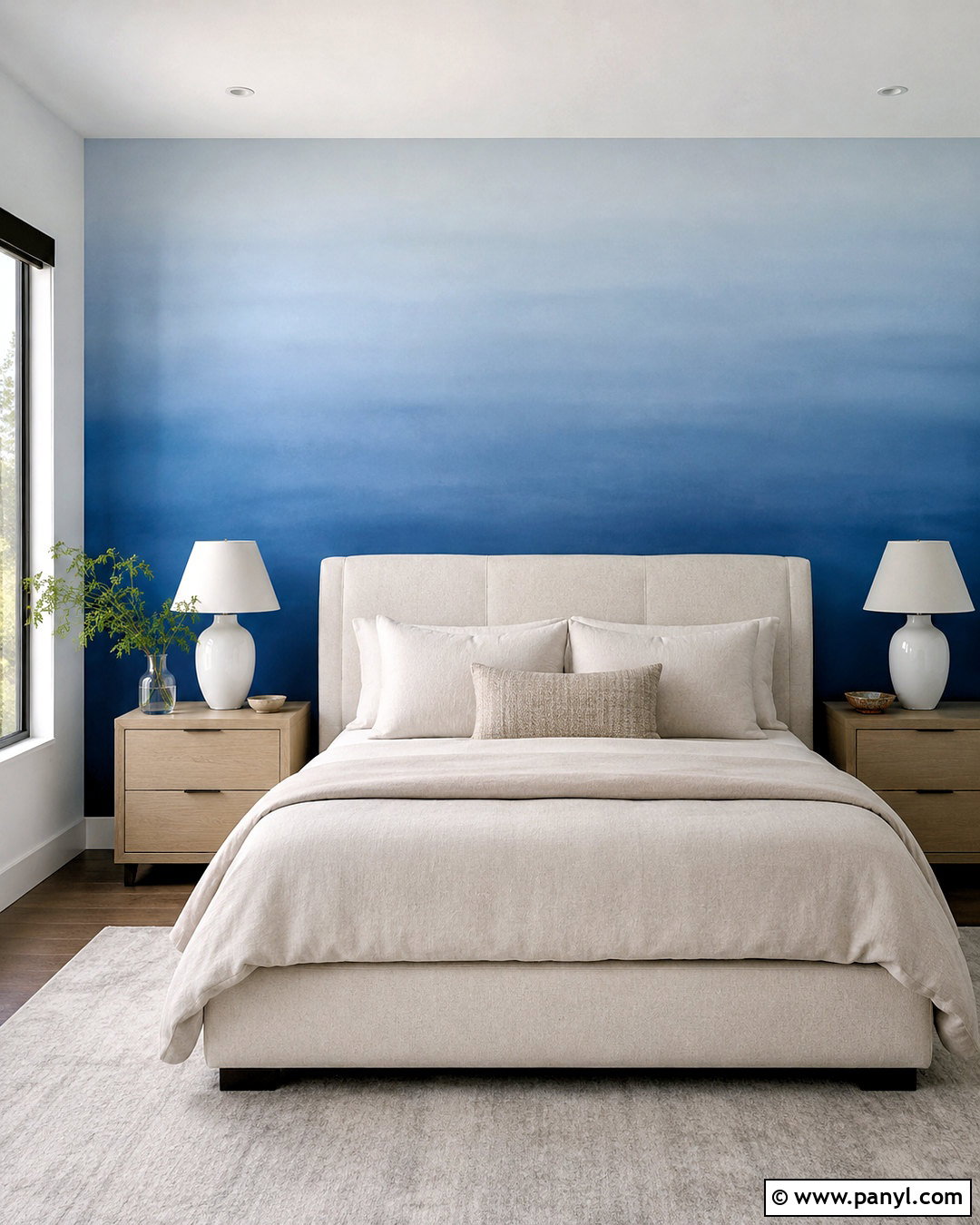
An ombre wall treatment creates soft movement and can make a bedroom feel artistic without relying on framed decor. Start with the deepest muted blue, green, or clay tone near the floor, blend it into a medium shade, and finish with the palest version near the ceiling. Use the effect on the wall behind the bed or continue it around the room for a more immersive result. Choose a simple cream upholstered bed and solid bedding so the gradual color transition remains the focal point. Pale wood nightstands, understated lamps, and a neutral rug keep the layout balanced. The blending should appear broad and cloudy rather than striped. A matte finish helps the transitions look smoother and reduces distracting reflections across the wall.
33. Limewash Bedroom Walls
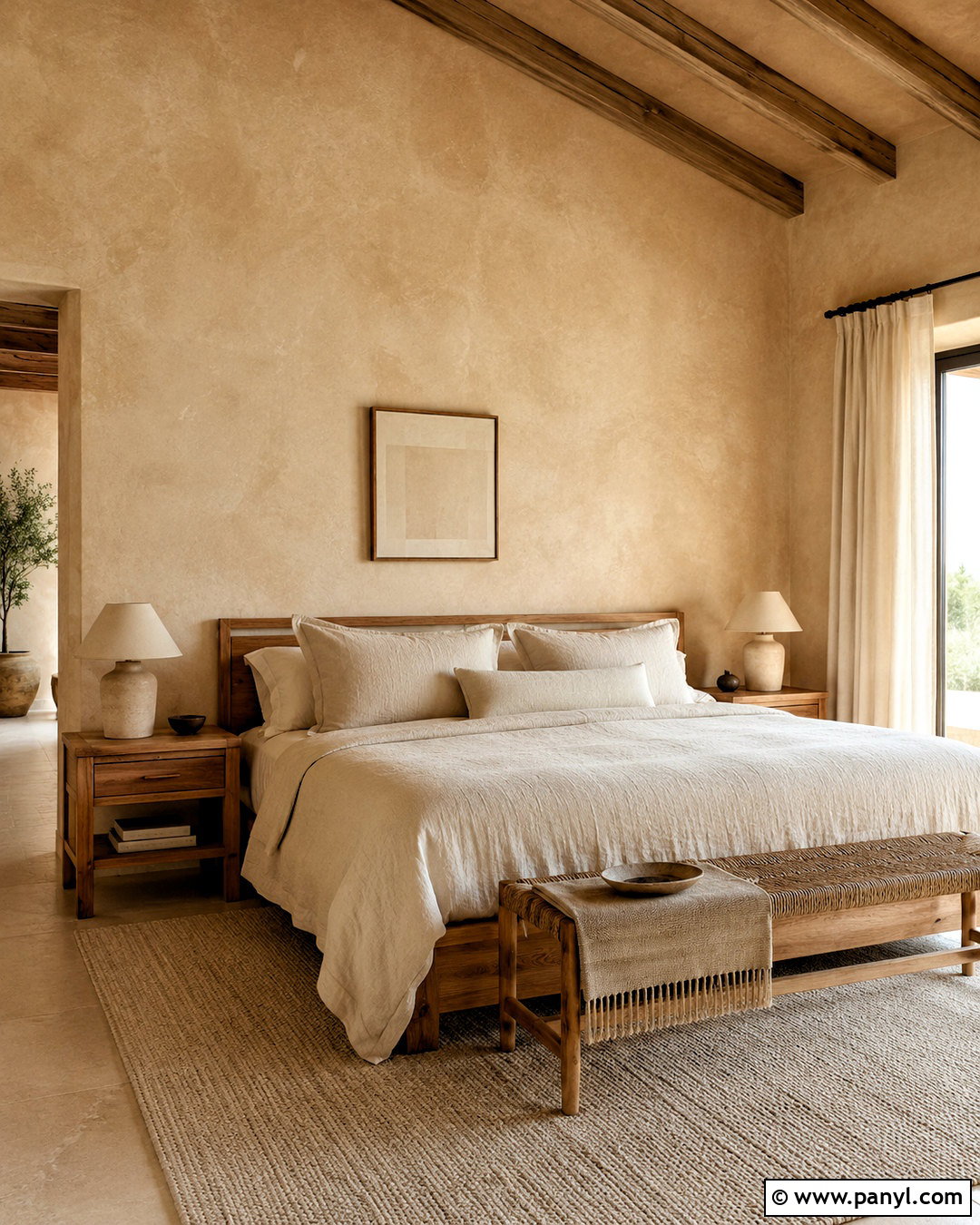
Limewash-style walls introduce subtle movement and an aged, mineral appearance that suits calm, natural bedrooms. Choose warm beige, muted clay, pale sage, or soft gray and apply the finish in overlapping strokes to create gentle tonal variation. Pair the textured walls with an oak bed, washed linen bedding, and simple plaster or ceramic lamps. A wool rug, woven bench, and unlined linen curtains reinforce the relaxed material palette. Keep artwork minimal because the wall finish already provides visual depth. Use coordinating trim in a solid warm white or a closely matched mineral shade. The complete bedroom should feel quiet and tactile rather than rustic or unfinished. Always prepare the wall with the primer recommended for the selected decorative coating.
34. Painted Bedroom Ceiling
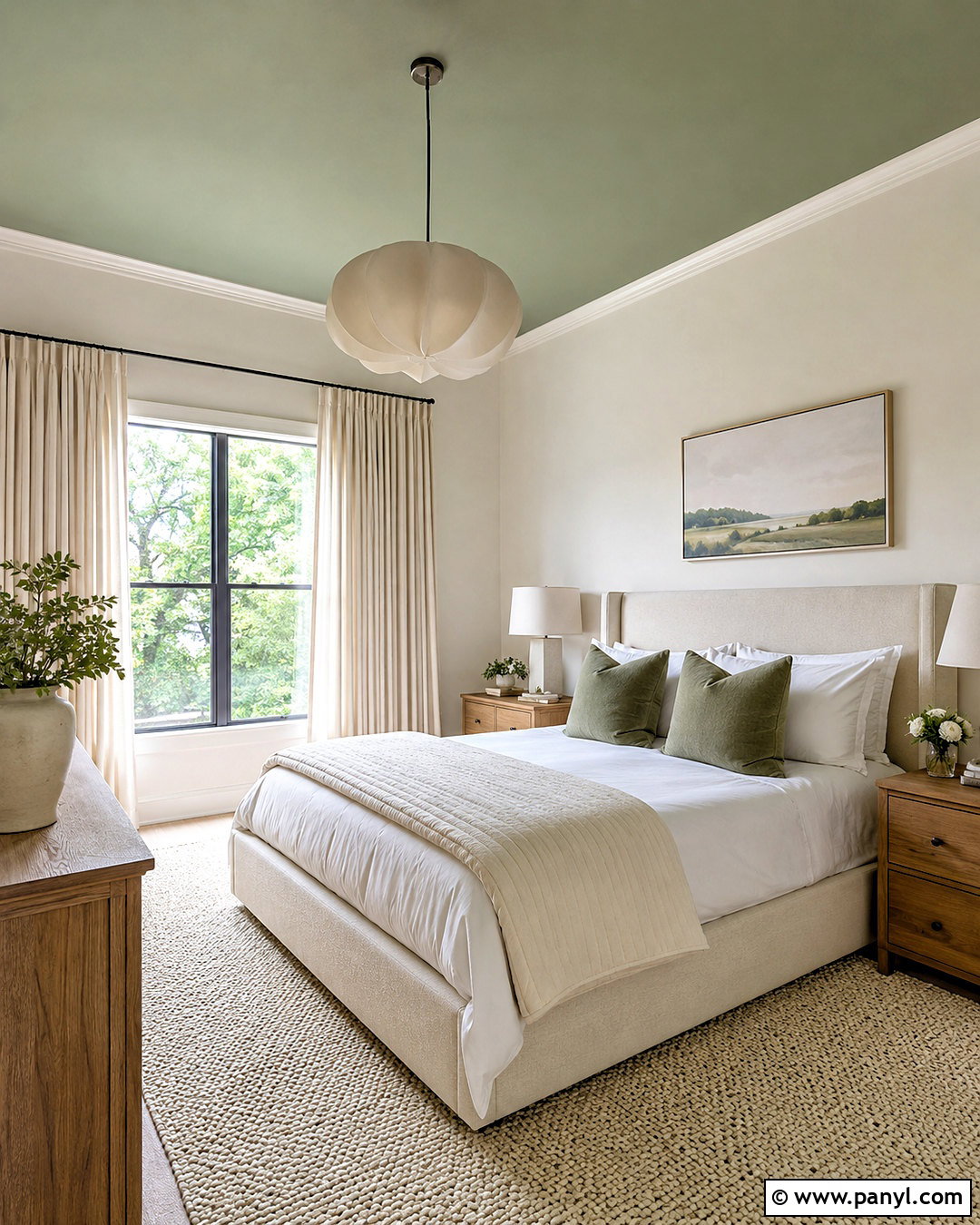
Painting the ceiling gives the bedroom’s fifth wall a deliberate role in the overall color scheme. Pair pale neutral walls with a soft sky blue, muted sage, dusty pink, or light ochre ceiling. Continue the ceiling color a few inches down the walls for a capped effect, or stop it cleanly at the trim. Use an upholstered bed and simple bedding that repeats the ceiling shade in one subtle accent. Floor-length curtains draw the eye upward, while a sculptural pendant highlights the overhead color. Keep the flooring and larger furniture neutral so the room remains balanced. A lighter ceiling shade can feel airy, while a deeper tone makes tall bedrooms feel more intimate. Use a flat finish to reduce glare and hide surface imperfections.
35. Tonal Striped Bedroom Walls
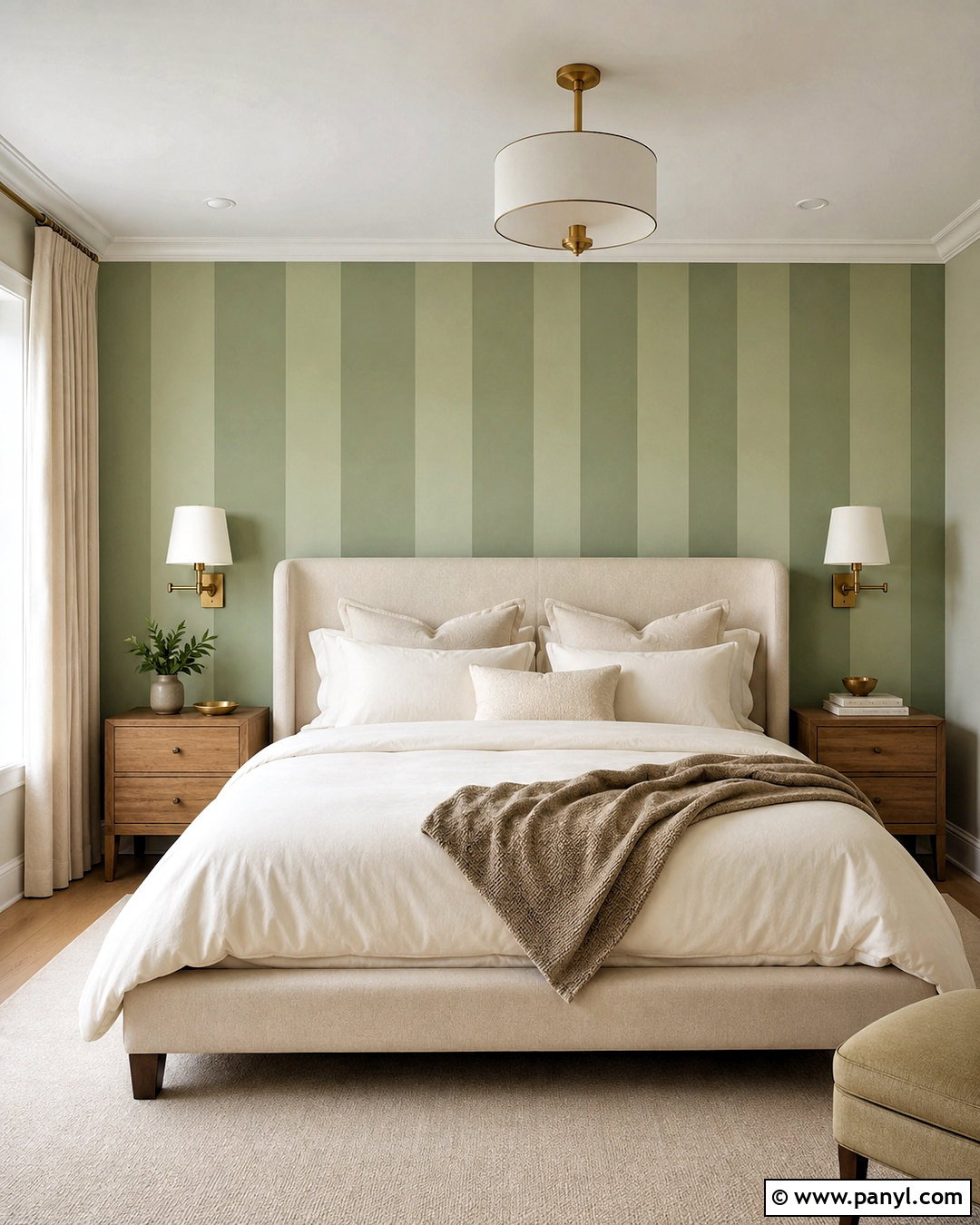
Tonal stripes add quiet pattern to bedroom walls without introducing multiple competing colors. Choose two shades from the same family, such as pale sage and medium sage, warm beige and taupe, or dusty blue and soft blue-gray. Paint wide vertical stripes to emphasize height, keeping each band equal for a clean, restful rhythm. Limit the treatment to the headboard wall or continue it throughout a small bedroom for a wrapped effect. Pair the walls with a simple upholstered bed, solid ivory bedding, wood nightstands, and restrained lighting. Avoid additional large patterns on rugs or curtains. A textured throw and one small print are sufficient. Using similar color values ensures the finished stripes remain sophisticated instead of looking overly playful.
Conclusion:
Updating bedroom walls is one of the most effective ways to reshape the atmosphere of the entire space. The best color should complement the room’s natural light, flooring, furniture, and the mood you want to experience each day. Warm whites and soft neutrals offer flexibility, while greens, blues, clay tones, and deeper shades bring stronger personality. Paint treatments such as arches, two-tone walls, color drenching, and painted ceilings can add structure without major construction. Always test generous samples and view them at different times before committing. With thoughtful furniture, lighting, and textiles, these 35 Wall Paint Bedroom Ideas can help you build a cohesive retreat that feels comfortable, personal, and visually complete.

Related Ideas and Inspiration:
Leave a Reply