
An orange accent wall can make a living room feel warmer, brighter, and far more memorable. The key is choosing the right orange shade and supporting it with furniture, flooring, lighting, and decor that create a balanced room. Burnt orange works beautifully with earthy neutrals, while brighter citrus tones feel fresh beside white, blue, or natural wood. Current interiors also pair orange walls with deep blue seating, vertical paneling, oversized artwork, and clean-lined furniture for a more updated look. () Whether your home is modern, bohemian, traditional, or compact, these complete rooms offer practical inspiration. Explore these 20 orange accent wall living room ideas.

1. Burnt Orange Accent Wall Living Room
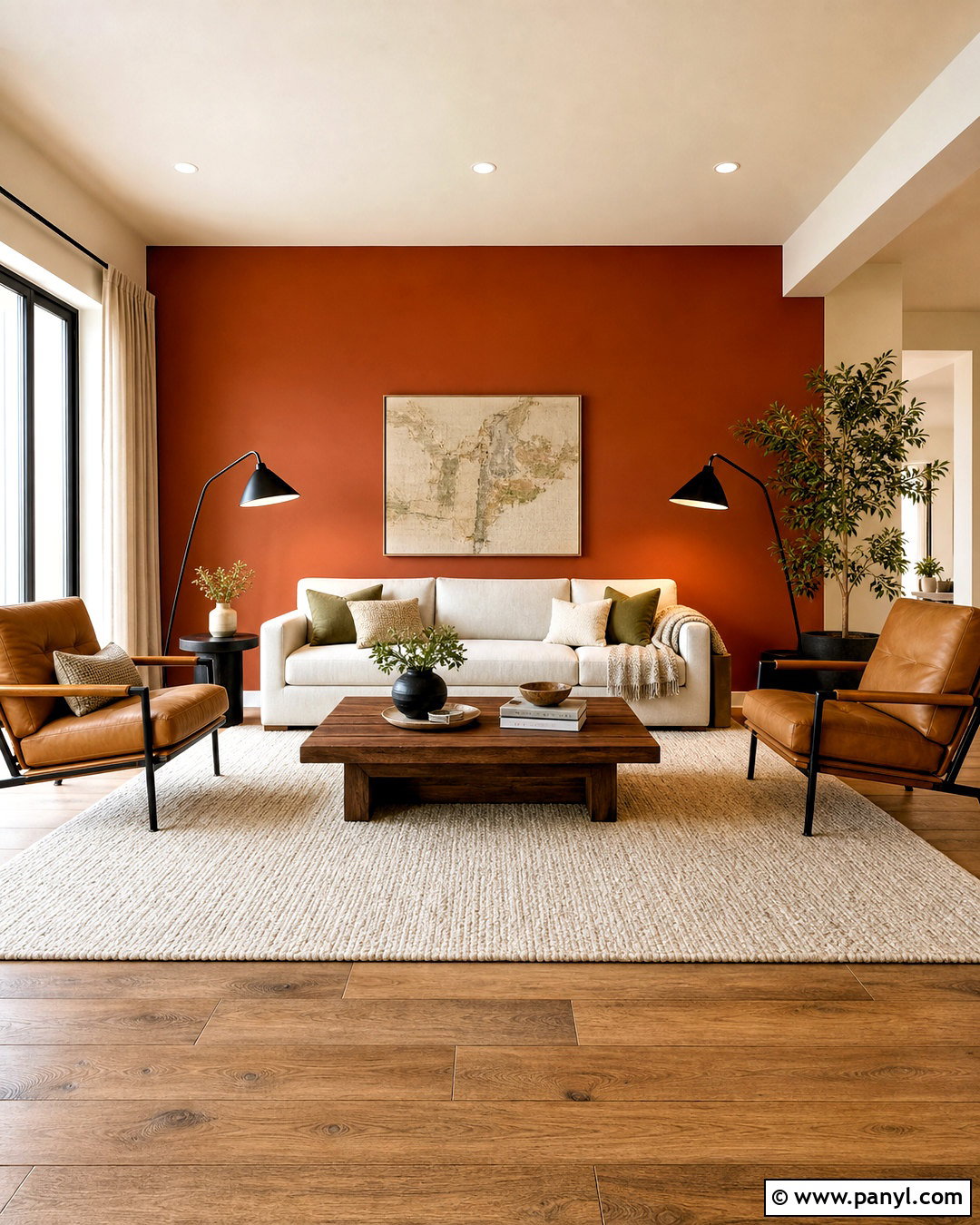
A burnt orange accent wall creates a grounded focal point without making the living room feel overly bright. Place a cream linen sofa in front of the wall, then add two camel leather chairs to build a warm, layered palette. A large oatmeal rug keeps the arrangement light, while a walnut coffee table provides natural contrast. Choose black metal floor lamps and simple framed prints to sharpen the earthy colors. The remaining walls can stay warm white or pale beige. Finish the room with rust, olive, and ivory pillows, plus one tall leafy plant. This complete look works especially well in living rooms with medium or dark wood floors and plenty of natural daylight.
2. Terracotta Orange Accent Wall Living Room
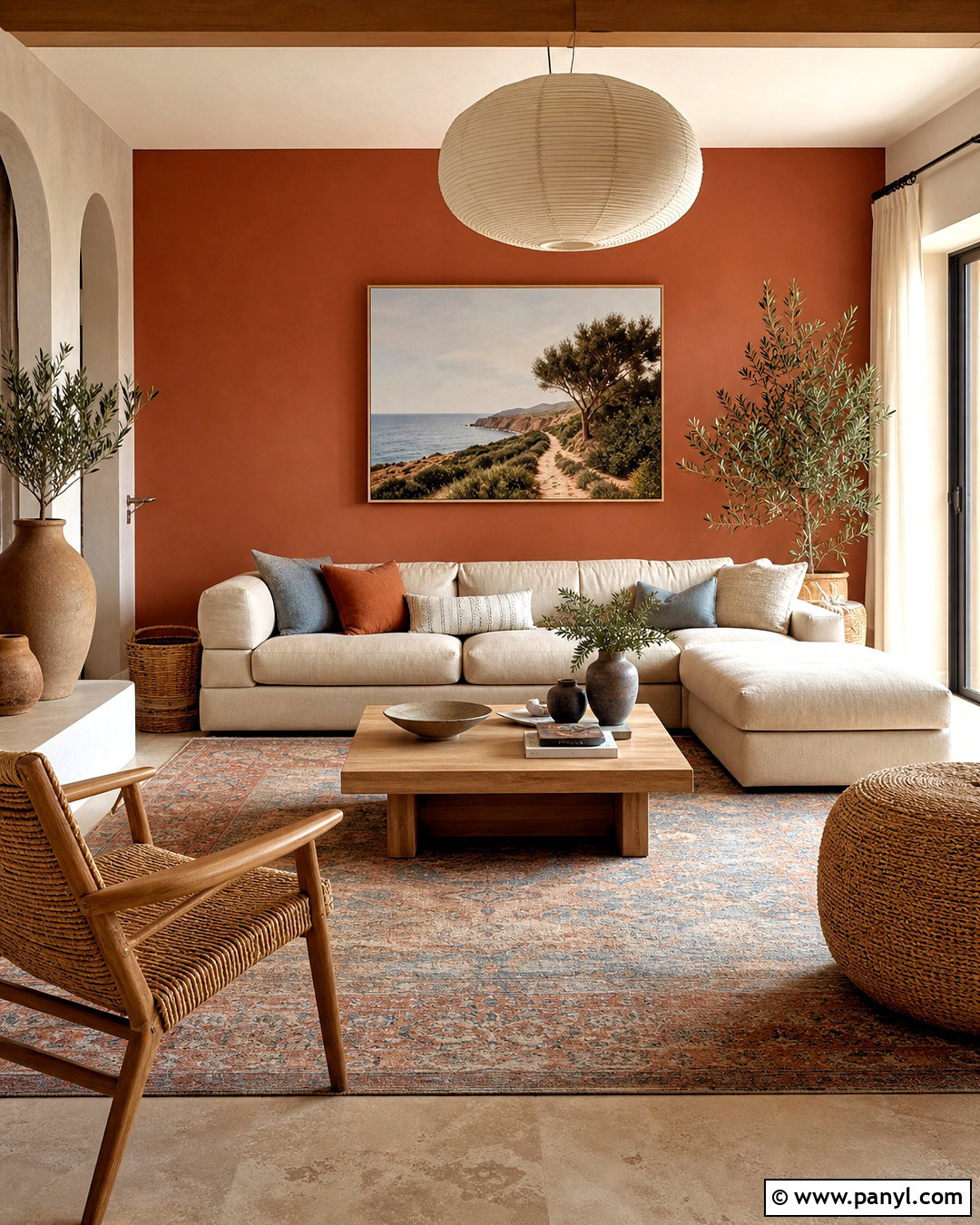
Terracotta orange brings the relaxed warmth of sunbaked clay into a comfortable living space. Use the color behind a low-profile beige sectional and surround it with pale oak furniture, woven baskets, and off-white curtains. A faded patterned rug containing rust, tan, and dusty blue will connect the wall with the seating area. Add handmade ceramic pieces, framed landscape prints, and linen pillows for soft texture. Keep the ceiling and adjoining walls creamy white so the room remains open and airy. A sculptural paper pendant or woven floor lamp completes the organic look. This palette suits a casual home where natural materials, soft edges, and easy everyday comfort are the priorities.
3. Orange Accent Wall With Gray Sofa
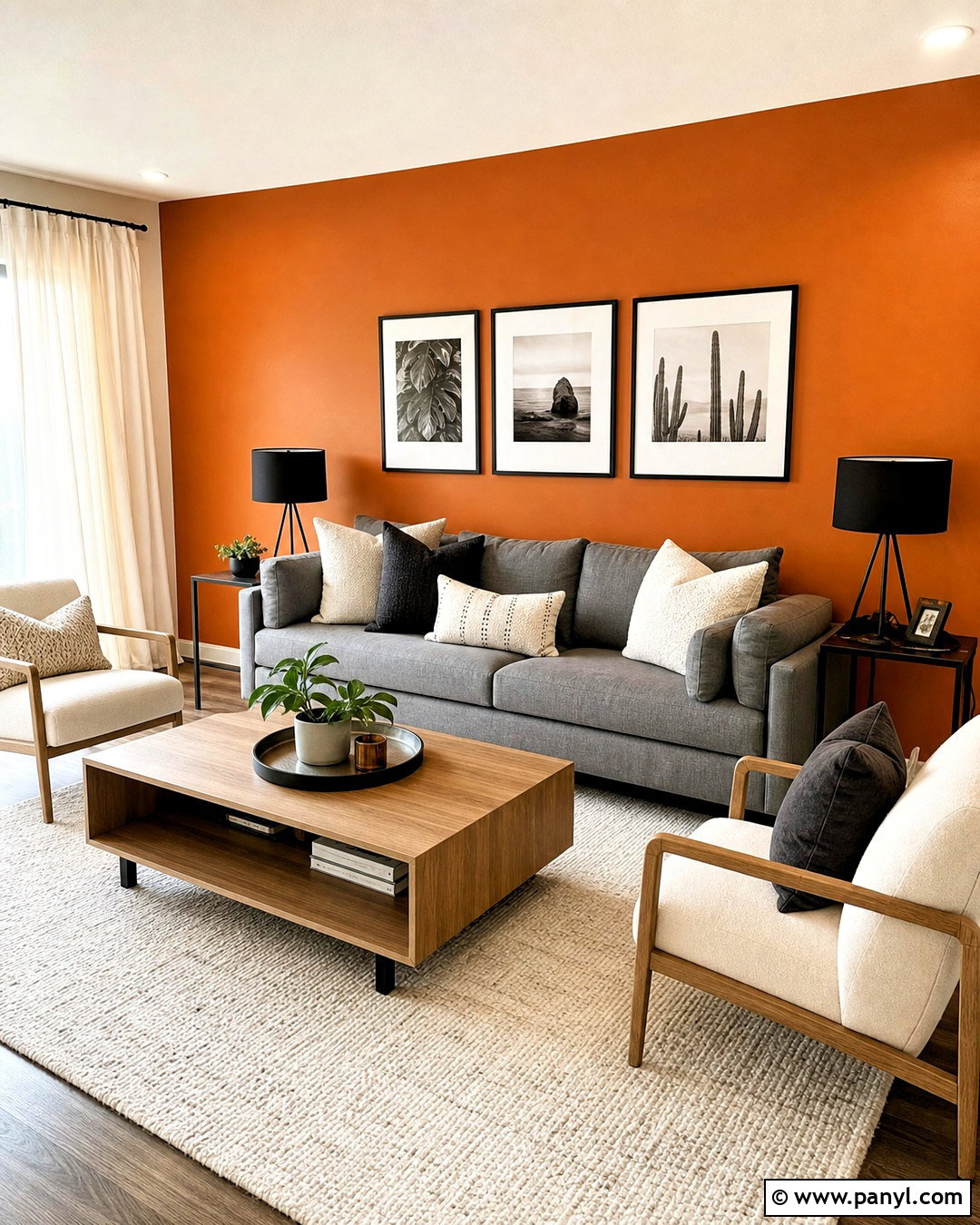
If your gray sofa feels flat or too cool, an orange accent wall can give the entire room more personality. Choose a muted pumpkin or clay orange rather than a highly saturated shade. Center the sofa against the painted wall and add cream, charcoal, and orange patterned pillows. A light wood coffee table and ivory textured rug will soften the contrast between gray upholstery and orange paint. Use matte black curtain rods, picture frames, and lamp bases for definition. Repeat orange only once or twice in small accessories so the wall remains the main attraction. Warm white curtains and soft globe lighting help this practical color combination feel welcoming rather than stark or overly coordinated.
4. Orange Accent Wall With Navy Sofa
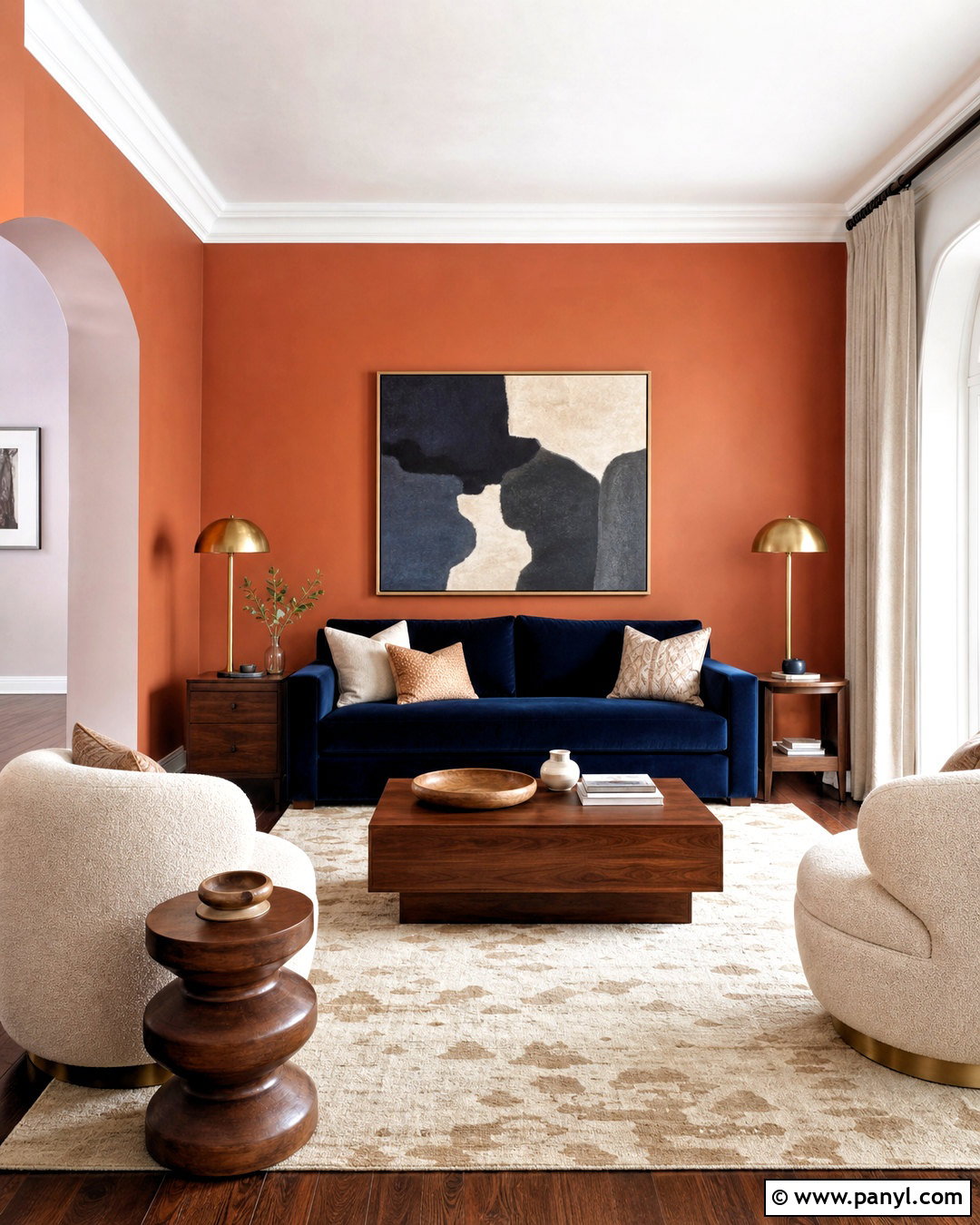
Deep navy seating looks striking against a rich orange wall because both colors have enough visual strength to hold their own. Start with a clean-lined navy velvet or woven sofa positioned against a muted persimmon accent wall. Ground the arrangement with a cream rug featuring a subtle blue pattern. Add walnut side tables, brushed brass lamps, and oatmeal curtains to warm the contrast. Artwork can include white, navy, tan, and small touches of orange without matching the wall exactly. Keep additional furniture neutral, such as two ivory boucle chairs. The final room feels colorful and confident, yet the restrained accessories and natural materials prevent the orange-and-blue combination from becoming too busy.
5. Orange Accent Wall With Green Furniture
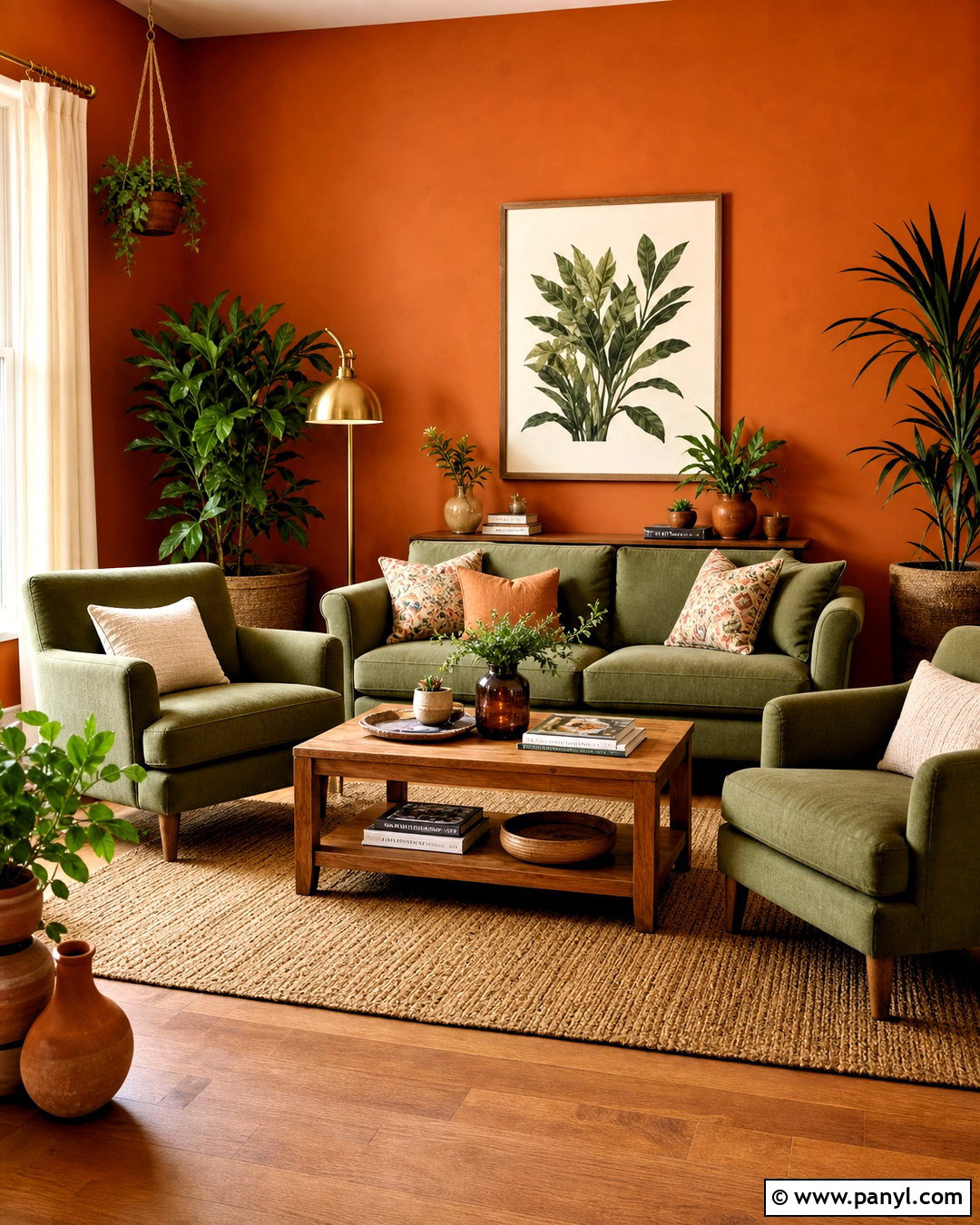
An earthy orange feature wall and olive green furniture create a living room inspired by natural landscapes. Paint the wall a warm adobe orange, then place an olive sofa or pair of moss green armchairs nearby. Bring in medium-tone oak furniture, a jute rug, and cream linen curtains to keep the palette relaxed. Botanical artwork, terracotta planters, and several leafy plants can connect the colors without turning the room into a theme. Use antique brass lighting for a gentle glow and add cushions in tan, ivory, and muted mustard. This complete scheme is a natural fit for bohemian, midcentury, and organic modern homes, especially when the room has warm wood flooring.
6. Peach Orange Accent Wall Living Room
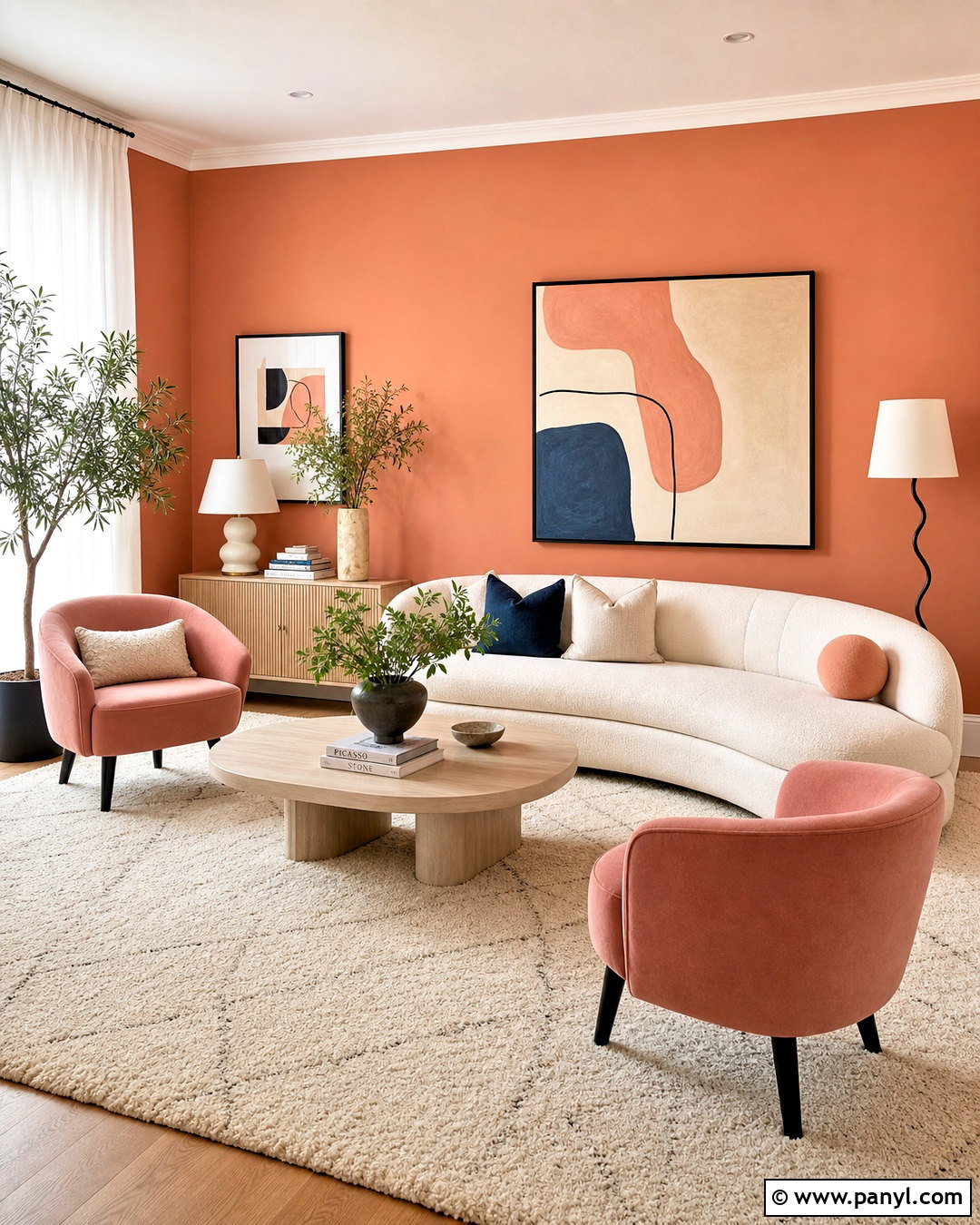
Soft peach-orange paint is a gentle choice for anyone who wants color without a dramatic feature wall. Use it behind a curved cream sofa and pair the arrangement with a pale oak coffee table, ivory rug, and blush or sand-colored accent chairs. White curtains and light flooring will keep the space bright. For contrast, introduce small black details through frames, lamps, and a narrow console table. Abstract artwork containing coral, beige, and soft blue can pull the palette together. Avoid filling the room with matching peach accessories. Instead, let natural textures and warm neutrals support the wall. The finished space feels fresh, cheerful, and comfortable enough for everyday family living.
7. Rust Orange Accent Wall Living Room
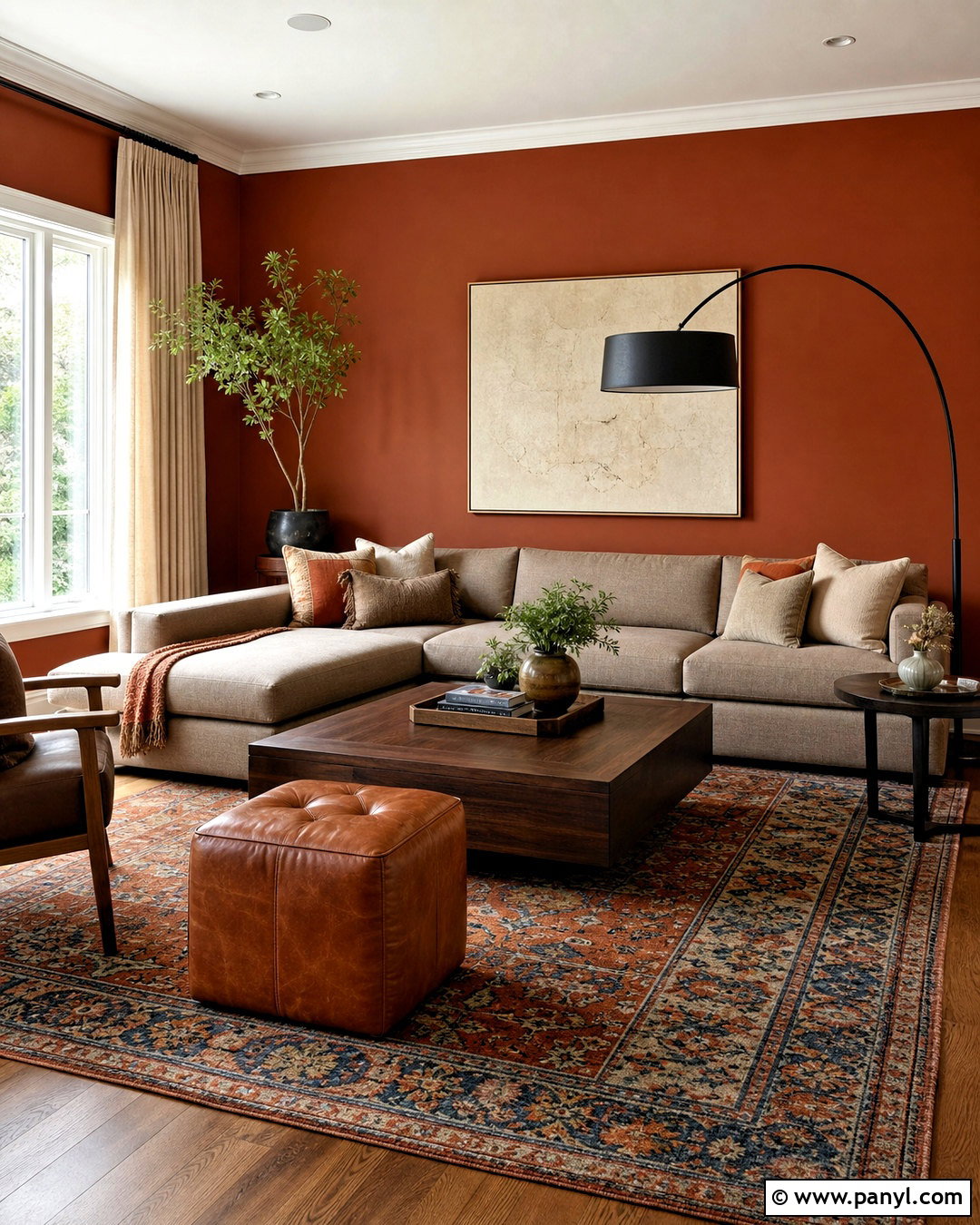
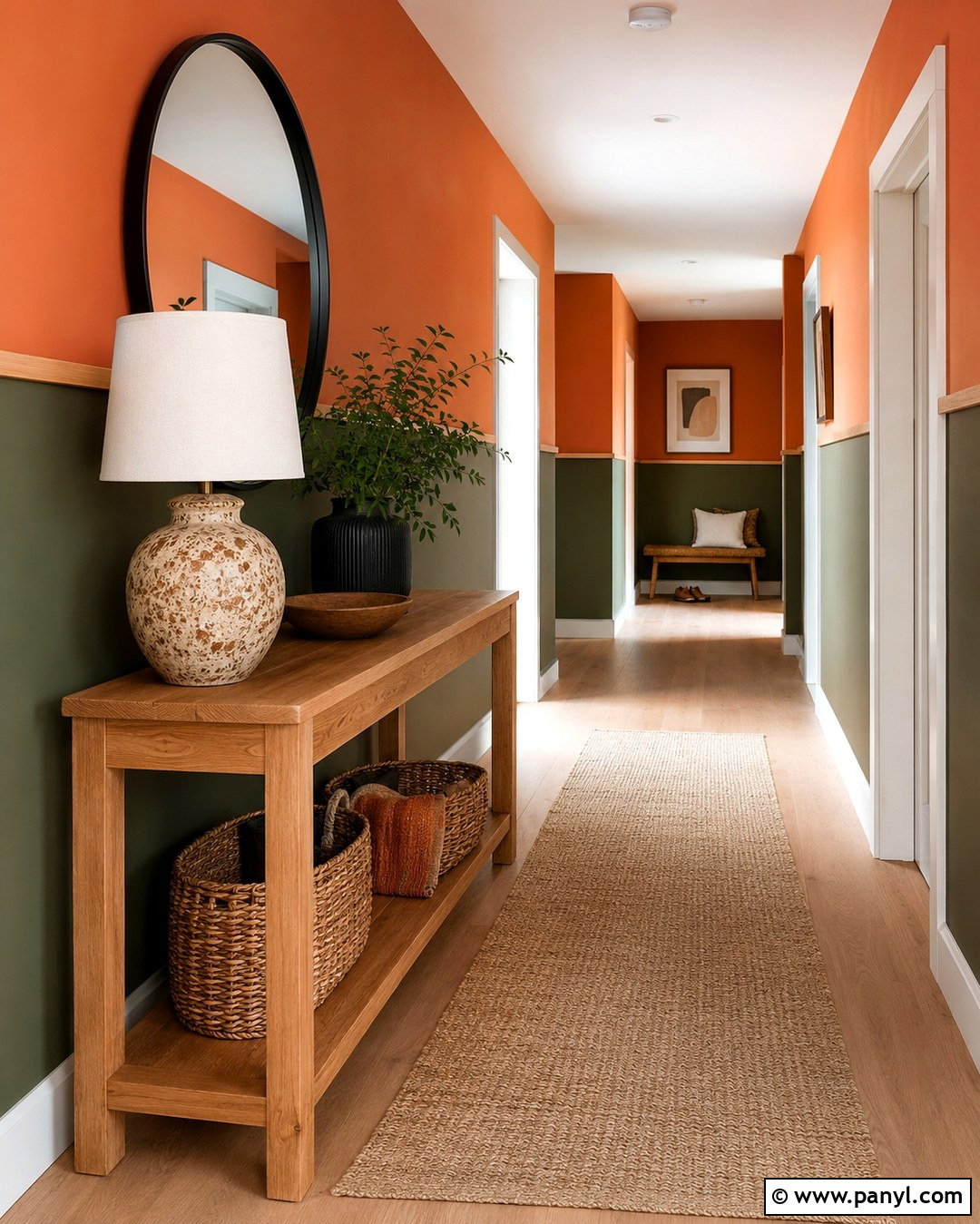
Rich rust orange can make a large living room feel more intimate and thoughtfully furnished. Paint the longest uninterrupted wall, then anchor it with a wide taupe sectional and oversized cream artwork. Choose a dark walnut coffee table, cognac leather ottoman, and vintage-style rug with faded rust and blue details. Linen curtains in warm beige will soften windows without competing with the wall. Layer the sofa with chocolate brown, ivory, and subtle striped cushions. A black arched floor lamp adds a contemporary edge. Since rust is deep and enveloping, use lighter upholstery and reflective decor nearby. The resulting room feels sophisticated, comfortable, and well balanced rather than dark or heavy.
8. Bright Orange Accent Wall Living Room
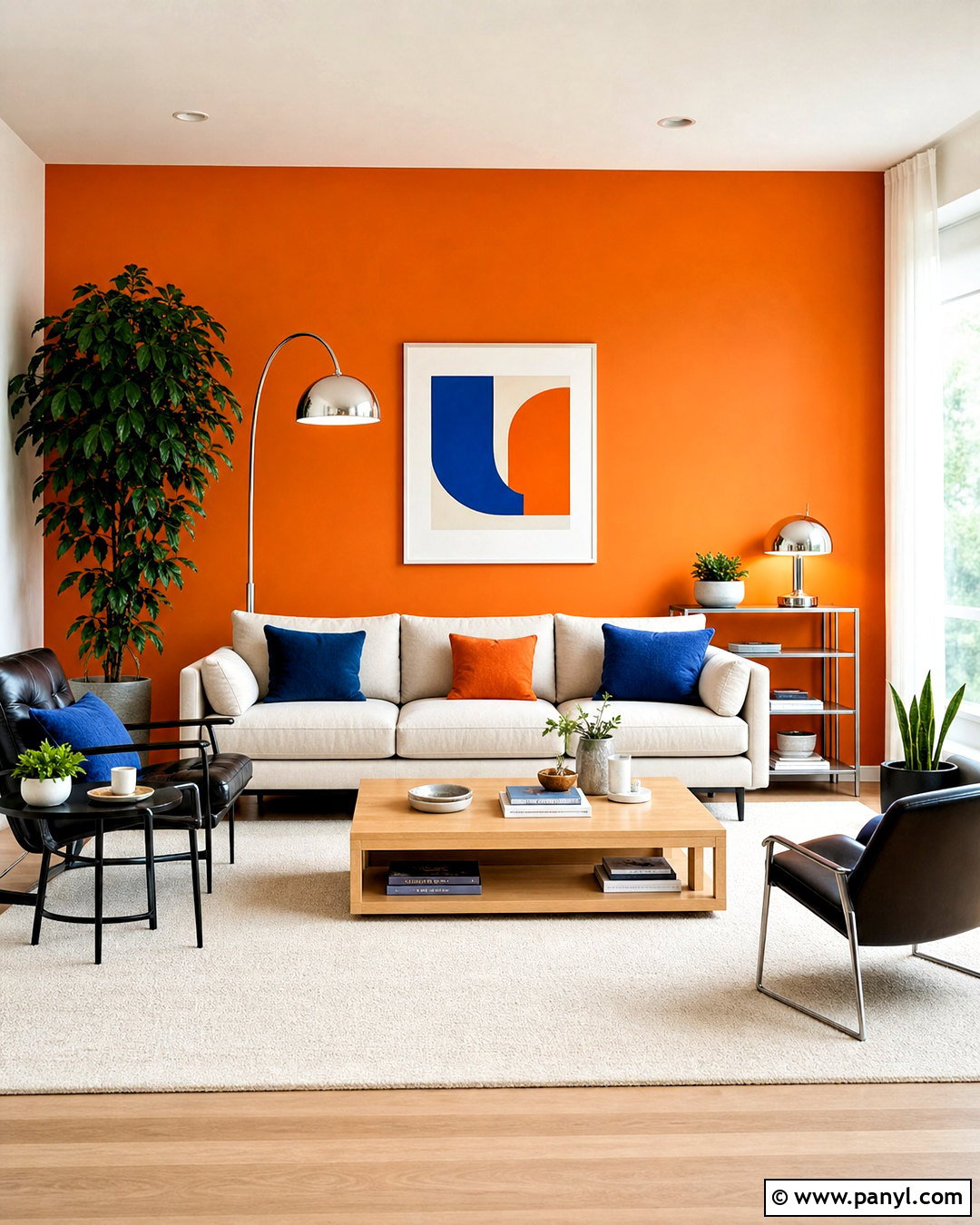
A bright orange wall can work beautifully when the rest of the living room is crisp and carefully edited. Choose one clean focal wall behind a white or light beige sofa. Add a simple pale wood coffee table, a cream flat-weave rug, and two compact black accent chairs. Keep curtains white and avoid placing too many colorful objects around the room. A single large graphic artwork can contain orange, cobalt blue, and white to connect the palette. Use chrome or matte black lighting for a modern finish. Small blue pillows provide cool contrast, while green plants add natural softness. The complete space feels lively and contemporary without allowing the energetic orange shade to overwhelm the furniture.
9. Dark Orange Accent Wall Living Room
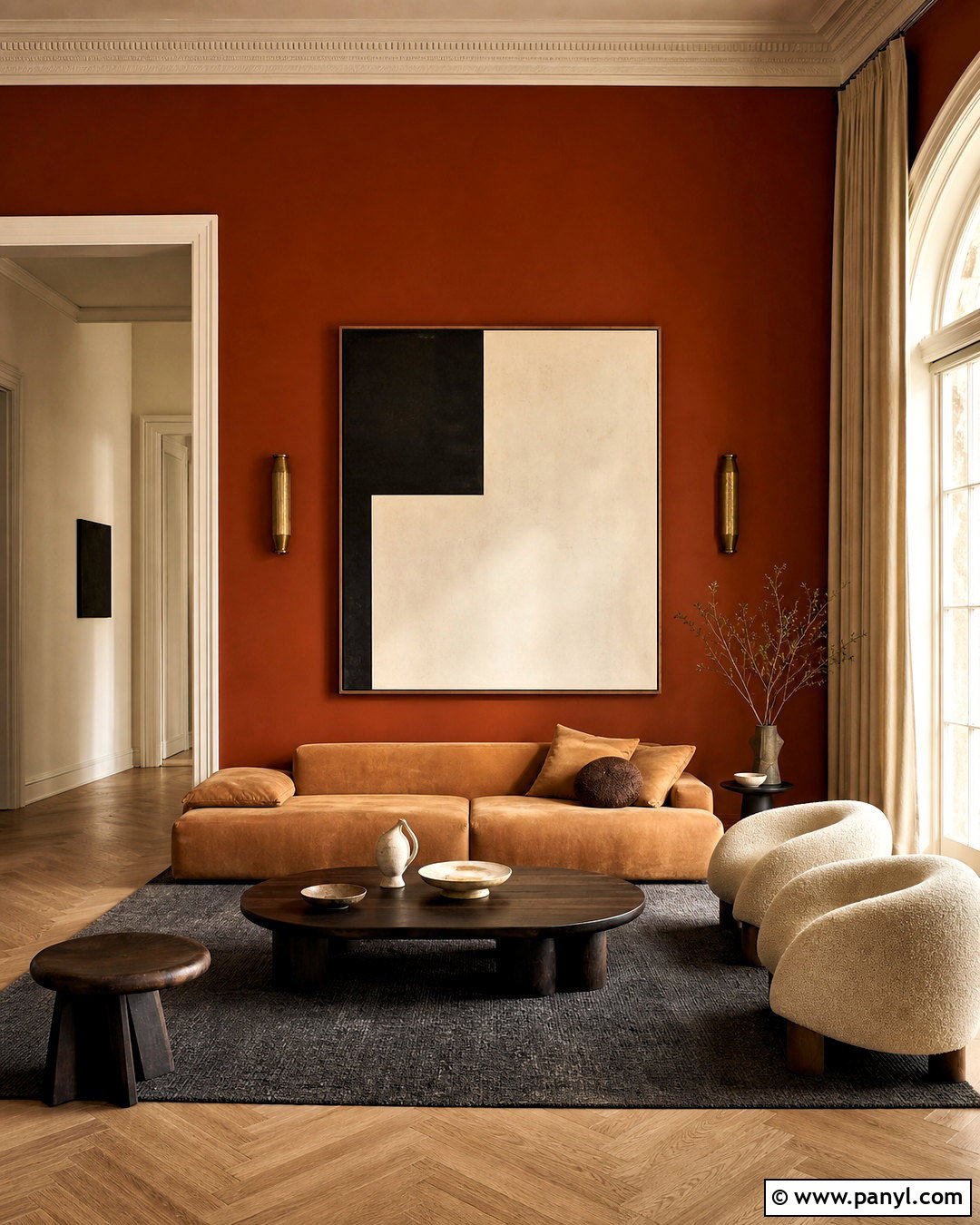
For a dramatic living room, cover the fireplace or main architectural wall in deep red-orange paint. Pair it with a low camel sofa, dark wood tables, and a charcoal rug that visually grounds the space. Use cream curtains and a pale ceiling to prevent the darker color from closing in the room. A pair of sculptural ivory chairs will create a lighter foreground, while aged brass sconces bring warmth to the feature wall. Choose large, simple artwork rather than a crowded gallery. Accessories in burgundy, tan, and black can reinforce the sophisticated palette. This look is particularly effective in rooms with high ceilings, generous windows, and enough space for substantial furniture.
10. Orange Accent Wall With Wood Paneling
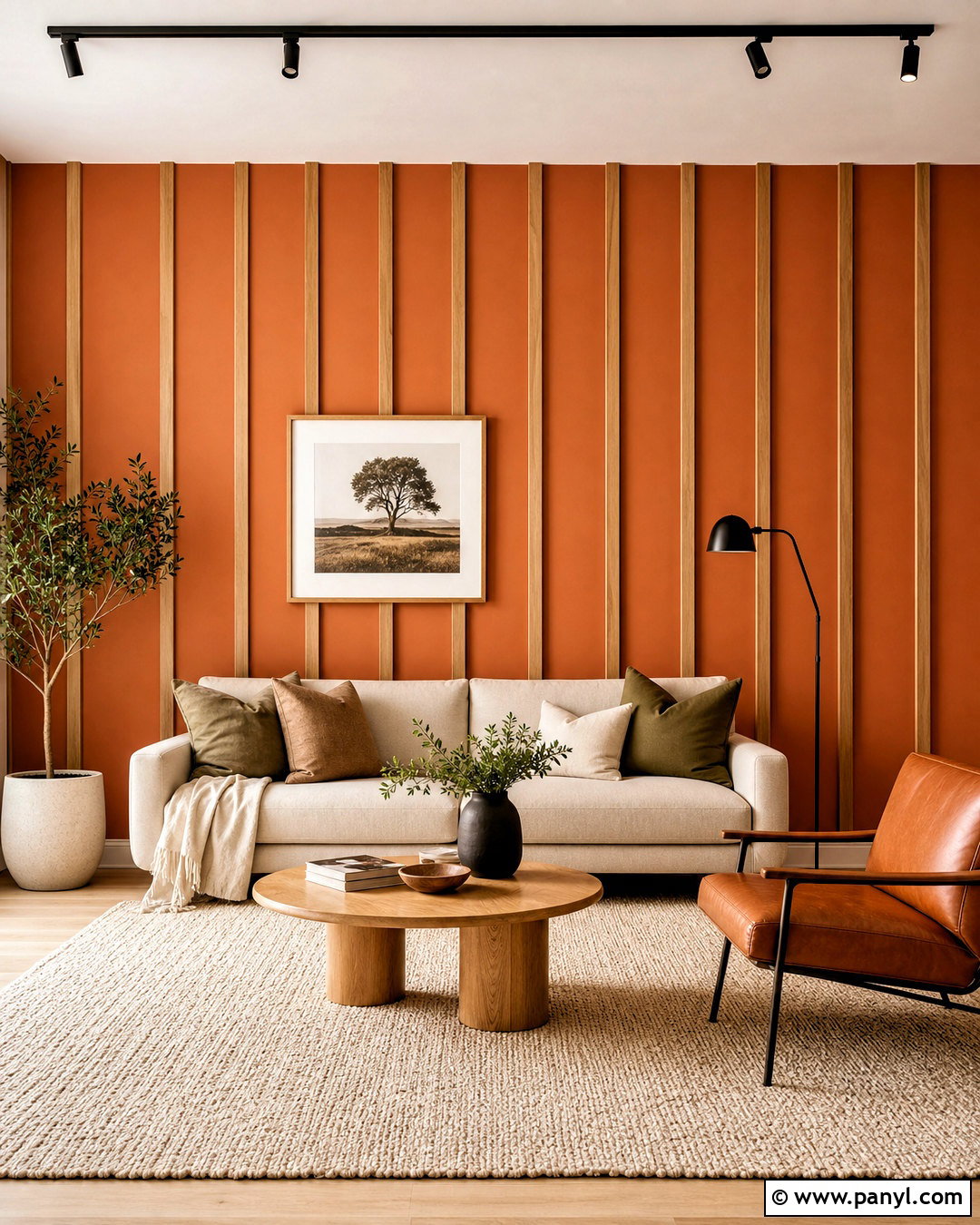
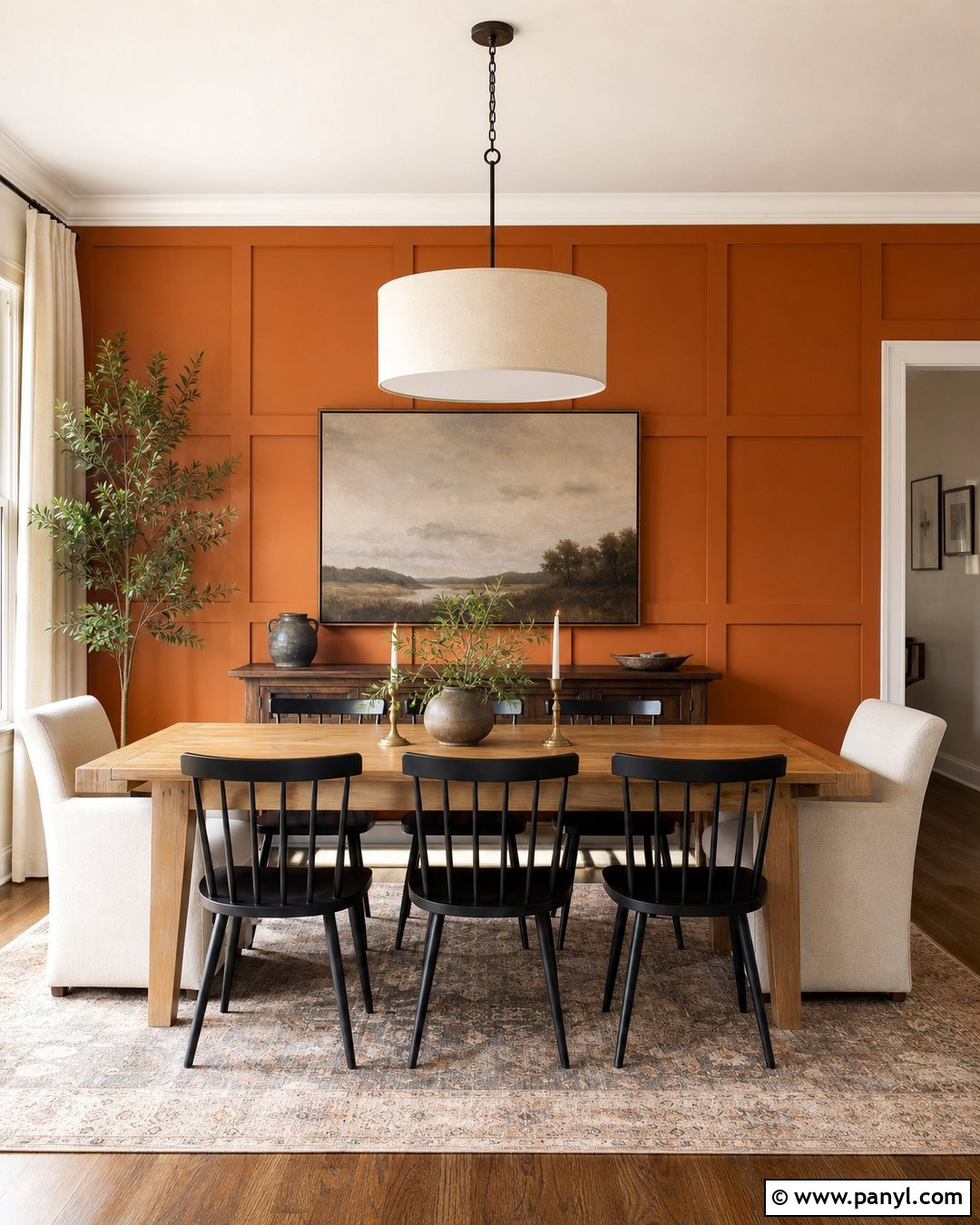
Vertical wood strips over an orange wall add structure, texture, and an architectural focal point. Paint the wall muted pumpkin orange, then install evenly spaced narrow battens in natural oak or stained walnut. Position a simple cream sofa in front, leaving enough visible wall for the panel pattern to read clearly. Add a round wood coffee table, oatmeal rug, and leather accent chair for a cohesive material palette. Black track lighting and slim black frames provide crisp contrast. Keep pillows limited to ivory, rust, and olive green. This complete living room feels modern yet warm, and the vertical lines can visually emphasize ceiling height while giving an otherwise plain wall a custom-built appearance.
11. Orange Accent Wall With Fireplace
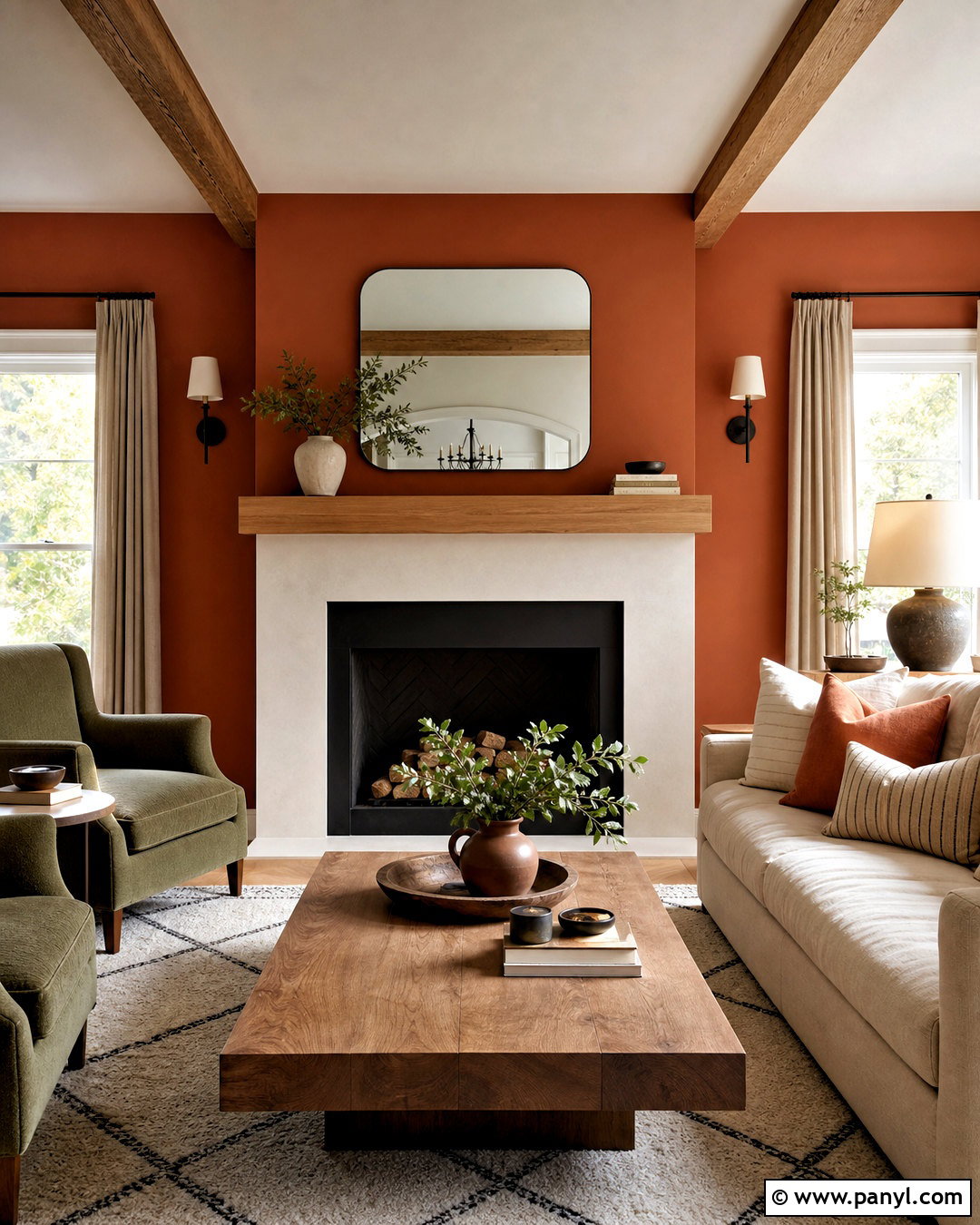
Make the fireplace feel intentional by treating the entire chimney breast or surrounding wall as one orange focal point. Select a softened burnt orange and combine it with a plaster, stone, or simple white fireplace surround. Arrange a beige sofa and two olive chairs toward the hearth to create a conversational layout. A wool rug in cream and charcoal defines the seating zone, while a solid oak coffee table adds weight. Display one large artwork or rounded mirror above the mantel instead of numerous small pieces. Use floor lamps and understated sconces for balanced lighting. This approach integrates the fireplace into the color scheme, creating a cozy living room that still looks clean and organized.
12. Orange Accent Wall With TV
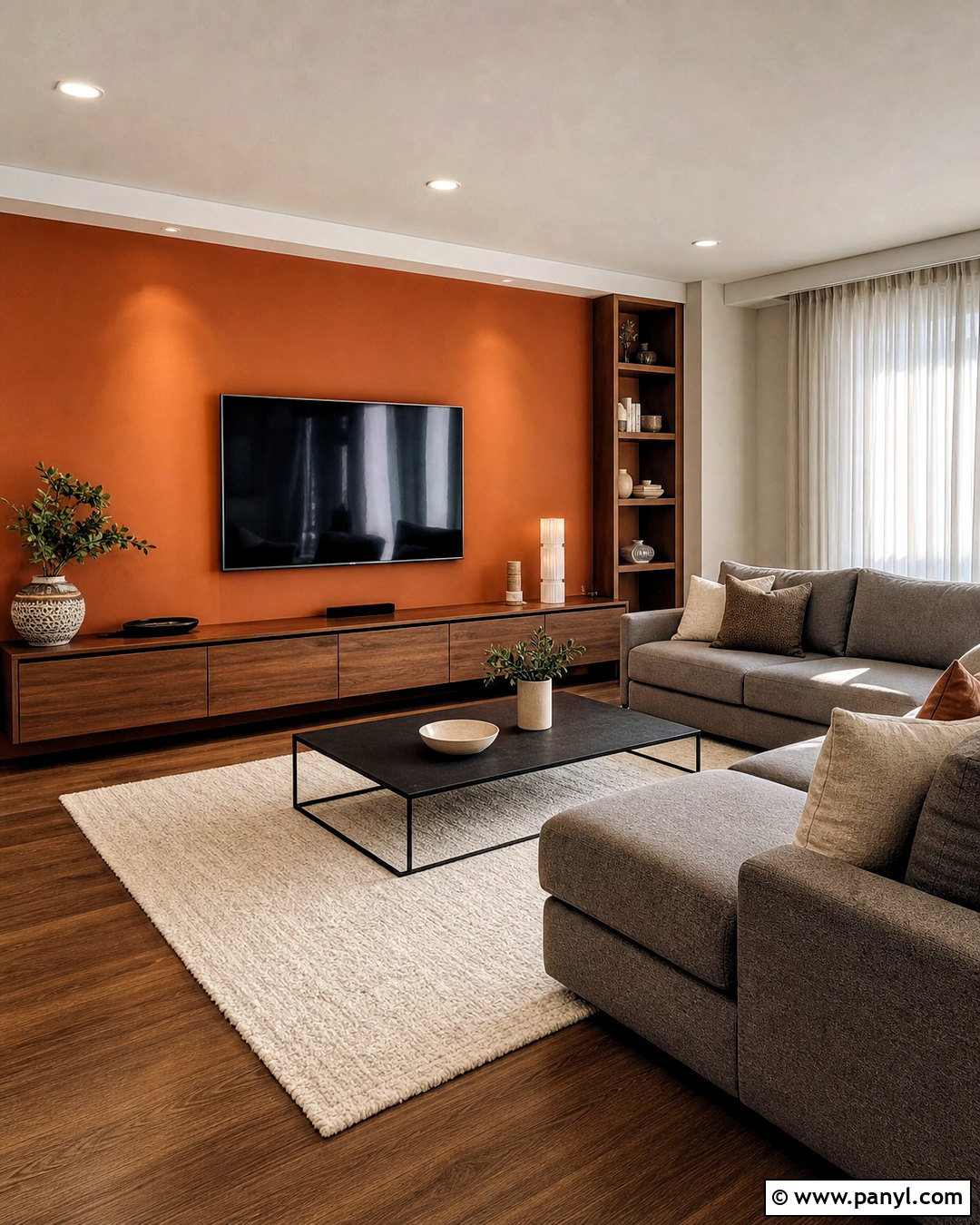
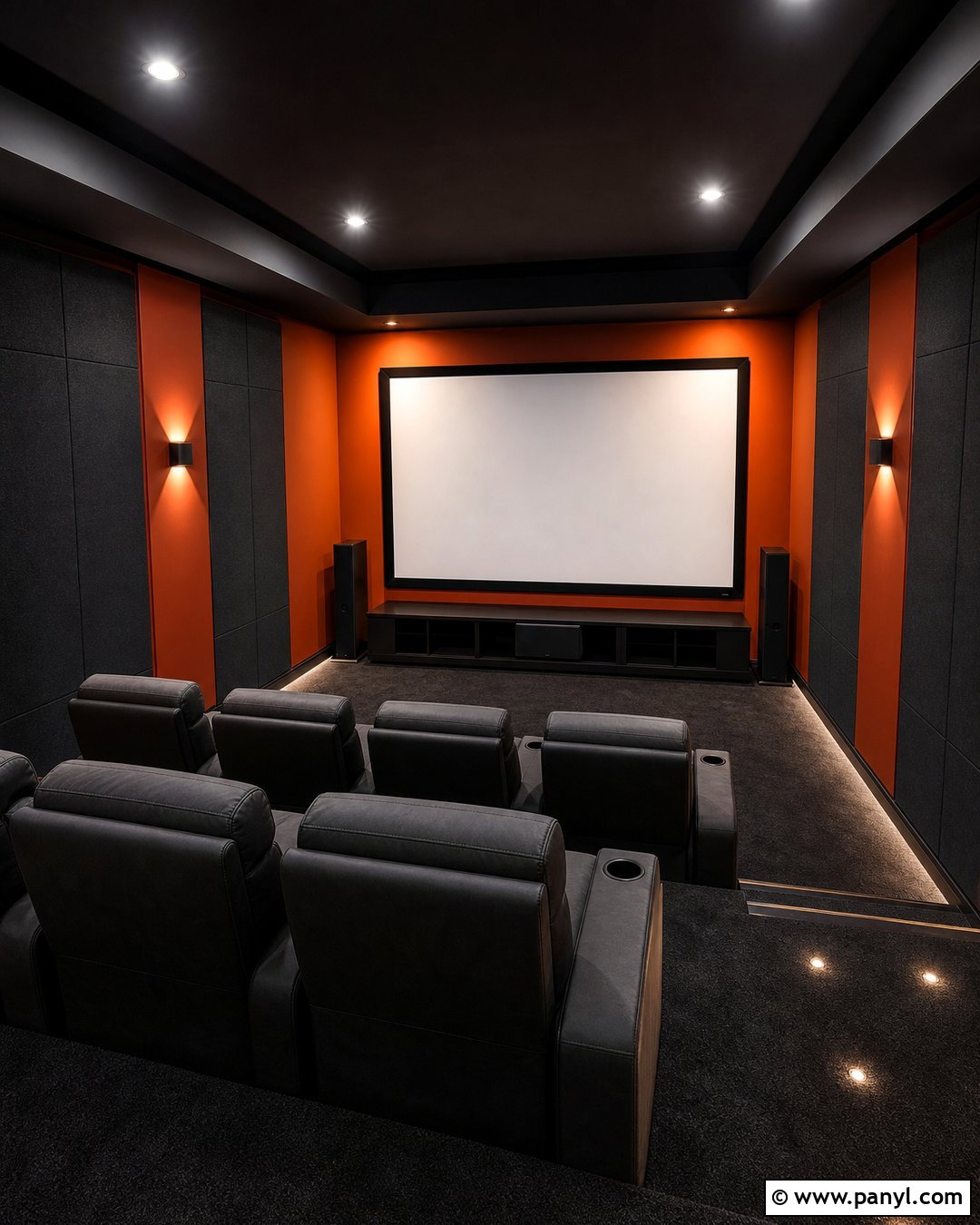
An orange media wall can make a television feel like part of the design rather than an isolated black rectangle. Choose a medium burnt orange with enough depth to reduce harsh contrast. Mount the TV above a long walnut console and keep cords completely concealed. Add closed storage on the lower portion so games, remotes, and electronics remain out of sight. Furnish the room with a warm gray sectional, cream rug, and slim black coffee table. Use minimal wall decor around the screen to avoid visual clutter. Orange pillows can be balanced with ivory and charcoal textiles. The finished media room feels warm, practical, and coordinated while keeping the television area functional.
13. Orange Geometric Accent Wall Living Room
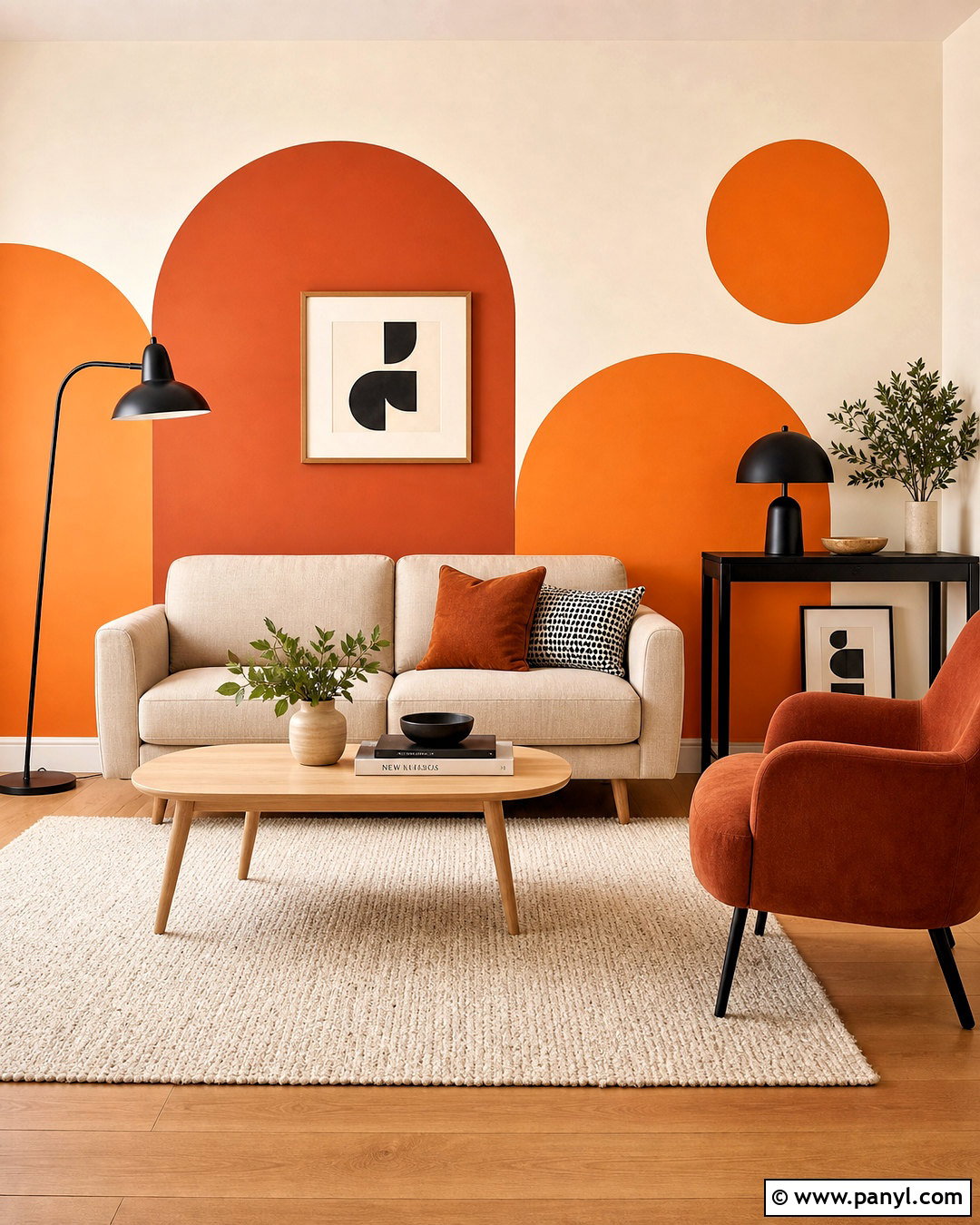
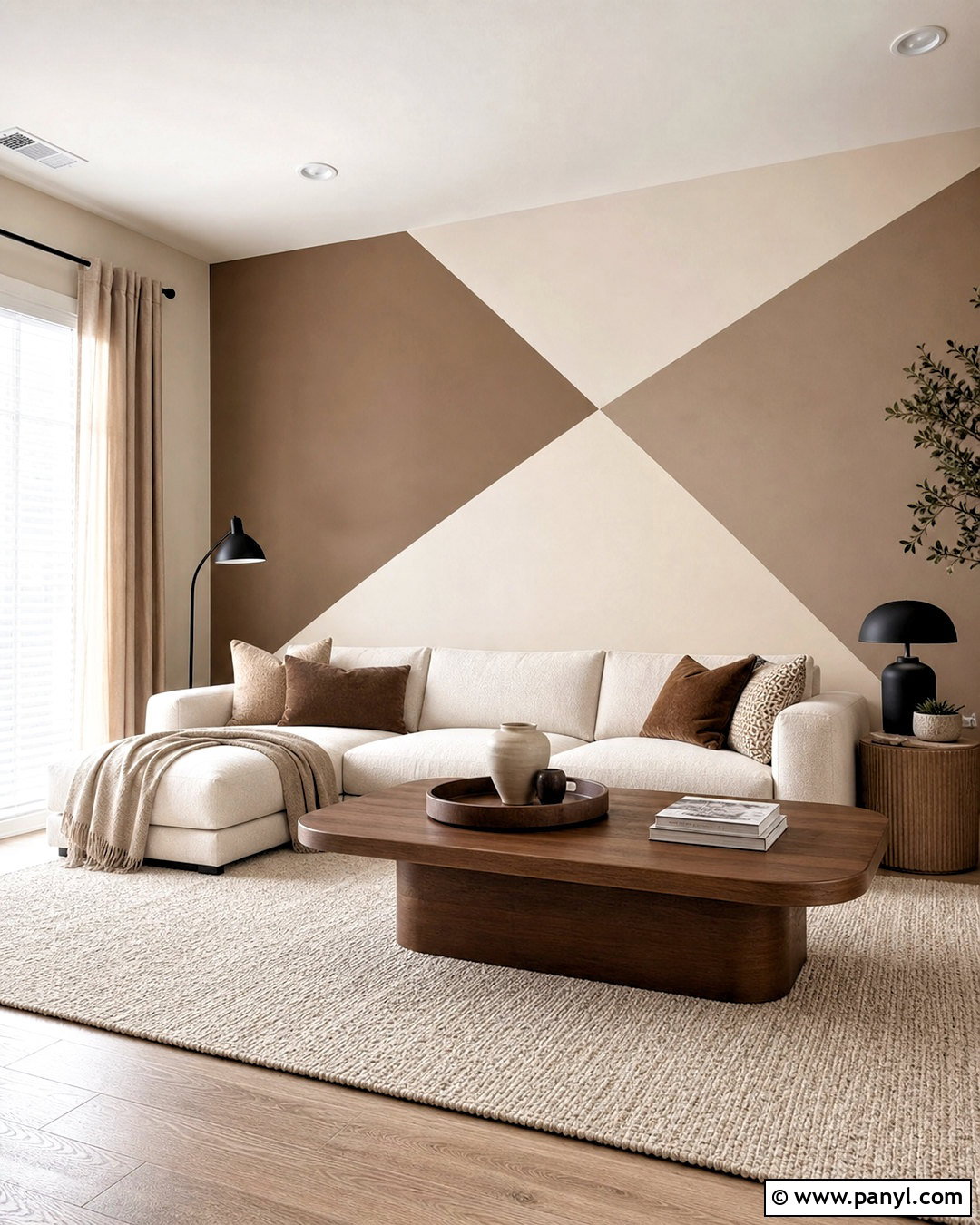
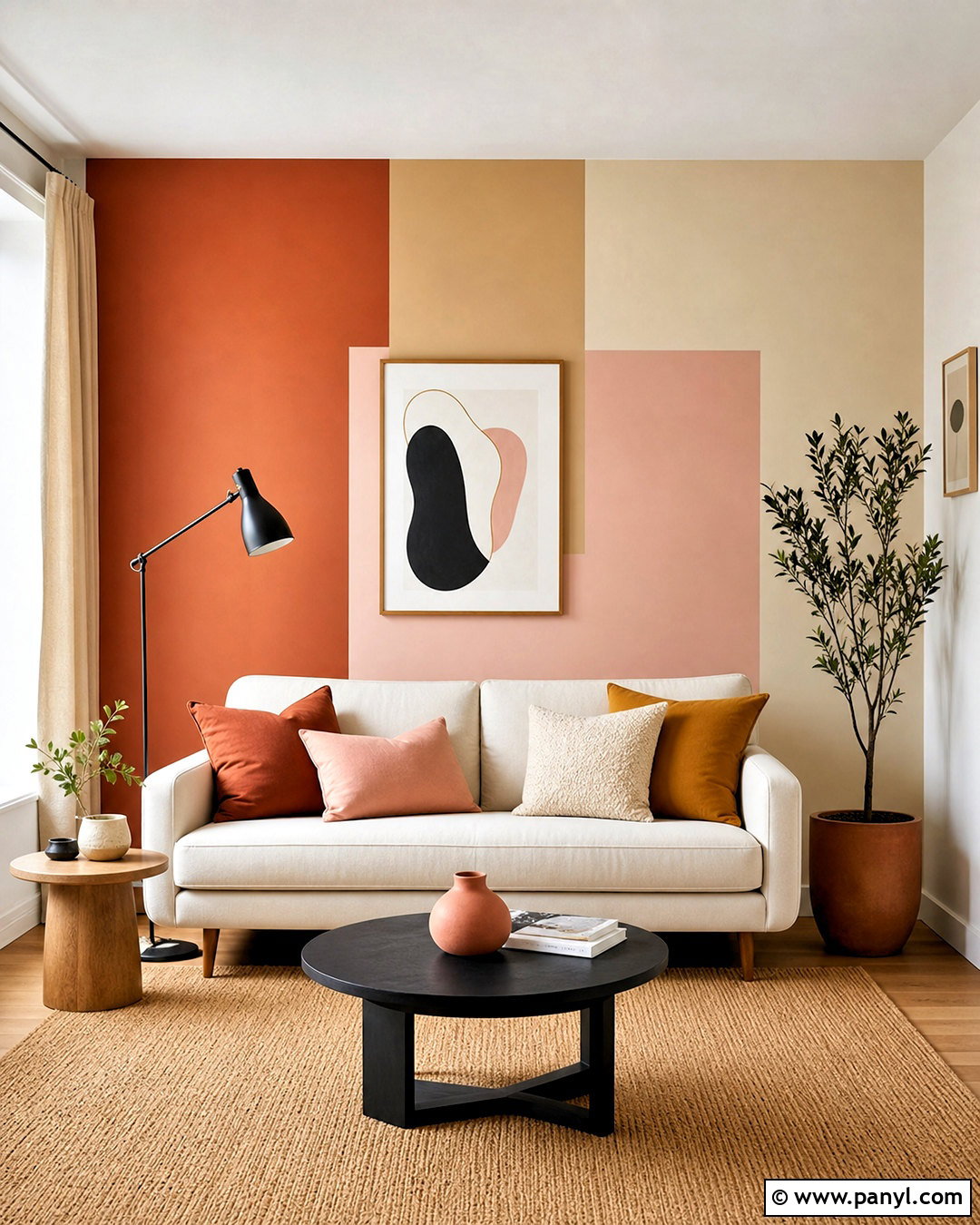
A geometric orange feature wall introduces movement while still functioning as part of a complete room. Begin with a warm white base and paint one or two oversized shapes in terracotta and muted tangerine. Keep the forms simple, such as a large arch, circle, or diagonal block. Place a compact beige sofa against the design and add a rust chair, pale wood coffee table, and cream rug. Black lighting and frames give the playful wall a polished finish. Limit patterned textiles so they do not compete with the painted shapes. This look works particularly well in apartments and creative family rooms where a solid orange wall might feel too strong or visually heavy.
14. Orange Half Wall Living Room
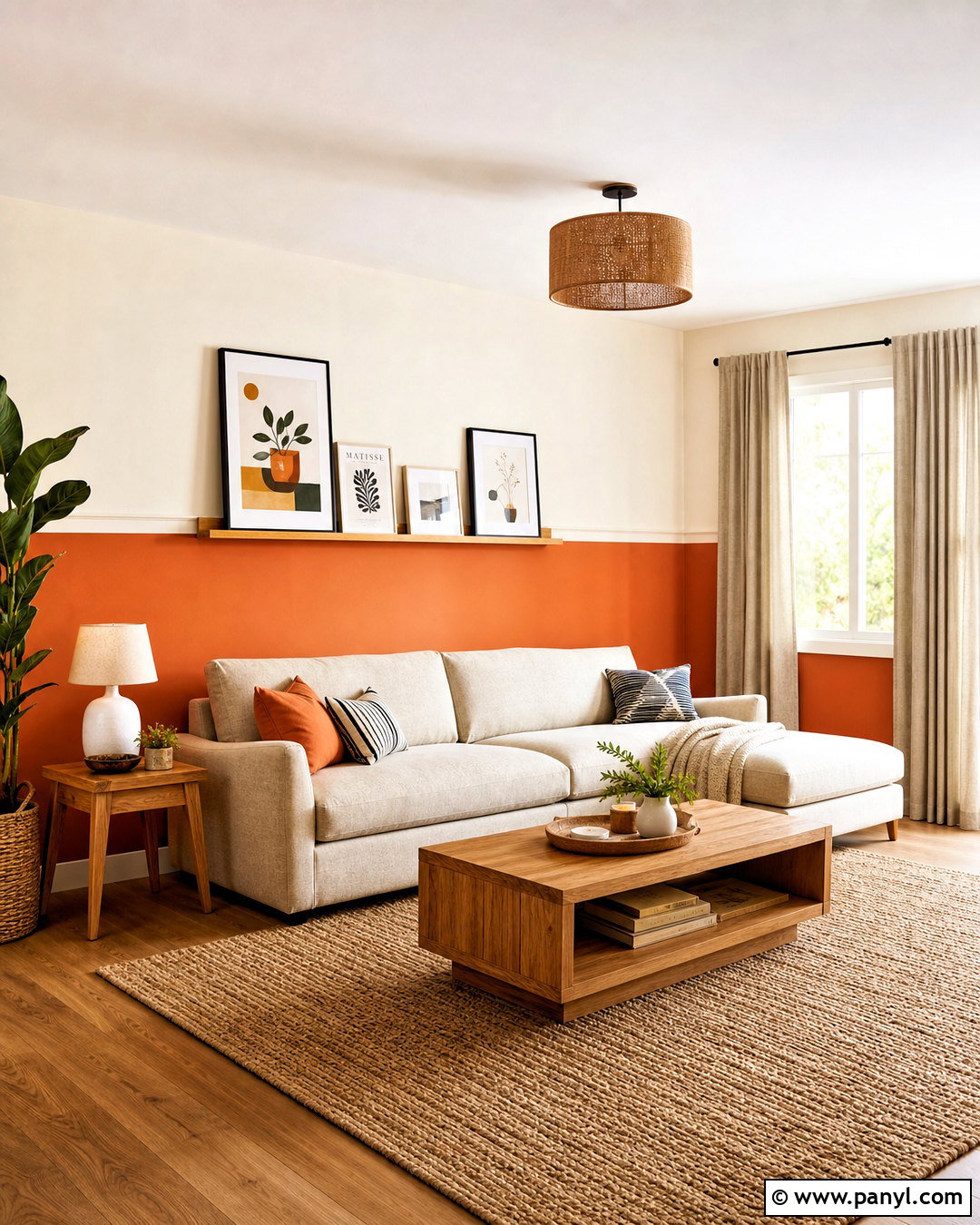
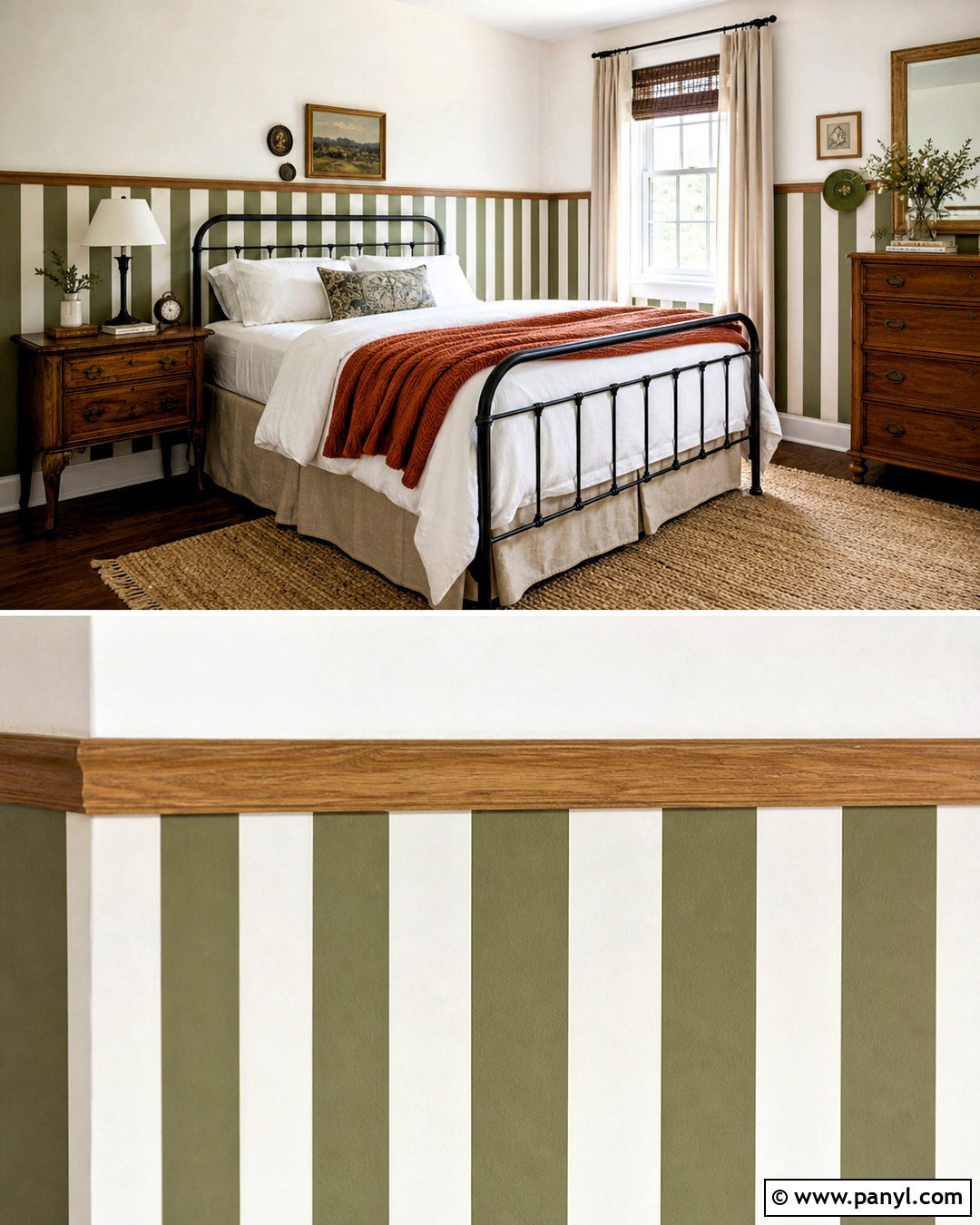
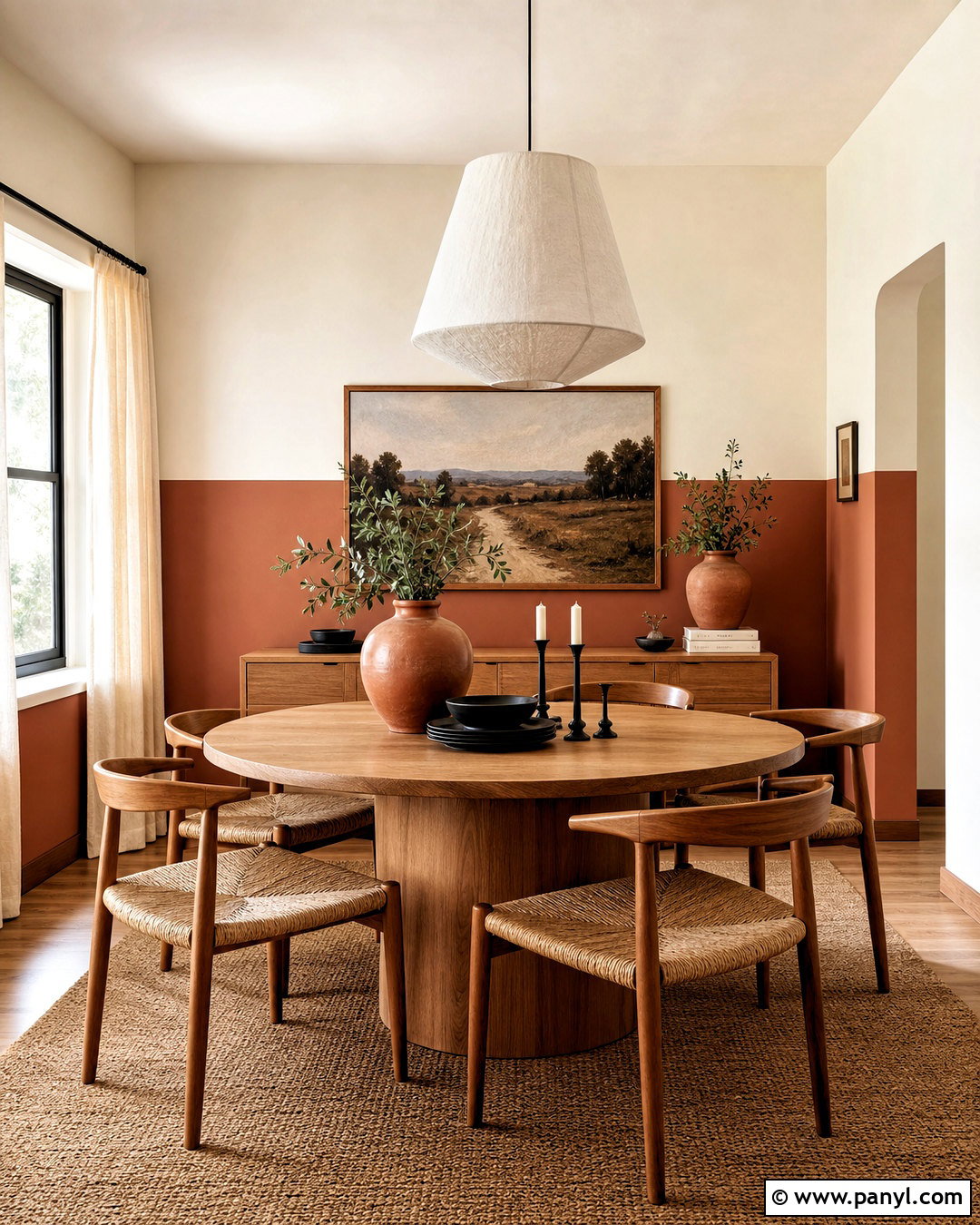
Painting the lower half of a living room wall orange creates color at furniture level while preserving a light, open feeling above. Use clay orange below a simple white or cream dividing line, then keep the upper wall soft white. Place a neutral sofa against the two-tone backdrop and add oak tables, a woven rug, and warm beige curtains. Hang artwork high enough to bridge both colors and make the treatment feel connected. A narrow picture ledge can also define the transition. Repeat orange through one patterned pillow and a ceramic lamp. This design is practical for smaller rooms because it delivers a strong color statement without surrounding the seating area with a full-height block of orange.
15. Orange Wallpaper Accent Wall Living Room
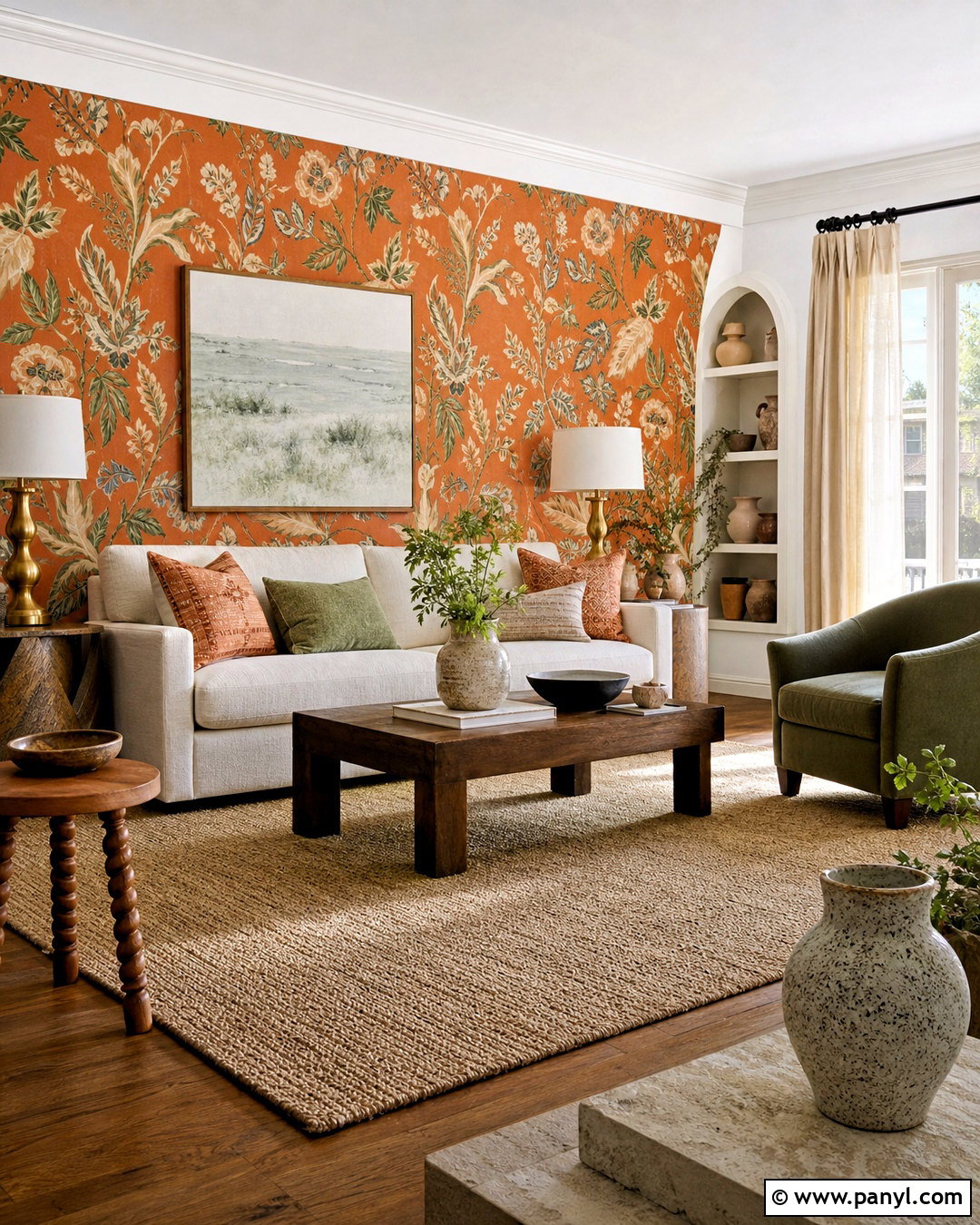
Orange wallpaper gives the living room color, pattern, and texture in one carefully defined area. Choose a design with terracotta, cream, and muted green shapes rather than an overly small or complicated print. Install it behind the main sofa and keep the surrounding walls warm white. Use a solid oatmeal sofa, walnut coffee table, and olive accent chair so the furnishings complement the wallpaper without competing with it. A plain jute or wool rug will calm the pattern underfoot. Add natural linen curtains, simple brass lighting, and a few ceramic accessories. The complete look feels layered and collected, while the limited palette ensures the patterned wall remains attractive instead of visually overwhelming.
16. Orange Accent Wall With Gallery Art
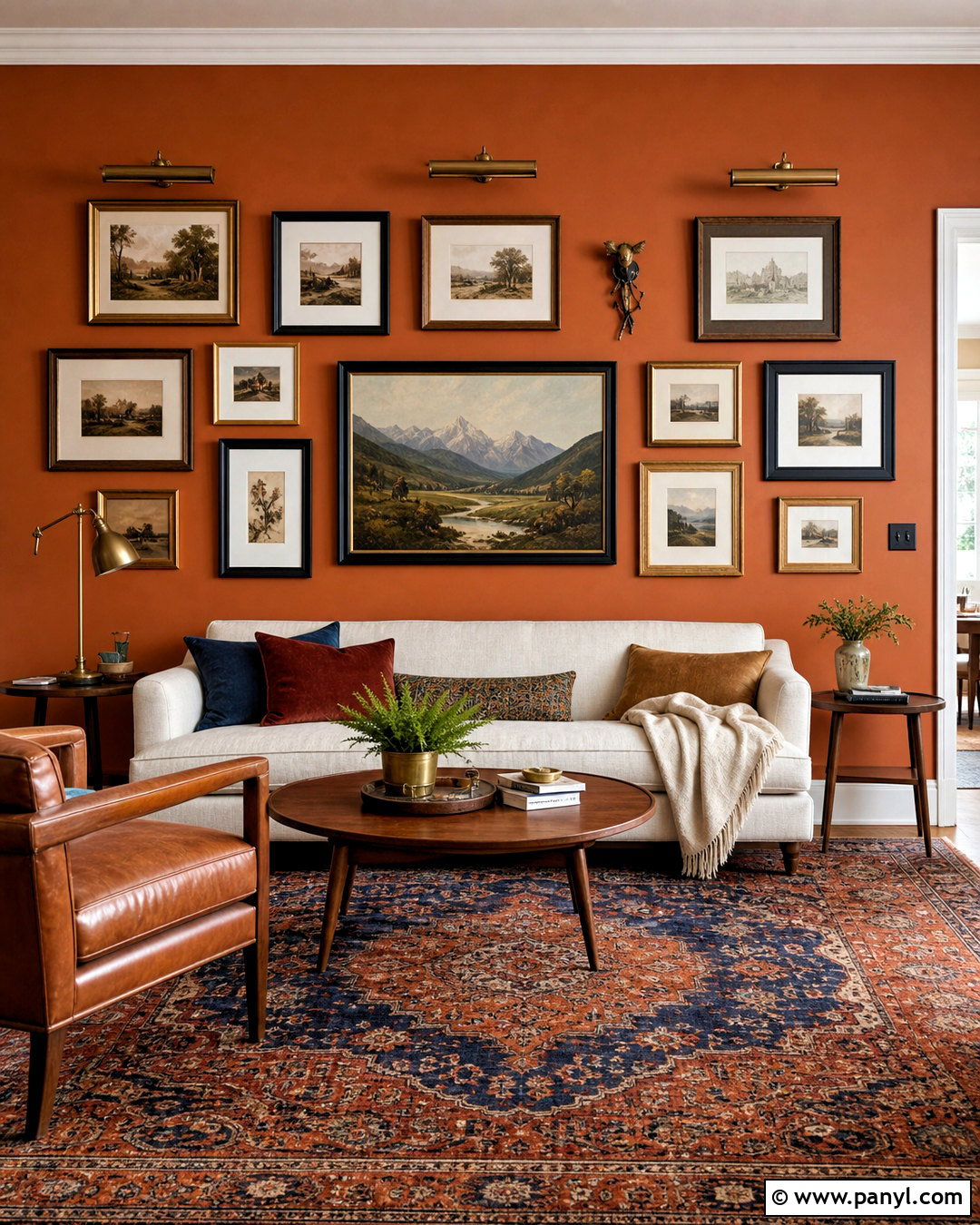
Turn an orange feature wall into a gallery backdrop by combining varied artwork within one organized arrangement. A muted burnt orange works best because it provides color without overpowering every frame. Hang a balanced collection of black, oak, and brass frames containing landscapes, abstract prints, and simple photography. Position a cream sofa below the gallery and add a vintage-style rug featuring navy, rust, and beige. Walnut tables and a camel leather chair will continue the warm palette. Leave consistent spacing between frames to prevent clutter. Picture lights or nearby sconces can highlight the display. This finished room suits eclectic homes where art, collected objects, and comfortable furniture are equally important.
17. Orange Accent Wall With Built-In Shelves
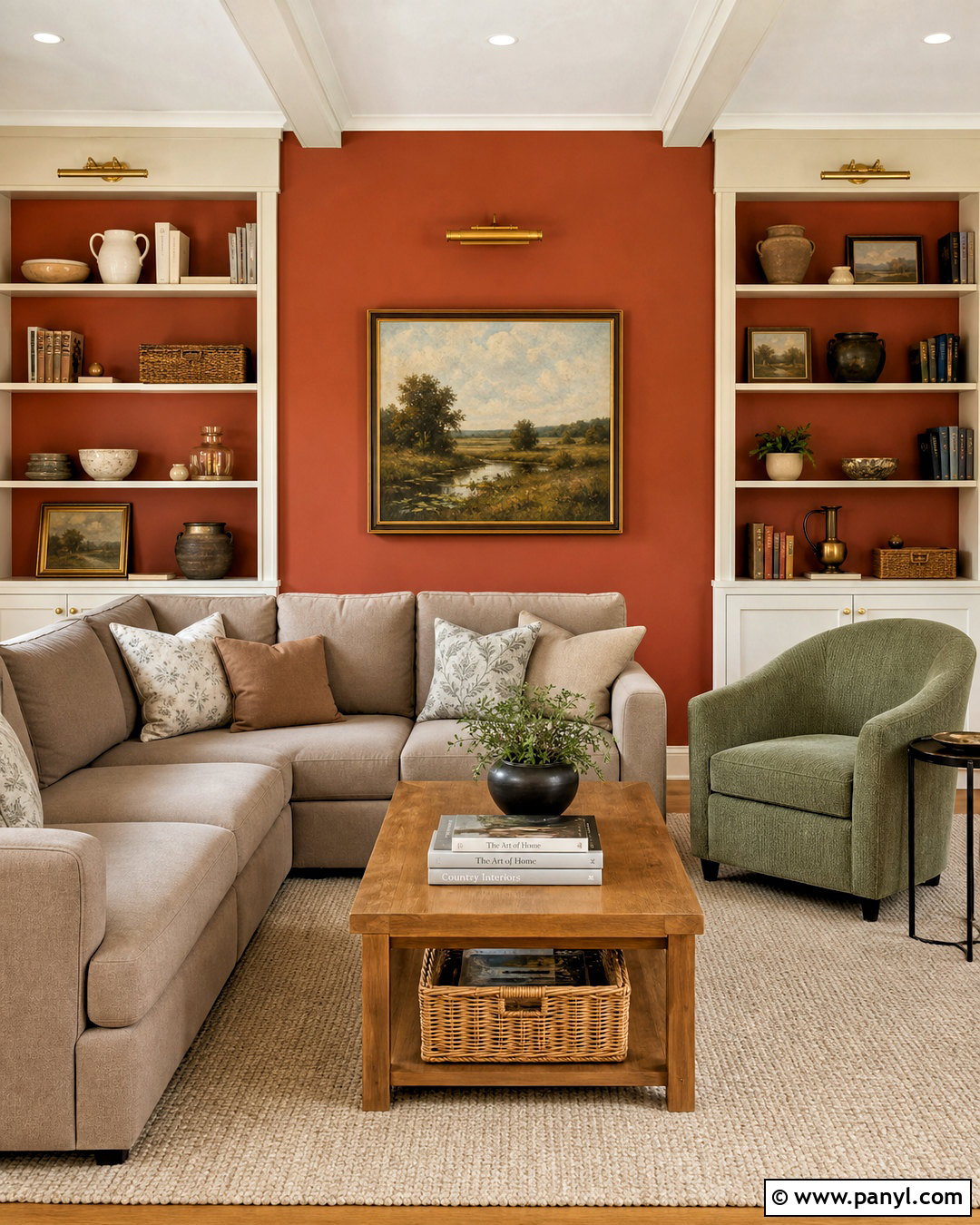
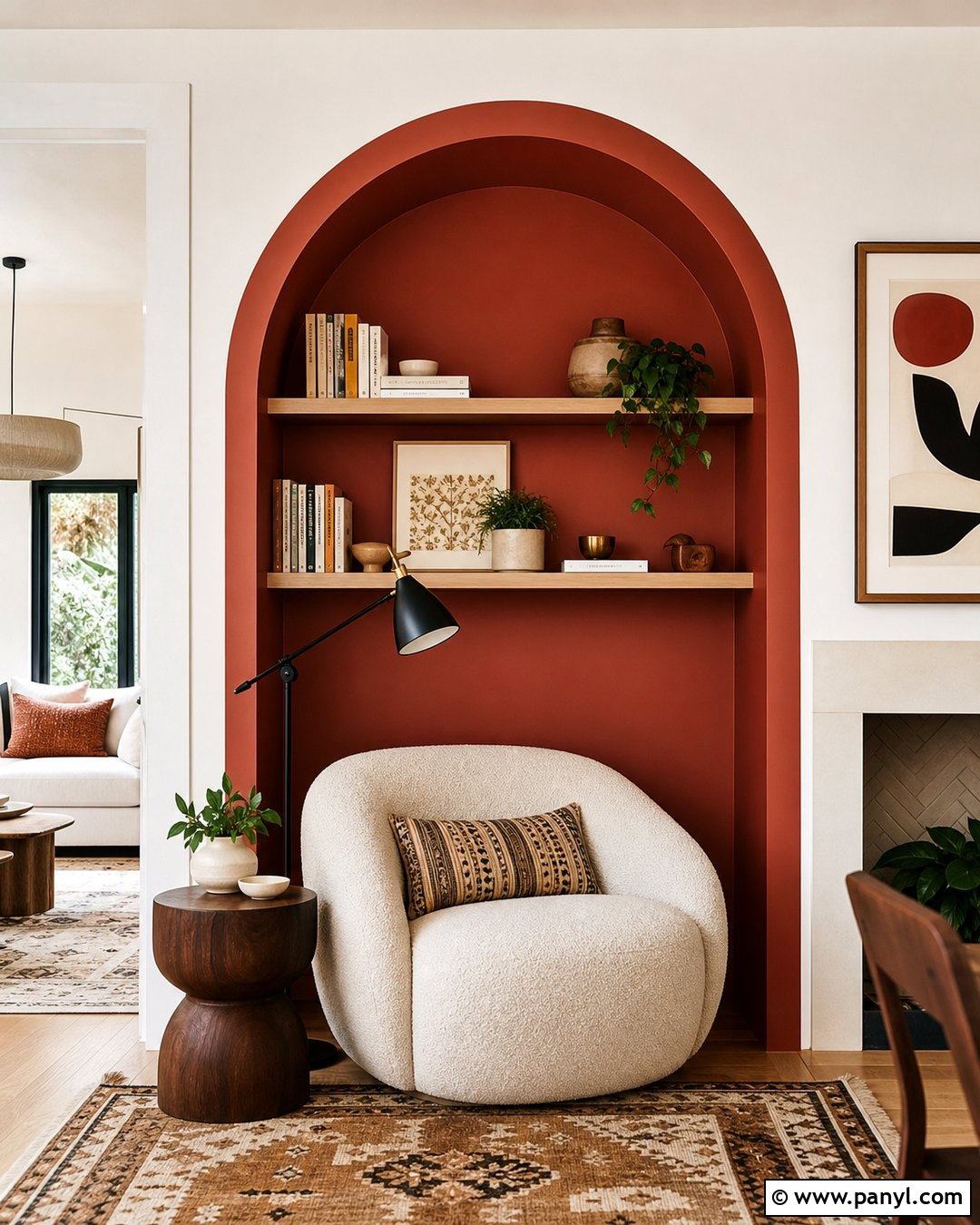
Built-in shelving becomes more noticeable when the recessed back wall is painted orange. Use a sophisticated clay or cinnamon shade inside the shelves while keeping the outer cabinetry cream, white, or pale greige. Style the units with books, pottery, baskets, and framed art, leaving some open space around each group. Place a taupe sectional opposite the shelves and add an oak coffee table, textured ivory rug, and soft green chair. Brass cabinet hardware and picture lights bring a refined finishing touch. Repeat the orange subtly in one pillow or throw. This complete arrangement combines color with useful storage, making it especially effective in family living rooms that need organization without sacrificing warmth.
18. Orange Accent Wall Small Living Room
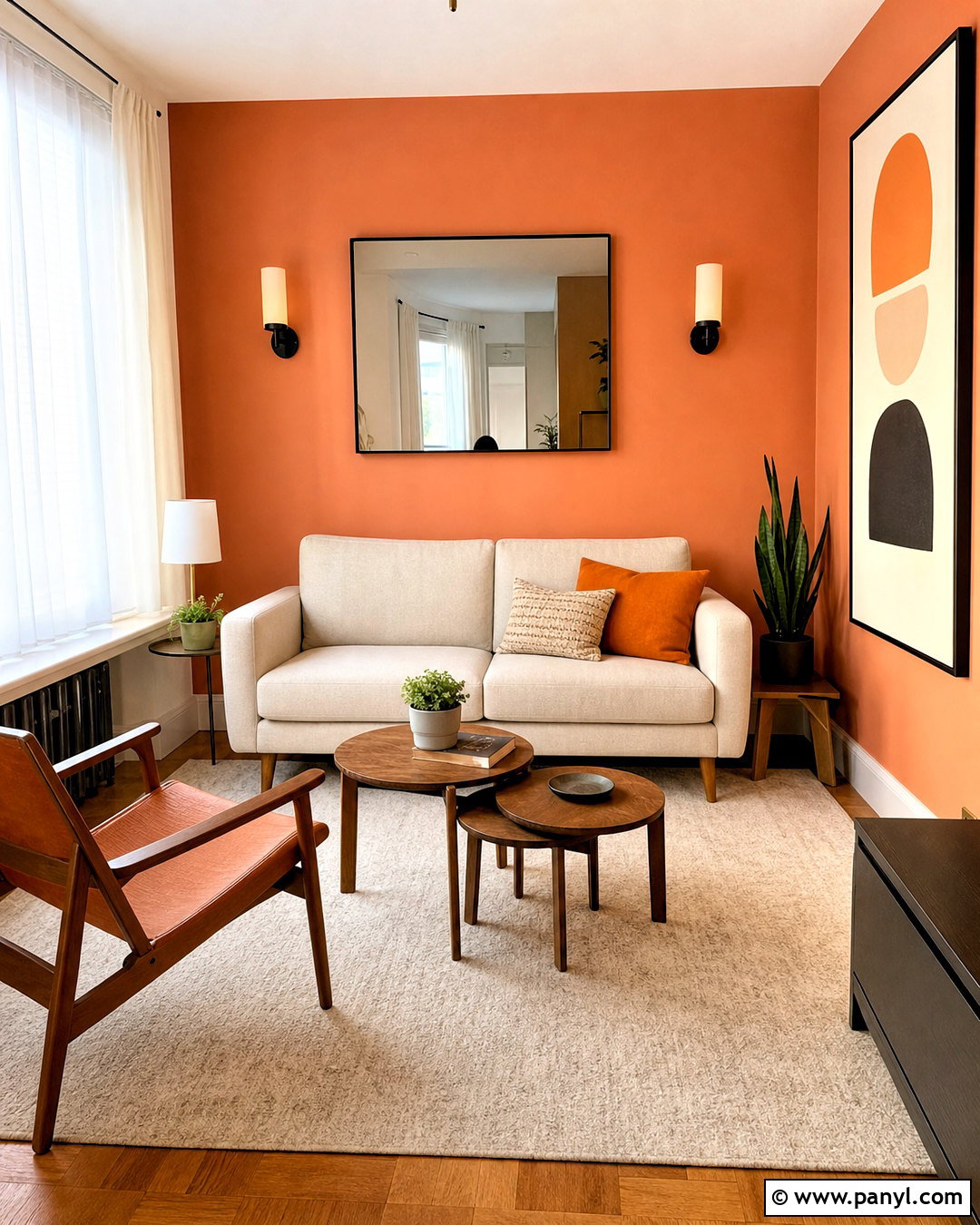
In a compact living room, use orange on the wall that naturally anchors the sofa rather than painting several broken surfaces. A softened apricot or terracotta shade will provide warmth without feeling excessively intense. Choose a small cream loveseat with raised legs, nesting tables, and one lightweight accent chair to preserve open floor space. A large pale rug can make the seating area feel more unified. Hang a single vertical artwork above the sofa and use wall-mounted sconces instead of bulky floor lamps. White curtains and a mirror on an adjoining neutral wall will keep the room bright. The final layout feels colorful, efficient, and comfortable without unnecessary furniture or decorative clutter.
19. Orange Accent Wall Midcentury Living Room
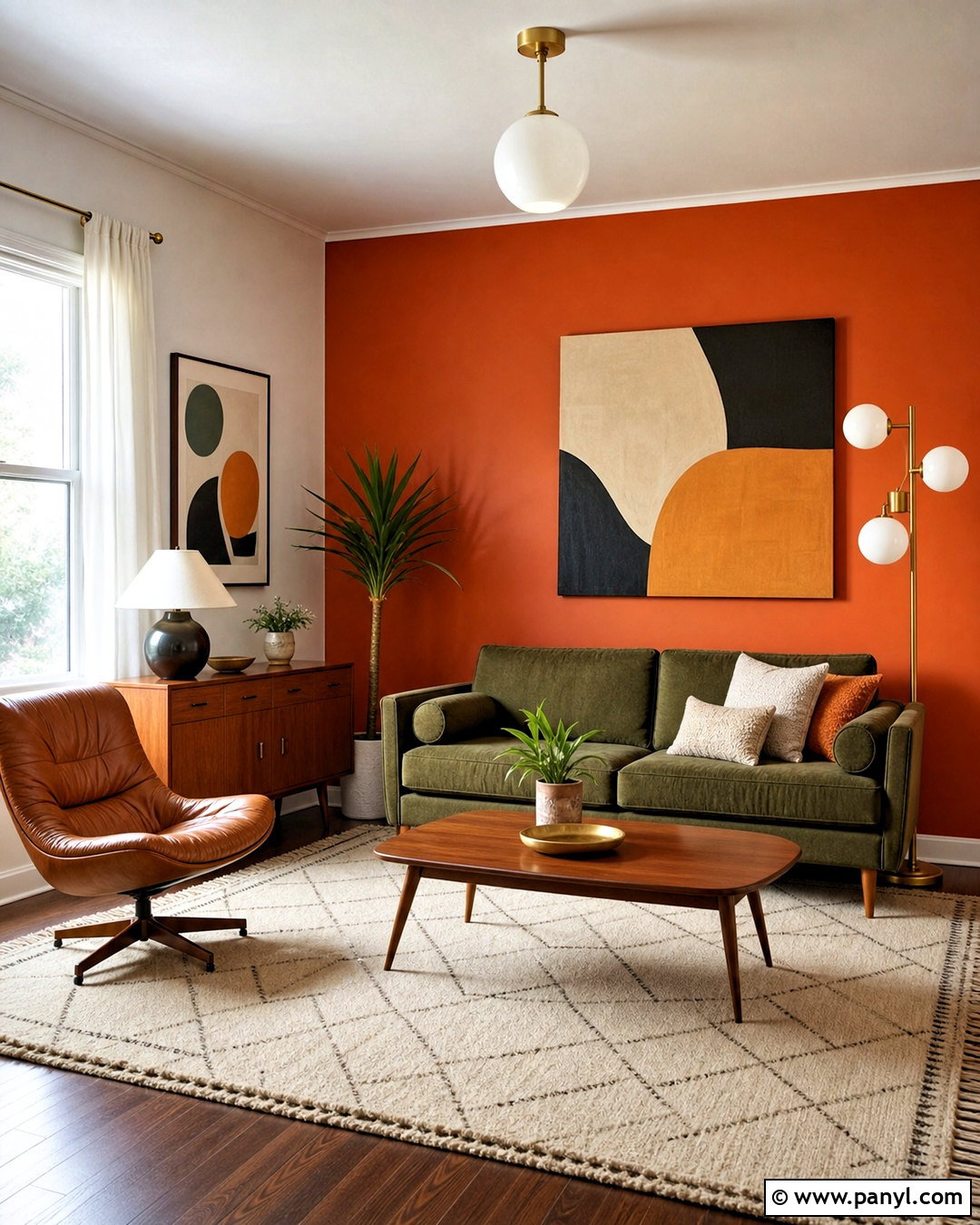
Warm orange naturally complements the walnut furniture and streamlined silhouettes associated with midcentury rooms. Paint the sofa wall a deep pumpkin orange and add a low-profile charcoal or olive green sofa. Choose a tapered-leg walnut coffee table, a geometric cream rug, and one caramel leather lounge chair. Globe lighting, abstract art, and a narrow teak console strengthen the period influence without making the room feel like a replica. Keep window treatments simple with off-white curtains or woven shades. Use mustard, rust, and cream pillows in restrained quantities. This complete design feels nostalgic yet livable, with the orange wall serving as a bold backdrop for recognizable furniture shapes and warm natural wood.
20. Orange Accent Wall Boho Living Room
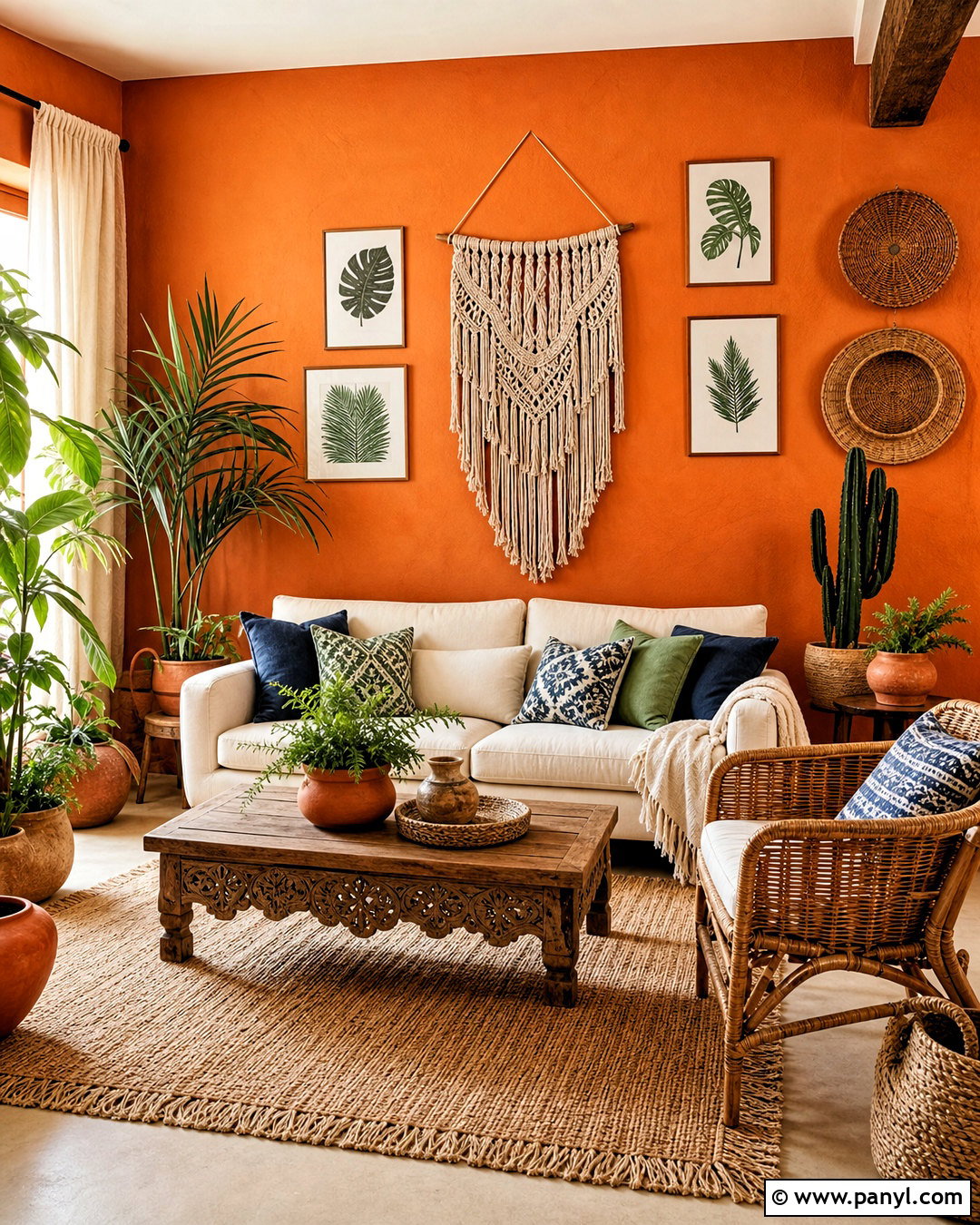
A clay orange accent wall gives a bohemian living room a warm foundation for layered natural materials. Place a relaxed ivory sofa against the wall and surround it with a carved wood coffee table, rattan chair, and woven jute rug. Add patterned pillows in rust, cream, indigo, and sage, but keep larger upholstery pieces neutral. Macramé, botanical prints, and handwoven baskets can decorate the wall without hiding its color. Finish the space with linen curtains, terracotta planters, and several healthy green plants at different heights. Warm brass or woven lighting completes the room. The overall look feels personal and collected, yet repeating a controlled palette prevents the abundant textures from becoming chaotic.
Conclusion:
These 20 orange accent wall living room ideas show how one warm focal wall can support many different interiors. Burnt orange brings depth to neutral seating, terracotta complements natural materials, and brighter citrus shades energize modern rooms. Orange can also define a fireplace, improve a media wall, highlight shelves, or add structure through paneling and geometric paint. Before choosing a shade, consider your flooring, daylight, sofa color, and the size of the wall. Sample the paint in several areas and view it throughout the day. Then build a complete palette with balanced furniture, textiles, lighting, and decor so the finished living room feels confident, comfortable, and cohesive.

Related Ideas and Inspiration:
Leave a Reply