
Fun accent walls can turn an ordinary room into a space that feels personal, energetic, and thoughtfully finished. The best designs do more than decorate one surface. They create a clear focal point while connecting the wall color, furniture, lighting, flooring, and accessories throughout the room. Current approaches favor expressive patterns, tactile materials, warm natural finishes, and playful color combinations rather than an unrelated splash of paint. () Whether you prefer an easy weekend paint project or a more detailed wood treatment, there is an option for every skill level and budget. These complete room looks include colorful murals, dimensional paneling, wallpaper, tile, and practical displays. Start planning a memorable makeover with these **20 fun accent wall ideas**.

1. Color Block Accent Wall
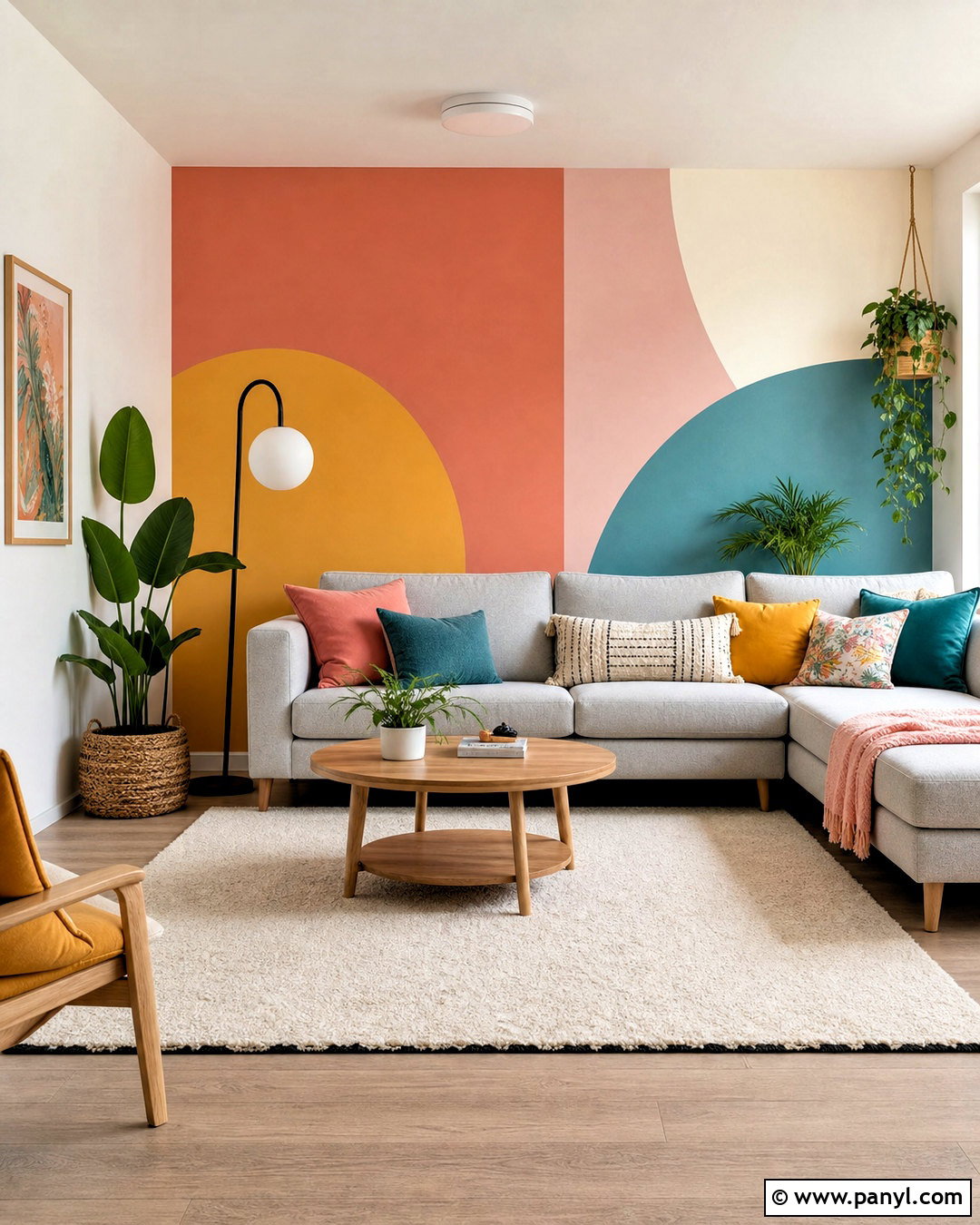
A color block accent wall brings playful structure to a living room without requiring complicated materials. Start with a warm cream background, then add overlapping blocks in coral, mustard yellow, dusty pink, and muted teal. Use painter’s tape to create clean rectangles and arches, keeping the largest shape behind the sofa. Complete the room with a light gray sectional, an oak coffee table, and a textured ivory rug. Pillows in colors pulled from the wall make the pattern feel connected rather than random. Add a simple globe floor lamp and two small plants for balance. Leave parts of the wall open so the design has breathing room. This upbeat look works especially well in apartments, family rooms, and creative spaces.
2. Painted Arch Accent Wall
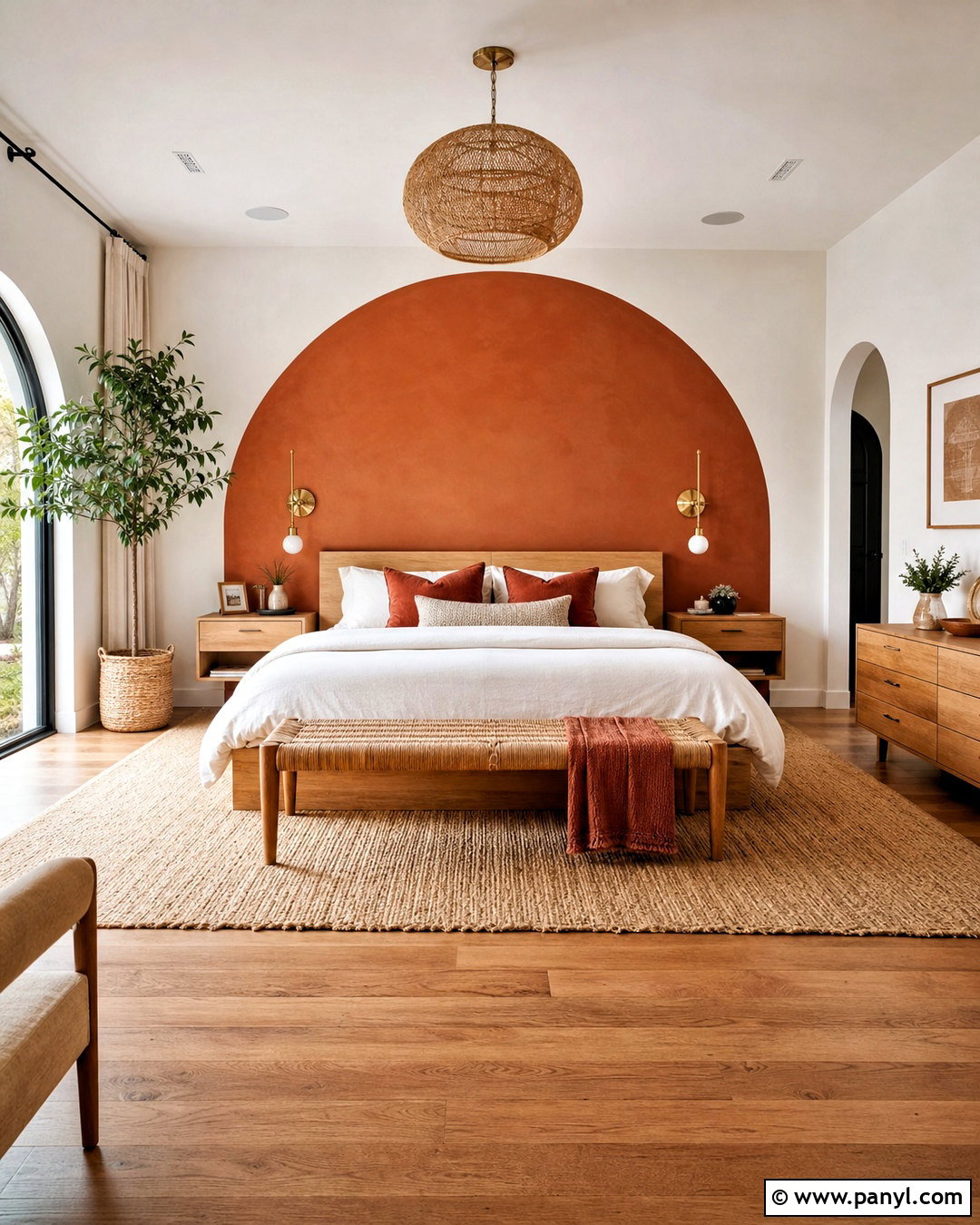
Soft curves can make a plain bedroom feel warmer and more welcoming. Paint a large terracotta arch behind a low oak bed, extending it slightly beyond the width of the headboard. Surround the arch with creamy white walls so its shape remains clear and intentional. Dress the bed with white linen, rust-colored pillows, and a muted striped throw. Small floating nightstands keep the curved design visible, while matching brass sconces create symmetry. An oatmeal rug and woven bench add natural texture without competing for attention. For a more playful finish, place a small painted sun or semicircle above the arch. This accent wall provides the effect of an oversized headboard while keeping the room open, comfortable, and easy to update.
3. Scalloped Accent Wall
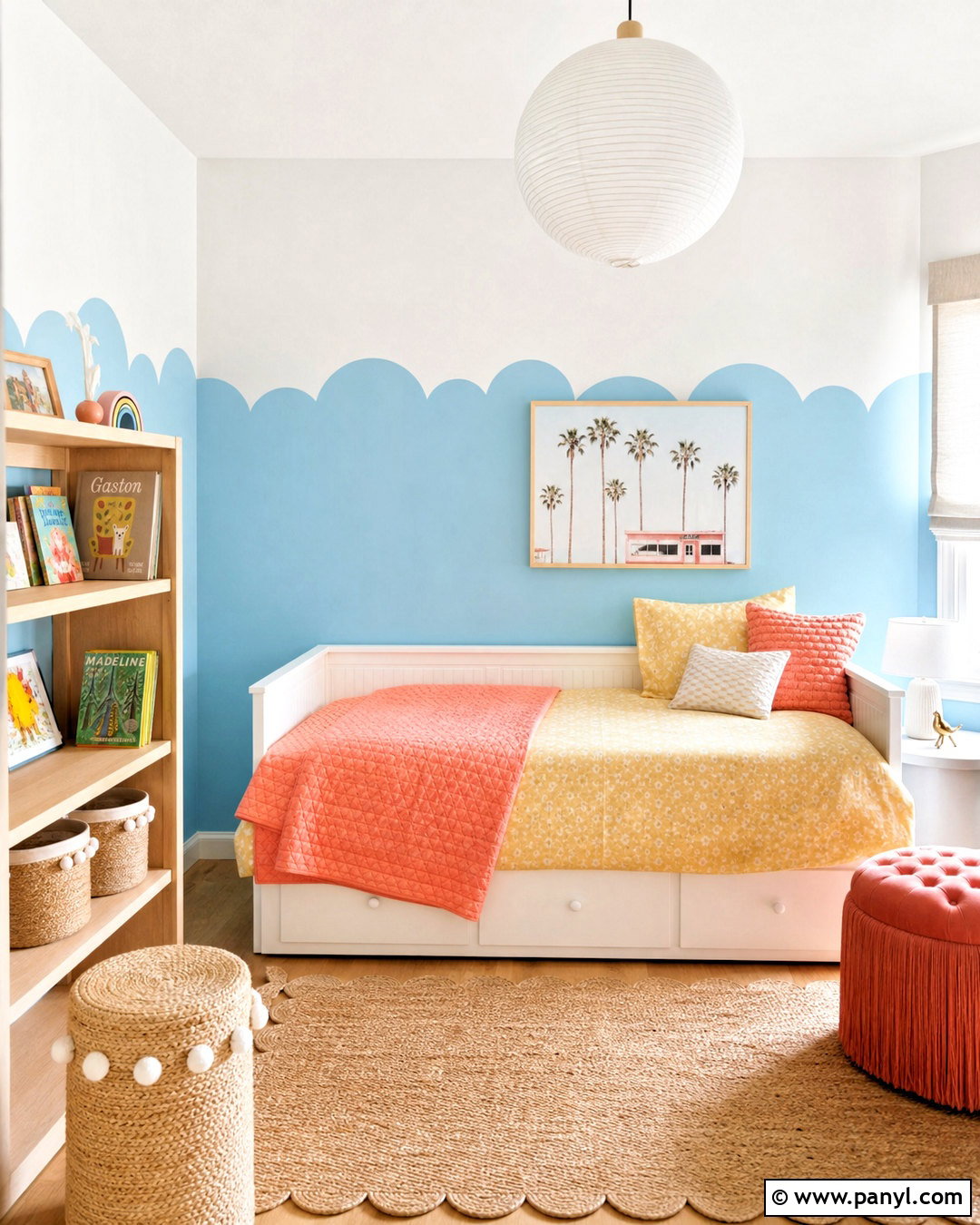
A scalloped accent wall adds cheerful movement to a child’s bedroom, playroom, or colorful guest space. Paint the lower two-thirds of the wall a fresh sky blue, then form large rounded scallops along the upper edge. Keep the area above the scallops bright white for a crisp contrast. Position a white daybed against the wall and layer it with yellow, coral, and blue bedding. A natural jute rug, pale wood bookcase, and woven storage baskets soften the bold paint treatment. Repeat the curved shape through a round ceiling light and circular wall hooks. Use a level and a simple cardboard template to keep each scallop consistent. The completed room feels imaginative and lively without relying on character themes that may quickly be outgrown.
4. Geometric Accent Wall
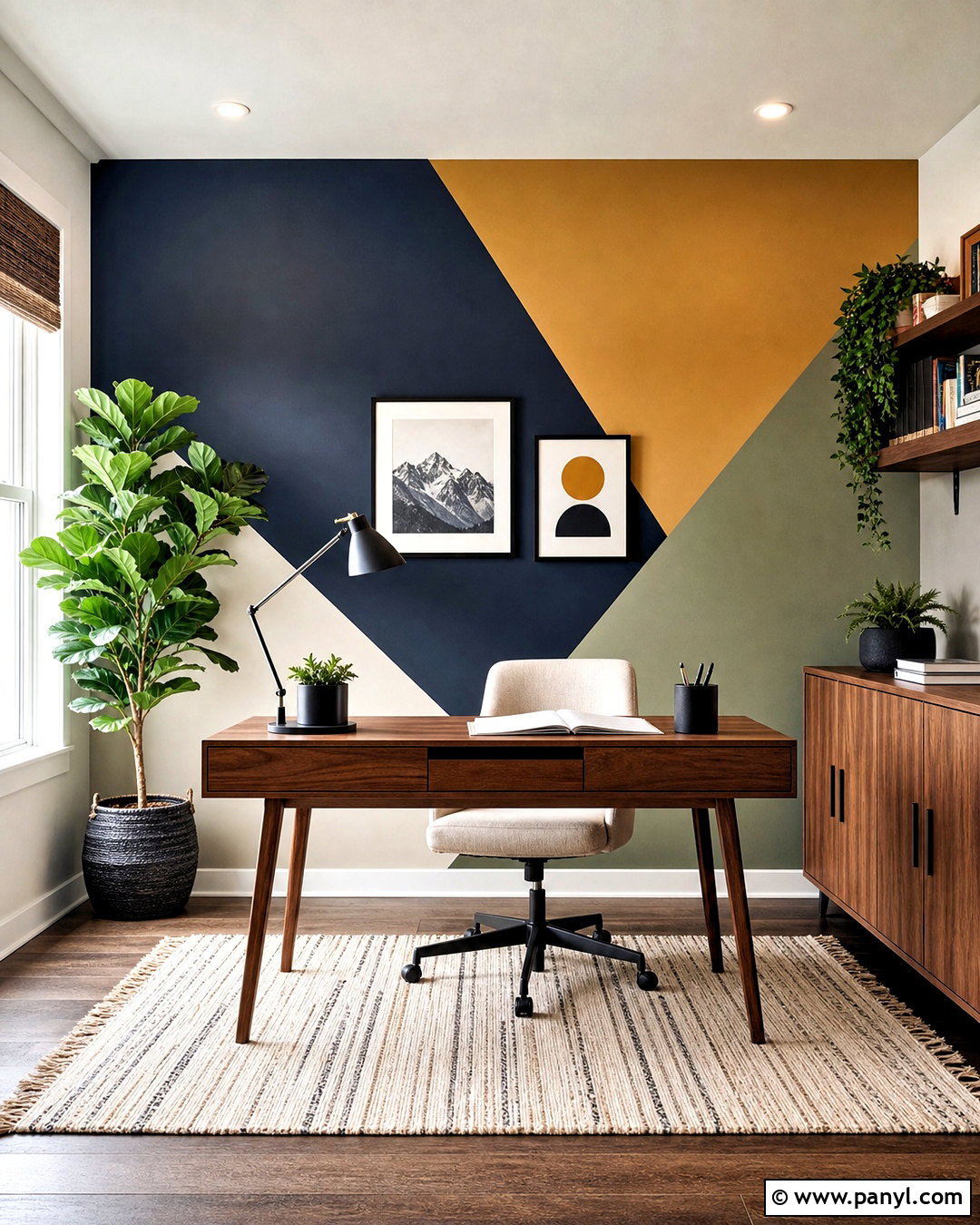
Crisp geometric shapes give a home office an energized, modern appearance. Choose one wall behind the desk and divide it into large angular sections using painter’s tape. Combine deep navy blue, warm ocher, soft beige, and muted sage green for contrast that remains comfortable during the workday. Furnish the room with a streamlined walnut desk, a cream upholstered chair, and matte black task lighting. Keep the remaining walls light beige and use simple storage cabinets to prevent the design from becoming overwhelming. A flat-woven rug can repeat two of the wall colors in a quieter pattern. Finish with a few plants and minimal framed art. The complete workspace feels creative and organized, making the wall decorative without distracting from practical daily tasks.
5. Rainbow Stripe Accent Wall
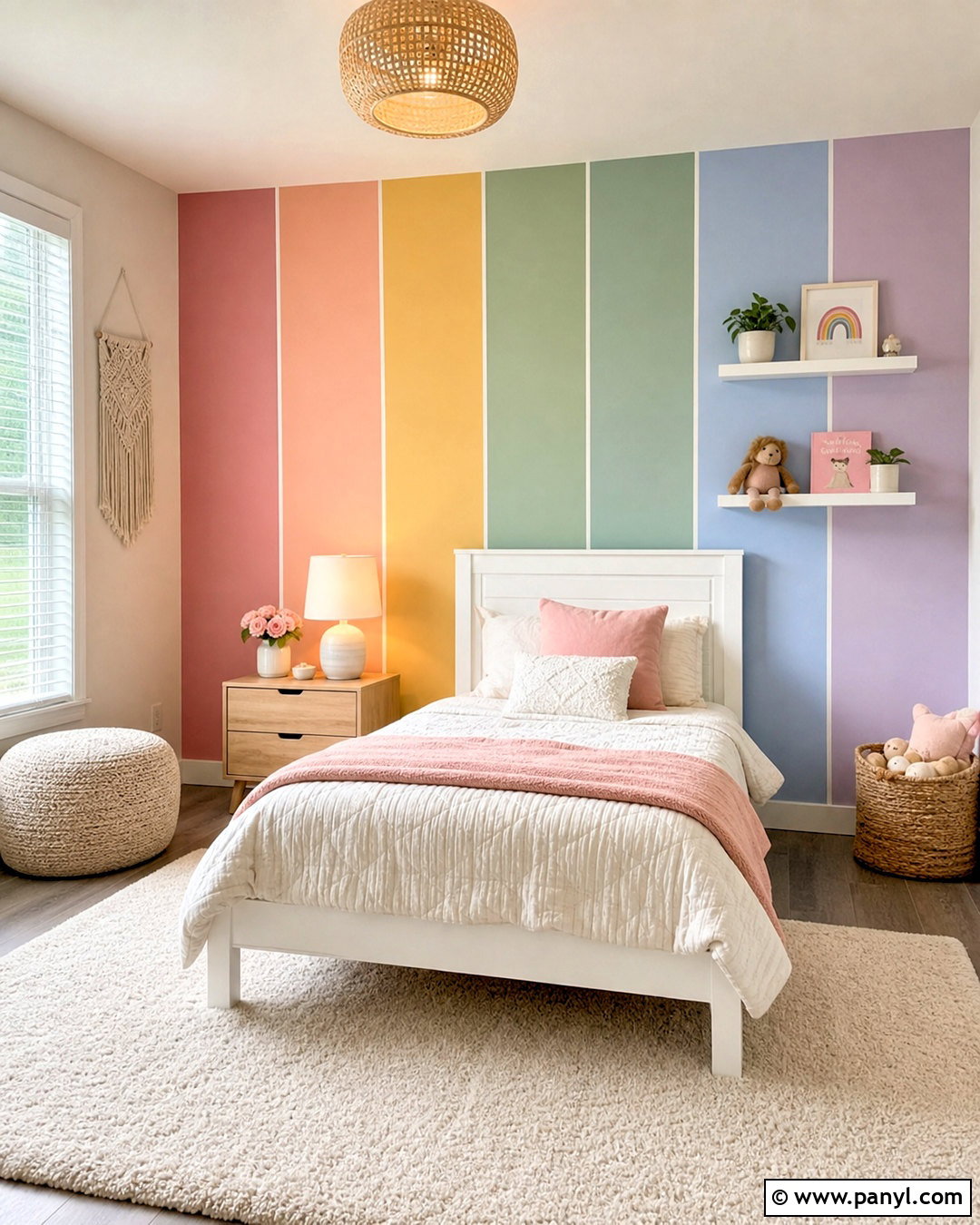
A rainbow stripe accent wall can feel sophisticated when the colors are warm, muted, and carefully repeated. Run wide vertical stripes from floor to ceiling using dusty rose, peach, golden yellow, sage green, powder blue, and soft lavender. Place the wall behind a simple white bed or reading nook so the stripes remain the main feature. Choose solid bedding in cream and pale pink rather than adding more patterns. A light wood nightstand, rounded white lamp, and woven floor basket keep the look relaxed. Extend one or two stripe colors into the rug and window treatments for a coordinated finish. Accurate measuring is important, so mark each stripe before painting. This complete design creates a joyful bedroom that feels colorful, balanced, and surprisingly easy to personalize.
6. Checkerboard Accent Wall
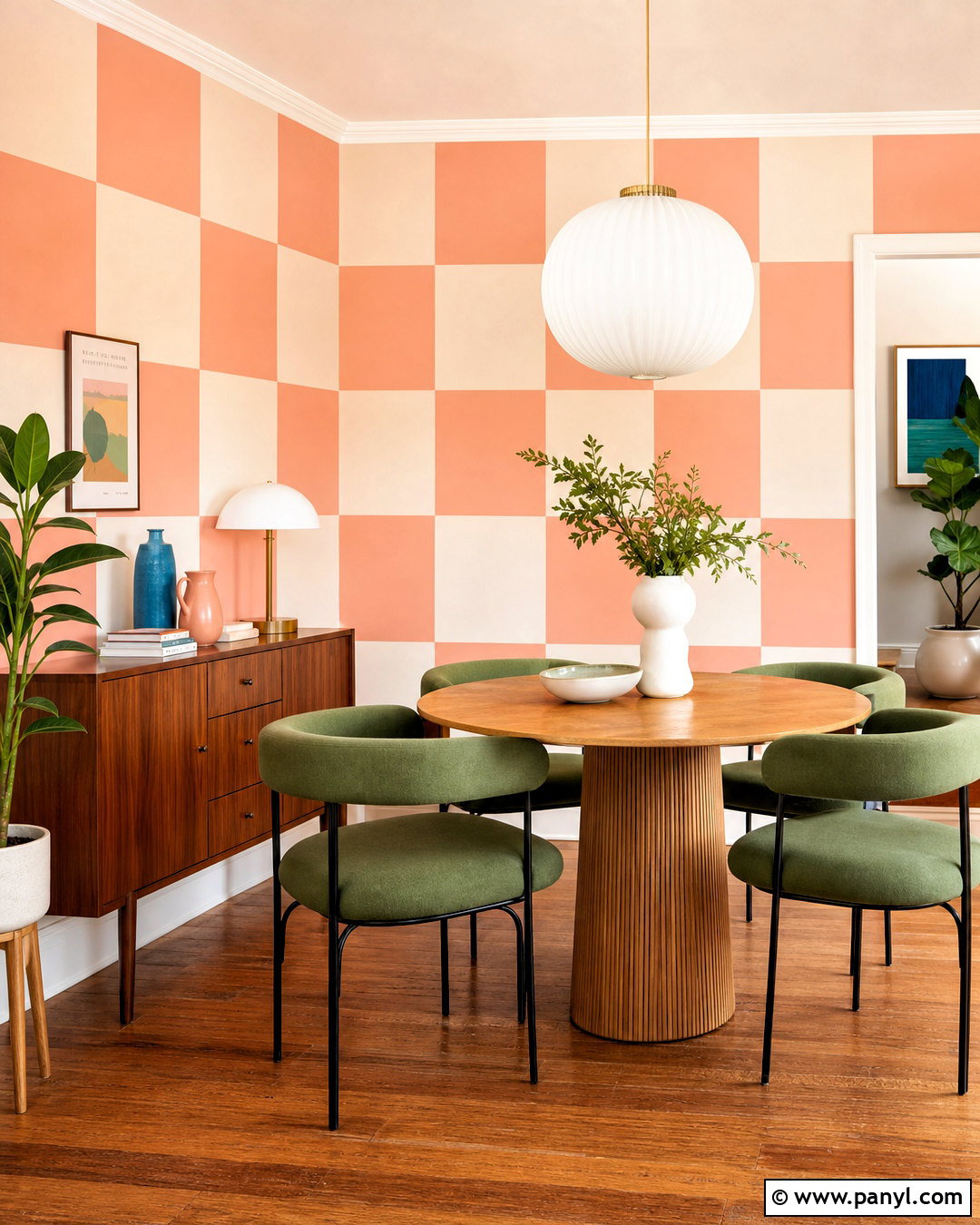
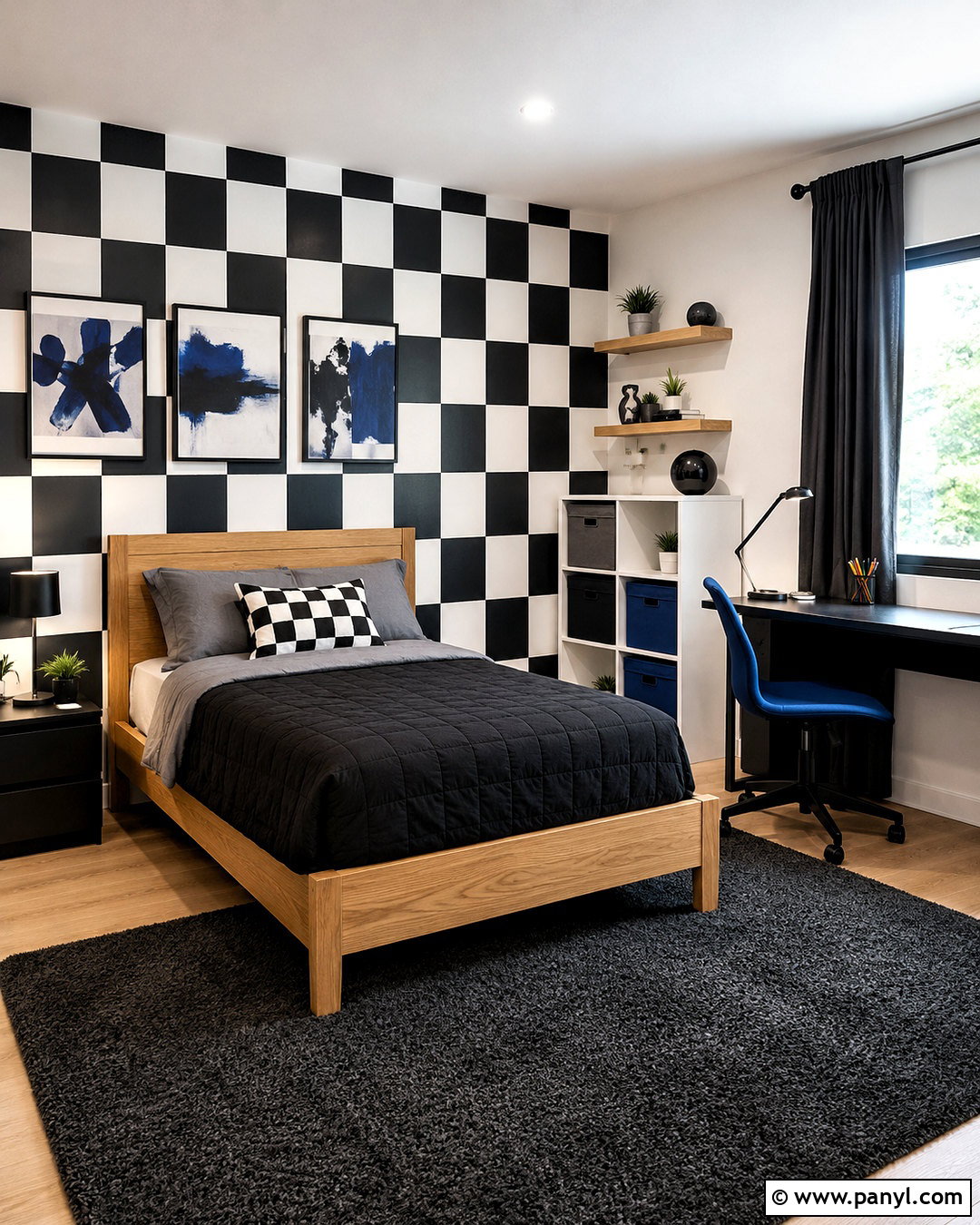
An oversized checkerboard accent wall introduces retro character without making a room feel overly themed. Paint large alternating squares in soft peach and creamy white, choosing a wall behind a dining table or compact breakfast area. Pair the pattern with a round oak table, curved green chairs, and a white globe pendant. A narrow walnut sideboard provides storage while bringing a darker tone into the room. Keep table linens simple and add ceramic pieces in green, coral, and yellow for small bursts of color. Larger squares generally look calmer than a small, busy grid, especially in a modest room. Continue the cream color across the surrounding walls to frame the feature. The finished dining area feels upbeat, social, and intentionally designed from every viewing angle.
7. Botanical Wallpaper Accent Wall
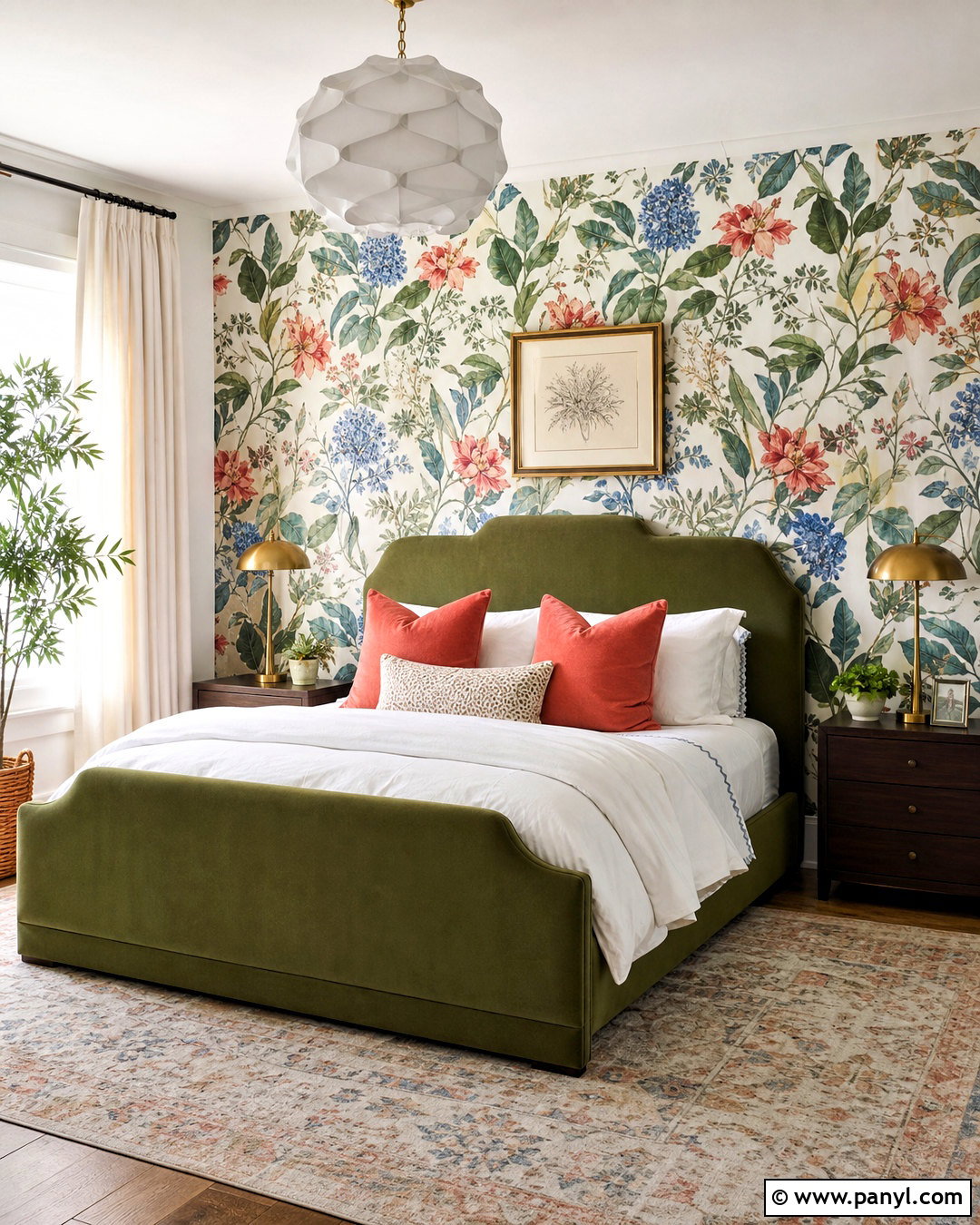
Large botanical wallpaper can transform a quiet guest bedroom into a fresh, garden-inspired retreat. Select a pattern featuring deep green leaves, soft blue flowers, and touches of coral on a warm ivory background. Install it on the wall behind the bed, carefully centering the largest motifs above the headboard. Add a moss green upholstered bed, white bedding, and coral accent pillows to connect the room with the print. Walnut nightstands and antique brass lamps provide warmth, while natural linen curtains keep the space light. Choose a neutral rug with a subtle woven texture instead of another strong pattern. A few real plants can continue the botanical theme. The room feels layered and playful, yet the limited color palette keeps the dramatic wallpaper elegant and comfortable.
8. Landscape Mural Accent Wall
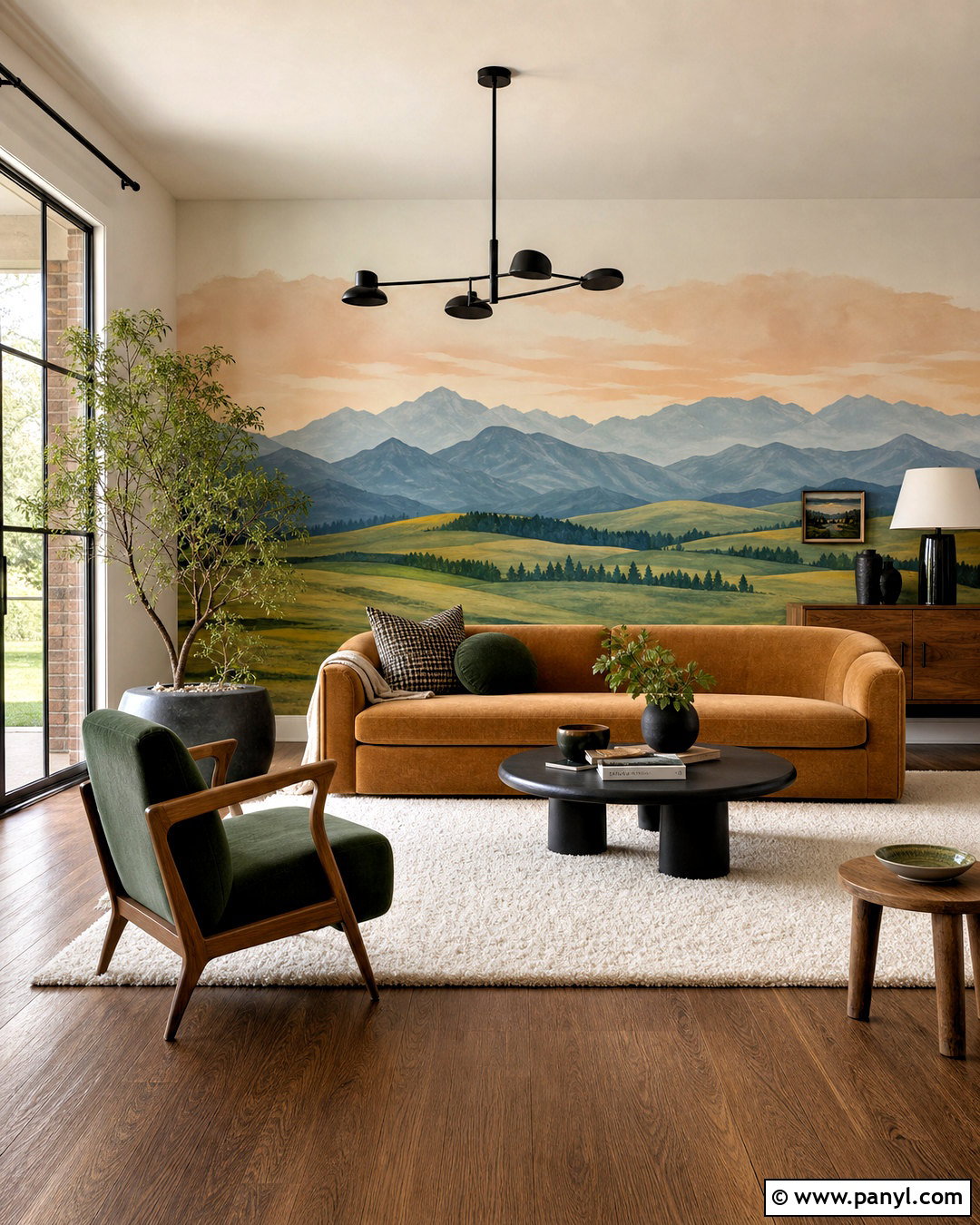
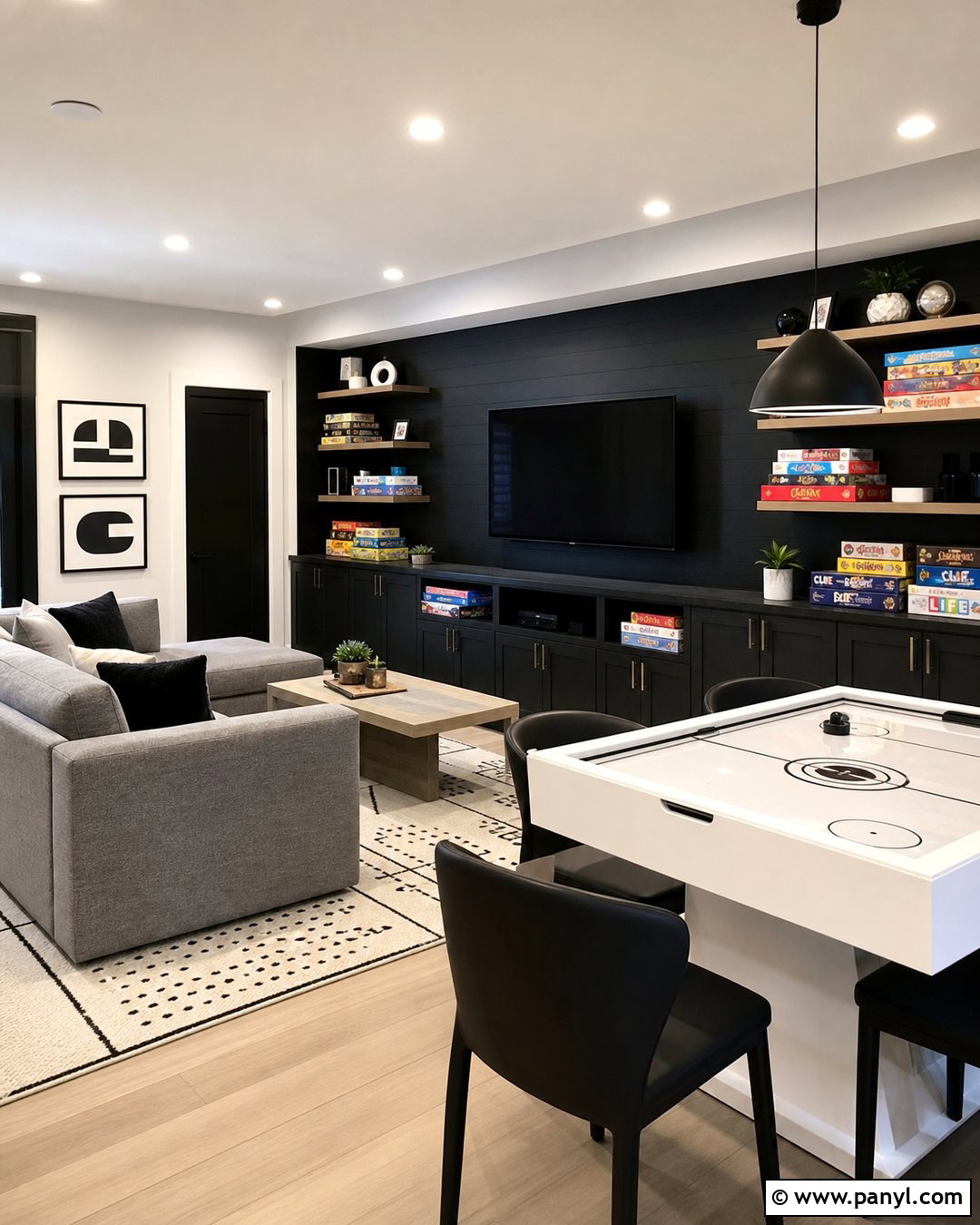
A landscape mural accent wall creates depth and atmosphere in a living room, bedroom, or reading area. Choose an oversized scene with rolling green hills, blue mountains, and a pale peach sky. Place the horizon around eye level so the mural feels natural from across the room. In a living room, use a camel-colored sofa, a dark green lounge chair, and an ivory wool rug to echo the landscape. A low walnut console allows the artwork to remain visible without covering important details. Keep lamps and decorative objects simple, using matte black and warm ceramic finishes. The surrounding walls should match one of the mural’s light background tones. This approach creates a complete scenic room with a sense of openness, even when the actual space is relatively small.
9. Wood Slat Accent Wall
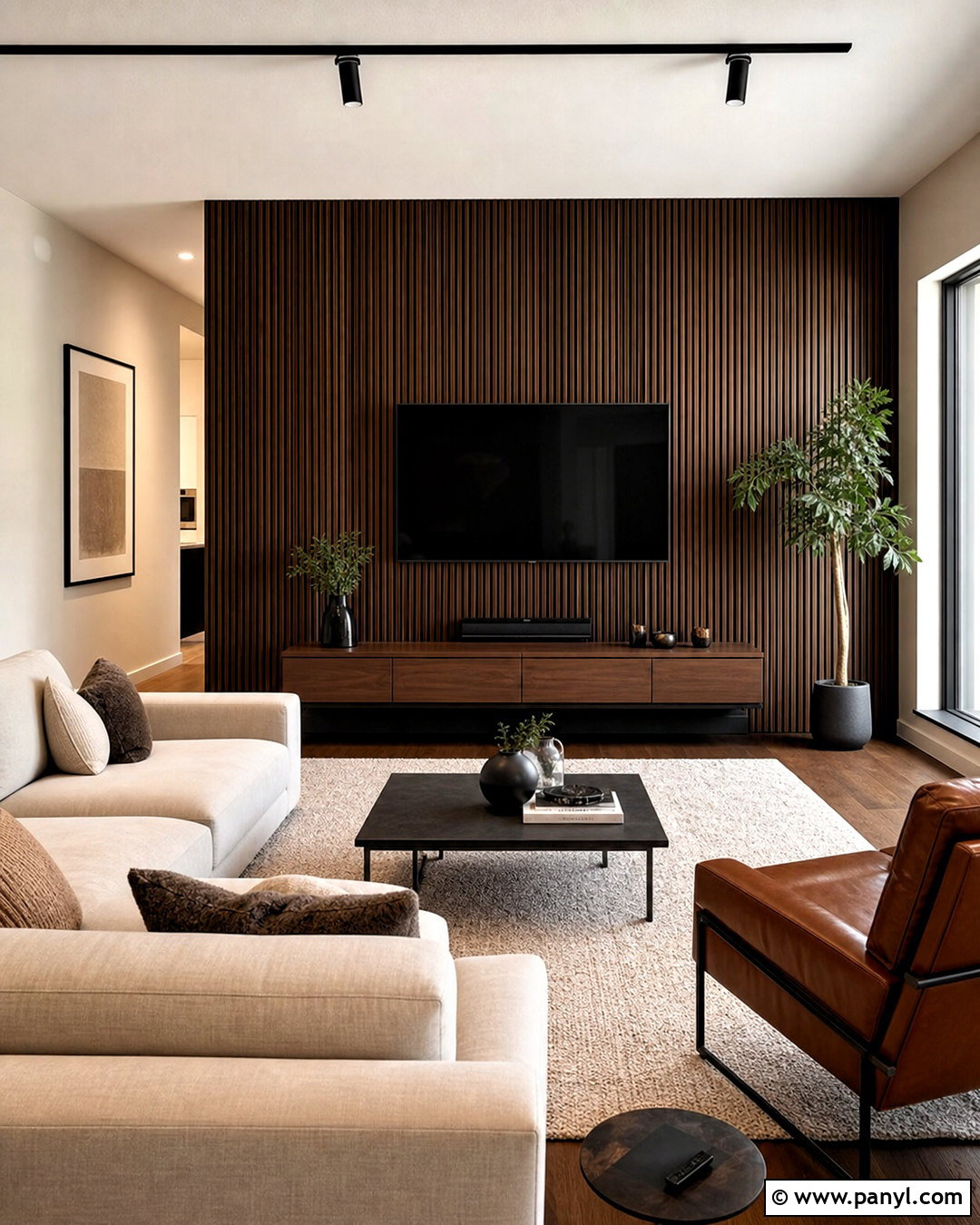
Vertical wood slats add architectural rhythm and warmth to a modern living room. Cover the main television wall with slim walnut slats installed over a matte charcoal background. Space them evenly so the dark backing forms narrow lines between the wood pieces. Mount the television at a comfortable height and add a low floating walnut cabinet beneath it. Complete the seating area with a light beige sofa, cognac leather chair, and textured cream rug. Matte black lighting and a tall green plant complement the deeper wall tones. Keep cords hidden and avoid filling the slatted surface with extra artwork. The natural wood grain should remain the focal point. This complete accent wall feels polished and inviting while providing enough visual interest to reduce the need for excessive room decor.
10. Board And Batten Accent Wall
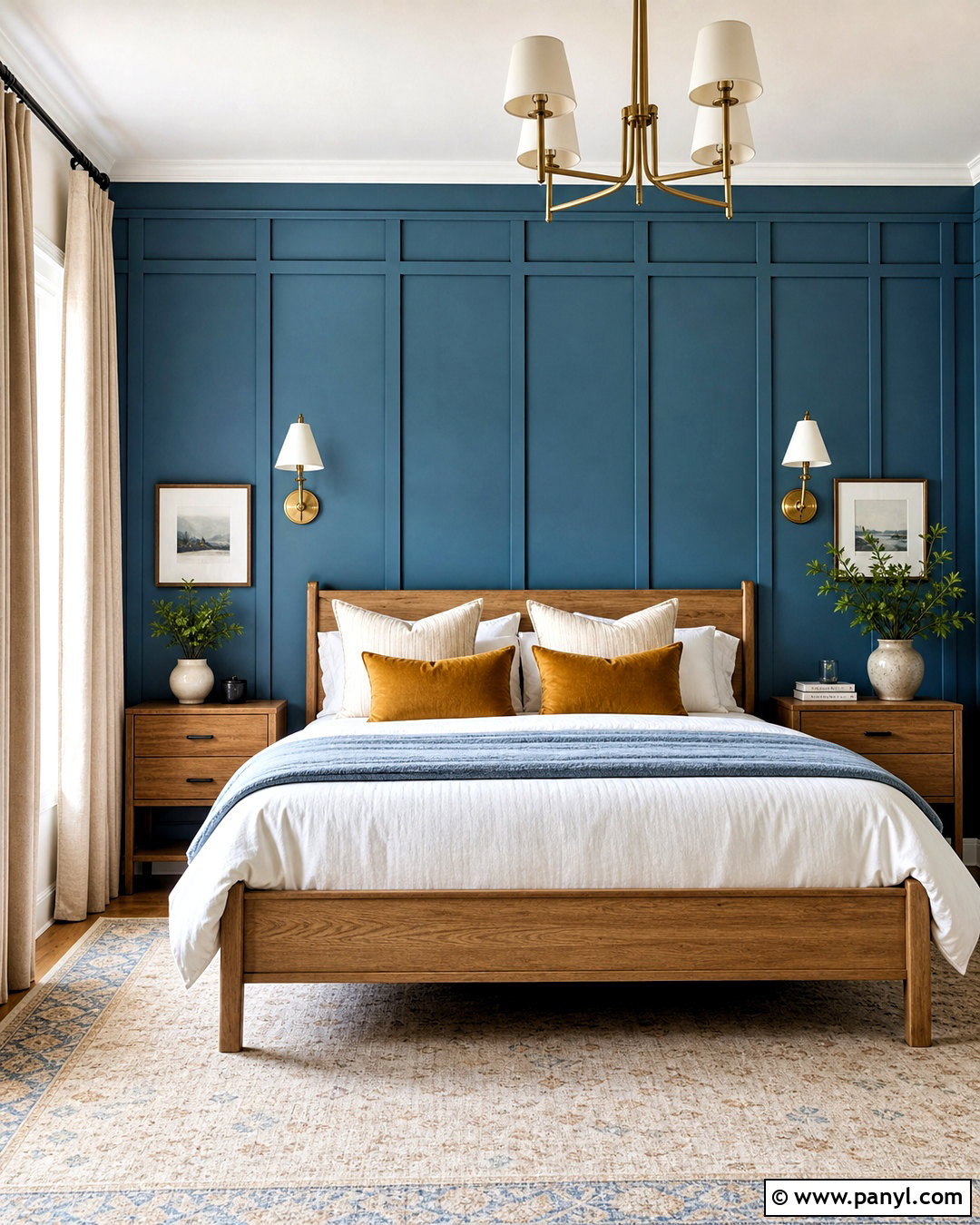
Board and batten gives a bedroom accent wall clean dimension while remaining adaptable to several decorating preferences. Install evenly spaced vertical battens from the baseboard to the ceiling, then paint the entire feature wall a rich teal blue. Center a natural oak bed against it and use crisp white bedding with mustard and teal pillows. Matching wood nightstands and brushed brass sconces bring warmth to the saturated color. Keep the other walls soft white and add a pale neutral rug to brighten the floor. The spacing between battens should relate to the width of the bed, creating balanced lines around the headboard. Finish with simple linen curtains and one bench at the foot of the bed. The result feels colorful, structured, and complete without becoming too formal.
11. Picture Frame Molding Accent Wall
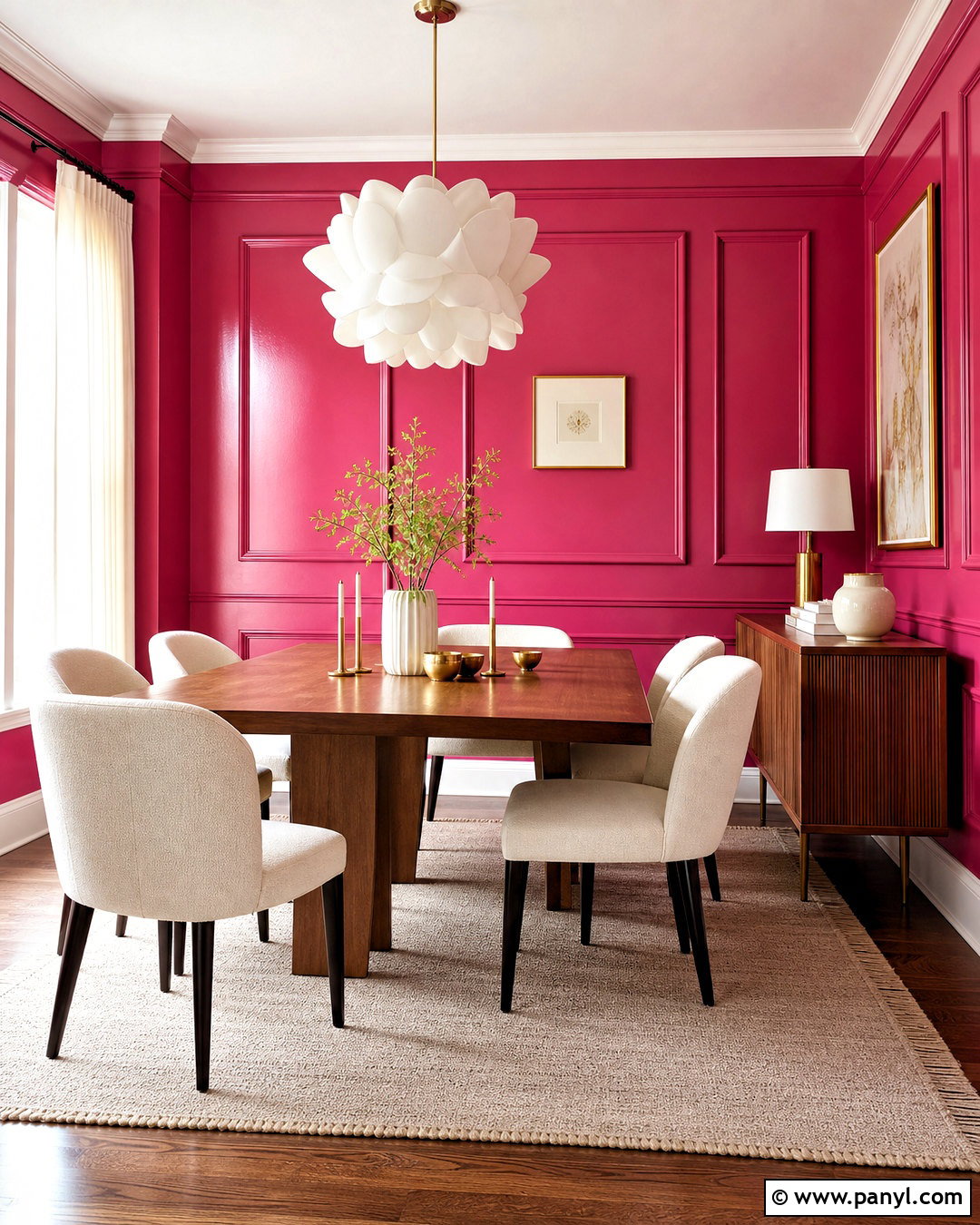
Picture frame molding can make a dining room feel detailed and playful when paired with an unexpected color. Apply evenly arranged rectangular molding across the main wall, including balanced panels above and beside a narrow sideboard. Paint the molding and wall together in glossy raspberry pink for a seamless architectural effect. Ground the bright color with a walnut dining table, cream upholstered chairs, and a large neutral rug. Add a sculptural white pendant and brushed brass candleholders for a polished contrast. A few framed pieces may be centered inside selected panels, but leave several empty so the molding stays visible. Paint the remaining walls a soft blush or warm white. This finished dining space blends traditional wall detailing with a lively palette that feels fresh rather than overly serious.
12. Limewash Accent Wall
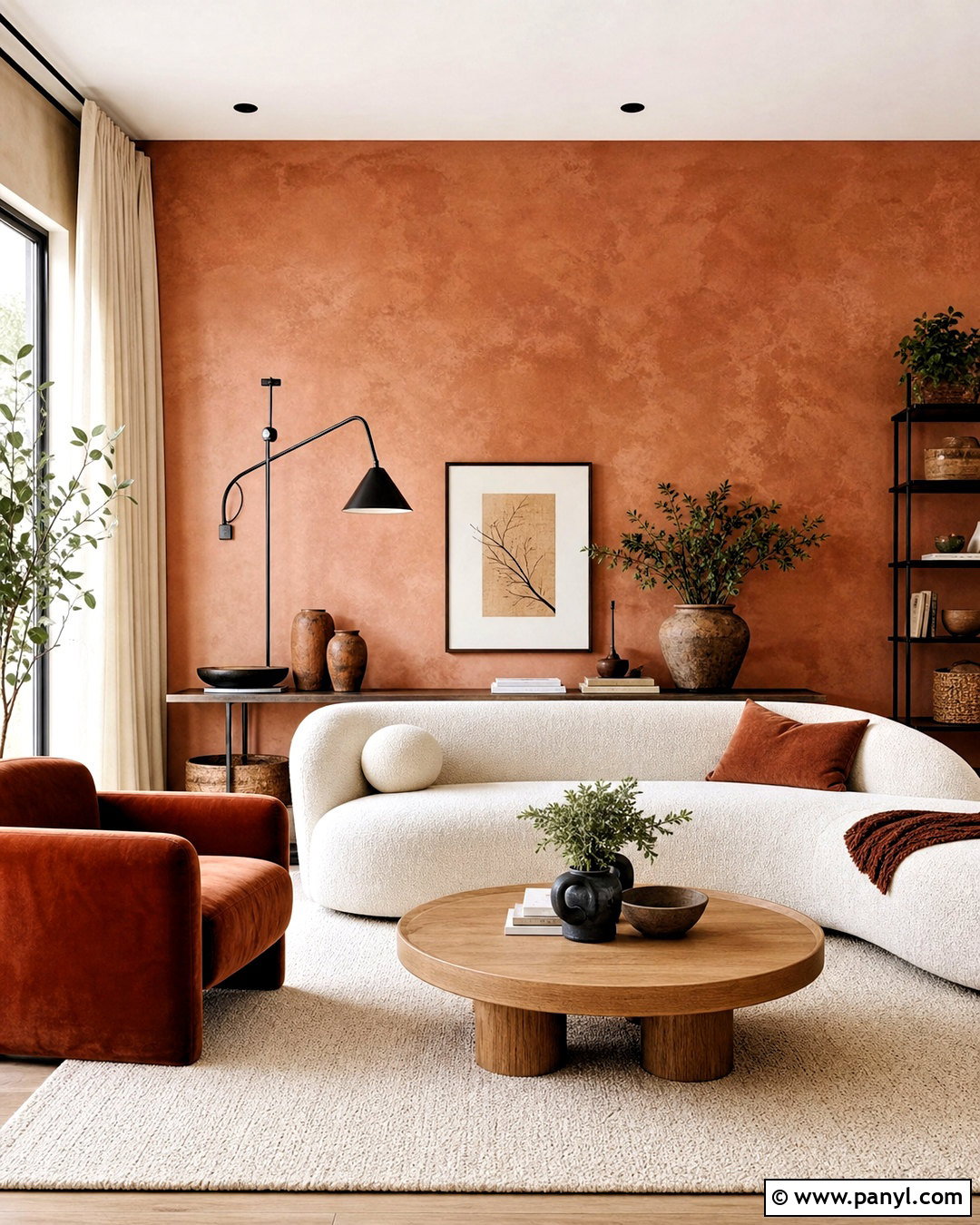
A limewash-style accent wall introduces gentle movement and earthy color without a strong repeating pattern. Use layered clay or mineral paint in a warm terracotta tone behind a cream boucle sofa. Apply broad, overlapping strokes so lighter and darker areas appear naturally blended across the surface. Furnish the room with an oak coffee table, rust-colored lounge chair, and soft ivory rug. Linen curtains, handmade ceramics, and woven baskets reinforce the relaxed texture. Add black metal lighting sparingly to give the room a defined contemporary edge. The surrounding walls can be painted warm off-white to complement the mineral finish. Because the wall already contains subtle variation, keep artwork minimal. The completed living room feels tactile, sun-washed, and welcoming while still offering plenty of visual personality.
13. Exposed Brick Accent Wall
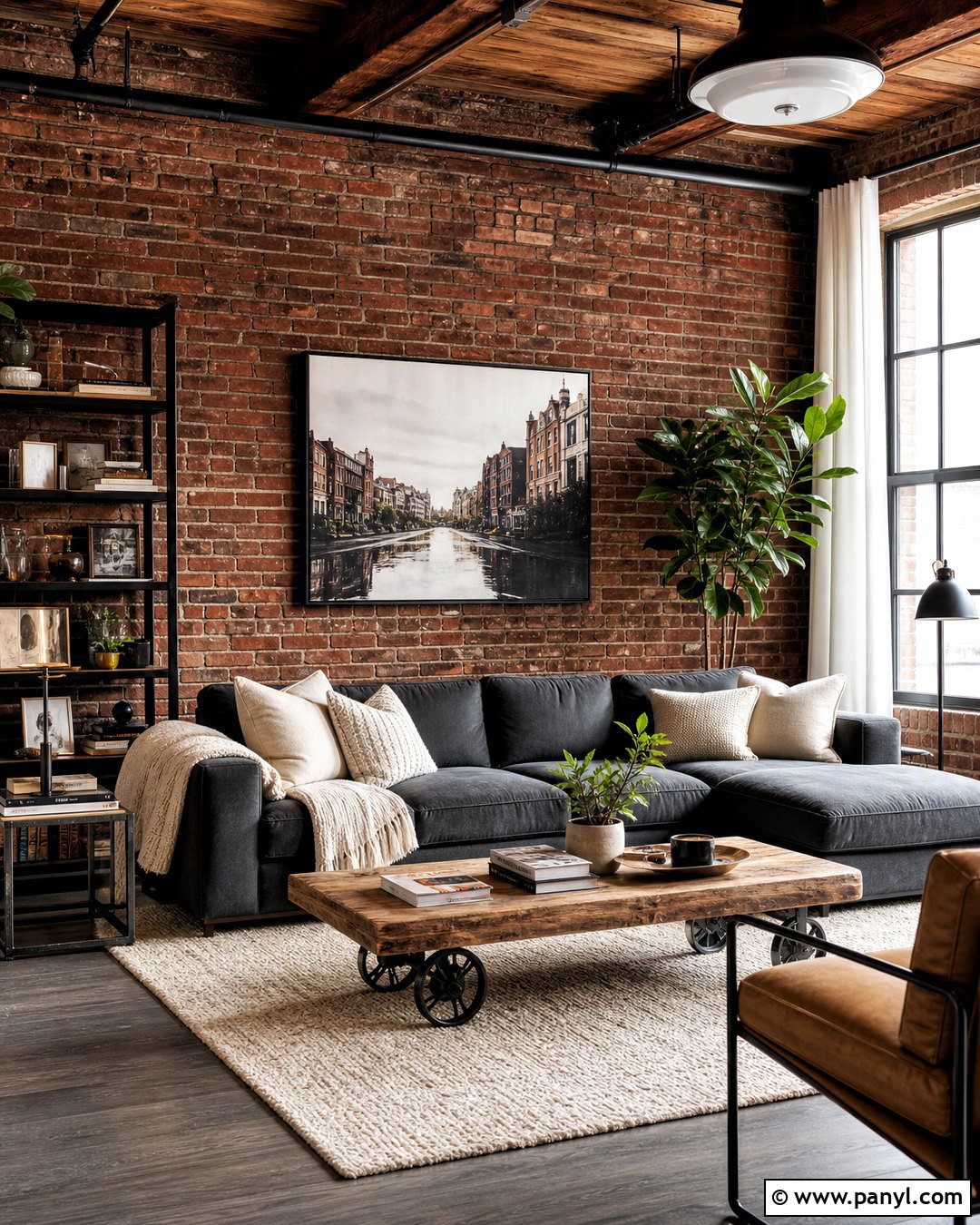
An exposed brick accent wall creates a warm, casual foundation for a loft-inspired living room. If the home lacks original brick, use thin real-brick veneer in varied red, brown, and clay tones instead of a flat printed imitation. Position a charcoal sofa against the wall and soften the rugged surface with cream pillows and a chunky woven throw. Add a reclaimed wood coffee table, black metal shelving, and a large ivory rug. Warm white curtains and plenty of greenery prevent the room from feeling heavy. Use simple black picture lights to highlight a few oversized art pieces without hiding the brickwork. Keep adjacent walls a soft warm white. This complete room balances industrial texture with comfortable fabrics, natural color, and practical furniture suitable for everyday living.
14. Stone Fireplace Accent Wall
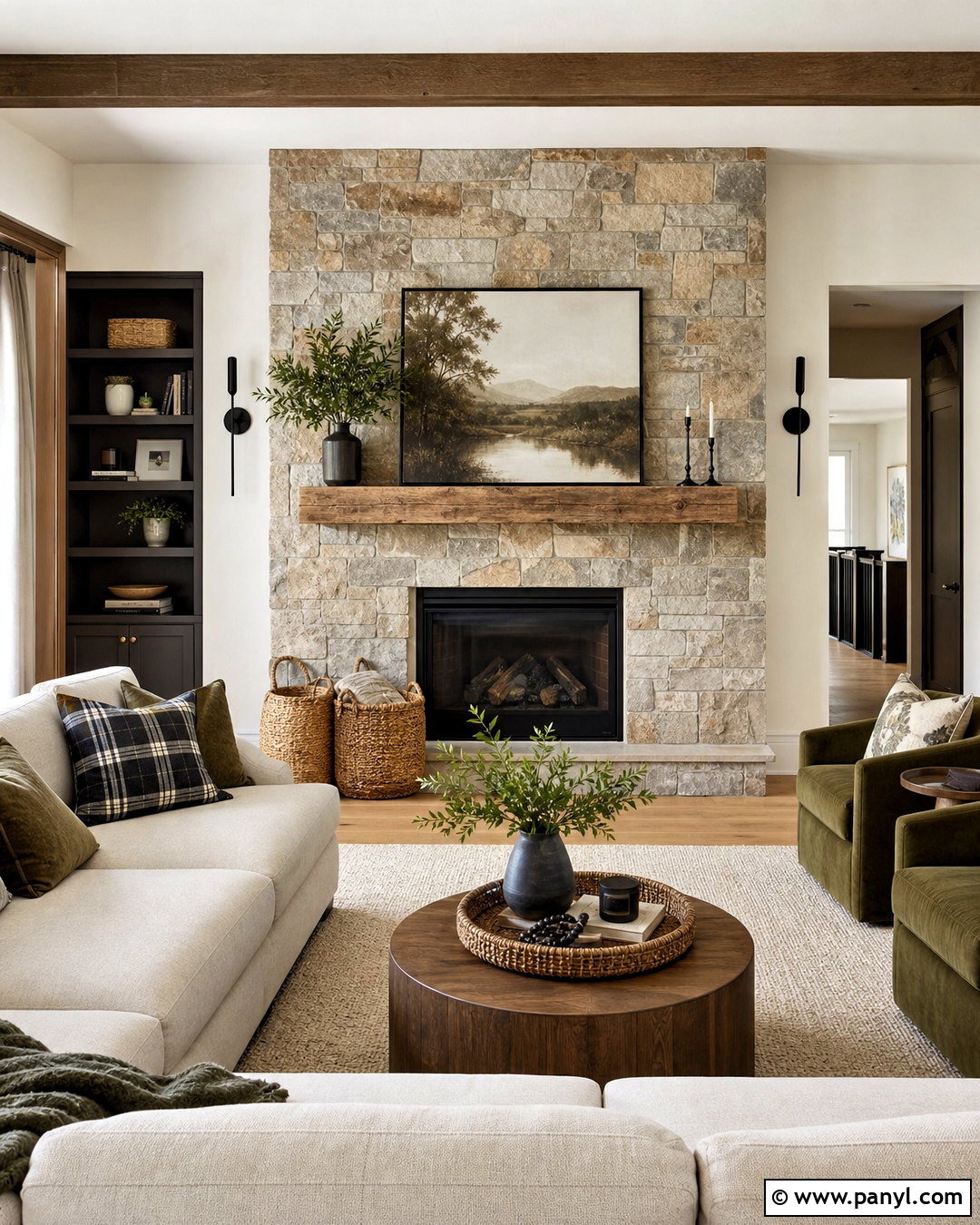
A floor-to-ceiling stone fireplace wall creates a strong focal point while giving a family room a cozy, natural character. Use irregular ledgestone in warm gray, beige, and sandy brown tones around a simple fireplace opening. Add a thick reclaimed oak mantel and mount artwork above it rather than a television when possible. Arrange a deep cream sectional and two olive green chairs toward the fireplace to establish a comfortable conversation area. A large wool rug, round wood coffee table, and woven baskets soften the stone. Continue a pale greige color across the remaining walls and use black metal sconces for definition. The finished wall should connect naturally with the furniture layout instead of appearing isolated. This creates a durable, welcoming room with depth and architectural presence.
15. Cork Accent Wall
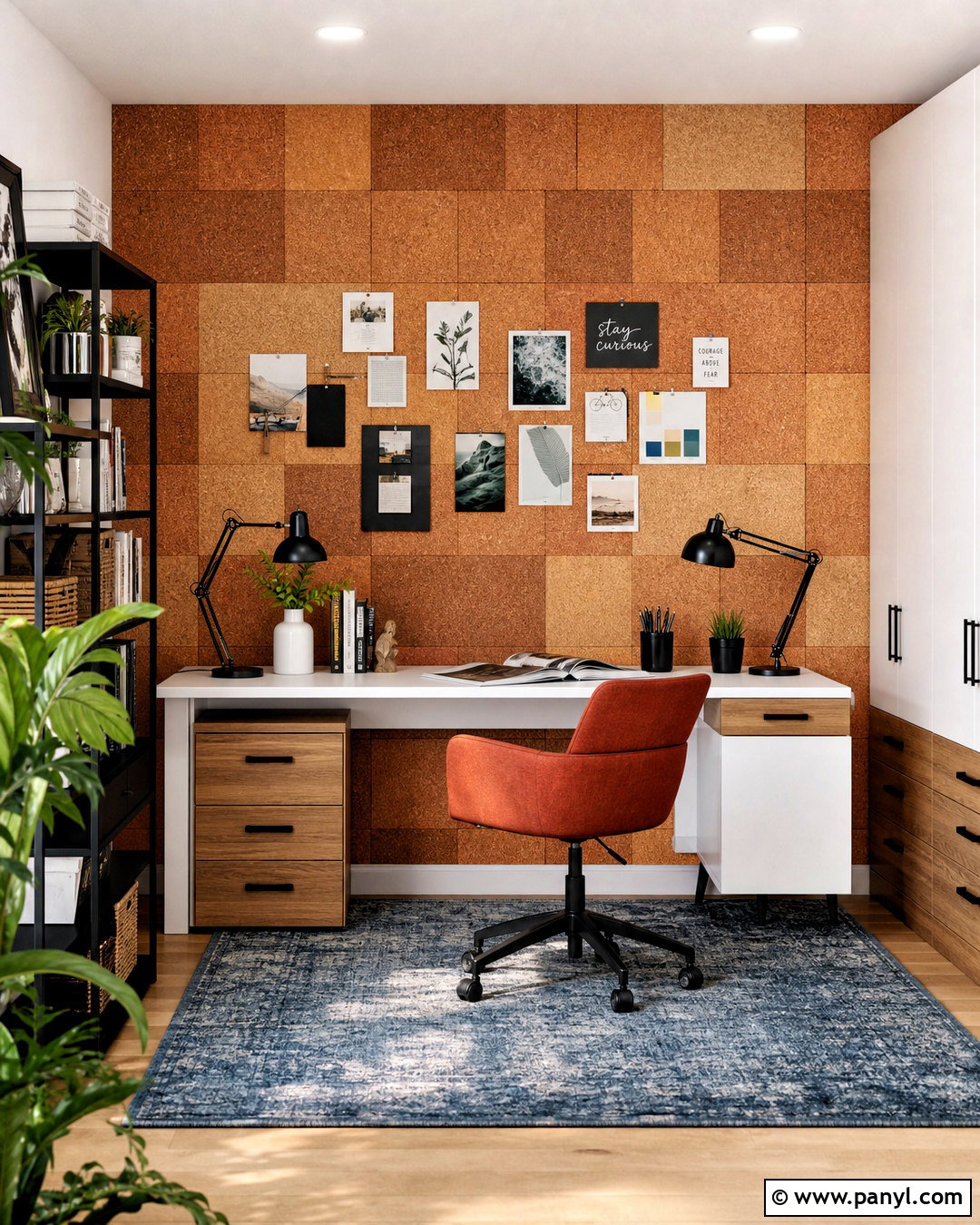
Cork creates a warm accent wall that is both decorative and useful, especially in a home office or creative studio. Cover the wall behind a long desk with square cork tiles in varied honey and caramel tones. Arrange them in a clean grid or subtle alternating pattern for more movement. Add a white desk with oak drawers, a comfortable rust-colored chair, and matte black task lamps. Pin a limited collection of art prints, fabric samples, calendars, and small photographs across the surface, leaving open areas between groups. Closed cabinets below the desk prevent the room from looking cluttered. A muted blue rug and several leafy plants balance the cork’s warmth. The completed workspace feels organized, personal, and tactile while providing a flexible display that can change over time.
16. Pegboard Accent Wall
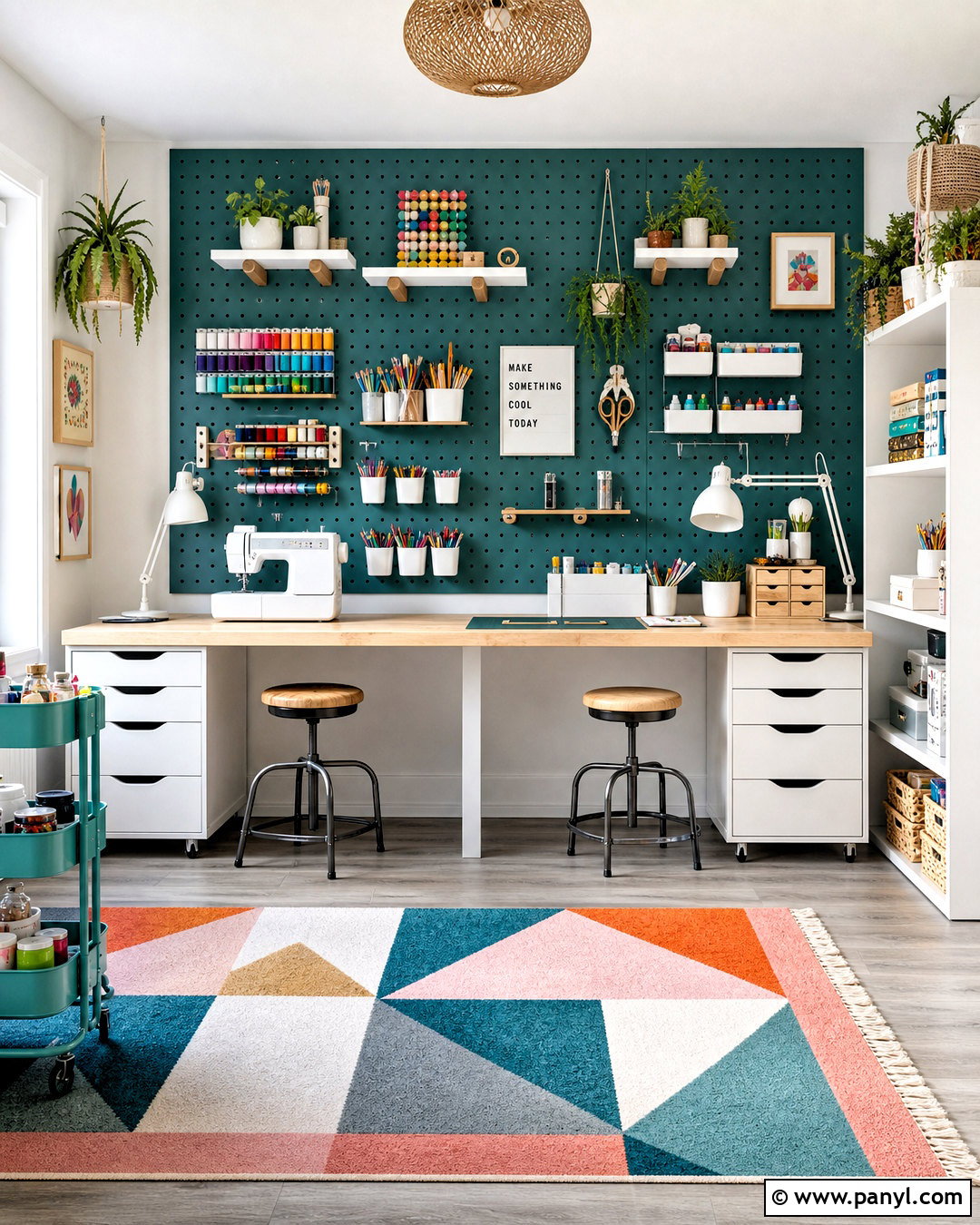
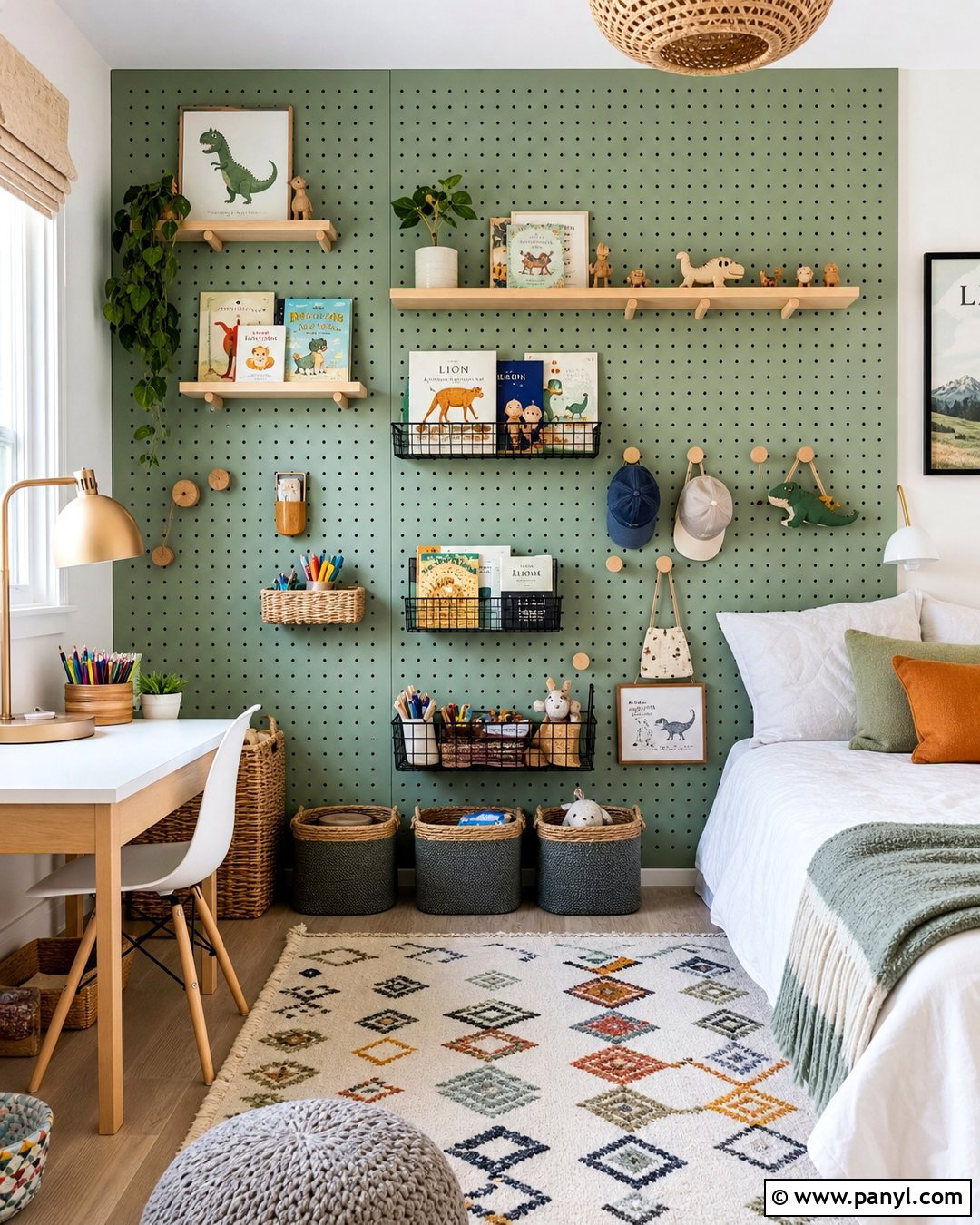
A full pegboard accent wall turns craft supplies, tools, or office essentials into a colorful organized display. Install a large painted pegboard in muted teal above a light birch worktable. Use white and natural wood hooks, shelves, cups, and narrow bins to create clear storage zones. Arrange coral scissors, yellow containers, green notebooks, and neutral materials in balanced groups rather than filling every hole. Add drawer units under the table for less attractive supplies and place an adjustable white task lamp at each end. A washable geometric rug and simple stool complete the workspace. Paint the surrounding walls warm white to keep the room bright. This practical feature wall delivers personality and storage together, making it especially useful for compact craft rooms, garages, and shared family work areas.
17. Chalkboard Accent Wall
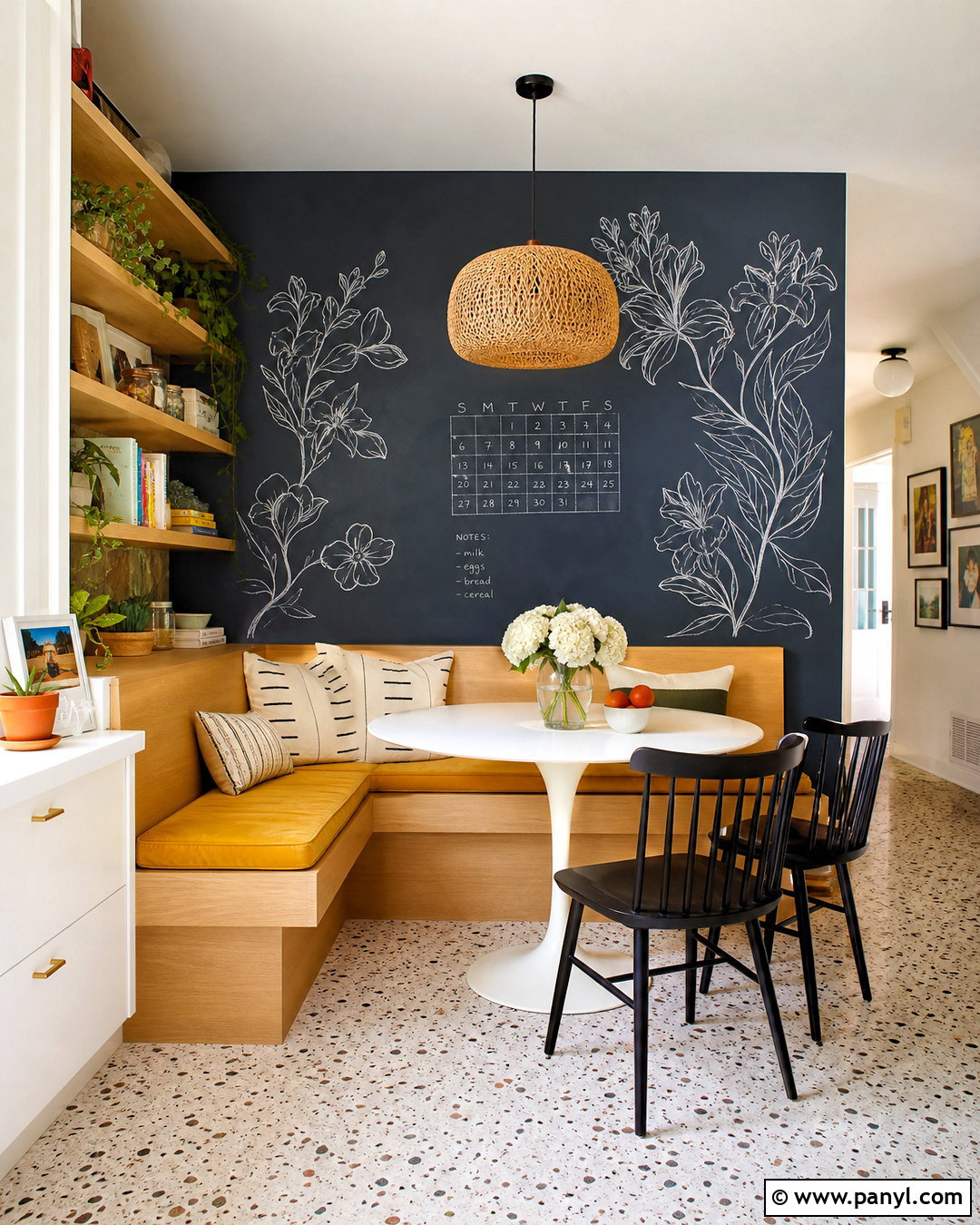
A chalkboard accent wall can make a breakfast nook feel interactive without sacrificing a polished appearance. Paint one complete wall in deep matte charcoal chalkboard paint, then place a pale oak banquette against it. Add a white pedestal table, mustard seat cushions, and patterned pillows in cream, black, and green. Use the upper wall for simple hand-drawn calendars, menus, botanical sketches, or changing seasonal doodles, leaving generous blank space around each area. A woven pendant and light terrazzo flooring brighten the dark surface. Open shelves on an adjacent white wall can hold colorful dishes and small plants. Keep the chalk artwork tidy by limiting the palette to white and one accent color. The final room feels relaxed, useful, and ready for everyday family routines.
18. Gallery Accent Wall
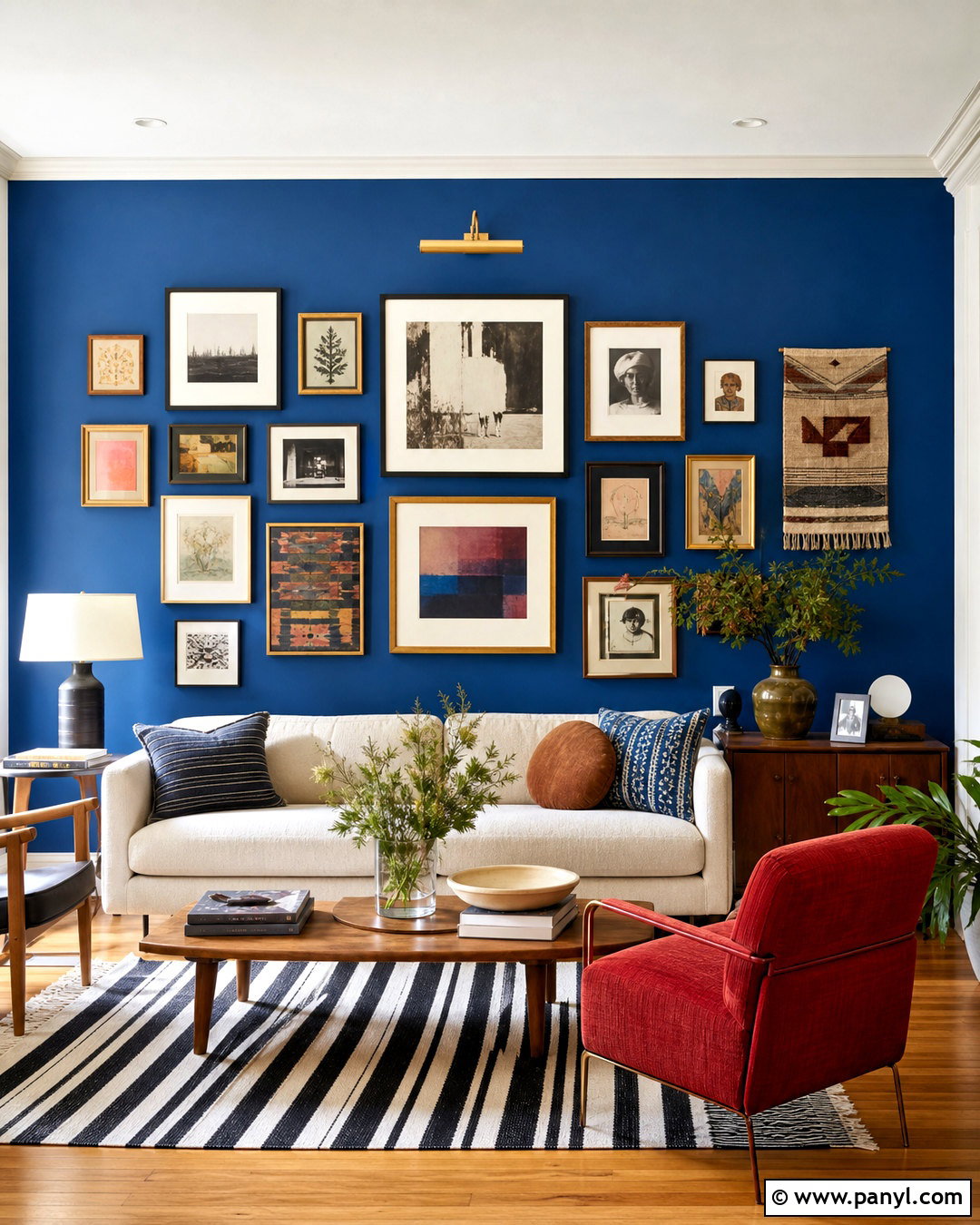
A gallery accent wall feels more intentional when the art, furniture, and background color are designed as one composition. Paint the main living room wall a saturated cobalt blue, then arrange framed art from just above the sofa toward the ceiling. Mix abstract prints, landscapes, playful photography, and small textile pieces in red, yellow, pink, and white. Use frames in walnut, brass, black, and painted colors for an collected effect. Anchor the display with a cream sofa, red side chair, and striped rug that repeats the artwork palette. Add a slim picture light above the largest central piece. Keep adjacent walls light and accessories limited. The completed room feels personal and energetic, while careful spacing prevents the varied collection from appearing crowded or accidental.
19. Patterned Tile Accent Wall
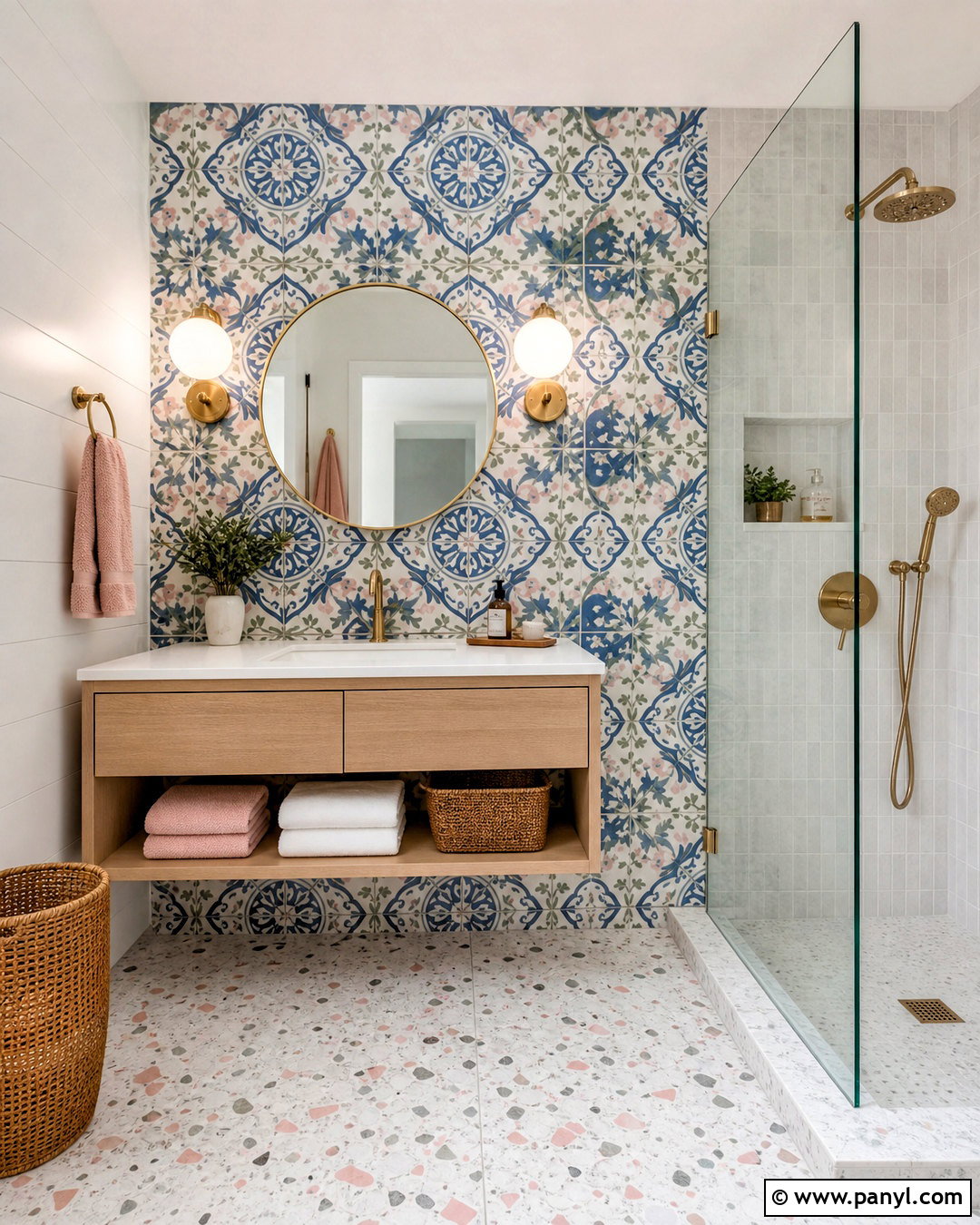
Patterned tile brings durable color and graphic detail to a bathroom accent wall. Install encaustic-style tiles behind the vanity in a repeating pattern of cobalt blue, soft pink, white, and muted green. Extend the tile from the countertop to the ceiling so the treatment feels complete rather than like a short backsplash. Choose a floating white oak vanity, round brass-framed mirror, and simple globe sconces to balance the busy surface. Pale terrazzo flooring and warm white walls keep the room bright. Repeat the blue or pink in towels, but avoid introducing another major pattern. A frameless glass shower helps maintain an open view of the feature. The finished bathroom feels lively, clean, and coordinated, with every supporting element allowing the tiled accent wall to remain clearly visible.
20. Upholstered Panel Accent Wall
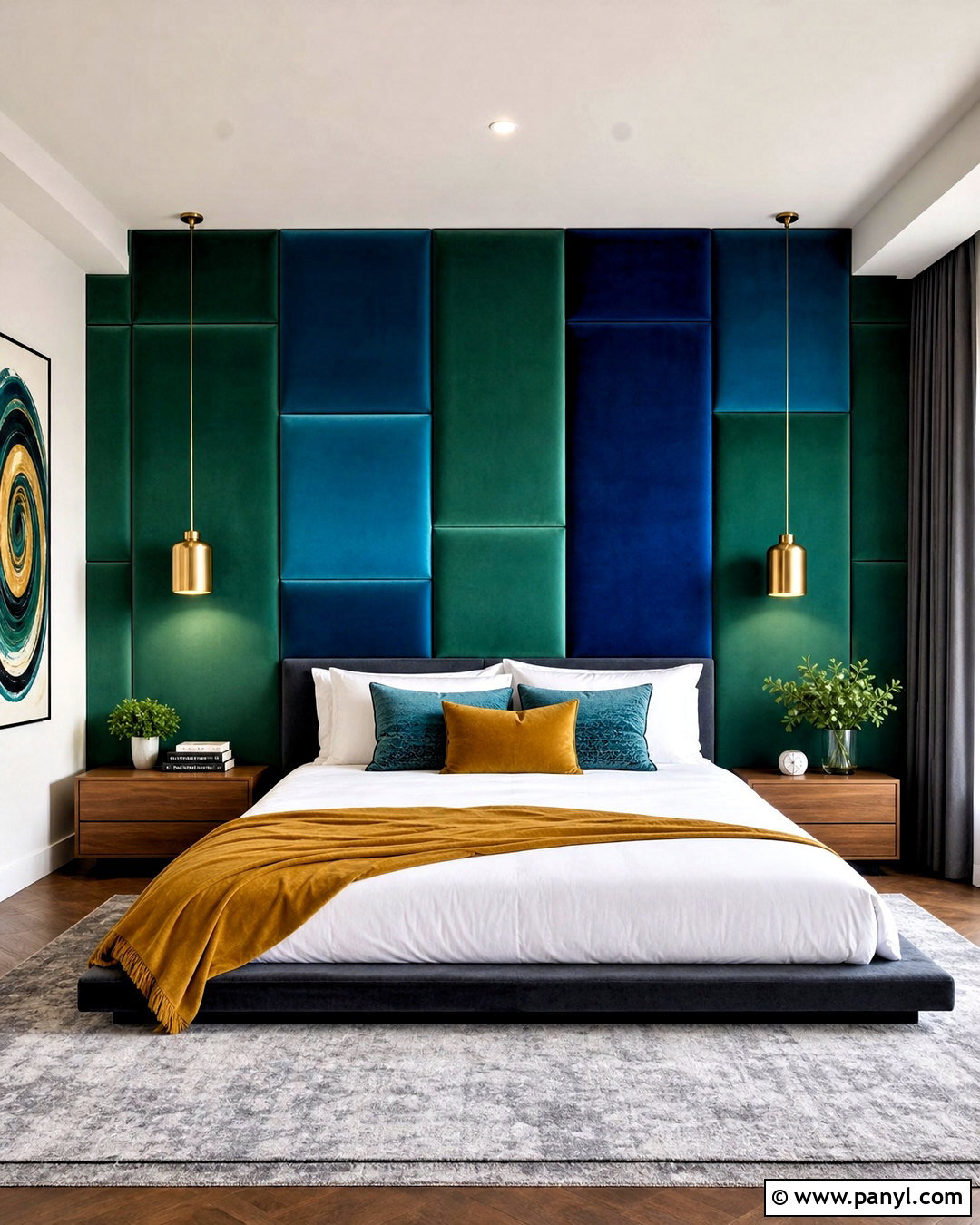
An upholstered panel accent wall makes a bedroom feel soft, colorful, and exceptionally comfortable. Cover the wall behind the bed with large padded rectangular panels wrapped in alternating shades of emerald green, turquoise, and deep blue velvet. Arrange them in a balanced grid from the baseboard to just below the ceiling. Use a low platform bed without a separate headboard so the panels remain the central feature. White bedding, a mustard throw, and small patterned pillows add brightness. Pair the wall with walnut nightstands, brass pendant lights, and a pale gray rug. Keep the remaining walls warm white and choose simple window treatments. The finished bedroom combines bold color with sound-softening texture, creating a playful statement that still feels restful and cohesive.
Conclusion:
The most successful **20 fun accent wall ideas** combine personality with a thoughtful plan for the entire room. Before beginning, consider which wall naturally attracts attention and how its color, texture, or pattern will connect with the furniture. Paint treatments offer affordable flexibility, while wallpaper, molding, tile, stone, cork, and wood introduce stronger texture. You can also make the feature practical through shelving, pegboard storage, or an interactive chalkboard surface. Test colors and patterns in the actual room before making a final choice, since lighting can change their appearance. Most importantly, choose a design you genuinely enjoy rather than following a short-lived trend. A well-planned accent wall should make the complete space feel more balanced, useful, and memorable.

Related Ideas and Inspiration:
Leave a Reply