
Choosing the right game room paint can turn an ordinary spare room, basement, or loft into a comfortable entertainment space. These 20 Best Wall Color For Game Room Ideas include deep cinematic shades, flexible neutrals, playful brights, and balanced two-tone combinations. Today’s most appealing game rooms often pair navy, charcoal, green, teal, terracotta, or warm neutrals with practical layouts and layered lighting. () The best scheme should complement your flooring, furniture, screens, game tables, and natural light. It should also feel inviting when the electronics are off. From sophisticated board game spaces to colorful family arcades, every design below creates a complete, achievable room. Explore these 20 Best Wall Color For Game Room Ideas to find a look that fits your space.

1. Navy Blue Game Room
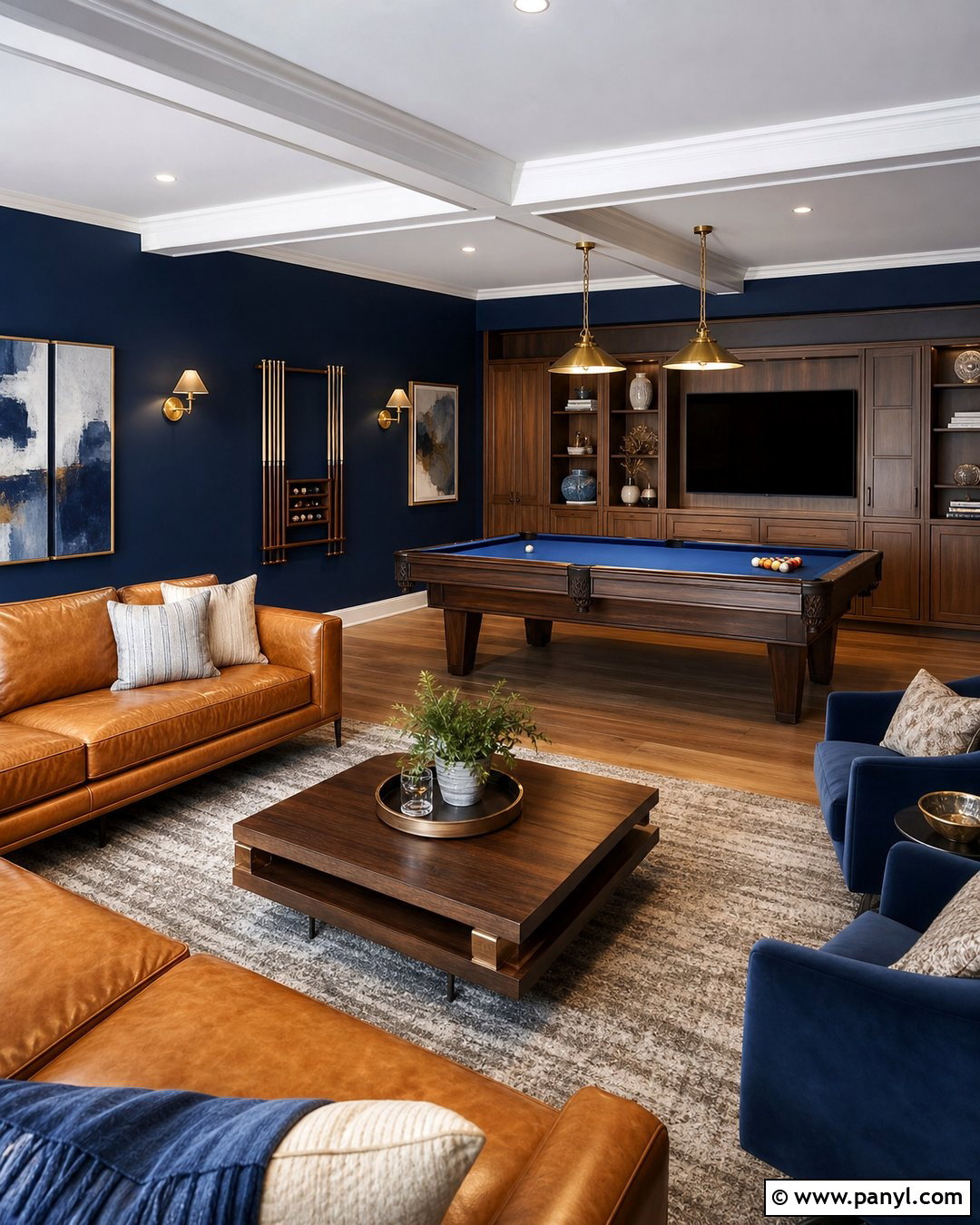
Deep navy blue walls create a polished backdrop for a game room used by children and adults. Paint every wall navy for an immersive look, then keep the ceiling soft white to prevent the space from feeling enclosed. Choose a medium oak media console, camel leather seating, and a light gray area rug to introduce warmth. A pool table with muted blue felt can sit at the center, while a compact television zone occupies one wall. Add framed game artwork, brushed brass sconces, and closed storage for controllers and board games. White baseboards provide a clean boundary around the dark color. Finish with blue, rust, and cream pillows so the room feels coordinated rather than overly themed.
2. Charcoal Gray Game Room
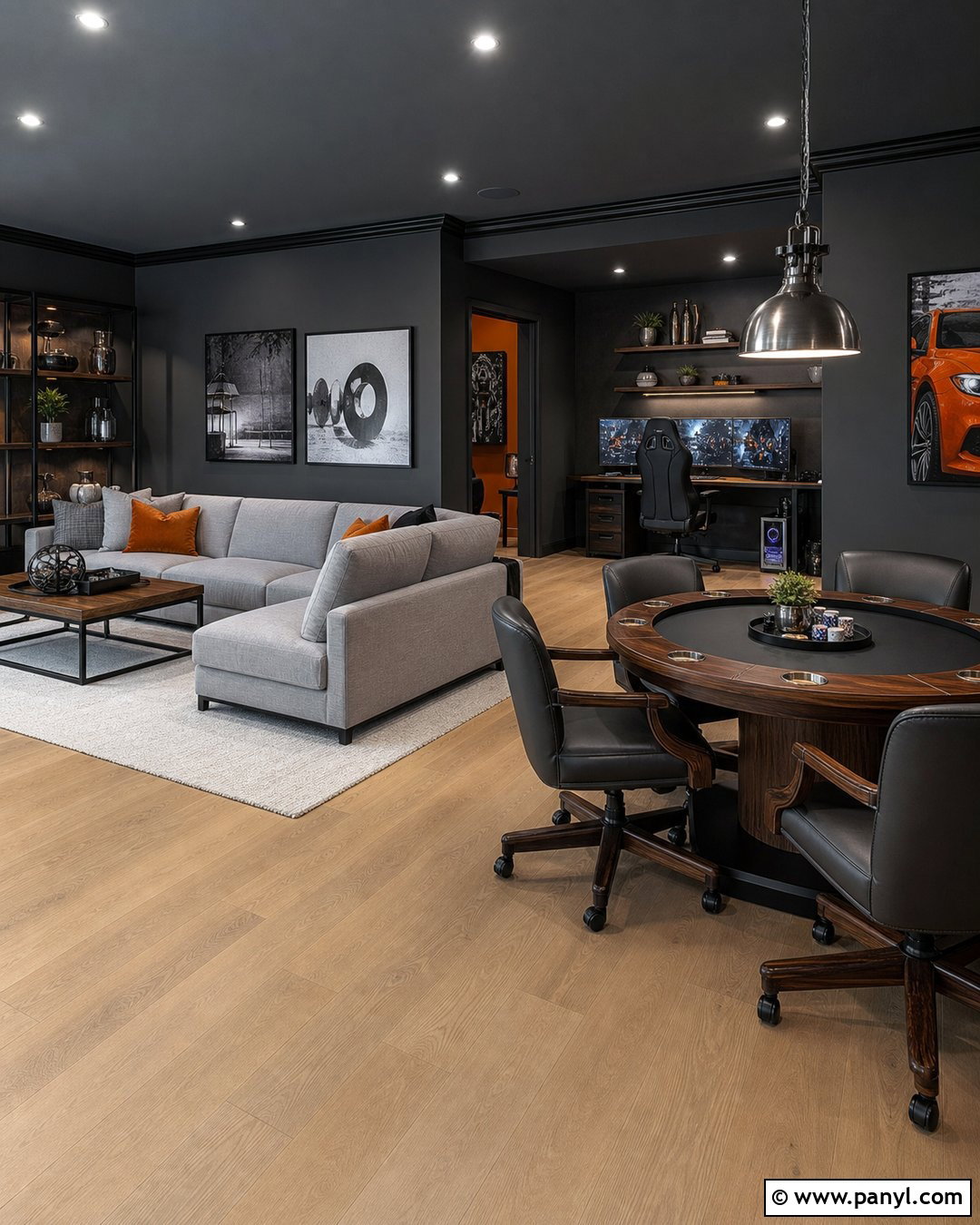
Charcoal gray gives a game room depth without committing to a strong color family. It works especially well in a basement with limited daylight or a room filled with bright screens and colorful equipment. Cover the walls in a soft matte charcoal, then use black trim for a streamlined finish. Balance the dark shell with pale oak flooring, a light gray sectional, and a cream performance rug. Position a long gaming desk against one wall and create a separate board game area with a round wood table. Modular cabinets keep equipment organized without adding visual clutter. Add adjustable white lighting, silver hardware, and a few orange accessories. The warm accents prevent the finished room from looking flat or overly industrial.
3. Forest Green Game Room
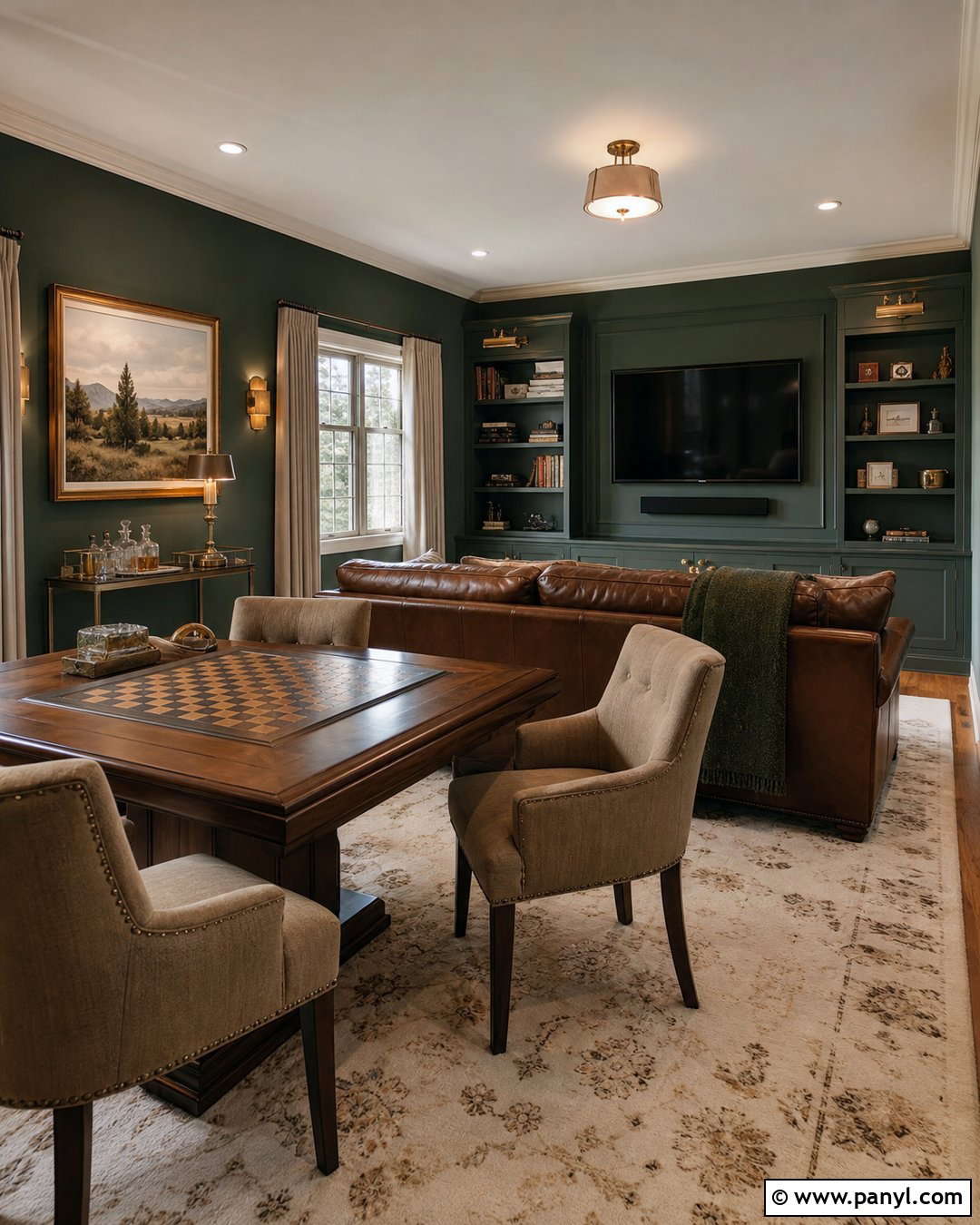
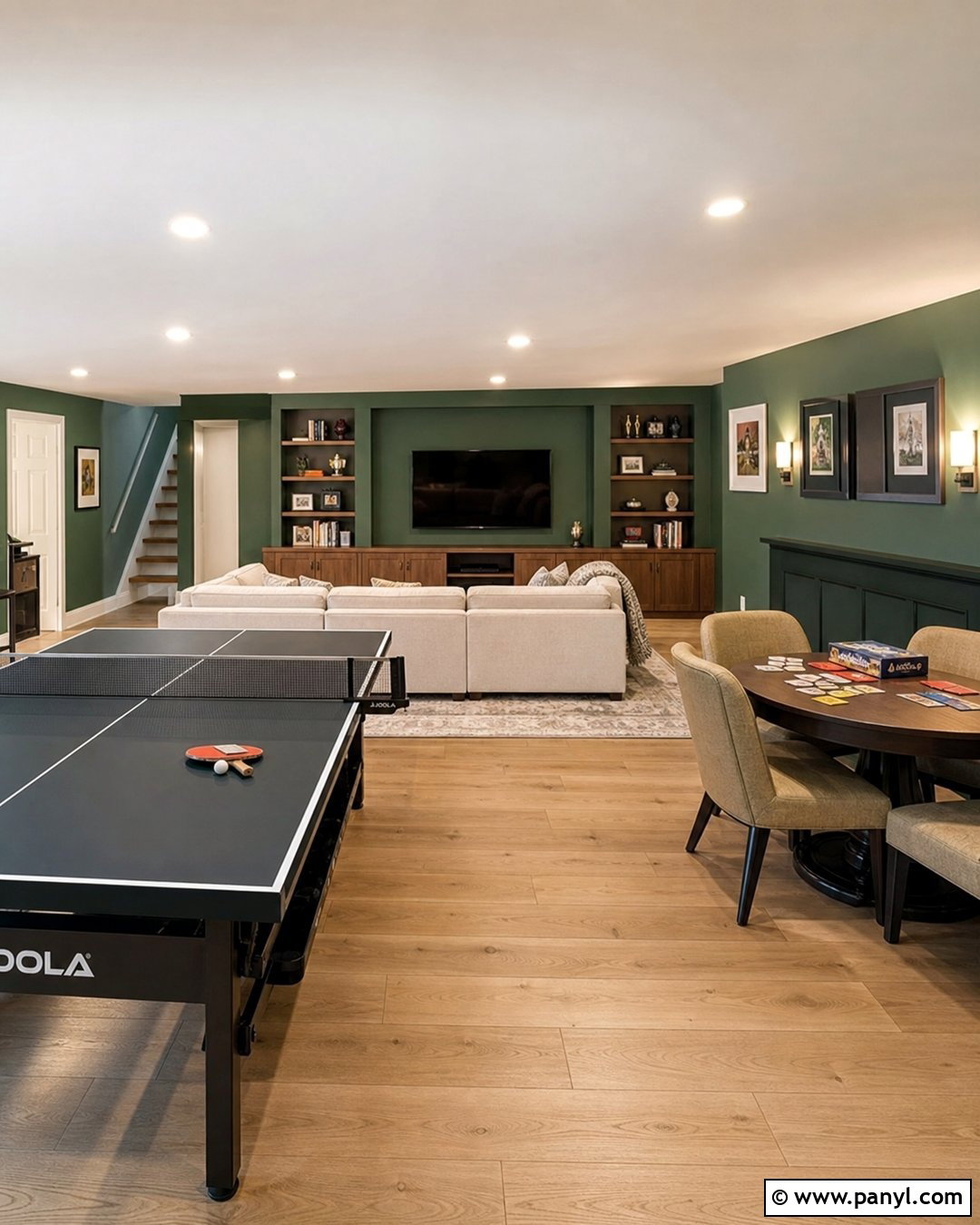
Forest green walls can make a game room feel comfortable, established, and connected to natural materials. Use the color across all four walls, paired with warm white trim and a simple white ceiling. A walnut game table should anchor the room, surrounded by upholstered chairs in tan or oatmeal fabric. Add a brown leather sofa along the longest wall and place a low media cabinet opposite it. Vintage-inspired wall lights, brass hardware, and framed landscape artwork support the rich green background. Choose a patterned rug containing cream, rust, and muted blue to connect the seating and gaming zones. Built-in shelves painted forest green can blend into the walls, allowing colorful board games and decorative objects to provide controlled contrast.
4. Matte Black Game Room
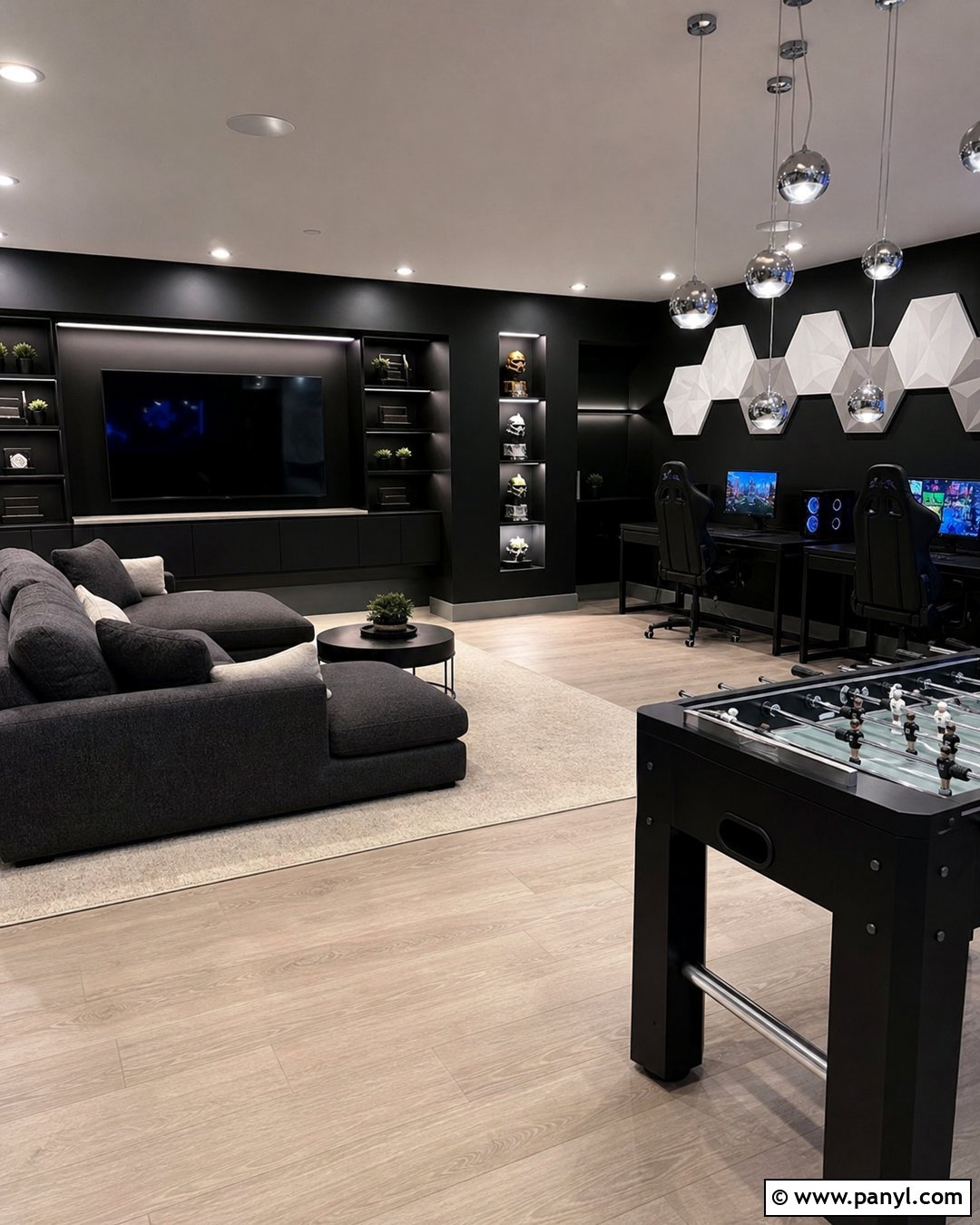
A matte black game room can look sleek and intentional when lighter materials are distributed throughout the space. Use black on the walls and media cabinetry, but leave the ceiling crisp white to maintain definition. Select pale wood flooring, a soft gray sectional, and a large ivory rug to brighten the lower half of the room. Position gaming monitors against one wall and use concealed cable channels for a clean setup. A compact air hockey table or foosball table can fill the center without overwhelming the layout. Add white acoustic panels in geometric arrangements, chrome lighting, and a few electric blue accessories. The completed design feels modern and dramatic, yet remains practical for video games, movies, and casual gatherings.
5. Deep Teal Game Room
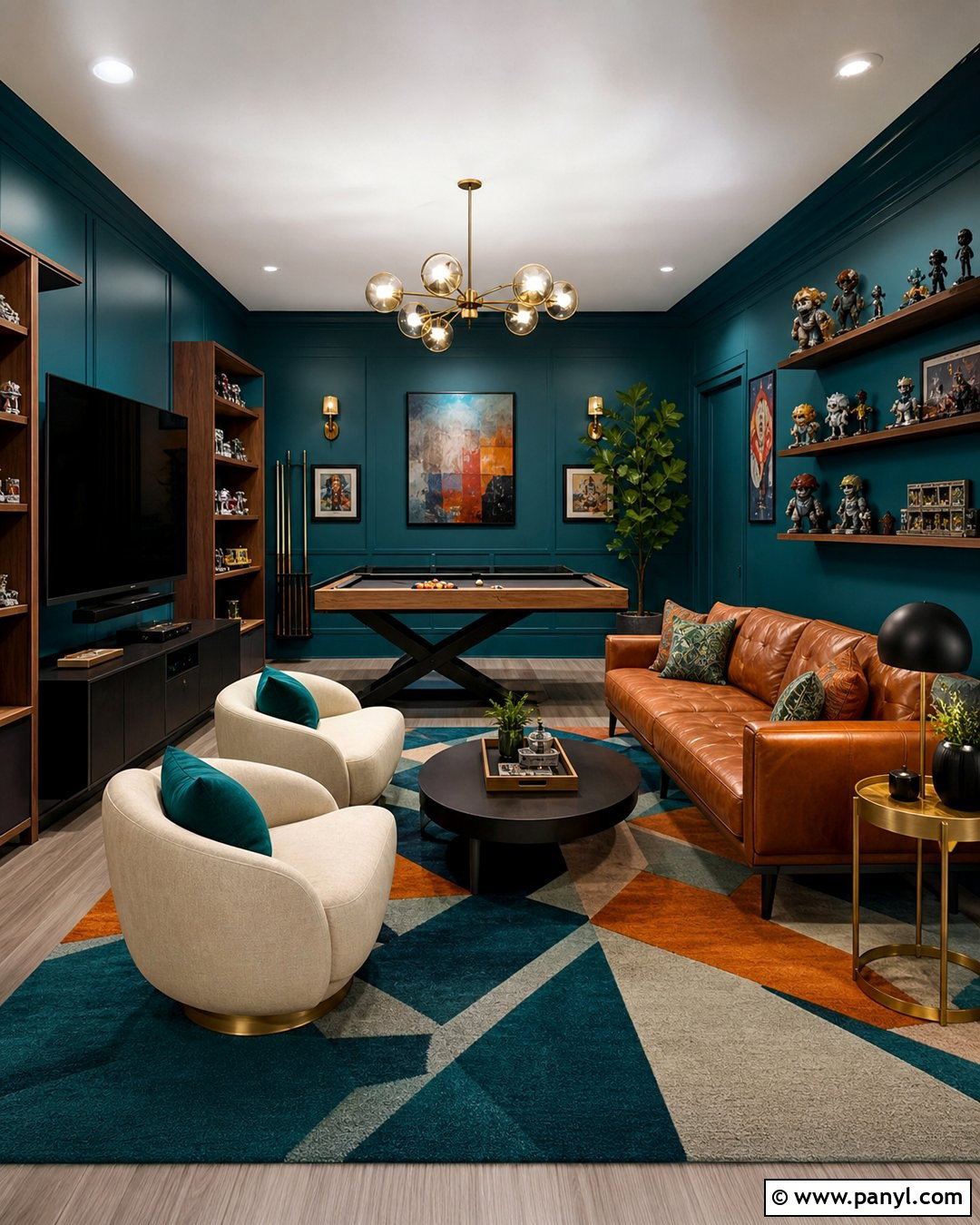
Deep teal introduces stronger personality than navy while remaining easy to coordinate with wood, black, and cream. Paint the walls teal and use matte black around the windows, doors, and built-in storage. Set a warm cognac sofa against one wall and add two cream swivel chairs near a round game table. A black media unit creates a grounded television area, while floating walnut shelves provide display space for collectibles. Bring in a graphic rug featuring teal, ivory, and burnt orange to unify the room. Frosted globe lighting and small brass accents add a refined finishing layer. Keep electronic lighting limited to one or two colors so it does not compete with the walls. The result feels energetic, social, and carefully balanced.
6. Warm White Game Room
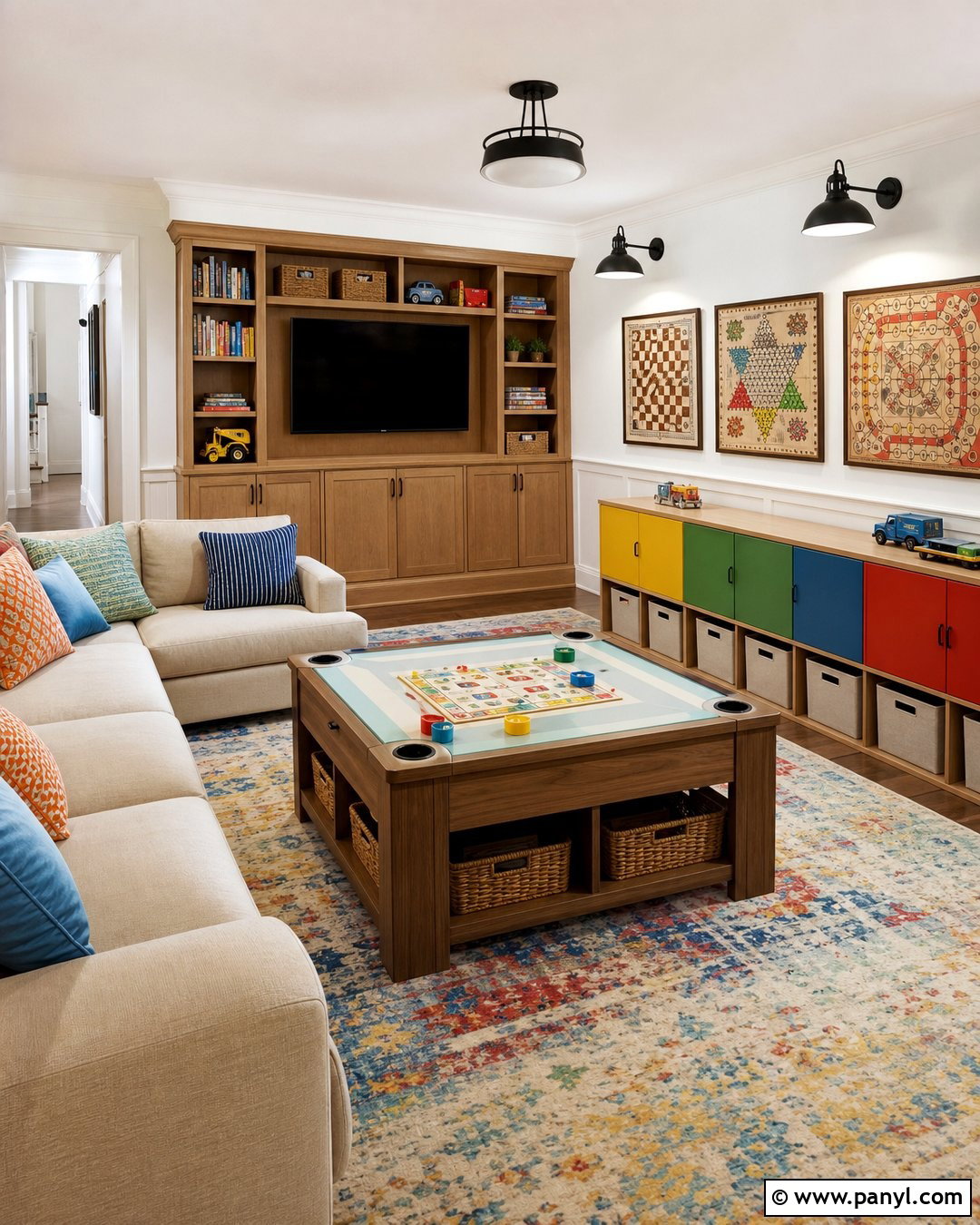
Warm white walls are a smart choice for a small game room, a shared family space, or a room with colorful collections. Select a creamy white with a subtle beige undertone rather than a stark blue-white. Continue the color across the ceiling and trim for a bright, seamless envelope. Add a medium-tone wood entertainment unit, a washable beige sectional, and a large multicolor rug. Use framed vintage game boards, colorful shelves, and painted storage cabinets to give the neutral background personality. A square activity table can occupy the center, leaving room around it for easy movement. Install adjustable ceiling lights and wall sconces for flexible brightness. Black hardware and narrow black frames provide just enough contrast to define the cheerful design.
7. Soft Greige Game Room
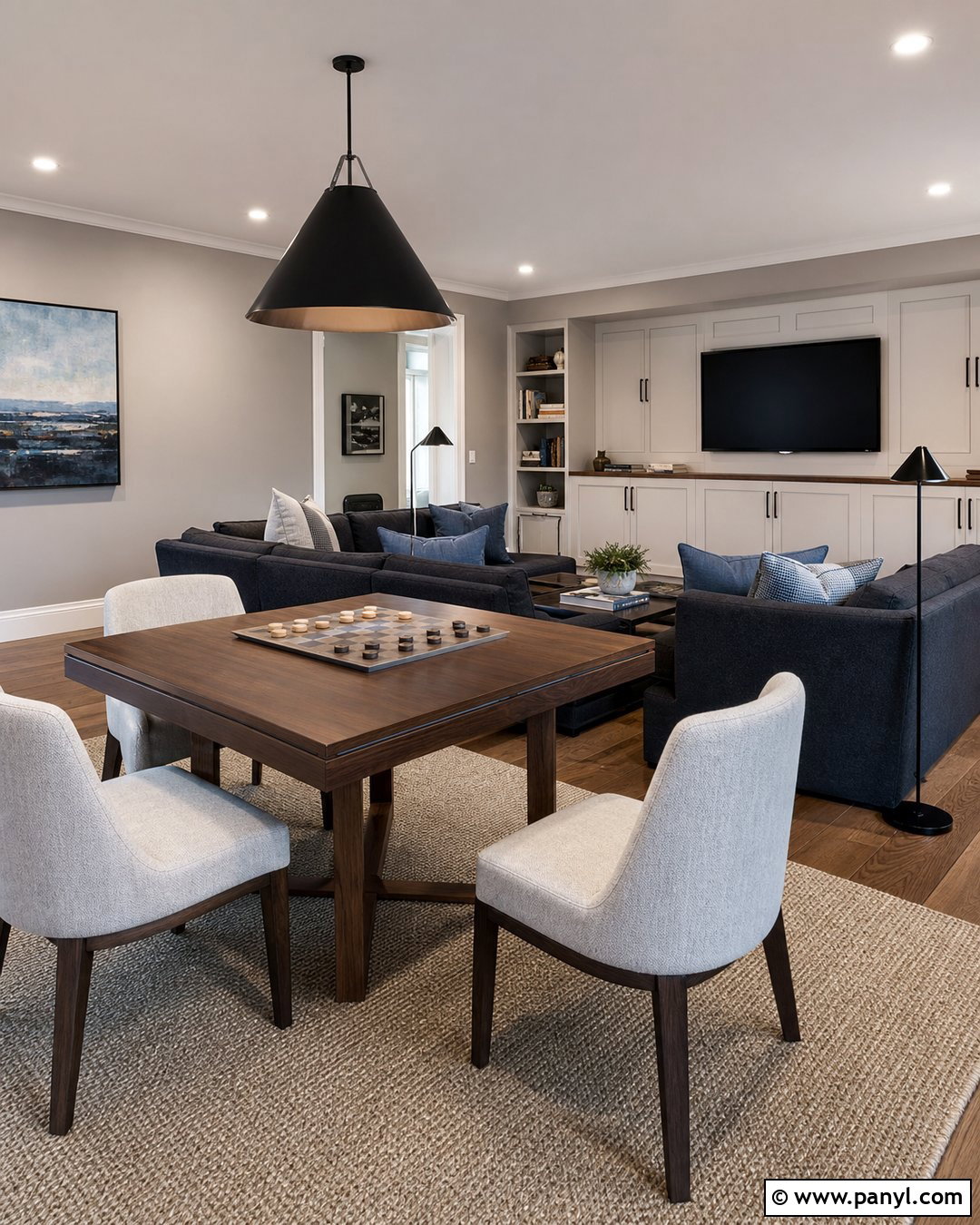
Soft greige creates a relaxed game room that can blend naturally with the rest of an open-plan home. Choose a warm gray-beige wall color and pair it with bright white trim, light oak floors, and simple linen window treatments. Use a charcoal sectional for the television zone and position a walnut table with comfortable upholstered chairs nearby for puzzles and board games. A low storage wall should combine open shelves with closed cabinets, keeping frequently used items accessible while hiding visual clutter. Add muted blue pillows, black metal lamps, and a woven cream rug for subtle contrast. This palette also makes it easy to update accessories over time. The completed room feels calm and polished without losing the casual atmosphere an entertainment space needs.
8. Slate Blue Game Room
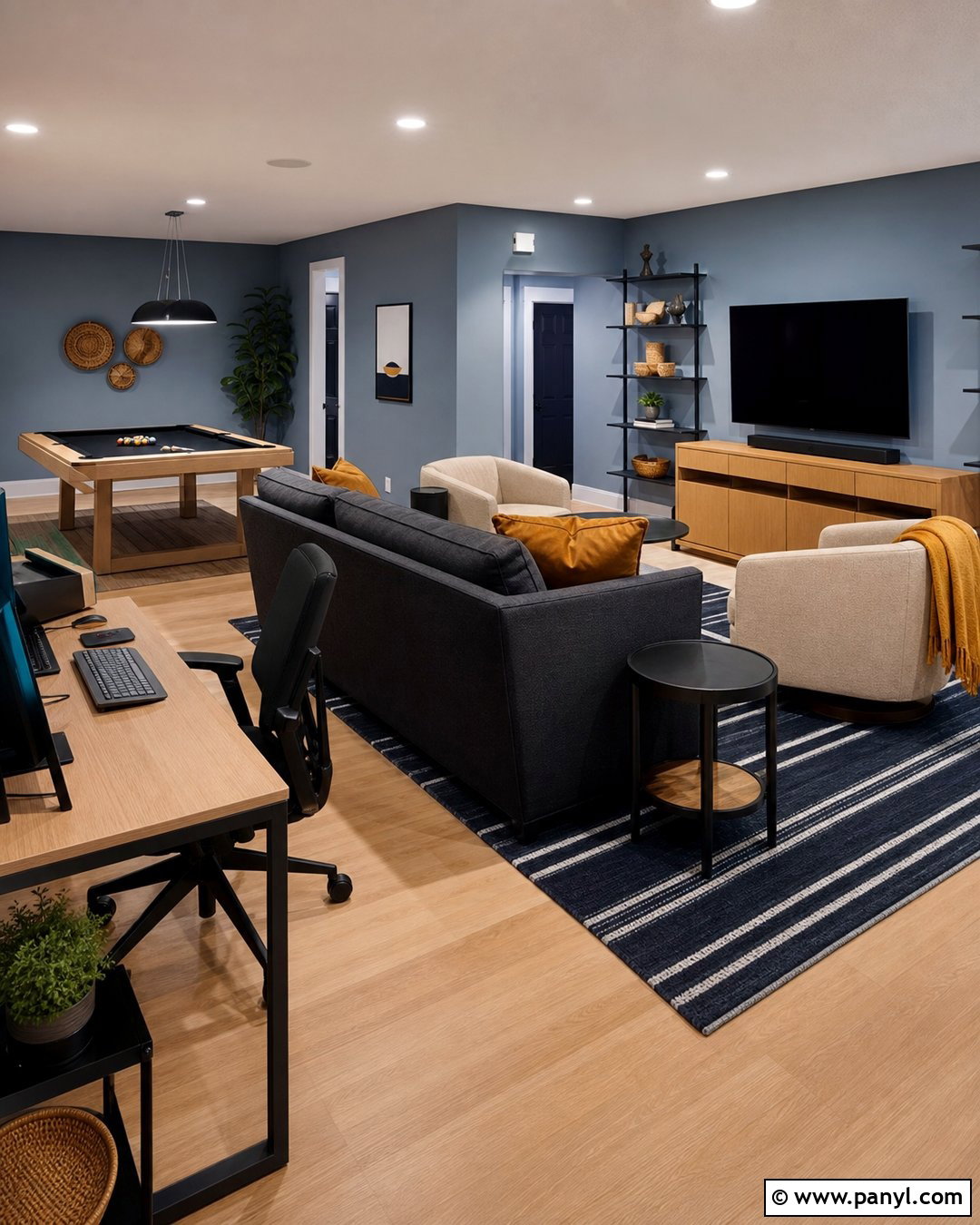
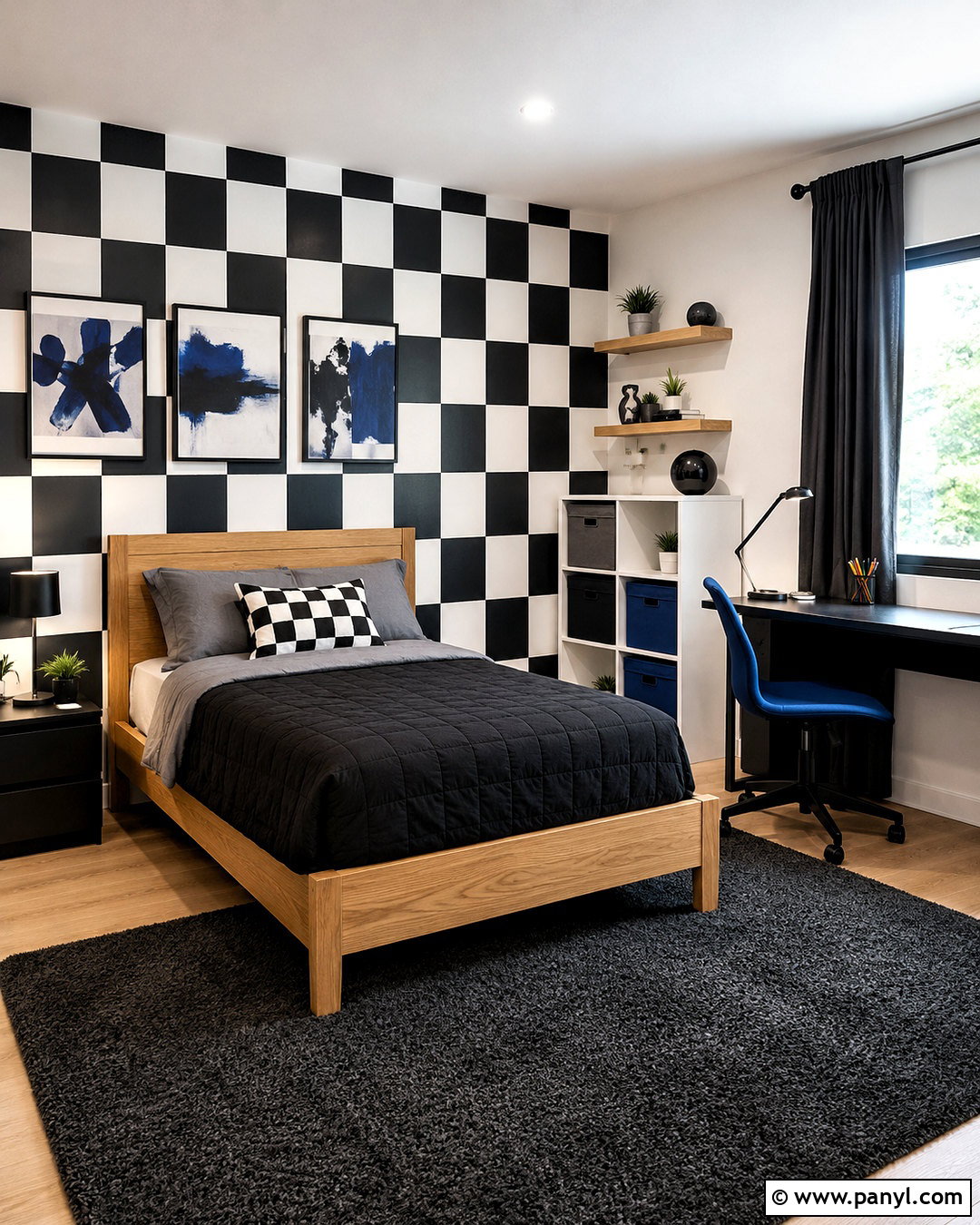
Slate blue walls offer a softer alternative to dark navy, making them suitable for rooms that need both color and brightness. Paint all four walls in a medium blue-gray and finish the trim in a gentle warm white. Pair the walls with natural maple furniture, a charcoal sofa, and oatmeal-colored lounge chairs. A light wood gaming desk can run beneath a window, while a rectangular board game table fills the opposite side. Use a navy and cream striped rug to connect the two activity zones. Black picture frames and simple wall-mounted shelves add structure without feeling heavy. Include warm red or ochre accents through pillows and storage baskets. This complete scheme creates an easygoing game room that works equally well during daylight and evening use.
9. Terracotta Game Room
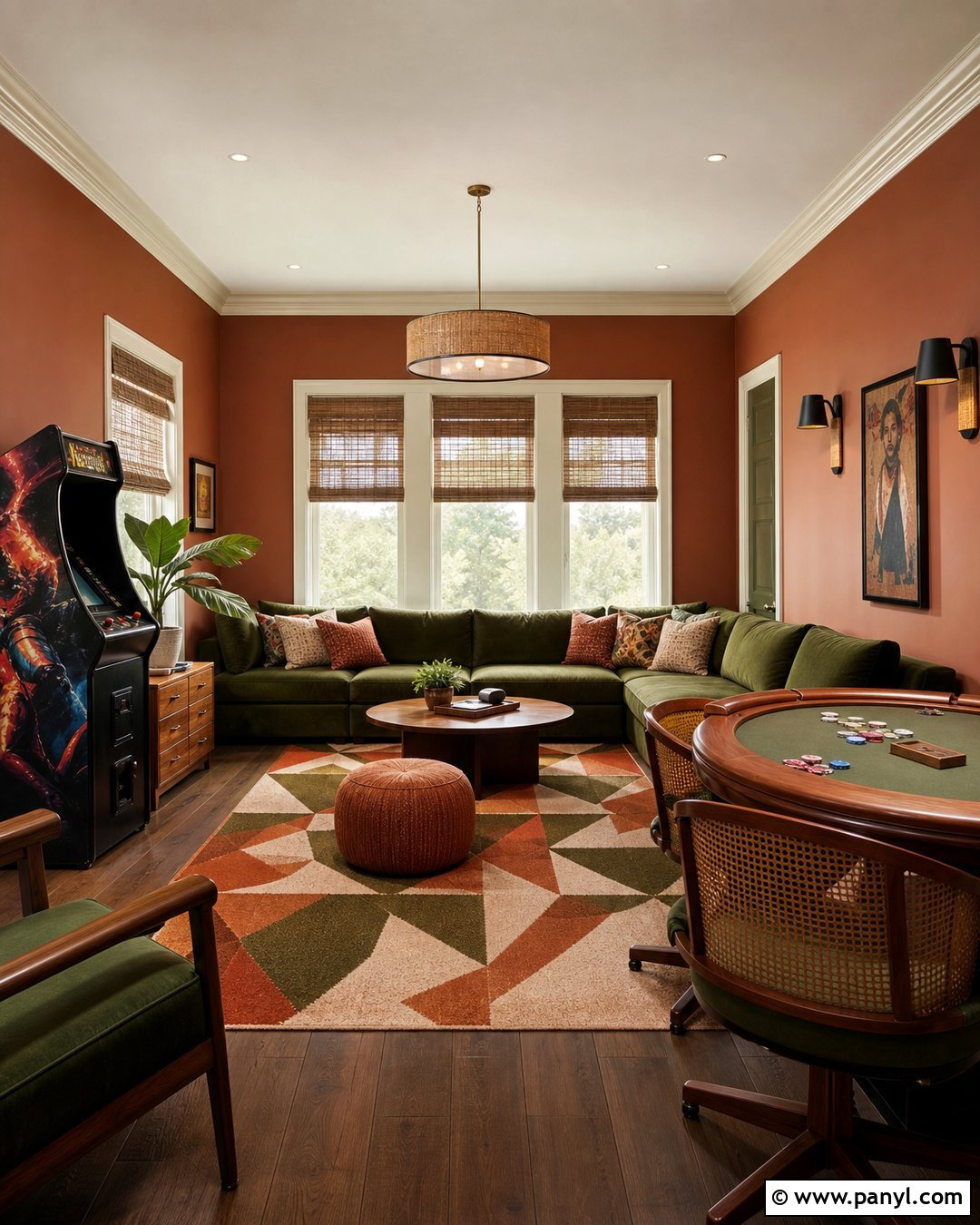
Warm terracotta walls bring a retro, earthy character to a game room without relying on novelty decorations. Select a muted clay tone with brown undertones and combine it with cream trim and a pale ceiling. A deep green sectional creates a strong complementary contrast, while walnut furniture reinforces the warm palette. Place a vintage-style arcade cabinet along one wall and a round game table with cane-backed chairs near the center. Use a geometric rug containing rust, olive, tan, and ivory to tie the room together. Matte black sconces and hardware prevent the scheme from becoming too rustic. Finish with simple pottery, woven shades, and framed abstract prints. The space feels lively and nostalgic while remaining comfortable enough for everyday family activities.
10. Burgundy Game Room
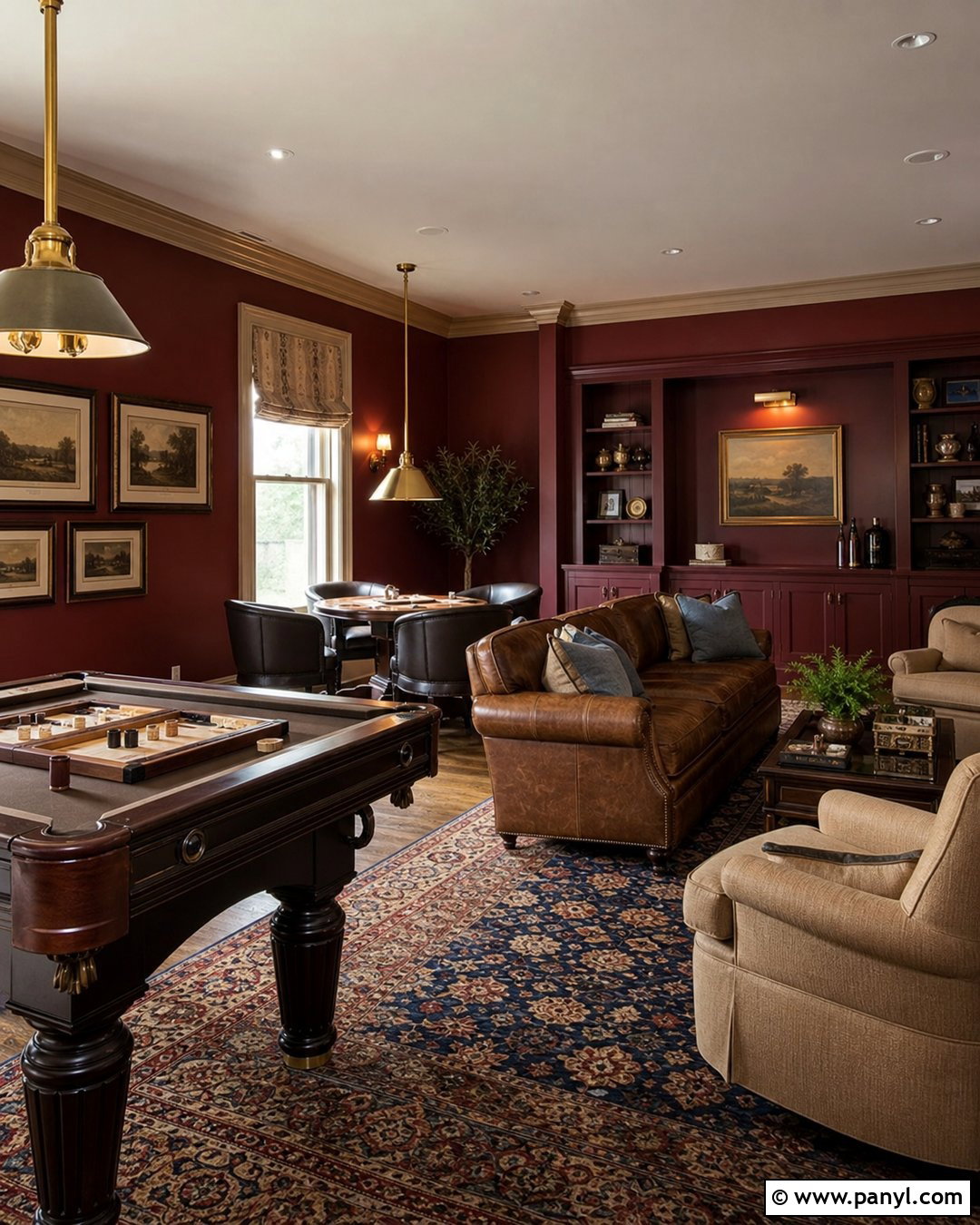
Burgundy can create a cozy, sophisticated game room when it is paired with light upholstery and warm wood. Paint the walls in a deep muted red rather than a bright primary shade. Keep the ceiling cream and use matching cream baseboards to frame the rich color. Add a camel leather sofa, two oatmeal armchairs, and a dark walnut table for cards, puzzles, or strategy games. A traditional rug featuring faded navy, beige, and burgundy makes the furniture arrangement feel established. Choose antique brass lighting and simple wood-framed artwork for a finished appearance. Built-in cabinets painted the same burgundy as the walls can store games discreetly. The complete room feels dramatic but welcoming, particularly when the layout includes several comfortable places to sit.
11. Mustard Yellow Game Room
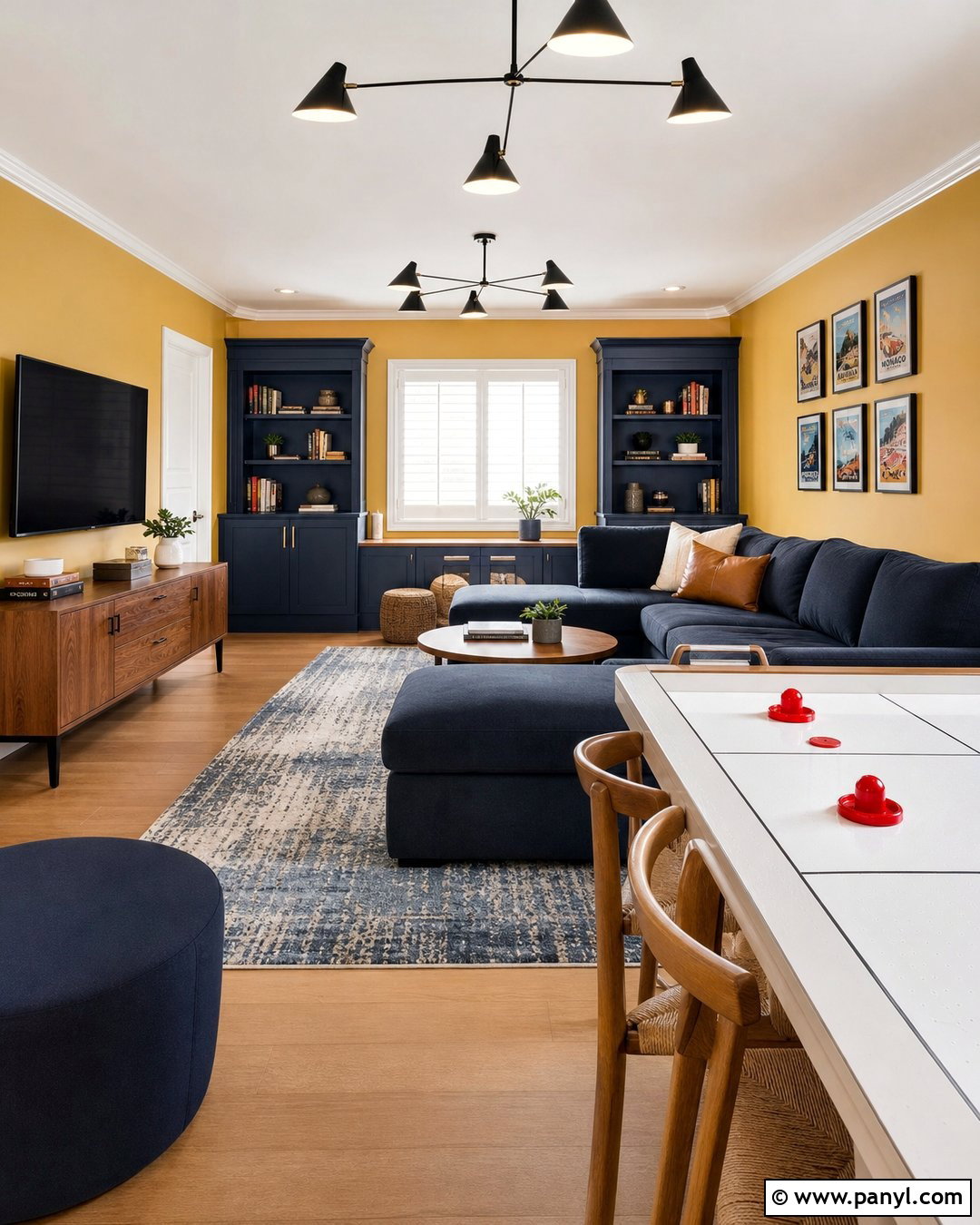
Mustard yellow gives a game room cheerful energy while feeling more grounded than a bright lemon shade. Use it on the walls with crisp white trim and a white ceiling for a clean, sunny finish. Balance the warmth with a navy sectional, a medium walnut media cabinet, and a blue-and-cream patterned rug. Add a white game table with natural wood chairs to keep the center of the room visually light. Closed navy storage cabinets can organize toys, controllers, and board games along one wall. Introduce small red and green accents through pillows or framed artwork, but keep the overall palette controlled. Black ceiling fixtures and hardware sharpen the design. This scheme works especially well for a family game room that also serves as a creative activity space.
12. Sage Green Game Room
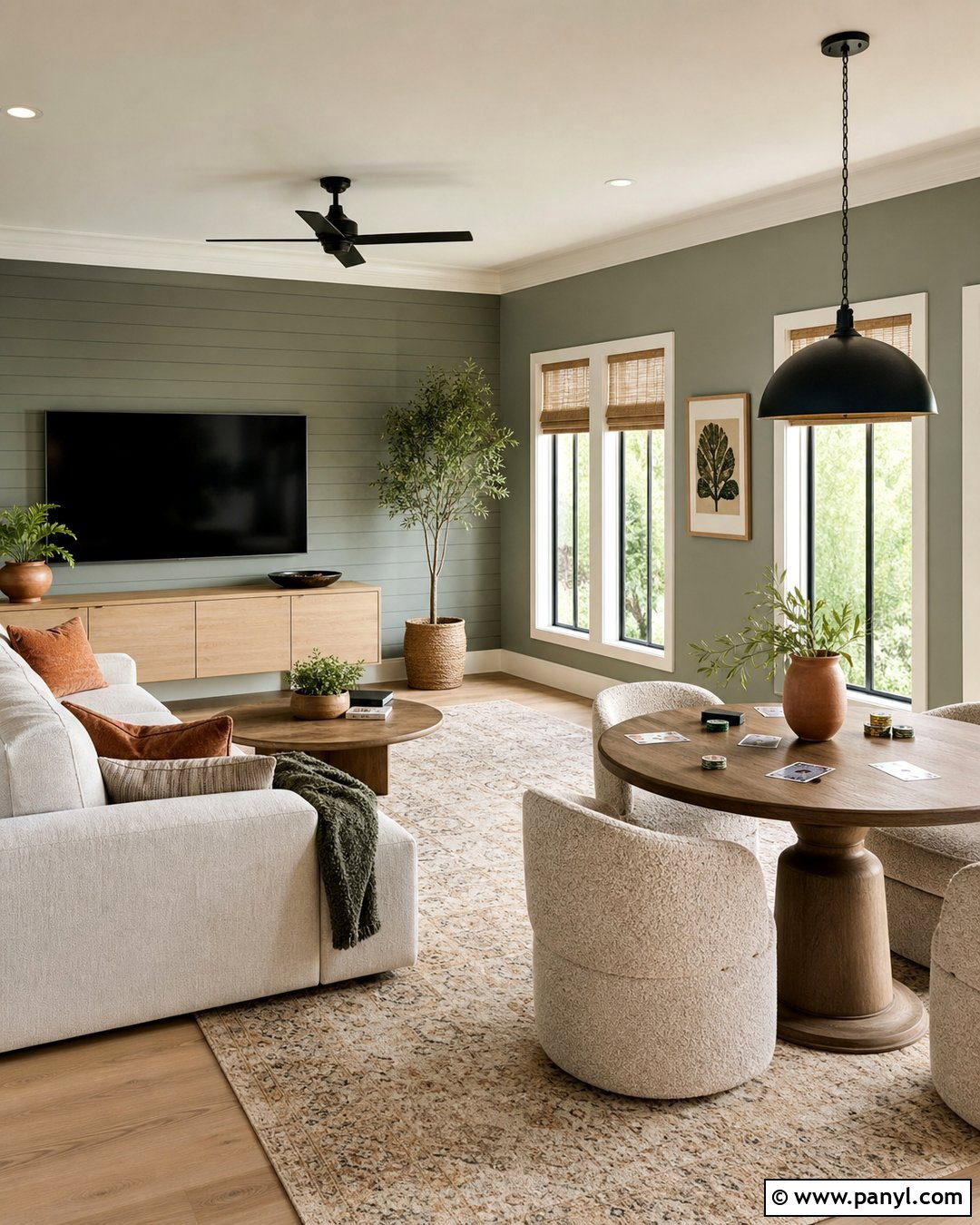
Soft sage green creates a calm game room that feels welcoming even when no games are in use. Cover the walls in a muted gray-green and pair them with warm white trim, light oak flooring, and natural woven shades. Choose a cream modular sofa that can be rearranged for different activities. Across from it, install a pale wood media console with closed doors and open shelving. A round pedestal table with four cushioned chairs creates a dedicated spot for board games. Layer in a washable rug with subtle green, beige, and charcoal patterns. Matte black lamps, cabinet pulls, and frames add definition. Finish with a few terracotta accessories and leafy plants. The full design feels fresh, organized, and adaptable for guests of different ages.
13. Cobalt Blue Accent Wall Game Room
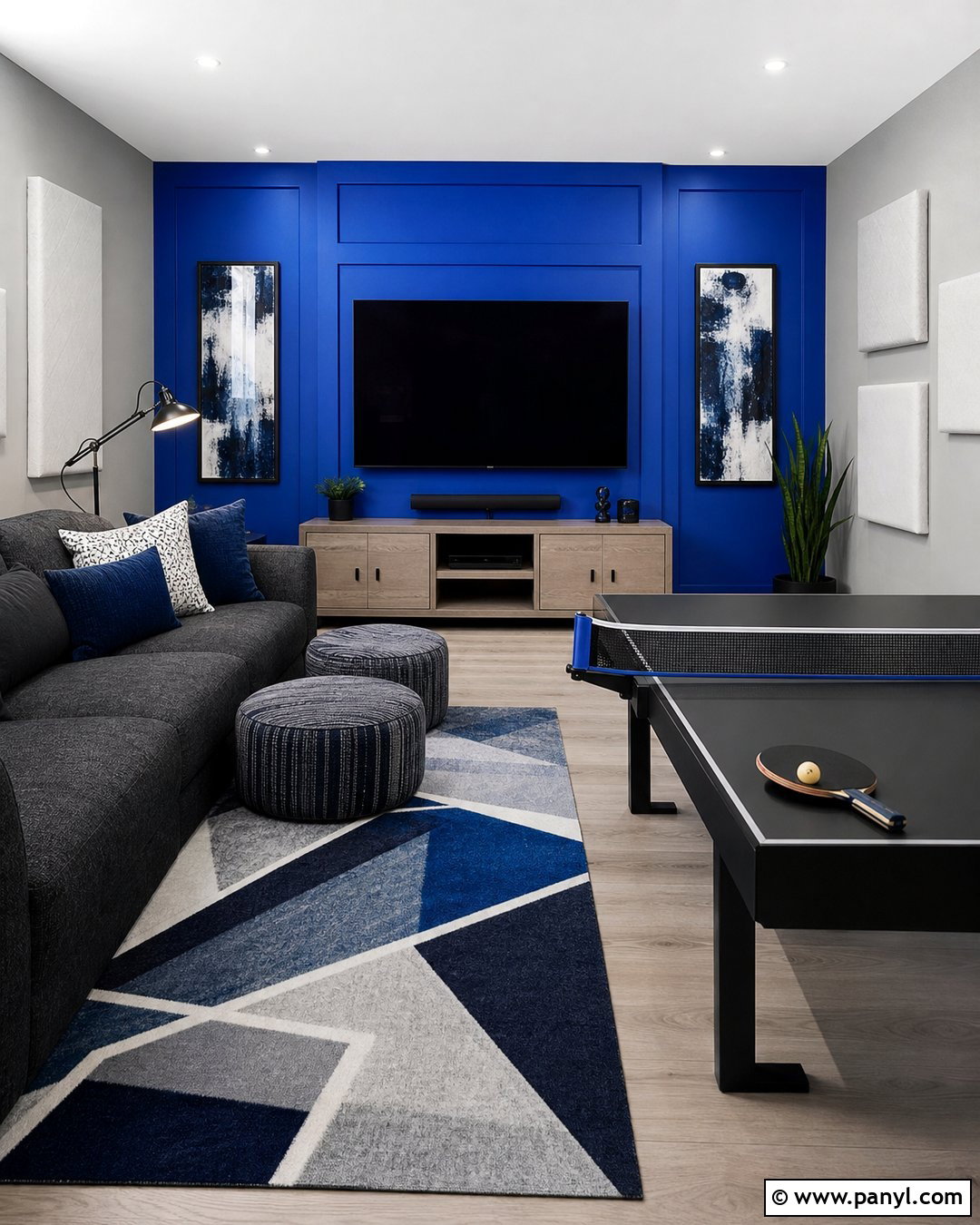
A cobalt blue accent wall creates a bold focal point without covering the entire game room in intense color. Place it behind the main television, gaming desk, or display shelving so the feature feels connected to the layout. Paint the remaining walls soft gray and use clean white trim throughout. Add a charcoal sofa, pale oak cabinets, and a black metal game table to form a balanced neutral foundation. Repeat cobalt through a patterned rug, two pillows, and small storage boxes rather than adding another large blue surface. Simple white wall panels can frame the screen and soften the saturated background. Use bright overhead lighting and adjustable task lamps at the desk. The completed room feels colorful, modern, and visually organized rather than busy.
14. Red Accent Wall Game Room
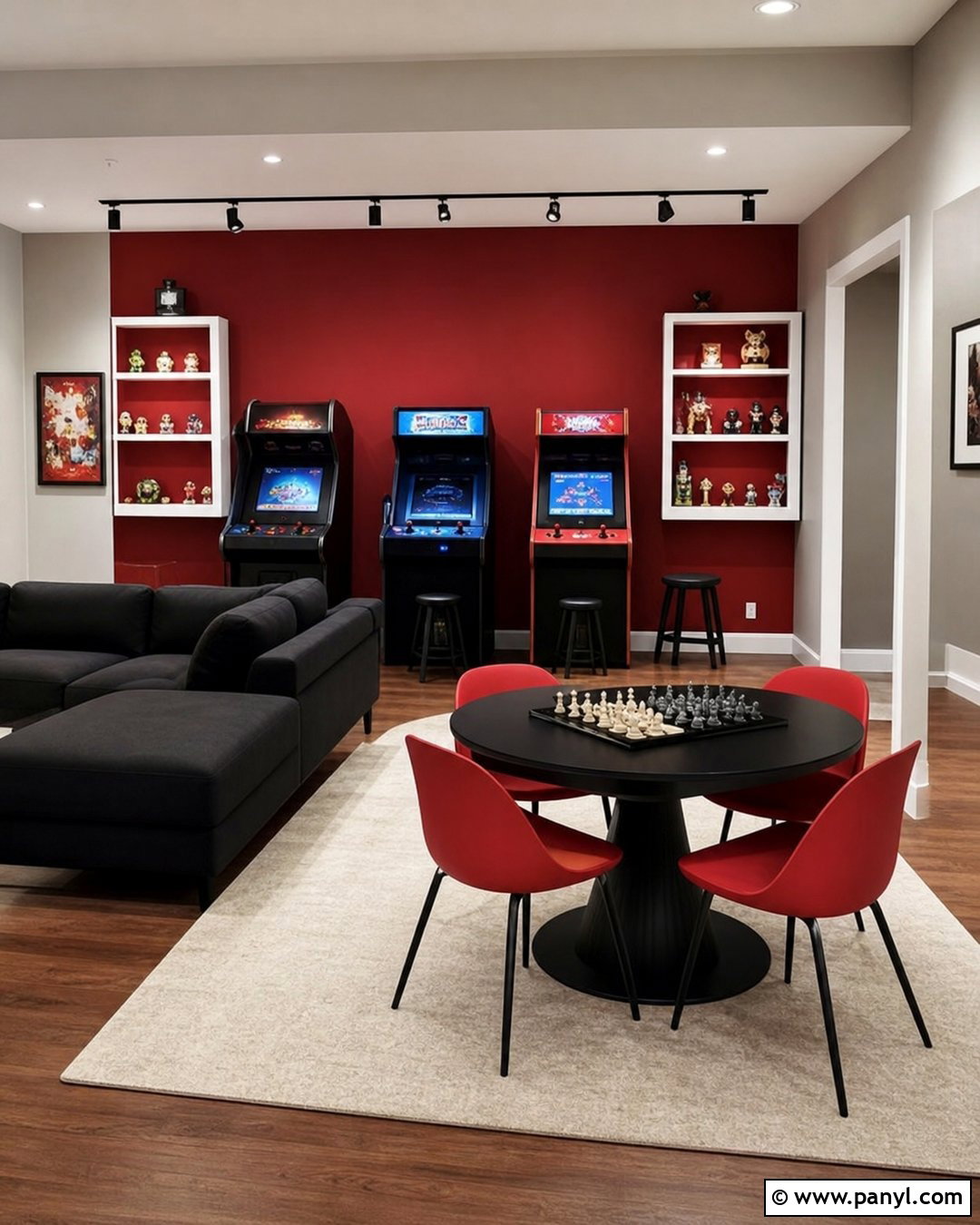
A muted red accent wall can energize a game room while keeping the space comfortable and versatile. Choose a deep brick red and apply it behind an arcade cabinet collection or a long media unit. Paint the other walls light greige, with bright white trim and ceiling paint to maintain balance. A black sectional, medium-tone wood flooring, and a large cream rug ground the strong accent. Add a round black game table with red upholstered chairs to repeat the wall color in a measured way. Use white shelving for games and collectibles so displayed items remain easy to see. Black track lighting and simple geometric artwork complete the design. This layout delivers a classic arcade influence without covering every surface in bold primary colors.
15. Purple Game Room
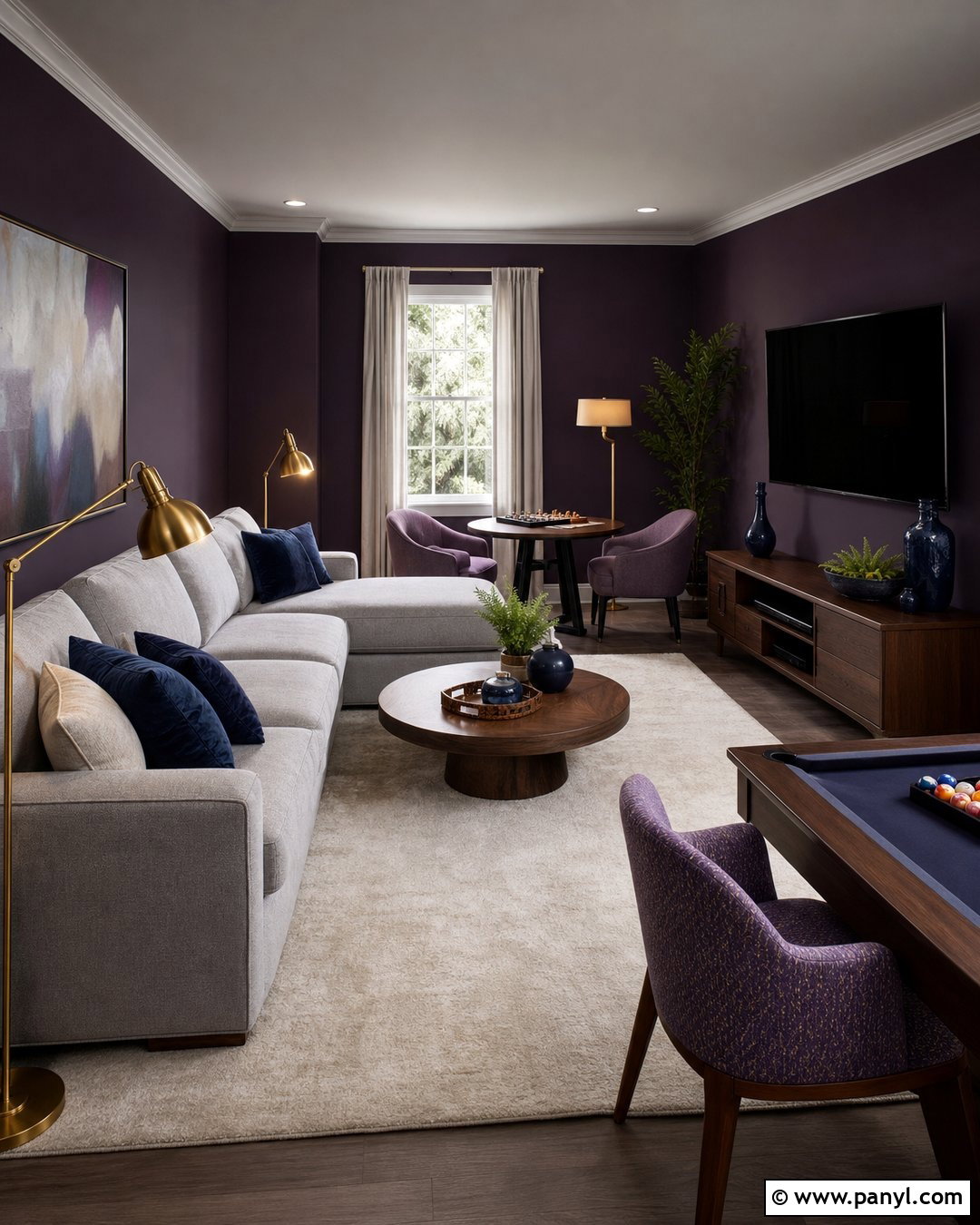
A muted aubergine purple can give a game room an imaginative look that still feels polished. Paint the walls in a dusty, dark purple and pair them with soft white trim and a pale gray ceiling. Choose a light gray sectional, walnut media furniture, and an ivory rug to brighten the room. A rectangular game table with lavender upholstered chairs subtly repeats the wall color without creating a matching set. Add brushed brass lamps and hardware for warmth, then introduce navy and blush accents through pillows and framed prints. Keep gaming equipment and shelving matte black to establish clean visual lines. This complete palette works well for video games, craft activities, and movie nights. It feels distinctive without depending on bright or overly youthful purple shades.
16. Dusty Rose Game Room
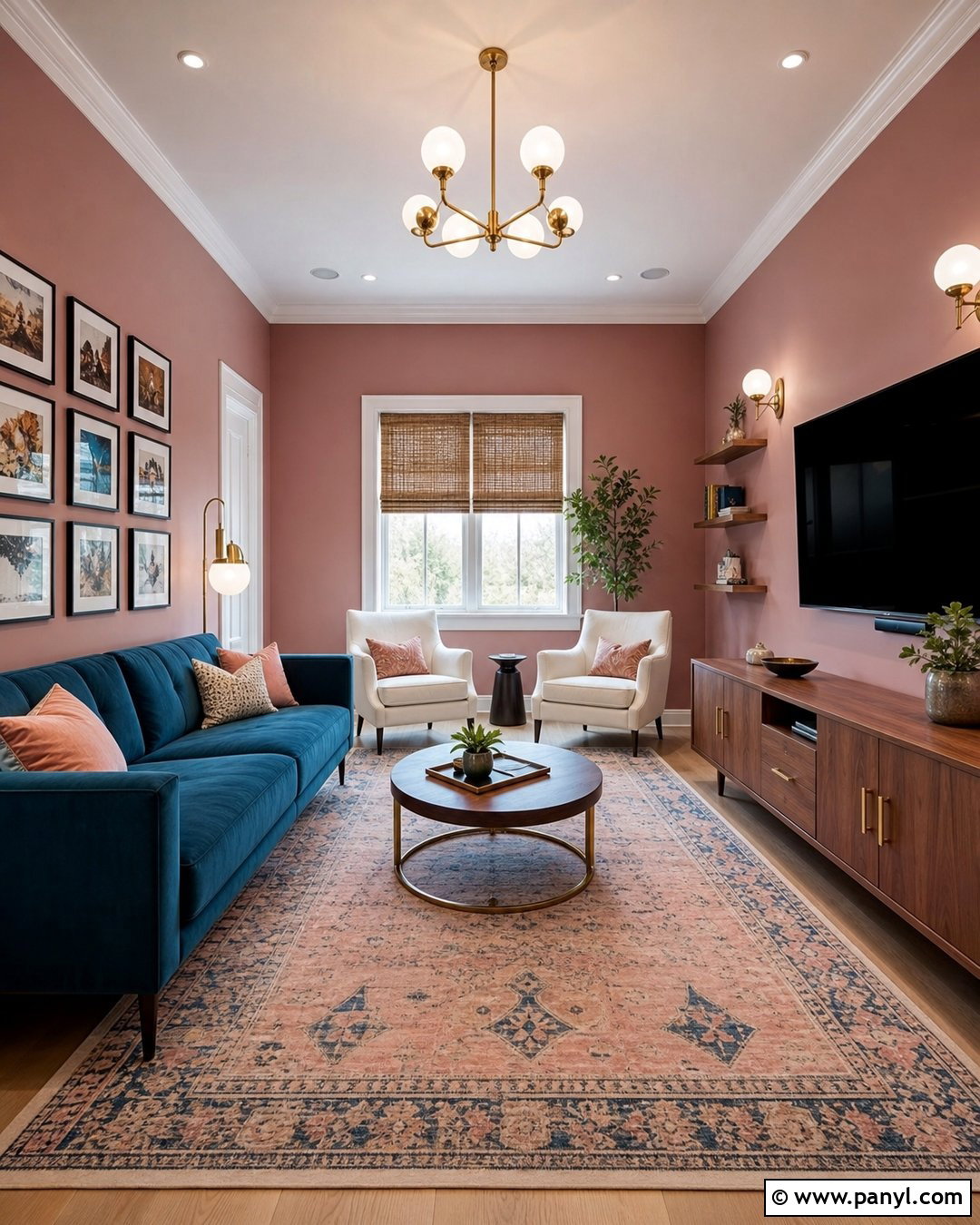
Dusty rose walls create a warm, playful game room that can still look mature and balanced. Select a muted pink with brown or gray undertones, then combine it with warm white trim and light oak flooring. Add a deep teal sofa as the primary contrast and place two cream lounge chairs around a small round table. Use a walnut media console and matching floating shelves to provide practical storage and natural warmth. A patterned rug with blush, teal, rust, and beige helps connect every color in the room. Install simple globe lighting with brushed brass details for a soft decorative touch. Black picture frames keep the artwork from appearing overly delicate. The final space feels friendly, colorful, and suitable for games, reading, conversation, or casual family movie nights.
17. Chocolate Brown Game Room
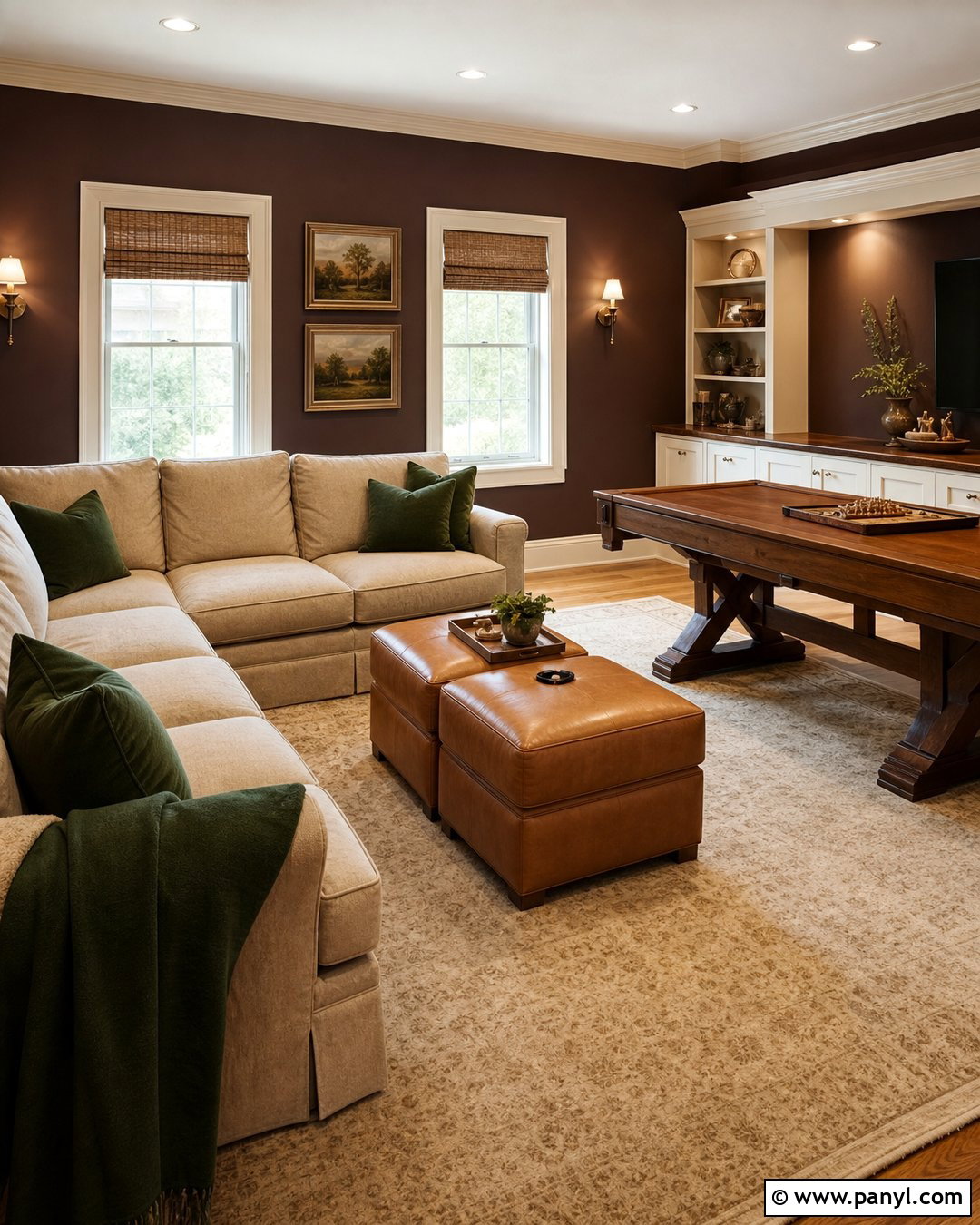
Chocolate brown walls can create a comfortable, club-like game room when the rest of the palette remains light and natural. Use a rich cocoa color on every wall, complemented by cream trim and a warm white ceiling. Choose a large oatmeal sectional, camel leather ottomans, and a medium oak game table to vary the brown tones. A light beige rug should cover much of the floor and prevent the room from feeling heavy. Install cream built-in cabinets with walnut countertops for game storage and refreshments. Antique brass sconces and framed vintage sports artwork reinforce the traditional atmosphere without turning the room into a theme. Add forest green and rust pillows for quiet color. The completed space feels cozy, substantial, and well suited to long board game sessions.
18. Two Tone Blue Game Room
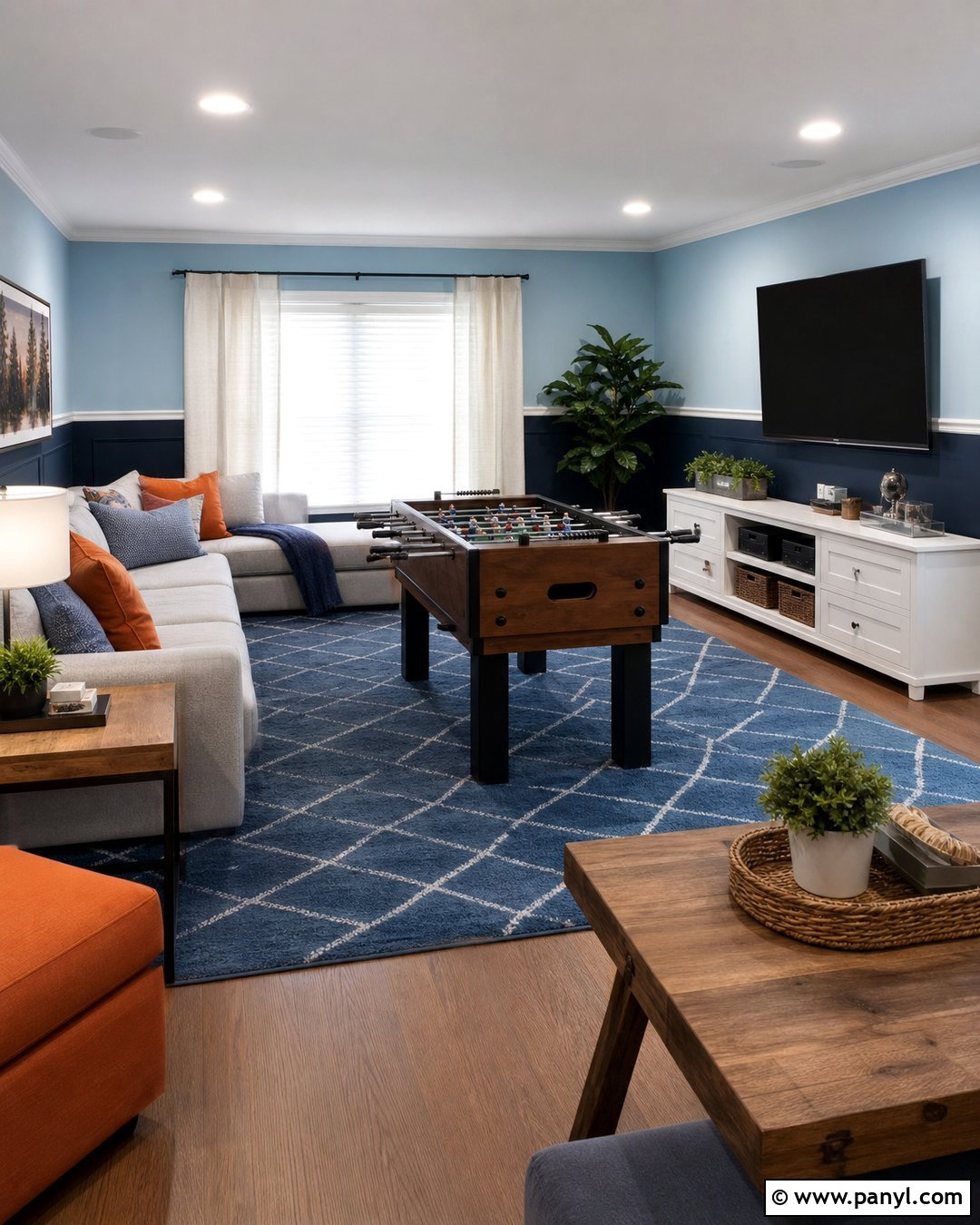
Two-tone blue walls can divide a game room visually while adding architectural character. Paint the lower third or lower half of the walls deep navy and the upper section a pale sky blue. Separate the colors with simple white chair rail molding, then continue white across the trim and ceiling. Choose a light gray sectional, a white media cabinet, and natural oak tables to keep the furniture fresh. A blue-and-white geometric rug reinforces the wall treatment without duplicating it exactly. Position a foosball table in the center and create a compact console gaming area along the navy portion of one wall. Add red or orange accessories in small amounts for contrast. The finished room feels structured, colorful, and especially effective in a rectangular basement or bonus room.
19. Black And White Game Room
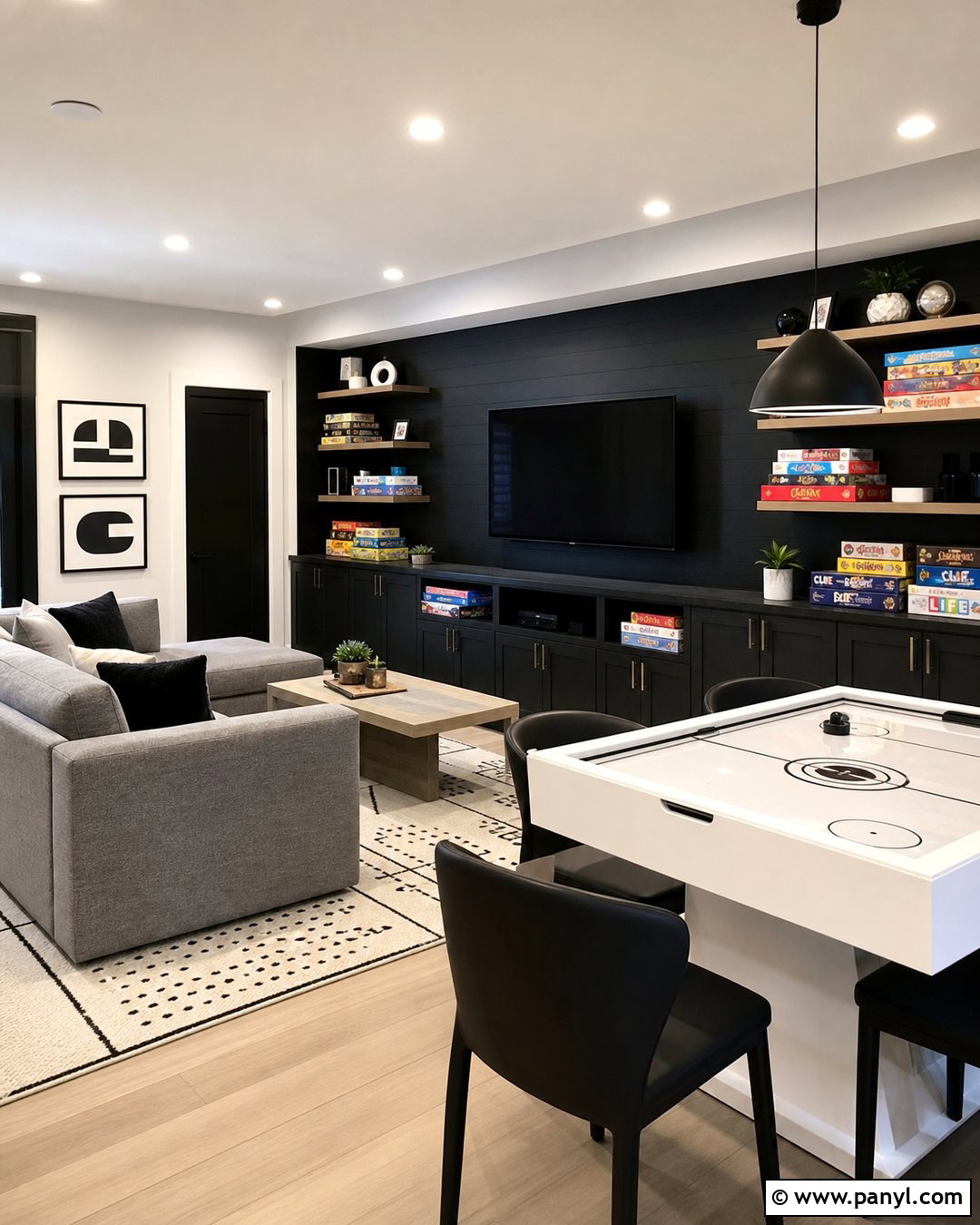
A black and white palette gives a game room a graphic, modern foundation that allows equipment and artwork to provide color. Paint the main walls warm white and use matte black on the television wall, built-in cabinets, and interior doors. Select a medium gray sectional to soften the contrast, then add pale wood tables and a black-and-cream patterned rug. A white game table with black chairs can define the activity area without disrupting the palette. Display colorful games in open shelving, but use matching storage boxes for smaller accessories. Add linear white ceiling lights and black wall sconces for consistent illumination. The complete room looks crisp rather than cold because the wood finishes, soft upholstery, and textured rug introduce warmth between the high-contrast surfaces.
20. Color Block Game Room
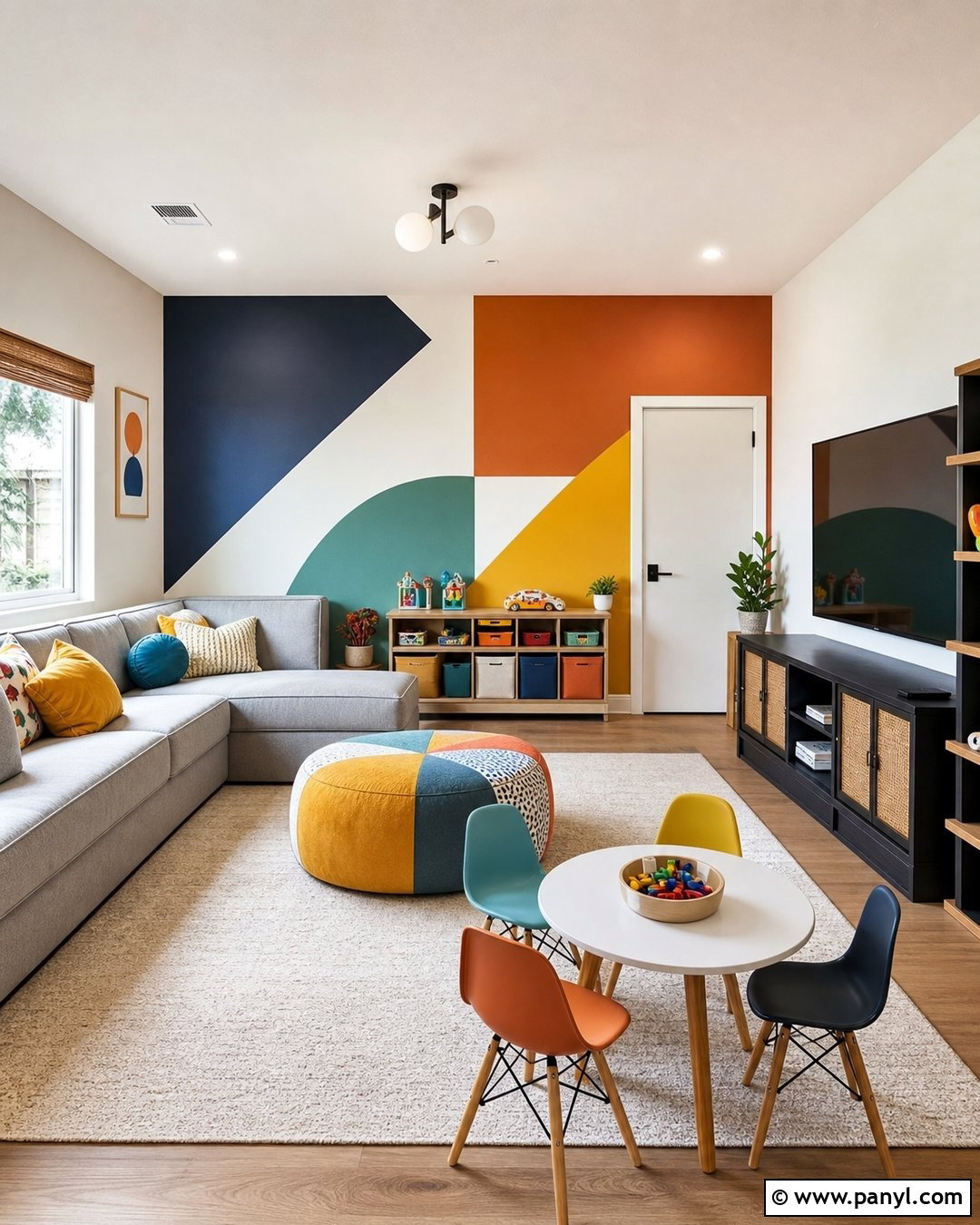
Color-blocked walls turn the game room itself into a playful design feature. Start with warm white walls, then paint large geometric sections in navy blue, muted orange, teal, and mustard yellow. Keep the shapes broad and limited so the background looks intentional rather than chaotic. Use a simple gray sectional, pale oak storage units, and a cream rug to give the colorful walls room to stand out. A white activity table with mixed-color chairs can sit near the center, while a black media console anchors the screen wall. Repeat only two wall colors in pillows and storage bins. Choose clean white lighting and minimal artwork because the paint treatment already supplies visual interest. This complete design feels lively, contemporary, and well suited to a family entertainment room.
Conclusion:
The 20 Best Wall Color For Game Room Ideas show how paint can establish the character of an entire entertainment space. Dark navy, charcoal, green, black, and burgundy create immersive rooms, while warm white, greige, sage, and slate blue keep smaller spaces open and flexible. Brighter choices such as mustard, terracotta, cobalt, and color blocking bring extra energy when balanced with neutral furniture. Before committing, view several painted samples beside your flooring, seating, and electronics during daytime and evening hours. Then choose a finish and coordinated trim color that support the complete design. With thoughtful lighting, organized storage, comfortable furniture, and a balanced palette, your game room can feel fun, polished, and practical for years.

Related Ideas and Inspiration:
Leave a Reply