
A fresh coat of paint can do far more than change a room’s background color. The right pattern can define furniture zones, improve awkward proportions, introduce personality, and replace expensive wall decor. These **20 fun wall painting ideas** include crisp geometric patterns, cheerful murals, modern color blocking, and softer organic details. Each look is designed as a complete room concept, with practical colors, furnishings, and finishing touches that work together. Before starting, repair imperfections, test colors in the room’s natural light, and plan every line or shape on paper. Painted stripes and geometric designs also benefit from careful measuring and low-stick painter’s tape for clean edges. () Whether you prefer subtle details or energetic color, explore these 20 fun wall painting ideas.
1. Geometric Wall Painting
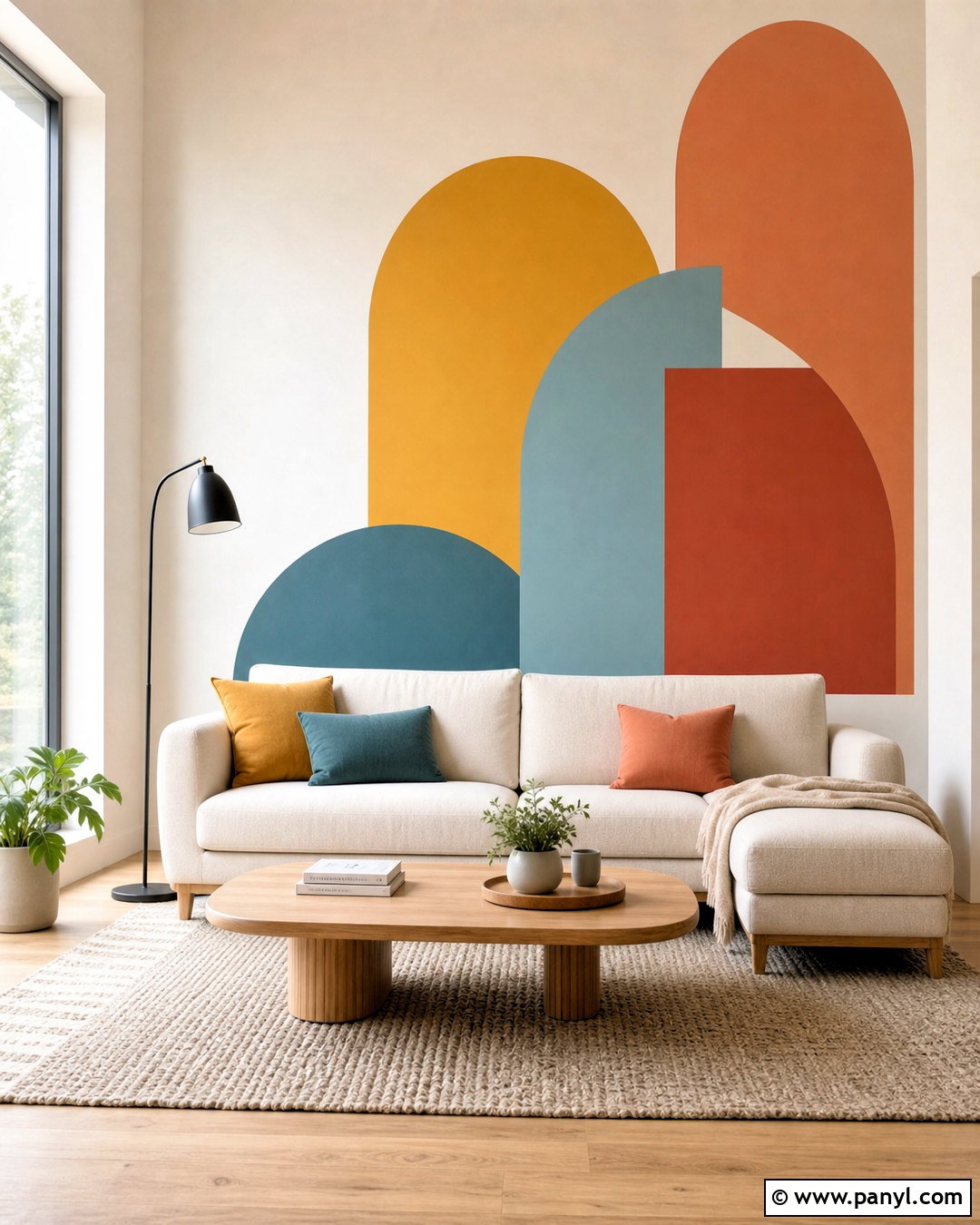
Turn a plain living room into a playful modern space with an overlapping geometric mural. Begin with a warm white base, then add large triangles, semicircles, and rectangles in mustard yellow, dusty blue, terracotta, and muted coral. Keep the shapes concentrated behind a low-profile sofa so the painting visually anchors the seating area. A light oak coffee table, cream upholstery, and simple black floor lamp will balance the strong colors. Repeat one or two mural shades in the throw pillows and rug, but leave the remaining decor neutral. Sketch the arrangement first, then use a level and painter’s tape to create clean boundaries. Painting the lightest shapes before the darkest ones makes overlapping areas easier to manage and keeps the finished composition crisp.
2. Rainbow Arch Wall Painting
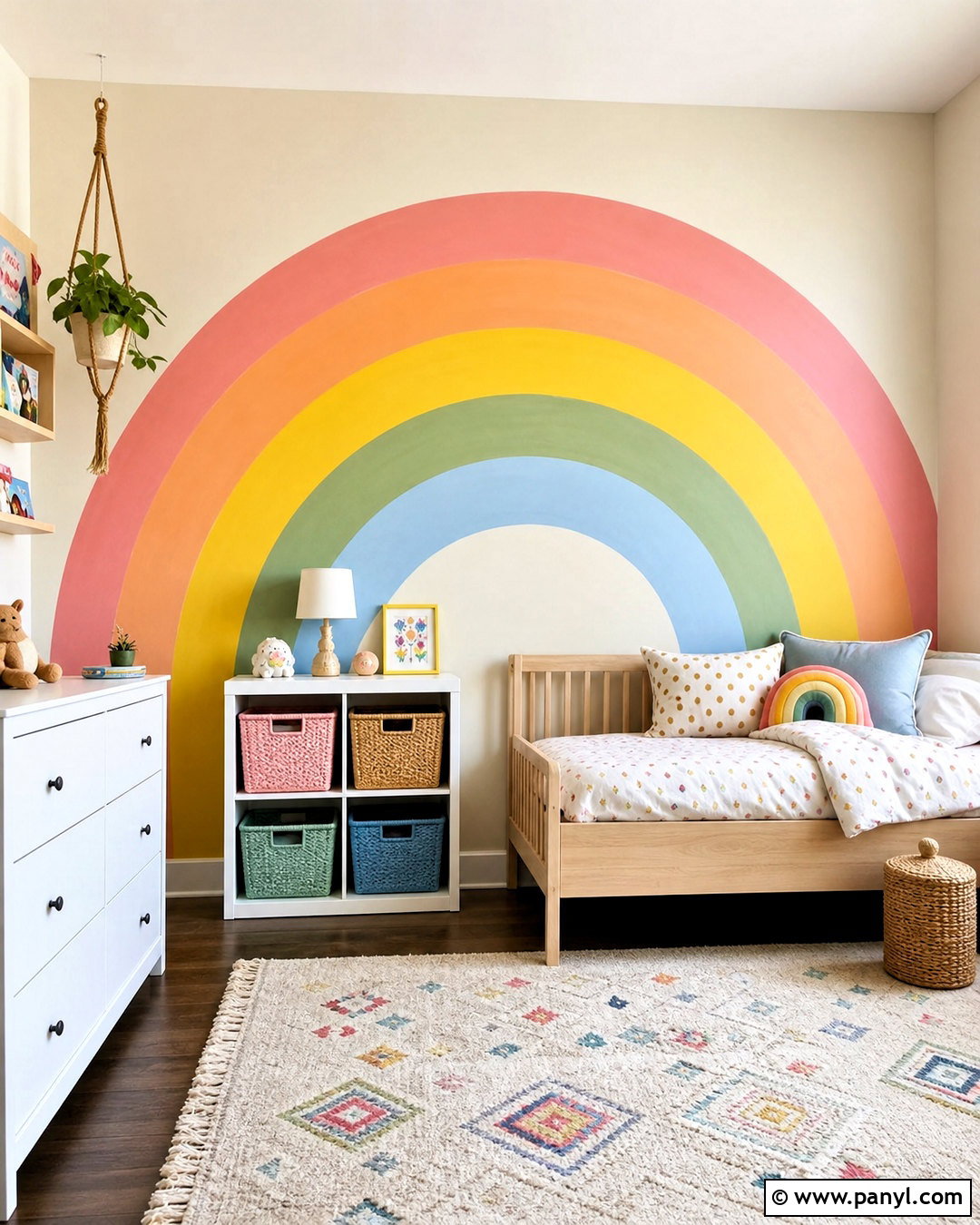
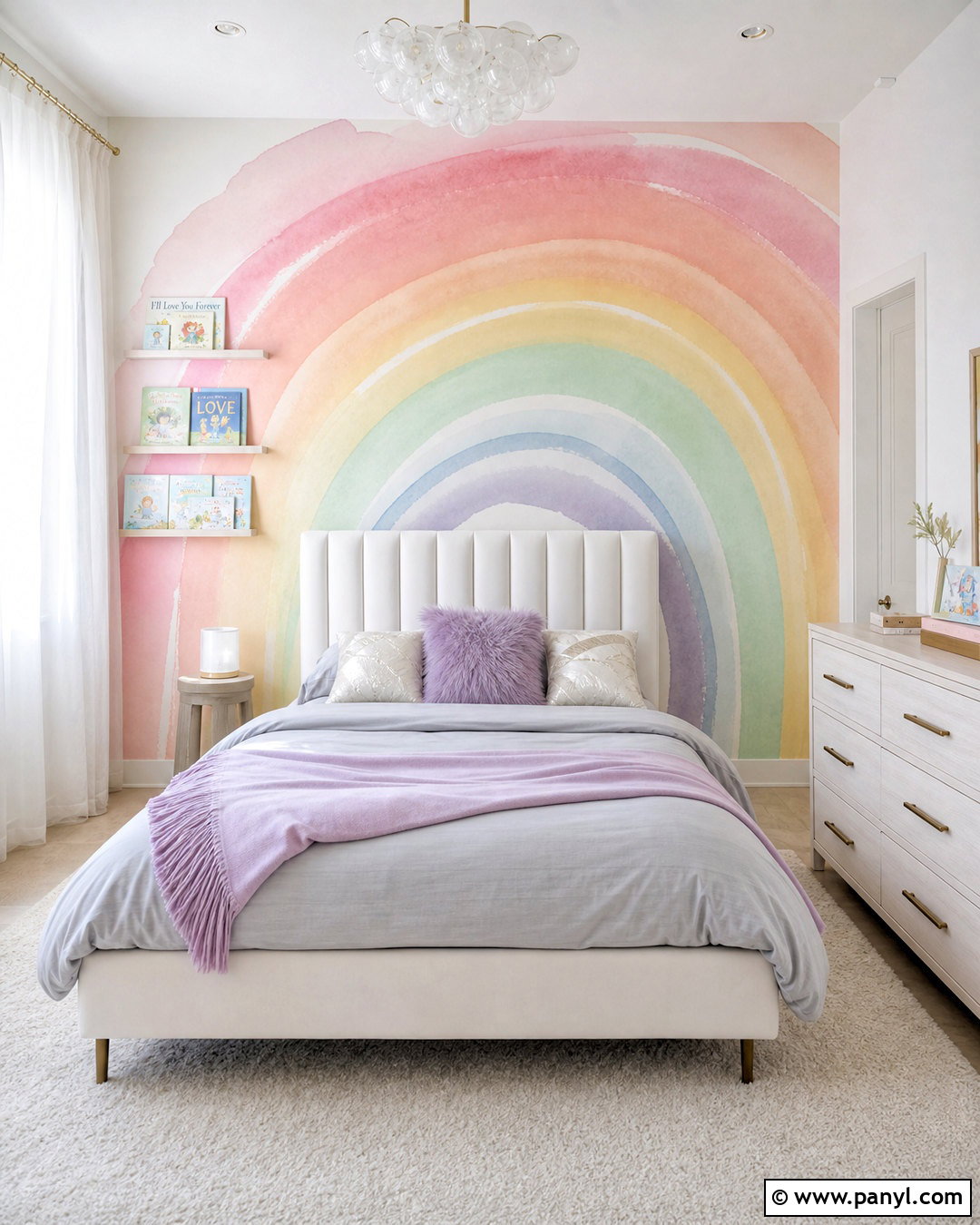
A wide rainbow arch creates an upbeat focal point without covering every inch of the wall. Paint the background soft cream, then center the arch behind a child’s bed, reading bench, or playroom storage unit. Use broad bands of warm pink, peach, golden yellow, sage green, and sky blue rather than intensely saturated primary colors. The softened palette feels cheerful while remaining easy to coordinate with changing furniture. Complete the room with white or pale wood storage, a washable cream rug, colorful baskets, and bedding that repeats two arch colors. Keep the arch slightly wider than the furniture beneath it to create a framed effect. For smooth curves, tie a pencil to a string anchored at the arch’s center, draw each outline, and carefully fill the bands with an angled brush.
3. Scalloped Wall Painting
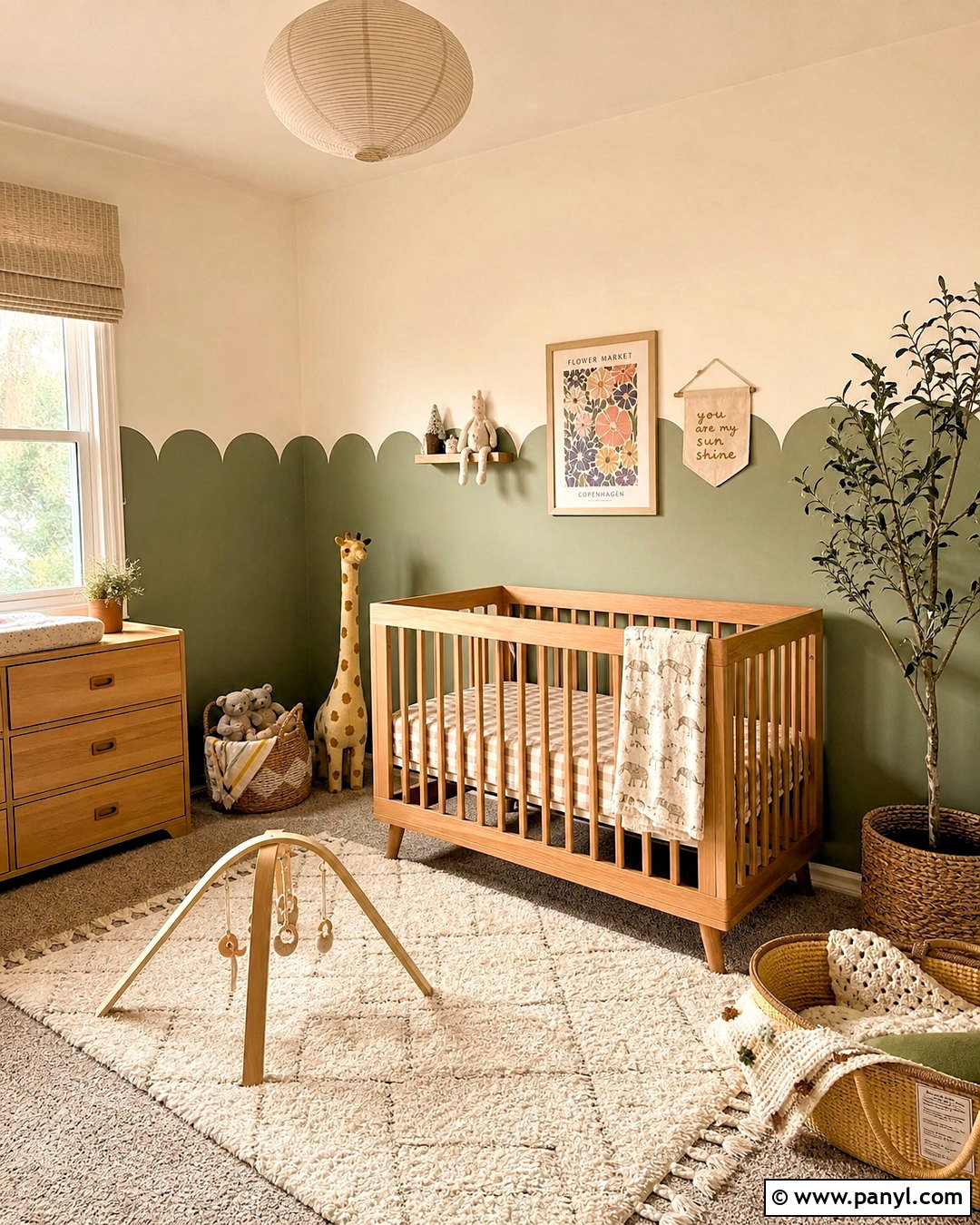
Scalloped paint gives a bedroom or nursery a charming finish that feels more interesting than a standard two-tone wall. Cover the lower third in warm sage green, dusty rose, or soft blue, then create evenly spaced semicircles along the top edge. Leave the upper wall creamy white to keep the room bright. Position a natural wood bed or crib against the painted section, adding gingham bedding, woven baskets, and a simple wool rug for a cozy look. A round plate or cardboard template can help you repeat the curve consistently across the wall. Mark a straight guideline before tracing each scallop so the pattern stays level. Paint the lower section with a roller first, then finish the curved edges slowly with a small, high-quality brush for a smooth outline.
4. Wavy Stripe Wall Painting
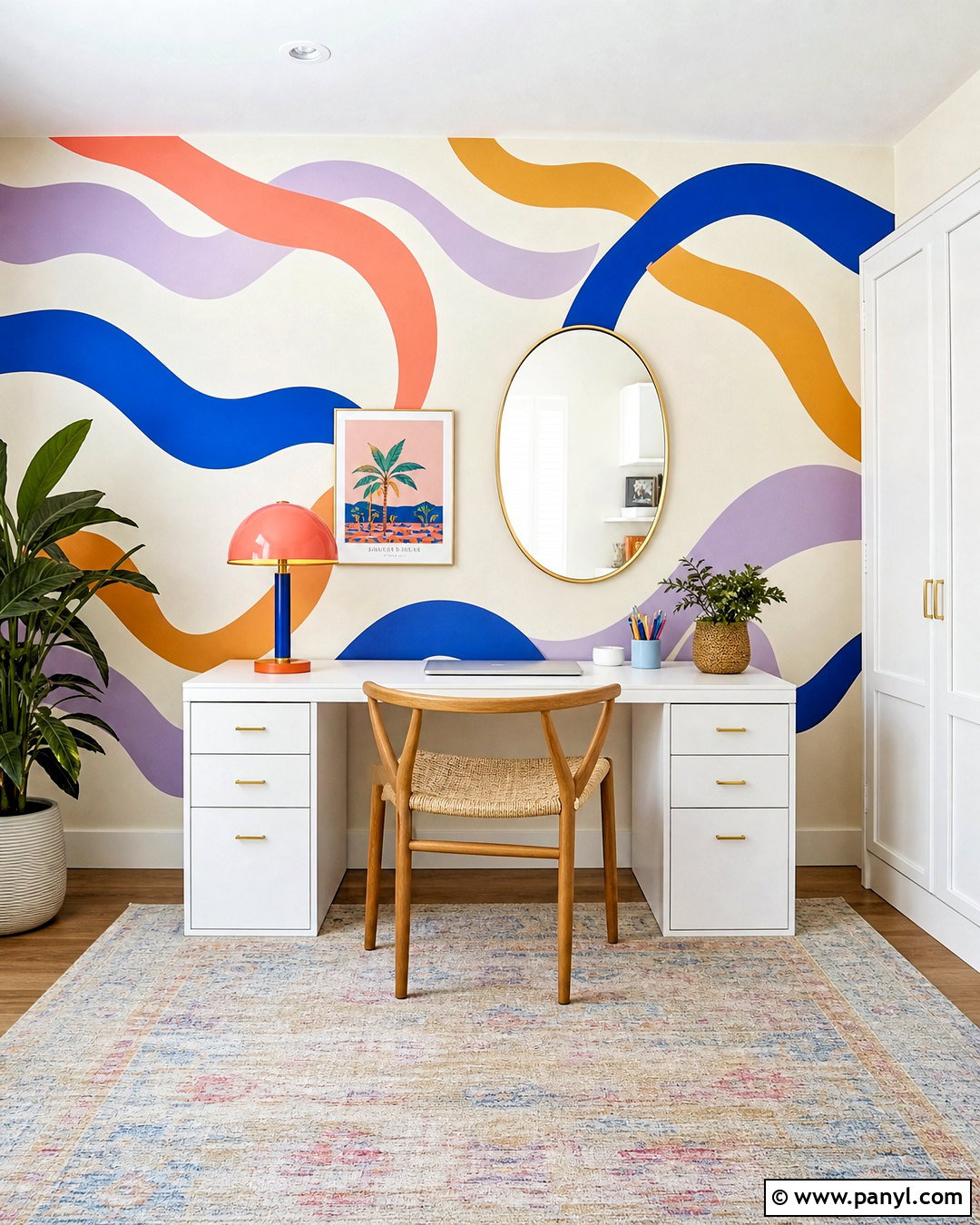
Flowing stripes bring movement to a home office, hallway, or creative studio while avoiding the strict appearance of traditional bands. Start with an off-white wall and paint three or four horizontal waves in cobalt blue, coral, golden yellow, and soft lavender. Let the lines travel freely across the wall, varying their width slightly for a hand-painted character. In an office, pair the pattern with a white desk, an oak chair, a colorful desk lamp, and closed storage that keeps visual clutter under control. A simple line drawing or rounded mirror can sit within an open area between the waves. Lightly sketch the paths in pencil before painting. Use a small roller for wider sections and an angled brush for edges, accepting gentle imperfections as part of the relaxed, artistic design.
5. Mountain Mural Wall Painting
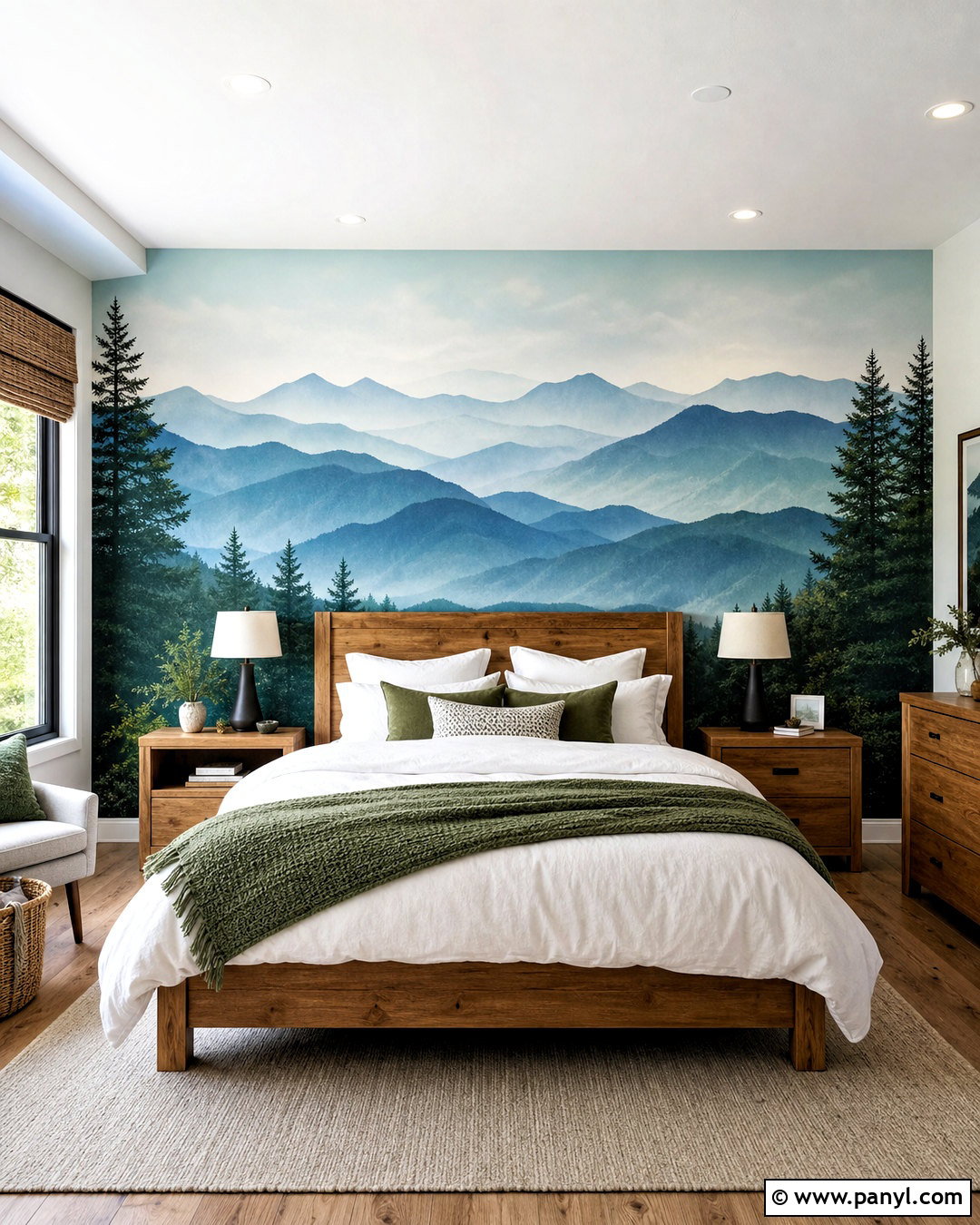
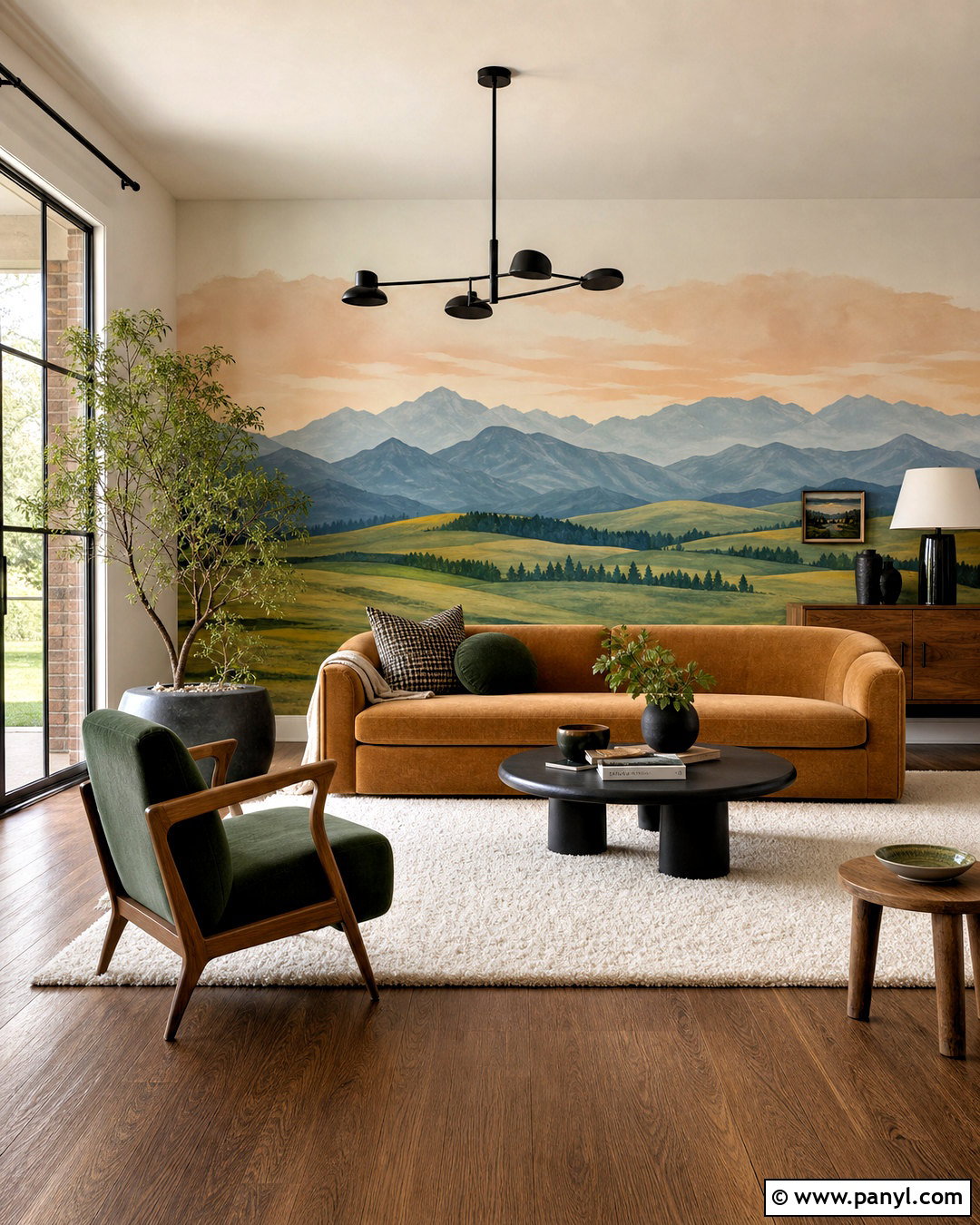
Create an imaginative bedroom with a layered mountain mural painted in calm, nature-inspired colors. Use pale blue-gray on the upper wall to suggest open sky, then build overlapping mountain ranges in misty blue, muted teal, forest green, and deep navy. Keep the lightest mountains toward the top and place darker shapes near the base to create depth. A simple oak bed, white bedding, a moss green blanket, and warm wood nightstands will make the mural feel connected to the entire room. Add a few star-shaped accessories or woodland prints, but avoid overcrowding the scenic wall. Mountain peaks can be crisp and geometric or softly irregular. Use painter’s tape for sharp ridgelines, painting the distant layer first and allowing it to dry before adding each darker foreground section.
6. Checkerboard Wall Painting
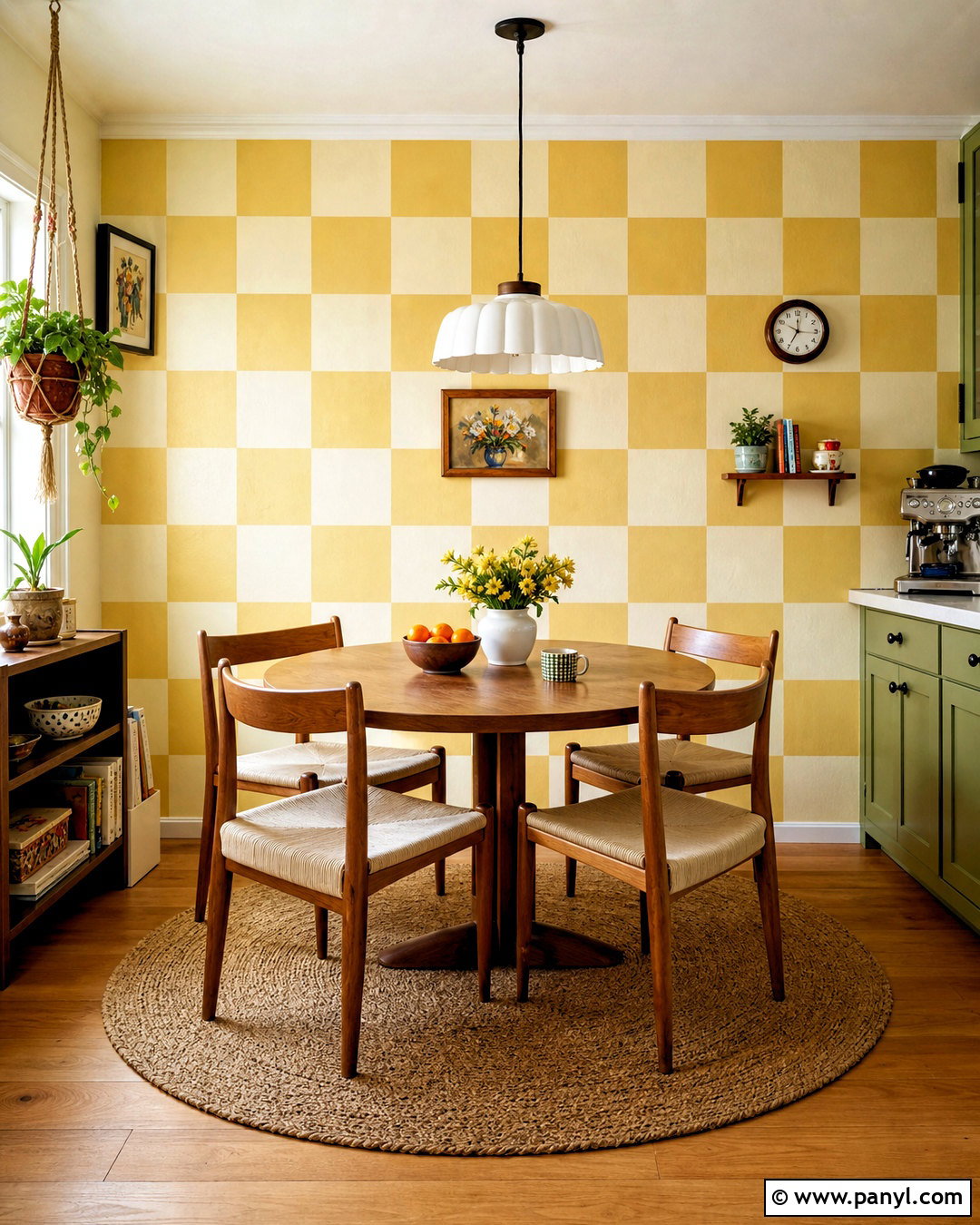
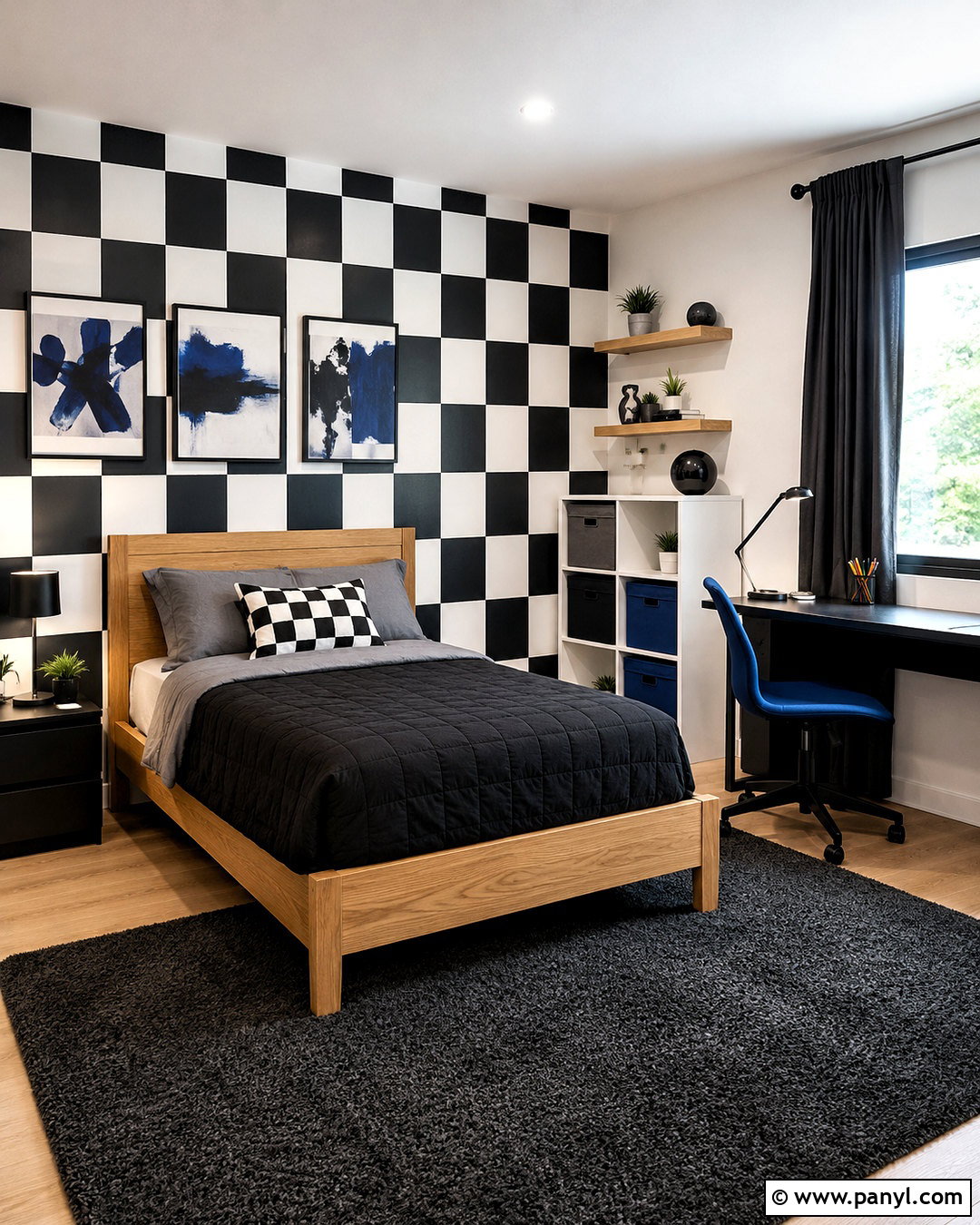
A painted checkerboard gives a breakfast nook, playroom, or small entry a lively retro personality. Choose a two-color combination such as cream and butter yellow, blush and burgundy, or pale blue and deep teal. Cover one feature wall with generously sized squares rather than a tiny pattern, which can feel visually busy. Pair the wall with a round wood table, simple chairs, a solid-color rug, and one sculptural pendant light. Keep nearby walls neutral so the checks remain the clear focal point. Measure the wall carefully and divide it into equal rows and columns before taping. Paint the entire wall in the lighter shade first, then add alternating dark squares. Seal tape edges with a thin layer of the base color before applying the second shade to reduce paint bleeding.
7. Painted Headboard Wall
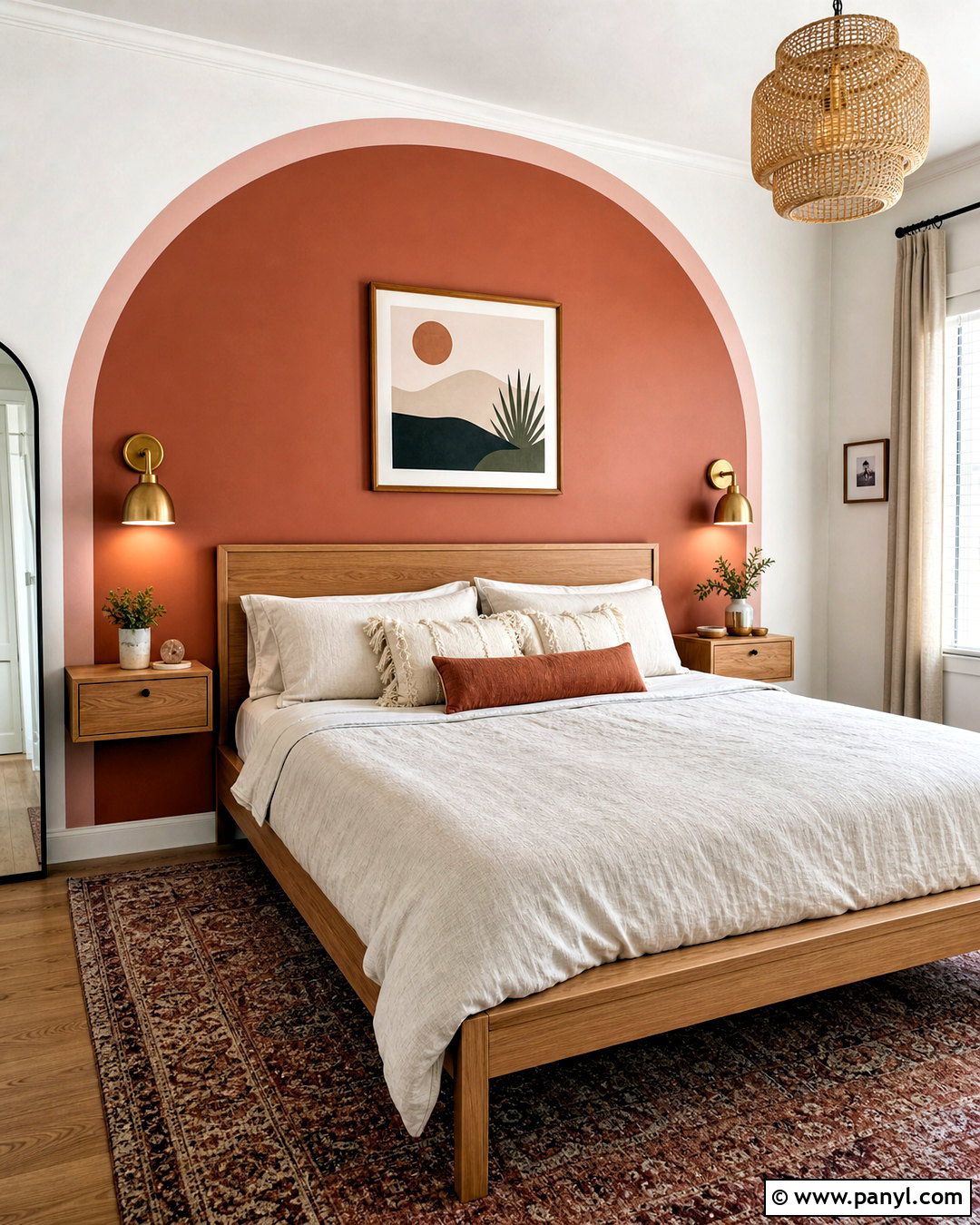
A painted headboard provides color and structure without taking up floor space, making it especially useful in a small bedroom. Paint a large rounded rectangle or tall arch behind the bed in deep teal, terracotta, muted plum, or sunny ochre. Extend the shape several inches beyond both sides of the mattress and raise it high enough to frame pillows and bedside lighting. Complete the look with a simple platform bed, white or oatmeal bedding, matching sconces, and compact floating nightstands. A narrow painted border in a lighter coordinating shade can add another layer without making the design complicated. Center the bed before marking the shape, and use a string-and-pencil method for an even curved top. The result should read as intentional architecture rather than a random patch of color.
8. Vertical Stripe Wall Painting
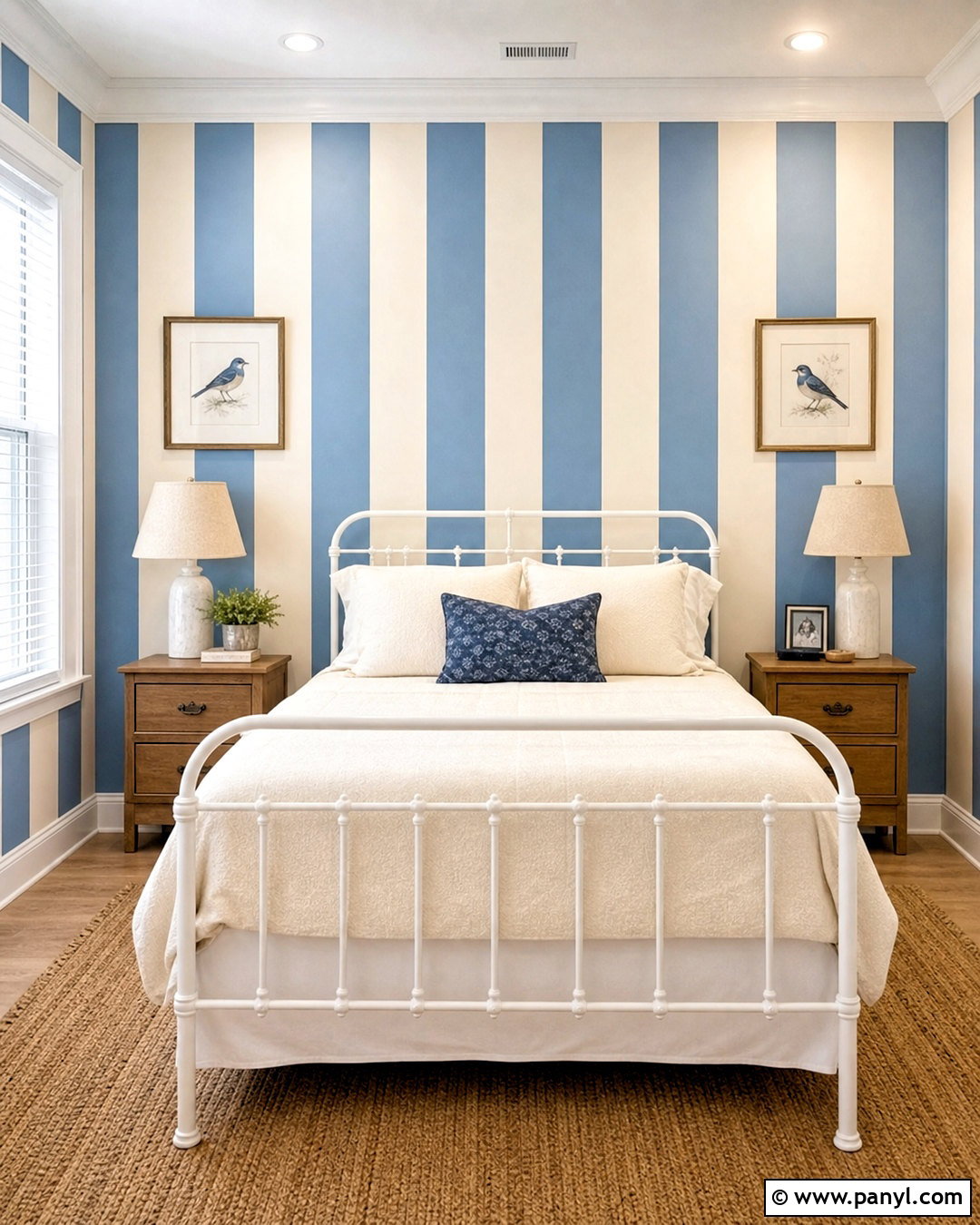
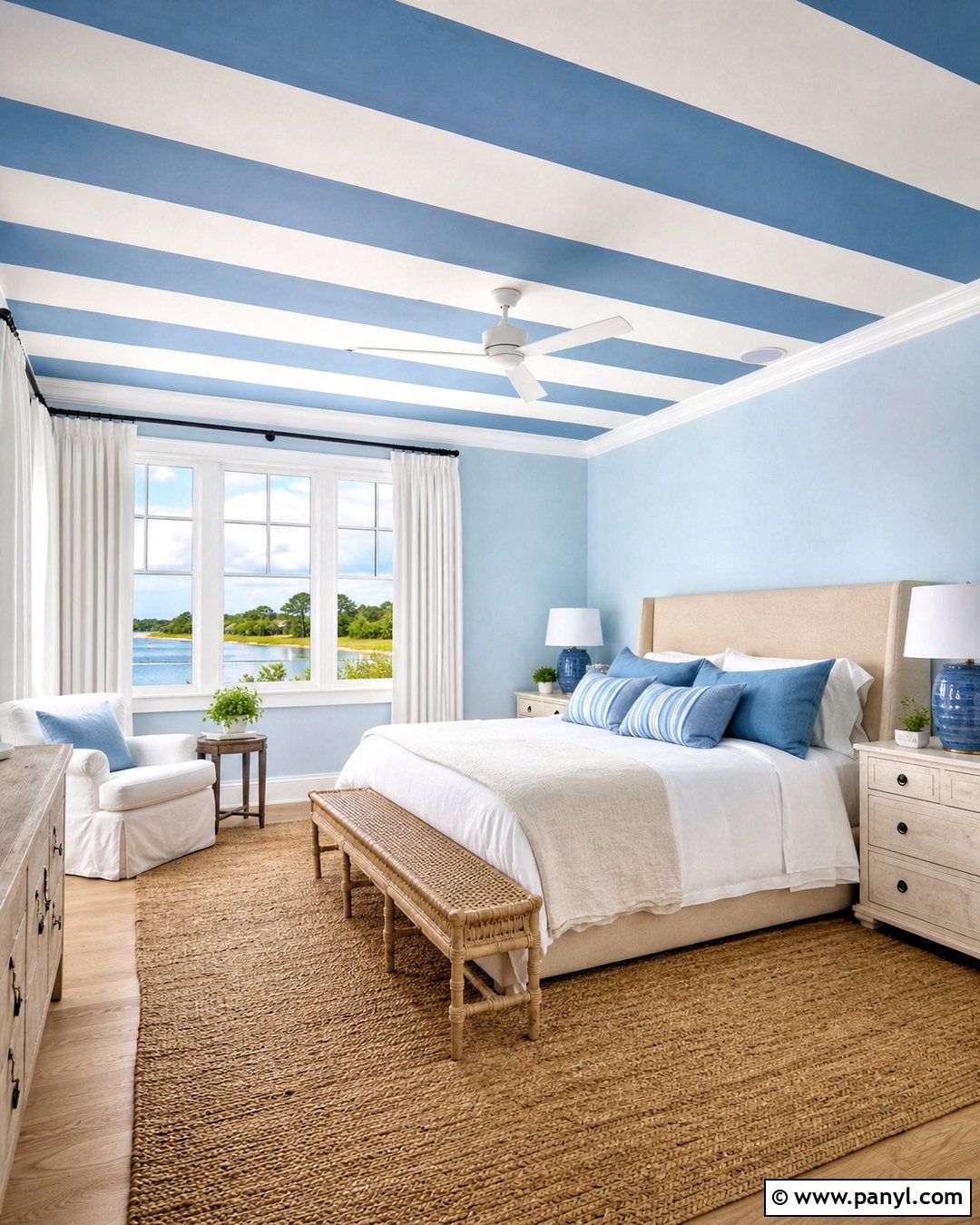
Vertical stripes can add height and energy to a compact bedroom, powder room, or narrow hallway. Paint alternating bands of warm white and medium blue, dusty green, or soft coral from baseboard to ceiling. Choose stripes between four and twelve inches wide, then repeat them evenly across the wall for a polished result. () In a bedroom, combine the pattern with a white metal bed, solid bedding, a natural jute rug, and wood nightstands. Limit other patterns so the walls remain easy to appreciate. A few framed prints with wide white mats will break up the lines without competing with them. Measure from the wall’s center outward so partial stripes at the corners appear balanced. A laser level is helpful for keeping every taped line perfectly straight.
9. Horizontal Stripe Wall Painting
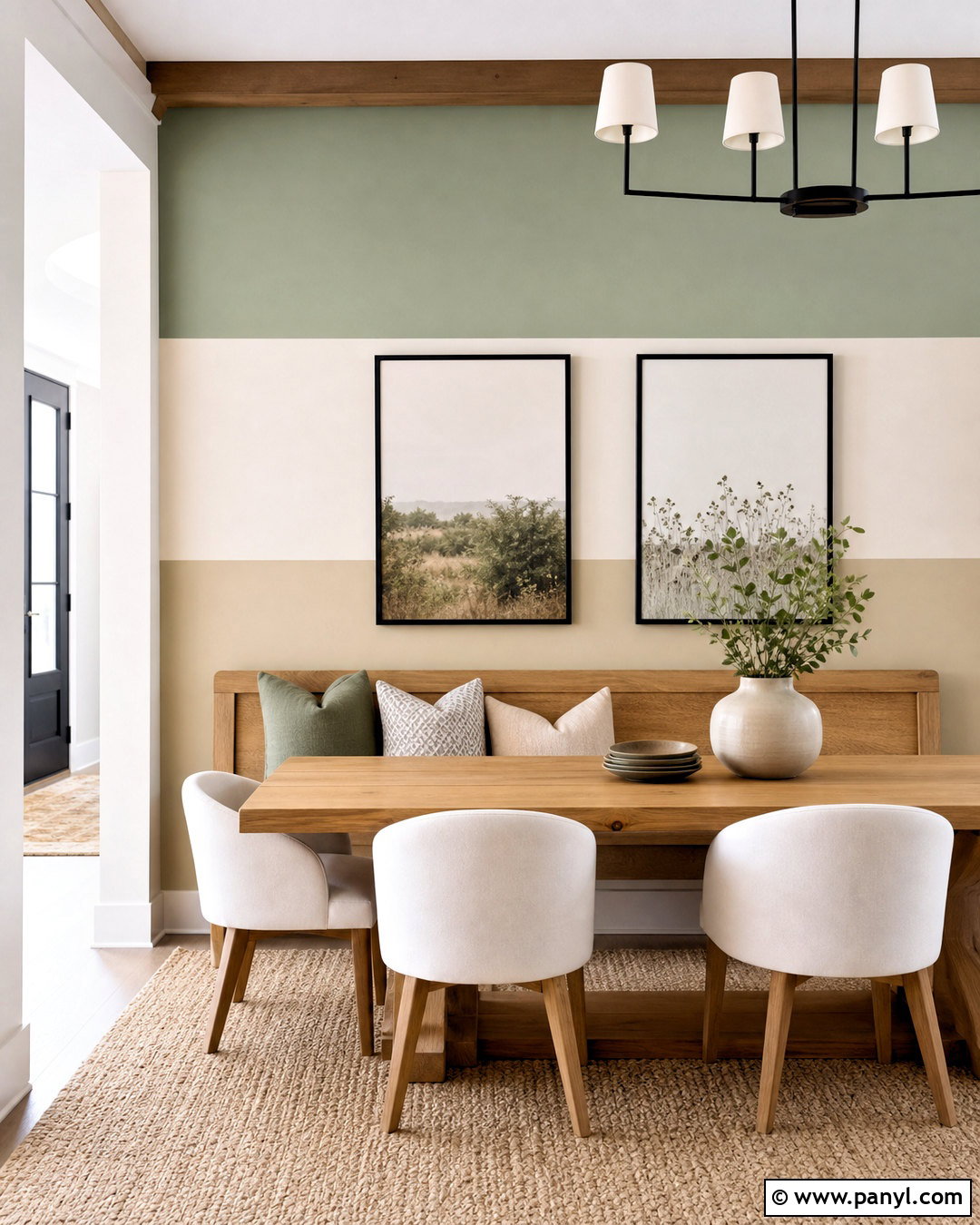
Wide horizontal stripes create a bold yet orderly wall treatment for a living room, dining area, or long hallway. Begin with a pale neutral base, then alternate broad bands of muted green, cream, and warm beige. Equal-width stripes feel structured, while varied bands create a more contemporary composition. Use the pattern behind a slim console, low sofa, or dining bench to strengthen the wall’s horizontal emphasis. Add furniture with simple silhouettes, solid upholstery, and natural wood finishes. Black-framed artwork and a few ceramic accessories can supply definition without overwhelming the paint. Before taping, divide the wall height by the desired number of stripes and adjust the measurements so narrow bands do not appear near the ceiling. Paint lighter colors first and remove the tape carefully after the final coat.
10. Color Block Wall Painting
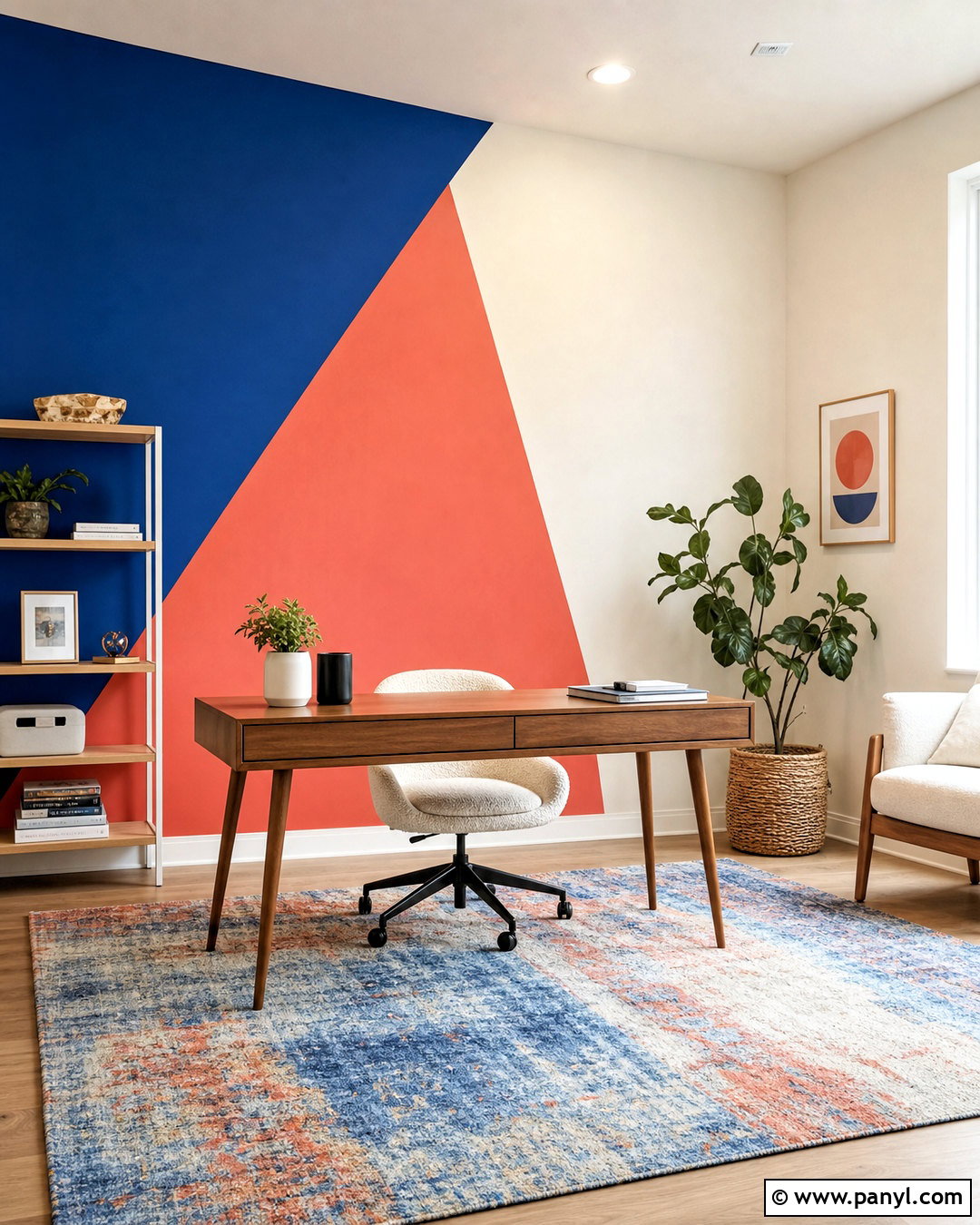
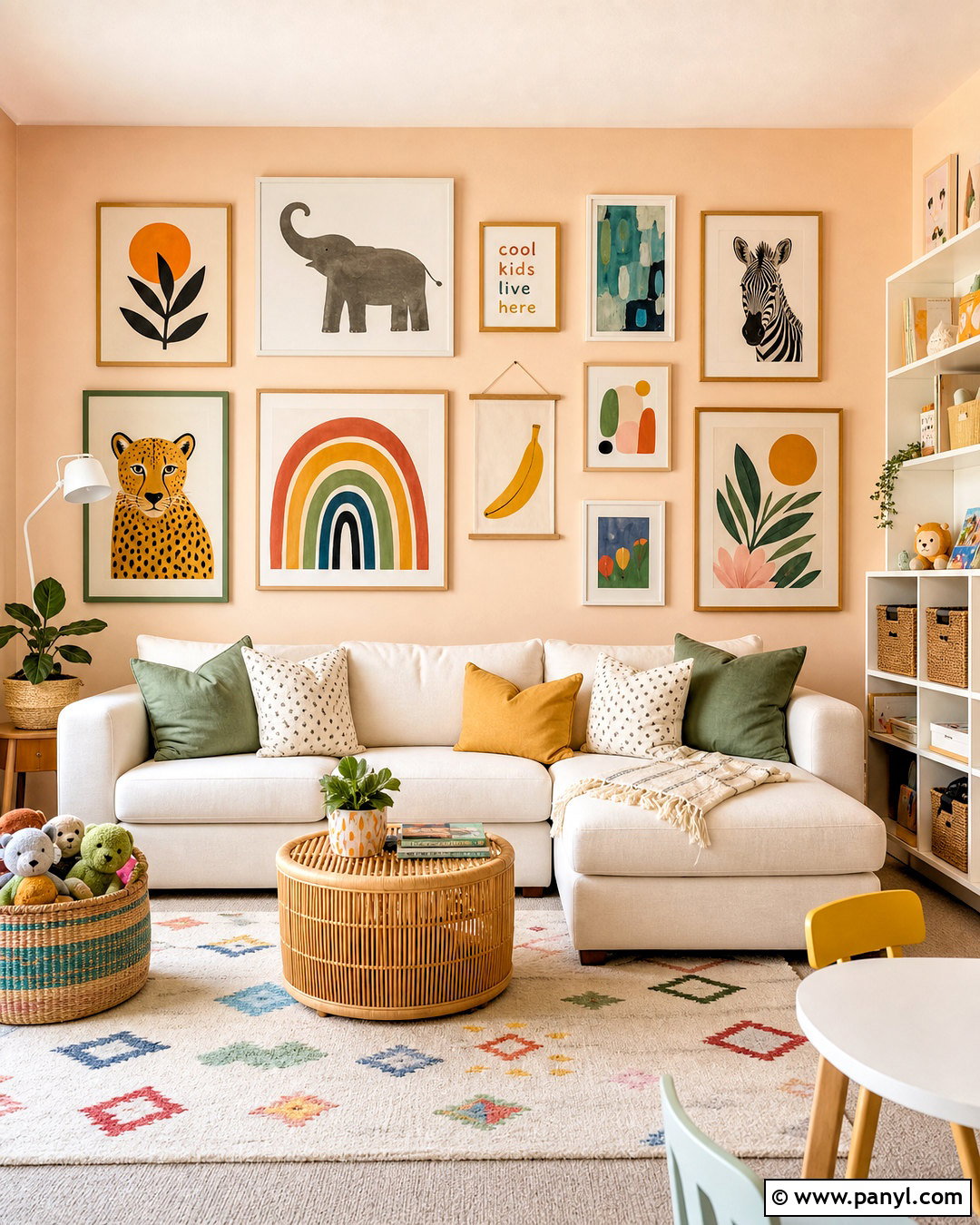
Color blocking can organize an open room while giving it a graphic, custom-designed appearance. Paint a large floor-to-ceiling section behind a desk, reading chair, or dining table in a saturated color such as cobalt blue or emerald green. Add an adjoining block in mustard yellow, coral, or pale pink, allowing the shapes to meet at a crisp vertical or diagonal line. Keep the surrounding walls warm white so the composition has breathing room. Match each color zone with purposeful furniture, such as an oak desk in the blue section and a boucle chair in the pink section. A rug that contains both colors will unify the layout. Test the arrangement on paper first because block size affects the room’s balance. Painter’s tape and a level will produce the cleanest transitions.
11. Polka Dot Wall Painting
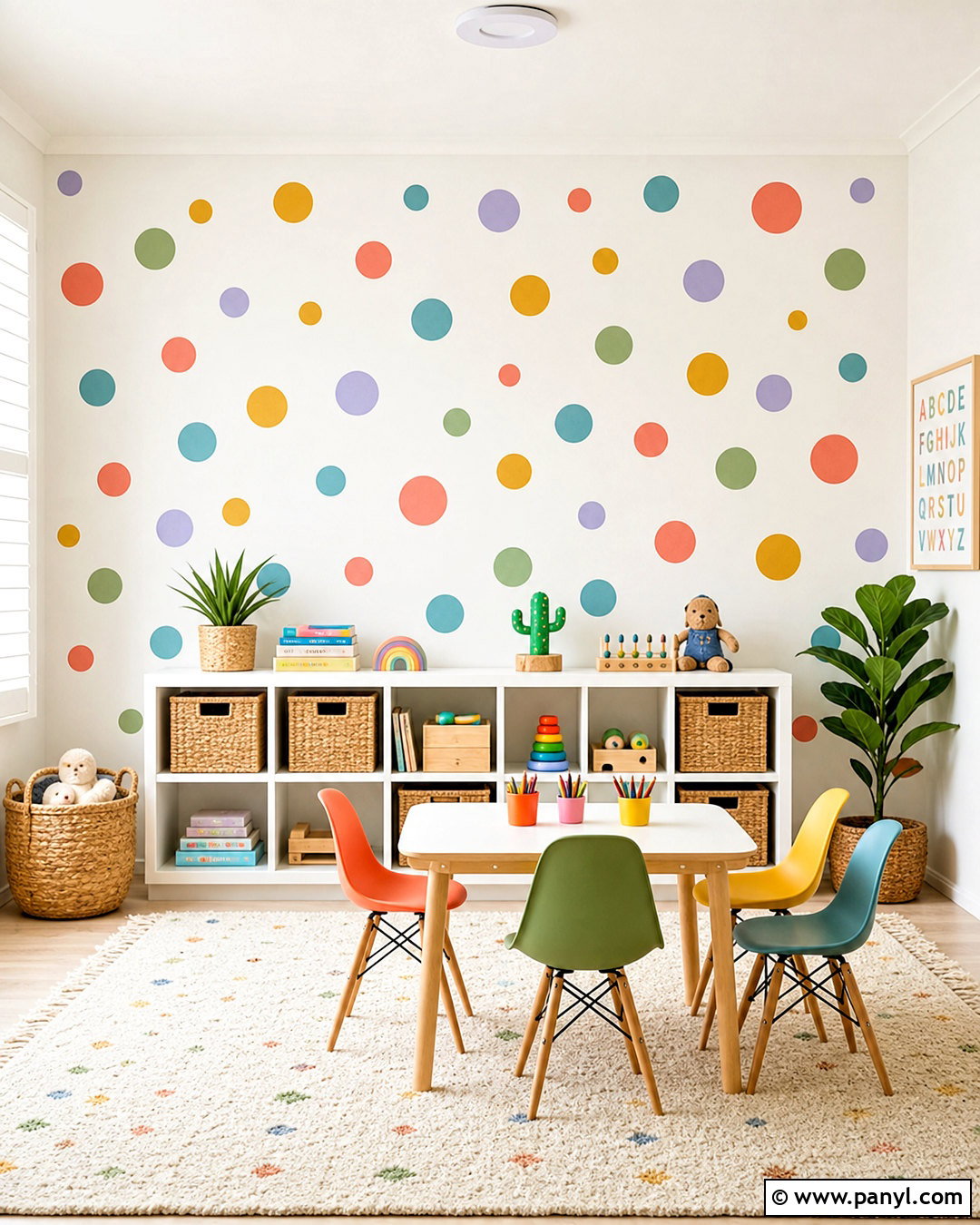
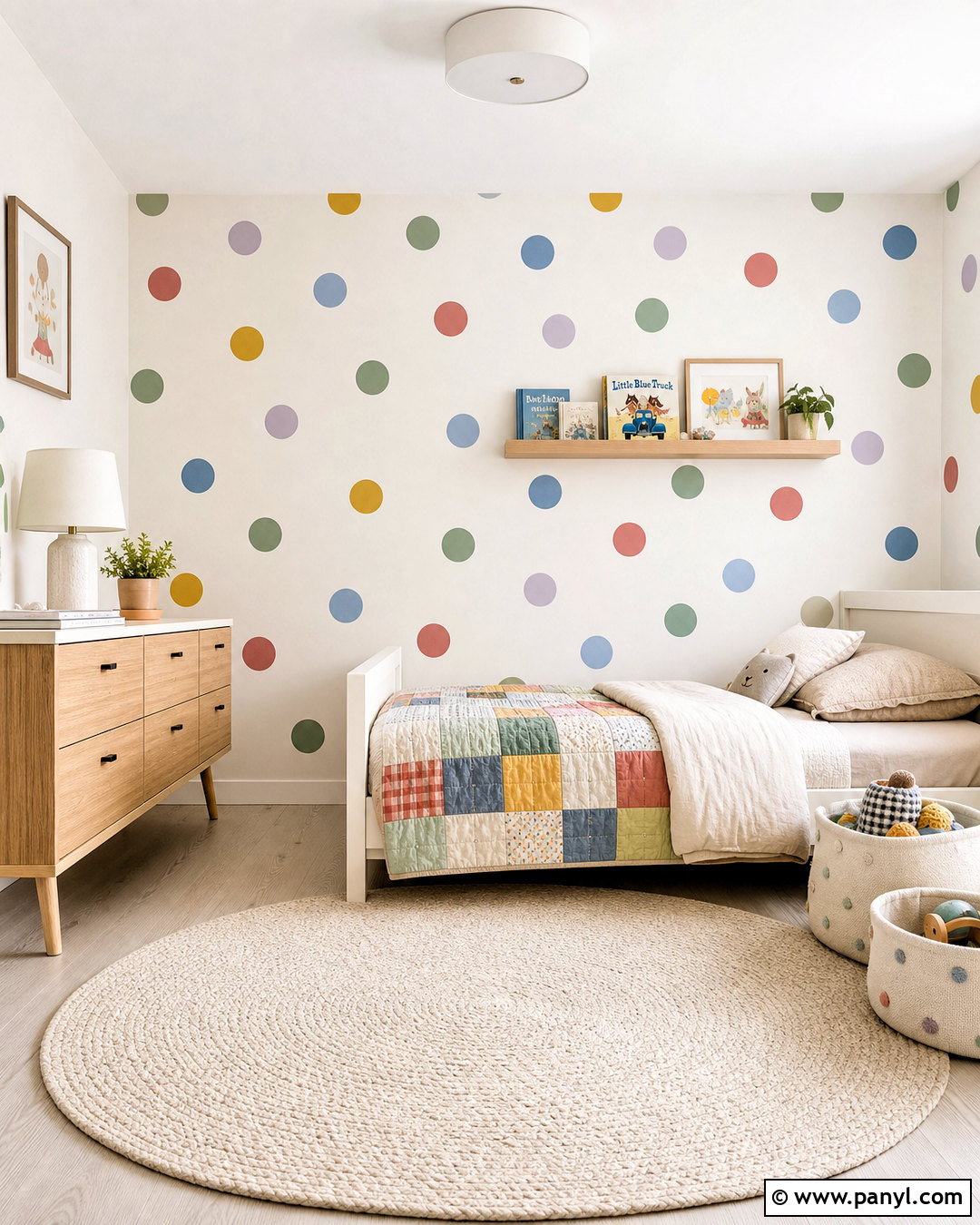
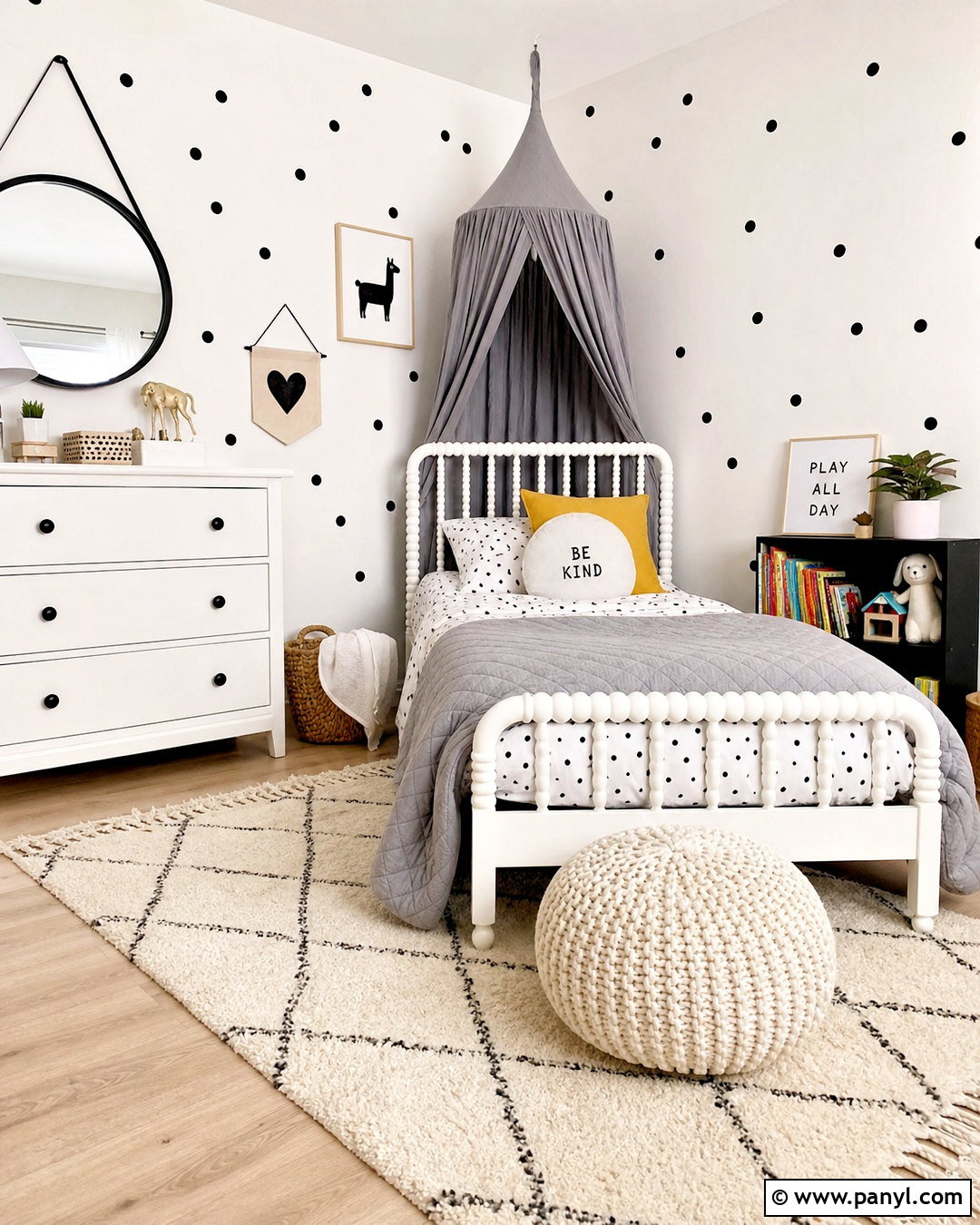
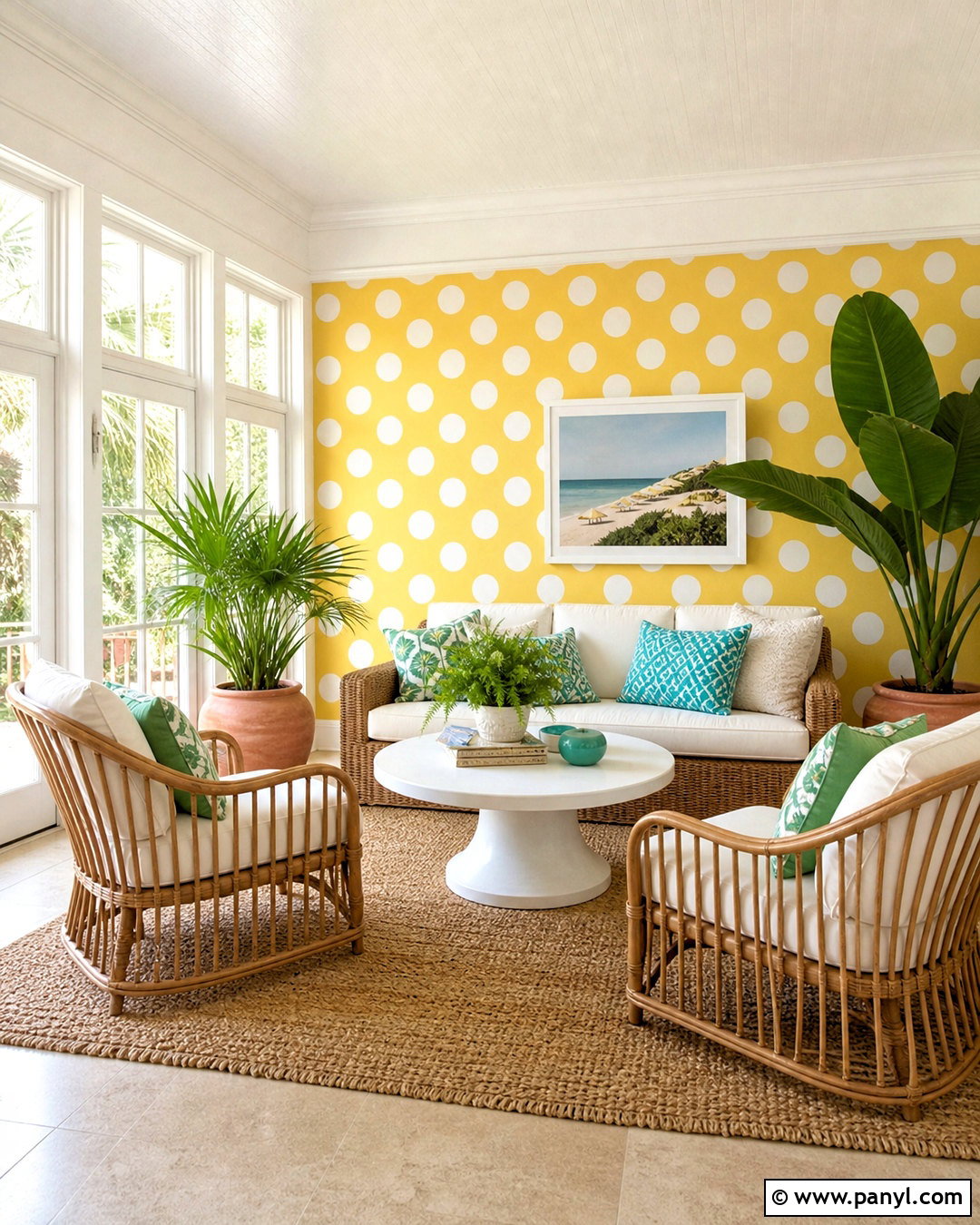
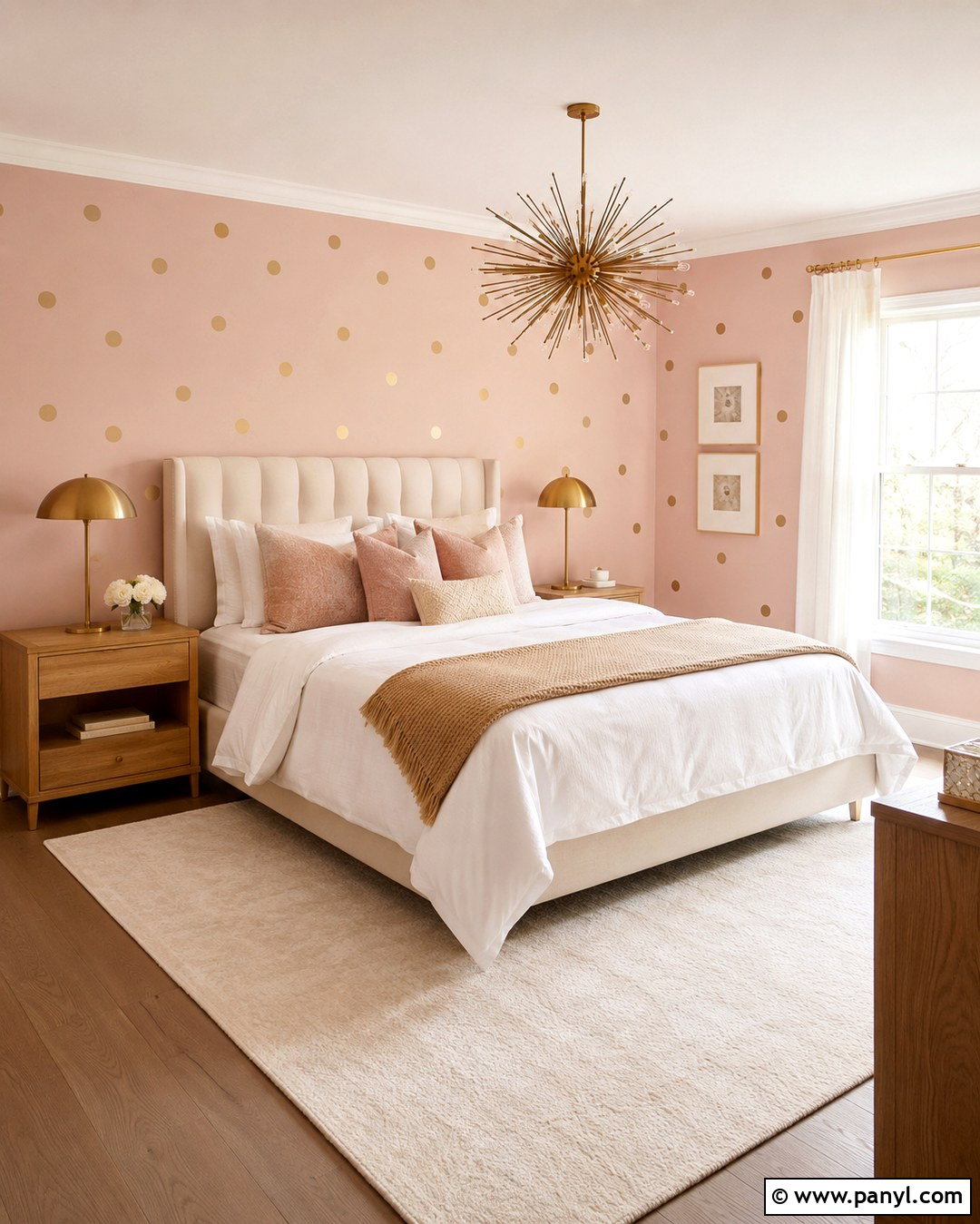
Large painted polka dots can make a playroom or child’s bedroom feel cheerful without requiring a complicated mural. Use a soft white, pale peach, or sky-blue base, then scatter dots in coral, mustard, teal, lavender, and warm green. Vary the sizes slightly while keeping enough empty space between them to prevent the design from feeling crowded. Arrange white cube storage, a low craft table, colorful chairs, and a washable rug against the wall. Repeat the dot colors through baskets and cushions for a connected room scheme. Trace circular templates made from cardboard, plates, or removable stencils, then fill each shape using a small foam roller. For a more orderly look, place dots in evenly measured rows. A random arrangement works better when you want the room to feel relaxed and energetic.
12. Sunburst Wall Painting
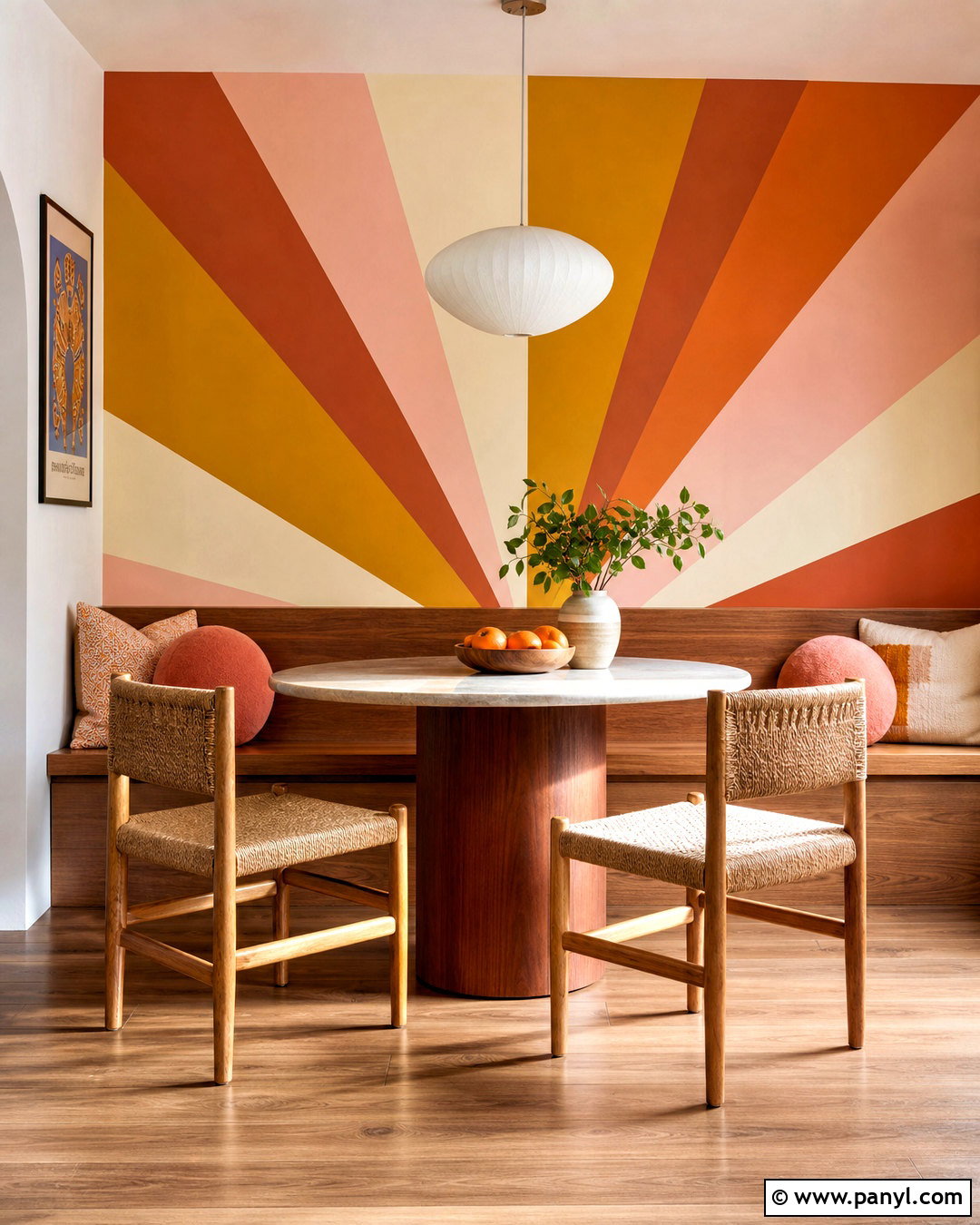
A sunburst mural adds instant energy behind a dining nook, desk, or low bedroom headboard. Select a center point close to the floor or behind the main piece of furniture, then extend broad triangular rays outward toward the ceiling and side walls. Use golden yellow, burnt orange, blush pink, terracotta, and cream for a warm retro palette. Finish the room with walnut furniture, woven textures, rounded accessories, and a simple pendant light that complements the mural’s circular movement. Keep artwork minimal because the painted rays already provide a strong focal point. Mark each ray lightly with a pencil and long ruler, then tape the outlines. Paint nonadjacent sections first so wet edges do not meet. Slight differences in ray width will make the composition feel lively rather than mechanically perfect.
13. Abstract Mural Wall Painting
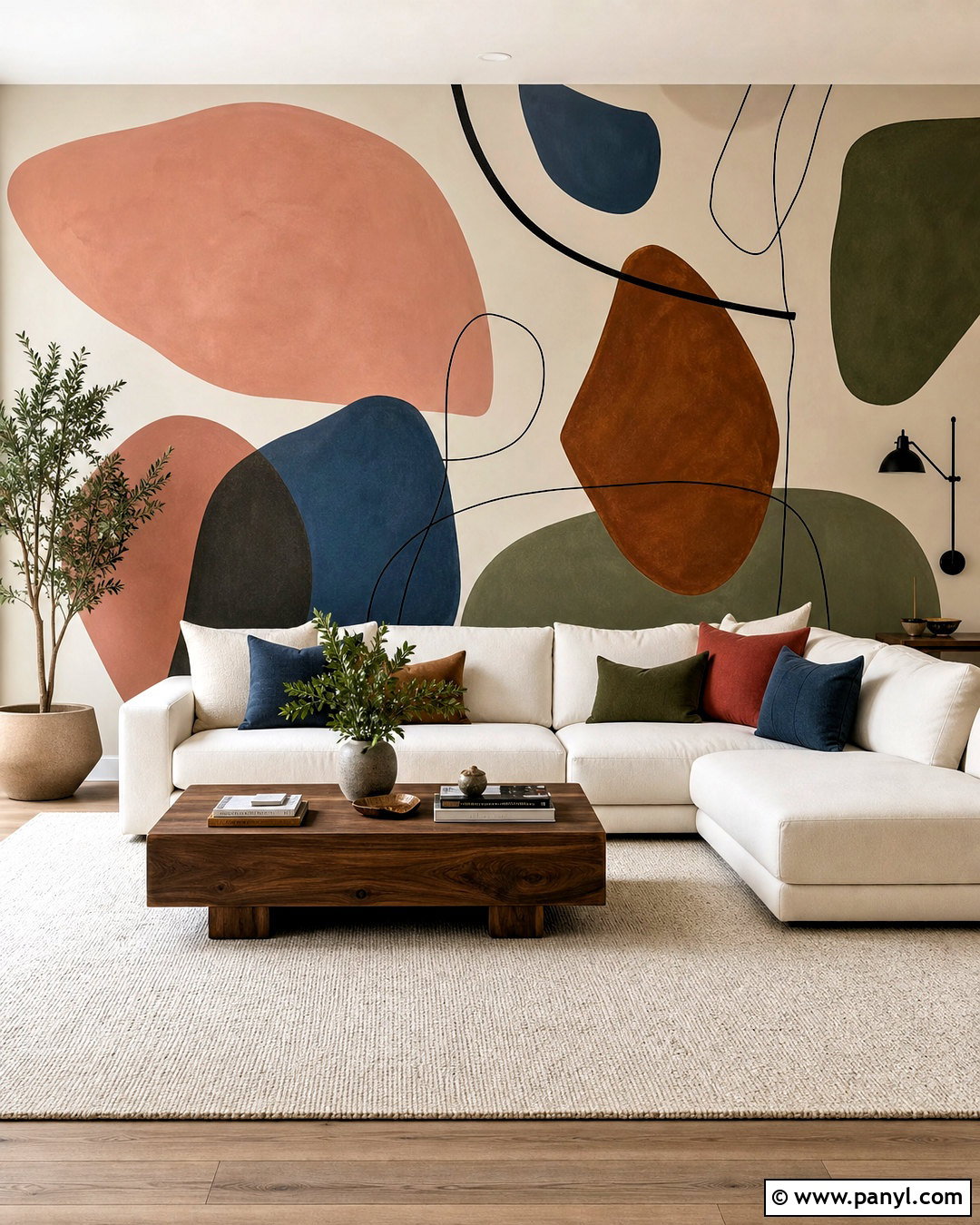
An abstract mural can transform a living room into a personal gallery without requiring advanced drawing skills. Paint a warm white base, then layer oversized organic forms in dusty pink, rust, olive green, charcoal, and muted blue. Combine rounded shapes with a few thin black lines to create contrast and visual rhythm. Position the design behind a neutral sofa, using a cream rug, walnut coffee table, and solid pillows that repeat selected mural colors. Leave some base color visible between the forms so the wall does not become visually heavy. Plan the composition with paper cutouts or a digital sketch before painting. Begin with the largest pale shapes, then add smaller dark forms and final line details. Freehand edges can remain slightly imperfect, giving the complete room a relaxed, original character.
14. Half Painted Wall
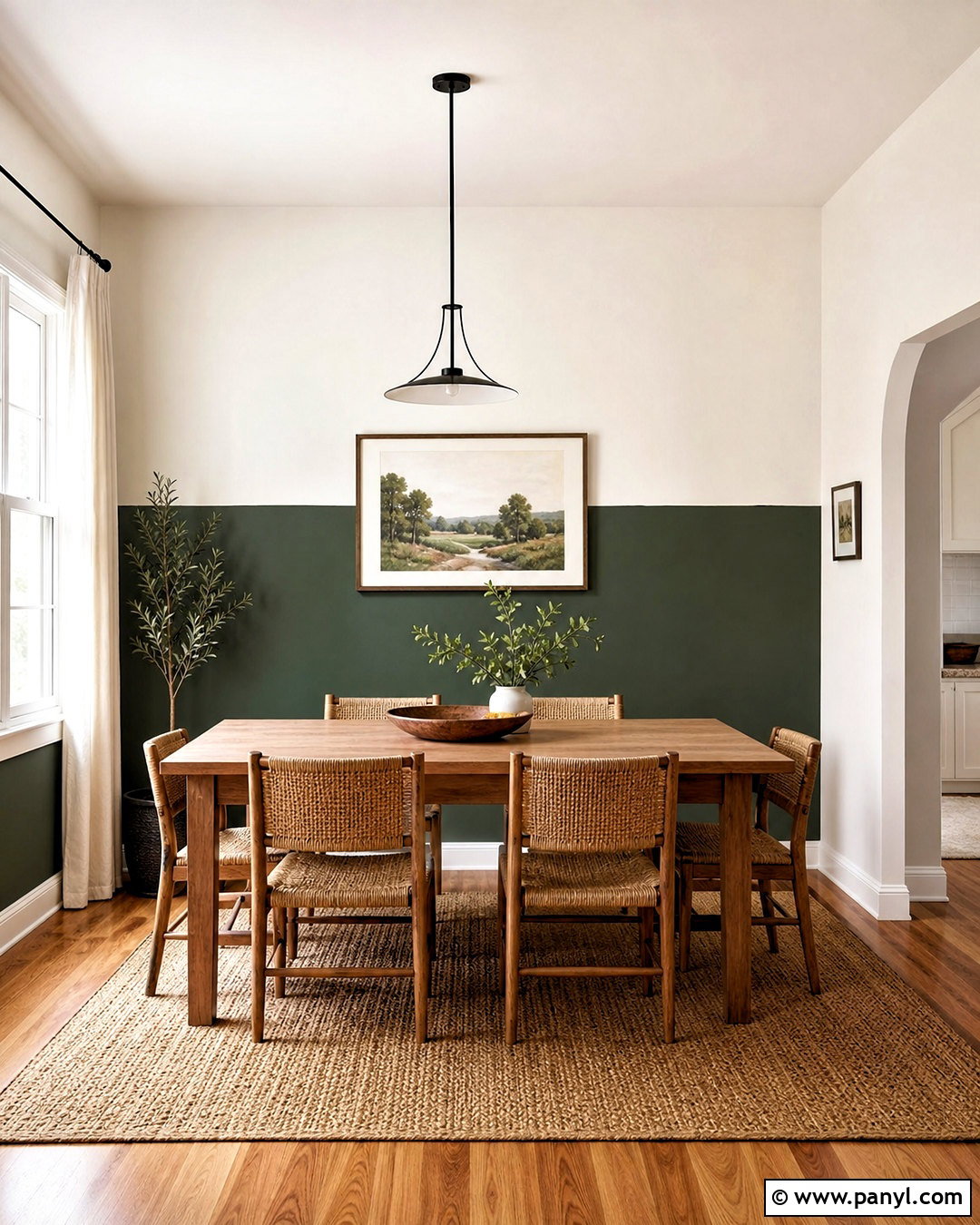
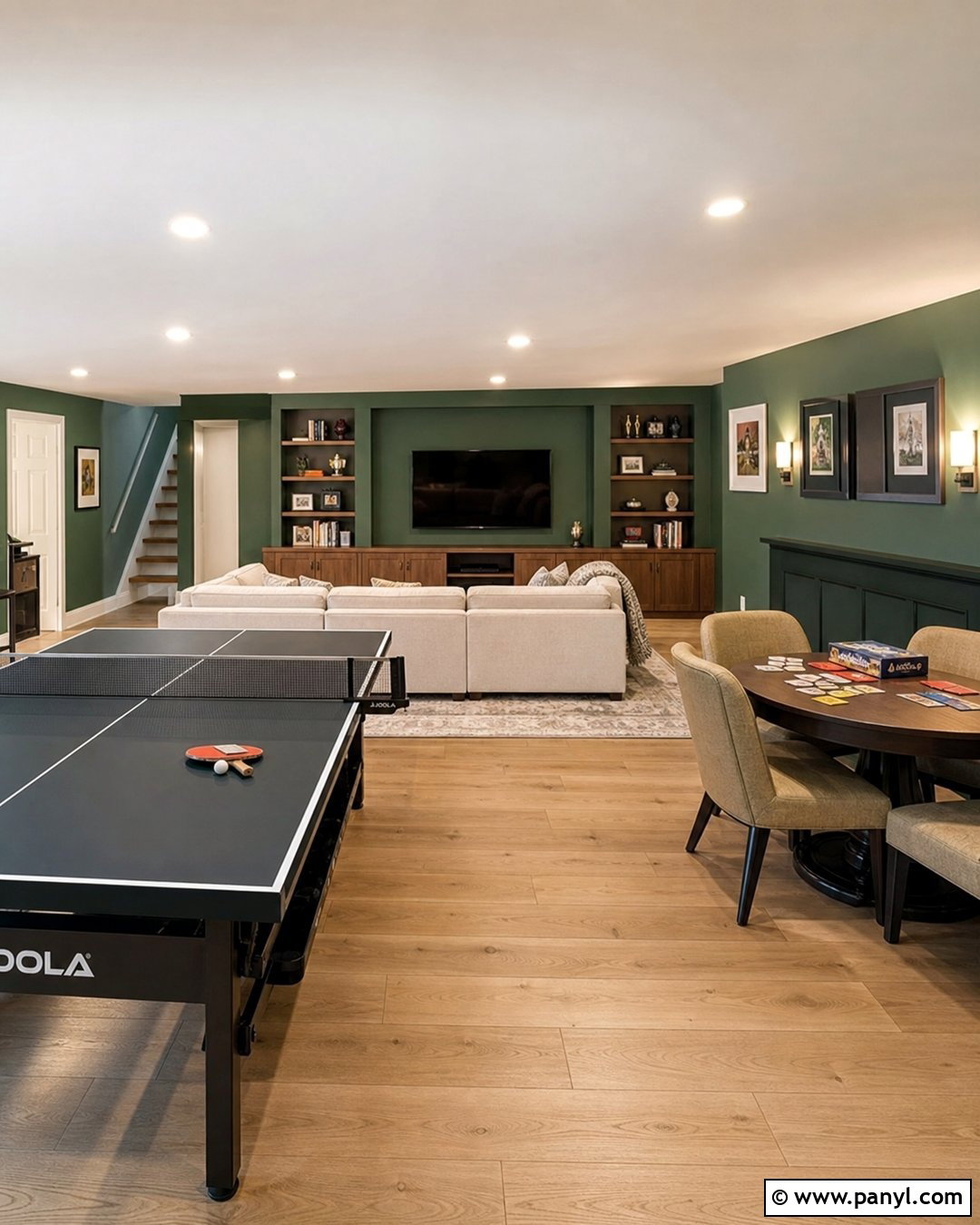
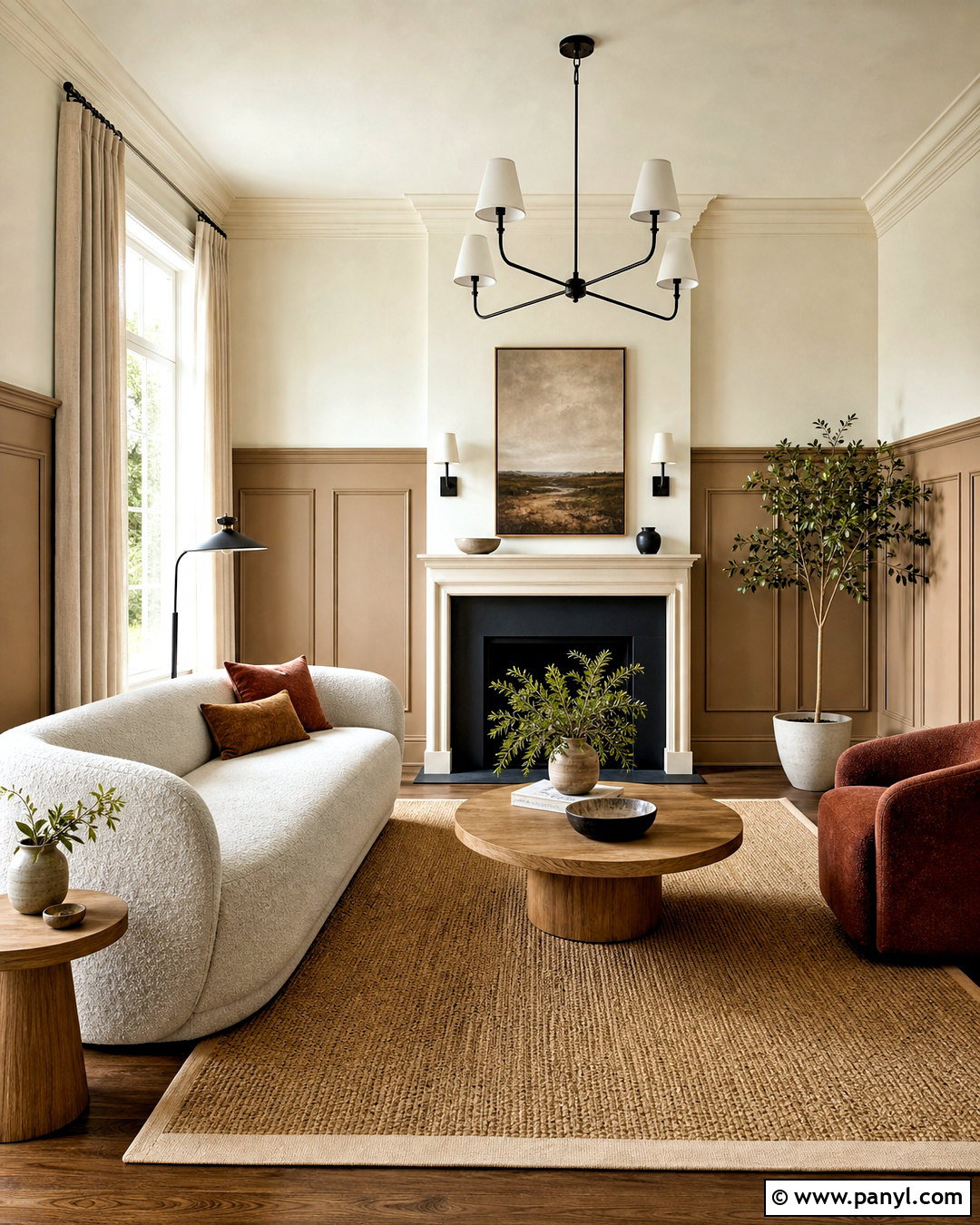
A half-painted wall offers a practical way to introduce color while keeping a room light and open. Paint the lower portion in deep navy, muted green, terracotta, or dusty blue, and leave the upper section soft white. Set the dividing line approximately one-third to halfway up the wall, depending on the furniture and ceiling height. In a dining room, pair the darker lower section with an oak table, woven chairs, white curtains, and a simple pendant. Let framed artwork cross the paint line to connect both halves visually. In a hallway, add hooks or a narrow shelf directly along the division. Use a laser level and long runs of low-stick tape for a straight edge. This scheme can mimic painted wainscoting without adding molding, making it an approachable update for many spaces.
15. Diagonal Wall Painting
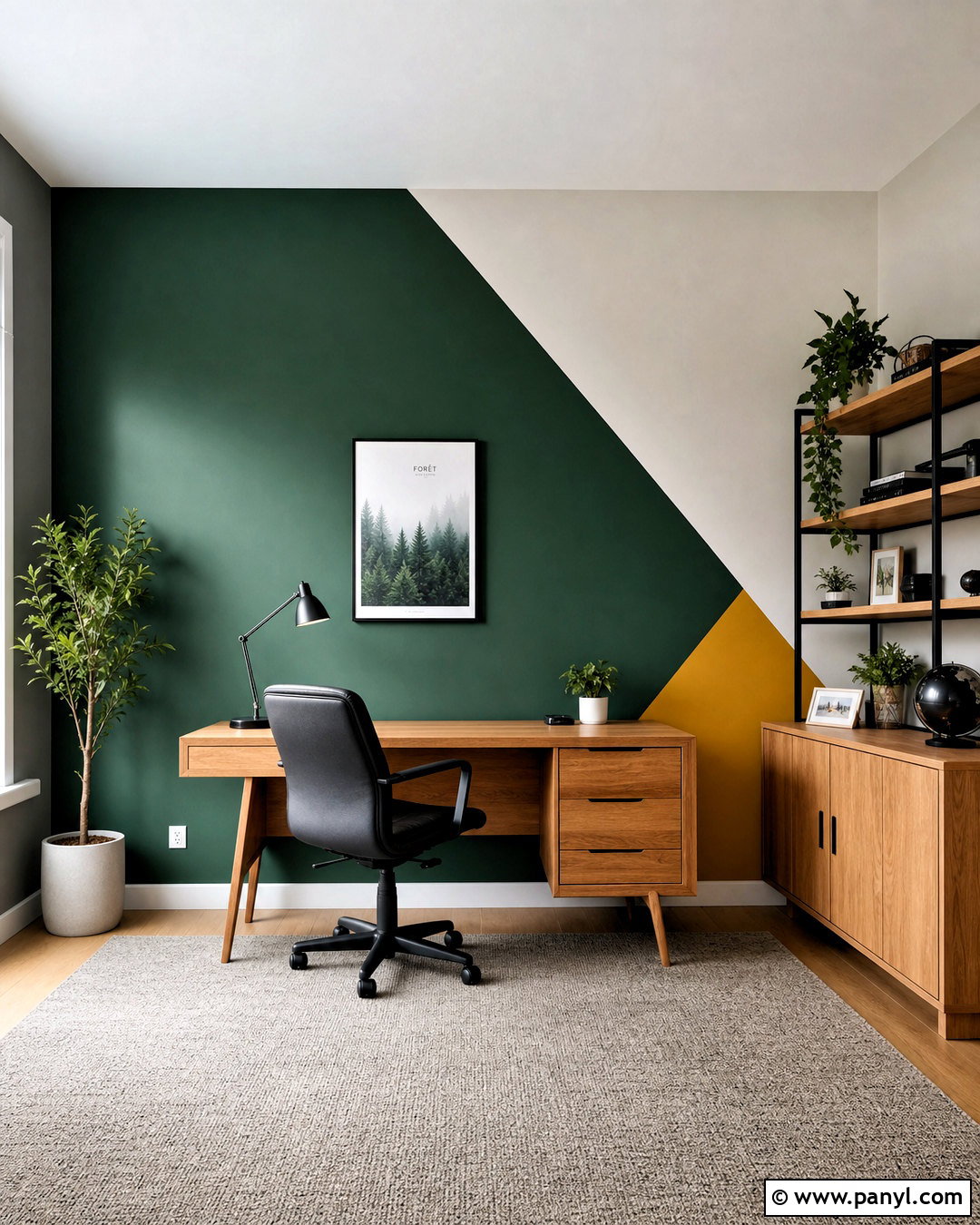
A diagonal paint design gives a bedroom, stair landing, or home office a sense of motion. Divide the wall with one strong angled line, using warm white above and a bold shade such as royal blue, forest green, coral, or mustard below. For a more colorful composition, add a second diagonal section in a coordinating tone. Arrange the main furniture so it follows the visual direction of the wall. A low desk or bed should sit beneath the deepest color, while open shelves or artwork can occupy the lighter section. Keep textiles mostly solid to avoid competing patterns. Mark both endpoints of each line, connect them with a chalk line or laser, and press painter’s tape firmly into place. A small angled brush helps establish the border before the larger sections are rolled.
16. Terrazzo Wall Painting
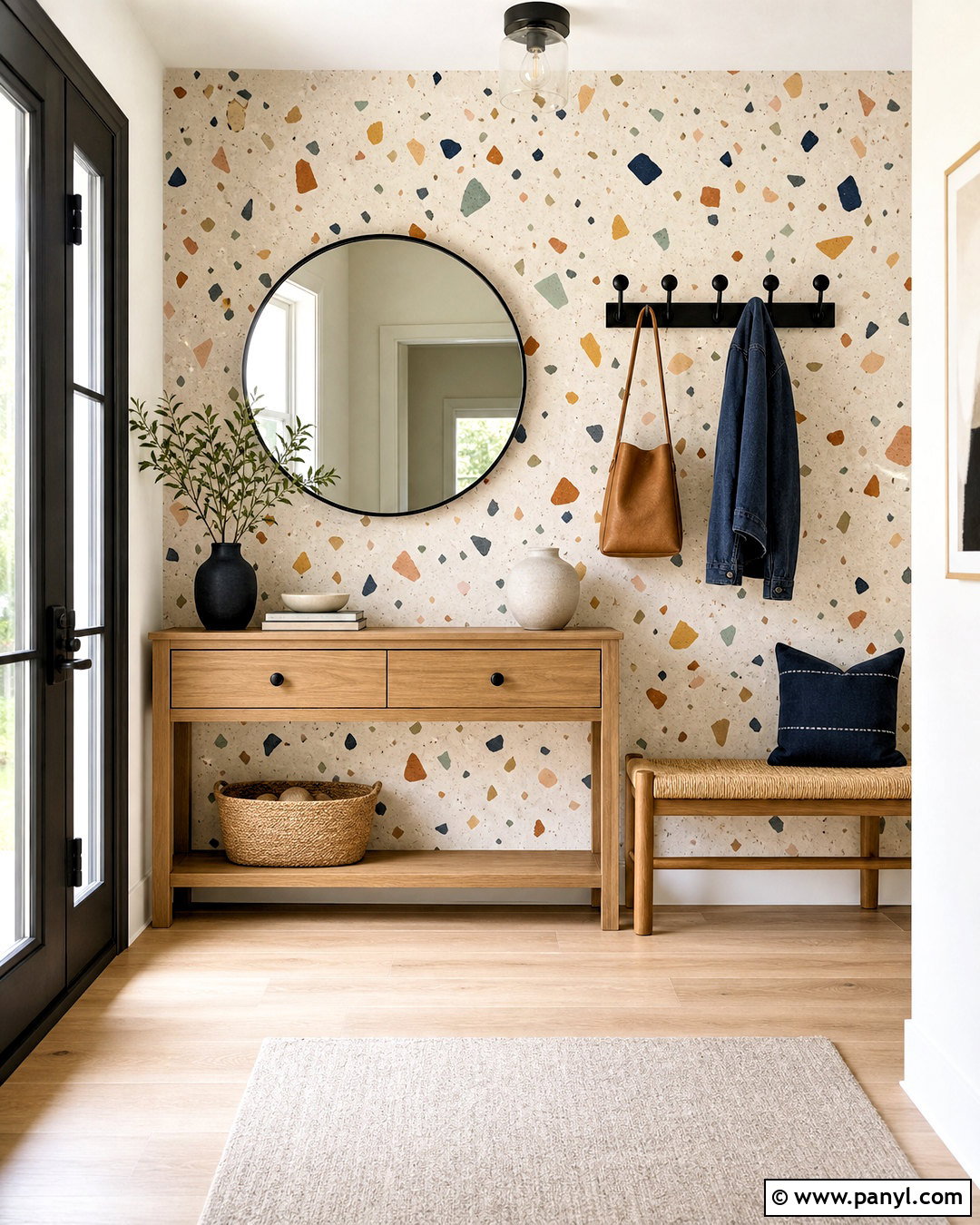
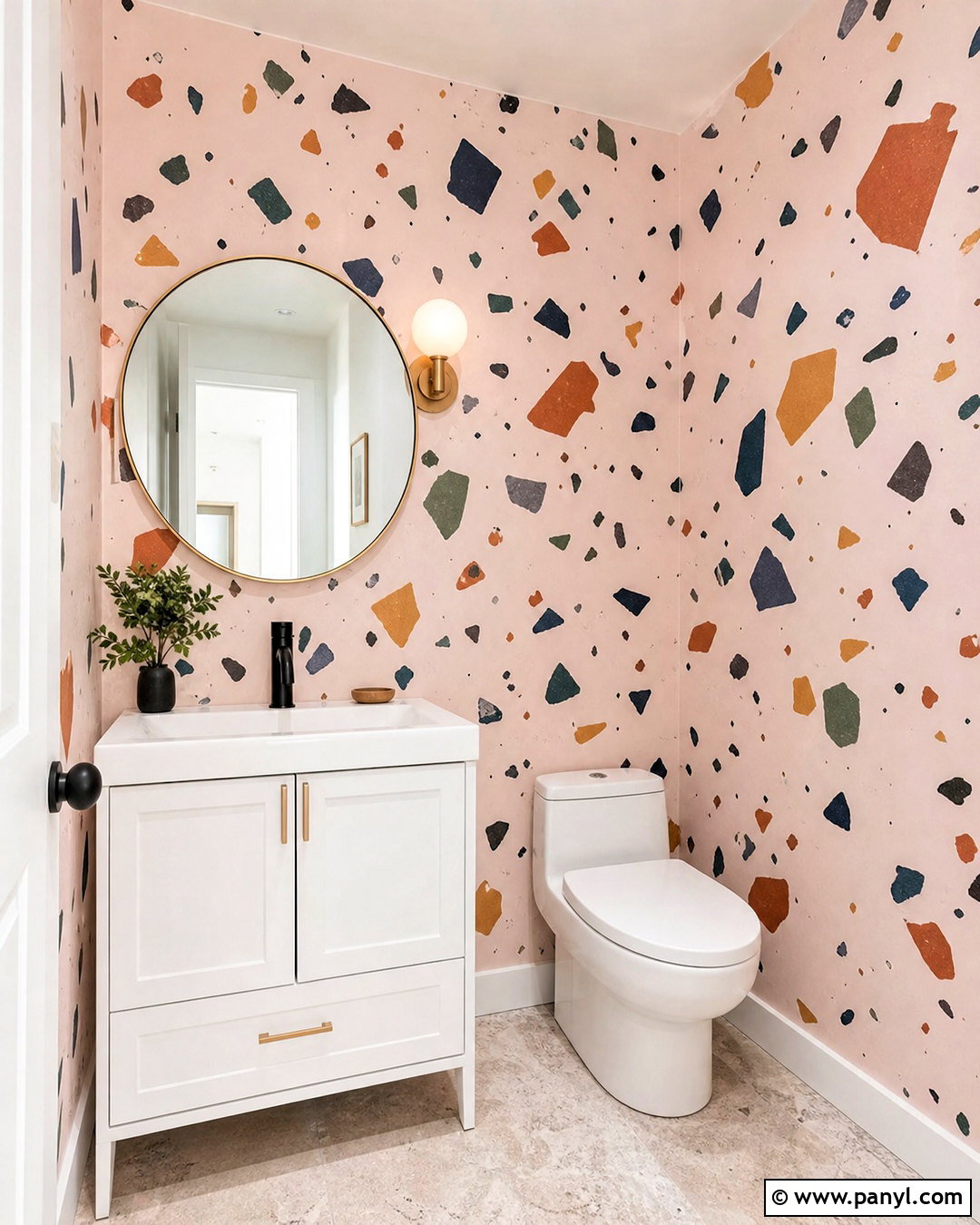
A terrazzo-inspired wall introduces playful color through irregular painted chips rather than strict patterns. Begin with a creamy white or pale beige background, then scatter medium and small shapes in rust, mustard, sage, blush, dark blue, and charcoal. Keep the pieces angular but slightly imperfect, spreading them evenly across the wall. This treatment works well in a bathroom, laundry room, entry, or modern playroom. Pair it with light oak cabinetry, matte black hardware, a simple round mirror, and solid-color accessories. Avoid adding heavily patterned flooring or textiles, since the painted wall already supplies texture. Draw the chips freehand in pencil, varying their size and direction. Use small artist brushes for the narrow forms and sample-size paint containers to reduce waste. Finish with clean trim for a polished contrast.
17. Floral Mural Wall Painting
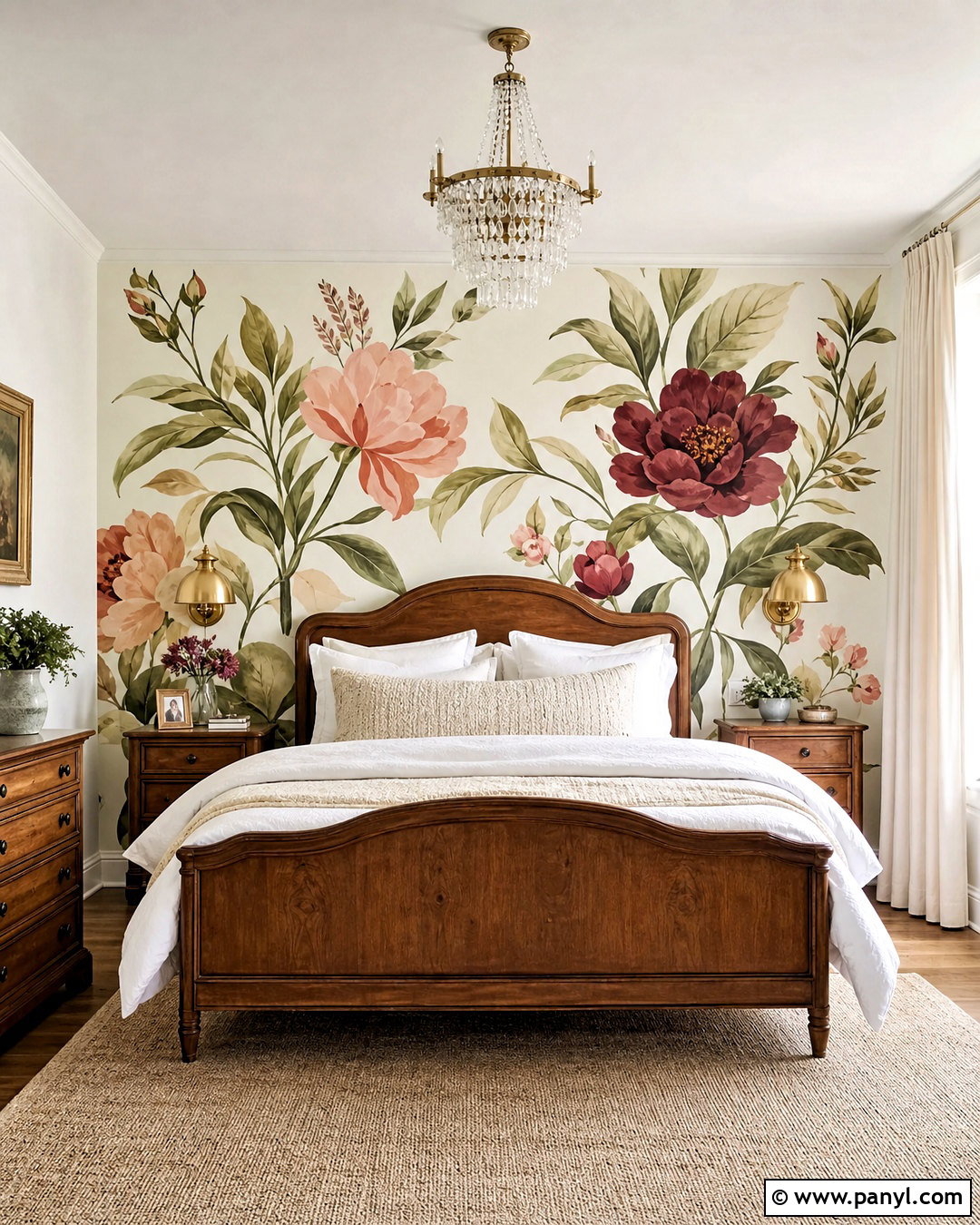
A hand-painted floral mural can make a bedroom, reading room, or powder room feel fresh and distinctive. Choose an airy background such as warm white or pale blush, then paint oversized stems, leaves, and simple flowers in sage green, deep olive, soft pink, apricot, and muted burgundy. Let several botanical forms grow upward from the baseboard while smaller branches extend around furniture or a mirror. Complete the space with an upholstered bed or vintage wood console, linen textiles, brass lighting, and a solid neutral rug. Keep the floral shapes loose and graphic rather than highly detailed, which makes the project easier to recreate. Sketch the stems first, block in broad leaves, and add flower centers last. Repeating a limited color palette will make the mural feel coordinated instead of overly busy.
18. Dripping Paint Wall
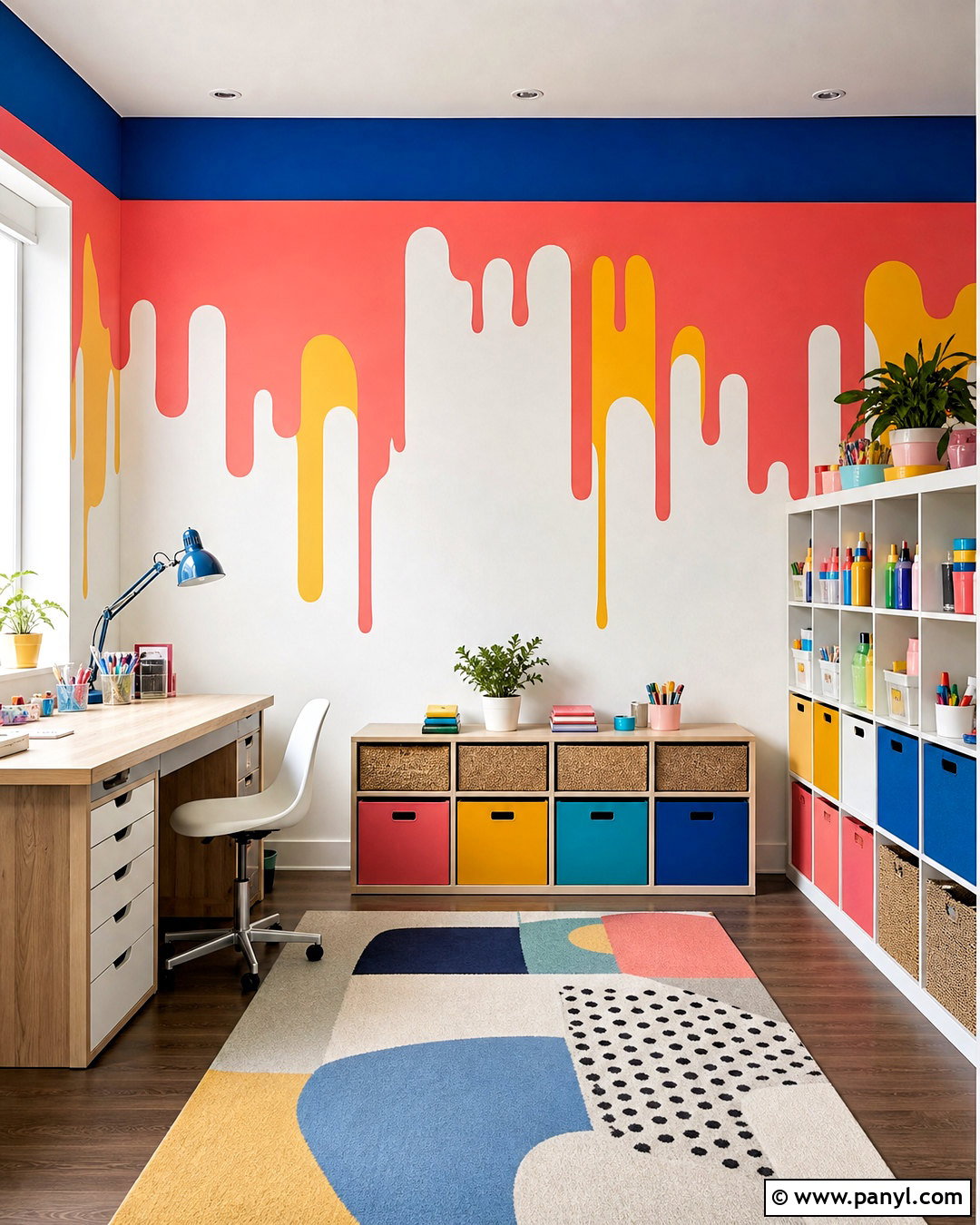
A controlled dripping paint effect adds humor and energy to a craft room, game room, or child’s bedroom. Paint the wall bright white, then create a wide band of cobalt blue, coral, yellow, or emerald near the ceiling. Extend rounded drips downward at varied lengths, keeping the spacing balanced across the wall. Unlike actual running paint, the drips should be drawn and filled deliberately so the finished design looks clean. Pair the wall with simple modular storage, a light wood desk, colorful bins, and a graphic rug. Limit the palette to two or three strong colors to avoid a messy appearance. Trace each drip with a pencil, making some narrow and others broad. Define the edges with an angled brush before rolling the large upper section for smooth, consistent coverage.
19. Confetti Wall Painting
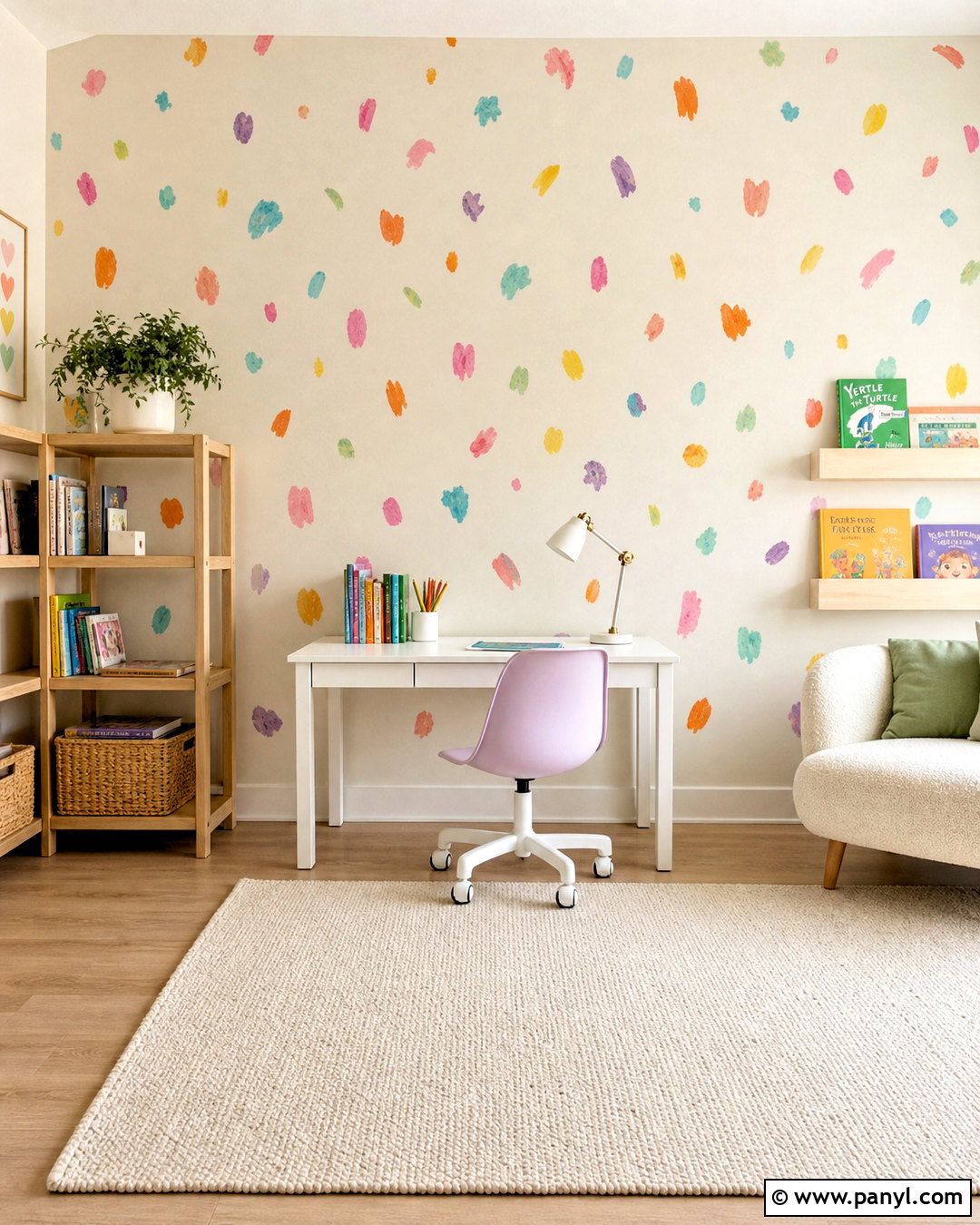
A confetti wall brings lighthearted color to small spaces without requiring perfect symmetry. Paint a soft neutral base, then add short brushstrokes, tiny rectangles, and curved dashes in pink, orange, yellow, turquoise, green, and purple. Concentrate the marks behind a desk, play table, or reading corner, allowing them to become more widely spaced near the outer edges. This gradual arrangement creates a focal point without enclosing the furniture inside a rigid shape. Complete the room with a simple white desk, pastel chair, natural wood shelves, and solid storage baskets. Use one brush size for visual consistency, but rotate each mark in a different direction. Before starting, place small tape markers across the wall to preview the overall density. Leave generous blank areas so the design stays fresh and uncluttered.
20. Painted Ceiling Border Wall
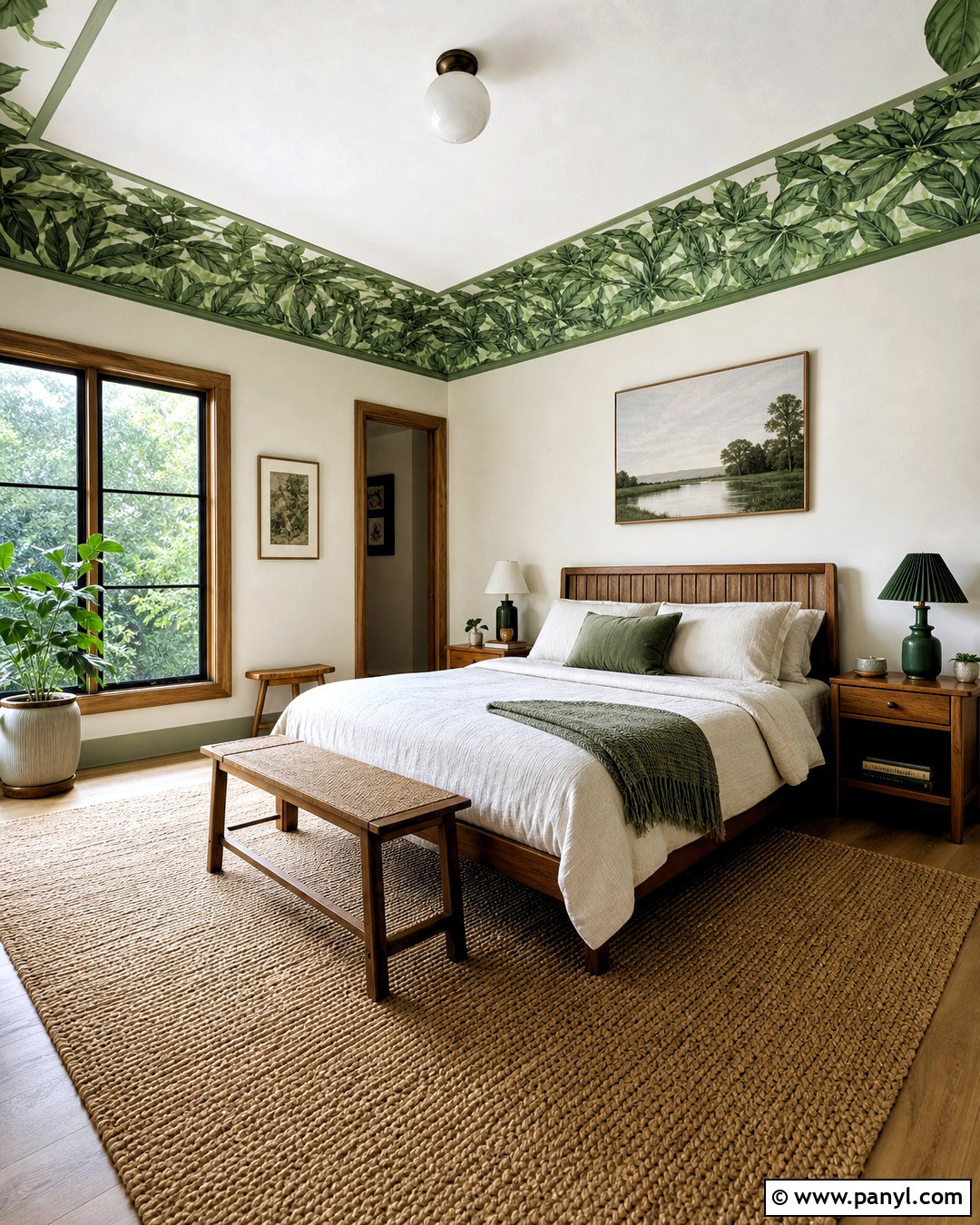
For an unexpected finish, carry wall paint upward to create a colorful border around the ceiling. Keep most walls warm white, then paint the upper twelve to eighteen inches in deep blue, bright coral, leafy green, or sunny yellow. Continue the same color across the ceiling edge, forming a continuous frame around the room. This look works especially well in a bedroom, dining room, or creative home office with simple architecture. Add furniture and textiles in neutral colors, repeating the border shade through one chair, lamp, or blanket. A white ceiling center prevents the color from feeling too heavy. Measure and tape the lower boundary carefully around the entire room. Paint the upper wall first, then continue onto the ceiling, using a sturdy extension pole and protecting the floor with drop cloths.
Conclusion:
Paint offers an affordable way to give ordinary walls color, movement, and a stronger connection to the furniture around them. These **20 fun wall painting ideas** range from measured stripes and checkerboards to freehand flowers, mountains, and abstract forms. Choose a design that suits the room’s purpose, scale, and existing palette rather than selecting a pattern by itself. Test every color in morning and evening light, sketch the layout, and prepare the surface before beginning. Crisp geometric designs require careful measuring, while organic murals can embrace small imperfections. Most importantly, treat the painted feature as part of the complete room. Coordinated furniture, lighting, textiles, and decor will help your new wall look intentional and finished.

Related Ideas and Inspiration:
Leave a Reply