
Painting dots on walls is an affordable way to turn a plain room into a personalized, finished space. Painted dots can look playful, modern, soft, artistic, or surprisingly sophisticated depending on their size, spacing, and color palette. They work especially well in nurseries, bedrooms, playrooms, offices, entryways, and creative living spaces. For clean results, begin with a smooth base coat and map the pattern using a level, measuring tape, and light pencil marks. Circle stencils create crisp shapes, while round sponges produce a relaxed handmade finish. Most importantly, coordinate the wall with the furniture, textiles, lighting, and decor instead of treating the pattern as a separate feature. The complete looks below offer practical inspiration for Painting Dots On Walls.

1. Black And White Dot Wall
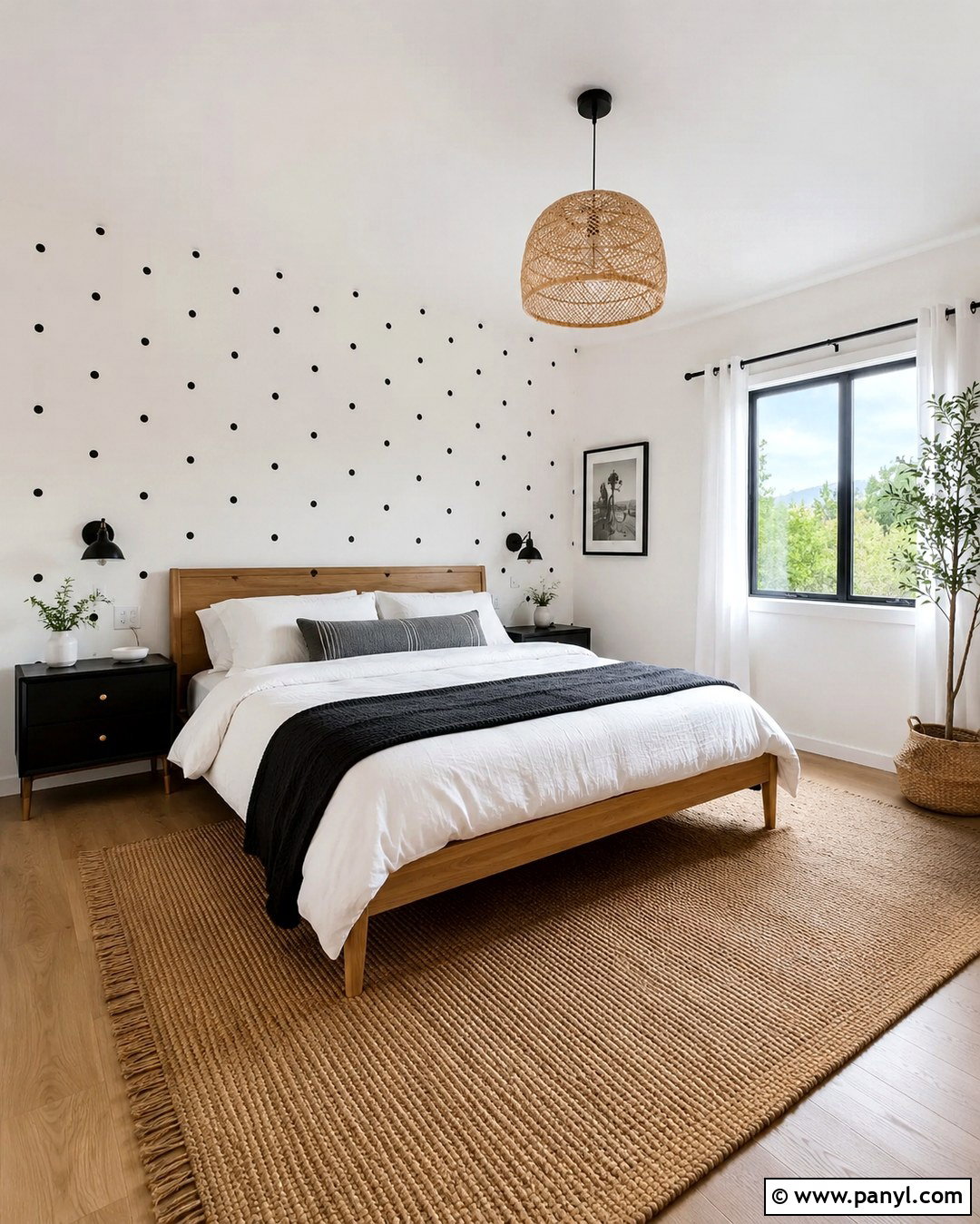
A black and white dot wall creates a graphic look that feels playful without being overly colorful. Start with a warm white background and paint medium matte black circles in a measured grid. Keep the remaining walls white so the pattern remains the room’s clear focal point. In a bedroom, add a simple oak bed, crisp white bedding, a charcoal throw, and black metal sconces. A natural jute rug softens the strong contrast. For a living room, use a cream sofa with oak tables and a few solid black accents. Avoid adding several competing patterns. Clean-lined furniture and restrained decor allow the dots to provide movement while the neutral palette keeps the entire room polished.
2. Neutral Dot Wall
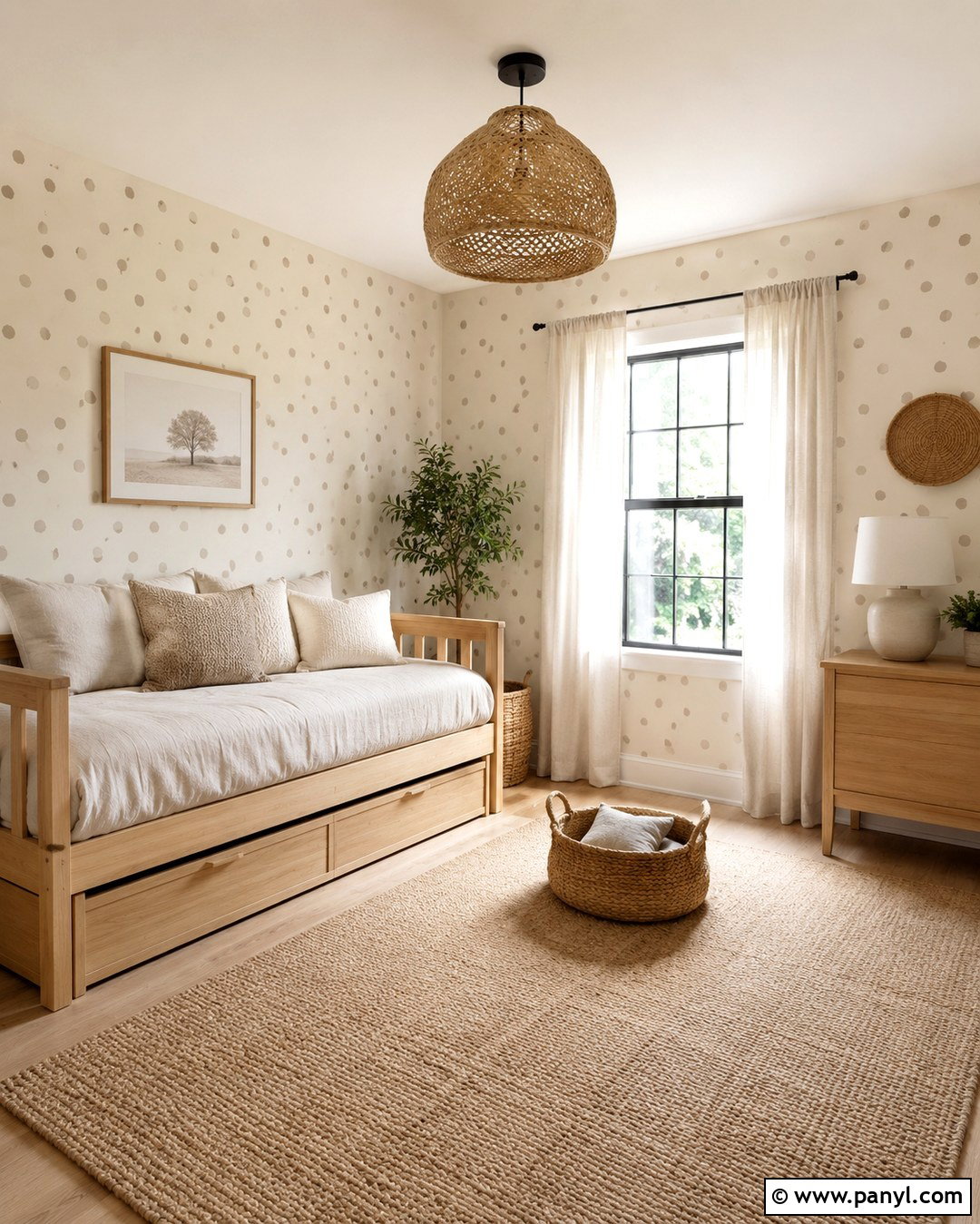
Would you prefer a dot wall that quietly blends into the room? Paint warm taupe dots over a soft cream or light greige base. Use two dot sizes and arrange them loosely rather than creating rigid rows. The low-contrast palette makes the pattern subtle enough for a guest room, reading nook, or calm nursery. Complete the room with a light oak bed or daybed, oatmeal linen bedding, woven baskets, and a beige wool rug. Add off-white curtains and a ceramic table lamp for softness. A few muted brown or sage accessories can provide gentle color. This approach makes painting dots on walls feel sophisticated, offering visual texture without overwhelming furniture, artwork, or architectural details.
3. Rainbow Dot Nursery Wall
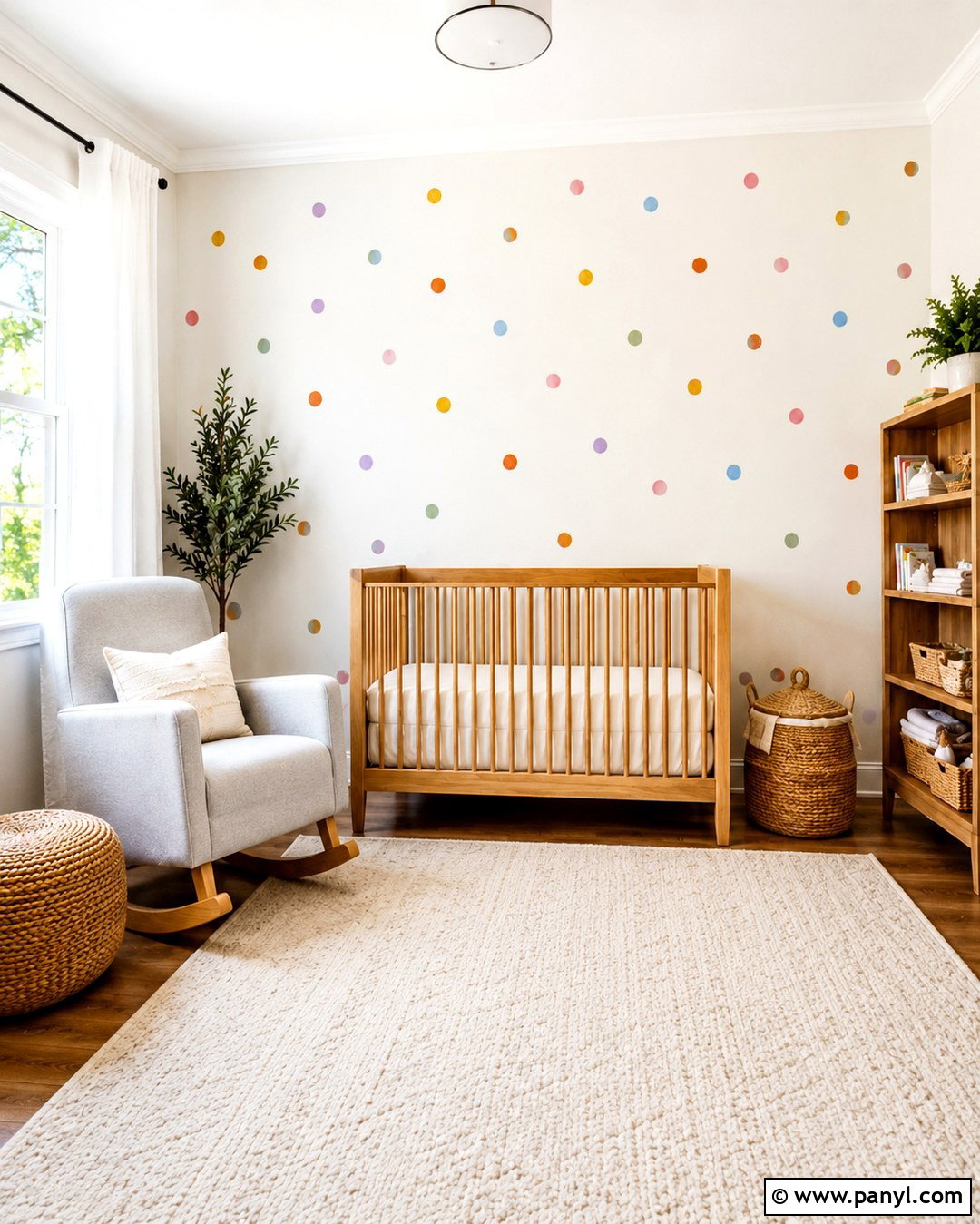
A cheerful rainbow dot wall can bring color into a nursery while still looking balanced. Choose a warm white base and paint evenly scattered dots in dusty pink, golden yellow, muted orange, sage green, sky blue, and soft lavender. Repeat each color throughout the wall so no single area feels heavy. Place a natural wood crib against the patterned surface and use white bedding for a clean foundation. Add a pale gray rocking chair, a round cream rug, and light-filtering white curtains. Storage baskets and a low oak bookcase keep the room practical. Select simple solid-colored toys and accessories rather than more patterns. The finished nursery feels joyful, bright, and coordinated without becoming visually chaotic.
4. Blush And Gold Dot Bedroom Wall
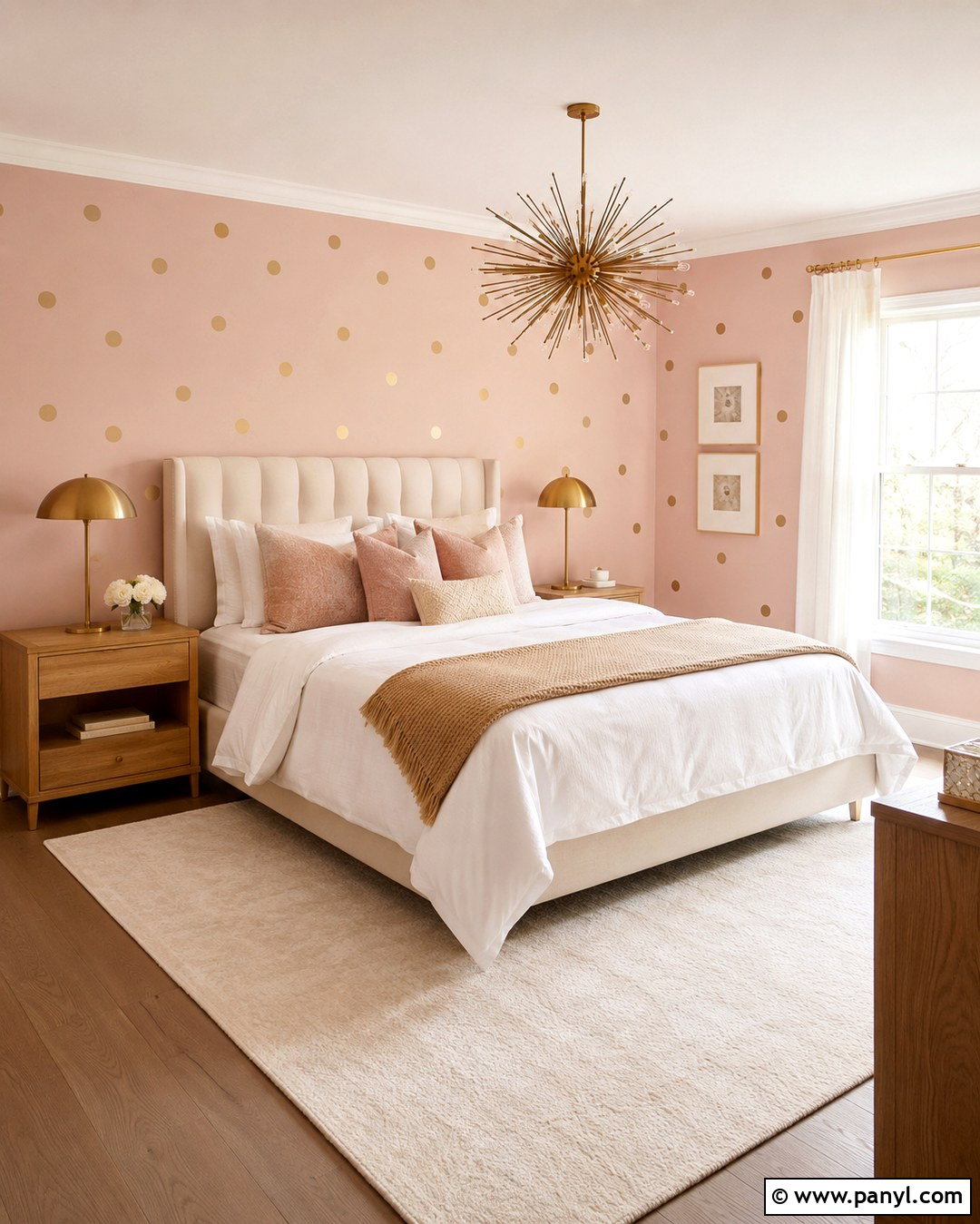
Soft blush walls paired with warm gold dots create a refined bedroom that can grow with changing decor. Paint the dots in an evenly spaced pattern, using a muted metallic gold rather than a glittery finish. Position the patterned wall behind an upholstered cream headboard to establish a clear focal point. Layer the bed with white sheets, blush linen pillows, and a camel-colored throw. Light oak nightstands and brushed brass lamps repeat the warm tones without making the room feel overly themed. Finish with an ivory rug, sheer curtains, and one simple framed print. Keeping the other walls pale cream prevents the metallic pattern from dominating. The result feels warm, graceful, and appropriate for different age groups.
5. Blue Dot Bedroom Wall
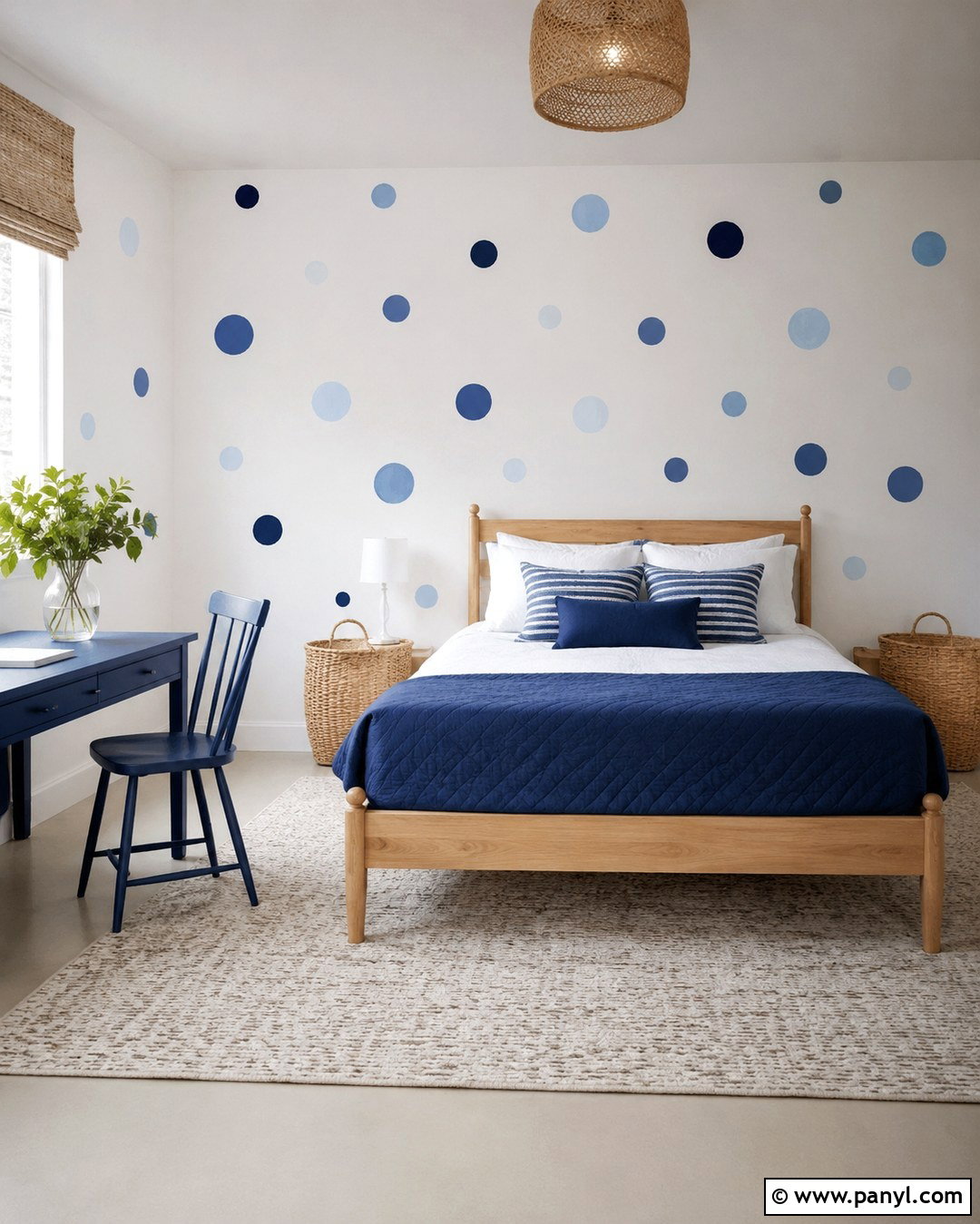
Imagine entering a bedroom with crisp blue dots floating across a clean white wall. Use medium-size circles in navy, denim blue, and pale sky blue, spacing them in an informal but balanced arrangement. A natural maple bed and white bedding keep the room light, while a navy quilt connects the furniture to the wall. Add a striped rug only if its pattern is narrow and understated. White curtains, woven storage baskets, and a simple blue desk complete the space. Keep major furniture neutral so it will continue working if accessories change. This complete bedroom design feels energetic but organized, making it suitable for a child’s room, guest room, or casual coastal-inspired space without relying on obvious nautical decorations.
6. Sage Green Dot Nursery Wall
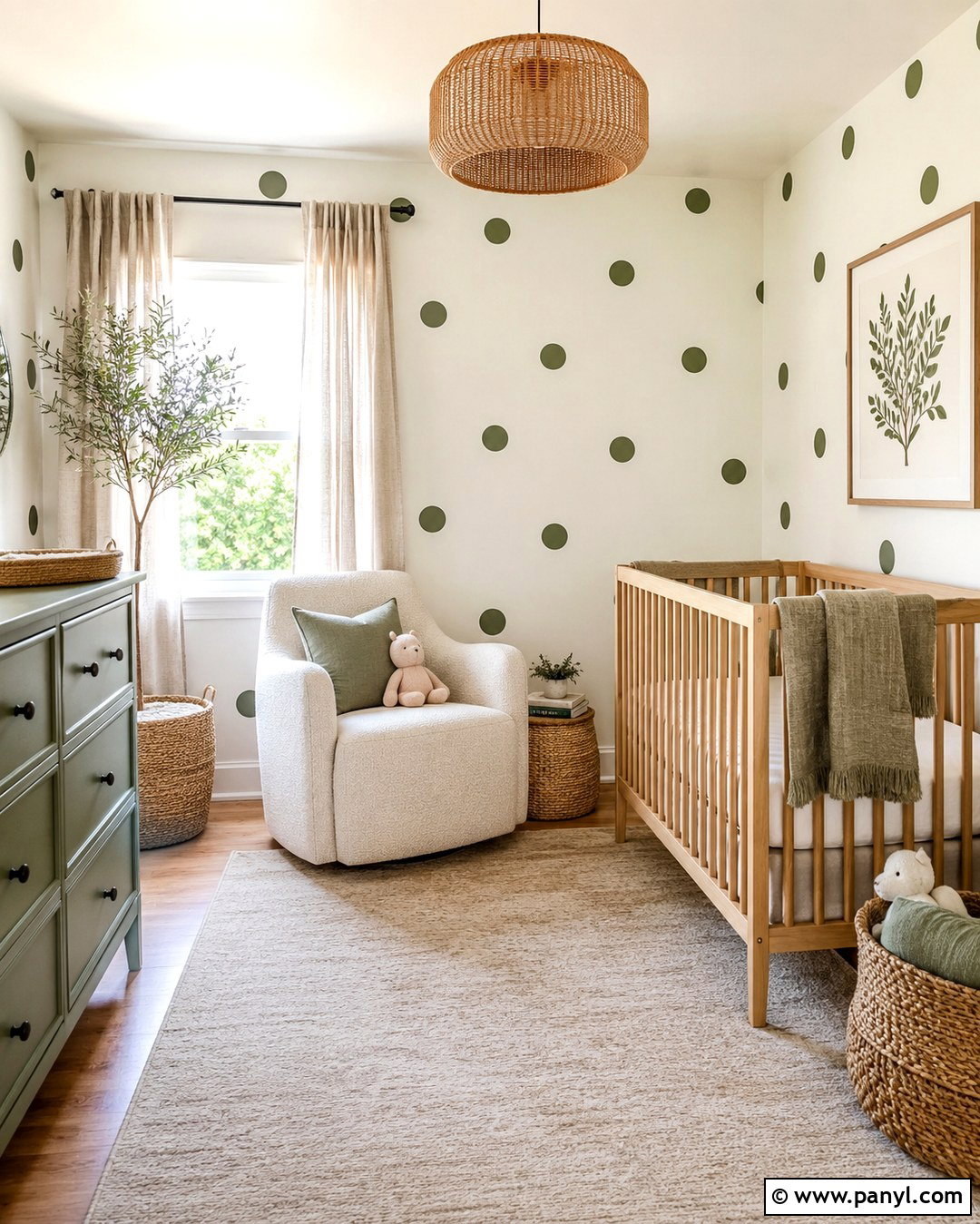
For a calm nursery, place soft sage green dots over a creamy white background. Mix small and medium circles, but maintain generous space between them to preserve an airy feeling. Pair the accent wall with a pale wood crib, an ivory boucle chair, and a washable oatmeal rug. Natural linen curtains gently filter light, while woven baskets provide practical storage for blankets and toys. Introduce deeper olive green through one throw pillow or a painted dresser, then add small botanical prints in light oak frames. The natural palette makes the dot pattern feel peaceful rather than busy. Choose matte wall paint to reduce glare and create a soft finish that coordinates beautifully with wood, cotton, linen, and woven textures.
7. Terracotta Dot Living Room Wall
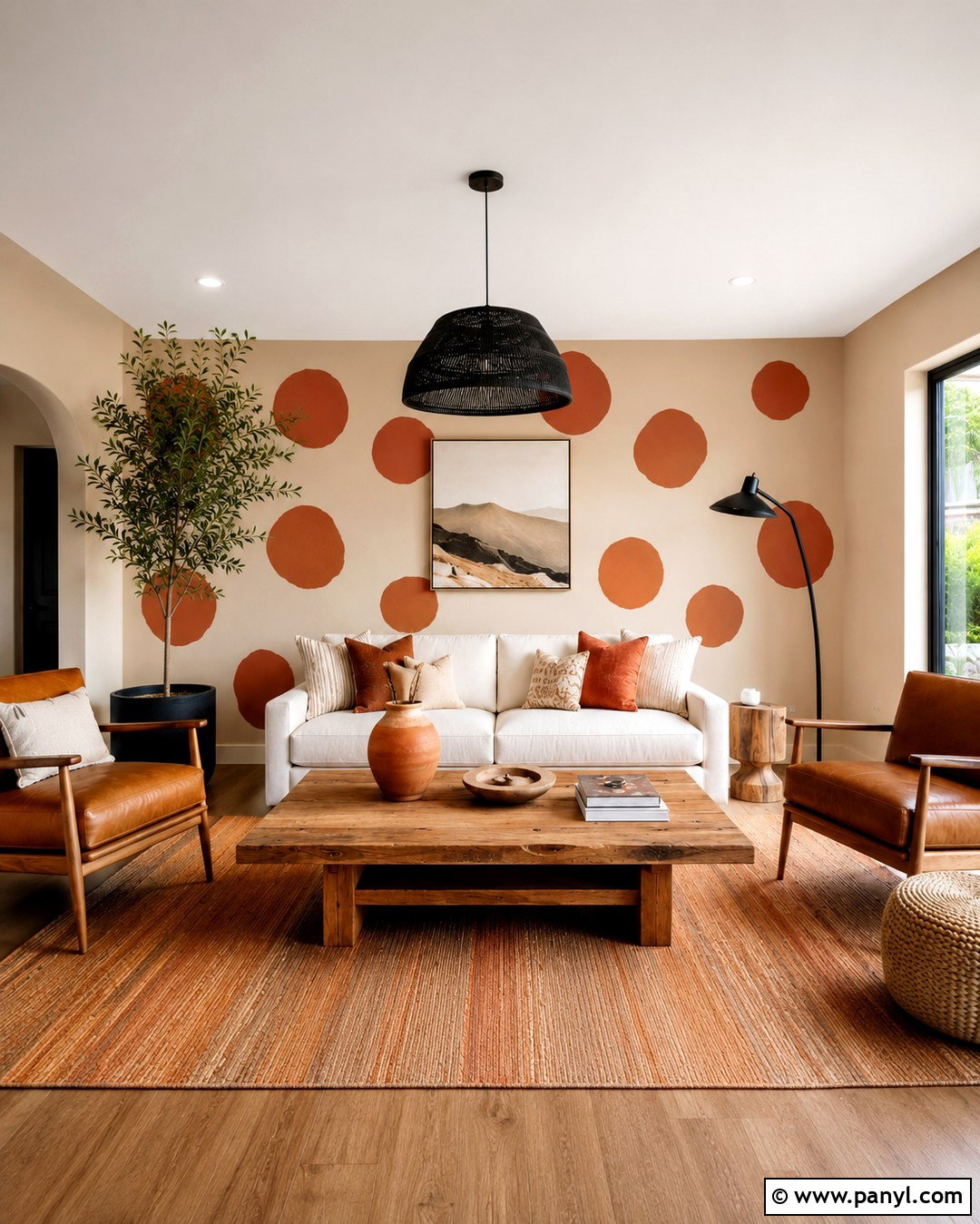
Earthy terracotta dots can make a living room feel warm, grounded, and slightly playful. Begin with a sandy beige wall and apply large irregular terracotta circles in an open, asymmetrical pattern. A cream linen sofa gives the design breathing room, while caramel leather chairs and a medium-tone wood coffee table strengthen the earthy palette. Add a flat-weave rug featuring beige, rust, and dark brown. Black metal lighting provides definition without competing with the wall. Finish the room with clay pottery, a tall leafy plant, and solid linen pillows. Because the dots are intentionally imperfect, the design feels handmade and relaxed. Keep artwork minimal, allowing the painted pattern to function as the room’s main visual feature.
8. Navy And Gold Dot Office Wall
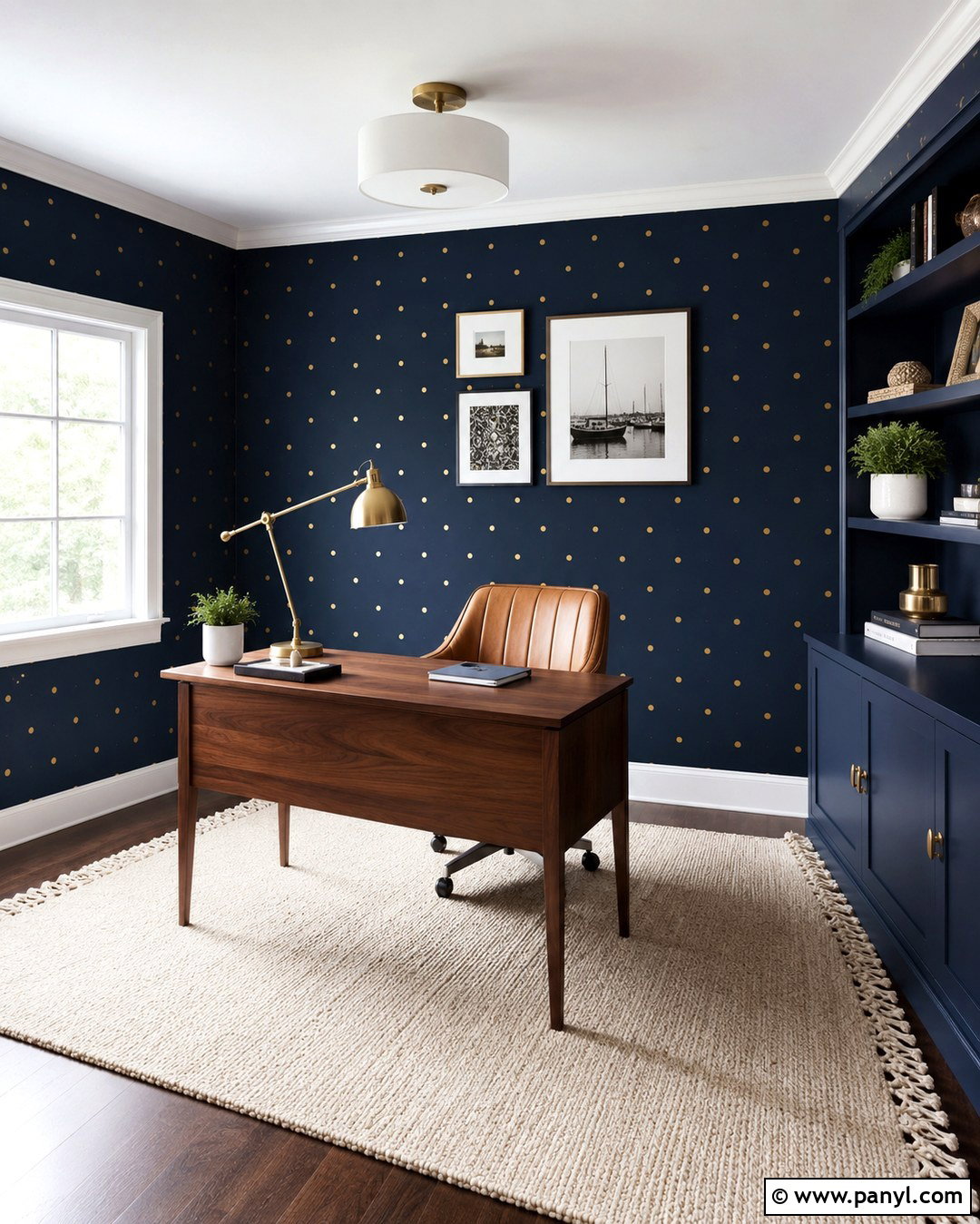
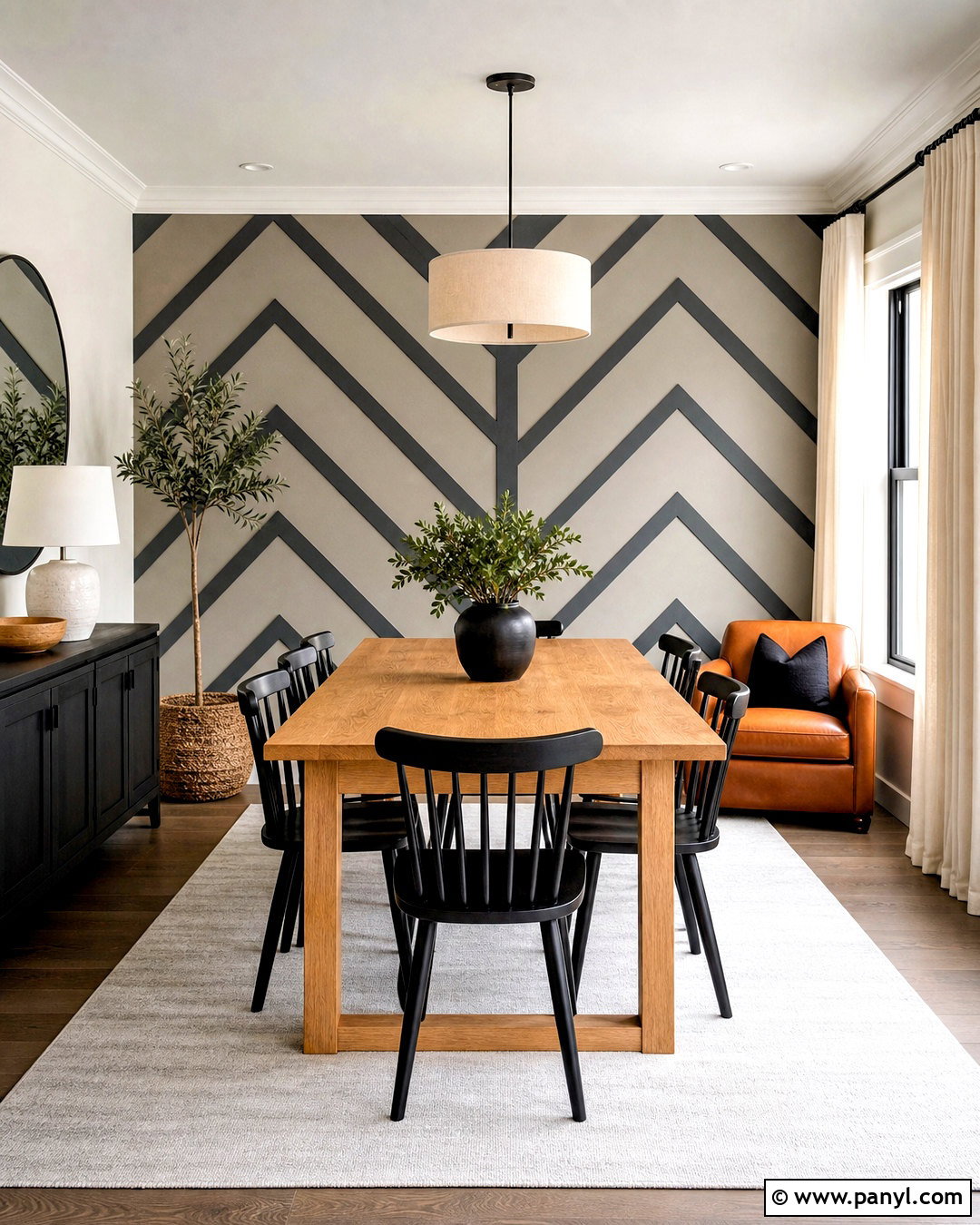
Deep navy walls with small gold dots can turn a home office into a focused, polished workspace. Use a consistent grid so the pattern feels tailored rather than whimsical. Apply warm gold paint sparingly, keeping the circles small and evenly separated. Place a streamlined walnut desk against the patterned wall with a comfortable camel leather chair. Add a brass task lamp, a cream area rug, and closed storage in navy or walnut. White trim creates a crisp boundary around the darker wall. One large neutral artwork can sit on an adjacent surface, but leave the dots mostly uncovered. Bright ceiling lighting and a nearby window prevent the navy from feeling heavy. The complete office feels confident, organized, and intentionally designed.
9. Pastel Dot Playroom Wall
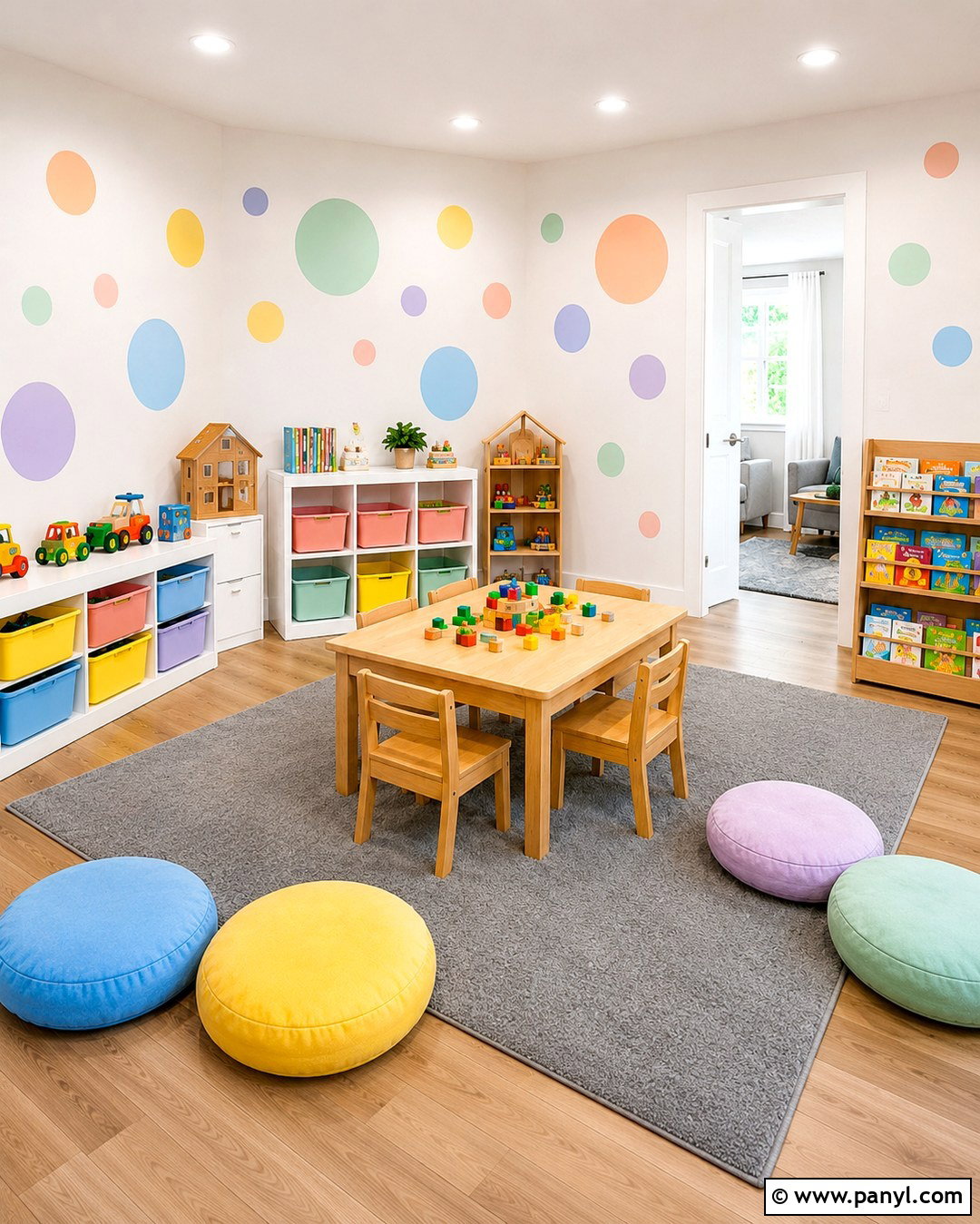
A pastel dot wall gives a playroom color while leaving enough flexibility for changing toys and storage. Paint the base warm white, then add large dots in peach, butter yellow, mint green, powder blue, and pale lilac. Use an evenly spaced offset pattern for a clean wallpaper-like appearance. Ground the room with a washable light gray rug and low white storage units fitted with labeled-looking solid-color bins without visible text. Include a small natural wood activity table, comfortable floor cushions, and open shelves for books. White ceiling fixtures keep the space bright. Because the wall already contains several colors, select simple furniture with smooth shapes. The result is a cheerful, practical playroom that still feels orderly when everything is stored.
10. Confetti Dot Wall
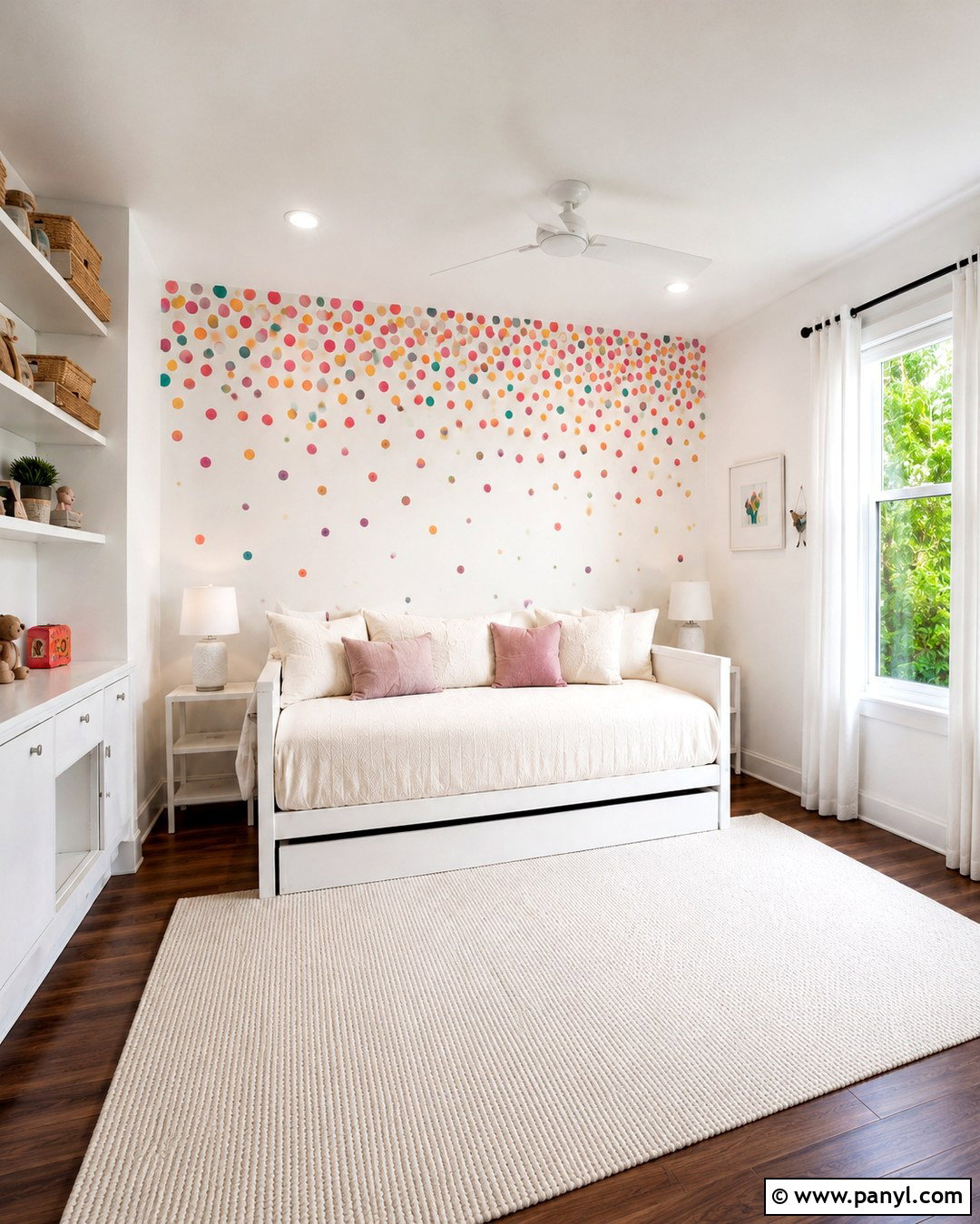
A falling confetti pattern works beautifully when you want movement without covering the entire wall. Concentrate small painted dots near the ceiling, then gradually increase the spacing as they descend. Use coral, mustard yellow, teal, lavender, and warm pink over a white base. Position a simple daybed or low cabinet beneath the lighter portion so the furniture does not hide the densest pattern. Add solid bedding, a neutral rug, and white curtains to balance the color. Before painting, step back frequently to ensure the transition appears natural. Avoid creating a straight stopping line near the bottom. This complete wall treatment suits bedrooms, craft rooms, and cheerful offices, bringing energy overhead while keeping the lower part of the room visually calm.
11. Large Polka Dot Wall
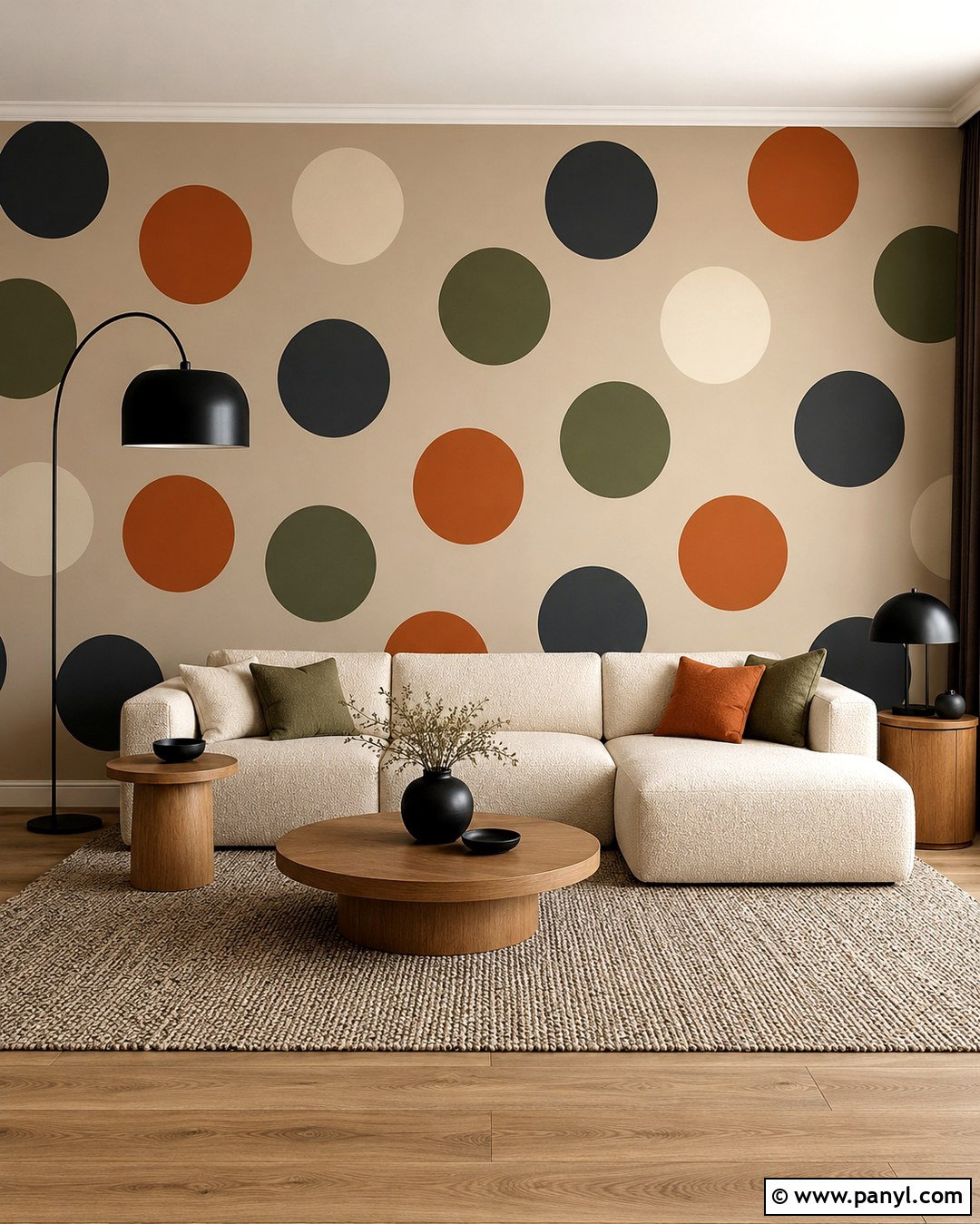
Oversized polka dots make a confident statement and can visually replace traditional artwork. Paint one accent wall soft beige, then add large circles in charcoal, muted rust, olive green, and warm cream. Leave noticeable background space around every shape so the composition does not feel crowded. Furnish the room with a low-profile cream sofa or upholstered bed and select a plain textured rug. Black lighting, oak side tables, and solid olive or rust pillows repeat the wall colors. Keep shelves and small accessories limited because the large circles already carry strong visual weight. Carefully measure each dot and use a sturdy stencil made from plastic sheeting. This bold arrangement works best on an open wall with minimal doors, windows, or switches.
12. Small Dot Wall
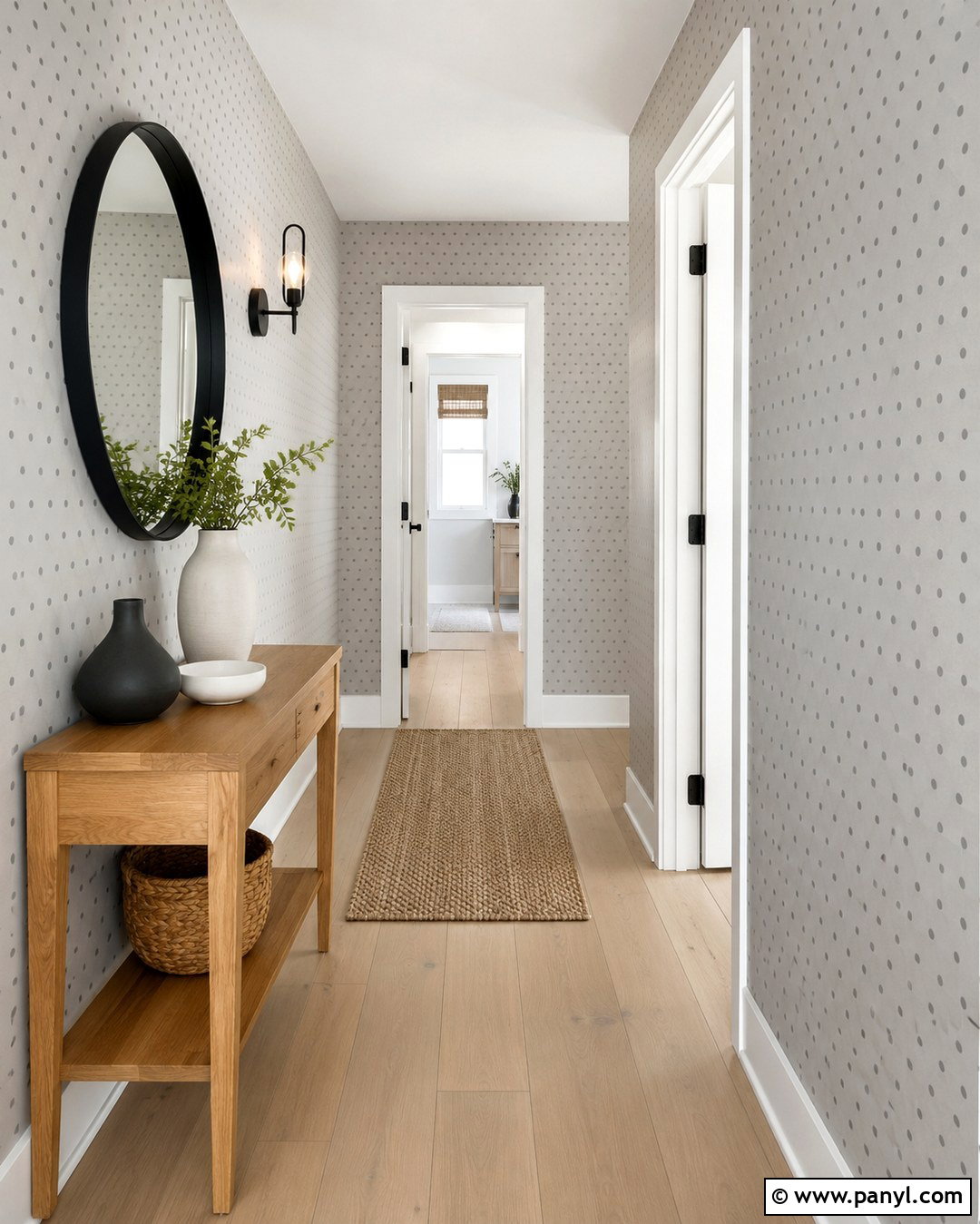
Tiny painted dots produce a delicate pattern that can resemble understated wallpaper. Begin with a pale gray, cream, or white background. Add small charcoal or muted blue circles in straight, evenly measured rows, maintaining consistent space vertically and horizontally. This controlled layout is especially effective in a compact powder room, hallway, or reading corner. Pair it with a slim oak console, round black mirror, and simple wall sconce. In a bedroom, use white furniture, solid bedding, and a textured neutral rug. Avoid placing many framed pieces over the pattern, since small dots already create fine visual detail. A stencil brush with minimal paint helps prevent bleeding. The finished room feels crisp and complete without requiring expensive wall coverings.
13. Ombre Dot Wall
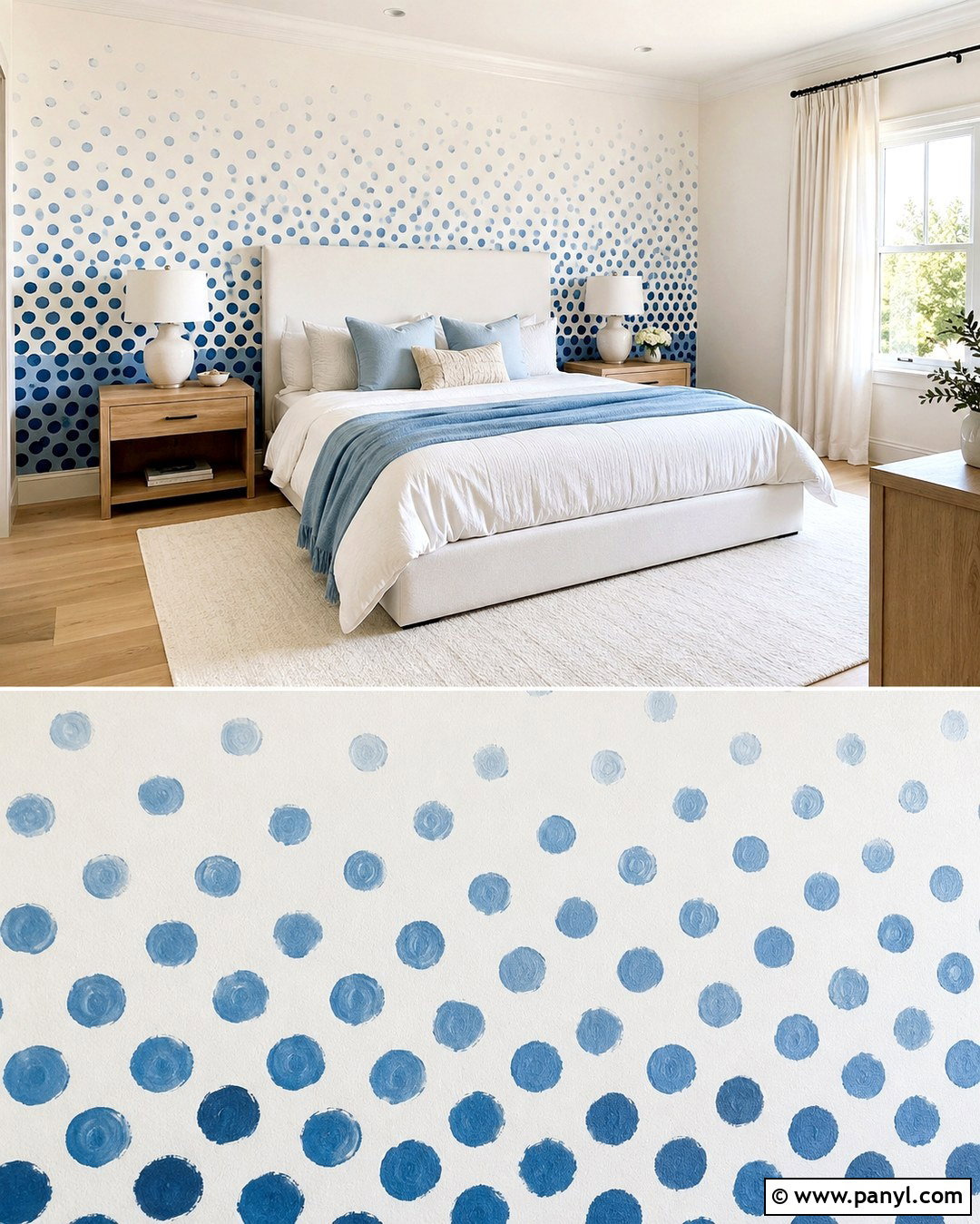
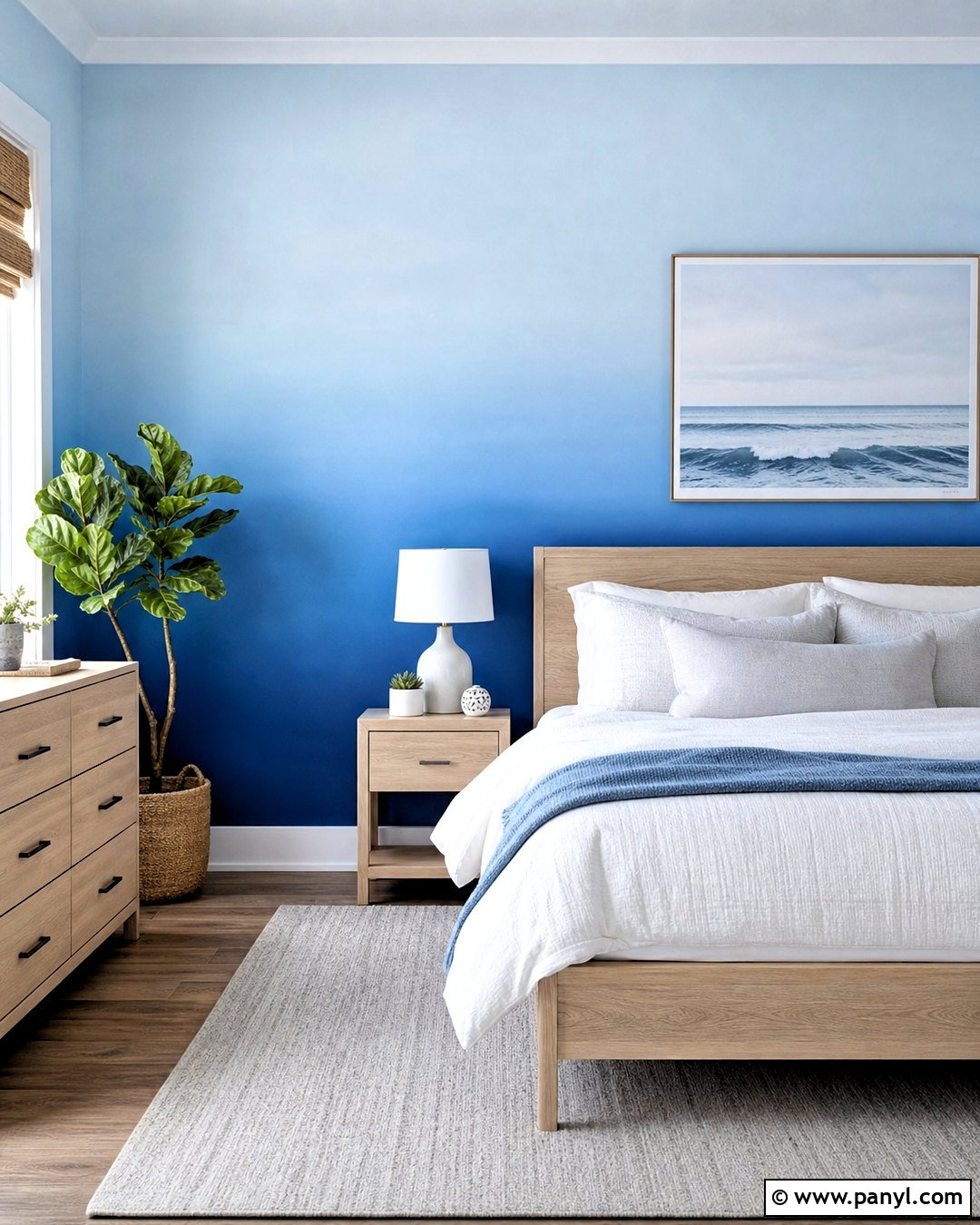
An ombre dot wall creates a gradual color transition that feels artistic and carefully planned. Start with deep blue dots near the floor, move through medium denim and dusty sky blue, and finish with very pale blue near the ceiling. Keep the background warm white and use one consistent circle size to make the color progression easy to read. Complete the bedroom with a white upholstered bed, light oak nightstands, and layered bedding in cream and faded blue. A woven ivory rug and natural linen curtains introduce warmth. Map horizontal color zones lightly before painting, then blend the shades by occasionally placing neighboring tones together. The finished design adds height and movement while maintaining a calm, unified palette throughout the room.
14. Hand Painted Dot Wall
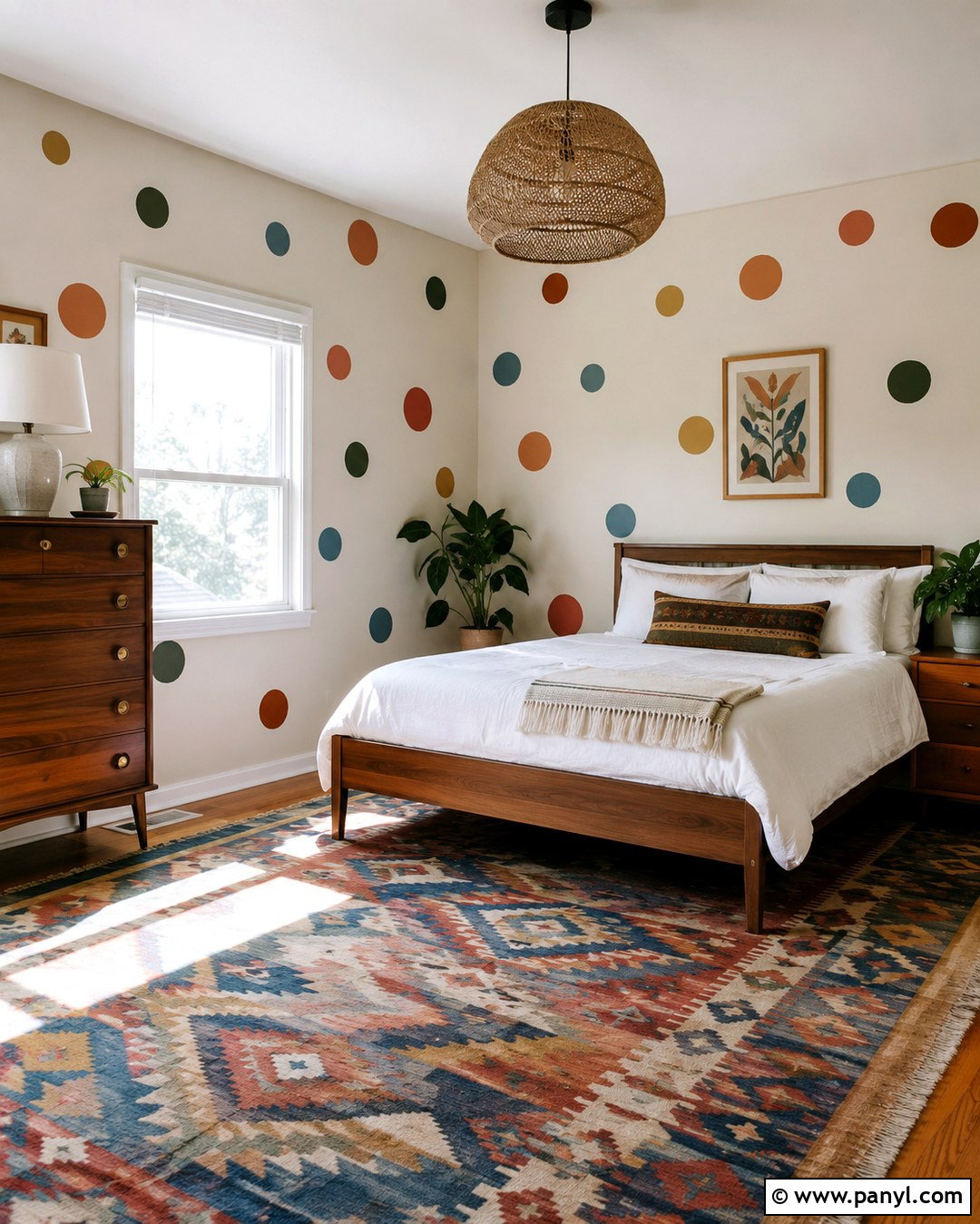
Perfectly imperfect dots give a room warmth and creative character. Use a round sponge or flat artist’s brush to paint organic circles in muted ochre, clay, forest green, and dusty blue over a creamy base. Vary the size slightly and keep the placement loose, but distribute every color across the full wall. Pair the handmade pattern with a simple wood bed, white cotton bedding, and a patchwork-inspired rug that repeats only a few wall colors. Add a vintage-style dresser, ceramic lamp, and woven pendant light. The relaxed marks should look intentional rather than rushed, so practice the pressure and paint amount on cardboard first. This complete bedroom feels personal, approachable, and less formal than a precisely stenciled polka dot design.
15. Dot Wall Border
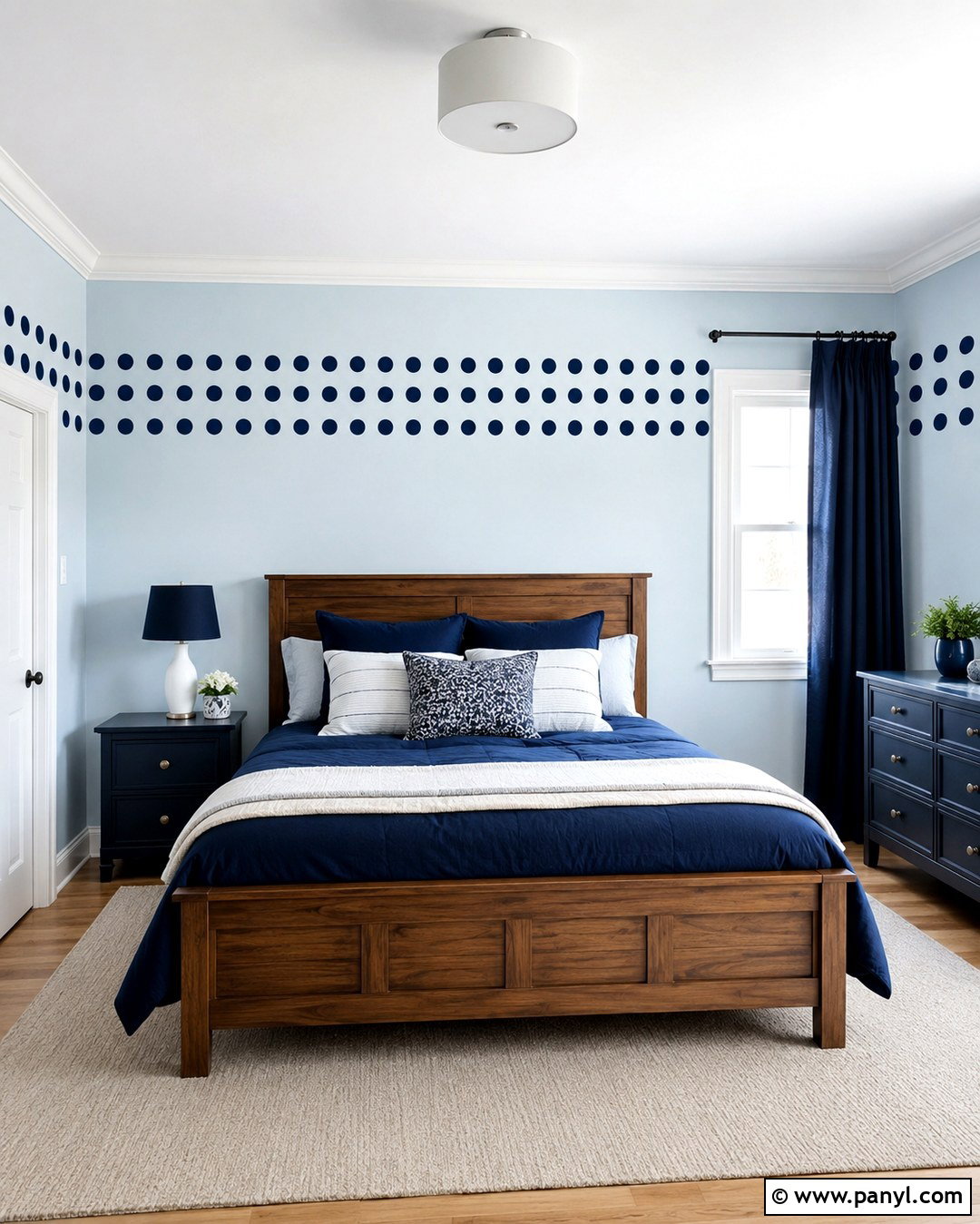
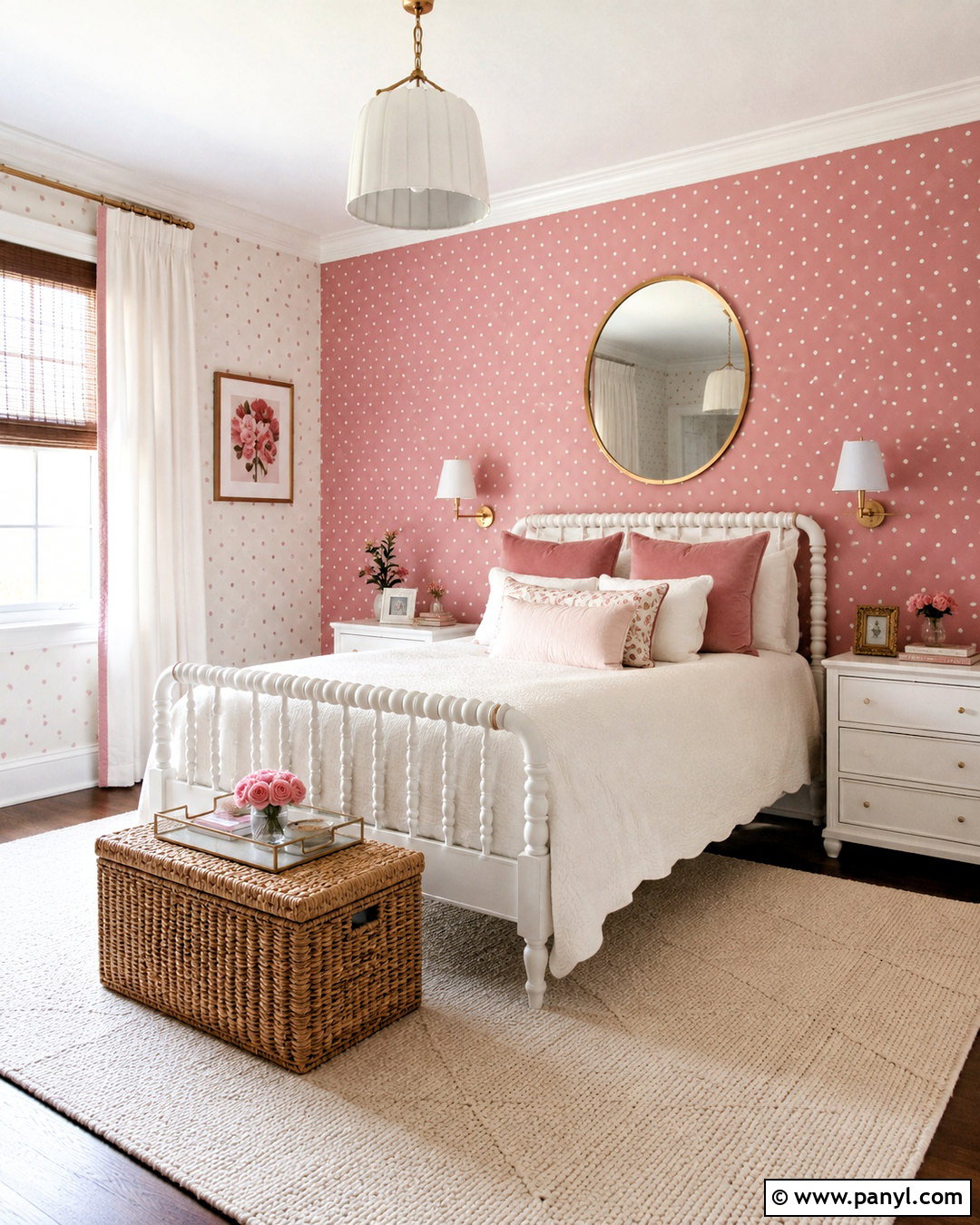
A painted dot border adds pattern without filling the entire wall. Create two or three neat rows of medium circles around the upper third of a bedroom, nursery, or hallway. Use navy dots on pale blue walls for definition, or warm white dots over dusty rose for a softer finish. Keep the space below the border visually simple with a painted dresser, natural wood bed, or low storage cabinet. Solid curtains and bedding prevent the room from becoming overly patterned. Align the dots using a level and lightly drawn guide lines, especially around corners. Paint the ceiling and trim a clean white to frame the design. The border creates a finished architectural effect and is easier to update than an all-over dot wall.
16. Half Wall Dot Pattern
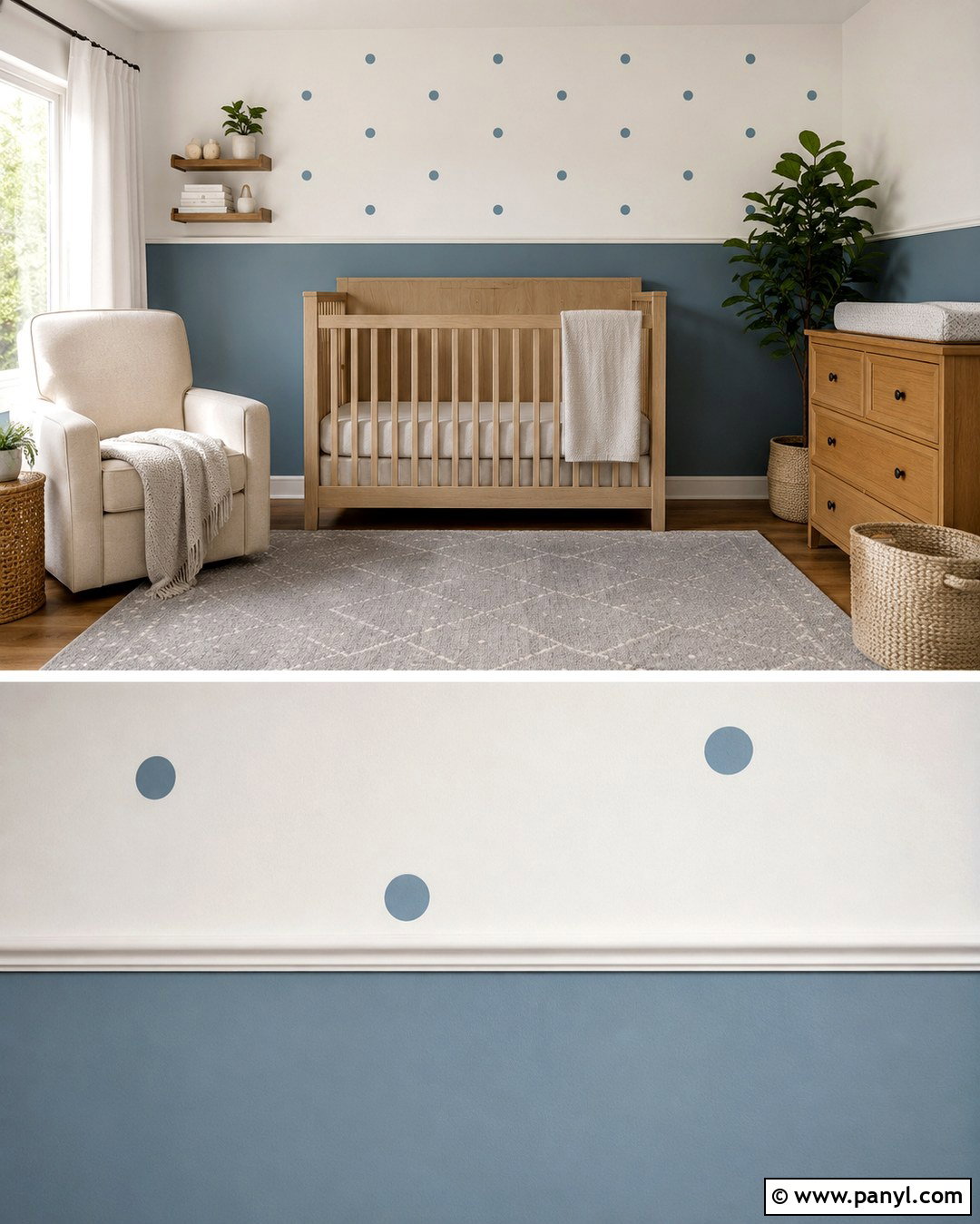
Combining painted dots with a solid lower wall creates a structured, practical design. Paint the bottom half dusty blue and the upper half warm white with matching dusty blue dots. Separate the sections using a narrow white chair rail for a crisp transition. In a child’s bedroom, place a white bed against the wall and add natural wood storage, navy bedding, and a soft gray rug. For a nursery, substitute a light oak crib and an ivory chair. The darker lower section helps visually ground furniture, while the patterned upper area keeps the room bright. Measure the dividing line carefully around the entire space. This complete treatment brings color, pattern, and architectural definition together without requiring complicated carpentry or expensive wallpaper.
17. Geometric Dot Grid Wall
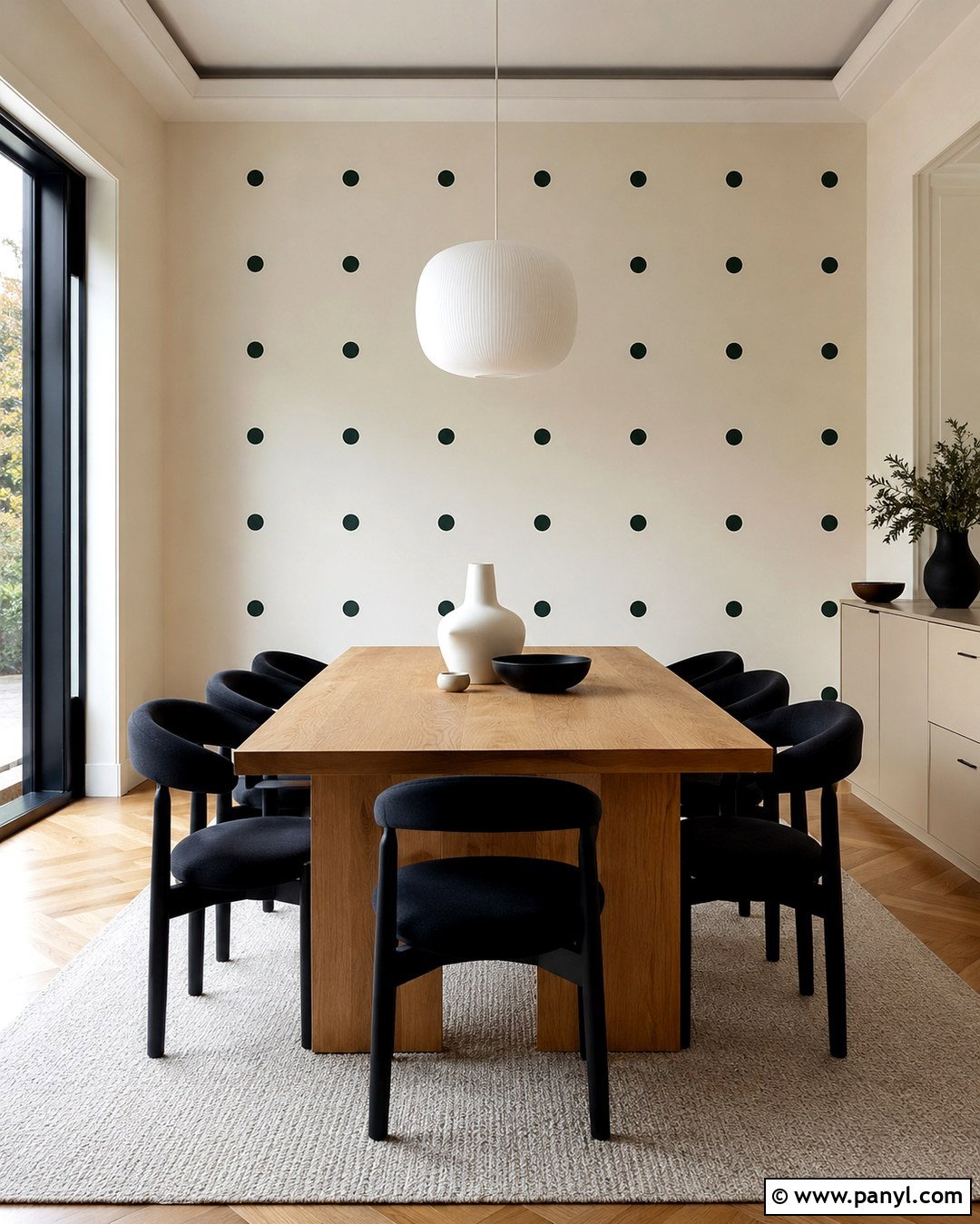
A measured dot grid brings order and modern rhythm to a wall. Paint identical dark green circles over a soft beige background, arranging them in straight rows with equal spacing. Use a laser level or carefully marked guide lines to maintain alignment from one side to the other. Complete the dining area with a rectangular oak table, curved black chairs, and a simple white pendant light. A low cream cabinet and minimal ceramic decor keep the room functional without hiding the pattern. Choose solid upholstery and window treatments because additional geometric prints may compete with the grid. This controlled design makes dots feel clean and architectural rather than childlike. It is especially effective on a square or rectangular wall with few interruptions.
18. Metallic Dot Dining Room Wall
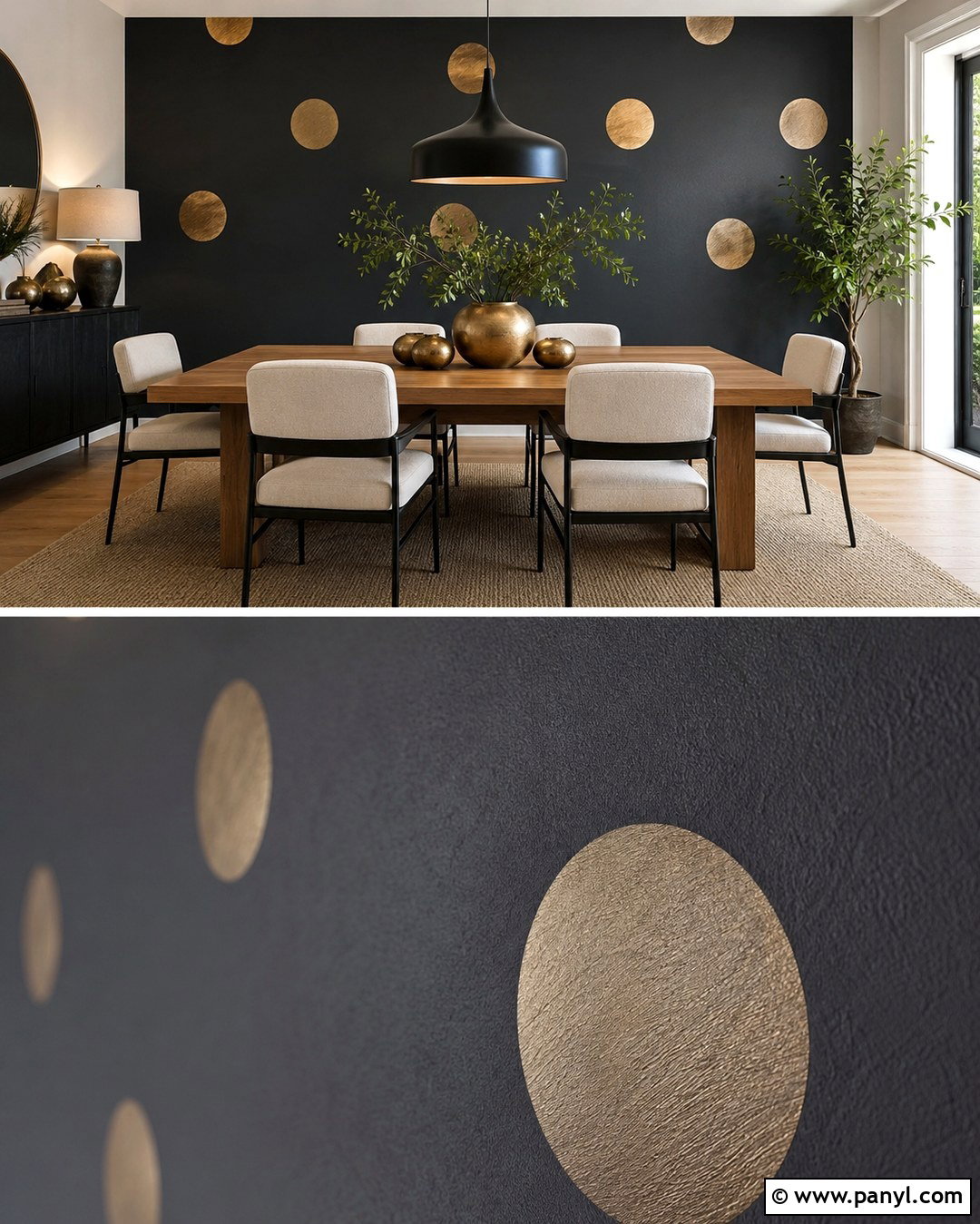
Metallic dots can give a dining room a subtle reflective detail when used with restraint. Choose a matte charcoal base and paint small brushed bronze circles in a widely spaced pattern. Their finish will catch bright natural and artificial light without covering the wall in shine. Add a medium oak dining table, upholstered cream chairs, and a sculptural black pendant. A light neutral rug brightens the lower half of the room, while bronze candlestick-shaped decor and simple ceramic pieces connect with the dots. Keep adjacent walls warm white and use white or light oak trim. Test the metallic paint first because multiple thin coats may create a smoother finish. The completed space feels modern, welcoming, and suitable for everyday meals.
19. Monochrome Dot Bedroom Wall
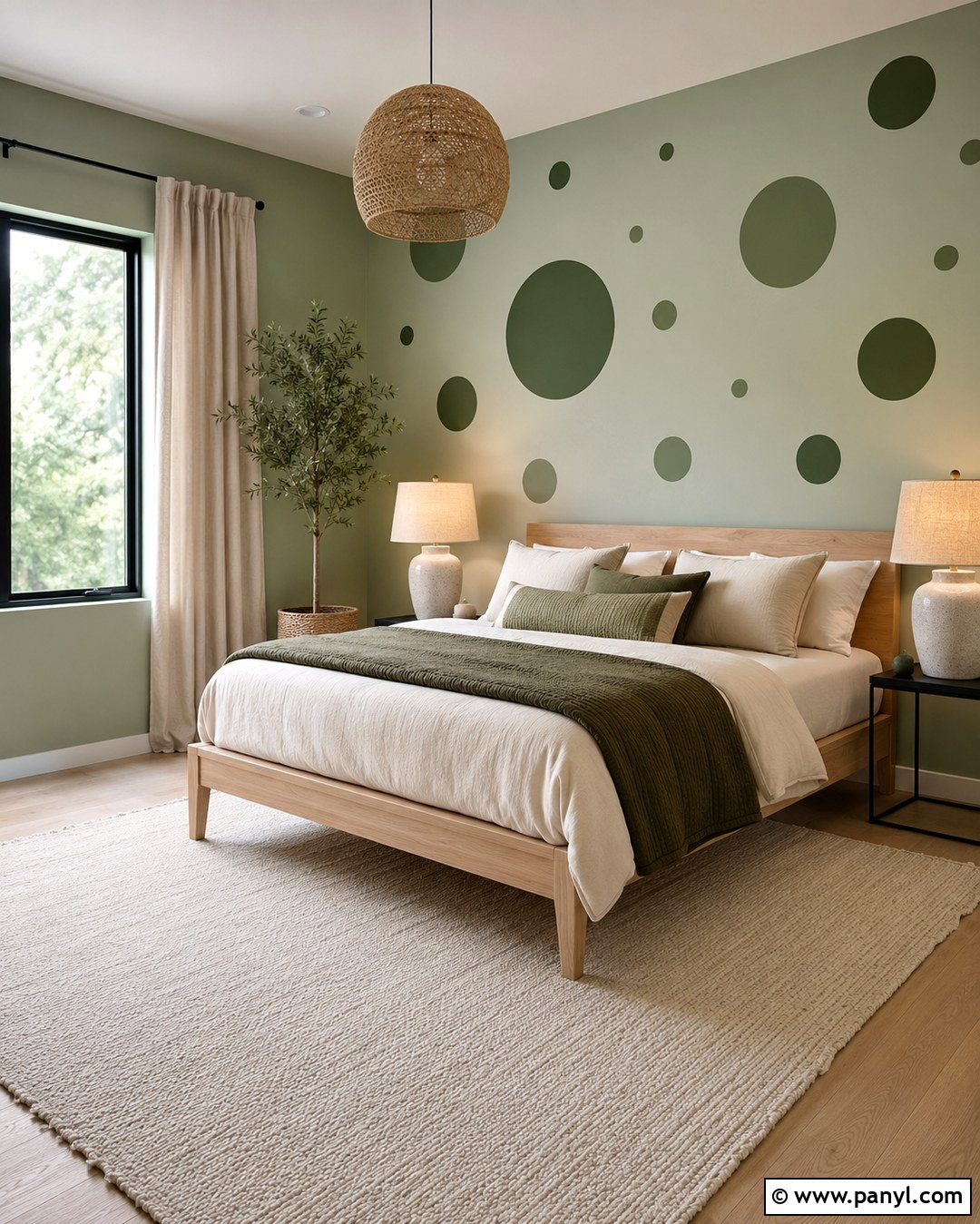
Using one color family allows a dot pattern to add dimension without introducing strong contrast. Paint the base a pale dusty green, then apply dots in medium sage and deeper olive. Mix two circle sizes and arrange them in balanced, irregular clusters. Complete the bedroom with a light oak bed, ivory bedding, an olive quilt, and oatmeal curtains. A cream rug and ceramic lamps prevent the green palette from feeling too heavy. Add one black accent, such as a slim curtain rod or small side table, to sharpen the room. Matching the dots to surrounding textiles creates a cohesive layered effect. This monochrome approach is calm enough for a restful bedroom but still more distinctive than a plain painted accent wall.
20. Colorful Dot Entryway Wall
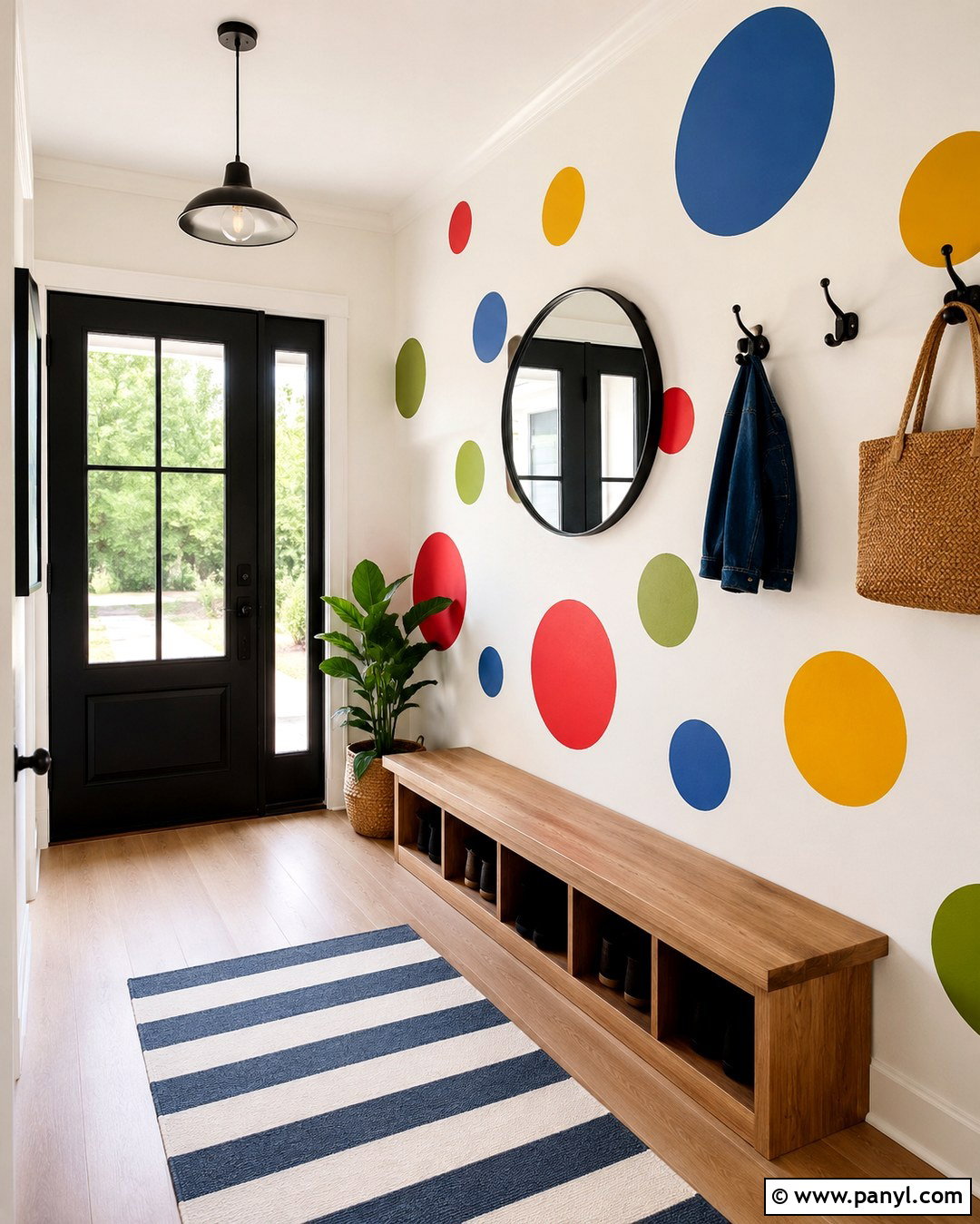
An entryway offers the perfect place to experiment with a lively dot pattern. Cover one wall in warm white and add medium circles in cobalt blue, tomato red, golden yellow, and fresh green. Arrange them loosely but leave open space around the doorframe, hooks, and light switches. Ground the colorful wall with a narrow natural oak bench, black coat hooks, and a durable striped runner containing only two of the dot colors. A round black mirror introduces a larger circular shape without directly repeating the pattern. Use closed shoe storage to control clutter and keep accessories simple. This complete entrance feels upbeat and memorable while remaining practical. It also brings personality into the home without committing an entire living area to bold color.
Conclusion:
Painting Dots On Walls can transform an ordinary surface into a feature that supports the entire room. The most successful designs coordinate dot size, spacing, color, furniture, textiles, and lighting as one complete look. Small repeated circles feel delicate and organized, while oversized or irregular dots create stronger visual energy. Neutral combinations work well in restful spaces, and colorful palettes bring cheerful character to nurseries, playrooms, and entryways. Before starting, test the colors, prepare the wall, plan the pattern, and use only a small amount of paint on the stencil or sponge. With careful placement and a balanced room design, painted dots can provide the impact of patterned wallpaper with a more personal, customizable finish.

Related Ideas and Inspiration:
Leave a Reply