
Paint chips can become far more than temporary color samples. With thoughtful spacing, a coordinated palette, and removable adhesive, they can create affordable wall art that feels polished and personal. These 30 Paint Chip Wall Ideas cover everything from orderly grids and soft ombré arrangements to oversized murals, framed artwork, and practical office displays. Each look considers the surrounding furniture, textiles, lighting, and decor, helping the finished wall feel connected to the entire room. Use leftover swatches, discontinued fan decks, purchased sample cards, or cardstock cut into paint-chip shapes. If you need many store samples, ask permission before collecting them. Whether you prefer subtle neutrals or joyful rainbow color, you will find a complete, achievable look among these 30 Paint Chip Wall Ideas.
1. Rainbow Paint Chip Wall
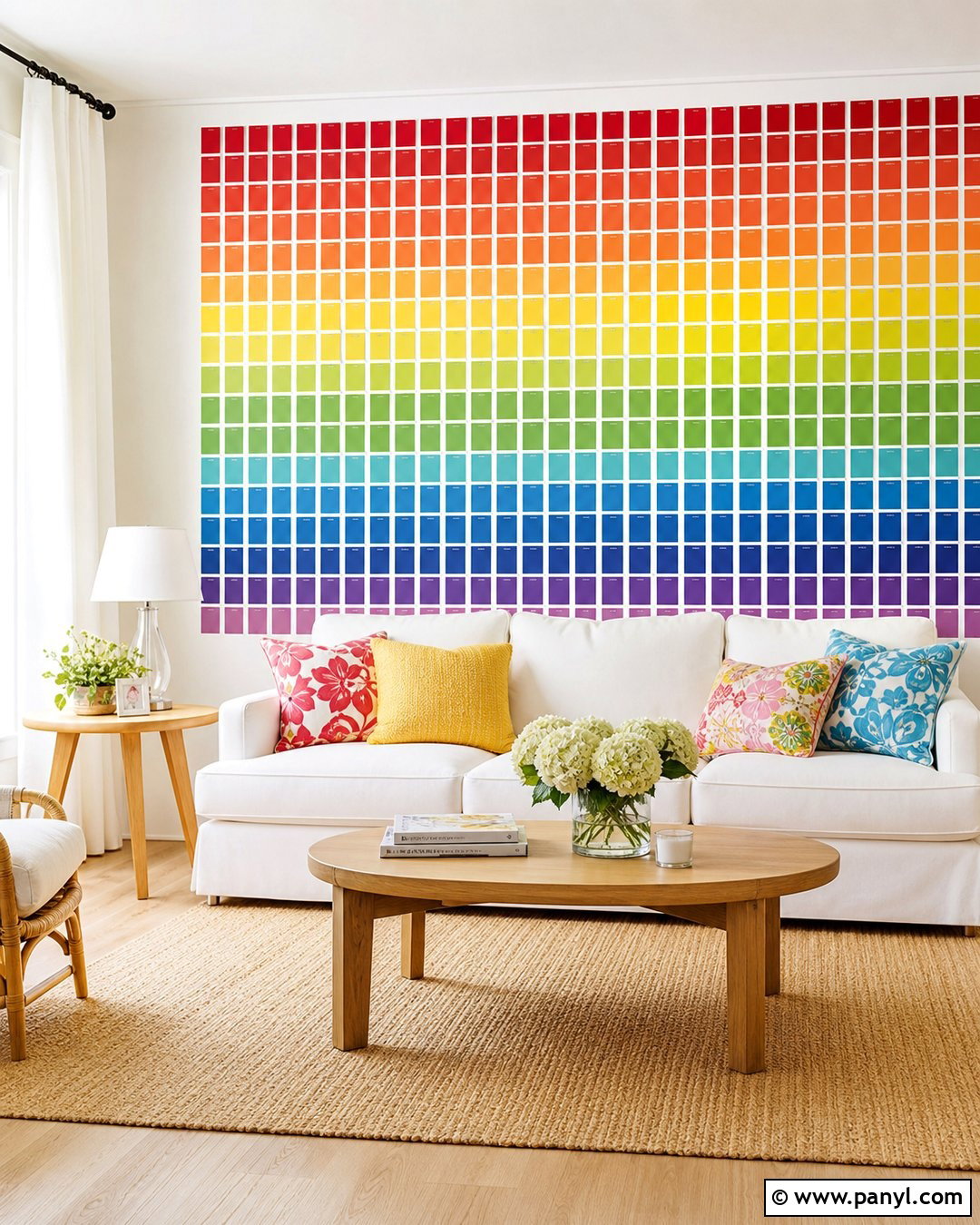
A rainbow paint chip wall brings lively color to a plain room without requiring permanent paint. Arrange equal-sized chips in horizontal bands that move from red and coral through yellow, green, blue, and violet. Keep narrow white gaps between the cards so the installation looks clean rather than crowded. This design works especially well behind a white sofa, simple bed, or streamlined desk. Repeat two or three swatch colors in pillows, storage boxes, or a rug to connect the wall with the room. Light oak furniture and white curtains keep the bright palette balanced. Use removable poster strips or low-tack mounting squares, measuring every row with a level before attaching the chips.
2. Ombre Paint Chip Wall
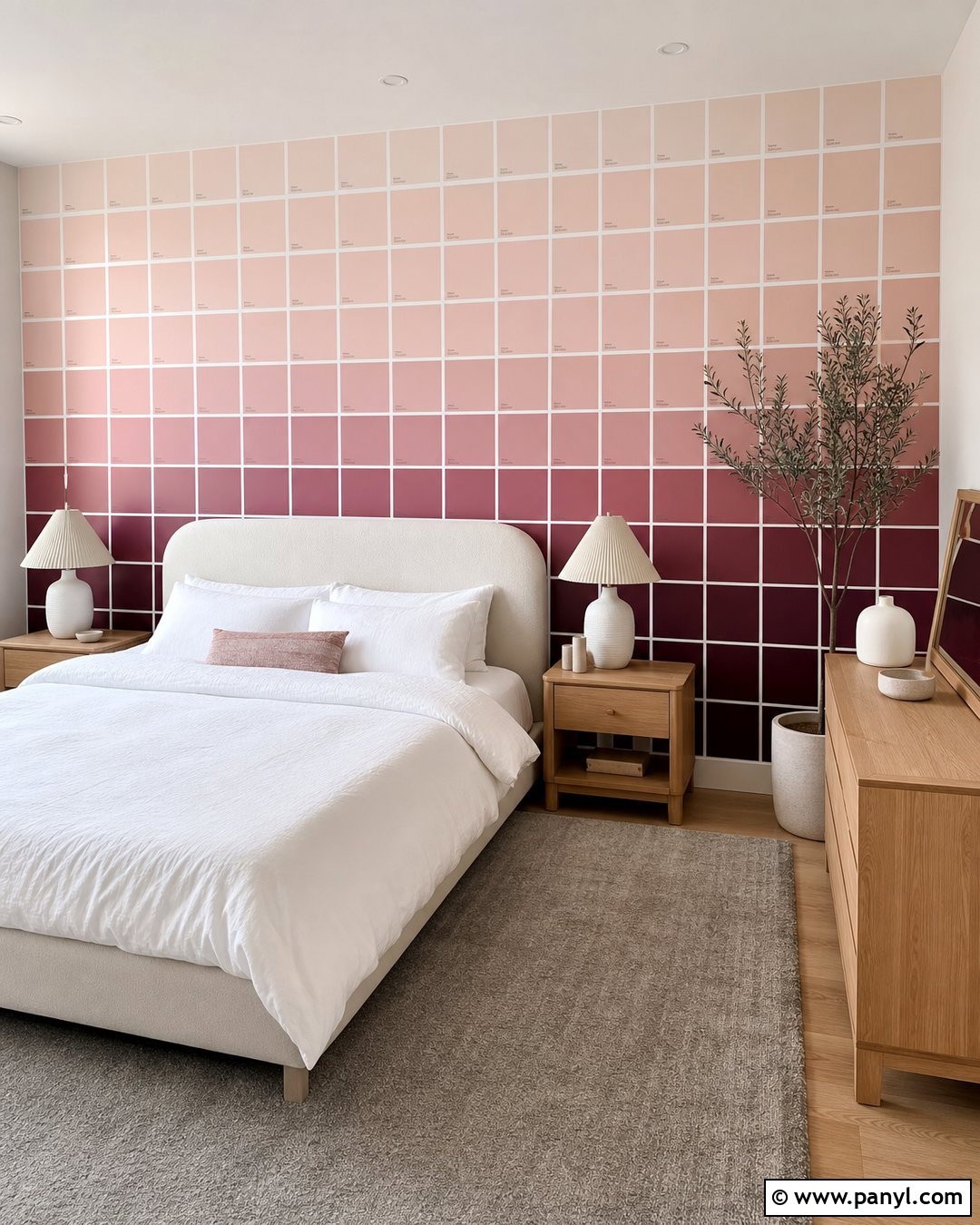
For a softer statement, create an ombré paint chip wall using one color family. Begin with pale blush, powder blue, sage green, or warm beige near the ceiling, then gradually introduce deeper shades toward the floor. The transition should feel smooth, so sort every chip before installation and compare neighboring colors in natural light. Covering one complete accent wall produces a striking result, while a wide rectangular panel offers a quieter alternative. Pair the design with furniture in cream, oak, or light gray. Add a few accessories matching the middle tones rather than the darkest shade. Consistent card size, straight spacing, and an uncluttered room will make this inexpensive project look intentional.
3. Paint Chip Grid Wall
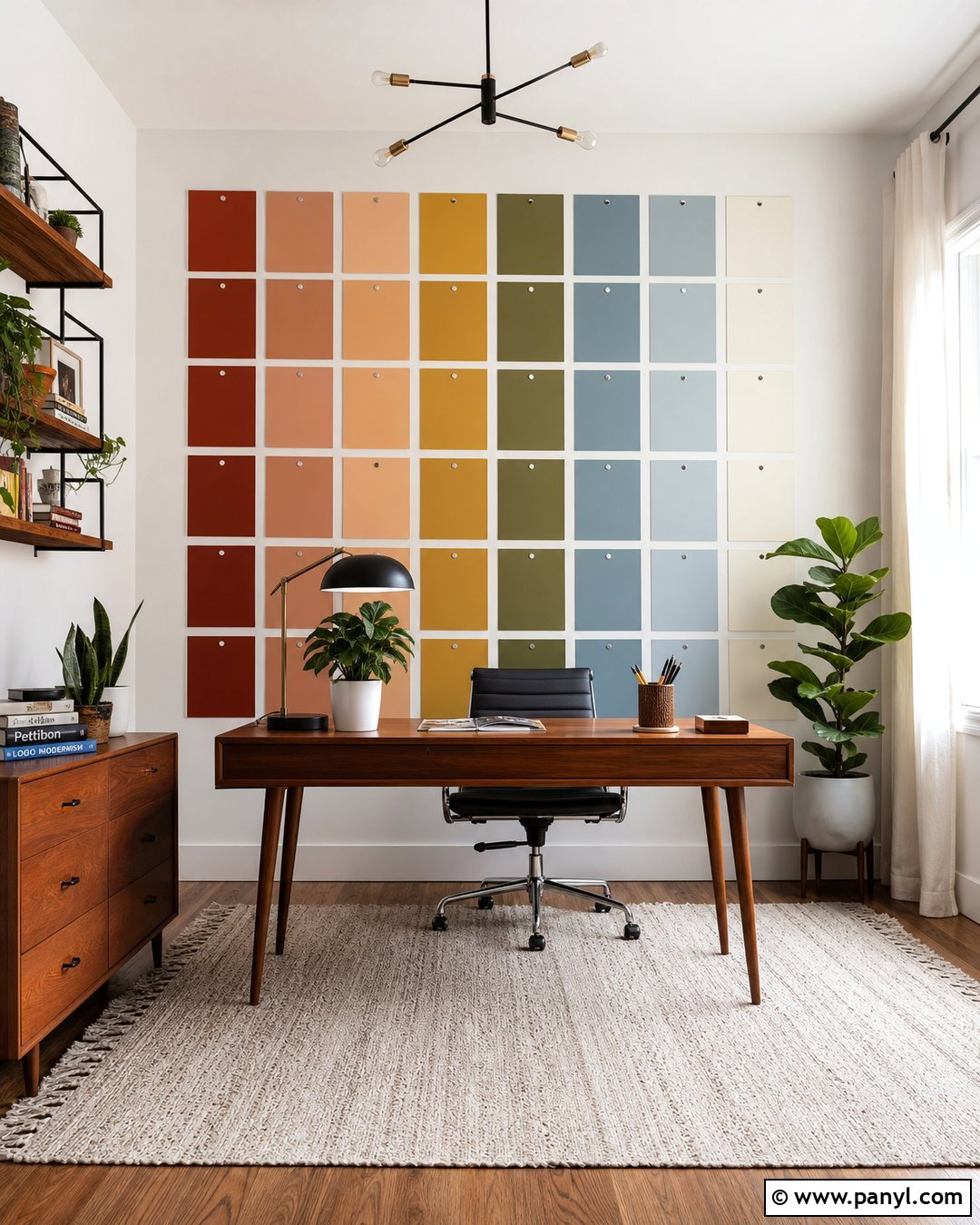
Clean lines make a paint chip grid wall ideal for modern living rooms, offices, and bedrooms. Choose four to eight related colors, then place the cards in evenly measured rows and columns. A palette of rust, peach, mustard, olive, and dusty blue feels warm and contemporary without becoming overly bright. Leave generous space around the outer edges so the arrangement resembles a large piece of graphic art. Complete the room with a low-profile sofa, black metal lighting, and a textured neutral rug. A laser level can simplify installation, but a pencil line and ruler also work. Mount every chip in the same direction to keep printed markings from interrupting the organized pattern.
4. Geometric Paint Chip Wall
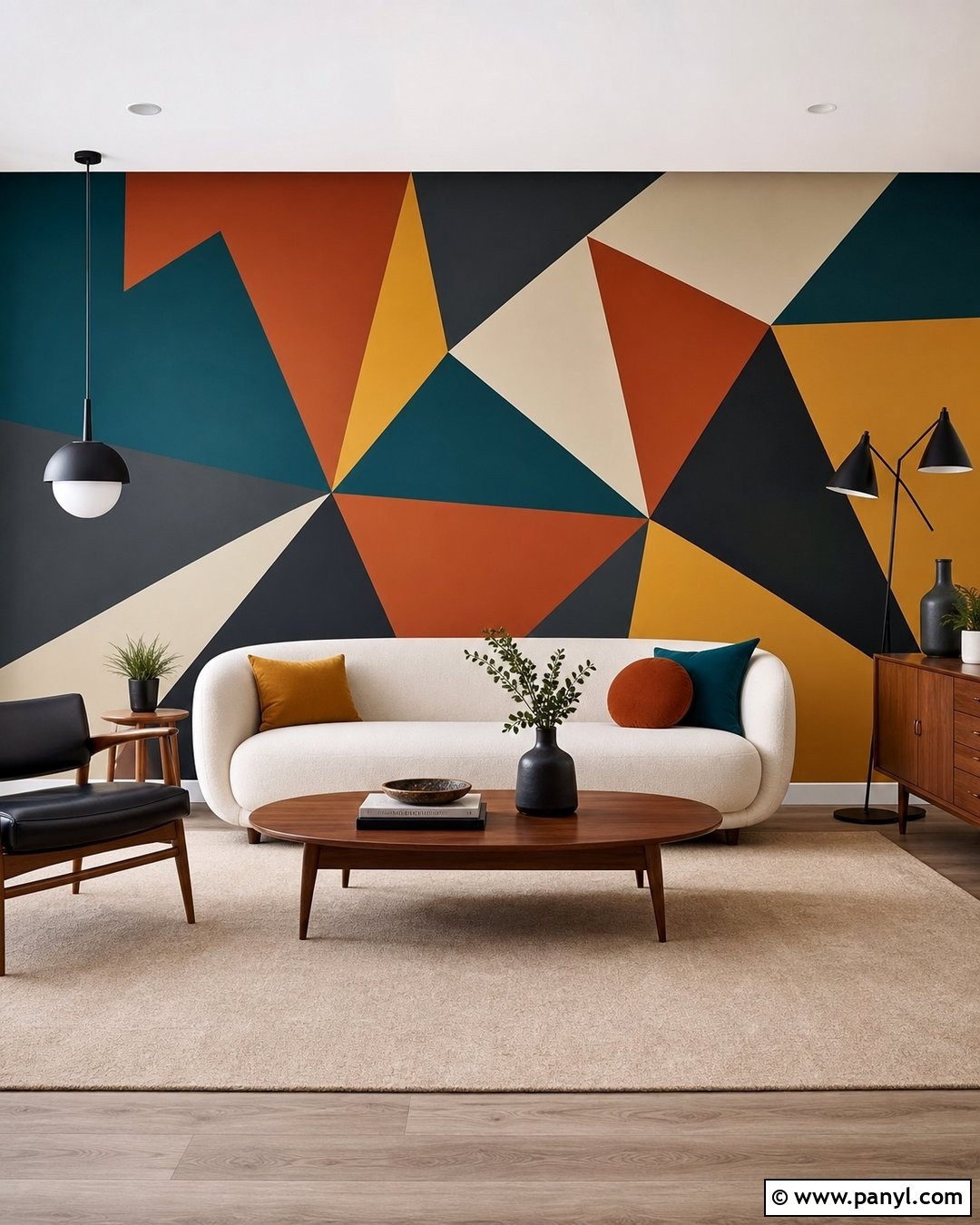
Triangles, diamonds, and angled blocks can turn basic swatches into a bold geometric paint chip wall. Cut the chips with a paper trimmer for crisp edges, then assemble them into a large central pattern behind a console or sofa. Deep teal, terracotta, mustard yellow, cream, and charcoal create a grounded midcentury palette. Let some areas of the original wall remain visible, using that background color as part of the design. Choose streamlined wood furniture and rounded accessories to soften the sharp geometry. A solid rug and simple curtains prevent competing patterns. First lay the entire composition on the floor, photograph it, and label the rows before transferring each piece to the wall.
5. Paint Chip Mosaic Wall
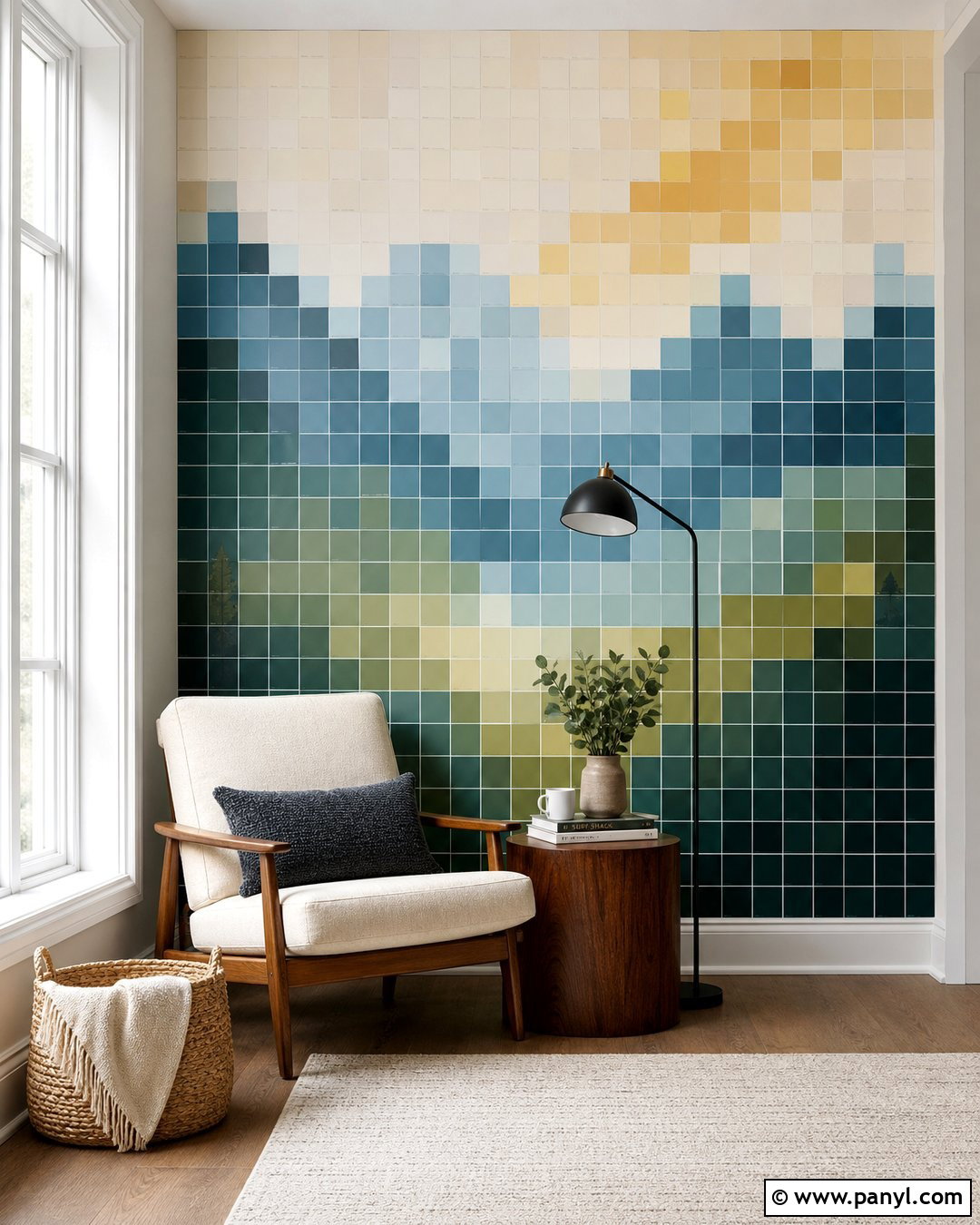
A paint chip mosaic wall feels detailed and artistic while using simple square pieces. Select a reference image with an uncomplicated shape, such as a flower, landscape, sun, or abstract wave. Translate the picture into a grid, assigning each square a color from your collected chips. Surround the mural with a neutral wall and minimal furniture so the image remains easy to recognize. In a reading corner, pair a blue-and-green landscape mosaic with a cream chair, walnut side table, and woven floor basket. Slight variations within each color give the artwork depth. Keep the finished edges rectangular and mount the chips closely together, creating the appearance of one cohesive pixel-based artwork.
6. Sunrise Paint Chip Wall
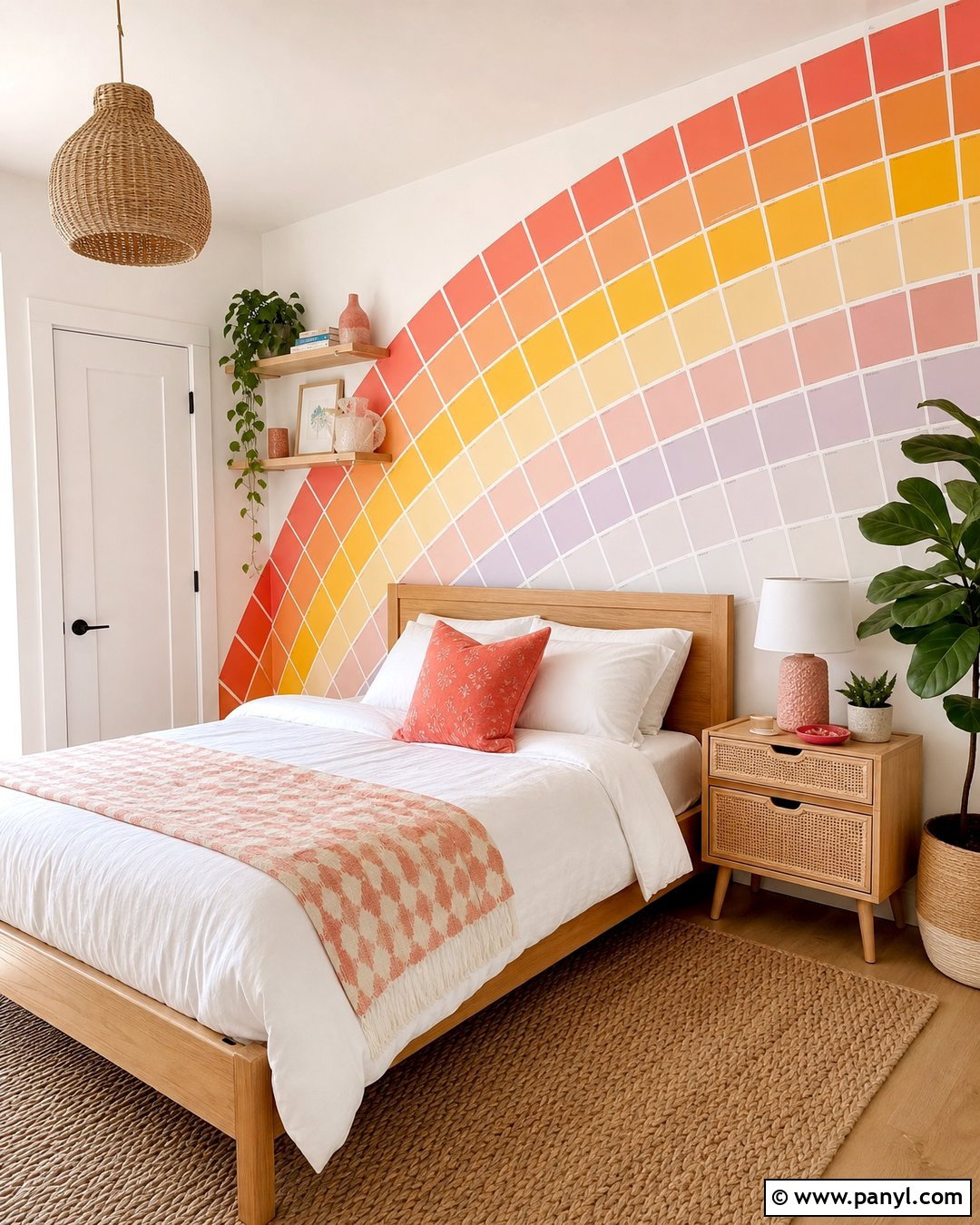
Warm color rising across a wall can make a bedroom or creative studio feel cheerful from the moment you enter. Build a sunrise paint chip wall from a lower corner, beginning with deep coral and orange. Fan the rows upward through peach, golden yellow, blush, and pale lavender. The remaining wall space can stay warm white, giving the curved arrangement plenty of breathing room. Place a natural wood desk or simple upholstered bed beneath the mural. White bedding, cane accents, and a small coral pillow will echo the palette without overwhelming it. Mark curved guidelines lightly in pencil before attaching the chips, and stagger their edges to create a smooth, radiating sense of movement.
7. Pixel Art Paint Chip Wall
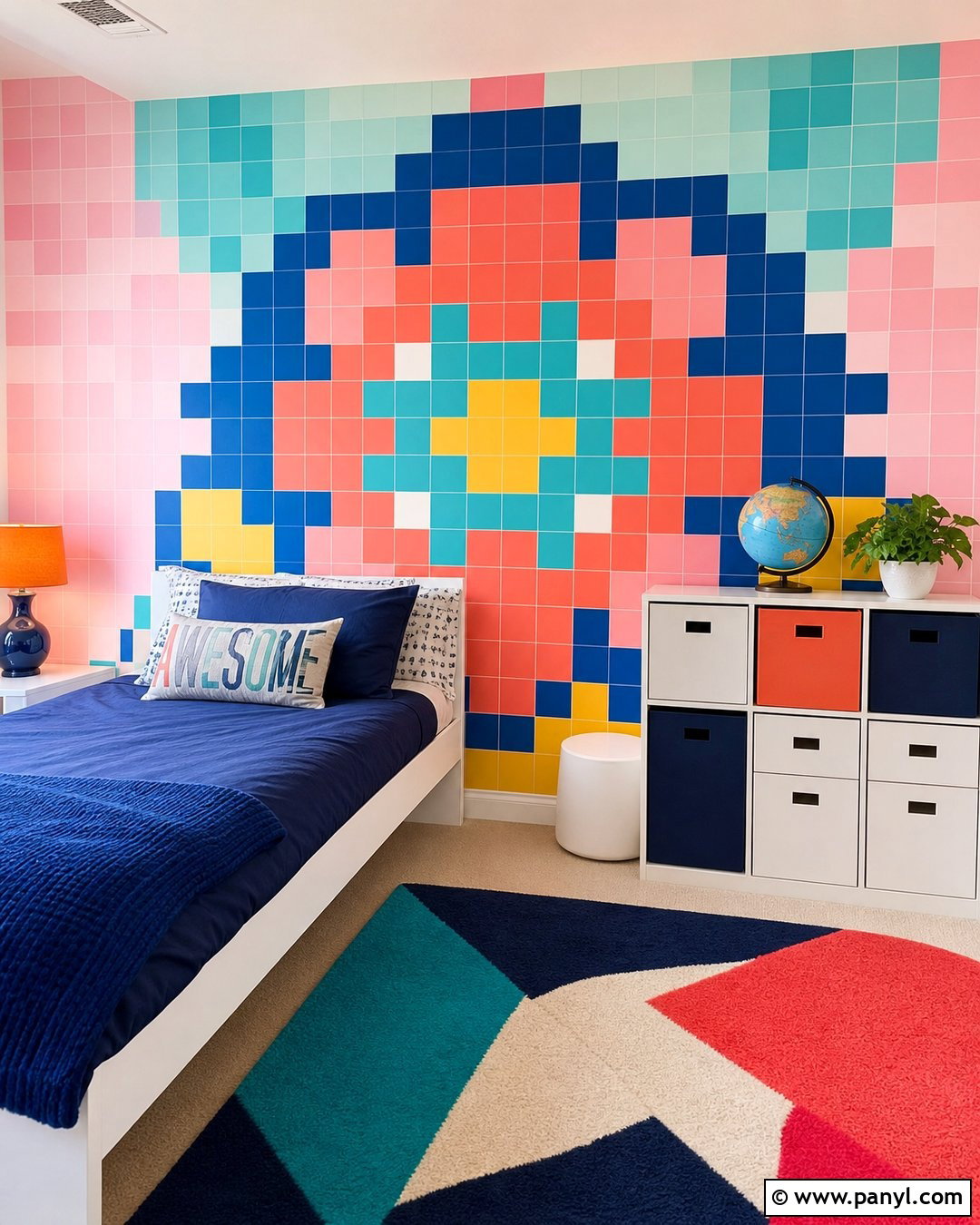
Fans of retro graphics can create a playful pixel art paint chip wall with carefully placed square swatches. Select a simple subject that can be recognized at low resolution, such as a heart, flower, rainbow, fruit, or friendly animal. Build the image against a plain white or light gray wall, using repeated shades to add highlights and shadows. A game room or teen bedroom can support brighter colors, while streamlined furniture keeps the result looking current. Coordinate the artwork with solid bedding, modular storage, and one graphic rug. Plan the image on graph paper before installation. Number each row and attach the squares from the center outward to maintain accurate spacing and proportions.
8. Chevron Paint Chip Wall
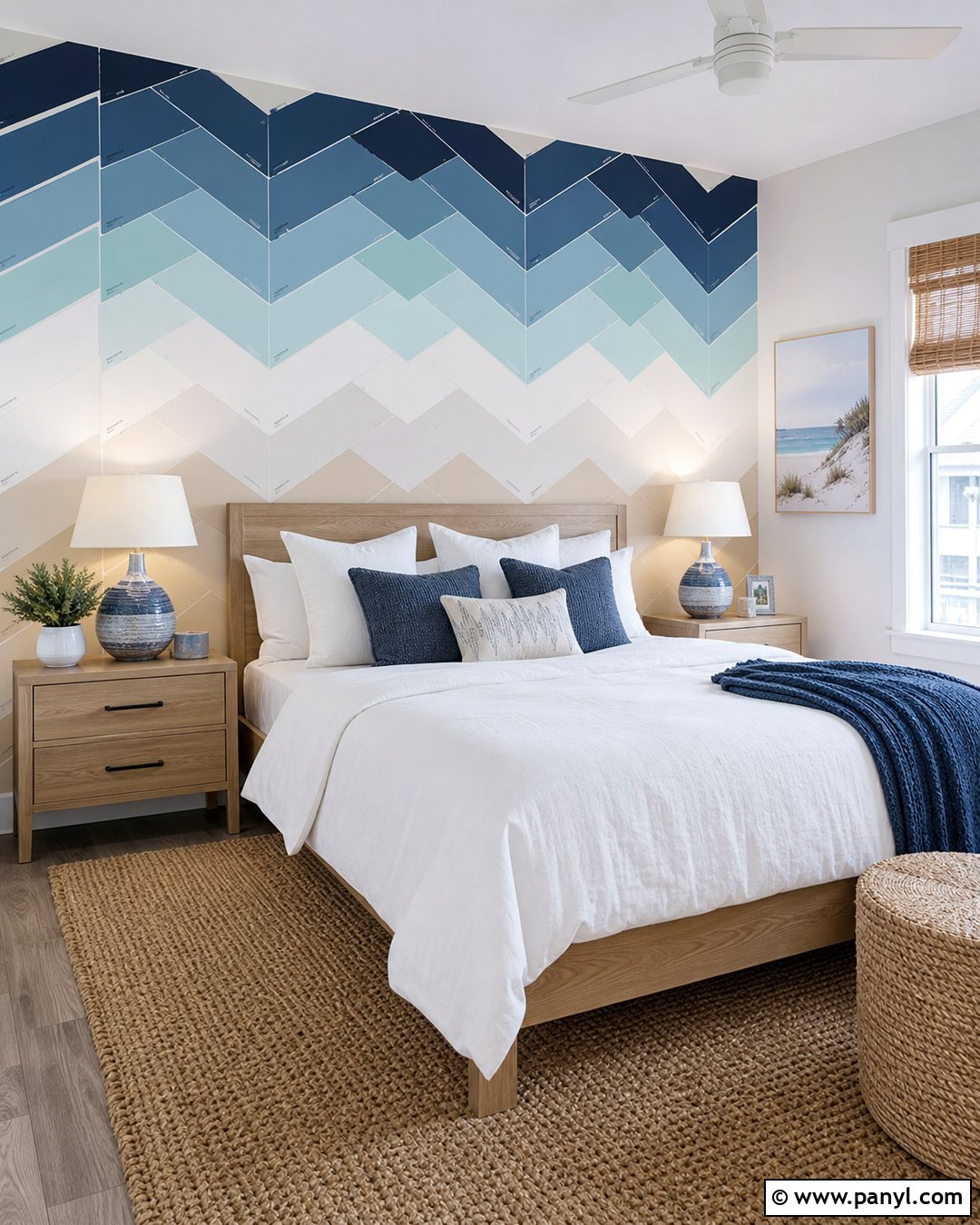
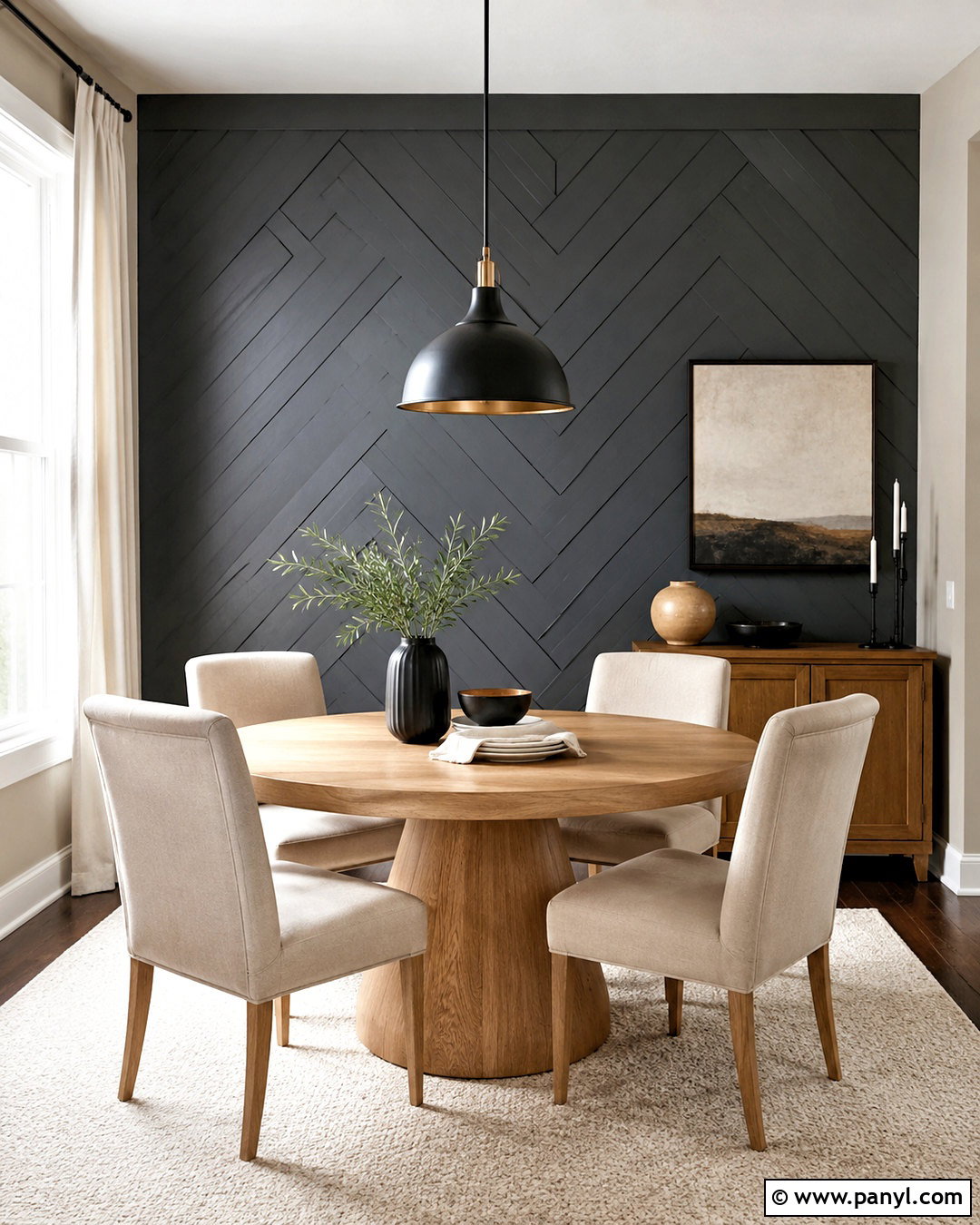
A chevron paint chip wall introduces energetic movement without covering every inch of the surface. Cut rectangular swatches diagonally or arrange full cards at matching angles to form wide zigzag bands. Navy blue, soft denim, pale aqua, and white suit a coastal room, while rust, tan, olive, and cream create an earthy alternative. Install the pattern above a simple sideboard or across the wall behind a bed. Choose mostly solid textiles because the chevron already provides a strong pattern. Matching bedside lamps or balanced decor on the sideboard will make the space feel orderly. Measure each turning point carefully, and use a removable paper template to keep every angled row aligned.
9. Paint Chip Arch Wall
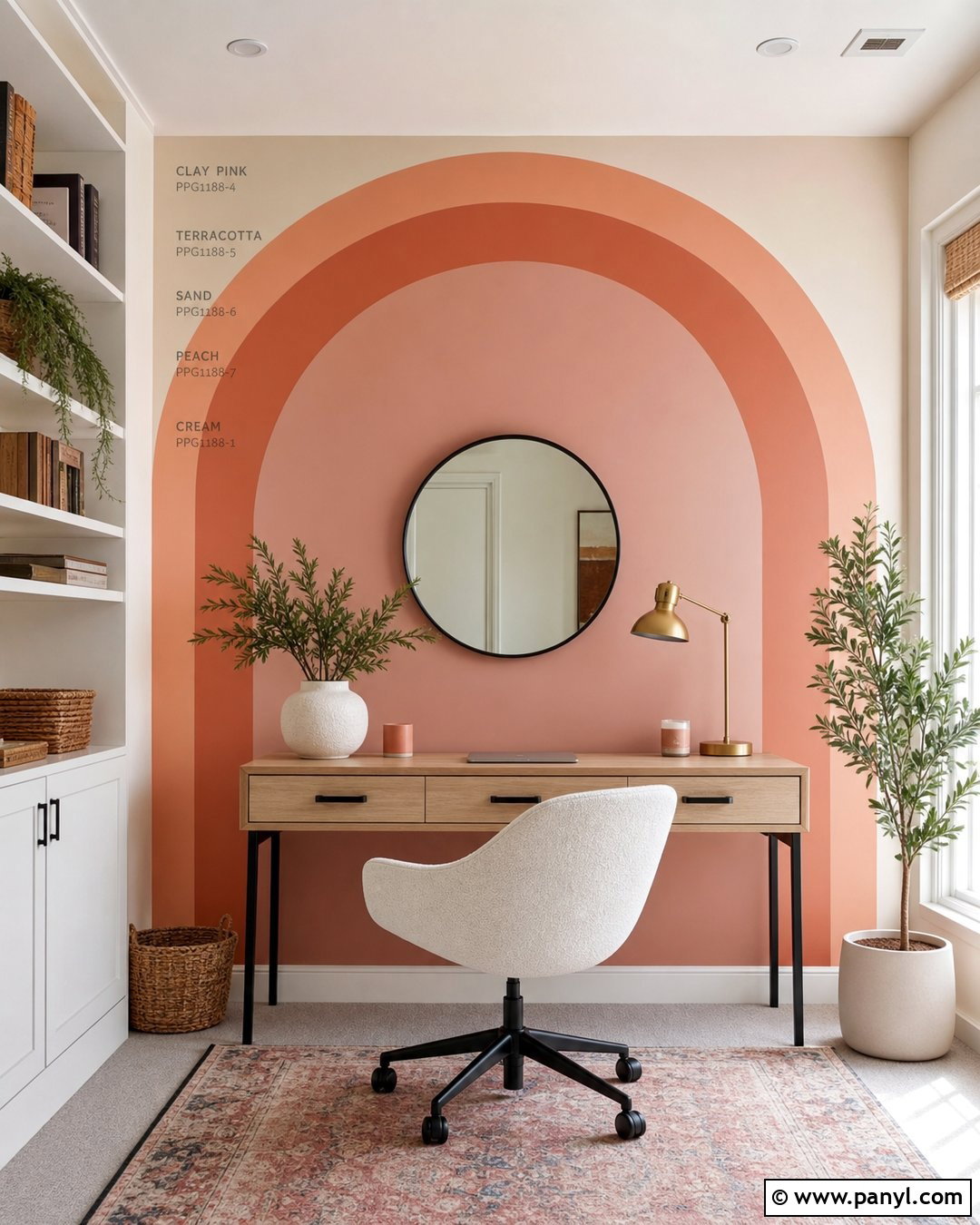
An arch offers an easy way to frame furniture while giving paint chips a clear boundary. Create the shape behind a desk, dresser, reading chair, or narrow console using rows of closely placed swatches. A gradient of clay pink, terracotta, sand, and cream gives the paint chip arch wall a warm, modern appearance. Keep the surrounding wall white and choose light oak furniture with matte black hardware. A round mirror, small plant, and woven basket can complete the compact vignette. Sketch the arch using a pencil tied to string for a controlled curve. Begin at the center and work outward, trimming only the outer chips where necessary to preserve a smooth, finished edge.
10. Circular Paint Chip Wall
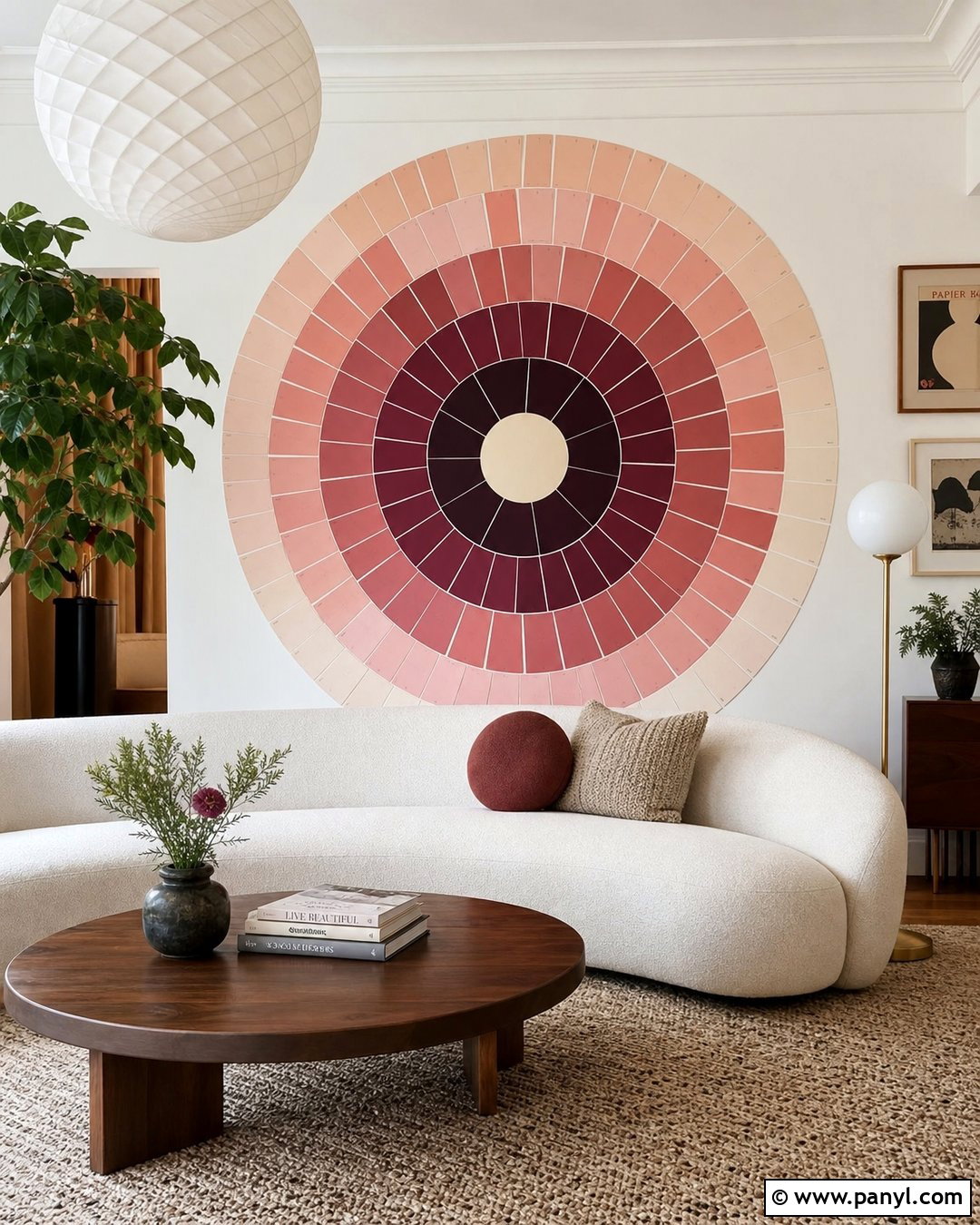
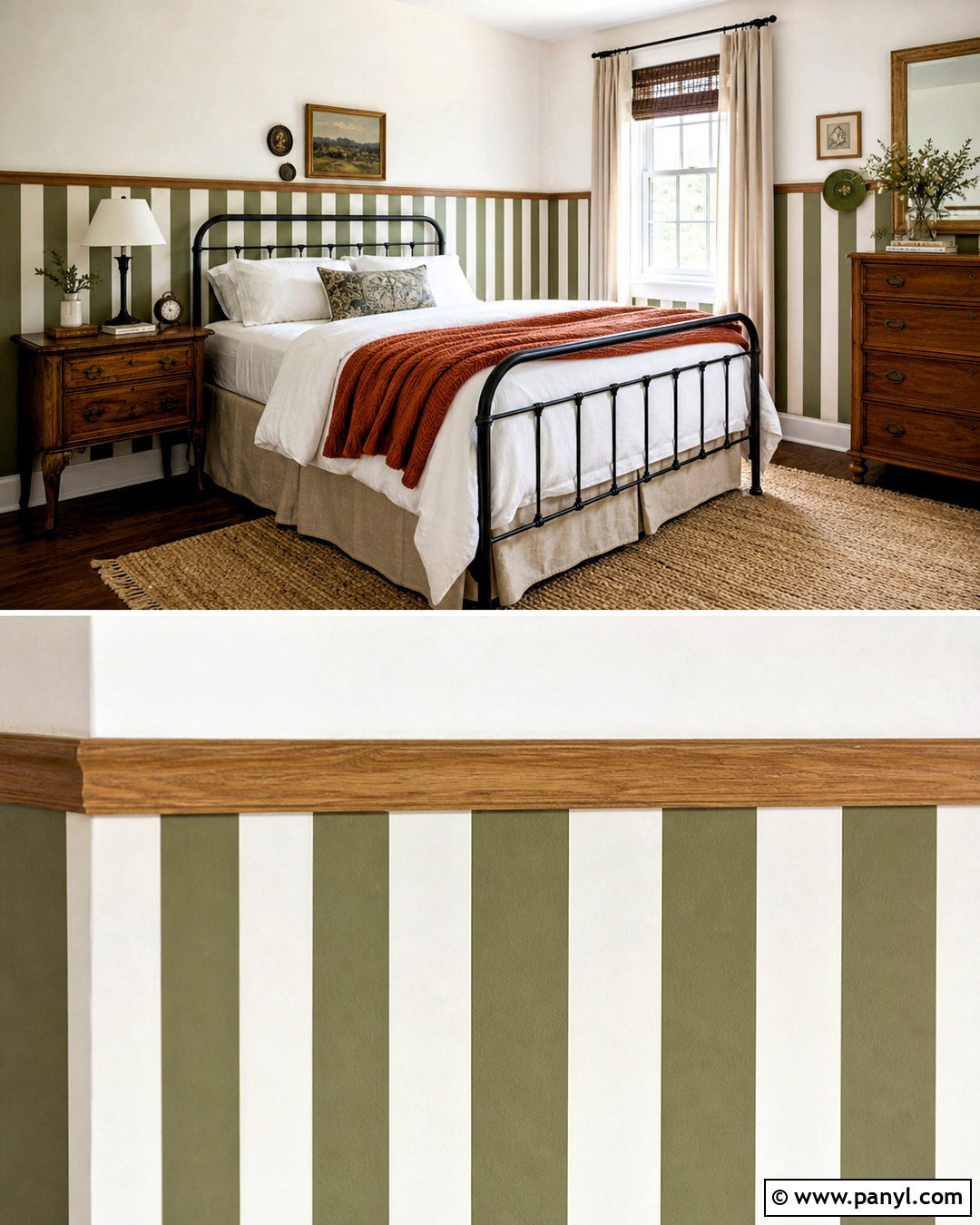
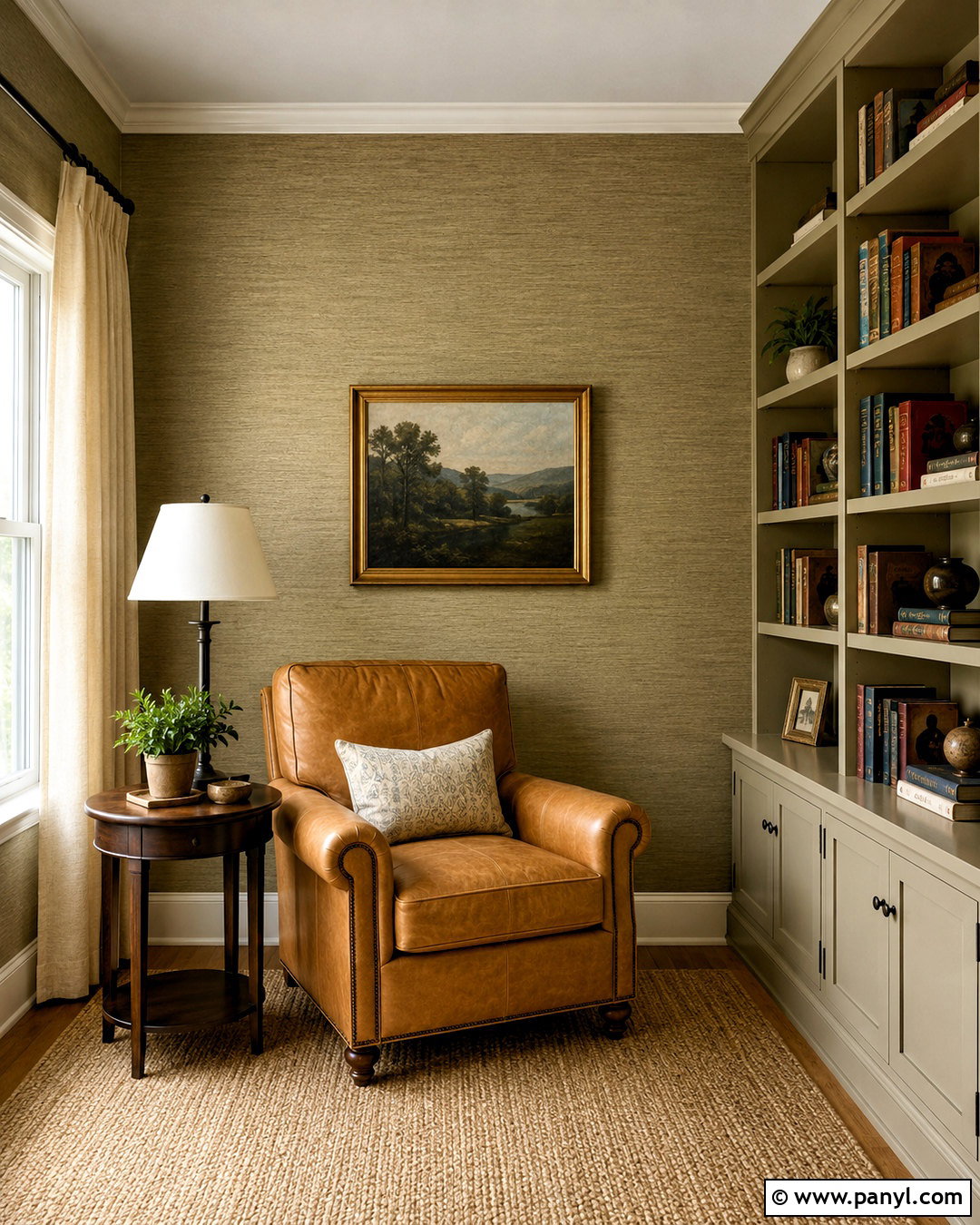
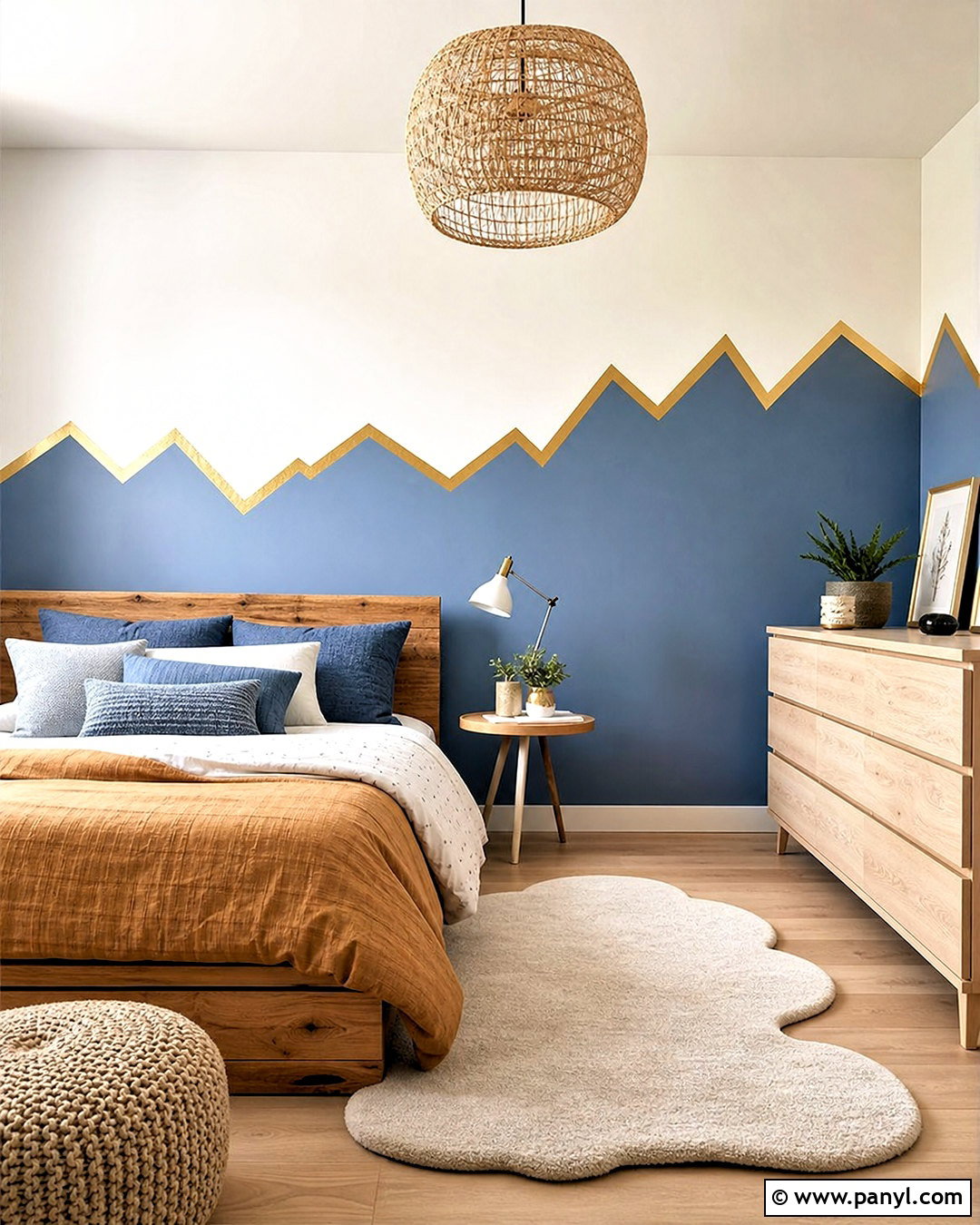
A large circular paint chip wall can act like a colorful medallion above a sofa or dining bench. Arrange rectangular or square samples in concentric rings, starting with the lightest color in the center and deepening the palette toward the outer edge. Dusty rose, plum, burgundy, and muted peach create a rich but welcoming feature. Place the circle on a warm white wall and repeat its rounded shape through a globe pendant, curved furniture, or circular coffee table. Keep nearby artwork minimal so the installation remains the focal point. Create a full-size paper guide before mounting the chips. Careful spacing around each ring will keep the circle symmetrical and visually balanced.
11. Hexagon Paint Chip Wall
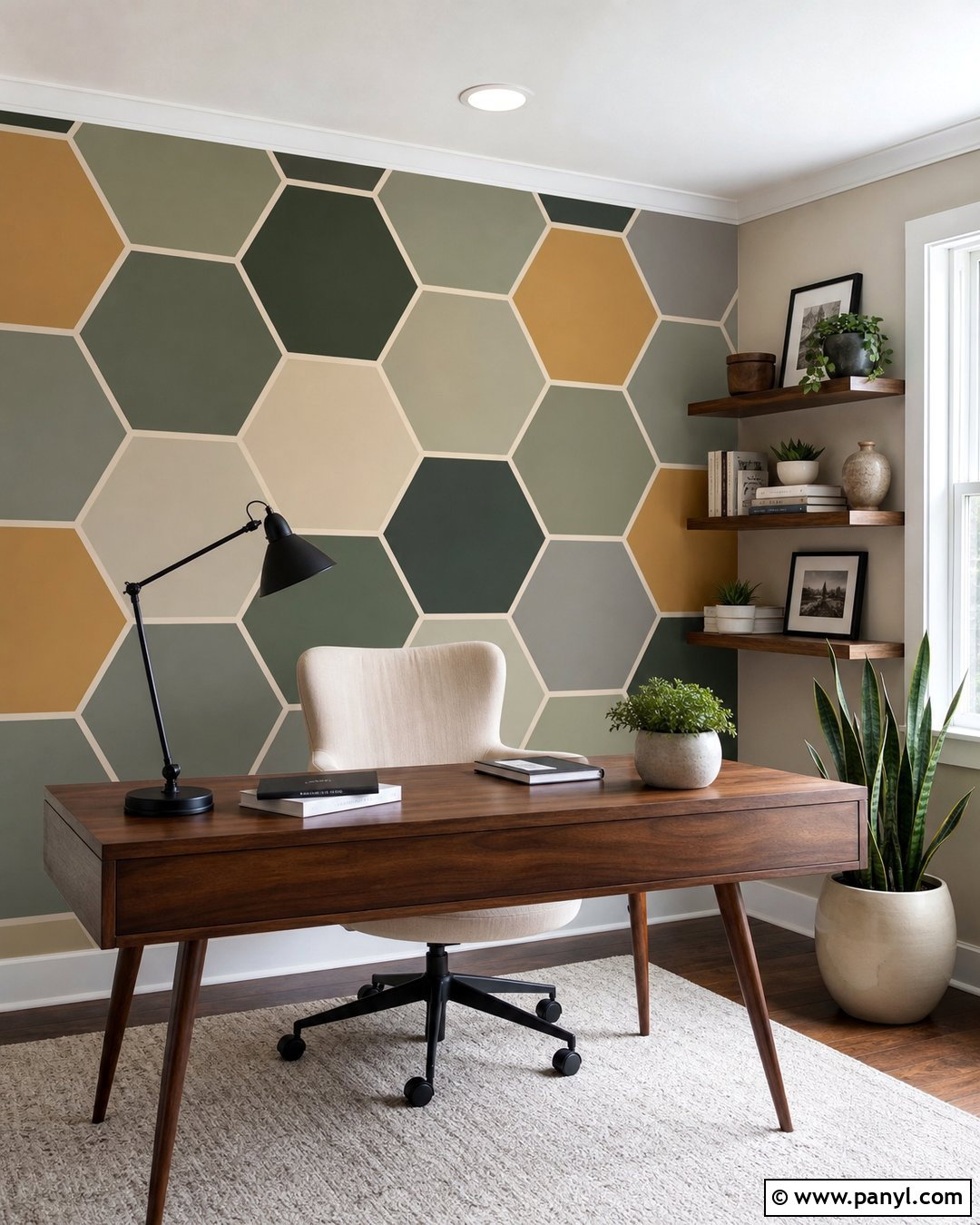
Hexagon-shaped swatches produce a modern pattern that can expand organically across a wall. Cut each paint chip with the same template, then connect the pieces edge to edge like a honeycomb. Use sage green, forest green, muted gold, cream, and warm gray for a nature-inspired palette. Allow the outer edges to break apart gradually rather than ending in a solid rectangle. This paint chip wall works beautifully above a home office desk with walnut shelving, a cream chair, and matte black task lighting. Add plants in simple ceramic pots to reinforce the colors. Before installation, arrange the hexagons on a large table and distribute darker tones evenly so no part feels visually heavy.
12. Botanical Paint Chip Wall
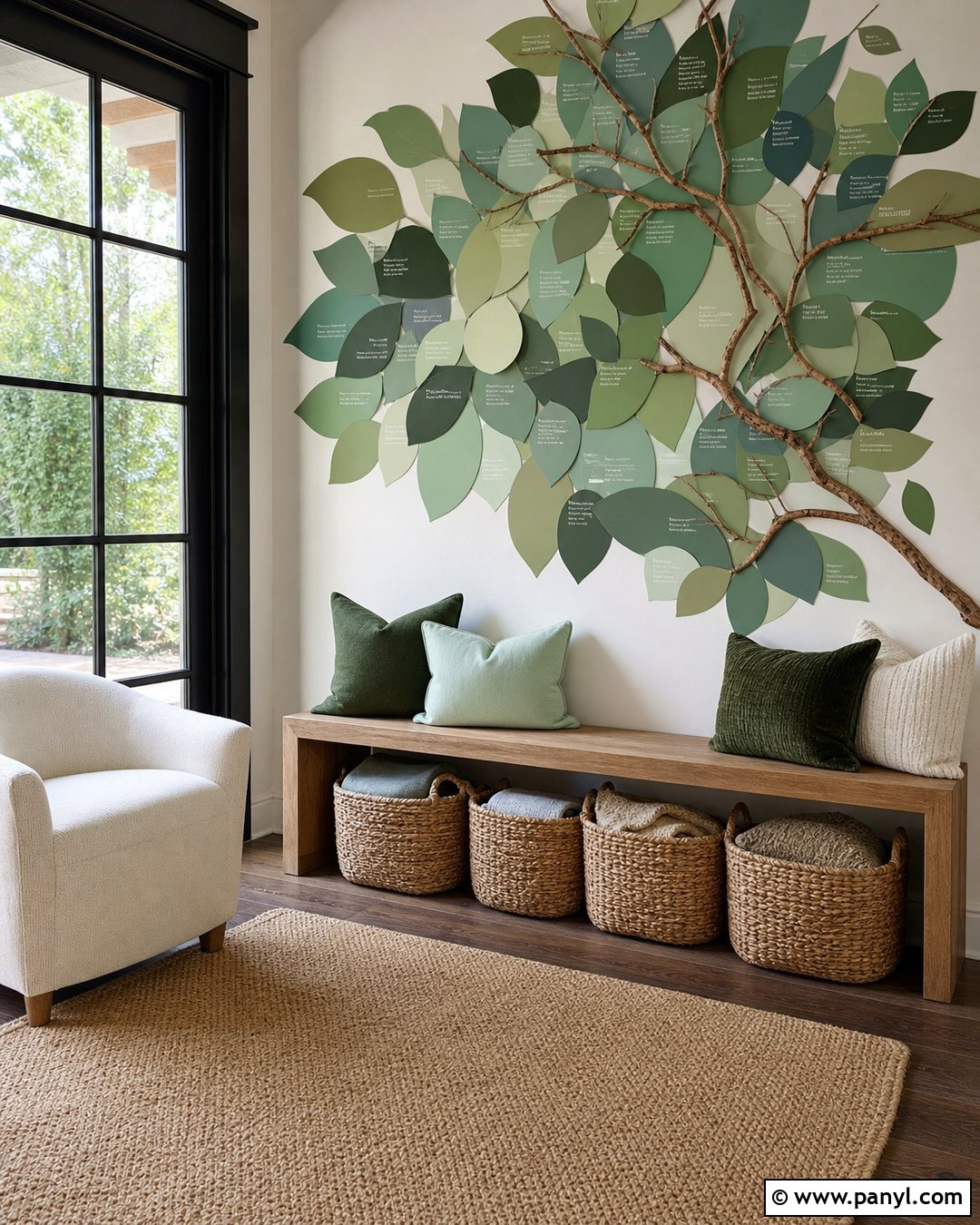
Leaves and stems cut from green paint chips can form a botanical wall that feels fresh without using traditional framed prints. Combine olive, eucalyptus, moss, mint, and deep forest shades, varying the leaf shapes and sizes. Arrange the pieces into several tall branches that rise behind a reading chair or entry bench. A soft beige wall provides warmth, while natural oak furniture, linen cushions, and woven baskets strengthen the organic look. Add only one or two real plants so the paper foliage remains noticeable. Curve the stems gently instead of making them perfectly symmetrical. A small amount of removable adhesive at each end keeps the leaves flat while preserving their delicate, layered appearance.
13. Floral Paint Chip Wall
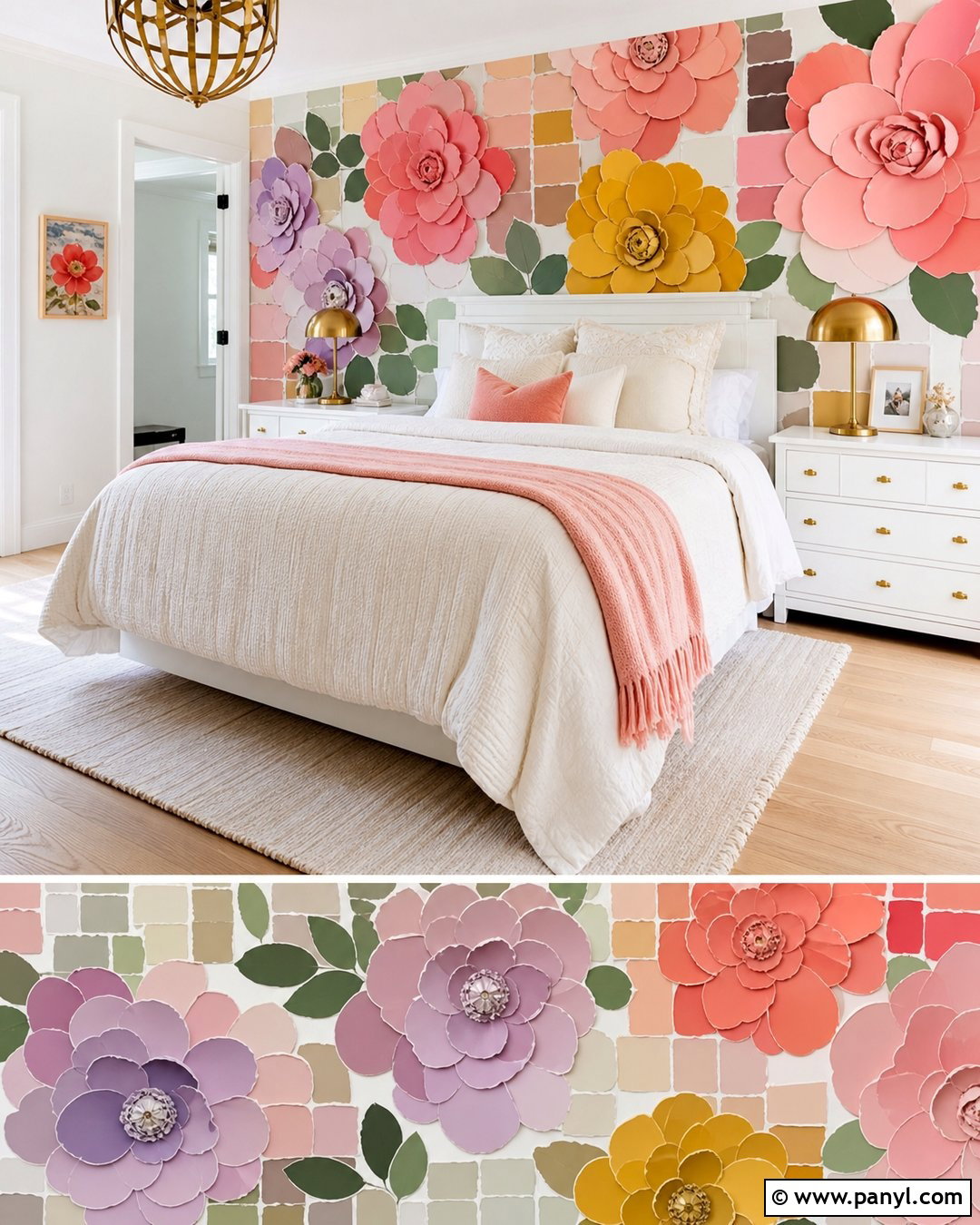
Turn colorful swatches into oversized flowers for a bedroom, nursery, or cheerful craft room. Layer rounded petals cut from blush, coral, peach, lavender, and golden yellow paint chips. Build several complete flowers in different sizes, adding sage and olive leaves between them. Arrange the cluster from one lower corner and let it travel diagonally across the wall. Keep the room balanced with white furniture, pale wood flooring, and solid bedding or curtains. Small brass accents add warmth without competing with the floral paint chip wall. Slightly overlap the petals to create dimension, but keep the centers flat. Use paper templates so repeated petal shapes look consistent across the finished composition.
14. Mountain Paint Chip Wall

A layered mountain scene gives paint chips a natural purpose because their gradual shades create convincing distance. Cut wide triangular silhouettes from blue-gray, slate, muted teal, and pale mist-colored samples. Place the darkest mountains along the bottom and lighter ranges higher on the wall. Add a soft peach or golden circle above the peaks to represent the sun. This paint chip wall suits a child’s bedroom, quiet office, or cabin-inspired guest room. Complete the space with a wood bed or desk, cream textiles, and black metal lighting. Avoid filling the entire wall with small details. Broad, overlapping shapes produce a calmer landscape and make installation much easier to manage.
15. City Skyline Paint Chip Wall
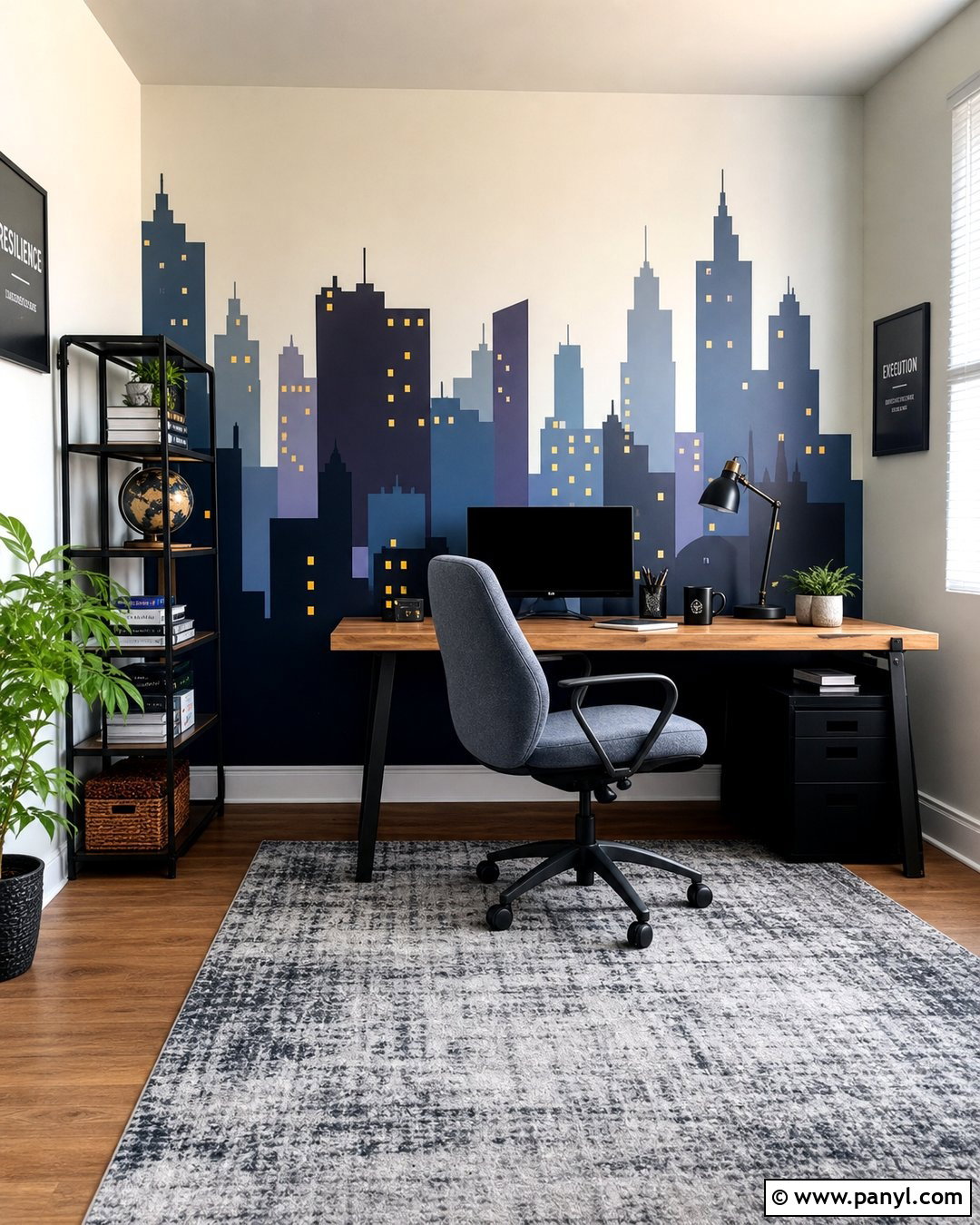
A city skyline made from paint chips can give a home office or teen bedroom a clean urban character. Cut navy, charcoal, slate blue, and muted purple swatches into simple building silhouettes. Vary the heights, but align the lower edges along one straight baseline above a desk or low cabinet. Tiny warm yellow squares can suggest lit windows without making the design too busy. Use a pale gray wall as the sky and furnish the room with black metal shelving, medium-tone wood, and a streamlined task chair. Keep cords and desk accessories organized so the skyline remains prominent. Create the entire arrangement on removable backing paper if you want easier installation or future relocation.
16. Color Block Paint Chip Wall
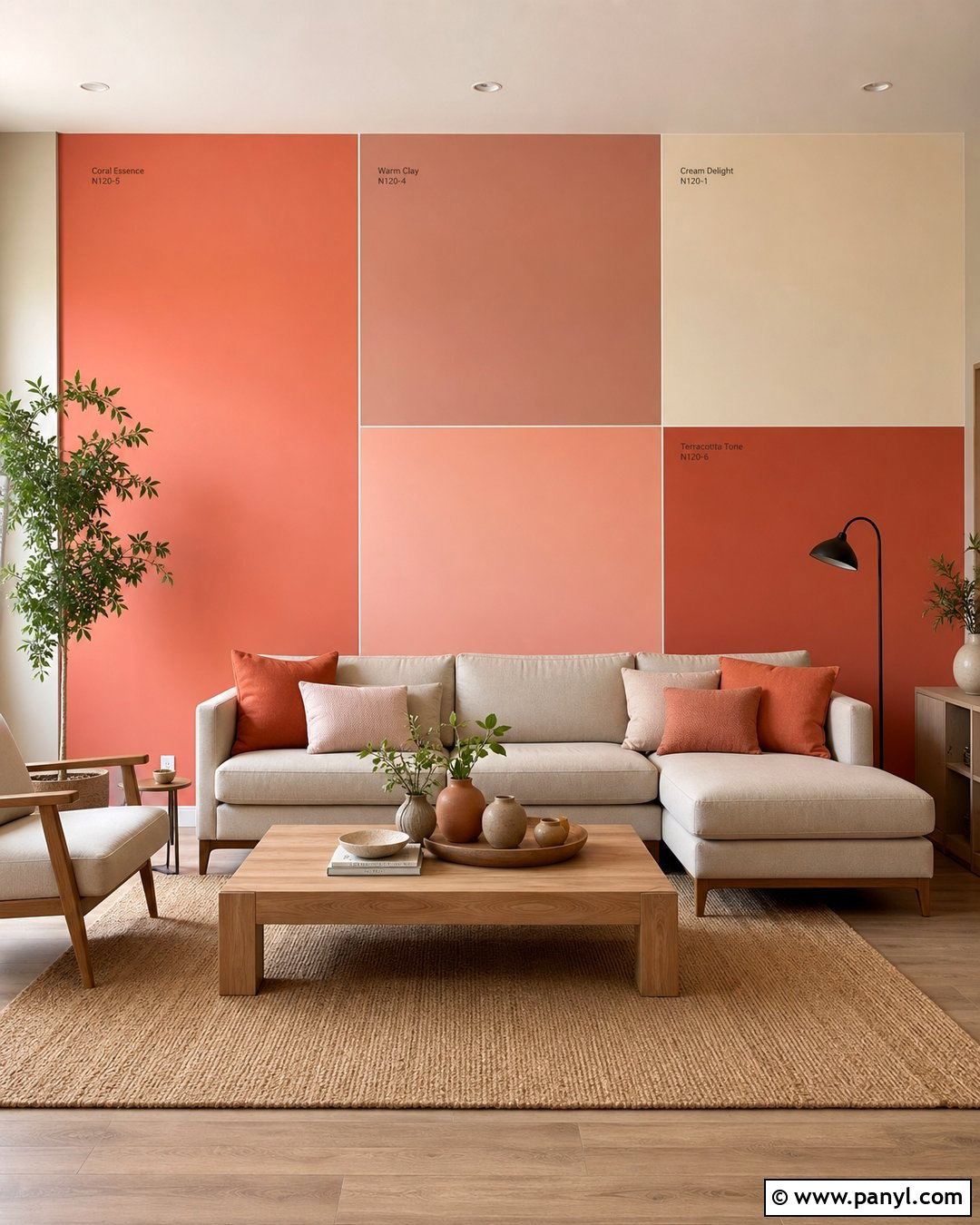
Large blocks of coordinated swatches can deliver strong color while maintaining a simple, structured look. Divide the wall into three or four broad rectangles, then fill each section with closely related paint chips. Try muted coral, dusty pink, terracotta, and warm cream for a comfortable living room palette. Align the blocks with major furniture pieces, such as the width of a sofa or console, to make the composition feel connected to the layout. Choose a neutral sofa, oak coffee table, and solid woven rug. Add accessories in only two block colors. Consistent spacing within each area is essential, but a narrow white channel between the larger sections will keep the paint chip wall crisp.
17. Monochrome Paint Chip Wall
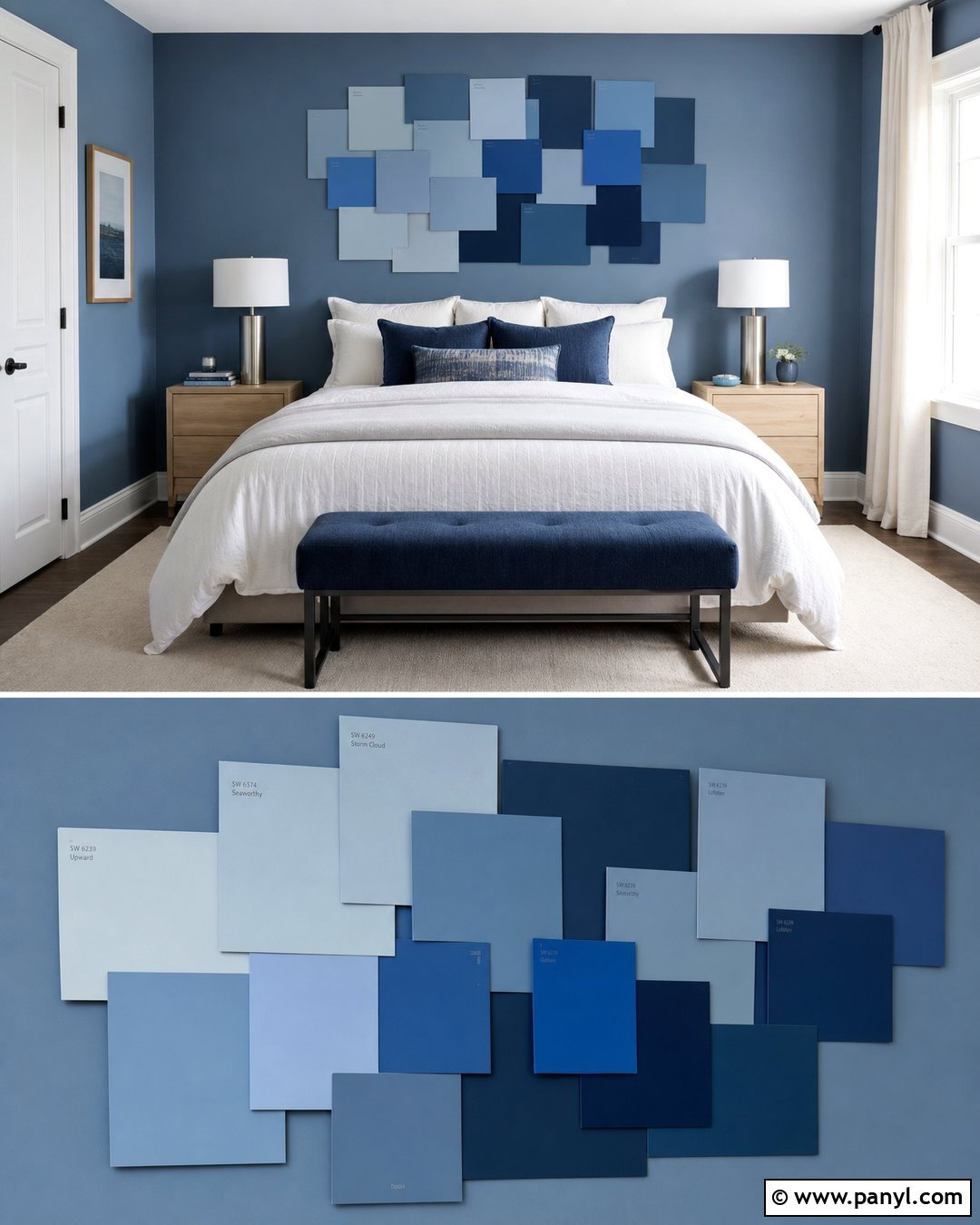
A monochrome paint chip wall proves that one color can still provide plenty of visual interest. Gather numerous shades of blue, green, brown, or pink, including pale tints, midtones, and deep saturated versions. Arrange them in an irregular but balanced rectangle above a sofa or bed. Instead of creating a perfect gradient, scatter neighboring tones so the wall has subtle movement. In a blue bedroom, use white bedding, a navy bench, light oak nightstands, and brushed nickel lamps. Keep every other pattern restrained. The slight changes between the swatches become the main decorative feature. Mount the chips on a painted board first if you prefer artwork that can move between rooms.
18. Neutral Paint Chip Wall
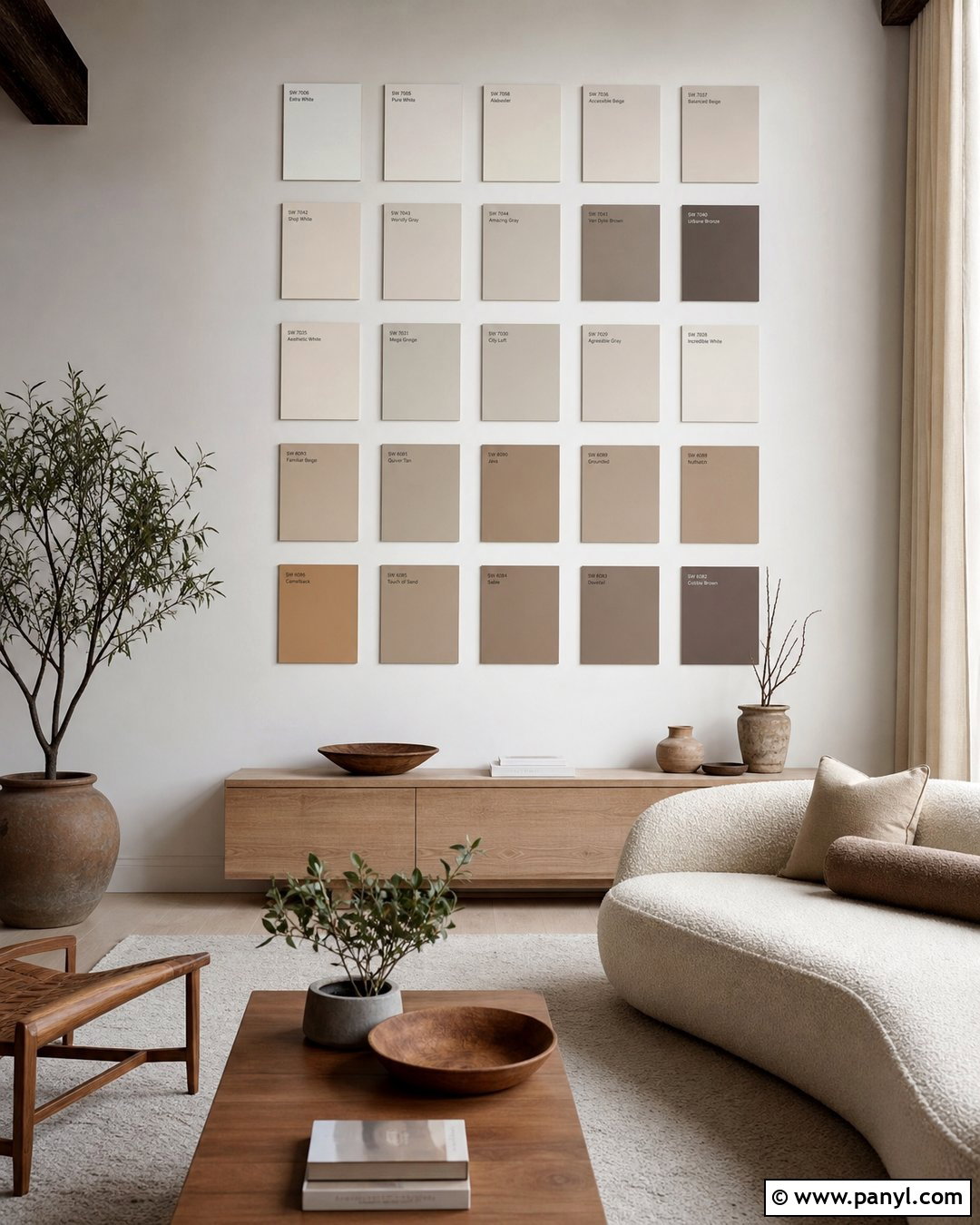
Cream, greige, taupe, camel, and soft brown swatches can create a quiet paint chip wall suited to minimalist interiors. Arrange the samples in a large grid, alternating warm and cool neutrals to prevent the display from looking flat. Use a warm white wall and place a low beige sofa or pale oak console beneath the artwork. Black frames, a textured wool rug, and ceramic vessels add contrast and dimension. Turning some chips sideways can introduce gentle variation, but maintain equal spacing throughout the composition. Remove printed labels or position them consistently along the bottom. Because the palette is restrained, texture becomes important. Linen, boucle, wood grain, and woven fibers will complete the full room.
19. Pastel Paint Chip Wall
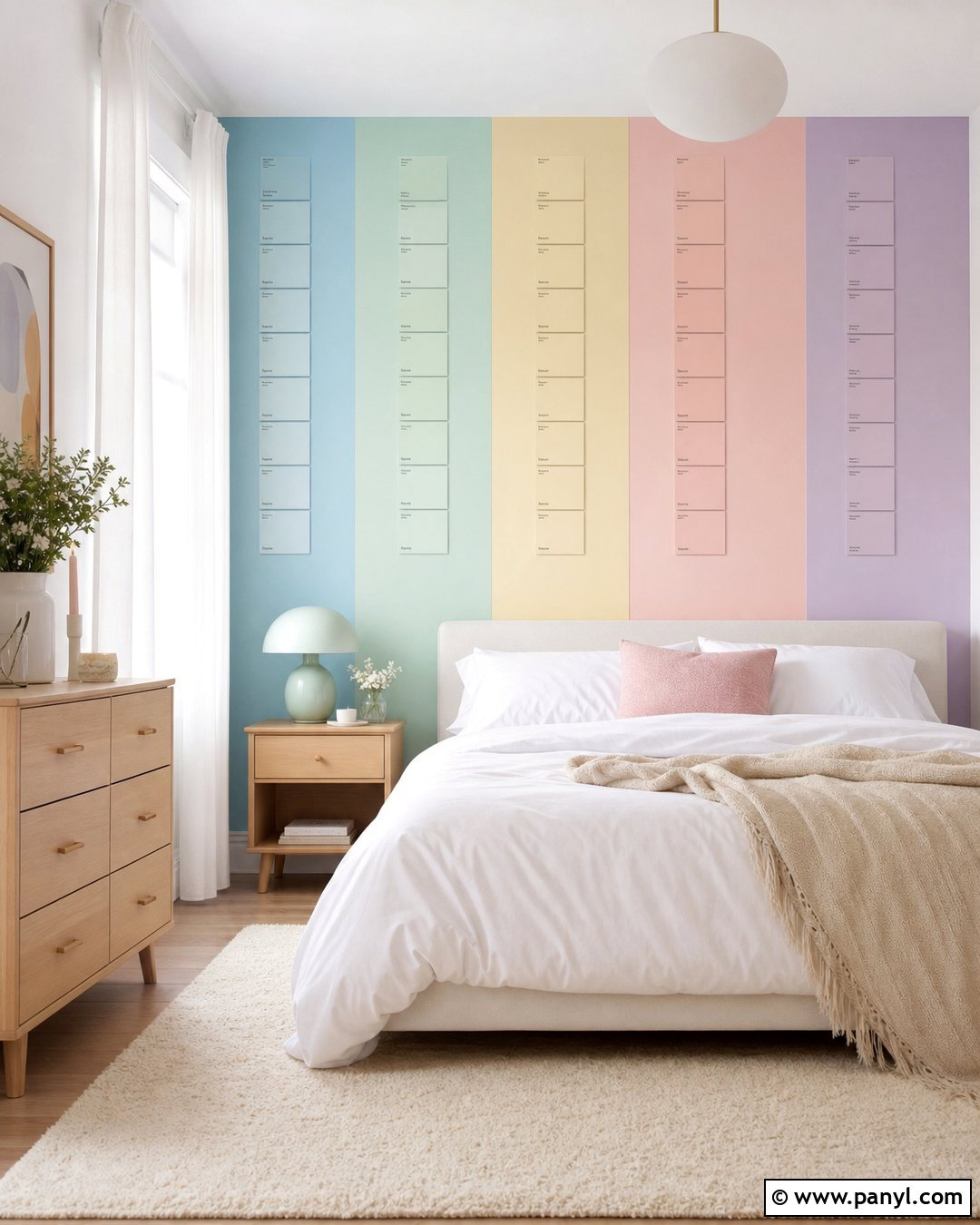
Soft color can brighten a room while preserving a peaceful atmosphere. Build a pastel paint chip wall with powder blue, mint green, butter yellow, blush pink, and pale lilac. Arrange the chips in wide vertical columns, allowing each color to blend gently into the next. This look works well behind a white desk, vanity, or upholstered bed. Pair it with pale wood furniture, sheer white curtains, and a cream rug. Select only a few matching accessories, such as a mint lamp or blush pillow, to avoid making the room overly themed. Maintain crisp edges around the installation. A balanced rectangular shape helps the delicate colors feel polished rather than like randomly attached samples.
20. Jewel Tone Paint Chip Wall
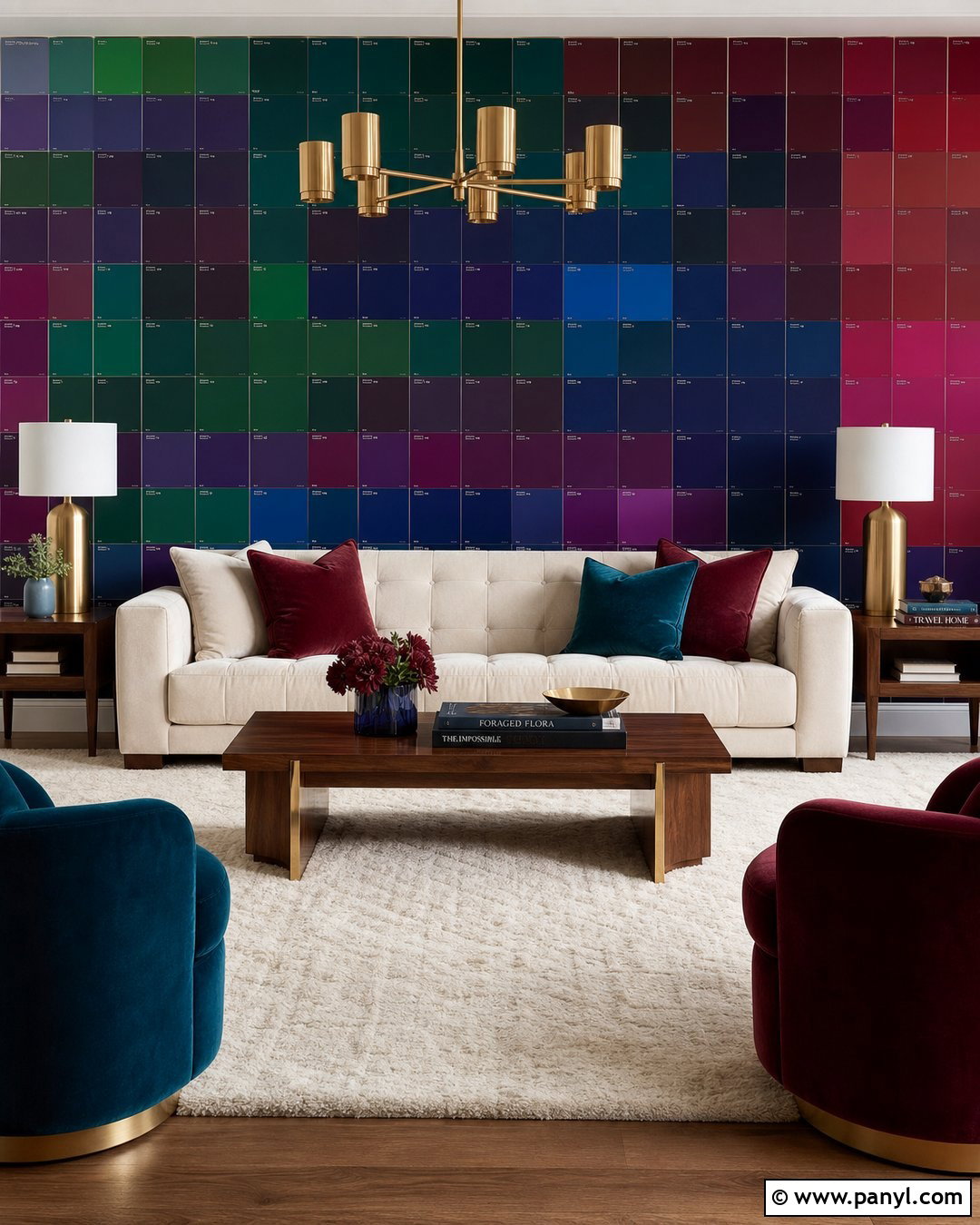
Emerald, sapphire, ruby, amethyst, and deep teal swatches can form a dramatic jewel tone paint chip wall. Arrange them in a dense mosaic above a velvet sofa or dark wood sideboard, keeping the surrounding wall a clean ivory or soft gray. Small amounts of mustard and magenta can bridge the main colors and make the transitions feel richer. Finish the room with walnut furniture, brushed brass lighting, and a cream rug that provides visual relief. Limit additional artwork and choose solid curtains rather than patterned fabric. For a refined installation, mount the chips on one large black or white backing board. The narrow border will frame the saturated colors like contemporary artwork.
21. Black And White Paint Chip Wall
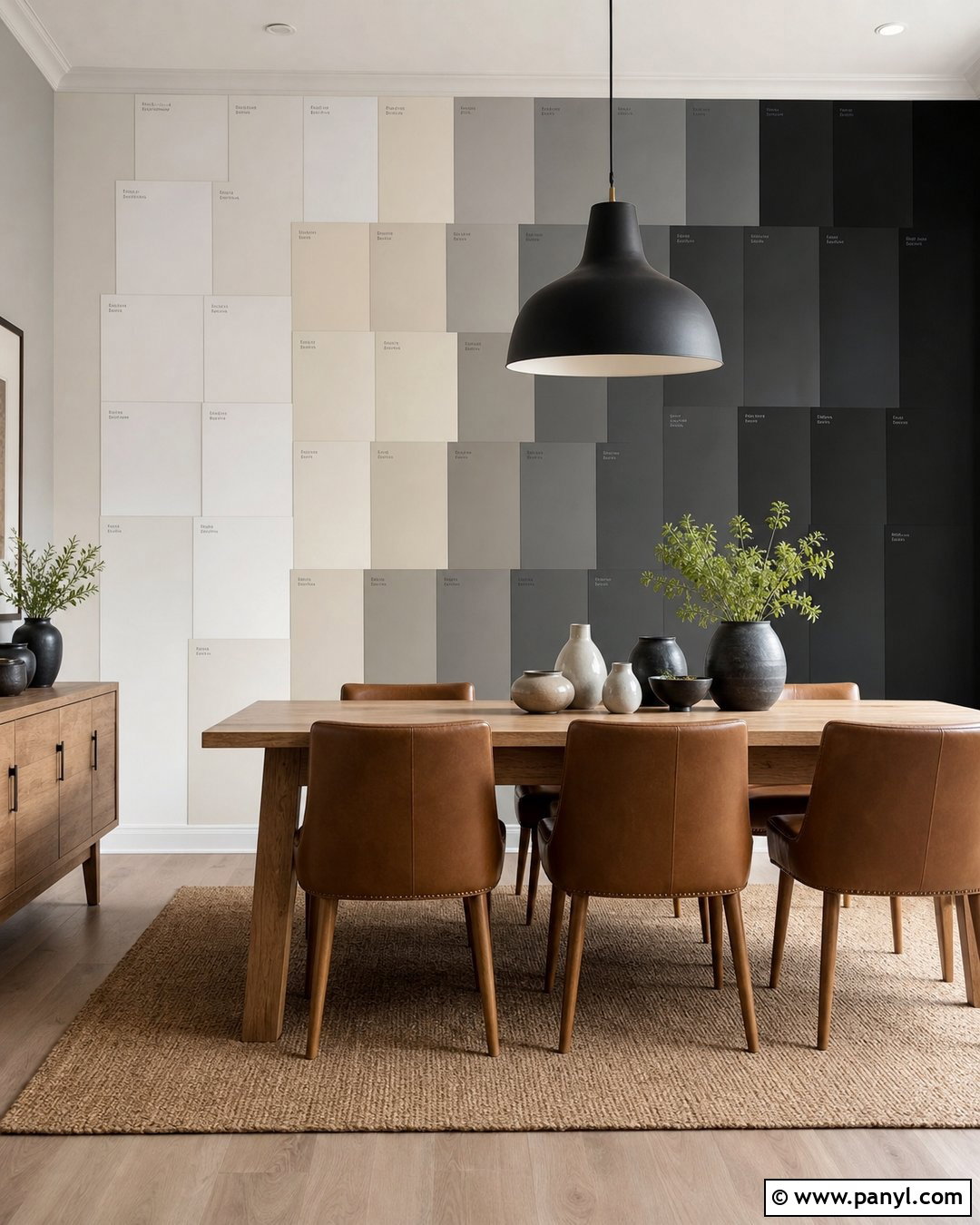
A black and white paint chip wall creates graphic contrast without introducing bright color. Combine pure white, ivory, pale gray, charcoal, and near-black swatches in a checkerboard, diagonal, or abstract stepped arrangement. Position the design above a light wood console or in a modern dining area. Warm the room with tan leather seating, oak flooring, and a natural fiber rug so it does not feel cold. Matte black lighting and simple ceramic decor will repeat the darkest tones. Keep the wall installation large enough to feel intentional, especially when the color range is limited. A few slightly warmer gray chips can soften the transition between the black and white sections.
22. Framed Paint Chip Wall Art
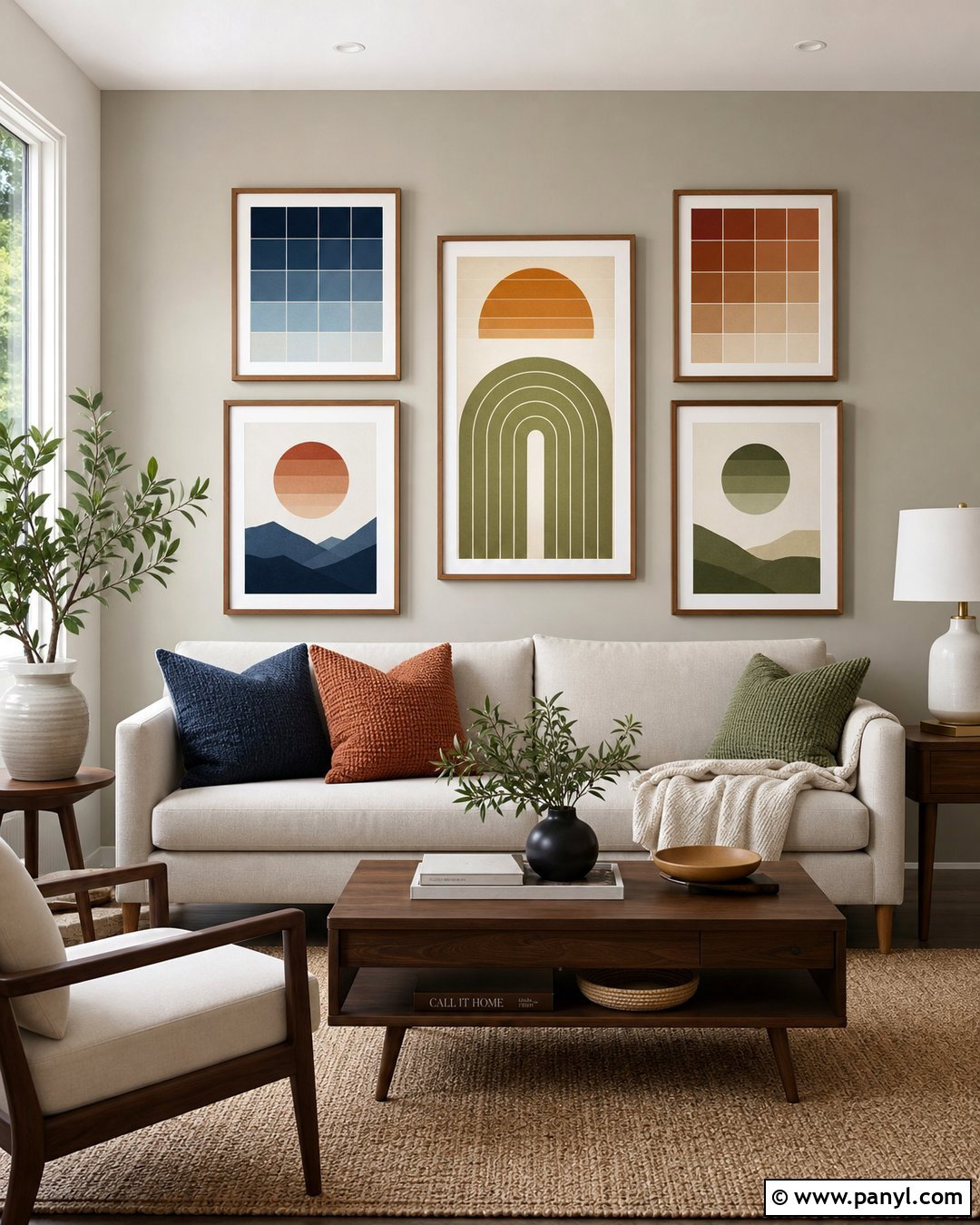
Framing paint chips turns humble paper samples into finished artwork that can be moved, protected, and easily rearranged. Create three or five matching frames filled with distinct color compositions, such as an ombré grid, geometric sun, abstract landscape, or layered arch. Use wide white mats and slim oak or matte black frames for a polished appearance. Hang the collection above a sofa, sideboard, or hallway bench with consistent spacing. Coordinate the artwork with a neutral room and repeat a few featured colors in pillows, books, or ceramics. Each frame should have its own composition while sharing one palette. This approach is especially practical for rentals because the paint chip wall requires fewer attachment points.
23. Paint Chip Gallery Wall
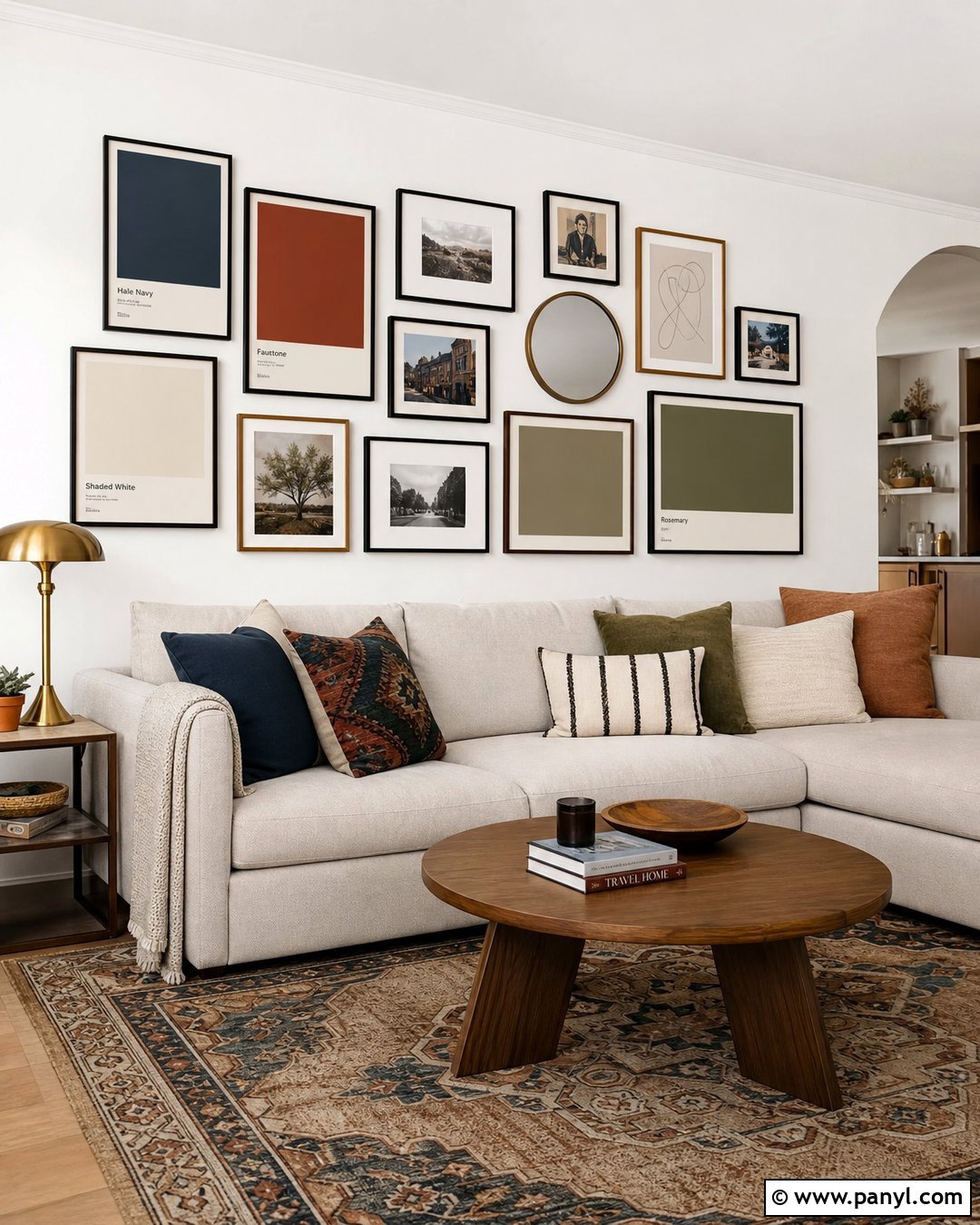
Mix paint chip artwork with photographs, illustrations, mirrors, and small dimensional objects for a personal gallery wall. Use a limited palette, such as navy, rust, cream, and olive, to connect frames of different shapes and sizes. Paint chips can fill several small frames, form a larger abstract centerpiece, or sit behind simple line drawings. Arrange the collection above a living room sofa or stair landing, leaving similar gaps between every item. Choose mostly black and oak frames for cohesion. A neutral sofa, patterned rug, and warm metal lighting will complete the room. Lay the gallery on the floor first, placing the largest piece near the center and balancing color across both sides.
24. Paint Chip Calendar Wall
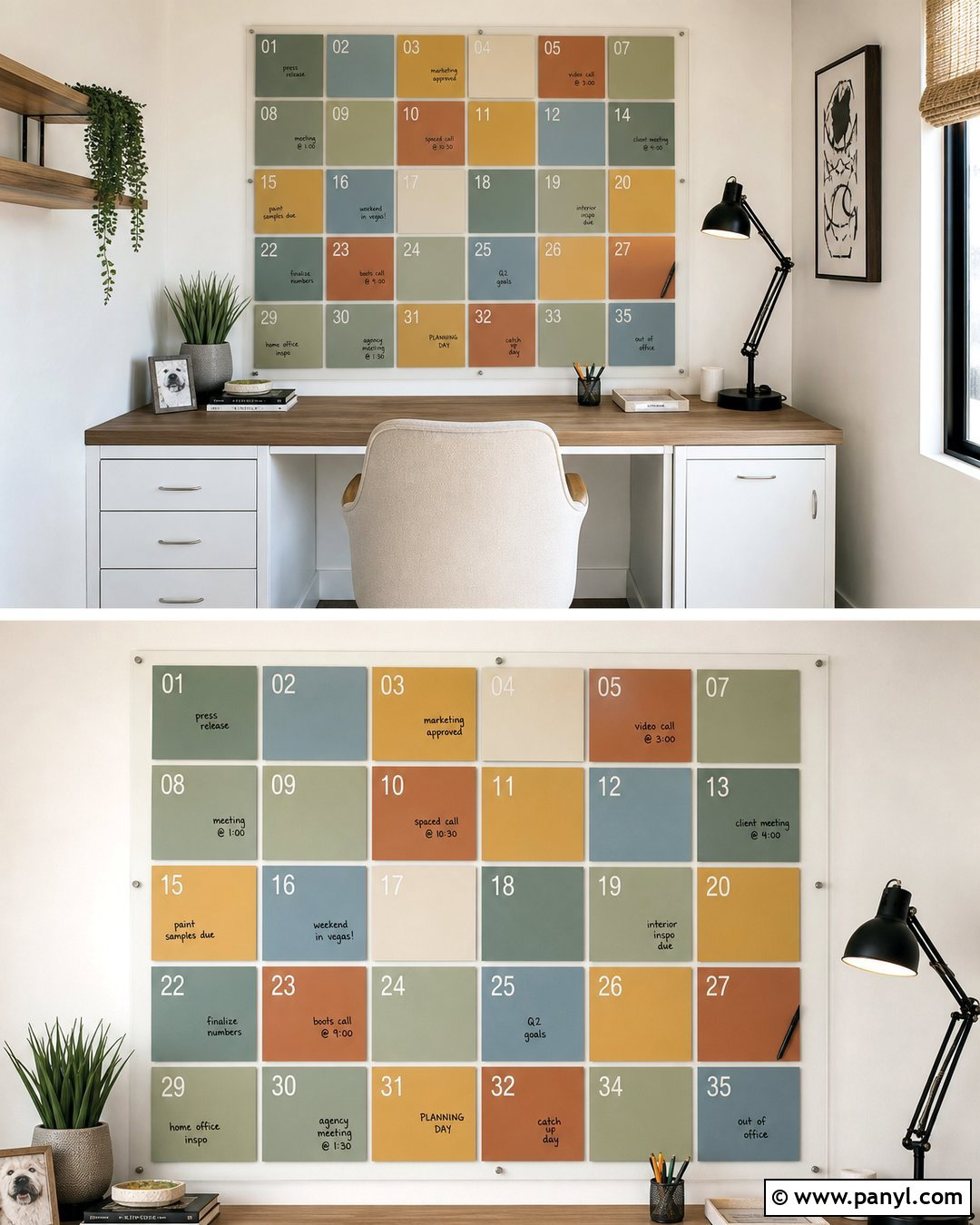
A paint chip calendar combines practical planning with colorful wall decor. Arrange 35 square or rectangular chips in seven columns and five rows, leaving room above for the month and along one side for notes. Choose muted seasonal colors or a year-round palette of sage, dusty blue, clay, mustard, and cream. Cover the cards with clear reusable sleeves or place the entire arrangement behind glass so dates can be updated with a dry-erase marker. Install the calendar above a compact home office desk with white storage, an oak worktop, and a black task lamp. Keep nearby accessories simple. Straight alignment and readable spacing will make this functional paint chip wall feel professionally organized.
25. Paint Chip Headboard Wall
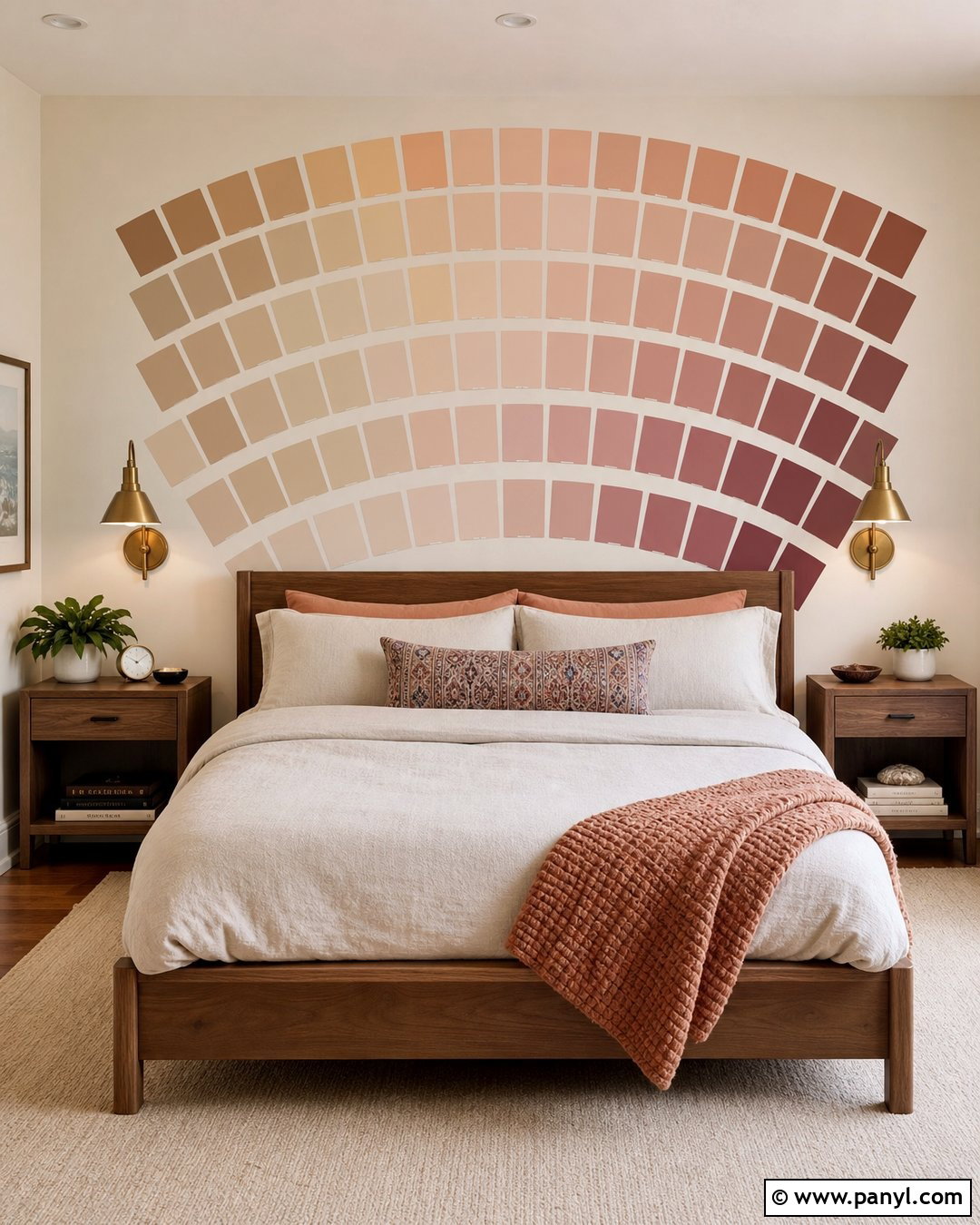
Instead of buying a large headboard, frame the bed with a paint chip installation that adds color and height. Create a wide rectangle or gentle arch extending slightly beyond both sides of the mattress. Use terracotta, blush, sand, and muted burgundy chips for warmth, arranging them from light at the top to dark near the bed. Choose simple cream bedding, oak nightstands, and matching wall sconces to establish symmetry. A textured throw and one patterned lumbar pillow can repeat the swatch colors. Keep the installation high enough that pillows will not rub against it. For easier maintenance, attach the chips to thin backing panels secured safely above the bed rather than directly behind the mattress.
26. Paint Chip Desk Wall
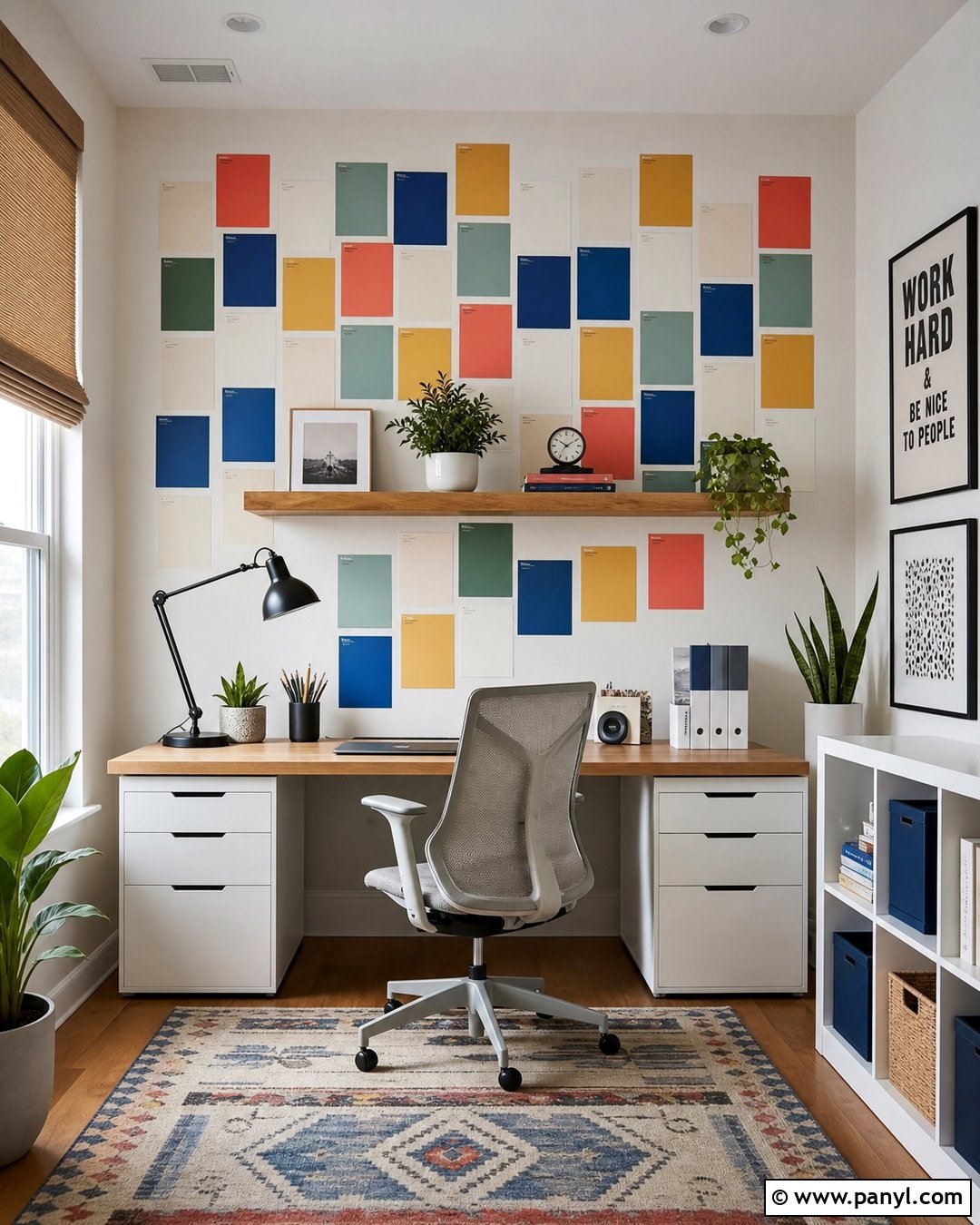
A colorful wall behind a desk can define a workspace and make basic office furniture feel more intentional. Cover a centered rectangular area with paint chips in blue, green, coral, and mustard, using a tidy staggered pattern. The installation should match the desk width or extend slightly beyond it. Choose a white or light oak desk, closed storage, and a supportive chair in a neutral fabric. Add a simple pinboard, floating shelf, or task lamp without blocking too much of the paint chip wall. Use the wall colors again in file boxes and pencil cups. Keeping the desktop uncluttered allows the graphic backdrop to energize the office without reducing concentration or usable workspace.
27. Paint Chip Stairway Wall
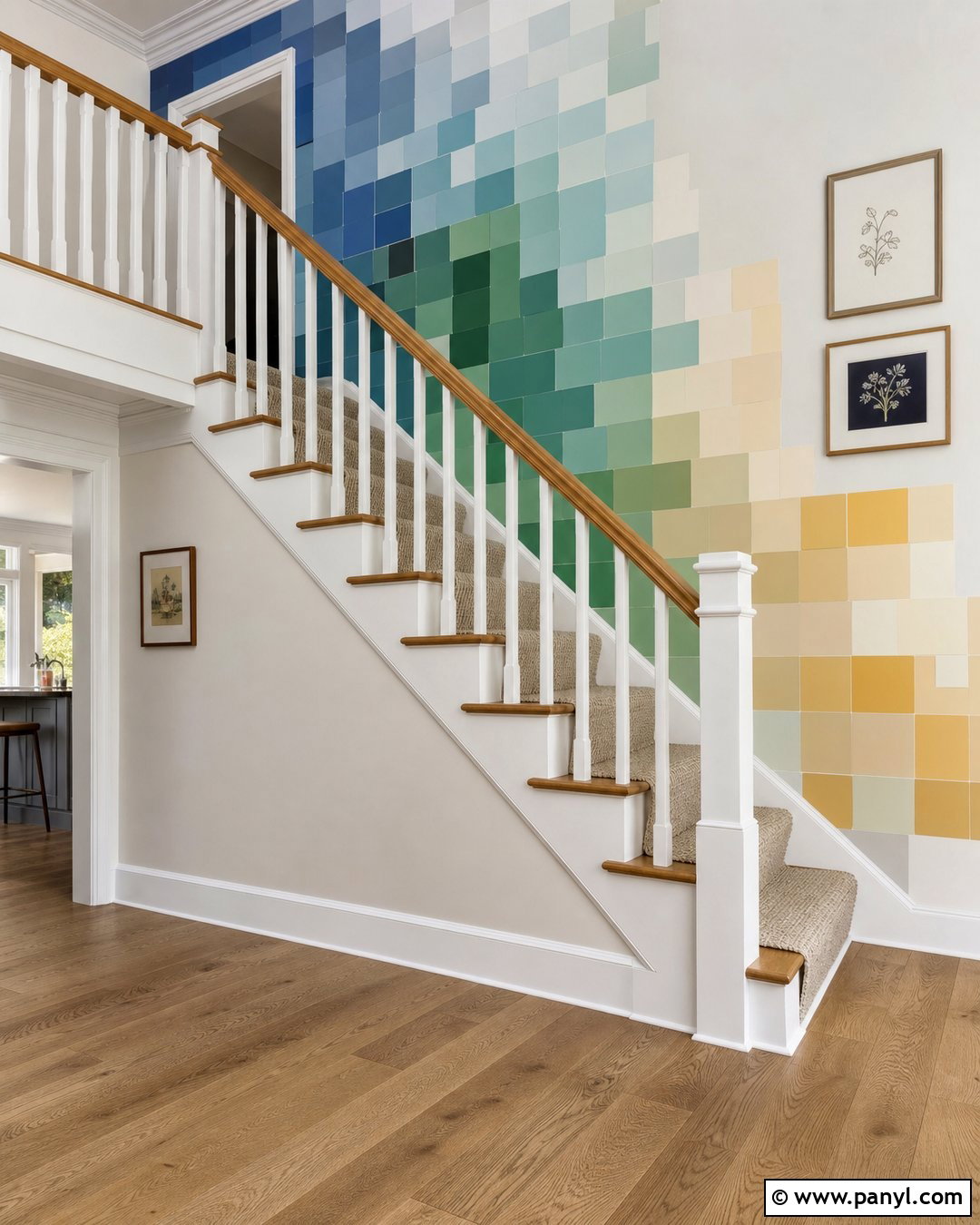
A stairway offers a long diagonal surface that naturally suits a flowing paint chip display. Arrange the cards in a rising band that follows the angle of the handrail. Begin with dark blue or green near the bottom and gradually transition to pale aqua, cream, and soft yellow near the top. Keep the band narrow enough to leave open wall space around it. A wood handrail, white trim, and simple runner will support the colorful installation. Add only minimal framed artwork nearby. Measure the distance from each chip row to the stair trim so the display stays parallel. Removable adhesive is important in this busy area, where individual pieces may eventually need straightening or replacement.
28. Nursery Paint Chip Wall
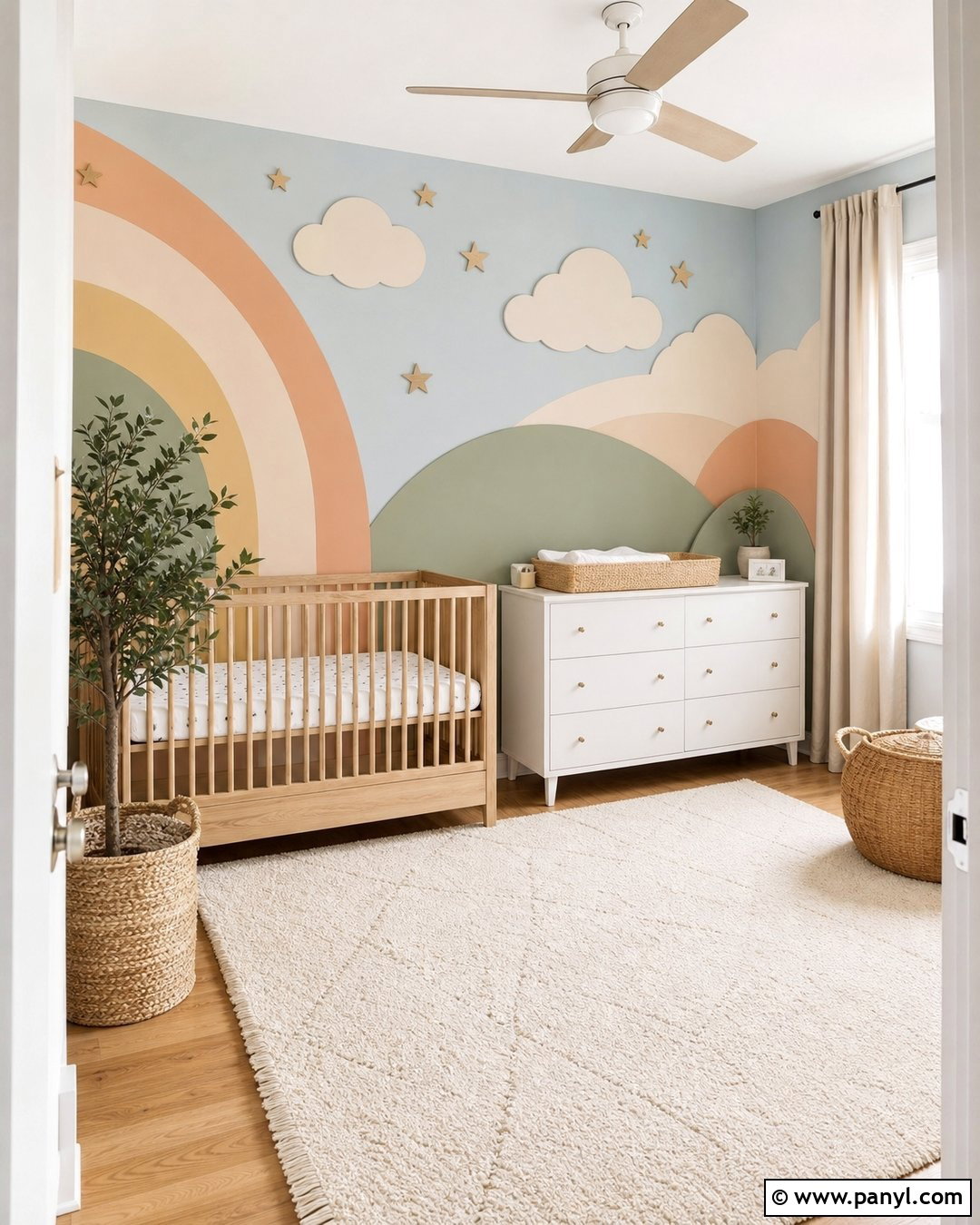
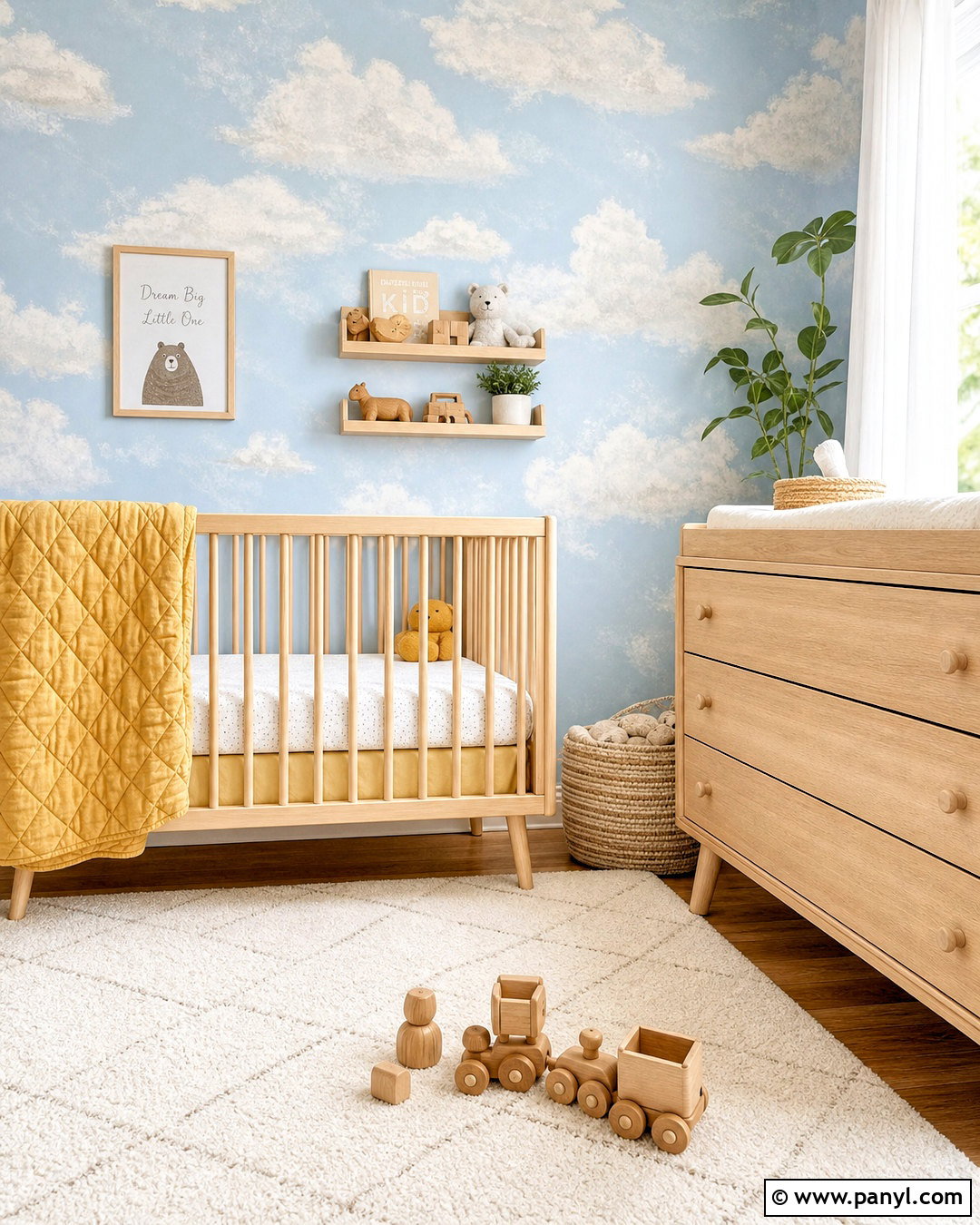
A nursery paint chip wall can add gentle color without relying on busy wallpaper. Choose soothing shades of peach, sage, pale blue, butter yellow, and warm cream. Cut the swatches into simple clouds, stars, hills, or rounded arches, then arrange them above the crib while keeping every piece securely attached and out of reach. Complete the room with a natural wood crib, white dresser, washable cream rug, and blackout curtains in one soft palette color. Use storage baskets and solid bedding to prevent visual clutter. The wall design should remain broad and uncomplicated. Leave generous empty space between shapes so the nursery feels restful, organized, and adaptable as the child grows.
29. Dorm Room Paint Chip Wall
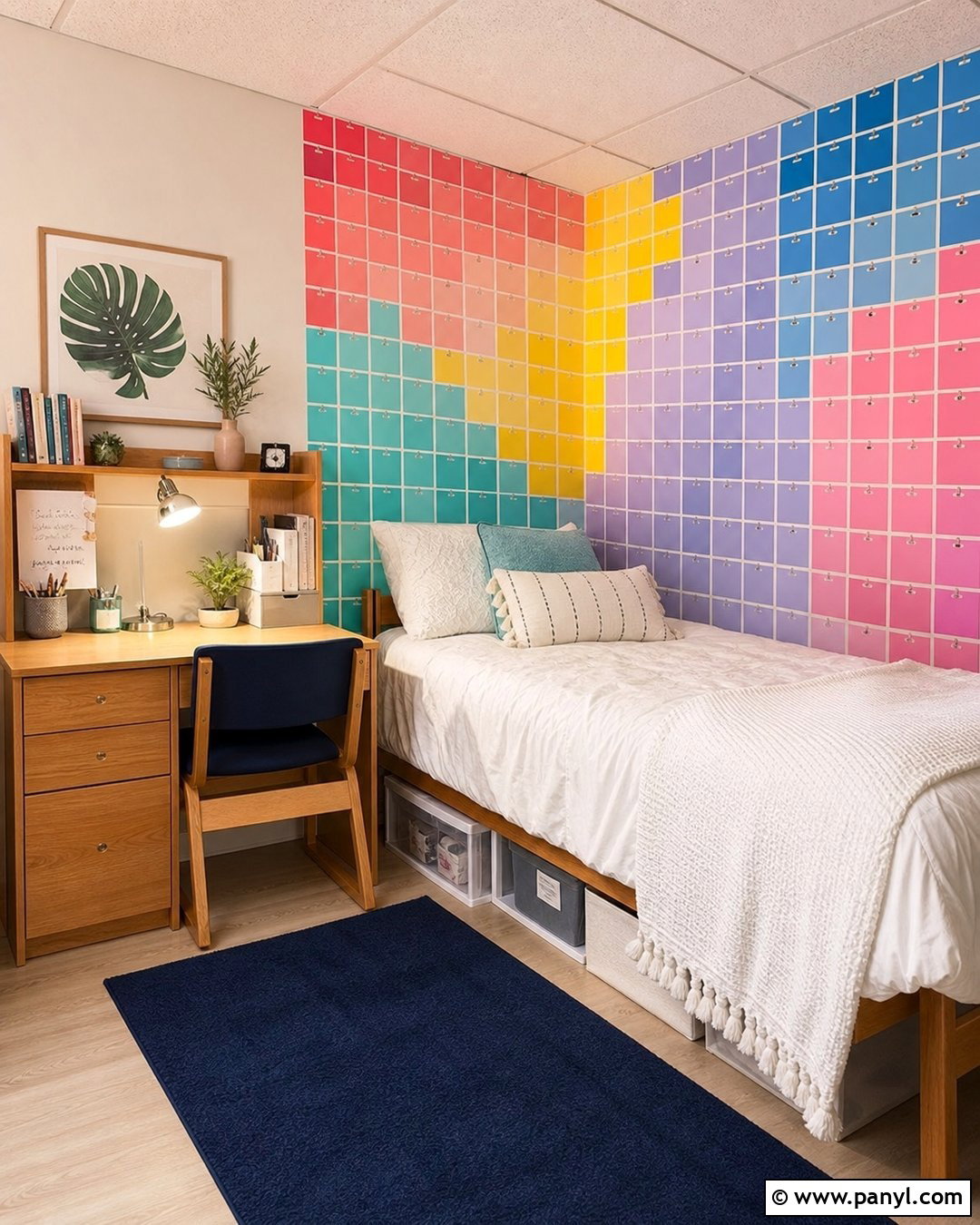
When permanent painting is not allowed, a removable paint chip wall can make a dorm room feel more personal. Create a large grid or corner gradient above the desk or bed using lightweight cards and damage-free mounting products approved for the room. A vibrant palette of coral, turquoise, yellow, lilac, and cobalt works well with plain white walls and standard furniture. Coordinate the display with solid bedding, under-bed storage, and a compact rug in one quieter color. Avoid covering outlets, vents, safety equipment, or posted information. Mount the chips on removable paper panels if frequent inspection is expected. This method also makes packing and reusing the design much easier at semester’s end.
30. Rental Friendly Paint Chip Wall
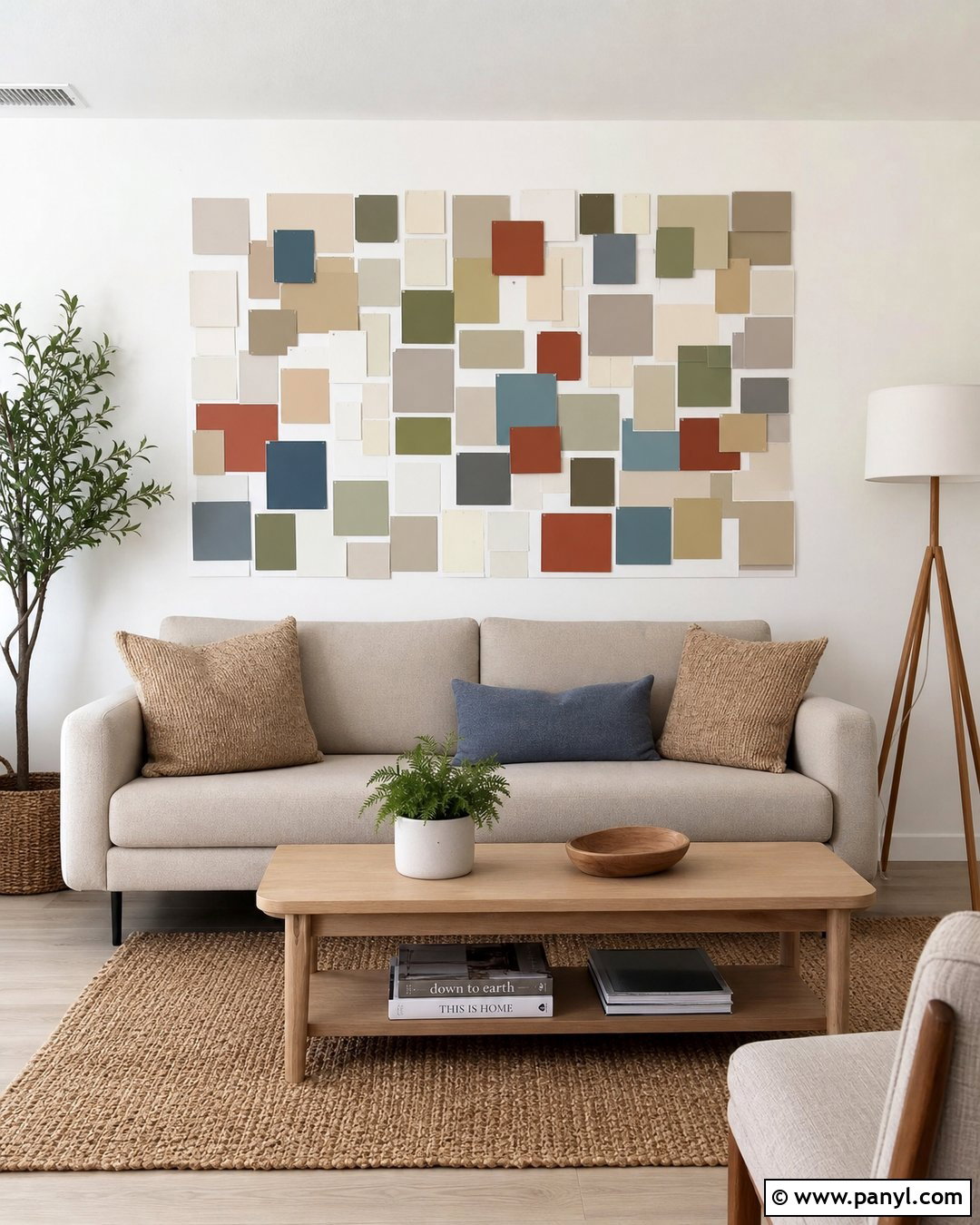
A rental-friendly paint chip wall should make a strong impact while remaining simple to remove. Build the complete design on lightweight foam board, thin hardboard, or large removable paper panels rather than attaching hundreds of pieces individually. Create an abstract composition using olive, rust, beige, cream, and muted blue chips, then hang the finished panel above a sofa with approved removable hooks. Pair it with a neutral couch, light wood tables, textured pillows, and a simple floor lamp. The mounted panel will read as oversized artwork while protecting the original wall. Test all adhesive in an inconspicuous location first. Leave a visible border around the composition to give the installation a clean, framed appearance.
Conclusion:
The best paint chip wall projects combine creative color with careful planning. Choose a palette that connects with your furniture, flooring, and textiles, then decide whether a grid, mural, gradient, or framed arrangement fits the available space. Consistent trimming and accurate spacing will elevate even the simplest composition. Whenever possible, use leftover chips, purchased sample decks, reclaimed materials, or cardstock replicas rather than collecting excessive free samples. Removable mounting methods are useful for rentals, dorms, and frequently changing rooms. Most importantly, design the wall as part of the entire space instead of treating it as an isolated craft. These 30 Paint Chip Wall Ideas offer flexible inspiration for creating affordable, customized decor.

Related Ideas and Inspiration:

Leave a Reply