
Funky wall paint ideas can turn an ordinary room into a personal, energetic space without expensive remodeling. The key is creating a complete look rather than adding random colors. Start with a wall pattern that suits the room’s size, then repeat its colors through furniture, textiles, lighting, and decor. Crisp checkerboards can energize an office, while loose squiggles feel playful in a living room. Painted arches frame furniture beautifully, and flowing waves can make a bedroom feel softer. Even daring combinations become livable when balanced with simple flooring and a few neutral pieces. Whether you prefer retro patterns, geometric murals, or freehand artwork, the following complete room designs offer practical and colorful inspiration. Explore these 20 funky wall paint ideas to find a look worth recreating.

1. Checkerboard Wall Paint
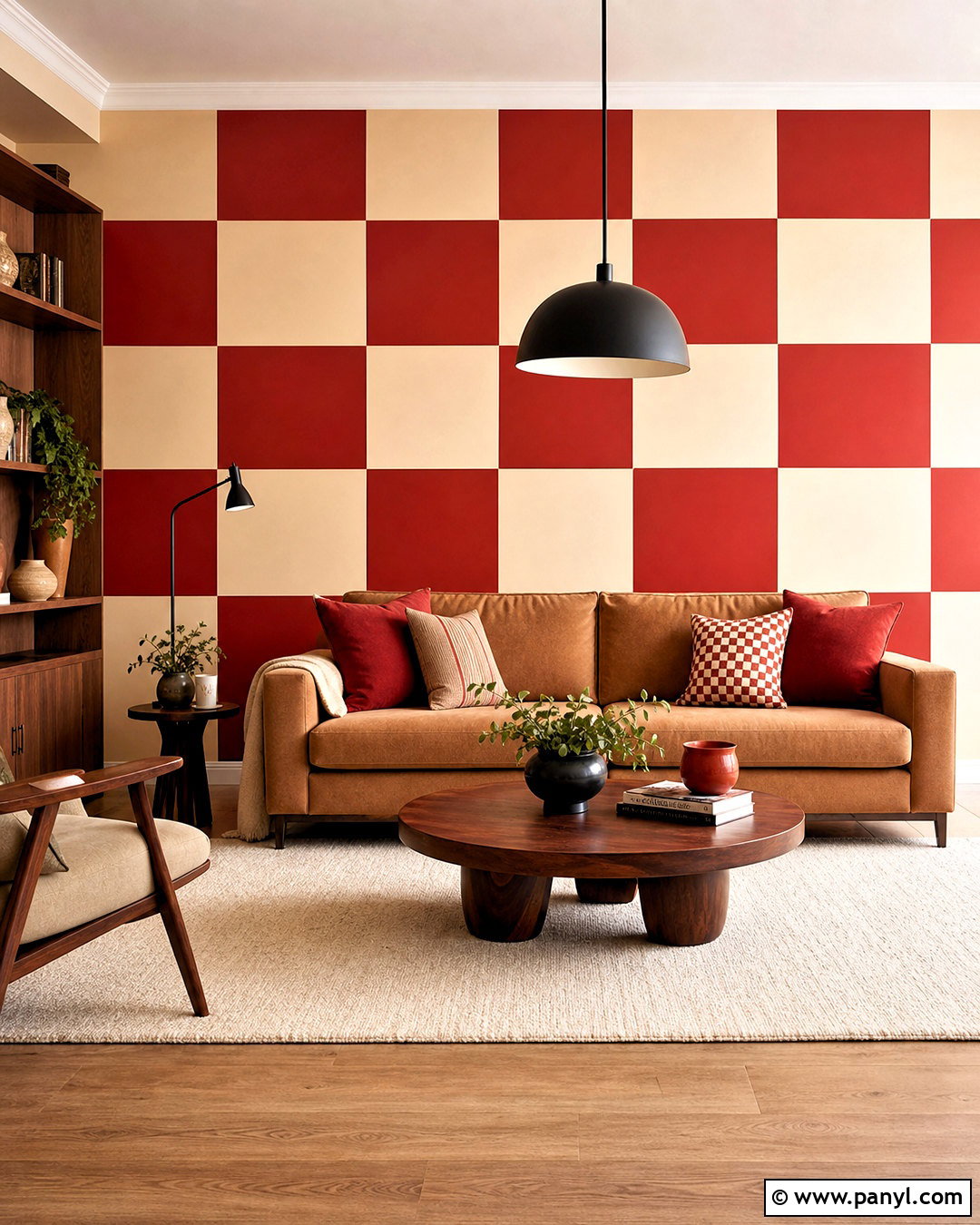
A large checkerboard wall gives a living room a bold graphic backdrop without requiring complicated artwork. Paint oversized squares in warm cream and tomato red, covering only the wall behind the sofa. Keep the remaining walls soft white so the pattern stays focused. A low camel-colored sofa, rounded walnut coffee table, and cream area rug add warmth without competing for attention. Repeat the red in two cushions and a ceramic table lamp. Matte black picture frames and a slim black floor lamp provide crisp definition. Use squares measuring around 18 to 24 inches for a clean, modern scale. Before taping, map the full grid with a level and pencil. This prevents narrow, awkward squares from appearing at the edges.
2. Wavy Color Block Wall
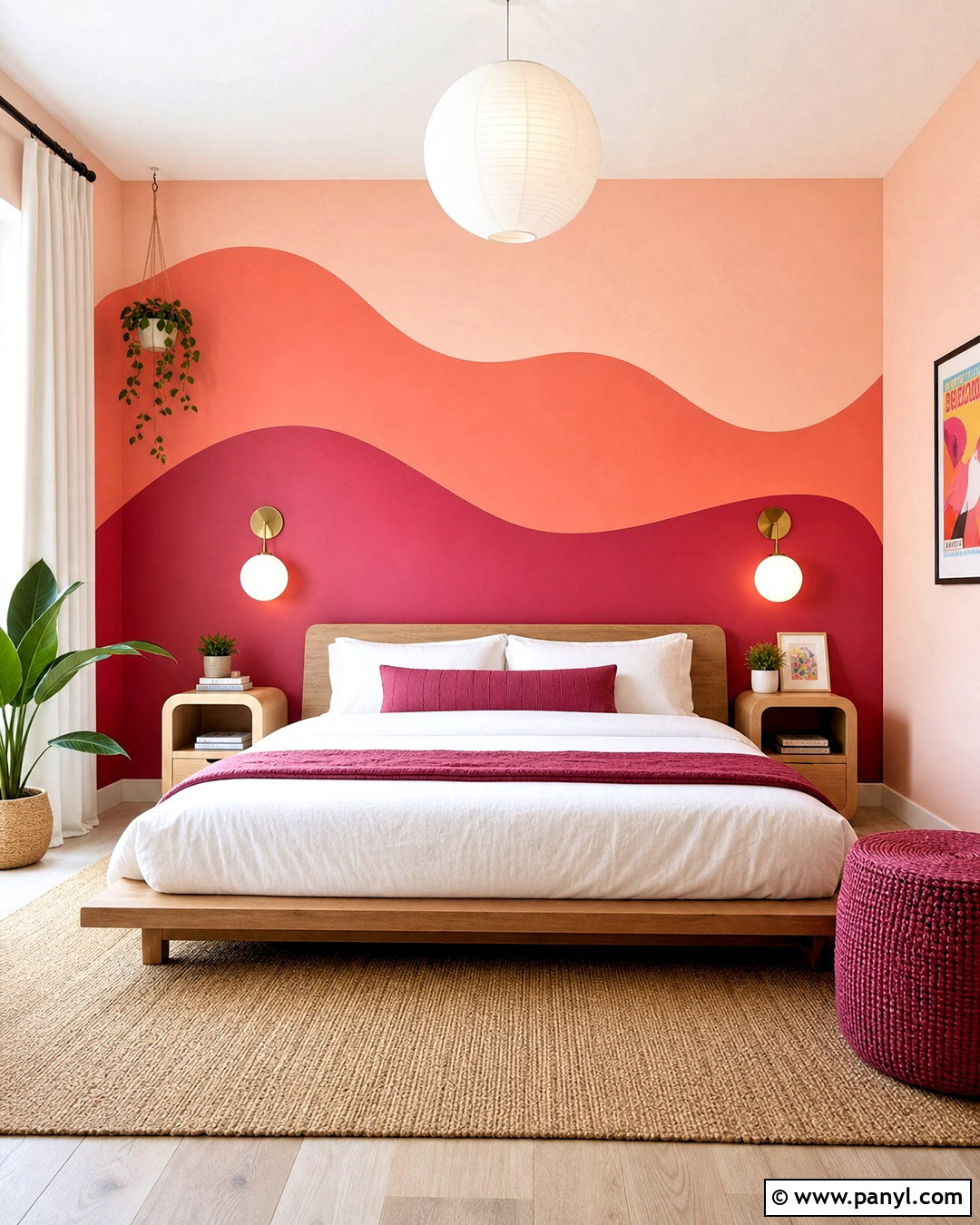
Flowing color blocks can soften a boxy bedroom and create movement behind the bed. Begin with a pale peach base, then paint two wide horizontal waves in coral and deep raspberry. Let the curves rise higher on one side rather than keeping them perfectly symmetrical. Position a simple oak platform bed against the mural and layer it with white bedding, a raspberry throw, and peach-striped pillows. Rounded nightstands and globe sconces echo the wall’s curved lines. A natural jute rug and light wood flooring keep the stronger colors grounded. Draw the waves with chalk before painting and view them from across the room. Broad curves feel calmer and are easier to paint than numerous small ripples. Finish the edges carefully with an angled brush.
3. Painted Arch Wall
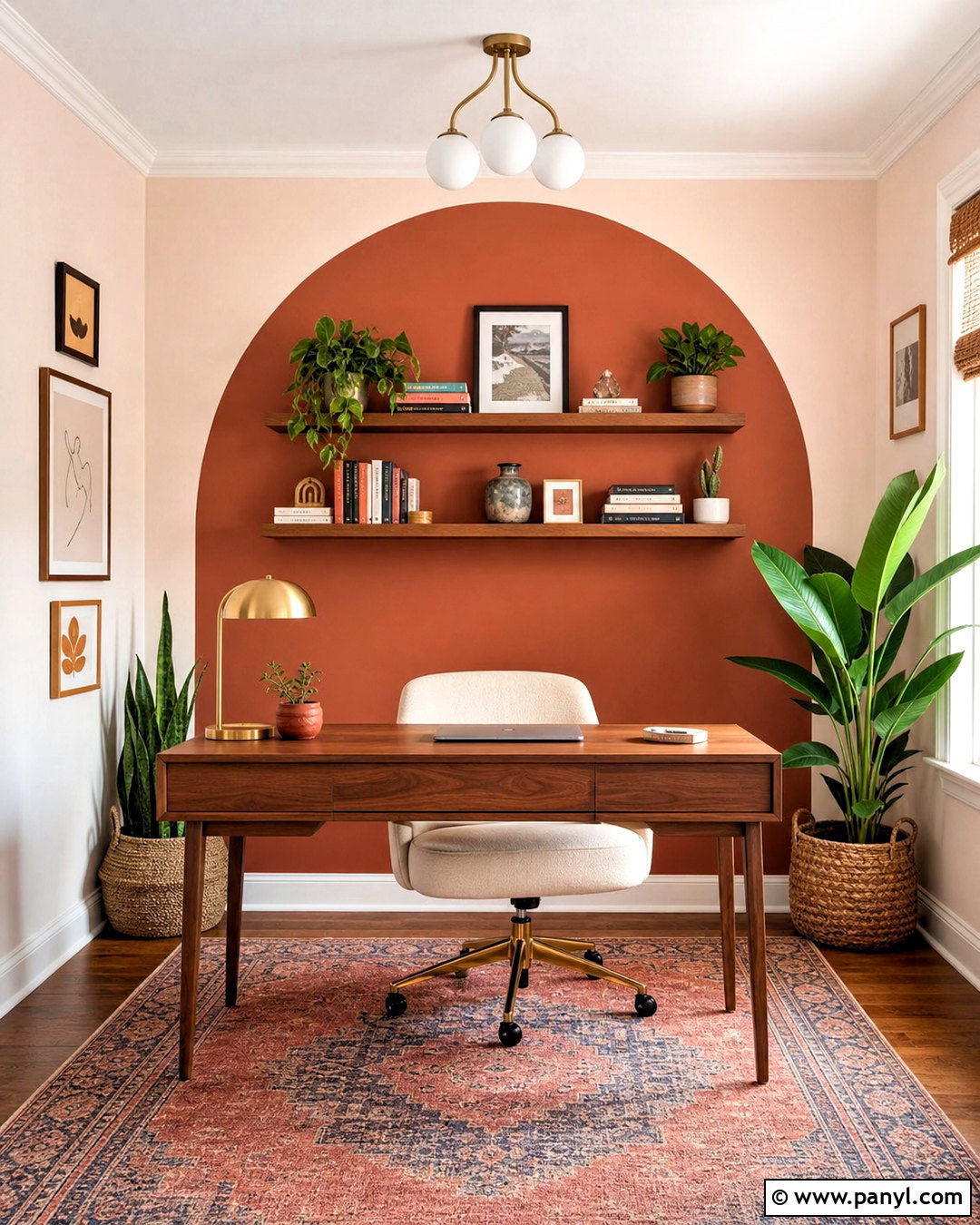
A painted arch can turn a basic home office into a clearly defined workspace. Use a warm terracotta arch on a soft blush wall, making it slightly wider than the desk beneath it. A compact walnut desk, cream upholstered chair, and brass wall sconce create a polished arrangement inside the painted shape. Add two narrow floating shelves within the arch and display only a few books, ceramics, and trailing plants. Carry terracotta into a small patterned rug, while black desk accessories give the pastel palette sharper contrast. The arch should begin near the baseboard and extend well above the shelves. Use a pencil tied to string to establish an even curve. This complete setup visually frames the office while leaving the surrounding wall calm and uncluttered.
4. Squiggle Wall Paint
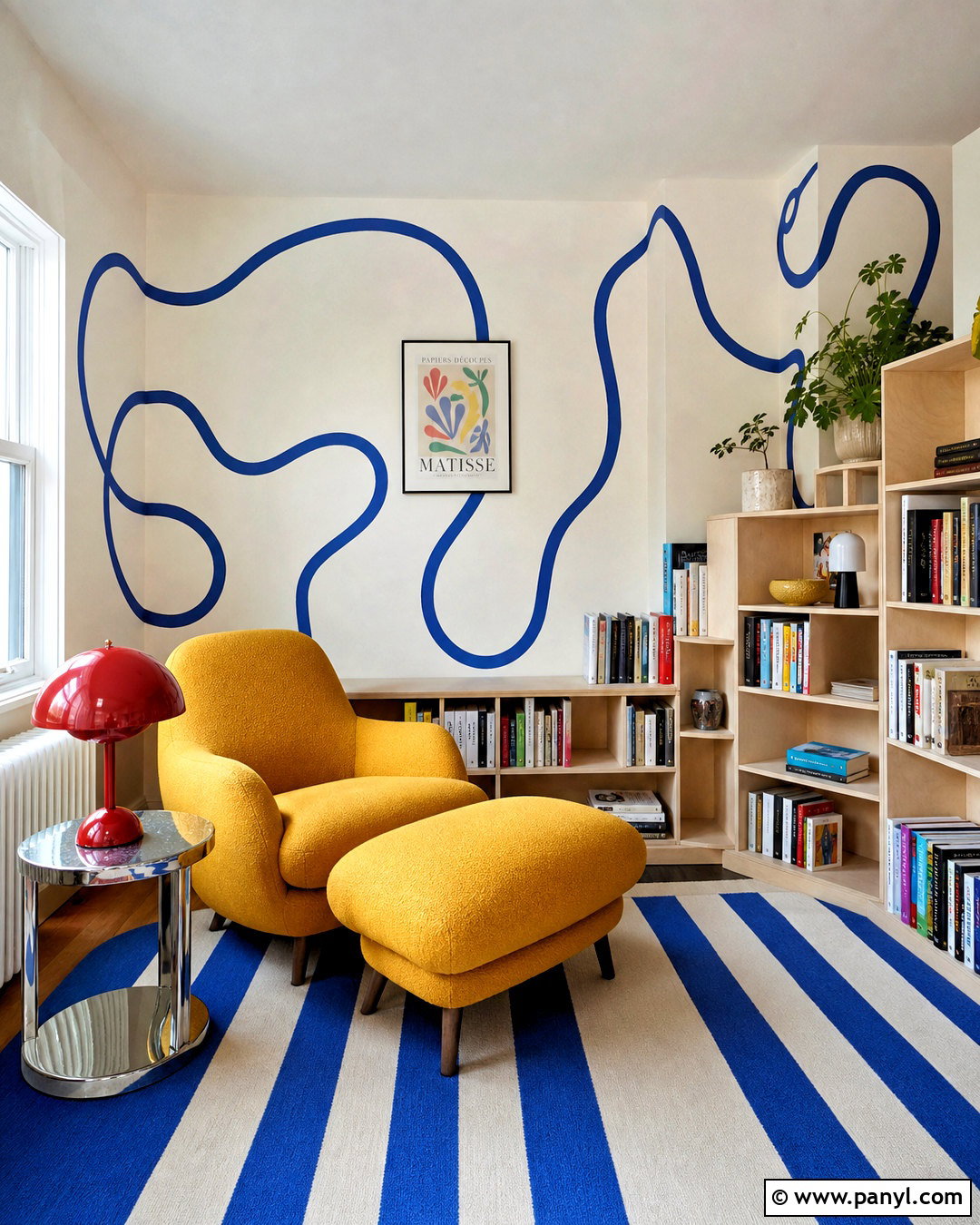
Imagine a bright reading room wrapped in one continuous, oversized squiggle. Paint the walls warm white, then add a thick cobalt blue line that loops across the main wall and turns one corner. The freehand shape should feel loose but intentional, with generous spacing between each curve. Place a mustard yellow lounge chair near the mural, paired with a chrome side table and a red mushroom lamp. A blue-and-cream striped rug connects the wall to the seating area. Keep bookcases in light birch so they do not make the room feel heavy. Sketch the squiggle lightly before using a small roller and angled brush. Minor variations in the line add character, but maintaining a consistent thickness helps the finished wall look designed rather than accidental.
5. Memphis Wall Paint
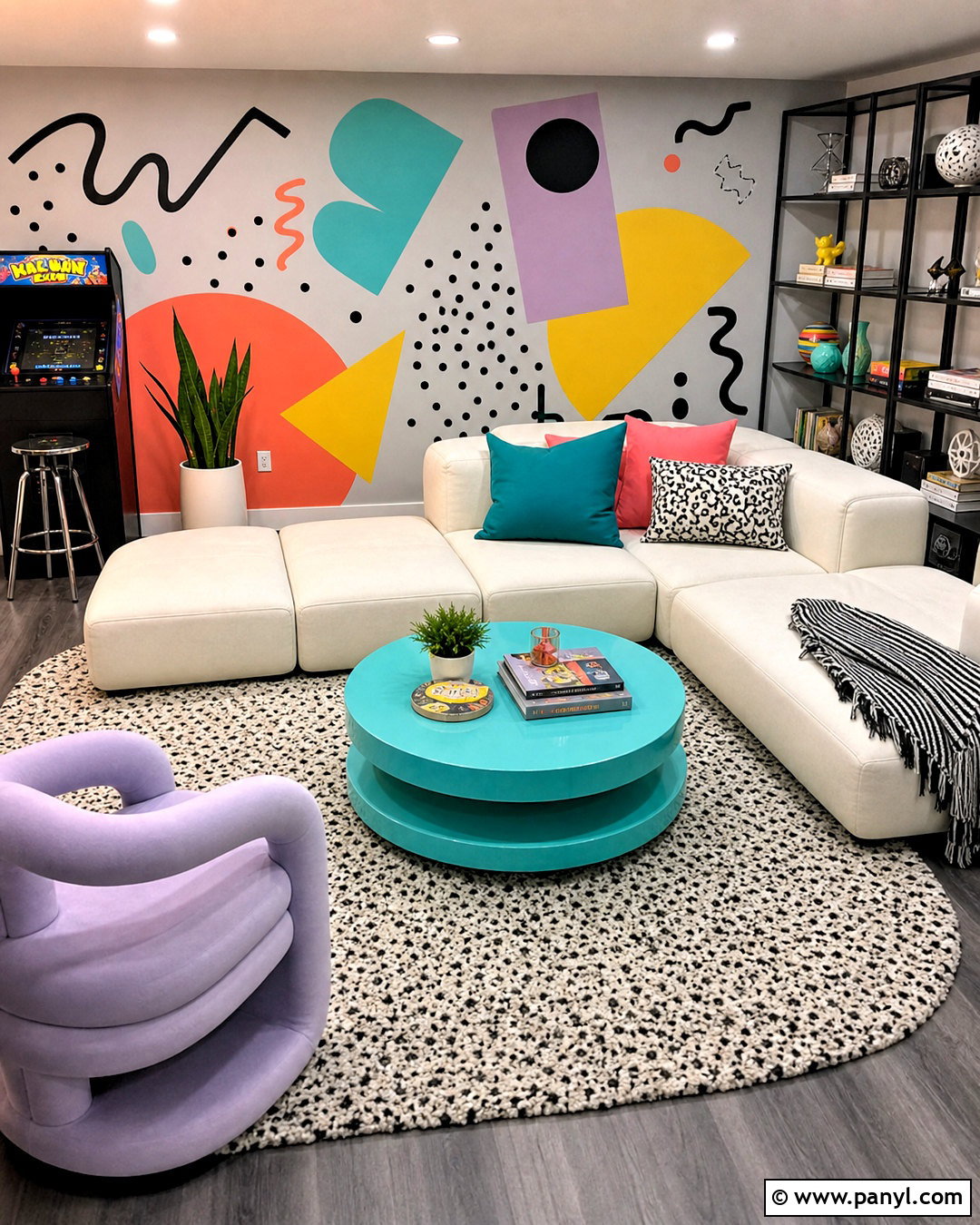
A Memphis-inspired mural brings playful 1980s energy into a game room, studio, or creative office. Start with a pale gray background and scatter large geometric forms across one feature wall. Combine a turquoise semicircle, coral triangle, yellow rectangle, lavender arch, and several short black dashes. Leave enough empty background between the shapes so the mural remains easy to read. Furnish the room with a modular white sofa, black metal shelving, and a round turquoise coffee table. A speckled cream rug and solid-color cushions reinforce the playful palette without adding another busy pattern. Use painter’s tape for sharp-edged forms, but paint the arch and semicircle with an angled brush. Repeat each mural color only once or twice around the room for a balanced, cohesive result.
6. Scalloped Wall Paint
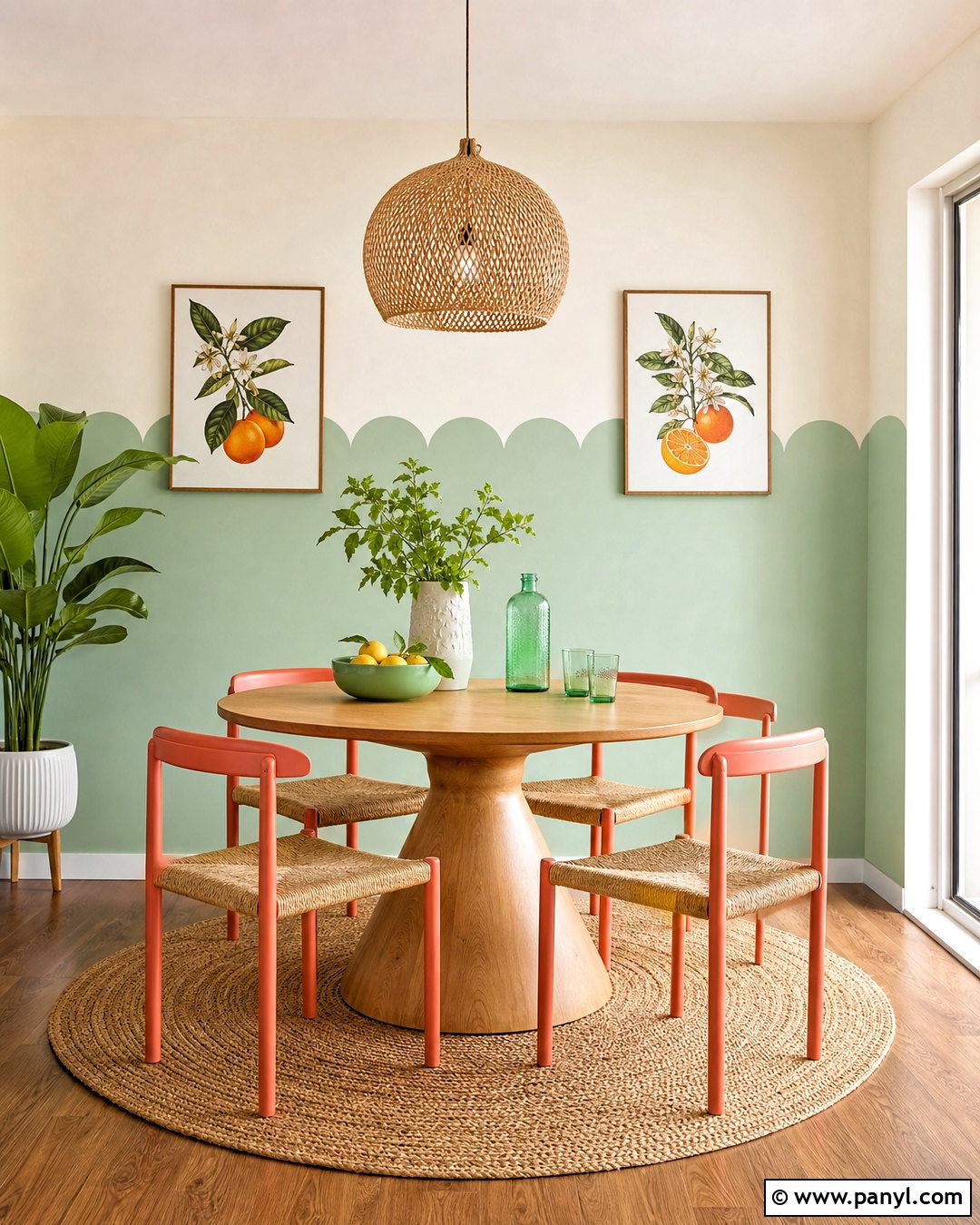
A scalloped paint border creates a cheerful dining nook that feels whimsical without becoming childish. Paint the lower two-thirds of the wall in fresh mint green and leave the upper portion creamy white. Along the dividing line, add large rounded scallops measuring approximately 12 inches wide. Pair this treatment with a small oak pedestal table, four coral dining chairs, and a woven pendant light. Botanical prints in simple white frames can hang above the painted border. Use a coral vase and green glassware to connect the furniture and walls. Create a cardboard semicircle template to keep every scallop consistent. The taller painted section gives the room more color and protects the lower wall visually, while the light upper area keeps the compact nook feeling open and bright.
7. Sunset Gradient Wall Paint
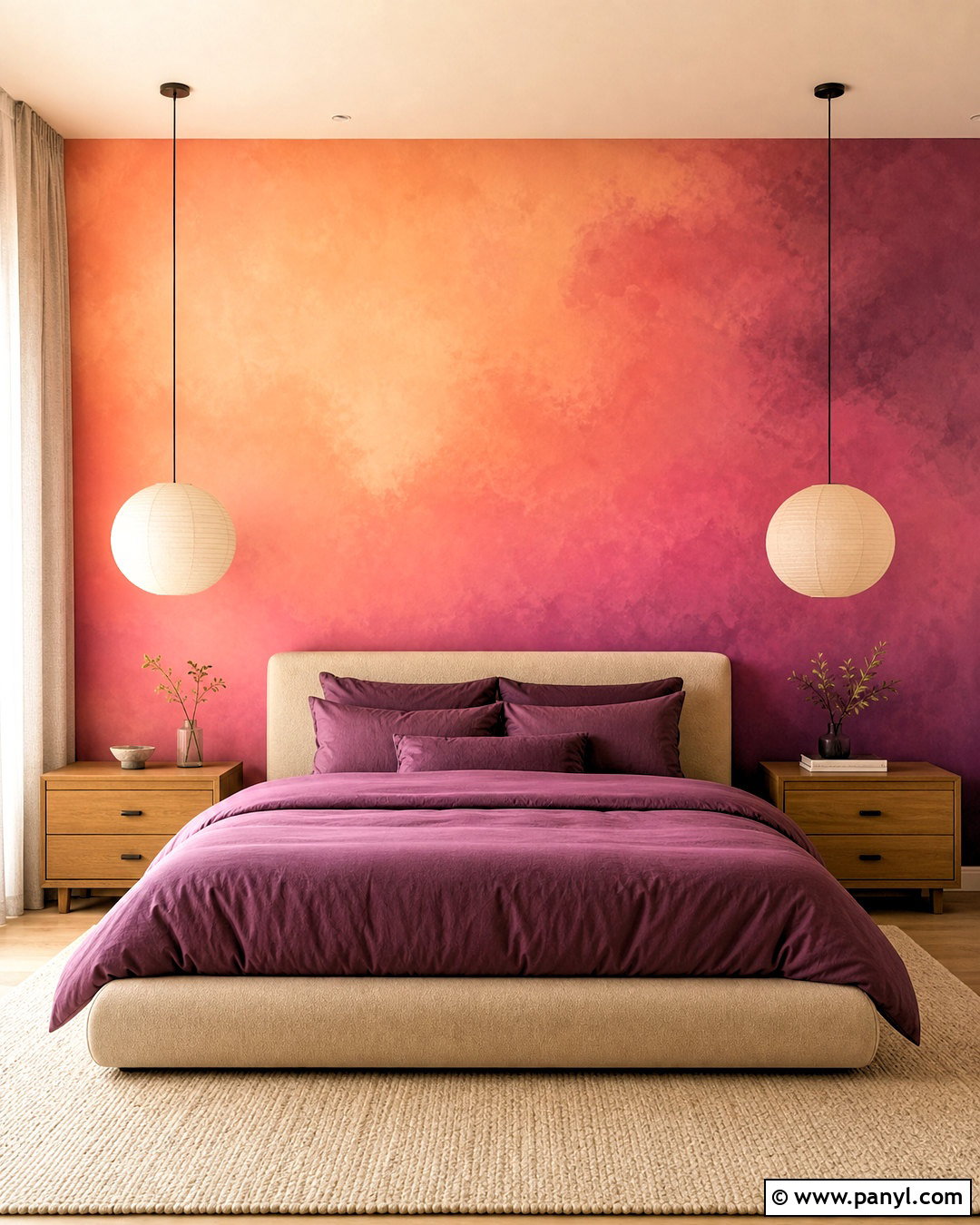
A sunset gradient can make a bedroom feel immersive while still supporting restful furniture and textiles. Blend pale apricot near the ceiling into coral, magenta, and muted plum toward the floor. Keep the transitions broad and slightly imperfect for an artistic, hand-painted finish. Place a low upholstered bed in warm beige against the gradient, then add plum bedding and apricot pillows. Light oak nightstands, paper lantern pendants, and a cream wool rug soften the saturated wall. Avoid hanging several small objects over the bed because they can interrupt the flowing color. One slim brass picture light or a simple round mirror is enough. Work in manageable horizontal sections while the paint remains wet, blending adjacent shades with separate brushes to prevent muddy color and harsh dividing lines.
8. Retro Stripe Wall Paint
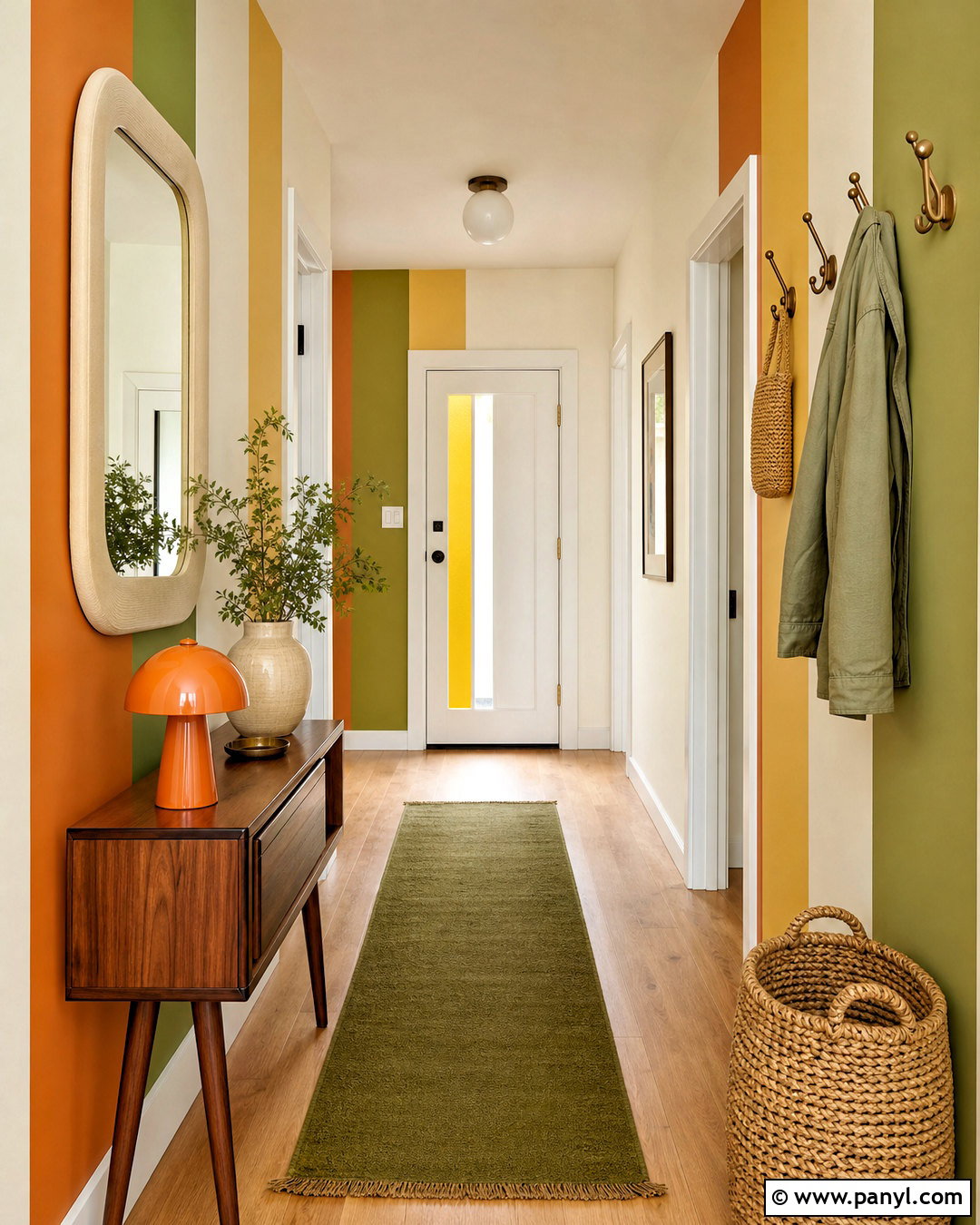
Wide vertical stripes can give a small entryway strong retro personality and a greater sense of height. Alternate dusty orange, avocado green, buttery yellow, and warm cream stripes across one wall. Use unequal widths for a more relaxed 1970s look rather than a formal striped pattern. Place a narrow walnut console against the wall with a rounded cream mirror and orange ceramic lamp. An olive runner, woven basket, and brass coat hooks extend the palette through the hall. Paint the other walls cream to prevent the compact area from feeling overly busy. Plan each stripe around the console and doorway before applying tape. Sealing the tape edges with the base color helps produce cleaner lines. The finished entry should feel upbeat, organized, and connected rather than merely colorful.
9. Terrazzo Wall Paint
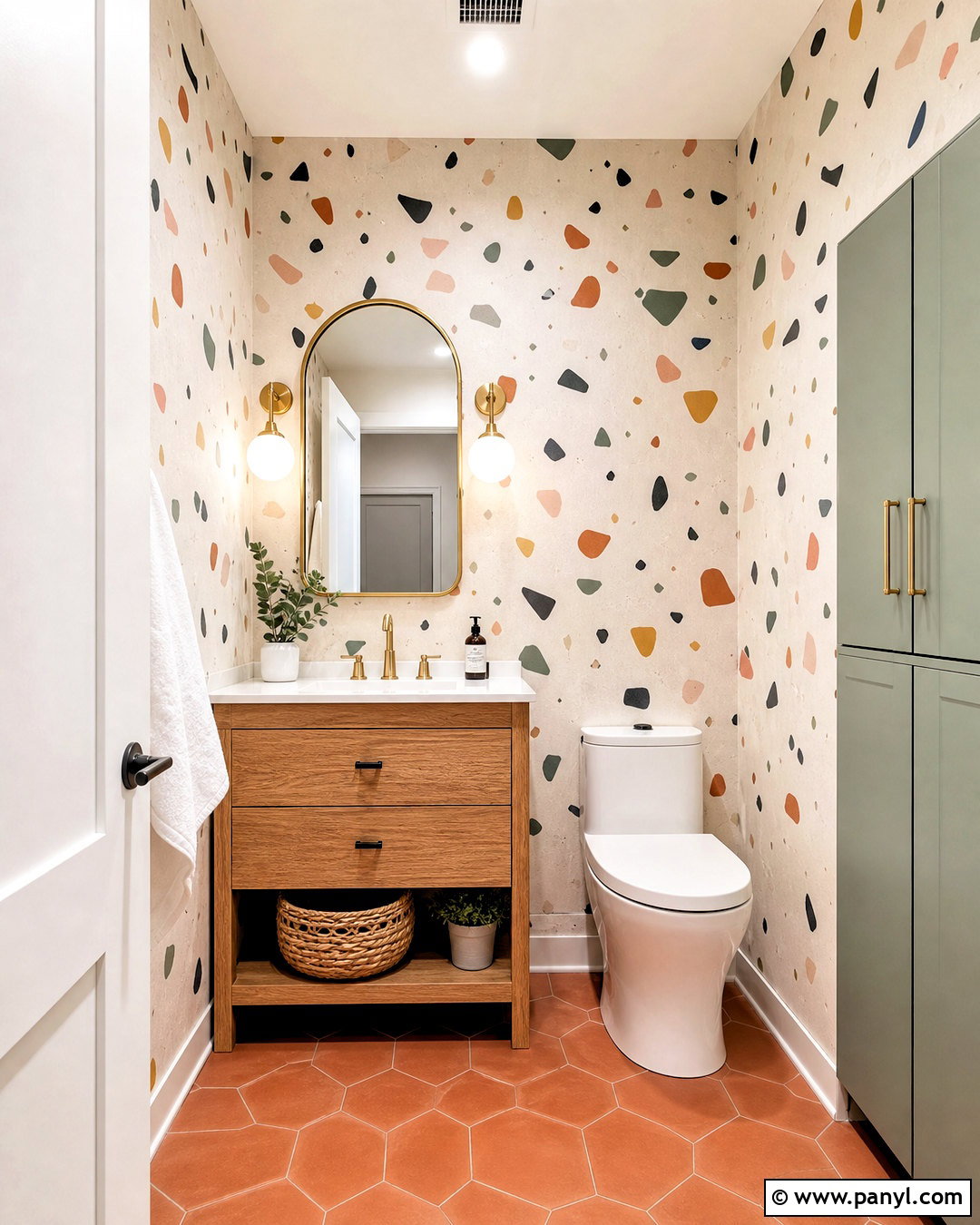
A hand-painted terrazzo wall offers a lively alternative to wallpaper in a bathroom or powder room. Use a warm off-white base and cover it with scattered irregular chips in sage green, terracotta, mustard, blush, and charcoal. Vary the chip sizes, but keep generous background space between them. Pair the mural with a floating oak vanity, round brass mirror, white countertop, and sage cabinet fronts. Terracotta floor tiles and simple white towels help the design feel intentional. Continue the pattern across one main wall only, leaving the surrounding walls quiet. Small sample brushes work well for creating the uneven fragments, and perfection is unnecessary. Keep paint away from direct splash areas unless the surface is prepared properly and protected with a finish suitable for the room’s conditions.
10. Harlequin Diamond Wall Paint
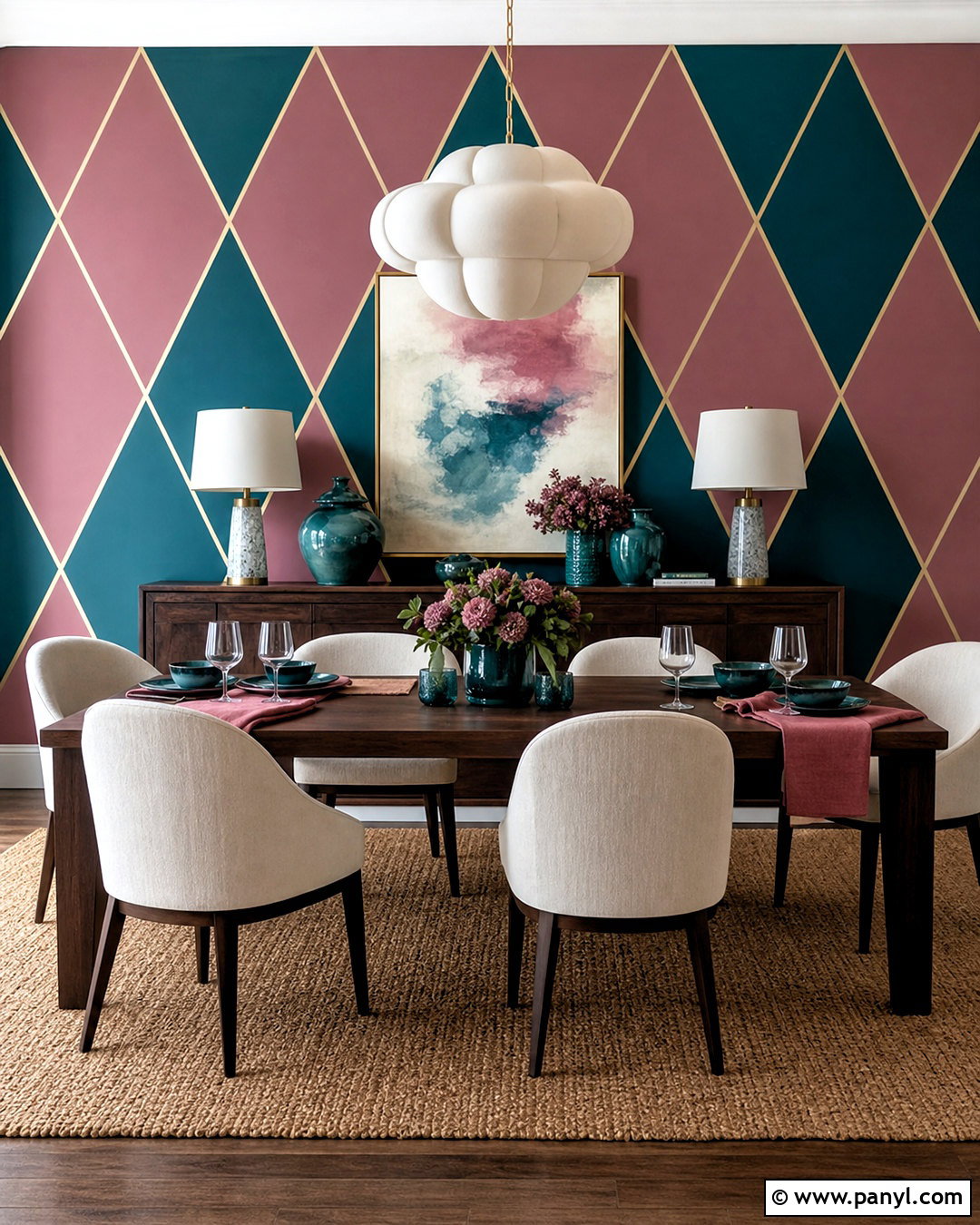
Harlequin diamonds make a dramatic statement in a dining room when the palette is controlled. Paint the main wall with large alternating diamonds in deep teal and dusty rose, adding thin cream lines between them. Choose a matte teal dining table or dark wood table, then surround it with simple cream upholstered chairs. A sculptural white pendant light keeps the room contemporary, while rose napkins and teal ceramics repeat the wall colors. Ground the arrangement with a plain natural rug rather than another geometric print. Measure the entire wall and find its center before drawing diagonal guidelines. Large diamonds are usually easier on the eye than a tightly packed pattern. Use a level and low-tack tape, and allow each color to dry fully before creating the contrasting sections.
11. Abstract Botanical Wall Paint
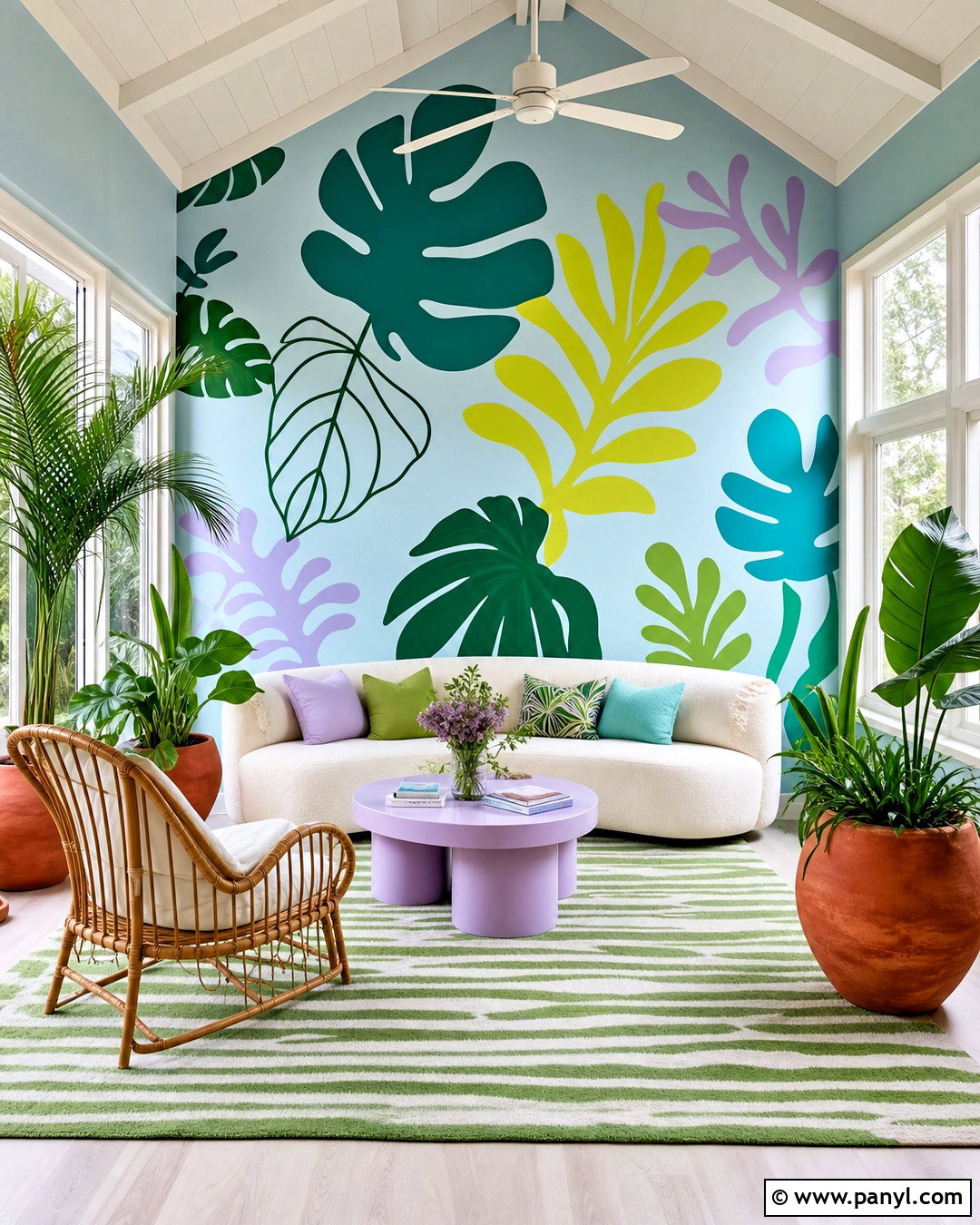
Oversized leaves can bring expressive color into a sunroom without copying a realistic garden scene. Paint a soft sky-blue background, then layer broad leaf silhouettes in emerald, lime, teal, and lavender. Let several leaves extend beyond the wall edges so the composition feels expansive. Furnish the space with a curved cream sofa, rattan lounge chair, lavender side table, and leafy indoor plants in simple terracotta pots. A green-and-white rug ties the room together while distinguishing real foliage from the painted forms. Keep the leaf shapes broad and graphic instead of adding tiny veins or intricate details. Sketch the main composition in chalk first, beginning with the largest leaves. Overlap two or three forms to create depth, but preserve visible areas of blue background so the wall can breathe.
12. Diagonal Color Block Wall
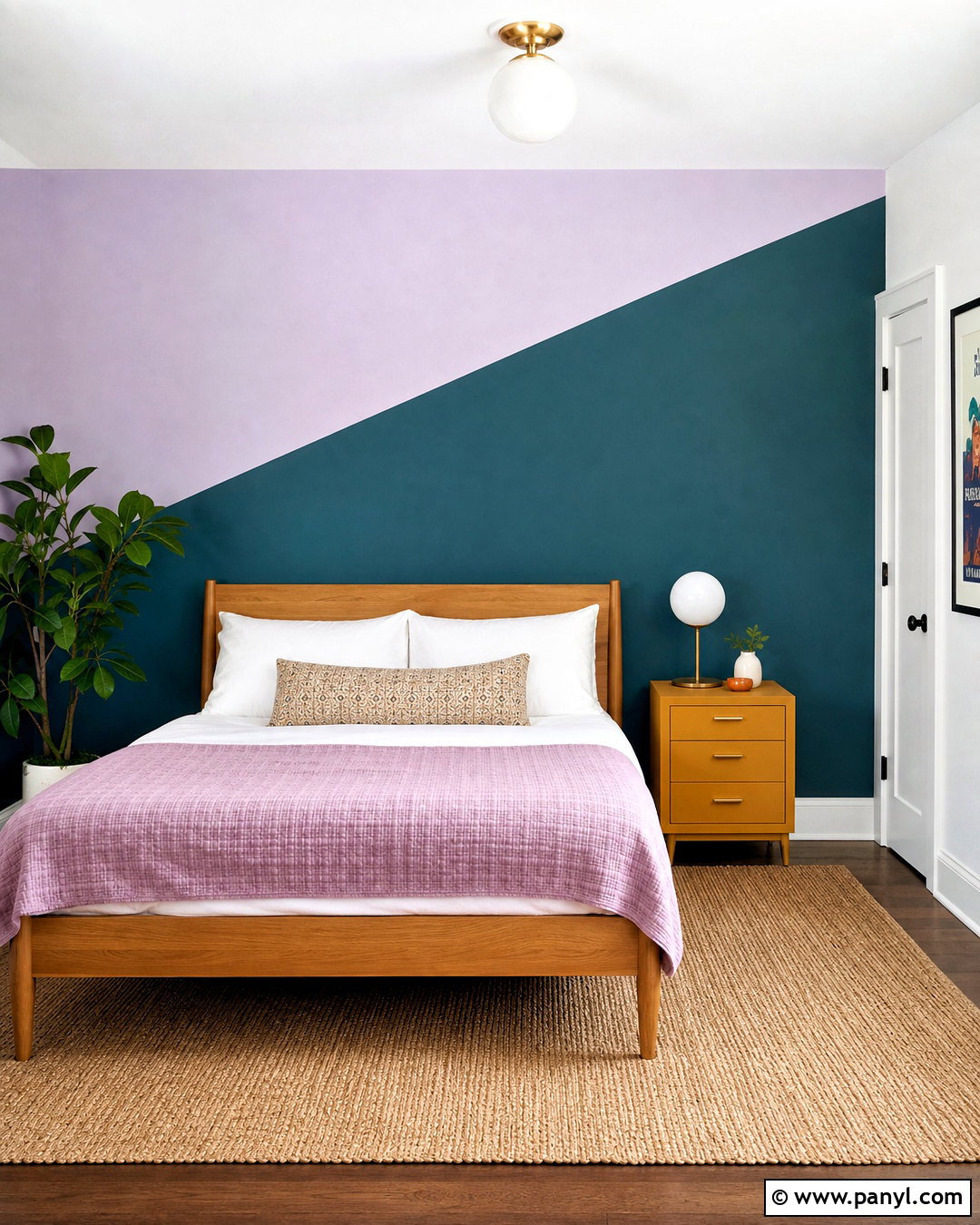
A diagonal color-blocked wall can add structure and energy to a compact guest bedroom. Paint the upper section pale lavender and the lower section deep teal, dividing them with a sharp line that rises from one corner to the opposite side. Center a simple oak bed where the two colors meet so both shades frame it. Dress the bed with white sheets, teal pillows, and a lavender quilt. Add a mustard bedside table for a small contrasting accent, plus a white globe lamp and a neutral woven rug. Keep artwork minimal because the diagonal already provides a strong focal point. Mark the line with a laser level or tightly stretched chalk line. Paint the lighter section first, let it cure, and seal the tape edge before applying the darker teal color.
13. Optical Cube Wall Paint
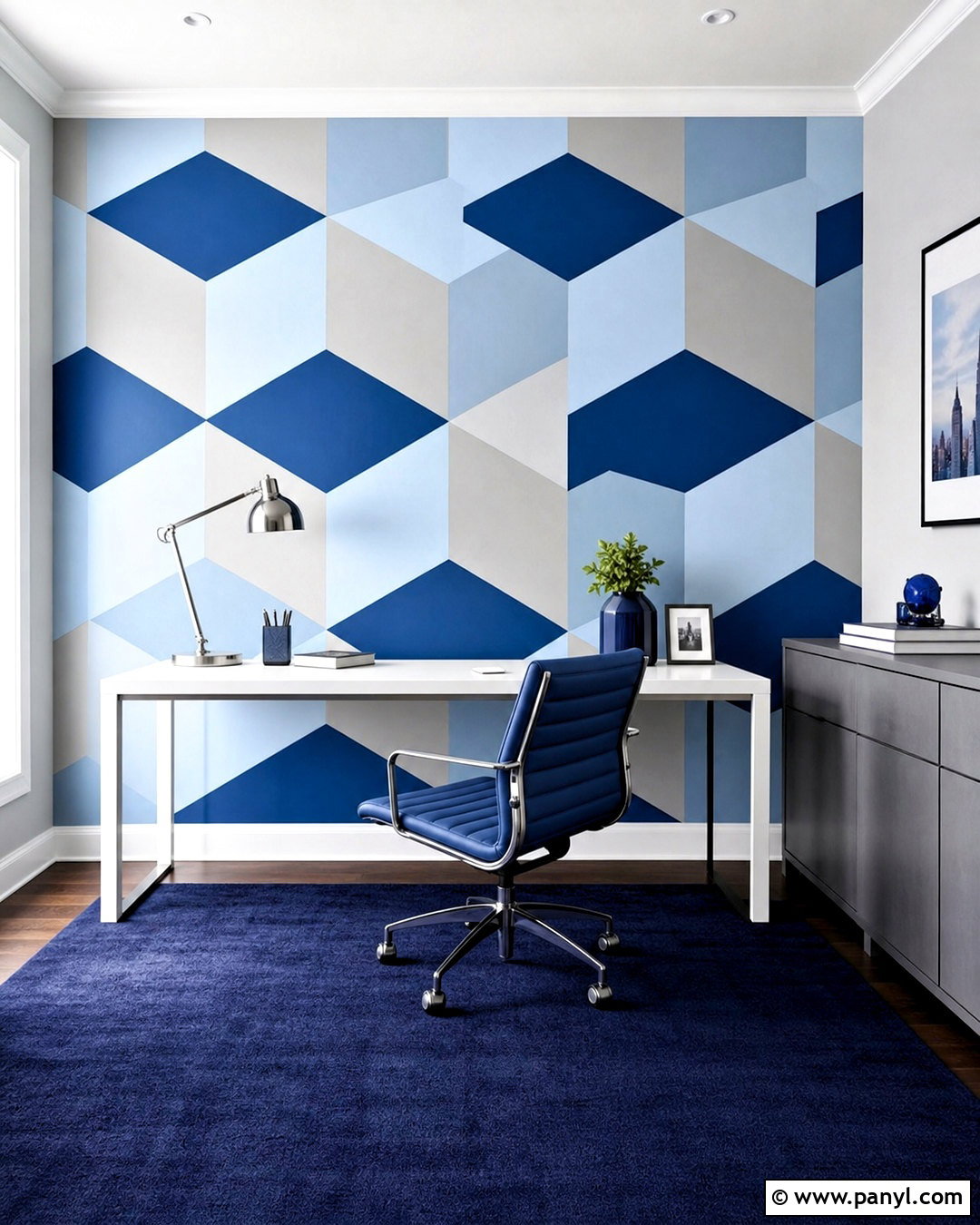
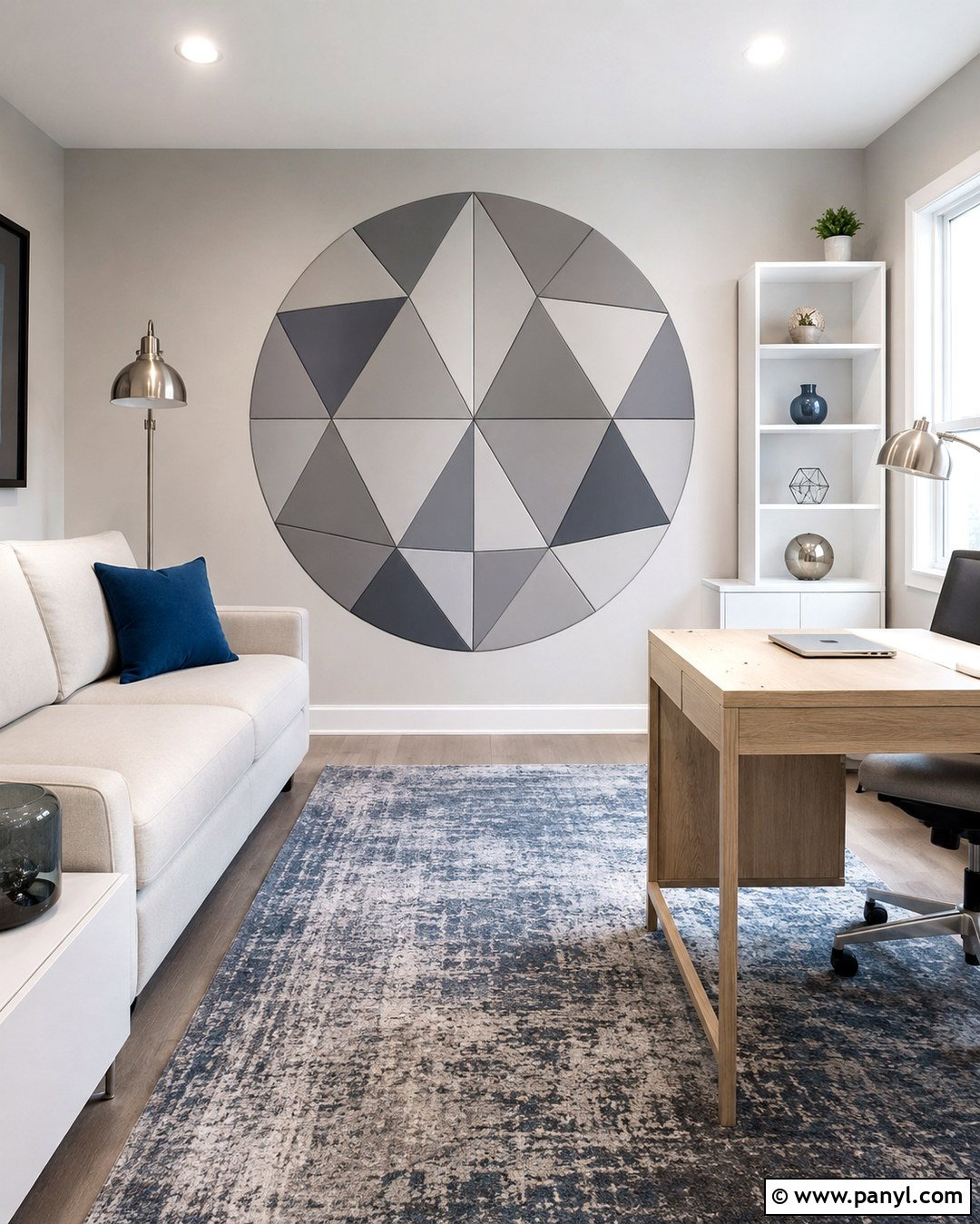
An optical cube mural creates convincing dimension using only straight lines and three coordinated colors. Cover an office feature wall with interlocking cube shapes in cobalt blue, pale blue, and soft gray. Each cube should use one shade per visible plane, producing a dimensional effect when viewed from across the room. Keep the desk white and streamlined, then add a cobalt chair, chrome task lamp, and light gray storage cabinet. A solid navy rug grounds the layout without introducing another competing pattern. Limit desktop decor to practical pieces and one small plant. Draw the cube grid carefully with a ruler and level before taping. Because accuracy matters here, number each section according to its intended color. This prevents adjacent planes from accidentally receiving the same shade and flattening the illusion.
14. Oversized Polka Dot Wall Paint
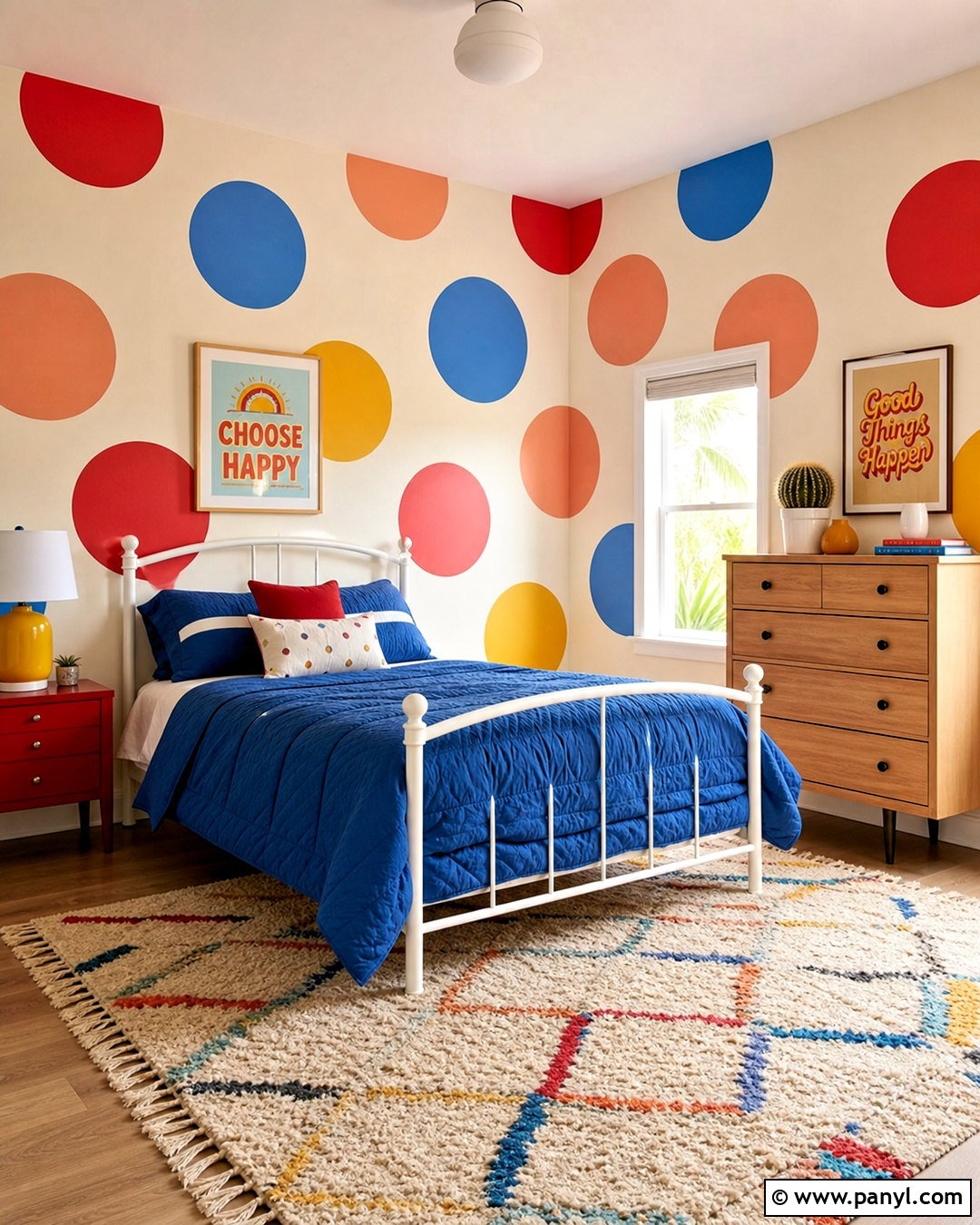
Oversized polka dots can make a child’s room, craft room, or playful guest room feel colorful without covering every surface. Begin with a soft cream wall and paint large circles in cherry red, cobalt blue, peach, and golden yellow. Space them irregularly, allowing a few circles to disappear partly behind the bed or wall edges. Choose a white metal bed, blue quilt, red bedside cabinet, and yellow table lamp. A natural wood dresser and simple cream rug prevent the primary colors from overwhelming the room. Keep bedding patterns small or solid so the dots remain the main feature. Make reusable cardboard templates in two sizes and trace them lightly. Paint each circle with a small roller, then refine its rounded edge using a smooth angled brush.
15. Color-Drenched Wall Paint
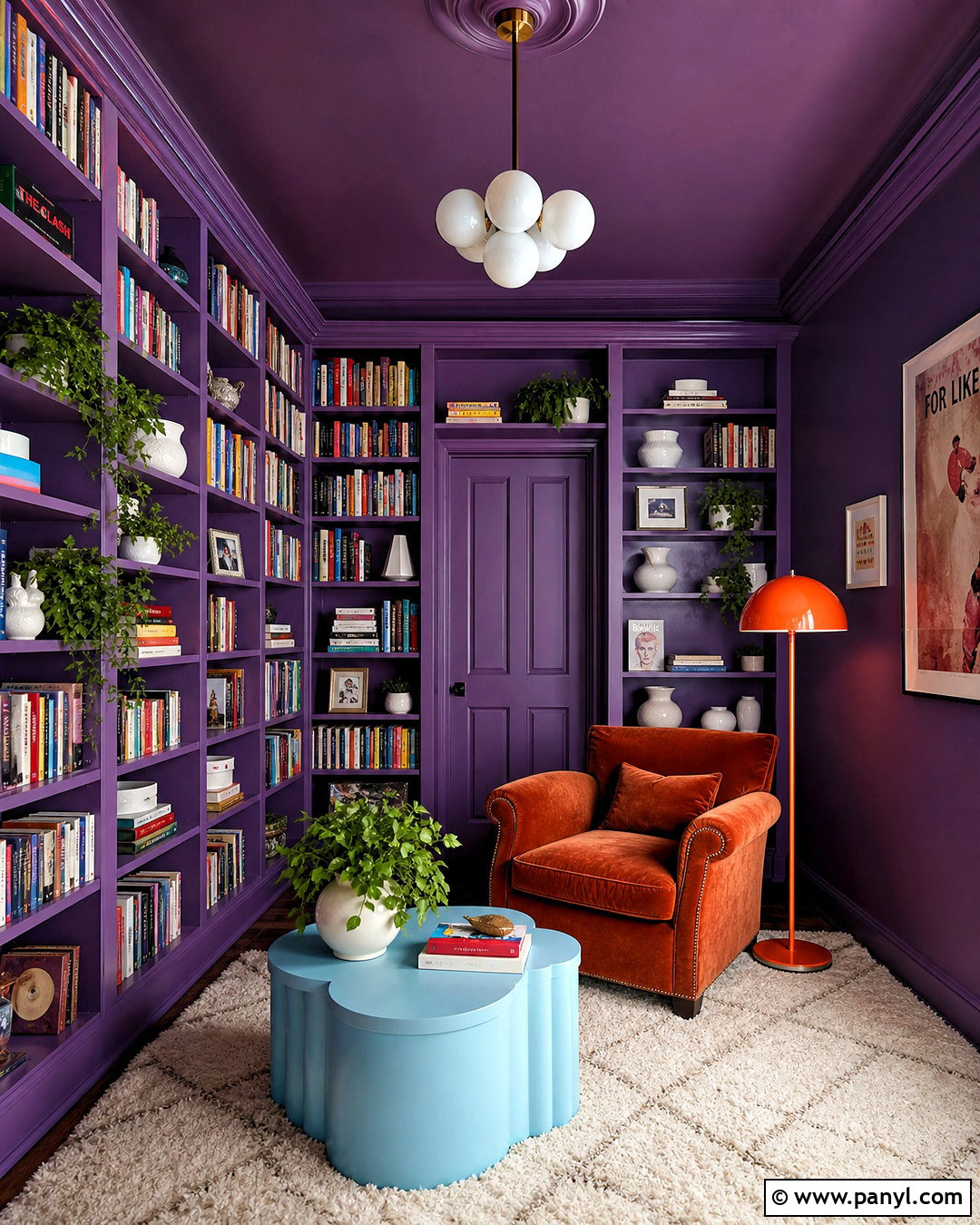
Color drenching becomes distinctly funky when an unexpected hue covers the walls, trim, doors, shelving, and ceiling. Try saturated violet in a small library, using the same color across every architectural surface for an enveloping effect. Break up the violet with a rust velvet armchair, bright orange floor lamp, and pale blue side table. Fill built-in shelves with colorful book spines, white ceramics, and a few trailing plants. A large cream rug provides a necessary visual pause against dark wood flooring. Choose a durable finish for trim and shelving while keeping the broad wall surfaces flatter. Paint sample boards first and move them around the room to see the color from different angles. The matching surfaces create unity, allowing the contrasting furniture to look deliberate rather than randomly assembled.
16. Dripping Paint Wall
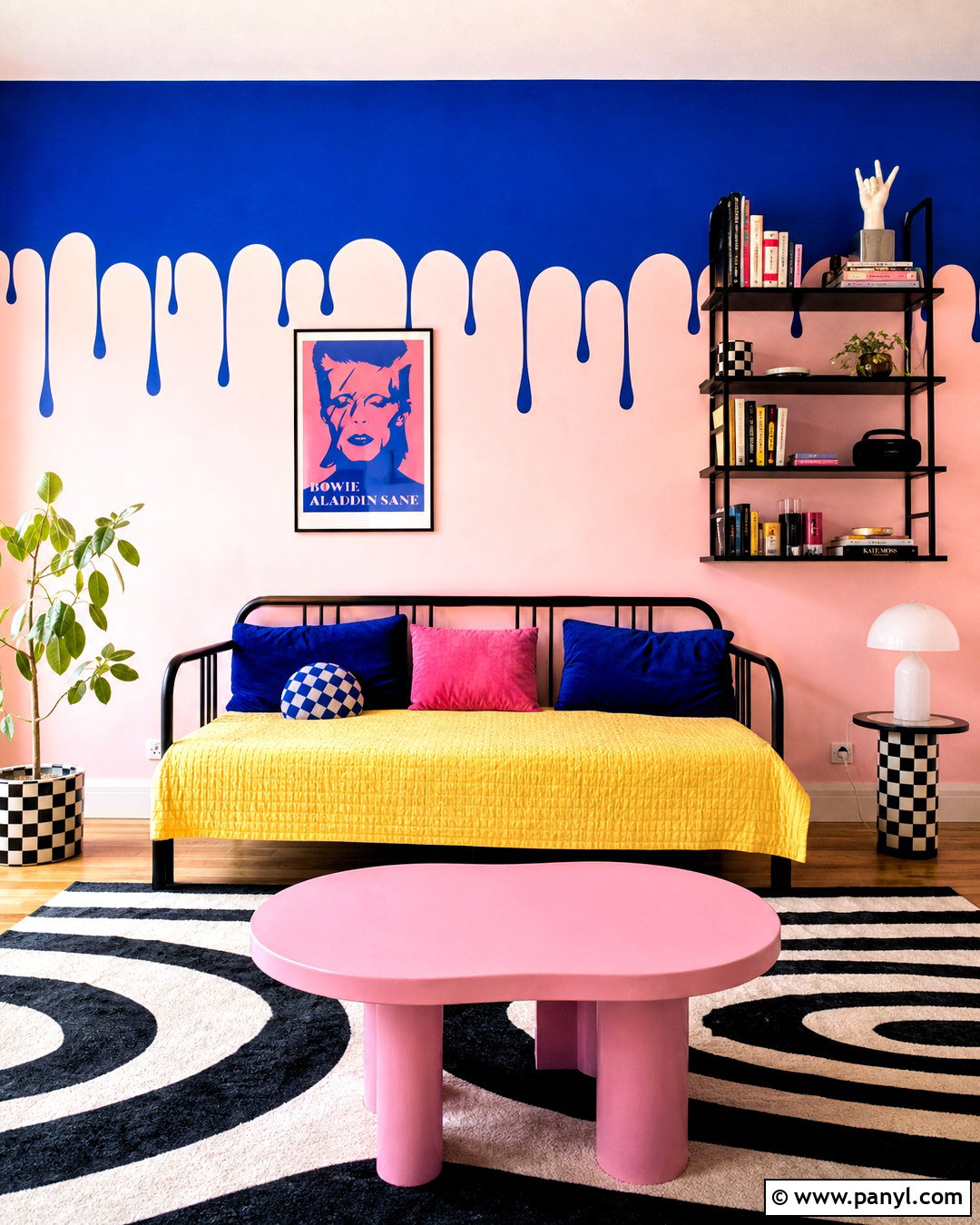
A controlled drip mural creates an edgy focal point for a music room, teen bedroom, or creative studio. Paint the wall pale pink, then add a wide cobalt blue band along the top. Extend irregular rounded drips downward at different lengths, stopping well above the furniture. Pair the wall with a black metal daybed, yellow bedding, cobalt cushions, and a compact pink side table. Add a black-and-white rug and simple wall-mounted shelves to keep the rest of the room graphic. Draw the drips before painting so their spacing feels intentional. Use curved ends rather than thin paint runs, which can appear unfinished. A small roller handles the blue band, while an angled brush provides control around every drip. Keep adjoining walls pale pink for a clean, continuous background.
17. Patchwork Wall Paint
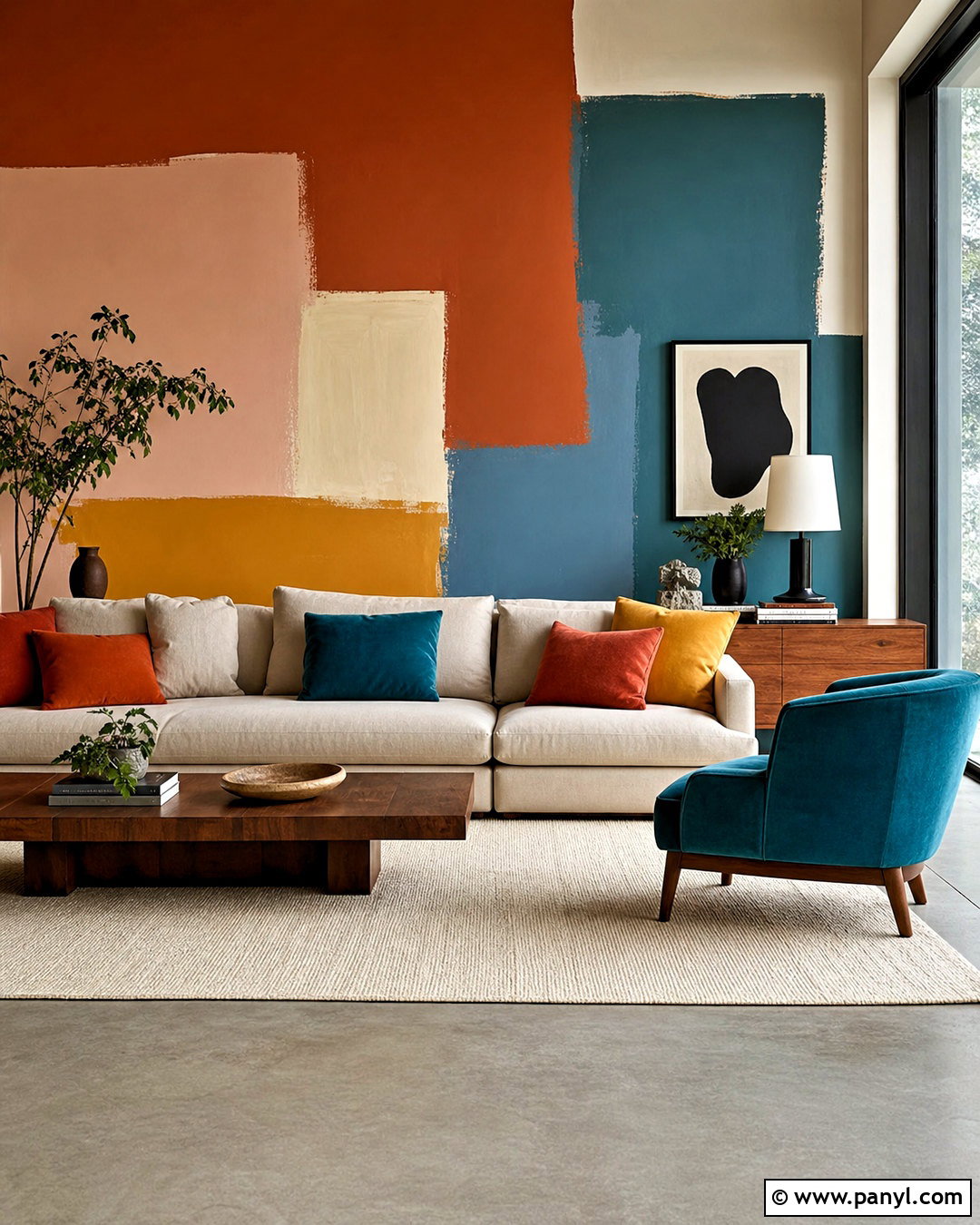
A patchwork mural can transform a plain living room into a colorful, gallery-like space. Divide one wall into large, uneven rectangles painted in rust, blush, mustard, teal, cream, and dusty blue. Avoid a perfect grid by shifting the vertical and horizontal lines at different points. Place a low neutral sofa in front of the mural with solid cushions pulled from its palette. Add a dark walnut coffee table, teal lounge chair, and cream rug with subtle black edging. One oversized abstract artwork can overlap two painted blocks, helping the decor feel integrated with the wall. Plan the rectangles around the sofa and artwork rather than painting arbitrary boxes. Use fewer, larger blocks in a small room. The surrounding walls should stay warm white to balance the feature’s visual weight.
18. Doodle Line Wall Paint
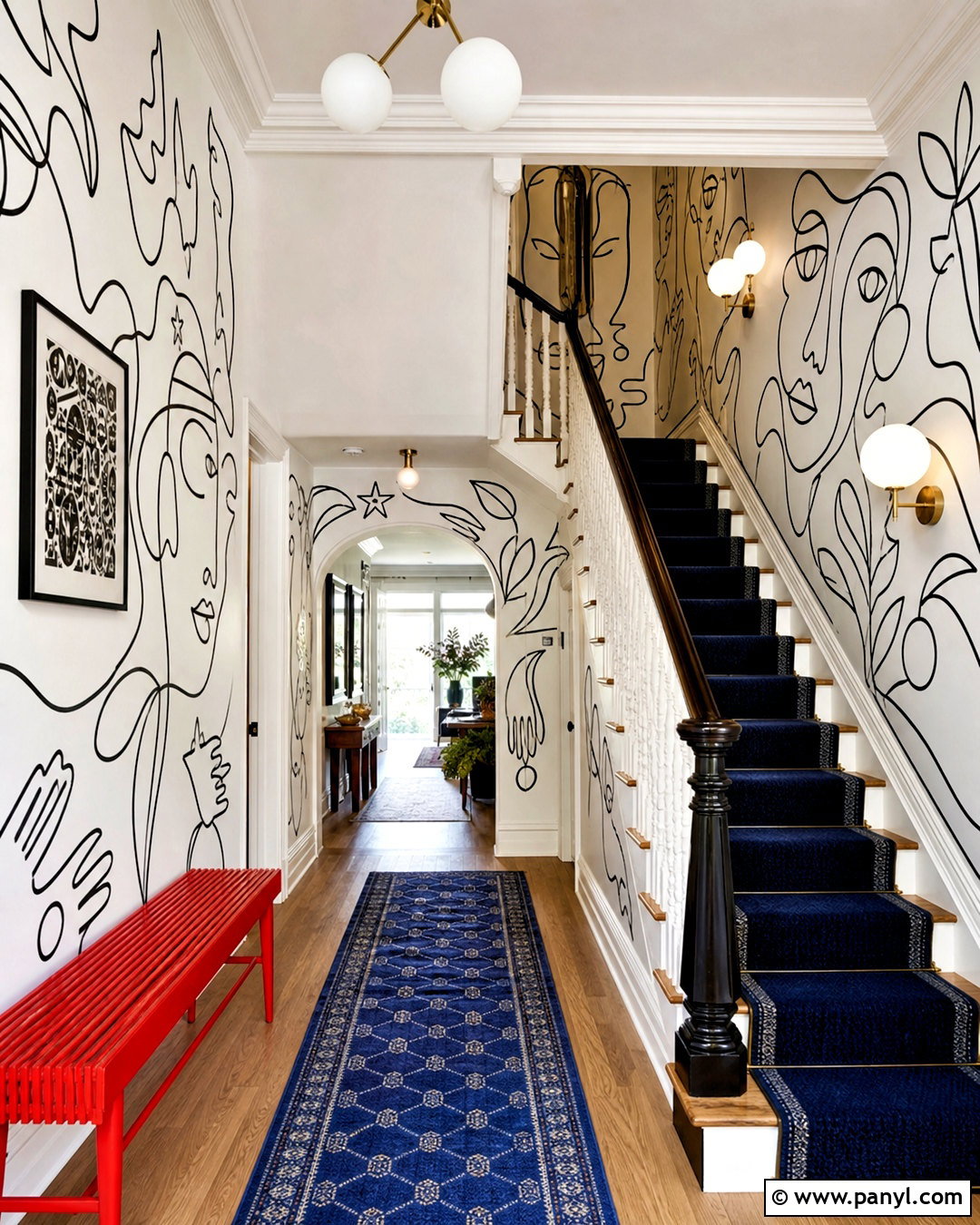
A black doodle mural can give a staircase or hallway personality while keeping the palette simple. Start with warm white walls and draw one continuous black line that loops into faces, leaves, stars, hands, and abstract curves. Keep the illustration loose and oversized so it can be understood from several feet away. Pair the mural with a narrow red bench, cobalt runner, and a row of small globe sconces. Natural oak flooring brings warmth to the graphic black-and-white background. First develop the doodle on paper, then transfer its major points to the wall using light pencil marks. Paint with a steady brush and consistent line width. Leave open space around switches, doors, and lights. This allows practical features to sit comfortably within the finished composition rather than interrupting it.
19. Cloud Wall Paint
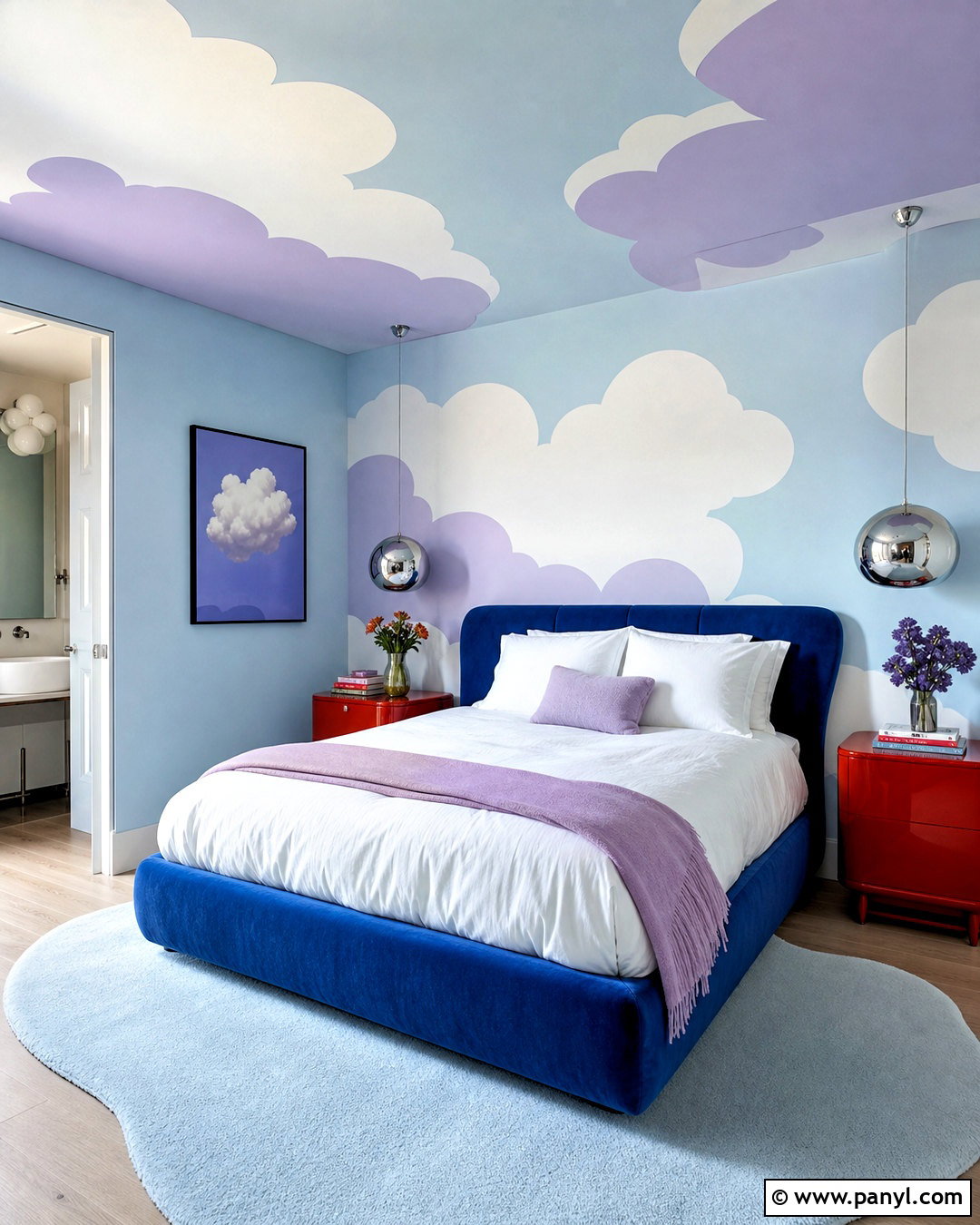
A cloud mural can feel wonderfully surreal when it stretches from the walls onto the ceiling. Paint a bedroom with a pale aqua base, then add oversized white and lavender clouds that drift upward and continue overhead. Use soft, rounded silhouettes rather than realistic shaded clouds. Anchor the dreamy room with a cobalt upholstered bed, white bedding, lavender throw, and glossy red nightstands. A pale blue rug and chrome pendant lights create a crisp modern finish. Keep window treatments white so daylight supports the airy palette. Map the largest clouds around the headboard and corners before painting. Vary their scale and spacing to avoid a repeated stencil effect. The ceiling extension is what makes the design immersive, so carry at least three major cloud forms above the room’s main sleeping area.
20. Zigzag Wall Paint
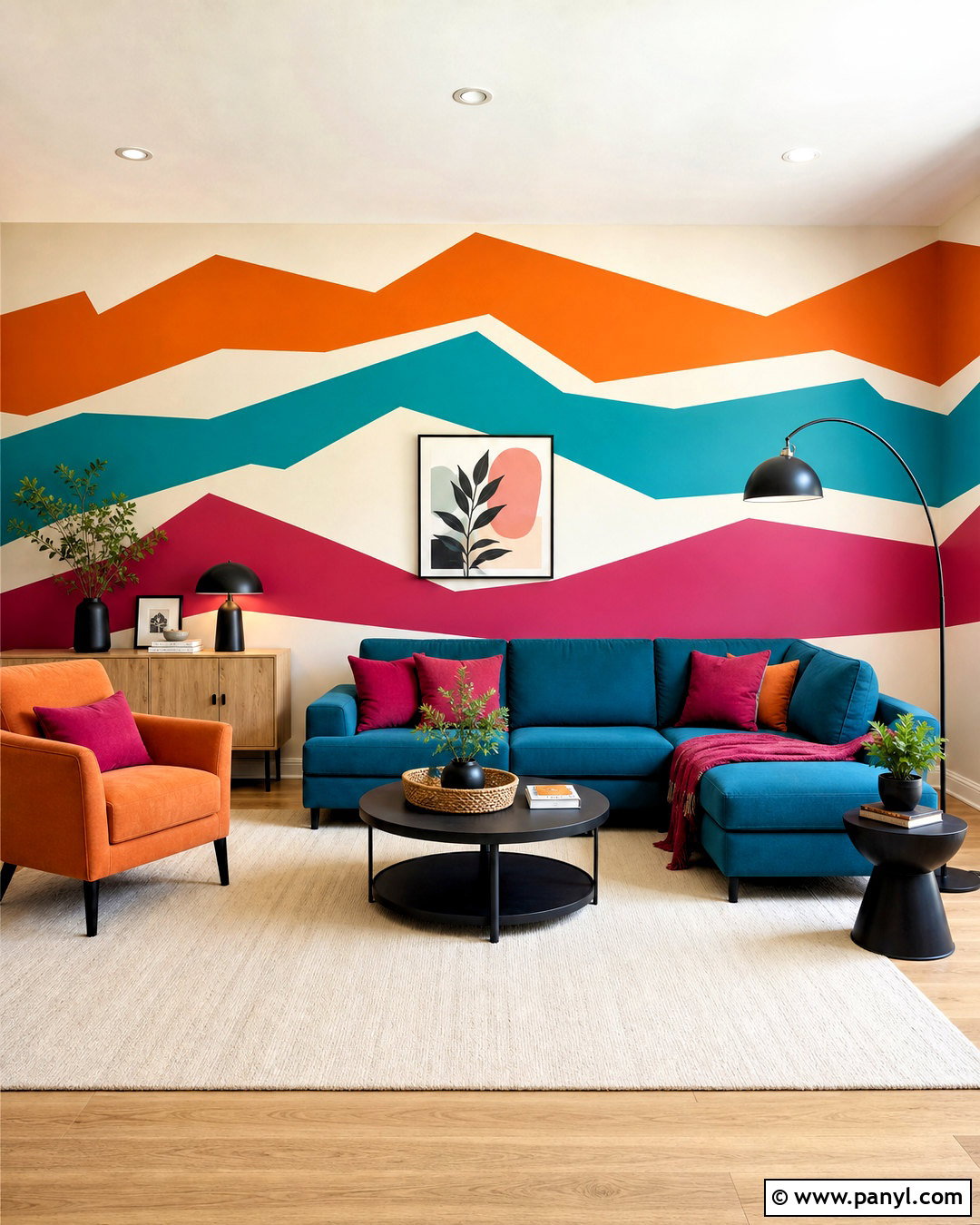
A jagged zigzag mural can energize a family room while providing a clear color scheme for the entire space. Paint a cream base, then run wide zigzag bands in burnt orange, turquoise, and raspberry across the main wall. Keep the points broad and irregular for a contemporary look instead of creating tiny chevrons. Add a deep turquoise sectional, orange lounge chair, raspberry cushions, and a light oak media console. A plain cream rug balances the angular pattern, while black floor lamps offer definition. Continue one narrow zigzag around a corner to make the mural feel integrated with the architecture. Mark each point with a level and pencil before connecting the lines with tape. Limit the wall to three strong colors so its lively geometry remains readable and coordinated.
Conclusion:
The best funky wall paint ideas balance self-expression with thoughtful room planning. A colorful wall works harder when its palette continues through furniture, rugs, lighting, and smaller accessories. Crisp checkerboards and optical cubes suit people who enjoy measured patterns, while waves, botanical forms, and doodles offer a looser finish. Before painting, sketch the design, test the colors together, and consider how doors, windows, and furniture will affect the composition. Choose one dominant feature wall if the pattern is especially bold, or continue selected shapes around a corner for a more immersive effect. Most importantly, create a room that feels joyful and useful. These funky wall paint ideas make it possible to personalize your home with little more than color and imagination.

Related Ideas and Inspiration:
Leave a Reply