
A low-light lower level can become one of the most inviting spaces in your home when its darkness feels intentional. These 20 dark basement ideas use deep paint colors, layered lighting, warm woods, comfortable furniture, and practical layouts to create rooms that feel cozy rather than gloomy. Instead of fighting limited daylight, treat it as a design advantage for movie nights, focused work, exercise, reading, and relaxed family time. Dark walls can also disguise a television, define separate zones, and give ordinary architectural details greater impact when balanced with thoughtful lighting and contrasting materials. () Whether you are planning a complete renovation or an affordable weekend refresh, the following 20 dark basement ideas offer complete looks you can adapt to your space.

1. Dark Basement Family Room
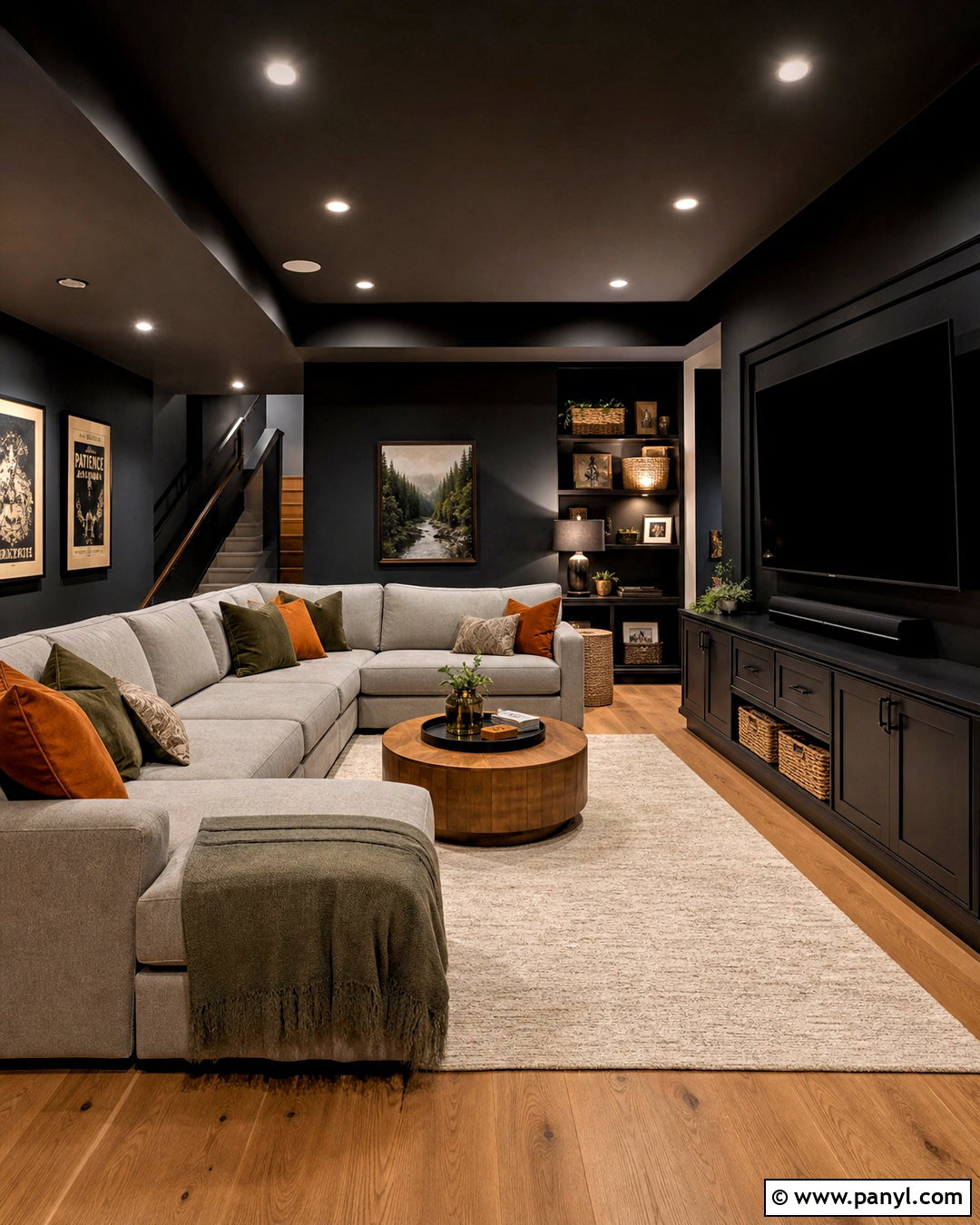
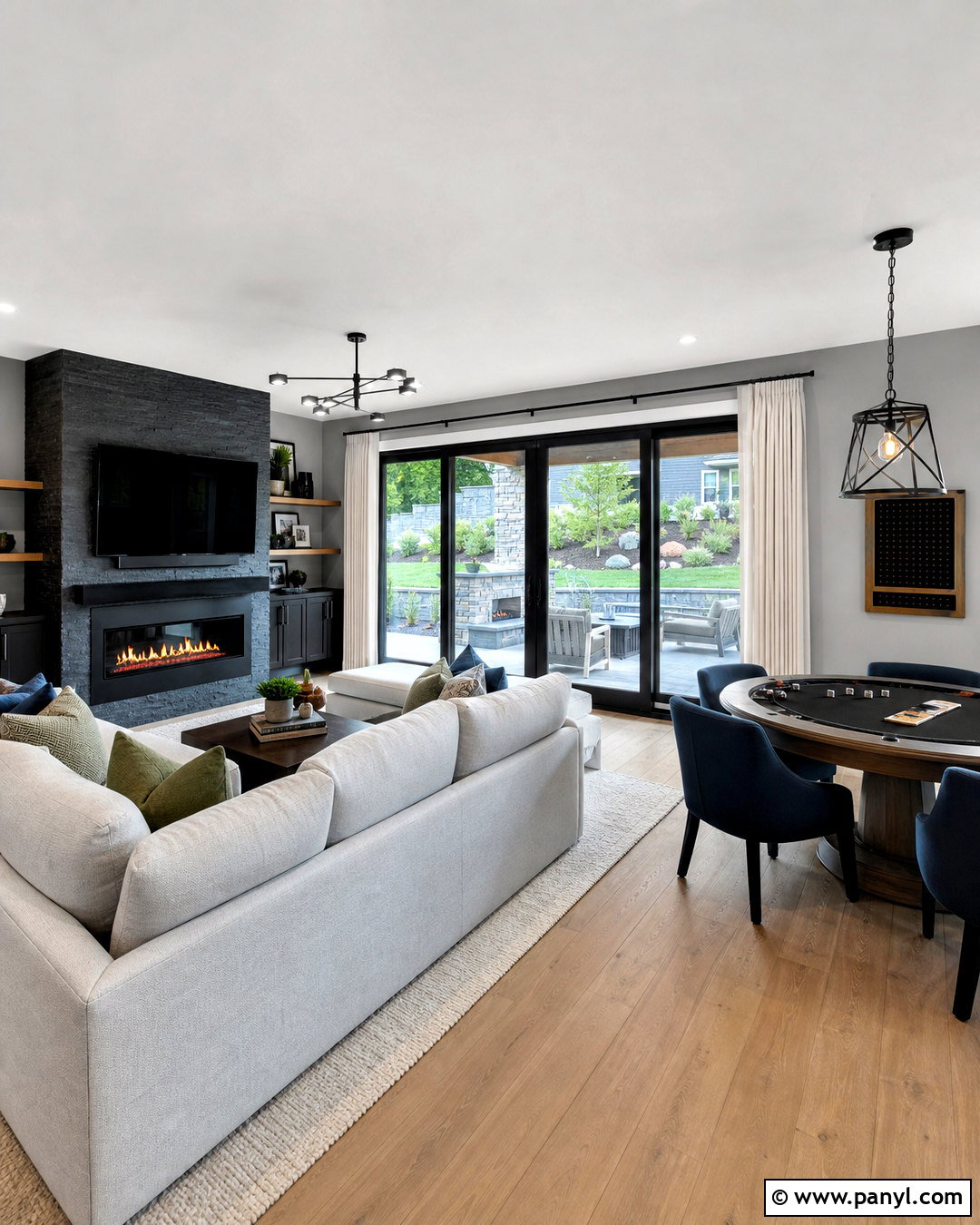
Create a comfortable family room with charcoal walls, a soft gray sectional, and medium-tone oak flooring. Position the sectional toward a matte black media wall, then add a large oatmeal-colored rug to soften the darker surfaces. A round oak coffee table improves circulation and brings natural warmth into the room. Use closed storage cabinets beneath the television for games, electronics, and extra blankets. Black recessed lights can provide even illumination, while table lamps and wall sconces make the seating area feel relaxed. Add rust, olive, and cream pillows for controlled color. Framed artwork, woven baskets, and one tall artificial tree complete the room without creating clutter. The result feels polished enough for guests but durable and welcoming for everyday family life.
2. Dark Basement Home Theater
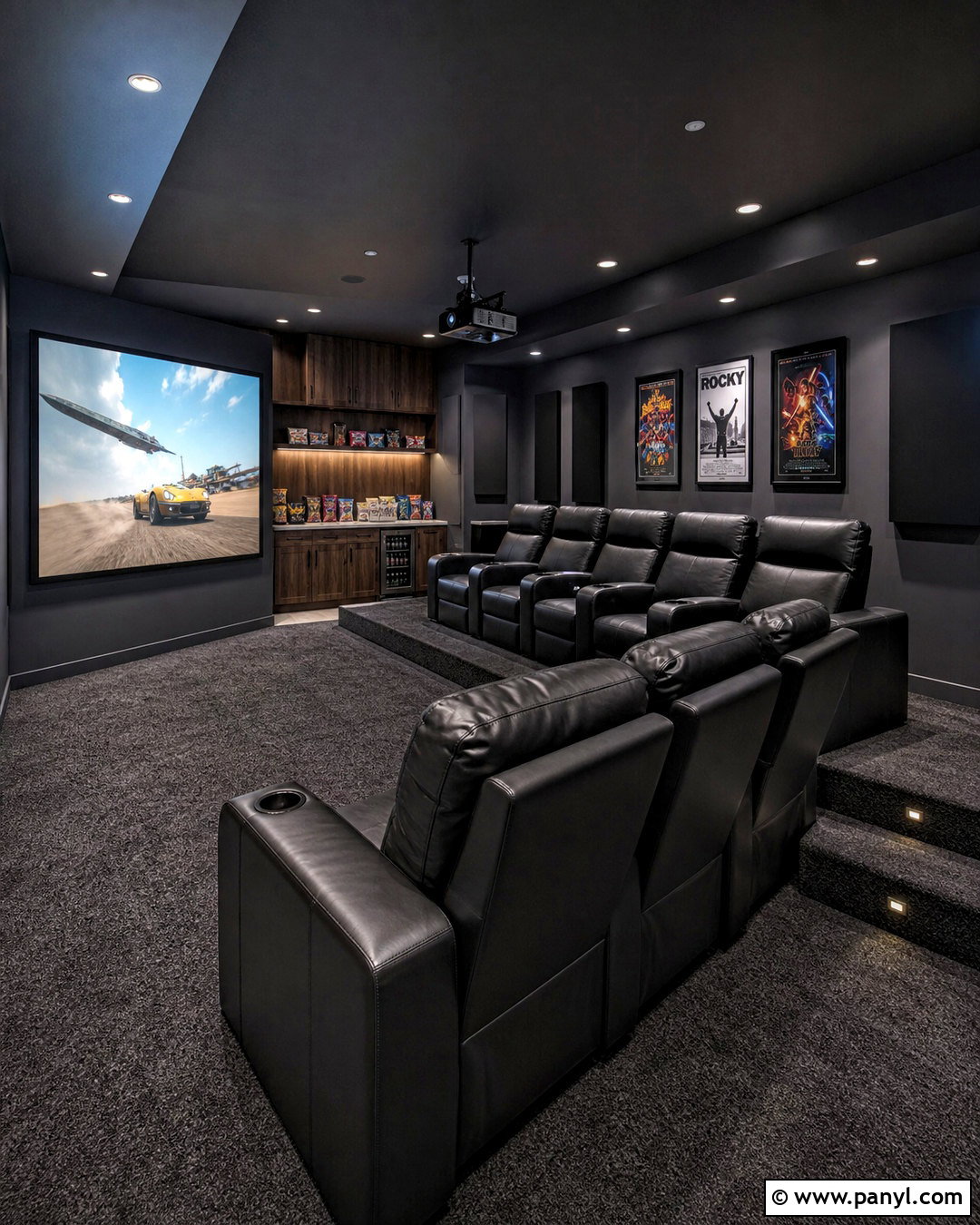
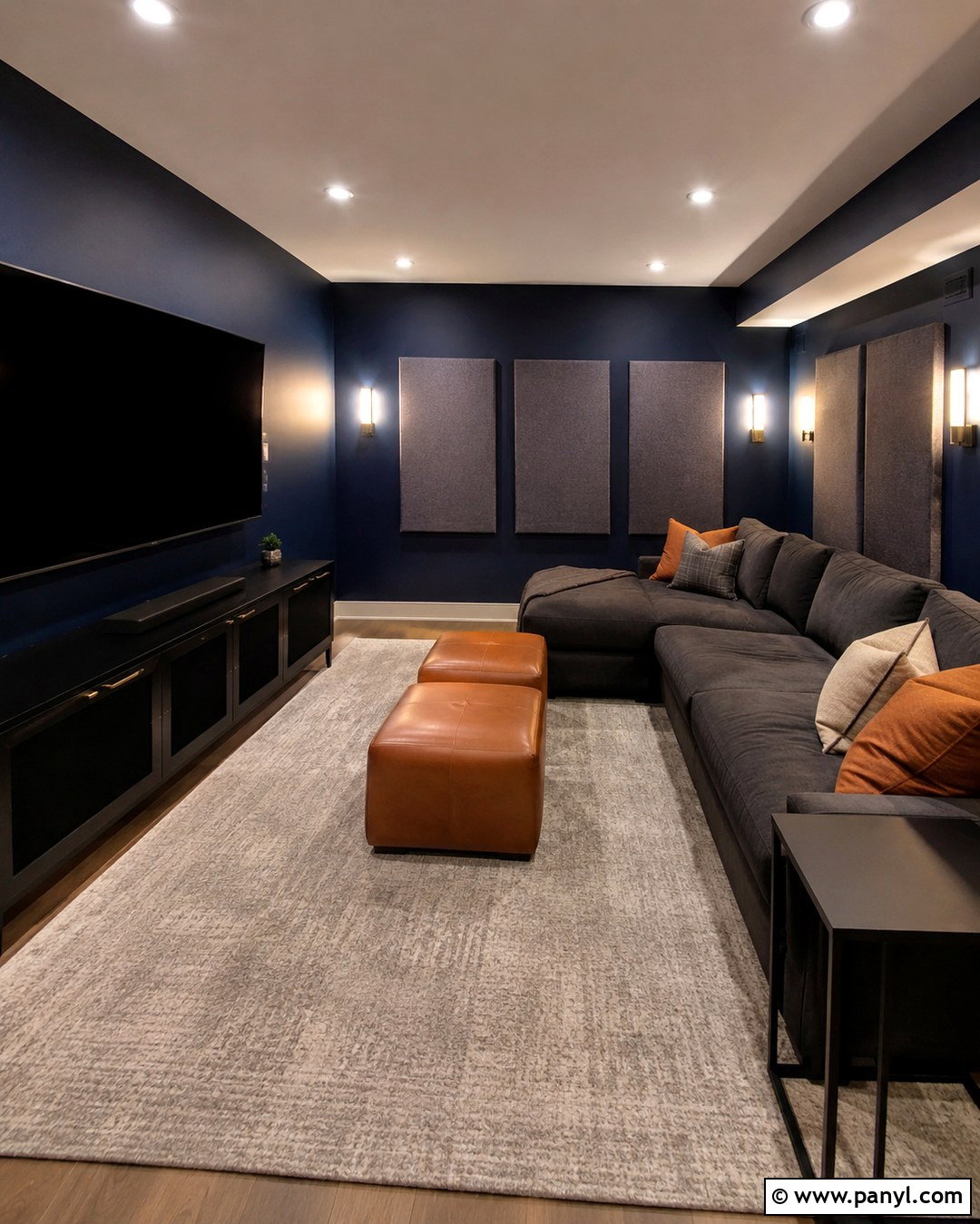
Limited natural light makes a basement well suited to an immersive home theater. Paint the walls and ceiling deep charcoal to reduce visual distractions, then install a large projector screen on the shortest solid wall. Arrange two rows of low-profile black or dark brown reclining seats, leaving a wide center aisle and clear access to the stairs. Use dark acoustic panels to improve the finished appearance and help control sound. Plush graphite carpet keeps footsteps quiet and makes the room warmer underfoot. Install dimmable recessed lighting around the perimeter, plus low stair lights for safer movement. A slim walnut console can hold snacks and media equipment. Heavy black curtains, simple framed movie artwork, and concealed wiring give the entire theater a clean, intentional finish.
3. Dark Basement Reading Room
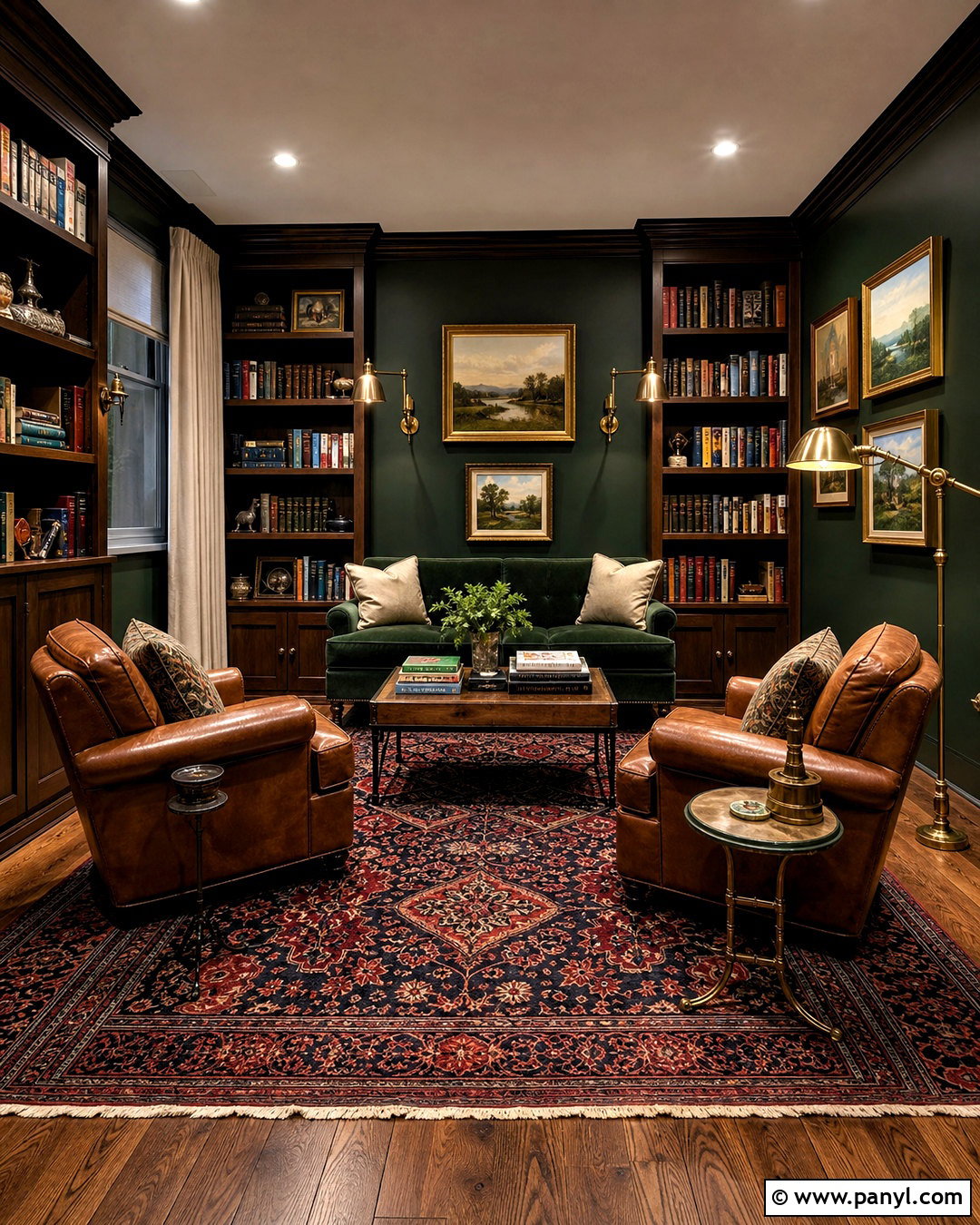
Imagine settling into a quiet basement surrounded by books, soft upholstery, and rich color. Paint the walls deep forest green and add floor-to-ceiling walnut bookcases along one side of the room. Place two caramel leather armchairs near the shelves with a small round table between them. A traditional patterned rug in muted red, navy, and tan will warm the floor and give the arrangement definition. Choose adjustable brass reading lamps rather than relying only on overhead fixtures. Paint the ceiling the same green for an enveloping effect, but use cream curtains and light-colored artwork to introduce contrast. A compact velvet sofa can provide additional seating. Finish the room with book storage, framed landscapes, and a few ceramic pieces for a comfortable library that feels collected rather than overly formal.
4. Dark Basement Game Room
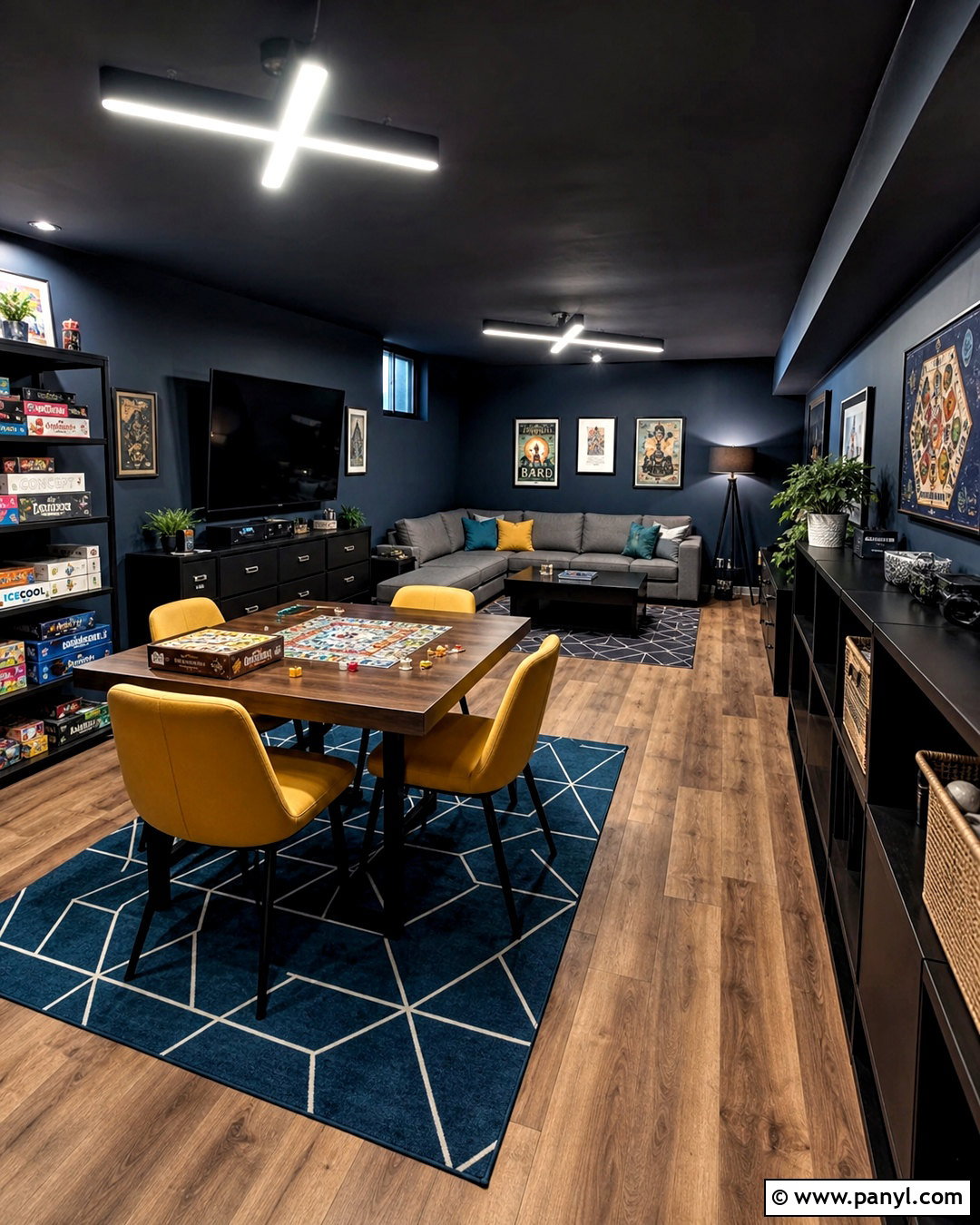
A dark game room can feel energetic without looking busy or childish. Start with navy walls, a black painted ceiling, and durable medium-brown luxury vinyl plank flooring. Center a wood table in the room for board games, puzzles, and casual projects, surrounding it with wipeable upholstered chairs. Along one wall, create a television zone with a compact sectional and washable geometric rug. Use dark built-in cabinets for games, controllers, and hobby supplies, leaving several open shelves for attractive displays. Linear ceiling fixtures provide broad task lighting, while wall sconces soften the room during relaxed evenings. Add mustard yellow, teal, and burnt orange through pillows and framed prints. Keep pathways open around furniture so multiple activities can happen comfortably without making the basement feel crowded.
5. Dark Basement Home Office
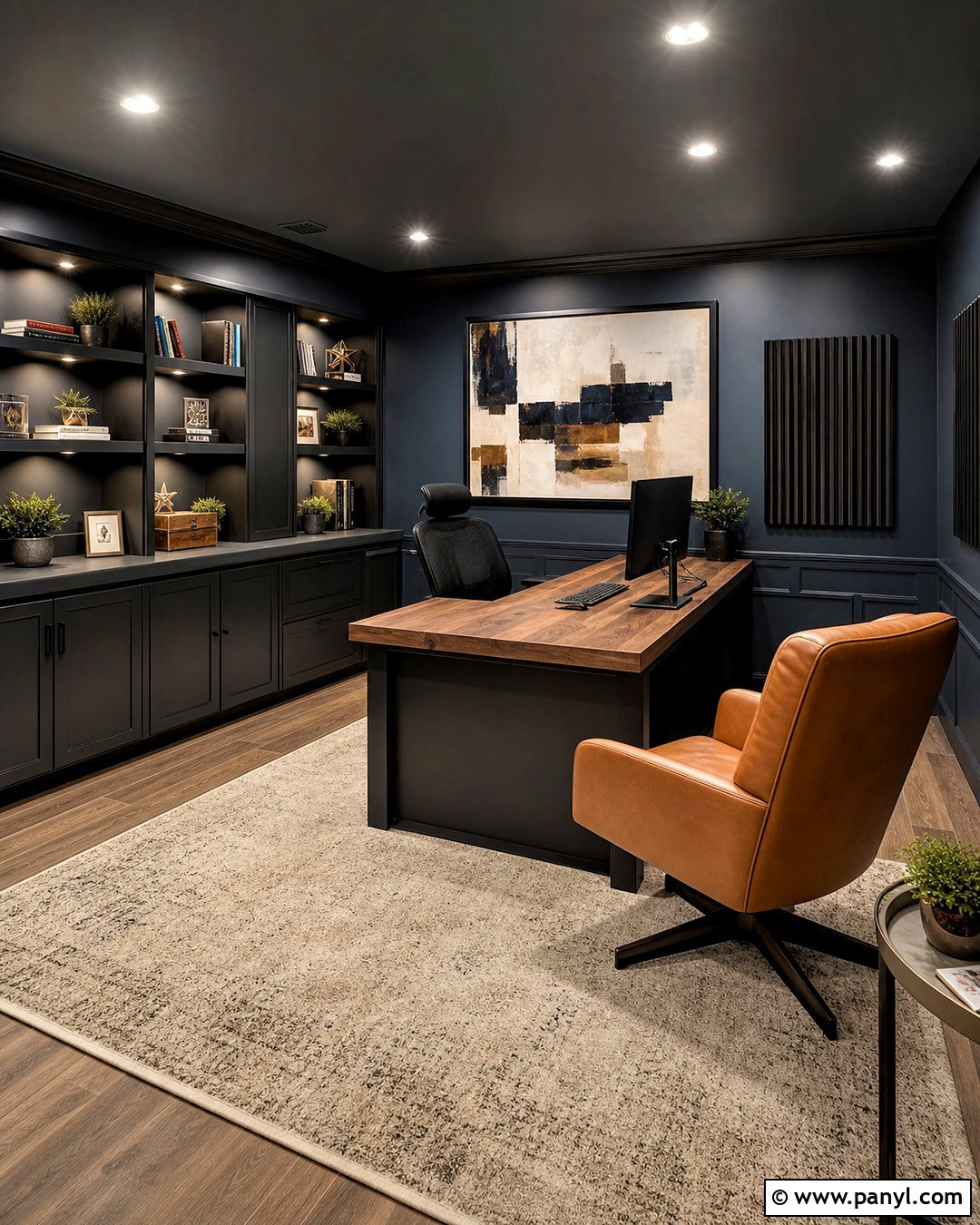
For a focused work environment, cover the walls in deep blue-gray and install a long walnut desk facing the room instead of a blank wall. This placement creates a more confident layout and leaves space behind the desk for built-in storage. Use matte black cabinets with integrated lighting to organize files, technology, and office supplies. A supportive black chair, cognac leather guest chair, and low-pile cream rug balance comfort with a professional appearance. Layer recessed ceiling lights with a directional desk lamp and softly illuminated shelves. If the basement has a small window, keep the treatment simple so every bit of daylight enters. Add acoustic wall panels, one large abstract print, and a few restrained green plants. The finished office feels private, calm, and suitable for long work sessions.
6. Dark Basement Home Gym
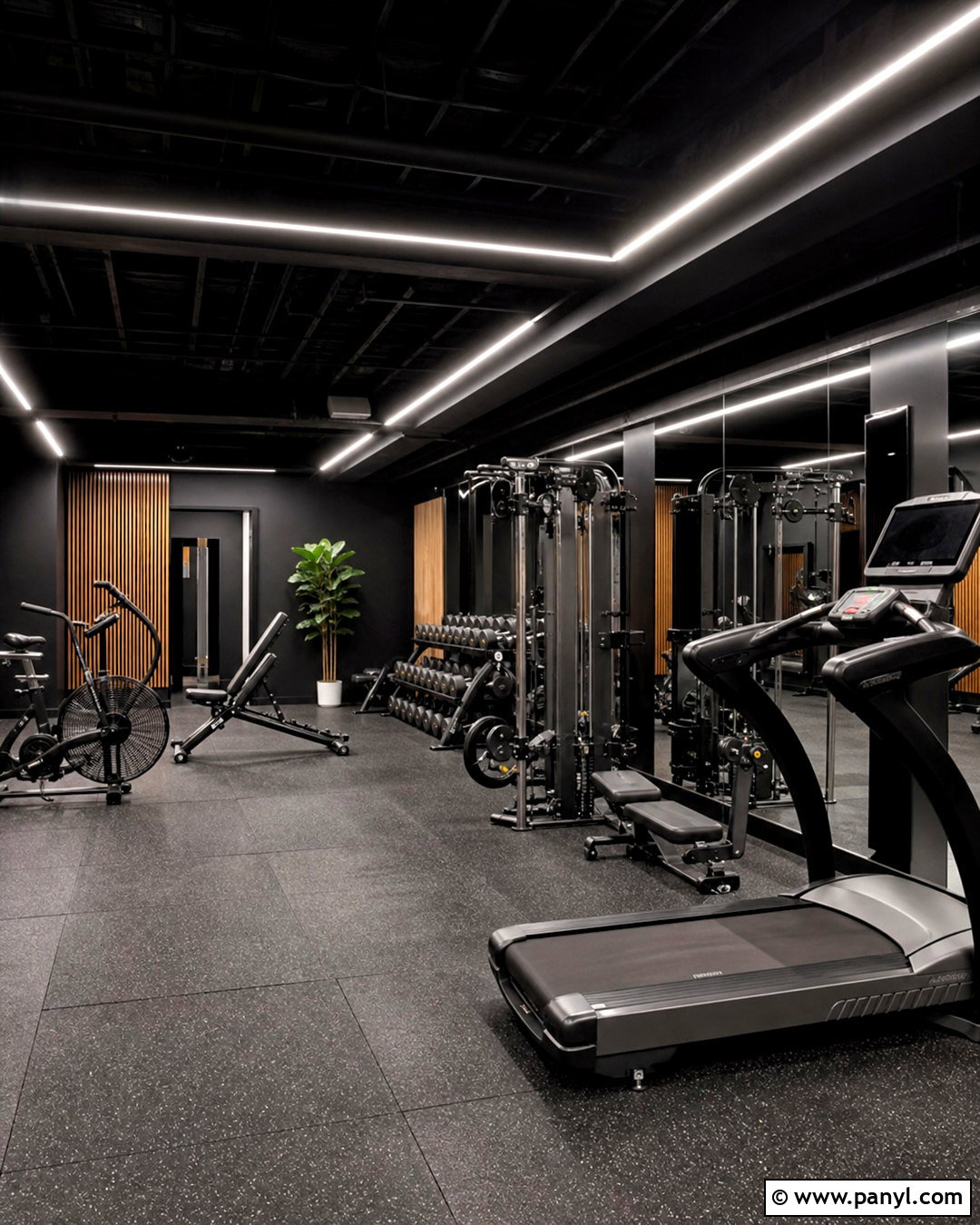
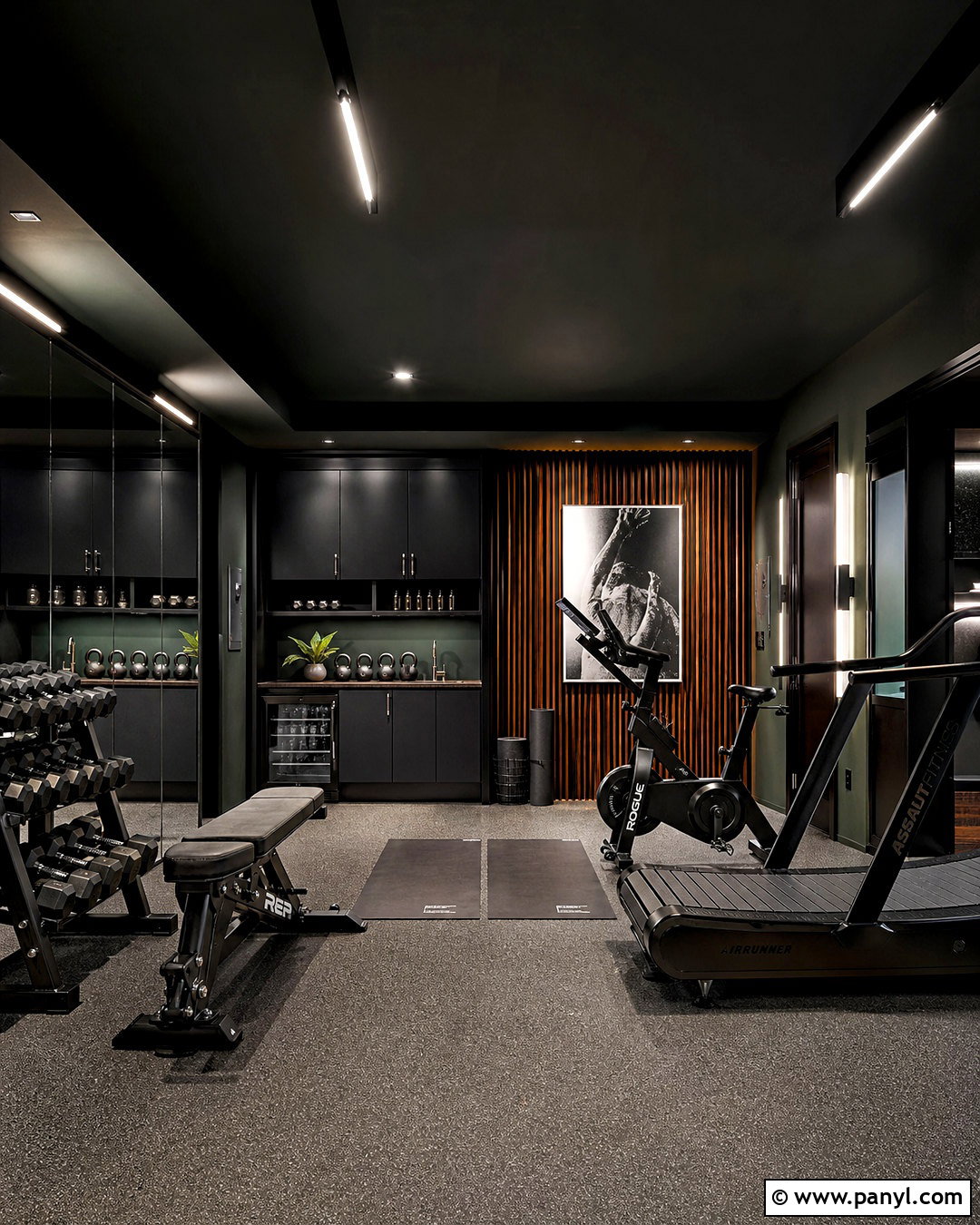
Turn a dim basement into a streamlined gym with black rubber flooring, graphite walls, and a painted open ceiling. Arrange larger equipment around the perimeter so the middle remains open for stretching and floor exercises. A full mirrored wall makes the room feel broader and helps reflect the layered lighting. Install bright linear ceiling fixtures rather than a few widely spaced bulbs, which can create uncomfortable shadows. Use dark oak slat panels on one wall to add warmth and improve the finished appearance. A low black storage unit can organize weights, resistance bands, towels, and exercise mats. Include a small hydration station with a countertop and undercounter refrigerator. White trim, stainless steel details, and one muted red accent wall keep the dark scheme crisp, motivating, and visually balanced.
7. Dark Basement Guest Bedroom
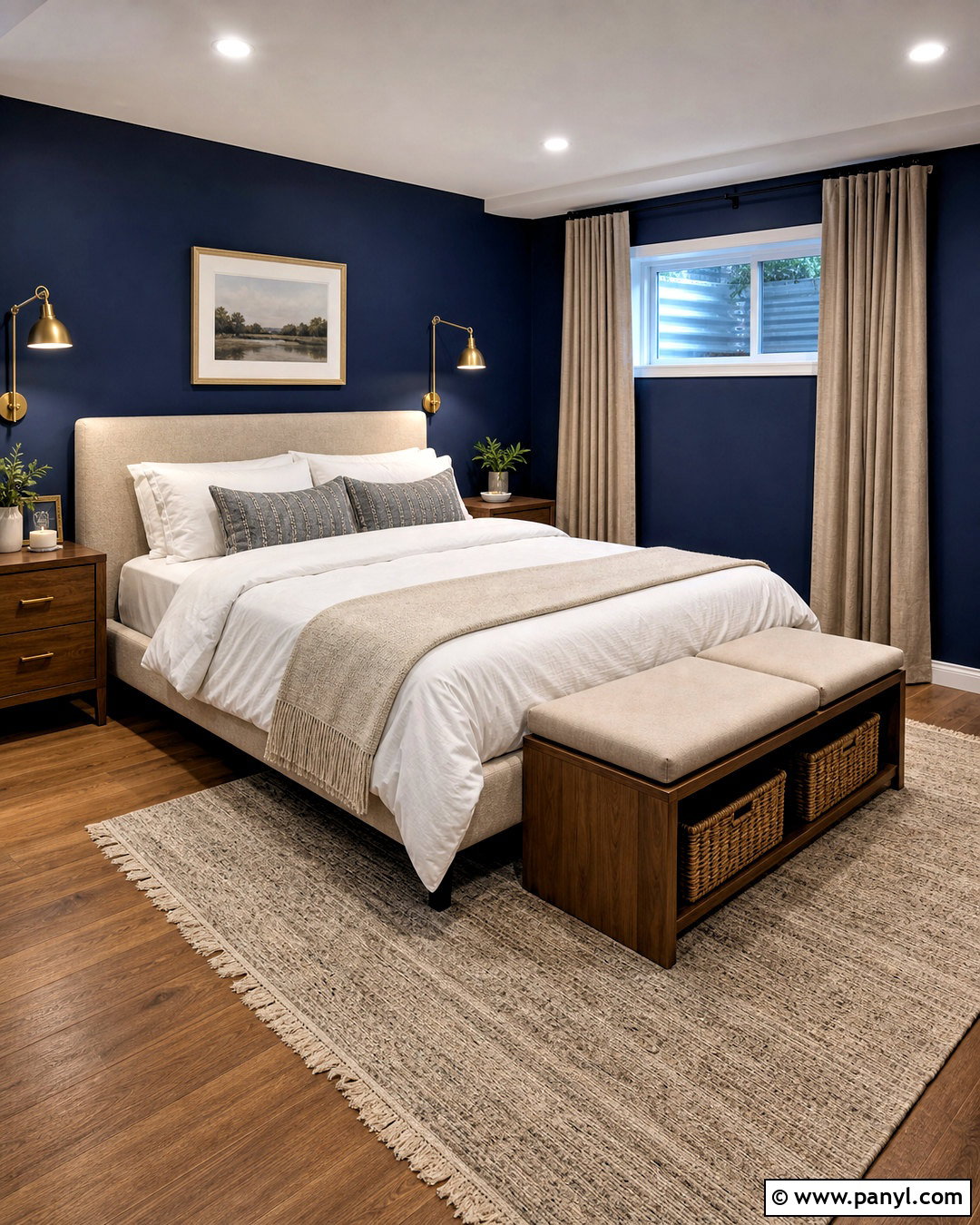
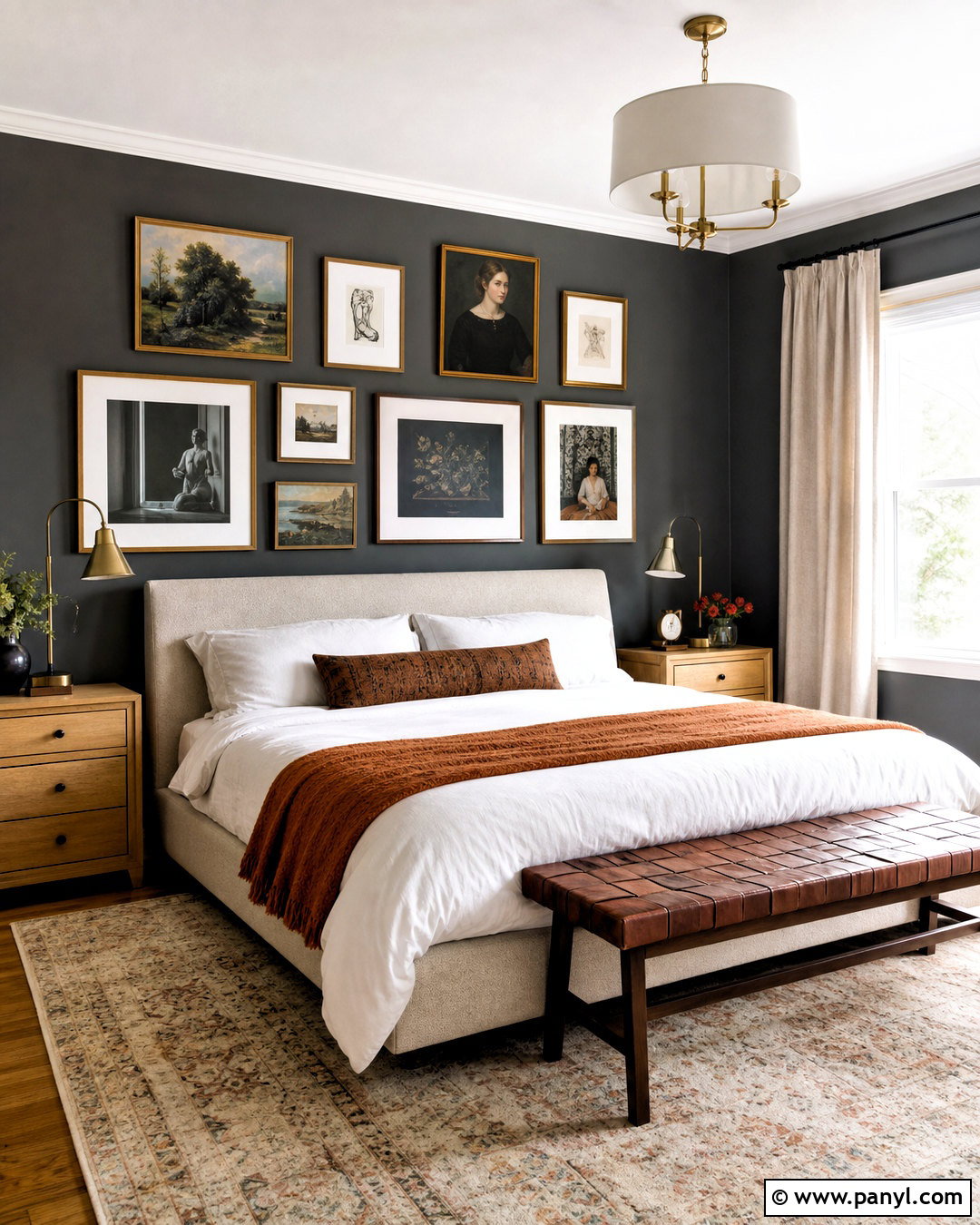
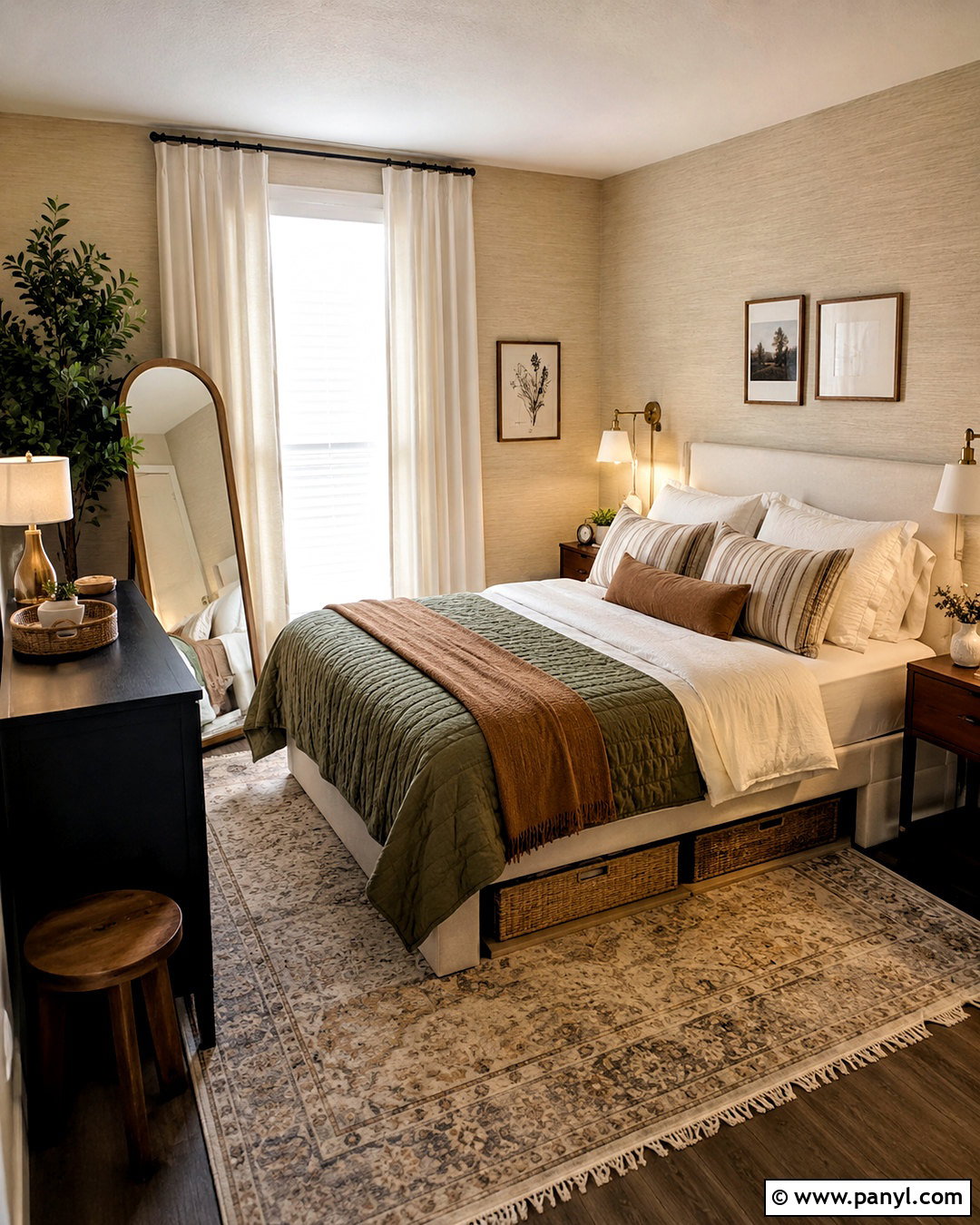
A basement bedroom should feel restful while still meeting local safety and egress requirements. Choose deep navy walls, a slightly lighter blue ceiling, and warm oak flooring for a calm foundation. Center an upholstered oatmeal bed on the main wall and flank it with slim walnut nightstands. Brass sconces save surface space while providing comfortable reading light. Use layered white and taupe bedding to prevent the dark palette from feeling heavy. A large wool rug adds softness and helps define the sleeping area. Place a low dresser across from the bed, leaving an uncluttered path to the window and door. Full-height beige curtains can visually enlarge a small basement window. Finish the room with simple artwork, a bench, and closed luggage storage so overnight visitors receive a complete, welcoming retreat.
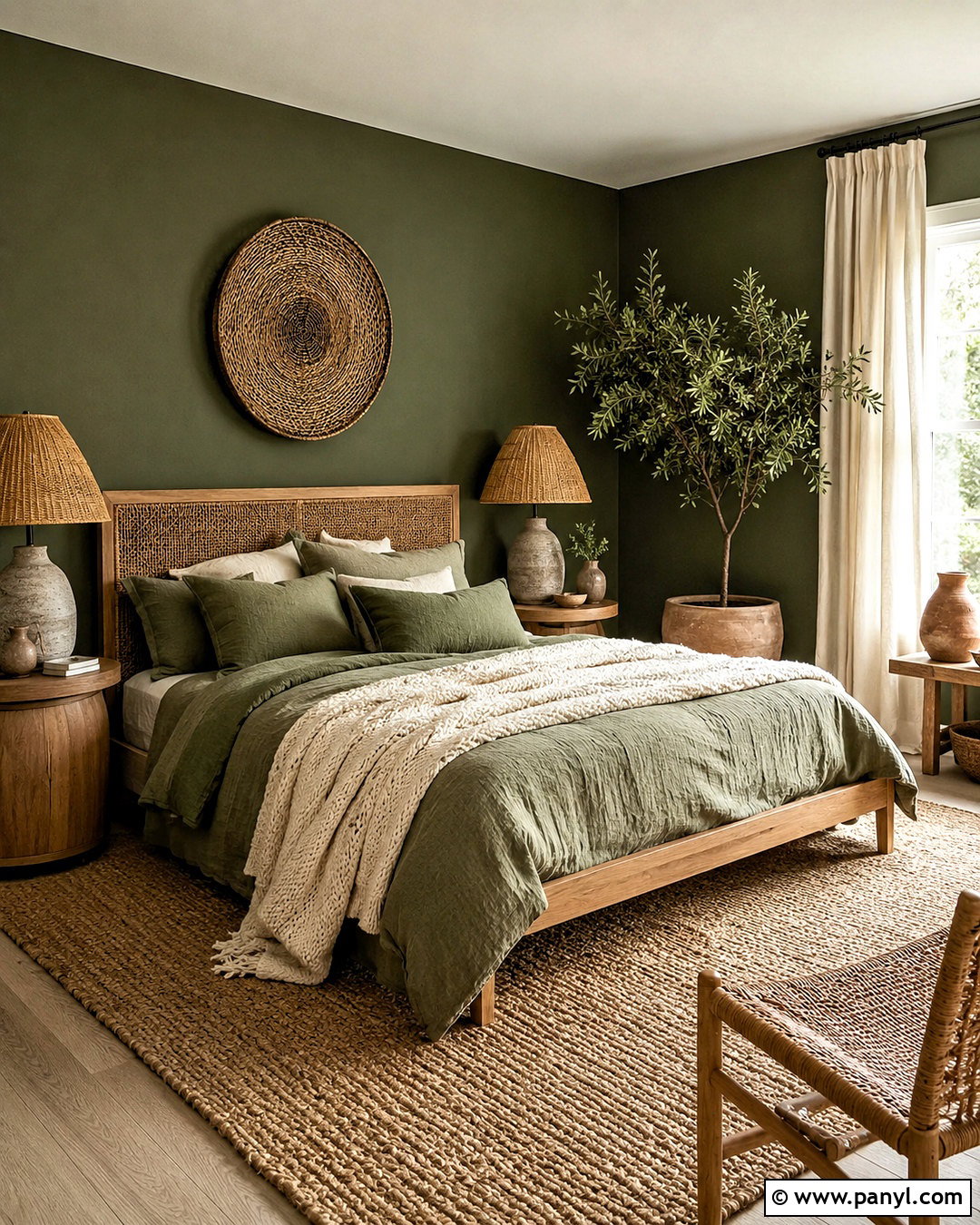
8. Dark Basement Music Room
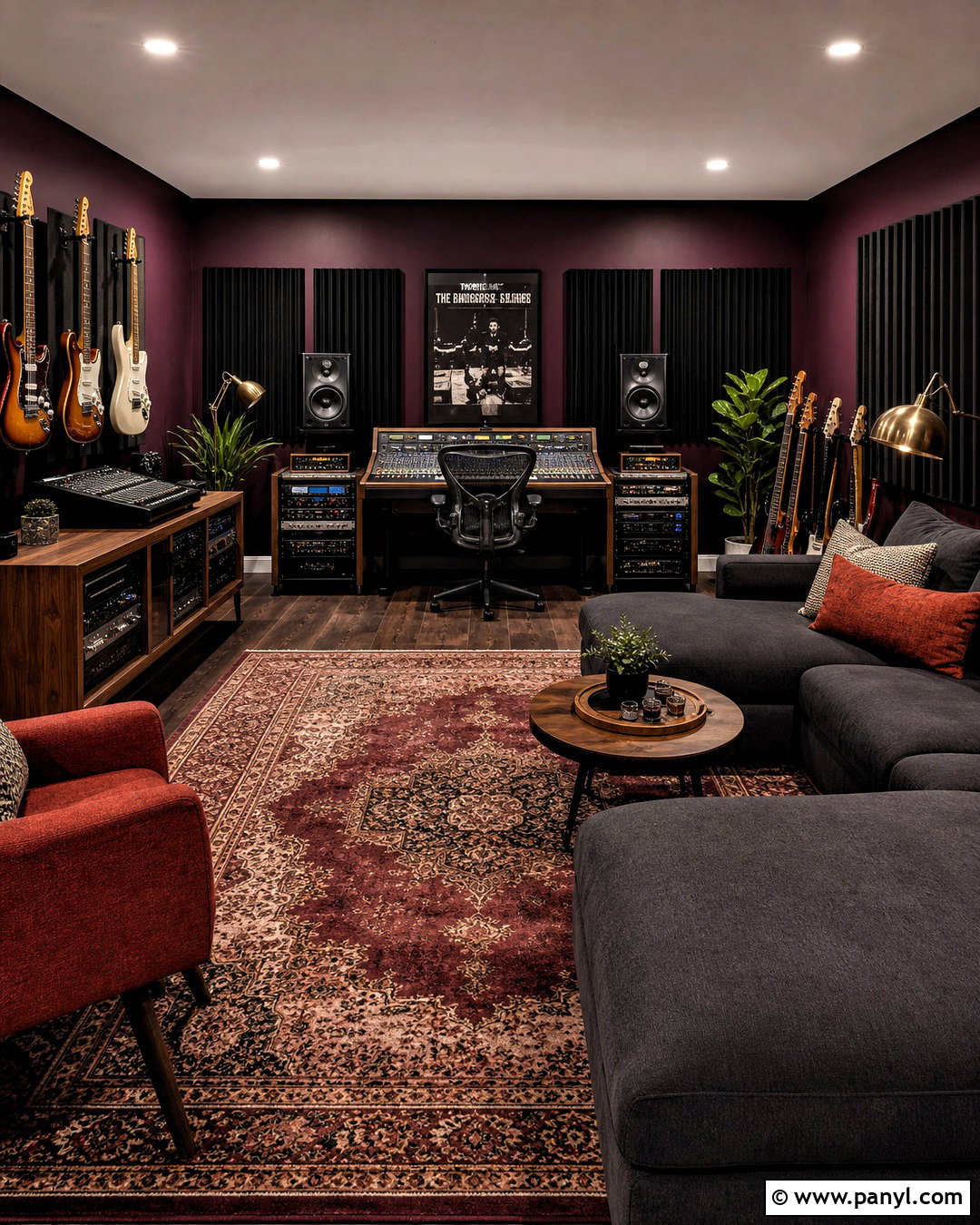
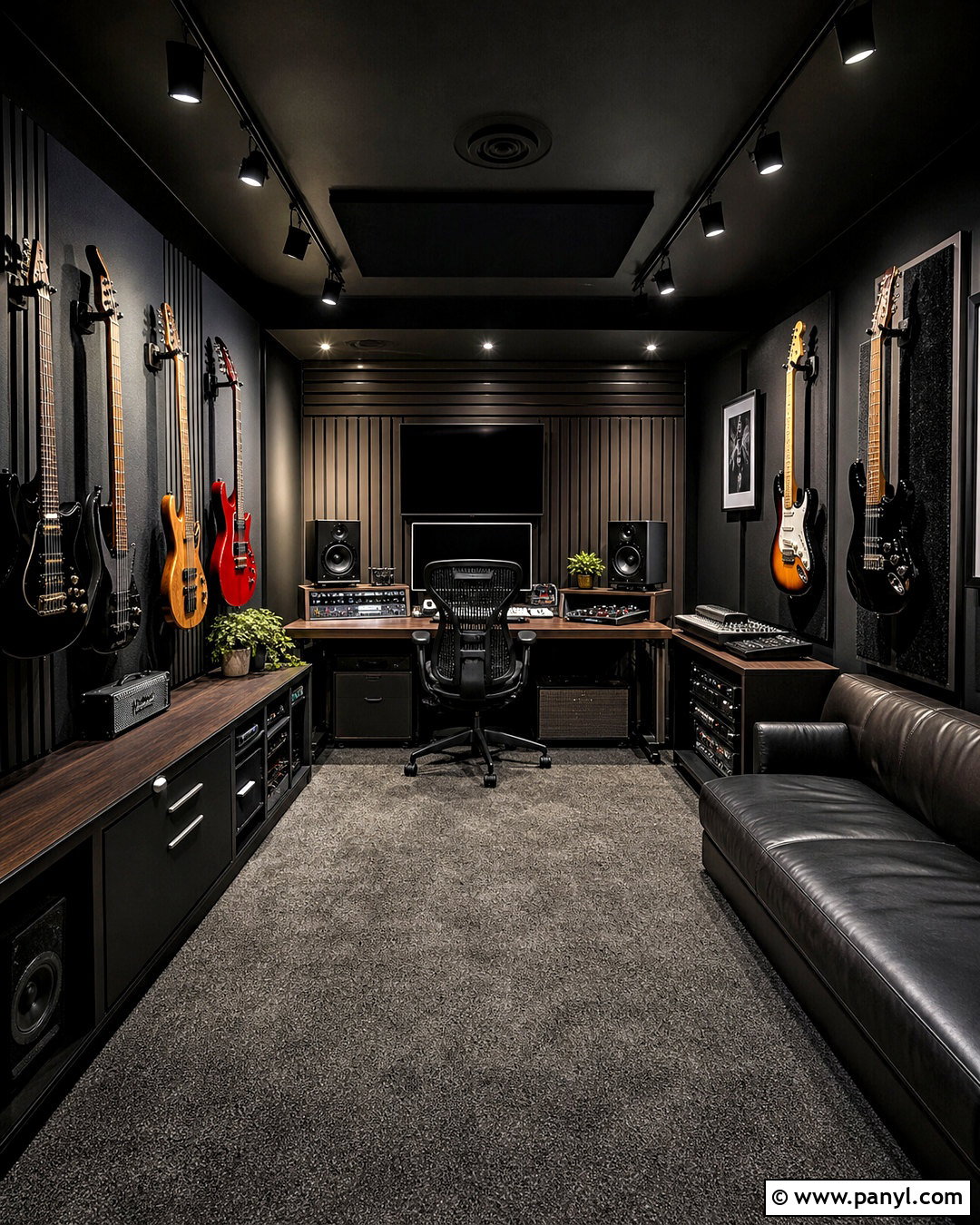
Deep color and sound-conscious finishes can transform a basement into a practical music room. Paint the walls dark aubergine and use black acoustic panels arranged in a clean, symmetrical pattern. Place the main instrument or recording desk against a solid wall, with speakers positioned carefully on both sides. A charcoal sectional creates space for listening, practicing, or collaborating. Cover the floor with a thick vintage-inspired rug to soften the room and reduce hard reflections. Track lighting allows individual areas to be illuminated without filling the room with glare. Add walnut storage cabinets for cables, equipment, and sheet music, plus secure wall mounts for instruments. Brass lamps and rust-colored upholstery provide warmth. The finished space should feel creative and atmospheric while remaining organized enough for regular practice and recording.
9. Dark Basement Craft Room
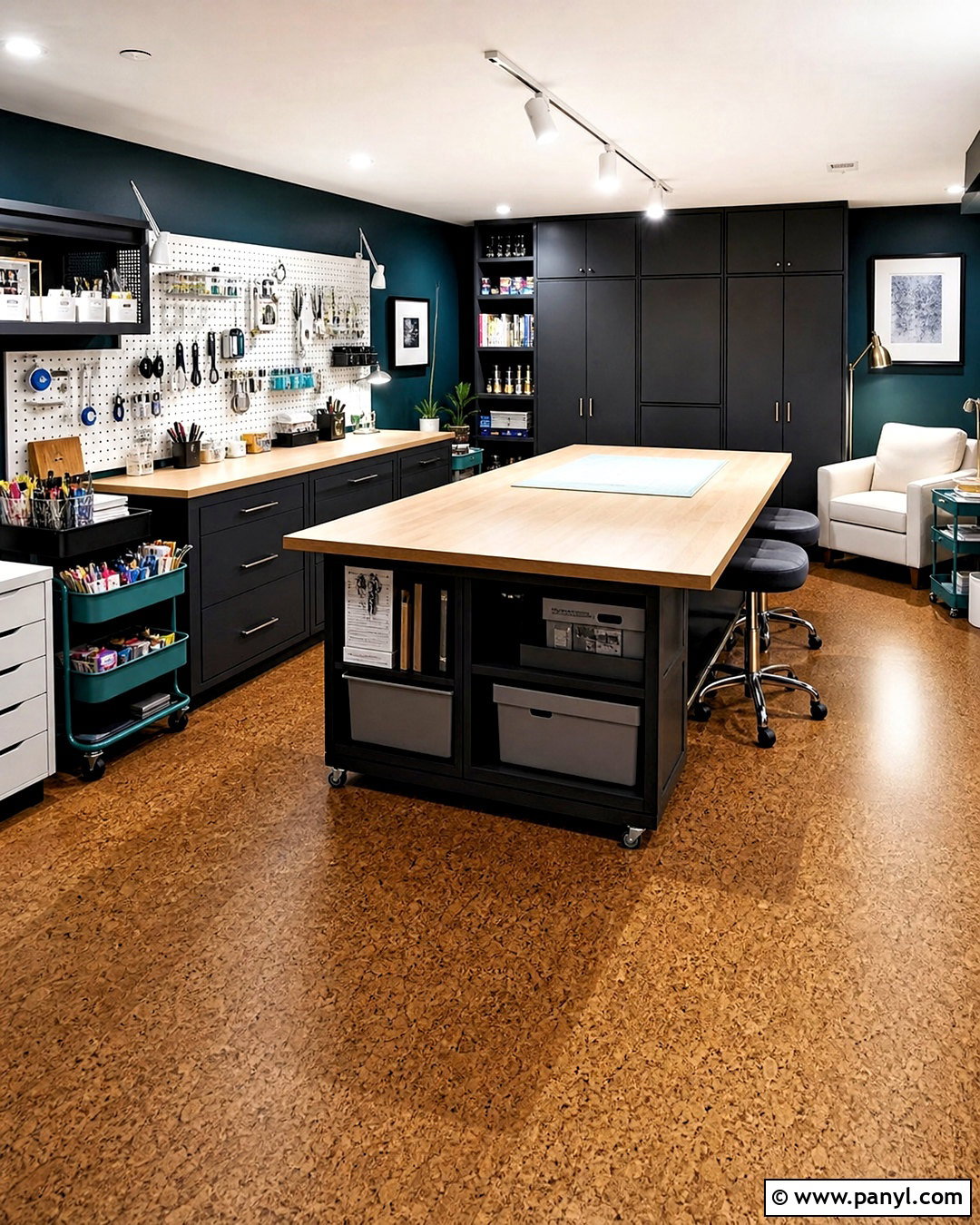
Do you need a creative workspace that can hide supplies after every project? Paint the basement walls dark teal, then install a large light-oak worktable in the center with drawers on both sides. A pale surface creates useful contrast and makes small materials easier to see. Build floor-to-ceiling charcoal cabinets along one wall for paper, fabric, tools, and unfinished projects. Include a pegboard above a secondary counter for frequently used equipment. Bright recessed lights and adjustable task lamps are essential for accurate, comfortable work. Use durable cork or luxury vinyl flooring that can handle dropped tools and minor spills. A cream washable rug beneath a reading chair softens one corner. Labeled internal organizers, rolling carts, and closed cabinets keep the complete room functional without sacrificing its polished appearance.
10. Dark Basement Playroom
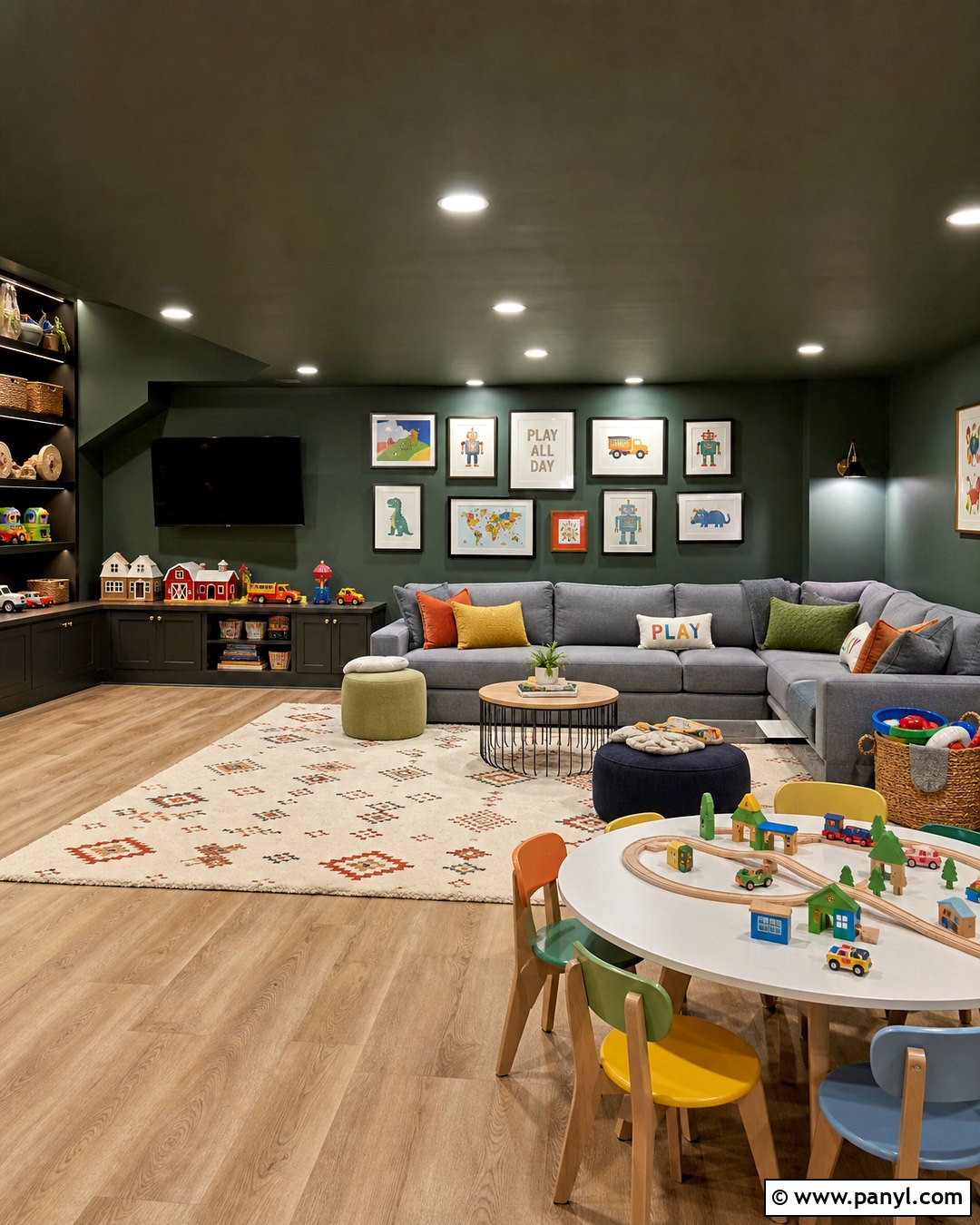
A sophisticated playroom can grow with children and still coordinate with the rest of the home. Use deep sage green walls, a matching painted ceiling, and light oak-look flooring. Place a modular gray sofa against one side, leaving the center open for movement and play. A large washable rug with cream, green, and rust shapes adds warmth and visual interest. Install low black cabinets where toys are easy to reach, with taller closed cupboards reserved for art supplies and seasonal items. A round activity table supports crafts, reading, and games. Use impact-resistant ceiling fixtures, wall sconces, and concealed shelf lighting for flexible brightness. Add a climbing feature only when it can be safely anchored. Framed children’s artwork and colorful cushions make the basement cheerful without overwhelming the dark foundation.
11. Dark Basement Coffee Bar
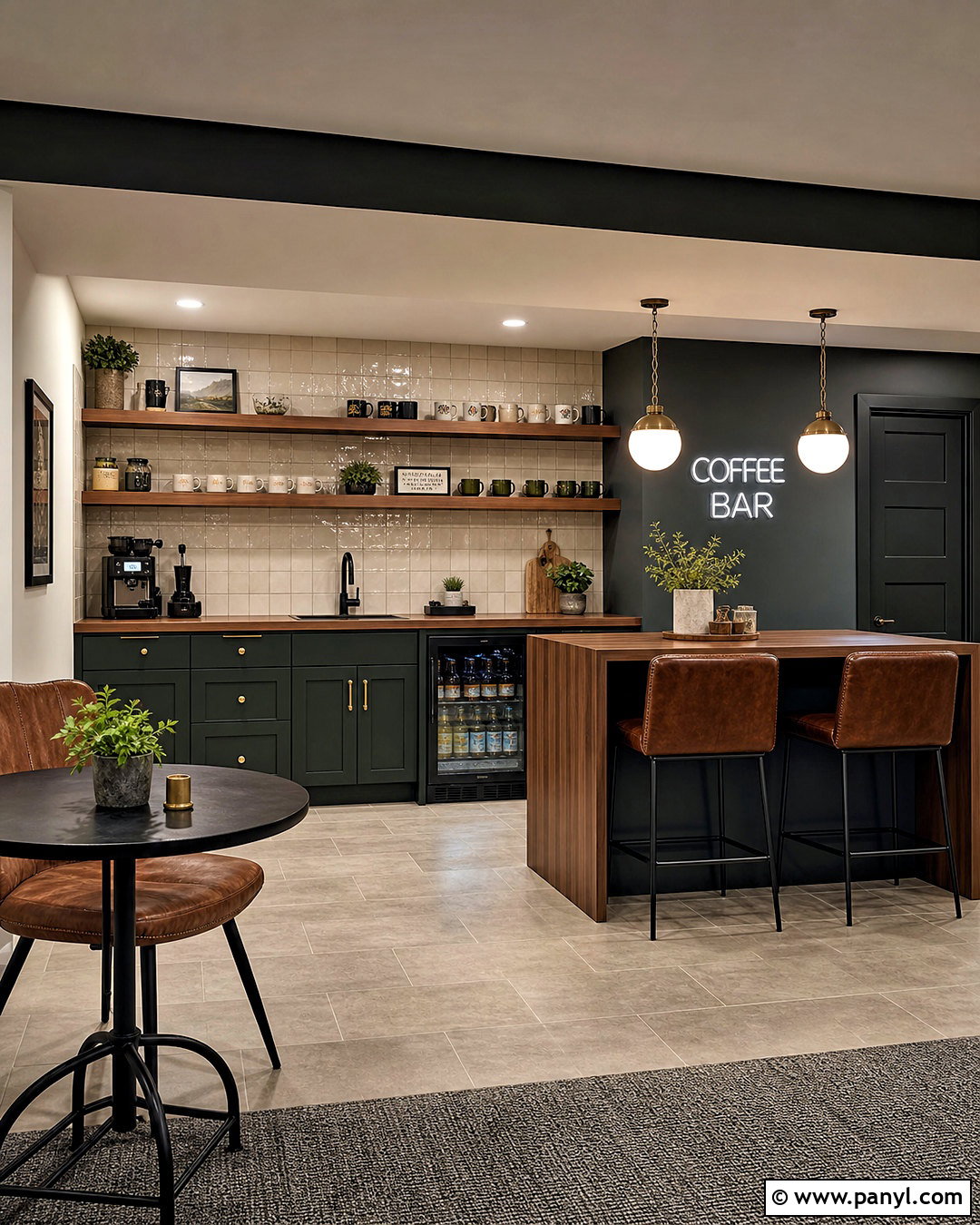
Create a welcoming beverage and snack station with dark green cabinetry, a walnut counter, and a glossy cream tile backsplash. Use one wall for the complete setup, including an undercounter refrigerator, sink where plumbing allows, coffee maker, and organized drawers. Open walnut shelves can hold everyday mugs and simple ceramics, while closed cabinets keep supplies hidden. Extend the counter into a small peninsula with three leather stools if the room has enough clearance. Globe pendants in aged brass provide focused light, and undercabinet strips prevent the work surface from disappearing into shadow. Continue charcoal walls and medium oak flooring throughout the surrounding lounge. A compact bistro table, framed prints, and an upholstered bench turn the station into a useful gathering area rather than an isolated row of cabinets.
12. Dark Basement TV Wall
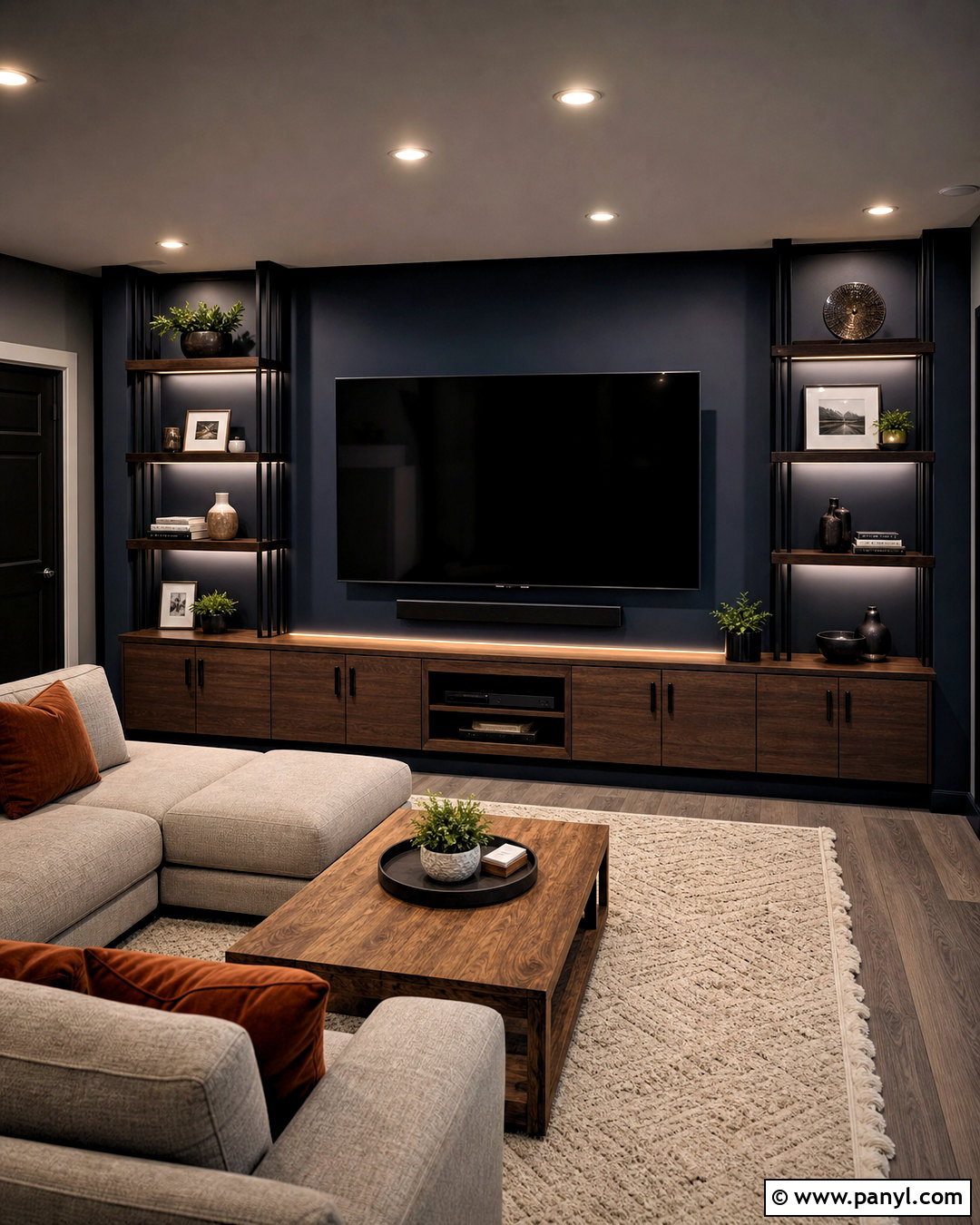
A deep painted feature wall can help a large television blend into the room instead of dominating it. Cover the entire wall in matte black or near-black blue, then install low walnut cabinetry from corner to corner. Frame the screen with simple vertical shelves, leaving enough empty space to avoid a crowded appearance. Integrated LED strips can softly illuminate books and decorative objects without reflecting on the television. Position a warm gray sectional directly opposite the wall and anchor it with a textured cream rug. Add a slim oak coffee table and rust-colored pillows for warmth. Keep speakers, cords, and media components concealed inside ventilated cabinets. This dark basement arrangement produces one strong focal point while making the surrounding seating, lighting, and natural materials feel more noticeable. ()
13. Dark Basement Fireplace Lounge
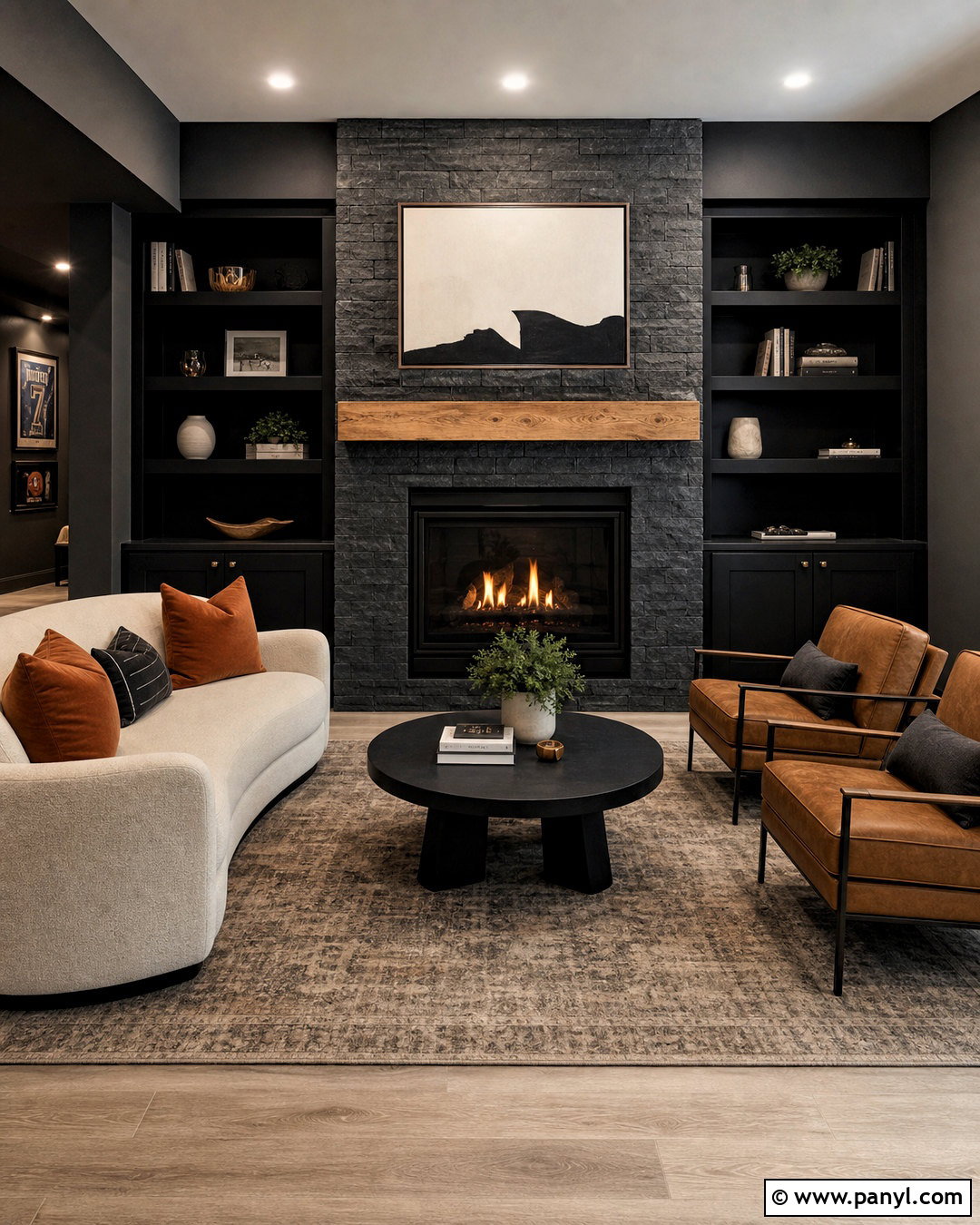
A fireplace gives a dark basement an inviting center even when the room lacks architectural character. Build a simple floor-to-ceiling surround using textured charcoal stone or large-format slate-look tile. Install a natural oak mantel to break up the dark surface and connect it with the flooring. Arrange a curved cream sofa and two cognac chairs around a round black coffee table, keeping the fireplace visible from every seat. Paint nearby walls warm black and use matching built-ins for balanced storage. Recessed lights should wash the stone gently, while shaded floor lamps provide softer illumination at seated height. Add a thick neutral rug, rust-colored pillows, and minimal mantel decor. The complete lounge will feel intimate and comfortable without depending on bright paint to create interest.
14. Dark Basement Industrial Loft
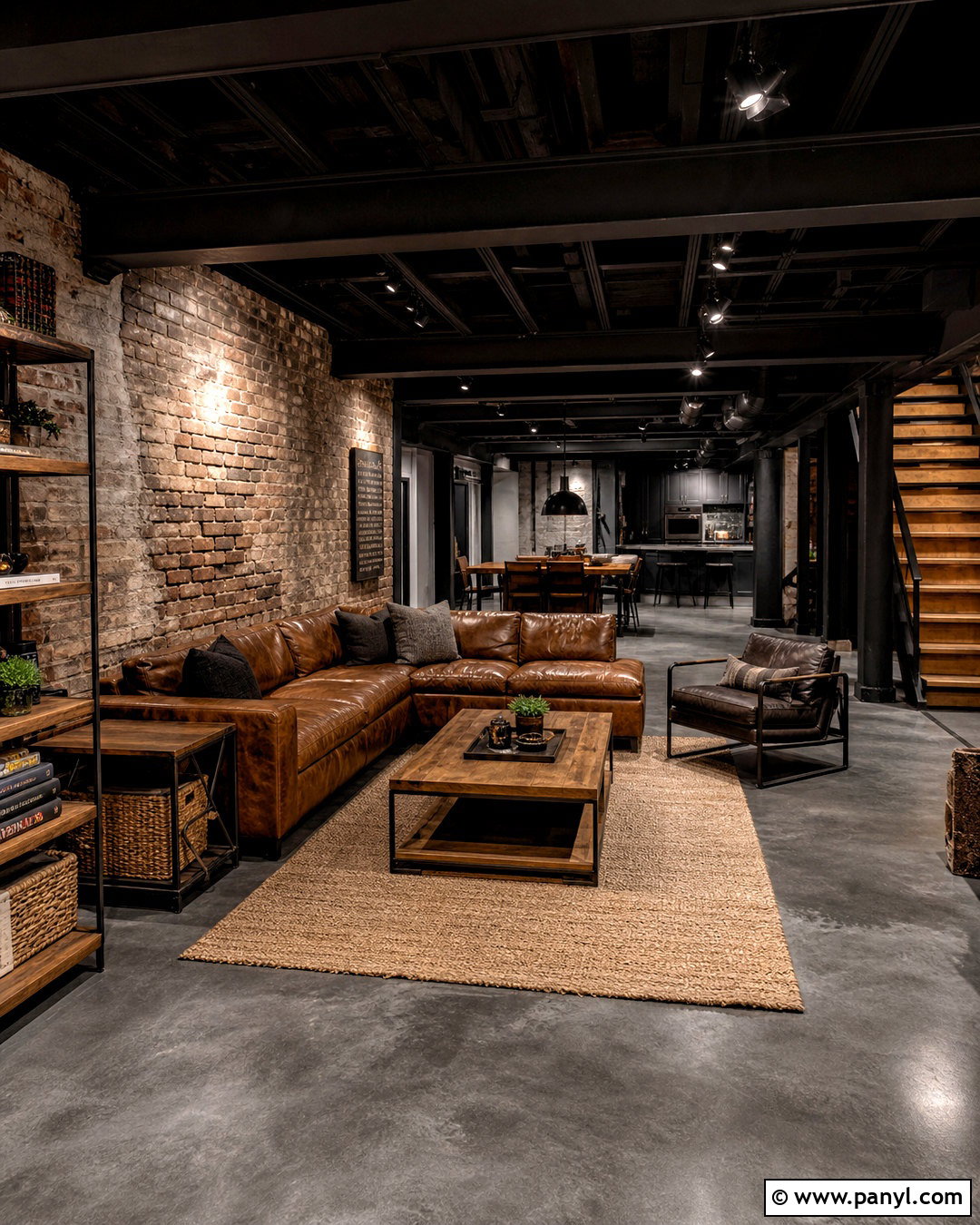
Exposed building elements can become part of a finished industrial basement when they are treated consistently. Paint the ceiling, pipes, and ductwork matte black to create one unified background. Combine charcoal concrete-look flooring with a weathered brick feature wall and dark gray painted drywall. A low brown leather sectional brings warmth, while black steel shelving provides practical storage. Define the seating area with a faded neutral rug and a reclaimed oak coffee table. Use multiple simple pendant fixtures and adjustable track lights to prevent the black ceiling from absorbing too much illumination. Add a metal-framed table that can serve as a workspace or game surface. Canvas pillows, oversized graphic artwork, and woven baskets soften the harder materials, creating a complete urban look that still feels comfortable and suitable for an average home.
15. Dark Basement Modern Farmhouse
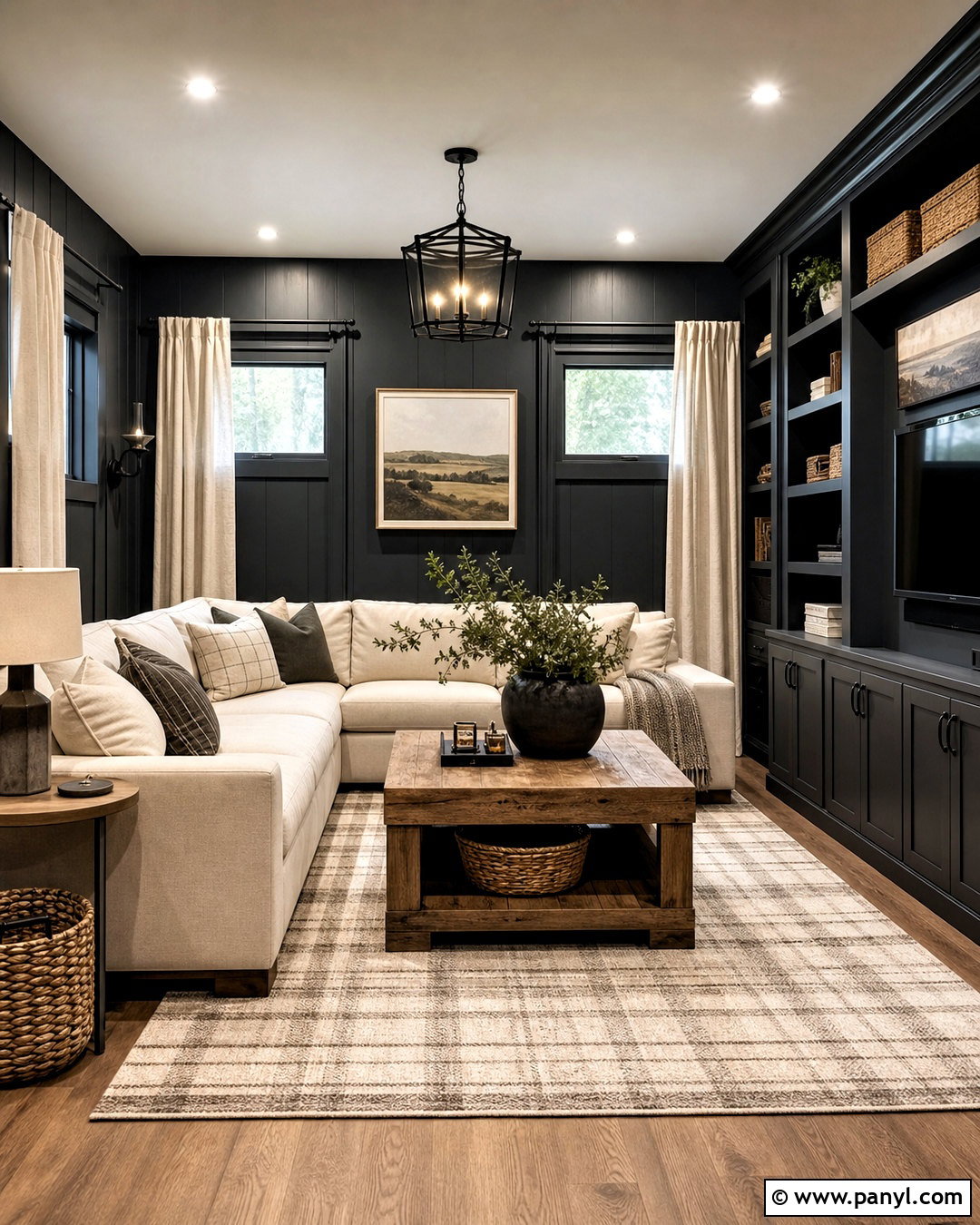
For a cozier interpretation of farmhouse design, replace bright white walls with deep charcoal-blue paneling. Add vertical board-and-batten trim around the room and paint it in the same color for subtle texture. Pair the walls with medium oak flooring, a warm white sectional, and a large plaid rug in cream and faded navy. Use a chunky oak coffee table and black metal side tables to balance rustic and modern elements. A simple electric fireplace can anchor the television wall, surrounded by dark cabinetry and natural wood shelves. Choose black lantern-style ceiling lights with clear glass to maintain brightness. Linen curtains, woven baskets, stoneware, and muted landscape prints complete the basement. Keeping accessories restrained prevents the room from becoming themed while preserving its relaxed, practical farmhouse character.
16. Dark Basement Dark Academia
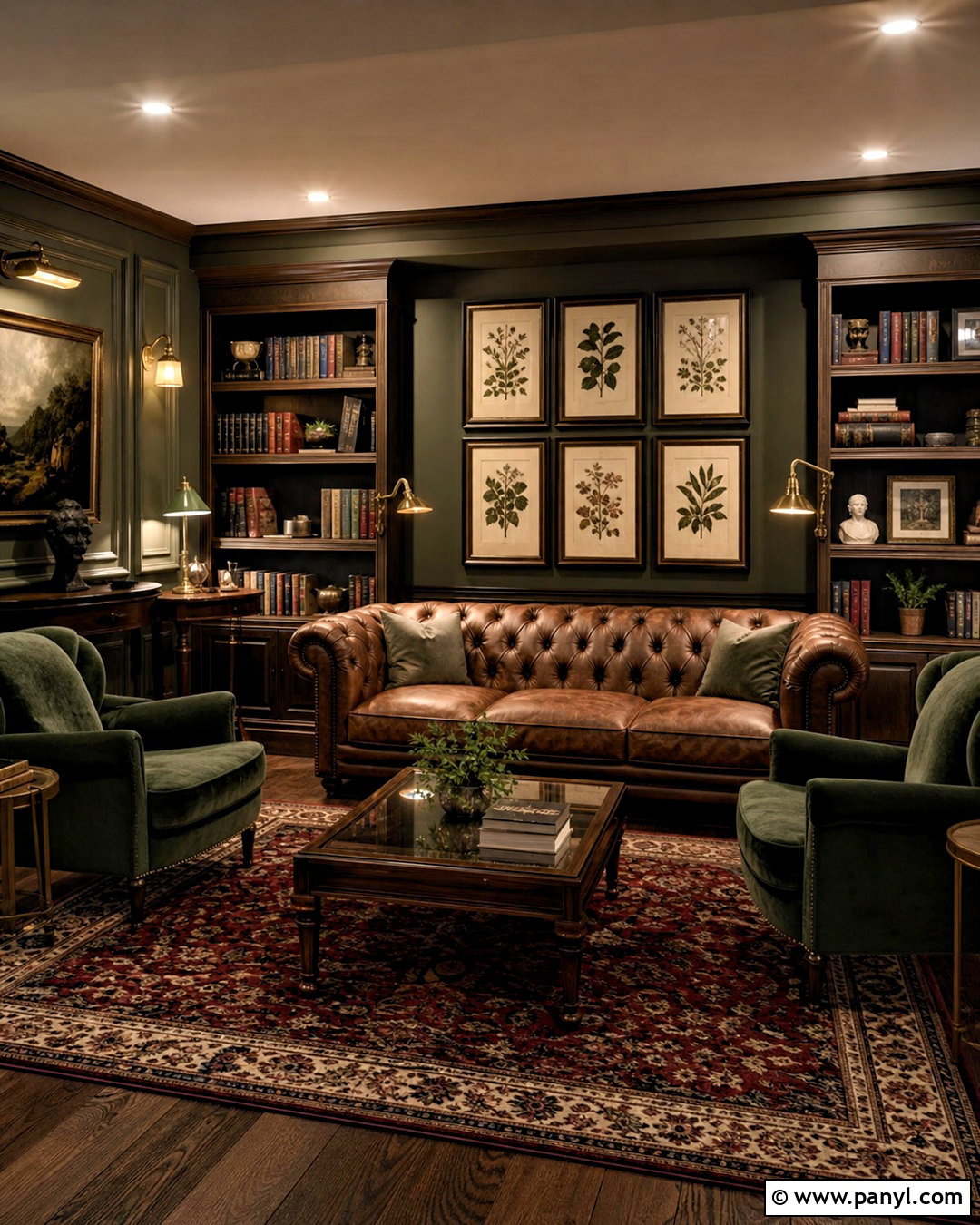
Rich wood, traditional patterns, and layered objects create a convincing dark academia basement. Paint the walls deep olive brown and add walnut panel molding for architectural depth. Place a tufted brown leather sofa opposite two forest green velvet chairs, forming a balanced conversation area. A large Persian-style rug in burgundy, navy, and tan introduces color while visually connecting the furniture. Fill one wall with dark wood bookcases and include closed lower cabinets for less attractive storage. Use brass library lamps, shaded sconces, and a central opal-glass fixture to illuminate the room at several levels. Framed botanical prints, landscapes, books, and small sculptural objects support the collected look. Keep the arrangement orderly and leave some shelves partially empty so the finished basement feels scholarly and comfortable rather than crowded or theatrical.
17. Dark Basement Scandinavian Room
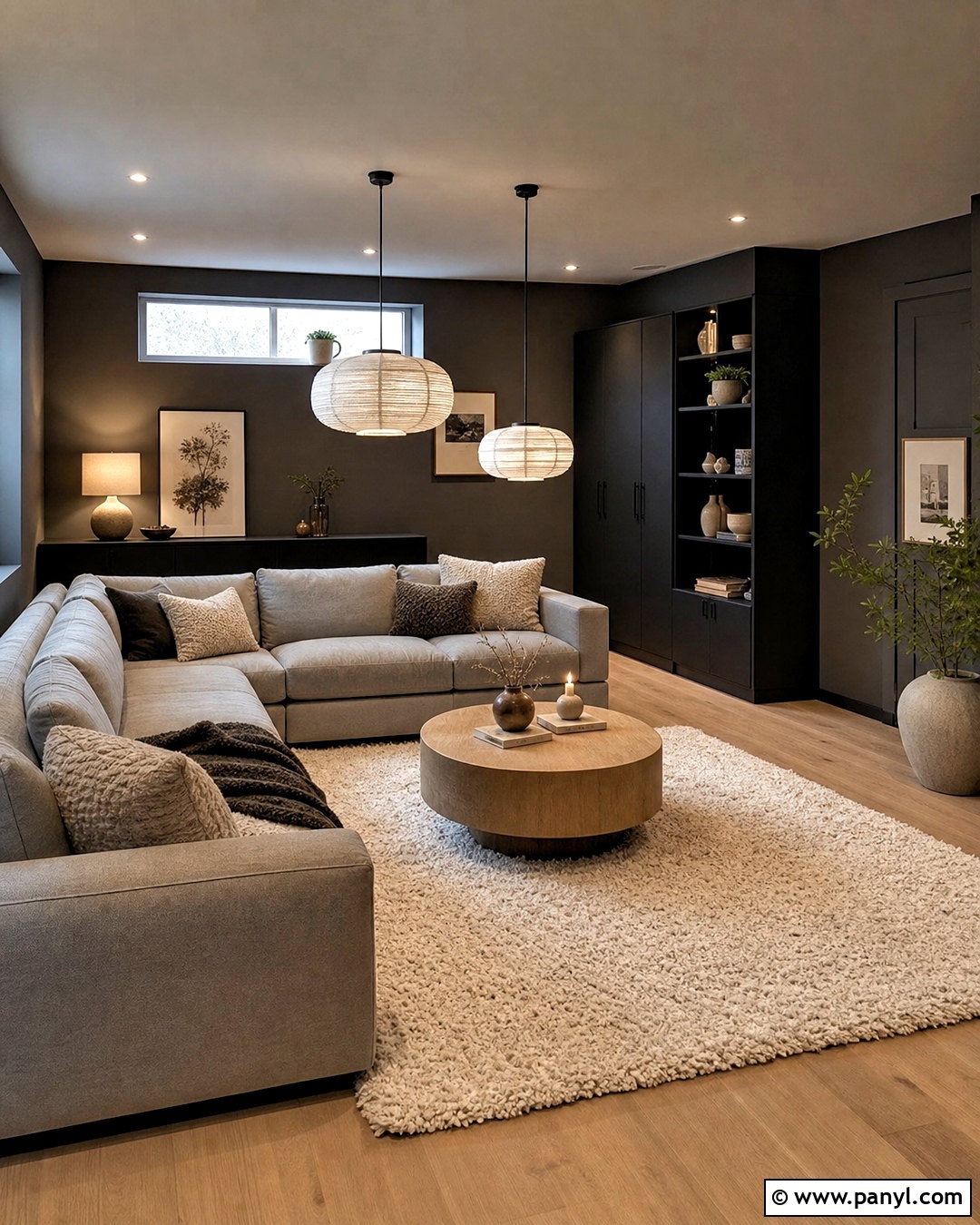
Scandinavian design does not have to rely entirely on white. Paint the basement walls a soft charcoal gray and pair them with pale oak flooring for a clean contrast. Choose a simple light-gray sectional with exposed wood legs, then add a cream wool rug and oval oak coffee table. Black cabinets along one wall provide storage without interrupting the calm color palette. Use paper-inspired pendant lights, discreet recessed fixtures, and small wall lamps to distribute brightness evenly. Textiles should remain warm and tactile, including boucle cushions, woven throws, and beige curtains. A few black-framed prints and sculptural ceramic pieces provide decoration without visual noise. Finish with one leafy plant or realistic artificial tree. The complete room feels airy, practical, and modern while still embracing the basement’s naturally subdued atmosphere.
18. Dark Basement Laundry Room
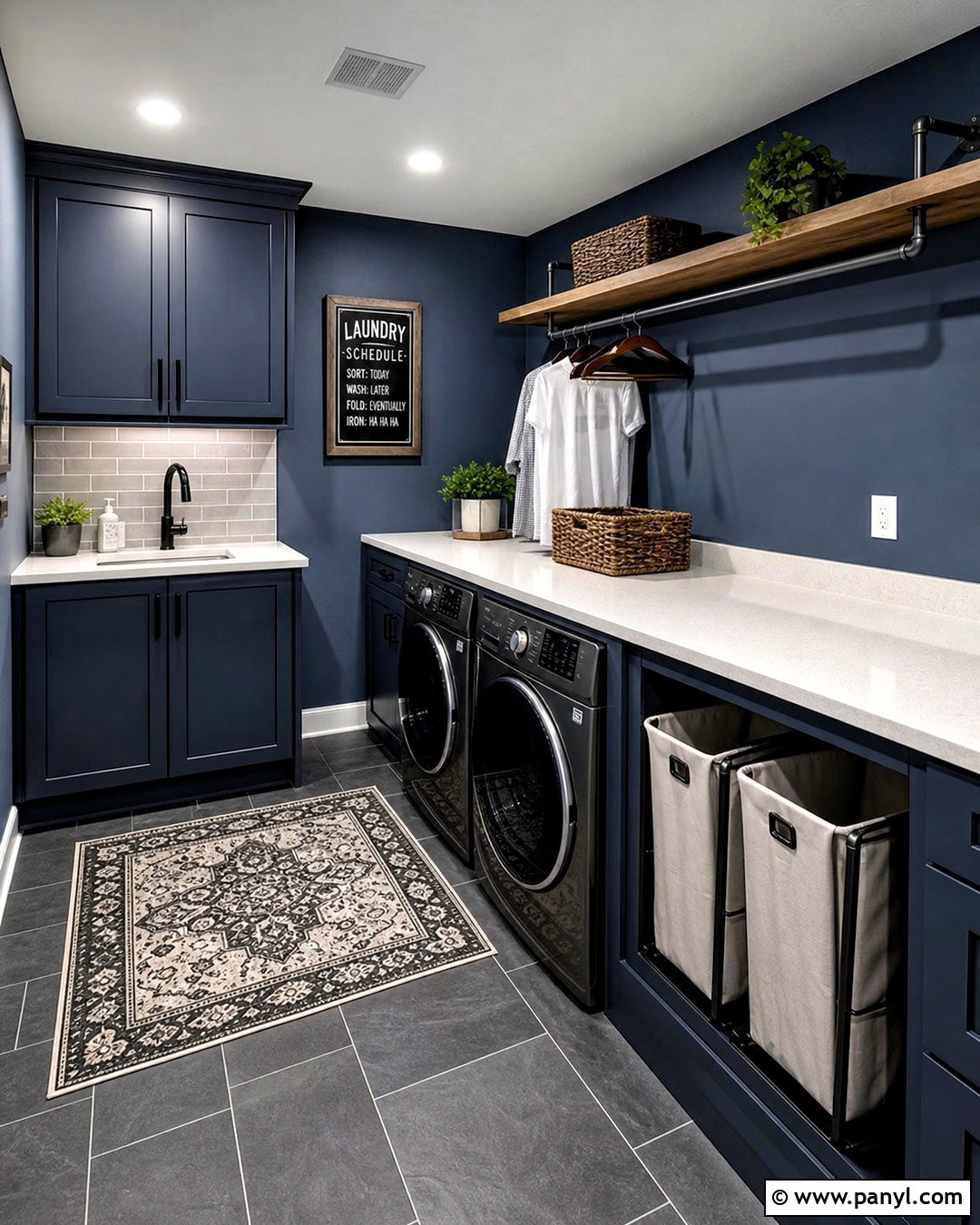
Laundry areas can handle dark color when work surfaces and lighting remain bright. Cover the lower cabinets in deep navy and pair them with white quartz counters and a pale gray backsplash. Place the washer and dryer beneath a continuous folding surface when appliance dimensions allow. Tall cabinetry can store cleaning supplies, linens, and bulky household items behind closed doors. Use moisture-resistant slate-look porcelain tile on the floor for durability and easy cleanup. Paint the upper walls a smoky blue-gray and keep the ceiling soft white to reflect overhead light. Add undercabinet strips, recessed fixtures, and a focused light above the sink. A hanging rail, open oak shelf, and divided laundry baskets improve daily function. Matte black hardware gives the finished utility room a crisp, coordinated appearance.
19. Dark Basement Bathroom
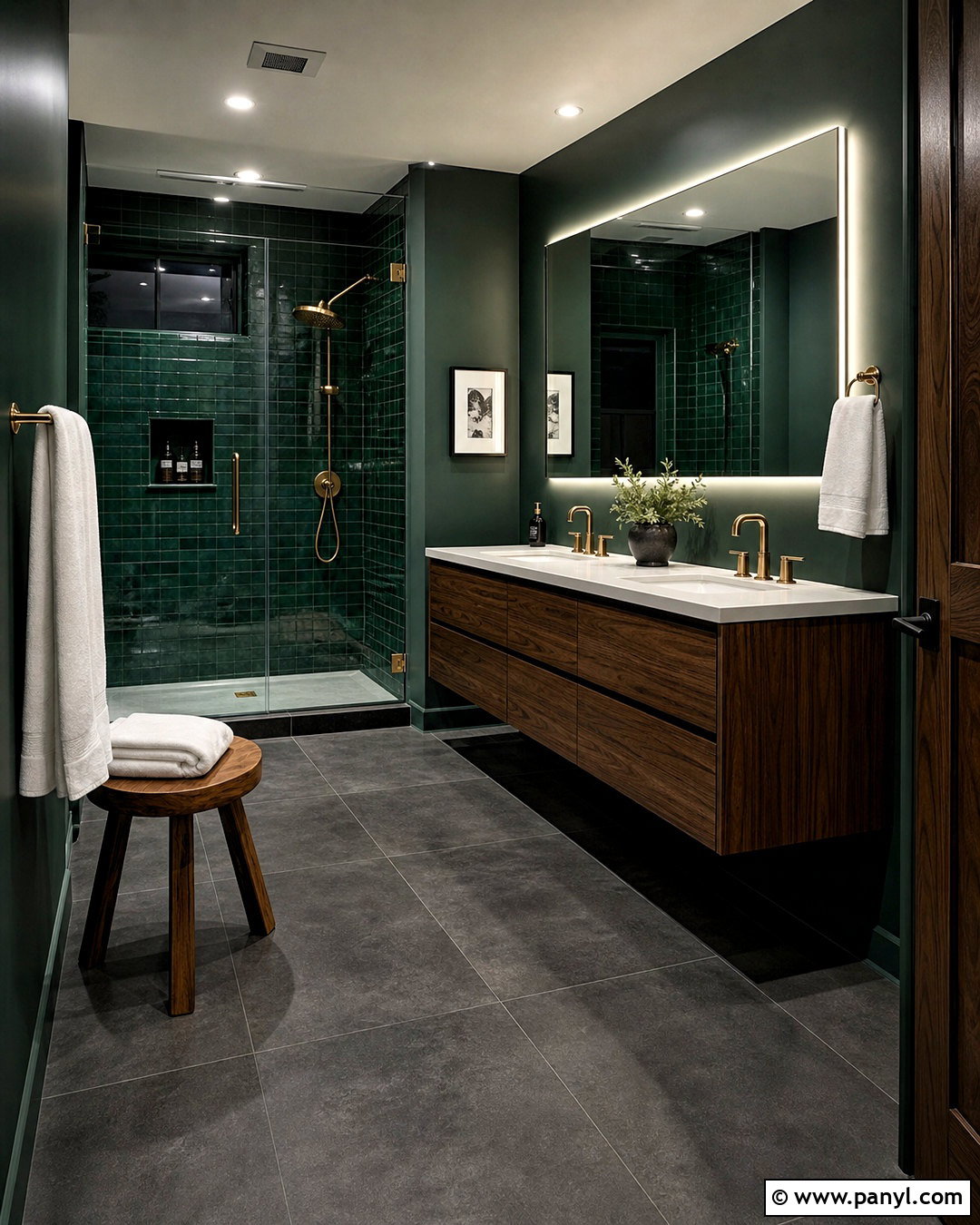
A windowless basement bathroom can feel dramatic and polished with carefully placed reflective surfaces. Use deep emerald green tile in the shower and continue the same color on the surrounding painted walls. A floating walnut vanity keeps the floor visible, while a white quartz counter adds a clean break in the darker palette. Install a large backlit mirror to spread light across the room and make grooming easier. Brass fixtures bring warmth, and clear shower glass prevents the compact layout from feeling divided. Choose charcoal porcelain floor tile with a slip-resistant finish. Recessed ceiling lights, vanity lighting, and a waterproof shower light should work independently. Add white towels, a small oak stool, and restrained artwork. The result is a complete bathroom that feels intentional rather than like an overlooked basement necessity.
20. Small Dark Basement Layout
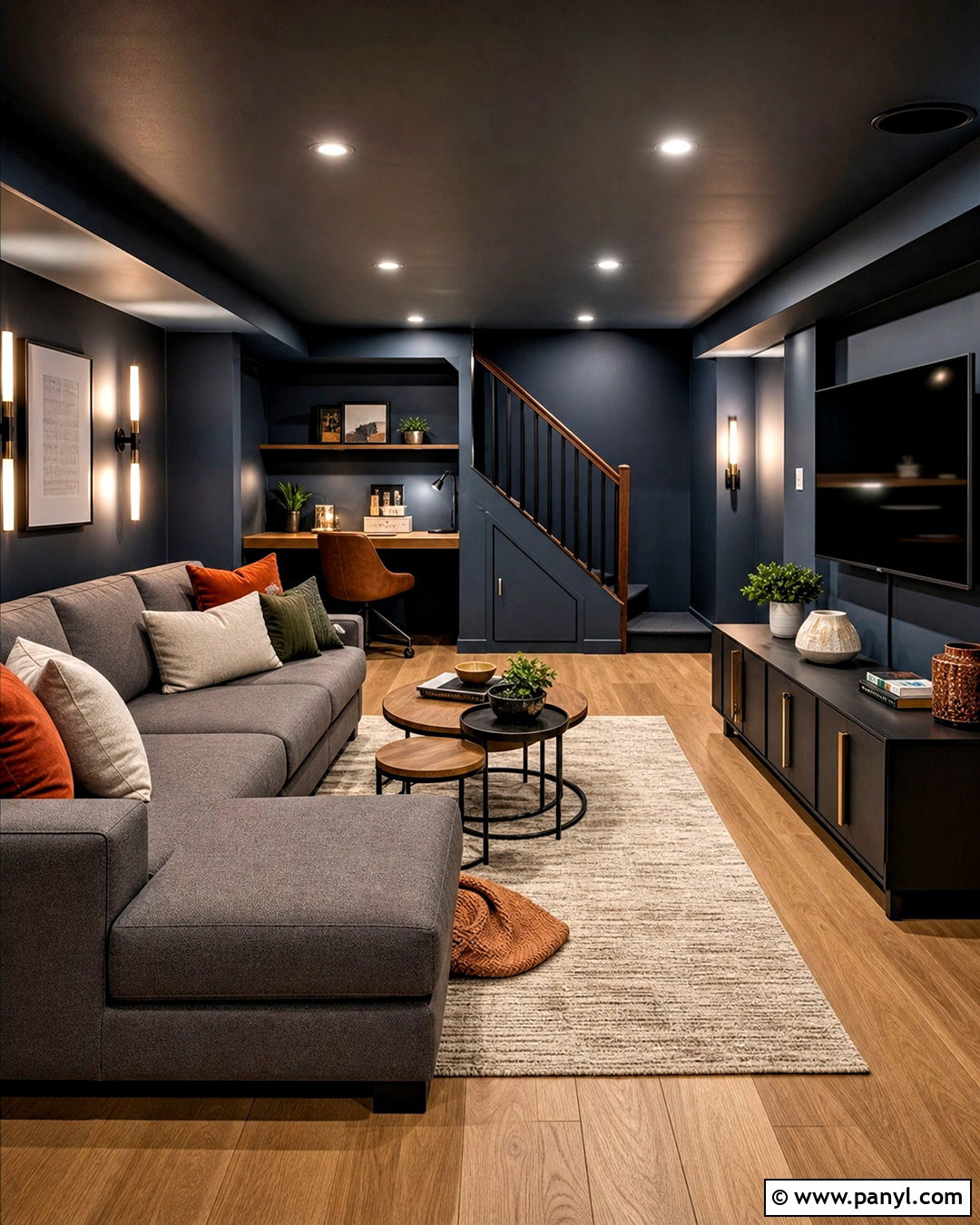
When square footage is limited, a clear arrangement matters more than adding extra furniture. Paint the walls and ceiling deep blue-gray to blur awkward corners and create a consistent envelope. Place a compact apartment-size sectional against the longest wall, facing a shallow black media cabinet. Use a round nesting coffee table that can separate when needed without blocking circulation. In the opposite corner, add a small wall-mounted desk with an upholstered chair, creating a flexible work or hobby zone. Medium oak flooring and a large cream rug keep the dark shell balanced. Select wall sconces, recessed lights, and shelf lighting instead of bulky floor lamps. Closed storage beneath the stairs reduces clutter. A few rust and sage accents give the complete small basement personality while preserving valuable open space.
Conclusion:
The most successful 20 dark basement ideas do more than apply deep paint to the walls. They combine a clear purpose, comfortable furniture, layered lighting, practical storage, and warm materials to make limited daylight feel like a benefit. Charcoal, navy, forest green, aubergine, and black can all work beautifully when balanced with oak, cream textiles, reflective surfaces, and well-positioned fixtures. Start by addressing moisture, ventilation, ceiling height, egress, and electrical needs before choosing decorative finishes. Then select one complete concept that suits how your household will actually use the room. With thoughtful planning, a once-forgotten lower level can become a welcoming family room, productive workspace, restful guest suite, or memorable entertainment retreat.

Related Ideas and Inspiration:
Leave a Reply