
Blue can turn an underused lower level into a comfortable, polished extension of the home. These 20 Basement Blue Walls looks cover everything from pale, light-reflective family rooms to dramatic navy media spaces. Because basements often receive limited daylight, the best blue depends on the room’s lighting, ceiling height, flooring, and purpose. Lighter shades generally reflect more light, while deeper blues can create useful contrast in entertainment rooms. Warm bulbs can also soften blue undertones that feel too cool under artificial lighting. () Each complete design below combines wall color with practical furniture, layered lighting, flooring, storage, and decor. Whether you are finishing a large walkout level or refreshing one small room, use these coordinated plans to choose your favorite among 20 Basement Blue Walls.

1. Light Blue Basement Family Room
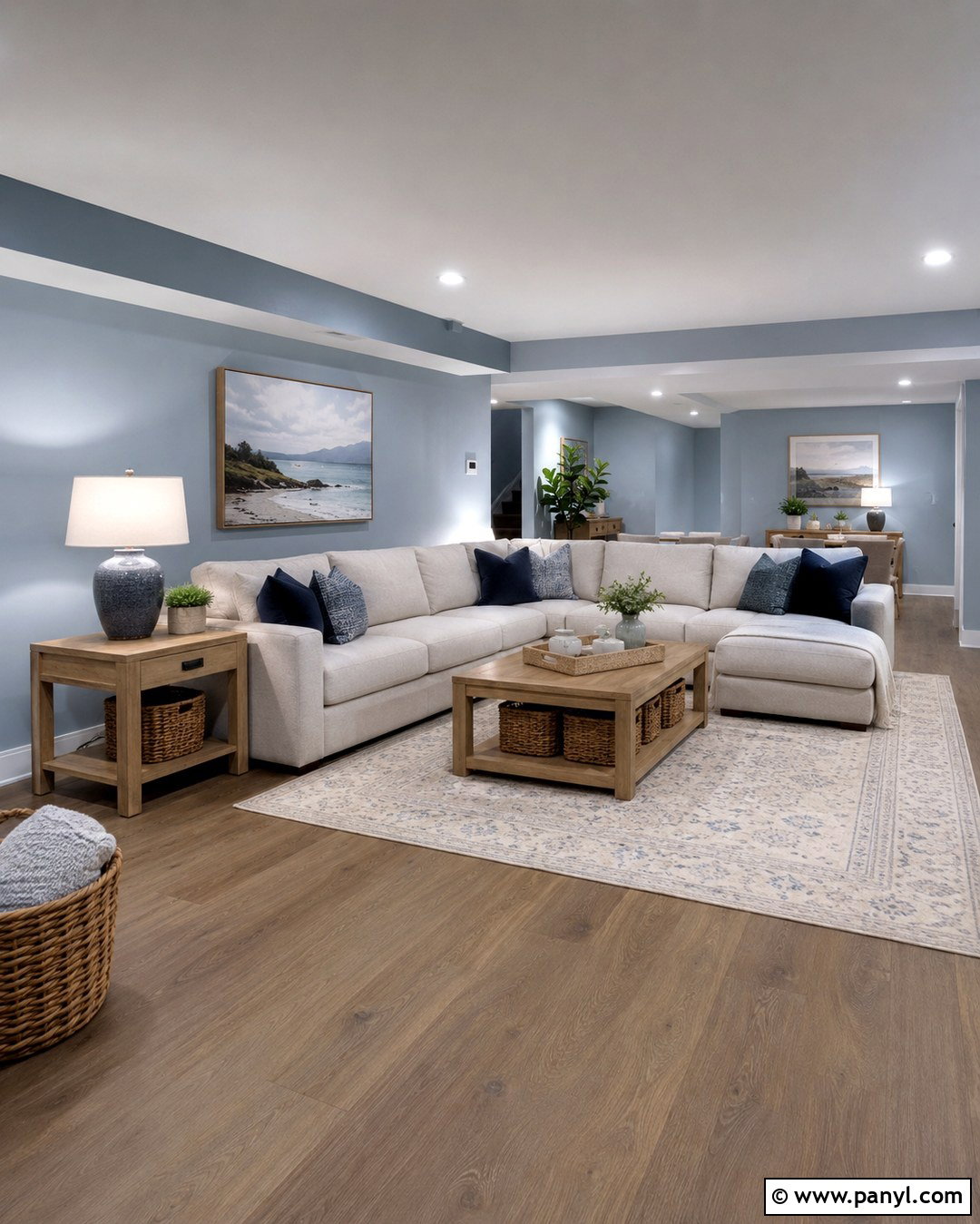
Soft light blue walls give a basement family room an open, relaxed feeling without making it look plain. Choose a slightly muted blue rather than a sugary pastel, then add a warm white ceiling and matching trim. A large oatmeal-colored sectional creates comfortable seating while balancing the cooler wall color. Ground the arrangement with a washable cream rug featuring a subtle blue pattern. Light oak end tables, woven baskets, and a simple media console bring natural warmth into the room. Use recessed ceiling lights for general brightness, plus two table lamps for softer evening lighting. Finish the space with navy pillows, framed landscape artwork, and durable medium-tone flooring. The result feels bright, practical, and welcoming enough for everyday family use.
2. Navy Blue Basement Media Room
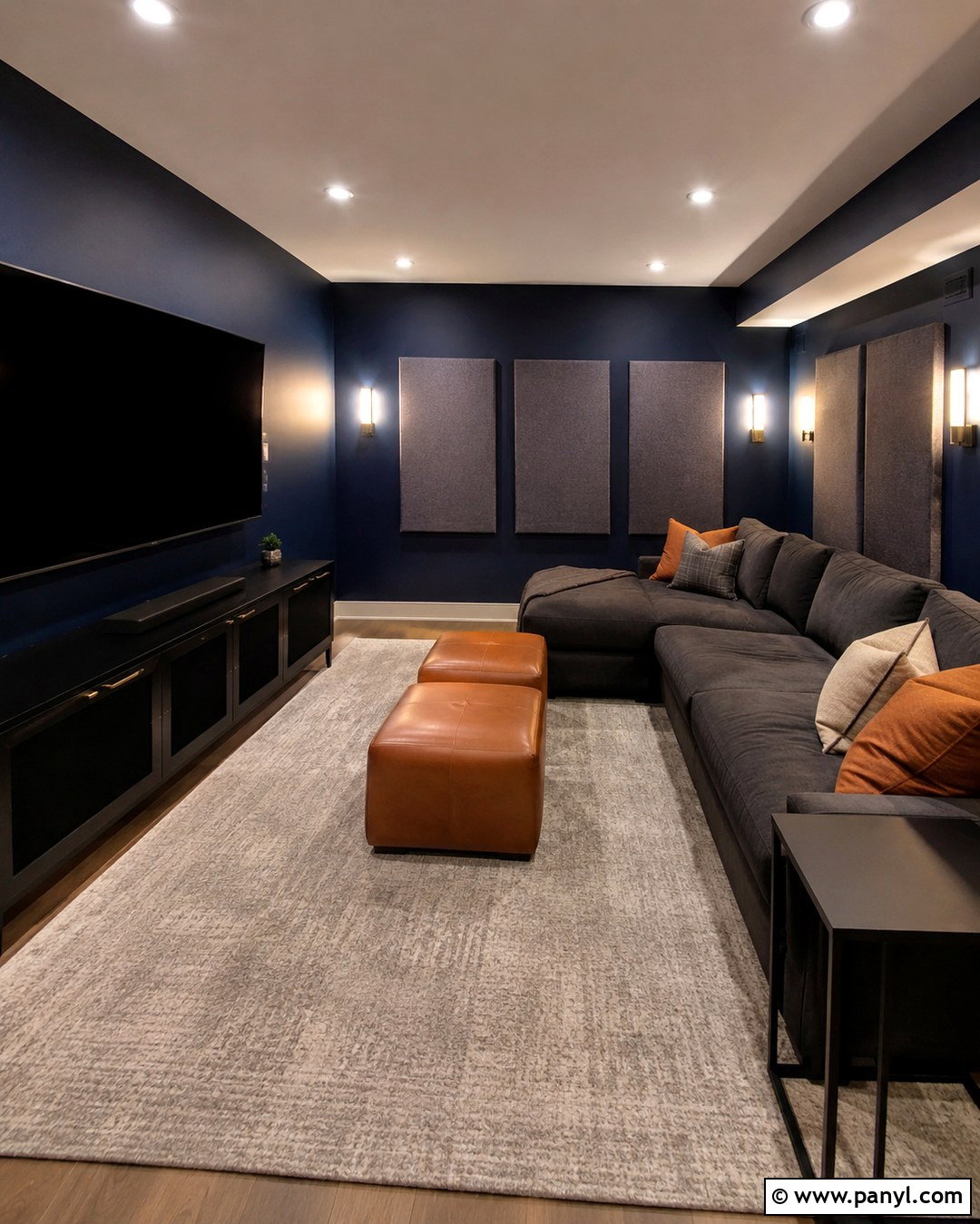
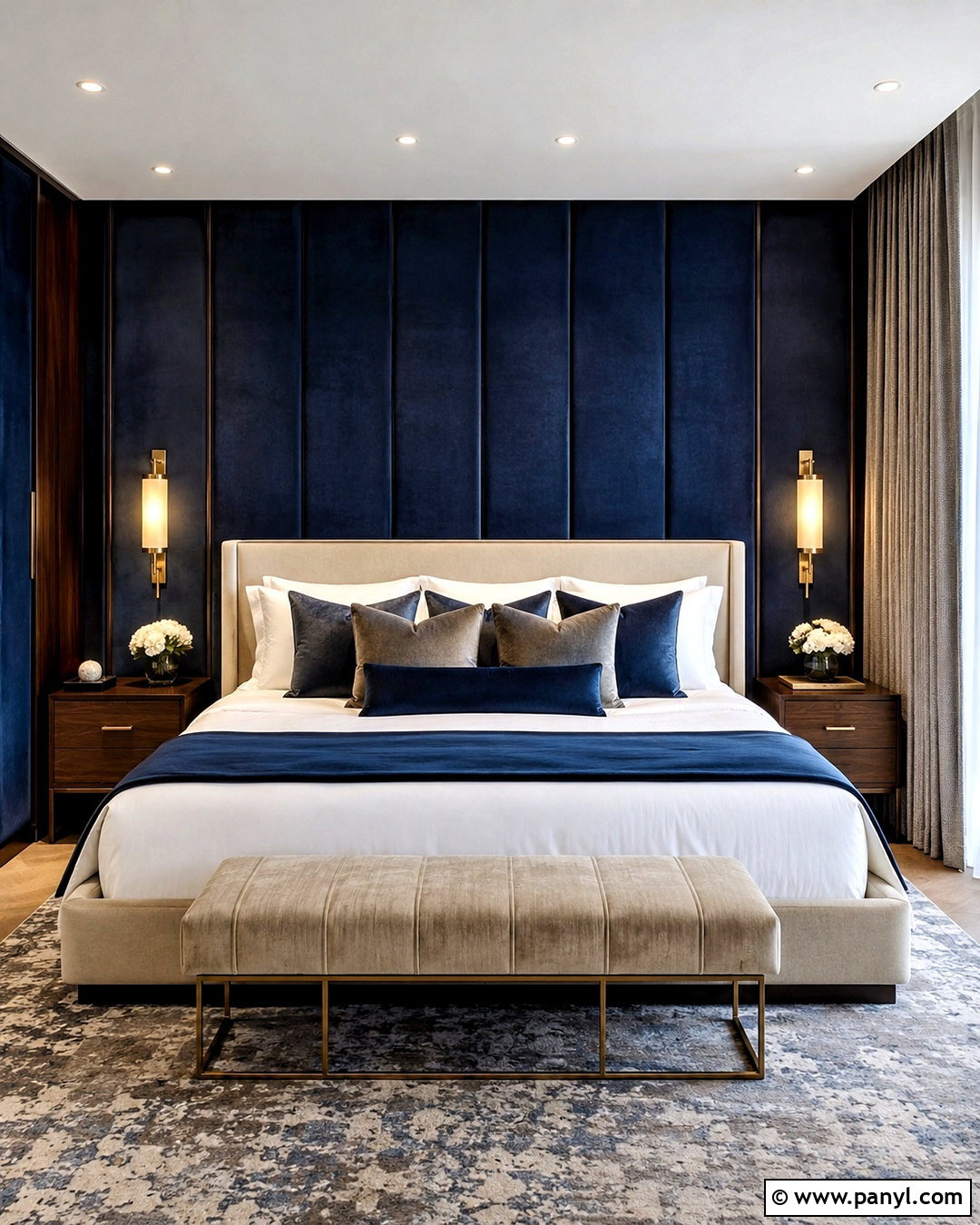
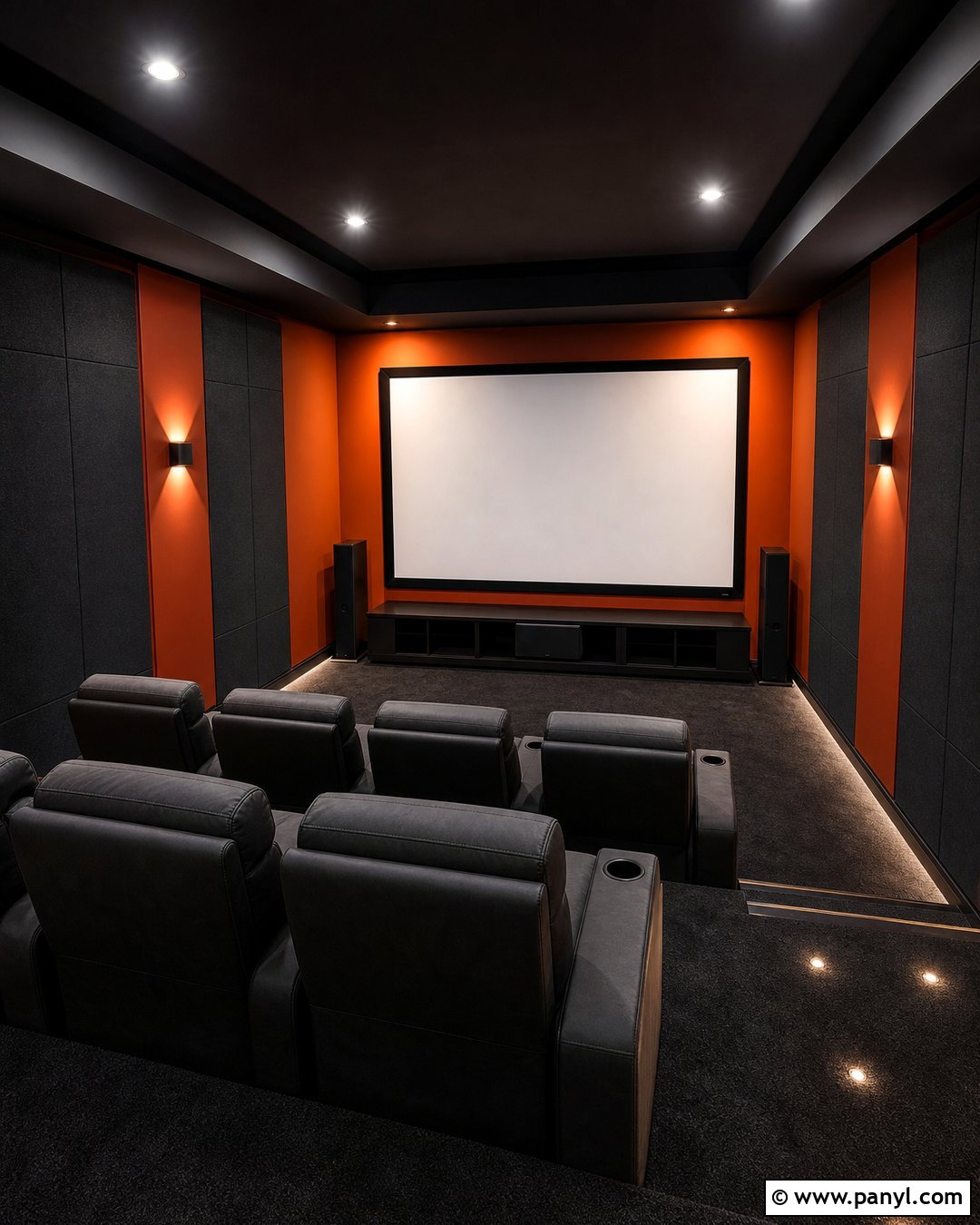
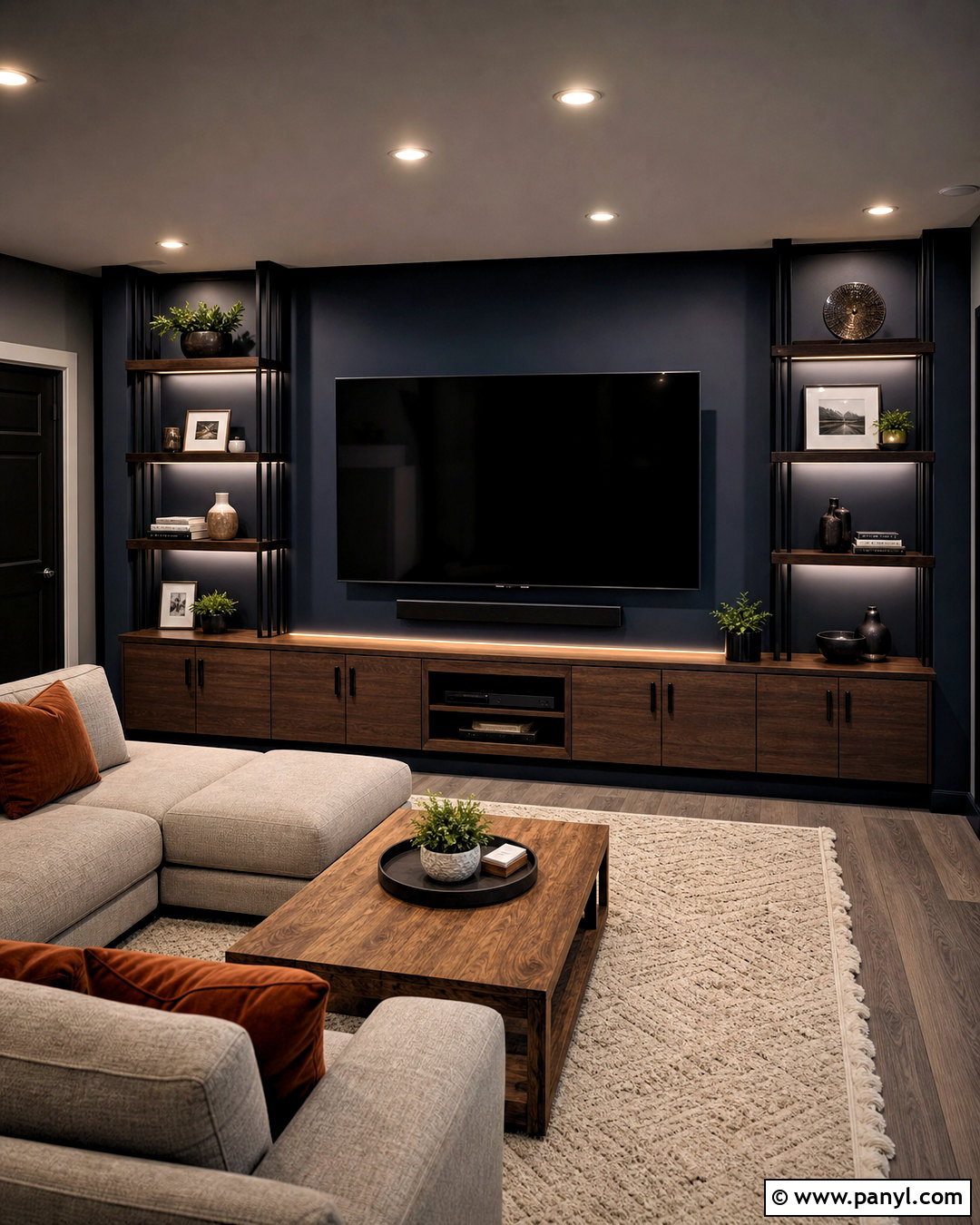
A navy blue basement media room works best when every feature supports comfortable viewing. Paint the television wall and adjoining walls a deep, slightly warm navy, while keeping the ceiling soft white to prevent a closed-in feeling. Position a charcoal sectional directly across from the screen, leaving a clear walkway behind it. A low black media cabinet reduces visual clutter and provides closed storage for electronics. Add a thick gray rug, navy blackout curtains, and acoustic fabric panels that blend into the walls. Dimmable recessed fixtures and discreet wall sconces allow the brightness to change without reflecting heavily on the screen. Complete the room with cognac leather ottomans, simple graphic artwork, and a compact snack cabinet near the entrance.
3. Blue Gray Basement Office
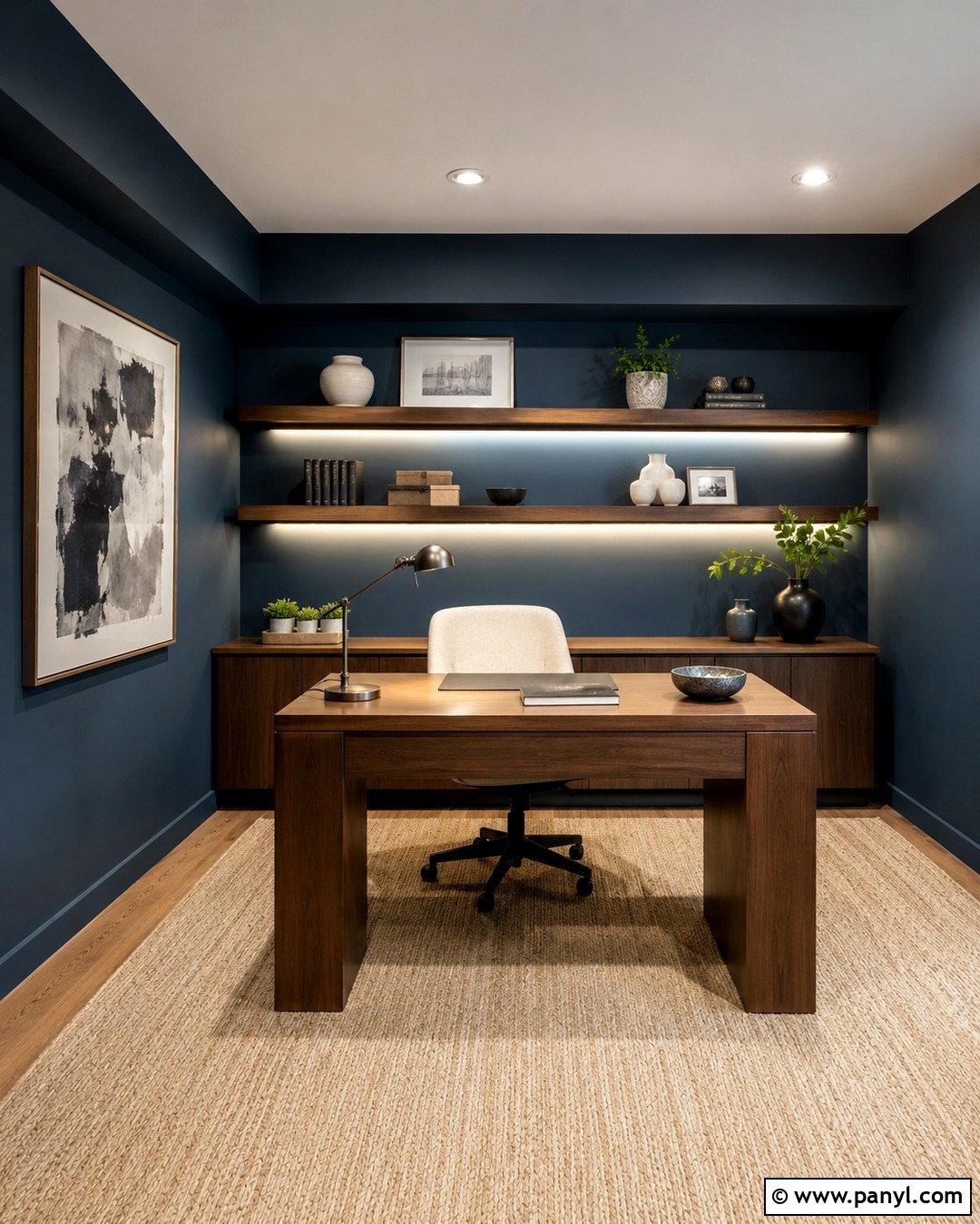
Blue-gray walls can make a basement office feel focused, calm, and more connected to the rest of the home. Select a medium-light shade with enough warmth to avoid an icy appearance beneath LED lighting. Place a walnut desk against the main wall and use a cream upholstered chair to soften the setup. Closed lower cabinets keep office supplies hidden, while floating wood shelves provide space for books and a few ceramic accessories. A flat-weave beige rug adds comfort without interfering with a rolling desk chair. Install a broad ceiling fixture, an adjustable task lamp, and under-shelf lighting for a balanced workspace. Matte black hardware, linen window treatments, and one large abstract print complete this organized basement office without making it feel overly formal.
4. Dusty Blue Basement Guest Room
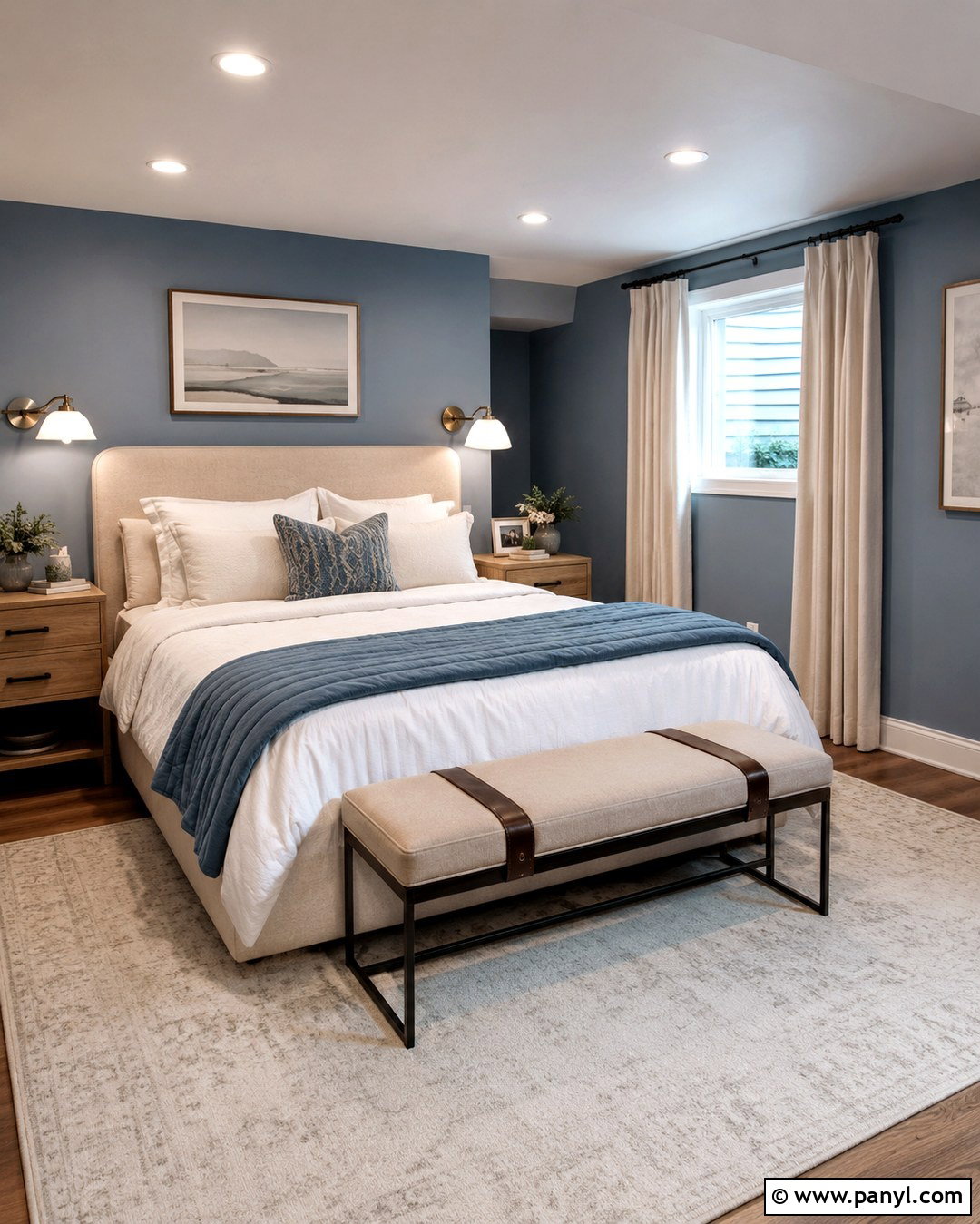
Imagine entering a basement guest room that feels quiet, comfortable, and thoughtfully finished. Dusty blue walls create that effect because the gray undertone keeps the color soft beneath artificial light. Center an upholstered oatmeal bed against the longest wall and dress it with white bedding, a quilted blue coverlet, and warm tan pillows. Slim oak nightstands prevent the layout from becoming crowded, especially in a smaller room. Add matching wall-mounted reading lights to save surface space. A large ivory rug makes hard flooring feel warmer underfoot, while full-length cream curtains visually lengthen a small window. Include a compact dresser, a luggage bench, and one botanical print. Warm white trim and ceiling paint keep the finished bedroom fresh and inviting.
5. Teal Blue Basement Game Room
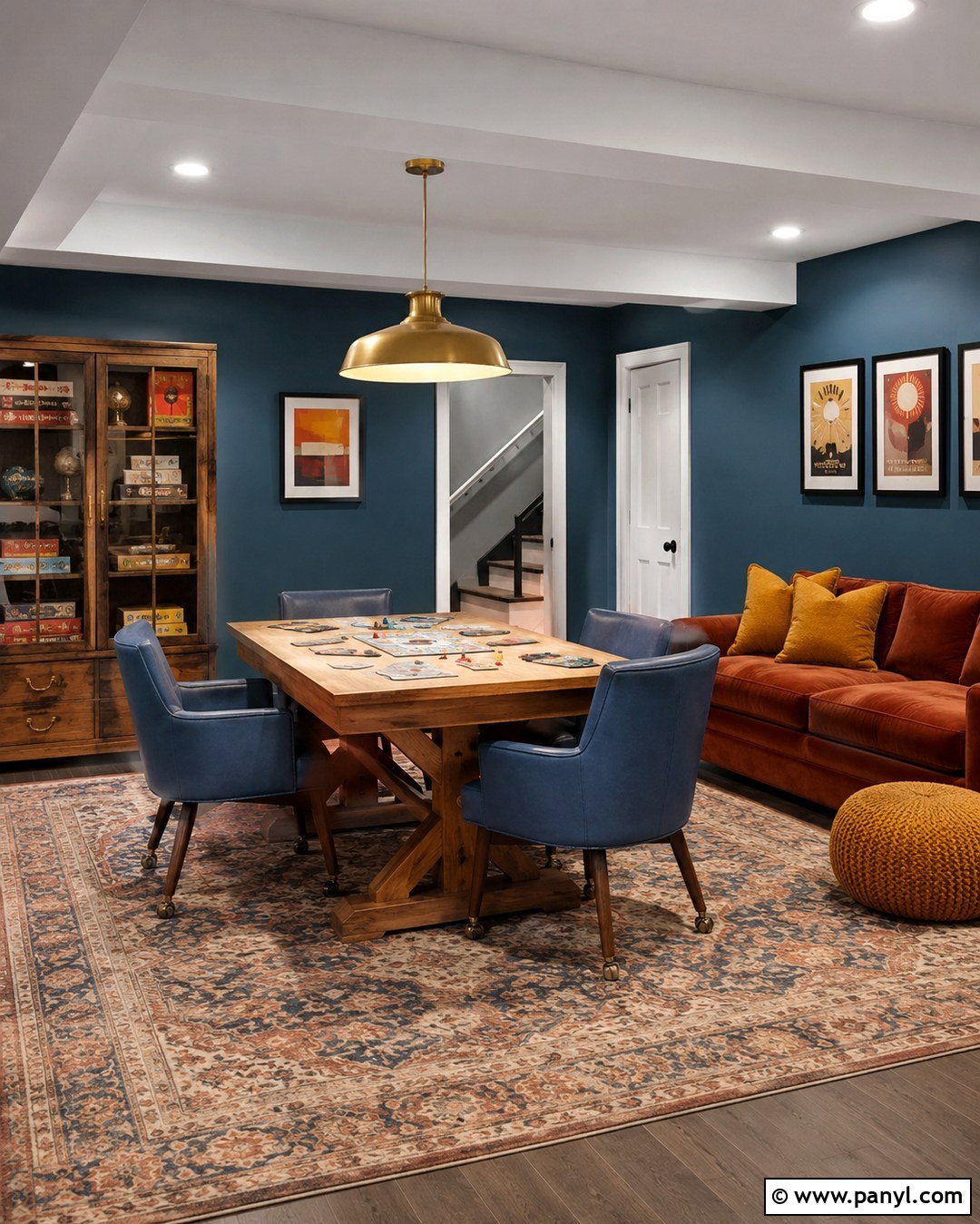
Teal blue walls bring lively color to a basement game room while still feeling sophisticated enough for adults. Use a rich blue-green shade on every wall, then balance it with crisp white trim and a pale ceiling. Arrange a sturdy game table in the center with four wipeable upholstered chairs. Along one side, place a low oak cabinet filled with board games, puzzles, and family supplies. A rust-colored sofa and patterned rug introduce warm contrast and prevent the teal from dominating. Install a wide pendant above the table, recessed lights around the perimeter, and a floor lamp beside the sofa. Finish the room with framed graphic prints, brass hardware, and a few mustard cushions. The complete space feels energetic, organized, and ready for casual gatherings.
6. Coastal Blue Walkout Basement
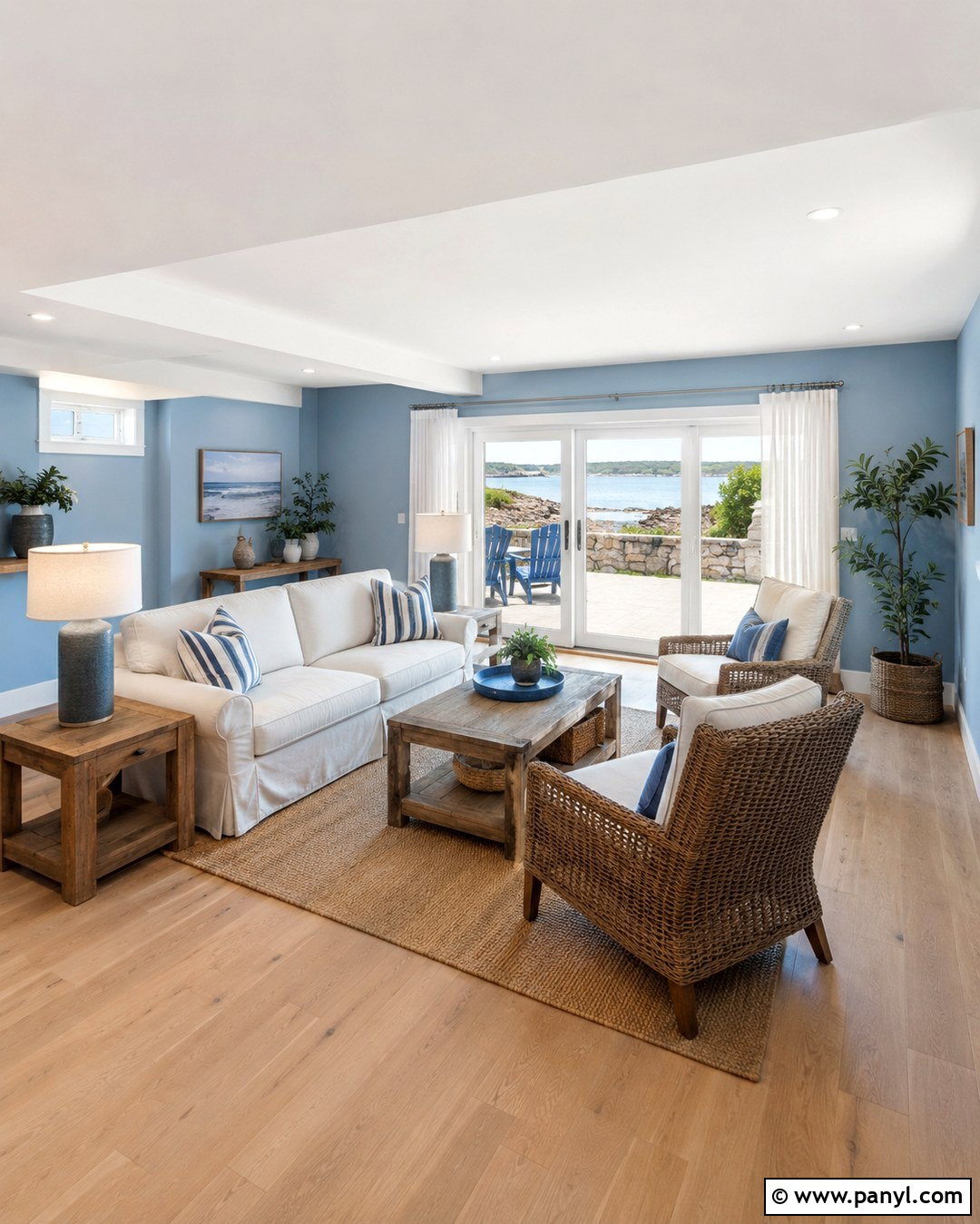
A walkout basement can support a fresh coastal look without relying on themed accessories. Start with clear coastal blue walls, white trim, and pale oak-look flooring that reflects daylight from exterior doors. Face a cream slipcovered sofa toward a simple white media unit, then add two woven lounge chairs to create a conversational layout. A large natural-fiber rug defines the seating area and adds texture. Use white linen curtains that filter sunlight while leaving the glass doors visually open. Weathered oak tables, blue-striped pillows, ceramic lamps, and a few framed shoreline photographs reinforce the relaxed palette. Keep decorative objects limited and practical. Natural materials, comfortable furniture, and a layered blue-and-white scheme make the walkout level feel airy rather than overly nautical.
7. Blue Basement Wainscoting
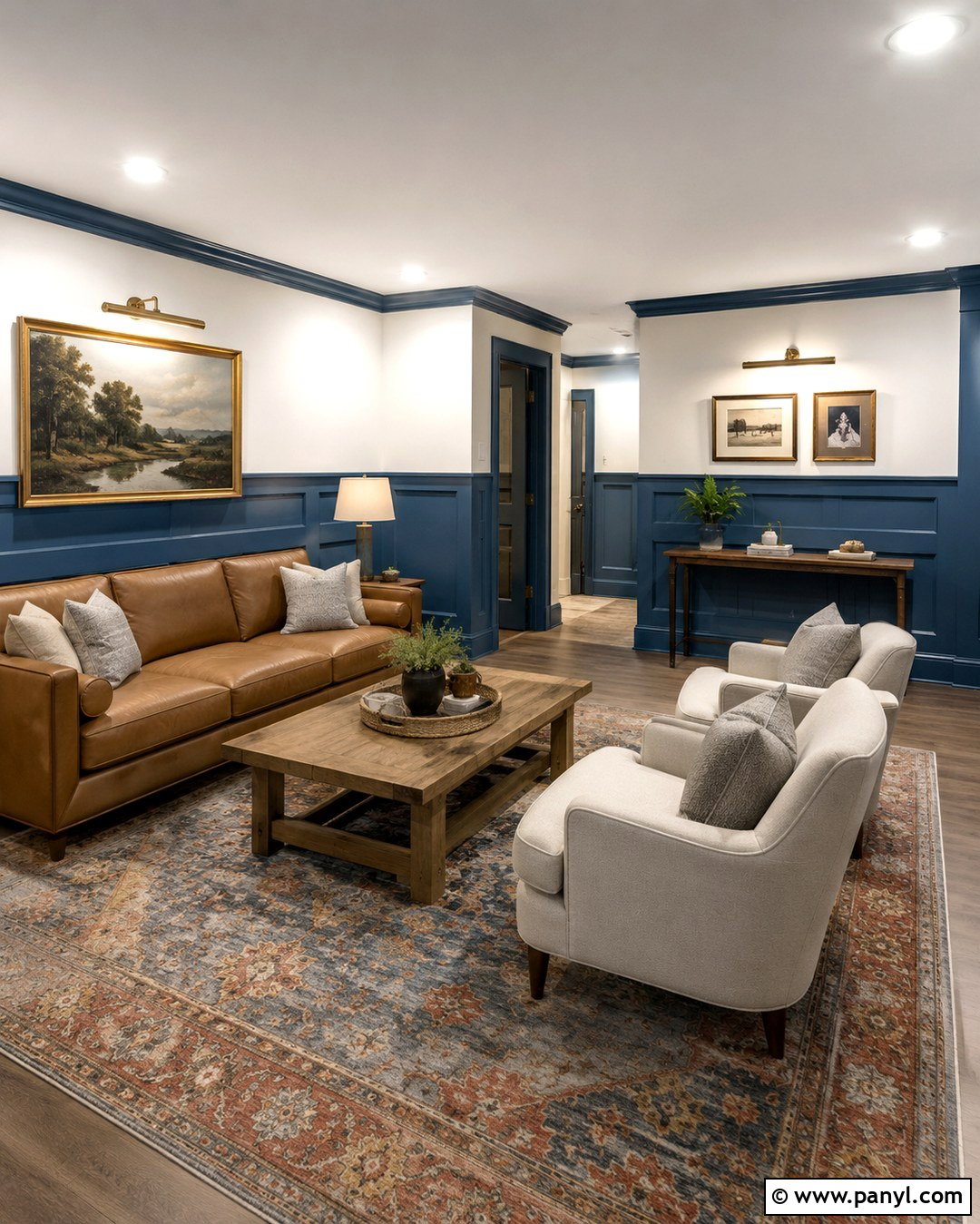
Blue wainscoting gives a basement lounge architectural detail while keeping darker color below eye level. Install simple shaker-style panel molding across the lower half of the walls and paint it a medium denim blue. Use warm white above the molding, continuing the same shade across the ceiling to make the room appear taller. A camel leather sofa, two cream armchairs, and a rectangular oak coffee table create a classic conversation area. Anchor everything with a Persian-inspired rug containing faded blue, rust, and beige tones. Brass picture lights and shaded table lamps supply warm illumination. Add framed artwork in matching wood frames and a narrow console behind the sofa. This balanced treatment delivers color, depth, and character without overwhelming a basement with limited natural light.
8. Color Drenched Navy Basement Library
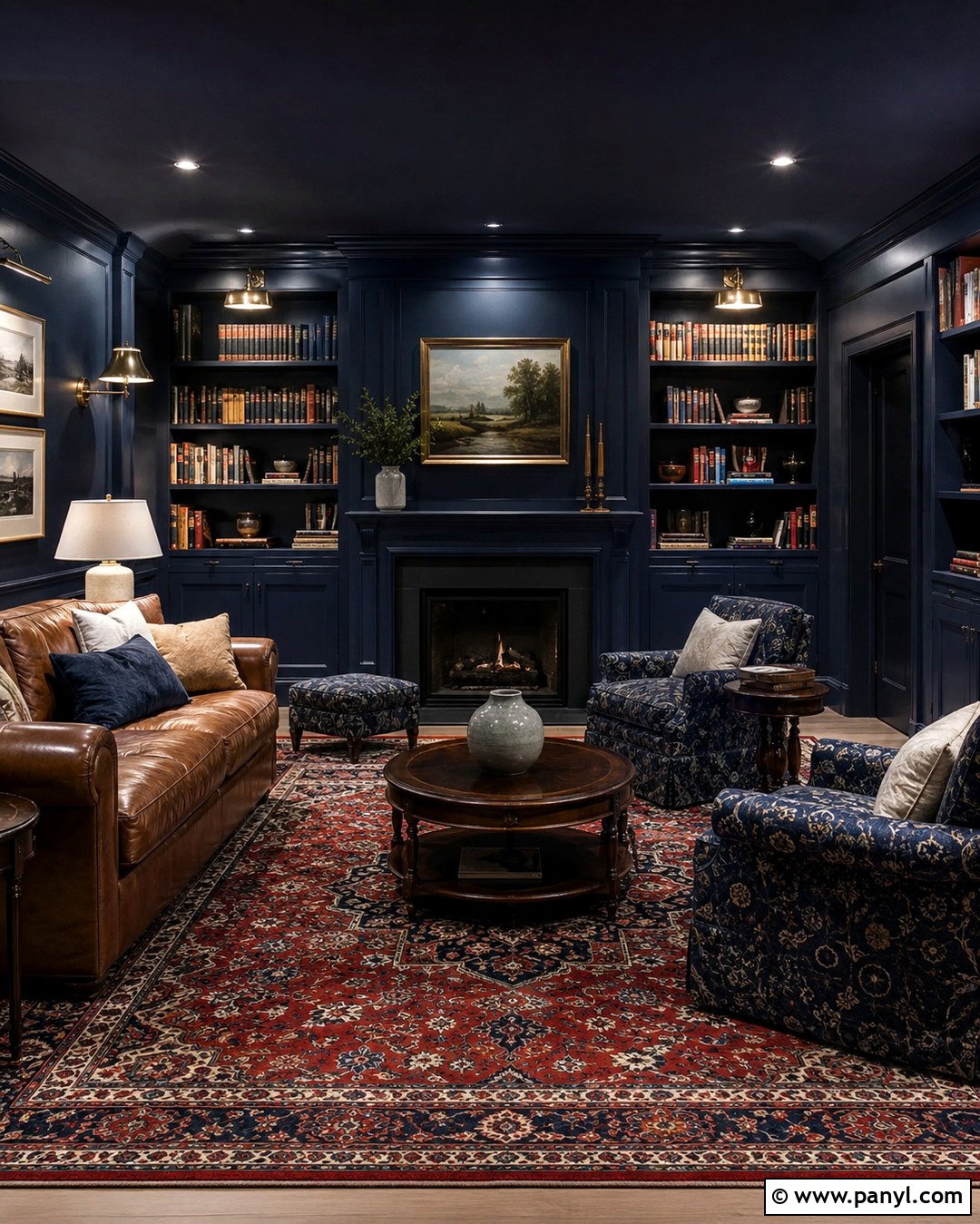
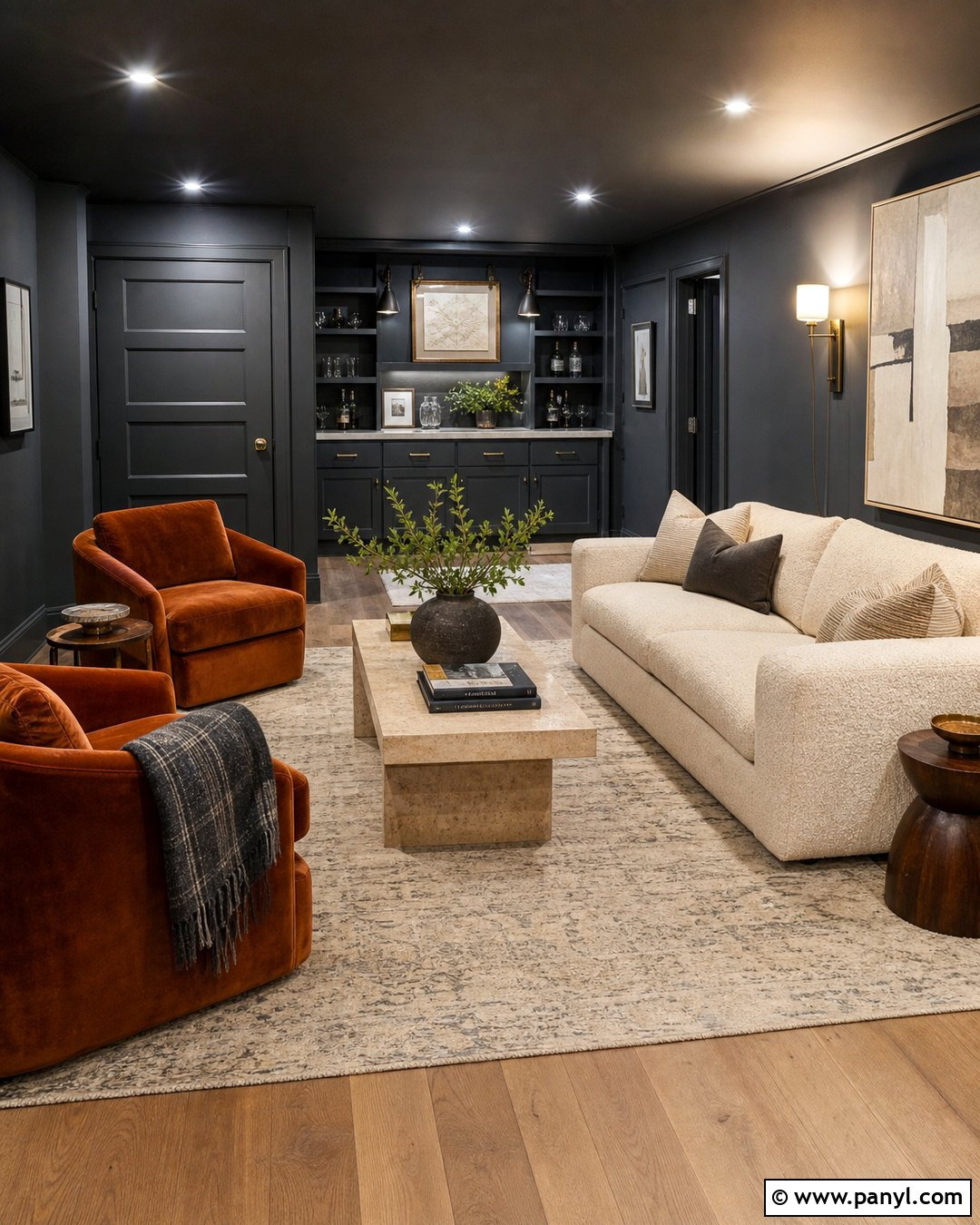
For a cocooning retreat, carry deep navy across the walls, built-in bookshelves, trim, and ceiling. This color-drenched approach creates a unified basement library rather than a collection of unrelated dark surfaces. Choose a satin finish for shelves and trim so they reflect slightly more light than the matte walls. Place a caramel leather sofa opposite two patterned reading chairs, with a round wood table in the center. Fill the shelving thoughtfully, leaving open areas for cream ceramics and framed photographs. Use several light sources, including recessed fixtures, brass library sconces, and an adjustable floor lamp. A warm red and blue vintage-style rug adds movement beneath the furniture. The finished room feels intimate and tailored while remaining comfortable for reading, conversation, or quiet work.
9. Sky Blue Basement Playroom
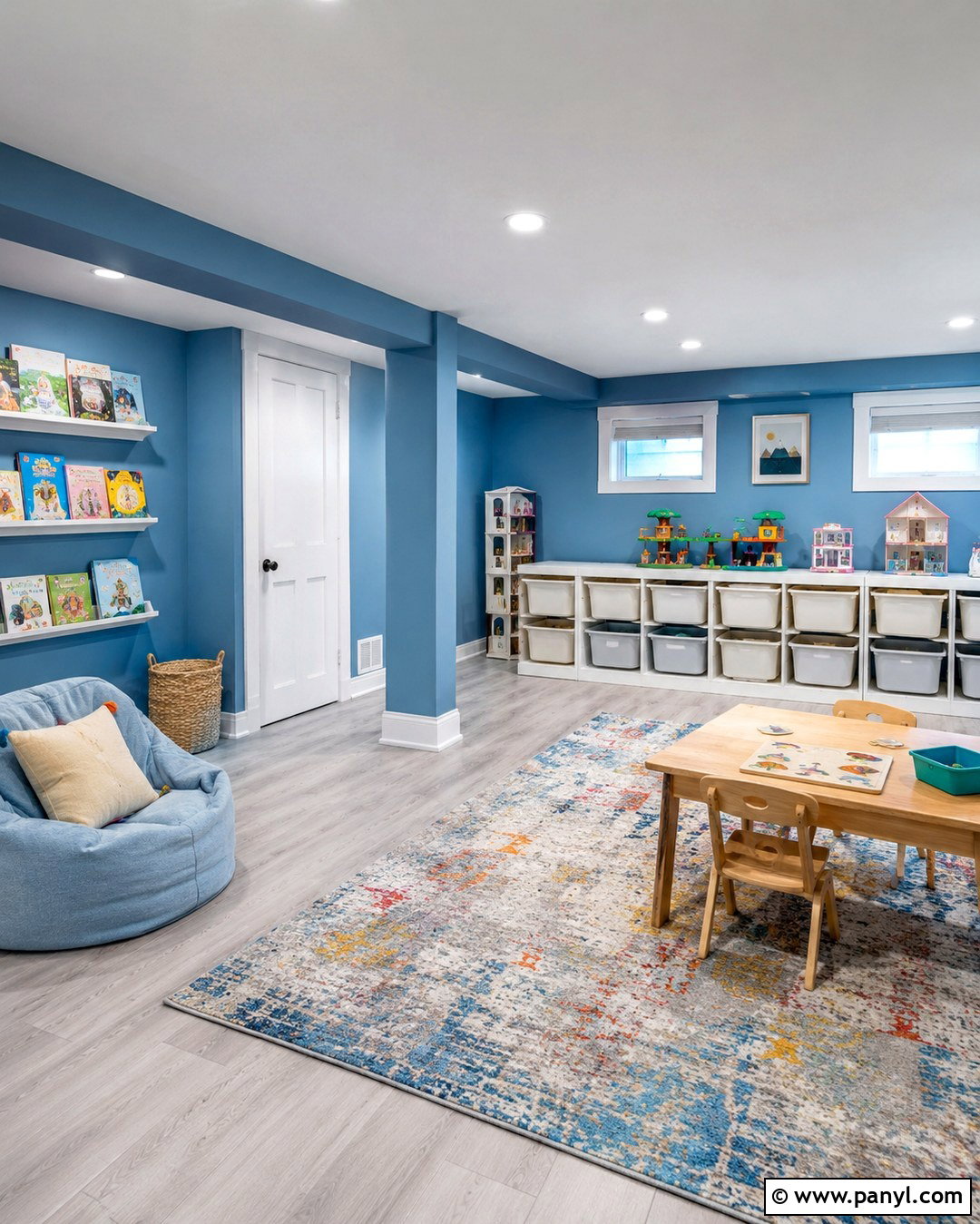
Sky blue walls create a cheerful background for a basement playroom without competing with colorful toys. Pair the blue with bright white trim, a washable pale gray floor, and a large multicolor rug that clearly defines the activity zone. Keep the center open for movement, then position low white storage cabinets along one wall so children can reach labeled bins easily. Add a small natural wood table, sturdy chairs, and a cushioned reading corner with wall-mounted book ledges. Closed cabinets should hold art supplies and less attractive equipment. Use flush ceiling fixtures rather than low pendants, especially where active play occurs. Soft green, yellow, and coral accents add variety. The organized layout makes cleanup simpler while leaving the room flexible enough to change as children grow.
10. Slate Blue Basement Gym
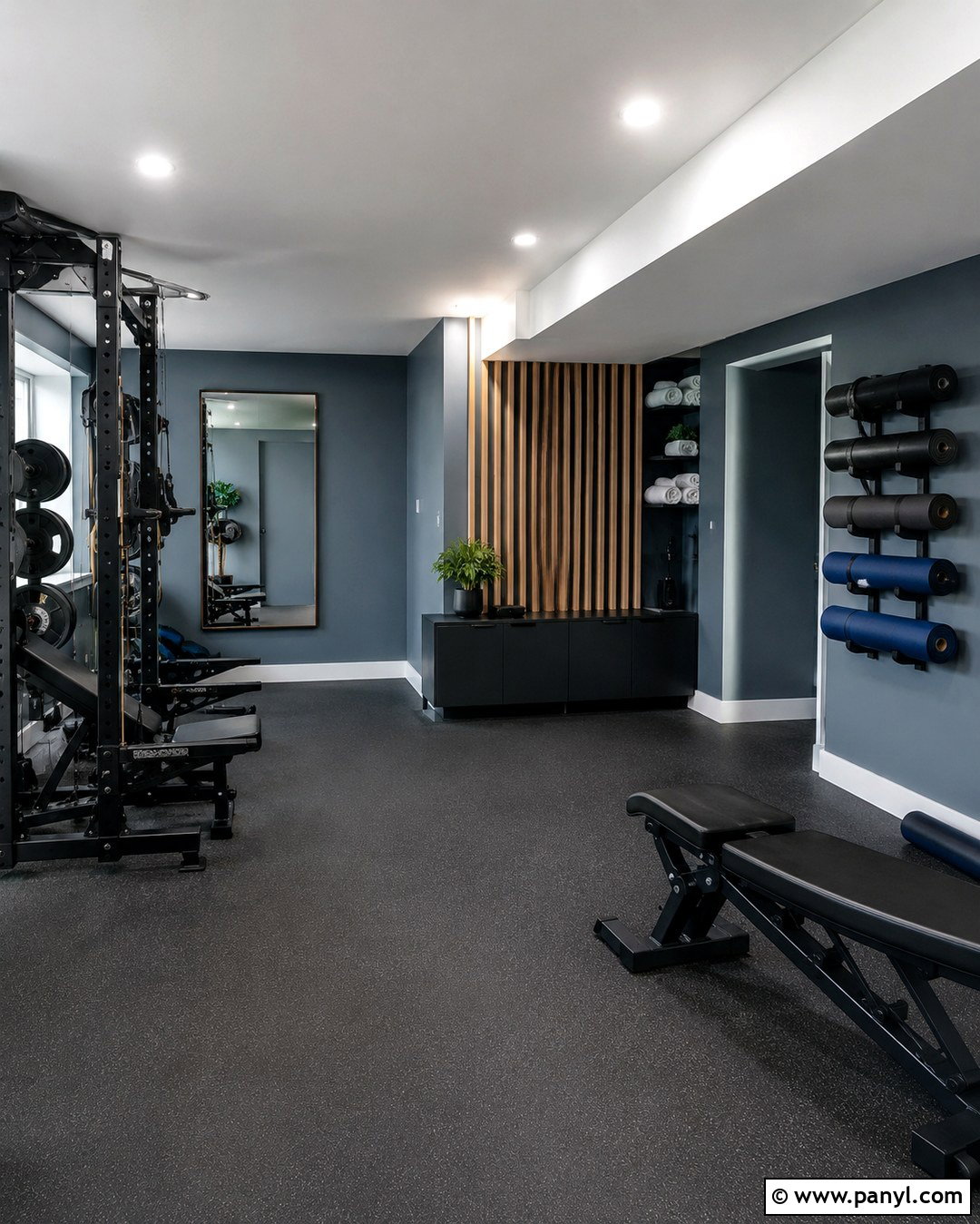
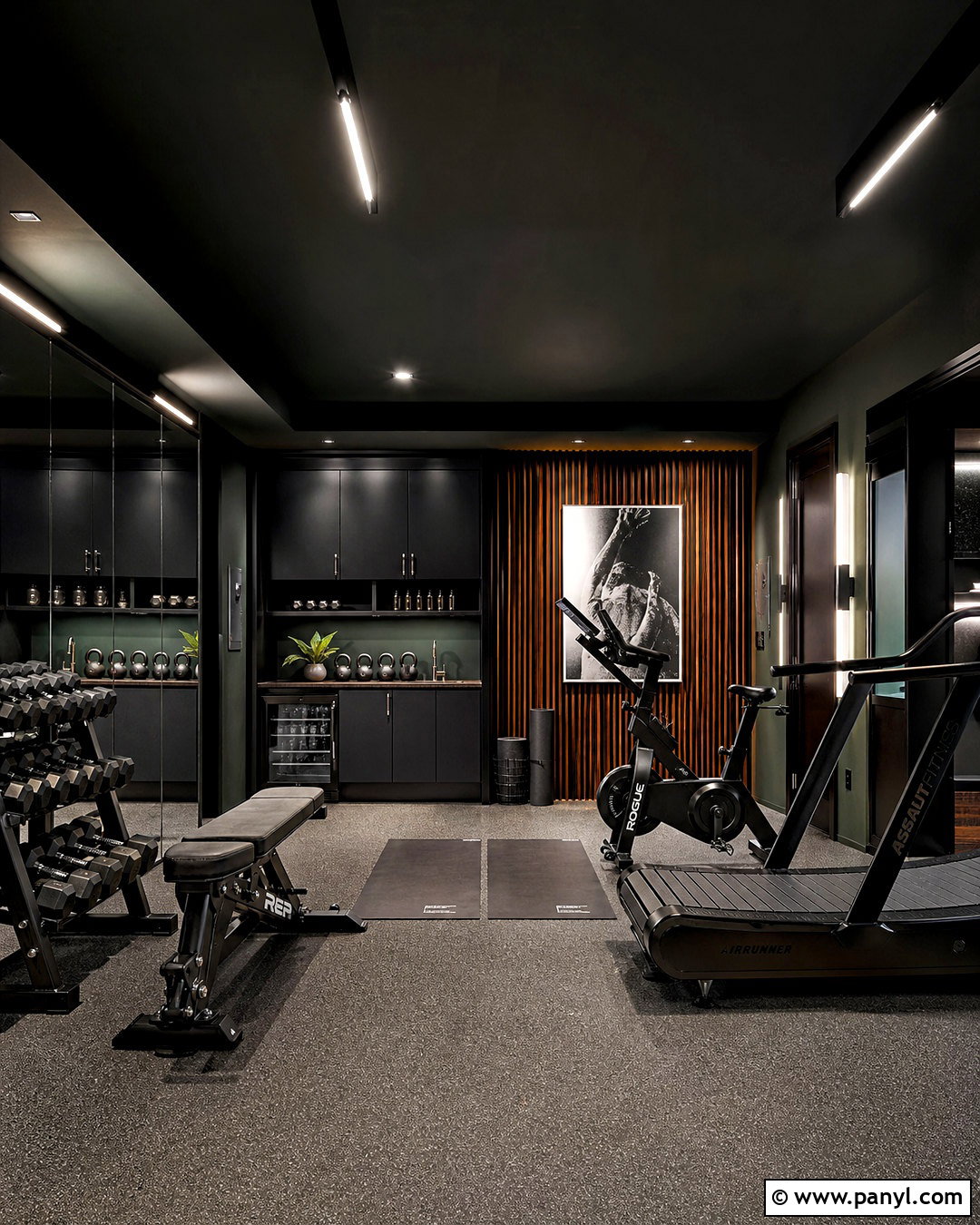
A slate blue basement gym feels more finished than a purely utilitarian workout space. Paint the walls a medium blue with gray undertones, then combine them with black rubber flooring and a clean white ceiling. Arrange larger equipment along the perimeter so the center remains open for stretching and floor exercises. Install a framed wall mirror where it can reflect the room without covering every surface. A low black cabinet should store towels, resistance bands, and smaller accessories behind closed doors. Add bright recessed lighting in evenly spaced rows to minimize shadows. Light wood wall slats can warm one section and help define a recovery corner with a bench and rolled mats. Simple black hardware, a white clock, and limited artwork maintain an uncluttered, energetic atmosphere.
11. Navy Blue Basement Snack Bar
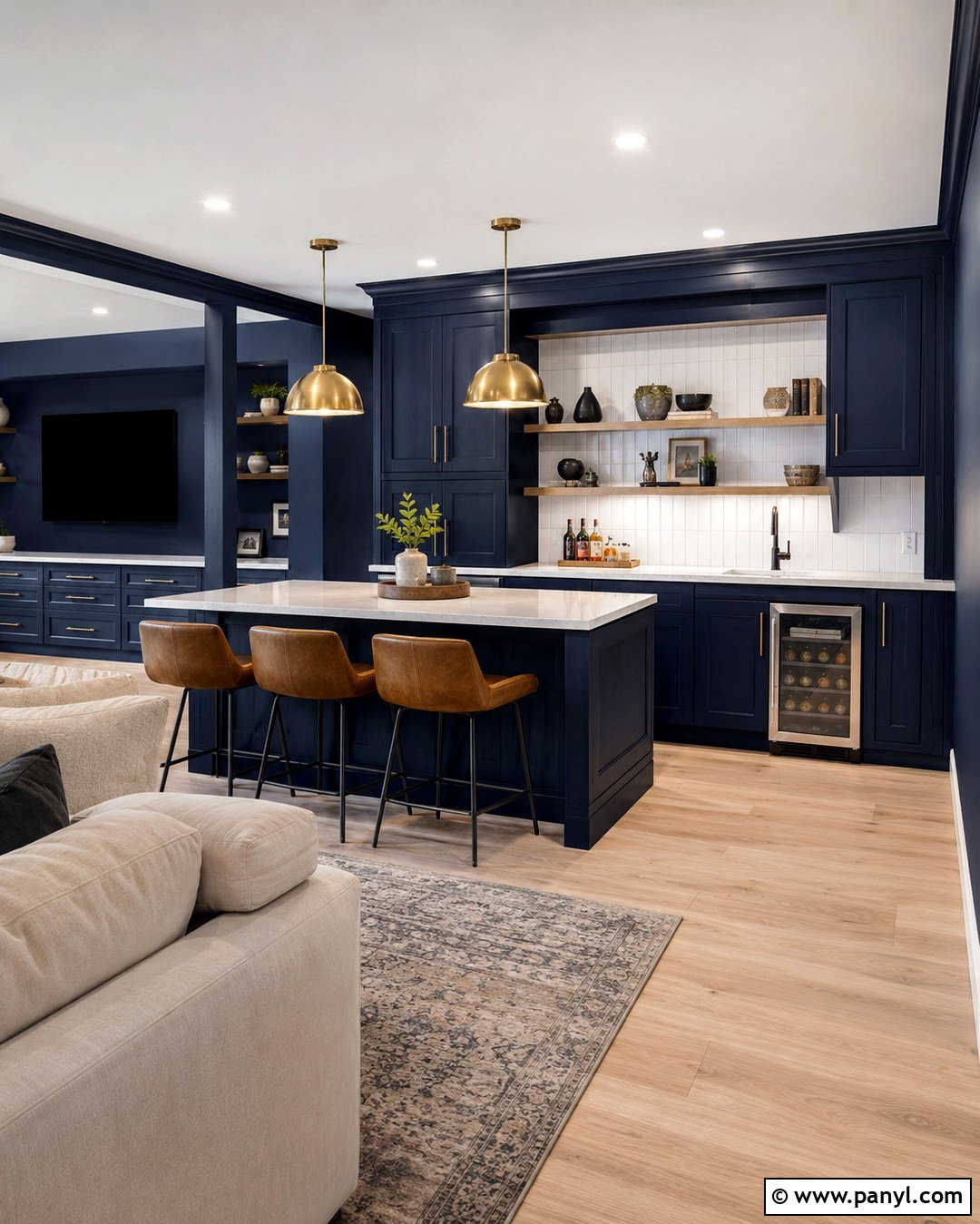
Deep navy walls can make a basement snack bar look polished while separating it visually from the nearby lounge. Continue the navy onto shaker cabinets for a built-in effect, then add brushed brass pulls and a light quartz countertop. A white vertical tile backsplash reflects light and keeps the compact serving area from appearing heavy. Include an under-counter refrigerator, open shelving for glassware, and closed storage for snacks and small appliances. Two backless leather stools can tuck beneath a short peninsula when they are not needed. Use brass pendants above the counter and concealed lighting below the shelves. Light oak flooring and a nearby cream sofa soften the dark cabinetry. The coordinated setup supports movie nights, casual refreshments, and everyday entertaining without resembling a commercial bar.
12. Farmhouse Blue Basement Living Room
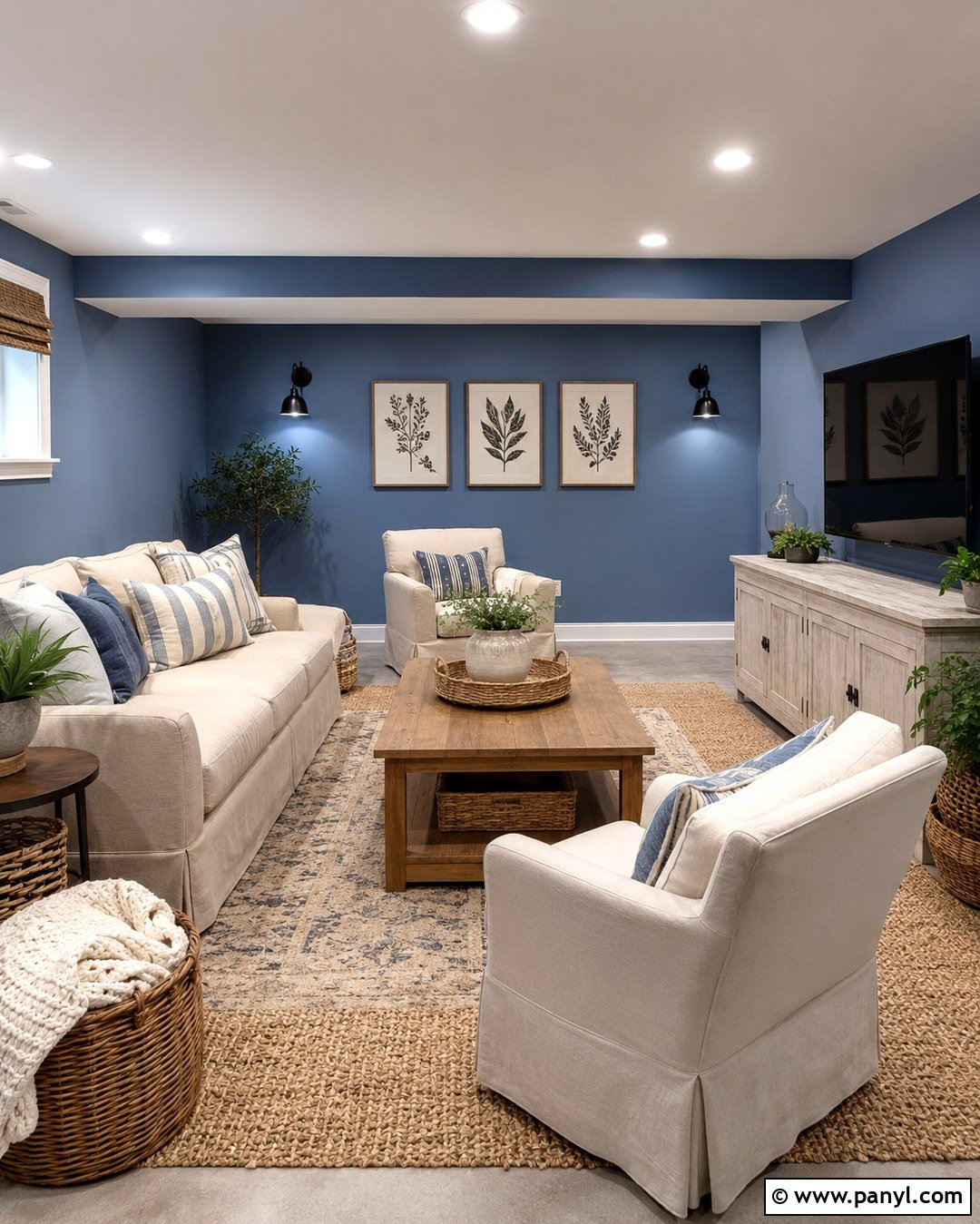
Muted farmhouse blue walls pair naturally with warm wood and relaxed, practical furniture. Choose a soft mid-tone blue that feels slightly weathered, then use creamy white for the ceiling, doors, and simple baseboards. Place a comfortable beige sofa opposite a whitewashed media cabinet, adding two slipcovered armchairs when space allows. An oak coffee table with a lower shelf provides useful storage without looking too heavy. Layer a woven jute rug beneath a smaller blue-patterned rug for softness and definition. Black metal sconces, a simple ceiling fixture, and ceramic table lamps create balanced lighting. Decorate with framed botanical prints, striped pillows, and woven baskets rather than excessive rustic signs. The finished basement feels casual and familiar, but clean lines prevent the farmhouse details from appearing dated.
13. Cobalt Blue Basement Accent Wall
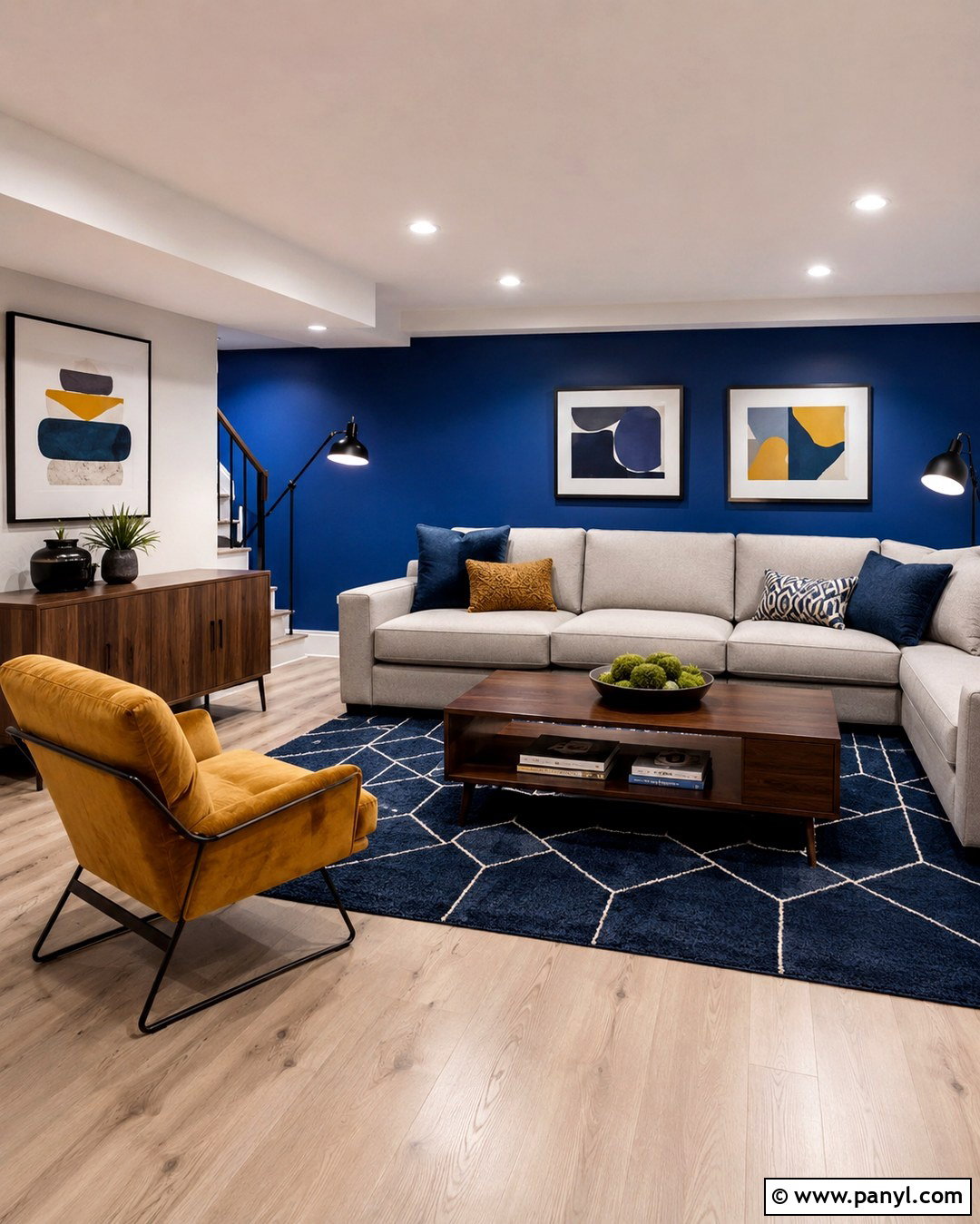
Cobalt blue can energize a basement when it is concentrated on one carefully chosen wall. Paint the main focal wall a strong, clear cobalt and keep the remaining walls a soft warm white. Position a streamlined light gray sectional in front of the blue surface, using a low walnut console or framed artwork to break up the color. A geometric rug containing cobalt, cream, and charcoal connects the accent wall to the rest of the room. Add one mustard lounge chair for controlled contrast and repeat the warm tone in two small pillows. Black floor lamps and a modern flush-mount fixture keep the design crisp. Pale wood flooring prevents the bold blue from feeling too heavy. This approach provides strong personality while preserving brightness in a lower-ceiling basement.
14. Blue And White Basement Laundry Room
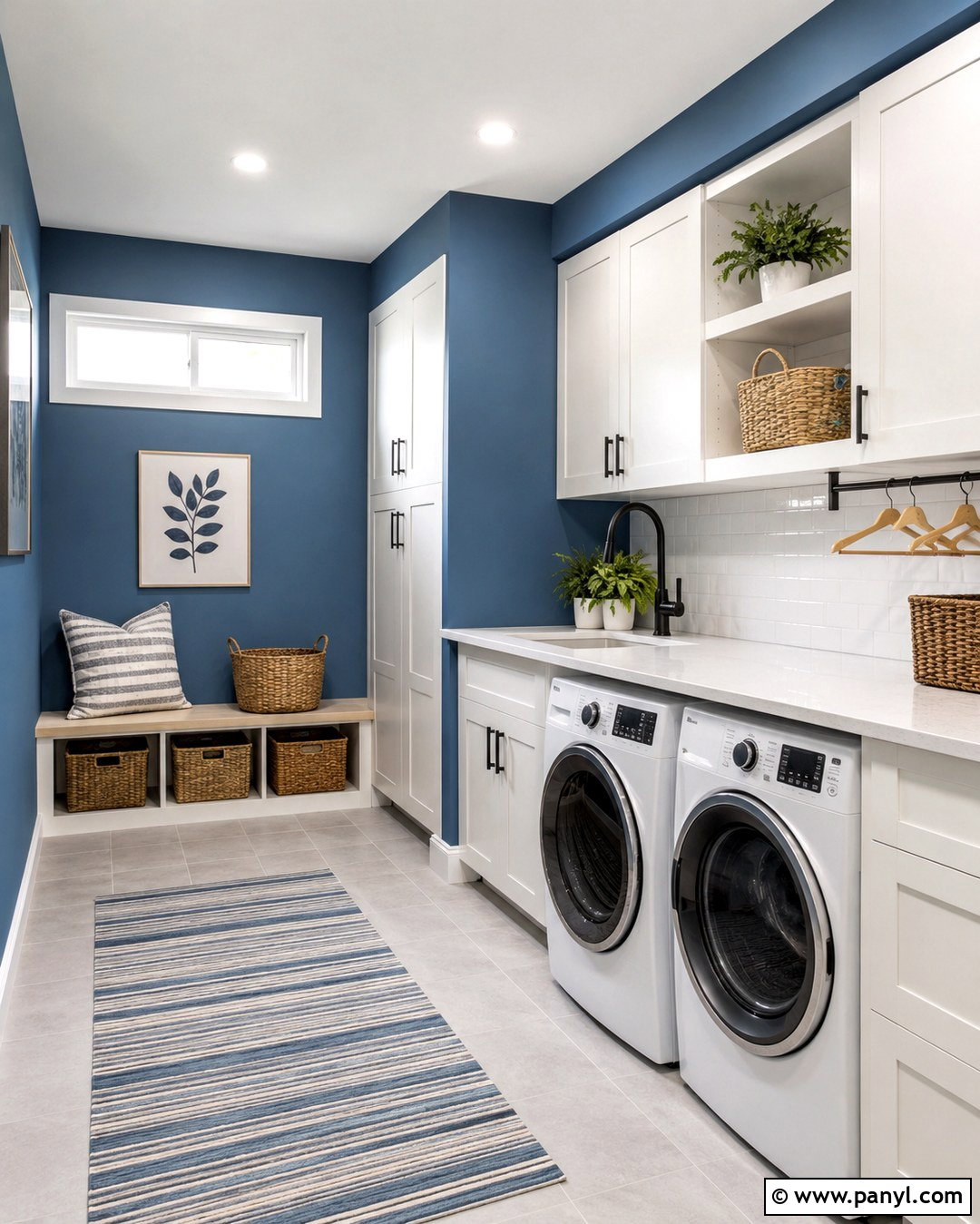
Blue walls can make a basement laundry room feel intentional rather than overlooked. Use a clean medium blue on the walls, then install white shaker cabinets above a front-loading washer and dryer. A pale quartz folding counter creates a durable work surface, while a white tile backsplash improves brightness. On the opposite side, include a tall cabinet for cleaning supplies and a built-in bench with baskets underneath. Light gray porcelain floor tile handles moisture and coordinates with both colors. Add black cabinet pulls, a matte black hanging rod, and a simple ceiling fixture for clear task lighting. One small striped rug introduces softness without becoming impractical. With concealed storage, generous folding space, and an orderly blue-and-white palette, the laundry area feels fresh, efficient, and easy to maintain.
15. Denim Blue Basement Craft Room
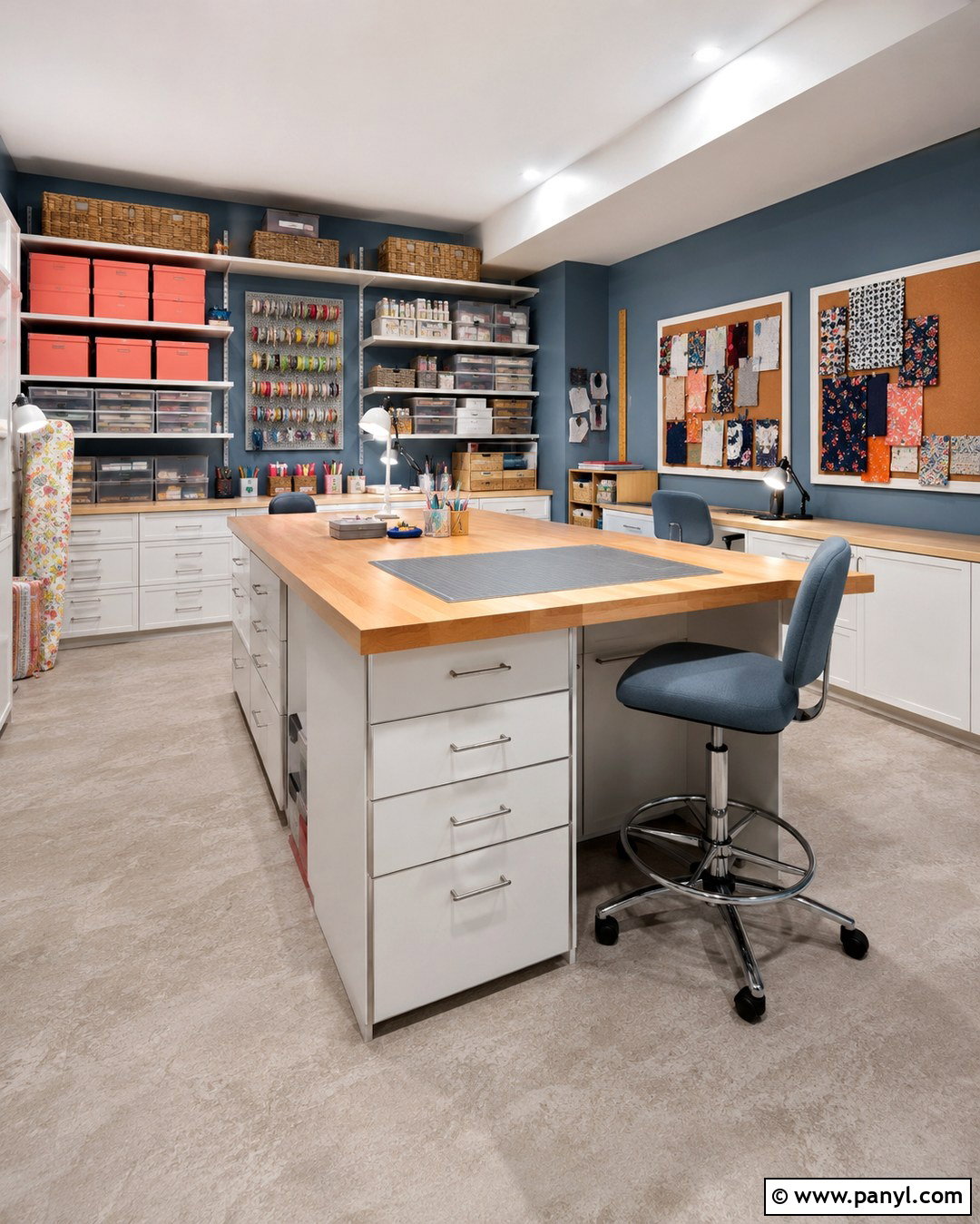
A denim blue basement craft room provides color without distracting from detailed projects. Paint all four walls a softened medium blue and keep the ceiling white for better light distribution. Place a large maple worktable in the center with drawers on both sides, allowing supplies to stay close without covering the surface. Along one wall, combine white base cabinets, adjustable shelving, and a long countertop for equipment and works in progress. Use clear containers only for attractive materials, placing everything else behind doors. A washable neutral floor and rolling task chair support regular use. Install bright overhead panels plus focused lamps above each work zone. Corkboards, framed fabric samples, and a few coral storage boxes add warmth. The complete room feels creative, structured, and pleasantly colorful.
16. Blue Basement Apartment Living Room
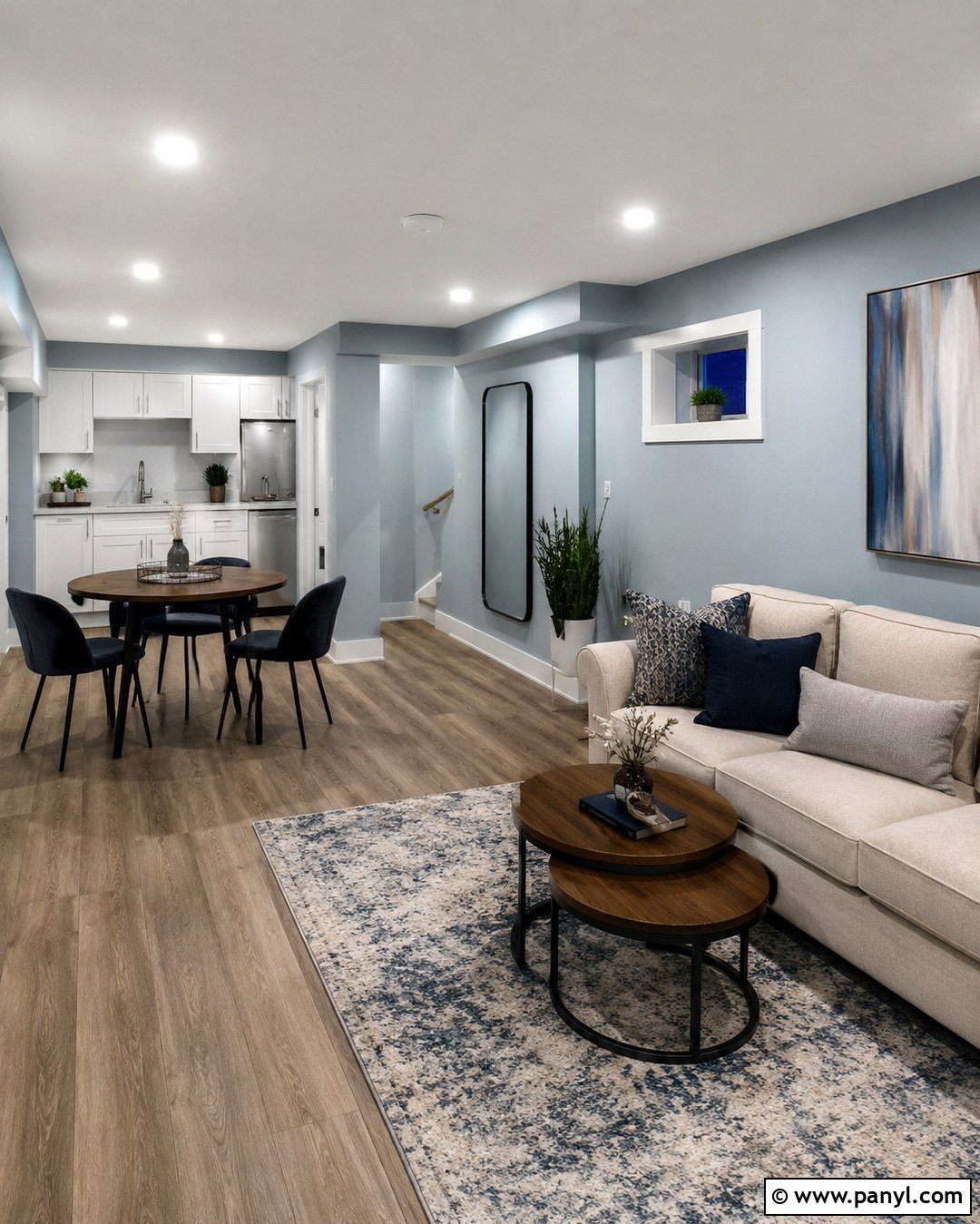
A blue basement apartment needs flexible furniture and a unified palette to feel spacious. Select a pale blue with warm gray undertones for every wall in the main living area. Use the same warm white trim throughout to connect the seating, dining, and kitchenette zones. A compact cream sofa and nesting coffee tables keep the lounge comfortable without blocking circulation. Define a nearby dining corner with a round oak table and three slim chairs. In the kitchenette, choose white cabinets, a light countertop, and brushed nickel hardware. Continuous oak-look flooring visually expands the open plan. Add a washable blue-and-beige rug, wall-mounted lighting, and one tall mirror to bounce light around the room. Multifunctional storage pieces keep the finished apartment orderly, bright, and comfortable for daily living.
17. Blue Basement Fireplace Wall
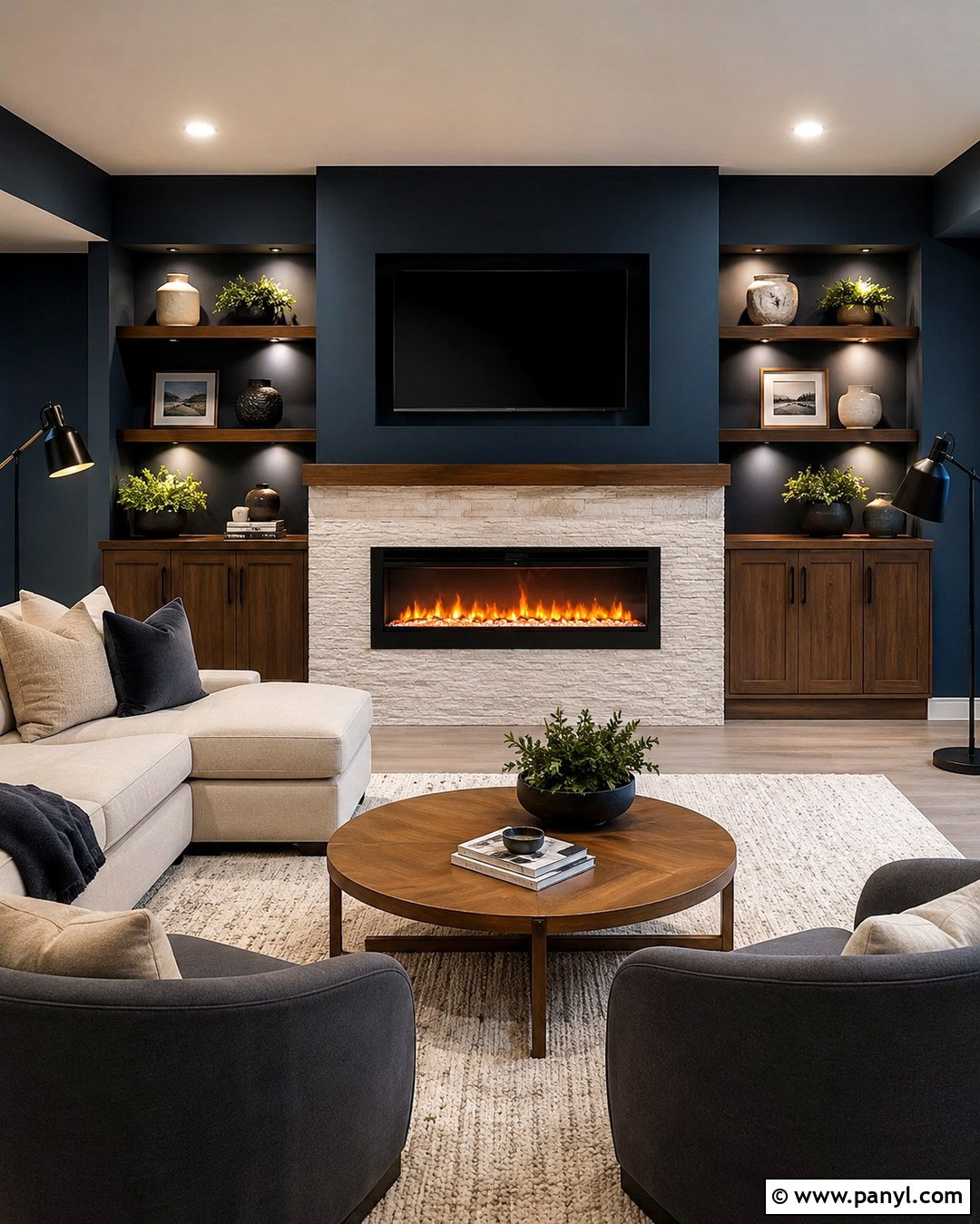
A fireplace becomes a stronger basement focal point when the surrounding blue wall is designed as one complete composition. Paint the full wall a deep steel blue and center a simple electric fireplace with a pale stone surround. Install low walnut cabinets on both sides, adding open shelves above them for books, ceramics, and framed artwork. Keep the remaining walls warm white so the feature wall retains its impact. A light beige sectional should face the fireplace, with two small swivel chairs completing the seating arrangement. Add a textured cream rug, a round wood coffee table, and black metal floor lamps. Recessed lighting and shelf lights prevent shadows around the dark blue surface. The final room feels warm, balanced, and visually organized from every angle.
18. Two Tone Blue Basement Walls
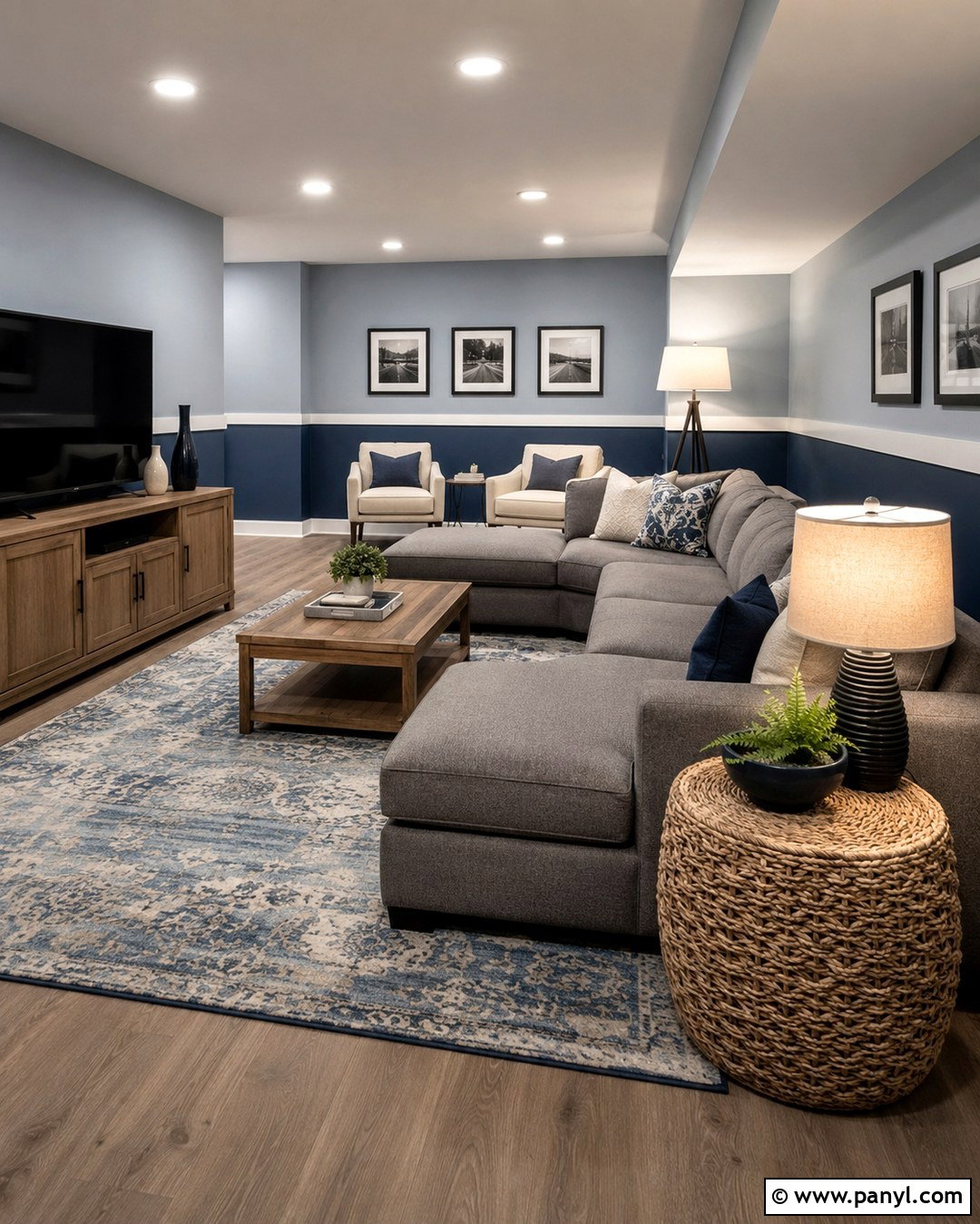
Two-tone blue walls can add structure to a long basement without requiring complicated architectural work. Paint the lower third a deep navy and the upper area a pale misty blue. Separate the colors with a slim white chair rail for a clean, deliberate transition. Use the darker band throughout the room to visually connect separate seating and activity zones. A medium gray sectional, oak media cabinet, and cream accent chairs provide neutral balance. Choose a rug that contains both blue shades so the wall treatment feels integrated rather than decorative. White doors and baseboards maintain crisp edges, while black picture frames introduce definition. Add recessed fixtures, shaded table lamps, and one sculptural floor lamp. The layered blue palette makes the open basement feel coordinated and thoughtfully divided.
19. Blue Basement With Wood Paneling
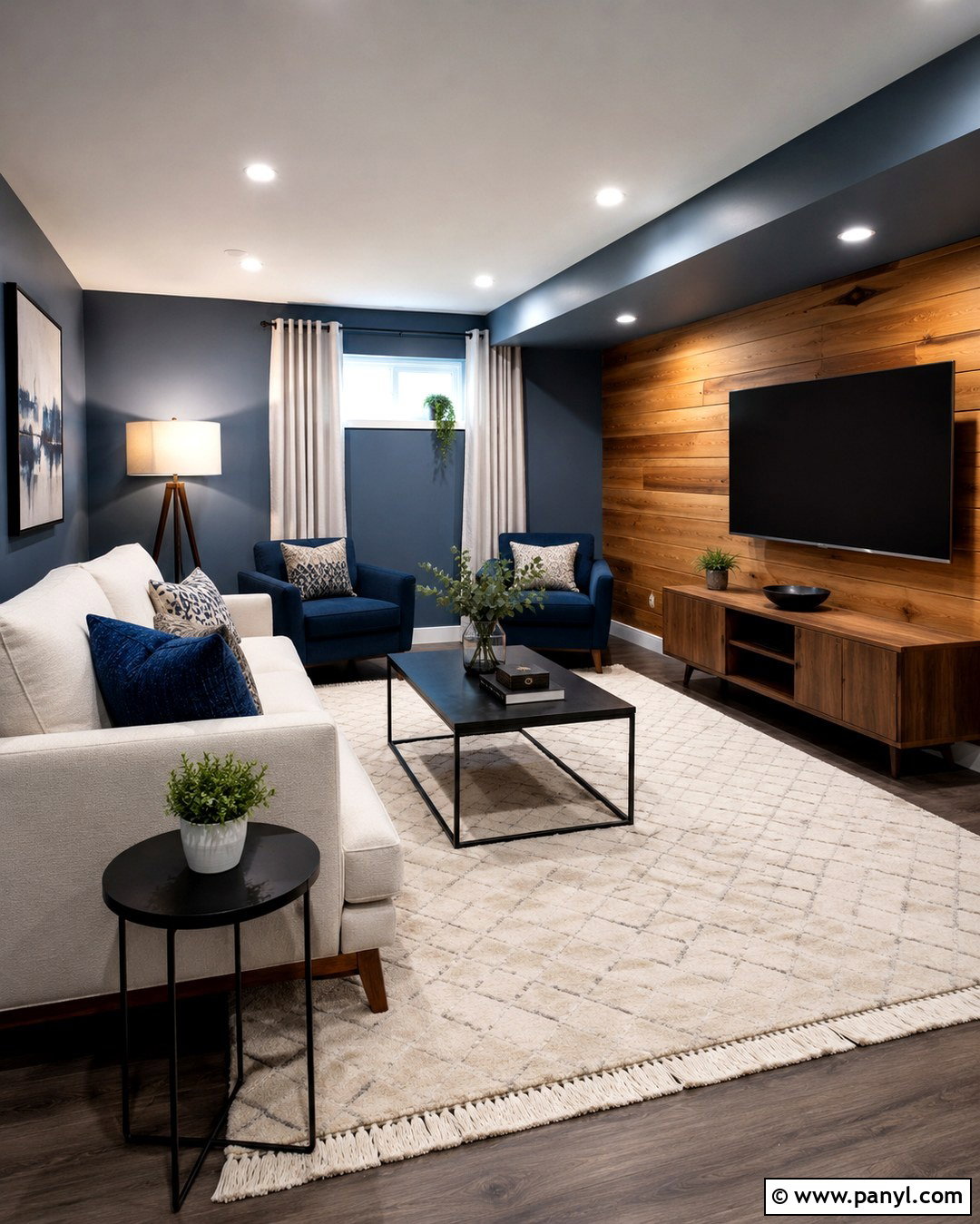
Existing wood paneling can work beautifully with blue walls when the wood is used as a warm accent instead of covering the entire basement. Preserve one paneled wall in a natural walnut or medium oak finish, then paint the remaining walls a muted blue-gray. Position a cream sofa against the wood wall and place two navy chairs across from it to create a balanced conversation area. A large ivory rug brightens the floor, while black metal tables add a modern edge. Repeat the wood tone in a media console and simple picture frames. Warm recessed lighting helps the grain look rich rather than orange. Add off-white curtains, textured pillows, and minimal abstract artwork. This combination feels updated while respecting the basement’s original architectural character.
20. Small Blue Basement Reading Nook
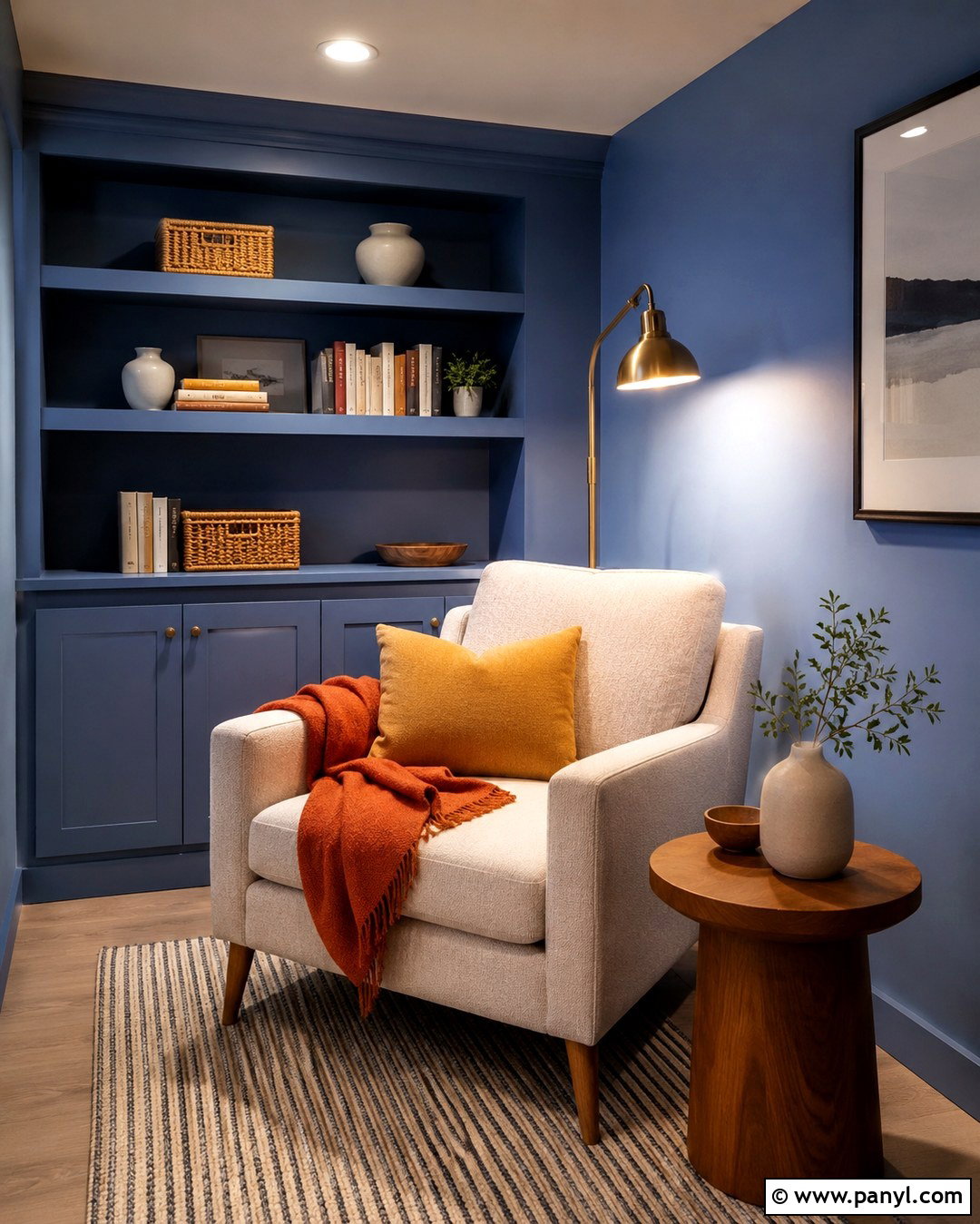
Even a compact basement corner can become useful with a complete blue reading nook. Paint the walls and shallow built-in shelves a soft mid-tone cornflower blue, using a satin finish on the woodwork for subtle contrast. Fit a cream upholstered armchair into the corner and add a small round oak table within easy reach. A brass floor lamp supplies focused reading light without using valuable shelf space. Place a narrow striped rug beneath the chair to define the nook while keeping the walkway clear. Books, woven boxes, and a few white ceramic pieces can fill the shelving without creating clutter. Finish with one lumbar pillow and a lightweight throw in rust or ochre. The warm accents make the blue feel comfortable, and the fitted storage uses every available inch.
Conclusion:
The strongest basement designs treat blue as part of a complete plan rather than an isolated paint choice. These 20 Basement Blue Walls show how pale, muted, bright, and deep shades can support very different functions. Light blue can open a family room or apartment, while navy can establish a comfortable media room, library, or fireplace lounge. Wood finishes, warm neutrals, durable flooring, and layered lighting help every variation feel balanced. Before committing, test large painted samples on multiple walls and observe them under the basement’s actual fixtures. Then coordinate furniture, storage, textiles, and trim around the selected shade. With those details working together, blue walls can make a basement feel inviting, useful, and genuinely connected to the home.

Related Ideas and Inspiration:
Leave a Reply