
Deep blue walls can make a room feel cozy, polished, and full of character. The key is creating a balanced design around the color rather than treating the paint as an isolated feature. Warm wood, crisp white, soft cream, brushed brass, and earthy textiles can lighten the look, while color drenching creates a more immersive effect. Natural light also changes how navy, indigo, blue-black, and deep teal shades appear throughout the day. Before painting, test large samples beside your flooring, trim, furniture, and windows. This helps reveal undertones that a small paint chip may hide. From welcoming living rooms to dramatic powder rooms, these complete spaces offer practical ways to explore **Deep Blue Wall Color Ideas**.

1. Deep Blue Living Room With Cream Sofa
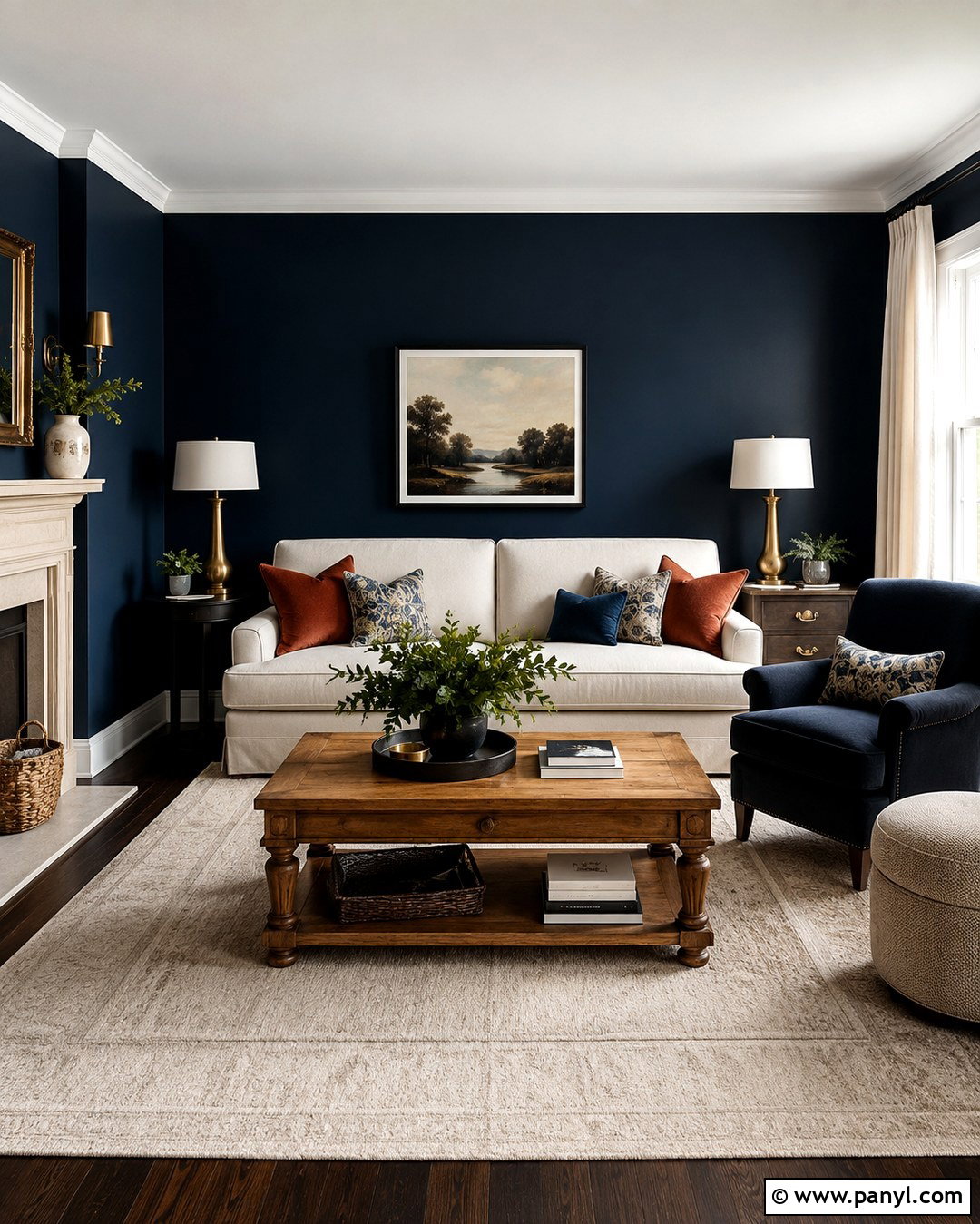
A cream sofa creates a clean, comfortable focal point against deep blue living room walls. Choose a warm off-white upholstery rather than a stark white fabric to soften the contrast. Place the sofa on a large beige wool rug, then add a medium oak coffee table and matching side tables. Rust, camel, and muted blue pillows connect the dark walls to the lighter seating. Linen curtains in ivory keep the windows bright without competing with the paint. Complete the room with a brass floor lamp, ceramic table lamps, and simple framed artwork. A white ceiling and warm white trim provide visual breathing room. This combination works especially well in a traditional or transitional living room with plenty of natural light.
2. Deep Blue Bedroom With Warm Wood Furniture
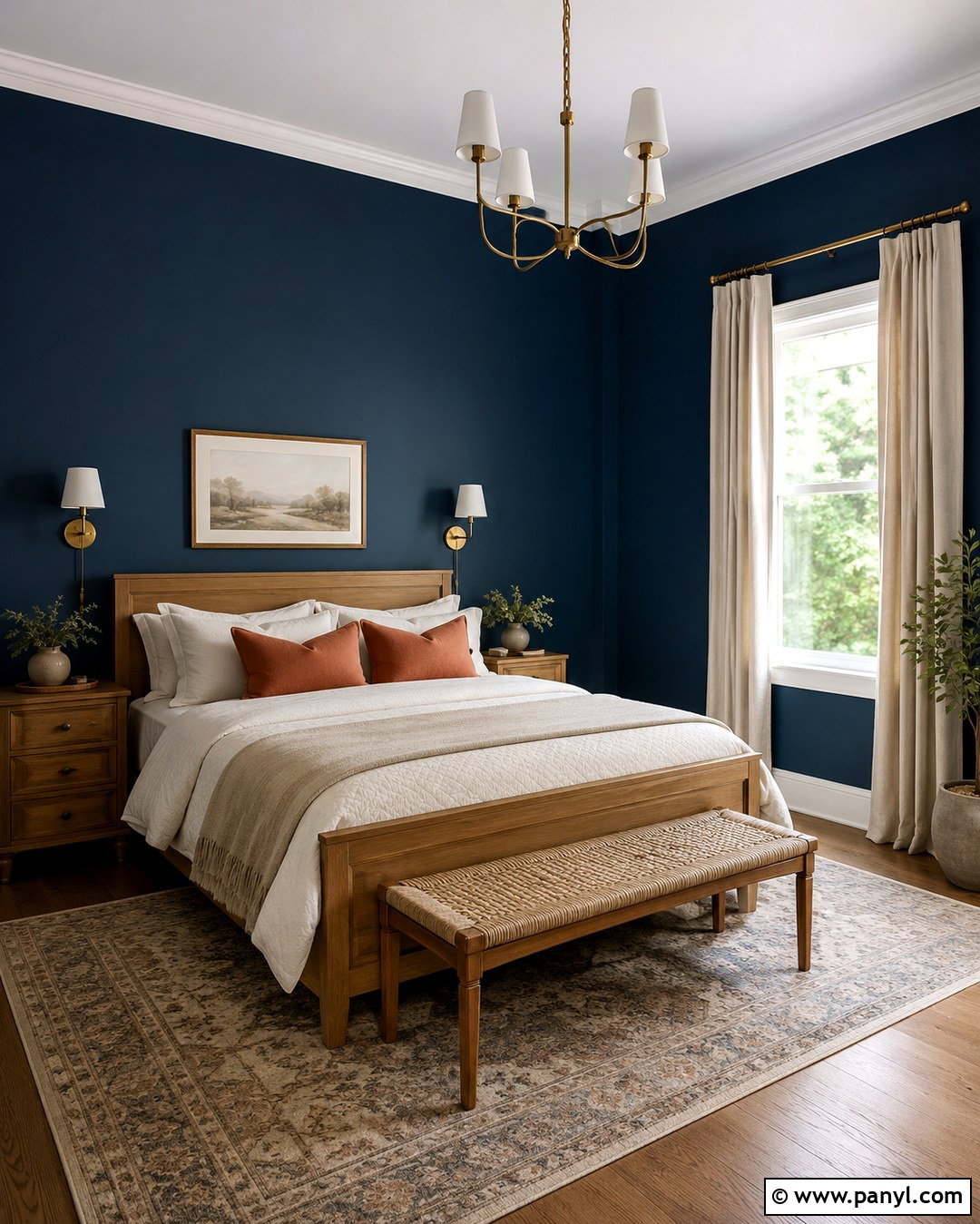
Imagine waking up in a bedroom where rich blue walls surround warm oak furniture and soft neutral bedding. Use the deep color on all four walls for a restful, enclosed effect, but keep the ceiling creamy white. A natural oak bed, streamlined nightstands, and a woven bench prevent the room from feeling overly formal. Layer the bed with white sheets, an oatmeal quilt, and terracotta accent pillows. Add beige curtains that reach from ceiling to floor and a textured wool rug under the bed. A pair of antique brass sconces introduces gentle warmth. Finish with black-framed botanical artwork and one leafy plant. The resulting bedroom feels grounded, comfortable, and thoughtfully layered rather than heavy or cold.
3. Deep Blue Dining Room With Brass Lighting
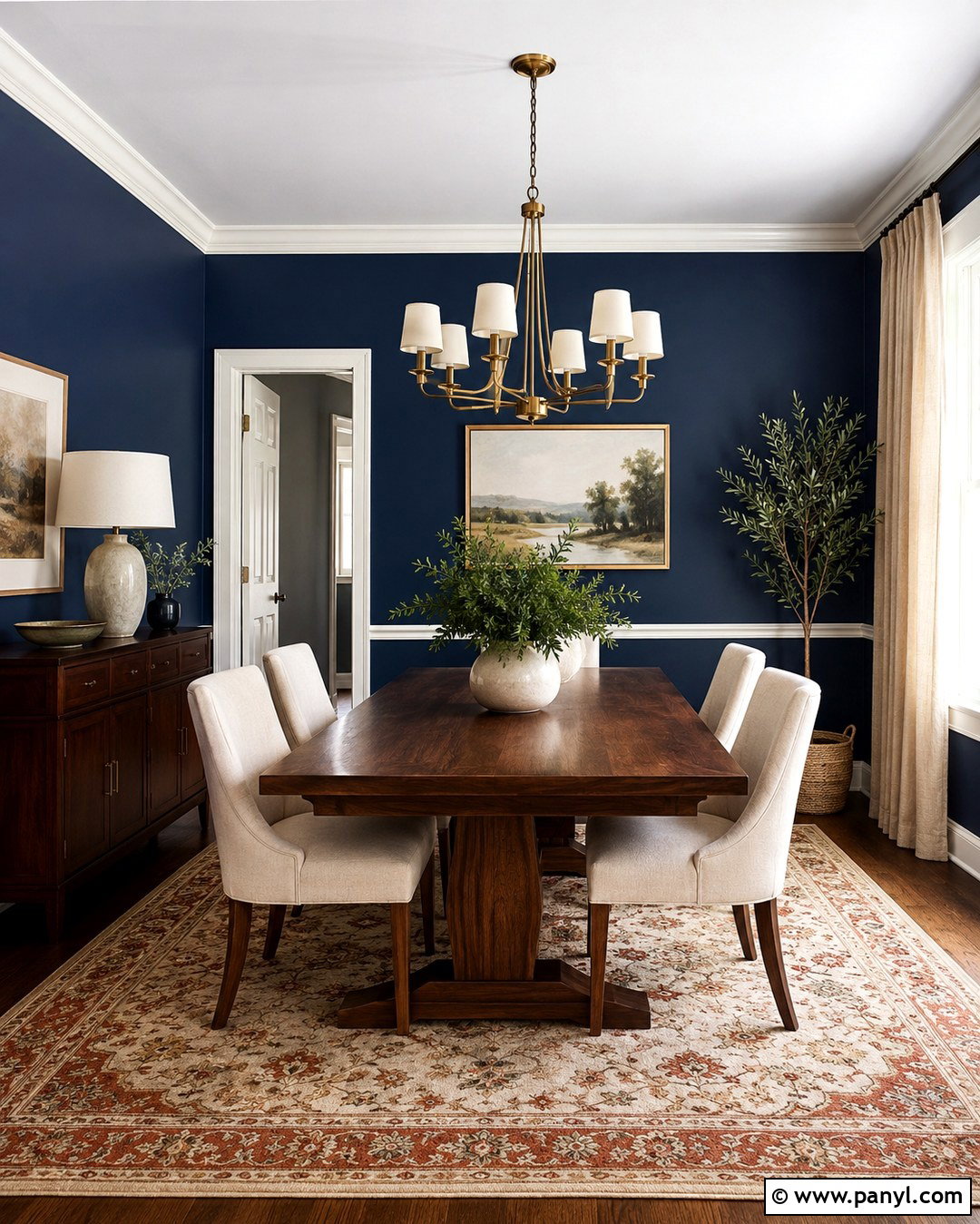
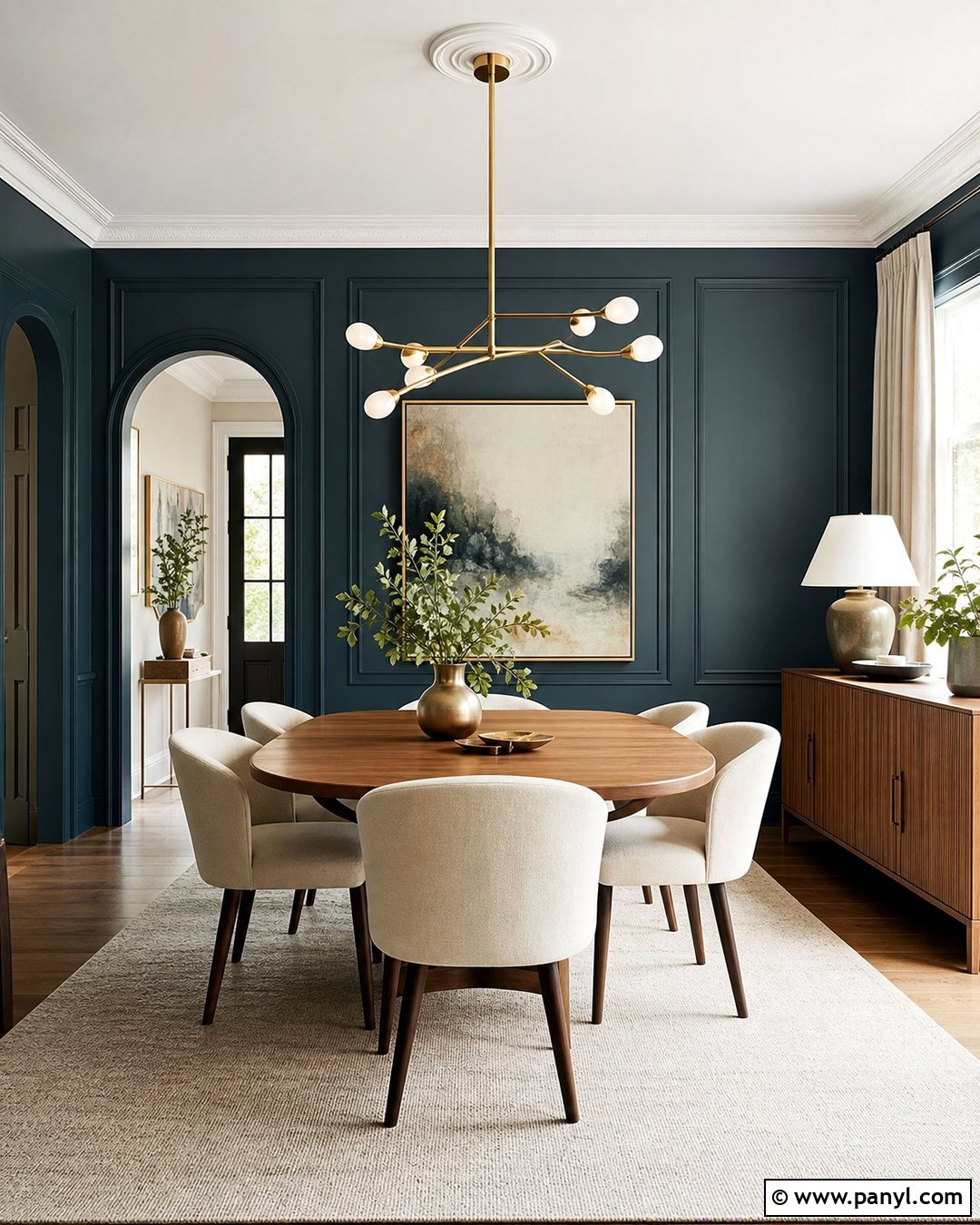
Deep blue paint gives a dining room a strong sense of occasion, even when the furniture is simple. Cover the walls in a saturated navy and retain crisp white crown molding for a tailored frame. Center a warm walnut table beneath a sculptural brushed brass chandelier. Upholstered dining chairs in cream or light tan provide contrast and make the space more welcoming. Underfoot, use a softly patterned rug containing blue, beige, and faded rust. A dark wood sideboard can hold ceramic lamps, serving pieces, and a large abstract artwork. Add linen window panels in a warm natural shade to filter daylight. Small brass accents repeated across the chandelier, frames, and cabinet hardware make the overall room feel connected, elegant, and complete.
4. Deep Blue Home Office With Built-In Shelves
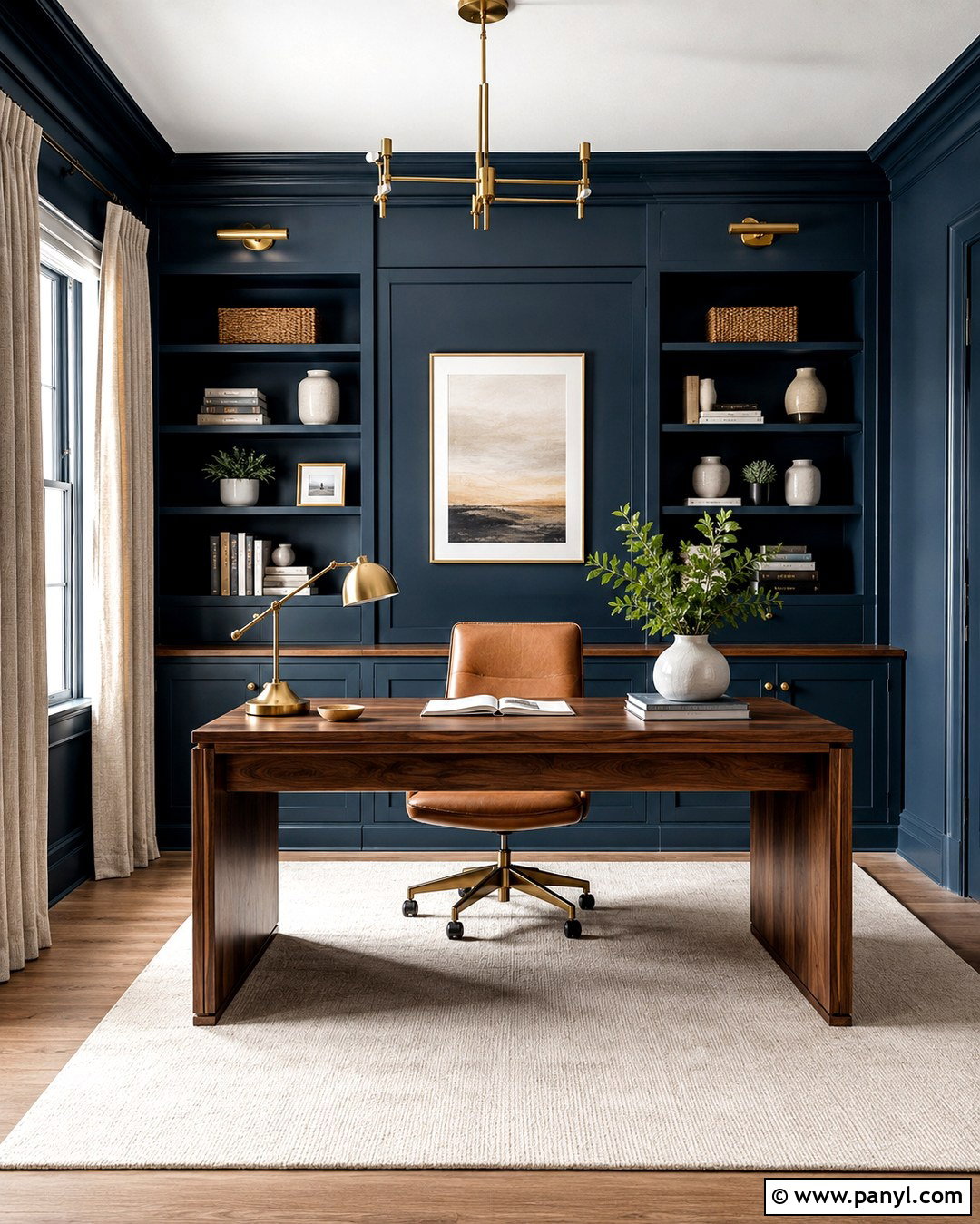
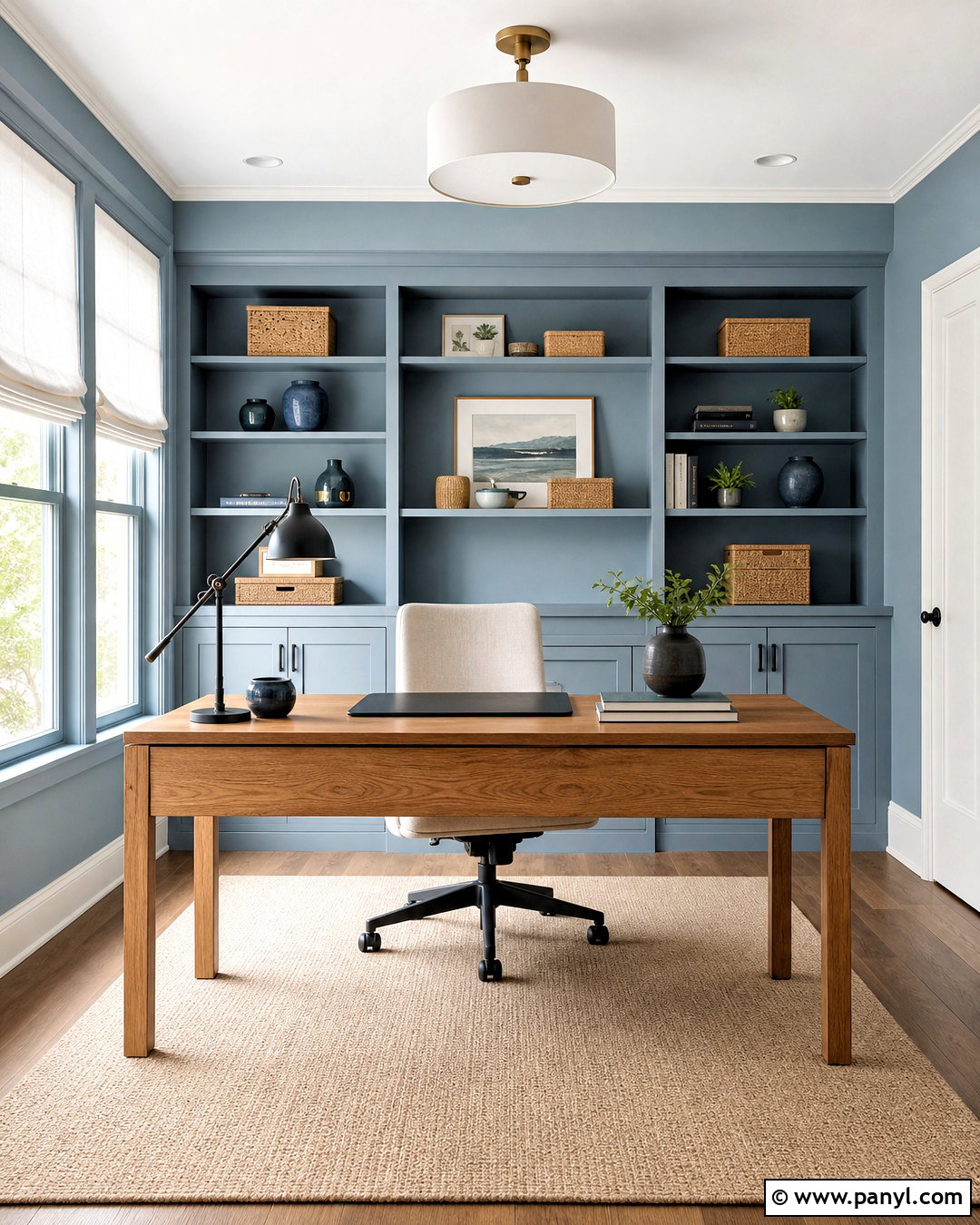
Could your home office use more focus and personality? Paint the walls, built-in shelves, and cabinet fronts in the same deep blue shade to produce a streamlined background. Keep the desktop in natural walnut so the work area remains warm and clearly defined. A cognac leather desk chair introduces rich contrast, while a cream rug brightens the floor. Style the shelves sparingly with books, white ceramics, framed photographs, and a few brass objects. Position a linen-shaded task lamp beside the computer and hang a simple pendant overhead. Full-length beige curtains soften the room and control glare. Matching the shelves to the walls reduces visual clutter, allowing practical storage to become part of a sophisticated and highly functional office design.
5. Deep Blue Kitchen With White Cabinets
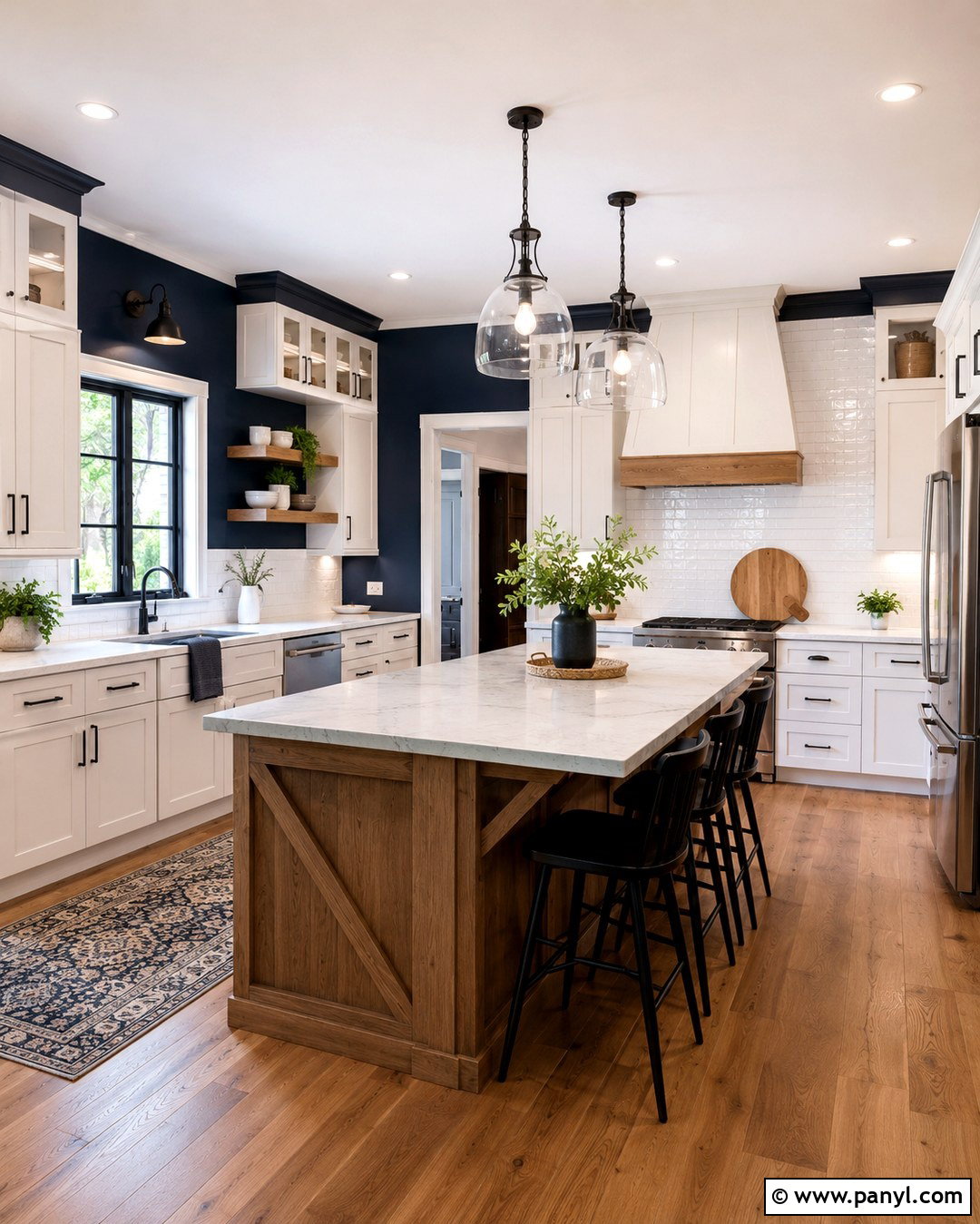
For a kitchen that feels bold but still open, use deep blue walls between white cabinets and light countertops. The dark background defines the room while warm white cabinetry reflects daylight. Choose lightly veined quartz counters, a white handmade-look tile backsplash, and medium oak flooring. Matte black hardware provides crisp definition without adding excessive shine. A narrow wooden island or breakfast table can bring another natural element into the scheme. Repeat the wall color through blue-striped stools, pottery, or a washable runner. Clear glass pendants keep sightlines open, while under-cabinet lighting prevents shadowy work surfaces. This complete palette suits smaller kitchens because the white storage, pale surfaces, and practical lighting balance the richness of the blue paint.
6. Deep Blue Bathroom With White Marble
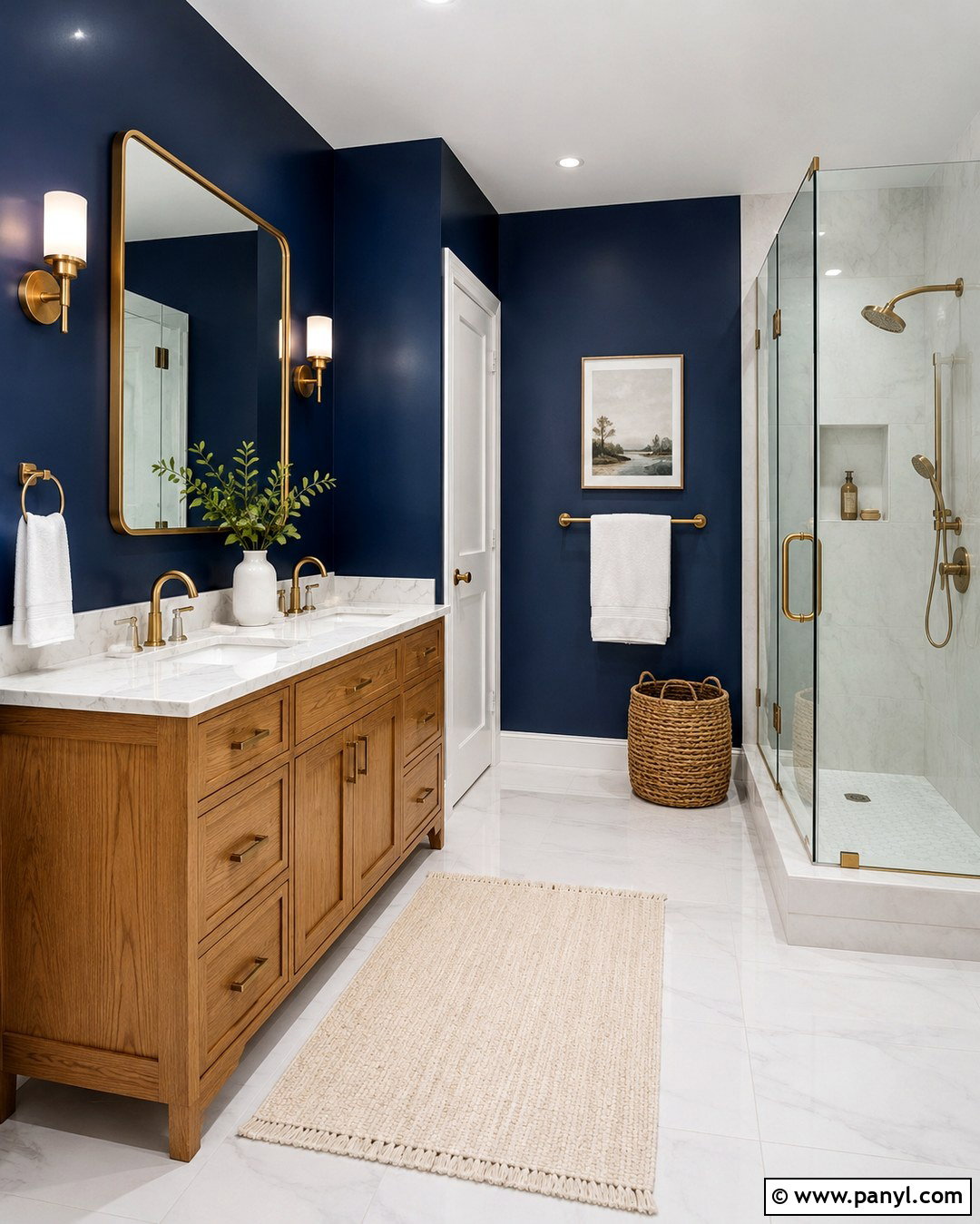
Deep blue walls can turn an everyday bathroom into a refined retreat. Pair the saturated paint with a white marble-topped vanity and simple white floor tile to create a bright foundation. A medium oak vanity adds warmth, while brushed brass faucets, sconces, and mirror frames bring a polished finish. Use a frameless glass shower enclosure so the room remains visually open. White towels, a cream bath mat, and a natural woven basket soften the harder surfaces. If moisture is a concern, select a washable bathroom-rated paint with a subtle satin finish. Complete the look with one framed print and a small plant near the window. The limited palette makes the bathroom feel coordinated without sacrificing function, freshness, or easy maintenance.
7. Deep Blue Entryway With Natural Oak
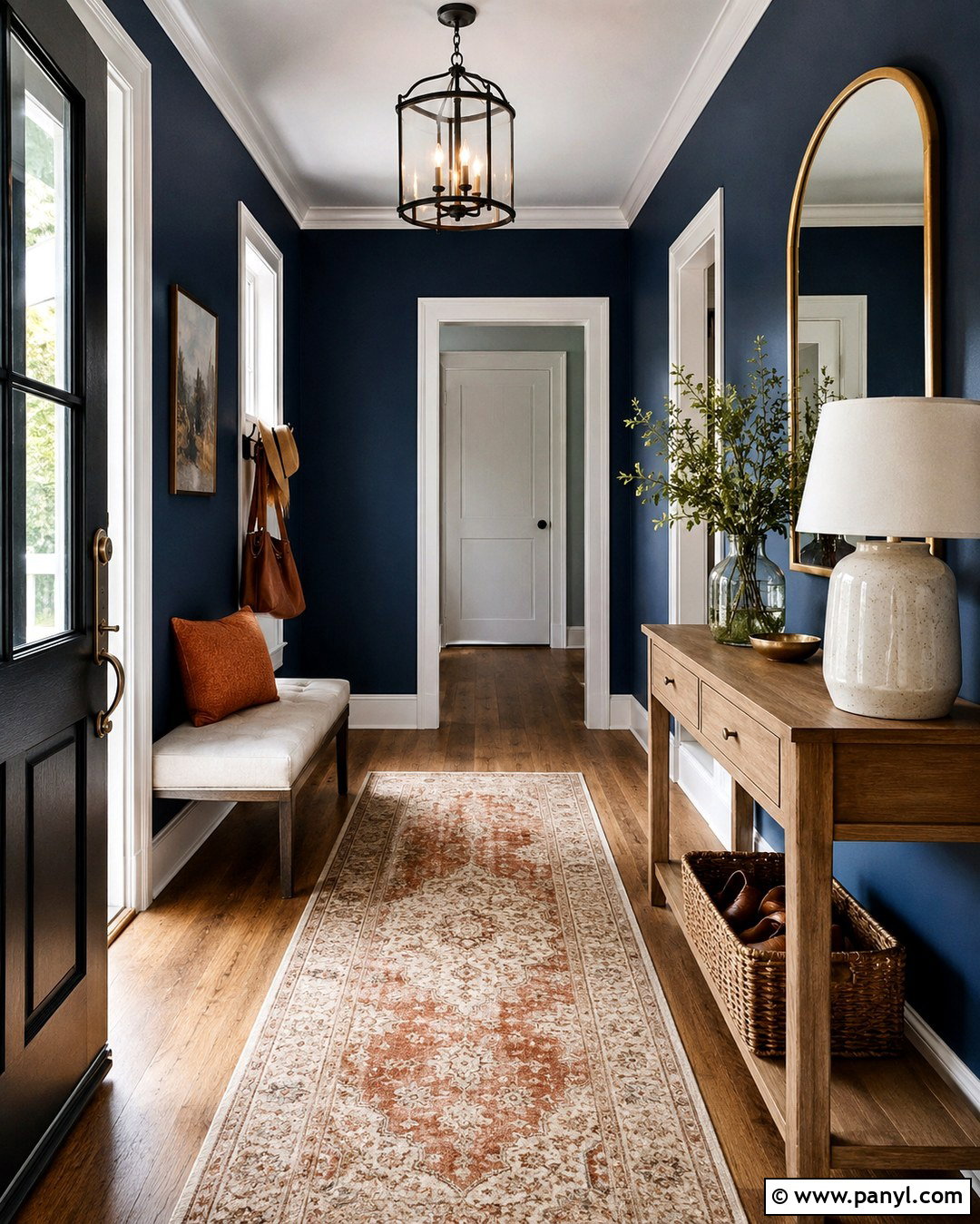
An entryway is an ideal place to experiment with strong color because it creates an immediate sense of identity. Paint the walls deep blue and add a slim natural oak console with rounded edges. Above it, hang a large brass-framed mirror to reflect light across the darker surface. A washable vintage-patterned runner can introduce rust, cream, and faded blue underfoot. Include a woven basket for shoes, a ceramic lamp, and a shallow tray for keys. White baseboards and interior doors keep the narrow area visually crisp. If space allows, place an upholstered bench opposite the console and add simple wall hooks above it. Every item should support arrival, storage, and movement while contributing to a warm, welcoming first impression.
8. Deep Blue Accent Wall Behind The Bed
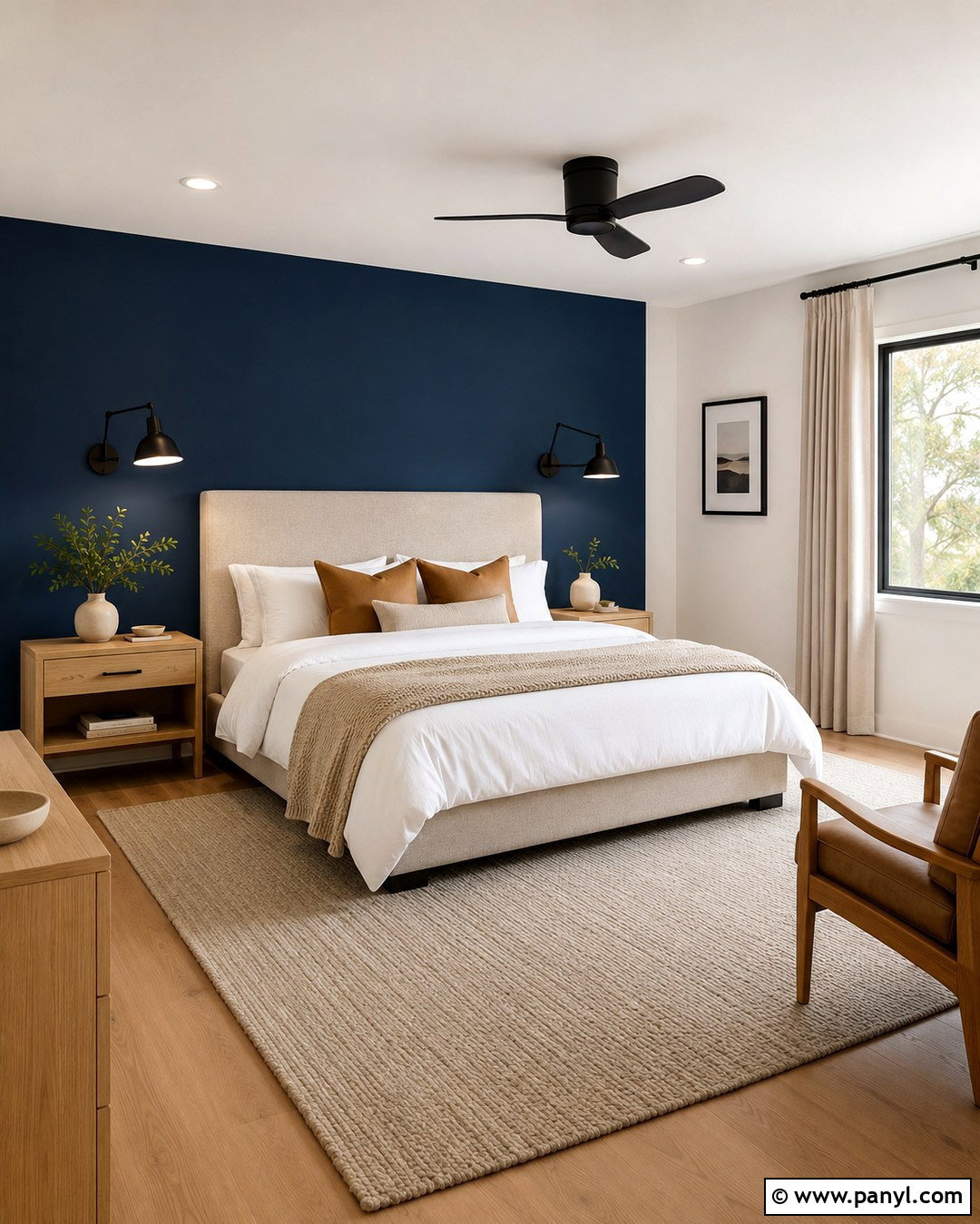
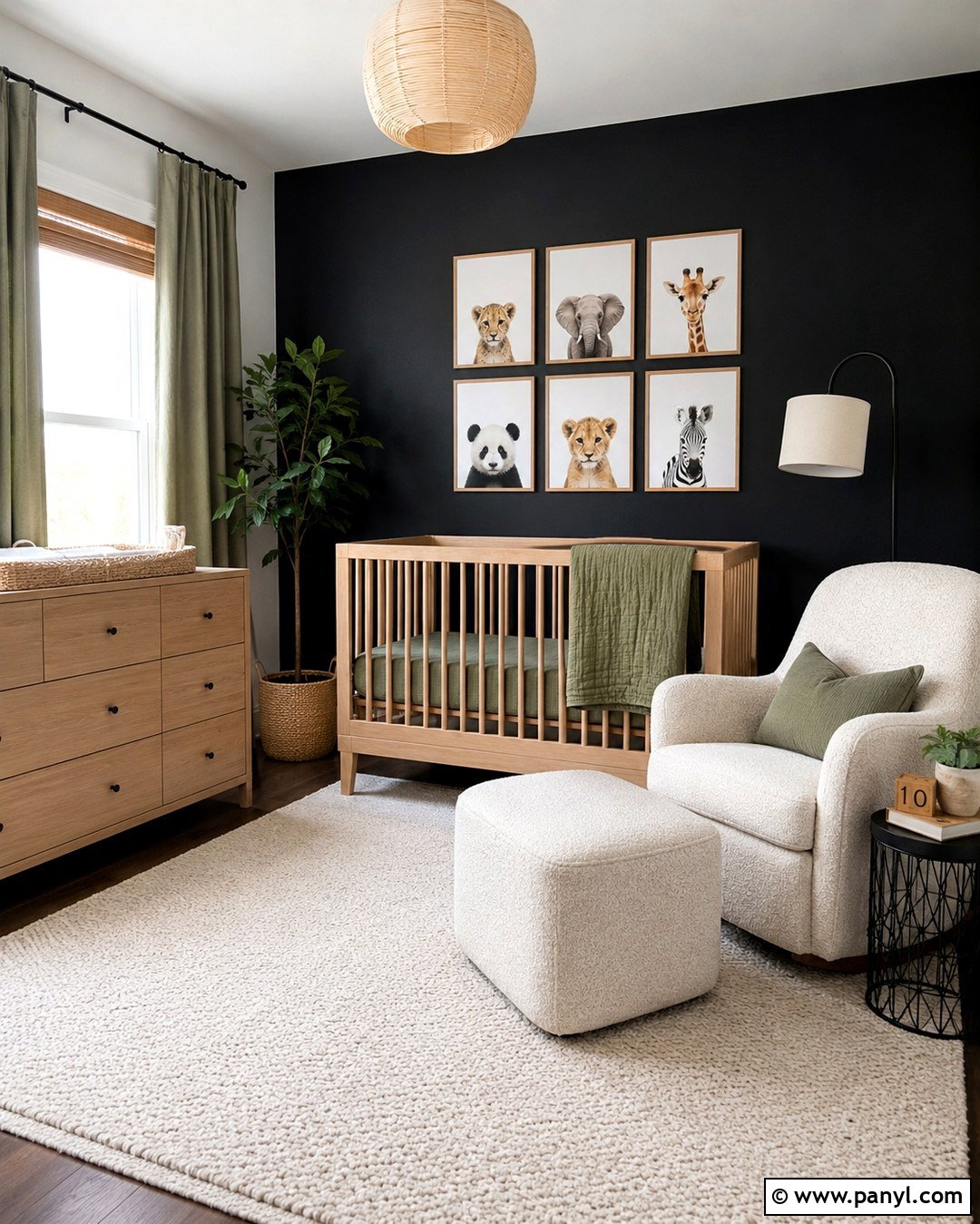
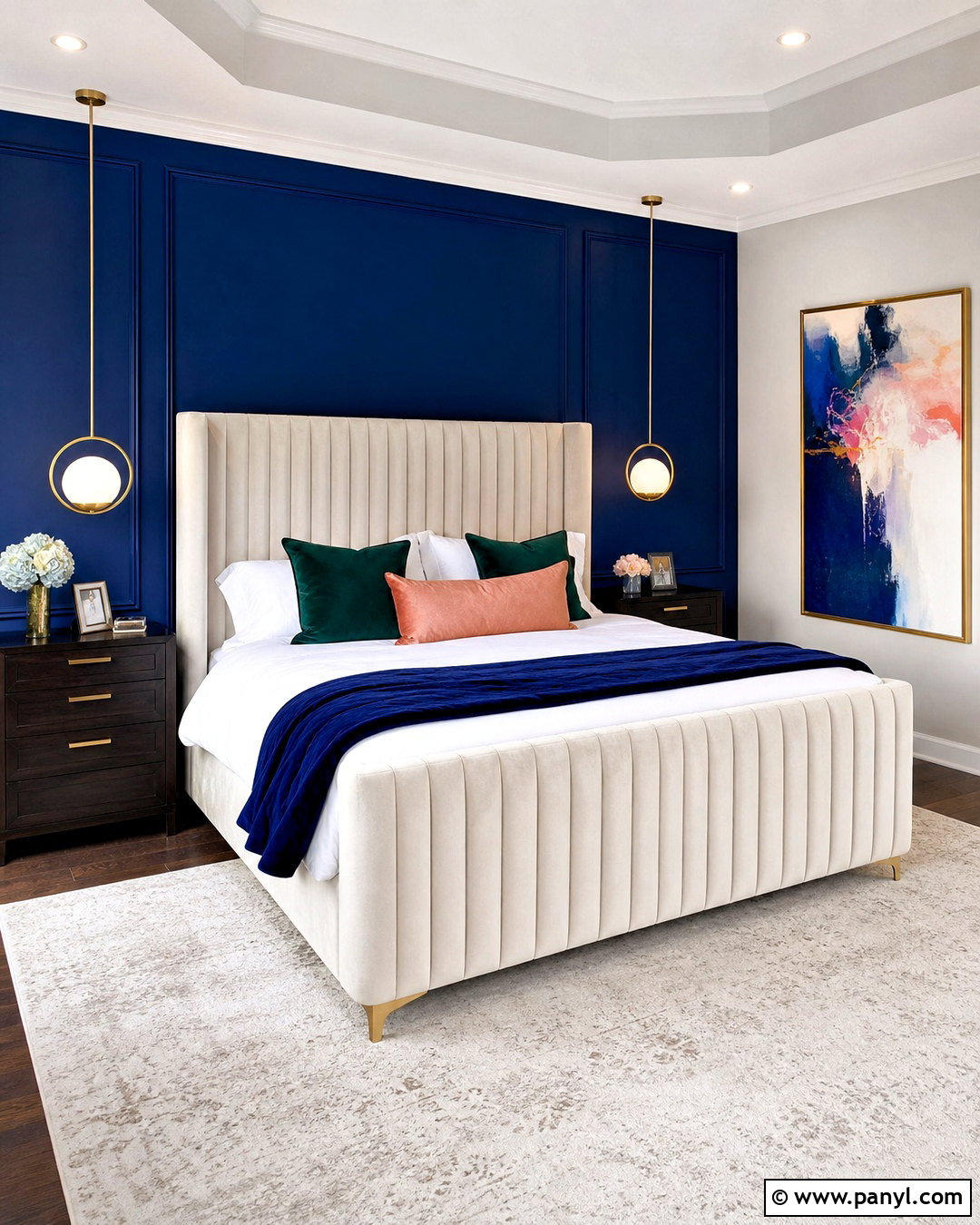
If four dark walls feel like too much, concentrate deep blue behind the bed. Paint the remaining walls a soft warm white so the blue wall becomes a clear focal point. A tall oatmeal upholstered headboard will stand out beautifully without producing harsh contrast. Choose pale oak nightstands, white bedding, camel pillows, and a textured beige throw. Place a neutral rug beneath the bed to connect the furniture and soften the floor. Black swing-arm sconces save nightstand space and give the arrangement useful symmetry. Minimal artwork is necessary because the wall color already provides visual weight. This balanced bedroom approach delivers depth and drama while preserving a light, flexible backdrop around the windows, closet, and other functional areas.
9. Deep Blue Color-Drenched Sitting Room
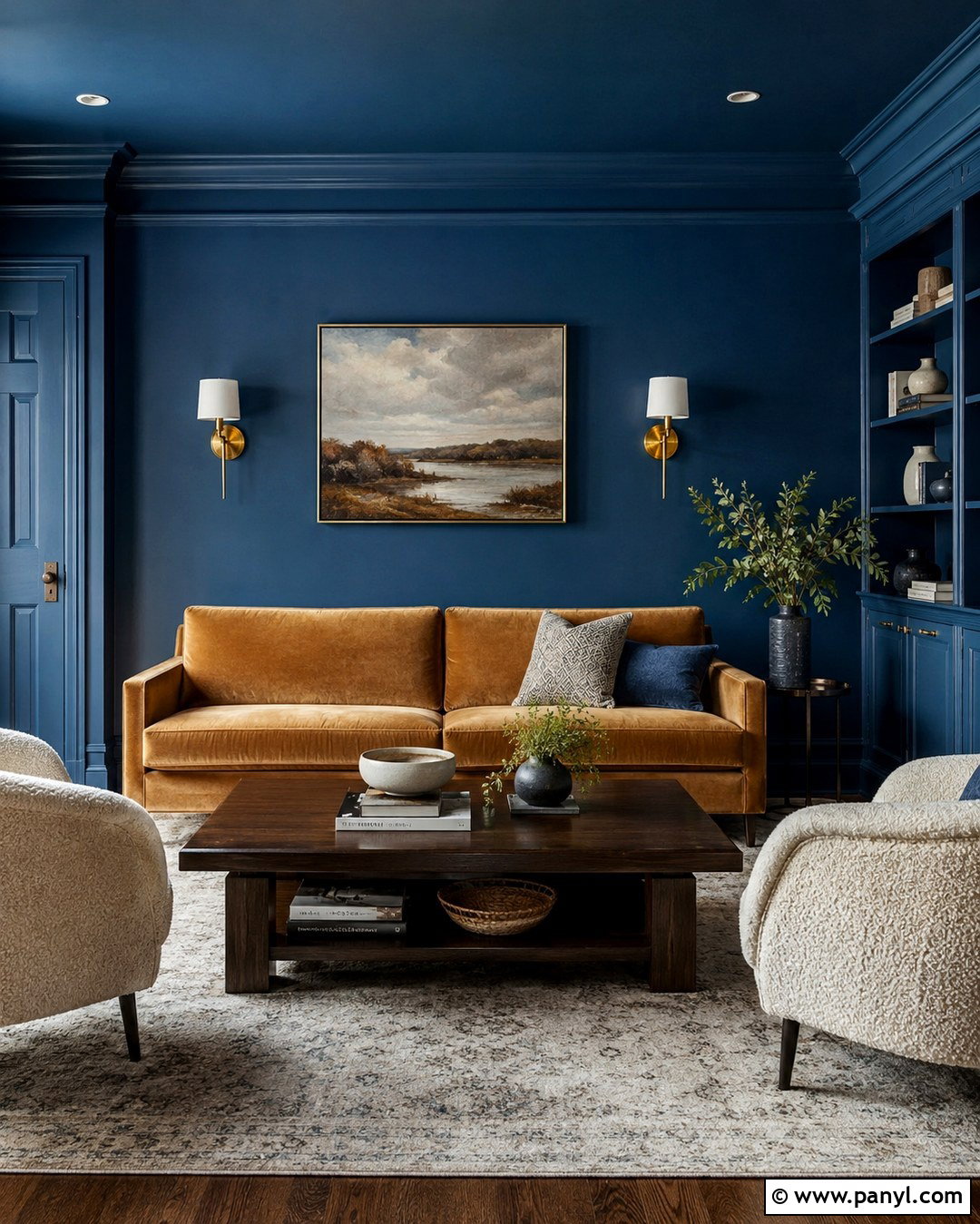
Color drenching creates an immersive sitting room by covering the walls, trim, doors, built-ins, and ceiling in one deep blue. To keep the design intentional, vary textures rather than adding many competing colors. Arrange a camel velvet sofa with two cream boucle chairs around a dark wood coffee table. Use a pale patterned rug to lift the center of the room. Wall sconces, a picture light, and shaded table lamps should provide illumination at several levels. Add linen pillows, aged brass details, and landscape artwork with muted greens and browns. The matching architectural surfaces blur visual boundaries, while the lighter furniture remains clearly defined. This approach is particularly effective in a den, library, or compact room intended for quiet relaxation.
10. Deep Blue Walls With Mustard Yellow Accents
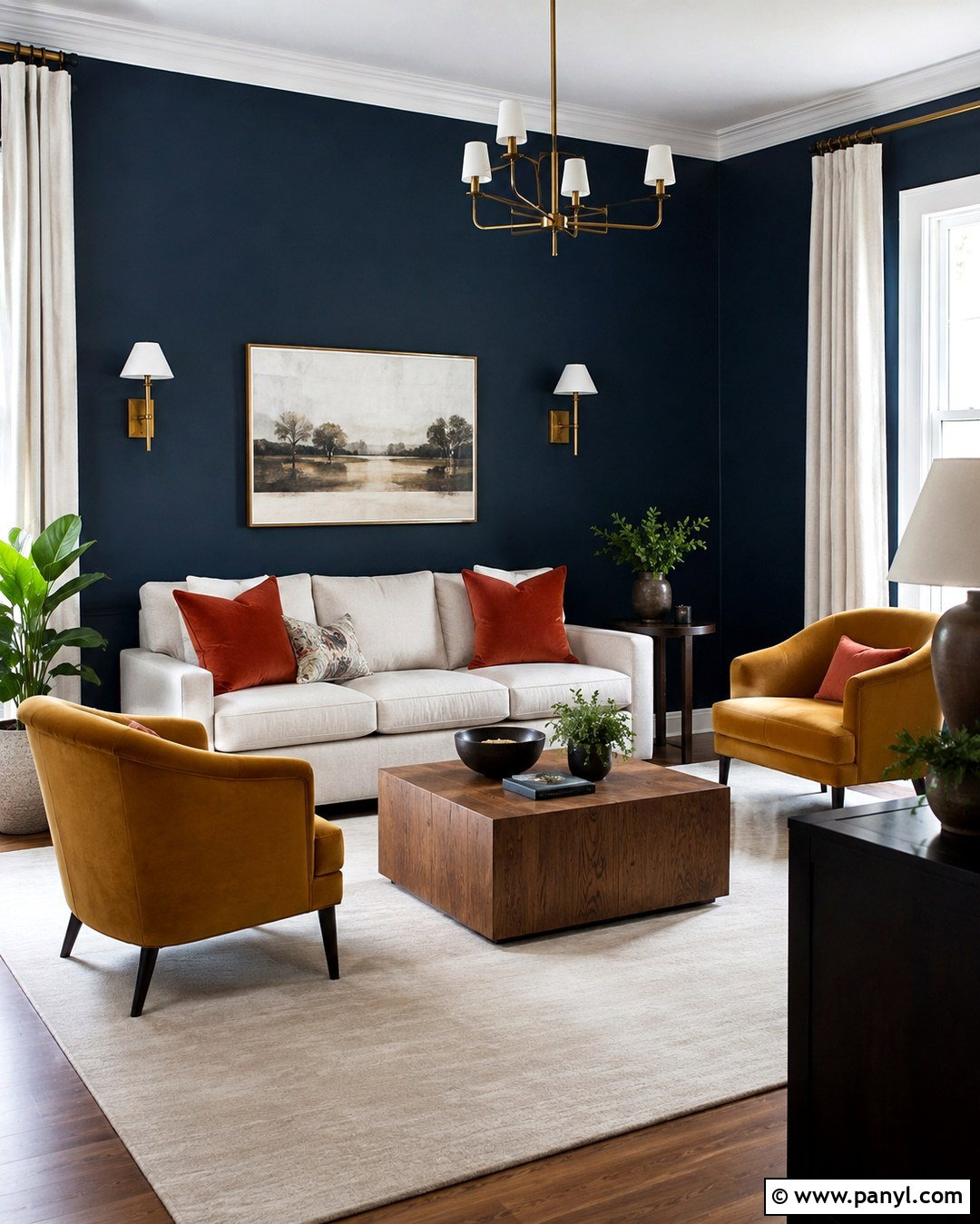
Mustard yellow brings warmth and energy to deep blue walls without making the room feel overly bright. Build the living room around a neutral oatmeal sofa, then add two mustard velvet chairs facing it. A walnut coffee table, cream rug, and natural linen curtains create a calm supporting base. Repeat yellow only in small amounts through patterned pillows or artwork so the chairs remain the main accent. Brass lighting complements the golden undertones but should have a muted finish. Include a few rust-colored details and dark wood pieces to bridge the blue and yellow. White trim keeps the architecture defined. The finished room feels cheerful, balanced, and sophisticated because each strong color has enough neutral space around it to remain visually clear.
11. Deep Blue Walls With Blush Pink Decor
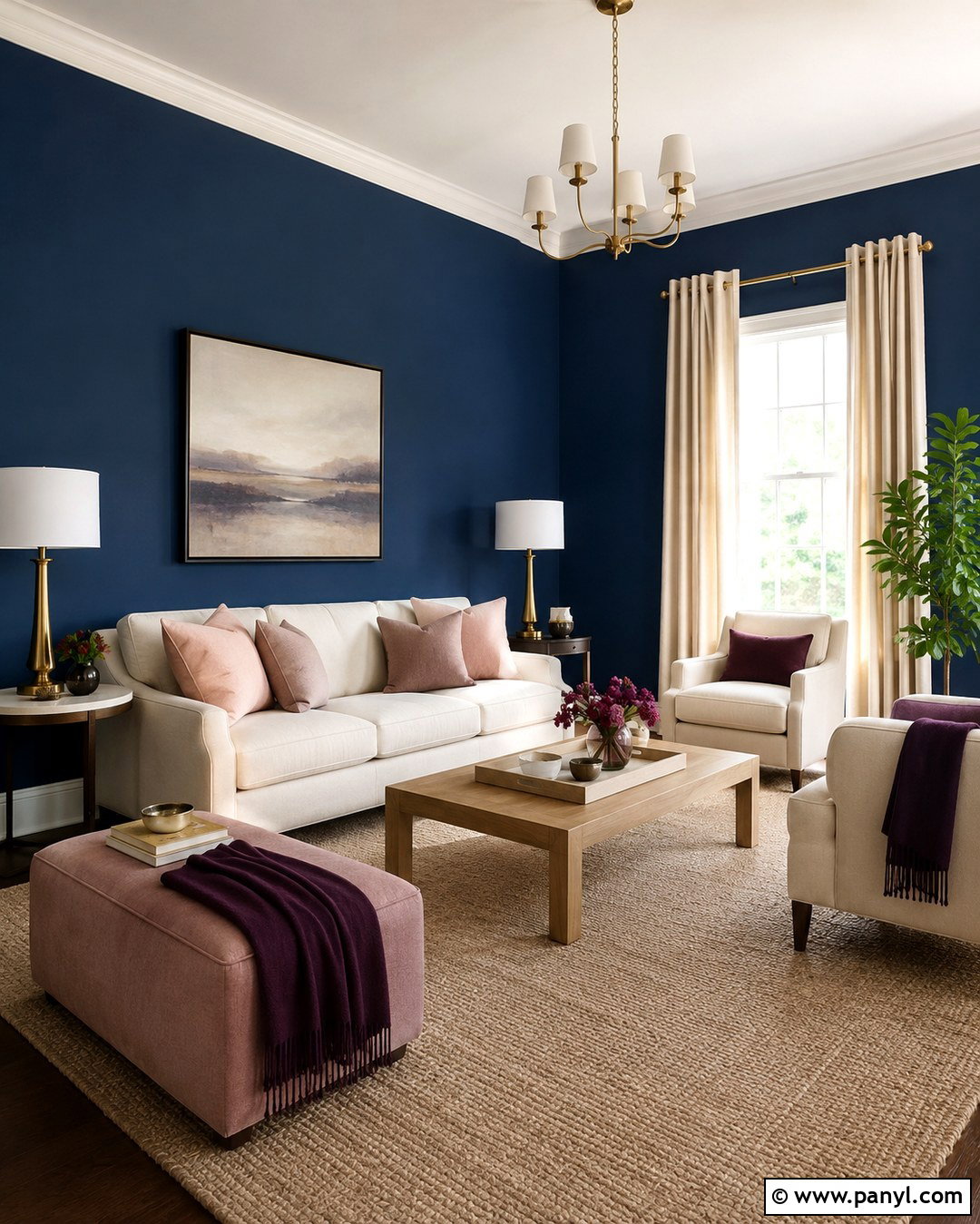
Soft blush decor offers a gentle counterpoint to dark blue walls. Start with a light gray or ivory sofa to anchor the room, then layer blush through linen pillows, an upholstered ottoman, and abstract artwork. A pale oak coffee table prevents the palette from becoming overly formal. Use cream curtains and a warm beige rug to connect the furniture with the floor. Brushed brass lamps add warmth and echo the rosy accents without looking flashy. For additional depth, bring in small touches of burgundy or plum through a throw or patterned cushion. Keep the ceiling and trim warm white. This full living room design feels soft and inviting, yet the deep blue backdrop provides enough structure to prevent the pastel elements from appearing too delicate.
12. Deep Blue Walls With Terracotta Decor
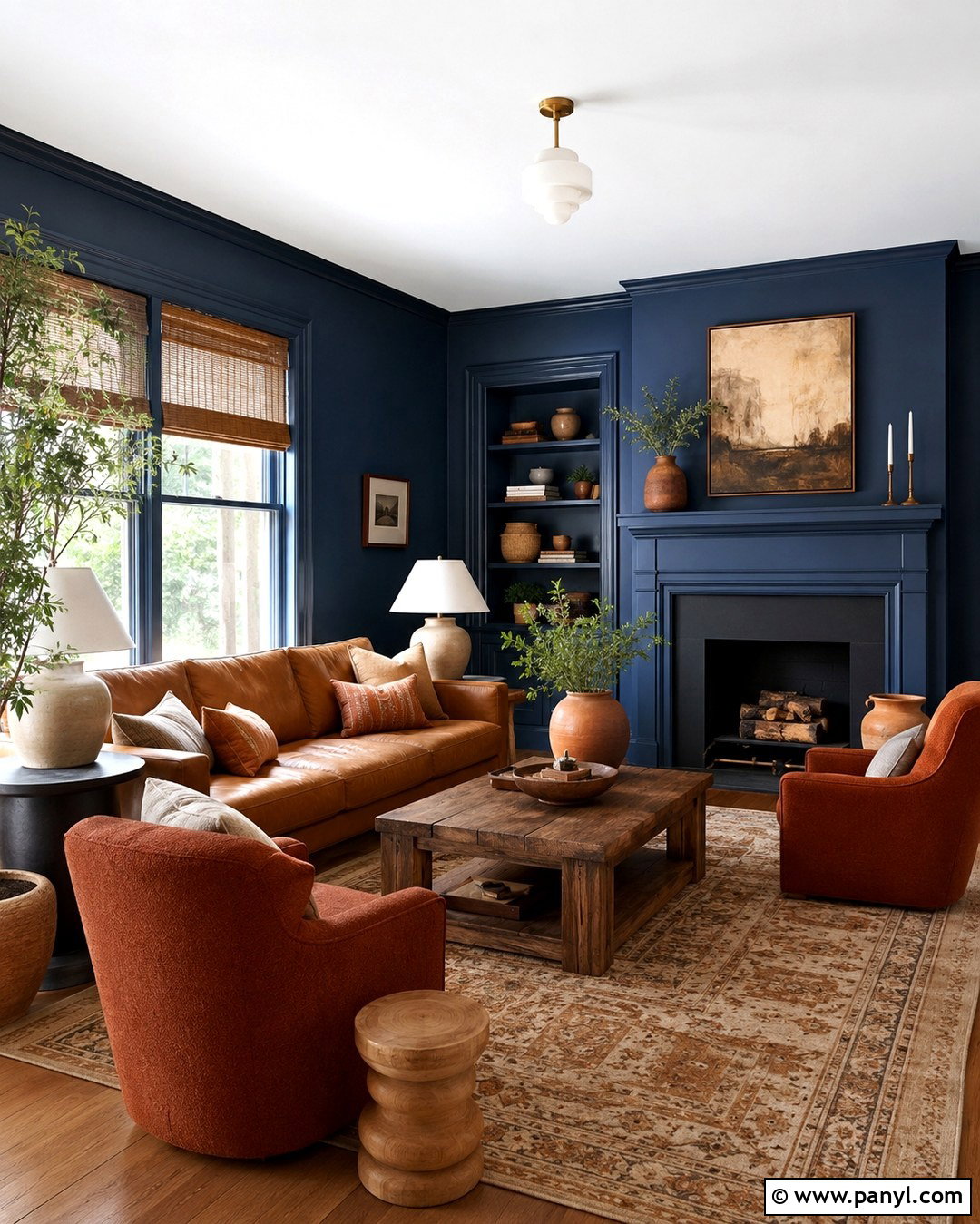
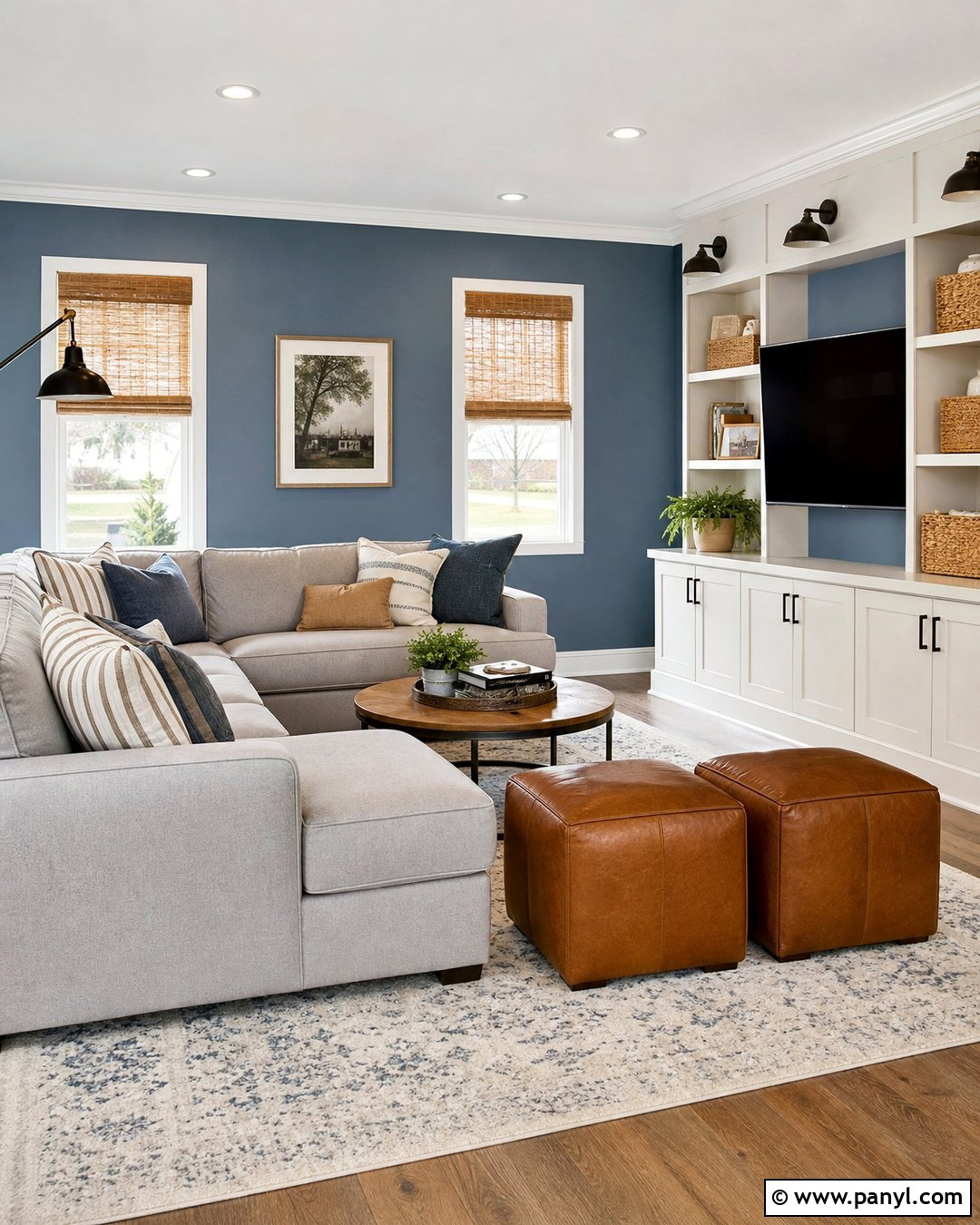
Earthy terracotta accents can make deep blue walls feel grounded and welcoming. Arrange a camel leather sofa against the blue background and place rust-colored linen chairs nearby. A patterned rug containing clay, beige, and navy tones will visually connect the seating to the walls. Select a chunky oak coffee table, woven window shades, and ceramic lamps with cream shades. Terracotta planters filled with green foliage add another natural layer. Keep larger textiles neutral so the warm accents do not overwhelm the room. Black metal details can appear in curtain rods, frames, and a simple ceiling fixture. Together, the blue, clay, leather, and wood create a comfortable living room inspired by natural materials rather than a rigid decorating theme.
13. Deep Blue Walls With Olive Green Furniture
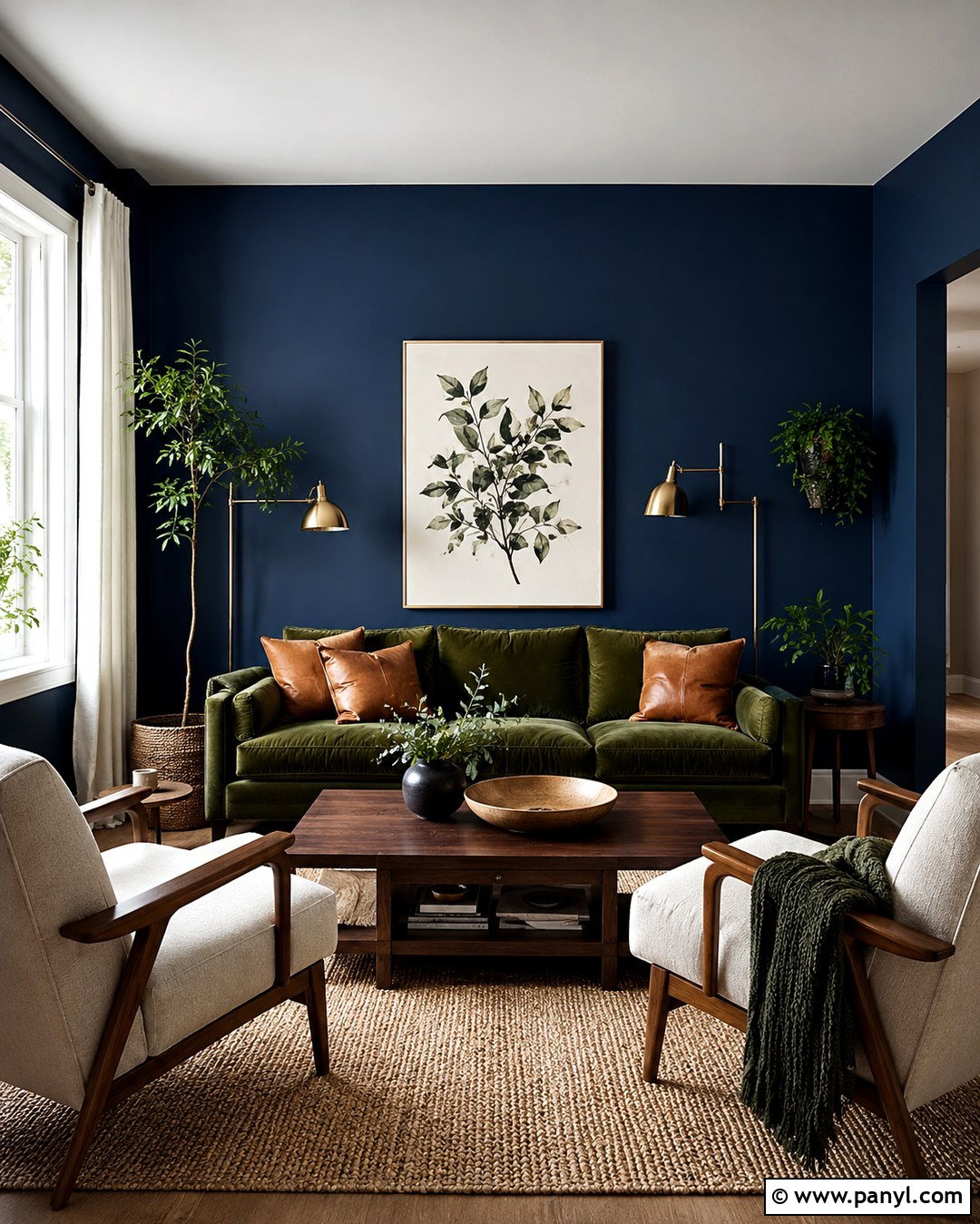
Pairing deep blue walls with olive green furniture produces a layered, nature-inspired room. Choose a substantial olive velvet sofa and balance it with two cream accent chairs. A walnut coffee table and woven jute-blend rug add warmth and casual texture. Introduce small amounts of tan through leather pillows, baskets, or a footstool. Artwork featuring landscapes or abstract botanical forms can reinforce the palette without looking overly coordinated. Use antique brass lamps and warm white shades to brighten the walls in the evening. Simple ivory curtains prevent the windows from disappearing into the darker scheme. Keep accessories restrained and repeat each main color at least twice. This helps the blue and green read as a deliberate, unified combination rather than unrelated competing shades.
14. Deep Blue Walls With White Board And Batten
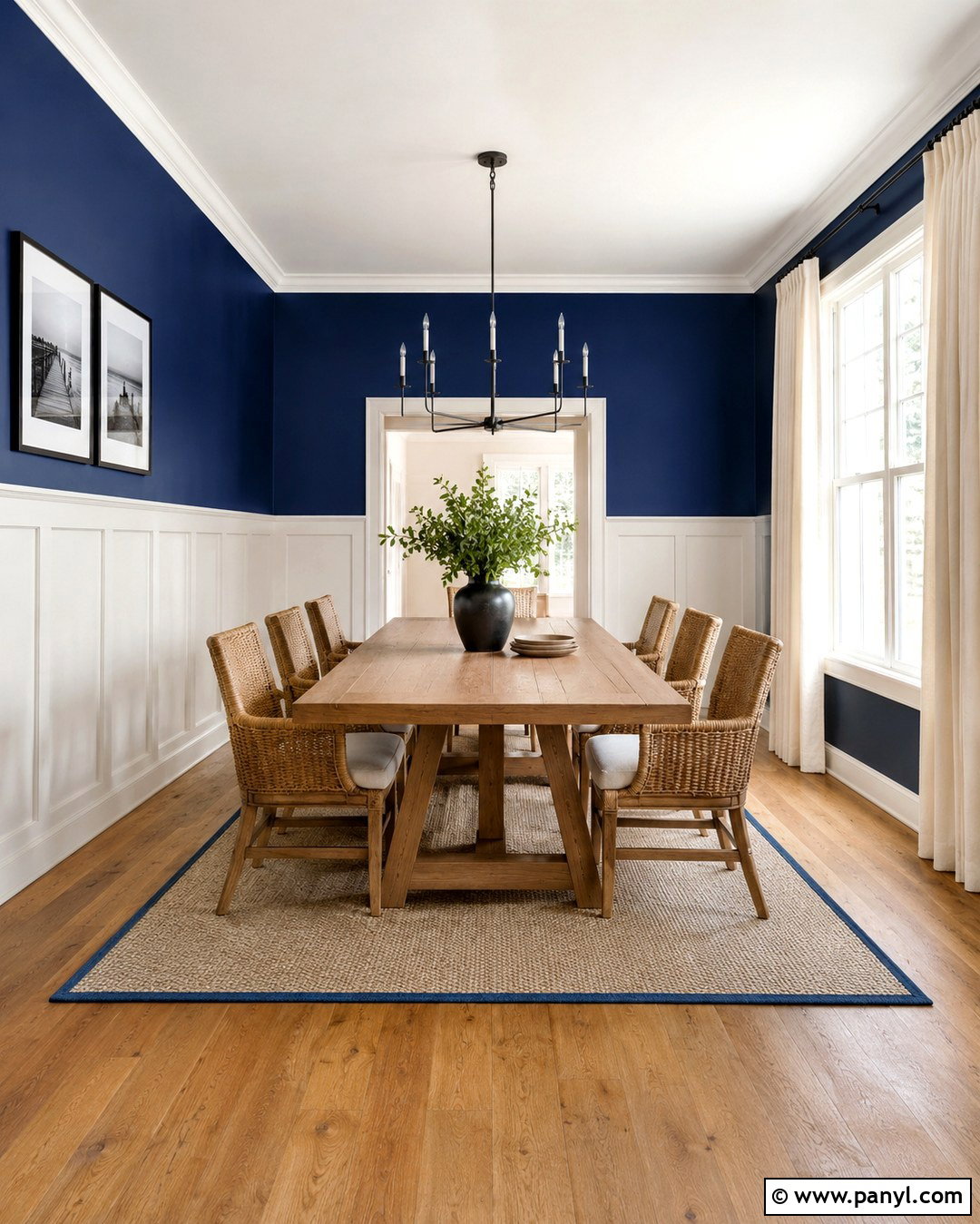
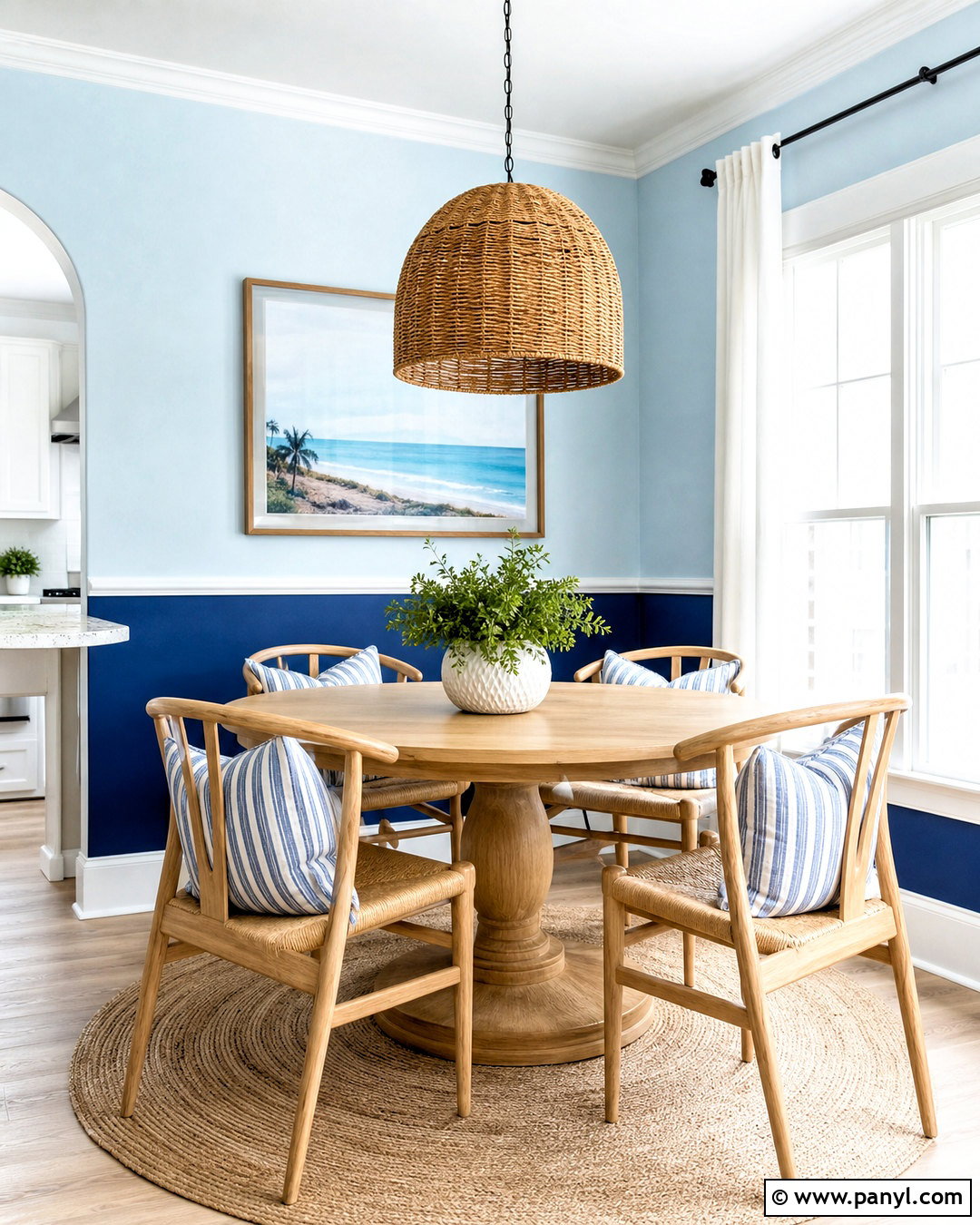
White board and batten can make deep blue walls feel crisp, architectural, and accessible. Install the paneling across the lower third of a dining room, hallway, or bedroom, then apply the deep blue above it. Paint the trim, doors, and paneling in the same warm white for continuity. In a dining room, add a natural oak table, woven dining chairs, and a black linear chandelier. A neutral rug with a subtle blue border ties the upper and lower portions together. Keep window treatments simple with ivory linen panels or bamboo shades. Black-and-white artwork looks especially clear against the blue upper wall. The two-tone treatment adds character while ensuring the room retains plenty of light color near furniture, flooring, and high-traffic surfaces.
15. Deep Blue Walls With Picture Frame Molding
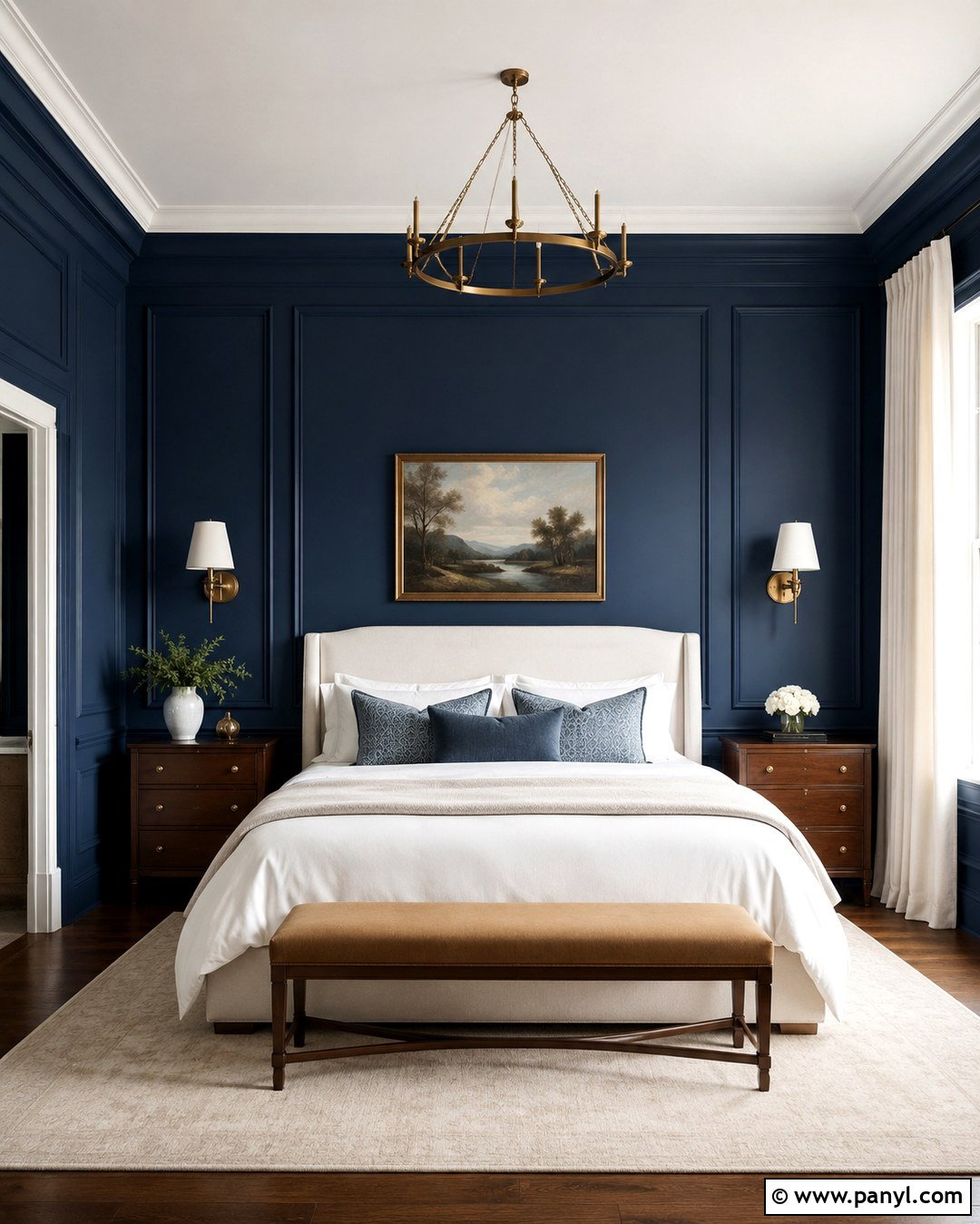
Picture frame molding gives a deep blue room dimension without requiring patterned wallpaper or elaborate decor. Apply rectangular molding across every wall, then paint the walls and trim in the same satin or eggshell blue. In a bedroom, center a cream upholstered bed within the largest panel and add walnut nightstands on both sides. White bedding, blue-gray pillows, and a camel bench create subtle layers. Hang small brass sconces inside the adjacent panels and keep artwork minimal. A pale wool rug offsets the dark surfaces and makes the furniture arrangement feel settled. Finish with full ivory curtains and a simple ceiling fixture. The molding catches light throughout the day, giving the single paint color more depth while maintaining a calm, unified appearance.
16. Deep Blue Small Powder Room
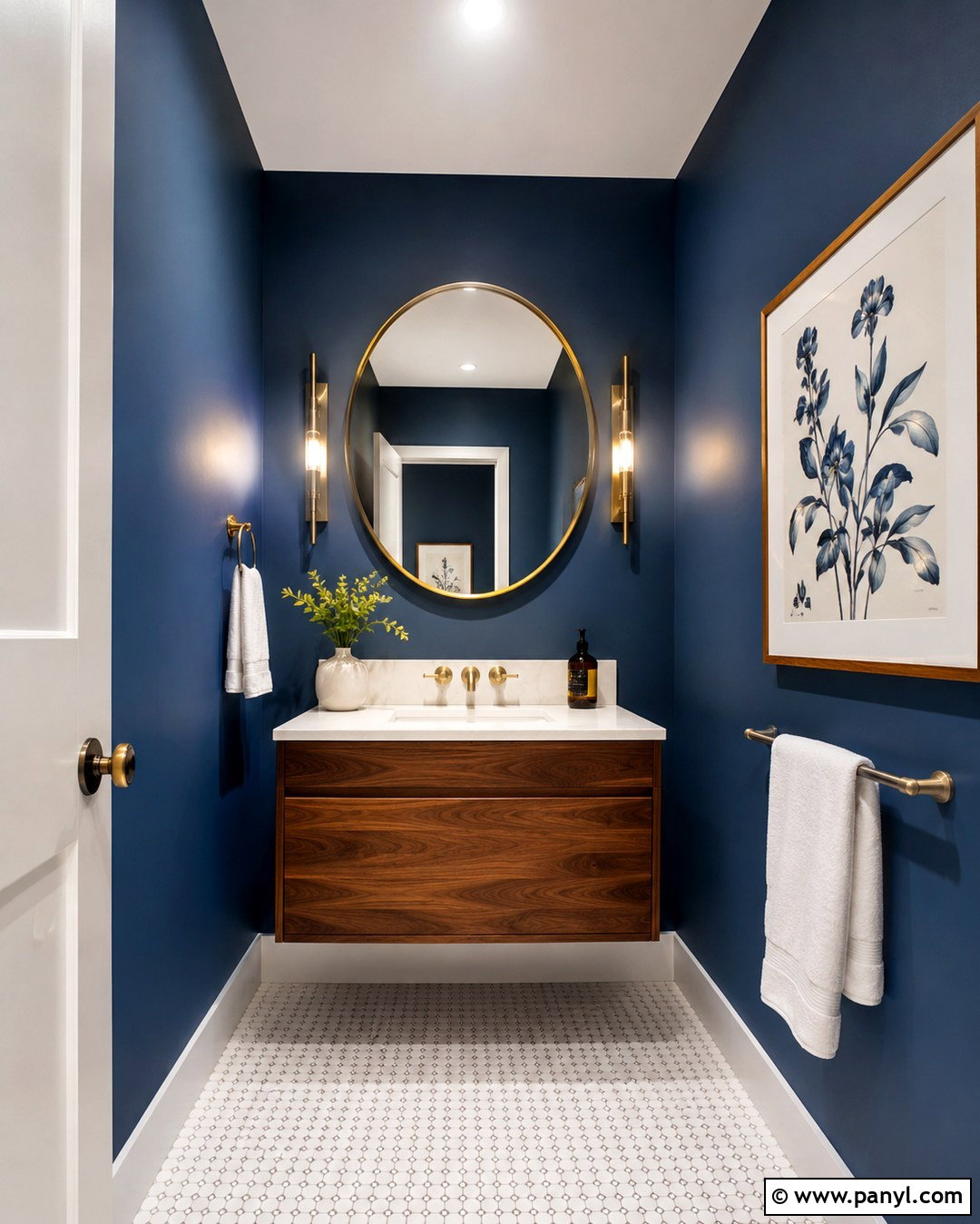
A compact powder room can handle a dramatic wall color because visitors experience it for short periods. Paint every wall deep blue and use a warm white ceiling to maintain a clean boundary overhead. Install a wall-mounted walnut vanity with a white stone top to preserve floor space. A round brass mirror and two slim sconces create a balanced focal point above the sink. Choose small white floor tiles with dark grout for practical contrast. Add a simple white hand towel, a framed botanical print, and one ceramic container. Avoid filling the room with tiny decorative objects. The strong wall color, warm wood, bright stone, and controlled metallic details provide enough interest while keeping the limited footprint organized and visually comfortable.
17. Deep Blue Hallway With Gallery Wall
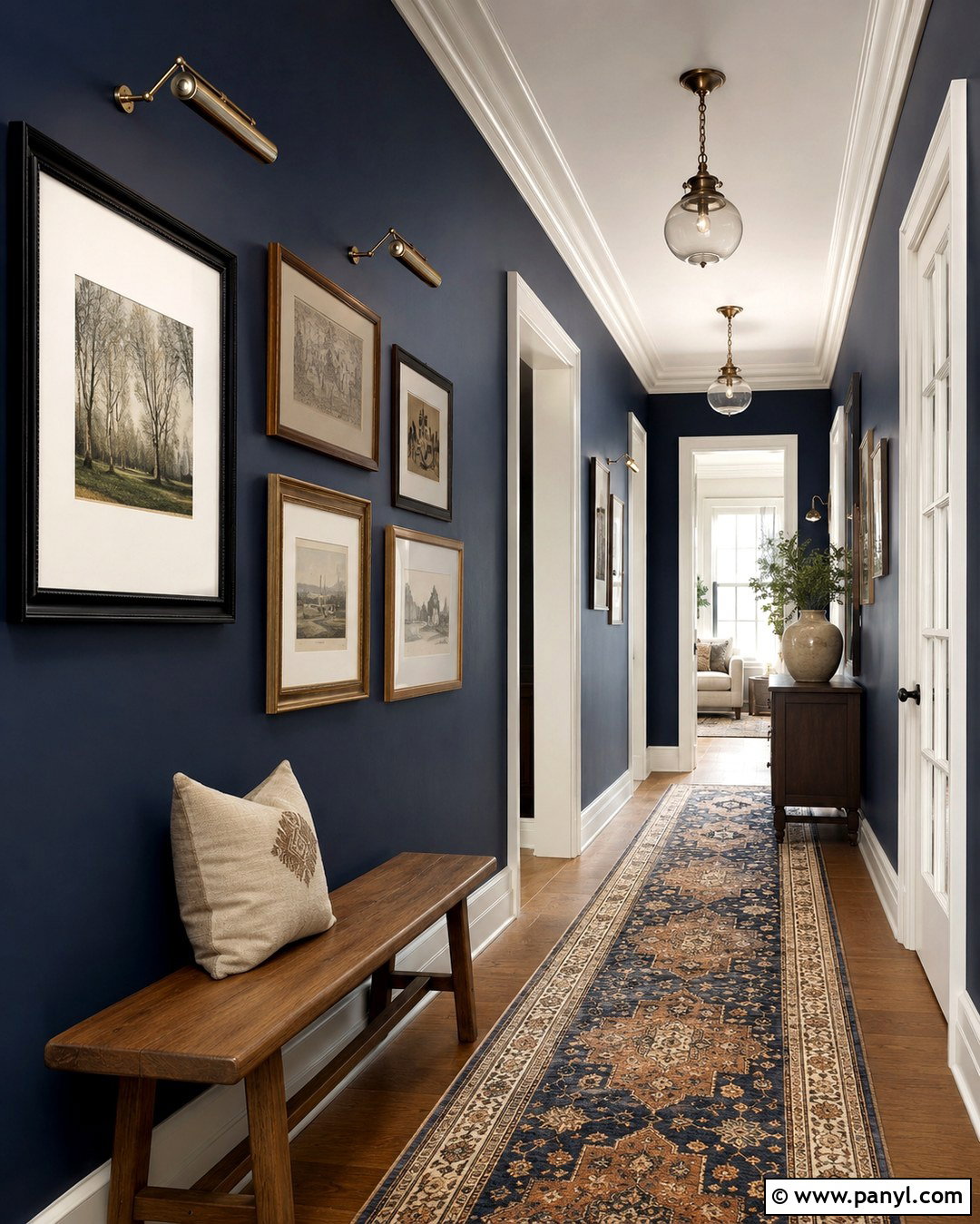
Long hallways often lack a clear focal point, but deep blue walls can turn the passage into a purposeful gallery. Paint the walls blue while keeping the ceiling, baseboards, and door casings warm white. Arrange black, brass, and light wood frames in a measured grid rather than a loose cluster. Use artwork with generous white mats so every piece remains visible against the dark background. A narrow vintage runner adds softness without restricting movement. If the hallway is wide enough, include a slim oak bench or shallow console. Install evenly spaced ceiling lights or wall-mounted picture lights to brighten the artwork. The finished space feels connected to the rest of the home while giving an overlooked circulation area its own complete design identity.
18. Deep Blue Reading Nook With Window Seat
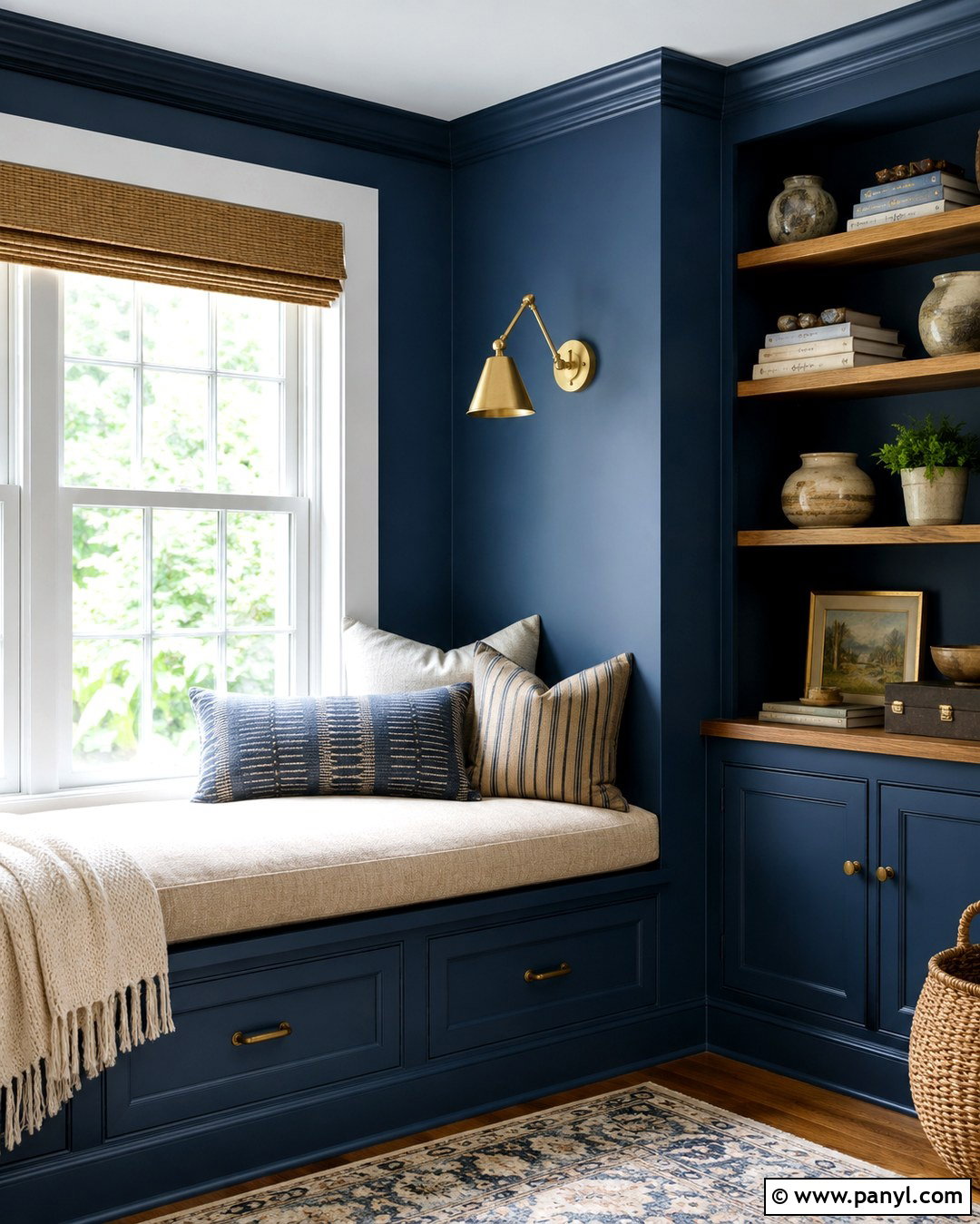
A deep blue reading nook can feel private and cozy without becoming visually closed off. Paint the surrounding walls and built-in bookcases in one rich blue, then keep the window trim white to emphasize natural light. Add a fitted window-seat cushion in oatmeal linen with striped blue, tan, and cream pillows. Use the lower cabinets for concealed storage and reserve open shelves for books, pottery, and a few framed objects. A small brass reading sconce provides focused light after sunset. Underfoot, place a soft neutral rug or woven runner. Warm oak shelving accents can be introduced if an all-blue built-in feels too formal. This arrangement combines seating, storage, lighting, and decoration within one compact, practical destination.
19. Deep Blue Fireplace Wall
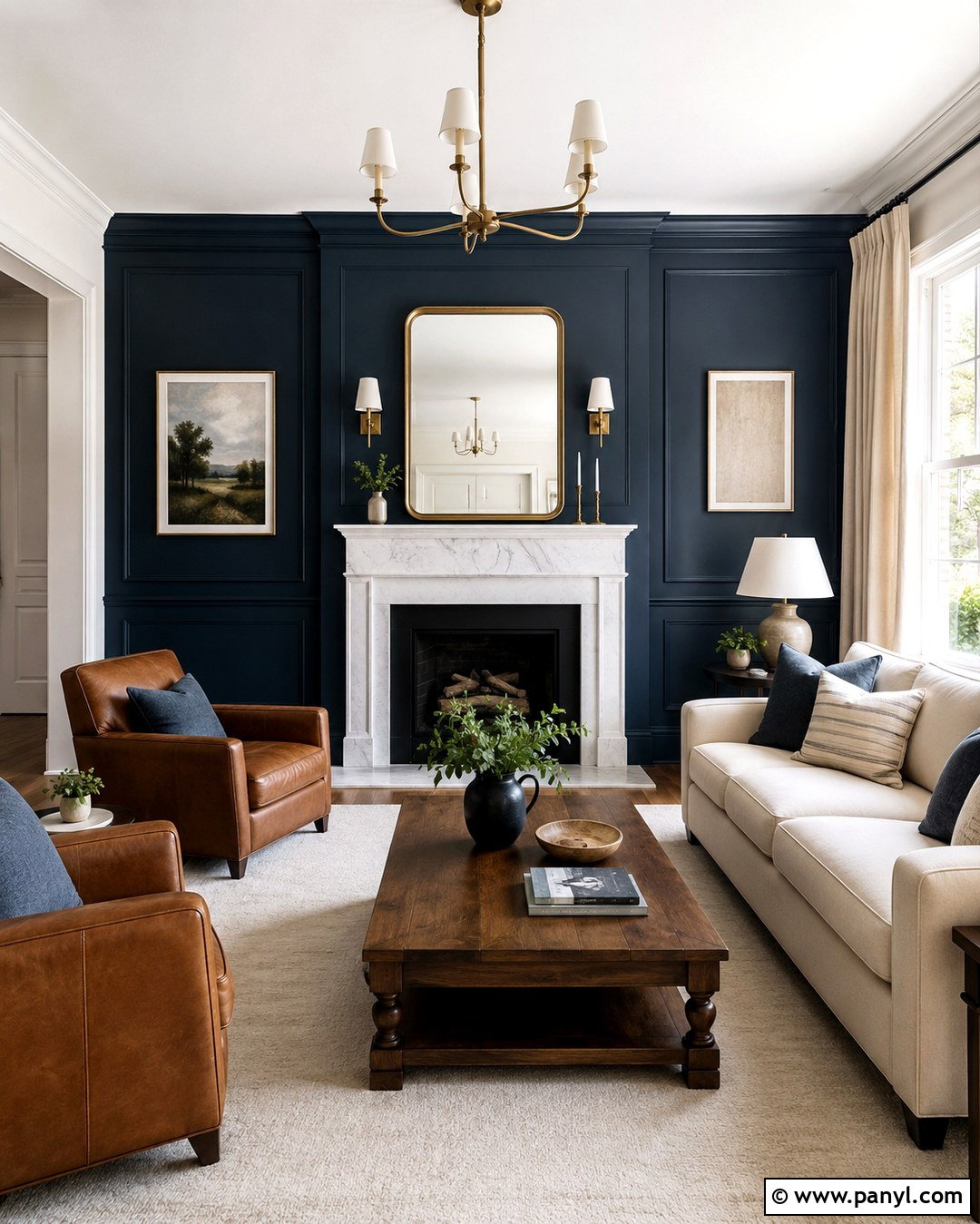
Make the fireplace the center of the room by painting the entire chimney breast or surrounding wall deep blue. Keep the fireplace surround in white stone, pale brick, or lightly veined marble so it stands out clearly. Arrange a light beige sofa and two cognac leather chairs around a warm wood coffee table. A cream rug defines the conversation area and prevents the dark focal wall from dominating. Place simple artwork or a brass-framed mirror above the mantel, then add matching sconces on either side. Neutral curtains and white adjacent walls can keep the wider room open. Repeating deep blue in a few pillows or rug details connects the fireplace wall to the seating without making every surface match.
20. Deep Blue Media Room With Tonal Decor
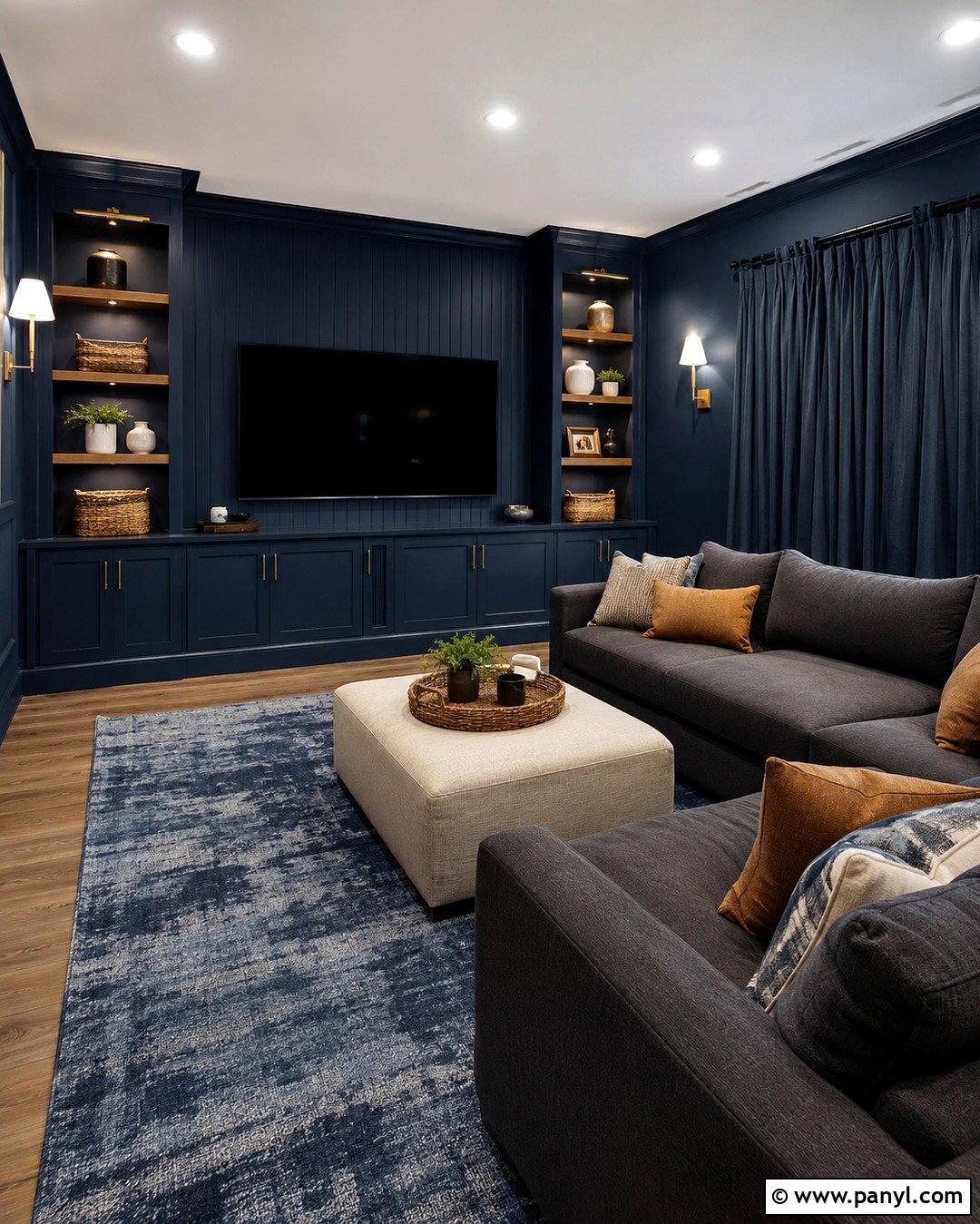
Deep blue walls are well suited to a media room because they create a cohesive background around the television. Paint the walls, media cabinetry, and trim in closely related blue tones, using a slightly darker finish behind the screen. Add a comfortable charcoal sectional and a large oatmeal ottoman that can serve as a table or footrest. Layer the floor with a thick patterned rug containing navy, gray, and beige. Blackout curtains in blue-gray improve the finished look, while wall sconces and concealed cabinet lighting provide flexible brightness. Warm the palette with walnut shelves, camel pillows, and woven baskets. Keep cables and equipment hidden inside ventilated cabinets. The result is organized, comfortable, and useful for both everyday relaxation and movie nights.
Conclusion:
The most successful **Deep Blue Wall Color Ideas** combine confident paint choices with thoughtful lighting, balanced contrast, and comfortable materials. Cream upholstery, warm wood, white trim, brass hardware, and earthy accent colors can all prevent dark blue from feeling flat or overwhelming. You can use it across an entire room, limit it to one focal wall, or extend it over molding and built-ins for a color-drenched finish. Always test the shade in morning, afternoon, and artificial light before committing. Consider how it relates to existing floors and furniture as well. With those details planned together, deep blue becomes a versatile foundation for rooms that feel welcoming, distinctive, and complete.

Related Ideas and Inspiration:
Leave a Reply