
A computer room should feel focused, comfortable, and visually balanced from morning work sessions to late-night gaming. The best 20 Computer Room Wall Color Ideas go beyond choosing a favorite shade. Wall color should complement the desk, monitor setup, flooring, lighting, storage, and overall purpose of the room. Light neutrals can make a compact office feel open, while deep blues, greens, and charcoals create an immersive backdrop for screens. Earthy colors bring warmth, and carefully placed accent walls add personality without overwhelming the workspace. Before painting, test large samples beside the desk and view them under daylight and task lighting. Whether you prefer modern minimalism, cozy traditional decor, or a bold gaming setup, explore these 20 Computer Room Wall Color Ideas.

1. Soft White Computer Room
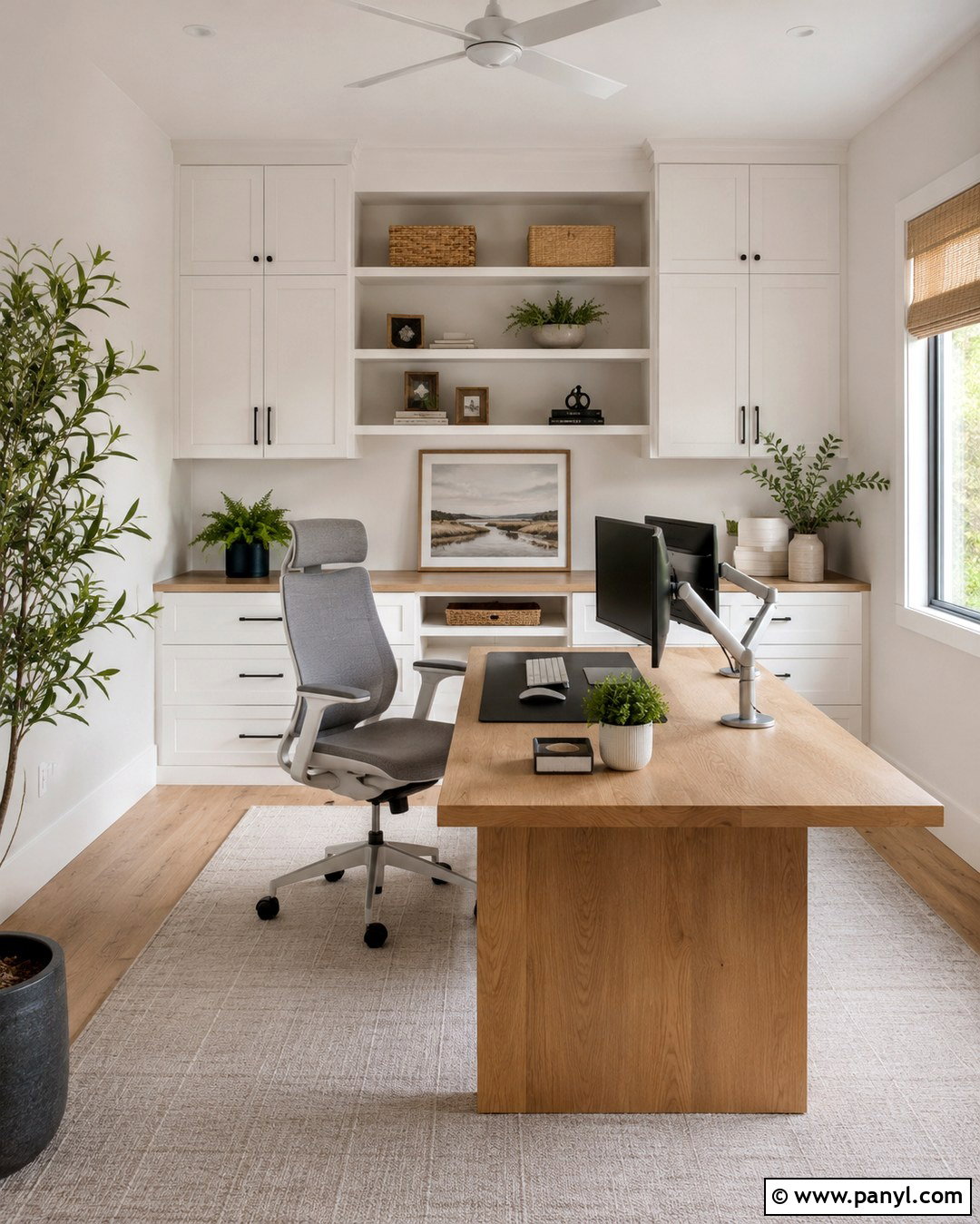
Soft white walls create a clean computer room that feels bright without looking cold or unfinished. Choose a white with a subtle warm undertone, then pair it with a natural oak desk, white storage cabinets, and a supportive chair in light gray upholstery. A pale beige rug softens hard flooring and helps define the workstation. Keep monitor arms, cable trays, and desk accessories in matte white or silver for a streamlined appearance. Add warmth through woven baskets, framed neutral artwork, and one or two leafy plants. Black accents can appear in the keyboard, lighting, and thin picture frames. This complete palette works especially well in small rooms, shared offices, and spaces with limited daylight.
2. Light Gray Computer Room
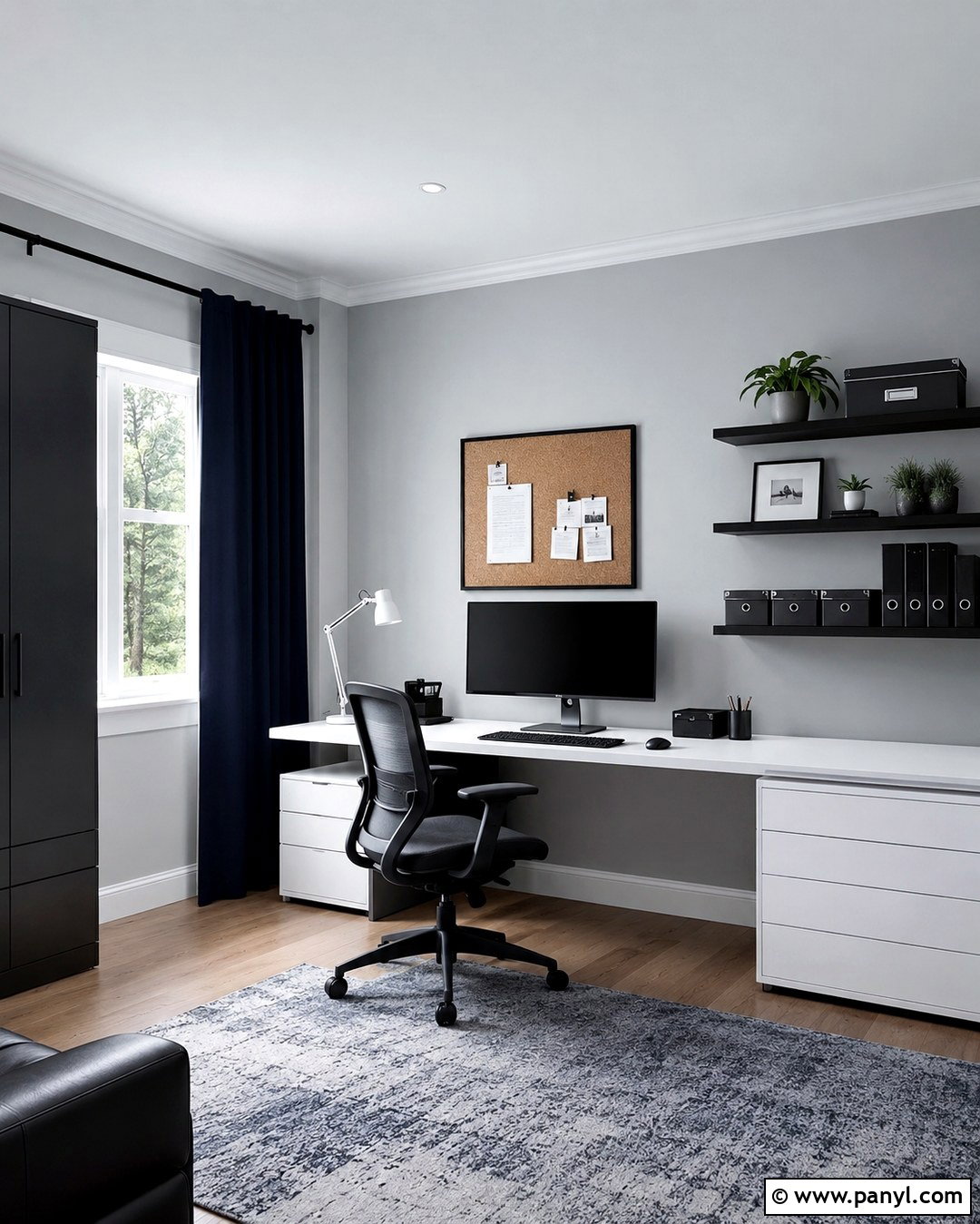
Light gray offers more depth than white while preserving an open, uncluttered feeling. Use a balanced gray that does not lean heavily blue, and coordinate it with a white desk, medium oak flooring, and charcoal office seating. Position the computer against the longest wall, with low cabinets nearby to keep equipment organized. Navy curtains and a blue-gray area rug can introduce quiet color without competing with the screens. Finish the room with black wall shelves, a simple pinboard, and a white adjustable desk lamp. This scheme suits a modern work-from-home space where practical storage matters. The limited palette also makes colorful computer accessories, artwork, and changing seasonal decor easier to incorporate.
3. Warm Greige Computer Room
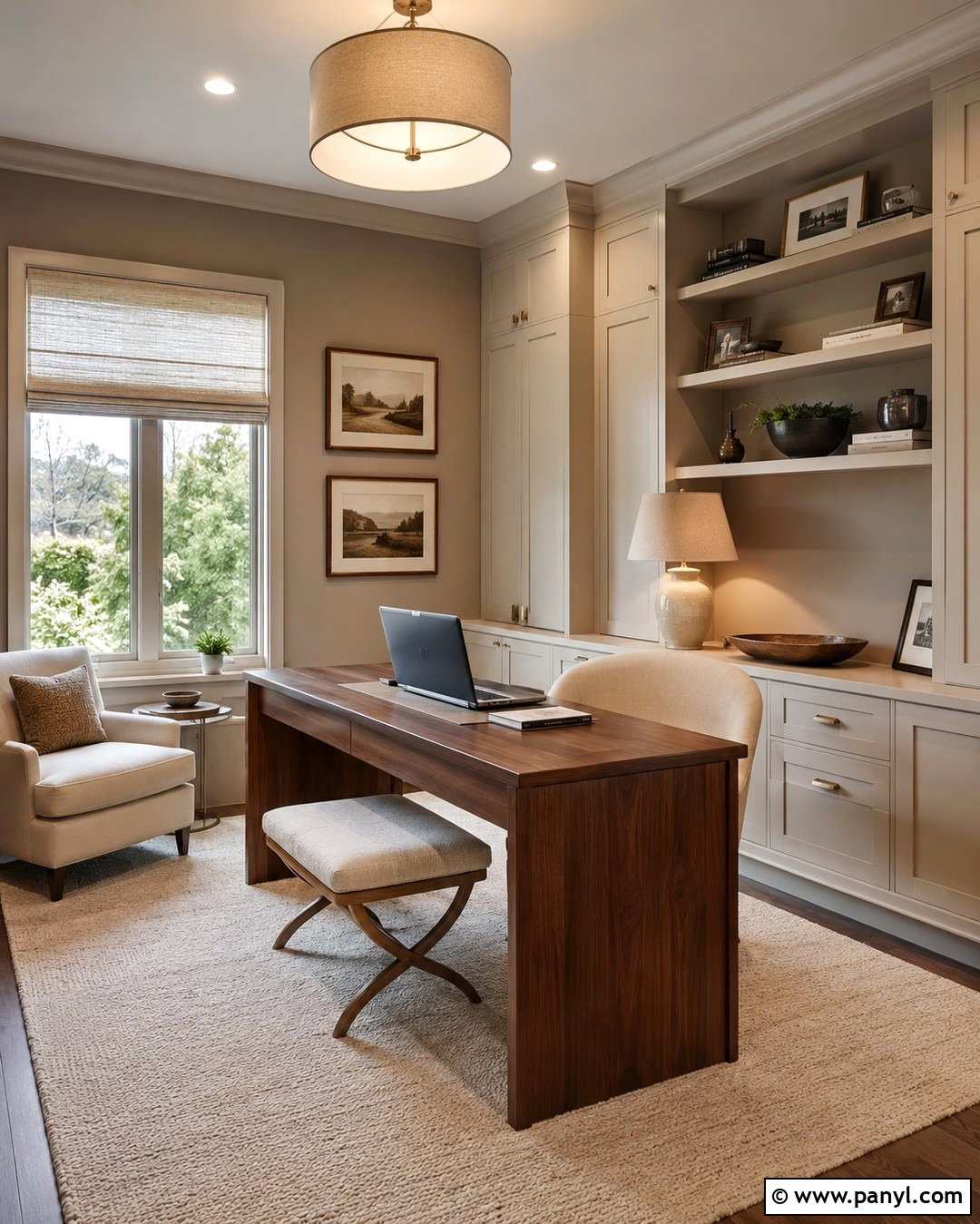
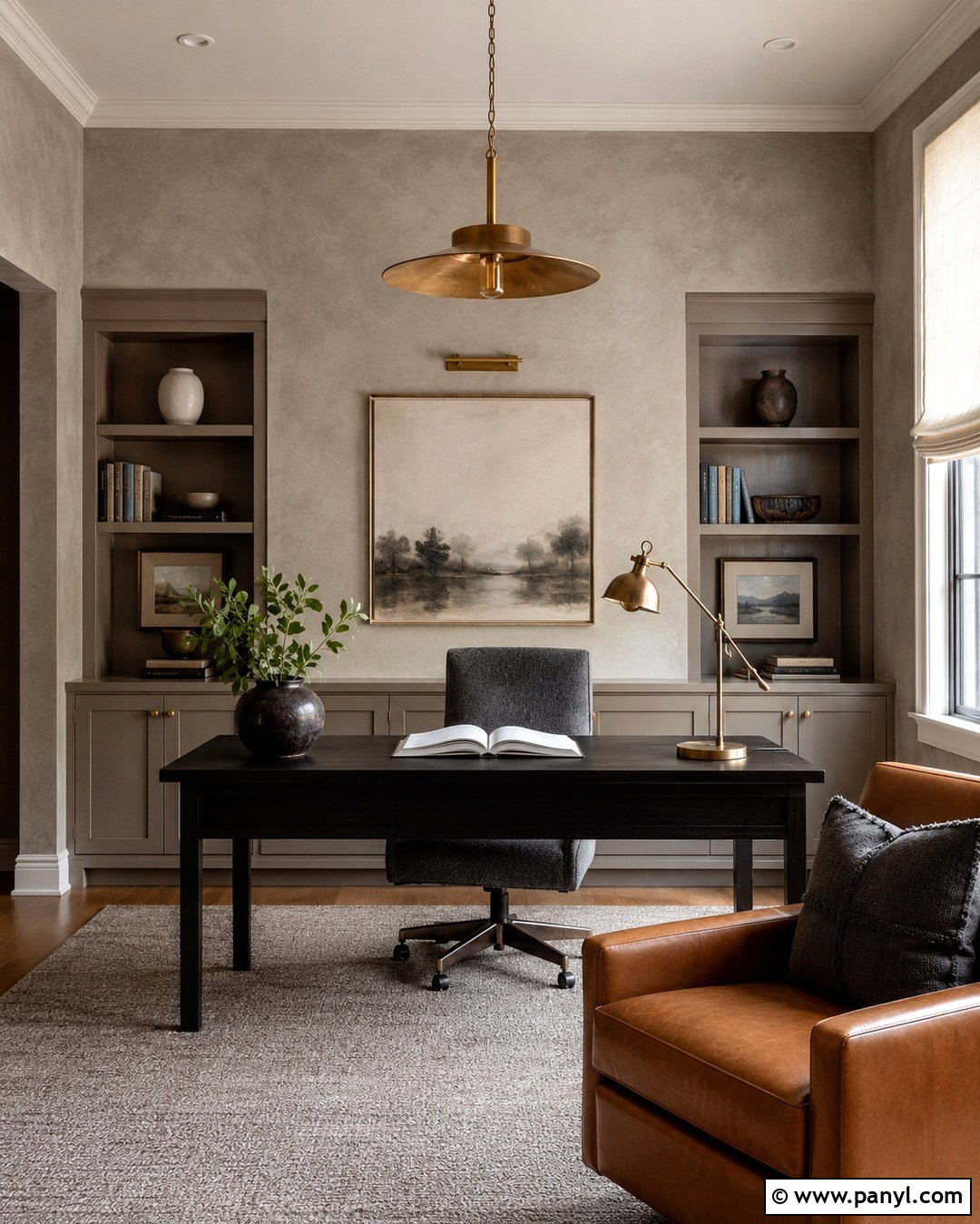
When plain gray feels too cool, warm greige creates a softer and more welcoming computer room. Paint every wall the same muted gray-beige shade for a smooth background, then bring in a walnut desk and cream upholstered chair. Use closed storage in matching greige or warm white to reduce visual clutter around electronics. A textured ivory rug, linen window shade, and ceramic table lamp add comfortable layers. Choose bronze or matte black hardware for definition, and display restrained artwork in wood frames. This complete design works beautifully in a computer room that doubles as a study or reading space. Warm desk lighting and a small lounge chair can make the room feel finished beyond the main workstation.
4. Beige Computer Room
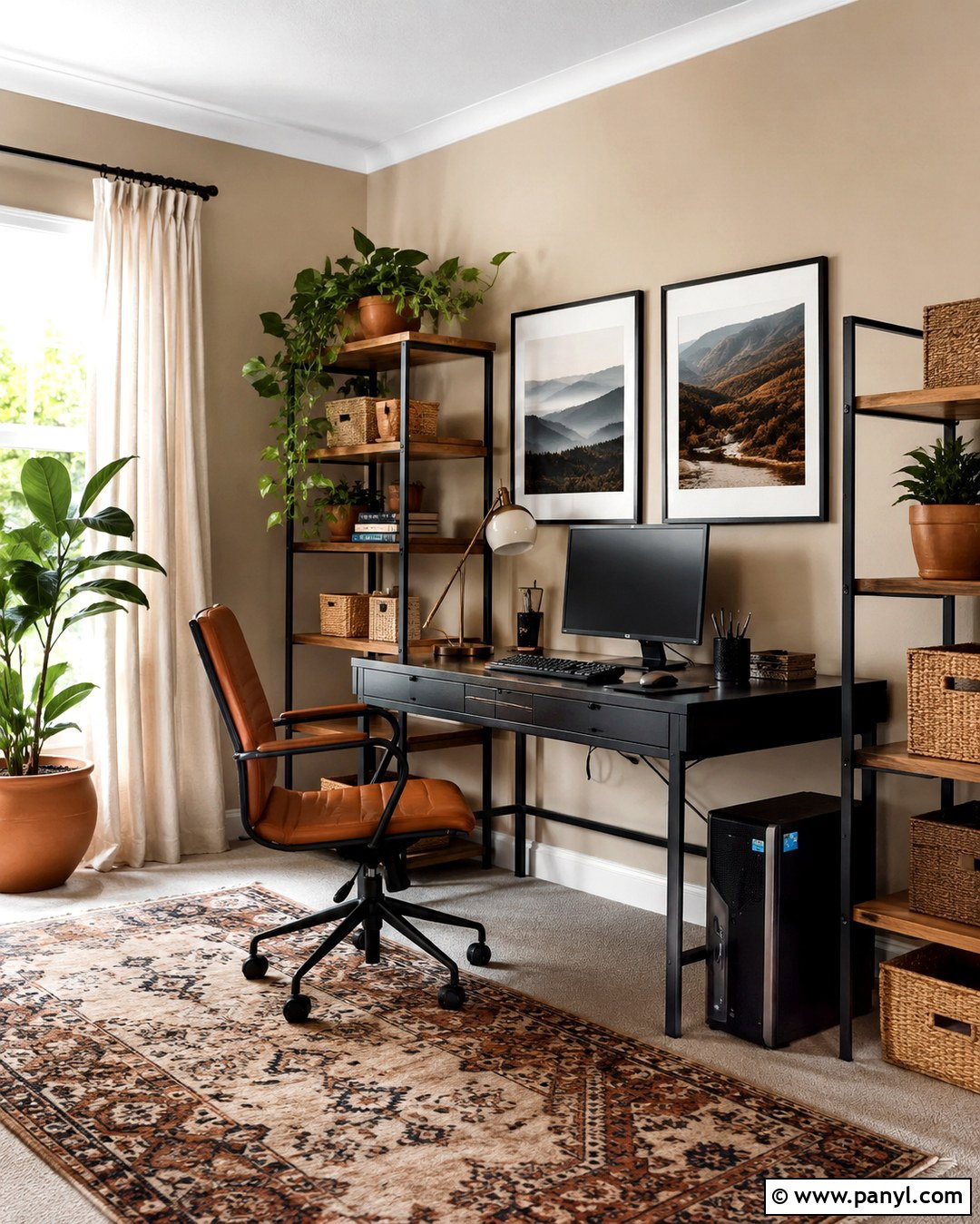
A sandy beige computer room feels relaxed, practical, and easy to personalize. Select a light beige with warm undertones and combine it with a black metal desk, cognac-colored chair, and natural wood shelving. The contrast prevents the room from appearing overly neutral. Use a cream-and-tan patterned rug to connect the wall color with the furniture, then add off-white curtains that filter daylight. Keep computer equipment mostly black so the setup looks intentional rather than scattered. Terracotta planters, woven storage boxes, and simple landscape prints provide understated decoration. This full room scheme is ideal for renters or homeowners who want a flexible backdrop that can support office work, household planning, studying, and occasional gaming.
5. Sage Green Computer Room
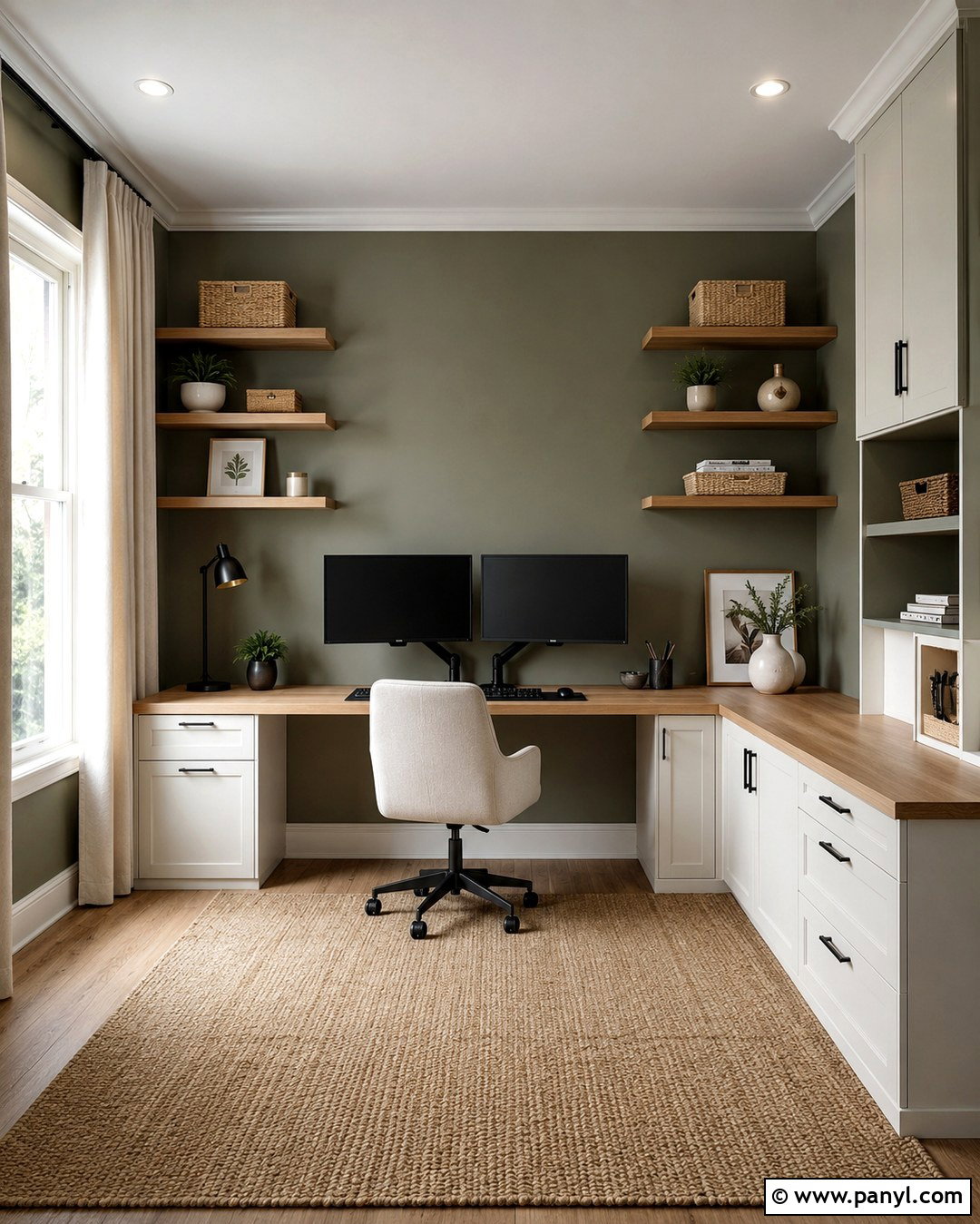
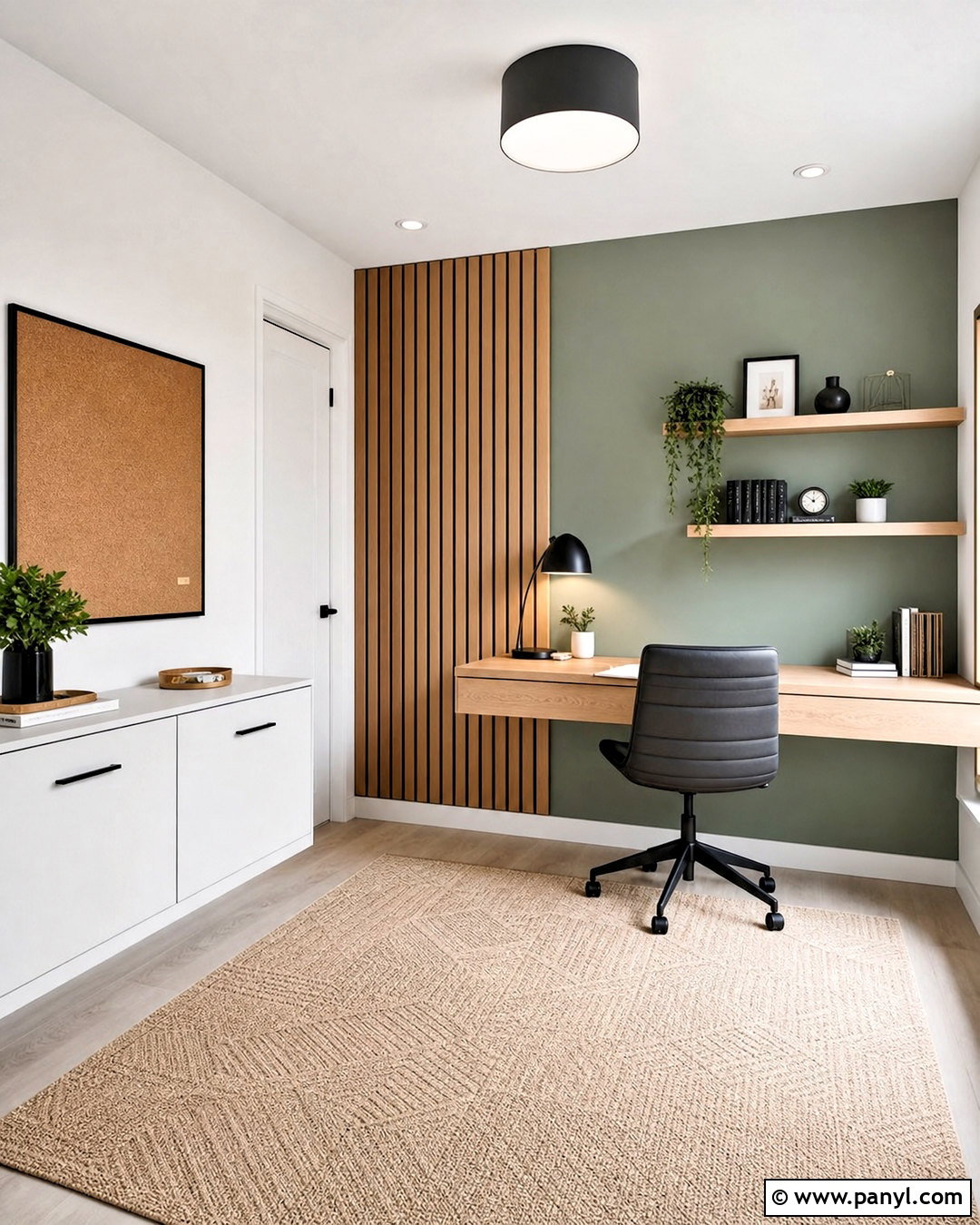
Sage green walls bring gentle color into a computer room while remaining easy to coordinate with everyday furniture. Build the room around a streamlined oak desk, cream desk chair, and low white cabinets. Natural textures such as a jute-blend rug, linen curtains, and woven baskets reinforce the relaxed palette. Use matte black monitor arms and task lighting to give the soft colors a crisp modern edge. Floating oak shelves can hold books, small plants, and neatly arranged supplies without crowding the desktop. Warm white trim keeps the room light and polished. This complete scheme fits a computer room overlooking a yard or garden, but it can also bring a nature-inspired feeling to an interior room without windows.
6. Olive Green Computer Room
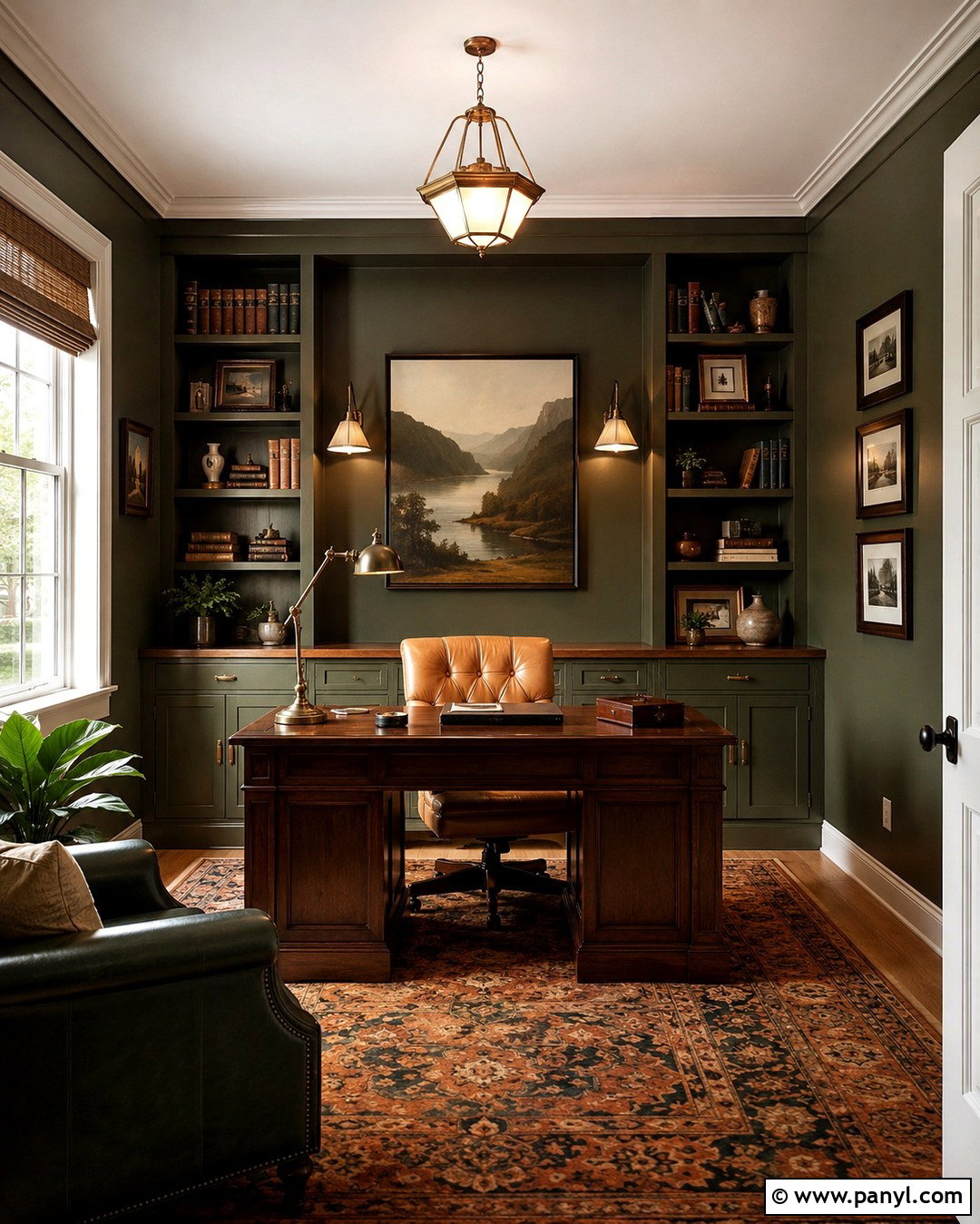
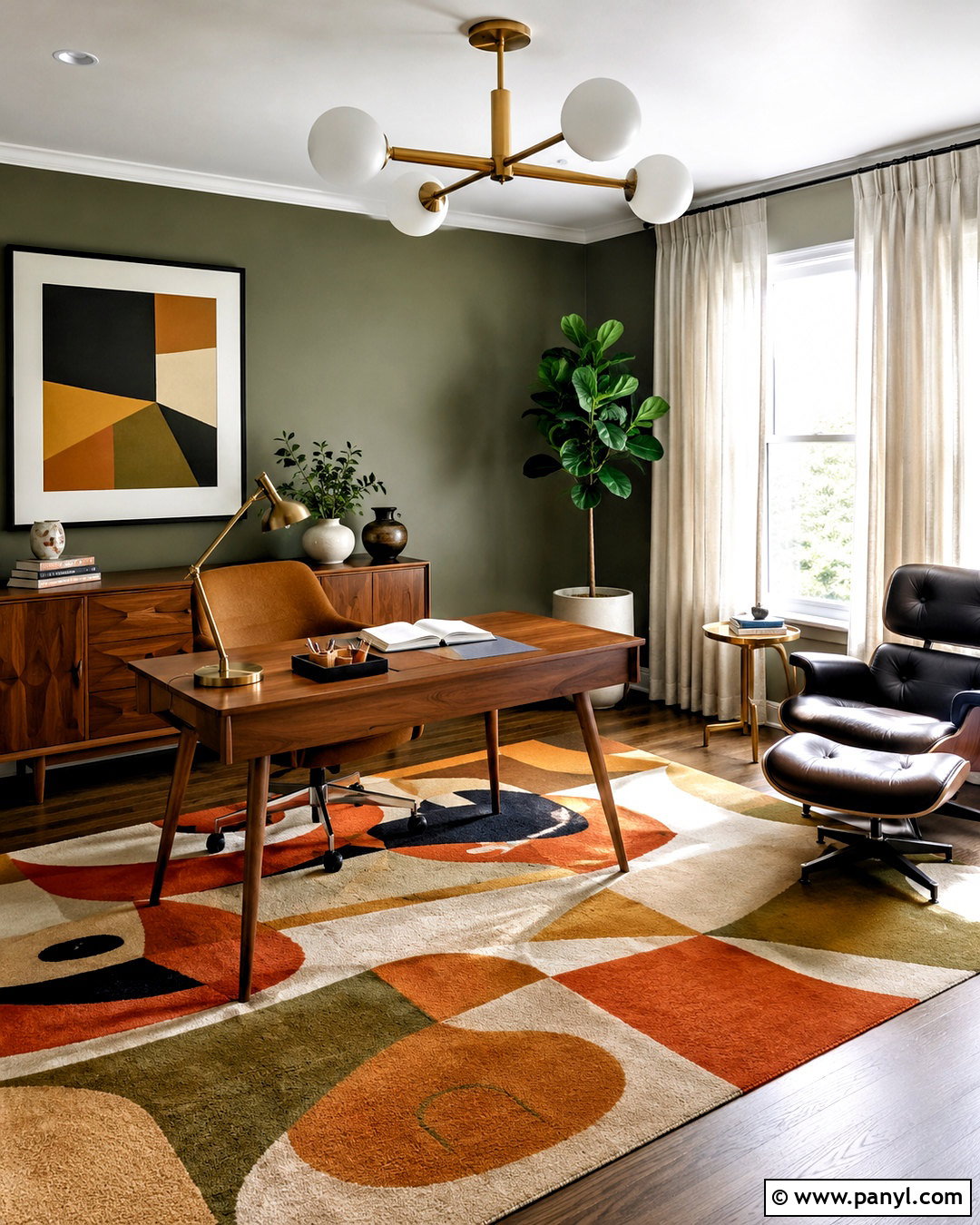
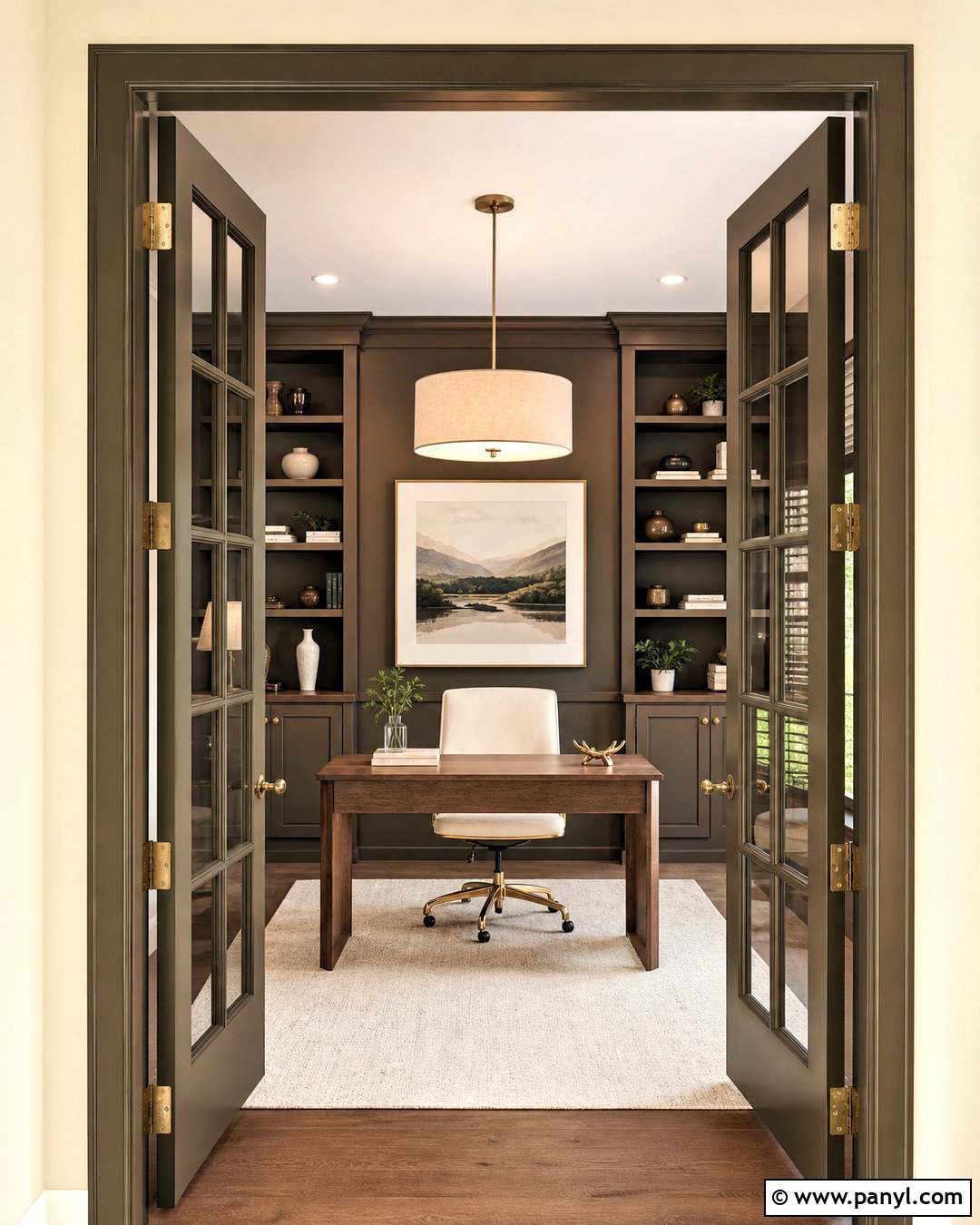
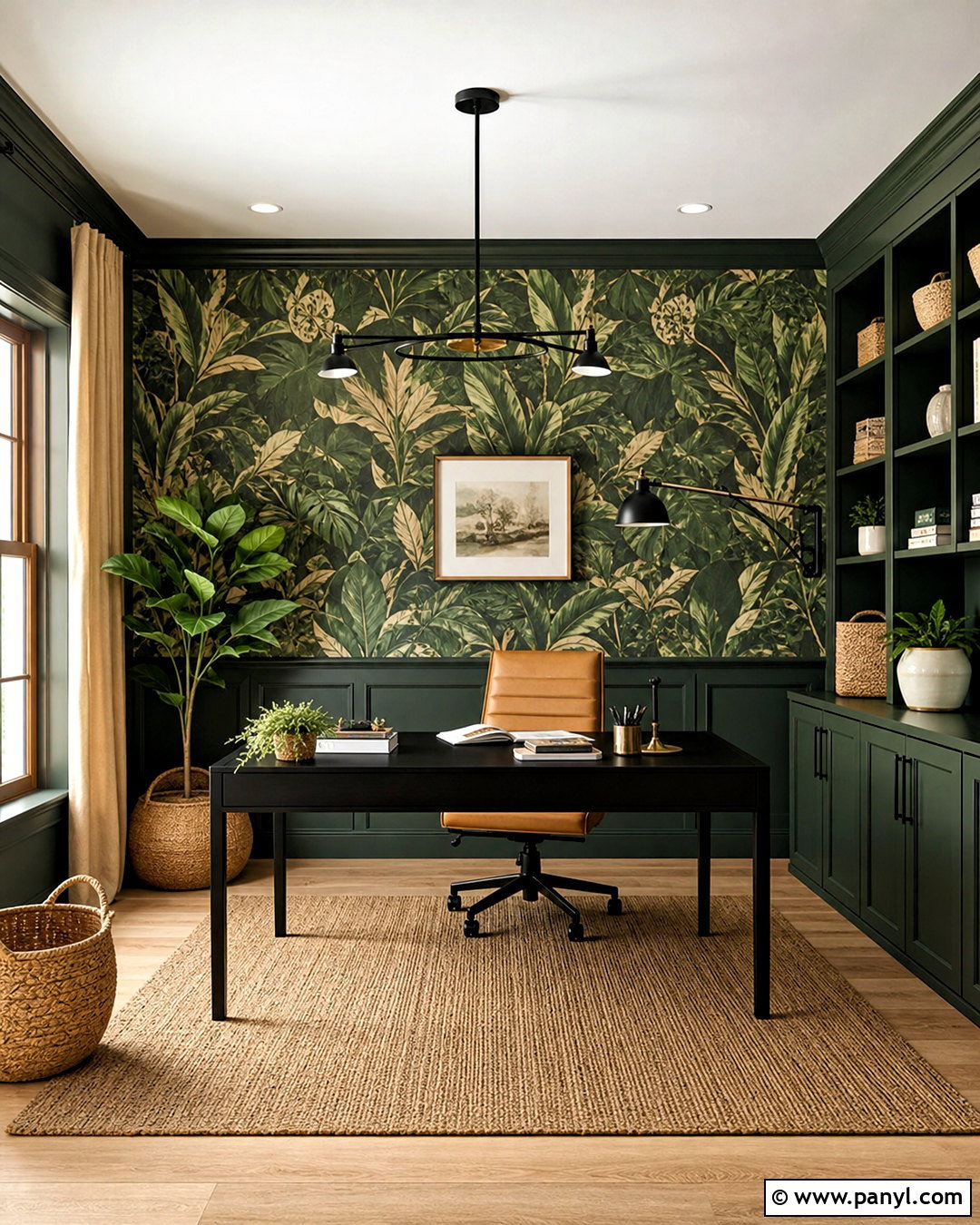
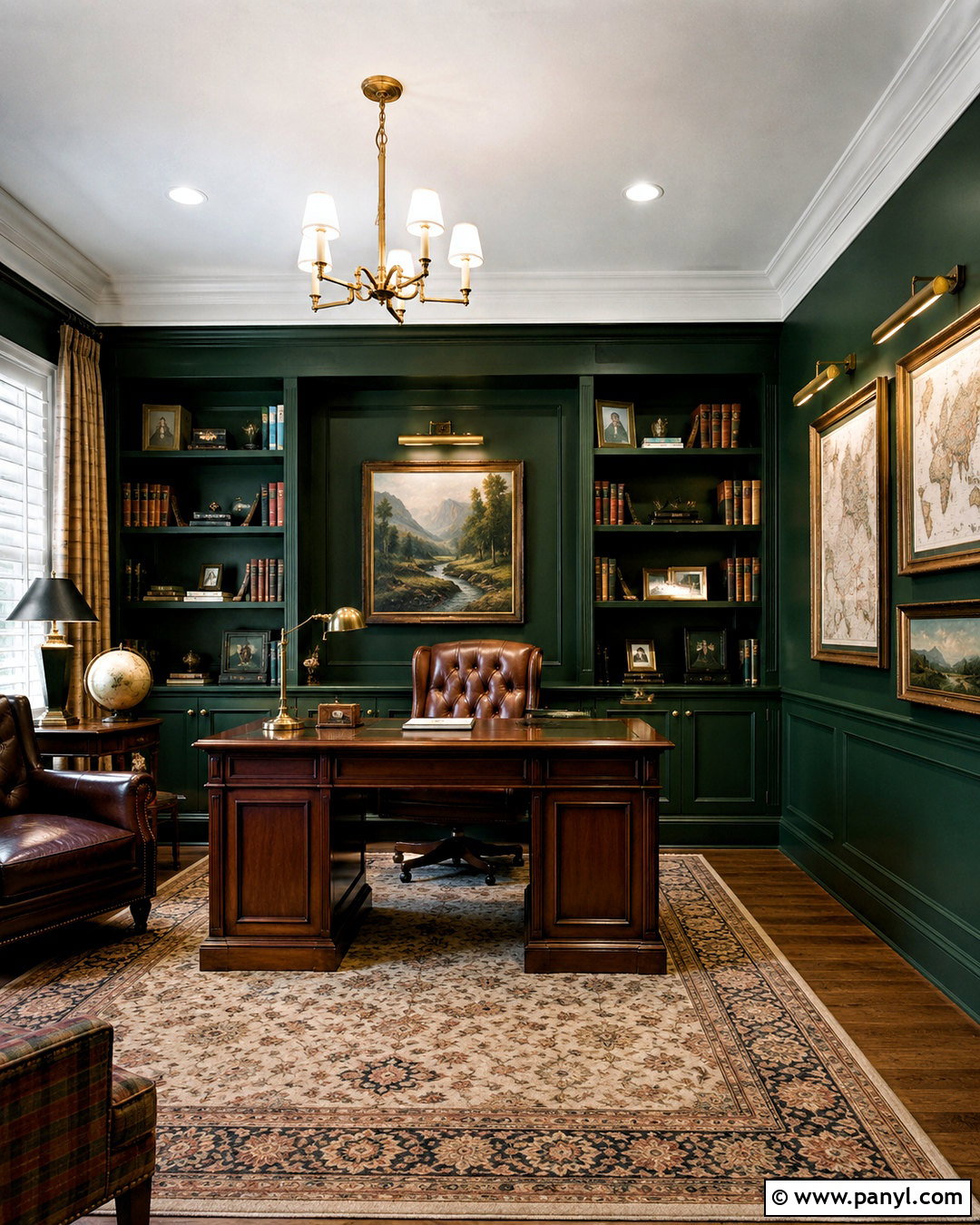
Deep olive green creates a grounded computer room with a mature, collected character. Use the color across the walls and built-in shelving, then balance its richness with a large walnut desk and a light camel-colored chair. A vintage-inspired rug containing cream, rust, and muted green connects the room’s main tones. Add aged brass lighting, dark-framed artwork, and leather desk accessories for subtle warmth. Keep the ceiling and window trim soft white so the space does not feel enclosed. Conceal printers, cables, and extra electronics inside lower cabinets. The finished room works well for focused office tasks, design work, or a combined computer and library space where books and technology should look naturally integrated.
7. Mint Green Computer Room
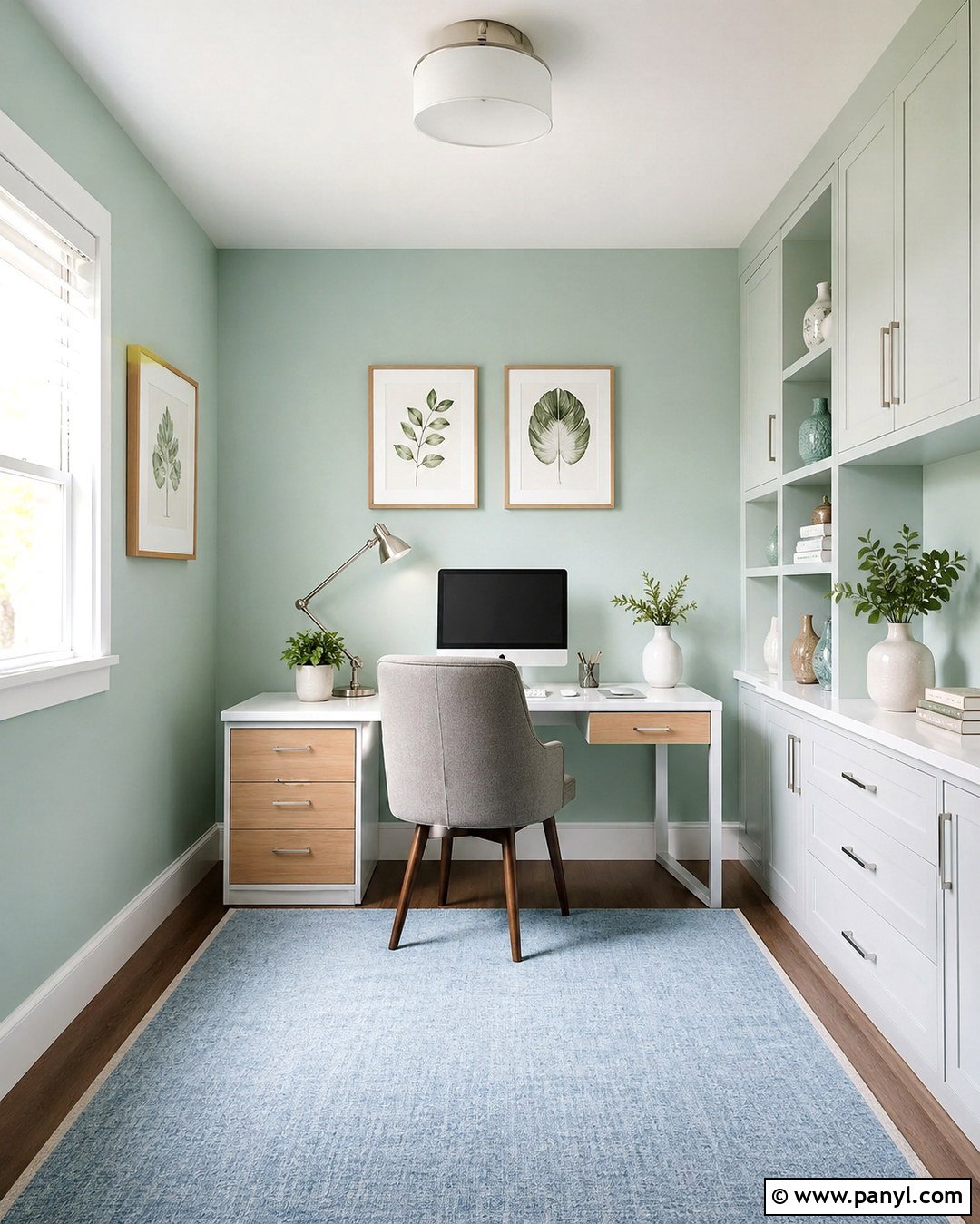
Fresh mint green can make a small computer room feel cheerful and organized without becoming overly bright. Choose a pale, slightly muted mint for all four walls, then add a compact white desk with rounded corners and light oak drawers. A soft gray ergonomic chair anchors the workspace, while white wall cabinets keep supplies hidden. Introduce a pale blue rug, simple botanical prints, and a few ceramic accessories in white and mint. Use brushed silver hardware and a slim LED desk lamp to maintain the clean appearance. This light color scheme is particularly useful for a homework room, craft-and-computer space, or shared family office. Keep decorative pieces limited so the lively wall color remains the main feature.
8. Dusty Blue Computer Room
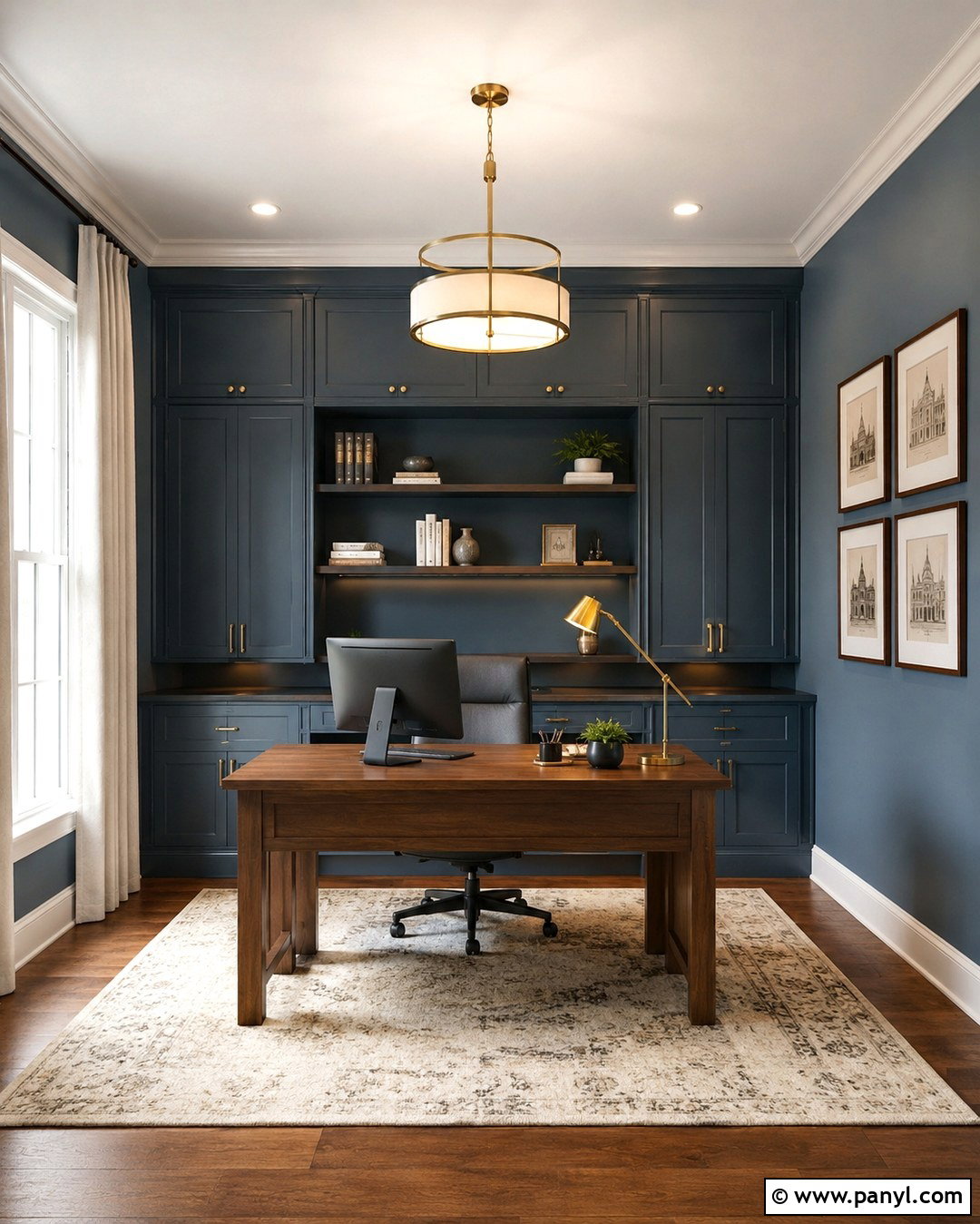
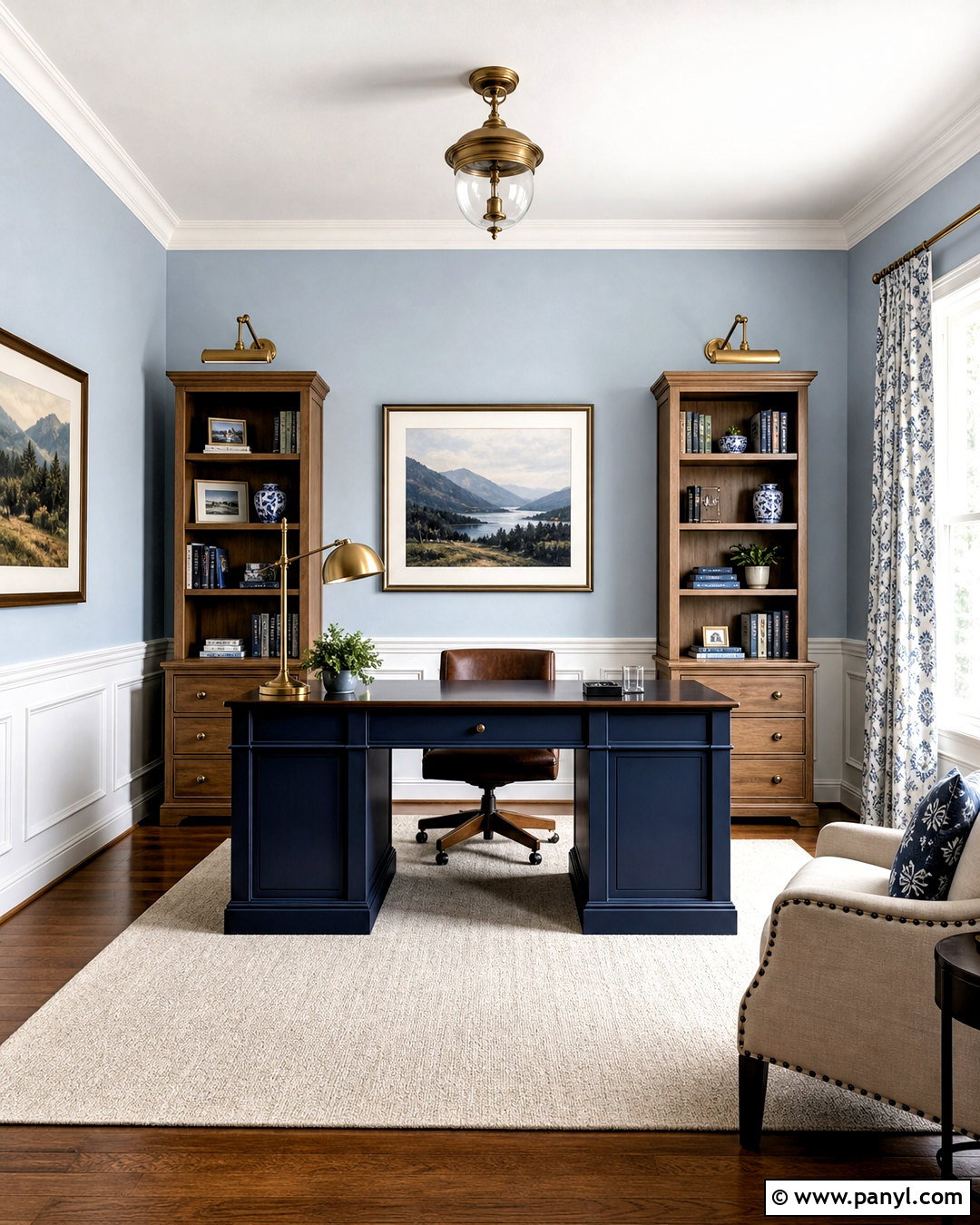
Dusty blue walls create a comfortable middle ground between a pale neutral and a dramatic navy room. Pair the muted blue with a medium walnut desk, warm white trim, and a charcoal upholstered chair. Install closed cabinetry along one side of the room so work supplies and gaming accessories remain contained. A cream rug with a subtle blue pattern ties the palette together without looking busy. Add brushed brass sconces or a warm metal desk lamp for contrast. Natural linen curtains and framed architectural drawings complete the polished look. This whole-room scheme supports both professional video calls and relaxed computer use, especially when the desk faces a tidy wall with carefully arranged artwork instead of open storage.
9. Navy Blue Computer Room
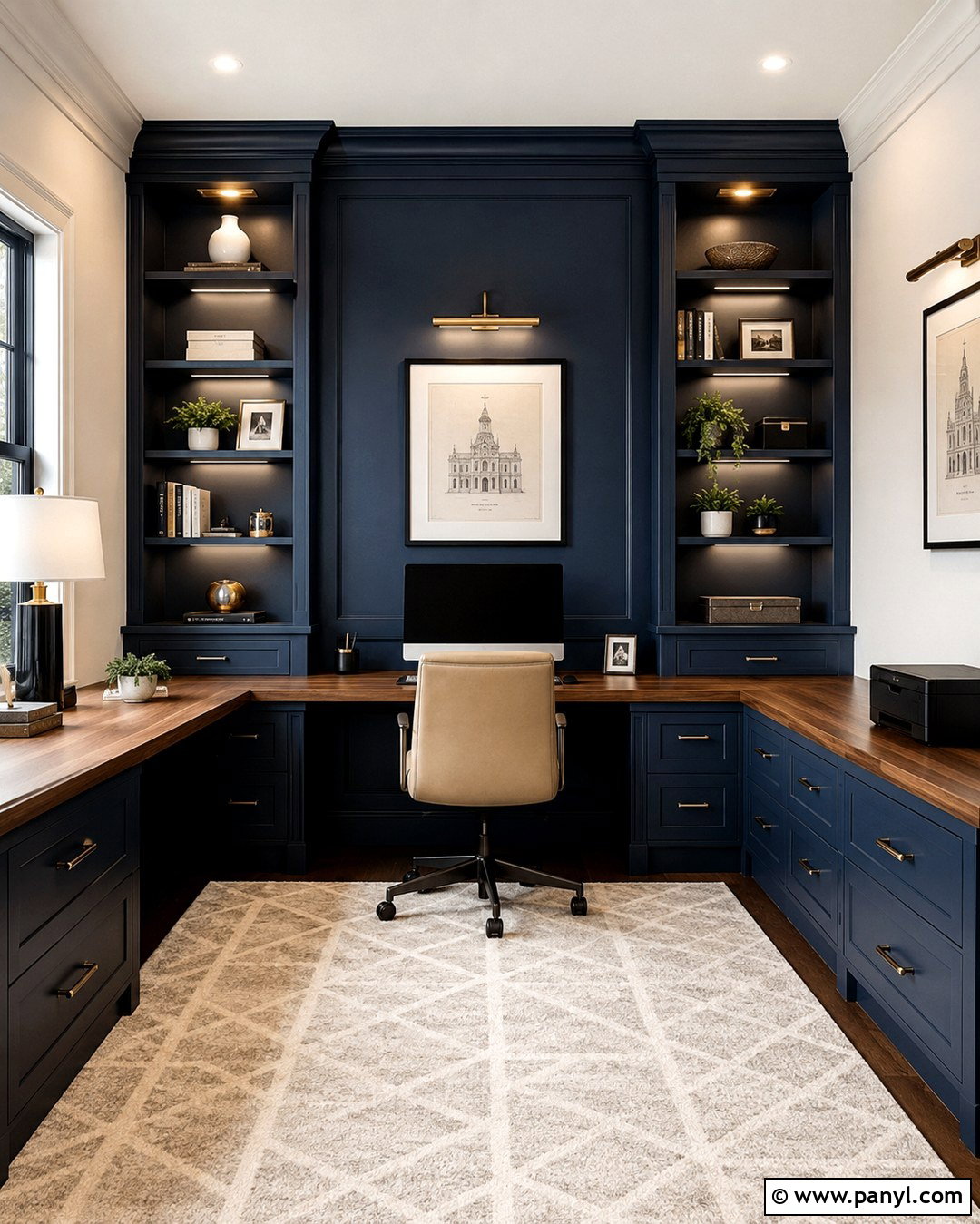
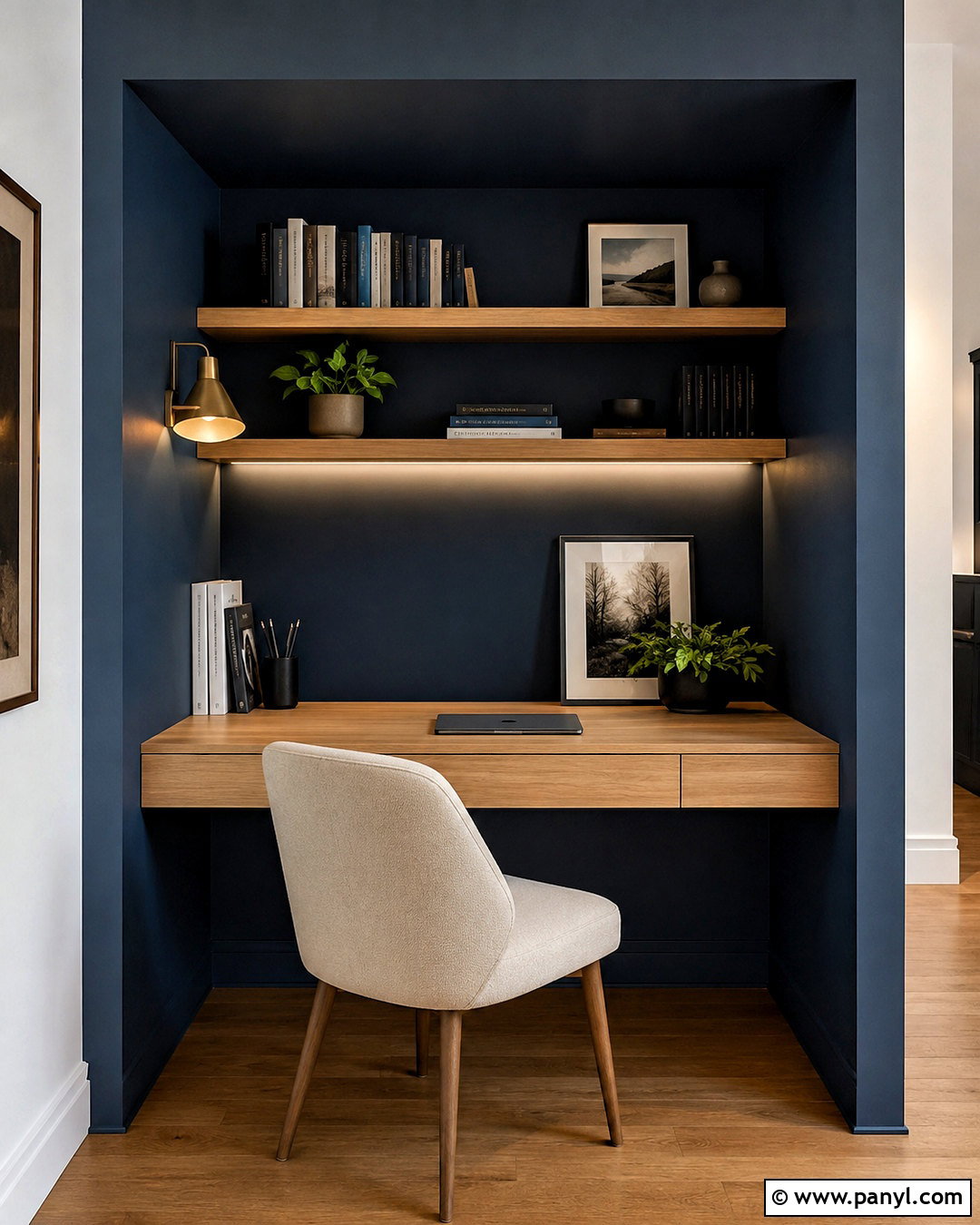
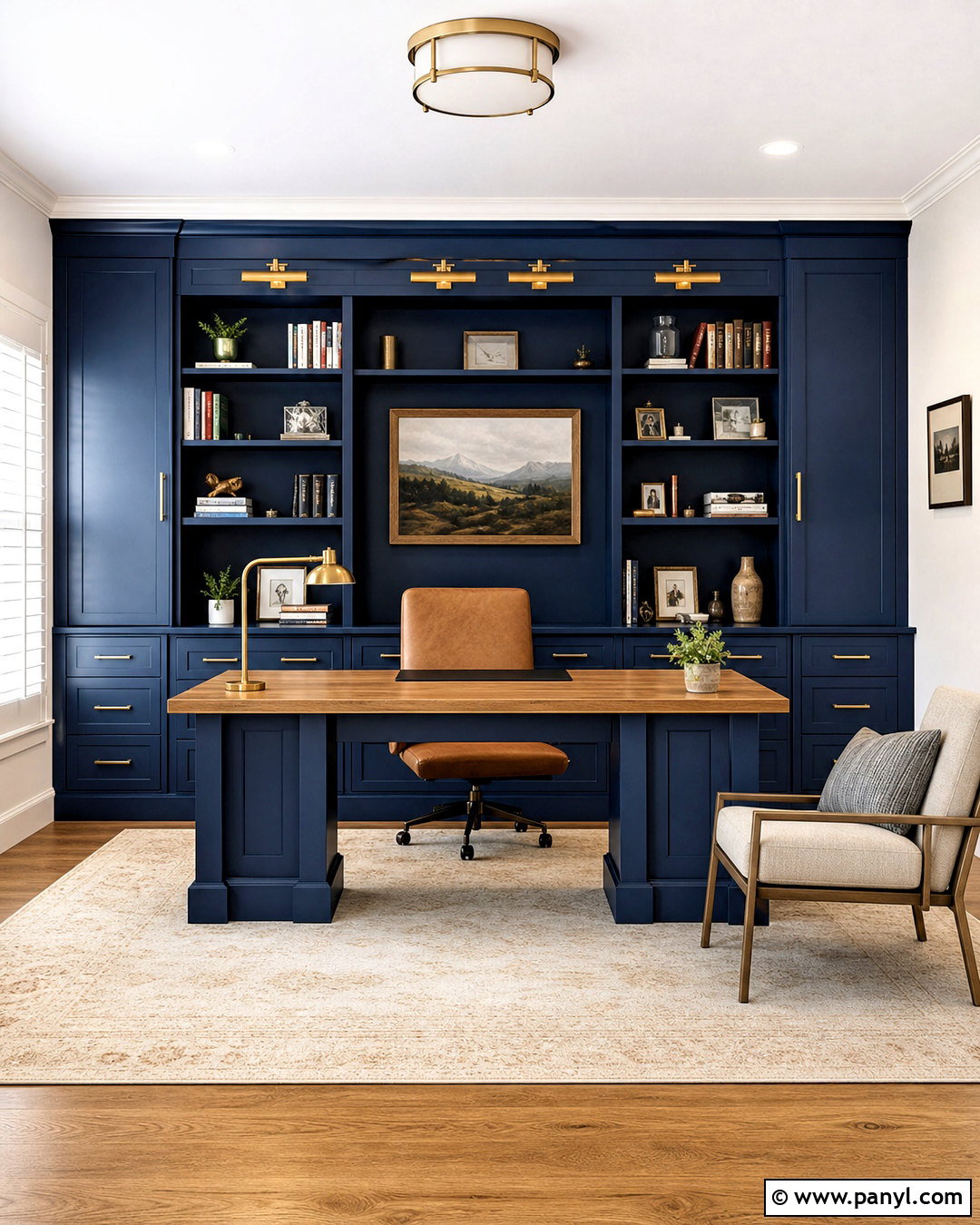
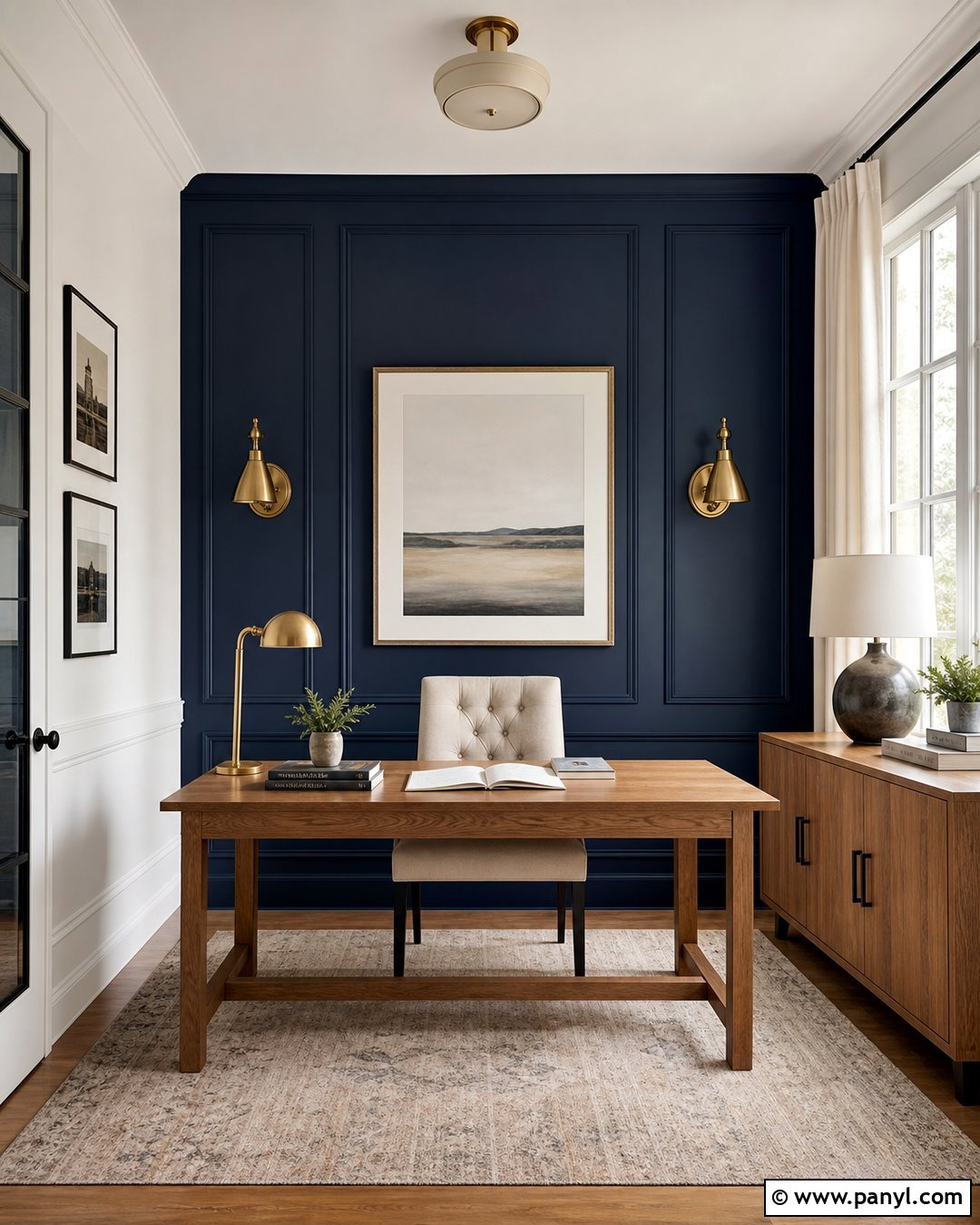
Navy blue gives a computer room an immersive look while still feeling classic and refined. Use navy on the wall behind the desk and continue it onto adjacent built-in shelves for a cohesive focal zone. Keep the remaining walls warm white if the room is compact. Choose a walnut desktop, black storage cabinets, and a supportive chair in light tan fabric. A cream geometric rug and white ceiling help balance the darker surfaces. Add brass picture lights, framed prints, and carefully concealed LED lighting beneath the shelving. The result is a complete office and gaming room that feels dramatic without relying on excessive decoration. Lighter textiles and reflective metal details prevent the deep blue palette from becoming visually heavy.
10. Teal Computer Room
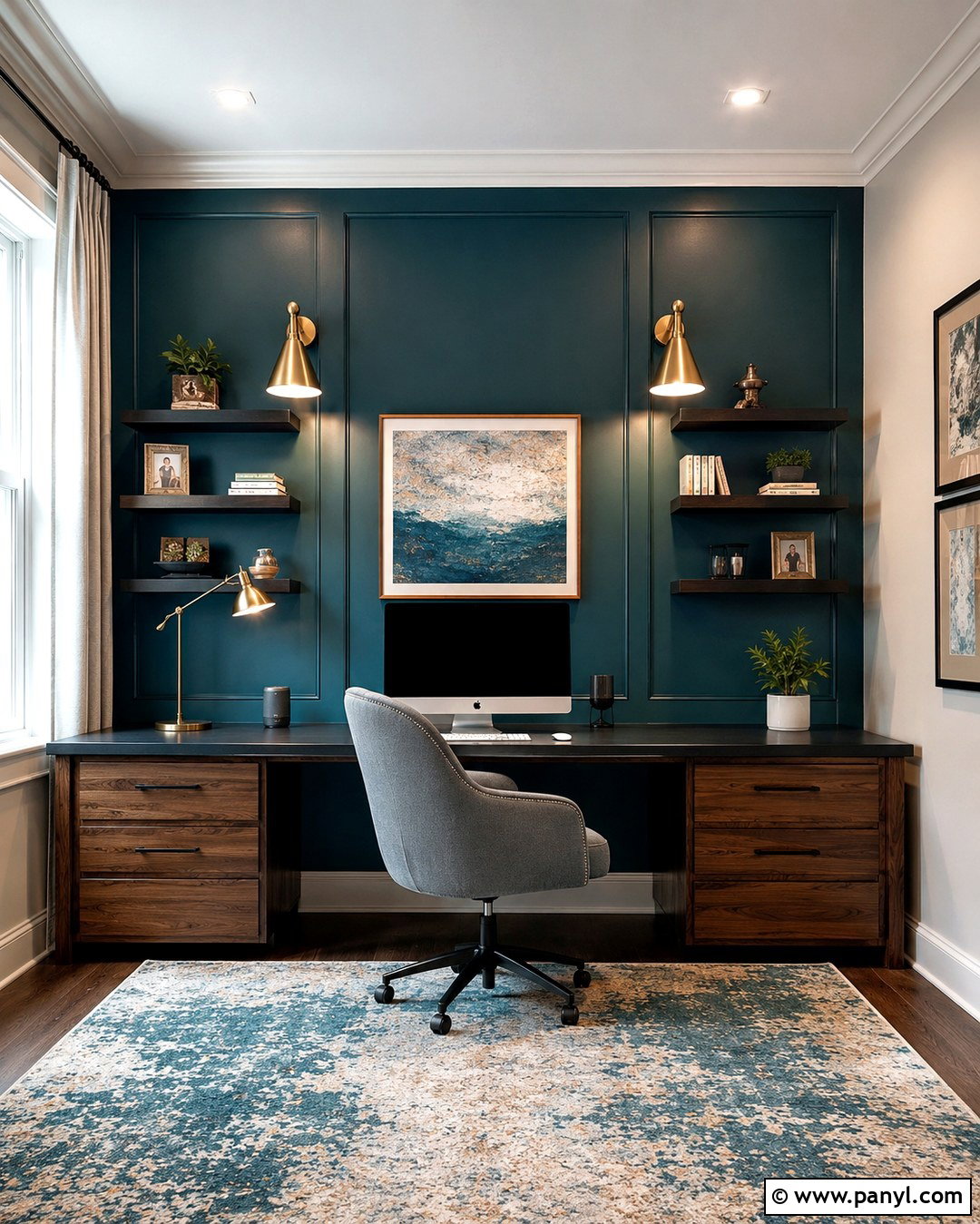
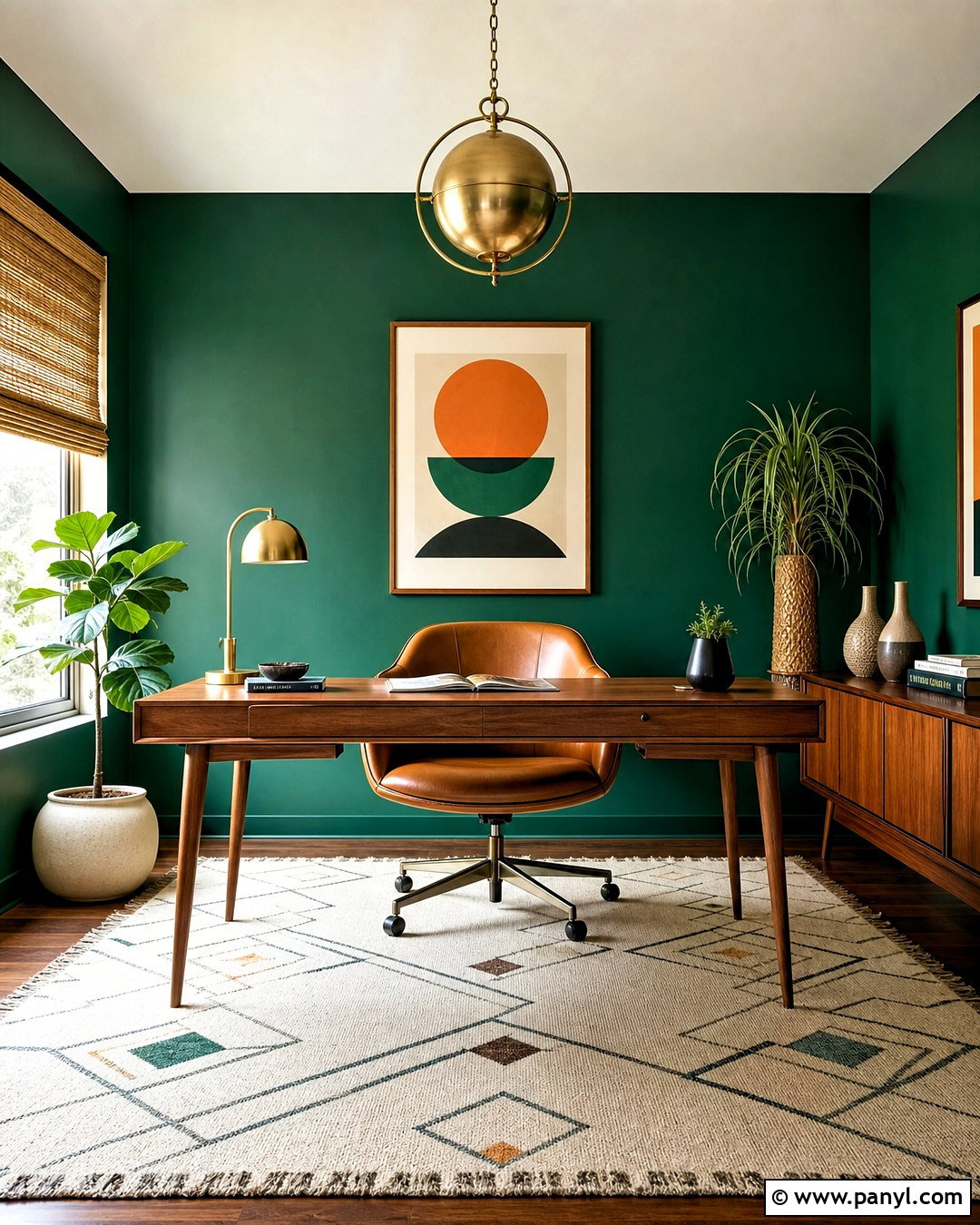
Rich teal walls can turn an ordinary computer room into an energetic yet polished workspace. Apply teal to the desk wall and use a pale warm gray on the other surfaces. A black desk with walnut drawers looks sharp against the blue-green backdrop, while a medium gray chair maintains balance. Bring the colors together with a patterned rug containing teal, cream, and muted gold. Floating black shelves can display books and a few sculptural accessories. Use warm brass lighting and natural wood frames to soften the bold wall. This full design works for creative work, content production, and casual gaming. Keep the desktop organized and choose simple window treatments so the strong accent color remains controlled rather than overwhelming.
11. Pale Blue Computer Room
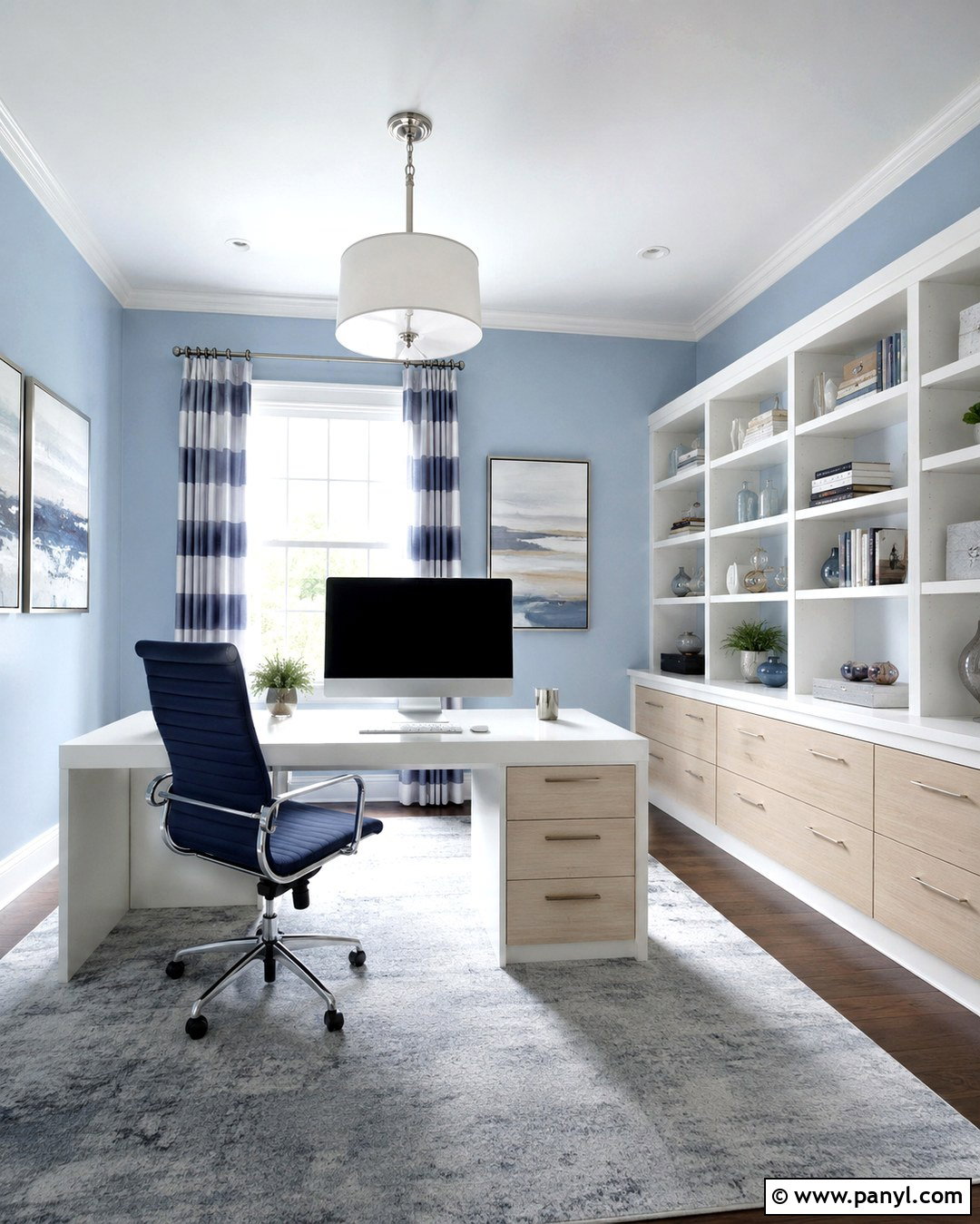
Pale blue is an approachable choice for a bright computer room used throughout the day. Cover all four walls in a soft sky-blue shade and contrast them with crisp white trim. Use a white desk with pale wood drawers, a navy office chair, and a light gray rug to create clear layers. White bookcases can frame the workstation and provide both open display space and concealed lower storage. Add striped curtains, brushed nickel lighting, and simple coastal or abstract artwork without turning the room into a themed space. The completed look feels airy but still purposeful. Dark computer equipment provides enough contrast against the light surroundings, while small wood accents keep the combination from feeling overly cool or clinical.
12. Charcoal Gray Computer Room
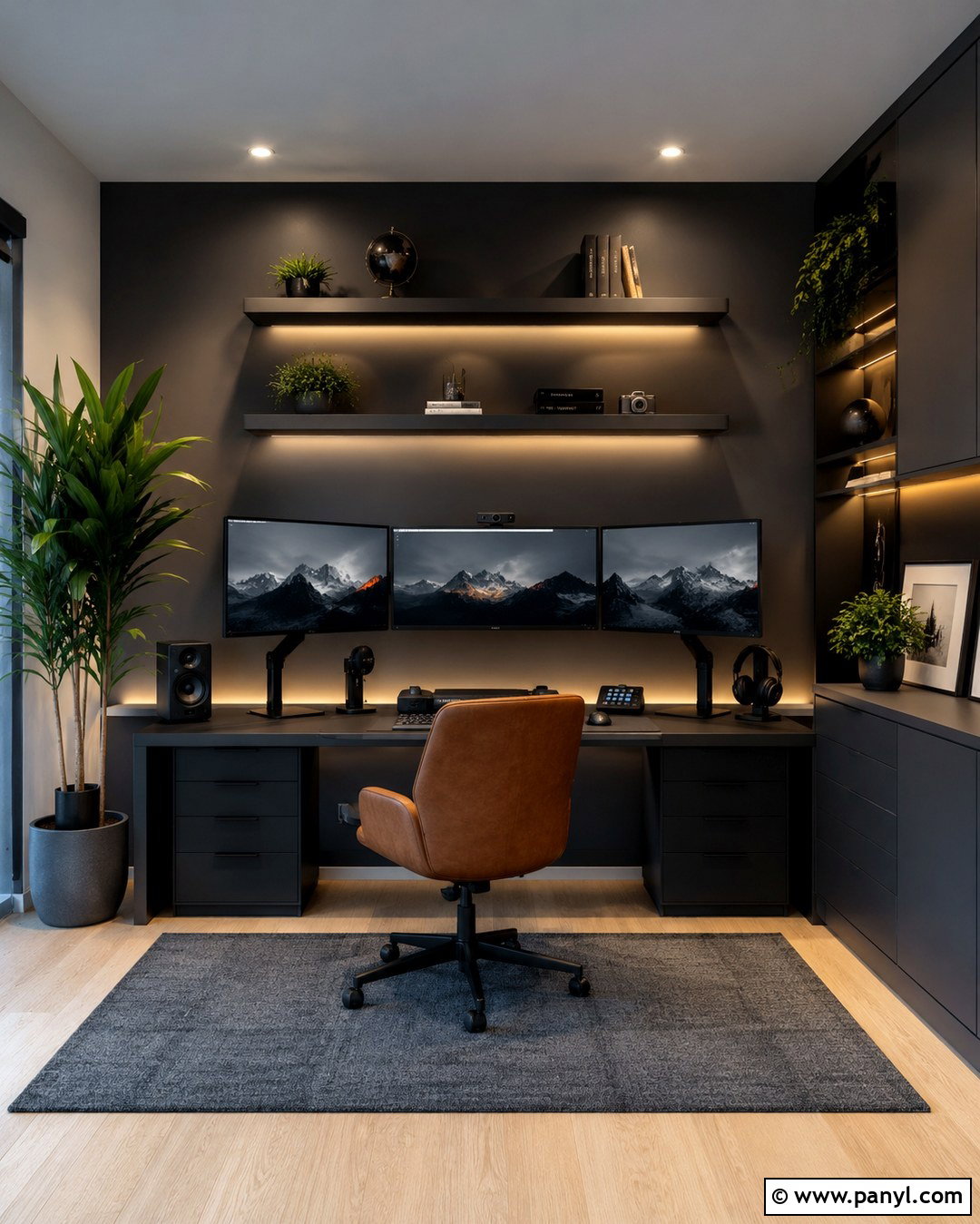
Charcoal gray creates a sleek computer room that places visual emphasis on the workstation and screens. Paint the desk wall and nearby shelving charcoal, while keeping the ceiling and one opposite wall soft white. Choose a black desk, dark monitor arms, and streamlined cabinets for a unified setup. Light oak flooring, a medium gray rug, and a cognac chair introduce warmth and prevent the room from looking flat. Install adjustable white task lighting along with subtle backlighting behind the monitors. Minimal framed graphics and one tall plant are enough decoration. This complete design suits gaming, editing, or technical work, especially when cables and peripheral equipment are carefully managed within the dark desk and storage system.
13. Black Computer Room
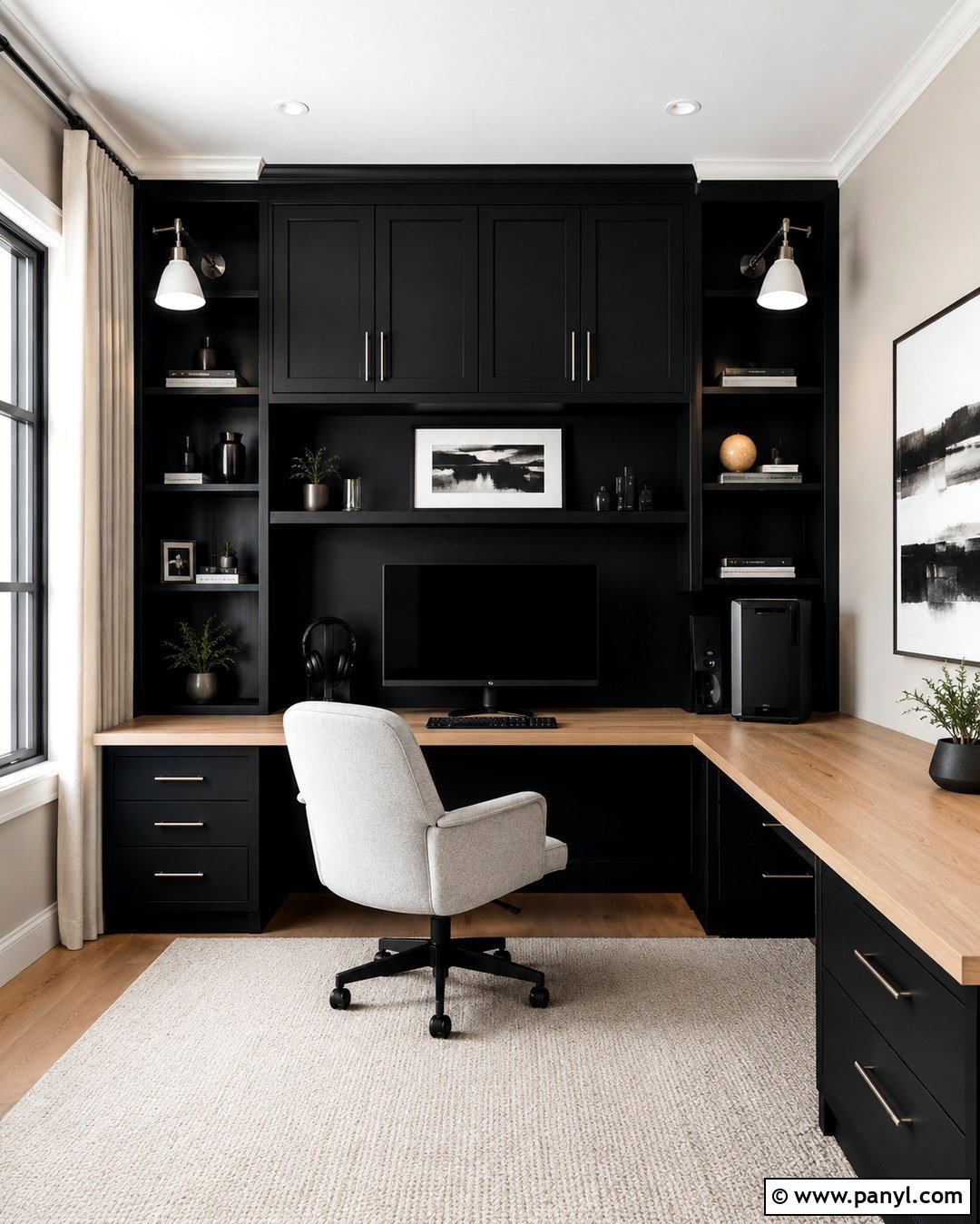
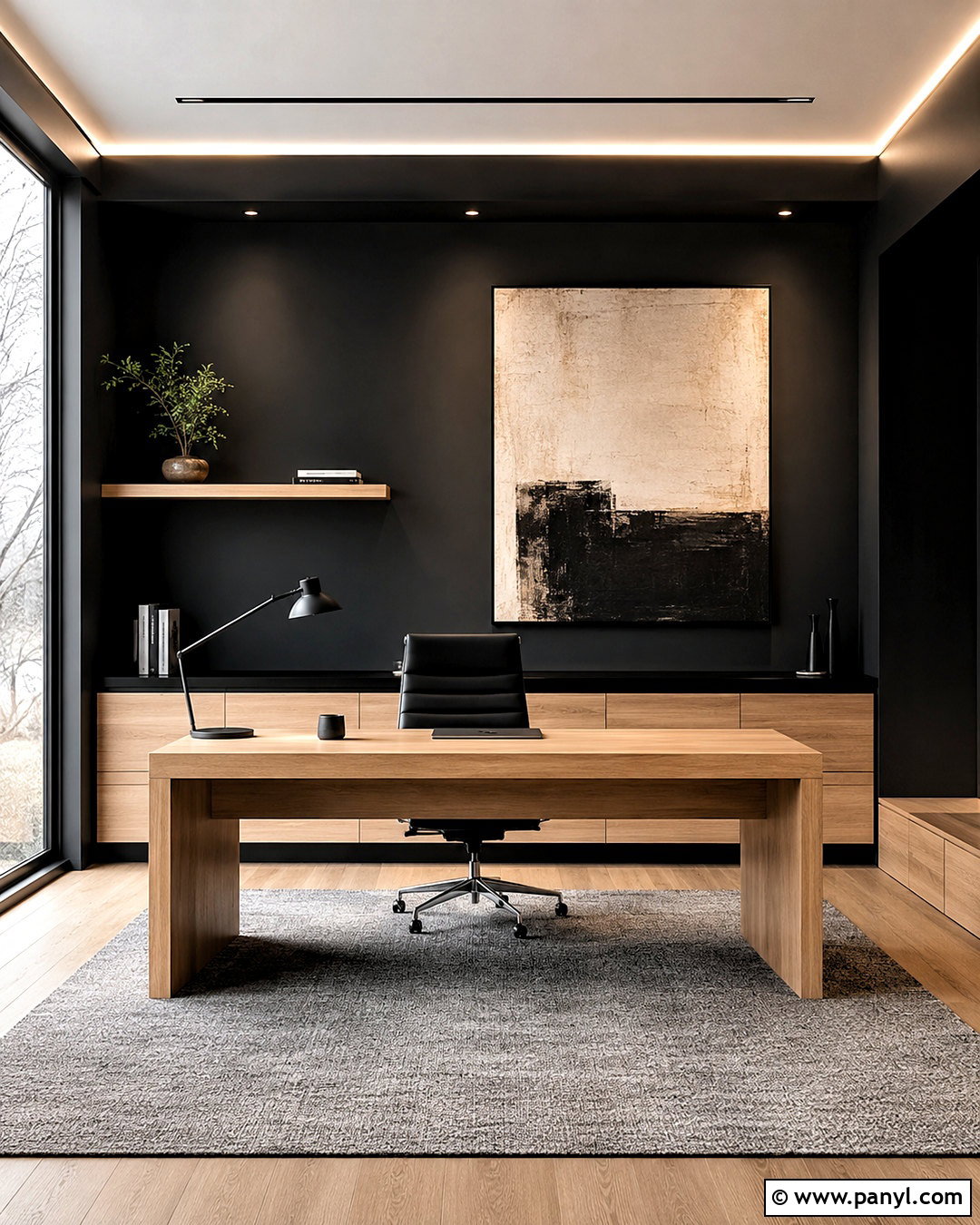
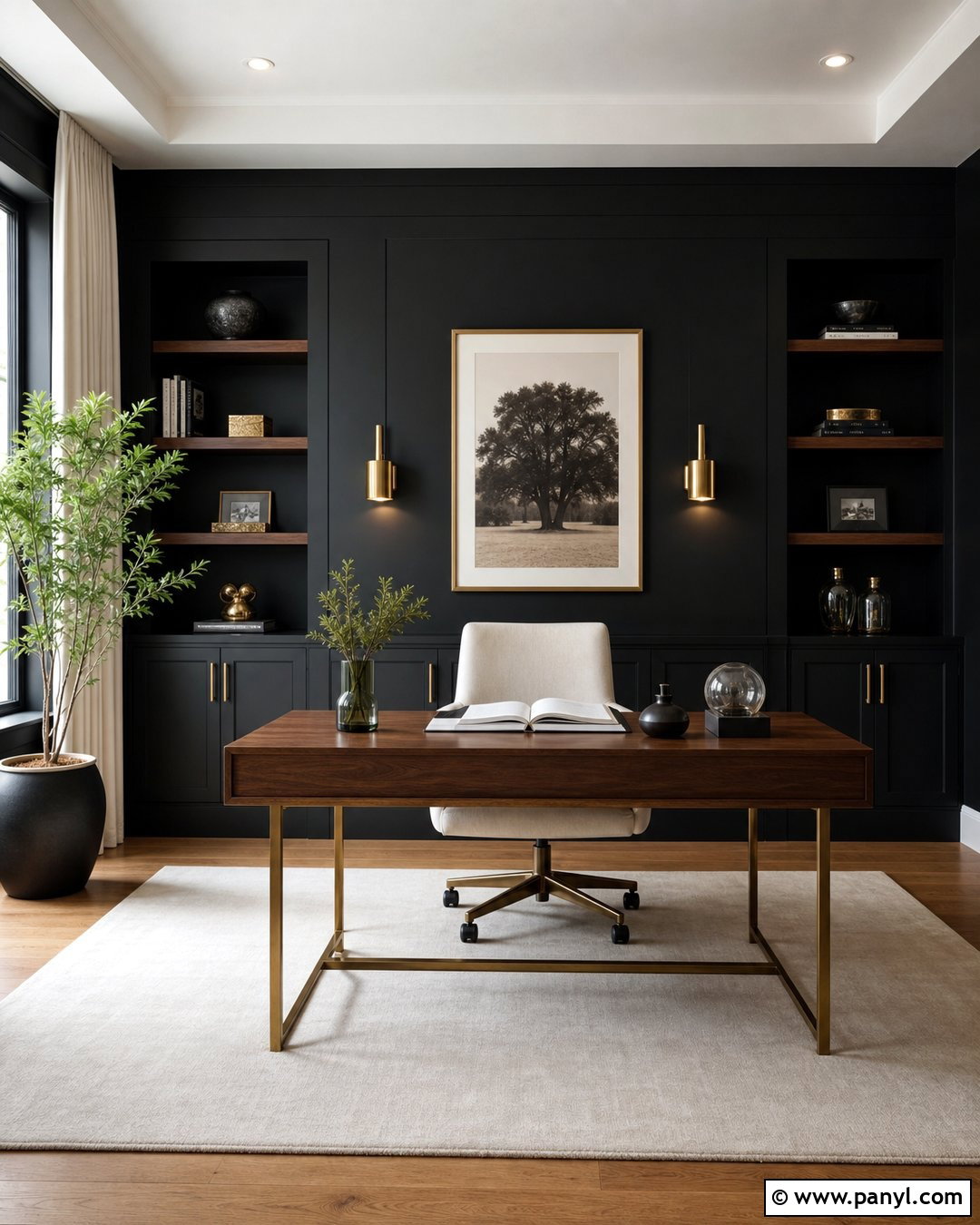
A black computer room can look sophisticated rather than gloomy when the complete space includes strong contrast and layered lighting. Use matte black on the main desk wall and built-ins, then paint the remaining walls and ceiling a warm off-white. Place a broad oak desk against the dark background so its grain becomes a visible design feature. Add a light gray chair, cream rug, and pale curtains to balance the black surfaces. Integrated shelf lighting, a white desk lamp, and monitor backlighting keep the workstation clear. Use only a few accents, such as framed monochrome artwork and brushed metal hardware. This high-contrast arrangement delivers a modern gaming or professional setup without making an average-size room feel excessively enclosed.
14. Chocolate Brown Computer Room
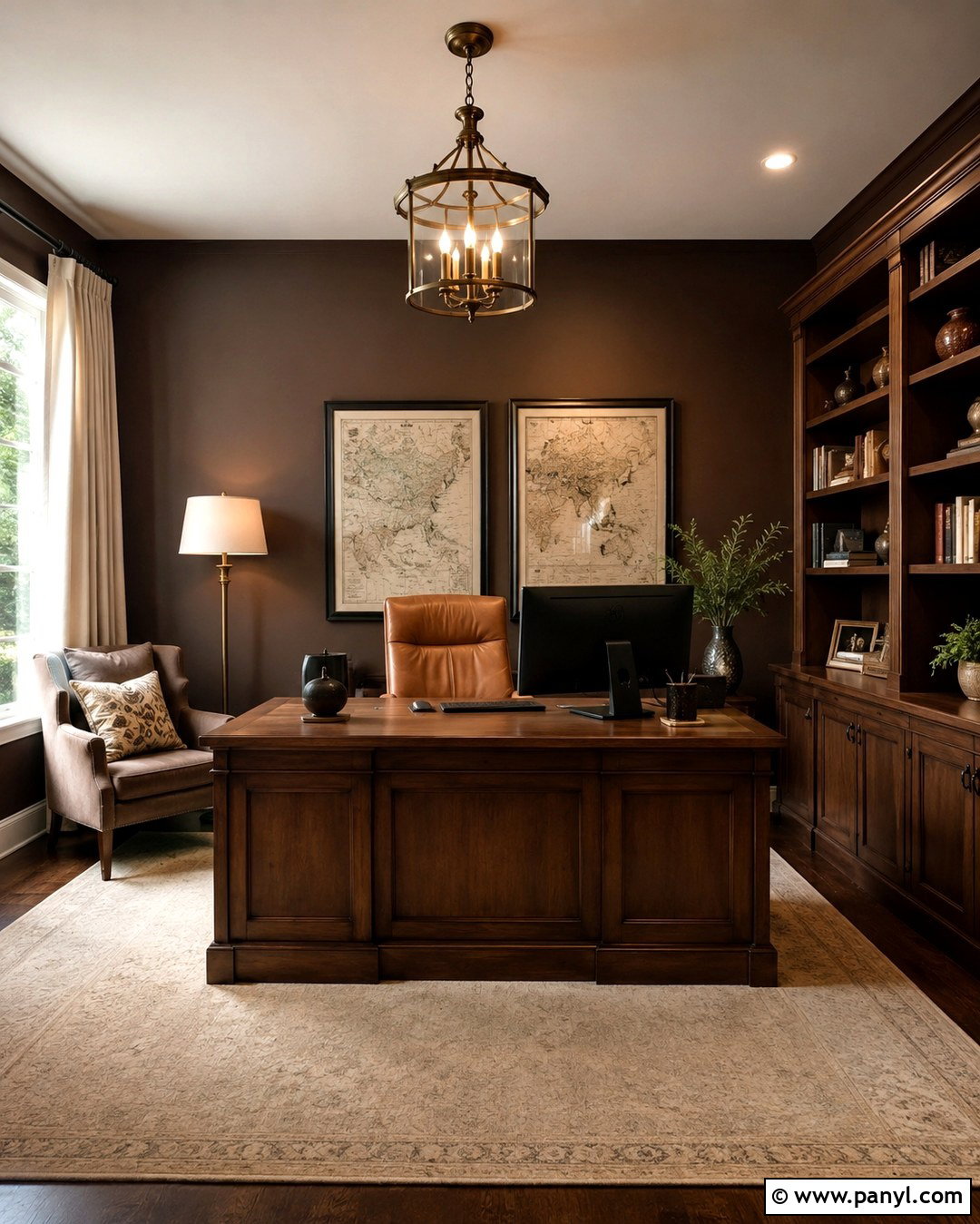
Chocolate brown walls create a warm, enveloping computer room inspired by a traditional study. Paint the walls a deep cocoa shade and pair them with walnut bookshelves, a substantial wood desk, and a camel leather-look chair. Use cream curtains, a light beige rug, and warm white trim to lift the darker palette. Antique brass lighting and framed maps or abstract prints provide character without cluttering the room. Computer equipment in black blends naturally with the rich background, while hidden cable channels preserve the polished appearance. Include a small reading chair if space allows. This complete room design combines modern technology with classic materials, making it suitable for concentrated work, research, reading, and quiet evening computer use.
15. Terracotta Computer Room
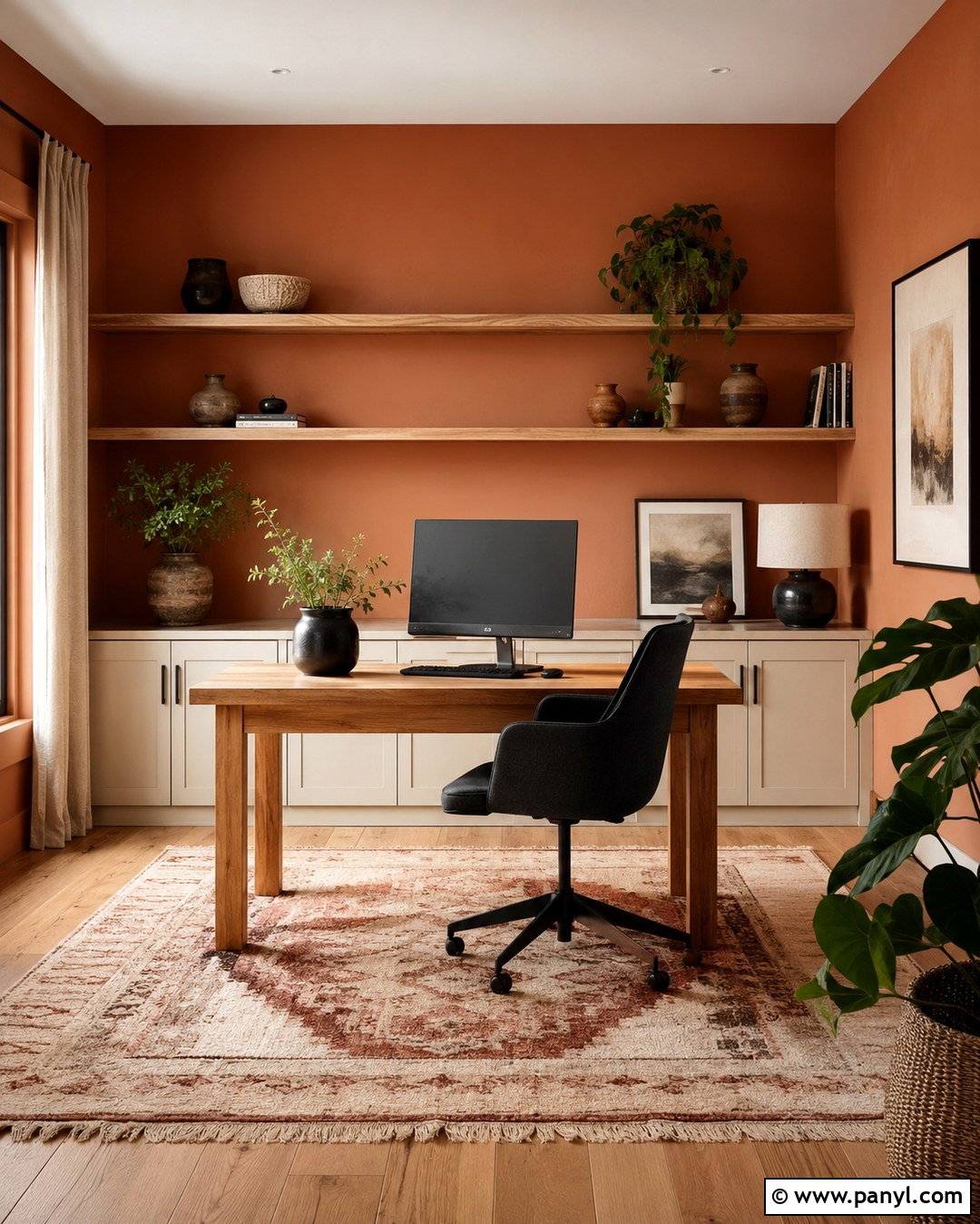
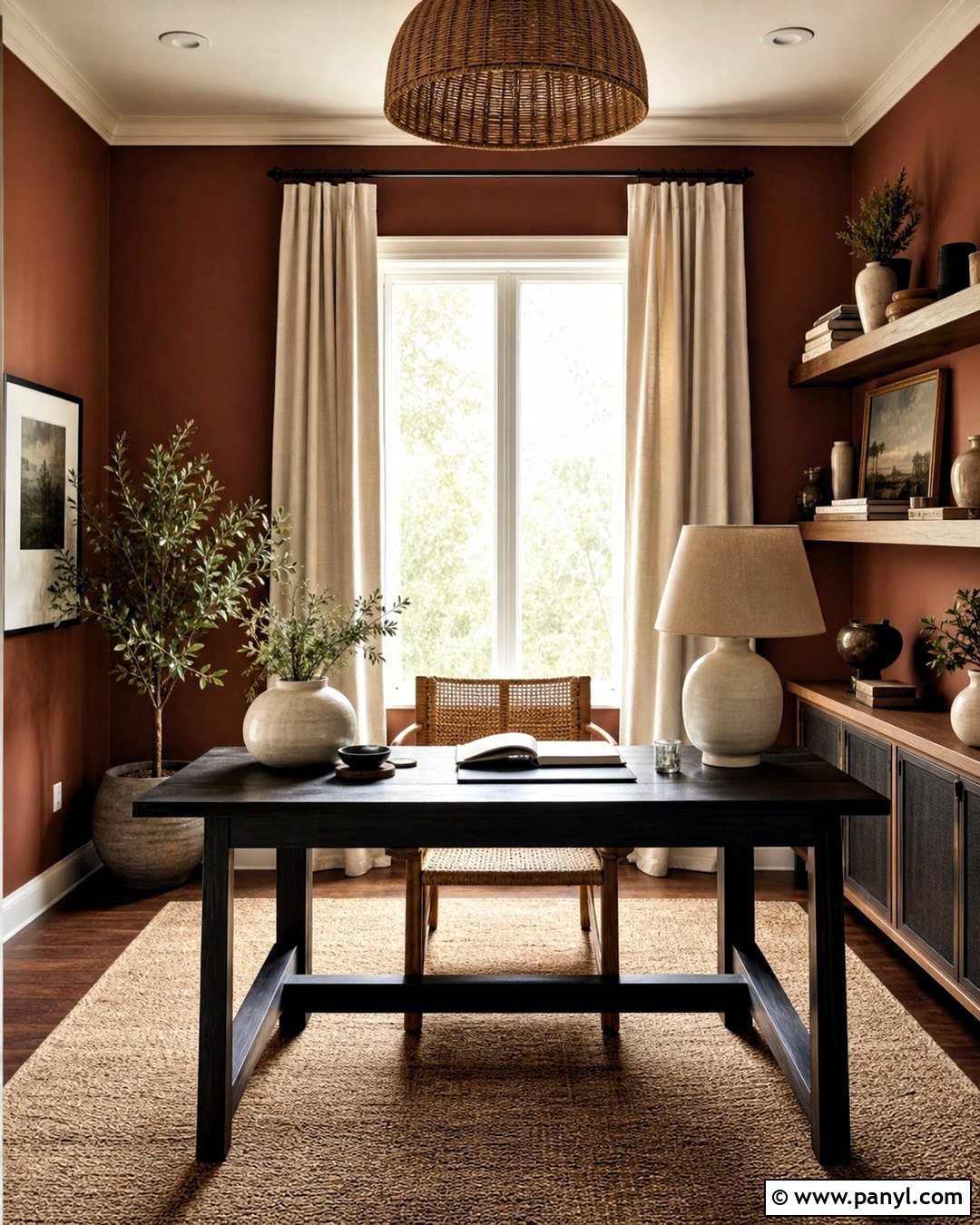
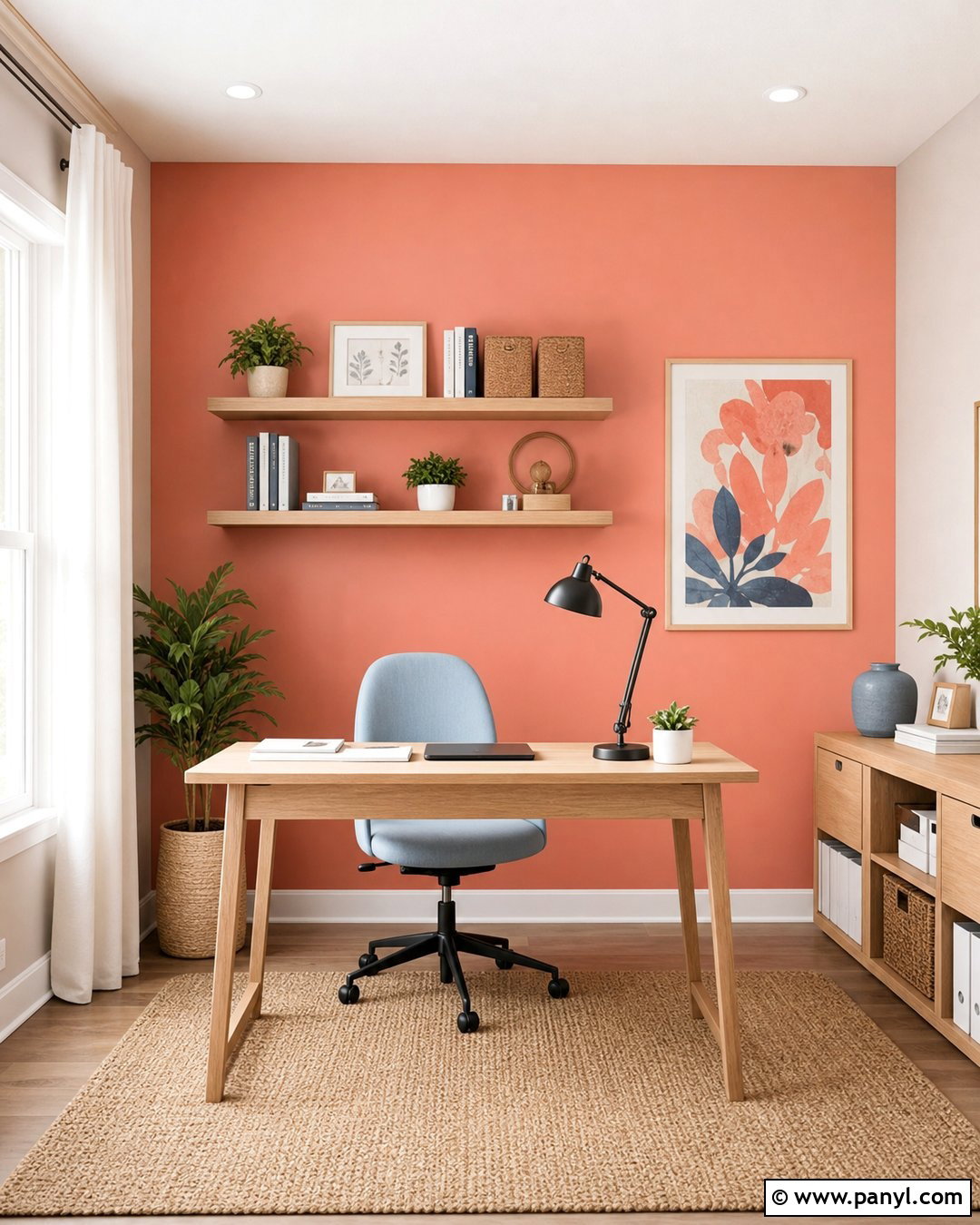
Warm terracotta gives a computer room personality while creating an earthy connection to natural materials. Use a muted clay shade on the walls, then balance it with an oak desk, cream storage cabinets, and a charcoal office chair. A flat-weave rug in beige, rust, and soft black grounds the furniture. Add linen window treatments, matte black sconces, and simple pottery for a coordinated finish. Shelves should remain light wood or warm white so they do not compete with the wall color. Green plants offer a fresh contrast to the orange-red undertones. The completed room feels creative and welcoming, making this palette especially effective for illustration, writing, crafting, or any computer-based work that benefits from an expressive setting.
16. Burnt Orange Computer Room
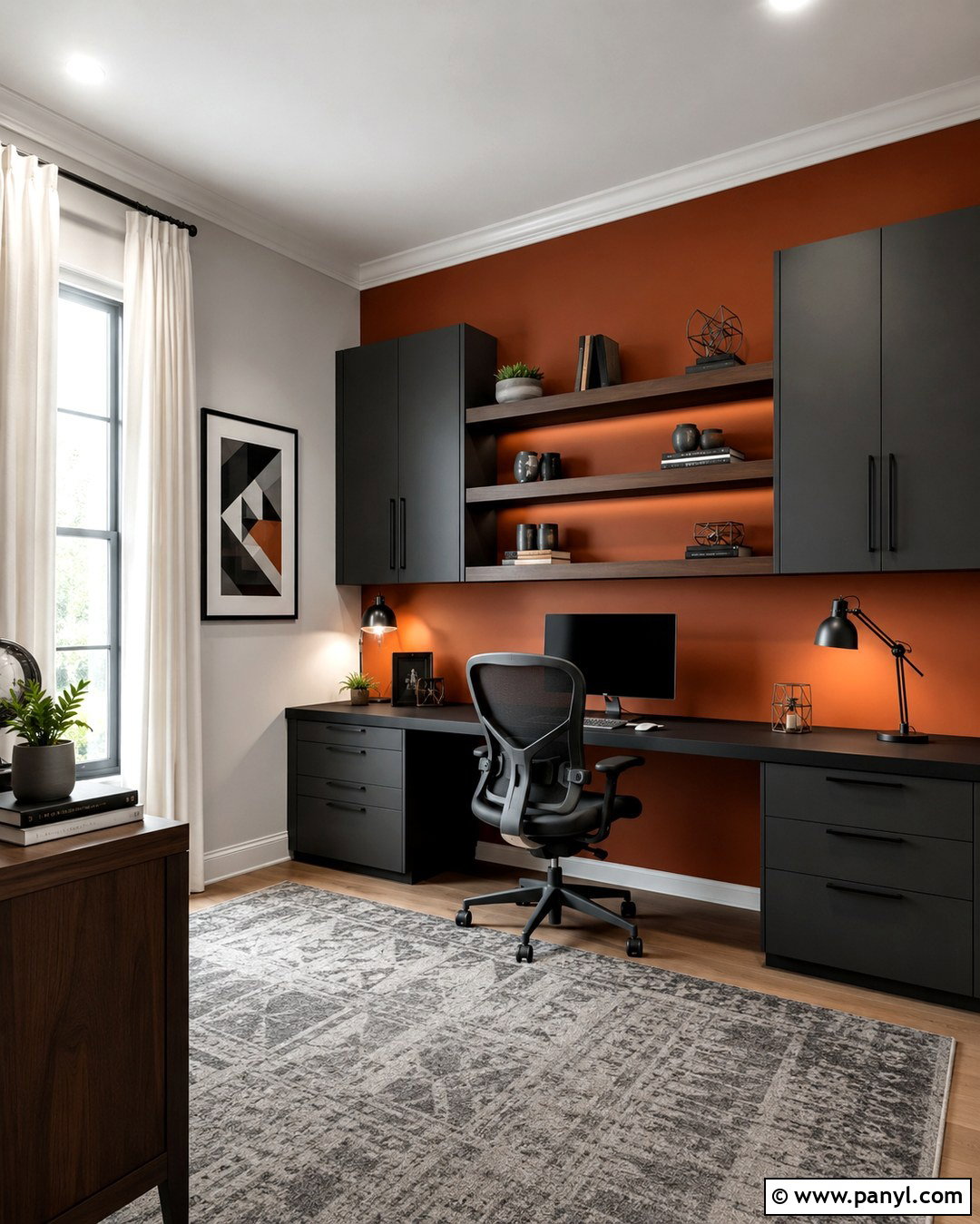
Burnt orange works best as a carefully controlled feature color in a modern computer room. Paint the wall behind the desk in a deep, muted orange and keep the other walls warm light gray. Choose a black desk with simple lines, graphite storage cabinets, and a gray ergonomic chair. Repeat the orange in a small rug pattern or one desk accessory rather than throughout the entire space. Walnut wall shelves, black task lighting, and cream curtains add balance. A few geometric prints can reinforce the modern character. This complete palette creates a strong focal point for gaming or creative work while preserving a professional appearance. Good organization is essential because the bold background naturally draws attention toward the workstation.
17. Muted Mustard Computer Room
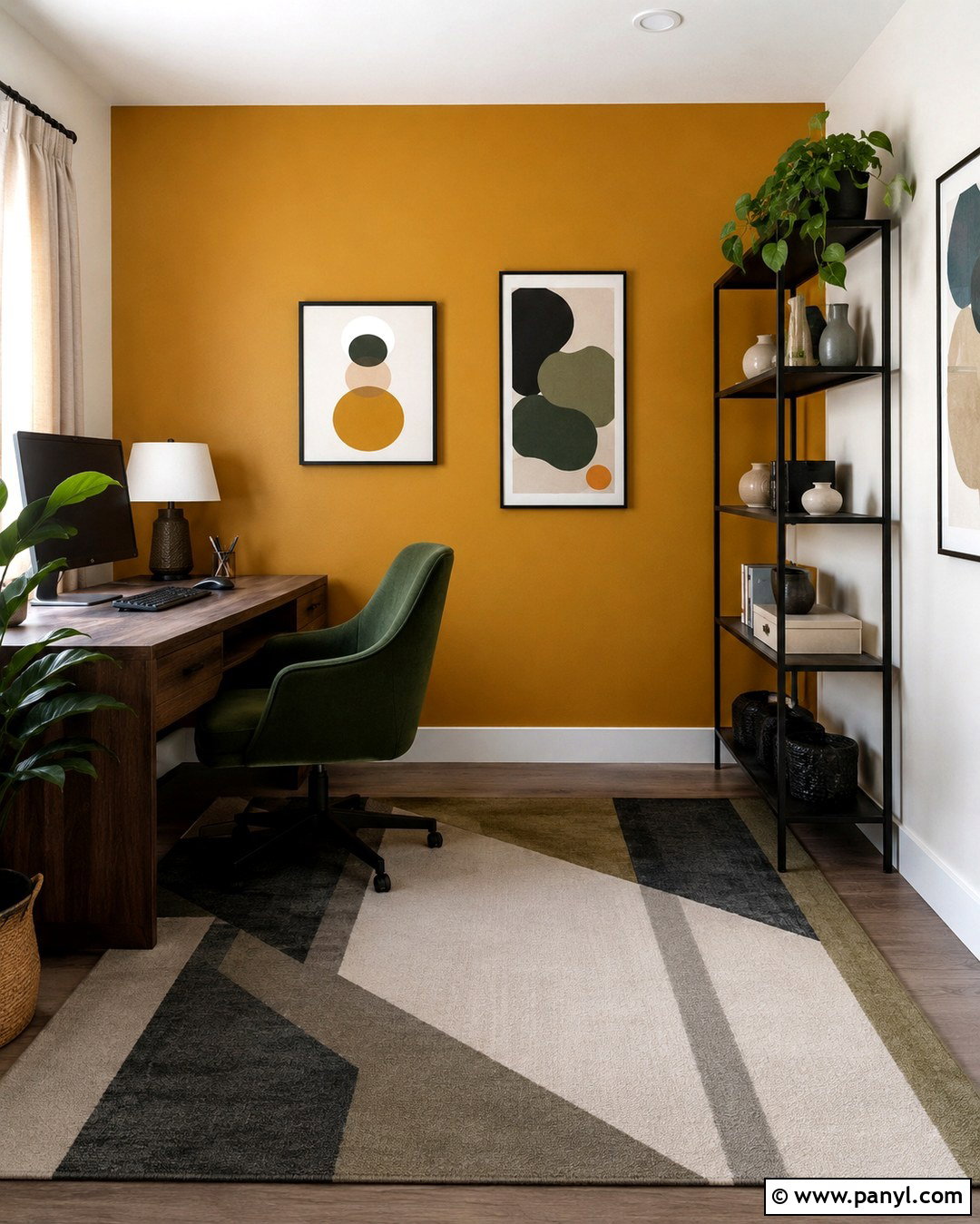
Muted mustard walls bring warmth and optimism to a computer room without the intensity of bright yellow. Apply the color to one main wall and use creamy white on the surrounding walls and ceiling. A walnut desk, dark green chair, and black metal shelves produce an appealing earthy combination. Add a patterned rug in cream, mustard, olive, and charcoal to connect every element. Window treatments should remain simple, such as natural linen panels or a woven shade. Decorate with framed graphic prints, ceramic organizers, and one leafy plant. This complete setup works particularly well in creative offices and study rooms. Soft neutral furnishings prevent the golden wall from dominating, while dark accents give the finished space structure.
18. Dusty Rose Computer Room
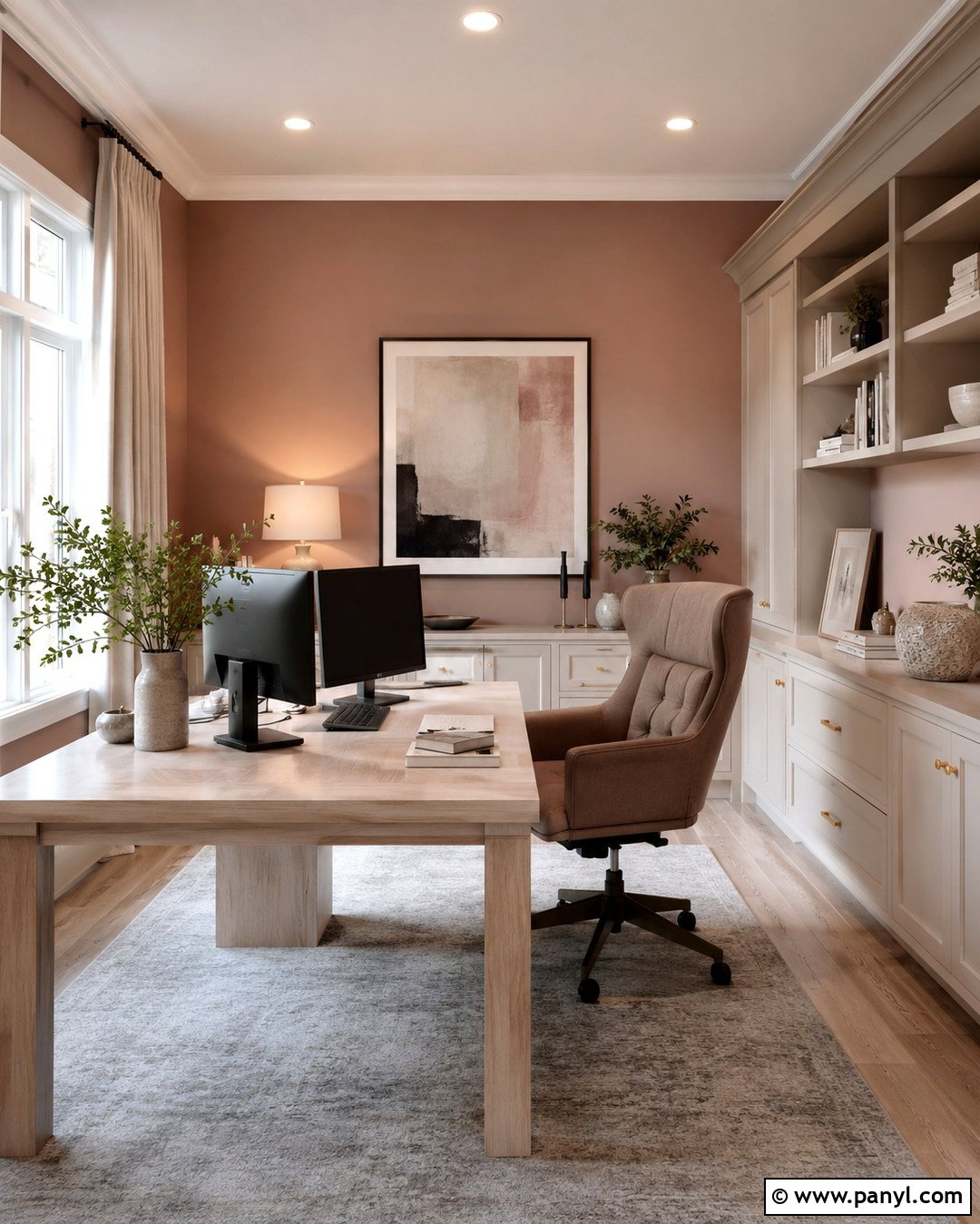
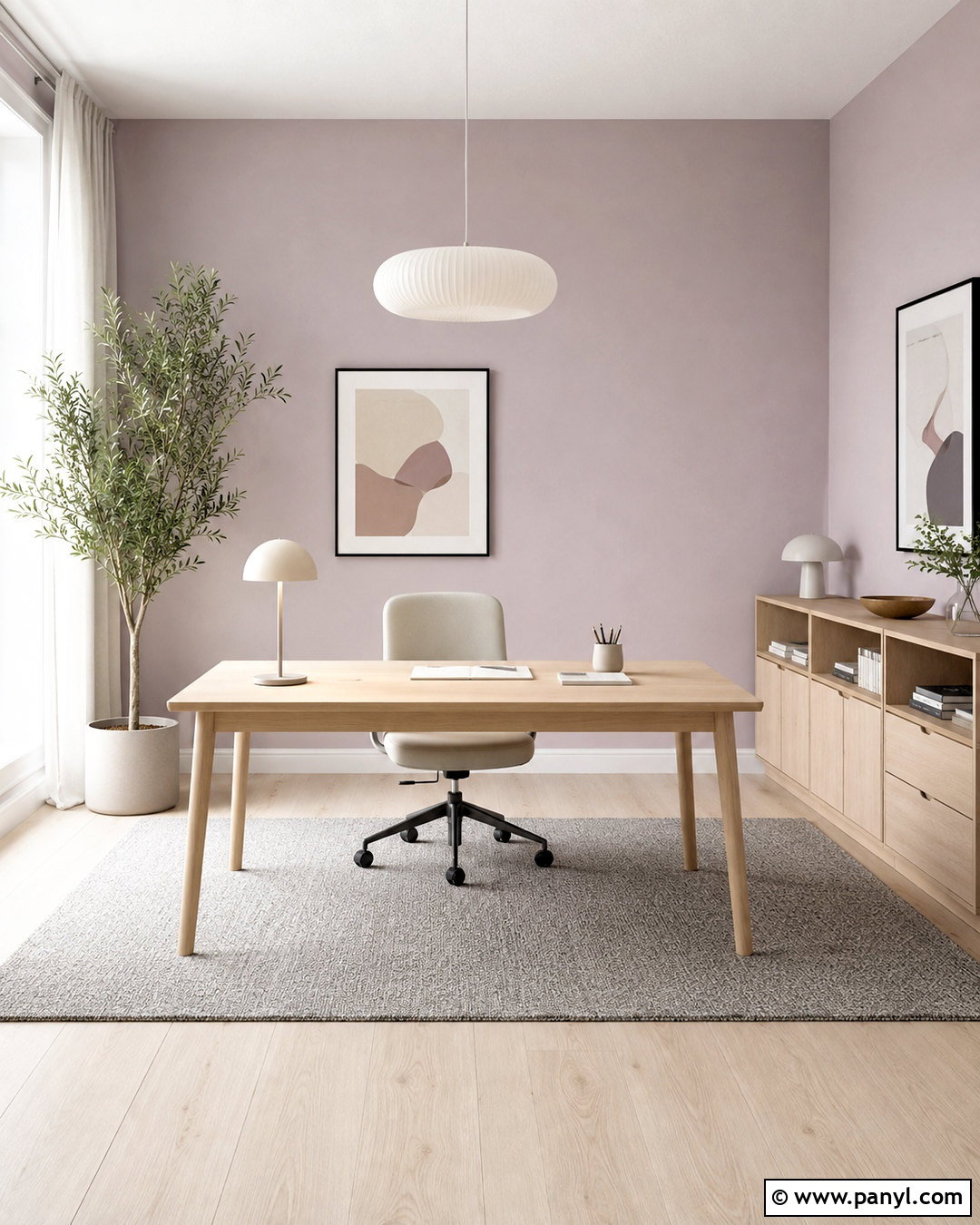
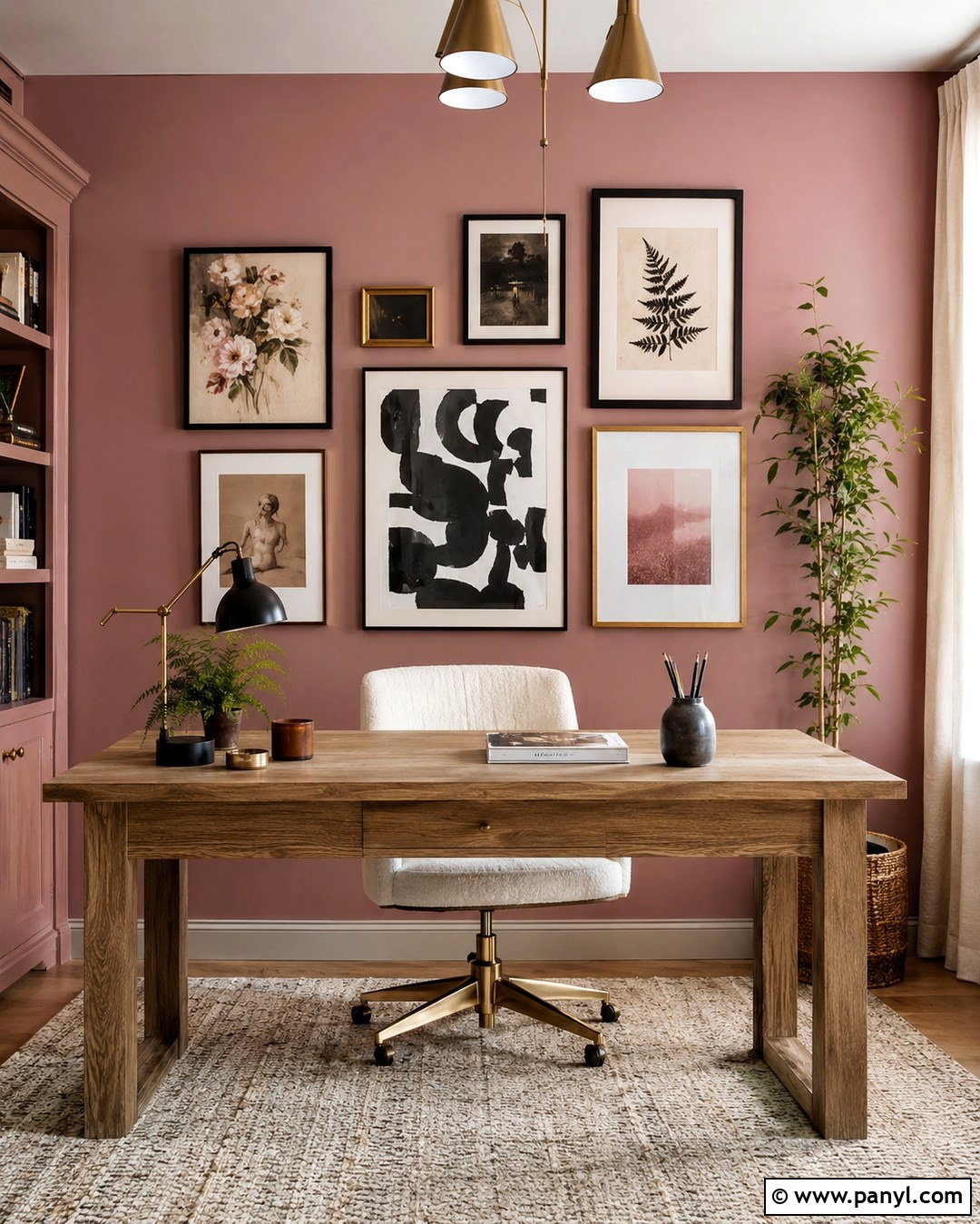
Dusty rose creates a warm computer room that feels stylish, calm, and grown-up. Choose a muted pink with beige or brown undertones instead of a sugary pastel. Pair it with a white oak desk, cream cabinetry, and a taupe upholstered office chair. A soft gray rug grounds the palette, while black monitor stands and lighting add necessary definition. Use natural linen curtains, understated abstract artwork, and brushed brass hardware for a polished finish. Shelving can combine closed storage with a few carefully selected books and ceramics. The resulting workspace feels personal without distracting from practical tasks. This complete look is suitable for a home office, design studio, study area, or combined computer and dressing room.
19. Burgundy Computer Room
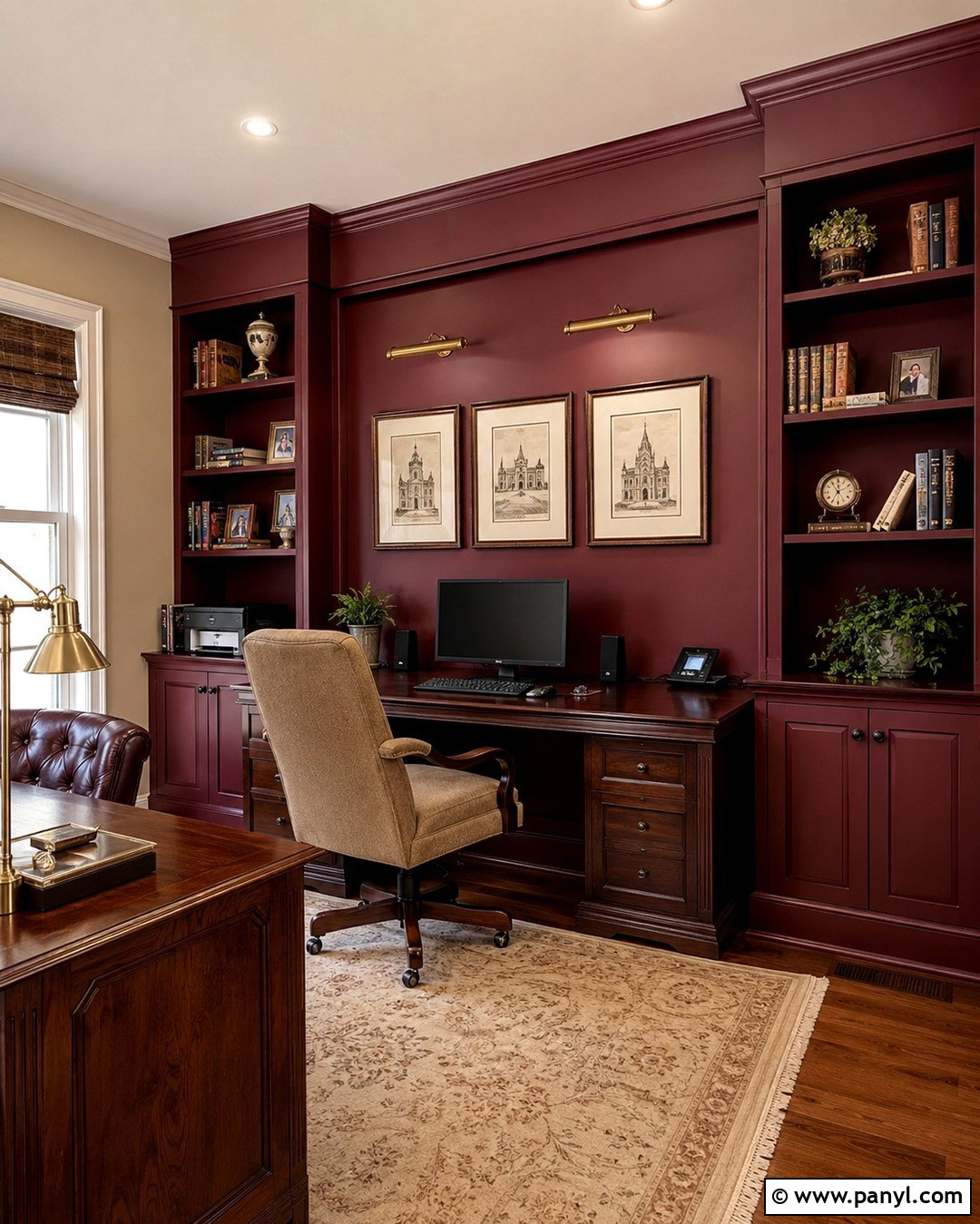
Burgundy walls create a bold, traditional computer room with depth and warmth. Use the rich red shade behind the desk and on built-in bookcases, then soften it with warm cream walls elsewhere. A dark walnut desk and black computer equipment blend naturally into the strong backdrop. Add a tan upholstered chair, beige rug, and brass library-style lighting to brighten the arrangement. Artwork with cream mats and slim wood frames can break up the burgundy wall without weakening its impact. Keep accessories limited and store office supplies behind cabinet doors. This complete scheme feels suitable for a formal home office, editing room, or computer library. Warm neutrals ensure the saturated wall color remains sophisticated rather than overpowering.
20. Two Tone Computer Room
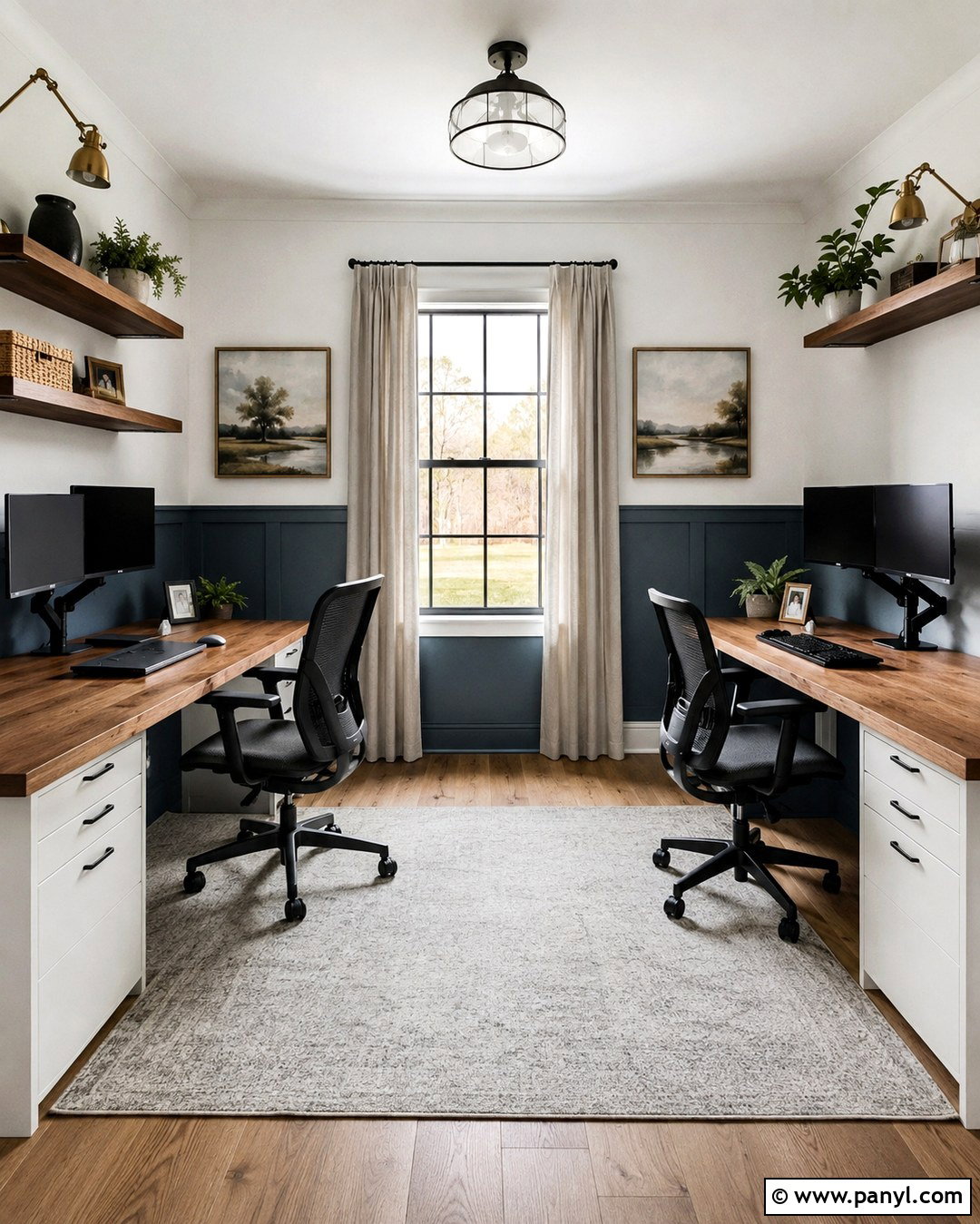
A two-tone treatment adds structure to a computer room without requiring a single dominant wall color. Paint the lower half of the walls deep blue-gray and the upper half soft white, separating them with a simple painted chair rail. Use a warm oak desk, white storage cabinets, and a charcoal chair to connect both wall tones. A light gray rug and natural curtains keep the room balanced. Position framed artwork above the dividing line and install floating shelves in the darker lower zone where possible. Black lighting and monitor arms add clean definition. This complete design suits small offices and multipurpose rooms because the lighter upper walls preserve brightness while the darker base gives furniture and equipment a grounded appearance.
Conclusion:
The most successful computer room balances color, comfort, storage, and technology as one complete design. Light white, gray, beige, and pale blue walls support an open, flexible workspace. Sage, olive, dusty blue, and warm greige introduce gentle character. Navy, charcoal, black, burgundy, and chocolate brown create deeper, more immersive rooms when balanced with lighter furnishings and good lighting. Bold terracotta, teal, mustard, or dusty rose can energize a creative setup without sacrificing function. Always compare paint samples beside the desk, flooring, and computer equipment before making a final decision. With thoughtful furniture and coordinated accents, these 20 Computer Room Wall Color Ideas can inspire a workspace that feels organized, comfortable, and distinctly yours.

Related Ideas and Inspiration:
Leave a Reply