
Retro color can make a room feel cheerful, personal, and refreshingly different without turning it into a dated time capsule. The most recognizable palettes draw from 1950s pastels, 1960s brights, and 1970s earth tones, often combined with geometric forms, curved furniture, natural wood, and playful pattern. () The key is building a complete look instead of adding random nostalgic colors. Choose one dominant wall treatment, repeat its shades through furniture and textiles, then balance everything with simple flooring and clean-lined decor. From subtle two-tone walls to bold arches, waves, stripes, and murals, these rooms offer practical inspiration for bedrooms, kitchens, living areas, and more. Explore the complete color schemes and room plans below with these **30 retro wall paint ideas**.
1. Avocado Green Living Room Wall Paint
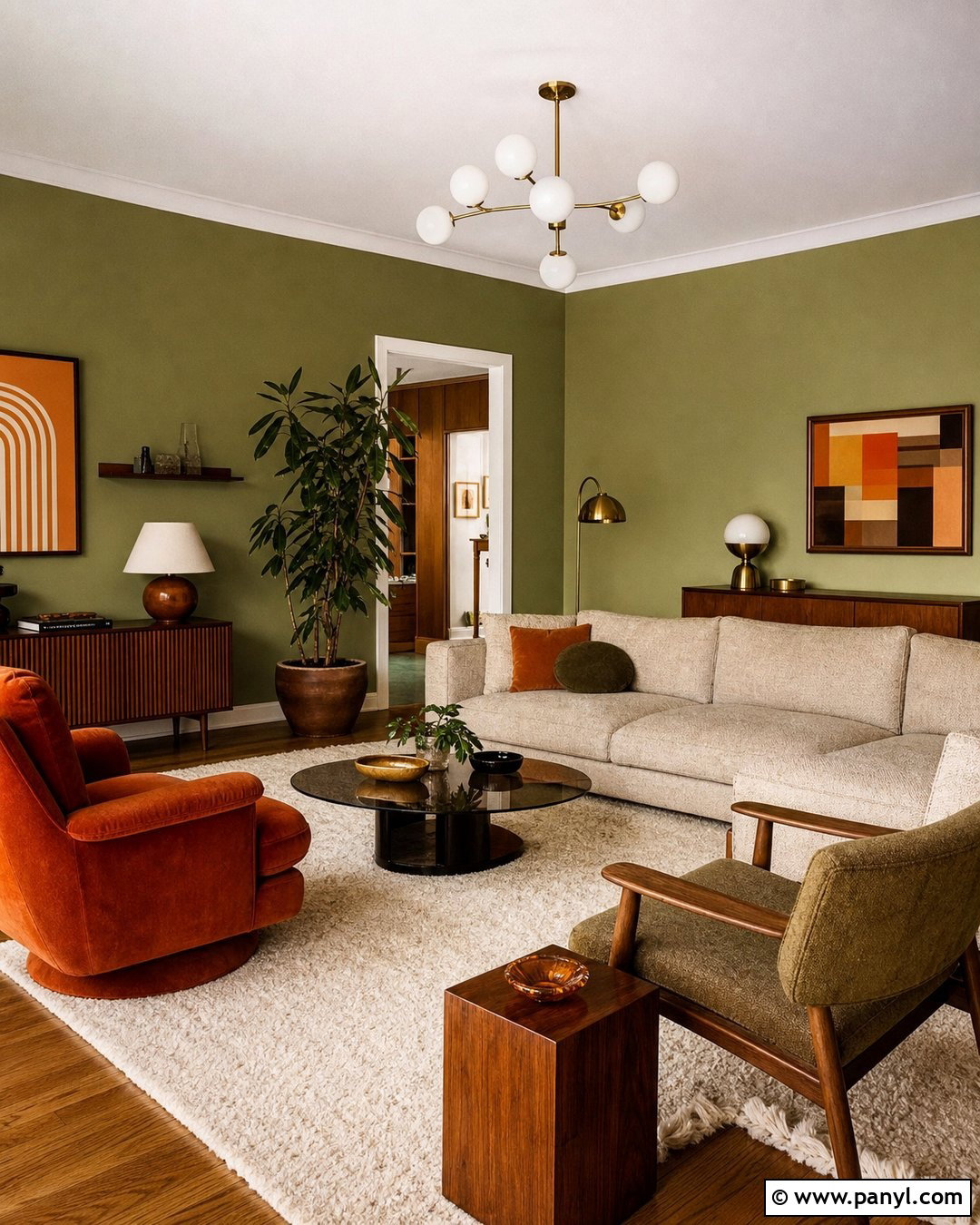
Avocado green creates a grounded 1970s living room when it is softened with cream and warm wood. Paint the main walls a muted avocado rather than a bright yellow-green. Keep the ceiling warm white so the room still feels open. Add a low walnut sofa frame with oatmeal upholstery, a rust-colored lounge chair, and a cream wool rug. A teak media console and round smoked-glass coffee table reinforce the retro character without making the room feel themed. Repeat the wall color through two patterned cushions, but use solid fabrics elsewhere. Brass lighting, ceramic table lamps, and leafy plants add warmth. Finish with one large abstract print containing olive, orange, brown, and ivory to connect the complete palette.
2. Burnt Orange Bedroom Wall Arch
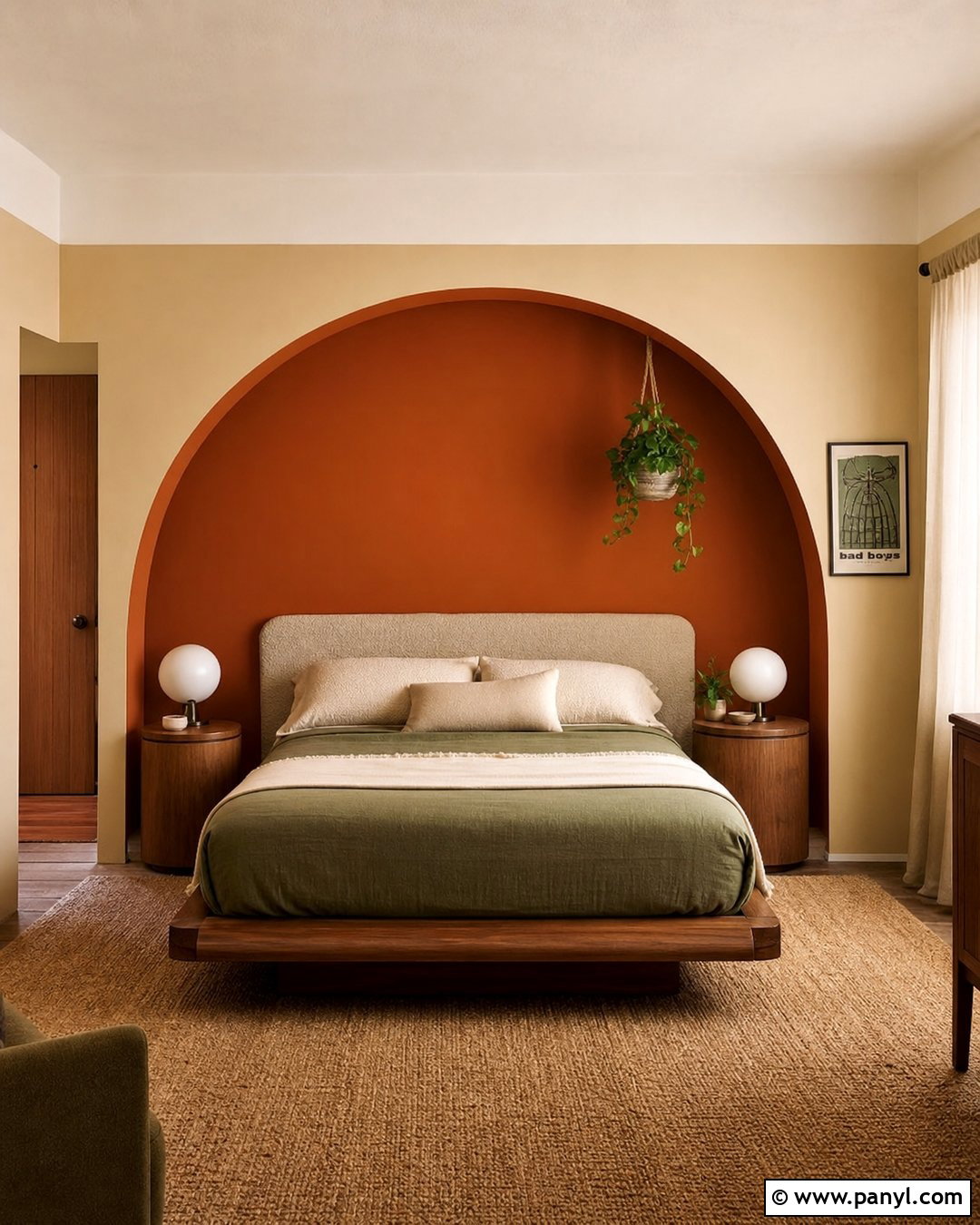
A wide burnt orange arch can turn a basic bedroom wall into a strong retro focal point. Paint the arch behind the bed, extending it slightly beyond the nightstands so it visually frames the entire sleeping area. Use creamy beige on the remaining walls and ceiling to keep the orange from feeling heavy. Choose a low walnut platform bed with an oatmeal upholstered headboard, then layer olive green bedding, ivory sheets, and a small geometric lumbar pillow. Globe-shaped bedside lamps and round wooden nightstands echo the arch’s curves. A tan rug, linen curtains, and one trailing plant soften the hard edges. Keep artwork minimal because the painted shape already serves as the room’s main decorative feature.
3. Mustard Yellow Dining Room Color Blocking
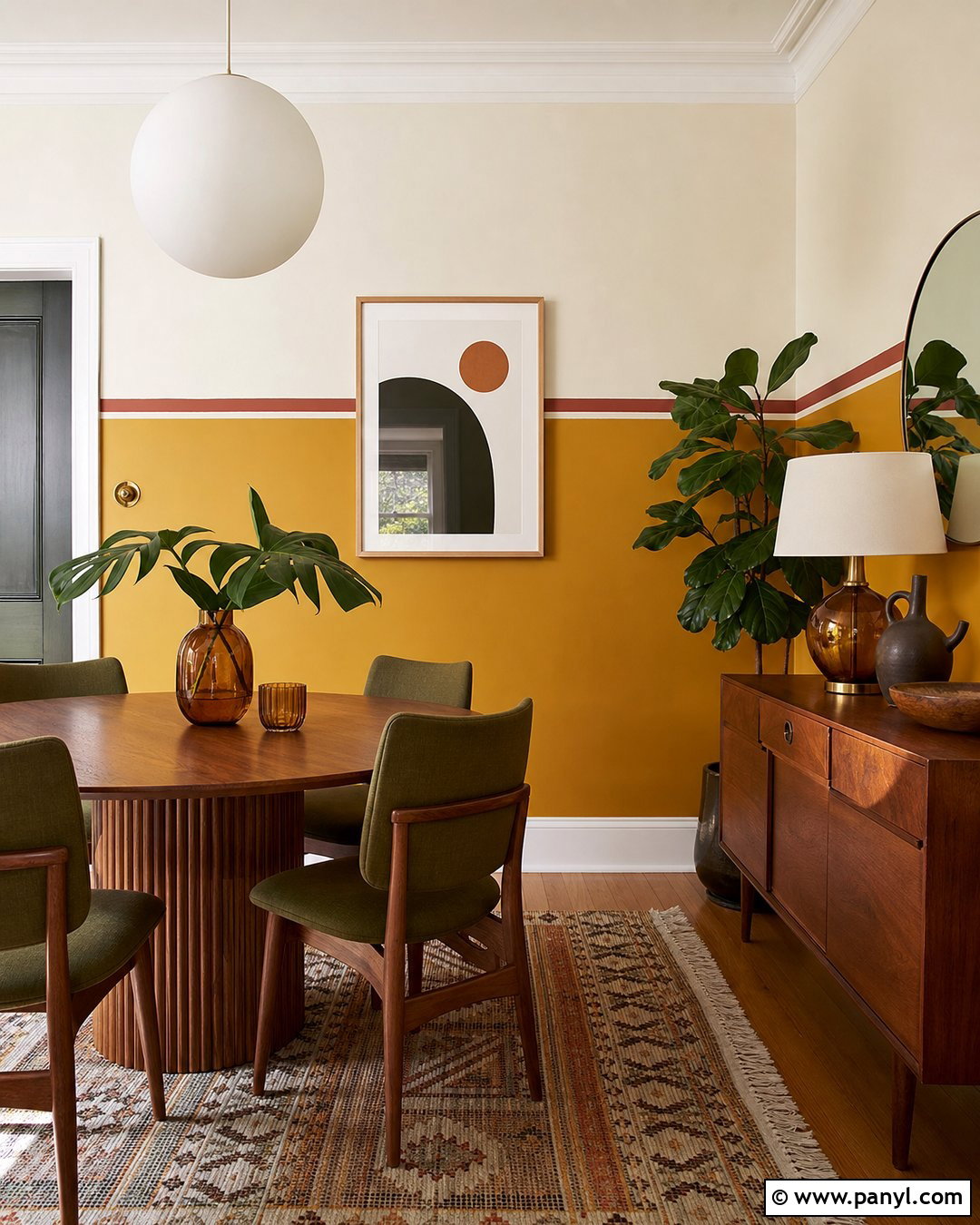
Warm mustard yellow makes a dining room feel sunny even when natural light is limited. Use it on the lower two-thirds of the walls, with soft cream above and a narrow rust stripe separating the colors. This horizontal arrangement creates a retro look while visually grounding the dining table. Center a round walnut table in the room and surround it with curved chairs upholstered in olive or caramel fabric. Hang a white globe pendant above the table to brighten the stronger wall colors. A flat-woven rug with brown, cream, and orange details will connect the palette. Complete the room with a teak sideboard, amber glass accessories, and simple ceramic dishes. Leave the window treatments light and neutral to prevent visual overload.
4. Teal And Cream Kitchen Wall Paint
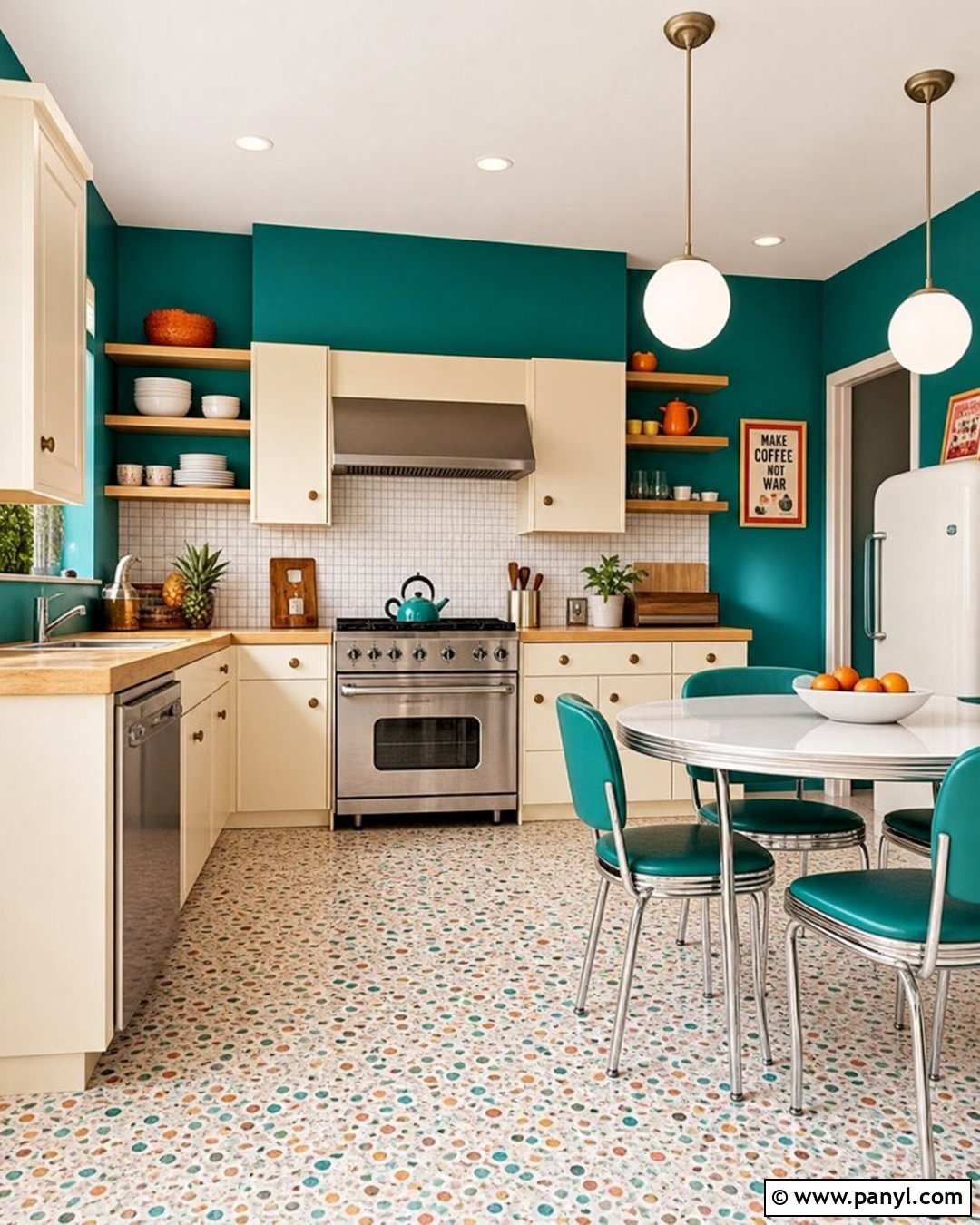
Could your kitchen use more personality without replacing every cabinet? Paint the walls a rich blue-green teal and pair them with creamy white cabinets for a polished 1950s-inspired contrast. Warm butcher-block counters and small brushed-brass knobs keep the teal from feeling cold. Use a light terrazzo or checkerboard floor with subtle gray and tan markings. A compact breakfast table with chrome legs and cream vinyl chairs adds retro character while remaining practical. Repeat teal through a pendant shade or countertop appliance, but avoid matching every accessory. Open oak shelves can display white dishes, green glassware, and a few orange ceramics. Bright white trim and ceiling paint will sharpen the edges and help this colorful kitchen feel fresh, clean, and balanced.
5. Pink And Mint Bathroom Wall Paint
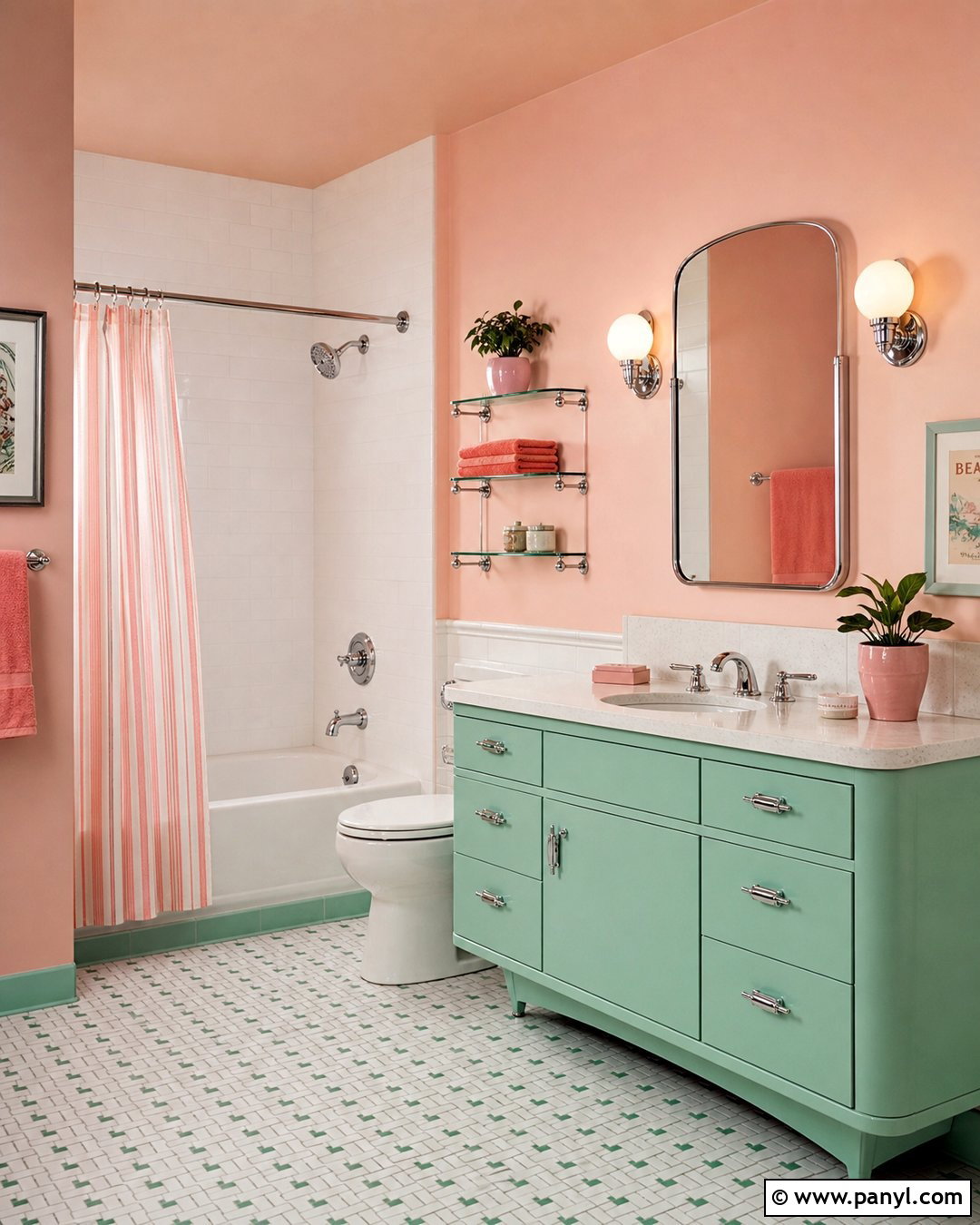
Soft pink and mint green create a cheerful 1950s bathroom that feels nostalgic rather than sugary. Paint the upper walls a pale blush pink and use mint green on the vanity, medicine cabinet, or lower wall paneling. White tile around the tub provides a clean visual break between the colors. Choose a white sink, chrome faucets, and rounded globe sconces to support the vintage direction. Black-and-white mosaic flooring adds definition and prevents the pastel palette from becoming too delicate. Hang a simple white shower curtain with narrow mint stripes, then add coral towels for a warmer accent. A curved mirror, small glass shelf, and pink ceramic planter finish the room. Keep countertops nearly clear so the compact space remains bright and functional.
6. Rust And Brown Striped Office Wall
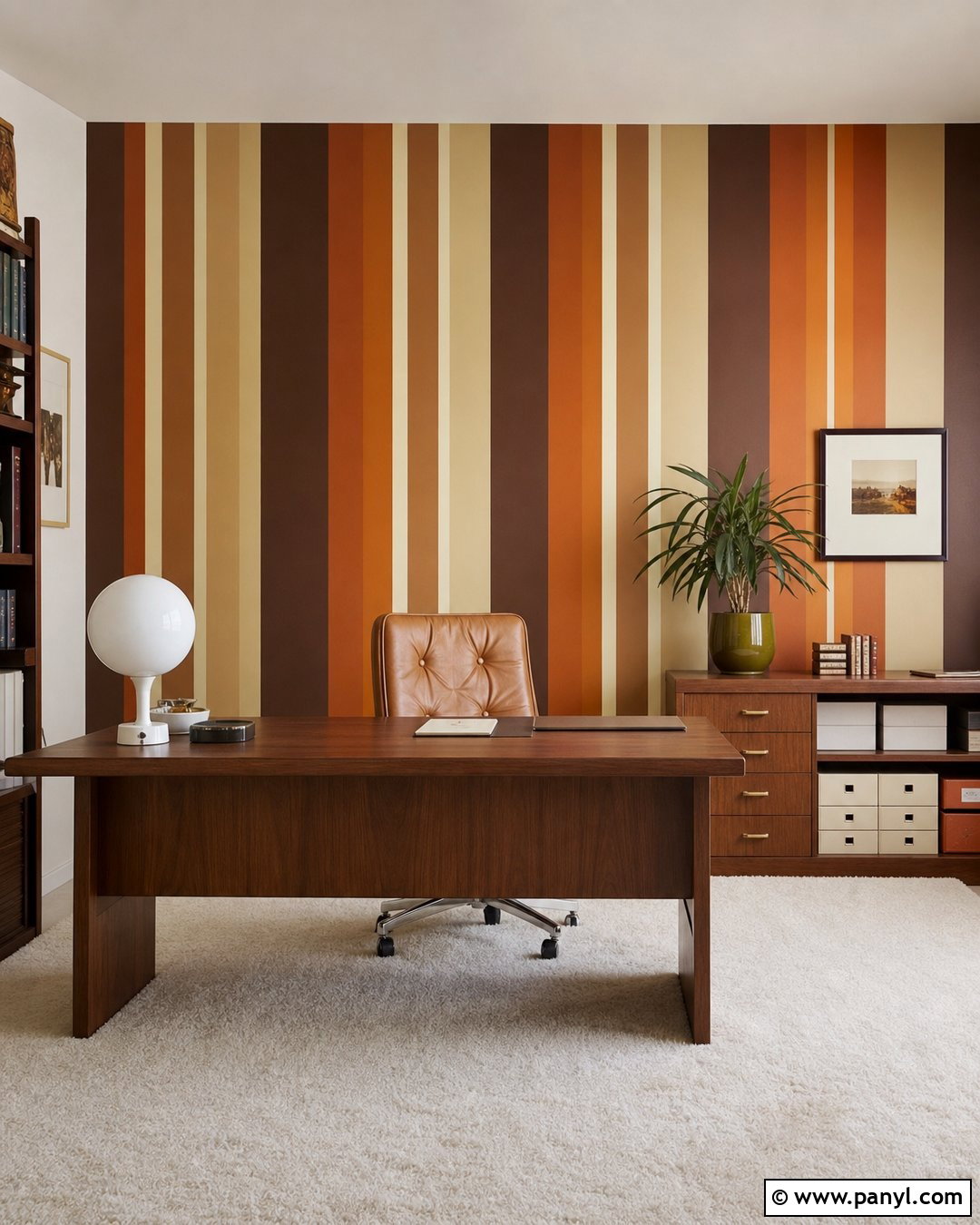
Vertical stripes in rust, caramel, cream, and chocolate brown can transform a home office into a confident 1970s workspace. Paint stripes of different widths on the wall behind the desk, keeping the remaining walls a warm off-white. The varied proportions make the pattern interesting without resembling formal wallpaper. Place a streamlined walnut desk against the striped wall and add a tan leather chair with a curved back. A cream rug and white globe lamp brighten the deeper colors. Store paperwork in low wood cabinets so the mural remains visible. Introduce one olive green plant pot and a matching desk tray for contrast. This arrangement works best with restrained accessories, clean surfaces, and simple artwork that does not compete with the graphic painted background.
7. Atomic Starburst Playroom Wall Paint
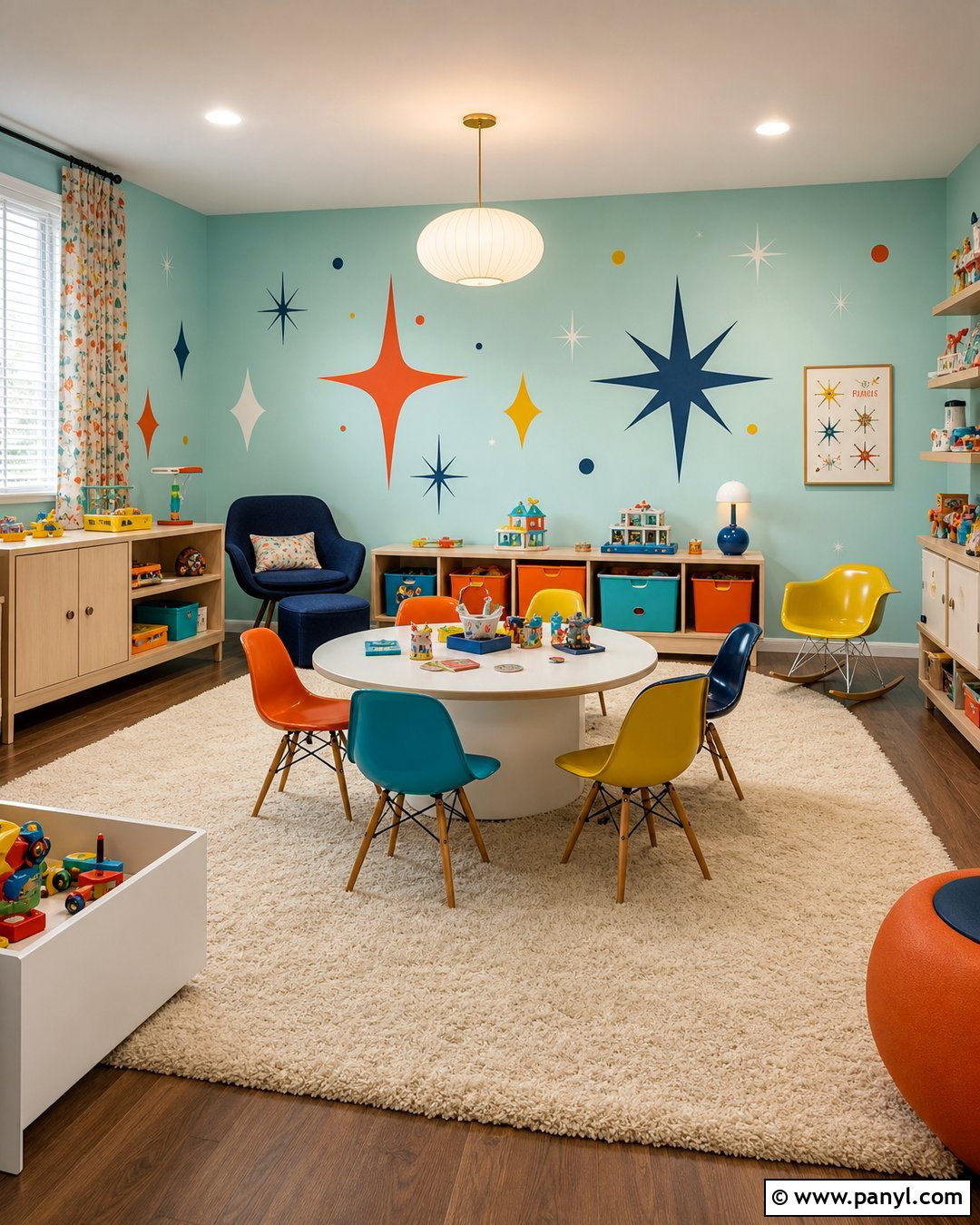
An atomic-inspired mural gives a playroom energetic retro character while allowing the furniture to remain simple. Begin with a pale aqua wall, then add scattered starbursts, diamonds, and small dots in coral, mustard yellow, navy blue, and white. Keep the shapes large enough to read clearly rather than covering every inch. Use low birch storage cabinets, a washable cream rug, and a round activity table with colorful molded chairs. Solid red and blue bins can repeat the mural colors while keeping supplies organized. Add a simple white pendant and natural wood shelves for visual calm. Paint the other walls warm white so the mural becomes the clear focal point. The finished room should feel playful, orderly, bright, and easy to update.
8. Terracotta Arch Entryway Wall Paint
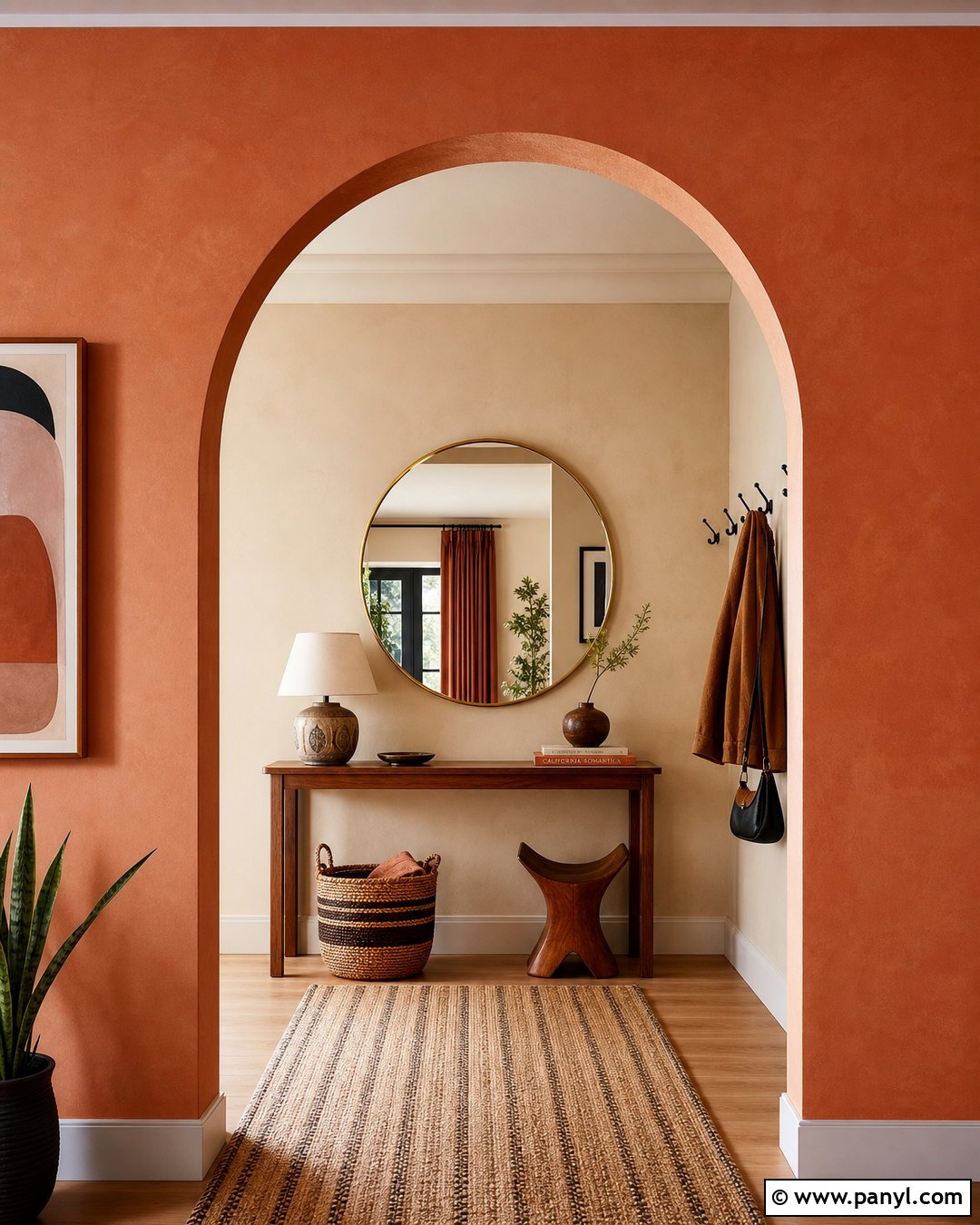
A terracotta arch can give a plain entryway the appearance of built-in architecture. Paint a tall rounded arch around a slim walnut console, leaving the surrounding walls a sandy beige. For a layered effect, add a smaller inner arch in muted peach or warm cream. Place a round brass-framed mirror at the center and use a ribbed ceramic lamp on one side. A woven runner with rust, olive, and ivory details will carry the colors down the hallway. Include a curved wooden stool and a lidded basket for practical storage. Matte black hooks provide subtle contrast without pulling attention away from the paint. This complete setup makes a small entrance feel intentional while preserving enough open wall and floor space for comfortable daily use.
9. Blue And Orange Geometric Living Room Wall
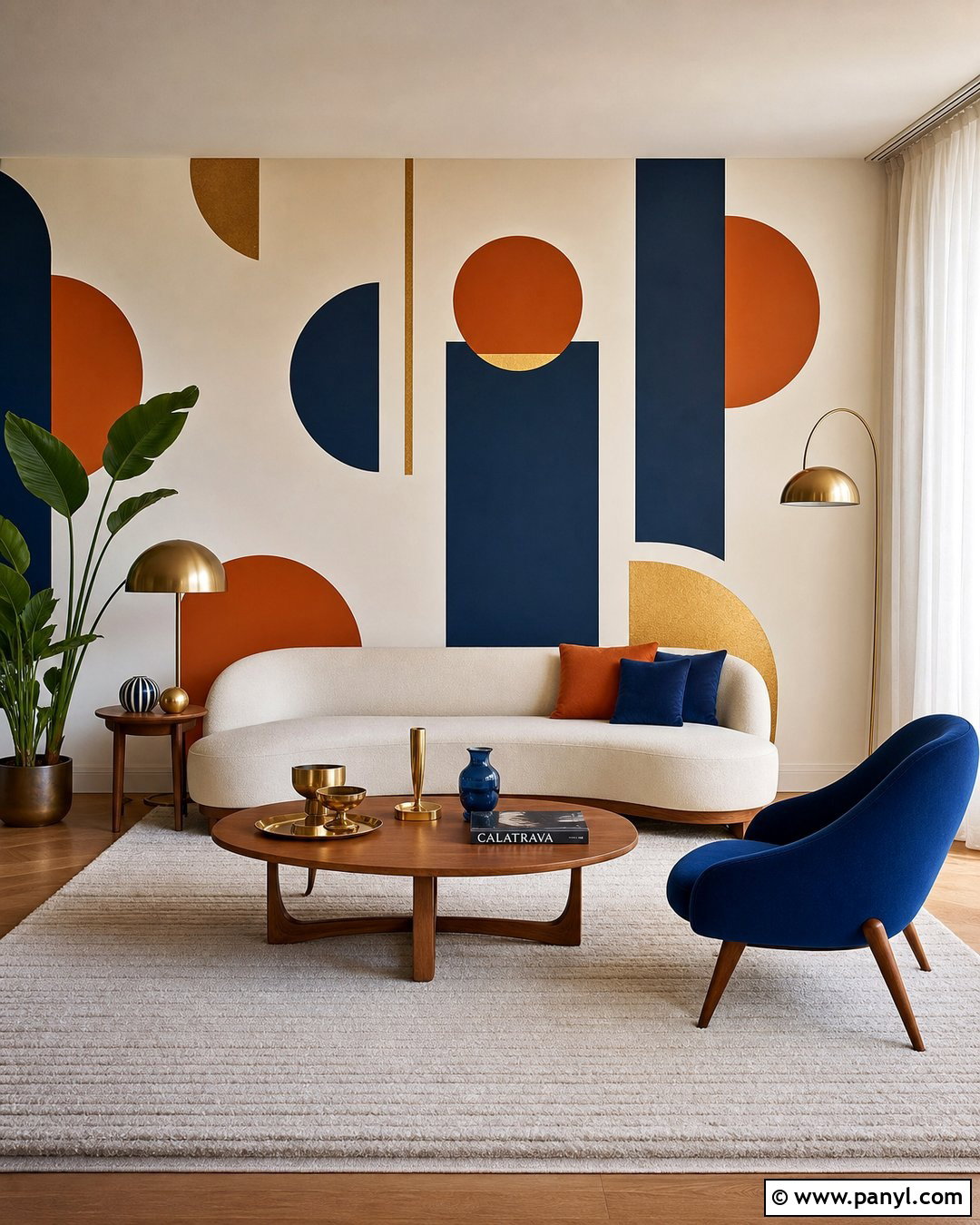
Deep blue and orange form a striking 1960s-inspired combination when they are balanced with plenty of cream. Create an oversized geometric mural behind the sofa using navy rectangles, burnt orange semicircles, and small golden yellow accents on an ivory background. Choose a low cream sofa with tapered walnut legs to keep the wall visible. Add one cobalt lounge chair, a round orange cushion, and a simple teak coffee table. A textured off-white rug will calm the sharp painted shapes. Use brushed brass floor lighting and white curtains to brighten the arrangement. Rather than hanging several pictures, place one small sculptural object on a floating shelf. Repeating curved shapes through the table and lamp will make the mural feel connected to the entire room.
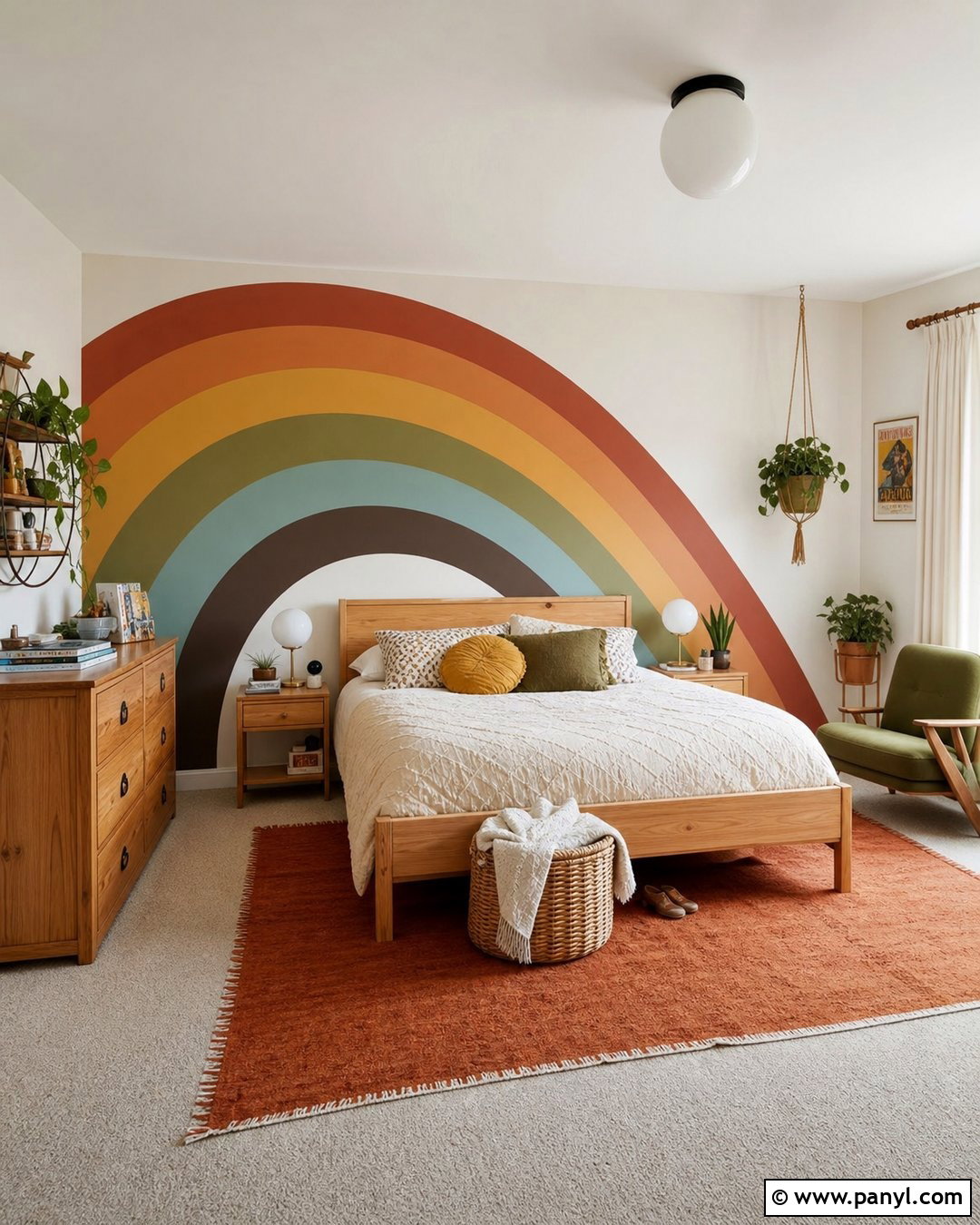
10. Chocolate Brown And Cream Den Walls
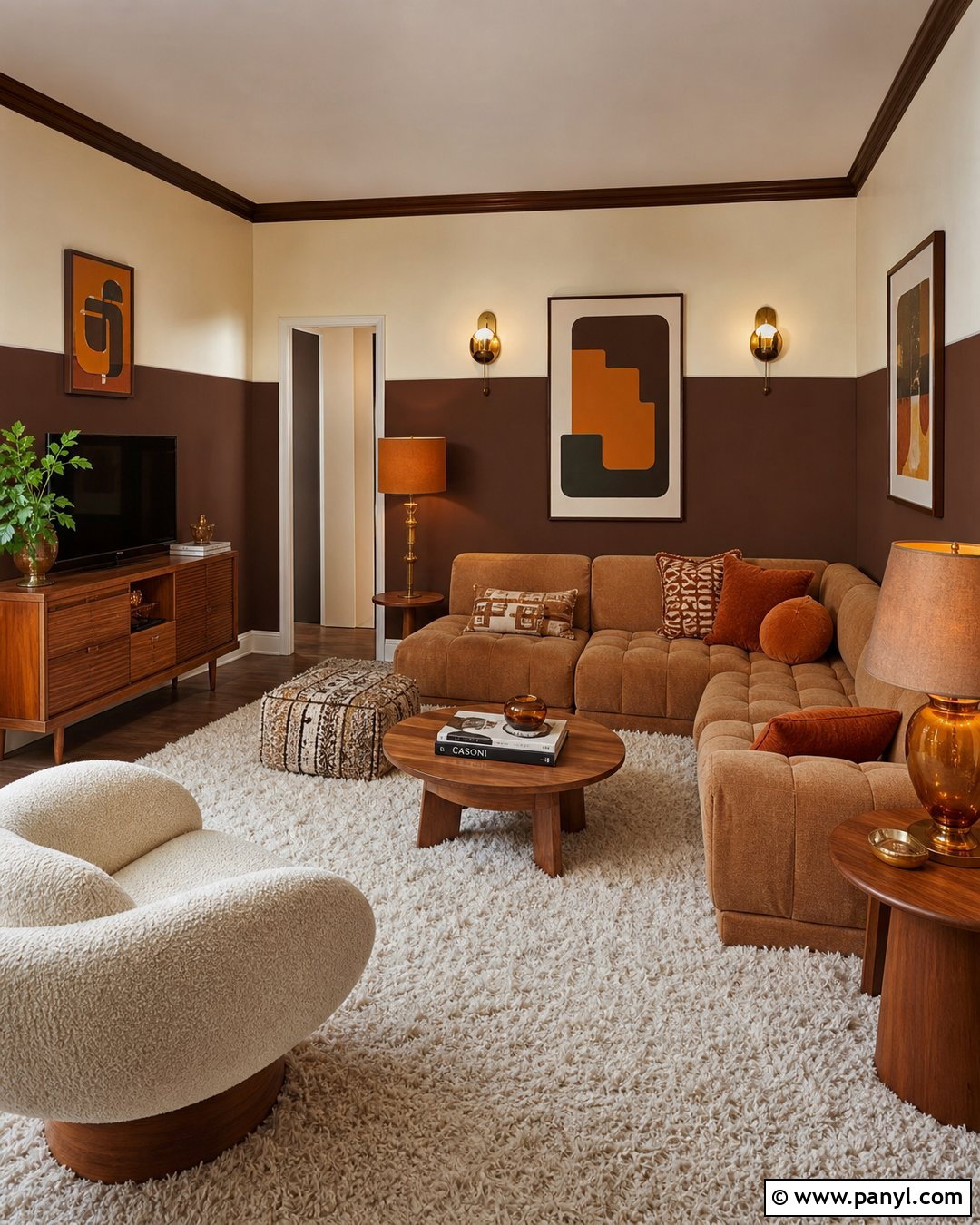
Rich chocolate brown can feel cozy instead of gloomy when it covers only the lower half of a den. Paint the upper walls and ceiling a soft vanilla cream, then divide the colors with slim walnut molding. A camel-colored sectional, ivory boucle chair, and burnt orange cushions continue the warm palette. Position a teak media cabinet along the brown portion of the wall so it blends into the background. Choose a cream shag-style rug to reflect light and introduce recognizable retro texture. Brass sconces, amber glass lamps, and framed abstract prints add visual interest above the dividing line. Keep window coverings light and use warm white bulbs. The finished den feels relaxed, grounded, and comfortable while remaining brighter than a completely brown room.
11. Olive And Ochre Bedroom Wall Paint
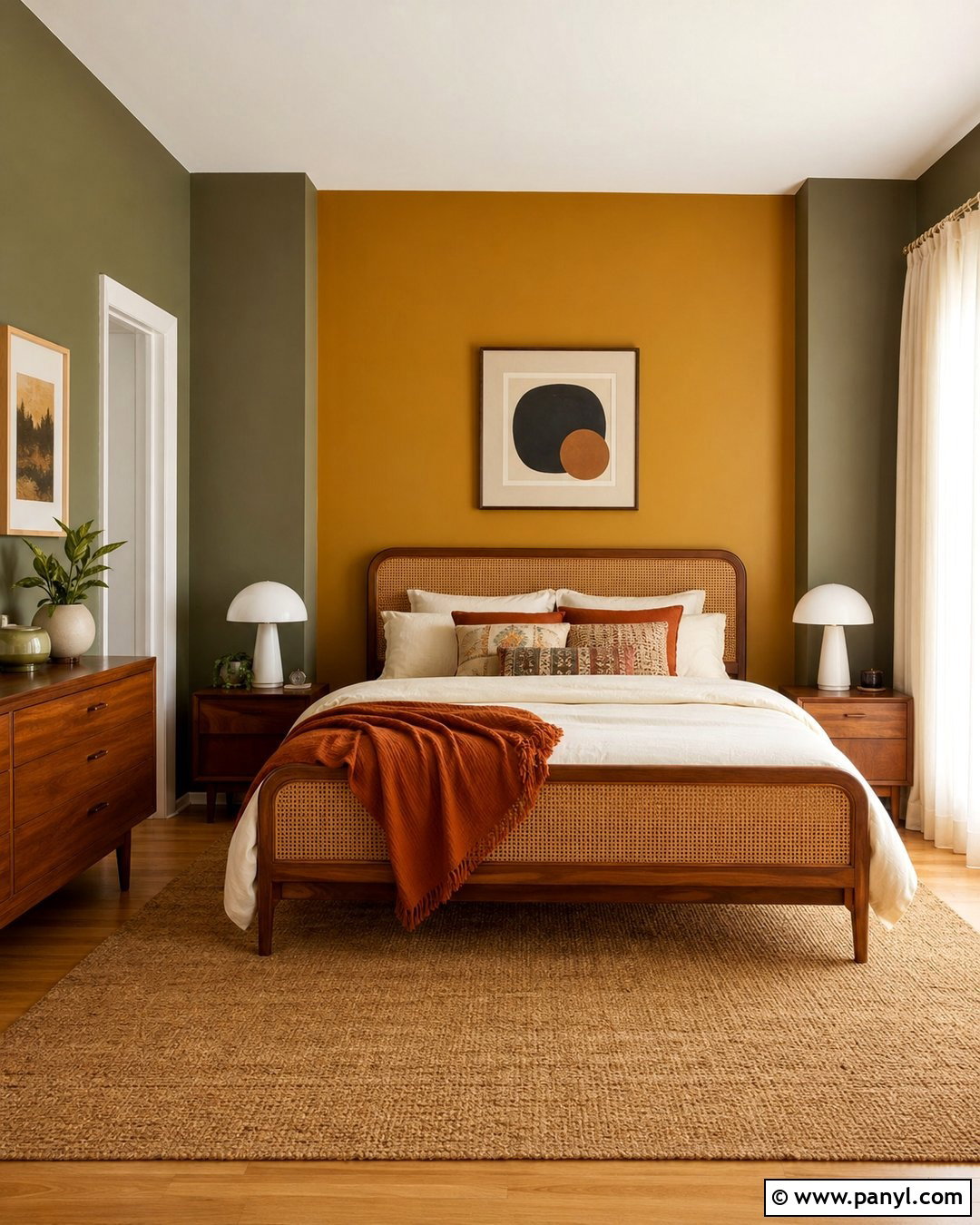
Olive green and golden ochre produce a restful retro bedroom with plenty of natural warmth. Paint three walls a muted olive, then use ochre on the wall behind the headboard. A walnut bed with a woven cane insert adds texture while connecting both earthy colors. Dress it with cream bedding, a rust throw, and one patterned cushion containing olive, brown, and gold. Choose small teak nightstands and mushroom-shaped lamps in glossy white to lighten the scheme. Linen curtains in warm ivory will soften daylight without introducing another strong color. Ground the room with a tan wool rug and add one graphic print above the bed. Limiting the palette to four coordinated shades keeps the vintage influence clear but gives the bedroom a calm, updated finish.
12. Coral And Aqua Kitchen Wall Paint
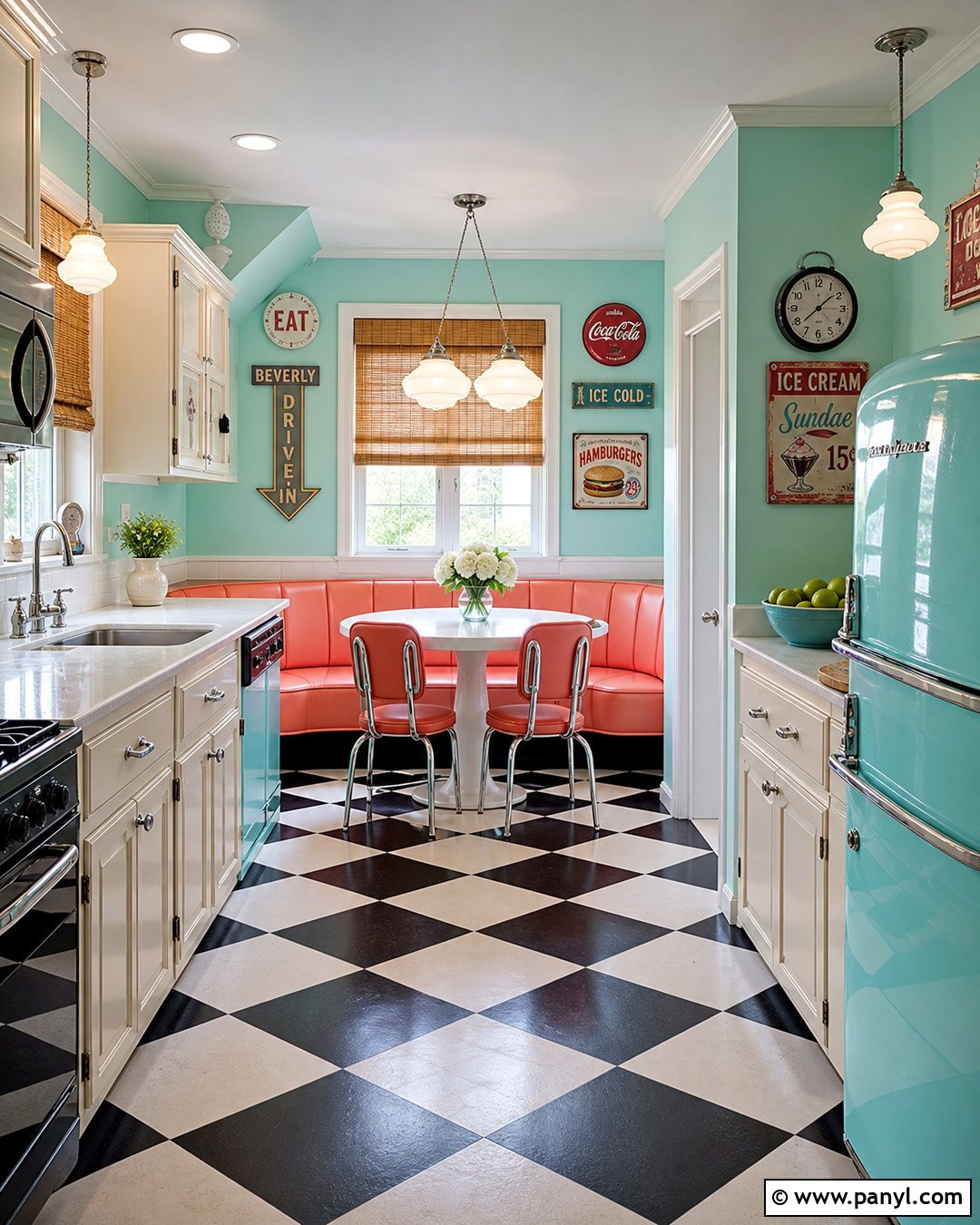
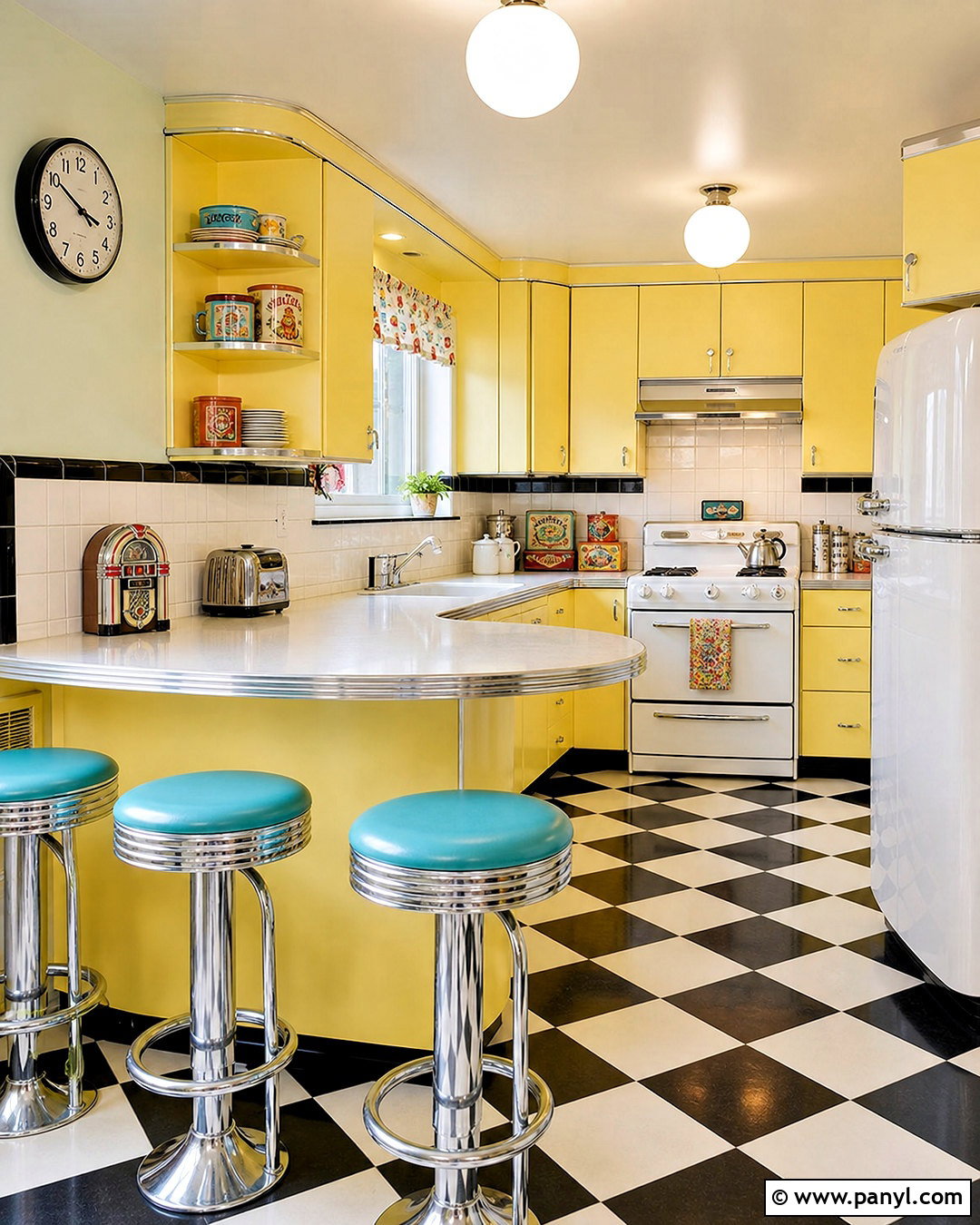
Coral and aqua bring upbeat diner-inspired color into a kitchen without requiring novelty decor. Paint the walls a clear light aqua, then use coral on the kitchen island or the wall surrounding a breakfast nook. Cream cabinets, chrome hardware, and white quartz counters will give the bold colors a crisp background. Install a black-and-white checkerboard floor for strong retro structure. Around a small pedestal table, arrange curved chairs upholstered in coral vinyl or durable fabric. A pair of milk-glass pendants will provide bright task lighting without adding another color. Display only a few aqua bowls and white canisters on the counters. Pale wood cutting boards and a bamboo shade introduce natural warmth, making the complete room feel cheerful, practical, and suitable for everyday life.
13. Red And Pink Circle Dining Room Wall
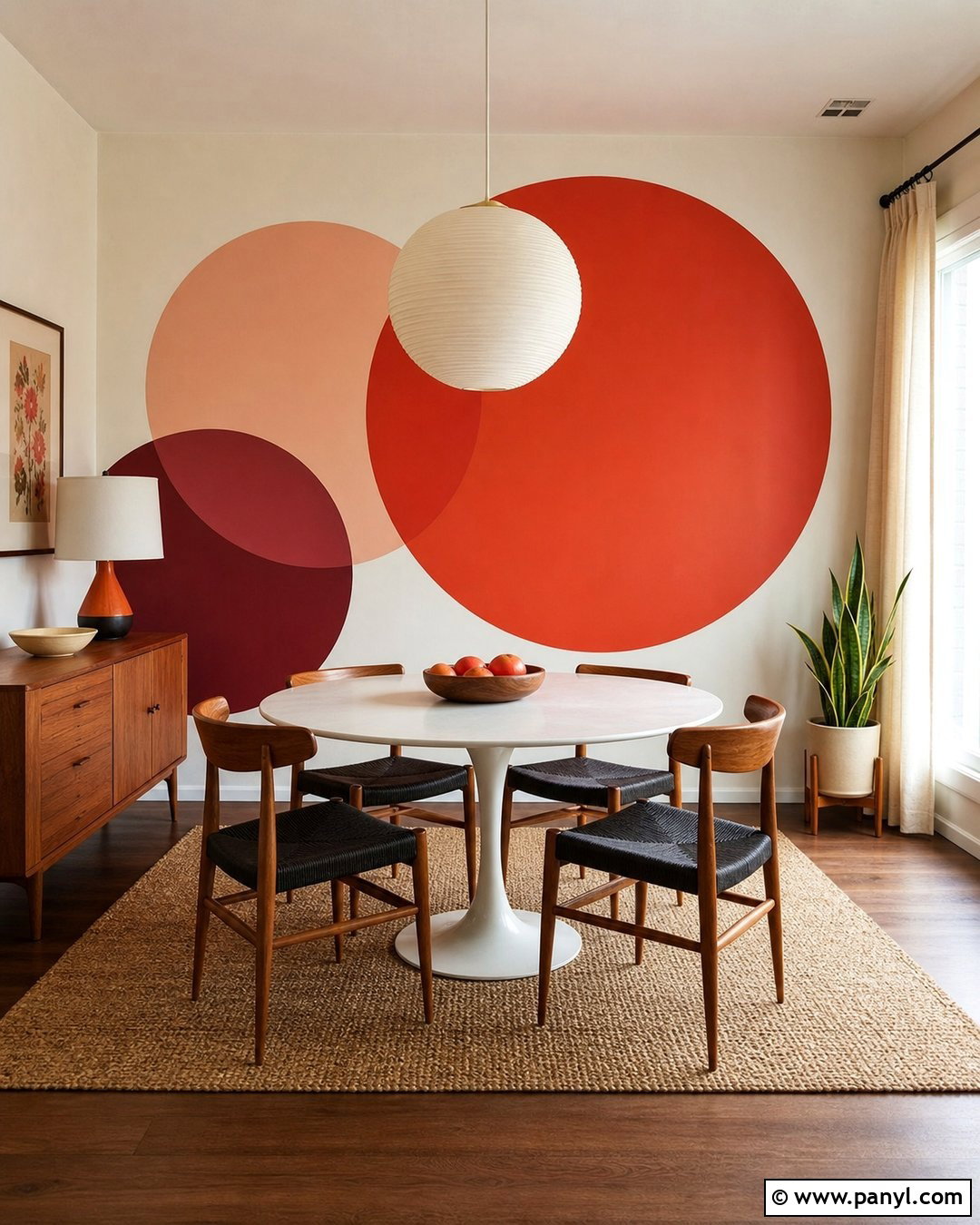
Large painted circles can give a dining area the playful energy of 1960s graphic design. Start with a warm white wall, then overlap circles in tomato red, dusty pink, burgundy, and pale peach behind the dining table. Keep the shapes concentrated within one rectangular area so they resemble a purposeful mural. Pair the wall with a round white pedestal table and walnut dining chairs upholstered in muted red. A cream globe pendant reinforces the circular theme, while a rectangular jute rug creates helpful contrast. Add a low oak sideboard with only a lamp and ceramic bowl on top. Use plain ivory curtains and neutral flooring around the room. This controlled combination makes strong reds feel welcoming rather than aggressive and keeps the painted wall visually organized.
14. Sage And Peach Scalloped Nursery Wall
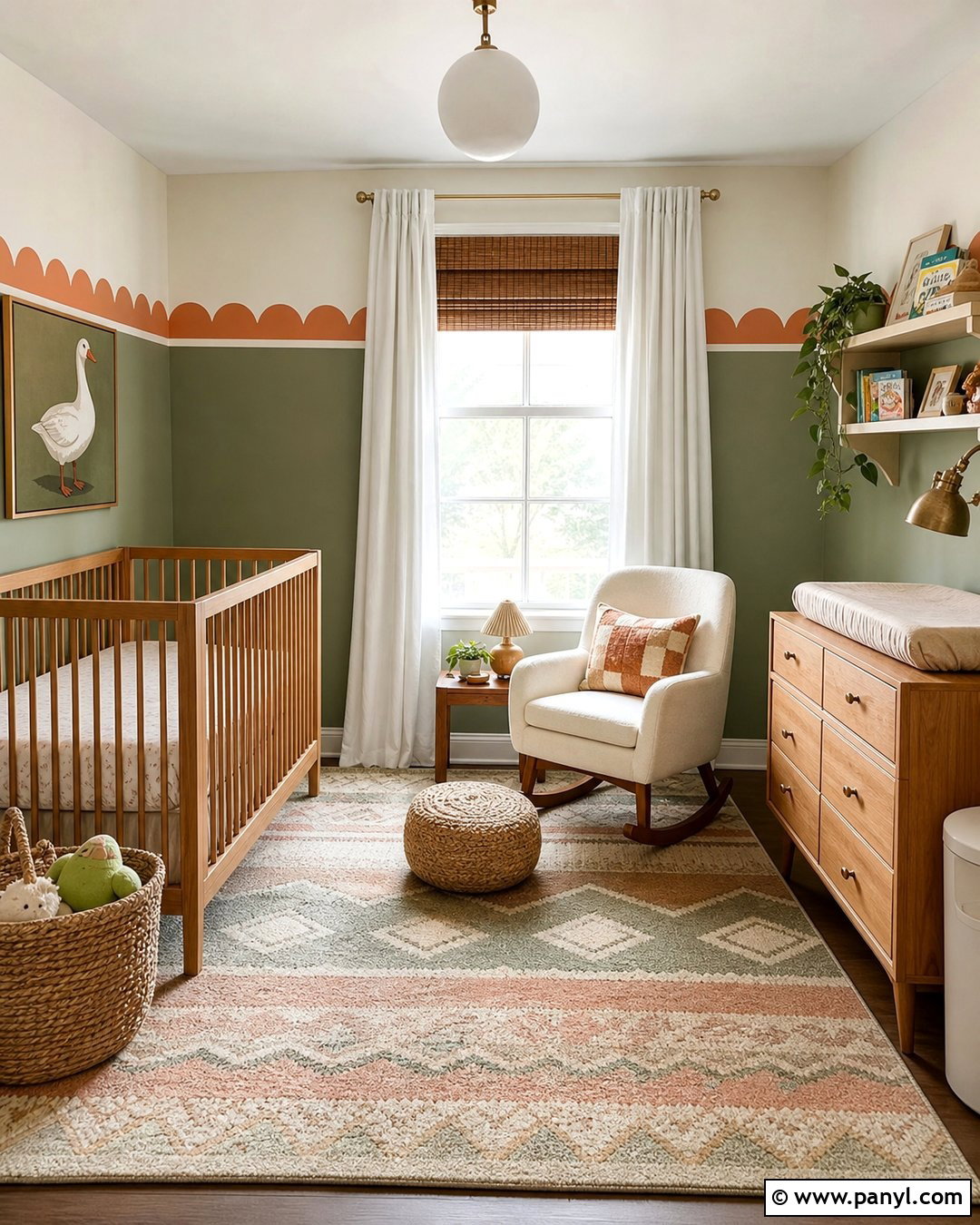
A scalloped paint border gives a nursery gentle retro personality while remaining easy to adapt as the child grows. Paint the lower half of the walls a muted sage green, then create a wide peach scallop pattern along the top edge. Keep the upper walls creamy white for a light, airy background. Choose a natural oak crib, matching dresser, and comfortable ivory rocker with rounded arms. A washable rug featuring peach, mustard, and pale green shapes will connect the room’s colors. Add woven baskets, white curtains, and one simple wooden shelf for books. Avoid filling every wall with decoration; the scalloped border already provides movement. Soft globe lighting and warm wood details complete a cozy, balanced room that feels playful without becoming overly themed or visually busy.
15. Navy And Mustard Office Wall Paint
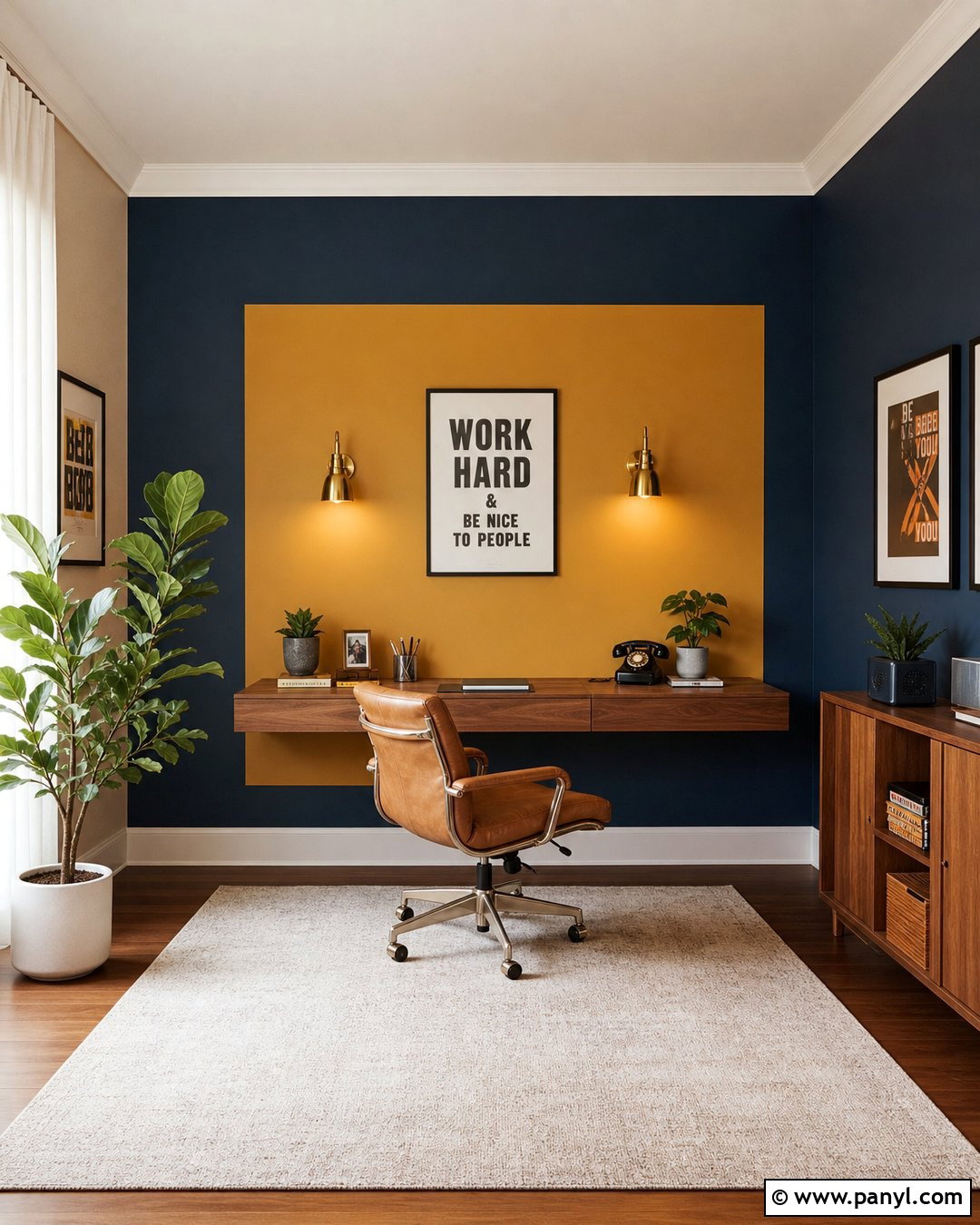
Navy blue gives a home office focus, while mustard yellow prevents the room from appearing too formal. Paint the desk wall navy and extend the color onto one short adjoining wall to create a defined work zone. Add a mustard rectangle directly behind a floating walnut desk, making it slightly wider than the furniture. The remaining walls should stay warm white. Choose a tan task chair, brass desk lamp, and cream flat-woven rug to soften the darker shades. Low oak cabinets can provide concealed storage without crowding the mural. Place two small framed prints within the mustard block and keep the rest of the wall clear. White curtains and a large plant will brighten the room, giving the finished workspace a practical midcentury character with strong visual structure.
16. Plum And Orange Lounge Wall Paint
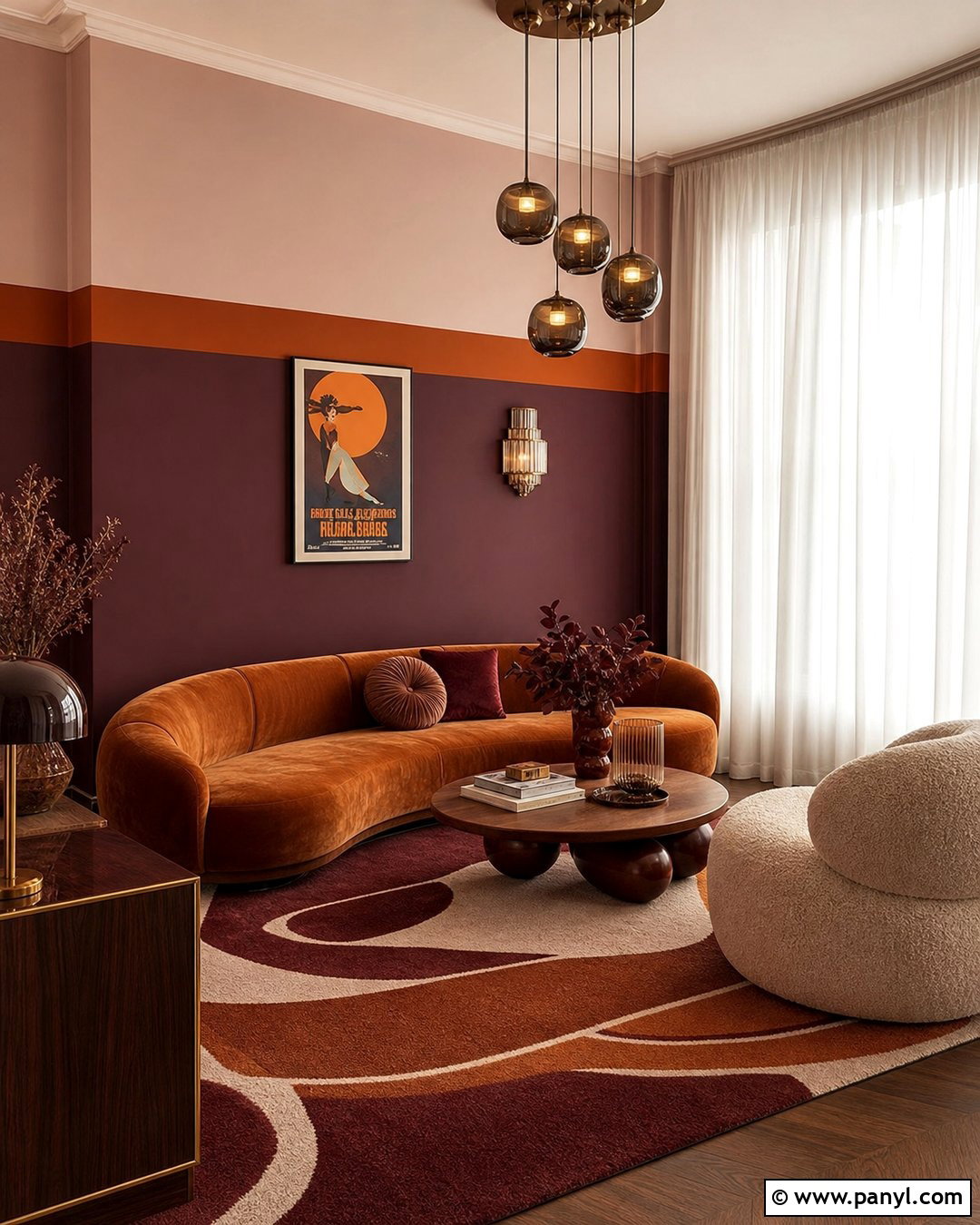
Plum and orange create an expressive retro lounge when both colors have slightly muted undertones. Paint the main wall a dusty plum, then add a broad burnt orange band that wraps around the room at chair-rail height. Use pale pink-beige above the band to keep the upper space lighter. Arrange a caramel velvet sofa with a curved silhouette against the plum wall, accompanied by a cream boucle chair and round walnut coffee table. A patterned rug containing plum, orange, tan, and ivory will unify the contrasting areas. Choose smoked-glass lighting and brass accents for subtle shine. Keep curtains and the ceiling creamy white. The resulting lounge feels colorful and dramatic, yet the repeated neutrals and simple furniture shapes prevent the combination from becoming chaotic.
17. Turquoise And Red Hallway Wall Paint
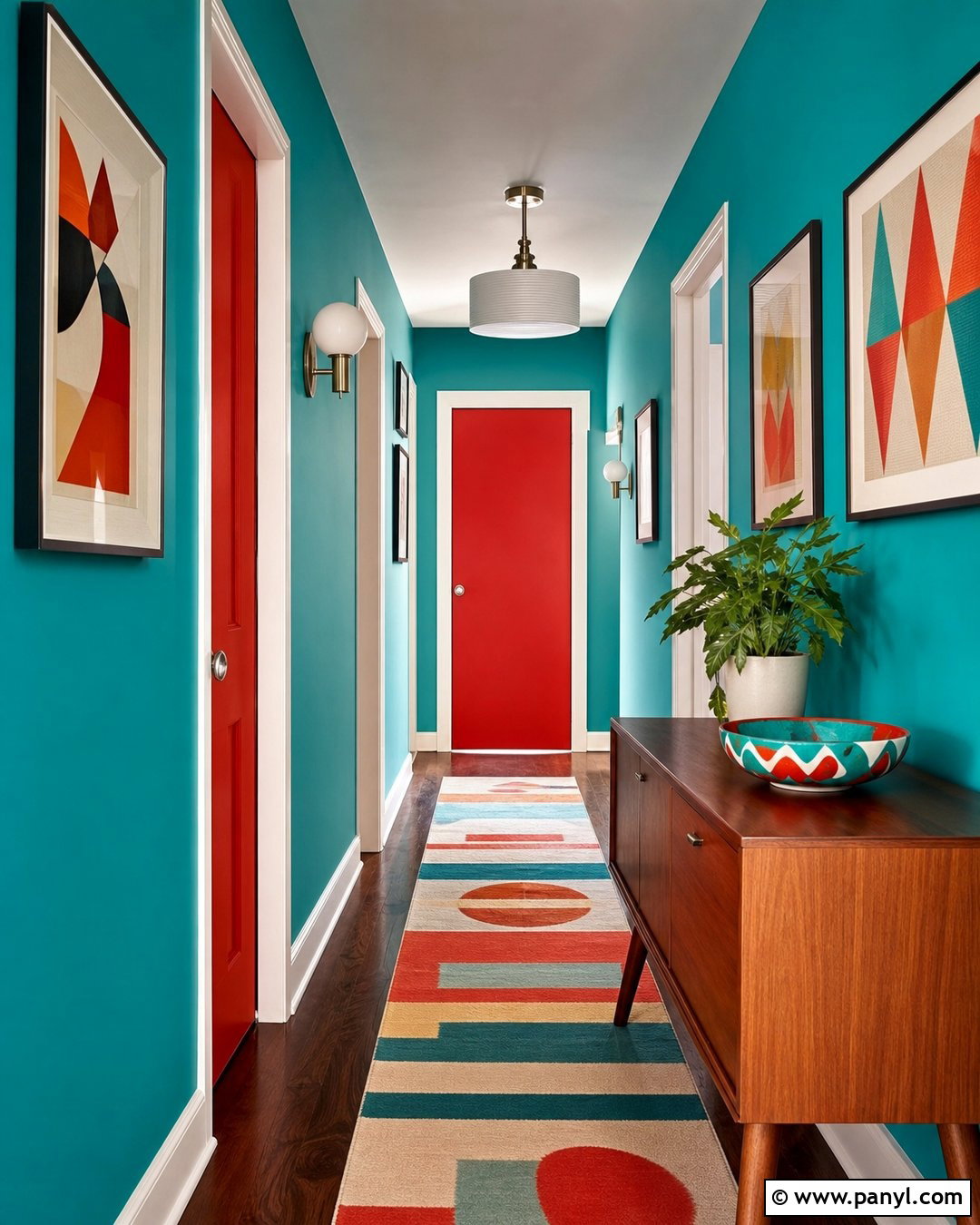
A narrow hallway becomes far more memorable with a turquoise-and-red retro scheme. Paint the walls a medium turquoise, but keep the ceiling, door frames, and baseboards clean white. Use tomato red on the doors at each end of the hall to create strong focal points and a sense of direction. A slim walnut console provides warmth without reducing the walking path. Above it, hang a compact group of cream-matted geometric prints in matching wood frames. Choose a long runner with turquoise, red, mustard, and tan details to repeat the palette at floor level. White globe sconces will keep the space bright and evenly illuminated. Limit decorative objects to one ceramic bowl and a small plant, ensuring the bold color combination still feels tidy and practical.
18. Retro Sunburst Bedroom Wall Mural
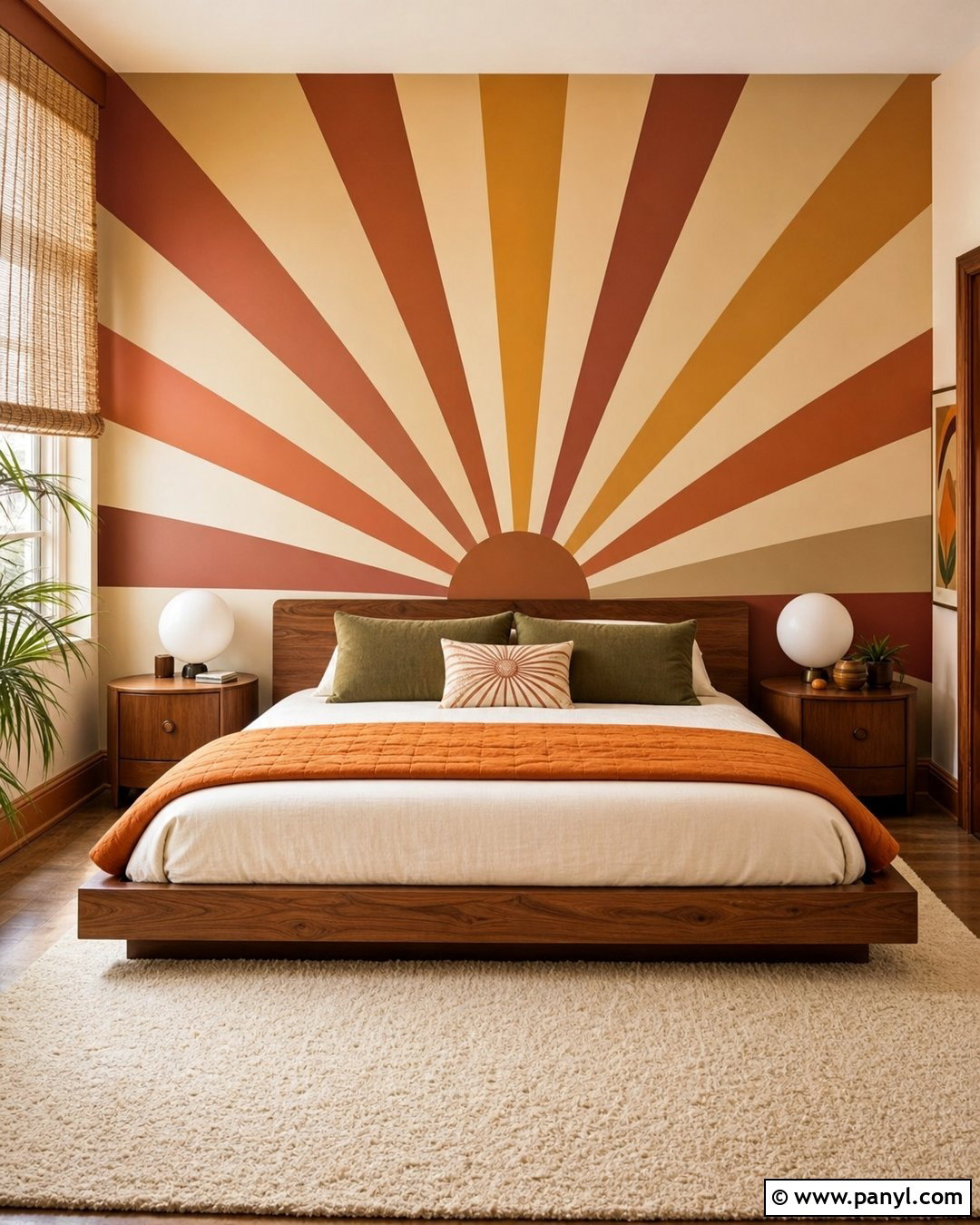
A sunburst mural can anchor a bedroom with warm color and a strong sense of symmetry. Position the center of the design behind the middle of the headboard, then paint broad rays in mustard yellow, burnt orange, terracotta, cream, and muted brown. Carry the rays only across the main wall, leaving the others a pale sandy beige. Select a simple low walnut bed so it does not hide too much of the artwork. Use ivory bedding, an orange quilt, and olive accent cushions for a coordinated layered look. Rounded nightstands and white globe lamps soften the mural’s sharp lines. Complete the bedroom with a cream rug, woven curtains, and minimal artwork. This layout feels dramatic while keeping the sleeping area warm, balanced, and comfortably uncluttered.
19. Retro Checkerboard Kitchen Wall Paint
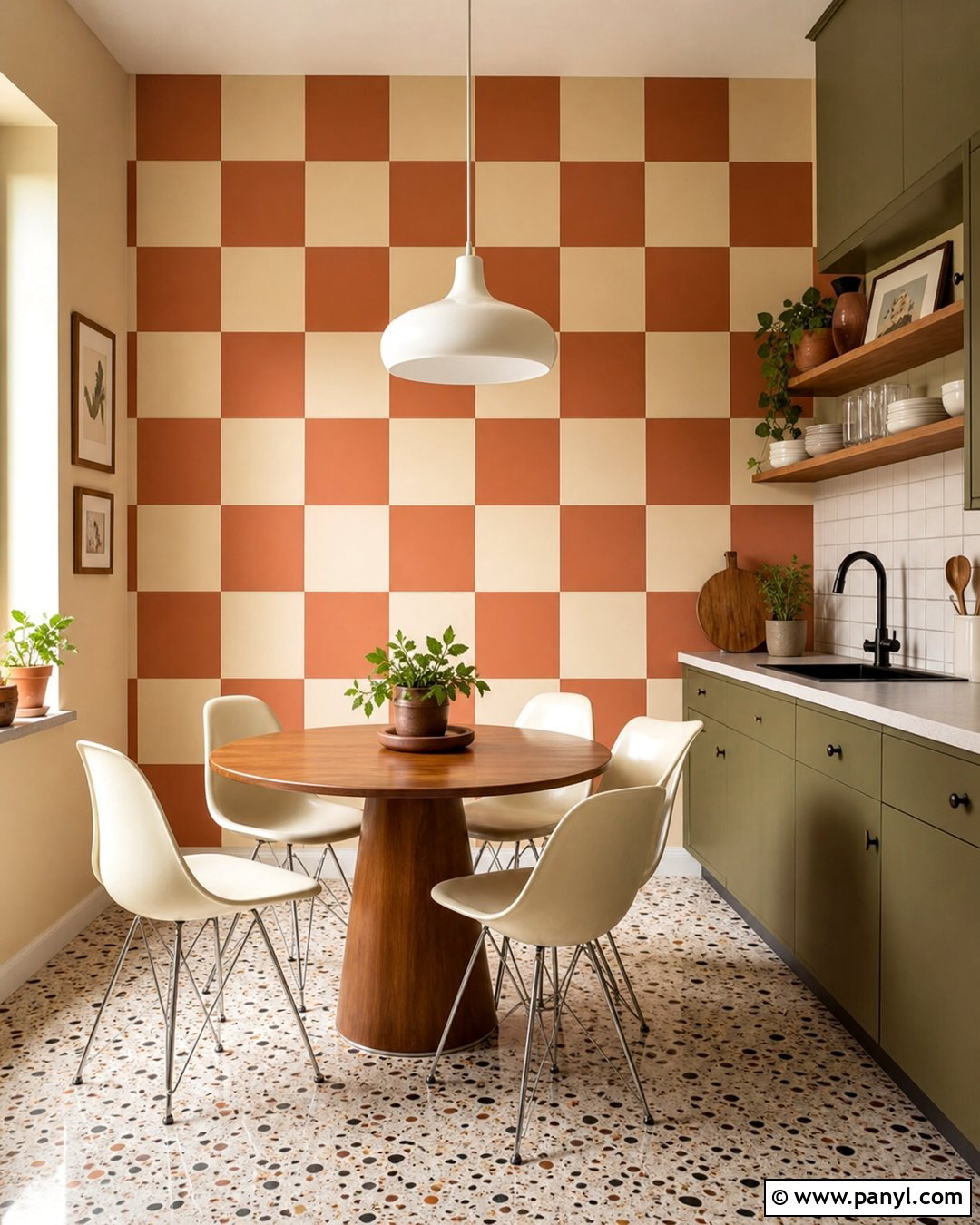
Painted checkerboard walls provide the impact of patterned tile without covering every surface in hard material. Create a large-scale checkerboard on the breakfast nook wall using warm cream and muted terracotta squares. Keep adjacent walls pale beige and cabinetry olive green for a distinctly earthy 1970s palette. A round oak pedestal table and cream molded chairs will prevent the nook from feeling too heavy. Choose simple white pendant lighting and a terrazzo floor containing tan, rust, and gray flecks. Repeat the terracotta through seat cushions or a small countertop appliance rather than adding more patterns. Open shelves with white dishes will provide visual relief. Accurate measurements and crisp painter’s-tape lines are essential because the orderly grid should look deliberate and balanced across the finished wall.
20. Retro Rainbow Stripe Family Room
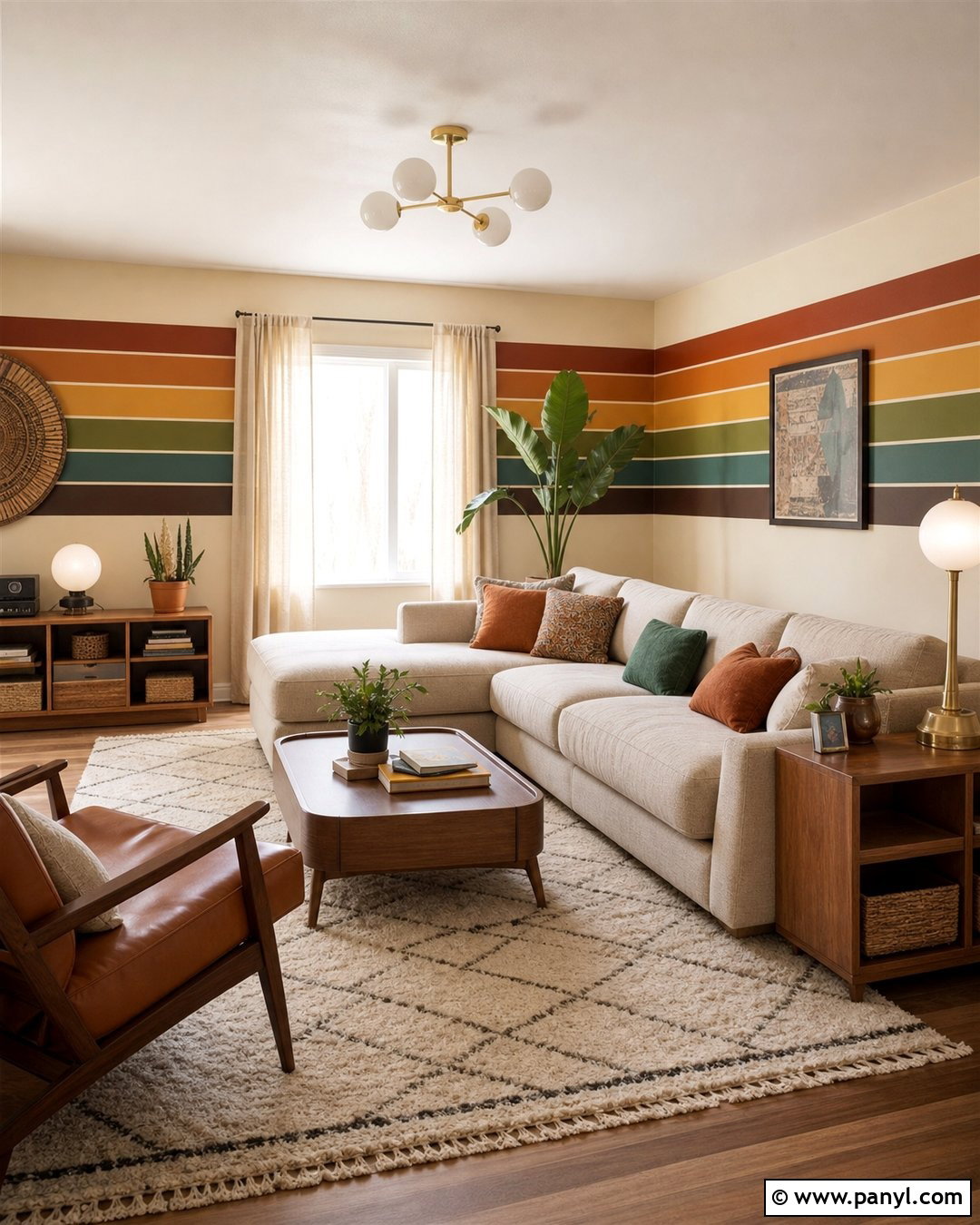
A muted rainbow stripe can wrap a family room in color without dominating every surface. Paint the walls warm cream, then add horizontal bands of rust, mustard, olive, teal, and chocolate brown around the middle third of the room. Keep each stripe equal in width for a clean graphic effect. Choose an oatmeal sectional, walnut coffee table, and cognac leather chair as durable neutral foundations. A cream rug with a subtle geometric weave will balance the colorful walls. Include storage cabinets painted the same cream as the background so they visually recede. Add cushions that repeat only two or three stripe colors at a time. White globe lights, linen curtains, and a few leafy plants complete a relaxed room that works for both everyday lounging and entertaining.
21. Wavy Bathroom Wall Paint
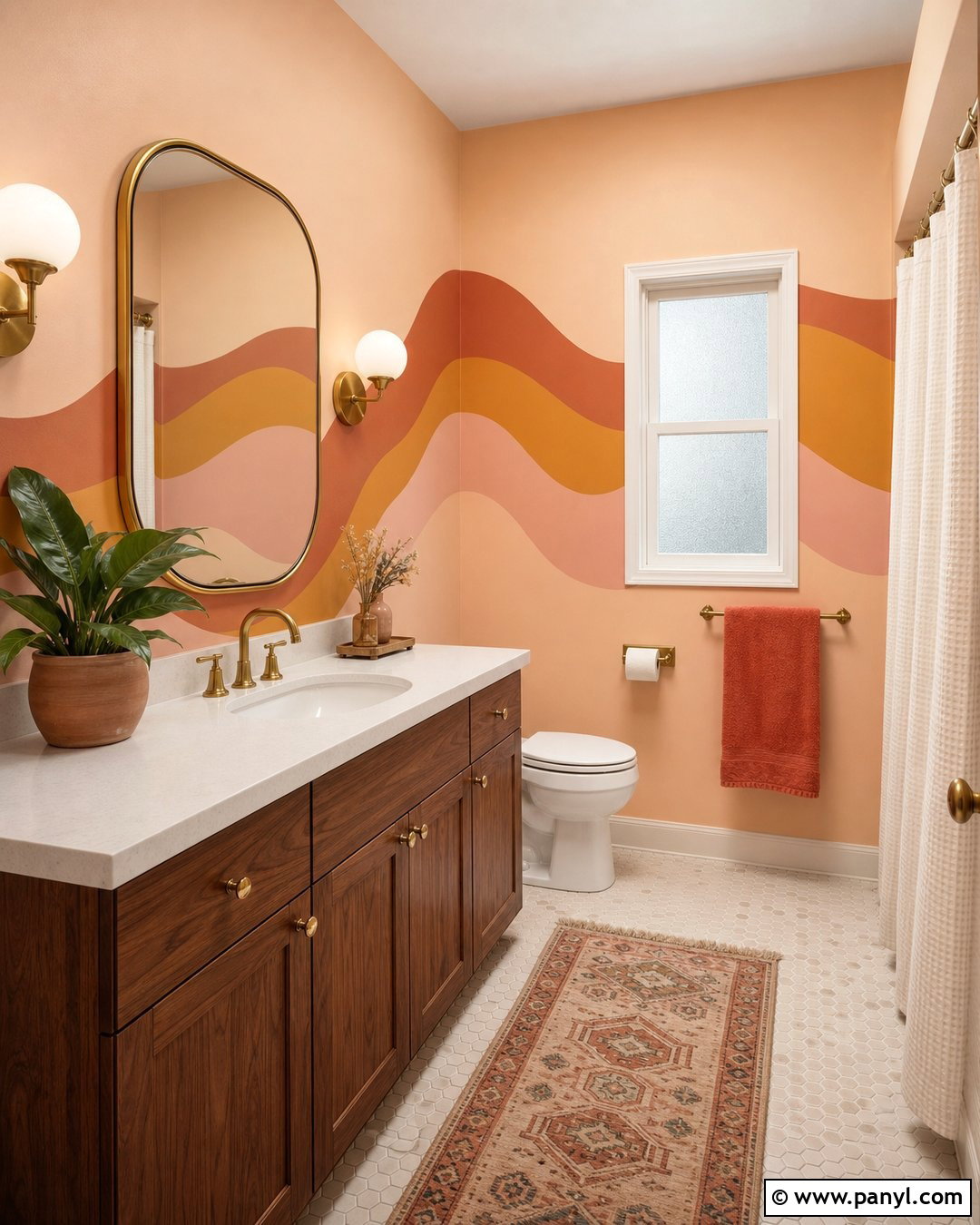
Flowing painted waves can make a small bathroom feel playful without relying on complicated wallpaper. Use a pale peach background, then paint three broad horizontal waves in terracotta, mustard, and dusty pink along the vanity wall. Keep the tub surround and remaining walls warm white to avoid enclosing the space. A walnut vanity with a white countertop adds natural contrast, while a rounded brass mirror echoes the mural’s movement. Choose simple cream floor tile and coral towels to continue the warm palette. Frosted globe sconces provide clear, even light near the mirror. Finish with a white shower curtain, small ceramic planter, and matching brass hardware. The limited colors and generous white surfaces allow the distinctive wall treatment to remain cheerful, clean, and suitable for a compact room.
22. Mod Circle Home Office Wall Paint
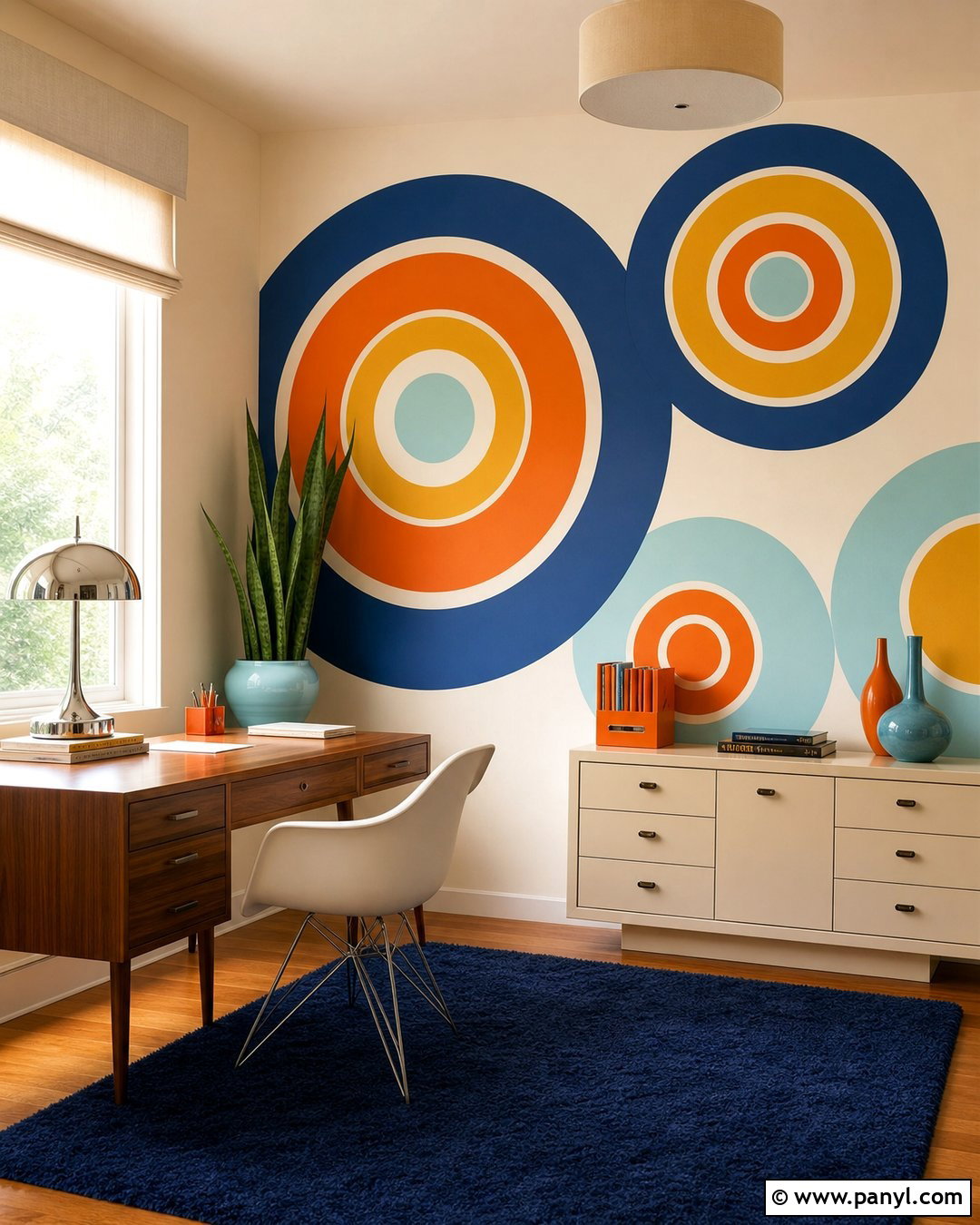
Concentric circles give a home office a bold mod look that feels energetic but organized. Paint the main wall soft ivory, then create one oversized off-center circle using rings of cobalt blue, orange, mustard, and pale aqua. Place a streamlined walnut desk in front of the design without covering its center. Add a white molded chair, chrome task lamp, and low cream storage cabinet to balance the saturated colors. A navy rug can anchor the work area and reduce the visual contrast between the mural and floor. Keep the other walls white and use simple roller shades at the window. One orange desk organizer and an aqua planter are enough to repeat the palette. Clear surfaces and concealed cords will help the finished workspace appear intentional rather than overly decorative.
23. Green And Yellow Two-Tone Wall Paint
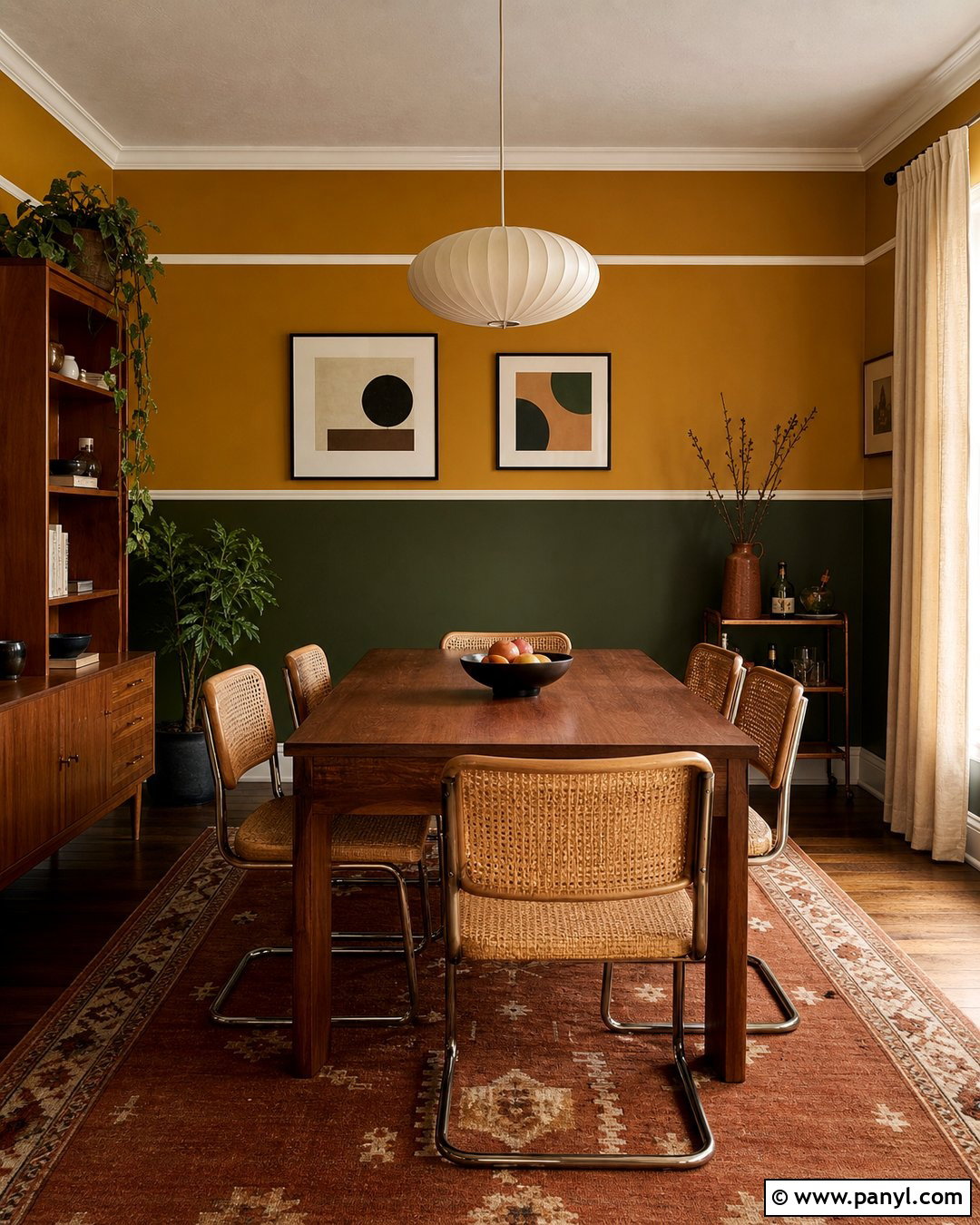
A two-tone wall is one of the easiest ways to introduce retro color without painting a detailed mural. Use deep olive green on the lower half and warm golden yellow above, separating the shades with a narrow cream stripe. In a dining room, position a rectangular walnut table against this background and add chairs upholstered in tan woven fabric. A cream pendant with a rounded shade will soften the strong horizontal division. Choose a rust and beige rug to ground the furniture, then place a low teak cabinet along one wall for storage. Hang simple abstract prints above the dividing line so they remain visible against the yellow. White window trim, natural linen curtains, and ceramic tableware complete a practical 1970s-inspired room with warmth, contrast, and clear visual order.
24. Retro Color Wrapped Bedroom
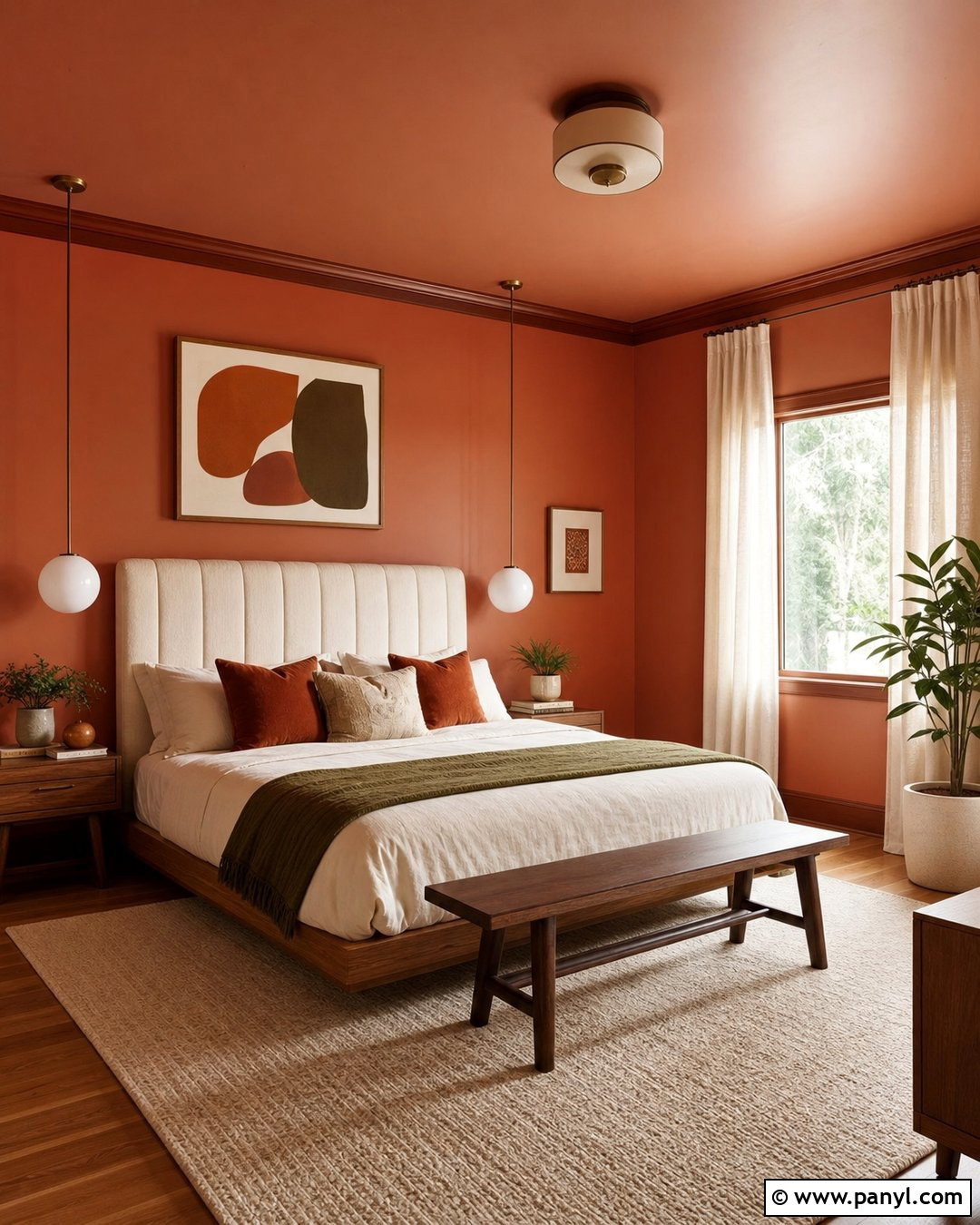
For a cozy bedroom, carry one muted retro color across the walls, trim, and ceiling. Dusty terracotta works especially well because it feels warm without becoming as dark as chocolate brown or burgundy. Use a slightly deeper terracotta on the baseboards and doors to create quiet definition. Choose an oak platform bed with a tall cream upholstered headboard, then layer ivory bedding, rust cushions, and an olive throw. Light-colored curtains, a cream wool rug, and white globe pendants will prevent the painted envelope from feeling closed in. Add a walnut bench and one oversized abstract artwork with beige and mustard details. This tonal approach suits rooms with good natural light and creates a calm, immersive interpretation of retro color rather than a busy, high-contrast theme.
25. Cream Walls With Orange Trim
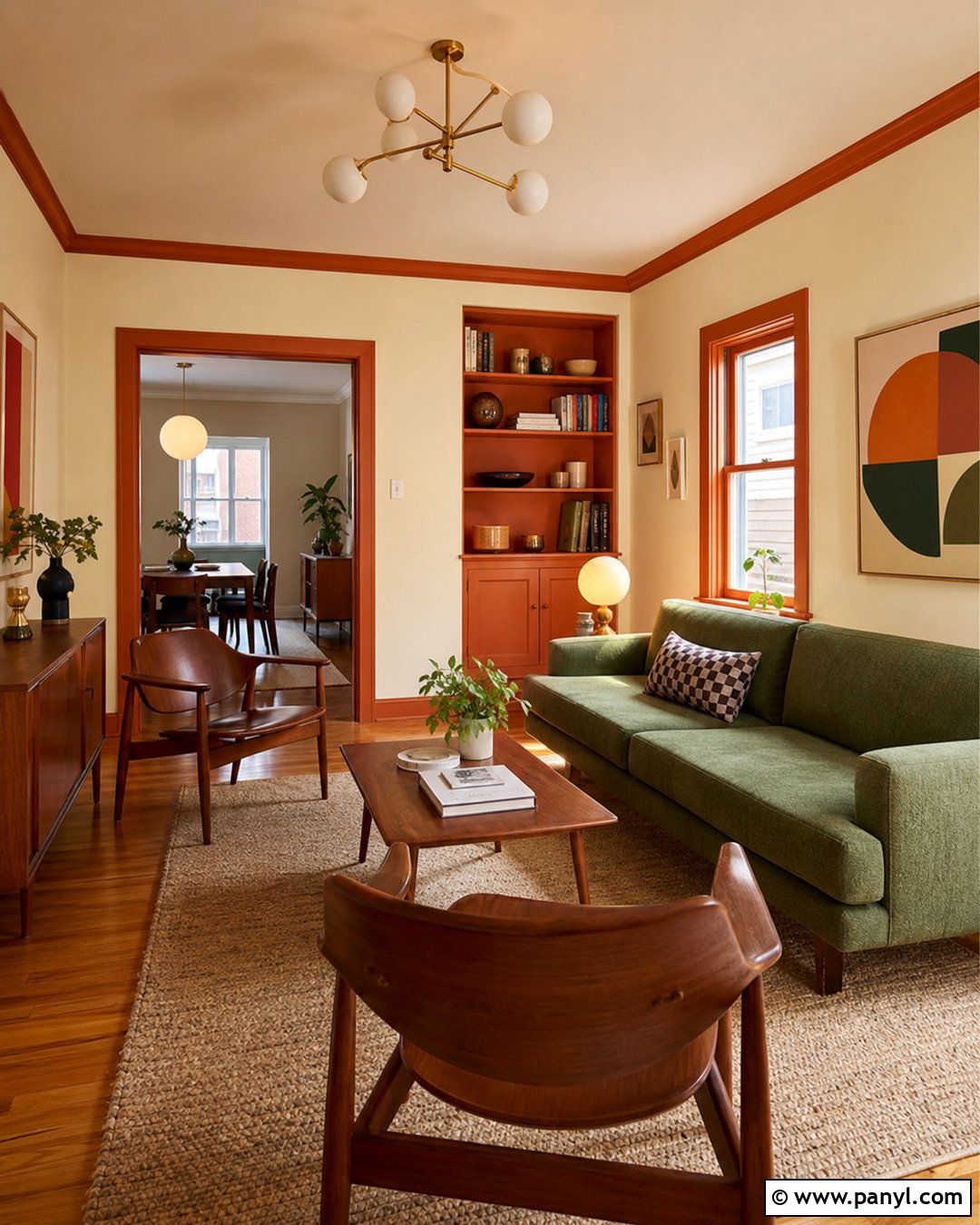
Retro wall paint does not need to cover every surface with saturated color. Paint the walls and ceiling a soft vanilla cream, then highlight door frames, window trim, baseboards, and built-in shelves with burnt orange. This approach introduces a clear vintage reference while keeping the room bright. In a living area, use a moss green sofa, walnut armchairs, and a tan wool rug to extend the earthy palette. Add a white globe pendant and brushed-brass floor lamp for simple midcentury shapes. A teak console and several ceramic pieces in cream and rust will reinforce the trim color. Keep curtains neutral and artwork limited to one large geometric print. The orange outlines give ordinary architectural features more presence and make the entire room feel thoughtfully connected.
26. Monochrome Green Living Room Walls
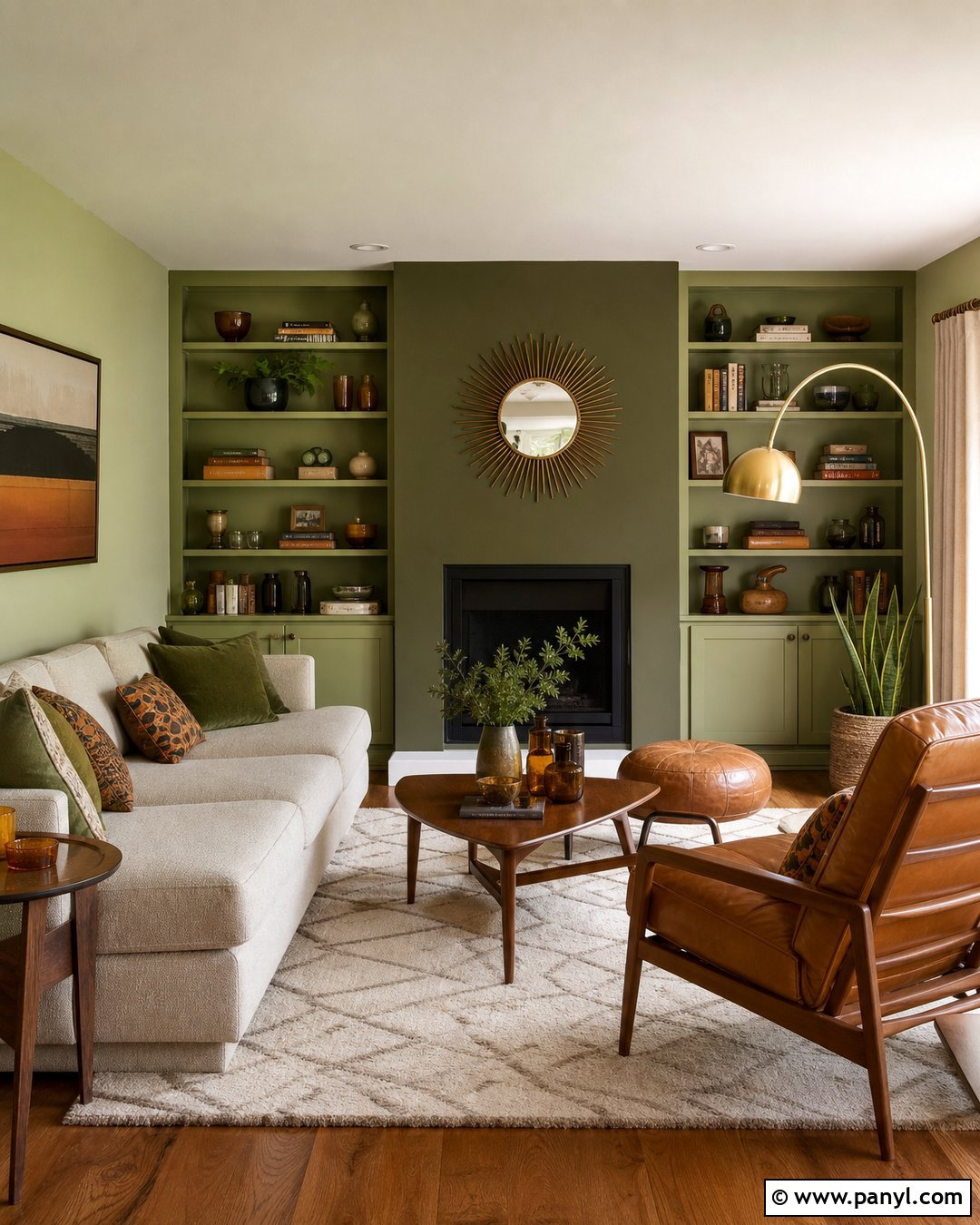
Layering several green tones creates a soothing retro room with more depth than a single-color scheme. Paint the main walls muted sage, the fireplace or media wall deep olive, and the built-in shelving a slightly brighter avocado green. Keep the ceiling creamy white and use walnut flooring or furniture to warm the palette. An oatmeal sofa, caramel leather chair, and moss-colored cushions will continue the natural look without blending completely into the walls. Add a cream geometric rug and round teak coffee table to define the seating area. Brass lighting and amber glass accessories provide small warm highlights. Instead of introducing unrelated colors, use rust in one throw and one piece of artwork. The finished room feels cohesive, earthy, and unmistakably influenced by 1970s interiors.
27. Brown And Orange Gradient Wall Paint
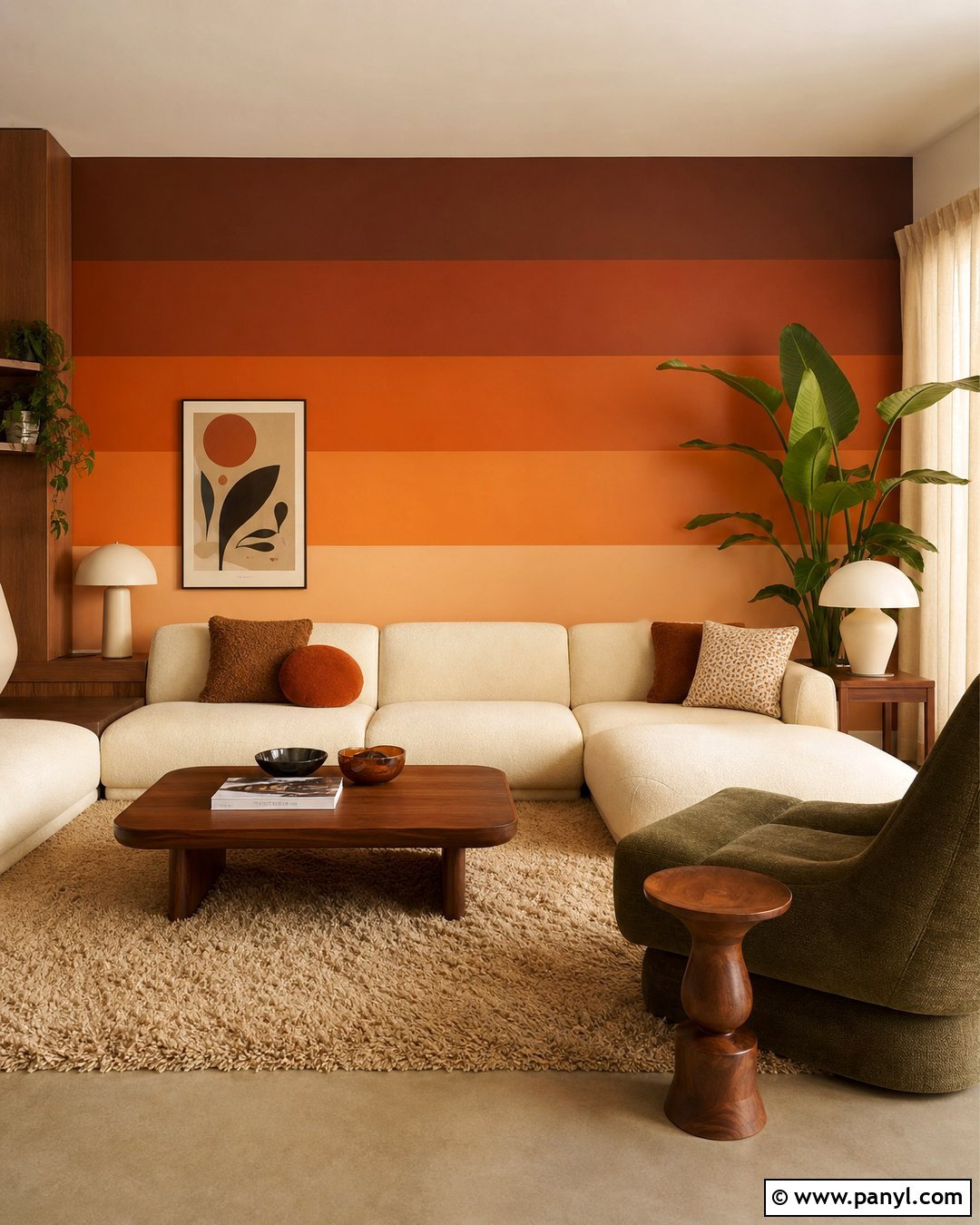
A layered gradient of brown and orange can create a retro feature wall with the depth of a sunset. Divide the wall into four wide horizontal bands, moving from dark chocolate near the floor through rust and burnt orange to pale apricot at the top. Blend the boundaries slightly or keep them crisp, depending on the preferred finish. Position a low cream sofa in front of the design so most of the graduated color remains visible. Add walnut side tables, an olive lounge chair, and a textured beige rug. Mushroom-shaped lamps and curved cushions support the 1970s influence. Keep neighboring walls light cream and use plain curtains. Minimal shelving and one large plant will complete the space without interrupting the dramatic movement of the painted background.
28. Memphis Retro Wall Paint
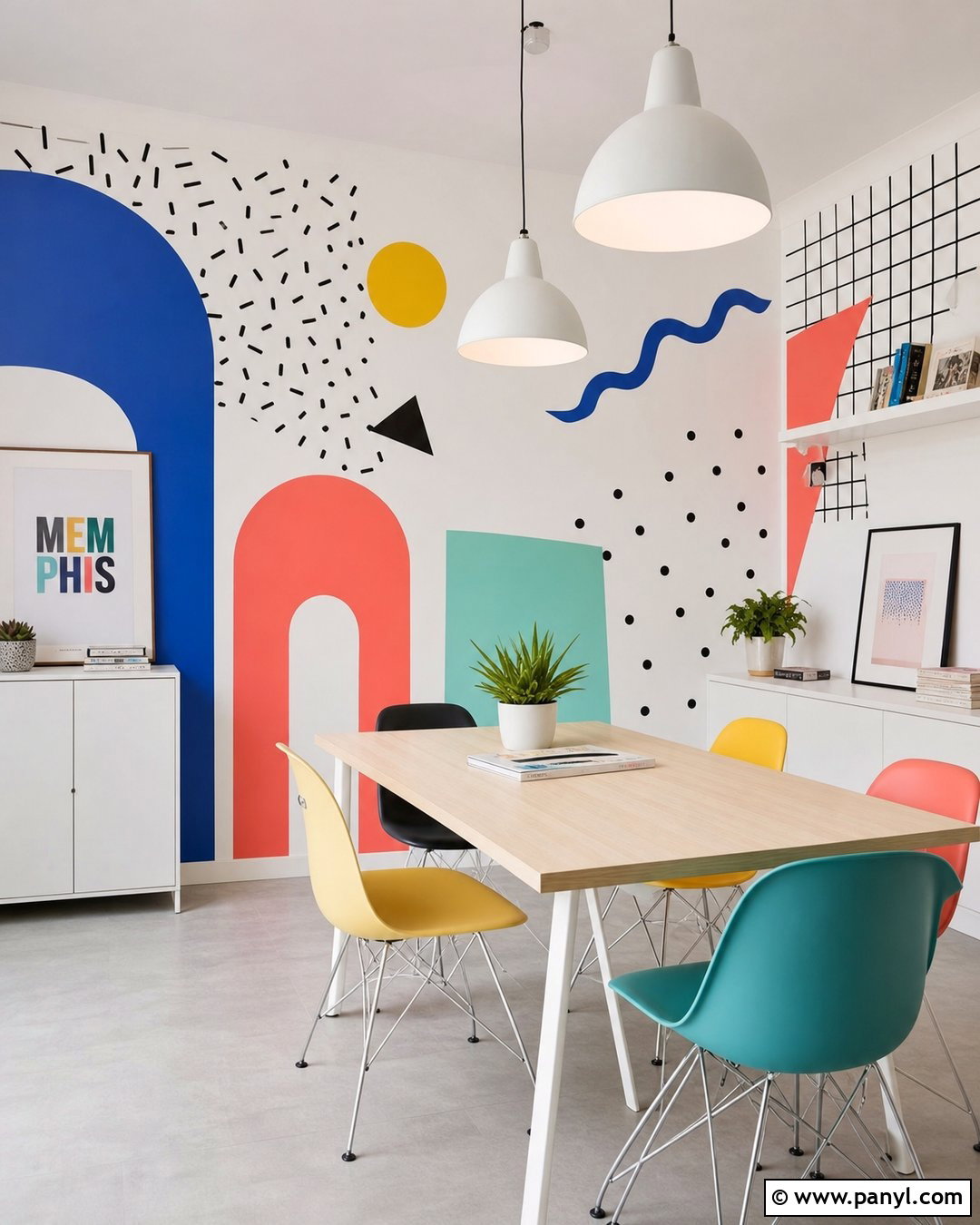
A Memphis-inspired wall brings 1980s energy into a modern room through scattered shapes and high-contrast color. Begin with a clean white background, then add large squiggles, arches, dots, triangles, and grids in cobalt blue, coral, mustard, mint green, and black. Leave generous white space between forms so the wall stays readable. In a creative studio or playroom, combine the mural with a pale wood table, white storage cabinets, and molded chairs in solid primary colors. A light gray floor and simple white pendant lights will prevent the room from becoming visually crowded. Repeat black only through thin furniture legs and small accessories. The complete space should look graphic and lively while maintaining practical storage, open floor area, and a clearly controlled color palette.
29. Pastel 1950s Basement Wall Paint
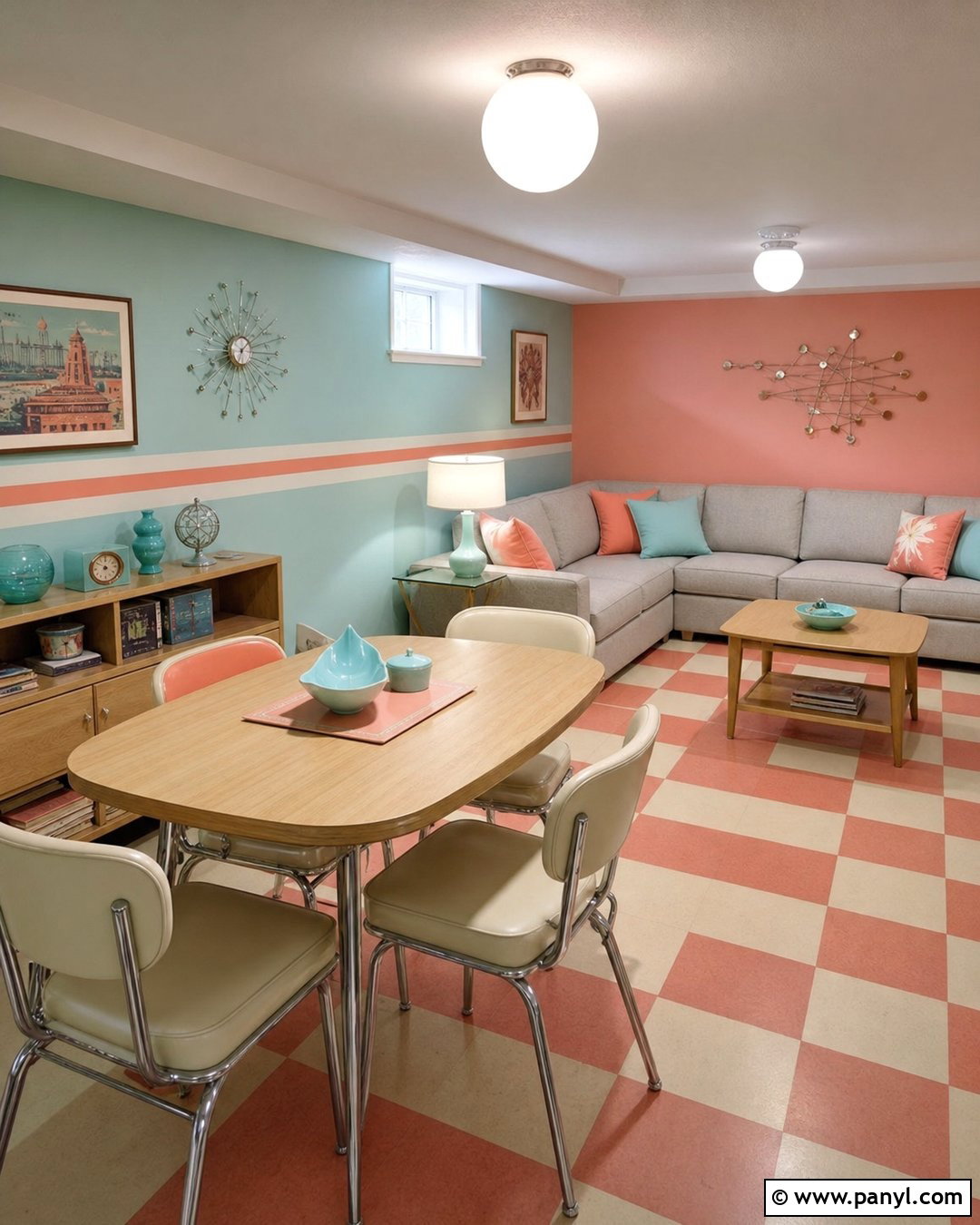
Pastel wall colors can brighten a basement while creating a friendly 1950s recreation space. Paint the main walls pale aqua and use blush pink on one long feature wall. Add a narrow cream and coral stripe around the room to connect the two colors. Choose a light gray sectional, blond-wood coffee table, and cream vinyl accent chairs with rounded backs. Black-and-white checkerboard flooring or a large checker-pattern rug will give the soft palette stronger structure. Install white globe fixtures to spread light evenly across the room. A low birch media unit and closed storage cabinets will keep games and electronics organized. Finish with coral cushions, aqua ceramics, and simple geometric prints. The pale surfaces help the basement appear more open, clean, and welcoming.
30. Neutral Retro Living Room Wall Paint
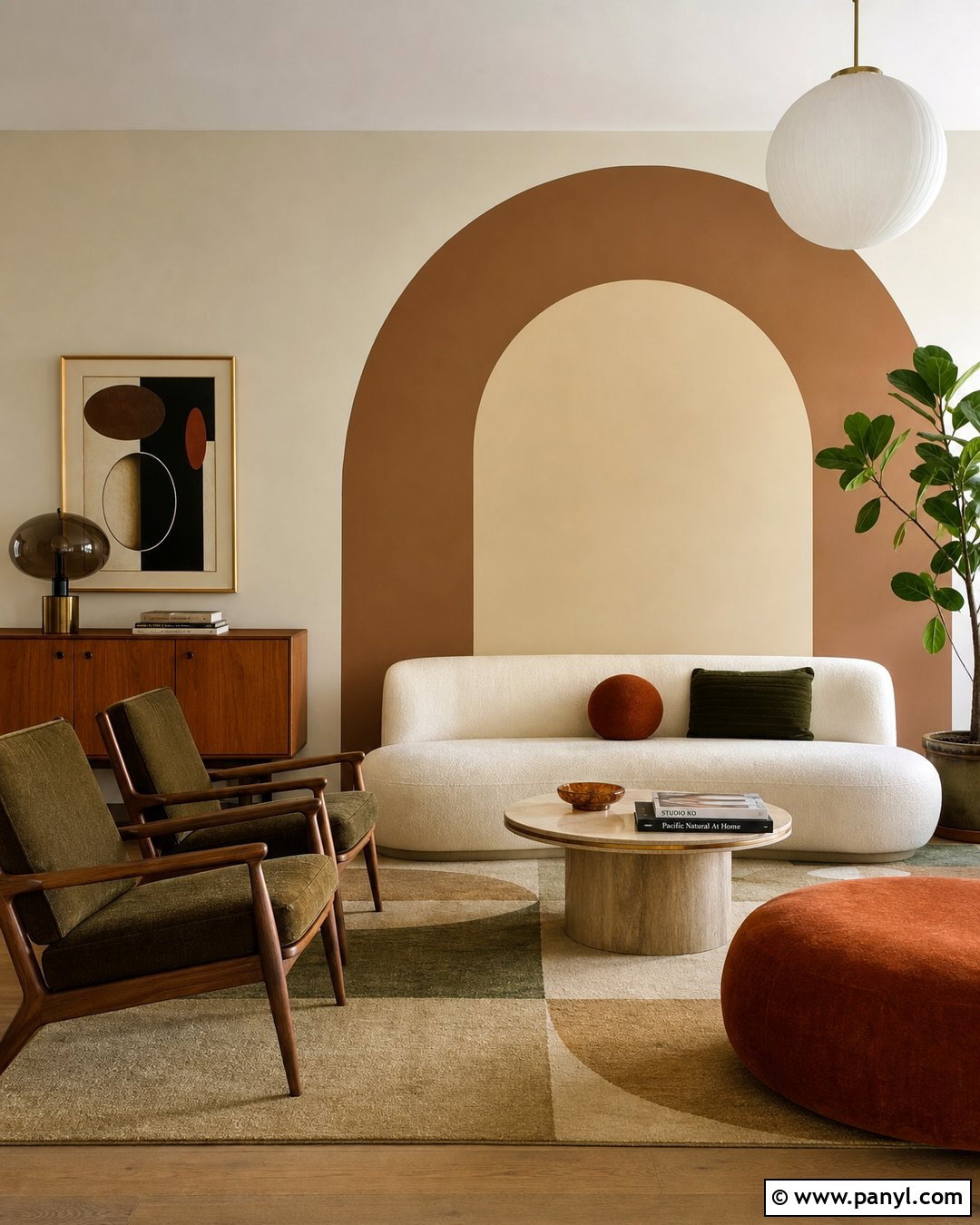
A neutral retro scheme is ideal when you want vintage character without highly saturated walls. Paint the room warm beige, then create a large arch behind the sofa in caramel brown with a smaller cream arch layered inside it. Add a low ivory sofa, walnut lounge chairs, and a rust-colored ottoman to bring the restrained palette to life. A geometric wool rug in tan, brown, and muted olive will define the seating area. Use a teak console, smoked-glass table lamp, and white globe pendant for recognizable retro forms. One leafy plant and a large abstract print can add color without clutter. This balanced room demonstrates how shape, wood tones, and carefully repeated earthy accents can produce a convincing retro look while remaining calm and adaptable.
Conclusion:
The best retro rooms feel nostalgic, coordinated, and comfortable rather than copied directly from another decade. Begin with a palette that suits the room’s natural light, existing flooring, and largest furniture pieces. Earth tones create warmth, pastels introduce 1950s charm, and stronger blues, oranges, or reds deliver graphic 1960s energy. Use one main wall treatment, then repeat selected colors through upholstery, rugs, lighting, and accessories. Cream, beige, white, and natural wood can provide essential breathing room around bolder shades. Always test paint colors and carefully measure geometric patterns before beginning. Whether you prefer quiet two-tone walls or dramatic murals, these **30 retro wall paint ideas** can help you create a distinctive home that still works beautifully today.

Related Ideas and Inspiration:
Leave a Reply