
A ginger background brings earthy warmth, rich color, and a welcoming sense of depth to a room. This spicy orange-brown tone can feel rustic, modern, playful, or sophisticated depending on the colors and materials placed around it. Cream upholstery creates softness, navy adds contrast, sage introduces a natural mood, and matte black makes ginger feel more contemporary. You can use the color across every wall, highlight one architectural feature, or apply it through wallpaper, plaster, tile, or painted cabinetry. The key is building a complete palette so the background feels intentional rather than overpowering. The following rooms combine practical layouts, balanced colors, and realistic decor choices to help you recreate these 20 ginger background ideas.

1. Ginger Background With Cream Decor
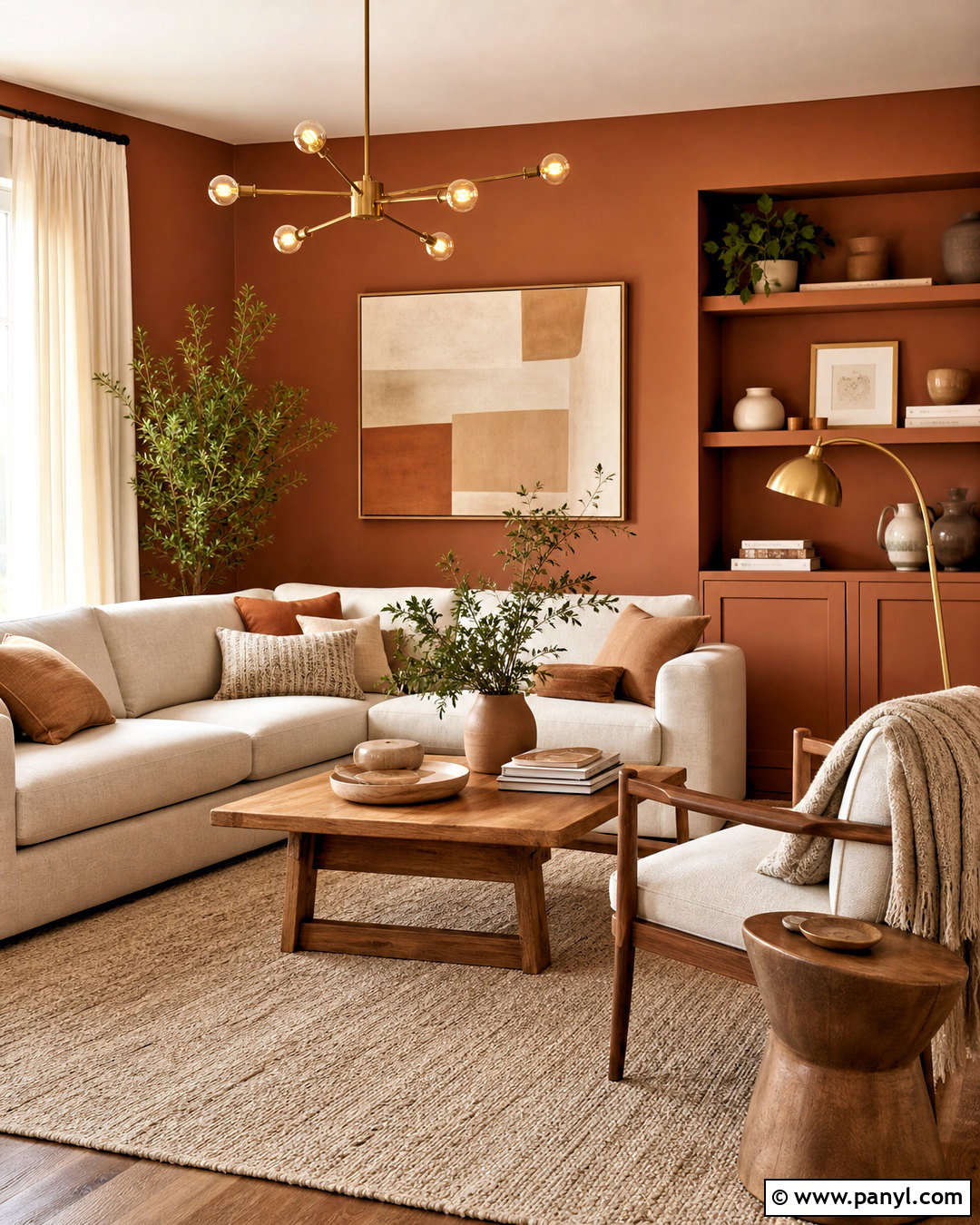
A ginger background and cream decor create a warm living room that feels bright without losing its cozy character. Paint the main wall a medium ginger orange-brown, then soften it with a cream sofa, ivory curtains, and a textured oatmeal rug. Natural oak side tables keep the palette relaxed, while brushed brass lighting adds a subtle polished finish. Choose cushions in ginger, beige, and muted terracotta to connect the seating with the wall. A large off-white abstract print can provide a simple focal point without competing with the color. Finish the room with pale ceramic accessories, a woven basket, and one leafy plant. This balanced combination works especially well in rooms receiving generous natural light.
2. Ginger Background With Sage Green
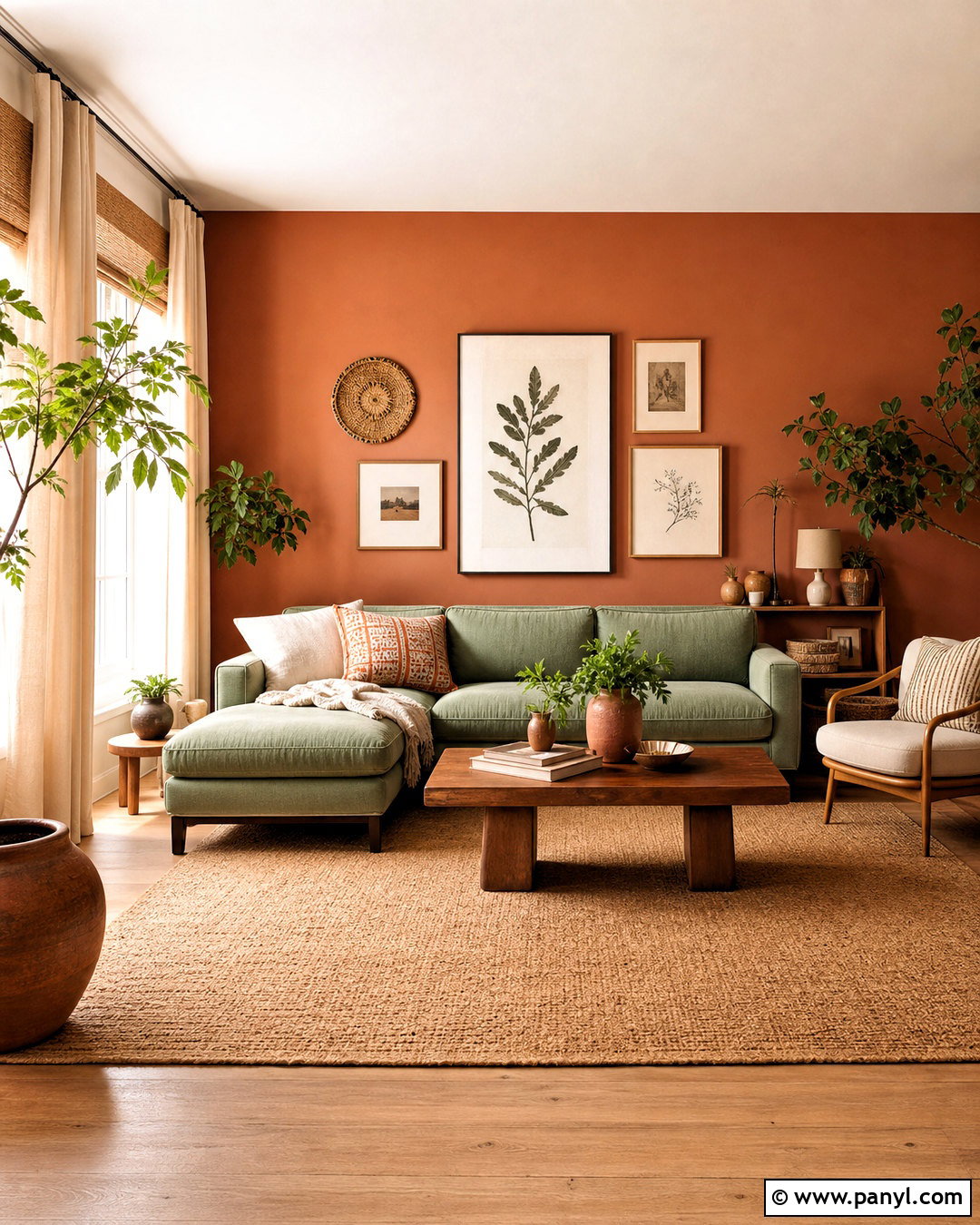
Earthy and calm, a ginger background paired with sage green gives a living space a natural, collected appearance. Use ginger on the wall behind a sage upholstered sofa or built-in bookcase. Add warm white paint to the remaining walls so the room stays open and balanced. Medium oak flooring, linen curtains, and a jute rug support the organic palette. Bring in darker green through cushions, glazed pottery, and leafy plants for added dimension. A walnut coffee table can ground the lighter furnishings without making the room feel heavy. Keep decorative objects simple and nature-inspired, such as botanical artwork, stoneware, and woven trays. The finished room feels colorful and comfortable while remaining easy to live with throughout the year.
3. Ginger Background With Navy Blue
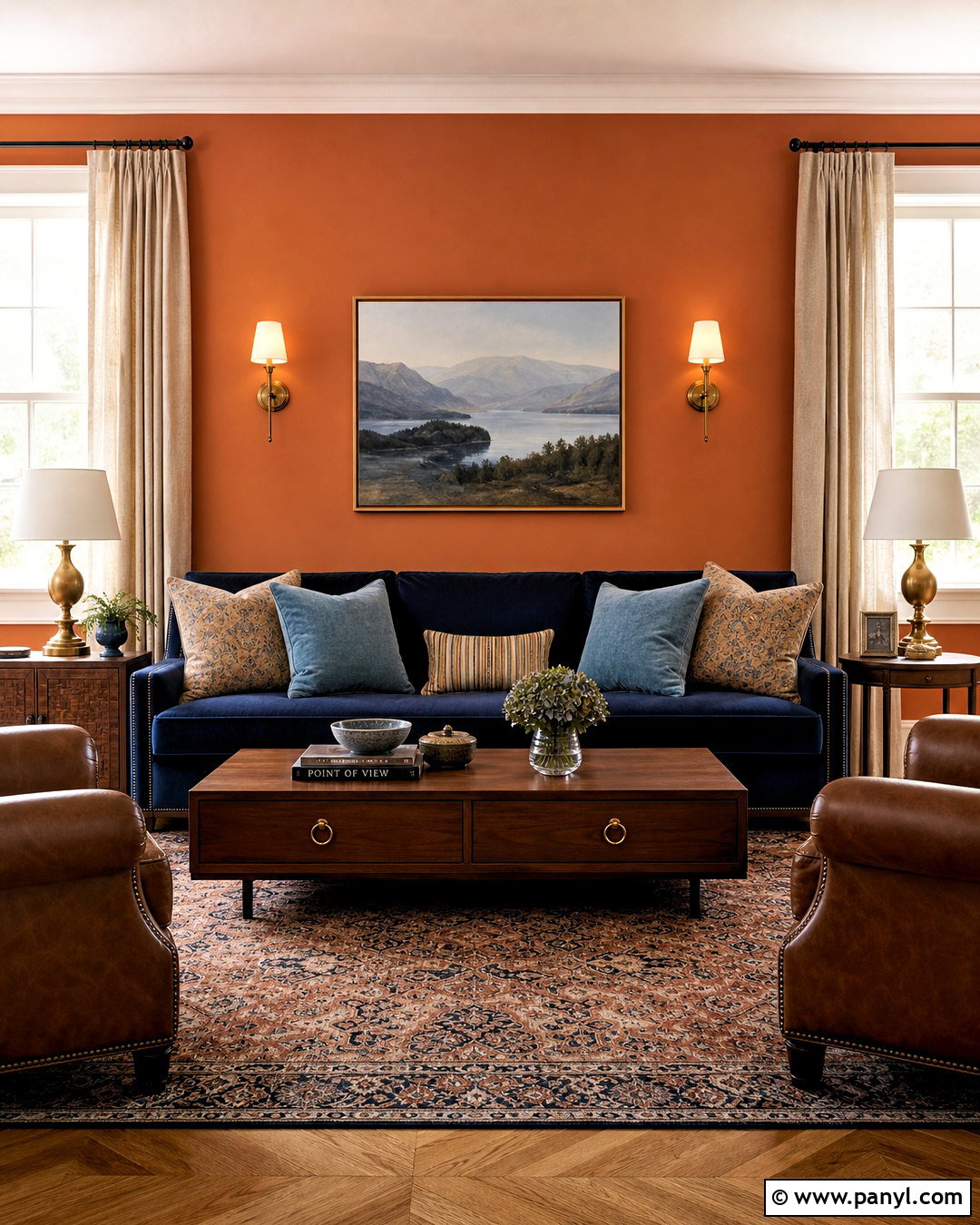
For a sharper, more dramatic room, combine a ginger background with deep navy blue furnishings. Ginger walls bring warmth, while a navy velvet sofa or upholstered bed provides cool contrast and visual weight. Use crisp white trim to define doors, windows, and baseboards. A patterned rug containing ginger, navy, and beige will tie the contrasting colors together. Choose walnut furniture and aged brass fixtures to continue the rich, layered mood. White or flax-colored curtains prevent the palette from appearing too dark. Small accents in dusty blue and cognac leather can add variety without introducing unrelated colors. This complete scheme works in living rooms, bedrooms, or home offices where you want a bold look that still feels polished and approachable.
4. Ginger Background With Warm White
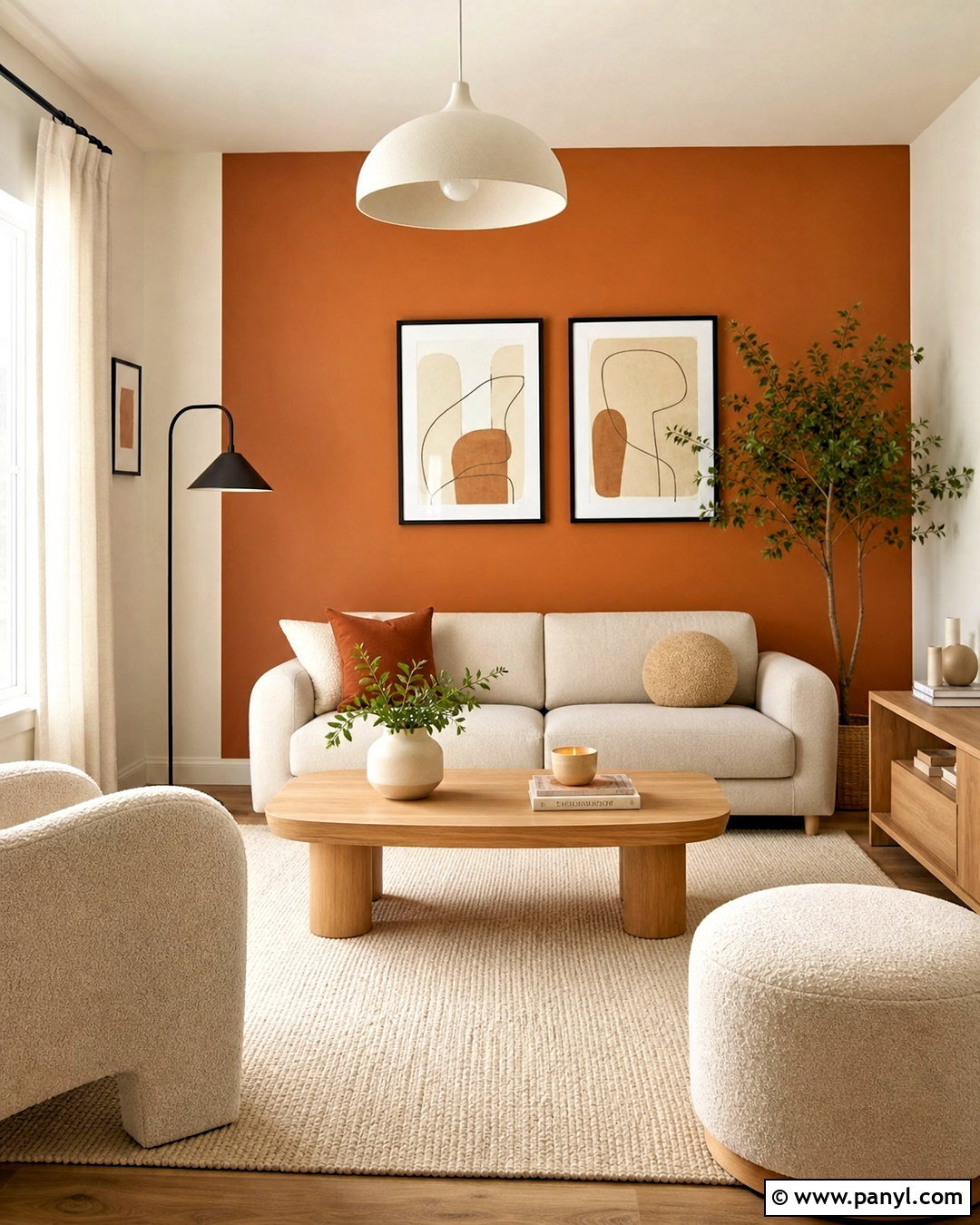
Could an all-neutral room use more personality? A ginger background framed by warm white surfaces offers color without creating an overly busy space. Paint one substantial wall ginger and keep the ceiling, trim, and surrounding walls creamy white. Arrange a simple beige sofa or upholstered bed against the colored wall, then add light oak furniture and woven textures. A warm white rug will brighten the floor and make the ginger shade look cleaner. Use minimal black accents through picture frames or a slim floor lamp to give the room definition. Linen curtains, boucle seating, and handmade ceramic decor complete the comfortable modern look. This approach is particularly useful in smaller spaces because the lighter supporting palette protects the sense of openness.
5. Ginger Background With Charcoal Gray
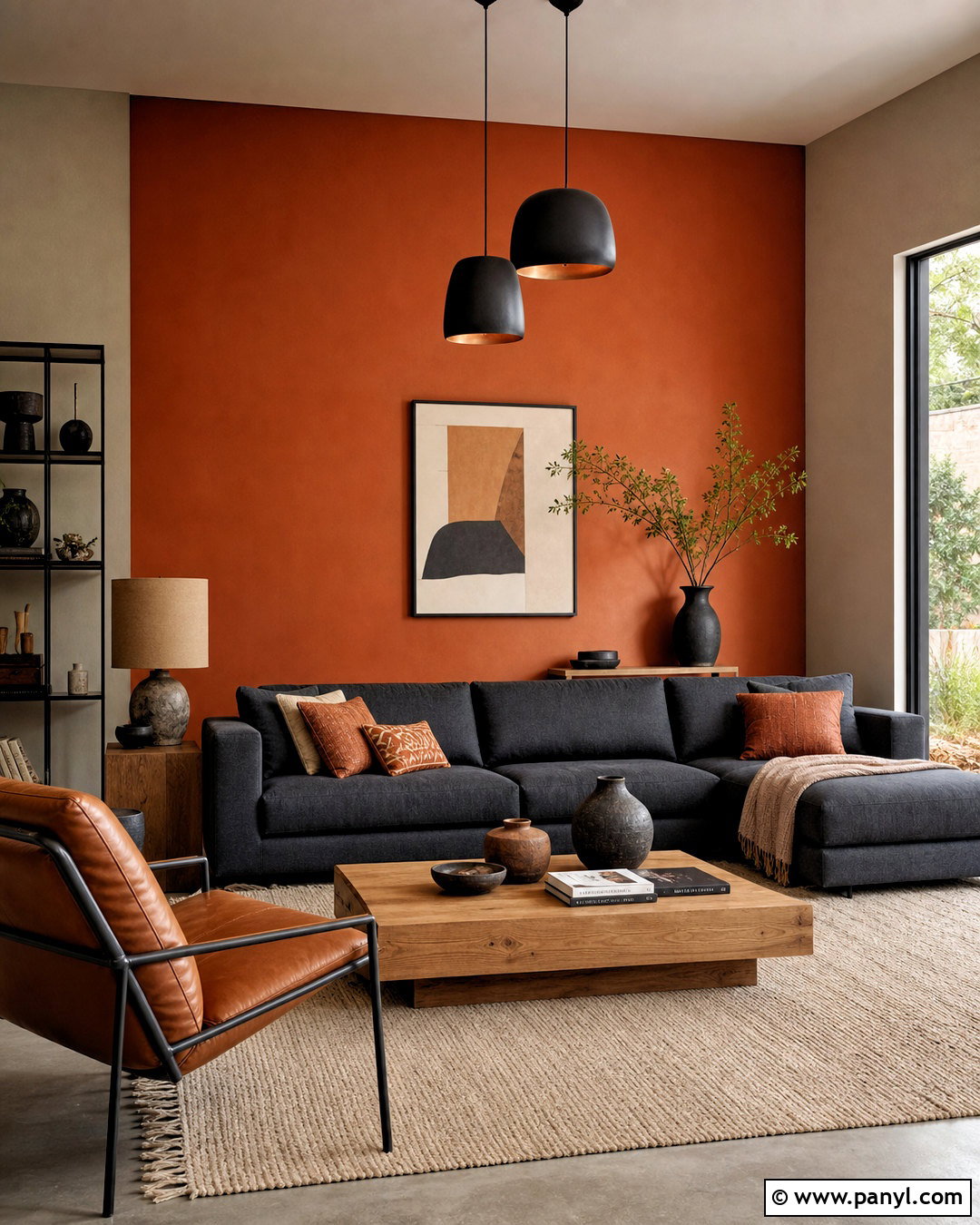
A charcoal and ginger background scheme creates a grounded room with a modern edge. Start with a rich ginger feature wall, then introduce a charcoal sectional, bed frame, or built-in cabinet as the main contrasting element. Use pale gray on the remaining walls to transition gently between the dark and warm tones. Black metal lighting and dark-framed artwork strengthen the contemporary direction. To keep the room welcoming, add a soft cream rug, tan leather accents, and natural oak furniture. Cushions in rust, gray, and off-white can repeat the palette across the seating area. Limit shiny finishes and choose matte paint, wool textiles, and textured ceramics instead. The resulting design feels substantial and refined but not cold or overly formal.
6. Ginger Background With Natural Wood
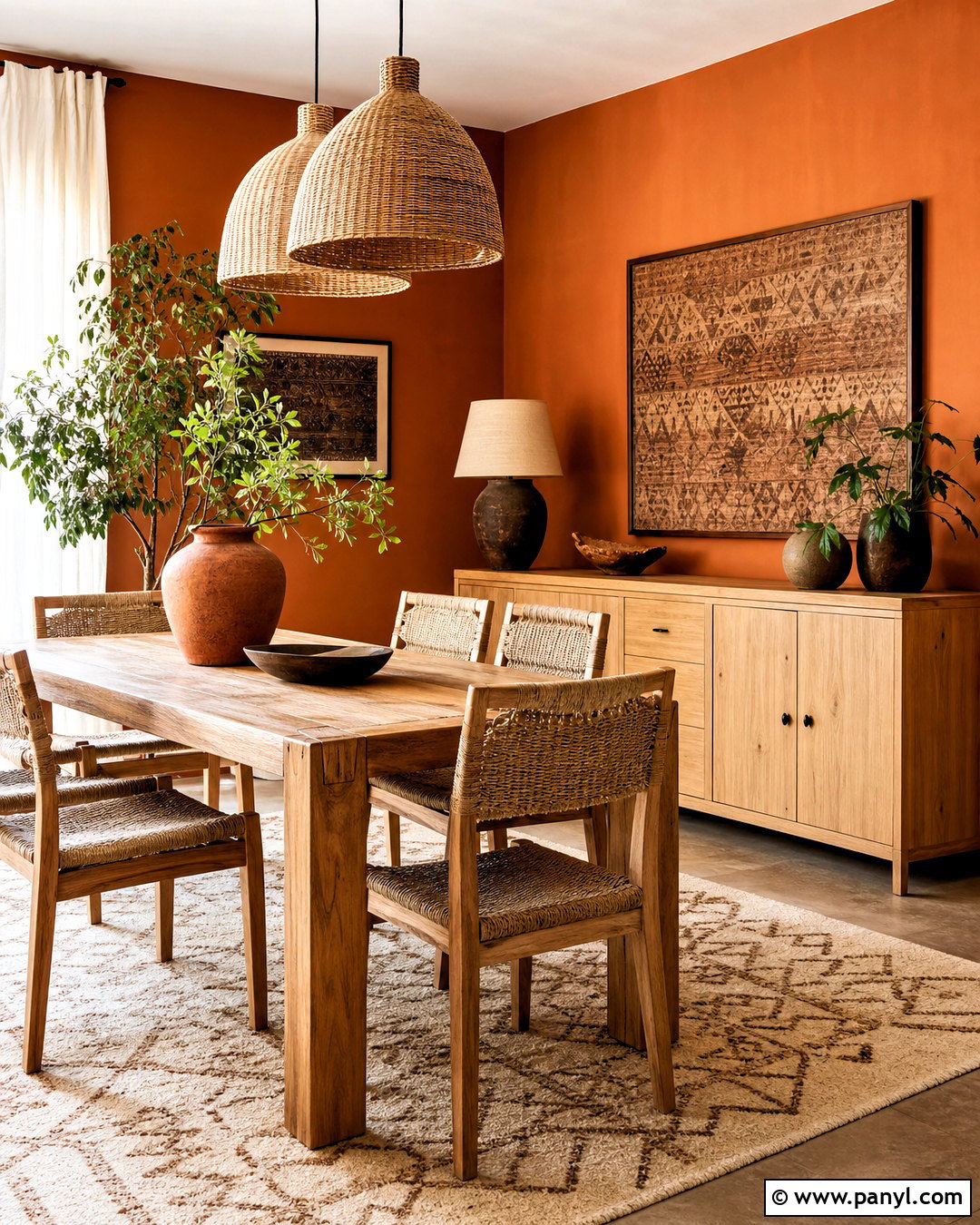
Sunlight brings out the best qualities of a ginger background surrounded by natural wood. Use the ginger shade on a dining room or living room wall, then select oak, ash, or maple furniture with visible grain. A simple wooden dining table, woven chairs, and a low sideboard can create a complete organic arrangement. Keep upholstery and window treatments in flax, cream, or soft beige to prevent competing undertones. Add a wool rug with a subtle geometric pattern and pendant lighting made from rattan or linen. Green plants introduce freshness, while handmade pottery reinforces the earthy character. Avoid filling every surface with accessories. A few larger objects will allow the ginger color and wood textures to remain the strongest features in the room.
7. Ginger Background With Black Accents
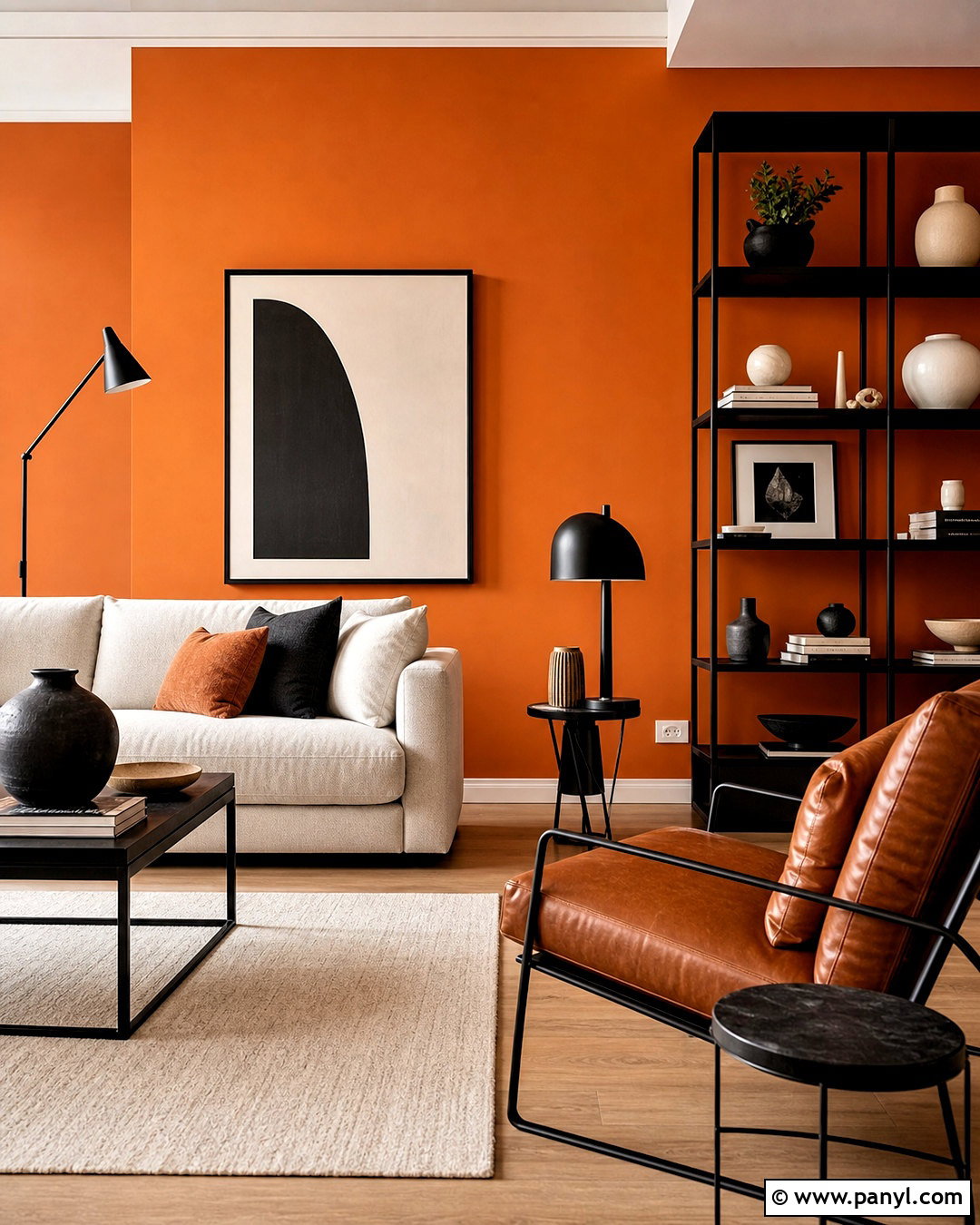
Clean black accents can turn a ginger background into a confident contemporary statement. Paint the primary wall a saturated ginger tone and repeat matte black through window frames, shelving, lamps, and slim furniture legs. Choose a light neutral sofa or bed so the room does not become visually heavy. Pale oak flooring and a cream area rug will also balance the strong contrast. Use framed black-and-white artwork to connect the wall color with the darker details. A cognac leather chair can introduce another warm material without blending completely into the background. Finish with sculptural ceramics and restrained greenery. The final room should contain open space between objects, allowing the ginger wall and graphic black lines to look deliberate rather than crowded.
8. Ginger Background With Teal Furniture
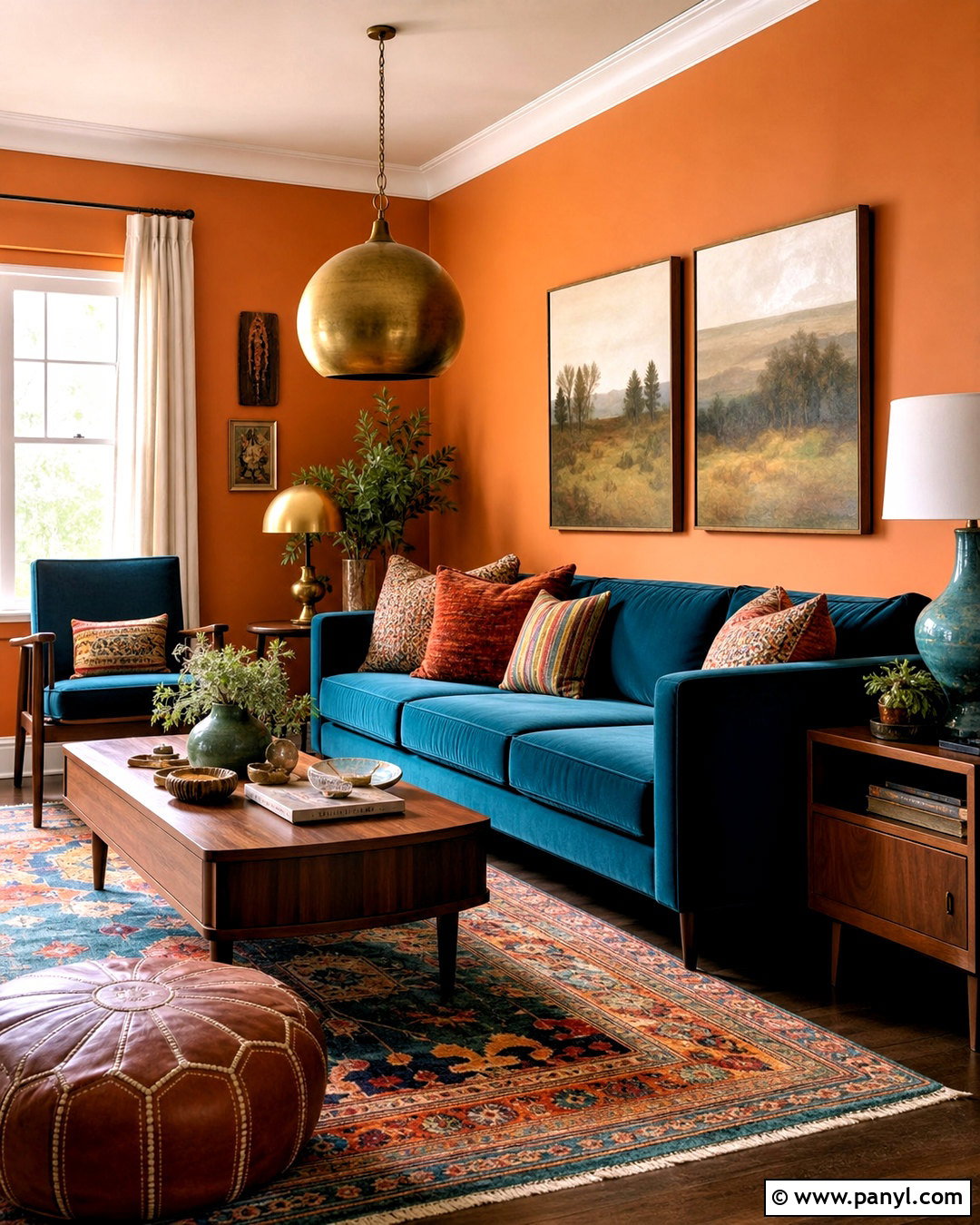
A deep teal sofa looks especially vivid against a warm ginger background. This complementary pairing suits a living room where color is meant to become part of the architecture. Paint the wall behind the sofa ginger, then keep neighboring surfaces soft cream or warm gray. Add a patterned rug containing teal, rust, tan, and ivory to unite the palette underfoot. Walnut tables and antique brass lighting give the arrangement depth, while natural linen curtains keep it from feeling overly formal. Repeat teal sparingly through one vase or cushion rather than covering every surface. Artwork featuring muted landscapes can soften the contrast. With balanced proportions and simple furniture shapes, this colorful room feels expressive, coordinated, and comfortable rather than themed.
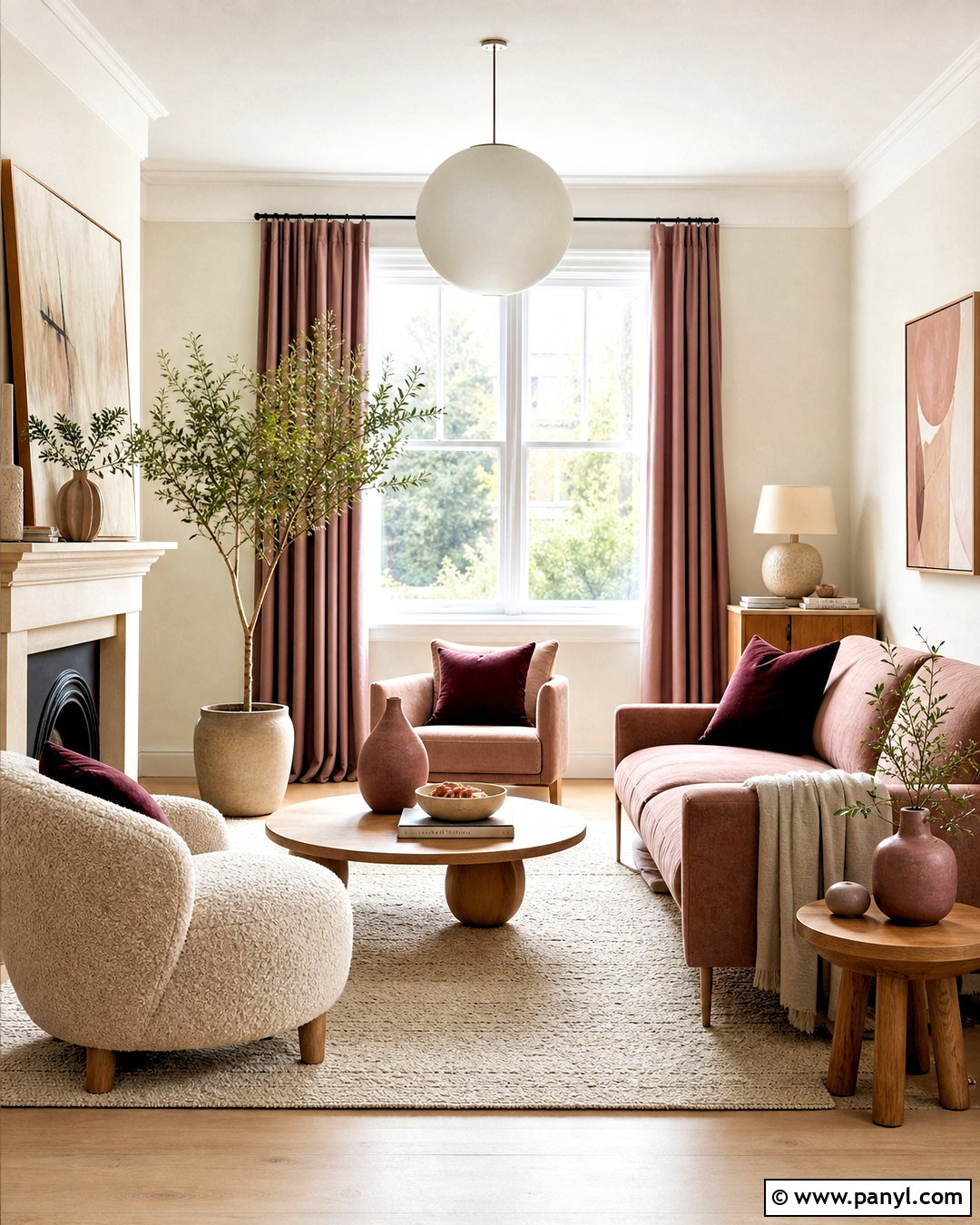
9. Ginger Background With Blush Pink
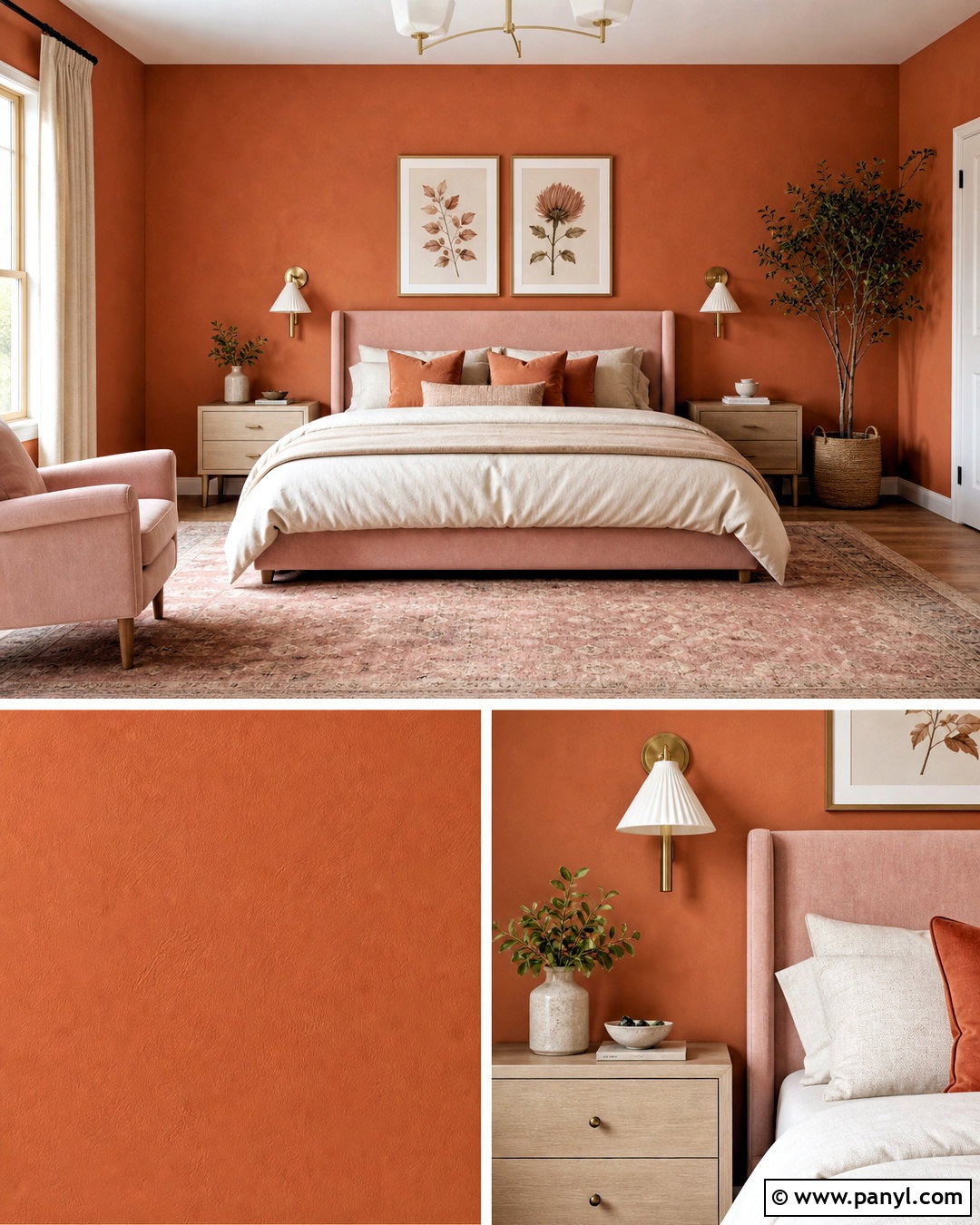
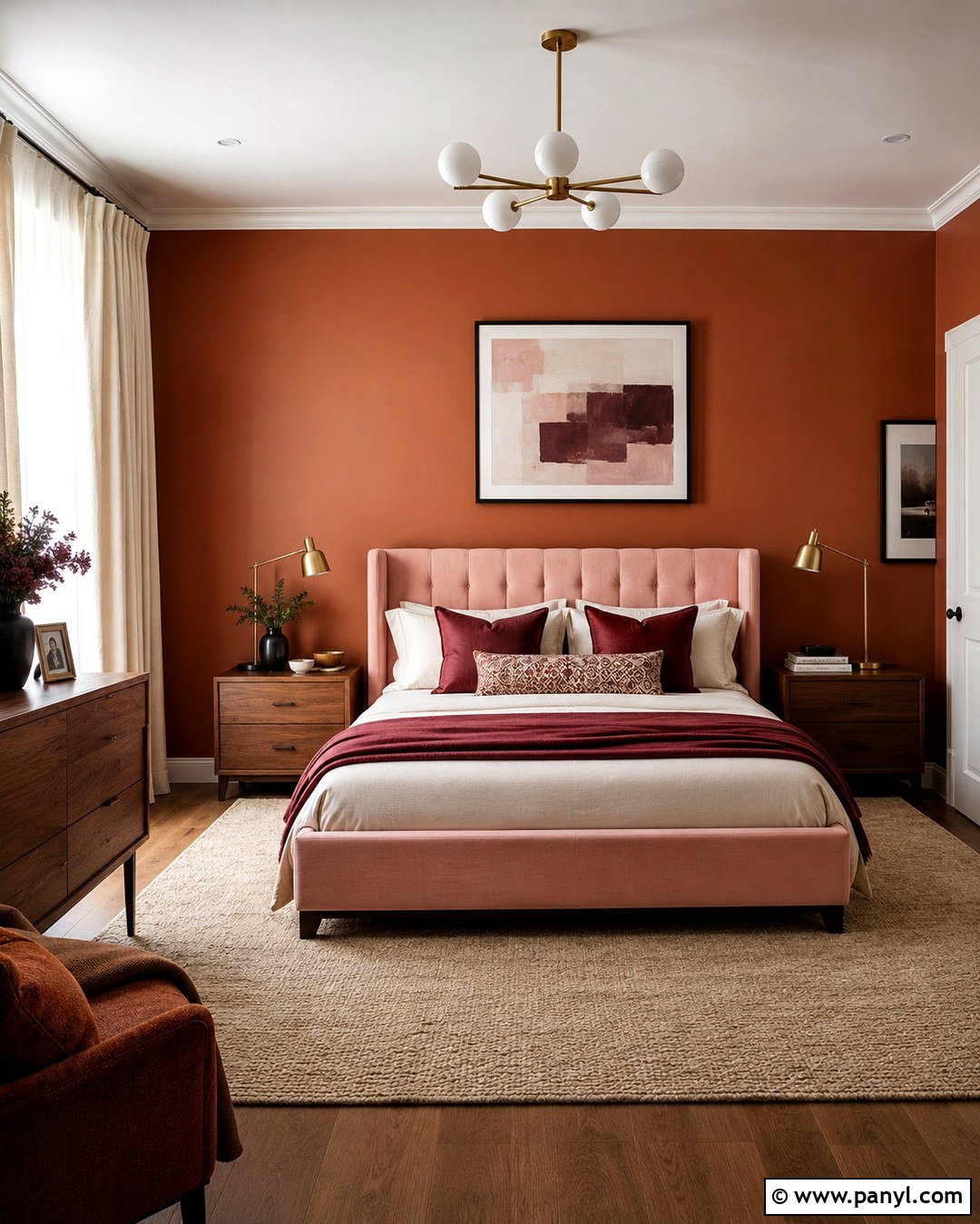
Soft blush pink gives a ginger background a gentler, more relaxed personality. In a bedroom, place an upholstered blush bed against a matte ginger wall and layer it with ivory bedding, terracotta cushions, and a lightweight beige throw. Pale wood nightstands keep the arrangement airy, while brushed brass sconces add warmth without dominating the design. Use warm white on the remaining walls and select light curtains that filter daylight. A vintage-inspired rug with faded pink, cream, and rust tones can connect the entire palette. Keep decorative pieces simple, including ceramic lamps, botanical prints, and one upholstered bench. The finished bedroom feels warm and expressive, yet the muted shades allow it to remain restful and practical for everyday use.
10. Ginger Background With Olive Green
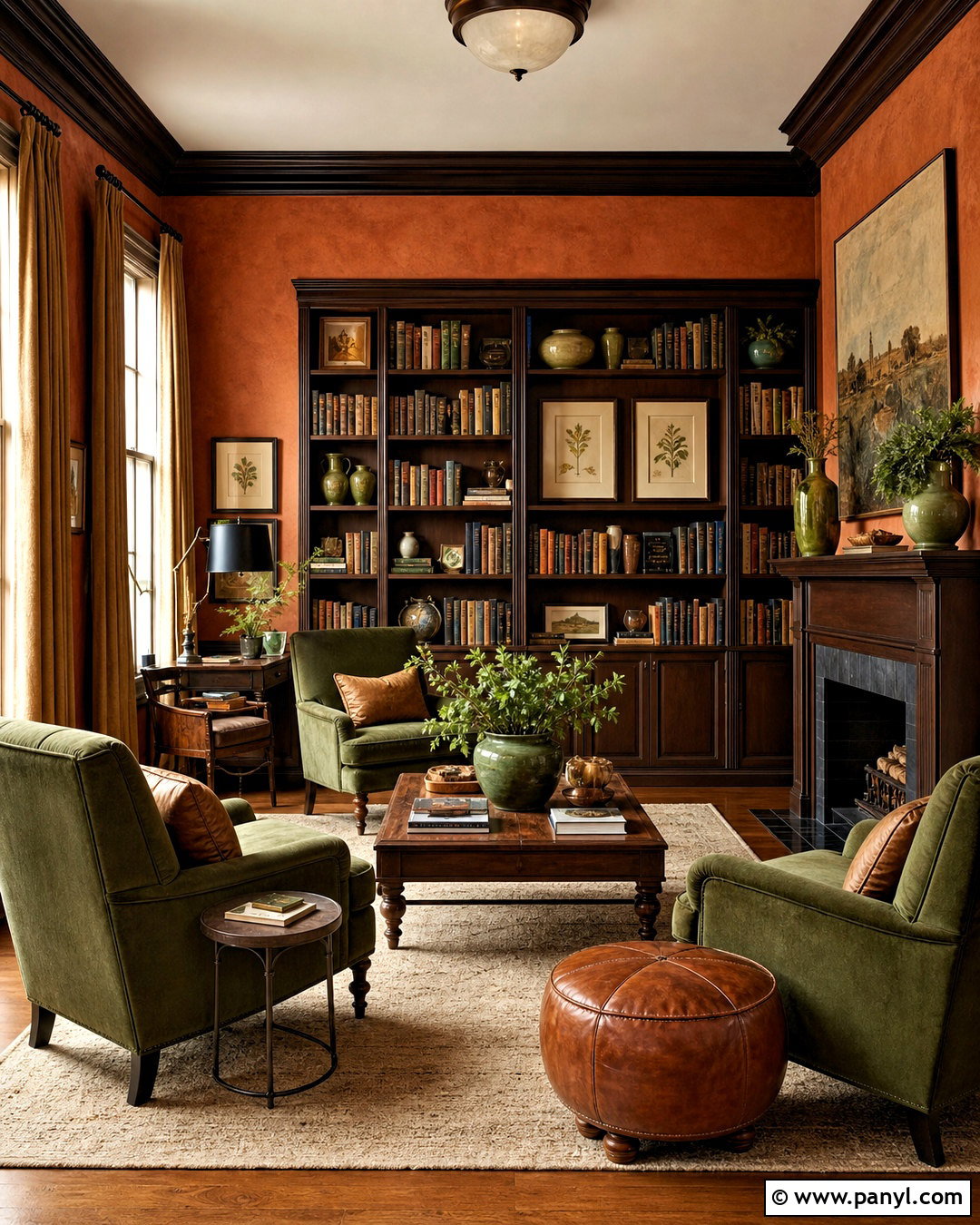
Ginger and olive green create a deep, earthy palette that works beautifully in a reading room or den. Cover the main wall in a muted ginger paint and place an olive green sofa or pair of lounge chairs in front of it. Use dark walnut shelves to provide storage and frame the seating area. A cream wool rug and beige curtains will lighten the overall composition. Incorporate aged brass lamps, brown leather details, and pottery in mossy green tones. Botanical artwork can reinforce the natural direction without making the room look overly decorative. For a balanced finish, leave the ceiling and trim warm white. This layered combination feels intimate and cozy, making it ideal for quiet spaces designed around reading, conversation, and relaxation.
11. Ginger Background With Midcentury Decor
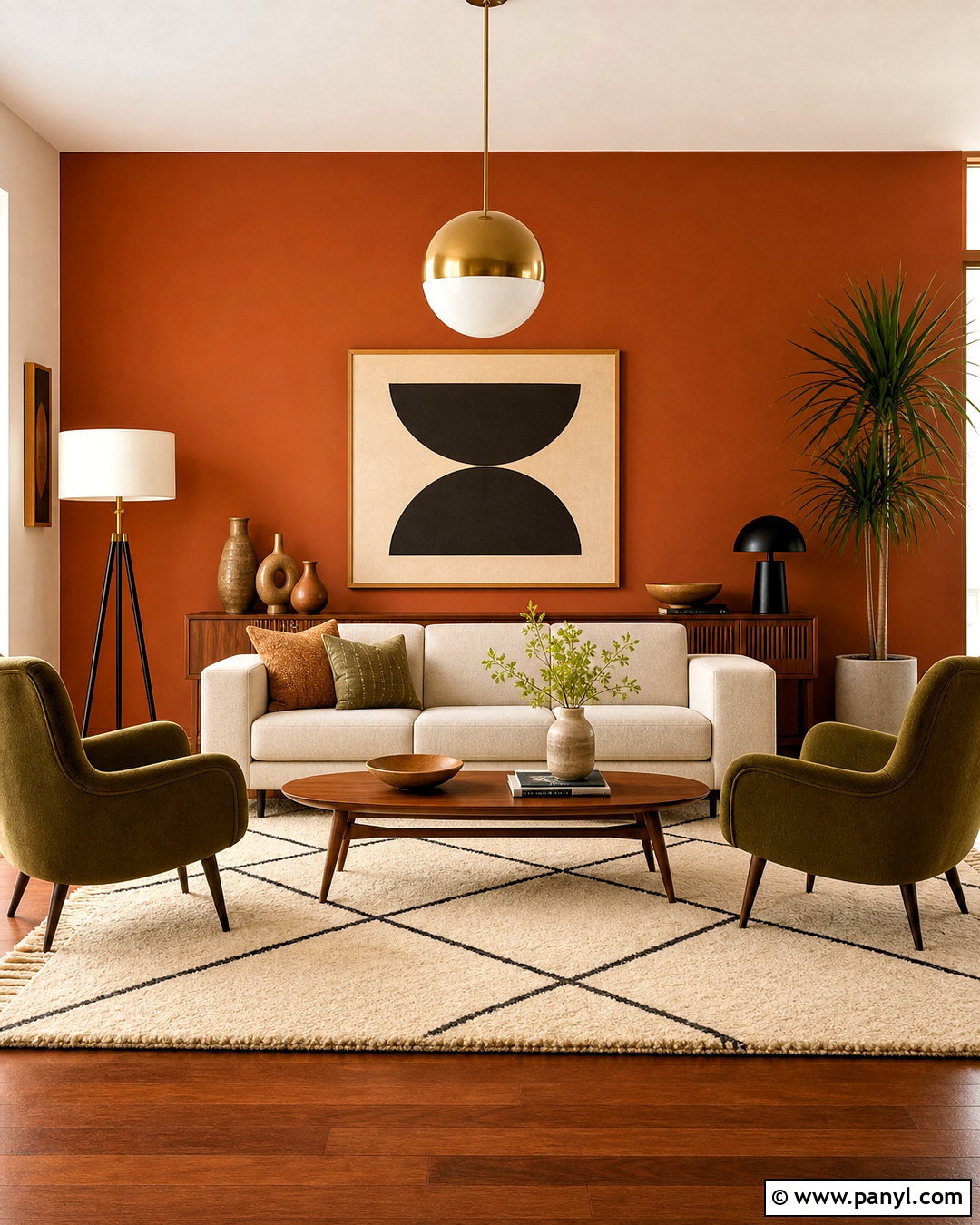
A midcentury room gains warmth and personality from a clean ginger background. Paint one full wall ginger and furnish the space with a low walnut console, tapered-leg sofa, and compact sculptural chairs. Upholstery in oatmeal, olive, or muted mustard will complement the warm wall without disappearing against it. Add a geometric rug containing cream, brown, and small touches of orange. A globe pendant, tripod floor lamp, and simple framed prints strengthen the period influence. Keep the furniture arrangement open, with clear pathways and enough negative space around each piece. Instead of adding many small accessories, display a few ceramic vessels and one tall plant. The final room feels nostalgic but remains practical, uncluttered, and suitable for a present-day home.
12. Ginger Background With Boho Decor
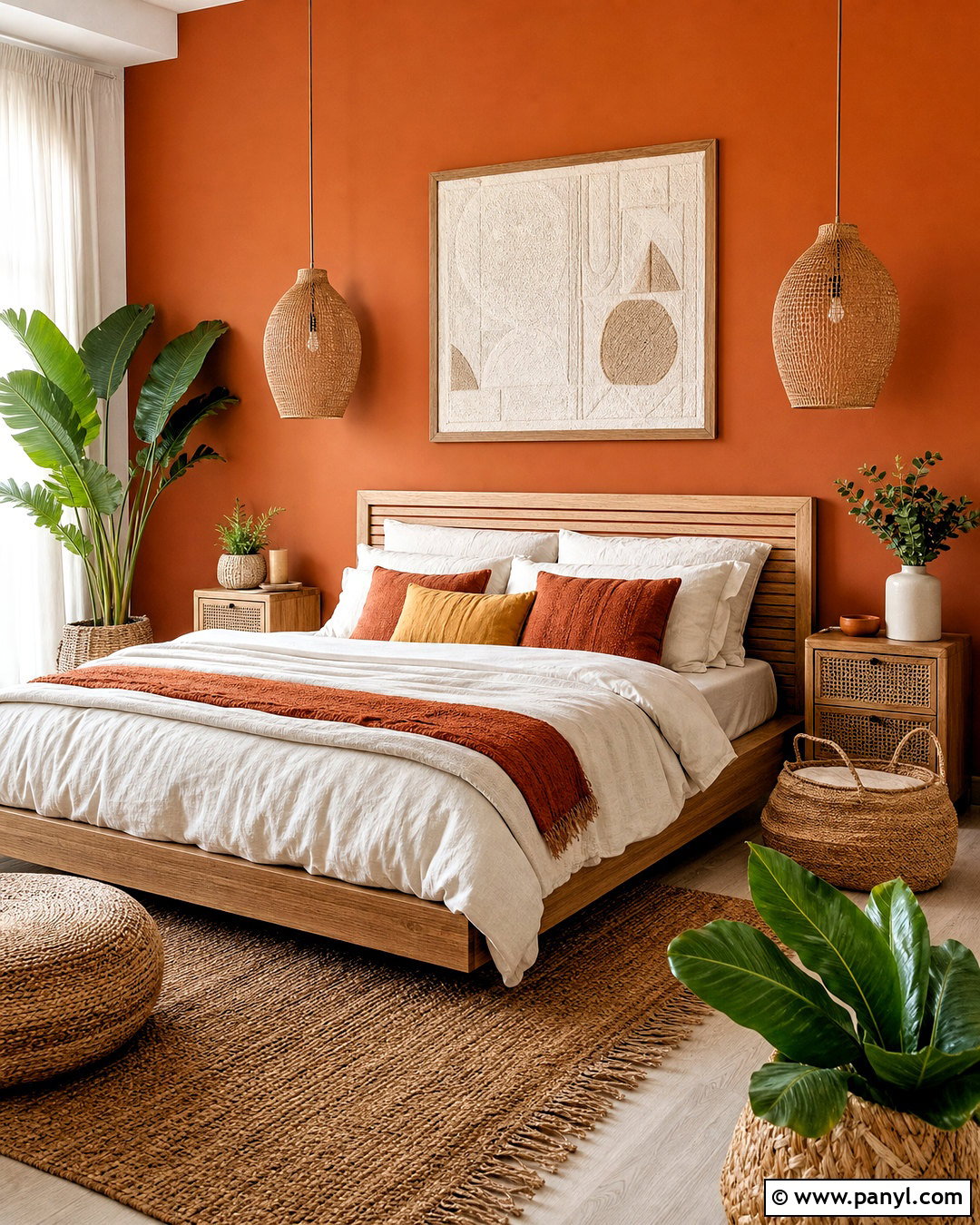
Layers of natural texture can make a ginger background feel relaxed and inviting in a boho-inspired bedroom or living room. Use a softened ginger paint rather than a highly saturated orange, then add a low cream sofa or simple wooden bed. Build the room with a jute rug, woven pendant, cane furniture, and linen textiles in ivory and tan. Patterned cushions may include rust, mustard, black, and muted green, but repeat each shade carefully for cohesion. Large plants provide a fresh counterpoint to the warm walls. Include one substantial wall hanging or oversized artwork instead of several unrelated decorations. By balancing pattern with open surfaces, the room captures an expressive bohemian mood without appearing cluttered, temporary, or difficult to maintain.
13. Ginger Background With Modern Farmhouse Decor
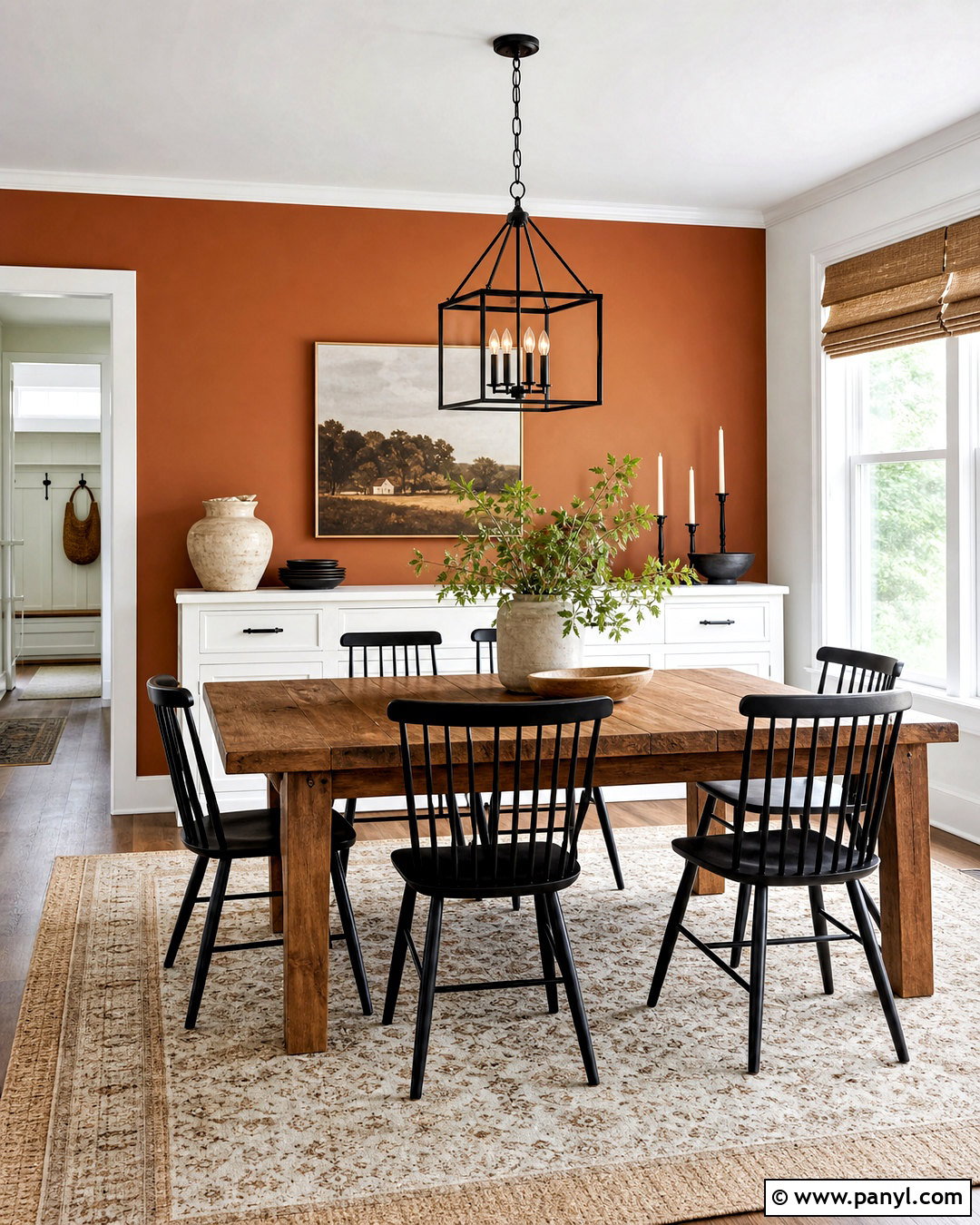
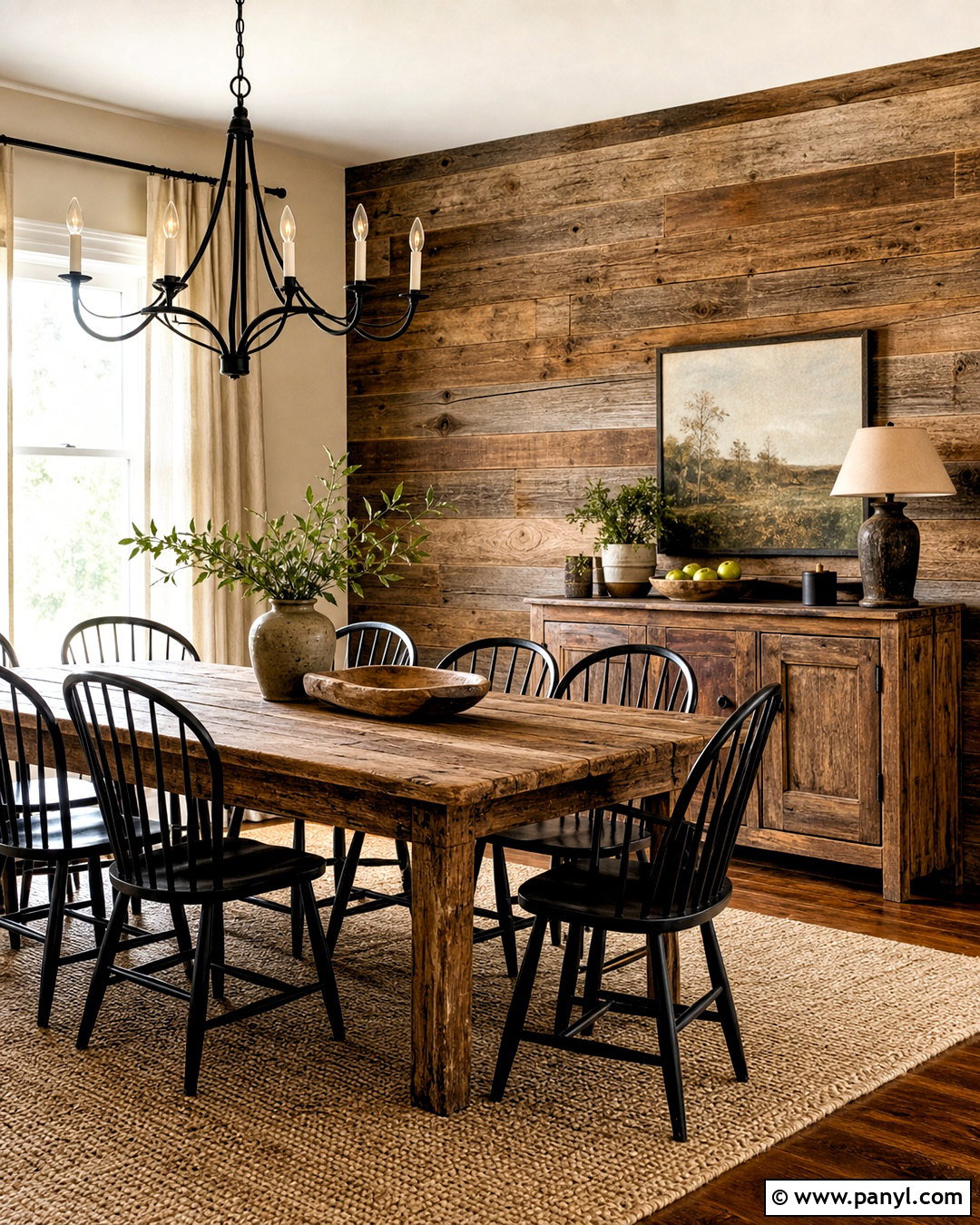
A ginger background can refresh modern farmhouse decor by replacing predictable gray with a warmer earthy color. Use ginger on the dining room wall behind a natural wood table and a simple painted sideboard. Choose warm white for the remaining walls, ceiling, and trim. Black spindle chairs and an iron pendant provide structure, while a washable cream-and-tan rug softens the floor. Style the sideboard with stoneware, framed landscape art, and a few leafy branches in a large ceramic vessel. Linen Roman shades will feel lighter than heavy curtains and keep the architecture visible. Avoid excessive signs or distressed accessories. The finished dining room should combine straightforward furniture, practical materials, and restrained rustic details for a clean farmhouse look with more color and individuality.
14. Ginger Background With Industrial Decor
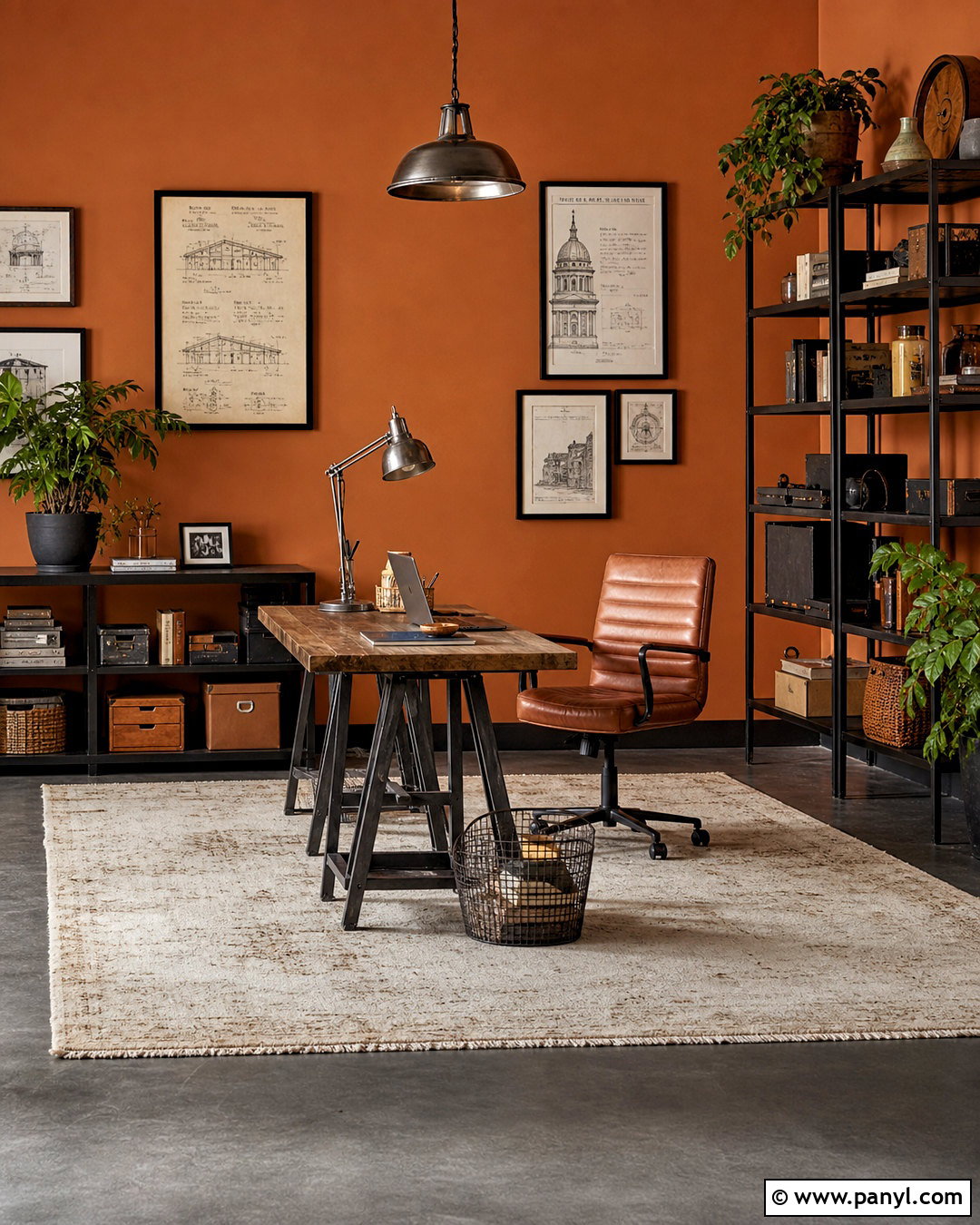
Exposed materials feel warmer when they are placed against a ginger background. In an industrial home office or loft-style living room, pair a matte ginger wall with black steel shelving, reclaimed wood furniture, and cognac leather seating. Concrete or gray flooring can provide a cool foundation, while a large cream rug improves comfort and balances the hard surfaces. Choose task lighting with matte black shades and visible metal joints. Framed architectural prints suit the setting without competing with the wall. Add storage through matching boxes, closed cabinets, and sturdy baskets to control visual clutter. A few green plants will soften the straight lines. This complete arrangement maintains the practical, workshop-inspired character of industrial decor while making the room feel noticeably more welcoming.
15. Ginger Background With Coastal Blue
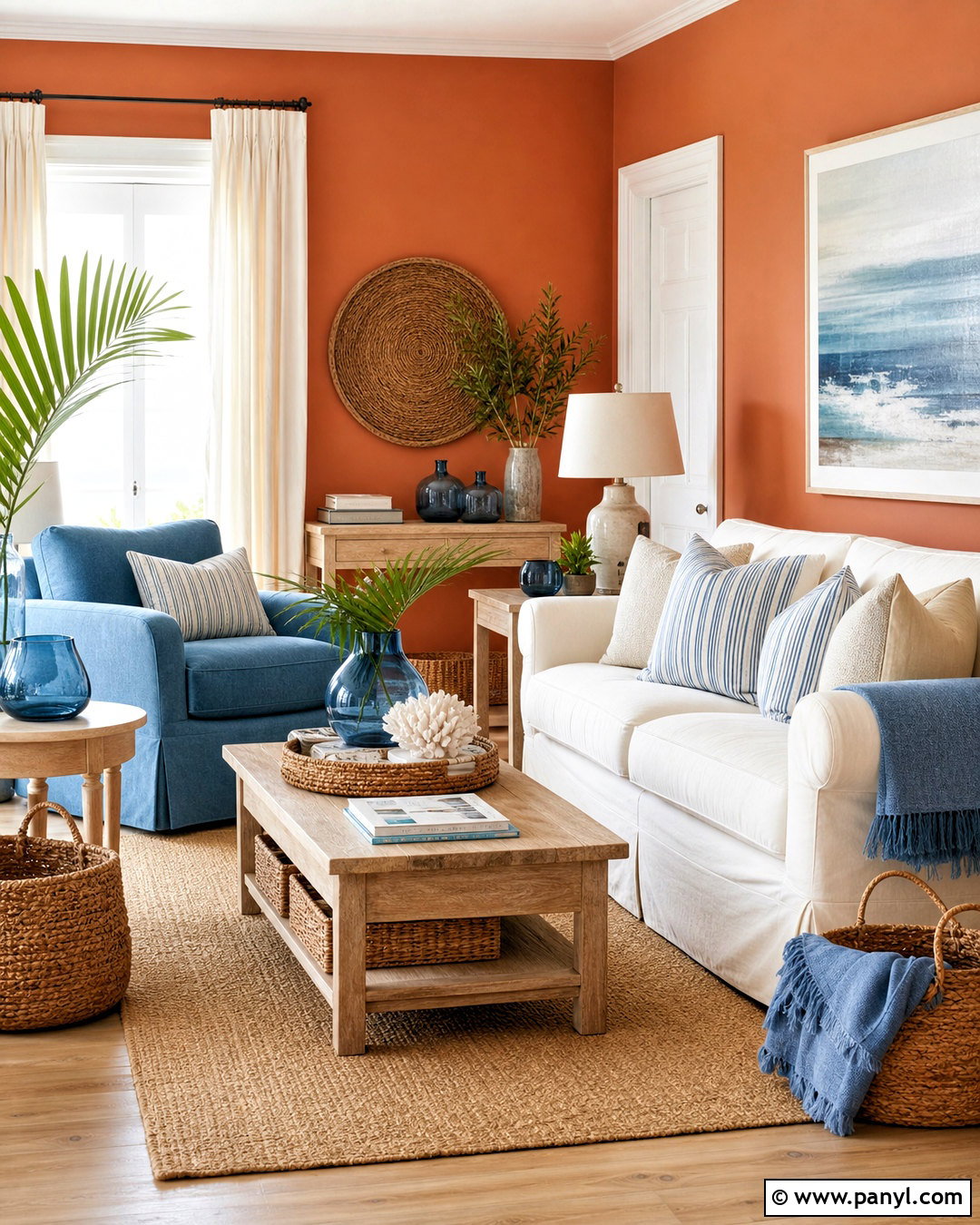
A muted ginger background may seem unexpected in coastal decor, yet it can create a warm sunbaked look when paired with faded blue. Use a soft clay-ginger wall behind a slipcovered cream sofa or bed. Introduce dusty coastal blue through striped cushions, an upholstered chair, and simple landscape artwork. Pale oak or whitewashed wood furniture supports the relaxed palette. Add a natural fiber rug, linen curtains, and woven baskets for casual texture. Instead of obvious beach decorations, choose subtle pieces such as blue glass vessels, weathered ceramics, and framed water scenes. White trim will keep the room crisp and bright. The result feels coastal without relying on a predictable all-blue scheme, offering a comfortable balance between warm earth tones and cool seaside color.
16. Ginger Background With Marble Details
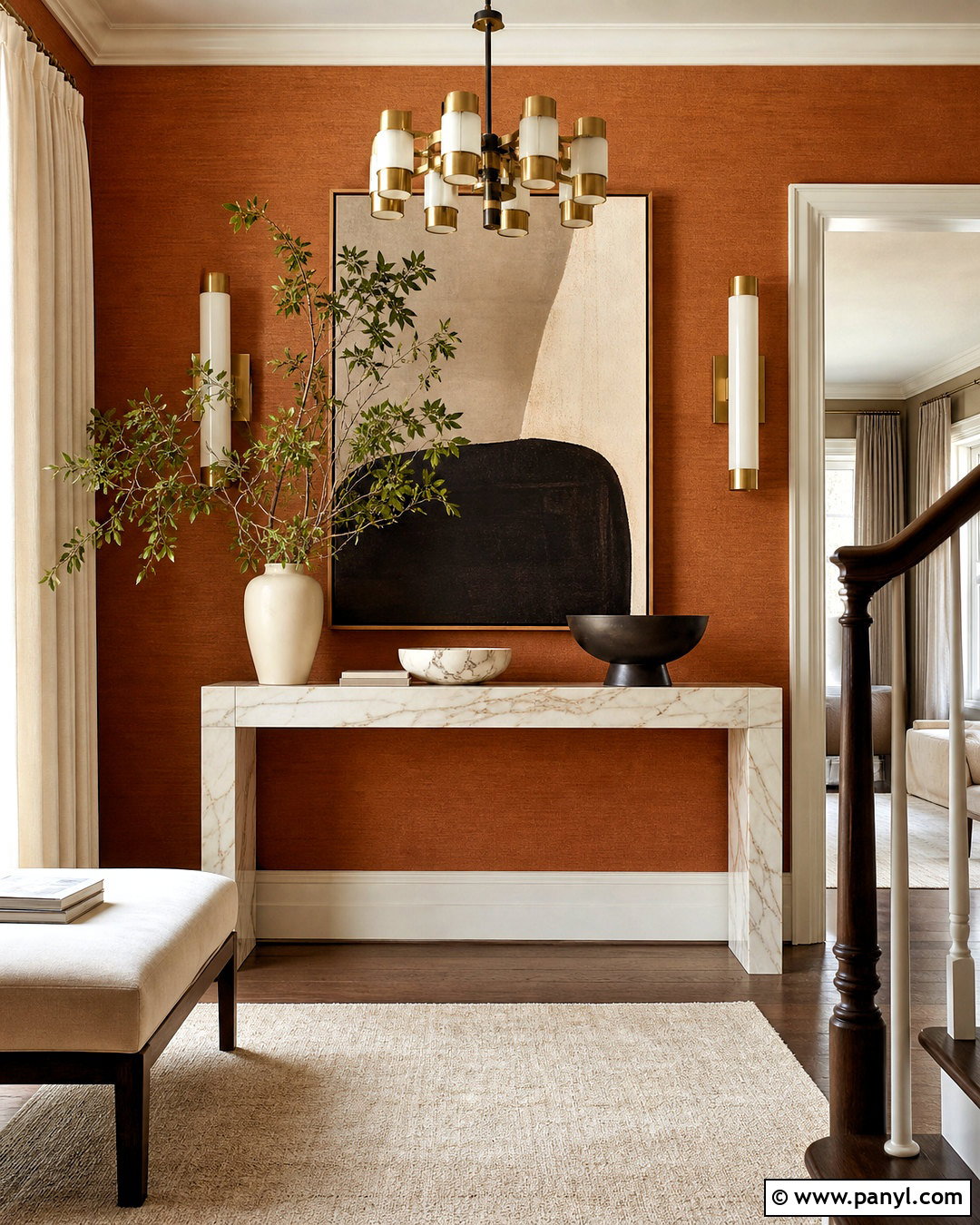
Smooth marble surfaces bring a sophisticated contrast to a warm ginger background. In a dining room, entryway, or formal living space, use ginger paint behind a white marble console, fireplace, or dining table. Select stone with subtle beige or gray veining so it connects naturally with the room’s supporting neutrals. Add cream upholstered chairs, dark wood accents, and brushed brass lighting for a polished but balanced finish. A pale textured rug will soften the harder stone surfaces. Keep window treatments simple and full length, using ivory linen or warm white cotton. Limit decor to sculptural bowls, large artwork, and a few carefully positioned branches. This restrained arrangement allows the ginger wall and marble details to appear luxurious without requiring an oversized or expensive room.
17. Ginger Background With Botanical Wallpaper
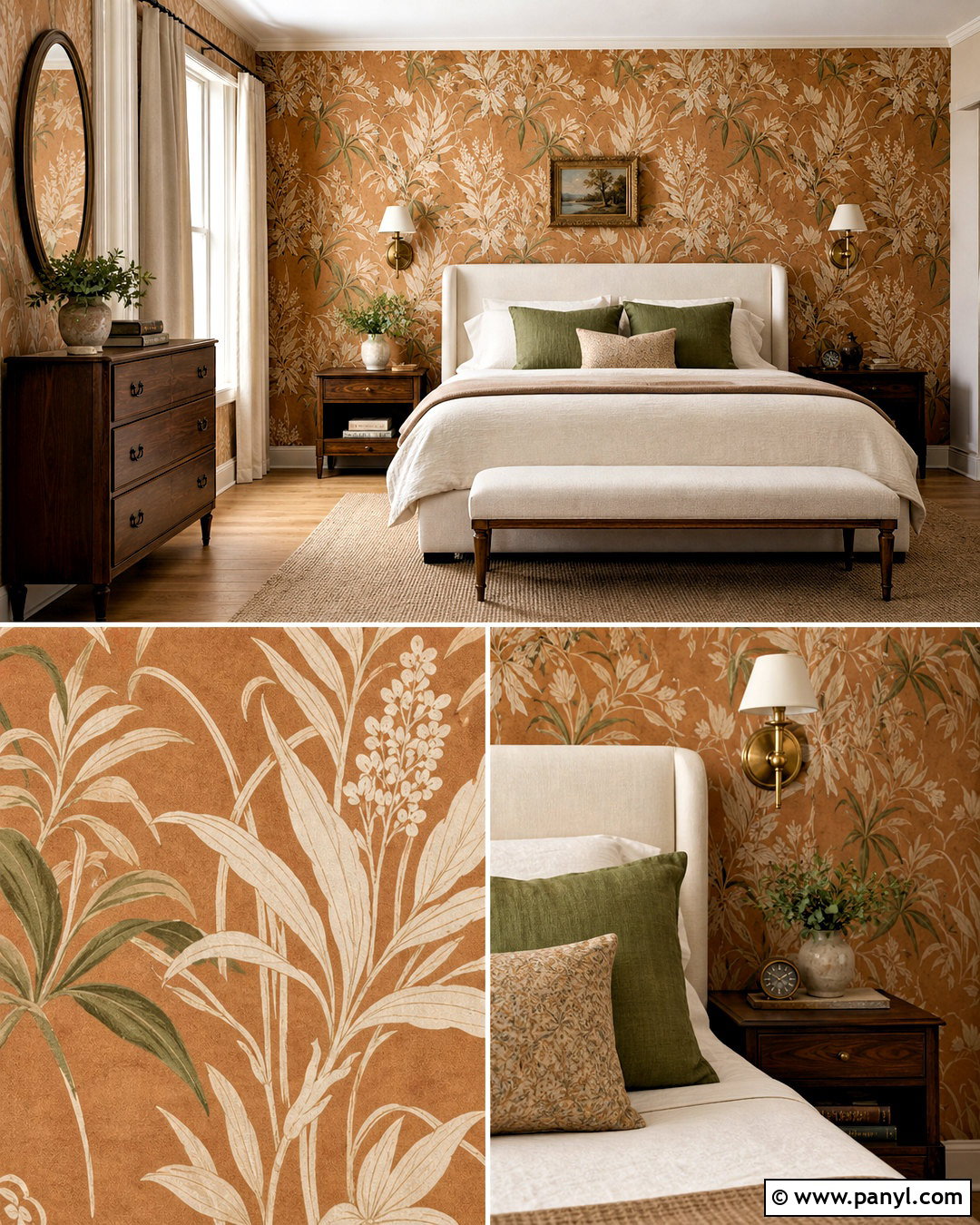
Pattern can become the foundation of the entire room when a ginger background appears in botanical wallpaper. Choose a design with a ginger-colored field and leafy motifs in cream, olive, brown, or muted green. Apply it to every wall in a powder room or use it behind the bed in a larger bedroom. Pull colors directly from the pattern for the furniture and textiles. An olive vanity, cream headboard, or walnut dresser will feel intentionally coordinated. Add aged brass lighting and simple framed mirrors to provide a warm metallic highlight. Keep flooring relatively quiet, such as light oak or ivory tile. Because the wallpaper already supplies movement, use solid curtains and restrained accessories. The completed space feels layered, immersive, and thoughtfully connected.
18. Ginger Background With Textured Plaster
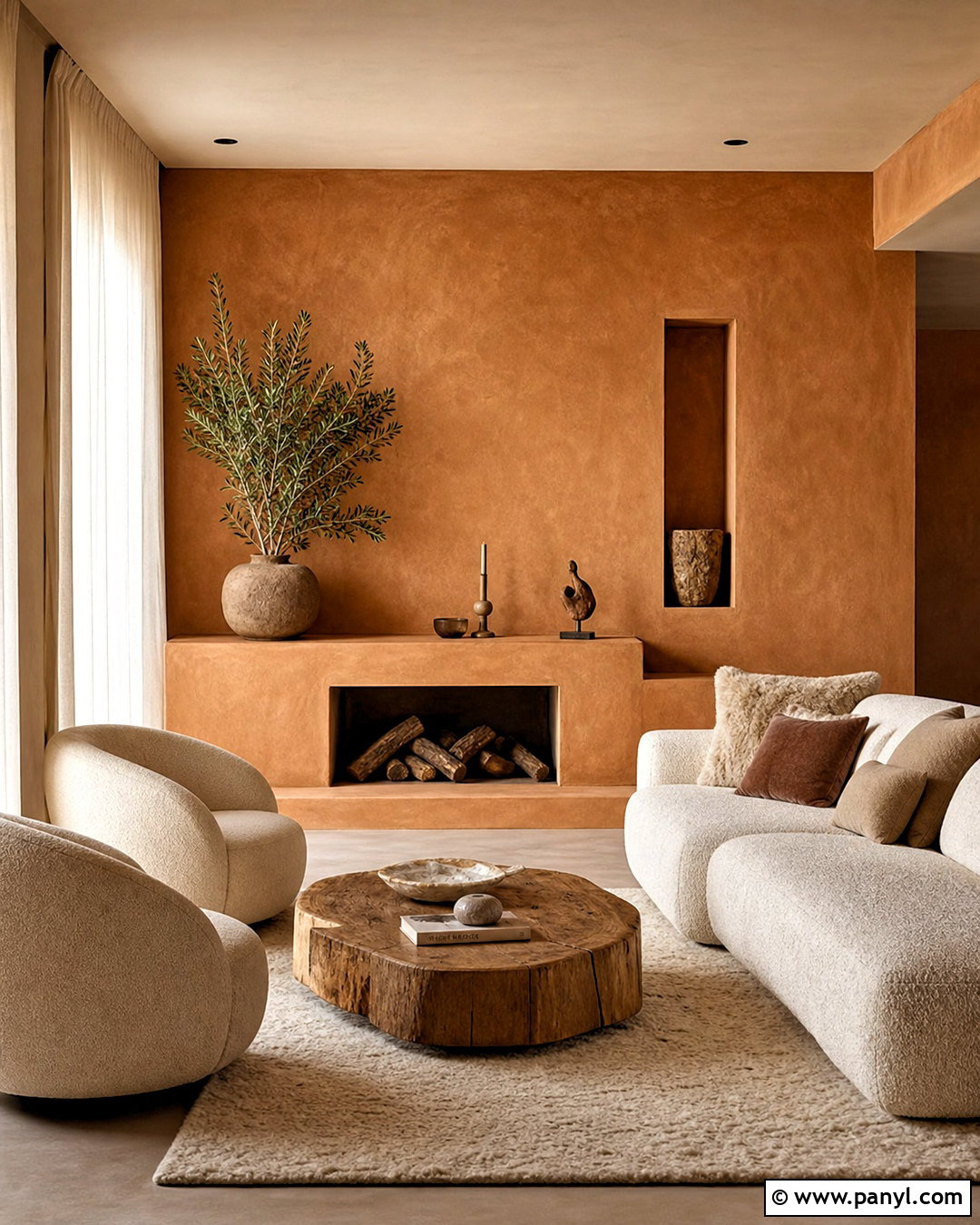
Textured plaster gives a ginger background more depth than a flat painted finish. Apply a limewash-inspired or hand-troweled ginger surface to the main wall, allowing lighter and darker areas to remain visible. Pair it with a low cream sofa, rounded wood coffee table, and soft wool rug for a calm organic living room. Choose curtains in natural linen and keep lighting warm in color but bright enough to reveal the wall texture clearly. Stone accessories, unglazed pottery, and a single olive tree complement the handmade appearance. Avoid highly reflective furniture that may compete with the subtle variation. The finished room should feel quiet and tactile, with curved shapes and natural materials balancing the background’s rich color and softly irregular surface.
19. Ginger Background With Geometric Pattern
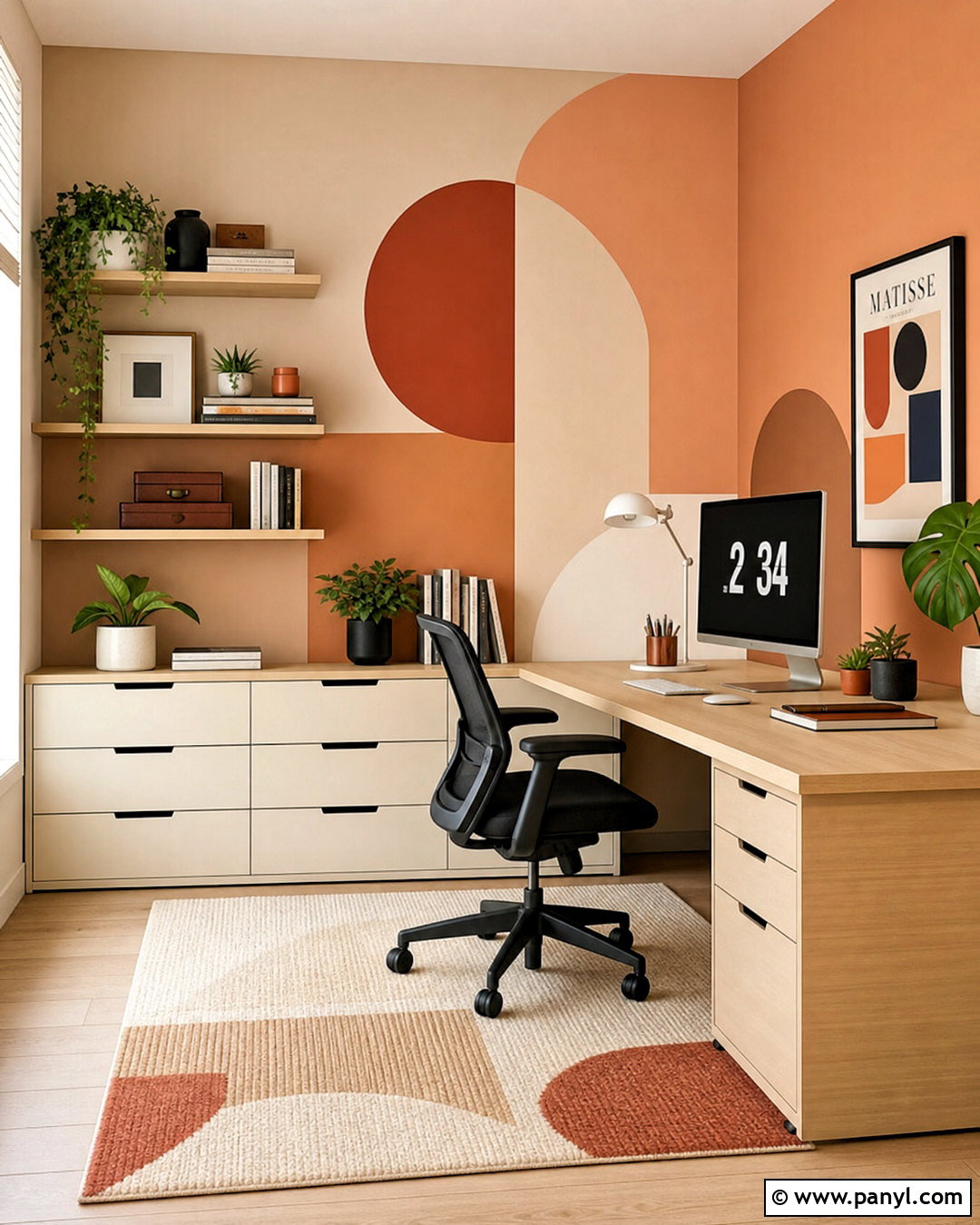
A geometric ginger background can energize a home office, playroom, or creative studio while remaining organized. Build the pattern from ginger, cream, tan, and muted rust shapes rather than introducing too many contrasting colors. Keep the largest areas simple so shelves, desks, and artwork remain easy to see. Choose a pale wood desk, cream storage cabinet, and black task chair for a practical workspace. Repeat the ginger tone through one small rug or desk accessory to connect the foreground with the wall. Closed storage will reduce clutter and protect the pattern’s clean effect. Use white ceiling paint and minimal window treatments for brightness. The complete design feels graphic and upbeat, but its controlled palette keeps it suitable for a real working room.
20. Ginger Background With Built-In Shelves
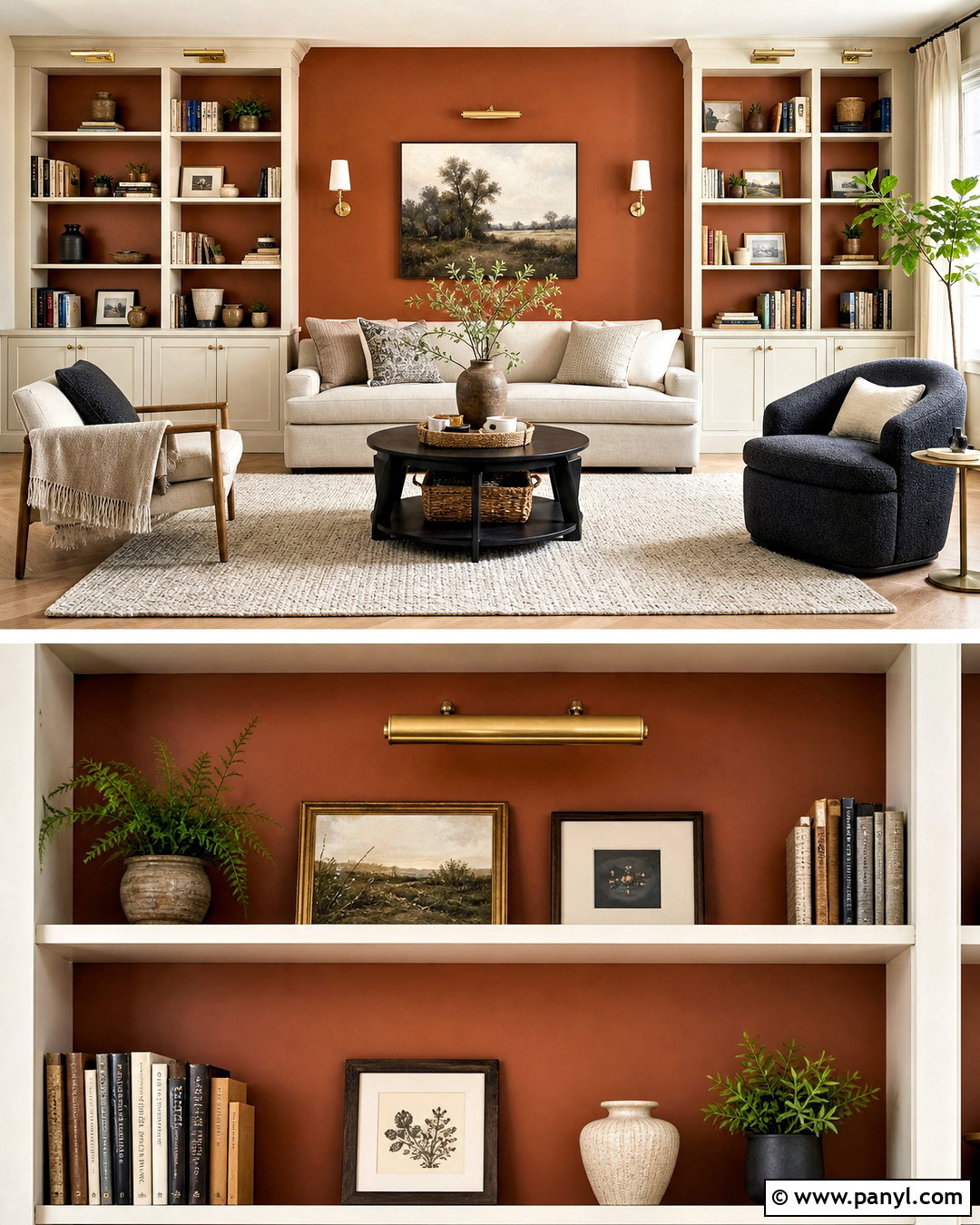
Built-in shelving painted against a ginger background creates a useful focal point with architectural depth. Paint the back wall ginger and finish the shelves in warm white, pale oak, or deep charcoal depending on the desired level of contrast. Include closed cabinets below for everyday storage and open shelves above for books, pottery, framed art, and a few plants. Place a neutral sofa or compact reading chair nearby to turn the feature into a complete living area. Integrated picture lights or small brass sconces can highlight the display. Arrange objects in groups with open space between them, rather than filling every shelf. The result is a practical, polished room where storage, color, and furniture all contribute to one cohesive design.
Conclusion:
A well-planned ginger background can transform an ordinary room into a warm, expressive, and comfortable space. The color works with soft neutrals, natural woods, deep blues, earthy greens, pinks, black details, and many other practical finishes. Before decorating, consider the room’s daylight, size, existing flooring, and permanent architectural features. Then select one clear color direction and repeat it through furniture, textiles, artwork, and accessories. Ginger can cover an entire room or provide a focused feature behind a bed, sofa, dining table, or shelving unit. Whether you prefer rustic texture or crisp contemporary contrast, these 20 ginger background ideas offer complete looks that can be adjusted for different rooms, budgets, and homes.

Related Ideas and Inspiration:
Leave a Reply