
Moroccan background ideas can turn an ordinary wall or room into a layered, welcoming space filled with color, texture, and handcrafted character. The most convincing looks combine a strong backdrop with furniture, lighting, textiles, and architectural details that support the same visual story. You might choose glossy zellige tile, softly mottled plaster, intricate geometric patterns, or a simple arched niche framed by warm neutral walls. Rich jewel tones create drama, while sand, cream, and clay offer a calmer interpretation that fits modern homes. The key is balancing detailed surfaces with quieter furnishings so the room remains comfortable rather than overly themed. Explore the complete spaces below to find practical and visually distinctive Moroccan background ideas.
1. Moroccan Zellige Tile Background
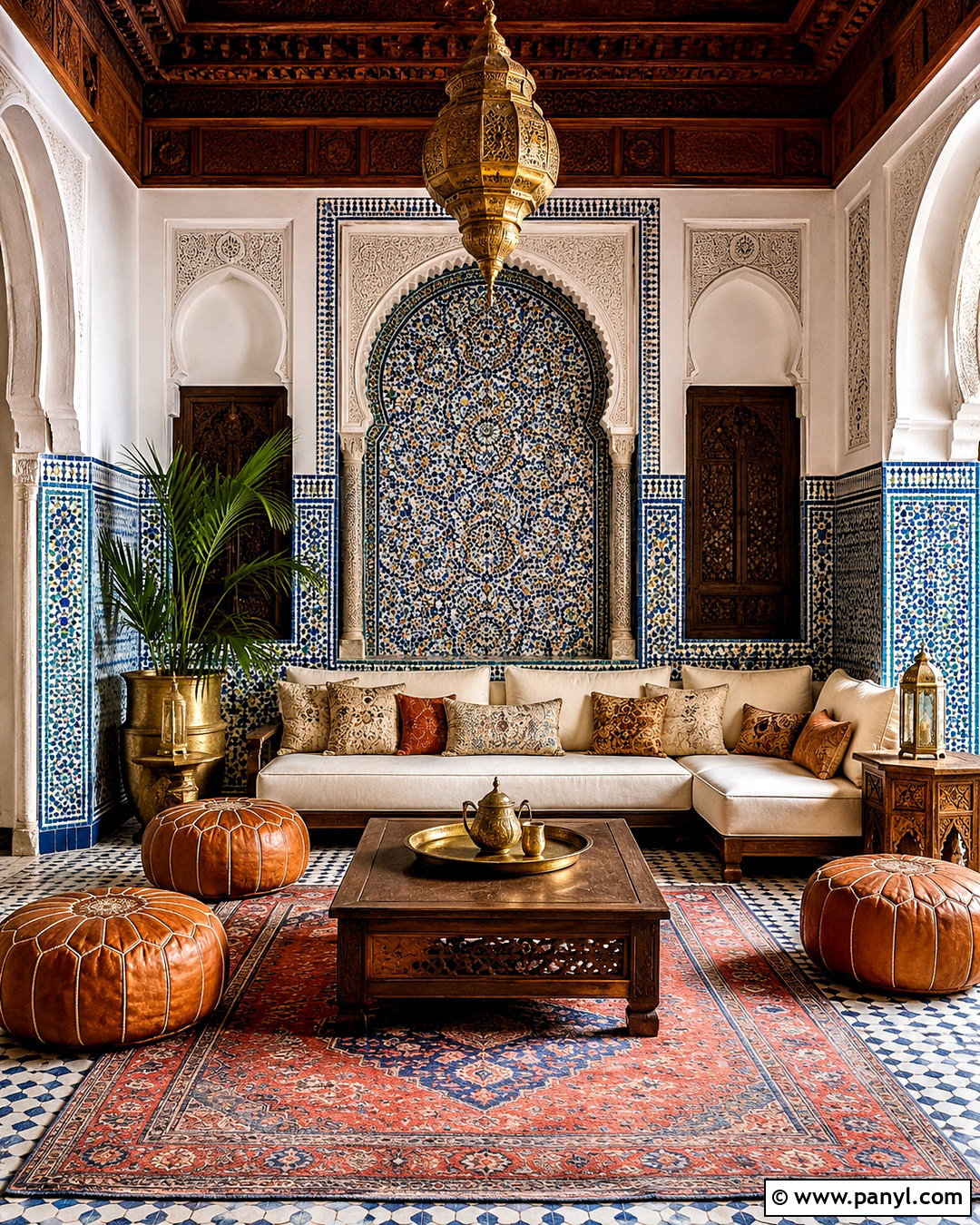
A zellige tile wall creates a luminous foundation for a Moroccan living room. Choose handmade-look tiles in ocean blue, turquoise, and soft white, arranging them in a repeating geometric pattern behind a low cream sofa. Keep the remaining walls warm white so the tile stays prominent without overwhelming the space. Add an aged walnut coffee table, two camel leather poufs, and a faded red-and-blue area rug. Pierced brass lanterns provide decorative lighting, while linen curtains soften the harder surfaces. A few solid-colored cushions will balance the detailed background better than more competing patterns. Finish the room with potted palms and simple ceramic vessels in ivory and cobalt blue.
2. Moroccan Tadelakt Plaster Background
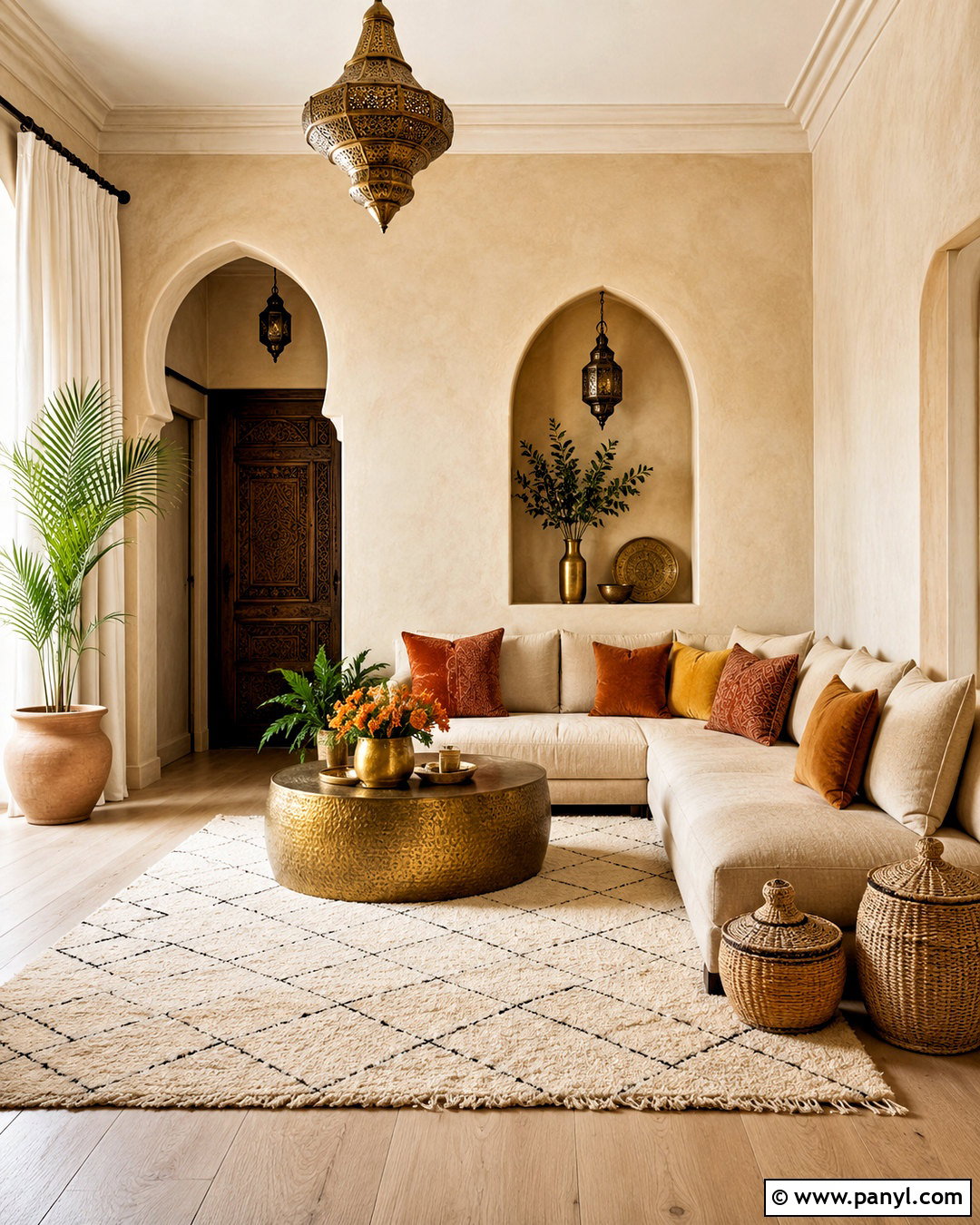
Soft tadelakt-style plaster offers a quieter Moroccan background with beautiful depth and movement. Cover the main wall in warm sand-colored plaster with subtle variations that resemble a hand-burnished finish. Place a low oatmeal sofa against it, then layer rust, cream, and muted saffron cushions across the seating. An irregular arched niche can hold a ceramic lamp, a small trailing plant, and a few sculptural objects. Use pale oak flooring with a thick cream Beni Ourain rug to keep the room bright. A round hammered-brass table adds gentle shine without making the design feel ornate. Complete the space with woven baskets, linen curtains, and one carved wooden side chair.
3. Moroccan Arched Niche Background
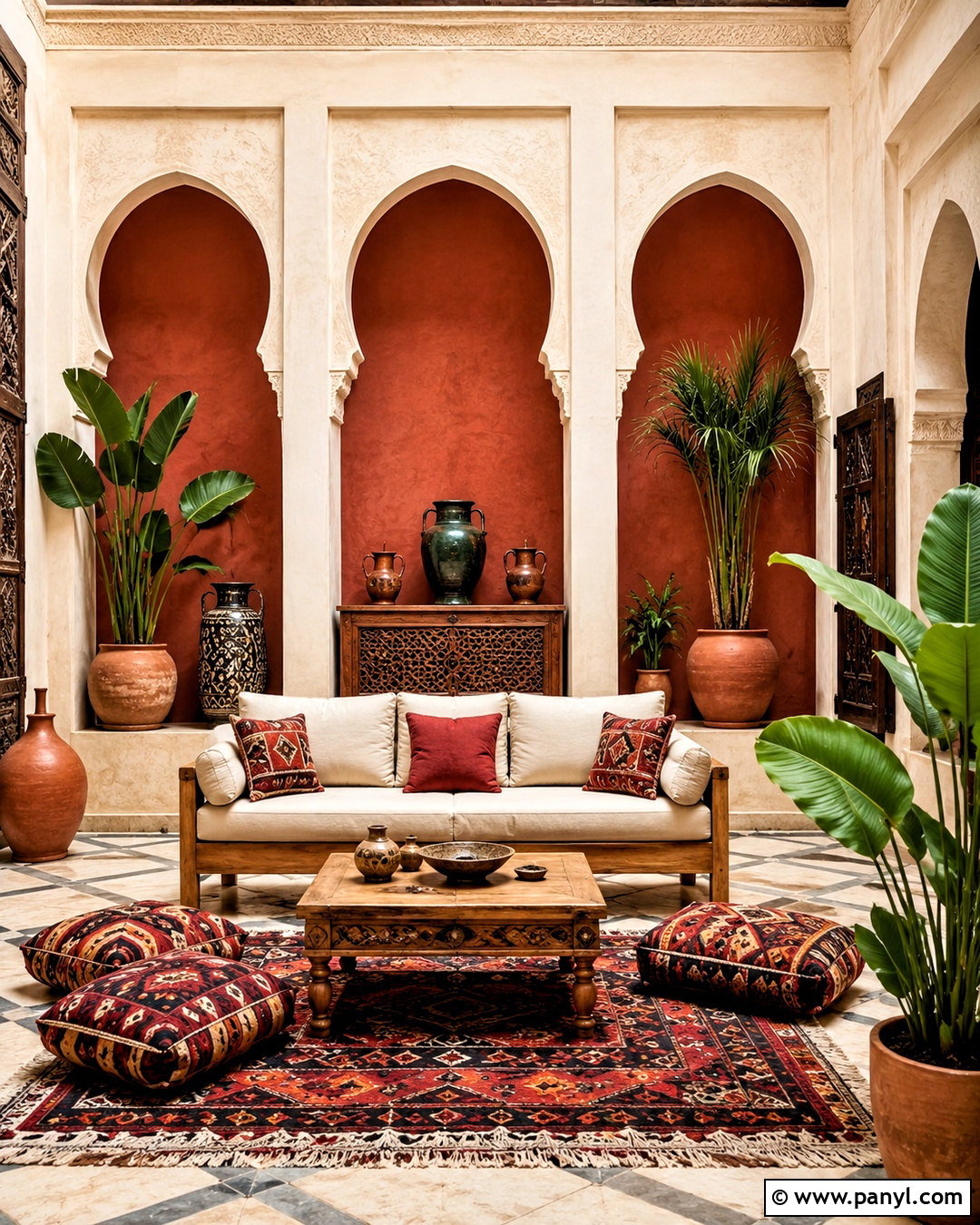
A series of shallow Moroccan arches can transform a plain wall into an architectural focal point. Create three symmetrical niches with softly curved horseshoe tops, finished in creamy limewash against a muted terracotta wall. Use the central niche for a carved wood console and place pottery, books, and a brass table lamp inside it. The smaller outer niches can display matching ceramic vessels and leafy plants. In front, arrange a compact linen loveseat, a round cedar table, and two patterned floor cushions. A flat-woven rug in rust, black, and ivory will connect the colors. Keep accessories carefully edited so the curves, shadows, and balanced layout remain the strongest parts of the background.
4. Moroccan Carved Plaster Background
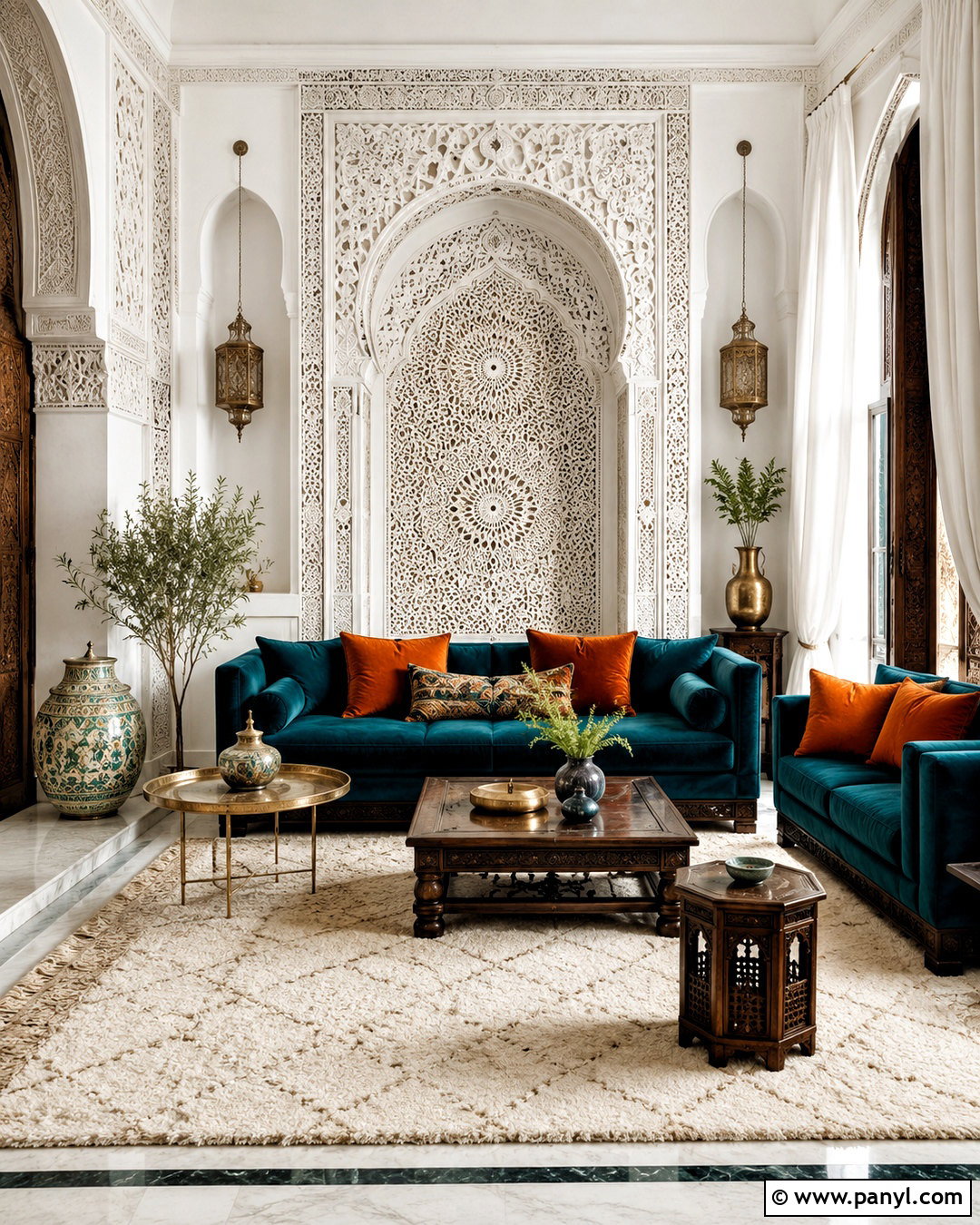
Intricate carved plaster brings the detailed beauty of Moroccan craftsmanship into a formal sitting area. Use a large white plaster panel with repeating floral and geometric motifs behind a deep teal velvet sofa. Frame the panel with smooth warm-white walls to give the carving enough visual space. Add dark walnut side tables, a low brass tray table, and an ivory rug with a slim black diamond pattern. Cushions in teal, burnt orange, and cream can repeat the room’s palette without covering the sofa completely. Choose a pierced metal pendant with a clean silhouette rather than several small lanterns. Long white curtains and restrained ceramic decor prevent the complete look from becoming too busy.
5. Blue Moroccan Wallpaper Background
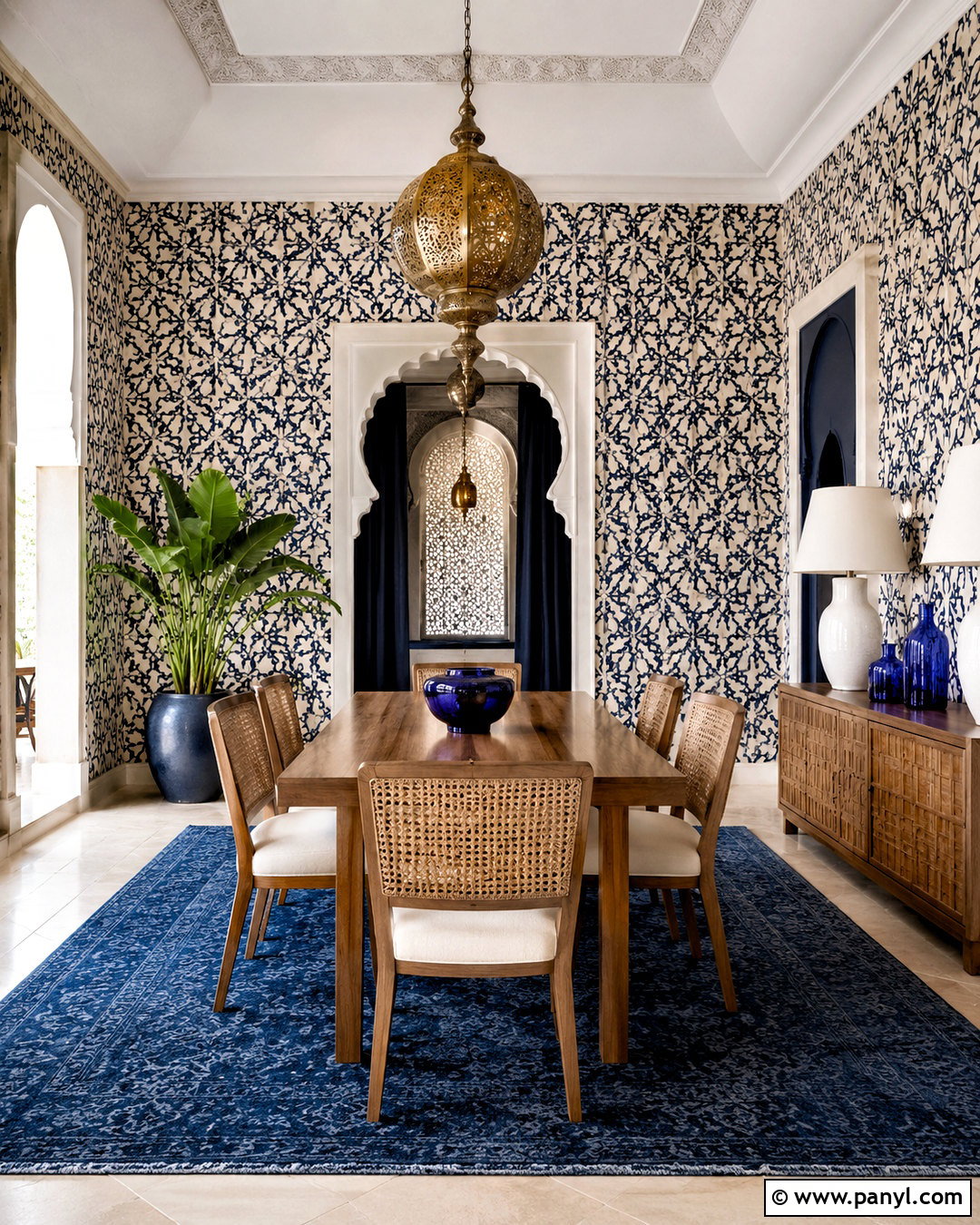
Deep blue Moroccan wallpaper can make a dining room feel dramatic, polished, and inviting. Select a navy-and-ivory geometric print for the wall behind a medium-tone wood dining table. Surround the table with woven cane chairs featuring comfortable cream seats. A large antique-brass pendant should hang centrally, creating a warm contrast against the cool blue background. Keep the other walls soft ivory and use natural oak or terracotta flooring. A narrow sideboard can hold two white ceramic lamps and a few blue glass vessels. Add plain linen curtains and a muted indigo rug under the table. This balanced arrangement makes the patterned wall noticeable while leaving the dining area comfortable and practical.
6. Terracotta Moroccan Stencil Background
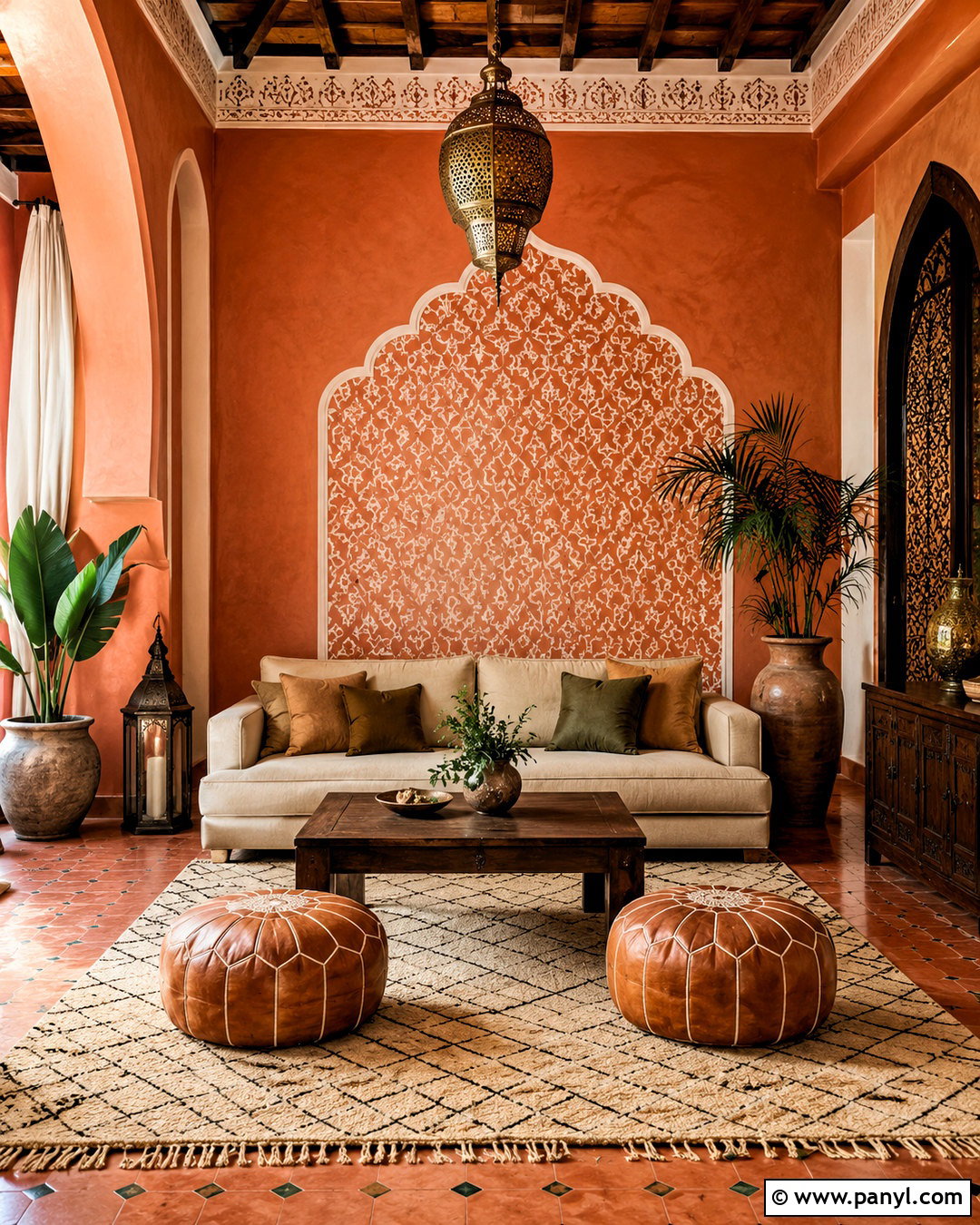
A painted stencil is an affordable way to build a warm Moroccan background without installing tile or wallpaper. Start with a muted terracotta accent wall and apply a large geometric stencil in creamy beige. Use the pattern across the entire wall for an intentional, finished appearance. Place a simple beige sofa in front, leaving enough open space for the design to remain visible. Add a dark wood coffee table, caramel leather poufs, and a flat-woven cream rug. Olive green cushions and tall indoor plants introduce a refreshing natural contrast. Choose one substantial bronze lantern overhead and keep tabletop decor minimal. The completed room feels earthy, relaxed, and detailed without requiring costly architectural renovations.
7. Emerald Moroccan Background
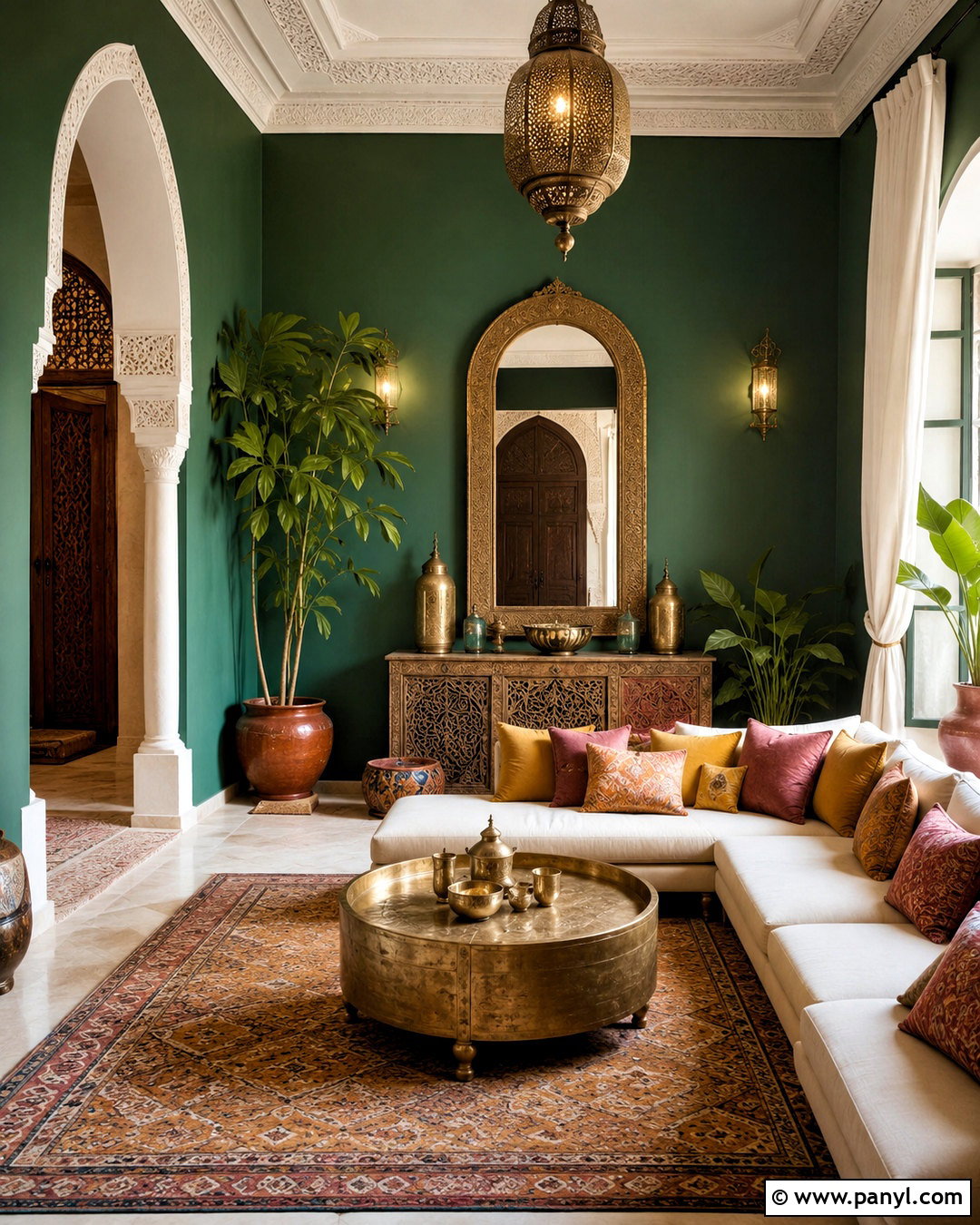
Emerald green provides a luxurious setting for a Moroccan-inspired lounge when paired with warm wood and aged metal. Paint the main wall a deep, slightly muted emerald and center a tall arched brass mirror above a carved cedar console. Place a cream sectional nearby, then add cushions in green, ocher, and dusty rose. A patterned rug featuring those same colors will make the arrangement feel connected rather than random. Choose a round brass coffee table with a lightly aged finish and use two neutral leather poufs for movable seating. White trim and sheer curtains will prevent the darker wall from absorbing too much light. Finish with glazed pottery, palms, and one perforated pendant lamp.
8. Neutral Moroccan Berber Background
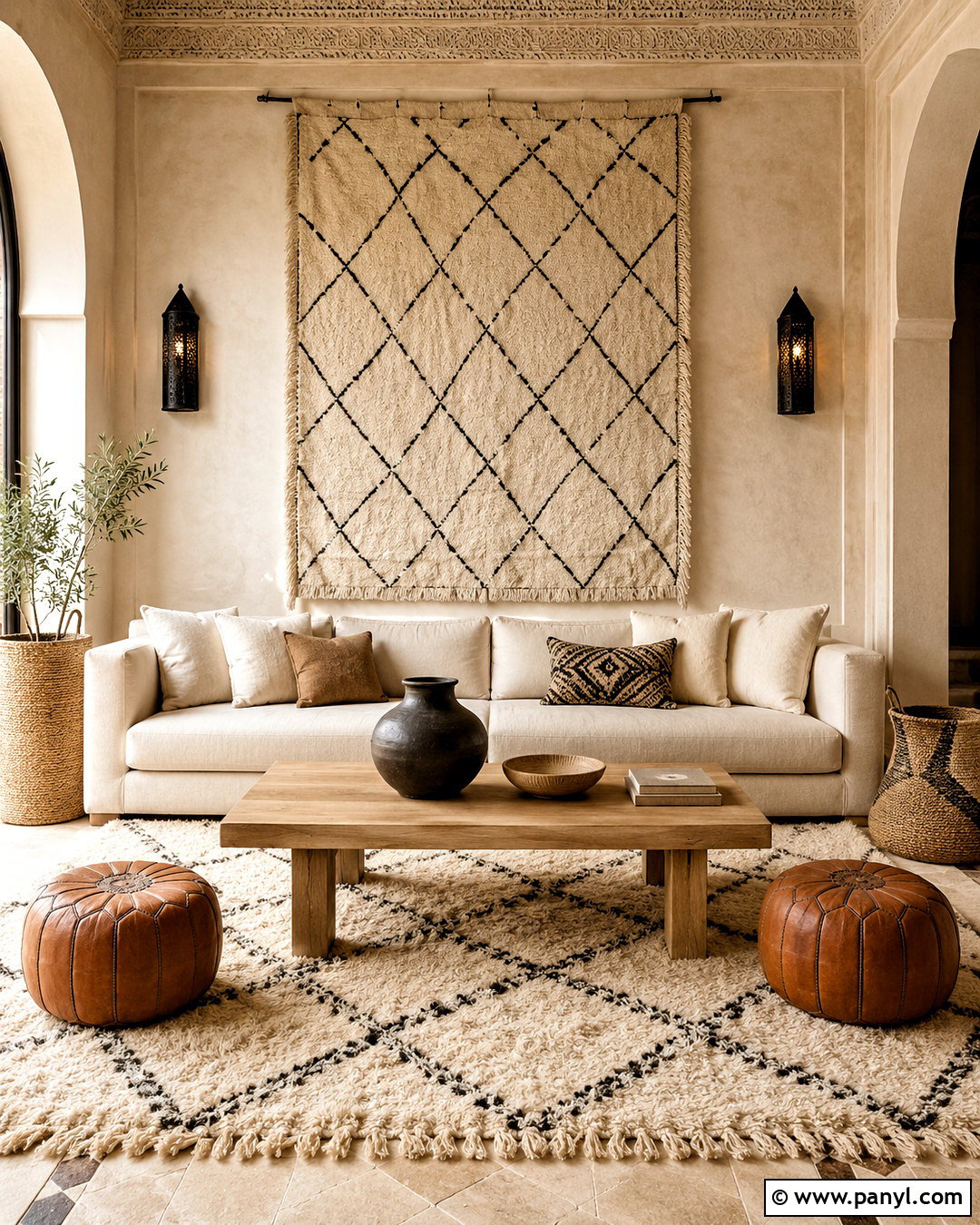
Can Moroccan decor feel light and minimal? A neutral Berber-inspired background proves that strong texture can replace bold color. Cover the feature wall in warm off-white limewash, then hang a large cream textile with simple charcoal diamond lines. Anchor the room with a pale linen sofa, a chunky Beni Ourain rug, and a low unfinished oak table. Use black metal sconces on both sides of the textile to create symmetry and sharper contrast. Add tan leather poufs, woven baskets, and cushions in oatmeal, ivory, and soft brown. The limited palette allows every material to stand out. A few olive branches in an earthenware vessel provide a natural finishing touch without disrupting the calm composition.
9. Moroccan Courtyard Fountain Background
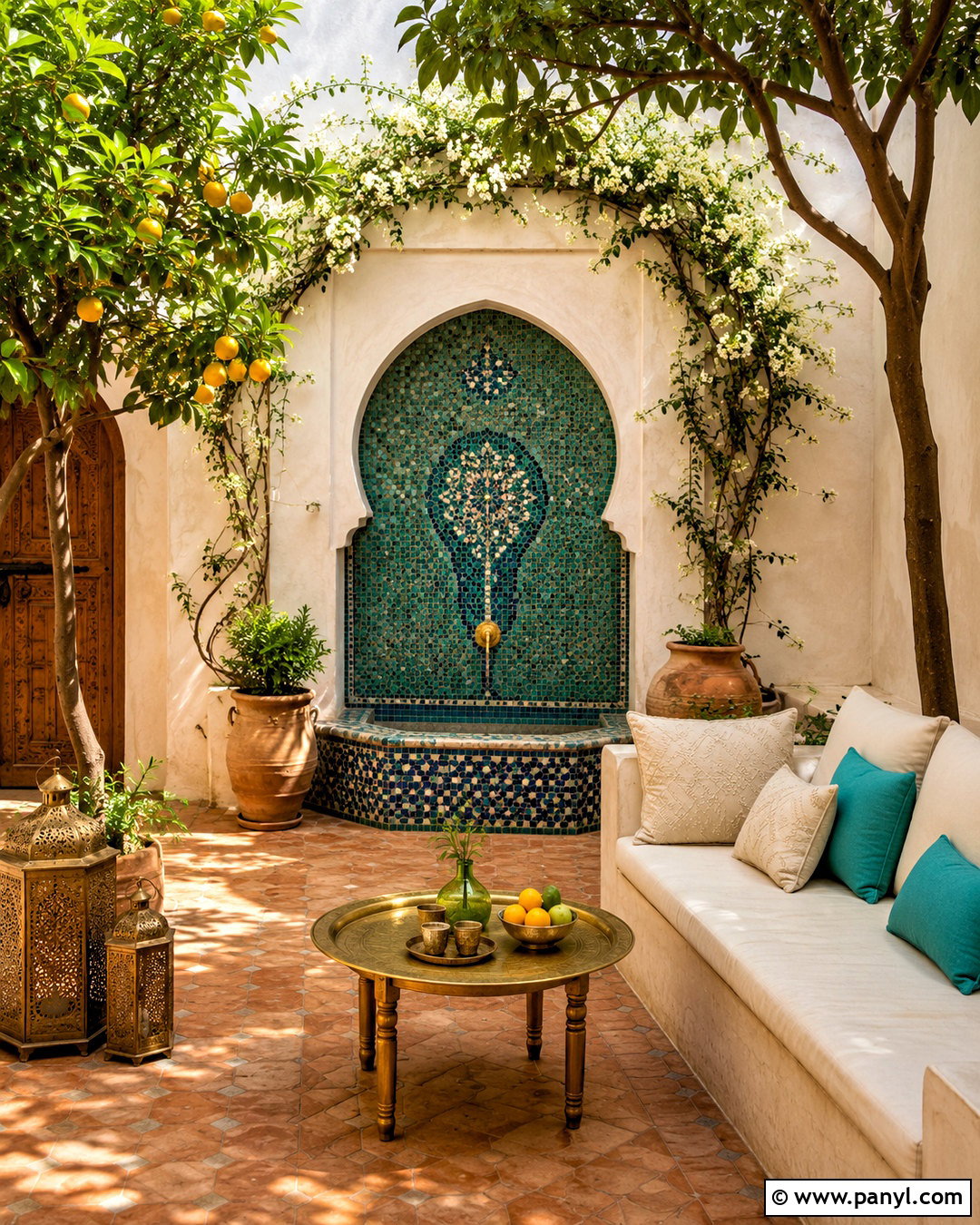
Bring the atmosphere of a riad courtyard into a covered patio with a complete fountain-centered arrangement. Build a shallow arched recess against a warm white stucco wall and install a small mosaic fountain in blue, green, and ivory tile. Continue the tile across a narrow lower border to visually ground the feature. Arrange an L-shaped plaster bench nearby with weather-resistant cushions in cream and turquoise. Terracotta floor tiles, a round brass tray table, and woven lanterns complete the hardscape and seating. Add citrus trees in oversized clay pots along with climbing jasmine around the wall. The result is a refreshing Moroccan background that feels architectural, usable, and realistic for an average enclosed patio.
10. Moroccan Canopy Bedroom Background
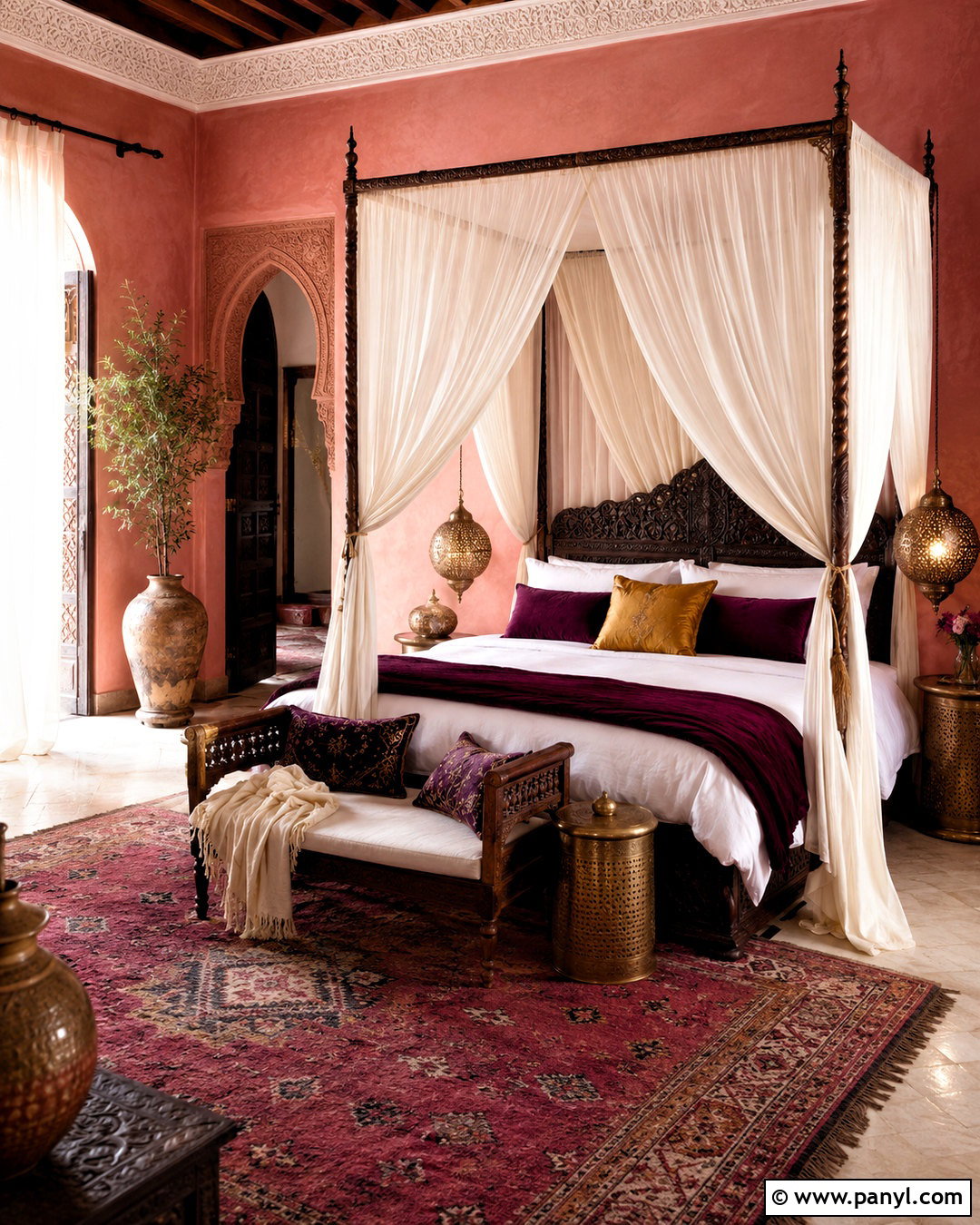
Flowing fabric and a decorative headboard can create a soft Moroccan background for a relaxing bedroom. Paint the wall behind the bed dusty rose, then position a carved dark wood headboard against it. Suspend lightweight ivory fabric from a ceiling-mounted frame, allowing it to drape loosely around the bed without covering the carved details. Dress the mattress in white linen with plum, rose, and saffron accent pillows. Place small brass tables on each side and add matching pierced-metal pendant lights. A faded geometric rug should extend beyond the bed to make the entire setup feel grounded. Finish with simple pottery, gauzy curtains, and one leafy plant for a fresh, balanced contrast.
11. Moroccan Wood Screen Background
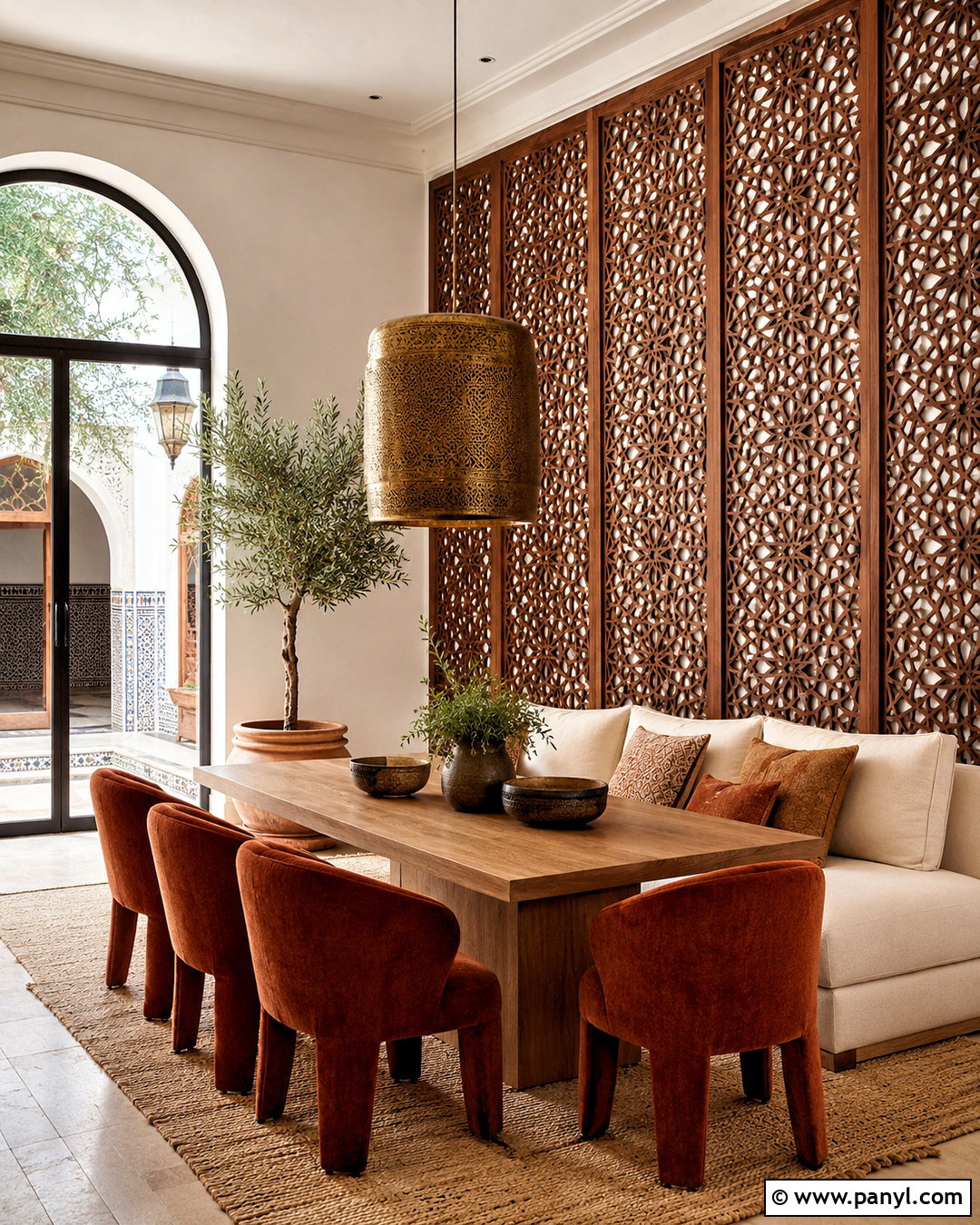
A carved wood screen creates privacy while becoming a striking Moroccan background for an open dining or living area. Choose a floor-to-ceiling walnut screen with a repeating star pattern and position it behind a streamlined cream banquette. Pair the screen with a rectangular oak dining table and curved chairs upholstered in muted rust fabric. A large woven rug in beige and brown will soften the room and echo the screen’s natural finish. Use an elongated brass pendant above the table for focused lighting. Keep nearby walls pale sand and avoid covering the screen with additional art. Ceramic bowls, linen napkins, and a tall olive tree complete this warm, modern space without distracting from the detailed woodwork.
12. Moroccan Kitchen Tile Background
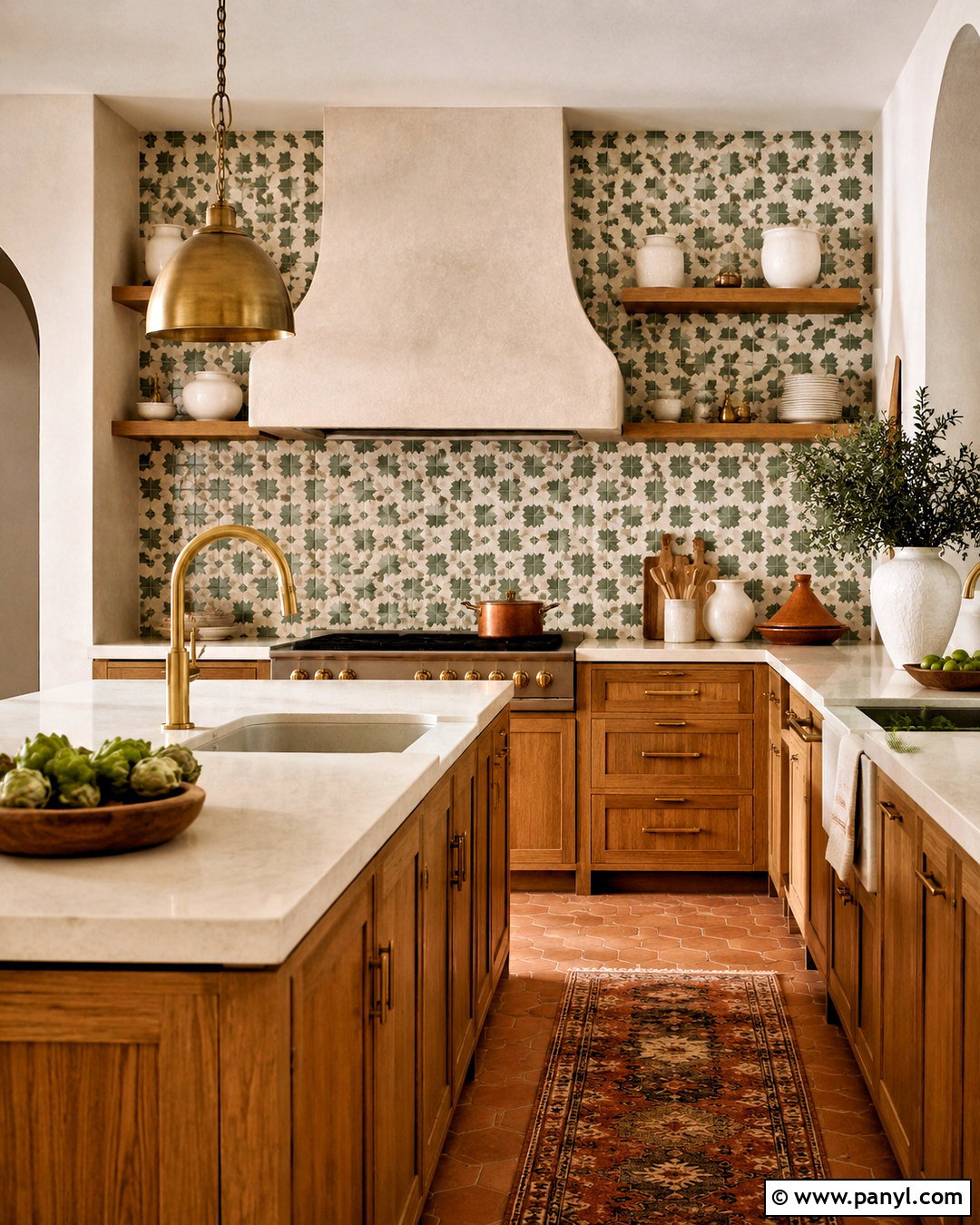
A Moroccan tile backsplash can define an entire kitchen when its colors are repeated thoughtfully throughout the room. Install star-and-cross zellige tile in soft white and sage green from the countertop to the upper cabinets. Pair it with warm oak cabinetry, creamy quartz counters, and aged-brass hardware. A simple plaster range hood will provide a calm break within the patterned background. Choose terracotta flooring and place a narrow woven runner between the cabinets for warmth underfoot. Open shelves can display white pottery, carved wood boards, and green glassware. Keep appliances and fixtures understated, using brushed brass or warm stainless finishes. The completed kitchen feels handcrafted, functional, and connected rather than decorated around one isolated backsplash.
13. Moroccan Tadelakt Bathroom Background
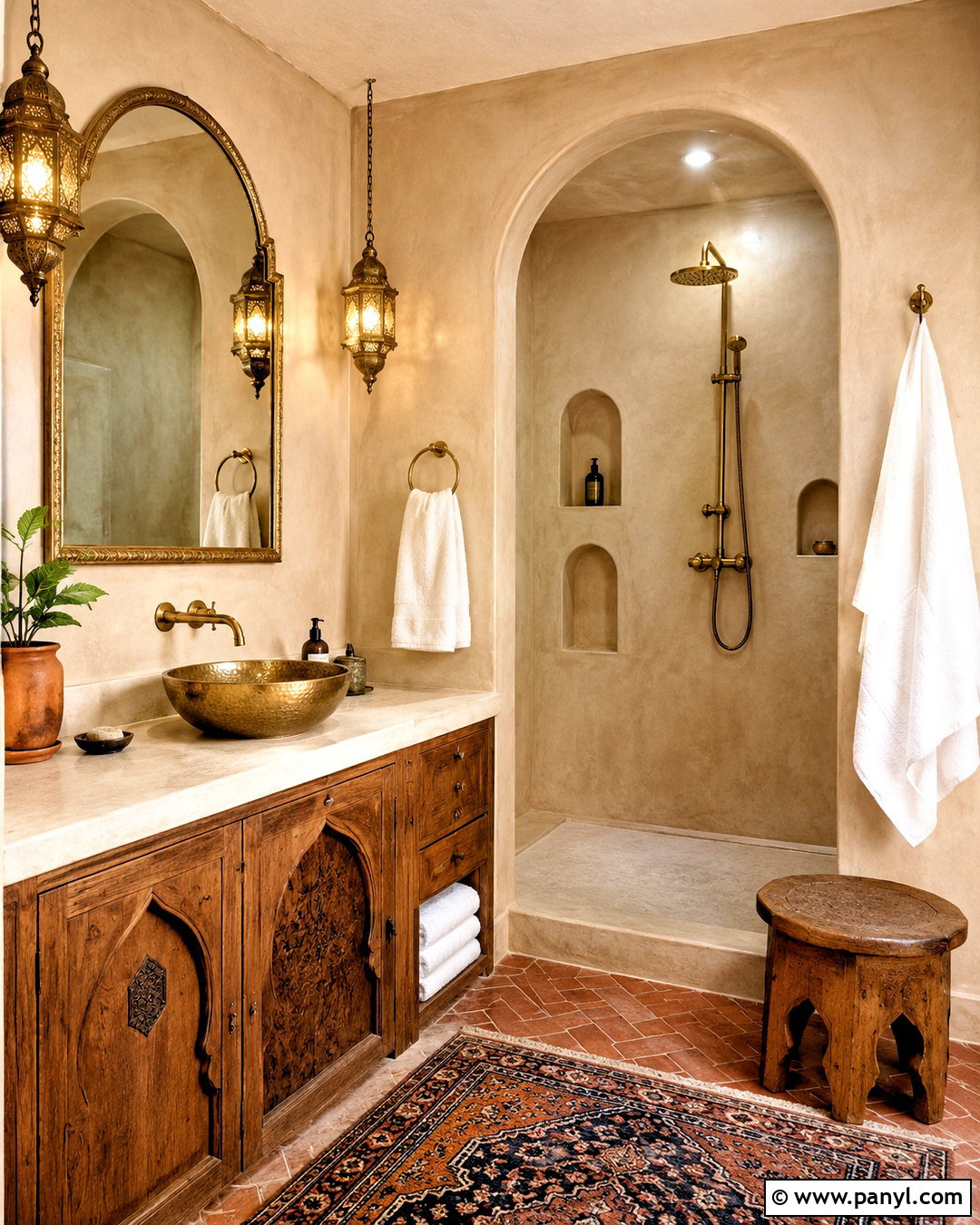
Water-resistant tadelakt-inspired walls create a smooth, enveloping Moroccan bathroom with fewer visual interruptions. Use pale clay plaster across the vanity wall, shower, and softly rounded built-in niches. Pair it with an arched wood vanity topped by a cream stone counter and hammered brass basin. A tall curved mirror should follow the same architectural lines. Install aged-brass faucets and sconces, then ground the room with small terracotta floor tiles. Rolled white towels, amber bottles, and one stool in dark cedar provide practical finishing details. Avoid filling every niche with accessories. The softly varied plaster, rounded forms, and restrained materials should remain the focus of this relaxing background, giving the bathroom an earthy, spa-like character.
14. Moroccan Carved Door Background
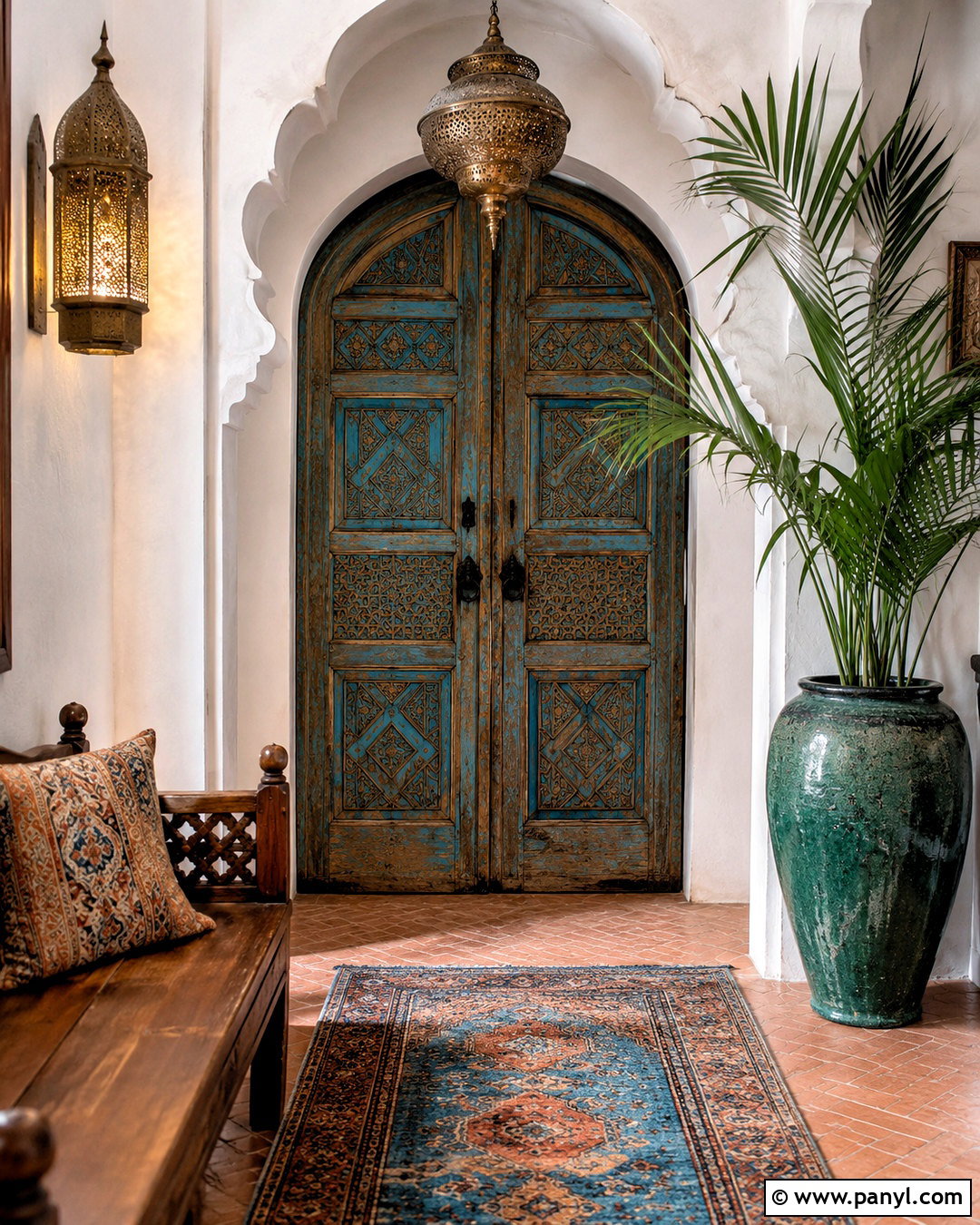
An ornamental Moroccan door can become the centerpiece of an entryway while still serving a practical purpose. Choose a double wooden door with shallow geometric carving and a weathered teal finish. Surround it with warm white plaster walls and a gently pointed arch that follows the door’s shape. Use terracotta floor tile, a narrow walnut bench, and a faded runner in blue, rust, and cream. A hammered-brass pendant and two small wall sconces will repeat the aged hardware. Add one tall ceramic pot with an indoor palm instead of crowding the entry with accessories. The complete composition feels collected and authentic, while the simple furniture keeps daily movement through the space easy.
15. Moroccan Fireplace Background
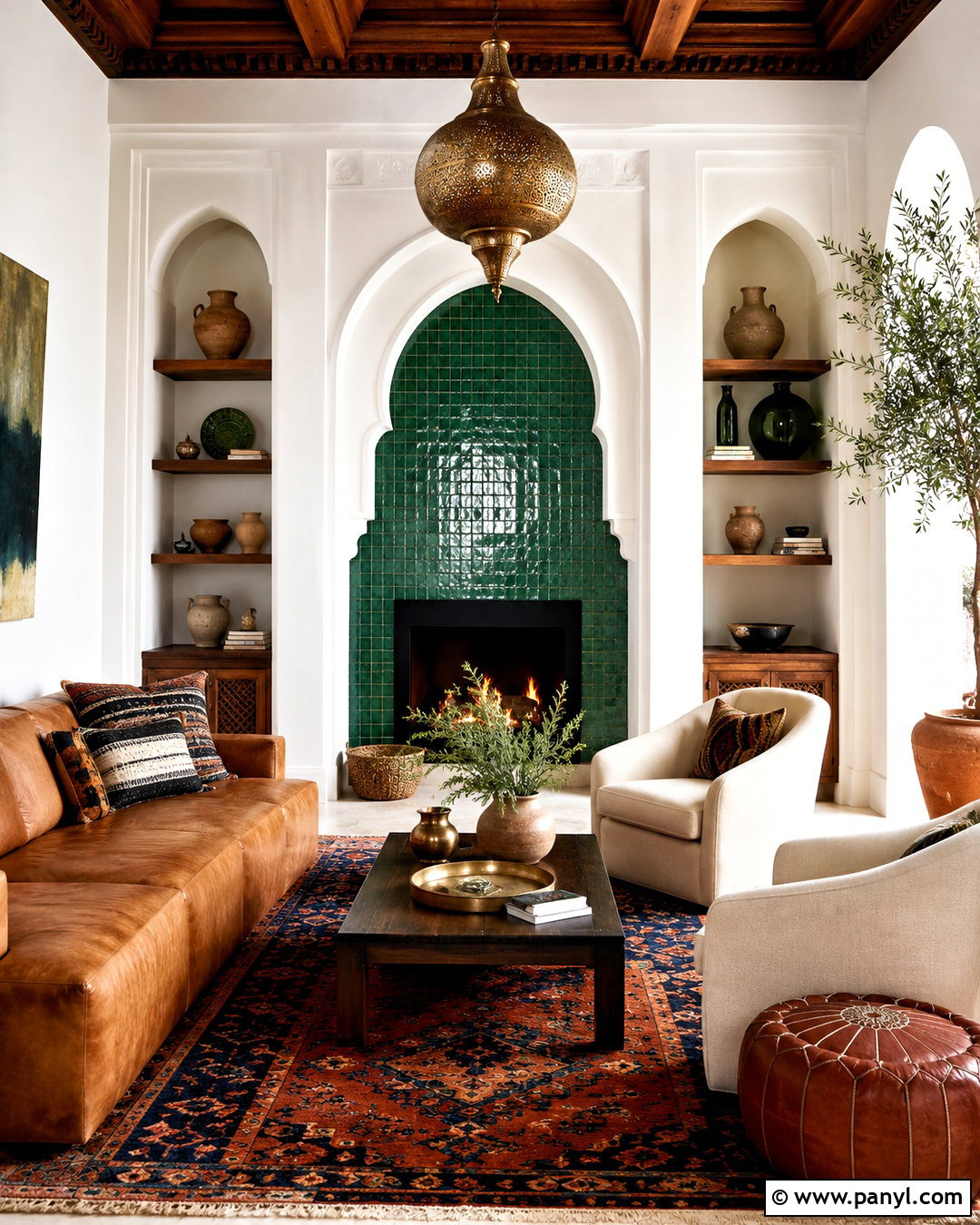
A fireplace wall offers enough space for a bold Moroccan background without spreading pattern throughout the entire room. Frame the firebox with glossy green zellige tile and extend the tile upward inside a wide plaster arch. Build low white shelves on each side for wood storage, pottery, and a few books. Face the seating toward the fireplace using a camel leather sofa, two cream armchairs, and a low dark wood table. A rust-and-indigo rug will add color while complementing the green tile. Select one substantial brass ceiling fixture and keep the mantel free of small clutter. The fireplace becomes an architectural centerpiece, but the surrounding neutral surfaces ensure the living room remains relaxed and approachable.
16. Moroccan Gallery Wall Background
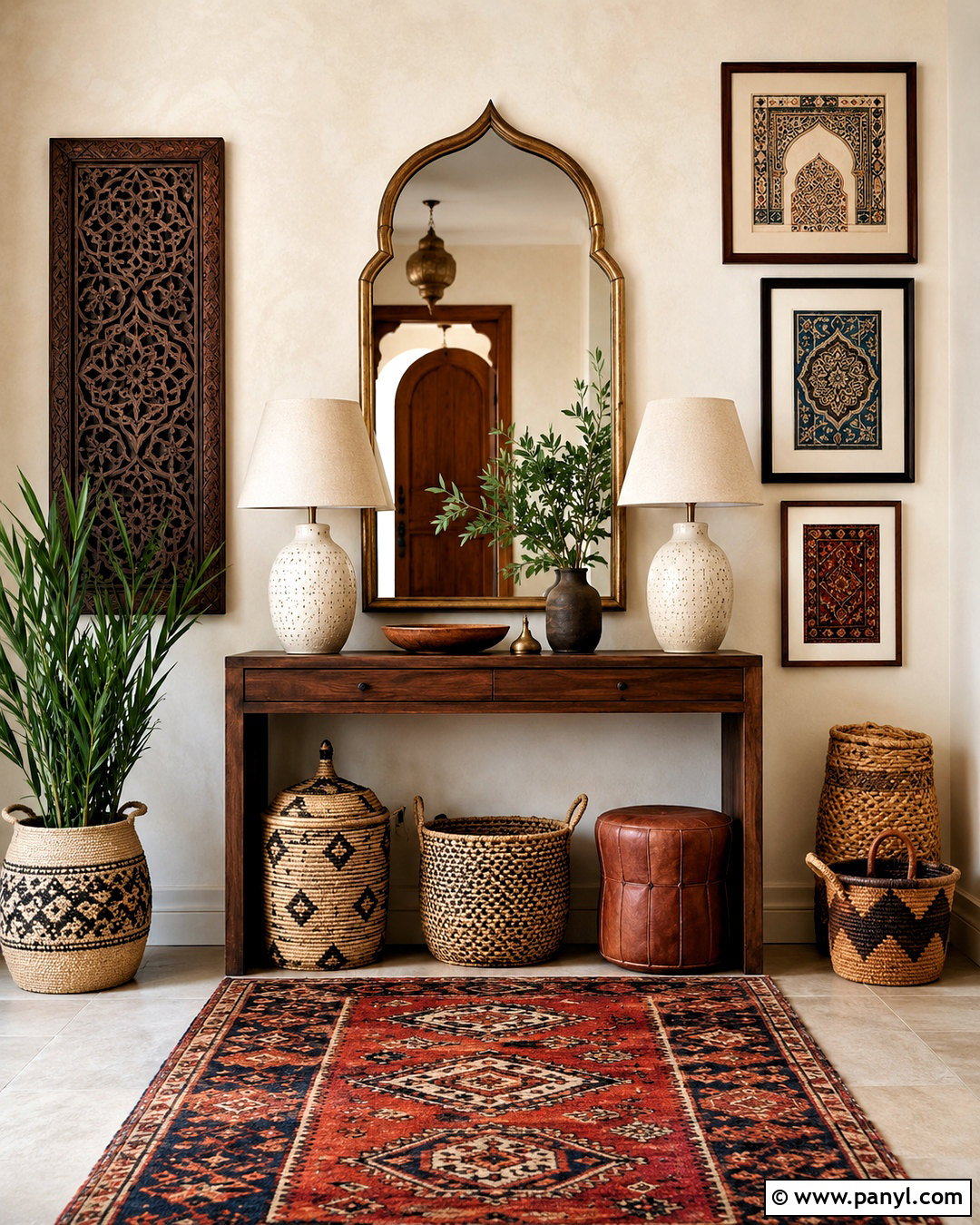
A Moroccan gallery wall can look cohesive when every piece shares a controlled palette and balanced arrangement. Paint the wall warm beige, then combine an arched brass mirror, carved wood panels, woven baskets, and small framed geometric prints. Center the largest mirror above a streamlined walnut console and distribute the smaller pieces evenly around it. Place ceramic lamps with white shades at both ends of the console for symmetry. A patterned runner, leather stool, and lidded woven baskets add useful layers below. Keep the nearby wall and flooring neutral so the collection does not compete with other patterns. Repeating brass, natural wood, black, and cream will make the complete entry display feel intentional rather than crowded.
17. Moroccan Patio Background
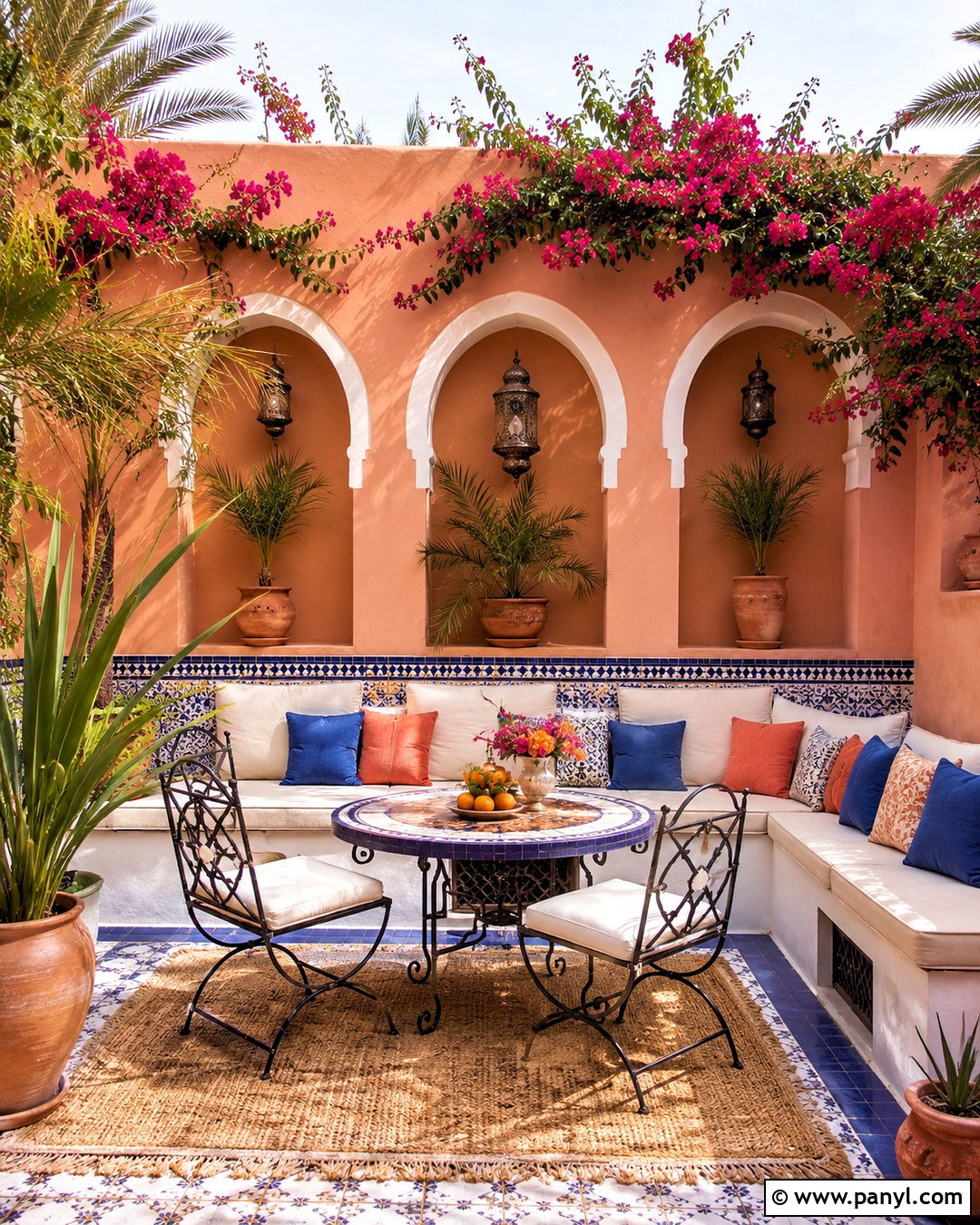
A plain backyard wall can become a bright Moroccan patio background with paint, tile, and comfortable outdoor seating. Finish the wall in sun-washed peach and add three shallow arches outlined with white plaster. Install a narrow blue-and-white tile band along the base for color and easy maintenance. Position a built-in corner bench against the wall with cream cushions and washable pillows in cobalt, turquoise, and coral. Use a round mosaic table, woven outdoor rug, and two lightweight metal chairs to complete the seating zone. Large pots filled with palms, rosemary, and bougainvillea bring softness to the hardscape. White shade fabric overhead keeps the patio comfortable while preserving its cheerful, open appearance.
18. Moroccan Home Office Background
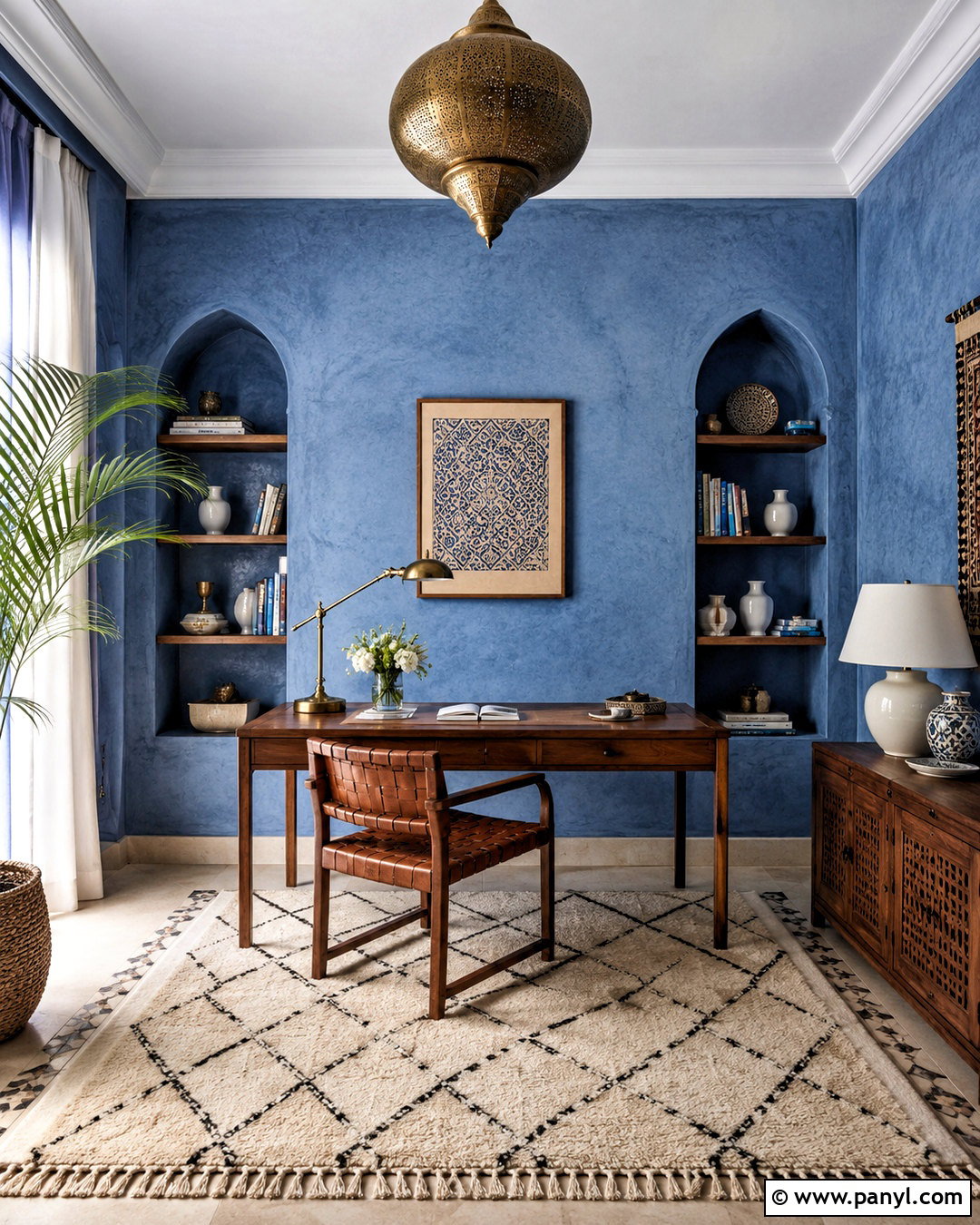
A focused home office can carry Moroccan character without becoming visually distracting. Cover the wall behind the desk in muted blue limewash and install a pair of narrow arched shelves in matching plaster. Use the shelves for books, storage boxes, and a limited collection of white ceramics. Choose a clean-lined walnut desk, a woven leather chair, and a low-pile cream rug with a simple black diamond pattern. A brass desk lamp and one geometric pendant add warmth and useful task lighting. Place a tall plant beside the desk and hang linen curtains at the nearby window. This complete background looks detailed during video calls while preserving enough open space for calm, productive work.
19. Moroccan Nursery Background
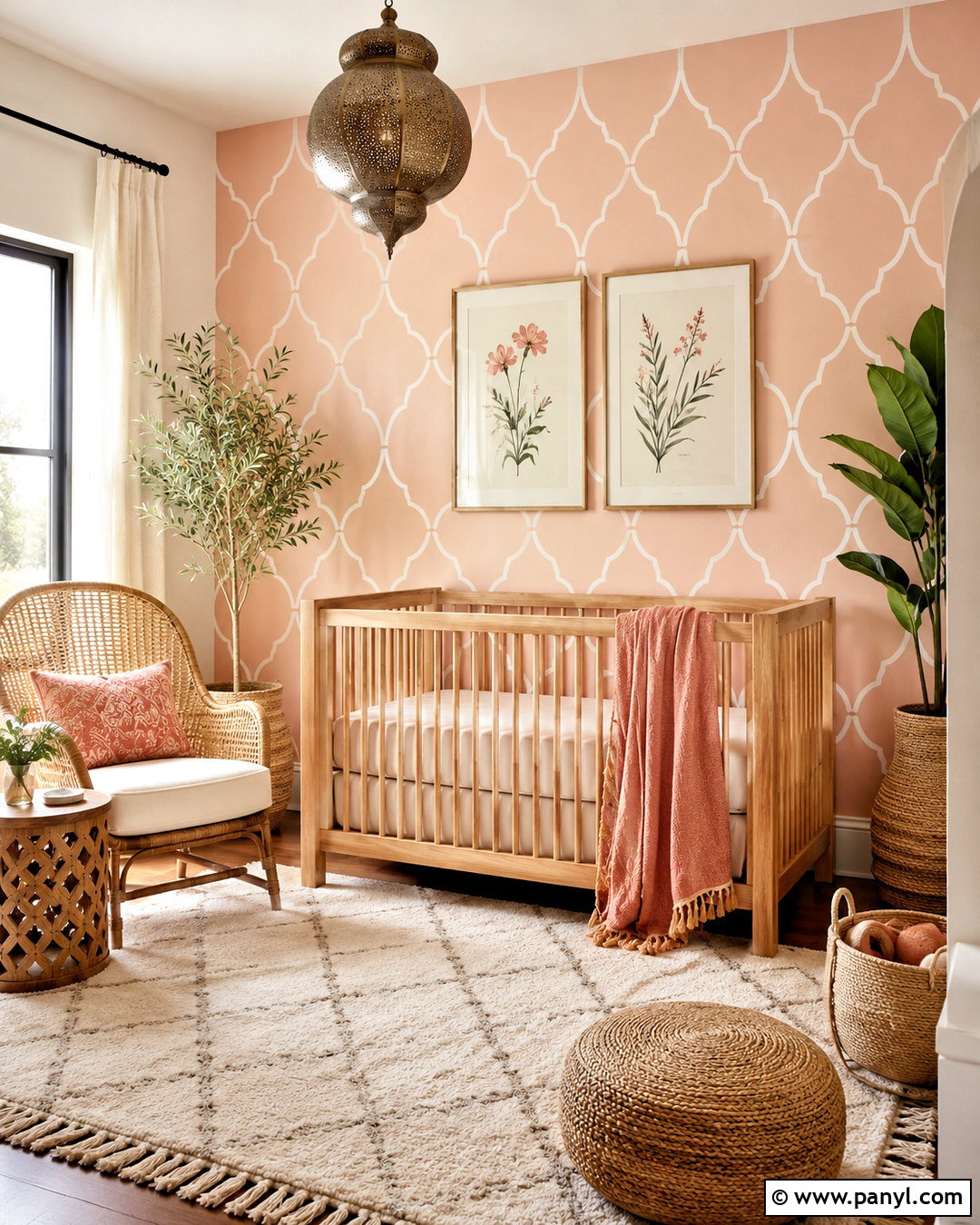
A Moroccan nursery can feel playful and peaceful when soft colors replace heavy jewel tones. Paint the crib wall pale peach and stencil a large white repeating arch pattern across it. Choose a natural oak crib with simple lines, then add cream bedding and a small tasseled blanket in muted coral. Place a washable ivory rug with soft gray diamonds beneath the center of the room. A curved cane chair, round wooden side table, and woven storage baskets create a comfortable feeding corner. Use a flush-mounted perforated light with a covered bulb for safe overhead illumination. Finish with fabric animals, framed botanical prints, and closed storage so the finished background stays charming, practical, and free of unnecessary clutter.
20. Modern Moroccan Photo Background
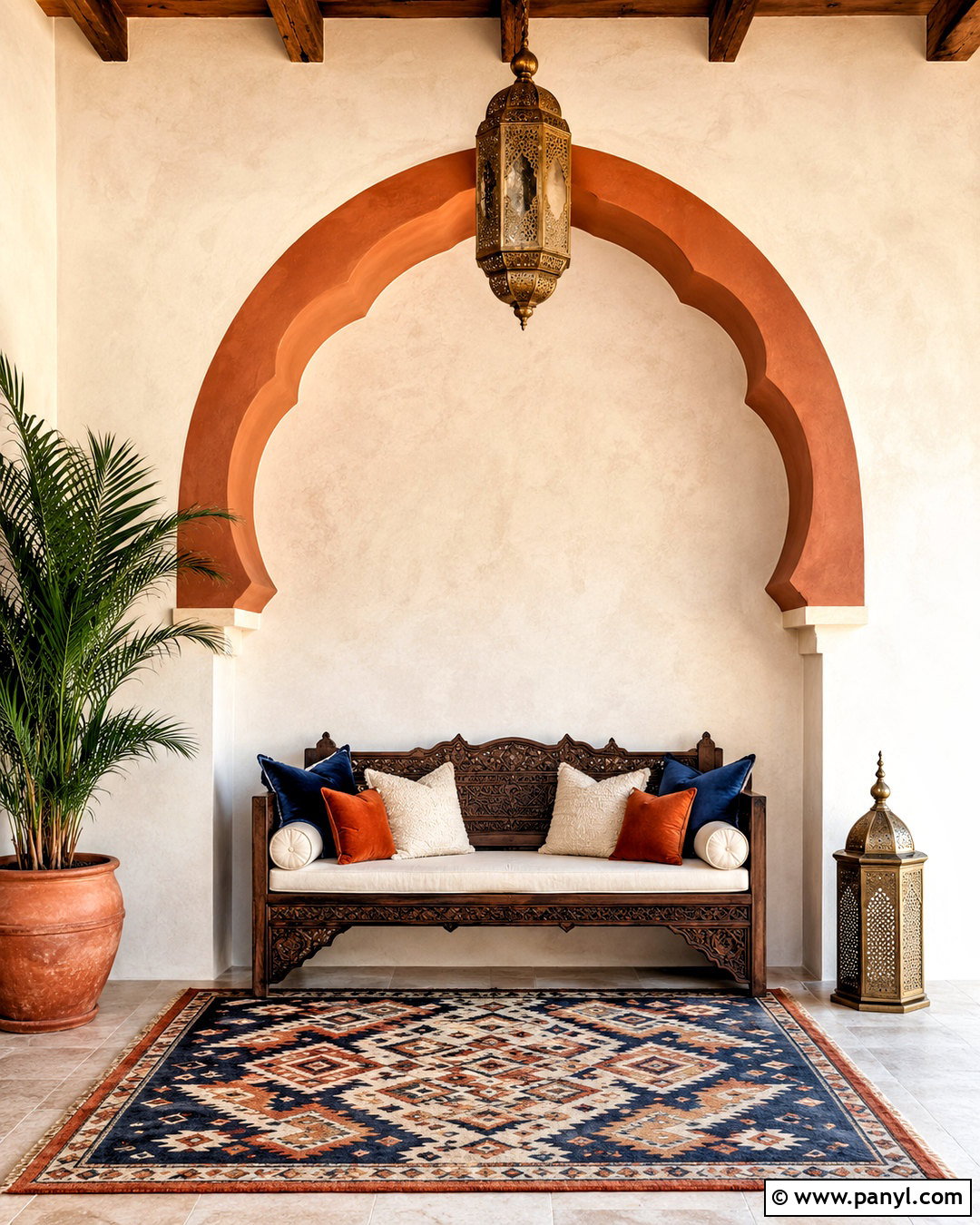
Create a dedicated photo corner that also functions as an attractive part of the home. Finish the wall in creamy textured plaster and build one wide horseshoe arch outlined in muted terracotta. Center a carved walnut bench beneath it, adding solid cushions in ivory, rust, and deep blue. Place a tall potted palm on one side and a brass lantern on a low table on the other for an asymmetrical but balanced arrangement. A vintage-style Moroccan rug should define the floor without extending beyond the backdrop. Keep the area free from busy shelves and reflective clutter. This complete Moroccan background works for portraits, product photography, or everyday decor while still feeling natural within a living space.
Conclusion:
The best Moroccan background ideas combine pattern, texture, architecture, and practical furnishings instead of relying on scattered themed accessories. Begin with one defining surface, such as zellige tile, limewash, tadelakt-style plaster, wallpaper, or a carved screen. Then repeat its colors through rugs, cushions, lighting, and pottery to create a connected room. Neutral finishes work well for calm modern spaces, while blue, emerald, terracotta, and saffron bring stronger personality. Leave some open visual space around detailed patterns so their craftsmanship remains easy to appreciate. Whether you are updating a bedroom, patio, kitchen, or photo corner, a balanced Moroccan background can make the complete space feel warmer, richer, and more memorable.

Related Ideas and Inspiration:
Leave a Reply