
Color blocking turns plain surfaces into architectural features with little more than paint, careful planning, and crisp lines. These 20 colour block walls explore complete room designs rather than isolated paint patterns. You will find calm tonal combinations, playful geometric layouts, and bold contrasts for living rooms, bedrooms, offices, nurseries, dining spaces, and hallways. Each look connects the wall treatment with furniture, flooring, lighting, textiles, and decor, making it easier to recreate at home. Before painting, test colors in changing daylight and use a level with quality painter’s tape for clean edges. Whether you prefer subtle neutrals or energetic brights, there is a balanced approach among these 20 colour block walls.
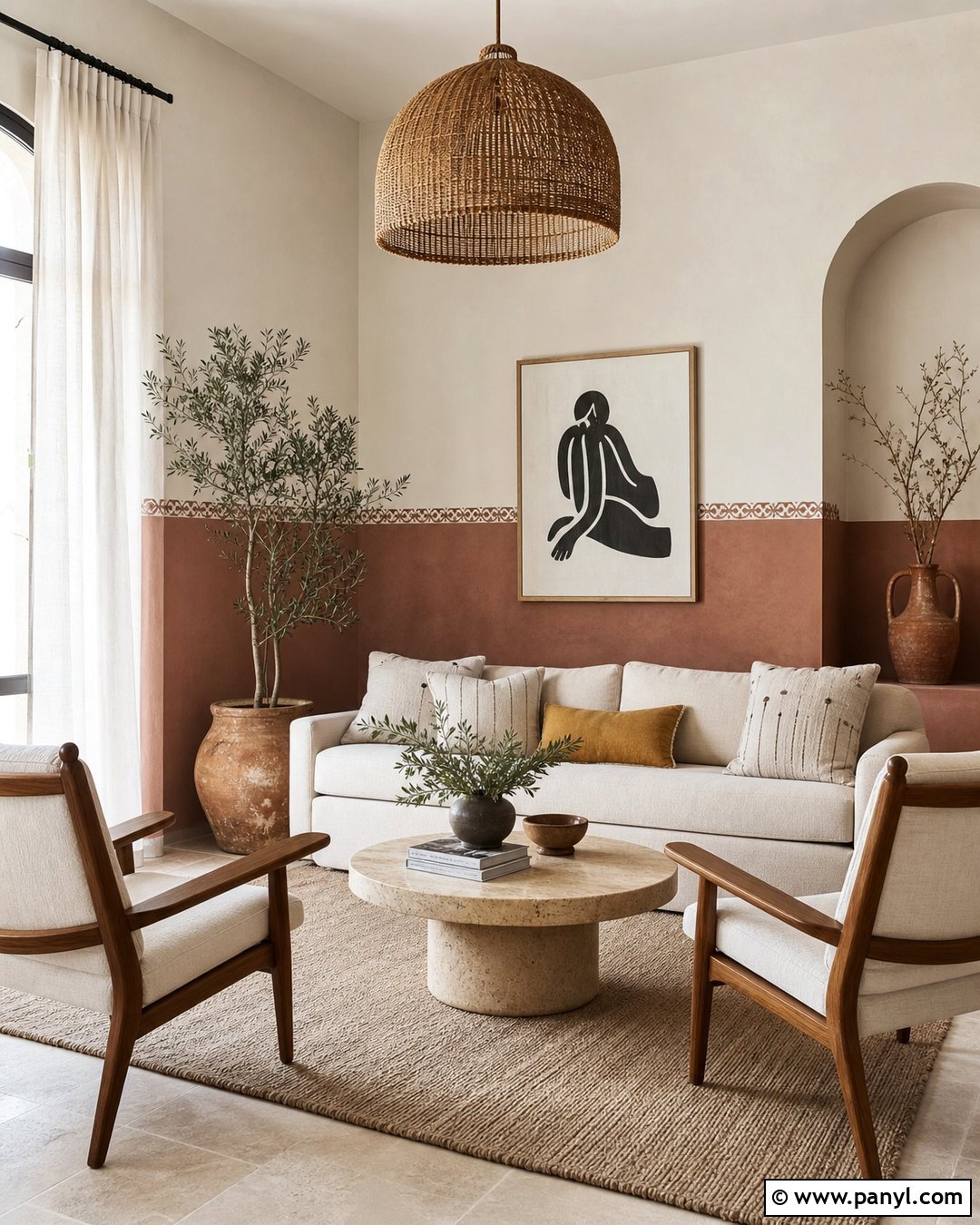
1. Terracotta And Cream Color Block Wall
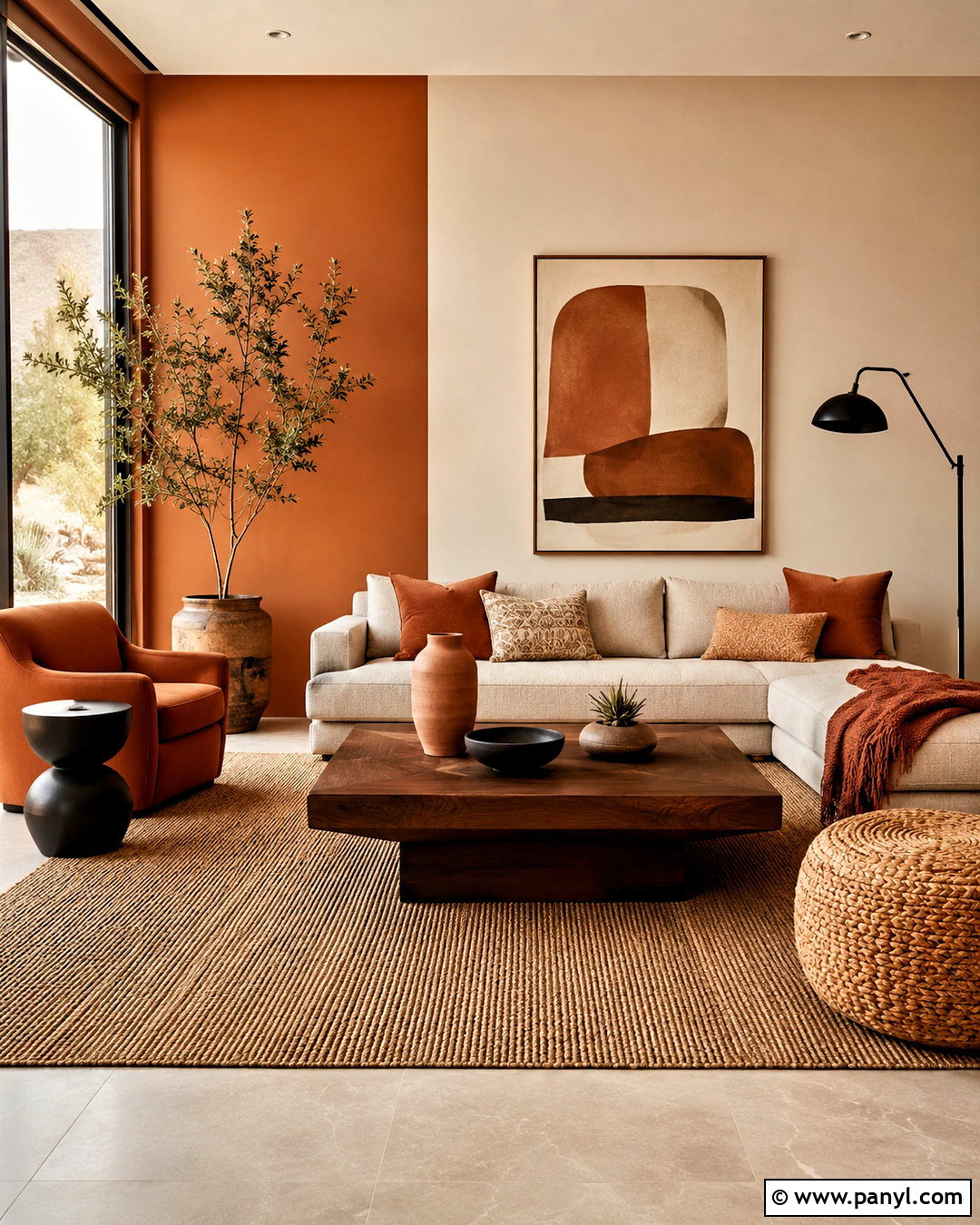
Warm terracotta across the lower two-thirds of a living room wall creates a grounded background without overpowering the space. Keep the upper section soft cream to reflect daylight and make the ceiling appear open. A low oatmeal sofa helps preserve the clear horizontal line, while rust, tan, and ivory pillows connect both painted areas. Add a walnut coffee table, a woven jute rug, and matte black floor lamps for gentle contrast. Simple framed prints can sit entirely within the cream section, preventing the layout from feeling crowded. Finish the room with one tall leafy plant and a few handmade ceramic pieces. This complete scheme feels warm, relaxed, and especially suitable for modern desert, bohemian, or casual midcentury interiors.
2. Sage Green Arch Color Block Wall
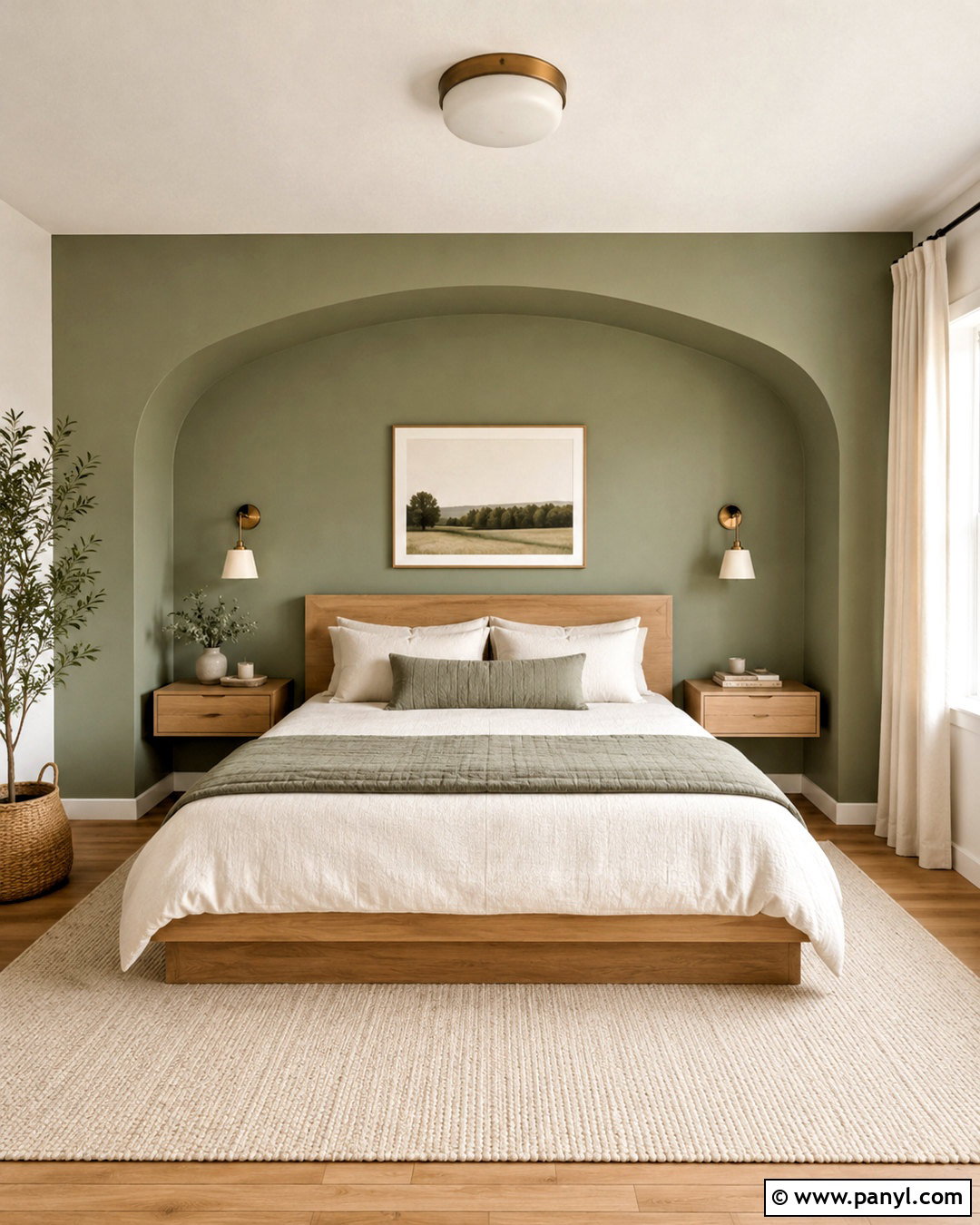
A painted sage green arch can give a bedroom an instant focal point while visually framing the bed. Make the arch slightly wider than the headboard and extend it from the baseboard to about two feet above the pillows. Surround it with warm white walls so the shape remains fresh and defined. Choose a light oak bed, ivory bedding, and a muted green quilt to create a layered tonal look. Compact floating nightstands keep the arch visible, while matching brass sconces bring symmetry to the arrangement. Natural linen curtains and a cream wool rug soften the painted geometry. A small bench with woven upholstery completes the space, producing a calm organic bedroom that feels thoughtfully designed rather than overly themed.
3. Blue Half Painted Color Block Wall
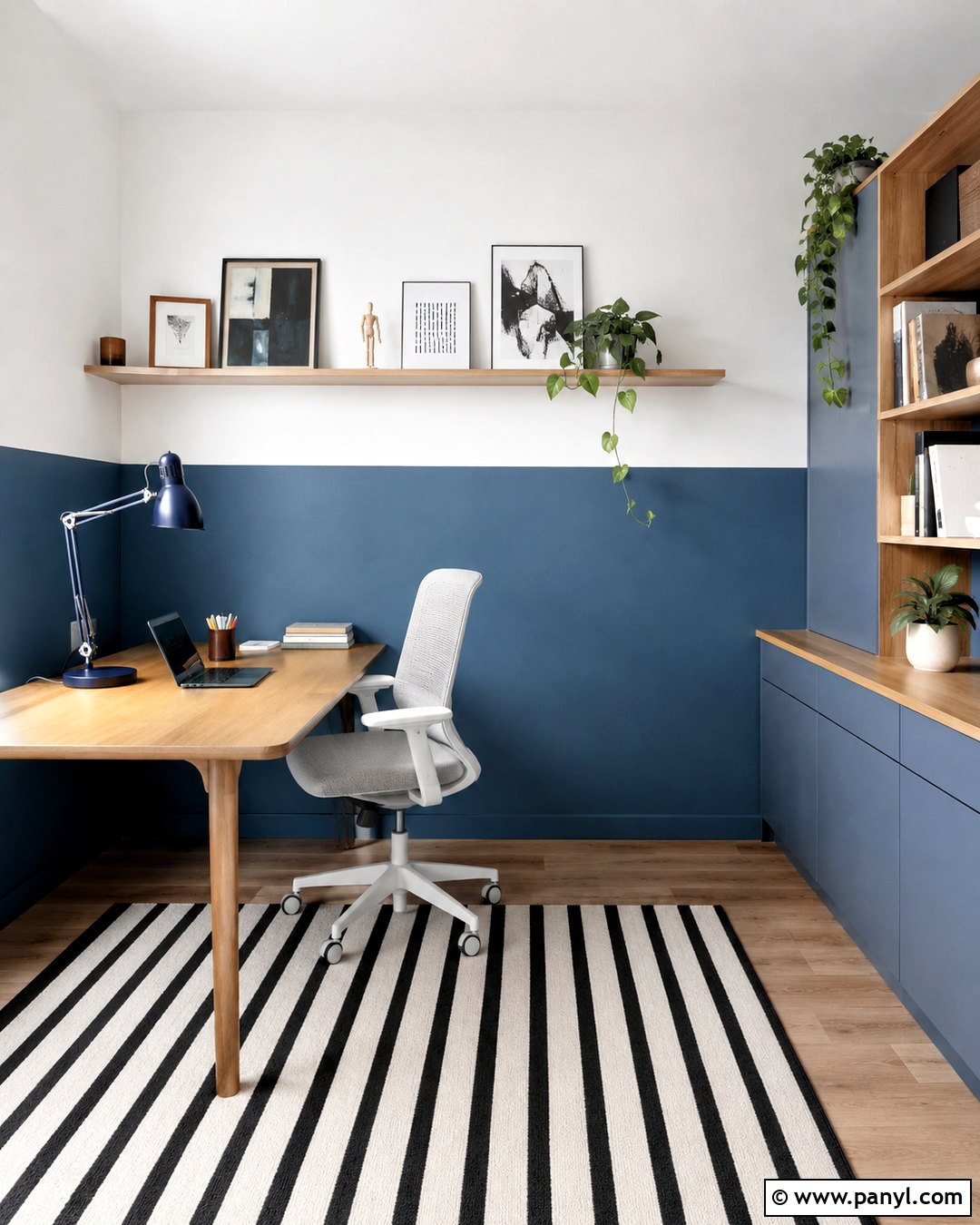
Does a small home office need more visual structure? Paint the lower half of the walls muted medium blue and leave the upper half bright white. The strong horizontal division gives the workspace definition while keeping the top of the room light. Position a streamlined oak desk against the blue section and add a white ergonomic chair to balance both colors. Use a long picture ledge near the painted boundary for small prints, notebooks, and trailing plants. Pale wood flooring, a navy desk lamp, and a striped cream-and-blue rug reinforce the palette. Keep storage cabinets low and close in color to the blue paint. The finished office feels organized, focused, and colorful without becoming distracting during a busy workday.
4. Pink And Red Color Block Wall
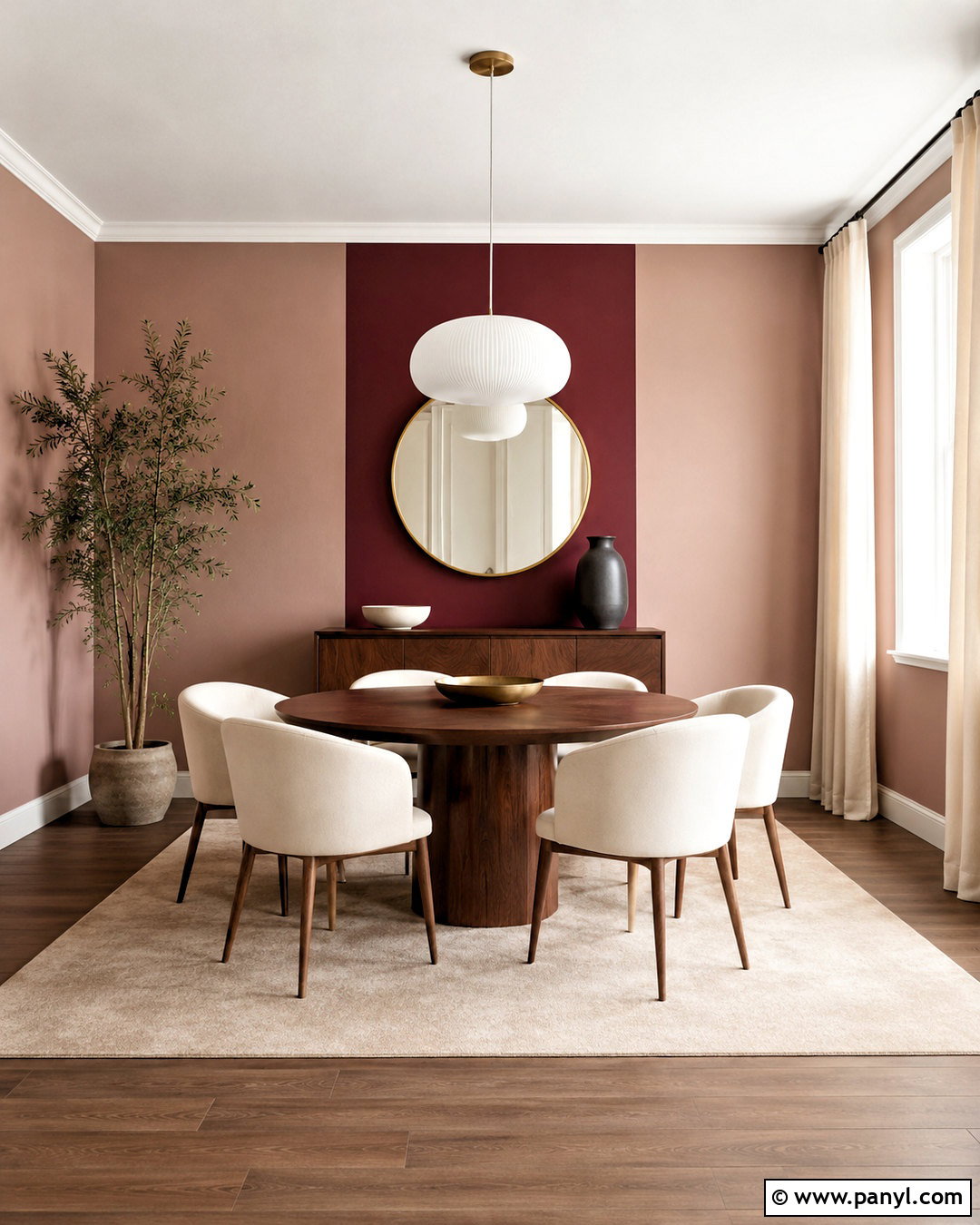
Soft pink and deep red create a confident dining room when their proportions are carefully controlled. Cover most of the main wall in dusty blush, then add a broad burgundy-red vertical block behind a compact sideboard. This darker panel defines the storage and serving area like painted architecture. Bring in a round walnut dining table, curved cream chairs, and a sculptural white pendant for balance. Red glass accessories and pink linen napkins can repeat the wall colors in smaller doses. Choose medium oak flooring and an understated beige rug to keep the room grounded. A large mirror centered inside the red block adds depth and reflects light. The result is expressive and polished, with enough neutral material to remain comfortable for everyday meals.
5. Mustard Yellow Corner Color Block Wall
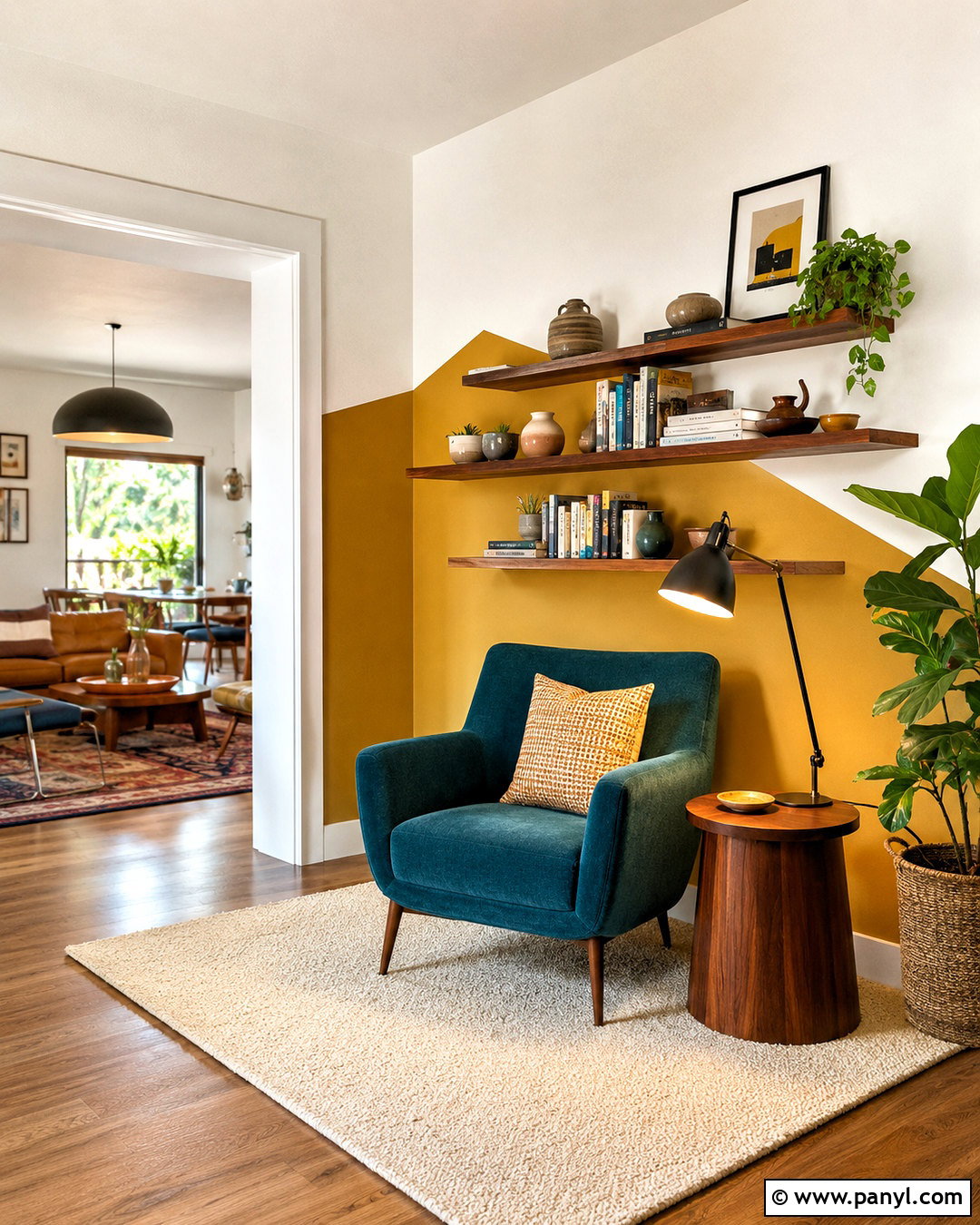
Turn an overlooked reading corner into a cheerful destination with a mustard yellow color block that wraps across two adjoining walls. Keep the painted area about chair height, using a clean rectangular shape that visually anchors the furniture. Above it, warm white paint prevents the strong yellow from becoming heavy. Place a deep teal armchair in the corner for rich contrast, then add a slender walnut side table and a black adjustable reading lamp. A cream rug with subtle yellow detailing connects the nook to the surrounding room. Install two floating shelves above the color line for books and small pottery. With linen curtains and one leafy plant nearby, the whole arrangement feels bright, useful, and intentionally connected to the larger living area.
6. Navy Geometric Color Block Wall
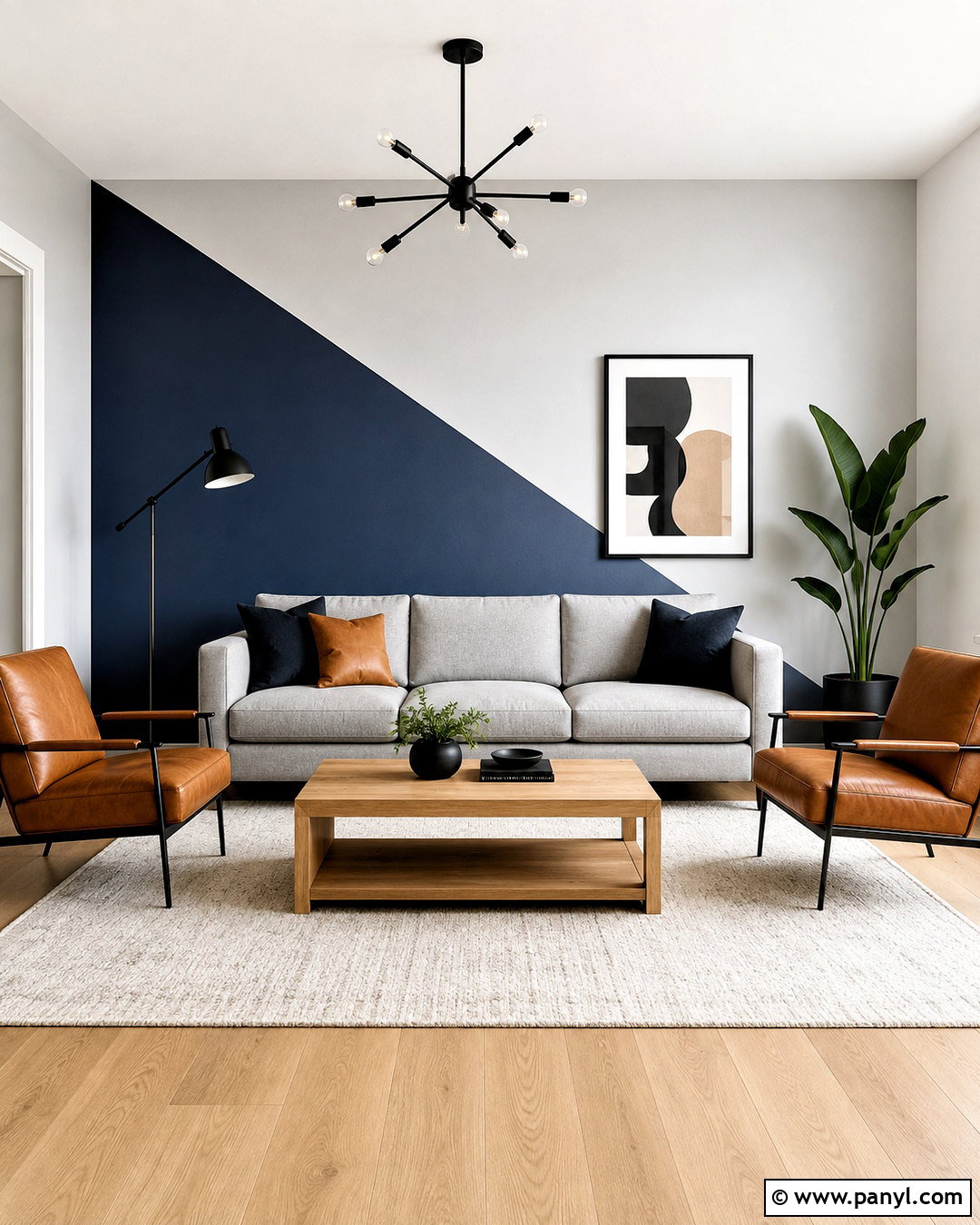
Sharp navy geometry can bring order and energy to a modern living room. Begin with a pale gray wall, then paint a large navy diagonal block rising from one corner behind the sofa. Keep the angle simple and leave enough light gray visible to prevent the wall from feeling too dark. A clean-lined light gray sofa blends into the base color, allowing the navy section to stand out. Add caramel leather accent chairs, a pale oak coffee table, and a textured ivory rug for warmth. Black metal lighting repeats the strength of the diagonal line. Limit artwork to one large abstract print placed within the lighter area. Navy pillows and a tan throw tie everything together, producing a bold yet highly livable contemporary space.
7. Peach And Lavender Color Block Wall
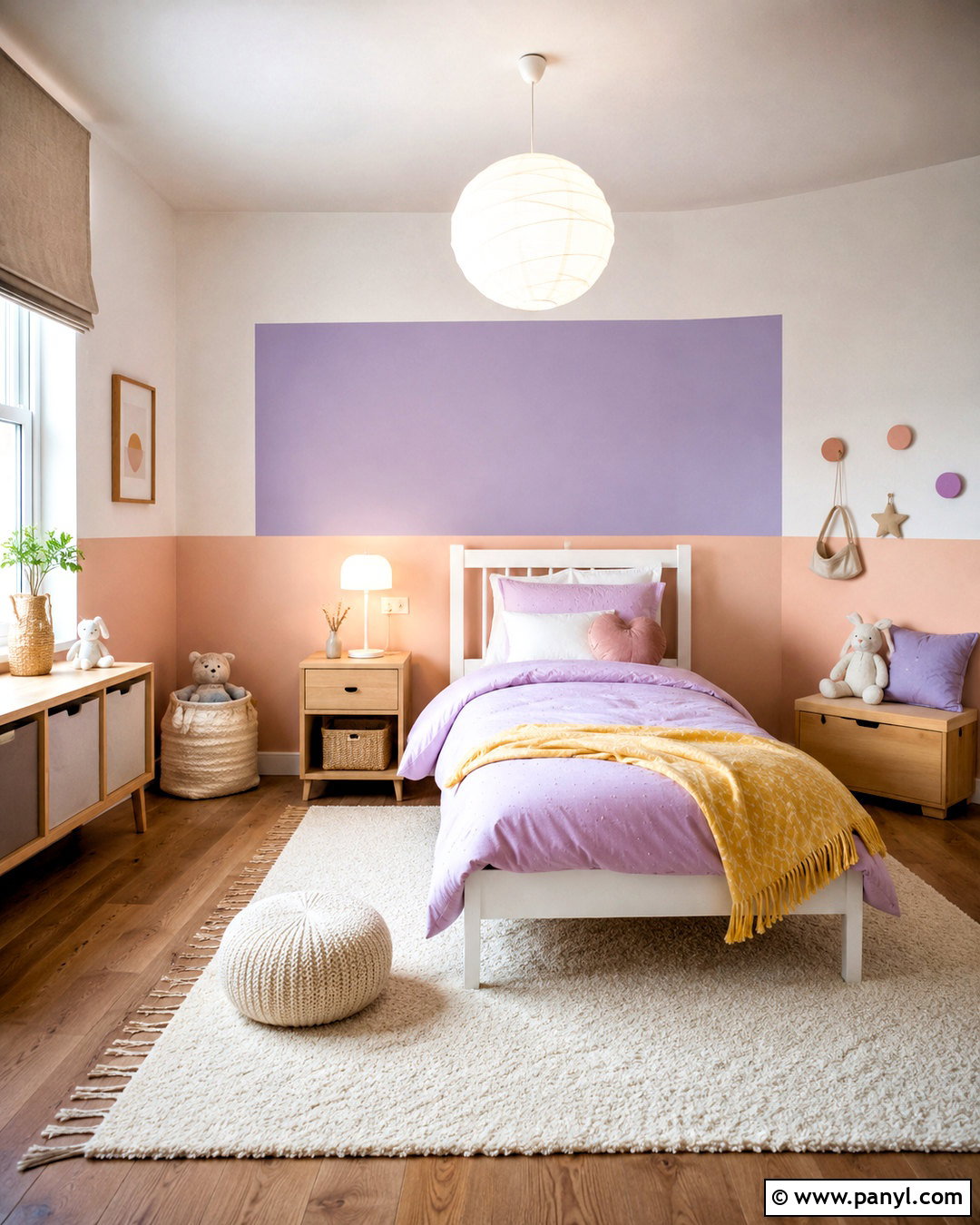
Gentle peach and lavender can make a child’s bedroom colorful without relying on a busy theme. Paint the lower half soft peach, then add a wide lavender rectangle behind the bed that begins at the floor and reaches above the headboard. Use warm white across the remaining upper wall to provide breathing room. A simple white bed, pale wood nightstand, and washable cream rug keep the arrangement light. Layer lilac bedding with peach cushions and a small yellow throw for an extra sunny accent. Rounded wall hooks, closed toy storage, and a paper pendant support a tidy, playful look. Choose curtains in natural cotton rather than another strong color. The complete room feels imaginative, adaptable, and easy to update as the child grows.
8. Green Scalloped Color Block Wall
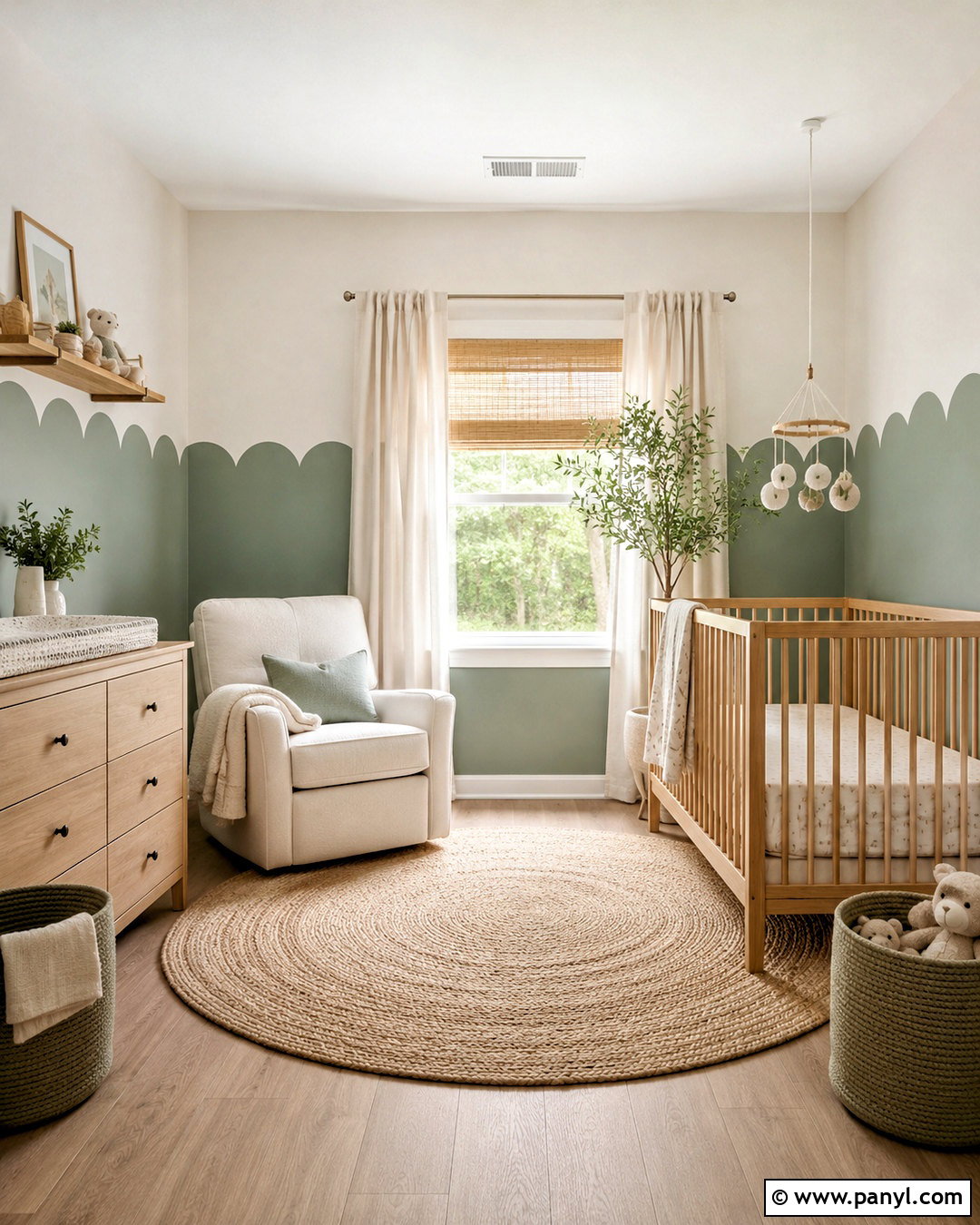
A scalloped color block gives a nursery a playful border while maintaining a soft, restful palette. Paint the bottom portion muted eucalyptus green, finishing the top edge with large, evenly spaced curves. Leave the wall above warm ivory to brighten the room. Position a natural oak crib against the green area, ensuring the decorative edge remains visible above it. Add an ivory glider, a round braided rug, and a low oak dresser with simple wooden knobs. Cream curtains and sage storage baskets continue the gentle colors without creating visual clutter. A small mobile and a few secure wall decorations provide interest around the crib. The finished nursery feels whimsical but not overly sweet, allowing the furniture and wall treatment to work as one cohesive design.
9. Black And White Color Block Wall
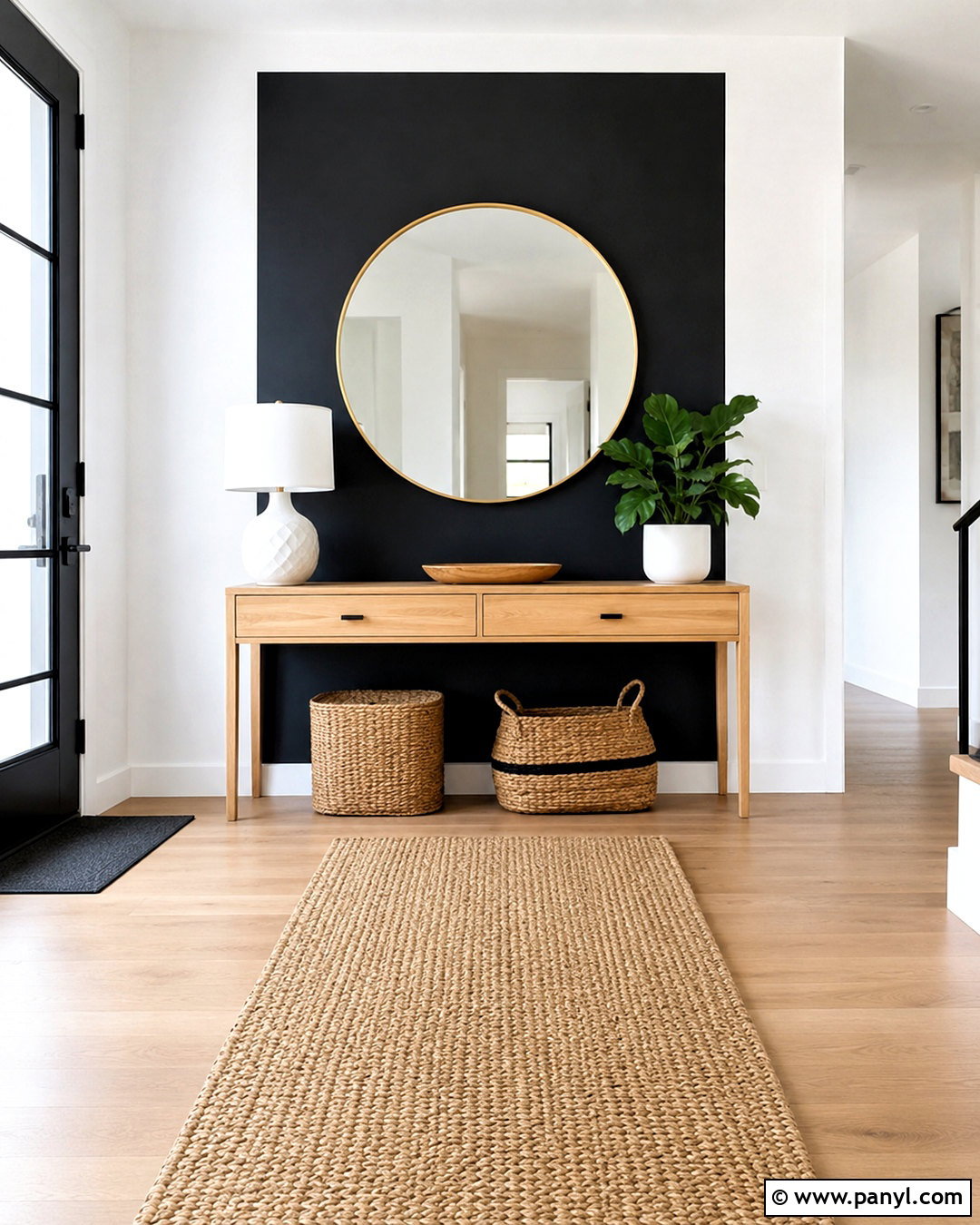
For a graphic entryway, divide a white wall with one bold matte black rectangle behind a slim console table. The block should be wider than the furniture and extend from the floor to roughly three-quarters of the wall height. This creates a strong backdrop that makes the console appear built into the layout. Select a light oak table to soften the monochrome contrast, then add a round brass-framed mirror centered above it. A woven runner, white ceramic lamp, and natural baskets introduce useful texture. Keep nearby doors and trim clean white for consistency. One small plant adds a fresh green accent without weakening the graphic effect. The completed entry feels crisp, welcoming, and practical, even when the available floor space is limited.
10. Teal And Coral Color Block Wall
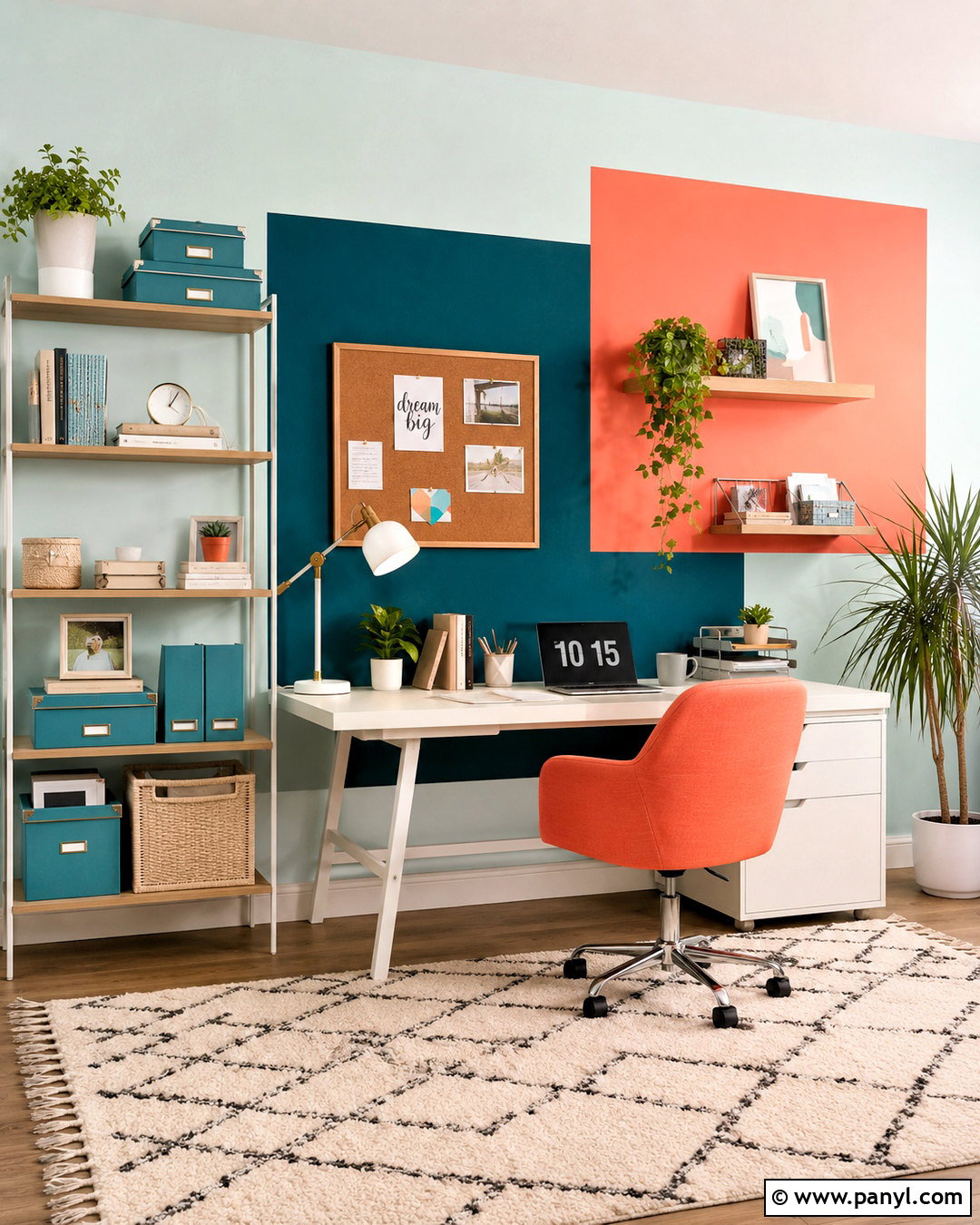
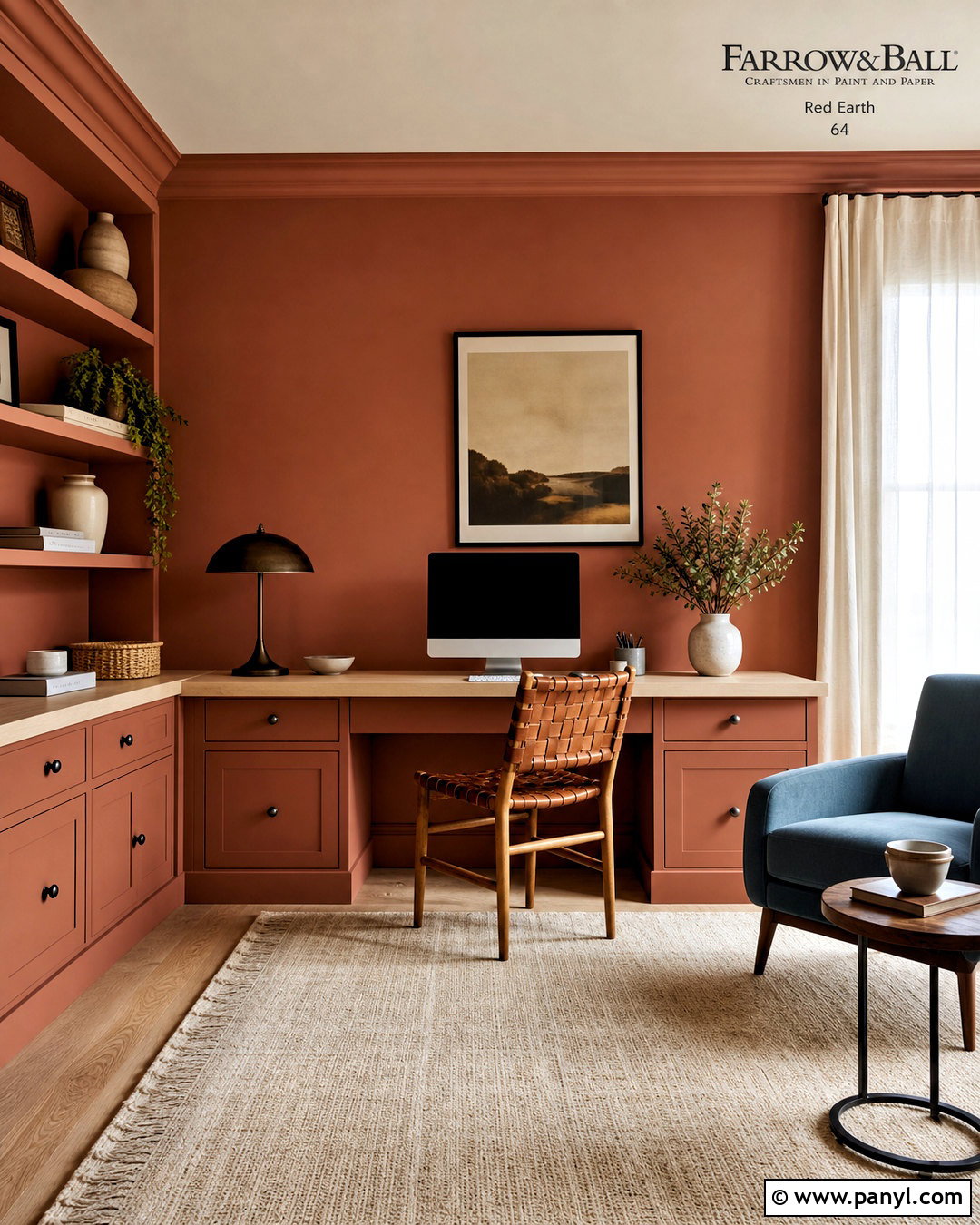
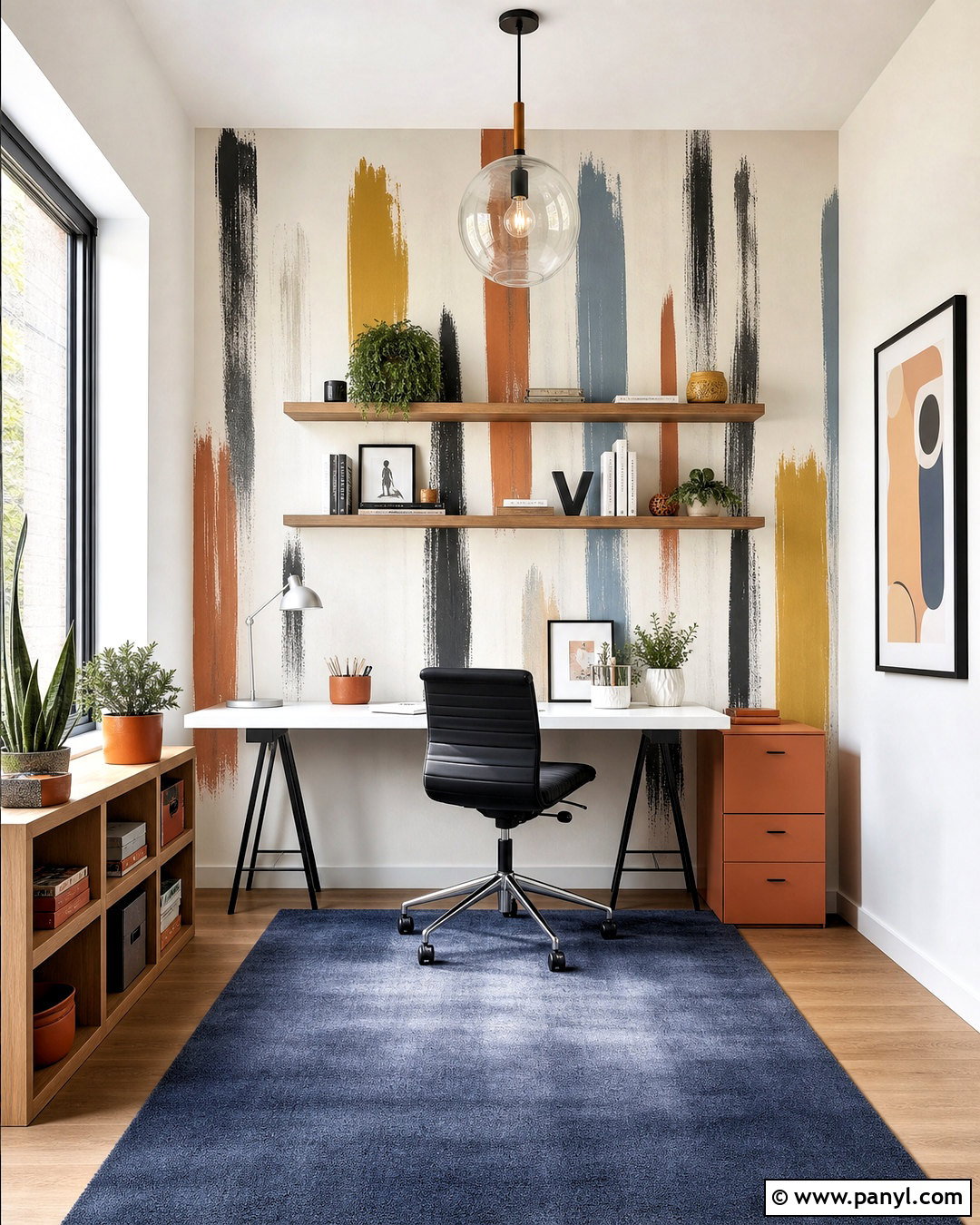
Teal and coral can transform a creative home office into an energetic but balanced workspace. Paint the main wall pale aqua, then place a large deep teal rectangle behind the desk. Add a smaller coral block that overlaps one edge, creating depth without using complicated shapes. A white desk and light wood shelving help the stronger colors remain clear. Choose a coral desk chair, teal storage boxes, and a cream rug with restrained geometric detailing. White task lighting keeps the work surface bright, while a corkboard inside the teal area provides practical display space. Keep accessories organized rather than densely layered. With pale flooring and simple window treatments, this complete office supports creativity while still feeling orderly enough for focused work, video calls, and daily planning.
11. Olive Green Diagonal Color Block Wall
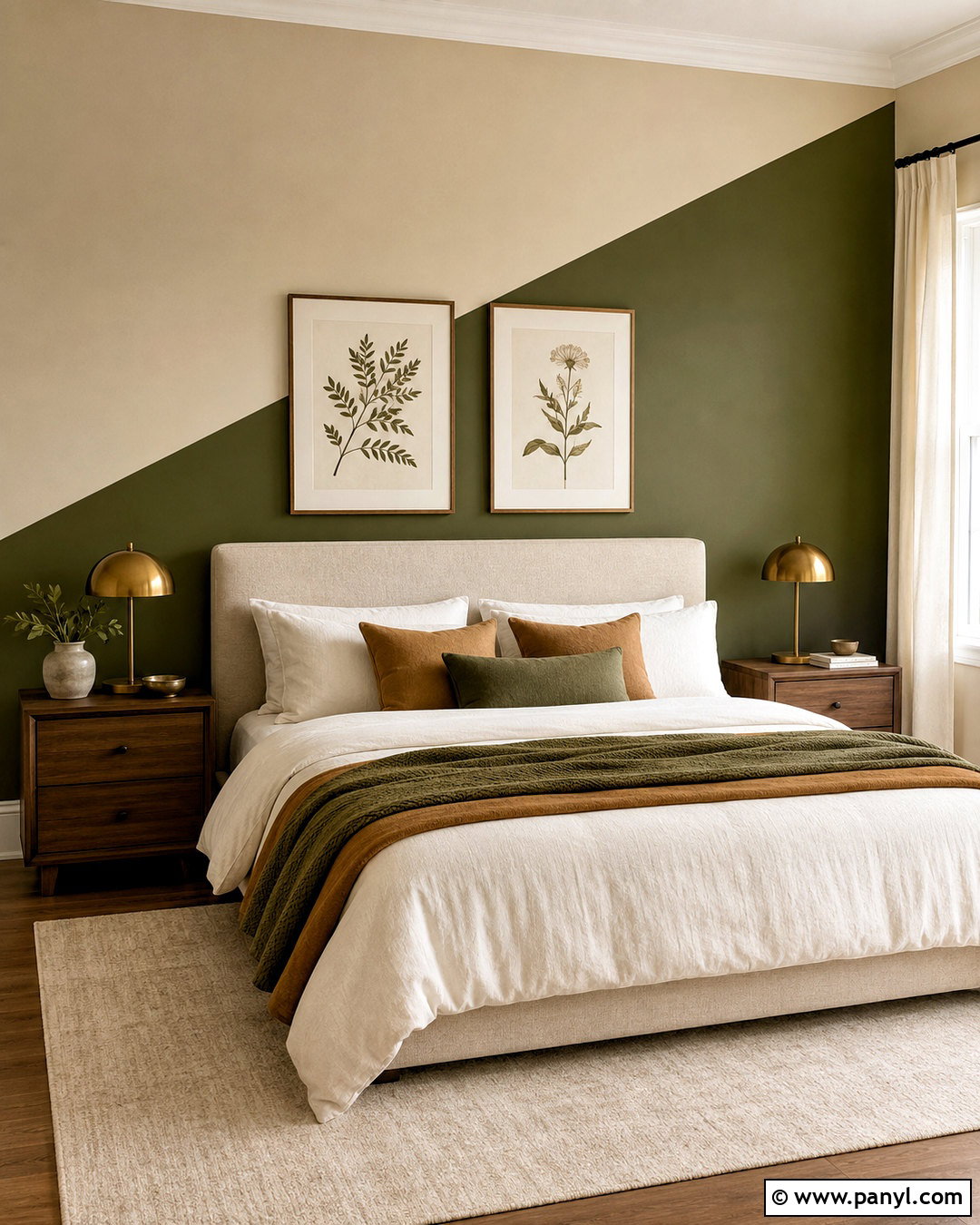
An olive green diagonal can give a neutral bedroom more movement without sacrificing its restful character. Start the green section low near one corner and raise it gradually across the wall behind the bed. Keep the upper area warm beige so the strong angle feels earthy rather than harsh. Choose an upholstered oatmeal headboard, white sheets, and layered olive and camel blankets. Walnut nightstands deepen the natural palette, while aged brass lamps add a warm metallic detail. Use a large cream rug to soften dark wood flooring and balance the wall’s geometry. Minimal botanical prints can hang in the beige section, following a straight alignment for contrast. The final bedroom feels grounded and contemporary, with a color-blocked feature that adds interest while supporting a calm sleeping environment.
12. Beige Tonal Color Block Wall
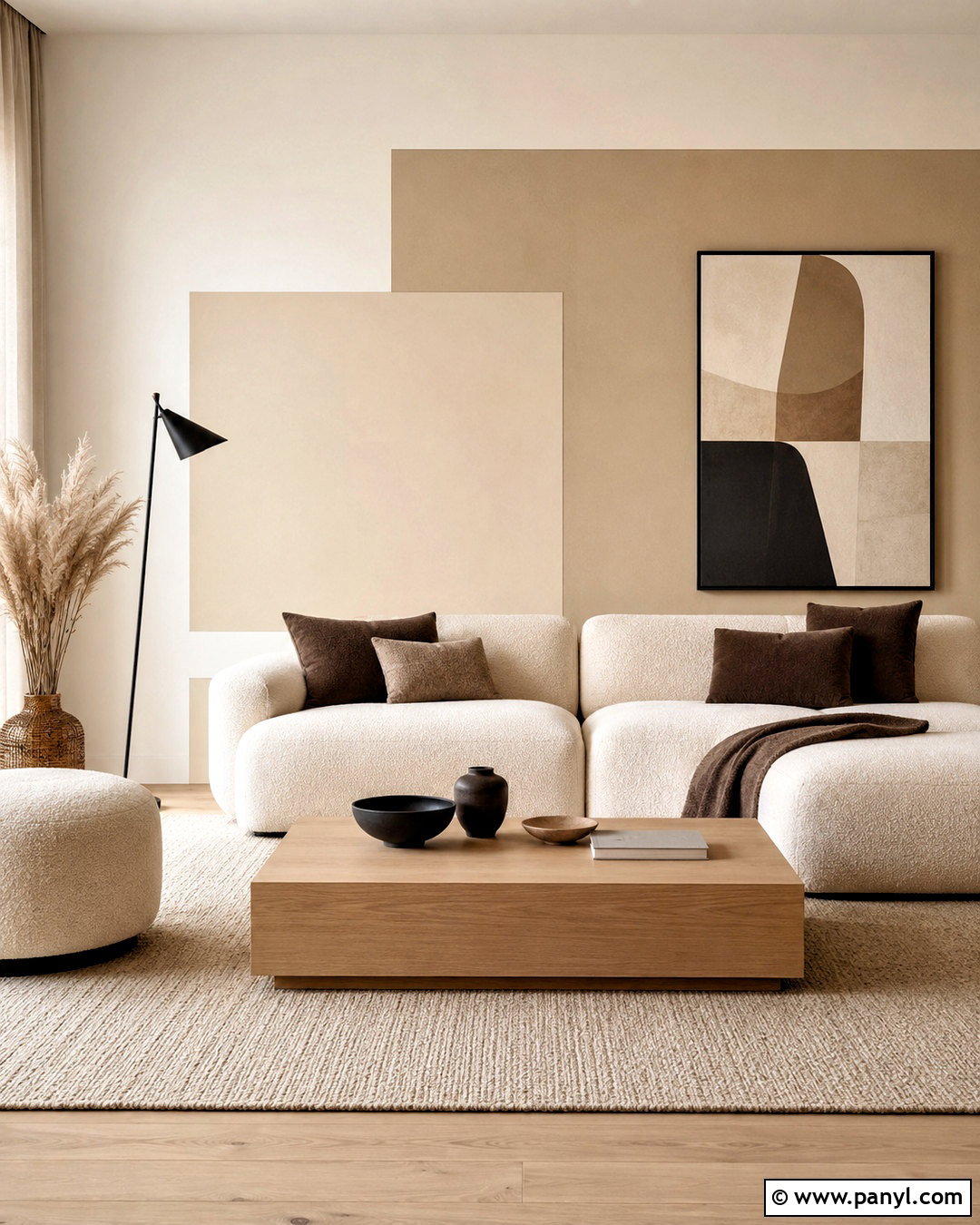
Color blocking does not need strong contrast to be noticeable. In a quiet living room, combine warm ivory, sand, and mushroom beige in three broad overlapping rectangles. Place the largest sand block behind the sofa, with a taller mushroom section framing a reading lamp and side table. Keep the remaining wall ivory to maintain an airy background. Select a cream boucle sofa, pale oak coffee table, and softly textured wool rug. Dark brown cushions and a black metal lamp provide small points of definition. Decorate with stoneware, linen, and a single abstract artwork using the same neutral shades. Because every element shares a warm undertone, the room feels cohesive rather than flat. This tonal approach suits minimalist spaces that need depth without vivid color.
13. Rainbow Color Block Wall
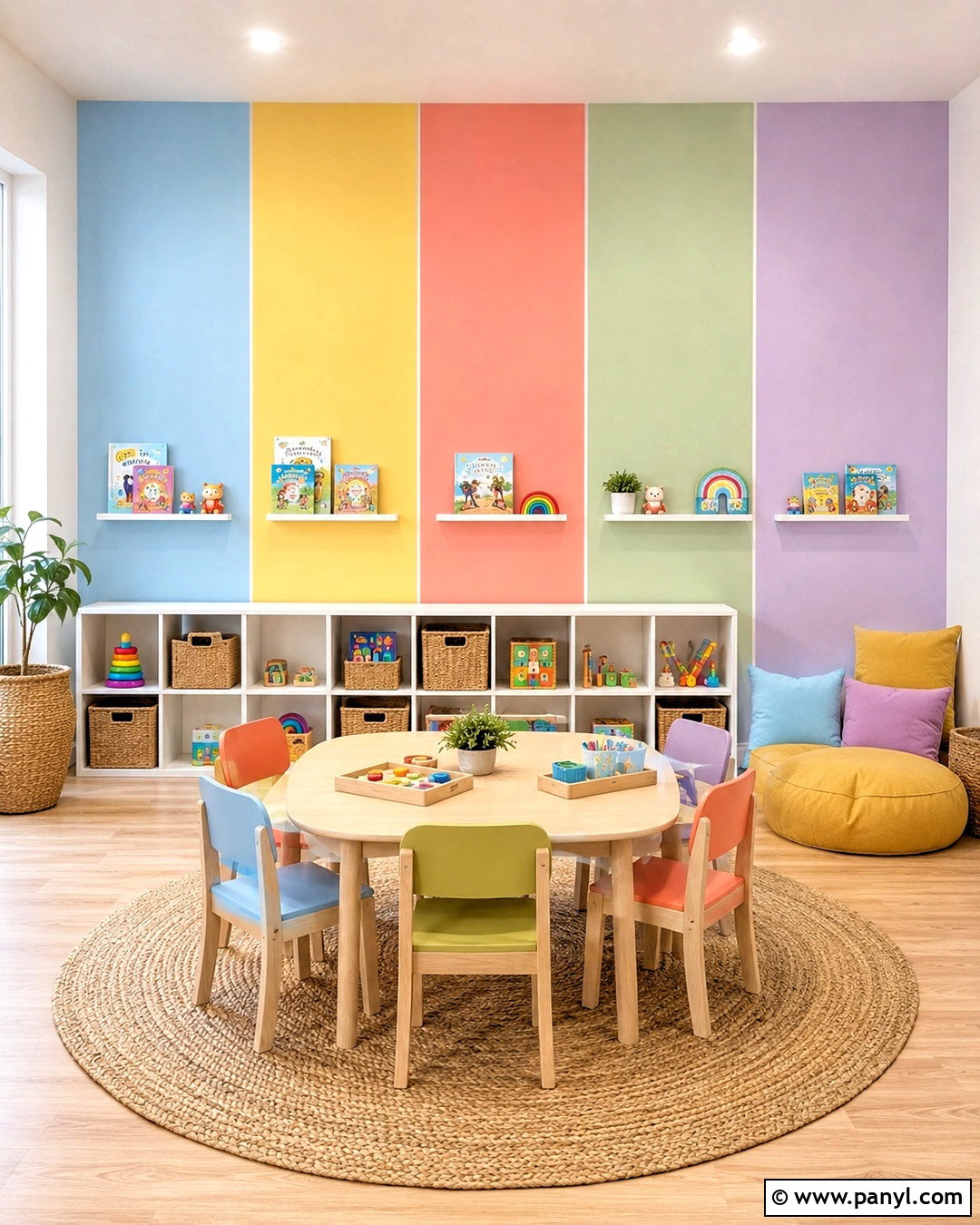
A playroom can handle several colors when the wall design follows a clear structure. Create wide vertical blocks in muted sky blue, sunny yellow, coral, sage green, and lavender across one feature wall. Keep each stripe a different width for a lively rhythm, but use softened hues instead of intense primary colors. Place low white storage units along the base so toys remain easy to reach and the colorful sections stay visible. Add a round natural-fiber rug, a pale wood activity table, and small chairs in coordinating shades. White walls elsewhere prevent the room from becoming overwhelming. Open baskets, book ledges, and a soft floor cushion complete the arrangement. The resulting space feels joyful, functional, and adaptable for reading, crafts, games, and organized everyday play.
14. Burgundy Ceiling Color Block Wall
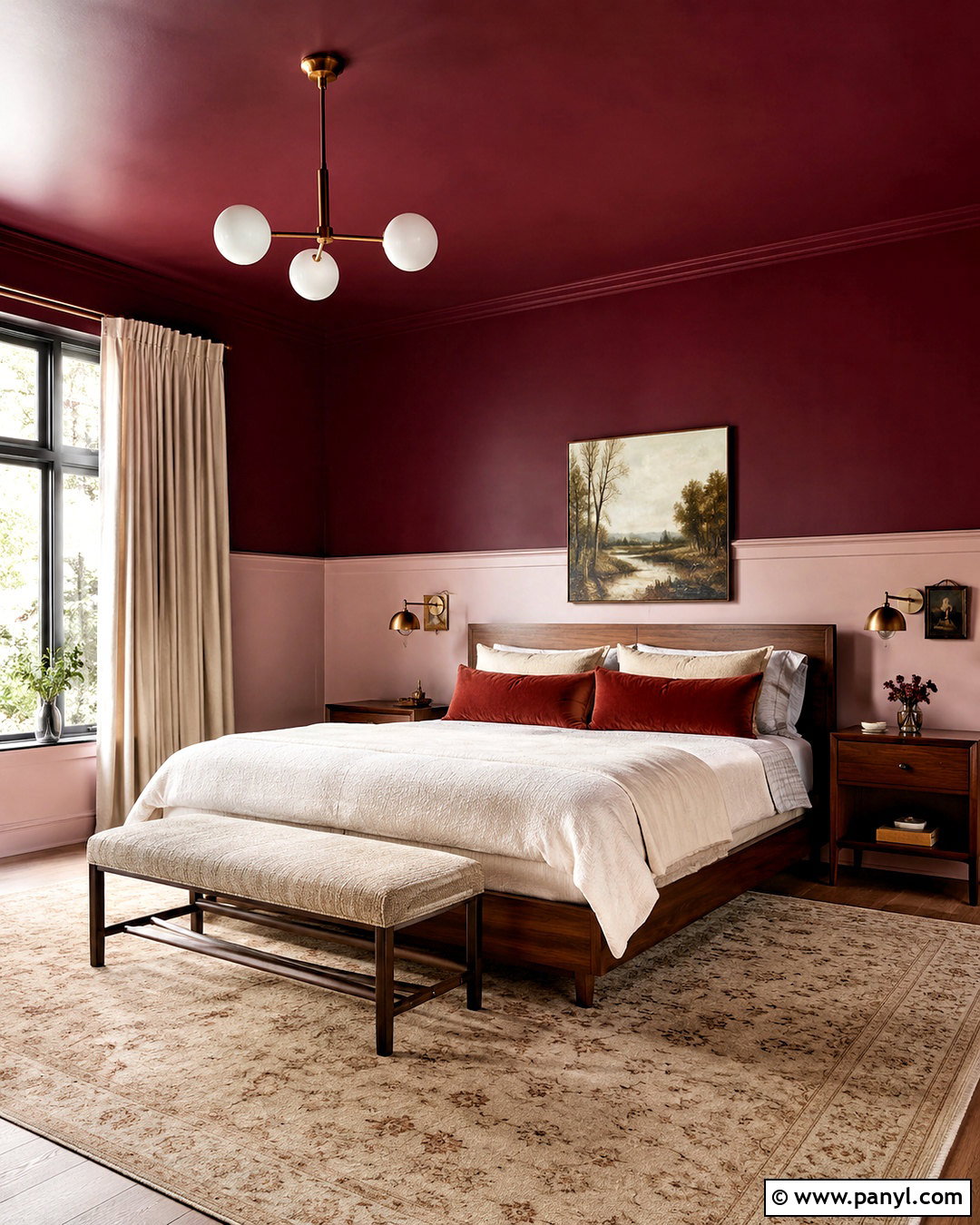
Extend a burgundy color block from the upper wall onto the ceiling to create a cozy sleeping zone. Begin the deep red paint slightly above headboard height and continue it overhead, stopping several feet beyond the bed. Keep the lower walls pale blush or warm off-white so the room remains balanced. A low walnut bed works beautifully beneath the painted canopy effect, especially with cream bedding and rust-colored pillows. Choose small brass sconces instead of table lamps to keep the composition streamlined. A vintage-style beige rug and linen curtains soften the dramatic overhead color. Add one bench at the foot of the bed and minimal artwork outside the burgundy section. The completed bedroom feels enveloping and sophisticated without requiring architectural changes or an elaborate four-poster frame.
15. Mint Green Kitchen Color Block Wall
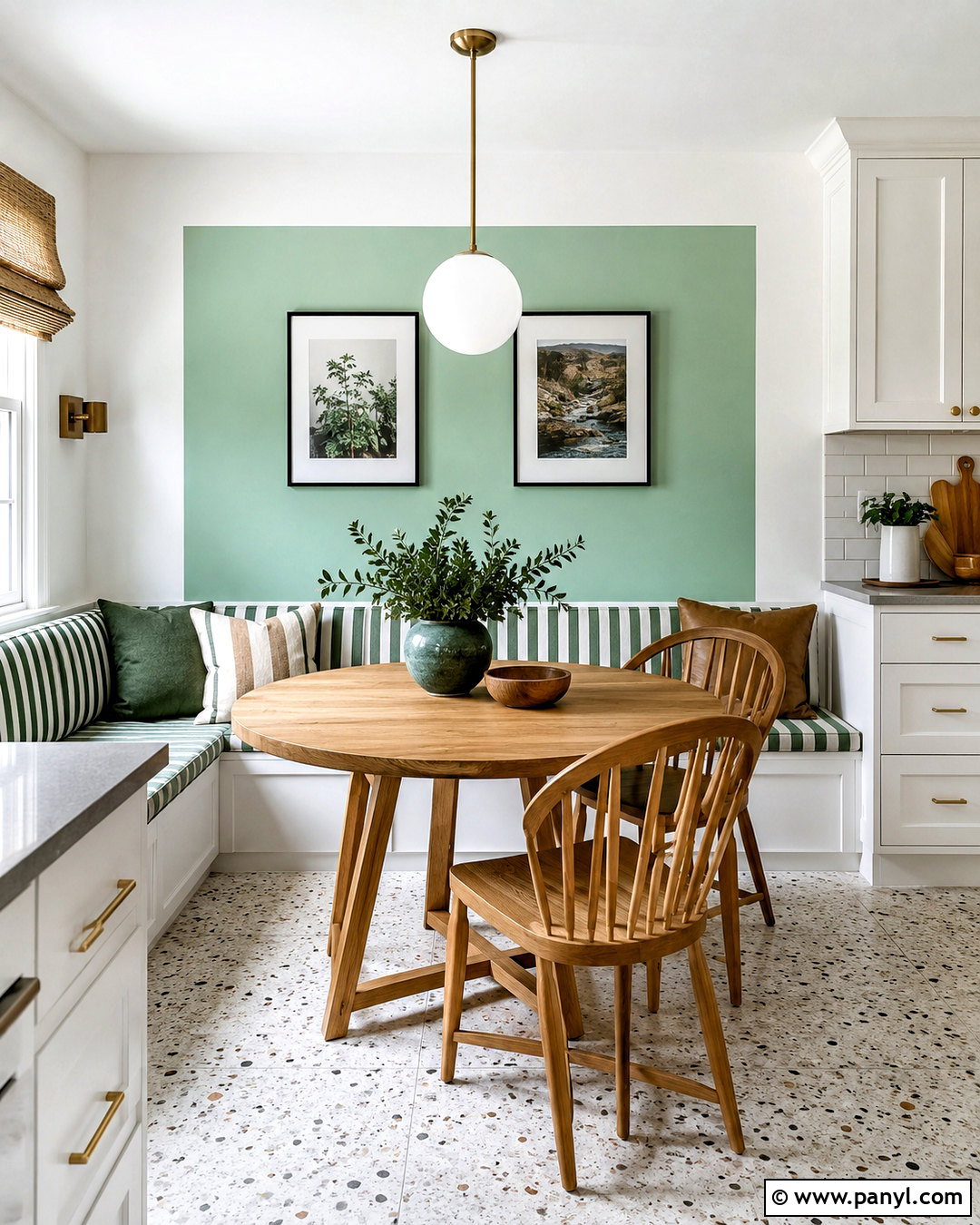
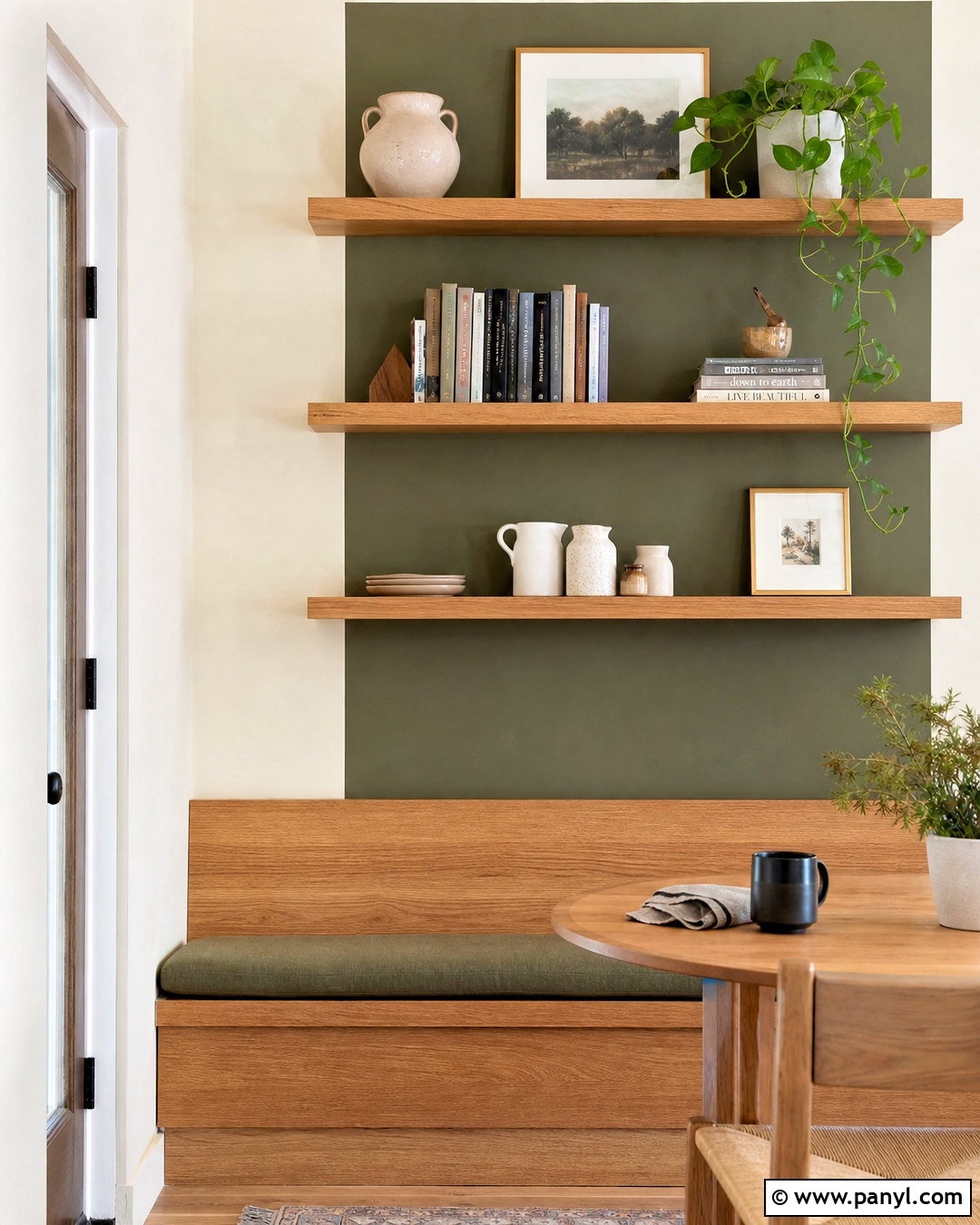
Fresh mint green can define a casual breakfast area within an open kitchen. Paint a large rectangular block behind the table, starting at the baseboard and stopping just above a row of framed prints. Surround it with clean white walls to connect the nook to white cabinetry. A small round oak table and curved spindle-back chairs add warmth, while a white globe pendant clearly marks the dining zone. Use pale terrazzo flooring or a washable cream runner to keep the area bright. Black picture frames and cabinet hardware provide crisp definition. A built-in bench with striped green cushions can improve seating if space is tight. This complete design makes the breakfast corner feel separate and inviting while preserving the kitchen’s open, practical flow.
16. Orange Archway Color Block Wall
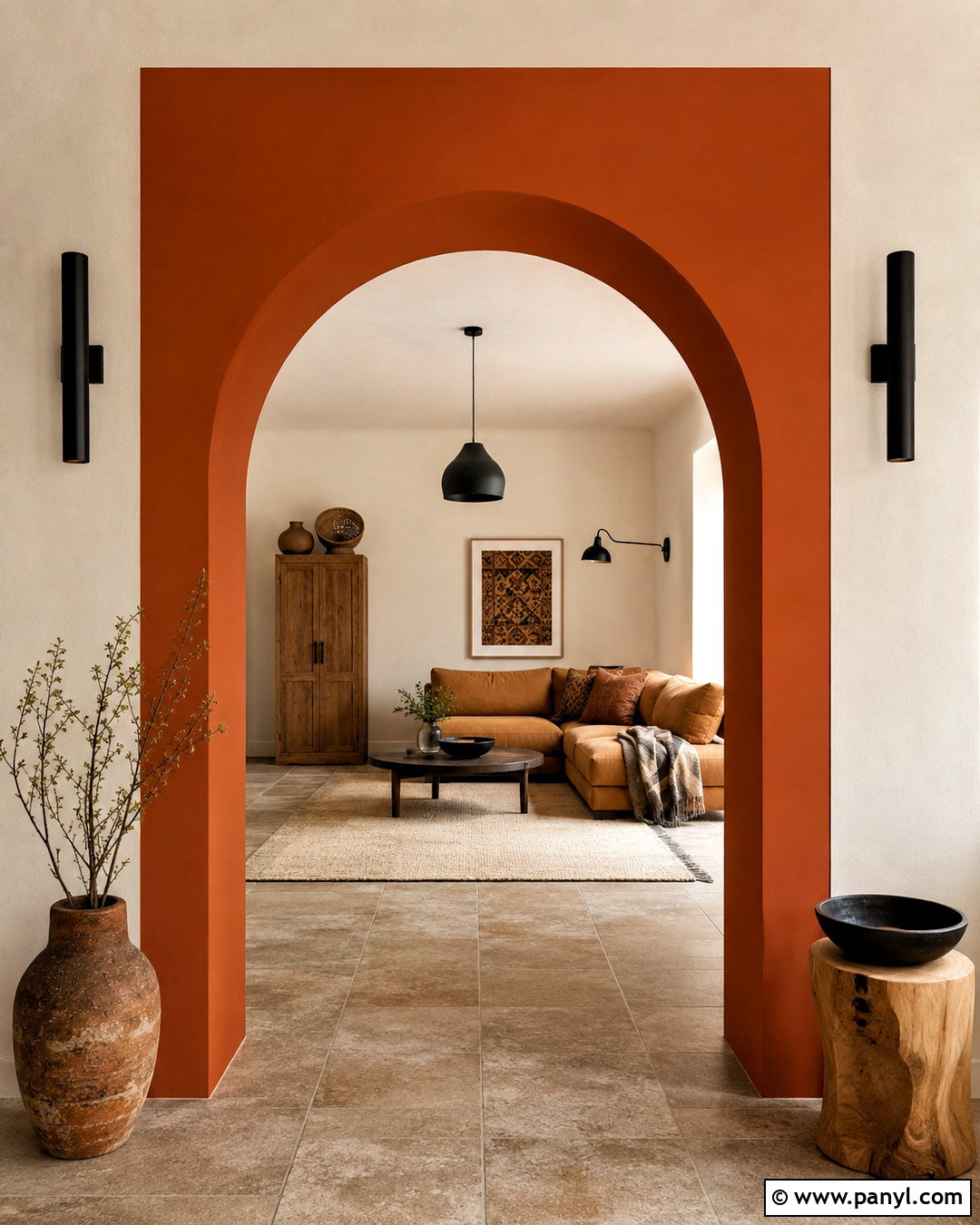
Highlight an interior passage with a burnt orange color block that surrounds the archway and extends about two feet onto each adjoining wall. The warm shade turns a basic opening into a deliberate architectural feature. Keep the connected rooms soft cream so the orange frame remains the clear focal point. In the visible living area, use a tan sofa, an oak cabinet, and a cream rug with subtle rust detailing. Add matte black lighting and simple pottery to sharpen the relaxed earth-tone palette. Avoid placing tall furniture directly beside the painted opening, since open wall space helps the block read clearly. This approach works especially well between a hallway and living room, creating a visual transition that feels welcoming, cohesive, and far more distinctive than standard white trim.
17. Cobalt Blue Color Block Wall
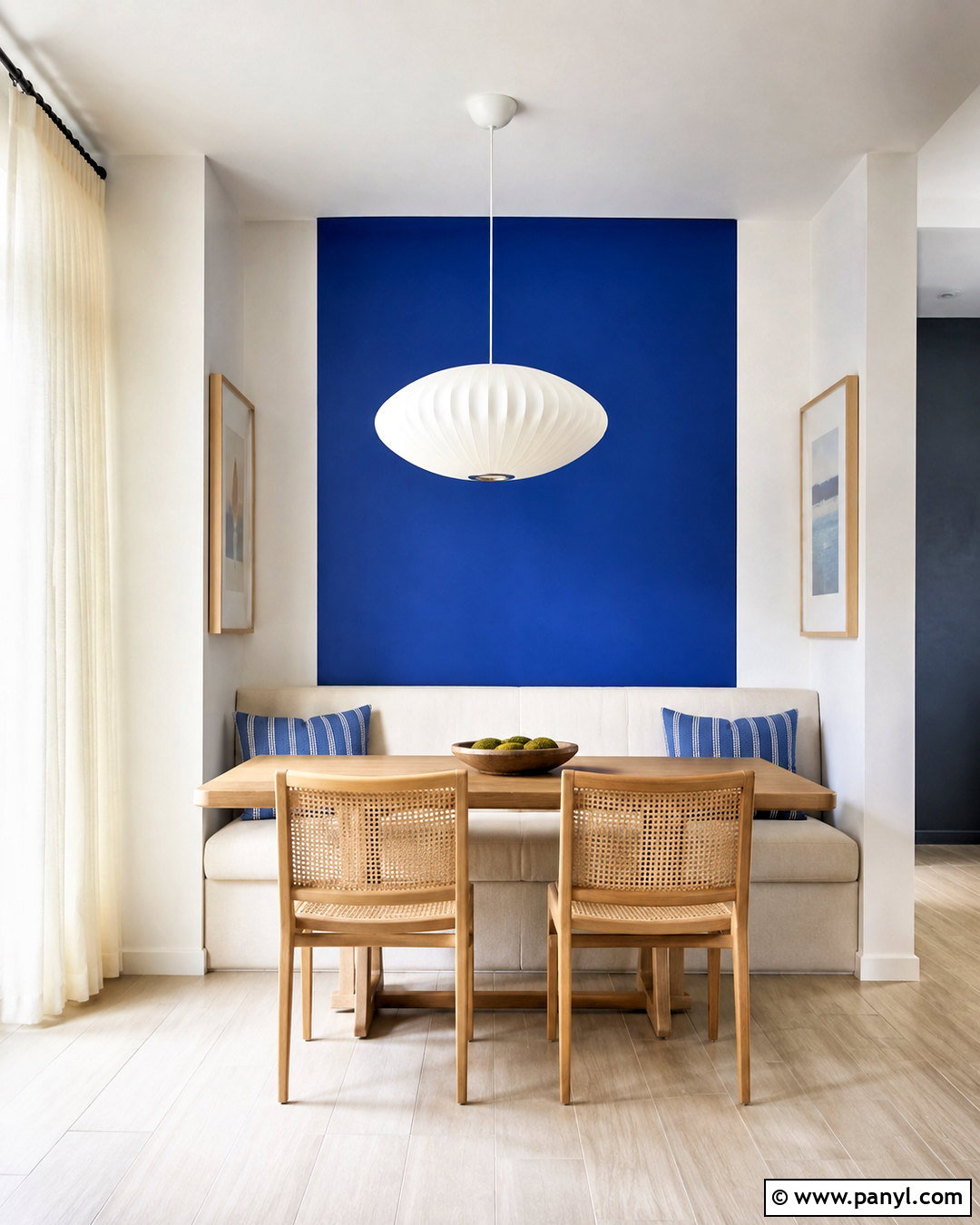
Cobalt blue brings vibrant character to a compact dining nook when it is used as a controlled backdrop. Paint a floor-to-ceiling blue rectangle behind a built-in or freestanding bench, keeping the surrounding walls bright white. Pair it with an oak table and woven cane chairs to balance the intense color with natural texture. Upholster the bench in a durable cream fabric and add striped blue cushions for repetition. A white pendant, pale flooring, and sheer curtains help daylight move through the space. Hang a small gallery of white-framed artwork entirely within the cobalt section for a clean, collected finish. The complete nook feels bold but not chaotic because the furniture stays simple and the blue remains concentrated in one well-proportioned part of the room.
18. Gray Mountain Color Block Wall
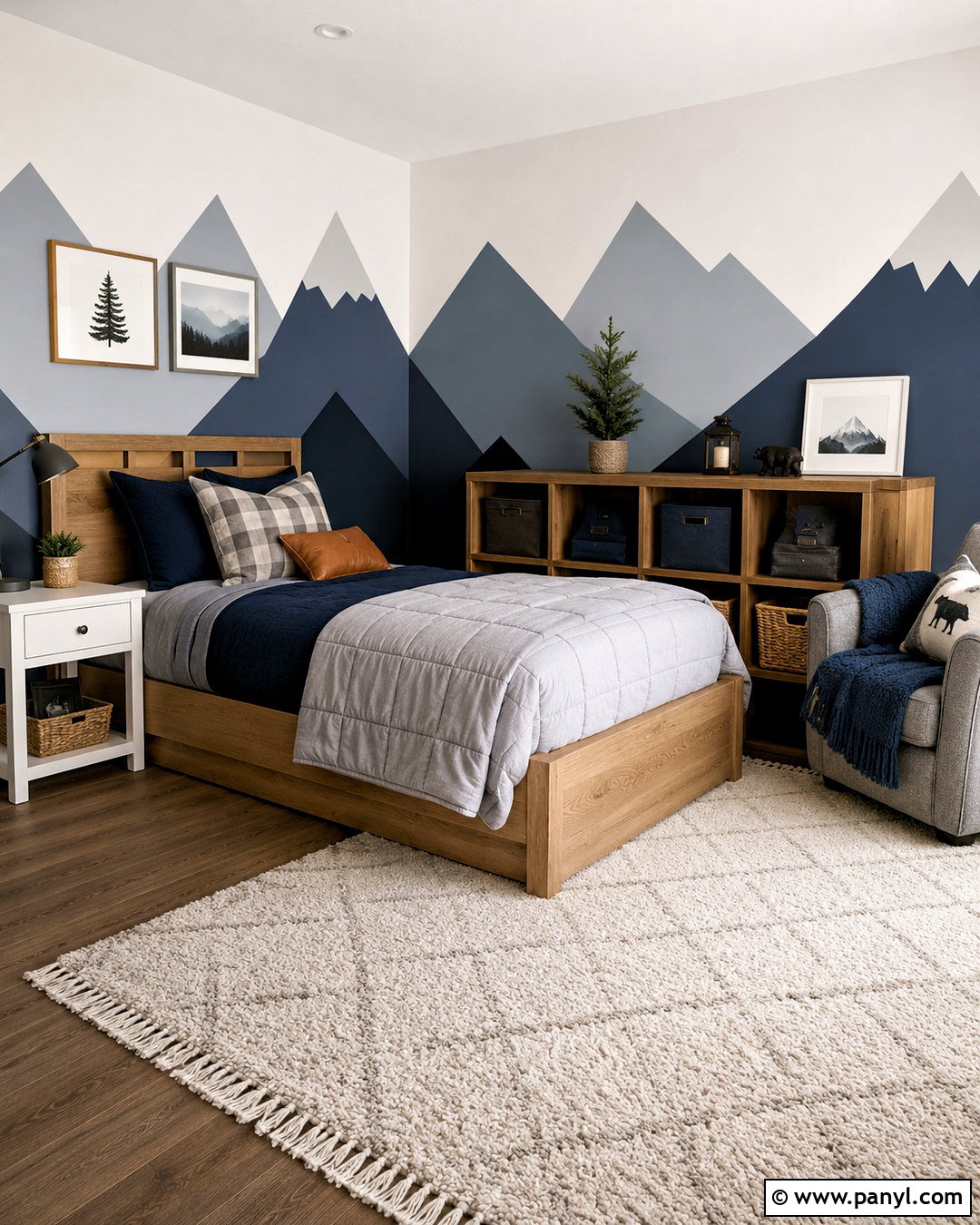
A mountain-inspired wall can feel modern when the shapes are large, simple, and limited to a restrained palette. Across a child’s bedroom wall, layer broad angular blocks in pale gray, medium blue-gray, and deep slate over a warm white background. Keep the peaks low enough to show plenty of white near the ceiling. Place a light oak bed against the painted landscape with solid navy bedding and a soft gray quilt. Choose a white nightstand, a simple globe lamp, and a cream rug to lighten the darker shapes. Closed wood storage and a small reading chair make the room practical. Instead of adding themed decorations everywhere, use only a few nature prints. The finished bedroom feels adventurous, tidy, and suitable beyond the early childhood years.
19. Lilac Wavy Color Block Wall
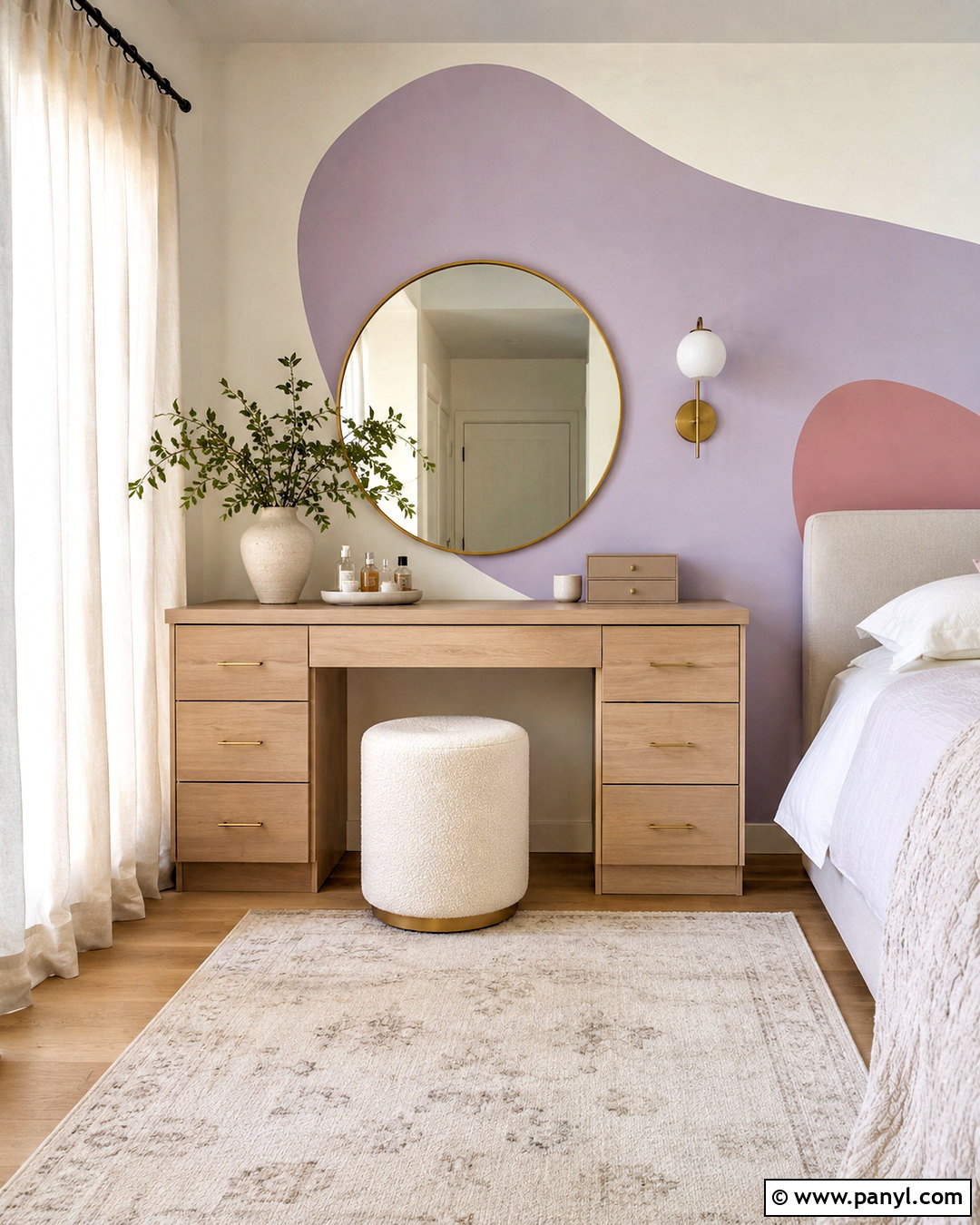
A flowing lilac band brings soft movement to a dressing room or bedroom vanity area. Paint the lower wall warm white, then create a wide lilac section with a gently curved upper edge that rises behind the mirror and falls near the storage cabinet. Add a narrow dusty pink shape beneath part of the curve for subtle layering. Use a light oak vanity, an ivory upholstered stool, and a large round mirror with a brushed brass frame. A white globe sconce, pale rug, and linen curtain preserve the airy mood. Store cosmetics in closed drawers and limit the countertop to a small tray and ceramic vase. The complete setup feels graceful and modern, with enough color to make the daily routine area feel special but uncluttered.
20. Brown And Blue Color Block Wall
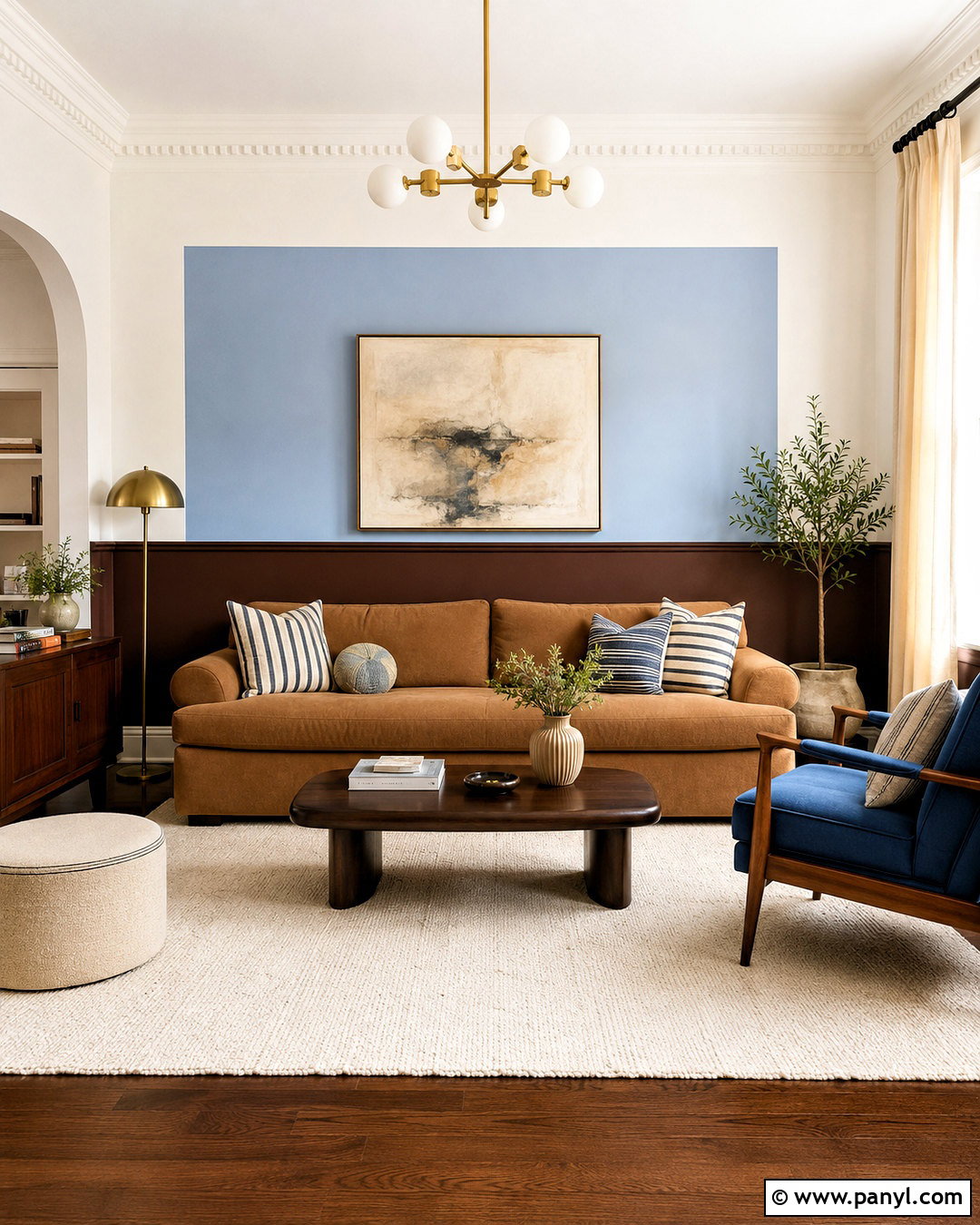
Chocolate brown and powder blue create an unexpected yet comfortable living room palette. Paint the lower half of the feature wall deep brown, then add a broad powder blue block above it that covers one side rather than the full width. Leave the remaining upper area creamy white for balance. Position a camel-colored sofa across the horizontal division and add a blue lounge chair near the lighter block. A dark walnut coffee table, ivory rug, and brushed brass lamp enrich the scheme. Use cream curtains to soften the strong wall colors and bring in striped brown-and-blue pillows for connection. One large neutral artwork can bridge the painted areas. The finished room feels layered, warm, and individual while remaining practical for everyday relaxation and conversation.
Conclusion:
Successful color blocking depends on proportion, placement, and a palette that connects with the entire room. These 20 colour block walls show how arches, rectangles, diagonals, curves, and half-painted surfaces can define furniture zones and add architectural character. Begin with accurate measurements and small paint samples before committing to a full pattern. Crisp edges matter, but the surrounding furnishings are equally important. Repeat wall colors through pillows, rugs, artwork, or accessories without matching everything exactly. Neutral flooring and natural materials can also calm brighter combinations. Most importantly, choose a layout that complements the wall, room size, and daily purpose. A thoughtful color block should make the whole space feel more complete, not simply more colorful.

Related Ideas and Inspiration:
Leave a Reply