
Statement walls can turn an ordinary room into a space that feels intentional, personal, and complete. The strongest designs go beyond one bright paint color. They use wallpaper, wood, stone, artwork, built-ins, or architectural details to create a clear focal point while supporting the room’s furniture and color palette. Current interiors favor expressive patterns, natural materials, tactile finishes, and comfortable rooms that feel collected rather than overly staged. () Whether you are decorating a living room, bedroom, dining area, entryway, or home office, scale and balance matter as much as the wall treatment itself. These complete room designs offer practical ways to create memorable, well-coordinated statement walls.
1. Floral Wallpaper Statement Wall
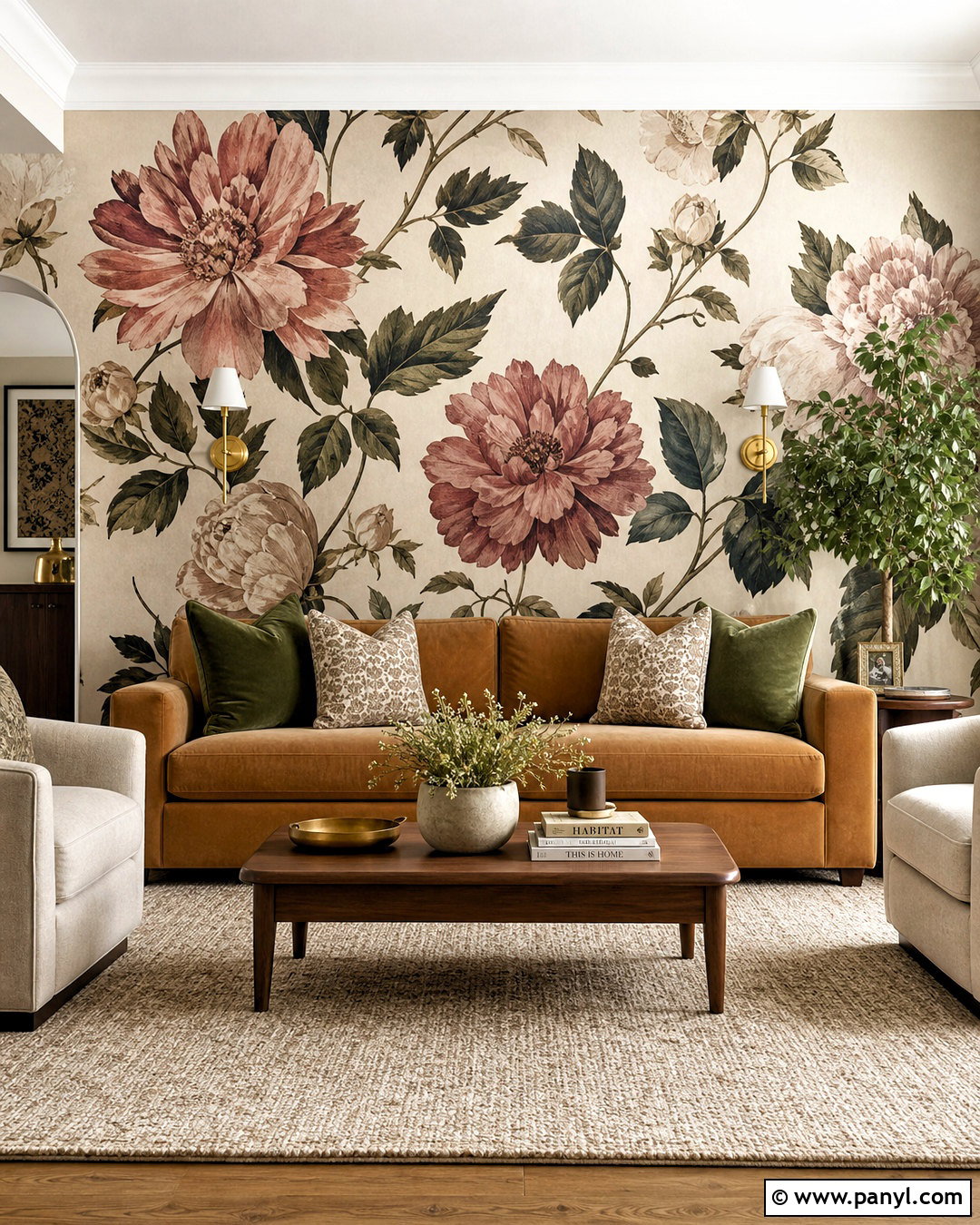
Large-scale floral wallpaper creates a dramatic living room without requiring complicated construction. Choose a print with deep green leaves, muted rose flowers, and a warm cream background. Install it behind the main sofa so the pattern naturally anchors the seating area. A camel-colored sofa, walnut coffee table, and oatmeal rug keep the room grounded. Add moss green pillows and dusty pink accents that repeat colors from the wallpaper. Slim brass sconces can frame the wall while providing soft evening light. Keep neighboring walls warm white to prevent the pattern from overwhelming the room. This complete arrangement feels expressive yet comfortable because every color connects back to the floral design. Bold, personality-driven wall coverings are especially effective when balanced with simple furniture and natural materials. ()
2. Wood Slat Statement Wall
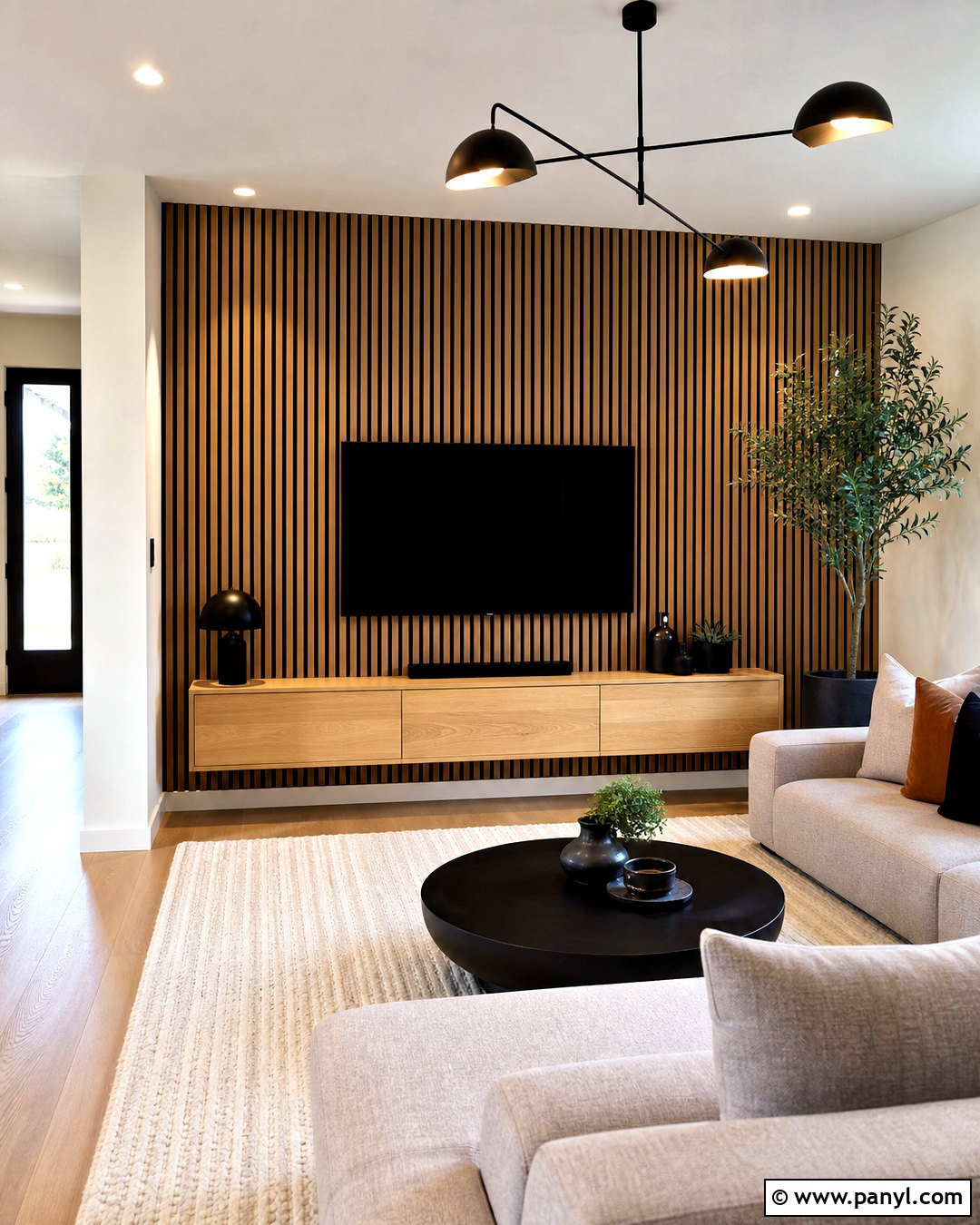
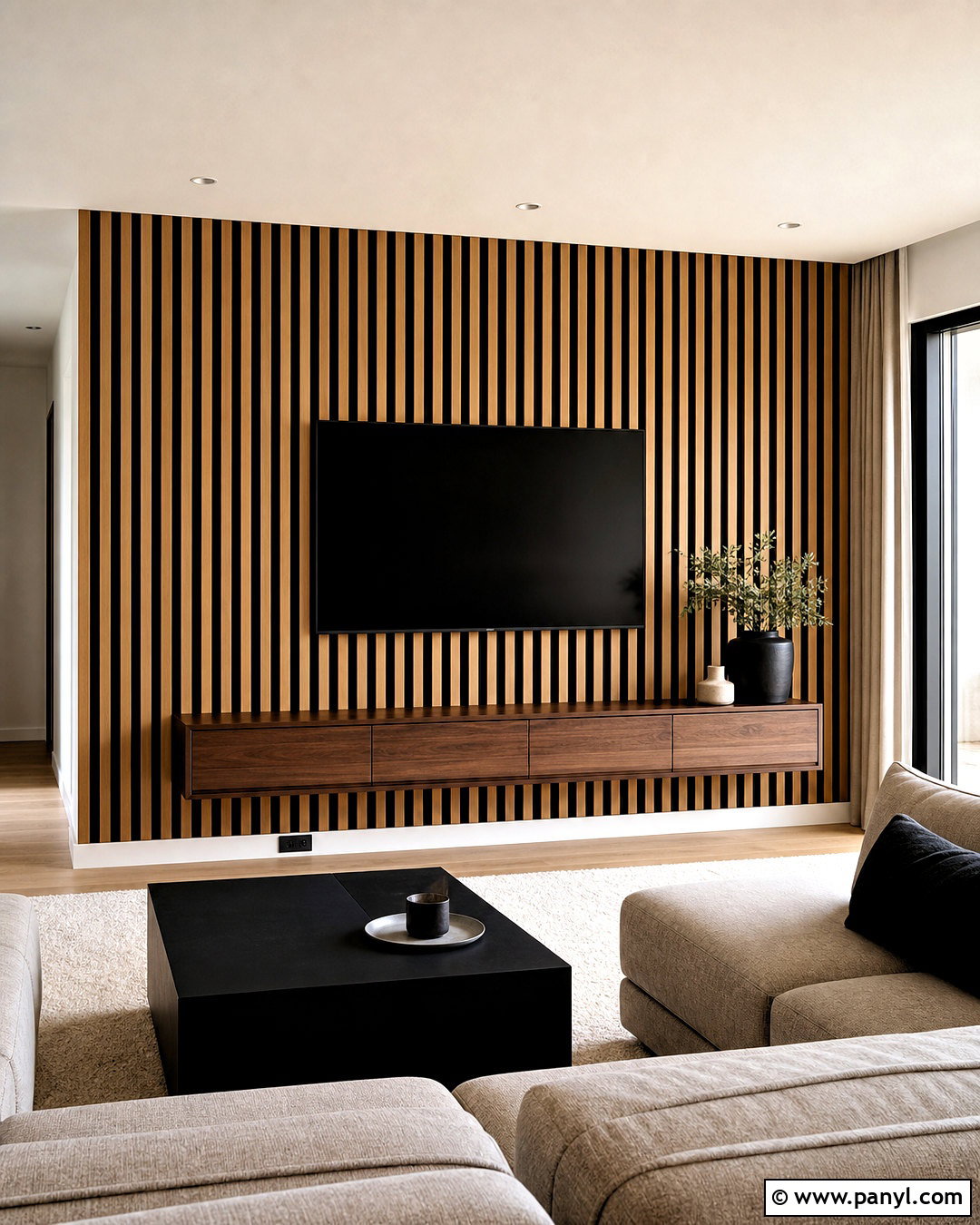
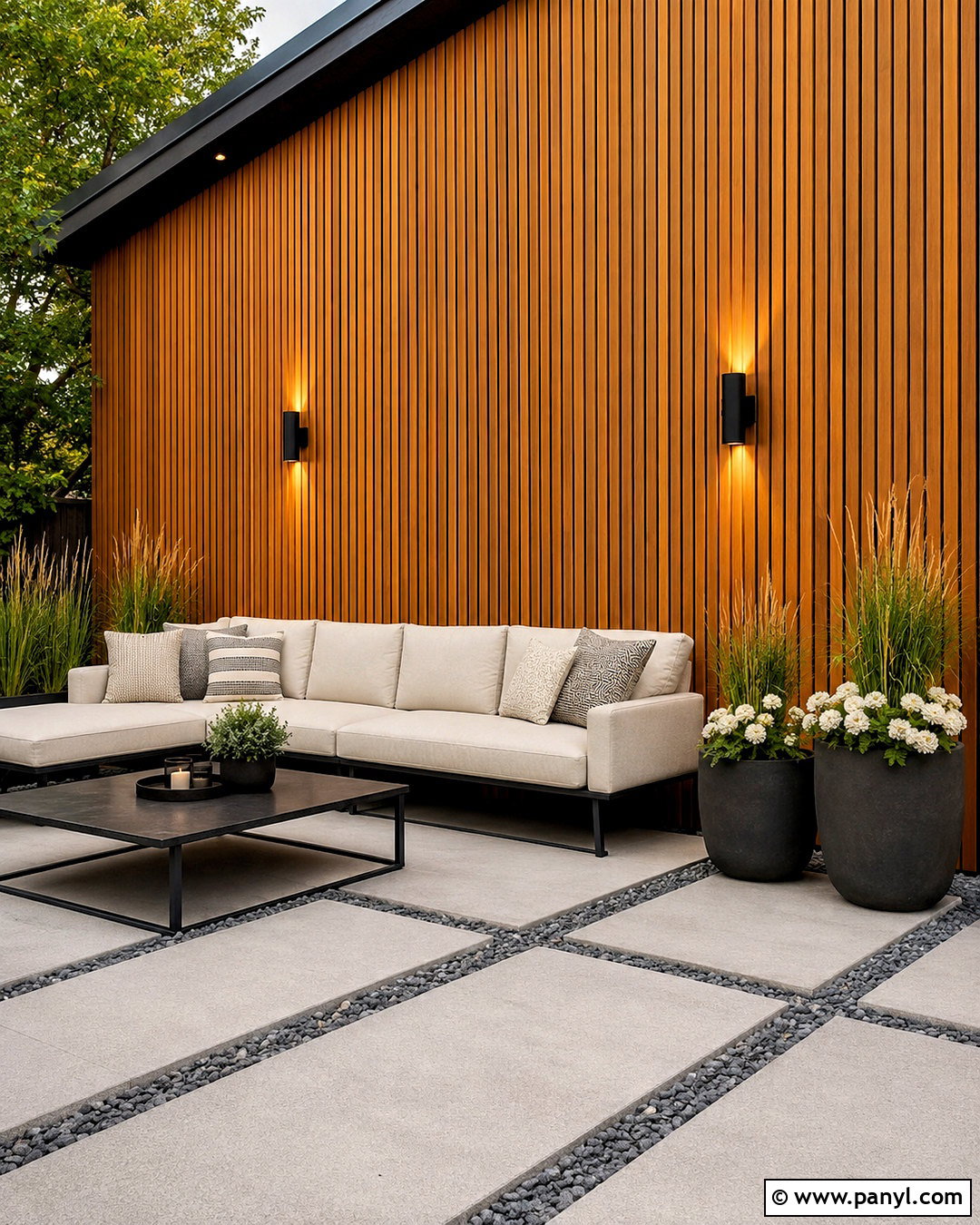
A wood slat wall gives a modern living room warmth, depth, and architectural definition. Cover the wall behind the television with narrow vertical oak slats over a charcoal backing. The dark gaps emphasize the rhythm of the wood while helping the screen blend into the design. Add a low floating oak console, a soft greige sectional, and a textured ivory rug. Matte black lighting and hardware create contrast without competing with the natural grain. Include one tall indoor tree near the end of the wall to soften its straight lines. Warm white paint on the remaining walls keeps the room bright. This treatment works especially well in open layouts because it visually identifies the seating zone without adding a physical divider. ()
3. Limewash Statement Wall
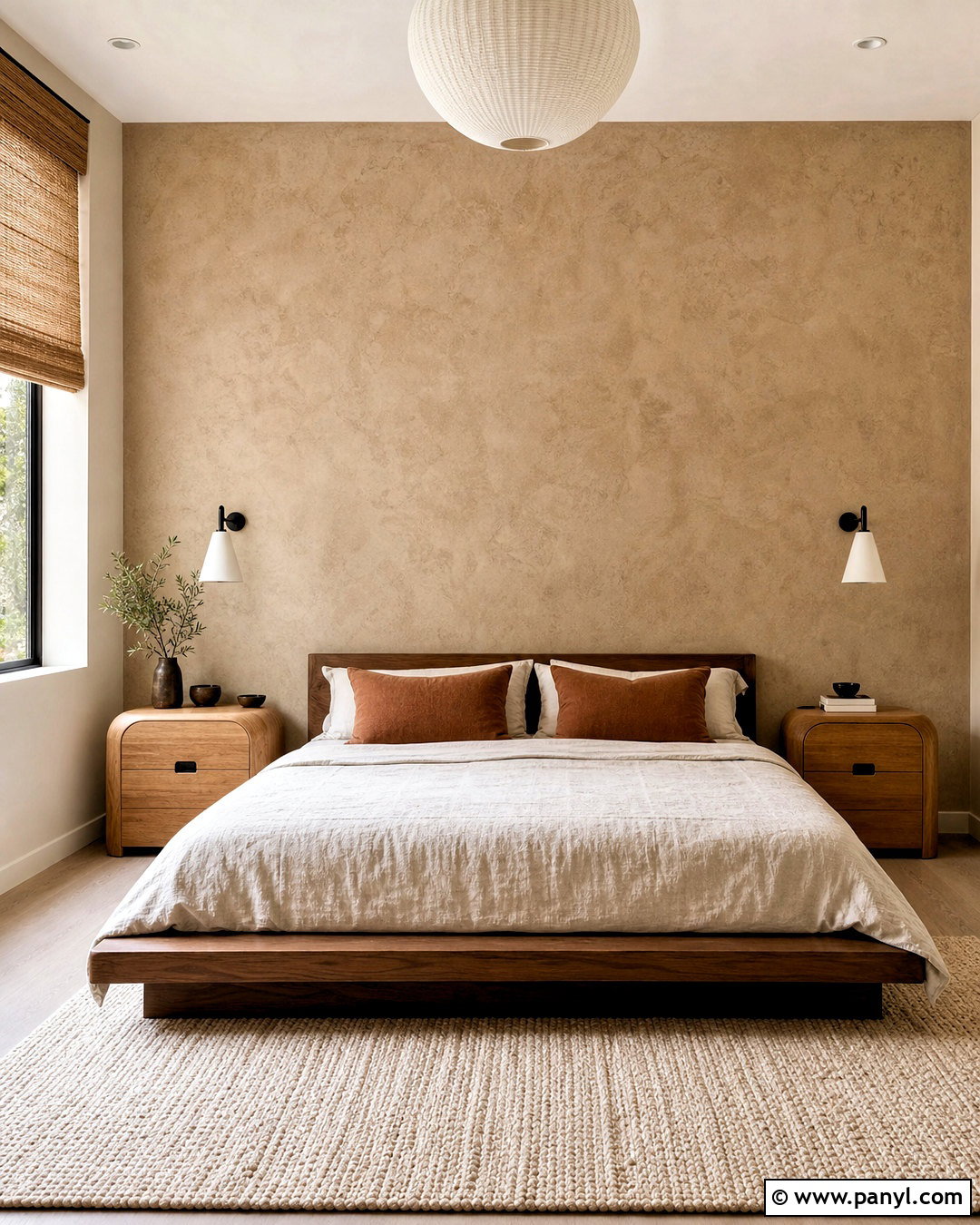
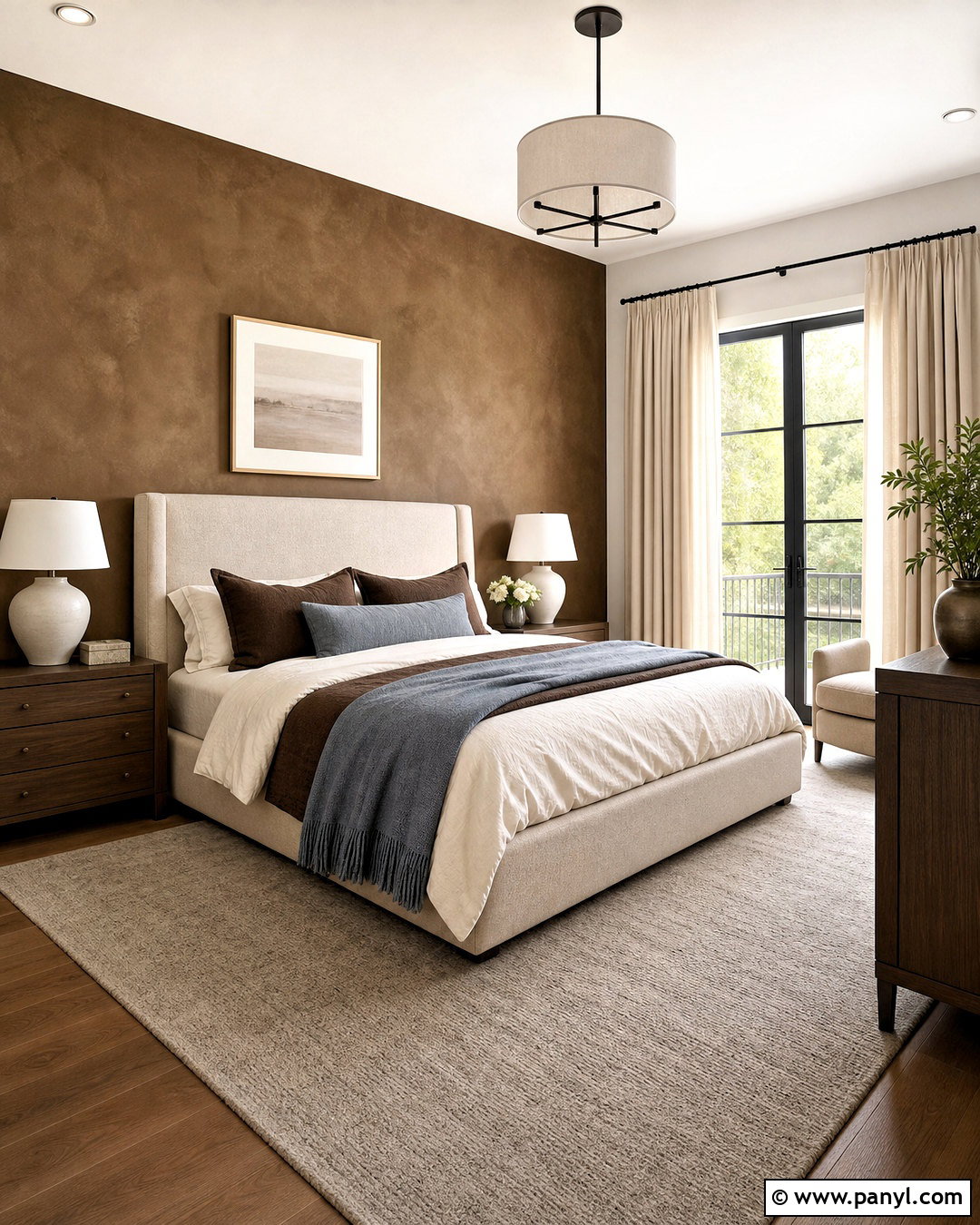
Soft movement and cloudy color make limewash an appealing choice for a calm bedroom. Apply a muted clay-beige limewash finish to the wall behind the bed, allowing visible brush variation to create subtle depth. Pair it with a low walnut bed, natural linen bedding, and rust-colored accent pillows. Rounded oak nightstands and small plaster lamps continue the organic look. Use light warm-white paint on the other walls and choose natural woven shades instead of heavy curtains. A simple wool rug in cream and tan completes the restful palette. The wall should remain mostly uncovered so its tonal variation can become the focal point. Rather than feeling unfinished, the layered surface gives the bedroom a handcrafted quality that works beautifully with understated furniture and tactile fabrics.
4. Painted Arch Statement Wall
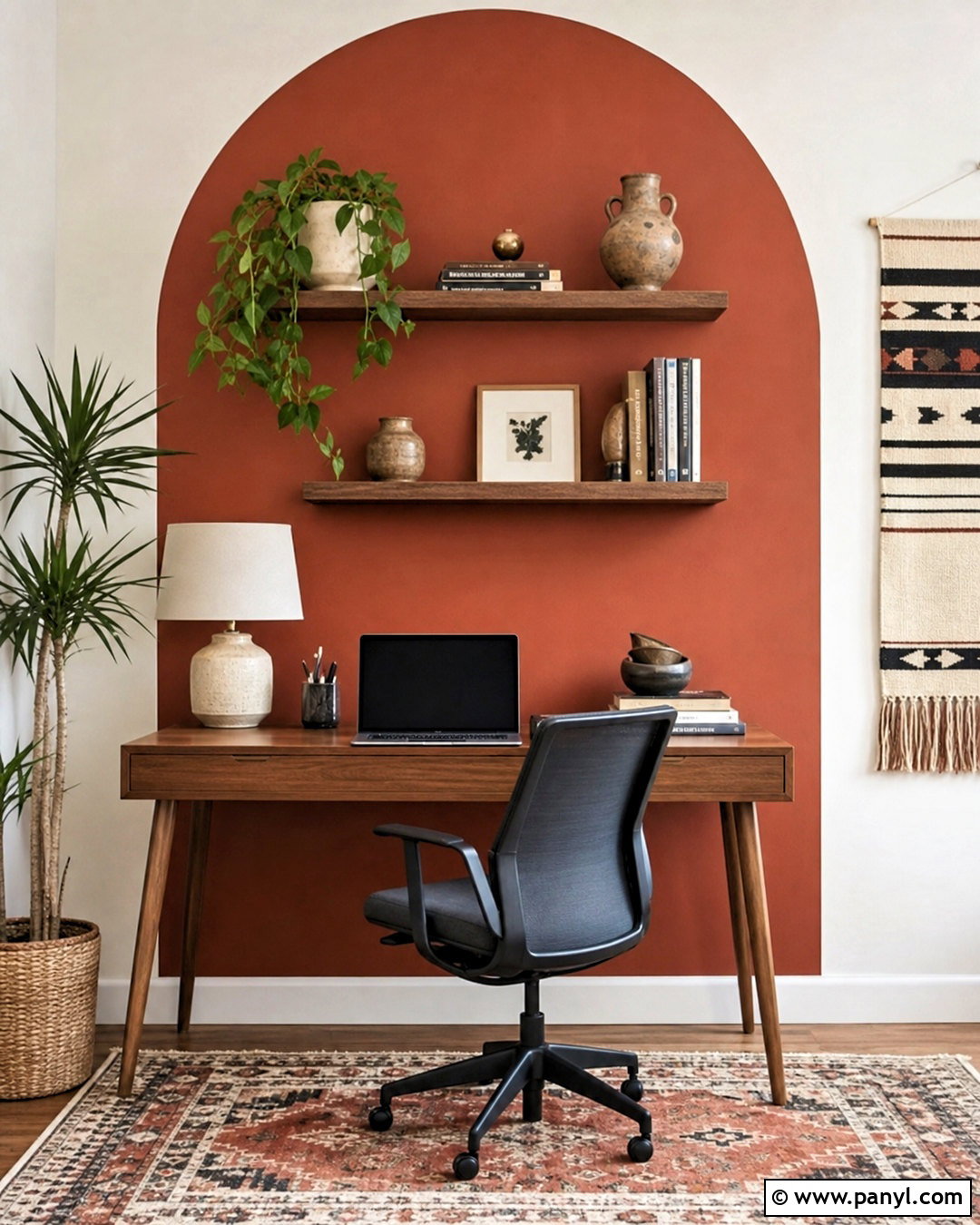
A painted arch can define a small home office while adding color and structure. Paint a wide terracotta arch behind a slim walnut desk, extending it from the baseboard to slightly below the ceiling. Place two floating shelves inside the painted shape to display books, pottery, and one trailing plant. A black task chair and matching desk lamp sharpen the warm palette. Keep the surrounding wall creamy white and use a flat-woven rug with terracotta, tan, and charcoal details. The arch should be noticeably wider than the desk so the workstation does not look cramped. This affordable treatment creates the visual effect of a built-in niche without remodeling. It also gives an unused bedroom corner or living room alcove a clear purpose and a finished appearance.
5. Stone Fireplace Statement Wall
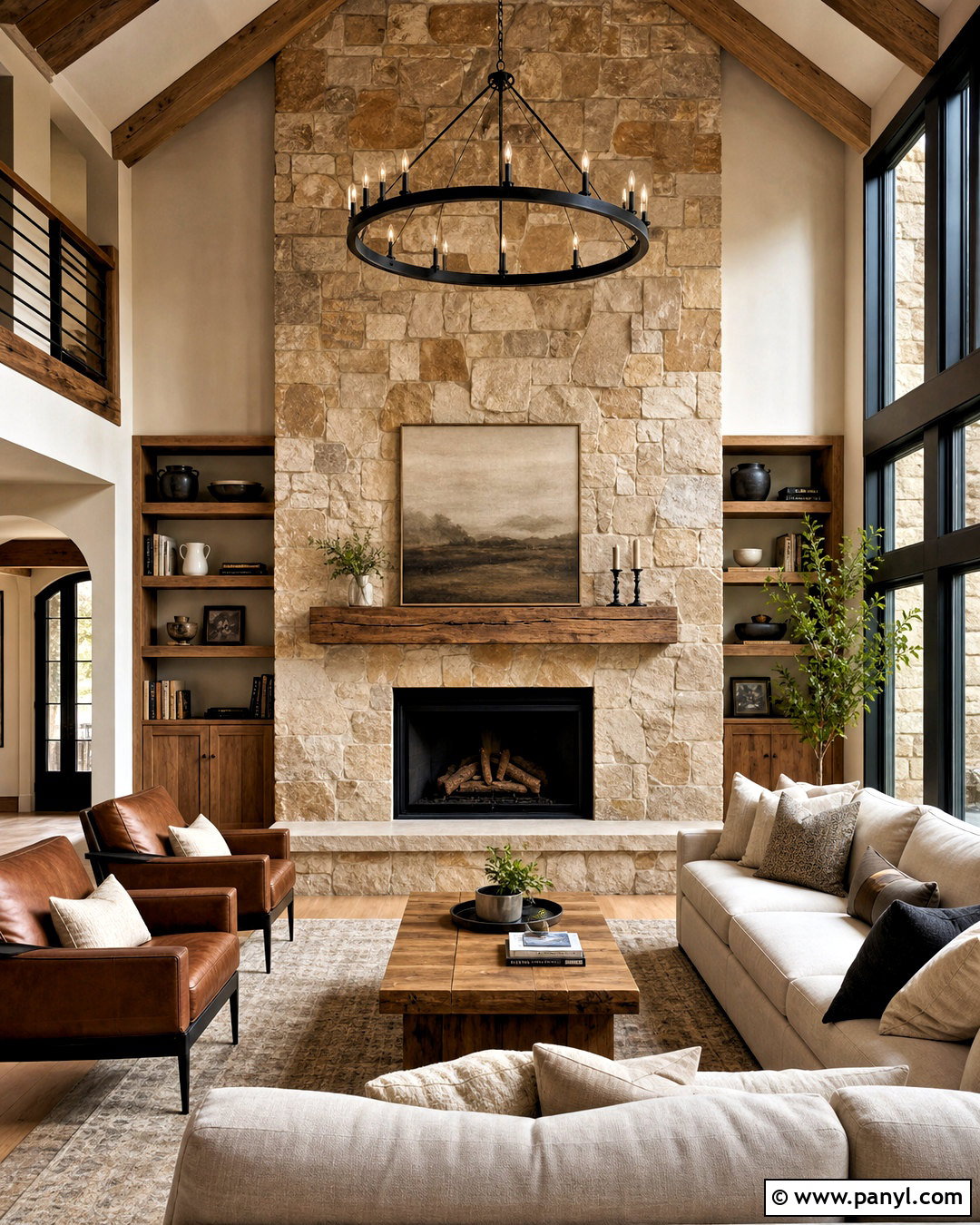
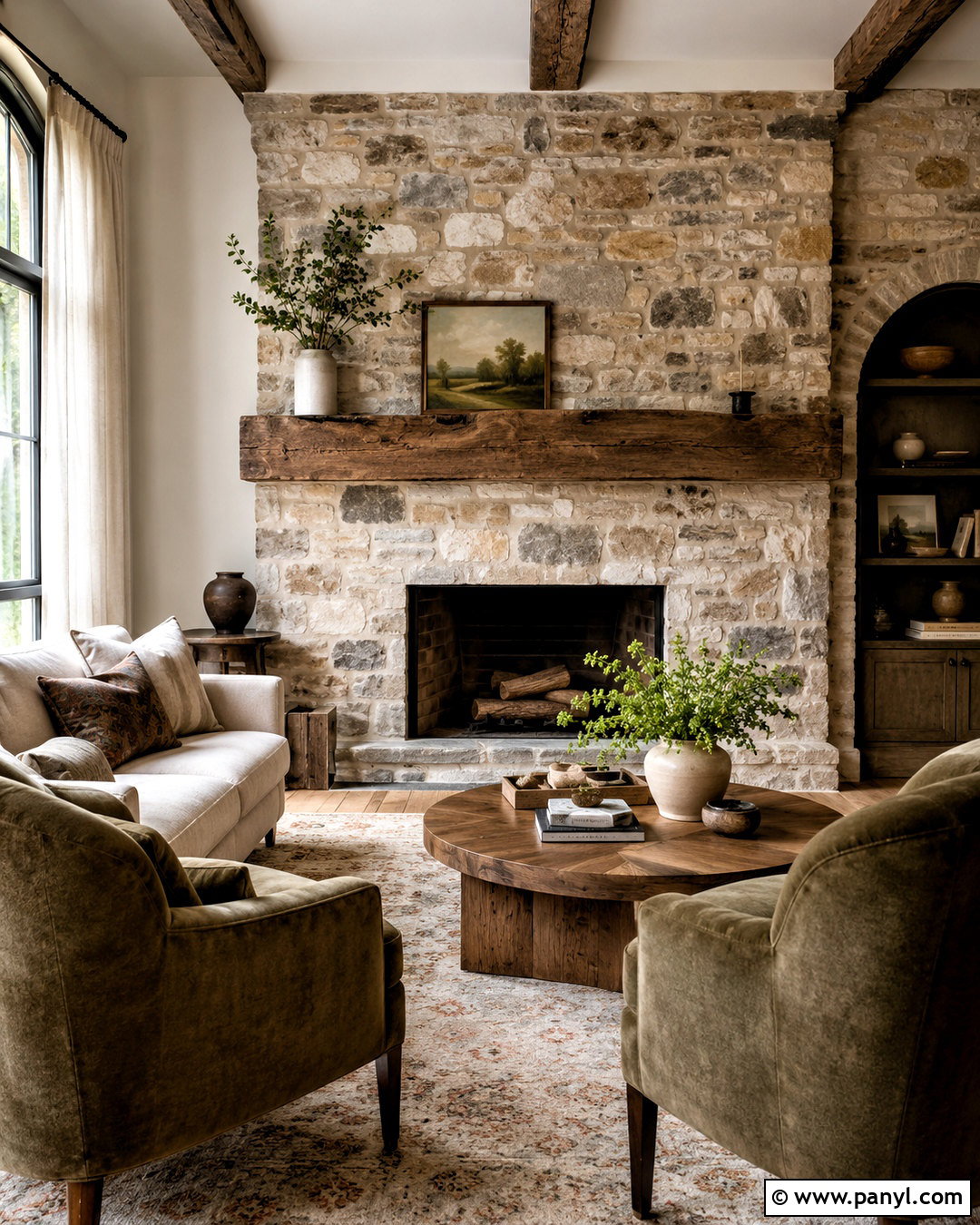
A floor-to-ceiling stone fireplace creates a substantial focal point in a comfortable family room. Use irregular limestone in warm beige, cream, and pale gray tones for a relaxed, natural finish. Install a thick reclaimed-oak mantel and position a simple black firebox below it. Arrange a linen sectional and two cognac leather chairs around a large oak coffee table, leaving a clear view of the fireplace. An oversized neutral rug defines the conversation area. Keep mantel decor restrained with one framed landscape, a ceramic vessel, and a small branch arrangement. Soft white walls and medium-tone wood flooring allow the stone texture to stand out. The result feels timeless rather than themed because the room repeats the fireplace’s earthy colors through its upholstery, wood, and accessories.
6. Built-In Bookshelf Statement Wall
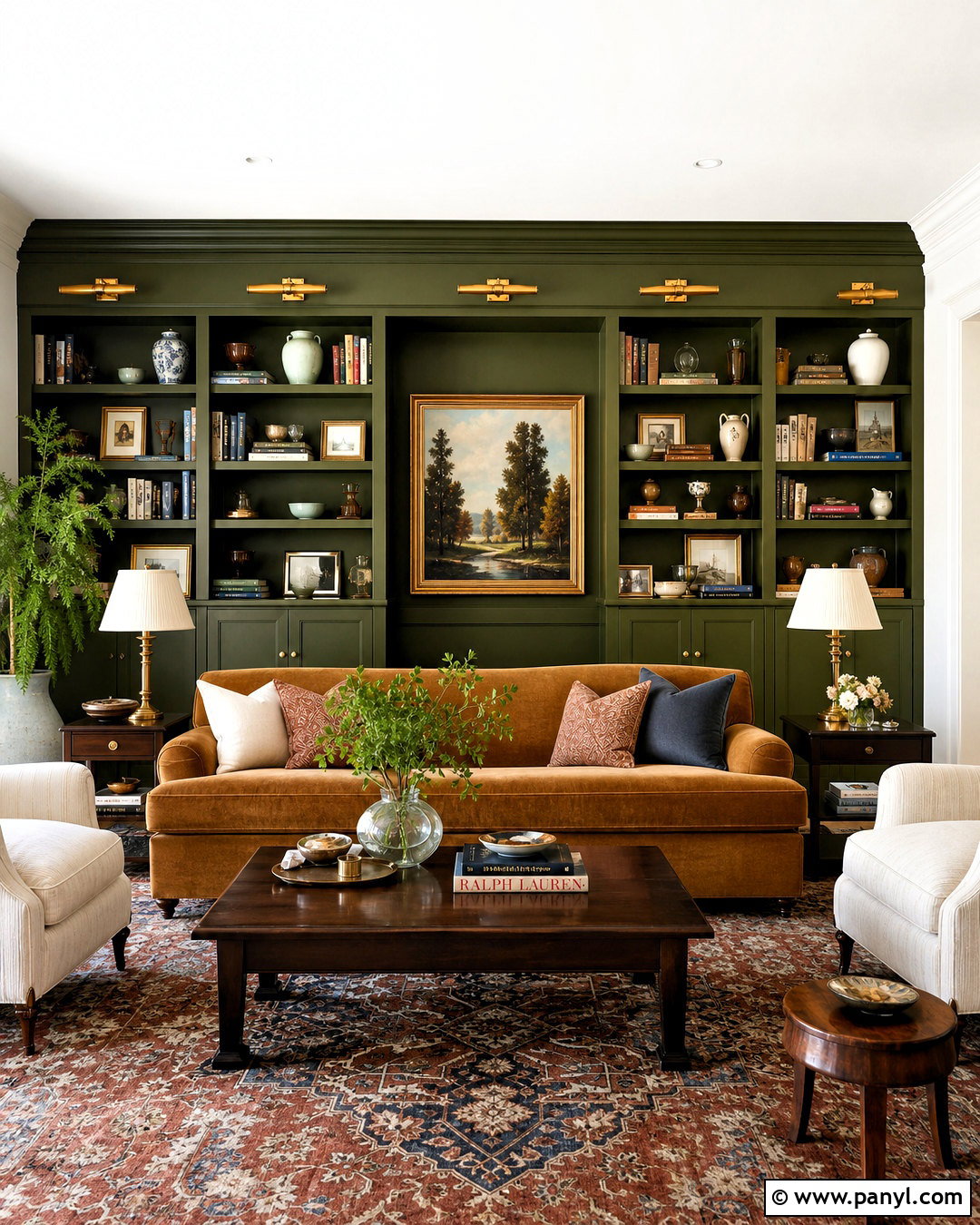
Wall-to-wall bookshelves can make a living room feel inviting, useful, and thoughtfully designed. Paint the built-ins a deep olive green and include closed lower cabinets for games, electronics, and everyday clutter. Fill the upper shelves with books arranged both vertically and horizontally, leaving space for ceramics, framed art, and small sculptural pieces. Center a tan velvet sofa in front of the wall, then add cream armchairs and a patterned rug containing olive, rust, and muted blue. Brass picture lights above the shelves provide warm illumination. Avoid filling every opening, since negative space helps individual objects stand out. This complete scheme turns storage into the room’s main architectural feature while creating the collected, personality-rich appearance currently favored in comfortable living spaces. ()
7. Gallery Wall Statement Wall
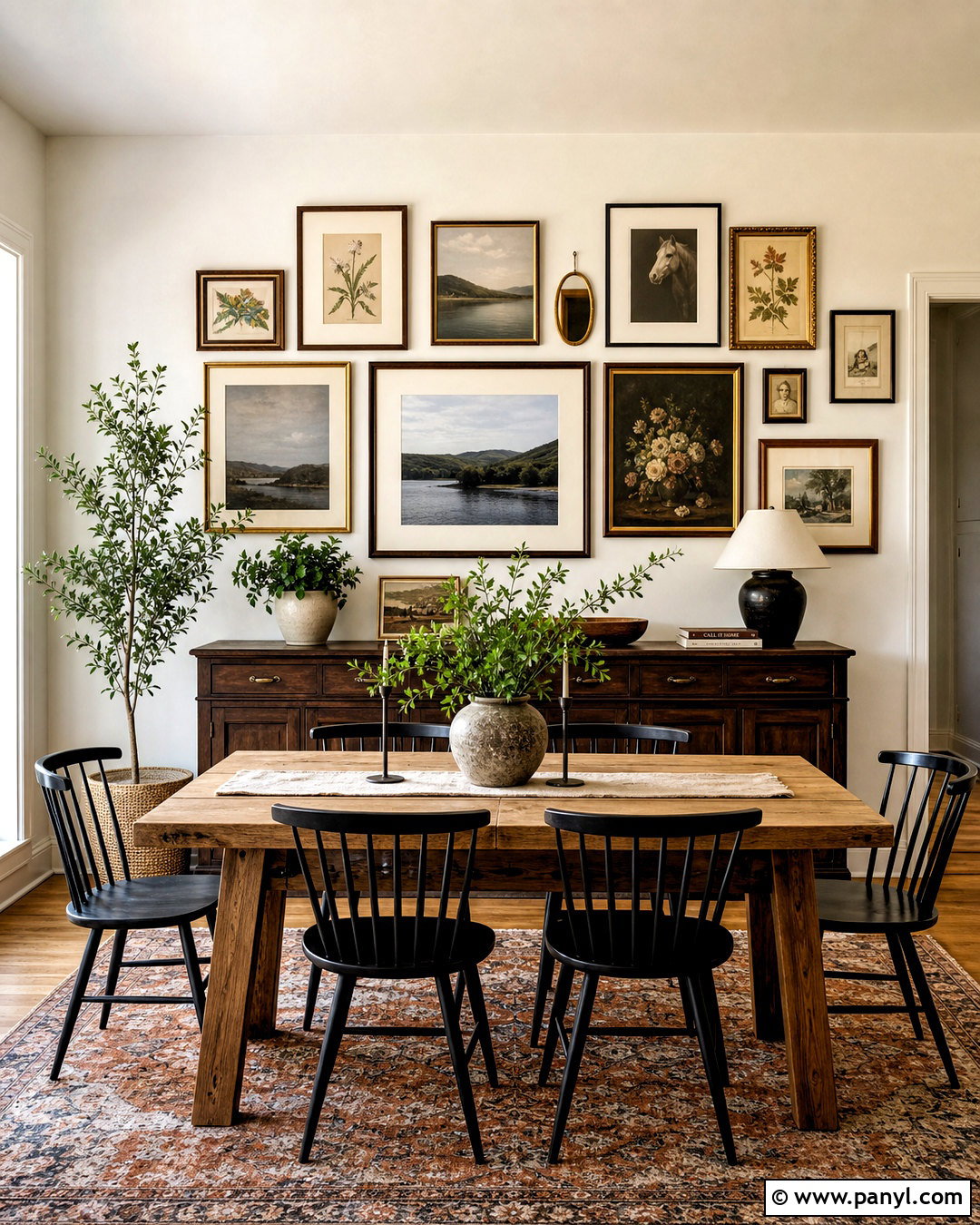
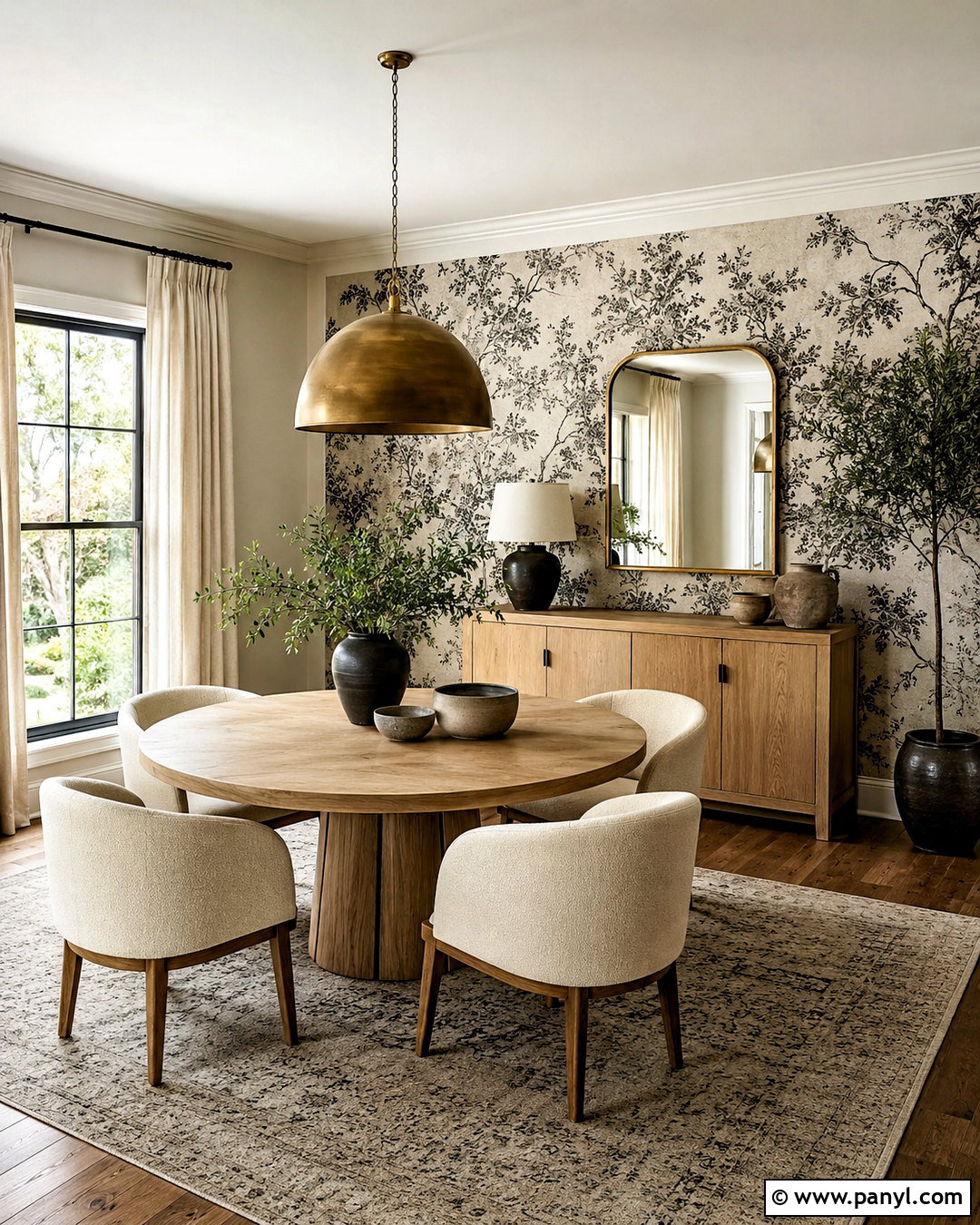
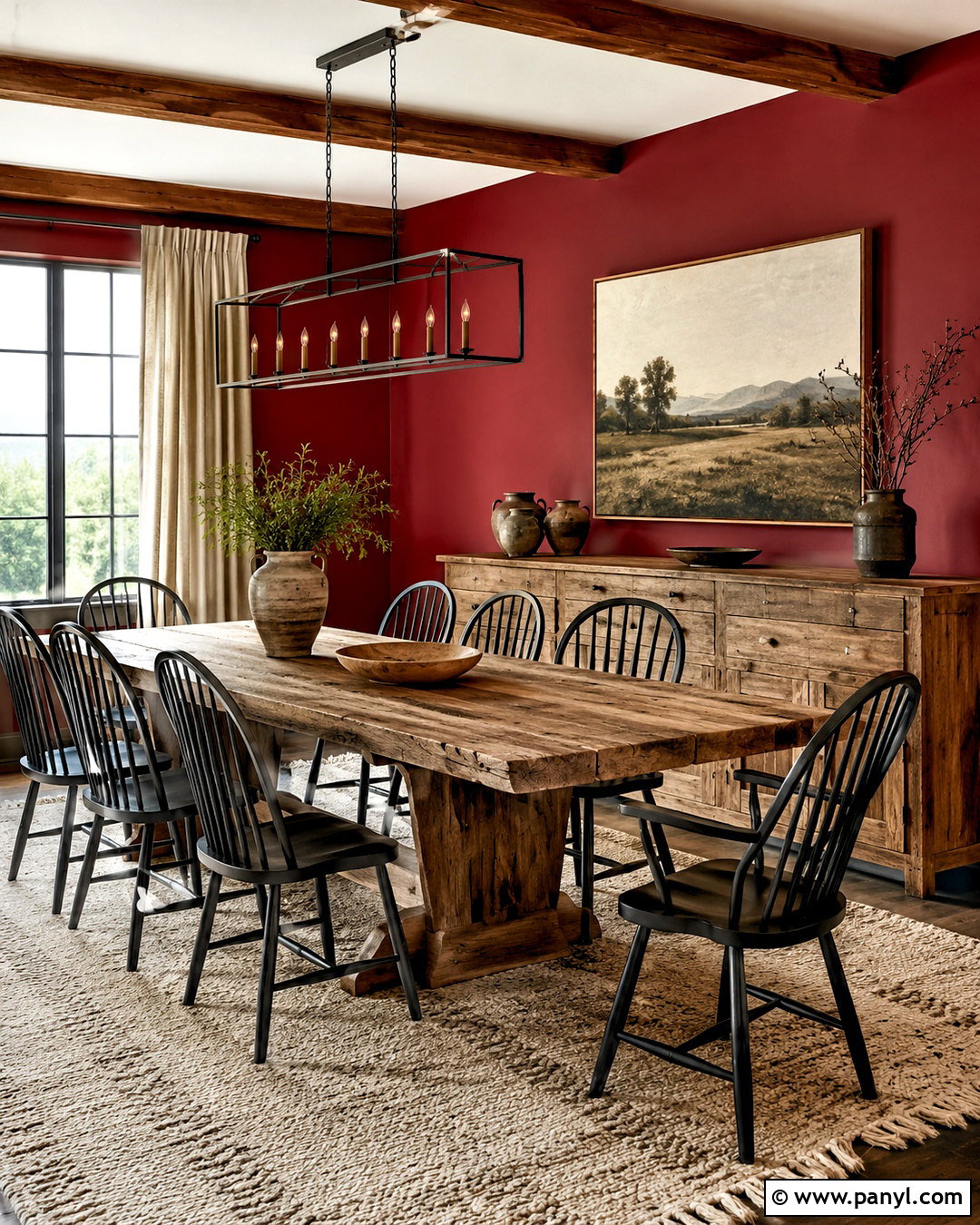
An eclectic gallery wall brings personality to a dining room when the artwork shares a controlled palette. Cover the wall above a walnut sideboard with framed landscapes, botanical prints, family photographs, and small abstract works. Combine black, antique brass, and medium wood frames while keeping two or three inches between pieces. Begin with one large central artwork, then build outward in an irregular but balanced arrangement. Pair the display with a rectangular oak dining table, black spindle chairs, and a muted rust rug. A sculptural cream pendant light adds softness overhead. Paint the room warm white so the artwork remains visually clear. On the sideboard, use only a low lamp and ceramic bowl. This prevents decorative accessories from competing with the layered wall composition.
8. Geometric Painted Statement Wall
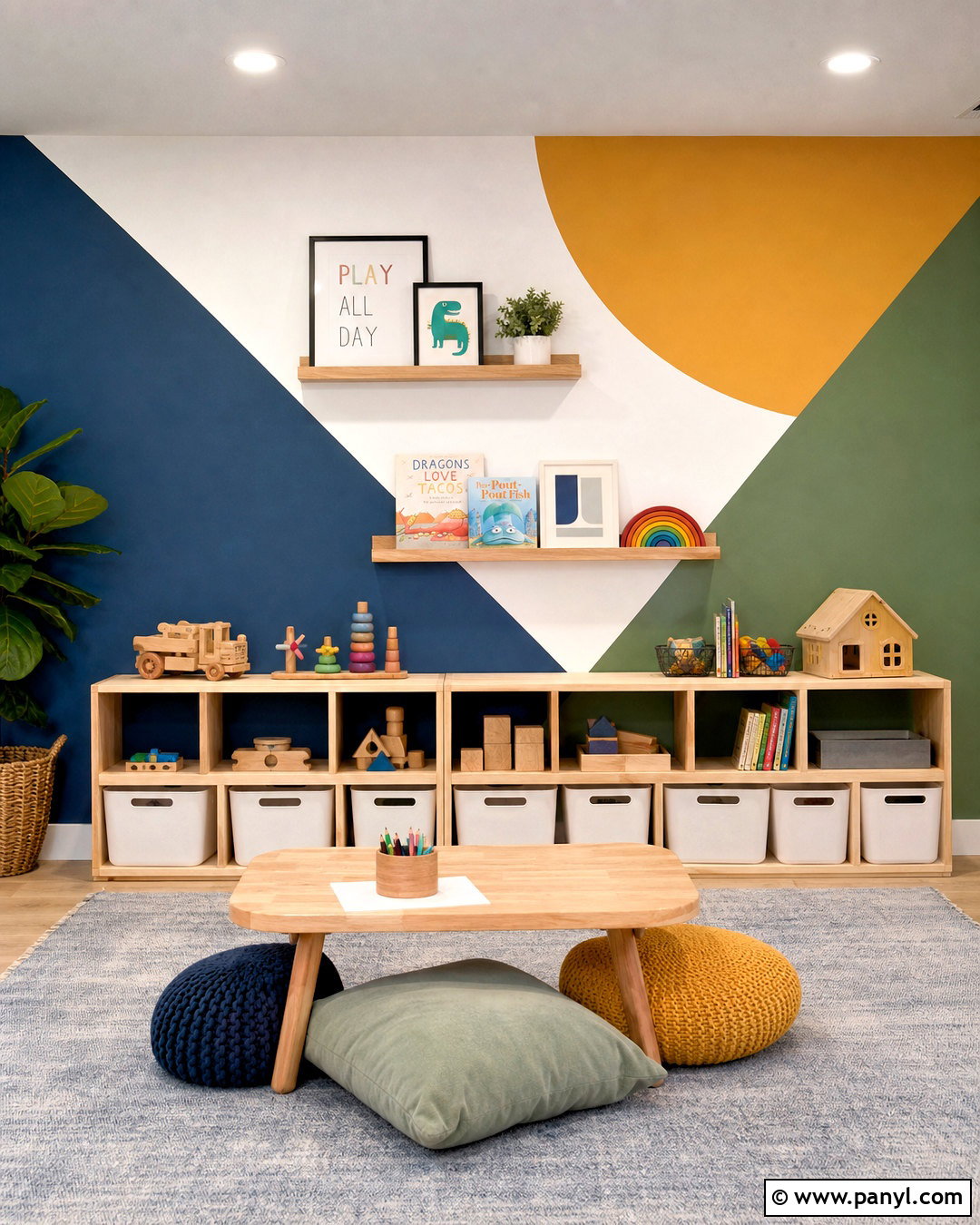
A geometric painted wall can energize a playroom without making it feel chaotic. Create oversized angled shapes in denim blue, warm mustard, soft sage, and off-white across one long wall. Keep the forms large and simple instead of using many small sections. Place a low birch storage unit against the wall with labeled baskets hidden inside its cubbies. Add a washable gray-blue rug, a small natural wood activity table, and floor cushions that repeat the painted colors. White walls elsewhere provide necessary breathing room. Mount two narrow picture ledges for rotating artwork while keeping them within easy reach for adults. The finished room feels playful but organized because the furniture is simple, storage is practical, and the controlled palette connects the wall with every major element.
9. Upholstered Bedroom Statement Wall
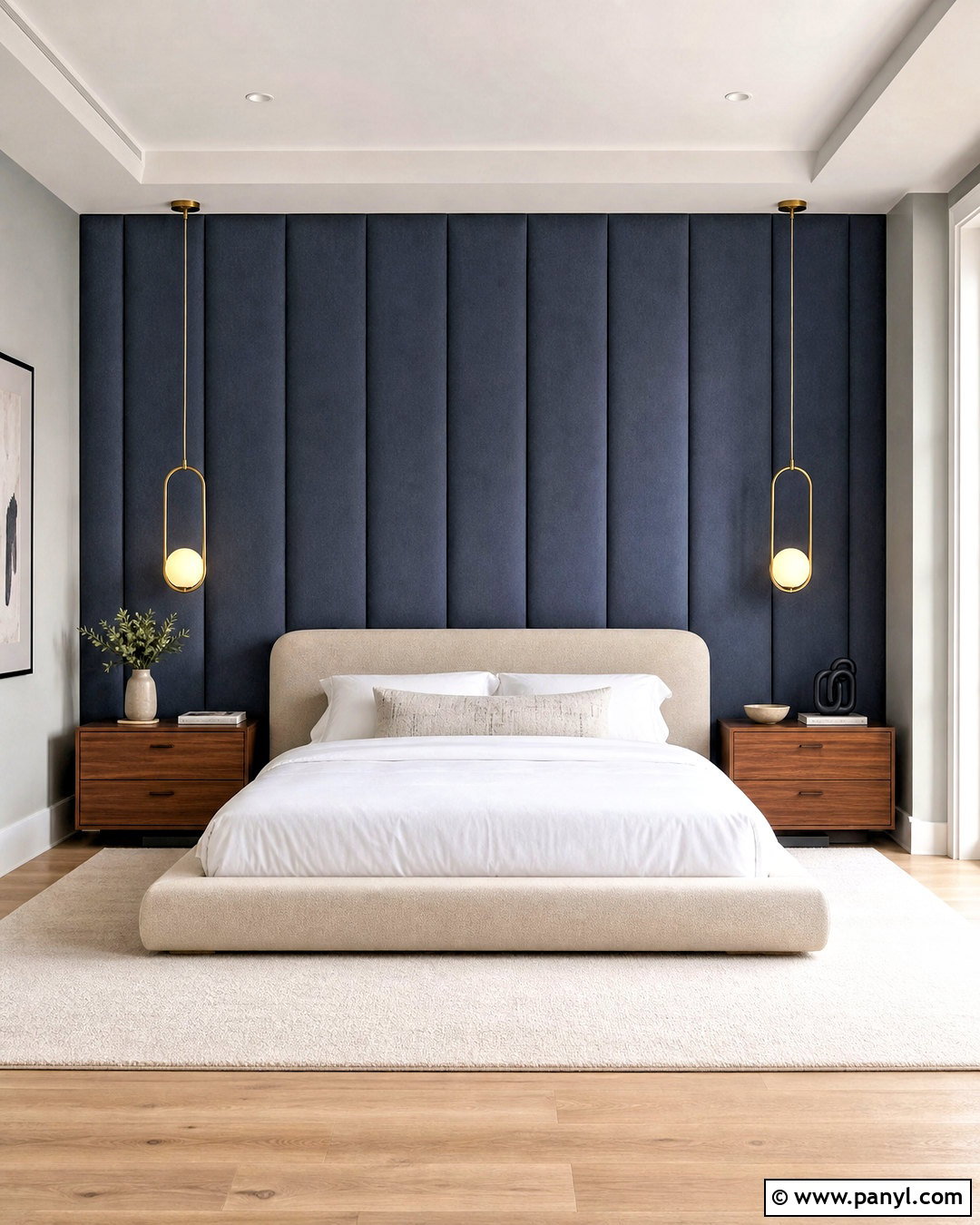
A wall-width upholstered headboard creates a soft, cocooning bedroom with the impact of custom millwork. Cover the wall behind the bed with tall vertical panels upholstered in muted navy blue performance fabric. Extend the panels beyond both nightstands so the bed area feels wider and more substantial. Add an oatmeal platform bed, crisp white bedding, and a folded blue-gray coverlet. Walnut nightstands and brushed brass pendant lights introduce warmth. Use pale gray walls, light oak flooring, and a large cream rug to balance the dark fabric. Keep artwork off the headboard wall and place a simple abstract piece opposite the bed instead. Oversized upholstered headboards remain a strong bedroom feature because they combine comfort, sound absorption, and visual scale in one practical installation. ()
10. Brick Statement Wall
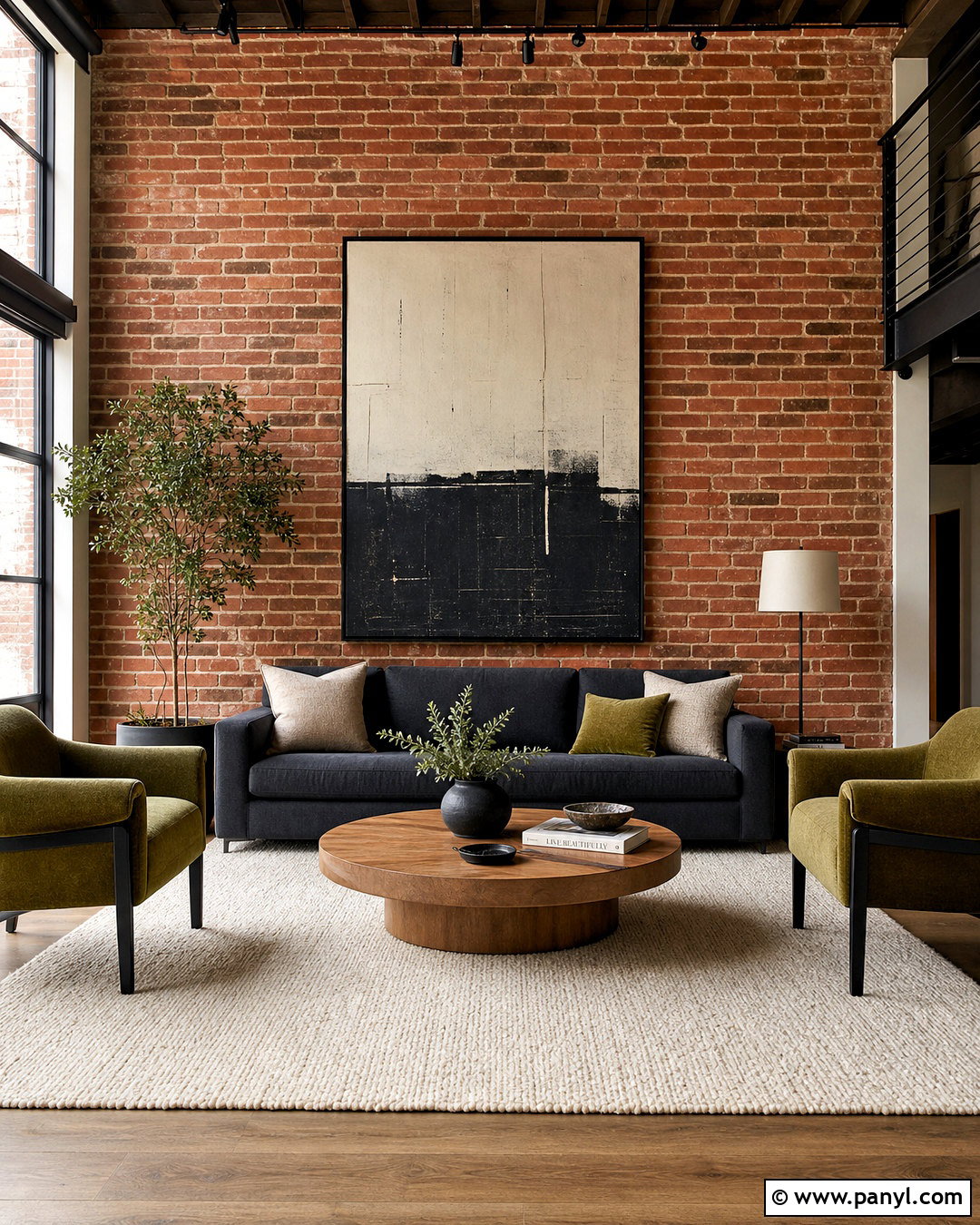
Exposed brick gives a loft-inspired living room texture and character, especially when paired with softer furnishings. Use warm red reclaimed brick with varied mortar lines on the wall behind a charcoal sofa. Add a large cream wool rug, a round oak coffee table, and a pair of olive green lounge chairs to balance the wall’s hard surface. Hang one oversized black-framed abstract artwork rather than several small pieces. Linen curtains and off-white neighboring walls brighten the room while preserving the brick as the main feature. Include a matte black floor lamp and a few aged brass accents for an industrial touch. If genuine brick is unavailable, thin brick veneer can create a similar appearance without reducing much floor space. The finished room should feel warm and residential, not like a commercial warehouse.
11. Marble Dining Room Statement Wall
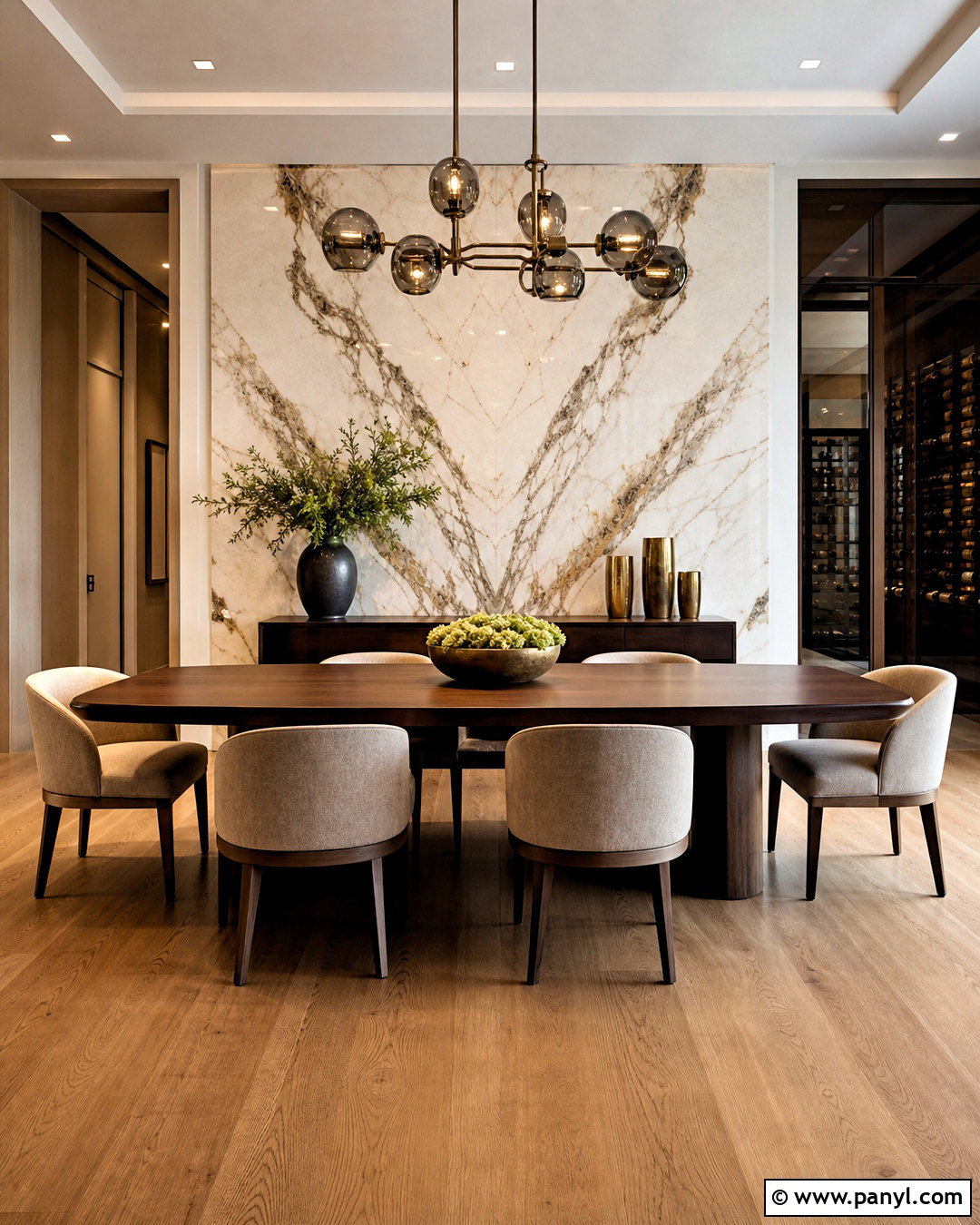
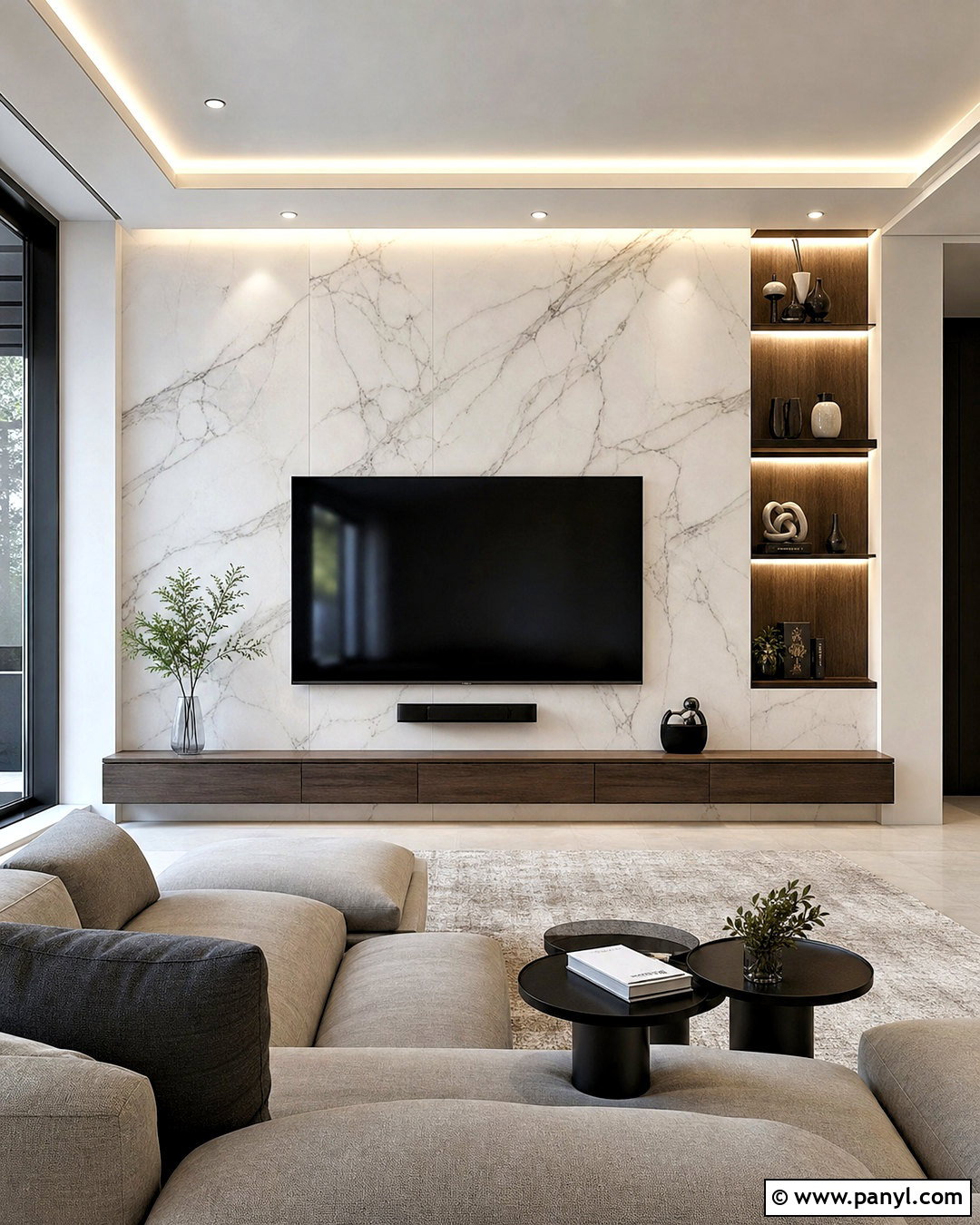
Bookmatched marble can transform a dining room into a polished, contemporary space. Install large porcelain or marble-look slabs behind a streamlined sideboard, choosing a creamy white base with dramatic brown and gray veining. A dark walnut dining table and curved beige chairs soften the sleek surface. Center a smoked-glass chandelier above the table and use brushed bronze hardware to complement the warm veins. Keep the flooring medium oak and paint the remaining walls soft taupe. Since the stone already provides strong movement, decorate the sideboard with only a low bowl and one sculptural lamp. An understated beige rug can improve acoustics and define the table area. Using porcelain slabs offers a more manageable alternative to natural stone while still delivering a continuous, high-impact wall with minimal grout lines.
12. Picture Frame Molding Statement Wall
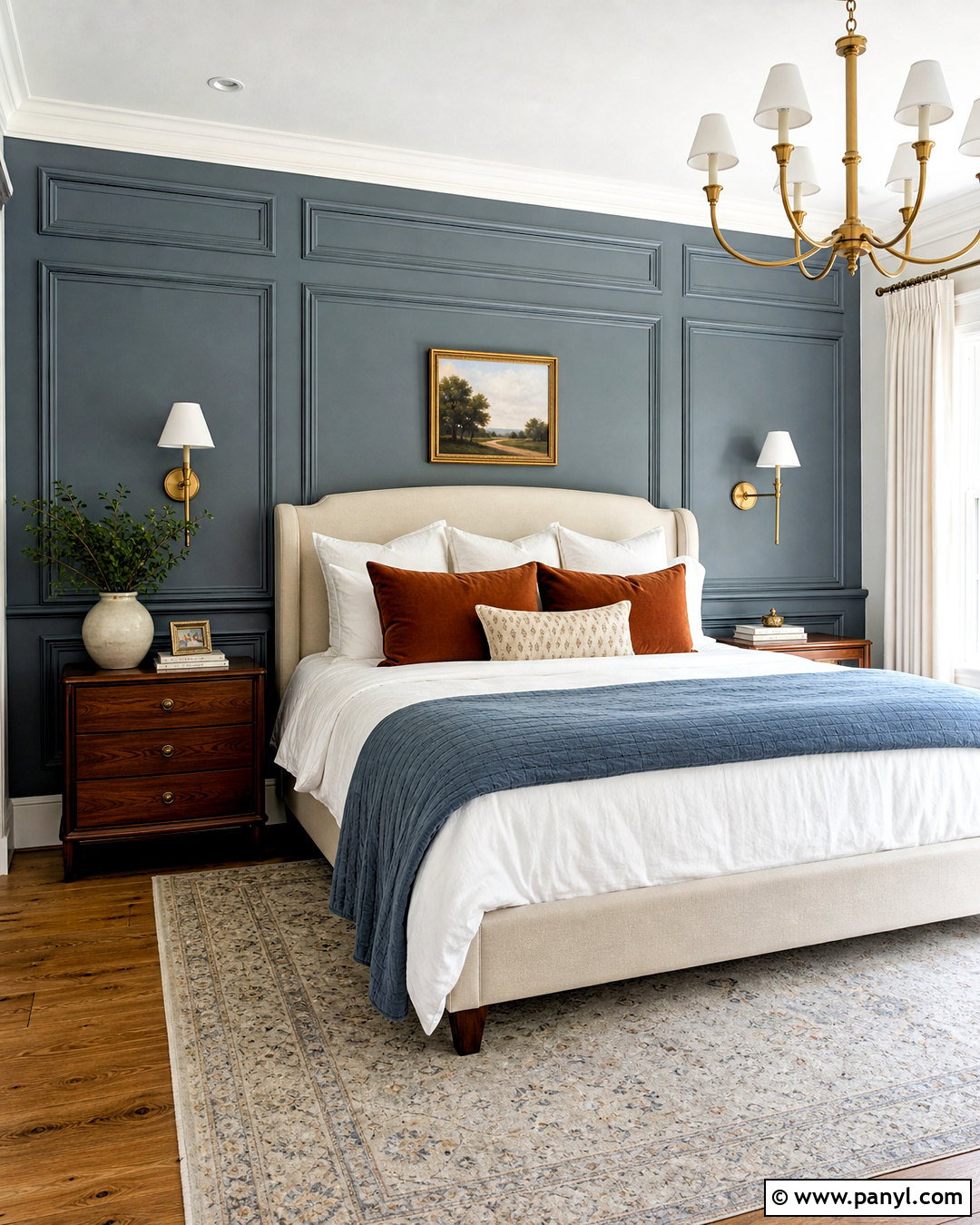
Picture frame molding brings traditional dimension to a modern bedroom without requiring a bold pattern. Paint the wall, trim, and molding together in a dusty blue-gray so the raised panels create shadows rather than sharp color contrast. Center a cream upholstered bed within the largest molding section and place matching walnut nightstands on both sides. Add white linen bedding, a muted blue quilt, and small rust pillows for warmth. A pair of aged brass sconces reinforces the wall’s symmetry. Use soft white paint on the other walls and hang full-length ivory curtains from near the ceiling. One small landscape painting above the bed is enough decoration. The completed room feels tailored and calm because the architectural details provide interest while the furniture, textiles, and lighting remain balanced and comfortably understated.
13. Botanical Mural Statement Wall
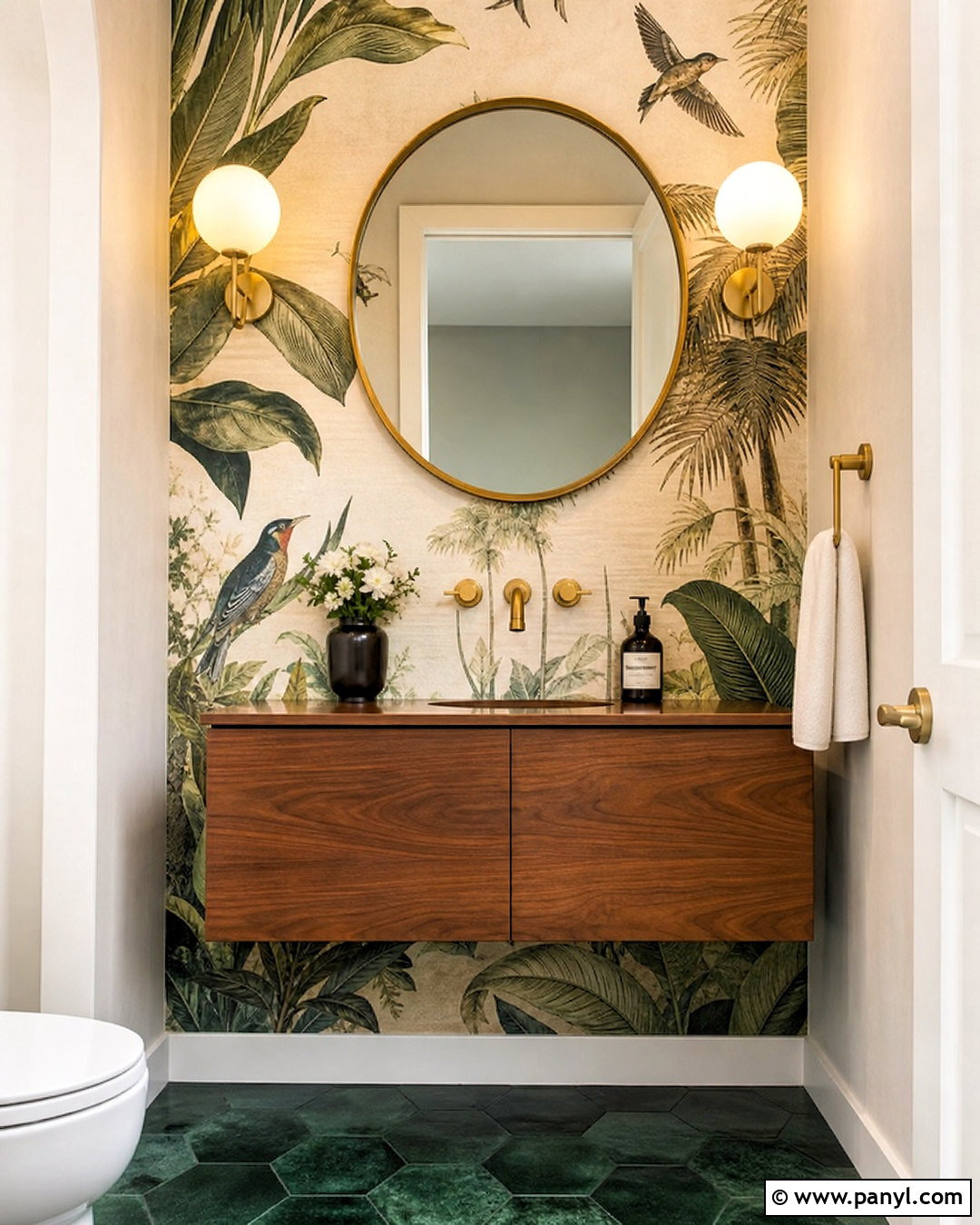
A botanical mural can make a compact powder room feel immersive instead of confined. Choose a mural with oversized green leaves, delicate birds, and a soft cream background. Cover the wall behind a floating walnut vanity so guests see the pattern immediately upon entering. Add a round brass mirror, globe sconces, and a white quartz countertop. Dark green floor tile grounds the print while warm white paint on the remaining walls keeps the small room from becoming too busy. Select a simple white vessel sink and brushed brass faucet. Avoid extra framed artwork because the mural already supplies detail and movement. Small rooms can successfully support bold treatments when the color palette stays coordinated and the functional fixtures remain visually simple. ()
14. Color Block Statement Wall
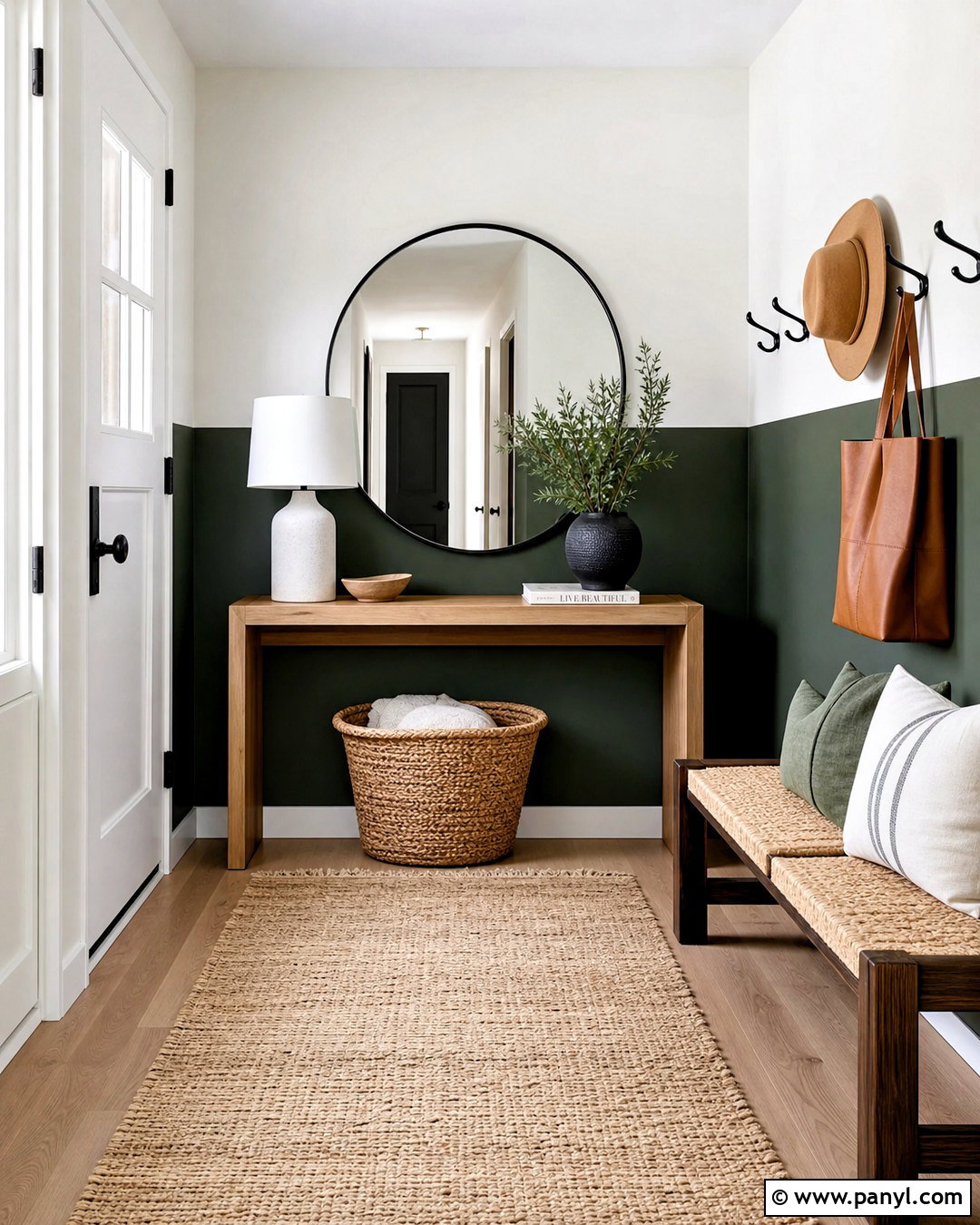
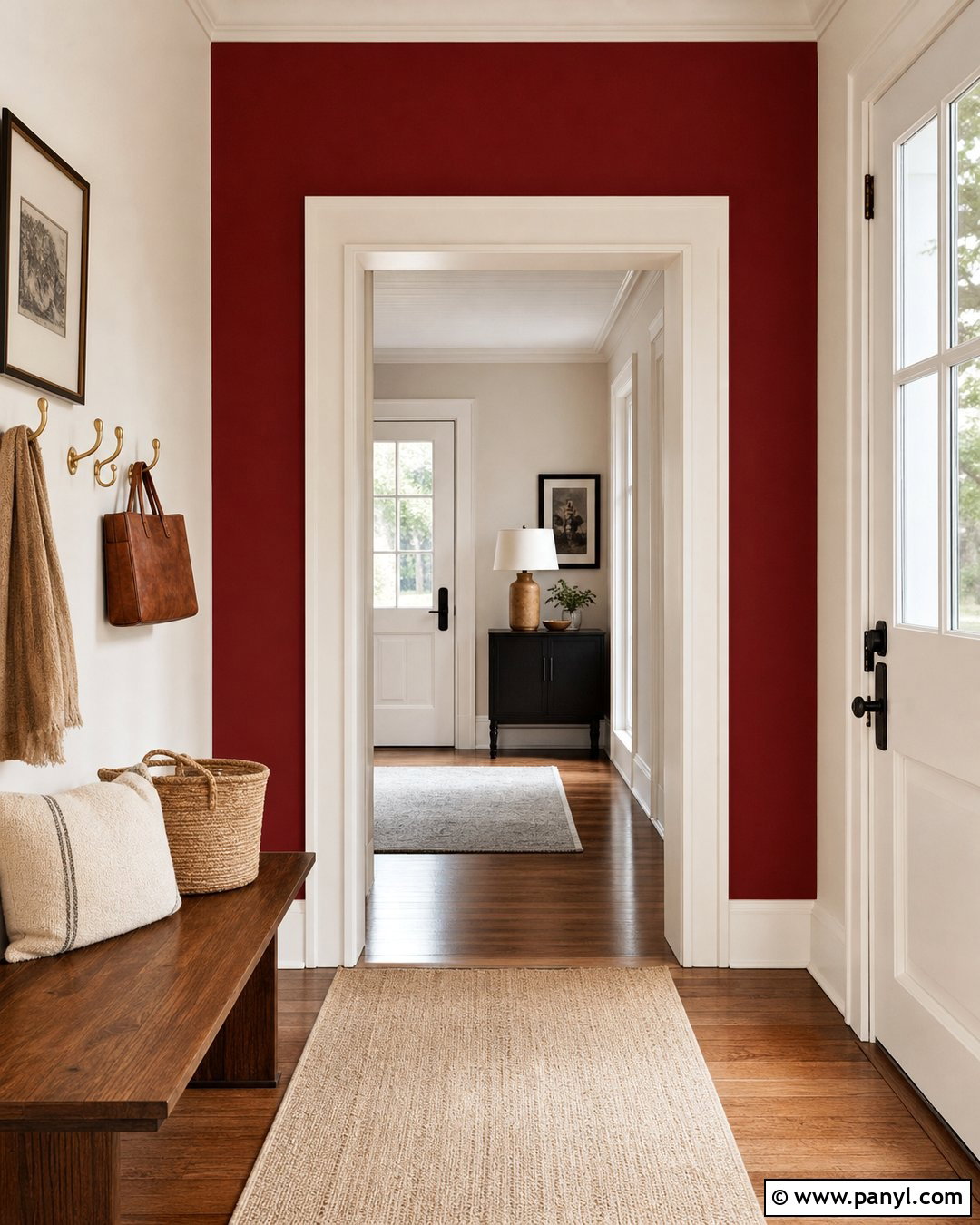
A color-block wall gives an entryway a strong identity while visually organizing an open floor plan. Paint the lower two-thirds of the wall deep forest green and the upper portion warm white. Align the color break with the top of a slim oak console for a deliberate, architectural effect. Hang a large round black mirror above the console, allowing it to cross the painted line. Add a woven bench, a neutral runner, and a tall ceramic lamp with a linen shade. Black wall hooks near the doorway provide practical storage while repeating the mirror frame. Continue the forest green onto a short adjoining wall to make the treatment feel intentional. This complete setup combines a striking focal point with useful surfaces, seating, lighting, and storage for everyday arrivals.
15. Textured Plaster Statement Wall
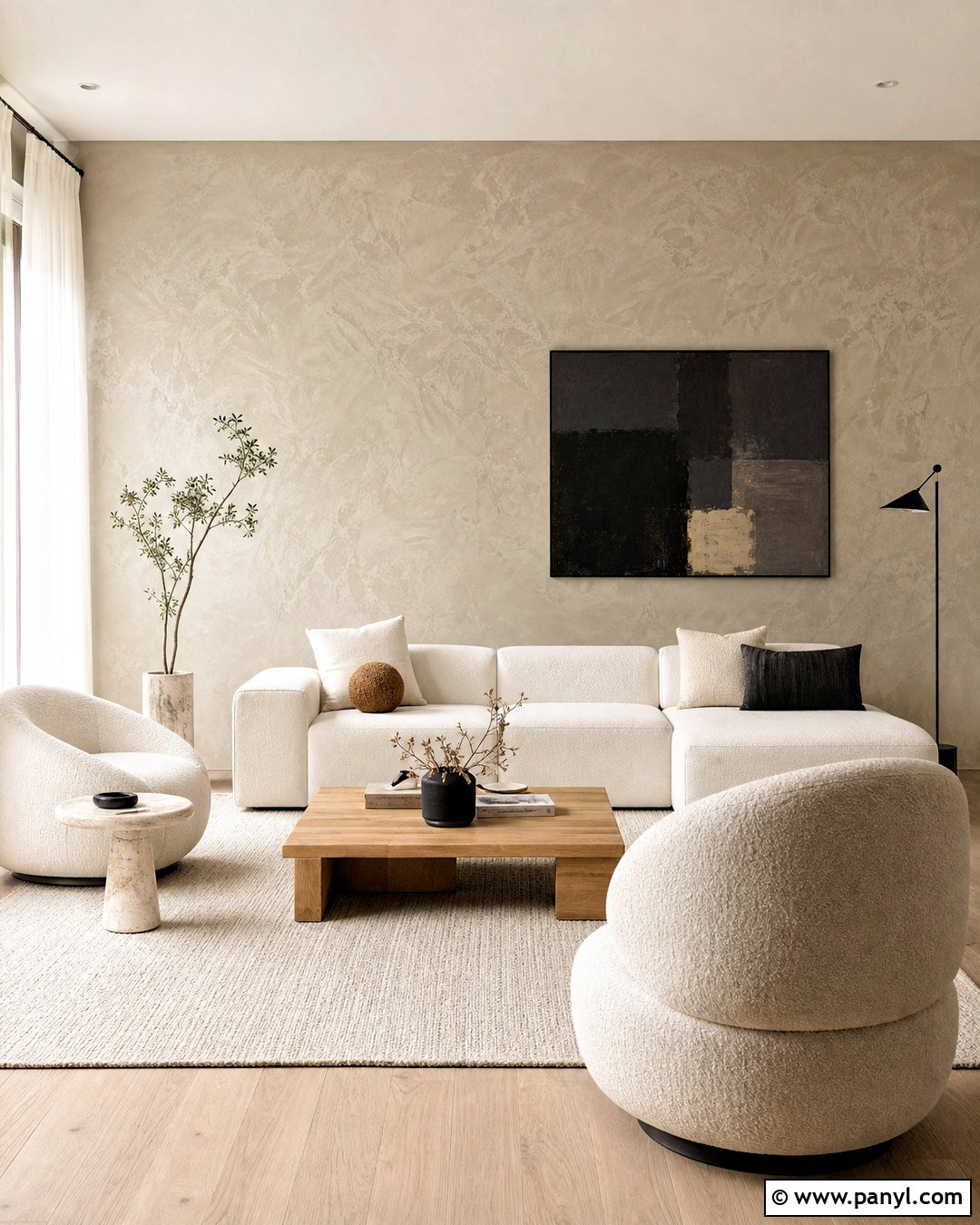
A textured plaster wall gives a minimalist living room warmth without relying on pattern or strong color. Apply a hand-finished plaster treatment in soft greige behind a low cream sofa. Gentle trowel marks should remain visible, creating variation when daylight moves across the surface. Pair the wall with a pale oak coffee table, two rounded boucle chairs, and a large ivory rug. Add a travertine side table and simple ceramic floor lamp for subtle material contrast. Keep window coverings sheer and choose light oak flooring to preserve the airy palette. Instead of hanging a full gallery, display one dark abstract canvas that provides a clear focal point. The room feels layered because its interest comes from surface, shape, and natural materials rather than numerous decorative objects.
16. Mirror Panel Statement Wall
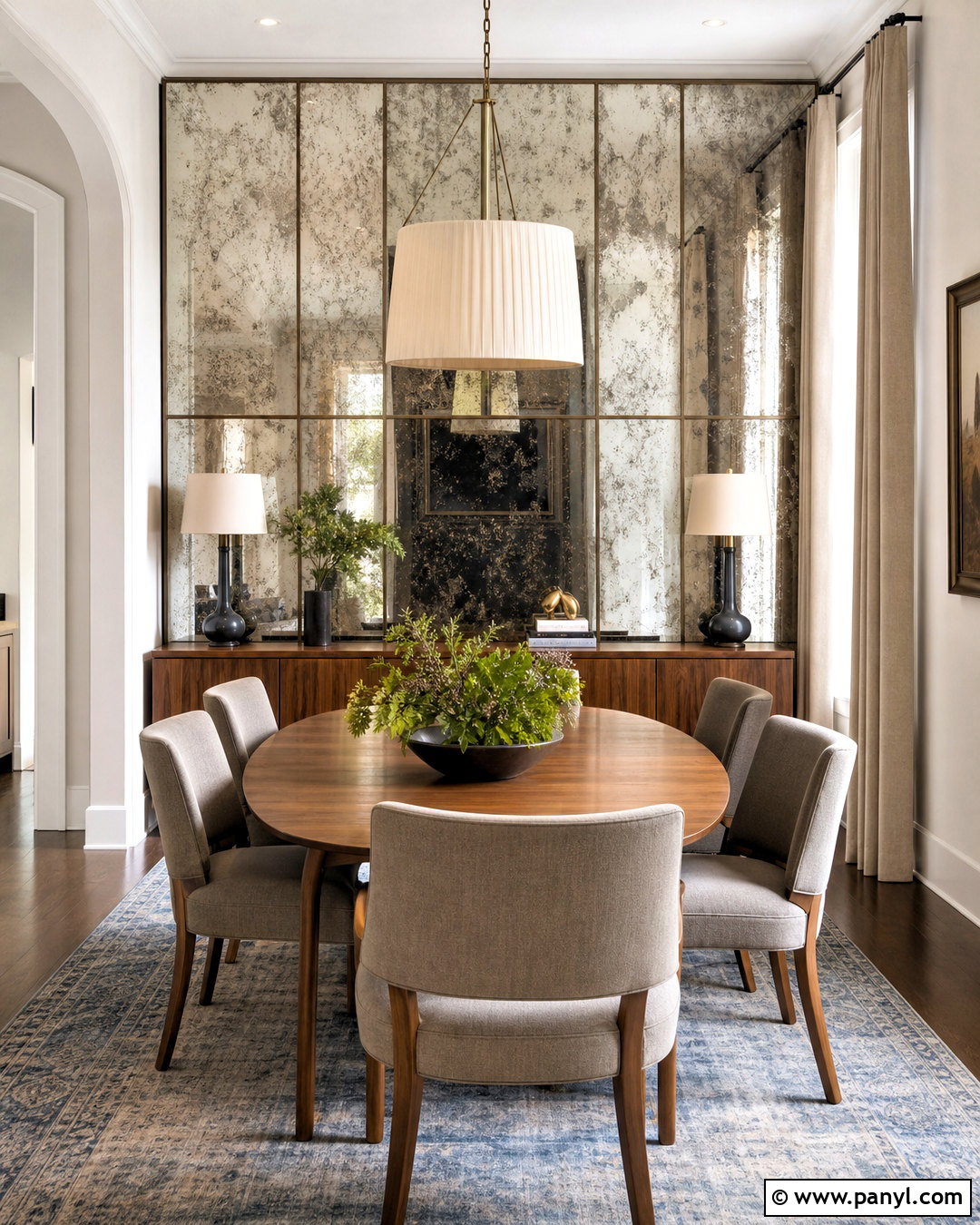
Antiqued mirror panels can brighten a narrow dining area while adding depth and formality. Install rectangular panels from the top of a walnut sideboard to the ceiling, using slim bronze dividers between each section. The gently aged finish prevents the wall from feeling as sharp as ordinary mirror. Add an oval dining table, upholstered taupe chairs, and a large cream pendant light. A vintage-style rug in faded blue and beige softens reflections and grounds the furniture. Paint adjoining walls a warm mushroom color and use linen curtains for additional texture. Place two ceramic lamps on the sideboard so their light reflects across the panels in the evening. Keep the tabletop simple, since too many objects can appear doubled and cluttered when viewed in the mirrored surface.
17. Tile Kitchen Statement Wall
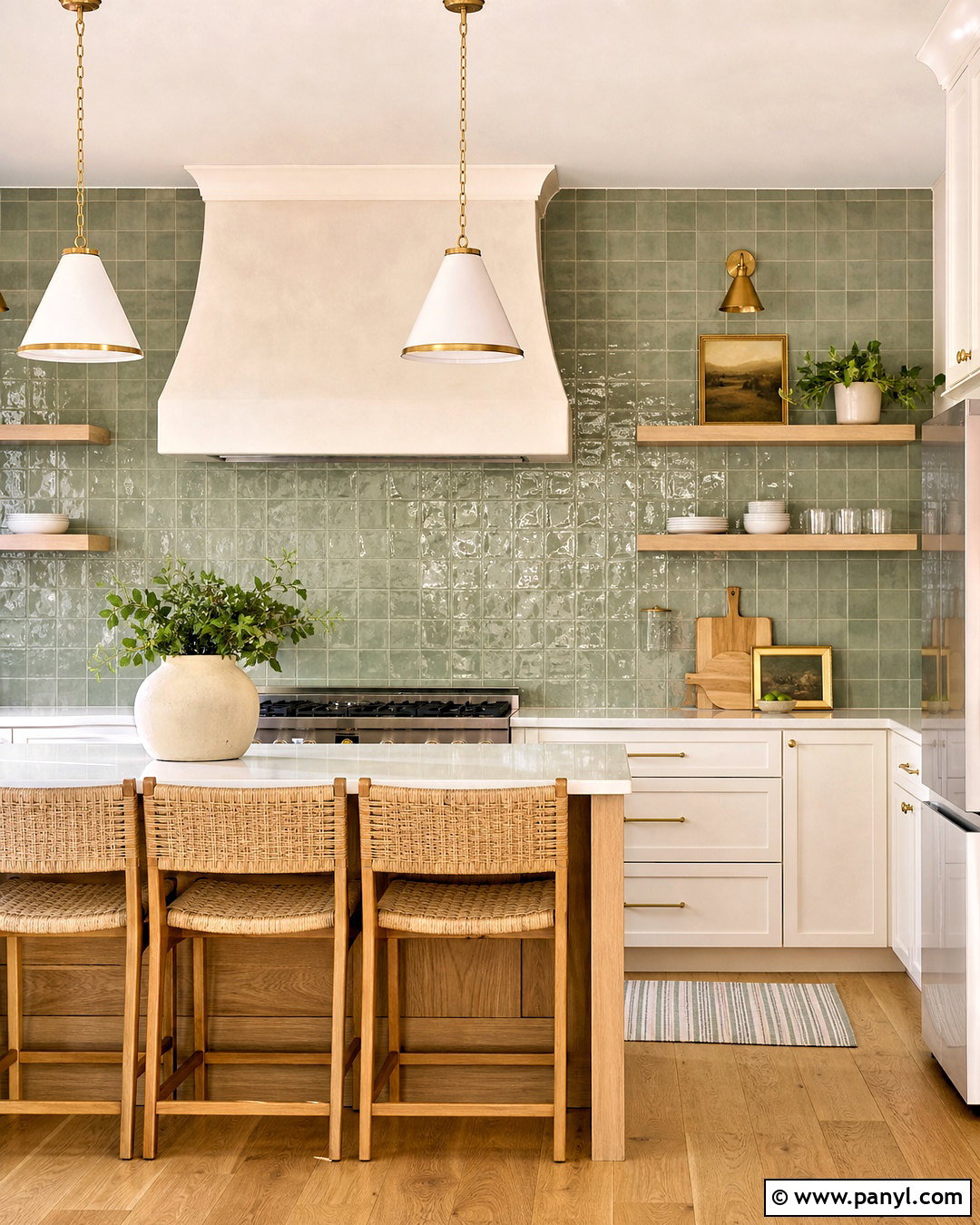
A full-height tiled wall can give a kitchen color, texture, and a strong handcrafted character. Use glossy square tiles in warm sage green from the countertop to the ceiling behind the range and open shelves. Pair them with off-white shaker cabinets, brushed brass hardware, and honed white quartz countertops. Light oak shelves provide space for everyday dishes and a few simple ceramic pieces. Choose a plaster range hood in warm white so it stands out gently against the green tile. Medium oak flooring and woven counter stools continue the natural palette. Install under-shelf lighting to highlight the tile’s uneven surface and subtle color variation. By extending the backsplash across the entire wall, the kitchen gains one cohesive focal point rather than a small decorative strip between cabinets.
18. Oversized Art Statement Wall
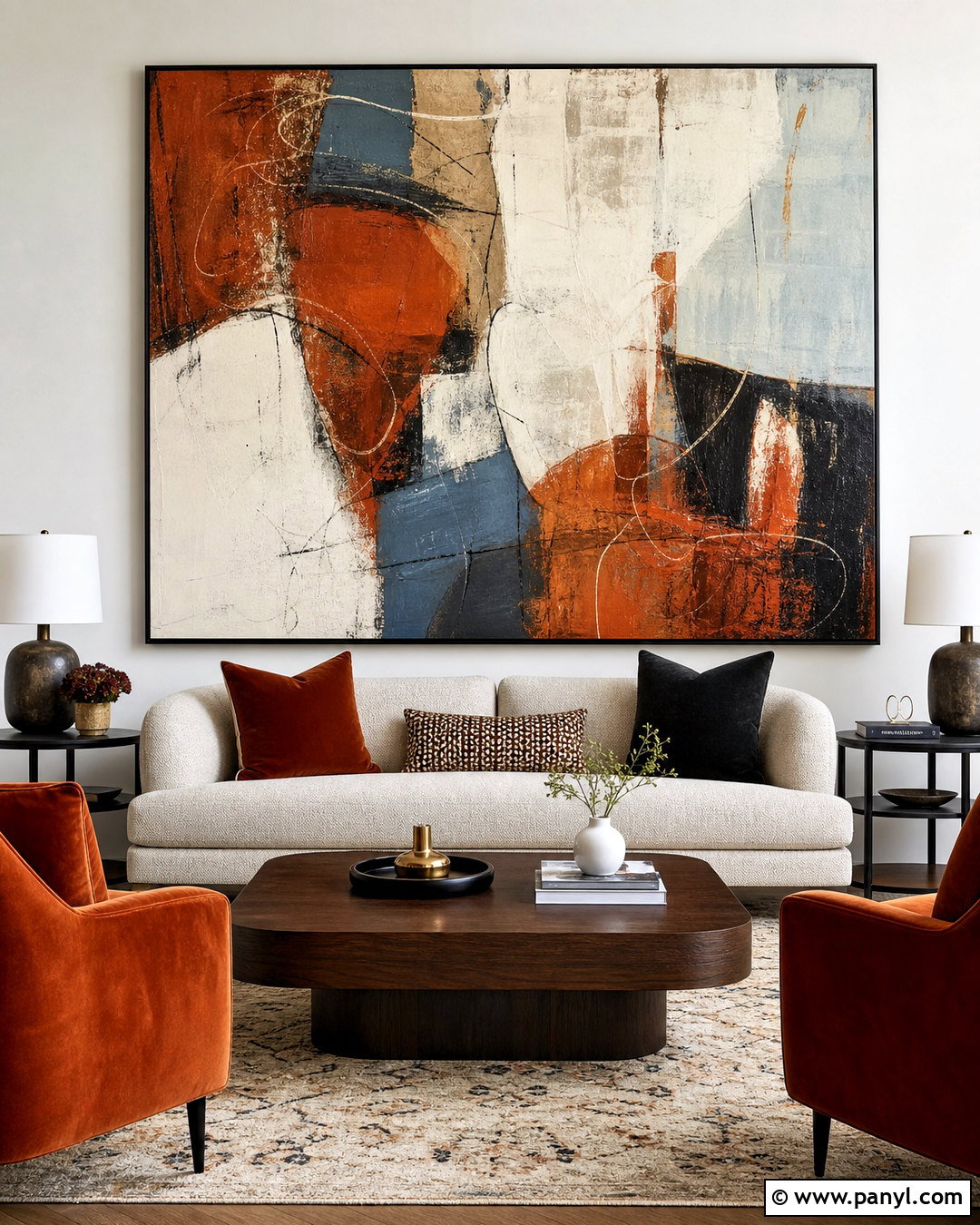
One oversized artwork can create a sophisticated living room focal point without permanent wall treatments. Hang a large abstract canvas in rust, cream, black, and muted blue above a long oatmeal sofa. The artwork should span roughly two-thirds of the sofa’s width and hang low enough to connect visually with the furniture. Add black metal side tables, a walnut coffee table, and two rust velvet chairs. A cream rug with subtle blue lines ties the seating arrangement to the canvas. Paint the walls soft warm white and use simple linen curtains. Position a slim picture light above the artwork for evening emphasis. Keeping the remaining accessories restrained allows the scale, color, and brushwork of the canvas to lead the design while the coordinated furnishings make the room feel complete.
19. Dark Green Statement Wall
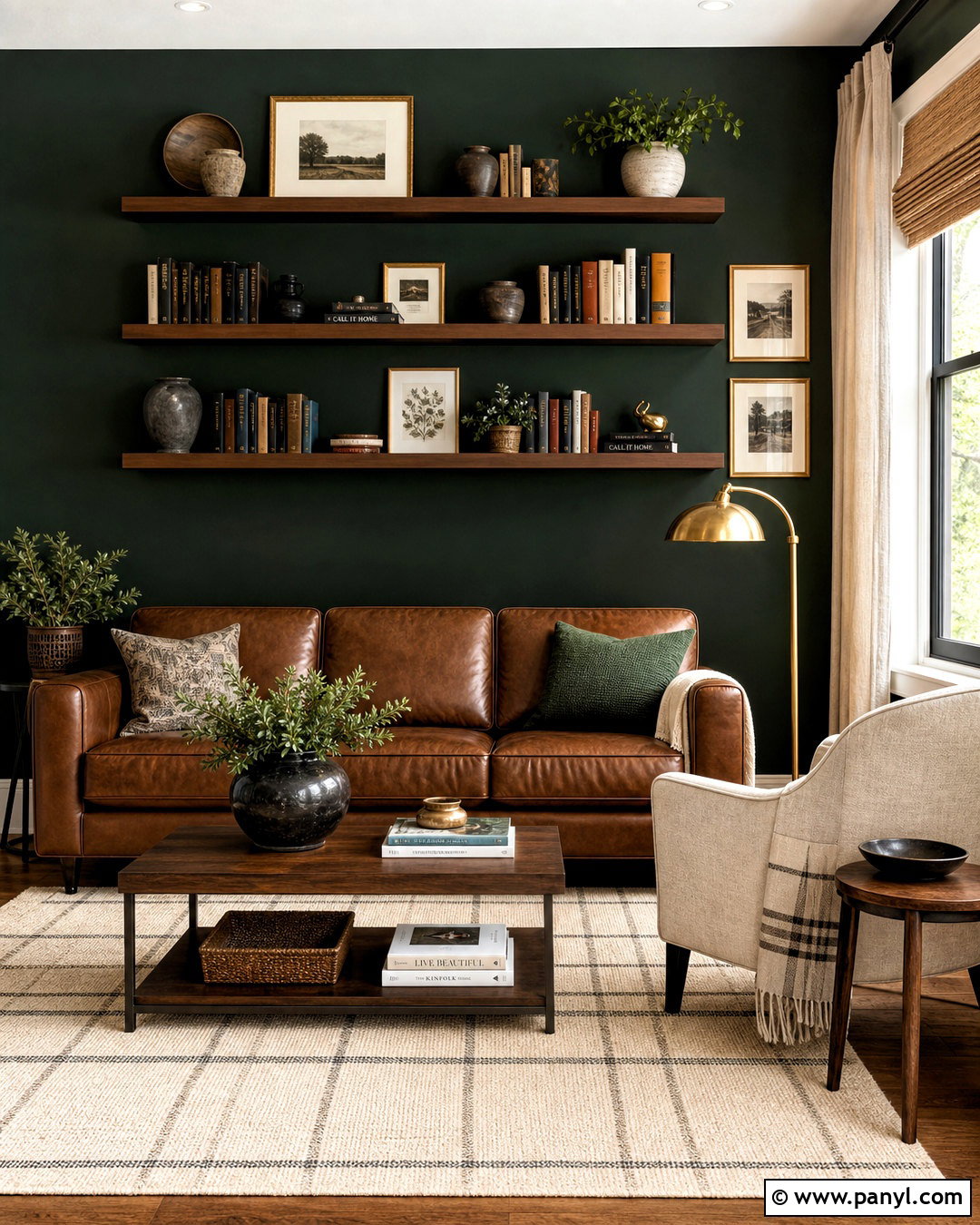
Deep green paint can create a cozy reading room that feels rich without becoming gloomy. Paint the wall behind a cognac leather sofa a dark forest green, then repeat the color on the trim for a seamless finish. Install two walnut floating shelves holding books, pottery, and framed sketches. Add a plaid wool rug in cream, brown, and muted green, plus a comfortable oatmeal armchair beside a brass floor lamp. Paint the remaining walls a lighter mushroom shade to preserve brightness. Full ivory curtains soften the contrast and reflect daylight. A round oak coffee table keeps the center of the room open. Dark wall colors work best when paired with warm wood, pale textiles, layered lighting, and a few reflective metal accents that prevent the space from feeling visually heavy.
20. Coastal Bedroom Statement Wall
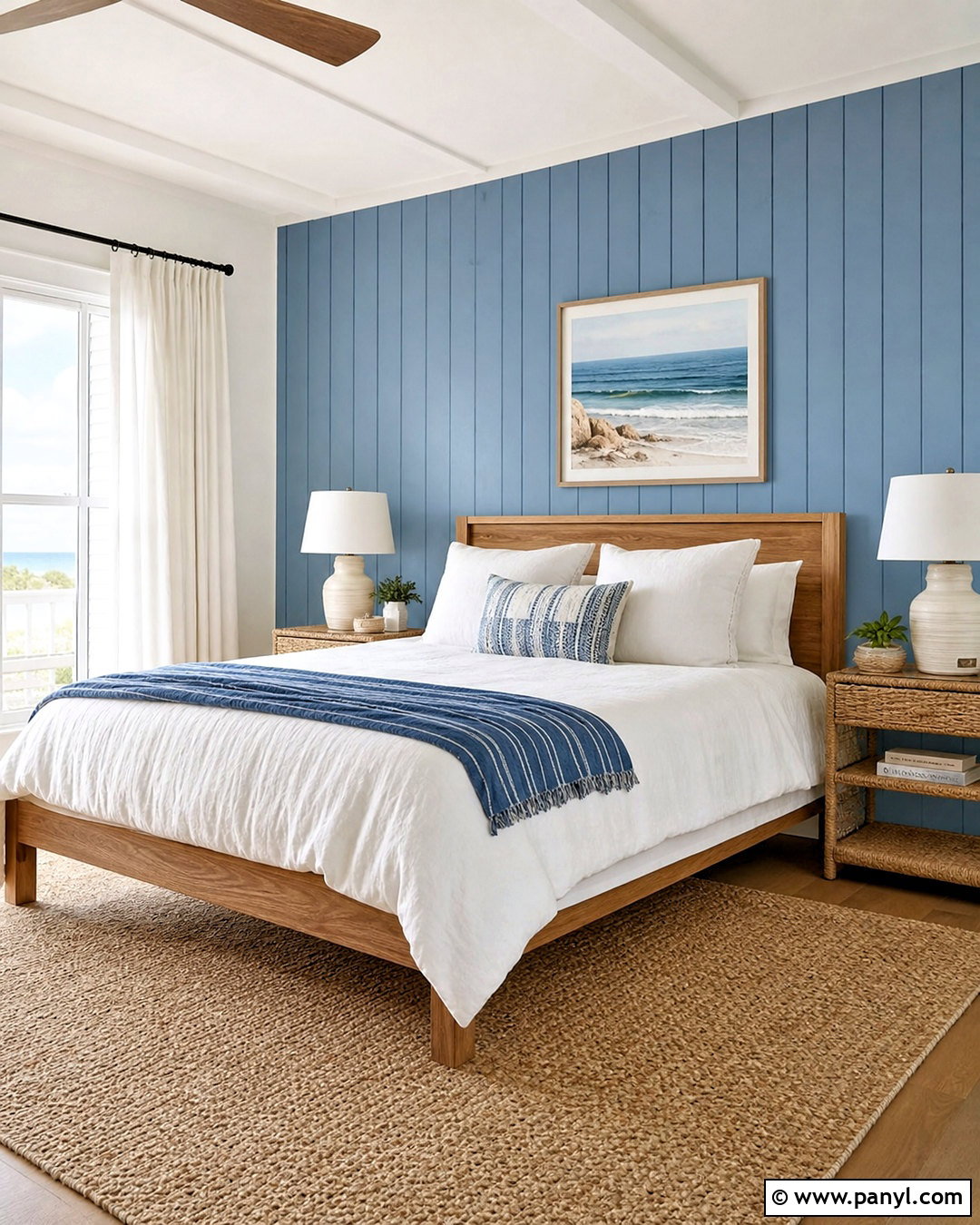
A coastal bedroom can feature a memorable wall without relying on obvious nautical decorations. Install wide vertical shiplap behind the bed and paint it a soft, weathered blue. Pair the wall with a natural oak bed, white linen bedding, and a striped navy-and-cream throw. Woven nightstands, ceramic white lamps, and a pale jute rug add relaxed texture. Keep the other walls warm white and use lightweight ivory curtains that allow plenty of daylight into the room. Hang one simple seascape with muted blue and sandy beige tones above the headboard. Avoid anchors, signs, and themed accessories. The combination of blue paneling, pale wood, natural fibers, and crisp bedding creates a fresh coastal atmosphere that still feels polished enough for a primary bedroom or welcoming guest room.
Conclusion:
The best statement walls do more than fill an empty surface. They establish the room’s focal point, influence its color palette, and help furniture feel properly arranged. Wallpaper, paneling, plaster, stone, tile, paint, art, and built-ins can all work when their scale fits the space. Before starting, consider the wall’s visibility, available light, existing finishes, and the mood you want to create. Repeat a few wall colors or materials elsewhere in the room, but avoid matching every detail. This creates connection without making the design feel overly coordinated. With thoughtful lighting, balanced furnishings, and practical materials, these statement walls can give nearly any room lasting character and a complete, intentional appearance.

Related Ideas and Inspiration:
Leave a Reply