
These 20 modern feature wall ideas show how color, texture, lighting, furniture, and architectural details can turn a plain surface into a purposeful focal point. Today’s strongest feature walls move beyond one random painted wall. They use warm wood, tactile plaster, dimensional panels, natural stone, large-scale wallpaper, and practical built-ins to create a complete design. Current interiors are especially focused on material depth, nature-inspired finishes, darker woods, and layered surfaces rather than flat, high-contrast treatments. () The right choice should suit the room’s proportions, natural light, existing furnishings, and everyday needs. Whether you want a simple weekend update or a custom installation, the following rooms offer approachable inspiration. Explore these 20 modern feature wall ideas.
1. Wood Slat Feature Wall
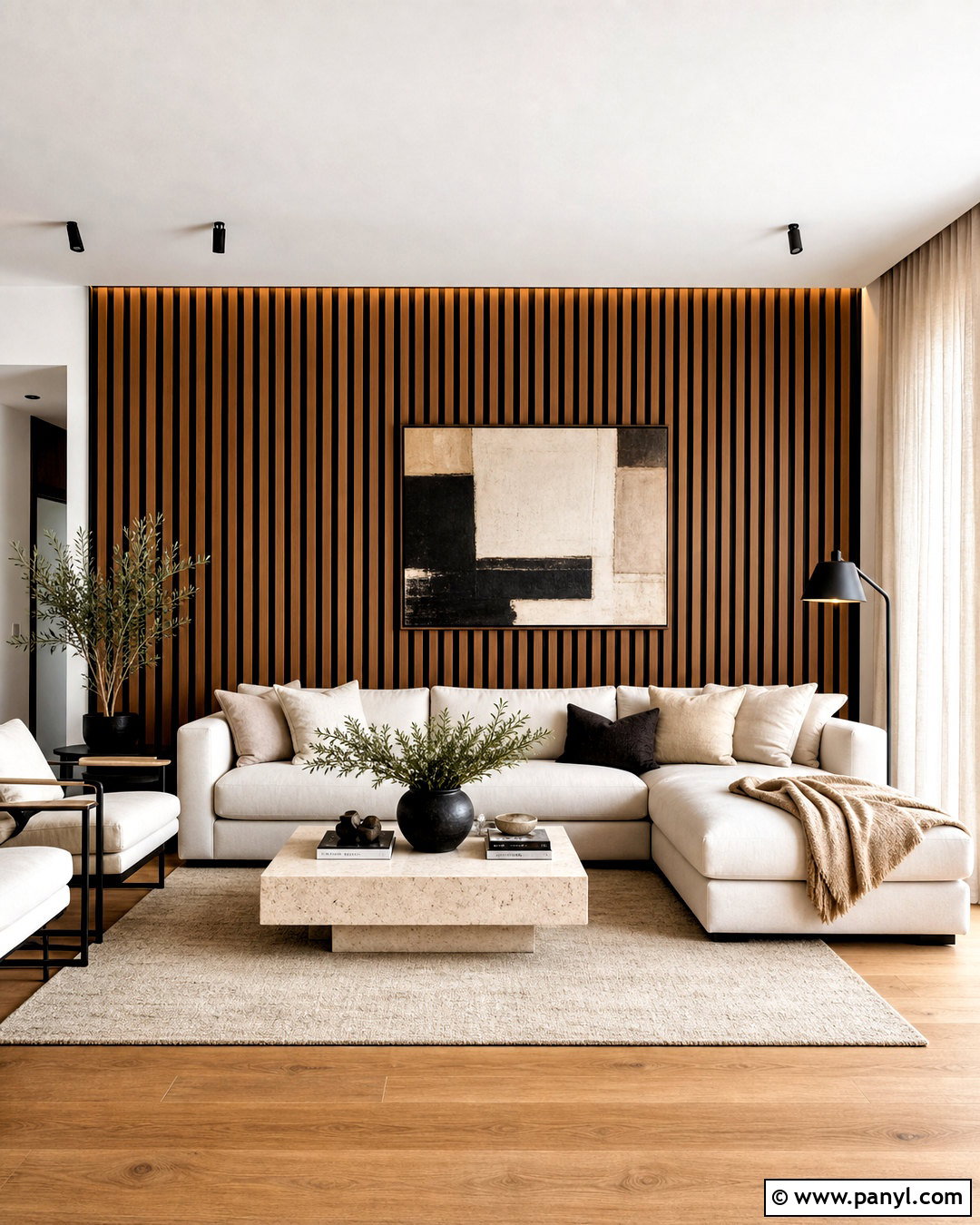
A wood slat feature wall brings warmth and clean architectural rhythm to a modern living room. Install vertical walnut or medium oak slats across the main wall behind a low-profile cream sofa. A charcoal backing between the slats creates definition and makes the wood grain more noticeable. Keep the surrounding walls warm white and continue natural oak across the flooring for an easy visual flow. Add a slim black floor lamp, a rounded stone coffee table, and textured oatmeal upholstery to balance the straight vertical lines. One oversized abstract artwork can sit slightly off-center instead of covering the entire surface. Soft ceiling lights directed toward the wood will emphasize its depth without making the room feel busy or overly commercial.
2. Limewash Feature Wall
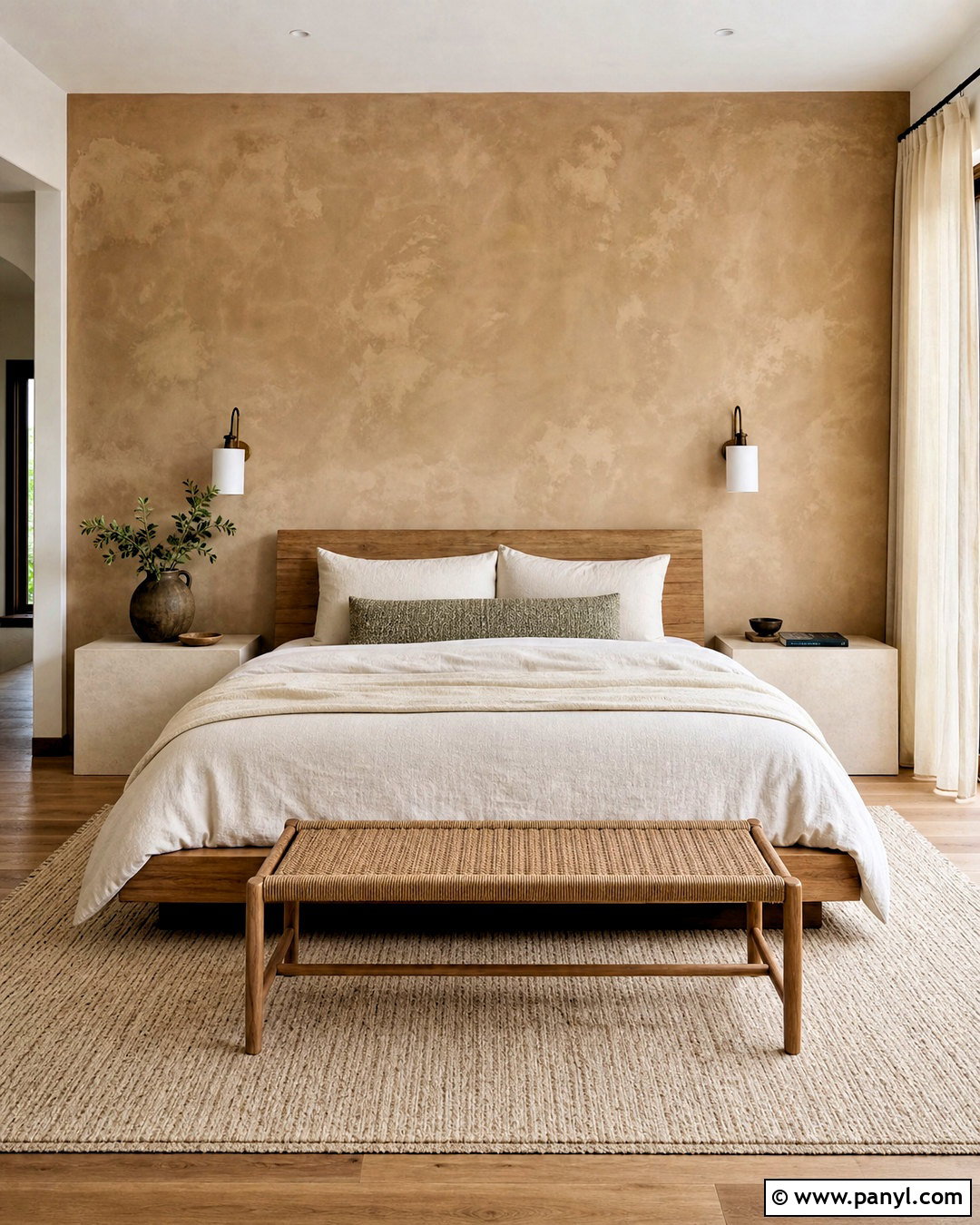
Soft movement and cloudy color make a limewash feature wall especially effective in a calm bedroom. Choose a warm clay, muted beige, or pale mushroom finish for the wall behind the bed. Pair it with a low oak bed frame, off-white linen bedding, and compact plaster nightstands that echo the handmade surface. Rather than introducing a sharp contrasting color, layer nearby shades through a wool rug, woven bench, and natural curtains. Simple bronze sconces provide practical reading light while casting gentle shadows across the finish. Leave most of the wall uncovered so its tonal variation remains visible. This complete bedroom feels modern but relaxed, proving that a feature wall can create interest through subtle texture instead of a bold pattern.
3. Venetian Plaster Feature Wall
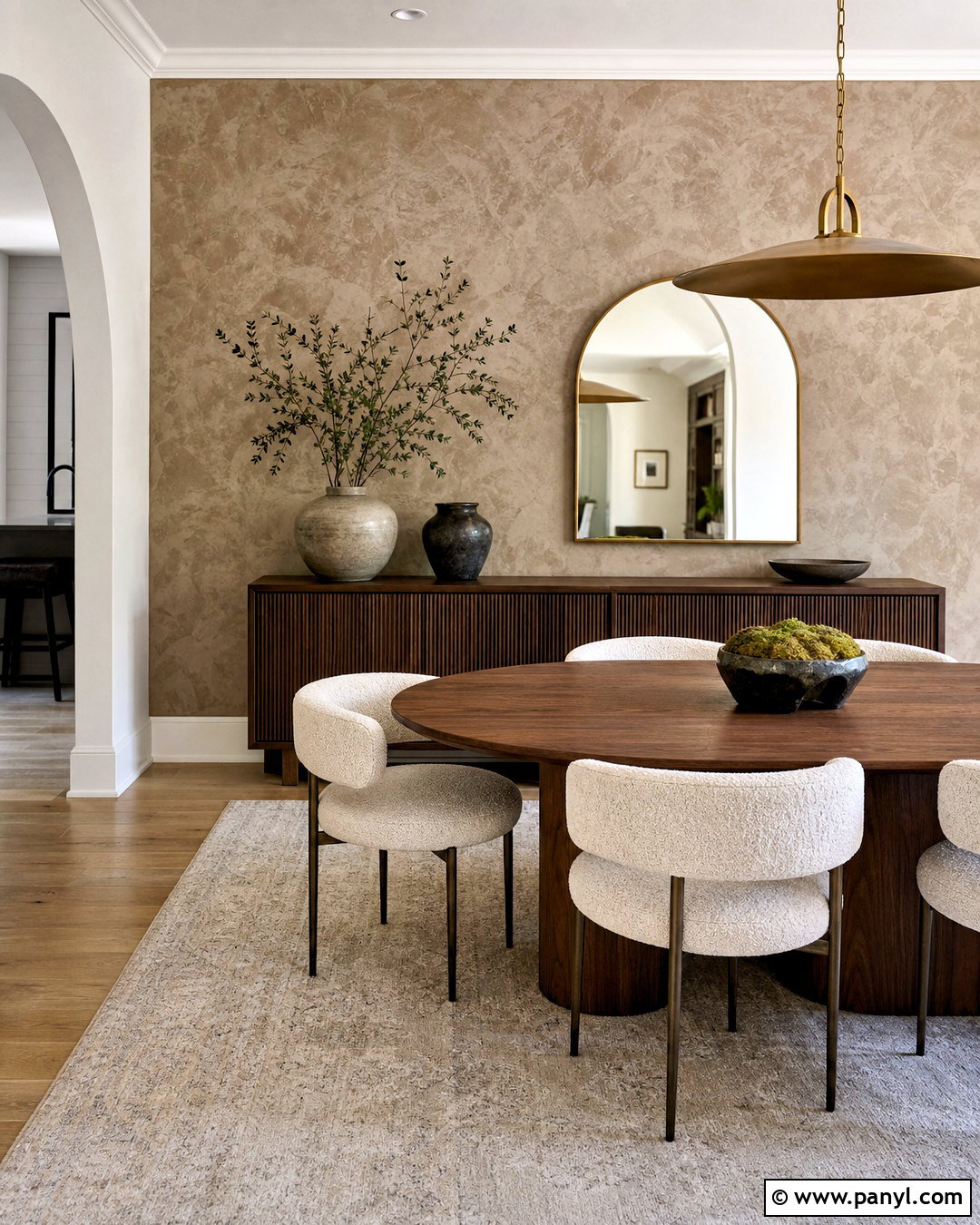
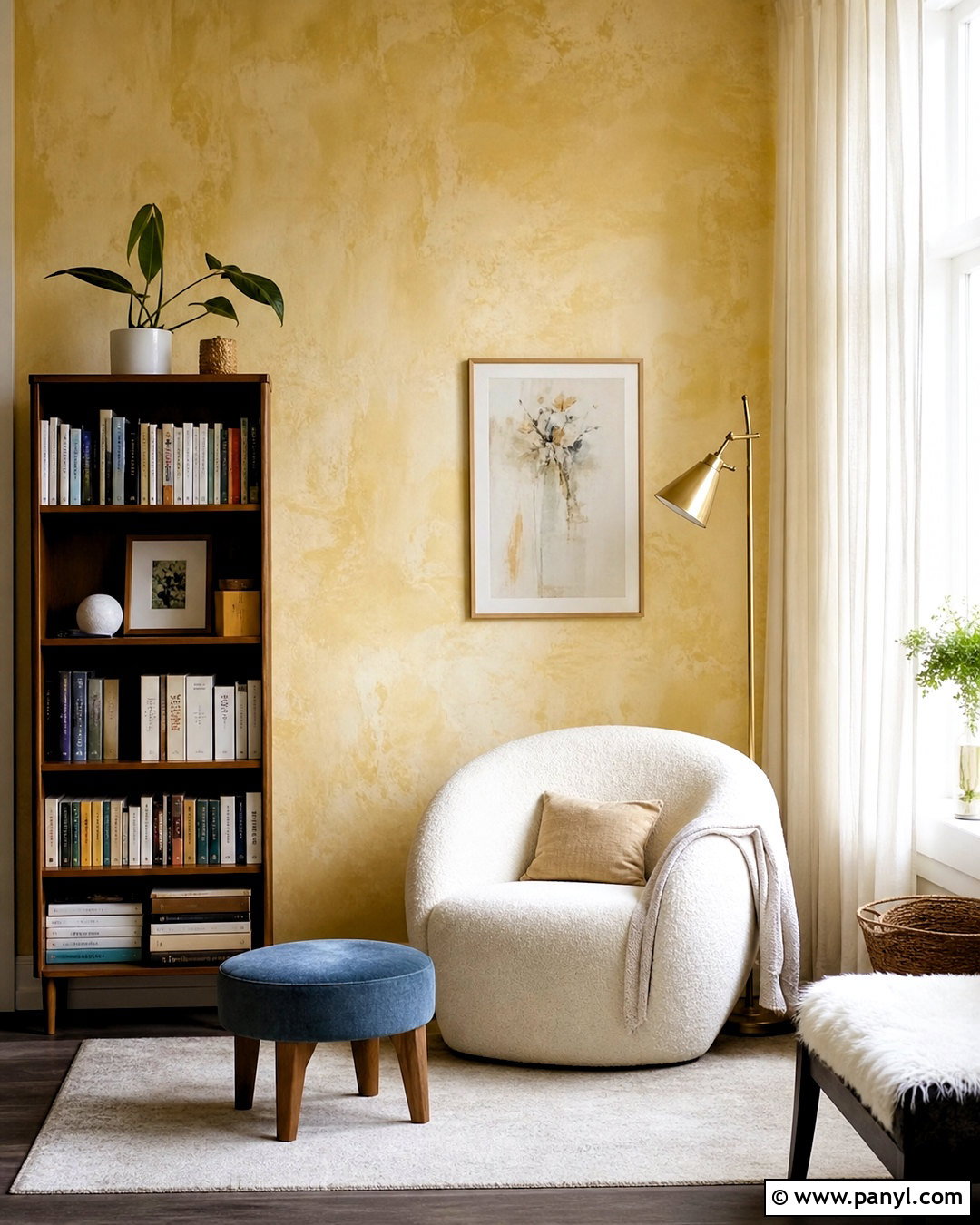
For a polished dining room, consider a Venetian plaster feature wall with a smooth, lightly reflective finish. A warm greige or pale taupe surface will catch daylight without looking glossy. Center an oval walnut dining table against the wall and surround it with curved chairs upholstered in creamy bouclé. Above the table, use a simple sculptural pendant in aged brass or matte black. A narrow sideboard in the same wood family keeps the palette connected, while ceramic vessels add quiet texture. Avoid filling the wall with several small decorations. One large canvas or a slim arched mirror is enough. The combination of plaster, dark wood, soft upholstery, and controlled lighting creates a sophisticated room that still feels comfortable for everyday meals.
4. Stone Fireplace Feature Wall
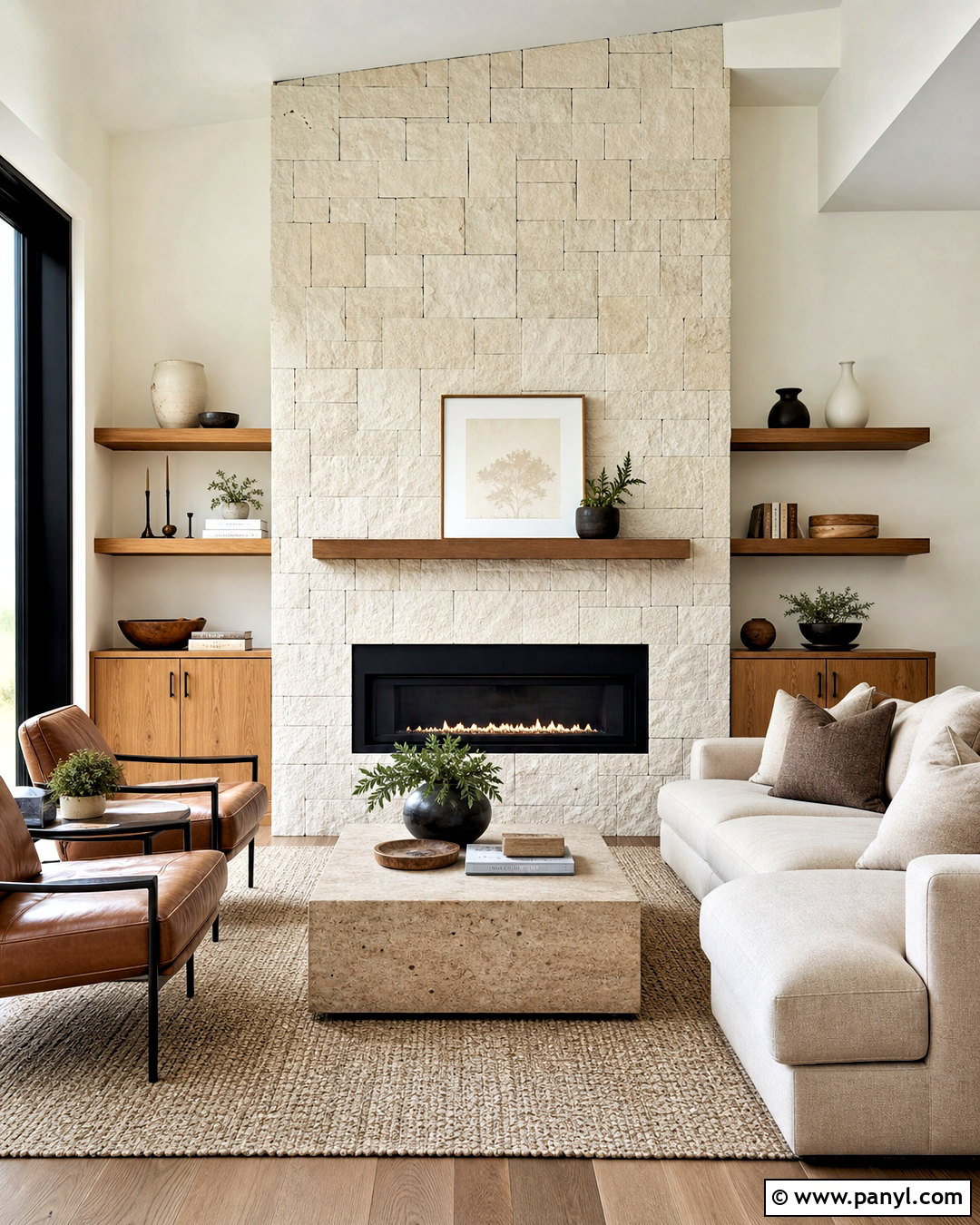
Natural stone can transform a basic fireplace into a substantial living room feature wall. Use large pieces of creamy limestone or light gray stacked stone from floor to ceiling, keeping the joints narrow for a cleaner appearance. A streamlined fireplace insert with a black metal surround adds contrast without overpowering the masonry. On one side, place a light oak cabinet or floating shelf to provide practical storage. Arrange a deep beige sectional, two leather accent chairs, and a textured neutral rug around a simple travertine coffee table. Keep accessories large and limited so they do not compete with the stone. Concealed ceiling lights can wash down the wall, highlighting its natural variation and making the entire seating area feel grounded and intentionally arranged.
5. Marble TV Feature Wall
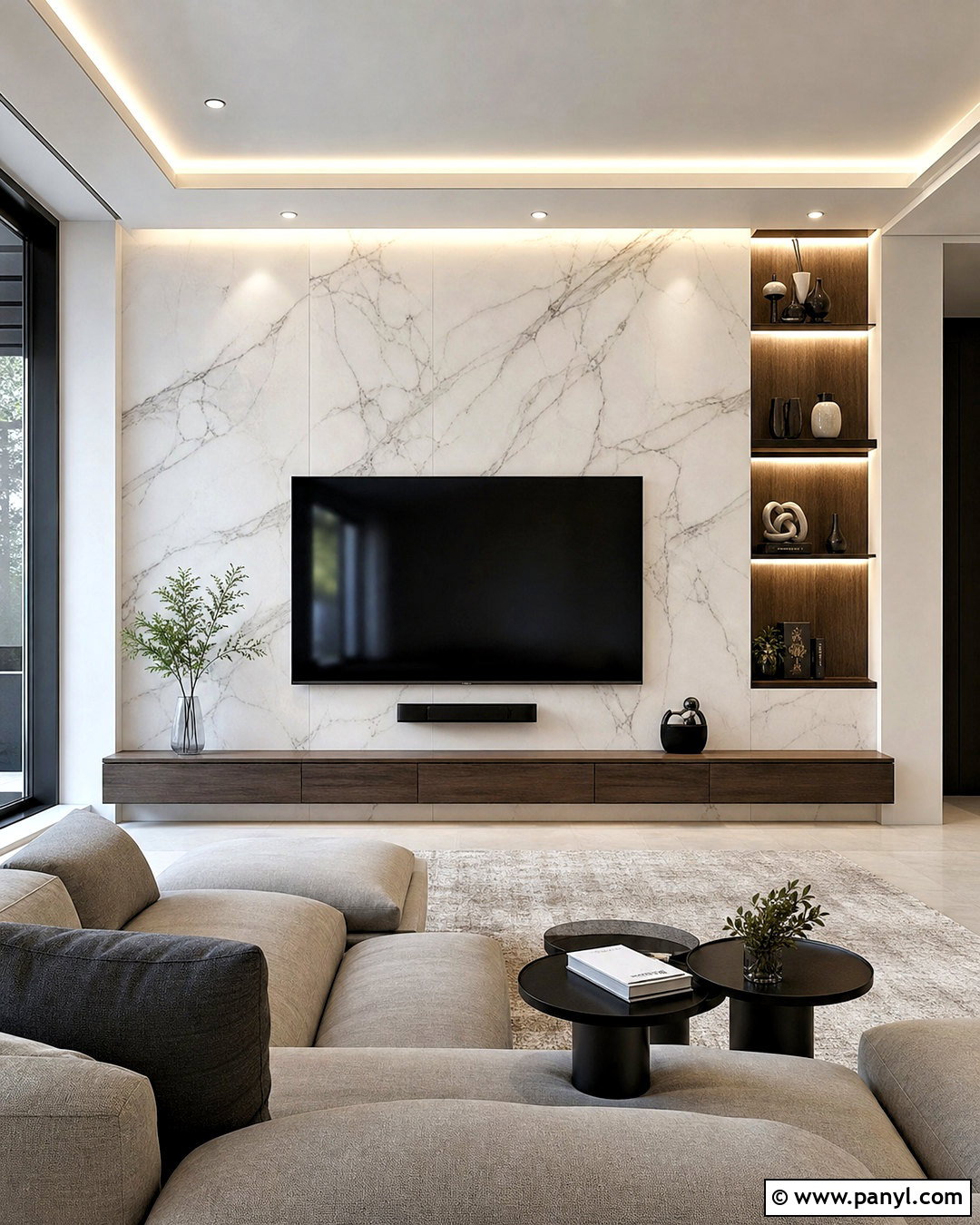
A marble TV feature wall creates a refined media area when the stone pattern is carefully controlled. Select large porcelain slabs or natural marble with a warm white background and restrained gray or beige veining. Mount the television directly on the surface and add a long floating walnut console underneath to soften the cool stone. Slim shelves on one side can hold a few books, ceramics, and a trailing plant. Keep visible cables hidden inside the wall or console for a clean result. A greige modular sofa, black metal side tables, and a soft wool rug complete the room without introducing too many finishes. Add indirect lighting behind the console or along the ceiling to frame the wall and reduce harsh contrast around the screen.
6. Fluted Panel Feature Wall
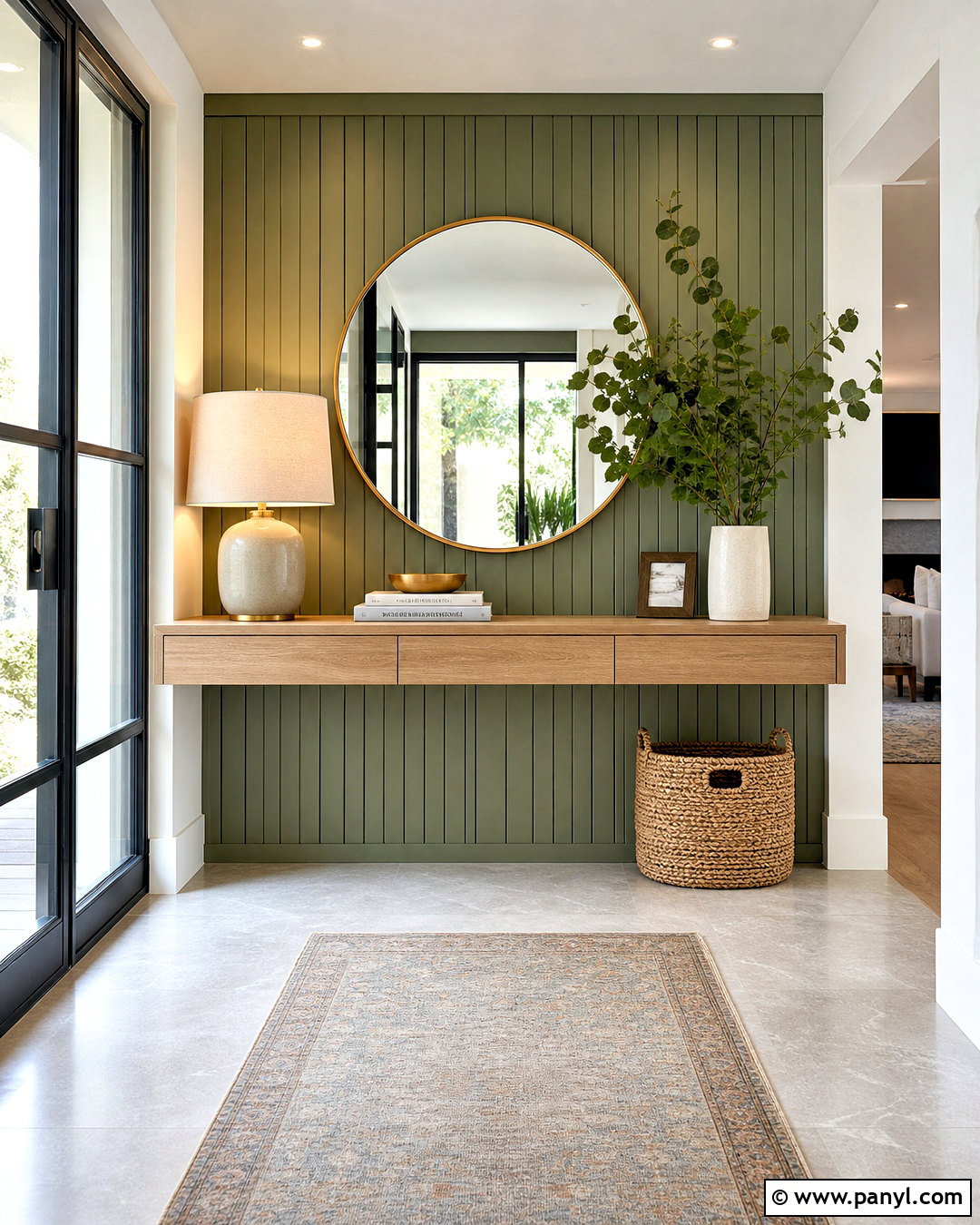
Fluted panels offer deeper texture than flat wall treatments while maintaining a simple modern look. In an entryway, cover the main wall with wide fluted MDF panels painted muted sage green. Add a floating oak console that leaves the flooring visible and prevents the narrow area from feeling crowded. A large round mirror with a thin brass frame breaks up the vertical pattern and provides a practical final check near the door. Complete the space with a pale stone floor, a washable runner, a ceramic table lamp, and one woven storage basket. Paint the adjoining walls a soft warm white to keep the green treatment distinct. This complete arrangement gives the entrance personality, organization, and architectural detail without requiring bulky furniture or excessive decorative objects.
7. Geometric Wood Panel Feature Wall
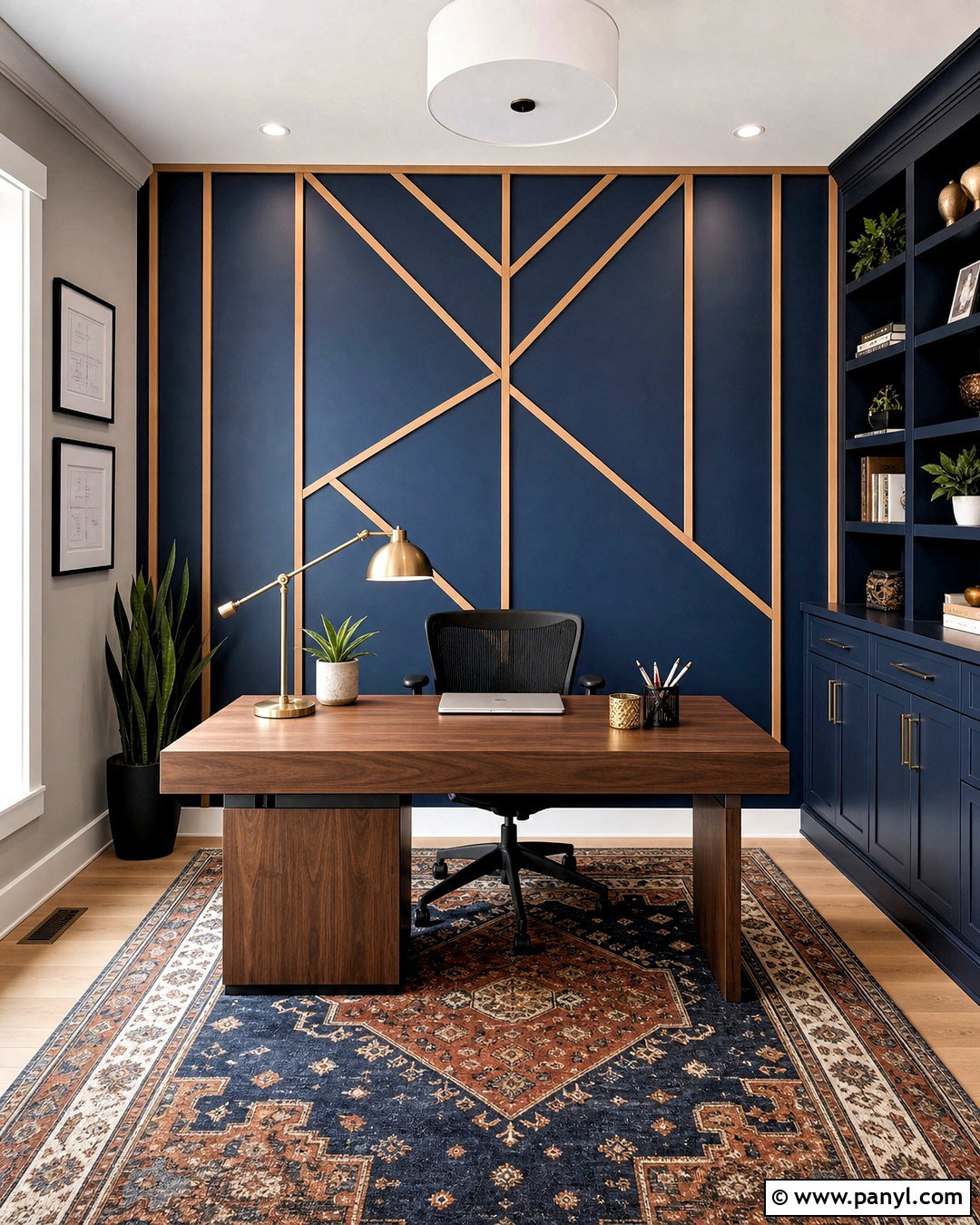
A geometric wood panel feature wall can energize a home office while keeping the overall room professional. Create an asymmetrical arrangement of thin oak battens against a matte navy blue background. Use larger shapes rather than a complicated network of narrow lines, which can become distracting during work. Position a streamlined walnut desk in front of the wall with an ergonomic black chair and a simple brass task lamp. Closed cabinets along one side provide storage without hiding the pattern. Add a flat-weave rug in navy, beige, and rust to connect the wall to the rest of the room. A few framed prints can be placed on the quieter sections. The finished office feels creative and focused, with enough warmth to remain inviting throughout the day.
8. Board And Batten Feature Wall
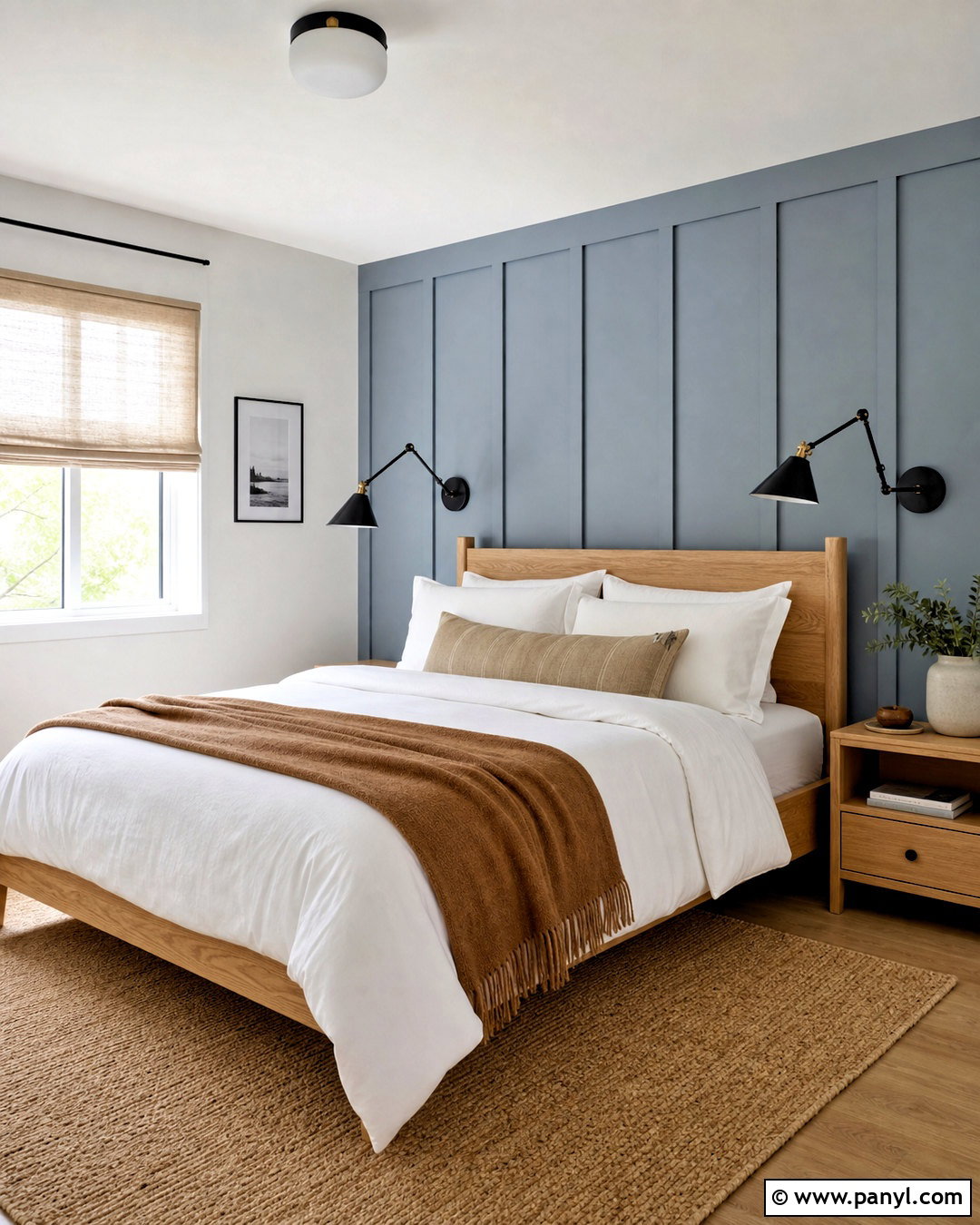
Board and batten can look fresh and modern when the proportions are tall, simple, and evenly spaced. Use it across the wall behind a guest room bed, painting the battens and background in the same muted blue-gray. Extend the treatment from baseboard to ceiling to make the room appear taller. A light oak bed, white cotton bedding, and a folded camel-colored throw warm the cooler paint. Install small black swing-arm sconces between the outer battens to free the nightstands from bulky lamps. A natural jute rug and linen Roman shade keep the atmosphere casual. Instead of adding artwork above the bed, allow the panel pattern to become the decoration. The result feels structured and comfortable without leaning too traditional or farmhouse-inspired.
9. Picture Frame Molding Feature Wall
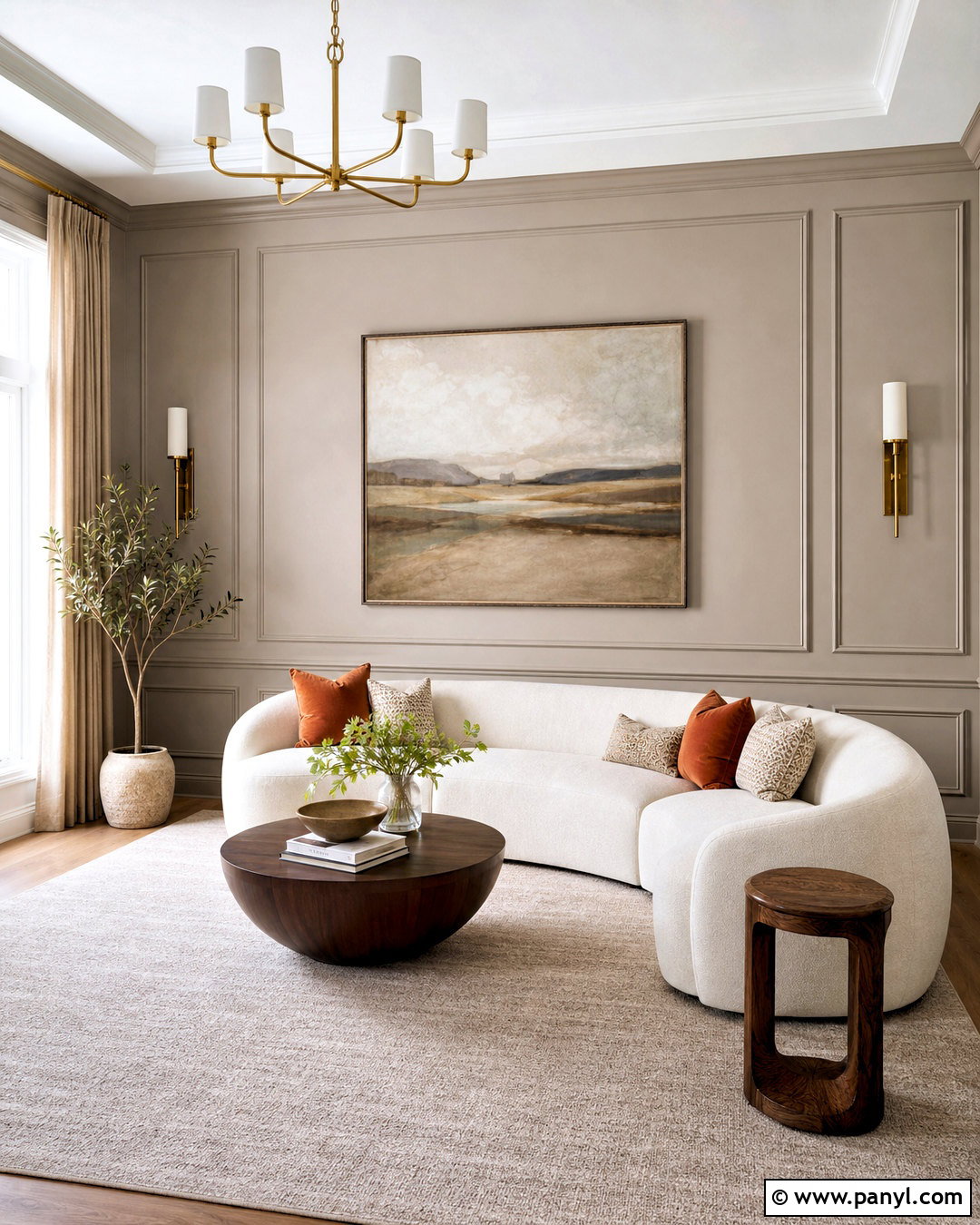
Picture frame molding gives a living room feature wall subtle dimension while working with both classic and contemporary furniture. Apply wide rectangular molding across the wall behind the sofa, then paint the entire surface a warm mushroom or dusty taupe. Use fewer, larger frames for a cleaner modern effect. Place a curved ivory sofa against the wall with slim walnut side tables and a black arc floor lamp. One oversized landscape painting can be centered within the largest panel. Continue the warm palette with a sand-colored rug, rust pillows, and soft linen curtains. Matching the trim and wall color prevents the molding from feeling overly formal. This balanced room has architectural character, but its rounded furniture and restrained decor keep the complete look relaxed, current, and livable.
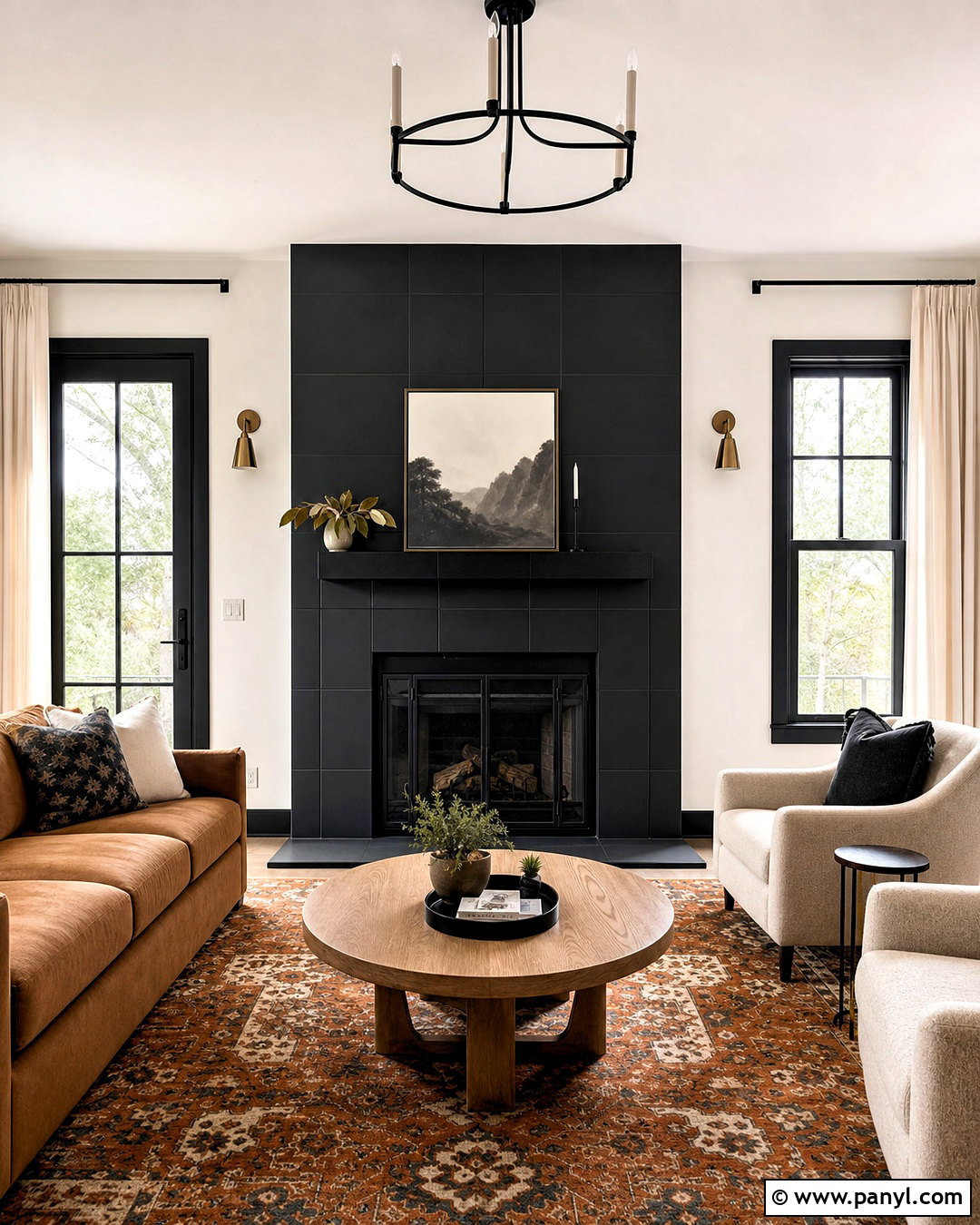
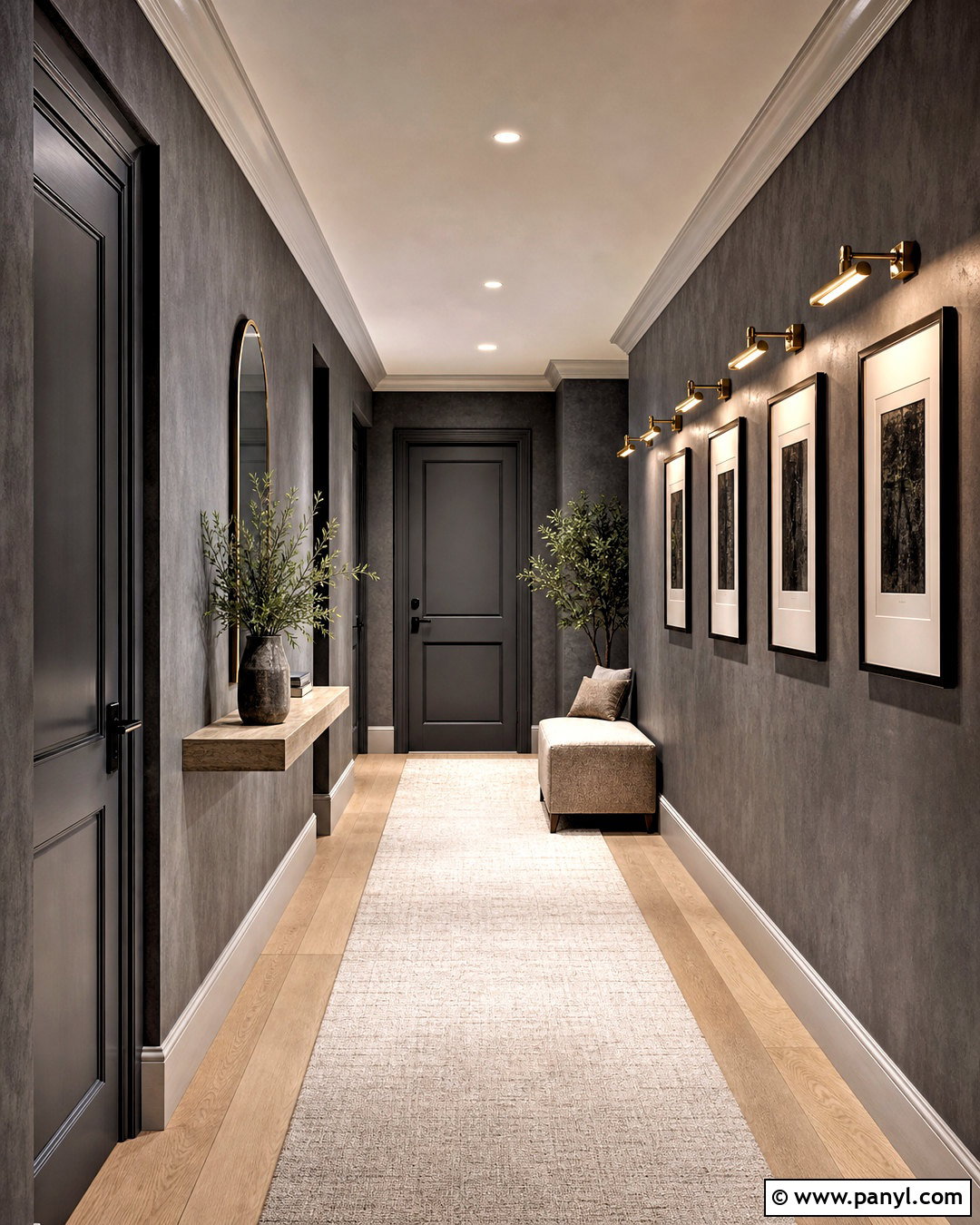
10. Wallpaper Mural Feature Wall
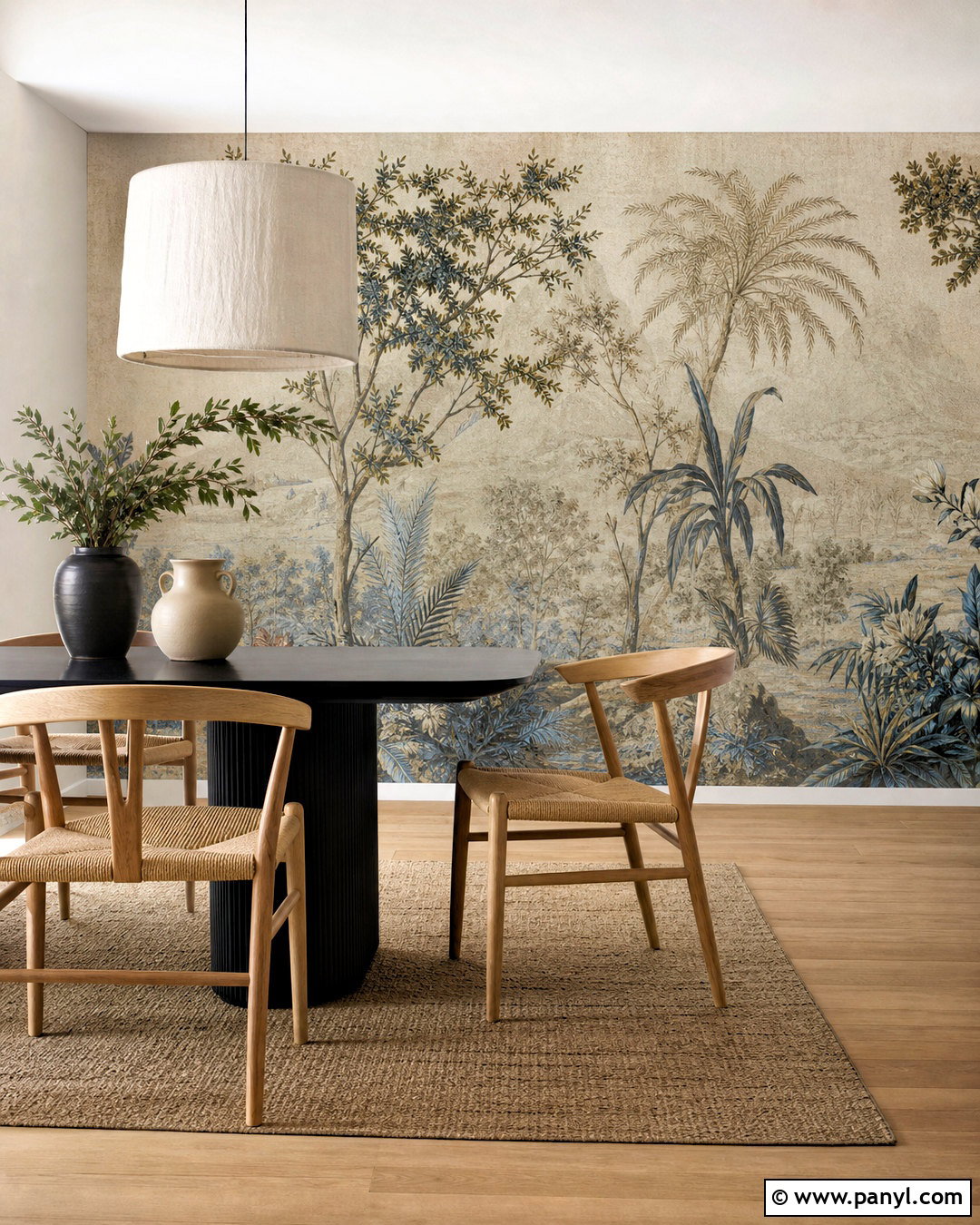
A wallpaper mural can create a dramatic dining room without requiring layers of small artwork. Choose an oversized botanical or abstract landscape in faded olive, warm beige, charcoal, and soft blue. Cover the full wall so the scene feels intentional rather than like a framed poster. Place a simple black dining table in front of it with light wood chairs to balance the detailed pattern. A linen pendant or frosted glass globe fixture should provide visual interest without competing with the mural. Keep the other walls pale cream and use solid curtains, a neutral rug, and minimal table decor. Pull one or two mural colors into the upholstery or ceramics. This approach makes the wallpaper part of a complete, coordinated room instead of an isolated decorative statement.
11. Grasscloth Feature Wall
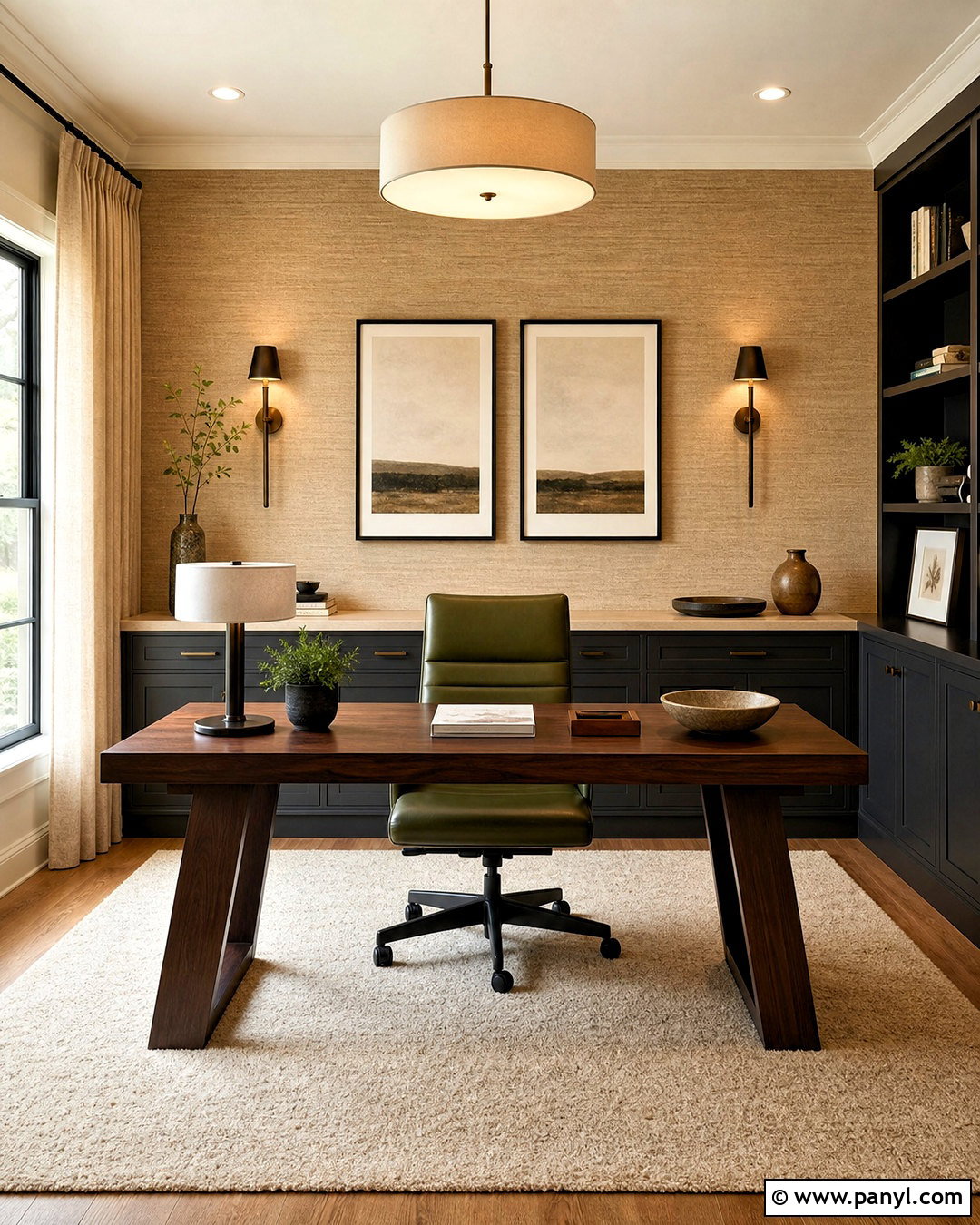
Grasscloth adds natural variation and softness to a home office, bedroom, or reading room. For a tailored workspace, install warm beige grasscloth behind a dark walnut desk and built-in base cabinets. The fine woven texture should remain the focal point, so choose simple furniture with clean profiles. Add an olive green desk chair, a cream wool rug, and linen curtains for comfortable color without sharp contrast. A pair of adjustable bronze wall lights can provide task lighting while highlighting the fibers. Display artwork in thin dark frames, leaving generous open space around each piece. Because grasscloth has visible seams and natural tonal shifts, precise installation is important. Once complete, the room feels warm and layered, yet restrained enough for focused work and video calls.
12. Painted Color Block Feature Wall
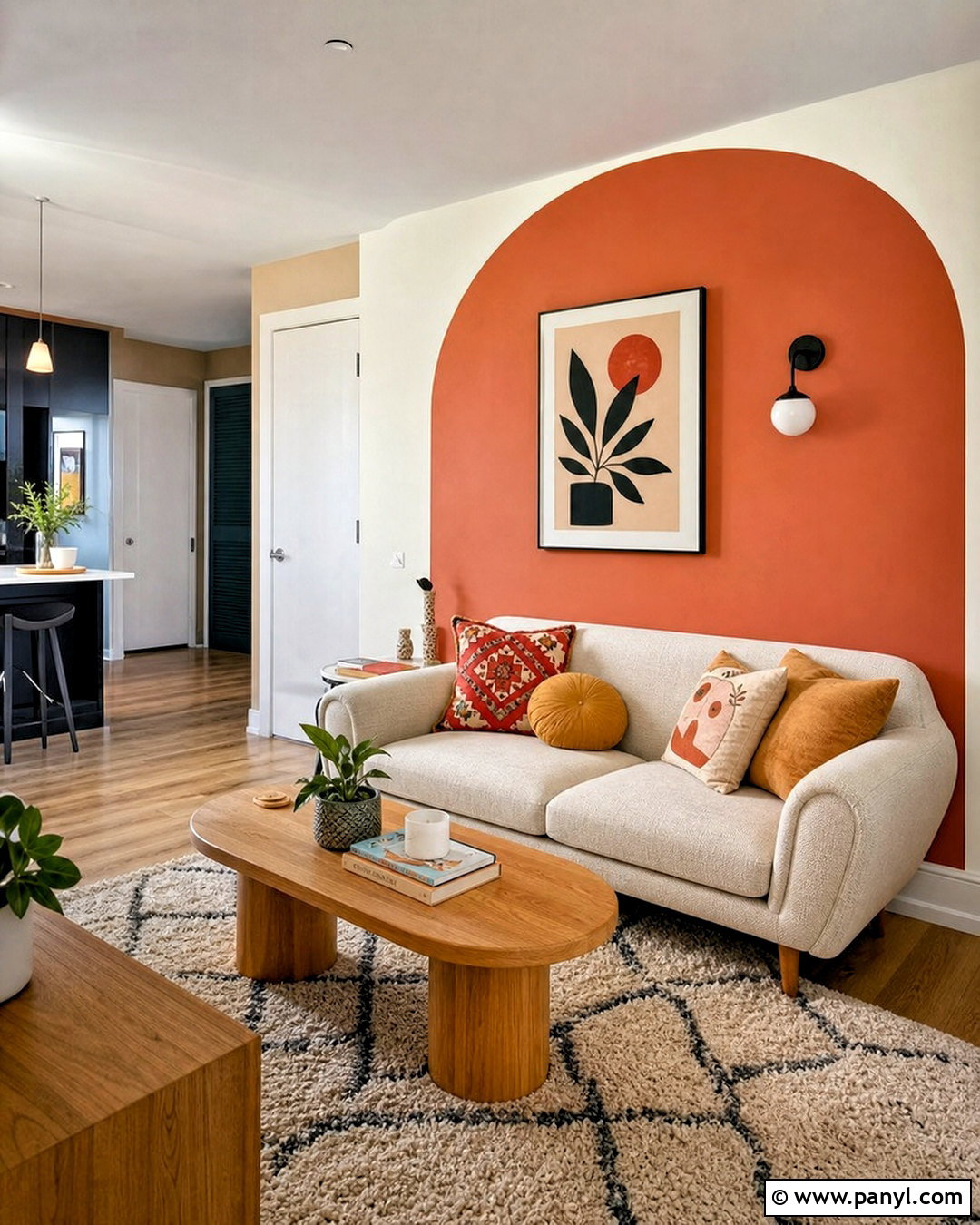
A painted color block is a budget-friendly way to define a modern feature wall without adding permanent materials. In a compact living room, paint a large rounded arch or wide rectangular block behind the sofa in terracotta, muted mustard, or deep dusty blue. Keep the remaining wall a warm off-white so the shape reads clearly. Center a compact cream sofa within the painted area, then add an oak coffee table, a patterned rug, and two coordinating cushions. A wall-mounted sconce and one framed print can overlap the painted boundary for a more integrated result. Keep the edges crisp by using quality painter’s tape. The completed room feels thoughtfully zoned, which is especially helpful in an apartment where the living area shares space with dining or work functions.
13. Deep Green Feature Wall
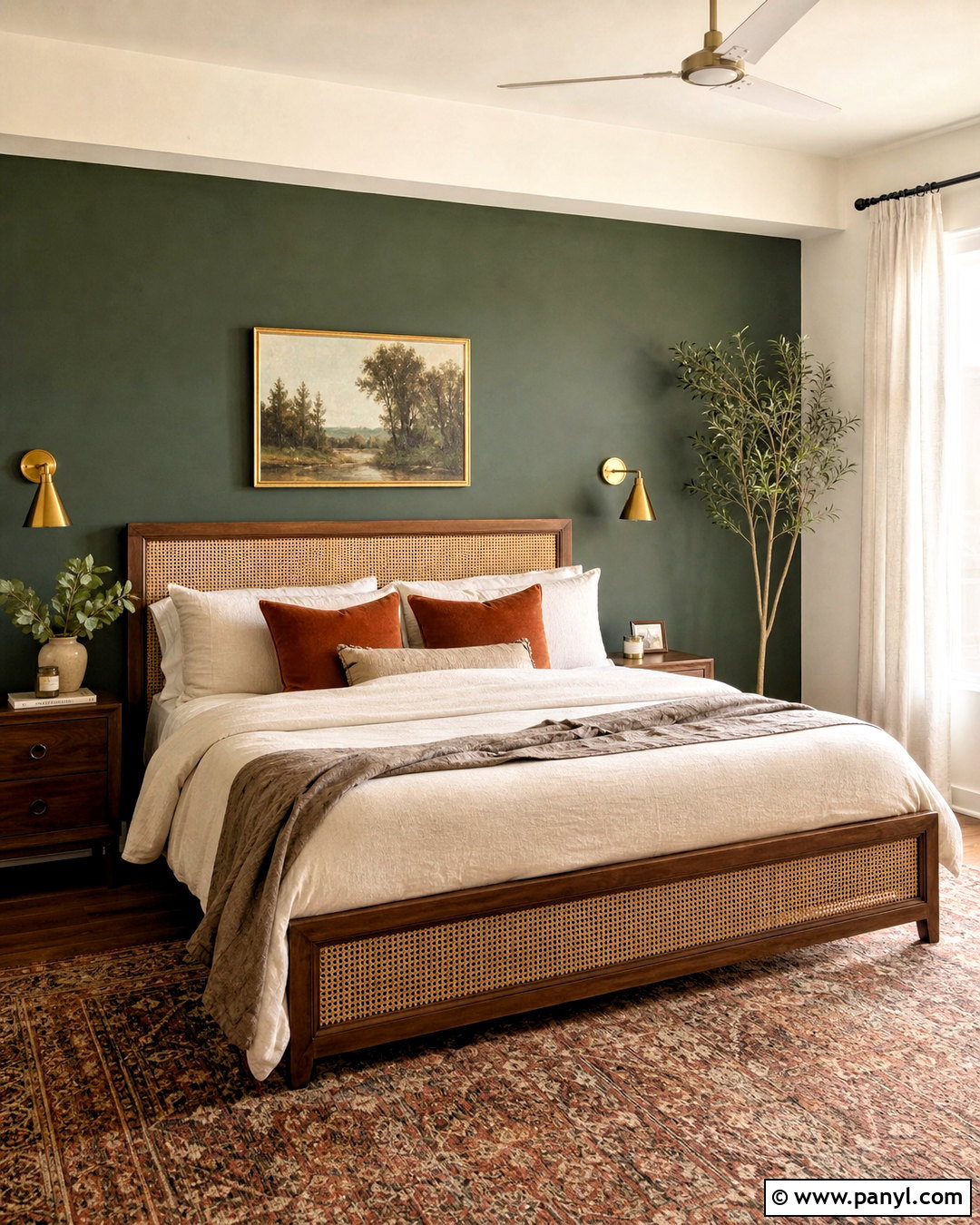
Deep green gives a bedroom feature wall a restful, grounded character when the surrounding palette stays warm. Paint the wall behind the bed a rich forest or dark olive green, using a matte finish that minimizes glare. Choose a walnut bed frame with a woven cane headboard, then layer cream sheets, beige linen covers, and rust-colored pillows. Warm brass sconces bring gentle contrast to the darker background. Keep the remaining walls soft ivory and use light curtains to preserve brightness during the day. A vintage-style wool rug in muted green, tan, and brown connects the bed to the wall. One horizontal artwork above the headboard is sufficient. Natural wood, tactile fabrics, and restrained decoration prevent the darker paint from making the finished bedroom feel heavy.
14. Black Media Feature Wall
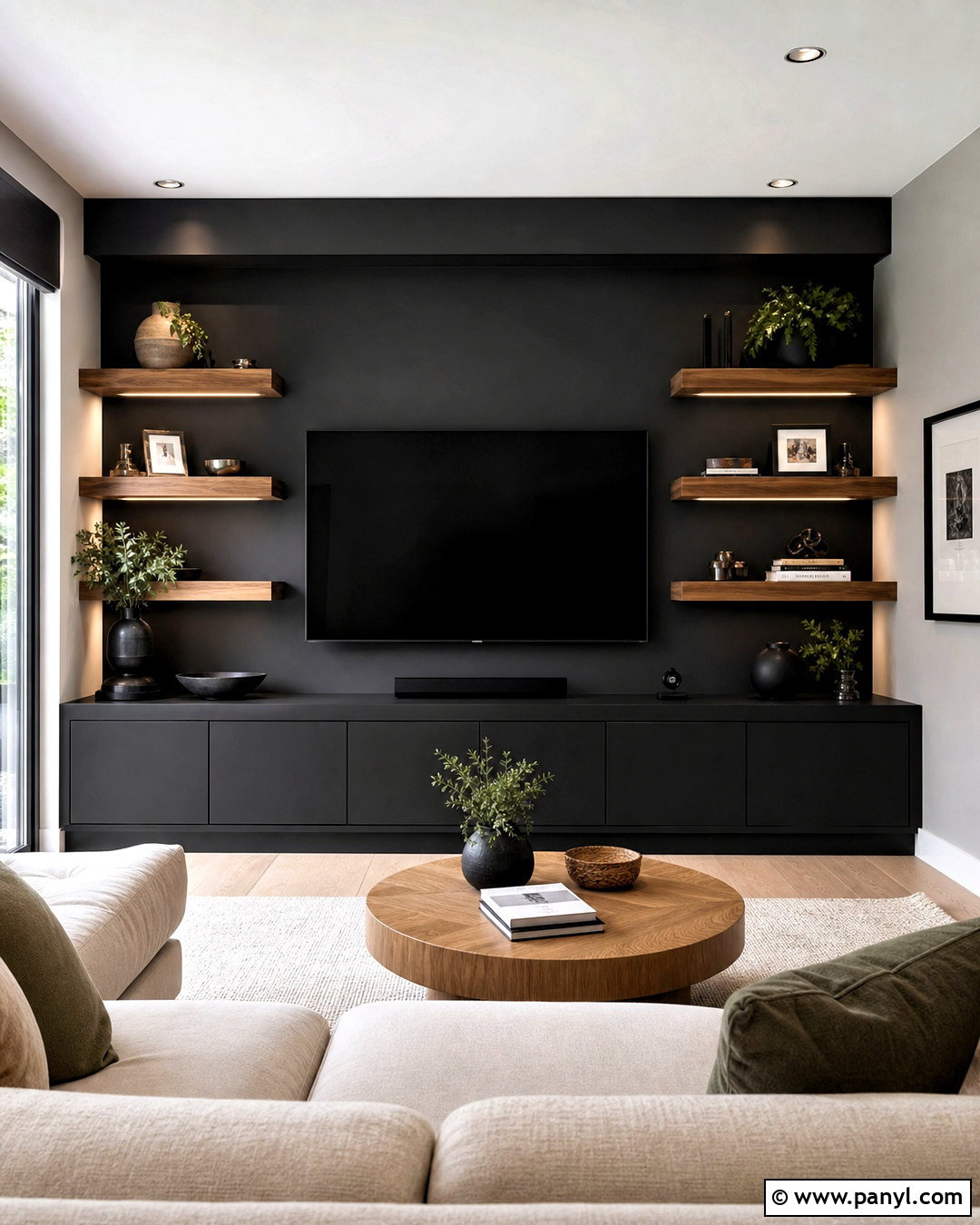
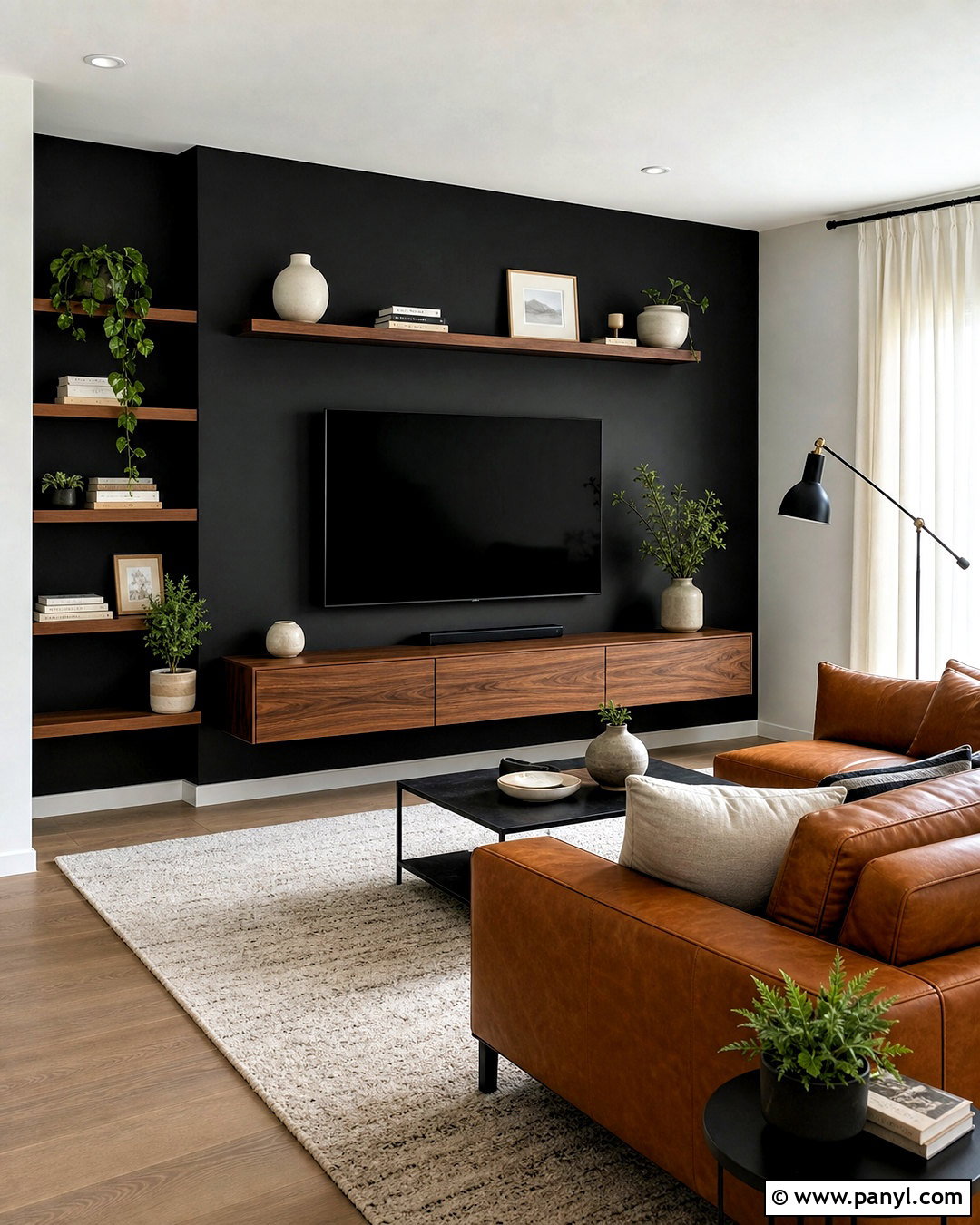
A black media feature wall can make a television blend into a living room rather than dominate it. Paint the entire wall a soft charcoal black and use matching matte cabinetry below the screen. Add narrow walnut shelves on one side to introduce warmth and create an asymmetrical layout. Keep the adjacent walls pale greige, and choose a light beige sectional so the room maintains visual balance. A round oak coffee table, cream rug, and sculptural ceramic lamp soften the dark, straight-lined installation. Hidden LED lighting under the shelves provides gentle illumination, while closed cabinets conceal electronics, games, and cords. The black finish works best when repeated in small details, such as window frames or table legs. This creates a cohesive media room rather than an isolated dark rectangle.
15. Built In Shelf Feature Wall
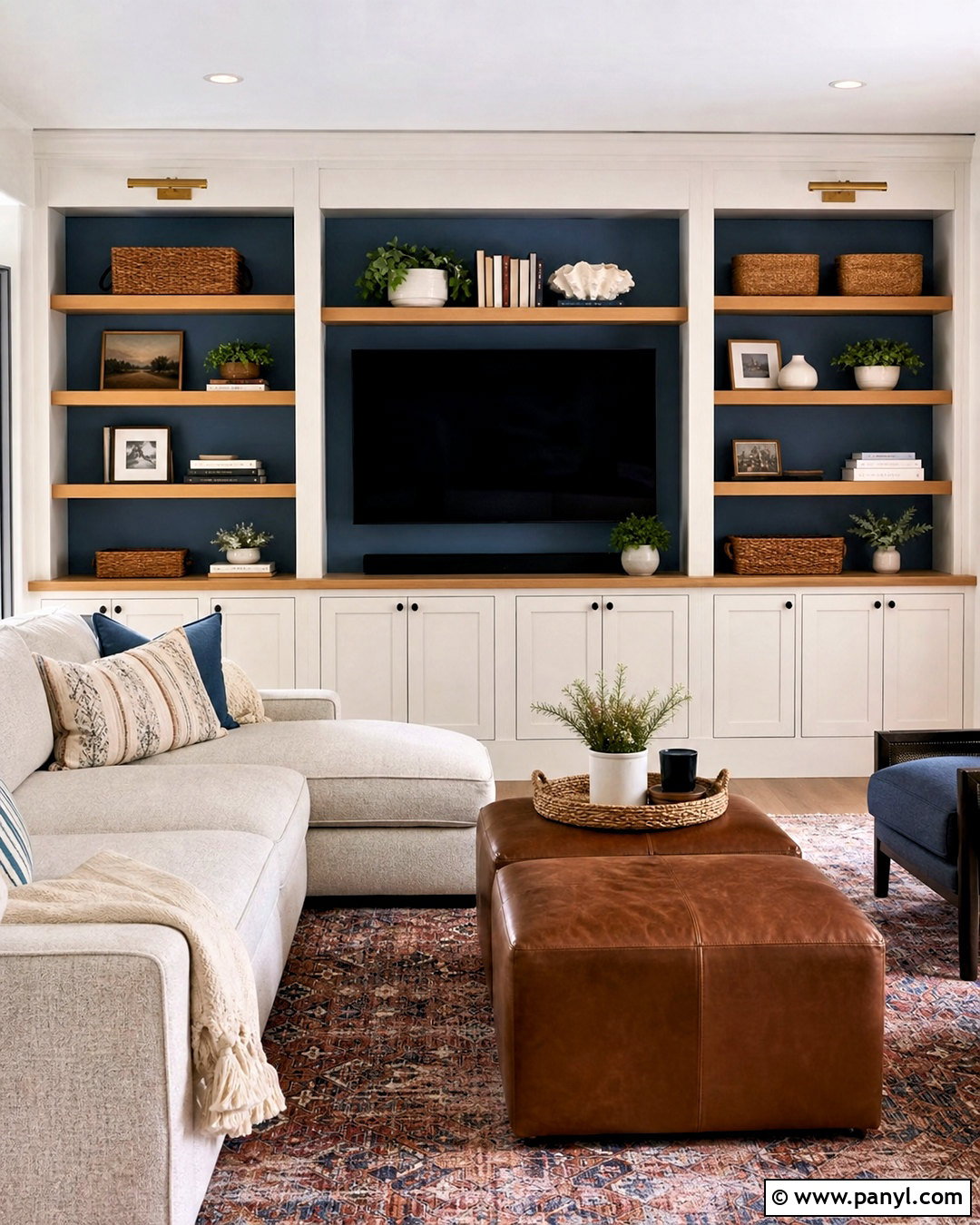
Built-in shelves can turn an empty wall into a practical focal point for a family room. Design the feature with warm white cabinets along the bottom, open oak shelves above, and a centered niche for artwork or a television. Keep the shelf spacing generous so books and objects have room to breathe. Paint the back of the open sections a muted blue-gray or soft olive for controlled contrast. Arrange a comfortable oatmeal sofa opposite the wall with leather ottomans and a durable patterned rug. Use baskets inside lower cabinets for toys, games, or charging accessories. Picture lights above the shelves add a finished architectural touch. By combining storage, display space, lighting, and balanced furniture placement, the completed wall improves both the room’s appearance and its everyday function.
16. Concrete Feature Wall
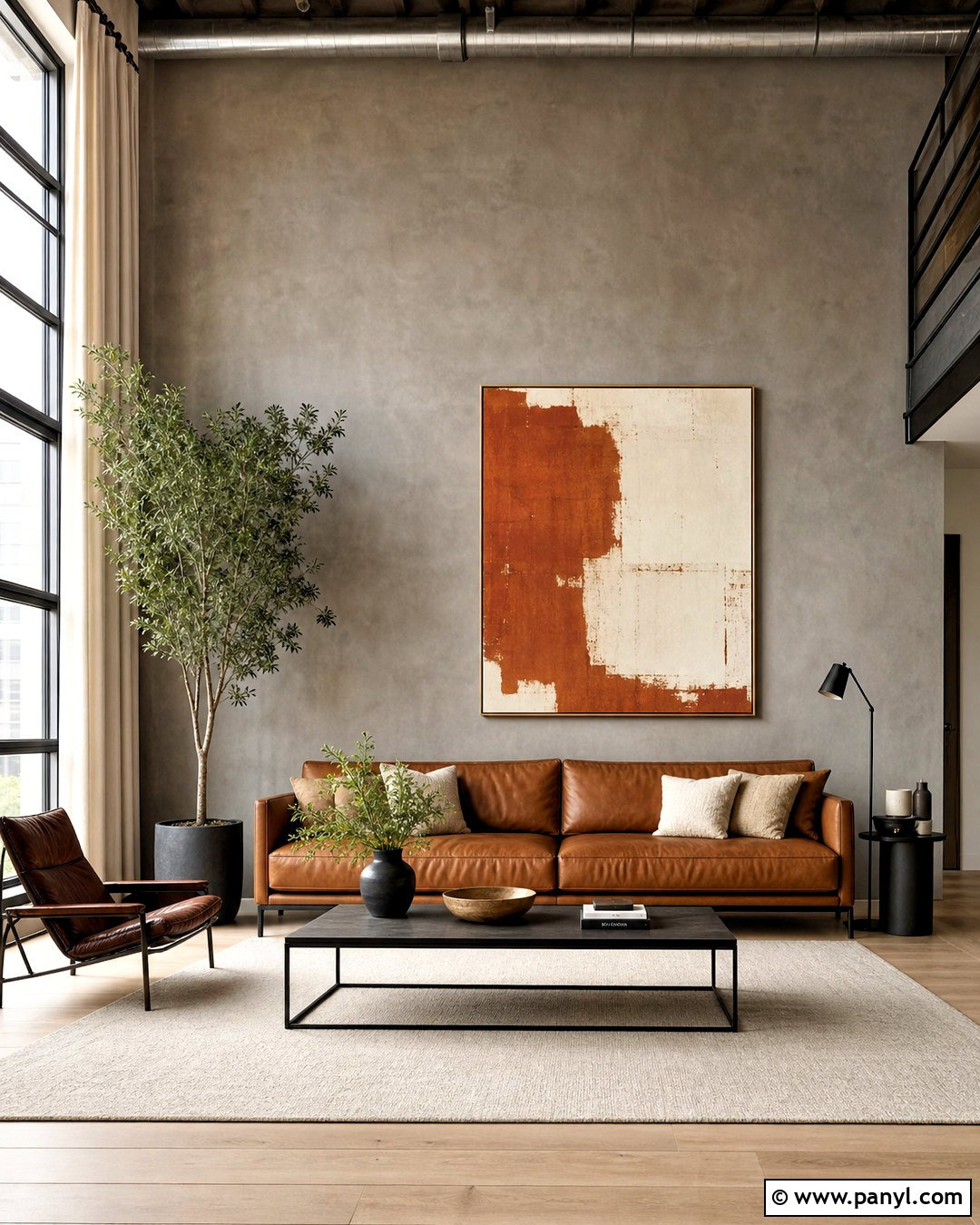
A concrete feature wall gives a modern loft or living room an understated industrial edge. Use smooth microcement in a warm gray rather than cold blue-gray concrete, which can make residential spaces feel stark. Place a camel leather sofa against the wall and add a low black metal coffee table, an ivory rug, and soft linen curtains. Natural oak flooring introduces warmth underfoot and prevents the room from becoming too monochromatic. One oversized abstract canvas can add muted rust, cream, and charcoal tones without covering the concrete texture. Choose sculptural lighting with black or bronze finishes and include a tall indoor tree near the window. These softer materials and organic shapes create a complete, welcoming room while allowing the concrete surface to retain its clean architectural character.
17. Exposed Brick Feature Wall
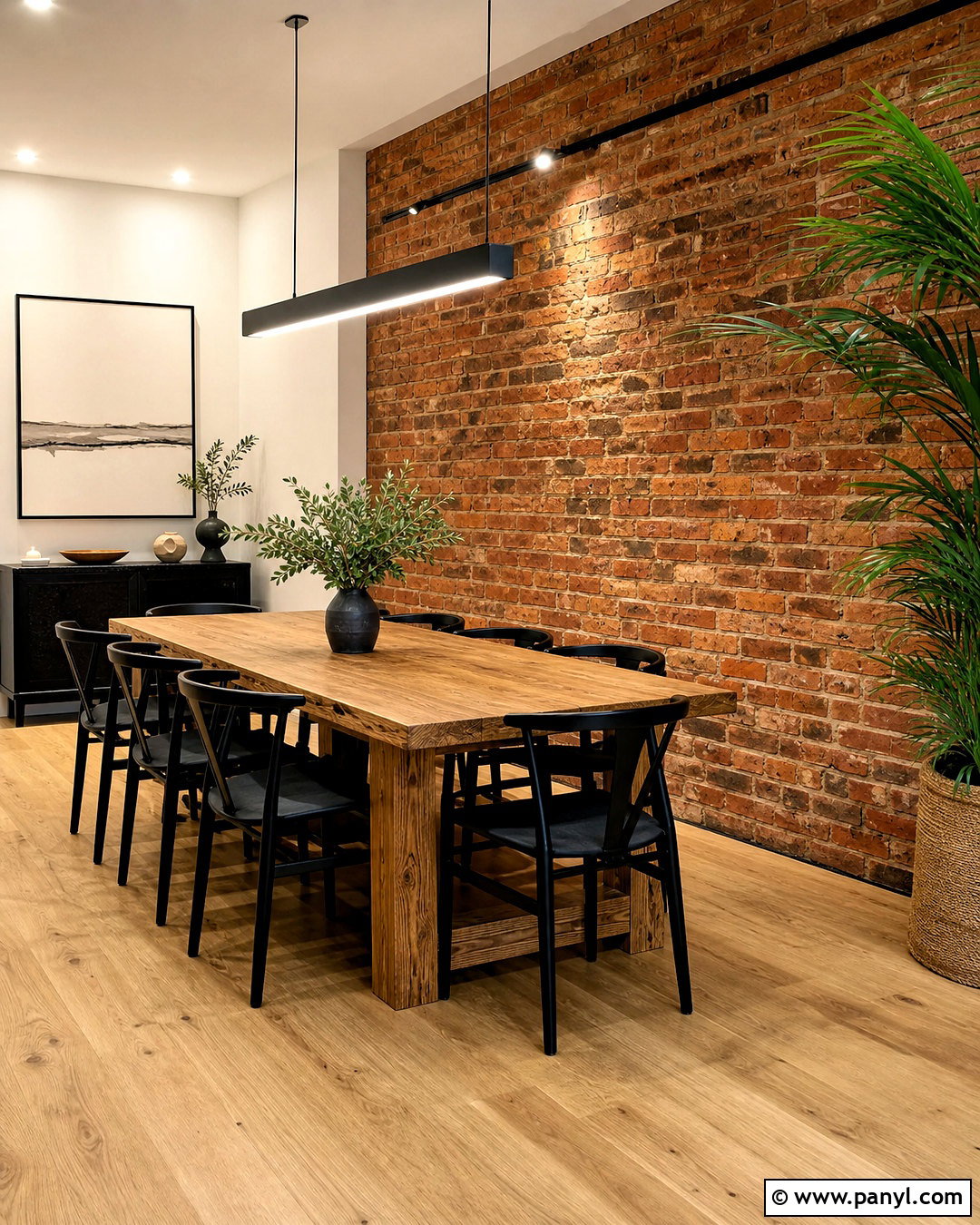
Exposed brick feels modern when it is balanced with streamlined furniture and a lighter surrounding palette. Use natural red brick or a convincing thin brick veneer on the dining room’s main wall. Preserve its varied color with a matte clear finish instead of applying heavy gloss. Position a long oak table in front of the wall with simple black chairs and a linear pendant overhead. Warm white paint on the remaining walls will keep the room bright, while pale oak floors soften the brick’s visual weight. Add a low black sideboard, a large neutral canvas, and a few leafy plants in stone planters. Avoid filling every section with rustic accessories. The finished room should combine the brick’s texture and history with crisp, contemporary shapes for a balanced urban look.
18. Vertical Tile Feature Wall
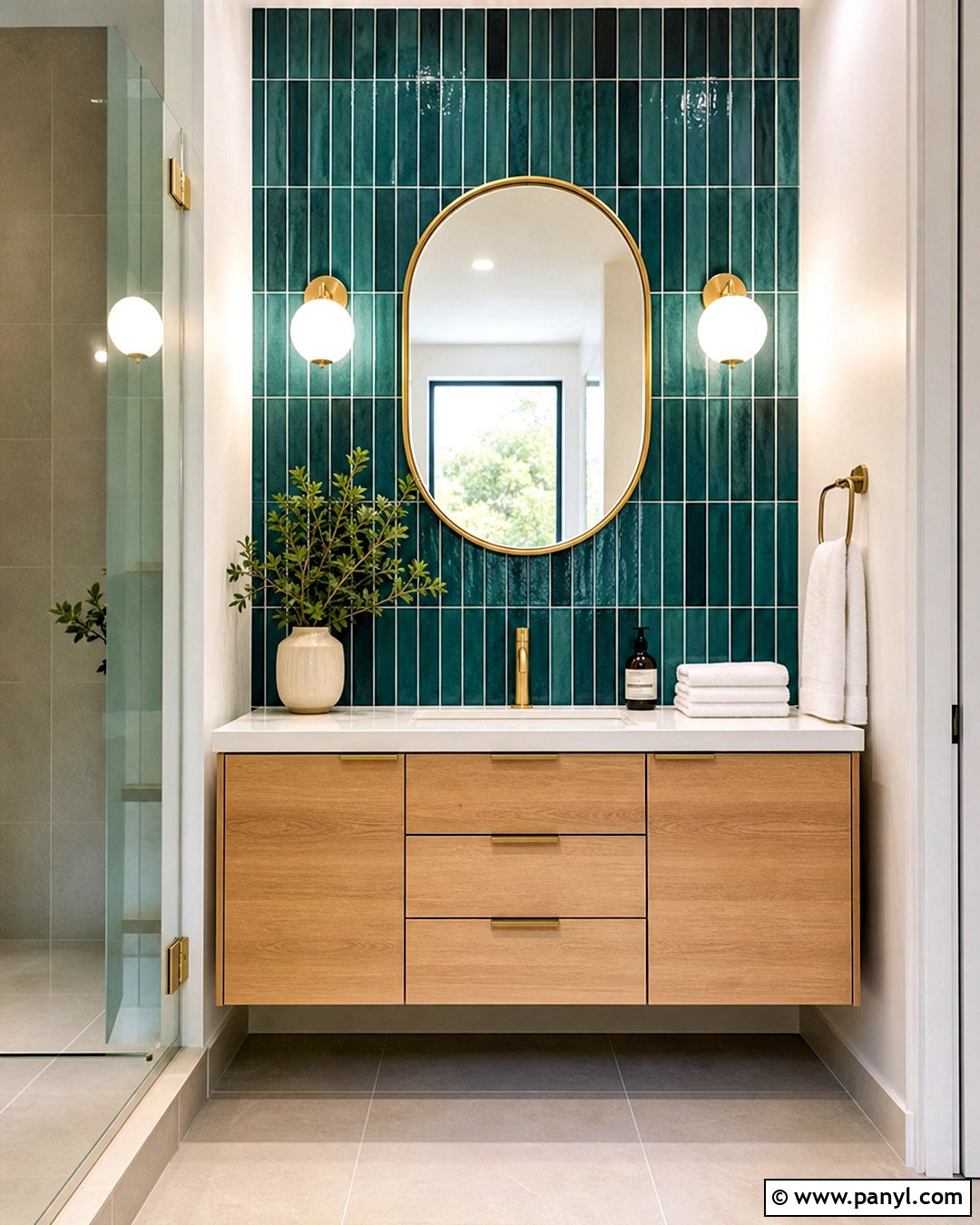
Vertical tile can create a sleek bathroom feature wall while visually emphasizing ceiling height. Install narrow rectangular tiles behind a floating vanity, using glossy deep blue, muted teal, or warm sage green. Run the tile from the countertop to the ceiling with matching grout for a continuous appearance. Choose a light oak vanity with a white quartz top and an oval mirror framed in brushed brass. Globe sconces on both sides provide even illumination and highlight the tile surface. Keep the floor simple with large pale gray porcelain tiles, and use white walls elsewhere to control the amount of color. Minimal countertop storage and a few neatly folded towels complete the space. The result is practical, polished, and detailed without relying on a complicated tile pattern.
19. Mirror Panel Feature Wall
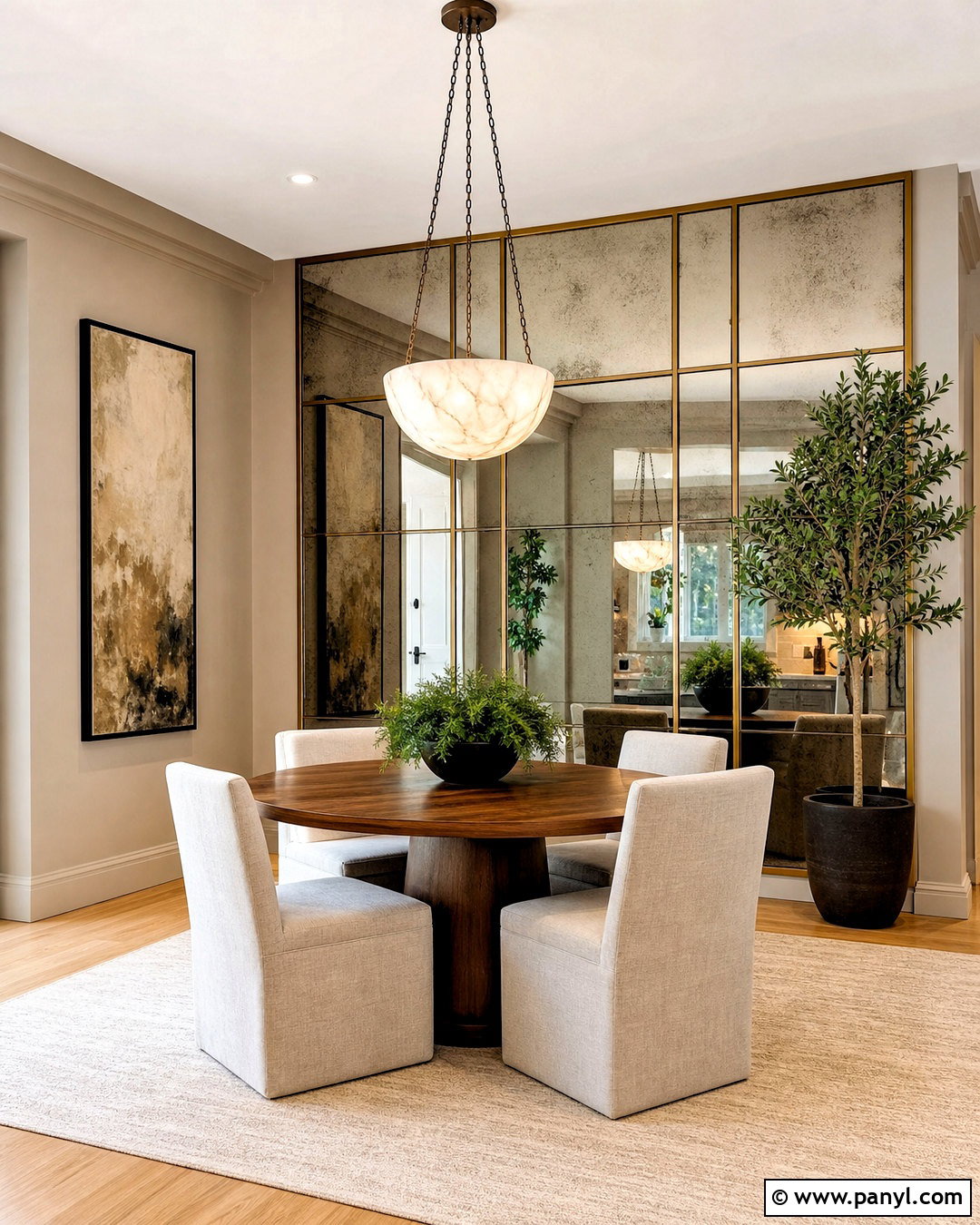
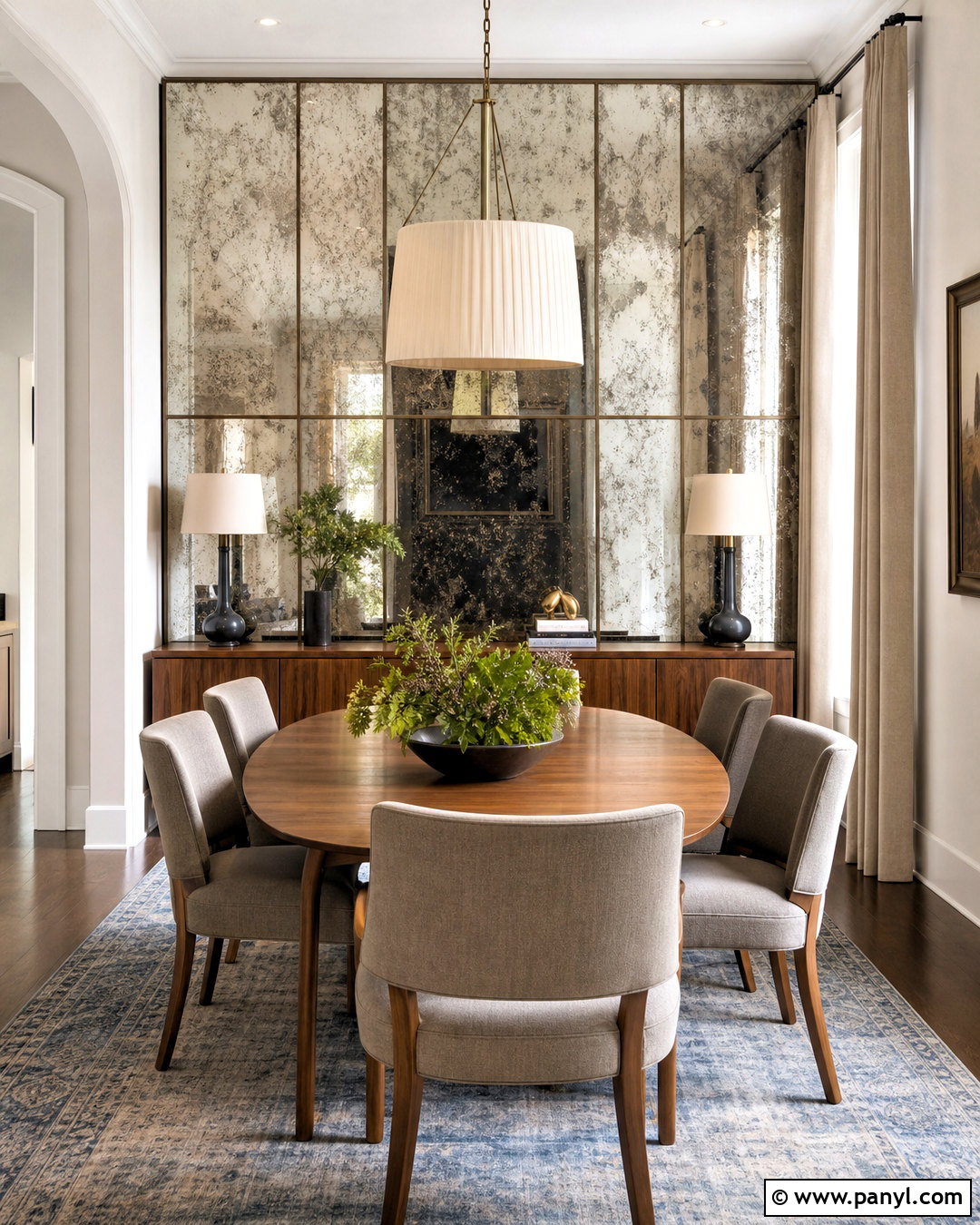
A mirror panel feature wall can make a small dining area feel more open while adding refined architectural detail. Instead of one plain sheet, use large antiqued mirror panels separated by slim black or bronze metal strips. Place a round walnut dining table in front of the wall with upholstered cream chairs and a sculptural pendant centered overhead. The softly mottled mirror finish reduces sharp reflections and contributes gentle depth. Warm greige paint, light oak flooring, and a textured neutral rug keep the setting comfortable rather than formal. Position a narrow sideboard on the adjacent wall so the mirrored surface remains mostly visible. Use the same metal finish on the light fixture and cabinet hardware. This coordinated design expands the room visually while giving it a distinctive focal point.
20. Upholstered Bedroom Feature Wall
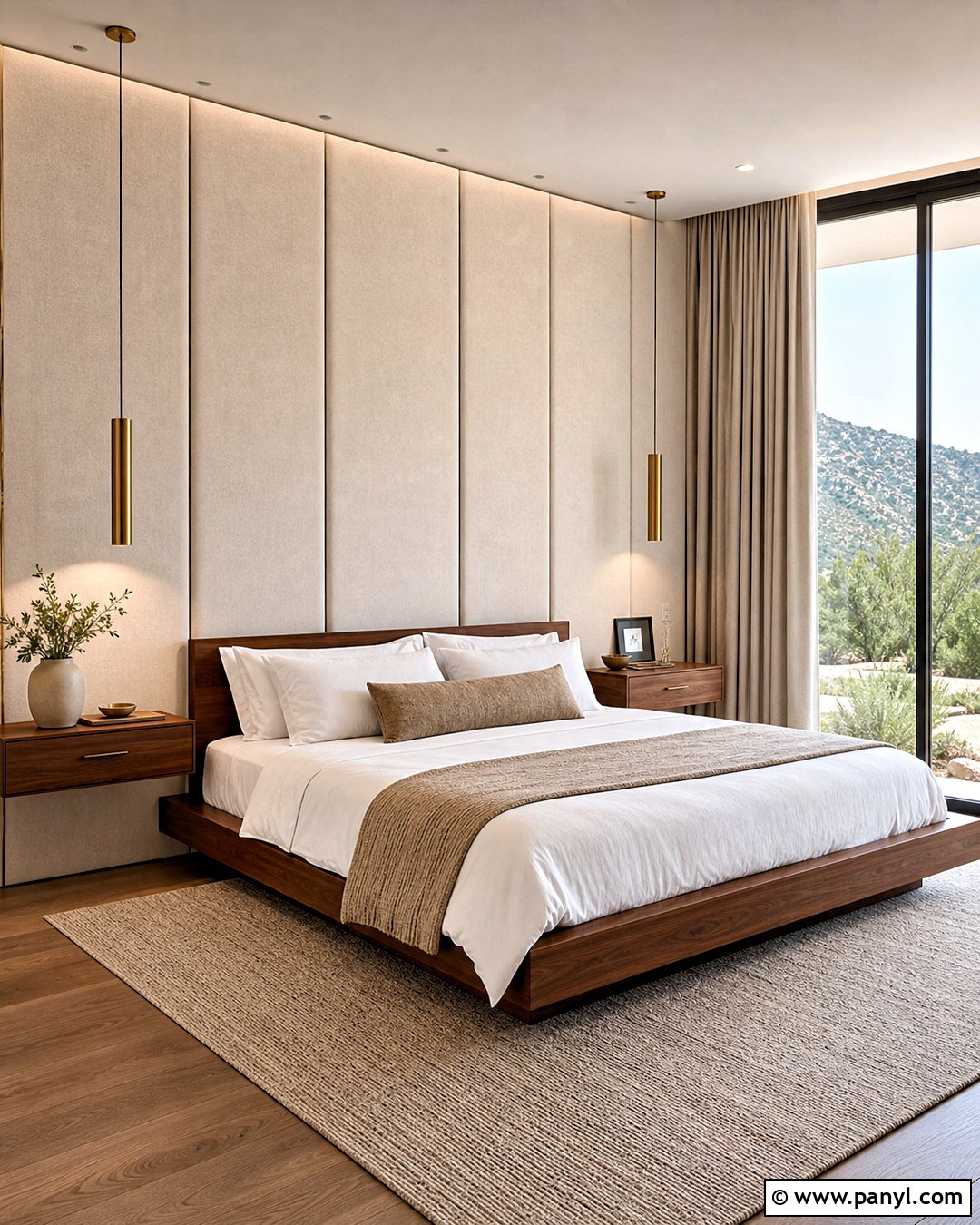
An upholstered feature wall creates a soft, comfortable focal point that is especially suited to a modern primary bedroom. Install wide vertical panels covered in durable oatmeal, pale taupe, or muted blue fabric across the full wall behind the bed. Select lightly padded panels with narrow seams instead of deep tufting for a clean appearance. Add a low walnut platform bed and layer it with white sheets, a textured beige coverlet, and a few tonal pillows. Floating nightstands keep the floor open, while small brass pendants provide warm bedside lighting. Use a wool rug, blackout linen curtains, and simple ceramic accessories to complete the restful palette. The fabric wall introduces texture and helps the sleeping area feel enclosed, finished, and intentionally designed.
Conclusion:
The best 20 modern feature wall ideas create more than a quick burst of color. They strengthen the room’s layout and coordinate with its furniture, lighting, flooring, and practical needs. Wood slats, plaster, stone, wallpaper, molding, tile, and built-ins each offer a different balance of texture and impact. Before starting, consider the wall’s size, nearby natural light, installation requirements, and how easily the finish can be maintained. Test colors and material samples in the actual room whenever possible. Most importantly, choose a treatment that fits the home instead of copying a trend exactly. A carefully planned feature wall should look intentional from every angle and support a complete, comfortable space for years.

Related Ideas and Inspiration:
Leave a Reply