
A well-designed feature wall can turn a practical bathroom into a room with personality, depth, and a clear focal point. The strongest 20 bathroom feature wall ideas go beyond adding one bold material. They connect wall color, tile, vanity finishes, lighting, flooring, and fixtures into a complete look. Current bathroom design is leaning toward tactile surfaces, saturated colors, handcrafted tile, natural stone, wood details, and expressive wallpaper rather than plain white walls. () Whether you are renovating a primary bath or refreshing a compact powder room, there is an option for every budget and layout. Use these complete, practical schemes to find the right balance of pattern, texture, color, and function among these **20 bathroom feature wall ideas**.
1. Green Tile Bathroom Feature Wall
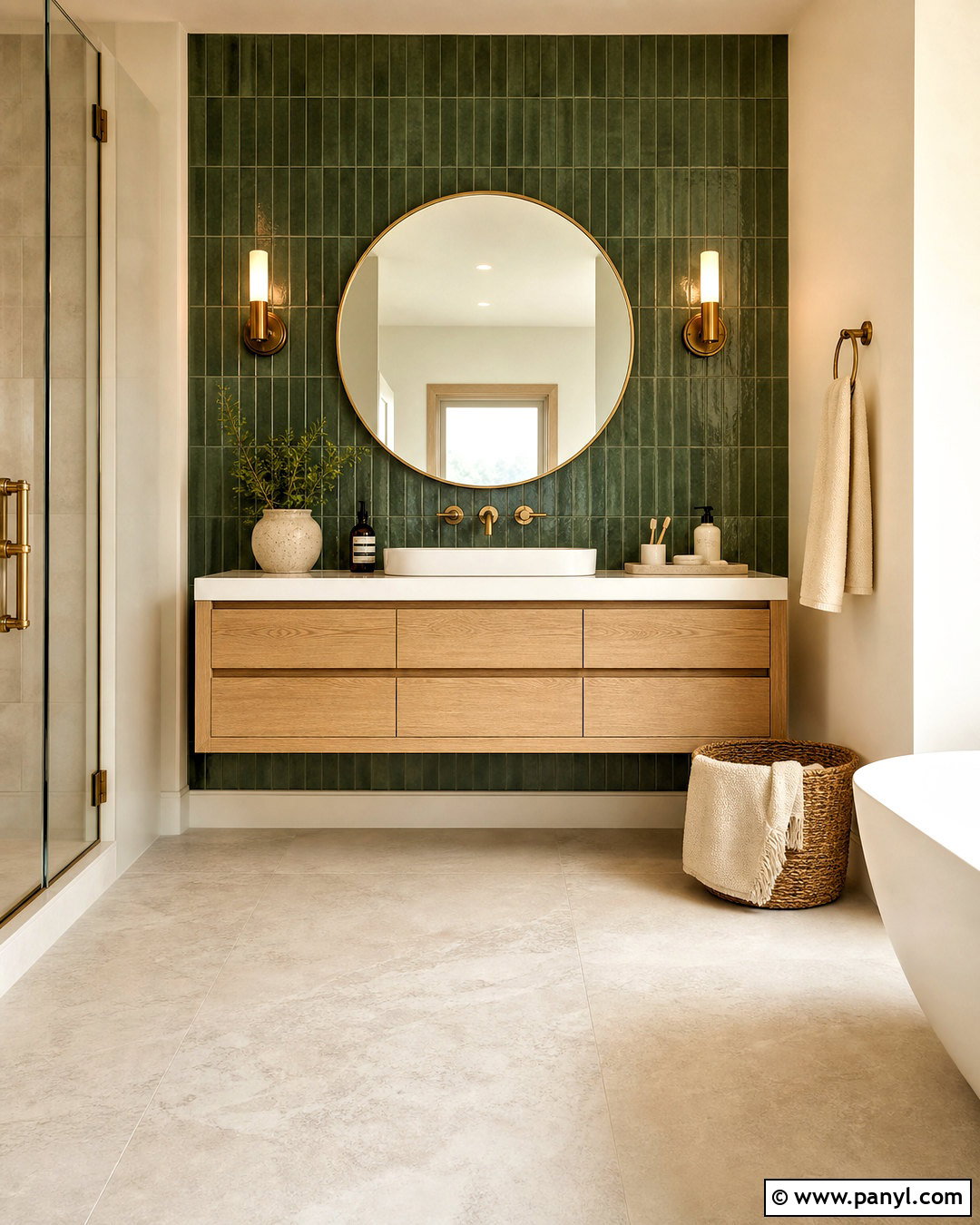
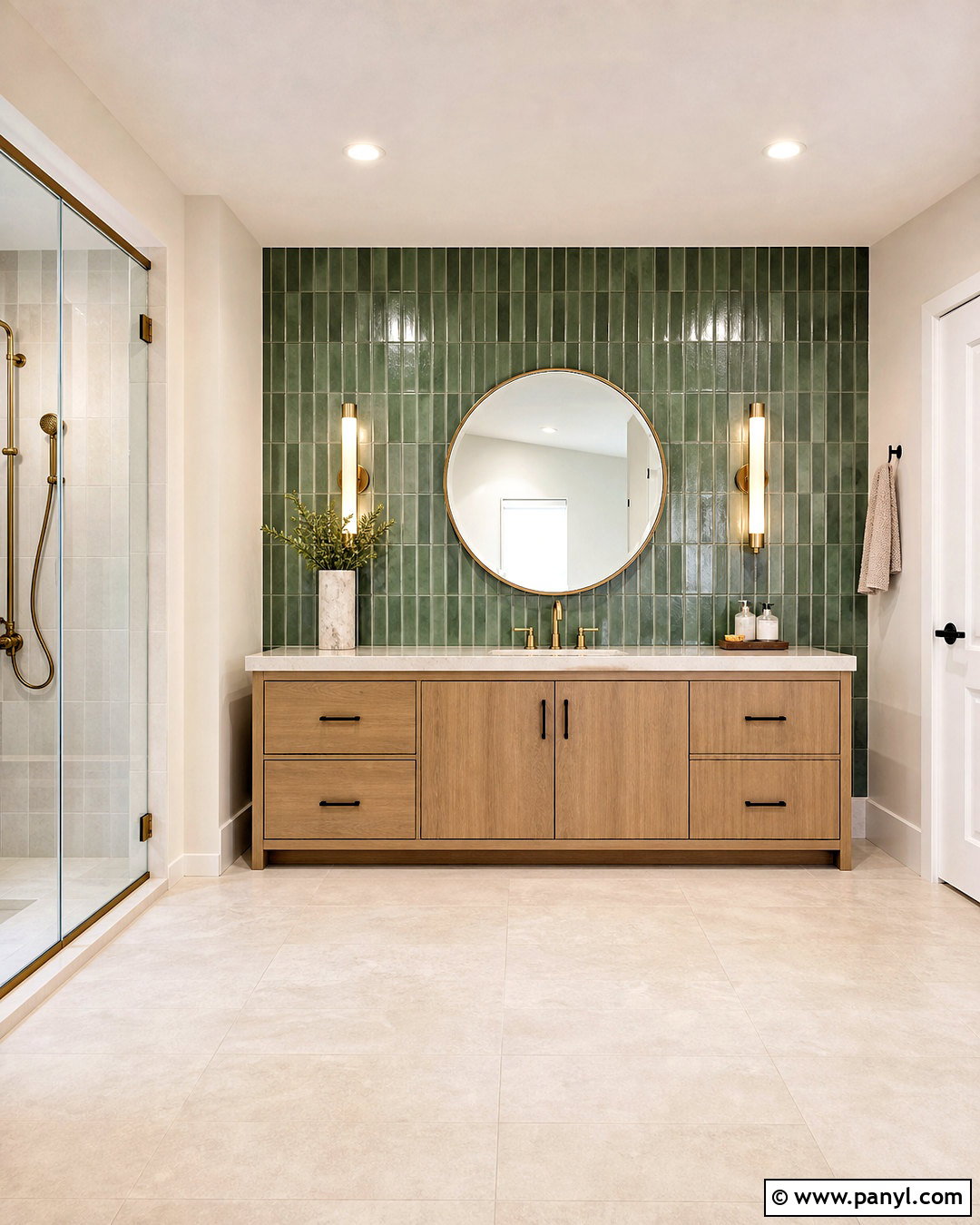
Glossy forest green tile creates a rich focal point without making the entire bathroom feel dark. Install rectangular tiles vertically behind a floating oak vanity to emphasize height. Continue the tile from the countertop to the ceiling, framing a large round mirror with slim brass sconces. Warm white paint on the surrounding walls keeps the green balanced, while pale limestone-look flooring adds a calm, natural base. Choose an off-white quartz countertop and an undermount sink so the vanity area remains clean and practical. Brushed brass faucets introduce warmth, but use them sparingly to avoid an overly ornate result. Finish the room with cream towels, a woven storage basket, and one leafy plant that repeats the feature wall’s organic color.
2. Marble Slab Bathroom Feature Wall
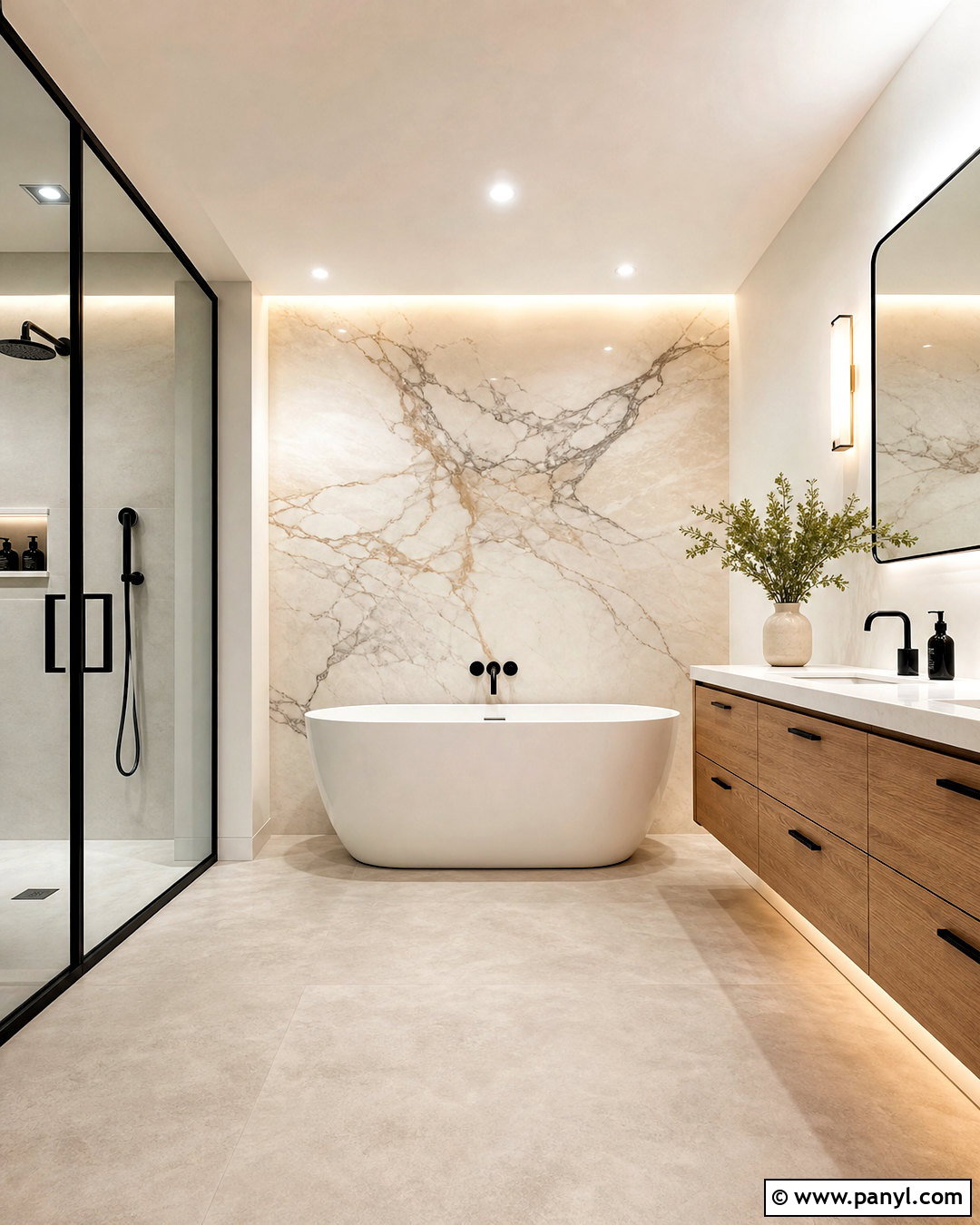
For a polished, seamless look, place a marble slab or realistic marble-look porcelain panel behind a freestanding bathtub. Select warm white stone with soft gray and beige veining rather than a sharply contrasting pattern. This allows the wall to feel luxurious without overwhelming the bathroom. Pair it with a light oak vanity, creamy porcelain flooring, and simple warm white walls. A matte black tub filler can add definition, while brushed nickel creates a quieter result. Keep accessories minimal so the stone remains the visual focus. Two narrow wall sconces or discreet ceiling lighting will illuminate the veining evenly. Large panels also reduce visible grout lines, creating a smooth background that works especially well in contemporary, transitional, and spa-inspired bathrooms.
3. Blue Herringbone Bathroom Feature Wall
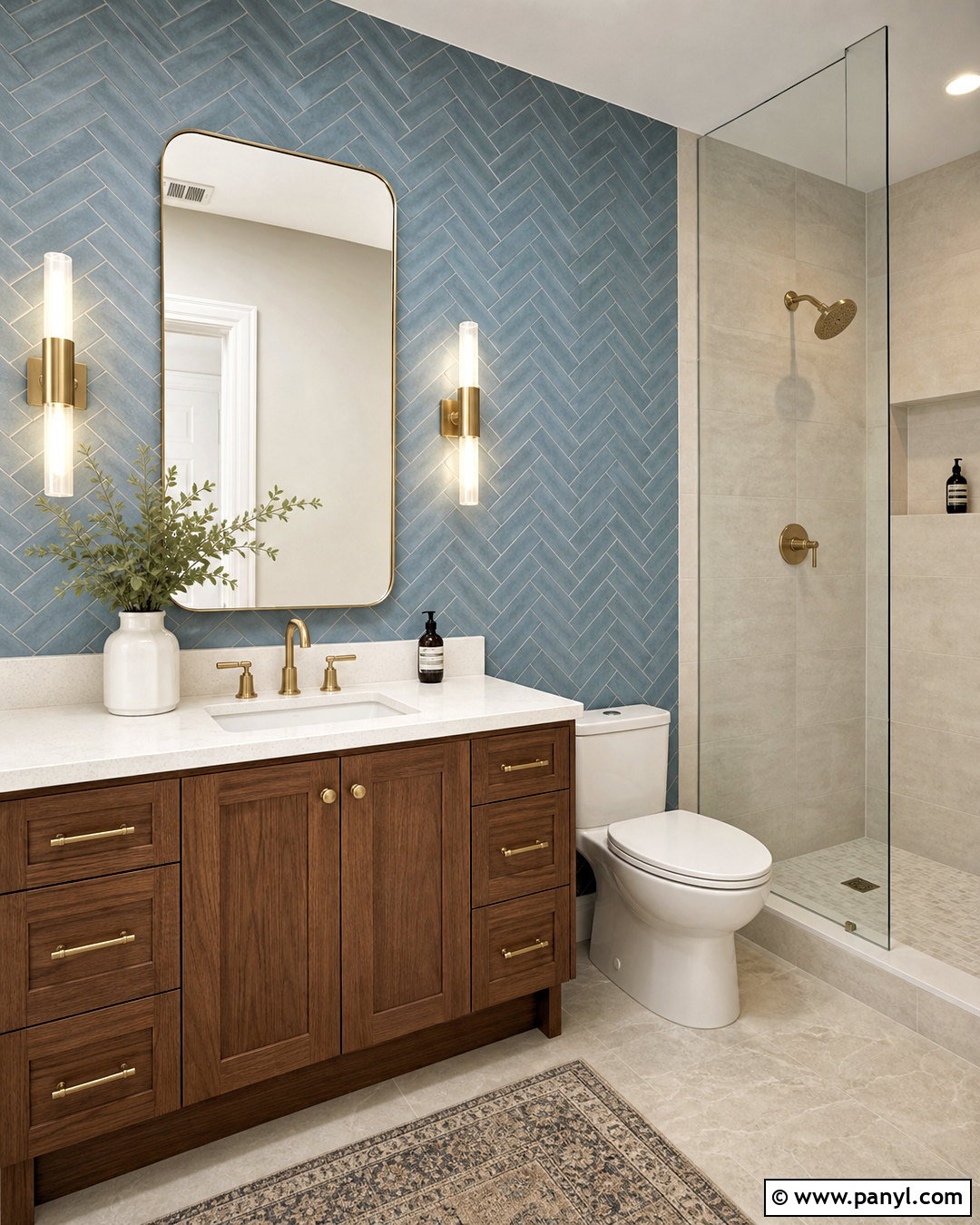
A dusty blue herringbone wall can bring movement and color into a bathroom while maintaining a relaxed atmosphere. Use the tile inside the shower or directly behind the vanity, extending it to the ceiling for a finished appearance. Choose white or pale gray grout to define the diagonal pattern without producing harsh contrast. A walnut vanity adds warmth, while white quartz countertops and brushed brass fixtures keep the overall palette bright. Use simple off-white tile on the other wet-area walls so the herringbone design remains the main attraction. Medium-toned stone flooring grounds the room and hides everyday marks. Complete the look with a frameless glass shower panel, a rounded mirror, soft white towels, and understated artwork outside the splash zone.
4. Botanical Wallpaper Bathroom Feature Wall
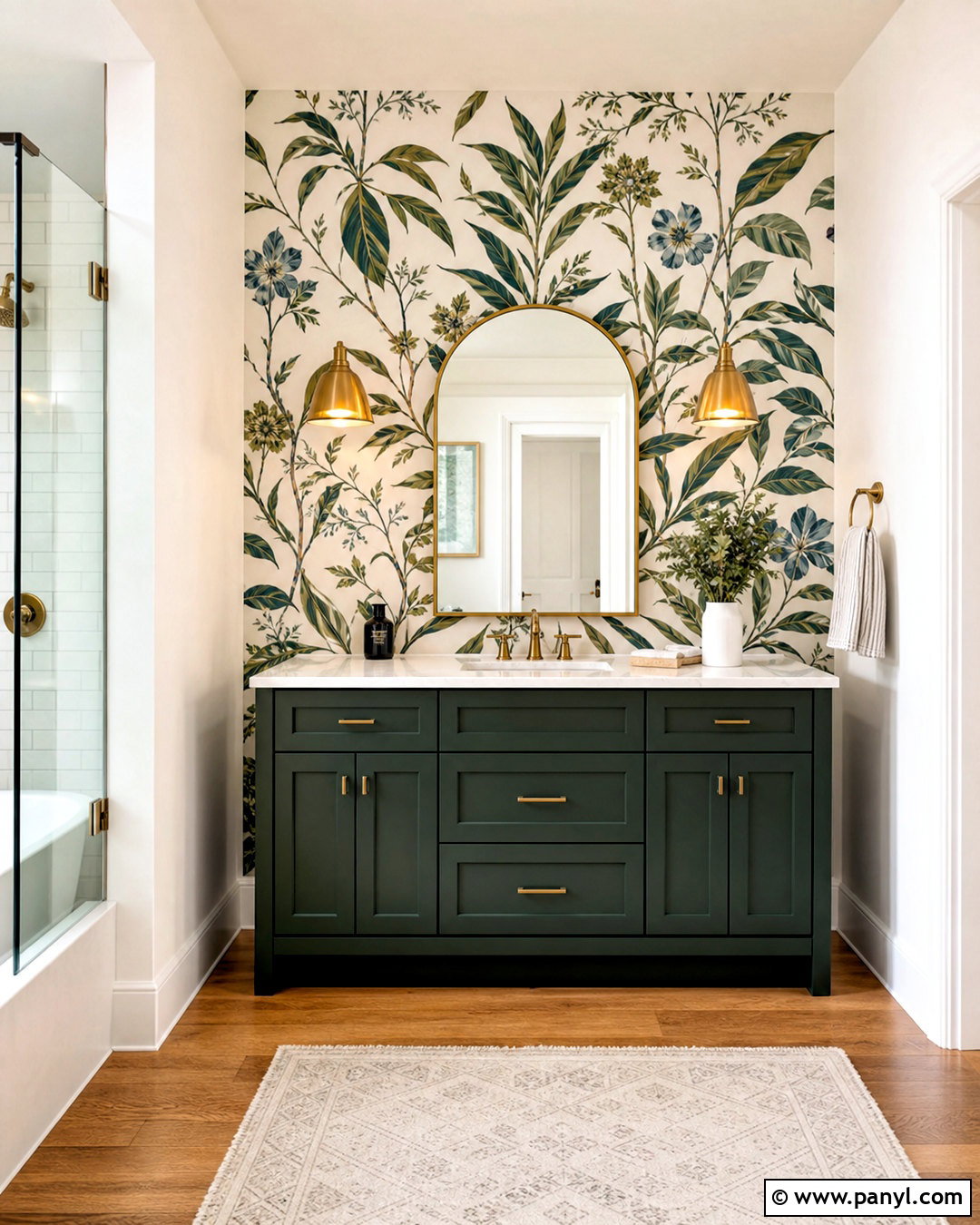
Large-scale botanical wallpaper can give a small bathroom a complete identity with relatively little construction. Place a bathroom-suitable paper behind the vanity or toilet, choosing a pattern with deep green leaves, warm cream details, and small touches of muted blue. Paint the remaining walls a creamy white pulled directly from the print. A dark green vanity creates continuity, while a white countertop prevents the palette from becoming heavy. Add a simple brass-framed mirror, warm metal sconces, and medium oak flooring or stone-look tile. In a full bathroom, reserve wallpaper for a well-ventilated area away from direct shower spray. The finished room should feel layered and fresh, with plain towels and minimal countertop decor allowing the dramatic pattern to command attention.
5. Wood Slat Bathroom Feature Wall
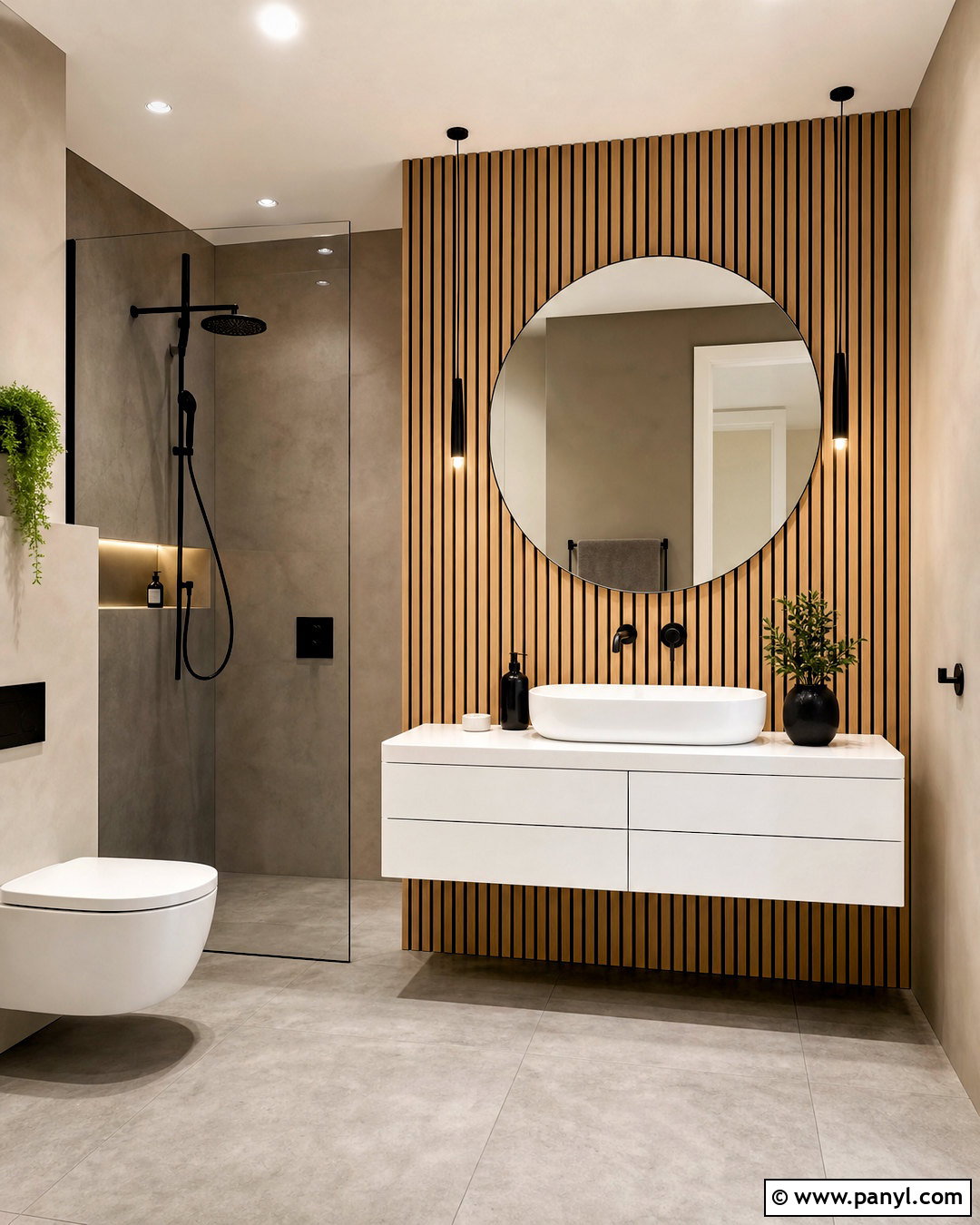
Vertical wood slats introduce welcome warmth among the hard surfaces commonly found in a bathroom. Create the feature behind a floating vanity, using sealed light oak or convincing wood-effect panels suited to the room’s conditions. Narrow black gaps between the slats add rhythm and make a frameless round mirror stand out. Pair the wall with a matte white vanity top, concrete-look floor tile, and warm greige paint elsewhere. Matte black faucets and sconces provide crisp contrast, while a white vessel sink keeps the design light. Limit additional wood finishes to one or two matching pieces, such as a stool or open shelf. The result is a modern, balanced bathroom that combines natural character with simple lines and practical storage.
6. Black Tile Bathroom Feature Wall
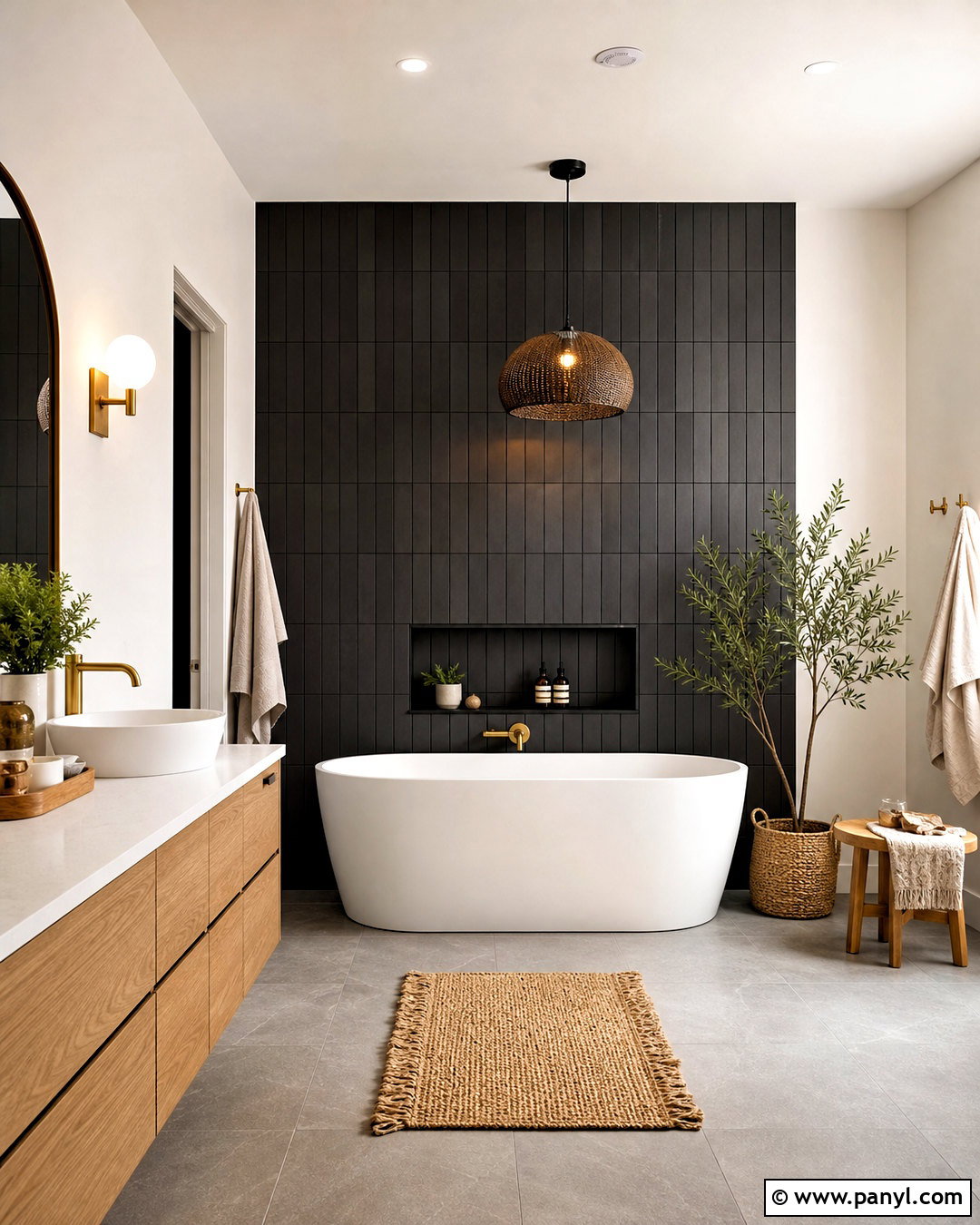
A black feature wall feels sophisticated when the surrounding bathroom includes enough warmth and light. Use matte charcoal subway tile behind a white freestanding tub, stacking it vertically to create a clean contemporary pattern. Soft white walls, pale gray floor tile, and a medium oak vanity prevent the room from appearing closed in. Choose white grout for graphic contrast or charcoal grout for a quieter surface. Brushed brass fixtures add warmth, although polished chrome can create a sharper modern finish. Install bright ceiling lights and a pair of wall sconces to reveal the tile’s texture. Finish with white towels, a natural wood bath tray, and restrained greenery. This high-contrast scheme works particularly well in bathrooms with good natural or layered artificial light.
7. Terrazzo Bathroom Feature Wall
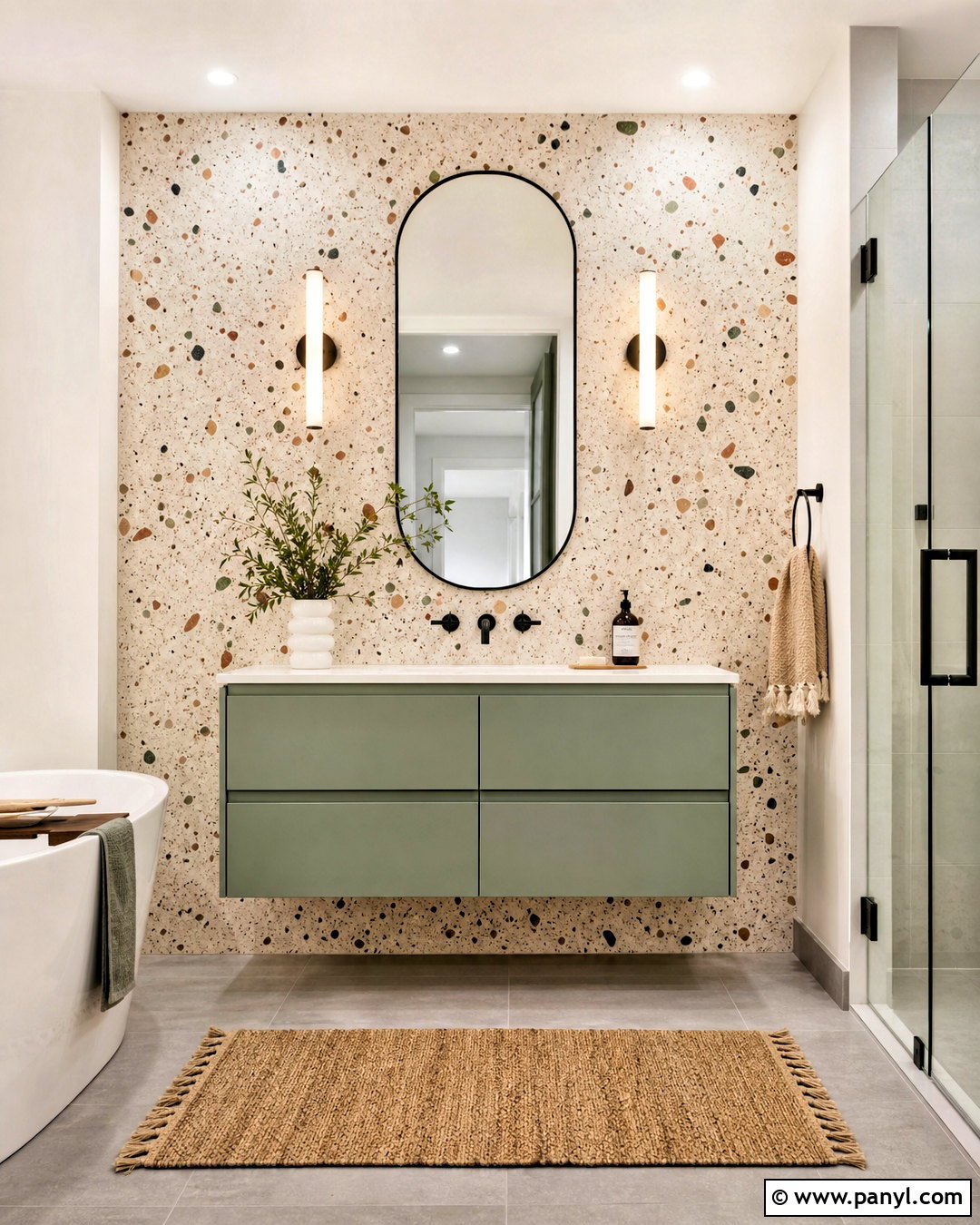
Terrazzo creates an energetic bathroom focal point while offering an easy palette for the rest of the room. Cover the wall behind the vanity with large-format terrazzo-look porcelain featuring a cream base and scattered rust, sage, charcoal, and tan chips. Select one chip color for the vanity, such as muted sage green, then keep the countertop and sink simple white. Warm gray flooring will ground the room without introducing another competing pattern. Use brushed nickel or matte black fixtures depending on whether you prefer a softer or bolder finish. A wide pill-shaped mirror echoes the rounded terrazzo fragments. Keep towels, storage, and accessories mostly neutral, allowing the colorful wall and coordinating vanity to establish a playful but organized mid-century-inspired design.
8. Fluted Tile Bathroom Feature Wall
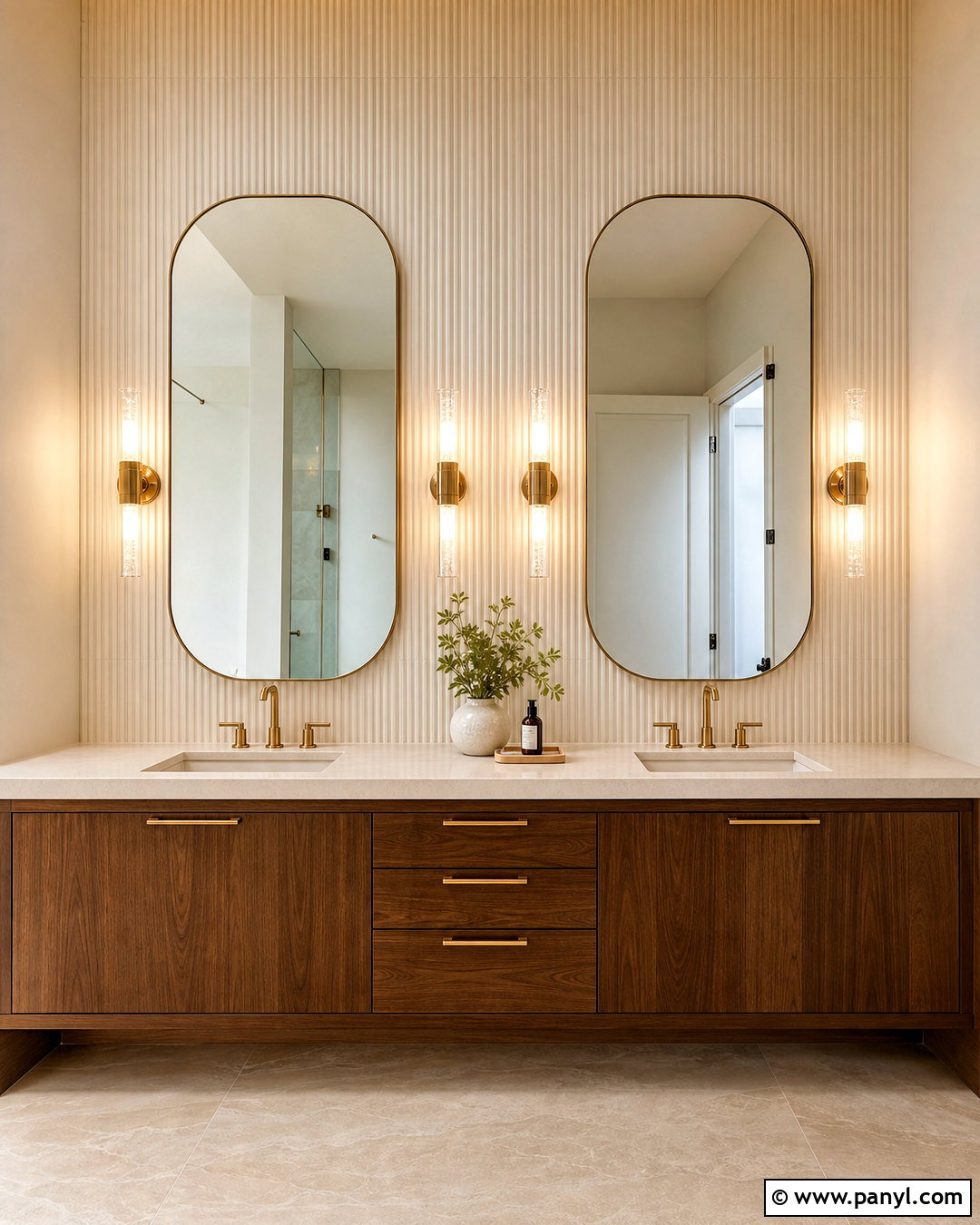
Fluted tile adds texture through raised vertical ridges rather than a busy printed pattern. Use warm ivory or pale sand fluted tile behind a double vanity, continuing it from the counter to the ceiling. The repeating grooves will create gentle shadows around two rounded mirrors and slim brass sconces. Choose a walnut vanity with flat-front drawers and a creamy quartz countertop to support the wall’s warm, tailored character. Large beige porcelain floor tiles keep grout lines minimal and allow the textured surface to remain prominent. Paint adjacent walls in a matching warm white. Because deeply ridged surfaces can require extra cleaning, position this wall outside the heaviest splash zone when possible. The completed room feels refined, soft, and architectural without relying on dramatic color.
9. Navy Painted Bathroom Feature Wall
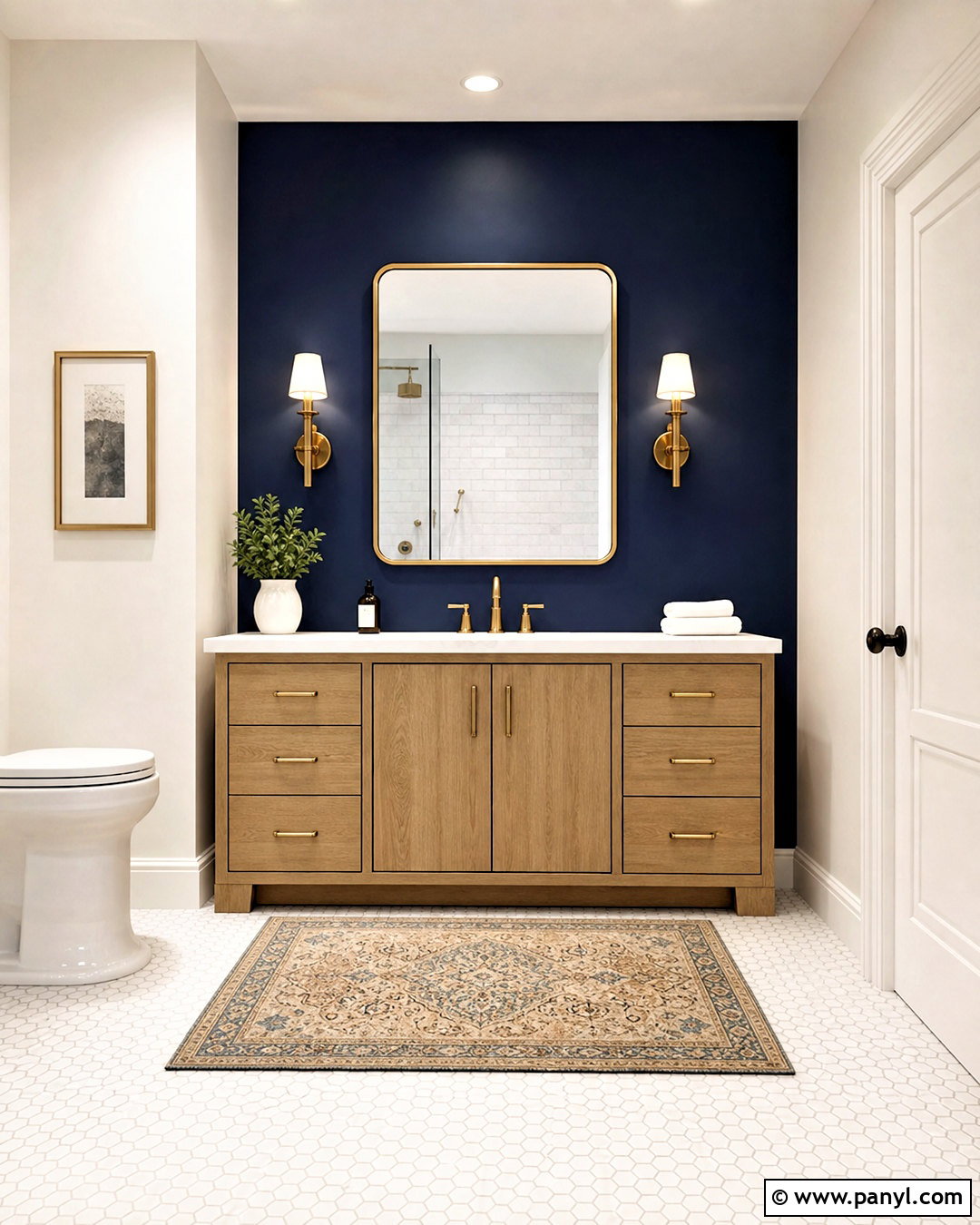
Paint offers a budget-conscious way to build a complete feature wall around an existing vanity. Apply deep navy bathroom paint to the wall behind a white or pale oak vanity, then keep the remaining walls crisp warm white. A large brass-framed mirror and matching sconces will stand out clearly against the saturated background. Choose white quartz counters, polished nickel or brass faucets, and small-scale white floor tile to maintain brightness. Add a navy-and-cream Roman shade if the bathroom has a window, repeating the feature color without covering every surface. Simple framed artwork can complete the wall in a dry area. This scheme is easy to update later, yet it still feels intentional because the fixtures, textiles, flooring, and cabinetry support the central color.
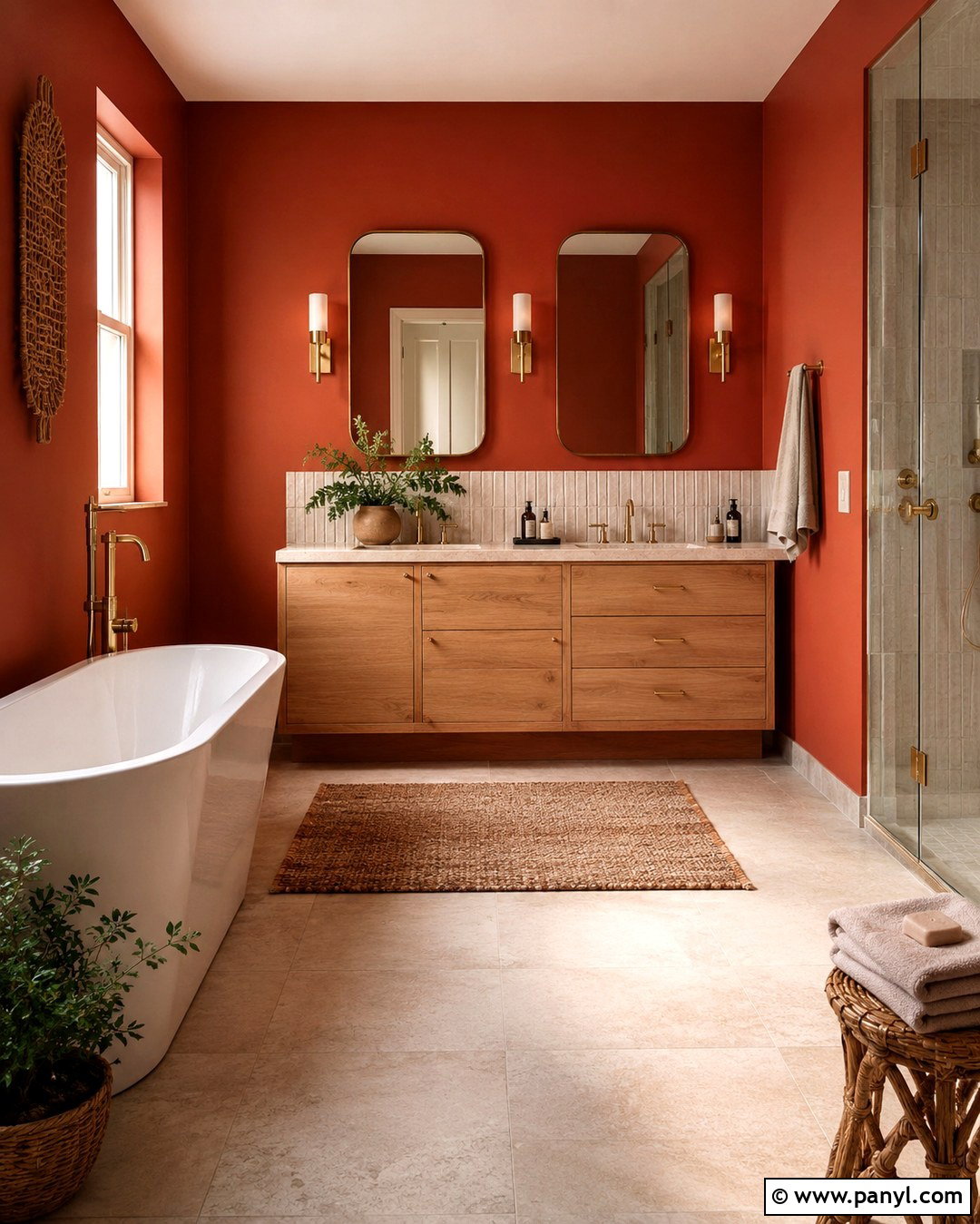
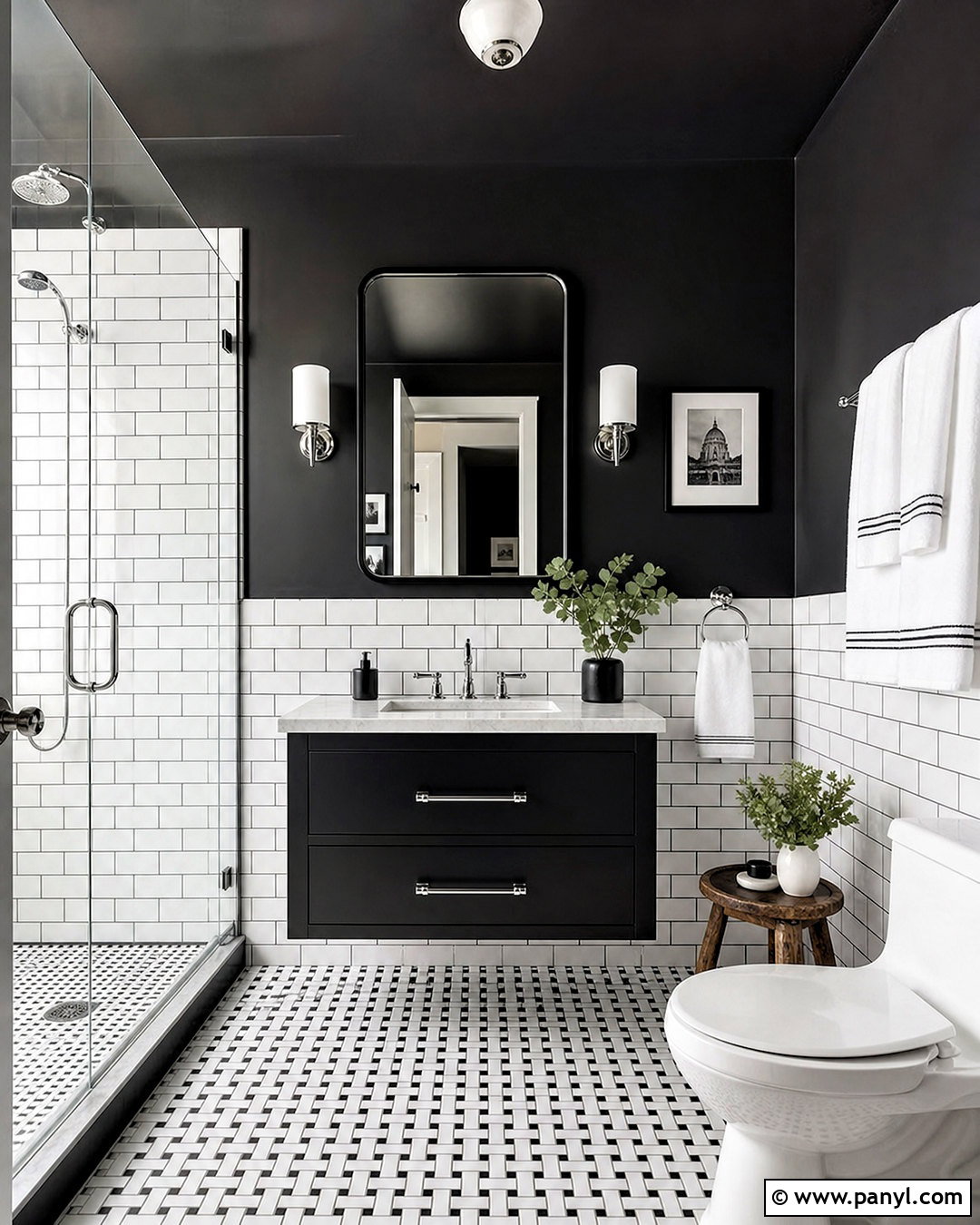
10. Board And Batten Bathroom Feature Wall
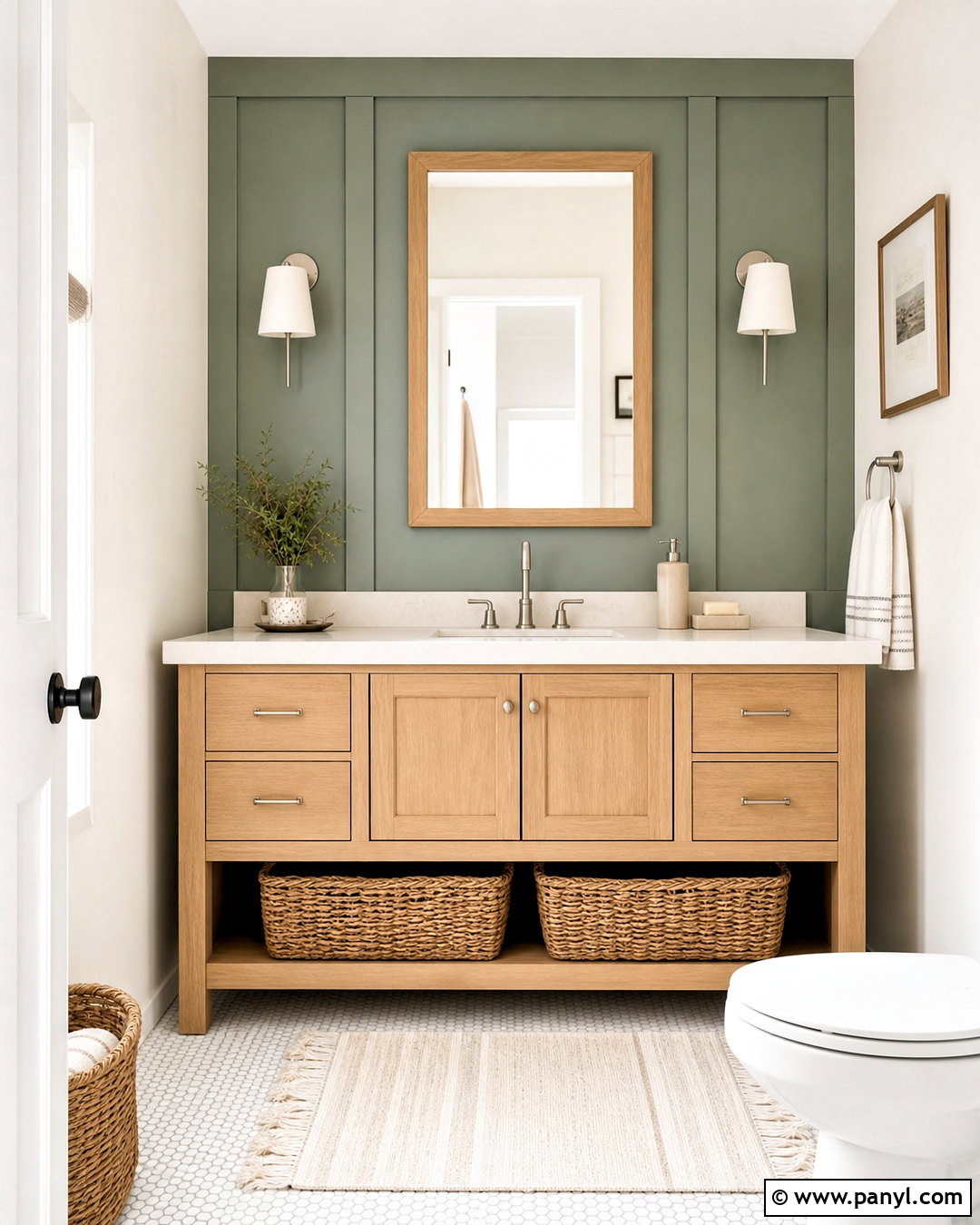
Board and batten gives a plain wall useful depth while fitting traditional, coastal, and transitional bathrooms. Install moisture-appropriate paneling behind the vanity or toilet, taking it either two-thirds of the way up or fully to the ceiling. Paint it a muted sage green and use soft ivory on the remaining walls. A white oak vanity, pale quartz countertop, and brushed nickel faucet create a light, approachable palette. Add a simple rectangular mirror with a thin wood frame, plus shaded wall sconces for gentle illumination. White penny tile flooring introduces subtle pattern without competing with the panel details. Complete the room with cream towels, woven baskets, and minimal ceramic accessories. Carefully aligned vertical battens will make the finished feature look built-in rather than decorative or temporary.
11. Zellige Tile Bathroom Feature Wall
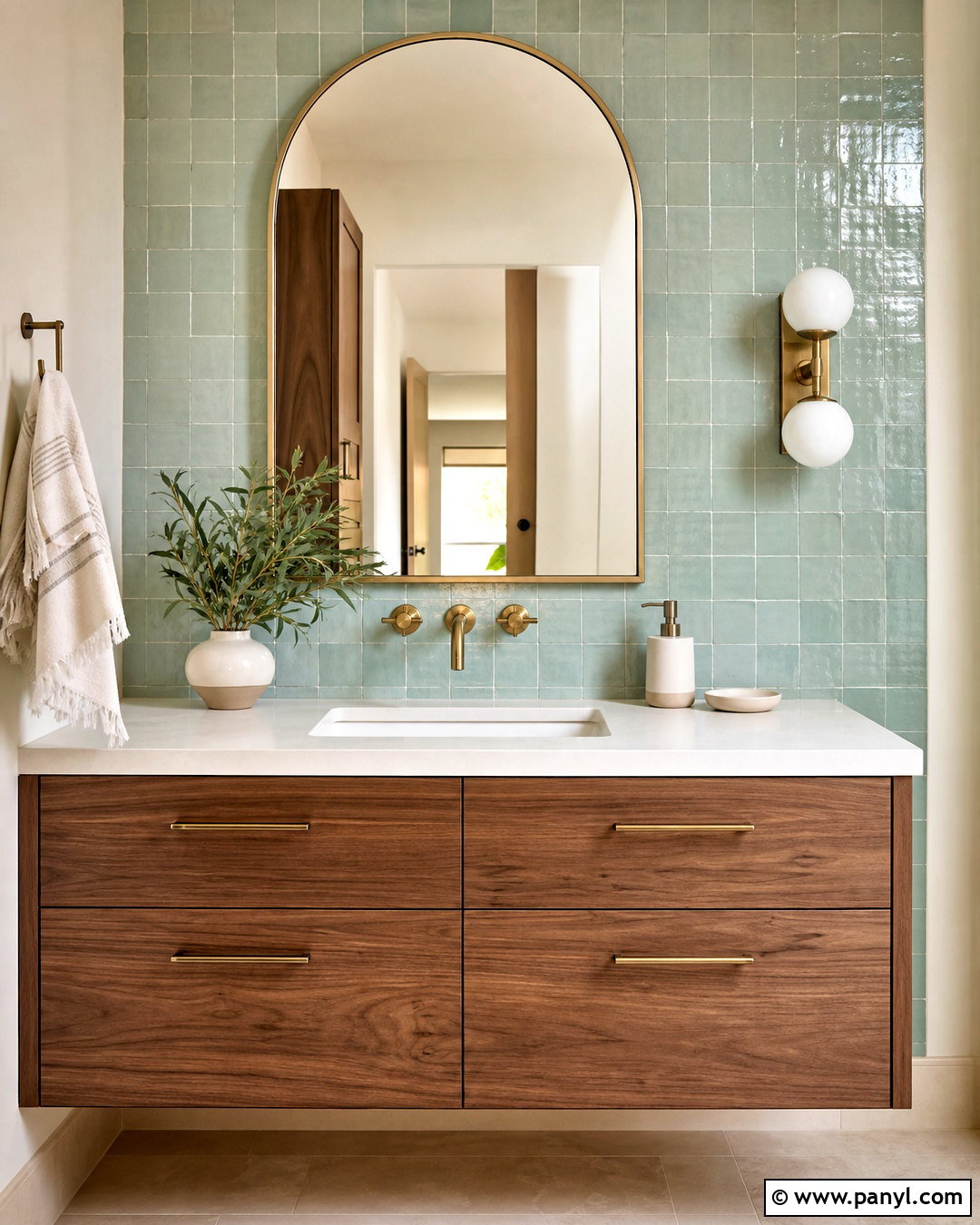
Handmade-look zellige tile brings depth through subtle color variation and softly uneven surfaces. Cover the vanity wall with square tiles in pale aqua, warm white, or muted sea green. Run them to the ceiling and use closely matched grout so the shifting glaze becomes the main detail. Pair the wall with a simple walnut vanity and creamy limestone-look flooring. A white countertop, brushed brass faucet, and arched mirror will complement the tile without competing with its reflective finish. Use warm white paint on the other walls and limit decorative objects to a small ceramic tray and folded neutral towels. Bright, even lighting is important because it allows each tile to catch light differently, giving the bathroom a handcrafted, dimensional appearance throughout the day.
12. Stone Ledge Bathroom Feature Wall
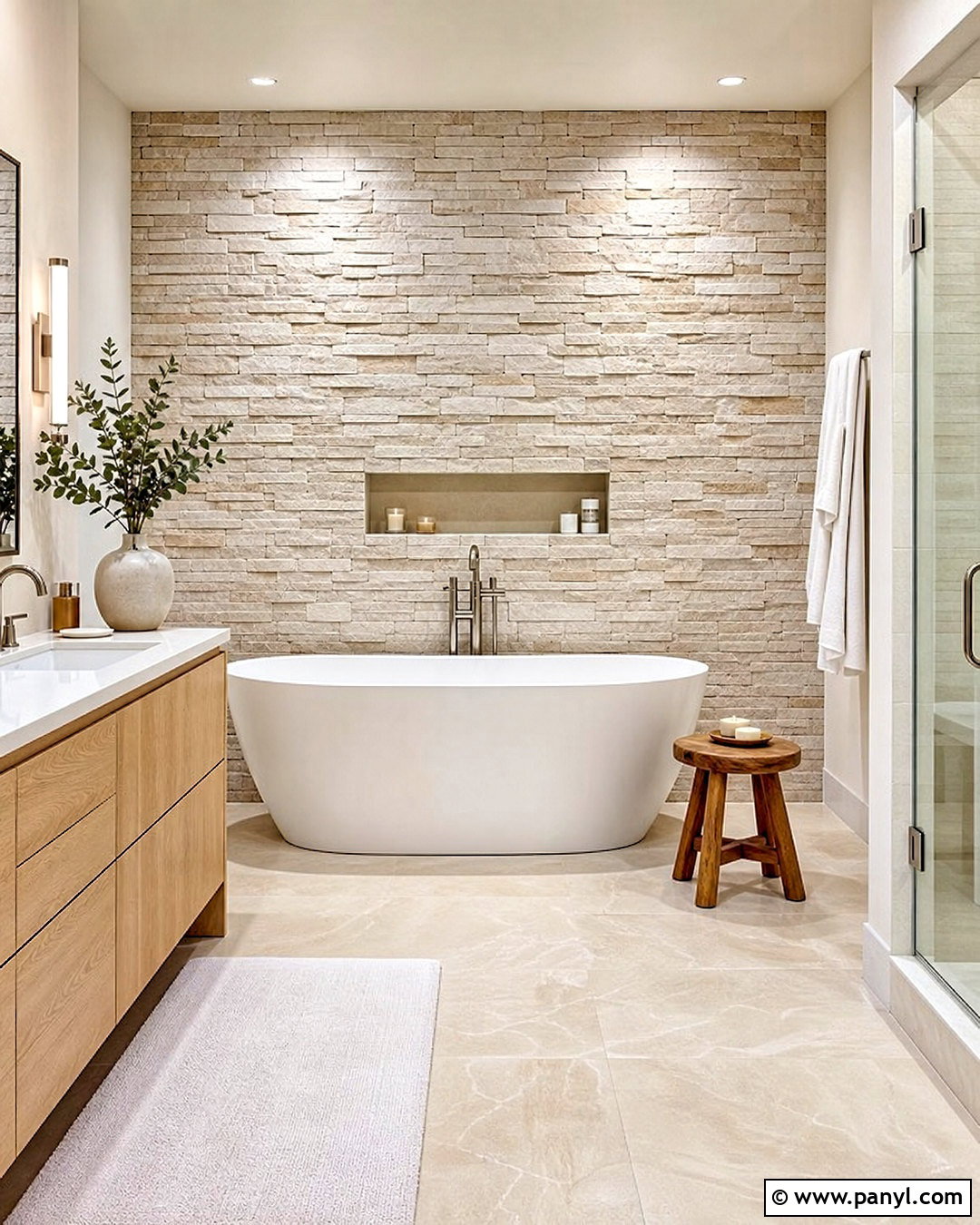
A stacked-stone feature wall can create a grounded spa setting when the material and surrounding finishes remain restrained. Install slim limestone ledgestone behind a freestanding tub, using pale beige and soft taupe tones rather than heavily contrasted pieces. Pair it with a light oak vanity, large cream floor tiles, and warm off-white walls. A smooth white bathtub will provide a clean contrast against the irregular stone texture. Choose brushed nickel fixtures to keep the palette calm and contemporary. Recessed ceiling lighting can wash evenly across the surface, highlighting its depth without dramatic shadows. Add one teak stool, rolled white towels, and a simple plant in a stone planter. Avoid additional patterns so the natural-looking wall remains the room’s clear architectural focus.
13. Geometric Tile Bathroom Feature Wall
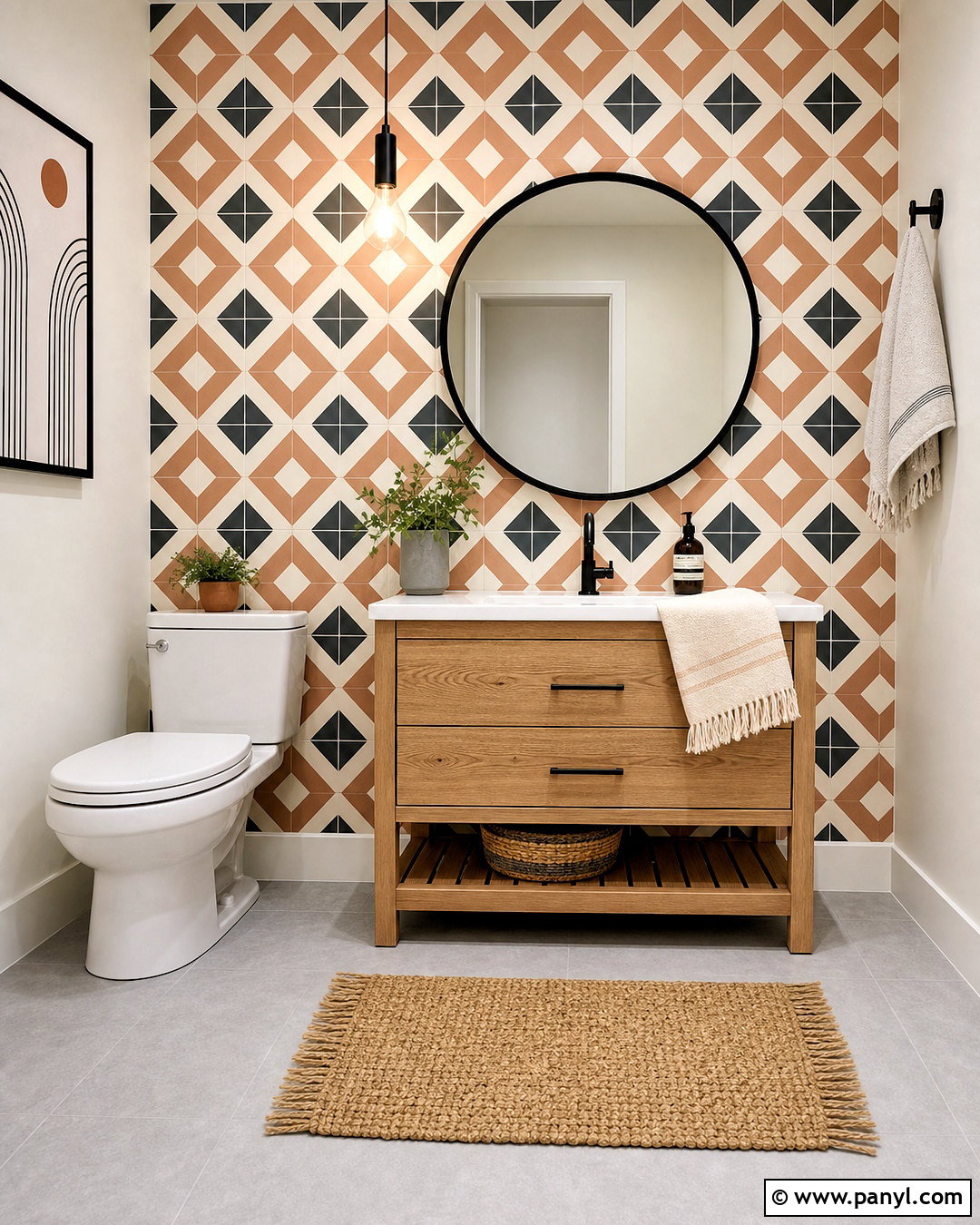
Geometric tile works best when its palette connects directly to the rest of the bathroom. Choose a repeating hexagon, fan, or diamond pattern in cream, muted terracotta, and charcoal for the wall behind a compact floating vanity. Select a terracotta vanity or natural oak cabinet to repeat one of the warmer tile colors. Keep adjacent walls soft white and use plain light gray flooring so the room does not feel visually crowded. A round black-framed mirror balances the angular pattern, while black faucets and sconces add definition. Use closed storage and minimal countertop accessories to maintain an orderly finish. This complete look suits a guest bathroom or powder room where a concentrated area of pattern can make a memorable impression without dominating a larger space.
14. White Brick Bathroom Feature Wall
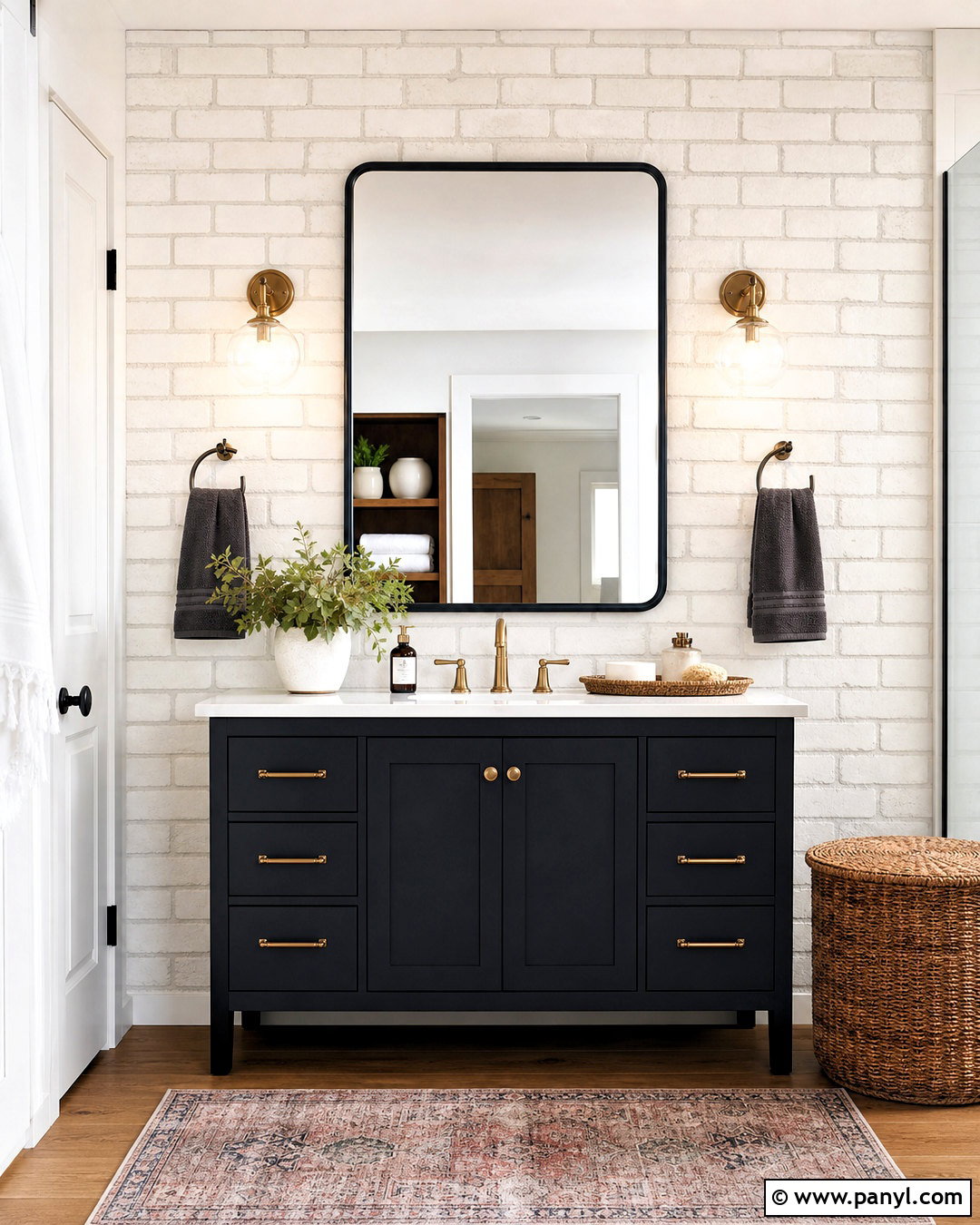
White brick adds character and texture while preserving the bright appearance many homeowners want in a bathroom. Use thin brick veneer or brick-look porcelain behind a black vanity, then paint or select it in a warm, chalky white. Soft gray grout can reveal the pattern without looking too busy. Pair the wall with medium oak flooring, a white quartz counter, and brushed brass fixtures for an inviting industrial-farmhouse combination. A large rectangular mirror with a thin black frame will connect the dark vanity to the lighter wall. Install clear glass sconces and bright overhead lighting so the uneven texture does not cast heavy shadows. Finish the room with white towels, a woven hamper, and one natural wood shelf carrying simple, practical bathroom items.
15. Coastal Blue Tile Bathroom Feature Wall
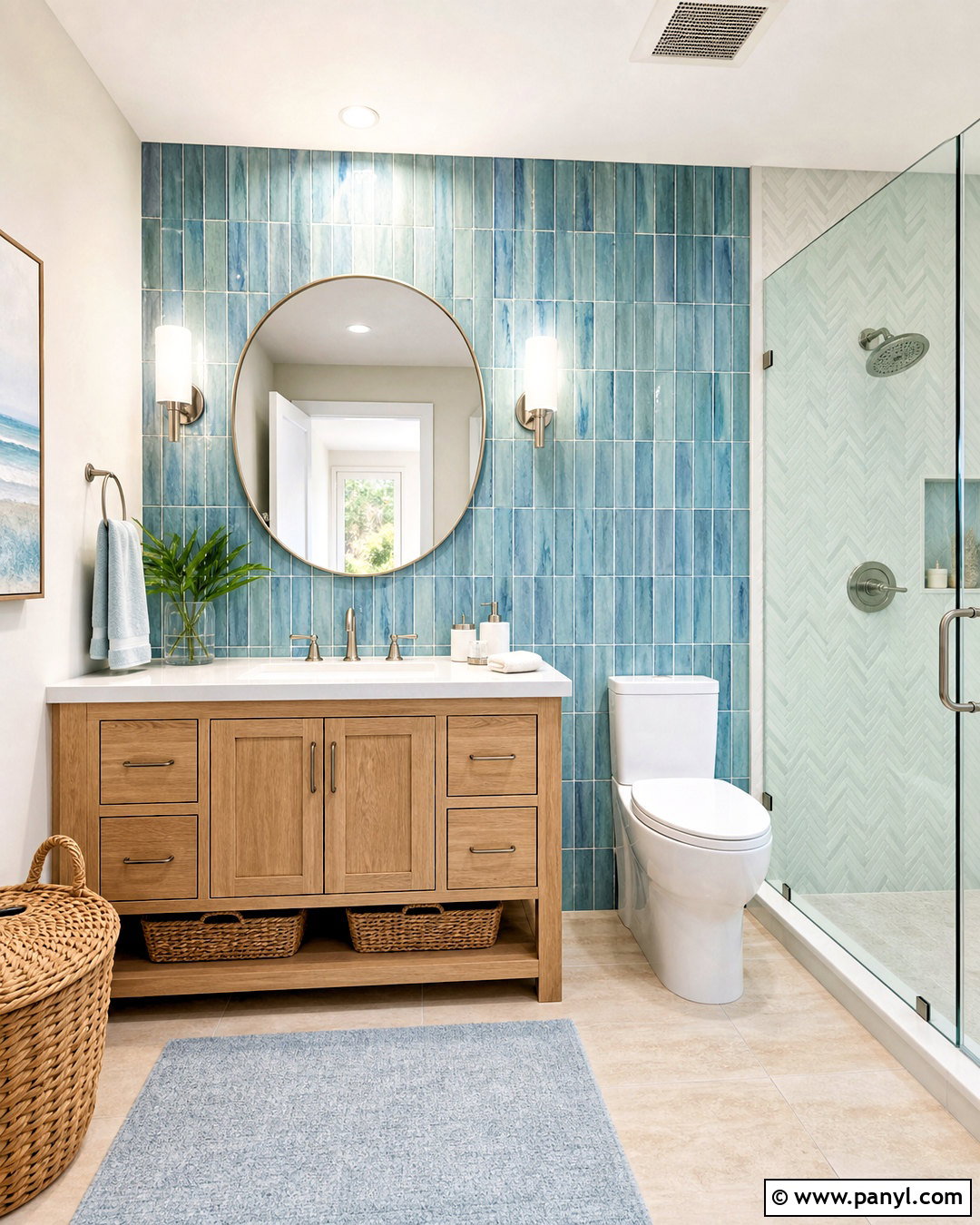
Sea-glass blue tile can create a fresh coastal bathroom without relying on obvious themed accessories. Install elongated rectangular tiles vertically behind the vanity or across the main shower wall. Look for soft aqua, pale turquoise, and cloudy blue variations that resemble changing water tones. Pair the tile with a white oak vanity, white countertop, and sandy beige floor tile. Brushed nickel fixtures support the cool palette, while woven baskets and light wood accessories add warmth. Keep the remaining walls a clean creamy white rather than blue, ensuring the feature remains distinct. A rounded mirror and simple globe sconces will soften the straight tile layout. Complete the room with white cotton towels and subtle striped textiles instead of shells, signs, or overly literal coastal decorations.
16. Floral Mural Bathroom Feature Wall
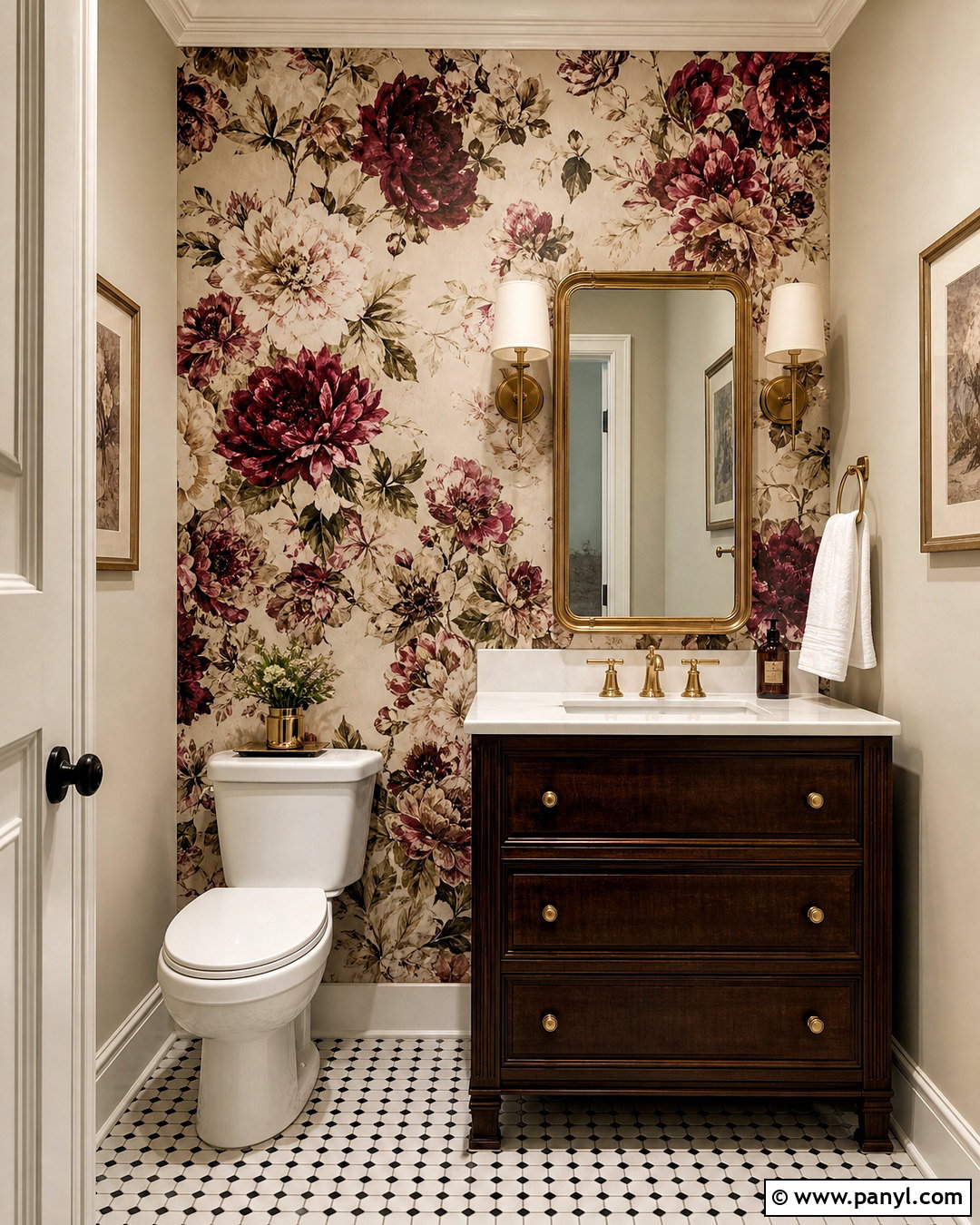
A floral mural can transform a powder room into a layered decorative space. Choose an oversized painted-style design featuring burgundy, dusty pink, olive green, and cream flowers on a deep background. Install it behind a slim burgundy or dark walnut vanity, allowing the cabinetry to blend into the mural rather than compete with it. Use warm ivory paint on adjacent walls and small black-and-white mosaic tile on the floor. An antique brass mirror and matching sconces bring softness to the darker palette. Keep the sink and countertop white to provide visual relief. Because the mural is detailed, use solid towels and very few accessories. This complete scheme delivers traditional character with a modern scale, making a small bathroom feel purposeful and memorable.
17. Concrete Bathroom Feature Wall
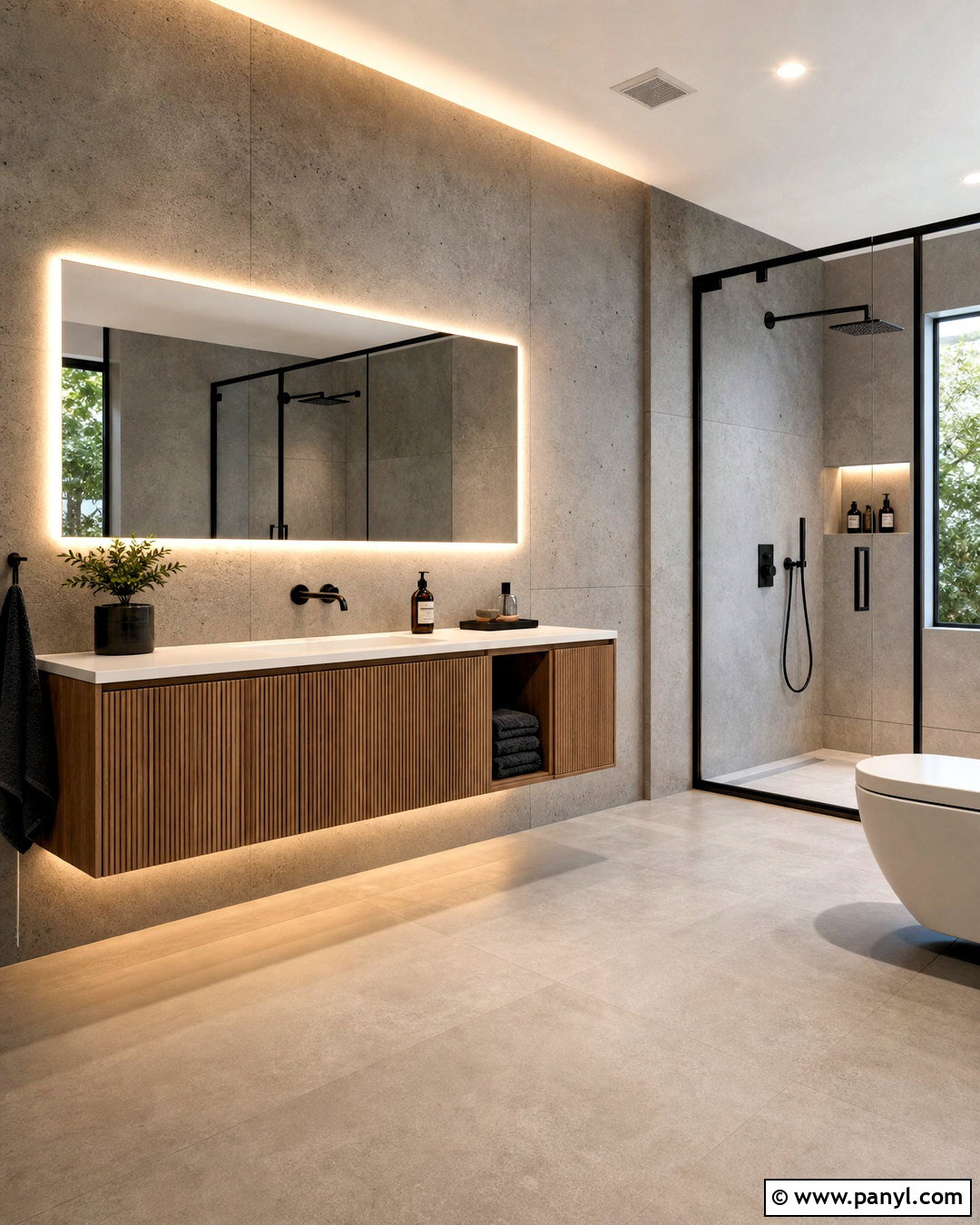
A concrete-look wall gives a modern bathroom a calm, understated focal point. Use large-format porcelain panels or a bathroom-compatible cement-effect finish behind a floating vanity and continue it from floor to ceiling. Choose a warm gray surface with gentle tonal variation rather than a cold blue-gray color. Add a ribbed oak vanity, white integrated sink, and matte black faucet for crisp contrast. Pale gray floor tile can extend the neutral palette while remaining slightly lighter than the feature wall. A wide backlit mirror will soften the concrete appearance and provide practical task lighting. Finish with warm white towels, a black-framed shower enclosure, and one simple plant. The overall room should feel minimal but comfortable, with texture replacing decorative clutter or strong pattern.
18. Pink Tile Bathroom Feature Wall
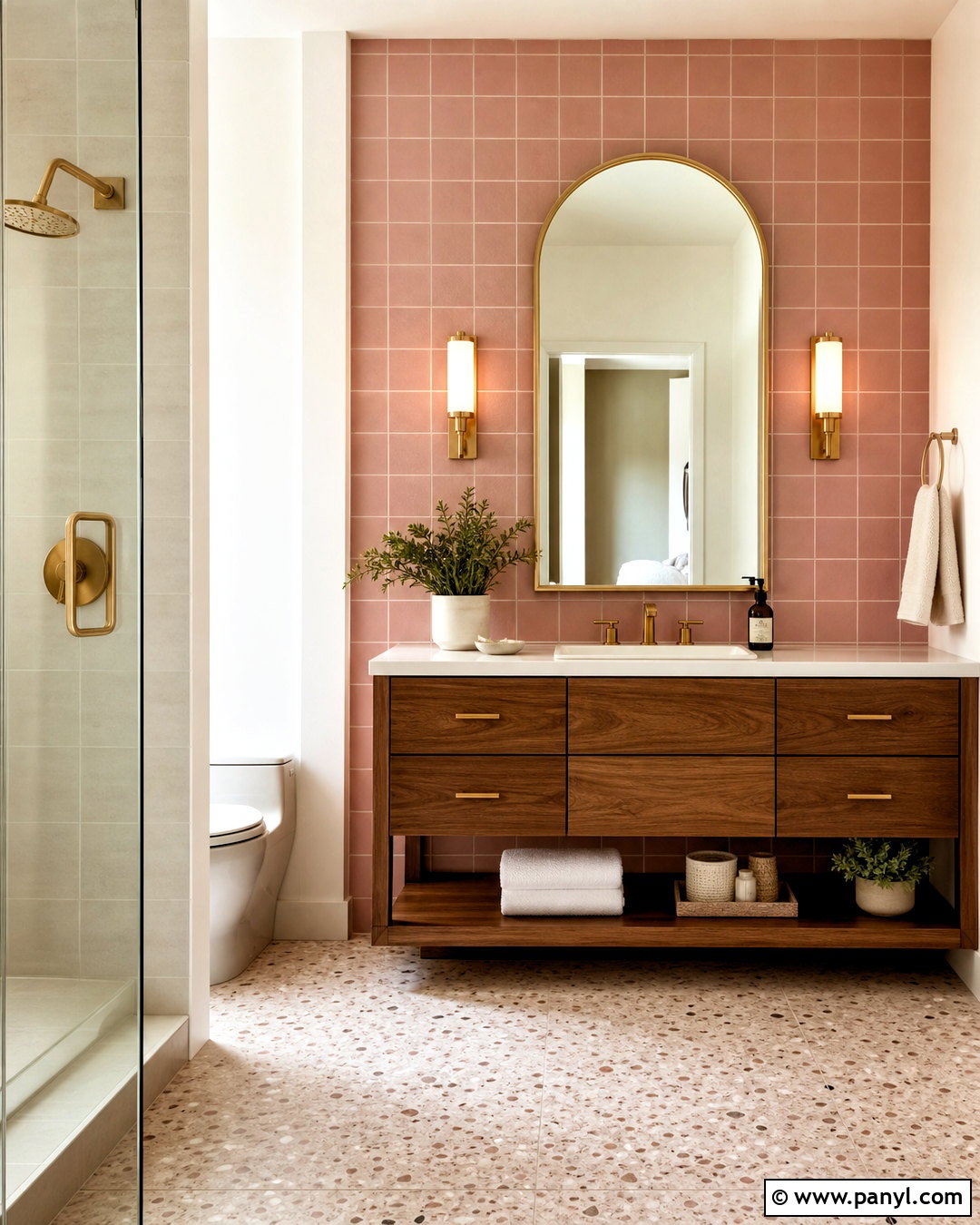
Muted pink tile creates a warm, flattering bathroom without making the room feel overly sweet. Use blush or dusty rose square tiles behind a walnut vanity, stacking them in a simple grid to keep the design modern. Choose warm white grout for a soft, continuous surface. Cream terrazzo flooring can introduce small brown and rose fragments that connect the wall and cabinetry. Add a white countertop, brushed brass fixtures, and an arched mirror with a thin brass frame. Paint the remaining walls light ivory and use cream towels rather than adding more pink. One small rust-colored rug can deepen the palette. With natural wood, simple forms, and restrained accessories, the completed bathroom feels contemporary, welcoming, and carefully coordinated rather than driven by a single color.
19. Vertical Subway Tile Bathroom Feature Wall
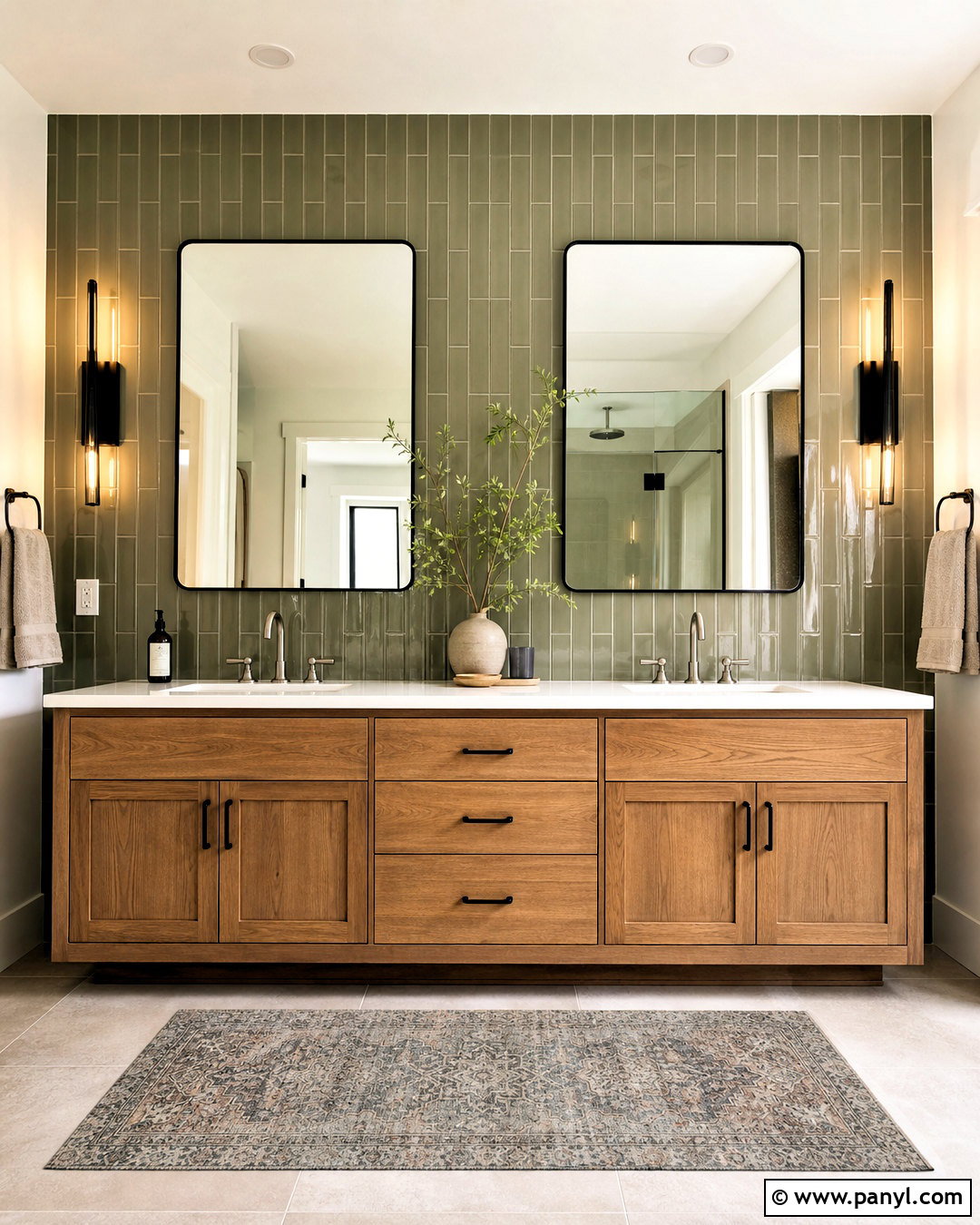
Classic subway tile looks fresher when installed vertically and paired with a distinctive color. Select soft greige, muted olive, or pale blue rectangular tile for the wall behind a double vanity. Extend it to the ceiling to strengthen the vertical effect and choose matching grout for a cleaner finish. Pair the wall with a warm oak vanity, solid white countertop, and simple rectangular mirrors. Brushed nickel faucets and slim black sconces can provide a balanced mix of finishes. Use large neutral floor tiles and warm white paint on surrounding walls to avoid competing lines. Store daily items inside drawers rather than across the countertop. This design offers enough pattern to form a focal point while remaining versatile, practical, and suitable for bathrooms of many sizes.
20. Arched Tile Bathroom Feature Wall
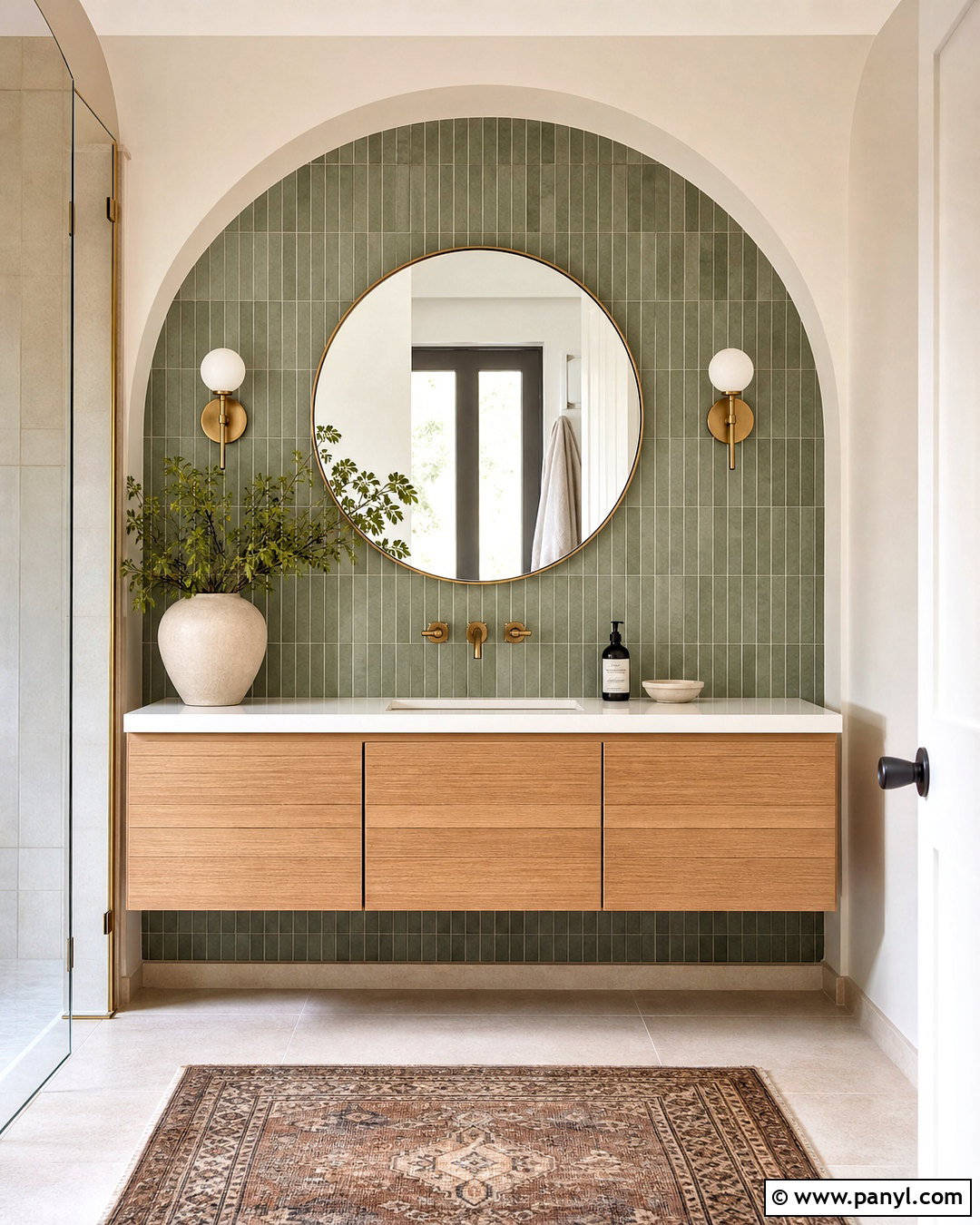
An arched tile feature can define a vanity or bathtub zone without covering the entire wall. Frame the selected area with a tall painted arch, then fill the interior with small sage green mosaic tile. Position a floating oak vanity and round mirror within the shape so every element feels intentionally centered. Paint the outer wall warm white and use pale limestone-look tile on the floor. A white countertop and brushed brass faucet will keep the scheme bright, while compact globe sconces can sit just outside the arch. Repeat the sage color in one towel or small planter, but avoid scattering it everywhere. This architectural approach gives the bathroom a custom focal point while using less tile than a full-height, full-width installation.
Conclusion:
The best bathroom feature wall feels connected to the entire room rather than added as an afterthought. Begin by choosing the wall that naturally attracts attention, such as the surface behind the vanity, bathtub, or shower. Then coordinate its color and material with the flooring, cabinetry, fixtures, lighting, and textiles. Bold wallpaper and paint suit dry areas, while bathroom-rated tile, stone, and panels are sensible choices near water. Balance textured or patterned walls with simpler surrounding finishes, and always consider cleaning, ventilation, and installation requirements. From deep green tile to wood slats and oversized murals, these **20 bathroom feature wall ideas** offer practical ways to create a bathroom that feels distinctive, cohesive, and comfortable.

Related Ideas and Inspiration:
Leave a Reply