
Choosing a new wall color can completely change how a room feels, even when the furniture stays the same. These **20 colors to paint your room ideas** include comfortable neutrals, nature-inspired greens, restful blues, warm earth tones, and richer statement shades. Each palette is presented as a complete room design rather than an isolated wall color. You will see how paint can work with flooring, furniture, trim, lighting, textiles, and decorative accents. Before committing, sample your favorite shade on several walls and check it throughout the day. Natural light, bulb temperature, and existing finishes can noticeably affect the undertone. Use the complete looks below to explore practical, stylish, and easy-to-recreate **20 colors to paint your room ideas**.

1. Warm White Room
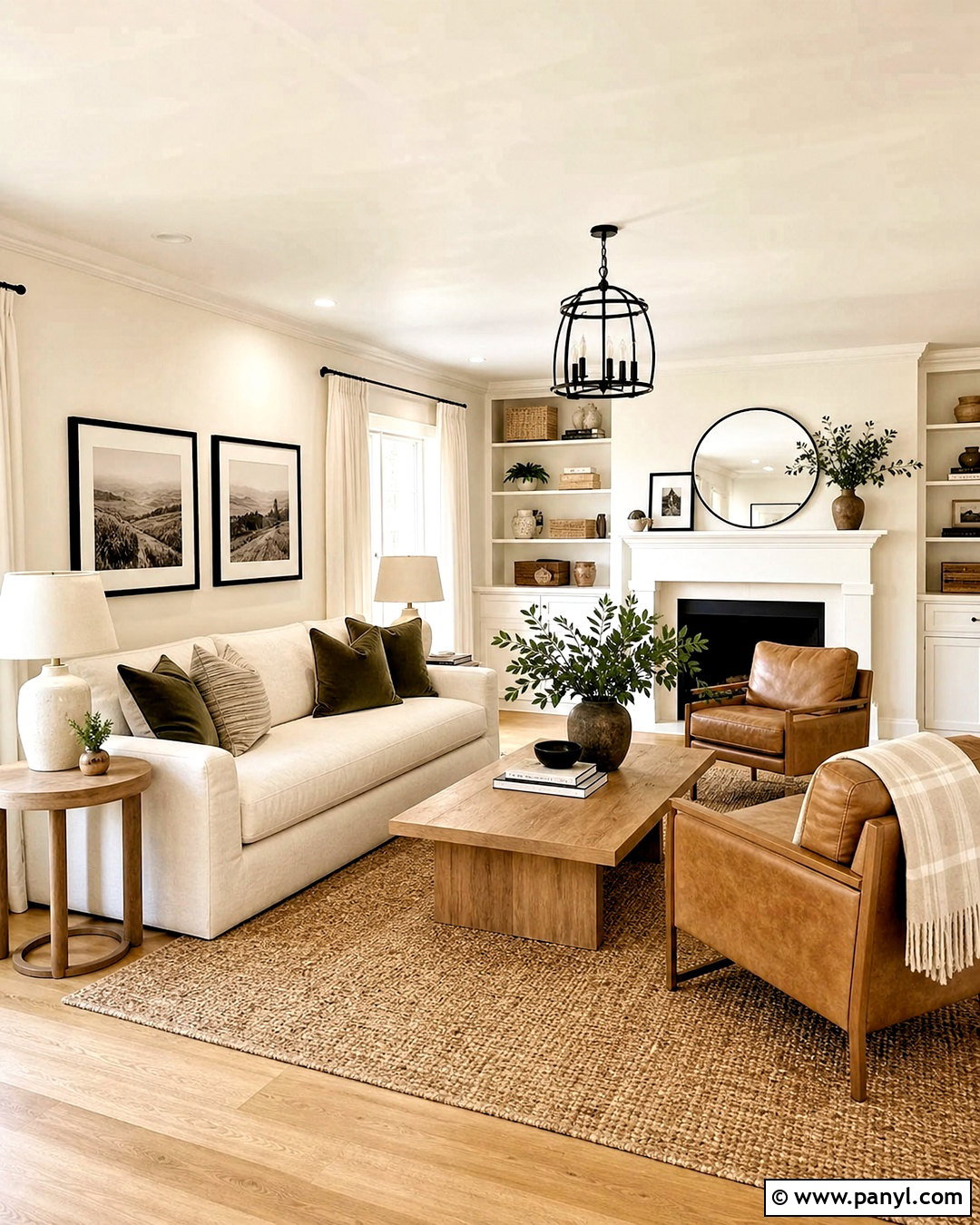
Warm white creates a bright, comfortable room without the sharp appearance of a cool, blue-based white. Paint the walls a creamy white and use a slightly cleaner white on the ceiling, trim, and doors for gentle definition. Light oak flooring, a linen sofa, and a woven jute rug keep the room feeling natural. Add camel leather, muted olive, and soft black accents through chairs, pillows, frames, and lighting. Curtains should be ivory or oatmeal rather than stark white. This complete palette works especially well in rooms with northern light because the warm undertone helps reduce grayness. Use eggshell paint on the walls and a satin finish on the trim to create subtle contrast and practical durability.
2. Soft Greige Room
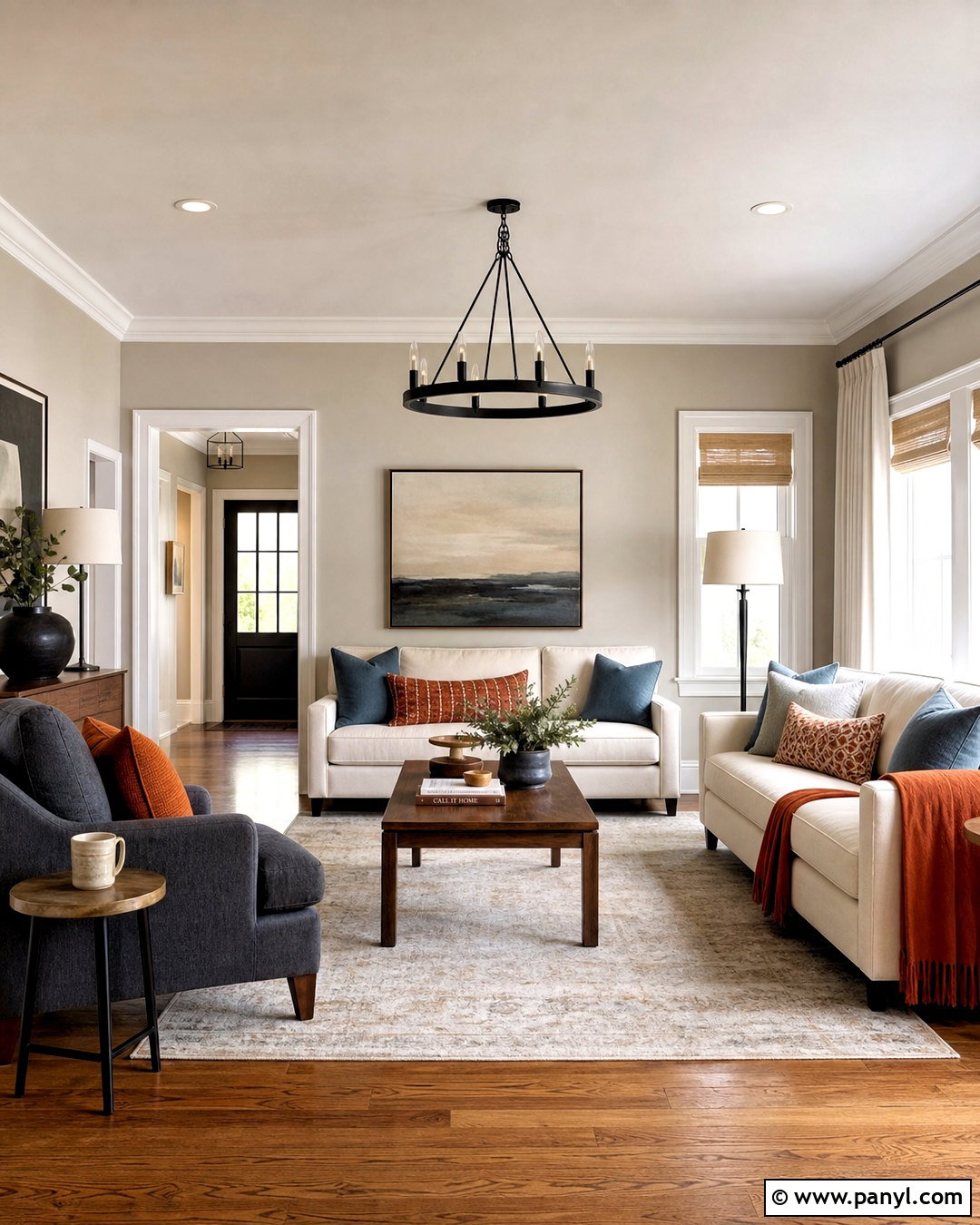
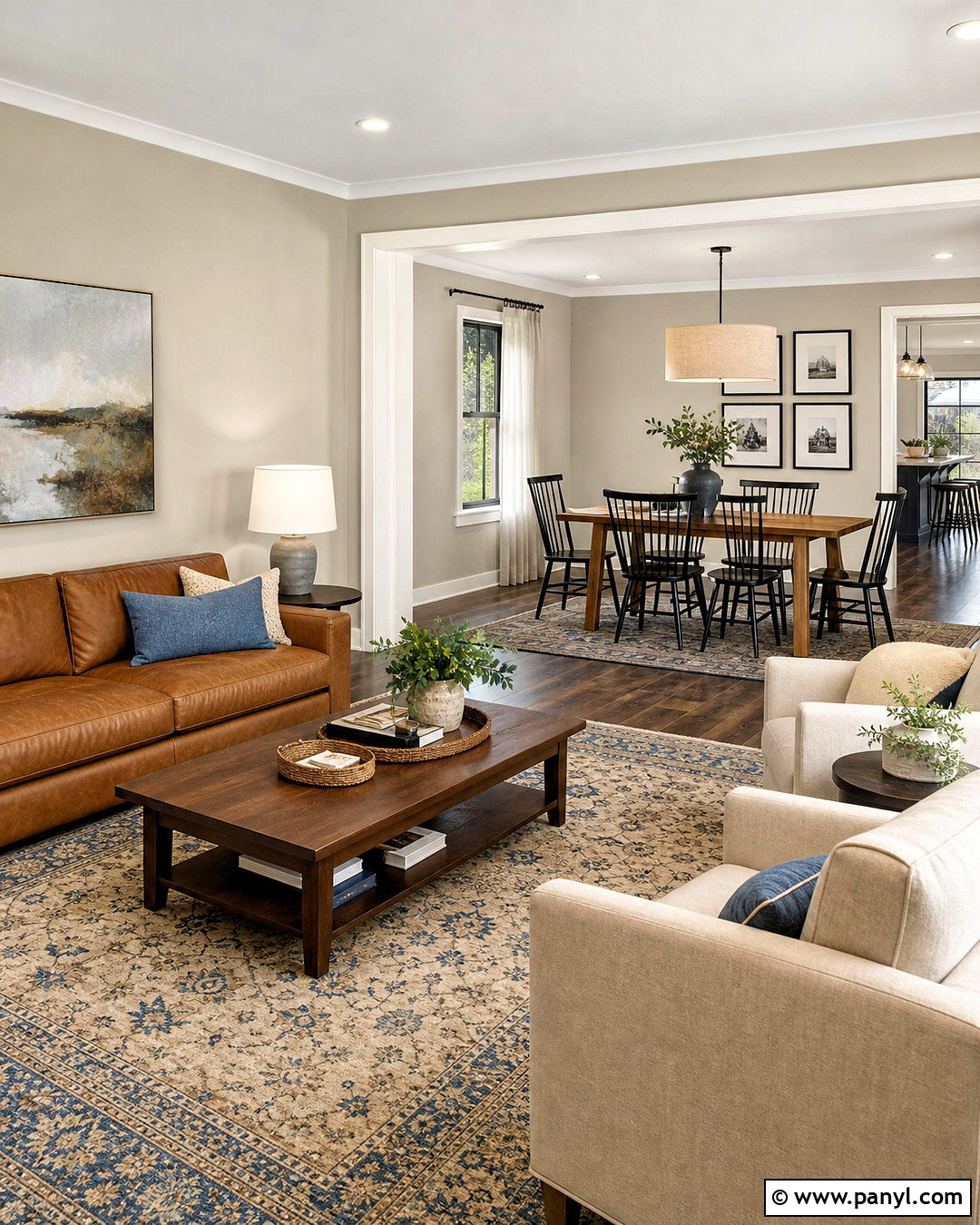
Can’t decide between gray and beige? Soft greige offers the calm quality of gray with enough warmth to complement wood, cream, and natural fibers. Cover the walls in a light greige, then paint the trim and ceiling a warm off-white. Anchor the room with a medium-toned oak floor and an ivory upholstered sofa. A charcoal armchair, black metal lamp, and walnut coffee table provide necessary contrast. Introduce muted blue and rust through artwork and pillows so the design does not feel flat. Greige is particularly helpful in an open room containing several permanent finishes because it can connect warm and cool materials. Test the paint beside flooring and upholstery to ensure its undertone remains balanced in your specific light.
3. Creamy Beige Room
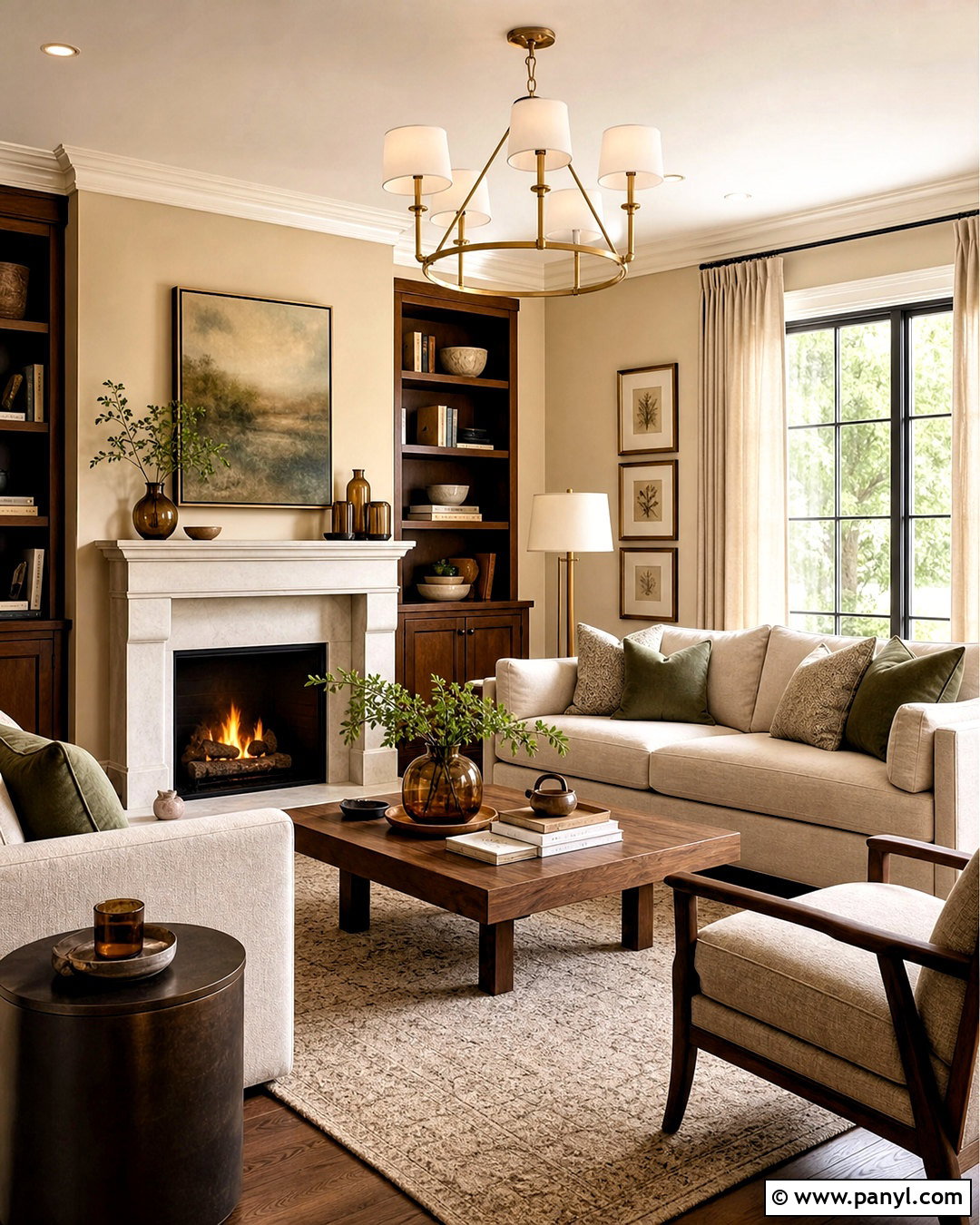
Creamy beige gives a room more depth than white while preserving a light, open appearance. Use the color across the walls, then pair it with warm white trim and a ceiling painted one shade lighter. Build the room around walnut furniture, an oatmeal sofa, and a large rug featuring tan, ivory, and faded brown. Brushed brass lighting and amber glass accessories reinforce the warmth without making the palette look yellow. Add dark brown picture frames and one black accent table for definition. Soft blue or sage pillows can provide a cooler counterpoint. This room color is especially effective in spaces receiving strong afternoon sunlight. Choose a beige with a neutral or slightly rosy base instead of a heavy golden undertone for a fresher result.
4. Taupe Room
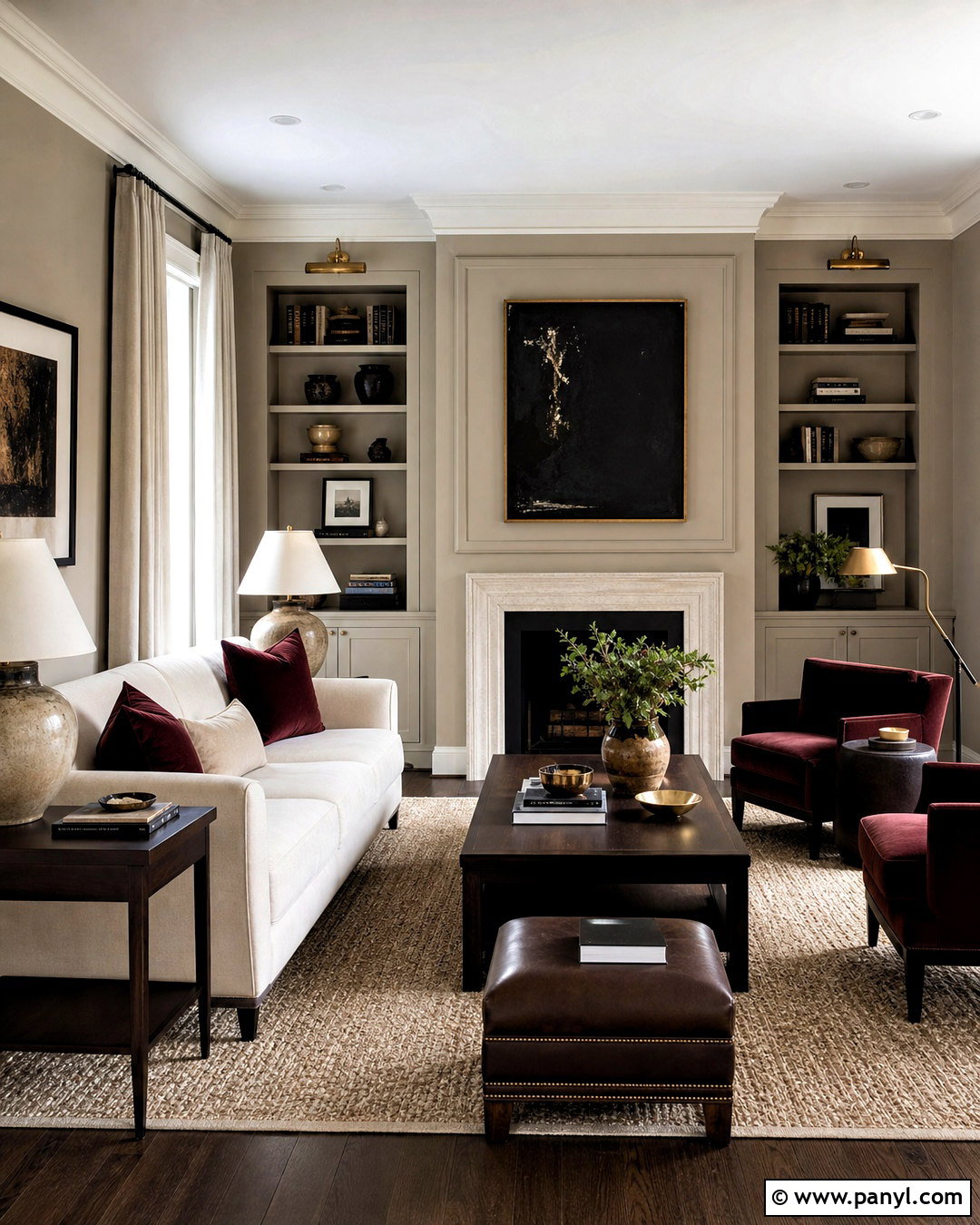
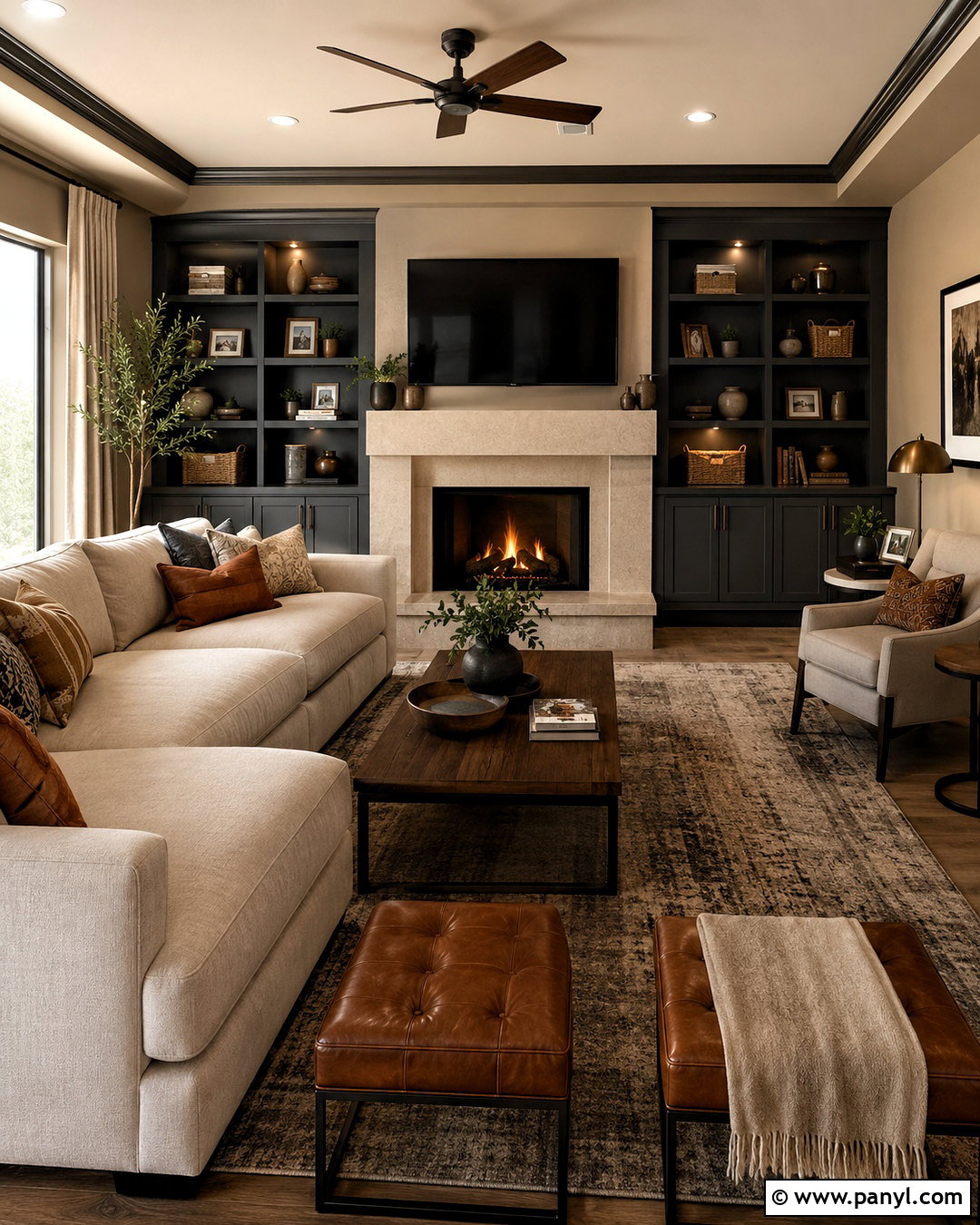
Taupe creates a polished room that feels warm, grounded, and easy to decorate. Choose a mid-light taupe for the walls and repeat it on simple built-in shelves for a connected look. Warm white trim prevents the room from becoming too dark, while a pale ceiling maintains visual height. Furnish the space with a cream sofa, dark walnut tables, and a textured wool rug. Deep burgundy pillows, aged brass lighting, and abstract artwork in beige and black add sophisticated contrast. Natural linen curtains soften the windows without competing with the wall color. Because taupe can lean pink, gray, or brown, compare samples against the floor before painting. The best version should complement the room’s fixed finishes in both daylight and evening light.
5. Pale Blue Room
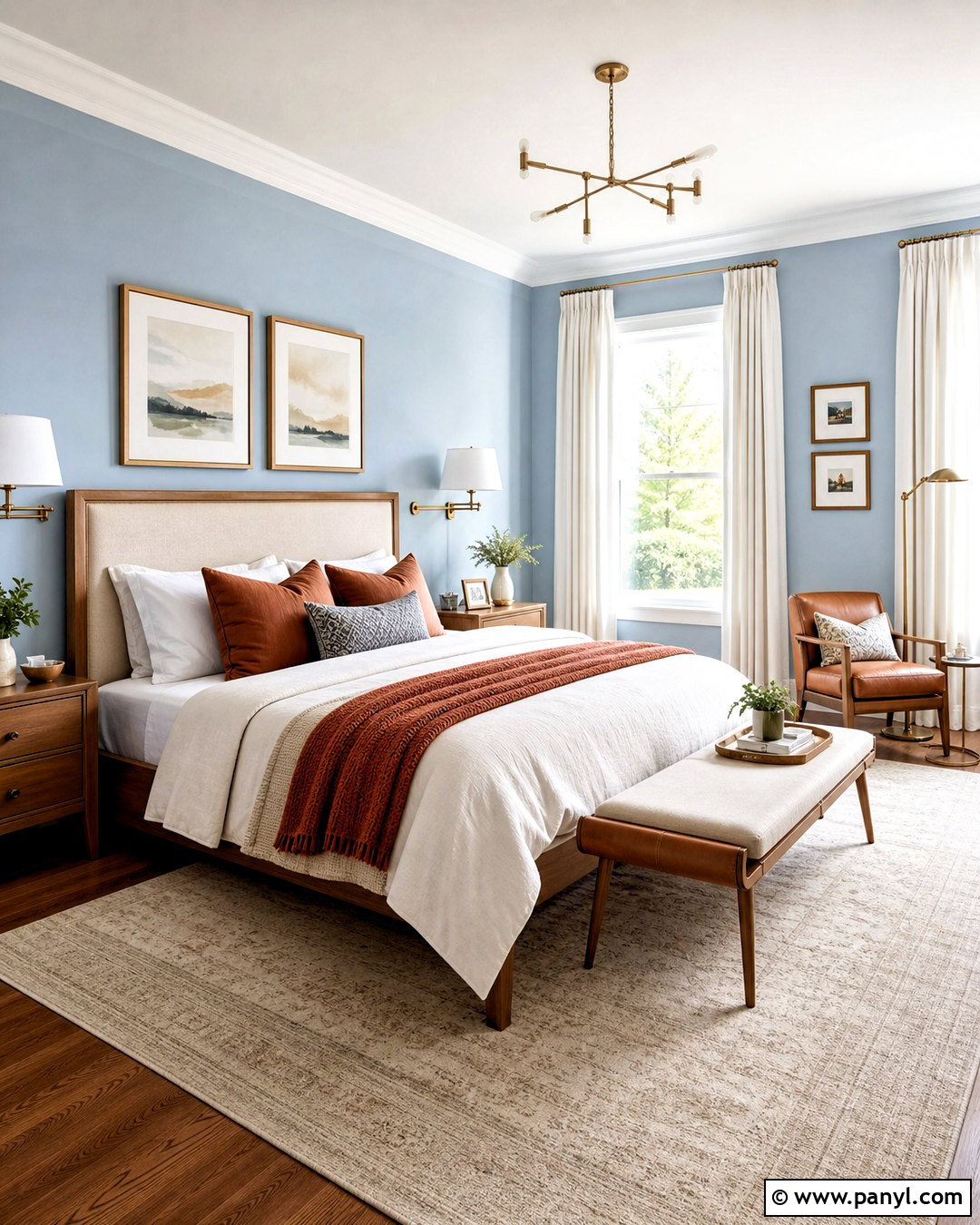
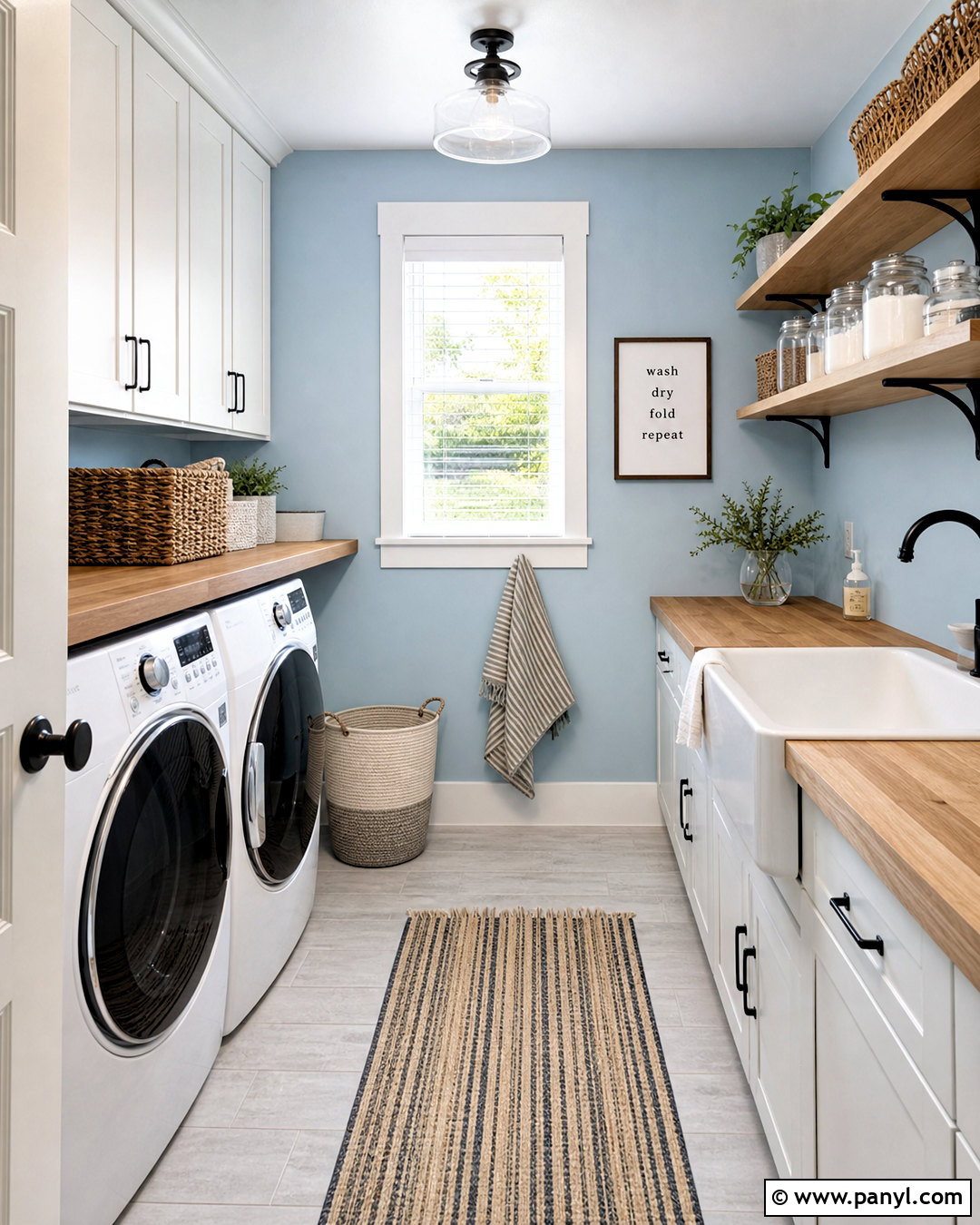
A pale blue room can feel airy and peaceful when the supporting colors remain warm and restrained. Paint the walls a soft powder blue with a slightly gray undertone, then use crisp warm white on the ceiling and trim. Choose a natural oak bed or media console, creamy upholstery, and an ivory rug to balance the cool walls. Small accents of terracotta, cognac leather, and brushed brass keep the design welcoming. Hang full-length off-white curtains to create softness and make the ceiling appear taller. Avoid filling the room with additional cool grays, which can make the palette feel chilly. Instead, repeat warm wood and sandy beige in several places. This complete scheme works beautifully in sunny rooms and smaller spaces needing visual freshness.
6. Dusty Blue Room
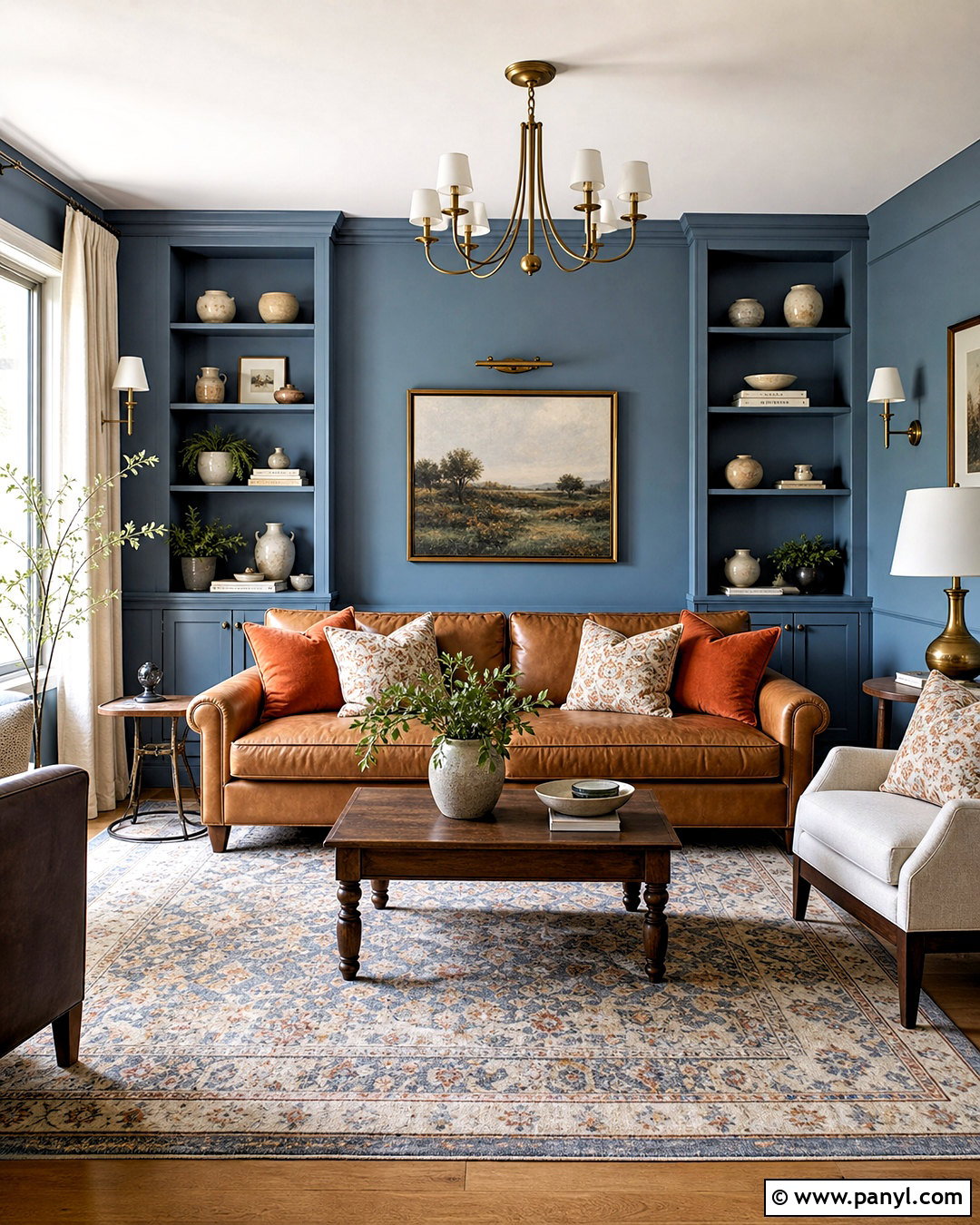
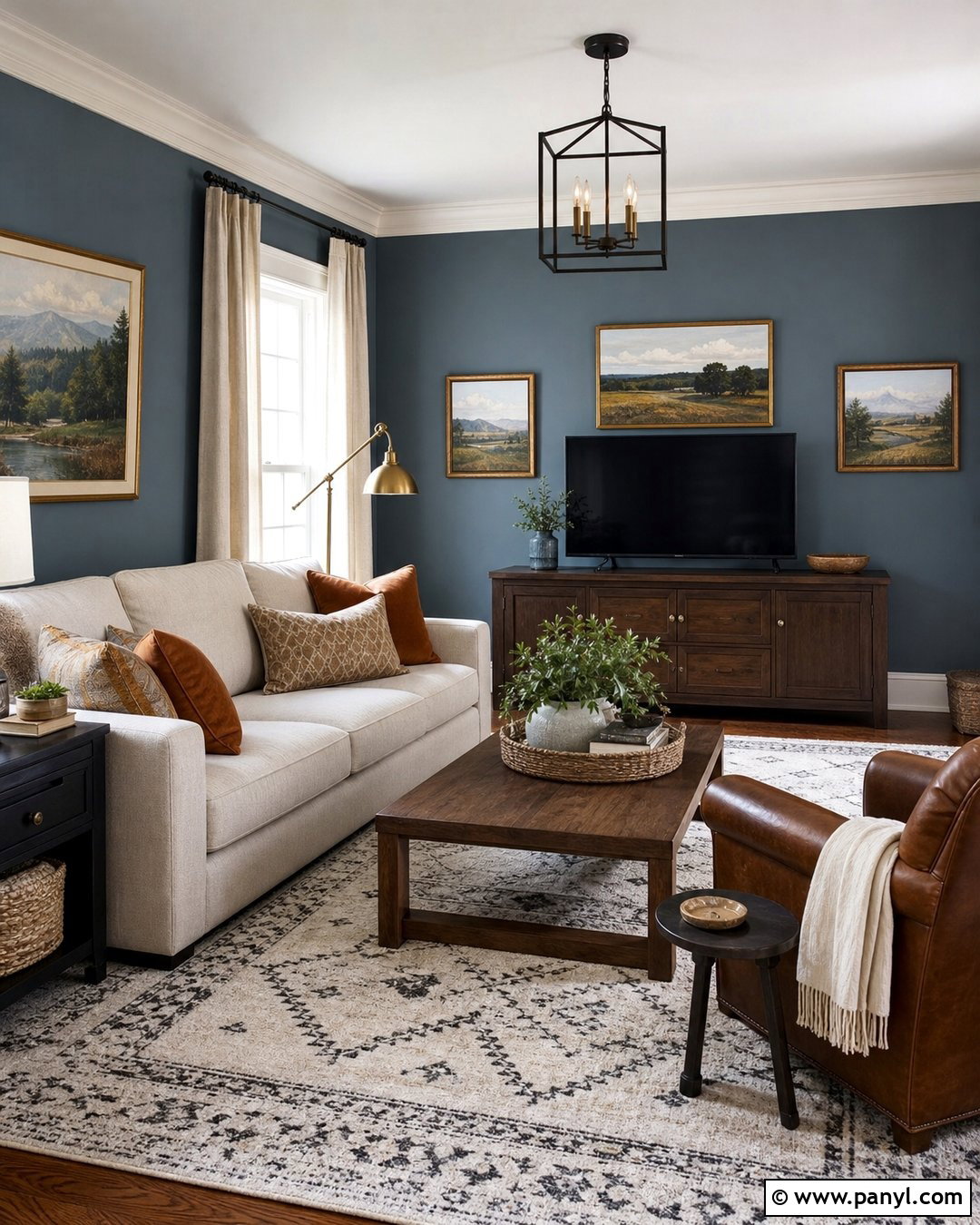
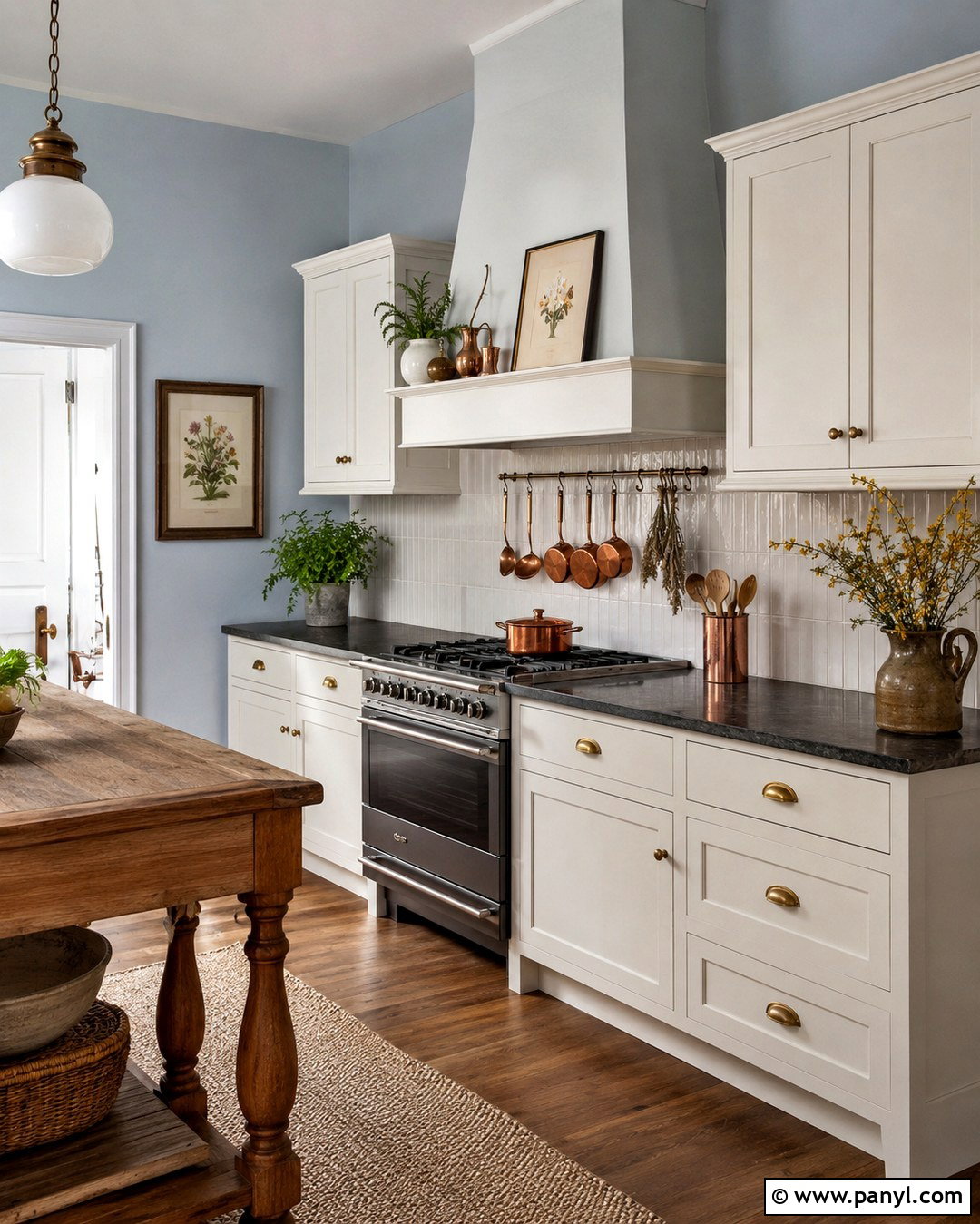
Dusty blue brings more character than pale blue but remains comfortable enough for an entire room. Apply it to the walls, built-in shelving, and interior doors for a softly color-drenched effect. Keep the ceiling warm white if the space is small or paint it a lighter blue for a more enveloping finish. Pair the walls with a caramel leather sofa, medium oak flooring, and an ivory-and-blue patterned rug. Rust pillows, antique brass fixtures, and cream ceramic accessories add warmth. Use natural linen curtains rather than matching blue fabric so the windows feel lighter. Dusty blue works well with traditional, coastal, and modern furniture. Sample several versions because strong northern light can emphasize gray, while warm evening bulbs may bring out green undertones.
7. Navy Blue Room
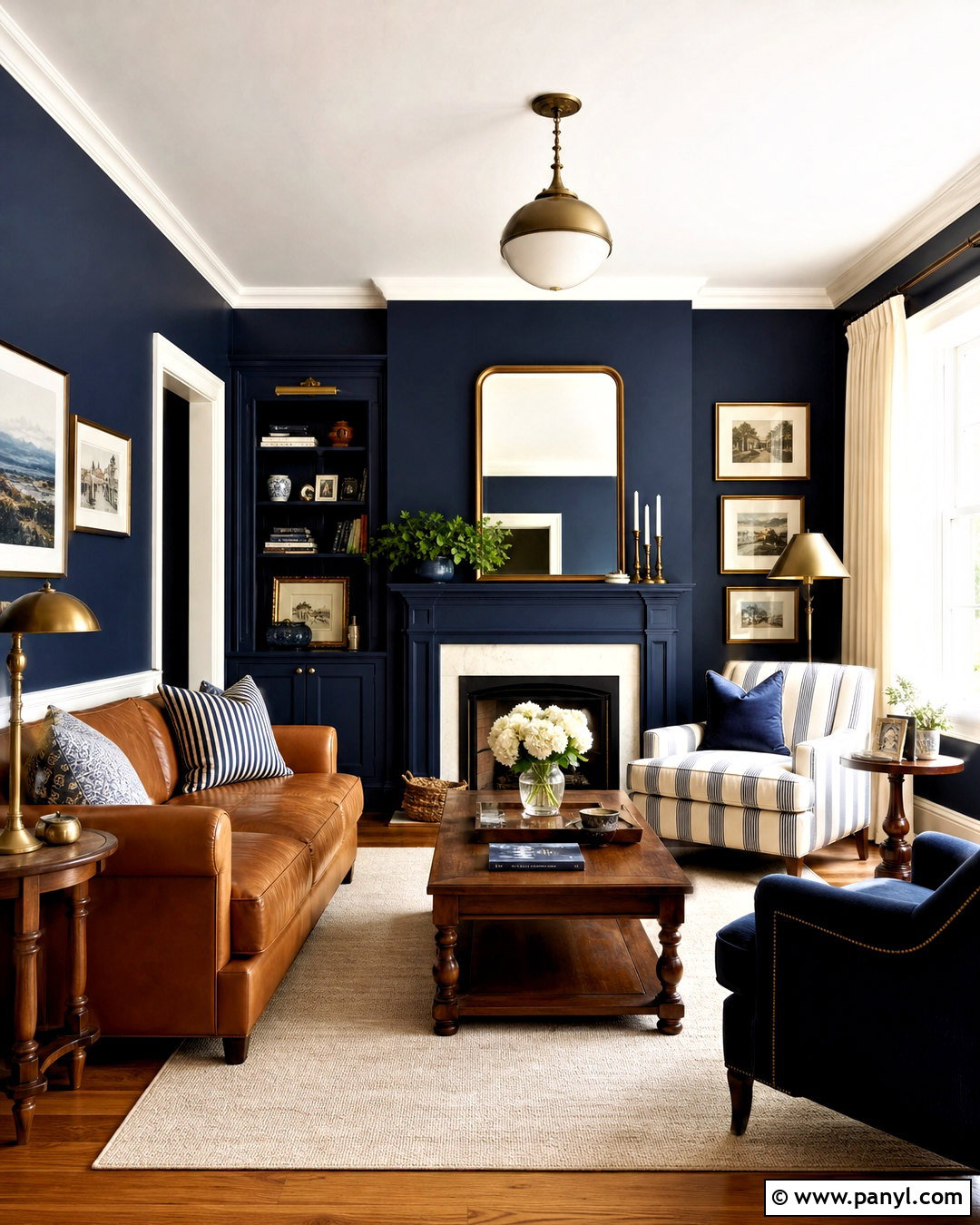
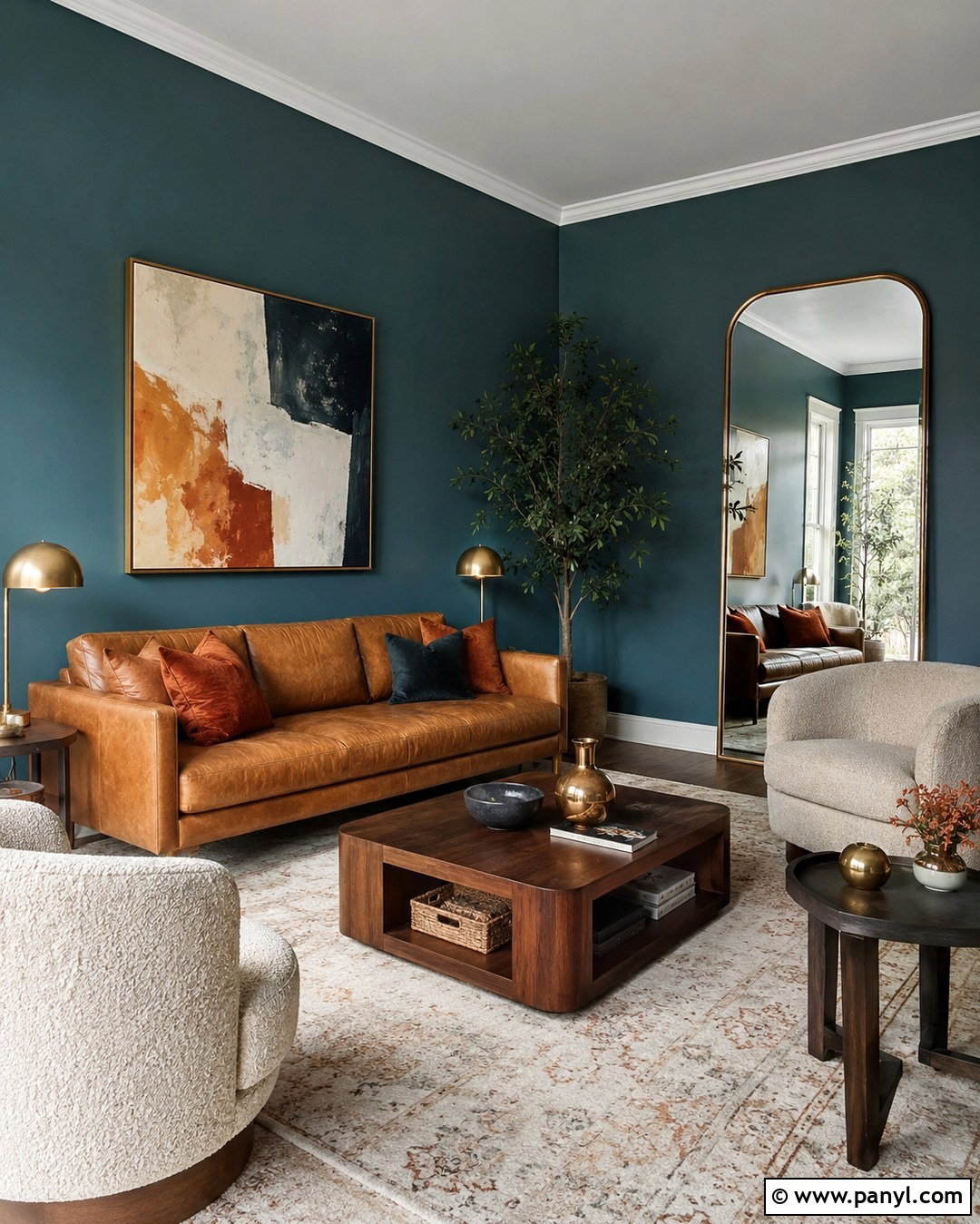
Navy blue can make a room feel intimate and dramatic without looking overly decorated. Paint all four walls navy, then use the same color on shelving or cabinetry for a seamless background. Keep the ceiling and substantial trim warm white to maintain balance, particularly in an average-size room. A camel leather sofa, medium brown wood furniture, and a cream rug will brighten the composition. Add aged brass lamps, striped textiles, and framed artwork with generous white matting. Mirrors placed opposite windows can distribute natural light across the darker surfaces. Select a navy with a clear blue base rather than a nearly black finish. Layer table lamps, floor lamps, and ceiling lighting so the room remains functional and inviting after sunset.
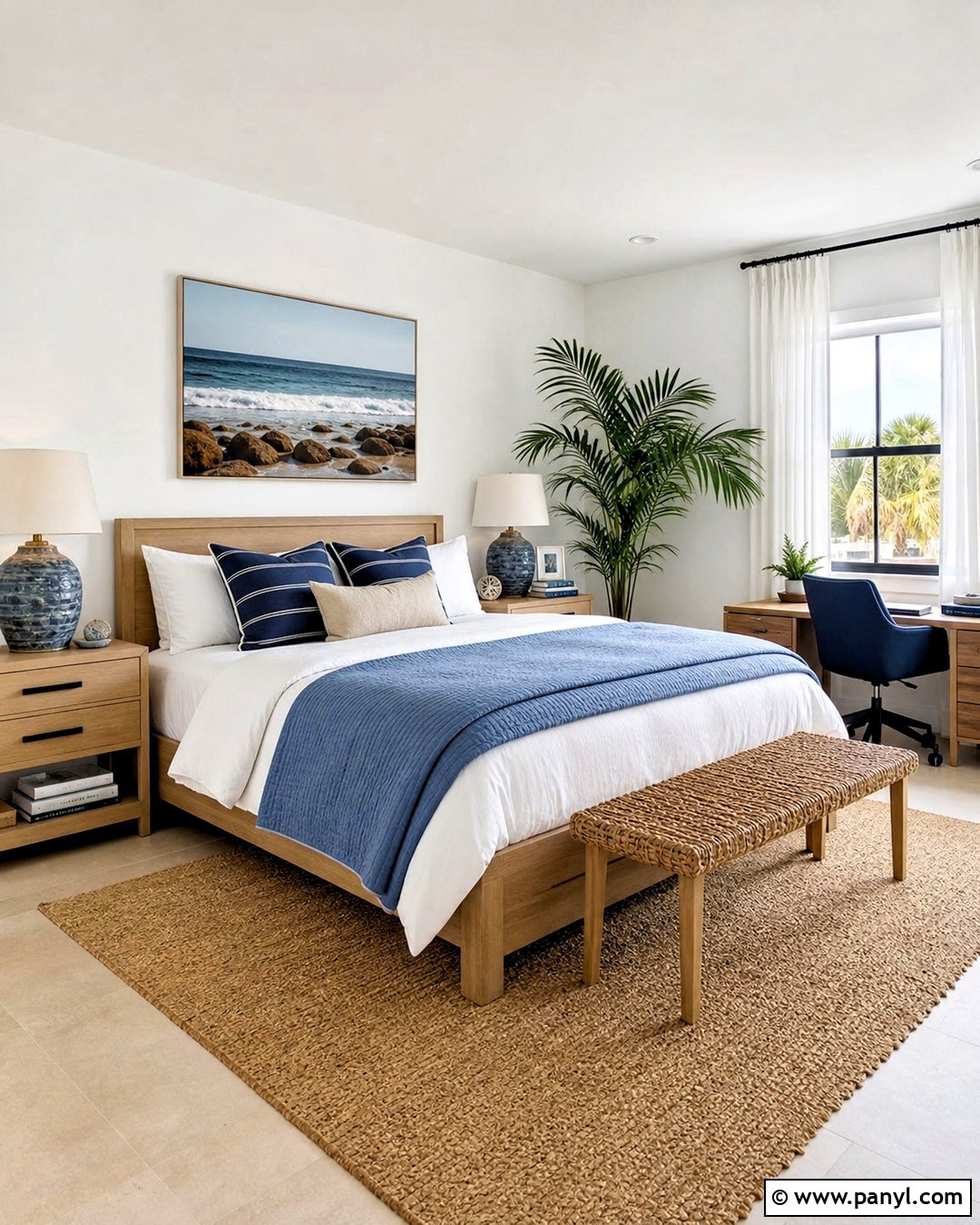
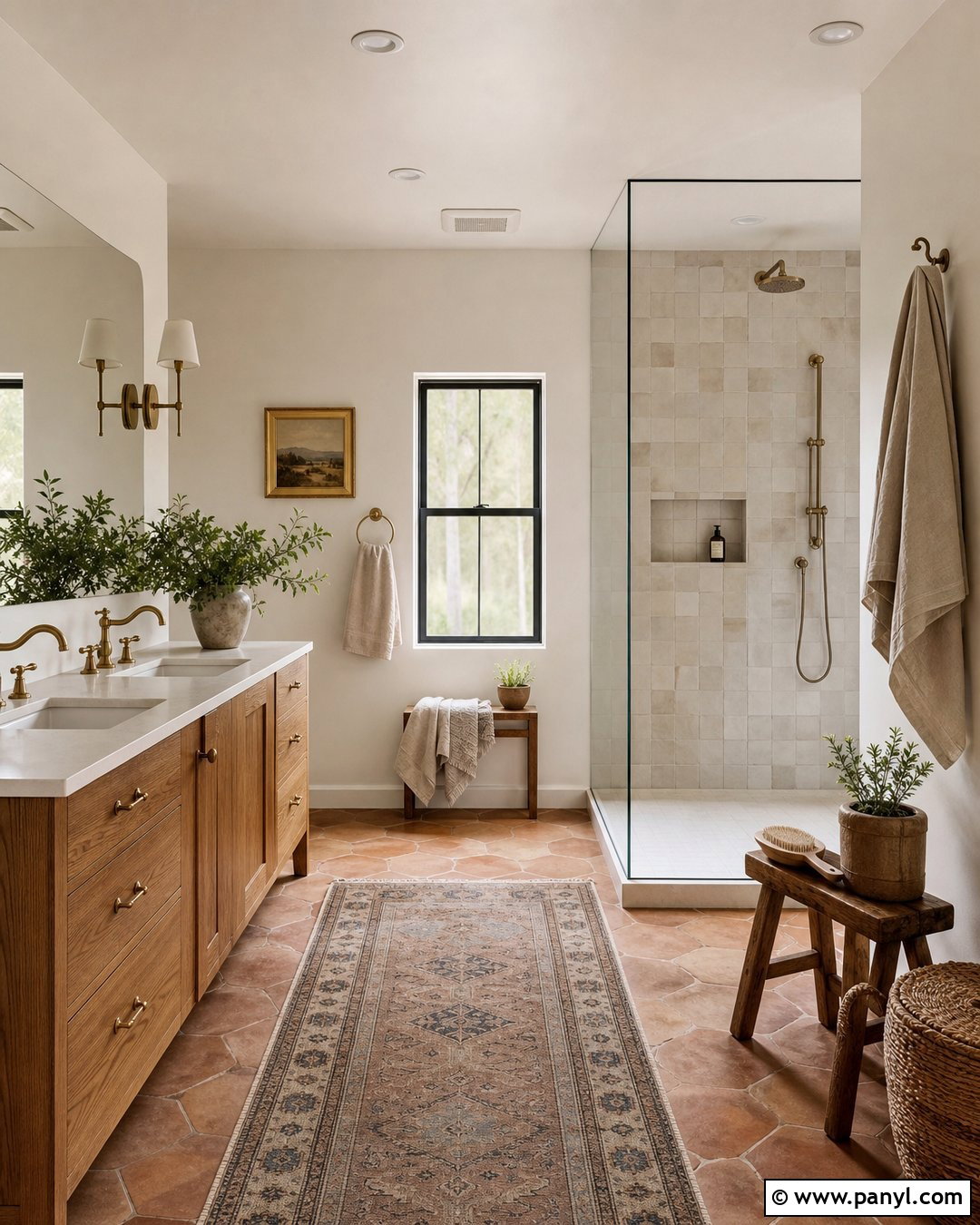
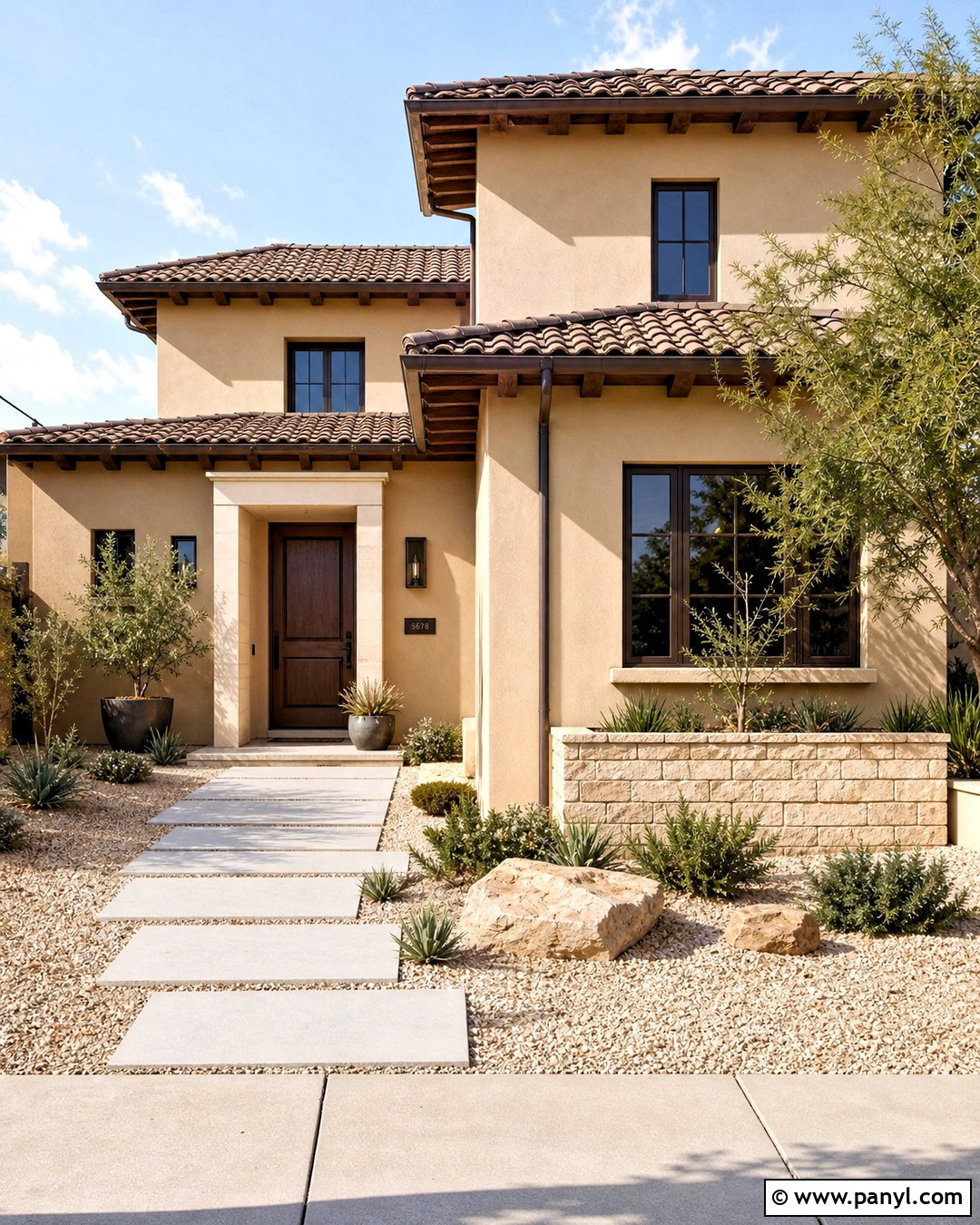
8. Sage Green Room
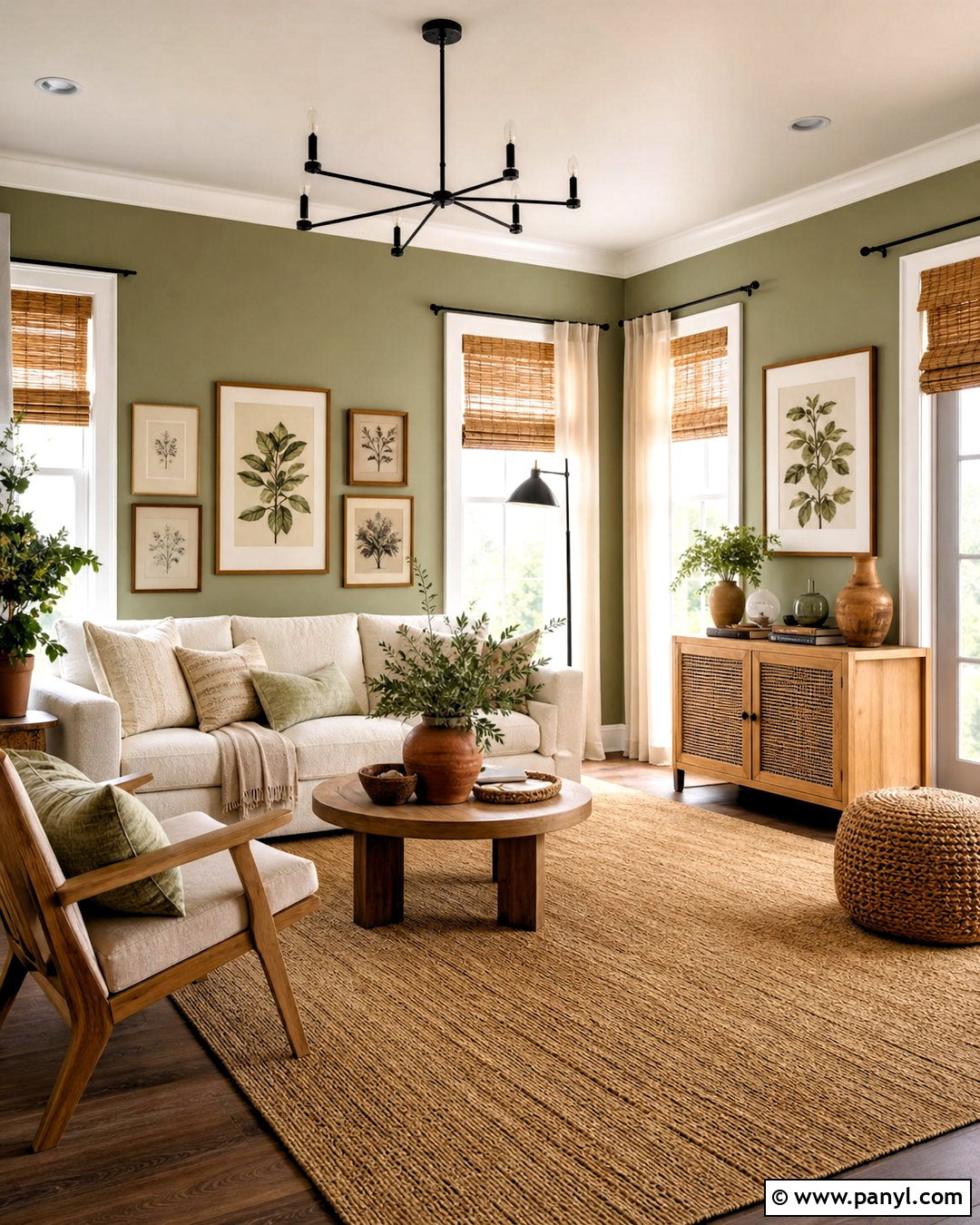
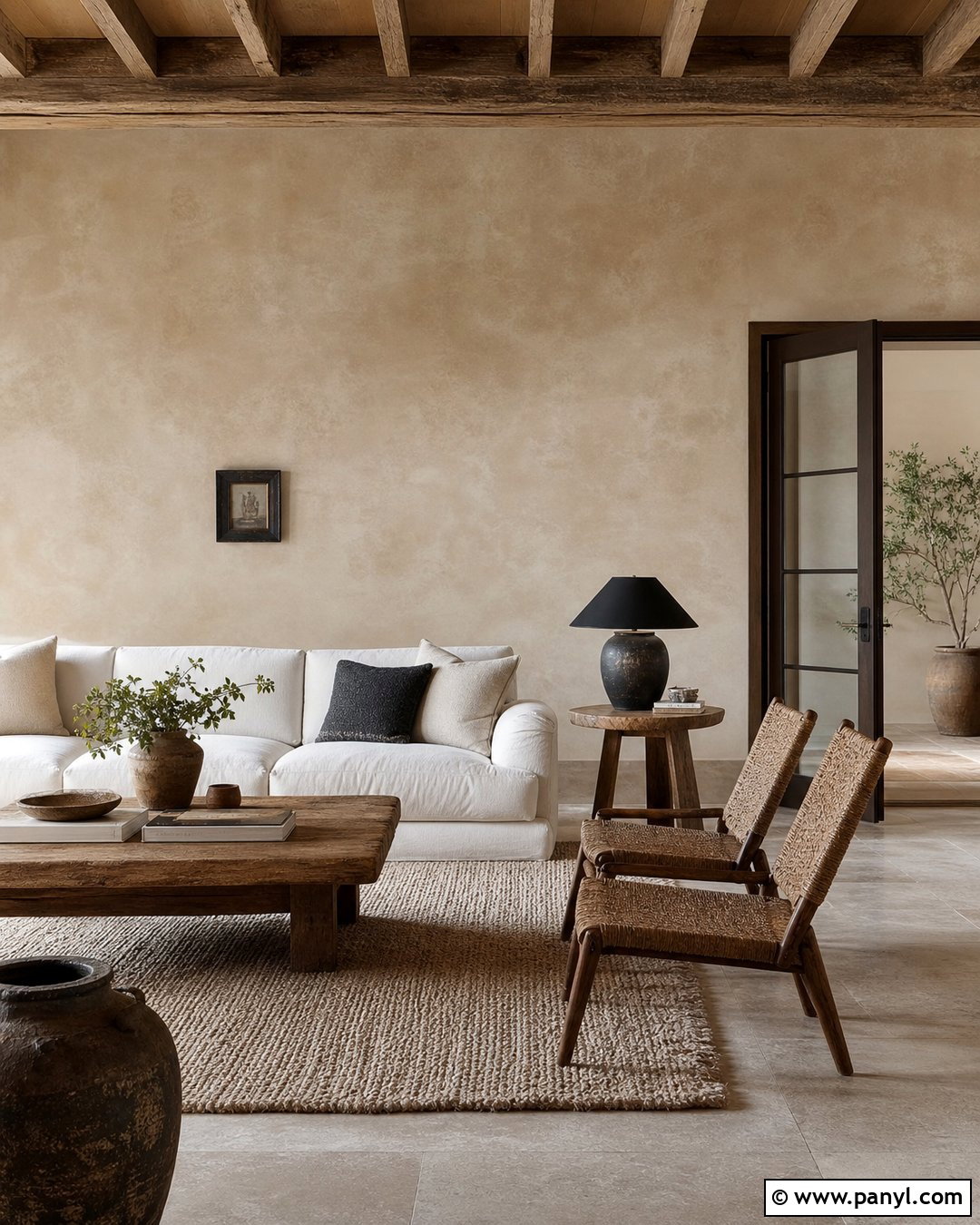
Soft sage green creates a relaxed room inspired by natural landscapes. Cover the walls in a muted sage and use creamy white on the trim, doors, and ceiling. Pair the paint with light oak furniture, an oatmeal sofa, and woven shades that introduce organic texture. Terracotta pottery, warm beige pillows, and a faded botanical rug give the space an earthy foundation. Matte black lighting can add a clean modern line, while brushed brass creates a softer traditional effect. Keep large upholstery pieces neutral so the green remains the room’s defining feature. Sage can shift considerably under different lighting, so compare samples with yellow, gray, and blue undertones. A balanced, slightly warm sage generally coordinates well with both natural wood and common neutral furnishings.
9. Olive Green Room
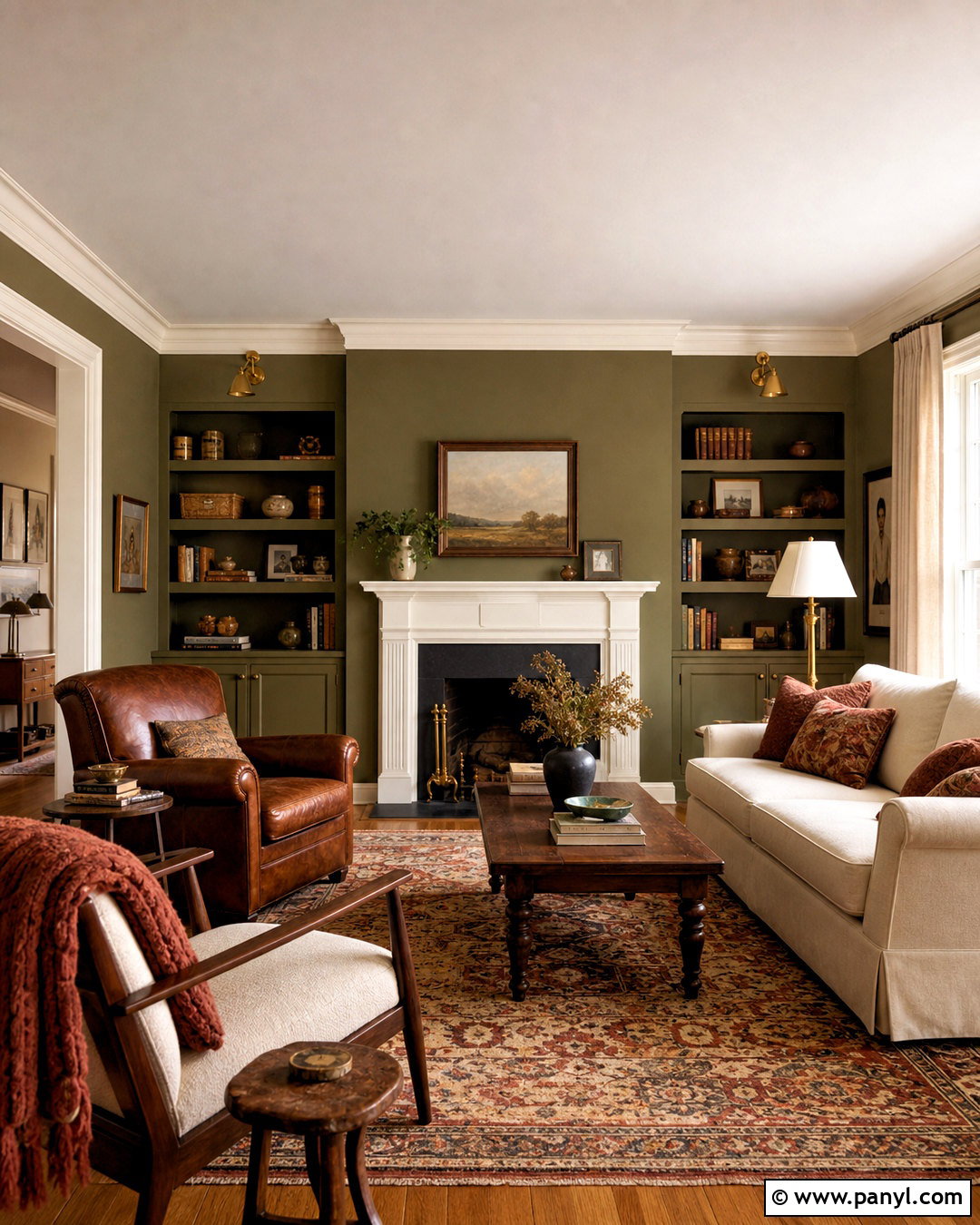
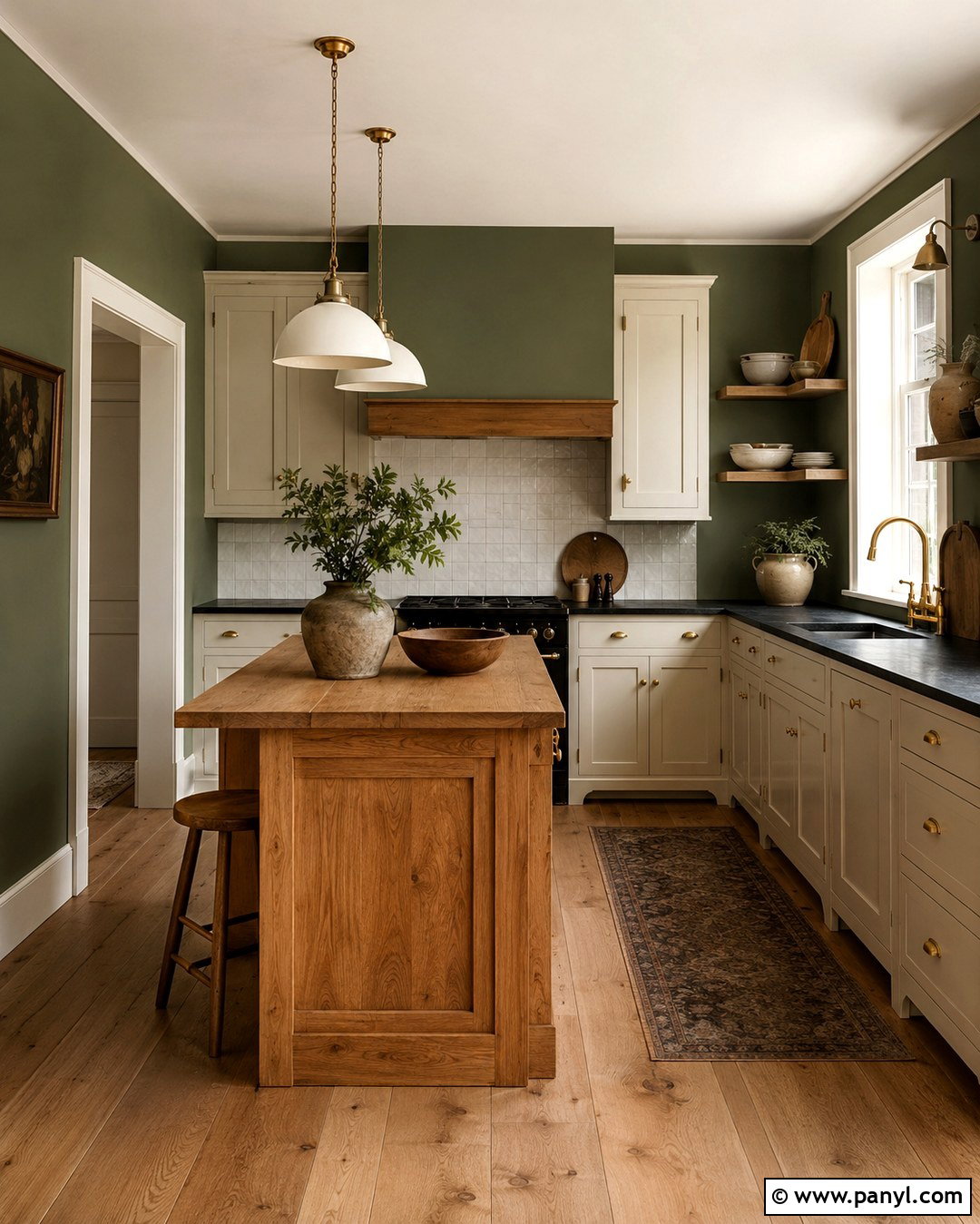
Olive green delivers warmth, depth, and a collected appearance that suits both casual and formal rooms. Use a muted mid-tone olive on the walls and built-ins, then add warm white trim for a crisp architectural outline. Choose a tobacco leather chair, cream sofa, walnut coffee table, and patterned rug containing olive, rust, and beige. Antique brass sconces and dark wood frames strengthen the cozy character. For window treatments, try oatmeal linen or a subtle beige stripe instead of more green. Plenty of layered light is essential because olive absorbs more brightness than pale colors. In a compact room, paint only the walls and leave the ceiling light. In a larger space, extending olive overhead creates a comfortable, library-like atmosphere.
10. Forest Green Room
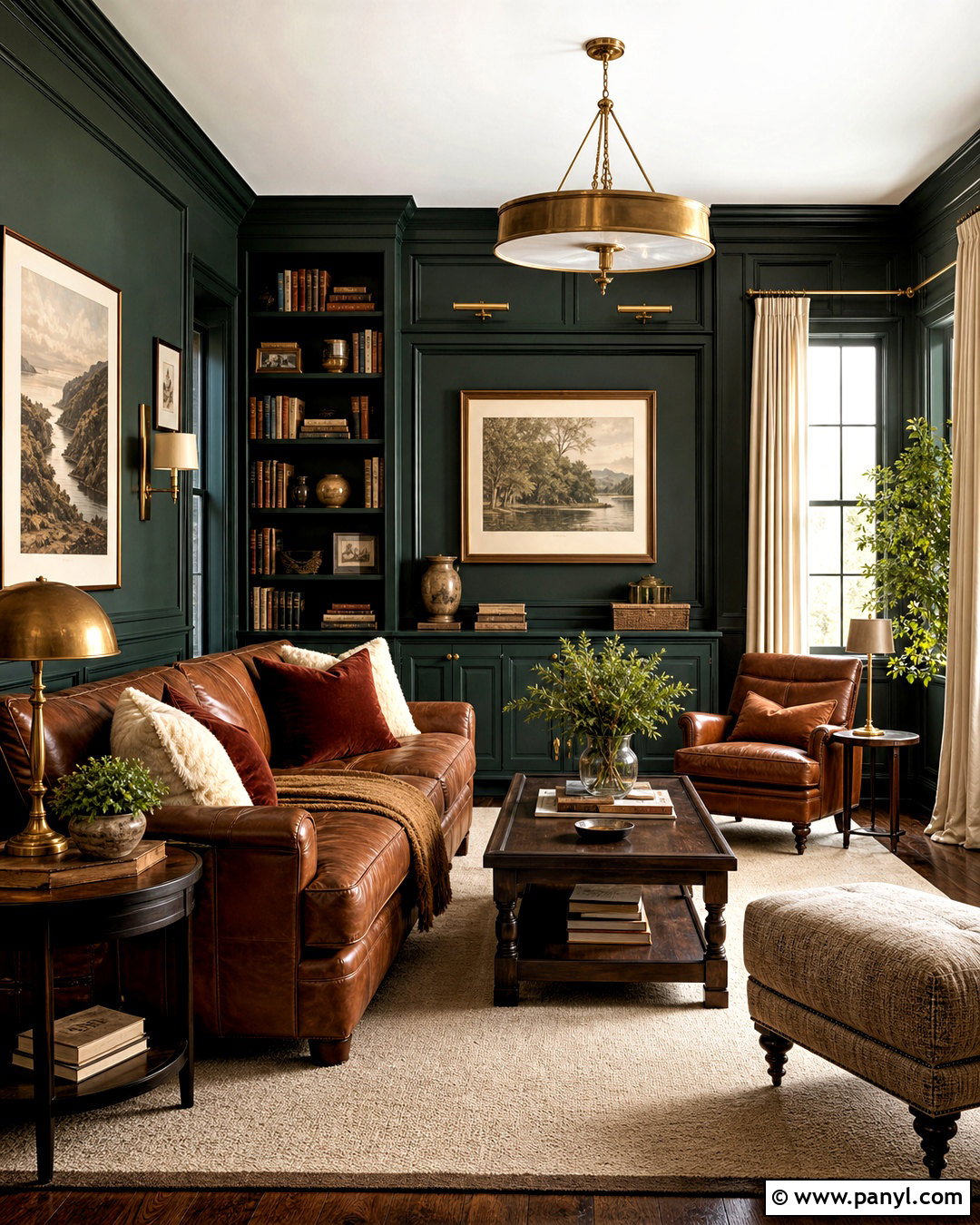
Deep forest green turns an ordinary room into a rich, restful retreat. Paint the walls and built-in cabinetry the same saturated green, using a matte or low-sheen finish to reduce glare. A warm white ceiling can keep the design approachable, while matching green overhead produces a more immersive result. Furnish the room with a cognac leather sofa, dark oak tables, and a large cream wool rug. Add velvet pillows in rust and golden brown, plus aged brass lamps for controlled warmth. Pale artwork and light curtains prevent the darker walls from overwhelming the space. Forest green is particularly effective in bedrooms, offices, and reading rooms. Use multiple light sources at different heights so corners remain visible and the color retains its natural richness.
11. Blush Pink Room
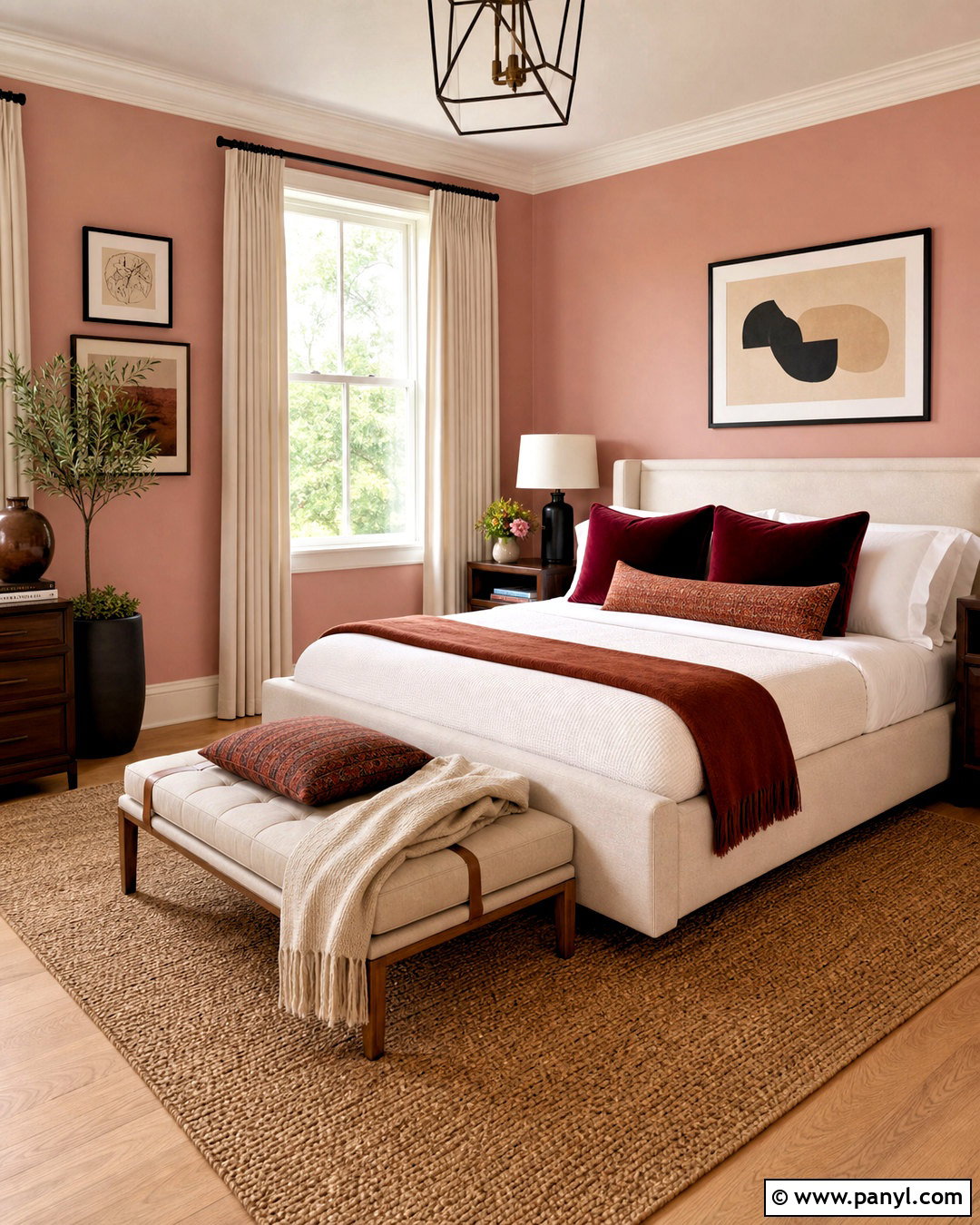
Blush pink can function like a warm neutral when it has muted, earthy undertones. Paint the walls a soft plaster pink and keep the ceiling and trim creamy white. Ground the room with light oak flooring, a beige sofa or upholstered bed, and a natural woven rug. Add rust, burgundy, and chocolate brown through cushions, lamps, and artwork to give the palette maturity. Matte black frames or a slim black side table introduce a useful graphic edge. Avoid combining blush walls with overly delicate furnishings throughout the room. Instead, mix linen, wood, ceramic, and boucle for a balanced design. This color flatters warm evening light, but large samples are important because some pinks become noticeably brighter or more peach-toned in direct afternoon sun.
12. Dusty Rose Room
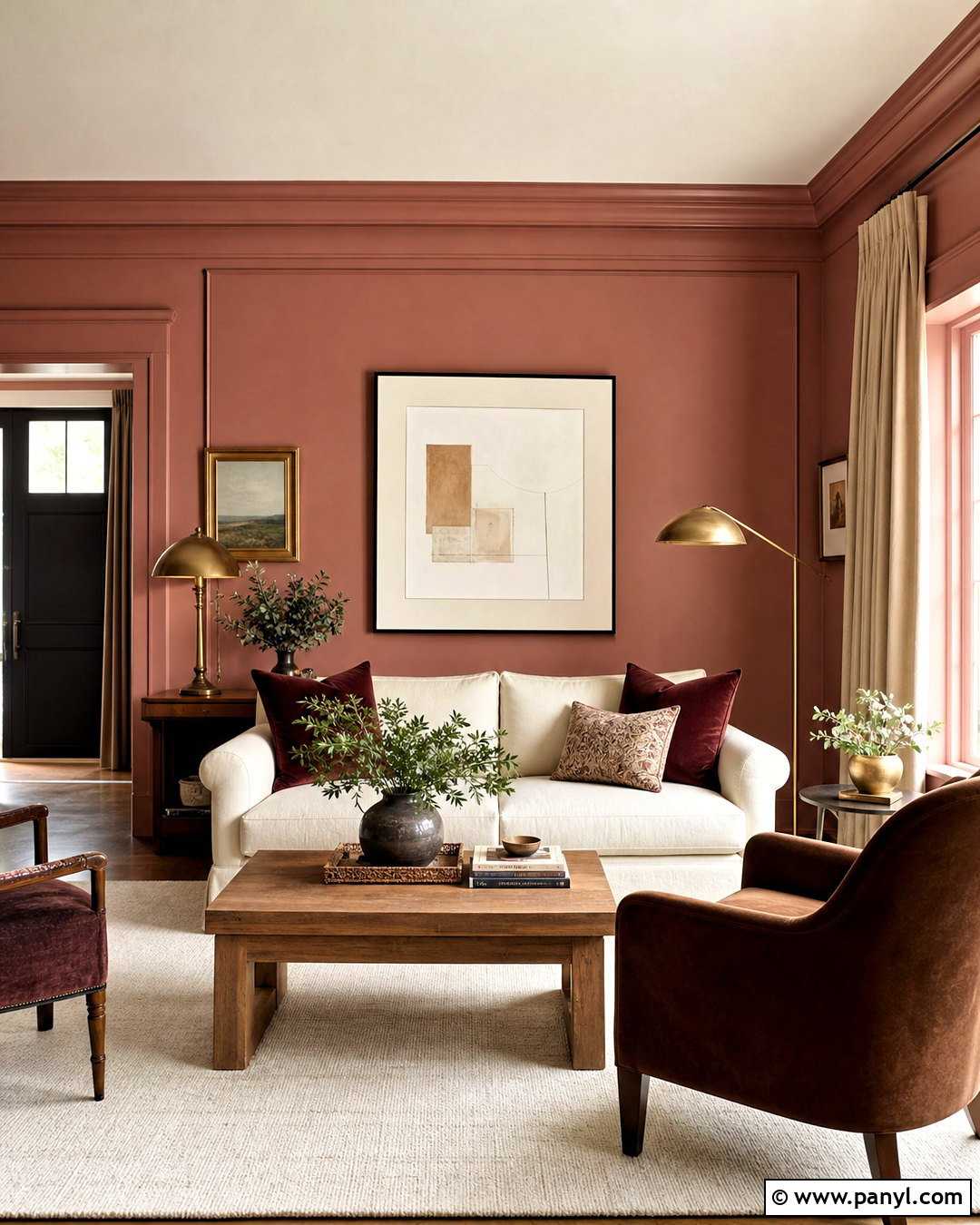
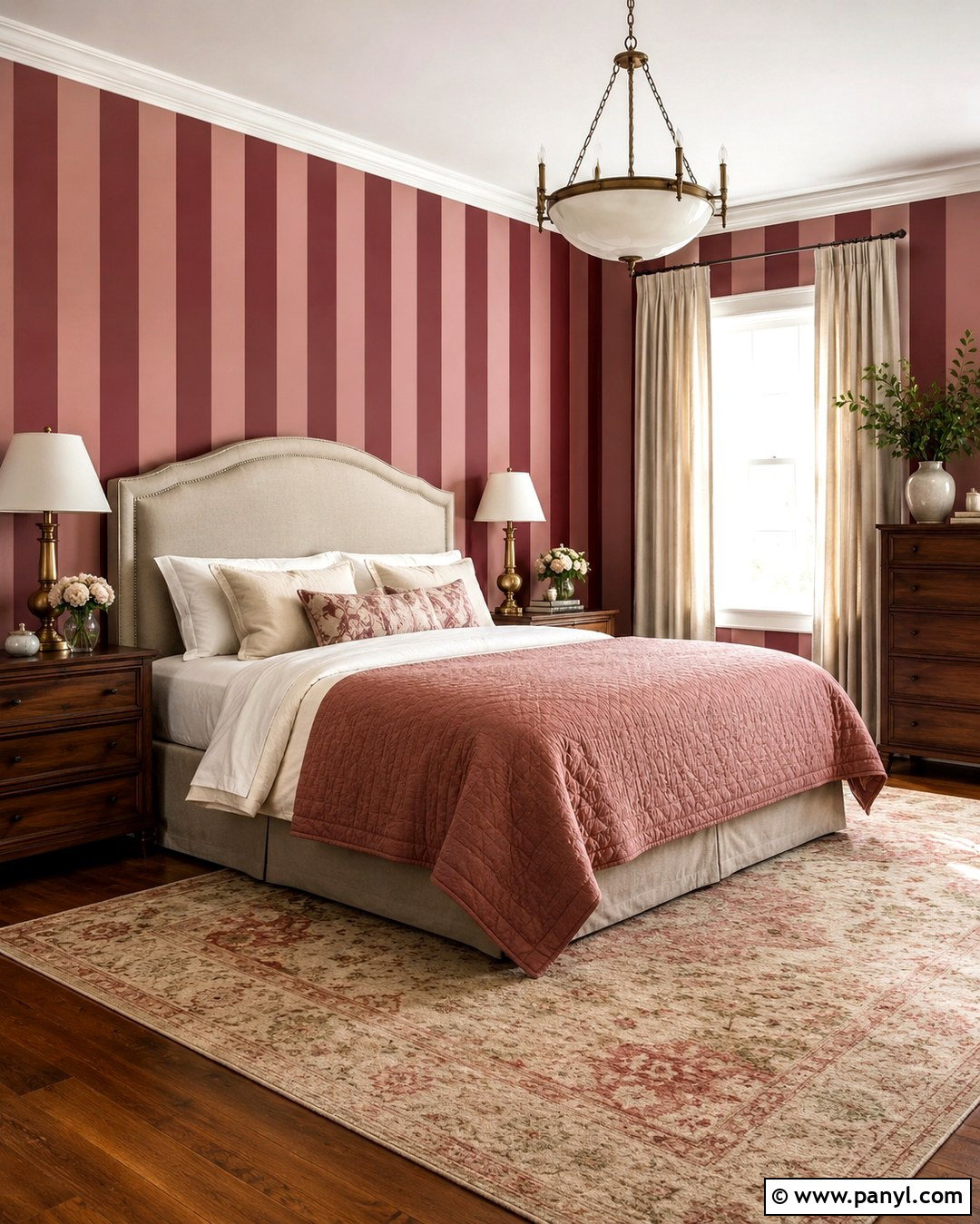
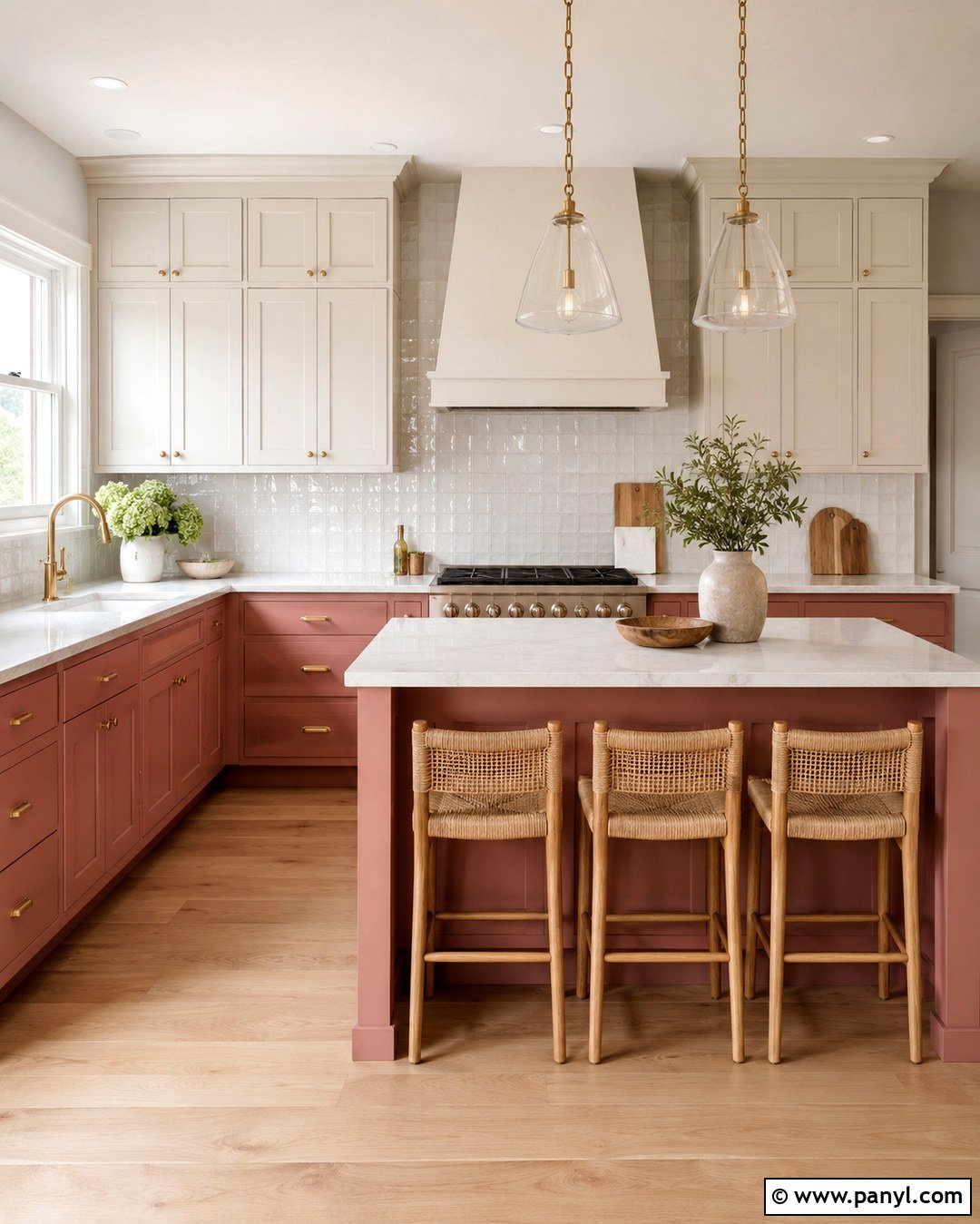
Dusty rose offers a deeper, more enveloping alternative to pale pink. Use it across the walls and consider carrying it onto the trim for a soft color-drenched finish. Balance the richness with an ivory ceiling, natural oak furniture, and a large cream rug. A brown velvet chair, burgundy pillows, and antique brass lighting create a layered room without introducing too many unrelated colors. Choose curtains in oatmeal linen or faded rose, depending on how immersive you want the palette to feel. Dark wood frames and off-white artwork add contrast against the walls. Dusty rose works beautifully in bedrooms, living rooms, and small sitting areas. Look for a muted shade with brown or gray undertones so the finished room feels sophisticated instead of overly sweet.
13. Terracotta Room
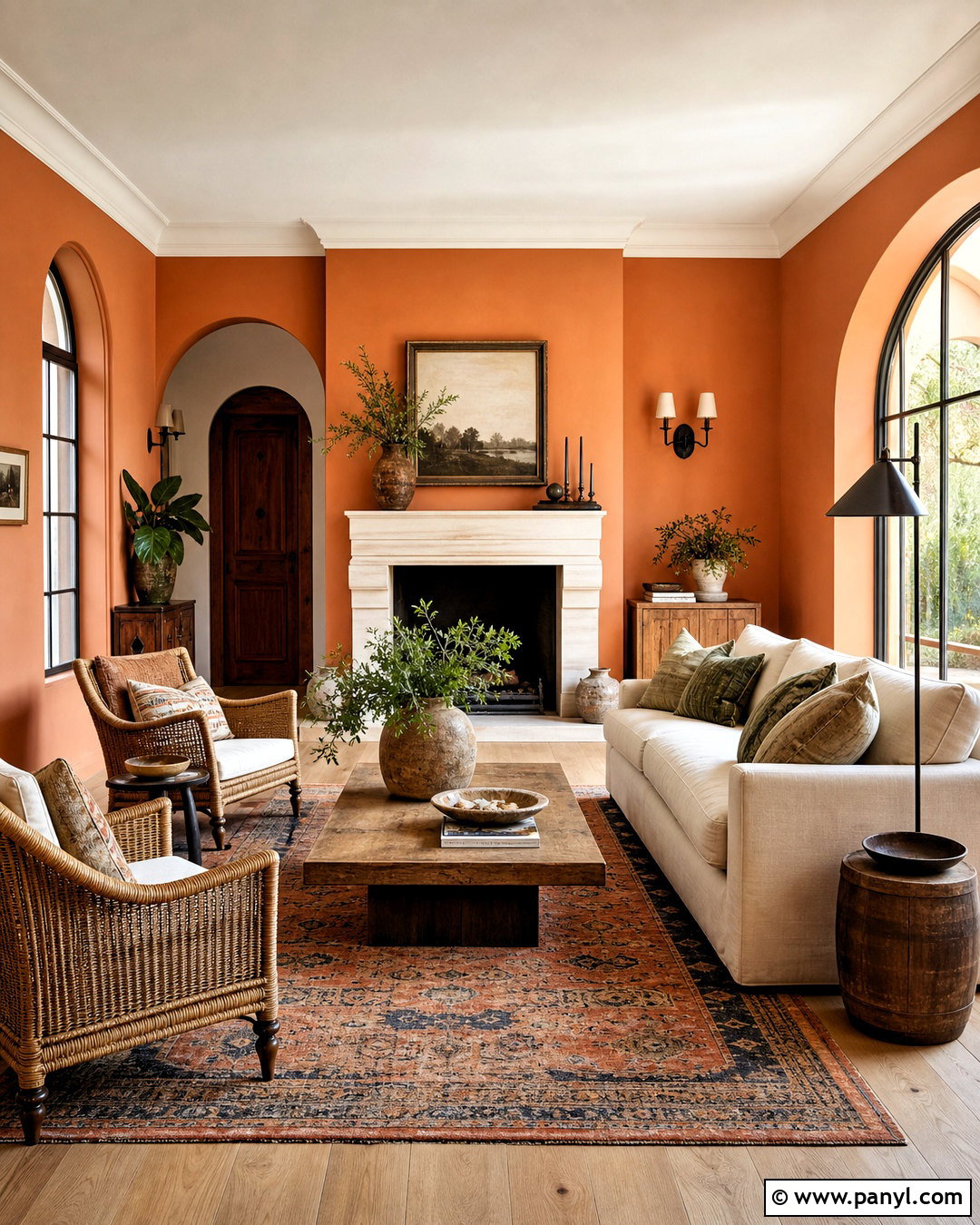
Terracotta walls bring sun-warmed character into a room and pair naturally with handmade materials. Select a softened, clay-based orange rather than a highly saturated shade. Combine it with creamy white trim, a light neutral ceiling, and medium oak or saltillo-style flooring. Furnish the room with a beige linen sofa, woven chairs, and a substantial wood coffee table. Olive green pillows, off-white ceramics, and black metal lighting provide balanced contrast. Use a textured rug containing rust, tan, and faded blue to connect the palette. Terracotta can become intense in strong sunlight, so test it on both bright and shadowed walls. If painting the entire space feels overwhelming, apply it above warm white wainscoting while repeating the color through textiles and pottery.
14. Warm Clay Room
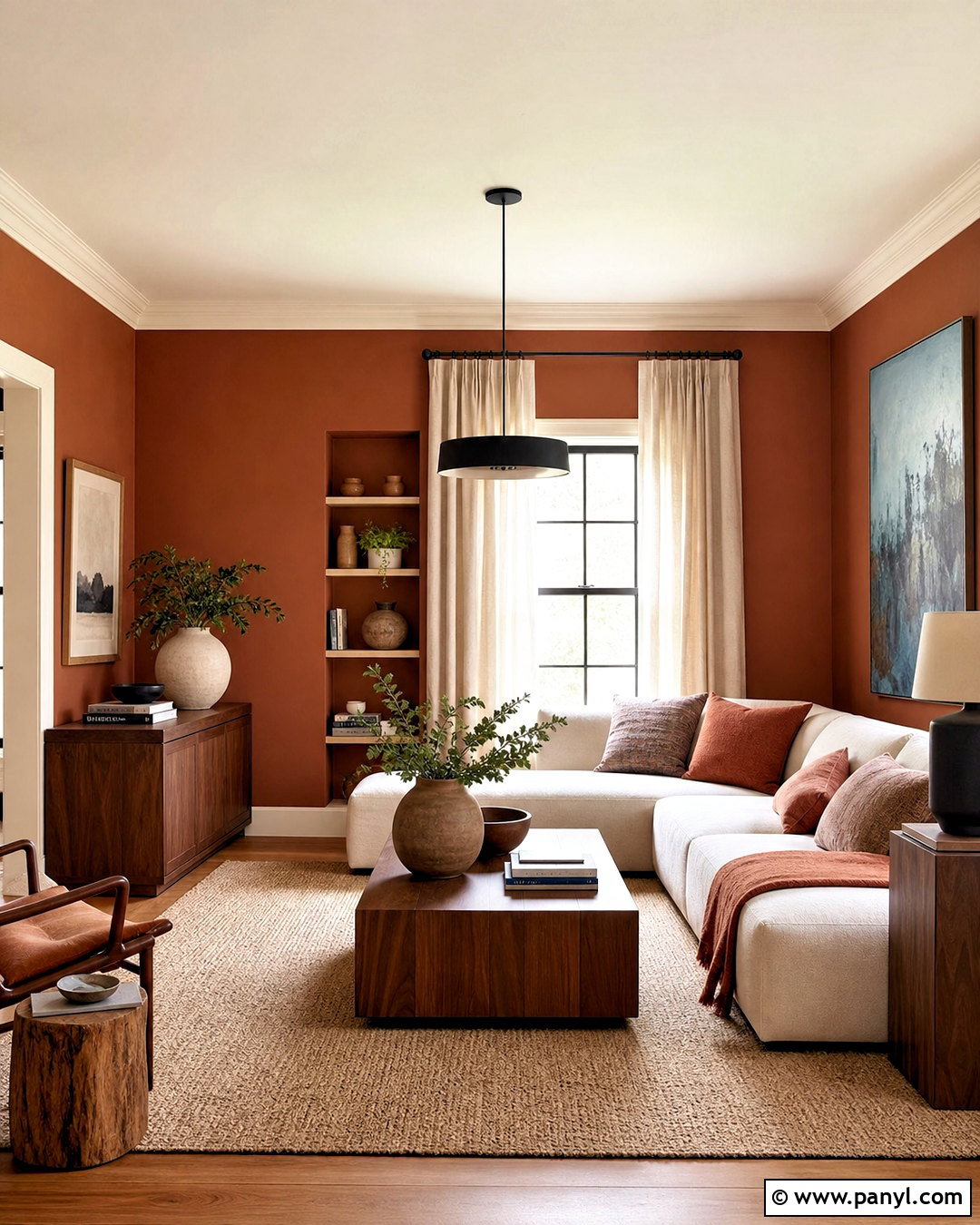
Warm clay sits between beige, brown, and muted red, making it an approachable choice for an earthy interior. Paint all four walls in a soft clay tone and use warm ivory for the trim and ceiling. Add a cream sofa, walnut storage pieces, and a wool rug in sand and faded rust. Textured linen curtains and hand-thrown ceramic decor reinforce the room’s organic quality. For contrast, incorporate charcoal through a floor lamp, picture frames, or a narrow accent chair. Muted blue artwork can provide a refreshing complementary note. This color works particularly well in rooms containing stone, brick, or medium-toned wood. Choose a clay paint that looks gently brown in bright light rather than strongly orange, helping the finished room remain versatile across seasons.
15. Chocolate Brown Room
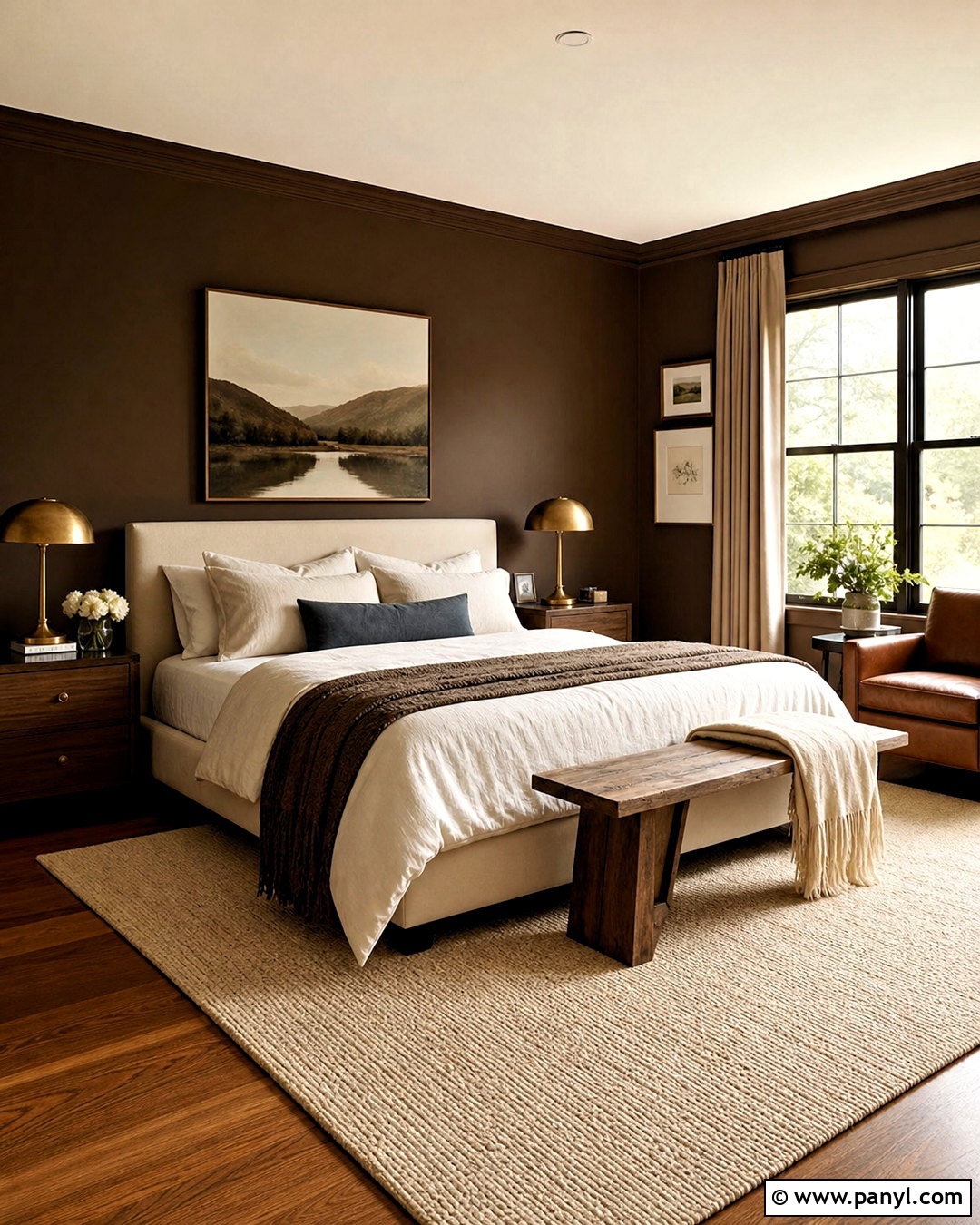
Chocolate brown creates a cocooning room with considerable depth, especially when the surfaces and furnishings are thoughtfully layered. Paint the walls a warm, medium-dark brown and consider matching the trim for a continuous finish. Keep the ceiling creamy white unless the room has generous height and abundant daylight. Introduce a large ivory sofa or upholstered bed, pale bedding, and a cream wool rug to break up the darkness. Walnut furniture, tan leather, and aged brass fixtures complement the walls without creating harsh contrast. Add one dusty blue or pale pink textile for an unexpected lift. Chocolate brown performs best with warm lighting and visible texture. Test the paint carefully to avoid cool, muddy undertones that may appear flat beside existing wood flooring.
16. Butter Yellow Room
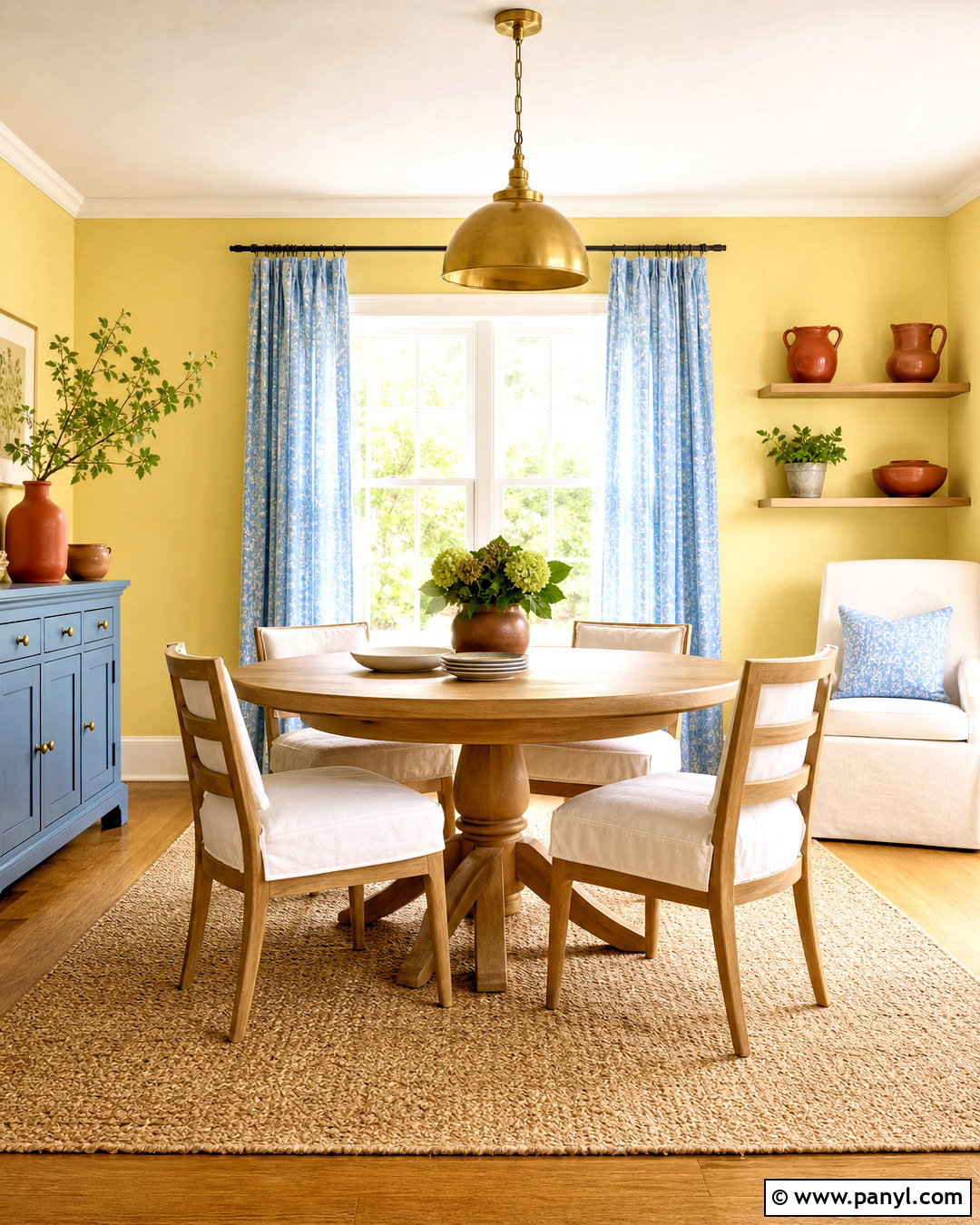
Butter yellow fills a room with gentle warmth while remaining softer than a bright primary yellow. Choose a pale, creamy version for the walls and pair it with clean ivory trim. Light oak furniture, white linen upholstery, and a natural fiber rug create a fresh foundation. Introduce soft blue through curtains, patterned pillows, or a painted cabinet for a classic complementary scheme. Small touches of red clay and polished brass can add further warmth. Keep the ceiling light so the yellow reflects illumination without enclosing the space. This paint color is useful in breakfast rooms, kitchens, bedrooms, and darker spaces needing energy. Test it under artificial lighting because warm bulbs may amplify the yellow. A balanced shade should appear creamy rather than neon or strongly green.
17. Muted Ochre Room
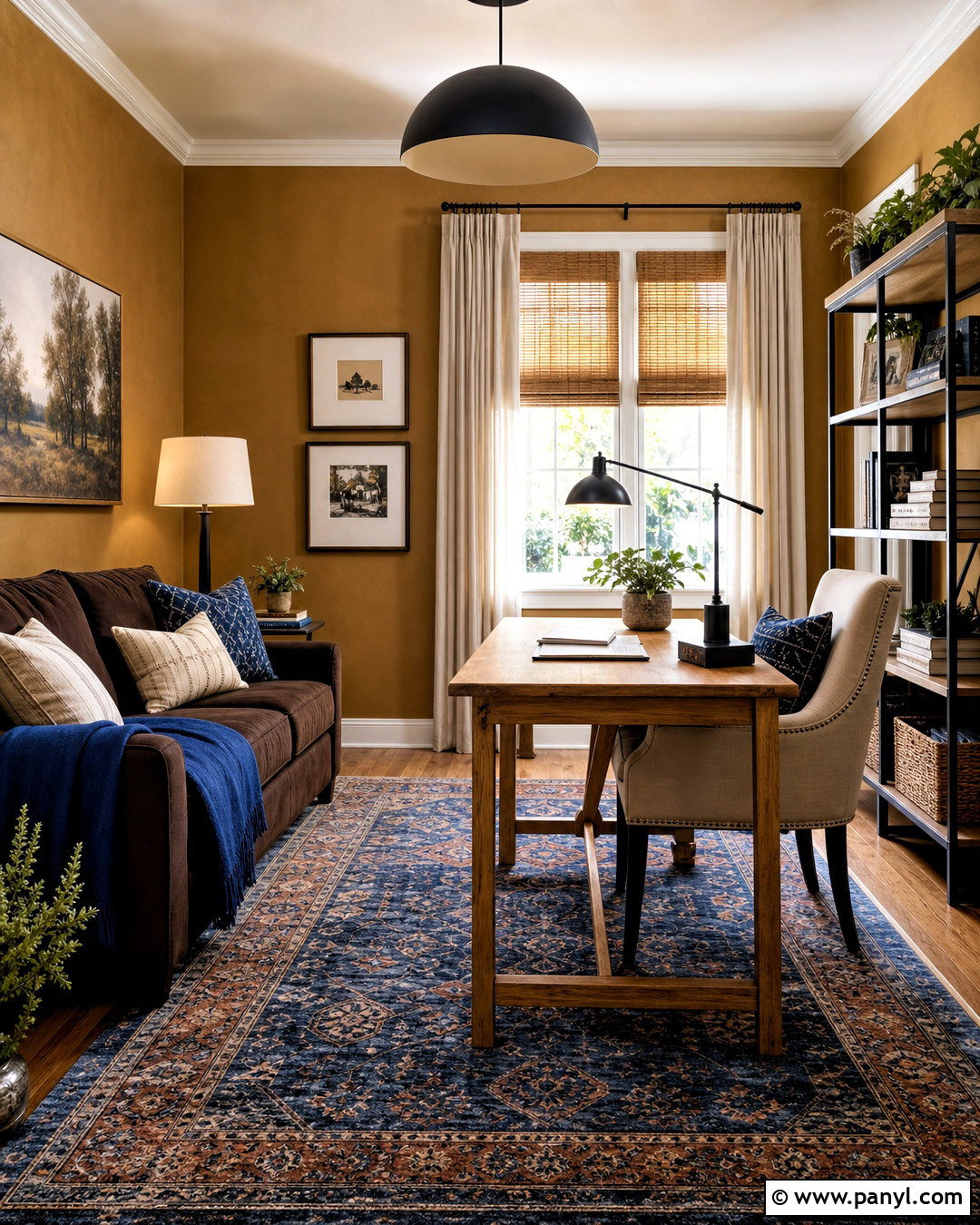
Muted ochre creates a confident, earthy room with more depth than butter yellow. Paint the walls in a softened golden brown and use warm white on substantial trim and the ceiling. A dark brown sofa, cream accent chairs, and medium oak tables will make the color feel grounded. Add deep blue pillows, an indigo patterned rug, and matte black lighting for crisp contrast. Woven shades and linen curtains bring a softer natural texture to the windows. Because ochre is visually strong, leave some surfaces light and keep decorative objects edited. This palette suits dining rooms, home offices, and living spaces where a warm, social atmosphere is welcome. Select a shade with brown undertones and test it beside flooring to prevent the room from appearing overly bright.
18. Soft Lavender Room
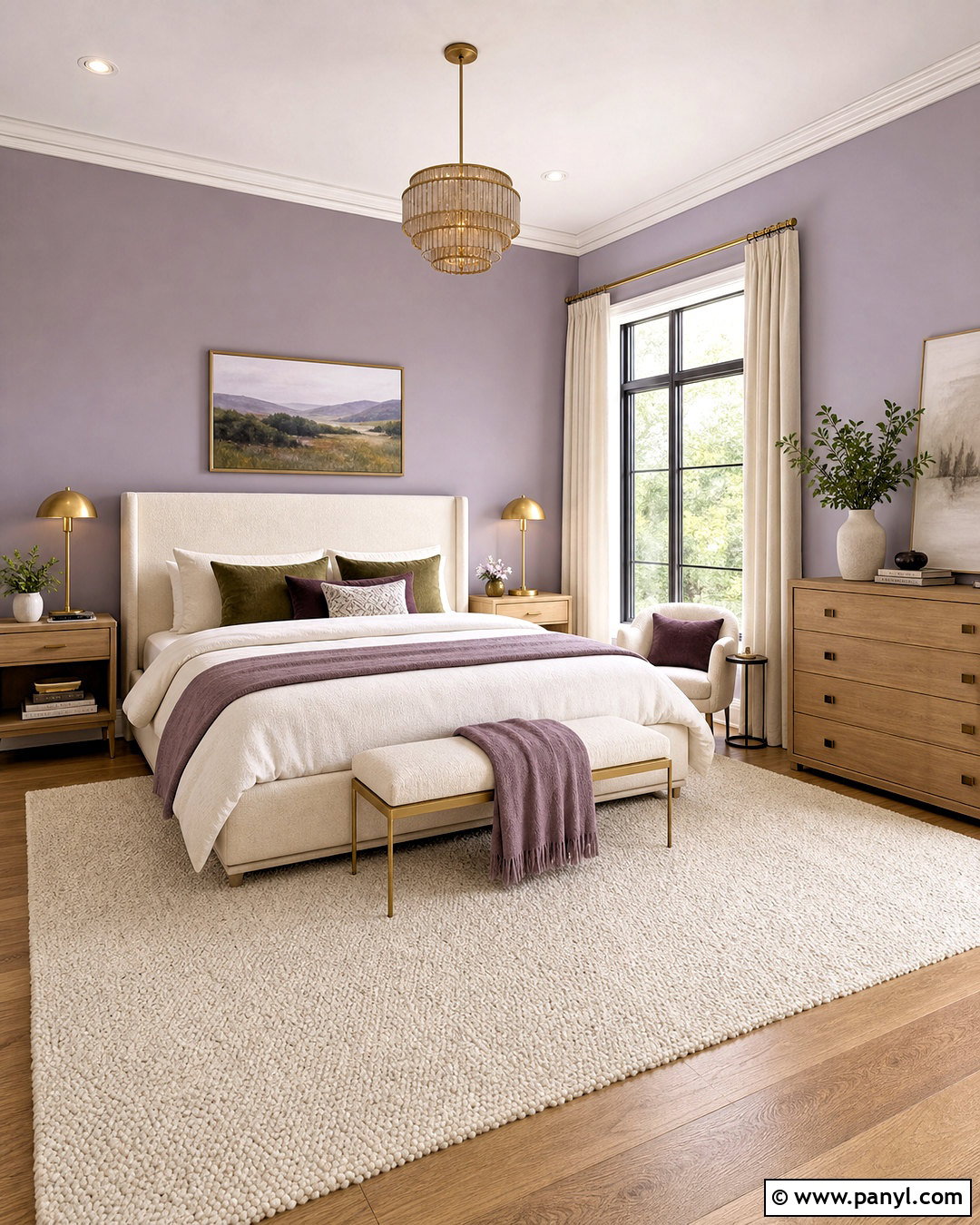
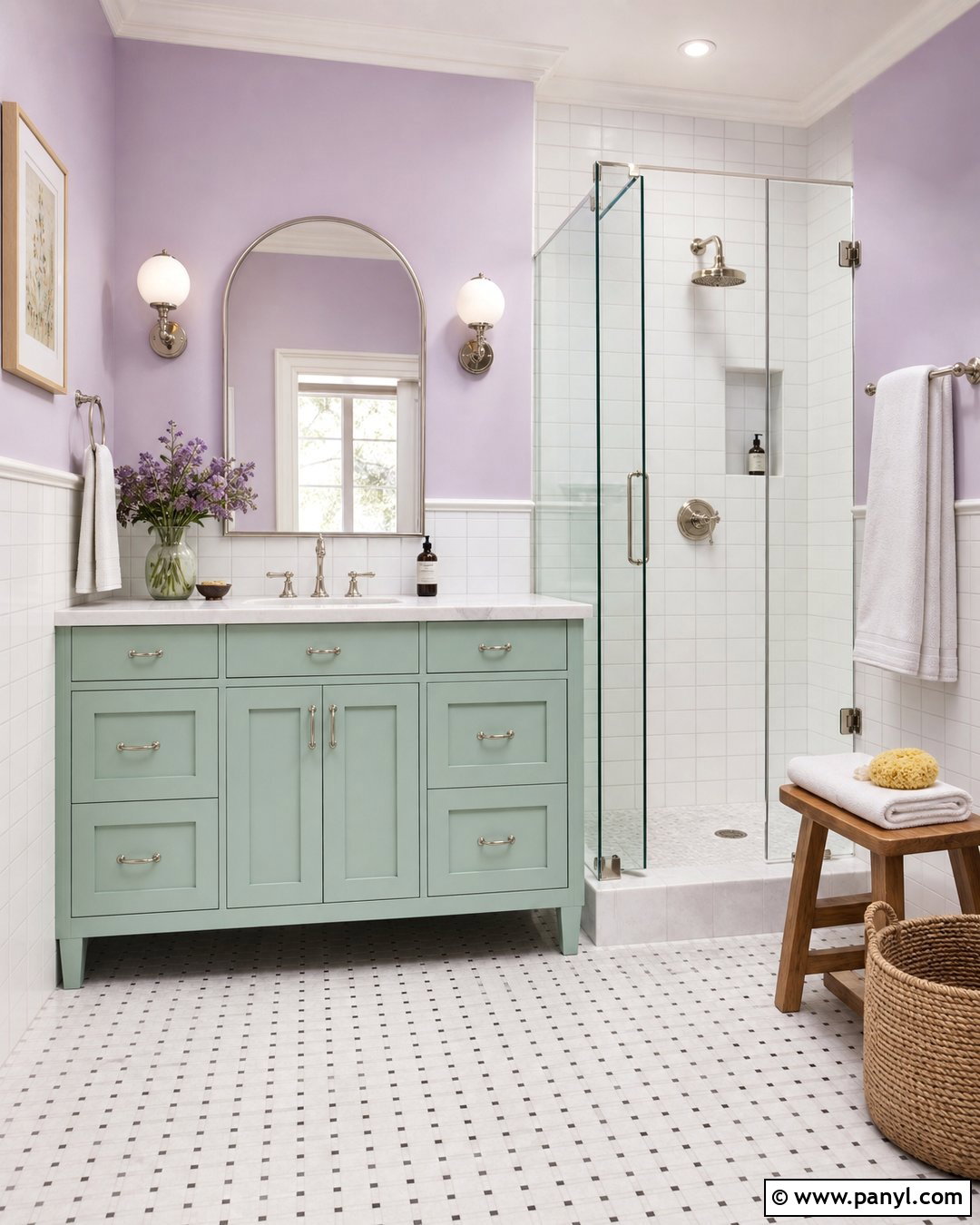
Soft lavender offers a calm wash of color that can feel modern when paired with simple, grounded furnishings. Choose a gray-based lavender for the walls, then use warm white trim and a pale ceiling. Style the room with a cream upholstered bed or sofa, light oak furniture, and an ivory wool rug. Olive green pillows, muted plum accents, and brushed brass lighting add depth without making the palette overly decorative. Natural linen curtains help balance lavender’s cooler quality. Avoid icy gray furniture, which may drain warmth from the room. This paint color works especially well in bedrooms and reading spaces receiving soft natural light. Check samples in the evening because some lavender paints can shift sharply toward blue or pink under different bulb temperatures.
19. Deep Plum Room
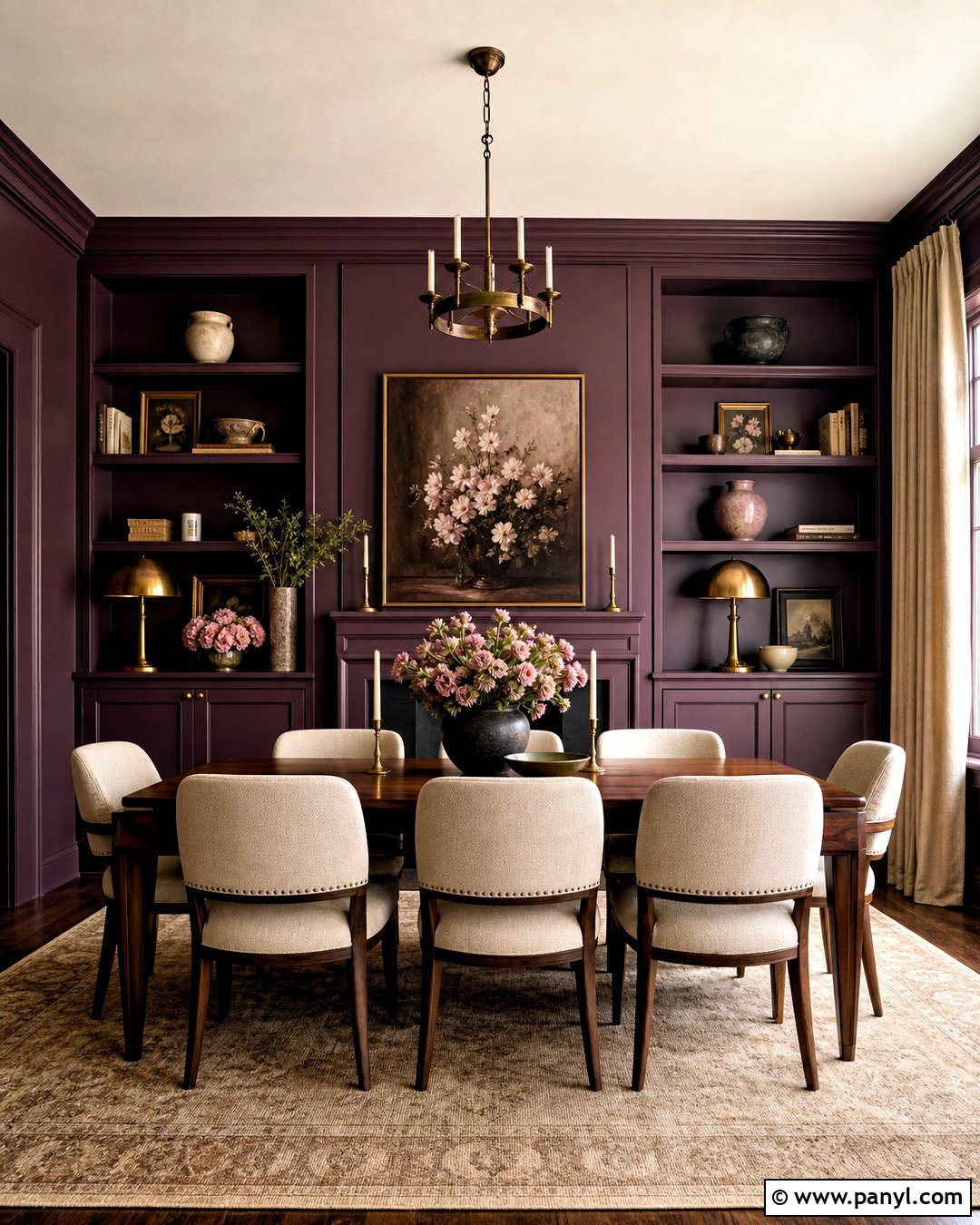
Deep plum produces a luxurious, enveloping room when balanced with pale upholstery and warm metallic details. Apply the color to the walls and built-in shelving, allowing books, ceramics, and framed art to stand out. Use a warm white ceiling in a smaller space or extend the plum overhead for a dramatic color-drenched room. A cream sofa, walnut furniture, and a faded beige rug prevent the design from feeling heavy. Add olive green textiles, antique brass lamps, and soft pink accents for a layered palette. Full-length oatmeal curtains will brighten the windows while maintaining warmth. Deep plum is particularly effective in dining rooms, bedrooms, and compact lounges. Select a brown-based plum rather than a bright purple to create a more grounded, livable result.
20. Charcoal Gray Room
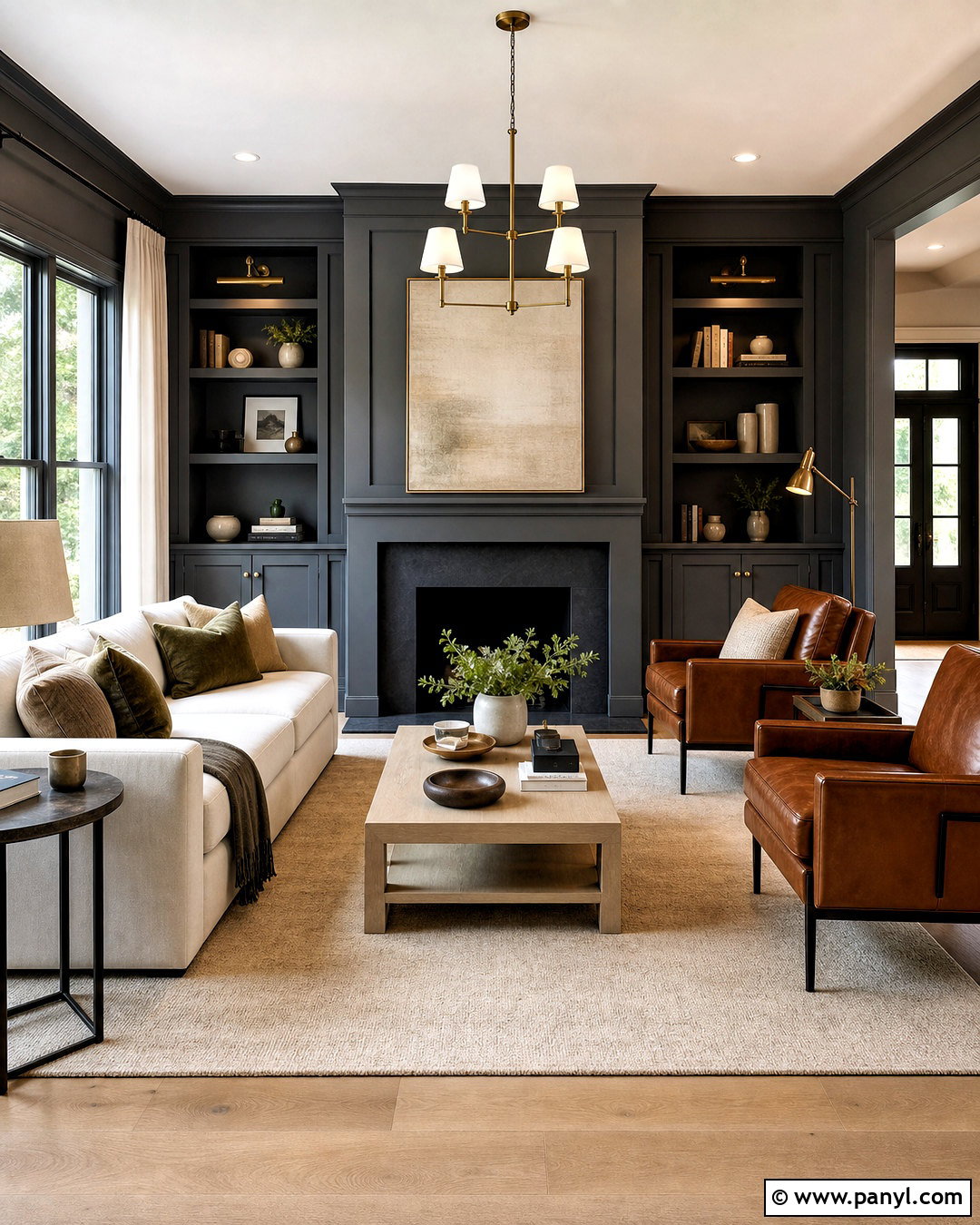
Charcoal gray gives a room strong architectural definition and an elegant backdrop for lighter furnishings. Select a warm charcoal with brown or green undertones rather than a cold blue-gray. Paint the walls and built-ins together, then keep the ceiling warm white to preserve brightness. Furnish the room with a cream sofa, pale oak tables, and a large ivory rug. Cognac leather, olive textiles, and brass lighting introduce warmth, while black accents reinforce the clean outline. Hang large artwork with white or beige backgrounds to break up broad areas of dark paint. Charcoal works well in media rooms, offices, and living rooms with adequate lighting. Add lamps in corners and near seating so the space remains comfortable, practical, and visually balanced throughout the evening.
Conclusion:
The best wall color is one that works with your room’s natural light, permanent finishes, and everyday purpose. These **20 colors to paint your room ideas** range from flexible warm whites and greiges to expressive forest green, terracotta, plum, and charcoal. Whichever palette appeals to you, treat the room as one complete composition. Coordinate the walls with the trim, ceiling, flooring, furniture, curtains, lighting, and decorative accents. Purchase sample pots and paint large test areas on more than one wall. Observe them in morning light, afternoon sun, and evening illumination before deciding. Thoughtful testing and a coordinated palette will help your chosen color feel intentional, comfortable, and easier to enjoy for years.

Related Ideas and Inspiration:
Leave a Reply