
Colorful Interior Walls can completely change how a home feels, adding energy, warmth, personality, and visual structure without requiring a full renovation. Today’s most appealing treatments move beyond a basic accent wall. Color drenching, tonal layering, painted arches, graphic patterns, murals, paneling, and high-contrast trim can turn ordinary rooms into finished spaces with a clear point of view. () The key is creating a balanced look around the wall color. Furniture, flooring, textiles, lighting, and artwork should reinforce the palette rather than compete with it. Whether you prefer soft pastels, warm earth tones, or vivid jewel shades, the following complete room looks offer practical inspiration for decorating with 20 Colorful Interior Walls.

1. Teal Color-Drenched Living Room Walls
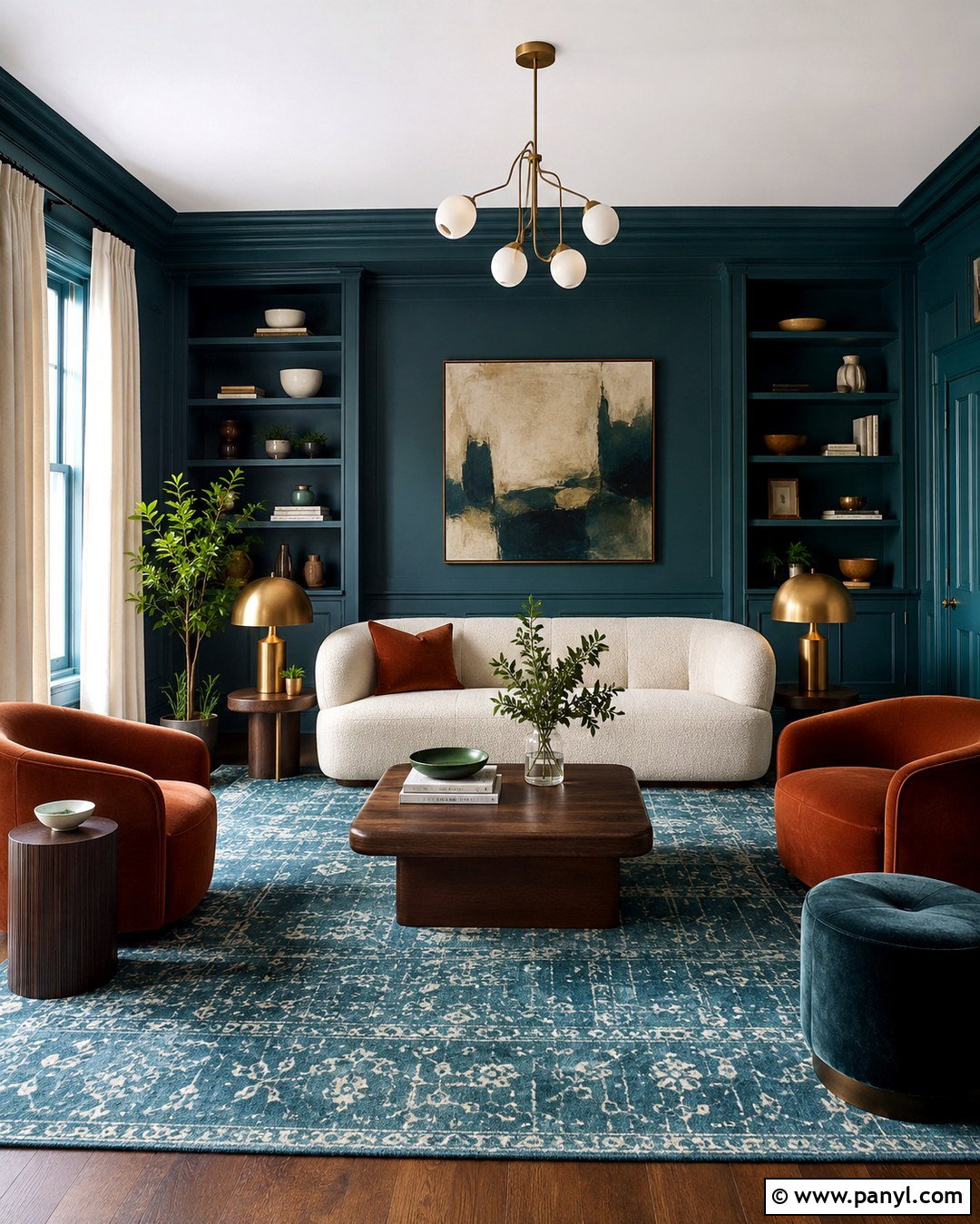
Deep teal can make a living room feel polished, enveloping, and surprisingly comfortable. Paint the walls, trim, interior doors, and built-in shelves in the same blue-green shade, using a satin finish on woodwork for subtle dimension. Choose a cream boucle sofa to lighten the center of the room, then add rust-colored armchairs and a patterned rug containing teal, gold, and ivory. Warm walnut furniture keeps the saturated walls from feeling cold. Hang one large abstract artwork instead of many small pieces, allowing the surrounding color to remain visible. Brass floor lamps and linen curtains introduce softness and gentle reflection. Finish the arrangement with leafy plants, ceramic vessels, and textured pillows that repeat the room’s warm accent colors.
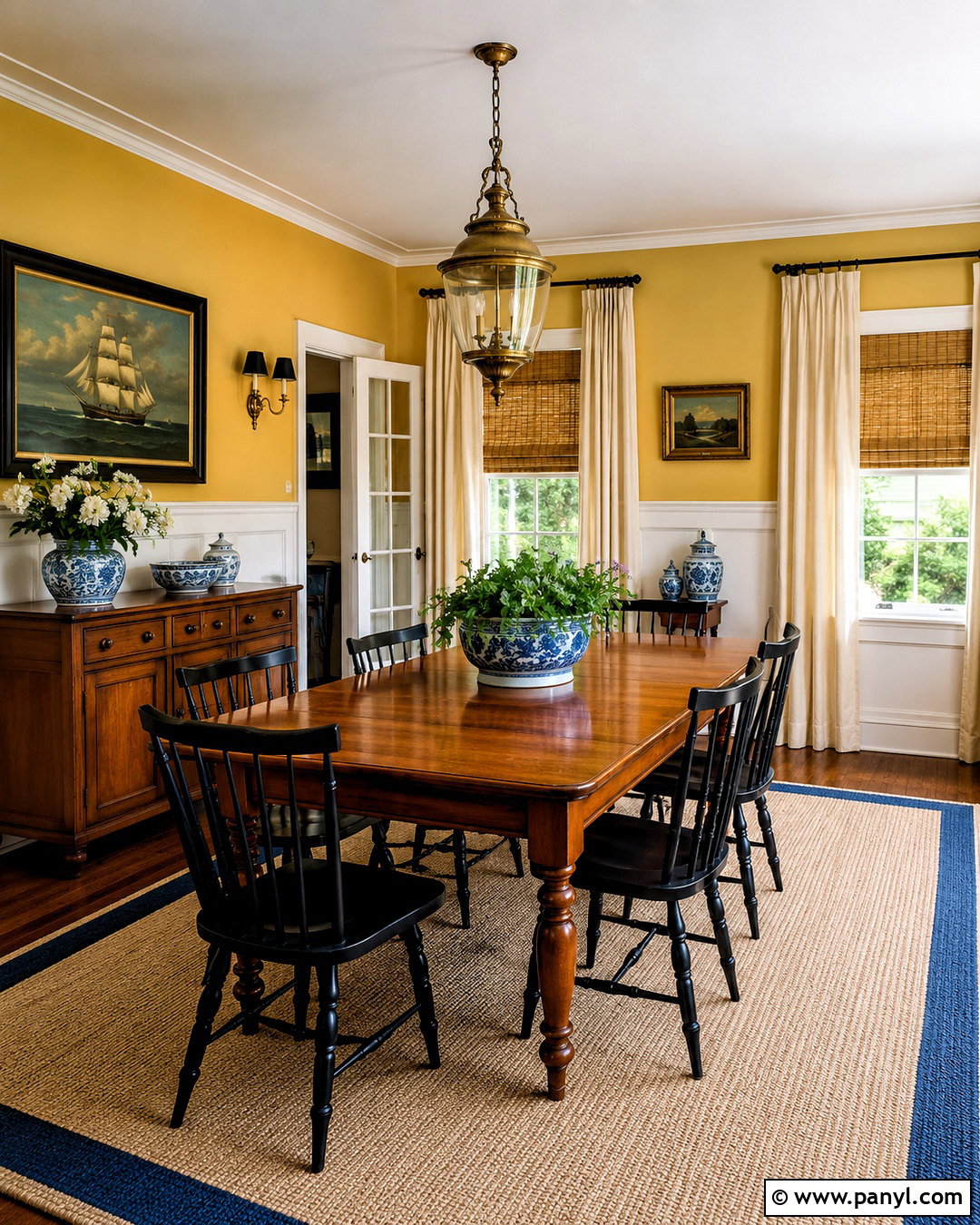
2. Mustard Yellow Dining Room Accent Wall
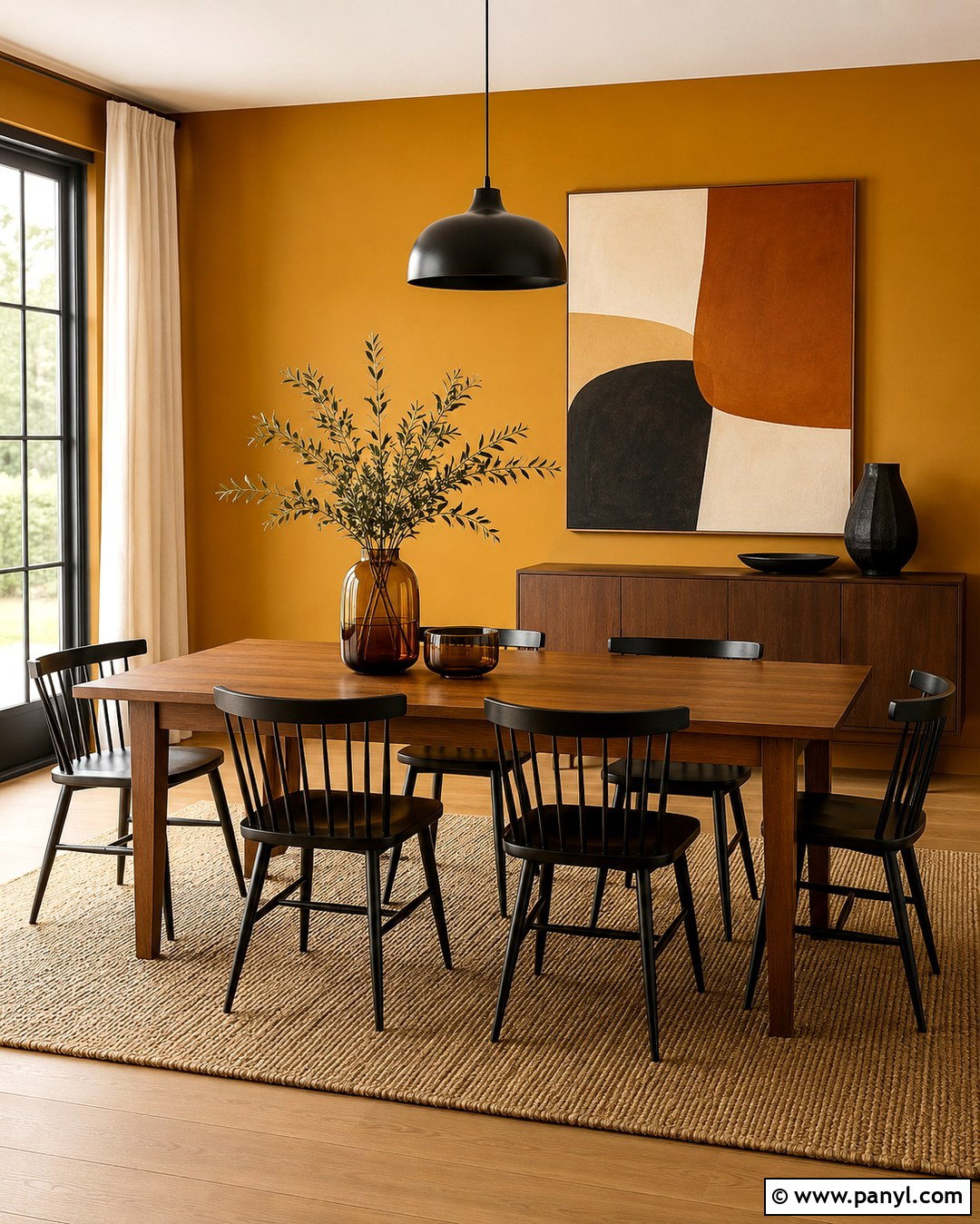
A mustard yellow dining room wall creates cheerful warmth without looking overly bright when it is paired with grounded materials. Use the color behind a rectangular oak dining table, keeping the remaining walls a soft warm white. Black spindle-back chairs provide crisp contrast, while a woven natural-fiber rug adds casual texture underfoot. Center a modern black pendant above the table and display oversized artwork with cream, rust, mustard, and charcoal details. A low walnut sideboard can anchor the opposite wall and provide practical storage. Add simple ceramic tableware, amber glass vessels, and olive-green branches for a natural finishing layer. The complete scheme feels sunny and sociable because the yellow wall is balanced by wood, black accents, and plenty of breathable neutral space.
3. Terracotta Two-Tone Bedroom Walls
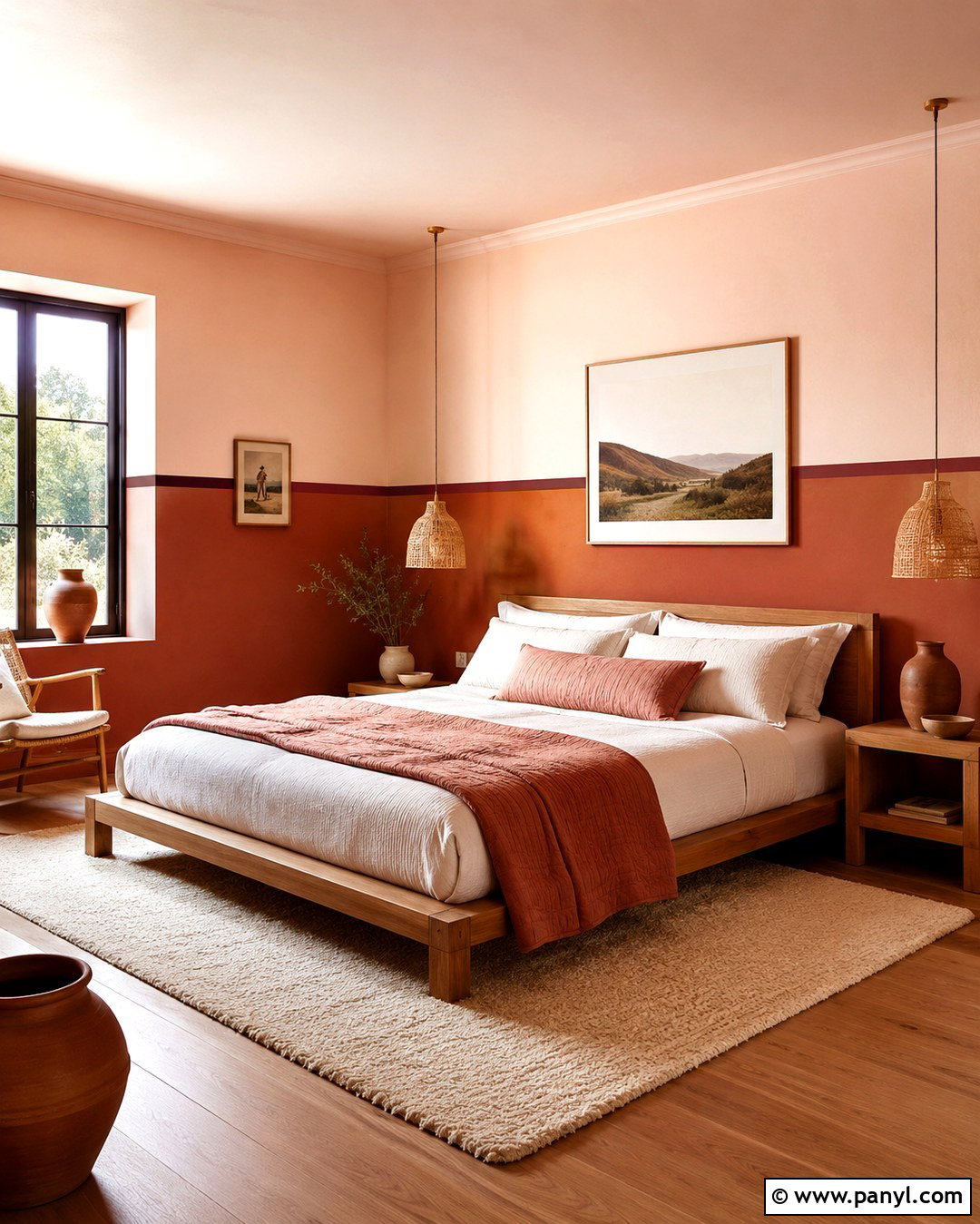
Terracotta and warm blush create a restful two-tone bedroom with more depth than one flat wall color. Paint the lower two-thirds of every wall in muted clay terracotta, then use pale blush above the dividing line and across the ceiling. A slim painted border in burgundy can make the transition look intentional. Place a low oak bed against the longest wall and dress it with ivory linen, rust pillows, and a dusty rose quilt. Choose woven pendant lights instead of bulky bedside lamps to keep the layout open. Light oak nightstands, a cream wool rug, and natural linen curtains soften the earthy palette. Finish with framed landscape prints and handmade pottery. Repeating the wall tones in small textile details creates a coordinated bedroom rather than a disconnected painted treatment.
4. Blue Ombre Bedroom Wall
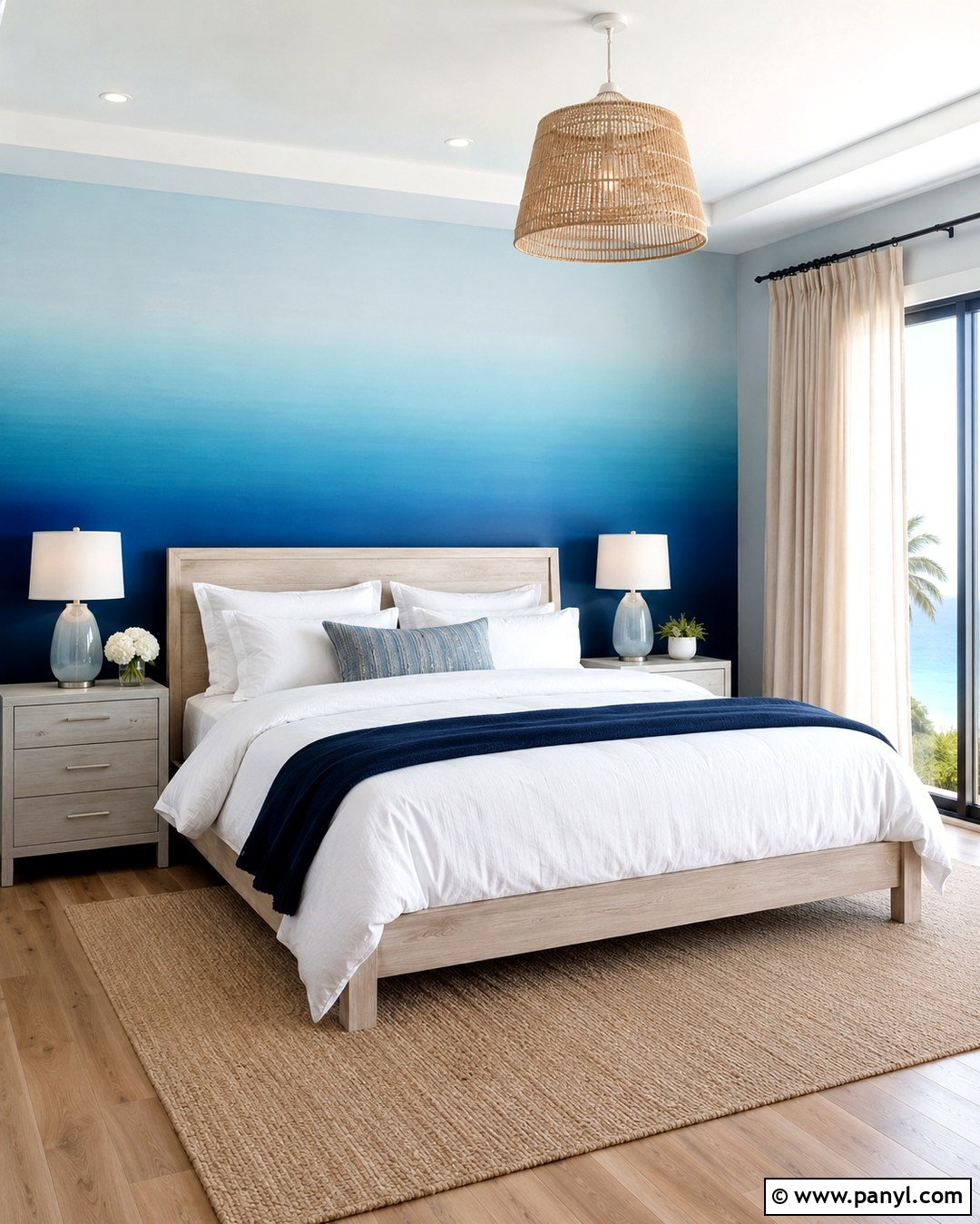
An ombre wall can bring gentle movement to a bedroom when the color transition remains soft and controlled. Create a gradient behind the bed that moves from deep ocean blue near the floor to medium aqua and pale sky blue at the ceiling. Keep the other walls a quiet blue-white so the feature remains airy. A simple white oak bed, crisp white bedding, and a navy throw connect the furniture to the painted backdrop. Add pale gray nightstands and frosted glass lamps for a clean, contemporary finish. A light beige rug prevents the blue palette from becoming too cool, while sand-colored curtains reference the coast without using themed decor. Minimal artwork, curved ceramics, and one sculptural plant allow the blended wall colors to remain the room’s main visual statement.
5. Rainbow Stripe Playroom Walls
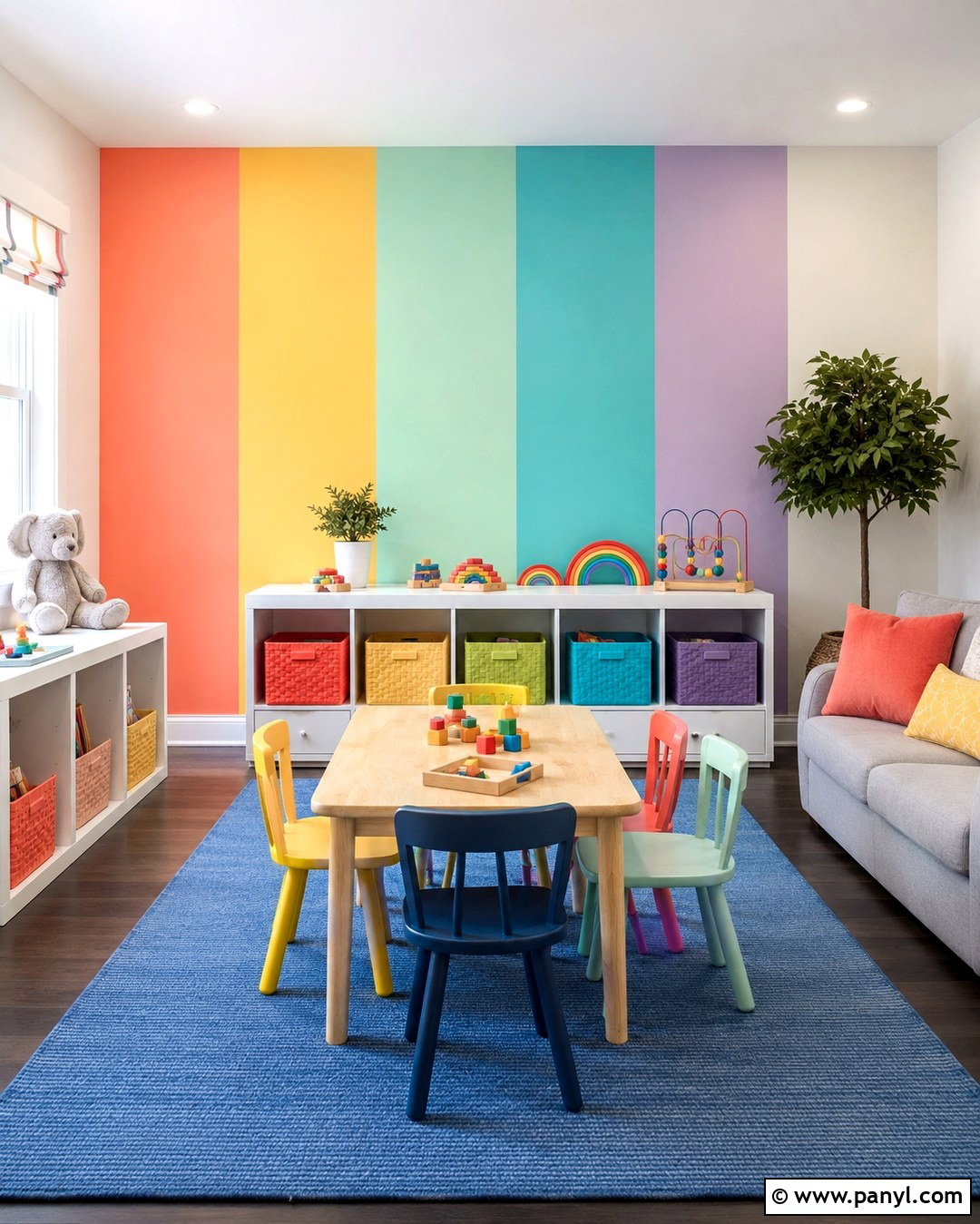
Colorful stripes can give a playroom clear structure while making the entire space feel lively. Paint wide vertical bands in coral, golden yellow, mint green, turquoise, lavender, and warm white across one long wall. Use a softer cream on the remaining walls to give the pattern breathing room. Arrange low white storage cabinets beneath the stripes, adding labeled-look solid baskets without visible text in coordinating colors. A washable blue rug can define the activity area, while a small round maple table and mixed-color chairs support crafts and games. Include a pale gray sofa with removable covers for reading and relaxing. Open shelves, wooden toys, soft floor cushions, and simple pendant lighting complete a practical room where the bold walls feel playful but organized rather than visually chaotic.
6. Sage Green Geometric Office Wall
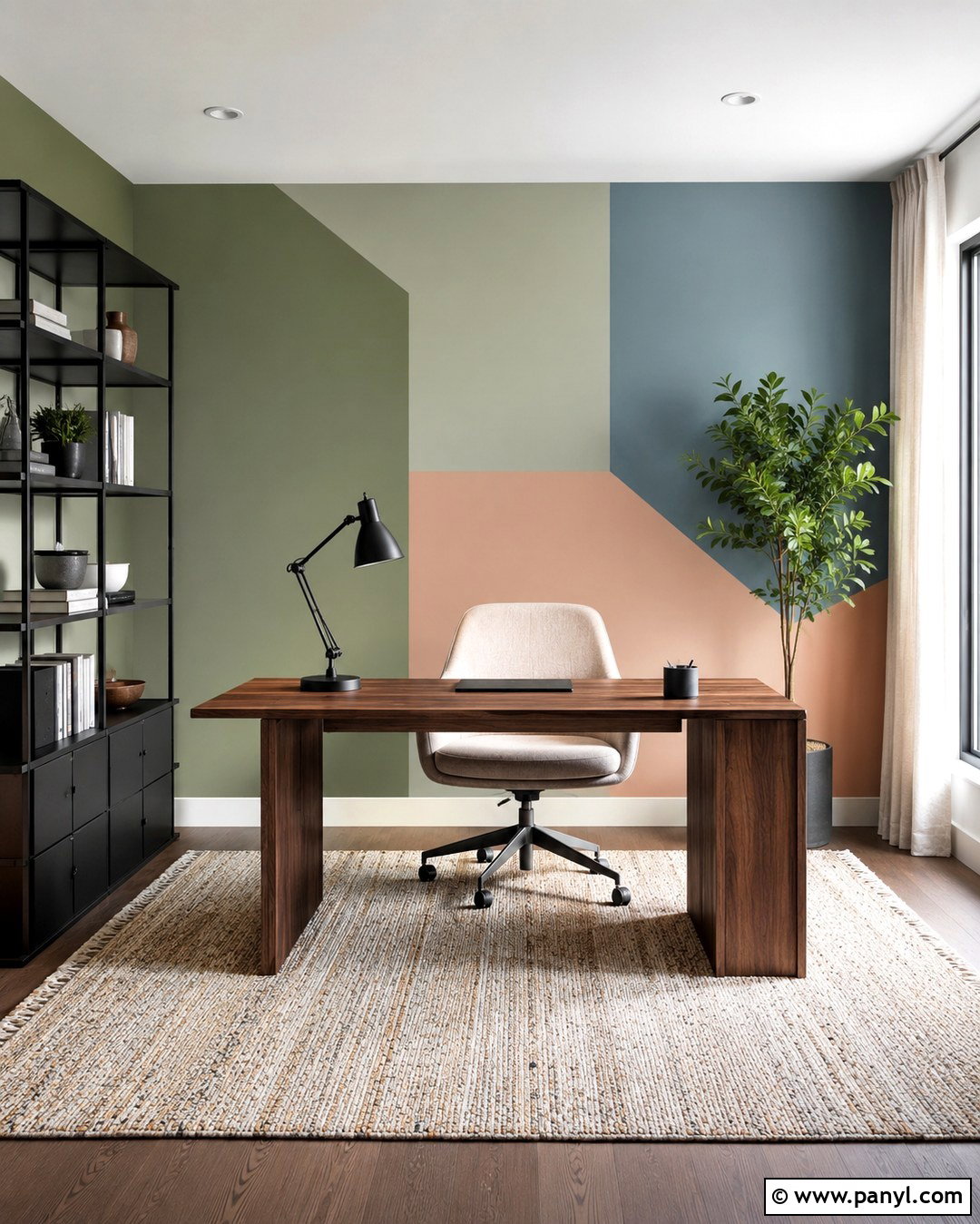
A geometric sage wall can add focus to a home office without overwhelming video calls or daily work. Start with a warm off-white base, then paint large overlapping blocks in sage green, muted olive, pale peach, and dusty blue behind the desk. Keep the shapes broad and asymmetrical instead of filling the wall with many small angles. Position a streamlined walnut desk in front of the design and pair it with a comfortable cream upholstered chair. Matte black shelving and a matching task lamp sharpen the gentle palette. Bring in a flat-weave rug with subtle green and tan lines, plus linen curtains that filter natural light. A few framed prints, closed storage boxes, and one tall plant complete the office while maintaining a calm, uncluttered working environment.
7. Coral and Pink Color Block Walls
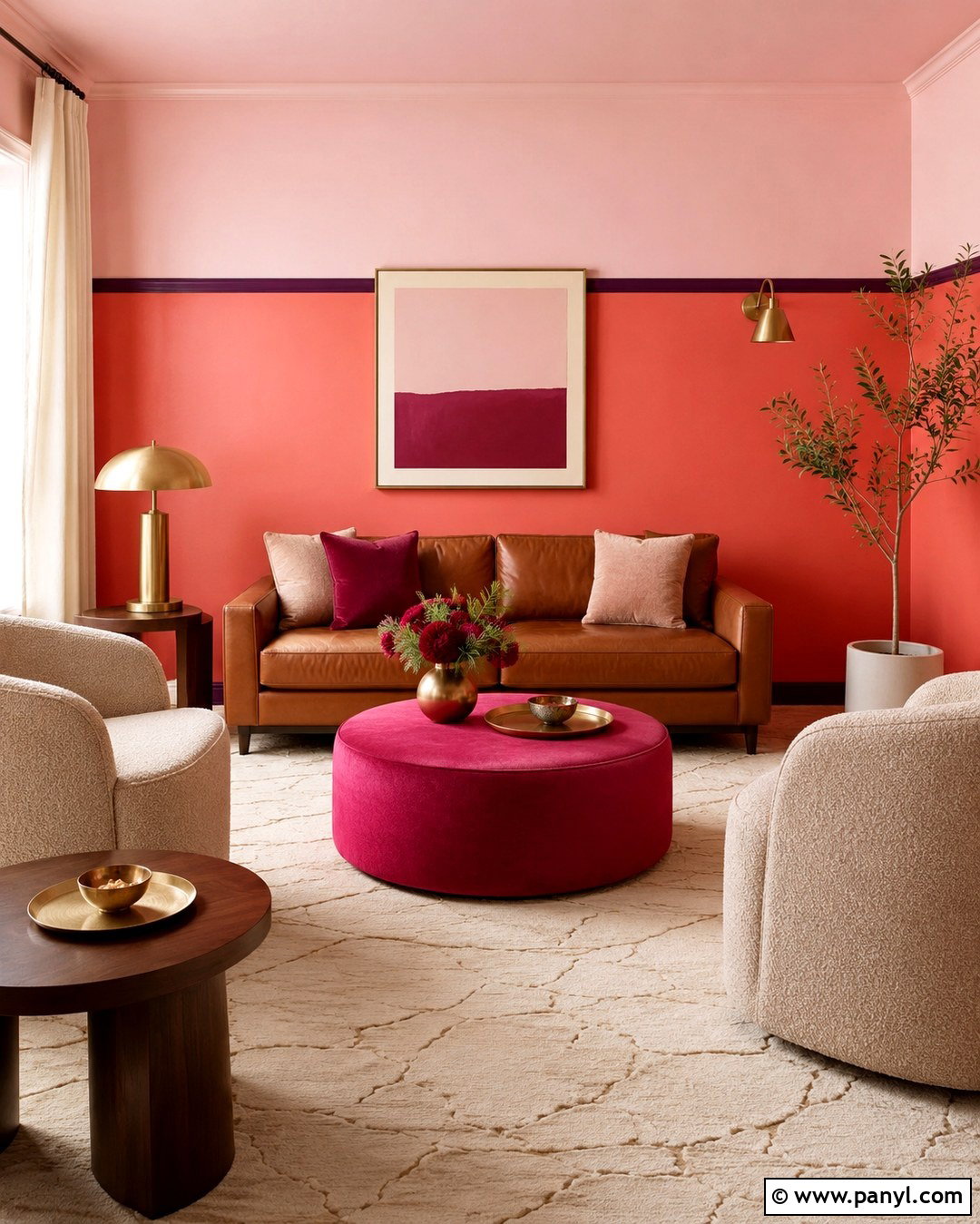
Coral and pink can create a confident living room when their placement helps organize the space. Paint the lower half of the walls in warm coral and the upper half in pale shell pink, extending the lighter shade onto the ceiling. Use a narrow plum line between the colors for definition. Anchor the room with a caramel leather sofa and two oatmeal lounge chairs, then introduce a raspberry ottoman as a practical centerpiece. A cream rug with soft geometric details keeps the floor quiet. Choose dark walnut tables, brushed brass lighting, and full ivory curtains to balance the sweetness of the walls. Artwork containing burgundy, peach, and cobalt adds variety. The finished room feels colorful and sophisticated because every strong shade is supported by warm neutrals and substantial natural materials.
8. Navy Blue Wall With Bright Trim
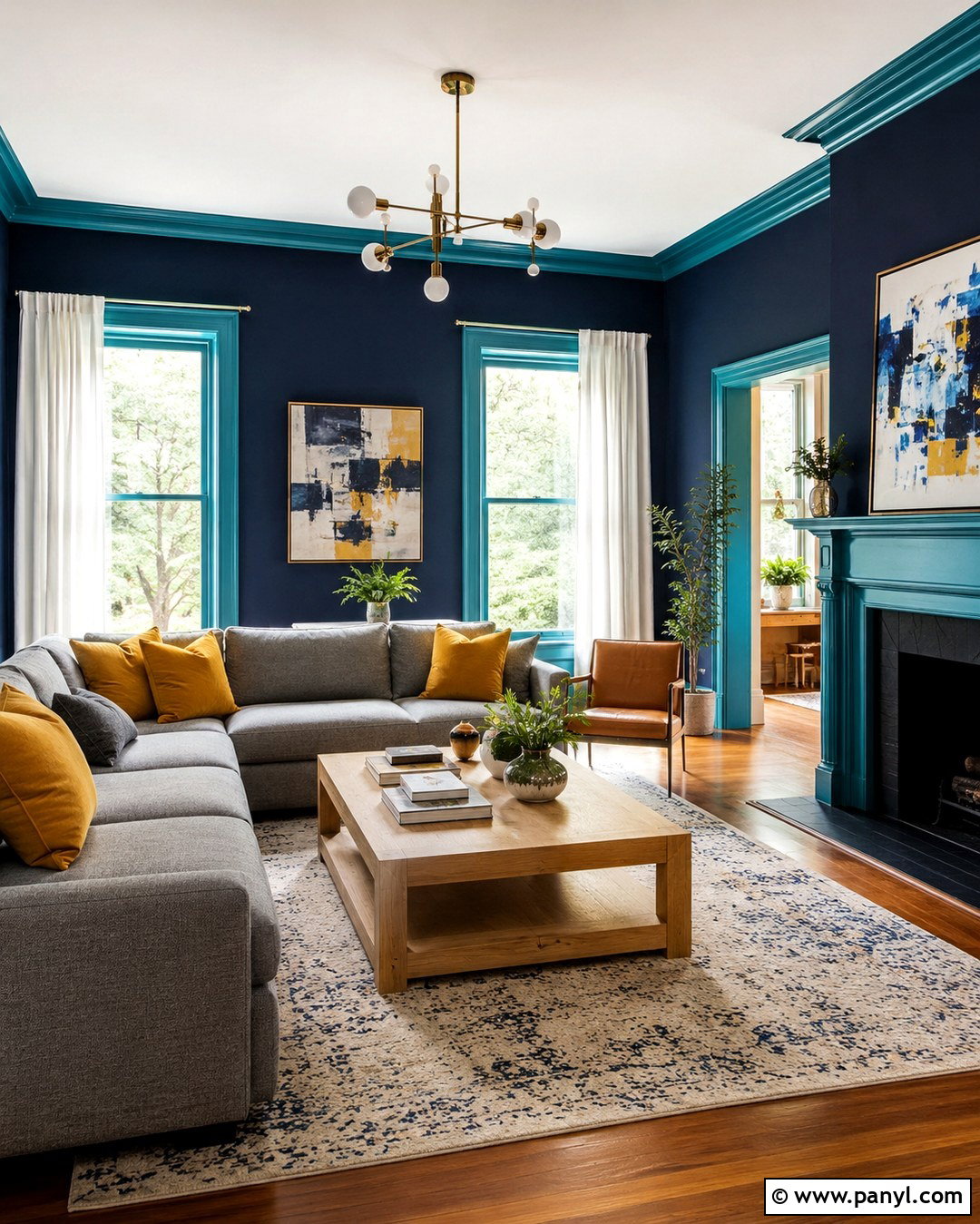
Navy blue walls gain fresh energy when architectural trim becomes part of the color story. Paint a living room’s walls in rich navy, then highlight the baseboards, window frames, fireplace mantel, and door casing with clear turquoise. Use a warm white ceiling to keep the room open and bright. A medium-gray sectional gives the saturated perimeter a neutral anchor, while saffron pillows and a striped turquoise throw connect the furnishings to the painted details. Add a light oak coffee table and a cream-and-blue patterned rug to soften the contrast. White linen curtains, chrome lighting, and colorful modern prints provide a crisp finish. This approach works particularly well in rooms with visible molding because the contrasting trim outlines the architecture and makes the entire layout appear more intentional.
9. Botanical Mural Dining Room Wall
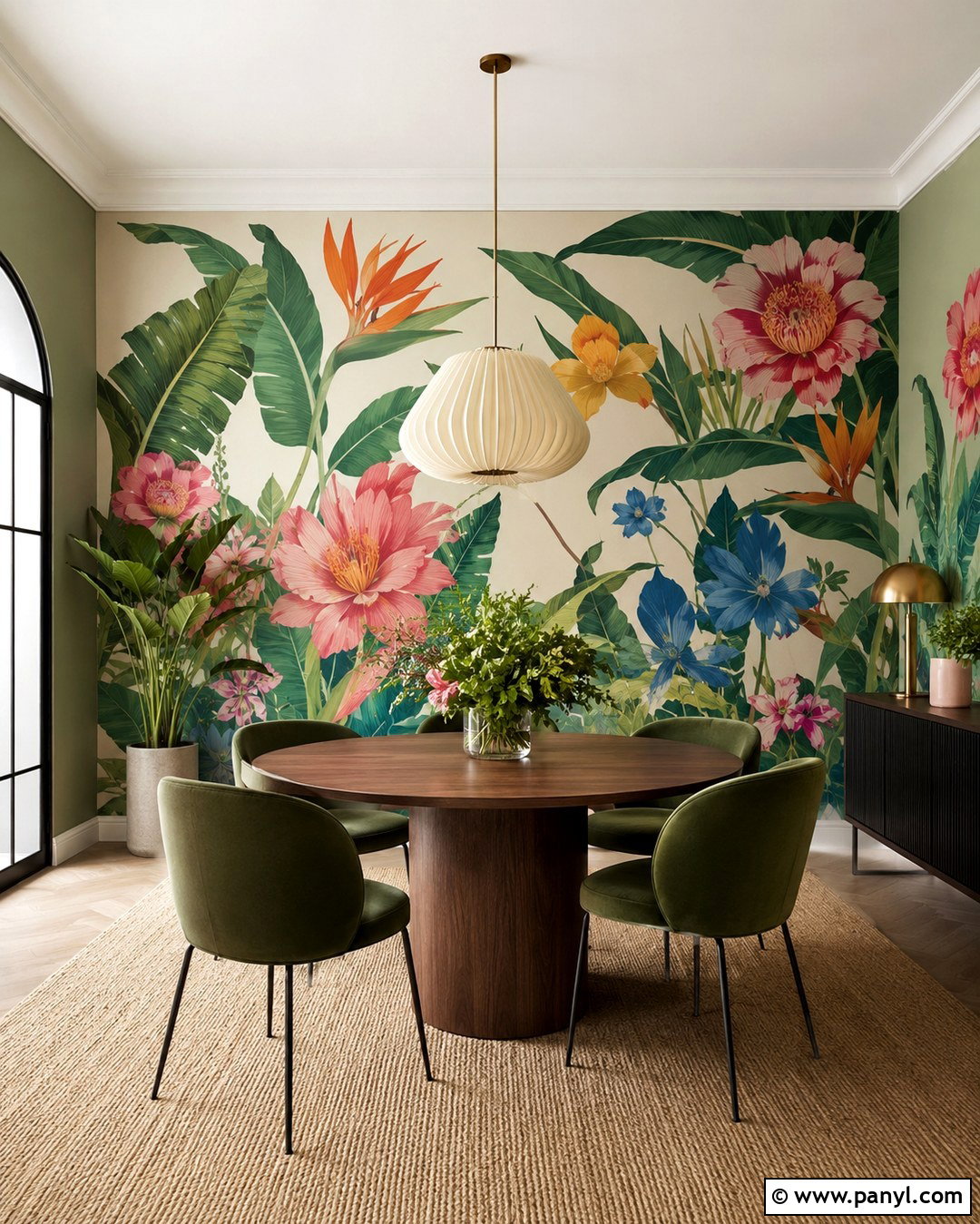
A large botanical mural can transform a dining room into a complete garden-inspired setting. Cover the main wall with oversized hand-painted leaves and flowers in emerald green, cobalt blue, coral, golden yellow, and soft pink over a creamy background. Keep the surrounding walls muted sage so the transition feels gentle. Place a round walnut table in the center with curved moss-green upholstered chairs and a sculptural cream pendant overhead. A natural jute rug adds texture without competing with the mural. Choose a slim black sideboard, simple white tableware, and amber glass accessories to keep the remaining decor controlled. Long ivory curtains and warm wood flooring support the organic atmosphere. The finished room feels immersive, but the limited furniture shapes prevent the detailed wall from making it feel crowded.
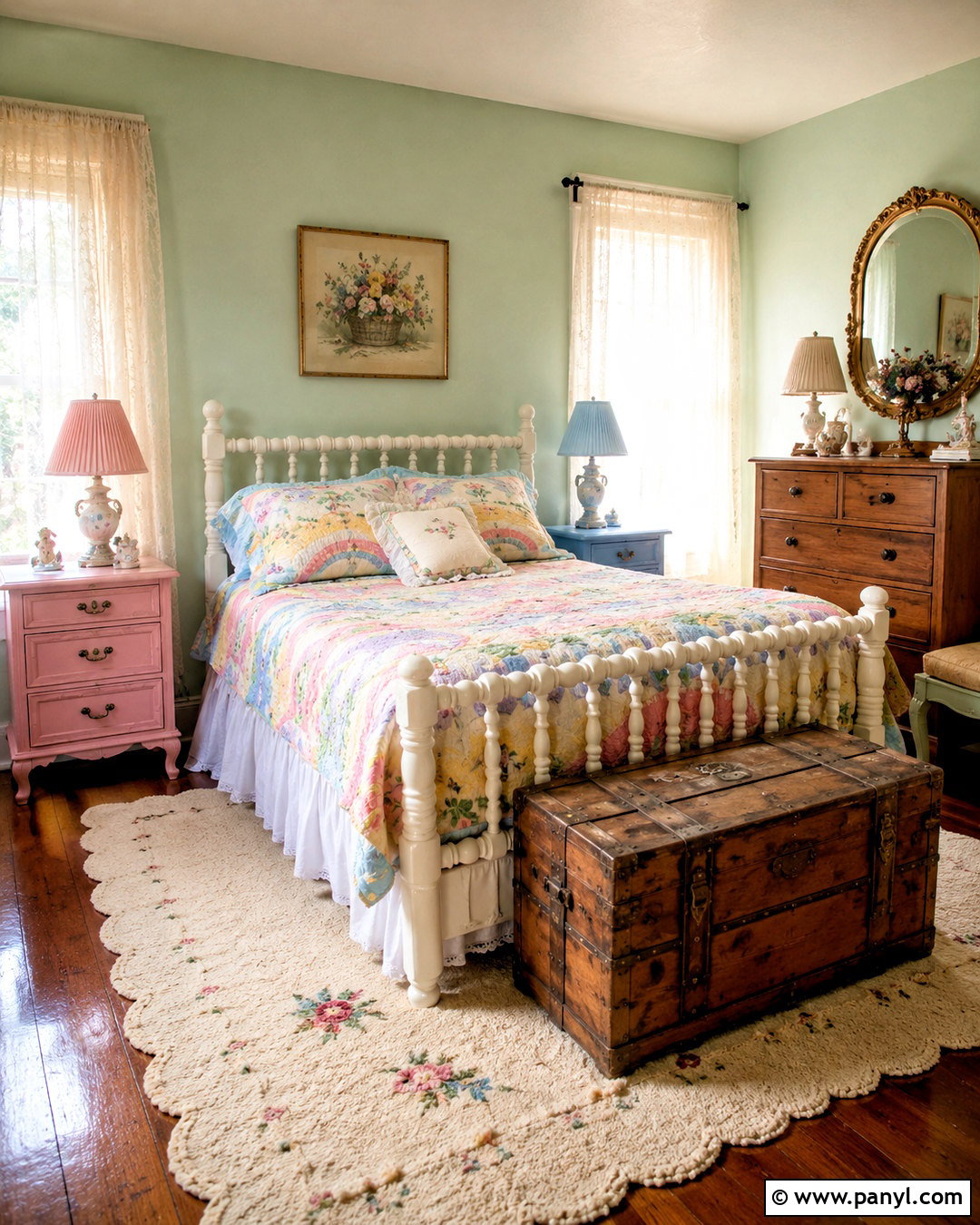
10. Lavender Hallway Walls
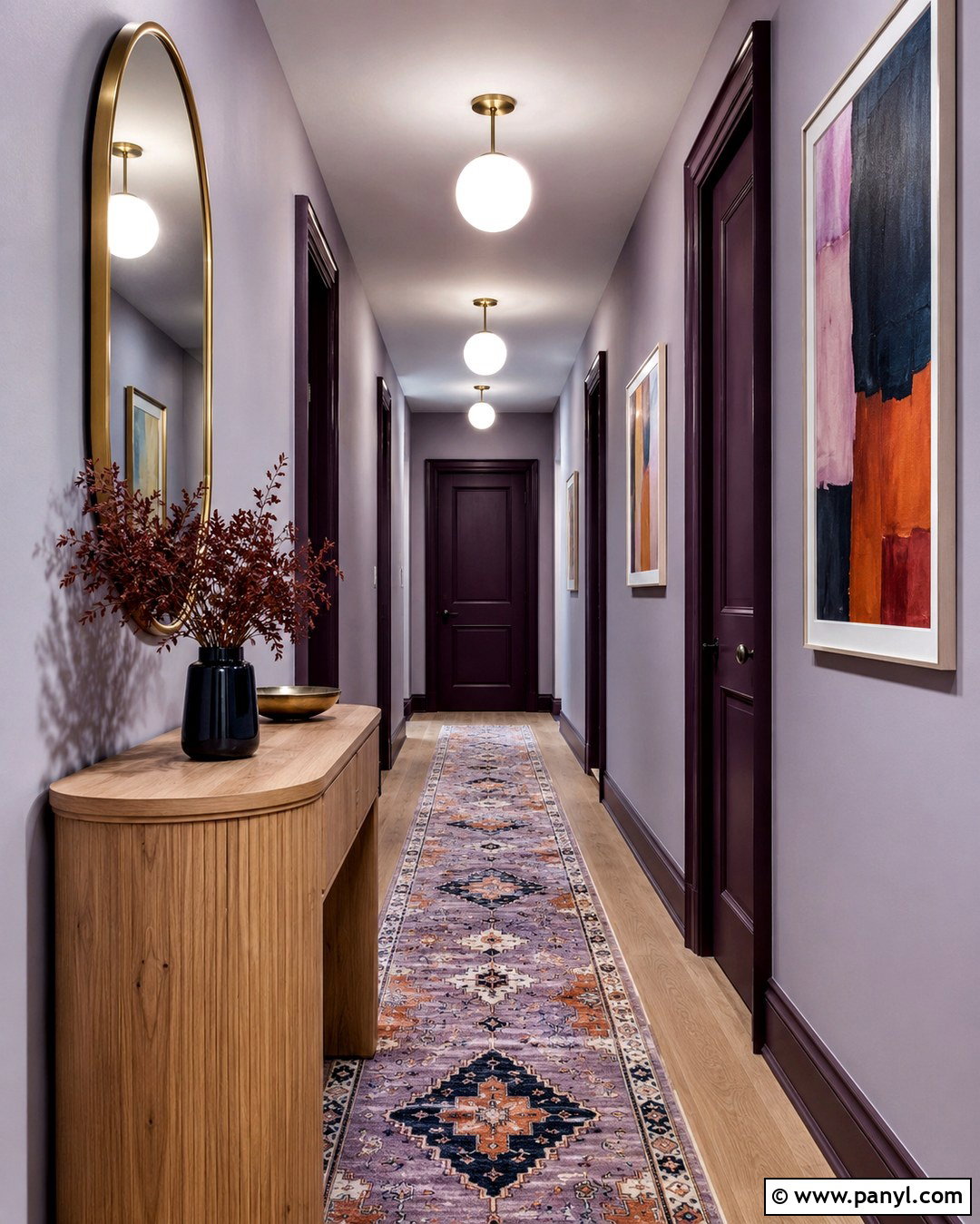
Lavender walls can turn a narrow hallway into a memorable transition space rather than an overlooked passage. Select a soft gray-lavender for the walls and ceiling, then paint the doors and baseboards in a deeper aubergine shade. A slim console in light oak keeps the floor area open, while a rounded brass mirror reflects light through the corridor. Add a washable runner featuring rust, lilac, cream, and navy to connect the cool walls with warmer accents. Small flush-mount globe lights provide even illumination without lowering the visual ceiling. Hang a restrained row of colorful framed artwork along one side, maintaining consistent spacing. A ceramic lamp, shallow tray, and small vase complete the console. The result feels cohesive because color is repeated from the architecture through the floor covering and accessories.
11. Emerald Green Paneled Walls
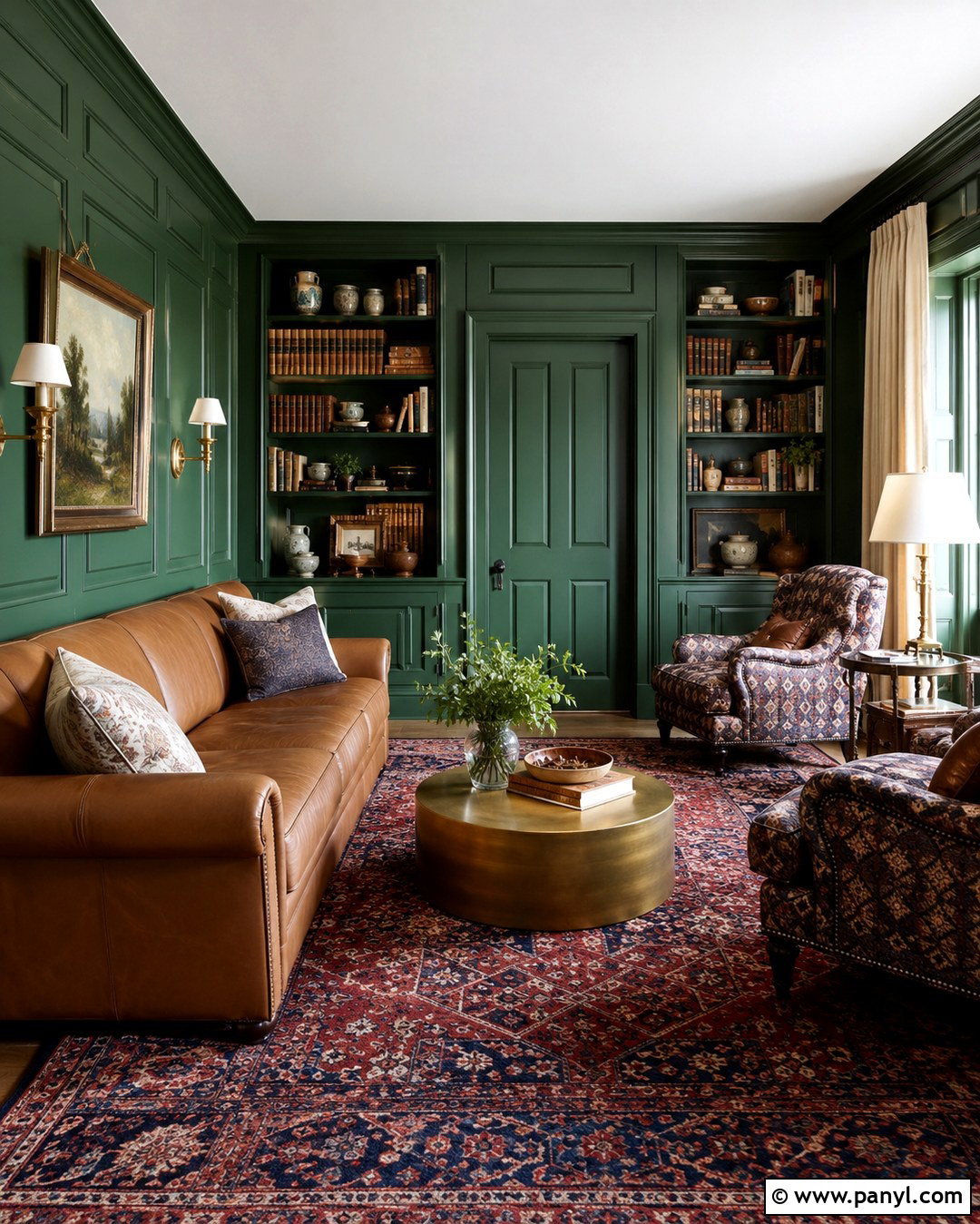
Emerald green paneling gives a library or reading room rich color, texture, and architectural presence. Install simple rectangular molding across every wall, then paint the panels, trim, built-in bookcases, and door in one saturated green. Leave the ceiling warm white to reflect light downward. A camel leather sofa and two patterned armchairs establish a comfortable conversation area around a round brass coffee table. Use a vintage-inspired rug containing burgundy, navy, cream, and green to build a layered palette. Books, pottery, and framed photographs can fill the shelves without hiding the painted structure. Add pleated cream shades, antique-brass sconces, and heavy oatmeal curtains for softer contrast. The complete room feels collected and inviting, with the paneled walls acting as both the main color statement and the unifying architectural feature.
12. Peach Scalloped Nursery Wall
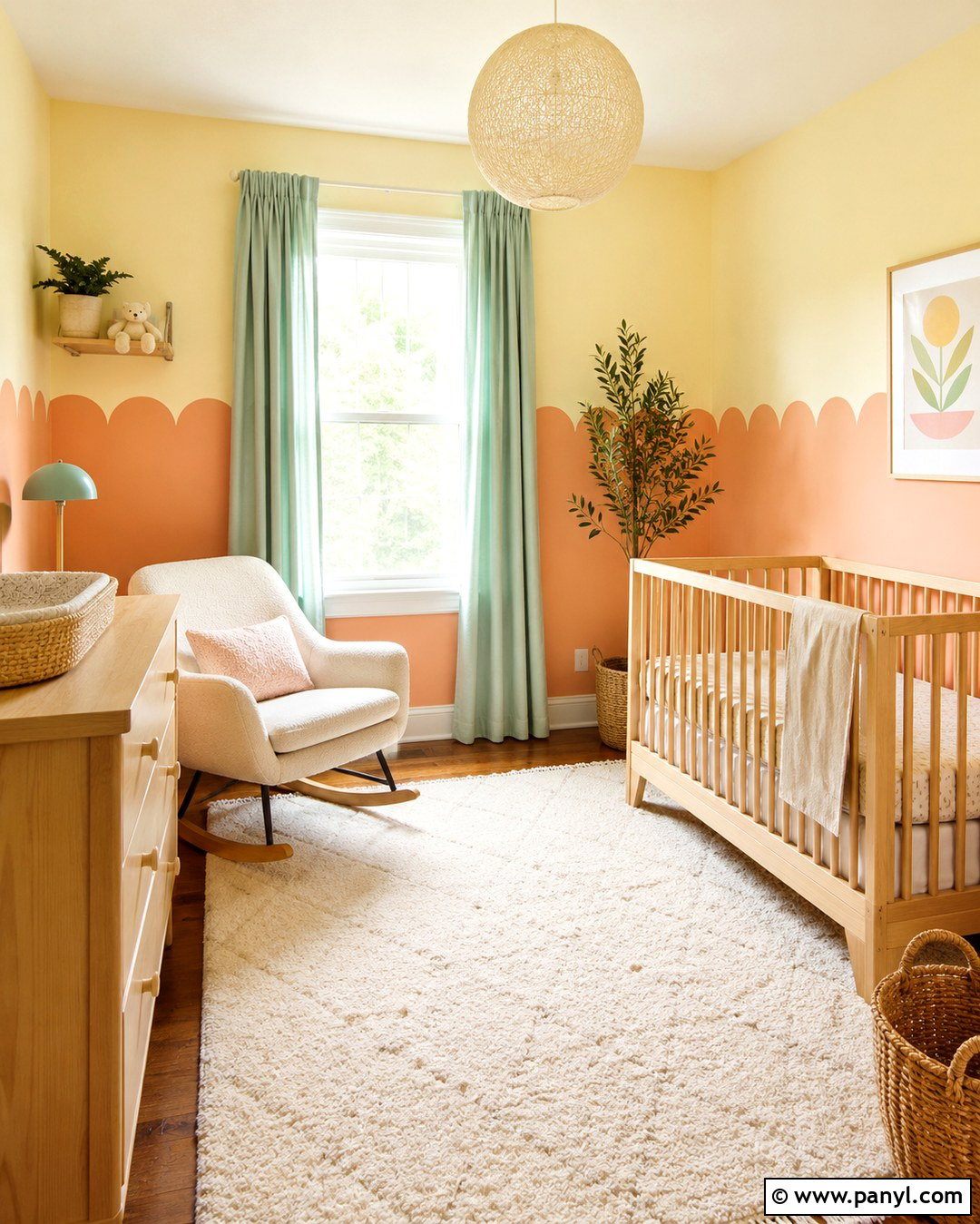
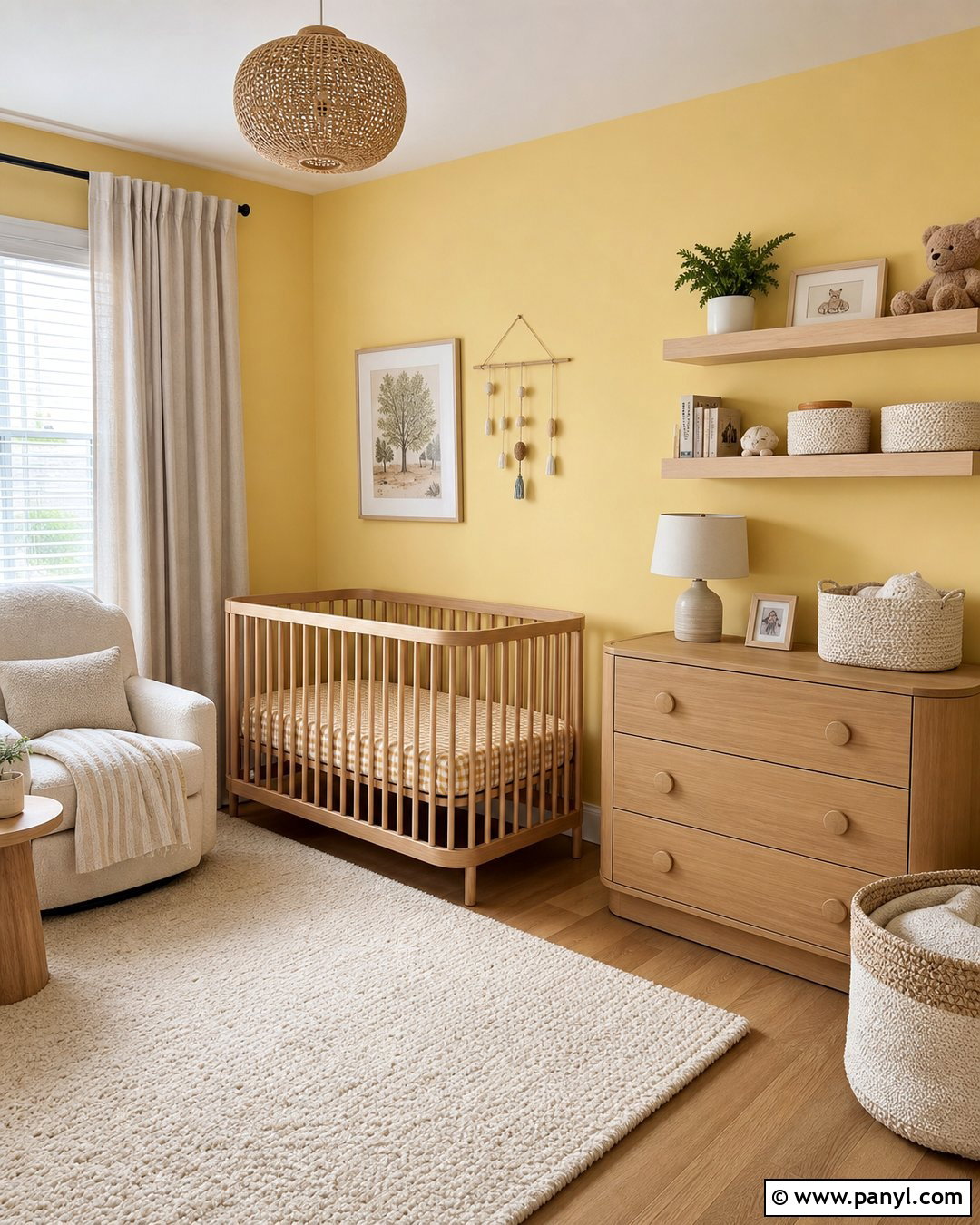
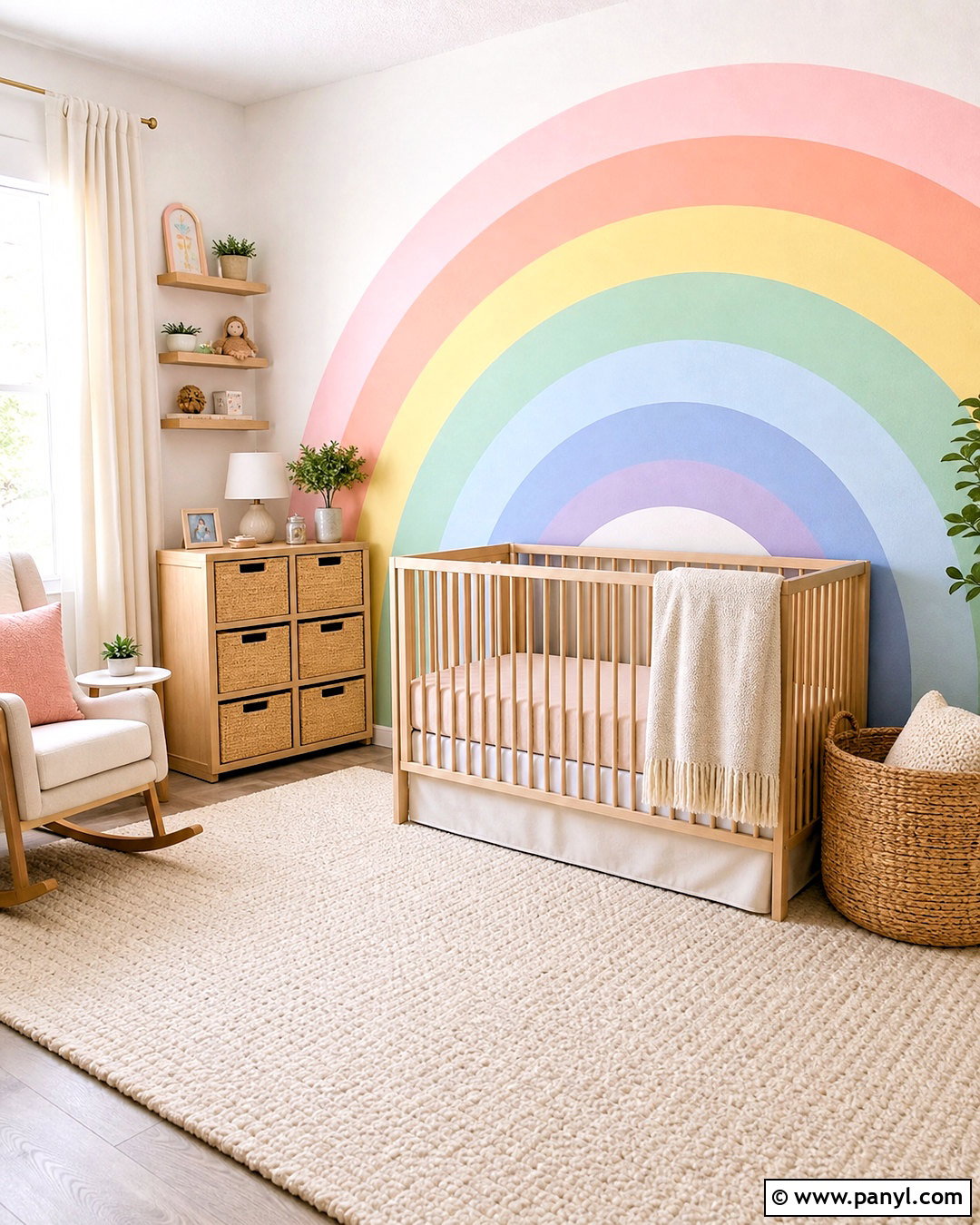
A scalloped peach wall creates a playful nursery backdrop that can still feel calm and polished. Paint the lower portion in warm peach, forming large rounded scallops at approximately two-thirds of the wall height. Use pale butter yellow above the curves and across the ceiling for a soft, sunny effect. Position a natural maple crib against the painted feature and add a cream wool rug with small coral details. A comfortable ivory rocking chair, rounded oak side table, and woven floor basket support everyday use. Choose mint green curtains and a matching dresser to bring gentle contrast into the palette. Simple animal artwork, cloud-shaped shelving, and a paper globe pendant complete the room. Keeping the furniture finishes light allows the colorful wall treatment to feel charming without becoming too busy.
13. Cobalt Blue Kitchen Walls
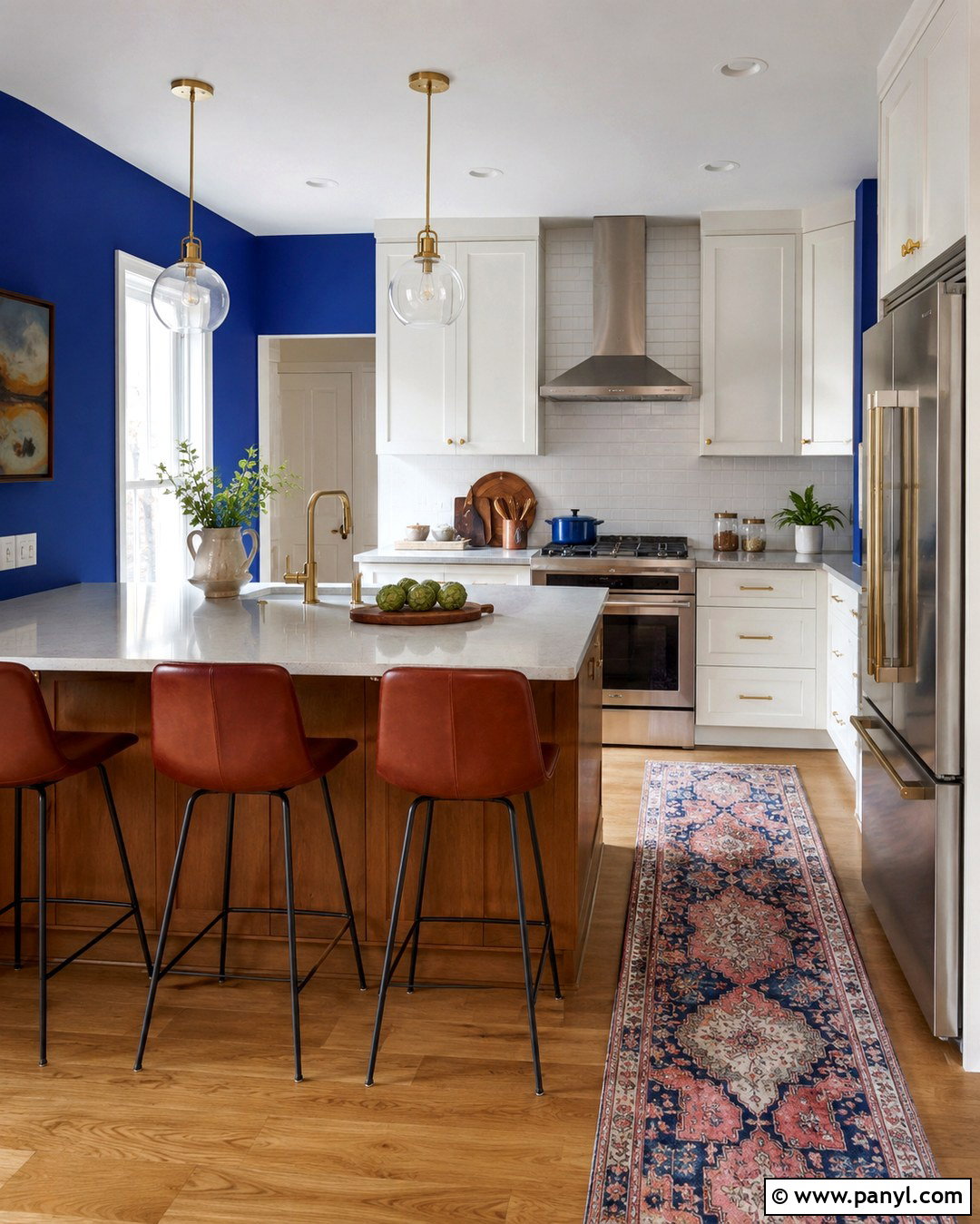
Cobalt blue walls can make a kitchen feel bold, clean, and energetic when cabinetry and surfaces remain balanced. Paint the open wall areas in vivid cobalt, then pair them with warm white Shaker cabinets and brushed brass hardware. Use pale gray quartz counters and a glossy white rectangular tile backsplash to reflect light throughout the room. A medium oak island introduces natural warmth and creates an informal eating area with rust-colored stools. Repeat blue through small ceramic accessories rather than adding another dominant hue. A washable runner with coral, cream, and navy details can bring pattern to the floor. Clear glass pendants, open oak shelving, and simple greenery finish the design. The blue walls become part of a practical kitchen scheme instead of an isolated burst of color.
14. Red and Pink Double-Drenched Walls
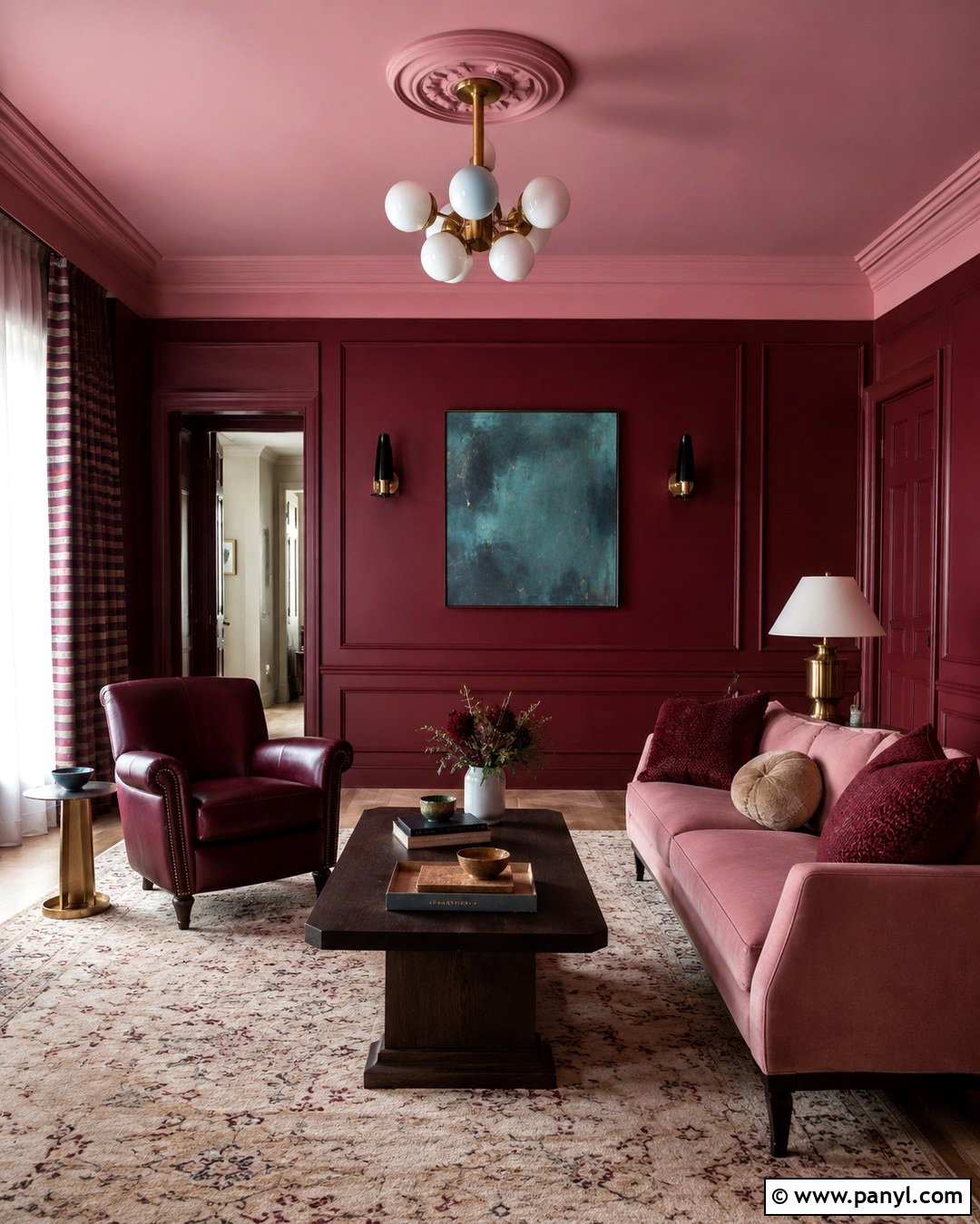
Red and pink walls can create an expressive sitting room with surprising depth when the colors are separated by surface. Paint the walls, molding, and doors in deep earthy red, then cover the ceiling and upper eight inches of the walls in dusty rose. This dropped ceiling color forms a visual cap around the room. Add a pale pink velvet sofa, oxblood leather chair, and dark wood coffee table to reinforce the layered palette. A cream rug with small red motifs prevents the floor from disappearing into the darker walls. Use striped curtains in rose and ivory, along with sculptural white lamps, for brightness. Teal artwork and a few turquoise ceramics introduce controlled contrast. The finished space feels dramatic, warm, and complete without relying on numerous decorative objects.
15. Aqua Bathroom Walls With Colorful Tile
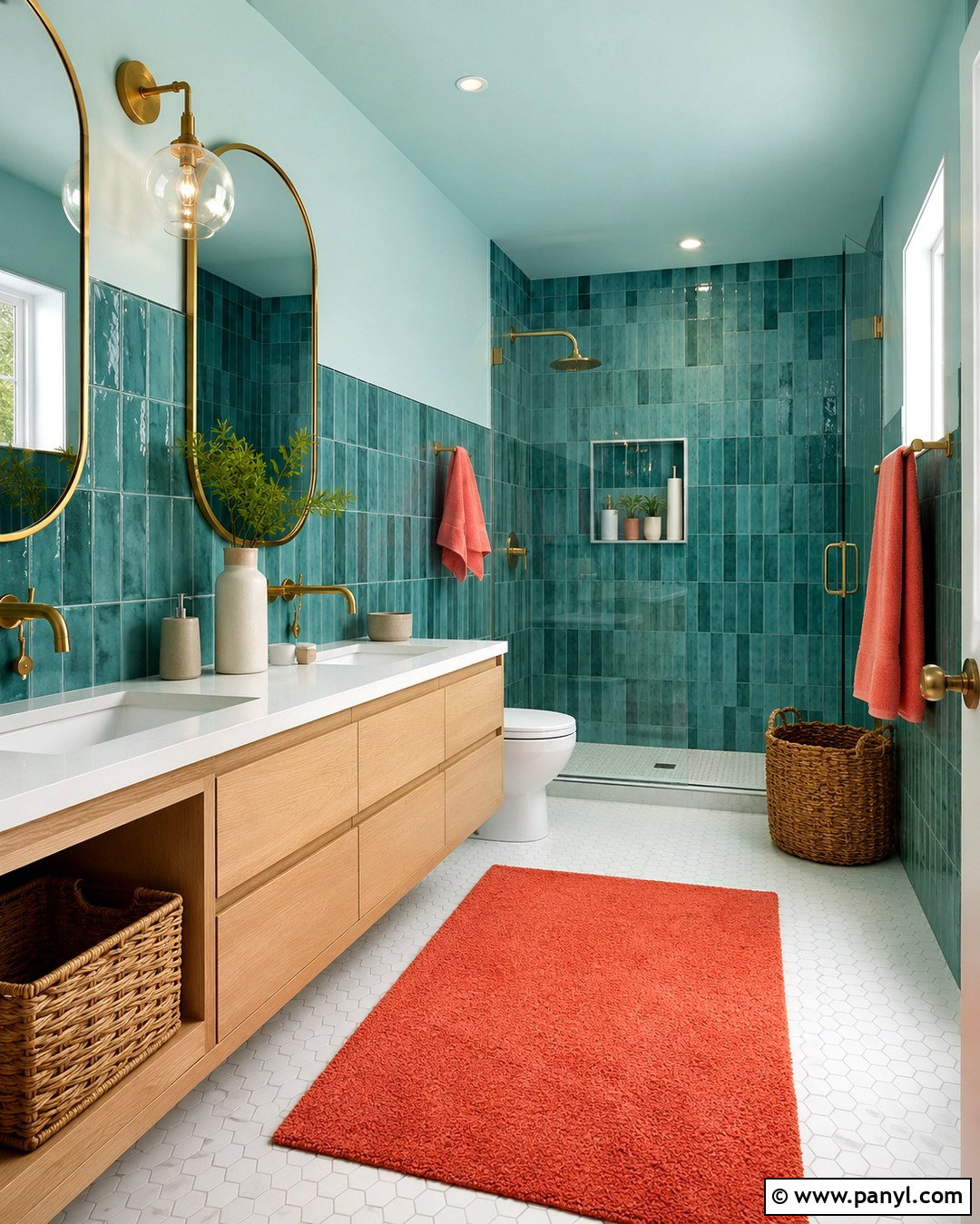
Aqua walls can make a compact bathroom feel refreshing while supporting a more adventurous mix of materials. Paint the upper walls and ceiling in clear light aqua, then install vertical ceramic tile halfway up the walls in alternating shades of teal, turquoise, and sea green. Choose a floating white oak vanity with a white quartz top and a round brass-framed mirror. Matte brass faucets and globe sconces add warmth against the cool palette. Use small white hexagonal floor tile with scattered blue pieces for subtle pattern underfoot. A frameless glass shower keeps the room visually open, while white towels prevent color overload. Finish with a coral bath mat, woven storage baskets, and one small plant. Every surface contributes to a coordinated, colorful bathroom that still feels clean and practical.
16. Sunset Gradient Staircase Wall
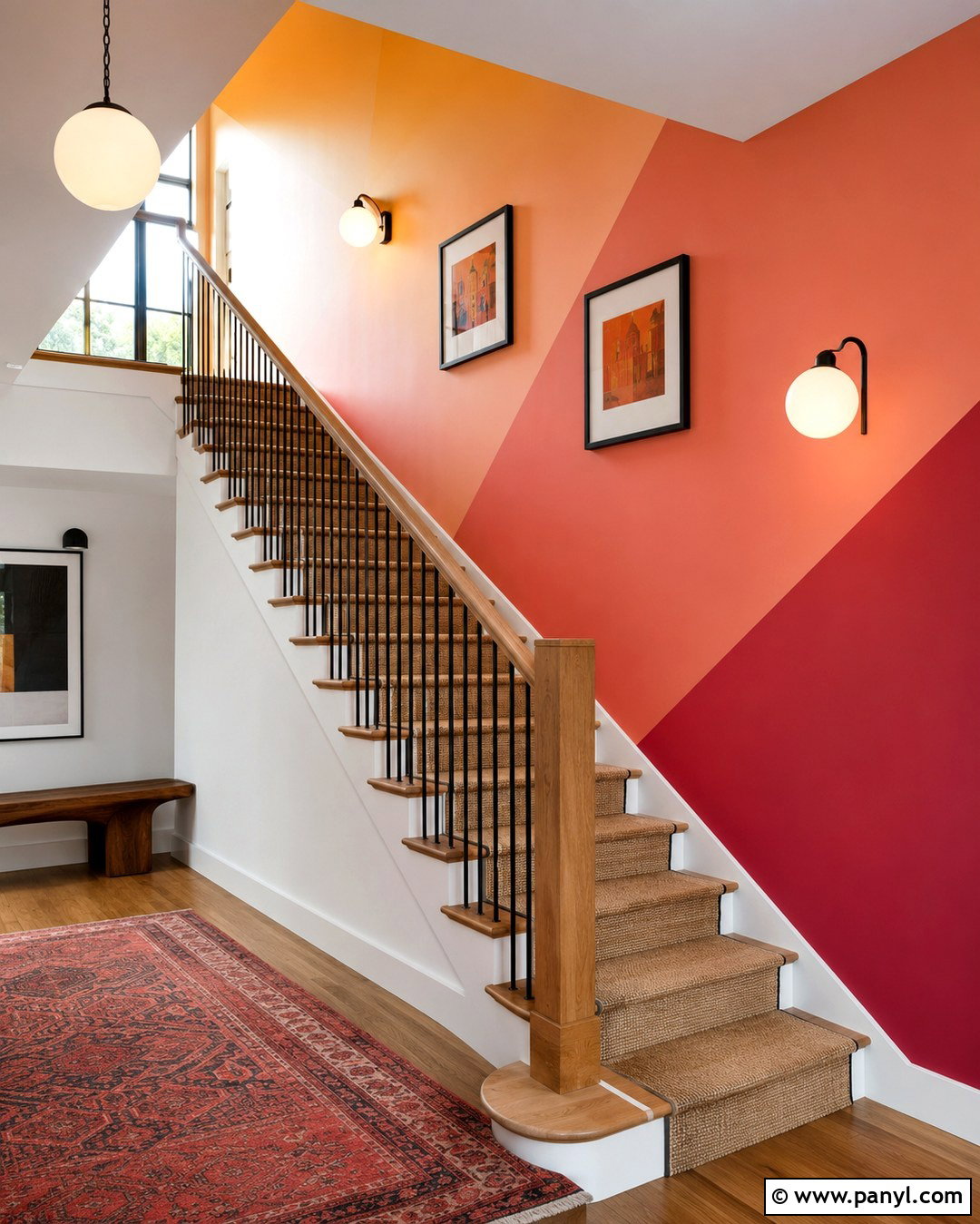
A sunset-inspired staircase wall brings movement and warmth to an area that is often difficult to decorate. Blend broad horizontal sections of golden yellow, peach, coral, and deep raspberry along the full height of the stairwell. Keep the transitions softly brushed rather than sharply divided. Paint the opposite wall warm white and use a natural oak handrail with slim black balusters for contrast. A light wood floor and woven stair runner ground the vivid palette. Hang a small collection of simple black-framed prints that follows the upward angle without covering too much color. At the landing, place a narrow walnut bench with a rust cushion and one sculptural plant. Bright globe fixtures ensure the gradient remains clear from bottom to top, creating a connected architectural feature rather than a random painted wall.
17. Checkerboard Entryway Wall
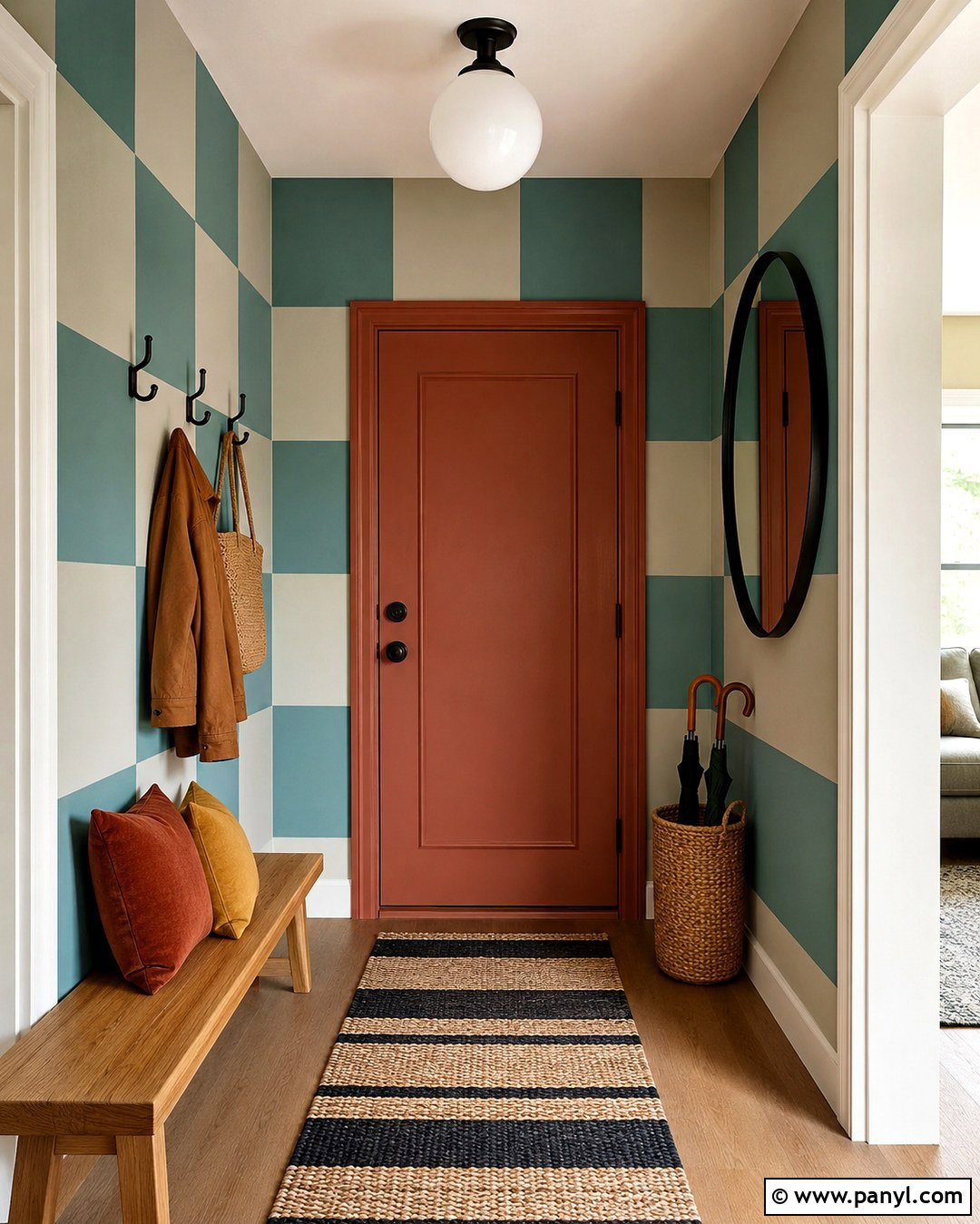
A large checkerboard pattern can give an entryway a graphic focal point while establishing an upbeat introduction to the home. Paint oversized squares in muted turquoise and creamy white across the main wall, keeping the pattern broad enough to read clearly from the door. Use warm white on the surrounding walls and a terracotta shade on the interior door. Place a slim oak bench against the checkerboard wall with rust and mustard cushions. Matte black hooks provide practical storage without interrupting the design. Add a striped washable runner, a woven umbrella basket, and a simple globe ceiling light. A round black-framed mirror softens the square pattern and supports last-minute checks. The completed entry combines strong color, storage, seating, and durable materials in a compact, organized layout.
18. Colorful Arch Wall in Reading Nook
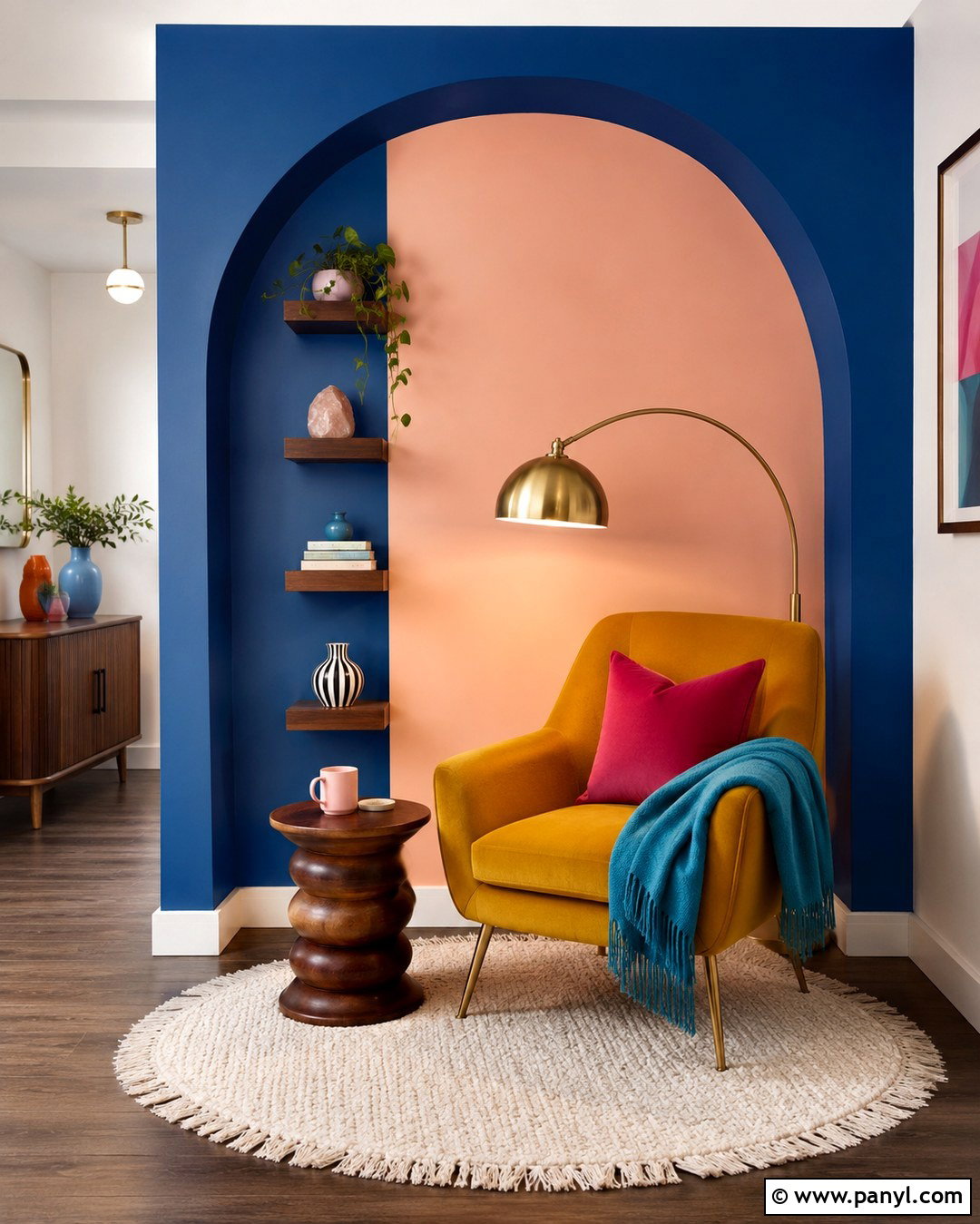
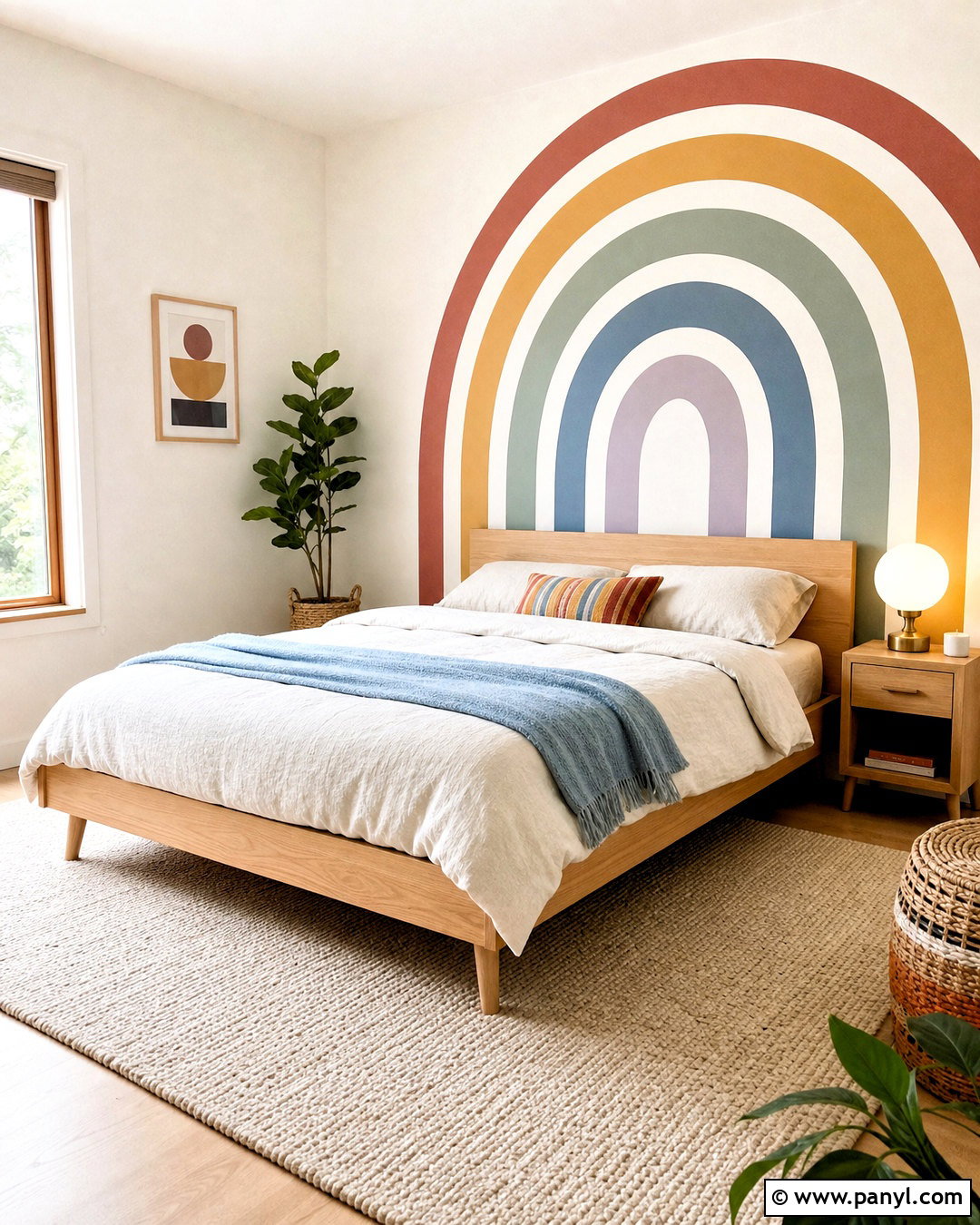
A painted arch can visually create a reading nook in a room without built-in architectural separation. Paint a wide cobalt blue arch from floor to ceiling, placing it over a background wall of pale peach. Center a mustard yellow upholstered chair inside the arch and pair it with a small walnut side table. A curved brass floor lamp follows the rounded shape while providing practical reading light. Add a compact cream rug, raspberry pillow, and turquoise throw for layered color. Two narrow floating shelves can hold books and a few ceramics without crowding the feature. Keep nearby furniture neutral so the nook remains distinct. The finished arrangement feels like a purposeful miniature room because the wall color, furniture placement, lighting, textiles, and storage all work within the same outlined zone.
19. Turquoise and Orange Basement Walls
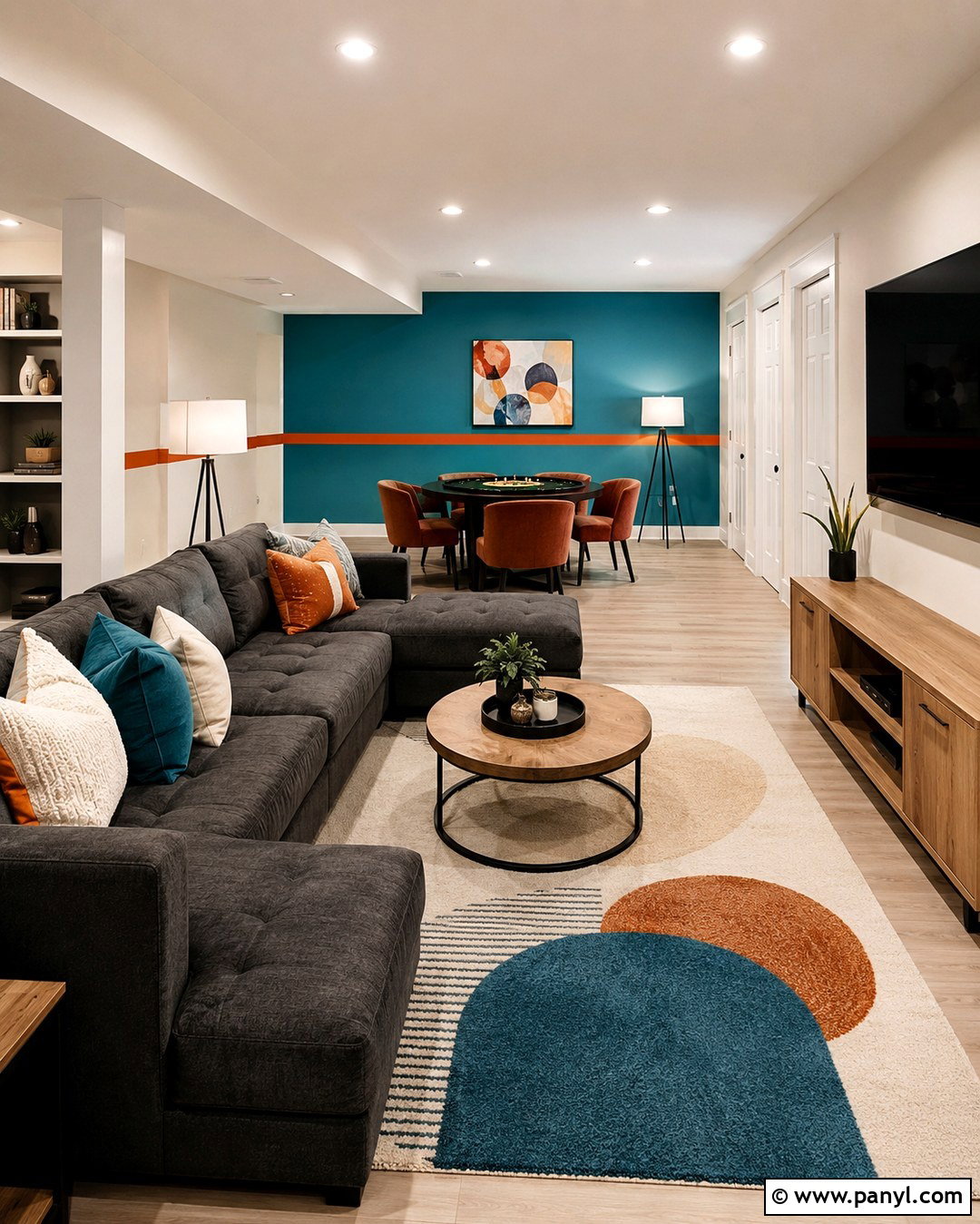
Turquoise and orange can give a finished basement the brightness and definition it often lacks. Paint the longest wall in saturated turquoise and use warm white on the remaining walls and ceiling. Add a wide burnt orange stripe around the room at chair-rail height to connect separate activity zones. Place a charcoal sectional facing a low oak media cabinet, then arrange a round game table with rust-colored chairs at the opposite end. A large cream rug with blue and orange shapes unifies both areas. Use white floor lamps and bright flush-mount ceiling fixtures to strengthen the available light. Closed storage cabinets keep games and electronics organized. Colorful pillows, framed graphic prints, and light wood accessories complete a casual basement that feels lively, spacious, and suitable for different everyday activities.
20. Jewel-Tone Gallery Wall
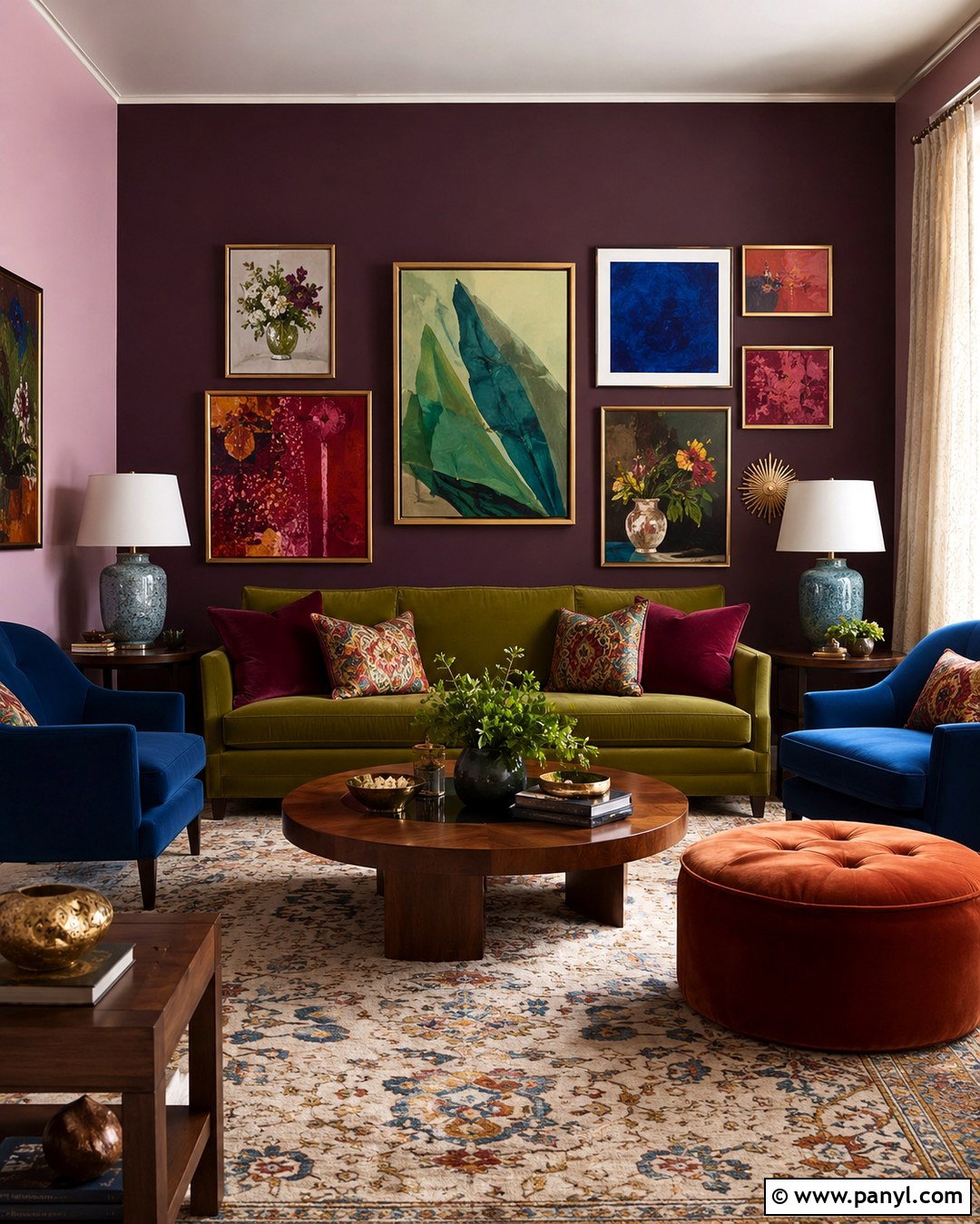
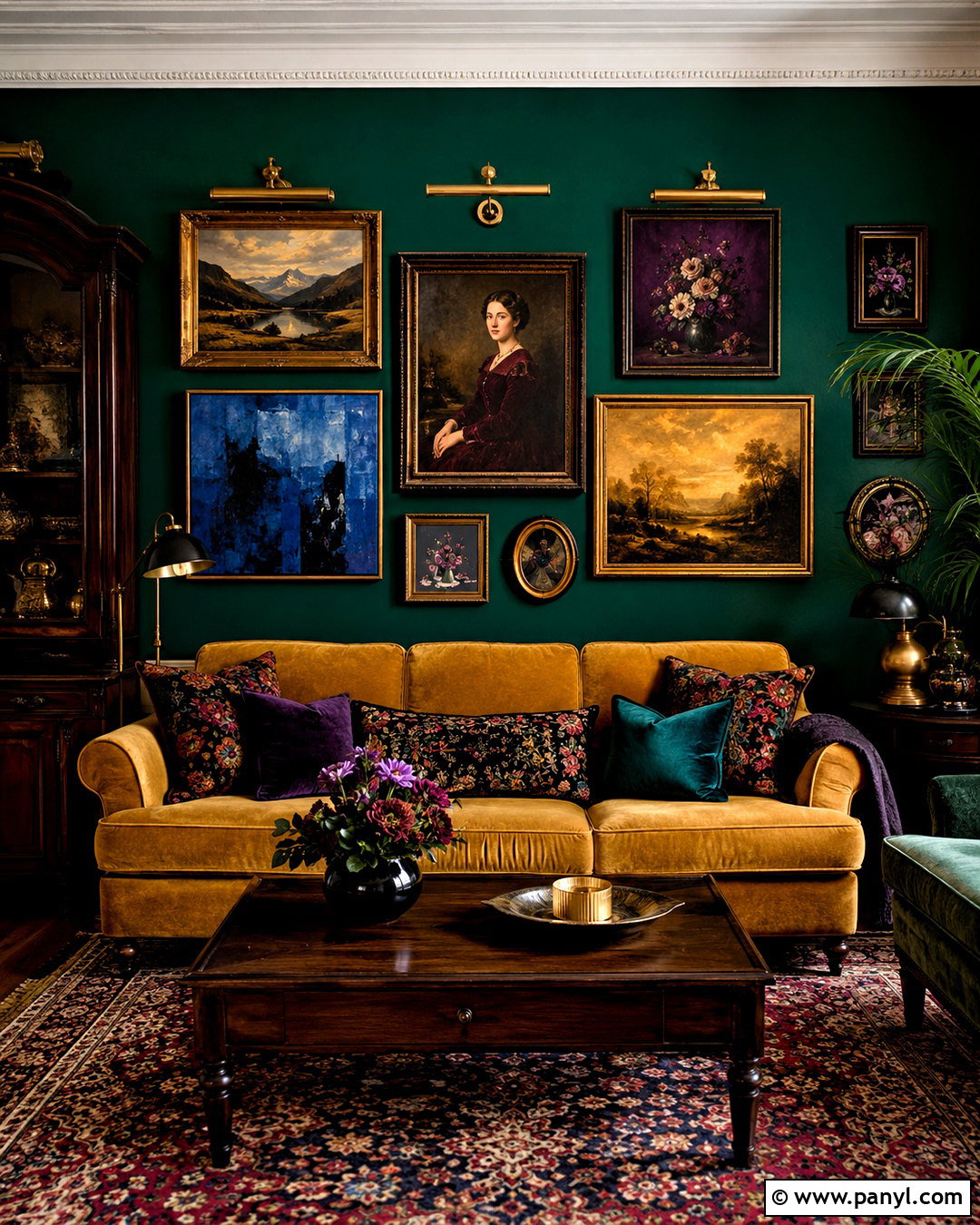
A jewel-tone gallery wall can make an eclectic living room feel curated when the frames and furnishings follow a consistent plan. Paint the focal wall in deep plum, leaving the adjacent walls muted mauve and the ceiling soft cream. Arrange artwork with emerald, sapphire, ruby, and golden details in a mix of black, brass, and dark wood frames. Maintain even spacing so the display feels organized. Position an olive-green sofa below the collection and add two cobalt lounge chairs across from it. A rust ottoman, patterned cream rug, and walnut side tables complete the seating arrangement. Use ivory curtains and white ceramic lamps to introduce lighter areas. Repeating the artwork’s colors through upholstery and accessories connects the gallery wall to the full room instead of leaving it visually separate.
Conclusion:
The best Colorful Interior Walls do more than introduce a favorite shade. They help define layouts, highlight architecture, establish atmosphere, and connect furniture with decorative details. Begin with a palette that suits the room’s natural light and intended mood. Then repeat key wall colors through rugs, upholstery, artwork, or small accessories. Neutral materials such as oak, cream linen, white stone, and natural fibers can provide necessary balance around stronger hues. Before painting, test large samples on different walls and view them throughout the day. From immersive teal living rooms to playful striped spaces and botanical murals, these complete looks show how thoughtful color can make every room feel more personal, coordinated, and finished.

Related Ideas and Inspiration:
Leave a Reply