
Choosing a bedroom paint color is about more than finding a pretty shade. The walls must work with the room’s daylight, flooring, furniture, bedding, and overall atmosphere. Current bedroom palettes favor warm neutrals, natural greens, delicate pinks, powder blues, earthy mauves, and deeper smoky tones that feel personal without becoming overwhelming. () Before committing, paint large samples on different walls and view them during the morning, afternoon, and evening. A balanced palette should still look appealing under both sunlight and bedside lamps. Whether you prefer an airy retreat, a cozy traditional room, or a dramatic modern space, these 20 best wall colors for bedroom ideas offer complete, practical looks you can recreate.

1. Warm White Bedroom Walls
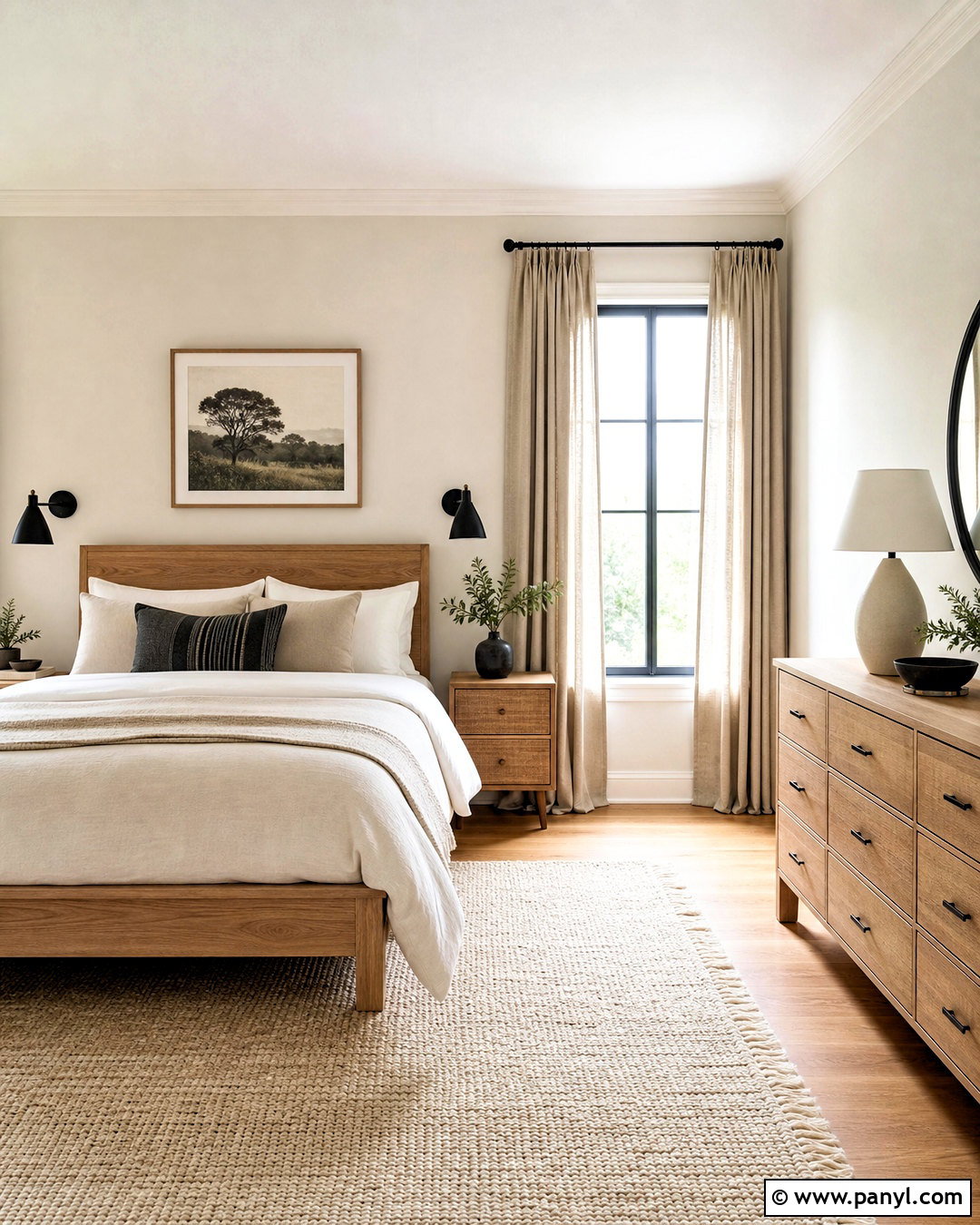
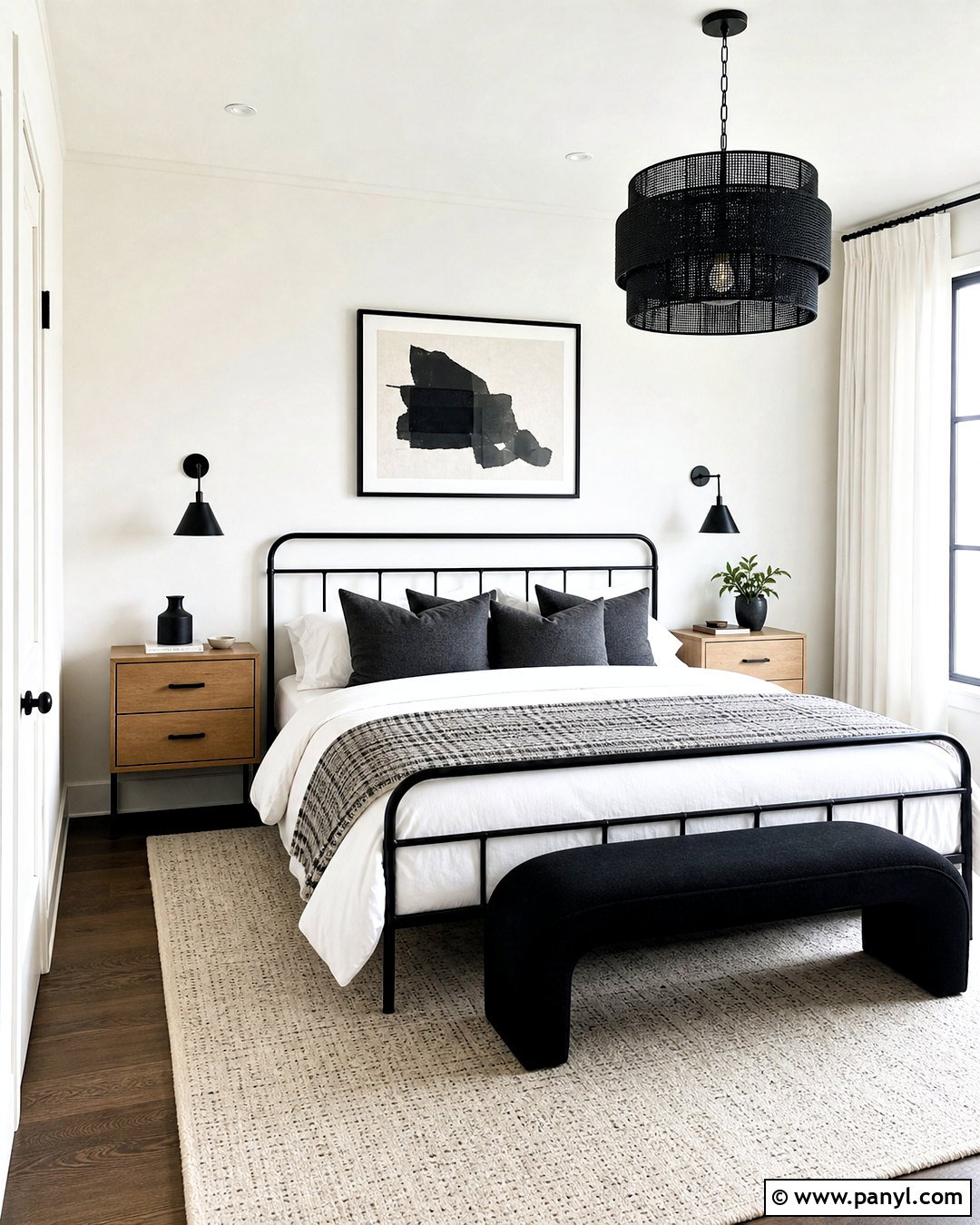
Warm white walls create a clean bedroom without the cold feeling of a bright, blue-toned white. Choose a creamy shade with subtle beige or yellow undertones, then repeat that warmth through an oak bed, woven nightstands, and natural linen bedding. Soft oatmeal curtains add privacy while allowing daylight to filter through. Bring in contrast with matte black reading lights and a few charcoal decorative accents. A textured ivory rug keeps the room comfortable and prevents the palette from looking flat. Paint the ceiling and trim a slightly lighter warm white for quiet definition. This complete scheme works especially well in small bedrooms, guest rooms, and spaces with limited sunlight because every surface feels bright, connected, and comfortably layered.
2. Cream Bedroom Walls
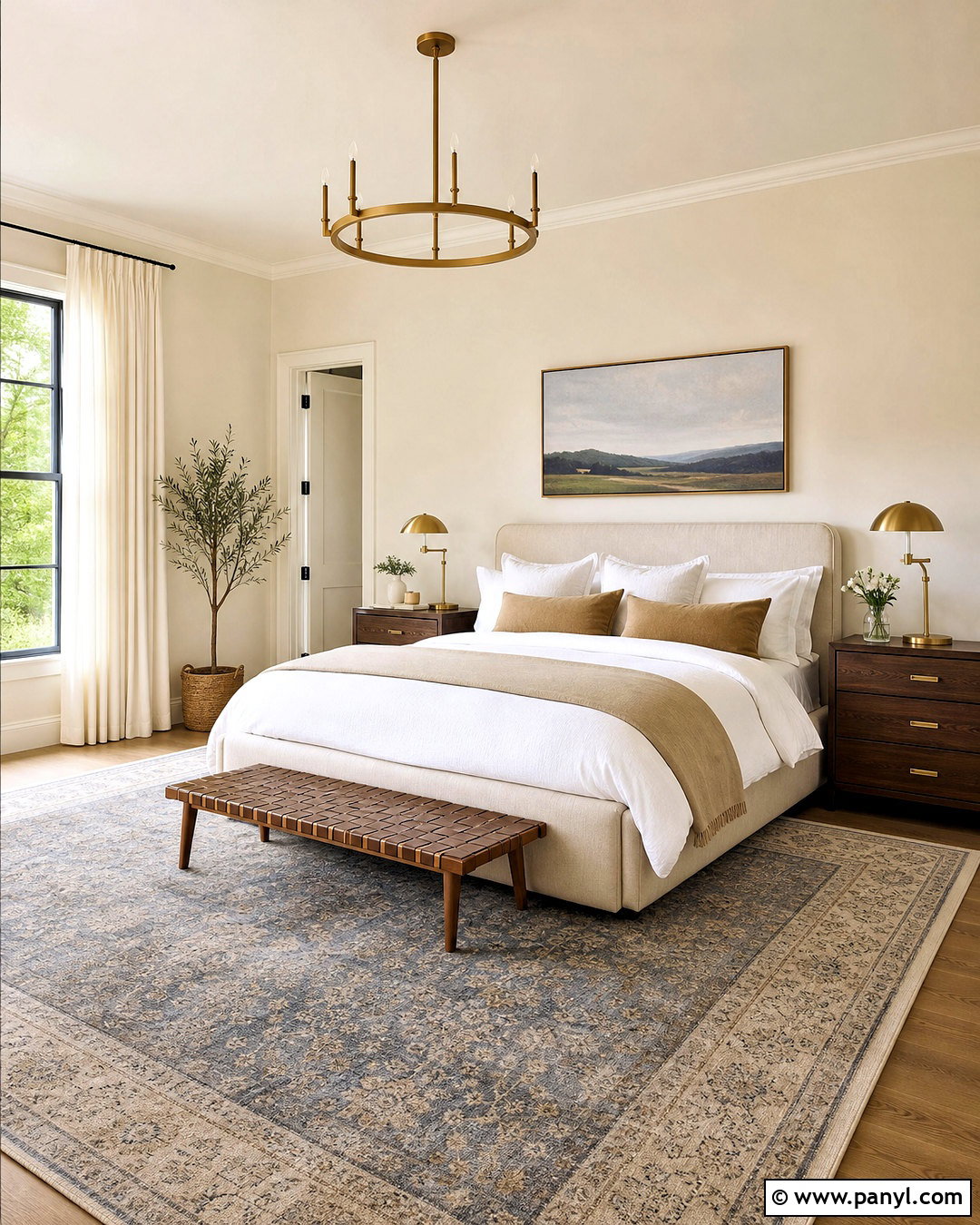
Cream walls can make an everyday bedroom feel soft, inviting, and quietly refined. Build the room around an upholstered oatmeal bed with layered white, camel, and pale brown bedding. Medium-tone walnut nightstands give the light walls enough visual weight, while brushed brass lamps introduce a gentle glow. Choose full-length ivory curtains rather than stark white treatments, which may make cream paint look yellow by comparison. A muted patterned rug featuring beige, dusty blue, and tan can anchor the furniture without disturbing the restful palette. Add one large landscape print above the bed and keep smaller accessories minimal. Cream is particularly effective in north-facing rooms because its warm undertone helps balance cooler natural light while maintaining a spacious appearance.
3. Soft Beige Bedroom Walls

Imagine waking in a room that feels as comfortable as a favorite linen blanket. Soft beige walls provide that effect when paired with materials that add depth instead of extra color. Select a light oak platform bed, off-white bedding, camel lumbar pillows, and a chunky ivory throw. Woven pendant lights or rattan table lamps reinforce the natural character. Use medium brown wood for a dresser so the furniture does not disappear against the walls. A large wool rug in cream and taupe defines the sleeping area, while simple black frames provide controlled contrast. Paint the trim in a warm off-white. This bedroom wall color suits relaxed modern, organic, coastal, and transitional spaces because it creates warmth without dictating one particular decorating theme.
4. Greige Bedroom Walls
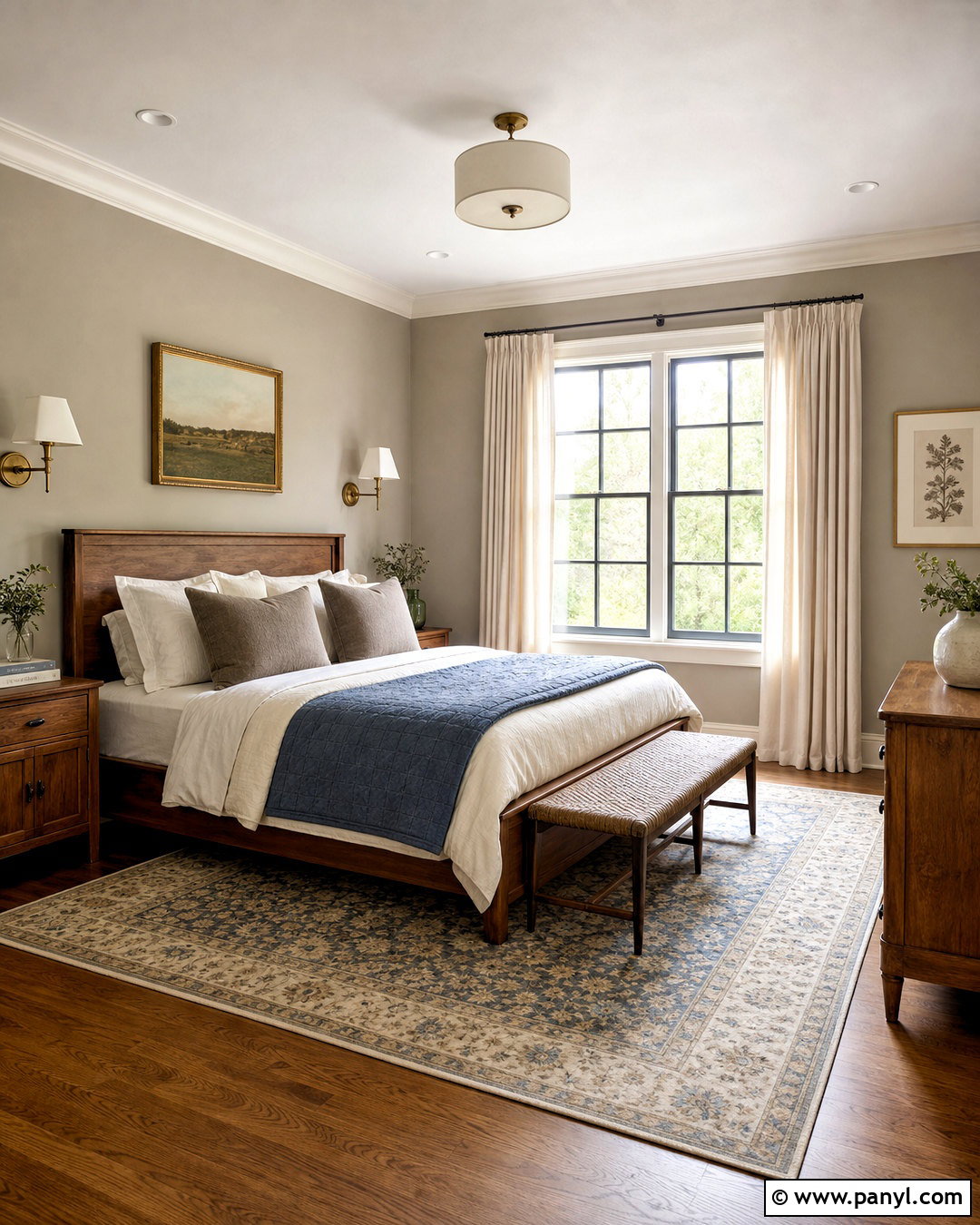
Greige blends the comfort of beige with the calm, tailored appearance of gray. For a cohesive bedroom, choose a balanced greige that does not become noticeably purple or green in your lighting. Pair it with a walnut bed, crisp ivory sheets, taupe pillows, and a quilt in muted slate blue. Add antique brass sconces and cream curtains for warmth. A low-pile rug combining gray, tan, and ivory will connect the wall color with both cool and warm furnishings. Keep the ceiling soft white and paint the trim one shade lighter than the walls. This versatile look is useful when a bedroom contains mixed finishes, such as gray carpet, brown furniture, and black hardware, because greige creates a natural bridge between them.
5. Taupe Bedroom Walls
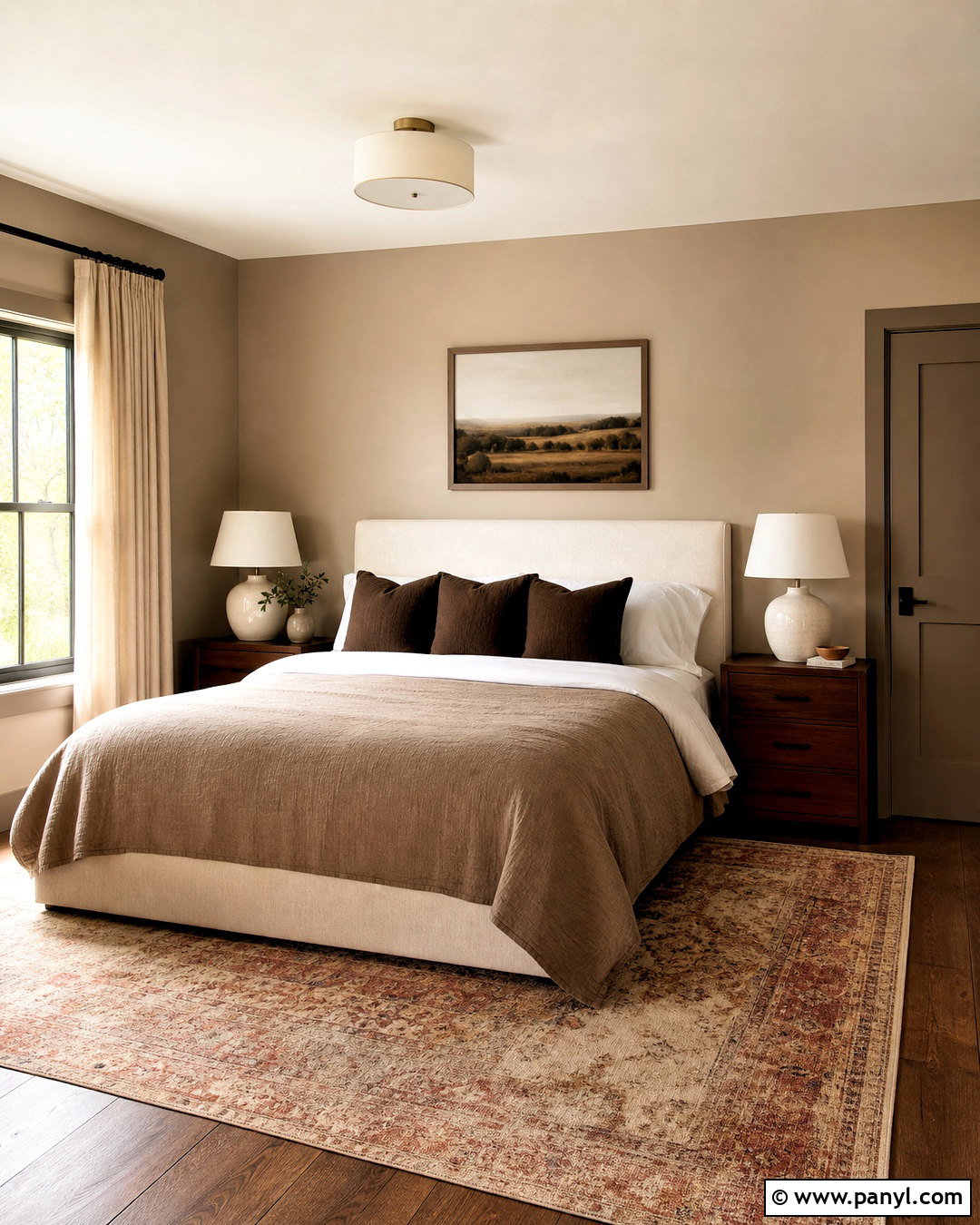
Taupe walls create a deeper neutral bedroom that feels cozy without being overly dark. Look for a medium taupe with warm brown undertones, especially if the room receives strong afternoon sunlight. An ivory upholstered headboard provides a clear focal point against the richer walls. Dress the bed with white sheets, mushroom-colored linen, and dark brown accent pillows. Use walnut nightstands, ceramic lamps, and floor-length natural linen curtains. A faded vintage-style rug in beige, charcoal, and muted rust adds pattern while keeping the scheme grounded. Consider painting the doors and baseboards in the same taupe for a smooth, enveloping effect. The finished room feels sophisticated yet approachable, making this color suitable for primary bedrooms and comfortable guest suites.
6. Blush Pink Bedroom Walls
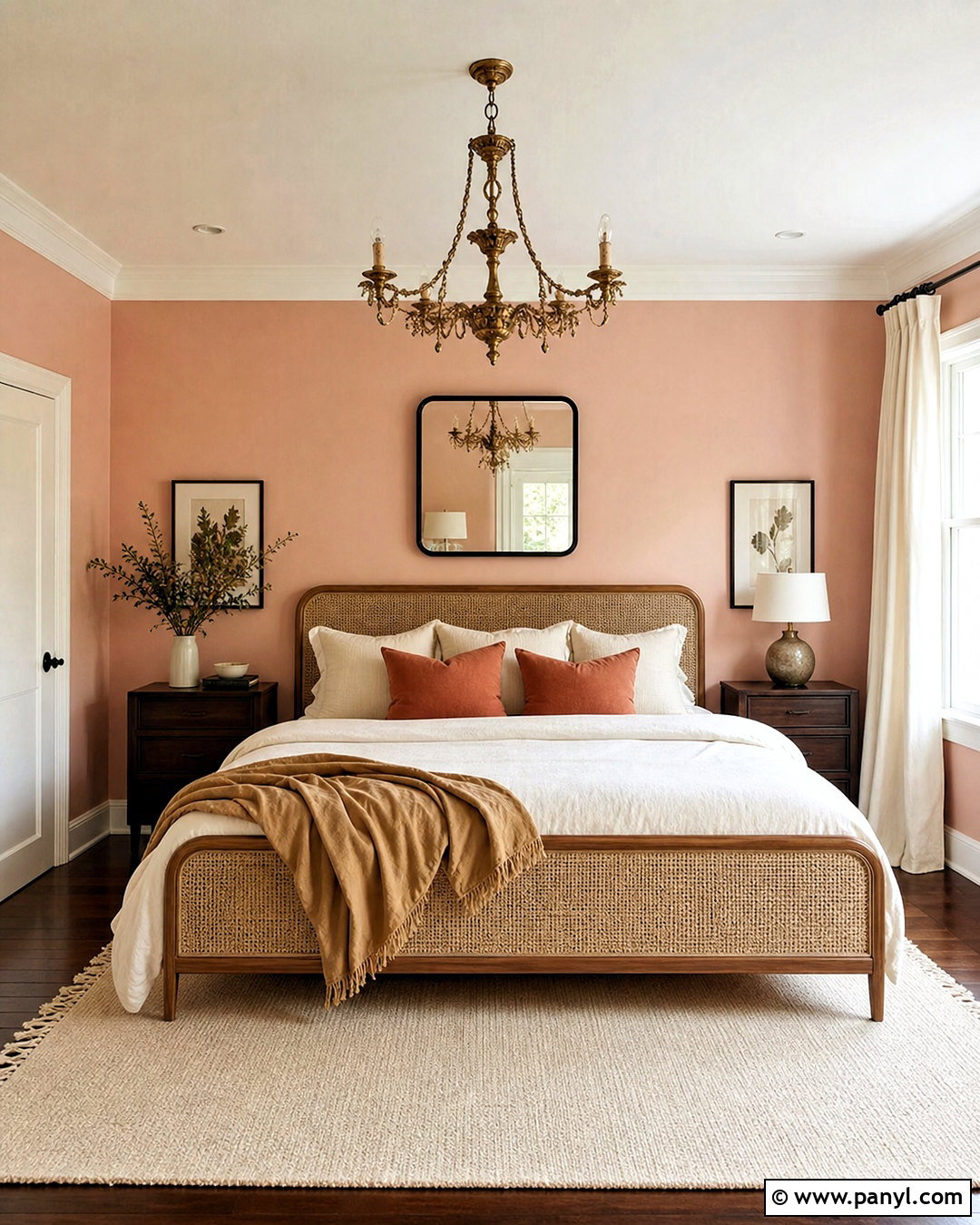
Blush pink can look grown-up when the full bedroom palette emphasizes natural materials and restrained contrast. Choose a muted pink with beige or peach undertones rather than a bright candy shade. Place a light oak or cane bed against the wall and layer it with ivory bedding, terracotta pillows, and a soft camel throw. Cream curtains keep the room light, while an antique brass chandelier adds subtle polish. Balance the sweetness with a black-framed mirror, dark wood nightstands, or slim black sconces. A neutral wool rug provides a quiet foundation. Keep decorative objects simple and sculptural. This wall color works beautifully in modern romantic, vintage-inspired, and relaxed bohemian bedrooms without requiring floral patterns or overly delicate furnishings.
7. Dusty Rose Bedroom Walls
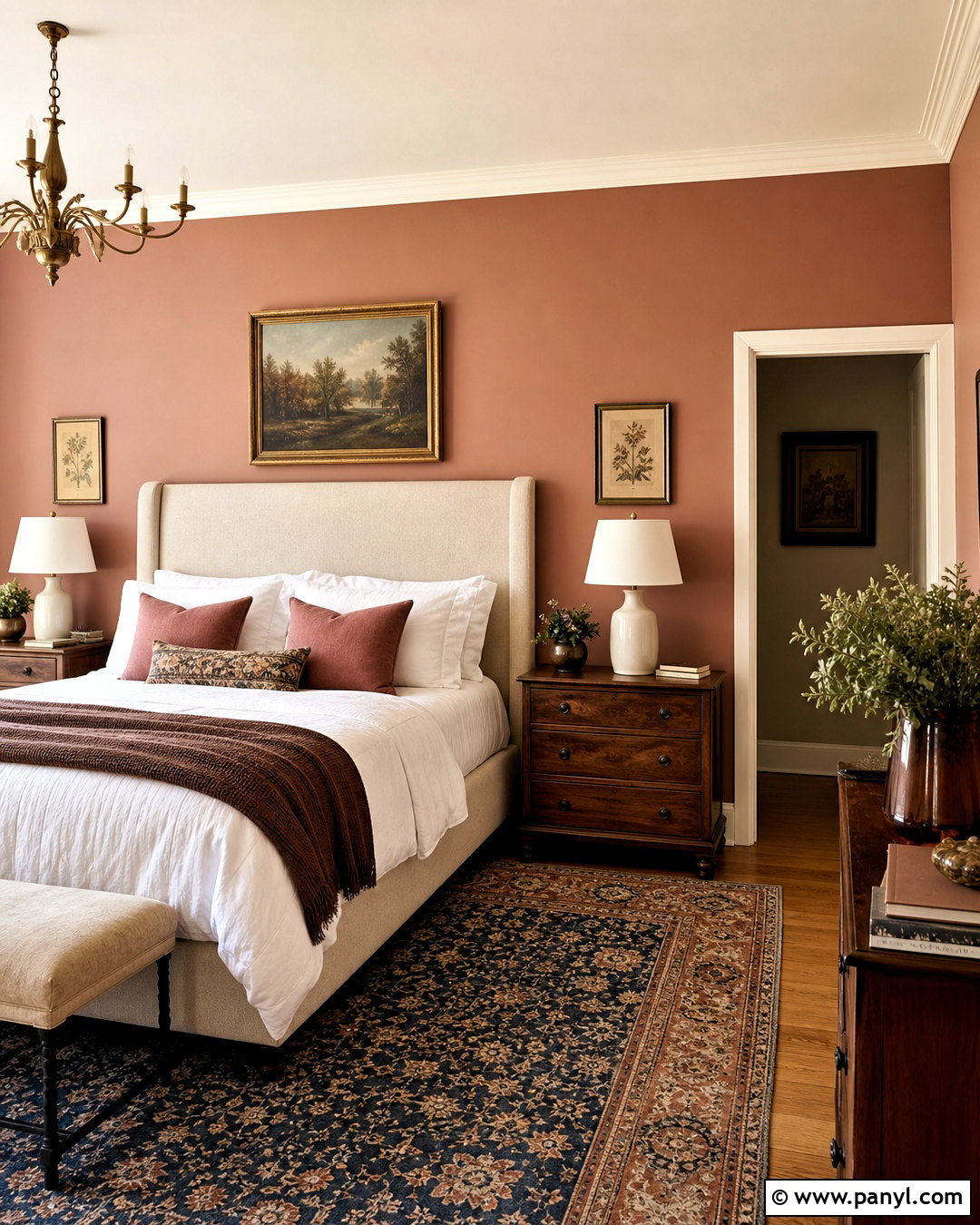
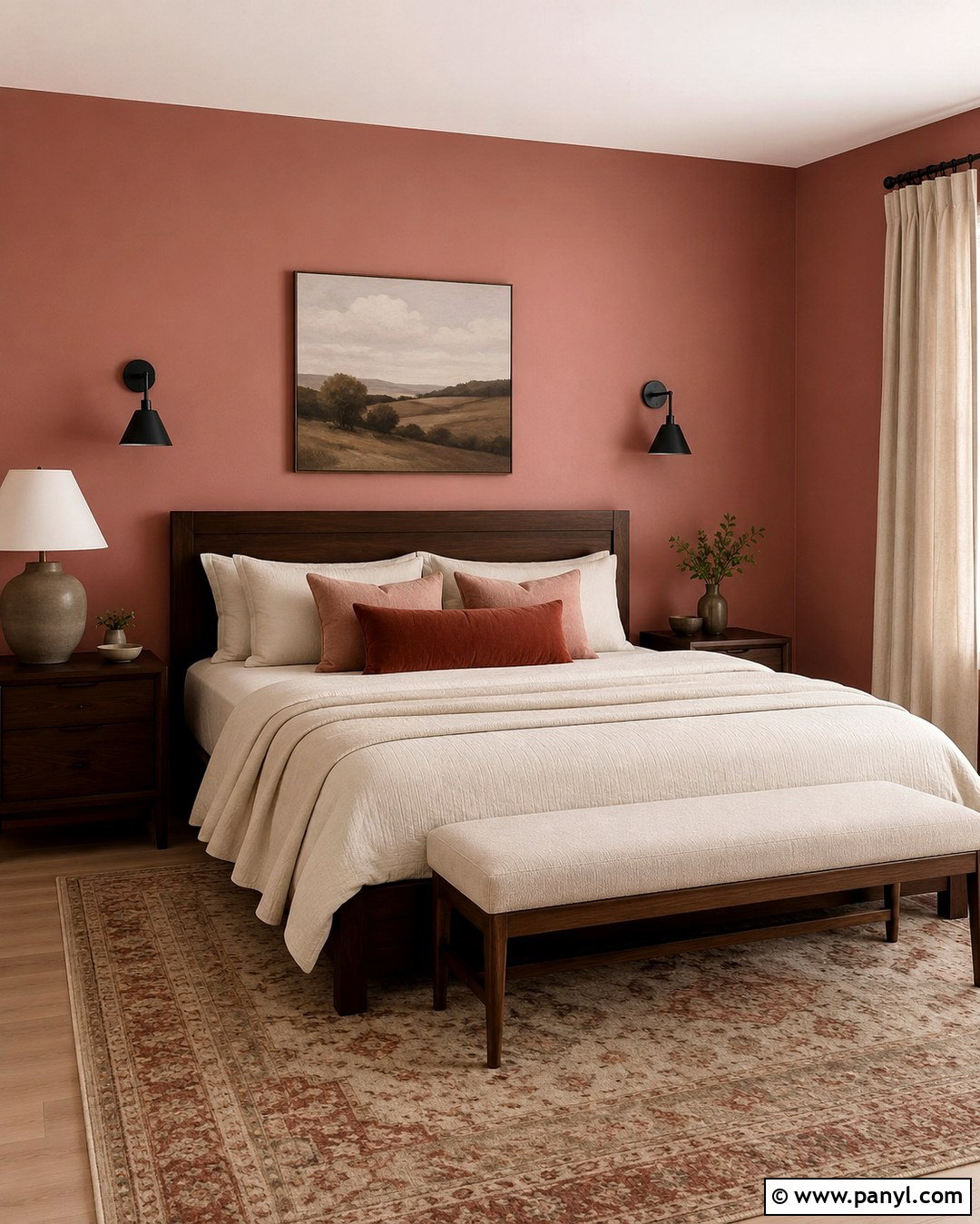
Dusty rose offers more depth than blush while remaining soft enough for a restful bedroom. Its muted red and brown undertones pair naturally with walnut furniture, aged brass hardware, and creamy textiles. Create a complete look with a tall oatmeal headboard, white linen sheets, rose-toned pillows, and a deep cocoa throw folded across the foot of the bed. Choose warm wood nightstands and simple ceramic lamps with ivory shades. A faded Persian-style rug can introduce touches of navy, tan, and rose without making the room busy. Paint the ceiling warm white to preserve brightness. Dusty rose is especially appealing in rooms with traditional molding, vintage furniture, or collected artwork because it makes older pieces feel intentional rather than outdated.
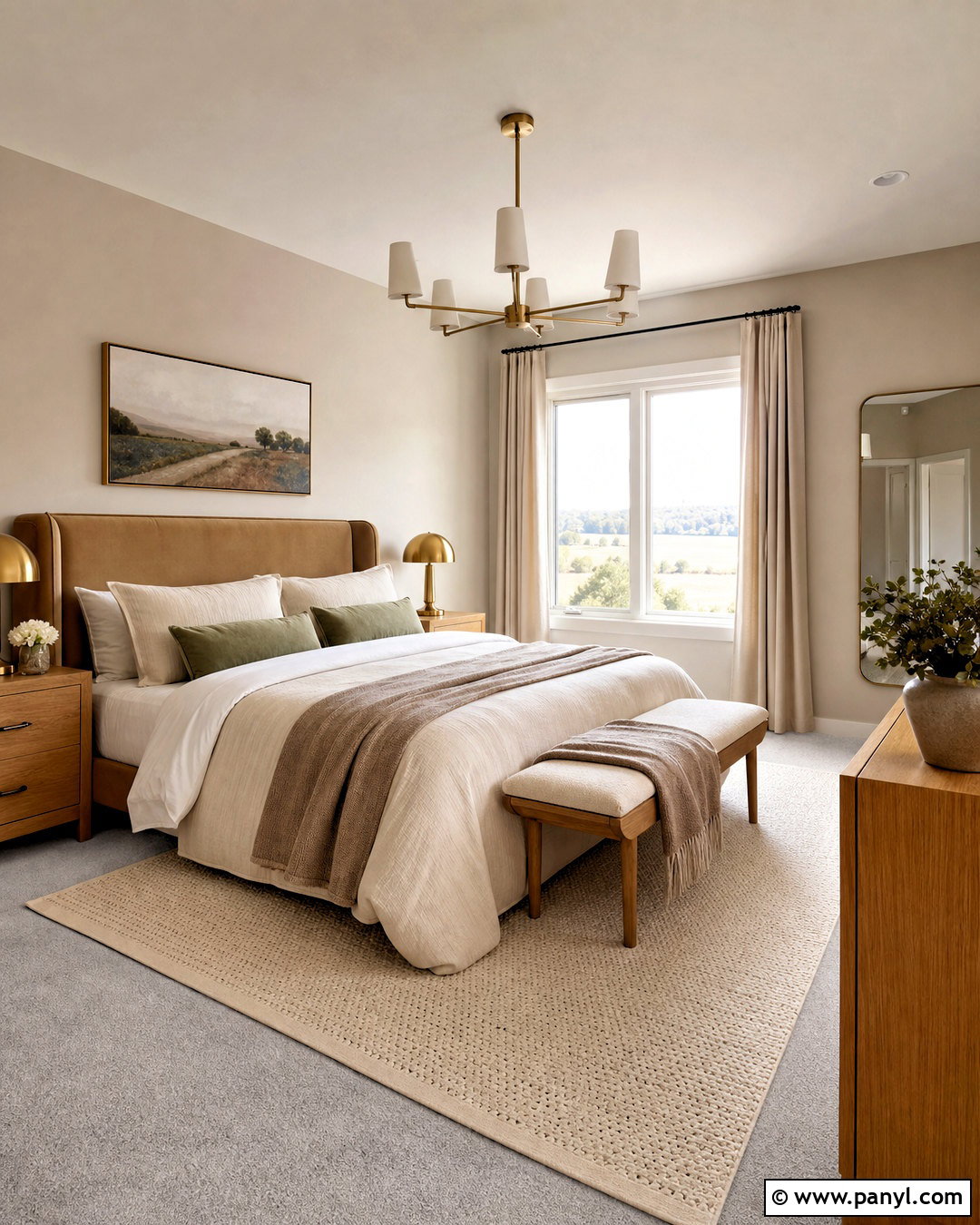
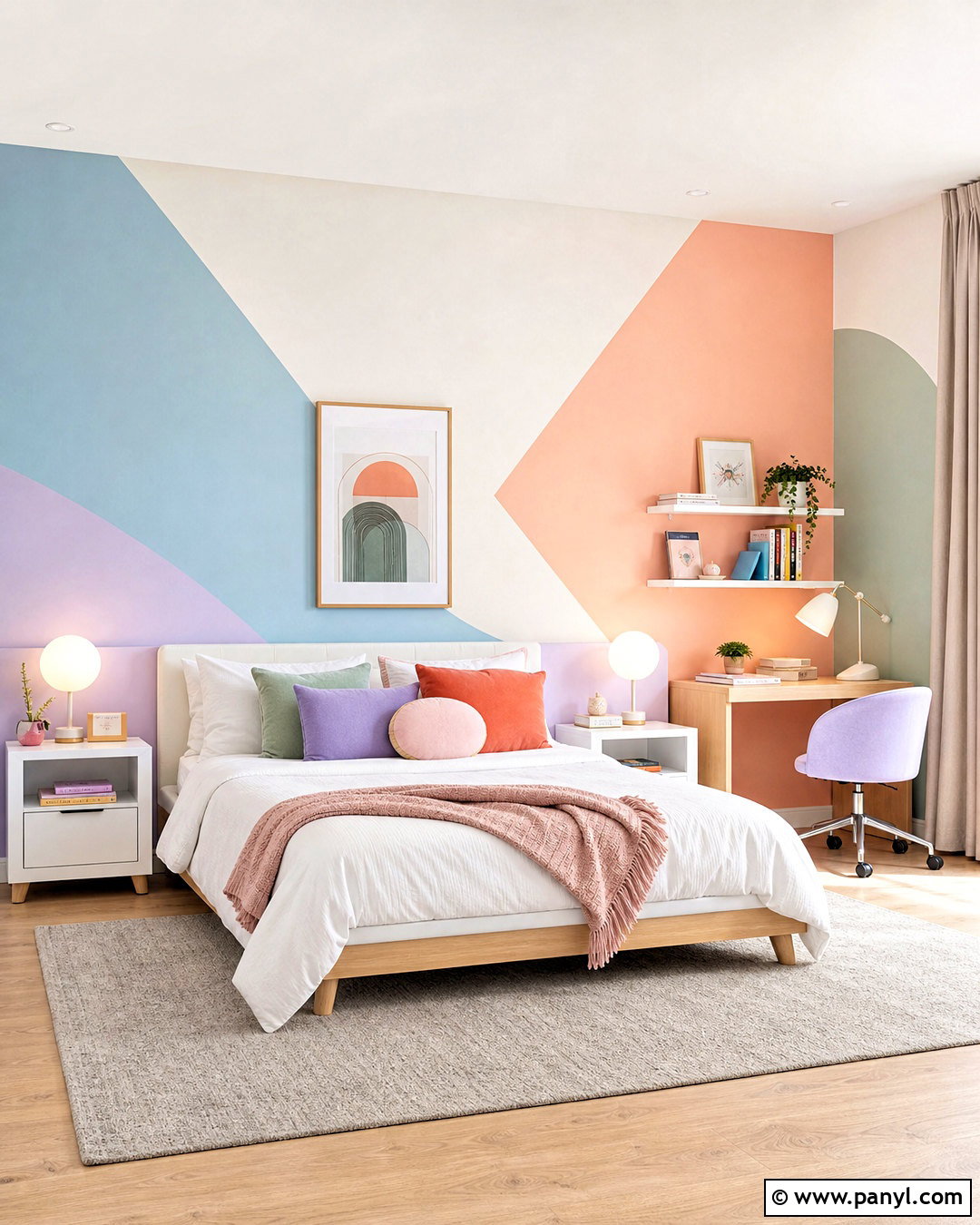
8. Soft Lilac Bedroom Walls
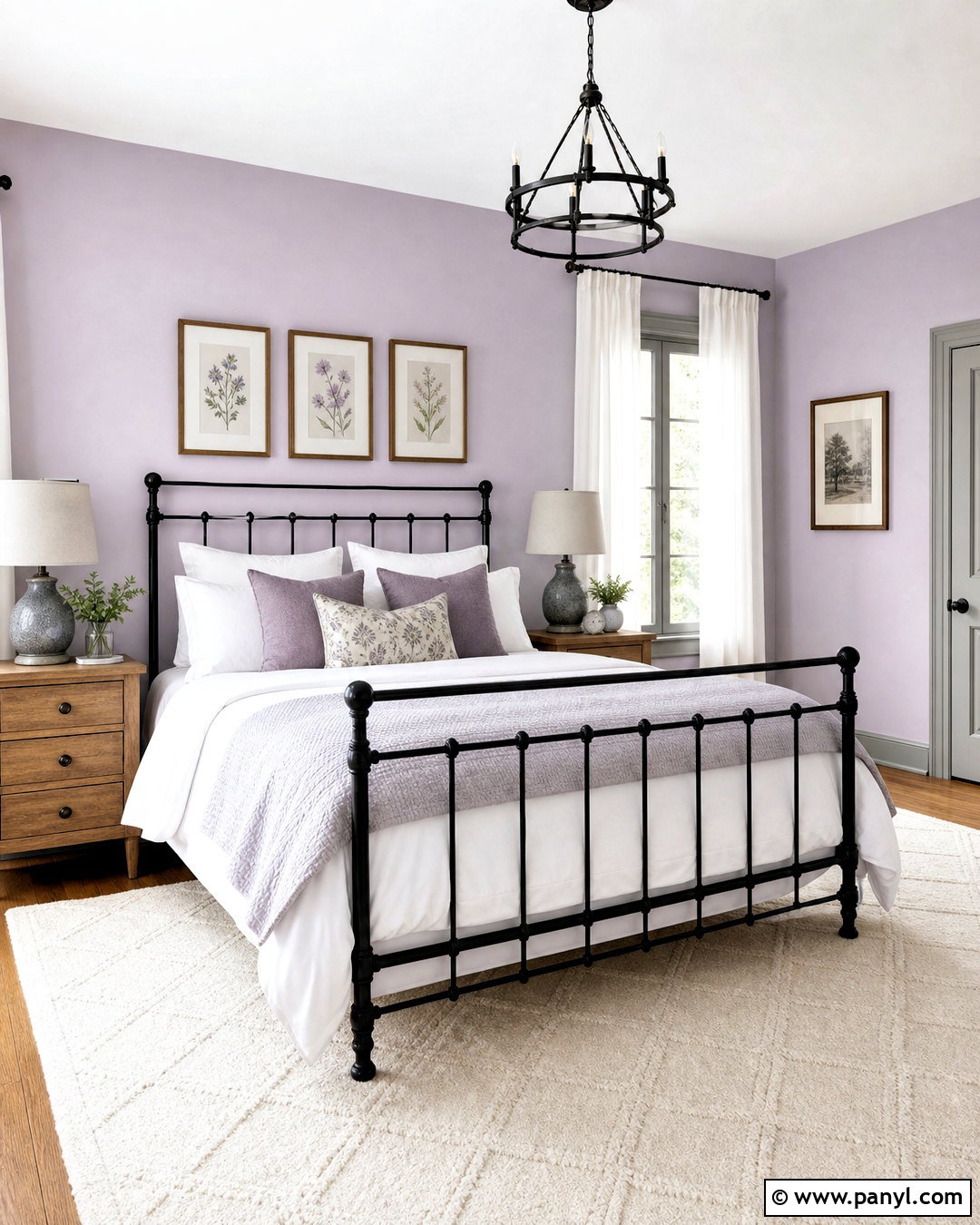
Soft lilac walls bring gentle color into a bedroom while maintaining an airy, peaceful atmosphere. Select a dusty lilac with gray undertones so it looks sophisticated in both daylight and artificial light. A black iron bed creates crisp contrast, while white bedding and a pale gray quilt keep the overall design fresh. Add natural oak nightstands, lavender-gray pillows, and brushed nickel or aged pewter lamps. Sheer white curtains can soften the windows, with heavier dove-gray panels added for privacy. Ground the room with an ivory rug containing a subtle geometric pattern. A few botanical prints or abstract artworks finish the walls. This balanced arrangement prevents lilac from feeling childish and suits cottage, transitional, Scandinavian, and vintage-inspired bedrooms.
9. Earthy Mauve Bedroom Walls
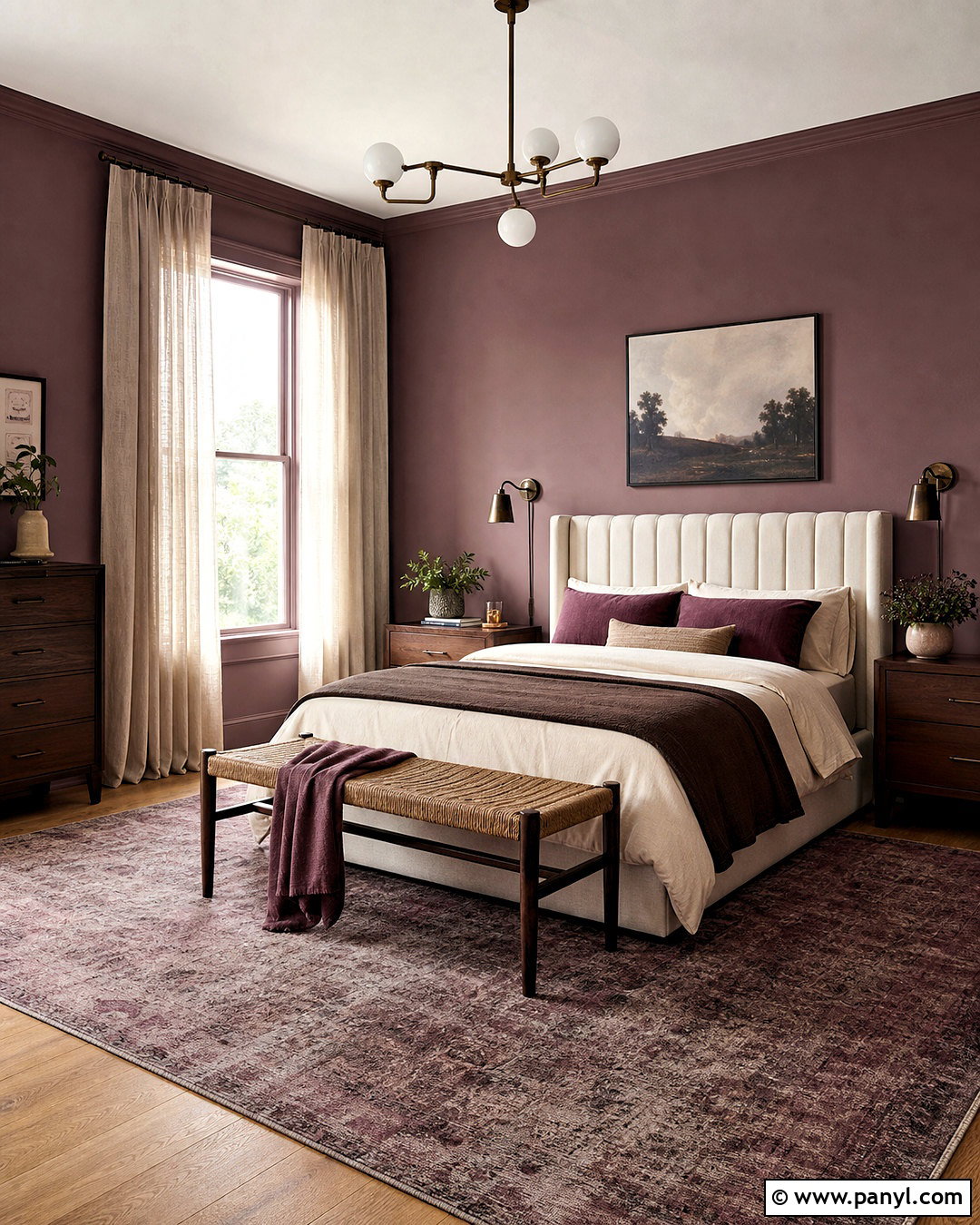
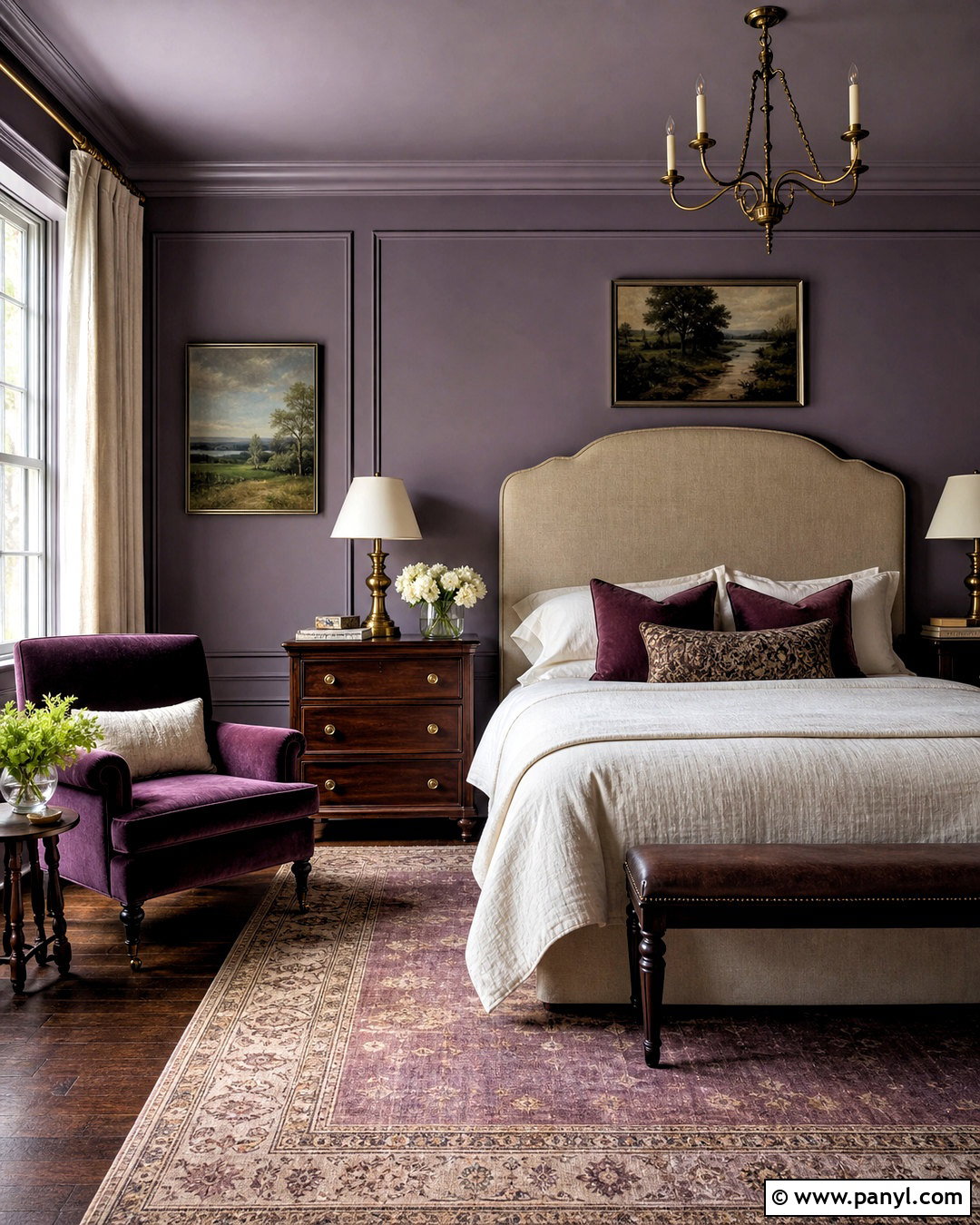
Earthy mauve combines muted purple, pink, and brown, creating a bedroom color that feels warm and substantial. Pair the walls with an oak bed or a channel-tufted headboard in creamy beige. Layer off-white sheets with mushroom, plum, and cocoa textiles for a tonal effect. Dark bronze sconces provide definition without the sharpness of glossy black. Choose walnut nightstands and a woven bench at the foot of the bed to reinforce the brown undertones. Curtains in natural flax linen will keep the room relaxed. Finish with a faded rug featuring mauve, taupe, and muted blue. Painting the trim in a softer version of the wall color can make the space feel seamless, comfortable, and carefully designed from every viewpoint.
10. Powder Blue Bedroom Walls
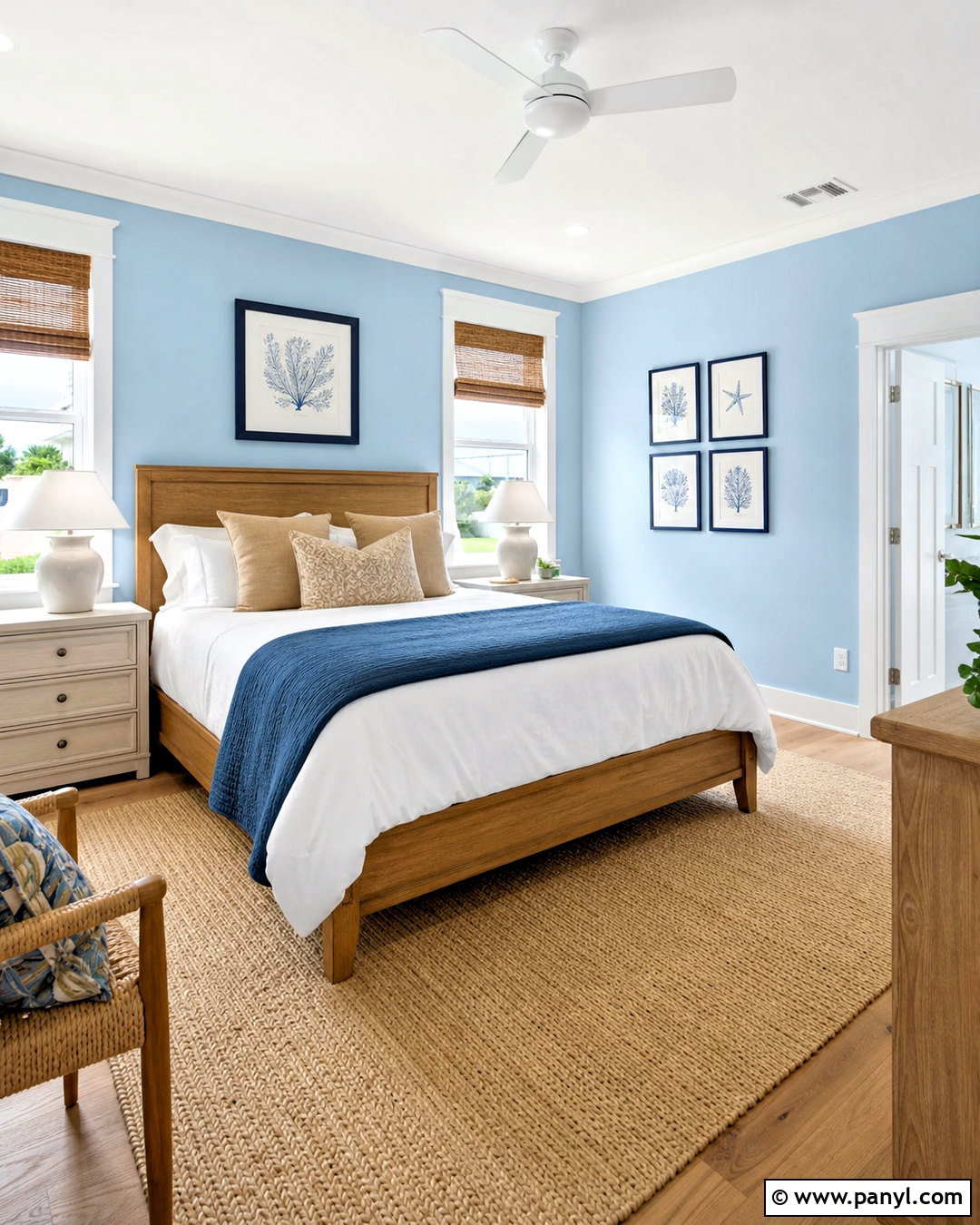
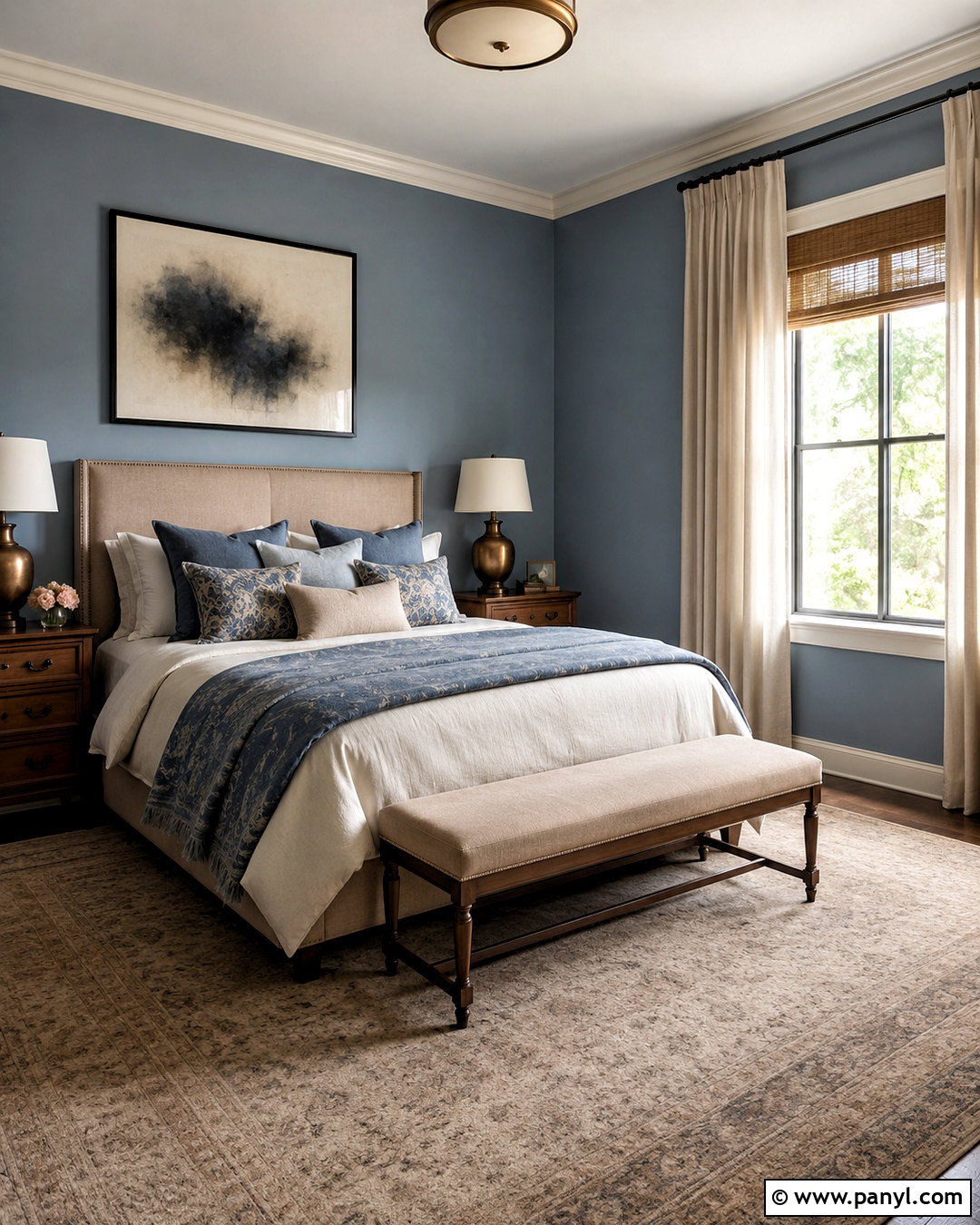
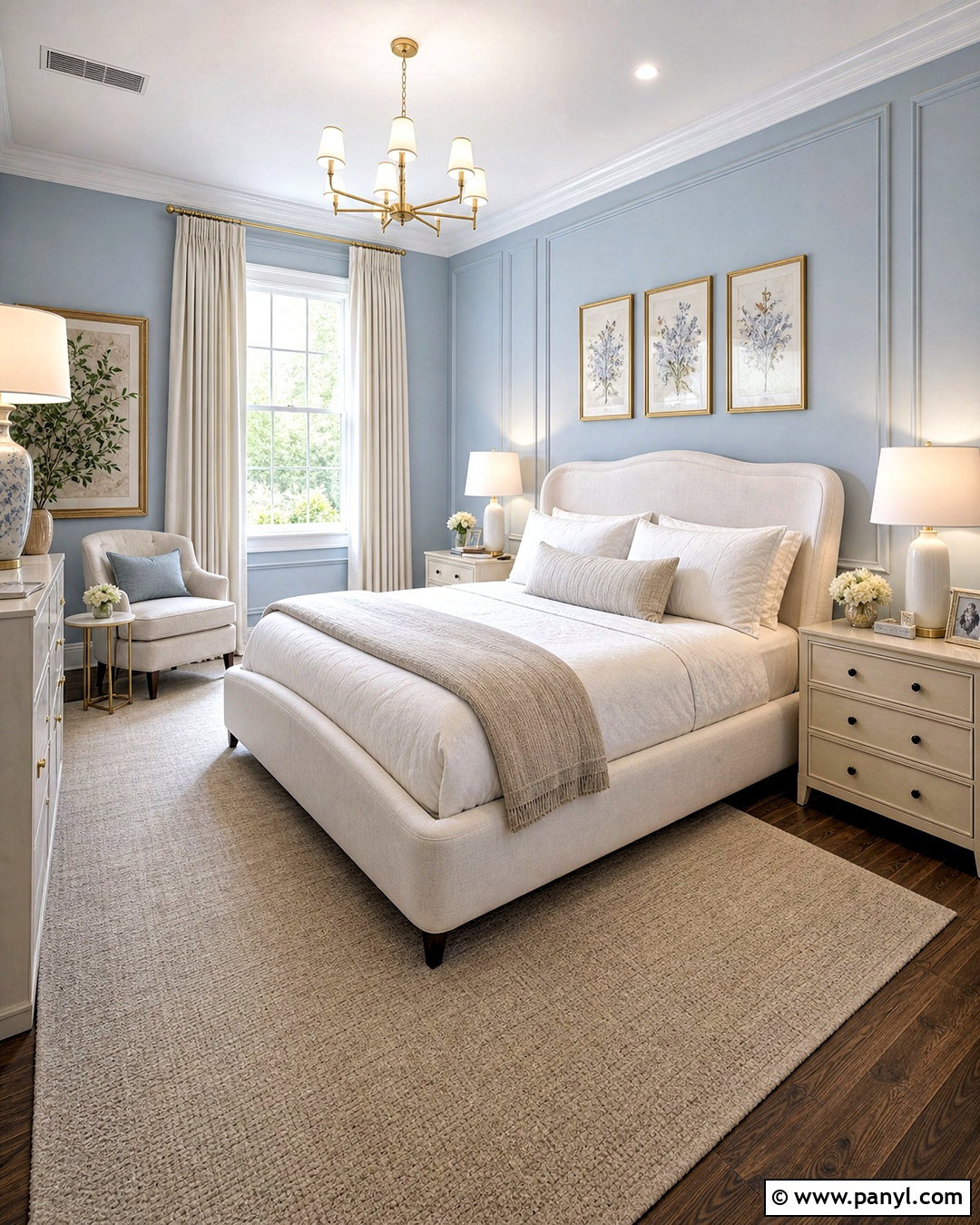
Powder blue walls make a bedroom feel light and refreshed, particularly when the shade has enough gray to prevent it from appearing overly bright. Build the room around a medium oak bed with white bedding, a denim-blue quilt, and warm tan accent pillows. Natural woven shades introduce texture and balance the cool wall color. Add white or pale wood nightstands with ceramic lamps in soft cream. A beige wool rug grounds the arrangement, while navy picture frames create small points of contrast. Keep the ceiling and trim clean white for a crisp outline. This complete scheme works in coastal, cottage, traditional, and modern bedrooms. It is also an effective choice for smaller rooms where deeper blues might dominate the limited space.
11. Blue Gray Bedroom Walls
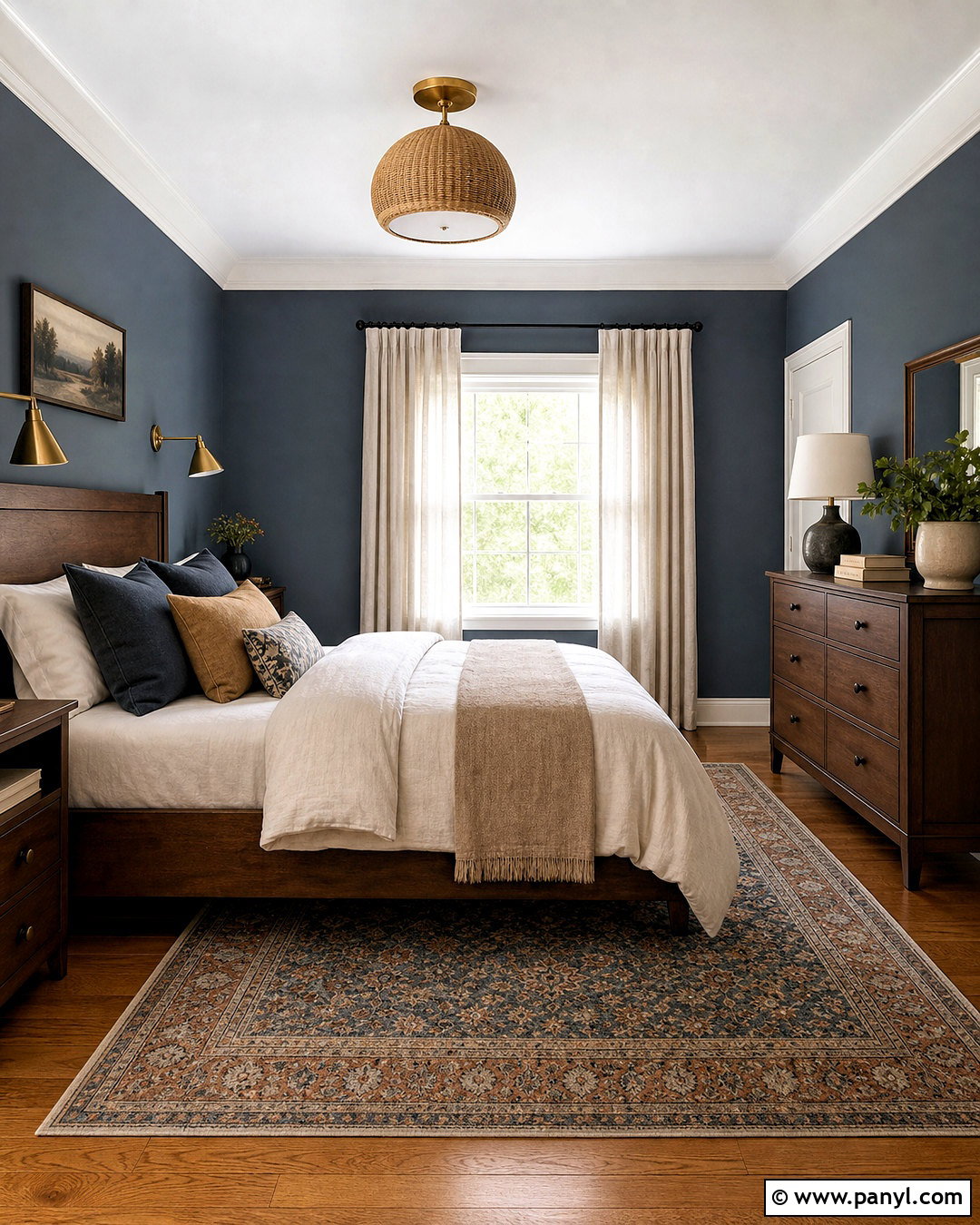
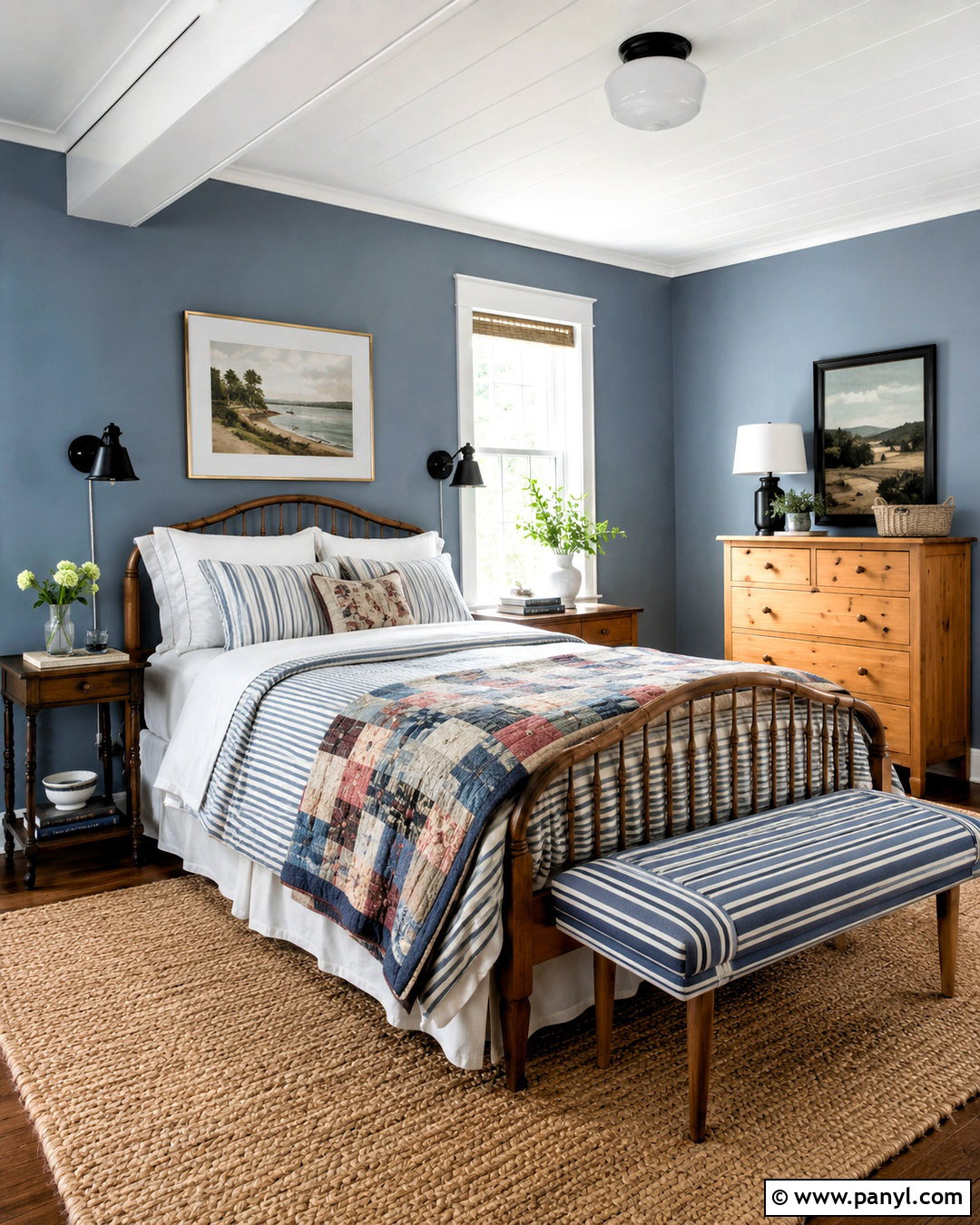
Blue-gray walls shift gently throughout the day, appearing fresher in sunlight and cozier under evening lamps. Select a muted midtone rather than a chilly silver-blue. Pair it with a warm walnut bed, ivory linen bedding, and cushions in slate, camel, and cream. Brass wall lights bring warmth to the cooler backdrop, while natural linen curtains soften the windows. Use a vintage-style rug with faded blue, taupe, and rust details to connect all parts of the palette. A dark wood dresser can anchor the opposite wall. Keep trim in a creamy white rather than a sharp white. The result is a layered bedroom that feels calm and timeless, with enough contrast to prevent the blue-gray walls from looking dull or overly formal.
12. Deep Navy Bedroom Walls
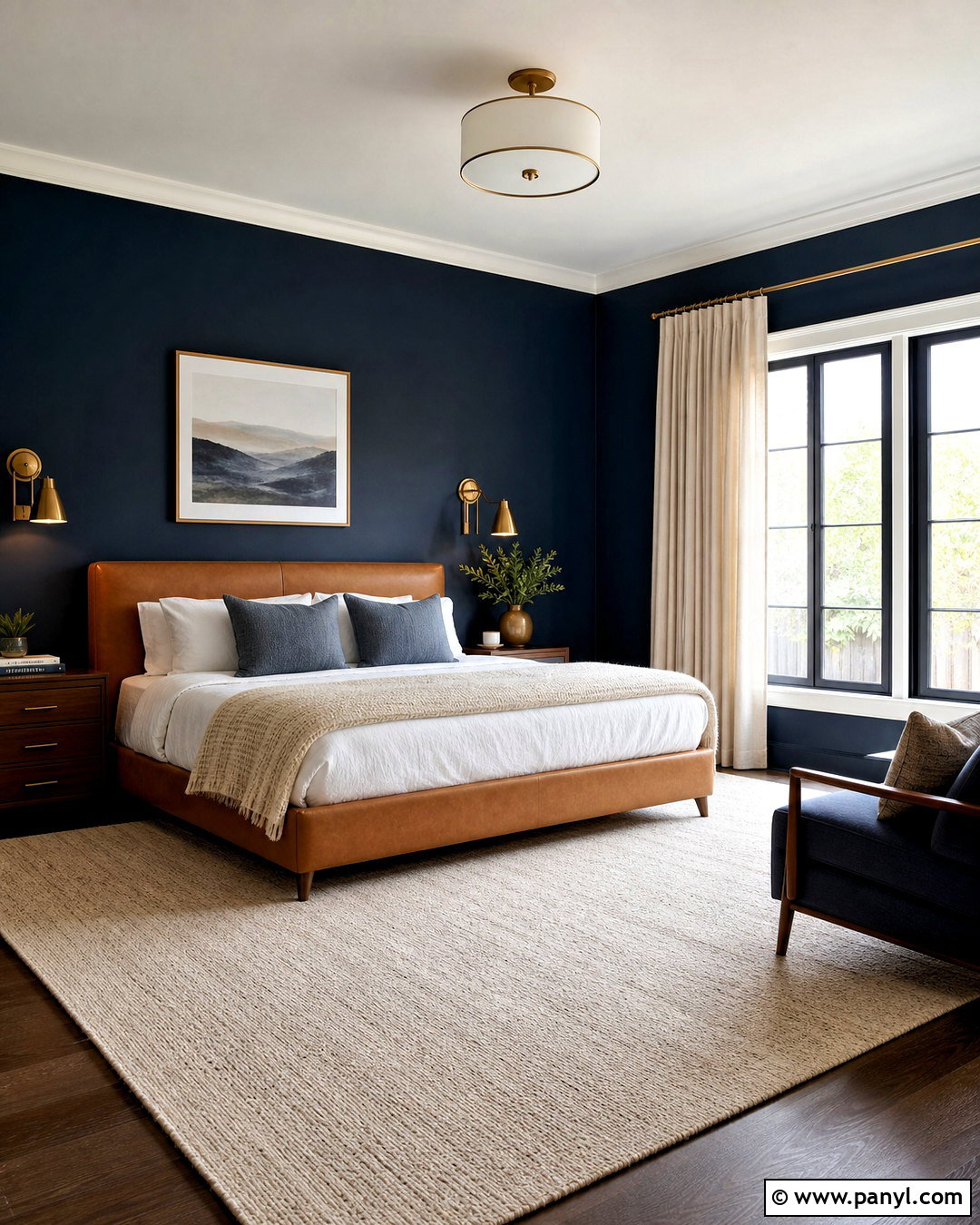
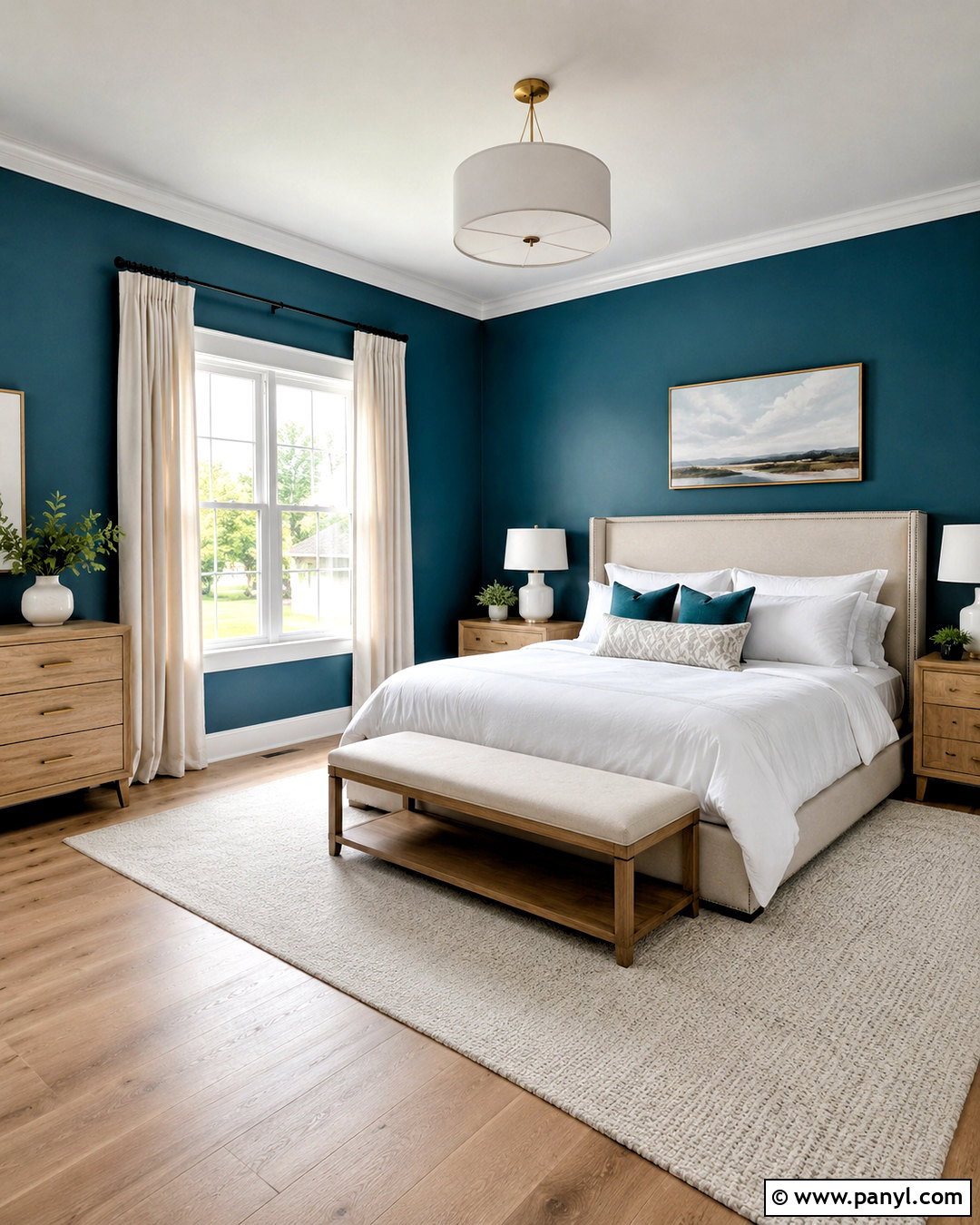
Deep navy walls can transform a bedroom into a cozy retreat when the remaining elements provide warmth and brightness. Use navy across all four walls for a more intentional result than a single disconnected accent wall. Place a camel leather or natural oak bed against the darkest wall, then add crisp white sheets, blue-gray pillows, and a textured cream coverlet. Choose walnut nightstands and warm brass sconces to create contrast. Full-length oatmeal curtains and a large ivory rug will prevent the room from feeling heavy. Paint the ceiling warm white, or continue navy overhead in a tall room for a cocooning look. Minimal artwork with broad white mats gives the walls breathing room while preserving their dramatic, sophisticated presence.
13. Sage Green Bedroom Walls
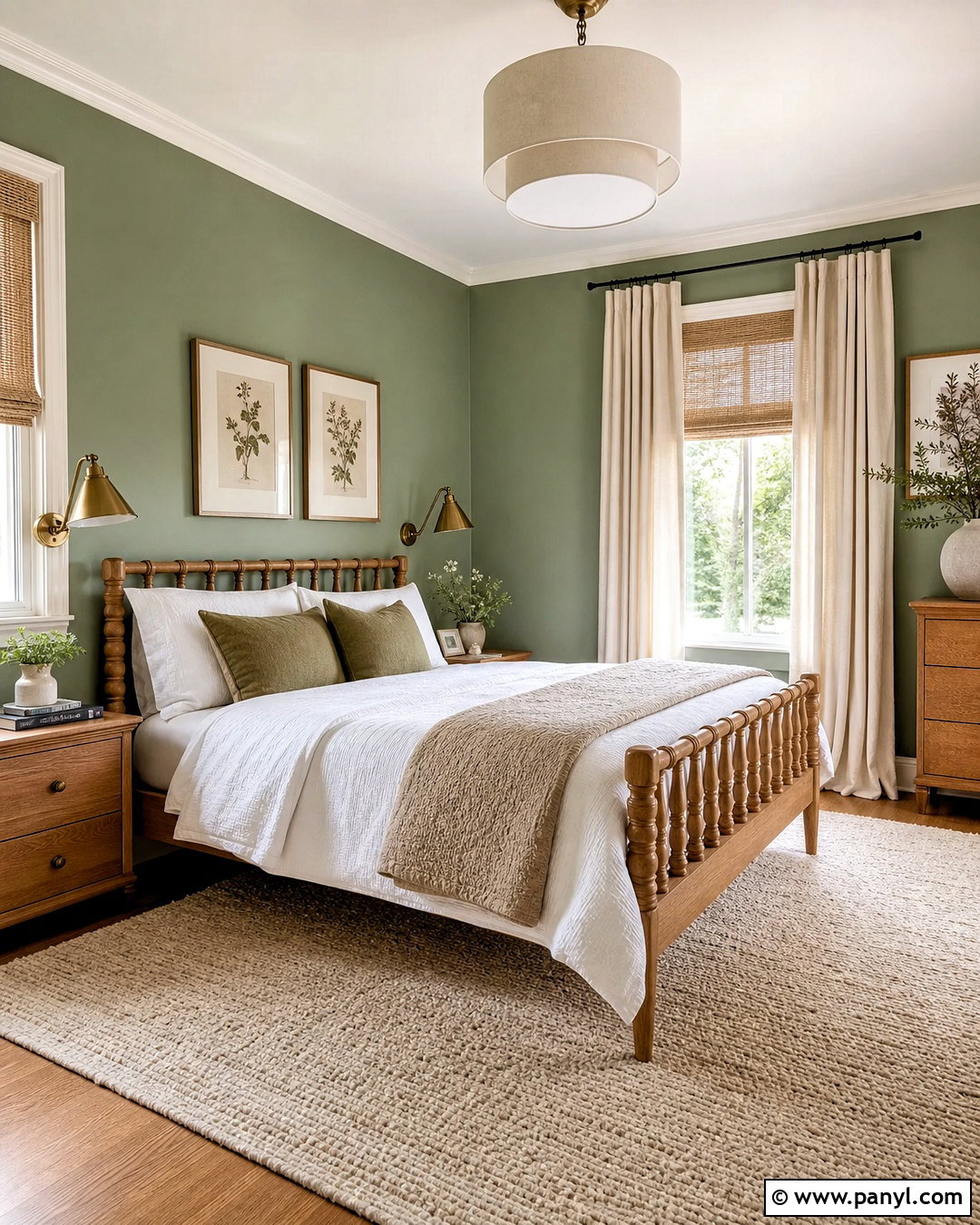
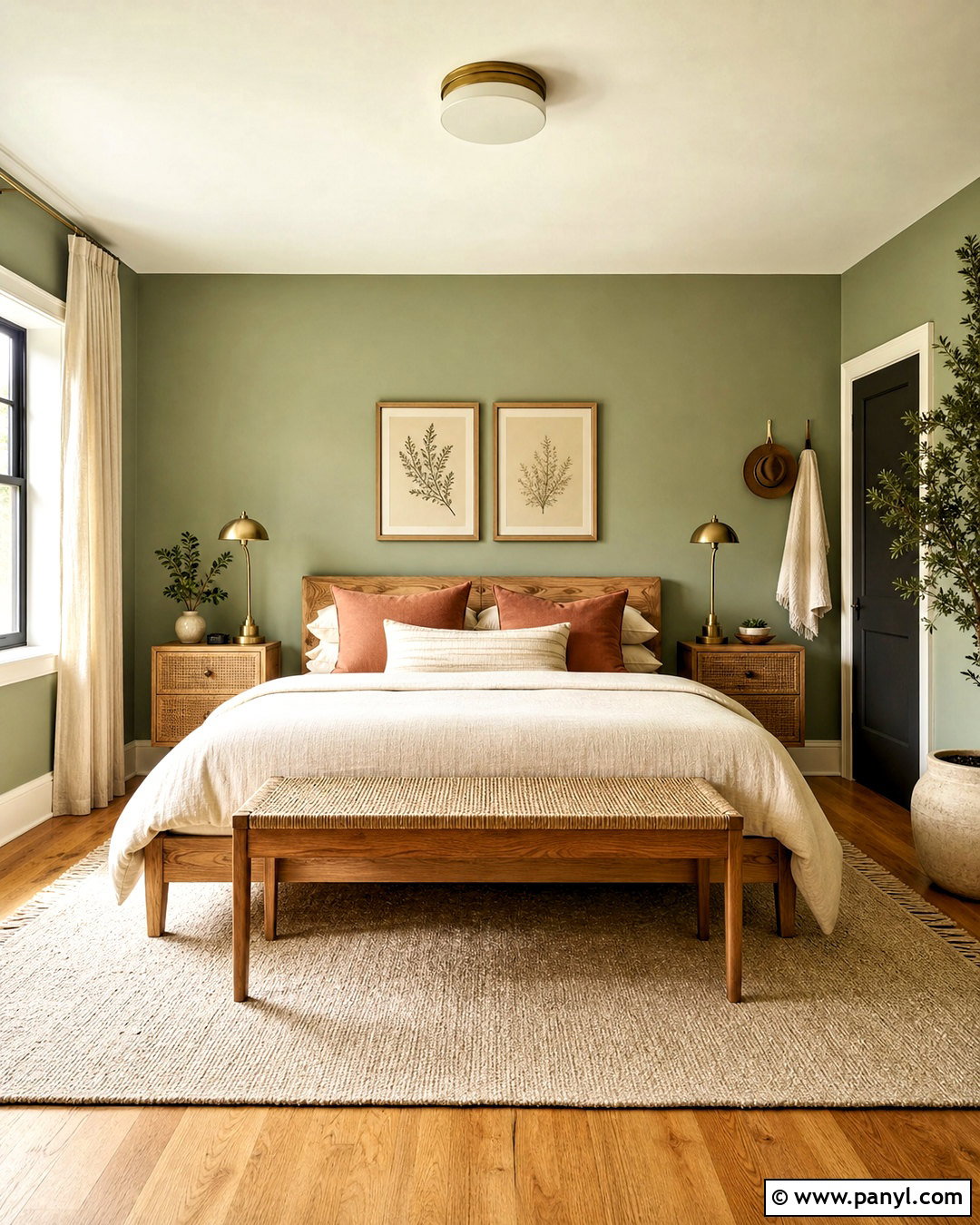
Sage green walls bring a natural, grounded quality to the bedroom and coordinate easily with warm wood and neutral textiles. Choose a soft, slightly gray sage rather than a highly saturated green. Complete the room with an oak spindle bed, white linen bedding, olive accent pillows, and a beige quilt. Woven shades and flax curtains add warmth around the windows. Use aged brass reading lights and simple ceramic lamps to introduce a subtle traditional detail. A cream wool rug can brighten the floor, while botanical artwork repeats the green in a controlled way. Paint the trim a warm off-white. This complete look works particularly well with garden views, hardwood flooring, and furniture made from oak, walnut, cane, or natural rattan.
14. Eucalyptus Green Bedroom Walls

Eucalyptus green sits between sage and blue-green, giving a bedroom a fresh look with more character than a basic neutral. Pair this medium muted shade with an ivory upholstered bed and layers of white, pale blue, and forest green bedding. Light oak nightstands maintain an open feeling, while matte black sconces sharpen the palette. Hang natural linen curtains and use a woven wool rug in cream and soft gray. A slim bench in cognac leather can add a warmer accent at the foot of the bed. Keep artwork minimal, choosing abstract pieces that repeat blue-green and sandy tones. This wall color works especially well in modern organic bedrooms where clean furniture lines are softened by wood, linen, wool, and handmade ceramic accessories.
15. Olive Green Bedroom Walls

Olive green walls offer a richer, earthier alternative to pale sage. Choose a muted olive with brown undertones, then combine it with an oak or walnut bed for a grounded, natural effect. Cream bedding provides essential brightness, while rust, tan, and darker green pillows create controlled layers of color. Install antique brass sconces and select warm white lampshades to complement the walls. Curtains in oatmeal linen and a faded beige rug keep the space relaxed. Black-framed artwork can supply definition without overwhelming the palette. For a more enveloping bedroom, paint the trim and doors in the same olive using a slightly glossier finish. The completed room suits traditional, rustic modern, vintage, and nature-inspired interiors with equal ease.
16. Muted Terracotta Bedroom Walls

Muted terracotta creates a warm bedroom that feels sun-washed rather than overly orange. Look for a clay-based shade softened with brown, pink, or beige undertones. Pair the walls with a low natural oak bed, ivory bedding, and cushions in cream, rust, and dusty blue. Woven pendant lights and cane nightstands reinforce the earthy palette, while a large off-white rug keeps the floor visually light. Use simple linen curtains in sand or oatmeal. Black hardware and a dark-framed mirror can provide small amounts of contrast. Handmade pottery and one oversized abstract artwork complete the room without clutter. This color is especially effective in bedrooms with strong natural light, where its complex undertones can remain warm and lively throughout the day.
17. Soft Clay Bedroom Walls
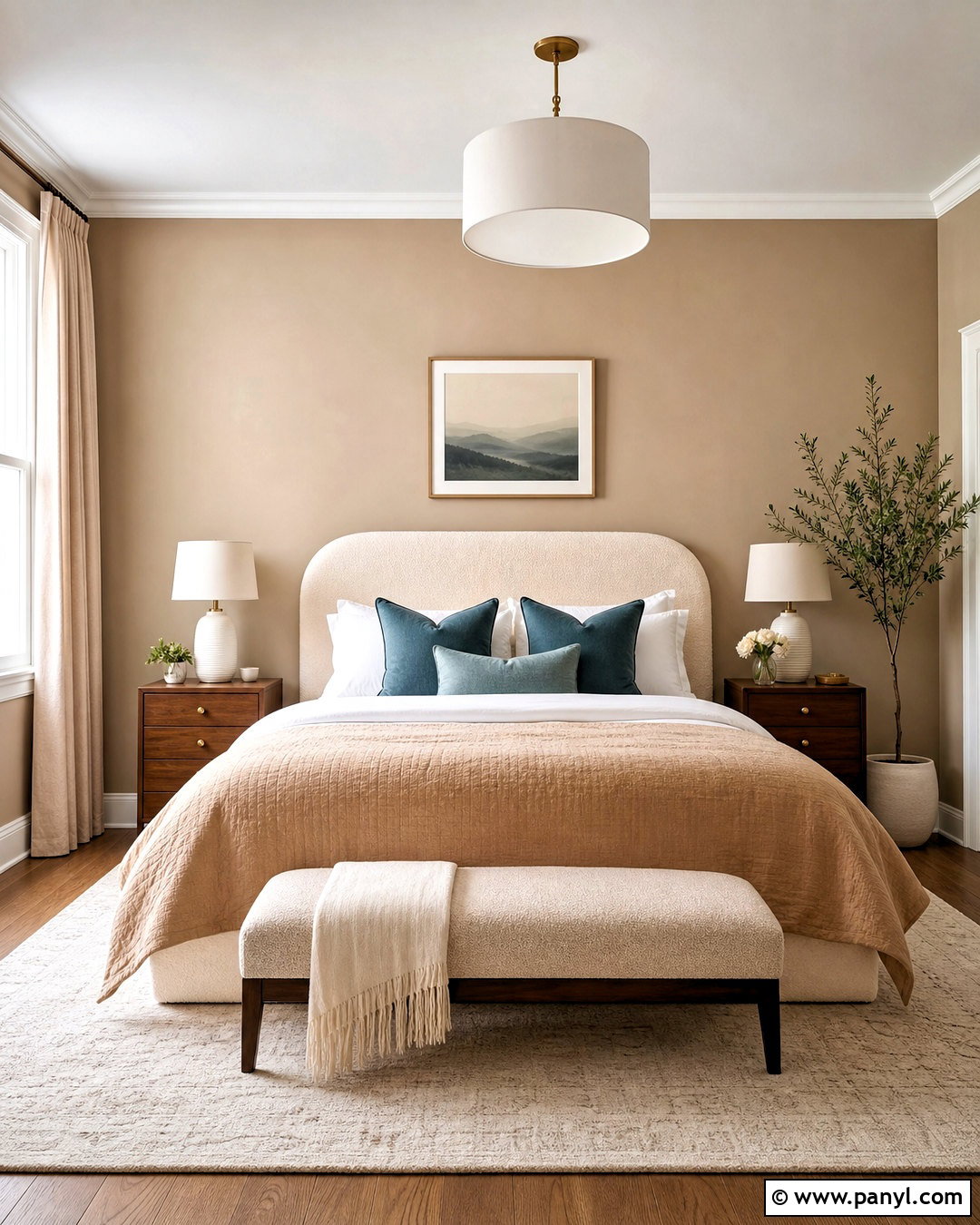
Soft clay walls provide terracotta warmth in a quieter, more neutral form. The shade should resemble pale sunbaked earth, with balanced beige, pink, and brown undertones. Create an inviting scheme using a cream boucle headboard, white cotton sheets, and a quilt in muted camel. Walnut nightstands add depth, while off-white ceramic lamps keep the bedside surfaces light. Select oatmeal curtains and an ivory rug with a subtle tan pattern. A few accents in dusty blue or muted teal will cool the palette and prevent it from feeling too uniform. Paint the trim warm white for gentle contrast. This complete bedroom look works well with Mediterranean, organic modern, Southwestern, and relaxed contemporary decor while remaining easy to update with new textiles.
18. Chocolate Brown Bedroom Walls

Chocolate brown walls create a bold, cocooning bedroom with a strong connection to wood, earth, and natural textiles. Choose a deep brown with neutral or slightly warm undertones, avoiding shades that look red under lamplight. An ivory upholstered bed will stand out beautifully against the dark walls. Add white bedding, camel throws, and pillows in cream and muted blue. Medium oak nightstands prevent the room from becoming too dark, while aged brass lamps introduce a warm reflective finish. Use full-length oatmeal curtains and a generous cream rug to brighten the lower half of the space. Keep the ceiling warm white unless the room is large and well lit. Simple oversized artwork gives the rich walls a clean, balanced focal point.
19. Charcoal Gray Bedroom Walls

Charcoal gray can produce a polished bedroom when its cool strength is balanced with soft materials and warm finishes. Select a charcoal with subtle brown or blue undertones based on the room’s flooring and daylight. Pair the walls with a light oak bed, crisp white bedding, and cushions in camel, gray, and muted green. Brass sconces and woven shades warm the composition, while ivory curtains frame the windows. A pale textured rug keeps the room from feeling closed in. Choose minimal black-framed artwork with wide white mats so it remains visible against the dark paint. Paint trim charcoal for a seamless modern effect or warm white for sharper definition. The complete room feels dramatic, calm, and comfortably livable rather than stark.
20. Soft Black Bedroom Walls
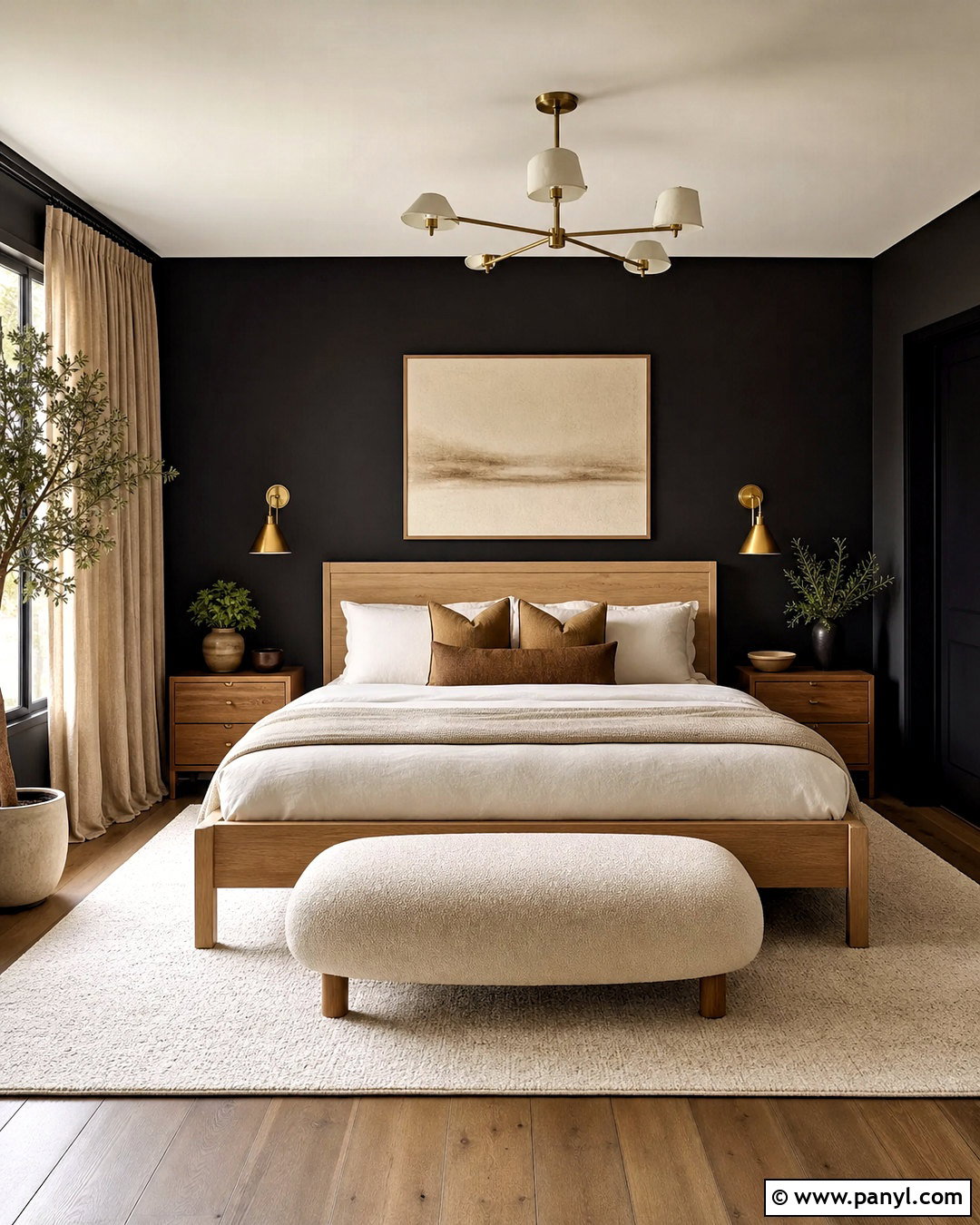
Could black walls actually make a bedroom feel more comfortable? A softened black with charcoal or brown undertones can create depth while allowing furniture and textiles to stand out. Use it on every wall for a unified look, then add a natural oak bed and generous layers of white and cream bedding. Warm tan pillows, a boucle bench, and an ivory rug will soften the contrast. Install antique brass or matte bronze lights for an inviting finish. Natural linen curtains prevent the windows from looking too severe. Keep accessories simple, using one large light-toned artwork and a few ceramic objects. A warm white ceiling preserves openness. This complete palette works best when strong texture and adequate lighting balance the dark bedroom wall color.
Conclusion:
The most successful bedroom palette combines wall color with lighting, flooring, furniture, textiles, and trim instead of treating paint as an isolated decision. Warm whites and natural neutrals create flexibility, while muted pinks, blues, and greens introduce gentle personality. Terracotta, brown, charcoal, and soft black offer a more enveloping result when balanced with pale bedding and warm materials. Always test large samples beside your permanent finishes and study them at several times of day before painting the full room. Choose the shade that supports the atmosphere you genuinely enjoy, not simply the newest trend. Use these 20 best wall colors for bedroom ideas to build a complete retreat that feels coordinated, comfortable, and personal.

Related Ideas and Inspiration:





Leave a Reply