
Sage green brings a soft, grounded character to a room without feeling bland or overly colorful. The best sage green accent wall ideas treat the wall as part of a complete design, balancing its gray-green undertones with thoughtful furniture, flooring, lighting, and decor. This adaptable color can warm a bright living room, calm a busy bedroom, define an open-plan dining area, or add personality to a small bathroom. It also works across modern, farmhouse, coastal, traditional, bohemian, and vintage-inspired interiors. Before painting, test large samples throughout the day because natural and artificial light can shift sage from earthy green to muted gray. Explore these practical, room-by-room **sage green accent wall ideas** to find a complete look that fits your home.

1. Sage Green Living Room Accent Wall
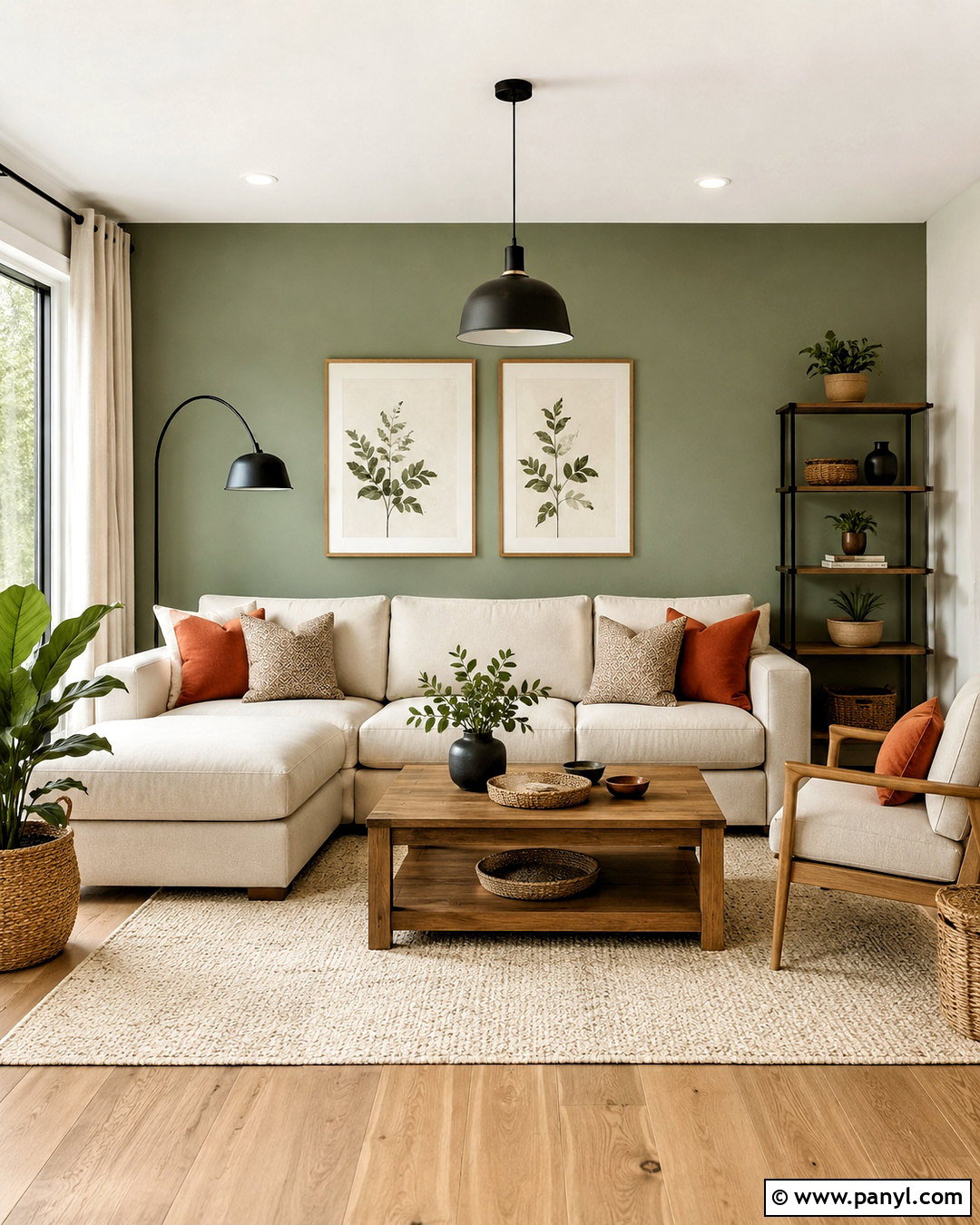
Create an inviting living room by placing a muted sage green accent wall behind the main sofa. Choose a cream or warm beige couch to keep the arrangement light, then introduce medium oak through a coffee table, side tables, and slim picture frames. A textured ivory rug grounds the seating area without competing with the wall. Add rust, camel, and soft brown pillows for warmth, along with one or two botanical prints that repeat the green naturally. Linen curtains in warm white will soften sunlight and help the paint retain its earthy quality. Finish the room with a matte black floor lamp, woven baskets, and a tall leafy plant for a comfortable, balanced look that feels collected rather than themed.
2. Sage Green Wall Behind The TV
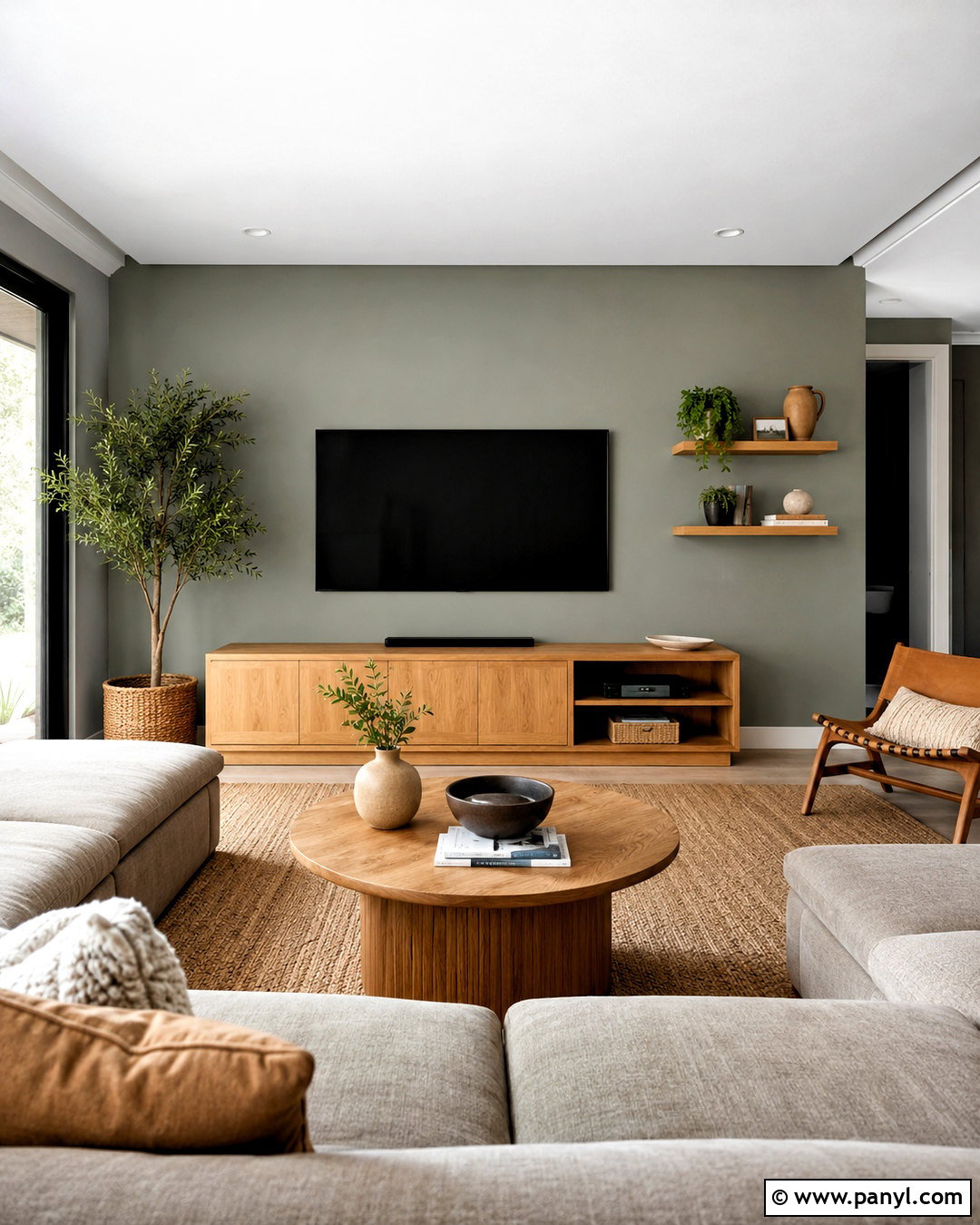
A sage green TV wall can make a large black screen feel less visually harsh. Use a medium, slightly gray sage so the television blends into the background without disappearing completely. Install a low oak media console across the wall and keep cables concealed for a streamlined finish. Simple closed storage will control clutter, while a few open shelves can display ceramic vases, books, and small plants. Furnish the room with a warm gray sectional, a natural jute-blend rug, and a round wood coffee table to soften the screen’s straight lines. Black metal lighting and hardware will connect visually with the television. Keep surrounding walls creamy white so the accent wall remains defined without making the entire room feel dark.
3. Sage Green Fireplace Accent Wall
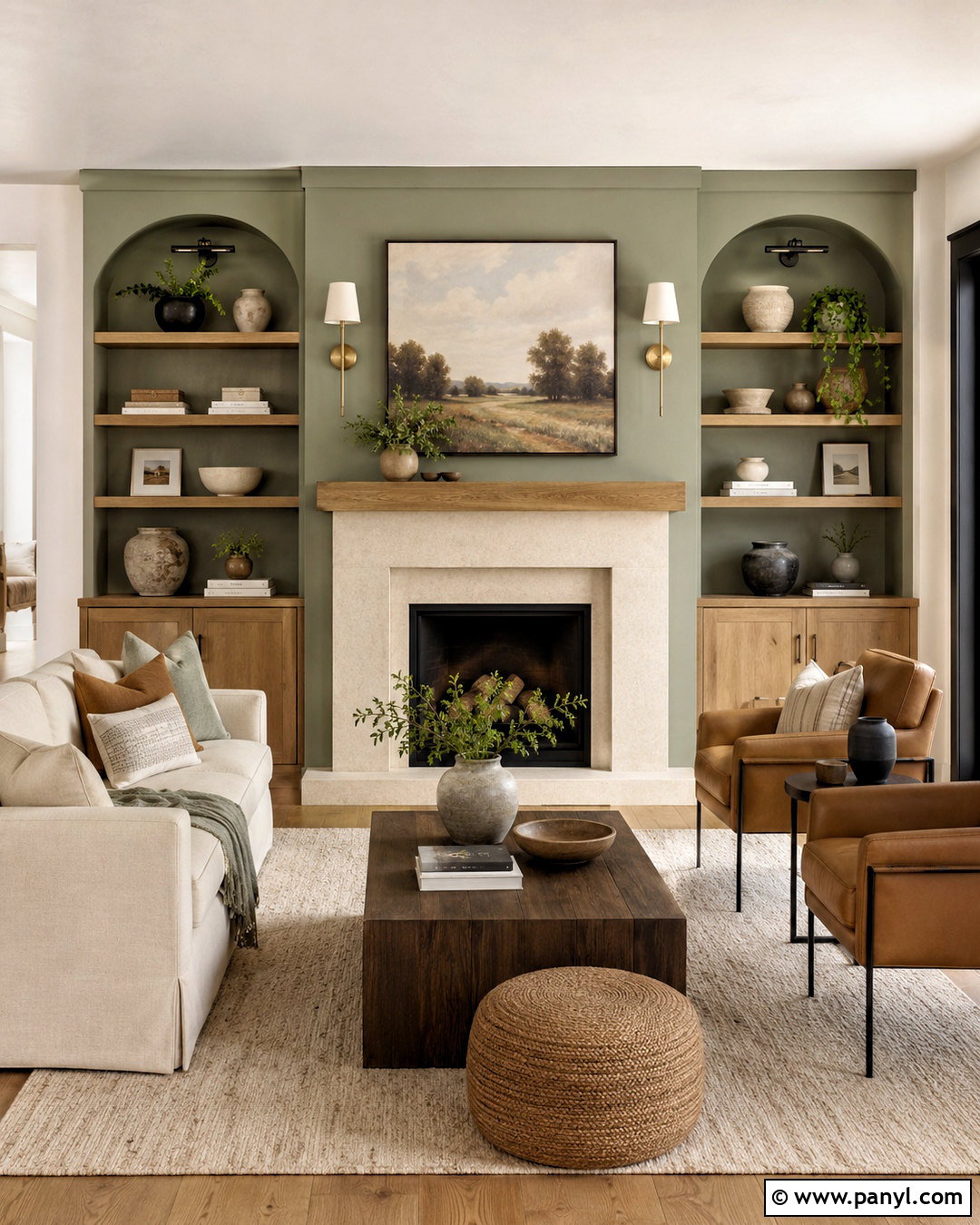
Turn the fireplace into a stronger focal point by painting its entire wall a warm sage green. A simple white plaster or pale limestone surround creates a crisp contrast while maintaining an organic palette. Place light oak built-ins or floating shelves on either side to give the wall symmetry and practical storage. Arrange a cream sofa and two caramel leather chairs around a substantial wood coffee table. An ivory wool rug will brighten the floor, while brass sconces introduce a soft metallic detail. Keep mantel decor restrained with a wide landscape painting, a stoneware vase, and natural branches. This complete arrangement works especially well when the sage paint extends around architectural recesses, allowing the fireplace wall to feel intentional rather than randomly highlighted.
4. Sage Green Board And Batten Wall
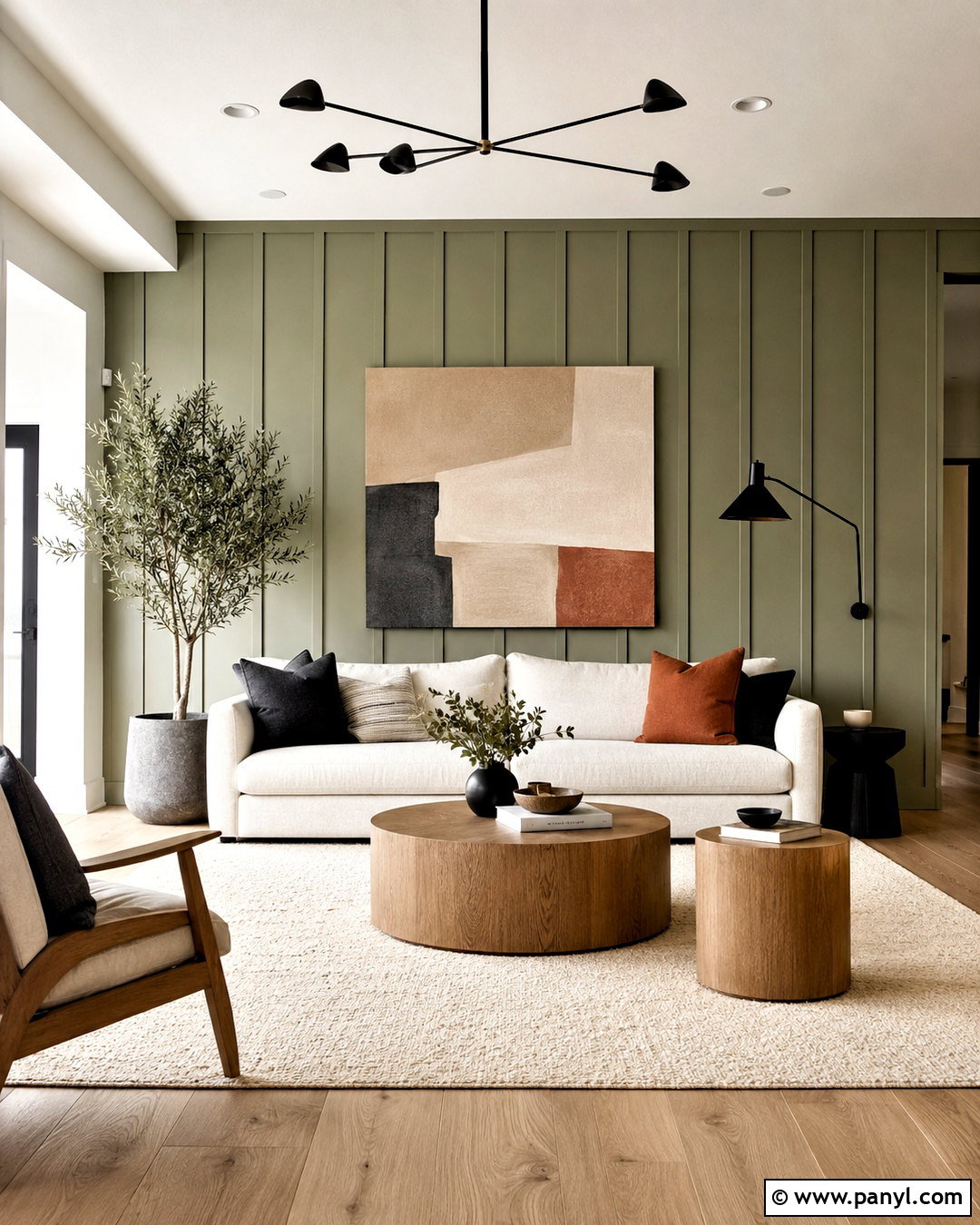
Board and batten gives a sage green accent wall architectural depth without requiring expensive materials. Install evenly spaced vertical battens from the baseboard to the ceiling, then paint the wall and trim in the same low-sheen sage finish. Pair the dimensional surface with a neutral linen sofa, rounded oak tables, and an oversized cream rug. A large abstract artwork with beige, charcoal, and muted terracotta can break up the repeated paneling. Use black-framed windows or matte black lamps for definition, but avoid adding too many small decorative objects. The finished room should feel clean and substantial. This treatment is particularly useful on a long, plain wall because the repeated vertical lines make the ceiling appear higher while giving the furniture a purposeful backdrop.
5. Sage Green Shiplap Accent Wall
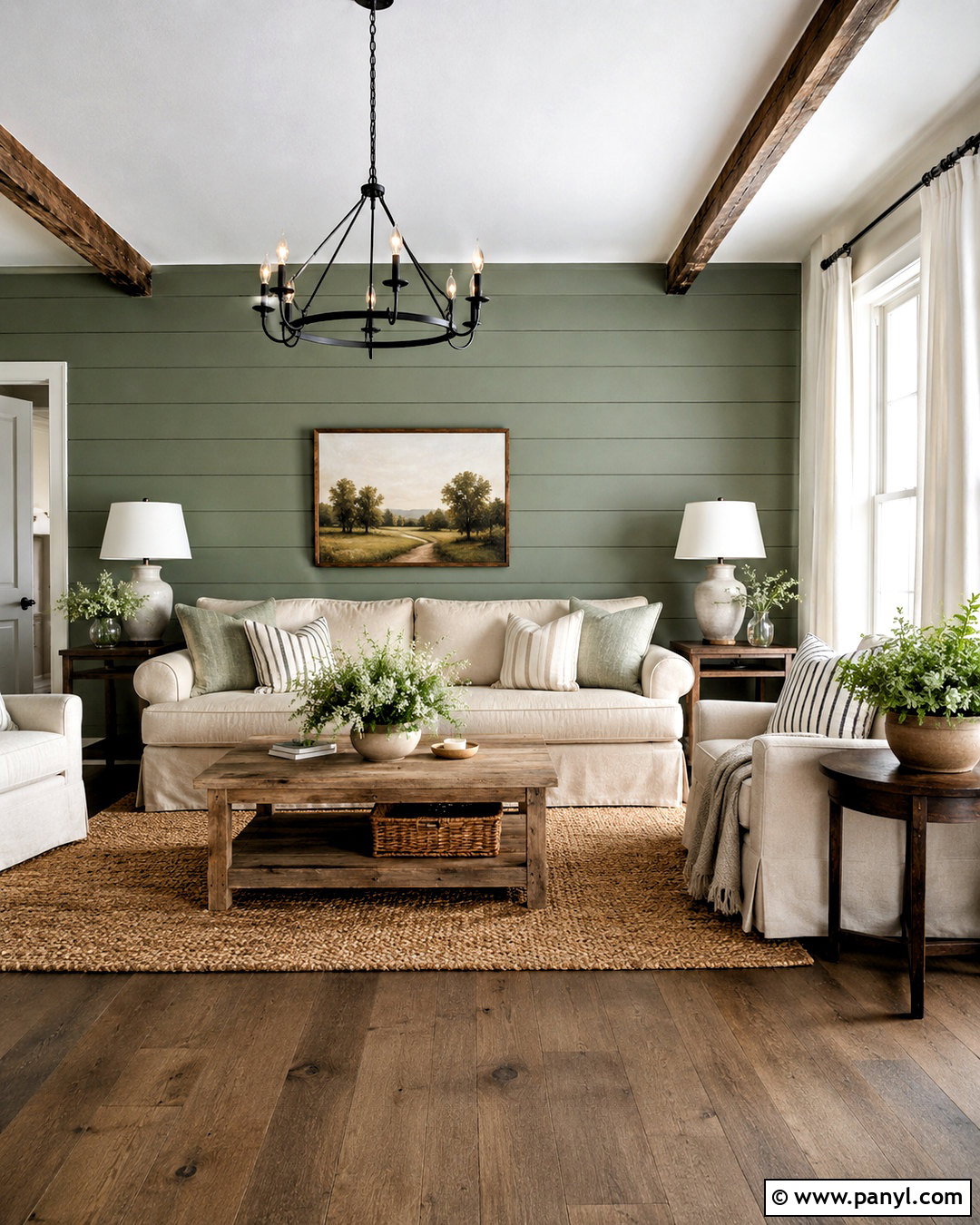
For a relaxed farmhouse look, cover one living room wall with horizontal shiplap painted dusty sage green. Choose narrow, evenly spaced boards and use a matte or eggshell finish to emphasize the subtle texture. Anchor the wall with a slipcovered oatmeal sofa and layer it with striped, checked, and solid pillows in cream and faded brown. A reclaimed wood coffee table, woven rug, and black iron chandelier add rustic contrast without overwhelming the gentle color. Hang one large vintage-style landscape instead of filling the wall with many signs or accessories. Complete the room with warm white curtains and simple ceramic lamps. The combination feels casual and welcoming while remaining cleaner and more current than heavily distressed farmhouse decor.
6. Sage Green Bedroom Accent Wall
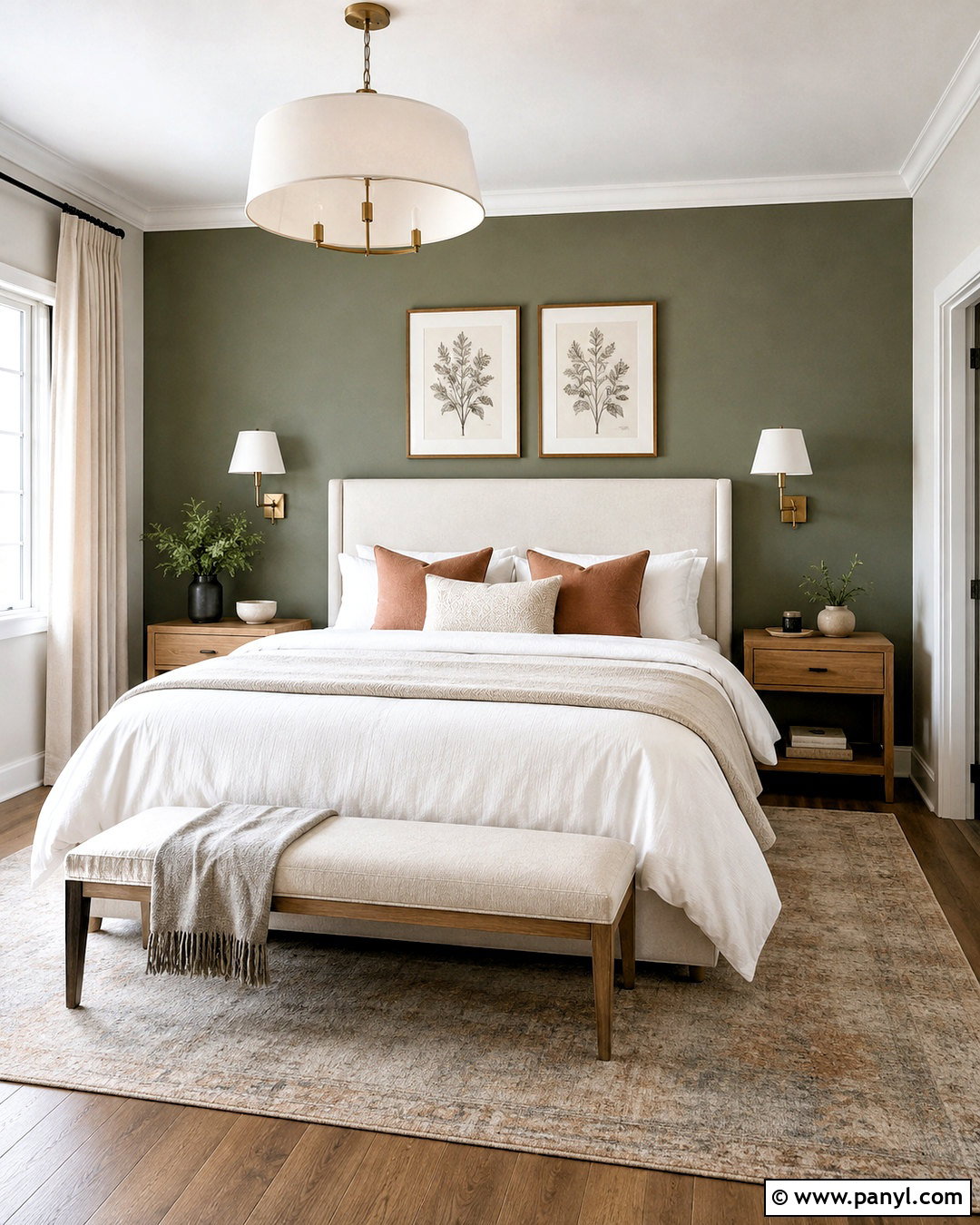
A sage green wall behind the bed establishes a restful focal point and makes the sleeping area feel more finished. Select a subdued sage with warm gray undertones, then add a tall upholstered headboard in oatmeal or ivory. Dress the bed with white cotton sheets, a textured beige coverlet, and a few clay or muted blush pillows. Matching oak nightstands bring natural warmth, while brushed brass sconces free up valuable tabletop space. Keep the other walls soft white and use full-length linen curtains to diffuse strong daylight. A large neutral rug beneath the bed will connect the furniture and soften hard flooring. Limit decorative pieces to framed botanical sketches and one leafy plant so the room remains calm, uncluttered, and easy to maintain.
7. Dark Sage Green Bedroom Wall
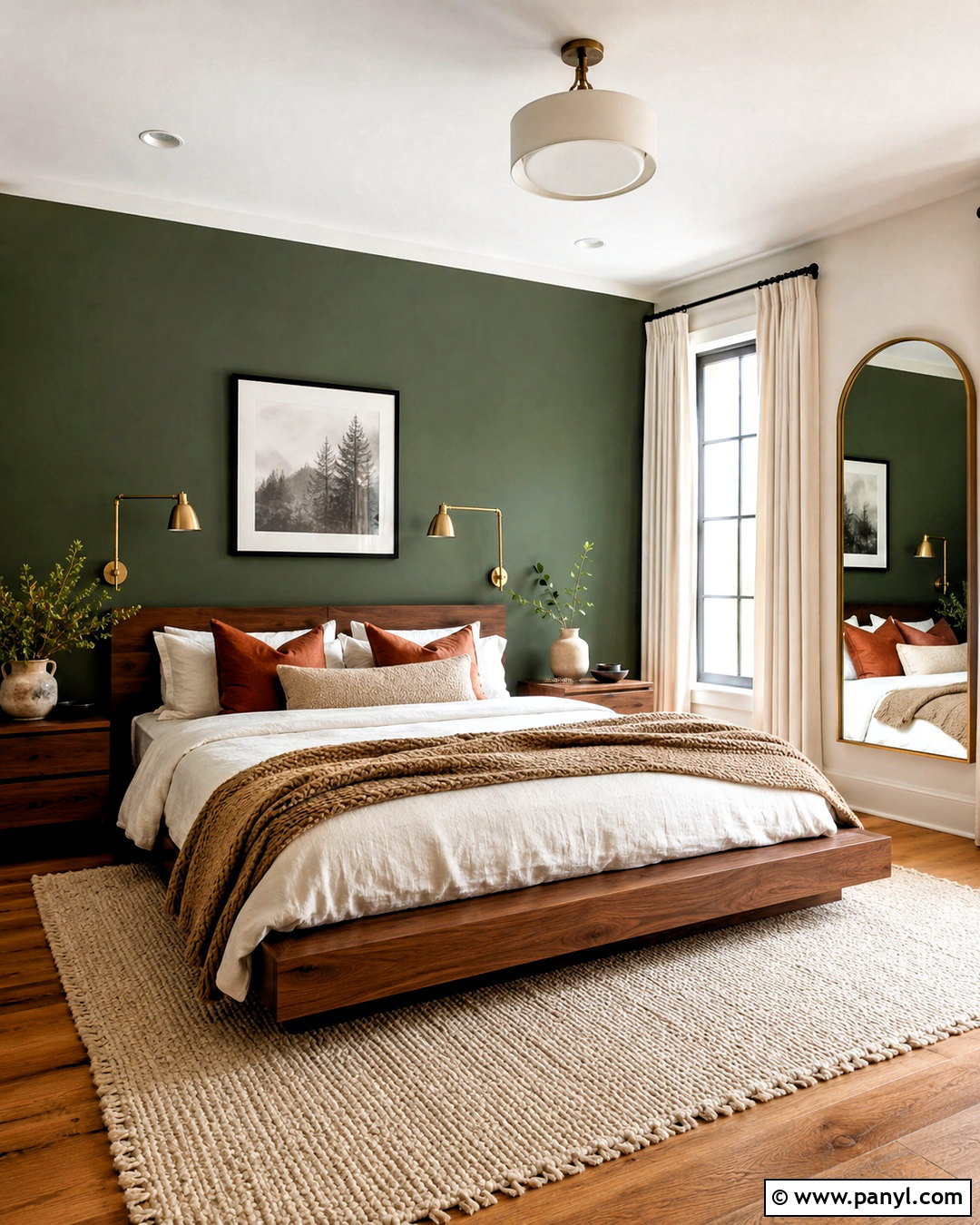
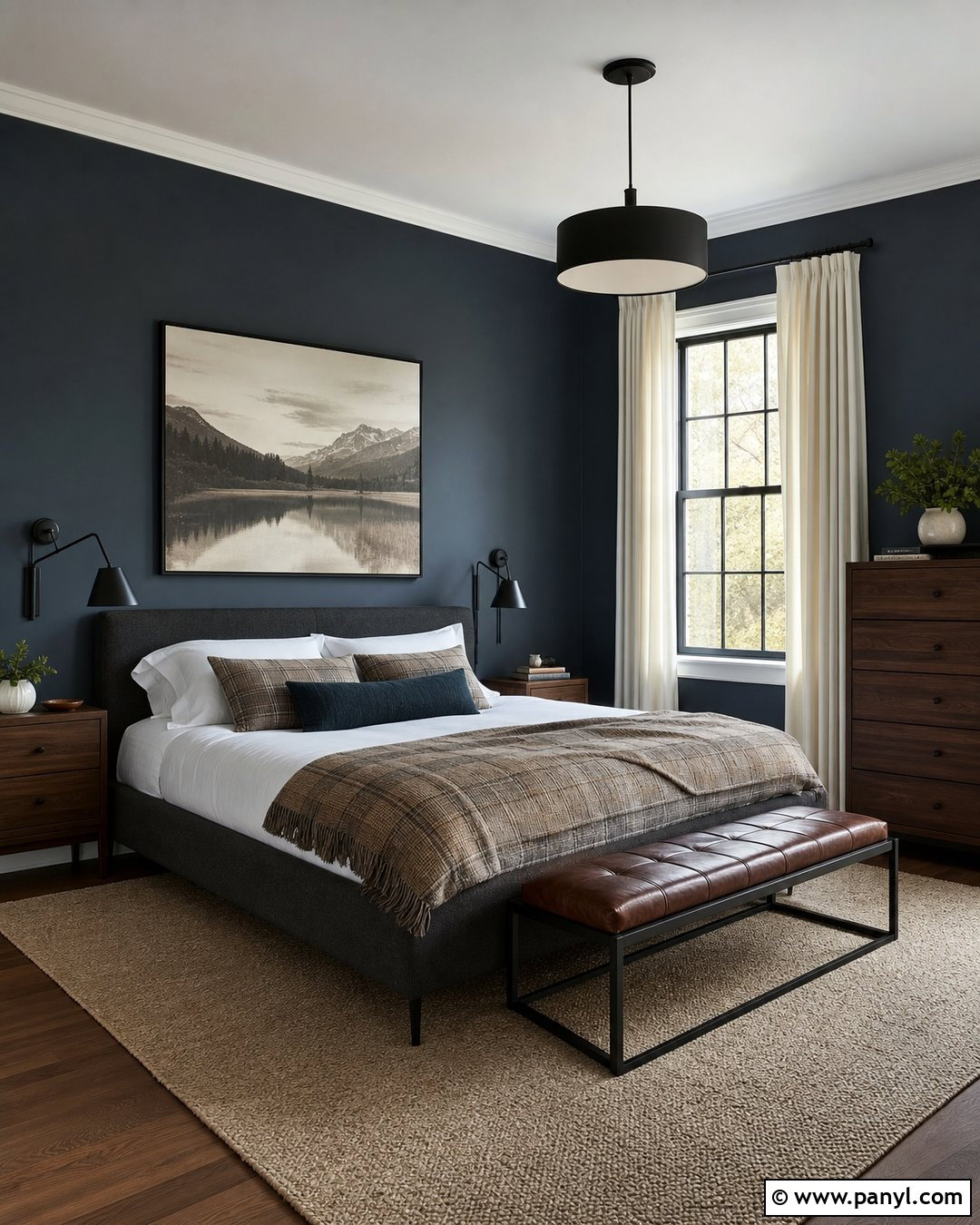
A darker sage green accent wall brings depth to a bedroom while remaining softer than charcoal or navy. Use it behind a low walnut bed, where the rich brown wood can emphasize the paint’s earthy undertones. Balance the darker backdrop with crisp ivory bedding, a cream wool rug, and pale curtains. Add antique brass reading lights and small black-framed artwork for structure. Rust-colored lumbar pillows and a camel throw provide warmth without introducing too many competing hues. If the room receives limited daylight, choose light furniture and keep the ceiling bright white. A large mirror placed opposite the window can also distribute light. This layered scheme feels intimate and polished while allowing the dark sage wall to remain the clear visual anchor.
8. Sage Green Wall With A Wood Headboard
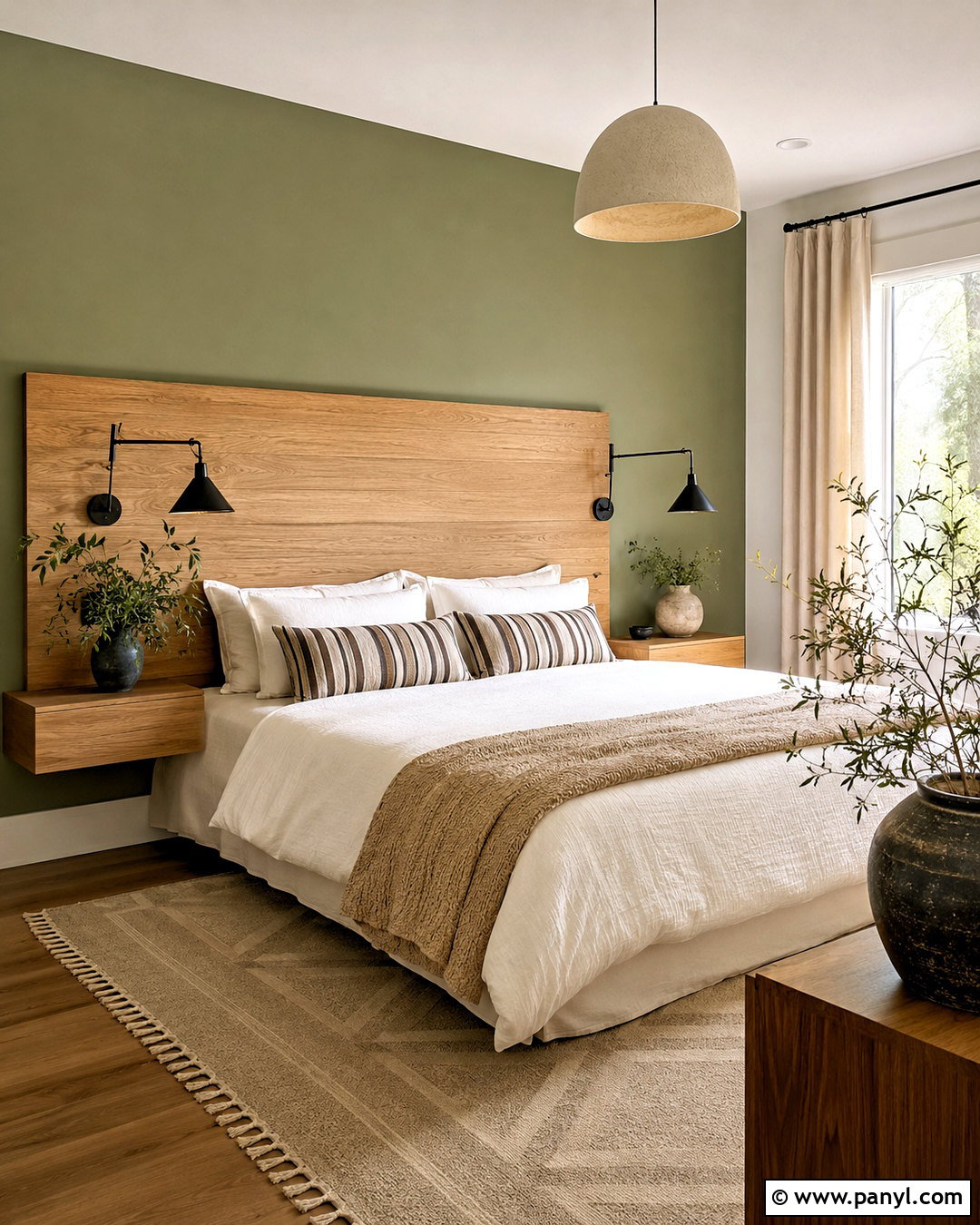
Natural wood and sage green form an easy bedroom combination because both bring warm, organic color into the space. Paint the headboard wall a soft herbal sage and position a wide oak slat or solid wood headboard against it. Use creamy white bedding with a woven tan blanket, then add subtle striped pillows that repeat the green and brown palette. Floating wood nightstands maintain a light footprint, while black swing-arm sconces create practical contrast. Select a beige area rug with a small geometric pattern to prevent the room from looking flat. Complete the setting with linen curtains, a paper-shade ceiling light, and minimal pottery. The final bedroom feels fresh and grounded, with enough texture to keep its restrained color scheme visually interesting.
9. Sage Green Wall With White Furniture
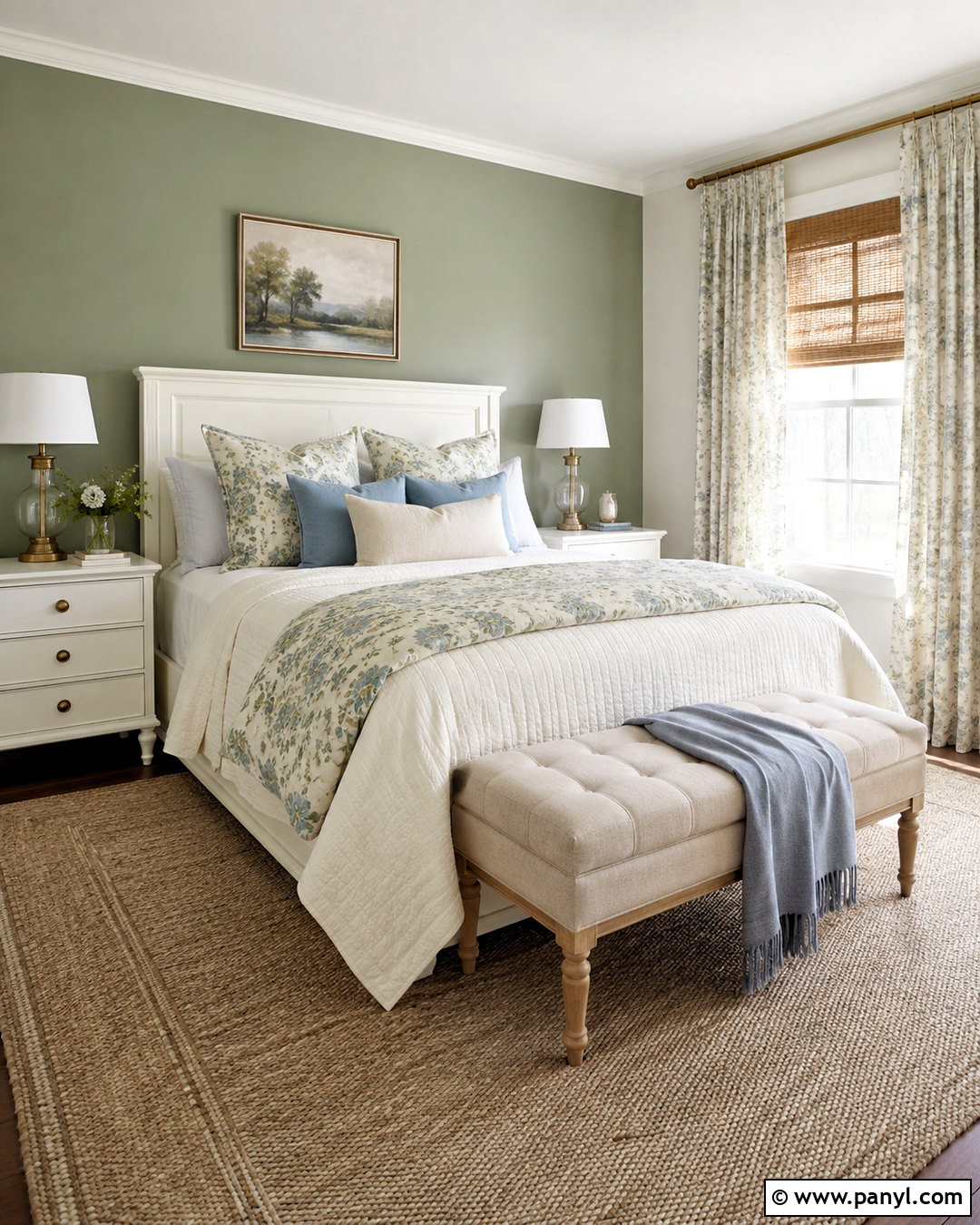
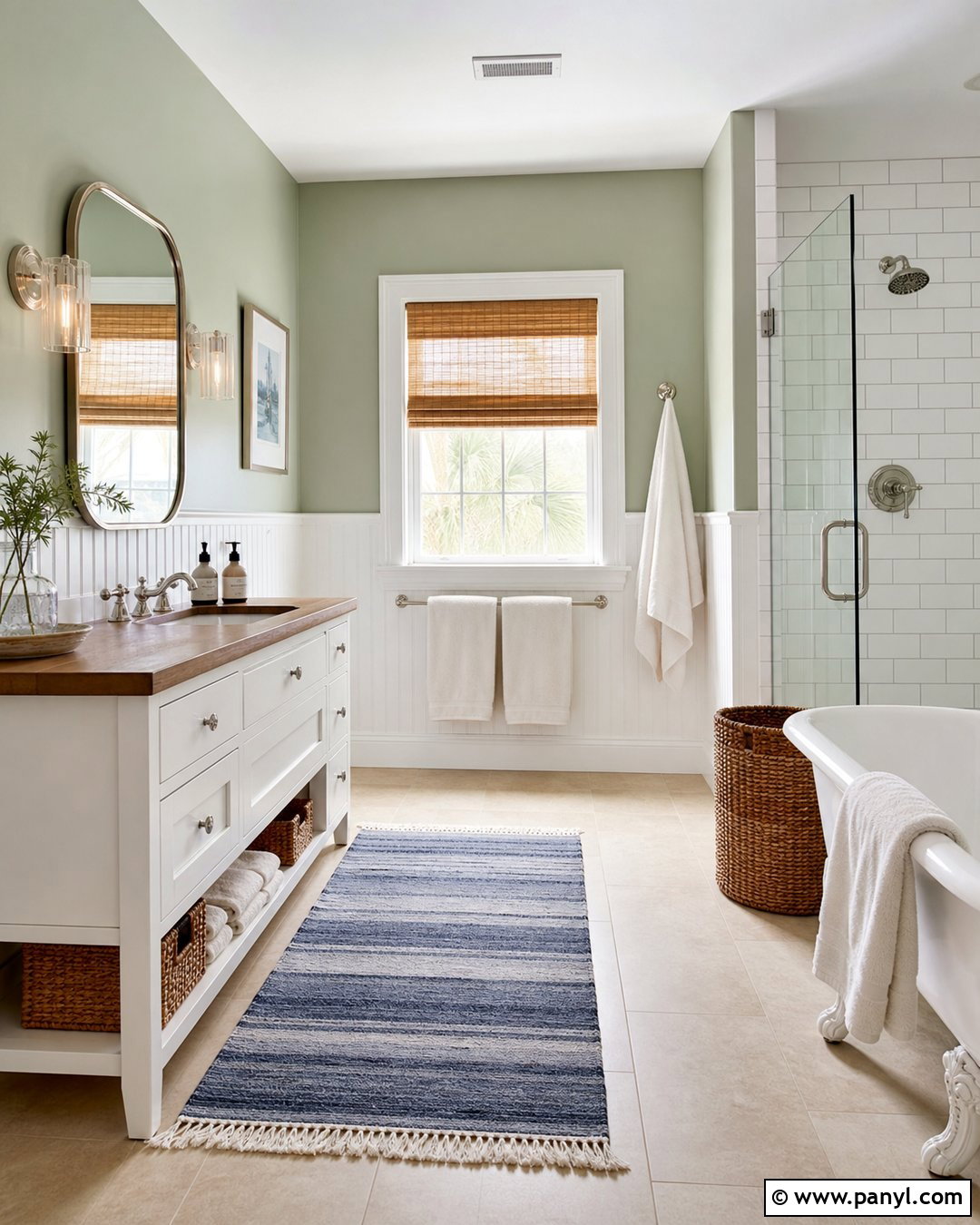
White furniture creates a clean, noticeable contrast against a sage green bedroom wall. Choose a muted midtone sage rather than a very pale shade so the bed, nightstands, and dresser remain clearly outlined. Soften the contrast with warm white bedding, a beige upholstered bench, and a light taupe rug. Add brushed nickel or aged brass hardware depending on whether you prefer a cooler or warmer finish. Small touches of dusty blue and faded floral patterns can add character without overpowering the peaceful palette. Avoid using bright blue-white paint on the remaining walls because it may make the sage look muddy. A creamy off-white creates a smoother transition. Finish with woven blinds and simple greenery for an airy, cottage-inspired bedroom that still feels organized.
10. Sage Green Kids Bedroom Wall
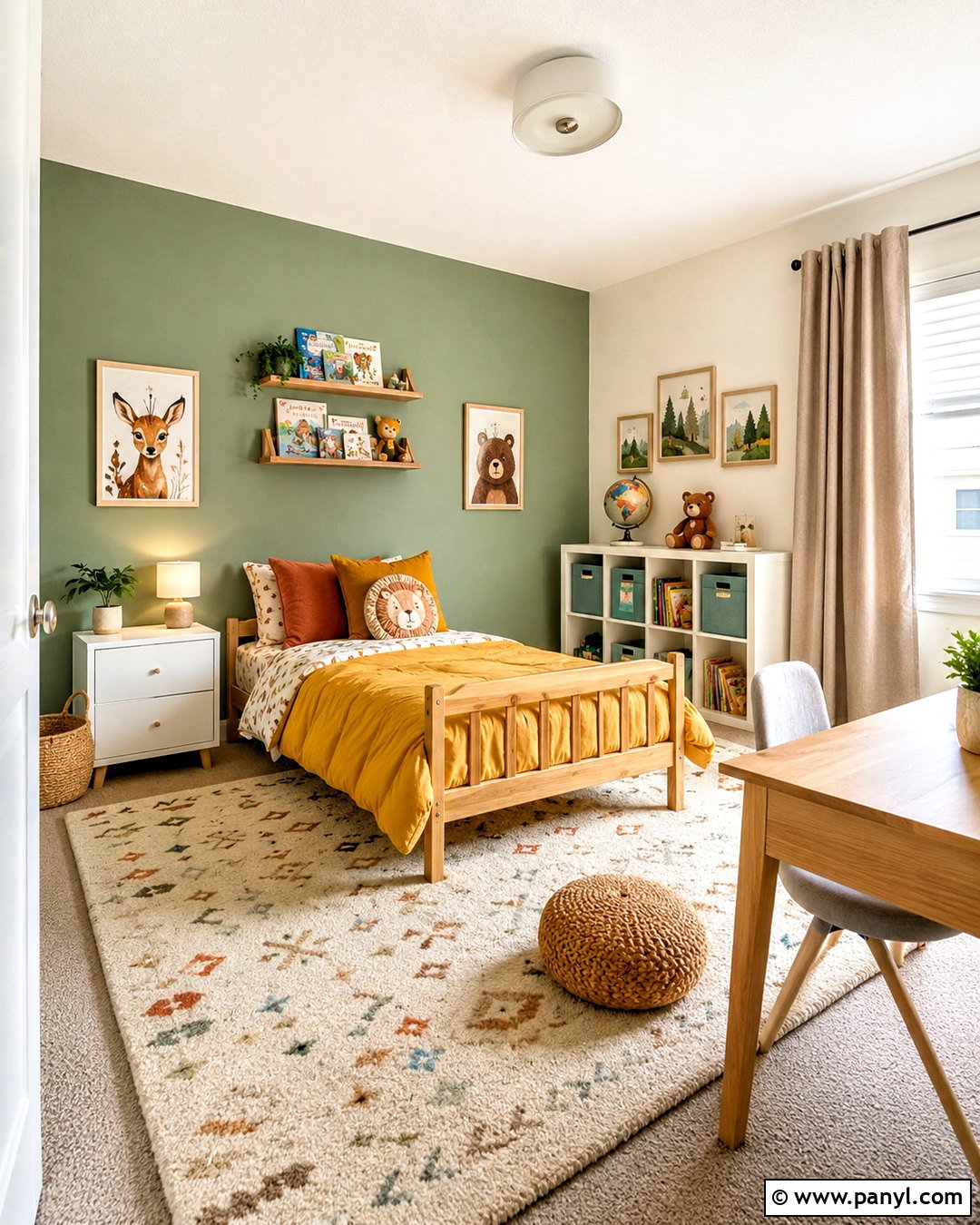
Bring gentle color into a child’s bedroom with a washable sage green accent wall behind the bed. Pair it with a natural wood bed frame, white storage furniture, and a durable cream-and-tan patterned rug. Introduce cheerful color through removable items such as mustard bedding, dusty blue bins, and terracotta-colored cushions. Wall-mounted book ledges keep favorite covers visible and make the accent wall more useful. Add a compact desk in pale oak with a practical task lamp for drawing or homework. Blackout curtains in warm beige help the room function at bedtime without making the design feel heavy. Choose simple animal, nature, or landscape artwork that can remain suitable as the child grows, creating a flexible room that will not require frequent redecorating.
11. Sage Green Nursery Accent Wall
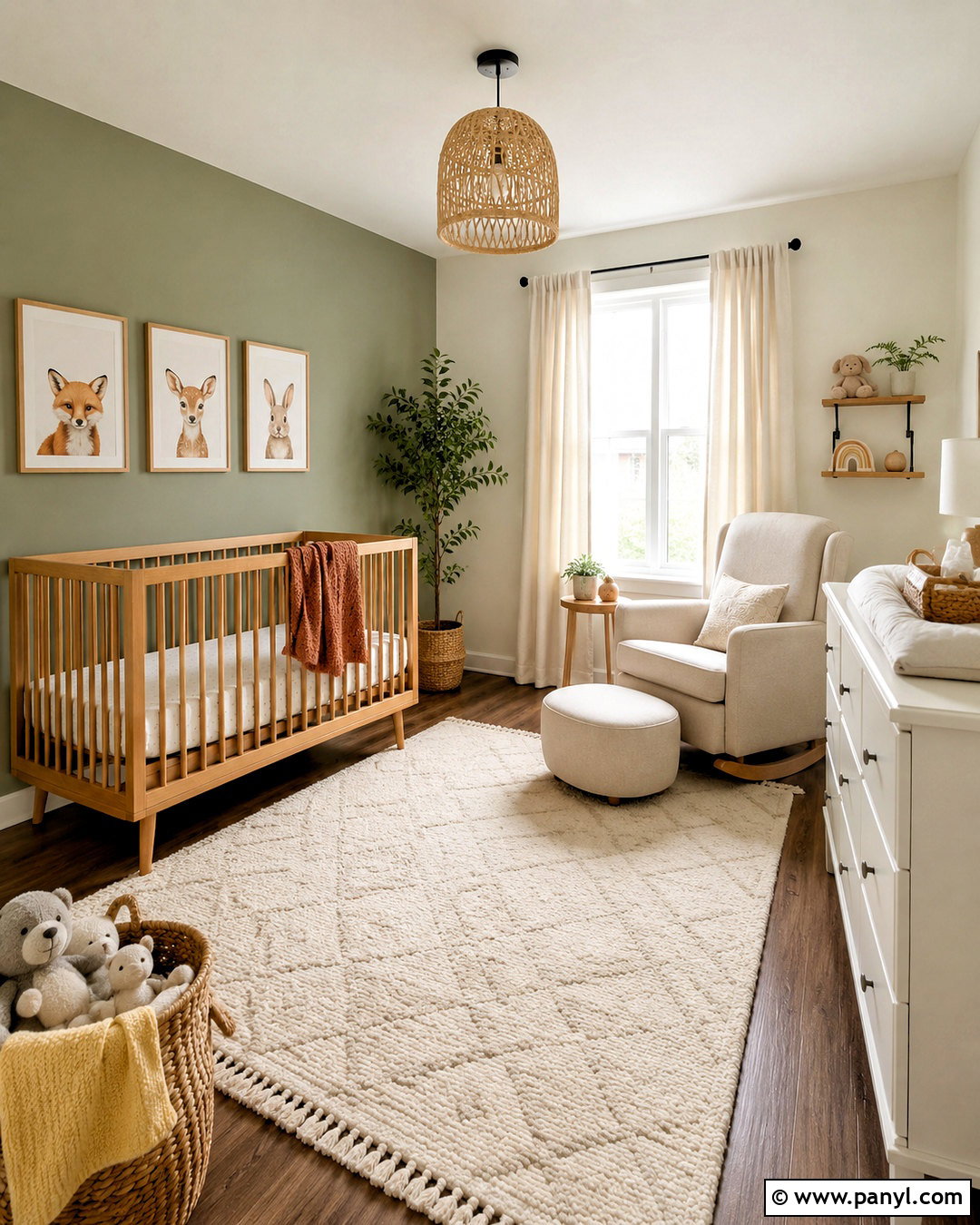
A soft sage green nursery wall provides a flexible foundation that can adapt as the baby grows. Position a light oak or white crib against the painted wall, leaving enough clear space around it for safe access. Add a comfortable oatmeal-colored glider, a washable ivory rug, and a wood dresser that can double as a changing station. Warm white curtains and a woven ceiling shade keep the atmosphere gentle and bright. Use muted accents such as clay, pale yellow, and soft blue in small amounts through storage baskets and textiles. A few framed woodland prints can decorate the wall without creating visual clutter. Keep shelves, cords, and heavy decorative objects away from the crib, allowing the room to remain attractive, practical, and thoughtfully arranged.
12. Sage Green Guest Bedroom Wall
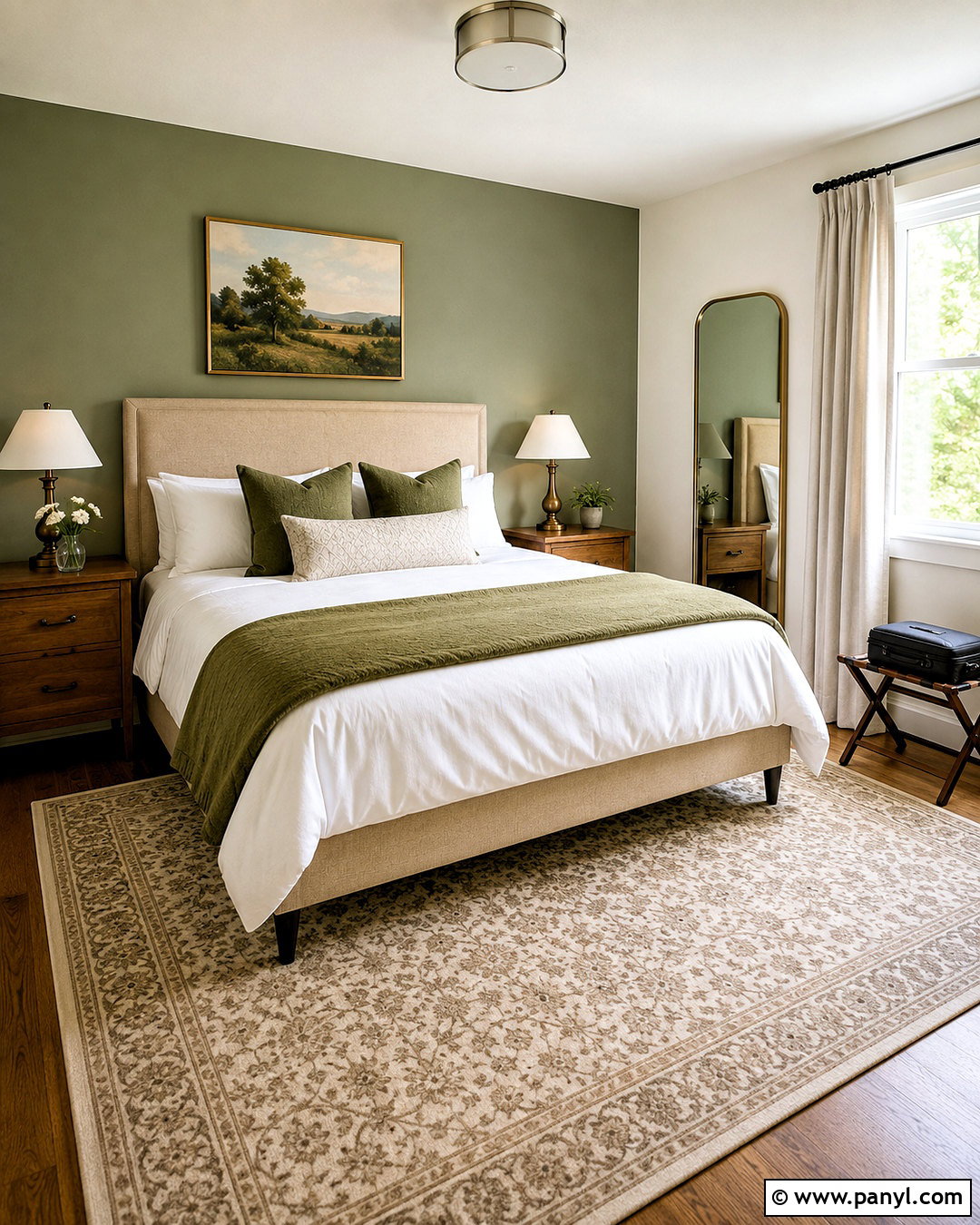
Help a guest room feel warm and carefully prepared with a sage green accent wall behind the bed. Start with an upholstered beige bed or simple black metal frame, then layer fresh white linens with a lightweight olive or camel throw. Place matching wood nightstands on both sides so each guest has a lamp, charging space, and small drawer. A subtle patterned rug can connect the sage wall to the room’s cream, brown, and black details. Hang one calm landscape print over the headboard and add a full-length mirror near the closet. Keep window treatments neutral and easy to operate. A luggage rack, water carafe, and uncluttered dresser complete the room, creating a comfortable retreat that feels personal without being overly decorated.
13. Sage Green Home Office Accent Wall
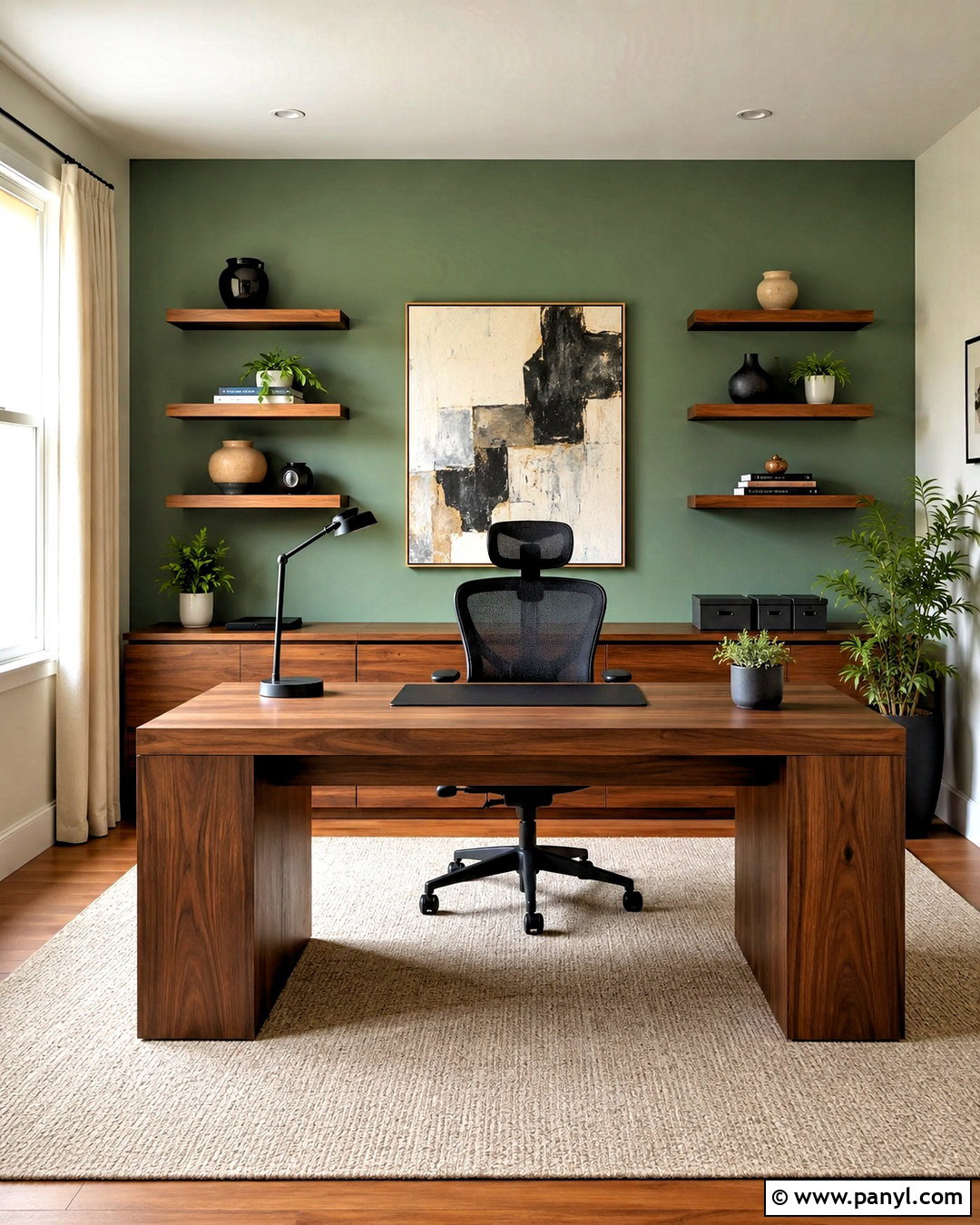
Define a productive workspace with a sage green wall positioned behind the desk. A substantial walnut or medium oak desk creates warm contrast, while a black ergonomic chair and matching task lamp give the room a practical edge. Install simple floating shelves above the work surface for books, storage boxes, and limited decor. Use cream curtains and a light neutral rug to keep the office bright during long work sessions. If the desk faces the room, place a low cabinet against the accent wall to create a polished video-call background. Add one framed abstract print, a ceramic planter, and concealed cable management. The finished office should combine calm color with dependable storage, clear surfaces, and enough contrast to prevent the muted sage palette from feeling sleepy.
14. Sage Green Office Built-In Wall
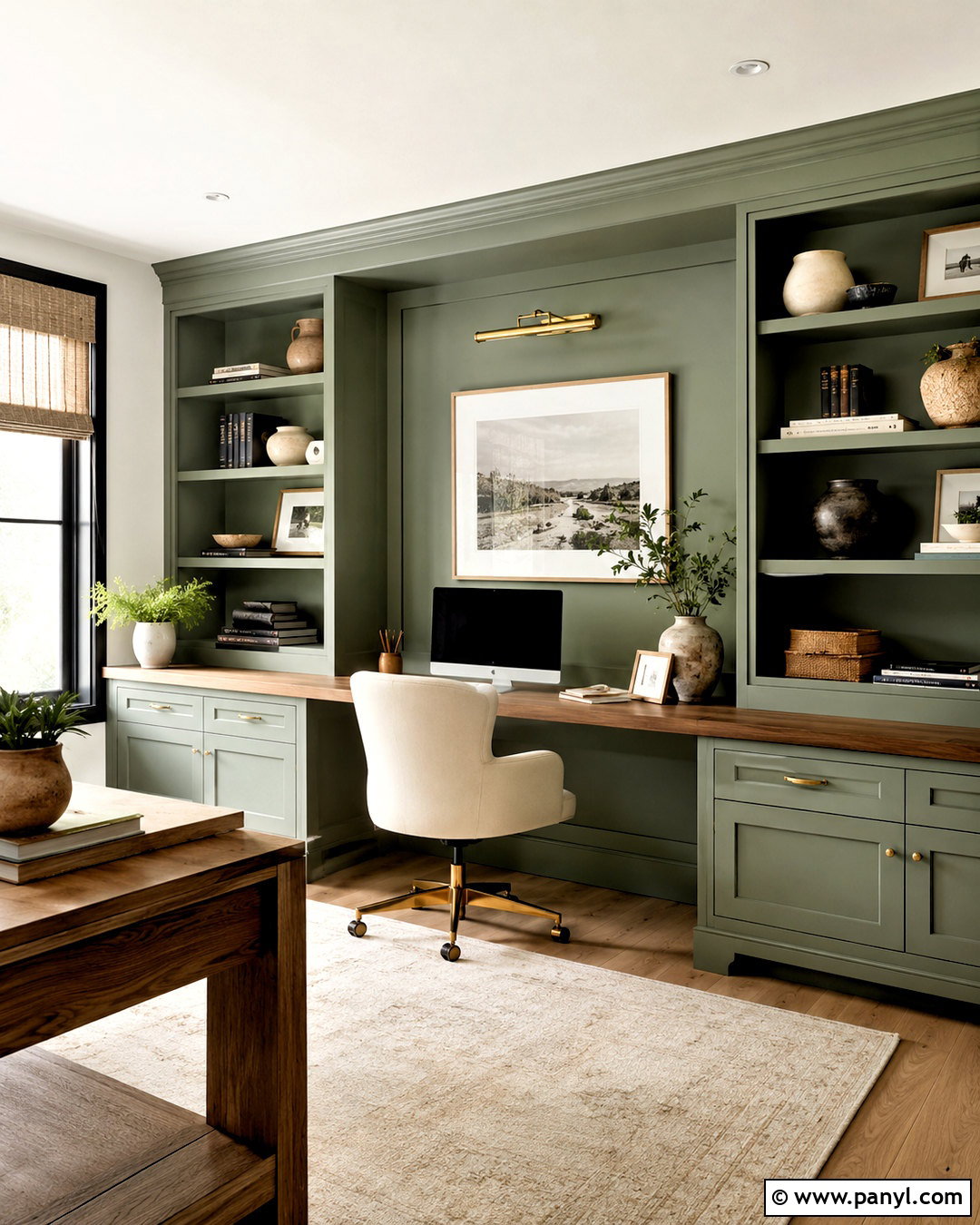
Make a home office feel custom by combining a sage green accent wall with built-in shelves and cabinetry painted in the same color. Use a slightly deeper sage in a satin finish on the millwork so it is durable and easy to clean. Leave selected shelf backs visible to create a continuous, enveloping effect. A warm wood desktop can span the center cabinets, accompanied by a comfortable cream desk chair and brass picture light. Arrange books both vertically and horizontally, leaving open areas for pottery and framed photographs. Pale oak flooring and an ivory rug will balance the concentrated color. Keep the remaining walls warm white. This approach creates a complete work zone with useful storage while transforming an ordinary wall into the room’s main architectural feature.
15. Sage Green Dining Room Accent Wall
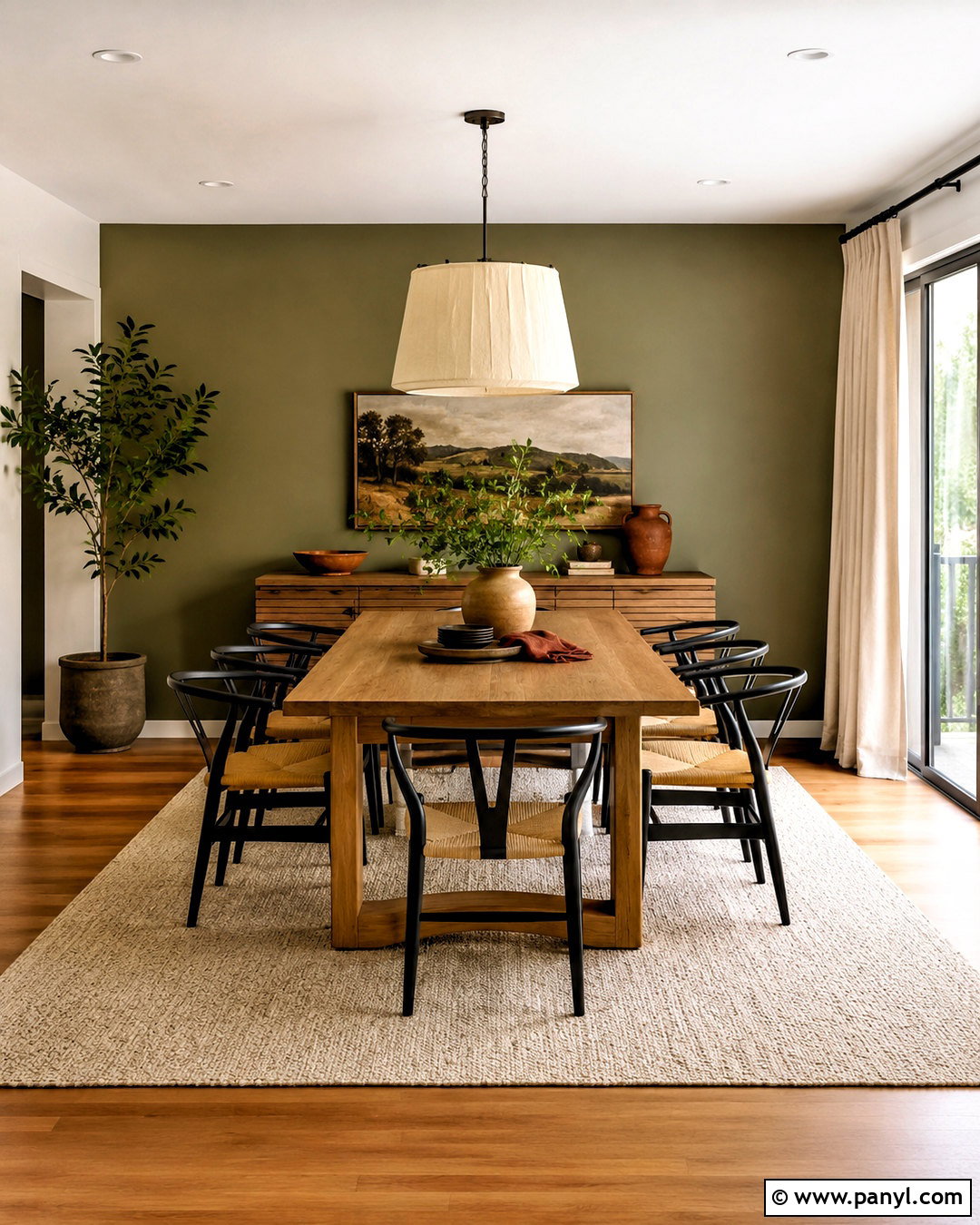
A sage green dining room wall can visually anchor the table and separate the eating area from nearby rooms. Place a long oak dining table parallel to the painted wall, then surround it with woven-seat chairs in black, natural wood, or both. A cream flat-weave rug should be large enough to hold the chairs when pulled out. Hang an oversized landscape or a balanced set of framed prints above a low sideboard. A linen drum pendant or simple black chandelier will center the arrangement. Bring in terracotta through pottery and rust-colored napkins for a warm contrast. Keep the other walls soft ivory and use light curtains, allowing the sage feature to define the dining zone without making family meals feel formal or enclosed.
16. Sage Green Dining Room With Wainscoting
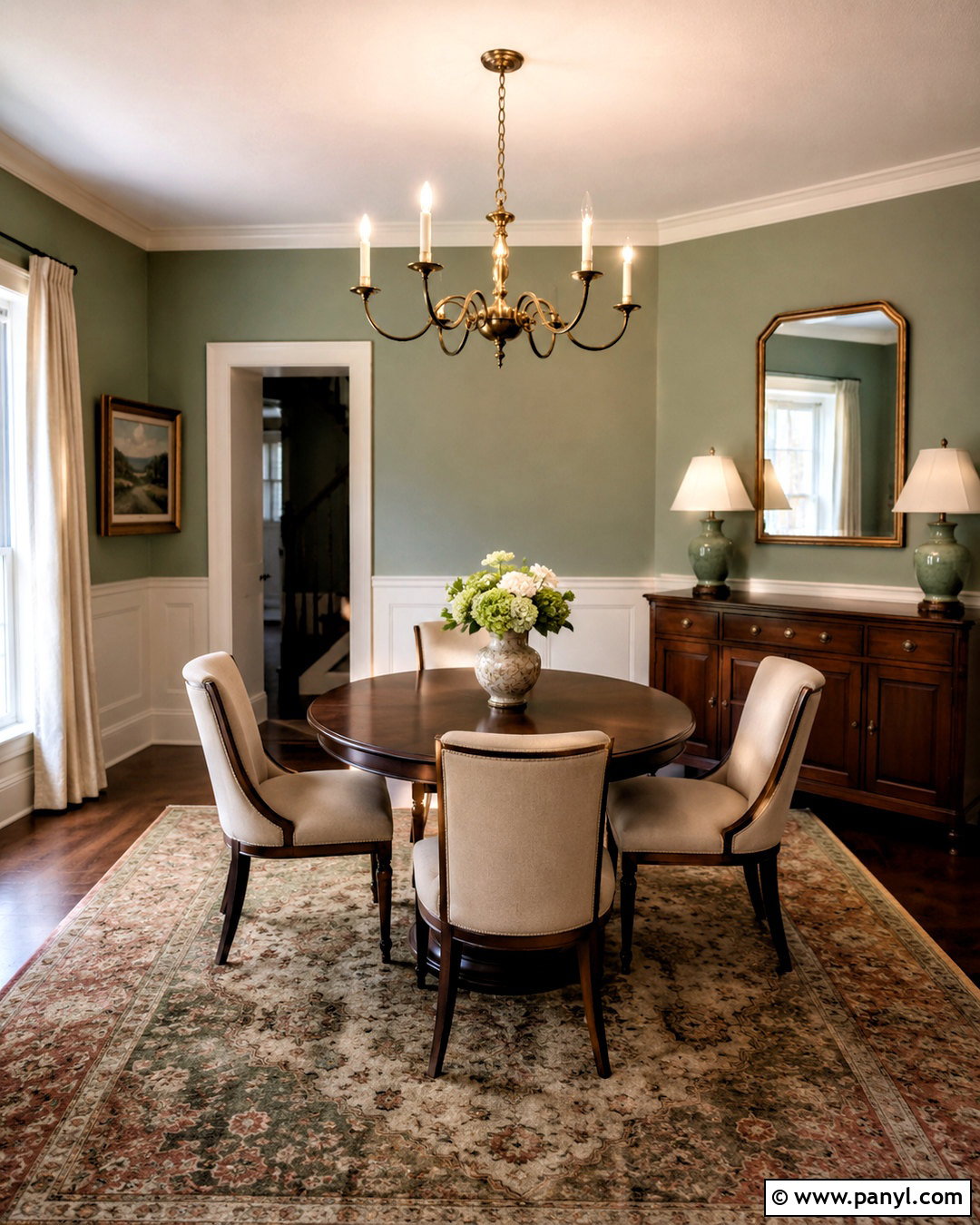
Traditional trim looks fresh when the upper portion of a dining room wall is painted sage green. Install white or warm cream wainscoting across the lower third, then use a midtone sage above it to create balanced contrast. Furnish the room with a round walnut table, upholstered cream chairs, and a vintage-inspired brass chandelier. A faded rug containing muted red, beige, and green will connect the old and new elements. Add a dark wood sideboard topped with ceramic lamps and a simple mirror. The remaining walls can repeat the two-tone treatment for continuity, while one main wall receives artwork as the focal point. This complete scheme suits both formal dining rooms and casual breakfast spaces because it feels structured without becoming stiff or overly ornate.
17. Sage Green Kitchen Accent Wall
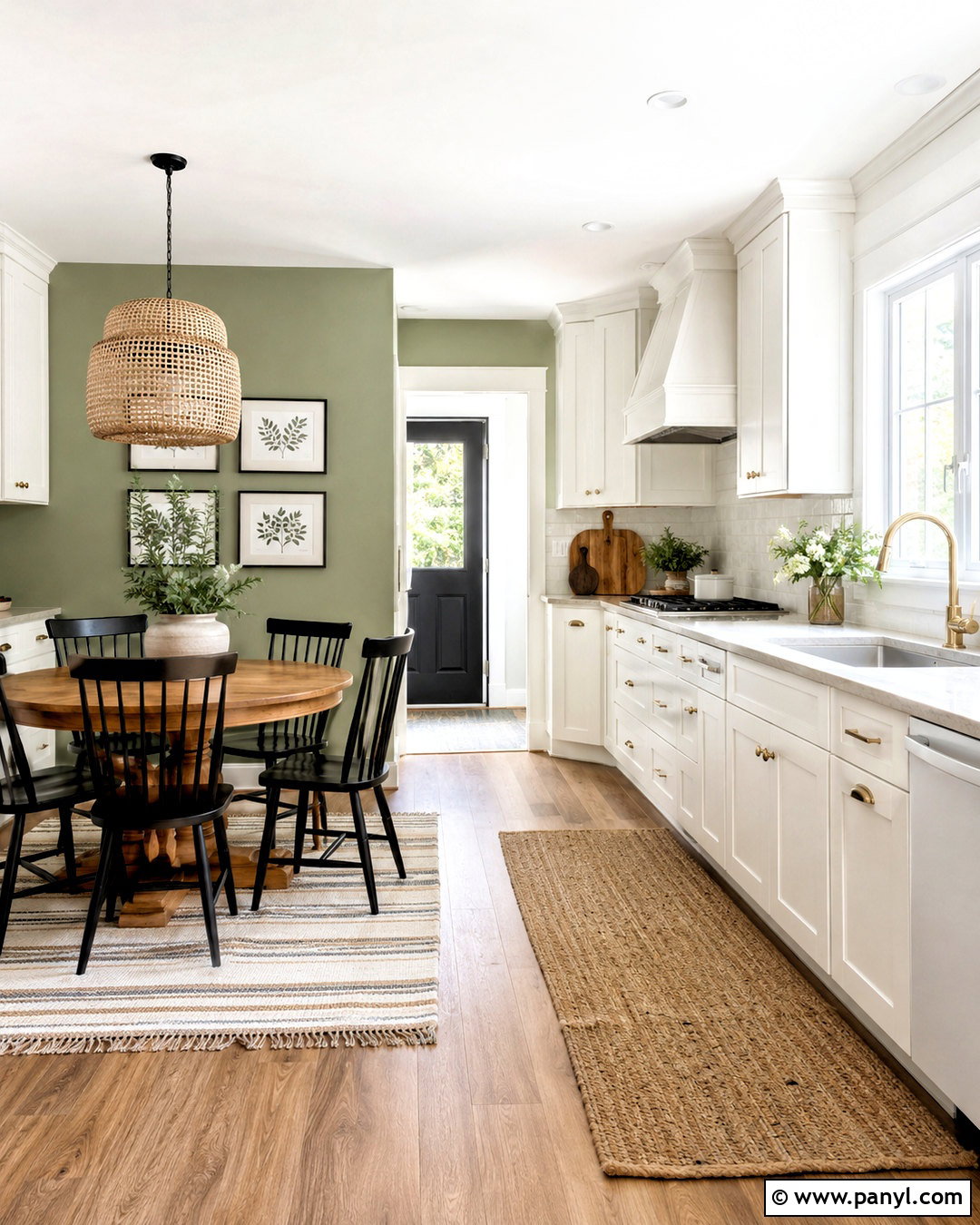
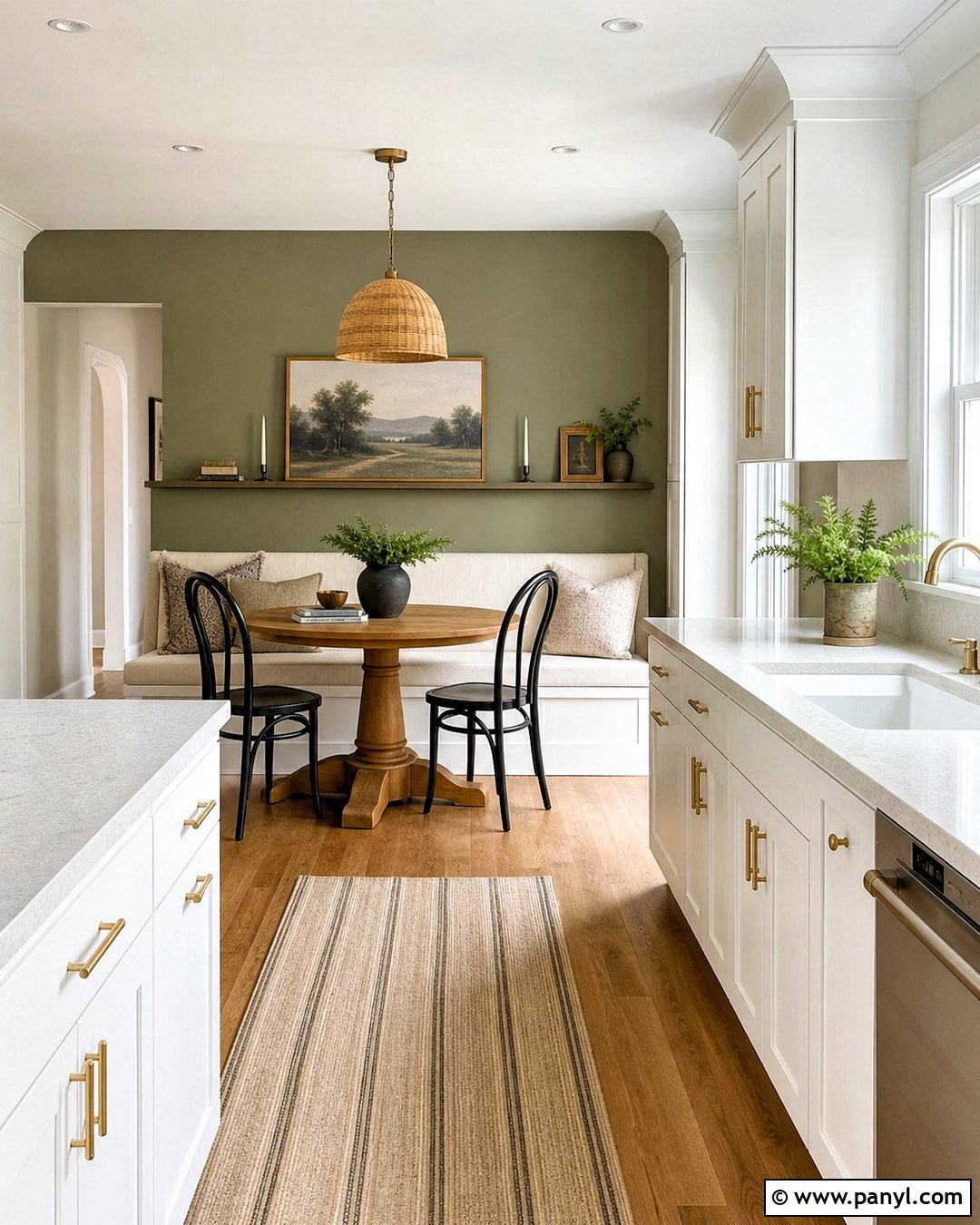
Bring color into a mostly white kitchen by painting the open wall around a breakfast table in sage green. Choose a washable satin or scrubbable matte finish that can handle everyday marks. A round oak table, black spindle chairs, and a woven pendant will create a comfortable dining corner against the colored backdrop. Connect it to the kitchen with sage dishware, natural wood cutting boards, and understated brass or black hardware. Keep cabinets warm white and counters pale so the accent wall does not compete with busy surfaces. A washable striped rug can define the breakfast area, while framed food or botanical artwork adds personality. This solution works especially well when repainting cabinets is impractical but the kitchen still needs a stronger, more complete color story.
18. Sage Green Breakfast Nook Wall
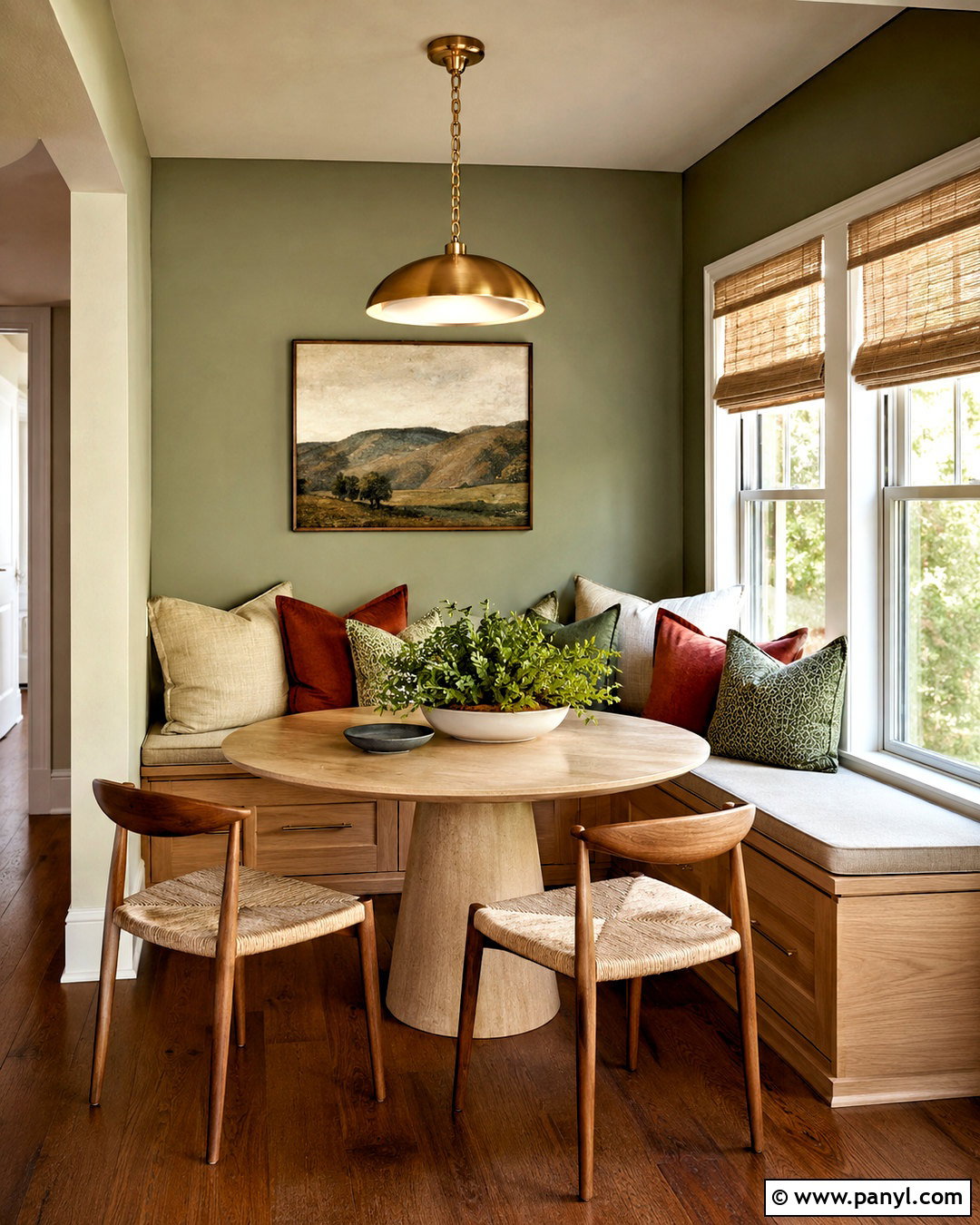
Turn an overlooked corner into a cozy breakfast nook with a sage green accent wall and built-in banquette. Paint the wall a light, warm sage, then use white or pale oak cabinetry beneath the bench for hidden storage. Add an easy-clean oatmeal seat cushion and patterned pillows in cream, rust, and muted green. A pedestal table keeps the floor open, while two lightweight wood chairs provide extra seating. Hang a simple brass pendant directly above the table and place a framed landscape or small gallery arrangement on the wall. Woven shades will filter sunlight without making the corner dark. The completed nook feels connected to nature and offers an organized place for meals, homework, or coffee without requiring a separate formal dining room.
19. Sage Green Coffee Station Wall
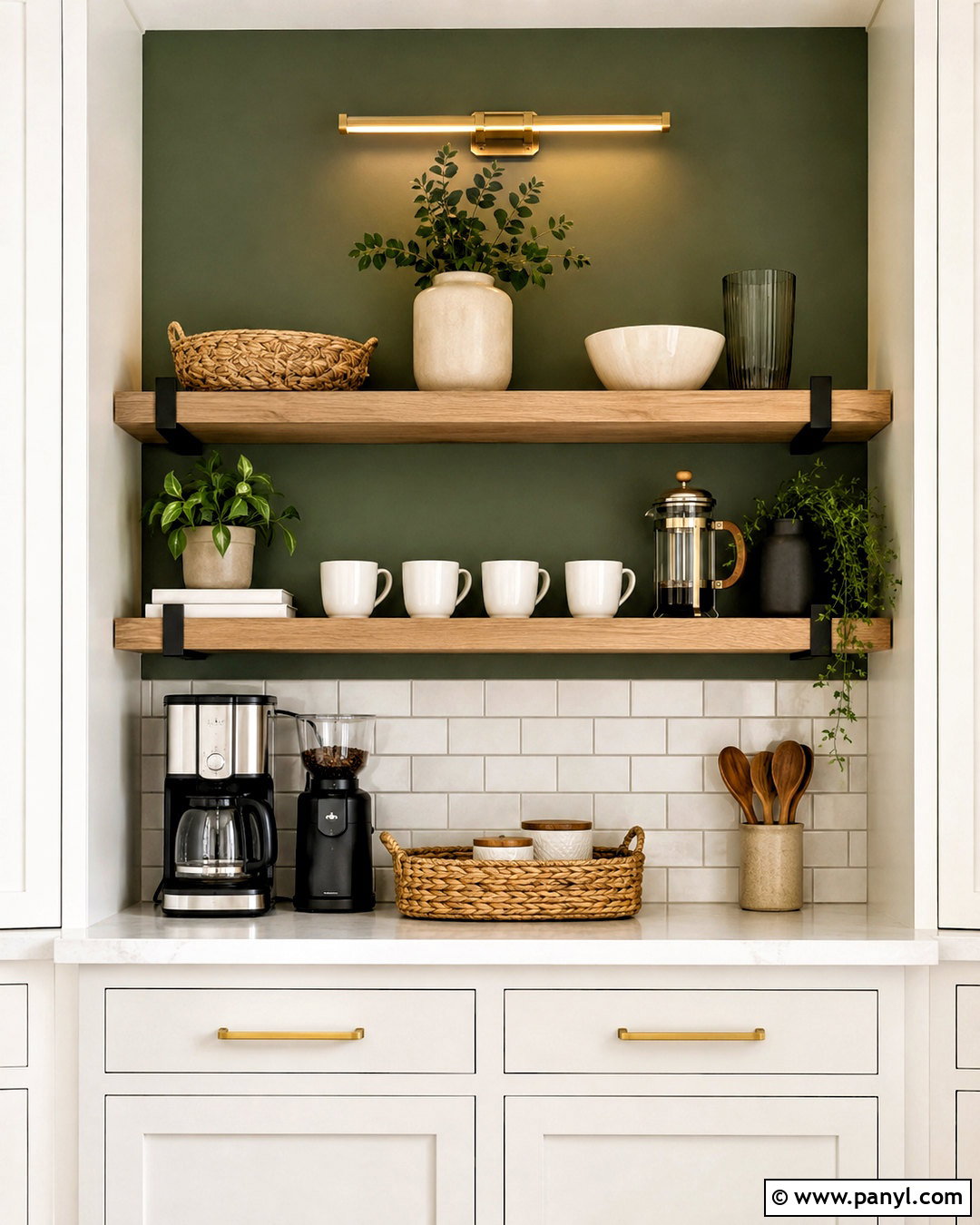
Give a kitchen coffee station its own identity by using sage green on the wall behind a freestanding cabinet or built-in counter. Select a medium sage that contrasts with white mugs and pale countertops. Add white subway tile or a short marble backsplash below open oak shelves, allowing the painted surface to remain visible above. Store small appliances on the counter and group supplies in matching ceramic jars or woven baskets. A narrow brass picture light can illuminate the setup, while matte black shelf brackets add definition. Continue the kitchen’s existing hardware finish so the station looks integrated rather than added later. This compact accent wall creates a complete beverage zone that is attractive, organized, and easy to use during rushed mornings or casual gatherings.
20. Sage Green Bathroom Accent Wall
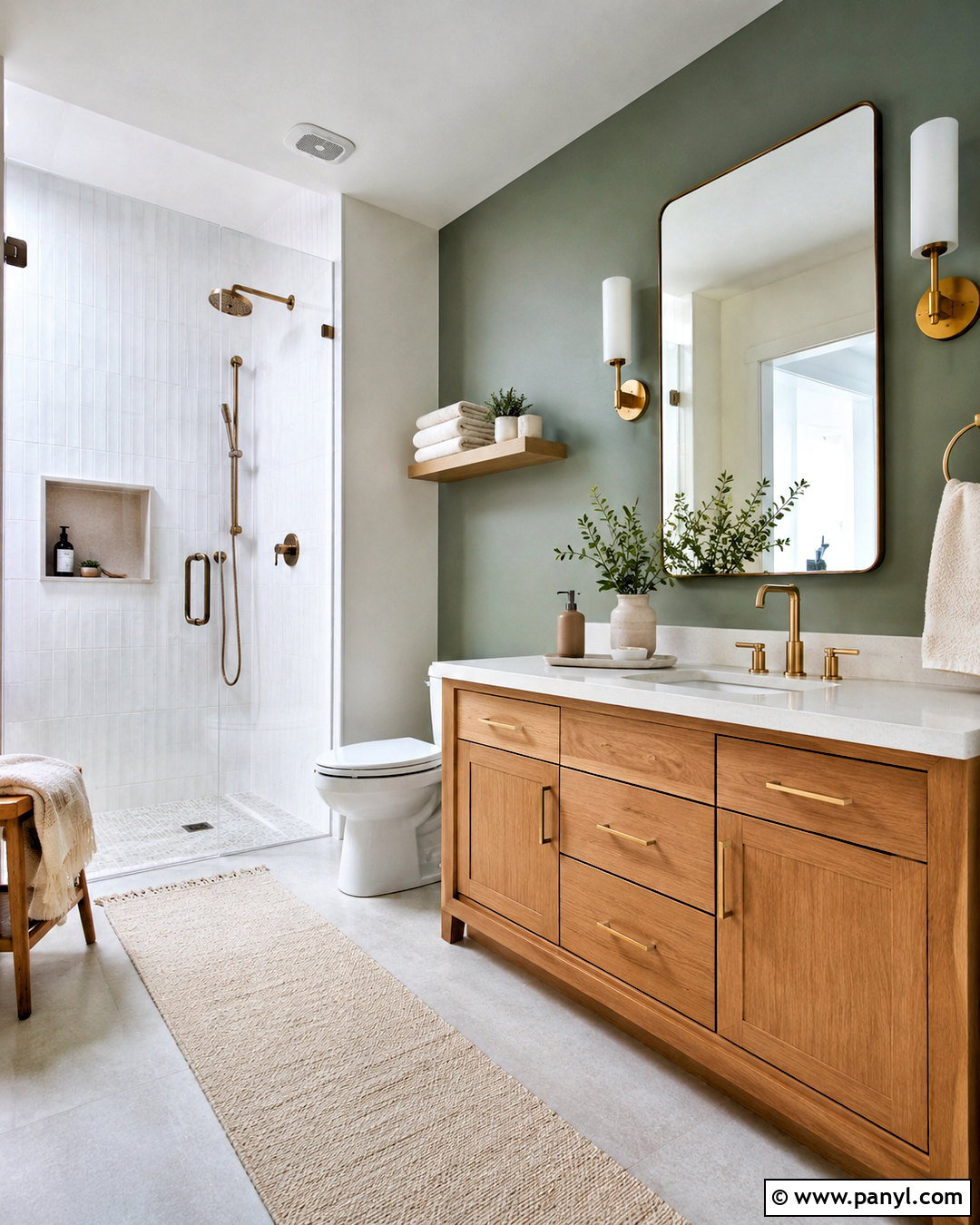
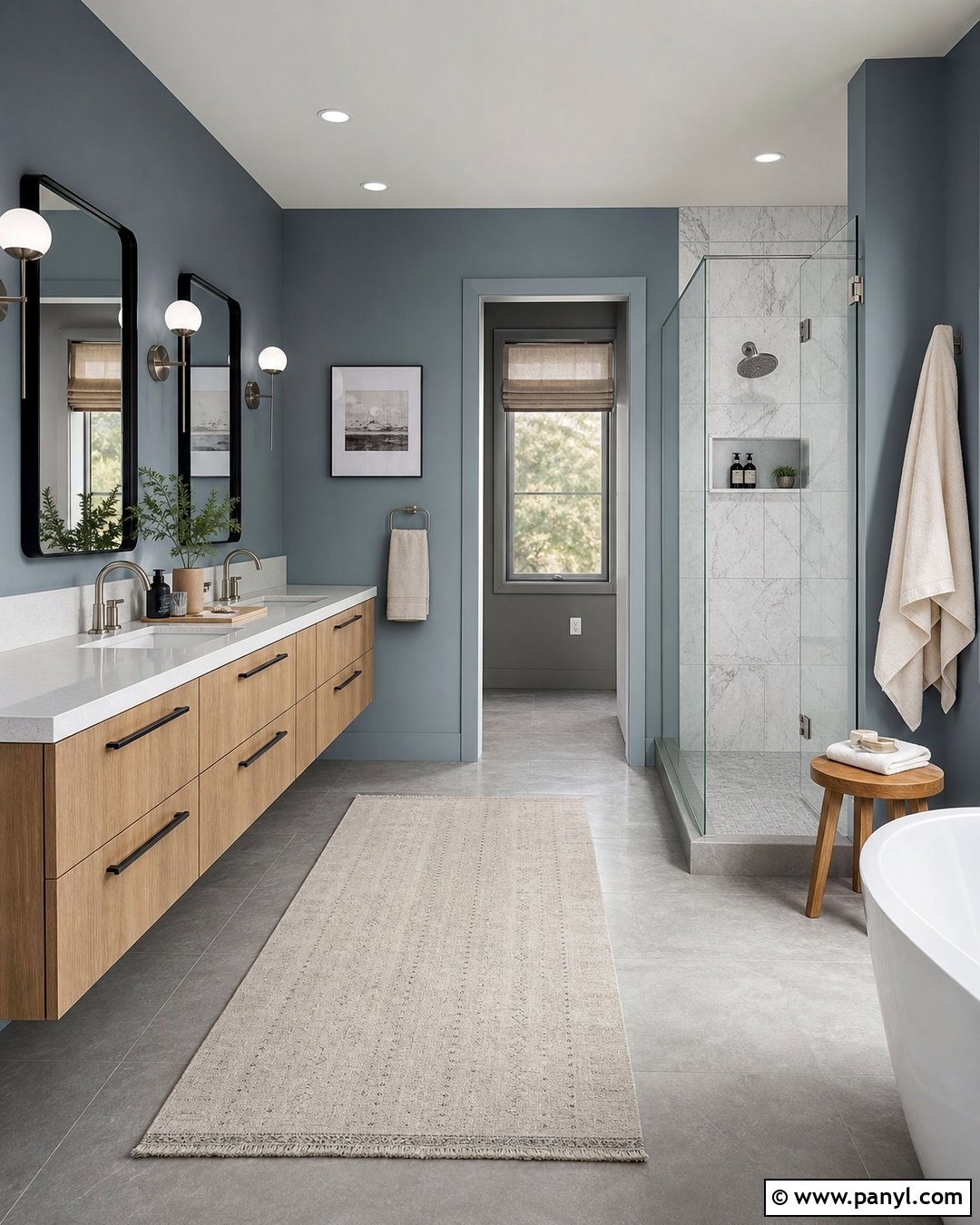
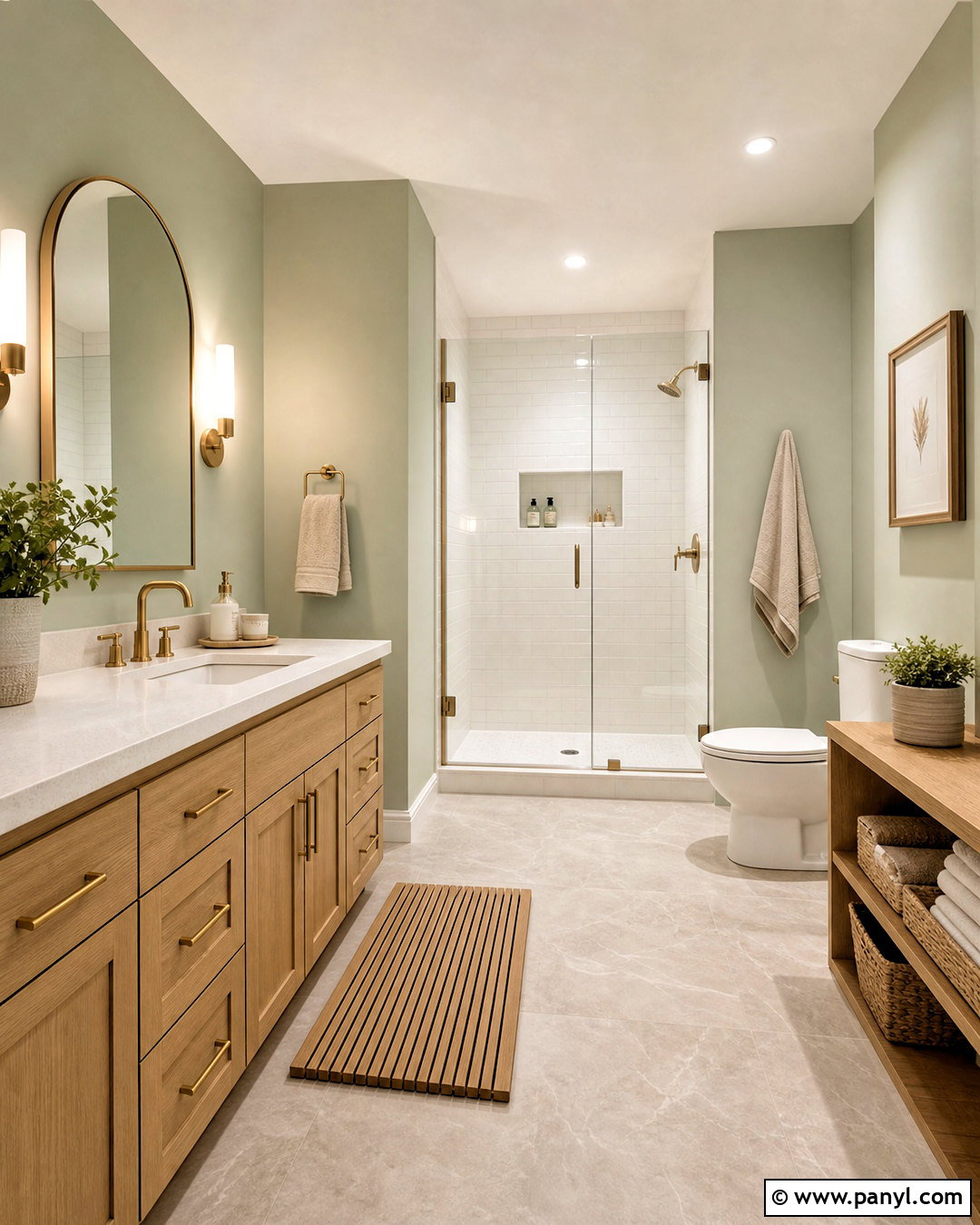
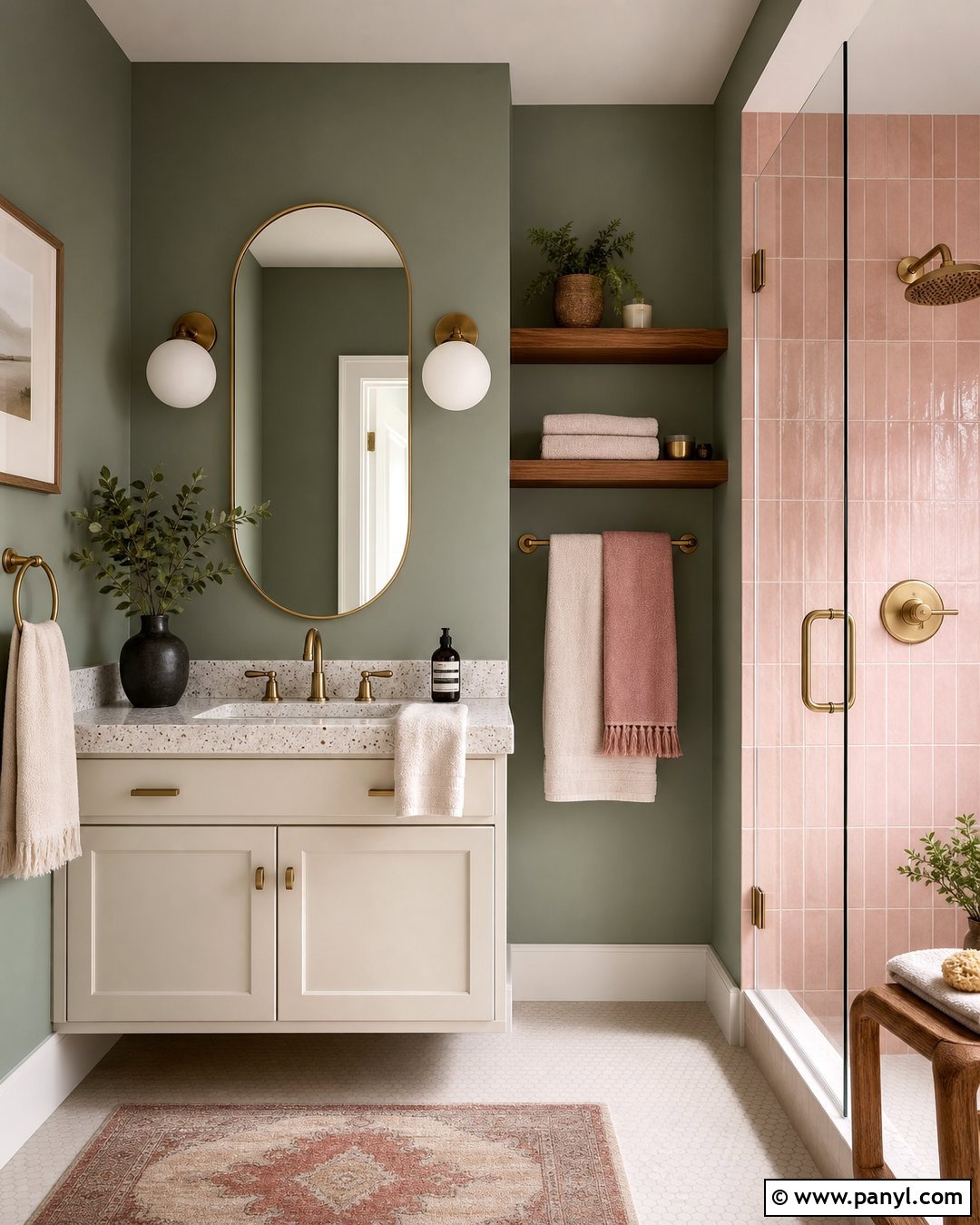
Introduce color to a white bathroom with a sage green wall behind the vanity. Use moisture-resistant paint in a satin finish and pair it with a light oak vanity, white quartz counter, and simple rectangular mirror. Brushed brass faucets and sconces add warmth, while matte black accents can produce a sharper modern look. Keep shower tile white or pale beige so the wall remains the central feature. Add a washable cream runner, natural towels, and one small plant suited to the available light. A wood-framed medicine cabinet or floating shelf can provide practical storage without crowding the wall. The complete bathroom feels fresh and grounded, proving that a modest painted surface can give a functional room a clear, cohesive design direction.
21. Sage Green Wall Behind A Bathtub
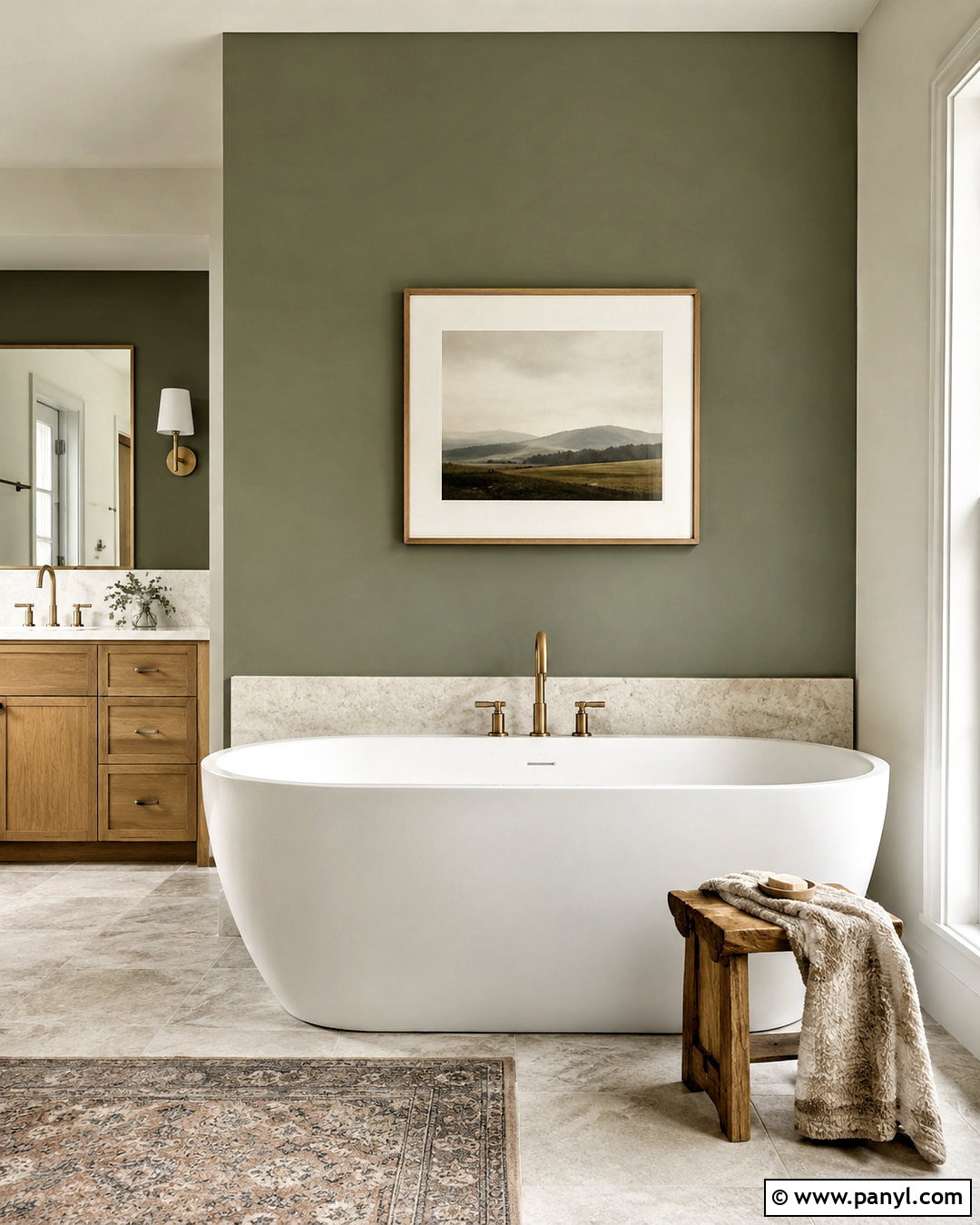
Highlight a freestanding bathtub by painting the wall behind it a calm, mineral-toned sage green. Choose moisture-resistant paint and protect splash-prone areas with a low marble, quartz, or white tile ledge. A white oval tub will stand out crisply, while brushed brass or polished nickel fixtures introduce a refined finish. Place a small wood stool nearby for towels and bathing essentials, then soften the floor with a washable neutral mat. If space allows, hang one moisture-safe framed print high above the tub. Use warm white walls elsewhere and pale stone flooring to keep the bathroom open. The resulting setup feels spa-like but remains realistic for an average home, with every material chosen to support both visual calm and everyday practicality.
22. Sage Green Powder Room Wall
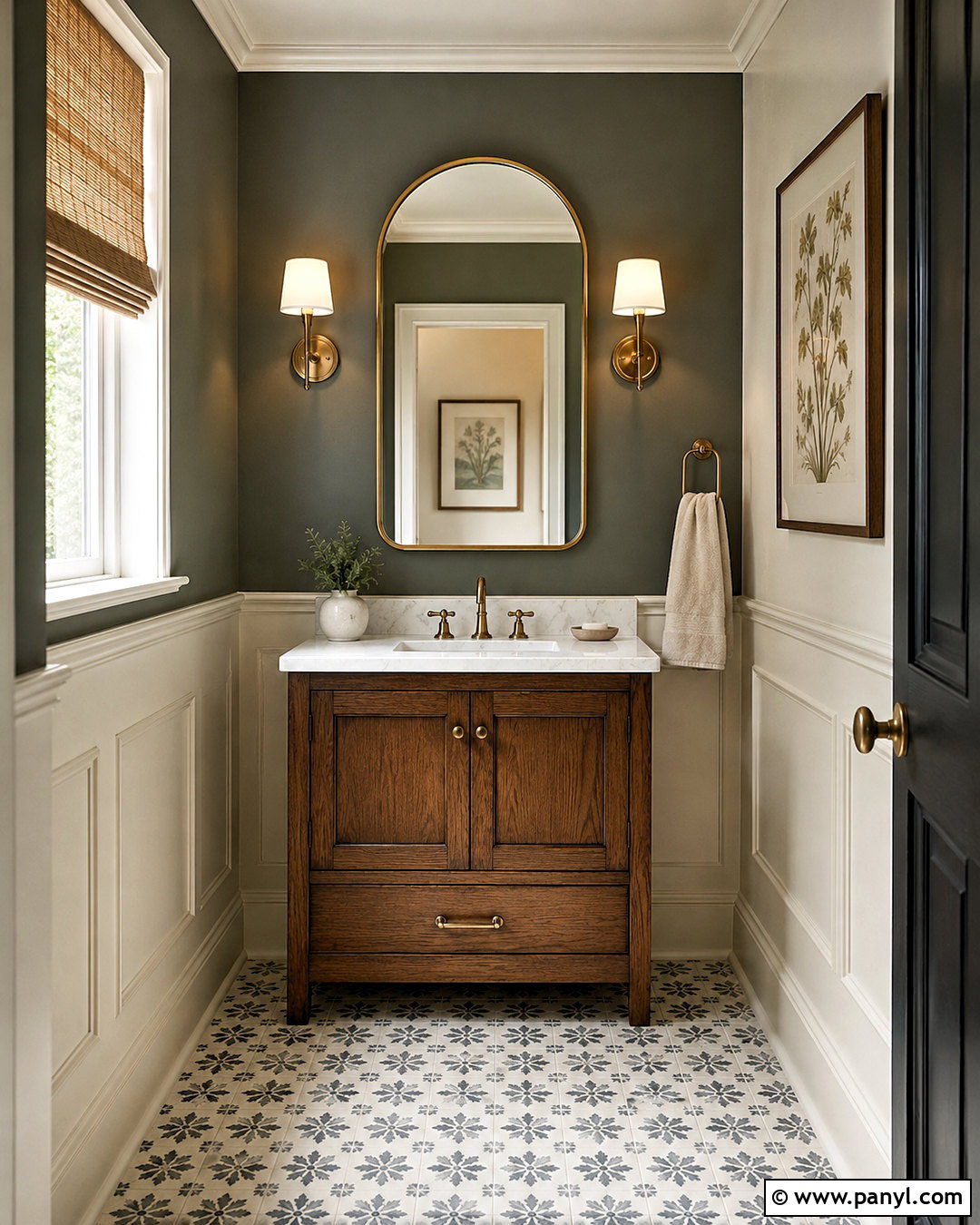
A powder room is an ideal place to use a richer sage green because the small footprint can support more visual impact. Paint the vanity wall a deep gray-sage and keep the remaining surfaces warm white or cover them with narrow cream paneling. Select a compact walnut vanity, a white stone counter, and a rounded brass-framed mirror. Matching sconces will cast even light around the sink, while patterned floor tile introduces personality at a durable surface. Add a framed botanical print and a small ceramic soap dispenser, but leave the counter mostly clear. Painting the door’s interior sage can strengthen the color story. This complete scheme turns a basic half bath into a memorable space without relying on expensive fixtures or a complicated remodeling plan.
23. Sage Green Laundry Room Wall
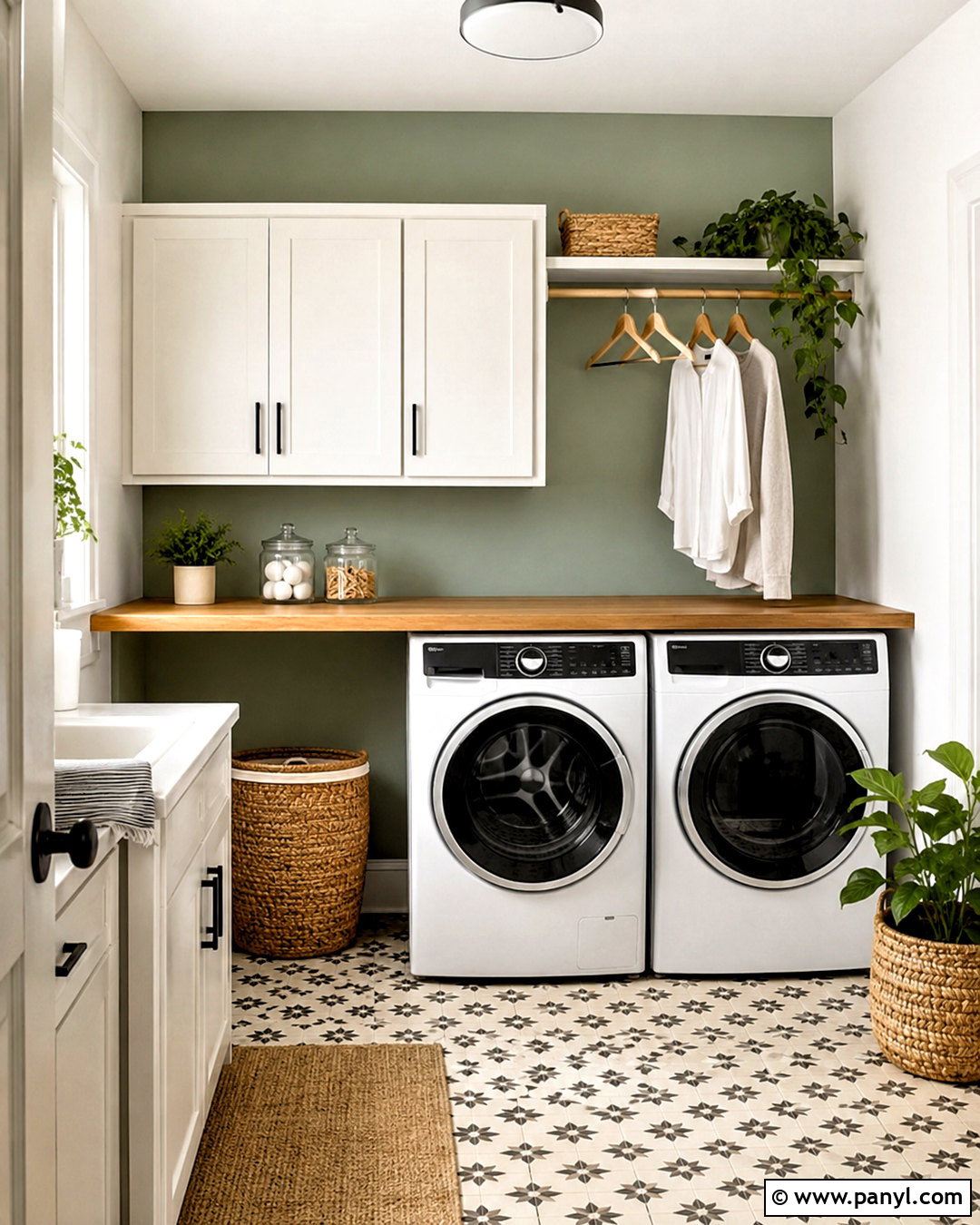
Make laundry tasks feel more organized with a sage green accent wall behind the washer and dryer. Install white or pale oak upper cabinets against the painted surface, leaving a section open for a hanging rail and small shelf. A continuous wood counter above front-loading machines provides valuable folding space and reinforces the natural palette. Use woven baskets, labeled containers, and glass jars to control supplies without overcrowding the room. Black cabinet pulls and a simple flush-mount light introduce crisp contrast. If the floor needs visual interest, choose durable cream-and-charcoal patterned tile. Keep adjacent walls white to maximize brightness. The finished laundry room looks intentional and functional, with the sage backdrop helping appliances and storage elements read as one coordinated work area.
24. Sage Green Mudroom Accent Wall
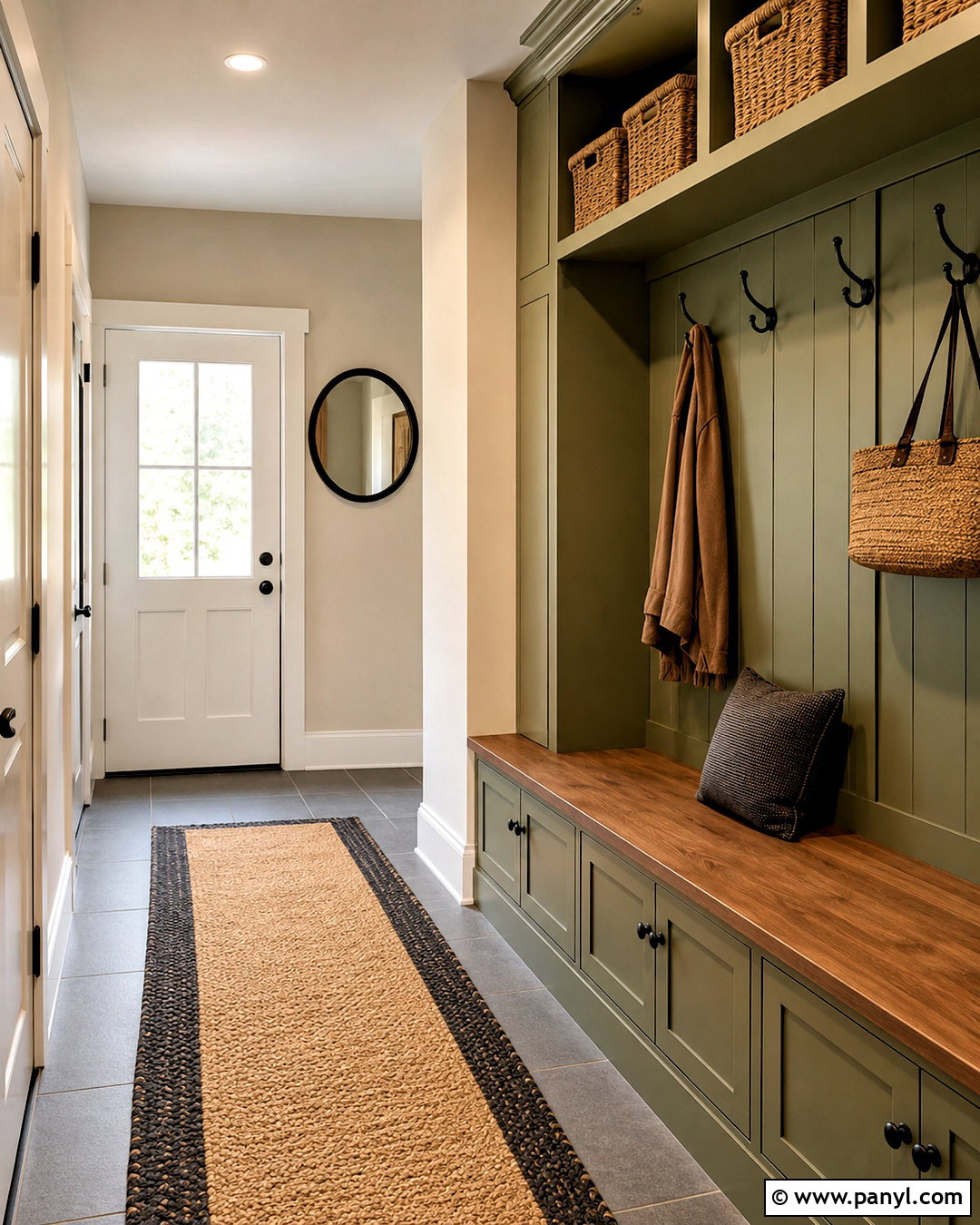
A sage green mudroom wall can disguise minor scuffs while giving the entry a welcoming sense of order. Paint the wall and a row of simple cubbies in the same durable satin sage finish. Add a natural wood bench, black coat hooks, and closed baskets for shoes, hats, and seasonal accessories. A washable runner in tan and charcoal will handle foot traffic while connecting the wood and metal finishes. Install an overhead shelf for less frequently used items and leave enough open space below each hook for coats and bags. Warm white surrounding walls will keep the compact area bright. Complete the look with a small mirror and sturdy ceiling fixture, creating an attractive drop zone that supports everyday routines rather than becoming another cluttered hallway.
25. Sage Green Entryway Accent Wall
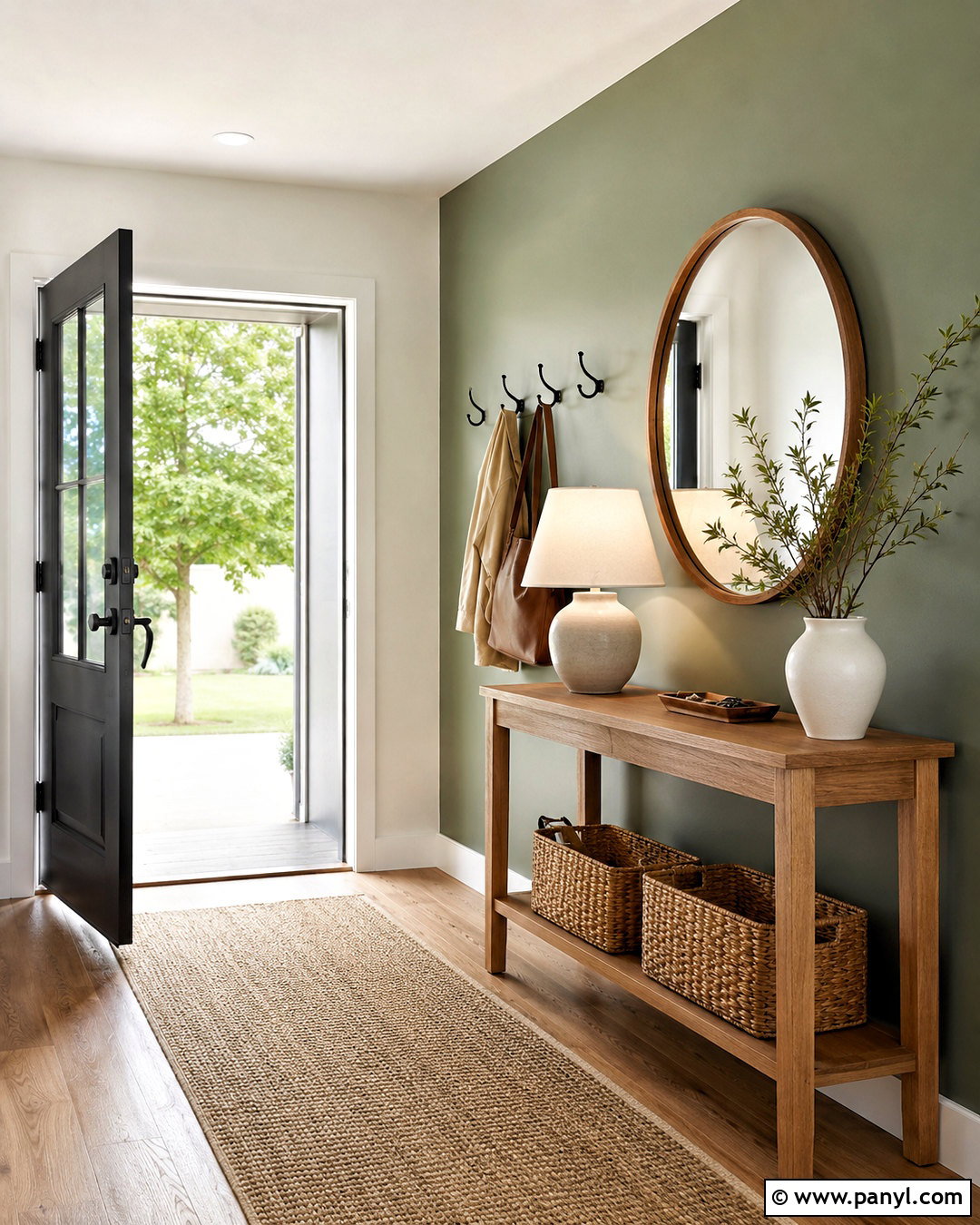
Set a calm first impression with a sage green accent wall behind an entryway console. Choose a balanced midtone sage that remains visible in both daylight and evening light. Place a slim oak or black console against it, leaving enough clearance for comfortable movement. A large round mirror will reflect light and make a narrow entry feel wider, while a ceramic lamp provides a welcoming glow. Ground the arrangement with a durable neutral runner and tuck woven baskets underneath for shoes or accessories. Add a small tray for keys and one branch-filled vase rather than covering the surface with decor. Black or brass wall hooks near the door can provide practical storage. The finished entry feels polished, uncluttered, and connected to the rest of the home.
26. Sage Green Hallway Accent Wall
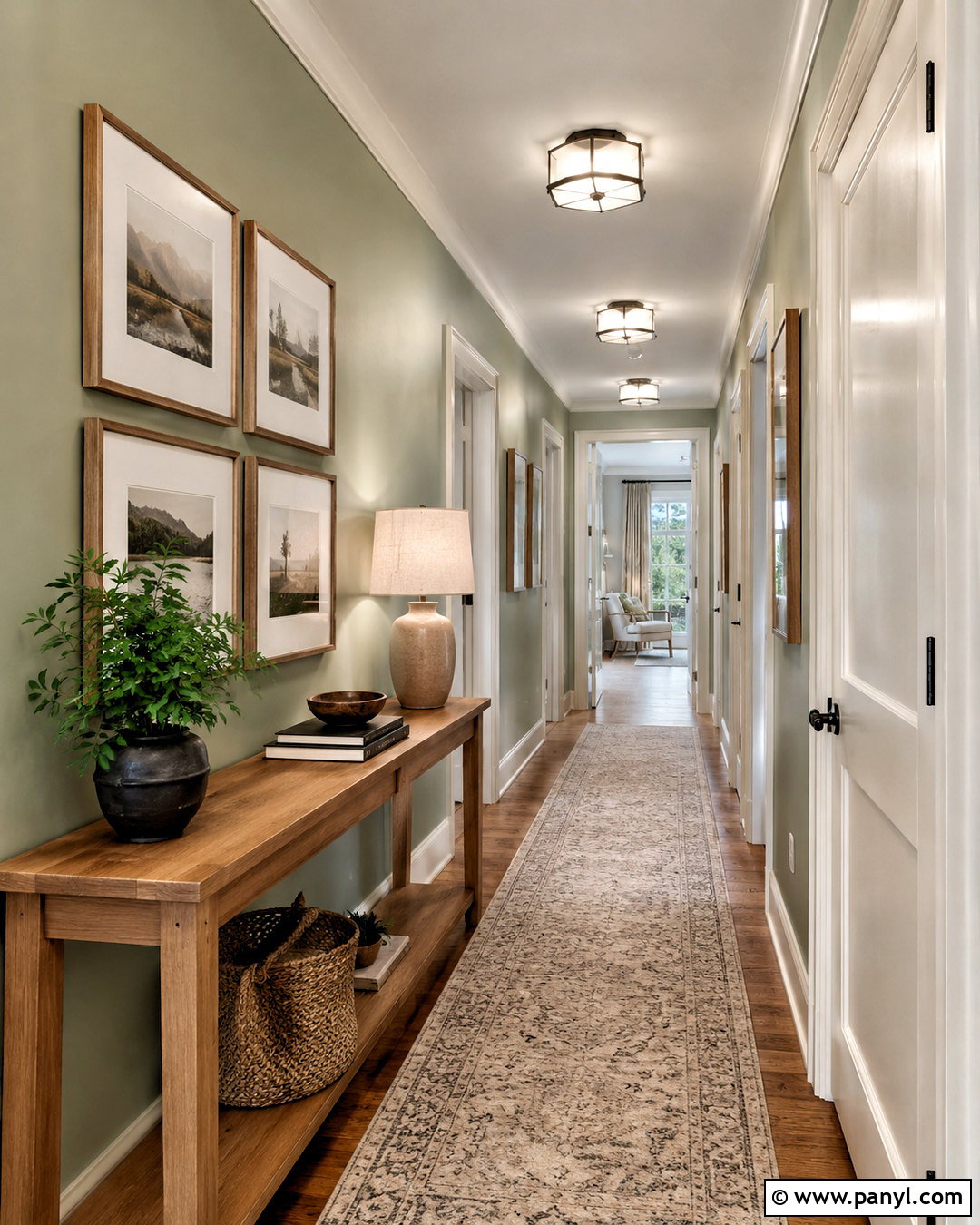
Use sage green to give a long hallway more purpose without painting every surface. Select the wall at the far end or the longest uninterrupted side, depending on which view needs emphasis. A lighter sage keeps a narrow passage from feeling enclosed. Add a slim console, a series of evenly spaced black-and-white photographs, and a neutral runner with a subtle linear pattern. Warm wood frames can soften the scheme, while black frames create stronger definition. Keep doors, trim, and the opposite wall creamy white to reflect light. If the hallway lacks windows, use bright ceiling fixtures with warm-neutral bulbs. This complete treatment transforms a plain circulation area into a deliberate transition space while preserving clear walkways and avoiding bulky furniture or excessive decoration.
27. Sage Green Staircase Accent Wall
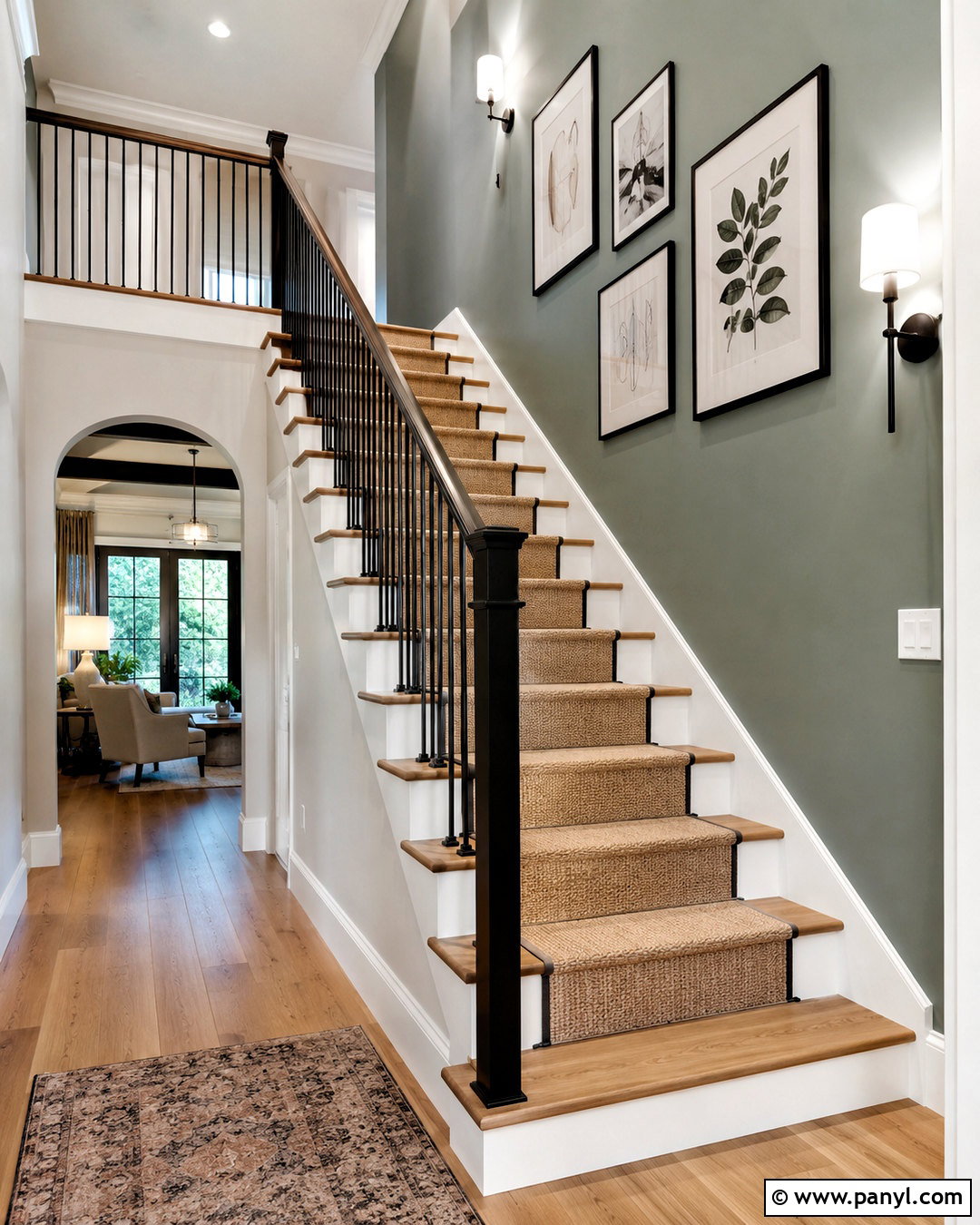
A tall staircase wall becomes a dramatic feature when covered in muted sage green. Extend the color from the lower landing to the upper hallway so the architectural surface reads as one continuous element. Pair it with white risers, natural oak treads, and a simple black railing for clean contrast. Arrange framed artwork in a controlled grid or gently rising formation that follows the stairs. Use cream, charcoal, faded rust, and botanical imagery to connect the display with the paint. A woven runner can add safety and texture without hiding the wood completely. Bright wall sconces placed at regular intervals will prevent the green from looking shadowy. The completed staircase feels layered and finished while linking the home’s lower and upper levels through one coherent palette.
28. Sage Green Reading Nook Wall
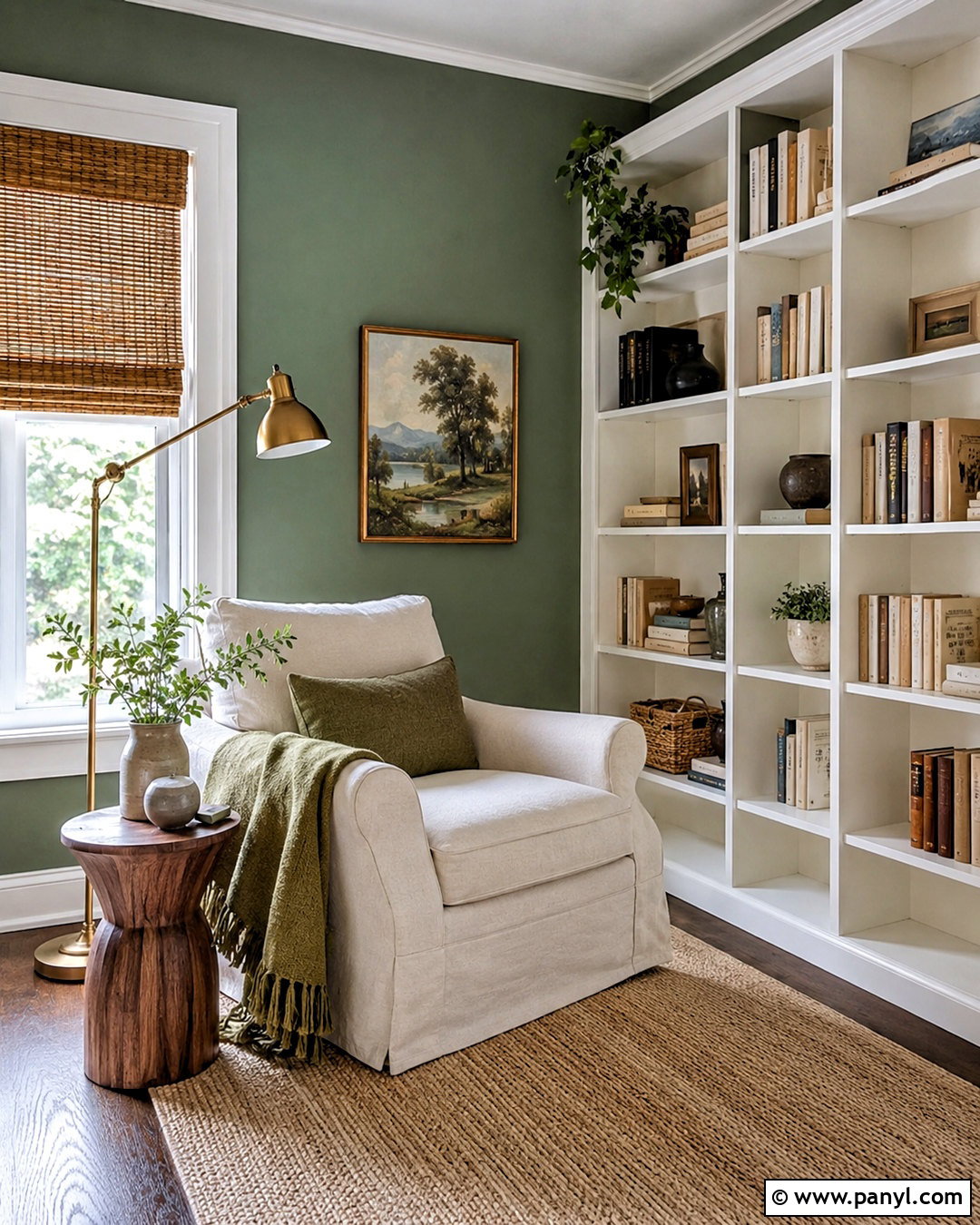
Define a quiet reading corner with a sage green accent wall and furniture selected for genuine comfort. Place a deep cream armchair near the wall, accompanied by a small walnut table and adjustable brass floor lamp. A compact bookcase painted warm white will keep the space bright while allowing colorful book spines to add personality. Layer a soft beige rug and an olive or rust throw for warmth underfoot and across the chair. One framed landscape or textile artwork can fill the wall without creating distraction. If the nook is near a window, add linen curtains or a woven shade to soften glare. The completed corner should feel connected to the larger room yet distinct enough to encourage reading, resting, and screen-free downtime.
29. Sage Green Library Accent Wall
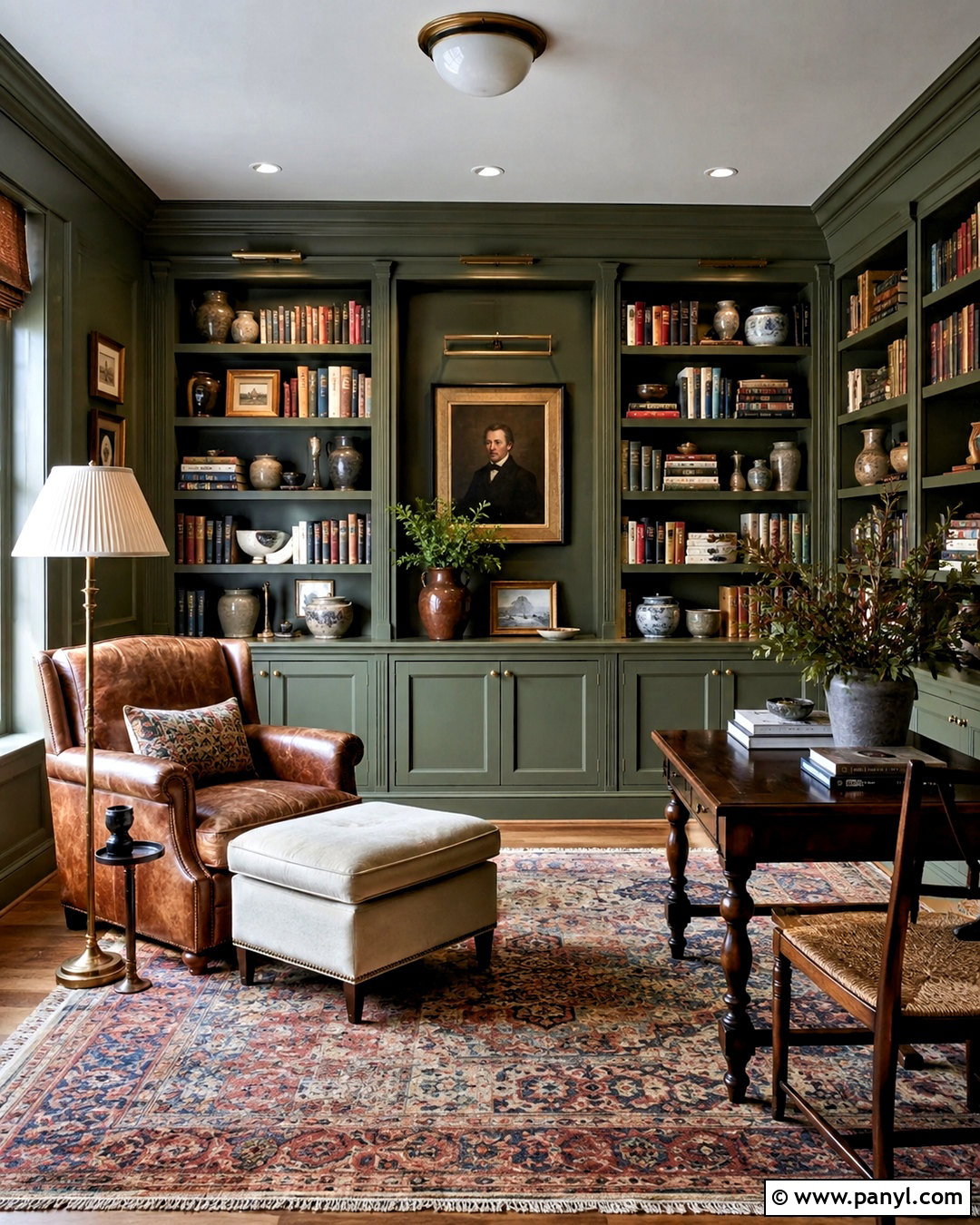
Give a home library greater depth by painting the main shelving wall a dark sage green. Apply the same color to built-in bookcases for a seamless effect, using a satin finish on shelves and a matte finish on visible wall areas. Arrange books across the shelves while leaving breathing room for stoneware, framed art, and small boxes. Position a cognac leather chair and a cream ottoman nearby, then add a traditional floor lamp for focused reading. Walnut furniture and a faded Persian-style rug will enrich the earthy palette. Keep the ceiling and adjacent walls light to balance the concentrated color. The completed library feels substantial and inviting, with practical storage, layered materials, and enough contrast to keep the sage millwork from becoming visually heavy.
30. Sage Green Sunroom Accent Wall
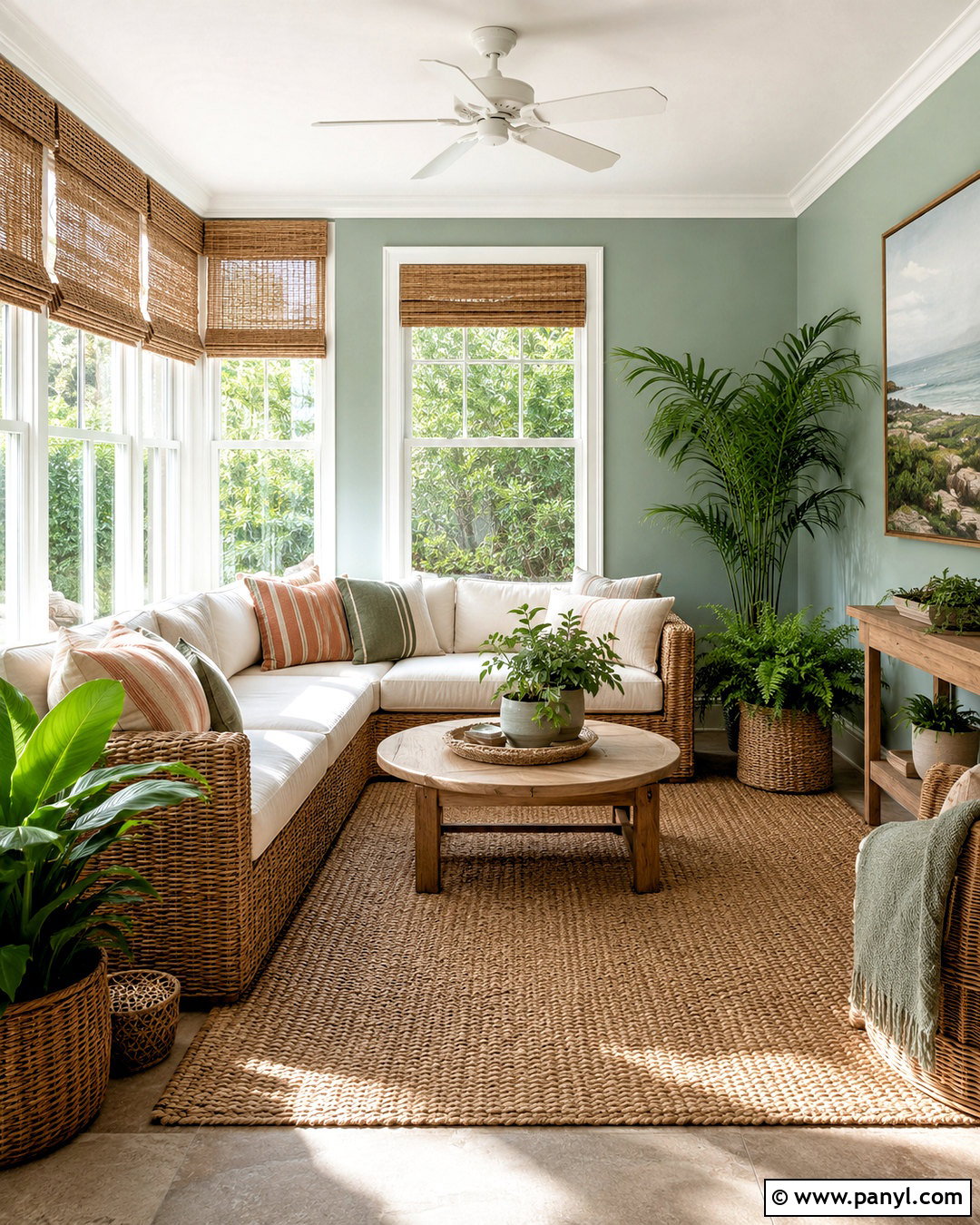
A sage green wall can connect a bright sunroom to its outdoor view without turning the space into a botanical theme. Paint the least windowed wall and position a woven rattan sofa or light wood daybed against it. Use thick cream cushions with striped green, tan, and terracotta pillows for comfortable seating. A natural fiber rug and round oak coffee table add texture while preserving the airy atmosphere. Group plants in a few intentional locations instead of filling every surface. Linen shades will control glare, and a white ceiling fan can keep the room visually light. Add one large landscape print to the accent wall. The finished sunroom feels fresh, casual, and usable throughout the day, with the sage color supporting rather than competing with the garden outside.
31. Sage Green Boho Accent Wall
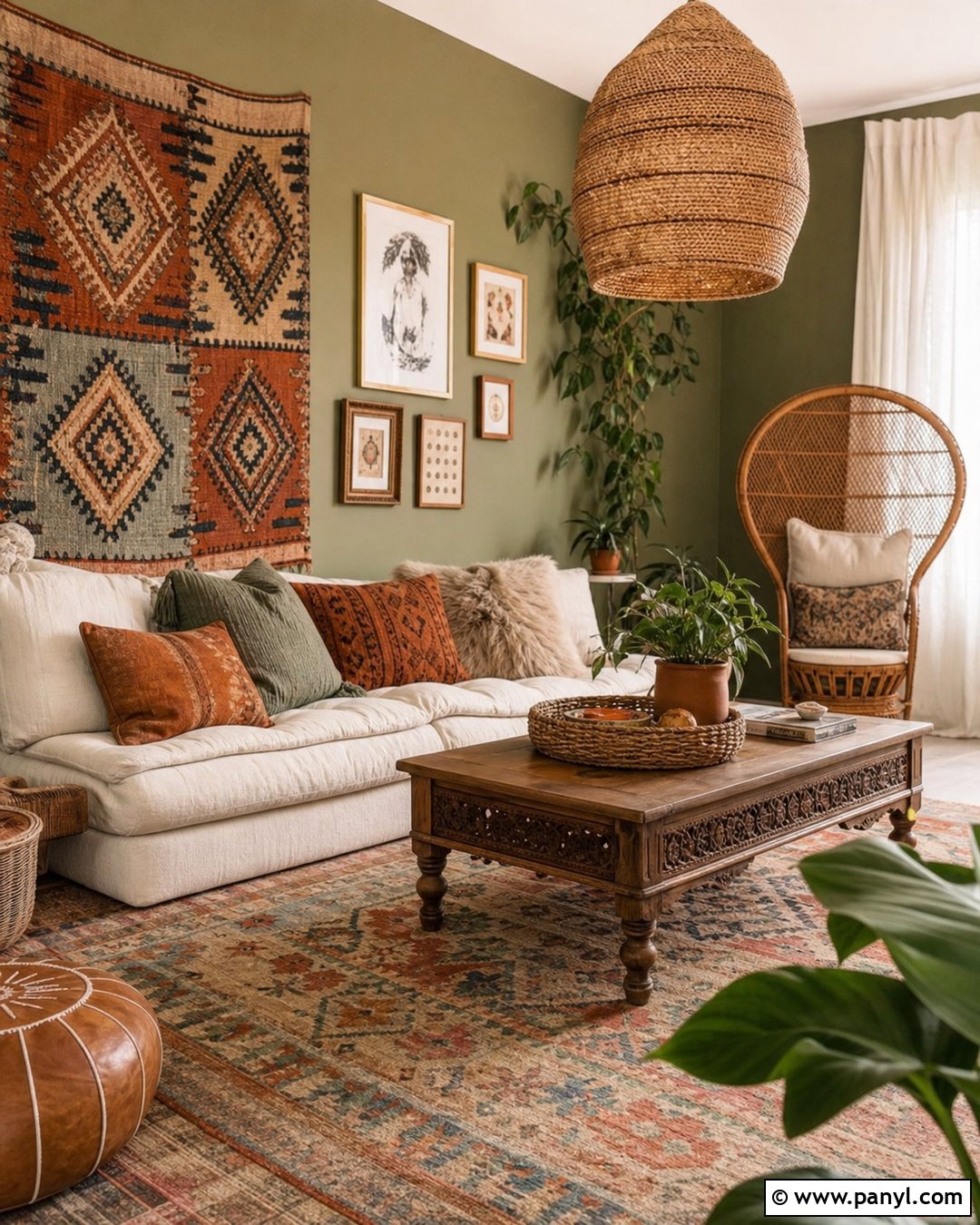
Build a relaxed bohemian room around a dusty sage green accent wall, but keep the mix of patterns controlled. Start with a low cream sofa or upholstered bed, then layer a vintage-inspired rug featuring rust, faded blue, beige, and green. Add a carved wood table, woven pendant, and a pair of rattan or cane accents. Wall decor can include one textile hanging, a small group of framed prints, and trailing plants arranged at different heights. Choose off-white curtains and warm wood flooring to maintain a bright foundation. Avoid covering every inch with accessories; open space allows the individual textures to stand out. This complete approach delivers the collected character associated with boho interiors while preserving the calm, grounded quality of the sage wall.
32. Sage Green Modern Farmhouse Wall
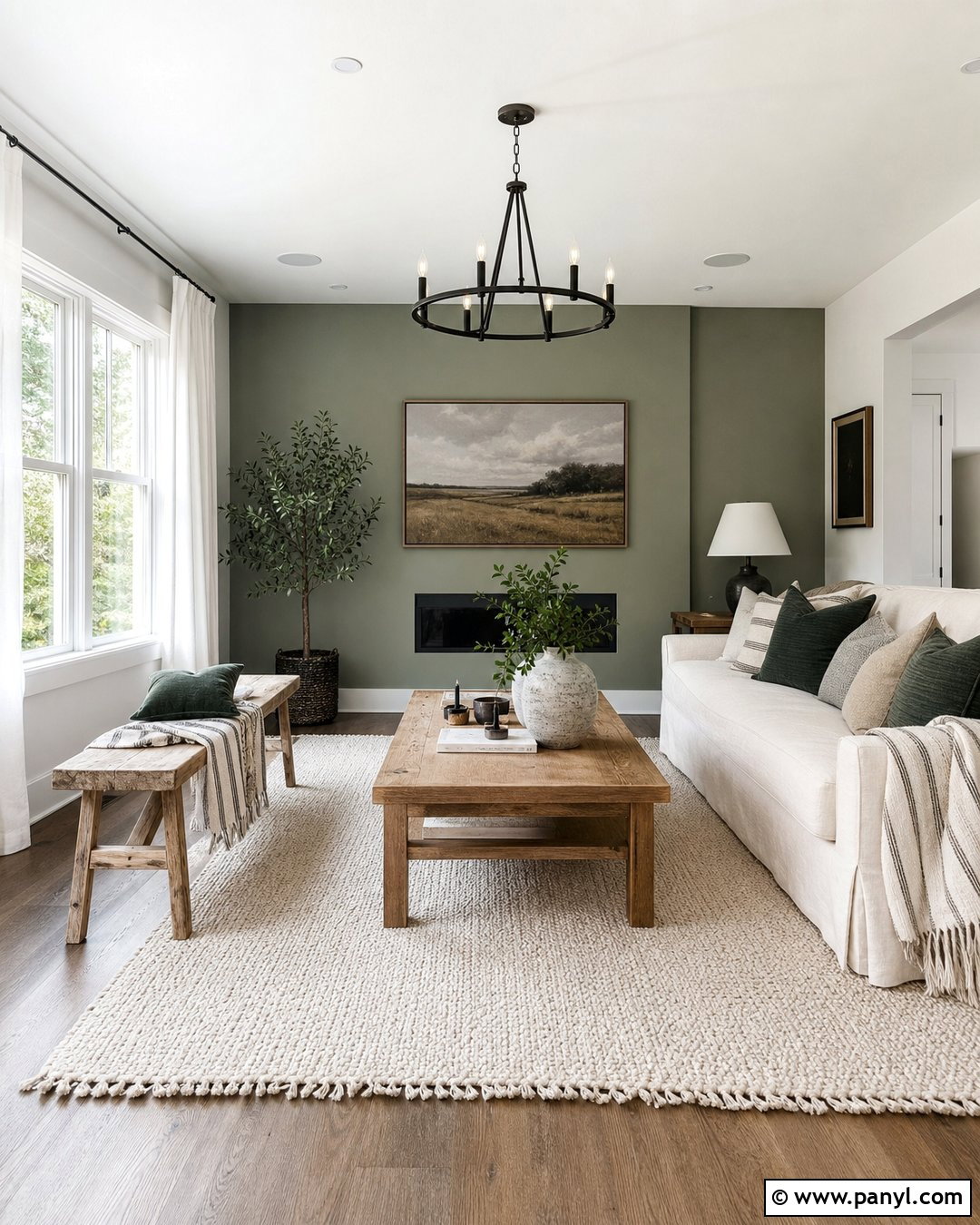
For a cleaner modern farmhouse room, pair a sage green accent wall with straightforward shapes and restrained rustic details. Use the color behind a cream slipcovered sofa or simple wood bed. Add an oak coffee table, black metal lighting, and a large ivory rug with subtle texture. A single oversized landscape in a thin wood frame will feel more current than multiple decorative signs. Include one vintage piece, such as a weathered bench or small chest, to give the room history without making it look staged. Warm white walls and cotton curtains will balance the green and keep the palette approachable. Finish with a few striped textiles and handmade ceramic pieces. The resulting space feels relaxed, practical, and updated rather than heavily themed.
33. Sage Green Midcentury Modern Wall
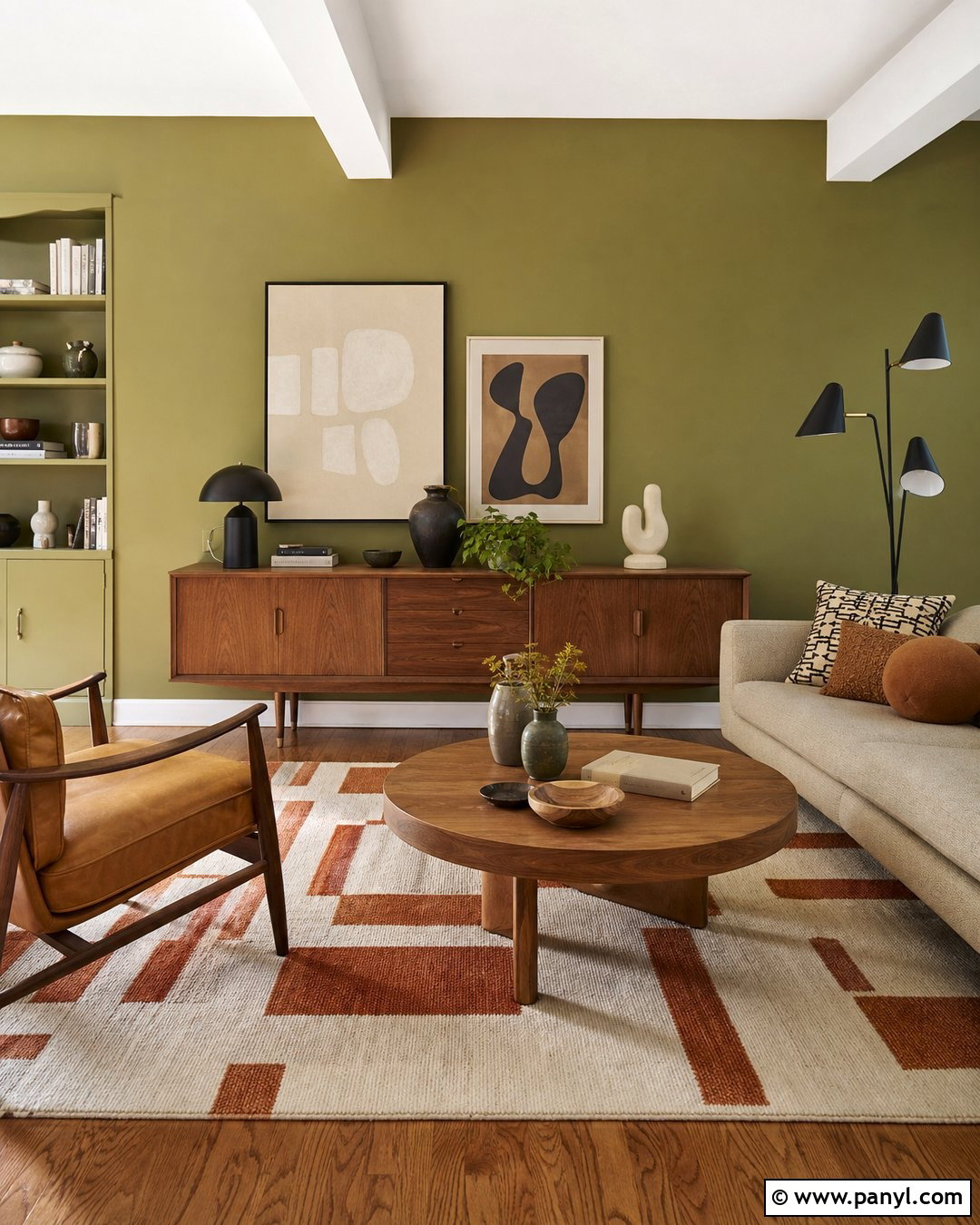
Sage green works naturally with the warm woods and clean profiles of midcentury modern furniture. Paint the focal wall a slightly yellowed sage, then position a low walnut credenza or tapered-leg sofa against it. Add a geometric cream-and-rust rug, sculptural black floor lamp, and round wood coffee table. Upholstery in camel, oatmeal, or muted mustard will strengthen the period influence without making the room feel like a time capsule. Hang one large abstract artwork with simple shapes and limited colors above the furniture. Keep window treatments minimal with off-white roller shades or straight linen panels. A few glazed ceramic pieces can provide texture. This complete room celebrates recognizable midcentury elements while allowing the gentle green wall to create a livable, modern background.
34. Sage Green Coastal Accent Wall
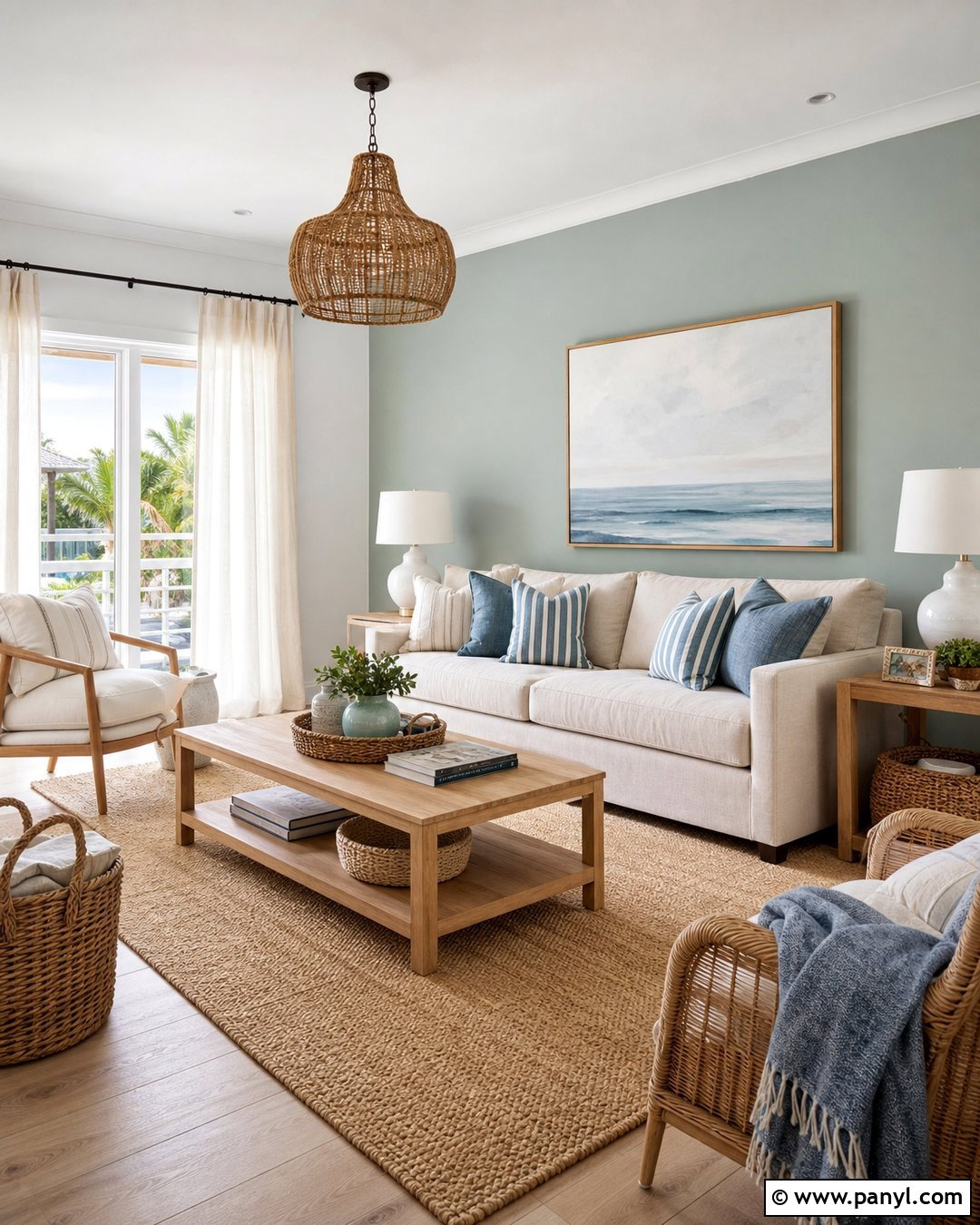
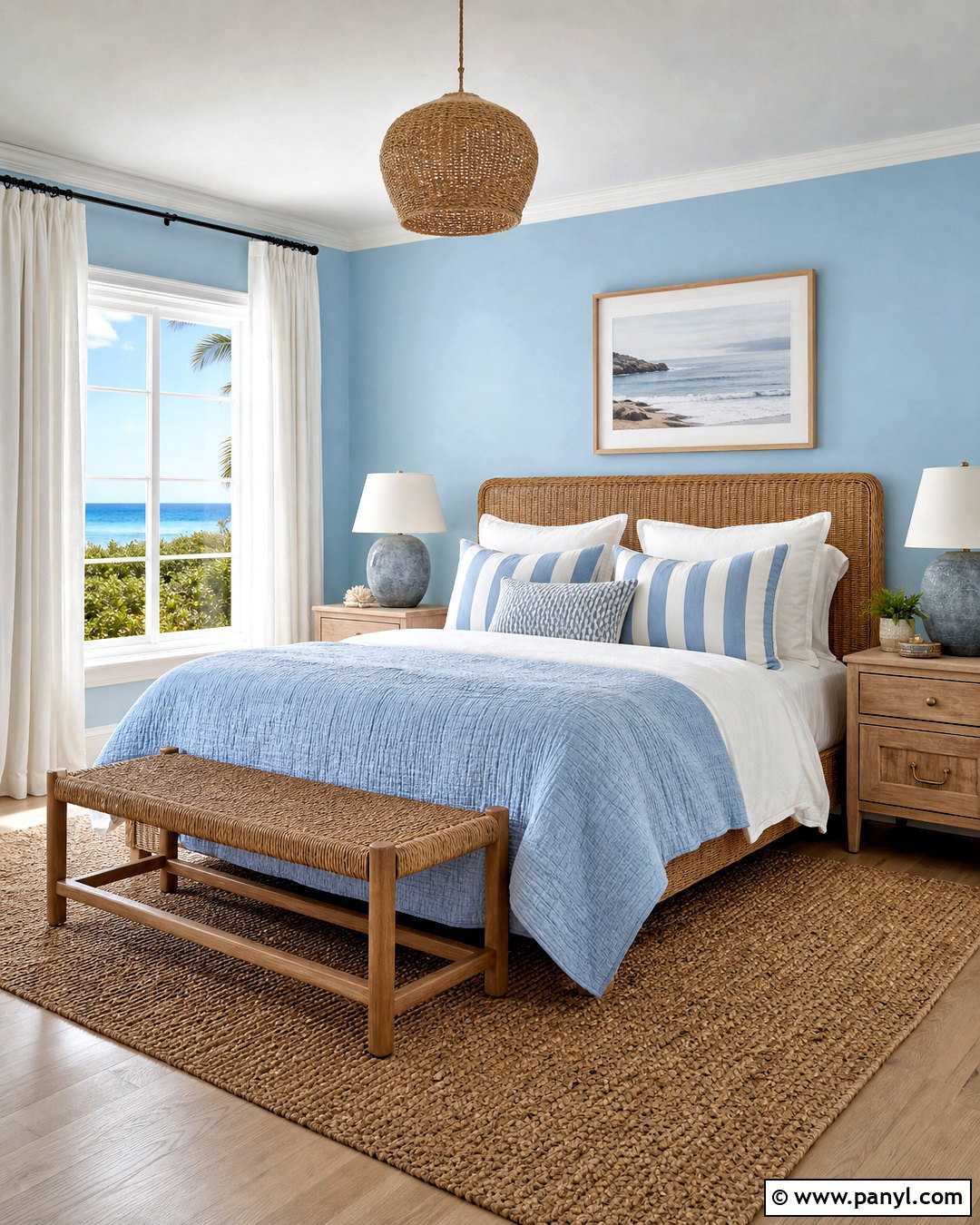
Create a relaxed coastal room with a pale blue-gray sage accent wall rather than predictable bright blue. Combine it with a white or sand-colored sofa, light oak furniture, and a tightly woven natural rug. Introduce faded navy through thin stripes, small pillows, or framed artwork, keeping the darker color limited. Linen curtains, woven baskets, and a simple rope or rattan pendant provide texture without relying on novelty beach decor. Choose abstract seascapes or soft landscape photography for the wall instead of signs, shells, or themed accessories. White trim will create a clean edge around the green. The completed room feels light and breezy because the palette references coastal scenery through color and material, not through an overwhelming collection of literal seaside objects.
35. Sage Green Cottage Accent Wall
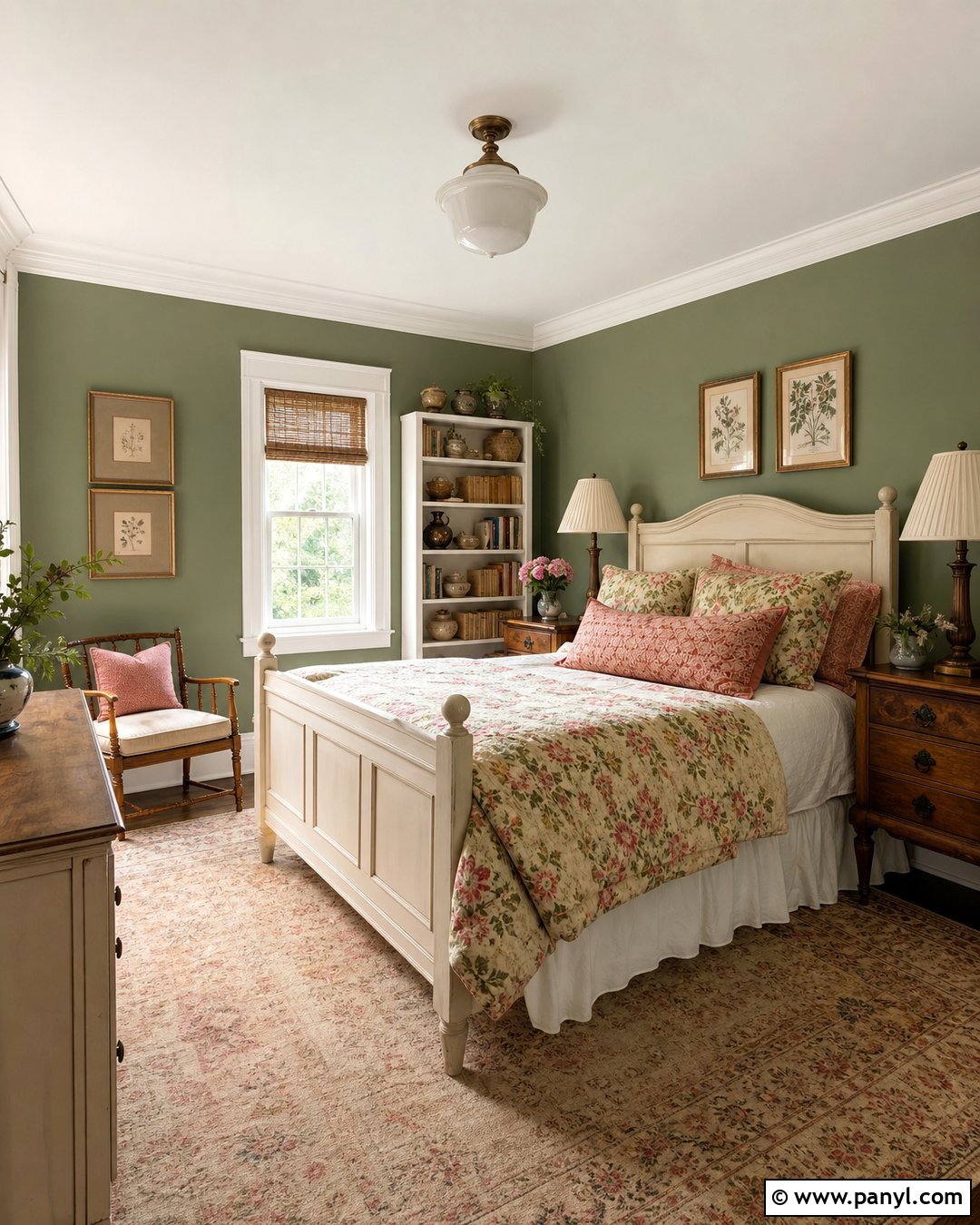
A cottage-inspired sage green accent wall should feel warm, layered, and gently traditional. Place a cream sofa or painted wood bed against the wall, then introduce small-scale floral fabrics through pillows, curtains, or a quilt. Use medium-toned antique wood for side tables and add a faded wool rug that includes rose, tan, and muted green. A pair of pleated-shade lamps can bring softness to the arrangement, while framed botanical sketches reinforce the garden-influenced palette. Keep trim creamy white instead of stark white for a smoother transition. Display a few ceramic pieces and well-used books, but avoid filling every surface. The finished room looks comfortable and personal, balancing the charm of vintage details with enough open space for easy modern living.
36. Sage Green Wall With Terracotta Decor
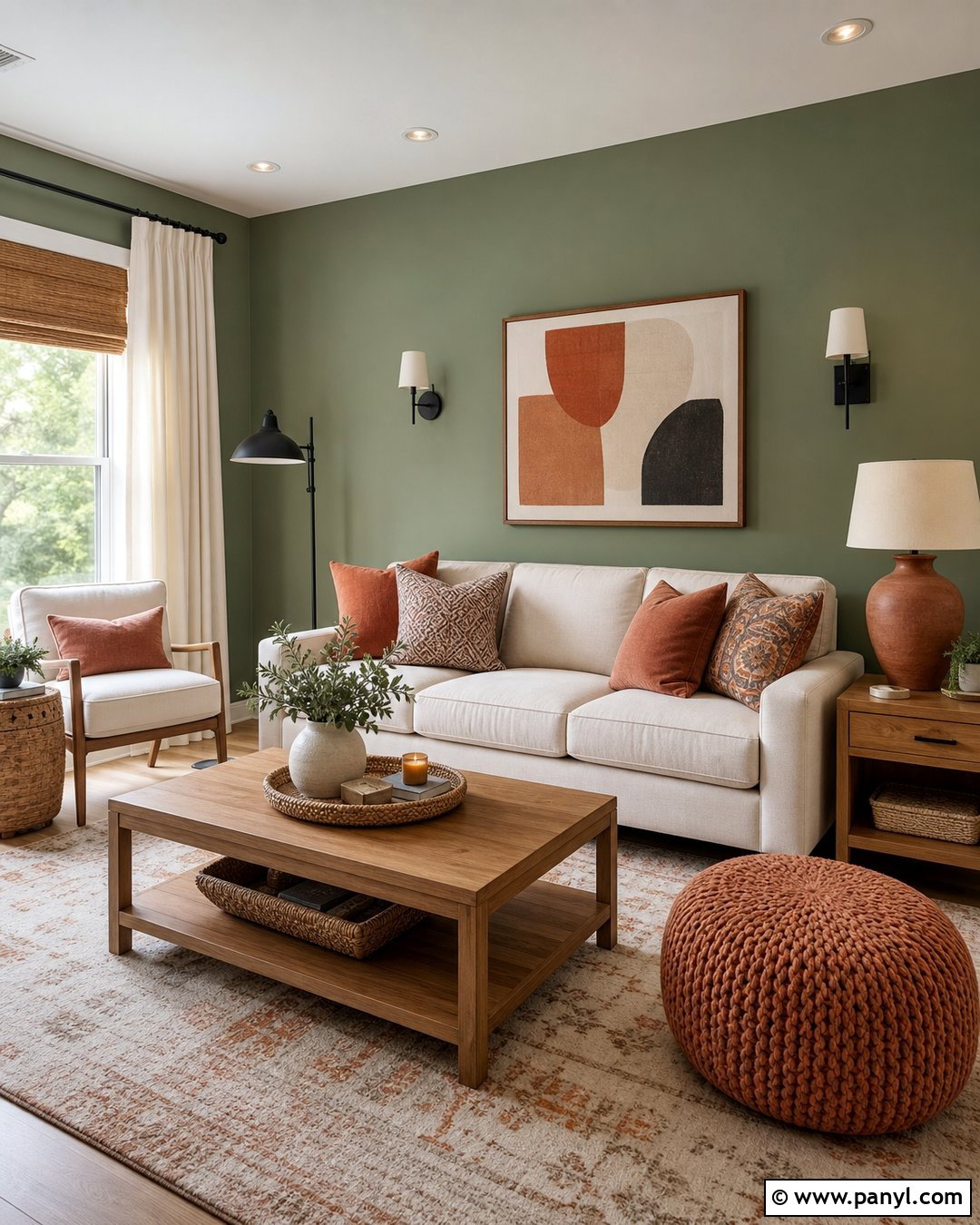
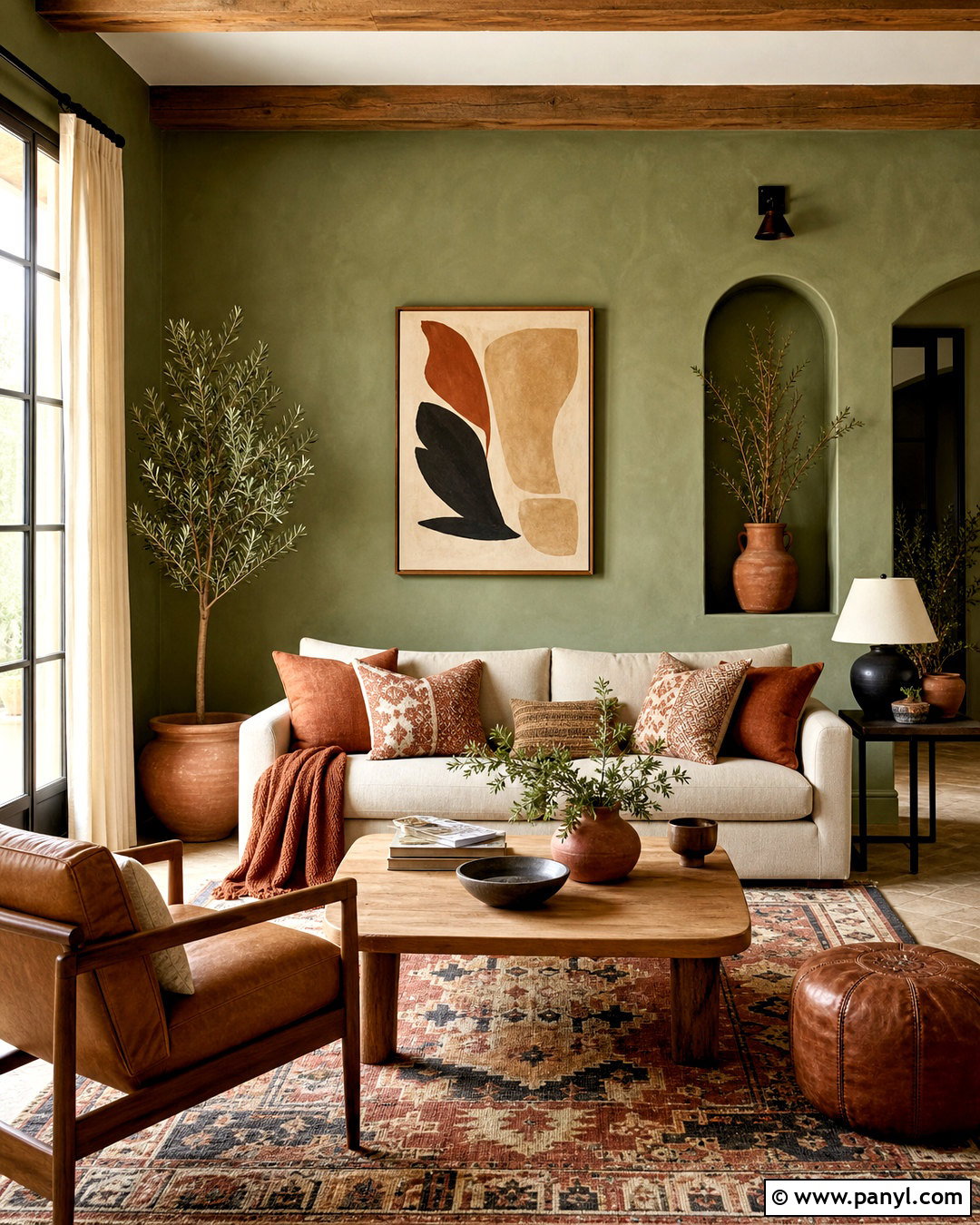
Sage green and terracotta create a warm, nature-inspired palette when each color is used in the right proportion. Let the sage accent wall cover the largest surface, then introduce terracotta through two or three focused elements, such as pillows, a ceramic lamp, and a patterned rug. Choose a cream sofa and medium oak tables to bridge the green and orange tones. Add warm white curtains and woven textures to soften the contrast. Matte black frames or lighting will give the room definition and prevent it from becoming overly rustic. Artwork containing clay, beige, and green can tie everything together. The final room feels energetic but balanced because terracotta acts as a supporting accent rather than competing with the sage wall for visual attention.
37. Sage Green Wall With Blush Pink Decor
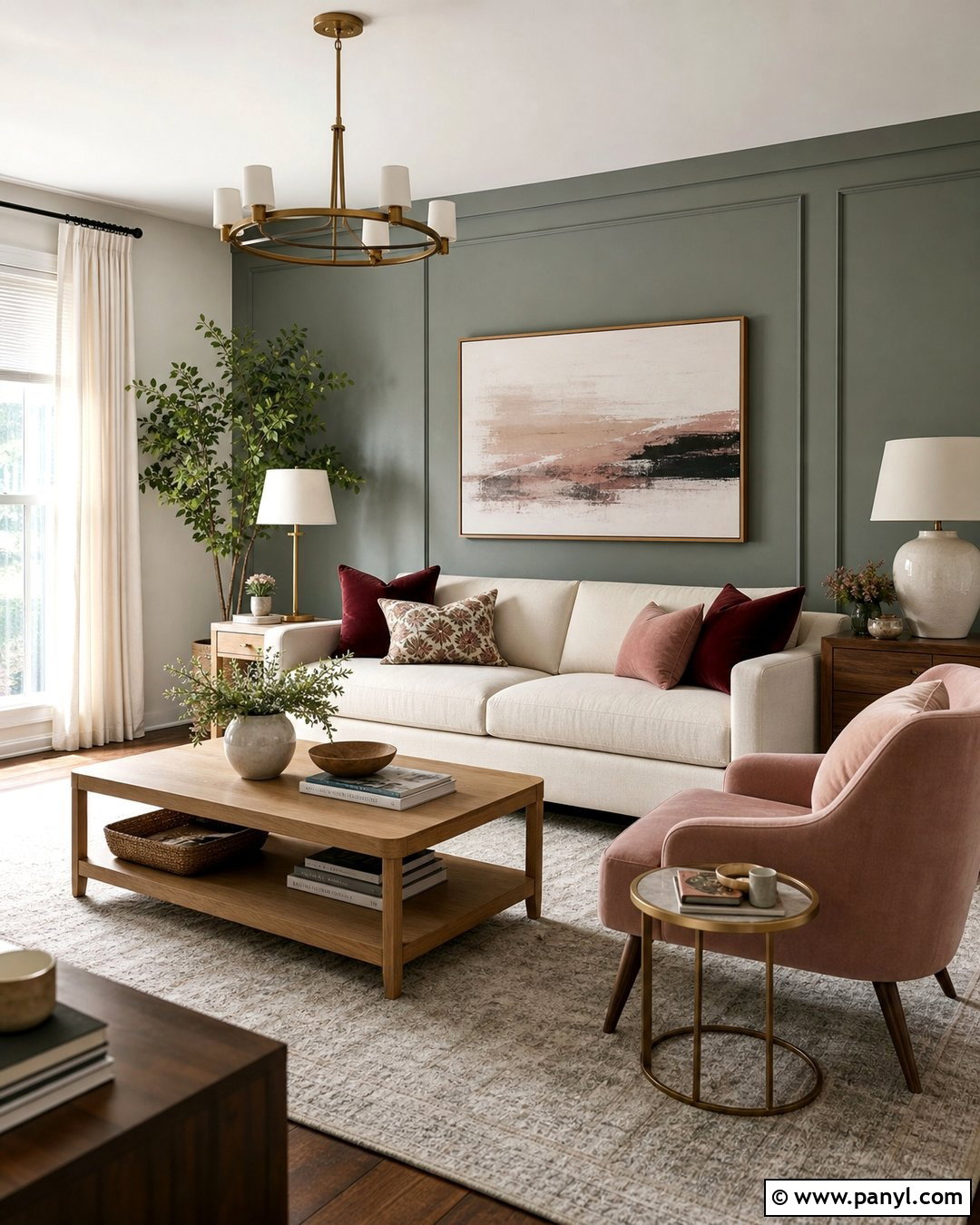
Blush pink softens sage green and creates an inviting palette that works beyond nurseries or highly feminine rooms. Paint the focal wall a medium gray-sage, then use blush selectively through an upholstered chair, lumbar pillow, or abstract artwork. Furnish the room with a cream sofa, pale oak tables, and a neutral rug to give both colors breathing room. Aged brass lighting complements the warm pink undertones, while black accents can add a more contemporary edge. Include deeper tones such as burgundy, walnut, or charcoal in small amounts so the palette does not appear overly sweet. Warm white curtains and simple ceramic decor complete the space. This balanced arrangement feels mature, fresh, and adaptable to bedrooms, living rooms, or home offices.
38. Sage Green Wall With Navy Decor
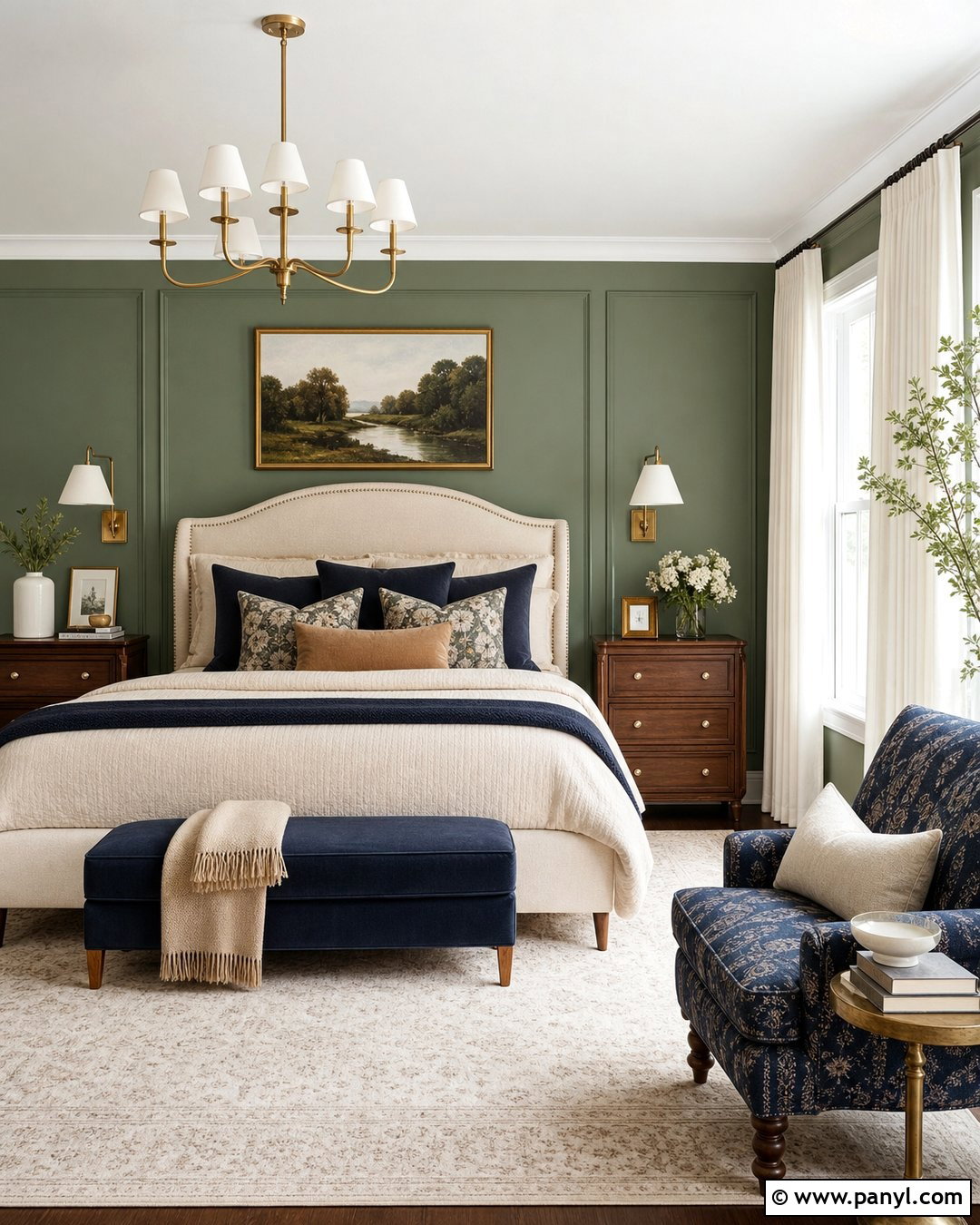
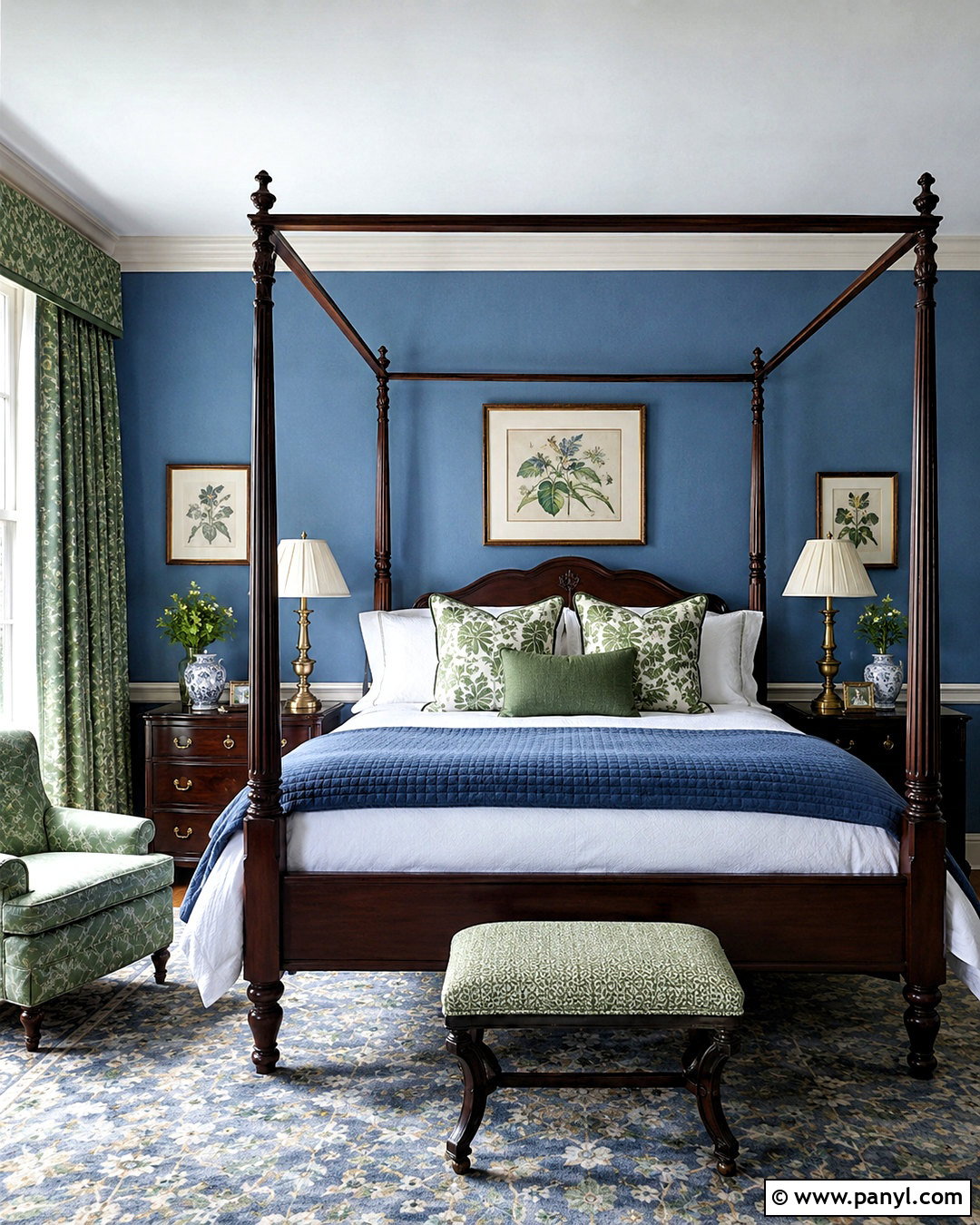
Pair a sage green accent wall with navy for a room that feels grounded and confidently layered. Since both colors carry visual weight, use sage across the wall and reserve navy for a chair, patterned rug, or several smaller textiles. A cream sofa or upholstered bed will separate the darker tones and keep the arrangement bright. Bring in walnut furniture and aged brass fixtures to warm the cool palette. White curtains and trim will create clean boundaries, while artwork containing green, blue, tan, and ivory can connect every element. Avoid matching the navy accents too precisely; subtle variation makes the room look collected. The completed design works especially well in living rooms, studies, and guest bedrooms where calm color and clear contrast are equally important.
39. Sage Green Geometric Painted Wall
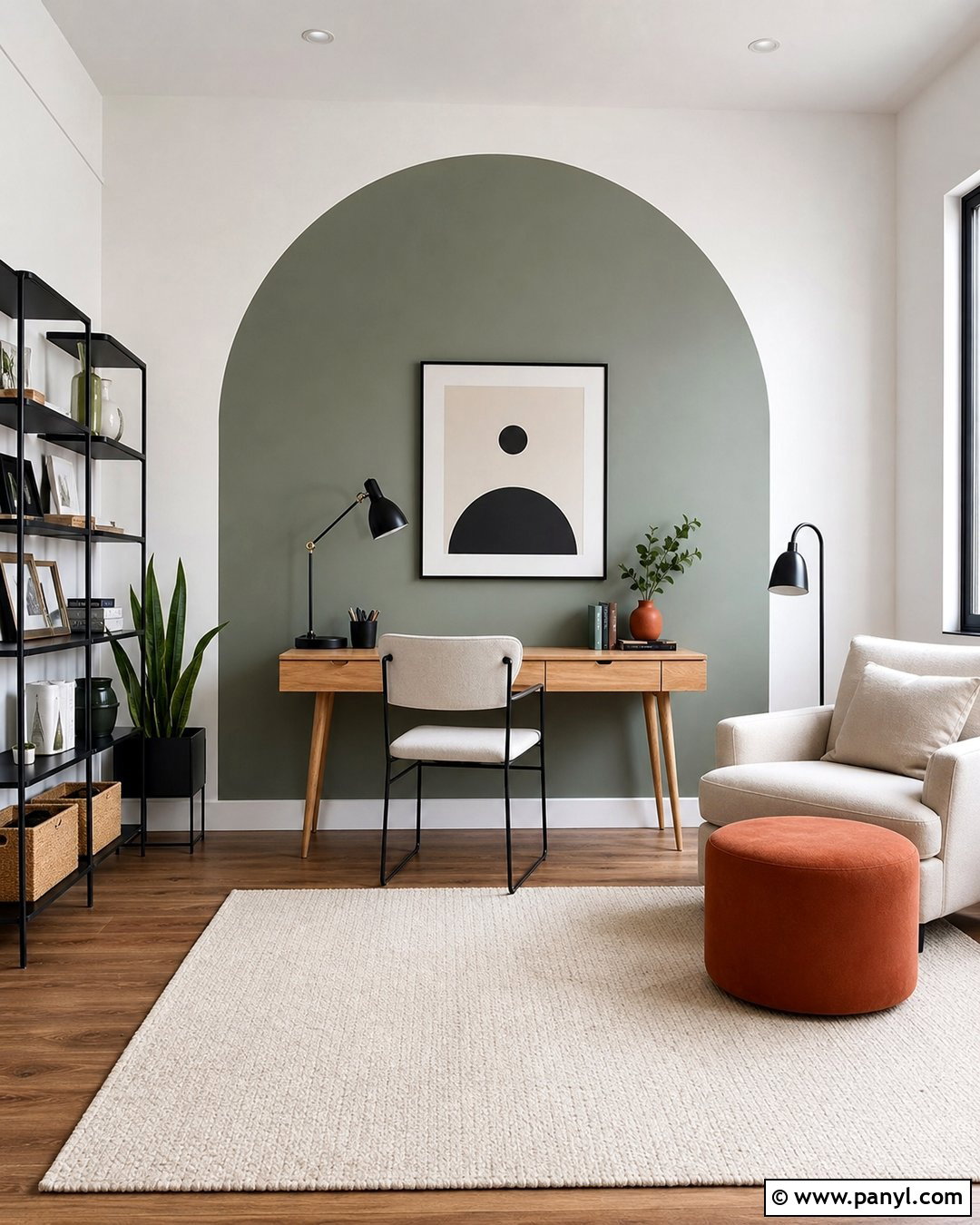
A geometric sage green wall offers a modern alternative to painting one solid rectangle. Start with a warm white base, then paint a large sage arch, half-wall block, or carefully measured asymmetrical section behind the room’s main furniture. Keep the shape simple so it highlights the layout rather than becoming distracting. A low oak desk, bed, or console can overlap the painted area to reinforce the connection. Use black lighting, cream textiles, and one terracotta accent for a concise palette. Maintain crisp paint edges with quality painter’s tape and remove it before the final coat fully hardens. The finished room feels playful and architectural, making this treatment especially useful for apartments, multifunctional rooms, or compact spaces that need visual zoning.
40. Sage Green Wallpaper Accent Wall
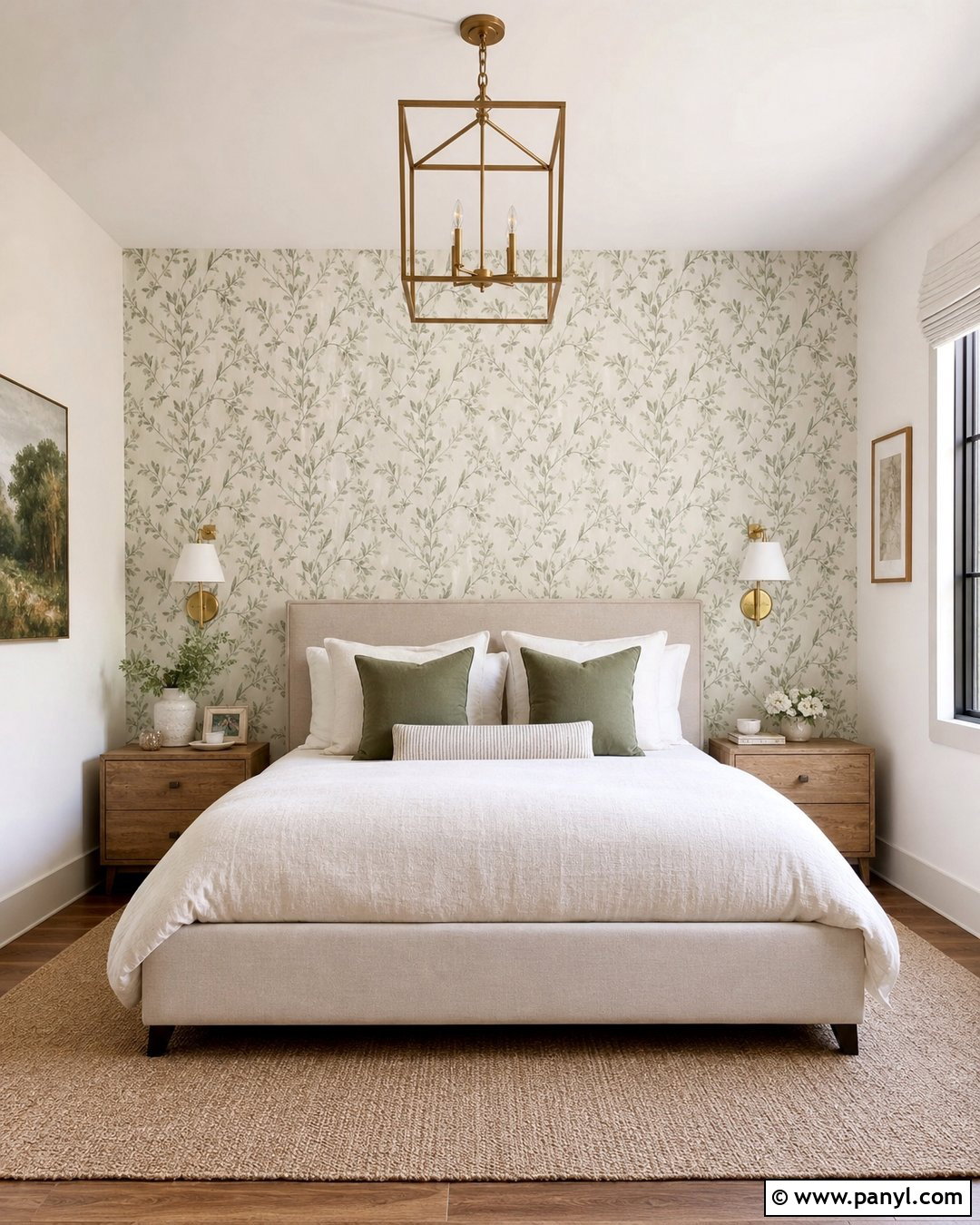
Sage green wallpaper can add pattern and depth while preserving the color’s soothing character. Choose a design with a cream background and sage botanical, geometric, or small-scale floral details. Install it on one clear focal wall behind a bed, sofa, or dining table. Keep large furniture mostly solid in cream, oatmeal, or natural wood so the pattern remains easy to appreciate. Repeat one secondary wallpaper color through pillows, lamps, or a rug, but avoid matching every detail. Simple brass or black lighting will provide structure, while white or ivory walls balance the print. Select removable wallpaper for a rental or traditional pasted paper for a permanent finish. The complete room gains personality and texture without depending on numerous decorative accessories.
Conclusion:
The most successful sage green accent wall ideas go beyond choosing an attractive paint color. They consider where the wall sits, how light reaches it, and how every nearby material supports its undertones. Cream textiles, warm wood, natural fibers, black details, and aged metal finishes all pair easily with sage, while terracotta, navy, blush, and mustard provide controlled contrast. Whether you are updating a bedroom, defining a dining zone, organizing an office, or refreshing a small bathroom, test the color before committing and build the room as one connected composition. With thoughtful furniture placement and a balanced palette, these **sage green accent wall ideas** can create a home that feels calm, practical, layered, and distinctly personal.

Related Ideas and Inspiration:
Leave a Reply