
Terracotta walls bring the grounded warmth of sunbaked clay into almost any room. Depending on the shade and surrounding palette, this earthy color can feel soft and calming, rich and dramatic, or clean and modern. The secret is creating a complete scheme around it. Warm whites keep terracotta fresh, greens emphasize its natural character, and deep blues create striking contrast. Wood, stone, linen, rattan, and aged metals also complement its organic quality. Before painting, test several large samples throughout the day because natural and artificial light can reveal stronger orange, red, pink, or brown undertones. Whether you prefer a subtle accent or an immersive color-drenched room, these 40 Terracotta Wall Color Ideas offer complete, practical looks to recreate.

1. Terracotta Living Room Wall With Cream Sofa
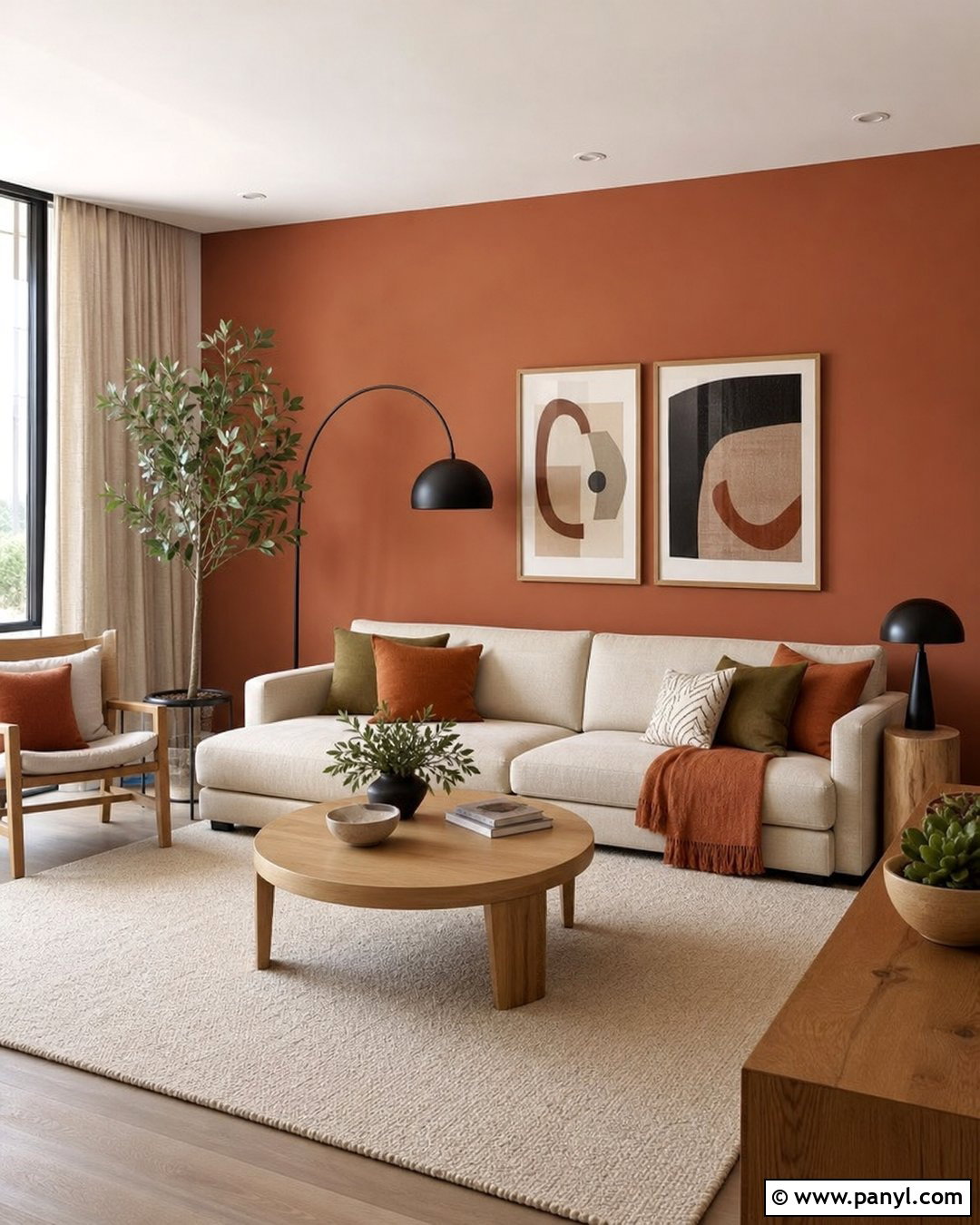
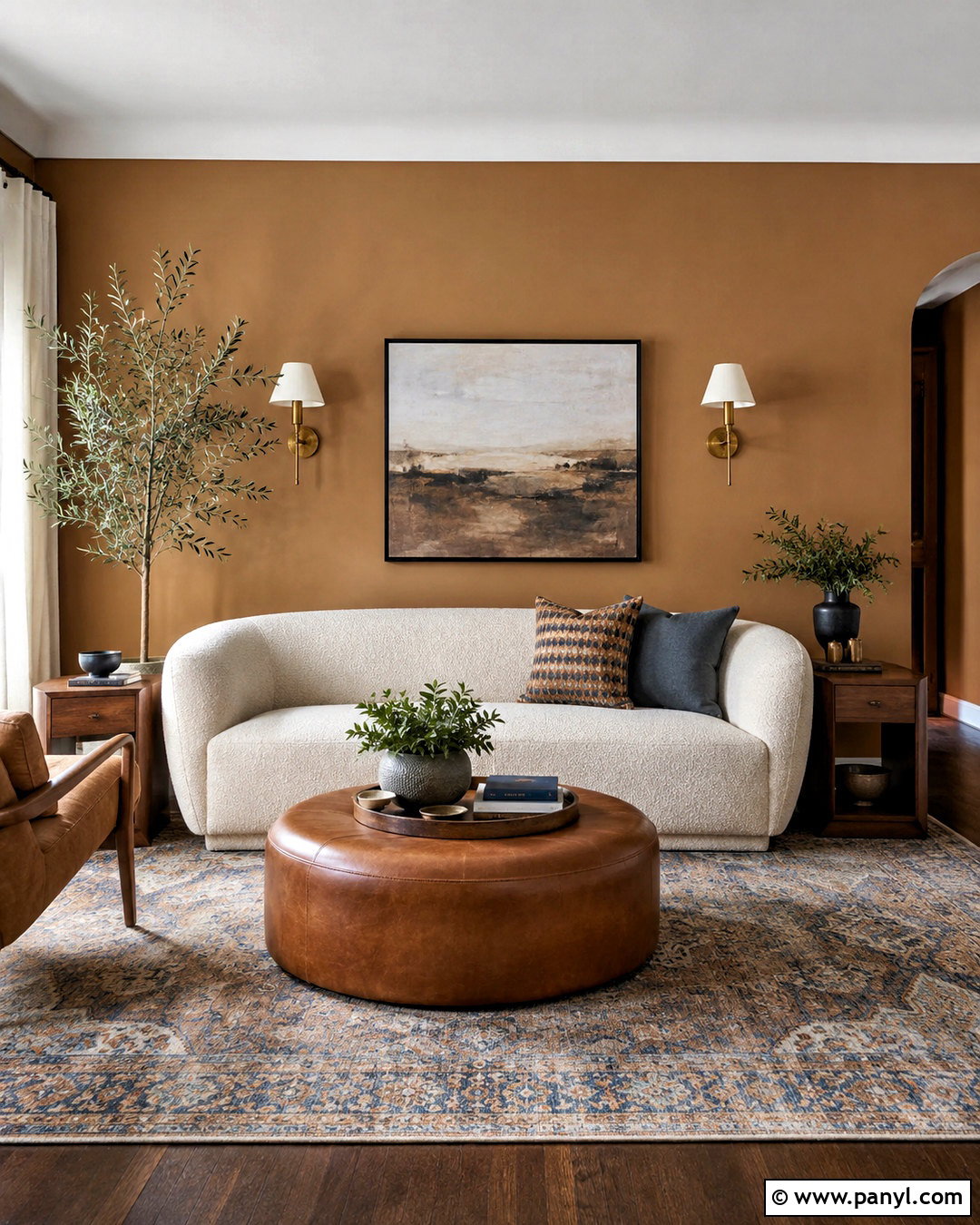
A medium terracotta feature wall makes a cream sofa look warmer without overwhelming the living room. Position the sofa against the painted wall and balance its visual weight with light oak side tables, an ivory wool rug, and full-length oatmeal curtains. Choose cushions in rust, tan, and muted olive to connect the furniture with the wall color. A large abstract print containing cream and charcoal prevents the palette from feeling too orange. Matte black lighting adds a clean contemporary edge, while a tall leafy plant introduces natural contrast. Keep the remaining walls warm white rather than brilliant white. This softens transitions and produces a comfortable, polished living room that feels bright during the day and cozy after sunset.
2. Terracotta Living Room Walls With Sage Green
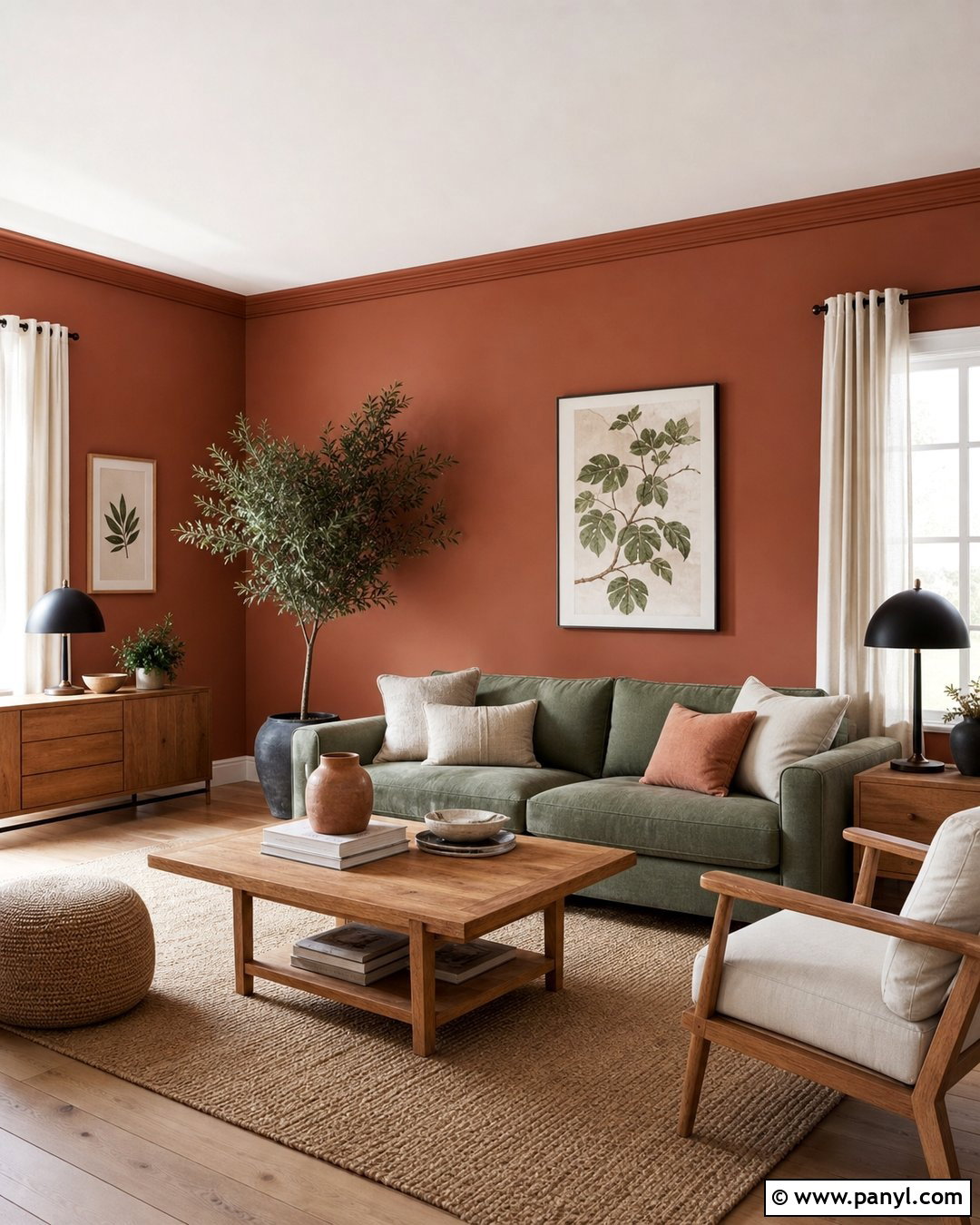
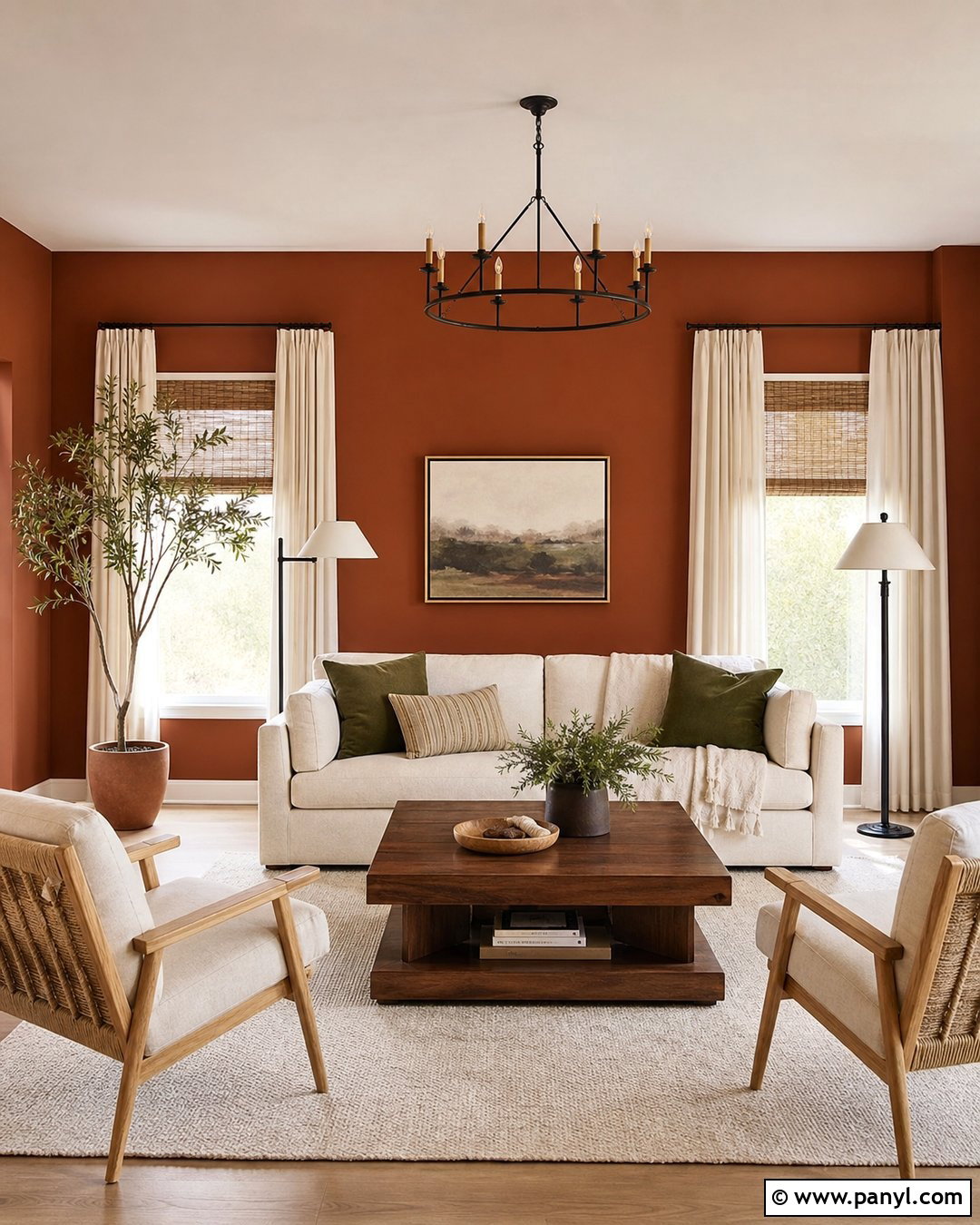
Terracotta and sage green create a naturally balanced living room inspired by clay, leaves, and weathered garden materials. Cover every wall in a muted terracotta paint with brown undertones, then introduce sage through a generously sized sofa or two upholstered armchairs. Use warm white curtains, a natural jute rug, and medium-tone oak furniture to keep the room relaxed. Small black accents, such as a floor lamp and picture frames, provide definition without making the scheme harsh. Add handmade ceramics and botanical artwork, but leave enough open wall space for the color to remain visible. This full-room palette works especially well in spaces with strong daylight because the green cools the terracotta while the natural textures support its earthy character.
3. Terracotta Living Room Wall With Navy Blue
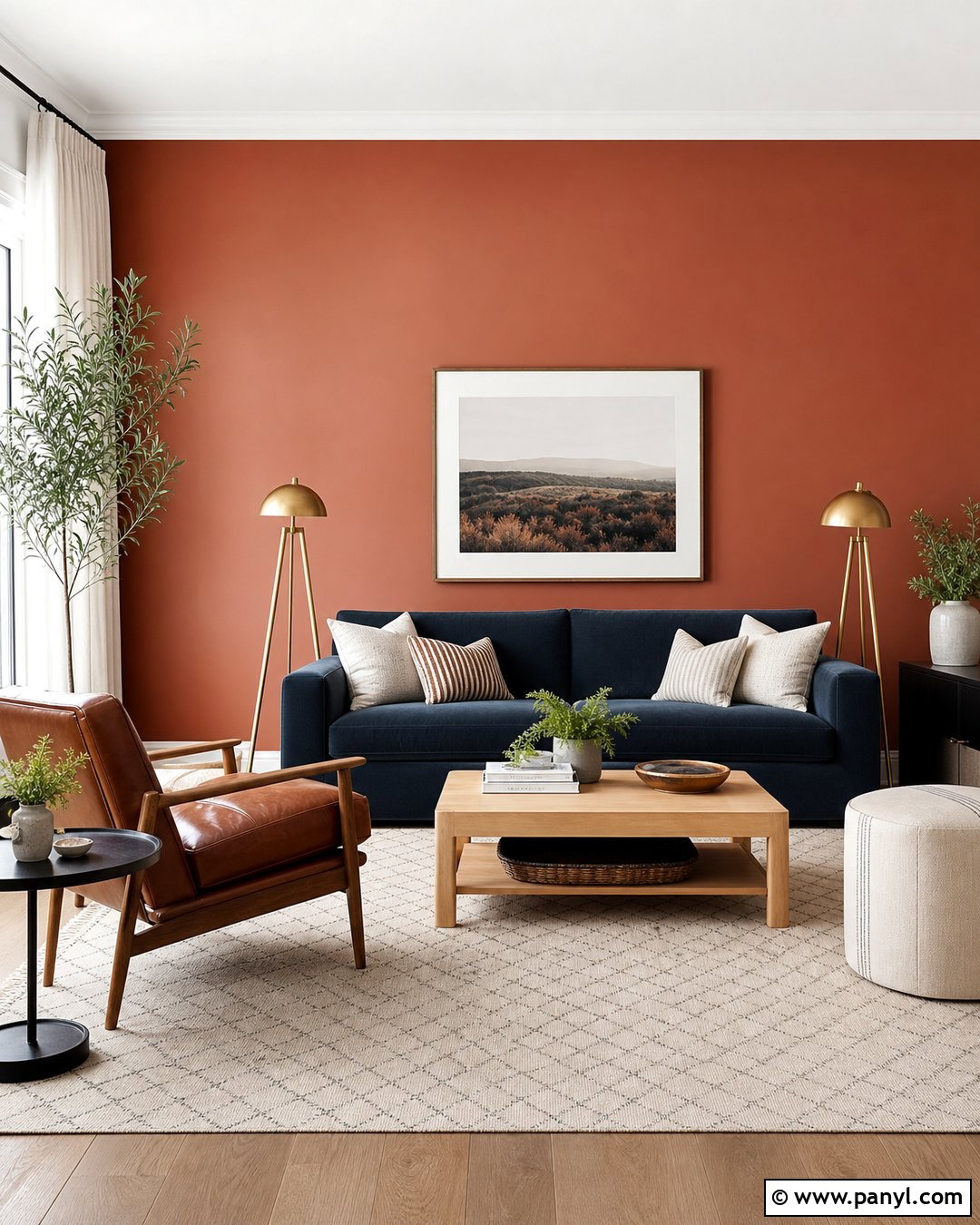
For a more dramatic arrangement, pair a deep terracotta wall with navy blue upholstery. Place a structured navy sofa in front of the feature wall, then lighten the lower half of the room with a beige patterned rug and pale oak coffee table. Cream curtains and cushions prevent the two saturated colors from appearing heavy. Include a small amount of cognac leather through an accent chair or ottoman to create a smooth transition between orange and blue. Brushed brass lamps bring gentle warmth and look refined against both shades. Keep decorative objects simple and substantial rather than filling every surface. The finished living room feels confident and tailored, with enough neutral material to make the strong complementary color pairing comfortable for everyday use.
4. Terracotta Living Room Wall With Blush Pink
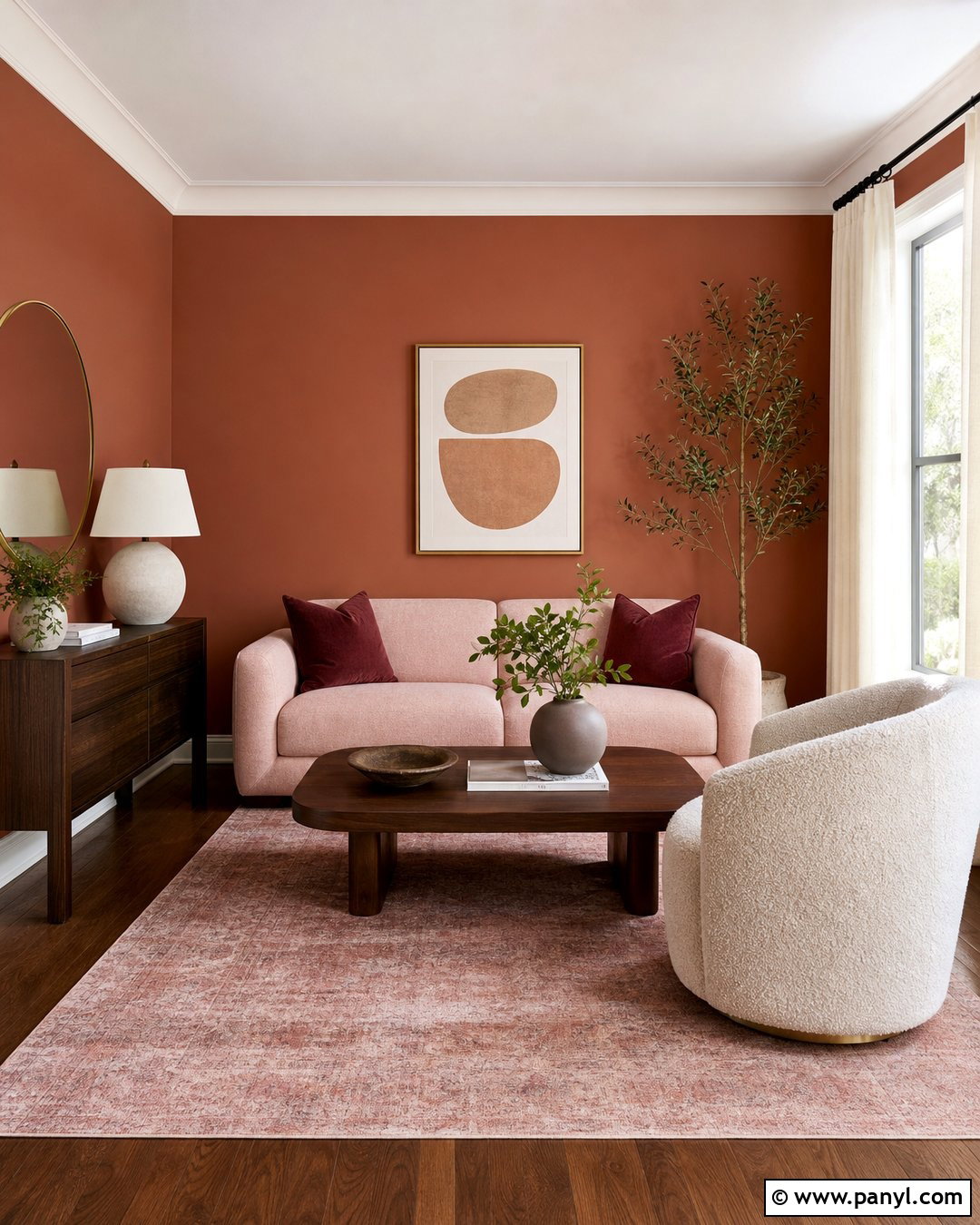
Could terracotta and pink work without making a living room feel overly sweet? The key is choosing dusty, muted shades with similar earthy undertones. Use soft terracotta on the main wall and add a clay-pink sofa, oatmeal boucle chair, and faded rose rug. Natural walnut furniture brings depth, while off-white curtains and ceiling paint give the warm palette room to breathe. Introduce burgundy through two cushions or a small patterned textile rather than spreading it across the entire room. A sculptural paper pendant and rounded furniture reinforce the gentle appearance. Finish with matte ceramics and one large contemporary artwork. This tonal arrangement feels warm and expressive, yet its restrained colors and simple shapes keep the complete living room sophisticated.
5. Terracotta Living Room Wall With Charcoal Decor
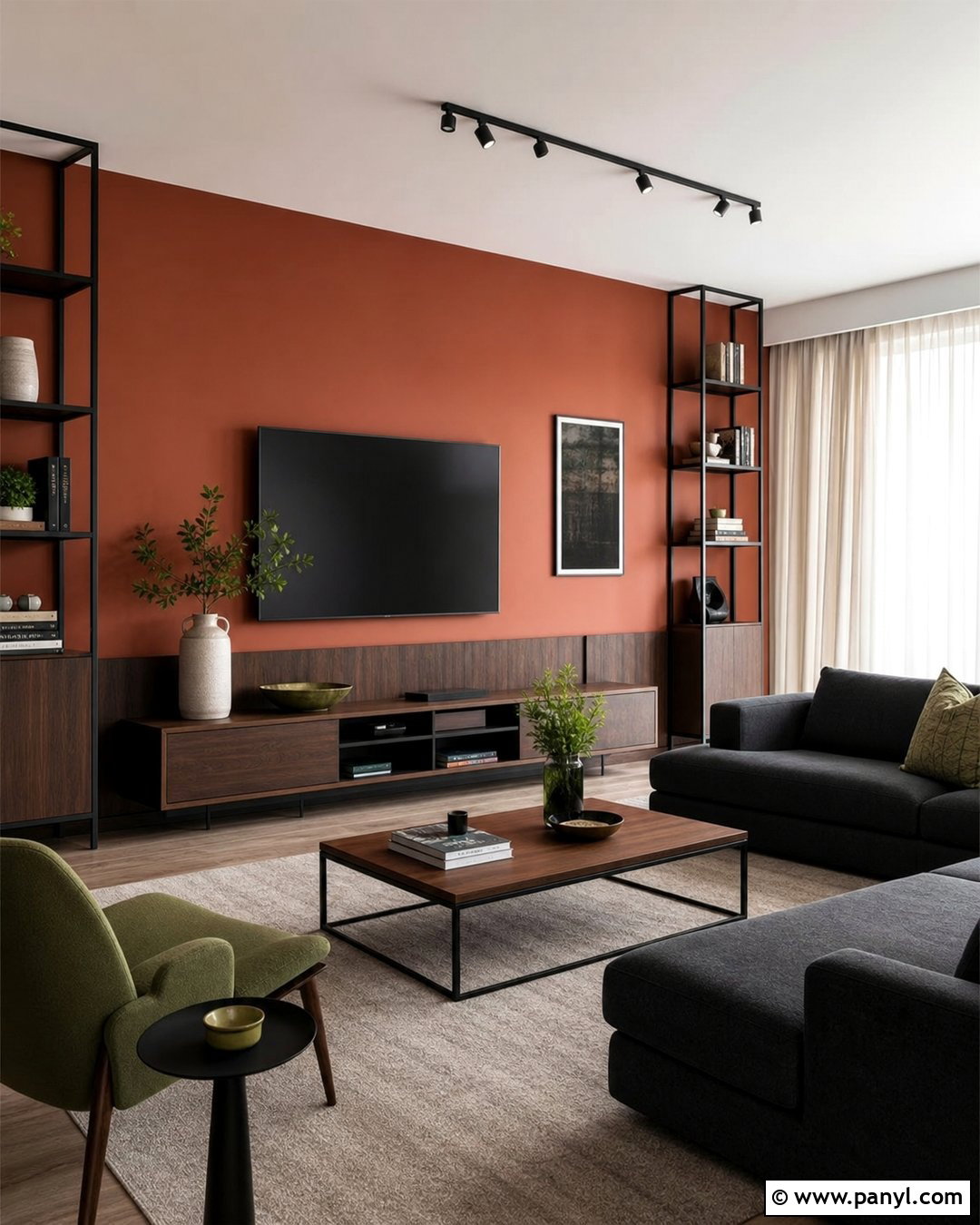
A charcoal and terracotta palette gives an ordinary living room a strong architectural presence. Paint the wall behind the television or media console in dark, brown-based terracotta. Choose a low charcoal sofa, black metal shelving, and a slim black floor lamp to create crisp contrast. Keep the flooring, curtains, and area rug light beige so the room does not become visually dense. A walnut media unit connects the dark furniture to the earthy wall, while cream cushions soften the seating. Limit additional colors to muted tan and olive. Conceal cords and avoid crowded shelves because dark details stand out sharply against terracotta. The completed space feels modern and grounded, offering a practical alternative to a predictable gray, white, and black living room.
6. Color Drenched Terracotta Living Room
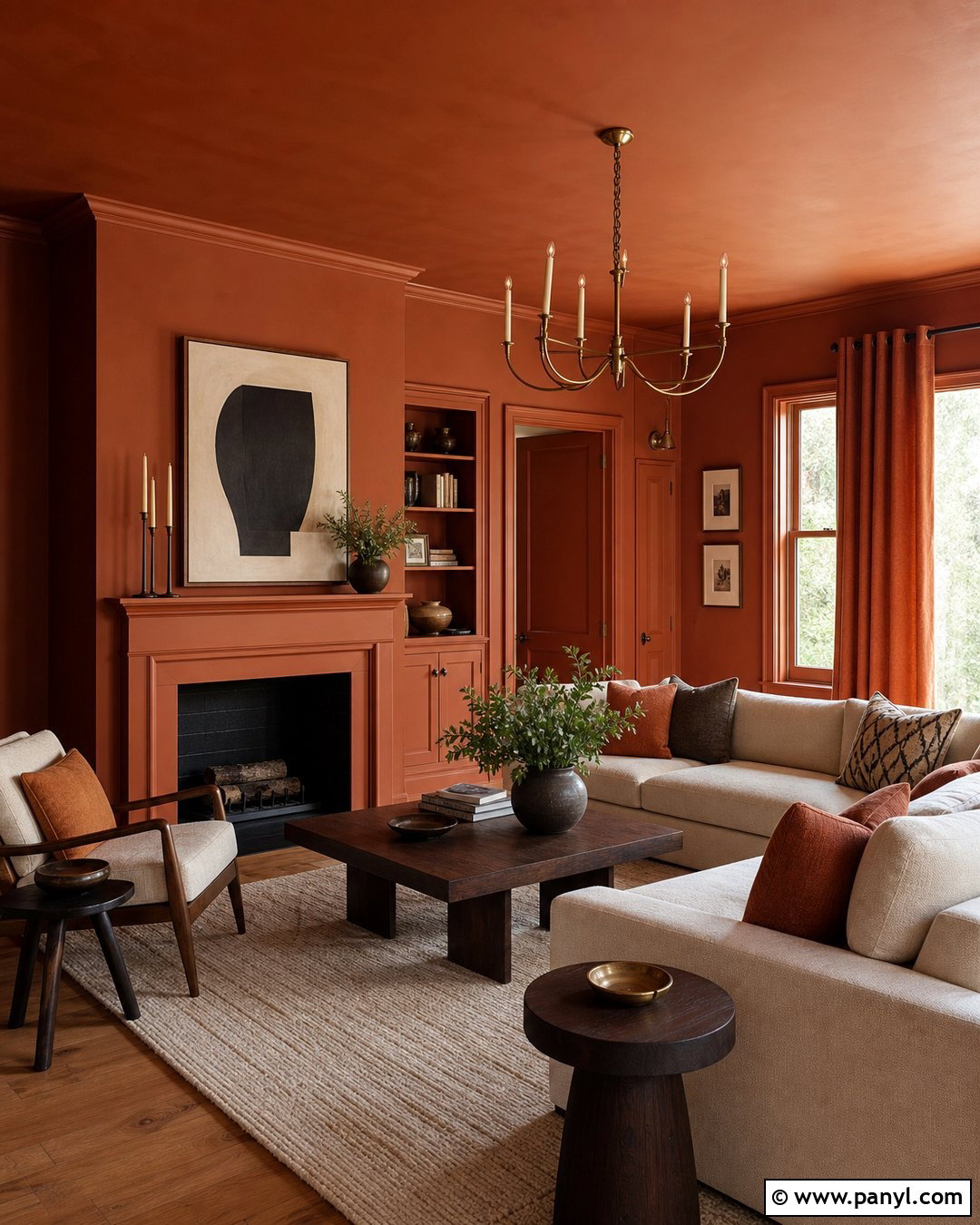
Color drenching turns terracotta into an immersive backdrop rather than a single decorative accent. Paint the walls, baseboards, doors, fireplace surround, and ceiling in closely related clay tones. Use a lighter terracotta overhead if the ceiling is low, or continue one shade everywhere for a deeper cocooning effect. Furnish the room with an oatmeal sectional, dark walnut tables, and an ivory rug to introduce quieter surfaces. Linen curtains in a slightly darker rust create tonal variation without interrupting the concept. Add antique brass lighting and artwork with cream mats for subtle definition. Because the envelope is visually rich, keep accessories limited and generously scaled. This approach creates a unified, intimate living room that looks intentional from every viewing angle.
7. Terracotta Fireplace Wall With Built-Ins
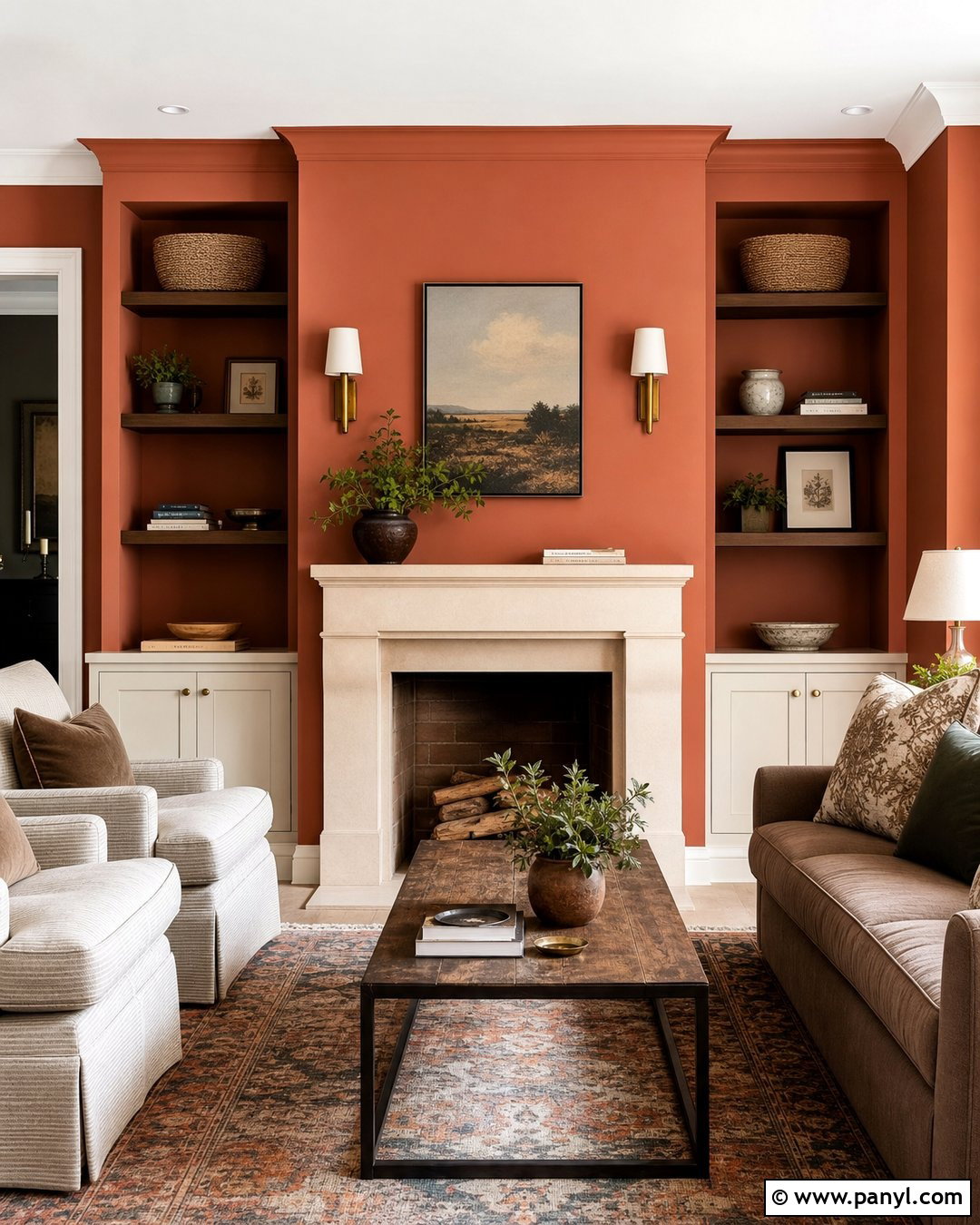
Make the fireplace wall feel like a complete architectural feature by surrounding it with terracotta paint and coordinated built-ins. Cover the chimney breast and shelving backs in a warm brick-toned shade, while painting cabinet fronts and trim in soft cream. A pale limestone or plaster fireplace surround keeps the center bright. Arrange a neutral sofa opposite the fireplace and anchor the seating with a vintage-style rug containing rust, blue, and beige. Use walnut shelves, woven baskets, and a few substantial ceramics instead of many small decorations. Antique brass sconces above the built-ins add symmetry and focused light. The finished wall becomes a convincing focal point, while its balanced storage, materials, and furniture arrangement ensure it supports the entire living room rather than looking like an isolated painted section.
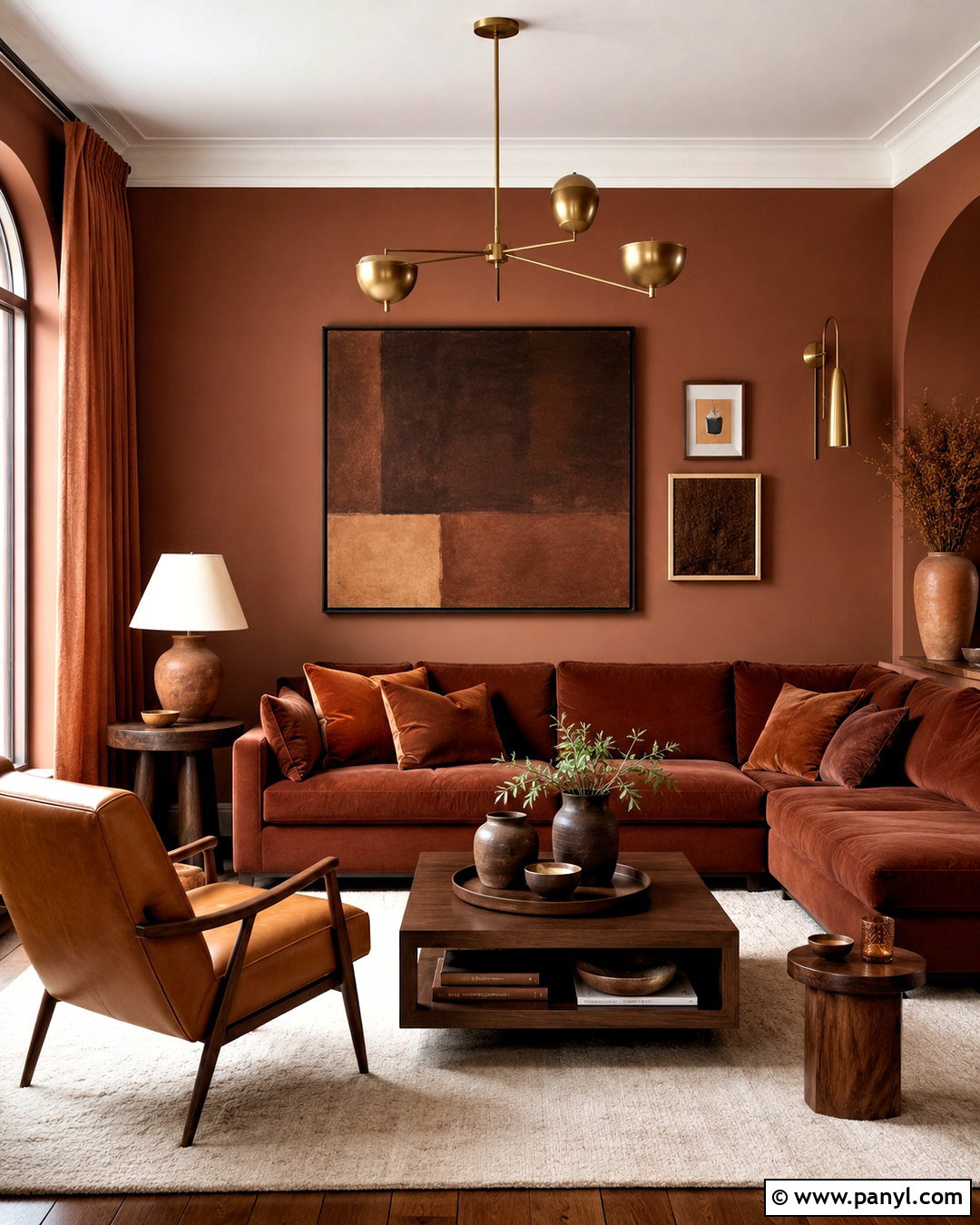
8. Terracotta Dining Room Walls With Warm White Trim
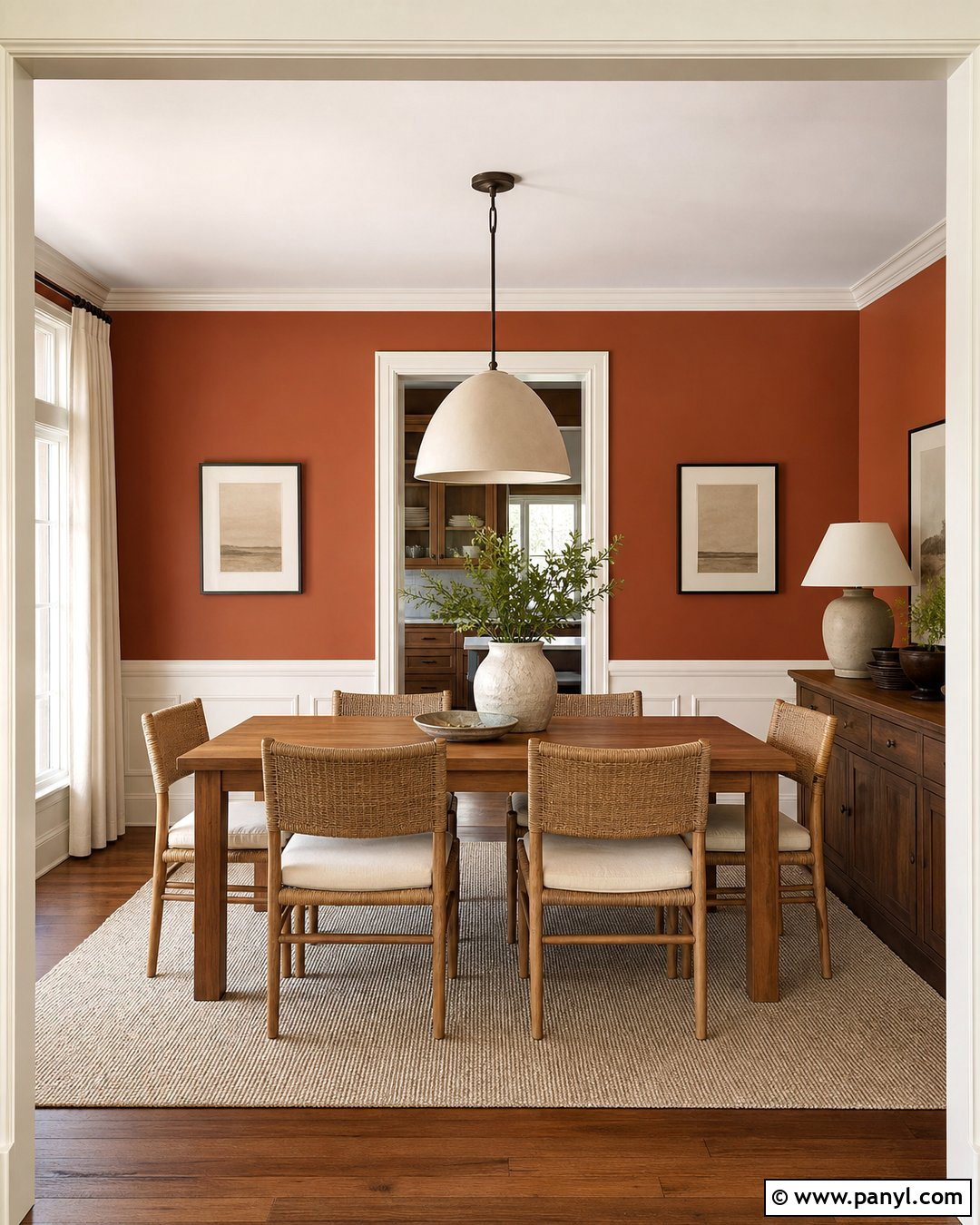
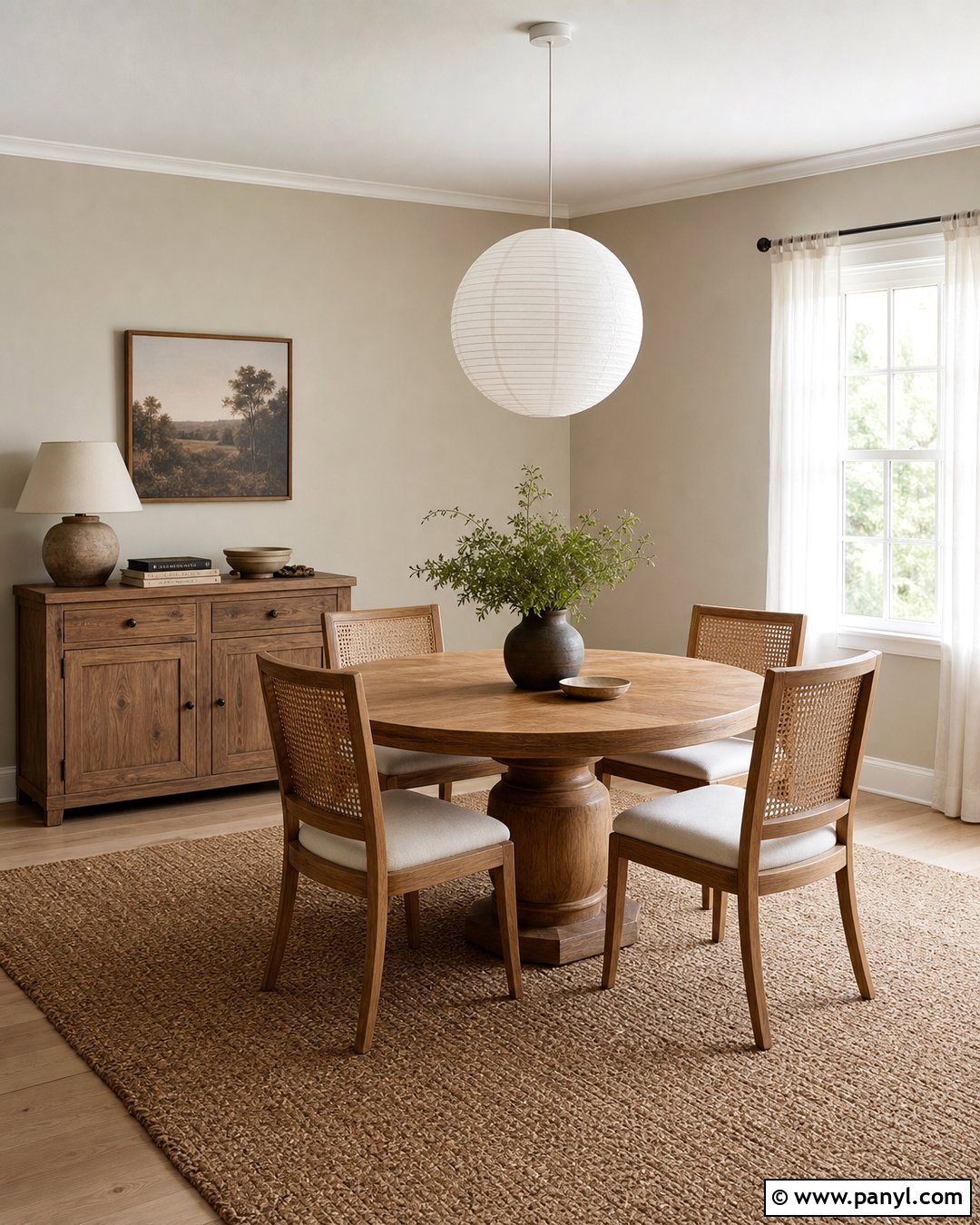
Terracotta can make a dining room feel welcoming before the table is even set. Use a medium clay shade on all four walls and frame it with warm white crown molding, baseboards, doors, and window trim. Center a solid oak table under a simple linen or plaster pendant, then add woven dining chairs with cream seat cushions. A faded neutral rug defines the eating area and softens hard flooring. Choose artwork with generous ivory borders so it remains distinct against the wall color. A walnut sideboard provides darker contrast, while a large ceramic bowl echoes the handmade quality of terracotta. This cohesive treatment feels relaxed enough for daily meals yet finished enough for gatherings, particularly when warm white details keep the room crisp.
9. Terracotta Dining Room Walls With Olive Green
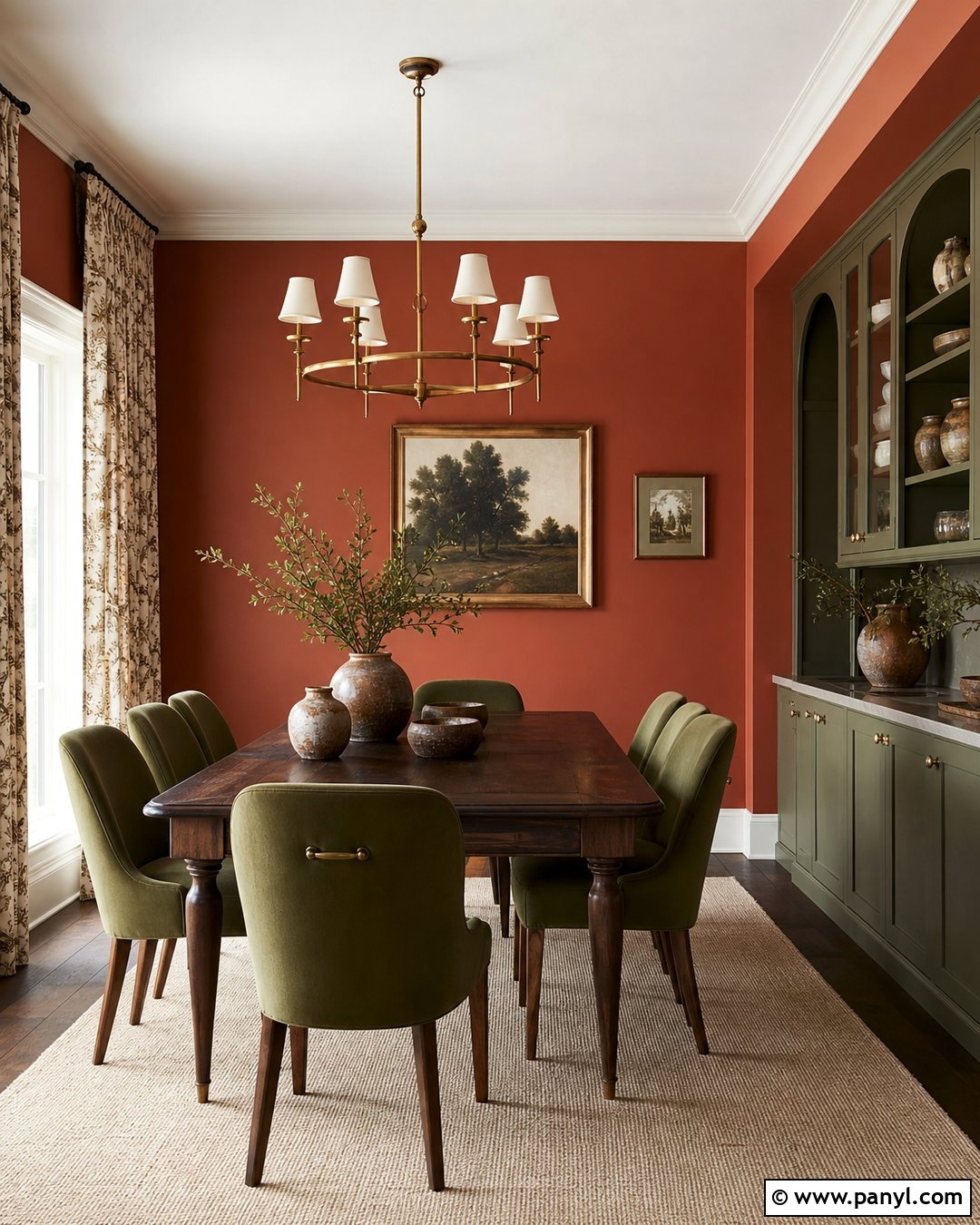
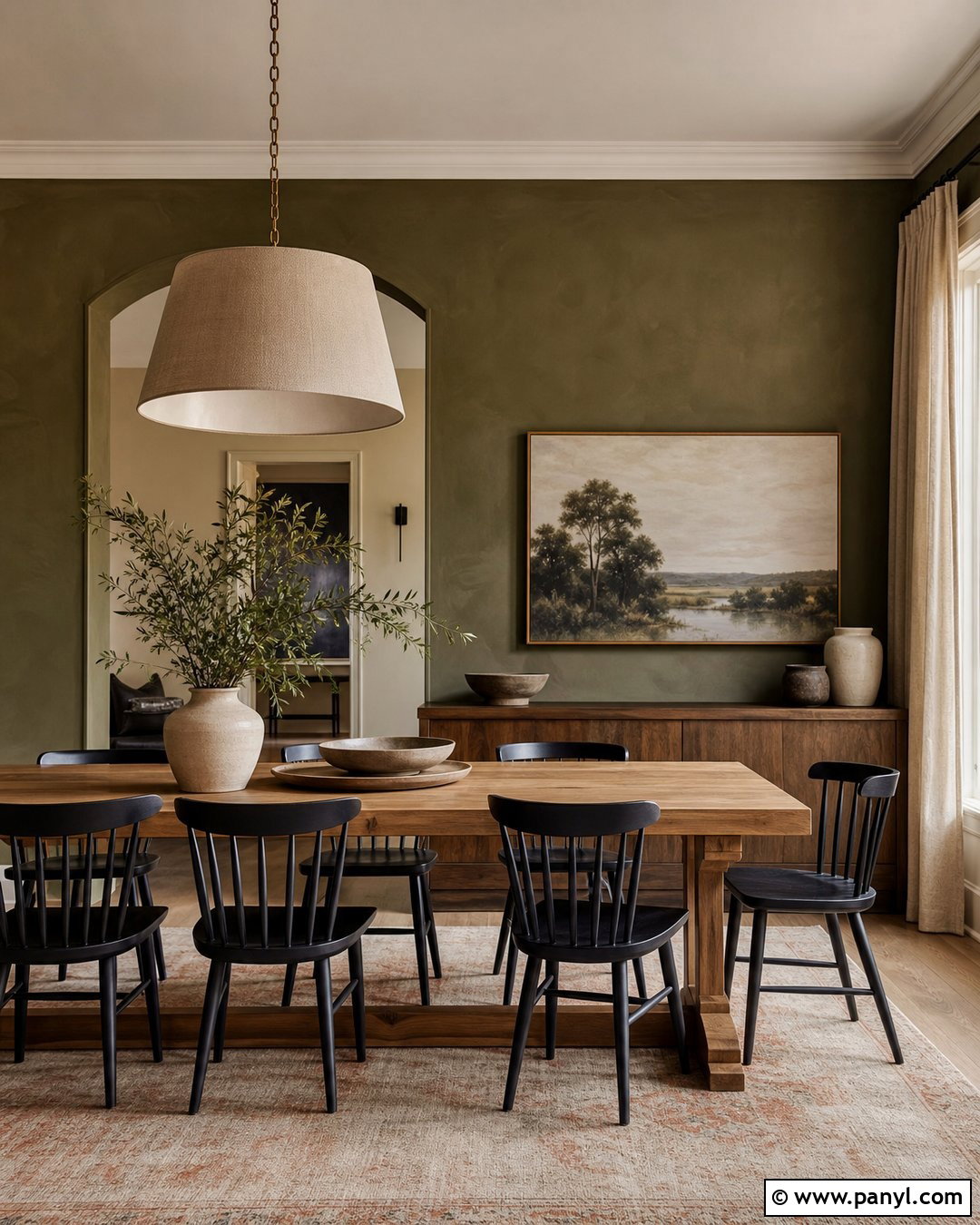
Olive green gives terracotta dining room walls a deeper, heritage-inspired appearance. Paint the walls in muted reddish terracotta and use olive on a built-in cabinet, freestanding hutch, or upholstered dining chairs. Select a dark wood table to ground both colors and add a cream flat-weave rug beneath it. A traditional brass chandelier supports the warm palette without demanding too much attention. Bring in patterned curtains that combine beige, olive, and small rust details, but avoid heavily matching every accessory. Stoneware dishes and simple branches provide an organic finishing layer. This complete dining room works best when the colors appear slightly softened rather than bright. The result is earthy and collected, with enough contrast to distinguish every furniture piece and architectural detail.
10. Terracotta Dining Room Wall With Blue Chairs
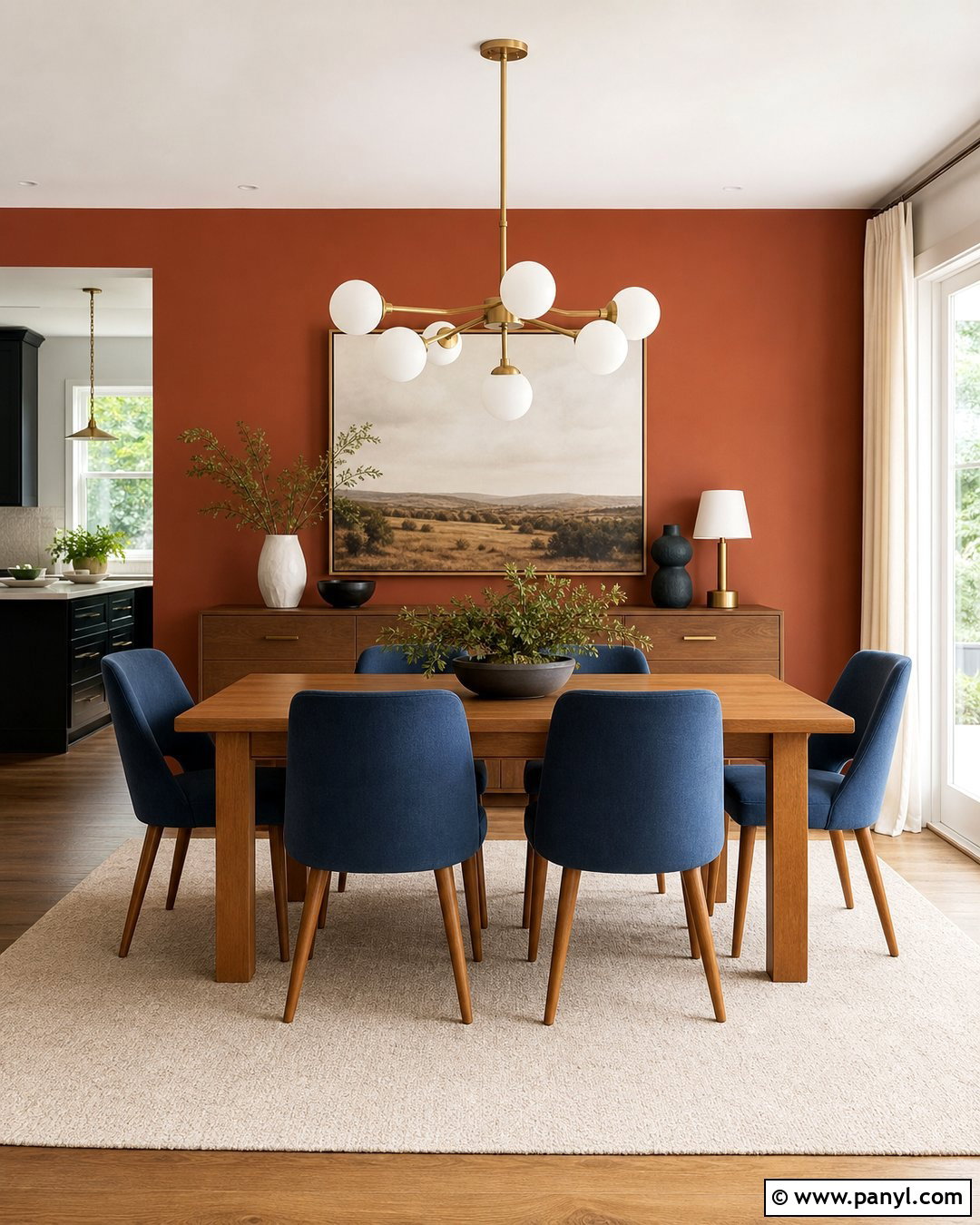
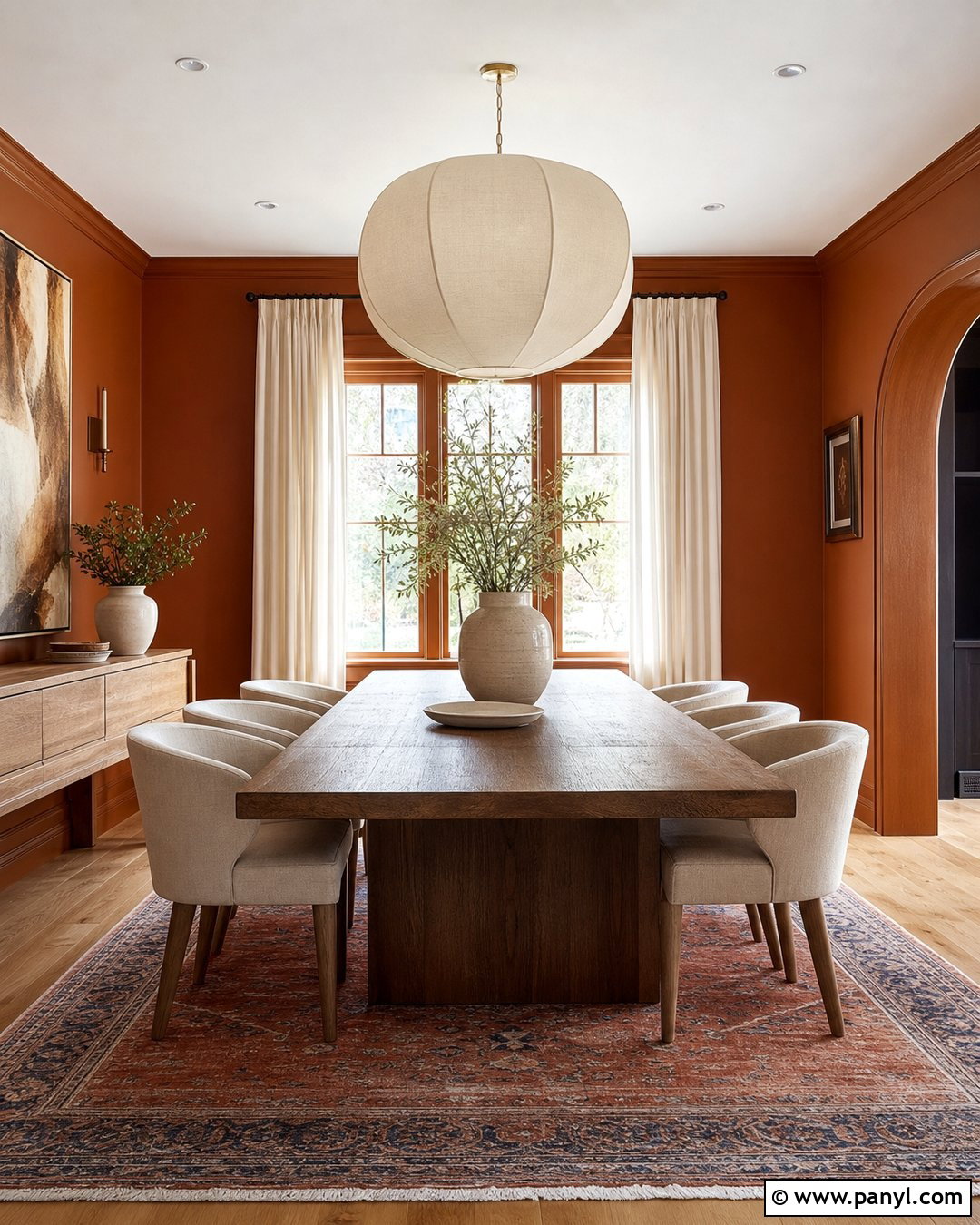
A terracotta feature wall and blue dining chairs form a lively but controlled color combination. Paint the wall behind a sideboard in a clear burnt-clay shade, leaving the other walls creamy white. Choose upholstered chairs in muted denim, slate blue, or deep teal and arrange them around a medium oak table. Repeat terracotta sparingly through a patterned rug or ceramic centerpiece so the feature wall remains dominant. A white globe chandelier keeps the upper portion bright, while brushed brass hardware adds warmth to the sideboard. Hang one oversized landscape or abstract print instead of several small frames. This setup gives an open-plan dining area a recognizable identity without enclosing it in strong color, making the design especially useful beside a neutral kitchen or living room.
11. Terracotta Kitchen Walls With Cream Cabinets
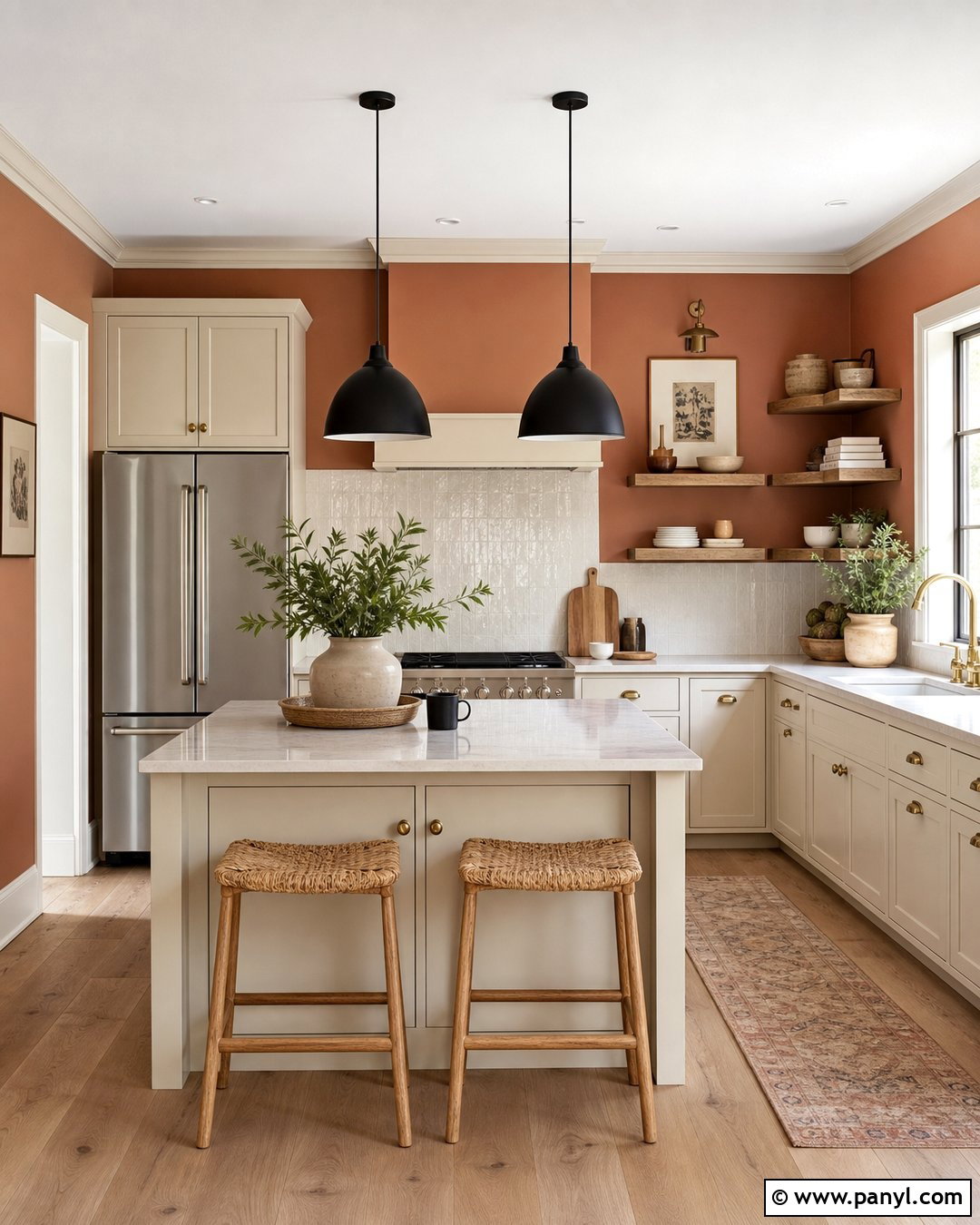
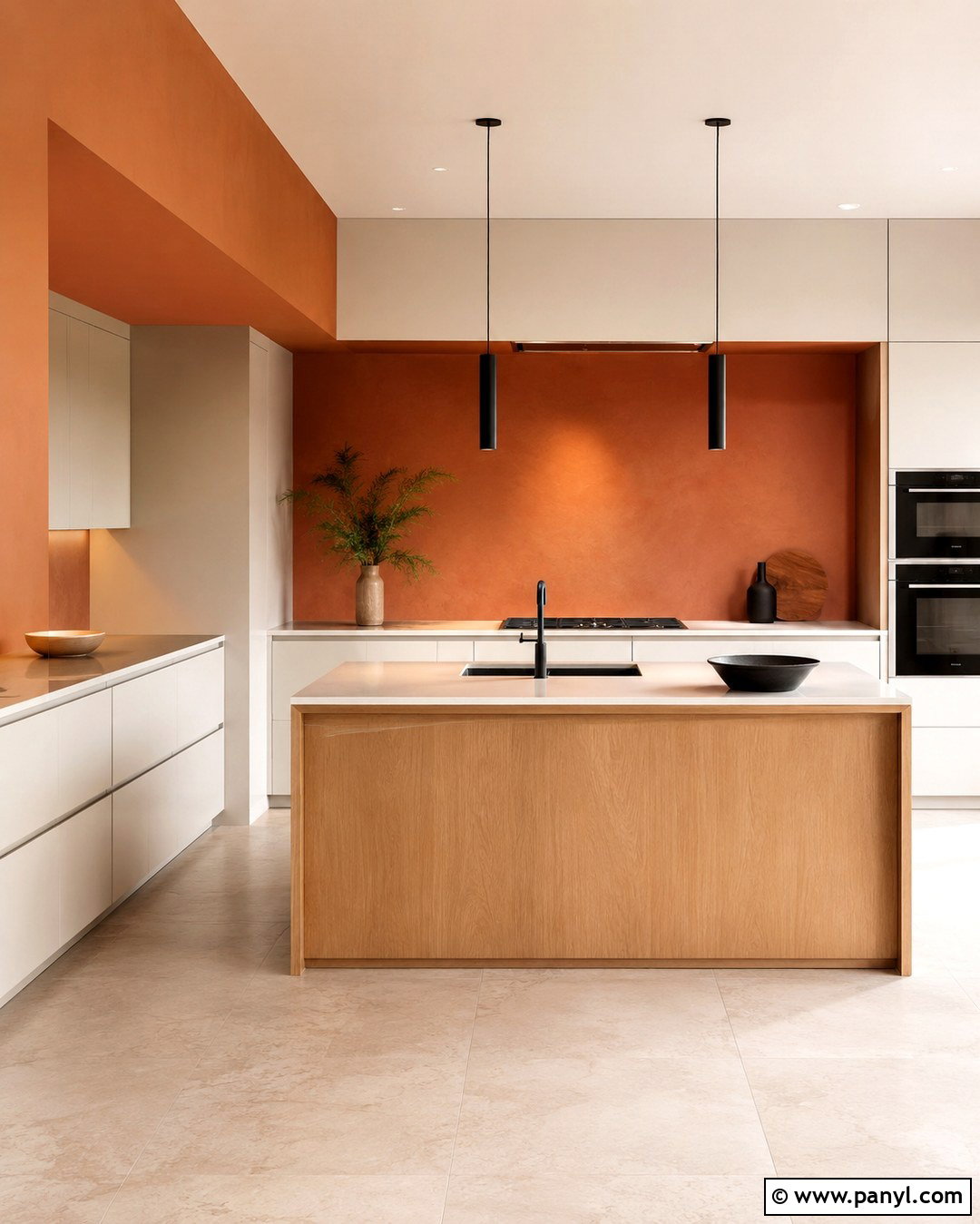
Terracotta walls can warm a cream kitchen while maintaining a clean, open appearance. Choose a soft clay paint with muted orange undertones and apply it above the backsplash and around the breakfast area. Pair it with creamy cabinet fronts, aged brass hardware, and light quartz countertops. Medium oak flooring and woven counter stools continue the natural palette without repeating the wall color too literally. Use a simple off-white backsplash so cooking surfaces remain bright and easy to coordinate. Black pendant lights provide a small amount of graphic contrast. Keep countertop accessories in wood, stone, or cream ceramic to reduce visual clutter. The completed kitchen feels welcoming and current, yet the restrained cabinetry and durable neutral finishes allow the terracotta wall color to be changed later without requiring a major renovation.
12. Terracotta Kitchen Walls With Sage Cabinets
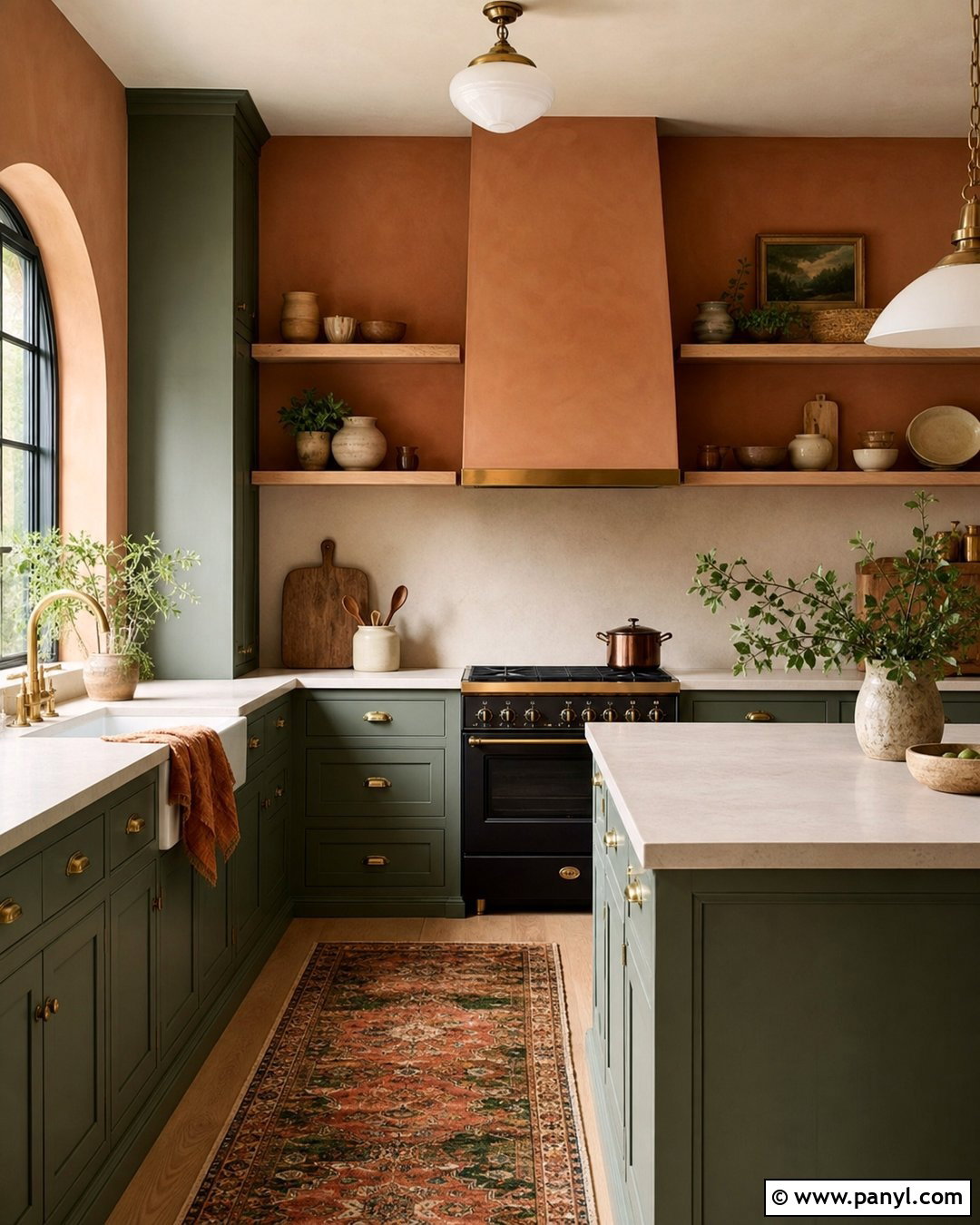
Earthy sage cabinets sit comfortably beside terracotta kitchen walls because both colors appear rooted in nature. Select a slightly dusty green for the lower and upper cabinets, then use a softened red-clay paint on the surrounding walls. White oak shelves, pale stone counters, and an ivory backsplash stop the two colors from becoming muddy. Choose unlacquered brass or aged bronze hardware for a warm, understated finish. A vintage runner containing cream, green, and rust can connect the entire palette along the main walkway. Keep small appliances hidden when possible and display only useful ceramics or glassware. This coordinated kitchen has plenty of personality, but every element remains practical. The pale work surfaces also reflect light, helping the rich painted walls feel inviting instead of enclosed.
13. Terracotta Breakfast Nook Wall
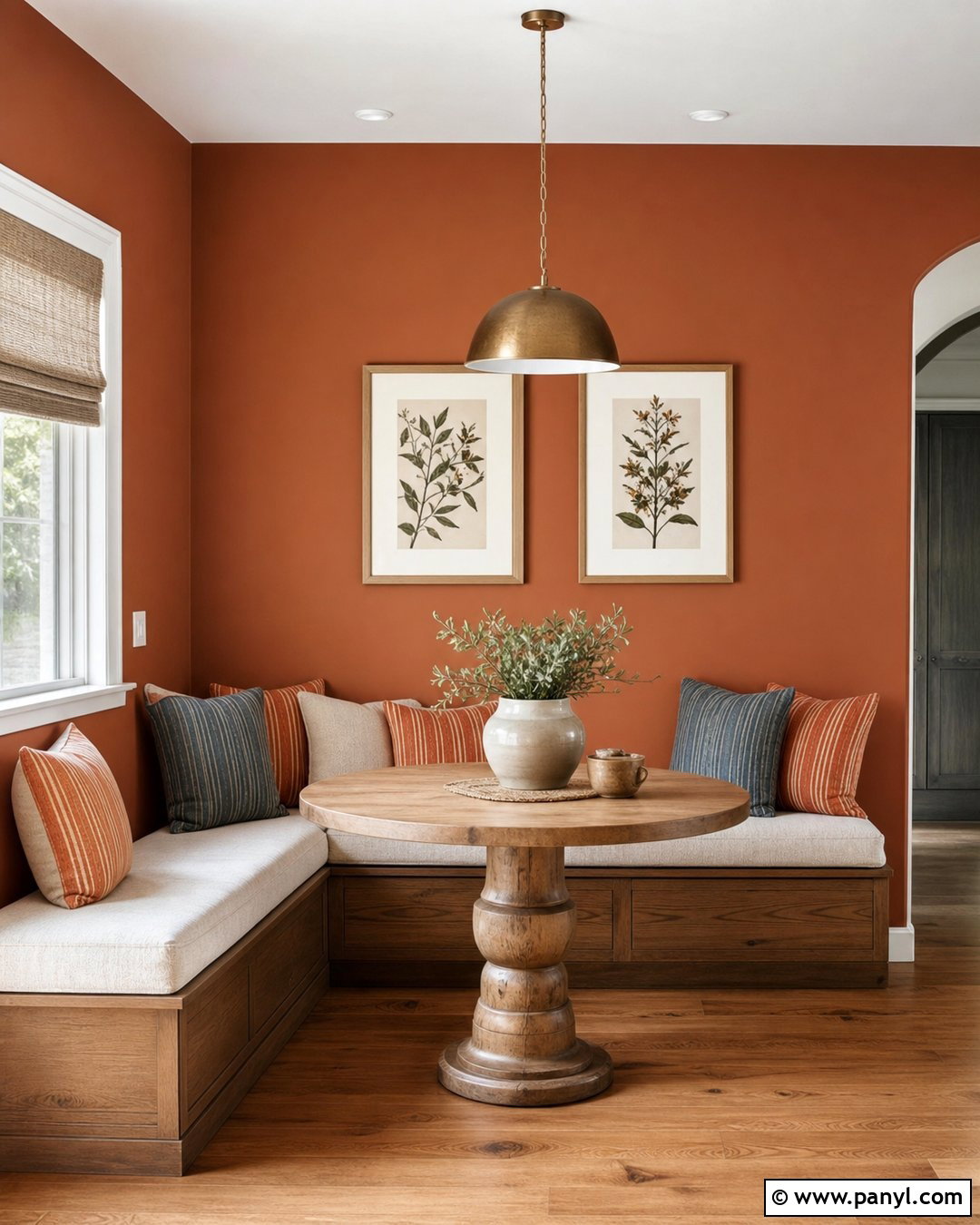
A compact breakfast nook becomes more defined when terracotta wraps around its seating area. Paint the back wall and both short side walls in a warm cinnamon-clay shade, visually separating the nook from a white or cream kitchen. Install an L-shaped oak bench with hidden storage and add durable oatmeal seat cushions. Use striped pillows in rust, cream, and muted blue for subtle pattern. A round pedestal table improves movement through the tight space, while one simple pendant creates a centered focal point. Add a small gallery of food, landscape, or botanical prints in matching wood frames. The surrounding kitchen can remain neutral, allowing this colorful corner to provide warmth and character. Every component contributes to a comfortable place for coffee, casual meals, or homework.
14. Terracotta Bedroom Wall Behind The Bed
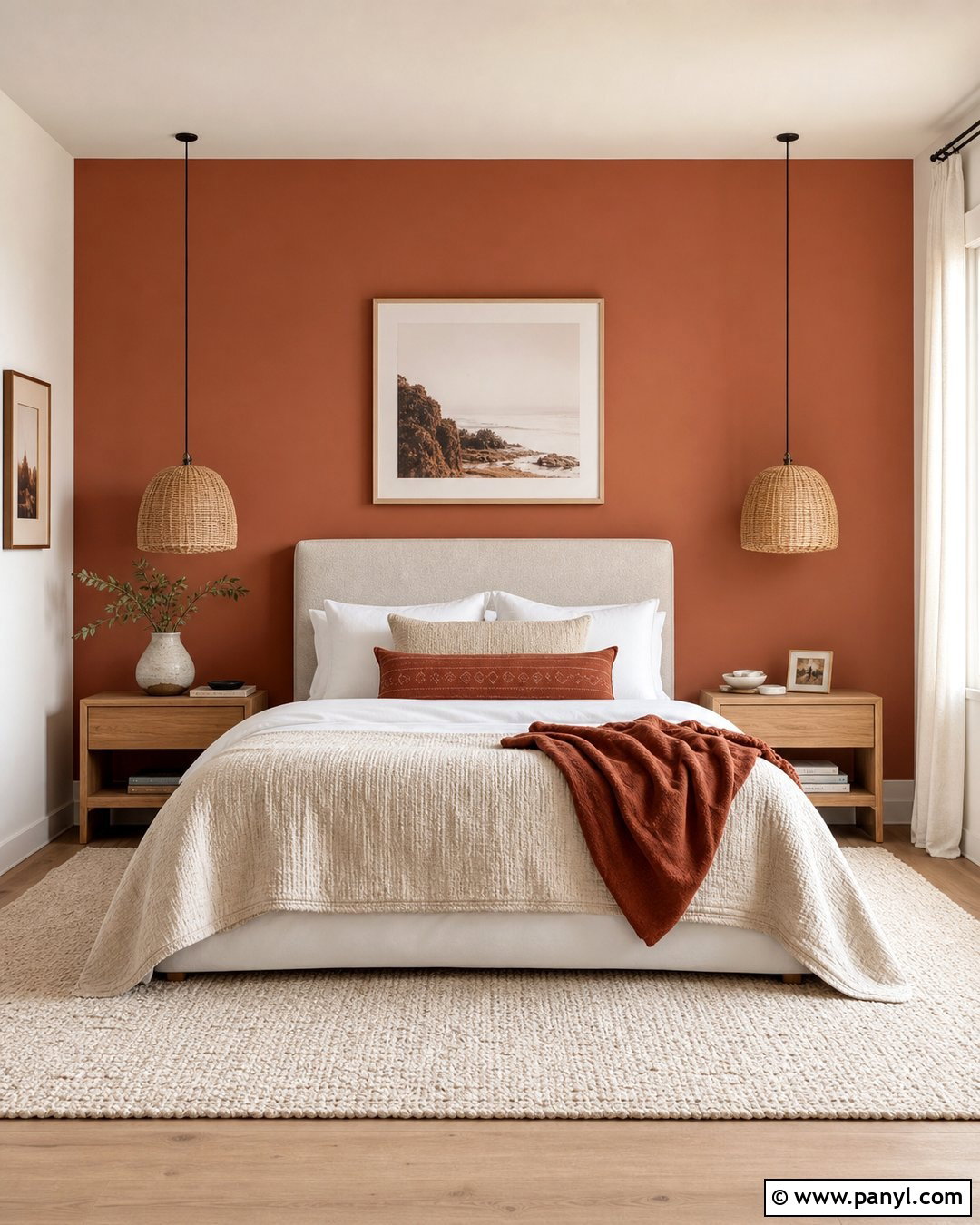
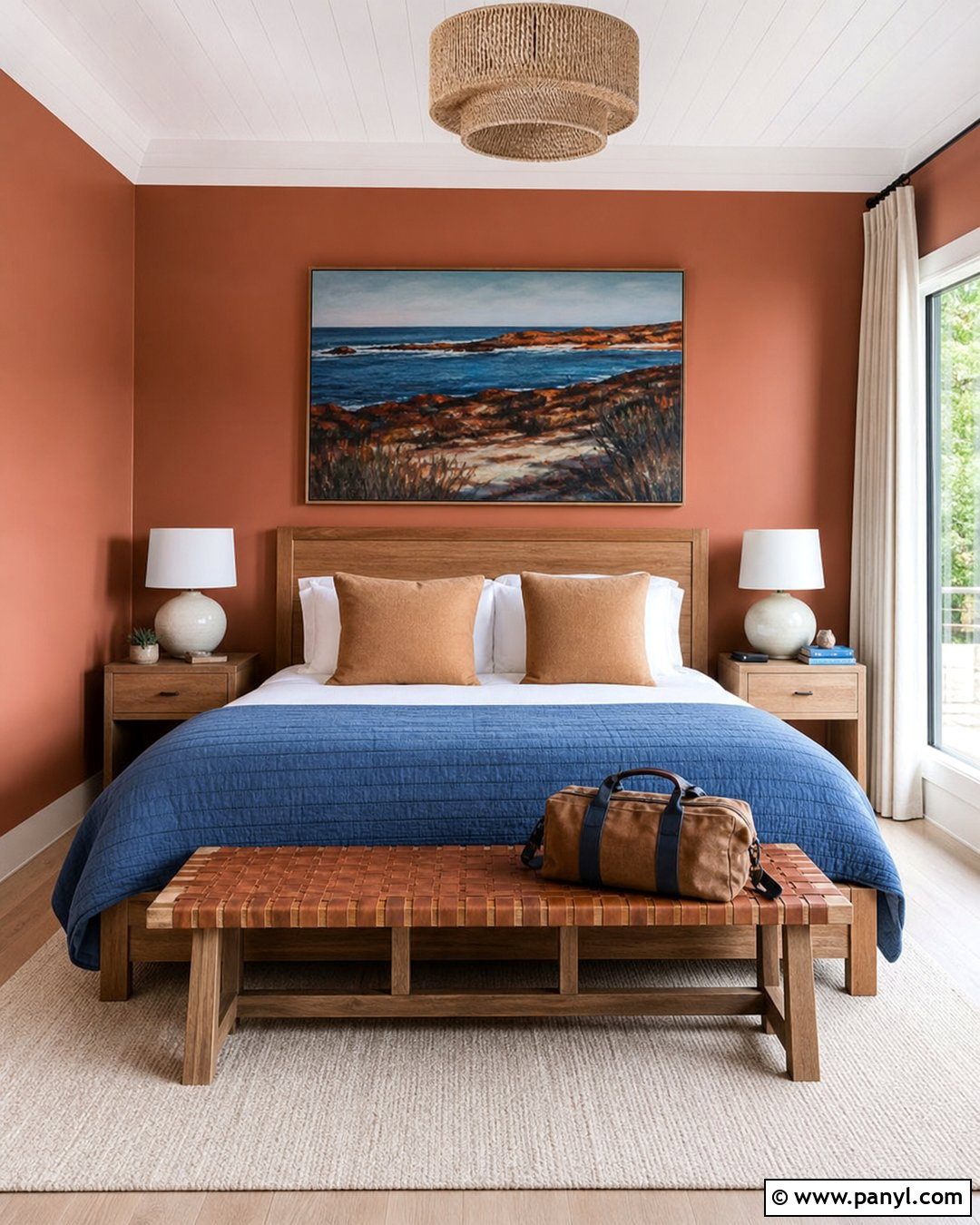
Painting the wall behind the bed is an approachable way to use terracotta in a bedroom. Choose a medium muted shade and position a tall oatmeal linen headboard against it. Dress the bed with white sheets, a sand-colored quilt, and a rust throw that subtly repeats the wall. Light oak nightstands and woven pendants support the natural palette, while dark bronze hardware adds just enough definition. Keep the remaining walls warm white to maintain an airy feeling. A large neutral rug should extend beyond both sides of the bed, visually grounding the complete arrangement. Add one long artwork above the headboard or leave the painted wall bare. The result feels peaceful and finished without relying on excessive accessories, making it easy to adapt across different bedroom sizes.
15. Color Drenched Terracotta Bedroom
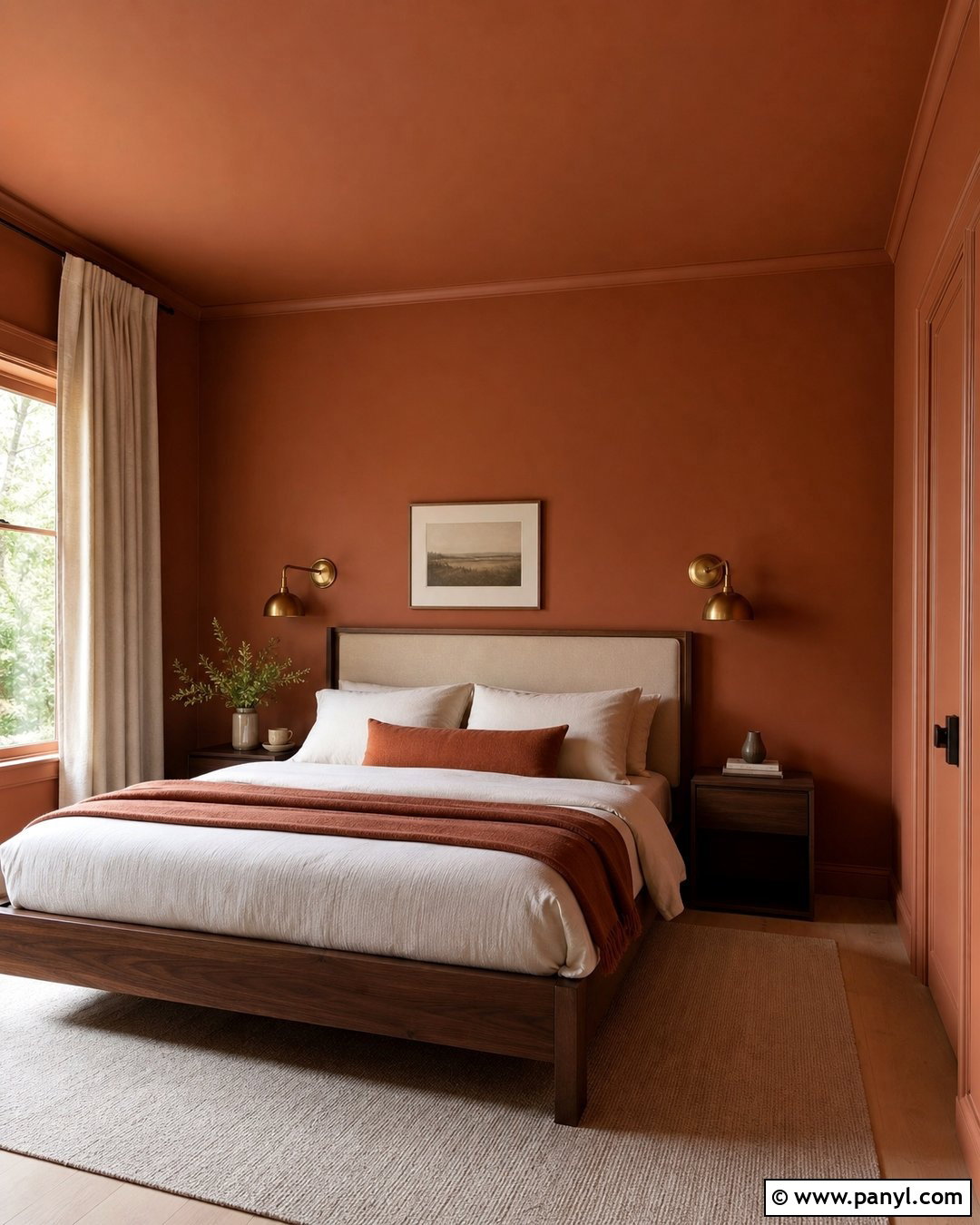
For a restful cocooning effect, carry a subdued terracotta shade across the bedroom walls, trim, doors, and ceiling. Select a brown-based color rather than a brilliant orange so the space remains soothing. Add a low walnut bed with an upholstered cream headboard and layer it with white, tan, and dark rust bedding. Full-length linen curtains in a nearby clay tone deepen the tonal design. Place a pale wool rug beneath the bed to brighten the floor and soften the room acoustically. Small aged brass sconces free the nightstands from bulky lamps. Limit artwork to one or two quiet pieces with light mats. This complete color-drenched treatment reduces visual breaks, making the bedroom feel enveloping, cohesive, and intentionally designed rather than simply painted in a bold color.
16. Terracotta Bedroom Walls With Dusty Pink
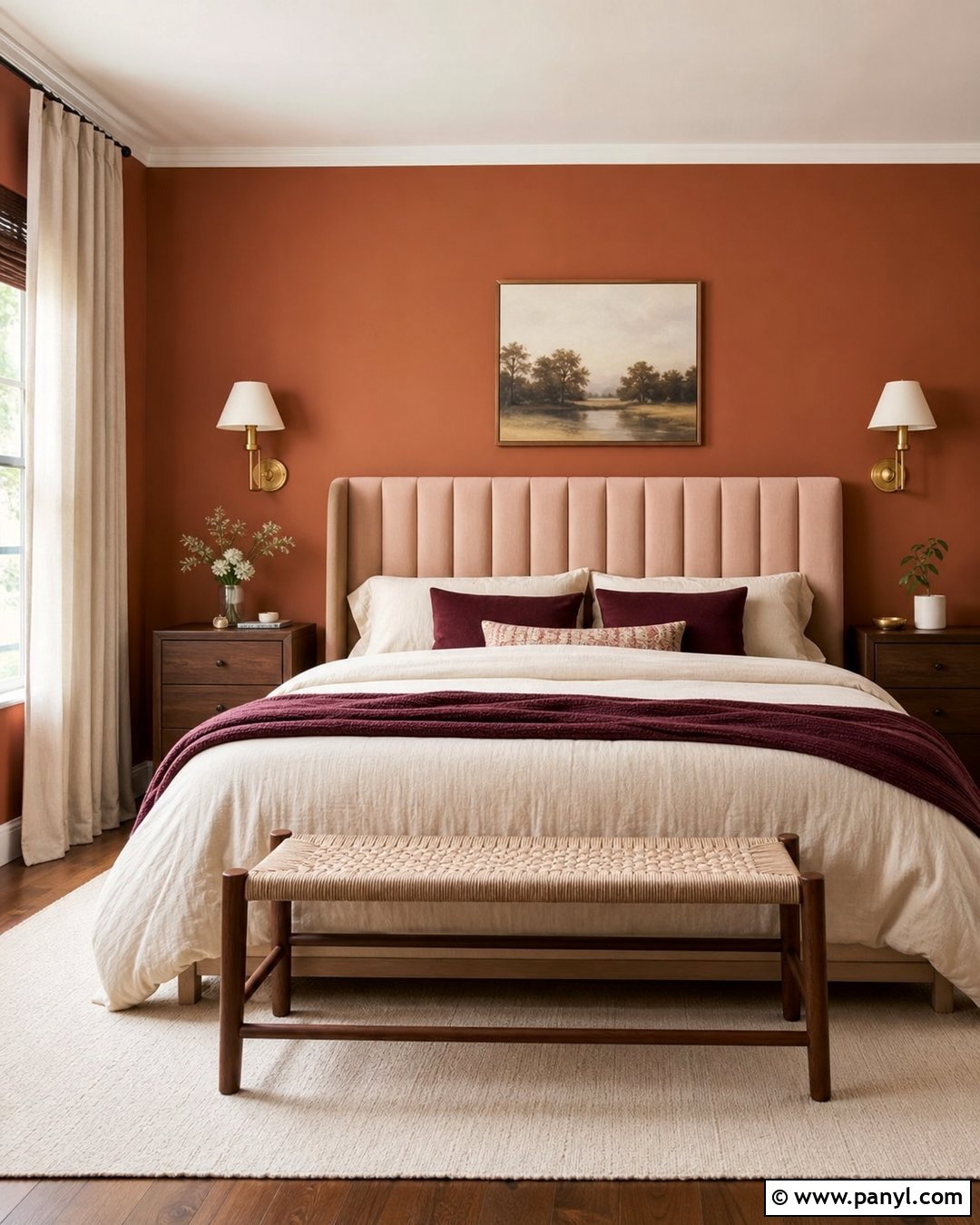
Terracotta and dusty pink produce a soft, sunset-inspired bedroom when their undertones are carefully matched. Cover the walls in pale red terracotta, then introduce pink through a channel-tufted headboard, a lightweight quilt, or full-length curtains. Use cream sheets and an ivory rug to separate the similar warm colors. Walnut nightstands add necessary depth, while brushed brass sconces complement the palette without creating sharp contrast. A small amount of burgundy can appear in a lumbar pillow or artwork for greater dimension. Avoid bright bubblegum pink and strongly orange terracotta, which can compete. Rounded furniture, linen textiles, and simple ceramics complete the calm arrangement. The resulting room feels warm and personal while remaining mature enough for a primary bedroom or sophisticated guest space.
17. Terracotta Bedroom Walls With Walnut Furniture
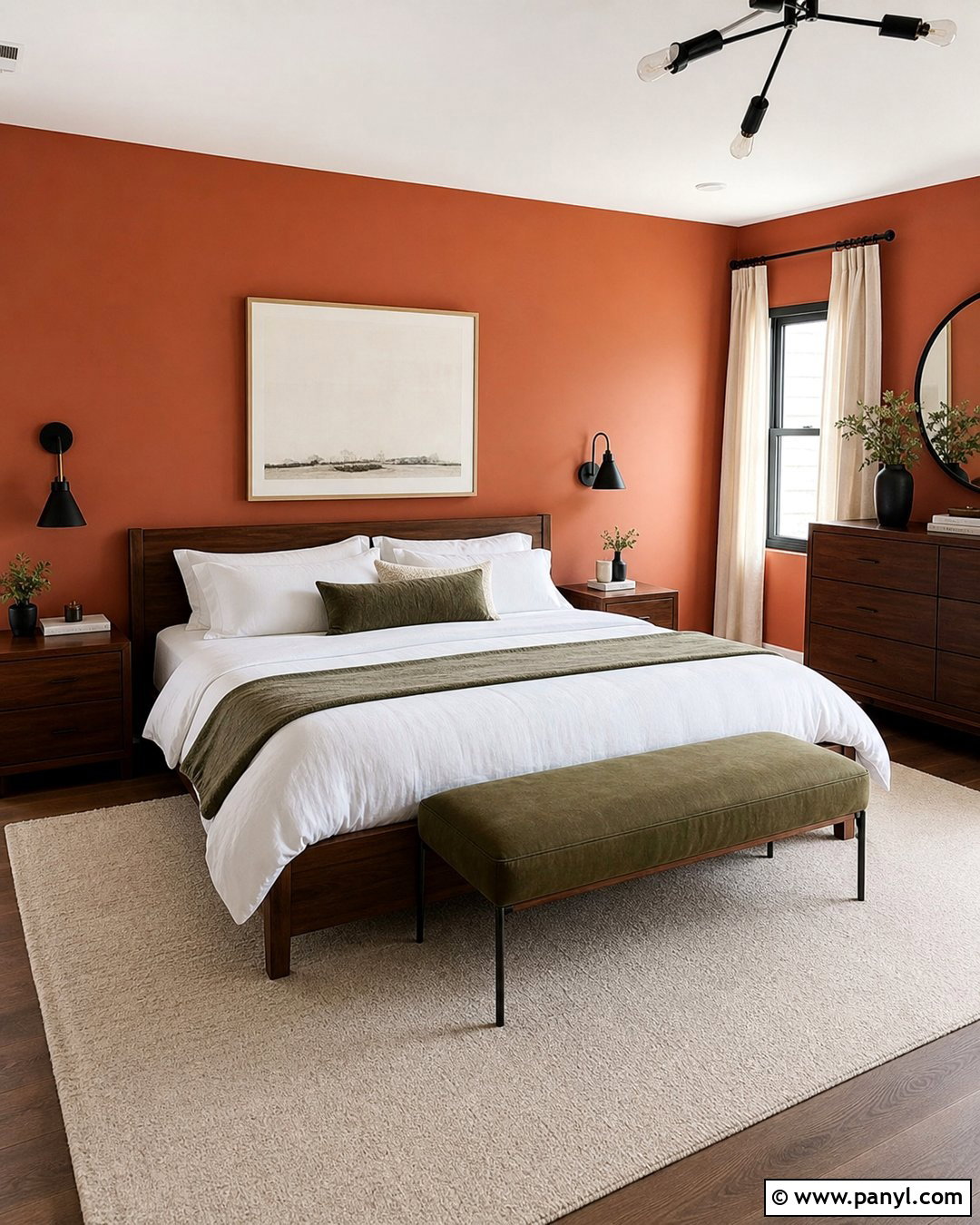
Rich walnut furniture brings out the brown undertones in terracotta bedroom walls. Use a medium clay color around the entire room and select a walnut bed, matching nightstands, and a streamlined dresser. Prevent the dark wood and paint from feeling heavy by adding crisp white bedding, flax linen curtains, and a large cream rug. Black metal sconces introduce clean structure, while a bench upholstered in muted olive gives the palette subtle contrast. Keep decorative objects minimal and choose artwork with pale backgrounds. If the room has limited daylight, use a lighter terracotta and bright ceiling paint. The completed design feels grounded and timeless, with the warm wall color connecting every wooden piece. It works particularly well for anyone who wants a cozy bedroom without overly rustic decoration.
18. Light Terracotta Walls In A Small Bedroom
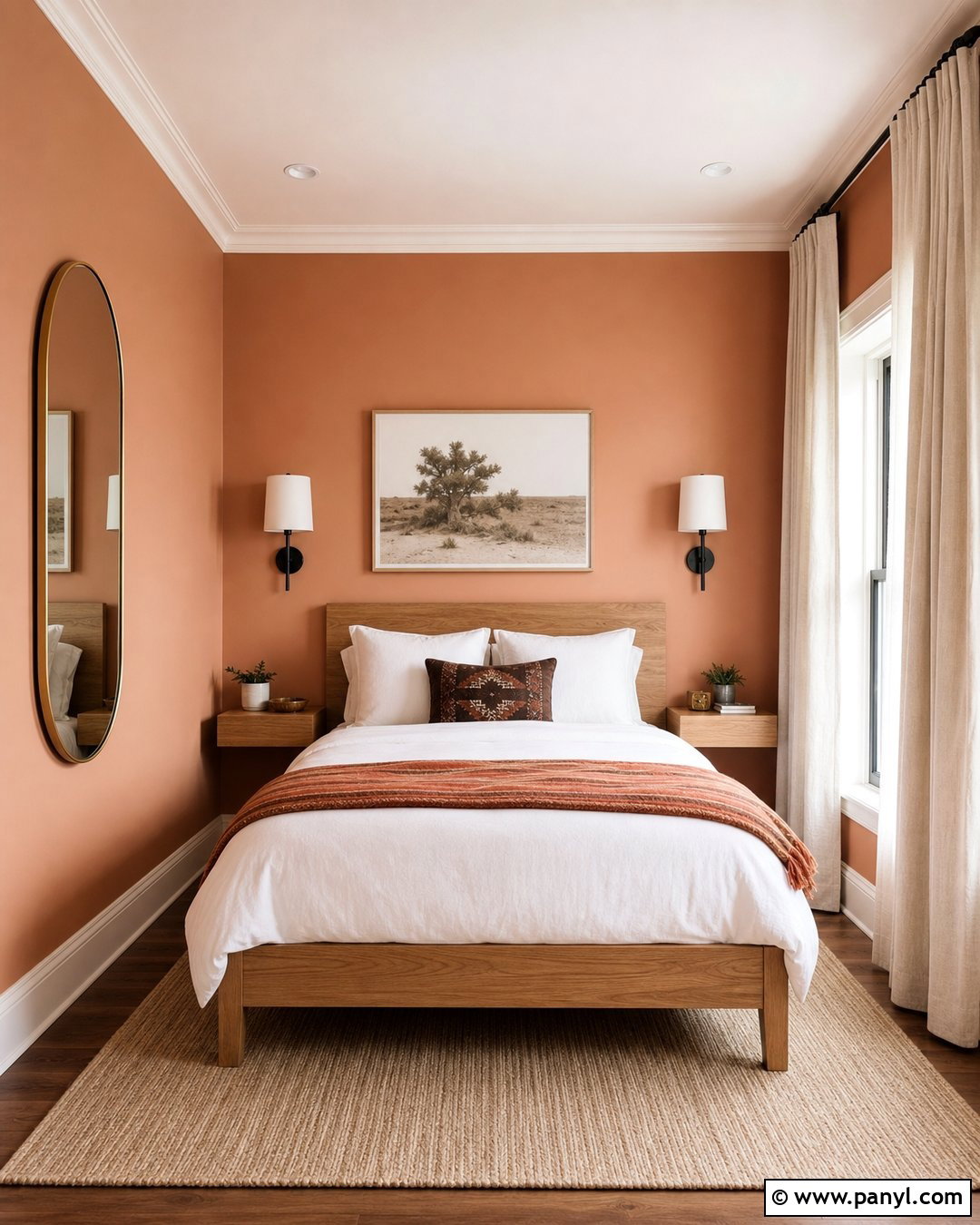
A pale terracotta can make a small bedroom feel warm without visually shrinking it. Look for a sandy clay shade with pink or beige undertones and apply it to all walls. Paint the trim and ceiling soft ivory to maintain gentle contrast. Choose a compact bed with a light oak frame, narrow wall-mounted nightstands, and plug-in sconces that preserve floor space. White bedding keeps the center of the room bright, while a striped rust and cream throw adds quiet pattern. Hang curtains close to the ceiling and allow them to reach the floor, creating greater perceived height. One mirror placed opposite a window can distribute daylight. This complete setup uses the wall color as atmosphere while keeping the furniture light, functional, and properly scaled.
19. Terracotta Bathroom Walls With White Tile
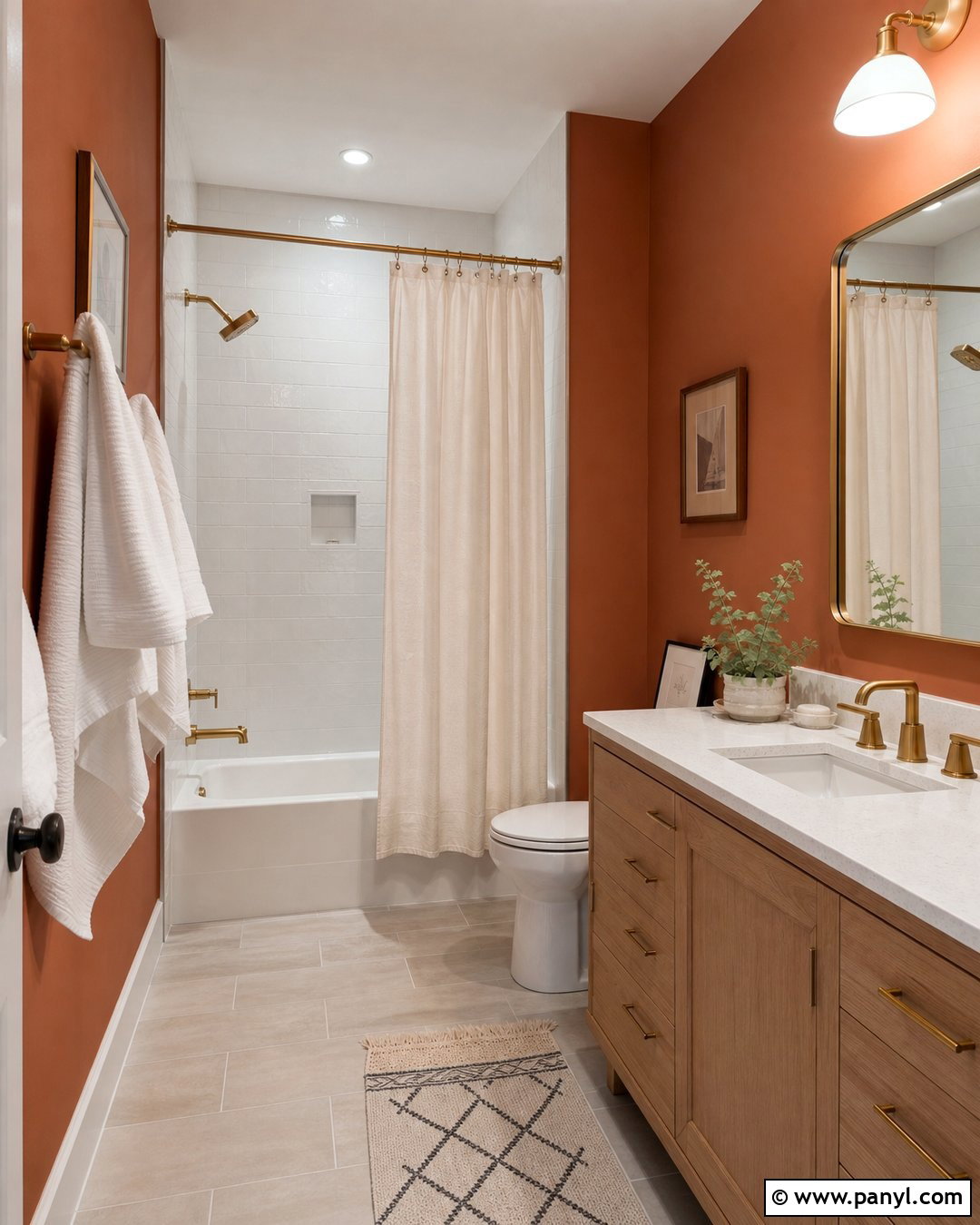
Terracotta walls can make a white-tiled bathroom feel less clinical and more inviting. Use glossy white rectangular tile around the shower and lower wet areas, then paint the upper walls in a muted clay color formulated for humid rooms. Choose a light oak vanity with a white stone counter and simple brushed brass fixtures. A frameless mirror keeps the small room visually open, while globe sconces provide even task lighting. Repeat the wall tone through one patterned bath mat rather than adding many matching accessories. White towels and a pale shower curtain maintain freshness. The contrast between clean tile and earthy paint gives the bathroom a balanced identity. It also allows the terracotta to make an impact without covering moisture-prone surfaces that need more durable finishes.
20. Terracotta Bathroom Walls With Teal Vanity
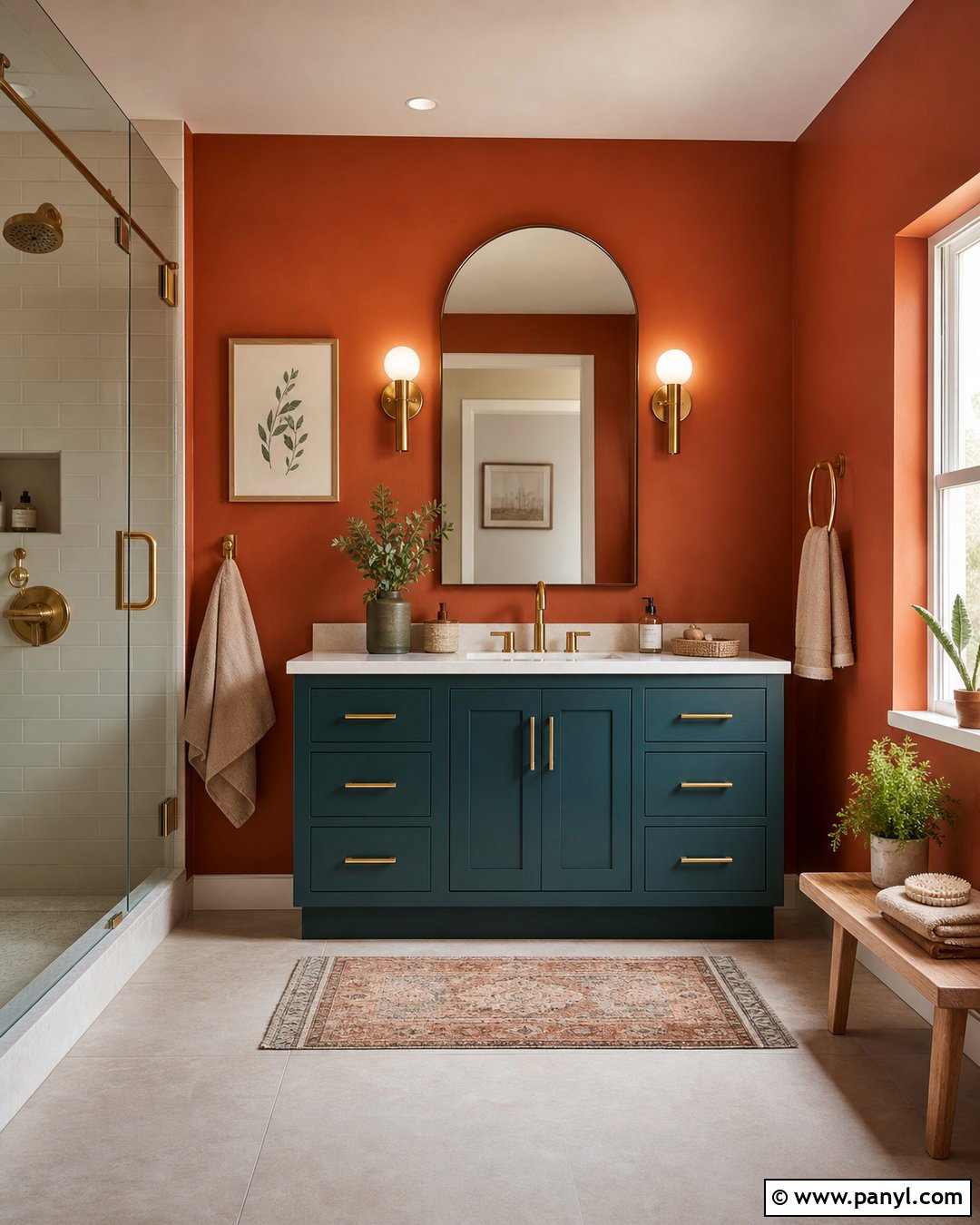
A deep teal vanity creates striking contrast against terracotta bathroom walls. Choose a dark, slightly muted blue-green rather than a bright tropical tone, then pair it with a warm red-clay paint. Use a white quartz vanity top, cream floor tile, and a large arched mirror to lighten the compact space. Brushed brass faucets and sconces complement both strong colors. Keep towels, shower curtains, and storage baskets neutral so the palette stays focused. If the bathroom lacks natural light, select a midtone terracotta and place sconces on both sides of the mirror for balanced illumination. The finished design feels colorful and confident, yet every permanent surface remains easy to coordinate. Teal also cools the warmth of the walls, preventing the room from looking overly orange.
21. Dark Terracotta Powder Room Walls
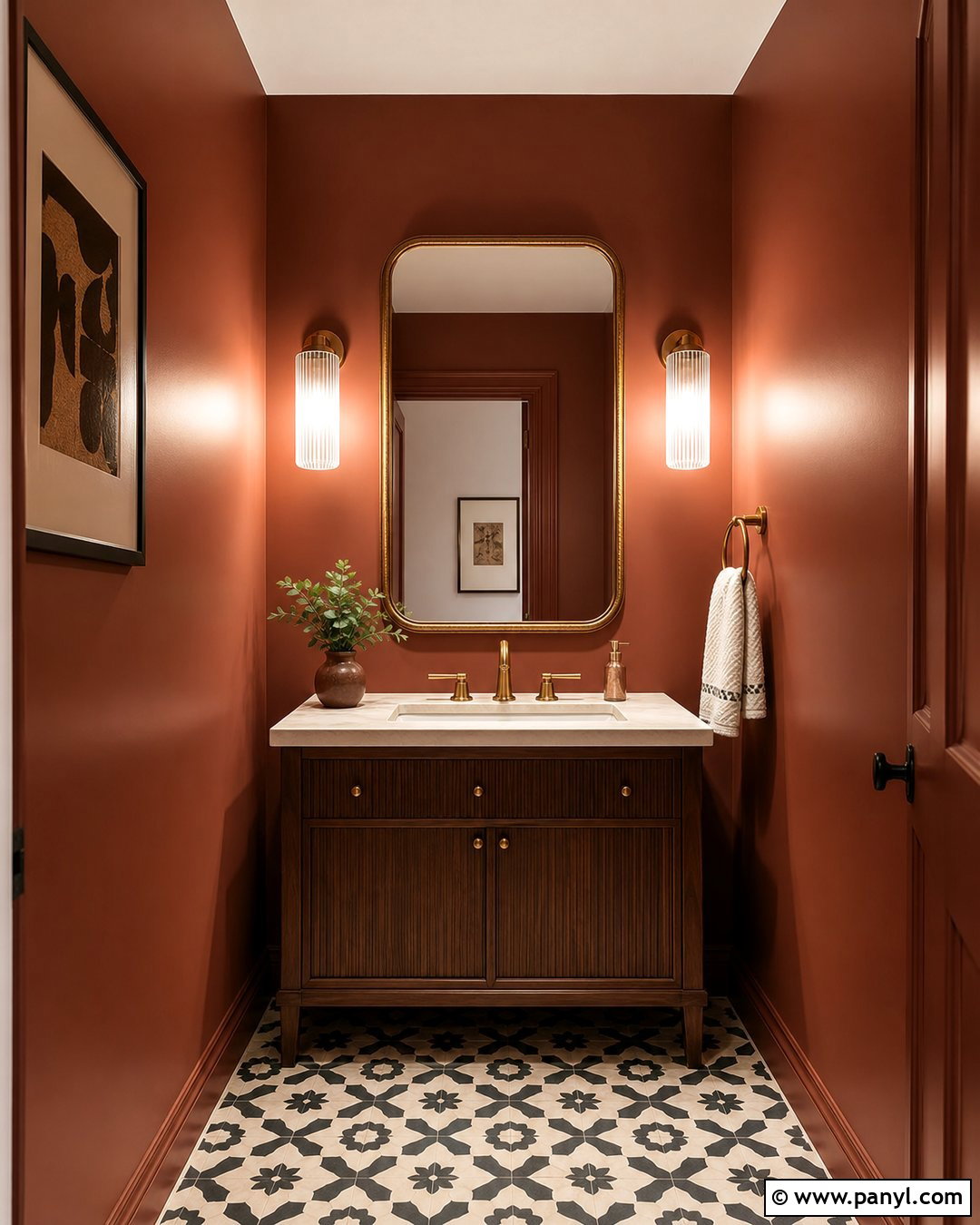
A powder room is an ideal place to experiment with dark terracotta because the limited space can support a dramatic, enveloping finish. Paint the walls, trim, door, and ceiling in a deep baked-clay shade with brown-red undertones. Add a compact walnut vanity, creamy stone sink, and aged brass faucet. A large mirror with a thin brass frame reflects light and breaks up the saturated surface. Install two bright wall sconces at face level rather than relying on one overhead fixture. Use patterned floor tile in cream and charcoal for structure, then keep towels and accessories pale. The completed powder room feels intimate but polished. Because visitors experience it briefly, the bold color becomes memorable rather than tiring, especially when reflective and light-colored materials are thoughtfully distributed.
22. Terracotta Home Office Wall With Oak Desk
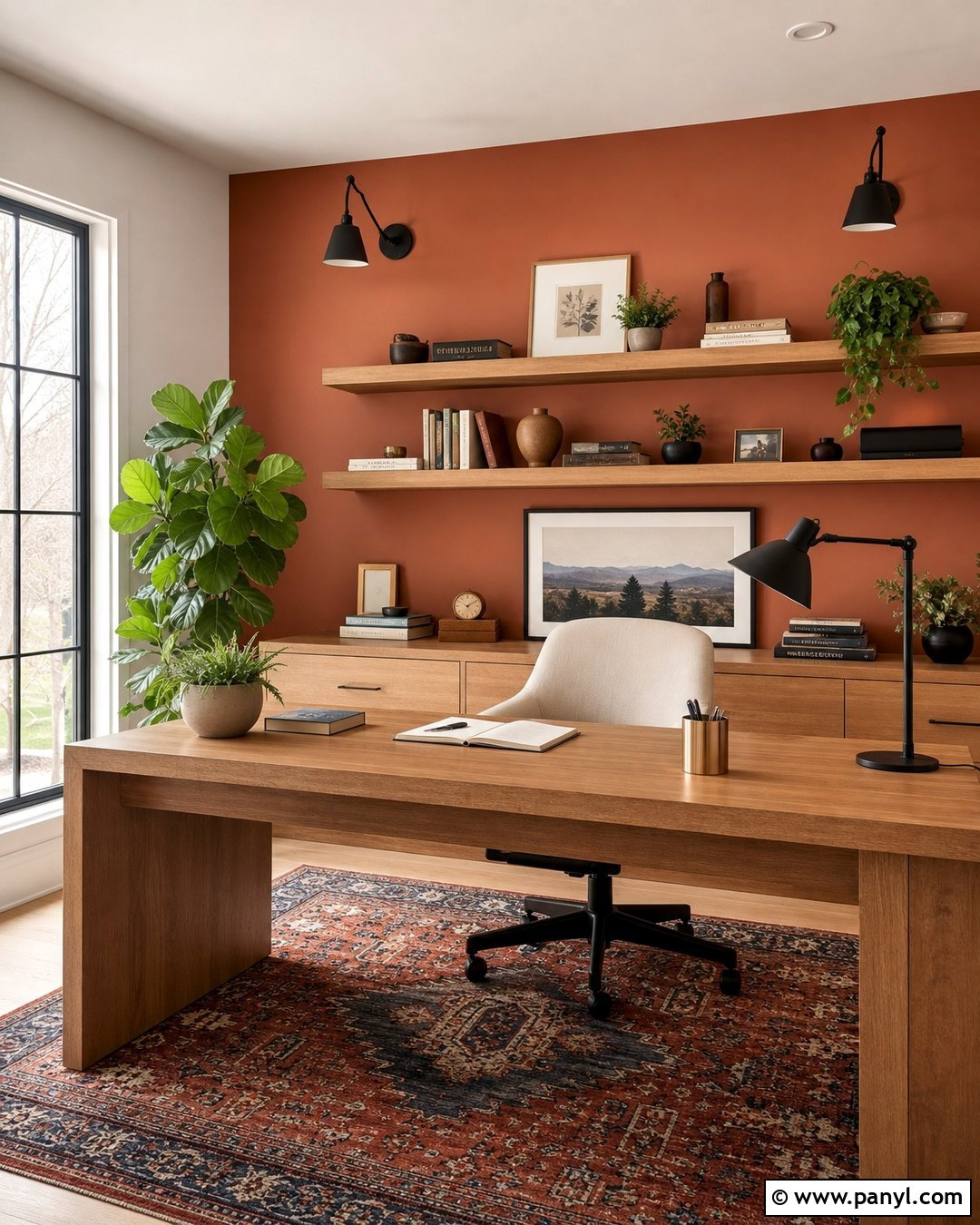
A terracotta wall can give a home office energy while remaining calmer than a bright primary color. Paint the wall behind the desk in a medium clay shade and leave the other walls warm white. Position a broad oak desk against the feature wall with a comfortable cream upholstered chair. Add closed storage below and floating oak shelves above, leaving enough negative space to prevent visual distraction. A patterned rug containing rust, beige, and navy defines the work zone. Use a matte black task lamp and matching frames to provide clear edges. One leafy plant introduces cooler color and improves the natural feeling of the setup. This complete arrangement creates a professional background for video calls while offering organized storage, practical lighting, and an inviting place to focus.
23. Terracotta Home Office Walls With Green Built-Ins
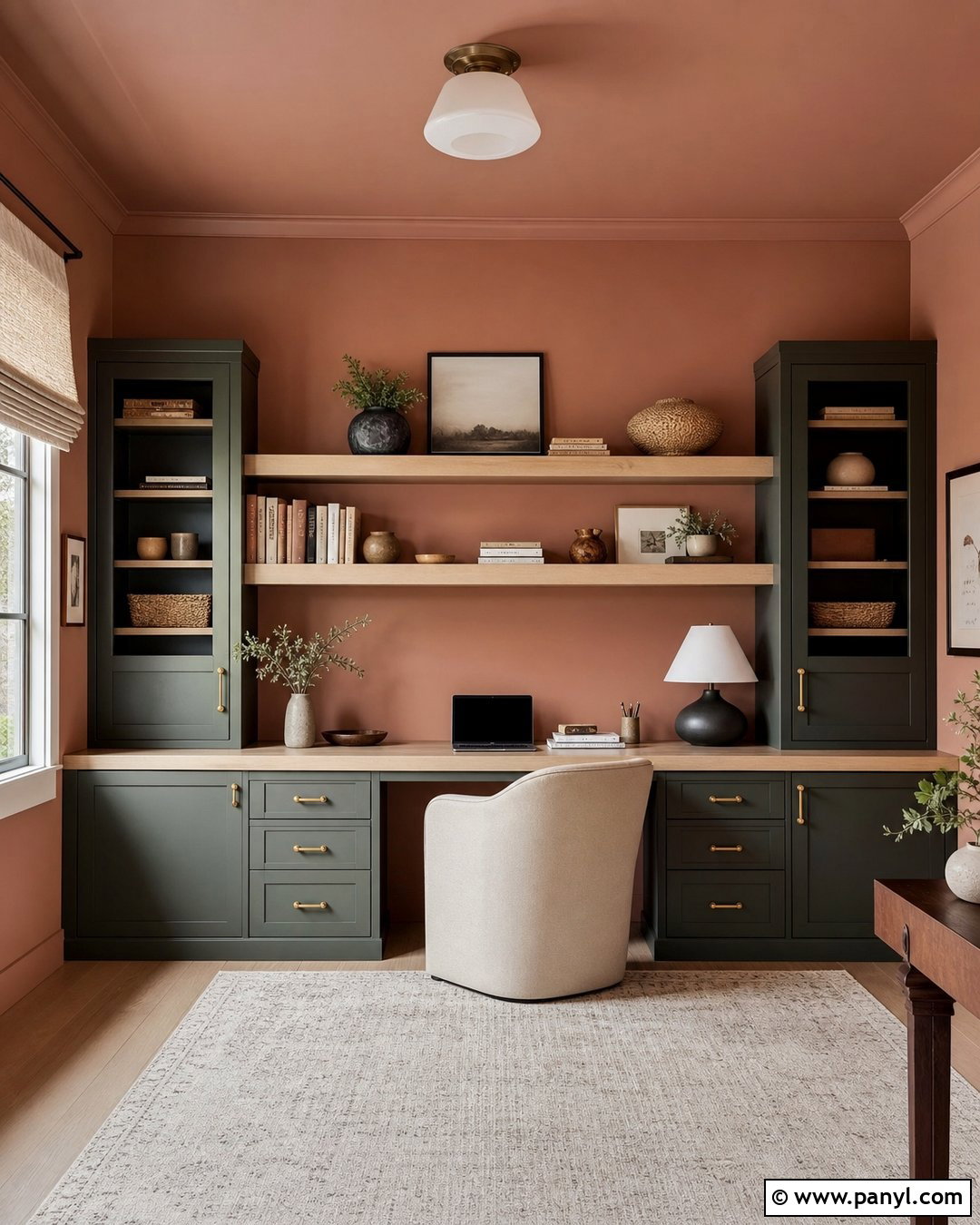
For a more immersive workspace, surround muted terracotta walls with dark olive built-in storage. Run cabinetry along one full wall and include a central desk surface or open display area. Natural wood shelves prevent the green section from appearing too solid, while a cream desk chair and pale rug brighten the floor. Choose aged brass cabinet pulls and an adjustable wall lamp for warm detail. Keep office supplies concealed behind doors and use the open shelves for a restrained mix of books, baskets, and ceramics. The wall color should contain enough brown to complement the olive rather than competing with it. This well-planned office feels substantial and organized. It also provides a complete palette that is colorful enough to inspire creativity without becoming visually distracting during long workdays.
24. Terracotta Entryway Walls With Black Accents
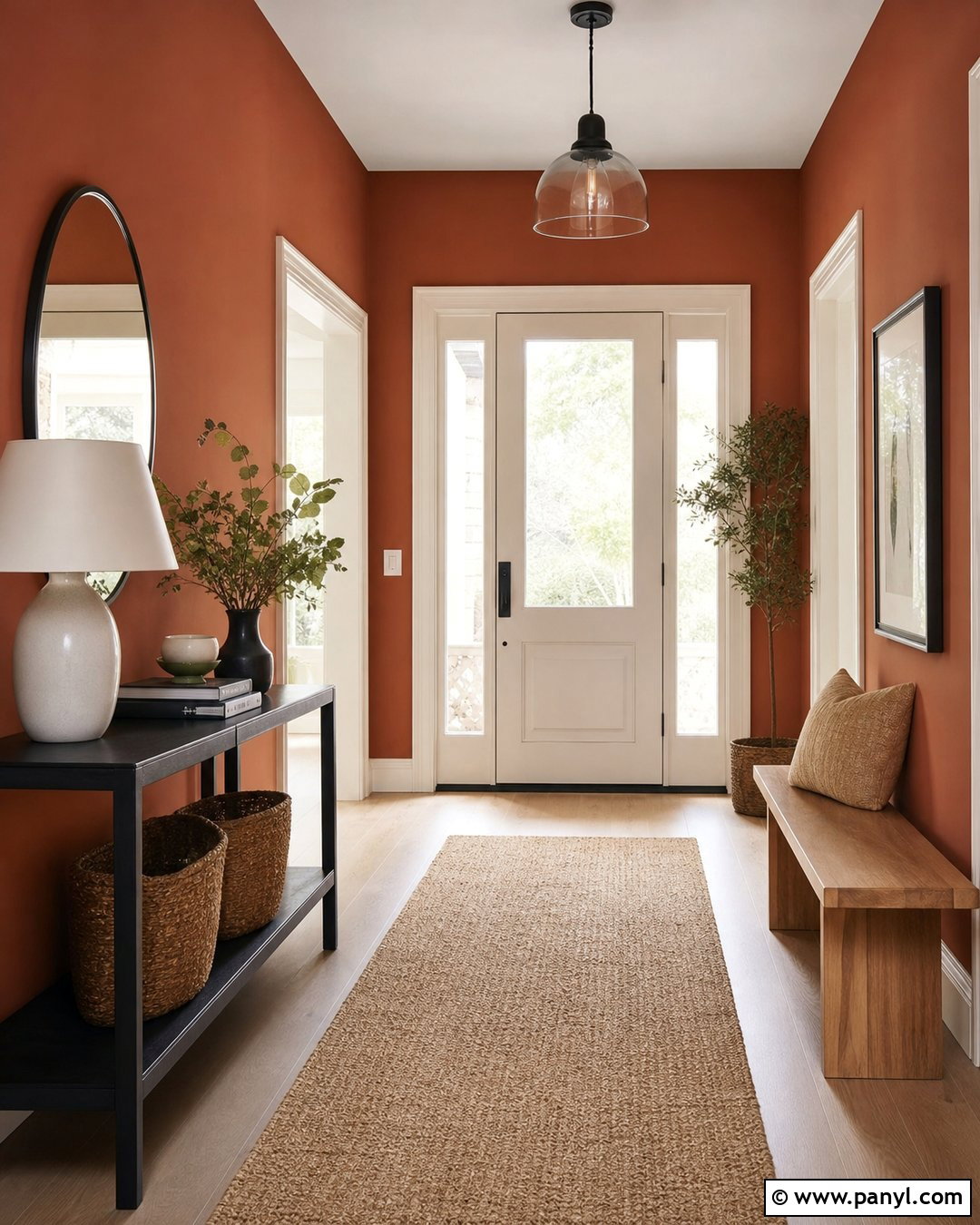
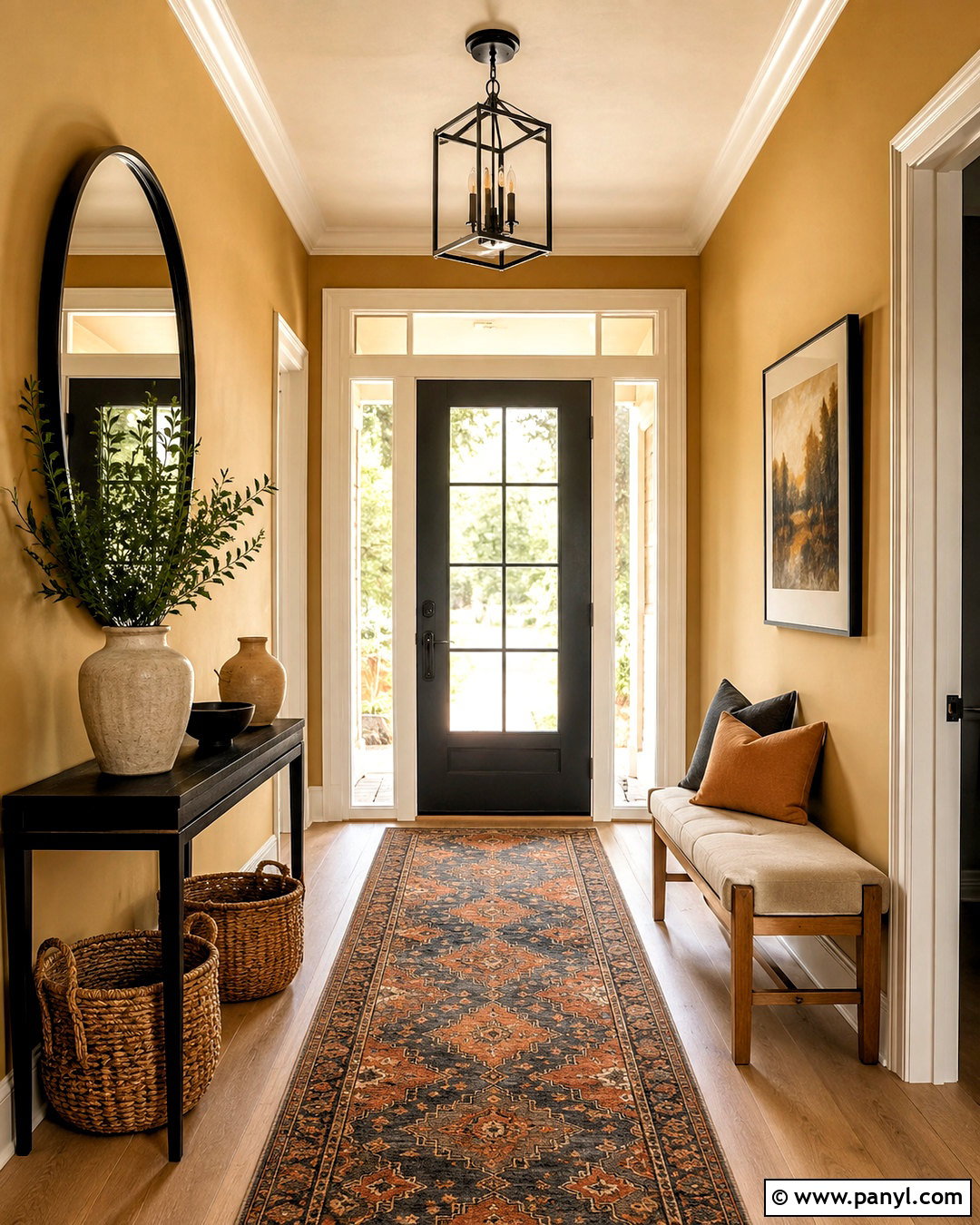
An entryway painted in terracotta creates an immediate sense of warmth and separates the arrival area from neutral adjoining rooms. Cover the walls in a rich, medium clay color and keep the ceiling warm white. Add a narrow black console, a large rounded mirror, and a simple black pendant for clean definition. A woven runner softens the walkway, while a light oak bench provides a practical place to remove shoes. Use closed baskets or drawers to control everyday clutter. One ceramic lamp and a small arrangement of branches are enough to finish the console. Paint connecting doors and baseboards creamy white for contrast. The resulting entry feels welcoming and purposeful, combining storage, seating, lighting, and decoration rather than depending on wall color alone to create an impression.
25. Terracotta Hallway Half Wall
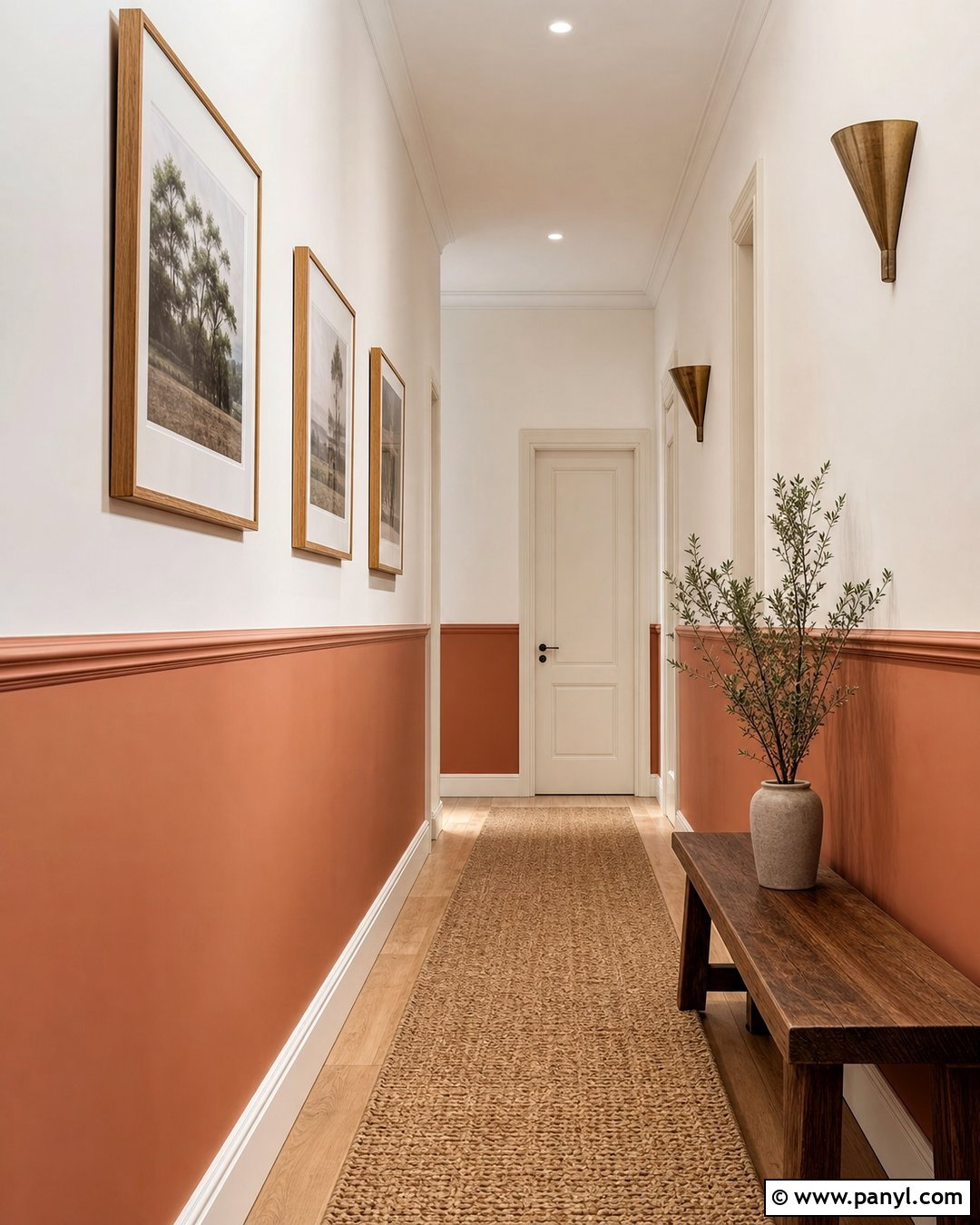
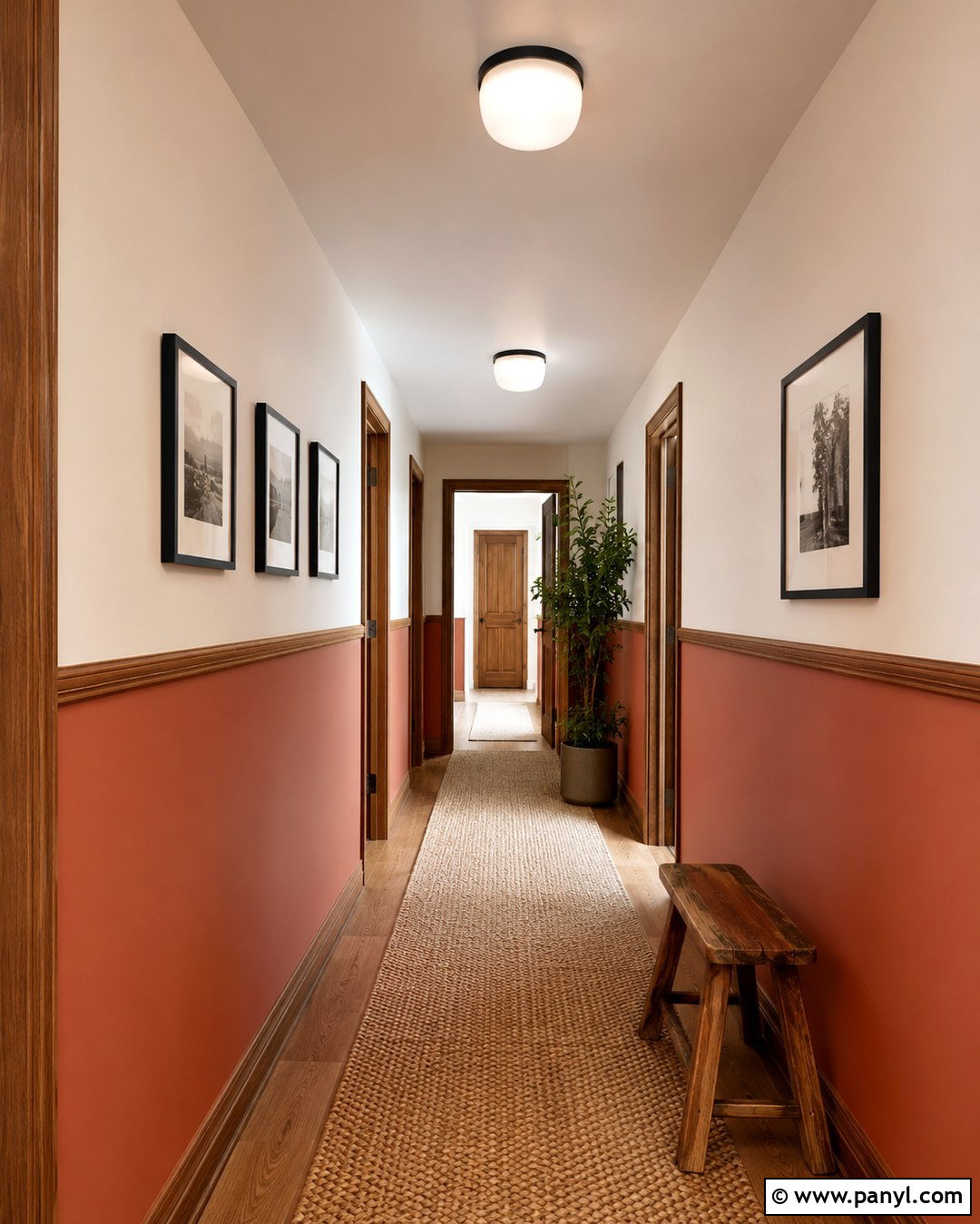
A terracotta half wall gives a narrow hallway color while keeping its upper section light. Paint the lower two-thirds in muted clay and finish it with a simple chair rail or slim wood molding. Use warm white above, continuing the lighter color onto the ceiling and door frames. A long natural-fiber runner leads the eye through the space, while evenly spaced black or oak picture frames create rhythm. Install shallow wall sconces where wiring allows, or select a bright flush-mount fixture that does not crowd the passage. A narrow bench can fit near the entry end for added function. This balanced treatment visually grounds the corridor, conceals everyday marks better than pale paint, and prevents a strong terracotta shade from making the entire hallway feel too enclosed.
26. Terracotta Stairwell Walls With Wood Railing
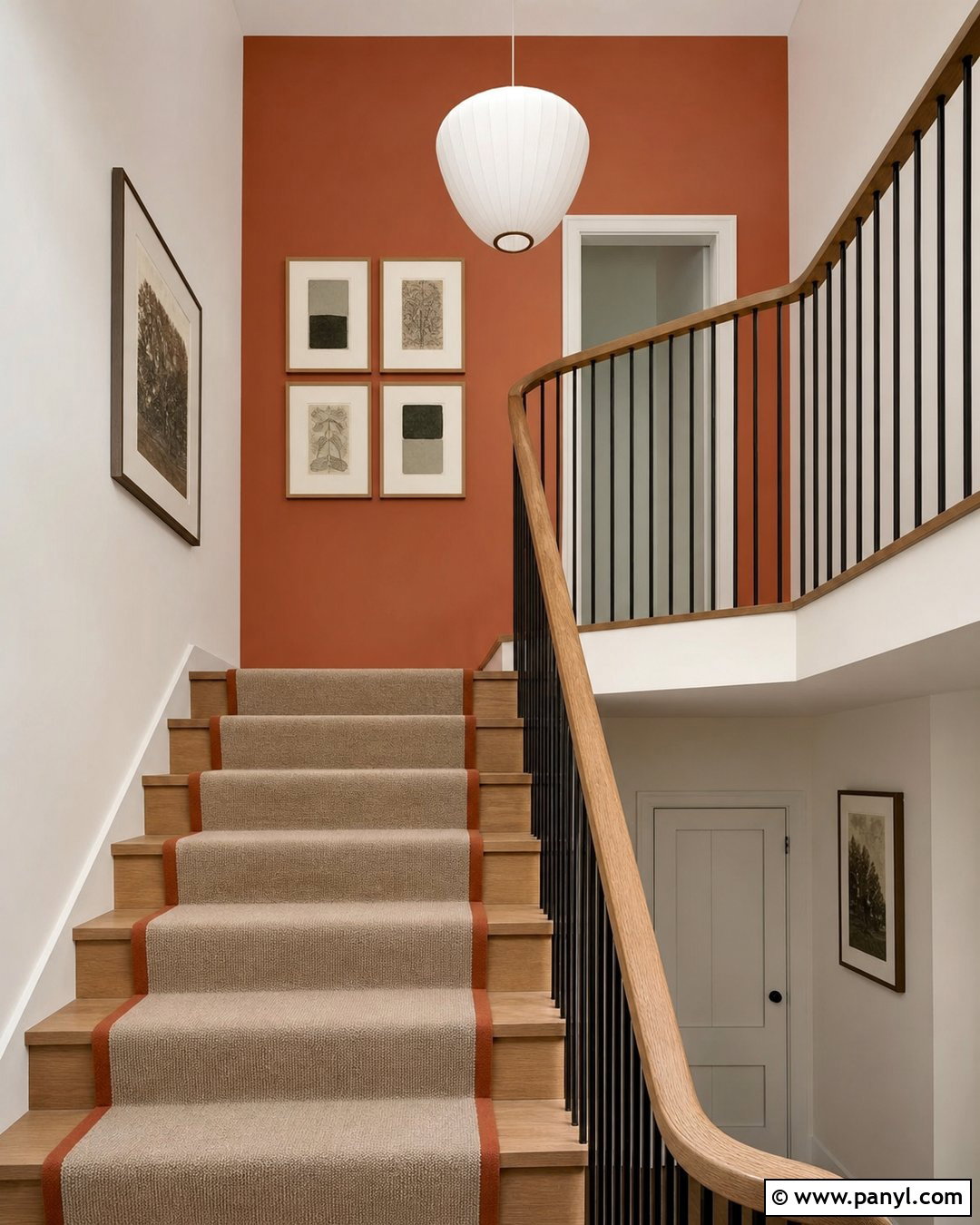
Terracotta can emphasize the height and movement of a stairwell when paired with natural wood. Paint the main stair wall in a warm clay shade and keep the opposite wall, ceiling, and trim soft white. A medium oak handrail connects naturally with the paint, while slim black balusters introduce modern structure. Arrange a vertical gallery of cream-matted artwork that follows the rise of the stairs. Use a neutral stair runner with a subtle rust border to soften footsteps and repeat the wall color. A large pendant positioned over the landing ensures the tall area remains bright. This complete stairwell design combines paint, architecture, textiles, and artwork into one flowing composition. The feature wall becomes visible from multiple floors without saturating every surface in strong color.
27. Terracotta Laundry Room Walls With Cream Cabinets
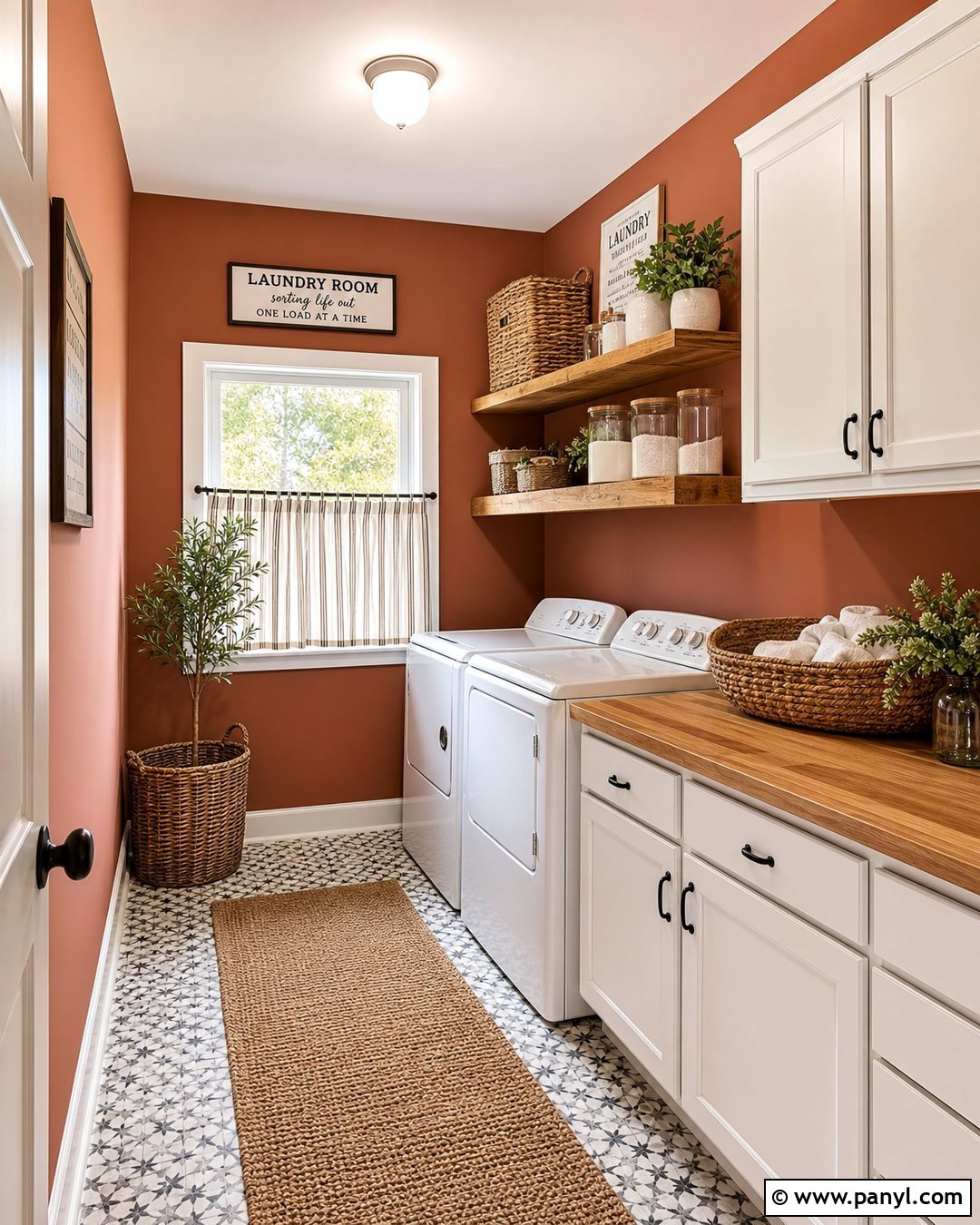
Even a practical laundry room can feel finished with terracotta walls and creamy storage. Apply a soft rust-clay paint around tall cabinets and above the countertop, then use warm white cabinetry to keep the work area bright. A butcher-block counter introduces natural warmth and provides a useful folding surface. Choose durable cream and gray floor tile, woven storage baskets, and simple black cabinet pulls. Open oak shelves can hold glass containers and neatly folded linens, but reserve most supplies for closed cupboards. Add a striped café curtain if the room has a window. The complete scheme makes routine chores feel more pleasant without reducing functionality. Terracotta also gives the compact room a distinct identity while coordinating easily with common white laundry appliances and neutral utility surfaces.
28. Terracotta Mudroom Walls With Olive Cabinets
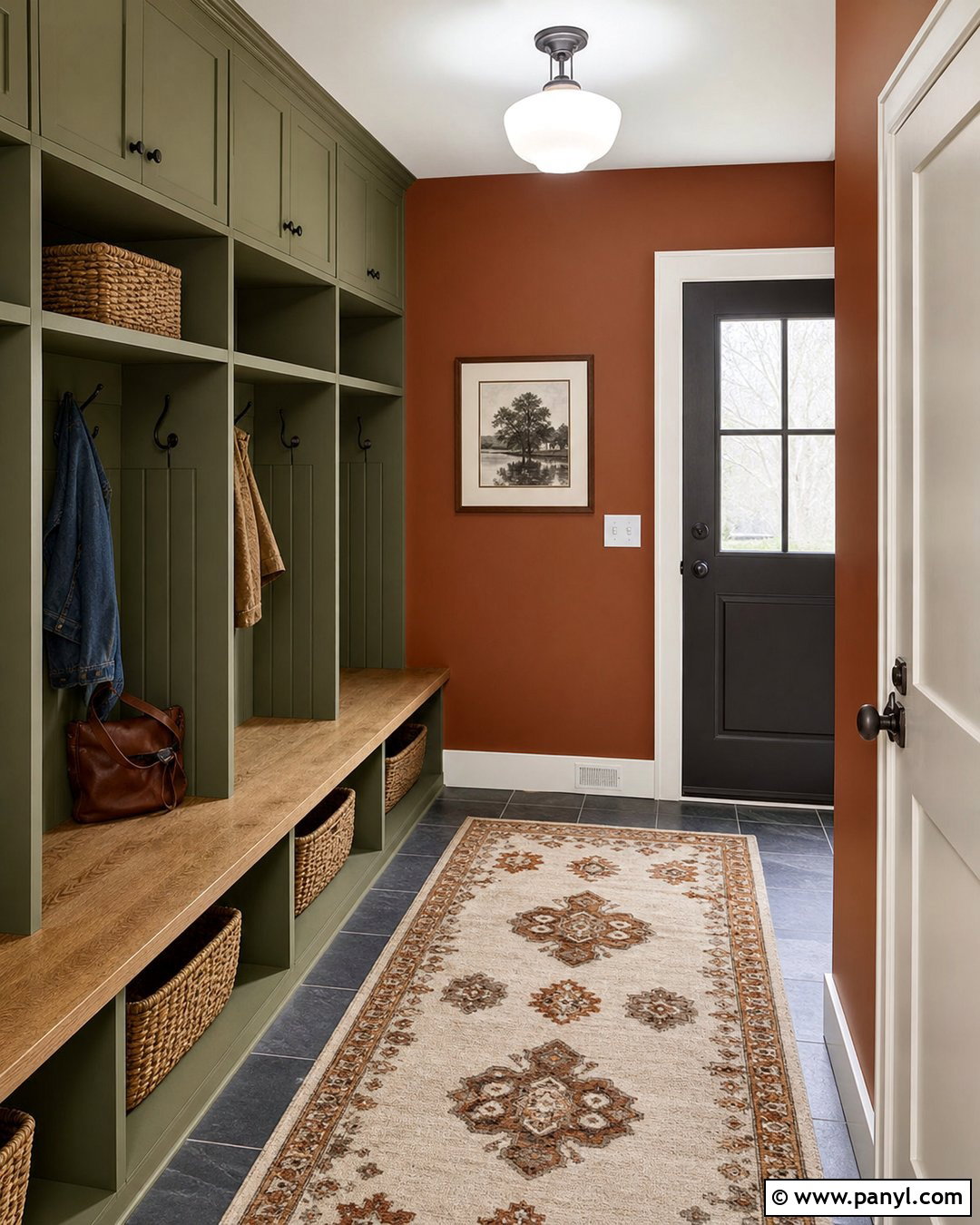
Mudrooms benefit from colors that feel earthy and forgiving. Paint the walls in a medium brown terracotta and install olive green lockers or closed cabinets along one side. Use an oak bench, black hooks, and woven baskets to provide durable storage for shoes, bags, and outdoor items. The floor should be practical, such as gray slate-look tile or warm beige porcelain. A washable runner containing cream and rust softens the central walkway. Keep the ceiling and door trim light to prevent the room from looking too dark. Bright globe or schoolhouse lighting supports everyday tasks and clearly reveals the colors. This coordinated setup turns a transitional utility area into a polished part of the home while ensuring every decorative choice also serves organization, cleaning, or storage needs.
29. Terracotta Nursery Walls With Cream Furniture
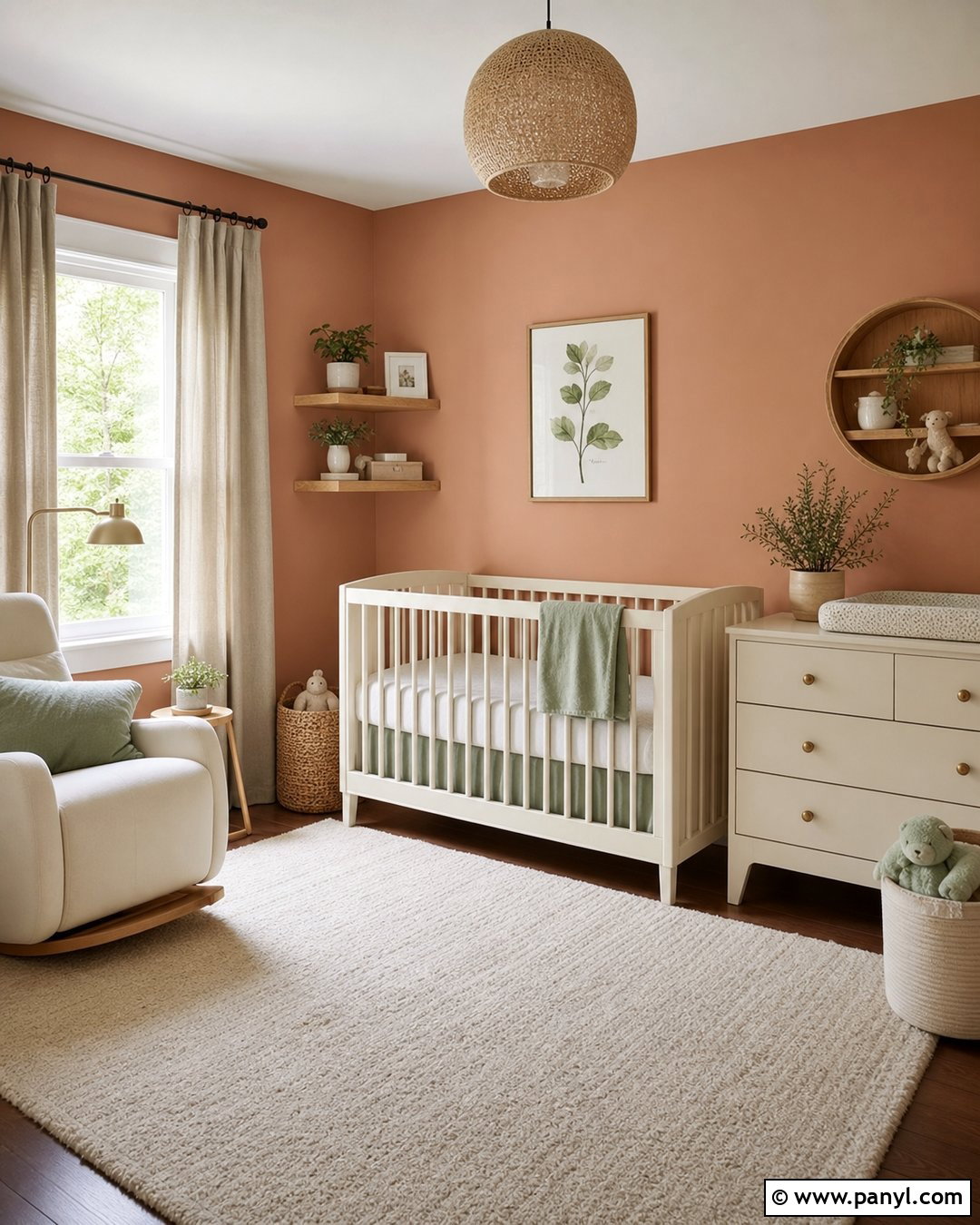
A pale terracotta nursery feels warm and nurturing without relying on predictable pastel blue or pink. Choose a softened peach-clay paint for all walls and pair it with a cream crib, dresser, and upholstered glider. Add a washable ivory rug and natural linen curtains to create a quiet foundation. Sage green can appear through a small blanket, botanical artwork, or storage baskets for gentle contrast. Use rounded wood shelves positioned safely away from the crib and keep displayed objects limited. A dimmable ceiling fixture and shaded reading lamp provide flexible illumination, while blackout lining supports sleep. The completed room feels calm, cohesive, and adaptable. As the child grows, the same terracotta background can work with different bedding, art, and furniture without requiring an immediate repaint.
30. Terracotta Kids Bedroom Wall With Blue Decor
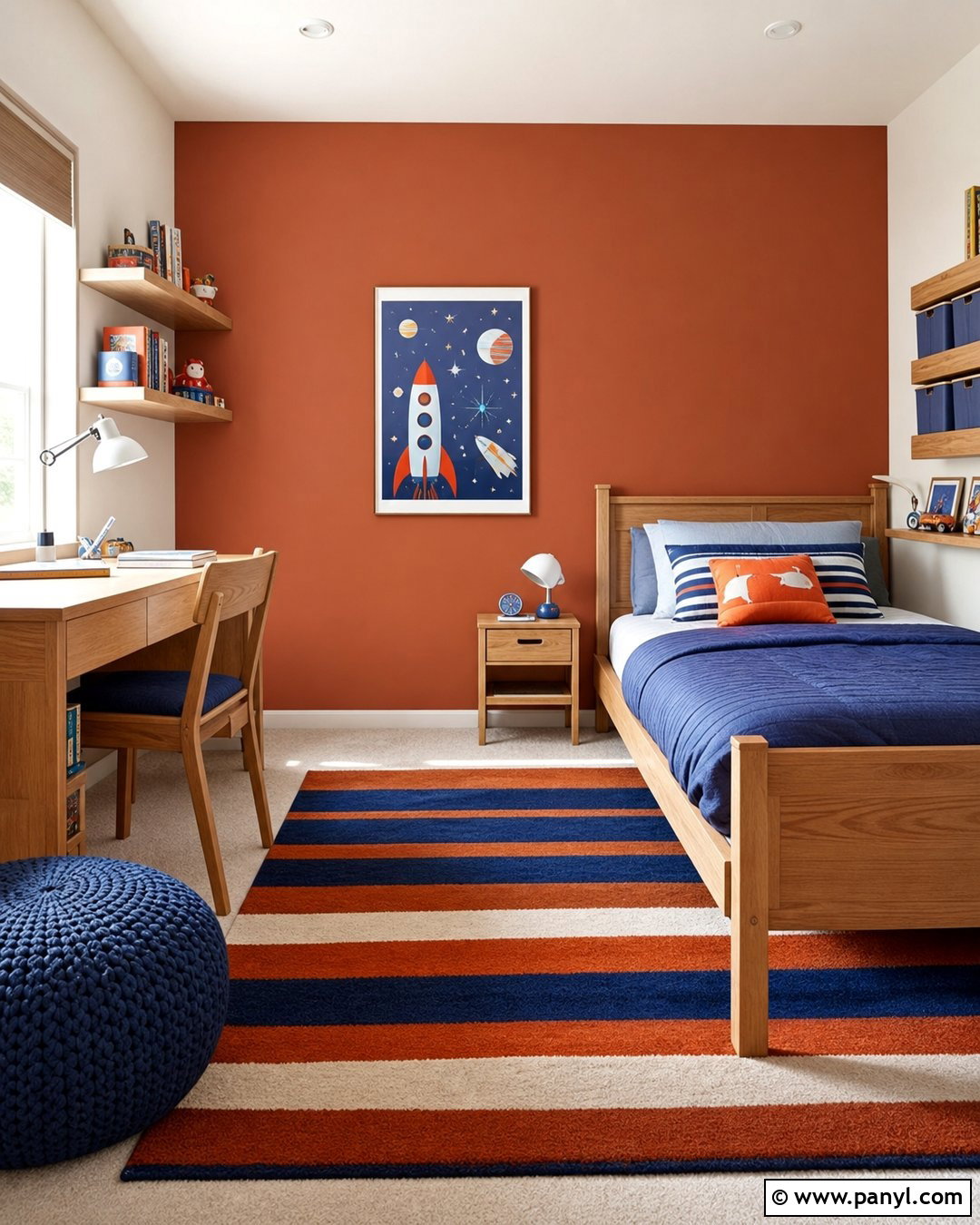
Terracotta and muted blue create a cheerful kids bedroom that can mature over time. Paint the wall behind the bed in a warm burnt-clay color, then use dusty blue on bedding, a small desk chair, and storage bins. Keep the remaining walls creamy white so the room stays bright and flexible. Select a simple oak bed and matching desk, leaving clear floor space for play. A striped rug containing rust, navy, and beige ties the palette together without looking overly themed. Install practical wall shelves and closed baskets to manage books and toys. Add one large playful print rather than many competing decorations. This full-room approach gives the child color and personality, while the durable furniture and balanced palette remain useful beyond a short decorating phase.
31. Terracotta Guest Bedroom Walls With White Bedding
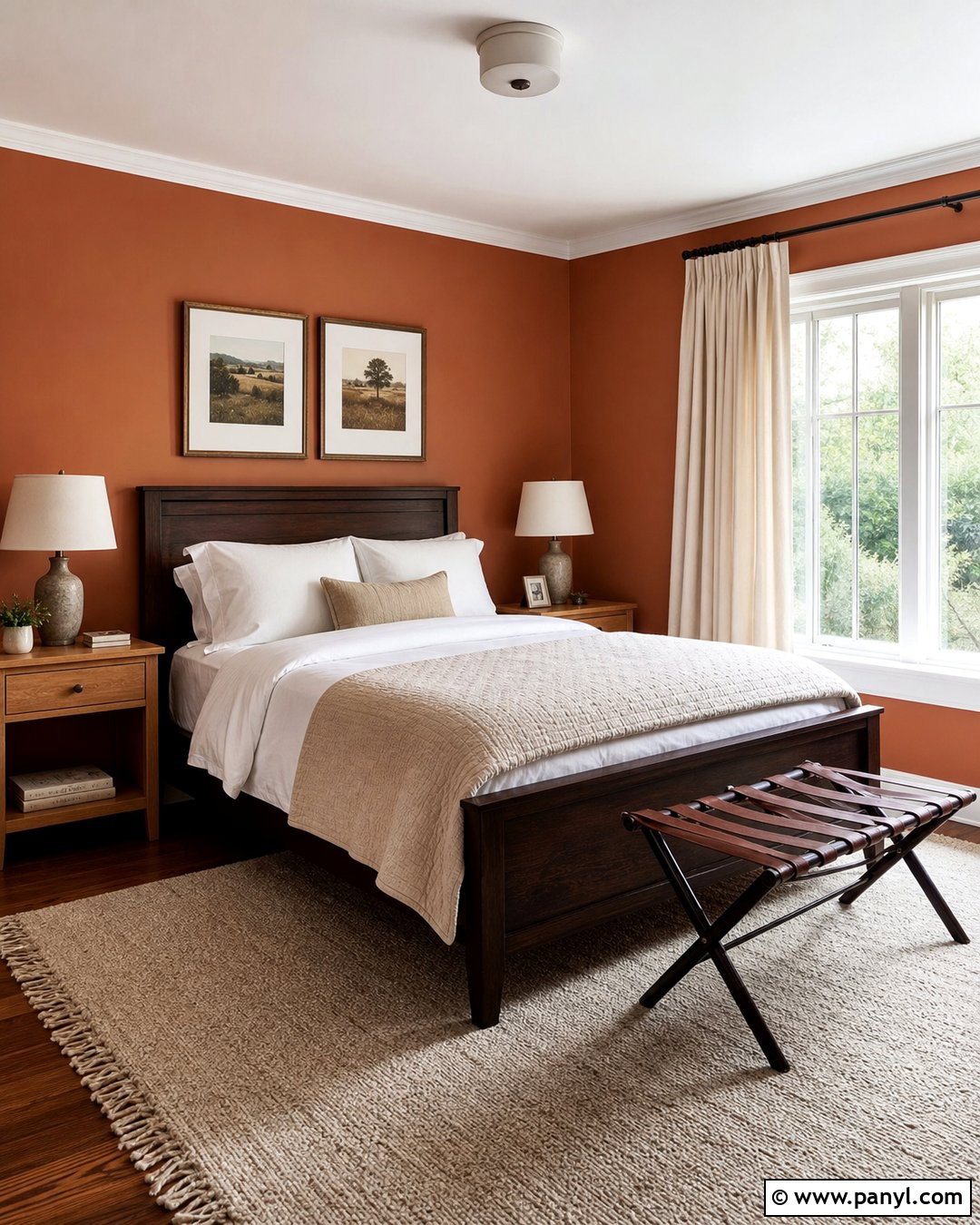
Guest rooms should feel welcoming but uncomplicated, and terracotta walls provide plenty of character without demanding elaborate decoration. Paint all four walls in a muted cinnamon shade and use crisp white bedding as the main contrast. A simple black or dark wood bed adds definition, while oak nightstands keep the palette warm. Layer a beige quilt and one patterned lumbar pillow across the bed for comfort and visual depth. Full-length cream curtains soften the windows, and a natural wool rug adds warmth underfoot. Include matching bedside lamps, accessible outlets, and an empty luggage bench to make the room practical. One landscape print and a small ceramic vase complete the design. The finished space feels thoughtful, restful, and easy for different guests to enjoy.
32. Terracotta Sunroom Walls With Rattan Furniture
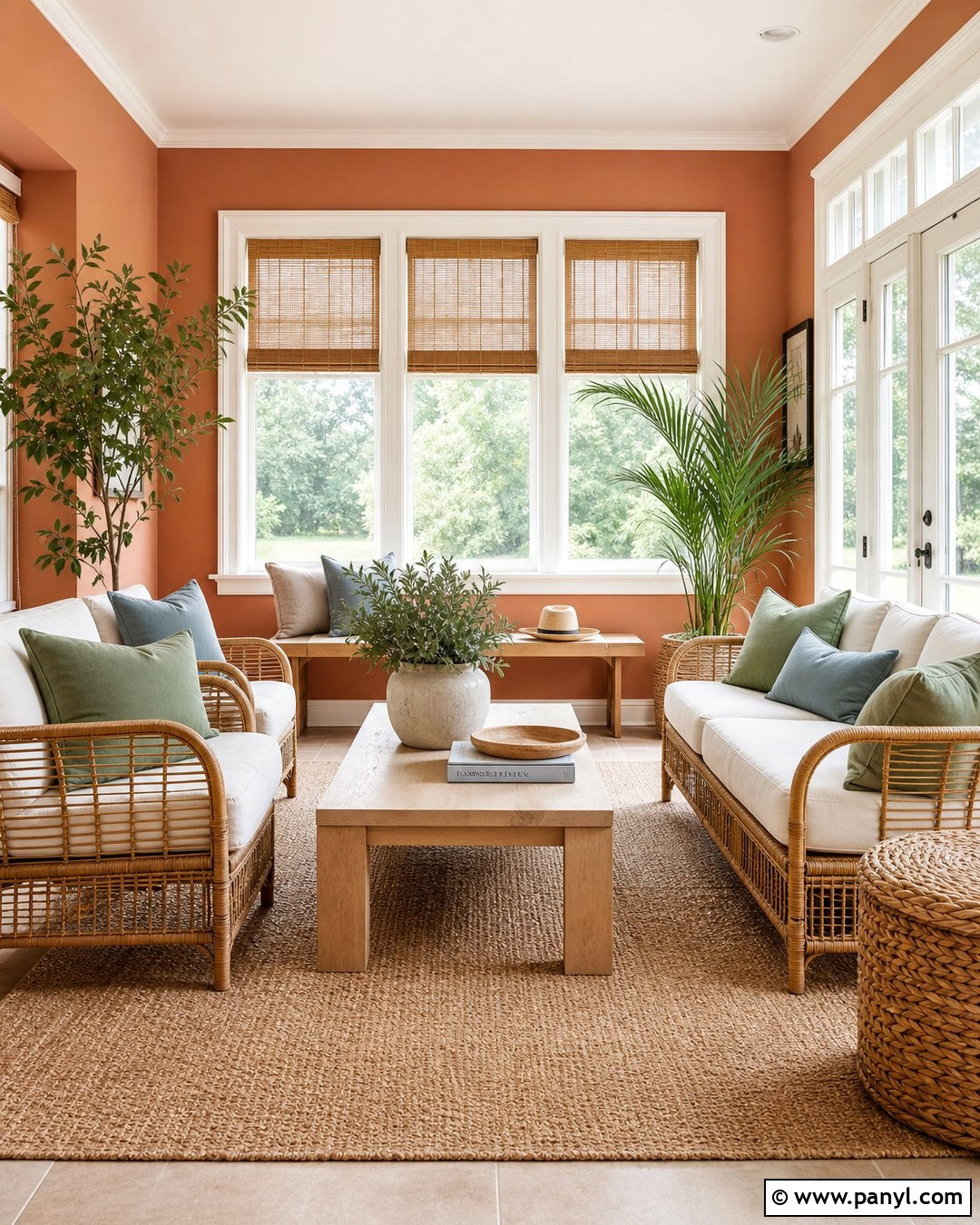
Sunlight brings out the glowing orange and pink undertones of terracotta, making the color especially effective in a sunroom. Use a light clay shade on the walls and keep window trim crisp cream to frame outdoor views. Arrange rattan lounge chairs or a woven sofa around a pale wood coffee table. Add ivory seat cushions and patterned pillows in sage, rust, and faded blue. A natural jute rug defines the seating area without hiding durable tile or wood flooring. Include several leafy plants in neutral ceramic pots, but avoid crowding every window. Linen shades control glare while maintaining a relaxed appearance. This complete sunroom feels connected to the landscape, with terracotta acting as a warm bridge between organic indoor materials and the changing colors outside.
33. Boho Terracotta Living Room Walls
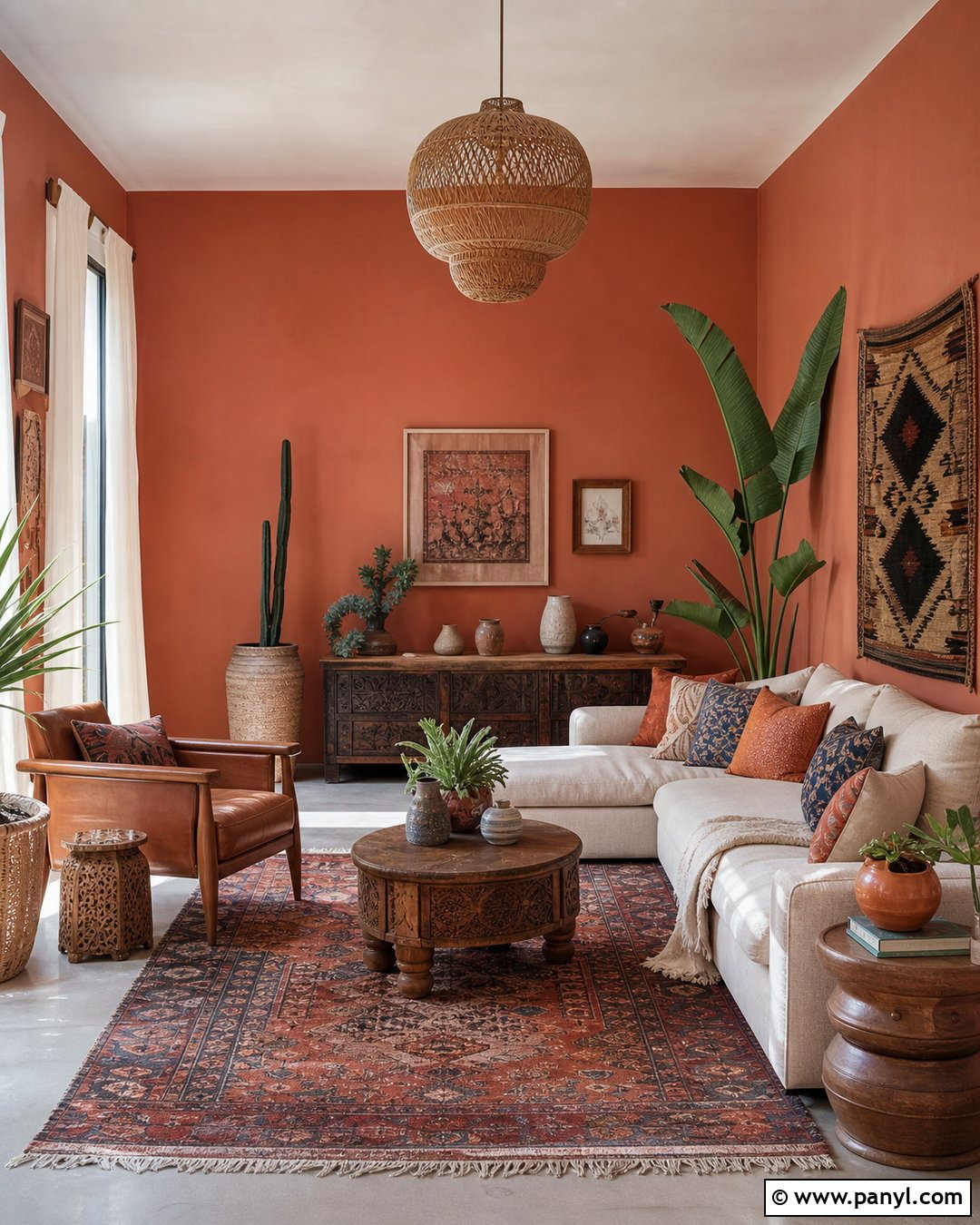
A boho living room can use terracotta walls as a calm foundation rather than filling the space with unrelated colors. Paint every wall in a soft, dusty clay shade, then choose a low cream sofa and one cognac leather chair. Layer a patterned vintage-style rug with rust, indigo, and beige details over natural wood flooring. Rattan lighting, linen curtains, and carved wood tables add texture, while a few plants provide fresh green contrast. Display woven art and handmade ceramics selectively so the room remains breathable. Use black accents only in small amounts through frames or hardware. This complete look feels collected and personal, but its repeated materials and controlled palette keep it cohesive. Comfortable seating and uncluttered pathways also make the space practical for daily living.
34. Mediterranean Terracotta Living Room Walls
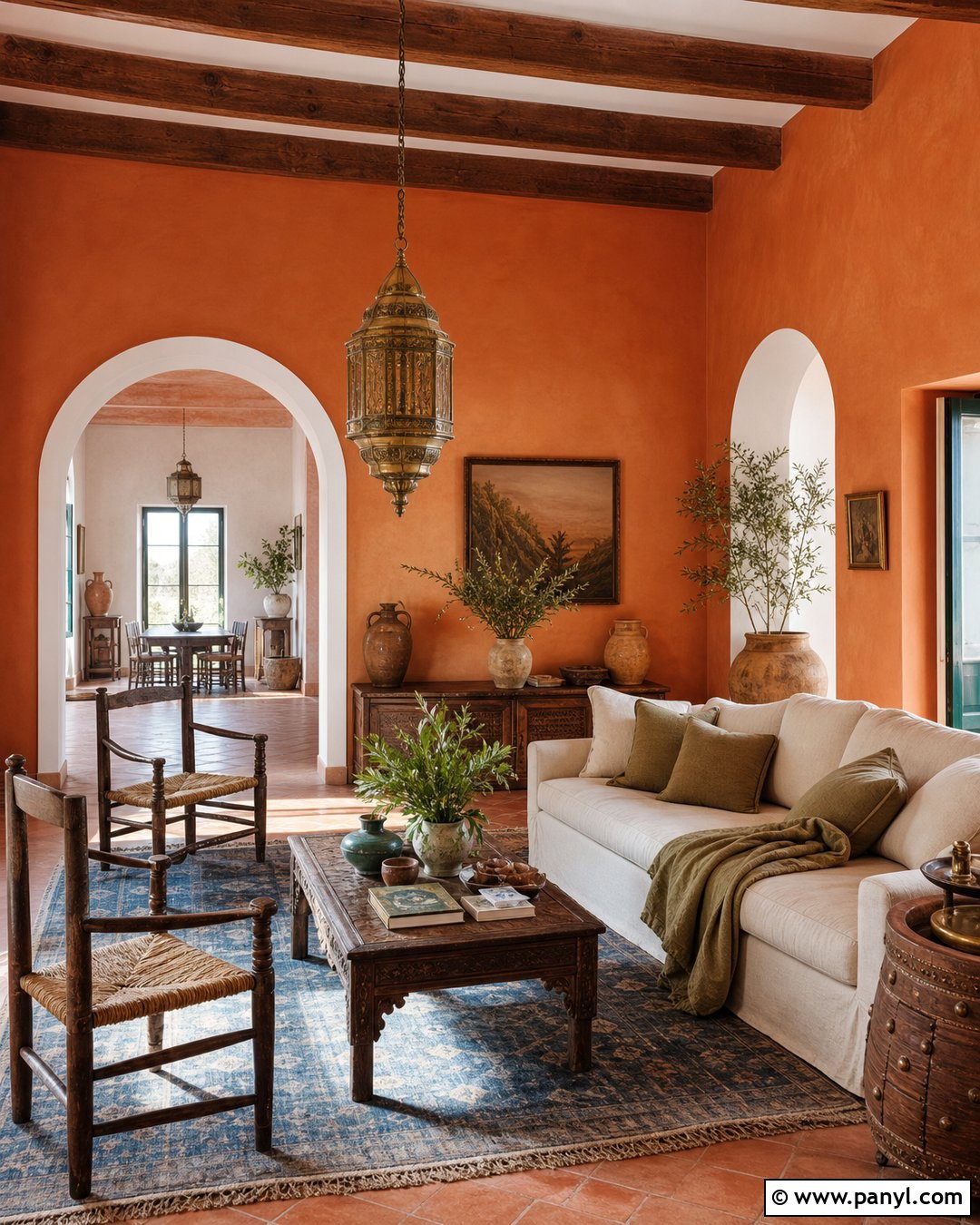
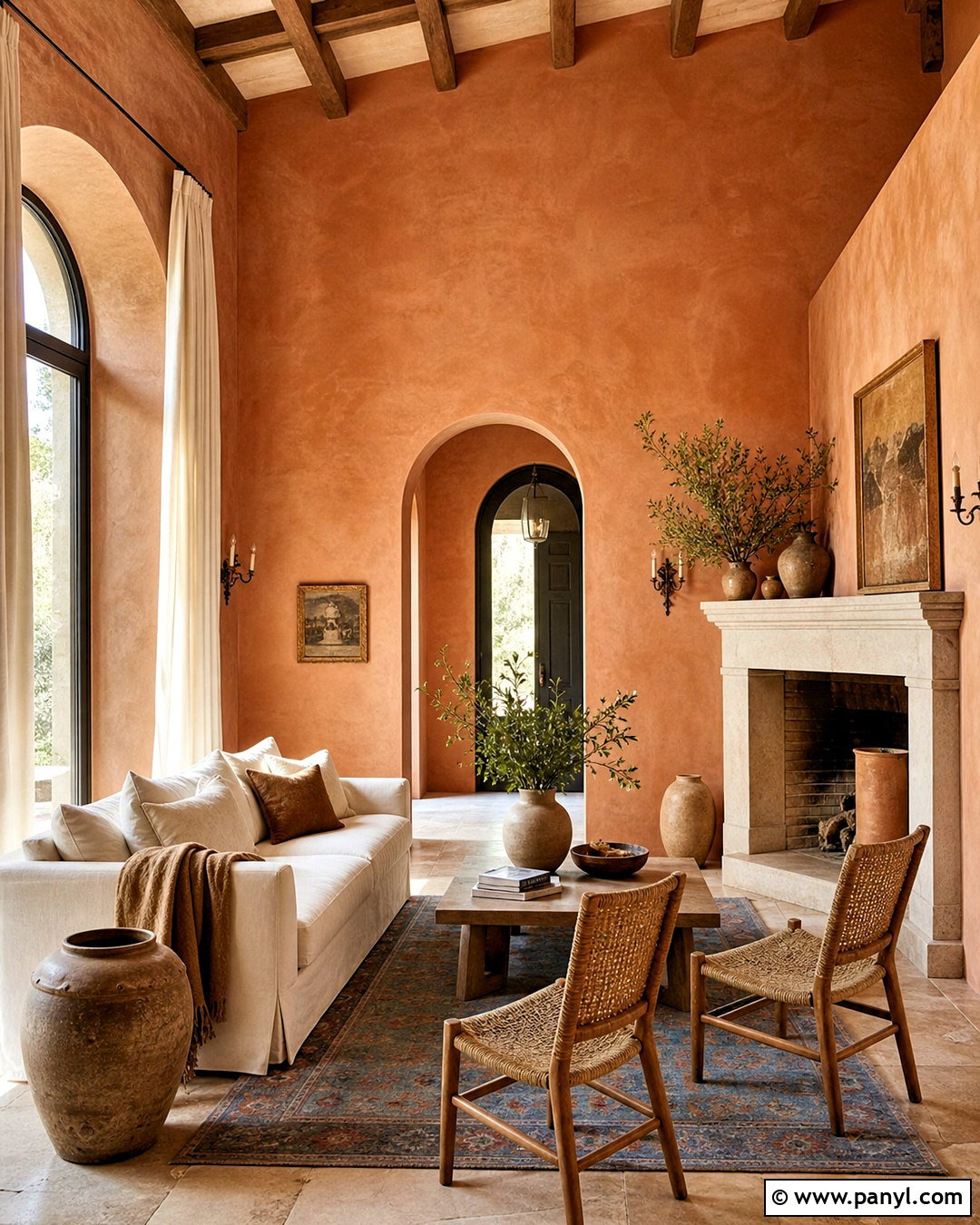
Mediterranean character comes from combining terracotta walls with chalky white plaster, dark wood, and handmade materials. Choose a sunbaked clay color for the main walls and leave any arches, ceiling beams, or fireplace elements warm white. Furnish the room with a relaxed linen sofa, carved dark wood tables, and woven rush chairs. Use a faded blue and cream rug to cool the warm background. Aged brass or iron lighting adds traditional depth without making the space feel formal. Complete the room with large ceramic vessels, olive-toned textiles, and simple landscape artwork. Avoid filling the scheme with overly themed accessories. The strongest Mediterranean look comes from natural finishes, substantial shapes, and slight imperfections that make the room feel established, comfortable, and connected to its materials.
35. Modern Terracotta Living Room Walls
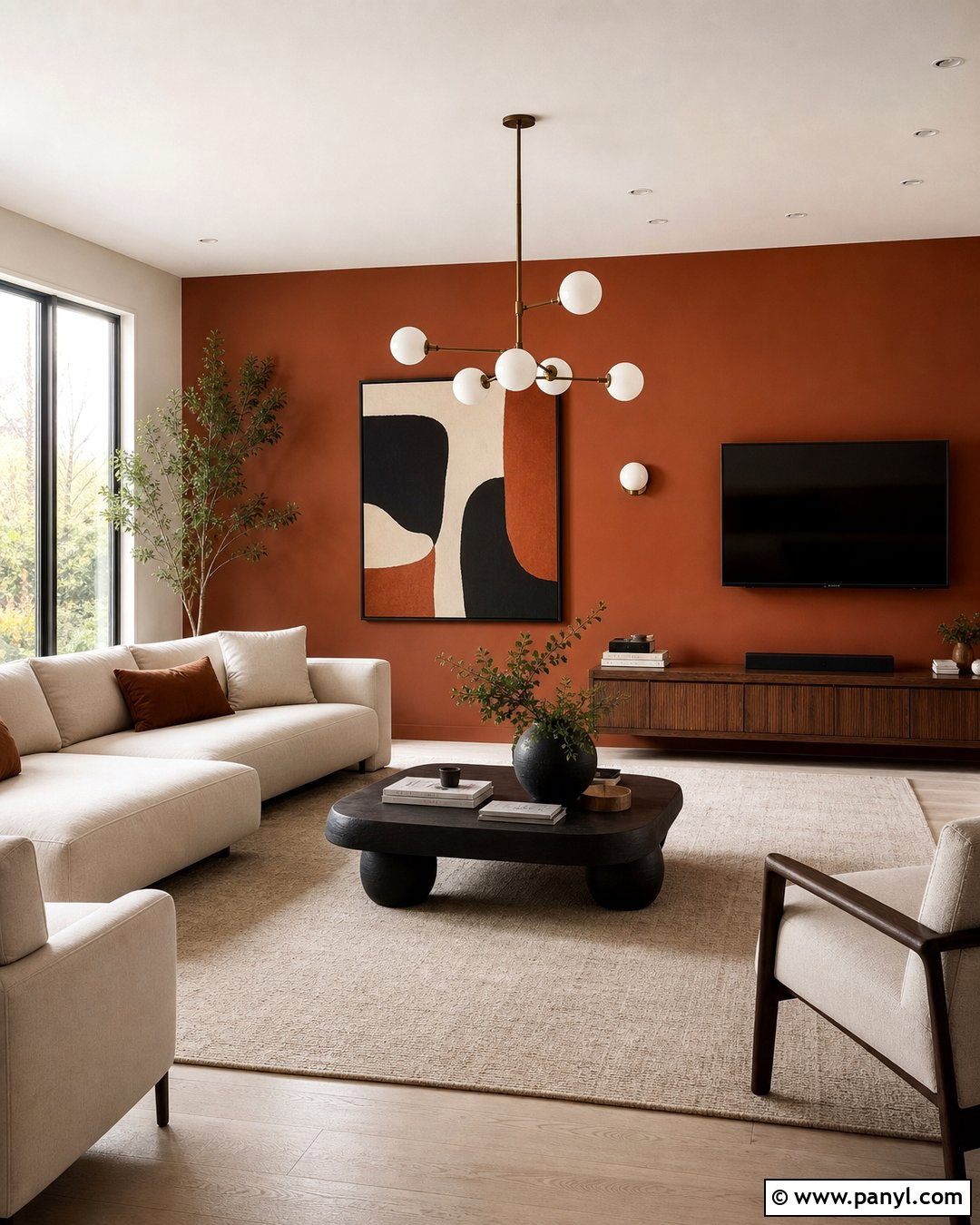
Terracotta can look thoroughly modern when paired with clean lines and a limited material palette. Cover one long living room wall in a clear, medium clay shade and leave the ceiling and surrounding walls soft white. Select a low-profile cream sectional, a slim walnut media cabinet, and a sculptural black coffee table. Use a large beige rug with little or no pattern to create a calm base. One oversized abstract artwork should introduce cream, charcoal, and a small amount of blue. Add simple track lighting or globe fixtures and conceal everyday electronics wherever possible. The finished room feels warm but visually disciplined. By reducing decorative clutter and repeating only a few colors, the terracotta becomes an architectural surface rather than a rustic or bohemian decorating device.
36. Farmhouse Terracotta Dining Room Walls
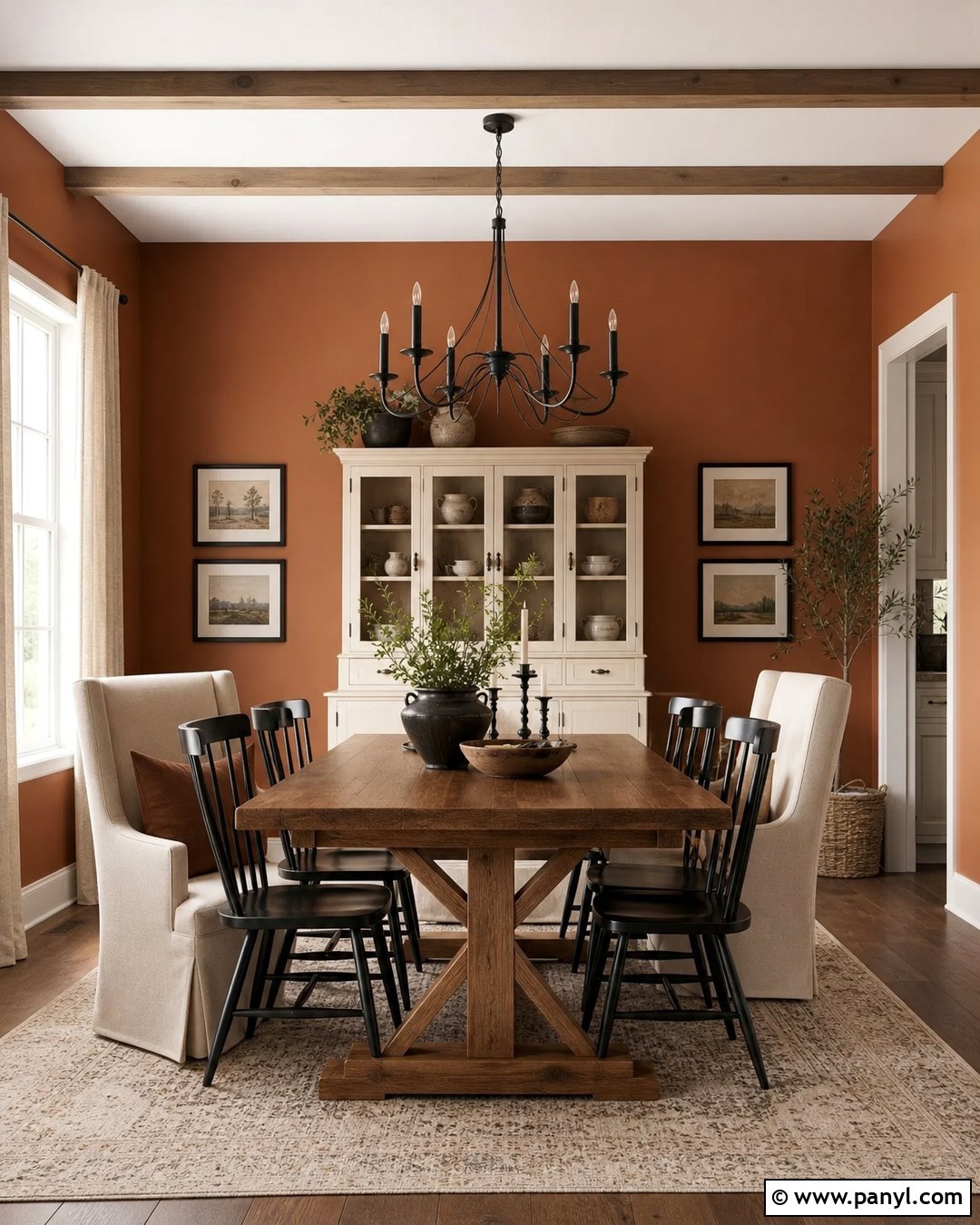
For a refreshed farmhouse dining room, choose muted terracotta walls instead of heavily distressed finishes or predictable gray paint. Add a sturdy medium-oak table with cream slipcovered end chairs and simple black spindle chairs along the sides. Warm white trim, linen curtains, and a light neutral rug keep the room open. A black iron chandelier provides contrast and relates to practical hardware on a freestanding cream hutch. Use stoneware, wooden serving boards, and one large landscape painting as restrained decoration. Avoid adding too many signs or themed objects, which can make the space feel dated. This balanced design preserves farmhouse comfort through natural materials and useful furniture while the terracotta background gives the room richer color, warmth, and a more current sense of character.
37. Midcentury Terracotta Living Room Walls
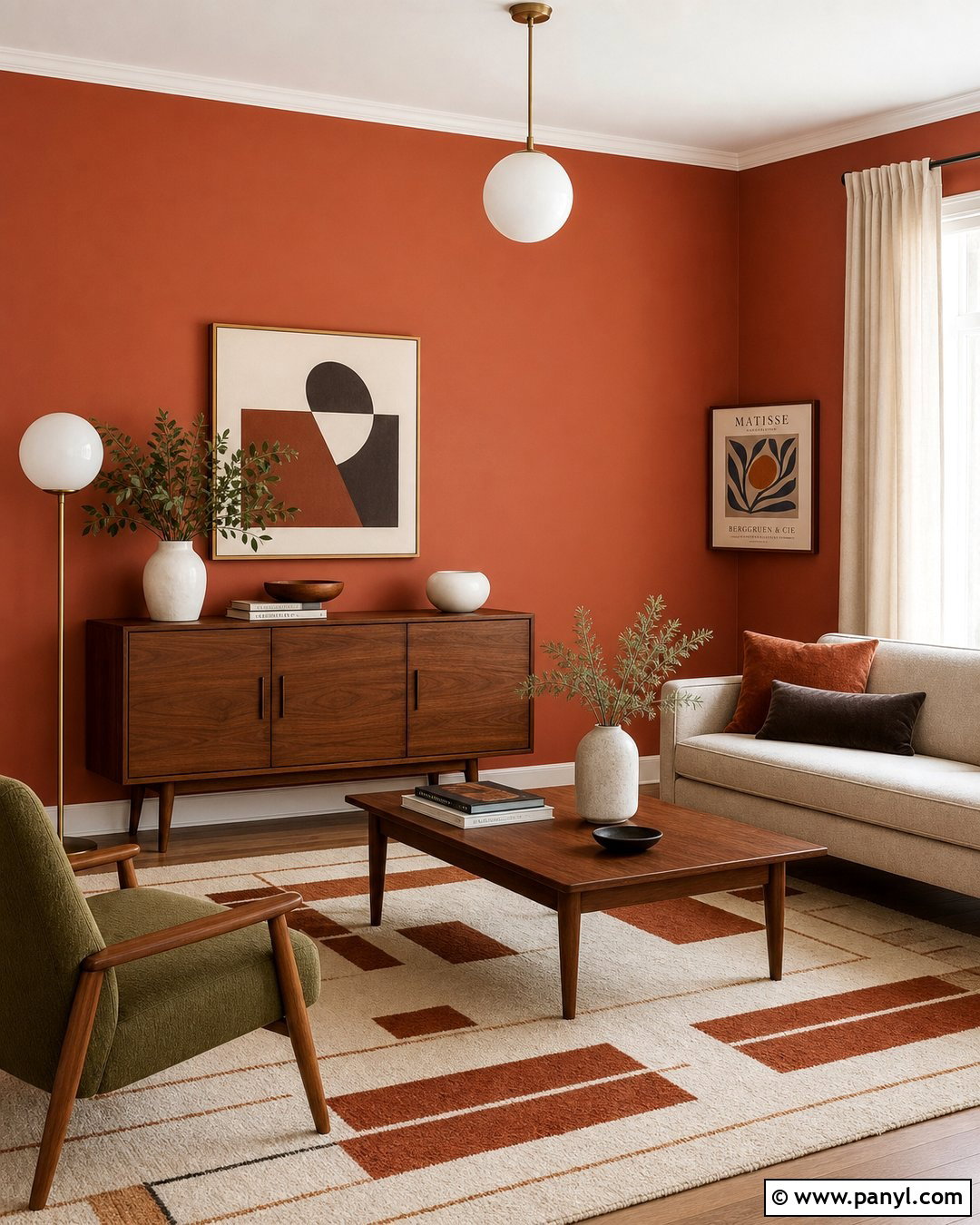
Terracotta naturally complements the warm woods and graphic forms associated with midcentury interiors. Paint the main living room wall in a slightly red, muted clay shade and position a walnut media console or credenza against it. Choose a streamlined oatmeal sofa with tapered legs and add an olive lounge chair for contrast. A geometric rug in cream, rust, and charcoal supports the period influence without turning the room into a replica. Use globe lighting, simple abstract art, and one sculptural ceramic object. Full-length off-white curtains soften the architectural lines and improve light distribution. The complete room should remain open and functional, with furniture arranged around conversation rather than pushed randomly against walls. Terracotta connects the wood, textiles, and vintage-inspired shapes into one cohesive design.
38. Eclectic Terracotta Living Room Walls
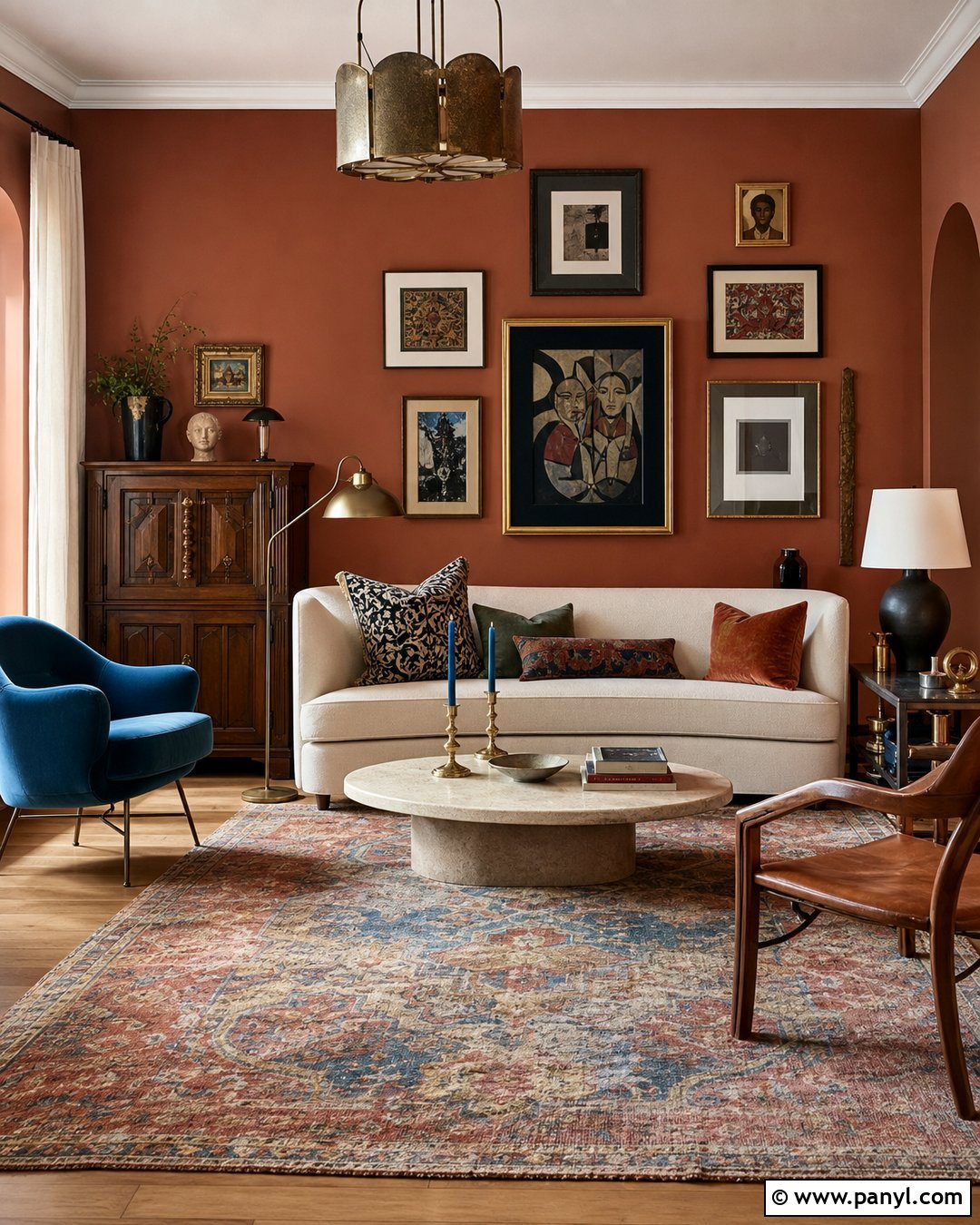
An eclectic room needs a strong visual anchor, and terracotta walls can unite furniture and art from different periods. Use a medium, brown-based clay paint throughout the living room. Combine a classic cream sofa with a modern blue chair, a vintage wood cabinet, and a contemporary glass or stone coffee table. Choose one large patterned rug containing several colors already present in the room. Artwork may vary in subject and frame style, but arrange it within a clear gallery layout so it feels intentional. Repeat black, brass, or dark wood in at least three places for continuity. Finish with patterned cushions and sculptural lamps rather than many small accessories. The resulting space feels layered and individual while maintaining balance through a consistent background and carefully repeated colors.
39. Textured Terracotta Limewash Walls
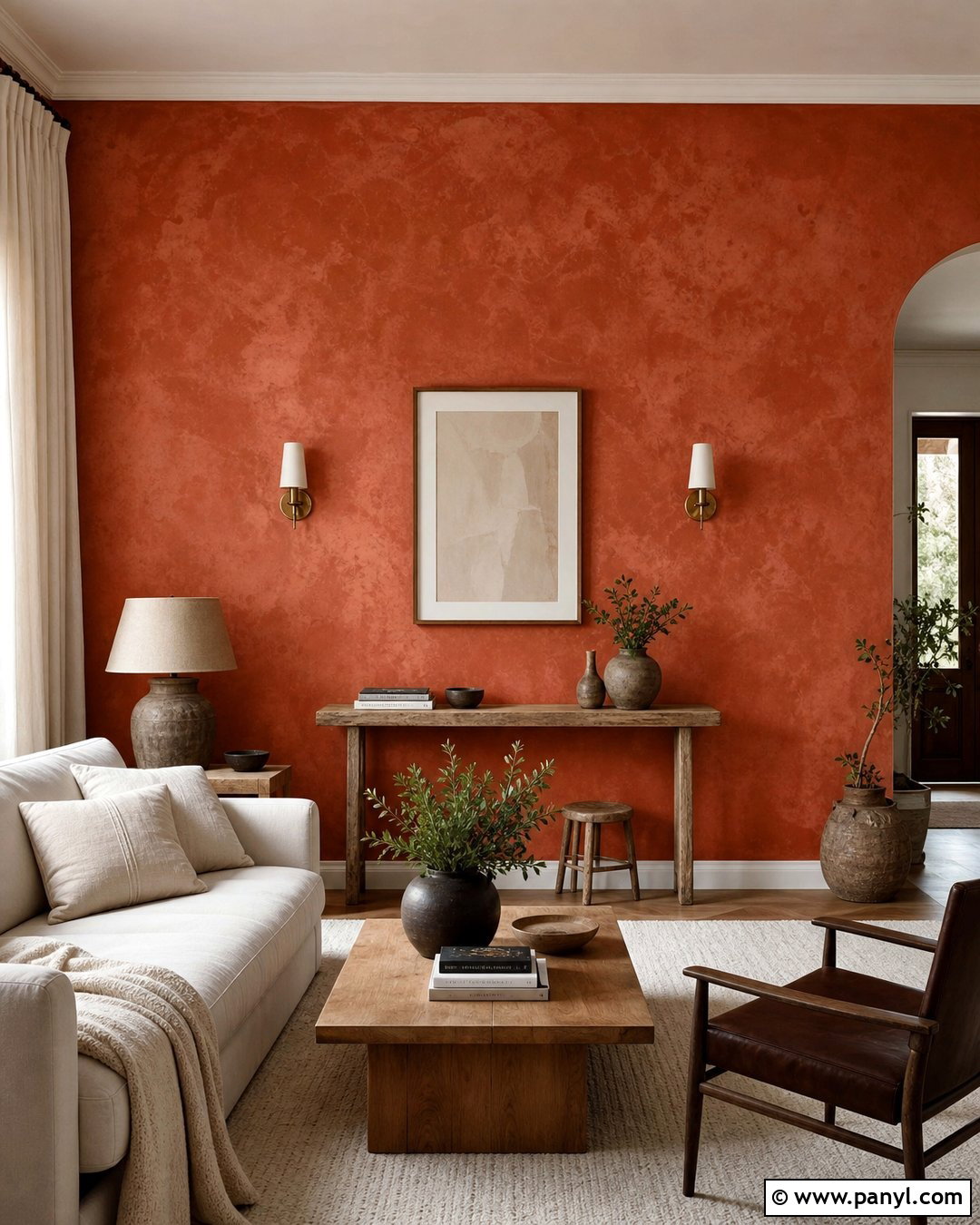
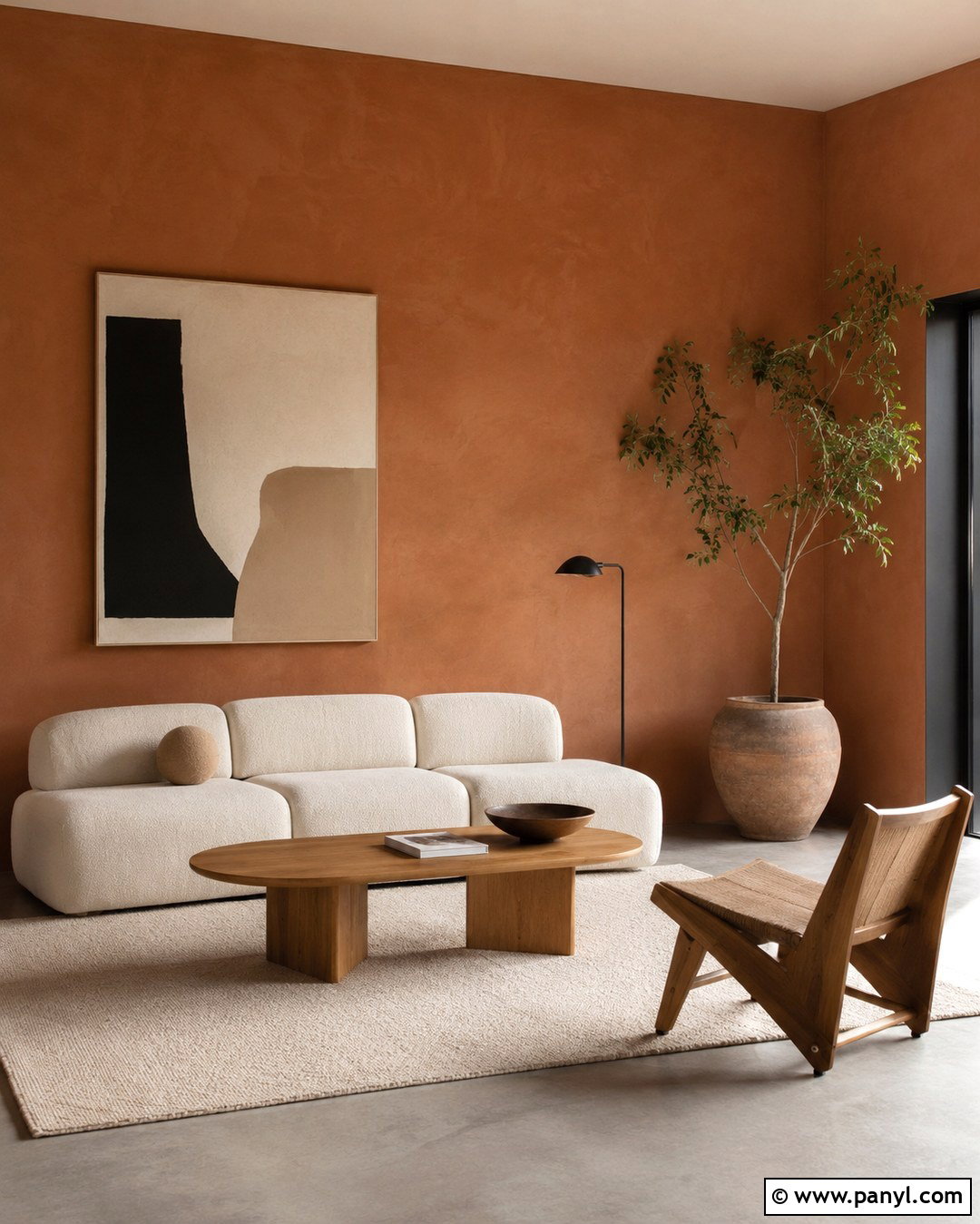
Limewash gives terracotta walls cloudy variation and a softer, more mineral appearance than standard flat paint. Apply a warm red-clay tone with visible brush movement across the entire room, following the product’s preparation and application instructions. Pair the textured surface with a cream linen sofa, pale oak tables, and an ivory wool rug. Keep artwork minimal so the natural wall variation remains noticeable. Add aged brass sconces, handmade pottery, and full-length oatmeal curtains to reinforce the tactile quality. A dark wood accent chair provides depth without disrupting the quiet palette. The complete space feels relaxed and handcrafted rather than perfectly polished. Because limewash changes with light, test a large area first and confirm that its natural movement suits the room’s walls and daily lighting conditions.
40. Terracotta Painted Arch Wall
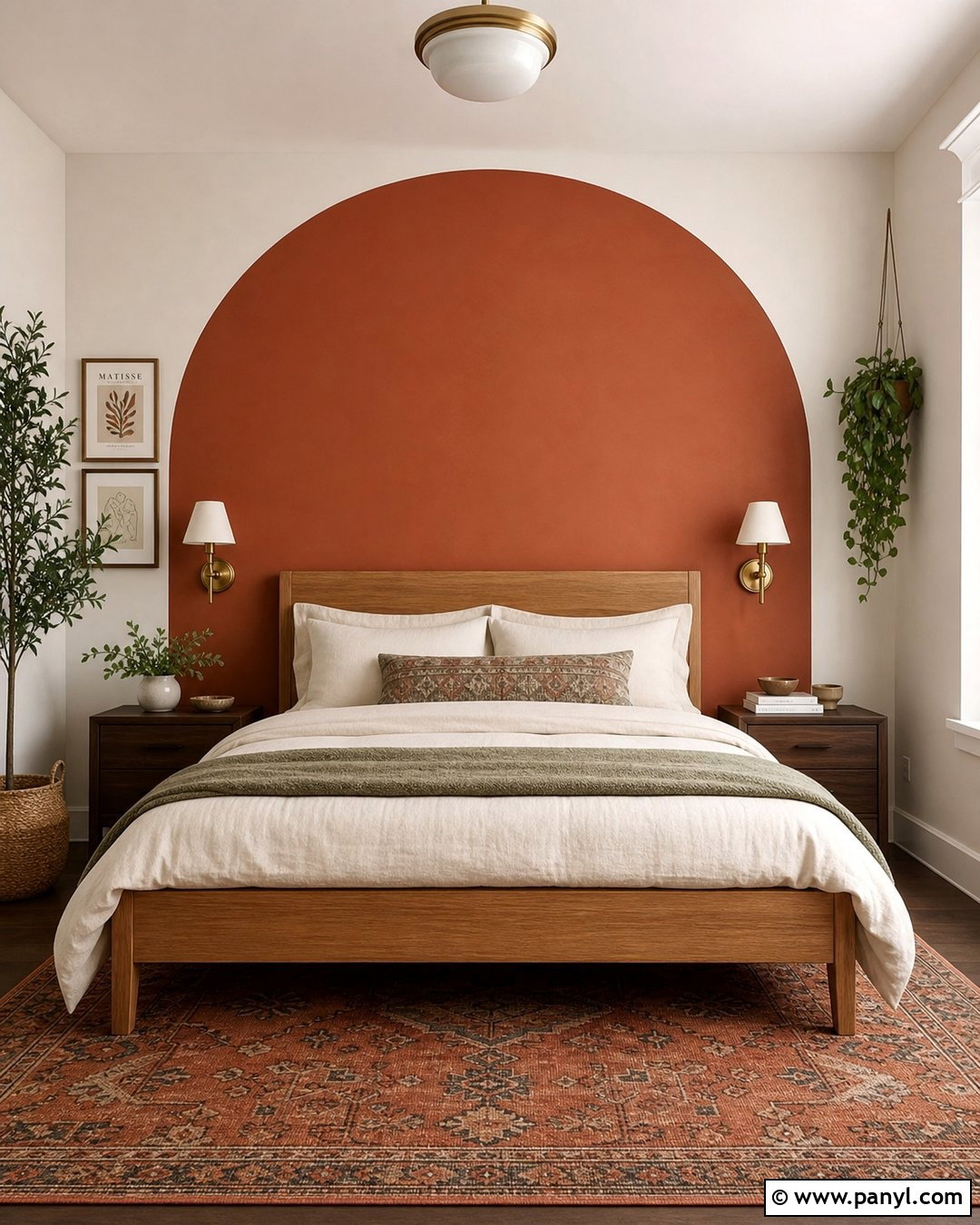
A painted terracotta arch can create a focal point without covering an entire room in strong color. Draw a broad, correctly proportioned arch behind a bed, console, desk, or reading chair and fill it with a medium clay paint. Keep the surrounding wall warm white for crisp but gentle contrast. In a bedroom, center an oak bed beneath the arch and use cream bedding, walnut nightstands, and small brass sconces. Repeat the terracotta once through a throw or patterned rug, then introduce muted sage for balance. The arch should frame the furniture rather than stopping awkwardly behind it. This complete arrangement works especially well in compact rooms because it adds architectural character through paint while preserving a bright, neutral background and an open feeling.
Conclusion:
Terracotta is flexible enough to support peaceful bedrooms, colorful kitchens, dramatic powder rooms, and relaxed living spaces. Its success depends less on following a fixed formula and more on balancing its warmth with the right surrounding colors and materials. Cream, oak, stone, and linen create a quiet natural scheme, while sage, teal, navy, and charcoal provide stronger contrast. Always sample the paint beside permanent flooring, cabinetry, and furniture before committing. Pay attention to undertones and observe the color in morning, afternoon, and evening light. With thoughtful lighting, practical furniture, and repeated accent colors, these 40 Terracotta Wall Color Ideas can help you create a home that feels warm, coordinated, and genuinely personal.

Related Ideas and Inspiration:
Leave a Reply