
Turquoise walls can make a home feel fresh, colorful, and deeply personal without losing comfort or sophistication. The key is choosing the right shade and building a complete room around it. Pale aqua-turquoise feels airy, while saturated turquoise creates a rich backdrop for warm wood, brass, white, coral, or terracotta. Furniture placement, lighting, flooring, and texture also shape how this blue-green color appears throughout the day. This collection of 20 turquoise walls explores practical looks for living rooms, bedrooms, kitchens, bathrooms, workspaces, and smaller transitional areas. Each room uses coordinated furnishings and finishes, so the color feels intentional rather than overwhelming. Whether you prefer coastal simplicity or dramatic contrast, these 20 turquoise walls offer a complete look you can recreate.

1. Turquoise Living Room Walls With Warm White Furniture
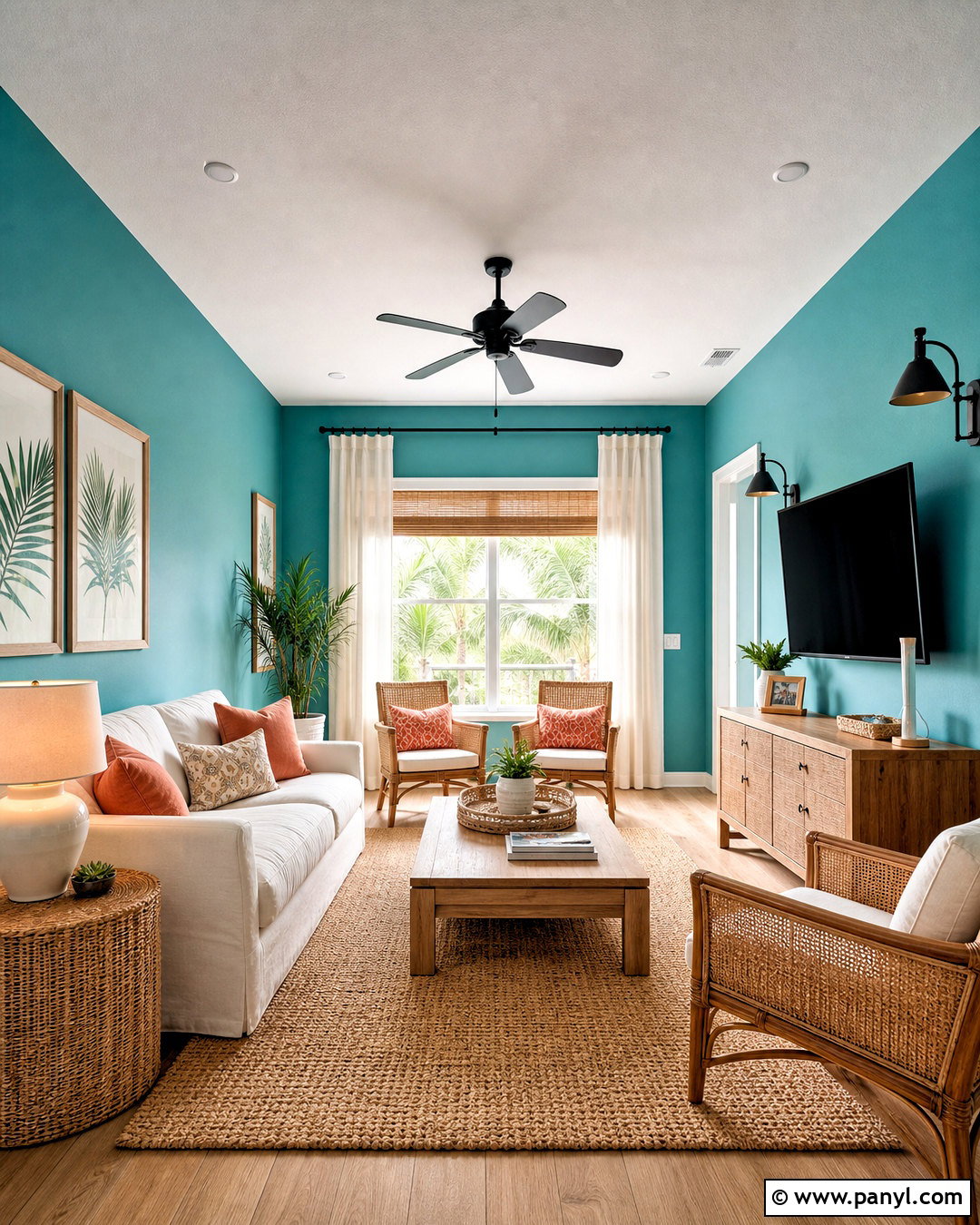
Bright turquoise walls become easier to live with when surrounded by warm white furniture and natural textures. Choose a clear, medium turquoise for the walls, then keep the ceiling, baseboards, and window trim creamy white. Position a soft white sofa opposite a low oak media console to establish a practical layout. A woven jute rug, linen curtains, and cane accent chairs add warmth without competing with the wall color. Bring in small touches of tan, light blue, and muted coral through pillows and artwork. Matte black curtain rods and a simple floor lamp provide clean definition. This complete living room feels colorful but balanced because the large furniture pieces remain light, comfortable, and visually quiet.
2. Dark Turquoise Living Room Walls With Brass Accents
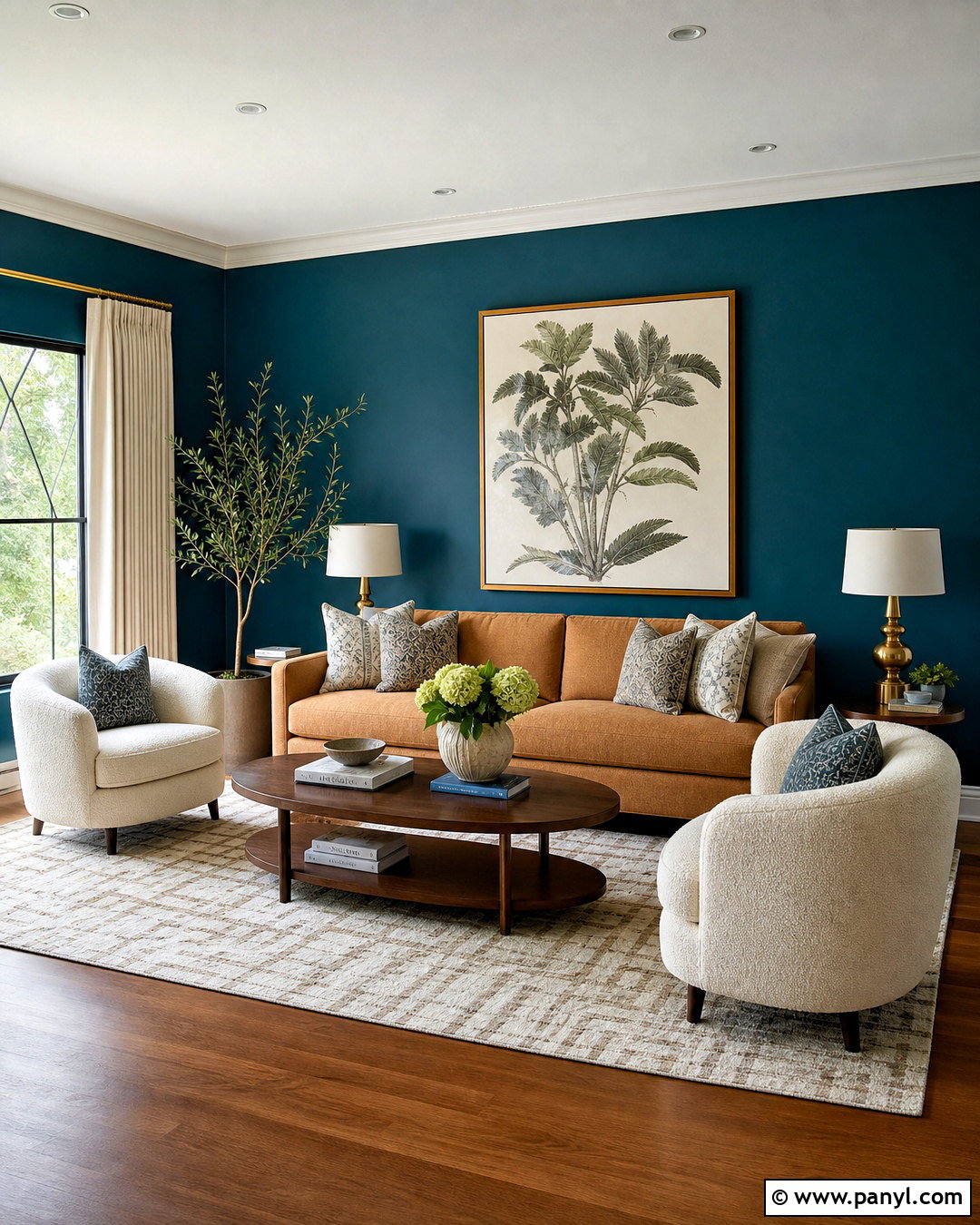
Deep turquoise walls can give an average living room a polished, intimate appearance. Paint every wall in a dark blue-green turquoise, but leave the ceiling warm white to prevent the room from feeling enclosed. Anchor the layout with a camel-colored sofa, two cream boucle chairs, and a medium walnut coffee table. Brushed brass floor lamps, picture frames, and cabinet hardware reflect light against the saturated background. Choose an ivory area rug with a subtle geometric pattern to brighten the floor. Full-length oatmeal curtains soften the windows without introducing another strong color. Finish the room with oversized botanical artwork and a few turquoise-toned ceramics. The result feels elegant and layered rather than excessively dark or formal.
3. Pale Turquoise Bedroom Walls With Light Oak Furniture
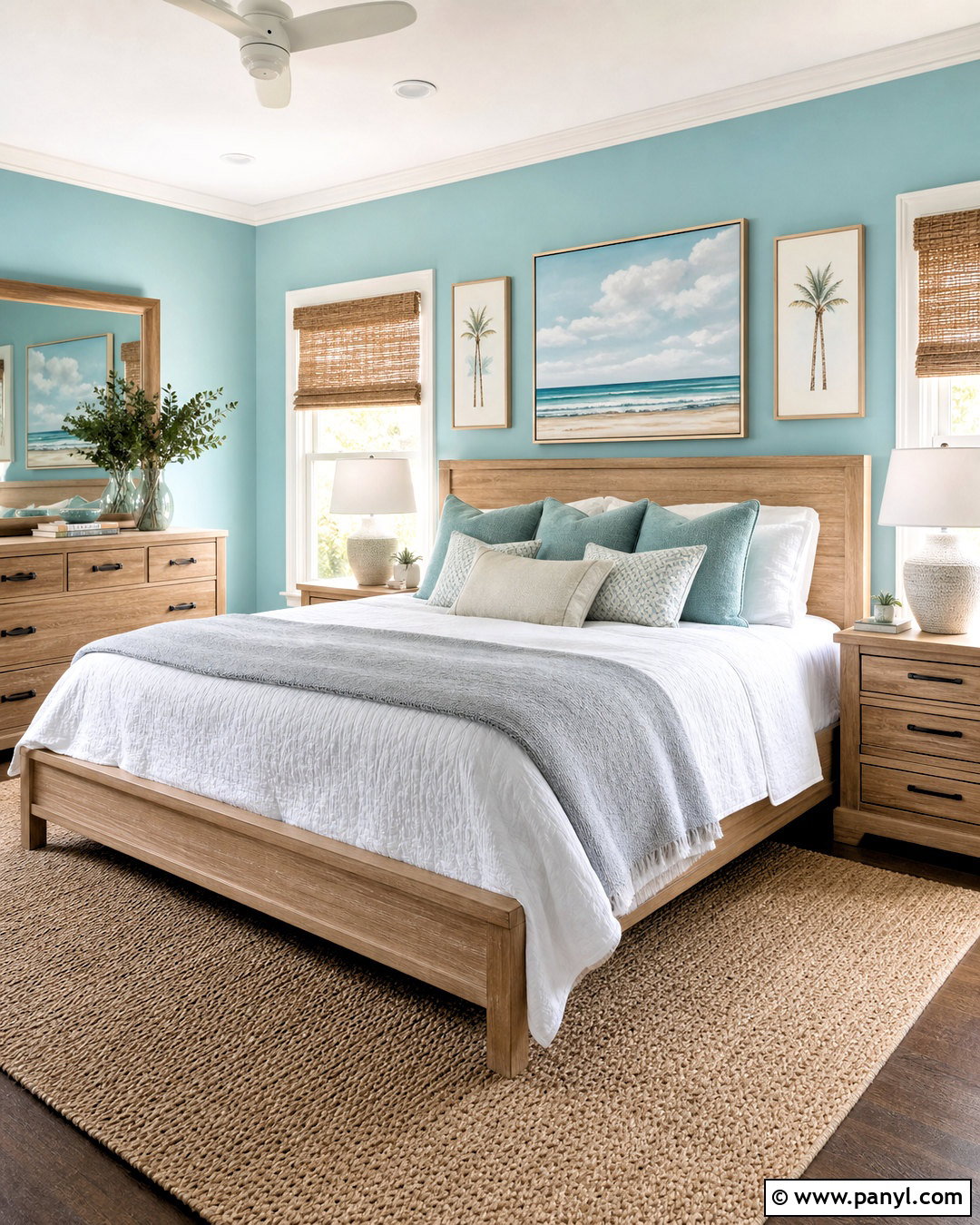
Imagine waking up in a room that feels clear, soft, and quietly refreshing. Pale turquoise walls create this effect when combined with light oak furniture and relaxed white bedding. Center a simple oak bed against the longest wall, then place matching narrow nightstands on both sides. Use a white quilt, a light gray blanket, and blue-green linen pillows to connect the furnishings to the walls. A natural wool rug adds comfort underfoot, while woven shades filter strong morning light. Keep the ceiling and trim crisp white for a clean edge. Finish with ceramic table lamps, minimal coastal artwork, and one leafy plant. This calm bedroom works especially well in smaller spaces because every element feels light and coordinated.
4. Turquoise Bedroom Walls With Blush Pink Decor
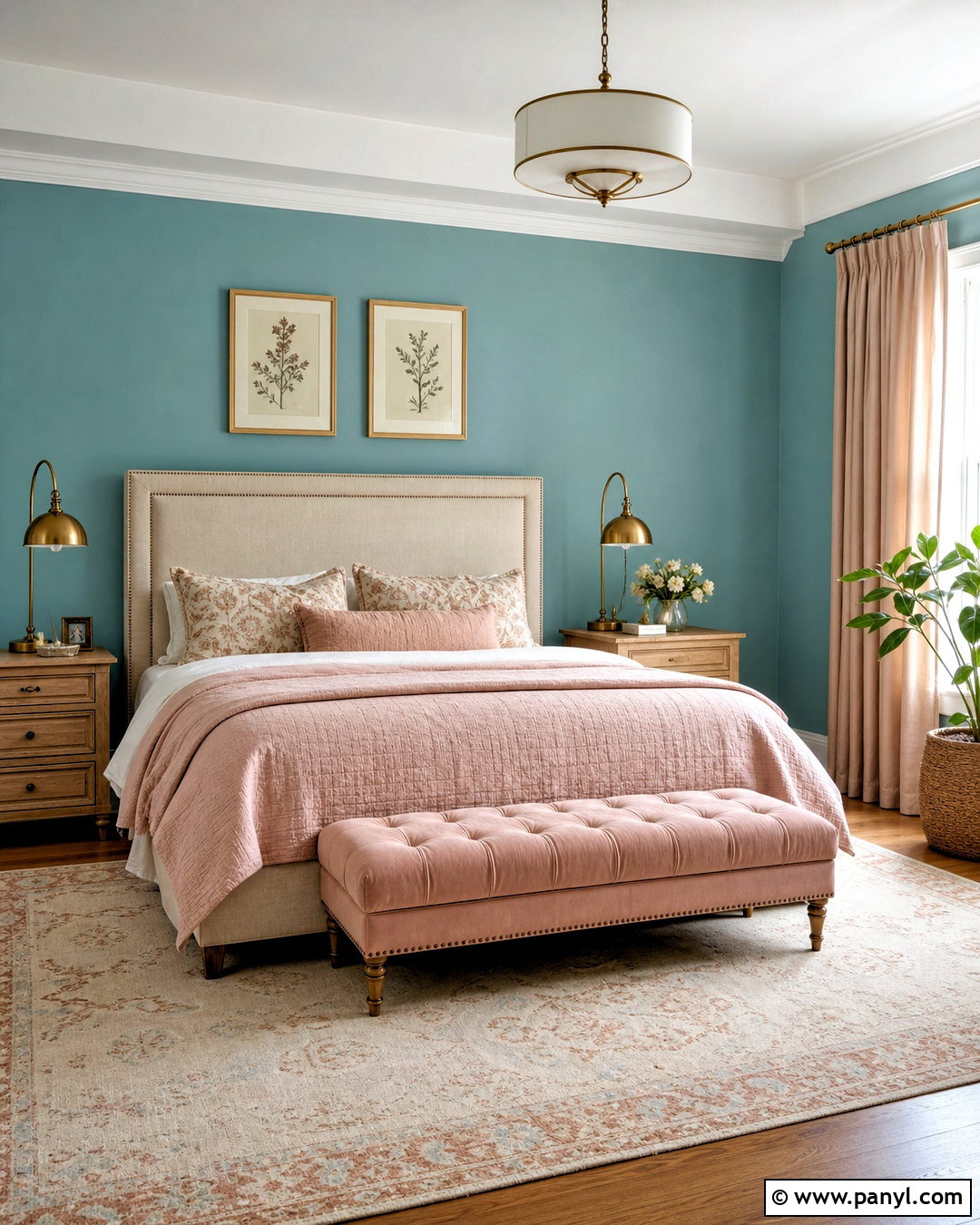
Turquoise and blush pink can feel sophisticated when both colors are softened with warm neutrals. Use a slightly muted turquoise on all four walls and place an upholstered oatmeal bed against the main wall. Layer the bedding with ivory sheets, a dusty blush coverlet, and two patterned pillows that include turquoise, pink, and cream. Light wood nightstands prevent the palette from becoming overly sweet, while antique brass lamps add a refined finish. Choose beige curtains and a large cream rug to create visual breathing room. A blush bench at the foot of the bed can provide seating without crowding the layout. Simple botanical prints and pale ceramic accessories complete a bedroom that feels colorful, restful, and thoughtfully grown-up.
5. Turquoise Kitchen Walls With White Cabinets
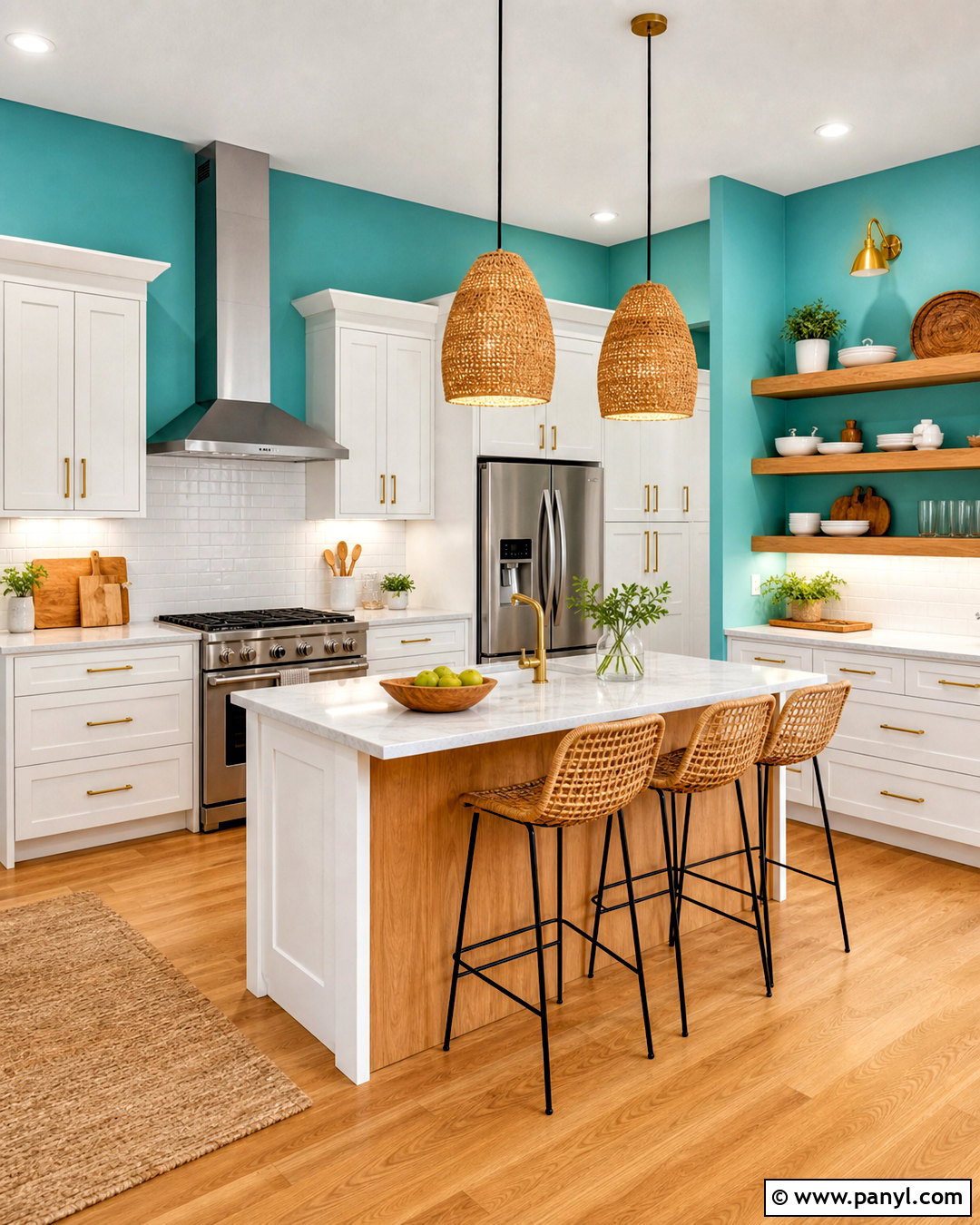
Could your white kitchen benefit from a stronger sense of personality? Medium turquoise walls offer a lively backdrop while allowing white cabinetry to remain bright and timeless. Paint the visible walls turquoise, then use warm white for the ceiling, trim, and interior doors. Pair shaker cabinets with brushed brass pulls, pale quartz counters, and a simple white subway tile backsplash. Warm oak flooring and matching counter stools keep the blue-green paint from feeling cold. Add woven pendant lights over an island or breakfast bar for extra texture. Open shelves can display white dishes, wood cutting boards, and a few turquoise ceramics. This complete kitchen scheme feels fresh and functional, with enough natural warmth to balance the energetic wall color.
6. Turquoise Dining Room Walls With Terracotta Accents
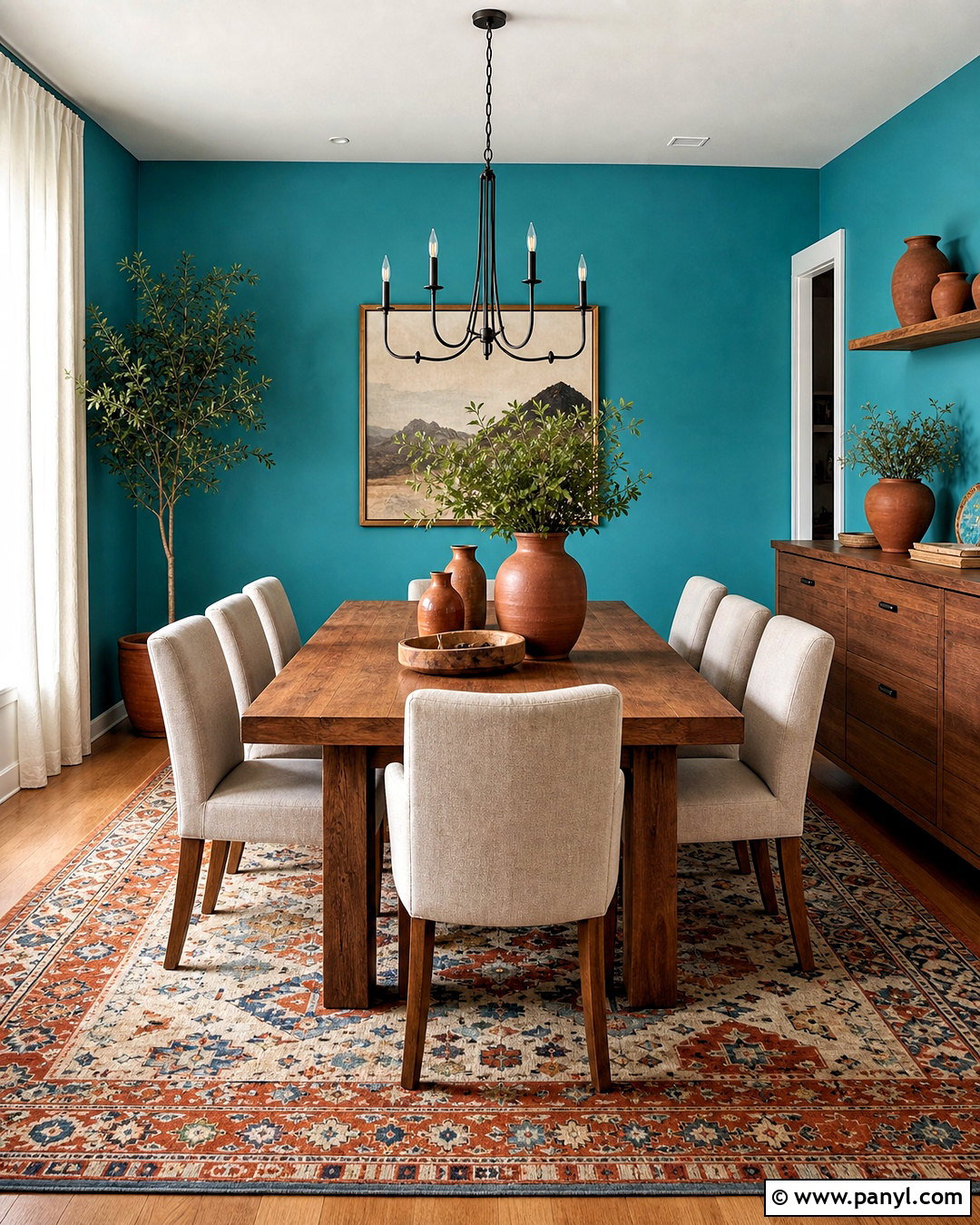
Terracotta brings an earthy warmth that makes turquoise dining room walls feel welcoming rather than tropical. Start with a rich, medium turquoise and warm white trim. Place a solid oak dining table in the center of the room, surrounded by simple upholstered chairs in oatmeal or sand. Introduce terracotta through linen seat cushions, pottery, and a large patterned rug containing rust, turquoise, and cream. A black metal chandelier provides structure above the table, while a walnut sideboard adds practical storage along one wall. Hang one oversized landscape print instead of filling every surface with small decorations. Natural woven shades complete the room. The contrasting colors create energy, but repeated wood tones and neutral textiles keep the overall dining space grounded.
7. Turquoise Bathroom Walls With White Marble
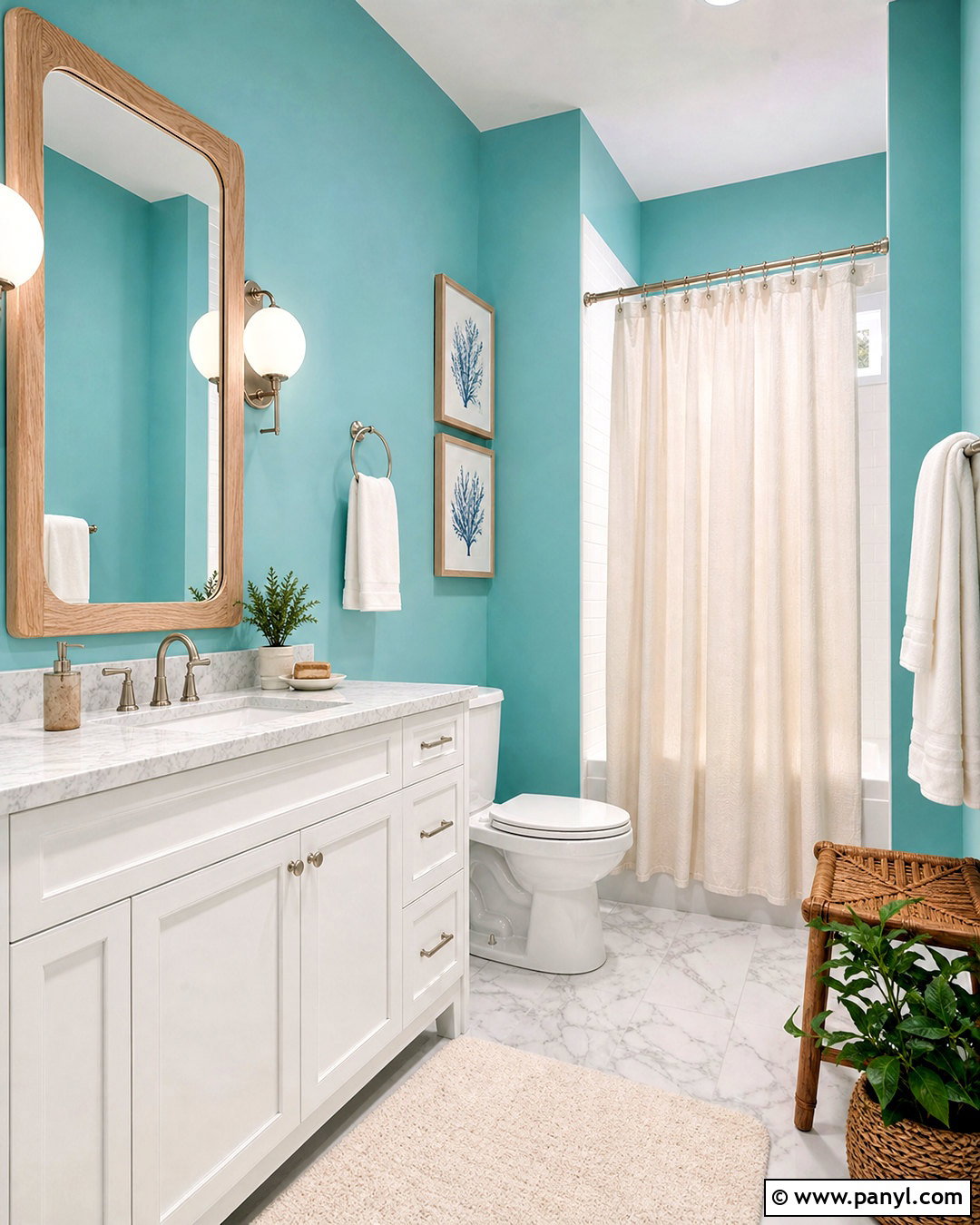
Turquoise walls can bring clean color to a bathroom without requiring brightly colored tile or fixtures. Select a fresh turquoise paint with a washable finish and pair it with white marble-look flooring or porcelain tile. A white vanity with brushed nickel hardware keeps the space crisp, while a pale wood-framed mirror introduces natural warmth. Install simple globe sconces on either side of the mirror for even illumination. White towels, a cream shower curtain, and clear glass accessories reduce visual clutter. Add a narrow bamboo stool and one small plant where space allows. Keeping the permanent surfaces mostly white makes future updates easy. The finished bathroom feels bright and rejuvenating, while the turquoise walls remain the clear focal point.
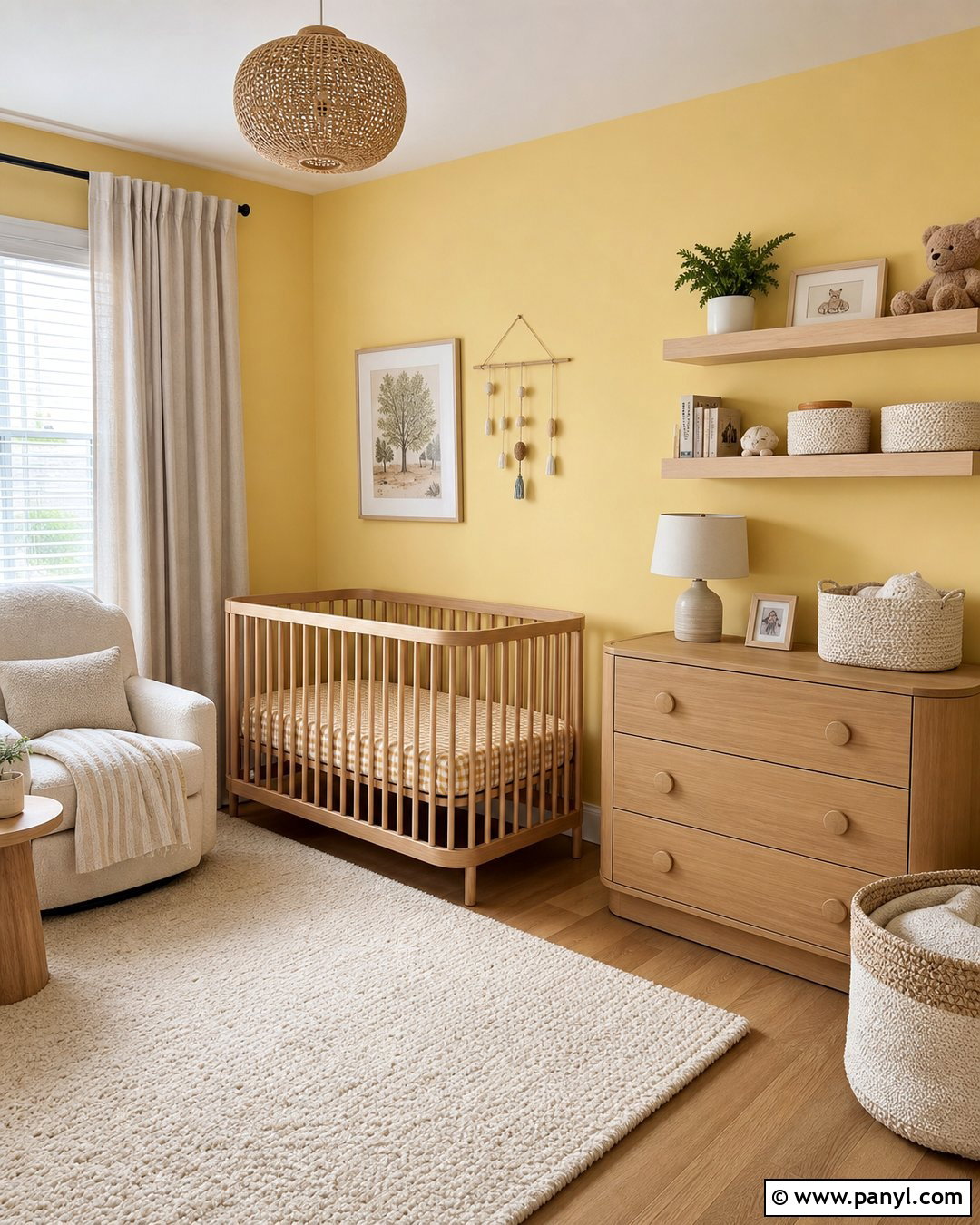
8. Dark Turquoise Powder Room Walls With Gold Fixtures
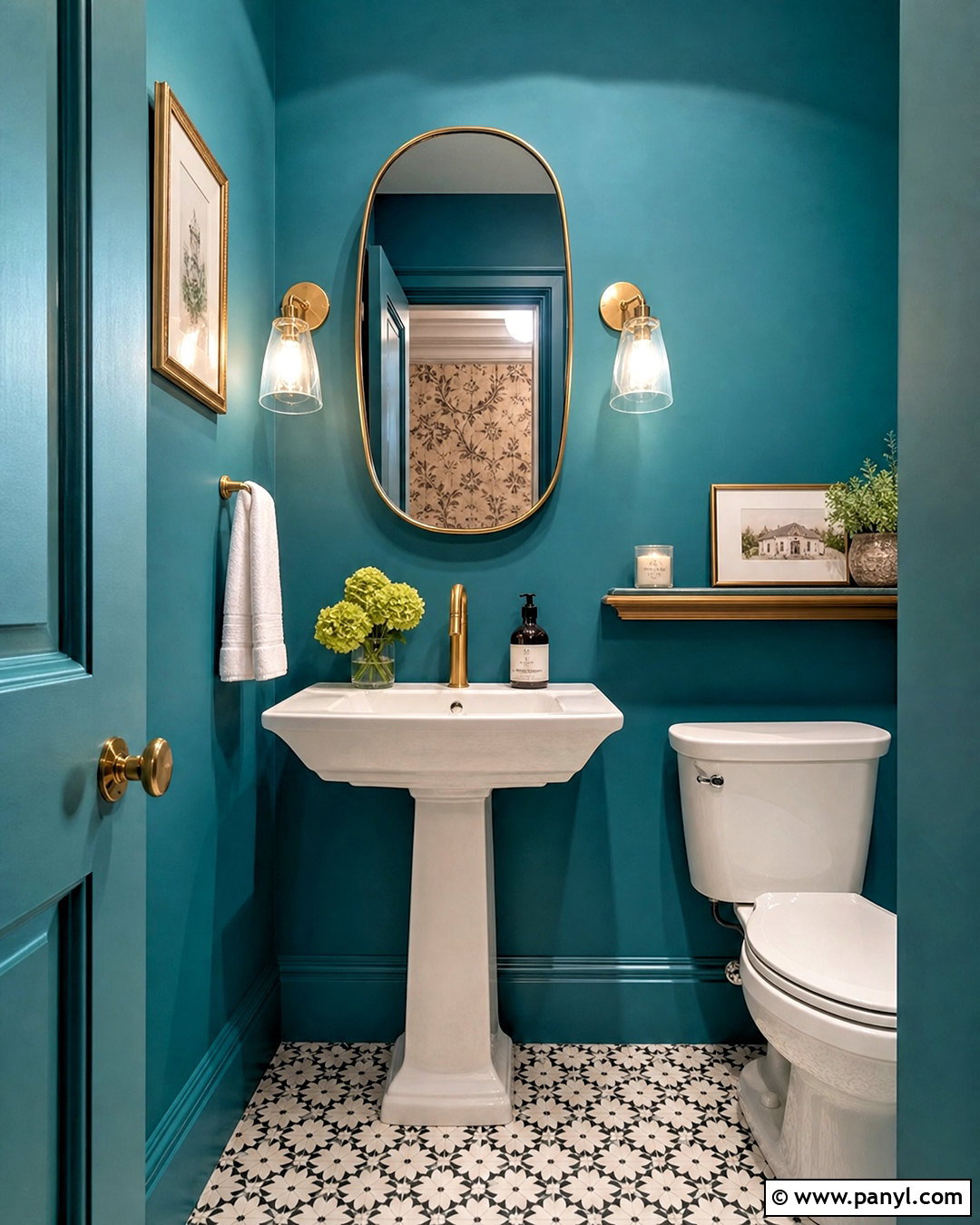
A compact powder room is an ideal place to use saturated turquoise from floor to ceiling. Deep turquoise walls create a jewel-box effect, especially when paired with a small white pedestal sink and warm metallic details. Continue the wall color across the door and trim for a seamless finish, but use a pale ceiling if the room lacks strong lighting. Choose a rounded brass mirror, a slim gold faucet, and two clear-glass sconces. Black-and-white patterned floor tile adds personality without introducing another dominant hue. A framed vintage-style print and a narrow wall shelf provide decoration and practical storage. Because the furnishings are simple and the room is small, the bold palette feels intentional, memorable, and surprisingly easy to maintain.
9. Turquoise Home Office Walls With Walnut Furniture
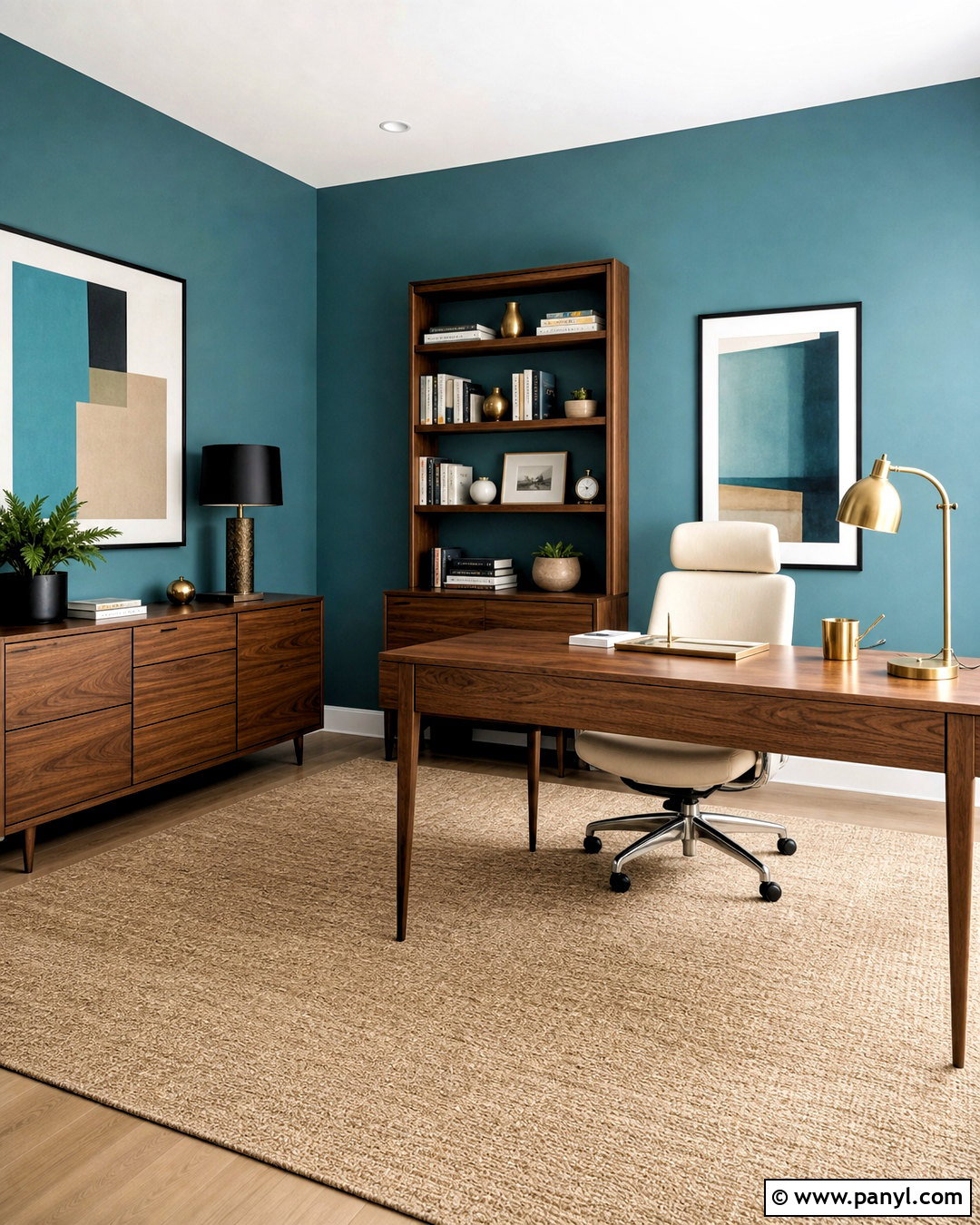
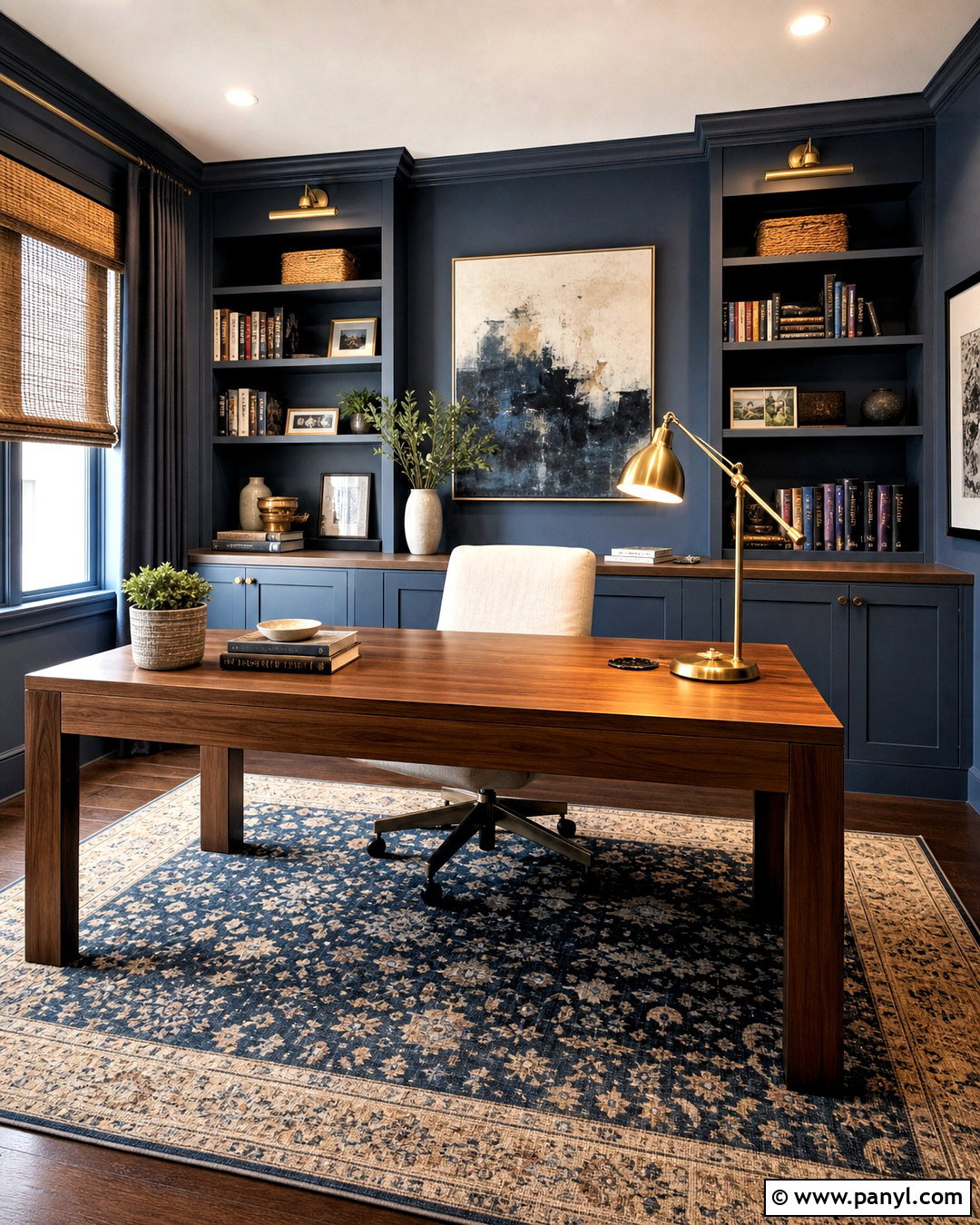
When a home office feels flat or uninspiring, turquoise walls can give the workspace a defined identity. Use a medium, slightly grayed turquoise that remains comfortable during long work sessions. Position a walnut desk near a window so natural light reaches the work surface from the side. Add a supportive cream chair, a matching walnut bookcase, and a low storage cabinet to create a unified arrangement. A beige flat-weave rug softens the floor, while black metal lighting provides useful contrast. Keep desk accessories limited to wood, white, and brass finishes. Hang a balanced group of simple abstract prints behind the desk. The combination of saturated walls, warm wood, and controlled storage creates a productive office that still feels inviting.
10. Turquoise Nursery Walls With Soft Coral Decor
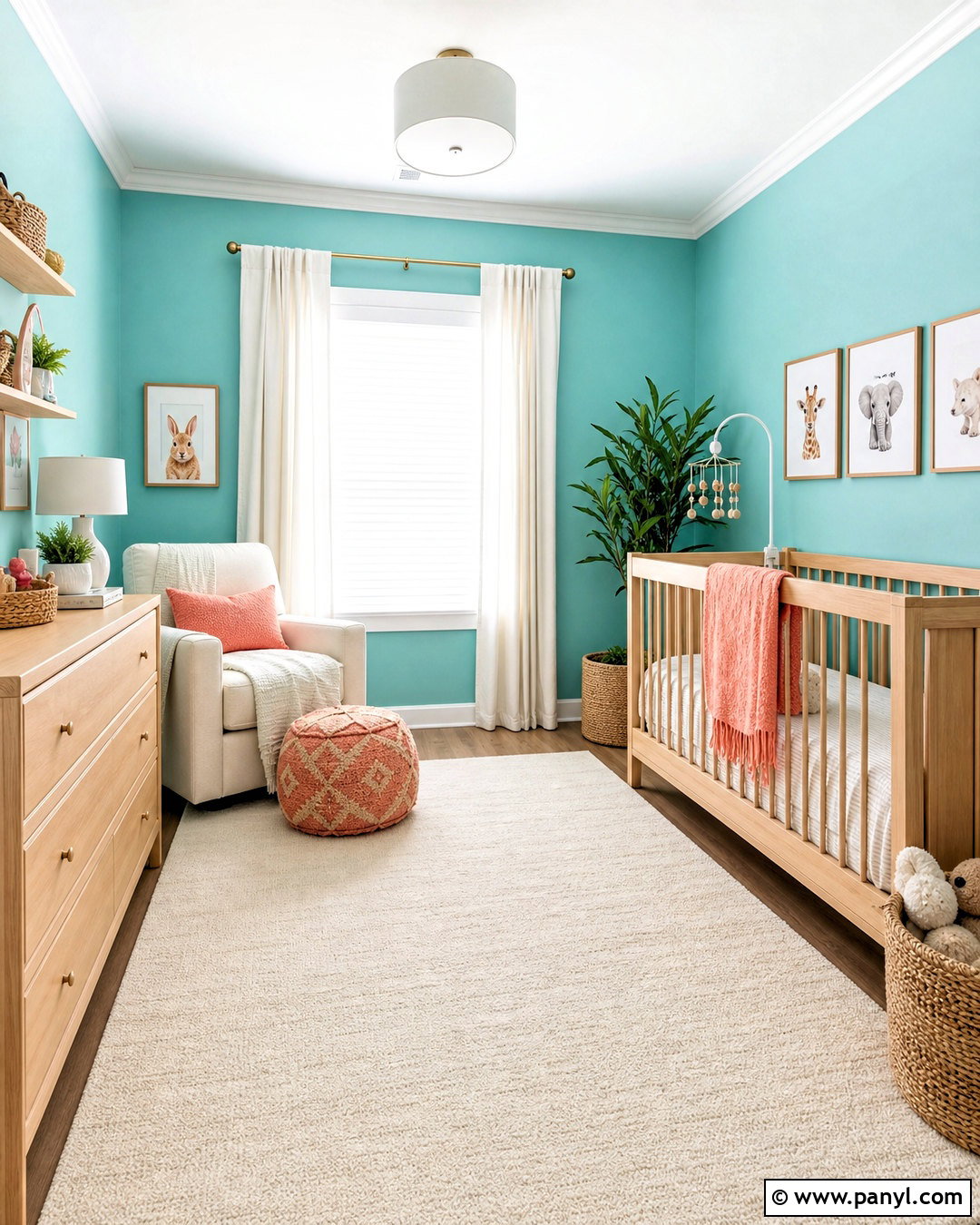
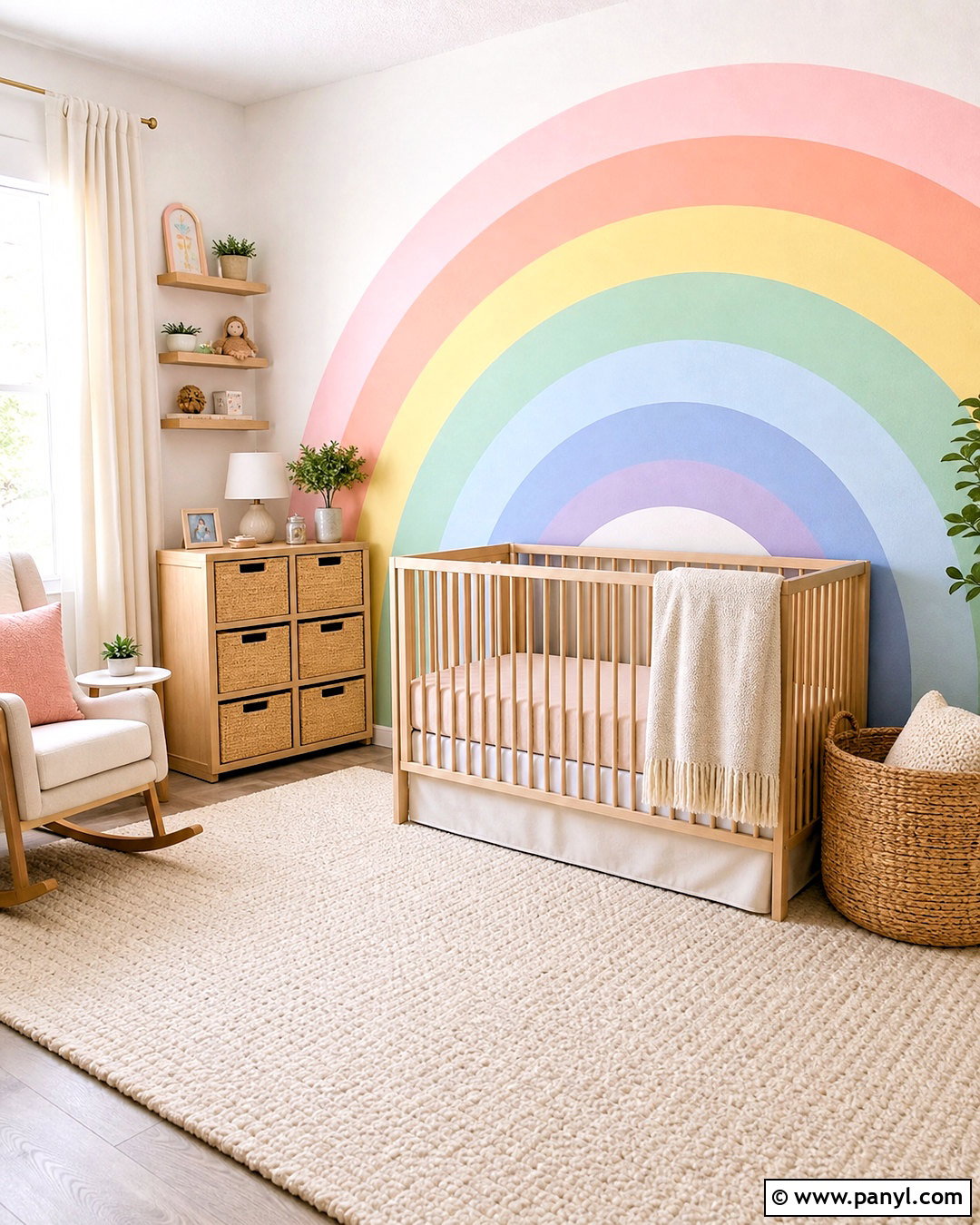
A gentle turquoise nursery feels playful and colorful without relying on a traditional pastel palette. Choose a light, muted turquoise for all four walls, then use white on the ceiling, trim, and doors. Place a natural maple crib against a clear wall away from windows and cords. Add a cream upholstered chair, a pale wood dresser, and a washable ivory rug to keep the room bright. Soft coral can appear in a crib sheet, storage baskets, curtains, and simple animal artwork. Use closed storage for smaller supplies and anchor tall furniture securely. A dimmable white ceiling fixture and shaded table lamp support different routines. The finished nursery feels cheerful, organized, and flexible enough to change as the child grows.
11. Turquoise Entryway Walls With Black And White Decor
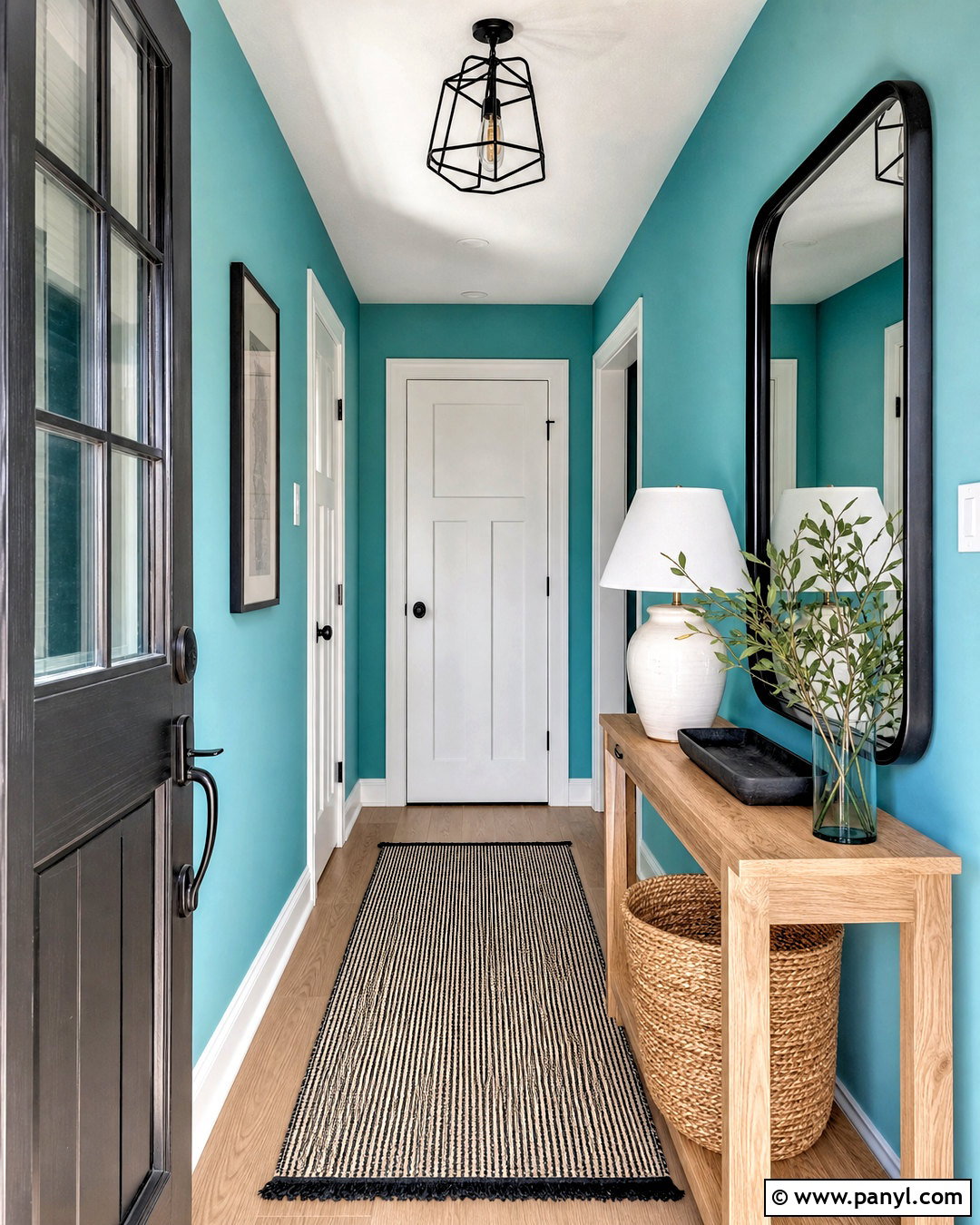
Step through the front door and let turquoise establish an upbeat first impression. A clear blue-green wall color works beautifully with black, white, and natural wood in a compact entryway. Place a narrow oak console along one side, leaving enough open floor space for comfortable movement. Above it, hang a large black-framed mirror that reflects light and visually expands the area. A white ceramic lamp, black catchall tray, and woven basket provide simple function. Choose a durable black-and-cream runner to disguise everyday dirt while connecting the contrasting finishes. White trim and doors keep the turquoise from becoming visually heavy. A few framed prints and a leafy plant complete an entry that feels organized, welcoming, and confidently colorful.
12. Turquoise Hallway Walls With A Gallery Display
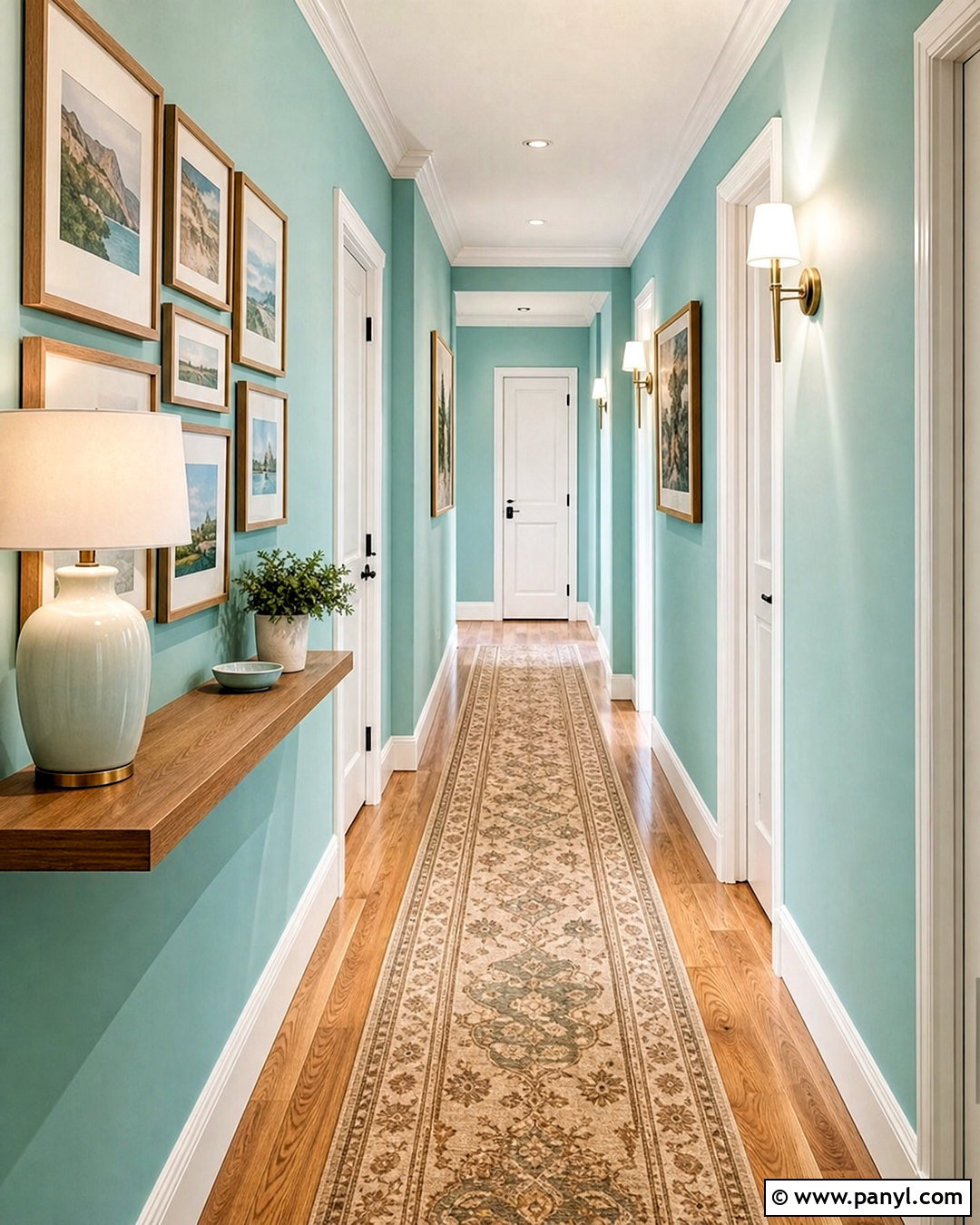
Long hallways often need more than neutral paint to feel connected to the rest of a home. Soft turquoise walls can turn this transitional area into a purposeful gallery without making it seem narrow. Paint the baseboards, doors, and ceiling bright white to maintain clean boundaries. Arrange medium-sized artwork in matching natural wood frames, leaving consistent spacing between each piece. A slim console or floating shelf can fit at the widest point, paired with a small lamp and ceramic bowl. Use a light-colored runner with a subtle turquoise and beige pattern to lead the eye forward. Warm wall sconces with simple white shades provide even illumination. The completed hallway feels considered, useful, and visually linked from one adjoining room to another.
13. Turquoise Sunroom Walls With Rattan Furniture
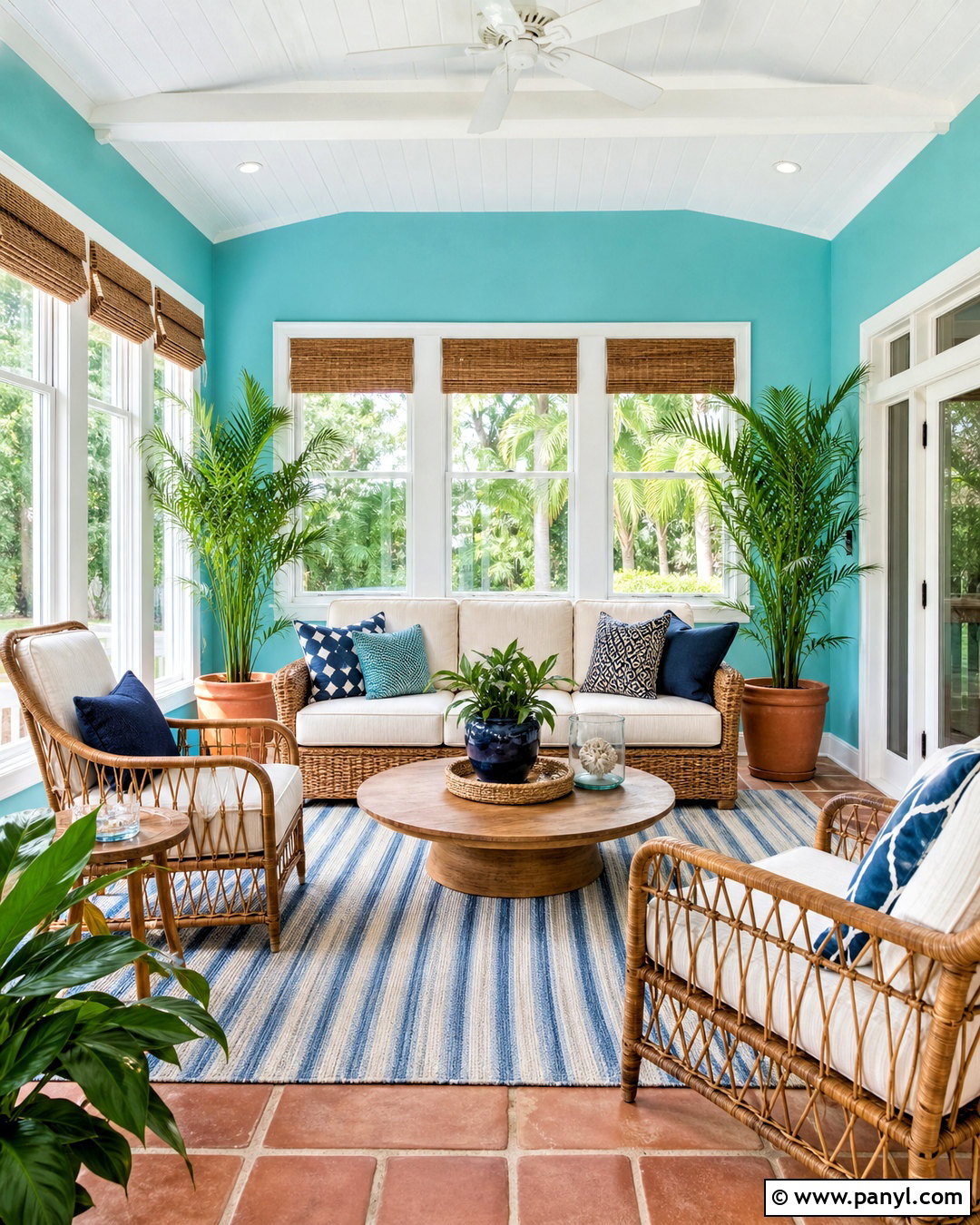
Sunlight brings out the lively blue and green undertones in turquoise walls, making the color especially effective in a casual sunroom. Choose a medium aqua-turquoise and balance it with white window trim and a pale natural floor. Arrange a rattan sofa and two woven lounge chairs around a round wood coffee table. Use thick cream seat cushions for comfort, then add patterned pillows in navy, leaf green, and soft yellow. Natural fiber shades filter glare while preserving the room’s airy quality. Several healthy plants in terracotta and white pots reinforce the indoor-outdoor connection. Finish with a washable striped rug and a simple ceiling fan. The complete design feels relaxed, bright, and suitable for everyday reading or conversation.
14. Turquoise Laundry Room Walls With White Storage

Even a hardworking laundry room can feel cheerful when its practical elements form a coordinated design. Paint the walls a clean turquoise, then install white upper cabinets or open shelves above the appliances. Use a light wood countertop over front-loading machines to create a folding station. Woven baskets, labeled bins, and clear containers keep supplies contained without making the room look busy. Add white hexagon floor tile with light gray grout for an easy-to-clean surface. Brushed nickel cabinet pulls and a simple flush-mount light maintain a fresh finish. If space permits, include a hanging rail and a narrow rolling cart. The turquoise walls provide personality, while the white storage, pale wood, and organized layout keep the laundry area efficient and visually open.
15. Turquoise Mudroom Walls With Navy Storage
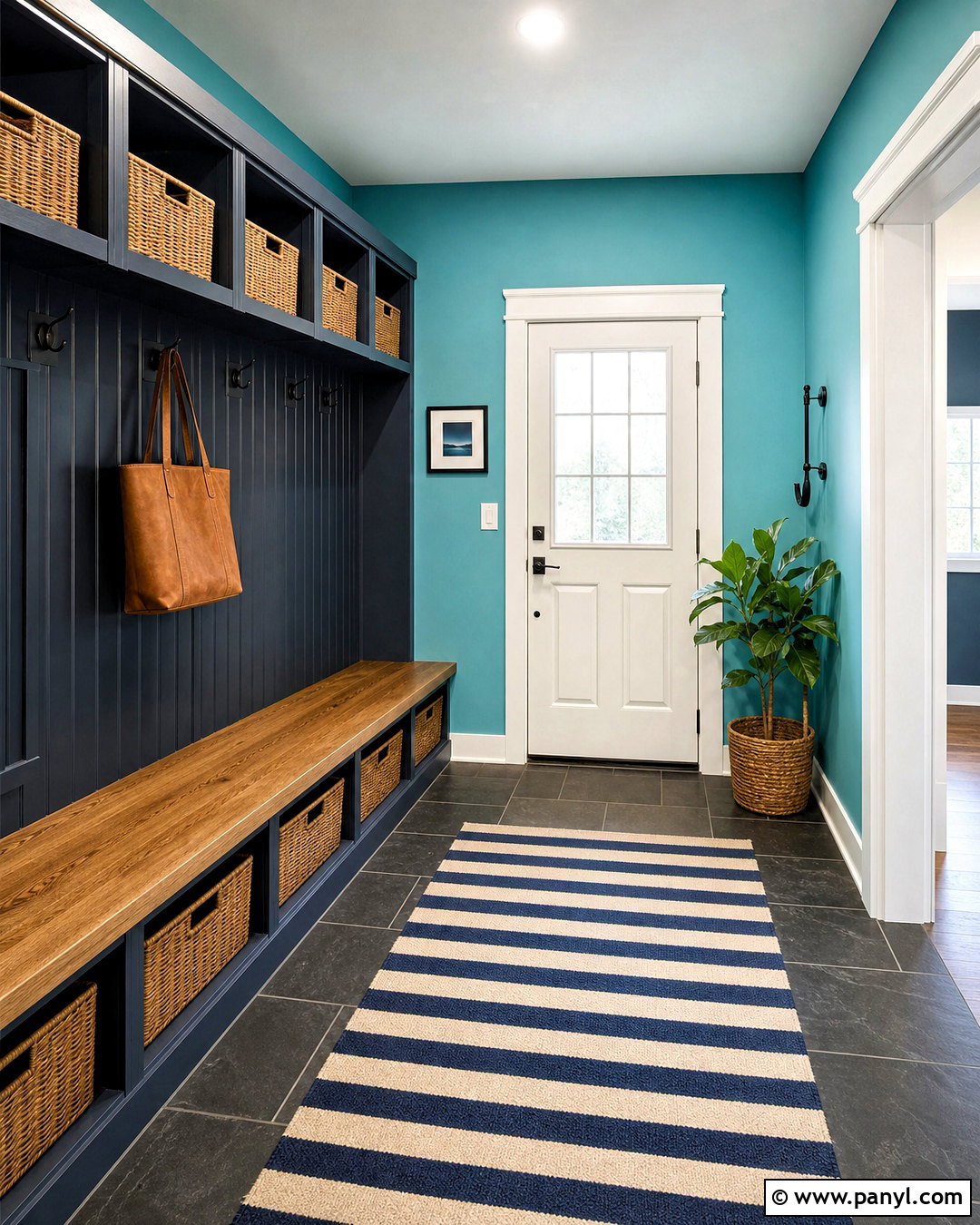
Turquoise walls and navy storage create a layered blue palette that suits a busy mudroom. Use medium turquoise above a row of built-in navy benches and tall cubbies. Warm white trim separates the two colors, while a solid oak bench seat introduces needed warmth. Give each household member a designated hook, basket, and upper compartment to control clutter. Choose slate-look porcelain flooring or durable gray tile for muddy shoes and wet bags. A striped indoor-outdoor rug can soften the walkway without creating maintenance problems. Add black metal hooks and simple overhead lighting for crisp contrast. This full mudroom design feels colorful yet orderly, and the deeper storage color helps everyday scuffs appear less noticeable between regular cleanings.
16. Turquoise Kids Room Walls With Primary Color Accents
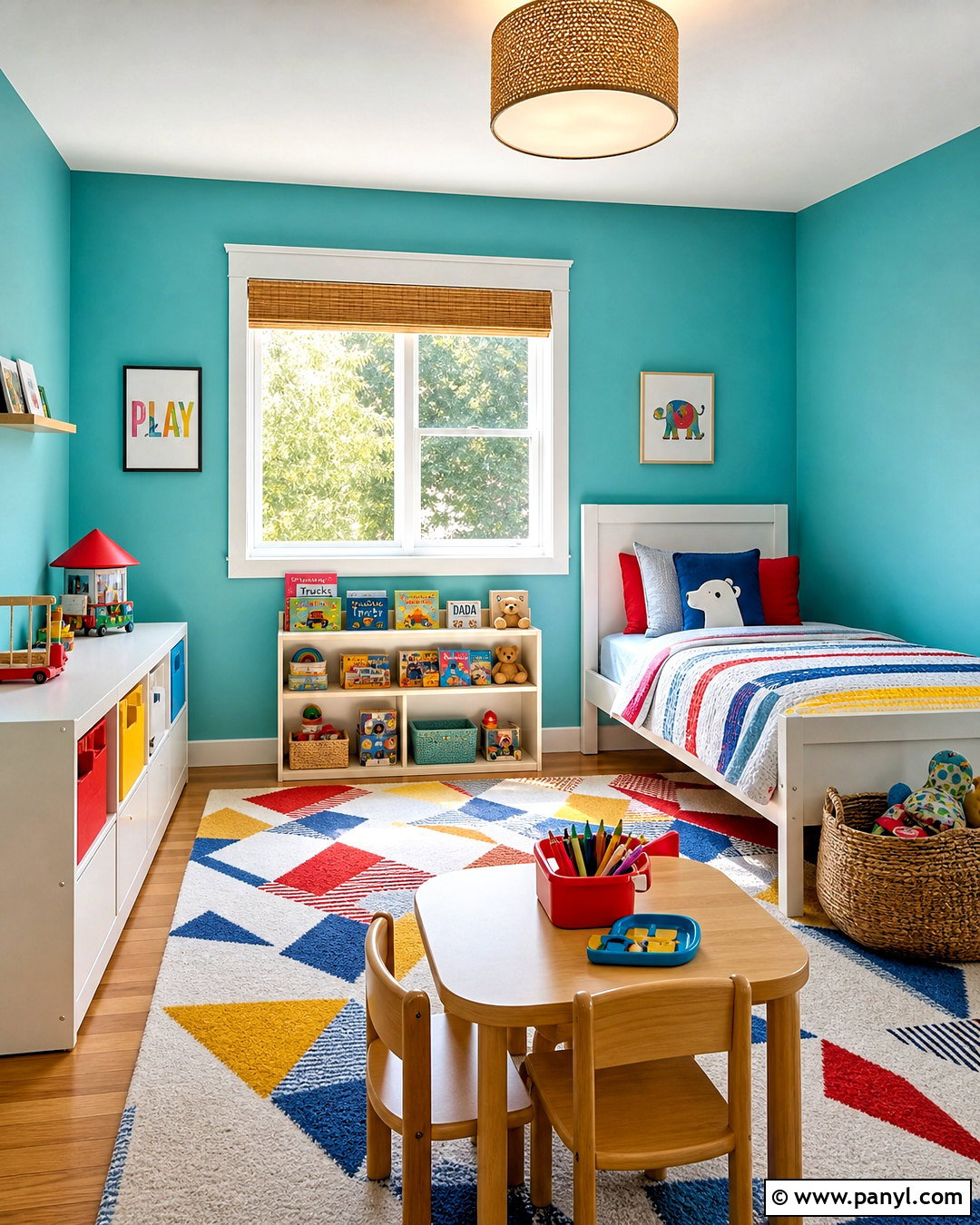
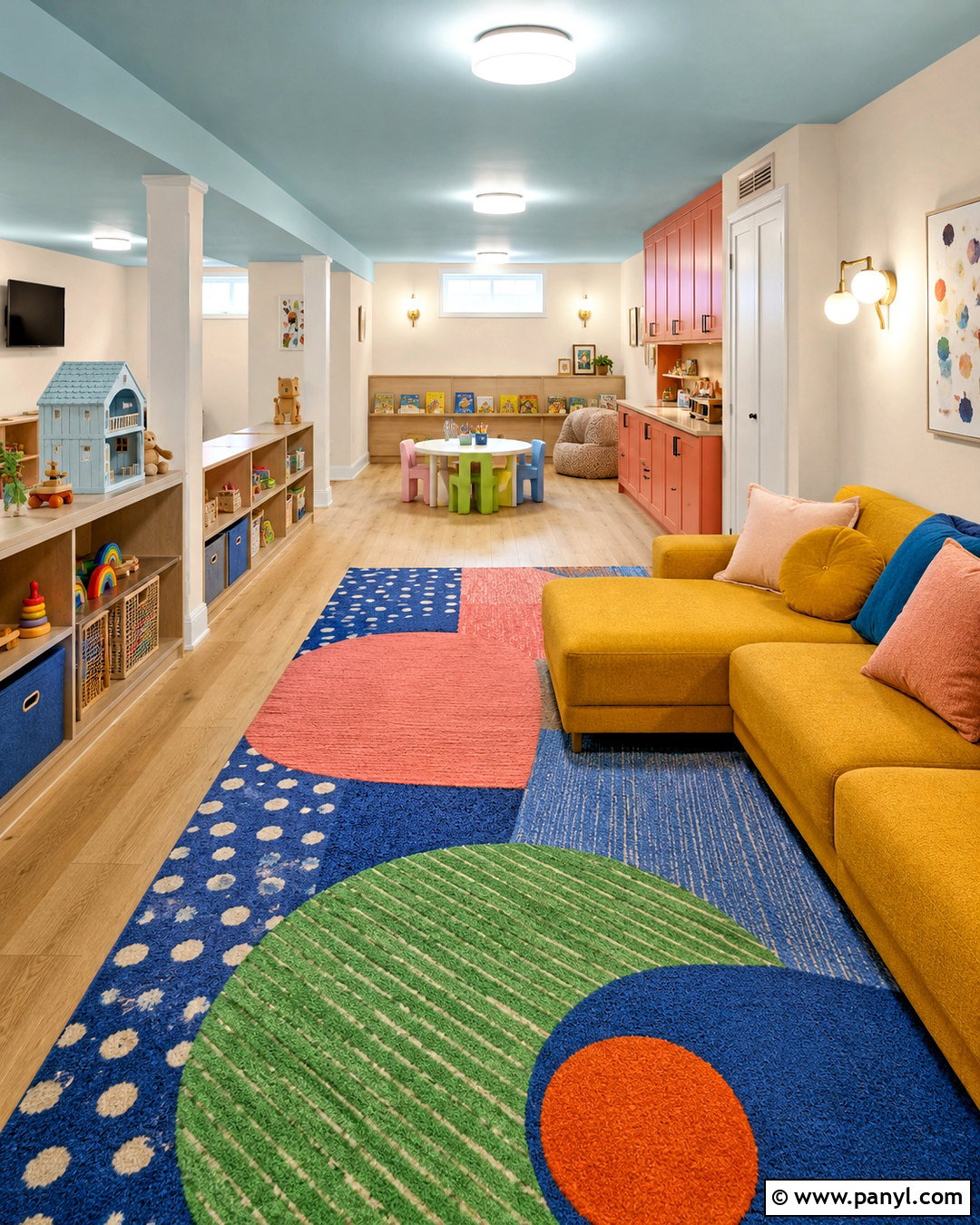
Turquoise provides a flexible background for a children’s room because it works with several brighter colors. Cover the walls in a balanced mid-tone turquoise, then use white furniture to maintain visual clarity. Position a simple bed along one wall and place a low bookcase, toy cabinet, and child-sized table around the remaining open floor area. Introduce red, sunny yellow, and royal blue through washable bedding, bins, artwork, and a patterned rug. Limit each accent color to a few repeated pieces so the room does not feel chaotic. White curtains and natural wood details soften the stronger palette. With clearly defined areas for sleeping, reading, playing, and storage, the completed room feels energetic, functional, and easy to reorganize.
17. Turquoise Guest Room Walls With Boho Decor
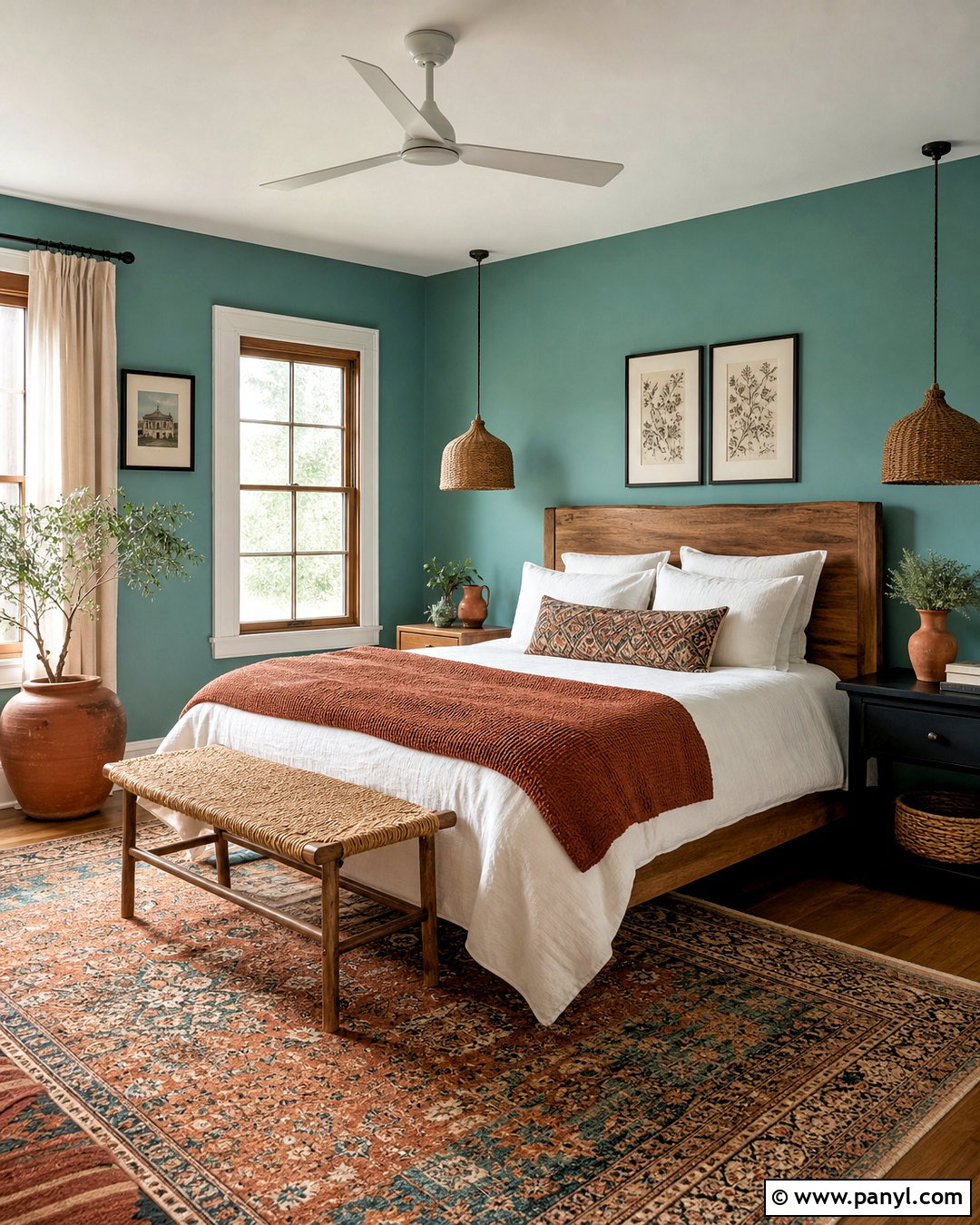
Textural materials give turquoise guest room walls a warm, relaxed character. Select a muted turquoise that leans slightly green and combine it with a simple wood bed, white cotton bedding, and a rust-colored woven blanket. Place mismatched wood nightstands on either side to create an informal look while maintaining practical symmetry. A vintage-inspired rug with cream, terracotta, and faded blue can tie the palette together. Add woven pendant lights, linen curtains, and a cane bench at the foot of the bed. Keep wall decor restrained with one textile hanging and two small framed prints. A ceramic vase and leafy plant finish the space. Guests receive a complete, comfortable room that feels collected over time rather than overly themed.
18. Turquoise Living Room Walls With Mustard Yellow Decor
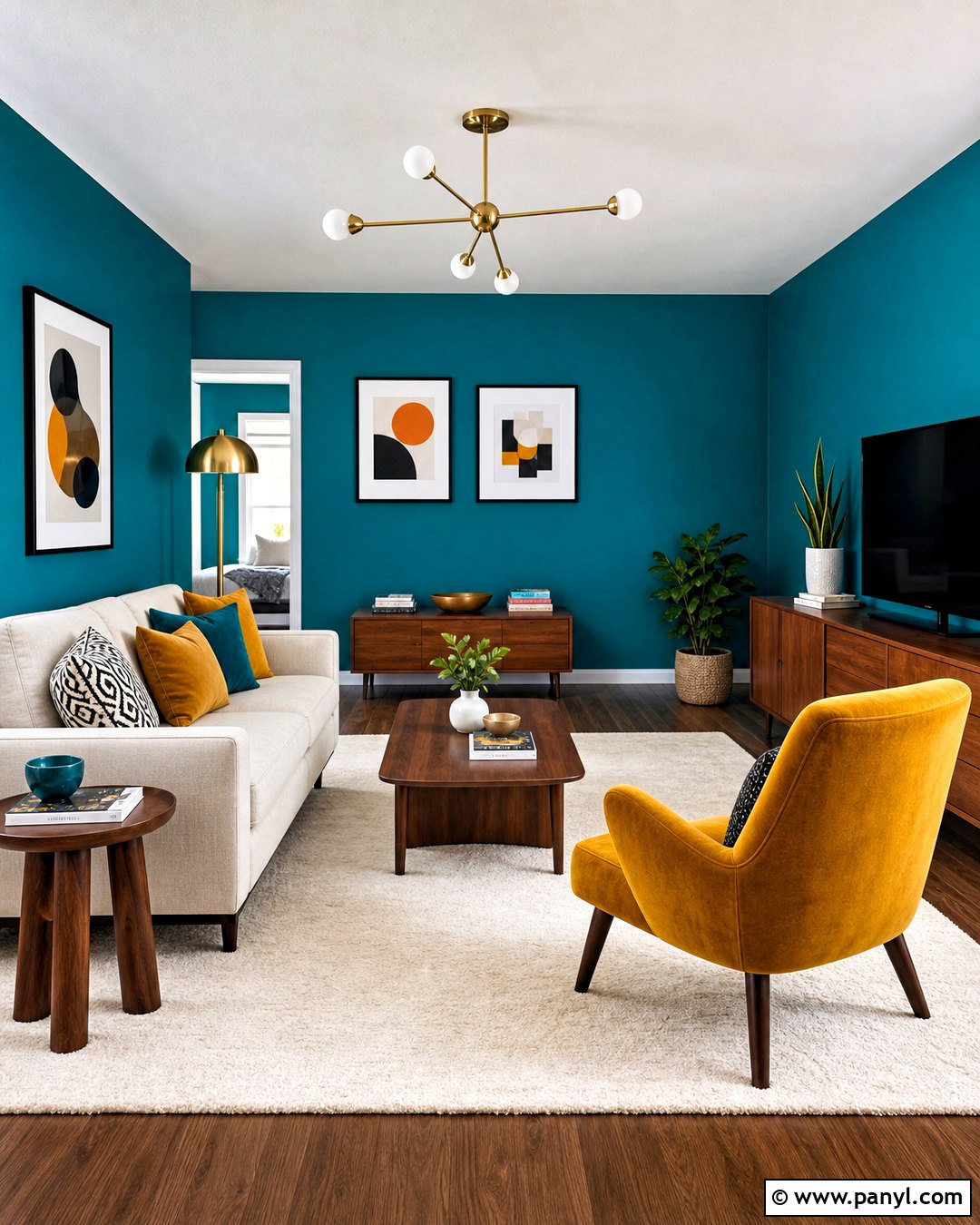
For a bolder living room, combine rich turquoise walls with carefully measured mustard yellow accents. Begin with a deep but clear turquoise and balance it using a cream sofa, warm white ceiling, and medium oak flooring. Place a mustard lounge chair near the sofa, then repeat the yellow in two pillows and a small section of the rug. Walnut side tables and a streamlined media cabinet add midcentury character without dominating the room. Use an off-white rug to brighten the center of the seating arrangement. Brass lighting and black-framed abstract art provide polished finishing details. By limiting mustard to a few strategic locations, the room feels energetic and coordinated instead of busy, dated, or excessively colorful.
19. Turquoise Dining Room Walls With Farmhouse Furniture
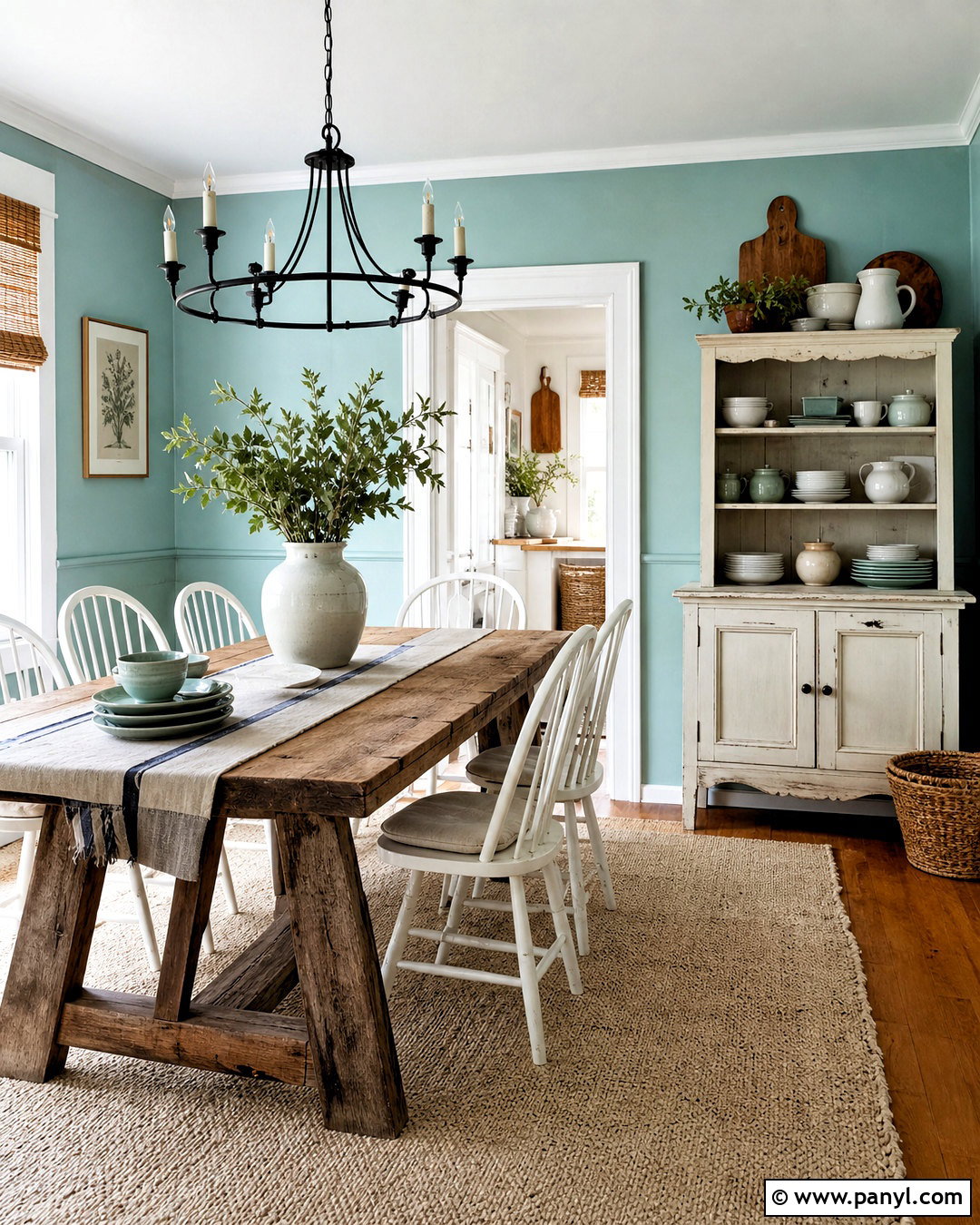
Turquoise can work in a farmhouse dining room when it is softened with painted furniture and natural materials. Choose a dusty, grayed turquoise for the walls rather than a highly saturated aqua. Center a sturdy reclaimed wood table beneath a simple black metal chandelier. Surround it with white spindle-back chairs, or mix chairs with a built-in bench for casual seating. A cream flat-weave rug defines the dining zone, while an antique white hutch provides storage and display space. Use stoneware dishes, linen napkins, and a large ceramic vase instead of overly themed accessories. White trim, woven shades, and warm wood floors complete the design. The resulting room feels fresh and colorful while retaining an approachable, lived-in farmhouse character.
20. Turquoise Library Walls With Plum Seating
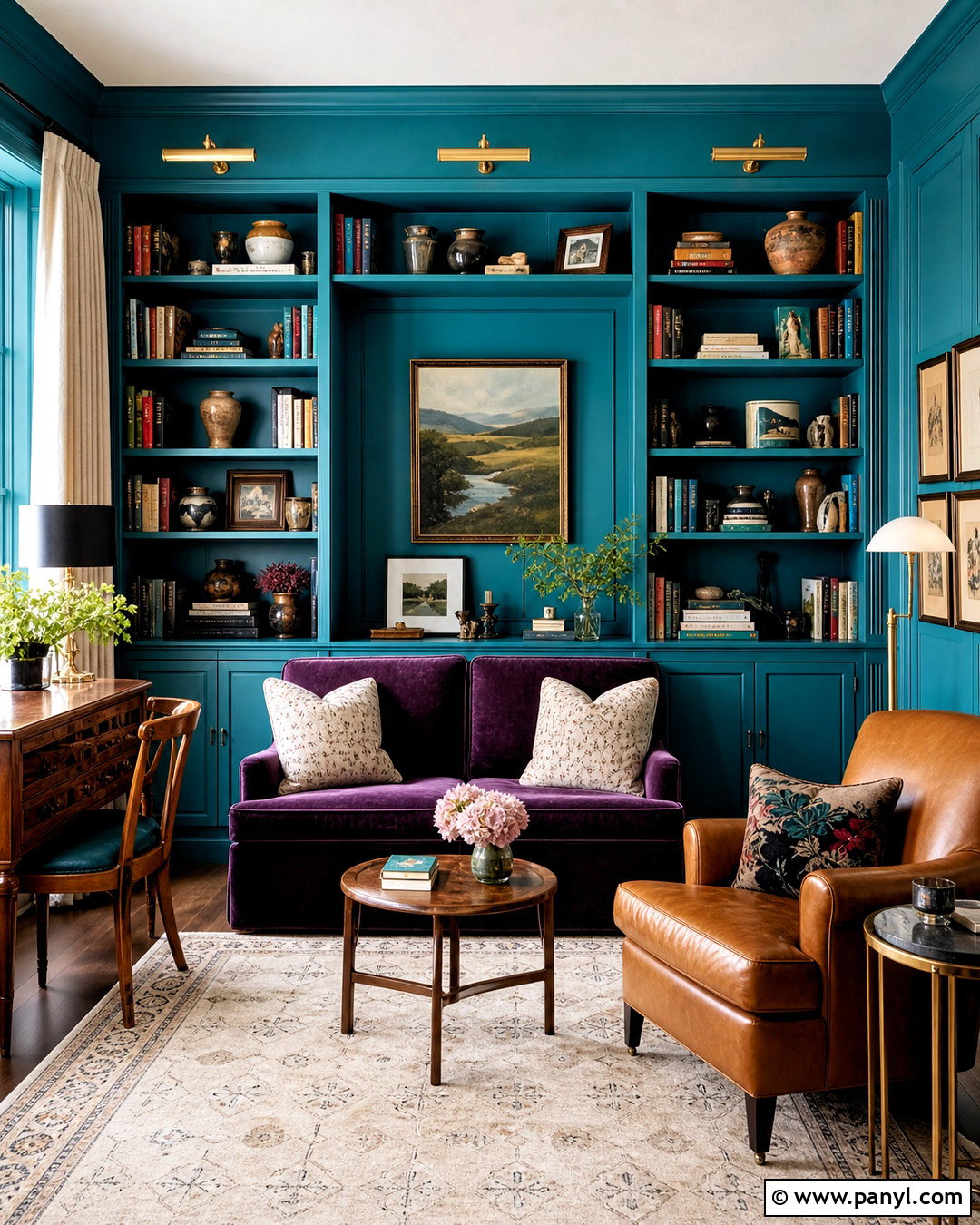
Rich turquoise walls provide a dramatic background for a small home library or reading room. Extend the color across built-in bookcases so the shelving visually blends with the walls. Arrange books with enough open space for framed art, pottery, and a few sculptural objects. A plum velvet loveseat introduces sophisticated contrast, while a caramel leather chair adds another warm note. Place both seats around a small round walnut table and anchor the arrangement with an ivory patterned rug. Brass picture lights above the shelving brighten the display and complement a simple ceiling fixture. Full-length cream curtains prevent the saturated palette from feeling too heavy. This complete room feels intimate, comfortable, and intentionally colorful without requiring an oversized or expensive space.
Conclusion:
These 20 turquoise walls demonstrate how one memorable color can support many different rooms and decorating directions. Turquoise can appear airy beside white and pale oak, earthy with terracotta, polished with brass, or dramatic alongside plum and navy. The most successful rooms do more than add paint. They coordinate furniture, flooring, lighting, textiles, storage, and accent colors around the chosen shade. Before painting, test samples on several walls and observe them throughout the day. Then repeat the wall color subtly in artwork, fabric, or ceramics to connect the room. With a balanced plan and practical layout, turquoise becomes a versatile foundation that can make everyday spaces feel brighter, warmer, and far more personal.

Related Ideas and Inspiration:
Leave a Reply