
Modern accent walls have moved beyond one brightly painted surface. Today’s best designs use texture, architectural detail, natural materials, and thoughtful color to shape an entire room. The wall should connect with the furniture, lighting, flooring, and decor instead of looking like an afterthought. Wood slats can warm a streamlined living room, while limewash brings softness to a calm bedroom. Wallpaper, stone, fluted panels, tile, and creative trim can also establish a strong focal point. Whether you want an affordable weekend update or a more permanent installation, choose a treatment that suits the room’s proportions and daily use. The complete looks below offer practical, stylish ways to recreate **20 modern accent wall ideas**.

1. Vertical Wood Slat Accent Wall
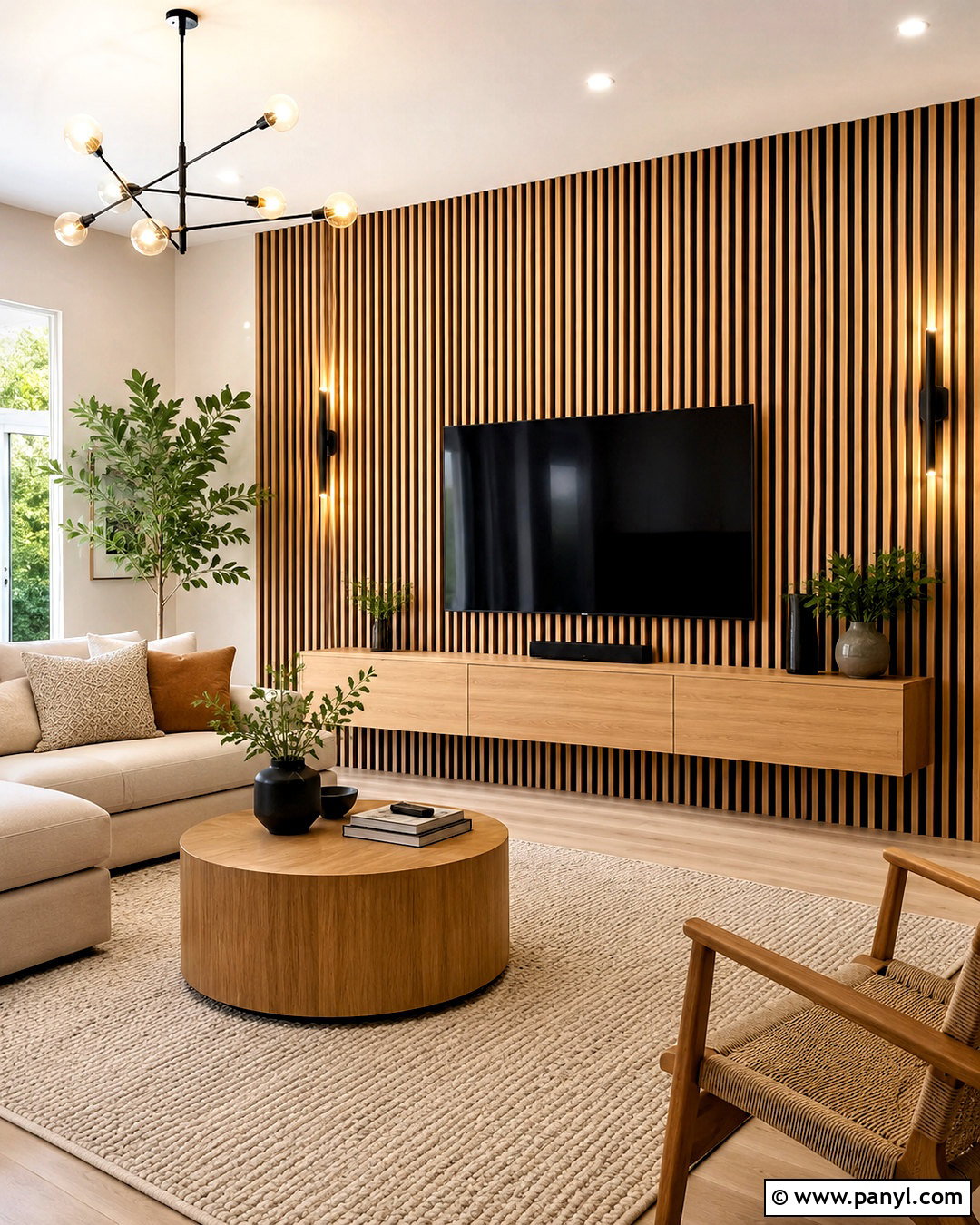
A vertical wood slat accent wall gives a living room warmth without sacrificing clean modern lines. Install narrow white oak or walnut slats from floor to ceiling behind a low-profile media console. A matte black backing between the slats will create depth and make the natural grain more noticeable. Keep the television centered, hide visible cords, and use a long floating cabinet to maintain an uncluttered appearance. Complete the room with a warm white sectional, a rounded wood coffee table, and a large neutral rug. Black metal lighting can repeat the dark background color. Add only a few ceramic vessels and leafy plants so the detailed wall remains the clear focal point.
2. Soft Limewash Accent Wall
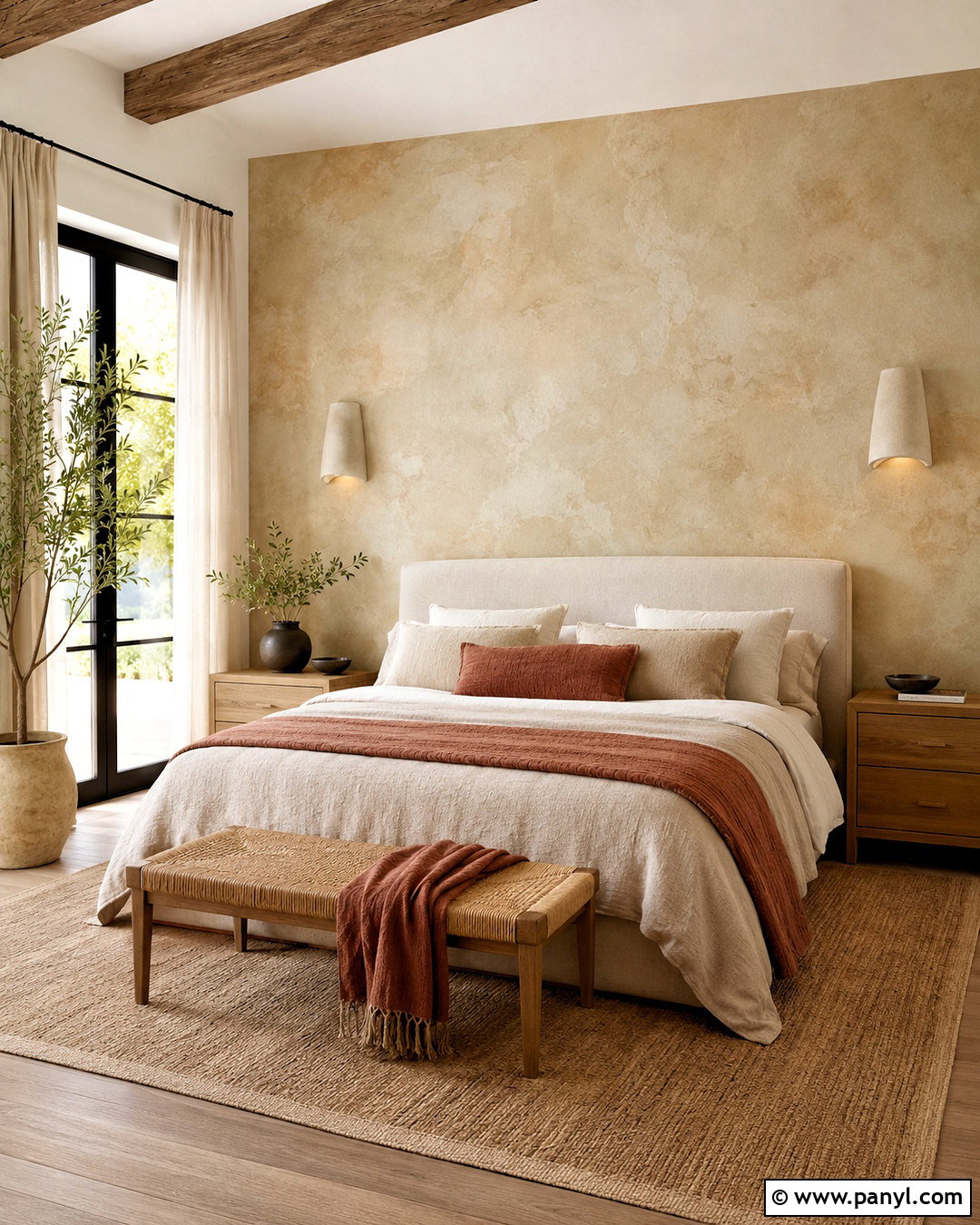
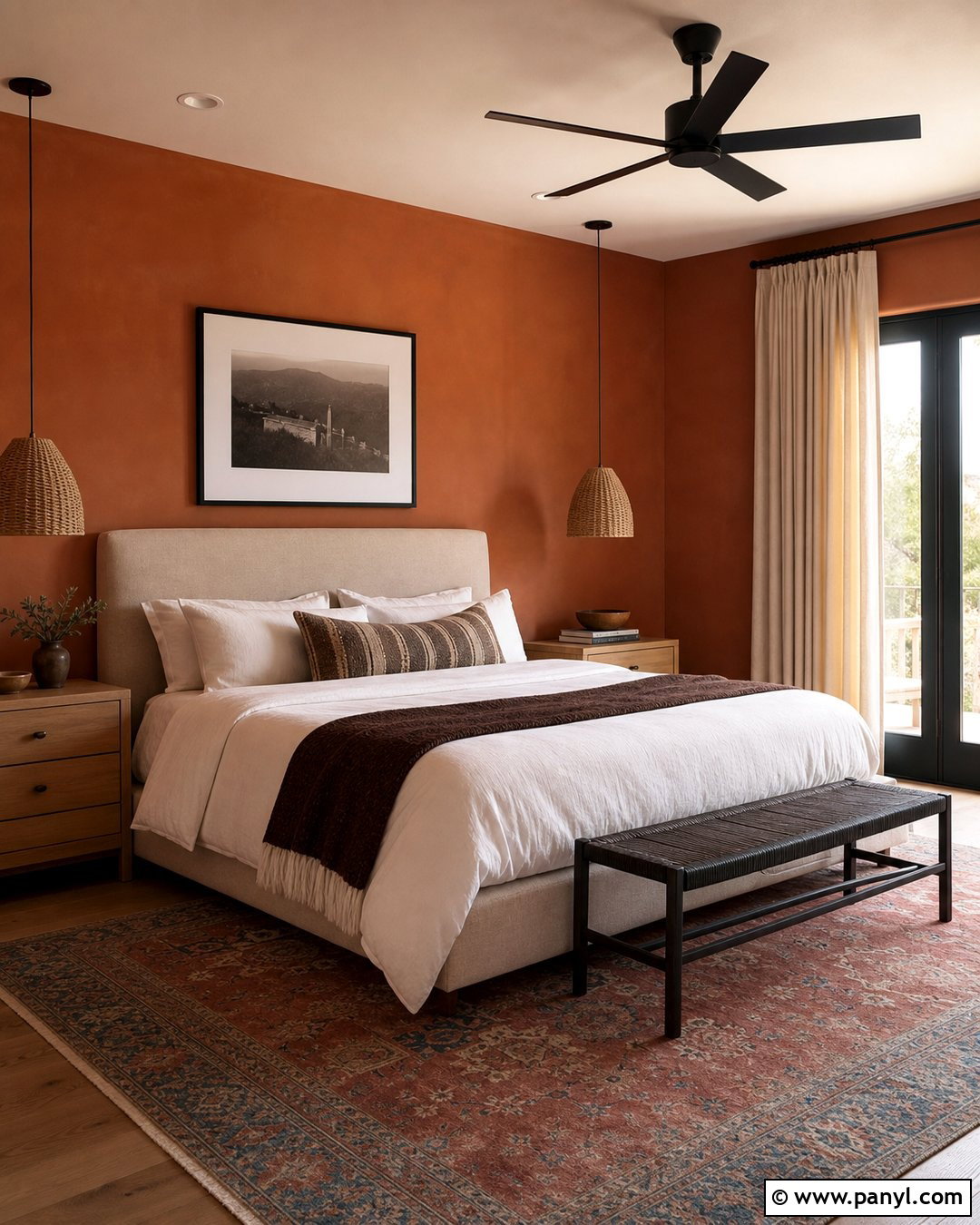
Soft, cloudy movement makes a limewash accent wall especially calming behind a bed. Choose warm beige, dusty taupe, or pale clay instead of a harsh gray. Apply the finish across the entire headboard wall so the natural tonal variation has room to show. An upholstered oatmeal bed, white oak nightstands, and softly rumpled linen bedding will support the relaxed effect. Hang simple plaster sconces rather than busy artwork that might compete with the texture. A woven bench and muted rust throw can bring gentle contrast near the foot of the bed. Keep the remaining walls creamy white, then repeat the limewash color through a rug or small cushions for a cohesive modern bedroom.
3. Modern Board And Batten Accent Wall
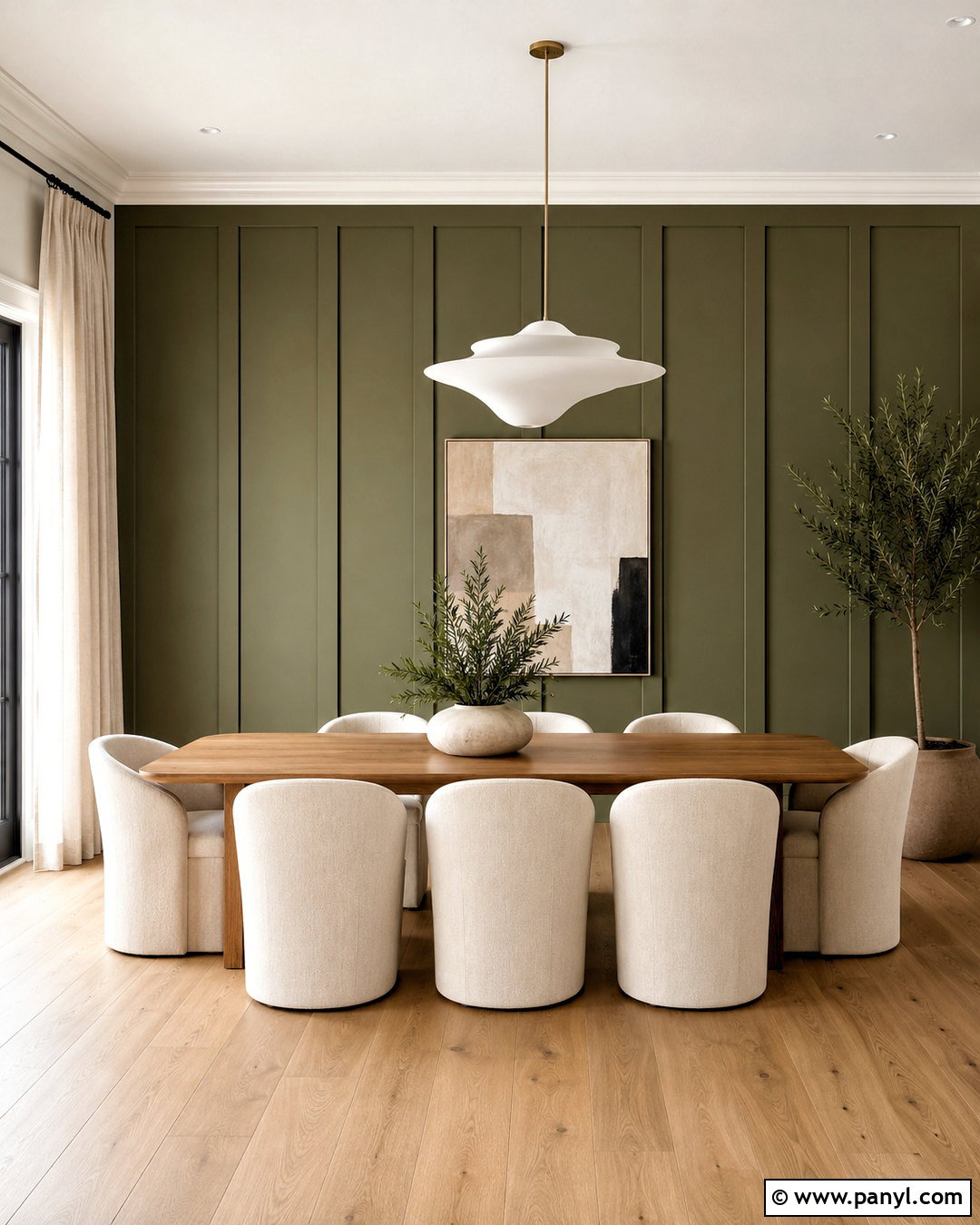
Can traditional molding feel modern? It can when the layout is simple, tall, and painted in one rich color. Create a floor-to-ceiling board and batten accent wall behind a dining table using evenly spaced vertical strips with one clean horizontal rail. Deep olive green, charcoal blue, or warm greige will emphasize the architecture without making it overly formal. Pair the wall with a streamlined oak dining table, curved upholstered chairs, and a sculptural white pendant. A large abstract canvas can sit within the center panel if its colors remain understated. Keep the baseboards and molding the same color as the wall. Natural linen curtains and pale wood flooring will balance the stronger shade.
4. Fluted Panel Accent Wall
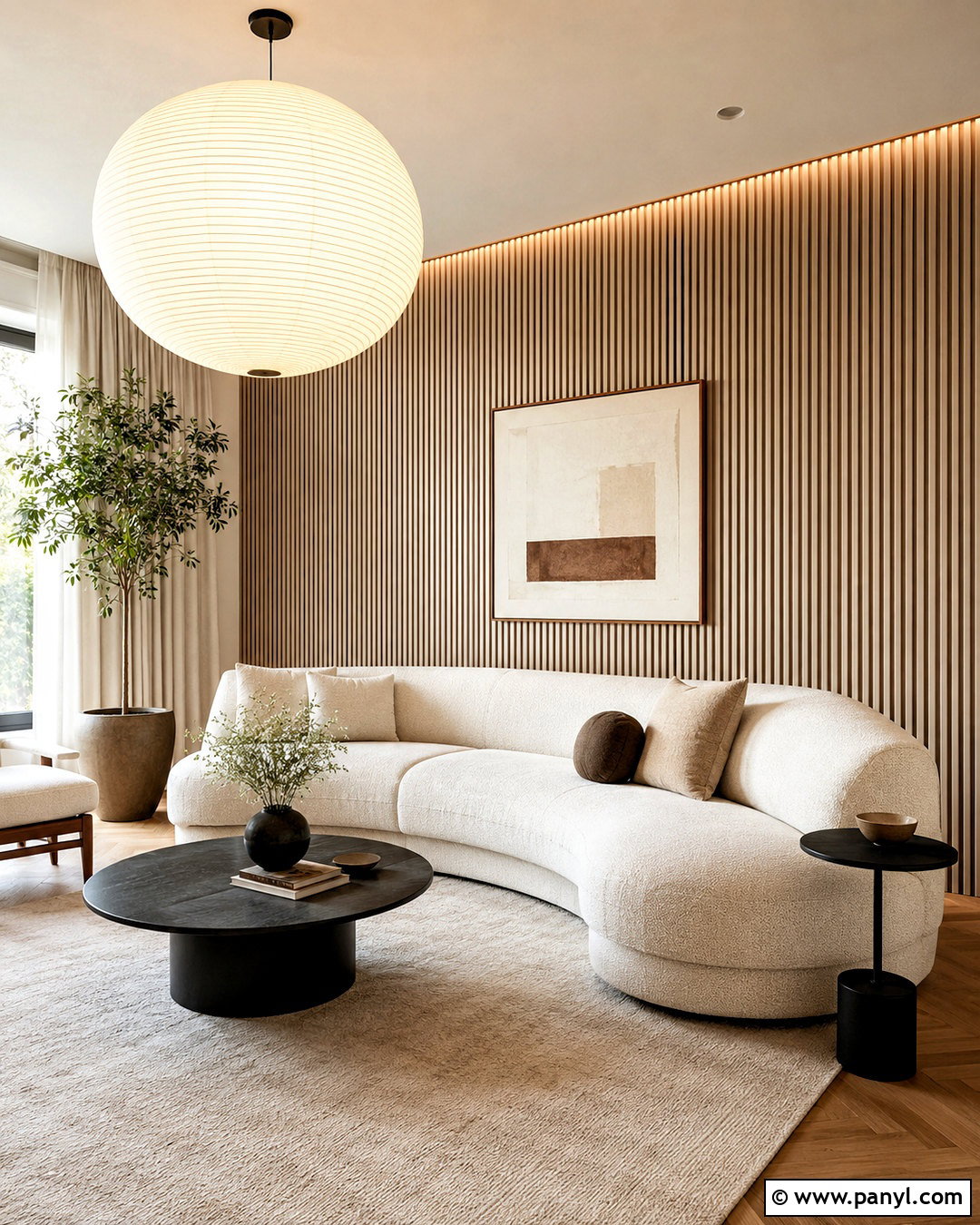
Fluted panels introduce movement through repeating grooves and changing shadows. Use a fluted accent wall behind a living room sofa or along a compact entryway where the texture can be seen from several angles. Paintable MDF panels in warm mushroom create a quiet monochromatic look, while natural oak panels feel more organic. Choose a curved cream sofa, a slim black side table, and an oversized paper lantern to soften the straight vertical lines. If the room is narrow, continue the same panel color onto a nearby door so the surface feels less fragmented. A light wool rug and minimal artwork will prevent visual competition. Finish with concealed picture lighting that gently grazes the ridged surface.
5. Stone Fireplace Accent Wall
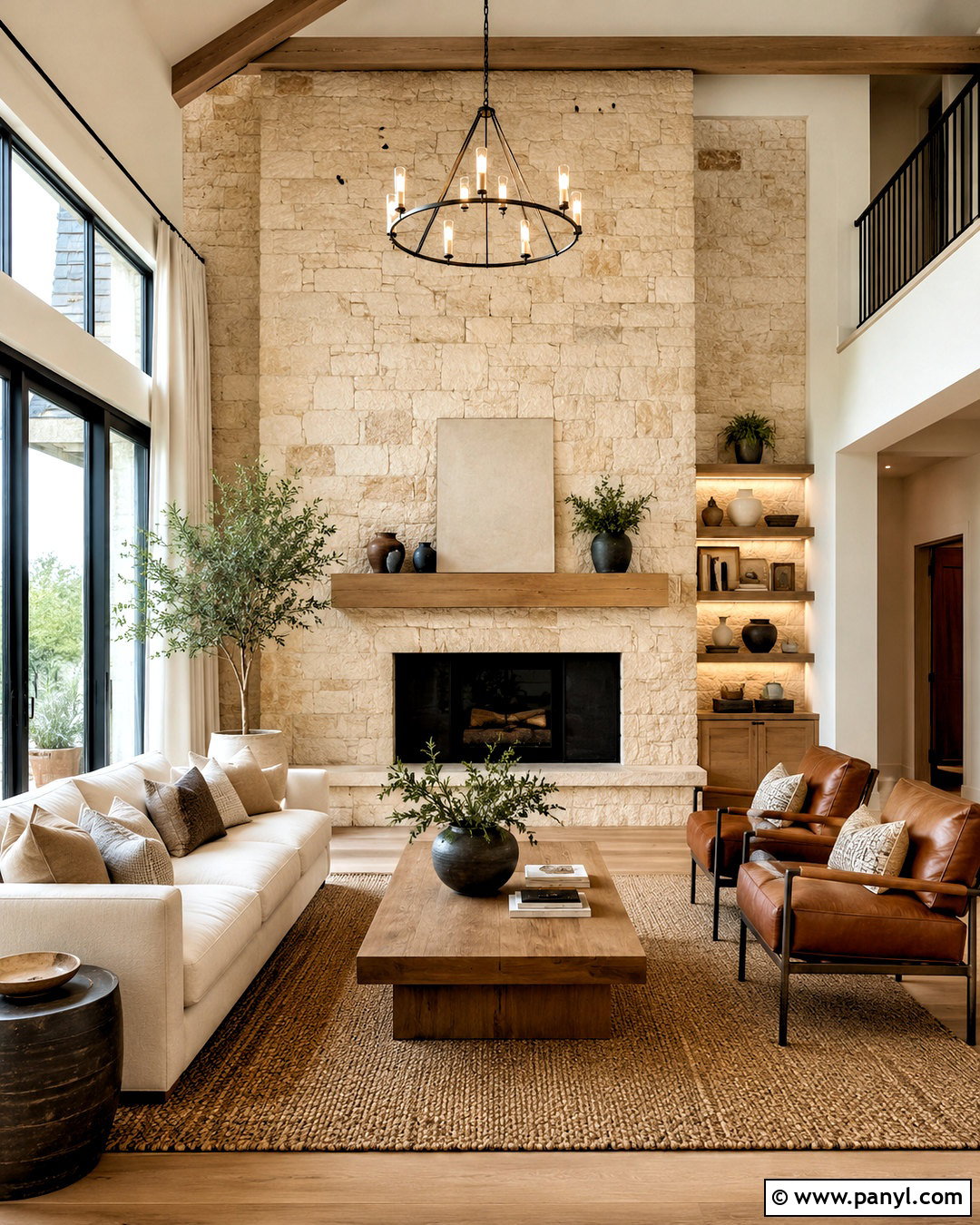
A floor-to-ceiling stone fireplace wall can anchor an open living room while connecting the interior to natural surroundings. Select slim-cut limestone or softly textured travertine in warm ivory and sand tones. Keep the fireplace opening wide and simple, with a dark bronze or matte black frame. A floating white oak mantel introduces warmth without interrupting the stone too heavily. Arrange a low cream sofa and two cognac leather chairs around a substantial wood coffee table. Use a woven rug, linen curtains, and restrained pottery to continue the earthy palette. Rather than mounting numerous decorations on the stone, display one large artwork or leave the surface bare. This makes the material itself the focal feature.
6. Large Scale Mural Accent Wall
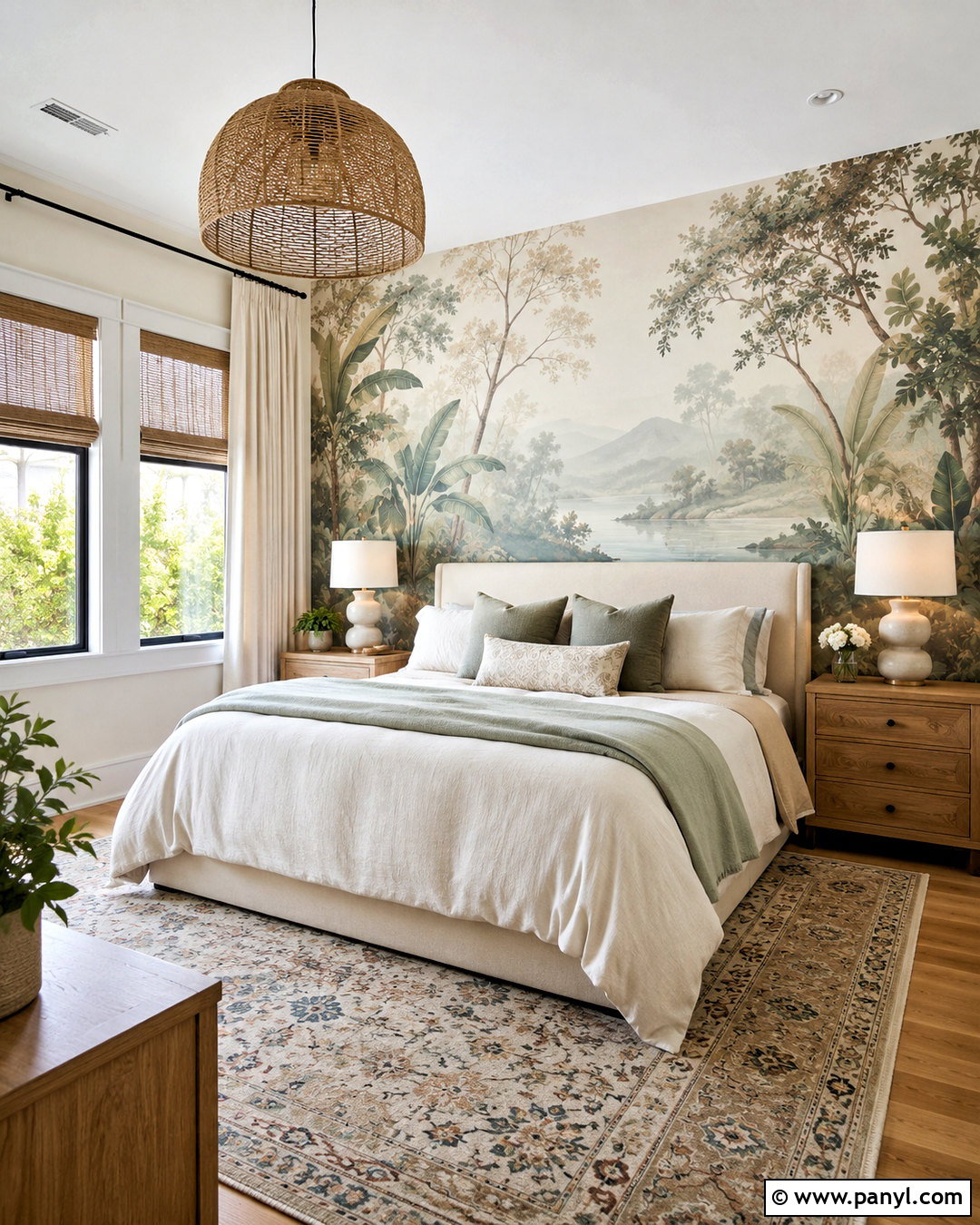
A large mural can make a plain bedroom feel immersive when its colors guide the rest of the design. Choose an oversized landscape, abstract watercolor, or misty botanical print with soft sage, muted blue, and warm beige. Cover the entire wall behind the bed rather than placing the mural inside a small frame. Select a simple upholstered headboard so the printed scene remains visible. Repeat two mural colors through the bedding, bedside lamps, and area rug, but avoid matching every shade exactly. Natural oak tables and woven shades will ground the pattern with familiar materials. Keep the other walls warm white and limit accessories to a few sculptural pieces, creating a finished room that feels expressive but restful.
7. Geometric Trim Accent Wall
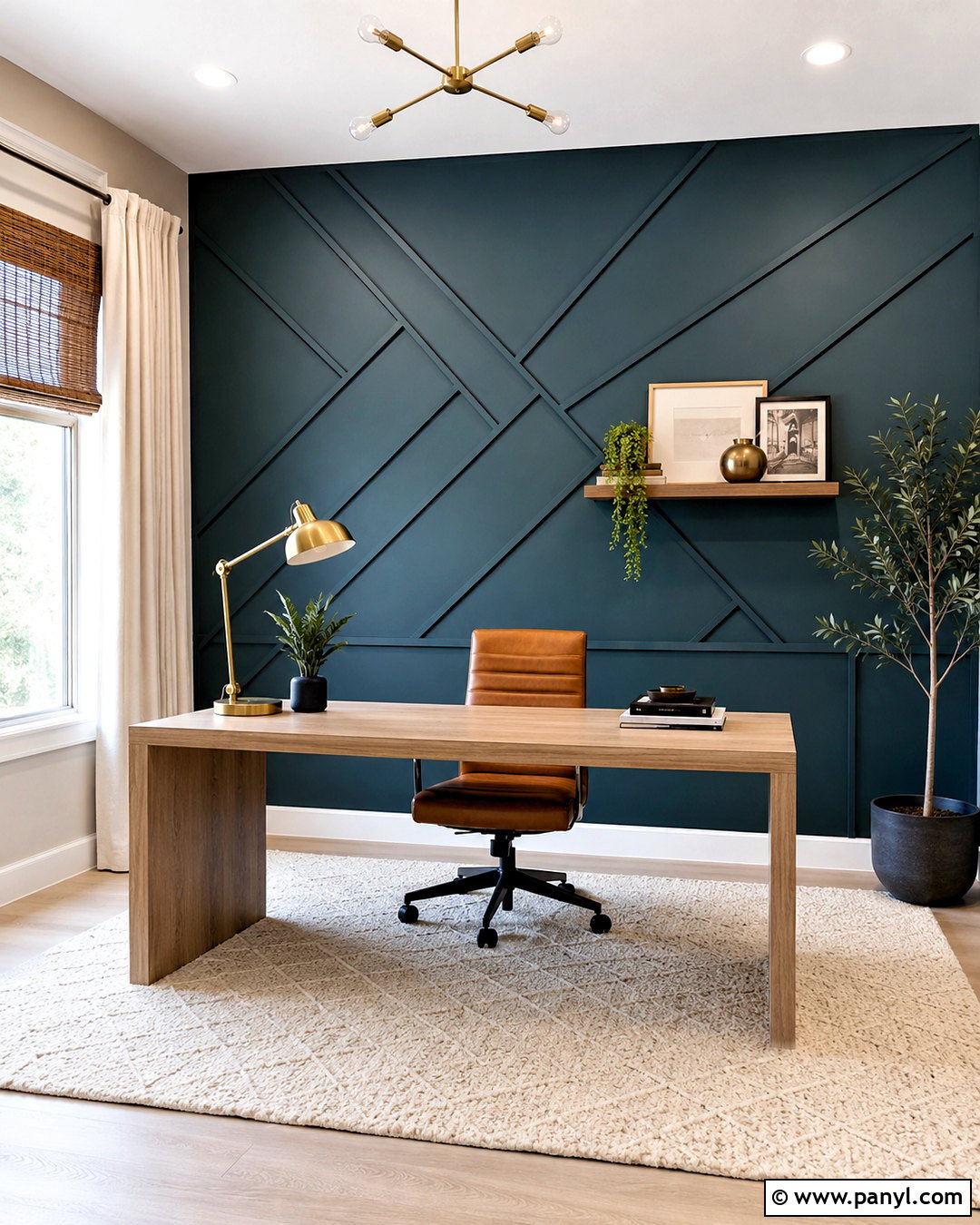
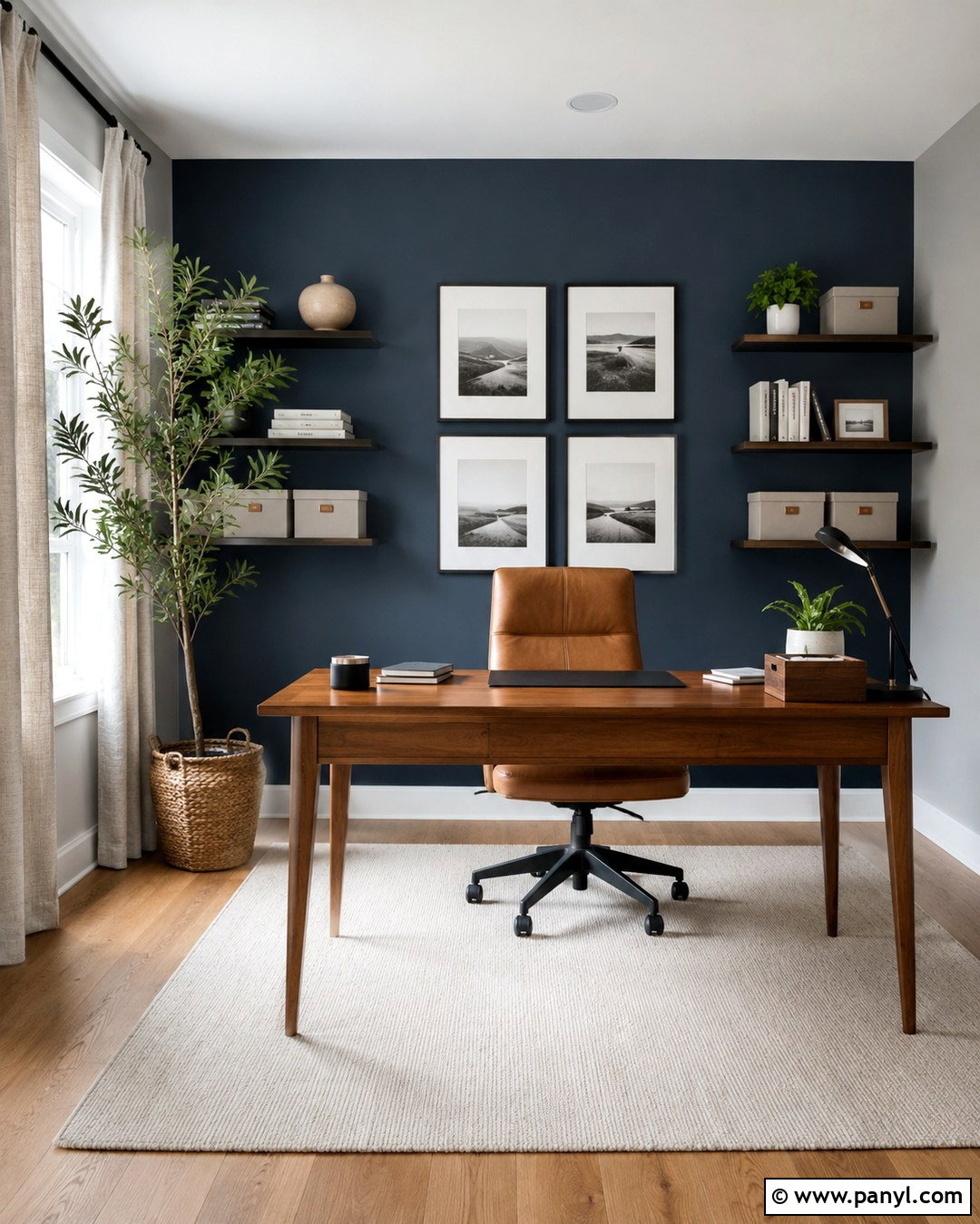
Geometric trim adds depth to a home office without requiring patterned wallpaper or expensive wall panels. Build an asymmetrical arrangement of slim wood strips across the wall behind the desk, using large angled shapes rather than a crowded network of small lines. Paint the trim and wall together in deep navy blue, smoky teal, or soft charcoal for a polished finish. Place a light oak desk against the darker surface and add a caramel leather chair for warmth. A brass task lamp and minimal floating shelf can supply practical detail. Balance the wall with pale flooring, simple window treatments, and a textured cream rug. Carefully plan the pattern around outlets, shelving, and computer equipment before attaching the trim.
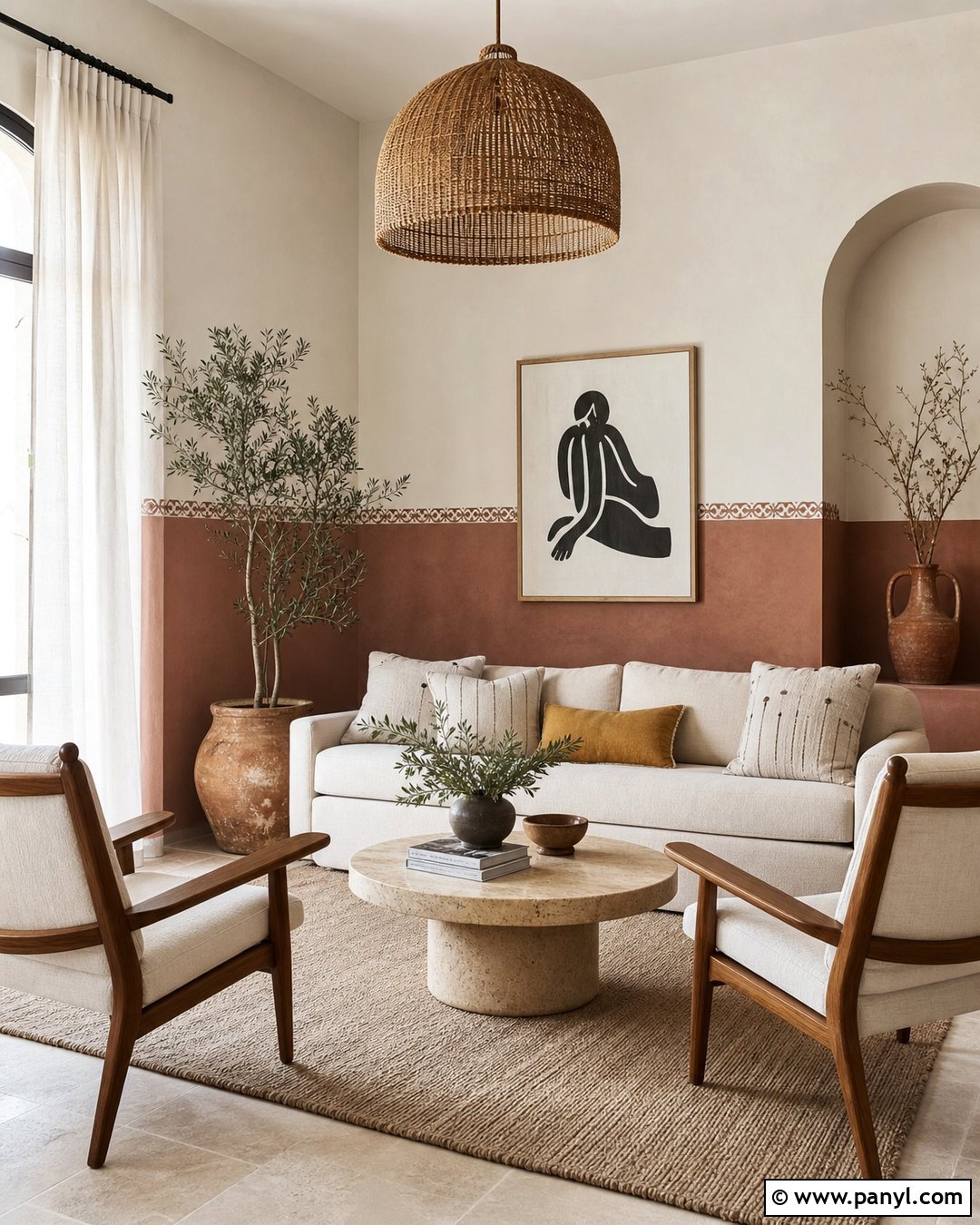
8. Two Tone Color Block Accent Wall
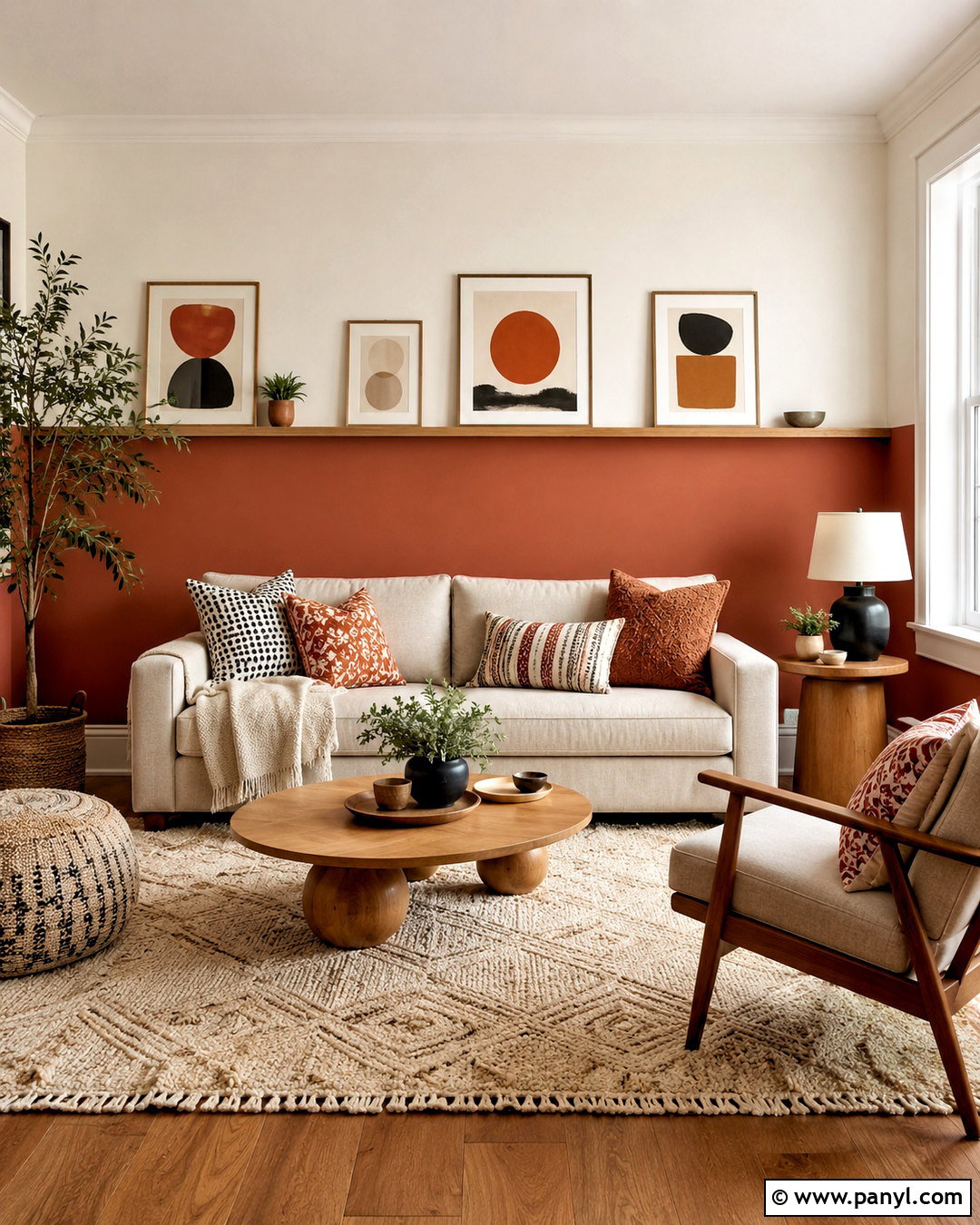
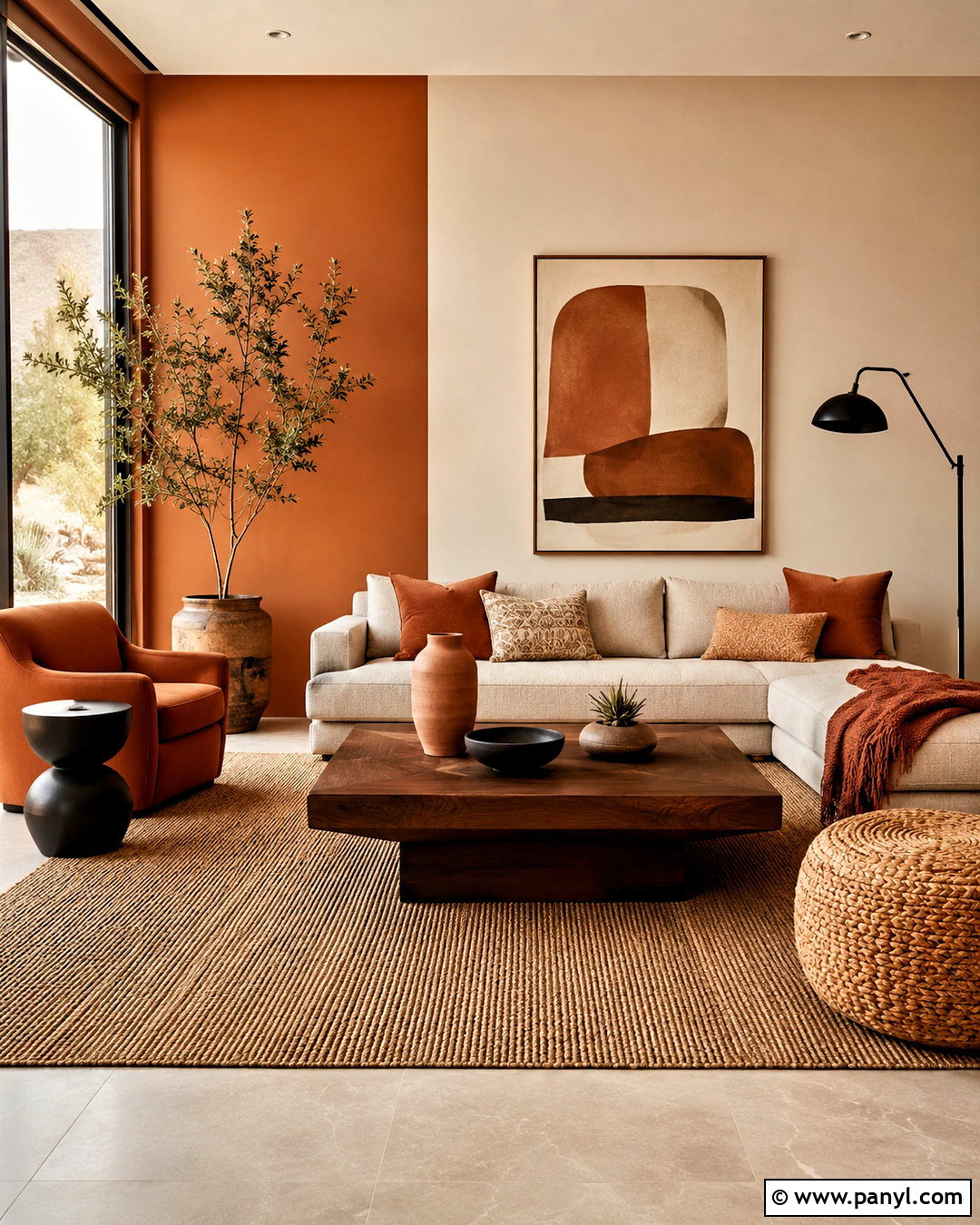
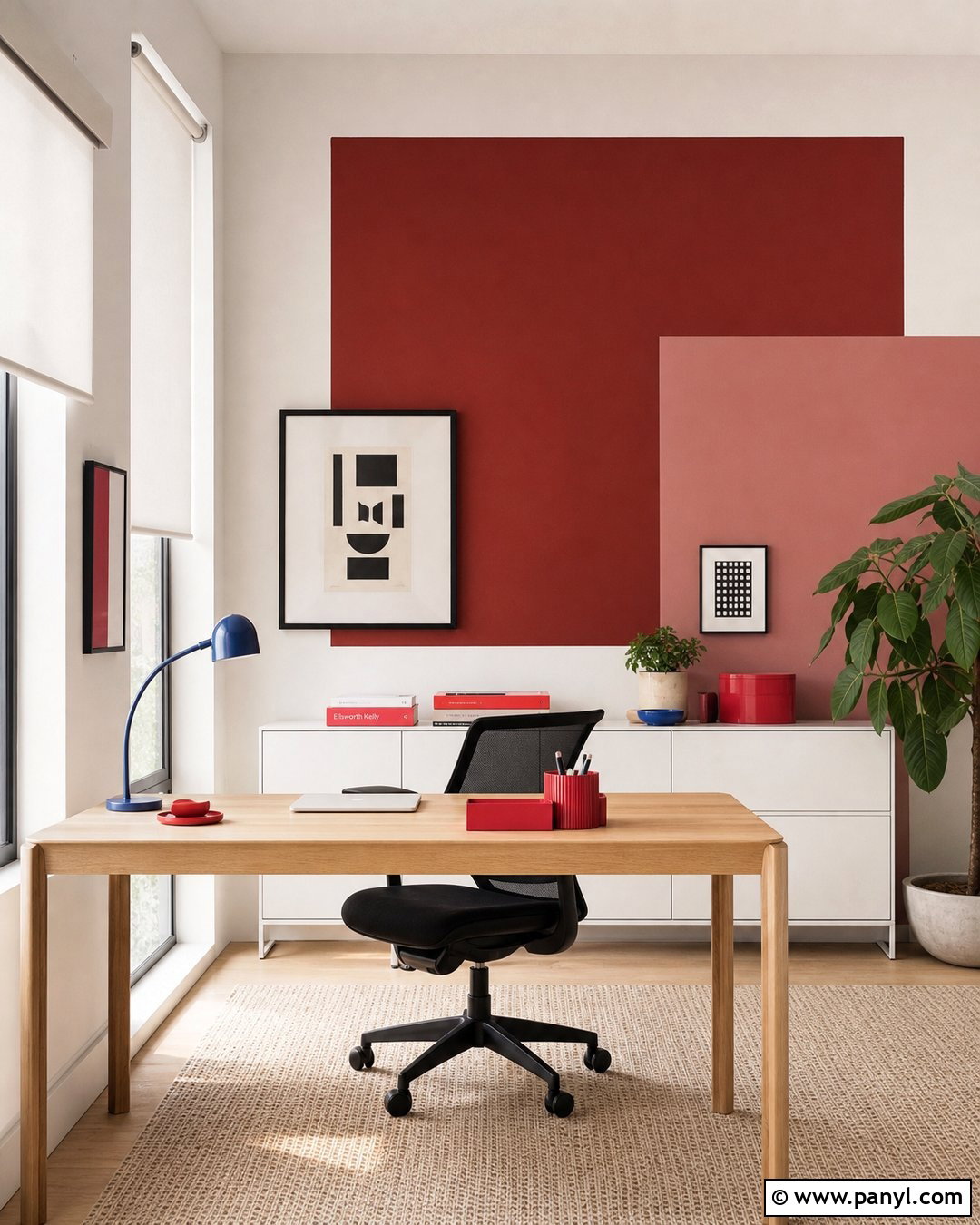
Two coordinated paint colors can create an architectural accent wall on a modest budget. Divide a living room wall horizontally, placing a deeper shade such as terracotta, forest green, or muted navy on the lower portion. Use warm white or pale greige above it to keep the room open. Align the dividing line with nearby windows, shelving, or the back of a sofa so the composition feels intentional. A narrow wood ledge can cover the transition and provide space for framed artwork. Complete the room with a neutral sofa, patterned cushions, and furniture that repeats both wall colors. Paint nearby baseboards in the lower shade for continuity. This approach brings definition without adding heavy materials or complicated construction.
9. Painted Arch Accent Wall
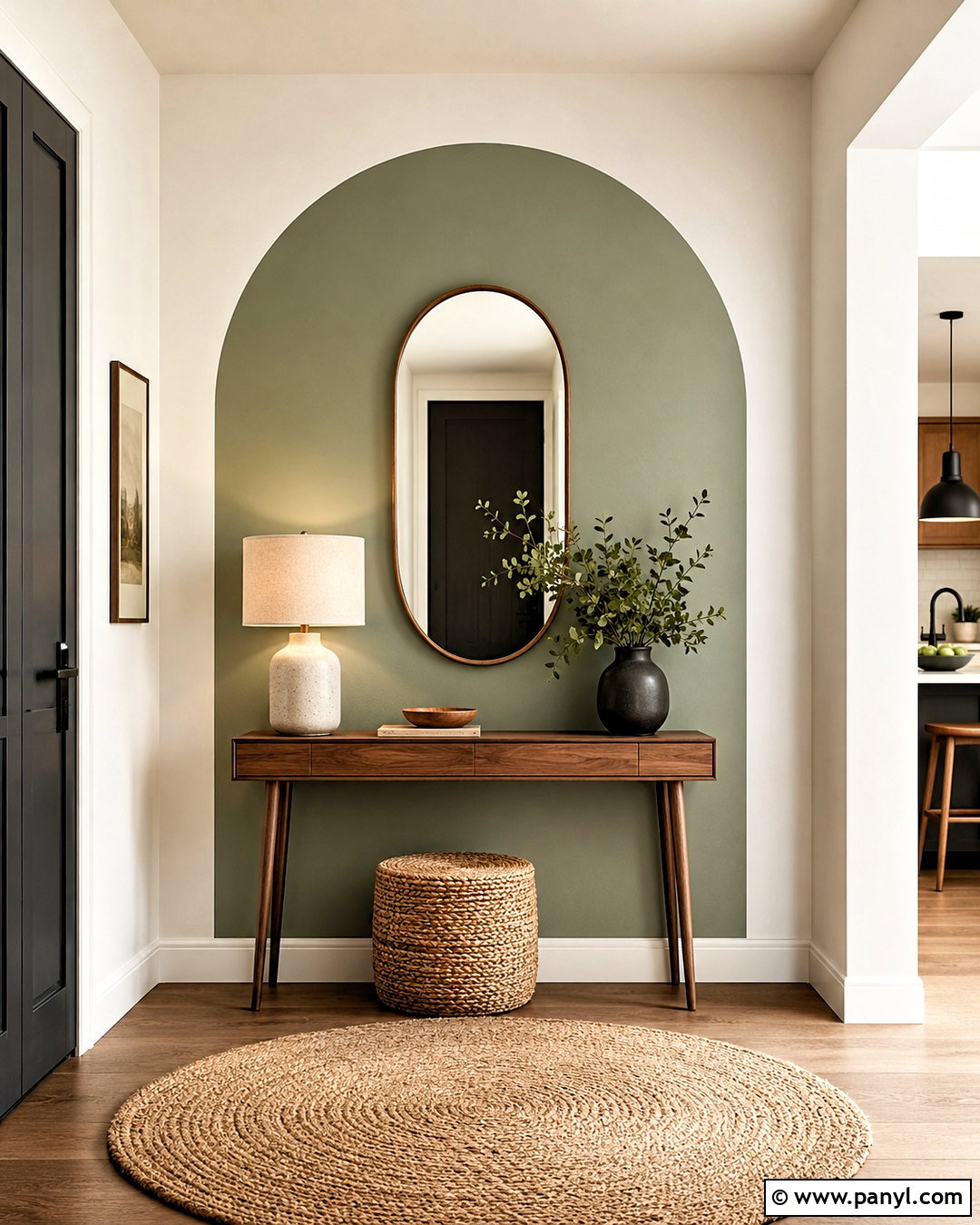
A painted arch creates a defined focal point in small apartments, bedrooms, and multipurpose rooms. Draw one generously sized arch behind a console, bed, or reading chair instead of scattering several small shapes across the wall. Use earthy sage, muted coral, ochre, or dusty blue against a soft white background. The arch should be wider than the furniture it frames so the arrangement does not feel cramped. Place a slim walnut console within the painted area, then add an oval mirror, ceramic lamp, and woven stool. A rounded rug or curved chair will echo the silhouette. Keep surrounding decor simple and use painter’s tape with a pencil-and-string method to establish clean, balanced proportions before applying the color.
10. Microcement Accent Wall
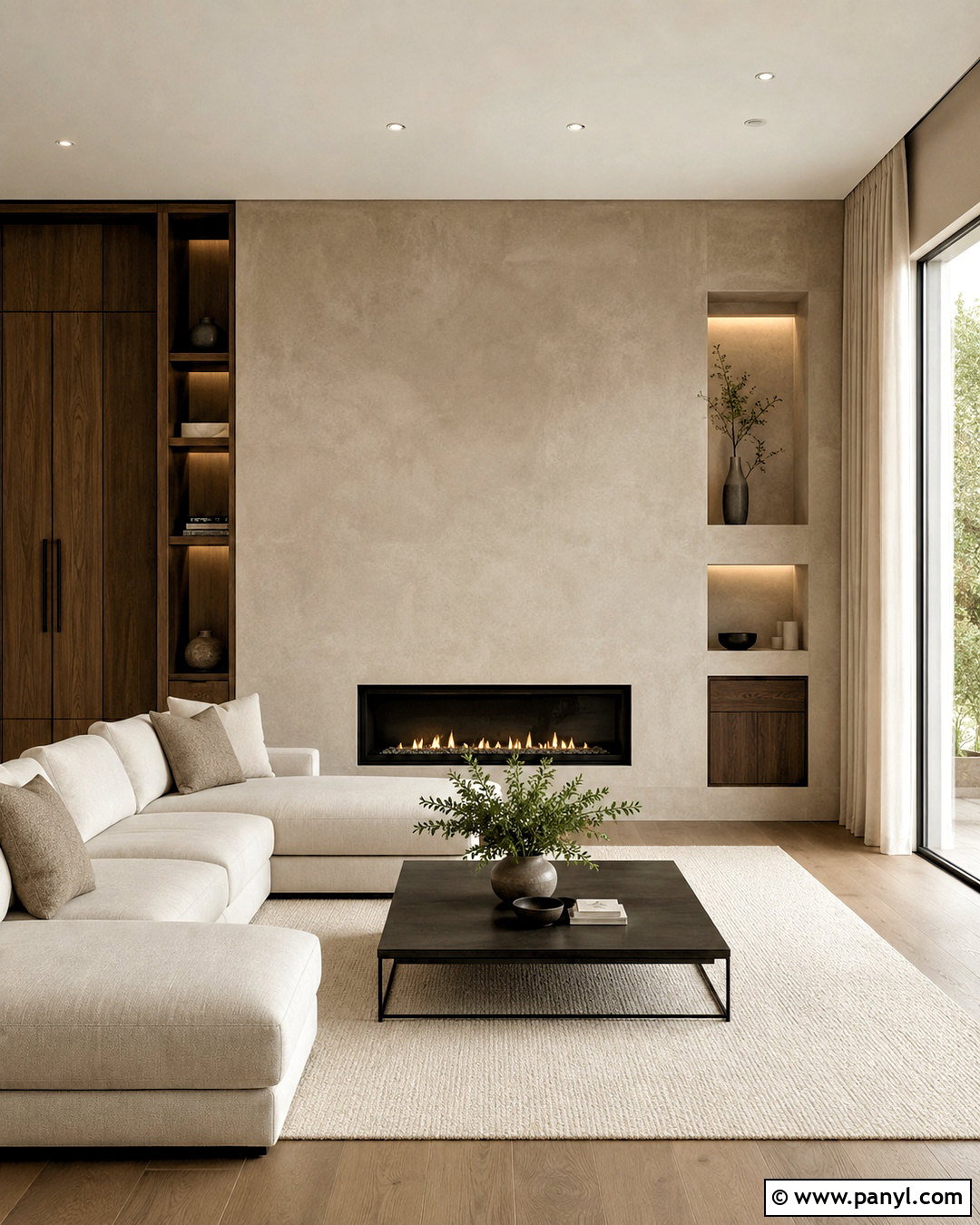
A microcement accent wall gives a contemporary living room the appearance of seamless stone. Choose warm gray, beige, or soft putty rather than a cold industrial tone. Apply it behind a streamlined fireplace or television, allowing subtle trowel marks to supply depth. Pair the surface with walnut cabinetry, an ivory modular sofa, and a dark metal coffee table. Wool, bouclé, and linen textiles will keep the room comfortable and prevent the harder finish from feeling severe. Recessed shelving can be coated in the same material for a continuous built-in effect. Add warm white lighting that washes across the wall and reveals its variation. Minimal black accents will sharpen the design without overpowering the restrained natural palette.
11. Textured Wallpaper Accent Wall
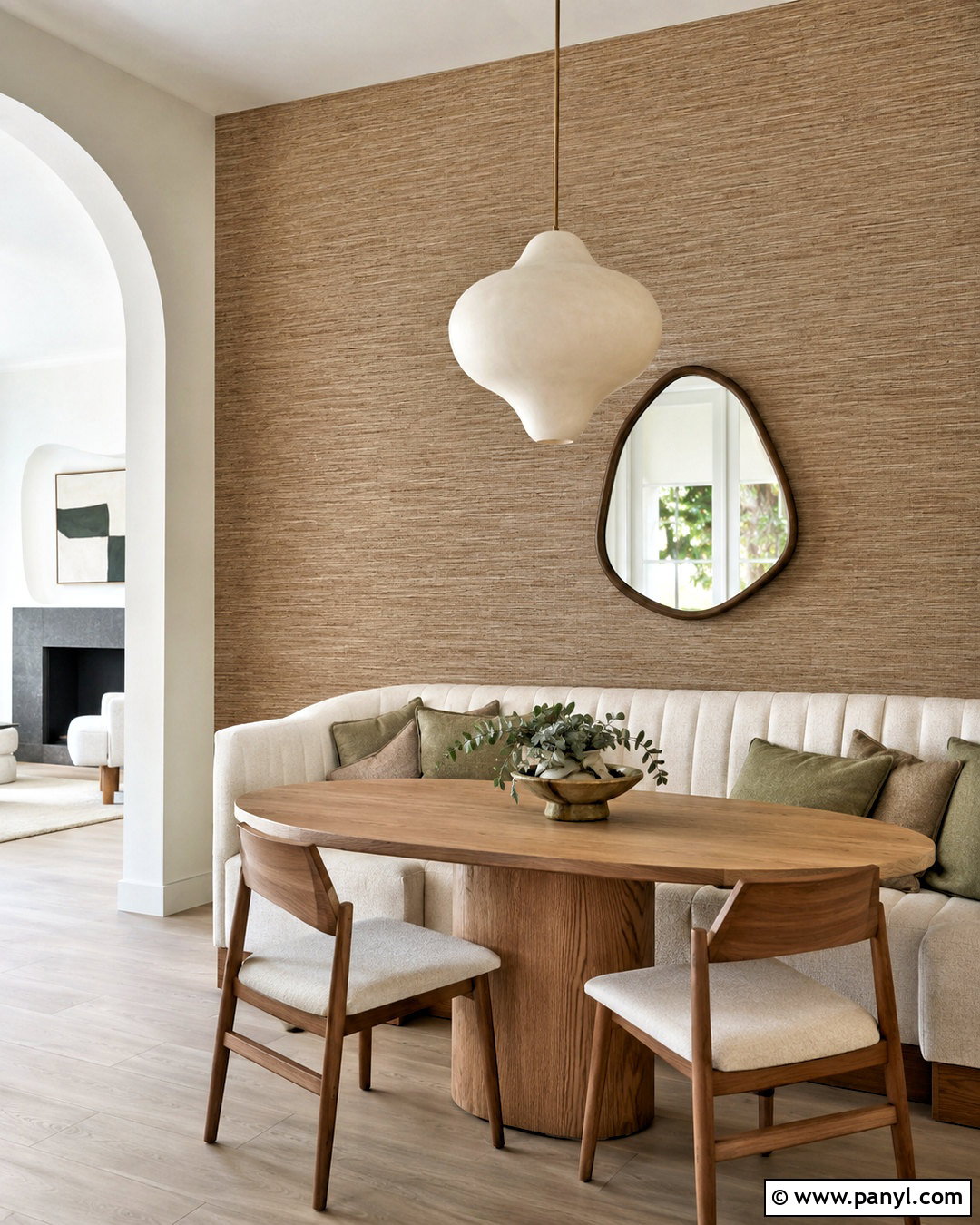
Textured wallpaper can add dimension while remaining softer than wood or masonry. Grasscloth, linen-look vinyl, and woven fiber finishes work especially well behind a dining banquette or bedroom headboard. Select warm taupe, pale olive, or sandy beige with visible fibers and gentle color variation. Pair the wall with an upholstered bench, an oval pedestal table, and modern wood chairs to create a complete dining nook. A single wide artwork or sculptural mirror is enough decoration. Because seams may remain visible in natural wallcoverings, treat them as part of the handcrafted appearance rather than trying to hide them. Use washable materials in busy family spaces, and maintain a restrained palette so the tactile wall feels refined instead of overly decorative.
12. Built In Shelving Accent Wall
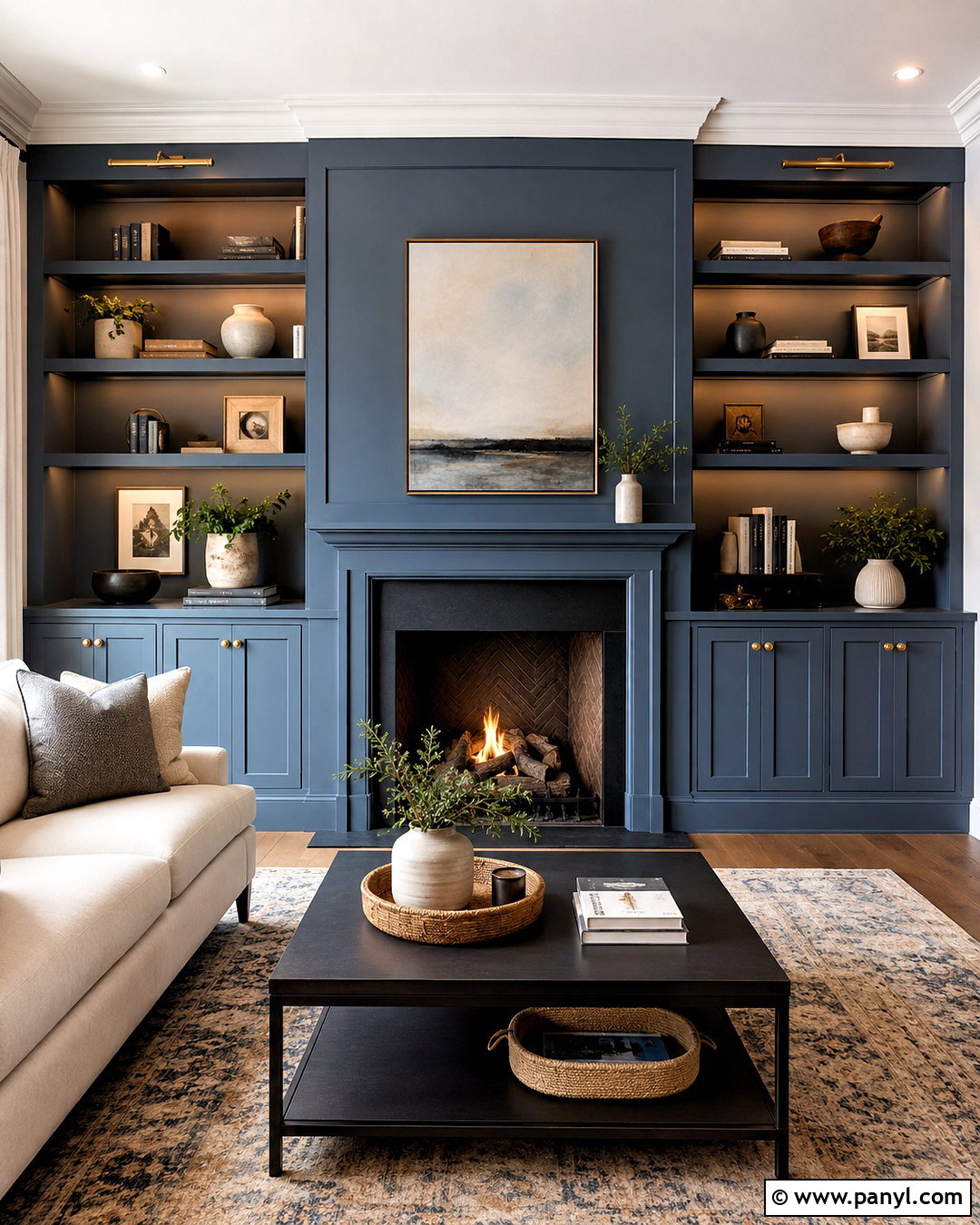
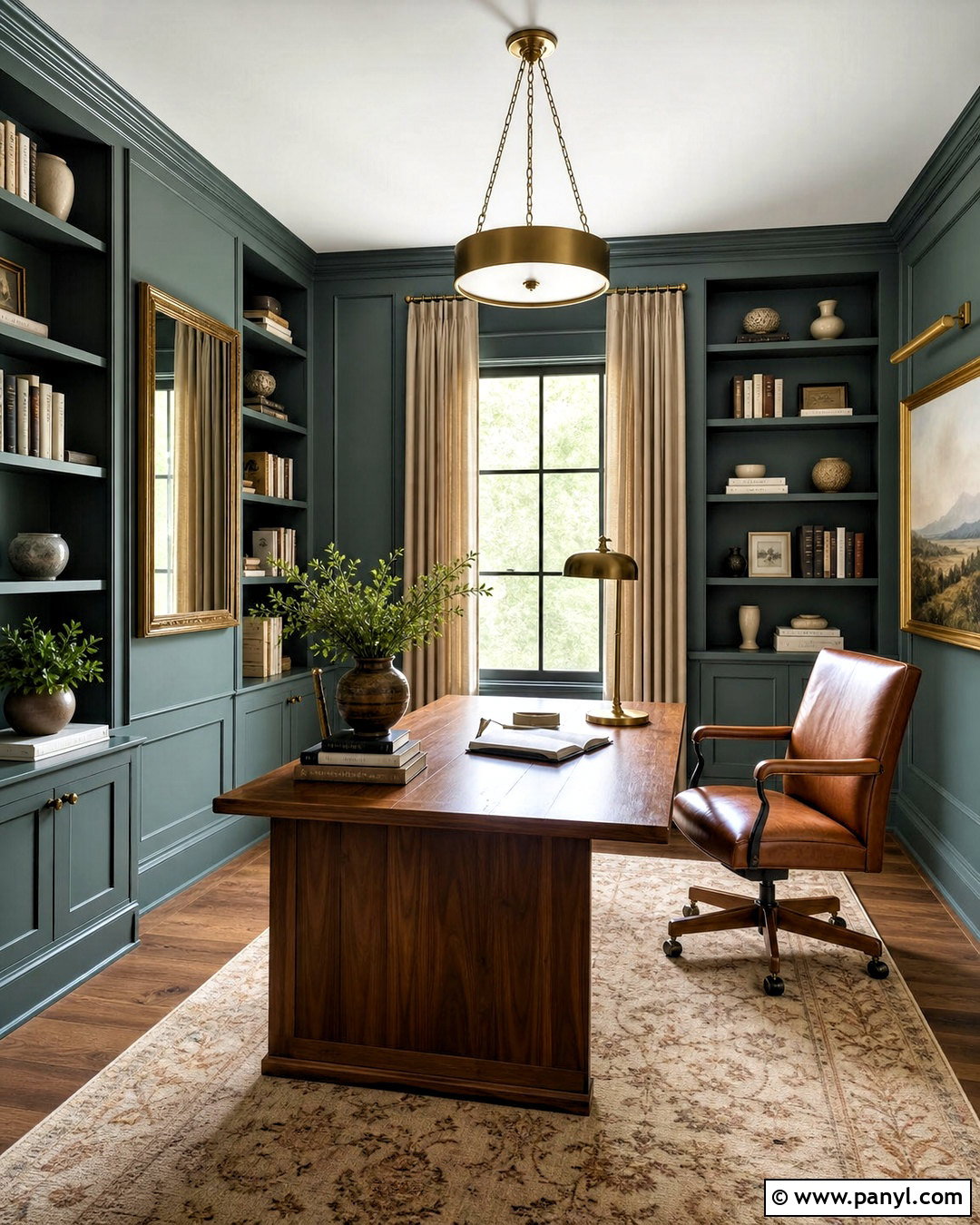
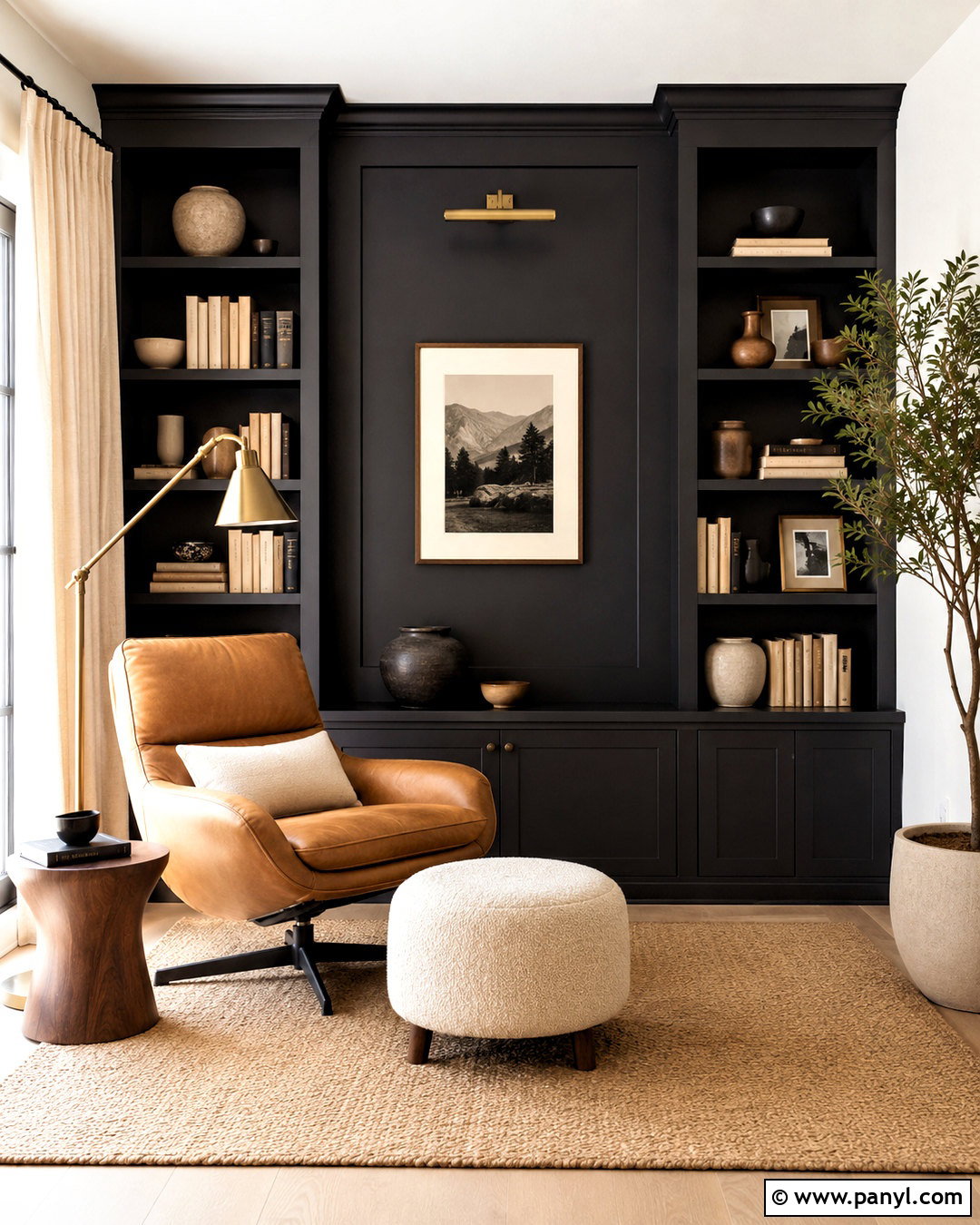
An accent wall can be beautiful and useful when it incorporates full-height storage. Build shelving around a centered fireplace, desk, or media unit, then paint the entire installation in dusty blue, olive green, or warm charcoal. Closed lower cabinets will conceal everyday clutter, while open upper shelves provide room for books, pottery, framed art, and small plants. Keep generous empty space around each object so the display remains modern. Add integrated lighting beneath selected shelves to create depth. A neutral sofa or reading chair placed opposite the unit will help balance the stronger wall color. Match the cabinet hardware to nearby lighting, using aged brass for warmth or matte black for a sharper contemporary finish.
13. Upholstered Panel Accent Wall
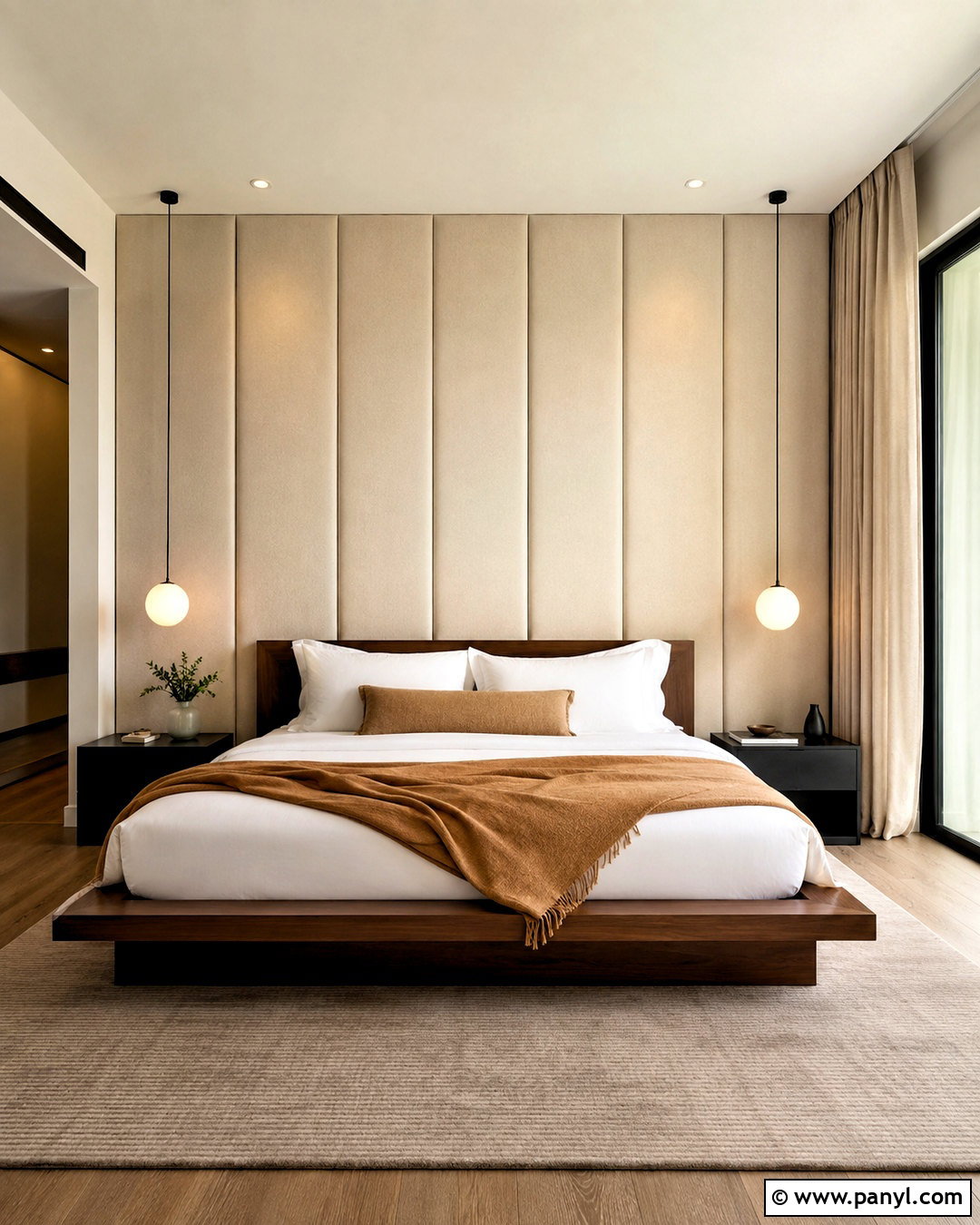
Upholstered panels turn the wall behind a bed into a comfortable, tailored headboard feature. Cover broad vertical panels in oatmeal, warm gray, camel, or muted olive fabric, extending them from the floor to the ceiling. Narrow spacing between each panel will create subtle rhythm without introducing a busy pattern. Choose durable performance fabric or low-pile velvet that is easier to maintain. Place a simple platform bed directly against the panels and add crisp cotton bedding, wool throws, and slim metal nightstands. Pendant lights hung on both sides will preserve table space and emphasize the wall’s height. Keep artwork minimal because the upholstered surface already provides visual interest. A tonal rug completes the soft, quiet, hotel-inspired bedroom.
14. Whitewashed Brick Accent Wall
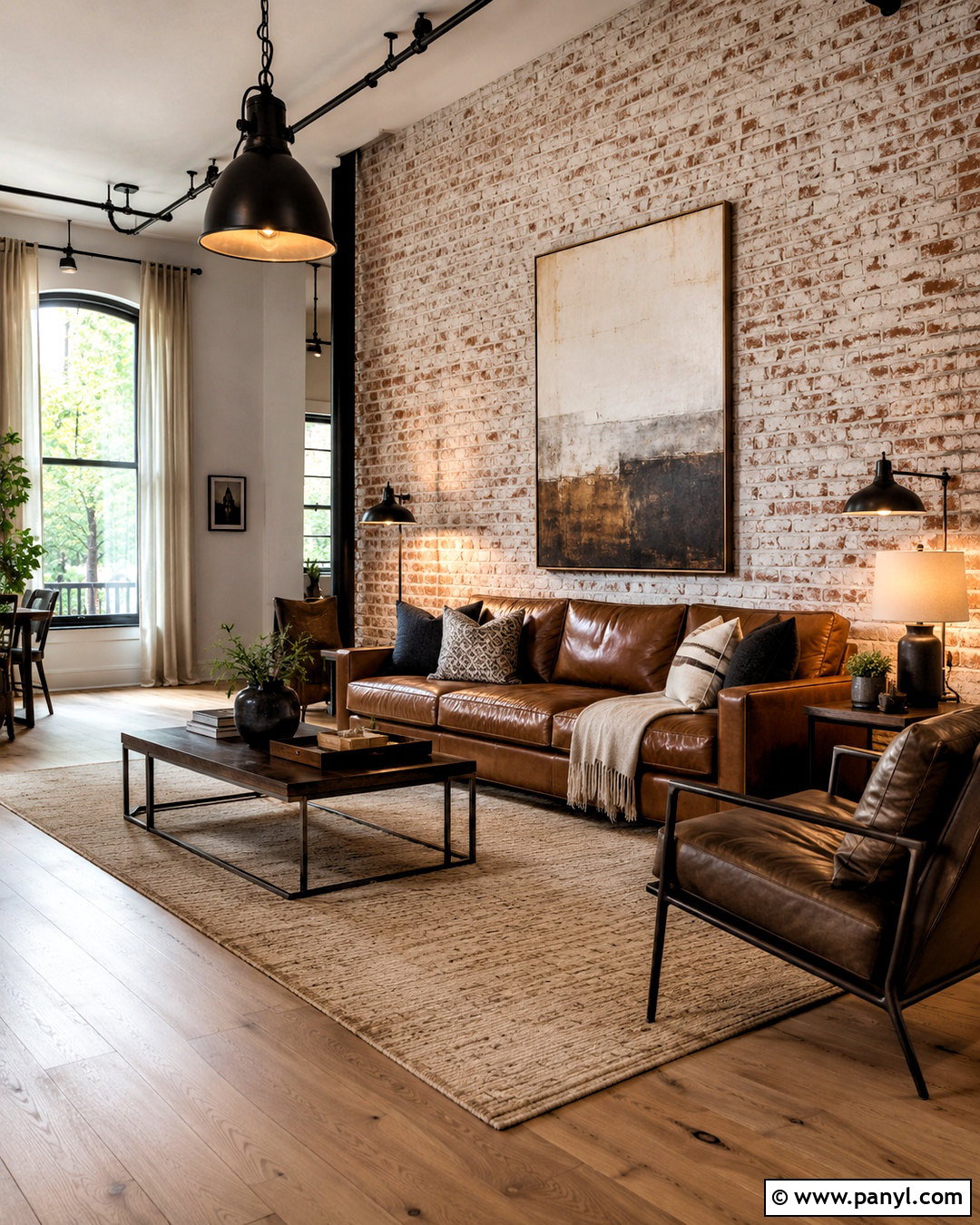
Whitewashed brick adds texture while keeping an interior bright and flexible. It works particularly well in loft-style living rooms, kitchens, and converted basements where completely raw red brick might feel too heavy. Use a thin warm white coating that allows some terracotta and mortar variation to remain visible. Position a caramel leather sofa or dark wood dining table against the brick for contrast. Black-framed windows, simple metal lighting, and pale oak flooring can reinforce the modern industrial character. Add soft linen curtains and a cream rug so the room does not feel stark. If the brick is newly installed veneer, continue it cleanly from corner to corner rather than stopping at an awkward point behind the furniture.
15. Marble Slab Accent Wall
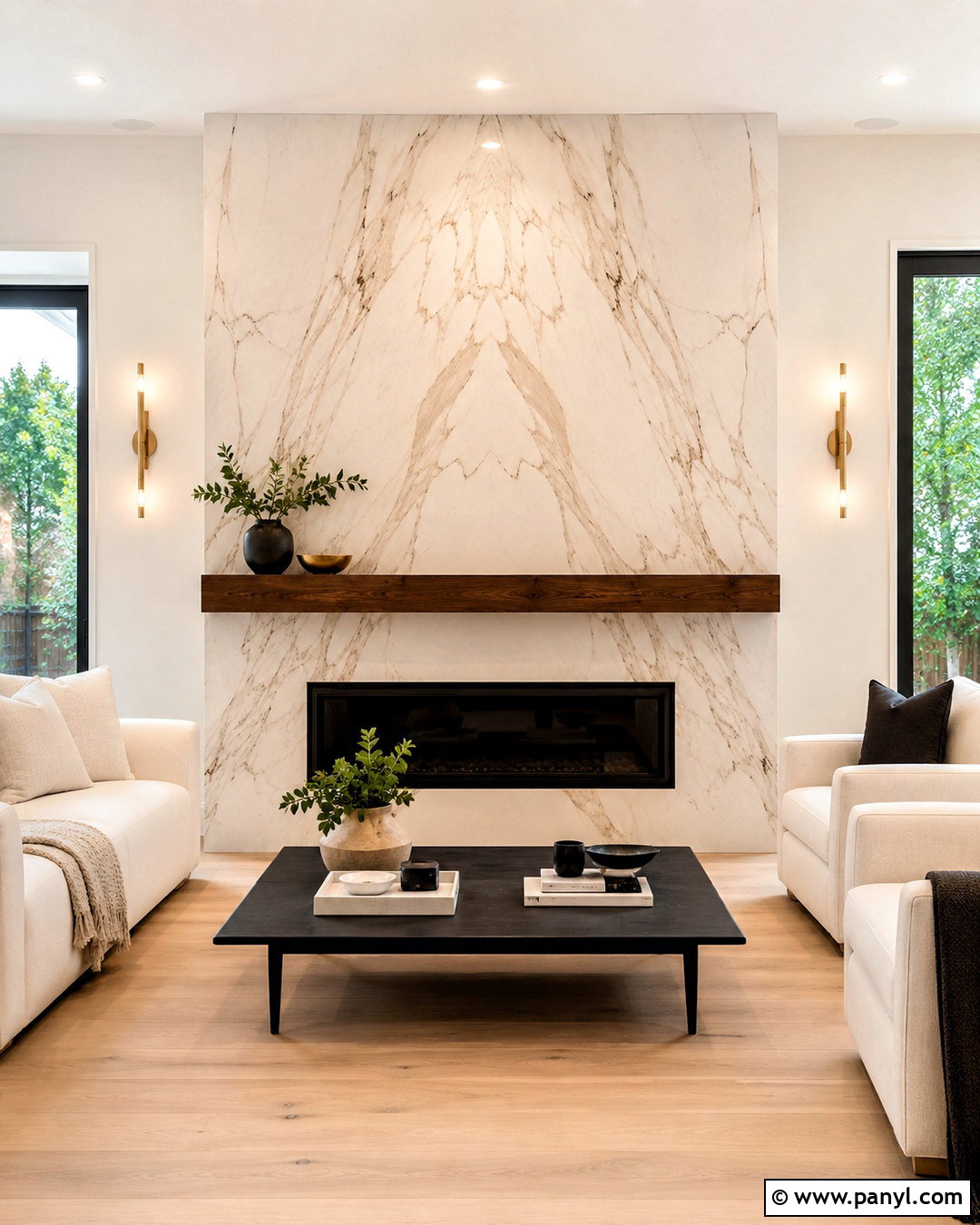
Large-format marble or porcelain creates a dramatic accent wall with fewer visual breaks than small tiles. Center the installation behind a modern fireplace, floating vanity, or dining room console. Cream stone with warm taupe veining feels softer, while black marble with white lines delivers sharper contrast. Book-matched slabs can form a symmetrical pattern, but quieter veining may be easier to use in an average home. Pair the surface with walnut cabinetry, brushed brass fixtures, and simple upholstered furniture. Avoid adding several shelves or decorations that hide the stone. Instead, use one sculptural light or a slim floating mantel. Balanced lighting and restrained accessories will make the wall feel intentional rather than overly luxurious or visually crowded.
16. Natural Cork Accent Wall
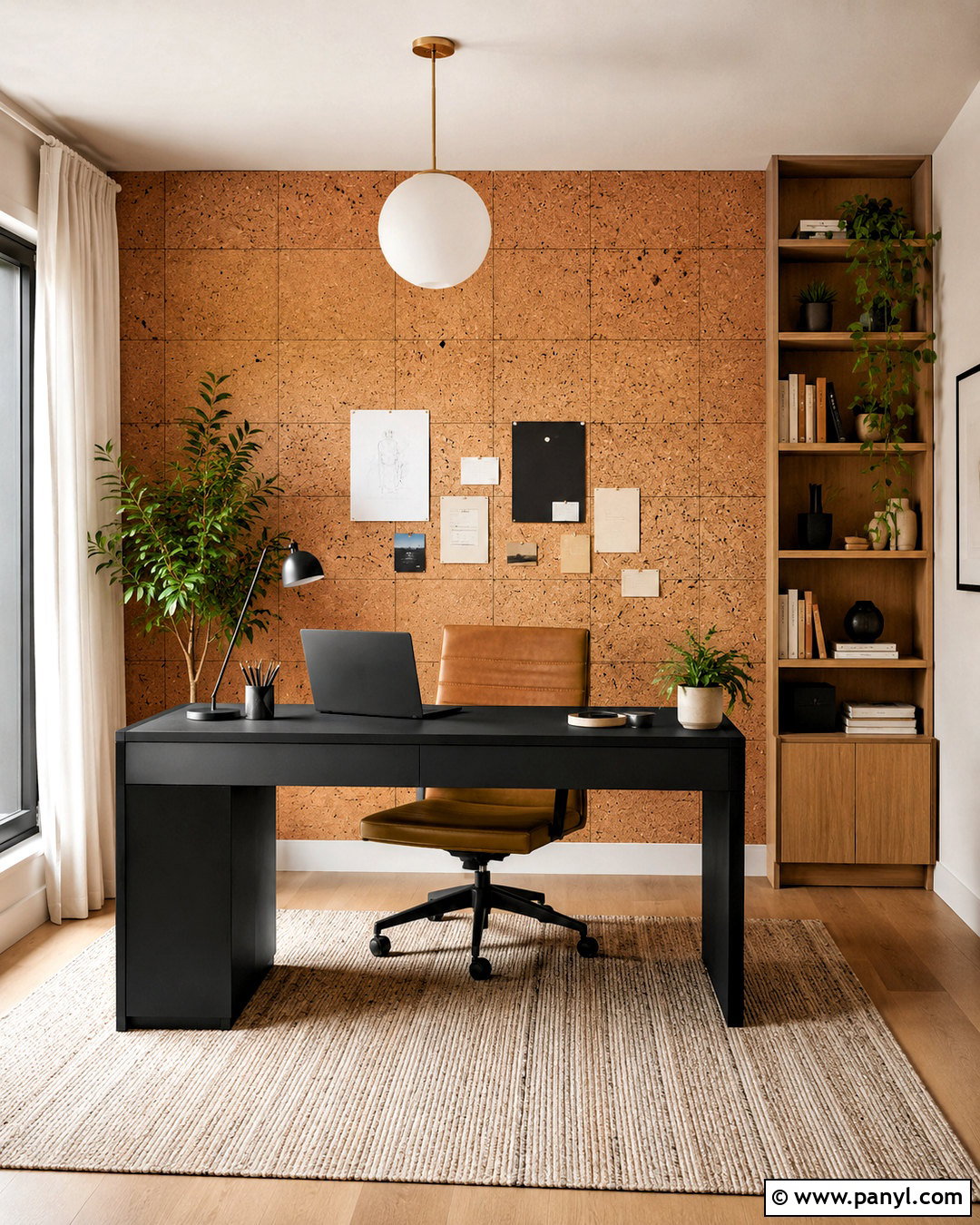
Natural cork brings warmth, sound absorption, and subtle pattern to a reading room or home office. Cover the full wall behind a desk or bookcase with medium-toned cork panels in a clean grid. Choose tiles with controlled variation rather than highly mottled pieces if you want a calmer modern finish. Combine the wall with a matte black desk, a comfortable camel chair, and open oak shelving. Green plants and off-white curtains will complement the earthy material. Cork can also serve as a practical pinboard, but keep pinned items arranged in one organized area. A flat-weave rug and globe pendant will complete the room. Use simple edge trim so the installation ends neatly at corners, ceilings, and baseboards.
17. Dark Green Accent Wall
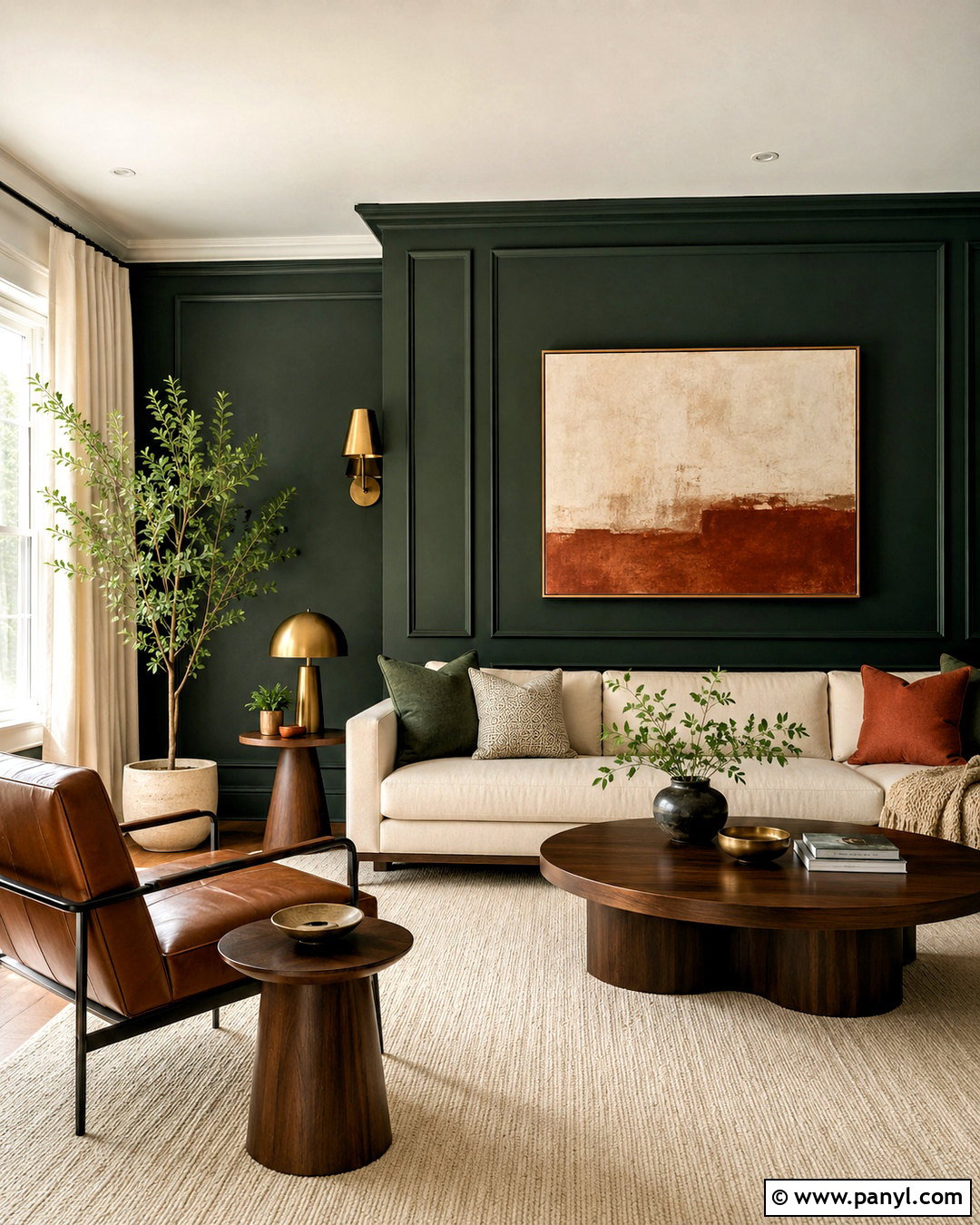
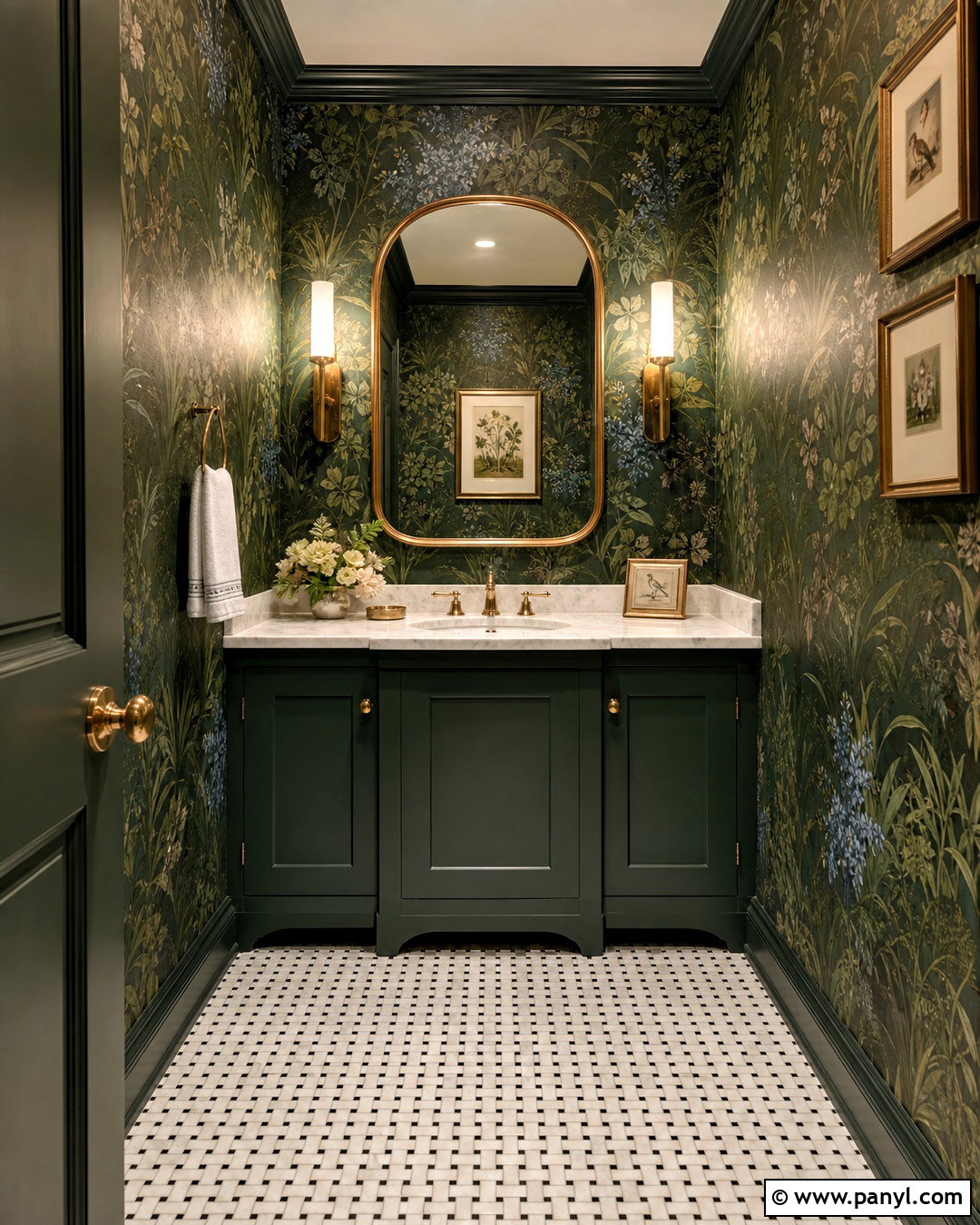
A deep green accent wall can feel sophisticated when the surrounding room includes enough warmth and light. Use forest, pine, or blackened olive behind a cream sofa in a living room with generous windows. Paint the baseboard and any wall molding in the same shade for a seamless finish. Add walnut side tables, a cognac leather chair, and aged brass lighting to draw out the color’s warmer undertones. Cream curtains and a large ivory rug will prevent the design from becoming visually heavy. Choose artwork containing soft beige, rust, and muted green so it connects naturally to the room. Finish with leafy plants in simple ceramic pots, varying their shapes rather than filling every available corner with greenery.
18. Curved Wood Panel Accent Wall
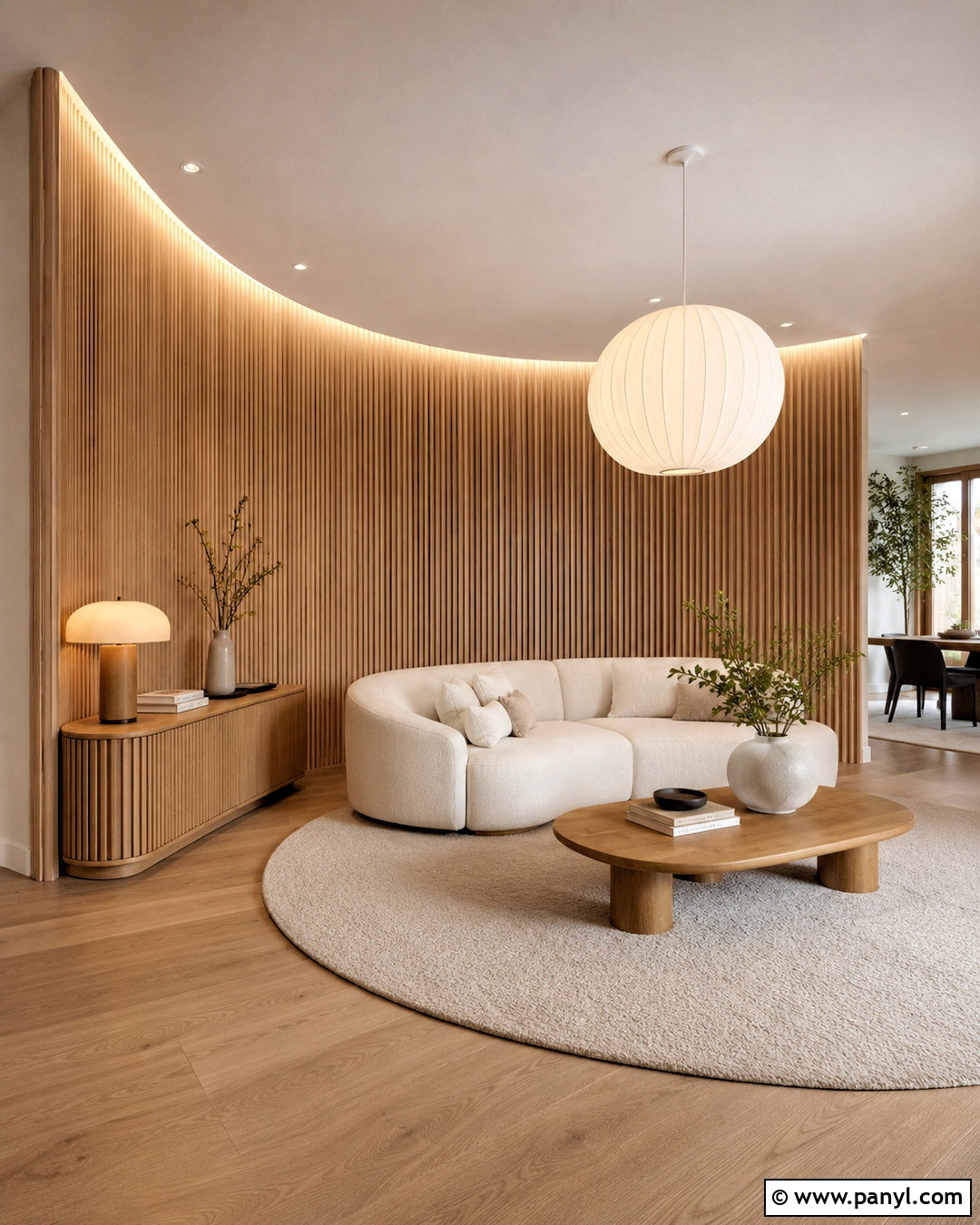
Curved wood paneling can soften a modern room filled with straight furniture and hard edges. Create a rounded transition where a white oak accent wall wraps gently around one corner, connecting a living area to an entry or dining space. Use narrow flexible slats or custom curved panels with a clear matte finish. Position a rounded cream sofa near the wall and add an oval coffee table, globe pendant, and circular wool rug. Concealed lighting at the top can emphasize the smooth curve without exposing visible strips or hardware. Keep the remaining walls warm white and repeat the oak in a nearby console or shelving unit. This coordinated approach makes the curved feature feel architectural rather than simply decorative.
19. Modern Tile Accent Wall
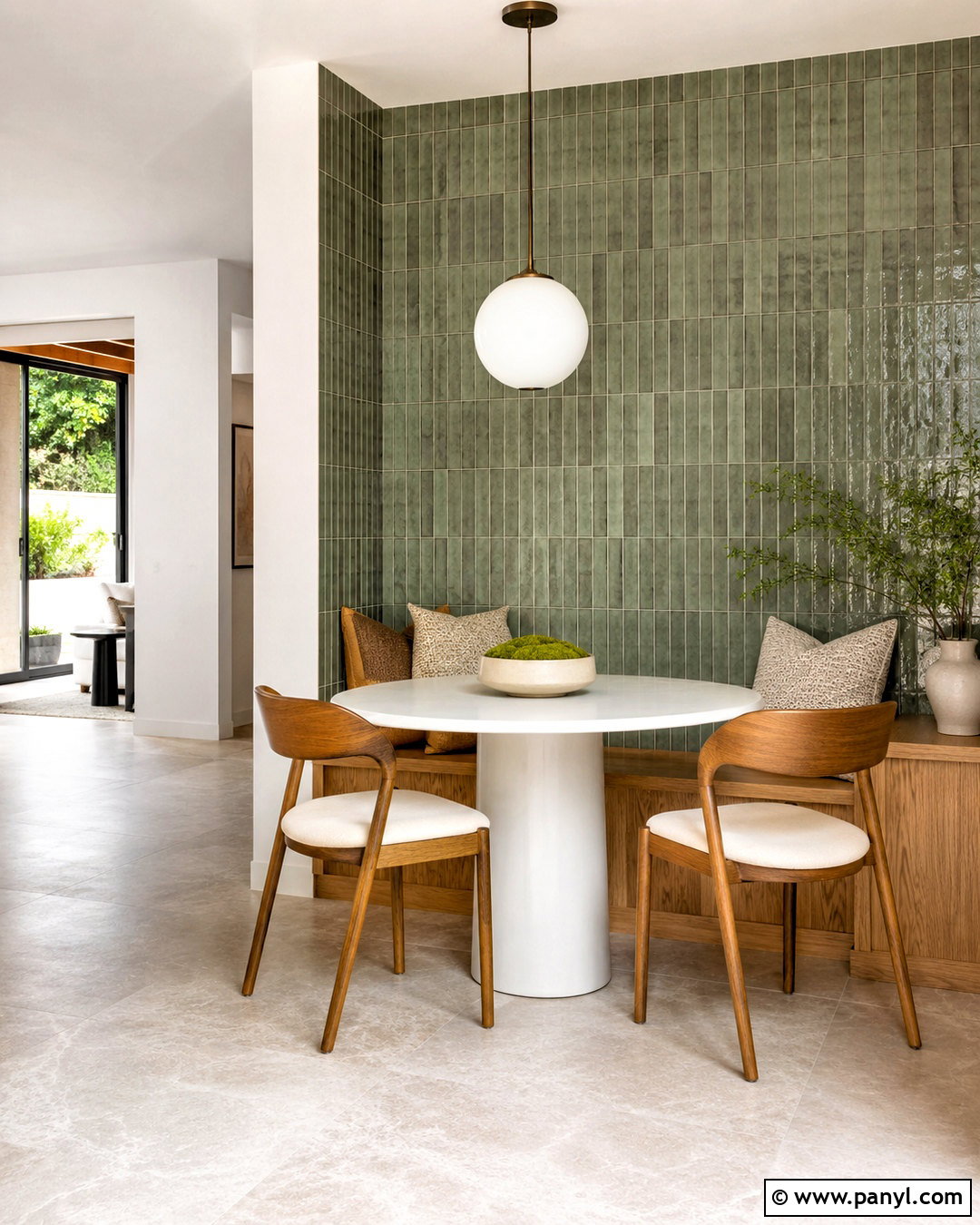
Tile can create a durable accent wall outside traditional shower and backsplash areas. Cover a dining nook, fireplace surround, or bathroom vanity wall with vertically stacked rectangular tiles. Glossy sage green, matte terracotta, or deep blue will provide color, while matching grout keeps the pattern streamlined. Pair a tiled dining wall with a built-in oak bench, a small round table, and textured neutral cushions. In a bathroom, combine the tile with a floating wood vanity, white countertop, and brushed brass fixtures. Extend the material from floor to ceiling for a purposeful finish. Simple lighting will reflect gently across glossy surfaces, while limited artwork and accessories allow the tile’s color, grid, and texture to remain prominent.
20. Mixed Material TV Accent Wall
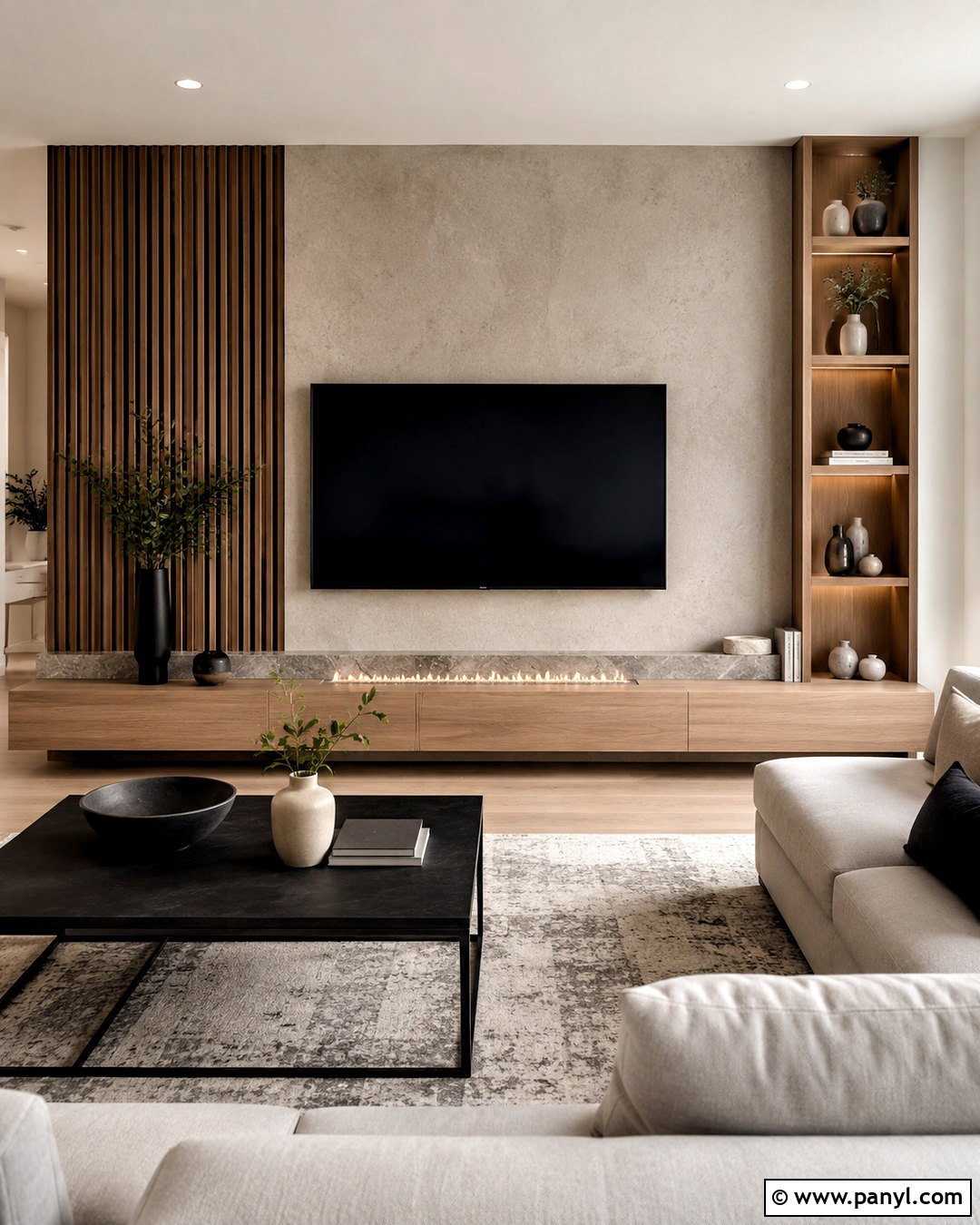
A well-designed TV wall can combine storage, texture, and lighting without becoming cluttered. Start with warm greige microcement across the main surface, then add vertical walnut slats along one side for contrast. Mount the television above a long floating oak console with hidden cable management. A narrow stone ledge beneath the screen can hold only a few low decorative pieces. Frame the opposite side with an open shelf or slim display niche to balance the asymmetrical slats. Complete the living room with a light gray sectional, black metal coffee table, and softly patterned rug. Recessed ceiling lights and concealed illumination behind the console will define the materials while preserving a clean, comfortable atmosphere for everyday viewing.
Conclusion:
The strongest **20 modern accent wall ideas** treat the wall as part of a complete room rather than an isolated decoration. Choose a surface that supports the architecture, furniture, and way the space is used. Wood, limewash, stone, tile, wallpaper, paint, and upholstered panels each create a different mood, so consider maintenance as well as appearance. Before starting, test colors and samples under daytime and evening lighting. Measure around outlets, doors, windows, and built-ins to avoid awkward edges. Most importantly, give the focal wall enough space to be noticed. Thoughtful proportions, repeated materials, practical furniture placement, and restrained accessories will help the finished design feel modern, balanced, and personal.

Related Ideas and Inspiration:
Leave a Reply