
Color blocking brings structure, energy, and personality into a home without requiring complicated remodeling. Instead of spreading small accents around a room, this approach uses clear areas of color to define architecture, frame furniture, or separate functional zones. The best 20 color block interior design ideas balance strong hues with practical layouts, comfortable furnishings, and materials that make the palette feel intentional. You can create dramatic contrast with cobalt and orange, soften the effect with dusty pastels, or use earthy colors for a warmer result. Walls are an obvious starting point, but ceilings, built-ins, cabinetry, rugs, and upholstery can also form bold blocks. Use these complete room concepts to explore 20 color block interior design ideas.
1. Living Room Color Block Wall
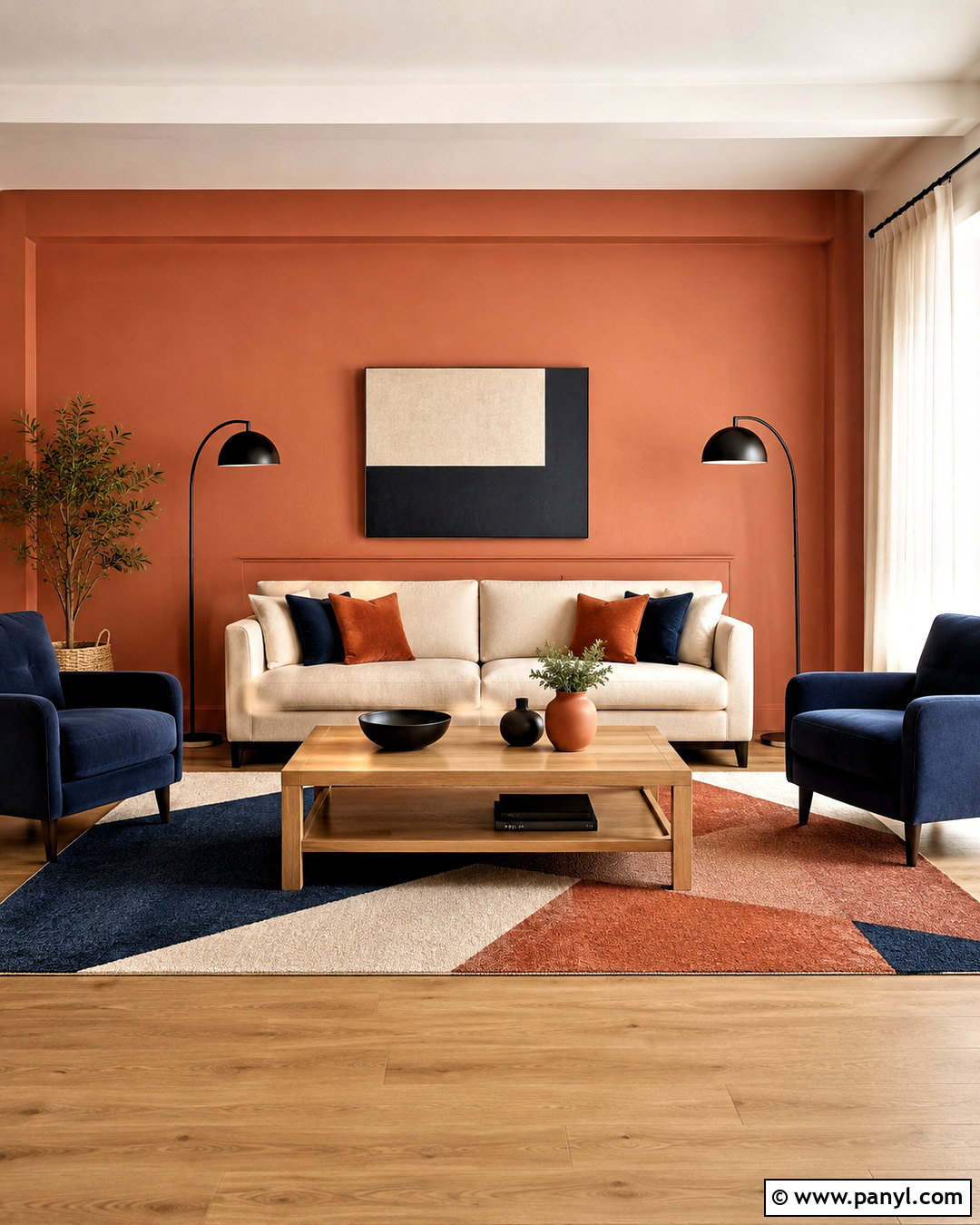
A large color block behind the sofa can give an ordinary living room a strong focal point. Paint a wide terracotta rectangle that extends slightly beyond both ends of a cream linen sofa. Keep the remaining walls warm white so the shape feels clear without overpowering the room. Add a rust, navy, and beige geometric rug beneath a light oak coffee table. A pair of deep blue armchairs creates a second solid color area and balances the warm wall. Finish the arrangement with off-white curtains, matte black lamps, and simple ceramic decor. Position artwork entirely inside the painted rectangle rather than crossing its edges. This creates a composed, layered living room that feels colorful, comfortable, and easy to recreate.
2. Two Tone Color Block Living Room
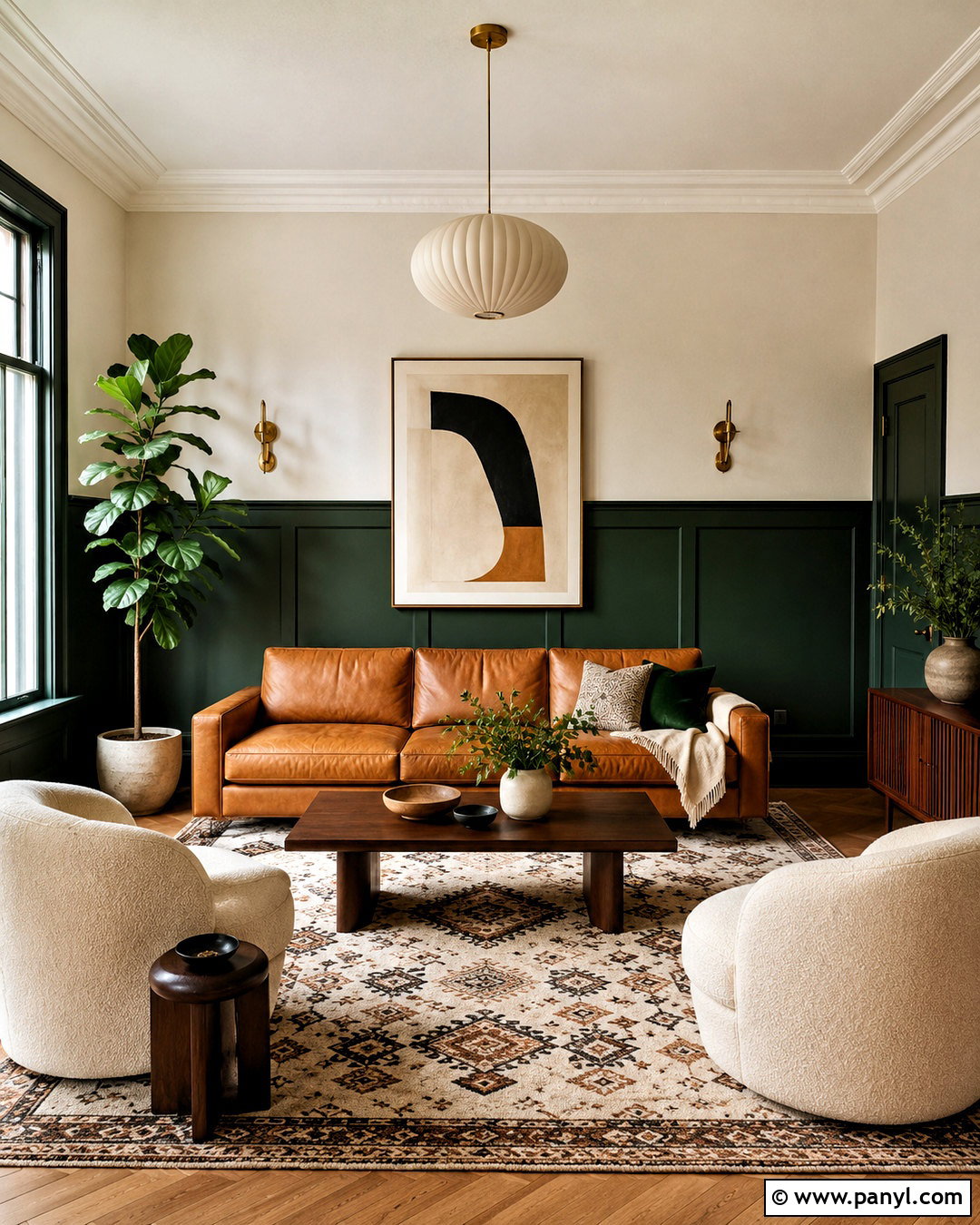
Horizontal color blocking can make a living room feel wider while giving the furniture a grounded backdrop. Paint the lower two-thirds of every wall deep forest green and use soft ivory above it. Keep the dividing line crisp and consistent around doors, windows, and corners. Place a camel leather sofa against the green section, then add two cream boucle chairs and a walnut coffee table. A patterned rug combining green, tan, ivory, and muted red connects the contrasting surfaces. Choose brass wall lights that sit just above the paint line to emphasize the room’s width. Linen curtains, leafy plants, and natural wood accessories soften the geometry. The completed room feels rich and architectural without needing traditional molding or expensive wall treatments.
3. Arch Color Block Reading Nook
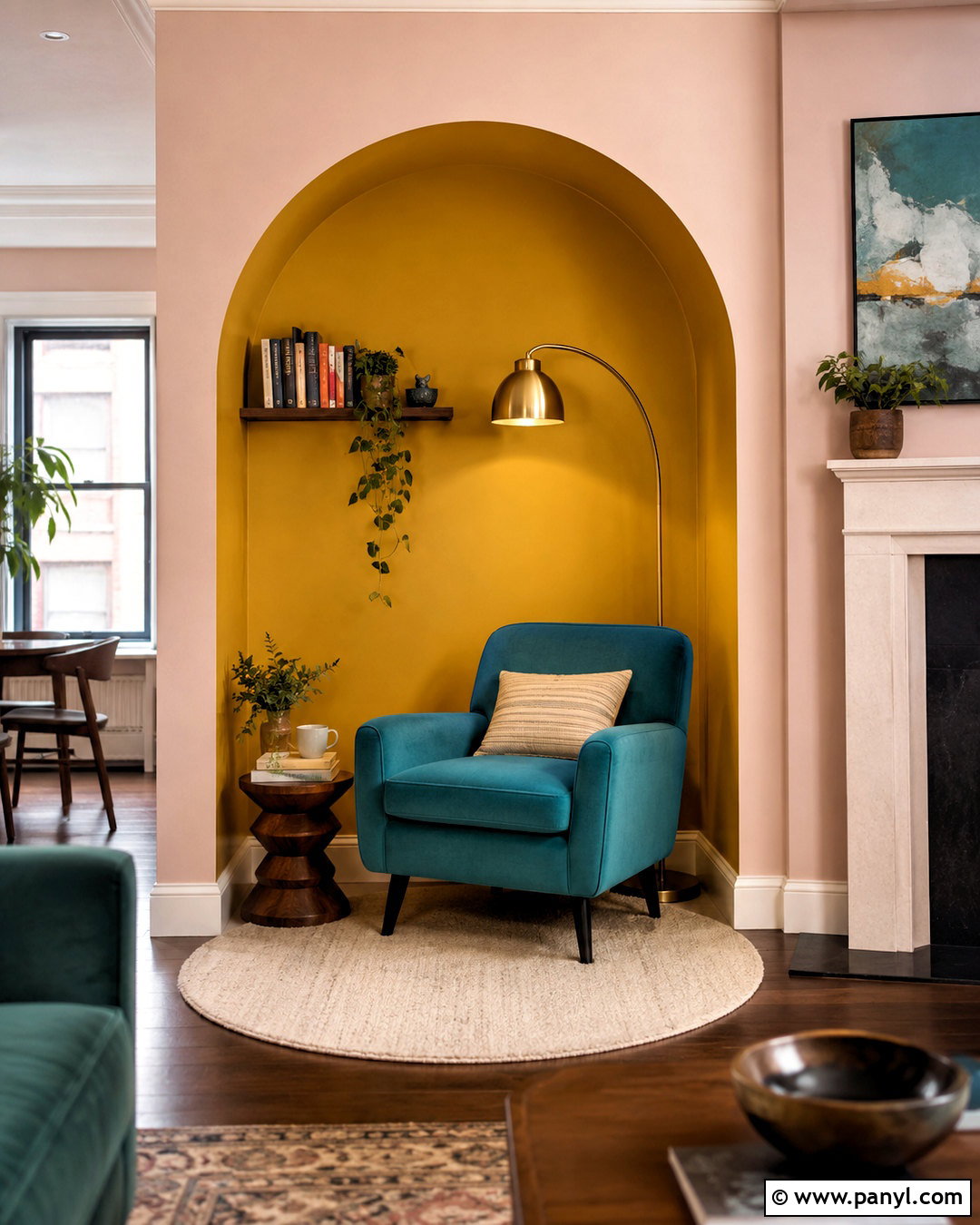
Turn an unused corner into a defined reading nook with a painted arch that visually surrounds the furniture. Use a muted mustard yellow arch on a pale blush wall, making it wide enough to frame a comfortable teal armchair and small walnut side table. Carry the painted shape from the baseboard to just above a slim picture ledge. Add a curved brass floor lamp, a patterned lumbar pillow, and a compact cream rug under the chair. Nearby furniture should remain light and understated so the nook reads as its own destination. A trailing plant and a few stacked books introduce relaxed texture. This color block treatment works especially well in apartments because it creates the feeling of a separate room without adding partitions or consuming floor space.
4. Geometric Color Block Entryway
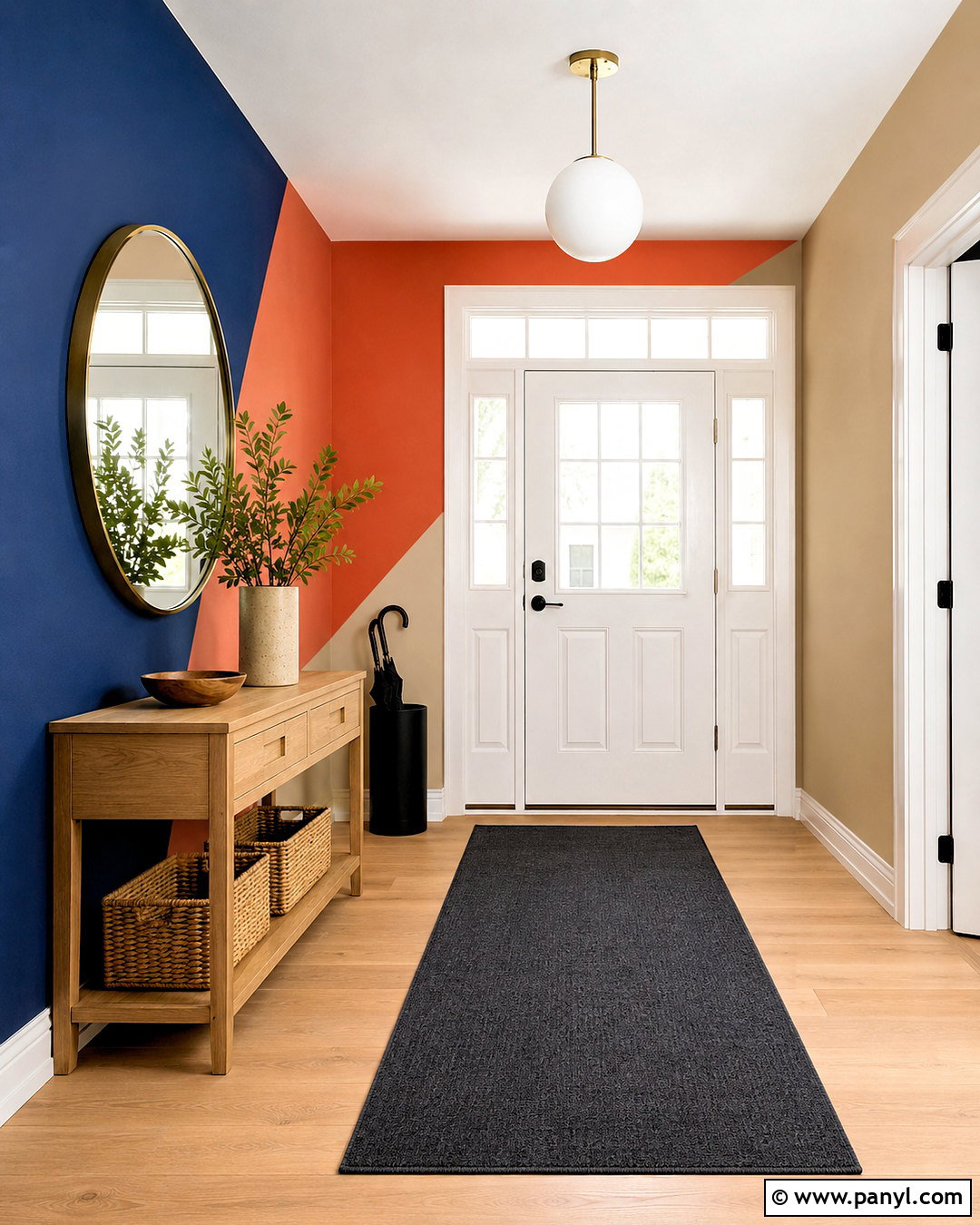
An entryway can handle sharper color blocking because it is a transitional space viewed in short bursts. Create overlapping geometric sections in cobalt blue, warm coral, and sandy beige across the main wall. Keep the shapes large and limited to three colors so the composition stays organized. Place a narrow light oak console in front, allowing the blue section to frame a round brass mirror. Ground the area with a charcoal runner, a black umbrella stand, and a simple globe pendant. Closed woven baskets beneath the console provide practical storage without introducing visual clutter. Repeat coral through one ceramic bowl and cobalt through a small bench cushion. The finished entry feels energetic and welcoming while keeping shoes, keys, bags, and everyday necessities neatly contained.
5. Color Block Dining Room
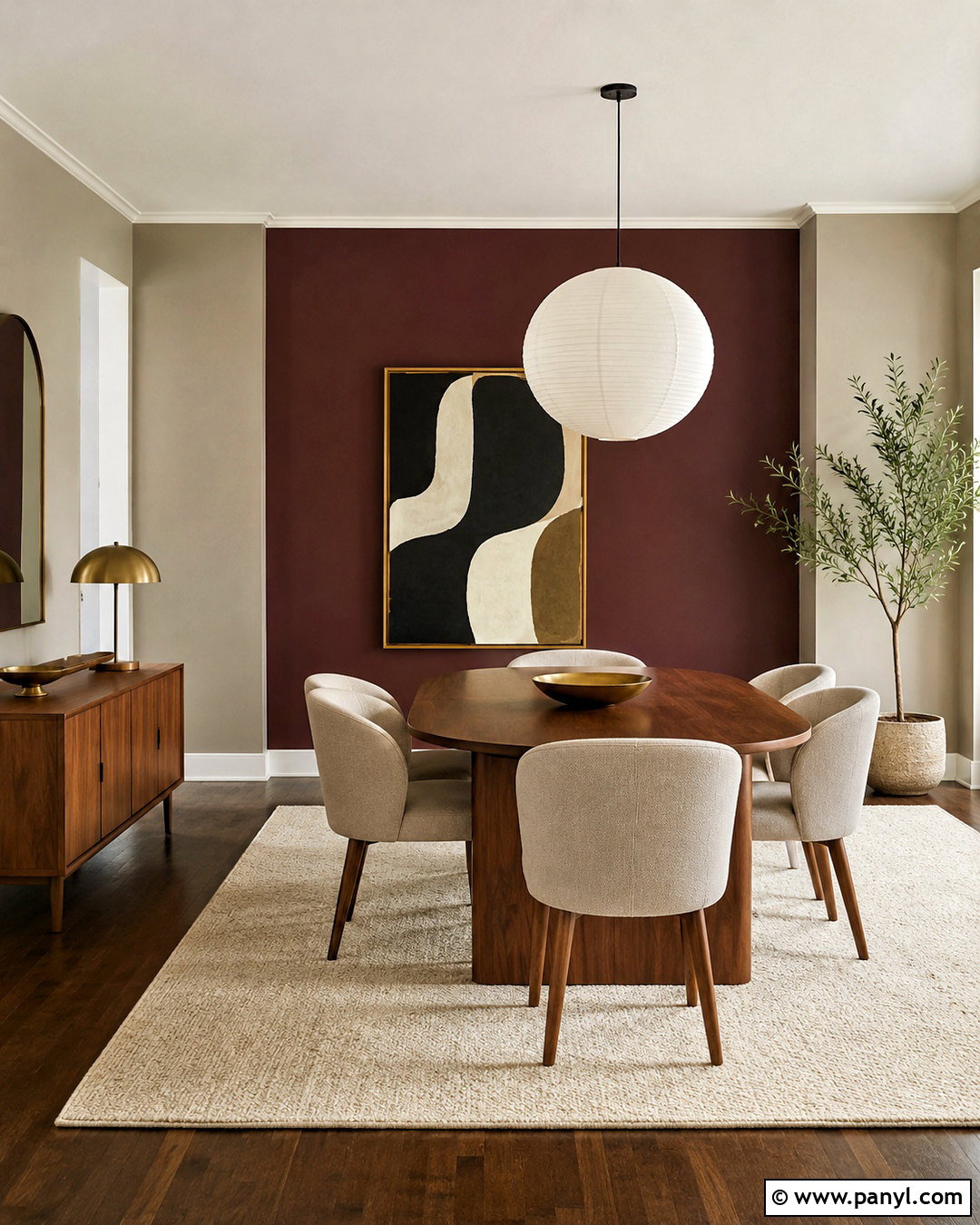
A dining room becomes more intimate when color blocking visually wraps around the table. Paint a broad burgundy section across the center of one wall and continue it onto the adjoining walls, stopping at matching vertical lines. Surround this deep block with soft greige to prevent the palette from feeling heavy. Center an oval walnut dining table within the painted zone and pair it with oatmeal upholstered chairs. A cream wool rug lightens the dark wood, while an oversized paper pendant adds softness overhead. Display a large abstract canvas featuring burgundy, blush, and muted blue above a low oak sideboard. Brass candleholders and white ceramics provide restrained detail. This complete arrangement makes the dining area look deliberately framed, even within a larger multipurpose room.
6. Color Block Kitchen
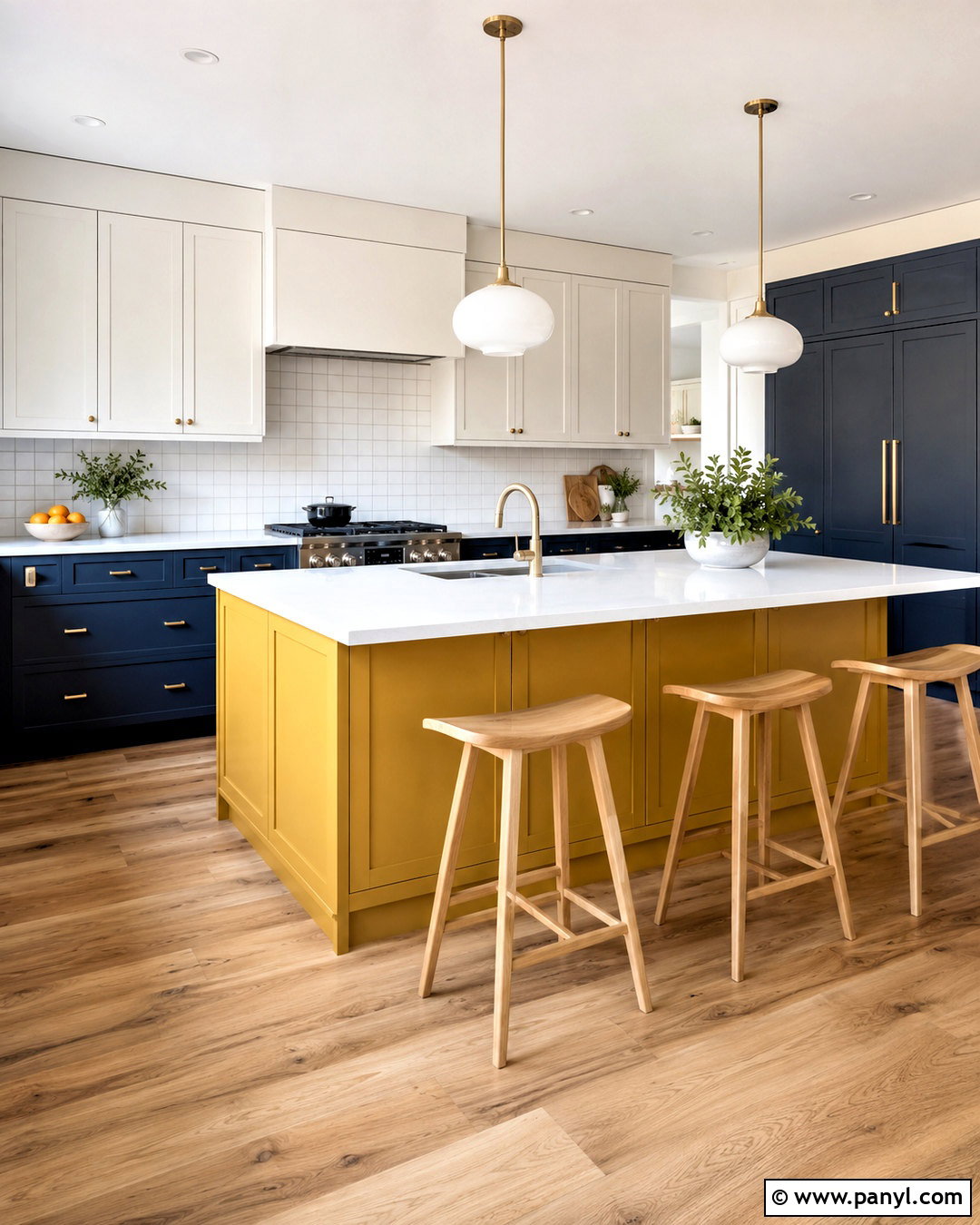
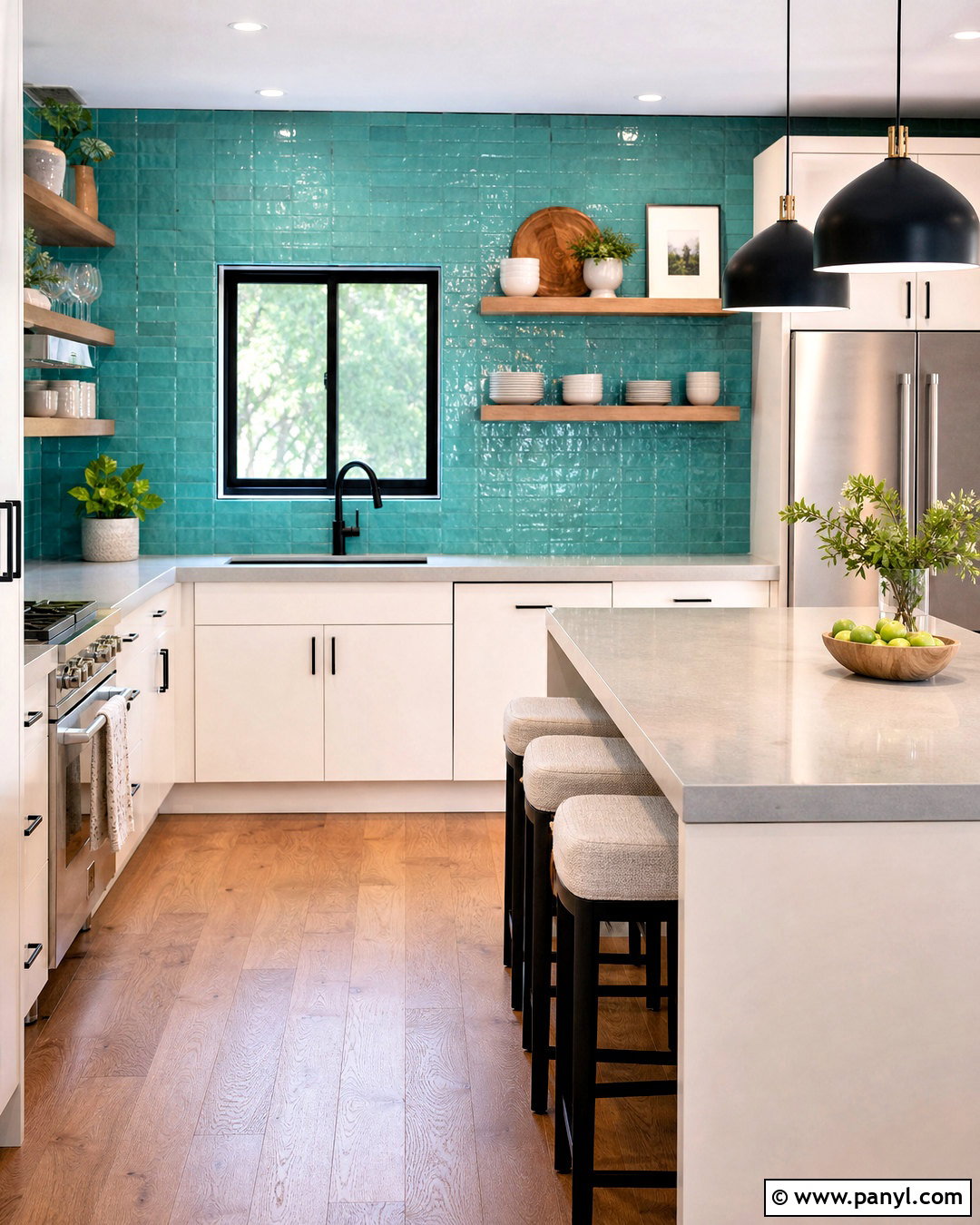
Kitchen color blocking can be created through cabinetry rather than complex wall painting. Use matte navy blue for the lower cabinets and warm white for the upper cabinets, then introduce a freestanding mustard yellow island as the room’s strongest color block. White quartz counters and a simple square-tile backsplash keep the three-part palette clean. Add light oak stools, brushed brass hardware, and natural wood flooring to warm the cooler colors. Open shelves can display white dishes and a few amber glass containers without making the kitchen appear busy. Hang two opal globe pendants above the island for even lighting. Repeating mustard in a small runner and navy in cookware connects the surfaces. The result is functional, cheerful, and bold without sacrificing a practical kitchen layout.
7. Color Block Bedroom Headboard Wall
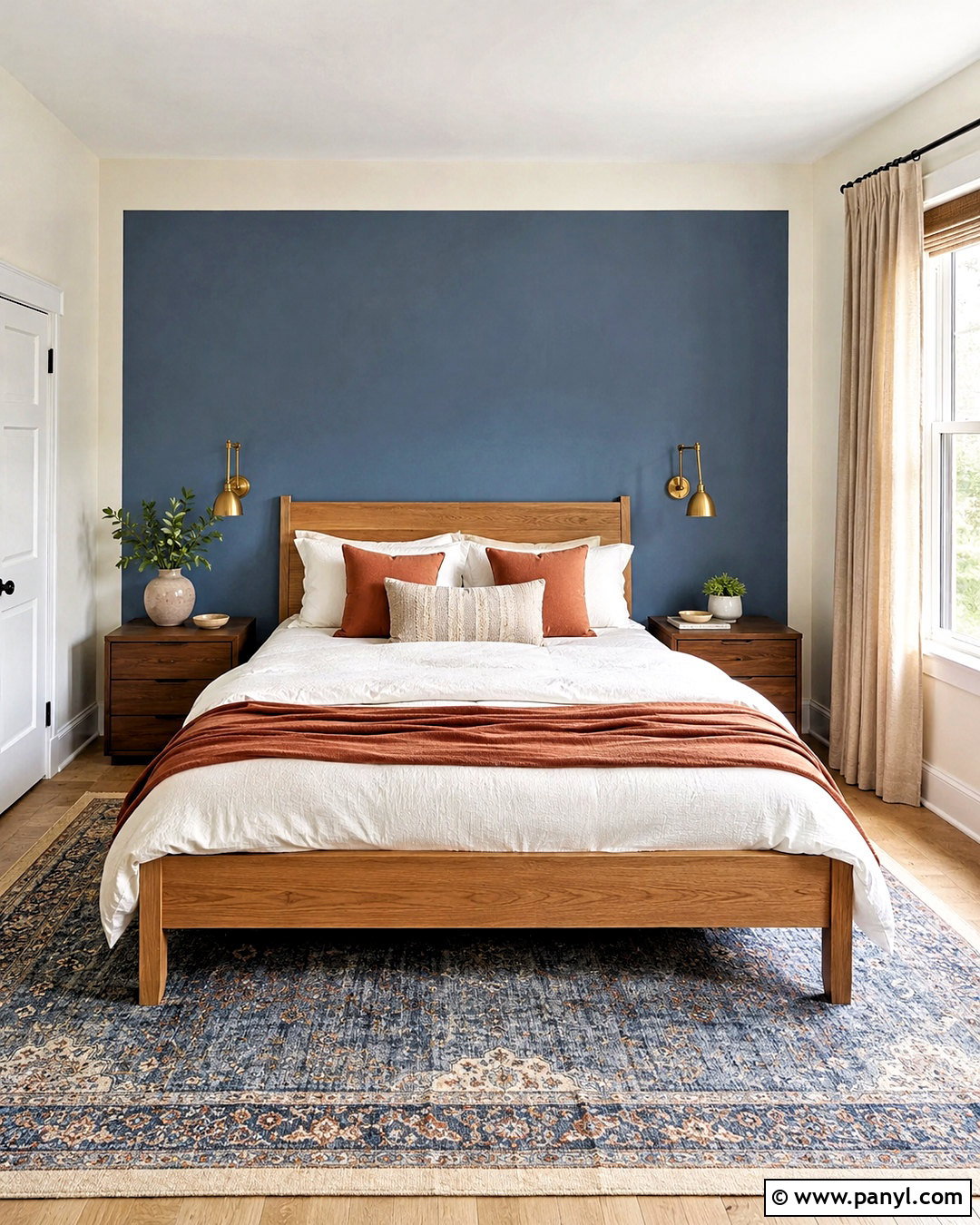
A painted color block can replace an oversized headboard while making a bedroom feel taller and more finished. Create a wide dusty blue rectangle behind the bed, extending from the floor to about three-quarters of the wall height. Paint the surrounding walls a warm off-white and place a low natural oak bed within the blue area. Layer white bedding with clay-colored pillows, a rust throw, and a softly patterned blue rug. Matching walnut nightstands keep the layout symmetrical, while brass sconces mounted inside the painted block save surface space. Finish with linen curtains and one simple landscape print above the bed. By aligning the wall shape with the bed and nightstands, the entire sleeping zone looks connected rather than appearing like a random painted patch.
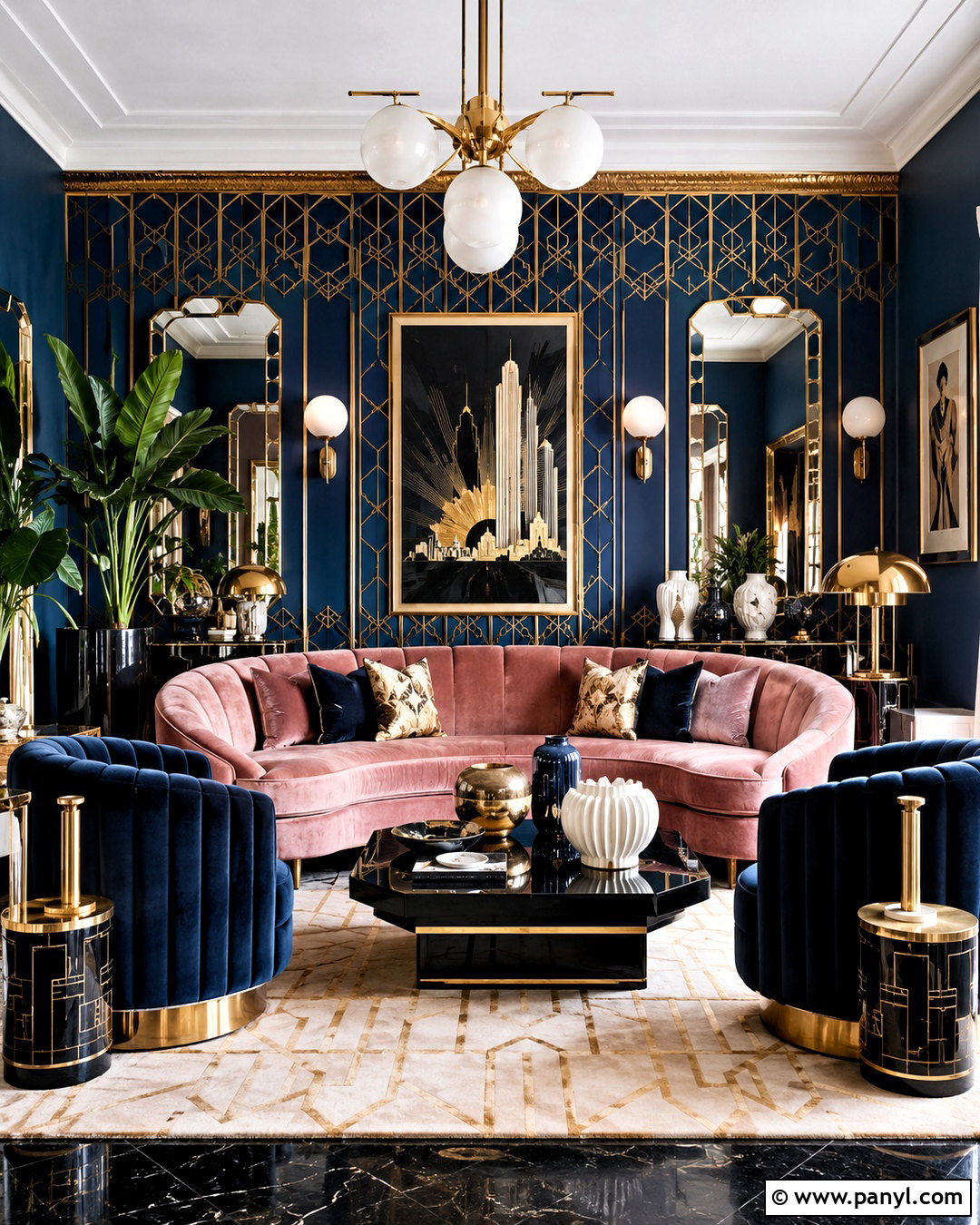
8. Color Block Kids Bedroom
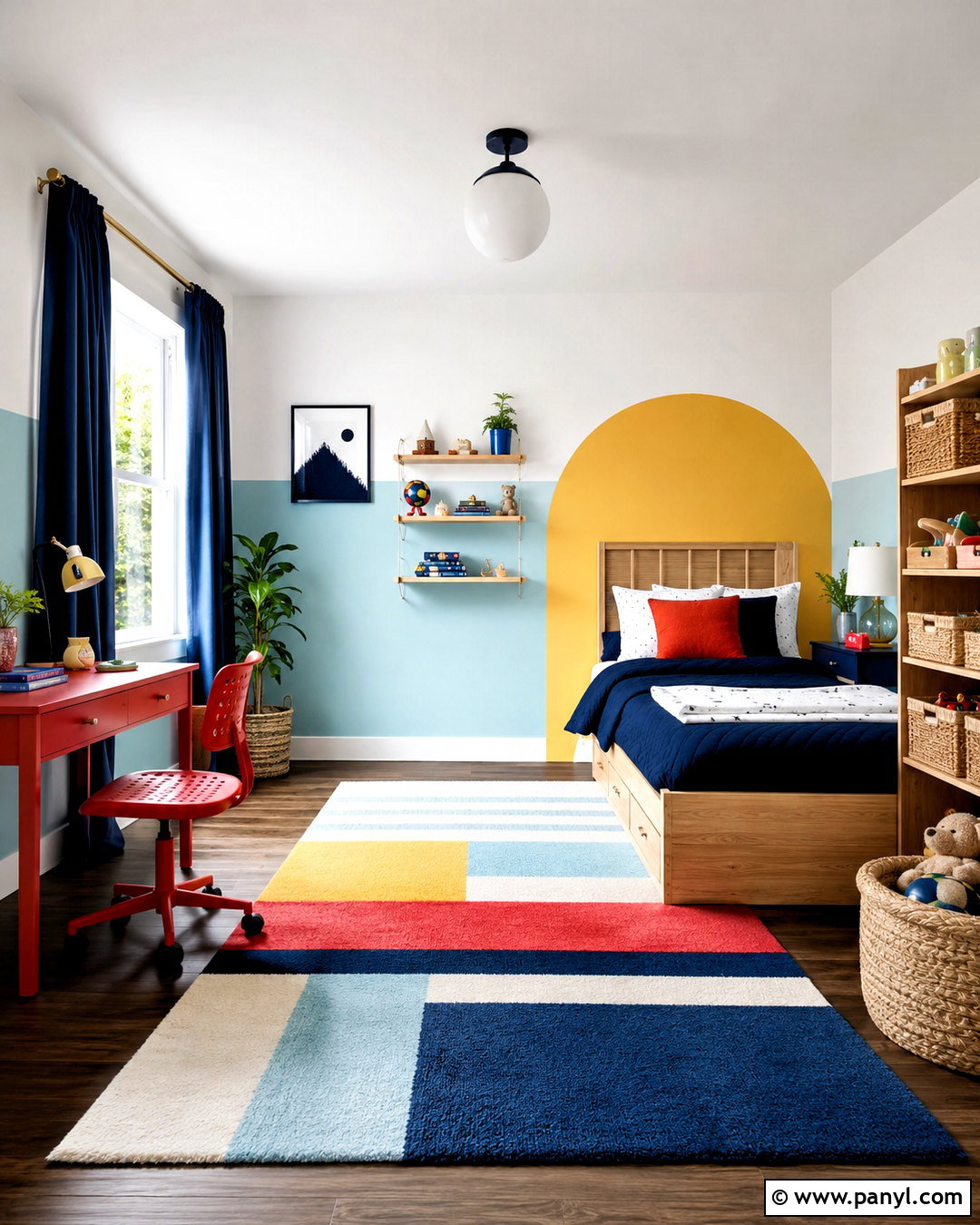
Playful color blocking can organize a child’s bedroom while leaving enough flexibility for changing interests. Paint the lower half of the room soft aqua and the upper half clean white. Behind the bed, add a large sunshine-yellow semicircle that rises above the dividing line. Choose a white oak bed, navy bedding, and storage drawers underneath to keep the center of the room open. A washable rug with aqua, yellow, red, and cream shapes supports the palette without matching it too perfectly. Place a small red desk beside the window and use white wall shelves for books and toys. Add simple woven baskets and navy curtains. The completed room feels imaginative and bright, yet the practical furniture, contained storage, and controlled palette prevent it from becoming chaotic.
9. Color Block Nursery
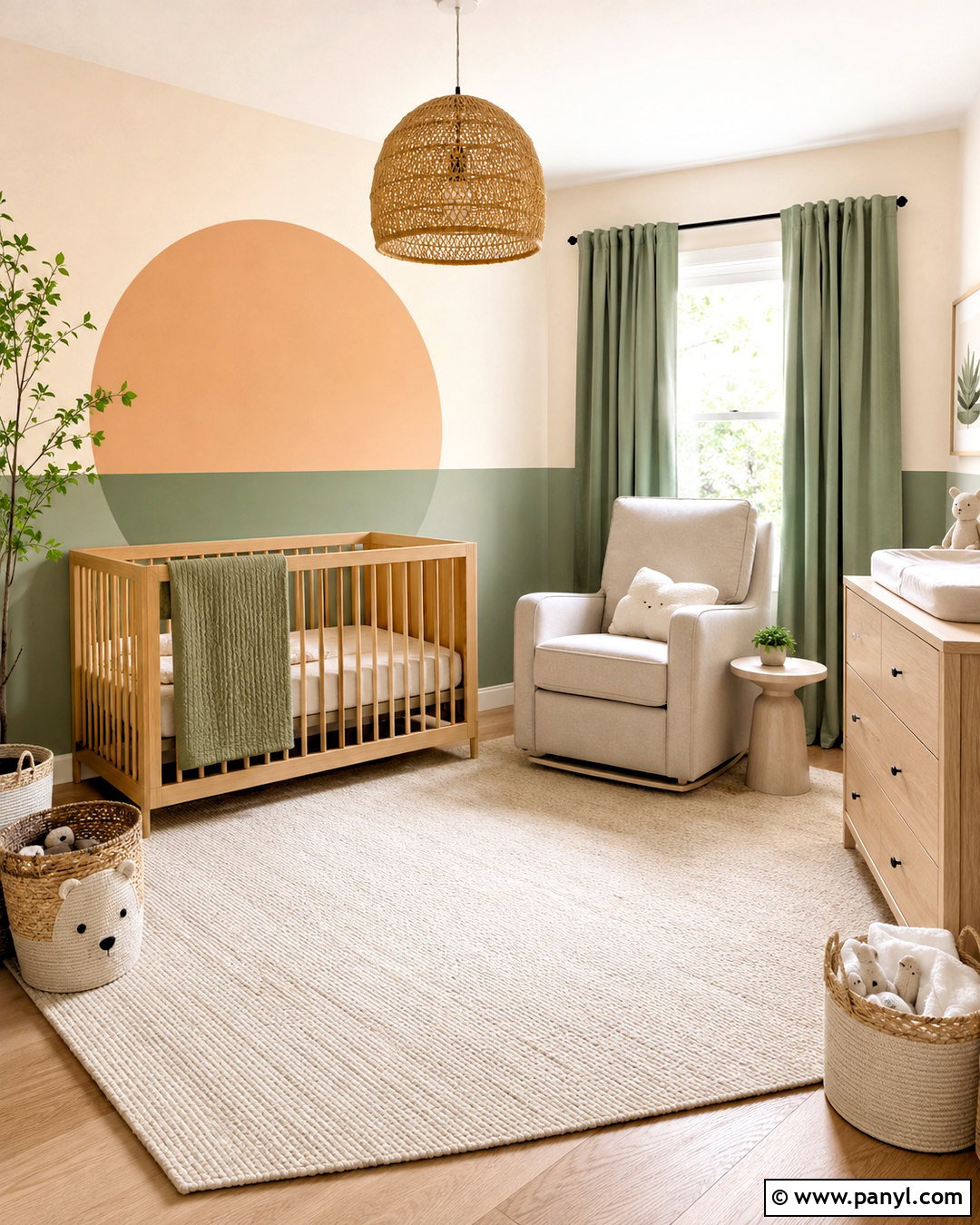
Soft color blocks can give a nursery visual interest without creating an overstimulating setting. Start with warm cream walls, then paint a wide sage green band around the lower third of the room. Add a muted peach circle behind a natural wood crib to form a gentle focal point. Furnish the space with an oatmeal glider, a pale oak dresser, and a washable ivory rug. Use blackout curtains in a slightly deeper sage tone so daytime naps remain practical. A woven pendant, cotton storage baskets, and small animal prints bring in texture while preserving the calm palette. Keep the crib area uncluttered and place decorative objects on secured shelving elsewhere. The finished nursery feels soothing, cohesive, and warm, with enough color to remain engaging as the child grows.
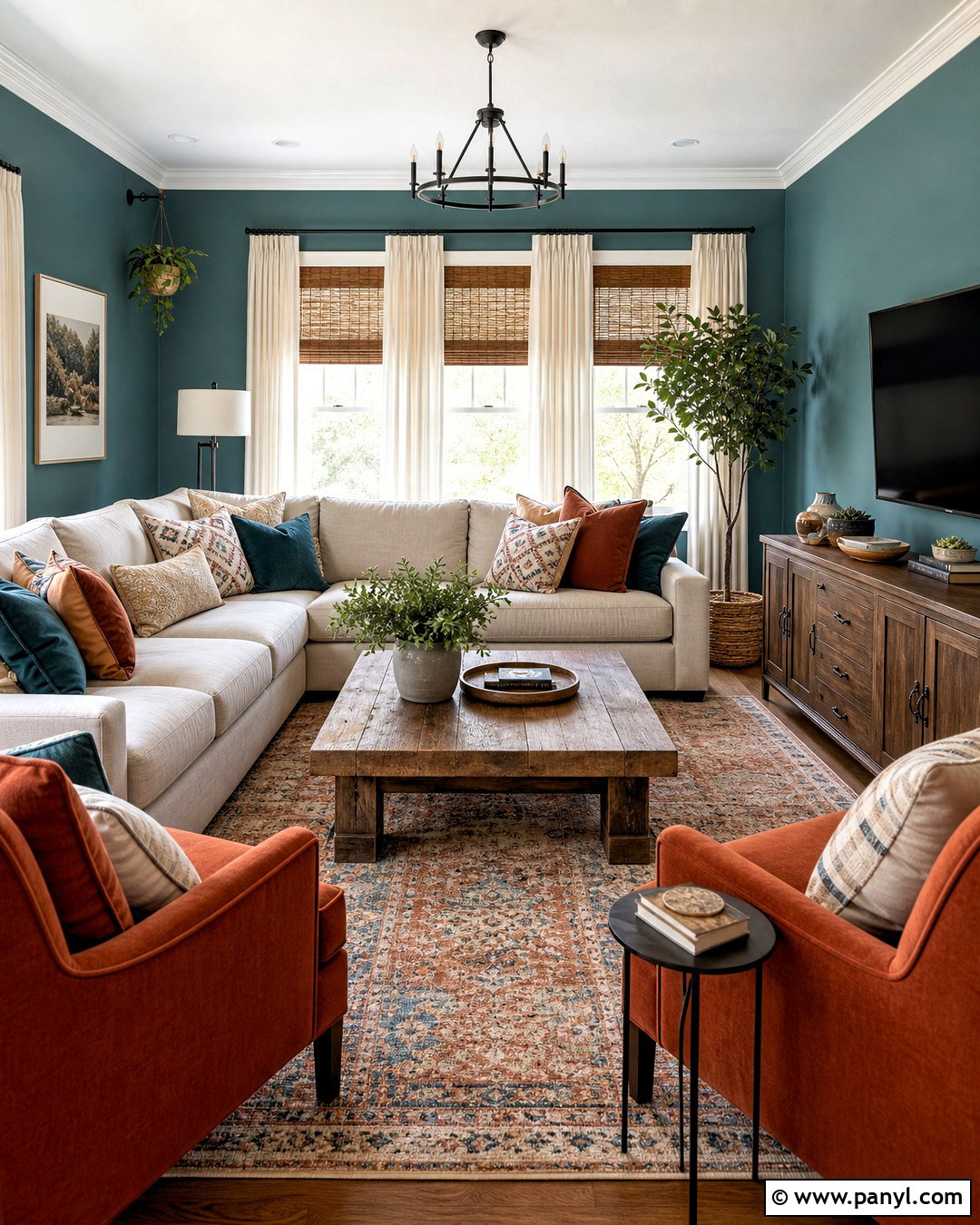
10. Color Block Home Office
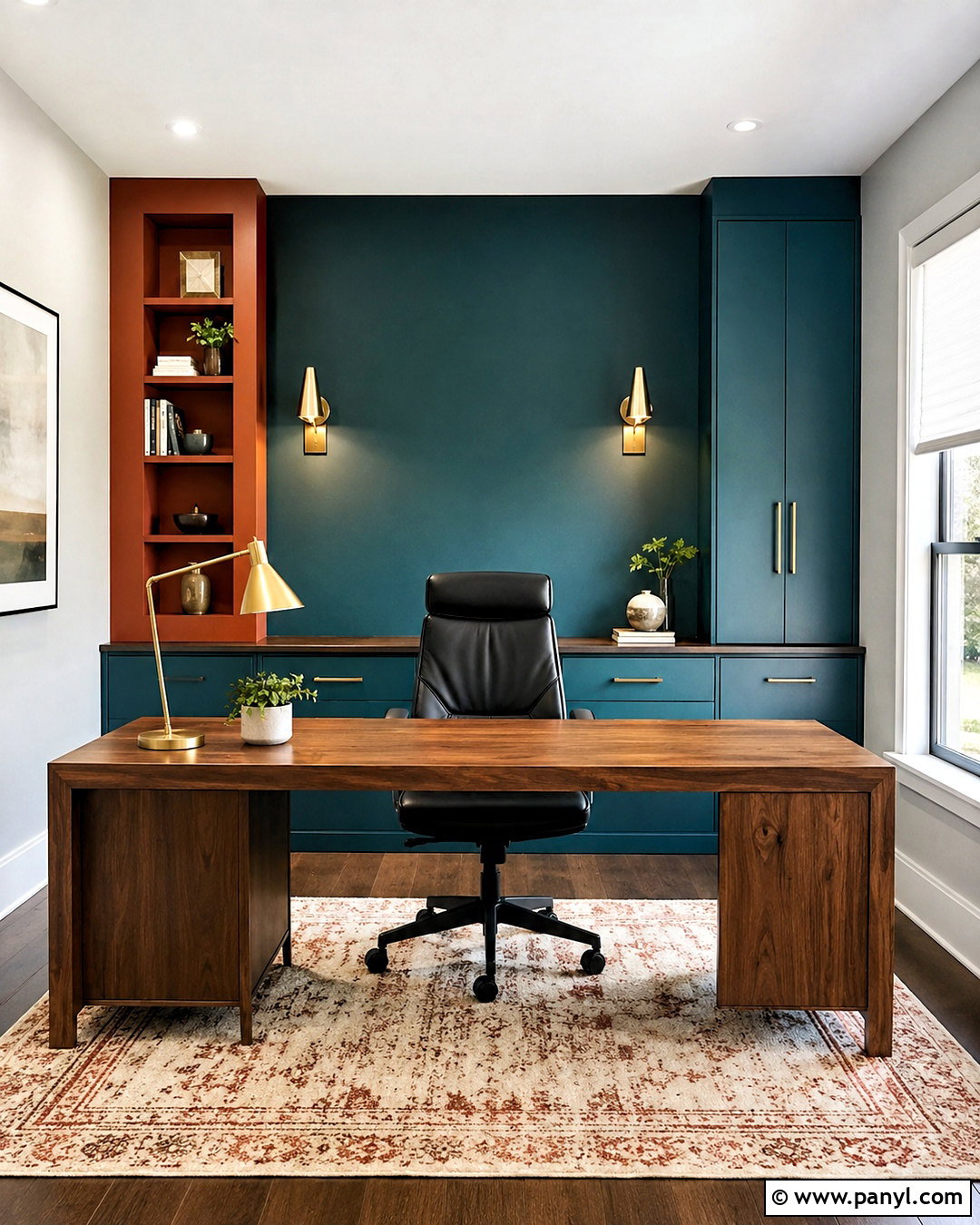
Color blocking can visually separate work functions in a home office, especially when the room also handles storage or hobbies. Paint the desk wall deep teal and add a vertical clay-red block behind a tall bookcase. Leave the other walls pale gray to give the stronger hues breathing room. Choose a walnut desk, a supportive black chair, and closed teal cabinetry that blends into the main wall. A flatwoven rug featuring cream, rust, and blue defines the work area without interfering with chair movement. Install adjustable brass sconces and light-filtering white shades for comfortable daytime use. Keep supplies in matching boxes instead of open containers. This layout combines energizing color with visual order, helping the office feel expressive enough for creativity but structured enough for focused daily work.
11. Color Block Bathroom
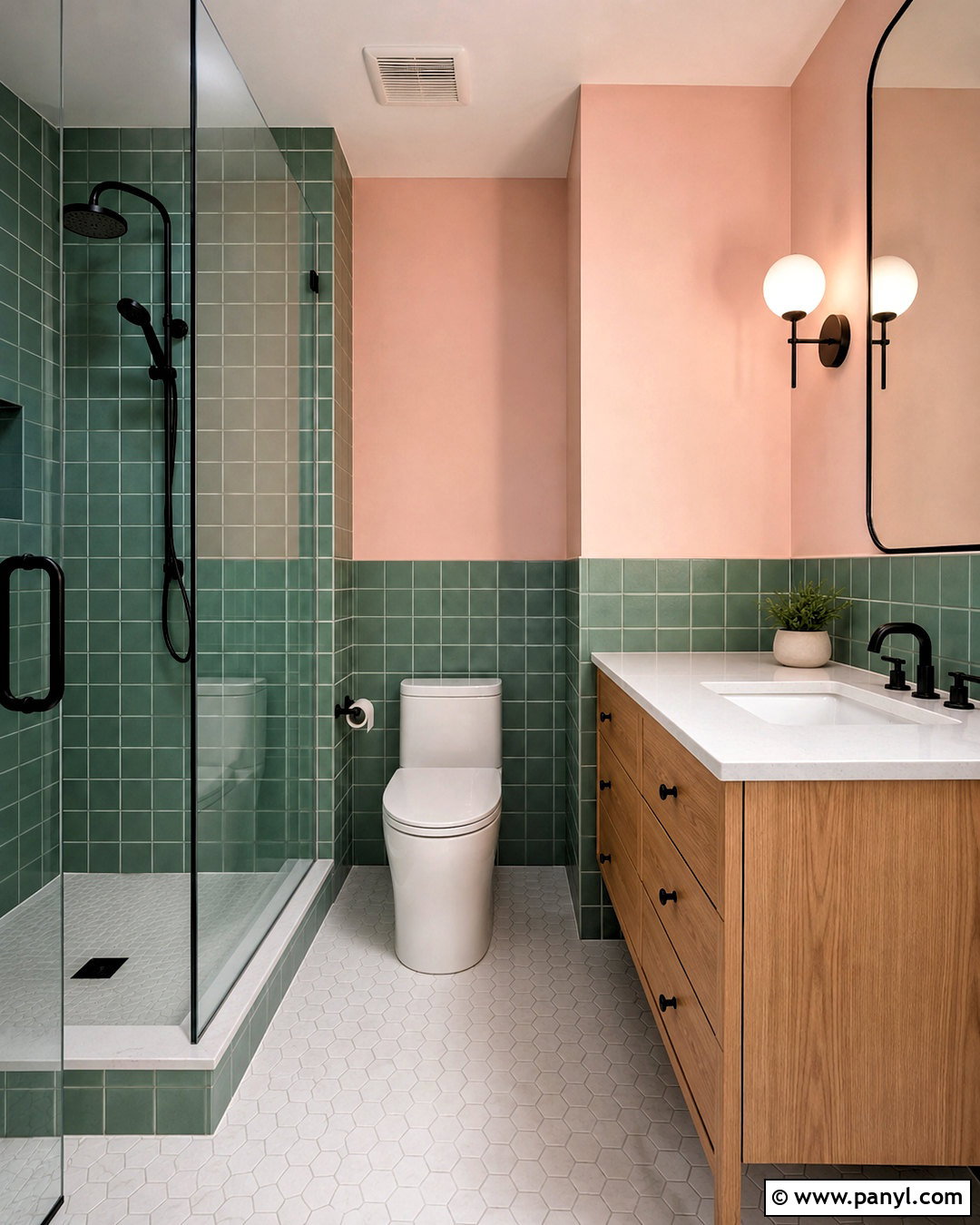
A bathroom offers several durable surfaces that can create color blocking without relying entirely on paint. Cover the lower walls with square sea-green tile and paint the upper walls soft blush pink. Use a white oak vanity with a pale quartz counter to form a neutral transition between the two colors. Matte black fixtures, a frameless mirror, and simple globe sconces add definition. Continue the green tile into the shower for a cohesive look, then use small white hexagon floor tiles to brighten the room. Add blush towels, a cream shower curtain, and one dark green bath mat. Keep bottles hidden in the vanity or a recessed niche. The result is a fresh, graphic bathroom where color, storage, lighting, and water-resistant materials work together naturally.
12. Color Block Hallway
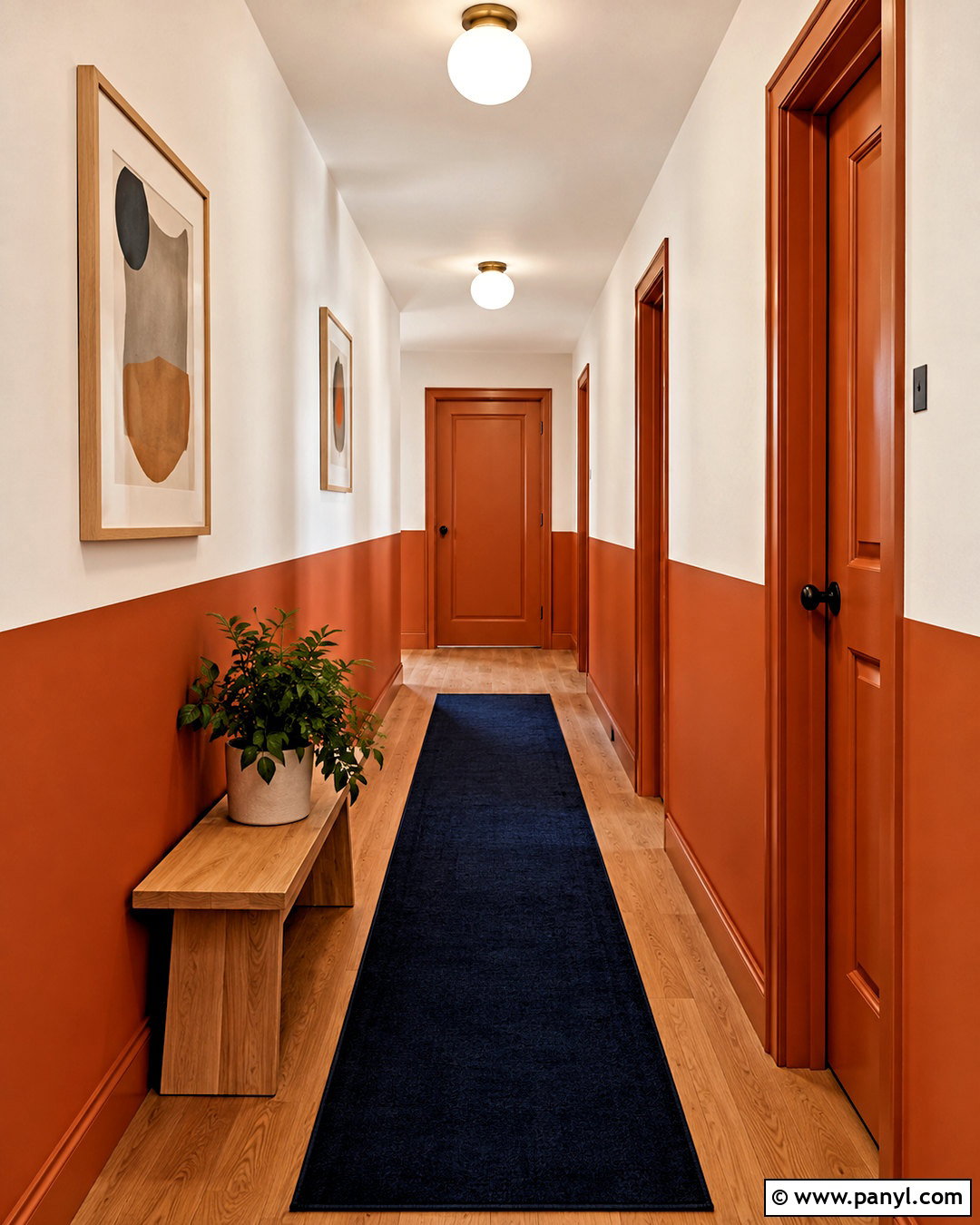
A long hallway can become a purposeful design feature with a continuous horizontal band of color. Paint the lower half warm burnt orange and keep the upper half creamy white. Extend the orange across doors and trim for an uninterrupted visual line that draws the eye forward. Add a narrow navy runner to create cool contrast and protect the flooring. Hang small framed artwork in a consistent row above the paint boundary, using light wood frames that coordinate with the floor. A simple opal ceiling light and a slim oak bench near the entry keep the space useful without blocking movement. Repeat navy in one cushion and orange in a ceramic bowl. This complete scheme makes a plain passage feel wider, warmer, and connected to the surrounding rooms.
13. Color Block Staircase
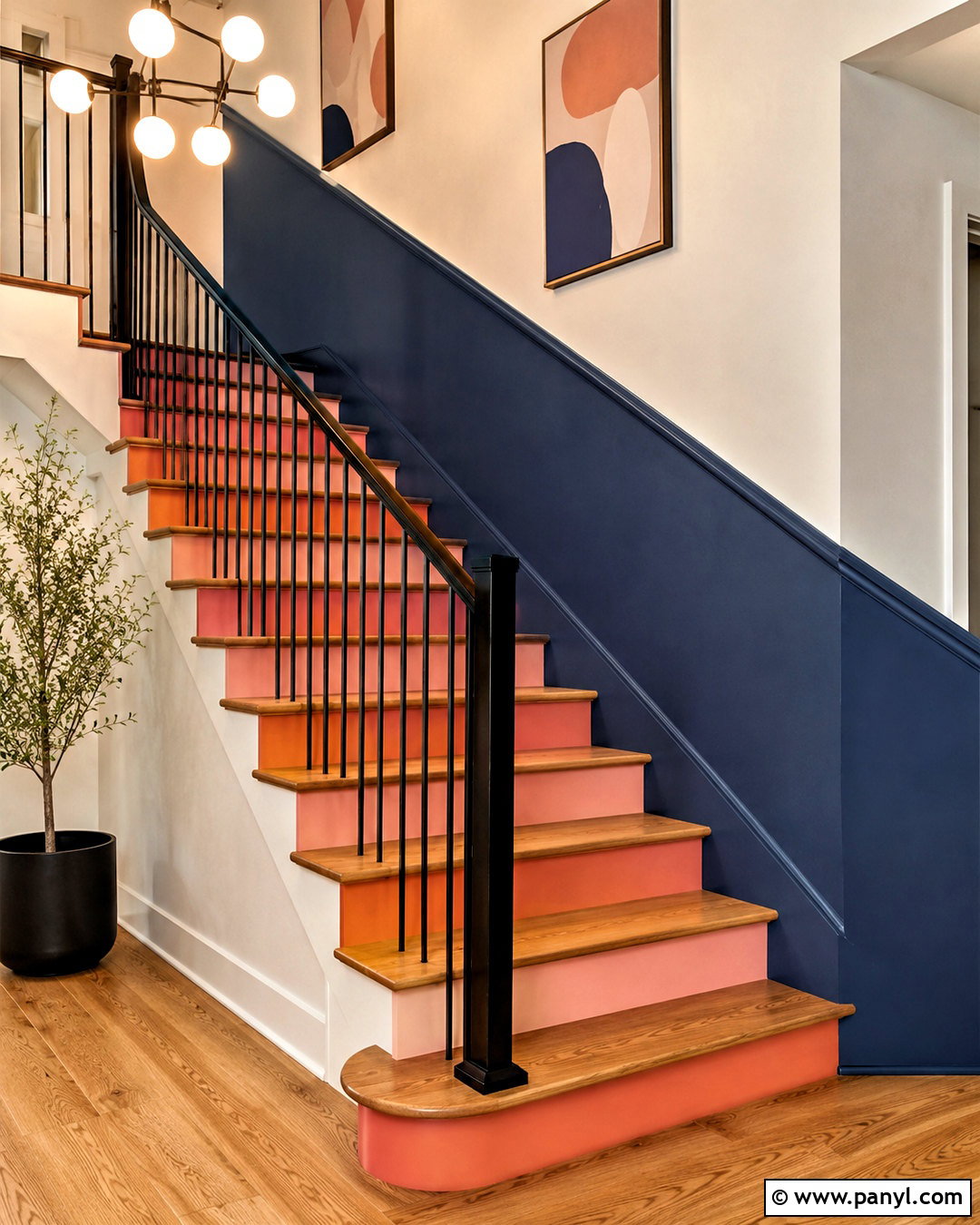
Color blocking can transform a staircase into an architectural feature while preserving its everyday function. Paint the wall beside the stairs deep indigo from the floor upward, following the diagonal line of the handrail. Use warm white above the diagonal and continue it across the upper landing. Finish the stair risers in alternating muted coral and dusty pink, while leaving the oak treads natural for durability. A matte black handrail adds a clean edge between the colors. At the landing, place a slim console beneath a large abstract print that repeats indigo and coral. Use bright globe lighting so the darker wall remains clear and welcoming. The combined wall treatment, painted risers, wood surfaces, and simple decor create movement without making the staircase feel overly decorative.
14. Color Block Studio Apartment
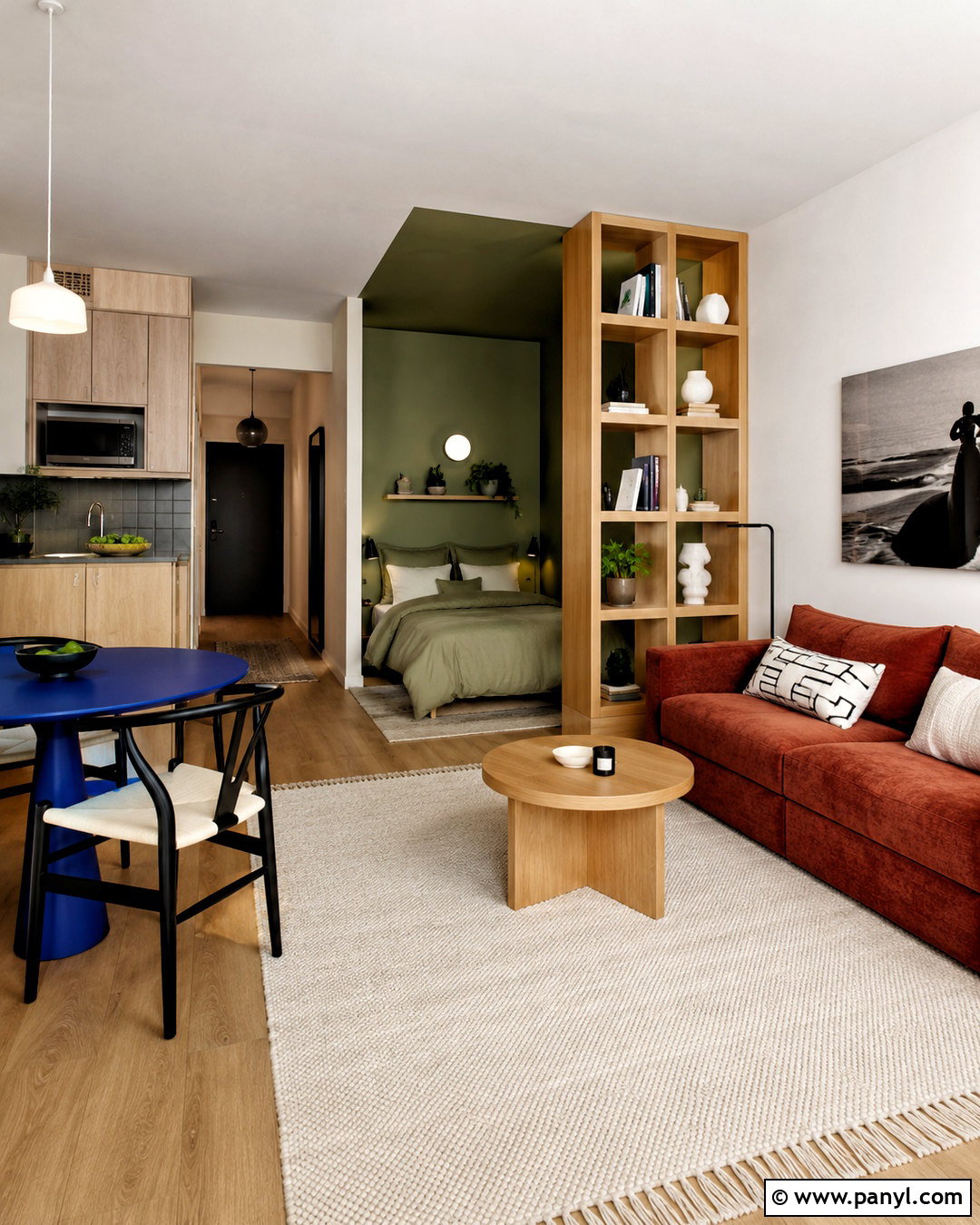
In a studio apartment, color blocks can establish separate zones without reducing openness. Paint the sleeping corner muted olive green, covering the wall behind the bed and continuing onto the ceiling above it. Keep the living area warm white and define it with a rust-colored sofa, cream rug, and round oak coffee table. Use a cobalt blue dining table near the kitchen to create a third distinct block. A freestanding open bookcase can divide the bed from the sofa while still allowing light through. Repeat olive, rust, and blue in small amounts across cushions and artwork to connect the zones. Choose compact furniture with visible legs and hidden storage. This coordinated layout makes each function easy to recognize while maintaining a comfortable visual flow throughout the apartment.
15. Color Block Open Floor Plan
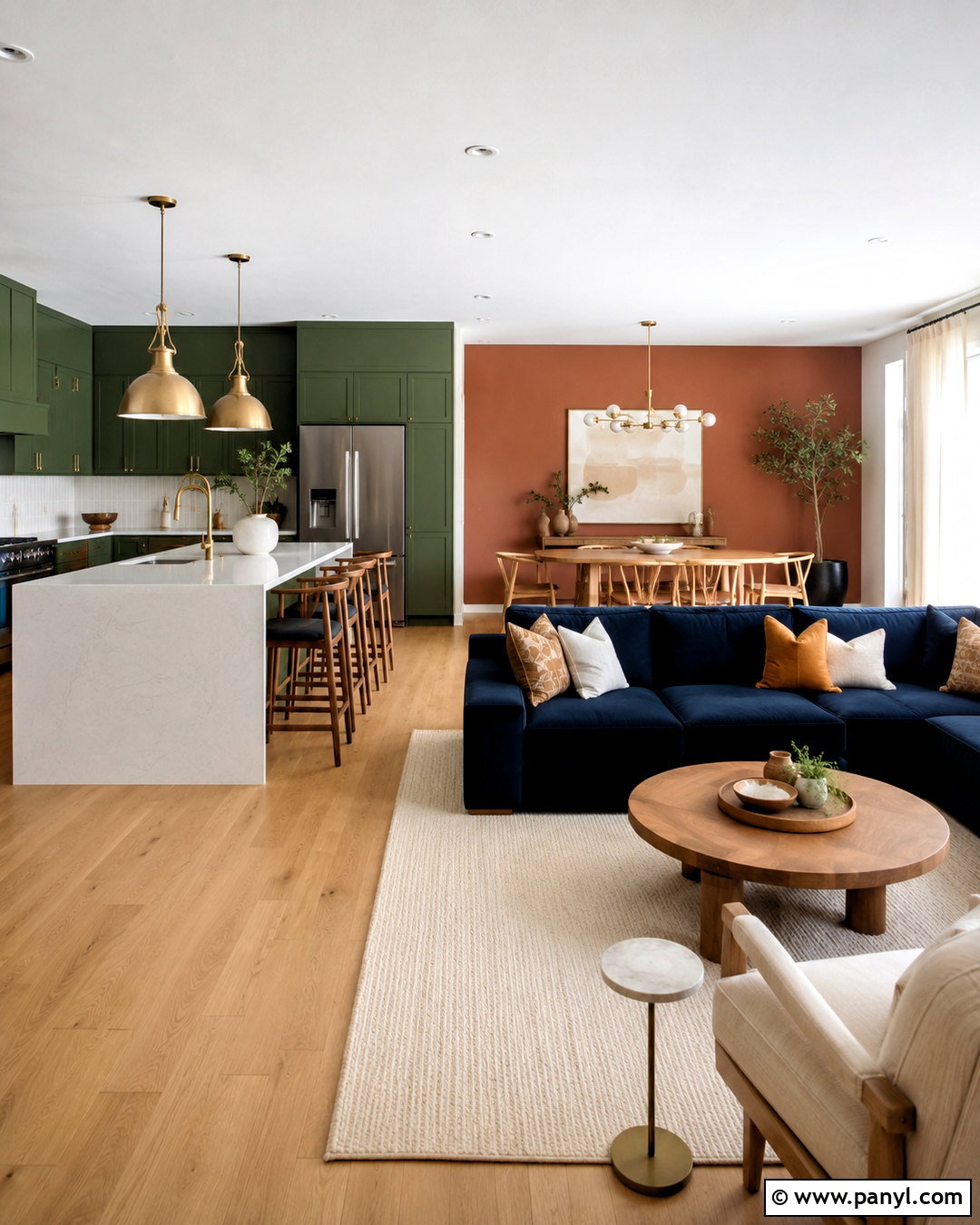
A coordinated palette helps color blocking feel intentional across an open living, dining, and kitchen space. Anchor the kitchen with matte forest-green cabinetry and a white quartz island. Define the dining area using a terracotta wall block behind an oval oak table, then furnish the living zone with a deep navy sectional and a large cream rug. Keep remaining walls warm white so every color has a clear boundary. Repeating materials provides continuity: use oak in the stools, dining table, and media console, plus brushed brass for lighting and hardware. Add curtains in natural linen and artwork that combines green, terracotta, and blue. The finished floor plan has three visually distinct areas, yet the shared woods, metals, and neutral background prevent the home from feeling fragmented.
16. Color Block Ceiling
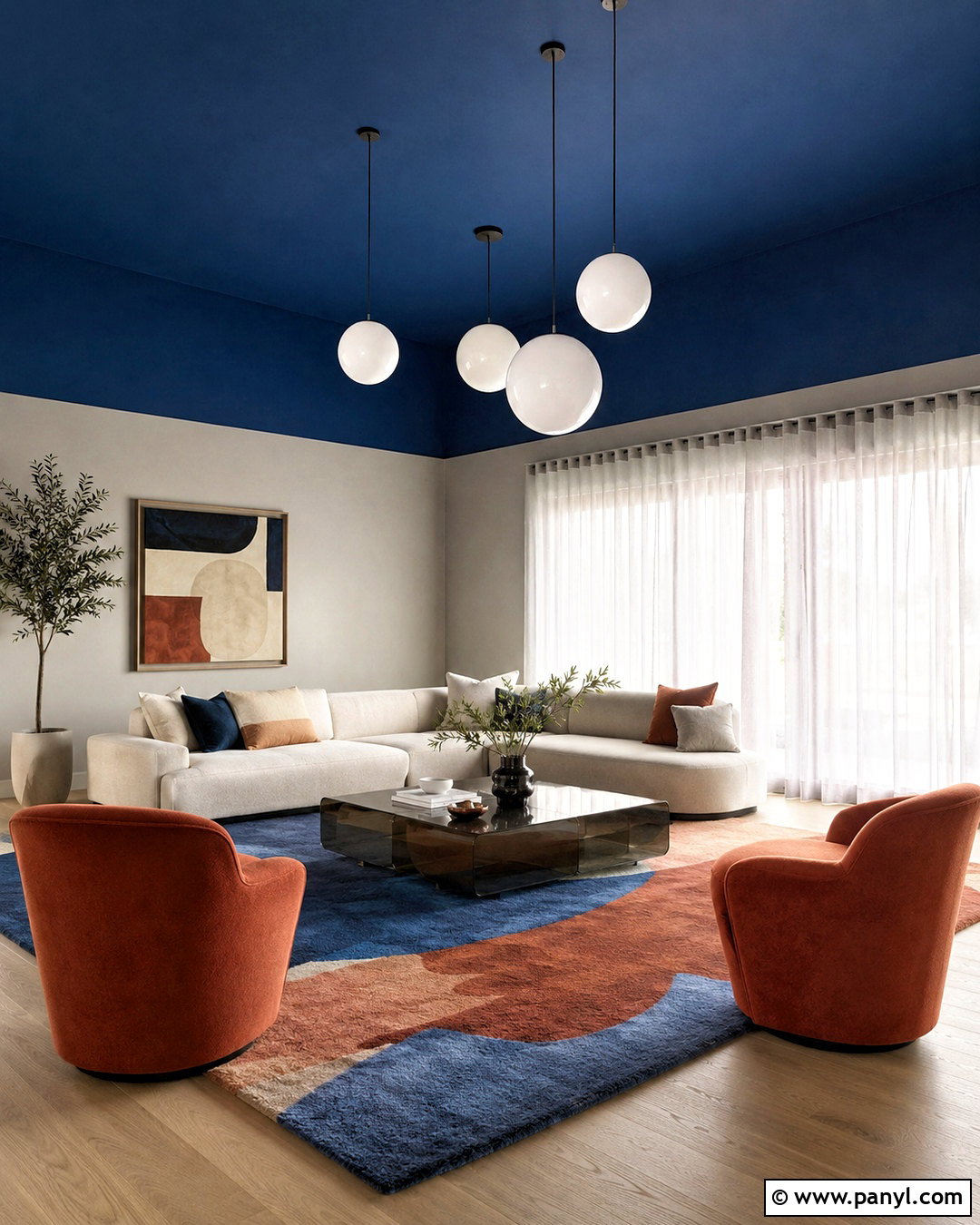
Painting part of the ceiling creates unexpected color blocking while keeping most walls light. In a modern sitting room, apply cobalt blue to the ceiling and continue it approximately twelve inches down the walls, forming a crisp border around the space. Paint the remaining walls soft warm gray to balance the saturated overhead color. Arrange a low cream sectional, two paprika lounge chairs, and a smoked-glass coffee table on a blue-and-rust rug. Use white globe pendants so they remain visible against the ceiling. Pale oak flooring and sheer curtains prevent the room from feeling enclosed. Keep wall art minimal and positioned below the blue line. This complete look draws attention upward, highlights ceiling height, and gives a simple room a strong architectural identity.
17. Color Block Built In Shelves
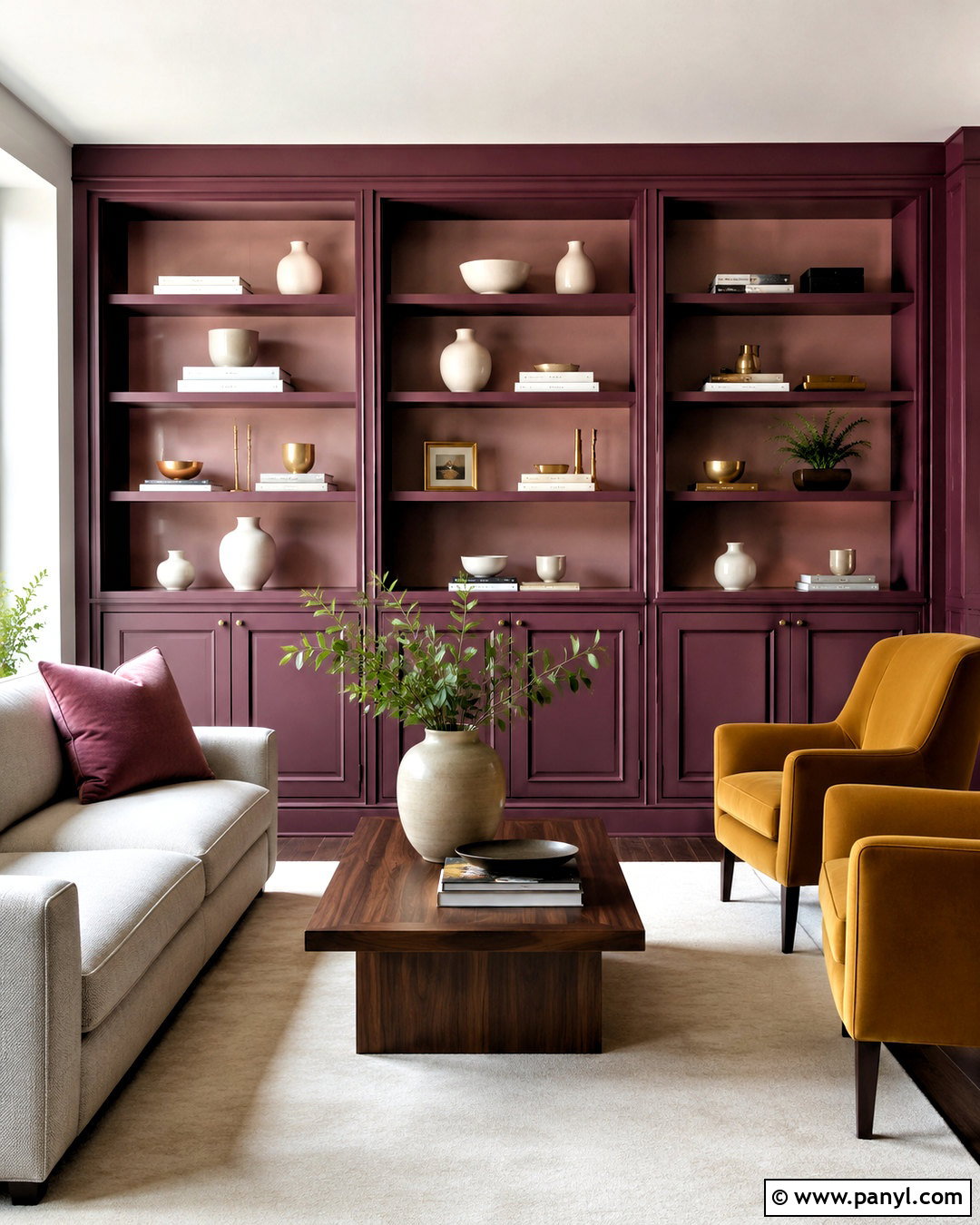
Built-in shelves can become a bold color block that organizes both the wall and the room. Paint floor-to-ceiling cabinetry rich plum, including the shelves, trim, and lower doors. Use muted rose on the wall behind the open shelving to reveal its depth. Place a light gray sofa opposite the unit, then add ocher armchairs and a cream rug to balance the purple tones. Style the shelves with books, white ceramics, framed photographs, and a few brass objects, leaving open space between groups. Closed lower cabinets should hold electronics and less attractive supplies. A walnut coffee table introduces natural warmth, while linen curtains soften the saturated cabinetry. Treating the entire built-in as one solid composition makes storage look intentional and gives the living room a polished focal point.
18. Color Block Furniture
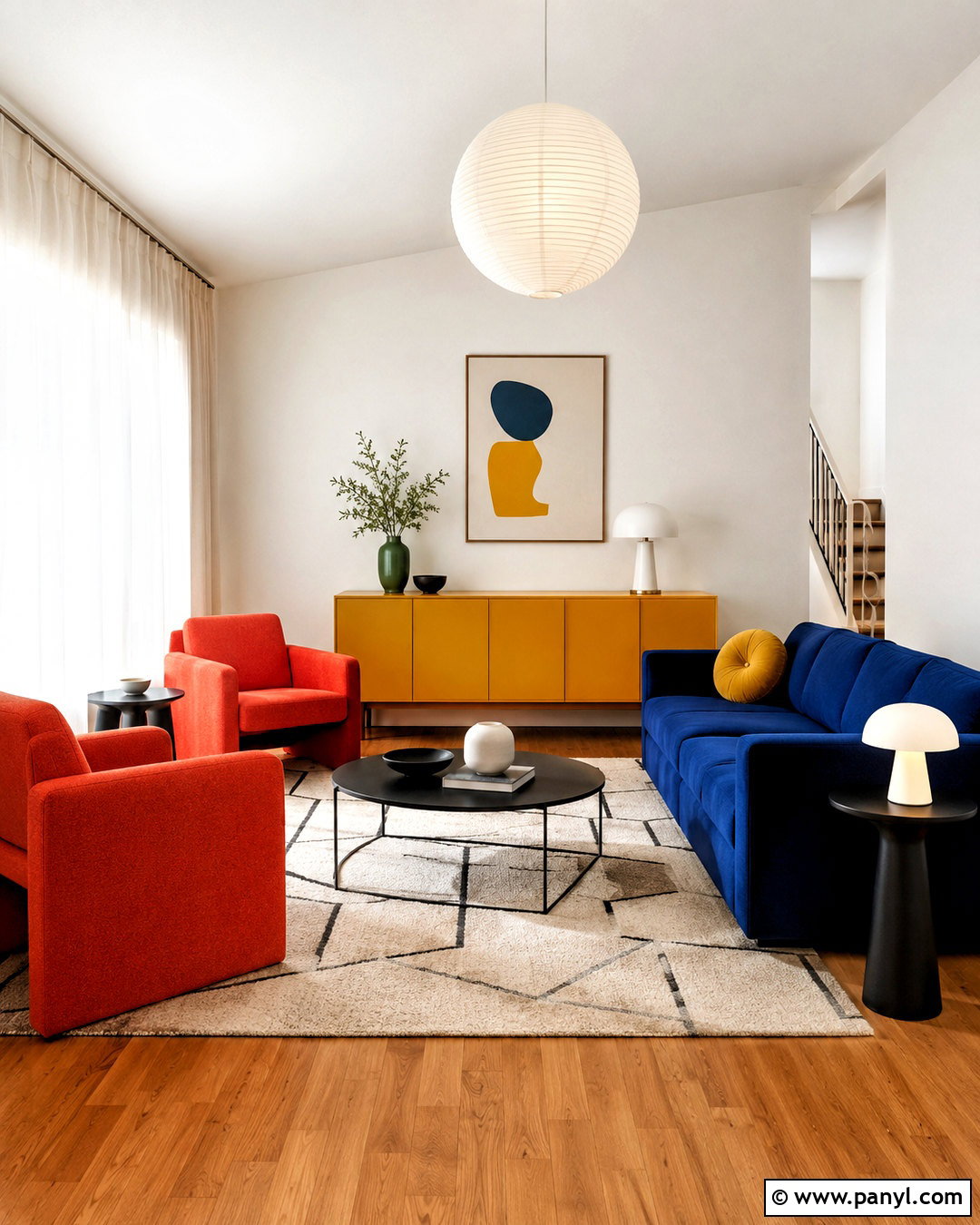
Walls can remain neutral when large furniture pieces supply the room’s color blocks. Begin with warm white walls and medium oak flooring, then arrange a cobalt blue sofa, two tomato-red lounge chairs, and a mustard yellow storage cabinet around a cream geometric rug. Keep each furniture piece solid-colored and sculpturally simple so the room feels graphic rather than cluttered. A black metal coffee table provides a visual pause between the brighter hues. Add sheer white curtains, a large paper pendant, and minimal artwork featuring the same three colors. Small accessories should stay neutral or repeat only one established shade. This approach is ideal for renters because the entire design can move to another home. The completed space feels bold, flexible, and carefully composed without painted walls.
19. Neutral Color Block Interior
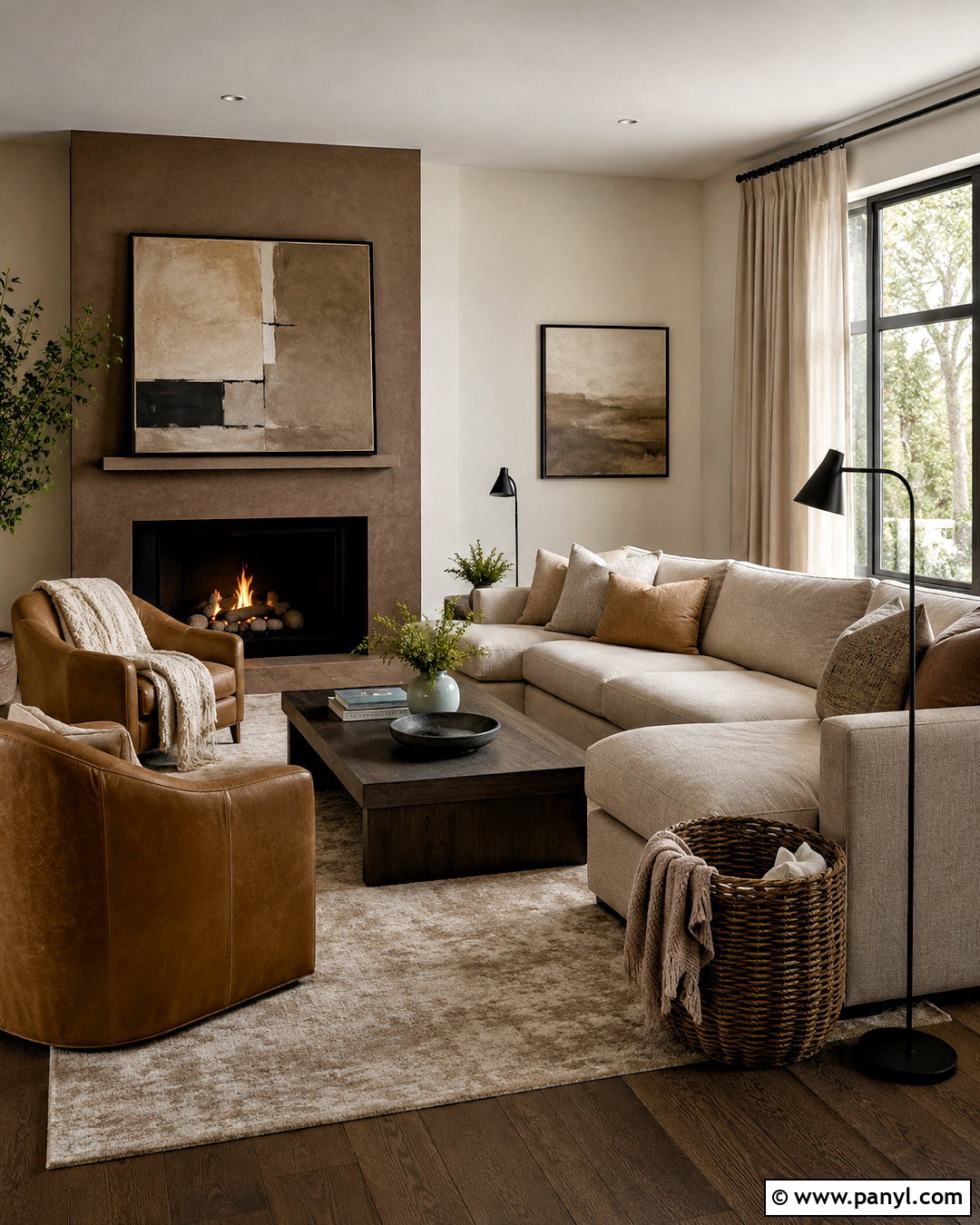
Color blocking does not have to rely on vivid shades. Create a calmer living room using large sections of warm beige, mushroom brown, and soft greige. Paint the fireplace wall mushroom brown and the adjoining walls light beige. Choose a greige sectional, two caramel leather chairs, and a block-patterned wool rug in cream, taupe, and charcoal. A dark walnut coffee table grounds the pale upholstery, while black floor lamps add thin, crisp lines. Install natural linen curtains and display oversized abstract art with broad neutral shapes. Use ceramics, woven baskets, and textured pillows rather than many small colored accessories. Differences in tone and material keep the palette from appearing flat. The finished room demonstrates how color blocking can provide structure while remaining understated, warm, and highly livable.
20. Pastel Color Block Interior
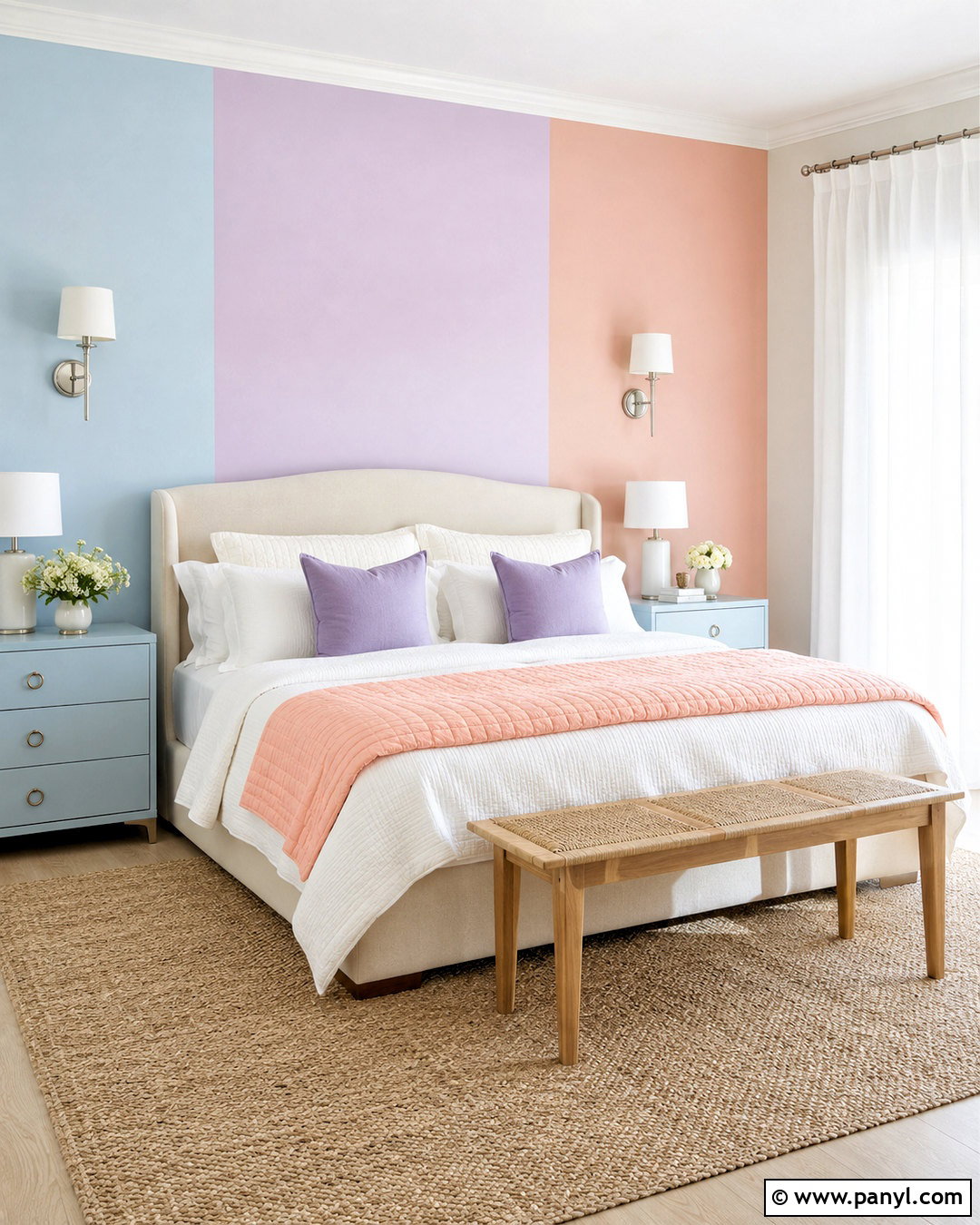
Pastel color blocking can feel sophisticated when the shades are slightly muted and the layout remains clean. In a bright bedroom, paint one wall with large vertical sections of powder blue, pale lavender, and soft peach. Use an upholstered cream bed to cover the lower edges and create a calm central anchor. Layer white bedding with lavender pillows and a peach quilt, then place pale blue nightstands on both sides. A light oak bench and natural fiber rug add warmth that keeps the colors from becoming sugary. Choose brushed nickel sconces, sheer white curtains, and simple abstract artwork. Avoid adding several unrelated accent shades. The resulting room feels airy and colorful, with clear geometric structure, balanced furnishings, and enough neutral material to remain restful.
Conclusion:
Successful color blocking is about more than placing two bright shades beside each other. The colors should support the room’s layout, highlight useful features, and connect naturally with furniture, lighting, flooring, and decor. Begin with one clear focal area, then repeat its colors in controlled amounts elsewhere. Neutral surfaces and natural materials can give saturated shades room to breathe, while consistent boundaries keep painted shapes looking deliberate. Whether you prefer earthy combinations, playful pastels, dramatic contrasts, or understated neutrals, these 20 color block interior design ideas offer practical ways to build a complete look. Test your chosen palette first, measure carefully, and select a design that supports how the room is actually used.

Related Ideas and Inspiration:

Leave a Reply