
Triangle wall design ideas offer an easy way to give plain rooms more depth, movement, and personality. The sharp geometry can look bold and energetic, but it can also feel calm when you use soft colors, natural materials, or a spacious pattern. Paint is the most affordable option, while wallpaper, wood trim, tile, and dimensional panels create additional texture. The key is treating the feature as part of a complete room rather than an isolated pattern. Furniture placement, lighting, flooring, and accessories should reinforce the wall without competing with it. Whether you are decorating a bedroom, living room, nursery, office, or hallway, the following complete looks make it easier to choose and recreate your favorite triangle wall design ideas.

1. Neutral Triangle Wall
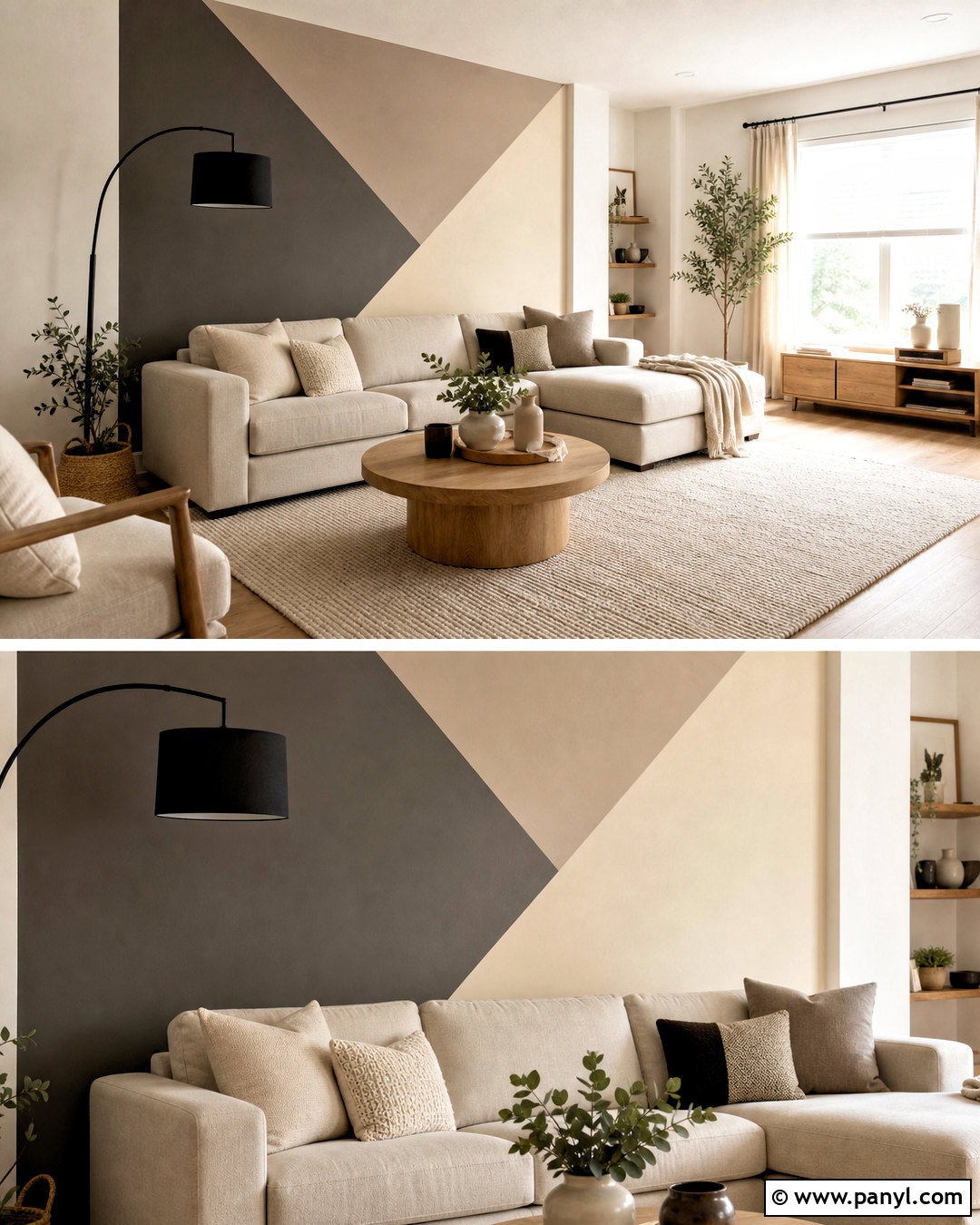
A neutral triangle wall creates visual interest without making the room feel busy. Start with a warm white background and add large triangles in soft greige, taupe, oatmeal, and muted charcoal. Keep the pattern asymmetrical, leaving some of the base color visible so the wall can breathe. In a living room, place a low beige sofa against the design and add a pale oak coffee table, cream rug, and black floor lamp. Textured pillows in ivory and camel soften the angular shapes. Choose eggshell paint for a gentle, washable finish that hides minor wall imperfections. Limit additional artwork because the pattern already acts as a focal point. A few ceramic pieces and leafy plants complete this relaxed, modern triangle wall.
2. Colorful Triangle Accent Wall
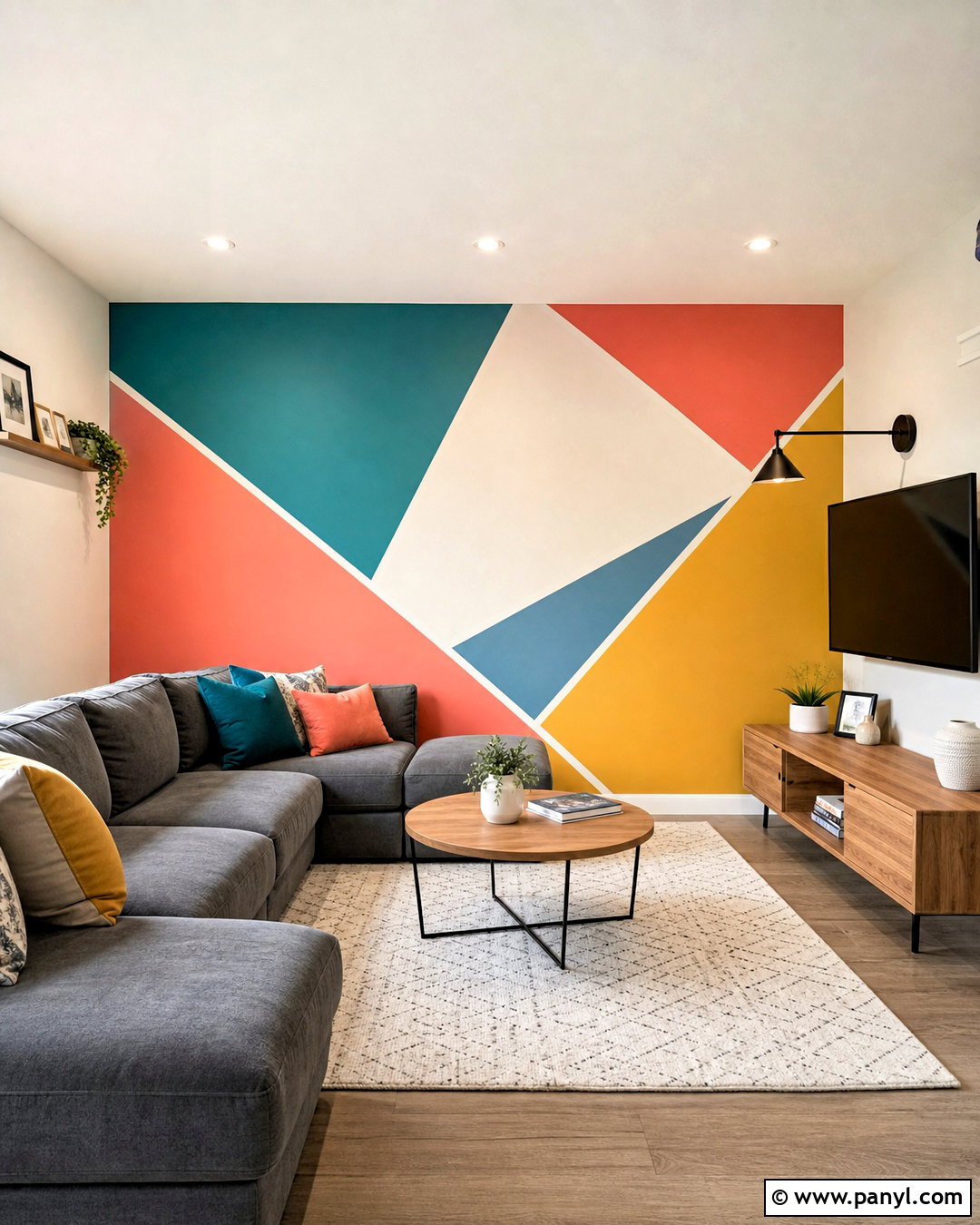
Energetic color can turn a basic family room into a cheerful gathering space. Build the triangle accent wall around a balanced palette of teal, coral, mustard yellow, dusty blue, and warm white. Use triangles in several sizes, but repeat each color across the wall to keep the arrangement connected. A medium-gray sectional grounds the stronger hues, while a natural wood media console adds warmth. Pull wall colors into the room with coral cushions, a teal throw, and one mustard ottoman. Keep the rug light and minimally patterned so the wall remains clear. Matte or eggshell paint prevents bright colors from appearing overly shiny. Finish the room with simple black lighting and a few solid-colored accessories rather than additional geometric decor.
3. Pastel Triangle Nursery Wall
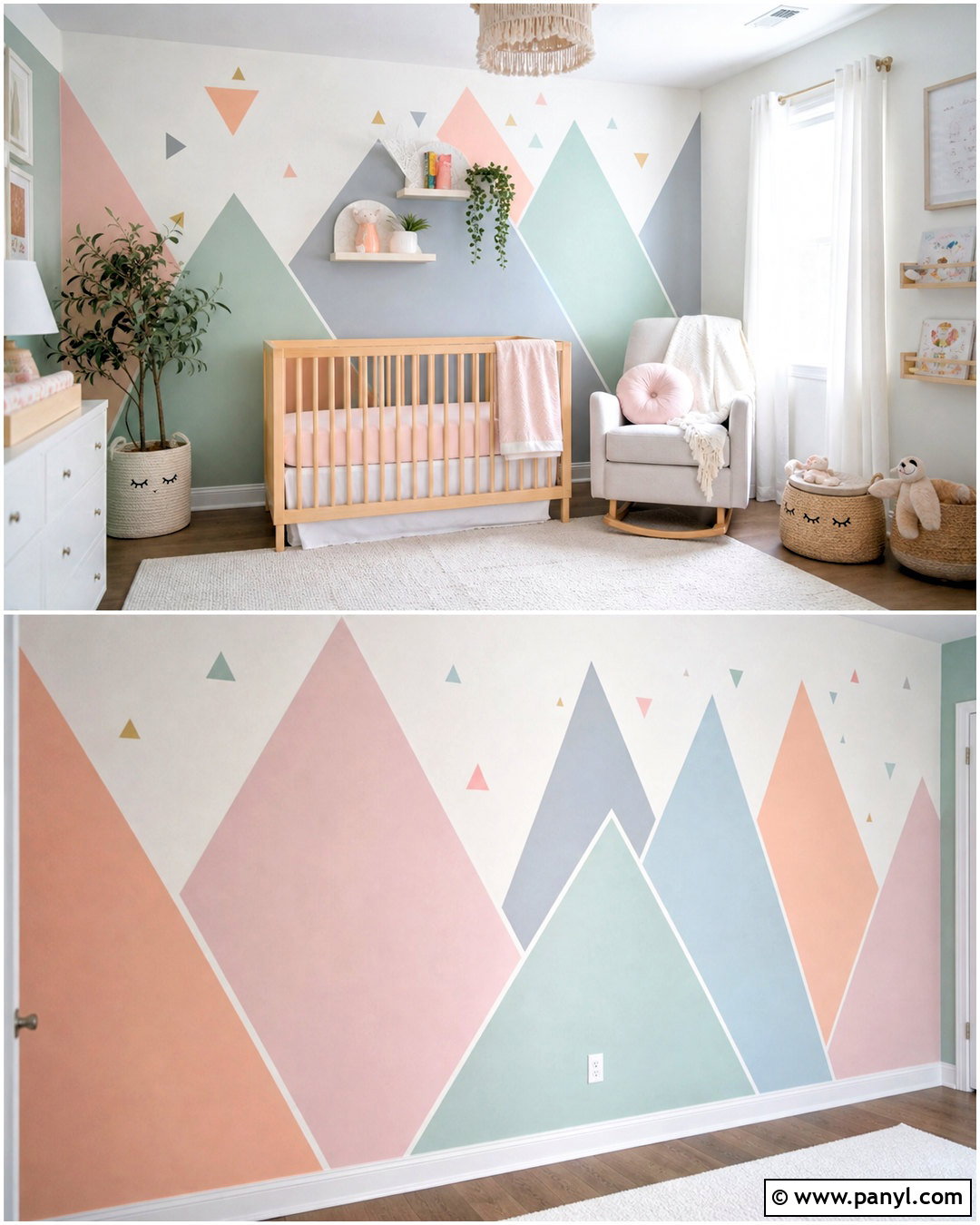
Soft triangles bring gentle color and playful structure to a nursery without overwhelming the space. Paint the main wall creamy white, then create an airy pattern using blush pink, pale peach, muted mint, powder blue, and light gray. Concentrate smaller triangles behind the crib and leave wider areas of white between them. A natural maple crib, ivory rocking chair, and woven storage baskets maintain the light feeling. Choose white curtains that filter daylight and a washable cream rug with subtle texture. Coordinating crib sheets can repeat one pastel shade, but avoid mixing several competing patterns. Rounded shelves and a softly curved floor lamp balance the sharp triangle lines. Use low-odor interior paint and allow the finished room to ventilate completely before use.
4. Navy And Gold Triangle Wall
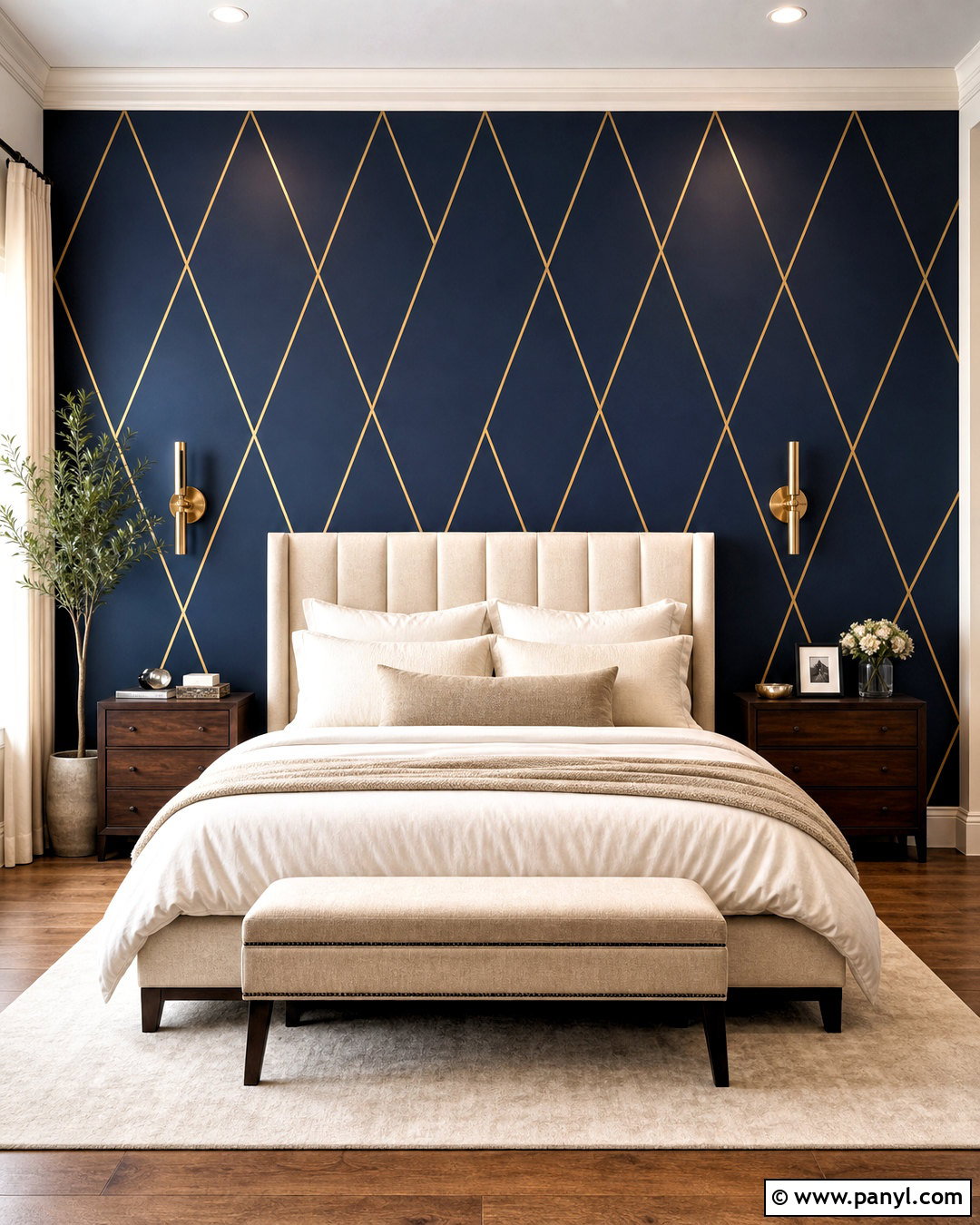
Deep navy and warm metallic details can make a triangle wall feel polished rather than playful. Cover the wall in rich matte navy, then introduce a limited arrangement of thin gold triangle outlines. Metallic paint, narrow molding, or removable gold tape can create the lines, depending on the desired budget and finish. Position a camel leather sofa or an upholstered cream bed against the wall to provide strong contrast. Walnut furniture, brushed brass lighting, and ivory textiles support the sophisticated palette. Keep the floor medium-toned wood and use a light rug to prevent the room from becoming too visually heavy. One large cream-colored triangle may be added behind the main furniture. Avoid excessive gold accessories, allowing the precise wall details to provide enough shine.
5. Wood Triangle Feature Wall
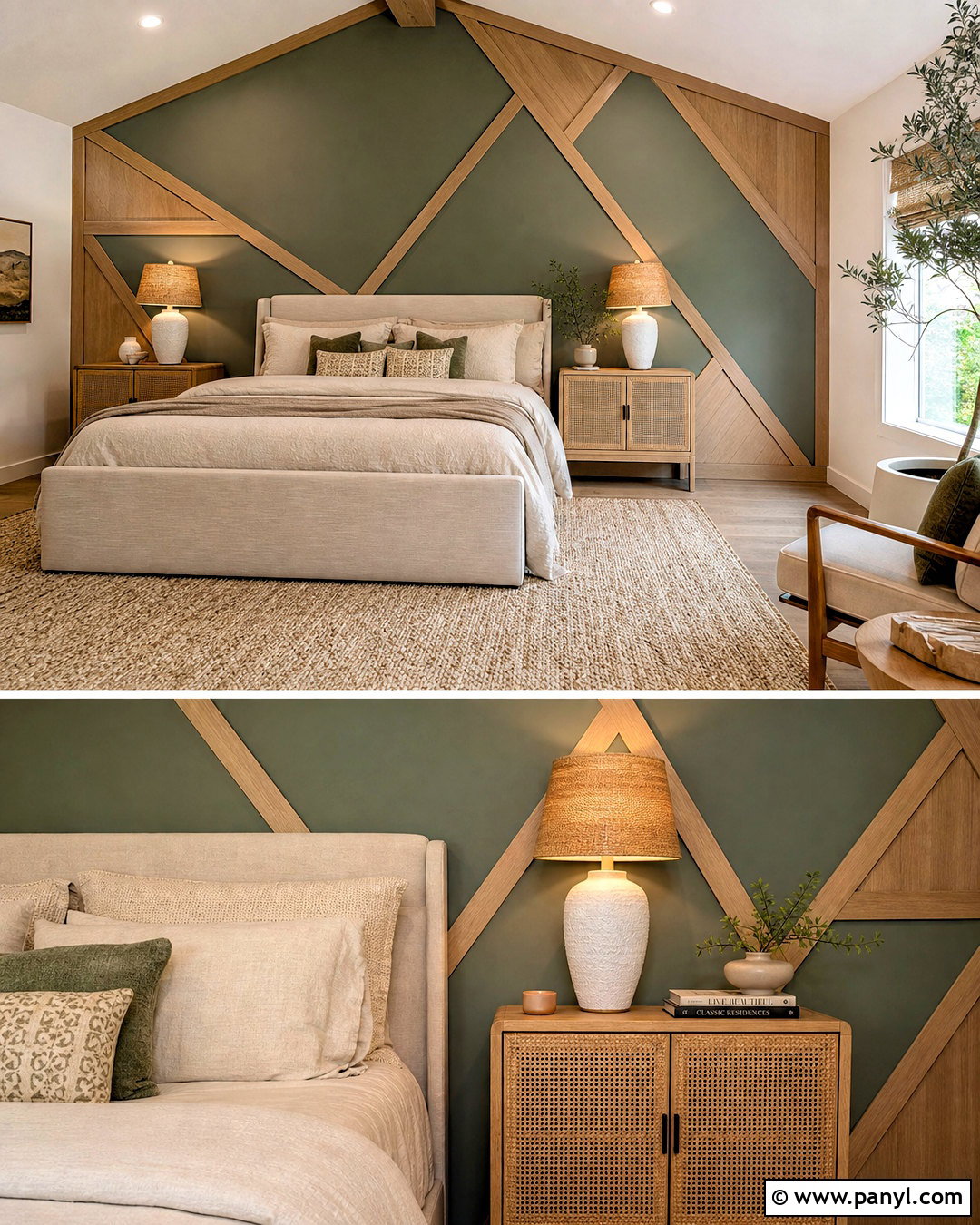
Natural wood turns geometric shapes into a warm architectural feature. Create the design with slim oak, pine, or walnut boards arranged into large intersecting triangles across a painted wall. A charcoal, forest green, or warm white background helps the wood grain remain visible. For a bedroom, center the pattern behind a simple upholstered bed and extend it slightly beyond both nightstands. Add linen bedding, ceramic lamps, woven shades, and a wool rug to complement the organic texture. Stain all boards before installation so edges have an even finish. Keeping the triangles large prevents the surface from looking fragmented or overly rustic. Conceal fasteners where possible and maintain open sections of painted wall. The completed room feels dimensional, comfortable, and intentionally coordinated.
6. Black And White Triangle Wall
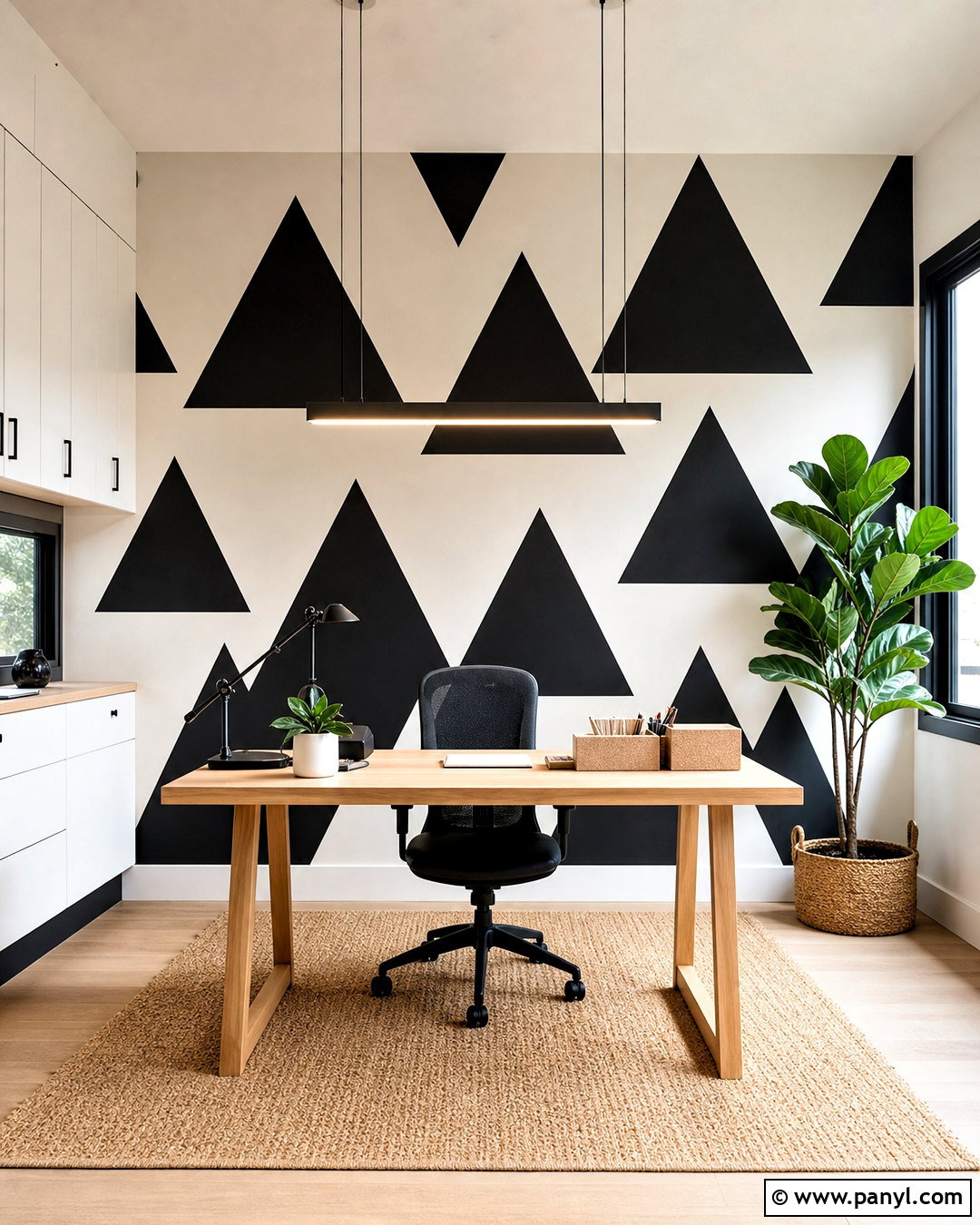
Few combinations look as crisp as a carefully planned black and white triangle wall. Use an off-white base instead of stark white, then arrange matte black triangles in a spacious, irregular pattern. Large shapes create more impact and are easier to live with than a dense collection of tiny triangles. In a home office, pair the wall with a light oak desk, black task chair, white storage cabinets, and a simple linear pendant. Add warmth through a tan rug, cork accessories, and one green plant. Keep desktop items concealed so the room does not become visually cluttered. Painter’s tape should be pressed firmly along every edge before painting. Removing it while the final coat is slightly damp helps produce cleaner, sharper lines.
7. Sage Green Triangle Wall
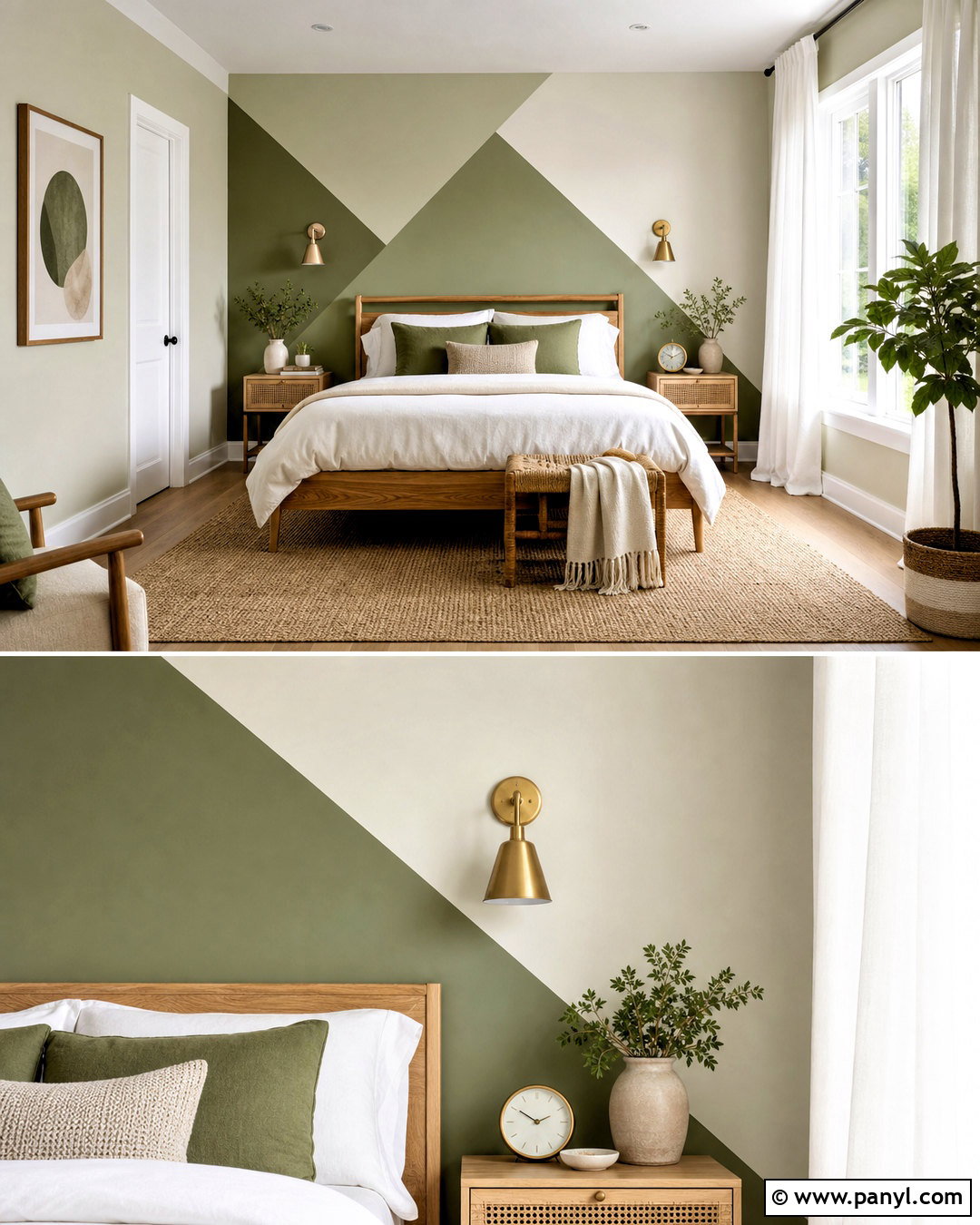
A sage green triangle wall feels fresh, natural, and easy to coordinate with everyday furnishings. Begin with a warm cream background and layer triangles in pale sage, olive green, eucalyptus, and muted beige. Choose a loose pattern with larger shapes around the lower half and fewer shapes near the ceiling. In a bedroom, combine the wall with an oak bed, white linen bedding, olive cushions, and woven cane nightstands. Soft brass sconces provide warmth without creating a glamorous look. A jute-blend rug and simple cotton curtains continue the organic palette. Keep plants limited to two or three varieties so greenery does not compete with the painted pattern. This complete scheme works especially well in rooms that receive generous natural light.
8. Terracotta Triangle Wall
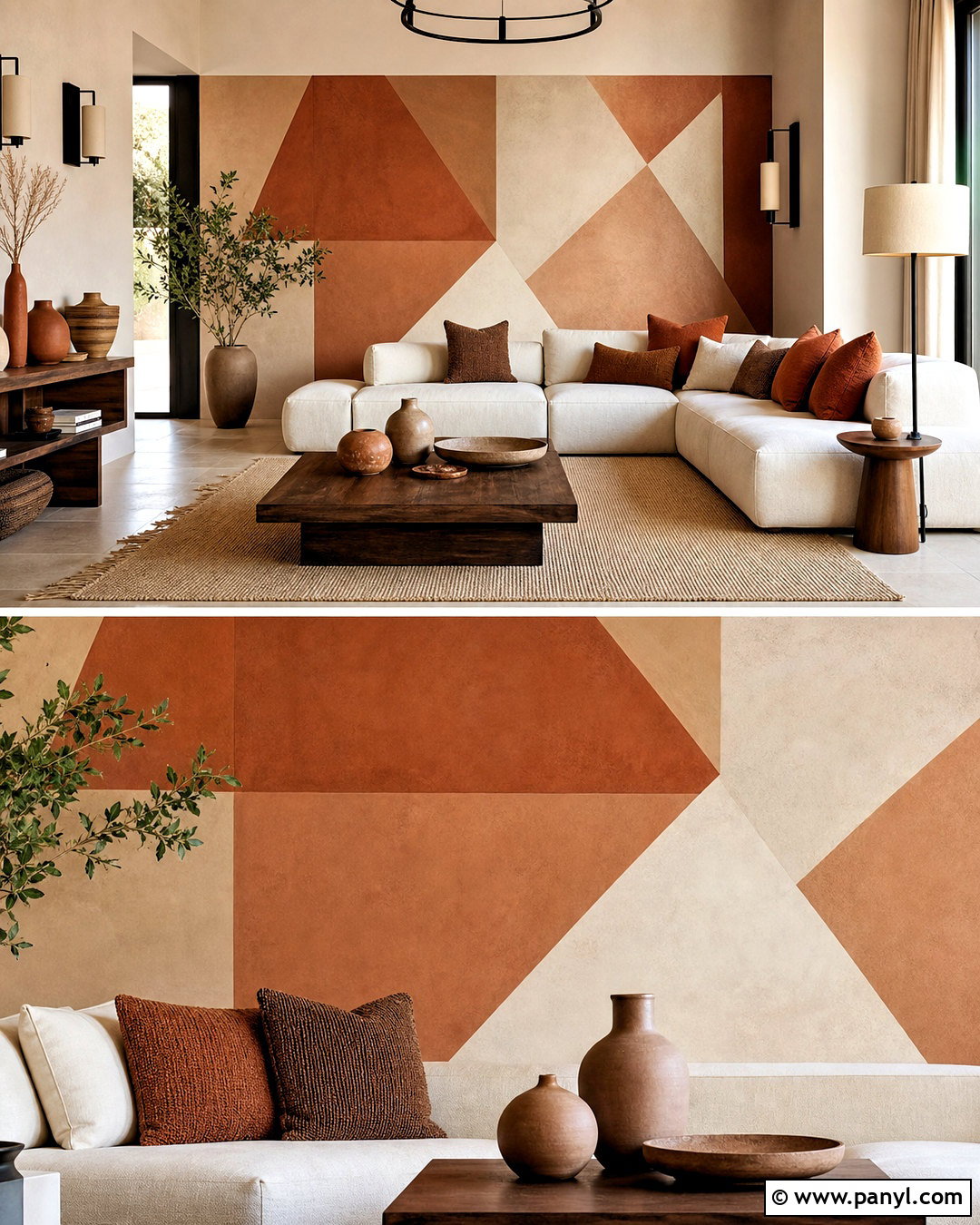
Warm earth tones make a geometric wall feel welcoming and grounded. Paint broad triangles in terracotta, clay, sand, muted rust, and creamy beige, allowing the colors to meet in an oversized abstract arrangement. Rather than covering every inch, keep one side quieter to create visual balance. A low-profile cream sofa, walnut side tables, and a textured ivory rug soften the stronger wall colors. Add cushions in rust and cocoa, along with handmade-looking ceramic vessels and a simple linen shade. Black metal accents can provide definition, but use them sparingly. Medium oak flooring works particularly well with this palette. The result combines contemporary geometry with comfortable, earthy materials, making it suitable for a living room, reading area, or relaxed guest bedroom.
9. Triangle Mountain Wall Mural
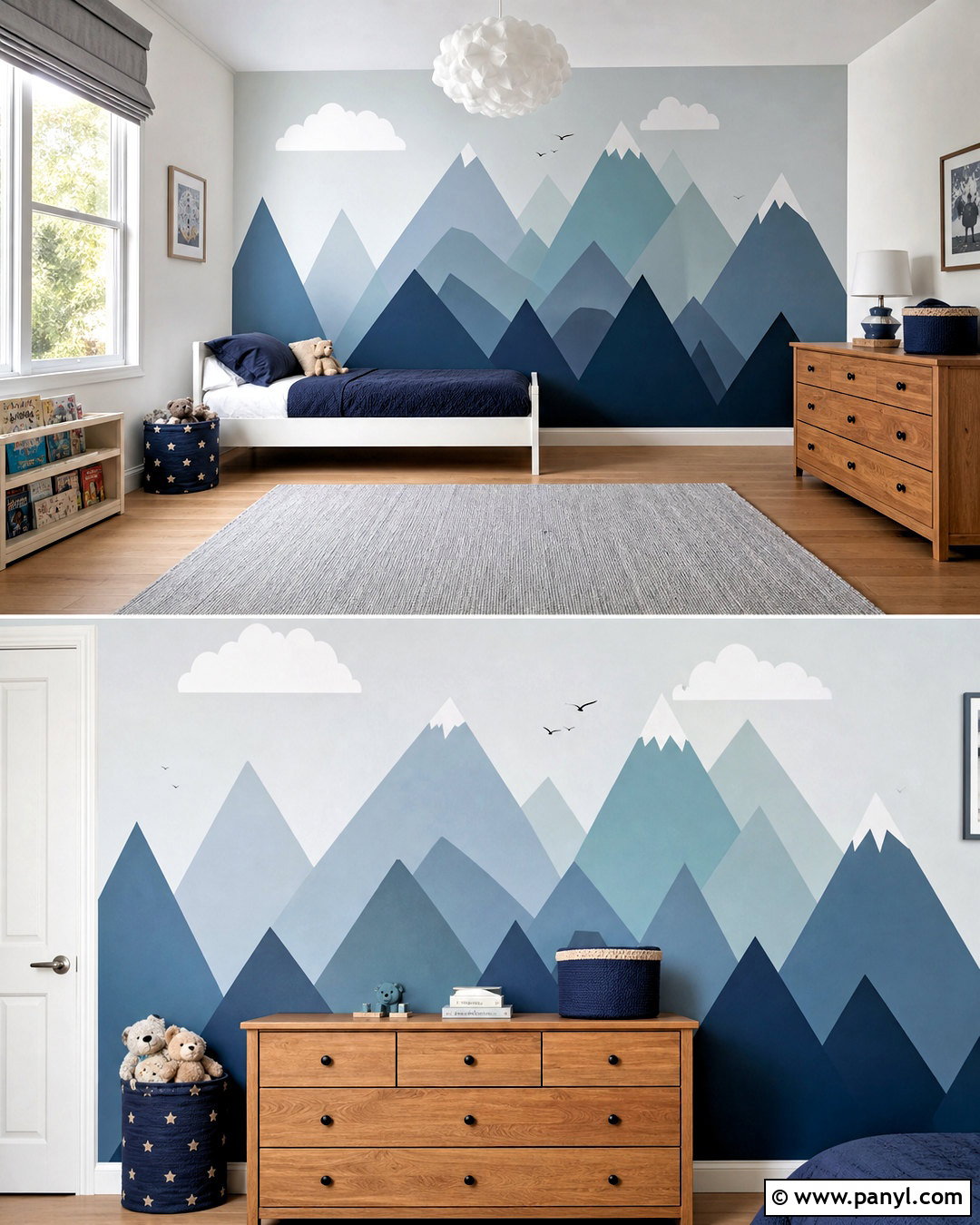
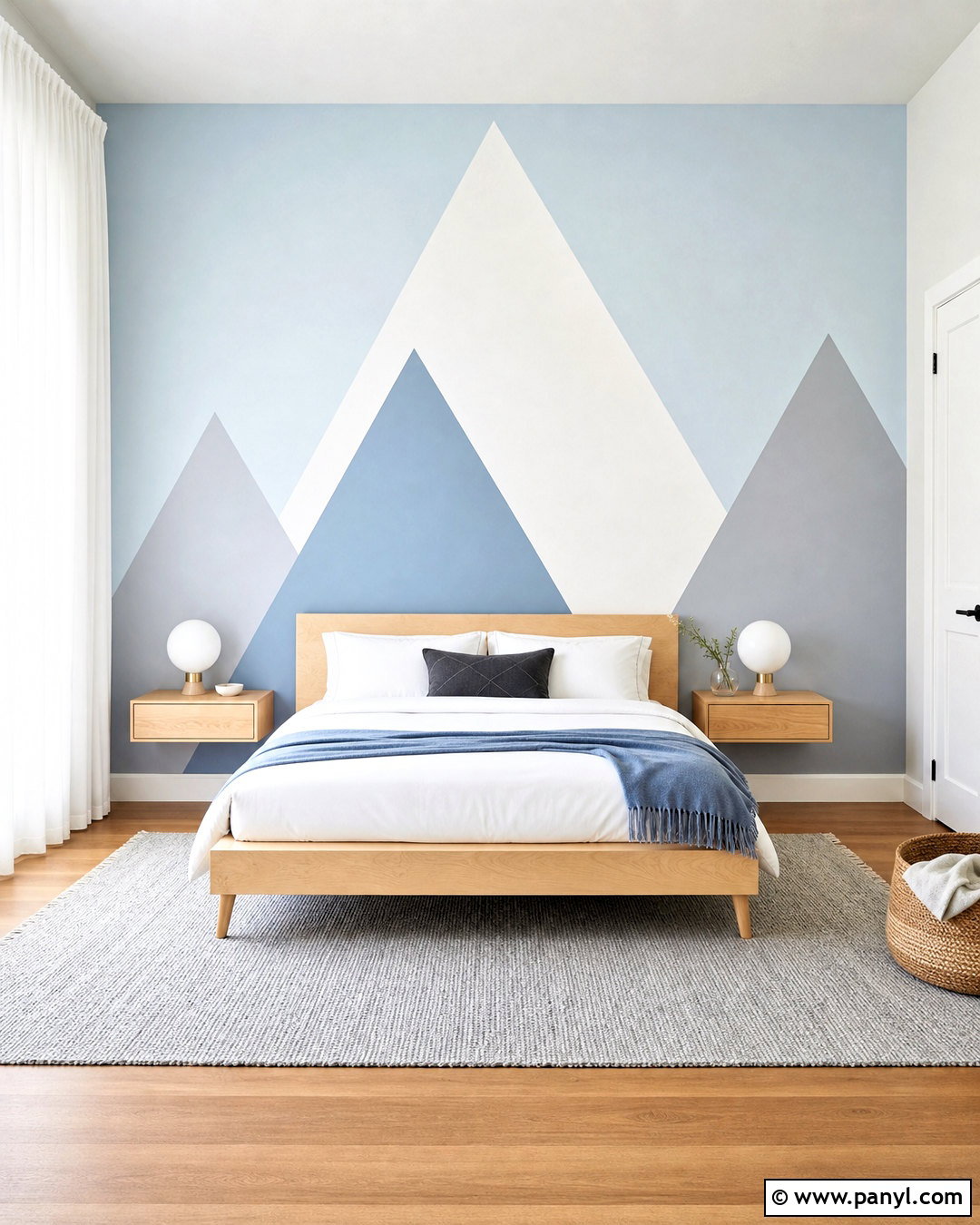
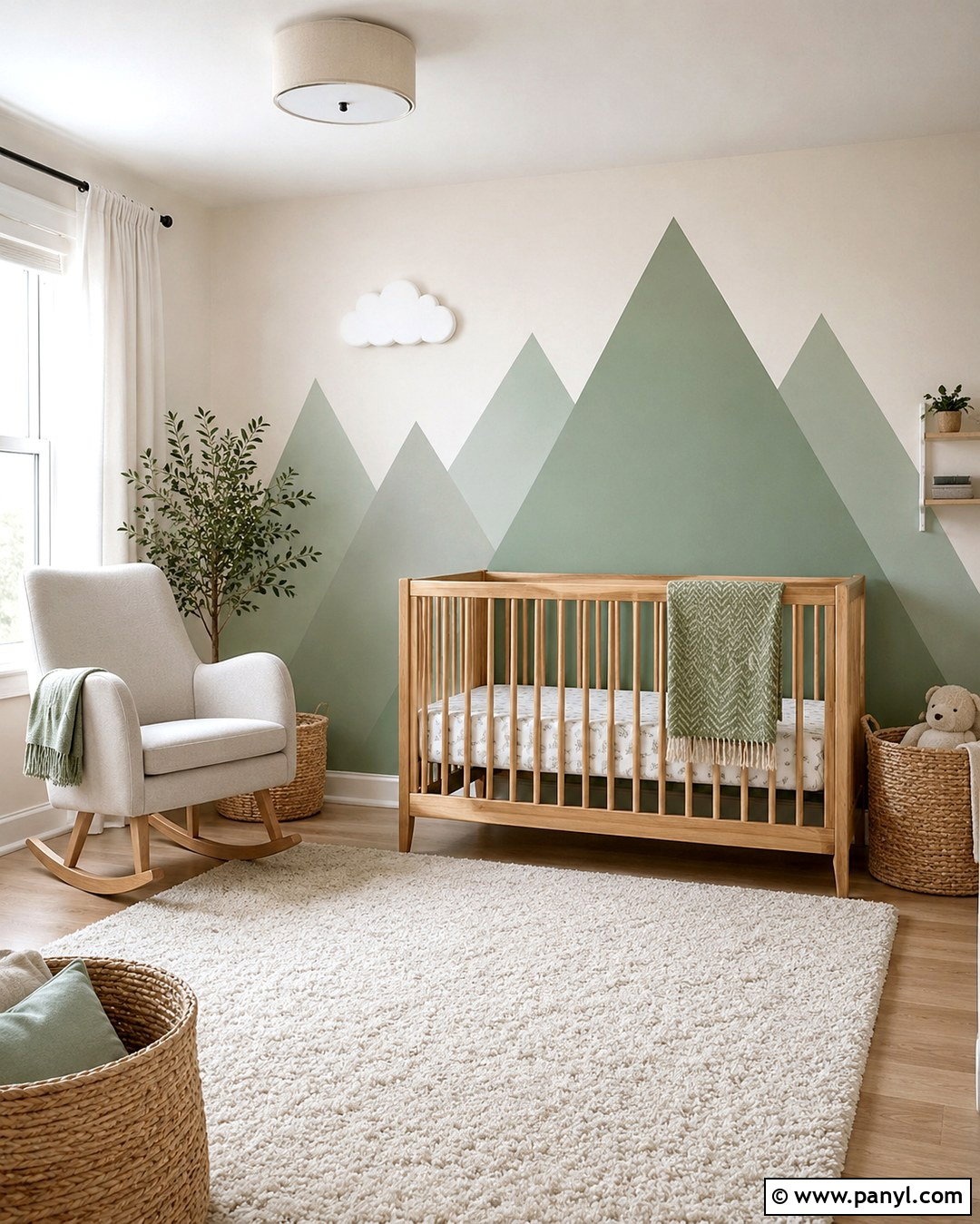
A mountain-inspired triangle mural creates an imaginative focal point while retaining a clean geometric structure. Layer large triangular peaks in misty blue, slate gray, muted teal, and soft white. Place darker mountains along the bottom and lighter shapes toward the top to suggest distance. This design works beautifully in a child’s bedroom when paired with a simple white bed, natural wood dresser, and navy storage baskets. Choose solid bedding with only one small-scale pattern so the mural stays prominent. A pale gray rug and cloudlike pendant light reinforce the calm outdoor theme. Keep the mountain shapes broad rather than highly detailed. The wall can stretch from corner to corner, visually widening the room and creating a complete landscape without additional framed artwork.
10. Ombre Triangle Wall
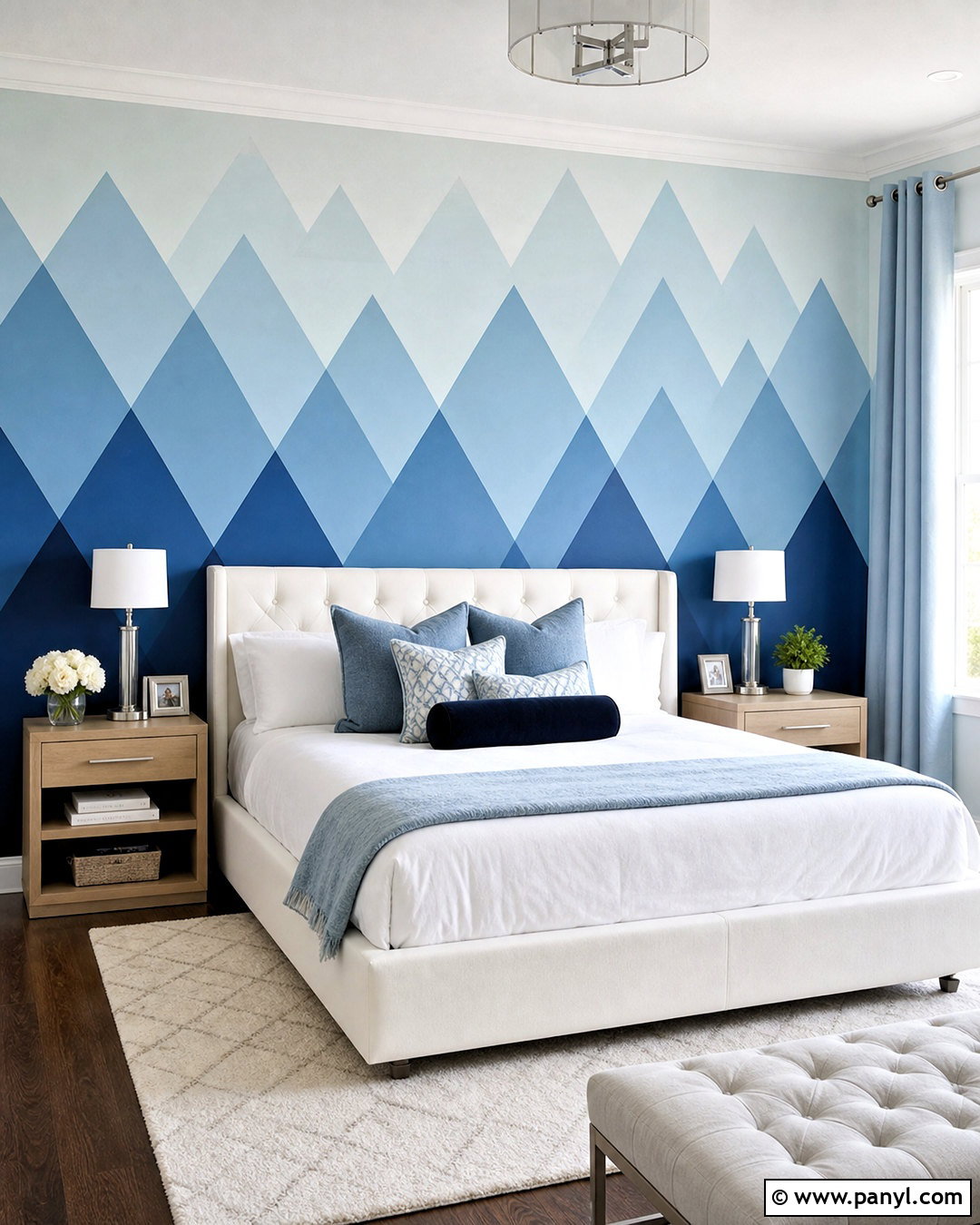
An ombre triangle wall delivers color variation while maintaining a controlled, cohesive appearance. Select one color family, such as blue, and move gradually from deep navy triangles near the floor to medium denim, dusty blue, and pale sky tones near the ceiling. Keep the shapes similar in size so the color progression remains the main feature. Place a light gray sofa or white upholstered bed in front of the wall, then add pale wood furniture and soft silver accents. Curtains should match the lightest wall shade to extend the airy effect. A solid ivory rug prevents the scheme from feeling overly patterned. Test every paint color together under the room’s lighting before beginning, since neighboring shades need enough contrast to show each triangle clearly.
11. Minimal Triangle Wall
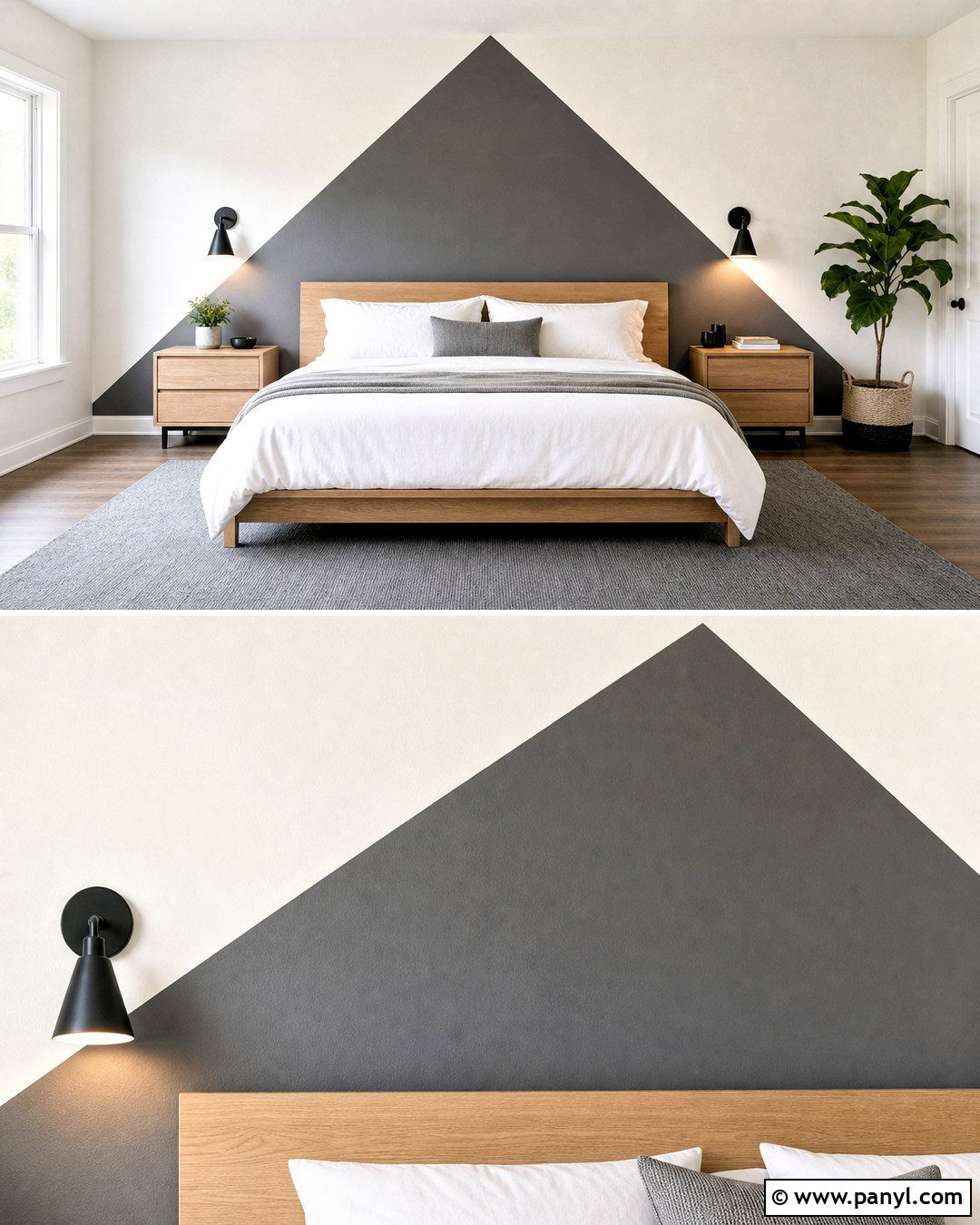
Sometimes one oversized shape is more effective than an entire wall of pattern. Paint a single large triangle behind a bed, desk, console, or reading chair to frame that functional area. A muted charcoal triangle on a warm white wall offers definition while remaining versatile. Align the shape with the furniture rather than centering it automatically on the wall. In a bedroom, let the triangle rise above a pale oak headboard and pair it with white bedding, black sconces, and a soft gray rug. Keep decorations restrained, using one plant and a pair of matching nightstands. This design is especially useful in compact rooms because it creates a focal point without reducing visual space. Precise measurements make the simple composition look deliberate.
12. Triangle Wallpaper Wall
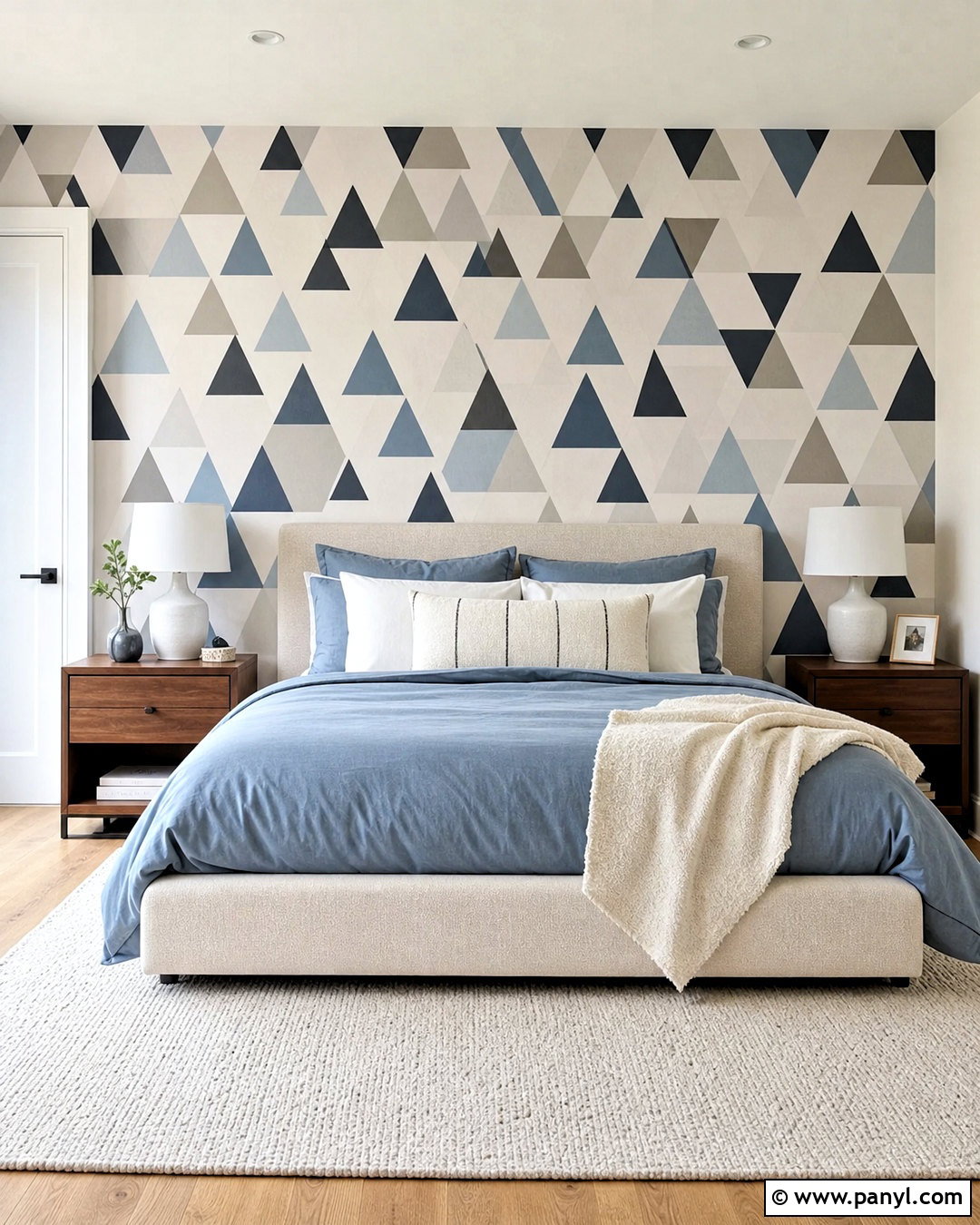
Triangle wallpaper provides a polished pattern without the measuring and repeated taping required for painted designs. Choose a medium-scale print with warm white, muted blue, greige, and thin charcoal details. Cover one complete wall and keep the remaining walls in the wallpaper’s lightest background color. In a guest bedroom, add an oatmeal upholstered bed, walnut nightstands, white lamps, and dusty blue bedding. Solid textiles keep the printed wall from competing with other patterns. Carefully align each strip so triangle points meet correctly across the seams. Removable wallpaper is useful for temporary decorating, while traditional pasted paper offers a more permanent finish. Complete the room with light wood flooring, a cream rug, and minimal artwork placed on an adjacent wall instead of over the pattern.
13. Triangle Wall Decals
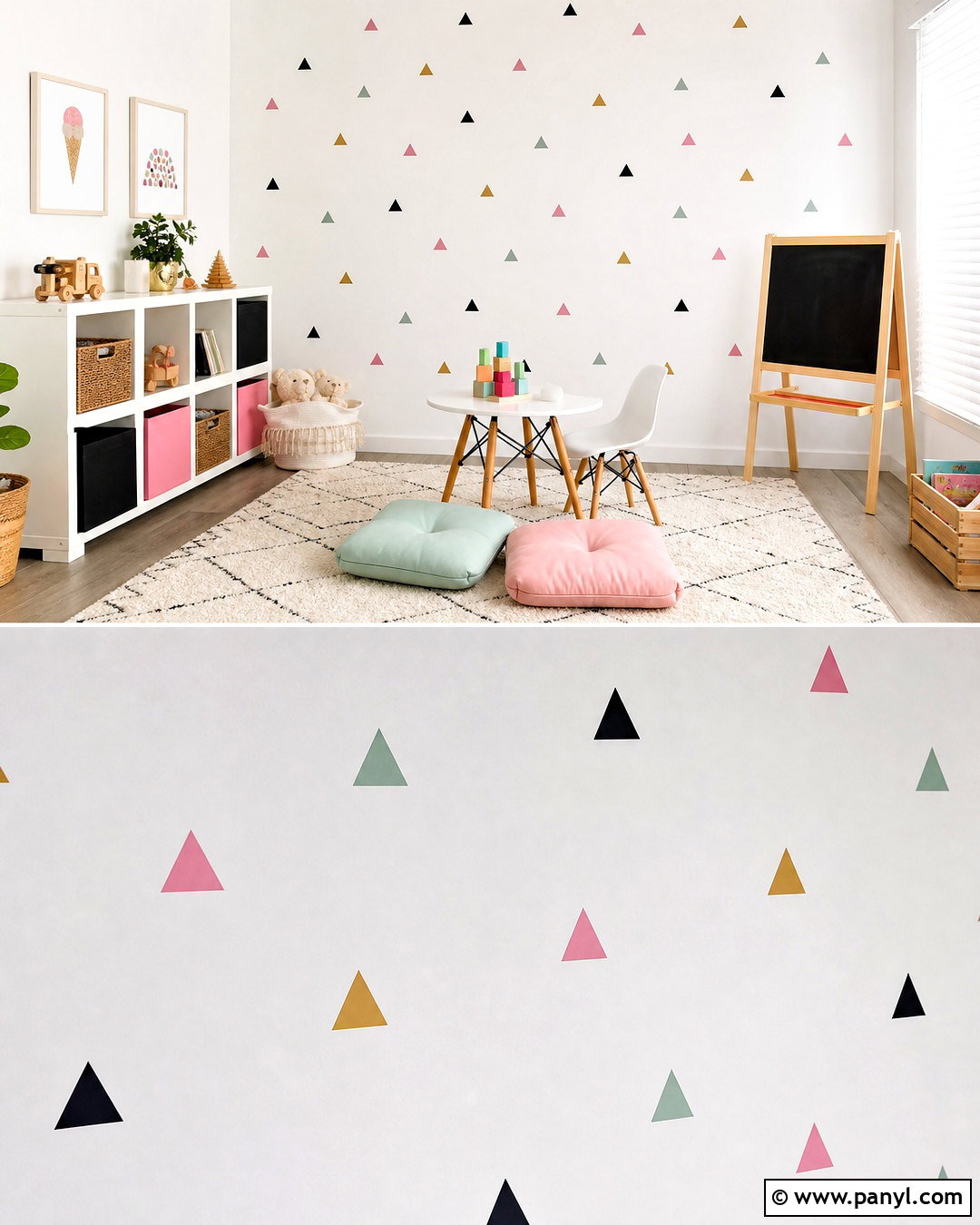
Removable decals offer a flexible triangle wall design for rentals, nurseries, dorm rooms, and frequently changing spaces. Apply small matte decals in black, muted gold, dusty pink, or sage across a clean white wall. A scattered arrangement feels lighter than a rigid grid, but consistent spacing keeps it intentional. For a playroom, combine colorful triangles with white cube storage, pale wood furniture, washable floor cushions, and a soft neutral rug. Repeat two decal colors in bins and cushions to connect the room. Avoid placing decals over heavily textured surfaces because edges may not sit flat. Begin at eye level and work outward, checking the pattern from across the room. The finished space feels playful and complete while remaining easy to update later.
14. Three-Dimensional Triangle Wall Panels
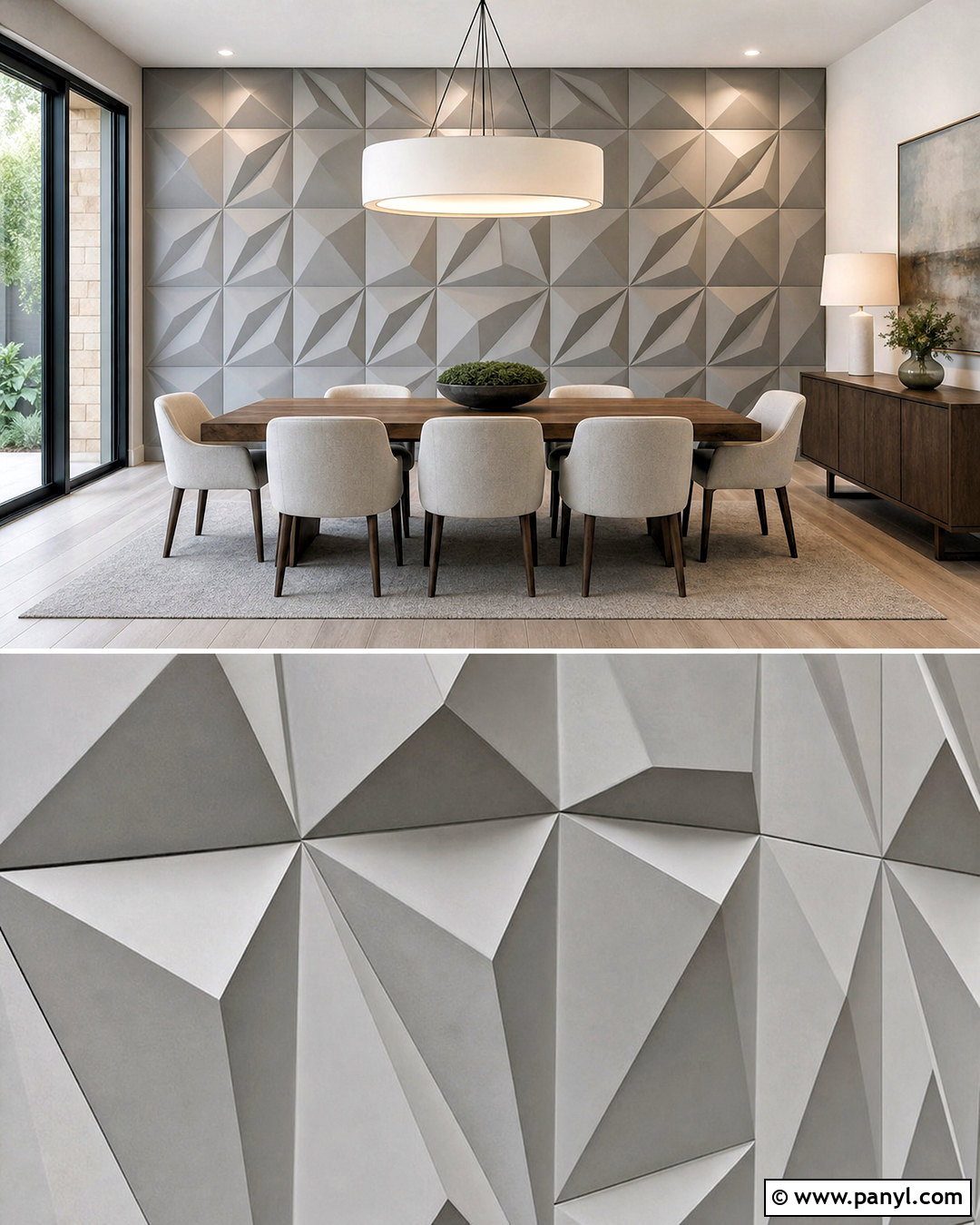
Three-dimensional panels transform triangles into a textured feature that changes as light moves across the room. Install molded panels in a repeating faceted pattern, then paint the entire surface warm white, soft gray, deep navy, or muted forest green. A monochromatic finish keeps the raised geometry sophisticated. In a dining room, place a streamlined oak table and upholstered cream chairs in front of the wall. Add a wide pendant with diffused white light to create gentle highlights and shadows across the panels. Keep artwork off the textured surface and use a simple sideboard on an adjacent wall. Before installation, plan the placement of switches and outlets carefully. A clean perimeter around the panels gives the design a professionally finished, architectural appearance.
15. Triangle Tile Bathroom Wall
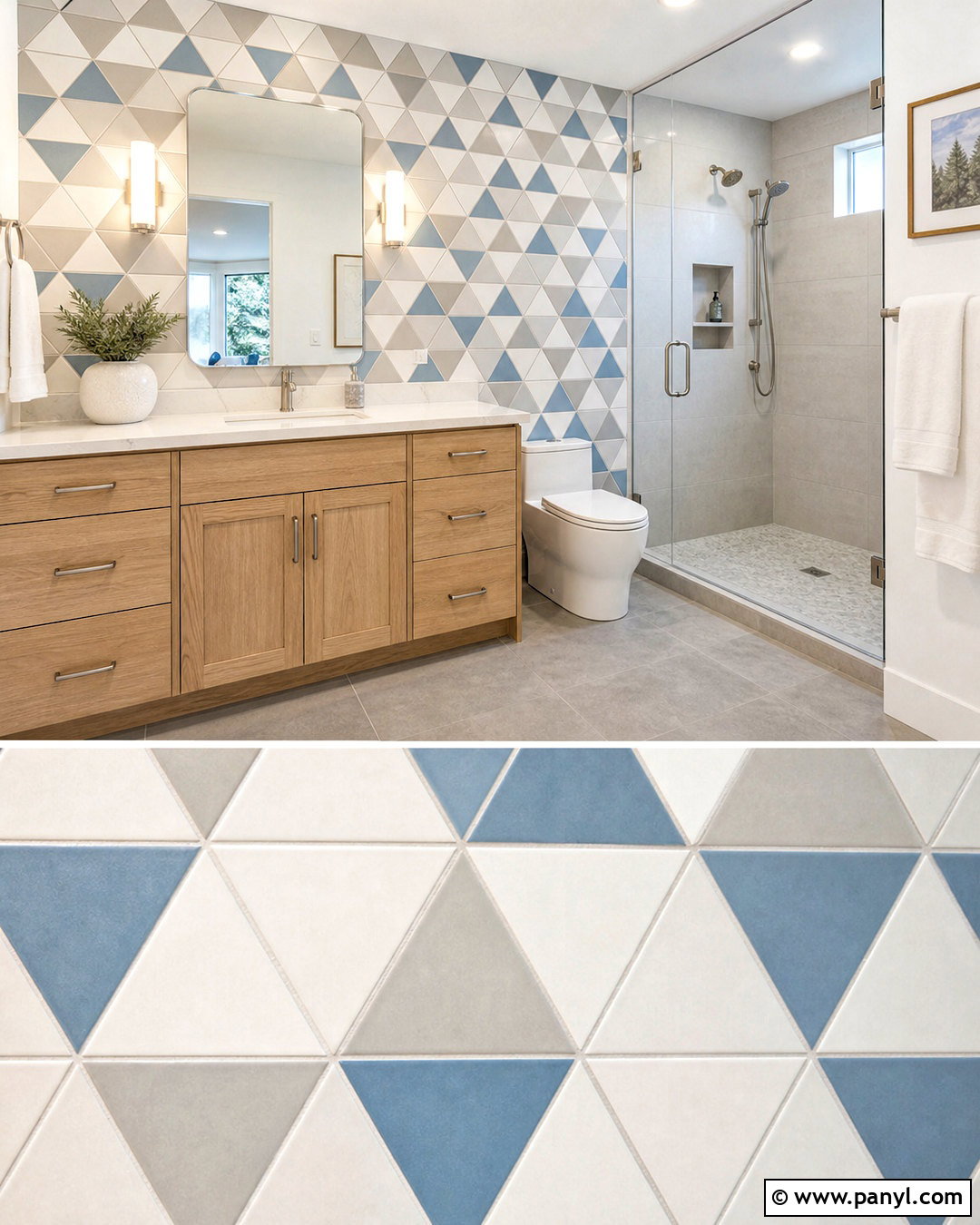
Triangle tile can make a bathroom feel custom while providing a practical, wipeable surface. Use matte ceramic triangles in white, light gray, and muted blue across the vanity backsplash or one full shower wall. Arrange the colors randomly but repeat them evenly to avoid noticeable clusters. Pair the tile with a white oak vanity, pale quartz countertop, brushed nickel fixtures, and a frameless mirror. Large-format light gray floor tile keeps the room balanced and reduces competing grout lines. Choose a grout color close to the palest triangle for a softer effect, or medium gray for stronger definition. Bright wall sconces should illuminate the texture clearly. Complete the room with white towels, closed storage, and one small plant in a simple ceramic pot.
16. Midcentury Triangle Wall
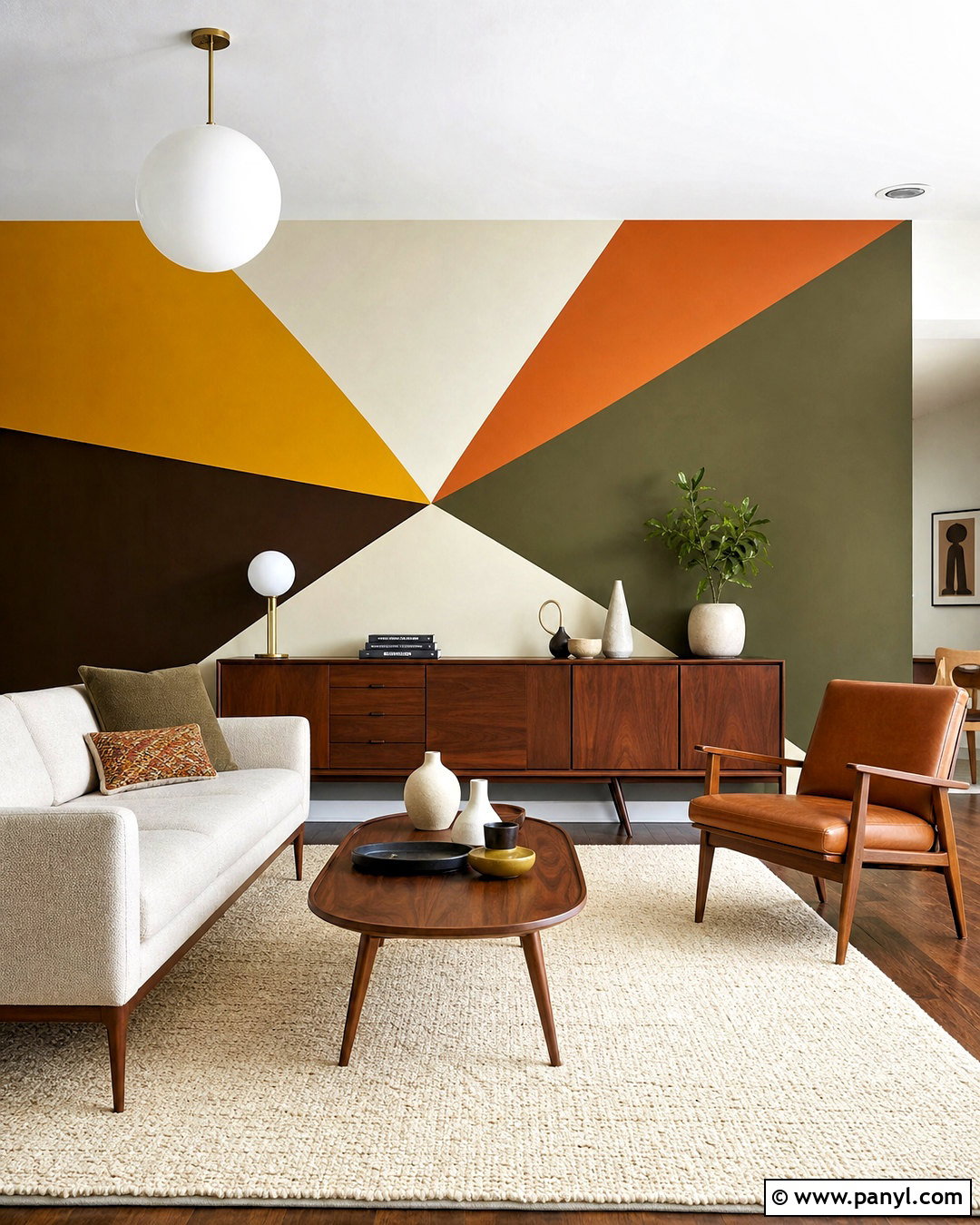
A midcentury-inspired triangle wall combines retro color with streamlined furniture and warm wood. Build the pattern with mustard yellow, burnt orange, olive green, cream, and dark brown triangles. Use several oversized shapes rather than a small repetitive grid, creating an abstract mural behind the main seating area. Pair it with a walnut credenza, tapered-leg sofa, caramel leather chair, and simple globe lighting. An ivory rug with a subtle linear weave gives the stronger colors room to stand out. Keep window treatments plain and lightly textured. One sculptural ceramic vase and a few framed prints on an adjacent wall are enough decoration. The finished room should feel collected and comfortable, with the triangle mural connecting the earthy colors across the entire space.
17. Scandinavian Triangle Wall
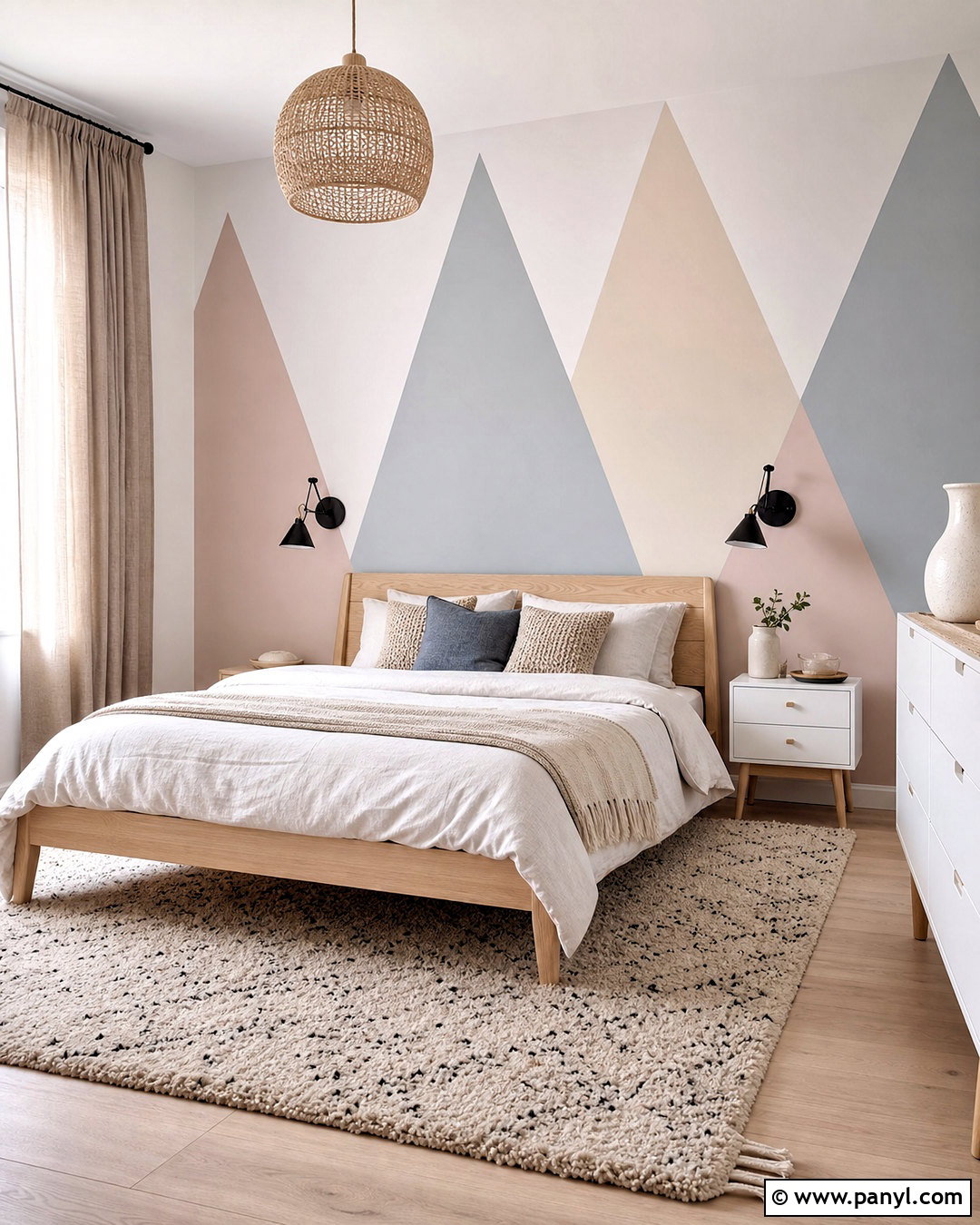
Clean lines and pale colors give a triangle wall a calm Scandinavian character. Paint the background soft white, then add widely spaced triangles in light gray, dusty blue, muted blush, and pale beige. Keep the shapes medium to large and avoid outlining them, which preserves the quiet appearance. Furnish the room with a light birch bed or sofa, tapered wood legs, white storage, and simple black lighting. Natural linen curtains, a soft wool rug, and knitted cushions add warmth without excessive decoration. Leave part of the wall completely blank to create useful negative space. A small arrangement of neutral ceramics can sit on a floating shelf nearby. This balanced design suits bedrooms, nurseries, and home offices where a peaceful atmosphere matters.
18. Triangle TV Wall
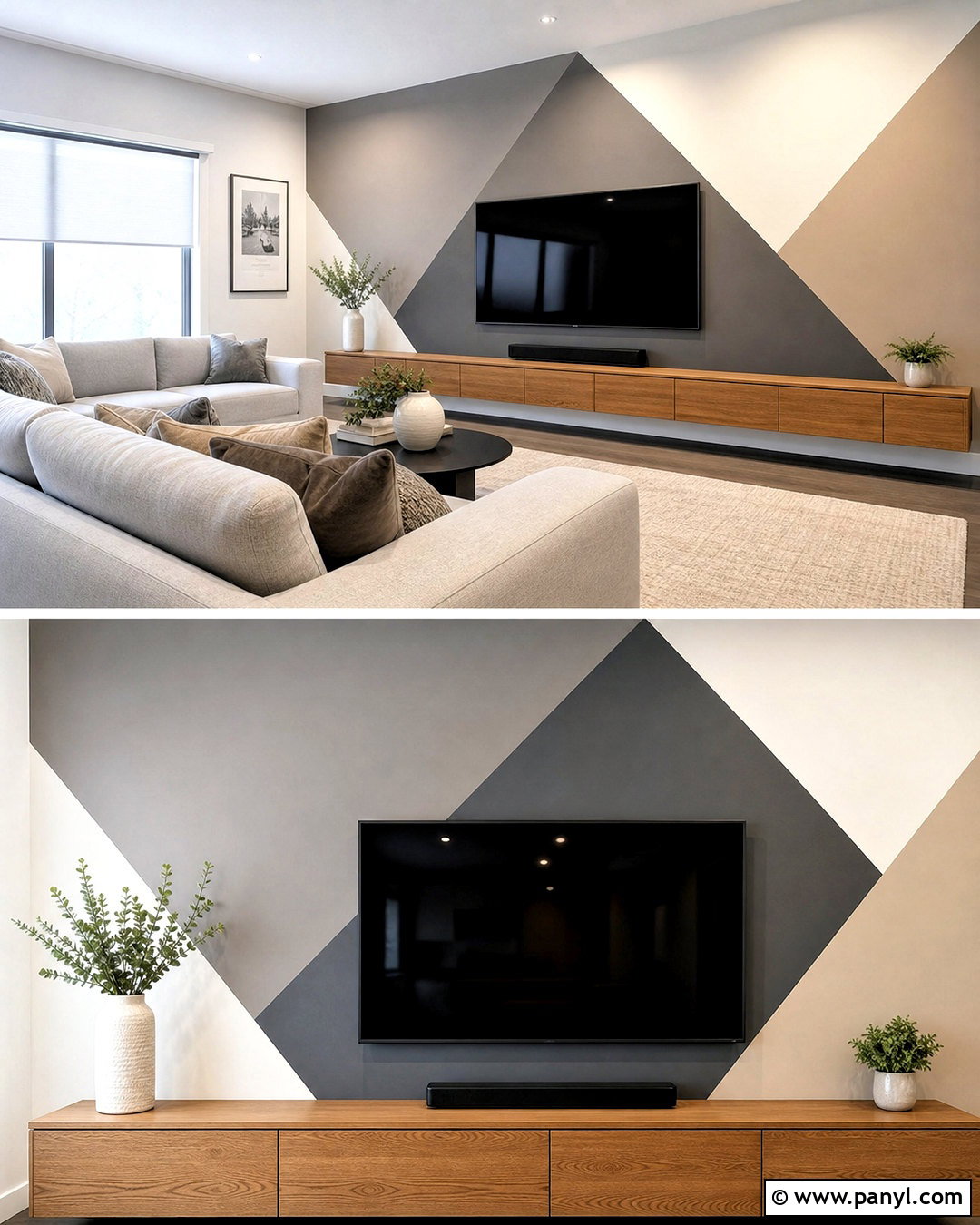
A triangle TV wall can frame the screen while disguising its rectangular shape within a larger composition. Paint oversized charcoal, warm gray, and taupe triangles across a soft white background, keeping the darkest section directly behind the television. Mount the TV near the center and place a long, low oak media cabinet underneath. Conceal cables inside the wall or in a paintable cord cover to protect the clean geometry. Add closed storage, one ceramic vase, and a compact plant rather than filling the console with accessories. Soft LED backlighting can improve contrast without becoming the main feature. Use a solid neutral sectional and plain area rug elsewhere in the room. The complete arrangement looks organized, practical, and visually balanced.
19. Triangle Staircase Wall
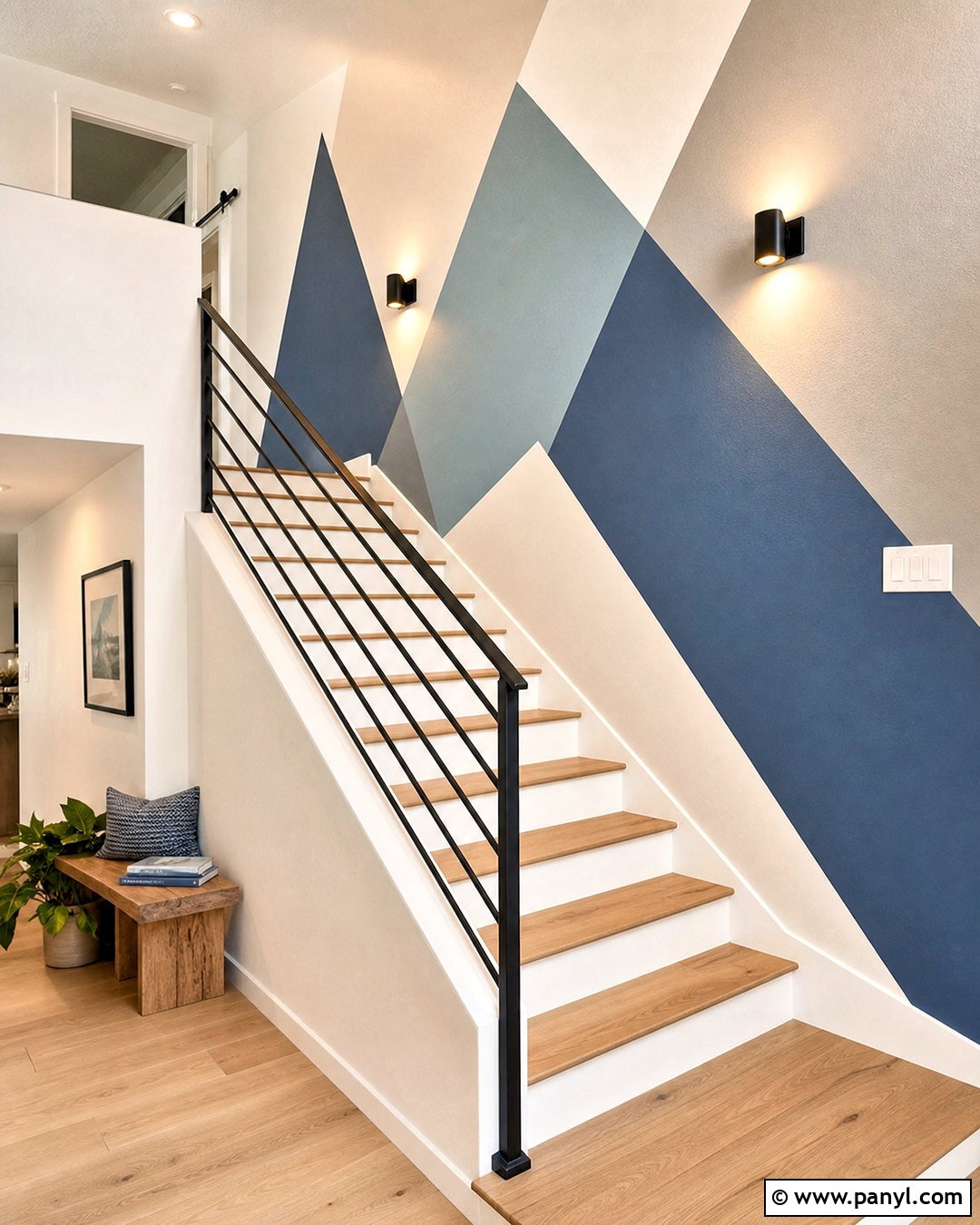
A staircase wall provides enough height for a triangle pattern that feels dynamic without crowding a main living area. Follow the upward direction of the stairs with large overlapping triangles in warm white, muted teal, slate blue, and soft gray. Let the shapes rise gradually alongside the handrail, creating a visual path between floors. Pair the mural with natural oak stair treads, white risers, and a slim matte black railing. Install simple wall lights at even intervals, making sure they do not interrupt important painted edges. Keep the lower hallway uncluttered with a narrow console or storage bench. A few coordinating cushions or accessories nearby will connect the design to the surrounding rooms. Careful scale helps the tall composition feel architectural rather than random.
20. Triangle Dining Room Wall
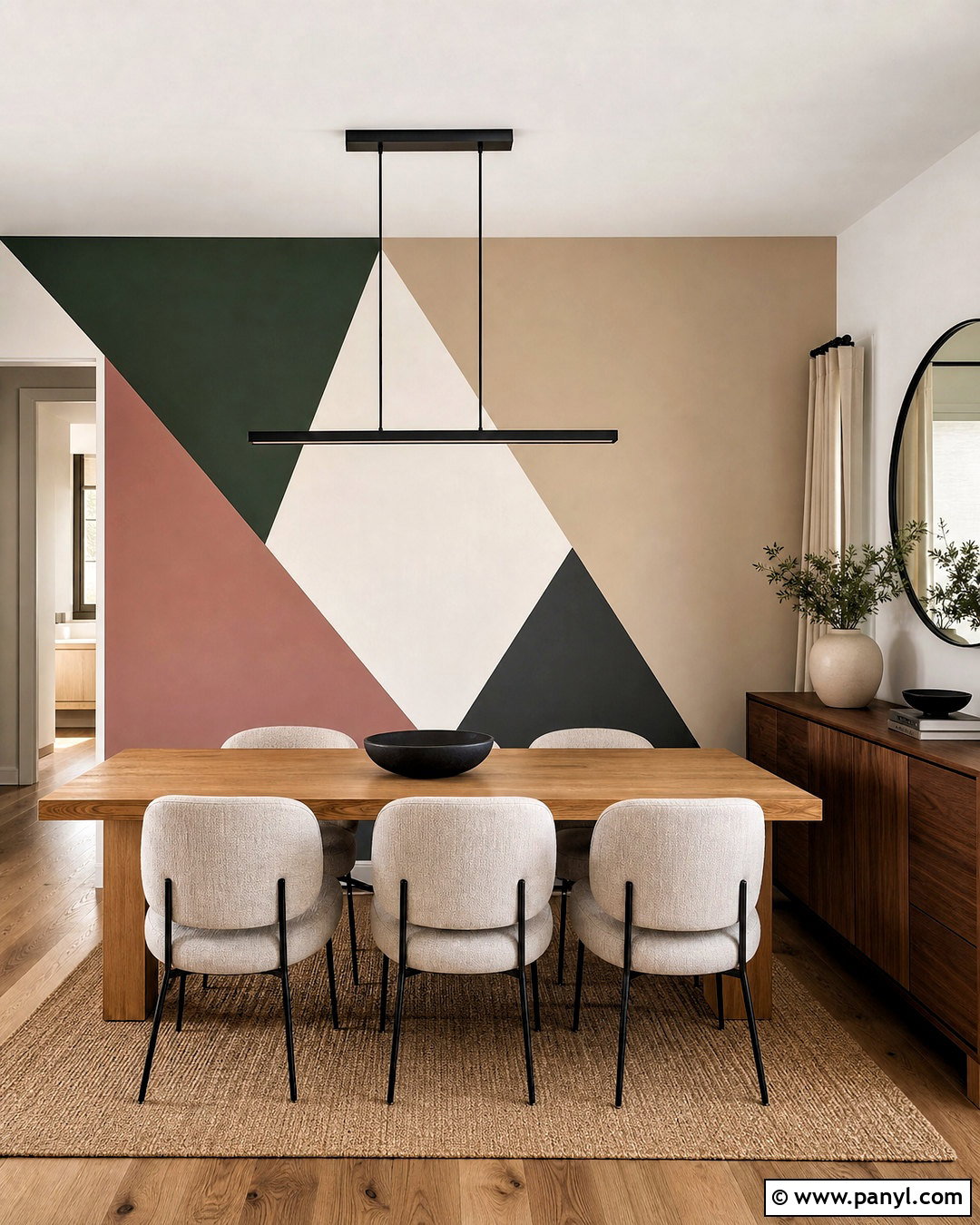
A triangle wall can give a dining room a strong focal point while keeping the space comfortable for everyday meals. Choose an abstract arrangement of deep green, warm beige, dusty rose, and muted charcoal triangles on a creamy background. Center a natural oak dining table against the pattern and surround it with upholstered beige chairs. A matte black linear pendant adds structure without hiding the painted shapes. Place a low walnut sideboard along an adjacent wall and decorate it with simple ceramics and a round mirror. Keep curtains solid and flooring medium toned to support the earthy palette. The triangles should extend beyond the width of the table, visually anchoring the complete dining zone. Use washable eggshell paint for easier maintenance around an active eating area.
Conclusion:
The best triangle wall design ideas combine strong geometry with colors, furnishings, and materials that suit the entire room. Bold palettes can energize playrooms and creative spaces, while neutral paint, pale wood, or dimensional panels bring quieter sophistication to bedrooms and living areas. Before starting, measure the wall, sketch the pattern, and test every color under natural and artificial light. Large triangles usually create a cleaner appearance, while smaller shapes feel more playful and detailed. Remember to leave some visual breathing room and keep surrounding decor relatively simple. With thoughtful planning, triangle wall design ideas can transform an ordinary surface into a personalized feature that still feels practical, balanced, and connected to your home.

Related Ideas and Inspiration:
Leave a Reply