
Creating a beautiful baby room does not have to mean choosing complicated themes, expensive furniture, or layers of decor. These 20 simple nursery ideas focus on complete, practical spaces that feel calm, organized, and easy to personalize. Current nursery trends favor warmer furniture finishes, thoughtful storage, natural texture, and selective use of color or pattern rather than an entirely neutral room. () Start with a comfortable layout, then build your look around a crib, dresser, chair, soft rug, and useful storage. Small details such as curtains, artwork, baskets, and a washable accent color can tie everything together without creating clutter. Whether your room is large, tiny, shared, modern, or traditional, you can find an approachable look among these 20 simple nursery ideas.
1. Neutral Nursery
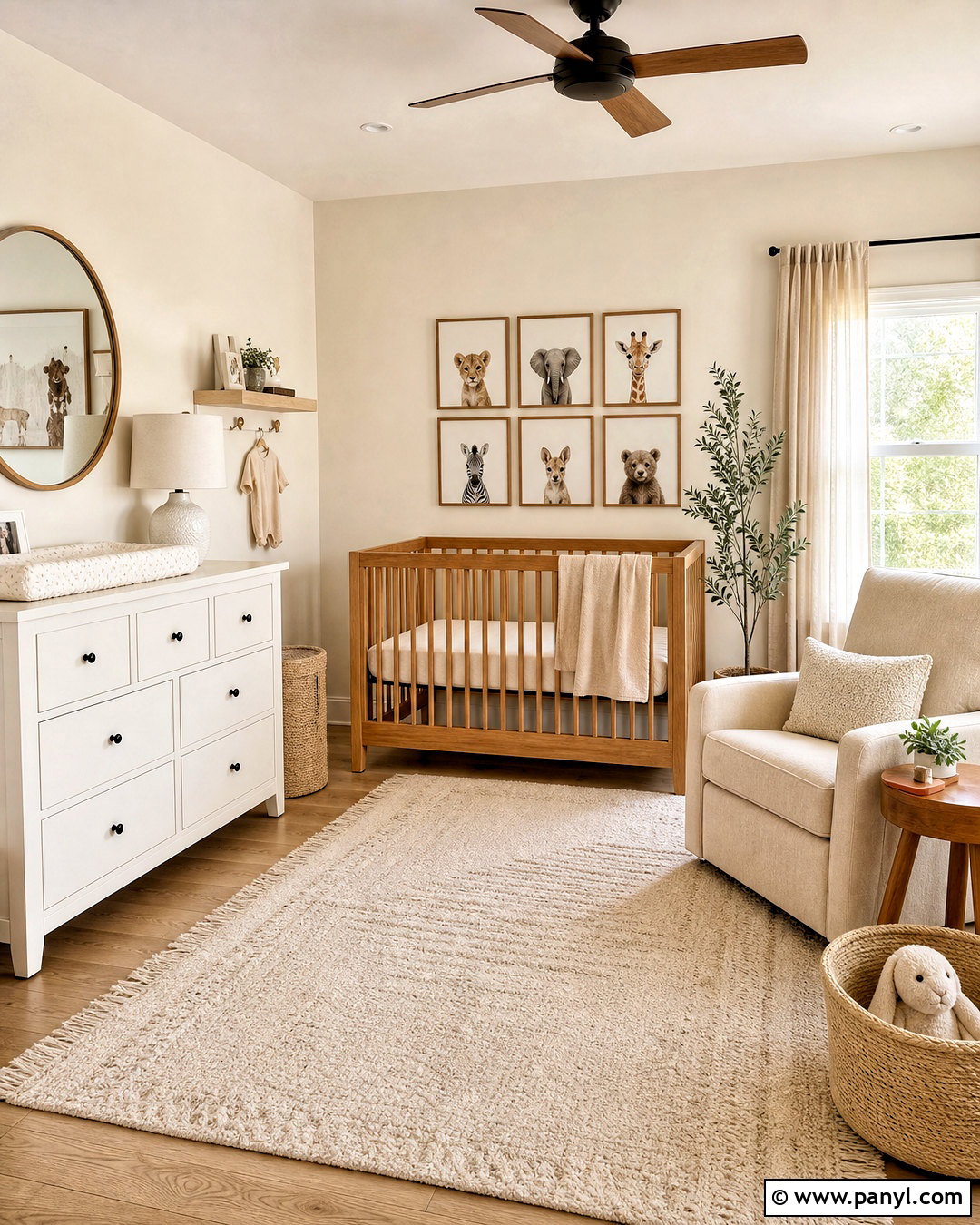
A neutral nursery feels peaceful without looking plain when several warm tones and textures work together. Paint the walls soft ivory, then choose a natural oak crib and a matching three-drawer dresser that can double as a changing station. Place a cream upholstered glider in one corner with a small wooden side table and a washable beige rug underfoot. Woven storage baskets, linen curtains, and simple animal prints bring variety while keeping the palette consistent. Add one darker element, such as a muted brown floor lamp or walnut picture frames, to give the room definition. Keep the crib wall simple and uncluttered. This complete look is flexible enough to suit any baby and can easily transition into a toddler room later.
2. Sage Green Nursery
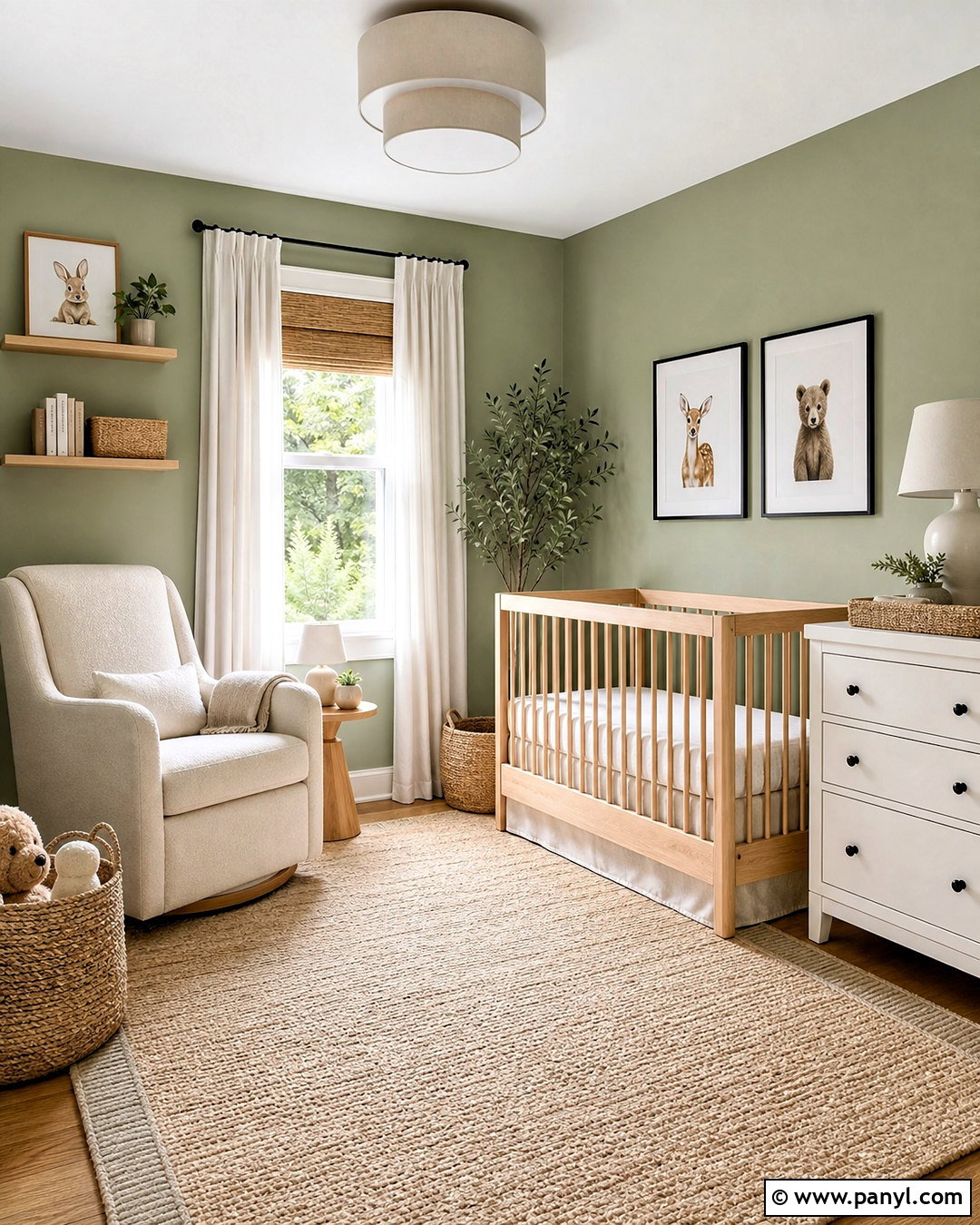
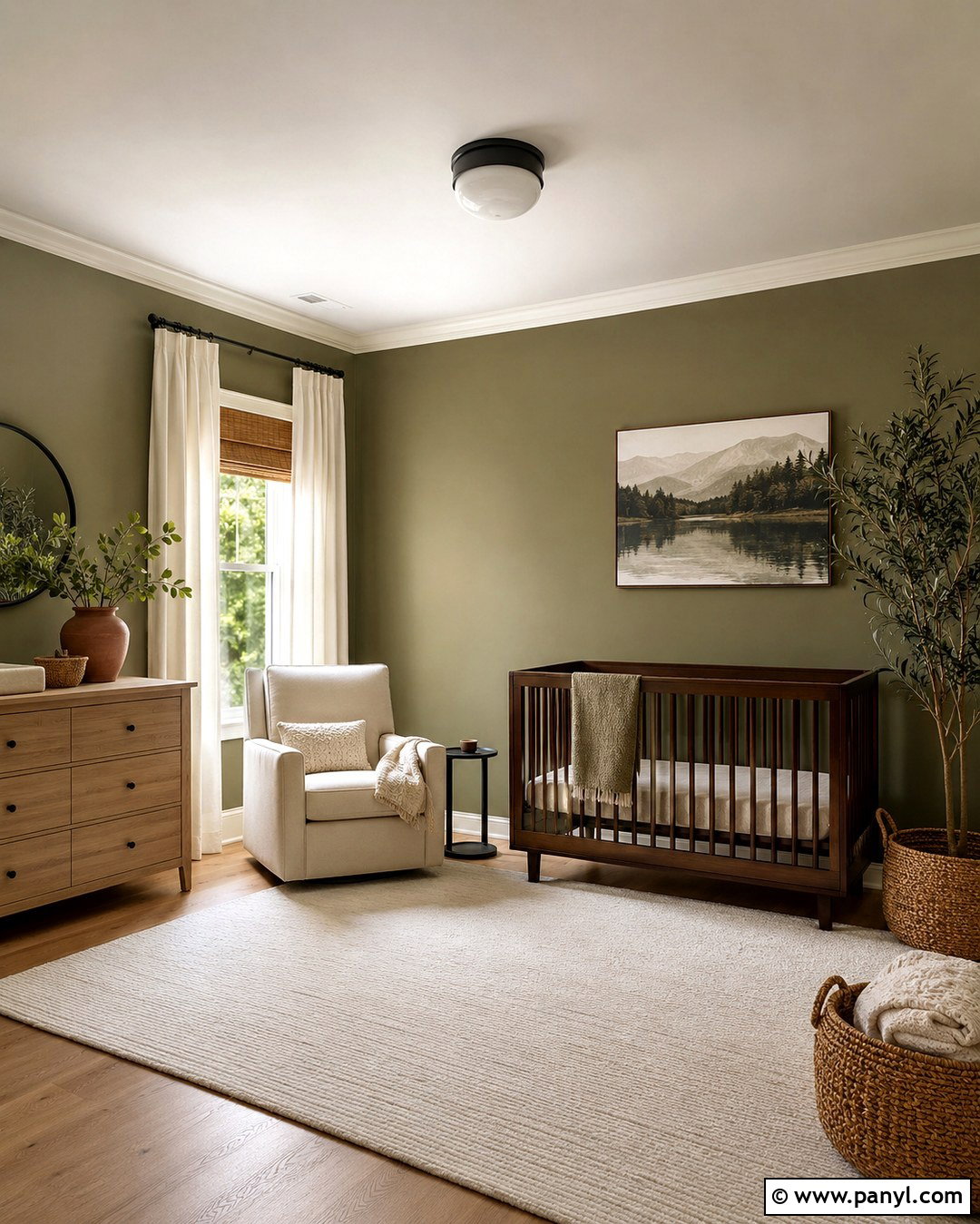
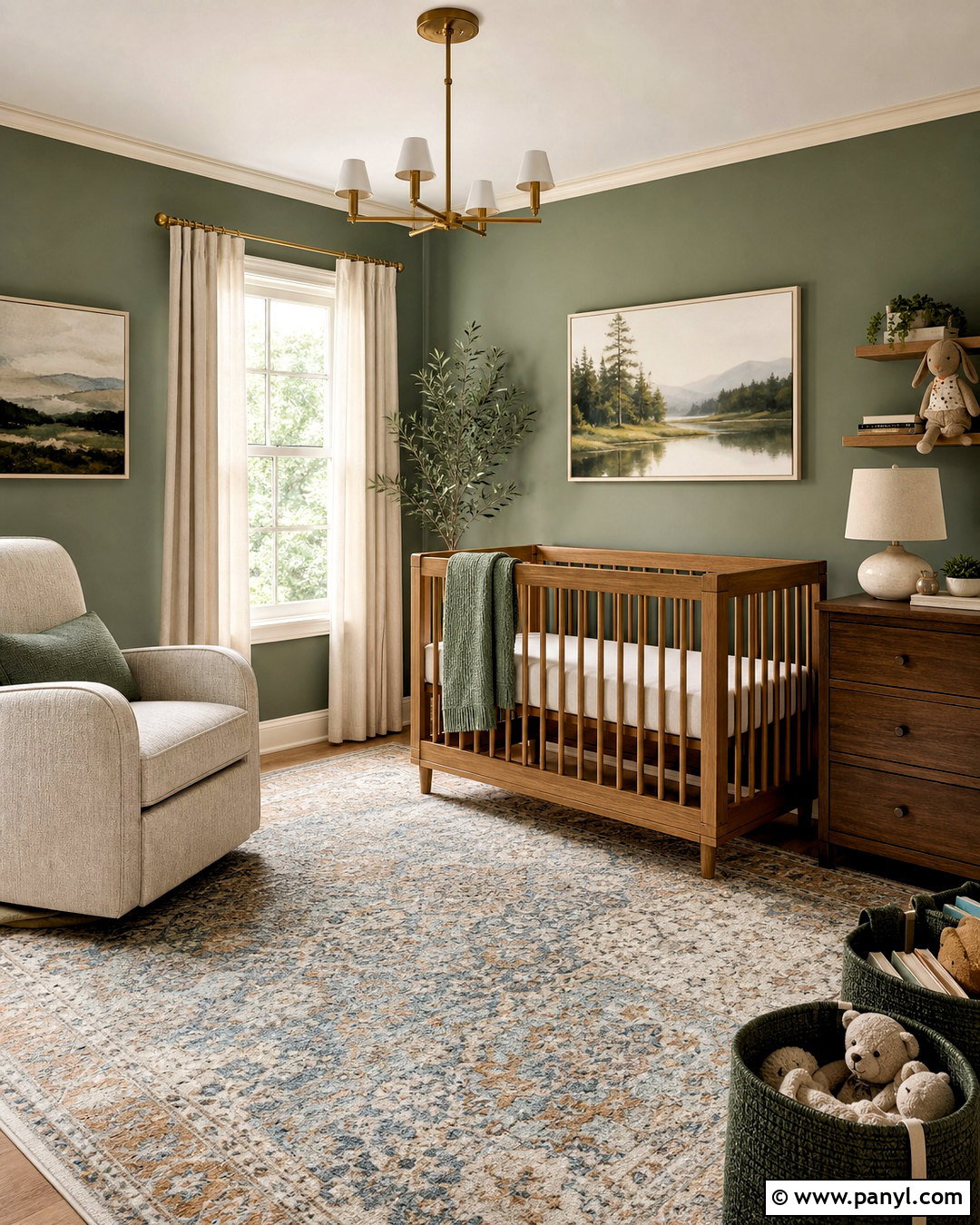
Soft sage green gives a nursery gentle color while remaining easy to coordinate. Use the green on all four walls for a cozy effect, then balance it with a light wood crib, an ivory dresser, and warm white curtains. A cream boucle glider creates a comfortable feeding corner beside a compact oak table and a simple shaded lamp. Choose a natural jute-and-cotton rug to ground the furniture without making the room feel busy. Woodland prints, small ceramic accents, and two woven baskets can repeat the earthy theme. Keep bedding limited to a fitted sheet that complements the palette. Finish the room with matte black curtain hardware or picture frames, which add crisp contrast and prevent the soft colors from blending together.
3. Warm Beige Nursery
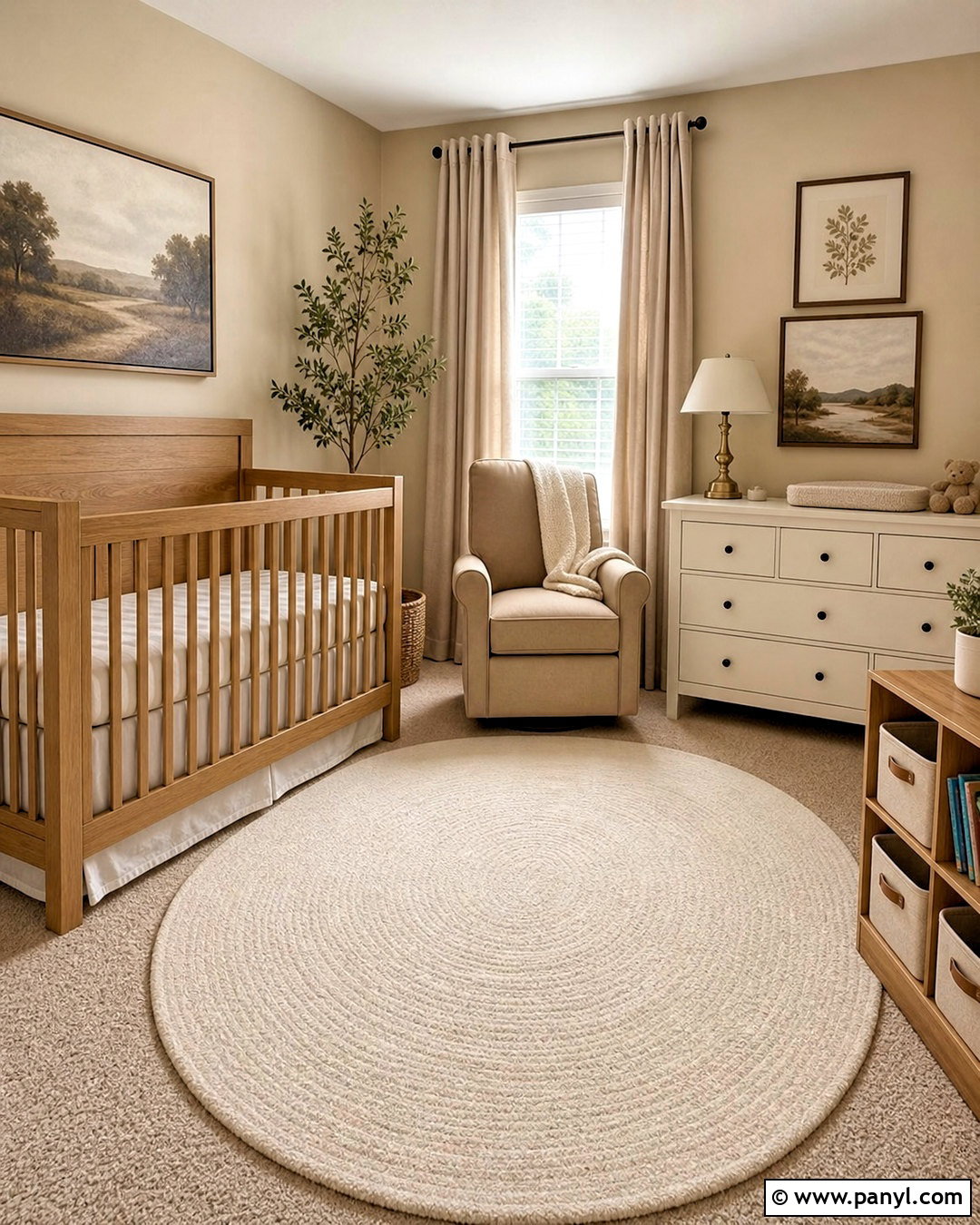
Imagine a softly layered room where beige feels welcoming rather than dull. Begin with warm sand-colored walls and a medium-tone oak crib positioned against the longest uninterrupted wall. Pair it with a creamy white dresser, a tan upholstered glider, and a round ivory rug that softens the room’s straight lines. Add oatmeal curtains from near the ceiling to the floor to make the space feel taller. Simple landscape artwork in muted brown, clay, and olive creates an understated focal point above the dresser. Use matching canvas bins inside a low cube organizer for diapers, blankets, and toys. A small brass lamp adds a polished finish. The result is a warm, complete nursery that feels comfortable, timeless, and naturally organized.
4. Soft Blue Nursery
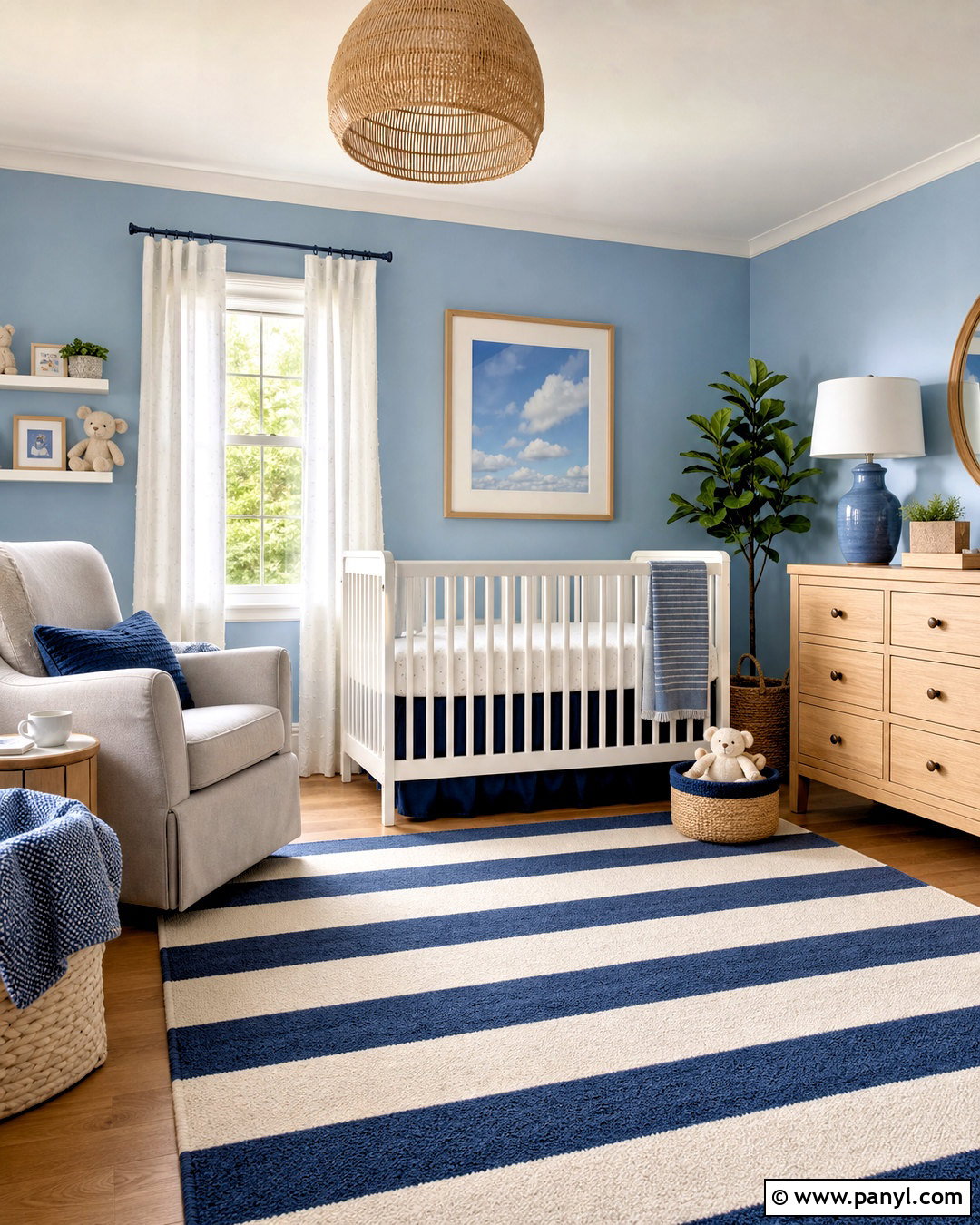
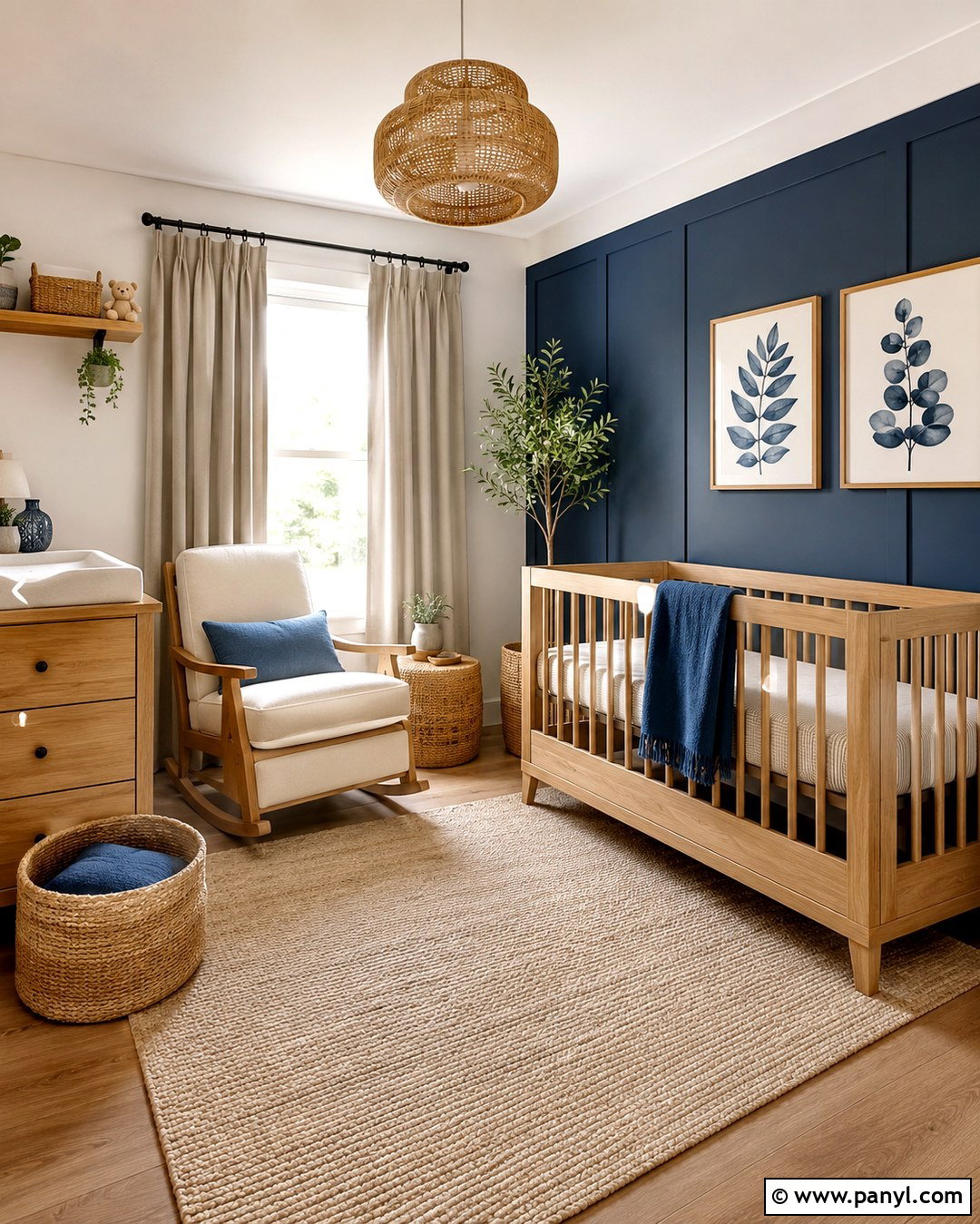
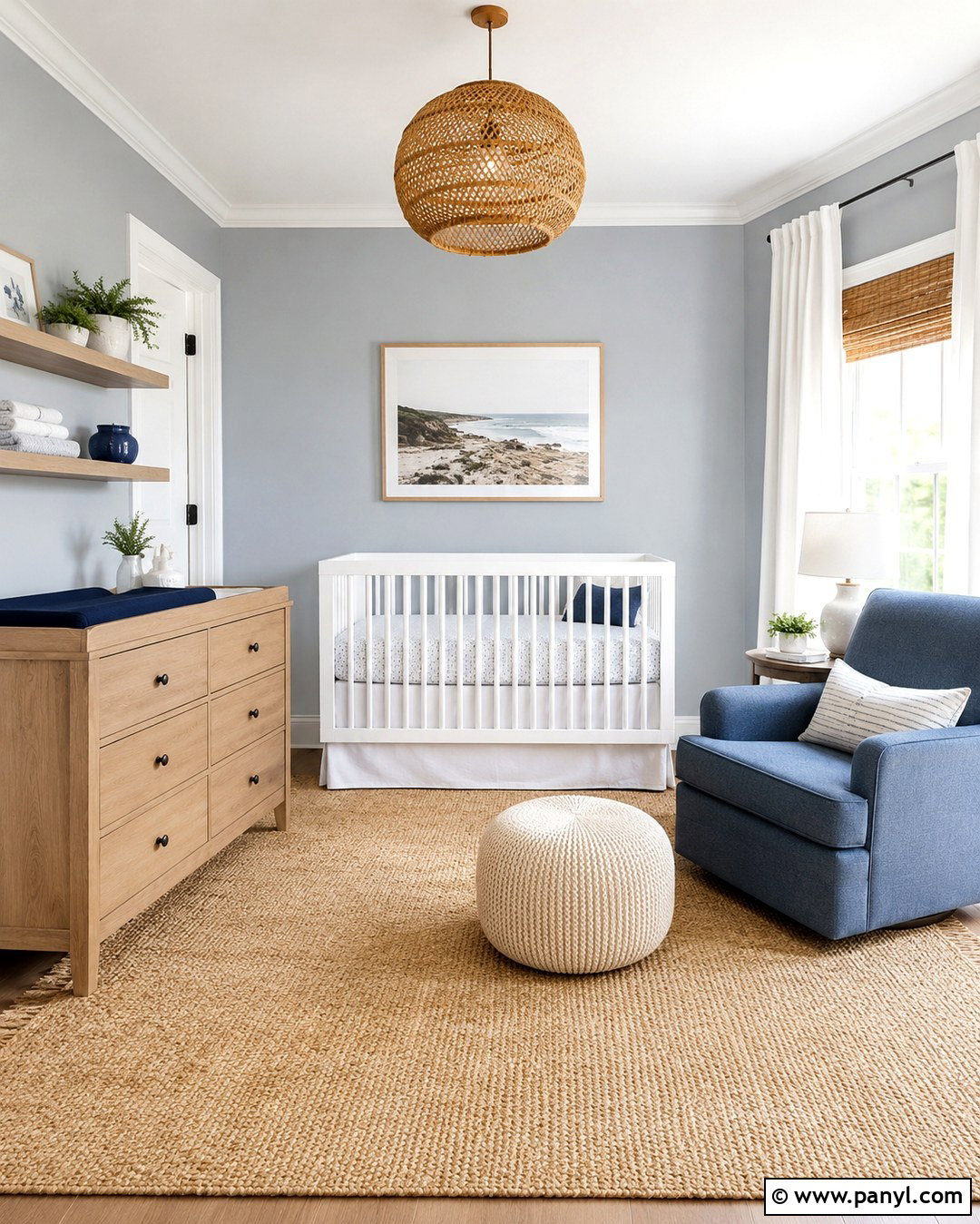
For an airy nursery, combine dusty blue walls with warm white furniture and natural woven details. Center a simple white crib on the main wall and place a light oak dresser on the opposite side to balance the layout. A pale gray glider, striped blue-and-cream rug, and white cotton curtains continue the soft palette without making everything match exactly. Add understated cloud or sky artwork in slim natural wood frames. A woven hamper and lidded floor basket provide practical storage while warming up the cooler blue tones. Finish with a small navy pillow on the adult chair and a ceramic table lamp with a white shade. This design feels fresh and calming, yet it can grow easily with changing artwork and accessories.
5. Blush Pink Nursery
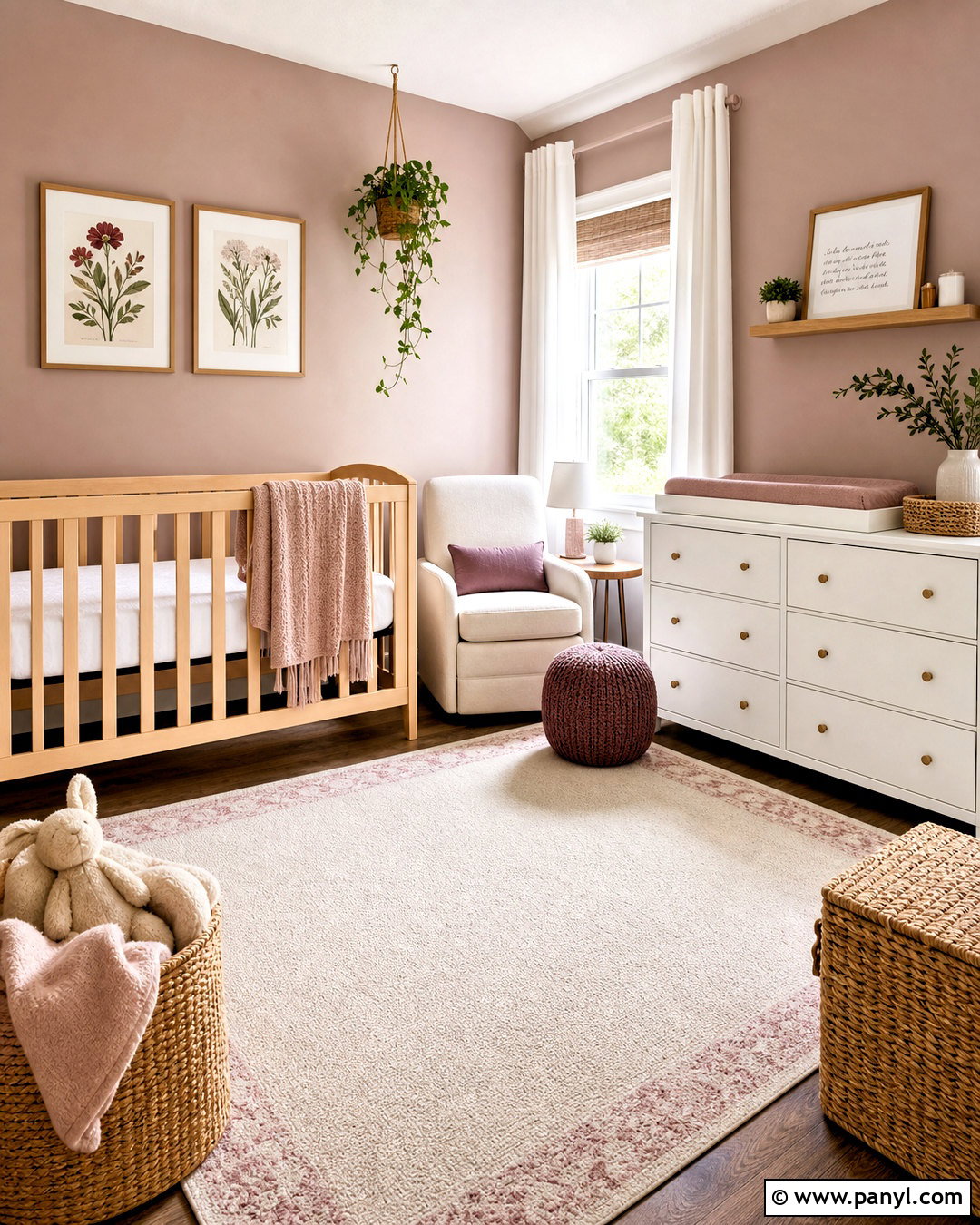
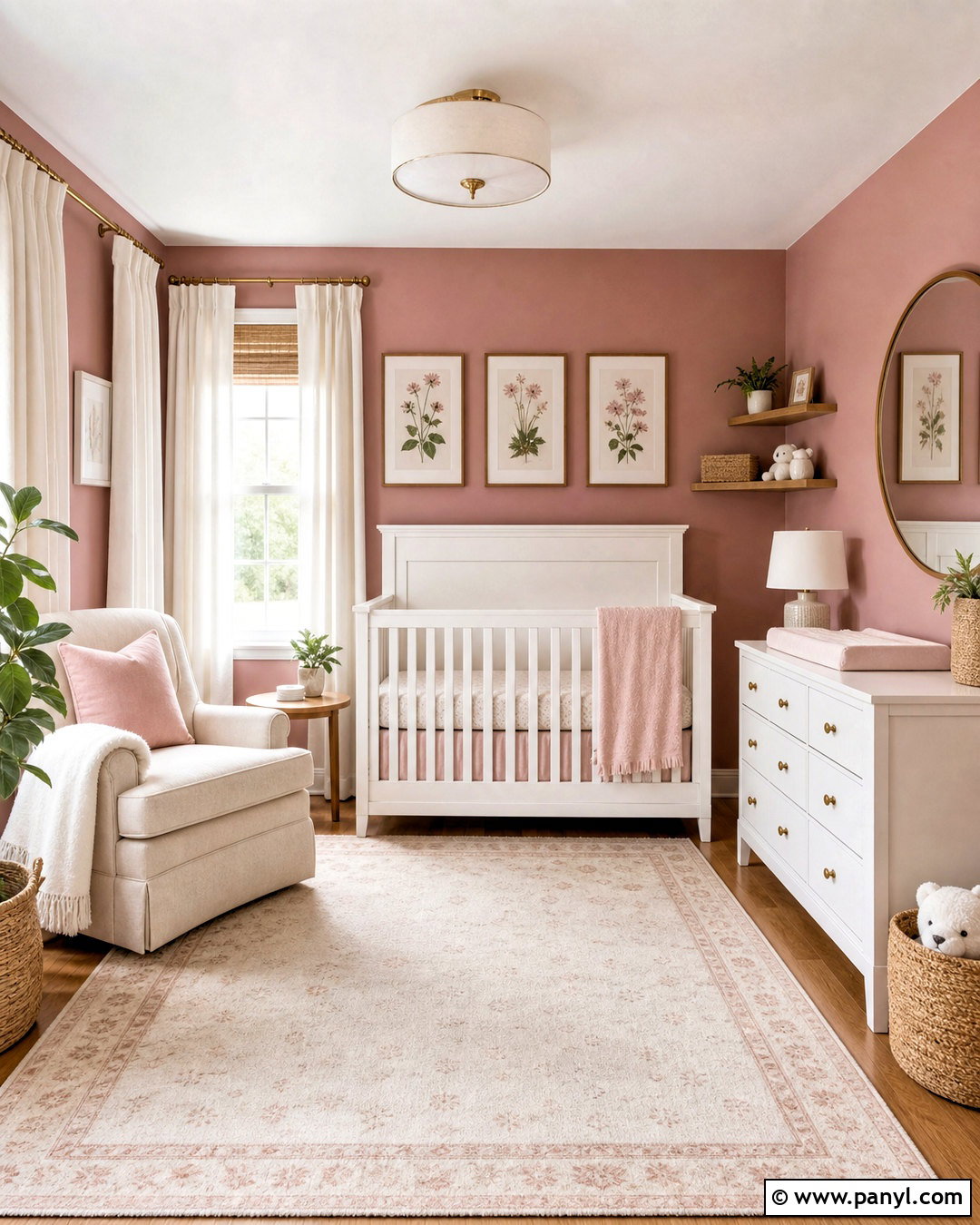
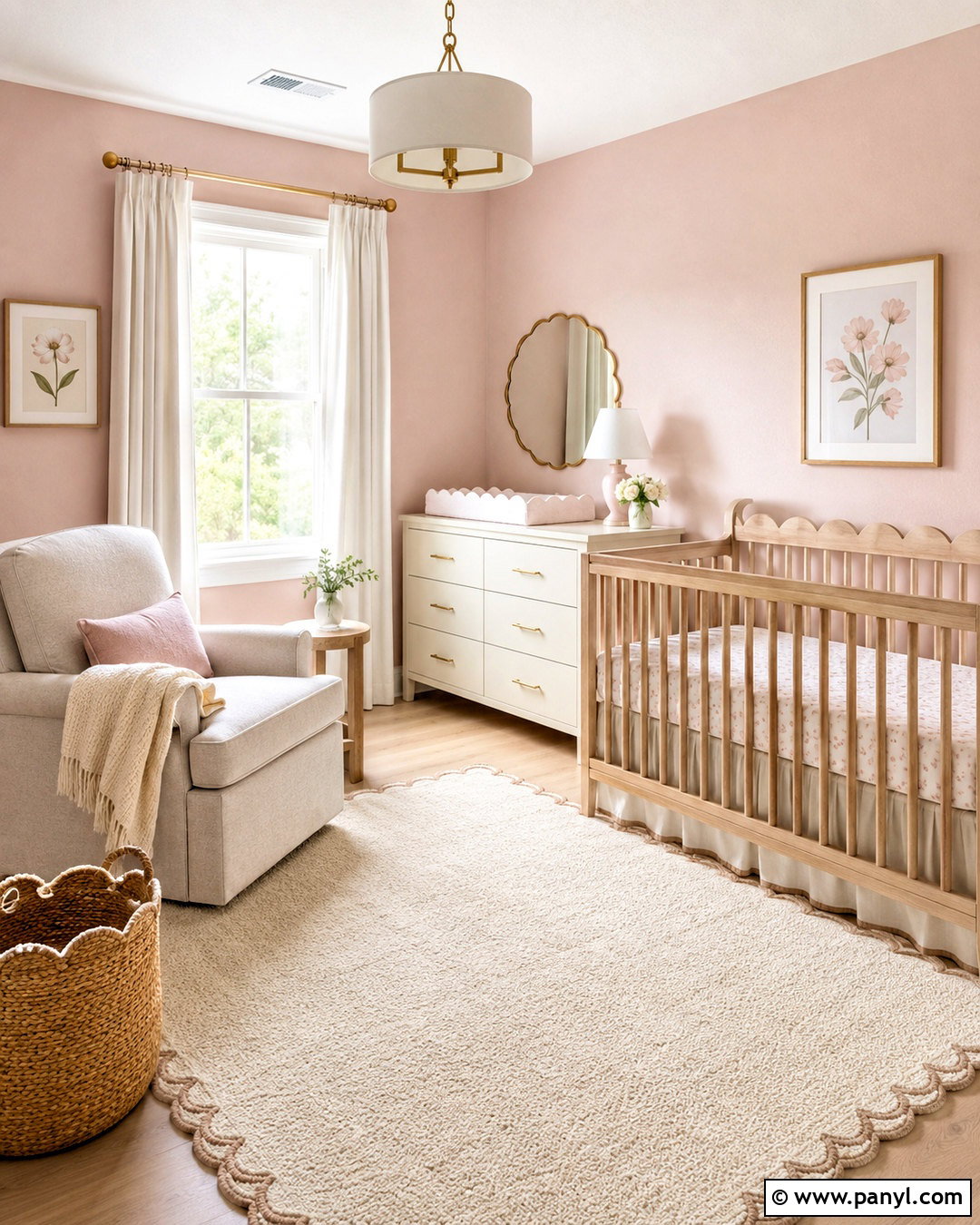
Blush pink can look sophisticated when it is paired with clean furniture and restrained decor. Paint the walls a muted rose-beige rather than a bright candy pink, then add a natural maple crib and a matte white dresser. Anchor the room with a cream rug featuring a subtle pink border. An ivory glider beside a walnut side table creates a warm contrast and keeps the palette from feeling overly sweet. Decorate with two simple botanical prints, a woven hamper, and cotton curtains in soft white. Small accents in dusty plum or terracotta can add depth through storage baskets and artwork. Leave plenty of open floor space and avoid filling every wall. The finished nursery feels light, polished, and comfortable for both baby and adults.
6. Black And White Nursery
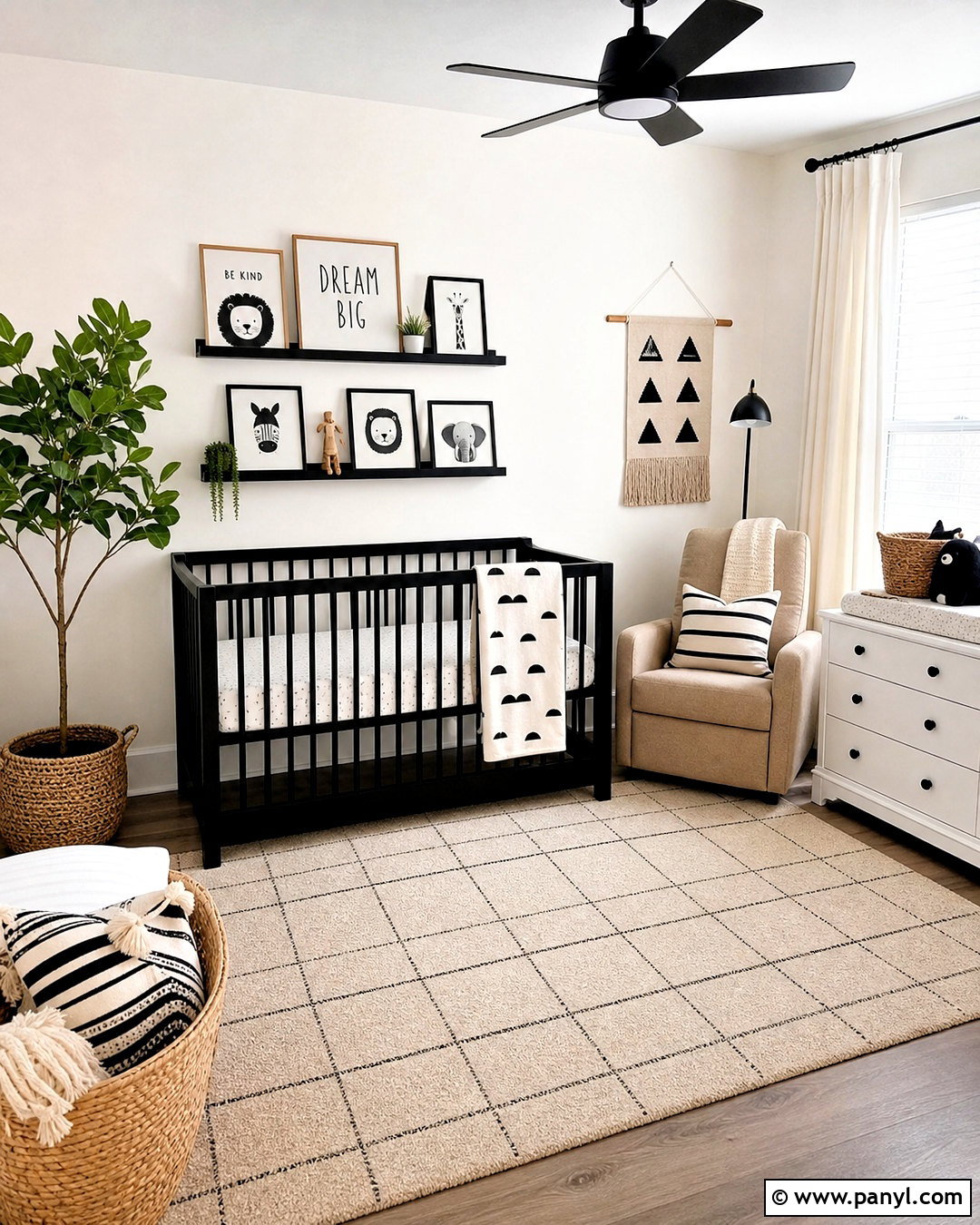
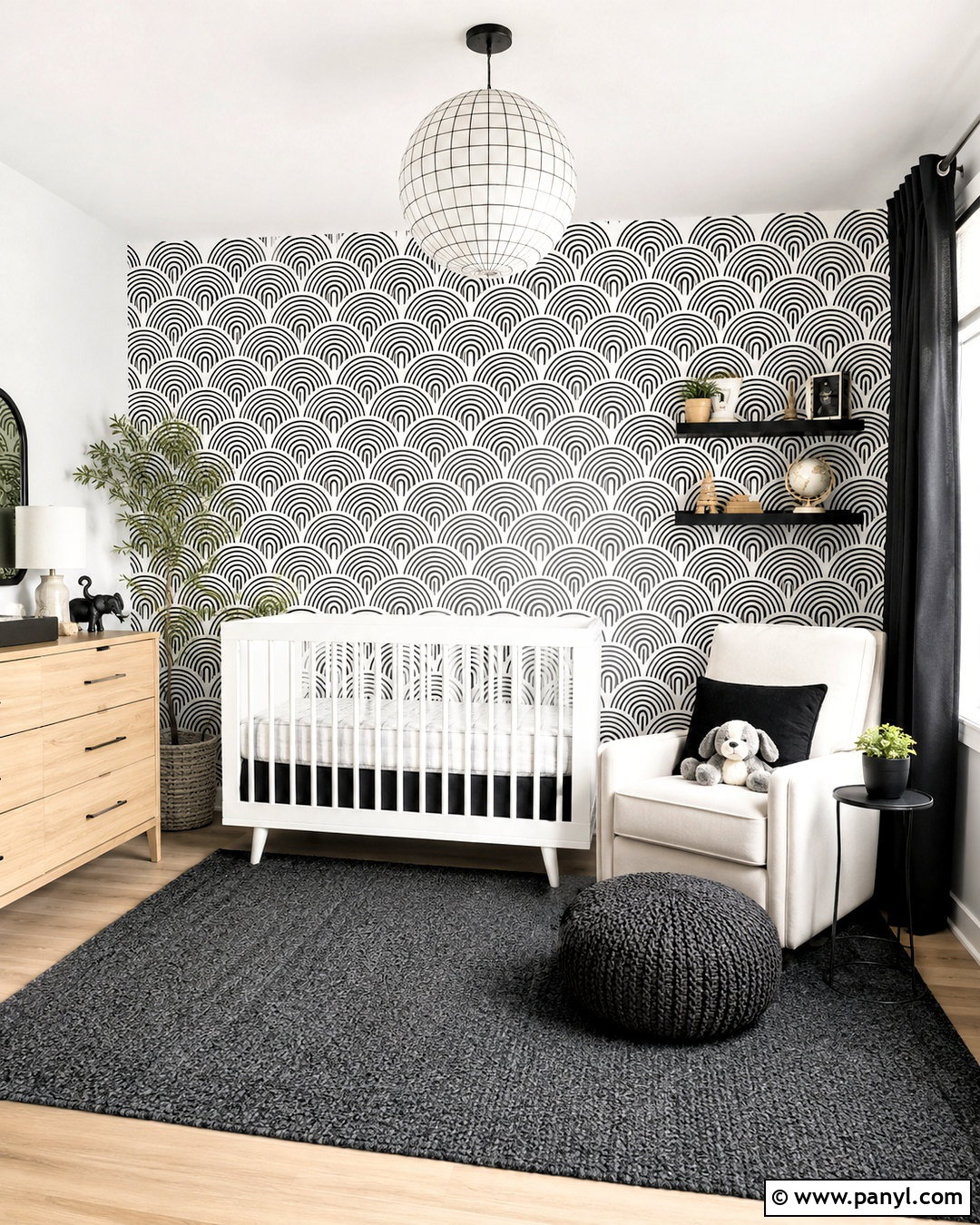
Crisp black and white can create a playful nursery when warm materials soften the contrast. Use warm white walls as the base, then introduce a matte black crib and a white dresser with black knobs. A large cream rug with a simple charcoal grid pattern connects the furniture without overwhelming the floor. Choose a camel-colored leather-look glider or a tan upholstered rocker to make the room feel inviting. Black picture ledges can hold a small collection of graphic animal prints and board books. Add natural wood frames, woven baskets, and off-white curtains for warmth. Keep patterns bold but limited to two or three areas. This cohesive nursery feels modern and energetic while remaining simple enough to update as the child grows.
7. Small Nursery Layout
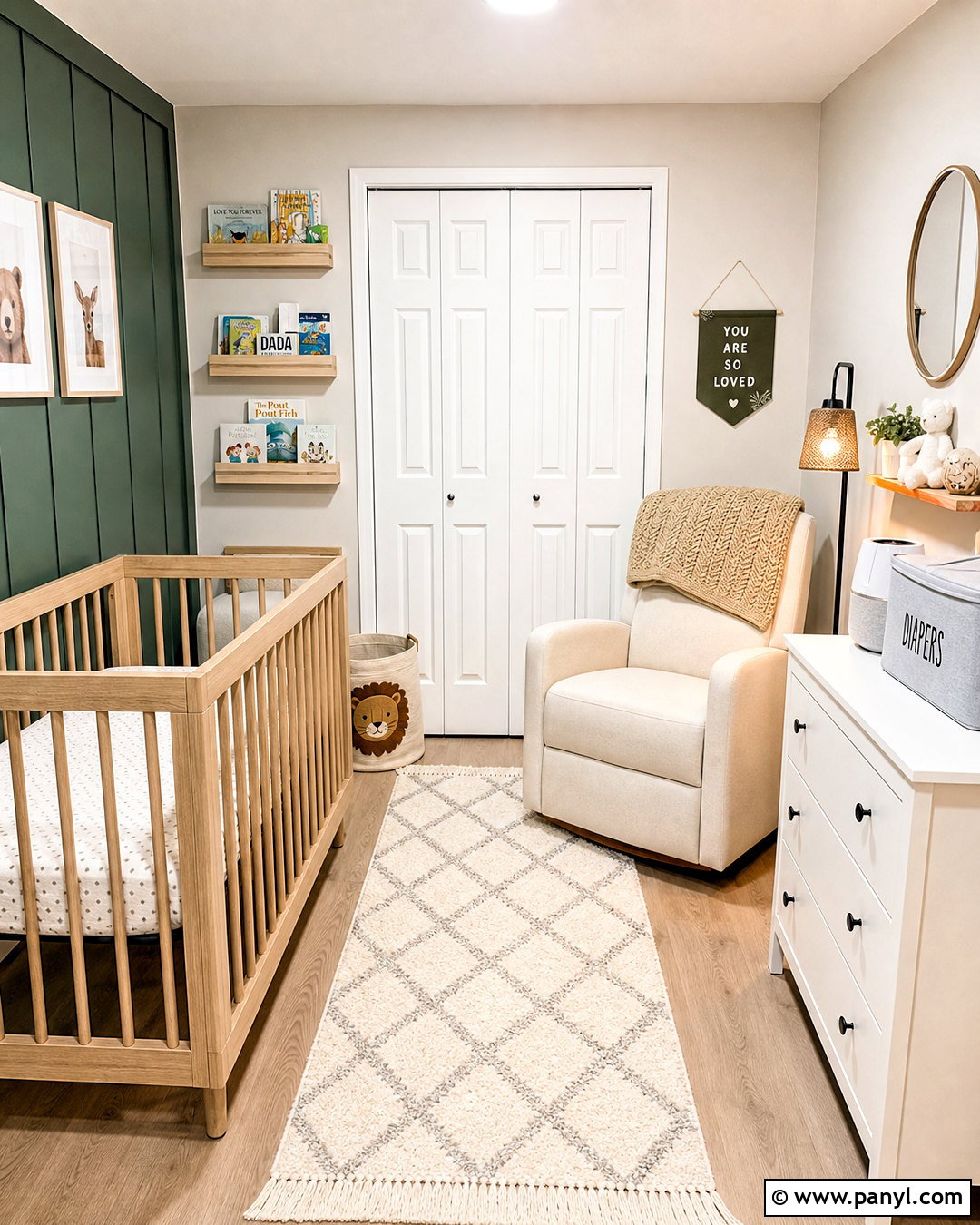
When floor space is limited, every piece should have a clear purpose and an easy-to-reach location. Place a compact crib along one solid wall and use a narrow dresser with a changing surface on the adjacent wall. Choose a slim glider without a bulky ottoman, then add a tiny wall-mounted shelf instead of a floor-standing side table. A light-colored washable rug can define the center while leaving clear walking paths between each zone. Install shallow book ledges above a low storage unit, keeping items securely arranged and away from the crib. Use the closet for labeled bins, extra diapers, and outgrown clothing. Matching light wood and white finishes make the furniture feel connected, helping the entire small nursery look calmer, brighter, and more spacious.
8. Nursery Corner In Bedroom
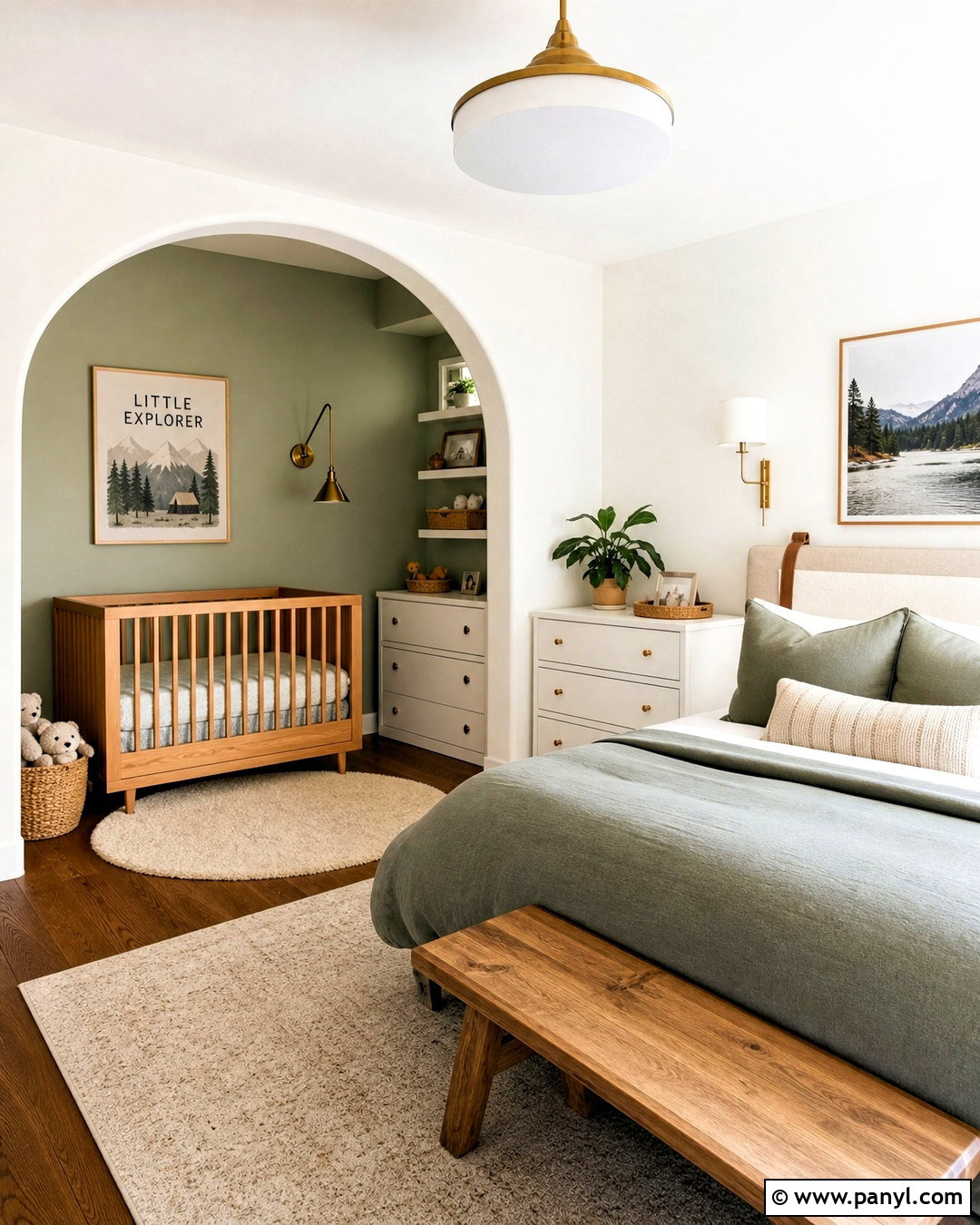
A nursery corner can feel intentional when its colors and furniture relate to the main bedroom. Select a compact natural wood crib and position it against a solid wall, away from hanging cords and crowded walkways. Use one nearby dresser as a shared storage and changing station, with baby supplies contained in matching baskets. Define the area with a small round cream rug and a removable painted arch in muted sage, dusty blue, or warm beige behind the crib. Add one simple framed print to establish a gentle nursery theme. Keep adult bedding within the same neutral palette so both zones feel connected. A wall-mounted light near the changing area saves surface space, while closed storage prevents the combined room from appearing cluttered or temporary.
9. Minimalist Nursery
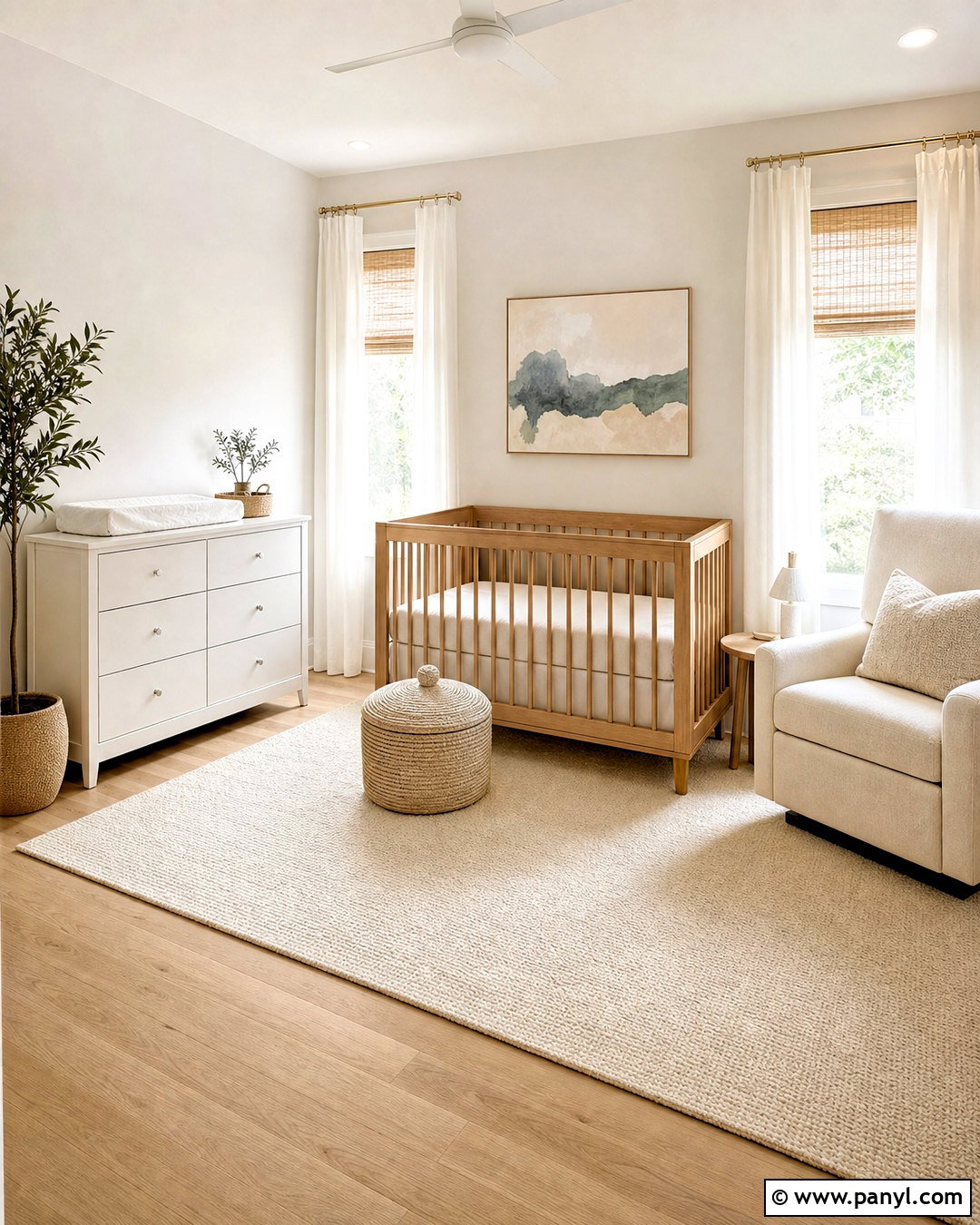
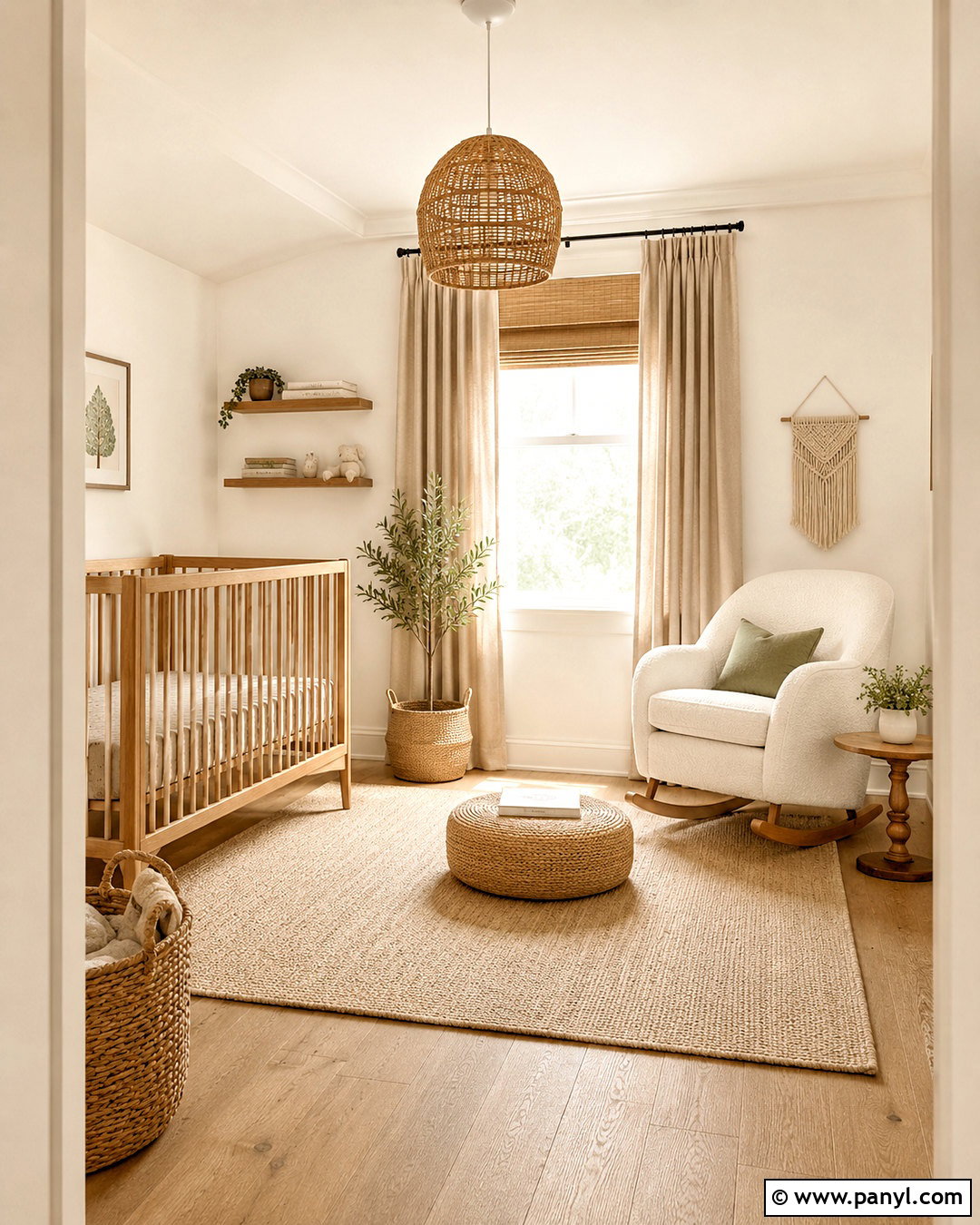
A minimalist nursery works best when it feels comfortable, not empty. Choose warm white walls, pale oak flooring, and three essential furniture pieces: a streamlined wood crib, a simple dresser, and an upholstered glider. Arrange them around the room’s edges to preserve an open center for movement and future play. Use a large ivory rug to soften the floor and add one wide piece of abstract artwork above the dresser. Closed drawers should hold everyday supplies, while one lidded basket can contain blankets or toys. Finish the windows with plain cordless shades and lightweight white curtains. Keep the crib itself clear, using only a snug fitted sheet in the sleep space, as recommended by the CPSC. ()
10. Scandinavian Nursery
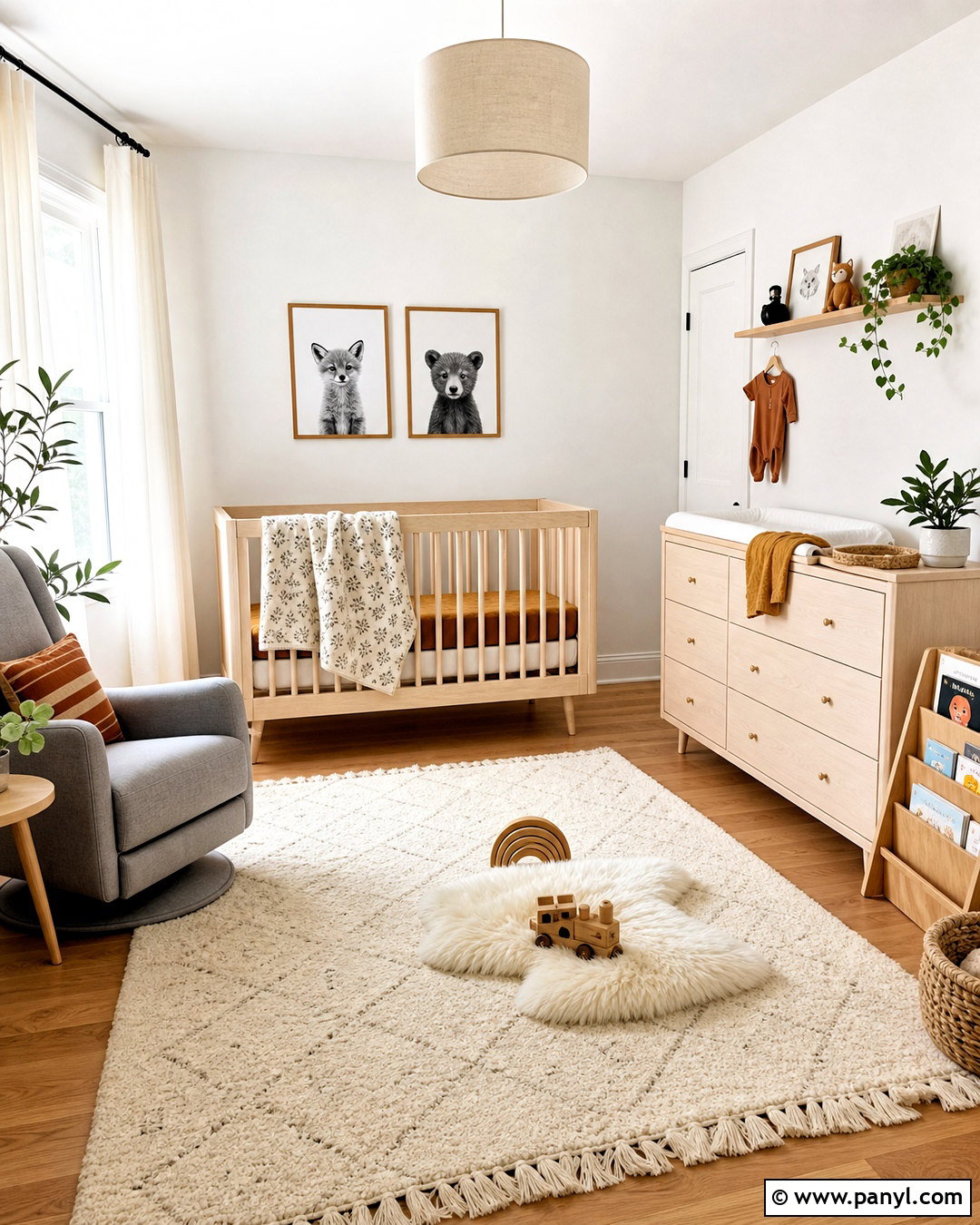
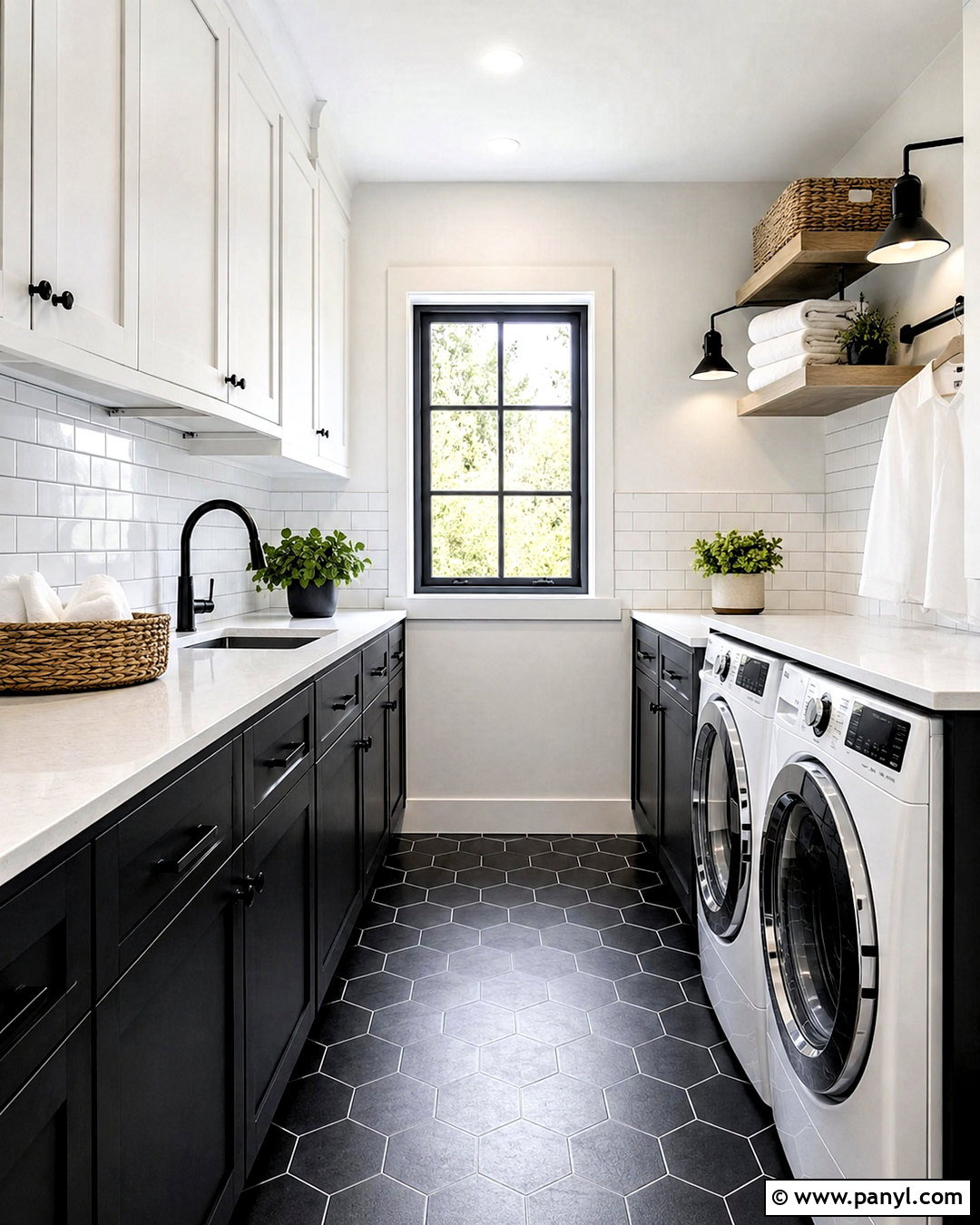
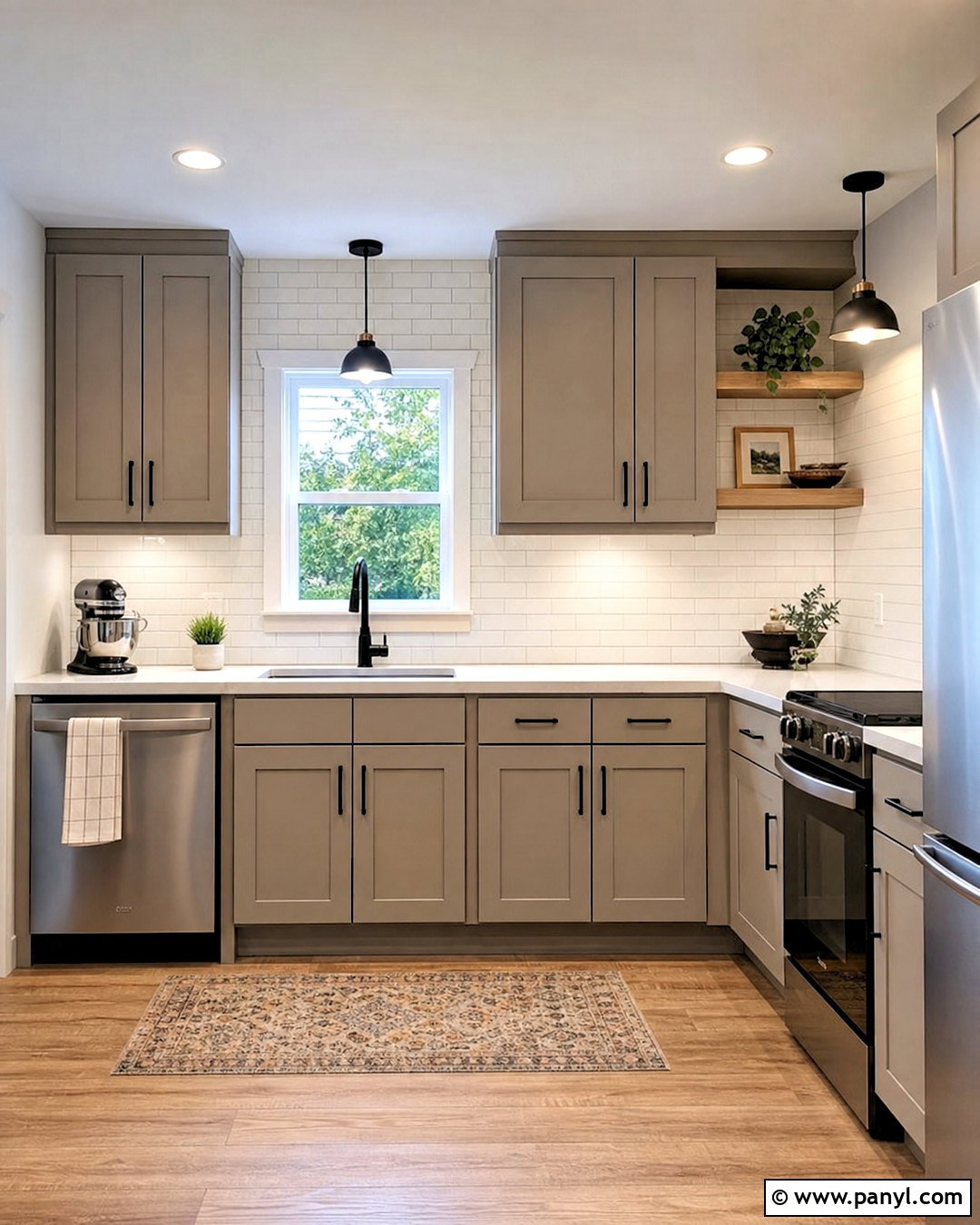
Pale woods, functional furniture, and soft contrast create an approachable Scandinavian nursery. Start with white walls and warm oak flooring, then add a light birch crib and a matching dresser with clean, rounded edges. Place a soft gray glider beside a small wooden stool and use a cream wool-look rug to warm the center of the room. Choose simple black-and-white animal artwork, but introduce muted rust, mustard, or forest green through a basket and framed print. White curtains keep the windows bright, while a linen pendant shade adds natural texture overhead. A low wooden book rack gives the room a practical child-friendly feature for later years. The finished nursery feels airy and organized, with enough warmth to remain cozy in every season.
11. Modern Woodland Nursery
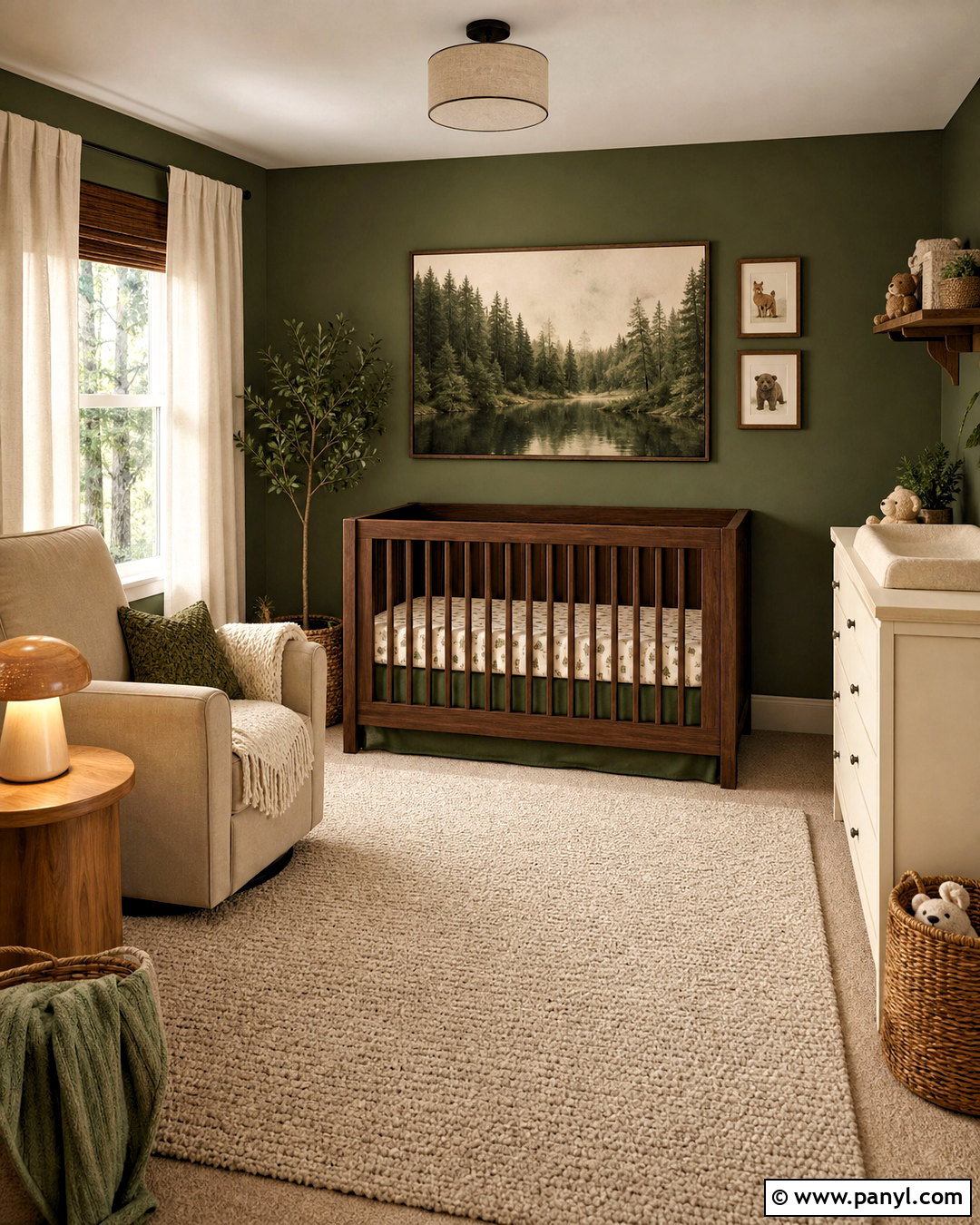
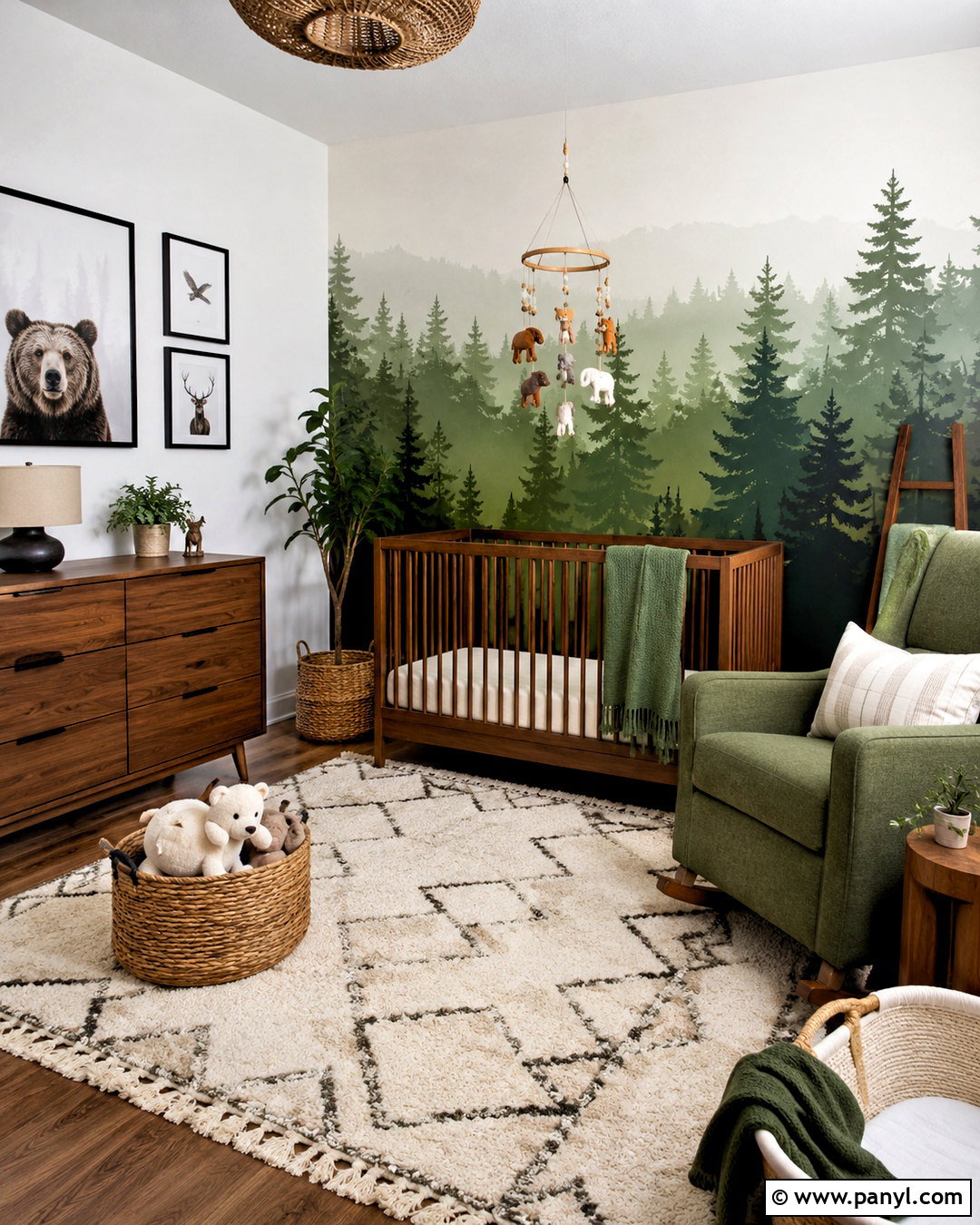
A woodland nursery can feel simple and modern without filling the room with themed decorations. Paint the walls warm cream or muted moss green, then choose a walnut crib and an ivory dresser with clean lines. Add a tan glider, a textured oatmeal rug, and floor-length linen curtains to create a natural base. Instead of multiple animal accessories, hang one large forest landscape print above the dresser and display two smaller woodland illustrations on a nearby picture ledge. Woven baskets and a wooden mushroom-shaped lamp can provide subtle character. Repeat rust, brown, moss, and cream across the artwork and textiles so the room feels coordinated. This restrained approach creates a cozy nature-inspired nursery that remains flexible as the baby becomes a young child.
12. Simple Floral Nursery
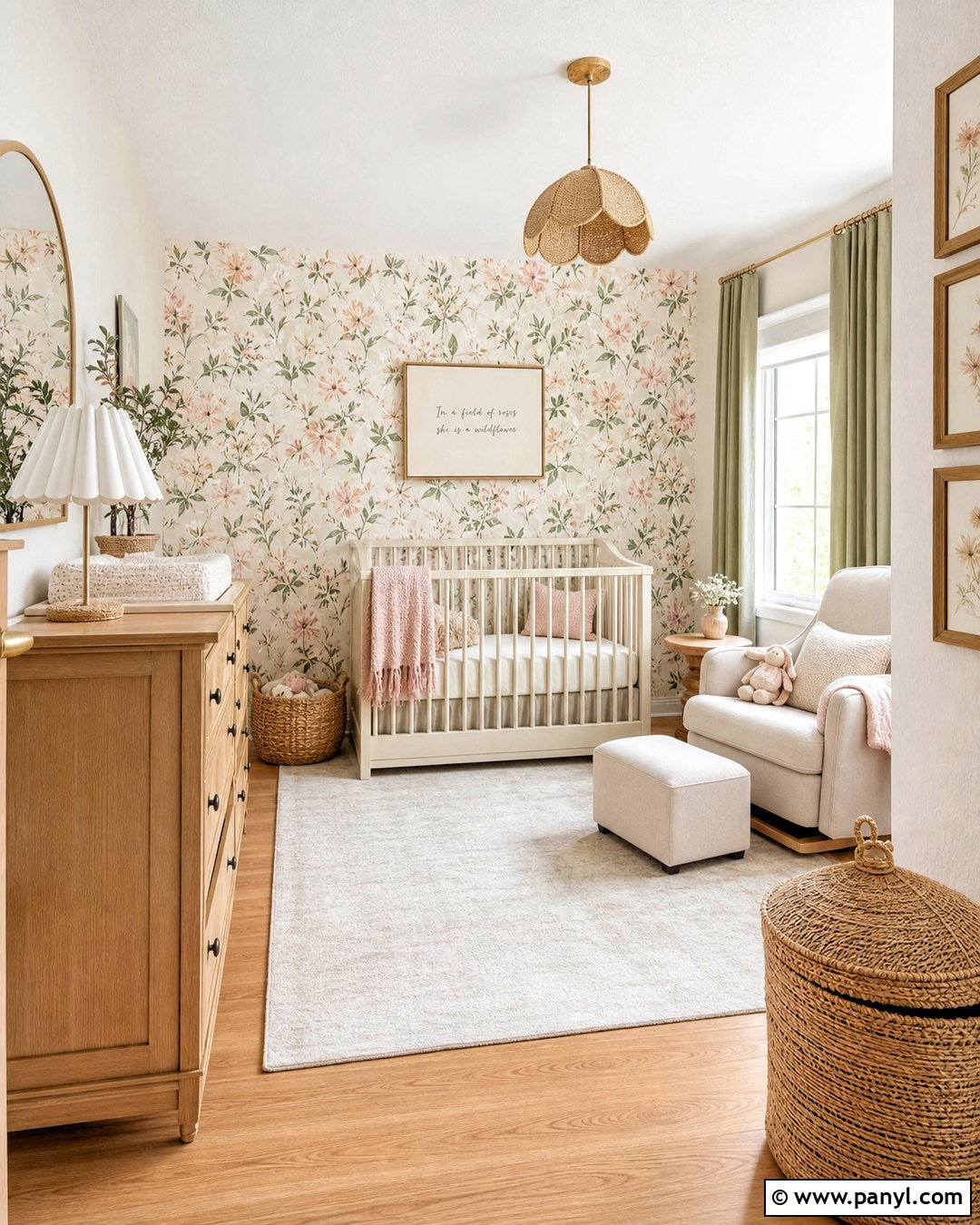
A floral nursery feels fresh when the pattern is concentrated in one area and balanced by plain furnishings. Choose a soft botanical wallpaper for the crib wall, using muted green leaves with blush, lavender, or pale blue flowers. Paint the remaining walls warm white and furnish the room with an ivory crib, light oak dresser, and neutral upholstered glider. A solid cream rug keeps the floor visually quiet, while sage curtains repeat the leaf color from the wallpaper. Use plain woven baskets and minimal framed artwork so the feature wall remains the main attraction. A small scalloped lampshade can add one gentle decorative detail. By repeating only two or three wallpaper colors elsewhere, the complete nursery feels coordinated, cheerful, and restful rather than overly patterned.
13. Rainbow Nursery
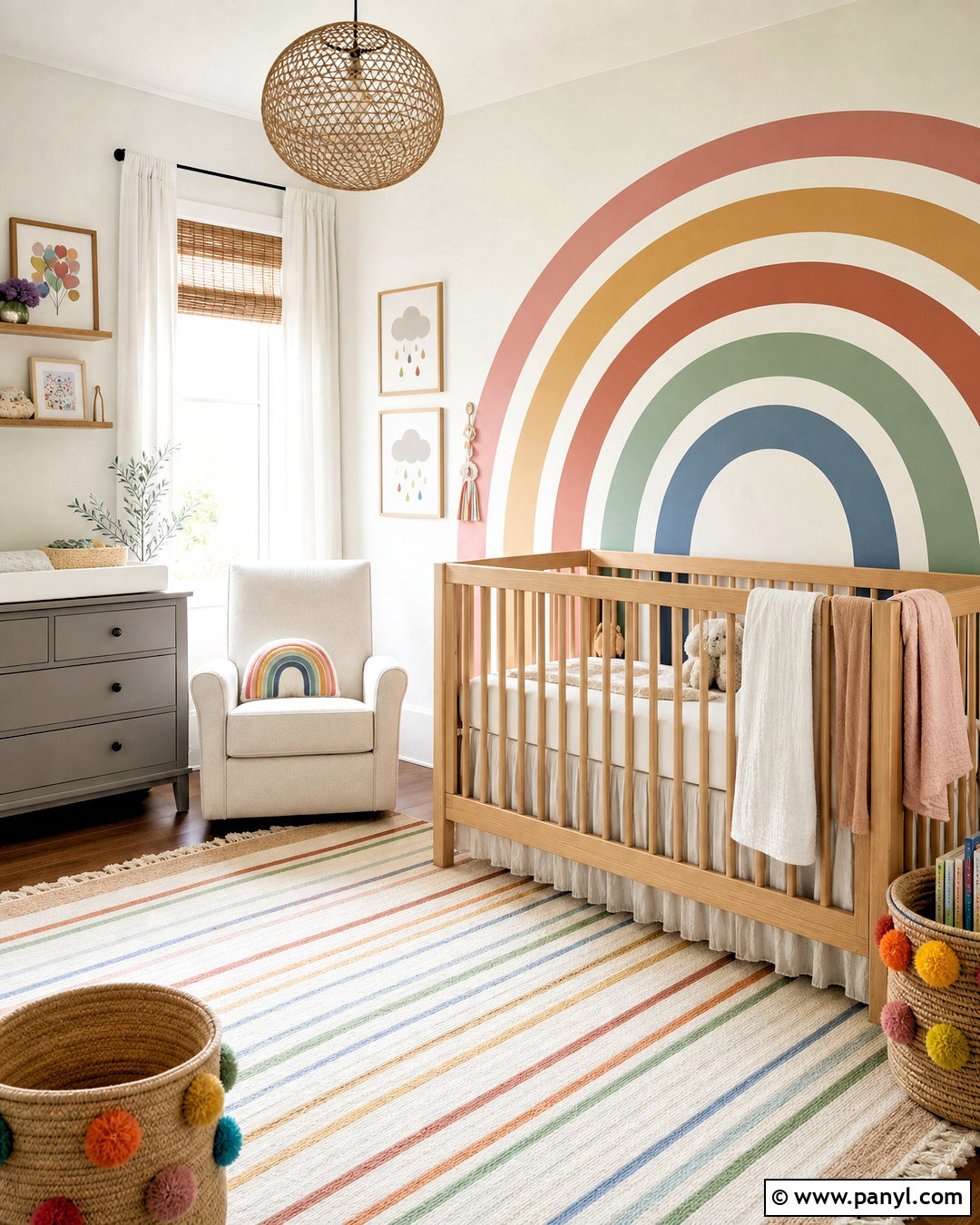
A rainbow nursery does not need every surface covered in bright primary colors. Begin with creamy white walls, a natural wood crib, and a warm gray dresser. Create a muted rainbow palette using dusty rose, mustard yellow, terracotta, sage green, and soft blue. Introduce those colors through one arched wall mural, a striped washable rug, and a few coordinated storage baskets. Choose an ivory glider and white curtains to give the colorful elements space to stand out. Simple sun or cloud prints can support the cheerful theme without adding clutter. Keep the furniture lines clean and the accessories limited. This balanced approach delivers a happy, colorful nursery while preserving the calm atmosphere needed for feeding, changing, reading, and settling down.
14. Vintage Nursery
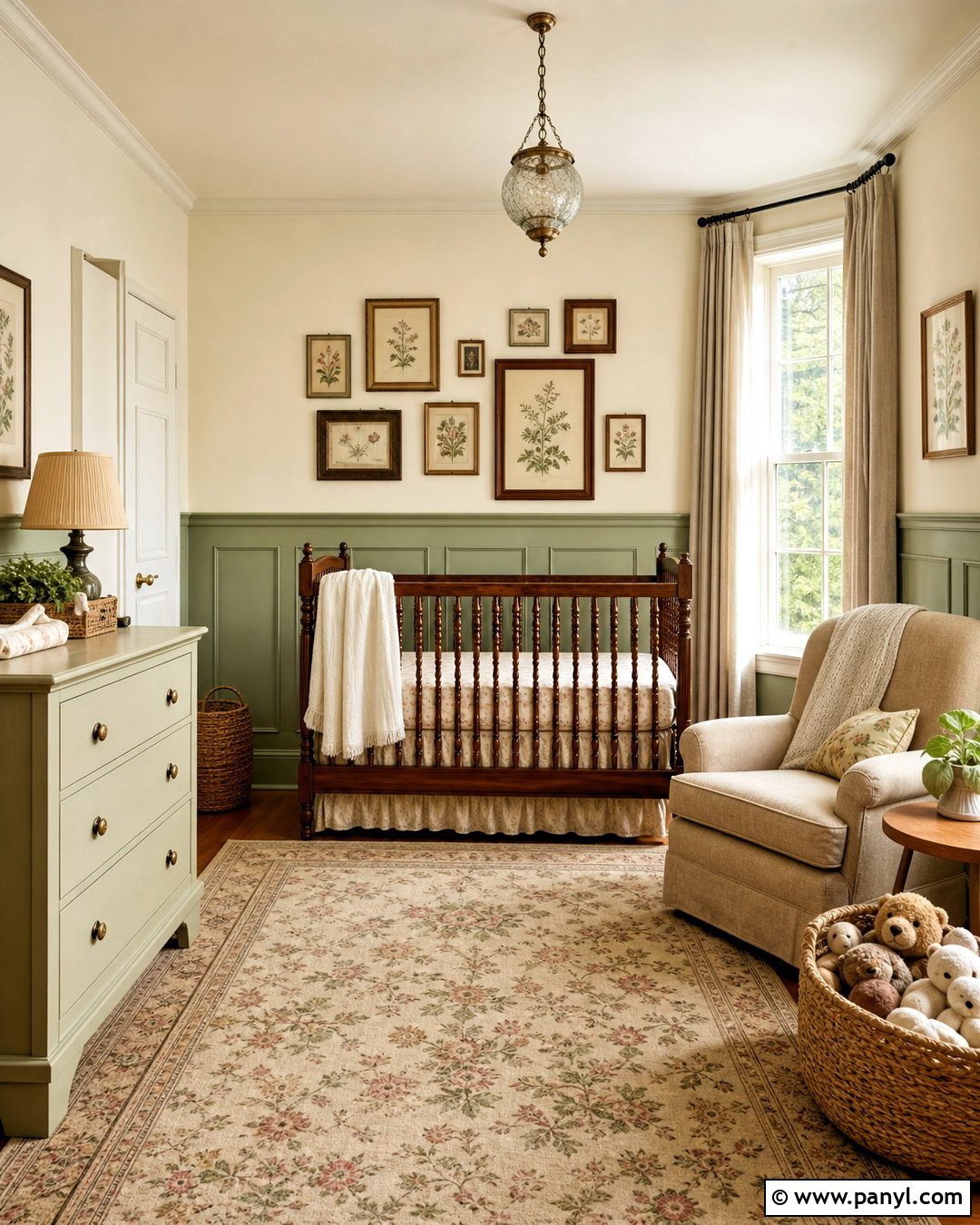
Old-fashioned details can make a nursery feel collected and personal without requiring expensive antiques. Paint the walls soft cream and add simple white or pale sage wainscoting around the lower half. Choose a classic spindle crib in warm walnut and pair it with a sturdy painted dresser fitted with antique-brass-style knobs. A comfortable oatmeal glider keeps the room practical, while a faded floral-look rug adds color and softness. Hang small botanical illustrations in mismatched wood and brass frames above the dresser. Linen curtains, a pleated table lamp, and woven storage baskets complete the nostalgic look. Keep the layout open and the crib area simple. The result is a welcoming vintage nursery that combines traditional charm with useful modern storage and comfortable everyday furniture.
15. Boho Nursery
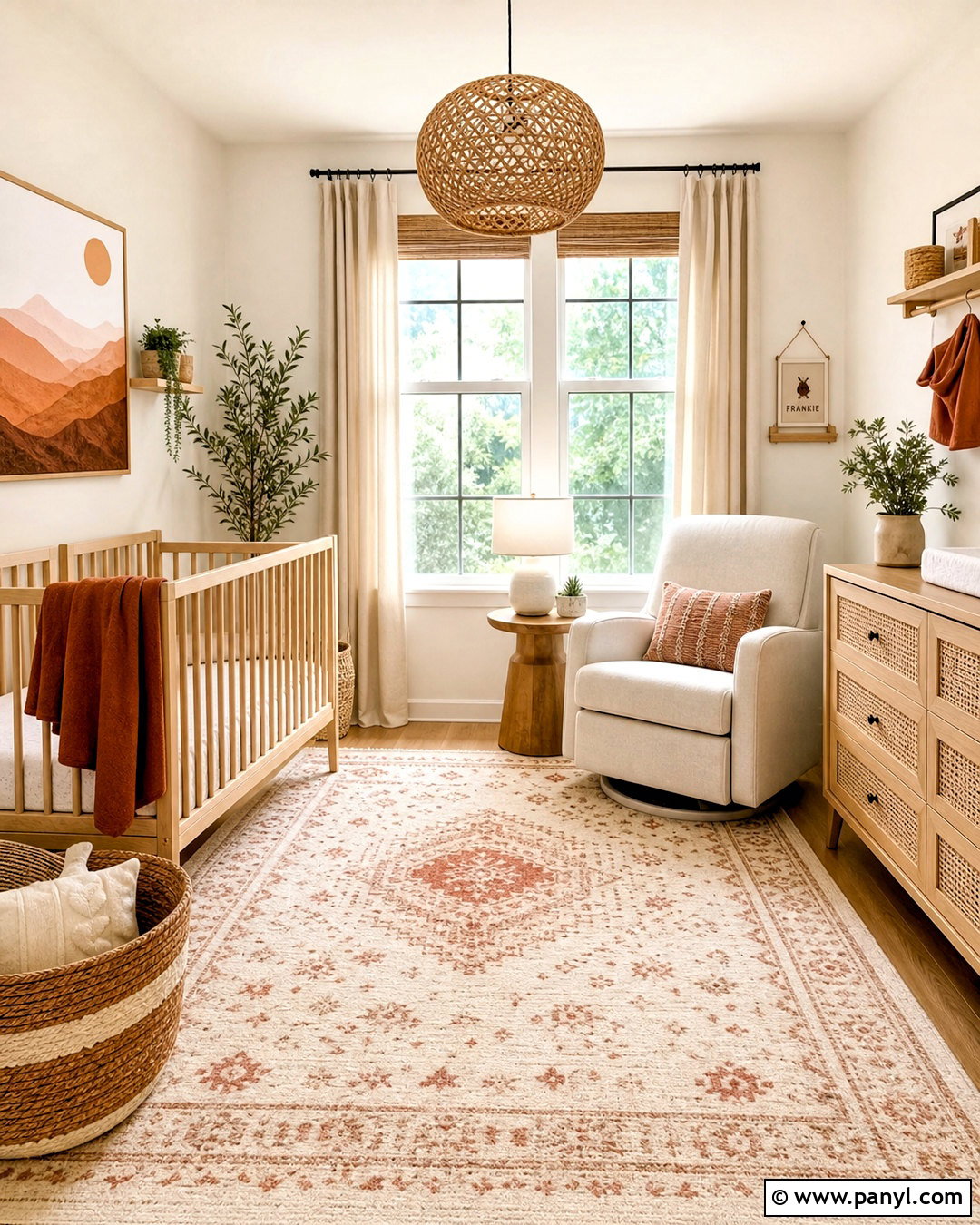
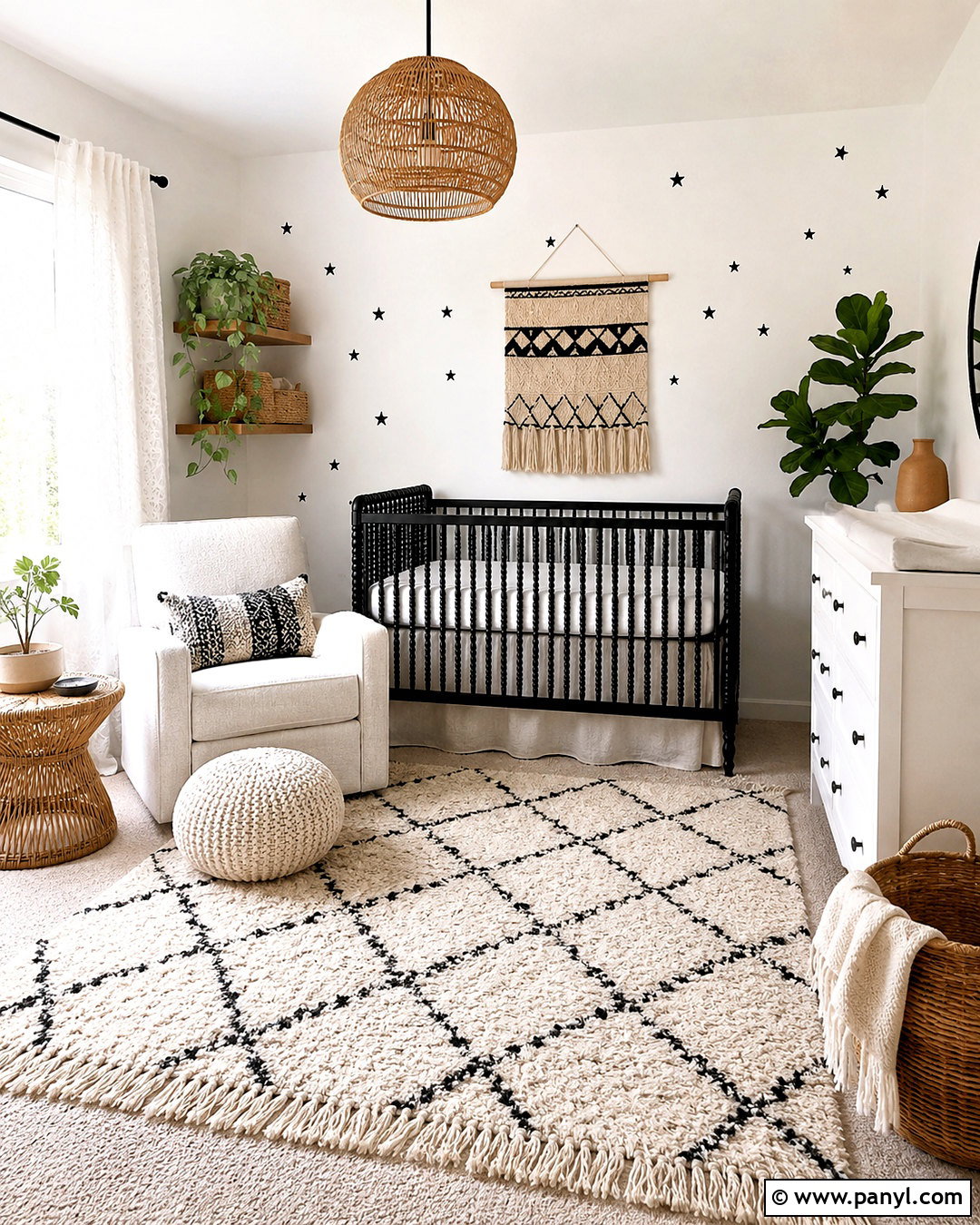
Natural texture is the key to a boho nursery that feels relaxed rather than crowded. Use warm white walls and a light oak crib as the clean foundation. Pair them with a cane-front dresser, an ivory upholstered glider, and a large cream rug featuring a subtle terracotta pattern. Add full-length linen curtains and two sturdy woven baskets for diapers, blankets, or toys. A simple desert landscape print can bring in rust, sand, and muted peach without creating a strong theme. Limit decorative wall hangings and keep loose accessories away from the crib area. A ceramic lamp and small wooden side table finish the feeding corner. This complete room has the warmth associated with boho decor while maintaining clear surfaces, practical storage, and an easy flow.
16. Coastal Nursery
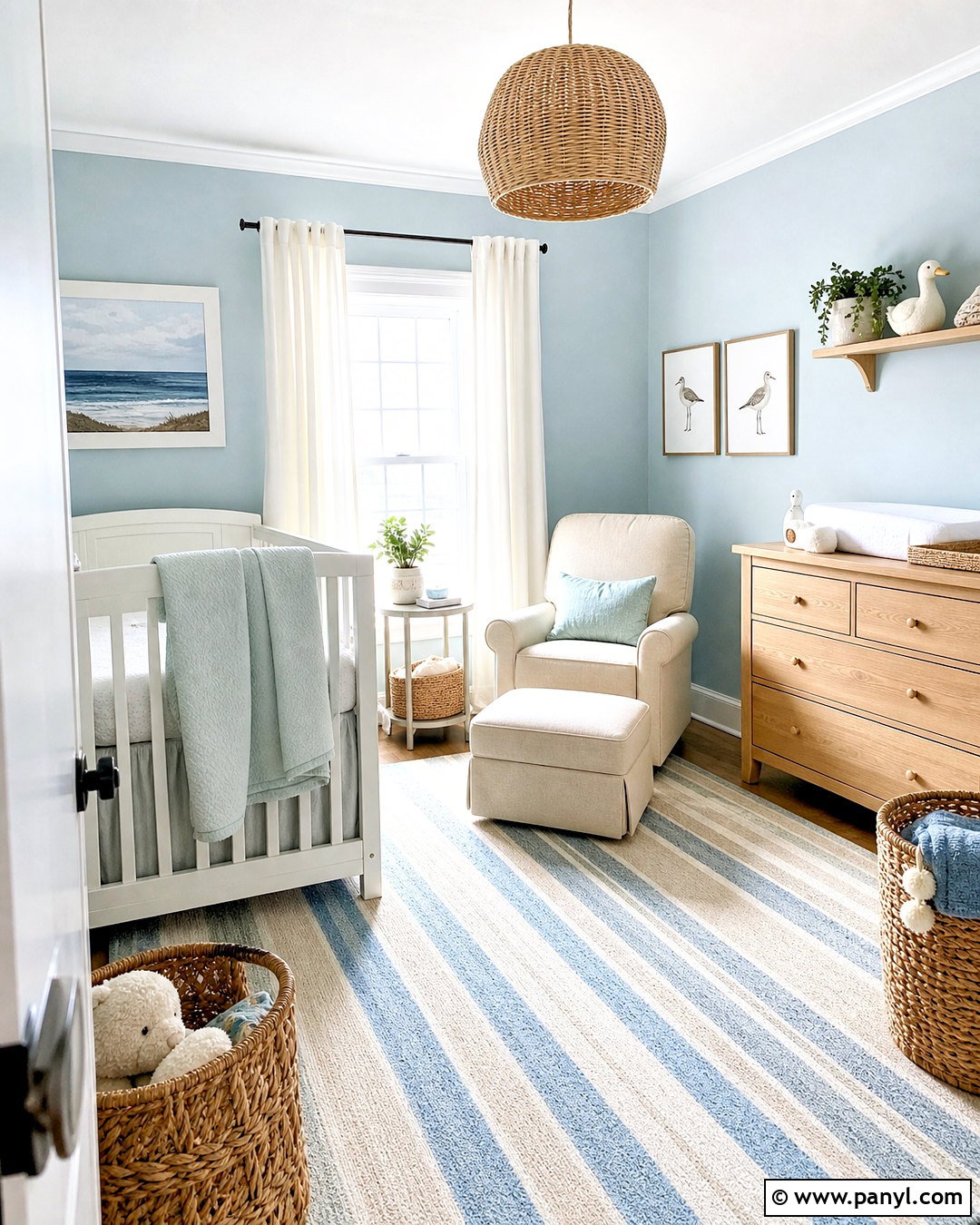
Soft ocean colors and light materials create a coastal nursery without relying on obvious nautical decorations. Paint the walls misty blue or pale sea-glass green, then choose a white crib and a light oak dresser. Add a sandy beige glider and a cream-and-blue striped rug for subtle contrast. White cotton curtains keep the room bright, while woven baskets and a natural rattan light shade introduce relaxed texture. Hang one watercolor seascape above the dresser and a pair of simple shell or shorebird prints nearby. Avoid using anchors, ropes, and themed accessories everywhere. Instead, build the coastal feeling through color, natural finishes, and airy spacing. The finished nursery feels fresh, peaceful, and flexible enough to become a calm child’s bedroom later.
17. Nursery With Wallpaper
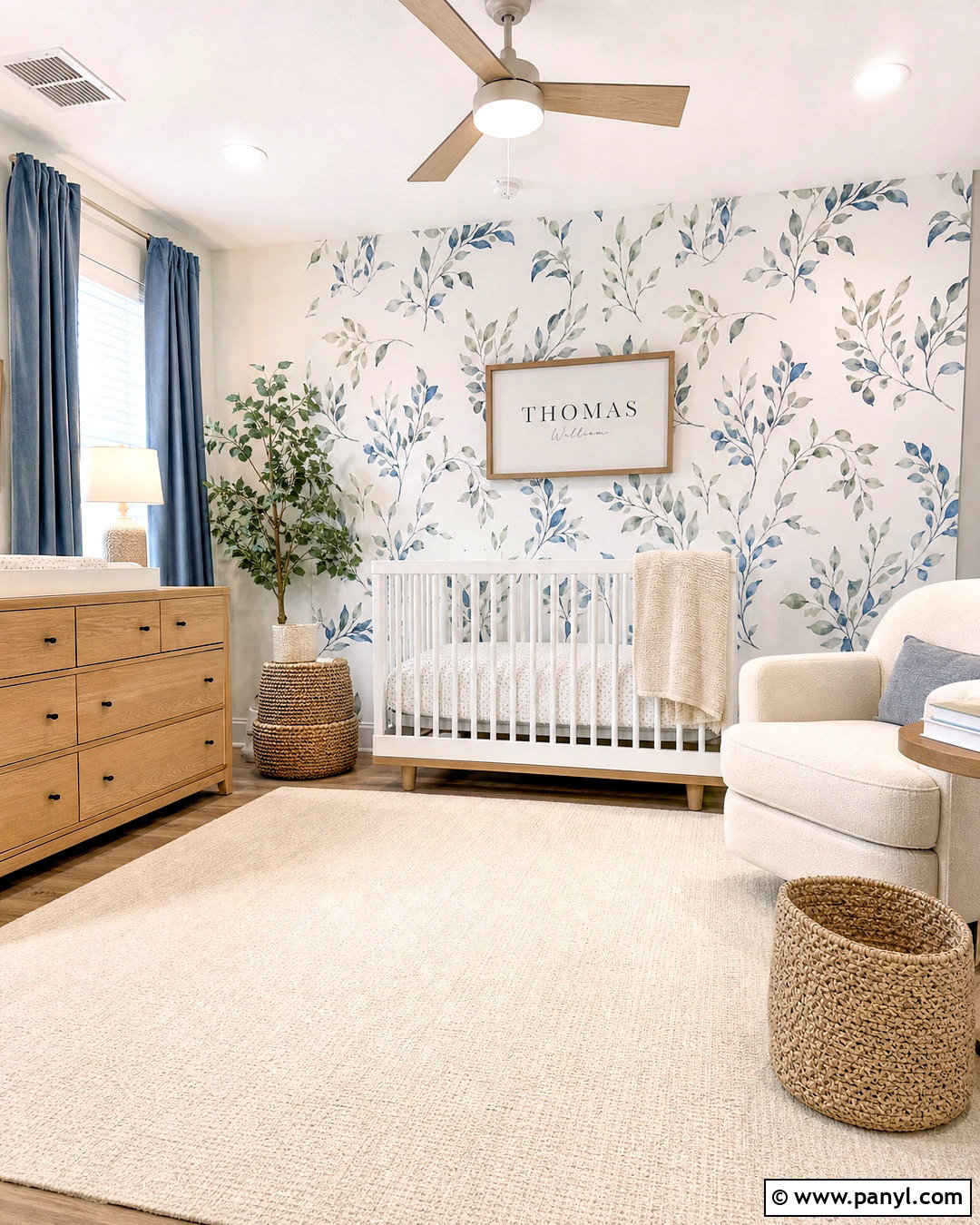
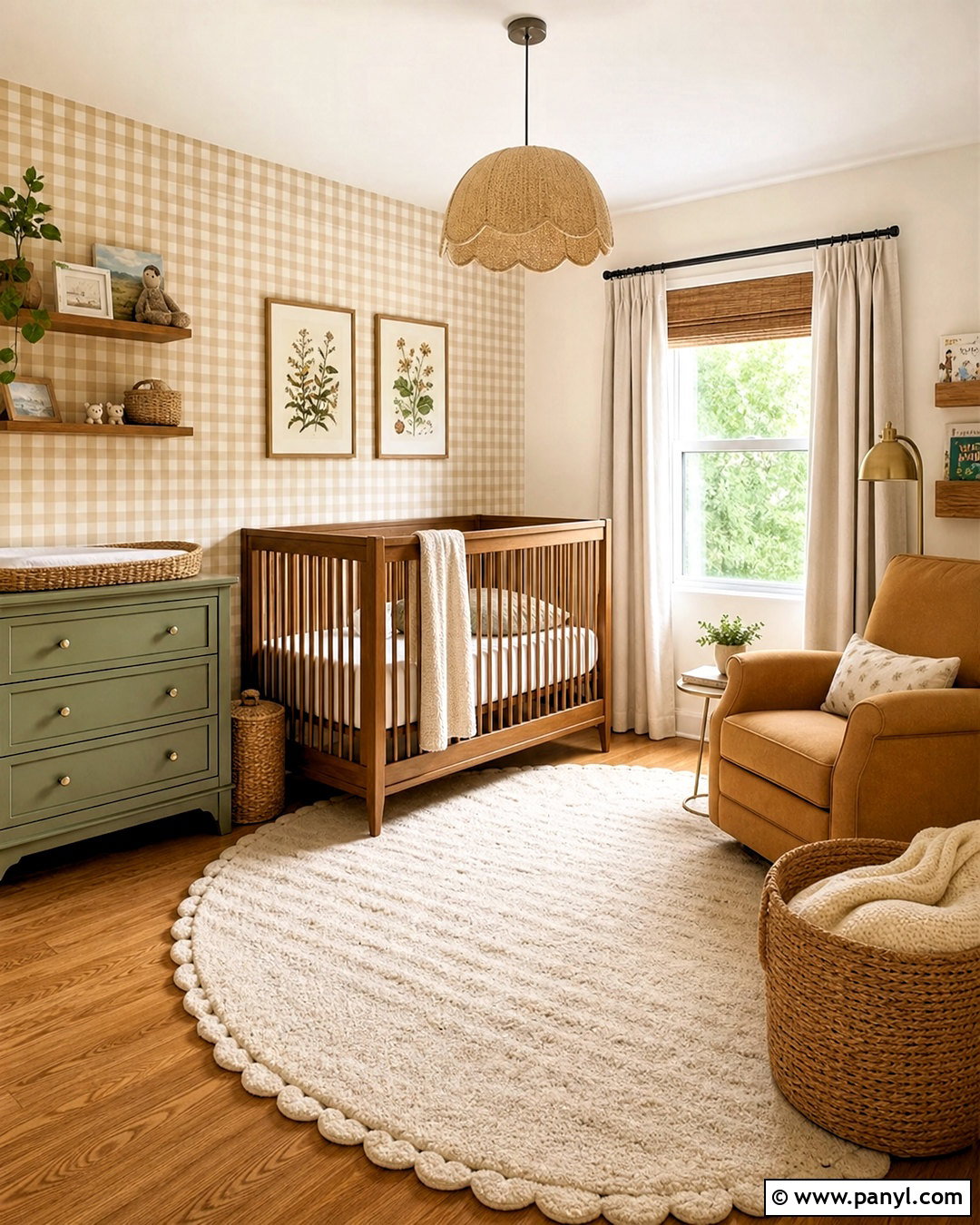
Wallpaper can define an entire nursery while allowing the remaining design to stay wonderfully simple. Select one medium-scale print for the wall behind the crib, such as leafy branches, tiny stars, gingham, or softly drawn animals. Current nursery coverage continues to highlight wallpaper and pattern as popular ways to bring personality into a baby’s room. () Pull two colors from the print and repeat them through the rug, curtains, or dresser knobs. Keep the crib, dresser, and glider in plain coordinated finishes such as white, oak, and cream. Use solid storage baskets and minimal artwork on the other walls. This strategy creates a complete decorative look without requiring many small accessories or a complicated furniture arrangement.
18. Nursery With Painted Arch
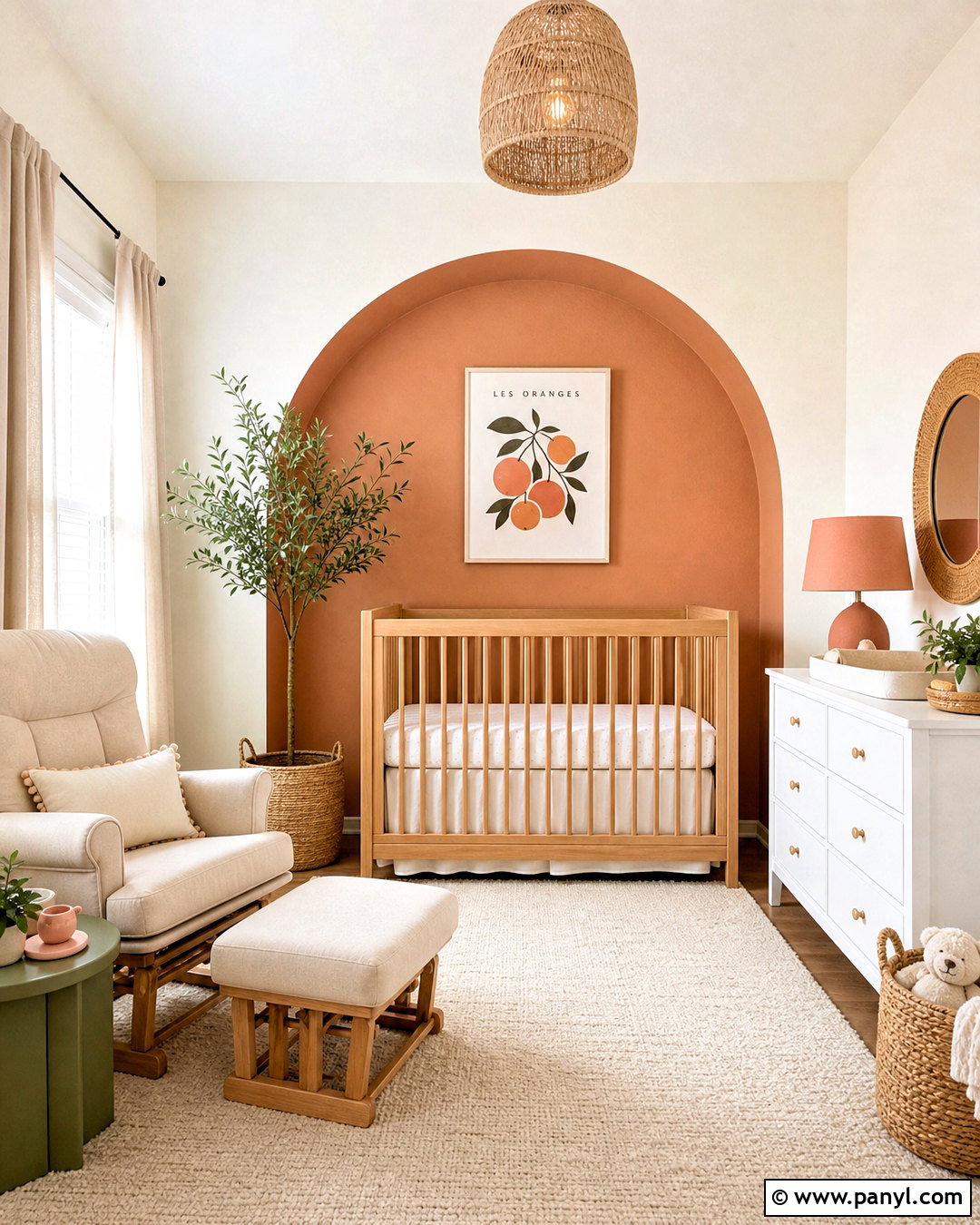
A painted arch creates an affordable focal point and visually anchors the crib without adding bulky decor. Start with warm white walls, then paint a large rounded arch in muted sage, dusty blue, blush beige, or soft terracotta. Make it wide enough to frame the crib and extend slightly beyond both sides. Choose a simple white or natural wood crib, then coordinate it with a compact dresser and an ivory glider. Add a neutral rug and curtains so the arch remains the strongest feature. One small framed print centered inside the painted shape can finish the wall without making it busy. Repeat the arch color in a basket, lampshade, or subtle rug detail. The final room feels playful, balanced, and thoughtfully designed on a modest budget.
19. Nursery With Built In Storage
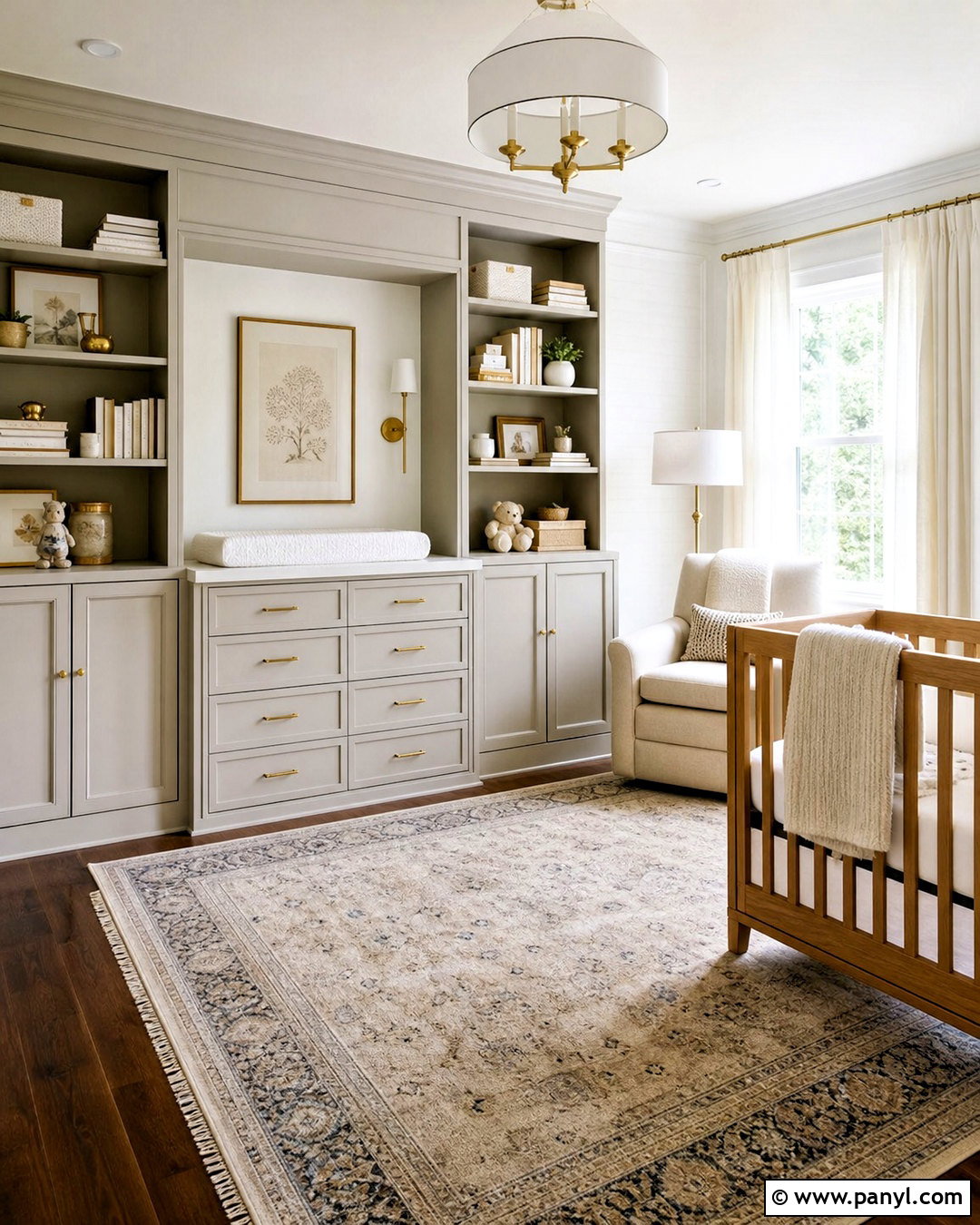
Built-in storage gives a nursery a polished look while keeping everyday supplies easy to organize. Run low cabinets along one wall and include a wide drawer section that can serve as the changing station. Paint the cabinetry soft white, pale greige, or muted green, then add simple brass or matte black hardware. Open shelves above can display a limited mix of books, framed prints, and attractive boxes, while closed cabinets hide bulkier supplies. Place a natural wood crib on the opposite wall and create a cozy reading corner with a cream glider and floor lamp. A large neutral rug connects both sides of the room. Keeping the cabinetry color close to the wall color helps the storage feel integrated rather than heavy, even in a smaller nursery.
20. Budget Nursery Makeover
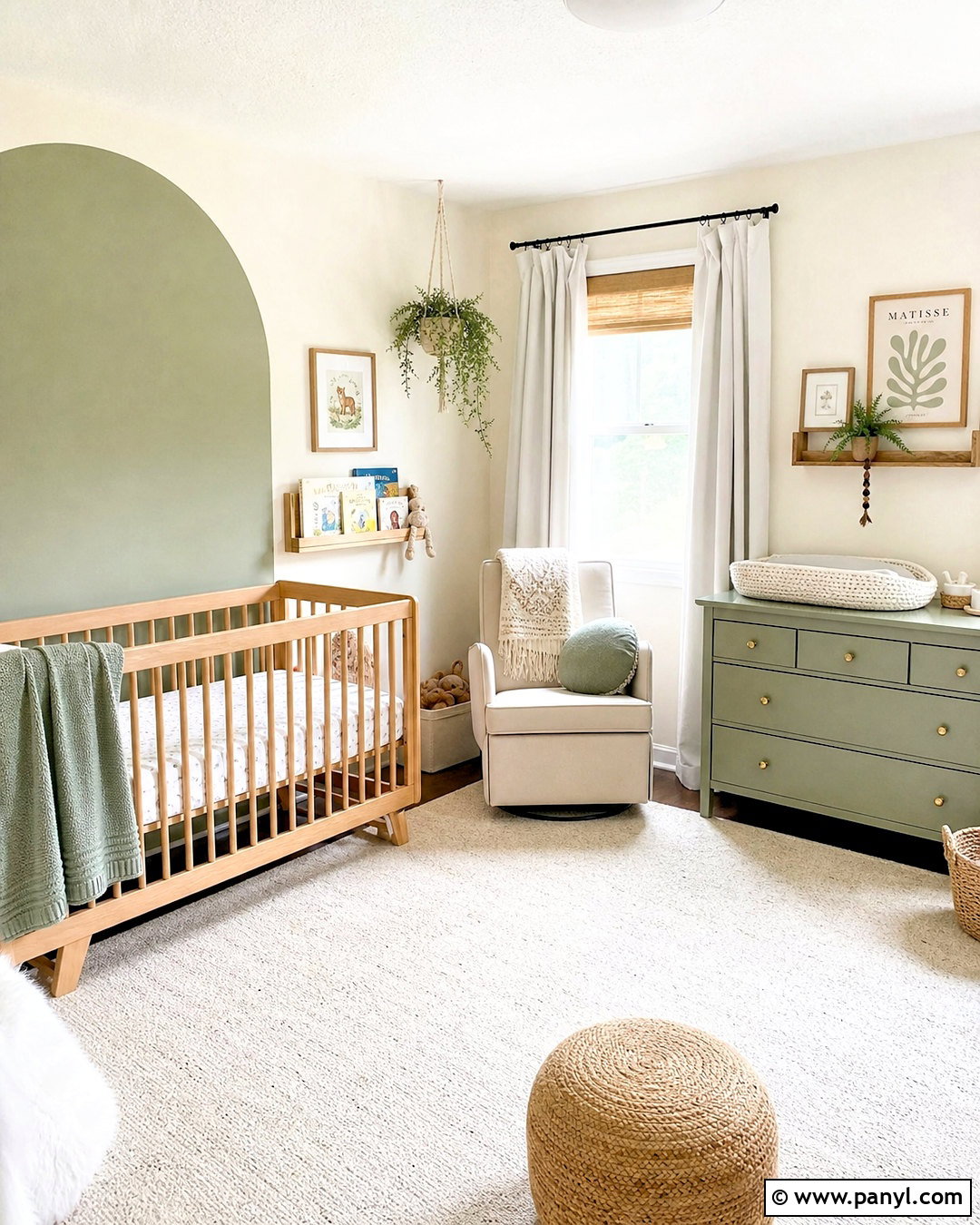
A limited budget can still produce a complete nursery when the design starts with a clear color palette. Choose two neutral shades and one accent color, such as cream, natural wood, and sage green. Refresh a sturdy dresser with paint and new knobs, then coordinate it with a simple crib and an affordable secondhand glider that meets your needs. Use removable wall decals or a hand-painted arch instead of costly wallpaper. Add warmth with a washable area rug, plain curtains, and matching woven or canvas storage bins. Printable artwork in basic frames can create an inexpensive focal point above the dresser. Spend first on essential, suitable furniture and window treatments, then add decorative pieces slowly. The finished room will feel intentional rather than incomplete.
Conclusion:
The best nursery is not the one with the most decorations. It is the room that supports daily routines while feeling comfortable, personal, and easy to maintain. Start with a practical furniture layout and a simple palette, then add texture, storage, artwork, and one memorable feature. Natural wood, soft colors, washable rugs, closed storage, and flexible furniture can work in almost any space or budget. Keep the crib clear, choose cordless window coverings, and position furniture away from window cords, following current CPSC guidance. () Most importantly, create a room that feels good to your family. Use these 20 simple nursery ideas as starting points, then adjust each look for your home.

Related Ideas and Inspiration:
Leave a Reply