
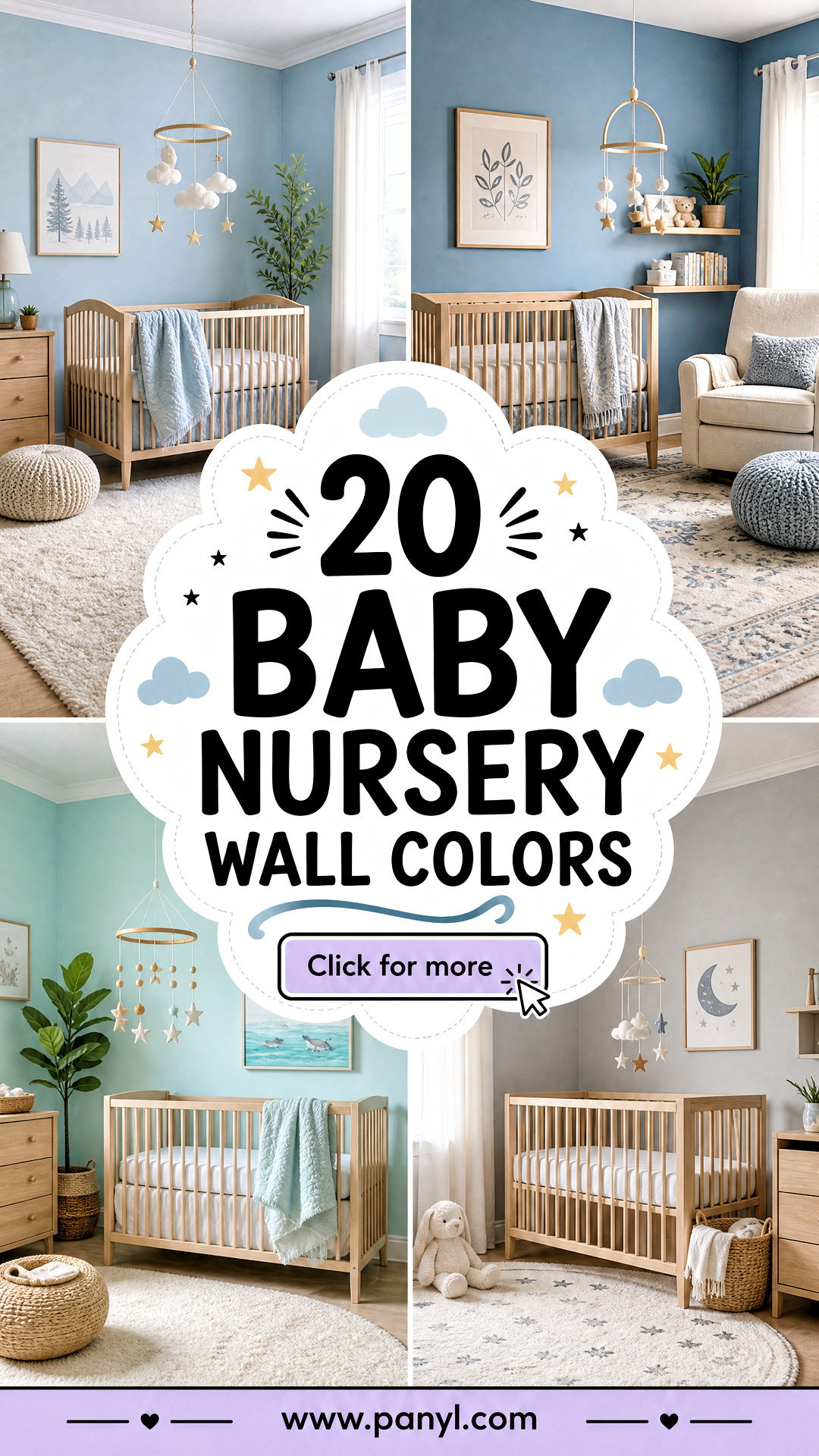
These 20 Baby Nursery Wall Colors make it easier to create a room that feels calm, welcoming, and practical from infancy through the toddler years. The best palette considers more than paint alone. Wall color should work with the room’s natural light, flooring, crib finish, window treatments, storage, and decorative accents. Soft greens and blues offer a restful look, while warm whites, earthy neutrals, muted pinks, and gentle clay tones bring warmth without overwhelming the space. Before painting, sample each color on multiple walls and view it morning, afternoon, and evening. Choose a washable low- or zero-VOC interior paint, follow the manufacturer’s ventilation guidance, and allow adequate drying time. Explore these complete room looks inspired by 20 Baby Nursery Wall Colors.
1. Warm White Nursery Walls
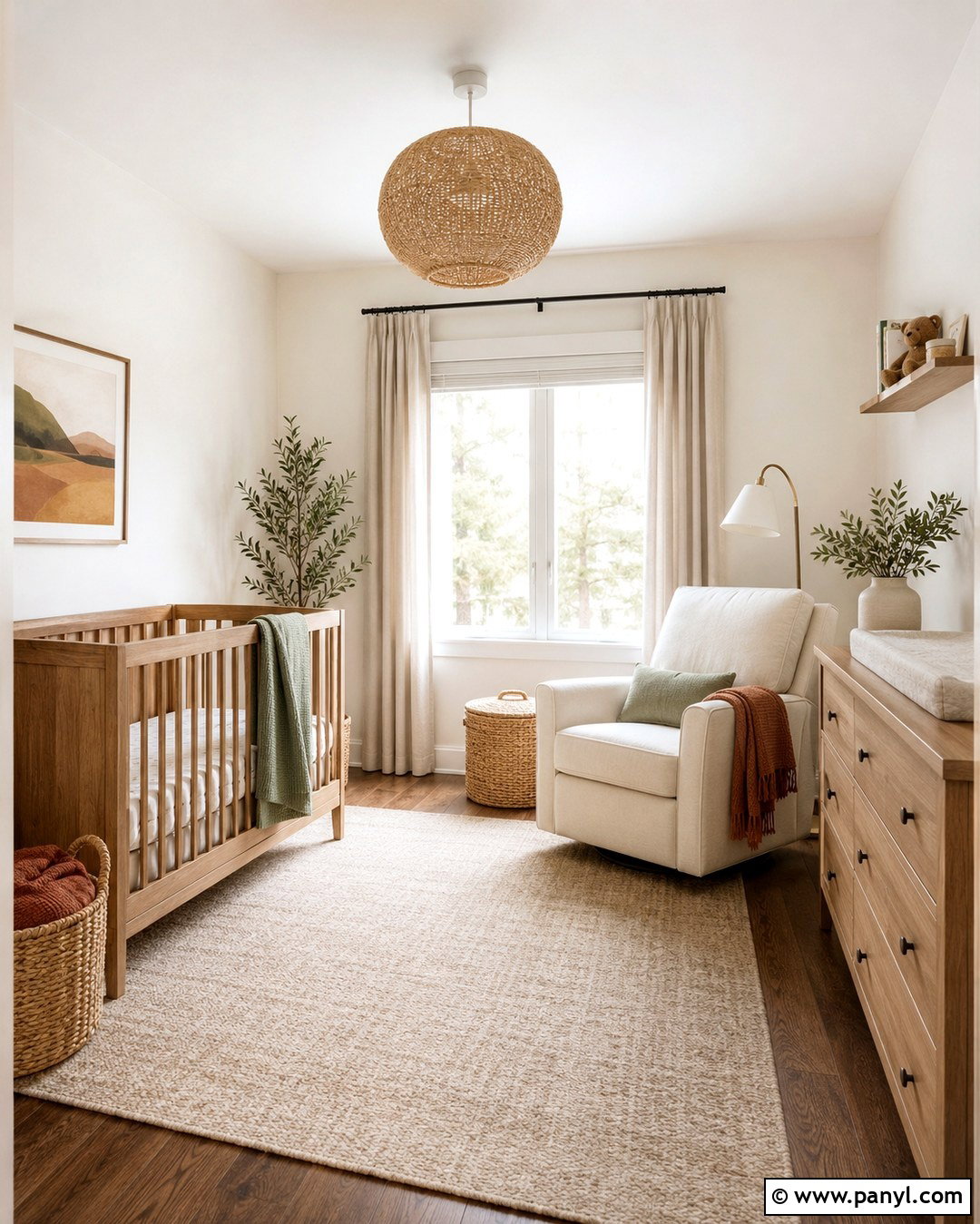
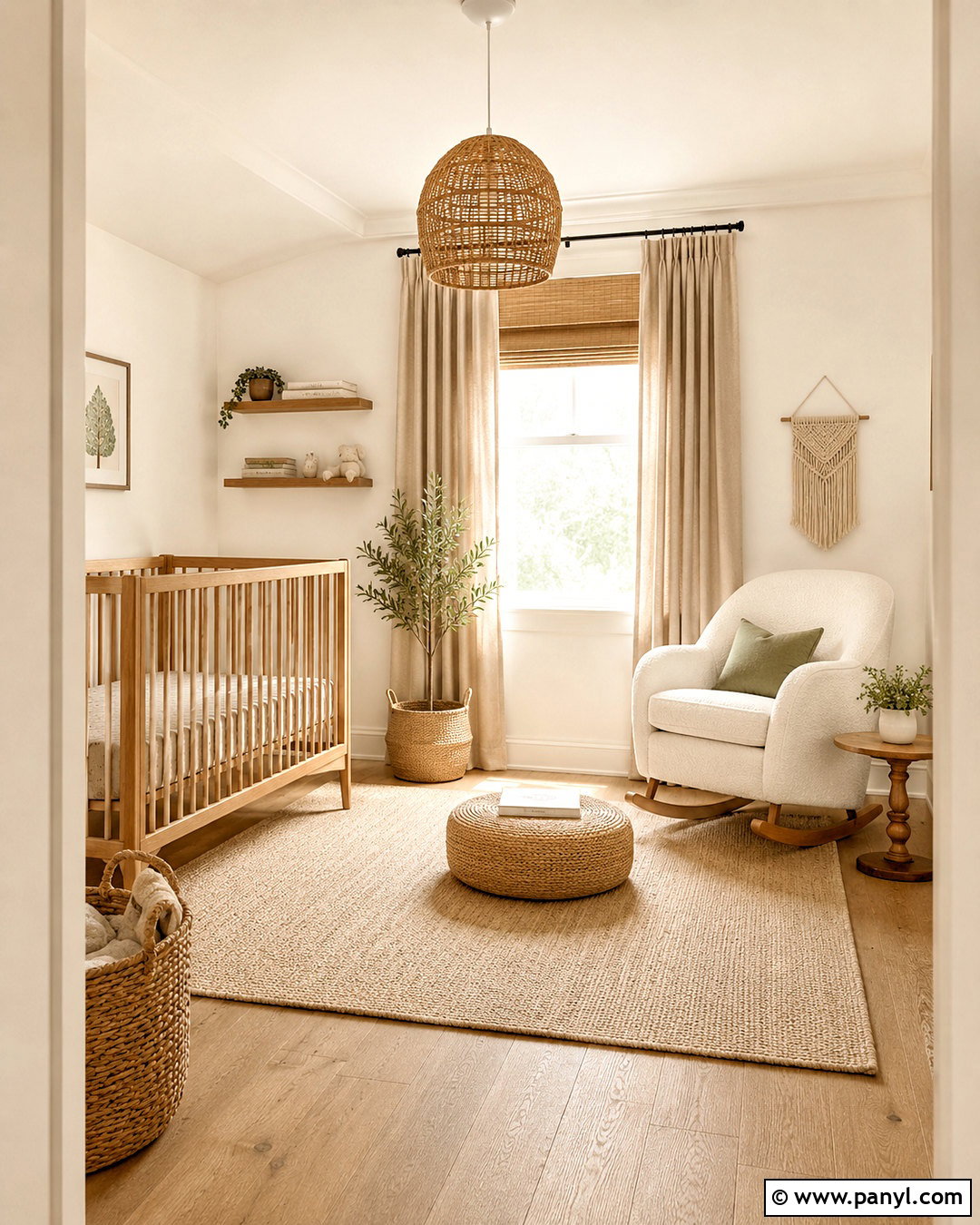
Warm white walls create a bright, flexible nursery without the stark feeling of a cool, blue-based white. Choose a creamy shade with subtle beige or yellow undertones, then add a natural oak crib, matching dresser, and woven storage baskets. An ivory upholstered glider keeps the room soft, while a washable oatmeal rug adds warmth underfoot. Frame simple woodland prints in light wood and hang full-length flax linen curtains to filter strong daylight. Small accents in sage green, muted rust, or dusty blue prevent the neutral palette from looking unfinished. Use the same warm white on the ceiling and slightly deeper cream on built-in storage. This complete scheme feels airy in a small nursery and easily adapts as the child grows.
2. Cream Nursery Walls
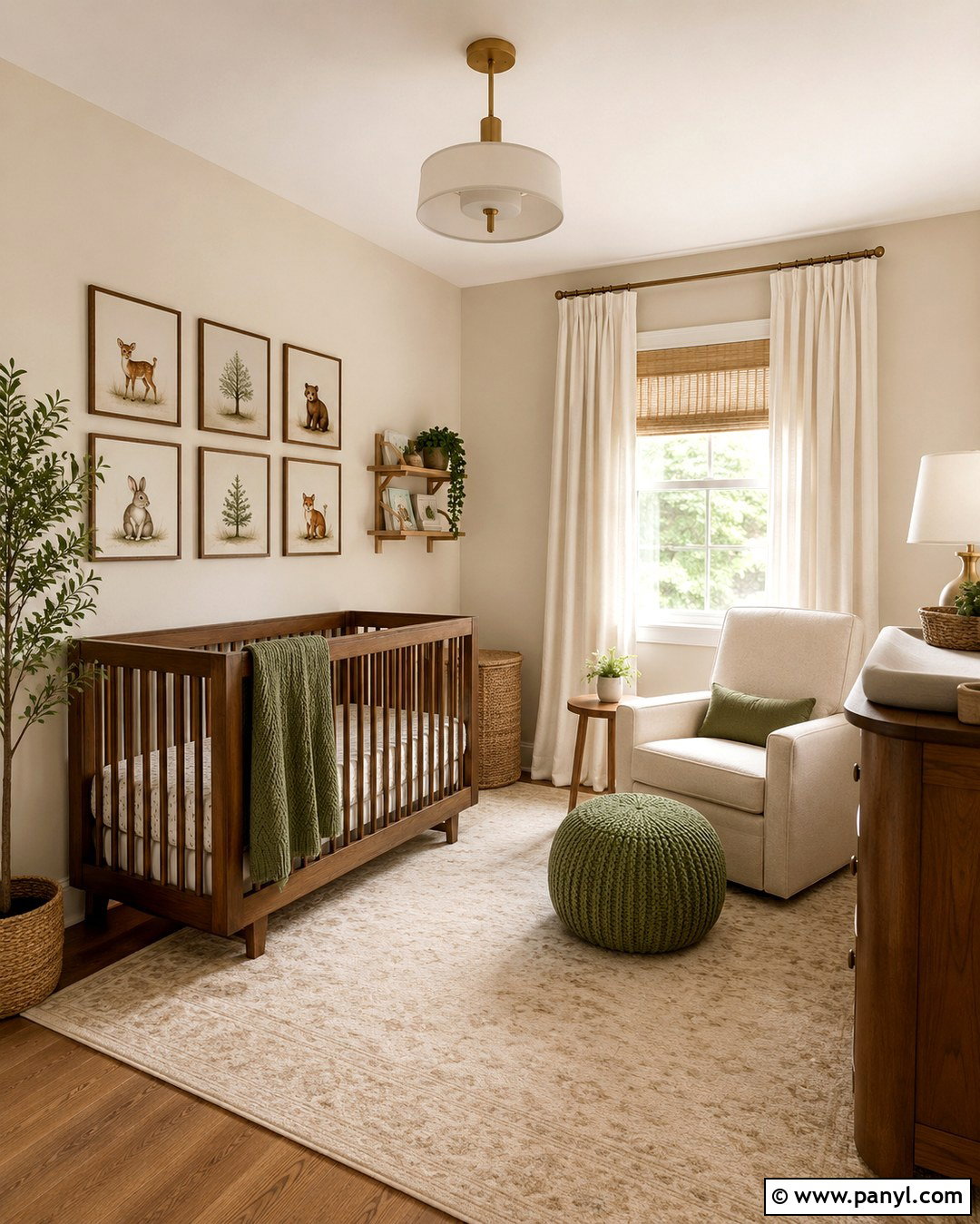
Cream nursery walls bring gentle warmth to rooms that receive limited sunlight. Look for a pale cream that feels soft rather than noticeably yellow. Pair it with a walnut or medium-tone wood crib to create comfortable contrast. A boucle glider, light beige rug, and ivory curtains continue the cozy foundation without making everything match. Introduce color through muted green artwork, clay-colored storage bins, and a small brass ceiling light. A natural wood picture ledge can display lightweight art securely above a low dresser rather than the crib. Finish the room with woven shades and a simple mobile in cream and tan. The result is a traditional yet updated nursery that feels sunny, layered, and peaceful throughout the day.
3. Light Greige Nursery Walls
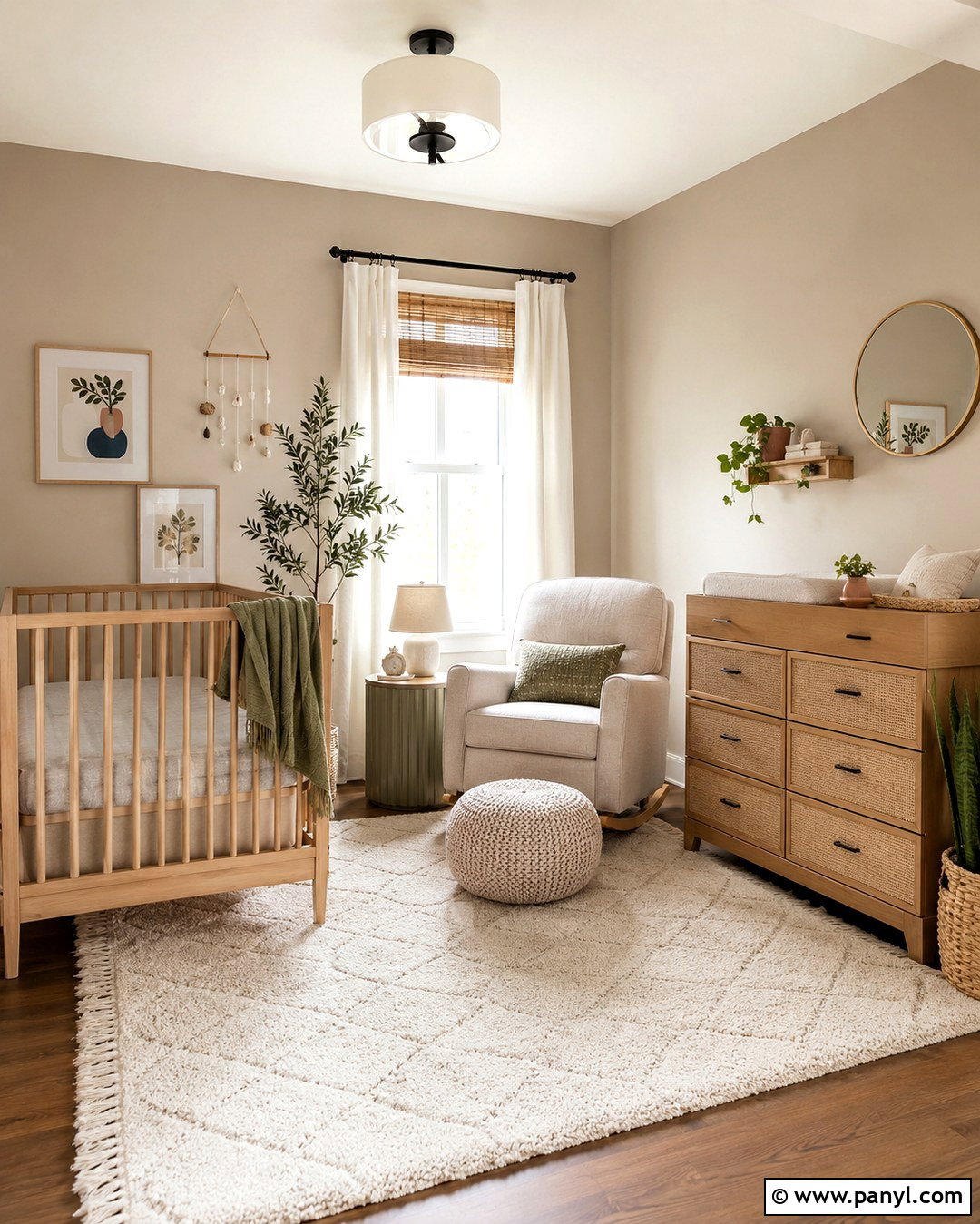
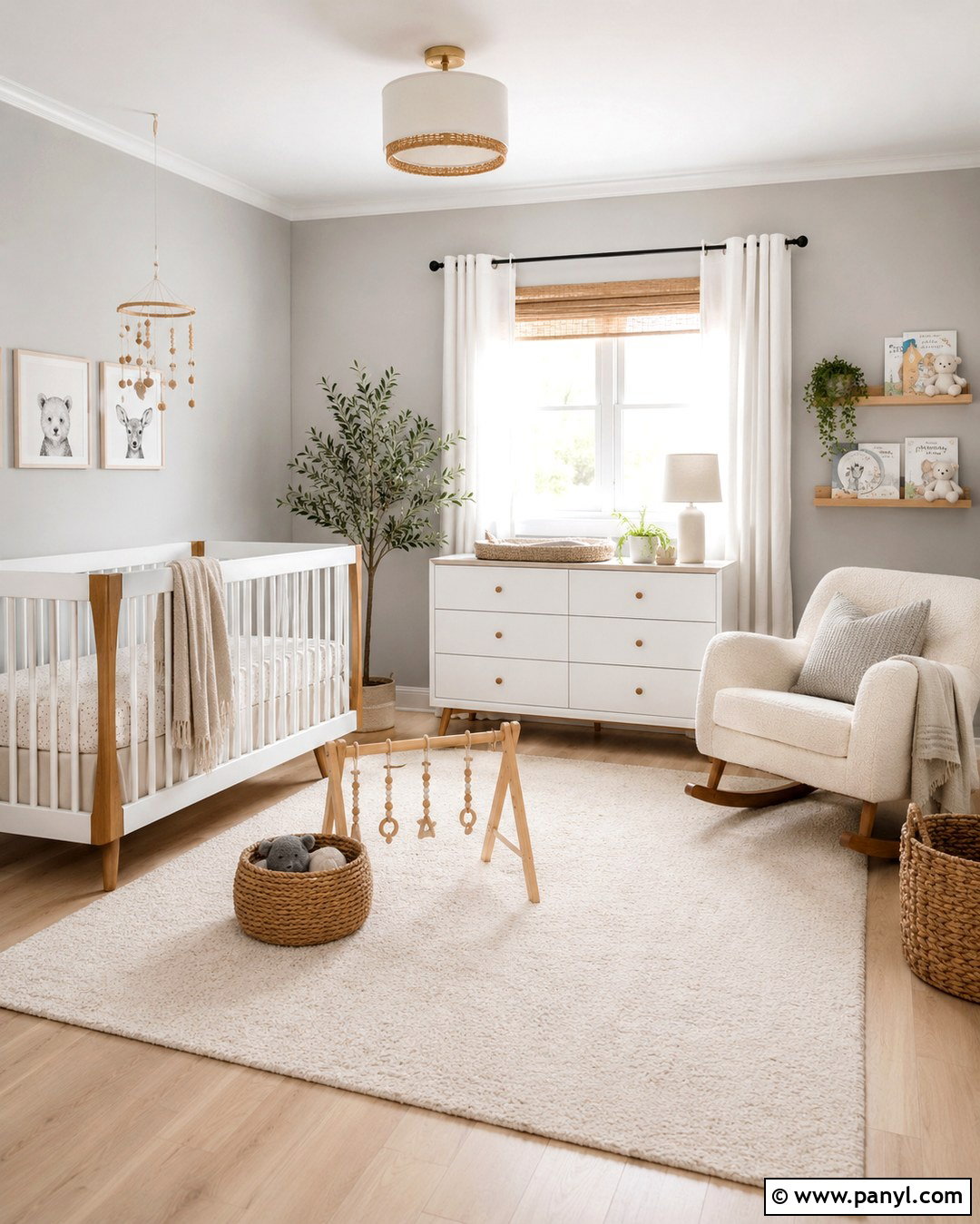
Light greige combines the softness of beige with the clean look of gray, making it useful for a calm, gender-neutral nursery. Select a warm greige without strong purple undertones and pair it with white trim for gentle definition. A light oak crib, cane-front dresser, and oatmeal glider build a relaxed organic look. Add a cream rug with a subtle geometric pattern and linen curtains in a shade close to the walls. Muted blue, sage, and terracotta accents can appear in framed prints, baskets, and small decorative objects. Matte black hardware adds just enough contrast without making the room feel busy. This palette works especially well in an open, sunny nursery because it balances bright daylight while keeping the space comfortable and grounded.
4. Mushroom Nursery Walls
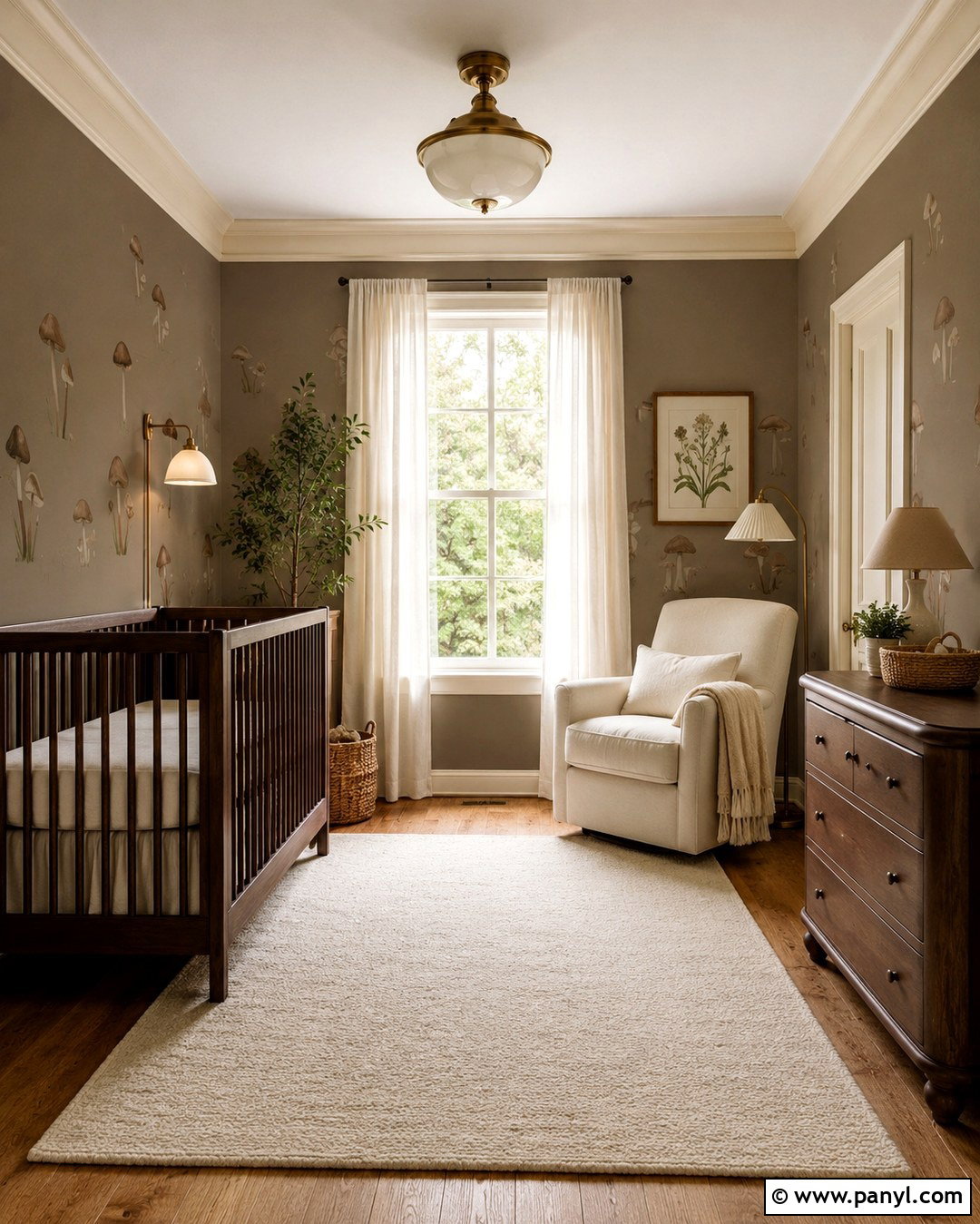
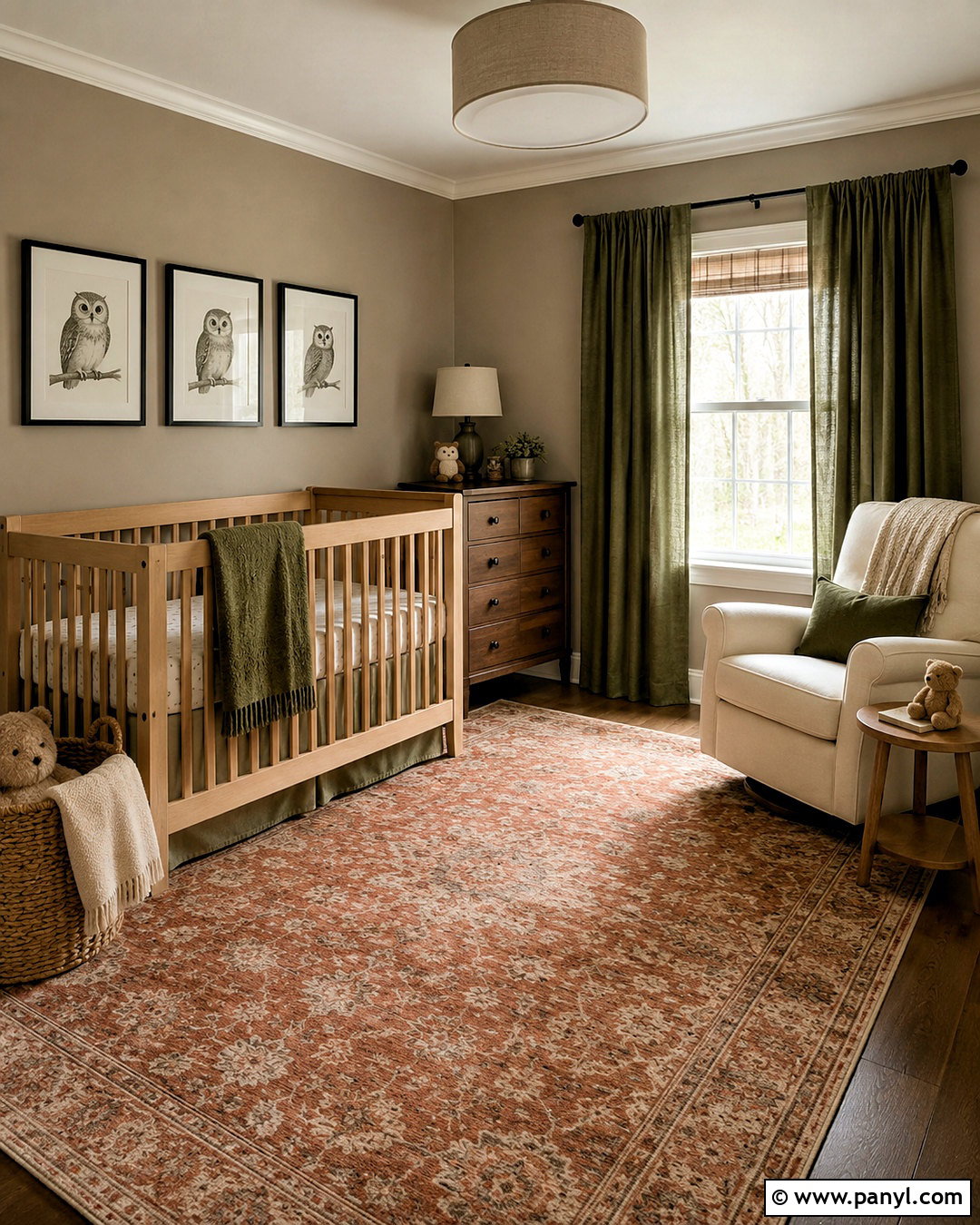
Mushroom walls offer more depth than beige while remaining easy to coordinate with nursery furniture. This earthy brown-gray color looks especially polished beside creamy white trim, warm oak flooring, and a dark walnut crib. Keep the room from feeling heavy with an ivory glider, pale wool rug, and sheer off-white curtains. Introduce botanical artwork in olive, rust, and soft black to support the natural palette. A rounded wood dresser and antique-inspired brass ceiling fixture add character without creating a themed room. Use mushroom on every wall for a cocooning effect, but keep the ceiling light cream. The finished nursery feels warm, sophisticated, and adaptable enough to become a toddler bedroom later with only small decor changes.
5. Soft Taupe Nursery Walls
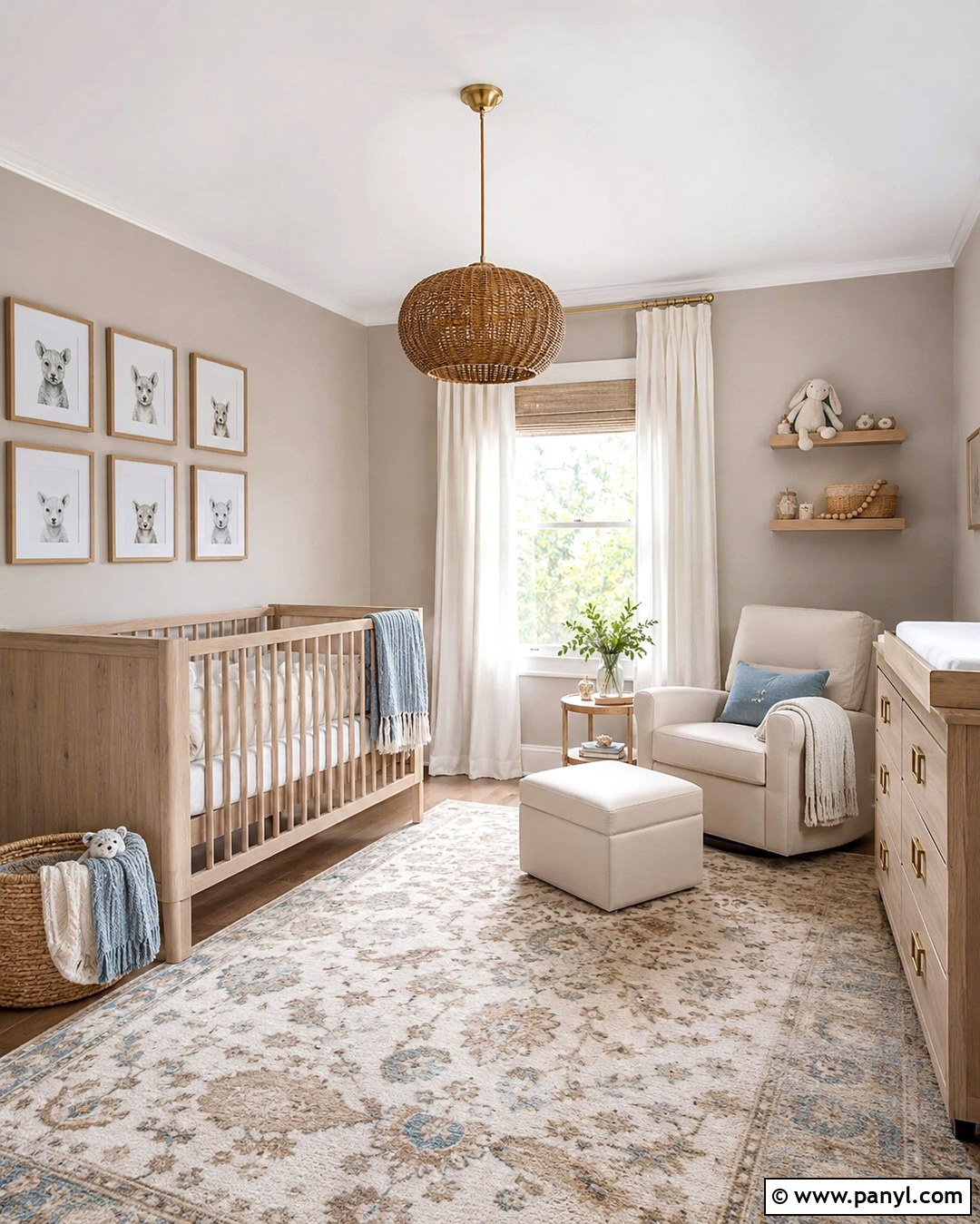
Soft taupe nursery walls create a restful background with slightly more warmth than standard gray. Choose a light taupe with balanced beige undertones, especially if the room has cool northern light. Build the design around a white oak crib, matching dresser, and comfortable ivory glider. Layer in a cream-and-tan rug, woven pendant, and full-length off-white curtains to give the neutral room texture. Dusty blue or muted rose accents can personalize the palette without changing its calm character. Use brushed brass knobs and a slim brass floor lamp for a subtle glow. A simple grid of animal sketches adds visual interest above the dresser. This complete look is understated, practical, and easy to refresh with new textiles as the baby grows.
6. Sage Green Nursery Walls
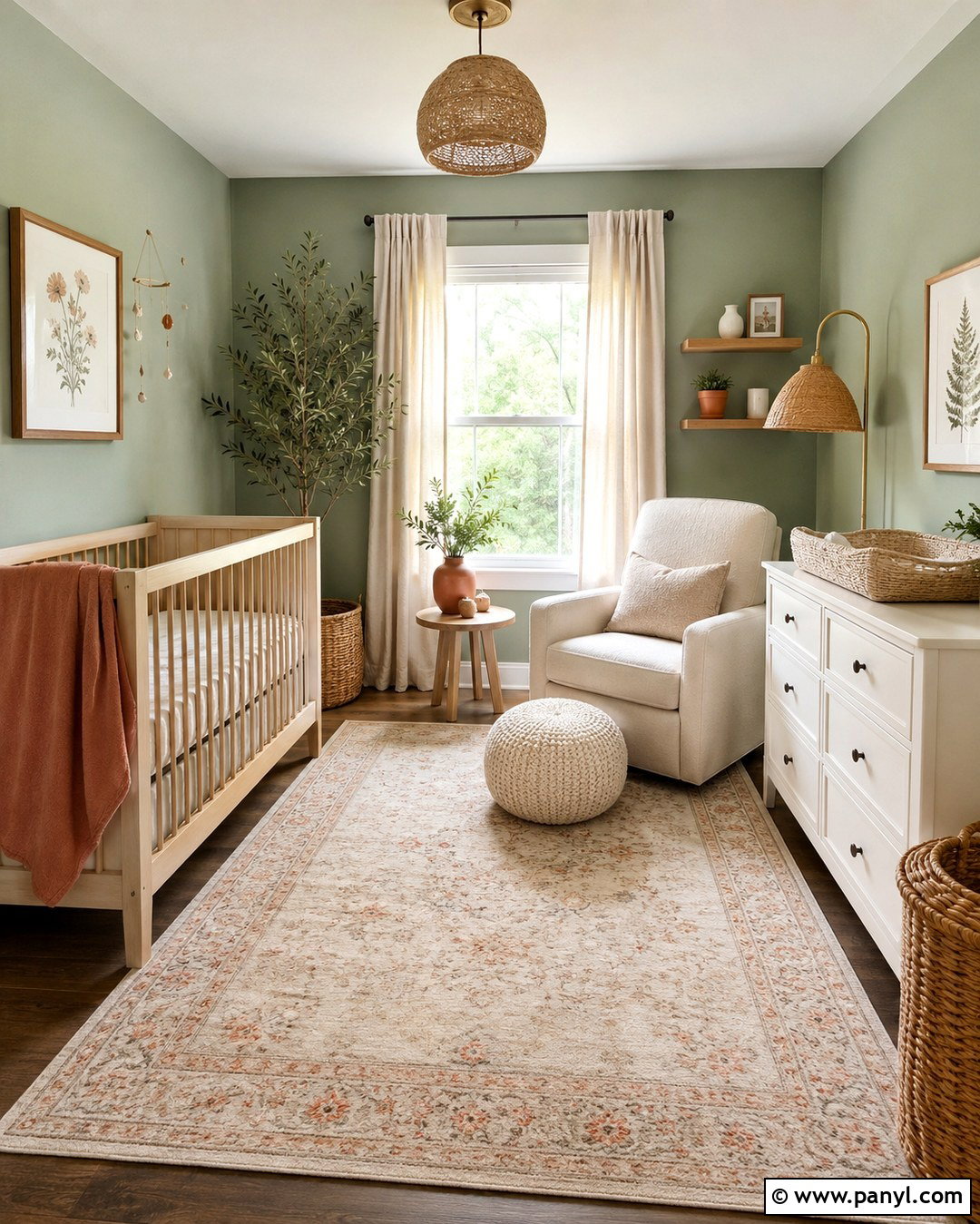
Sage green nursery walls feel natural, soothing, and surprisingly versatile. Choose a muted green with warm gray undertones rather than a bright garden shade. Pair it with a pale oak crib, ivory dresser, and cream glider to keep the space open and light. A washable rug in beige and faded rust adds warmth, while linen curtains soften the windows. Decorate with botanical illustrations, woven baskets, and a few terracotta accessories for an earthy woodland influence that does not feel overly themed. White trim provides a clean edge around the green walls. For extra depth, use a slightly darker sage on a low bookcase. The finished nursery feels peaceful and established, and the color can transition naturally into an older child’s room.
7. Eucalyptus Green Nursery Walls
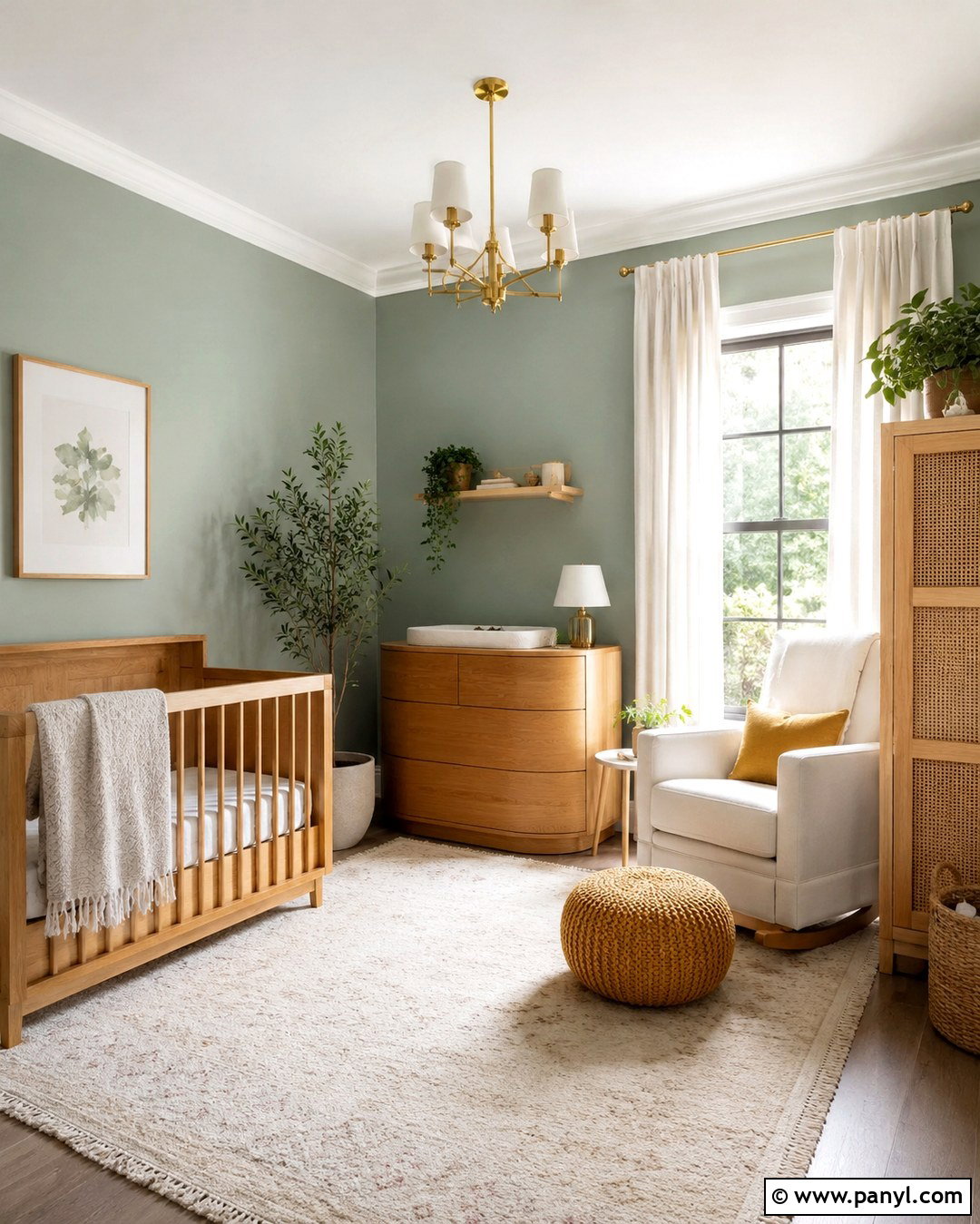
Eucalyptus green offers a cooler, fresher alternative to traditional sage. Its soft blue-gray undertone works beautifully in a nursery with warm wood furniture and plenty of daylight. Paint all four walls eucalyptus, then balance them with crisp off-white trim and a white ceiling. Choose a honey oak crib, curved dresser, and natural cane storage cabinet for warmth. An ivory glider and cream rug keep the seating area quiet and comfortable. Add muted mustard, tan, and dusty blue through artwork and storage baskets. Simple leaf prints can reinforce the botanical palette without covering every surface in greenery. Finish with brushed brass lighting and natural linen curtains. This nursery looks clean and modern while still feeling gentle, layered, and welcoming.
8. Dusty Olive Nursery Walls
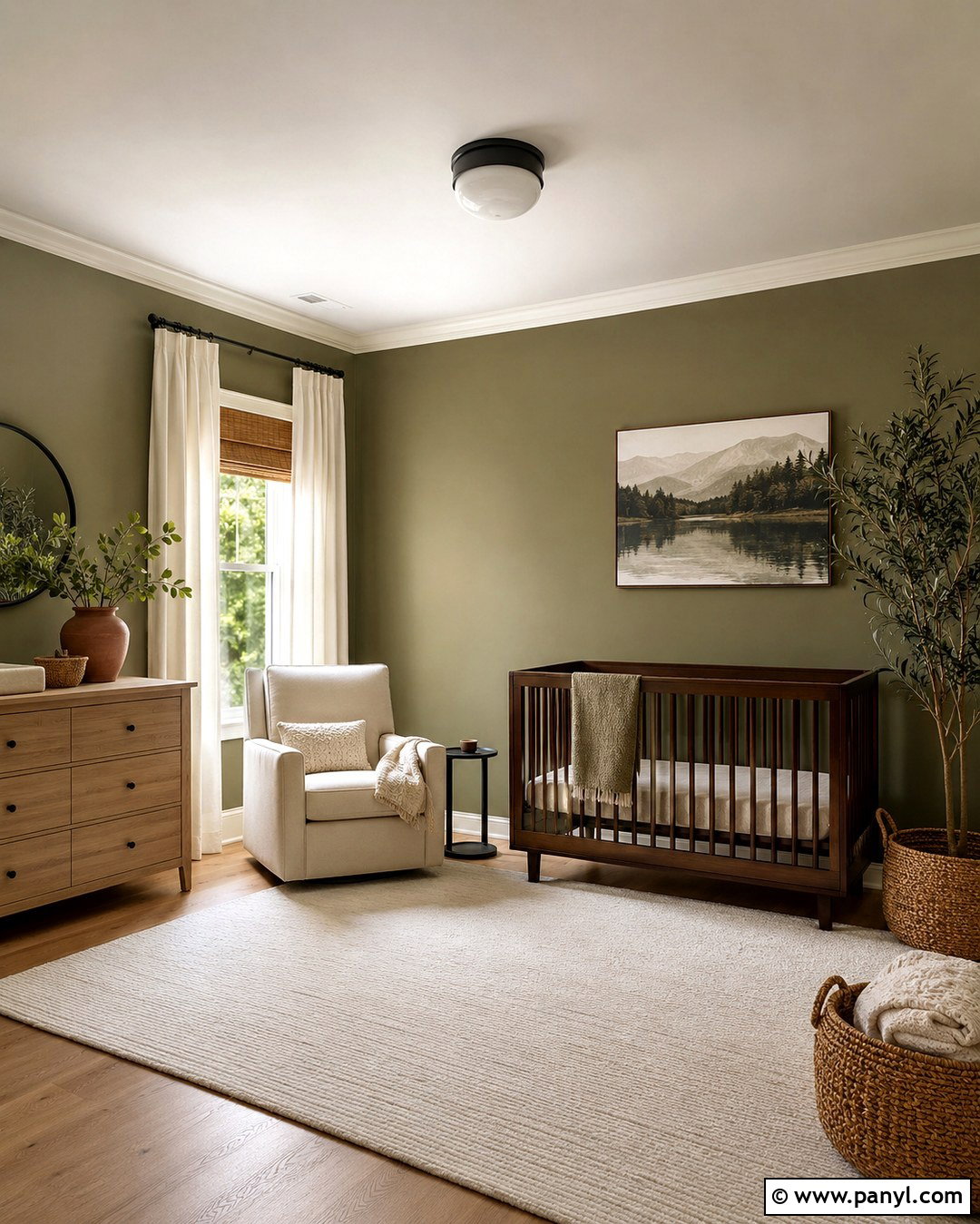
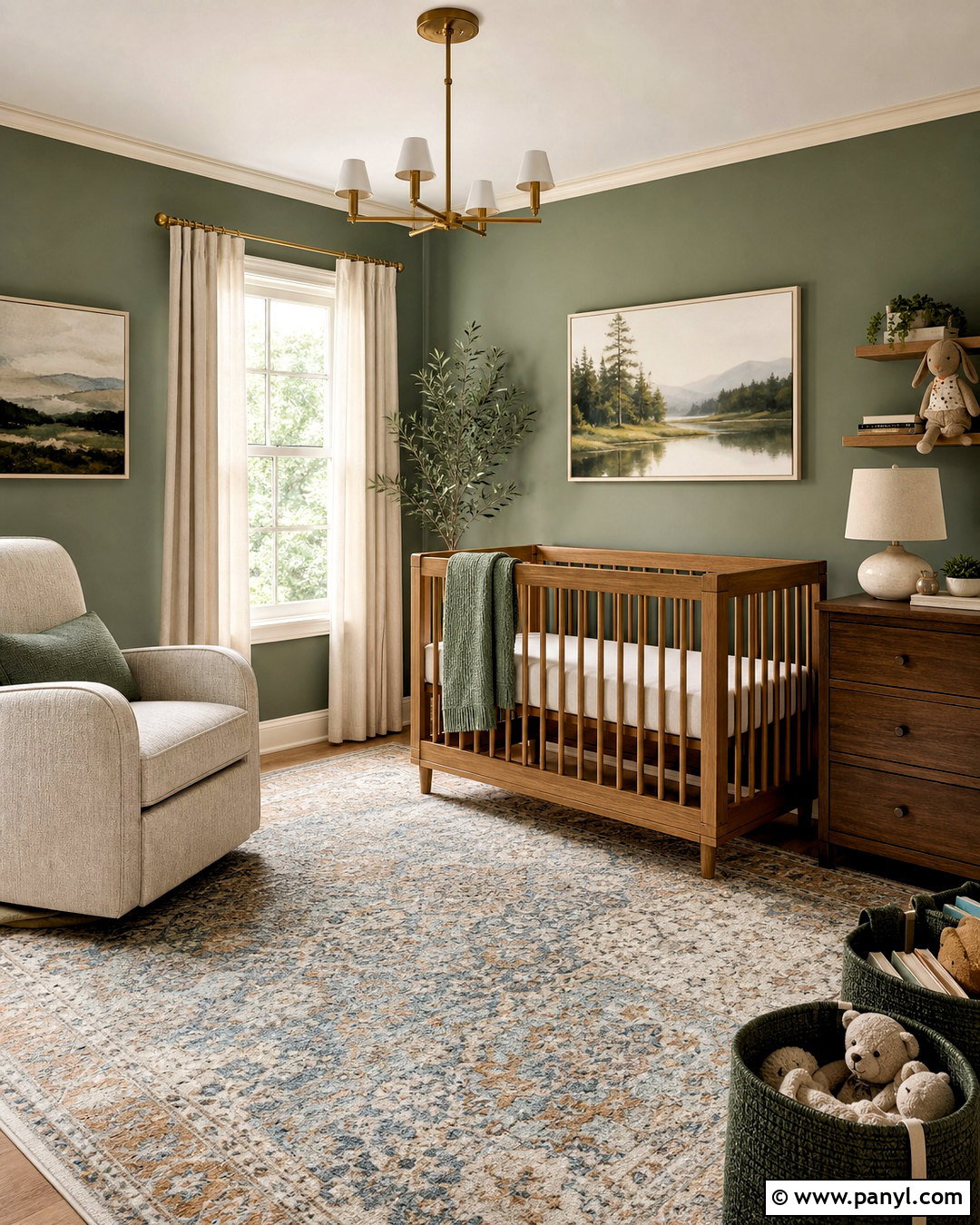
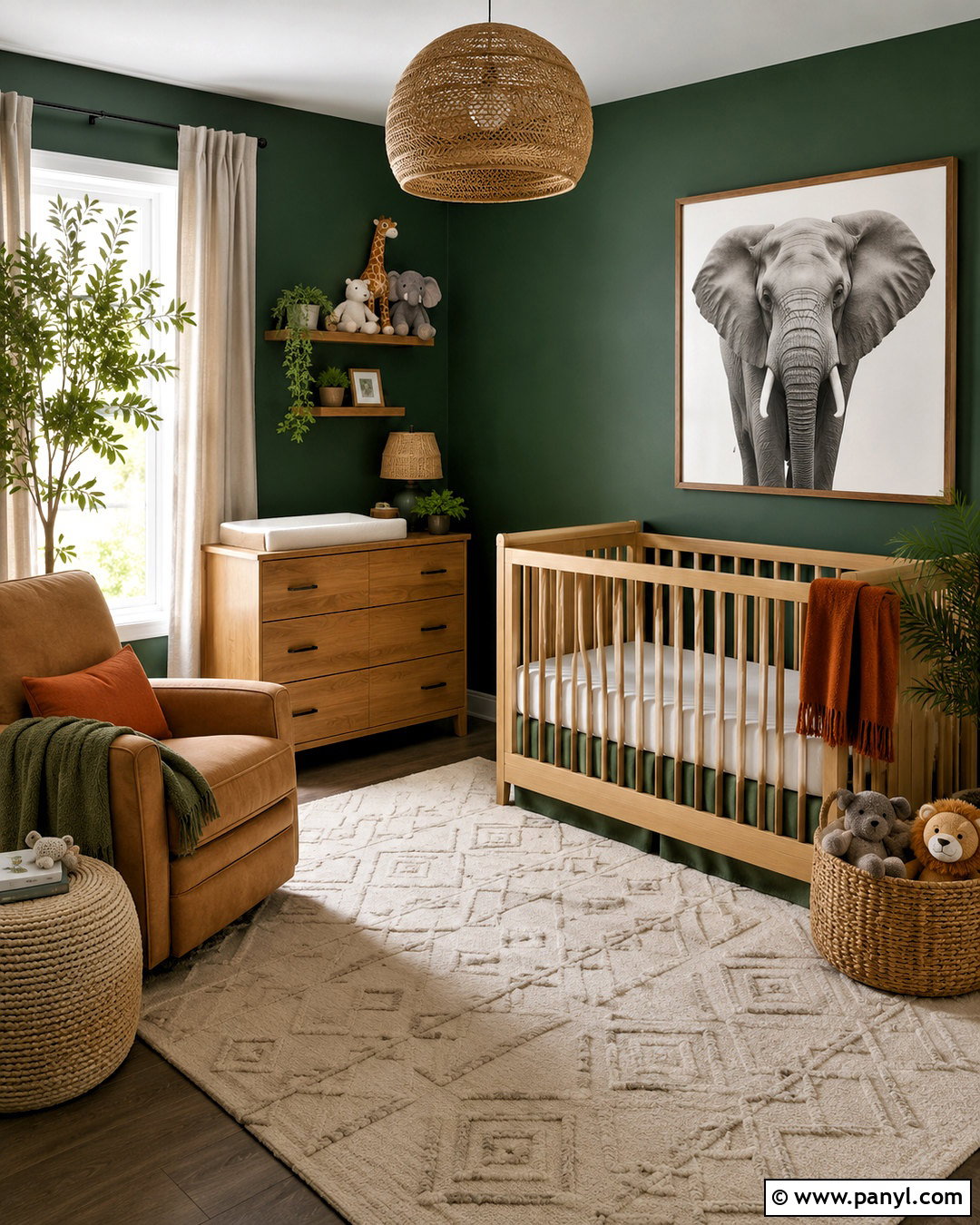
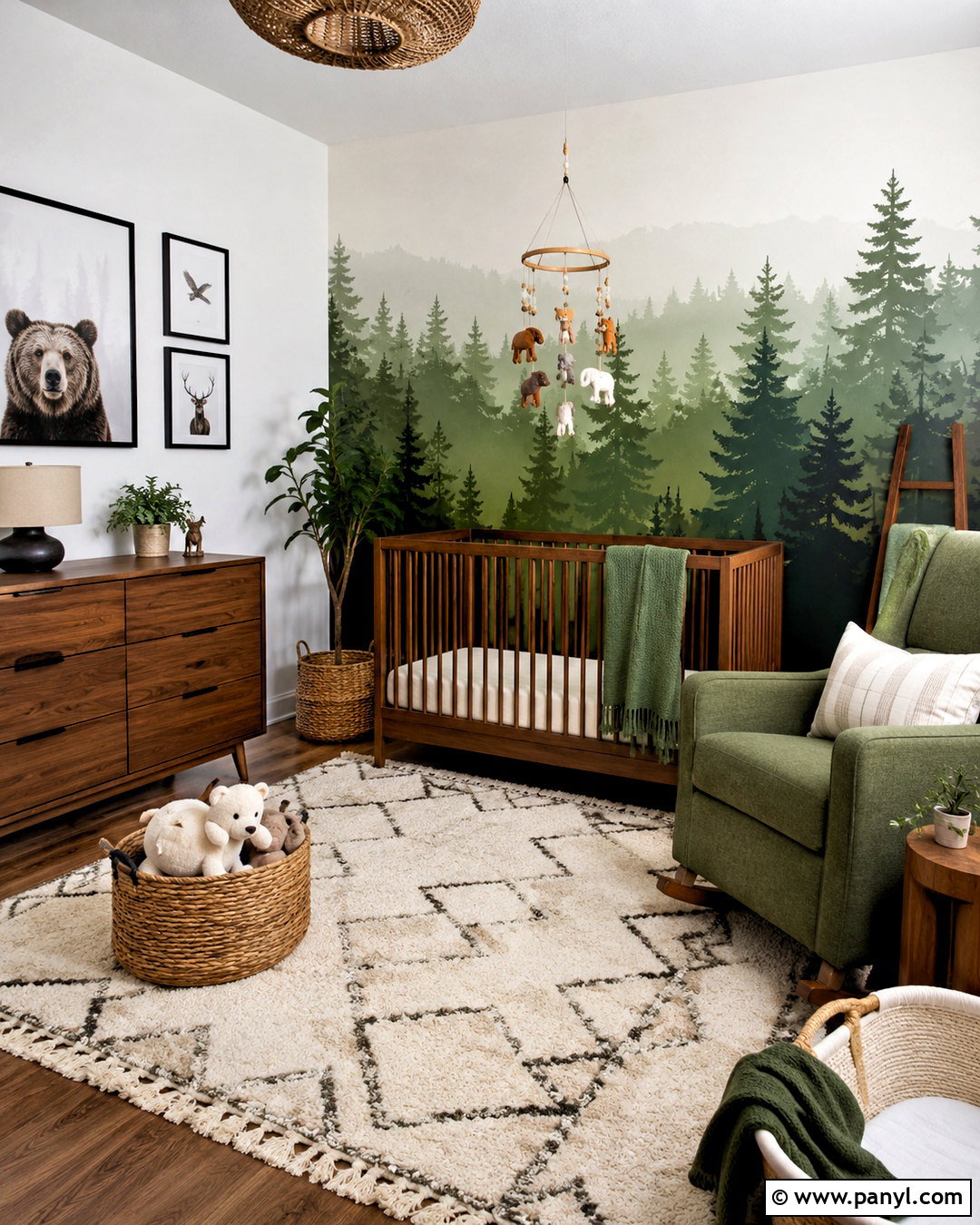
Dusty olive walls create a cozy nursery with richer color and a grounded, nature-inspired mood. Select a softened olive with gray or brown undertones so it feels restful rather than intense. Pair it with creamy trim, a natural walnut crib, and a light oak dresser to introduce varied wood tones. An oatmeal glider, ivory rug, and warm white curtains brighten the darker walls. Add small accents of clay, muted gold, and black through framed art, cabinet knobs, and baskets. A simple landscape print can serve as the room’s visual focal point above the dresser. Keep the ceiling warm white to reflect light downward. This complete palette suits a nursery with good natural light and transitions easily into a woodland or adventure-themed child’s room.
9. Pale Mint Nursery Walls
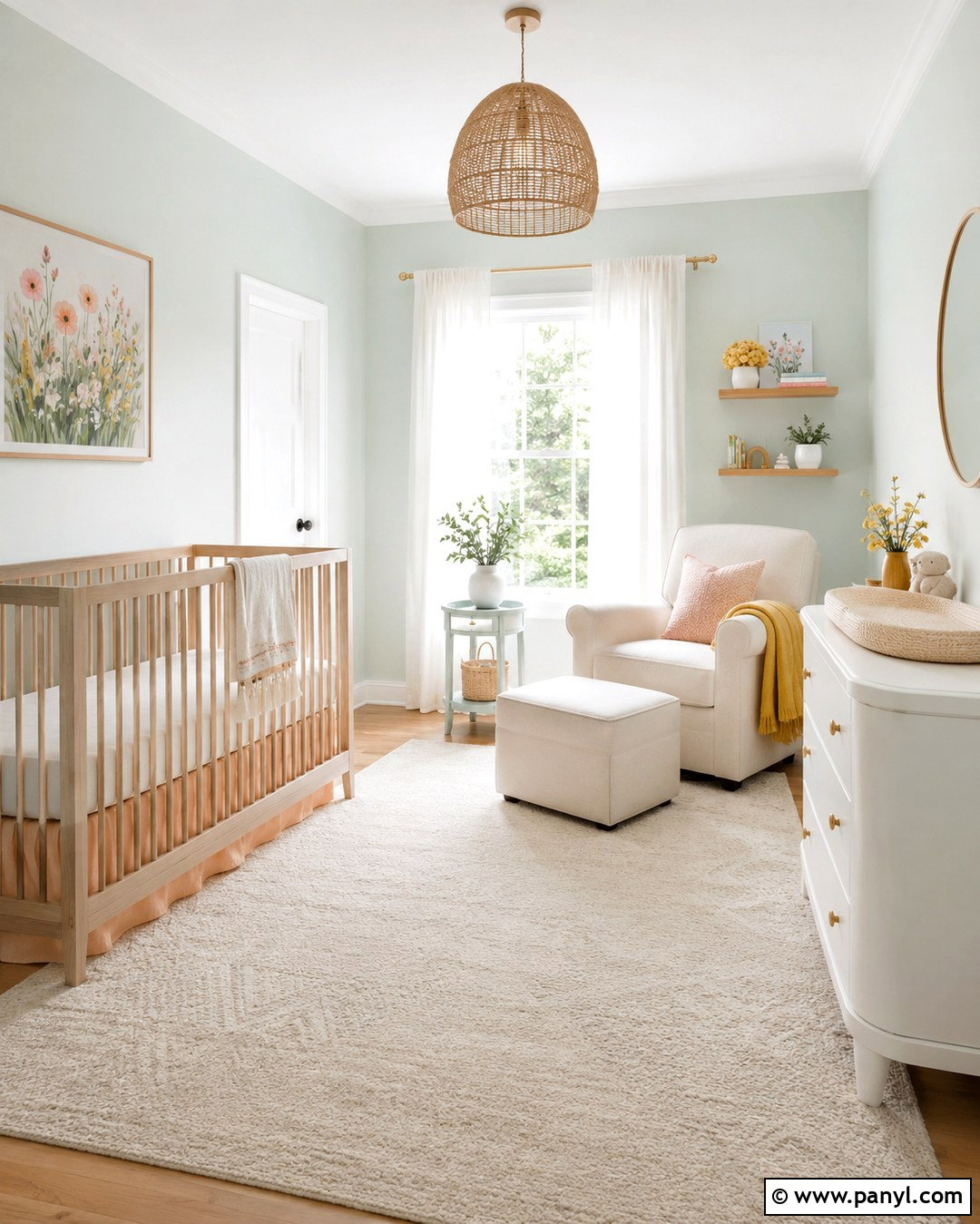
Pale mint walls can make a compact nursery feel fresh and open when the color is softened with gray. Avoid highly saturated mint, which may become visually busy across four walls. Instead, choose a whisper-light green and pair it with white trim, a blond wood crib, and a rounded white dresser. Add an ivory glider, light beige rug, and sheer white curtains for an airy foundation. Small touches of peach, warm yellow, and natural rattan prevent the mint from feeling cold. Decorate with simple garden artwork and soft fabric storage bins rather than a strong theme. A woven ceiling fixture adds texture overhead. The completed room feels cheerful in the daytime, gentle in the evening, and flexible enough for changing decor.
10. Misty Blue Nursery Walls
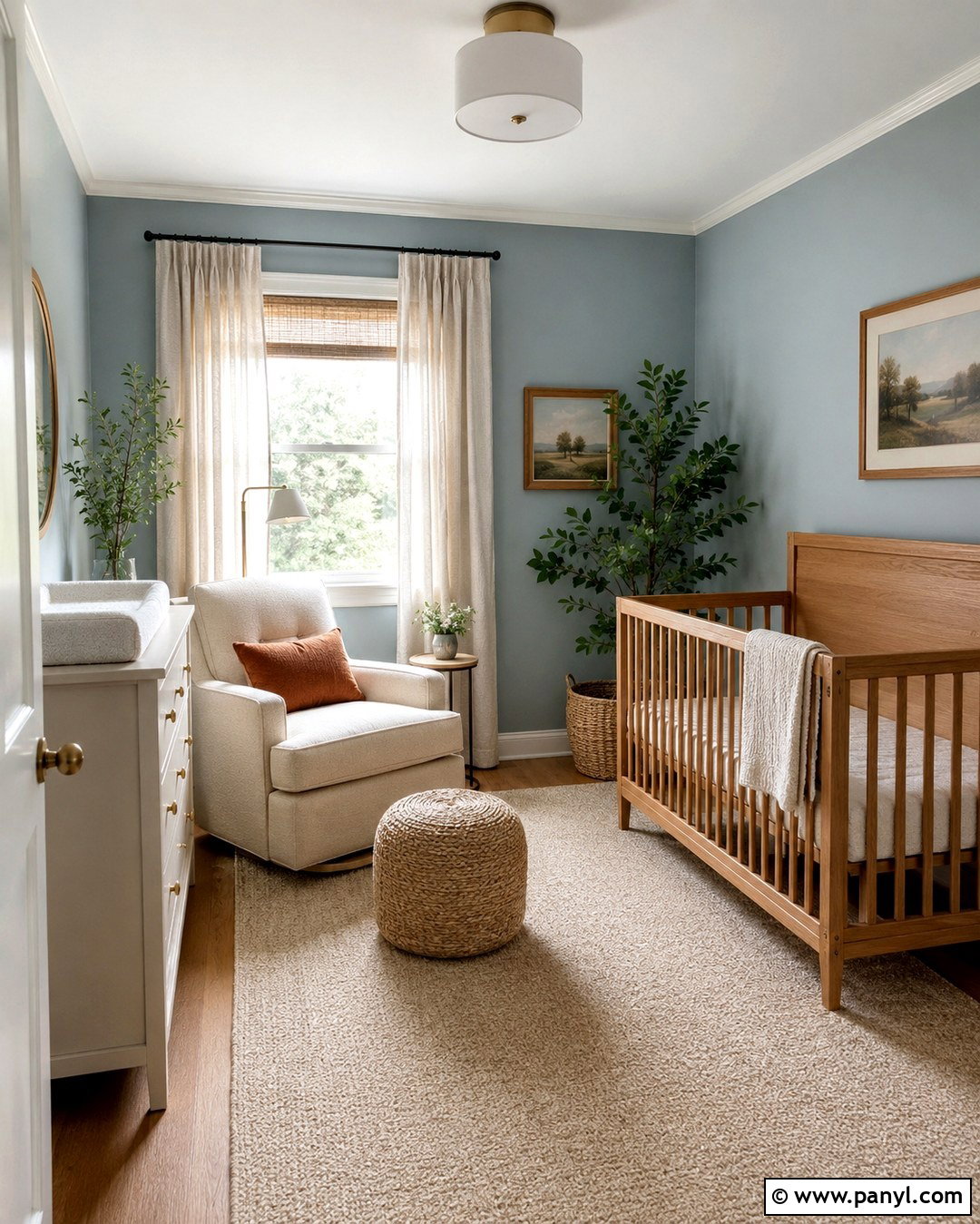
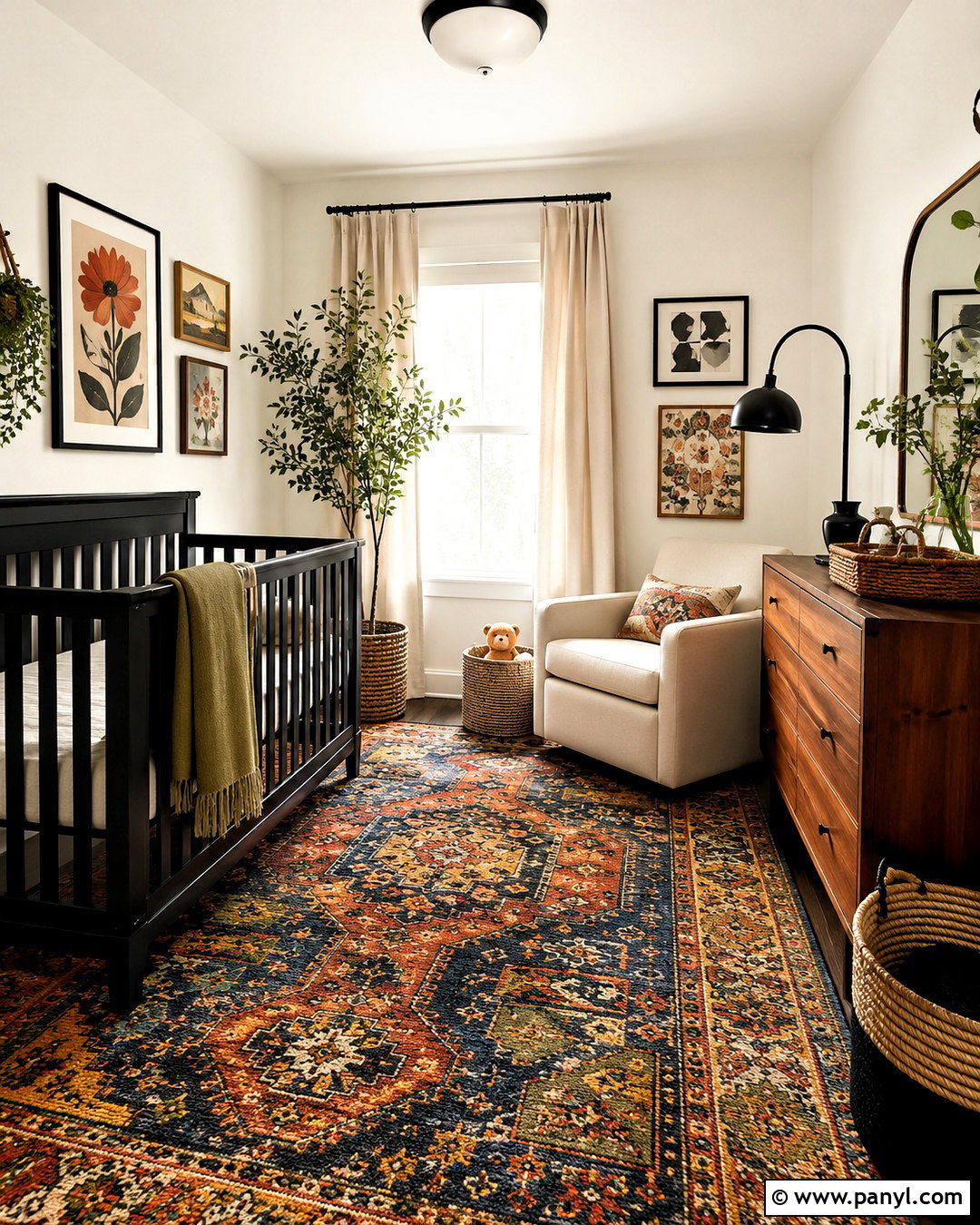
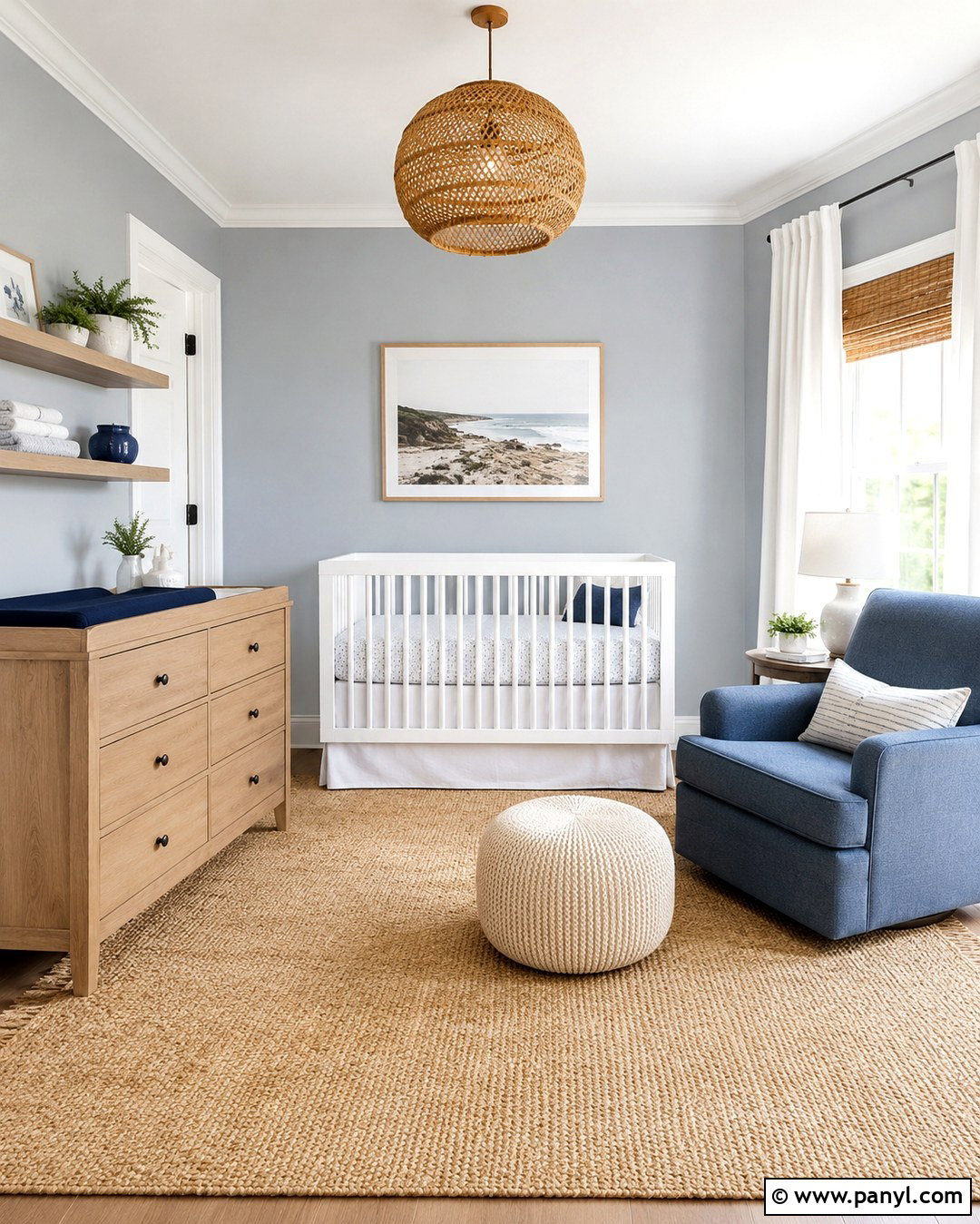
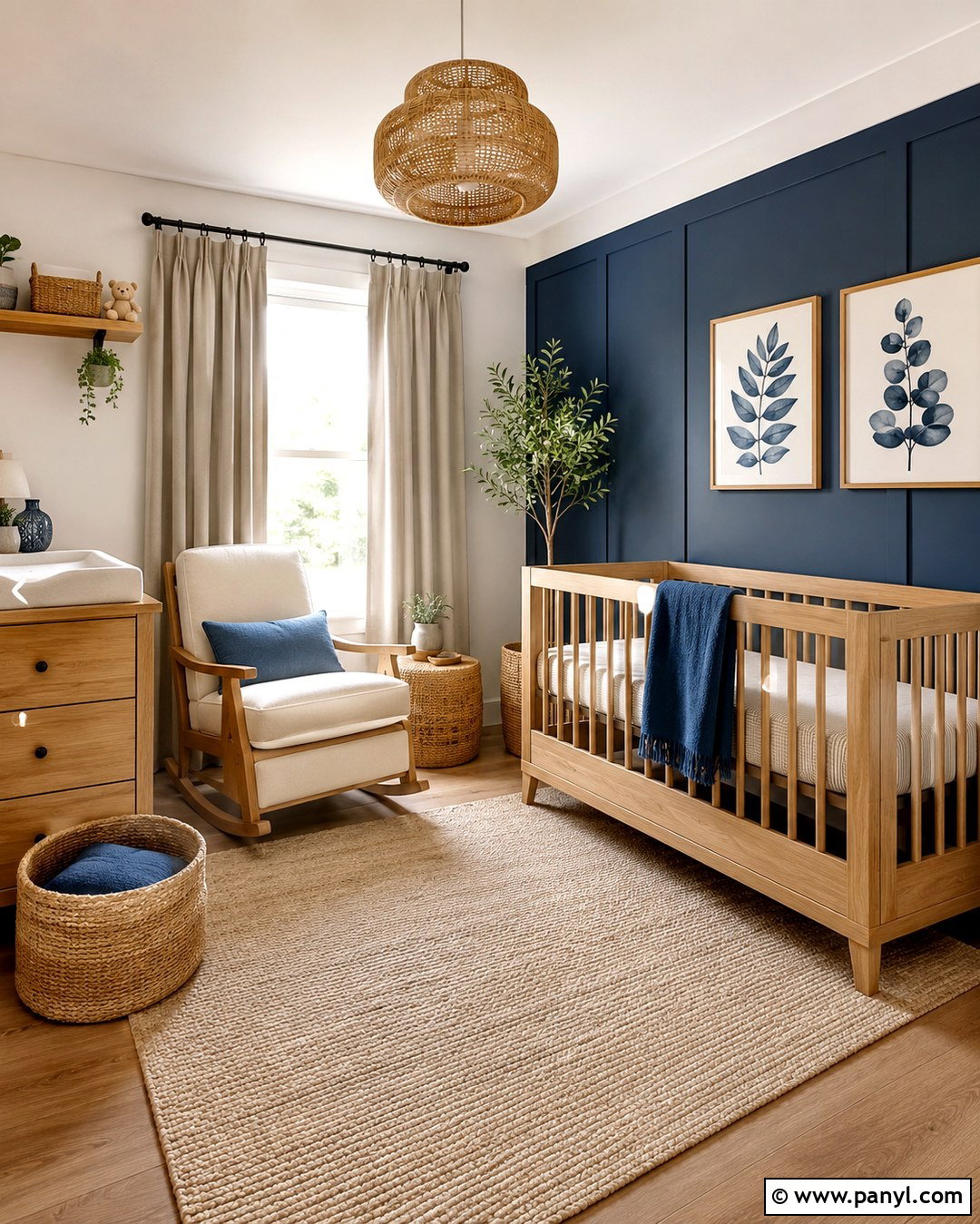
Misty blue nursery walls provide color while maintaining a quiet, spacious feeling. Look for a pale blue with a touch of gray so it does not read as overly bright or icy. Combine it with warm white trim, a medium oak crib, and an ivory dresser. A cream glider and beige woven rug balance the cool walls with warmer neutrals. Use natural linen curtains, brushed brass hardware, and light wood frames to create a polished finish. Subtle accents in rust, camel, and muted navy add depth without turning the room into a strict nautical theme. Hang cloud or landscape artwork near the changing area for a gentle decorative layer. This complete design feels calm, classic, and suitable for nurseries of nearly any size.
11. Dusty Blue Nursery Walls
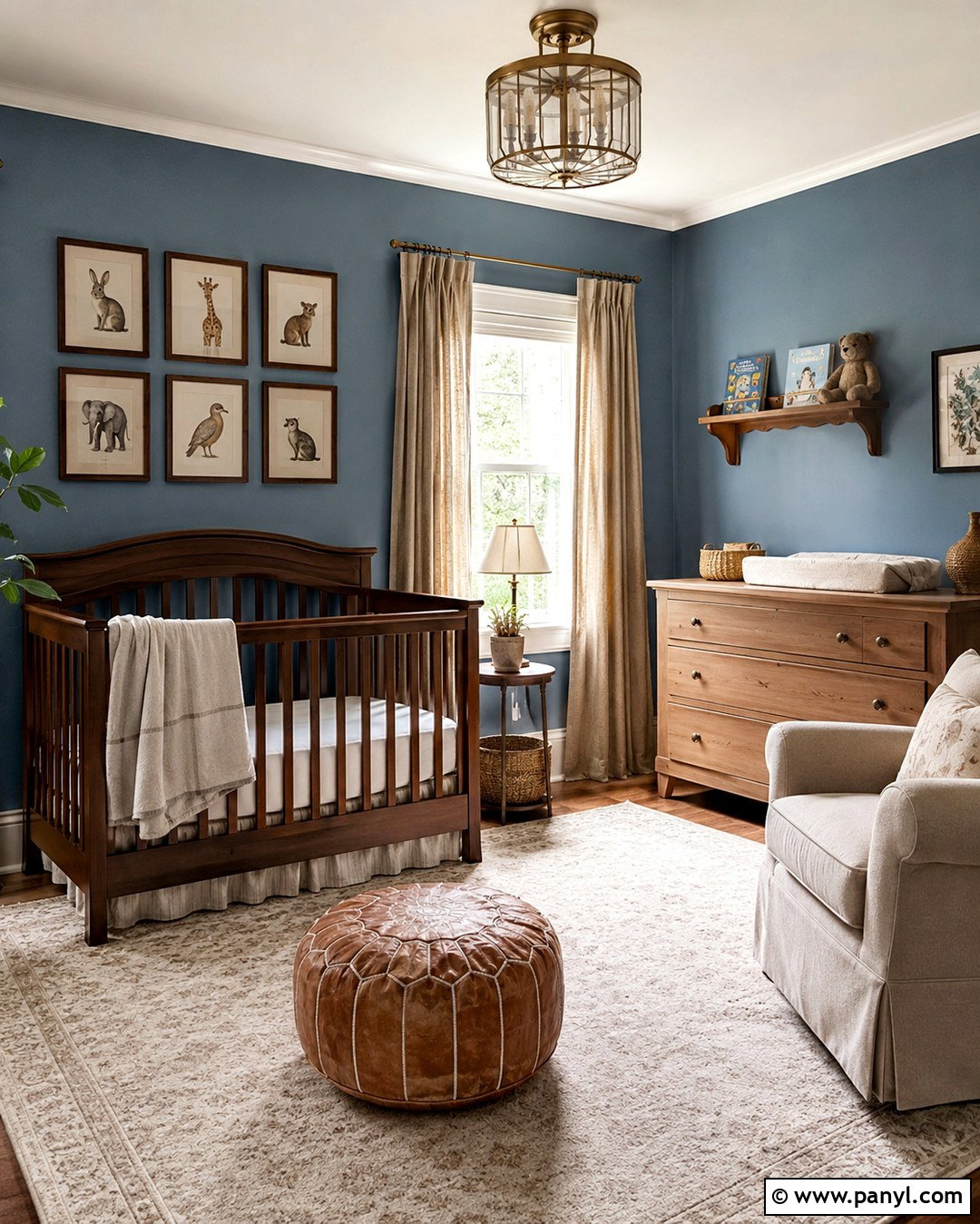
Dusty blue offers more presence than pale blue but remains soft enough for a restful nursery. Choose a muted midtone shade with noticeable gray undertones and use it across all four walls. Warm the room with a walnut crib, natural wood dresser, and caramel-colored leather-look pouf placed near an ivory glider. A cream rug and off-white ceiling stop the deeper color from closing in the space. Add antique brass lighting, flax curtains, and framed vintage animal illustrations for a comfortable traditional touch. Rust and oatmeal accents work well in baskets and decorative accessories. Keep large furniture simple and avoid adding too many competing blues. The finished nursery feels cozy, collected, and mature enough to remain appealing beyond the baby stage.
12. Pale Aqua Nursery Walls
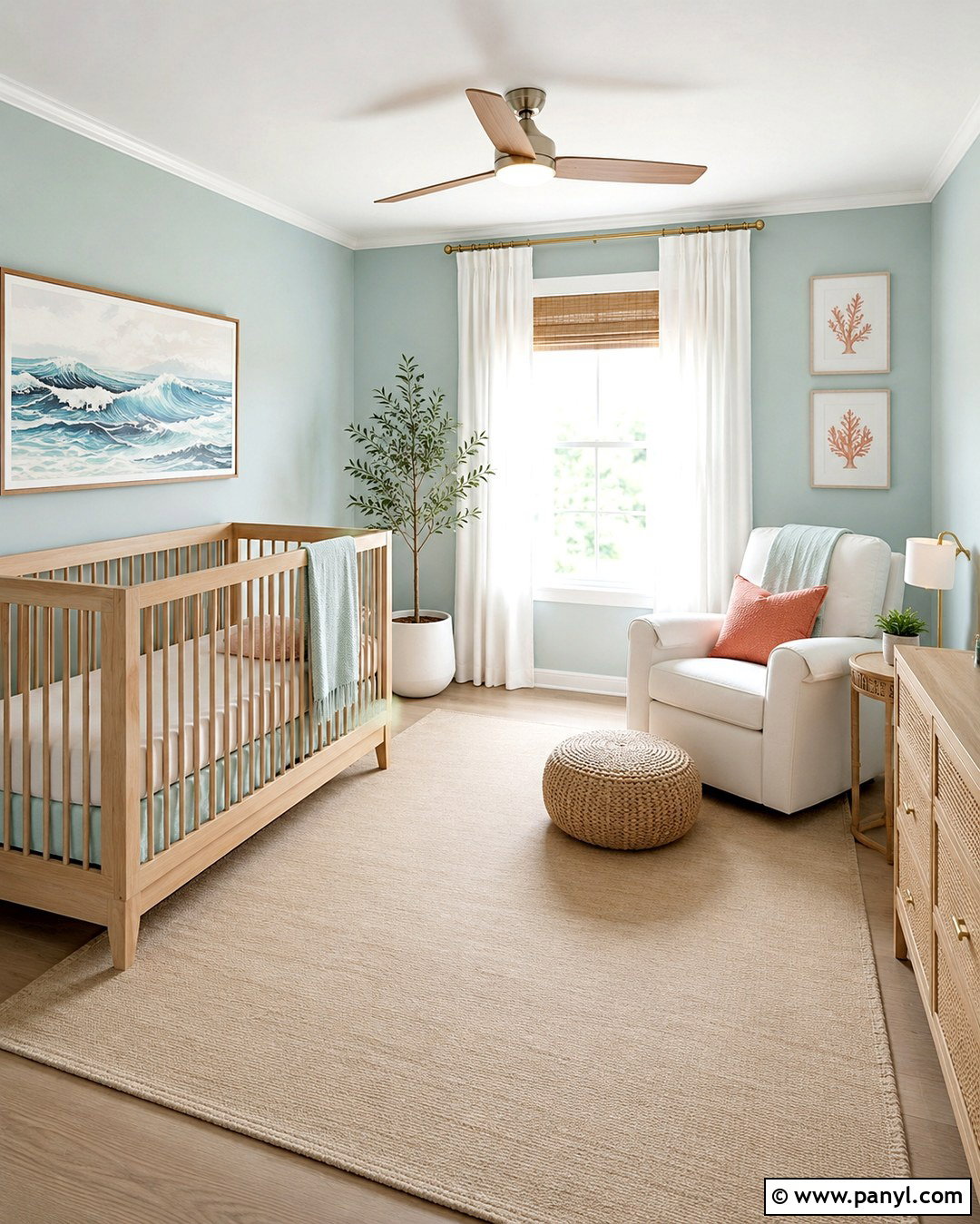
Pale aqua walls blend blue and green, giving the nursery a fresh coastal feeling without requiring obvious seaside decor. Choose a quiet aqua with plenty of gray, then combine it with clean white trim and a light oak crib. A woven cane dresser, ivory glider, and sand-colored rug add natural warmth. Use white linen curtains to keep sunlight soft and even. Small accents in coral, tan, and muted teal can appear in artwork and fabric storage baskets. Add a simple abstract wave print rather than anchors or boats for a more adaptable look. Light brass hardware provides a polished finishing touch. The full scheme feels breezy and cheerful, yet the subdued wall color remains relaxing enough for feeding, rocking, and bedtime routines.
13. Soft Gray Nursery Walls
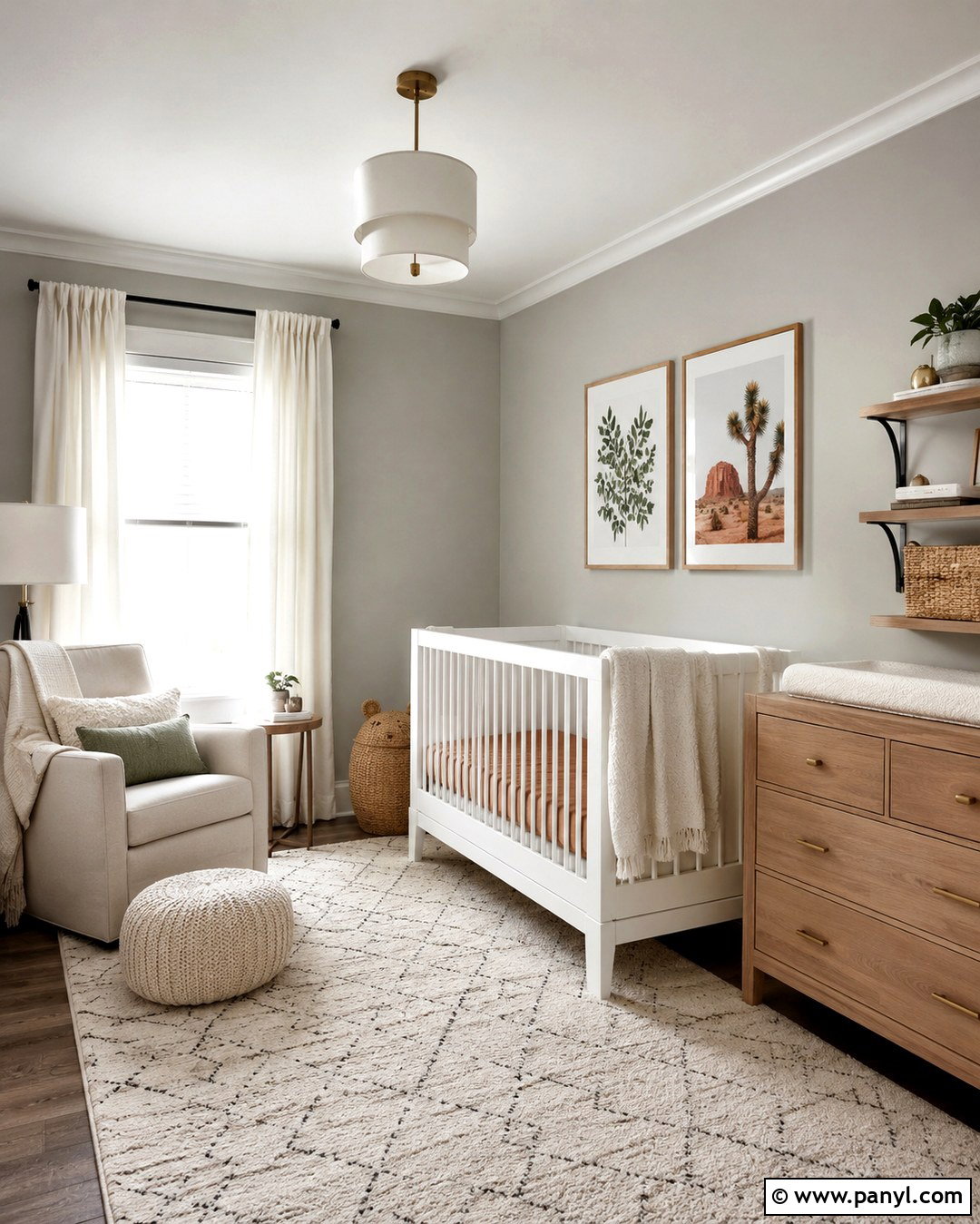
Soft gray nursery walls create a clean backdrop when the shade has warm undertones and enough depth to remain visible beside white trim. Avoid cold silver grays, especially in rooms with limited sunlight. Pair warm gray walls with a white crib, natural wood dresser, and upholstered glider in oatmeal. A cream rug with a subtle charcoal pattern brings definition to the floor. Add warmth through camel-colored baskets, brass hardware, and framed artwork featuring muted green and rust. Full-length ivory curtains soften the room and make the ceiling appear taller. A simple black floor lamp can provide a crisp modern accent near the chair. This balanced nursery feels organized and calm, while the neutral base allows colorful books and toys to become future decorative layers.
14. Blush Pink Nursery Walls
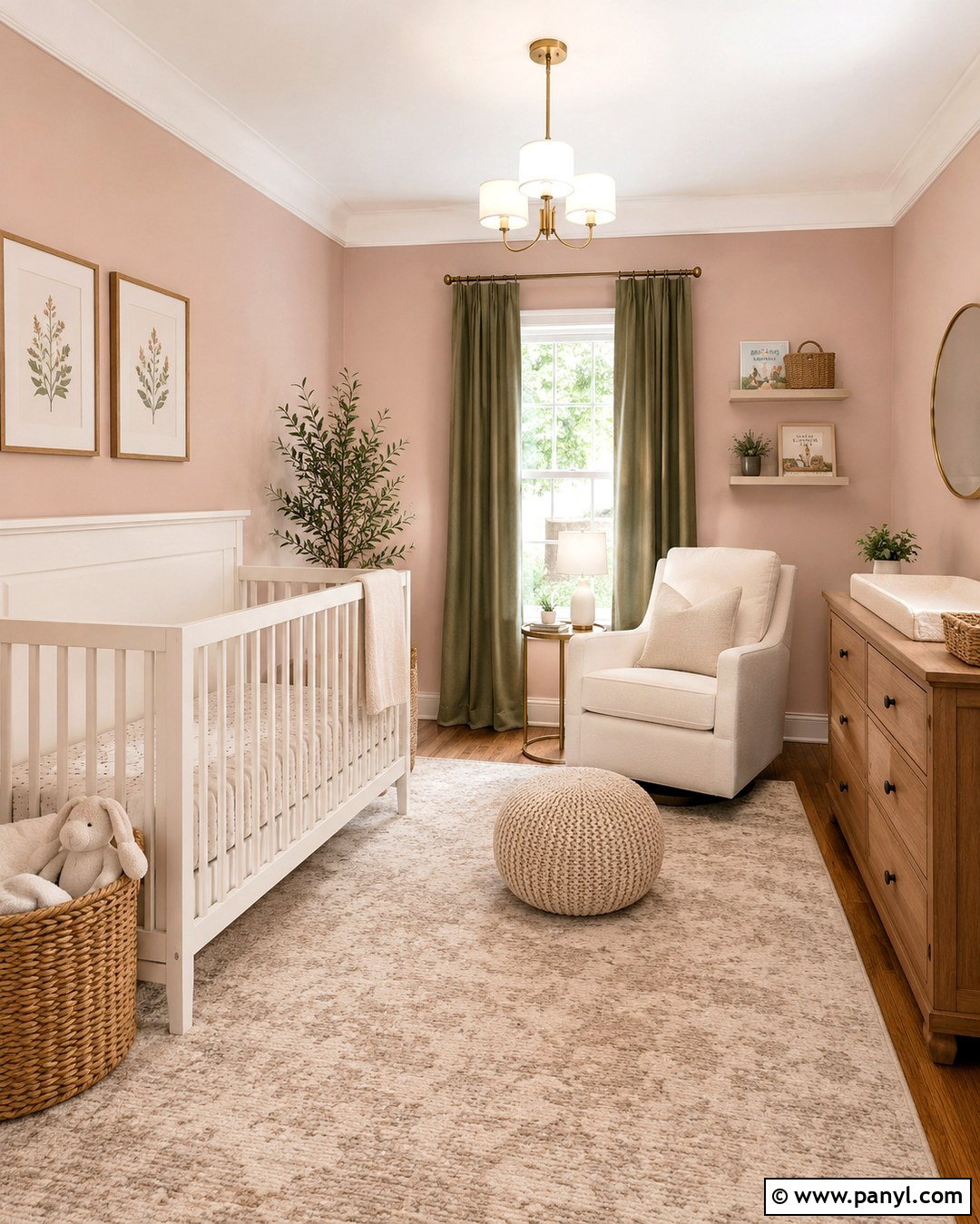
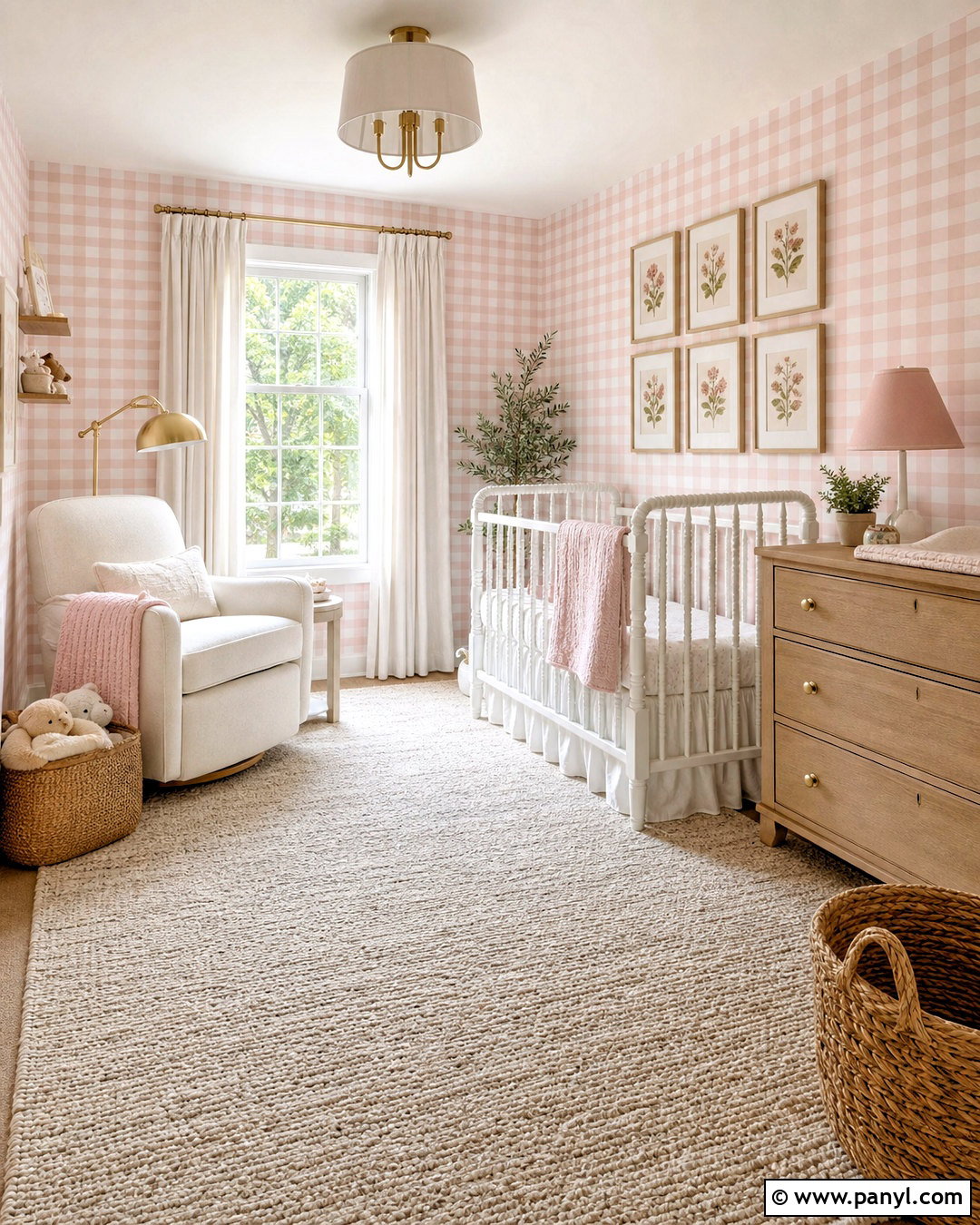
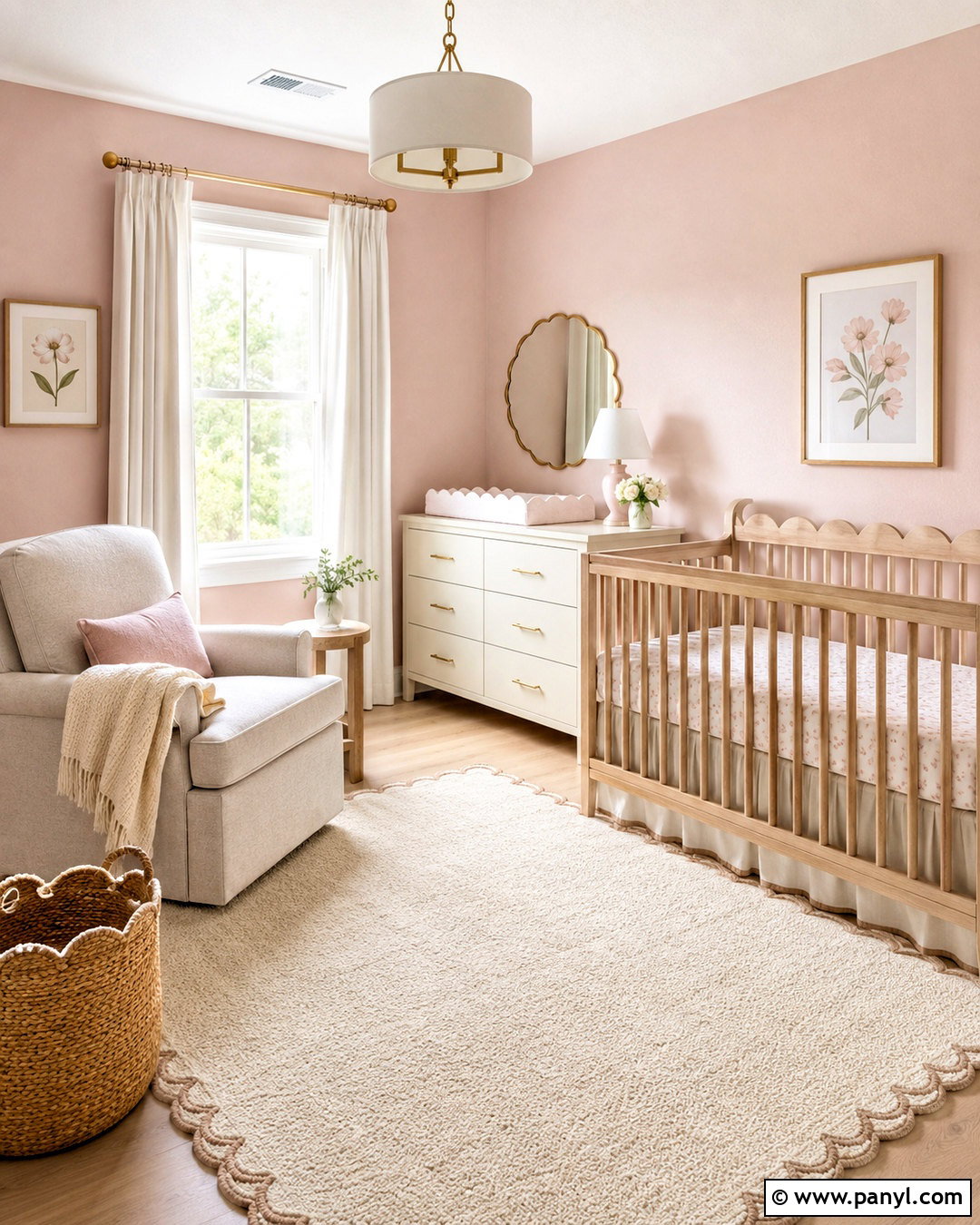
Blush pink walls can feel refined and restful when the shade is dusty rather than sugary. Choose a pale pink with beige or gray undertones, then pair it with an ivory crib and a medium-tone wood dresser. A cream boucle glider and warm beige rug create a soft seating zone without making the room overly delicate. Add sage green curtains, botanical artwork, and natural woven baskets to balance the pink. Brushed brass lighting and small antique-inspired knobs provide gentle shine. Keep the ceiling and trim warm white for a clean, open appearance. Instead of repeating pink everywhere, introduce it selectively through one or two textiles. The complete nursery feels warm, modern, and flexible enough to evolve with changing interests and decor.
15. Dusty Rose Nursery Walls
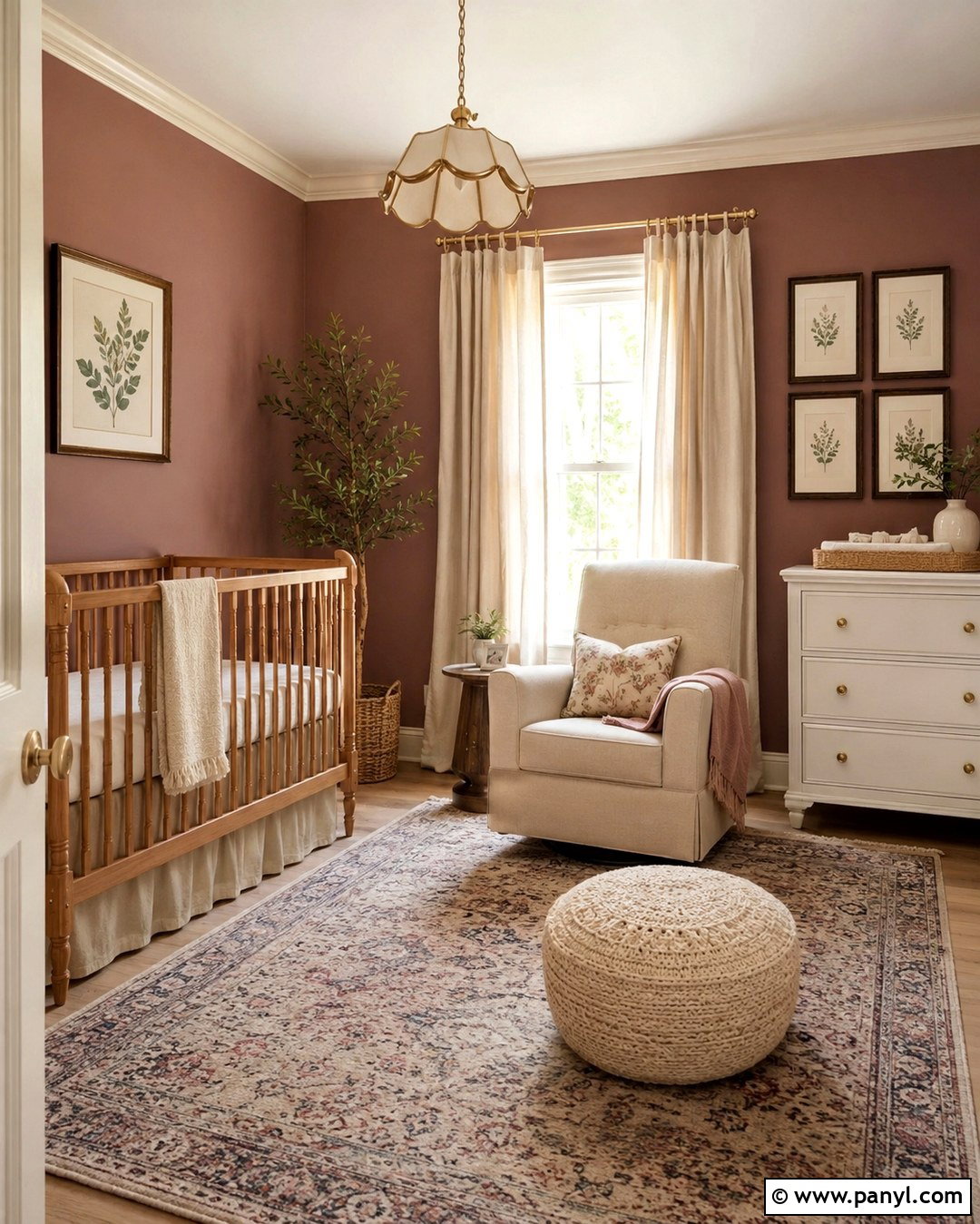
Dusty rose nursery walls bring deeper warmth and vintage character to the room. Select a muted rose with earthy brown undertones, particularly for a nursery with generous natural light. Balance the walls with creamy trim, a natural oak crib, and an ivory dresser. An oatmeal glider, faded floral rug, and flax linen curtains establish a comfortable traditional base. Add olive green artwork, walnut frames, and aged brass hardware to create contrast. Keep accessories restrained so the wall color remains the main feature rather than competing with a complicated theme. A warm white ceiling helps reflect light around the room. This finished look feels cozy and distinctive while remaining sophisticated enough to work through the toddler years with updated art and bedding.
16. Soft Peach Nursery Walls
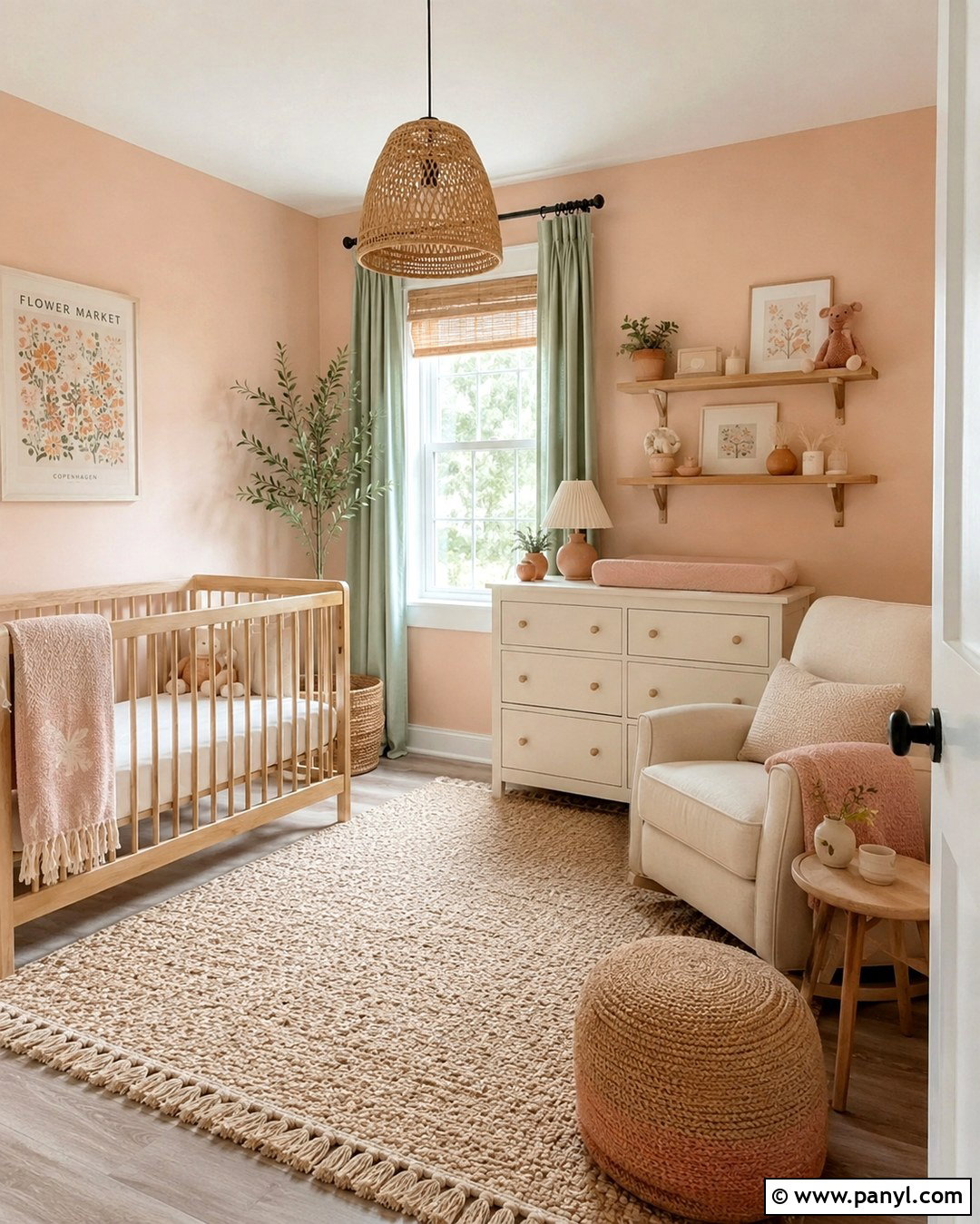
Soft peach walls give a nursery a sunny glow without the intensity of orange. Look for a pale, muted peach with pink and beige undertones. Pair it with a light wood crib, cream dresser, and ivory glider to maintain an airy appearance. Sage green accents in curtains, artwork, and storage bins offer a natural counterpoint to the warm walls. Add a woven jute-blend rug, rattan pendant, and simple wood shelves to introduce texture. Keep decorative items in cream, clay, and muted green for a cohesive result. Crisp warm white trim prevents the peach from becoming too dominant. This complete room works particularly well where daylight is cool or limited, creating a cheerful atmosphere that still feels soft enough for quiet routines and rest.
17. Muted Terracotta Nursery Walls
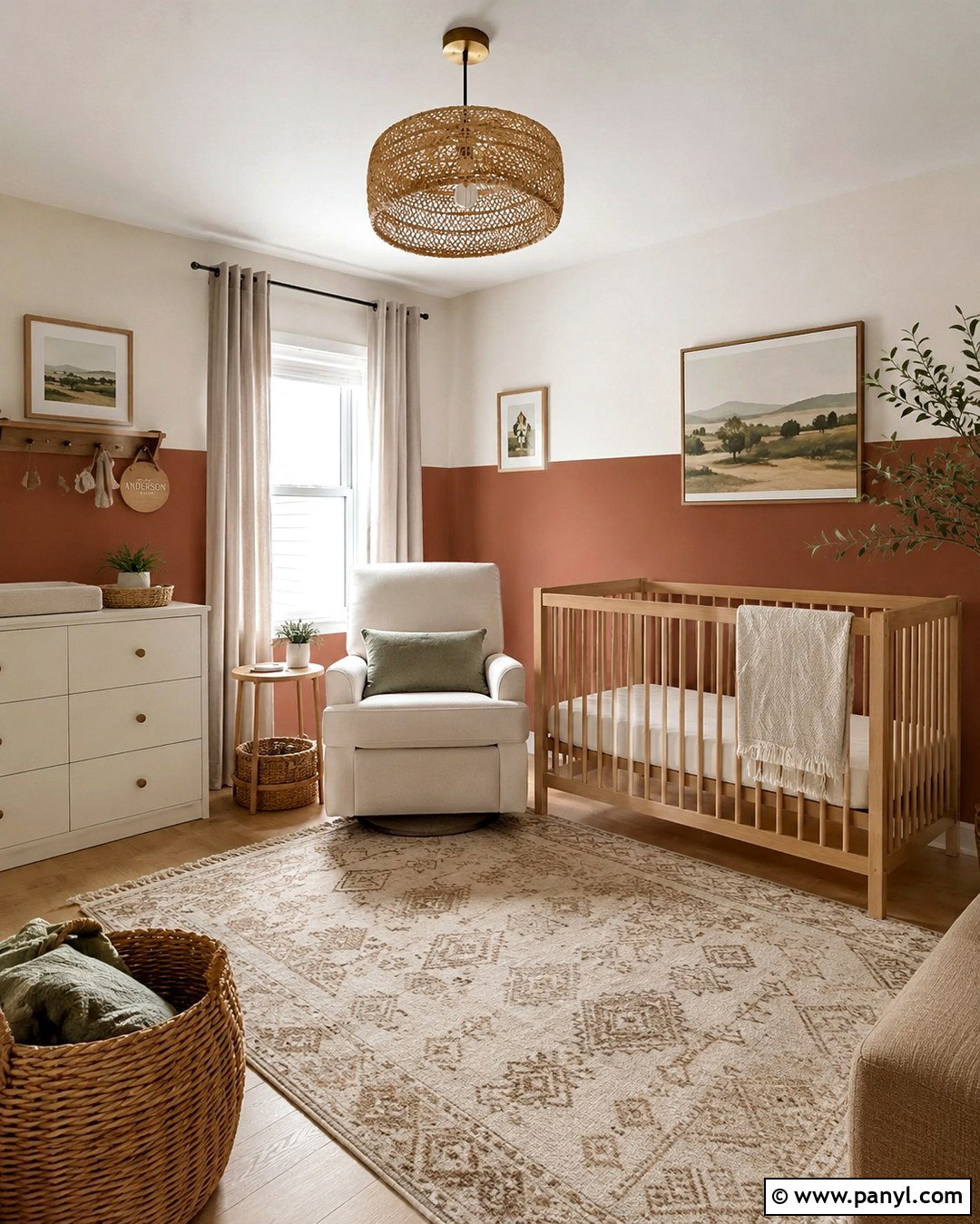
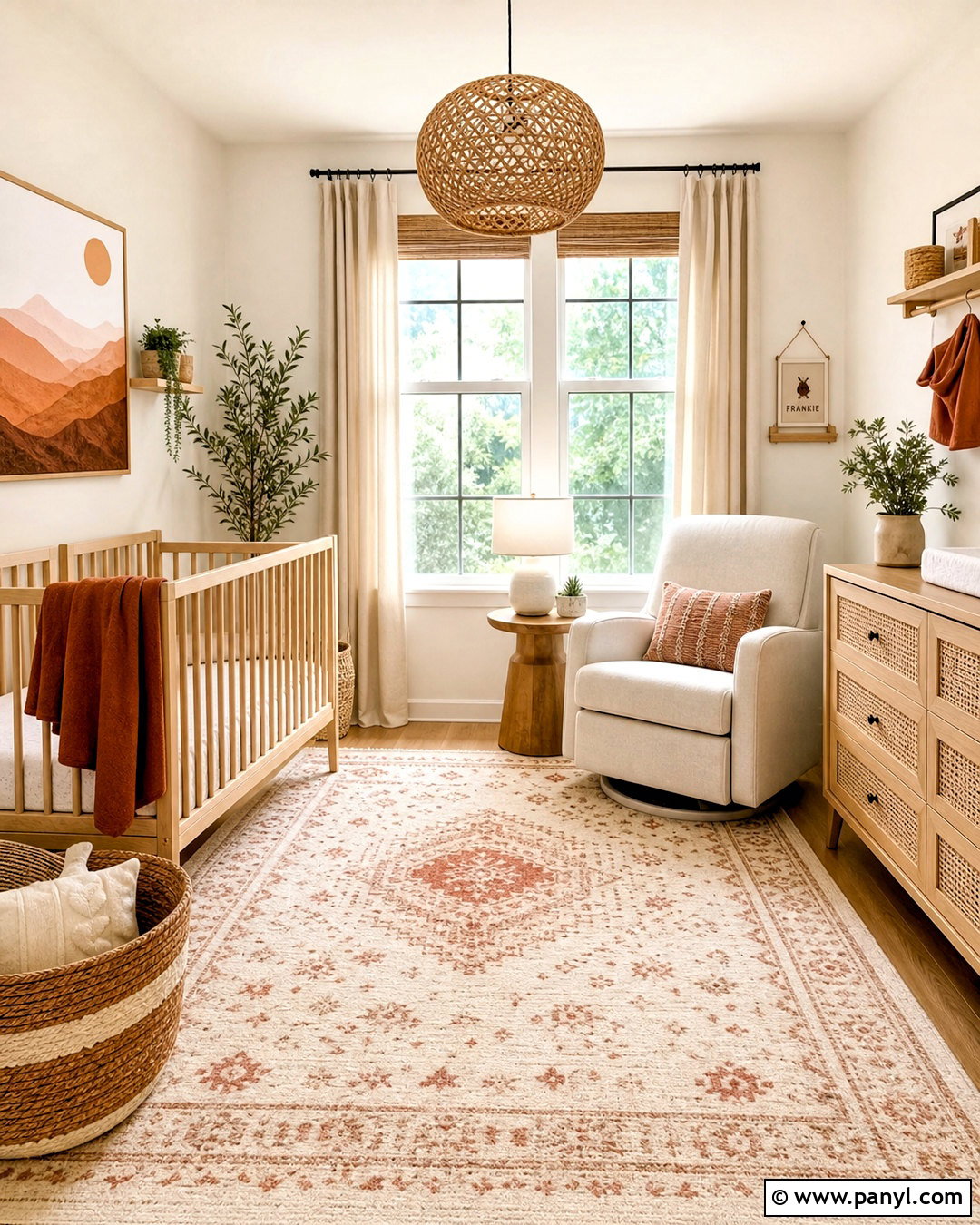
Muted terracotta creates a warm, enveloping nursery inspired by natural clay. Because this color has more visual weight, choose a dusty midtone shade and balance it with a warm white ceiling and trim. A blond wood crib, ivory dresser, and cream glider keep the room bright. Layer a beige geometric rug underfoot and use natural linen curtains at the windows. Sage, camel, and dark brown accents can appear in landscape prints, woven baskets, and a small storage cabinet. Select simple furniture with rounded edges to soften the earthy palette. If the nursery is small, paint the lower two-thirds terracotta and the upper wall cream. The completed room feels cheerful, grounded, and distinctive without depending on short-lived decorative themes.
18. Lavender Nursery Walls
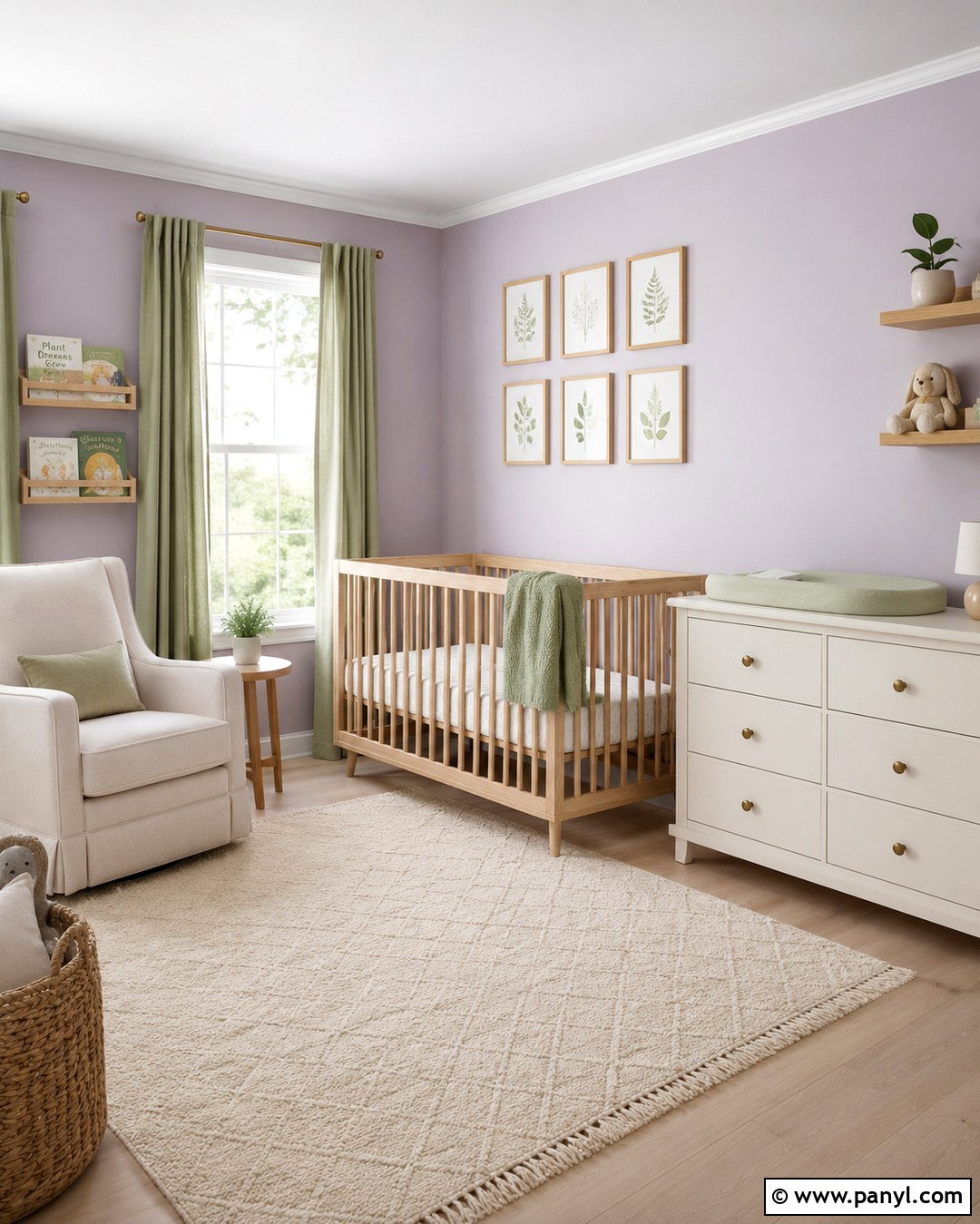
Lavender nursery walls create a gentle wash of color that can look modern, traditional, or whimsical depending on the furnishings. Select a pale lavender with gray undertones rather than a highly saturated purple. Pair it with warm white trim, a natural maple crib, and an ivory dresser. An oatmeal glider and cream rug add warmth, while muted green curtains provide subtle contrast. Use brushed brass hardware and light wood frames to prevent the palette from feeling too cool. Botanical or abstract artwork in lavender, sage, and beige ties the room together. Keep the ceiling bright and avoid repeating purple across every accessory. This balanced nursery feels soft and imaginative, yet its simple furniture and restrained palette allow the space to mature gracefully.
19. Butter Yellow Nursery Walls
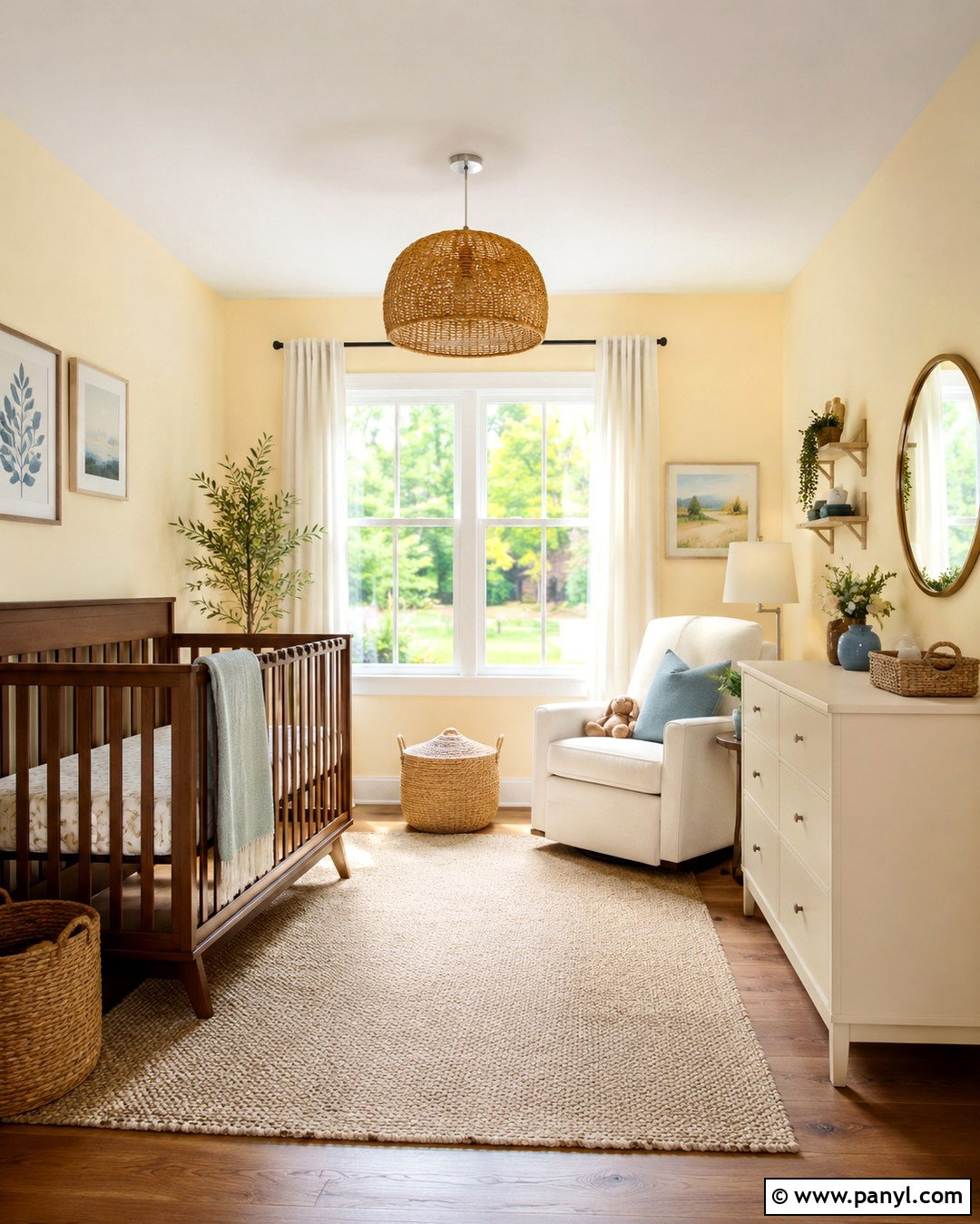
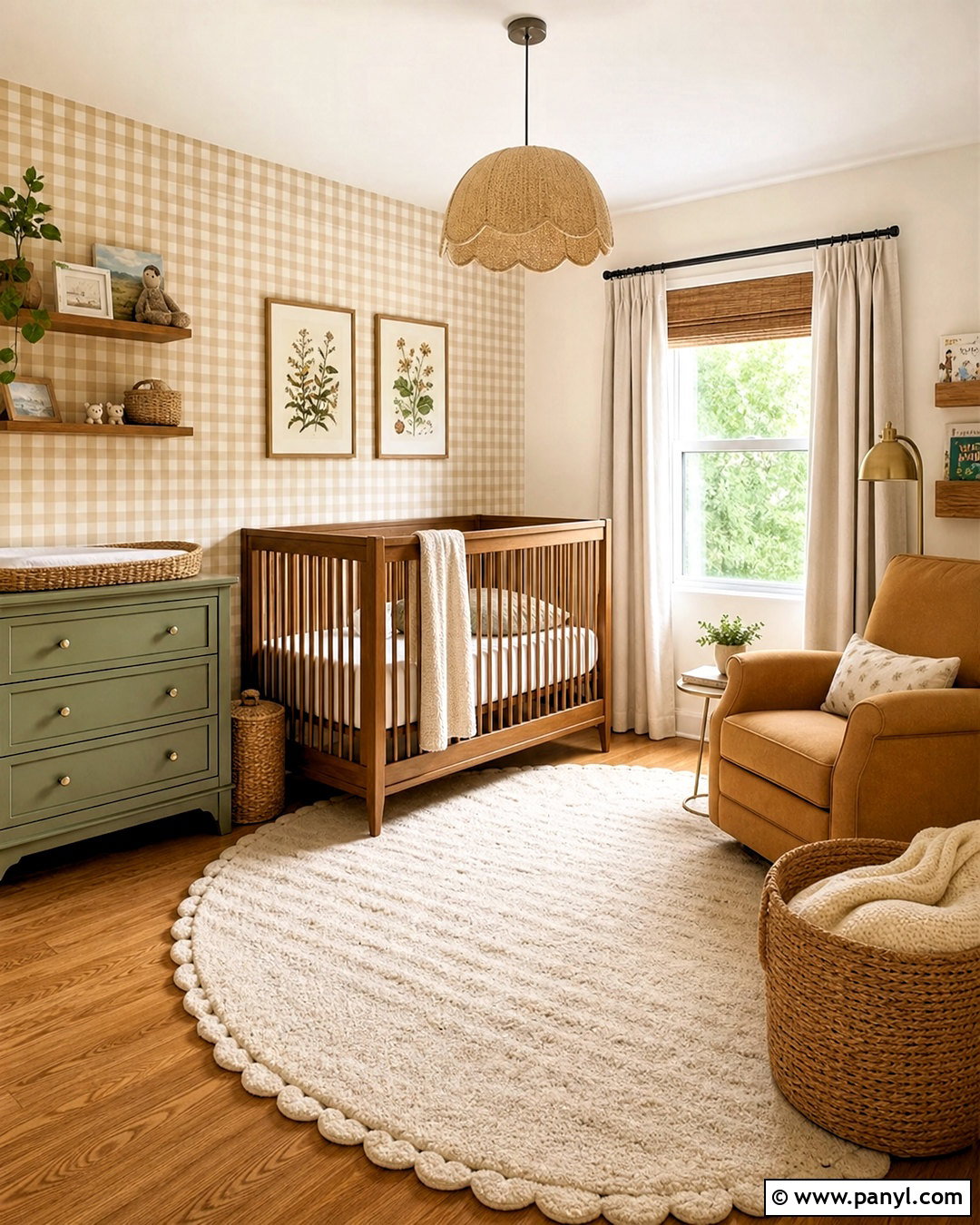
Butter yellow walls bring quiet sunshine into a baby’s room without creating an overly energetic atmosphere. Choose a pale, creamy yellow with muted undertones instead of a sharp lemon shade. Ground the color with a natural walnut crib, ivory dresser, and comfortable cream glider. Add a warm beige rug, white linen curtains, and woven baskets for practical texture. Soft blue, sage green, and clay accents can appear in wall art and storage containers. Use white trim and ceiling paint to keep the room crisp around the edges. A simple gingham or striped curtain detail can add character without taking over the design. The finished nursery feels happy and welcoming, especially in rooms that receive cool northern light or have smaller windows.
20. Warm Clay Nursery Walls
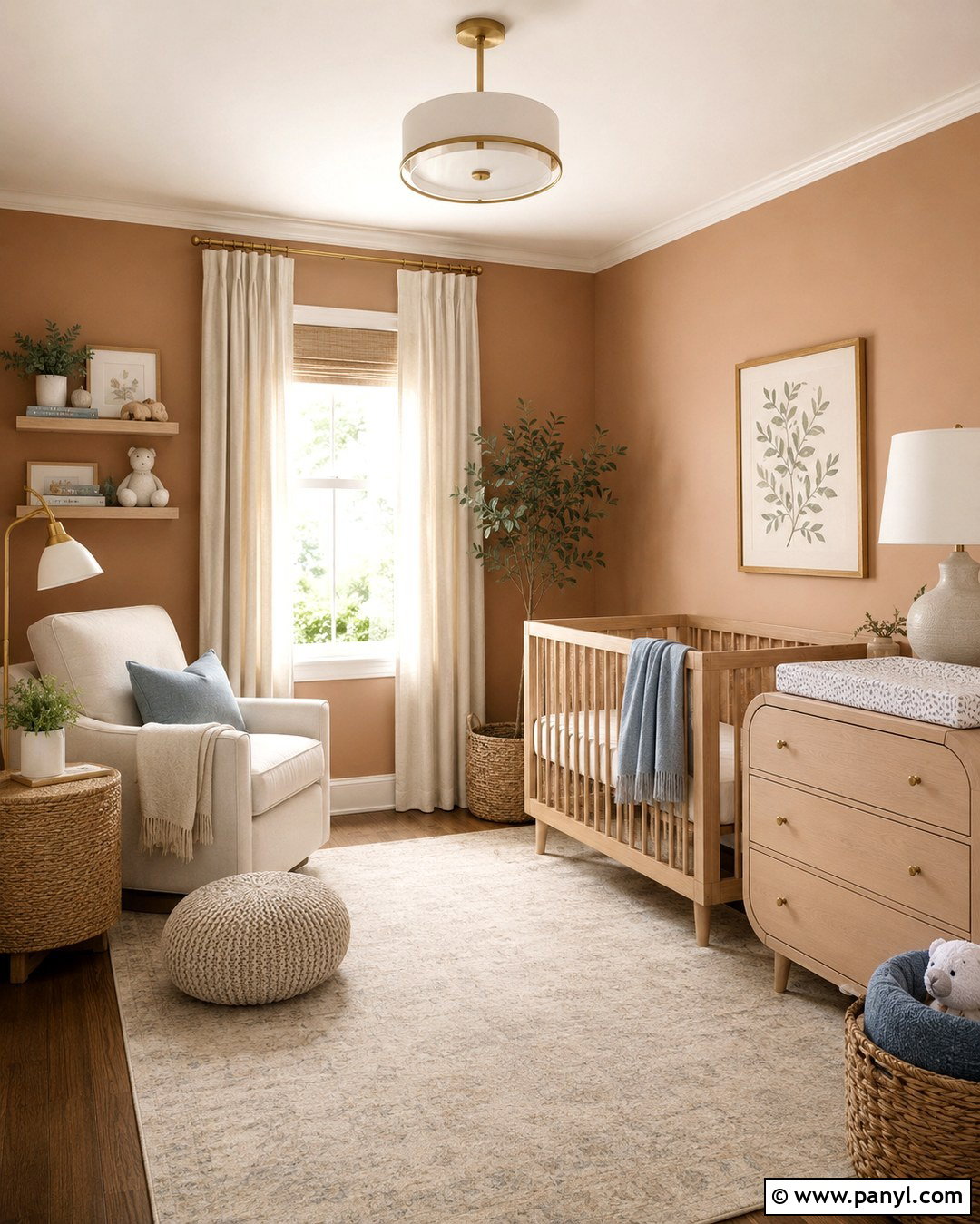
Warm clay walls sit between beige, peach, and terracotta, creating an earthy nursery with subtle color. Choose a light clay shade for all four walls and pair it with creamy white trim. A pale oak crib, rounded wood dresser, and ivory glider establish a soft modern foundation. Add an oatmeal rug, natural linen curtains, and woven storage baskets for depth. Muted olive artwork and a few dusty blue accessories balance the warmth of the walls. Brushed brass lighting complements the clay undertone without making the room feel formal. Keep the crib area visually simple and place decorative displays around the dresser or reading corner. This cohesive palette feels calm, sun-washed, and welcoming while offering enough versatility for future furniture, books, and toys.
Conclusion:
Choosing among these 20 Baby Nursery Wall Colors becomes simpler when you consider the entire room rather than selecting paint in isolation. Start with natural light, flooring, and furniture finishes, then build a palette using two or three supporting colors. Warm whites and greiges offer flexibility, soft greens and blues create a fresh foundation, and muted pinks, yellows, and clay tones add welcoming warmth. Test large samples before committing because undertones can change throughout the day. Use a durable low- or zero-VOC finish, follow all label instructions, and ventilate the space properly. Most importantly, select a color that makes everyday feeding, changing, rocking, and reading routines feel comfortable for both baby and caregiver.

Related Ideas and Inspiration:

Leave a Reply