
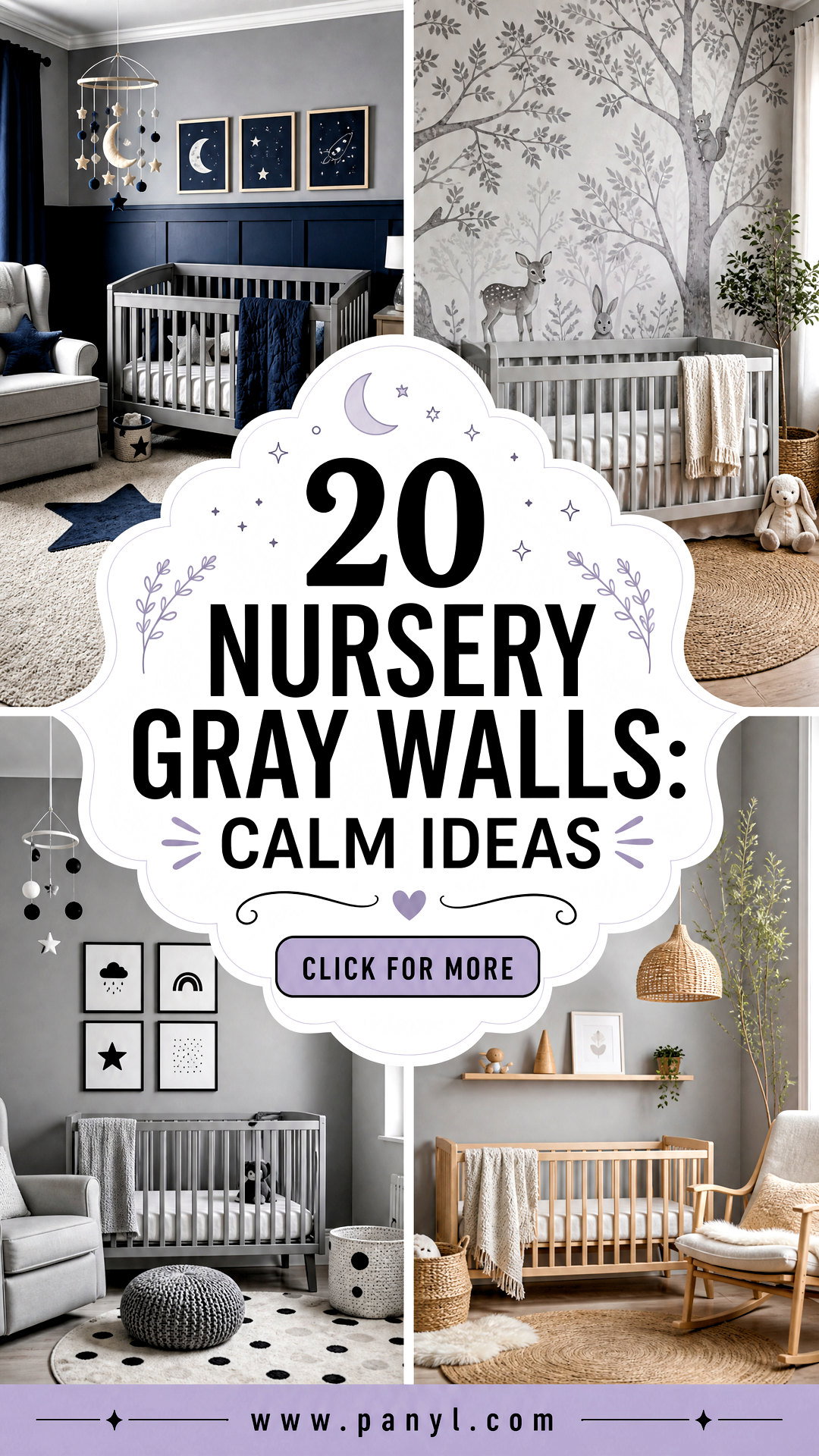
Nursery Gray Walls create a flexible backdrop that can feel soft, playful, modern, or warmly traditional. The key is designing the entire room around the gray rather than treating it as a finished color scheme. Consider the wall’s undertone, the available natural light, and the contrast created by the crib, dresser, rug, curtains, and artwork. Warm woods and woven textures make gray feel inviting, while white furniture delivers a cleaner look. Sage, blush, navy, mustard, terracotta, and dusty blue can each give the same neutral walls a completely different personality. Thoughtful lighting and layered textiles also prevent the room from appearing flat. Explore these complete, practical looks for decorating Nursery Gray Walls.
1. Light Gray And White Nursery
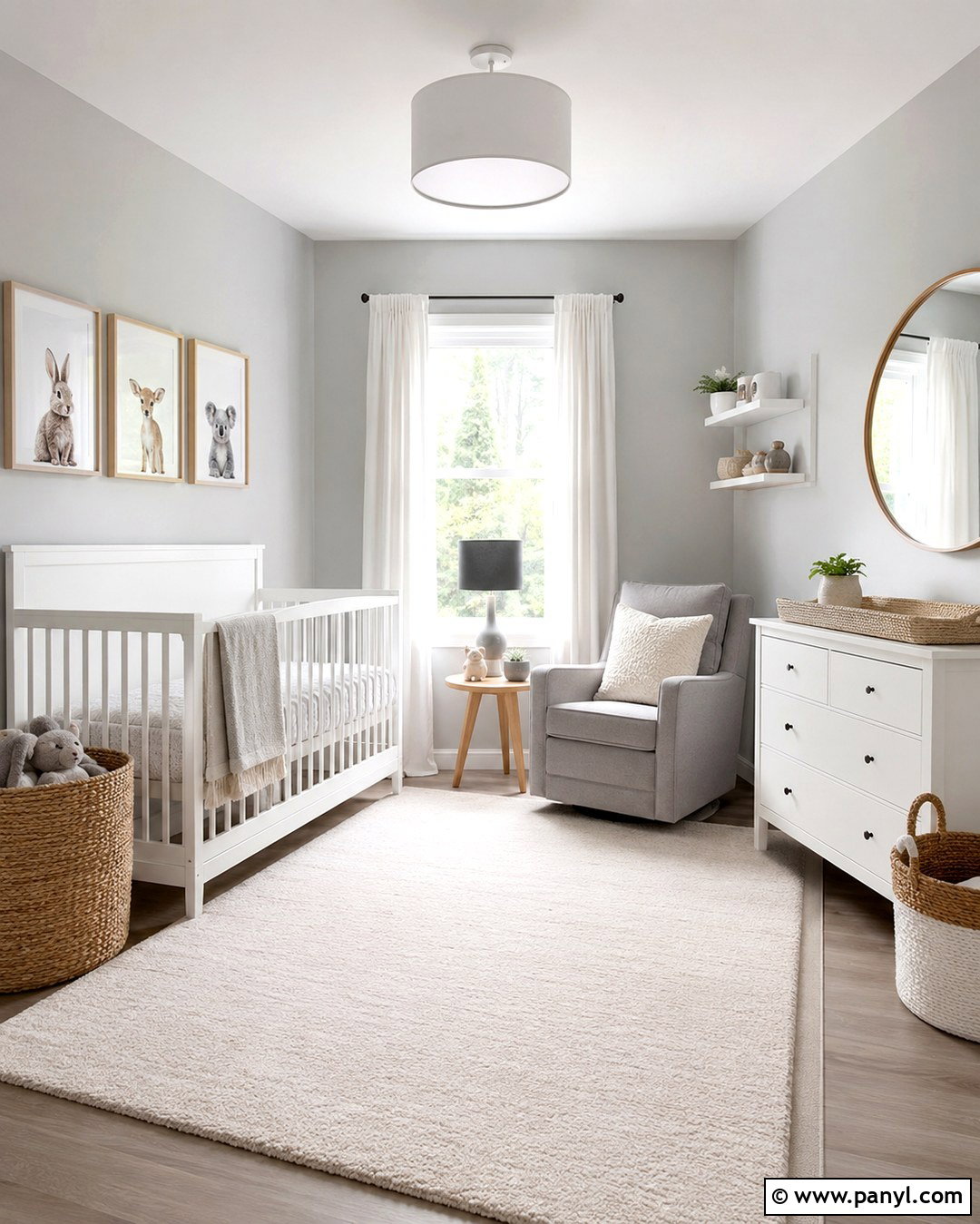
Pale gray walls and crisp white furniture create a nursery that feels clean, bright, and easy to update. Choose a white crib and matching dresser with simple lines, then place them against different walls to keep the layout balanced. A soft ivory rug warms the floor without interrupting the airy palette. Add white cotton curtains, a light gray glider, and a small natural wood side table near the reading corner. Introduce gentle contrast through black picture frames, a charcoal floor lamp, or a patterned storage basket. Keep crib bedding simple and fitted, while adding visual softness elsewhere with a knit pouf and textured curtains. This complete look works especially well in smaller nurseries where an uncluttered color scheme helps the room feel more open.
2. Warm Gray And Natural Wood Nursery
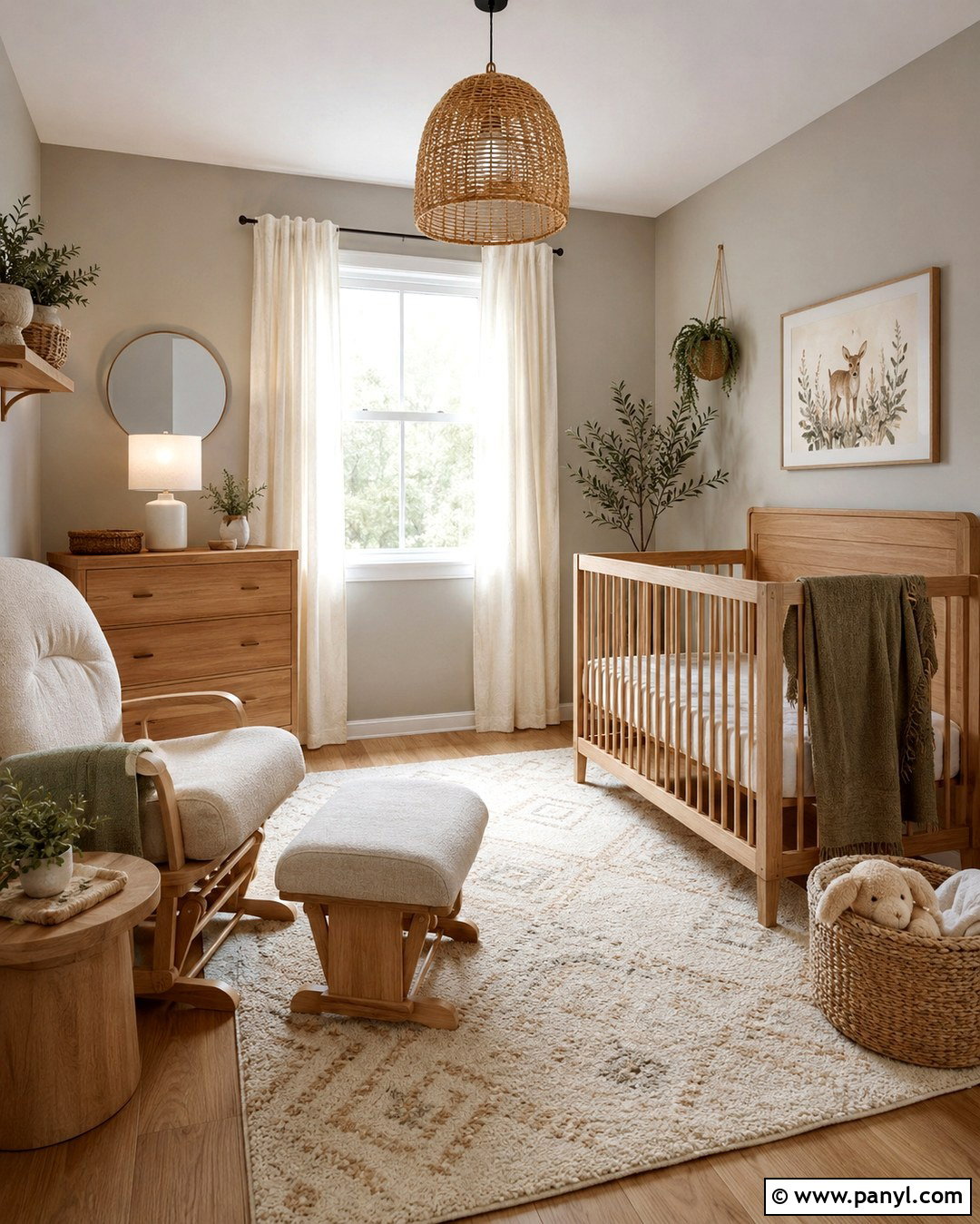
Warm gray walls become especially inviting when paired with honey-toned or light oak furniture. Start with a natural wood crib and a coordinating dresser that highlights visible grain. Anchor the room with a cream wool-look rug featuring a subtle tan pattern. An oatmeal upholstered glider, round oak side table, and woven pendant light continue the organic palette. Choose ivory curtains that reach the floor to soften the wall color and make the window appear taller. For decoration, use simple botanical prints, rattan baskets, and a linen floor cushion in muted camel. A few olive green accents can add depth without changing the neutral character. The result is a comfortable, grounded nursery with enough warmth to prevent gray walls from feeling cool or unfinished.
3. Gray And Sage Green Nursery
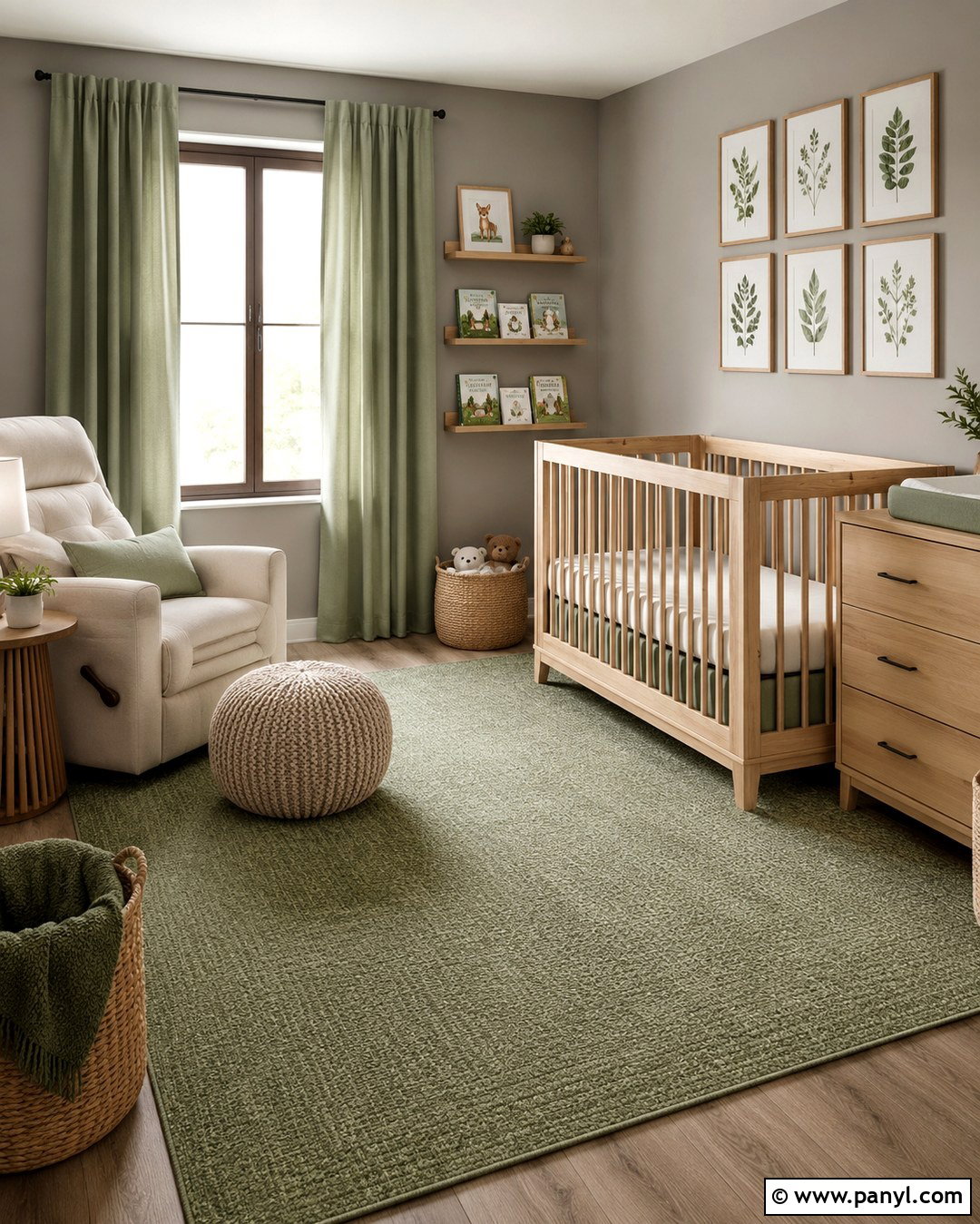
Muted sage green gives gray nursery walls a calm, nature-inspired personality. Use a pale warm gray across the room, then bring in sage through the area rug, blackout curtains, and upholstered glider. A light wood crib and dresser keep the combination from feeling overly cool. Decorate one open wall with framed leaf prints, shallow wood book ledges, and a small selection of colorful children’s books. Woven baskets and a natural jute storage hamper introduce useful texture. An ivory knit pouf beside the glider creates a comfortable feeding and reading area. Finish the room with matte black hardware and a simple white ceiling light for definition. This balanced scheme feels gender-neutral, fresh, and adaptable enough to transition into a toddler’s room later.
4. Gray And Blush Pink Nursery
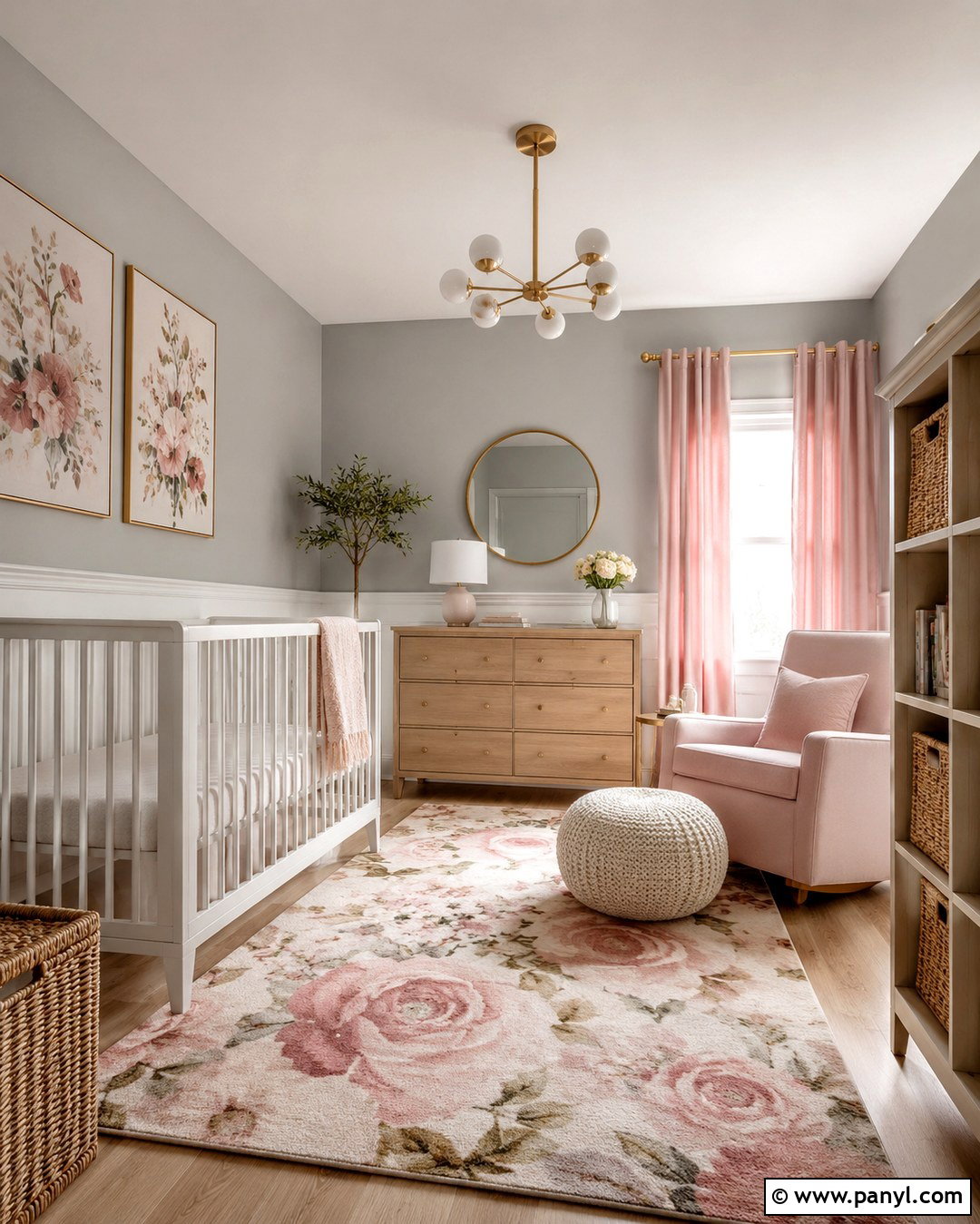
Blush pink adds softness to gray walls without making the nursery feel overly themed. Select a gentle dove gray paint, white crib, and light oak dresser as the room’s foundation. Layer in dusty blush curtains, a rose-toned washable rug, and a pale pink glider with an ivory ottoman. Small brass details on the dresser pulls, floor lamp, and picture frames provide a polished finish. Choose floral or abstract artwork that mixes pink, cream, taupe, and gray instead of relying on a single bright shade. A woven hamper and natural wood shelves help ground the delicate palette. Keep the layout open, with the crib, changing area, and chair each occupying a clear zone. The completed nursery feels warm, graceful, and pleasantly modern.
5. Gray And Navy Blue Nursery
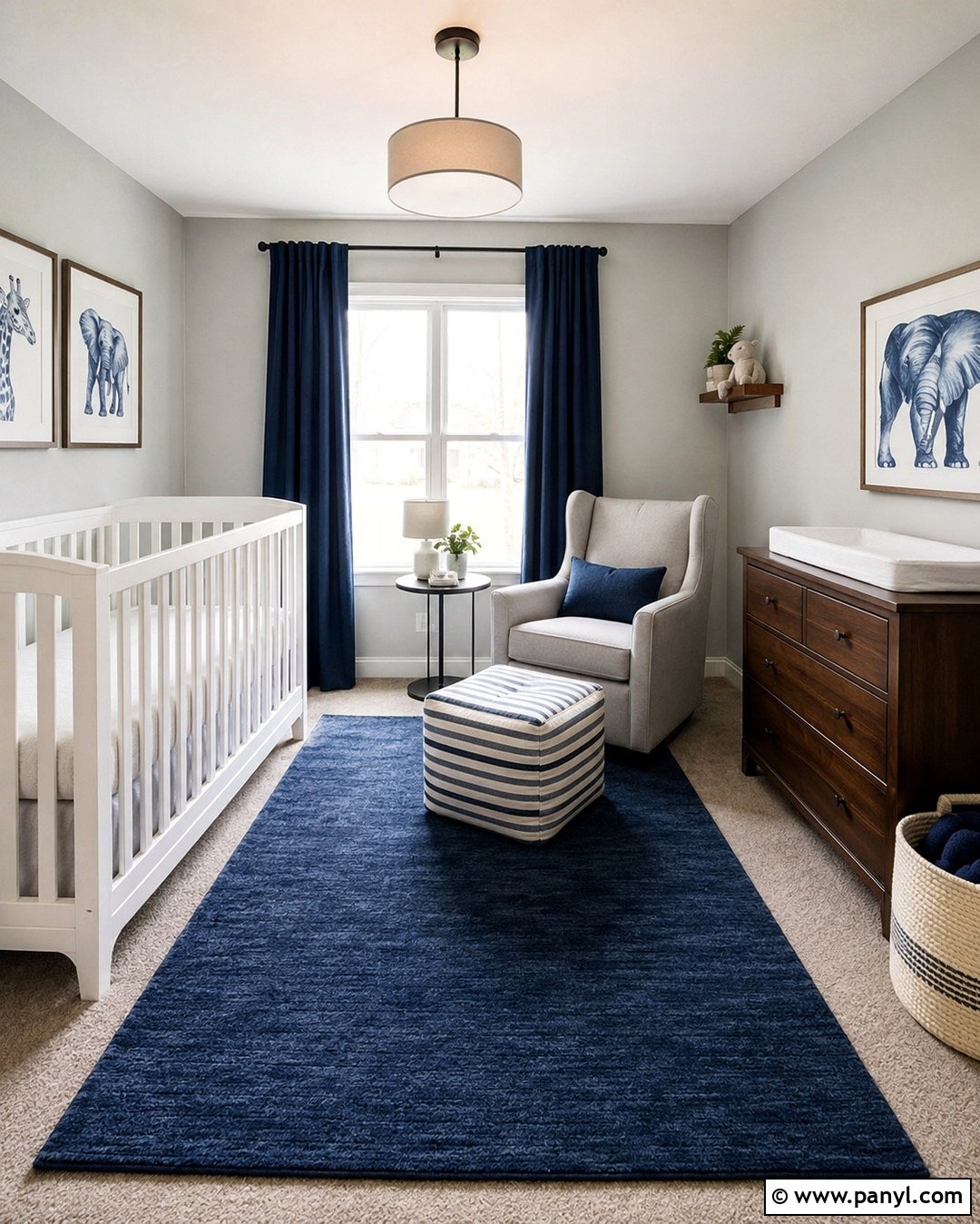
Navy blue creates strong, classic contrast against light gray nursery walls. Begin with a white or medium wood crib and place a navy washable rug beneath the center of the room. Hang tailored navy curtains beside the window, then add a gray upholstered glider with a striped blue-and-white lumbar pillow. A walnut dresser brings warmth and keeps the palette from looking too formal. Use framed animal sketches, sailboat illustrations, or simple geometric art in restrained blue tones. Matte black lighting and hardware can connect the darker accents throughout the space. Add cream storage baskets and a light-colored ottoman to balance the deeper navy elements. This coordinated nursery looks polished and comfortable while leaving room for brighter toys and books to supply playful color.
6. Gray And Mustard Yellow Nursery
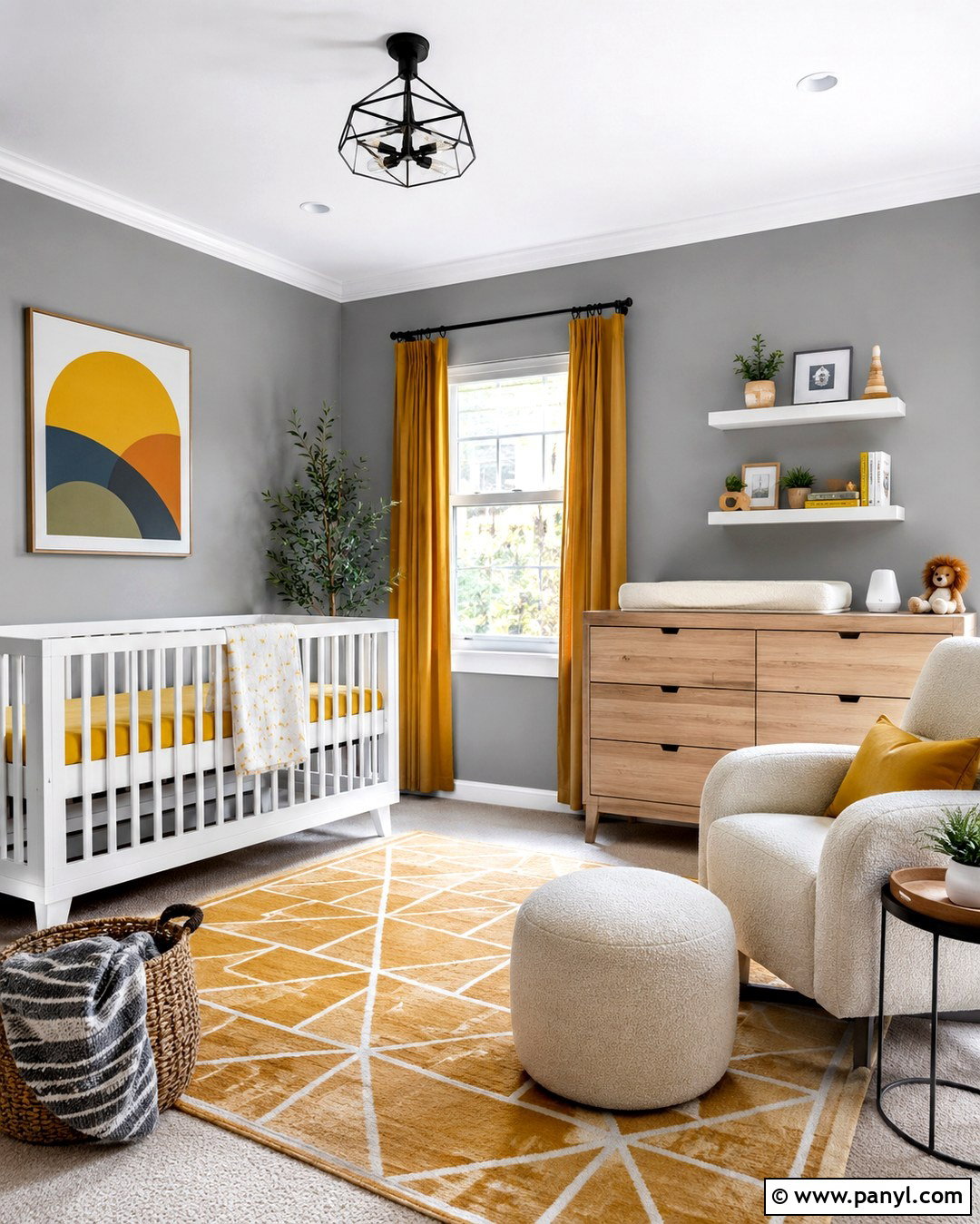
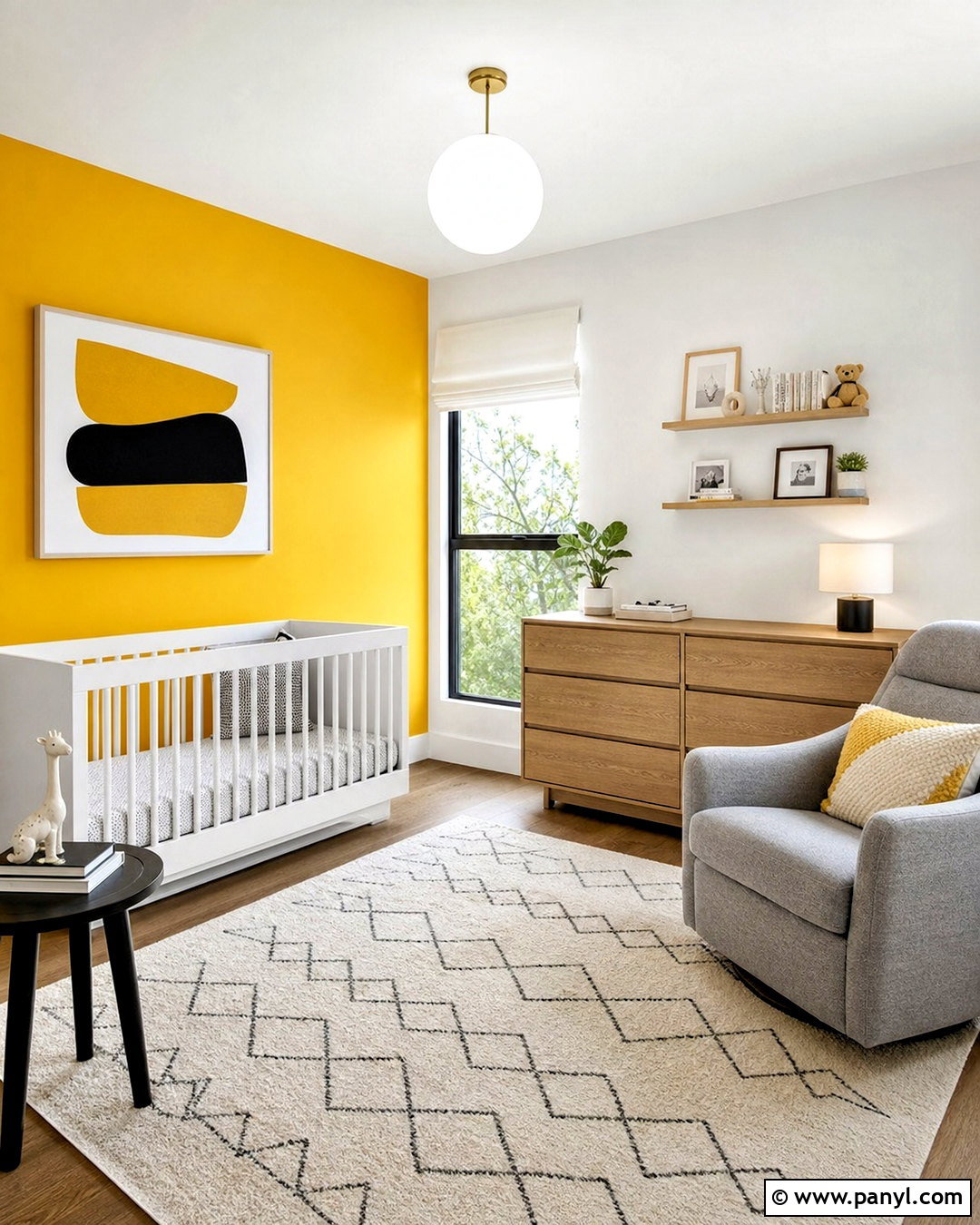
Mustard yellow makes gray nursery walls look cheerful while maintaining a grounded, contemporary palette. Use a soft midtone gray on every wall, then add mustard through curtains, a geometric rug, and a few carefully selected accessories. A white crib brightens the room, while a natural wood dresser adds warmth and practical storage. Place a cream boucle glider near the window with a mustard lumbar cushion and woven floor basket beside it. Wall art can combine suns, rainbows, or abstract shapes in ochre, ivory, and charcoal. Repeat black in the curtain rod and ceiling fixture to give the design structure. Because mustard has such a strong presence, leave larger surfaces simple. The complete room will feel energetic, cozy, and visually balanced rather than busy.
7. Gray And Terracotta Nursery
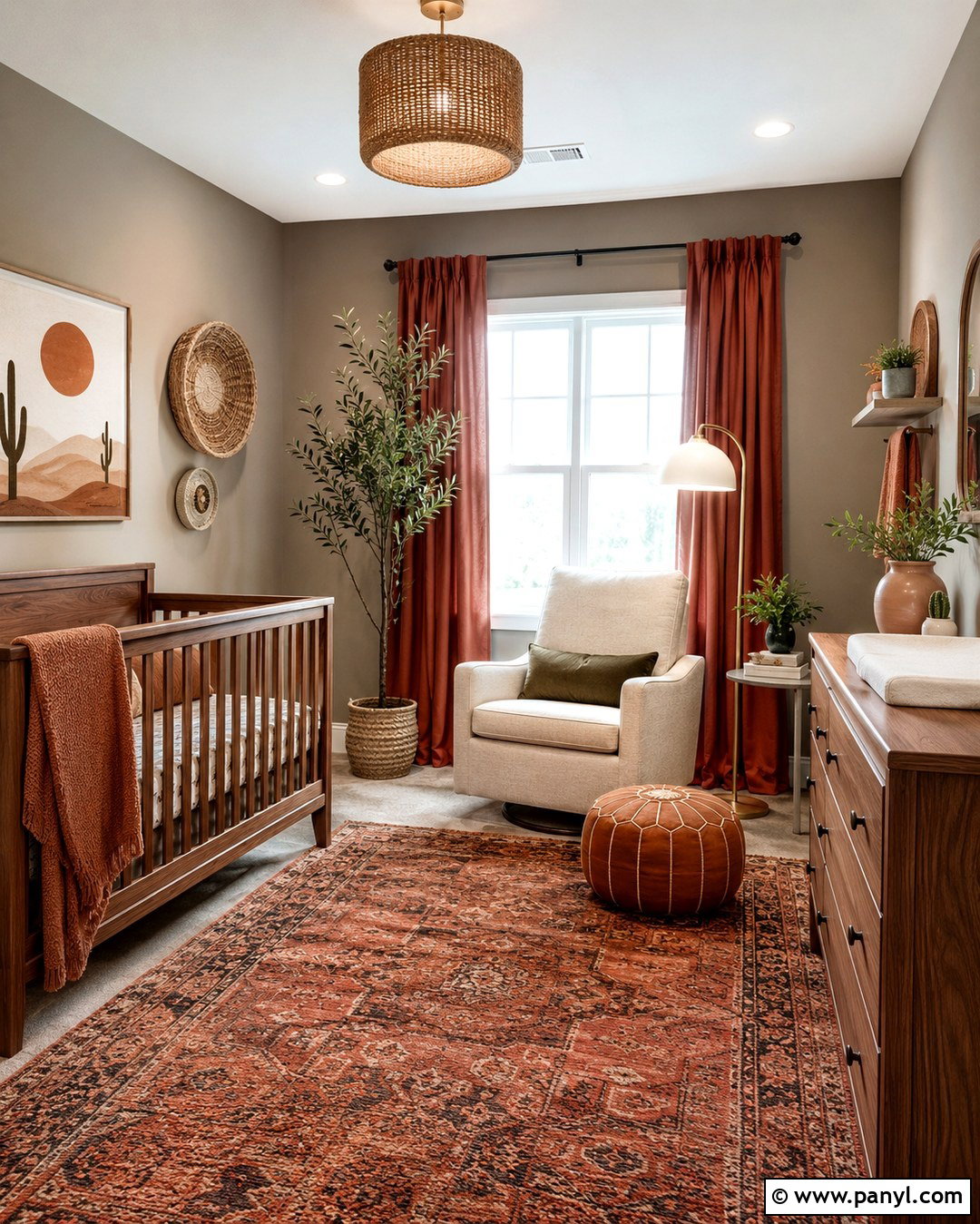
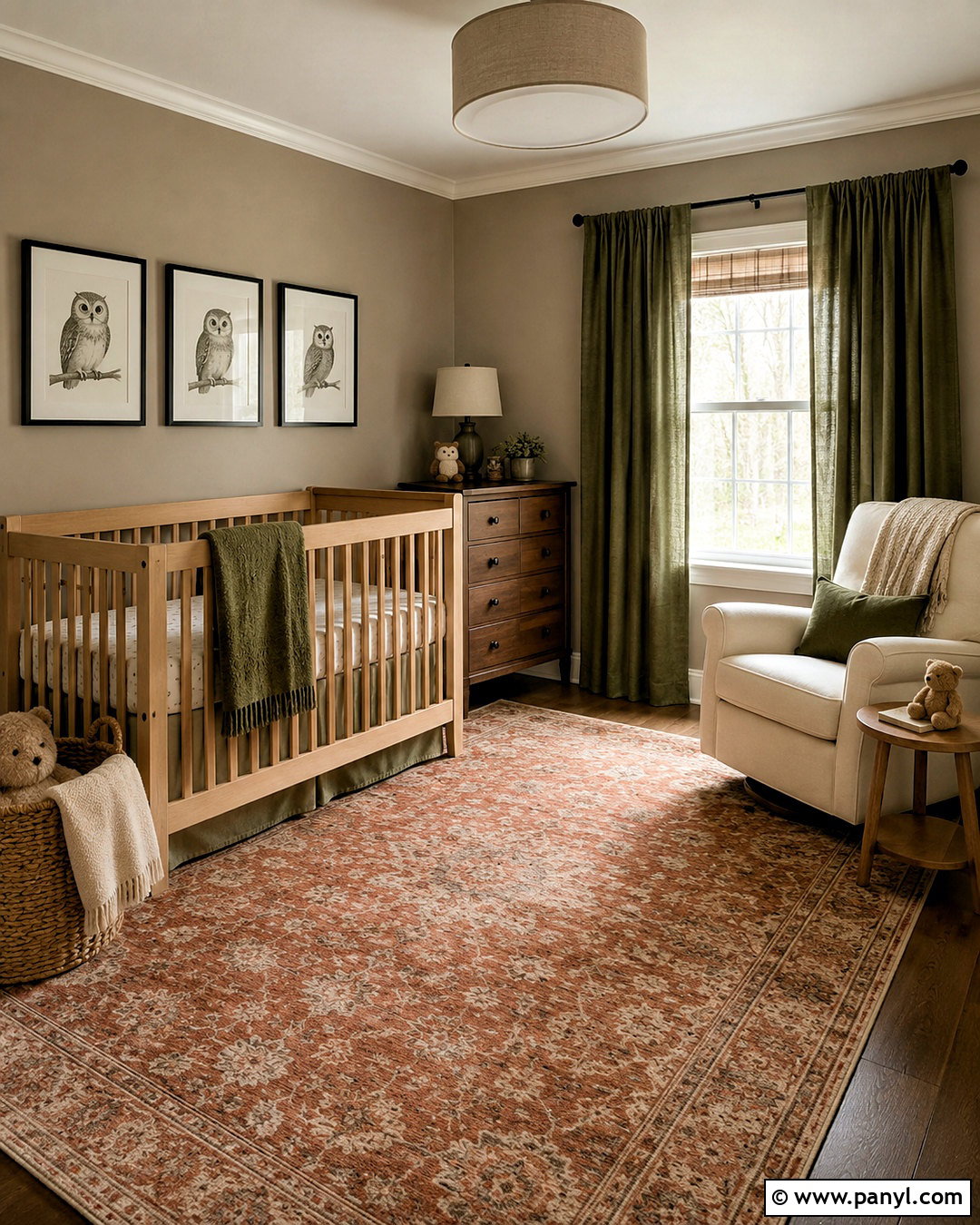
Earthy terracotta accents can transform plain gray walls into a warm, welcoming nursery. Choose a gray with beige undertones, then coordinate it with a walnut crib, matching dresser, and creamy upholstered chair. Introduce terracotta through a vintage-inspired rug, linen curtains, and a small floor pouf. Clay-colored abstract artwork and woven wall baskets can decorate the dresser wall without overwhelming the room. Add touches of muted olive in storage bins or a patterned chair cushion to deepen the natural palette. A softly curved floor lamp and round wood side table keep the furniture arrangement relaxed. Use ivory textiles to create breathing room between darker colors. This finished look combines modern functionality with desert-inspired warmth and works particularly well in rooms with abundant daylight.
8. Gray And Dusty Blue Nursery
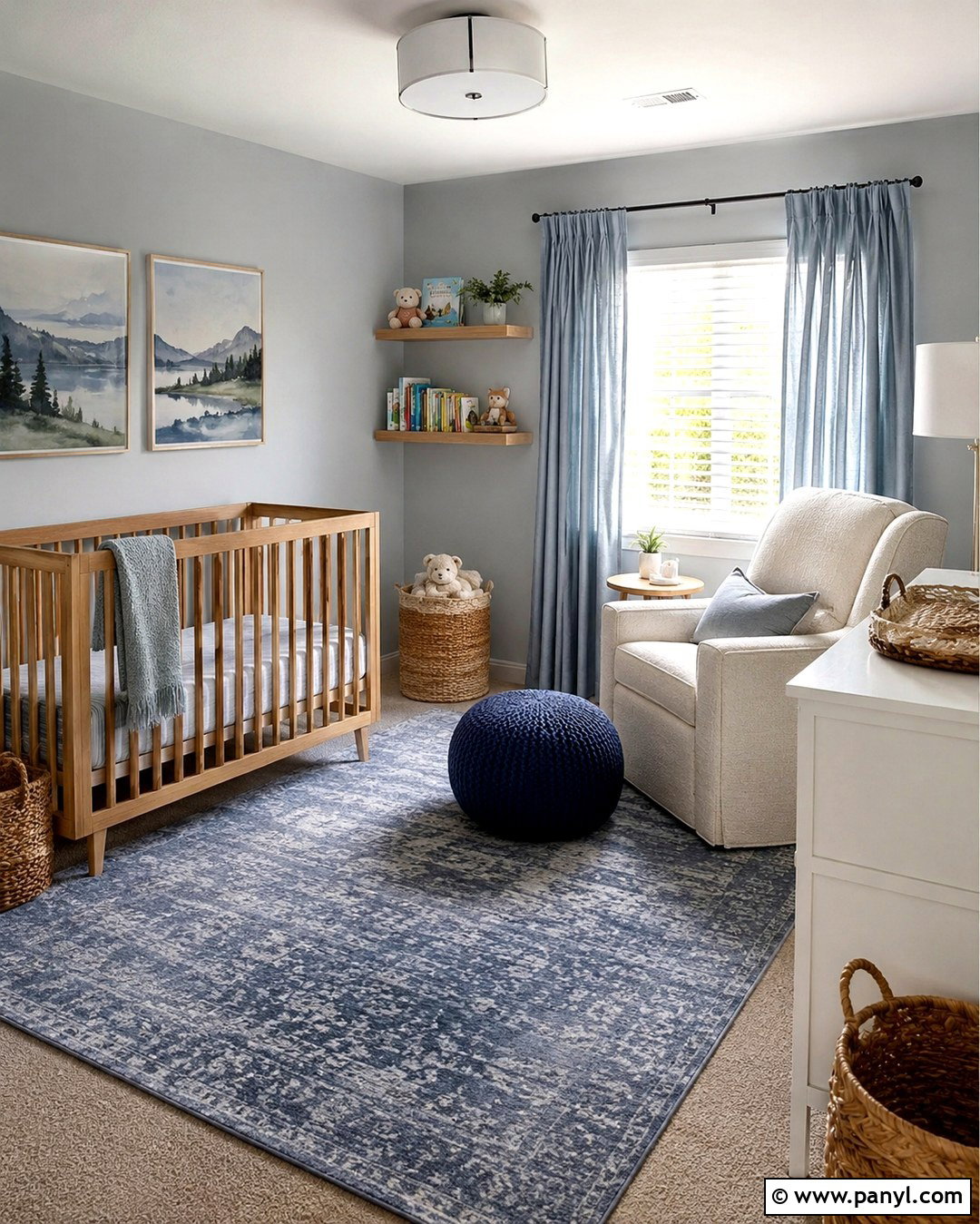
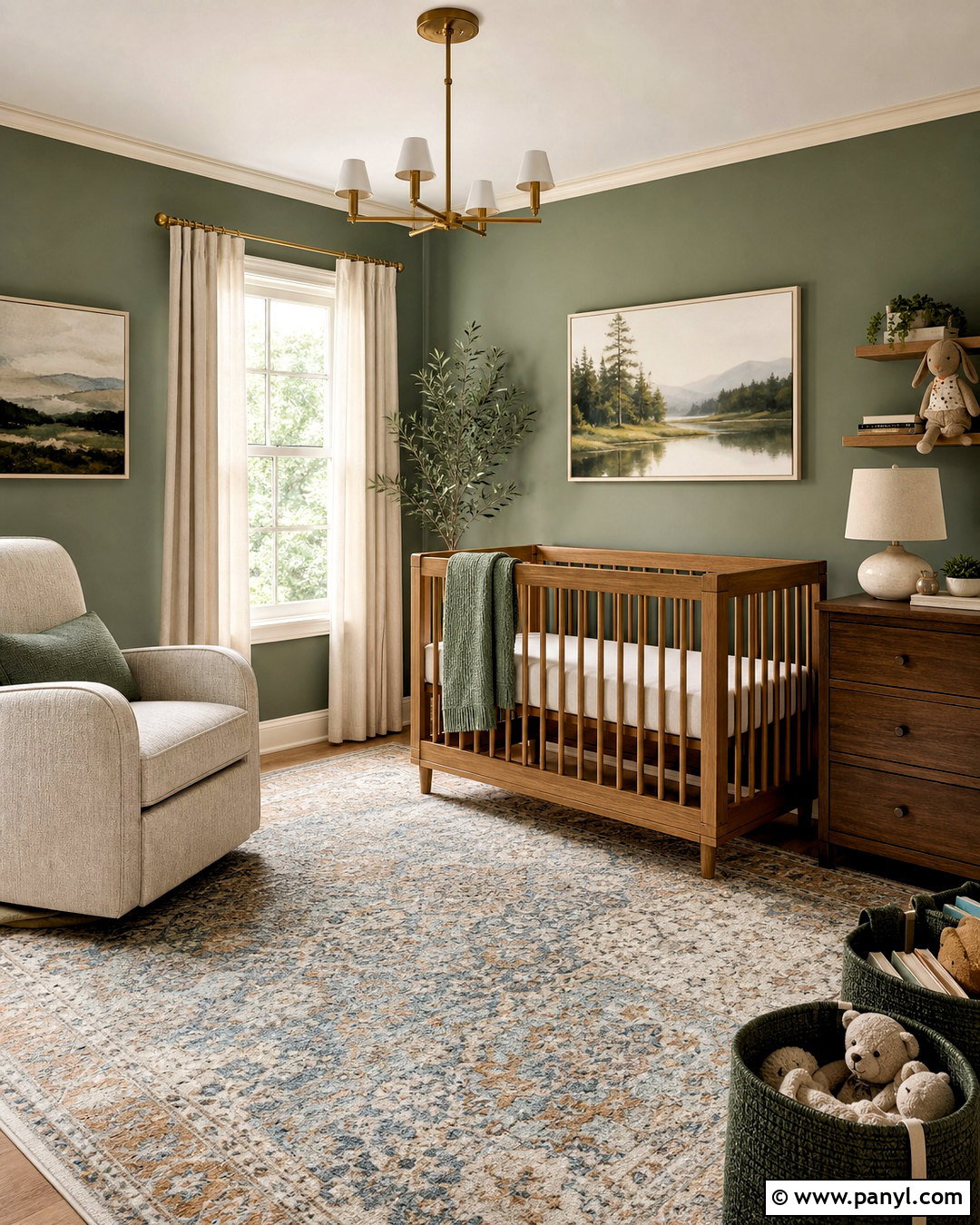
Imagine a quiet nursery where dusty blue textiles blend smoothly with soft gray walls. Choose a pale blue-gray wall color, a natural maple crib, and a white dresser to establish a light foundation. Add a dusty blue area rug with a subtle pattern, matching curtains, and a comfortable ivory glider. A darker blue ottoman can provide contrast without dominating the room. Decorate with watercolor landscape prints, cloud shapes, or simple animal artwork framed in light wood. Install small book ledges beside the reading chair and use woven baskets beneath them for accessible storage. Brushed nickel or matte white lighting suits the cool palette. Creamy textiles and warm wood prevent the room from becoming chilly, producing a peaceful design that still feels layered and complete.
9. Charcoal Gray Nursery Accent Wall
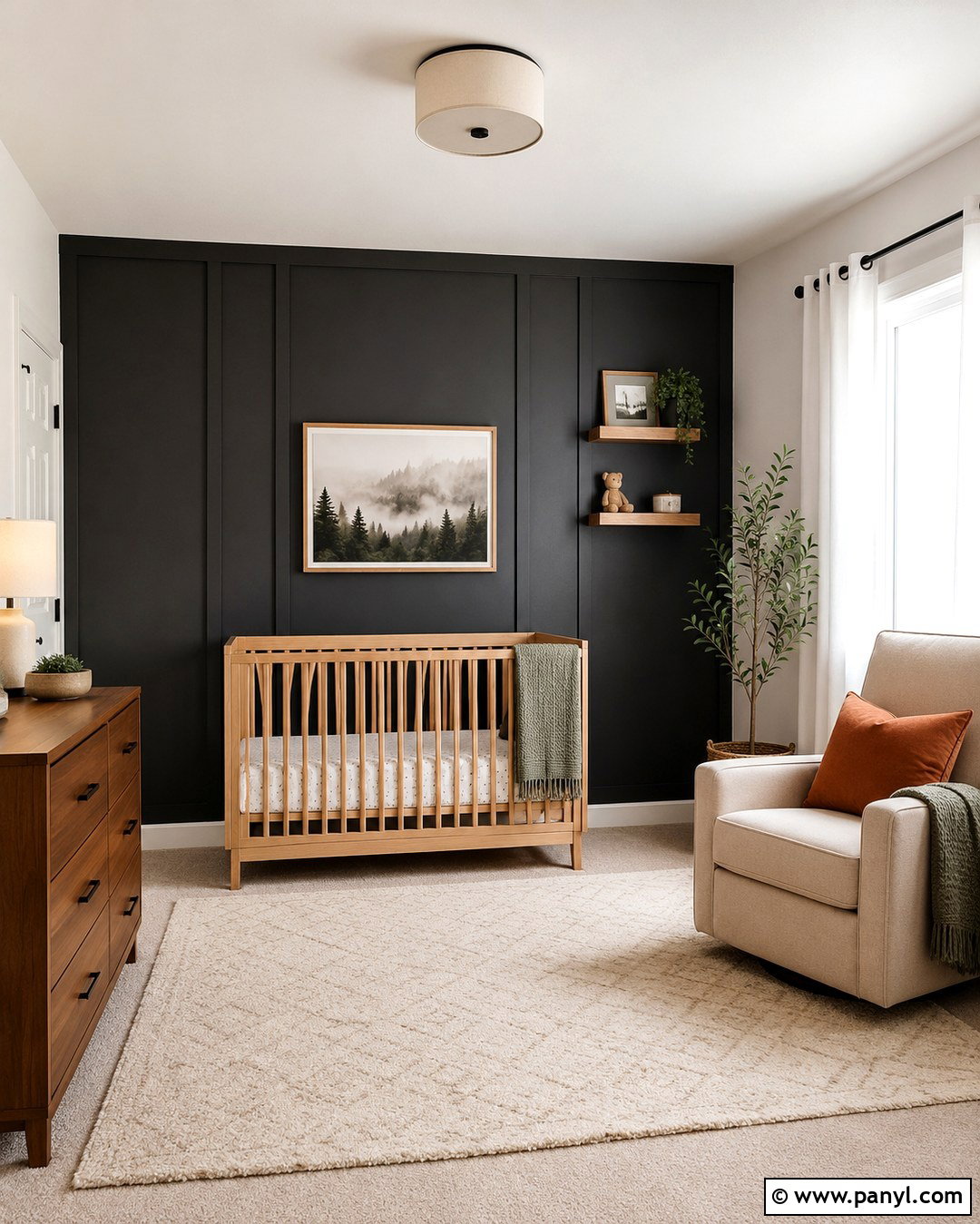
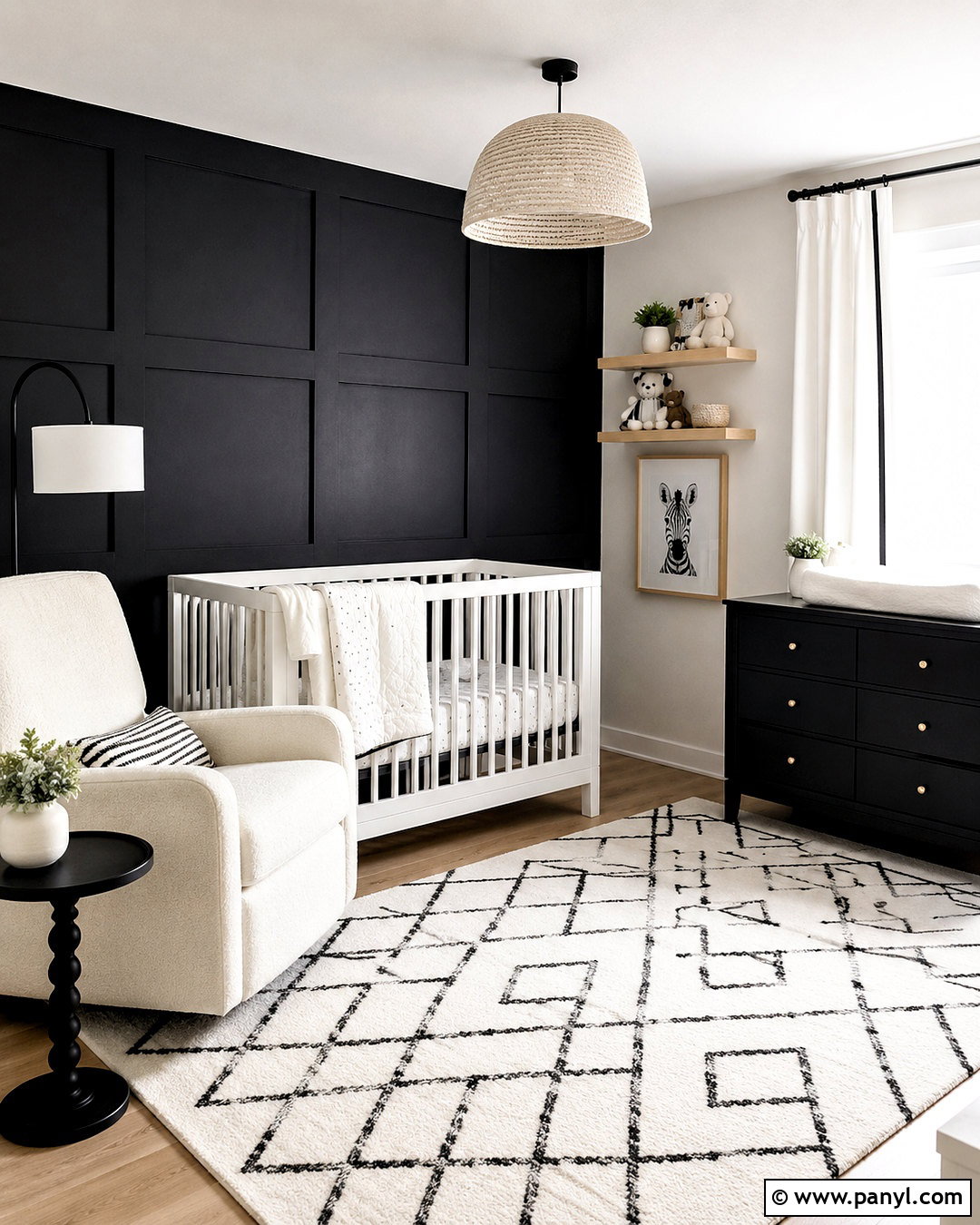
A charcoal accent wall can give a nursery depth when the rest of the room remains bright and restrained. Position a light wood crib against the dark wall, leaving the surface visually simple so the crib remains the focal point. Paint the other walls warm white or very pale gray. Use an ivory rug, white curtains, and a light beige glider to reflect daylight around the room. A medium wood dresser with black hardware connects the dark accent wall to the remaining furniture. Add color through muted rust, sage, and cream textiles rather than stark primary shades. Choose a large ceiling fixture with a white shade to balance the stronger wall color. This high-contrast arrangement feels modern and cozy without making an average-size nursery appear enclosed.
10. Gray Board And Batten Nursery
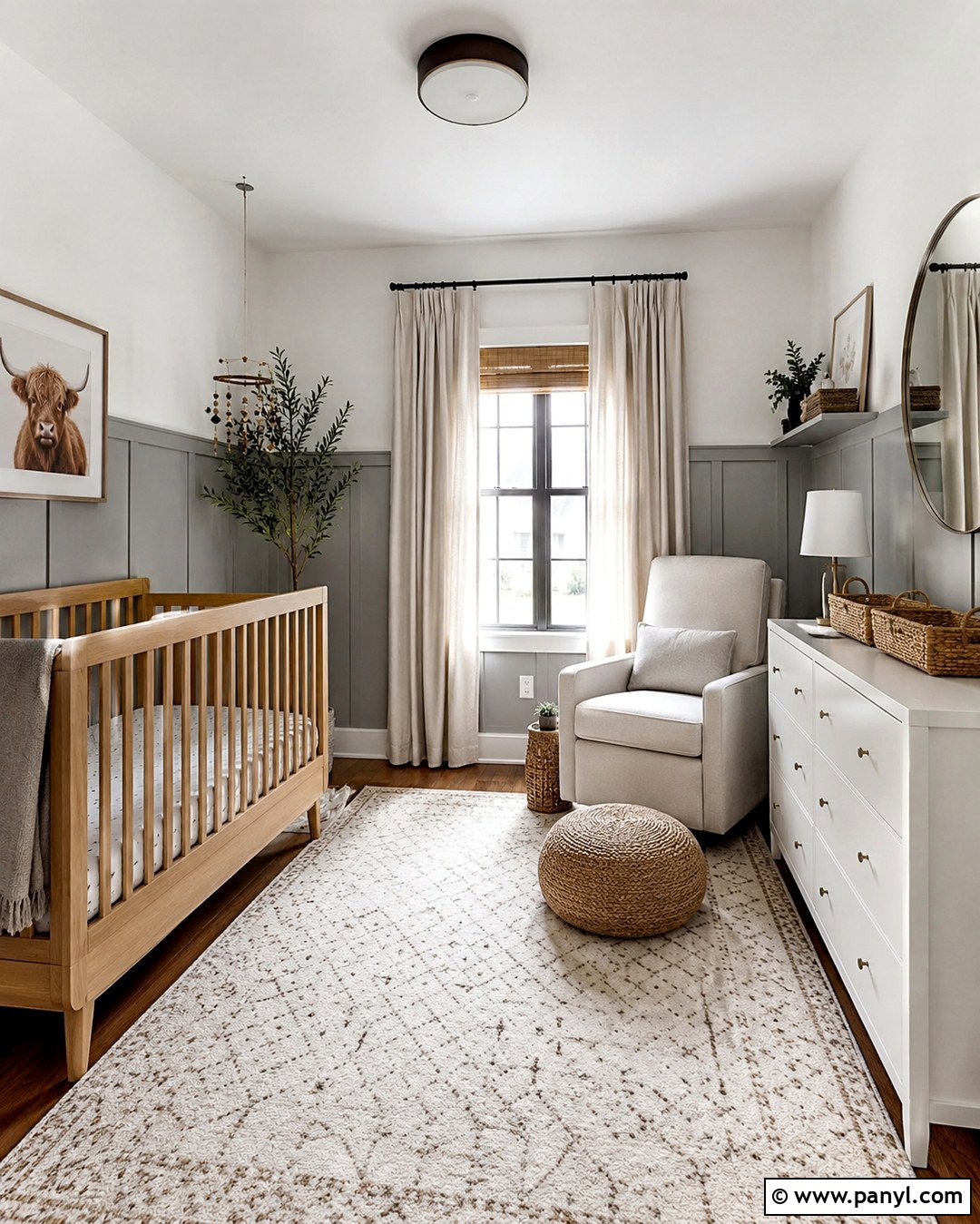
Gray board and batten gives nursery walls architectural detail while keeping the overall design calm. Install the treatment on the lower portion of every wall and paint it a medium warm gray. Use soft white above it to brighten the room and emphasize the molding. A natural oak crib, white dresser, and beige glider create a balanced furniture mix. Add a cream patterned rug, linen curtains, and woven baskets for warmth. Simple framed artwork can sit above the paneling on the dresser wall, while a narrow book ledge makes use of another open area. Repeat the gray in a small ottoman or window shade for continuity. The complete room feels tailored but approachable, offering character without depending on temporary themes or overly decorative nursery accessories.
11. Gray Striped Nursery Walls
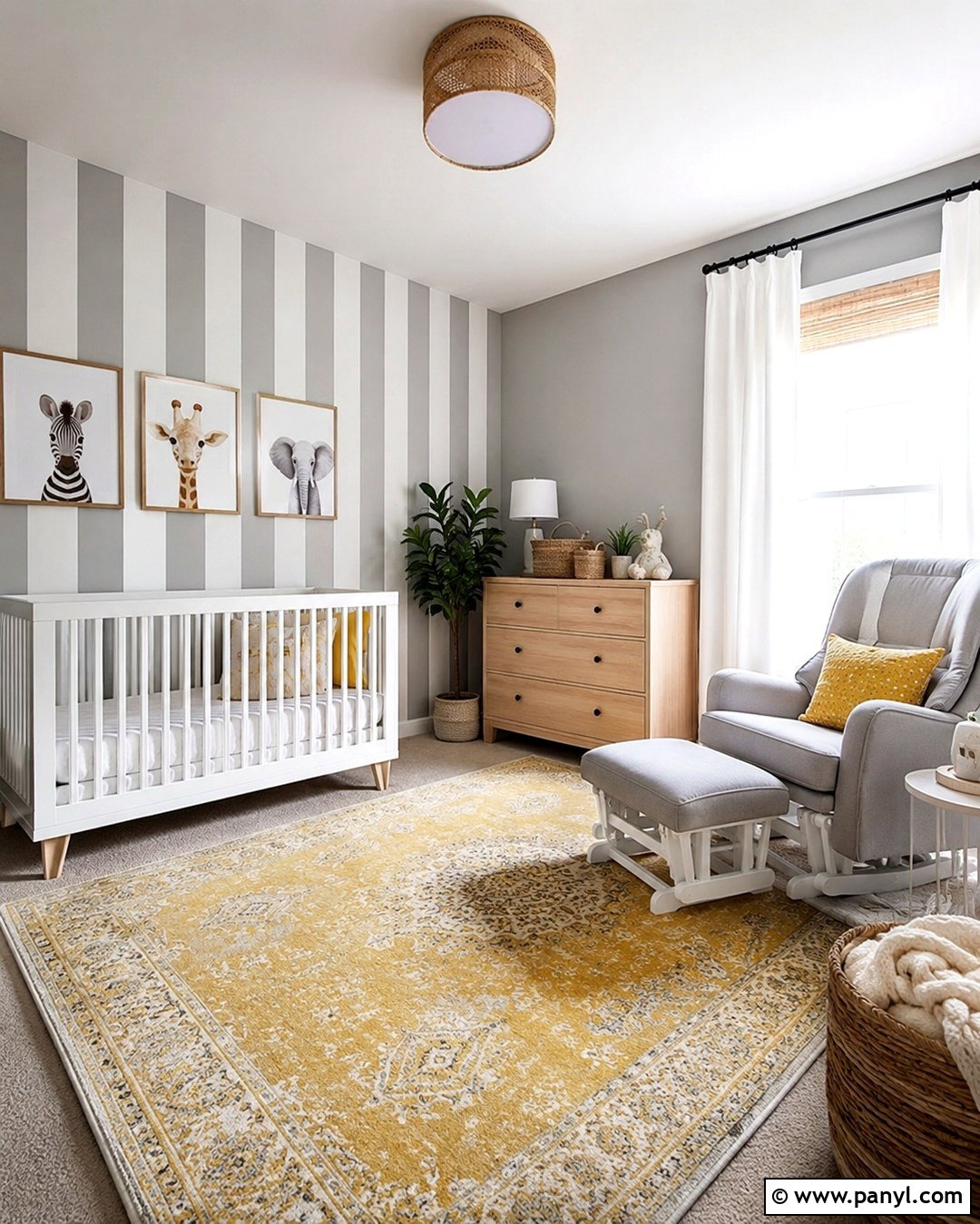
Soft gray and white stripes introduce playful pattern while keeping the nursery visually organized. Use broad vertical stripes on one wall and a very light gray paint on the remaining surfaces. Vertical lines can visually emphasize ceiling height, especially when paired with full-length white curtains. Choose a white crib, pale wood dresser, and light gray glider to avoid competing with the patterned wall. A navy, sage, or muted yellow rug supplies a controlled accent color. Repeat that shade in one curtain border, an ottoman, and several framed prints. Keep storage baskets and larger textiles neutral so the stripes remain the main feature. With a clear furniture layout and limited palette, this design feels lively enough for a child while still looking polished and restful.
12. Gray Nursery Wallpaper Wall
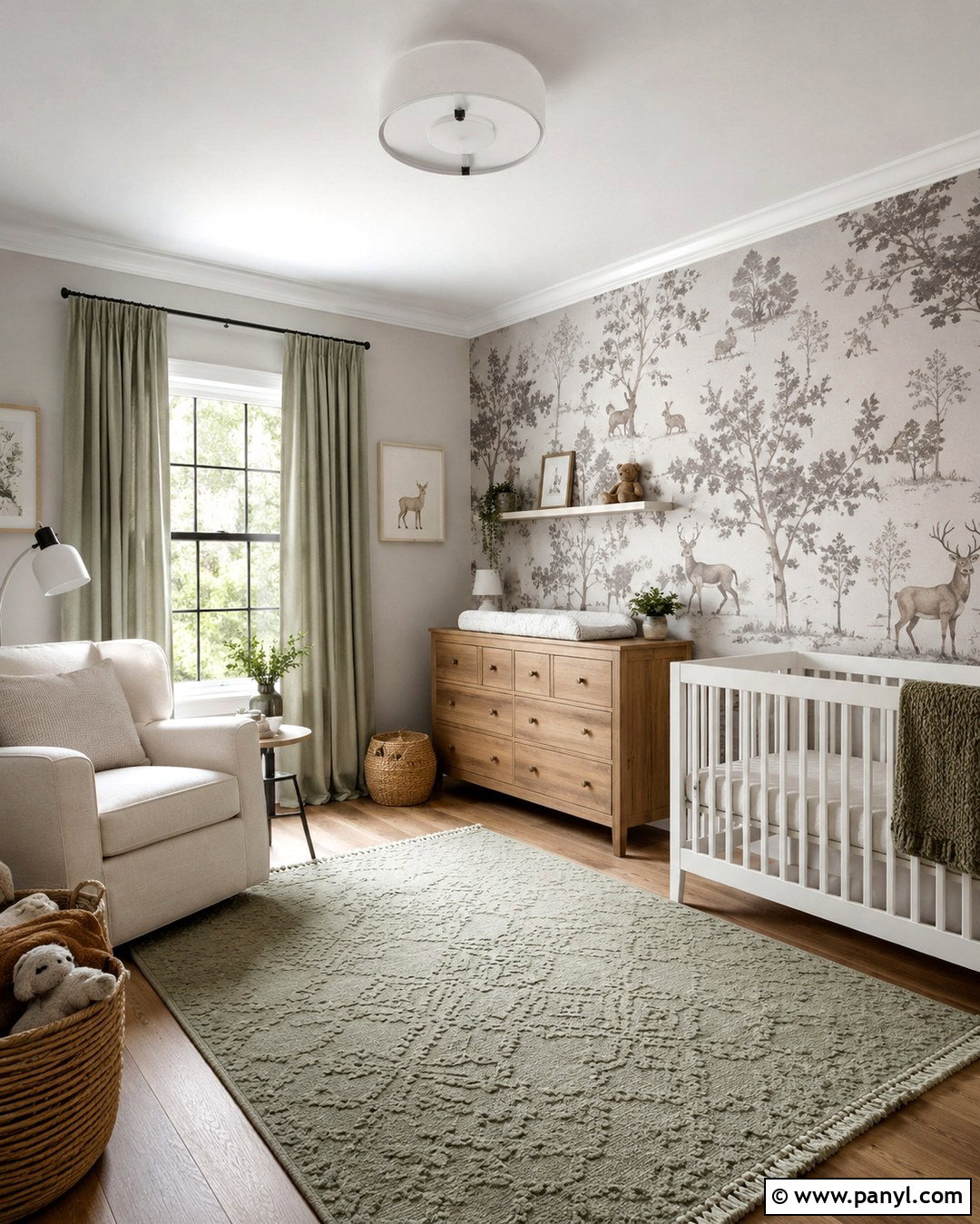
Gray patterned wallpaper can create a detailed focal point without forcing the nursery into a bold color theme. Select a design featuring small woodland animals, delicate branches, clouds, or geometric shapes on a warm gray background. Apply it to the dresser wall, then paint the remaining walls a coordinating light gray. Choose a simple white crib, natural wood dresser, and cream glider so the wallpaper receives proper attention. Pull one secondary shade from the pattern for the rug and curtains, such as sage, dusty blue, or muted rust. Add woven storage, a soft ottoman, and an understated ceiling light. Limiting extra wall decorations prevents visual clutter. The finished nursery feels layered and memorable, yet its neutral foundation remains flexible as the child grows.
13. Monochrome Gray Nursery
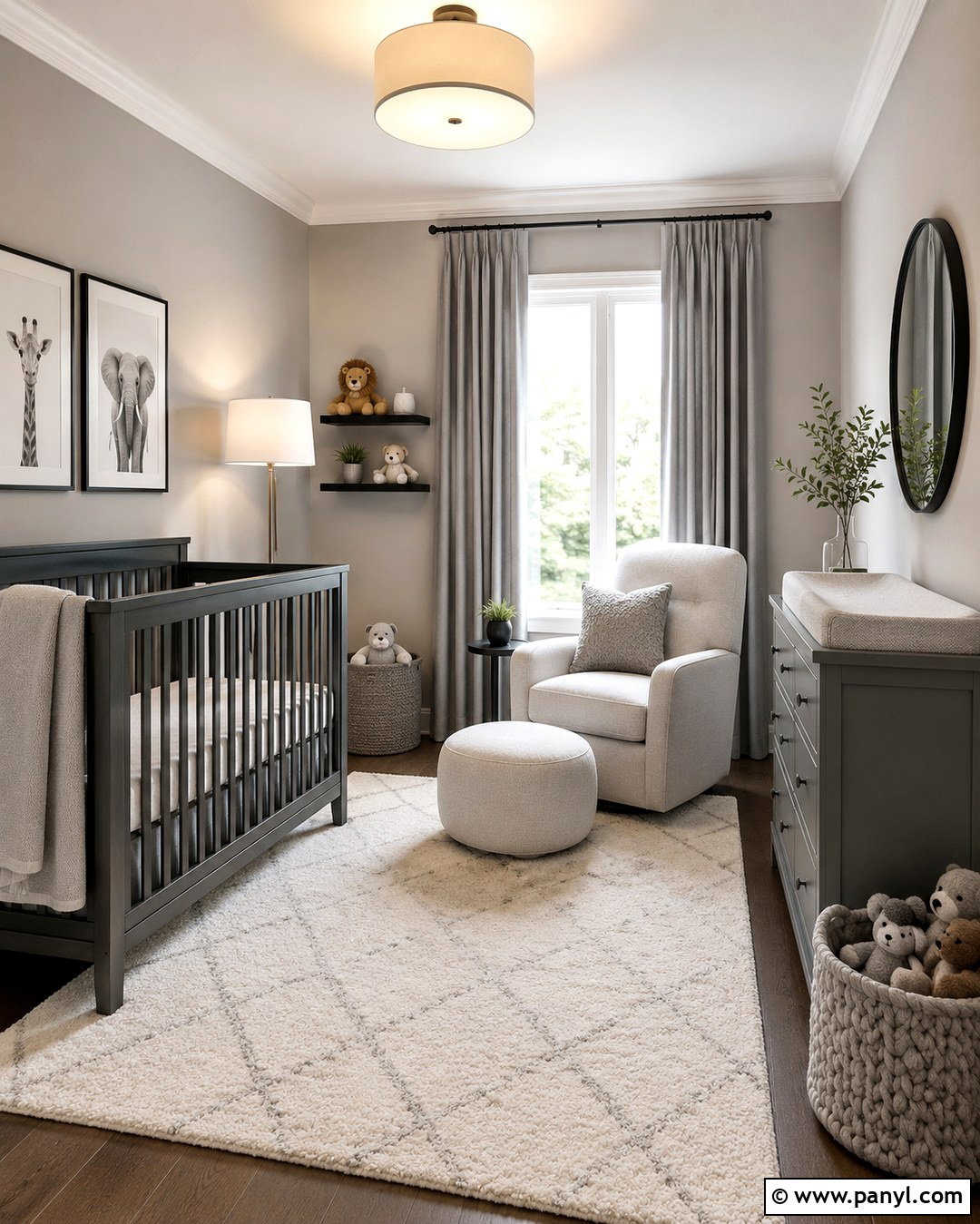
A monochrome gray nursery can feel comfortable rather than flat when several tones and textures are layered together. Paint the walls a light warm gray, then select a charcoal crib or dresser as the main point of contrast. Add a medium gray upholstered glider, pale silver-gray curtains, and an ivory-and-gray patterned rug. Mix smooth painted furniture with boucle upholstery, knitted storage baskets, and woven window treatments to create depth. White trim and a white ceiling keep the palette fresh, while small black accents sharpen the room’s edges. Use simple animal prints or abstract art that combines gray, cream, and black. A light wood side table can provide one subtle warm note. This restrained room feels cohesive, modern, and ready for colorful books and toys.
14. Scandinavian Gray Nursery
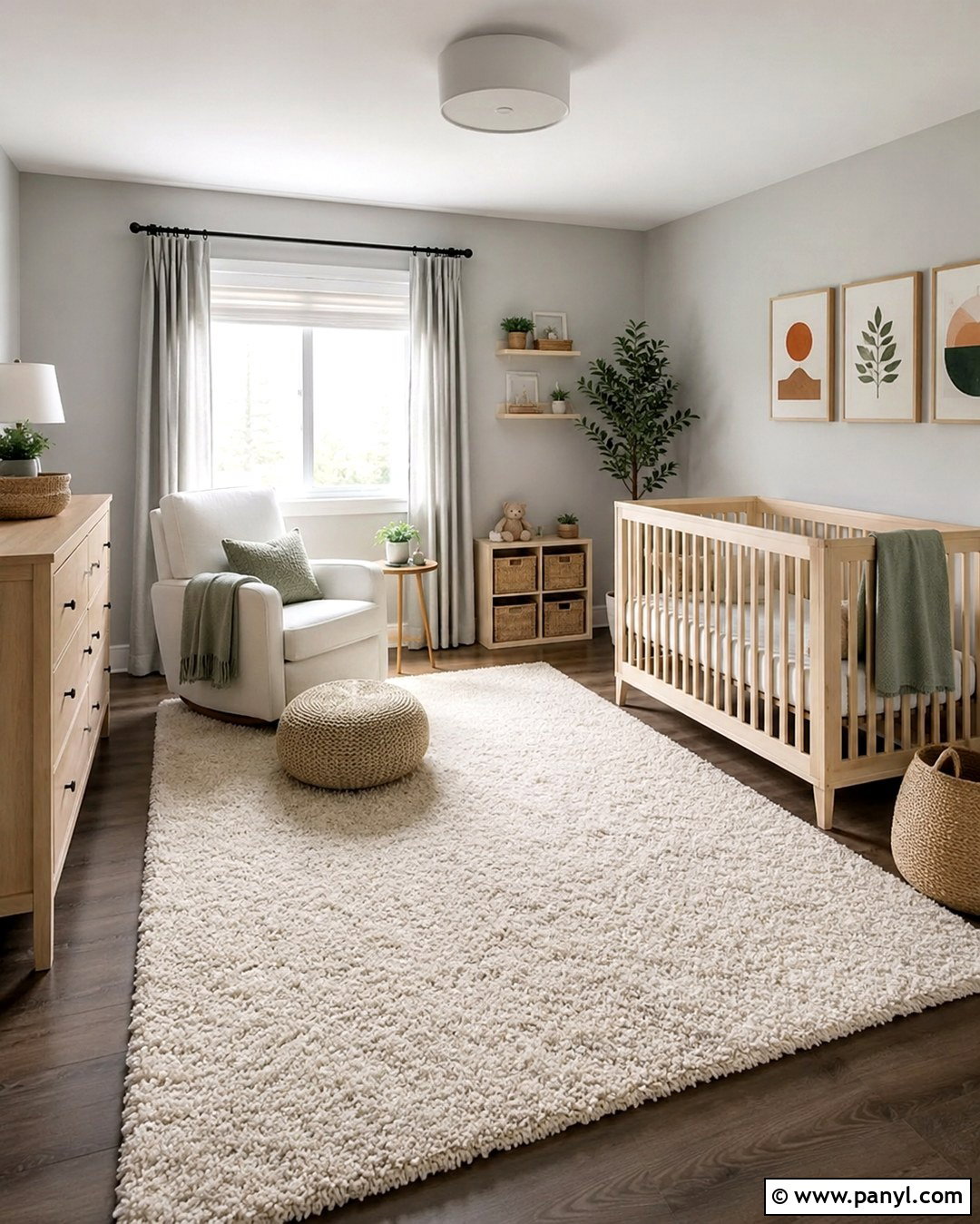
Clean lines and natural materials give gray nursery walls a relaxed Scandinavian character. Choose a very pale gray paint, white ceiling, and light oak flooring or a large cream rug. A streamlined birch crib and low matching dresser provide practical furniture without making the room feel crowded. Add a curved ivory glider, simple wood side table, and soft gray curtains with minimal hardware. Use one or two playful prints in muted rust, blue, or sage to keep the neutral room child-friendly. Woven storage bins, a small wood book rack, and a textured wool-look pouf complete the arrangement. Avoid filling every wall or corner. The open space is part of the design, allowing the nursery to feel bright, functional, and visually peaceful throughout the day.
15. Modern Farmhouse Gray Nursery
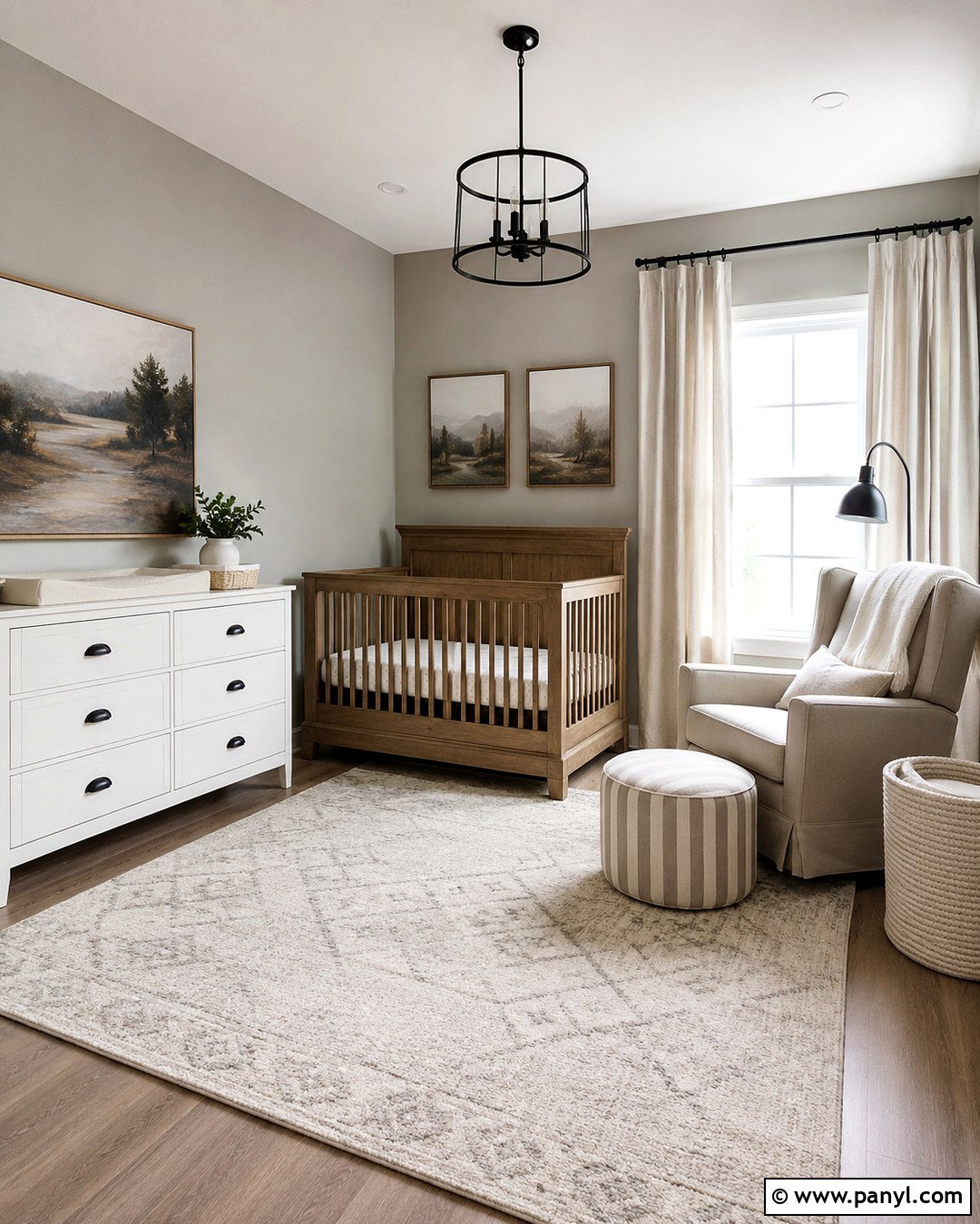
A modern farmhouse nursery combines gray walls with warm wood, soft textiles, and practical vintage-inspired details. Paint the room a gentle greige, then use a medium wood crib and a white dresser with simple black pulls. A cream patterned rug defines the center, while an oatmeal glider and small turned-leg side table form a comfortable corner. Hang natural linen curtains from a matte black rod and introduce subtle checks or stripes through an ottoman and storage baskets. Simple landscape prints or farm animal illustrations can decorate the dresser wall. A white ceiling fixture with black detailing ties the finishes together. Keep distressed surfaces limited so the space still feels fresh. The result is cozy, familiar, and polished enough to grow beyond the baby stage.
16. Woodland Gray Nursery
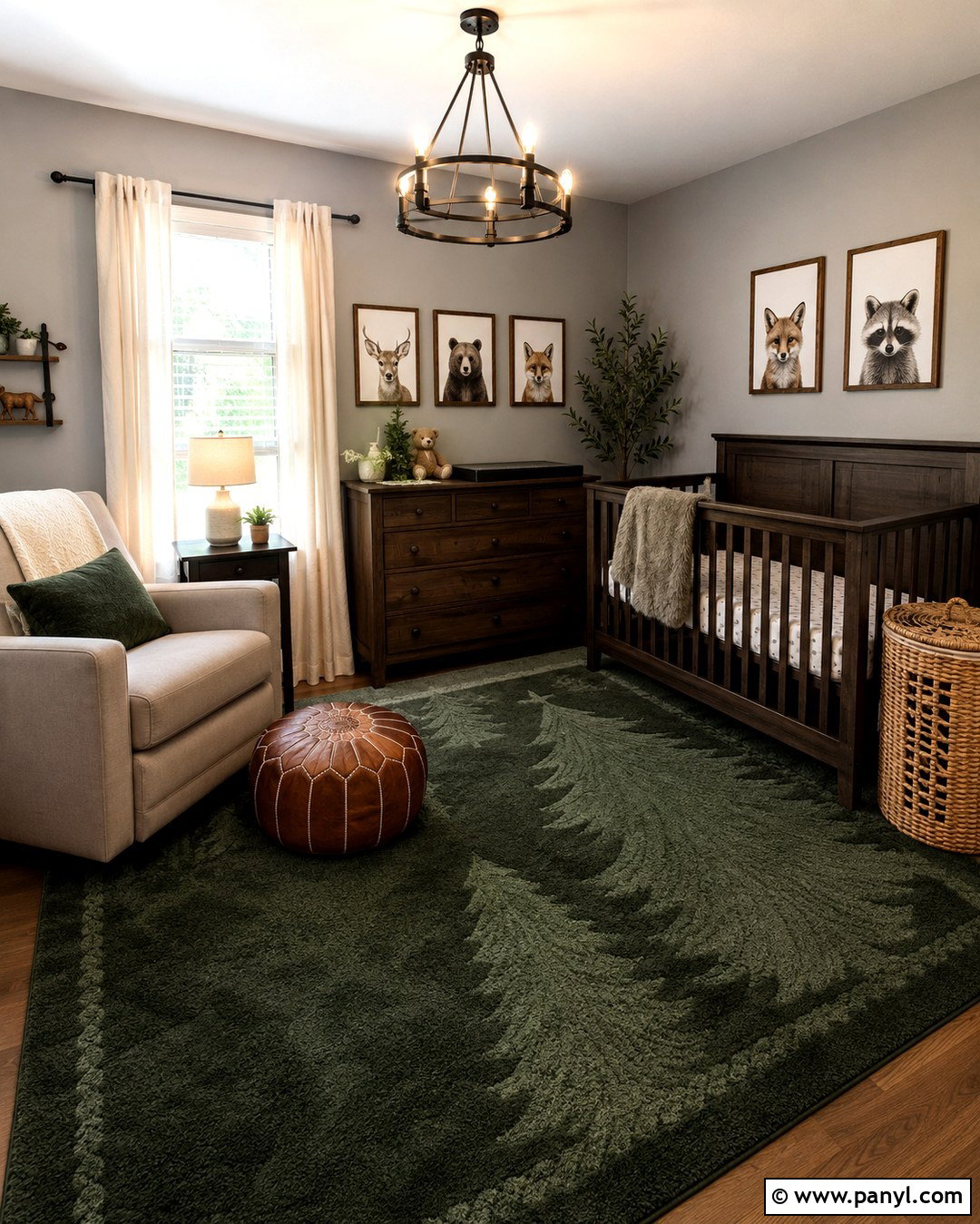
Gray walls provide a misty, neutral setting for a woodland nursery filled with natural color and texture. Start with a warm light gray paint, walnut crib, and coordinating dresser. Place a forest green rug in the center and use cream curtains to soften the windows. An oatmeal glider, leather-look pouf in warm brown, and woven hamper create an inviting reading area. Decorate with framed fox, bear, rabbit, or tree illustrations in muted earthy tones. Add wood book ledges and a few small forest-inspired objects on the dresser, keeping the display uncluttered. Black metal lighting offers definition against the softer colors. Instead of covering every surface with themed pieces, repeat natural greens, browns, and creams throughout the room for a cohesive woodland look.
17. Celestial Gray Nursery
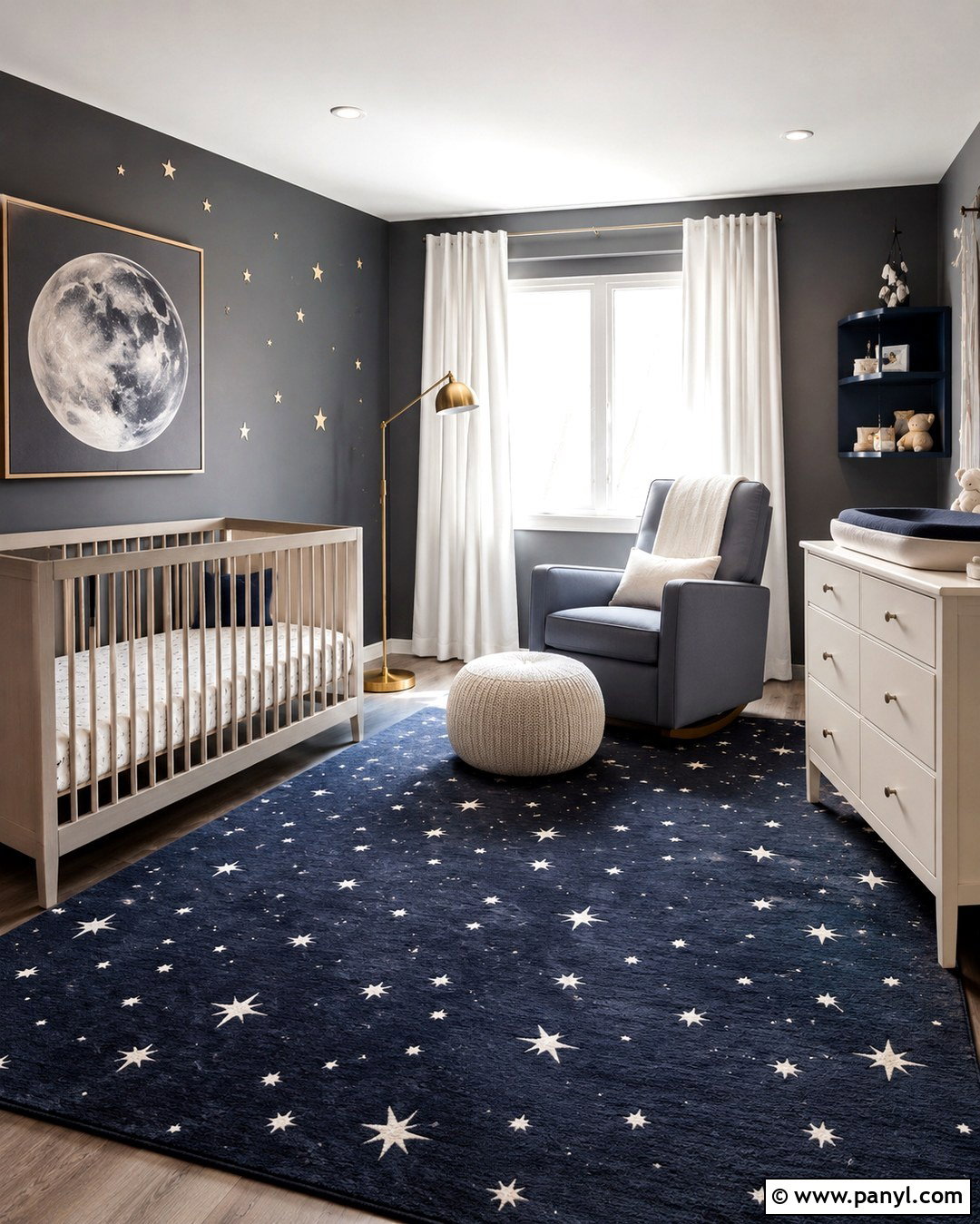
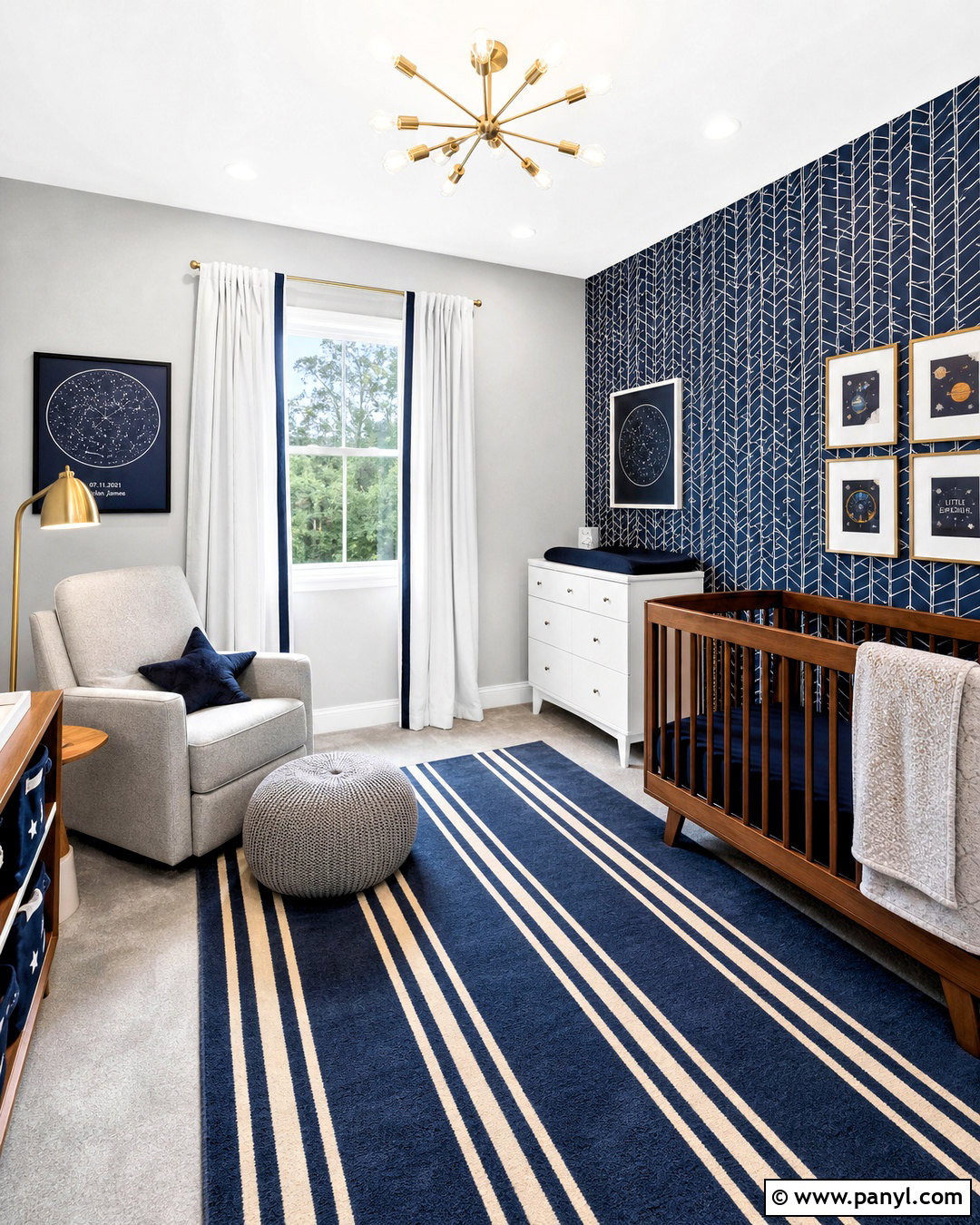
A celestial theme works naturally with gray walls because silver, navy, white, and muted gold create a soft nighttime palette. Paint the room a light smoky gray and choose a white or pale wood crib. Add a deep navy rug patterned with small stars, followed by white curtains and a gray-blue upholstered glider. Use restrained moon and constellation artwork on the dresser wall rather than placing decorations directly around the crib. A brushed brass floor lamp and matching drawer pulls introduce warmth and a subtle glow. Include a cream ottoman, woven storage baskets, and navy book ledges to complete the functional layout. The finished nursery feels imaginative without becoming overly literal, and the simple furniture can remain in place when the themed accessories are eventually changed.
18. Coastal Gray Nursery
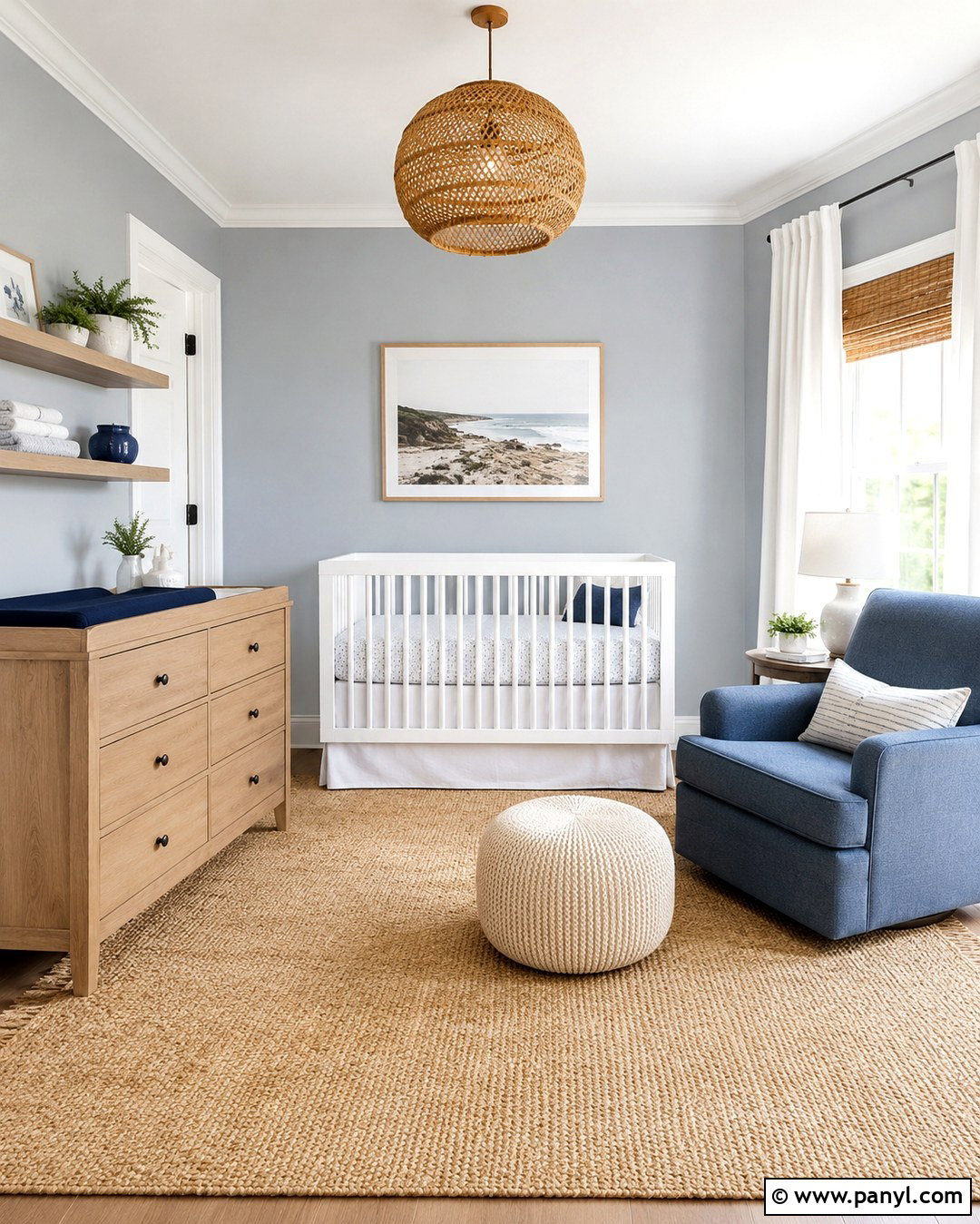
Cool gray nursery walls can support a relaxed coastal look without relying on obvious nautical decorations. Pair a pale gray-blue wall color with a white crib, light oak dresser, and natural woven rug. Use breezy white curtains and a dusty blue glider with an ivory ottoman. Add subtle stripes through a washable rug border, storage basket, or chair pillow. Framed shoreline landscapes, watercolor waves, or simple seabird prints provide a quiet connection to the coast. Woven shades and a rattan ceiling fixture warm the cooler palette and create useful texture. Keep navy accents limited to small pieces such as book ledges or drawer knobs. This complete design feels fresh and light, with enough natural detail to remain comfortable throughout every season.
19. Small Gray Nursery
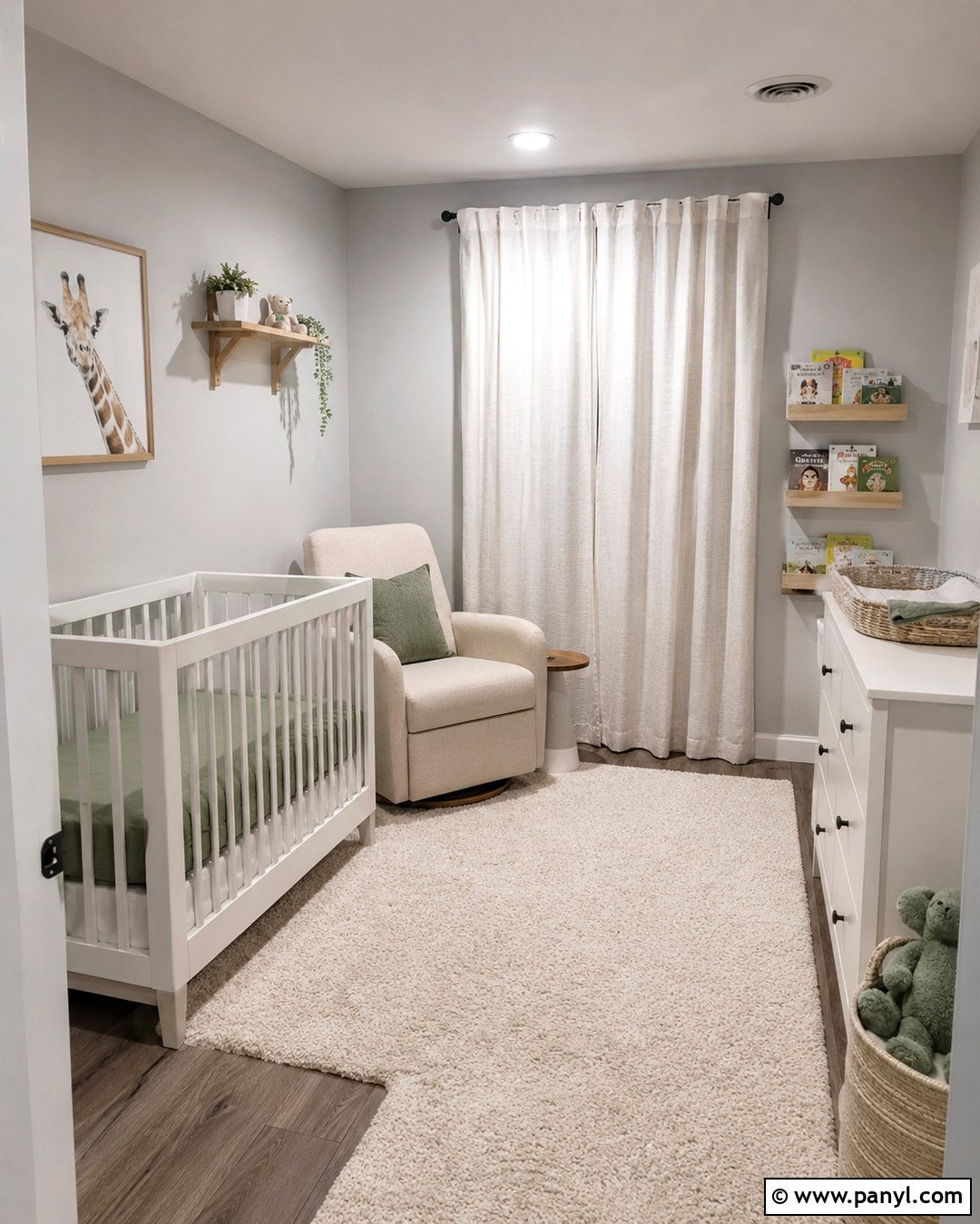
In a compact nursery, pale gray walls can provide a calm background for a space-saving furniture plan. Place a mini crib along the longest uninterrupted wall and use a narrow dresser as both clothing storage and a changing surface. Choose matching white furniture to keep the room visually light. A small cream rug should sit in the open center without crowding the doorway. Add a compact swivel glider in one corner with a wall-mounted reading light and slim wood side shelf. Use full-length white curtains to simplify the window, then organize books and supplies on shallow ledges away from the crib. Woven bins add warmth while containing smaller items. Limiting the palette to gray, white, natural wood, and one accent color keeps the room cohesive.
20. Gray Nursery For Twins
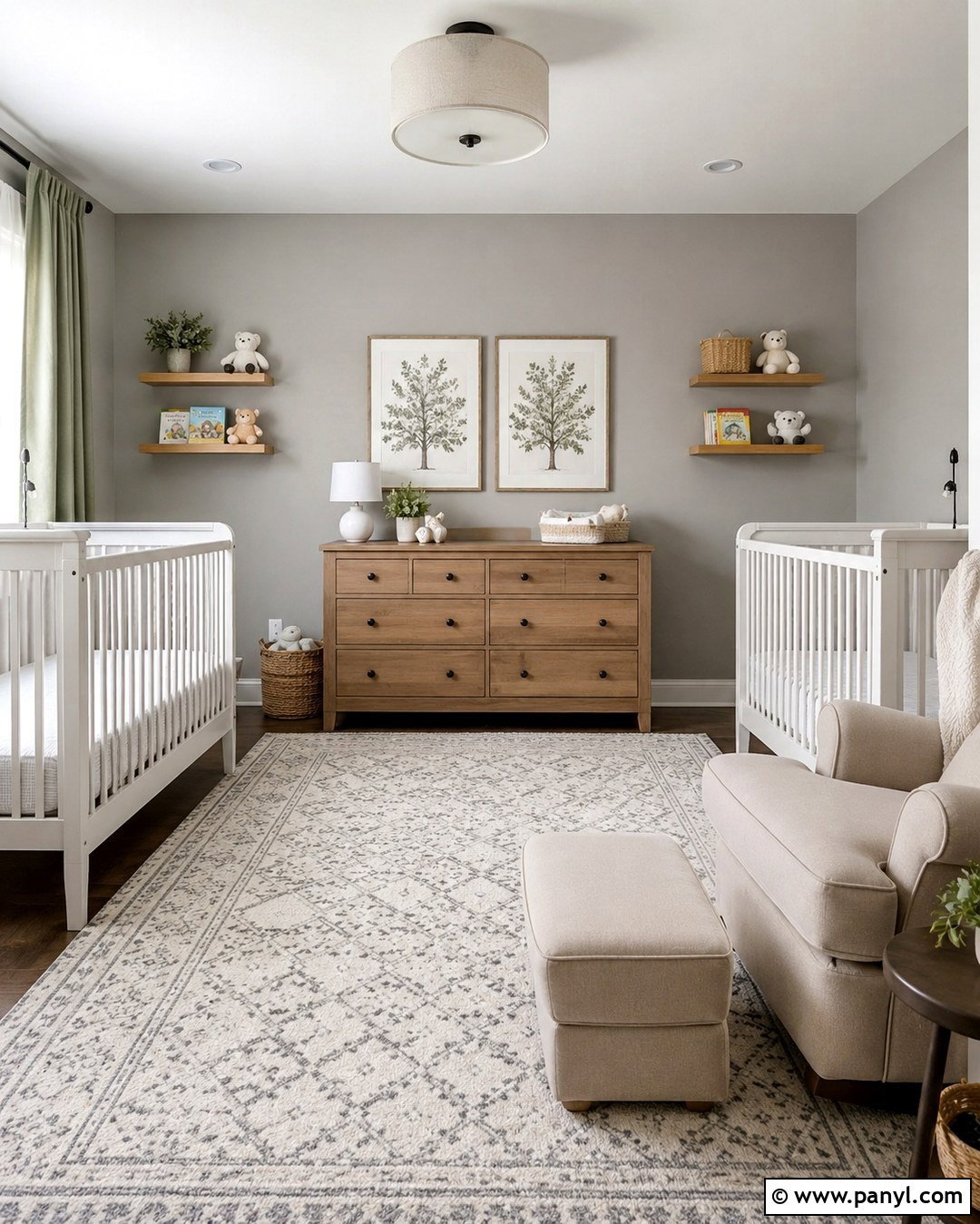
A twin nursery with gray walls needs a balanced layout that provides each crib with a clear place while preserving practical storage. Position two matching white cribs on separate walls or side by side along one long wall when space allows. Use a wide natural wood dresser as the central visual anchor and add a large ivory-and-gray rug to connect both sleeping areas. A comfortable oatmeal glider and generous ottoman create one shared feeding corner. Introduce muted sage, dusty blue, or blush through curtains, baskets, and coordinated fitted sheets. Keep artwork concentrated above the dresser instead of scattering small pieces throughout the room. Matching storage baskets and book ledges establish symmetry. The completed design feels orderly, warm, and personal without requiring every accessory to appear identical.
Conclusion:
Nursery Gray Walls can support almost any decorating direction when the rest of the room is planned as one complete design. Crisp white furniture creates brightness, while oak, walnut, rattan, and woven fabrics add natural warmth. Accent colors such as sage, navy, blush, mustard, dusty blue, and terracotta can shape the room’s personality without overpowering its neutral base. Pay attention to undertones and view gray paint in the nursery’s changing light before making a final choice. Then connect the walls to the rug, curtains, seating, storage, lighting, and artwork. Whether the room is compact, shared, modern, or themed, thoughtful layering will make gray feel comfortable, dimensional, and welcoming.

Related Ideas and Inspiration:
Leave a Reply